User login
Carfilzomib/dex doubles PFS of relapsed myeloma
CHICAGO – It was nice knowing you, bortezomib, but it’s time to move aside and let carfilzomib take over: Progression-free survival of relapsed multiple myeloma was doubled with a combination of double-dose carfilzomib and dexamethasone compared with bortezomib and dexamethasone.
At a median follow-up of 11.2 months, the primary endpoint of median progression-free survival (PFS) among 464 patients assigned to receive carfilzomib (Kyprolis) and dexamethasone (Kd) was 18.7 months, compared with 9.4 months for 465 patients assigned to bortezomib (Velcade) and dexamethasone (Vd), reported Dr. Meletios Dimopoulos of the University of Athens.
“Kd was superior to Vd regardless of age or prior bortezomib exposure, and represents a new standard of care,” Dr. Dimopoulos said at the annual meeting of the American Society of Clinical Oncology.
He reported results from the phase III ENDEAVOR (A Randomized, Open-Label, Phase III Study of Carfilzomib Plus Dexamethasone vs. Bortezomib Plus Dexamethasone in Patients With Relapsed Multiple Myeloma), the first clinical study to pit two proteasome inhibitors head to head in treatment of multiple myeloma.
“It is becoming clearer that carfilzomib is superior to bortezomib, especially at twice the dose,” said Dr. Jeffrey L. Wolf of the University of California, San Francisco. Dr. Wolf was the invited discussant.
Carfilzomib is approved in the United States as single-agent therapy at a dose of 27 mg/m2 infused over 2-10 minutes with dexamethasone for treatment of patients with relapsed or refractory myeloma.
However, in a phase Ib/II study, carfilzomib administered in a 30-minute infusion at a dose of 56 mg/m2 with dexamethasone produced higher response rates with acceptable toxicities, prompting the investigators to explore the higher-dose regimen against the standard of Vd.
ENDEAVOR
A total of 929 patients, stratified by prior proteasome inhibitor therapy, prior lines of treatment, International Staging System (ISS) score, and route of bortezomib administration (IV vs. subcutaneous) were randomized to either Kd or Vd (with bortezomib delivered either by IV bolus or subcutaneous injection), with both regimens to be continued until disease progression or unacceptable toxicity.
The patients had been treated with at least one but not more than three prior lines of therapy, and could have previously received a proteasome inhibitor if they had a partial response or better to prior treatment, had not been treated with a proteasome inhibitor within the last 6 months, and had not discontinued prior therapy because of toxicity.
The patients also had to have adequate cardiac function (left ventricular ejection fraction of 40% or greater) and creatinine clearance (at least 15 mL/min).
As noted before, median PFS at a median follow-up of 11.2 months was 18.7 months with Kd, vs. 9.4 months with Vd (hazard ratio [HR] 0.53, P < .0001).
PFS was superior with Kd across all subgroups of age, performance status, prior peripheral neuropathy, ISS stage, or risk category. The only exception was among patients with compromised renal function (creatinine clearance less than 30 mL/min), who had comparable PFS in each arm.
PFS was also better with Kd among patients with prior bortezomib exposure (median PFS 15.6 vs. 8.1 months) or no bortezomib exposure (median PFS not reached vs. 11.2 months).
The data are not sufficiently mature for an overall survival analysis, and the study will continue until a final OS analysis can be performed, Dr. Dimopoulos said.
For the secondary endpoint of response rates, Kd also showed superiority, with 77% of patients having some degrees of response, compared with 63% of patients assigned to Vd (P <. 0001). Patients treated with Kd had significantly more complete responses (13% vs. 6%, P < .0001) and very good partial responses (54% vs. 29%, P < .0001).
The median duration of response was 21.3 months for Kd, vs. 10.4 months for Vd (P not shown).
There were more grade 3 or greater adverse events among patients on Kd vs. Vd (73% of patients vs 67%, respectively), and more serious adverse events (48% vs. 36%), but more patients in the Vd arm required dose reduction because of side effects (23% vs. 48%), and more patients on Vd discontinued treatment because of disease progression (25% vs. 36%) or adverse events (14% vs. 16%). In all, four patients on Kd and 3 on Vd died from a cause related to an adverse event.
Rates of dyspnea, hypertension, and cardiac failure were slightly more than twice as high with Kd vs. Vd. Peripheral neuropathy was more common among patients on bortezomib, despite three-fourths of patients in this arm receiving it in the subcutaneous injection form, which has been associated with lower rates of neuropathy than with the IV form of bortezomib.
Dr. Wolf noted that the excess in peripheral neuropathy was not surprising, given that bortezomib was delivered twice weekly and that about 25% of patients received it intravenously.
He also noted that among treatment options for patients with relapsed myeloma, Kd was associated with a cost per progression-free month of about $1,222, compared with $1,059 for Vd, $859 for a combination of carfilzomib, lenalidomide (Revlimid) and dexamethasone, and $1,158 for the combination of elotuzumab, lenalidomide, and dexamethasone, used in the ELOQUENT-2 trial, also presented at ASCO 2015.
The study was sponsored by Onyx, a subsidiary of Amgen. Dr. Dimopoulos disclosed receiving honoraria from and consulting for the company. Dr. Wolf disclosed consulting with Onyx and Amgen, serving on the speakers bureau for Milennium, and receiving travel expense from Onyx Consulting and Milennium.
CHICAGO – It was nice knowing you, bortezomib, but it’s time to move aside and let carfilzomib take over: Progression-free survival of relapsed multiple myeloma was doubled with a combination of double-dose carfilzomib and dexamethasone compared with bortezomib and dexamethasone.
At a median follow-up of 11.2 months, the primary endpoint of median progression-free survival (PFS) among 464 patients assigned to receive carfilzomib (Kyprolis) and dexamethasone (Kd) was 18.7 months, compared with 9.4 months for 465 patients assigned to bortezomib (Velcade) and dexamethasone (Vd), reported Dr. Meletios Dimopoulos of the University of Athens.
“Kd was superior to Vd regardless of age or prior bortezomib exposure, and represents a new standard of care,” Dr. Dimopoulos said at the annual meeting of the American Society of Clinical Oncology.
He reported results from the phase III ENDEAVOR (A Randomized, Open-Label, Phase III Study of Carfilzomib Plus Dexamethasone vs. Bortezomib Plus Dexamethasone in Patients With Relapsed Multiple Myeloma), the first clinical study to pit two proteasome inhibitors head to head in treatment of multiple myeloma.
“It is becoming clearer that carfilzomib is superior to bortezomib, especially at twice the dose,” said Dr. Jeffrey L. Wolf of the University of California, San Francisco. Dr. Wolf was the invited discussant.
Carfilzomib is approved in the United States as single-agent therapy at a dose of 27 mg/m2 infused over 2-10 minutes with dexamethasone for treatment of patients with relapsed or refractory myeloma.
However, in a phase Ib/II study, carfilzomib administered in a 30-minute infusion at a dose of 56 mg/m2 with dexamethasone produced higher response rates with acceptable toxicities, prompting the investigators to explore the higher-dose regimen against the standard of Vd.
ENDEAVOR
A total of 929 patients, stratified by prior proteasome inhibitor therapy, prior lines of treatment, International Staging System (ISS) score, and route of bortezomib administration (IV vs. subcutaneous) were randomized to either Kd or Vd (with bortezomib delivered either by IV bolus or subcutaneous injection), with both regimens to be continued until disease progression or unacceptable toxicity.
The patients had been treated with at least one but not more than three prior lines of therapy, and could have previously received a proteasome inhibitor if they had a partial response or better to prior treatment, had not been treated with a proteasome inhibitor within the last 6 months, and had not discontinued prior therapy because of toxicity.
The patients also had to have adequate cardiac function (left ventricular ejection fraction of 40% or greater) and creatinine clearance (at least 15 mL/min).
As noted before, median PFS at a median follow-up of 11.2 months was 18.7 months with Kd, vs. 9.4 months with Vd (hazard ratio [HR] 0.53, P < .0001).
PFS was superior with Kd across all subgroups of age, performance status, prior peripheral neuropathy, ISS stage, or risk category. The only exception was among patients with compromised renal function (creatinine clearance less than 30 mL/min), who had comparable PFS in each arm.
PFS was also better with Kd among patients with prior bortezomib exposure (median PFS 15.6 vs. 8.1 months) or no bortezomib exposure (median PFS not reached vs. 11.2 months).
The data are not sufficiently mature for an overall survival analysis, and the study will continue until a final OS analysis can be performed, Dr. Dimopoulos said.
For the secondary endpoint of response rates, Kd also showed superiority, with 77% of patients having some degrees of response, compared with 63% of patients assigned to Vd (P <. 0001). Patients treated with Kd had significantly more complete responses (13% vs. 6%, P < .0001) and very good partial responses (54% vs. 29%, P < .0001).
The median duration of response was 21.3 months for Kd, vs. 10.4 months for Vd (P not shown).
There were more grade 3 or greater adverse events among patients on Kd vs. Vd (73% of patients vs 67%, respectively), and more serious adverse events (48% vs. 36%), but more patients in the Vd arm required dose reduction because of side effects (23% vs. 48%), and more patients on Vd discontinued treatment because of disease progression (25% vs. 36%) or adverse events (14% vs. 16%). In all, four patients on Kd and 3 on Vd died from a cause related to an adverse event.
Rates of dyspnea, hypertension, and cardiac failure were slightly more than twice as high with Kd vs. Vd. Peripheral neuropathy was more common among patients on bortezomib, despite three-fourths of patients in this arm receiving it in the subcutaneous injection form, which has been associated with lower rates of neuropathy than with the IV form of bortezomib.
Dr. Wolf noted that the excess in peripheral neuropathy was not surprising, given that bortezomib was delivered twice weekly and that about 25% of patients received it intravenously.
He also noted that among treatment options for patients with relapsed myeloma, Kd was associated with a cost per progression-free month of about $1,222, compared with $1,059 for Vd, $859 for a combination of carfilzomib, lenalidomide (Revlimid) and dexamethasone, and $1,158 for the combination of elotuzumab, lenalidomide, and dexamethasone, used in the ELOQUENT-2 trial, also presented at ASCO 2015.
The study was sponsored by Onyx, a subsidiary of Amgen. Dr. Dimopoulos disclosed receiving honoraria from and consulting for the company. Dr. Wolf disclosed consulting with Onyx and Amgen, serving on the speakers bureau for Milennium, and receiving travel expense from Onyx Consulting and Milennium.
CHICAGO – It was nice knowing you, bortezomib, but it’s time to move aside and let carfilzomib take over: Progression-free survival of relapsed multiple myeloma was doubled with a combination of double-dose carfilzomib and dexamethasone compared with bortezomib and dexamethasone.
At a median follow-up of 11.2 months, the primary endpoint of median progression-free survival (PFS) among 464 patients assigned to receive carfilzomib (Kyprolis) and dexamethasone (Kd) was 18.7 months, compared with 9.4 months for 465 patients assigned to bortezomib (Velcade) and dexamethasone (Vd), reported Dr. Meletios Dimopoulos of the University of Athens.
“Kd was superior to Vd regardless of age or prior bortezomib exposure, and represents a new standard of care,” Dr. Dimopoulos said at the annual meeting of the American Society of Clinical Oncology.
He reported results from the phase III ENDEAVOR (A Randomized, Open-Label, Phase III Study of Carfilzomib Plus Dexamethasone vs. Bortezomib Plus Dexamethasone in Patients With Relapsed Multiple Myeloma), the first clinical study to pit two proteasome inhibitors head to head in treatment of multiple myeloma.
“It is becoming clearer that carfilzomib is superior to bortezomib, especially at twice the dose,” said Dr. Jeffrey L. Wolf of the University of California, San Francisco. Dr. Wolf was the invited discussant.
Carfilzomib is approved in the United States as single-agent therapy at a dose of 27 mg/m2 infused over 2-10 minutes with dexamethasone for treatment of patients with relapsed or refractory myeloma.
However, in a phase Ib/II study, carfilzomib administered in a 30-minute infusion at a dose of 56 mg/m2 with dexamethasone produced higher response rates with acceptable toxicities, prompting the investigators to explore the higher-dose regimen against the standard of Vd.
ENDEAVOR
A total of 929 patients, stratified by prior proteasome inhibitor therapy, prior lines of treatment, International Staging System (ISS) score, and route of bortezomib administration (IV vs. subcutaneous) were randomized to either Kd or Vd (with bortezomib delivered either by IV bolus or subcutaneous injection), with both regimens to be continued until disease progression or unacceptable toxicity.
The patients had been treated with at least one but not more than three prior lines of therapy, and could have previously received a proteasome inhibitor if they had a partial response or better to prior treatment, had not been treated with a proteasome inhibitor within the last 6 months, and had not discontinued prior therapy because of toxicity.
The patients also had to have adequate cardiac function (left ventricular ejection fraction of 40% or greater) and creatinine clearance (at least 15 mL/min).
As noted before, median PFS at a median follow-up of 11.2 months was 18.7 months with Kd, vs. 9.4 months with Vd (hazard ratio [HR] 0.53, P < .0001).
PFS was superior with Kd across all subgroups of age, performance status, prior peripheral neuropathy, ISS stage, or risk category. The only exception was among patients with compromised renal function (creatinine clearance less than 30 mL/min), who had comparable PFS in each arm.
PFS was also better with Kd among patients with prior bortezomib exposure (median PFS 15.6 vs. 8.1 months) or no bortezomib exposure (median PFS not reached vs. 11.2 months).
The data are not sufficiently mature for an overall survival analysis, and the study will continue until a final OS analysis can be performed, Dr. Dimopoulos said.
For the secondary endpoint of response rates, Kd also showed superiority, with 77% of patients having some degrees of response, compared with 63% of patients assigned to Vd (P <. 0001). Patients treated with Kd had significantly more complete responses (13% vs. 6%, P < .0001) and very good partial responses (54% vs. 29%, P < .0001).
The median duration of response was 21.3 months for Kd, vs. 10.4 months for Vd (P not shown).
There were more grade 3 or greater adverse events among patients on Kd vs. Vd (73% of patients vs 67%, respectively), and more serious adverse events (48% vs. 36%), but more patients in the Vd arm required dose reduction because of side effects (23% vs. 48%), and more patients on Vd discontinued treatment because of disease progression (25% vs. 36%) or adverse events (14% vs. 16%). In all, four patients on Kd and 3 on Vd died from a cause related to an adverse event.
Rates of dyspnea, hypertension, and cardiac failure were slightly more than twice as high with Kd vs. Vd. Peripheral neuropathy was more common among patients on bortezomib, despite three-fourths of patients in this arm receiving it in the subcutaneous injection form, which has been associated with lower rates of neuropathy than with the IV form of bortezomib.
Dr. Wolf noted that the excess in peripheral neuropathy was not surprising, given that bortezomib was delivered twice weekly and that about 25% of patients received it intravenously.
He also noted that among treatment options for patients with relapsed myeloma, Kd was associated with a cost per progression-free month of about $1,222, compared with $1,059 for Vd, $859 for a combination of carfilzomib, lenalidomide (Revlimid) and dexamethasone, and $1,158 for the combination of elotuzumab, lenalidomide, and dexamethasone, used in the ELOQUENT-2 trial, also presented at ASCO 2015.
The study was sponsored by Onyx, a subsidiary of Amgen. Dr. Dimopoulos disclosed receiving honoraria from and consulting for the company. Dr. Wolf disclosed consulting with Onyx and Amgen, serving on the speakers bureau for Milennium, and receiving travel expense from Onyx Consulting and Milennium.
FROM THE 2015 ASCO ANNUAL MEETING
Key clinical point: In a head-to-head trial, carfilzomib/dexamethasone doubled progression-free survival (PFS) compared with bortezomib/dexamethasone.
Major finding: At a median follow-up of 11.2 months, median PFS was 18.7 months for carfilzomib/dexamethasone vs. 9.4 months for bortezomib dexamethasone.
Data source: Randomized controlled trial of 929 patients with relapsed multiple myeloma.
Disclosures: The study was sponsored by Onyx, a subsidiary of Amgen. Dr. Dimopoulos disclosed receiving honoraria from and consulting for the company. Dr. Wolf disclosed consulting with Onyx and Amgen, serving on the speakers bureau for Milennium, and receiving travel expense from Onyx Consulting and Milennium.
Triple therapy added toxicity without survival benefit in multiple myeloma
Triple-agent bortezomib-based regimens yielded no survival or other advantages over a double-agent regimen in a phase-III clinical trial involving transplant-ineligible patients with multiple myeloma. The study was published online June 8 in the Journal of Clinical Oncology.
As the optimal therapy for transplant-ineligible patients has not yet been determined, researchers performed what they described as the first randomized trial comparing several bortezomib-based regimens. For this study, the researchers wanted to assess the regimens in more typical patients: elderly men and women of diverse ethnic and economic backgrounds who have common comorbidities and are treated in community oncology practices.
The 502 participants (mean age, 73 years) in this industry-sponsored study were treated at 159 oncology practices across the country during a 3-year period and followed up for a median of 43 months. Half had serious comorbidities such as diabetes, renal disease, and chronic pulmonary disease. They were randomly assigned to receive eight 21-day cycles of bortezomib-dexamethasone, bortezomib-thalidomide-dexamethasone, or bortezomib-melphalan-prednisone combination induction therapy, followed by five 35-day cycles of maintenance bortezomib, said Dr. Ruben Niesvizky of the myeloma center at New York Presbyterian Hospital and his associates.
The primary efficacy outcome – progression-free survival – was not significantly different among the three study groups at 14.7 months, 15.4 months, and 17.3 months, respectively. Overall response rates were 73%, 80%, and 70%, respectively; complete response rates were 3%, 4%, and 4%, respectively. Also not significantly different between the three groups were duration of response (18.3 months, 22.4 months, and 19.8 months) and median overall survival (49.8 months, 51.5 months, and 53.1 months), the researchers said (J. Clin. Oncol. 2015 June 8 [doi:10.1200/JCO.2014.58.7618]).
Peripheral neuropathy was the most common adverse effect in all three regimens and the most common reason for discontinuing therapy. Both the rates of adverse events and discontinuations due to adverse events were higher for bortezomib-thalidomide-dexamethasone treatment than for the other two regimens. Because of toxicity, only 30% of the total study population completed the full 13 cycles of treatment and only 40% received bortezomib maintenance therapy.
“Our results indicate that the type and number of agents(s) included in combination therapy for elderly persons are important, and offer caution to the current trend of incorporating 3 or even 4 agents into anti-multiple myeloma regimens to boost efficacy without confirmatory randomized studies,” Dr. Niesvizky and his associates noted.
Triple-agent bortezomib-based regimens yielded no survival or other advantages over a double-agent regimen in a phase-III clinical trial involving transplant-ineligible patients with multiple myeloma. The study was published online June 8 in the Journal of Clinical Oncology.
As the optimal therapy for transplant-ineligible patients has not yet been determined, researchers performed what they described as the first randomized trial comparing several bortezomib-based regimens. For this study, the researchers wanted to assess the regimens in more typical patients: elderly men and women of diverse ethnic and economic backgrounds who have common comorbidities and are treated in community oncology practices.
The 502 participants (mean age, 73 years) in this industry-sponsored study were treated at 159 oncology practices across the country during a 3-year period and followed up for a median of 43 months. Half had serious comorbidities such as diabetes, renal disease, and chronic pulmonary disease. They were randomly assigned to receive eight 21-day cycles of bortezomib-dexamethasone, bortezomib-thalidomide-dexamethasone, or bortezomib-melphalan-prednisone combination induction therapy, followed by five 35-day cycles of maintenance bortezomib, said Dr. Ruben Niesvizky of the myeloma center at New York Presbyterian Hospital and his associates.
The primary efficacy outcome – progression-free survival – was not significantly different among the three study groups at 14.7 months, 15.4 months, and 17.3 months, respectively. Overall response rates were 73%, 80%, and 70%, respectively; complete response rates were 3%, 4%, and 4%, respectively. Also not significantly different between the three groups were duration of response (18.3 months, 22.4 months, and 19.8 months) and median overall survival (49.8 months, 51.5 months, and 53.1 months), the researchers said (J. Clin. Oncol. 2015 June 8 [doi:10.1200/JCO.2014.58.7618]).
Peripheral neuropathy was the most common adverse effect in all three regimens and the most common reason for discontinuing therapy. Both the rates of adverse events and discontinuations due to adverse events were higher for bortezomib-thalidomide-dexamethasone treatment than for the other two regimens. Because of toxicity, only 30% of the total study population completed the full 13 cycles of treatment and only 40% received bortezomib maintenance therapy.
“Our results indicate that the type and number of agents(s) included in combination therapy for elderly persons are important, and offer caution to the current trend of incorporating 3 or even 4 agents into anti-multiple myeloma regimens to boost efficacy without confirmatory randomized studies,” Dr. Niesvizky and his associates noted.
Triple-agent bortezomib-based regimens yielded no survival or other advantages over a double-agent regimen in a phase-III clinical trial involving transplant-ineligible patients with multiple myeloma. The study was published online June 8 in the Journal of Clinical Oncology.
As the optimal therapy for transplant-ineligible patients has not yet been determined, researchers performed what they described as the first randomized trial comparing several bortezomib-based regimens. For this study, the researchers wanted to assess the regimens in more typical patients: elderly men and women of diverse ethnic and economic backgrounds who have common comorbidities and are treated in community oncology practices.
The 502 participants (mean age, 73 years) in this industry-sponsored study were treated at 159 oncology practices across the country during a 3-year period and followed up for a median of 43 months. Half had serious comorbidities such as diabetes, renal disease, and chronic pulmonary disease. They were randomly assigned to receive eight 21-day cycles of bortezomib-dexamethasone, bortezomib-thalidomide-dexamethasone, or bortezomib-melphalan-prednisone combination induction therapy, followed by five 35-day cycles of maintenance bortezomib, said Dr. Ruben Niesvizky of the myeloma center at New York Presbyterian Hospital and his associates.
The primary efficacy outcome – progression-free survival – was not significantly different among the three study groups at 14.7 months, 15.4 months, and 17.3 months, respectively. Overall response rates were 73%, 80%, and 70%, respectively; complete response rates were 3%, 4%, and 4%, respectively. Also not significantly different between the three groups were duration of response (18.3 months, 22.4 months, and 19.8 months) and median overall survival (49.8 months, 51.5 months, and 53.1 months), the researchers said (J. Clin. Oncol. 2015 June 8 [doi:10.1200/JCO.2014.58.7618]).
Peripheral neuropathy was the most common adverse effect in all three regimens and the most common reason for discontinuing therapy. Both the rates of adverse events and discontinuations due to adverse events were higher for bortezomib-thalidomide-dexamethasone treatment than for the other two regimens. Because of toxicity, only 30% of the total study population completed the full 13 cycles of treatment and only 40% received bortezomib maintenance therapy.
“Our results indicate that the type and number of agents(s) included in combination therapy for elderly persons are important, and offer caution to the current trend of incorporating 3 or even 4 agents into anti-multiple myeloma regimens to boost efficacy without confirmatory randomized studies,” Dr. Niesvizky and his associates noted.
FROM THE JOURNAL OF CLINICAL ONCOLOGY
Key clinical point: Triple-agent bortezomib-based therapy offered no survival advantage over a double-agent regimen in elderly patients with multiple myeloma.
Major finding: The primary efficacy outcome – progression-free survival – was not significantly different among the three study groups at 14.7 months, 15.4 months, and 17.3 months, respectively.
Data source: An industry-sponsored randomized open-label phase-III clinical trial involving 502 patients followed for a median of 43 months at 159 U.S. medical centers.
Disclosures: This trial was supported by Millennium Pharmaceuticals, maker of bortezomib (Velcade). Dr. Niesvizky reported receiving research funding from Millennium, Celgene, and Onyx.
CD8 cell dose predicts outcomes in allogeneic stem cell transplantation with reduced-intensity conditioning
Peripheral blood stem cell (PBSC) grafts with high doses of CD8 cells were associated with significantly lower relapse risk and improved survival in patients who were treated for hematologic malignancies with reduced-intensity conditioning (RIC) hematopoietic allogeneic stem cell transplantation (allo-HSCT), according to a report online in the Journal of Clinical Oncology.
A multivariate analysis showed that CD8 cell dose was an independent predictor of relapse (adjusted hazard ratio [aHR], 0.43; P = .009), relapse-free survival (aHR, 0.50; P = .006), and overall survival (aHR, 0.57; P = .04). The data showed a linear association between CD8 cell dose and outcomes, and further analysis identified an optimum cutoff of CD8 cell dose (0.72 x 10⁸ CD8 cells per kg) to segregate survival outcomes. Patients who received grafts with CD8 cell doses above the cutoff had significantly improved regression-free and overall survival (P = .005 and P = .007, respectively).
“These findings indicate that improved survival after RIC transplantations could be achieved by optimizing donor selection and PBSC collection to increase the likelihood of mobilizing grafts containing high CD8 cell doses,” wrote Dr. Ran Reshef of the department of medicine at the Hospital of the University of Pennsylvania, Philadelphia, and colleagues (Journ. Clin. Onc. 2015 June 8 [doi:10.1200/JCO.2014.60.1203]).
Younger donors were more likely to have CD8 cell doses above the cutoff (CD8hi), however, only 53% of donors younger than 30 years had CD8hi grafts. To find methods to predict graft composition during donor screening, the investigators studied 21 randomly selected allo-HSCT donors. They found no correlations between CD8 graft content and clinical variables such as weight, sex, viral serologies, or apheresis parameters. Donors with a higher proportion of CD8 cells donated grafts with higher CD8 cell dose, but the presence of higher CD4 counts negated this. Screening for the relative proportions of CD8 and CD4 cells identifies donors most likely to mobilize CD8hi grafts.
“This is also a practical consideration because the assay is rapid, is routinely performed in clinical laboratories, and can easily be done at the time of confirmatory HLA [human leukocyte antigen] typing,” the authors noted. Since the relationship between CD8 dose and survival is linear, the higher the dose the better, even if it is below the cutoff.
Previous studies showed conflicting results regarding the outcome of RIC transplantation with younger unrelated donors versus older sibling donors. Donor age inversely correlates with CD8 cell dose, and the results of this study showed that overall survival was significantly better with younger unrelated donors with a CD8hi graft, compared with older sibling donors (P = .03). No such benefit was observed with younger unrelated donors with CD8lo grafts (P = .28), indicating the benefit may rely on CD8 cell dose.
The study evaluated 200 patients with hematologic malignancy who underwent allo-HSCT with fludarabine plus busulfan conditioning from 2007 to 2014 at the Abramson Cancer Center, University of Pennsylvania in Philadelphia. The cumulative relapse incidence was 42% at 1 year and 47% at 5 years. The most common diseases in the cohort were acute myeloid leukemia, myelodysplastic syndrome, and non-Hodgkin lymphoma.
High CD8 dose was associated with an increased, but nonsignificant risk of chronic graft-versus-host disease (GVHD); the risk for nonrelapse mortality was not associated with cell doses.
Peripheral blood stem cell (PBSC) grafts with high doses of CD8 cells were associated with significantly lower relapse risk and improved survival in patients who were treated for hematologic malignancies with reduced-intensity conditioning (RIC) hematopoietic allogeneic stem cell transplantation (allo-HSCT), according to a report online in the Journal of Clinical Oncology.
A multivariate analysis showed that CD8 cell dose was an independent predictor of relapse (adjusted hazard ratio [aHR], 0.43; P = .009), relapse-free survival (aHR, 0.50; P = .006), and overall survival (aHR, 0.57; P = .04). The data showed a linear association between CD8 cell dose and outcomes, and further analysis identified an optimum cutoff of CD8 cell dose (0.72 x 10⁸ CD8 cells per kg) to segregate survival outcomes. Patients who received grafts with CD8 cell doses above the cutoff had significantly improved regression-free and overall survival (P = .005 and P = .007, respectively).
“These findings indicate that improved survival after RIC transplantations could be achieved by optimizing donor selection and PBSC collection to increase the likelihood of mobilizing grafts containing high CD8 cell doses,” wrote Dr. Ran Reshef of the department of medicine at the Hospital of the University of Pennsylvania, Philadelphia, and colleagues (Journ. Clin. Onc. 2015 June 8 [doi:10.1200/JCO.2014.60.1203]).
Younger donors were more likely to have CD8 cell doses above the cutoff (CD8hi), however, only 53% of donors younger than 30 years had CD8hi grafts. To find methods to predict graft composition during donor screening, the investigators studied 21 randomly selected allo-HSCT donors. They found no correlations between CD8 graft content and clinical variables such as weight, sex, viral serologies, or apheresis parameters. Donors with a higher proportion of CD8 cells donated grafts with higher CD8 cell dose, but the presence of higher CD4 counts negated this. Screening for the relative proportions of CD8 and CD4 cells identifies donors most likely to mobilize CD8hi grafts.
“This is also a practical consideration because the assay is rapid, is routinely performed in clinical laboratories, and can easily be done at the time of confirmatory HLA [human leukocyte antigen] typing,” the authors noted. Since the relationship between CD8 dose and survival is linear, the higher the dose the better, even if it is below the cutoff.
Previous studies showed conflicting results regarding the outcome of RIC transplantation with younger unrelated donors versus older sibling donors. Donor age inversely correlates with CD8 cell dose, and the results of this study showed that overall survival was significantly better with younger unrelated donors with a CD8hi graft, compared with older sibling donors (P = .03). No such benefit was observed with younger unrelated donors with CD8lo grafts (P = .28), indicating the benefit may rely on CD8 cell dose.
The study evaluated 200 patients with hematologic malignancy who underwent allo-HSCT with fludarabine plus busulfan conditioning from 2007 to 2014 at the Abramson Cancer Center, University of Pennsylvania in Philadelphia. The cumulative relapse incidence was 42% at 1 year and 47% at 5 years. The most common diseases in the cohort were acute myeloid leukemia, myelodysplastic syndrome, and non-Hodgkin lymphoma.
High CD8 dose was associated with an increased, but nonsignificant risk of chronic graft-versus-host disease (GVHD); the risk for nonrelapse mortality was not associated with cell doses.
Peripheral blood stem cell (PBSC) grafts with high doses of CD8 cells were associated with significantly lower relapse risk and improved survival in patients who were treated for hematologic malignancies with reduced-intensity conditioning (RIC) hematopoietic allogeneic stem cell transplantation (allo-HSCT), according to a report online in the Journal of Clinical Oncology.
A multivariate analysis showed that CD8 cell dose was an independent predictor of relapse (adjusted hazard ratio [aHR], 0.43; P = .009), relapse-free survival (aHR, 0.50; P = .006), and overall survival (aHR, 0.57; P = .04). The data showed a linear association between CD8 cell dose and outcomes, and further analysis identified an optimum cutoff of CD8 cell dose (0.72 x 10⁸ CD8 cells per kg) to segregate survival outcomes. Patients who received grafts with CD8 cell doses above the cutoff had significantly improved regression-free and overall survival (P = .005 and P = .007, respectively).
“These findings indicate that improved survival after RIC transplantations could be achieved by optimizing donor selection and PBSC collection to increase the likelihood of mobilizing grafts containing high CD8 cell doses,” wrote Dr. Ran Reshef of the department of medicine at the Hospital of the University of Pennsylvania, Philadelphia, and colleagues (Journ. Clin. Onc. 2015 June 8 [doi:10.1200/JCO.2014.60.1203]).
Younger donors were more likely to have CD8 cell doses above the cutoff (CD8hi), however, only 53% of donors younger than 30 years had CD8hi grafts. To find methods to predict graft composition during donor screening, the investigators studied 21 randomly selected allo-HSCT donors. They found no correlations between CD8 graft content and clinical variables such as weight, sex, viral serologies, or apheresis parameters. Donors with a higher proportion of CD8 cells donated grafts with higher CD8 cell dose, but the presence of higher CD4 counts negated this. Screening for the relative proportions of CD8 and CD4 cells identifies donors most likely to mobilize CD8hi grafts.
“This is also a practical consideration because the assay is rapid, is routinely performed in clinical laboratories, and can easily be done at the time of confirmatory HLA [human leukocyte antigen] typing,” the authors noted. Since the relationship between CD8 dose and survival is linear, the higher the dose the better, even if it is below the cutoff.
Previous studies showed conflicting results regarding the outcome of RIC transplantation with younger unrelated donors versus older sibling donors. Donor age inversely correlates with CD8 cell dose, and the results of this study showed that overall survival was significantly better with younger unrelated donors with a CD8hi graft, compared with older sibling donors (P = .03). No such benefit was observed with younger unrelated donors with CD8lo grafts (P = .28), indicating the benefit may rely on CD8 cell dose.
The study evaluated 200 patients with hematologic malignancy who underwent allo-HSCT with fludarabine plus busulfan conditioning from 2007 to 2014 at the Abramson Cancer Center, University of Pennsylvania in Philadelphia. The cumulative relapse incidence was 42% at 1 year and 47% at 5 years. The most common diseases in the cohort were acute myeloid leukemia, myelodysplastic syndrome, and non-Hodgkin lymphoma.
High CD8 dose was associated with an increased, but nonsignificant risk of chronic graft-versus-host disease (GVHD); the risk for nonrelapse mortality was not associated with cell doses.
FROM THE JOURNAL OF CLINICAL ONCOLOGY
Key clinical point: High CD8 cell dose in peripheral blood stem cell grafts was associated with reduced risk of relapse and increased survival in allogeneic stem cell transplantation with reduced-intensity conditioning.
Major finding: With a cumulative relapse incidence of 42% at 1 year, CD8 cell dose was an independent predictor of relapse (aHR, 0.43; P = .009), relapse-free survival (0.50; P = .006), and overall survival (0.57; P = .04).
Data source: The retrospective, single-institution study evaluated 200 patients who underwent peripheral blood alloHSCT with fludarabine plus busulfan conditioning from 2007 to 2014. Analysis of graft T-cell content used 21 randomly selected donors.
Disclosures: Dr. Reshef reported having consulting or advisory roles with Celgene, Spectrum Pharmaceuticals, Tobira Therapeutics, and Teva Pharmaceutical Industries. Many of his coauthors reported having financial relationships with industry.
Prenatal test can detect lymphoma in mothers
Photo by Graham Colm
GLASGOW—A non-invasive prenatal test (NIPT) used to identify chromosomal fetal disorders can detect maternal cancers before symptoms appear, a new study has shown.
Testing revealed chromosomal abnormalities in 3 women that bore a resemblance to abnormalities observed in cancers. And additional testing confirmed the women had cancer—Hodgkin lymphoma (HL), follicular lymphoma (FL), and ovarian carcinoma.
This research was presented at the European Human Genetics Conference 2015 and published simultaneously in JAMA Oncology.
Nathalie Brison, PhD, of University Hospitals Leuven in Belgium, and her colleagues conducted this research with the goal of improving the NIPT test. They wanted to overcome some of the technical problems that can cause the test to produce false-negative or false-positive results.
“Even though it is very reliable, we believed that we could make it even better, and, in doing so, we could also find other chromosomal abnormalities apart from the traditional trisomy syndromes—Down’s [trisomy 21], Edward’s [trisomy 18], and Patau [trisomy 13],” Dr Brison said.
“Using the new, adapted test in over 6000 pregnancies, and looking at other chromosomes, we identified 3 different genomic abnormalities in 3 women that could not be linked to either the maternal or fetal genomic profile. We realized that the abnormalities bore a resemblance to those found in cancer and referred the women to the oncology unit.”
Further examination, including whole-body MRI scanning and pathological and genetic investigations, revealed the presence of 3 different early stage cancers in the women: ovarian carcinoma, FL, and HL.
The researchers said that, without NIPT, these cancers likely would not have been detected until the women developed symptoms.
“Considering the bad prognosis of some cancers when detected later, and given that we know that it is both possible and safe to treat the disease during pregnancy, this is an important added advantage of NIPT,” said study author Joris Vermeesch, PhD, also of University Hospitals Leuven.
“During pregnancy, cancer-related symptoms may well be masked. Fatigue, nausea, abdominal pain, and vaginal blood loss are easily interpretable as a normal part of being pregnant. NIPT offers an opportunity for the accurate screening of high-risk women for cancer, allowing us to overcome the challenge of early diagnosis in pregnant women.”
Two of the 3 women diagnosed with cancer were treated. The woman with ovarian cancer was treated after delivery.
The woman with HL was treated during pregnancy and ultimately gave birth to a healthy girl. The woman with FL has indolent disease and may not require treatment for years, according to the researchers.
Follow-up investigations in the treated women showed that NIPT had the additional advantage of allowing for treatment monitoring. The researchers were able to see that chromosomal profiles became normal during and after chemotherapy.
Because NIPT involves looking at chromosomes other than 13, 18, and 21, the women taking part in this study were informed about the possibility of incidental findings.
“However, our study feeds into the ethical debate about whether or not to report incidental findings to patients and also has implications for the current political discussions concerning reimbursement and funding of NIPT by national healthcare systems,” Dr Vermeesch said.
The results also suggest that NIPT might enable the detection of pre-symptomatic cancers in the general population.
“We now know that it is possible to offer the accurate detection of chromosomally imbalanced cancers to the general population via minimally invasive screening methods,” Dr Brison said. “The normalization of the NIPT profile in these patients following treatment indicates that we can also measure response to treatment as early as after the first administration of chemotherapy.”
“Of course, larger-scale studies will be required to validate these results further, but we are confident that we have made an important step towards the possibility of wide-scale, effective, non-invasive cancer screening capable of detecting disease at an early stage.” 
Photo by Graham Colm
GLASGOW—A non-invasive prenatal test (NIPT) used to identify chromosomal fetal disorders can detect maternal cancers before symptoms appear, a new study has shown.
Testing revealed chromosomal abnormalities in 3 women that bore a resemblance to abnormalities observed in cancers. And additional testing confirmed the women had cancer—Hodgkin lymphoma (HL), follicular lymphoma (FL), and ovarian carcinoma.
This research was presented at the European Human Genetics Conference 2015 and published simultaneously in JAMA Oncology.
Nathalie Brison, PhD, of University Hospitals Leuven in Belgium, and her colleagues conducted this research with the goal of improving the NIPT test. They wanted to overcome some of the technical problems that can cause the test to produce false-negative or false-positive results.
“Even though it is very reliable, we believed that we could make it even better, and, in doing so, we could also find other chromosomal abnormalities apart from the traditional trisomy syndromes—Down’s [trisomy 21], Edward’s [trisomy 18], and Patau [trisomy 13],” Dr Brison said.
“Using the new, adapted test in over 6000 pregnancies, and looking at other chromosomes, we identified 3 different genomic abnormalities in 3 women that could not be linked to either the maternal or fetal genomic profile. We realized that the abnormalities bore a resemblance to those found in cancer and referred the women to the oncology unit.”
Further examination, including whole-body MRI scanning and pathological and genetic investigations, revealed the presence of 3 different early stage cancers in the women: ovarian carcinoma, FL, and HL.
The researchers said that, without NIPT, these cancers likely would not have been detected until the women developed symptoms.
“Considering the bad prognosis of some cancers when detected later, and given that we know that it is both possible and safe to treat the disease during pregnancy, this is an important added advantage of NIPT,” said study author Joris Vermeesch, PhD, also of University Hospitals Leuven.
“During pregnancy, cancer-related symptoms may well be masked. Fatigue, nausea, abdominal pain, and vaginal blood loss are easily interpretable as a normal part of being pregnant. NIPT offers an opportunity for the accurate screening of high-risk women for cancer, allowing us to overcome the challenge of early diagnosis in pregnant women.”
Two of the 3 women diagnosed with cancer were treated. The woman with ovarian cancer was treated after delivery.
The woman with HL was treated during pregnancy and ultimately gave birth to a healthy girl. The woman with FL has indolent disease and may not require treatment for years, according to the researchers.
Follow-up investigations in the treated women showed that NIPT had the additional advantage of allowing for treatment monitoring. The researchers were able to see that chromosomal profiles became normal during and after chemotherapy.
Because NIPT involves looking at chromosomes other than 13, 18, and 21, the women taking part in this study were informed about the possibility of incidental findings.
“However, our study feeds into the ethical debate about whether or not to report incidental findings to patients and also has implications for the current political discussions concerning reimbursement and funding of NIPT by national healthcare systems,” Dr Vermeesch said.
The results also suggest that NIPT might enable the detection of pre-symptomatic cancers in the general population.
“We now know that it is possible to offer the accurate detection of chromosomally imbalanced cancers to the general population via minimally invasive screening methods,” Dr Brison said. “The normalization of the NIPT profile in these patients following treatment indicates that we can also measure response to treatment as early as after the first administration of chemotherapy.”
“Of course, larger-scale studies will be required to validate these results further, but we are confident that we have made an important step towards the possibility of wide-scale, effective, non-invasive cancer screening capable of detecting disease at an early stage.”
Photo by Graham Colm
GLASGOW—A non-invasive prenatal test (NIPT) used to identify chromosomal fetal disorders can detect maternal cancers before symptoms appear, a new study has shown.
Testing revealed chromosomal abnormalities in 3 women that bore a resemblance to abnormalities observed in cancers. And additional testing confirmed the women had cancer—Hodgkin lymphoma (HL), follicular lymphoma (FL), and ovarian carcinoma.
This research was presented at the European Human Genetics Conference 2015 and published simultaneously in JAMA Oncology.
Nathalie Brison, PhD, of University Hospitals Leuven in Belgium, and her colleagues conducted this research with the goal of improving the NIPT test. They wanted to overcome some of the technical problems that can cause the test to produce false-negative or false-positive results.
“Even though it is very reliable, we believed that we could make it even better, and, in doing so, we could also find other chromosomal abnormalities apart from the traditional trisomy syndromes—Down’s [trisomy 21], Edward’s [trisomy 18], and Patau [trisomy 13],” Dr Brison said.
“Using the new, adapted test in over 6000 pregnancies, and looking at other chromosomes, we identified 3 different genomic abnormalities in 3 women that could not be linked to either the maternal or fetal genomic profile. We realized that the abnormalities bore a resemblance to those found in cancer and referred the women to the oncology unit.”
Further examination, including whole-body MRI scanning and pathological and genetic investigations, revealed the presence of 3 different early stage cancers in the women: ovarian carcinoma, FL, and HL.
The researchers said that, without NIPT, these cancers likely would not have been detected until the women developed symptoms.
“Considering the bad prognosis of some cancers when detected later, and given that we know that it is both possible and safe to treat the disease during pregnancy, this is an important added advantage of NIPT,” said study author Joris Vermeesch, PhD, also of University Hospitals Leuven.
“During pregnancy, cancer-related symptoms may well be masked. Fatigue, nausea, abdominal pain, and vaginal blood loss are easily interpretable as a normal part of being pregnant. NIPT offers an opportunity for the accurate screening of high-risk women for cancer, allowing us to overcome the challenge of early diagnosis in pregnant women.”
Two of the 3 women diagnosed with cancer were treated. The woman with ovarian cancer was treated after delivery.
The woman with HL was treated during pregnancy and ultimately gave birth to a healthy girl. The woman with FL has indolent disease and may not require treatment for years, according to the researchers.
Follow-up investigations in the treated women showed that NIPT had the additional advantage of allowing for treatment monitoring. The researchers were able to see that chromosomal profiles became normal during and after chemotherapy.
Because NIPT involves looking at chromosomes other than 13, 18, and 21, the women taking part in this study were informed about the possibility of incidental findings.
“However, our study feeds into the ethical debate about whether or not to report incidental findings to patients and also has implications for the current political discussions concerning reimbursement and funding of NIPT by national healthcare systems,” Dr Vermeesch said.
The results also suggest that NIPT might enable the detection of pre-symptomatic cancers in the general population.
“We now know that it is possible to offer the accurate detection of chromosomally imbalanced cancers to the general population via minimally invasive screening methods,” Dr Brison said. “The normalization of the NIPT profile in these patients following treatment indicates that we can also measure response to treatment as early as after the first administration of chemotherapy.”
“Of course, larger-scale studies will be required to validate these results further, but we are confident that we have made an important step towards the possibility of wide-scale, effective, non-invasive cancer screening capable of detecting disease at an early stage.”
No survival difference with allo- or auto-SCT in PTCL

© ASCO/Max Gersh
CHICAGO—Allogeneic and autologous transplants produce similar survival rates when used as first-line therapy in younger patients with peripheral
T-cell lymphoma (PTCL), according to interim results of the AATT trial.
The study also showed that deaths among patients who received autologous stem cell transplants (auto-SCTs) were a result of relapse and salvage treatment, while deaths among allogeneic SCT (allo-SCT) recipients were transplant-related.
Norbert Schmitz, MD, PhD, of Asklepios Hospital St. Georg in Hamburg, Germany, presented these findings at the 2015 ASCO Annual Meeting (abstract 8507*).
Dr Schmitz noted that only previous study comparing auto-SCT with allo-SCT as first-line therapy in PTCL was not designed or powered to evaluate the differences between the transplant types.
So he and his colleagues conducted the AATT trial to determine the differences. The team hypothesized that allo-SCT would improve 3-year event-free survival from 35% to 60%, given an α of 5% and a power of 80%. They needed 140 patients to prove or disprove this theory.
Ultimately, the investigators enrolled 104 patients and performed an interim analysis when 58 patients were evaluable for response.
Of the 58 patients, 30 were randomized to the auto-SCT arm and 28 to the allo-SCT arm. Baseline characteristics were similar between the arms, including patients’ median ages (49 and 50, respectively), the proportion of patients with stage III/IV disease (87% and 93%), and the proportion with ECOG status greater than 1 (23% and 18%).
Most patients in both arms had PTCL not otherwise specified (36% in the auto-SCT arm and 50% in the allo-SCT arm). Other subtypes included angioimmunoblastic T-cell lymphoma (23% and 32%, respectively), ALK-negative anaplastic large-cell lymphoma (20% and 4%), and “other” PTCLs (20% and 8%). The other PTCLs were NK/T-cell lymphoma, intestinal T/NK-cell lymphoma, hepatosplenic γδ lymphoma, and subcutaneous panniculitis-like PTCL.
Treatment characteristics
Before undergoing transplant, patients in both arms received treatment with CHOEP (cyclophosphamide, doxorubicin, etoposide, vincristine, and prednisone) on days 1, 15, 29, and 43. If they experienced a complete response (CR), partial response, or no change, patients received DHAP (dexamethasone, cytarabine, and cisplatin) on day 64.
Patients in the auto-SCT arm received BEAM (carmustine, etoposide, cytarabine, and melphalan) prior to transplant. And patients in the allo-SCT arm received FBC (fludarabine, busulfan, and cyclophosphamide).
Overall, 36 patients (62%) completed treatment per protocol, 19 in the auto-SCT arm and 17 in the allo-SCT arm. Thirty-eight percent of all patients could not proceed to transplant per protocol, mostly because of early lymphoma progression.
Response and survival
The researchers observed CRs/unconfirmed CRs (CRus) in 33% (n=10) of patients in the auto-SCT arm and 39% (n=11) in the allo-SCT arm. CR/CRus and progressive disease within 2 months occurred in 3% (n=1) and 4% (n=1) of patients, respectively.
Partial responses were seen in 17% (n=5) of patients in the auto-SCT arm and 7% (n=2) in the allo-SCT arm. There was no change in 7% (n=2) and 0% of patients, respectively. And responses were unknown in 7% (n=2) of patients in the auto-SCT arm.
Progressive disease occurred in 33% (n=10) of patients in the auto-SCT arm and 36% (n=10) in the allo-SCT arm. And treatment-related death occurred in 0% (n=0) and 14% (n=4), respectively.
At the interim analysis, there was no significant difference between the treatment arms with regard to event-free survival (P=0.963) or overall survival (P=0.174).
“At that time, the decision was made to stop the study,” Dr Schmitz said.
He explained that a conditional power analysis showed a low probability that the primary endpoint—a 25% improvement in event-free survival with allo-SCT—could still be met. So the data safety monitoring board decided to stop enrollment.
An updated analysis, performed at a median observation time of 26 months, showed there was still no significant difference in overall survival between the treatment arms (P=0.362).
Cause of death
In the intent-to-treat population—30 patients in the auto-SCT arm and 28 in the allo-SCT arm—there were 16 lymphoma-related deaths, 10 in the auto-SCT arm and 6 in the allo-SCT arm.
There were 6 deaths related to study treatment (4 early and 2 late), all in the allo-SCT arm. One patient in the allo-SCT arm died of post-transplant lymphoproliferative disorder, and 1 patient in the same arm died of hemorrhage after salvage. One patient in each arm died as a result of salvage treatment.
Dr Schmitz and his colleagues also looked at the cause of death among patients who received a transplant—19 in the auto-SCT arm and 17 in the allo-SCT arm.
After SCT, there were 7 deaths in each arm. In the auto-SCT arm, there were 6 lymphoma-related deaths and 1 death related to salvage treatment. In the allo-SCT arm, there were 7 cases of non-relapse-related mortality, including 1 patient with post-transplant lymphoproliferative disorder.
“There certainly seems to be a [graft-vs-lymphoma] effect of allo-transplant in T-cell lymphoma that is, unfortunately, in some way, counterbalanced by high transplant-related mortality,” Dr Schmitz said.
He added that results of a final analysis of the 104 patients enrolled on this study should be available in 2017.
*Information in the abstract differs from that presented at the meeting.
© ASCO/Max Gersh
CHICAGO—Allogeneic and autologous transplants produce similar survival rates when used as first-line therapy in younger patients with peripheral
T-cell lymphoma (PTCL), according to interim results of the AATT trial.
The study also showed that deaths among patients who received autologous stem cell transplants (auto-SCTs) were a result of relapse and salvage treatment, while deaths among allogeneic SCT (allo-SCT) recipients were transplant-related.
Norbert Schmitz, MD, PhD, of Asklepios Hospital St. Georg in Hamburg, Germany, presented these findings at the 2015 ASCO Annual Meeting (abstract 8507*).
Dr Schmitz noted that only previous study comparing auto-SCT with allo-SCT as first-line therapy in PTCL was not designed or powered to evaluate the differences between the transplant types.
So he and his colleagues conducted the AATT trial to determine the differences. The team hypothesized that allo-SCT would improve 3-year event-free survival from 35% to 60%, given an α of 5% and a power of 80%. They needed 140 patients to prove or disprove this theory.
Ultimately, the investigators enrolled 104 patients and performed an interim analysis when 58 patients were evaluable for response.
Of the 58 patients, 30 were randomized to the auto-SCT arm and 28 to the allo-SCT arm. Baseline characteristics were similar between the arms, including patients’ median ages (49 and 50, respectively), the proportion of patients with stage III/IV disease (87% and 93%), and the proportion with ECOG status greater than 1 (23% and 18%).
Most patients in both arms had PTCL not otherwise specified (36% in the auto-SCT arm and 50% in the allo-SCT arm). Other subtypes included angioimmunoblastic T-cell lymphoma (23% and 32%, respectively), ALK-negative anaplastic large-cell lymphoma (20% and 4%), and “other” PTCLs (20% and 8%). The other PTCLs were NK/T-cell lymphoma, intestinal T/NK-cell lymphoma, hepatosplenic γδ lymphoma, and subcutaneous panniculitis-like PTCL.
Treatment characteristics
Before undergoing transplant, patients in both arms received treatment with CHOEP (cyclophosphamide, doxorubicin, etoposide, vincristine, and prednisone) on days 1, 15, 29, and 43. If they experienced a complete response (CR), partial response, or no change, patients received DHAP (dexamethasone, cytarabine, and cisplatin) on day 64.
Patients in the auto-SCT arm received BEAM (carmustine, etoposide, cytarabine, and melphalan) prior to transplant. And patients in the allo-SCT arm received FBC (fludarabine, busulfan, and cyclophosphamide).
Overall, 36 patients (62%) completed treatment per protocol, 19 in the auto-SCT arm and 17 in the allo-SCT arm. Thirty-eight percent of all patients could not proceed to transplant per protocol, mostly because of early lymphoma progression.
Response and survival
The researchers observed CRs/unconfirmed CRs (CRus) in 33% (n=10) of patients in the auto-SCT arm and 39% (n=11) in the allo-SCT arm. CR/CRus and progressive disease within 2 months occurred in 3% (n=1) and 4% (n=1) of patients, respectively.
Partial responses were seen in 17% (n=5) of patients in the auto-SCT arm and 7% (n=2) in the allo-SCT arm. There was no change in 7% (n=2) and 0% of patients, respectively. And responses were unknown in 7% (n=2) of patients in the auto-SCT arm.
Progressive disease occurred in 33% (n=10) of patients in the auto-SCT arm and 36% (n=10) in the allo-SCT arm. And treatment-related death occurred in 0% (n=0) and 14% (n=4), respectively.
At the interim analysis, there was no significant difference between the treatment arms with regard to event-free survival (P=0.963) or overall survival (P=0.174).
“At that time, the decision was made to stop the study,” Dr Schmitz said.
He explained that a conditional power analysis showed a low probability that the primary endpoint—a 25% improvement in event-free survival with allo-SCT—could still be met. So the data safety monitoring board decided to stop enrollment.
An updated analysis, performed at a median observation time of 26 months, showed there was still no significant difference in overall survival between the treatment arms (P=0.362).
Cause of death
In the intent-to-treat population—30 patients in the auto-SCT arm and 28 in the allo-SCT arm—there were 16 lymphoma-related deaths, 10 in the auto-SCT arm and 6 in the allo-SCT arm.
There were 6 deaths related to study treatment (4 early and 2 late), all in the allo-SCT arm. One patient in the allo-SCT arm died of post-transplant lymphoproliferative disorder, and 1 patient in the same arm died of hemorrhage after salvage. One patient in each arm died as a result of salvage treatment.
Dr Schmitz and his colleagues also looked at the cause of death among patients who received a transplant—19 in the auto-SCT arm and 17 in the allo-SCT arm.
After SCT, there were 7 deaths in each arm. In the auto-SCT arm, there were 6 lymphoma-related deaths and 1 death related to salvage treatment. In the allo-SCT arm, there were 7 cases of non-relapse-related mortality, including 1 patient with post-transplant lymphoproliferative disorder.
“There certainly seems to be a [graft-vs-lymphoma] effect of allo-transplant in T-cell lymphoma that is, unfortunately, in some way, counterbalanced by high transplant-related mortality,” Dr Schmitz said.
He added that results of a final analysis of the 104 patients enrolled on this study should be available in 2017.
*Information in the abstract differs from that presented at the meeting.
© ASCO/Max Gersh
CHICAGO—Allogeneic and autologous transplants produce similar survival rates when used as first-line therapy in younger patients with peripheral
T-cell lymphoma (PTCL), according to interim results of the AATT trial.
The study also showed that deaths among patients who received autologous stem cell transplants (auto-SCTs) were a result of relapse and salvage treatment, while deaths among allogeneic SCT (allo-SCT) recipients were transplant-related.
Norbert Schmitz, MD, PhD, of Asklepios Hospital St. Georg in Hamburg, Germany, presented these findings at the 2015 ASCO Annual Meeting (abstract 8507*).
Dr Schmitz noted that only previous study comparing auto-SCT with allo-SCT as first-line therapy in PTCL was not designed or powered to evaluate the differences between the transplant types.
So he and his colleagues conducted the AATT trial to determine the differences. The team hypothesized that allo-SCT would improve 3-year event-free survival from 35% to 60%, given an α of 5% and a power of 80%. They needed 140 patients to prove or disprove this theory.
Ultimately, the investigators enrolled 104 patients and performed an interim analysis when 58 patients were evaluable for response.
Of the 58 patients, 30 were randomized to the auto-SCT arm and 28 to the allo-SCT arm. Baseline characteristics were similar between the arms, including patients’ median ages (49 and 50, respectively), the proportion of patients with stage III/IV disease (87% and 93%), and the proportion with ECOG status greater than 1 (23% and 18%).
Most patients in both arms had PTCL not otherwise specified (36% in the auto-SCT arm and 50% in the allo-SCT arm). Other subtypes included angioimmunoblastic T-cell lymphoma (23% and 32%, respectively), ALK-negative anaplastic large-cell lymphoma (20% and 4%), and “other” PTCLs (20% and 8%). The other PTCLs were NK/T-cell lymphoma, intestinal T/NK-cell lymphoma, hepatosplenic γδ lymphoma, and subcutaneous panniculitis-like PTCL.
Treatment characteristics
Before undergoing transplant, patients in both arms received treatment with CHOEP (cyclophosphamide, doxorubicin, etoposide, vincristine, and prednisone) on days 1, 15, 29, and 43. If they experienced a complete response (CR), partial response, or no change, patients received DHAP (dexamethasone, cytarabine, and cisplatin) on day 64.
Patients in the auto-SCT arm received BEAM (carmustine, etoposide, cytarabine, and melphalan) prior to transplant. And patients in the allo-SCT arm received FBC (fludarabine, busulfan, and cyclophosphamide).
Overall, 36 patients (62%) completed treatment per protocol, 19 in the auto-SCT arm and 17 in the allo-SCT arm. Thirty-eight percent of all patients could not proceed to transplant per protocol, mostly because of early lymphoma progression.
Response and survival
The researchers observed CRs/unconfirmed CRs (CRus) in 33% (n=10) of patients in the auto-SCT arm and 39% (n=11) in the allo-SCT arm. CR/CRus and progressive disease within 2 months occurred in 3% (n=1) and 4% (n=1) of patients, respectively.
Partial responses were seen in 17% (n=5) of patients in the auto-SCT arm and 7% (n=2) in the allo-SCT arm. There was no change in 7% (n=2) and 0% of patients, respectively. And responses were unknown in 7% (n=2) of patients in the auto-SCT arm.
Progressive disease occurred in 33% (n=10) of patients in the auto-SCT arm and 36% (n=10) in the allo-SCT arm. And treatment-related death occurred in 0% (n=0) and 14% (n=4), respectively.
At the interim analysis, there was no significant difference between the treatment arms with regard to event-free survival (P=0.963) or overall survival (P=0.174).
“At that time, the decision was made to stop the study,” Dr Schmitz said.
He explained that a conditional power analysis showed a low probability that the primary endpoint—a 25% improvement in event-free survival with allo-SCT—could still be met. So the data safety monitoring board decided to stop enrollment.
An updated analysis, performed at a median observation time of 26 months, showed there was still no significant difference in overall survival between the treatment arms (P=0.362).
Cause of death
In the intent-to-treat population—30 patients in the auto-SCT arm and 28 in the allo-SCT arm—there were 16 lymphoma-related deaths, 10 in the auto-SCT arm and 6 in the allo-SCT arm.
There were 6 deaths related to study treatment (4 early and 2 late), all in the allo-SCT arm. One patient in the allo-SCT arm died of post-transplant lymphoproliferative disorder, and 1 patient in the same arm died of hemorrhage after salvage. One patient in each arm died as a result of salvage treatment.
Dr Schmitz and his colleagues also looked at the cause of death among patients who received a transplant—19 in the auto-SCT arm and 17 in the allo-SCT arm.
After SCT, there were 7 deaths in each arm. In the auto-SCT arm, there were 6 lymphoma-related deaths and 1 death related to salvage treatment. In the allo-SCT arm, there were 7 cases of non-relapse-related mortality, including 1 patient with post-transplant lymphoproliferative disorder.
“There certainly seems to be a [graft-vs-lymphoma] effect of allo-transplant in T-cell lymphoma that is, unfortunately, in some way, counterbalanced by high transplant-related mortality,” Dr Schmitz said.
He added that results of a final analysis of the 104 patients enrolled on this study should be available in 2017.
*Information in the abstract differs from that presented at the meeting.
Triplet shows early promise for relapsed CLL, NHL

©ASCO/Rodney White
CHICAGO—A 3-drug combination is safe and highly active in certain patients with relapsed B-cell malignancies, according to a speaker at the 2015 ASCO Annual Meeting.
The combination consists of the anti-CD20 monoclonal antibody ublituximab, the PI3Kδ inhibitor TGR-1202, and the BTK inhibitor ibrutinib.
In a small, phase 1 study, the triplet produced an overall response rate of 62%. It was particularly active in patients with chronic lymphocytic leukemia/small lymphocytic lymphoma (CLL/SLL) and those with mantle cell lymphoma (MCL).
The most common adverse events were infusion reactions, gastrointestinal events, rash, and fatigue. Grade 3 neutropenia and leukopenia occurred in 1 patient each.
Nathan Fowler, MD, of MD Anderson Cancer Center in Houston, Texas, presented these results at the meeting as abstract 8501.*
The trial enrolled 16 patients with CLL/SLL or non-Hodgkin lymphoma (NHL). Four had CLL, 1 had SLL, and 1 had Richter’s transformation. Four patients had follicular lymphoma (FL), 3 had diffuse large B-cell lymphoma (DLBCL), 2 had mantle cell lymphoma (MCL), and 1 had marginal zone lymphoma (MZL).
The patients’ median age was 63, and their median number of prior treatment regimens was 4 (range, 1-5). Fifty percent of patients (n=8) were refractory to prior therapy.
Treatment consisted of 900 mg of ublituximab, ibrutinib at either 420 mg (CLL/SLL) or 560 mg (NHL), and TGR-1202 at 3 different doses: 400 mg, 600 mg, or 800 mg. Ibrutinib and TGR-1202 were given once-daily beginning on day 1 of each cycle. Ublituximab was given on days 1, 8, and 15 of cycles 1 and 2, then on day 1 of cycles 4, 6, 9, and 12.
Safety and efficacy
Sixteen patients were evaluable for safety and 13 for efficacy. One of the patients was removed from the efficacy analysis at the discretion of the investigators, and it was too early to evaluate the other 2 patients.
The median time on study was 4 months (range, 1-9 months). The 5 CLL/SLL patients received TGR-1202 at 400 mg. One of these patients had a dose-limiting toxicity—reactivation of varicella zoster.
Of the NHL patients, 3 received TGR-1202 at 400 mg, 4 received 600 mg, and 4 received 800 mg. There were no dose-limiting toxicities in any of these patients.
Adverse events that were considered possibly related to treatment included infusion reactions (25%), diarrhea (19%), nausea (19%), fatigue (19%), rash (19%), anemia (13%), neutropenia (13%), leukopenia (13%), and insomnia (13%). Grade 3 events included neutropenia and leukopenia (6% each), and there were no grade 4 events.
“The majority of patients have demonstrated a response to the therapy,” Dr Fowler said. “All of the patients that have responded continue on treatment, and the longest [treatment duration] is about 10 months.”
The only complete response occurred in a patient with MCL. Partial responses occurred in all 3 CLL patients, 2 FL patients, the SLL patient, the MZL patient, and 1 MCL patient. One patient with FL, 2 with DLBCL, and 1 with Richter’s transformation did not respond to treatment.
In closing, Dr Fowler said this treatment was well-tolerated and showed significant early activity in this heavily pretreated patient population. Dose-escalation with TGR-1202 continues at 800 mg, and phase 2 studies of the triplet are planned.
*Information in the abstract differs from that presented at the meeting.
©ASCO/Rodney White
CHICAGO—A 3-drug combination is safe and highly active in certain patients with relapsed B-cell malignancies, according to a speaker at the 2015 ASCO Annual Meeting.
The combination consists of the anti-CD20 monoclonal antibody ublituximab, the PI3Kδ inhibitor TGR-1202, and the BTK inhibitor ibrutinib.
In a small, phase 1 study, the triplet produced an overall response rate of 62%. It was particularly active in patients with chronic lymphocytic leukemia/small lymphocytic lymphoma (CLL/SLL) and those with mantle cell lymphoma (MCL).
The most common adverse events were infusion reactions, gastrointestinal events, rash, and fatigue. Grade 3 neutropenia and leukopenia occurred in 1 patient each.
Nathan Fowler, MD, of MD Anderson Cancer Center in Houston, Texas, presented these results at the meeting as abstract 8501.*
The trial enrolled 16 patients with CLL/SLL or non-Hodgkin lymphoma (NHL). Four had CLL, 1 had SLL, and 1 had Richter’s transformation. Four patients had follicular lymphoma (FL), 3 had diffuse large B-cell lymphoma (DLBCL), 2 had mantle cell lymphoma (MCL), and 1 had marginal zone lymphoma (MZL).
The patients’ median age was 63, and their median number of prior treatment regimens was 4 (range, 1-5). Fifty percent of patients (n=8) were refractory to prior therapy.
Treatment consisted of 900 mg of ublituximab, ibrutinib at either 420 mg (CLL/SLL) or 560 mg (NHL), and TGR-1202 at 3 different doses: 400 mg, 600 mg, or 800 mg. Ibrutinib and TGR-1202 were given once-daily beginning on day 1 of each cycle. Ublituximab was given on days 1, 8, and 15 of cycles 1 and 2, then on day 1 of cycles 4, 6, 9, and 12.
Safety and efficacy
Sixteen patients were evaluable for safety and 13 for efficacy. One of the patients was removed from the efficacy analysis at the discretion of the investigators, and it was too early to evaluate the other 2 patients.
The median time on study was 4 months (range, 1-9 months). The 5 CLL/SLL patients received TGR-1202 at 400 mg. One of these patients had a dose-limiting toxicity—reactivation of varicella zoster.
Of the NHL patients, 3 received TGR-1202 at 400 mg, 4 received 600 mg, and 4 received 800 mg. There were no dose-limiting toxicities in any of these patients.
Adverse events that were considered possibly related to treatment included infusion reactions (25%), diarrhea (19%), nausea (19%), fatigue (19%), rash (19%), anemia (13%), neutropenia (13%), leukopenia (13%), and insomnia (13%). Grade 3 events included neutropenia and leukopenia (6% each), and there were no grade 4 events.
“The majority of patients have demonstrated a response to the therapy,” Dr Fowler said. “All of the patients that have responded continue on treatment, and the longest [treatment duration] is about 10 months.”
The only complete response occurred in a patient with MCL. Partial responses occurred in all 3 CLL patients, 2 FL patients, the SLL patient, the MZL patient, and 1 MCL patient. One patient with FL, 2 with DLBCL, and 1 with Richter’s transformation did not respond to treatment.
In closing, Dr Fowler said this treatment was well-tolerated and showed significant early activity in this heavily pretreated patient population. Dose-escalation with TGR-1202 continues at 800 mg, and phase 2 studies of the triplet are planned.
*Information in the abstract differs from that presented at the meeting.
©ASCO/Rodney White
CHICAGO—A 3-drug combination is safe and highly active in certain patients with relapsed B-cell malignancies, according to a speaker at the 2015 ASCO Annual Meeting.
The combination consists of the anti-CD20 monoclonal antibody ublituximab, the PI3Kδ inhibitor TGR-1202, and the BTK inhibitor ibrutinib.
In a small, phase 1 study, the triplet produced an overall response rate of 62%. It was particularly active in patients with chronic lymphocytic leukemia/small lymphocytic lymphoma (CLL/SLL) and those with mantle cell lymphoma (MCL).
The most common adverse events were infusion reactions, gastrointestinal events, rash, and fatigue. Grade 3 neutropenia and leukopenia occurred in 1 patient each.
Nathan Fowler, MD, of MD Anderson Cancer Center in Houston, Texas, presented these results at the meeting as abstract 8501.*
The trial enrolled 16 patients with CLL/SLL or non-Hodgkin lymphoma (NHL). Four had CLL, 1 had SLL, and 1 had Richter’s transformation. Four patients had follicular lymphoma (FL), 3 had diffuse large B-cell lymphoma (DLBCL), 2 had mantle cell lymphoma (MCL), and 1 had marginal zone lymphoma (MZL).
The patients’ median age was 63, and their median number of prior treatment regimens was 4 (range, 1-5). Fifty percent of patients (n=8) were refractory to prior therapy.
Treatment consisted of 900 mg of ublituximab, ibrutinib at either 420 mg (CLL/SLL) or 560 mg (NHL), and TGR-1202 at 3 different doses: 400 mg, 600 mg, or 800 mg. Ibrutinib and TGR-1202 were given once-daily beginning on day 1 of each cycle. Ublituximab was given on days 1, 8, and 15 of cycles 1 and 2, then on day 1 of cycles 4, 6, 9, and 12.
Safety and efficacy
Sixteen patients were evaluable for safety and 13 for efficacy. One of the patients was removed from the efficacy analysis at the discretion of the investigators, and it was too early to evaluate the other 2 patients.
The median time on study was 4 months (range, 1-9 months). The 5 CLL/SLL patients received TGR-1202 at 400 mg. One of these patients had a dose-limiting toxicity—reactivation of varicella zoster.
Of the NHL patients, 3 received TGR-1202 at 400 mg, 4 received 600 mg, and 4 received 800 mg. There were no dose-limiting toxicities in any of these patients.
Adverse events that were considered possibly related to treatment included infusion reactions (25%), diarrhea (19%), nausea (19%), fatigue (19%), rash (19%), anemia (13%), neutropenia (13%), leukopenia (13%), and insomnia (13%). Grade 3 events included neutropenia and leukopenia (6% each), and there were no grade 4 events.
“The majority of patients have demonstrated a response to the therapy,” Dr Fowler said. “All of the patients that have responded continue on treatment, and the longest [treatment duration] is about 10 months.”
The only complete response occurred in a patient with MCL. Partial responses occurred in all 3 CLL patients, 2 FL patients, the SLL patient, the MZL patient, and 1 MCL patient. One patient with FL, 2 with DLBCL, and 1 with Richter’s transformation did not respond to treatment.
In closing, Dr Fowler said this treatment was well-tolerated and showed significant early activity in this heavily pretreated patient population. Dose-escalation with TGR-1202 continues at 800 mg, and phase 2 studies of the triplet are planned.
*Information in the abstract differs from that presented at the meeting.
Biochemist Irwin Rose dies at 88

Photo courtesy of UCI
Biochemist and Nobel laureate Irwin “Ernie” Rose, PhD, has passed away at the age of 88.
Dr Rose and colleagues from Israel won the Nobel Prize in Chemistry in 2004 for their discovery of ubiquitin-mediated protein degradation.
This research has wide-ranging implications for medicine and led to the development of anticancer drugs such as bortezomib, which is approved in the US to treat multiple myeloma and mantle cell lymphoma.
According to his friends and colleagues, Dr Rose was humble, generous, and endlessly curious.
“Ernie was not interested in personal fame and was oblivious to the politics of science,” said Ann Skalka, PhD, of Fox Chase Cancer Center in Philadelphia, Pennsylvania.
“His total satisfaction came from solving intricate biochemical puzzles. Although Ernie was an intellectual leader on the project that ultimately won him the Nobel, he took no personal credit. He was rather surprised at being recognized, but all of us at Fox Chase knew that the Nobel Committee had gotten it right.”
Dr Rose was born in Brooklyn, New York, on July 16, 1926. His scientific ambitions began to take shape after he moved to Spokane, Washington, at 13. While in high school, he spent summers working at a local hospital. And this inspired him to pursue a career that involved “solving medical problems.”
Dr Rose attended Washington State College for his undergraduate work and went on to earn a doctoral degree at the University of Chicago, after a brief stint in the Navy. He spent the better part of his career as a research scientist at the Fox Chase Cancer Center.
There, during the late 1970s and early 1980s, Dr Rose helped reveal how ubiquitin molecules facilitate the breakdown of old and damaged proteins. The discovery of this process fostered a new understanding of the molecular activity present in cancers and other diseases.
For the work, Dr Rose shared the 2004 Nobel Prize in Chemistry with Avram Hershko, MD, PhD, and Aaron Ciechanover, MD, PhD, of the Israel Institute of Technology.
“Ernie had a genius for asking the right questions,” said Jonathan Chernoff, MD, PhD, of Fox Chase Cancer Center.
“In the mid-1950s, when many scientists were interested in how proteins are synthesized, Ernie became fascinated with the opposite issue—how are proteins degraded? With the collaboration of his Israeli colleagues, he cracked that problem with the discovery of the ubiquitin conjugating system.”
After retiring to Laguna Woods, California, in 1997, Dr Rose accepted a special research position with the University of California Irvine (UCI).
There, he studied the mechanisms of fumarase, an enzyme involved in the citric acid cycle, the cellular pathway by which higher organisms convert food into energy. And he quickly became a beloved colleague and mentor to students and faculty.
“[B]oth prior to and after winning the Nobel Prize, he would help any student or young postdoctoral researcher who was having a hard time with an experiment,” said Ralph Bradshaw, PhD, a former professor at UCI.
“It was a lot of fun working with him,” said James Nowick, PhD, of UCI. “He worked with his own hands, not relying on others, with old instrumentation, and was able to do literally superb science.”
“He was the quintessential scientist—perseverant, soft-spoken, and interested in science for science’s sake,” Dr Chernoff said. “We will miss him very much.”
Dr Rose died in his sleep on June 2 in Deerfield, Massachusetts. He is survived by his wife, Zelda; their sons, Howard, Frederic, and Robert; and 5 grandchildren. Dr Rose’s daughter, Sarah, died in 2005.
Photo courtesy of UCI
Biochemist and Nobel laureate Irwin “Ernie” Rose, PhD, has passed away at the age of 88.
Dr Rose and colleagues from Israel won the Nobel Prize in Chemistry in 2004 for their discovery of ubiquitin-mediated protein degradation.
This research has wide-ranging implications for medicine and led to the development of anticancer drugs such as bortezomib, which is approved in the US to treat multiple myeloma and mantle cell lymphoma.
According to his friends and colleagues, Dr Rose was humble, generous, and endlessly curious.
“Ernie was not interested in personal fame and was oblivious to the politics of science,” said Ann Skalka, PhD, of Fox Chase Cancer Center in Philadelphia, Pennsylvania.
“His total satisfaction came from solving intricate biochemical puzzles. Although Ernie was an intellectual leader on the project that ultimately won him the Nobel, he took no personal credit. He was rather surprised at being recognized, but all of us at Fox Chase knew that the Nobel Committee had gotten it right.”
Dr Rose was born in Brooklyn, New York, on July 16, 1926. His scientific ambitions began to take shape after he moved to Spokane, Washington, at 13. While in high school, he spent summers working at a local hospital. And this inspired him to pursue a career that involved “solving medical problems.”
Dr Rose attended Washington State College for his undergraduate work and went on to earn a doctoral degree at the University of Chicago, after a brief stint in the Navy. He spent the better part of his career as a research scientist at the Fox Chase Cancer Center.
There, during the late 1970s and early 1980s, Dr Rose helped reveal how ubiquitin molecules facilitate the breakdown of old and damaged proteins. The discovery of this process fostered a new understanding of the molecular activity present in cancers and other diseases.
For the work, Dr Rose shared the 2004 Nobel Prize in Chemistry with Avram Hershko, MD, PhD, and Aaron Ciechanover, MD, PhD, of the Israel Institute of Technology.
“Ernie had a genius for asking the right questions,” said Jonathan Chernoff, MD, PhD, of Fox Chase Cancer Center.
“In the mid-1950s, when many scientists were interested in how proteins are synthesized, Ernie became fascinated with the opposite issue—how are proteins degraded? With the collaboration of his Israeli colleagues, he cracked that problem with the discovery of the ubiquitin conjugating system.”
After retiring to Laguna Woods, California, in 1997, Dr Rose accepted a special research position with the University of California Irvine (UCI).
There, he studied the mechanisms of fumarase, an enzyme involved in the citric acid cycle, the cellular pathway by which higher organisms convert food into energy. And he quickly became a beloved colleague and mentor to students and faculty.
“[B]oth prior to and after winning the Nobel Prize, he would help any student or young postdoctoral researcher who was having a hard time with an experiment,” said Ralph Bradshaw, PhD, a former professor at UCI.
“It was a lot of fun working with him,” said James Nowick, PhD, of UCI. “He worked with his own hands, not relying on others, with old instrumentation, and was able to do literally superb science.”
“He was the quintessential scientist—perseverant, soft-spoken, and interested in science for science’s sake,” Dr Chernoff said. “We will miss him very much.”
Dr Rose died in his sleep on June 2 in Deerfield, Massachusetts. He is survived by his wife, Zelda; their sons, Howard, Frederic, and Robert; and 5 grandchildren. Dr Rose’s daughter, Sarah, died in 2005.
Photo courtesy of UCI
Biochemist and Nobel laureate Irwin “Ernie” Rose, PhD, has passed away at the age of 88.
Dr Rose and colleagues from Israel won the Nobel Prize in Chemistry in 2004 for their discovery of ubiquitin-mediated protein degradation.
This research has wide-ranging implications for medicine and led to the development of anticancer drugs such as bortezomib, which is approved in the US to treat multiple myeloma and mantle cell lymphoma.
According to his friends and colleagues, Dr Rose was humble, generous, and endlessly curious.
“Ernie was not interested in personal fame and was oblivious to the politics of science,” said Ann Skalka, PhD, of Fox Chase Cancer Center in Philadelphia, Pennsylvania.
“His total satisfaction came from solving intricate biochemical puzzles. Although Ernie was an intellectual leader on the project that ultimately won him the Nobel, he took no personal credit. He was rather surprised at being recognized, but all of us at Fox Chase knew that the Nobel Committee had gotten it right.”
Dr Rose was born in Brooklyn, New York, on July 16, 1926. His scientific ambitions began to take shape after he moved to Spokane, Washington, at 13. While in high school, he spent summers working at a local hospital. And this inspired him to pursue a career that involved “solving medical problems.”
Dr Rose attended Washington State College for his undergraduate work and went on to earn a doctoral degree at the University of Chicago, after a brief stint in the Navy. He spent the better part of his career as a research scientist at the Fox Chase Cancer Center.
There, during the late 1970s and early 1980s, Dr Rose helped reveal how ubiquitin molecules facilitate the breakdown of old and damaged proteins. The discovery of this process fostered a new understanding of the molecular activity present in cancers and other diseases.
For the work, Dr Rose shared the 2004 Nobel Prize in Chemistry with Avram Hershko, MD, PhD, and Aaron Ciechanover, MD, PhD, of the Israel Institute of Technology.
“Ernie had a genius for asking the right questions,” said Jonathan Chernoff, MD, PhD, of Fox Chase Cancer Center.
“In the mid-1950s, when many scientists were interested in how proteins are synthesized, Ernie became fascinated with the opposite issue—how are proteins degraded? With the collaboration of his Israeli colleagues, he cracked that problem with the discovery of the ubiquitin conjugating system.”
After retiring to Laguna Woods, California, in 1997, Dr Rose accepted a special research position with the University of California Irvine (UCI).
There, he studied the mechanisms of fumarase, an enzyme involved in the citric acid cycle, the cellular pathway by which higher organisms convert food into energy. And he quickly became a beloved colleague and mentor to students and faculty.
“[B]oth prior to and after winning the Nobel Prize, he would help any student or young postdoctoral researcher who was having a hard time with an experiment,” said Ralph Bradshaw, PhD, a former professor at UCI.
“It was a lot of fun working with him,” said James Nowick, PhD, of UCI. “He worked with his own hands, not relying on others, with old instrumentation, and was able to do literally superb science.”
“He was the quintessential scientist—perseverant, soft-spoken, and interested in science for science’s sake,” Dr Chernoff said. “We will miss him very much.”
Dr Rose died in his sleep on June 2 in Deerfield, Massachusetts. He is survived by his wife, Zelda; their sons, Howard, Frederic, and Robert; and 5 grandchildren. Dr Rose’s daughter, Sarah, died in 2005.
Cancer survivors mirror spouses’ moods
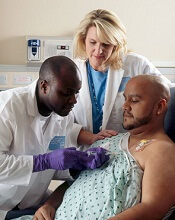
chemotherapy
Photo by Rhoda Baer
Cancer survivors’ moods are impacted—both positively and negatively—by their spouses’ moods, according to research published in Cancer Epidemiology, Biomarkers & Prevention.
In the study, cancer survivors whose spouses reported depressed moods were more likely to be depressed after about a year of follow-up, and survivors whose spouses reported better mental and physical health-related quality of life (HRQOL) were less likely to be depressed.
However, survivors’ moods did not have the same impact on their spouses.
“We were surprised that the effects of the spouses on the survivors were so much larger in this study than the effect of the survivors on their spouses,” said study author Kristin Litzelman, PhD, of the National Cancer Institute in Bethesda, Maryland. “We expected to see a more reciprocal relationship.”
Dr Litzelman and her colleagues conducted this research in an attempt to understand how cancer survivors and their families influence one another. The team hoped to identify ways to improve the healthcare both parties receive and thereby improve their health and well-being.
The researchers analyzed data from 910 cancer patients and their spouses, comparing them to 910 couples without any kind of cancer-related health problem.
The team used statistical models to assess how each spouse’s quality of life or depression at one time point was associated with his or her partner’s risk of depression around 11 months later. The researchers took into account a person’s previously reported mood, demographic characteristics, and other factors.
The results showed that, when spouses reported feeling depressed, cancer survivors were about 4 times more likely to report being depressed 11 months later (odds ratio [OR]=4.27). This association was stronger among female cancer survivors (OR=9.49) than male survivors (OR=3.98).
Cancer survivors whose spouses reported better HRQOL had a 30% decrease in depressed mood per 10-point improvement in HRQOL score. The ORs were 0.72 for mental health and 0.68 for physical health. The associations between spousal HRQOL and survivor depressed mood were similar for male and female survivors.
The researchers noted that cancer survivors’ moods did not have a significant impact on their spouses’ risk of depressed mood 11 months later.
And the team did not see mood associations in couples without any cancer-related health problems.
“This finding certainly needs to be backed up by other studies, but it highlights the importance of family well-being in cancer survivor outcomes,” Dr Litzelman said. “Our research highlights that spouses need to take care of themselves, not just for their own sake, but also for the sake of the cancer survivor.”
“Our findings also suggest that, when caring for cancer survivors, clinicians may want to assess the well-being of spousal caregivers. Future research could test whether including caregivers in the survivorship care plan might help to improve outcomes for both caregivers and for cancer survivors.”
chemotherapy
Photo by Rhoda Baer
Cancer survivors’ moods are impacted—both positively and negatively—by their spouses’ moods, according to research published in Cancer Epidemiology, Biomarkers & Prevention.
In the study, cancer survivors whose spouses reported depressed moods were more likely to be depressed after about a year of follow-up, and survivors whose spouses reported better mental and physical health-related quality of life (HRQOL) were less likely to be depressed.
However, survivors’ moods did not have the same impact on their spouses.
“We were surprised that the effects of the spouses on the survivors were so much larger in this study than the effect of the survivors on their spouses,” said study author Kristin Litzelman, PhD, of the National Cancer Institute in Bethesda, Maryland. “We expected to see a more reciprocal relationship.”
Dr Litzelman and her colleagues conducted this research in an attempt to understand how cancer survivors and their families influence one another. The team hoped to identify ways to improve the healthcare both parties receive and thereby improve their health and well-being.
The researchers analyzed data from 910 cancer patients and their spouses, comparing them to 910 couples without any kind of cancer-related health problem.
The team used statistical models to assess how each spouse’s quality of life or depression at one time point was associated with his or her partner’s risk of depression around 11 months later. The researchers took into account a person’s previously reported mood, demographic characteristics, and other factors.
The results showed that, when spouses reported feeling depressed, cancer survivors were about 4 times more likely to report being depressed 11 months later (odds ratio [OR]=4.27). This association was stronger among female cancer survivors (OR=9.49) than male survivors (OR=3.98).
Cancer survivors whose spouses reported better HRQOL had a 30% decrease in depressed mood per 10-point improvement in HRQOL score. The ORs were 0.72 for mental health and 0.68 for physical health. The associations between spousal HRQOL and survivor depressed mood were similar for male and female survivors.
The researchers noted that cancer survivors’ moods did not have a significant impact on their spouses’ risk of depressed mood 11 months later.
And the team did not see mood associations in couples without any cancer-related health problems.
“This finding certainly needs to be backed up by other studies, but it highlights the importance of family well-being in cancer survivor outcomes,” Dr Litzelman said. “Our research highlights that spouses need to take care of themselves, not just for their own sake, but also for the sake of the cancer survivor.”
“Our findings also suggest that, when caring for cancer survivors, clinicians may want to assess the well-being of spousal caregivers. Future research could test whether including caregivers in the survivorship care plan might help to improve outcomes for both caregivers and for cancer survivors.”
chemotherapy
Photo by Rhoda Baer
Cancer survivors’ moods are impacted—both positively and negatively—by their spouses’ moods, according to research published in Cancer Epidemiology, Biomarkers & Prevention.
In the study, cancer survivors whose spouses reported depressed moods were more likely to be depressed after about a year of follow-up, and survivors whose spouses reported better mental and physical health-related quality of life (HRQOL) were less likely to be depressed.
However, survivors’ moods did not have the same impact on their spouses.
“We were surprised that the effects of the spouses on the survivors were so much larger in this study than the effect of the survivors on their spouses,” said study author Kristin Litzelman, PhD, of the National Cancer Institute in Bethesda, Maryland. “We expected to see a more reciprocal relationship.”
Dr Litzelman and her colleagues conducted this research in an attempt to understand how cancer survivors and their families influence one another. The team hoped to identify ways to improve the healthcare both parties receive and thereby improve their health and well-being.
The researchers analyzed data from 910 cancer patients and their spouses, comparing them to 910 couples without any kind of cancer-related health problem.
The team used statistical models to assess how each spouse’s quality of life or depression at one time point was associated with his or her partner’s risk of depression around 11 months later. The researchers took into account a person’s previously reported mood, demographic characteristics, and other factors.
The results showed that, when spouses reported feeling depressed, cancer survivors were about 4 times more likely to report being depressed 11 months later (odds ratio [OR]=4.27). This association was stronger among female cancer survivors (OR=9.49) than male survivors (OR=3.98).
Cancer survivors whose spouses reported better HRQOL had a 30% decrease in depressed mood per 10-point improvement in HRQOL score. The ORs were 0.72 for mental health and 0.68 for physical health. The associations between spousal HRQOL and survivor depressed mood were similar for male and female survivors.
The researchers noted that cancer survivors’ moods did not have a significant impact on their spouses’ risk of depressed mood 11 months later.
And the team did not see mood associations in couples without any cancer-related health problems.
“This finding certainly needs to be backed up by other studies, but it highlights the importance of family well-being in cancer survivor outcomes,” Dr Litzelman said. “Our research highlights that spouses need to take care of themselves, not just for their own sake, but also for the sake of the cancer survivor.”
“Our findings also suggest that, when caring for cancer survivors, clinicians may want to assess the well-being of spousal caregivers. Future research could test whether including caregivers in the survivorship care plan might help to improve outcomes for both caregivers and for cancer survivors.”
VIDEO: Heavily pretreated multiple myeloma yields to novel antibody
CHICAGO – An investigational targeted therapy for multiple myeloma delayed disease progression in patients for whom as many as five prior lines of therapy had failed.
Daratumumab, an experimental antibody targeted to the CD38 receptor expressed at high levels on the surface of myeloma cells, was associated with a 29.2% overall response rate (ORR) at a median follow-up of 9.4 months, including three patients with a complete remission, Dr. Saad Zafar Usmani, a hematologist at Levine Cancer Institute-Carolinas Healthcare System in Charlotte, N.C., said in a video interview.
Dr. Usmani says that daratumumab monotherapy produced unprecedented overall responses that deepened over time in this heavily pretreated multiple myeloma patient population and that the results highlight the potential of daratumumab as a novel, well-tolerated, single-agent therapy that might be combined with existing therapies for treatment of refractory disease.
The video associated with this article is no longer available on this site. Please view all of our videos on the MDedge YouTube channel
CHICAGO – An investigational targeted therapy for multiple myeloma delayed disease progression in patients for whom as many as five prior lines of therapy had failed.
Daratumumab, an experimental antibody targeted to the CD38 receptor expressed at high levels on the surface of myeloma cells, was associated with a 29.2% overall response rate (ORR) at a median follow-up of 9.4 months, including three patients with a complete remission, Dr. Saad Zafar Usmani, a hematologist at Levine Cancer Institute-Carolinas Healthcare System in Charlotte, N.C., said in a video interview.
Dr. Usmani says that daratumumab monotherapy produced unprecedented overall responses that deepened over time in this heavily pretreated multiple myeloma patient population and that the results highlight the potential of daratumumab as a novel, well-tolerated, single-agent therapy that might be combined with existing therapies for treatment of refractory disease.
The video associated with this article is no longer available on this site. Please view all of our videos on the MDedge YouTube channel
CHICAGO – An investigational targeted therapy for multiple myeloma delayed disease progression in patients for whom as many as five prior lines of therapy had failed.
Daratumumab, an experimental antibody targeted to the CD38 receptor expressed at high levels on the surface of myeloma cells, was associated with a 29.2% overall response rate (ORR) at a median follow-up of 9.4 months, including three patients with a complete remission, Dr. Saad Zafar Usmani, a hematologist at Levine Cancer Institute-Carolinas Healthcare System in Charlotte, N.C., said in a video interview.
Dr. Usmani says that daratumumab monotherapy produced unprecedented overall responses that deepened over time in this heavily pretreated multiple myeloma patient population and that the results highlight the potential of daratumumab as a novel, well-tolerated, single-agent therapy that might be combined with existing therapies for treatment of refractory disease.
The video associated with this article is no longer available on this site. Please view all of our videos on the MDedge YouTube channel
AT THE 2015 ASCO ANNUAL MEETING
Drug prolongs PFS in indolent, refractory NHL
the 2015 ASCO Annual Meeting
CHICAGO—Adding obinutuzumab to treatment with bendamustine improves progression-free survival (PFS) in patients with rituximab-refractory, indolent non-Hodgkin lymphoma (NHL), interim results of the phase 3 GADOLIN trial suggest.
Study investigators said patients who received obinutuzumab and bendamustine followed by obinutuzumab maintenance had roughly double the PFS of patients who received bendamustine alone.
There was no significant difference between the treatment groups with regard to response rates or overall survival (OS), but the investigators said longer follow-up is needed to determine if obinutuzumab confers a benefit in OS.
This trial was stopped before its protocol-specified final analysis because of the PFS benefit observed in the obinutuzumab arm.
Laurie Sehn, MD, of the BC Cancer Agency in Vancouver, Canada, presented these results at the 2015 ASCO Annual Meeting (abstract LBA8502). Genentech Inc. and F. Hoffmann-La Roche Ltd. funded this research.
The trial included 413 patients with rituximab-refractory NHL, including follicular lymphoma (FL), marginal zone lymphoma (MZL), small lymphocytic lymphoma (SLL), and Waldenstrom’s macroglobulinemia (WM).
The patients were randomized to receive bendamustine alone (120 mg/m2/day on days 1 and 2 for up to six 28-day cycles) or a combination of bendamustine (90 mg/m2/day on days 1 and 2 for up to six 28-day cycles) plus obinutuzumab (1000 mg on days 1, 8, and 15 for cycle 1, followed by 1 dose for up to six 28-day cycles), followed by obinutuzumab maintenance (1000 mg every 2 months for 2 years or until progression).
Dr Sehn said there were no significant differences in baseline characteristics between the treatment arms. Patients in both arms had received a median of 2 prior treatments, and the median time from last treatment was about 4 months.
Of the 194 patients randomized to treatment in the obinutuzumab-bendamustine (OB) arm, 79.9% had FL, 13.9% had MZL, and 6.2% had SLL. Of the 202 patients randomized to the bendamustine-alone (control) arm, 82.2% had FL, 9.4% had MZL, 7.9% had SLL, and 0.5% had WM.
Ultimately, 156 patients completed induction in the OB arm, as did 129 patients in the control arm. Thirty-six patients completed maintenance with obinutuzumab, and 46 were still receiving maintenance at the time of analysis.
Safety results
Dr Sehn said there were no unexpected safety signals among patients in the OB arm.
About 99% of patients in the OB arm experienced at least 1 adverse event (AE), as did 98% of patients in the control arm. Severe AEs occurred in 38.1% and 32.8% of patients, respectively, and grade 3/4 AEs occurred in 67% and 62.1%, respectively.
AEs leading to treatment withdrawal occurred in 18% and 15.7% of patients, respectively. And AEs leading to death occurred in 6.2% and 6.1%, respectively.
Grade 3/4 AEs that occurred in at least 2% of patients in the OB and control arms, respectively, were neutropenia (33% vs 26.3%), thrombocytopenia (10.8% vs 16.2%), infusion-related reactions (10.8% vs 5.6%), anemia (7.7% vs 10.1%), febrile neutropenia (4.6% vs 3.5%), nausea (1% vs 3%), fatigue (1.5% vs 2.5%), diarrhea (1% vs 2.5%), and vomiting (2.1% vs 1%).
Response and survival
According to an independent radiology facility, 69.2% of patients in the OB arm had responded to treatment at the end of induction, as had 63% of the control arm. The best overall response by the 12-month mark was 78.7% and 76.6%, respectively.
The median follow-up was 21 months. At that point, the median PFS had not been reached in the OB arm but was 14.9 months in the control arm (P<0.0001), according to the independent radiology facility.
According to investigators, the median PFS was 29.2 months and 14 months, respectively (P<0.0001).
The median OS has not been reached in either arm (P=0.4017). Thirty-four patients (18%) in the OB arm died, as did 41 (20%) in the control arm.
Dr Sehn said longer follow-up is needed to determine the potential OS benefit associated with obinutuzumab, but the PFS benefit of OB is clinically meaningful.
“The fact that this new approach doubled average remission time marks a major step forward for our patients,” she said. “Obinutuzumab may offer patients the chance to stay well for a significantly longer period of time, putting off the need for additional chemotherapy.”
the 2015 ASCO Annual Meeting
CHICAGO—Adding obinutuzumab to treatment with bendamustine improves progression-free survival (PFS) in patients with rituximab-refractory, indolent non-Hodgkin lymphoma (NHL), interim results of the phase 3 GADOLIN trial suggest.
Study investigators said patients who received obinutuzumab and bendamustine followed by obinutuzumab maintenance had roughly double the PFS of patients who received bendamustine alone.
There was no significant difference between the treatment groups with regard to response rates or overall survival (OS), but the investigators said longer follow-up is needed to determine if obinutuzumab confers a benefit in OS.
This trial was stopped before its protocol-specified final analysis because of the PFS benefit observed in the obinutuzumab arm.
Laurie Sehn, MD, of the BC Cancer Agency in Vancouver, Canada, presented these results at the 2015 ASCO Annual Meeting (abstract LBA8502). Genentech Inc. and F. Hoffmann-La Roche Ltd. funded this research.
The trial included 413 patients with rituximab-refractory NHL, including follicular lymphoma (FL), marginal zone lymphoma (MZL), small lymphocytic lymphoma (SLL), and Waldenstrom’s macroglobulinemia (WM).
The patients were randomized to receive bendamustine alone (120 mg/m2/day on days 1 and 2 for up to six 28-day cycles) or a combination of bendamustine (90 mg/m2/day on days 1 and 2 for up to six 28-day cycles) plus obinutuzumab (1000 mg on days 1, 8, and 15 for cycle 1, followed by 1 dose for up to six 28-day cycles), followed by obinutuzumab maintenance (1000 mg every 2 months for 2 years or until progression).
Dr Sehn said there were no significant differences in baseline characteristics between the treatment arms. Patients in both arms had received a median of 2 prior treatments, and the median time from last treatment was about 4 months.
Of the 194 patients randomized to treatment in the obinutuzumab-bendamustine (OB) arm, 79.9% had FL, 13.9% had MZL, and 6.2% had SLL. Of the 202 patients randomized to the bendamustine-alone (control) arm, 82.2% had FL, 9.4% had MZL, 7.9% had SLL, and 0.5% had WM.
Ultimately, 156 patients completed induction in the OB arm, as did 129 patients in the control arm. Thirty-six patients completed maintenance with obinutuzumab, and 46 were still receiving maintenance at the time of analysis.
Safety results
Dr Sehn said there were no unexpected safety signals among patients in the OB arm.
About 99% of patients in the OB arm experienced at least 1 adverse event (AE), as did 98% of patients in the control arm. Severe AEs occurred in 38.1% and 32.8% of patients, respectively, and grade 3/4 AEs occurred in 67% and 62.1%, respectively.
AEs leading to treatment withdrawal occurred in 18% and 15.7% of patients, respectively. And AEs leading to death occurred in 6.2% and 6.1%, respectively.
Grade 3/4 AEs that occurred in at least 2% of patients in the OB and control arms, respectively, were neutropenia (33% vs 26.3%), thrombocytopenia (10.8% vs 16.2%), infusion-related reactions (10.8% vs 5.6%), anemia (7.7% vs 10.1%), febrile neutropenia (4.6% vs 3.5%), nausea (1% vs 3%), fatigue (1.5% vs 2.5%), diarrhea (1% vs 2.5%), and vomiting (2.1% vs 1%).
Response and survival
According to an independent radiology facility, 69.2% of patients in the OB arm had responded to treatment at the end of induction, as had 63% of the control arm. The best overall response by the 12-month mark was 78.7% and 76.6%, respectively.
The median follow-up was 21 months. At that point, the median PFS had not been reached in the OB arm but was 14.9 months in the control arm (P<0.0001), according to the independent radiology facility.
According to investigators, the median PFS was 29.2 months and 14 months, respectively (P<0.0001).
The median OS has not been reached in either arm (P=0.4017). Thirty-four patients (18%) in the OB arm died, as did 41 (20%) in the control arm.
Dr Sehn said longer follow-up is needed to determine the potential OS benefit associated with obinutuzumab, but the PFS benefit of OB is clinically meaningful.
“The fact that this new approach doubled average remission time marks a major step forward for our patients,” she said. “Obinutuzumab may offer patients the chance to stay well for a significantly longer period of time, putting off the need for additional chemotherapy.”
the 2015 ASCO Annual Meeting
CHICAGO—Adding obinutuzumab to treatment with bendamustine improves progression-free survival (PFS) in patients with rituximab-refractory, indolent non-Hodgkin lymphoma (NHL), interim results of the phase 3 GADOLIN trial suggest.
Study investigators said patients who received obinutuzumab and bendamustine followed by obinutuzumab maintenance had roughly double the PFS of patients who received bendamustine alone.
There was no significant difference between the treatment groups with regard to response rates or overall survival (OS), but the investigators said longer follow-up is needed to determine if obinutuzumab confers a benefit in OS.
This trial was stopped before its protocol-specified final analysis because of the PFS benefit observed in the obinutuzumab arm.
Laurie Sehn, MD, of the BC Cancer Agency in Vancouver, Canada, presented these results at the 2015 ASCO Annual Meeting (abstract LBA8502). Genentech Inc. and F. Hoffmann-La Roche Ltd. funded this research.
The trial included 413 patients with rituximab-refractory NHL, including follicular lymphoma (FL), marginal zone lymphoma (MZL), small lymphocytic lymphoma (SLL), and Waldenstrom’s macroglobulinemia (WM).
The patients were randomized to receive bendamustine alone (120 mg/m2/day on days 1 and 2 for up to six 28-day cycles) or a combination of bendamustine (90 mg/m2/day on days 1 and 2 for up to six 28-day cycles) plus obinutuzumab (1000 mg on days 1, 8, and 15 for cycle 1, followed by 1 dose for up to six 28-day cycles), followed by obinutuzumab maintenance (1000 mg every 2 months for 2 years or until progression).
Dr Sehn said there were no significant differences in baseline characteristics between the treatment arms. Patients in both arms had received a median of 2 prior treatments, and the median time from last treatment was about 4 months.
Of the 194 patients randomized to treatment in the obinutuzumab-bendamustine (OB) arm, 79.9% had FL, 13.9% had MZL, and 6.2% had SLL. Of the 202 patients randomized to the bendamustine-alone (control) arm, 82.2% had FL, 9.4% had MZL, 7.9% had SLL, and 0.5% had WM.
Ultimately, 156 patients completed induction in the OB arm, as did 129 patients in the control arm. Thirty-six patients completed maintenance with obinutuzumab, and 46 were still receiving maintenance at the time of analysis.
Safety results
Dr Sehn said there were no unexpected safety signals among patients in the OB arm.
About 99% of patients in the OB arm experienced at least 1 adverse event (AE), as did 98% of patients in the control arm. Severe AEs occurred in 38.1% and 32.8% of patients, respectively, and grade 3/4 AEs occurred in 67% and 62.1%, respectively.
AEs leading to treatment withdrawal occurred in 18% and 15.7% of patients, respectively. And AEs leading to death occurred in 6.2% and 6.1%, respectively.
Grade 3/4 AEs that occurred in at least 2% of patients in the OB and control arms, respectively, were neutropenia (33% vs 26.3%), thrombocytopenia (10.8% vs 16.2%), infusion-related reactions (10.8% vs 5.6%), anemia (7.7% vs 10.1%), febrile neutropenia (4.6% vs 3.5%), nausea (1% vs 3%), fatigue (1.5% vs 2.5%), diarrhea (1% vs 2.5%), and vomiting (2.1% vs 1%).
Response and survival
According to an independent radiology facility, 69.2% of patients in the OB arm had responded to treatment at the end of induction, as had 63% of the control arm. The best overall response by the 12-month mark was 78.7% and 76.6%, respectively.
The median follow-up was 21 months. At that point, the median PFS had not been reached in the OB arm but was 14.9 months in the control arm (P<0.0001), according to the independent radiology facility.
According to investigators, the median PFS was 29.2 months and 14 months, respectively (P<0.0001).
The median OS has not been reached in either arm (P=0.4017). Thirty-four patients (18%) in the OB arm died, as did 41 (20%) in the control arm.
Dr Sehn said longer follow-up is needed to determine the potential OS benefit associated with obinutuzumab, but the PFS benefit of OB is clinically meaningful.
“The fact that this new approach doubled average remission time marks a major step forward for our patients,” she said. “Obinutuzumab may offer patients the chance to stay well for a significantly longer period of time, putting off the need for additional chemotherapy.”