User login
Presidential Address: 'Changing Me to We in Vascular Care'
When R. Clement Darling III, MD, took to the podium at the Vascular Annual Meeting to present his presidential address, he highlighted the importance of teamwork and collaboration in training, in maintaining personal well-being, and most importantly, in patient care.
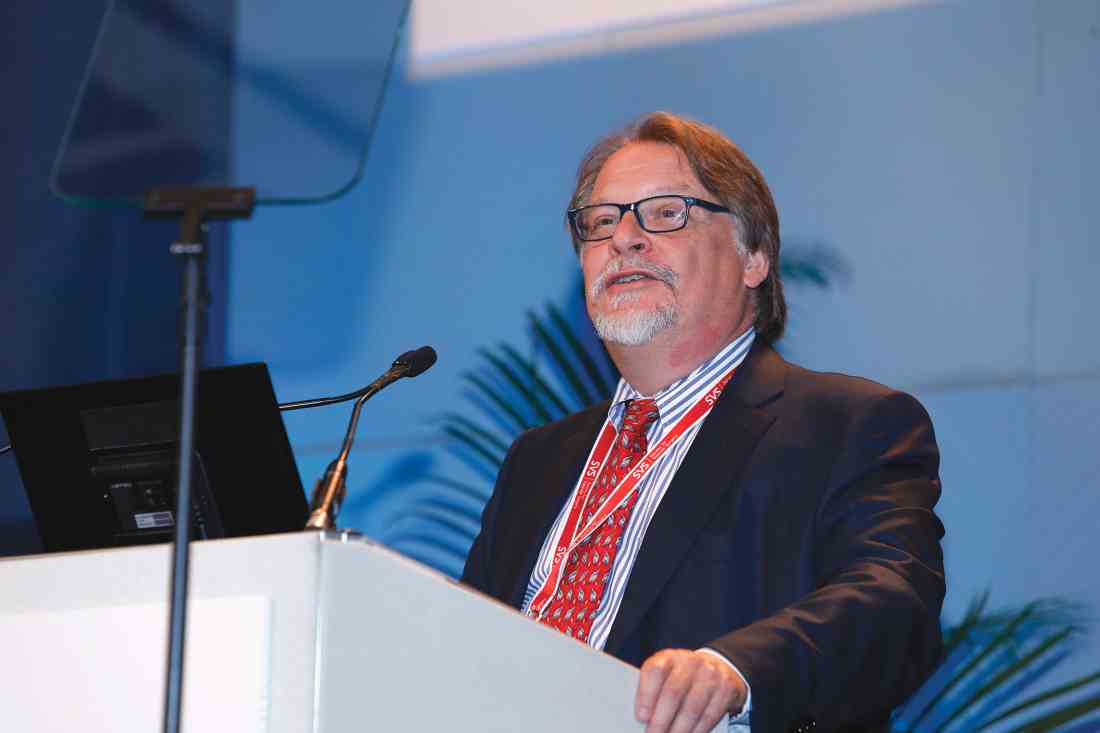
His talk, titled, “Looking Forward Through the Past: Changing Me to We in the Evolution of Team-based Vascular Care,” addressed these issues through a very personal lens. To make his point, Dr. Darling outlined four key take-home concepts that he had found useful “over five decades of working in an operating room as a technologist, a student and a surgeon,” and as chief of the division of vascular surgery at Albany Medical Center Hospital (N.Y.). These formed the basis of his entire address:
1. “None of us is as smart as all of us.” We learn from each other which is the foundation of team-based training.
2. The key to resilience, healing and health, whether for our patients or for ourselves, is caring and supporting each other more.
3. Failure is not an end result. It is the path to success through learning.
4. Remember the past but look to the future. The best predictor of future behavior is the past, but the future we are experiencing now, is like no other!”
Dr. Darling spoke from the heart about the importance of his colleagues and his parents, especially the role of his father as a pioneer in vascular surgery, and of the women in his life as role models.
He stressed how “one of the invaluable things I have learned is the value of failure, evaluating the past to avoid the same mistakes and the benefit of the TEAM in providing support and care.”
“Every day we’re asked to do the impossible and every day we get up, go to work. We do the best we can. We can make the best plans, treat the sickest patients and get a tremendous fulfillment for what we do in what we do. We do the right thing for the patient,” Dr. Darling explained, in summarizing the passion that he feels for vascular surgery.
“We are always willing to do and try the impossible. We’re always willing to be the last person to call when things look bleak. It brings me great glee whenever we get called to the operating room and people look around and go, ‘oh thank God, the vascular surgeon’s here.’ Our colleagues in other specialties are often afraid of blood vessels, afraid of death, afraid of complications. We thrust ourselves every day into situations where nobody else will go,” he added.
“As vascular surgeons we face failure and roadblocks daily yet still persist where others are scared to tread. Many of you have faced far worse barriers of discrimination and unreasonable arbitrary barriers, and I am constantly humbled by your ability to overcome them,” Dr. Darling said. He pointed out that: “This innate ability to focus on the problem is what makes vascular surgeons great. No problem is too complex, no detail is too small. We do the right thing despite the odds against us. We do right by the patient.”
After telling some of his own stories of “failure,” to illustrate its importance as a learning tool, Dr. Darling spoke of one person’s reception of his application to join the SVS: “When I applied for membership to the Society for Vascular Surgery, someone had written a note saying that ‘I should never be considered, nor was I deserving to be a member of the SVS, and never should I be admitted into this austere society.’”
Throughout his address, Dr. Darling re-emphasized the importance of teams and the collaborative nature of patient care. “The SVS has developed strong partnerships with the Society for Vascular Nursing, The American Venous Forum, The Society for Vascular Ultrasound, and is seeking to strengthen relationships with the regional vascular societies, VESS, the Society for Clinical Vascular Surgery, The Society for Vascular Medicine, the American Heart Association, and many others.
“The SVS is developing these relationships with the patient at the center, and with purpose, focusing on ‘shared vision,’ of specific advancements, programs, and initiatives that will advance quality of care. By tapping into this vast array of talent Vascular Surgery will become more agile, intelligent and thoughtful in our care of vascular patients,” Dr. Darling predicted.
But vascular surgeons must become comfortable with moving from the concept of “captain of the ship” to the role of team leadership, he emphasized, if they are to truly succeed in their careers and in providing optimal patient care.
“Currently, each patient coming to your service touches over 100 staff during their experience. This includes your office, vascular lab, angio suite, recovery room, hospital floor, ICU, CT scanner to name a few.” This is part of the need for the evolution from ‘captain’ to ‘leader,’ he added.
“If you have not had any formal training in leadership or team development, I strongly suggest you add this to your learning portfolio,” Dr. Darling counseled. “The SVS is addressing this through its Leadership and Diversity Committee, and you will see an expanding array of learning opportunities in the future.”
With regard to his own tenure as SVS President: “I am proud that during my year as president, the SVS has invested in several new Task Forces to address critical future issues including: Alternative Payment Models for vascular surgery; a national inpatient and outpatient vascular certification program; a focus on our own health, wellness, and potential ways to mitigate potential burnout; and Dr. Makaroun will be taking on the issues of vascular surgery valuation and workforce in the new Task Force on the Future of Vascular Surgery.”
He further discussed the role SVS is playing in helping to define the future of vascular surgery.
“As we work to strengthen our brand and identity, the SVS Executive Board has supported, and thanks, Amy Reed and Will Jordan for their leadership in the APDVS [Association of Program Directors of Vascular Surgery], and for taking the first step toward attaining a separate Vascular Residency Review Committee or RRC.” In addition, he described how “SVS is also working closely, and collaboratively, with the American Board of Surgery, and the Vascular Surgery Board, to complete the work that was begun a decade ago, and achieve an autonomous vascular surgery board that is an equal partner and stakeholder in the ABS.”
Dr. Darling then outlined one of his major concerns and interests: the exit path of senior vascular surgeons, and how this is often a tremendous waste of talent and expertise. “In the last decade of work when senior surgeons are trying to transition to non-clinical work, I think we throw away much of their intellectual skill and experience in dealing with vascular surgery problems,” he said. He urged that “as our senior surgeons leave clinical practice, we need to use their intellectual expertise and experience in a more productive way.”
The Society for Vascular Surgery is establishing pathways for leadership and pathways to train people in administration, he added.
Turning back to the extreme importance of teamwork, Dr. Darling addressed the future.
“We, physicians, nurses, PAs, technologists, staff, and administrators, need to work together, think together, to grow together, not only for our patients, but for our partners and our families. We are all part of the vascular team,” Dr. Darling said.
When R. Clement Darling III, MD, took to the podium at the Vascular Annual Meeting to present his presidential address, he highlighted the importance of teamwork and collaboration in training, in maintaining personal well-being, and most importantly, in patient care.
His talk, titled, “Looking Forward Through the Past: Changing Me to We in the Evolution of Team-based Vascular Care,” addressed these issues through a very personal lens. To make his point, Dr. Darling outlined four key take-home concepts that he had found useful “over five decades of working in an operating room as a technologist, a student and a surgeon,” and as chief of the division of vascular surgery at Albany Medical Center Hospital (N.Y.). These formed the basis of his entire address:
1. “None of us is as smart as all of us.” We learn from each other which is the foundation of team-based training.
2. The key to resilience, healing and health, whether for our patients or for ourselves, is caring and supporting each other more.
3. Failure is not an end result. It is the path to success through learning.
4. Remember the past but look to the future. The best predictor of future behavior is the past, but the future we are experiencing now, is like no other!”
Dr. Darling spoke from the heart about the importance of his colleagues and his parents, especially the role of his father as a pioneer in vascular surgery, and of the women in his life as role models.
He stressed how “one of the invaluable things I have learned is the value of failure, evaluating the past to avoid the same mistakes and the benefit of the TEAM in providing support and care.”
“Every day we’re asked to do the impossible and every day we get up, go to work. We do the best we can. We can make the best plans, treat the sickest patients and get a tremendous fulfillment for what we do in what we do. We do the right thing for the patient,” Dr. Darling explained, in summarizing the passion that he feels for vascular surgery.
“We are always willing to do and try the impossible. We’re always willing to be the last person to call when things look bleak. It brings me great glee whenever we get called to the operating room and people look around and go, ‘oh thank God, the vascular surgeon’s here.’ Our colleagues in other specialties are often afraid of blood vessels, afraid of death, afraid of complications. We thrust ourselves every day into situations where nobody else will go,” he added.
“As vascular surgeons we face failure and roadblocks daily yet still persist where others are scared to tread. Many of you have faced far worse barriers of discrimination and unreasonable arbitrary barriers, and I am constantly humbled by your ability to overcome them,” Dr. Darling said. He pointed out that: “This innate ability to focus on the problem is what makes vascular surgeons great. No problem is too complex, no detail is too small. We do the right thing despite the odds against us. We do right by the patient.”
After telling some of his own stories of “failure,” to illustrate its importance as a learning tool, Dr. Darling spoke of one person’s reception of his application to join the SVS: “When I applied for membership to the Society for Vascular Surgery, someone had written a note saying that ‘I should never be considered, nor was I deserving to be a member of the SVS, and never should I be admitted into this austere society.’”
Throughout his address, Dr. Darling re-emphasized the importance of teams and the collaborative nature of patient care. “The SVS has developed strong partnerships with the Society for Vascular Nursing, The American Venous Forum, The Society for Vascular Ultrasound, and is seeking to strengthen relationships with the regional vascular societies, VESS, the Society for Clinical Vascular Surgery, The Society for Vascular Medicine, the American Heart Association, and many others.
“The SVS is developing these relationships with the patient at the center, and with purpose, focusing on ‘shared vision,’ of specific advancements, programs, and initiatives that will advance quality of care. By tapping into this vast array of talent Vascular Surgery will become more agile, intelligent and thoughtful in our care of vascular patients,” Dr. Darling predicted.
But vascular surgeons must become comfortable with moving from the concept of “captain of the ship” to the role of team leadership, he emphasized, if they are to truly succeed in their careers and in providing optimal patient care.
“Currently, each patient coming to your service touches over 100 staff during their experience. This includes your office, vascular lab, angio suite, recovery room, hospital floor, ICU, CT scanner to name a few.” This is part of the need for the evolution from ‘captain’ to ‘leader,’ he added.
“If you have not had any formal training in leadership or team development, I strongly suggest you add this to your learning portfolio,” Dr. Darling counseled. “The SVS is addressing this through its Leadership and Diversity Committee, and you will see an expanding array of learning opportunities in the future.”
With regard to his own tenure as SVS President: “I am proud that during my year as president, the SVS has invested in several new Task Forces to address critical future issues including: Alternative Payment Models for vascular surgery; a national inpatient and outpatient vascular certification program; a focus on our own health, wellness, and potential ways to mitigate potential burnout; and Dr. Makaroun will be taking on the issues of vascular surgery valuation and workforce in the new Task Force on the Future of Vascular Surgery.”
He further discussed the role SVS is playing in helping to define the future of vascular surgery.
“As we work to strengthen our brand and identity, the SVS Executive Board has supported, and thanks, Amy Reed and Will Jordan for their leadership in the APDVS [Association of Program Directors of Vascular Surgery], and for taking the first step toward attaining a separate Vascular Residency Review Committee or RRC.” In addition, he described how “SVS is also working closely, and collaboratively, with the American Board of Surgery, and the Vascular Surgery Board, to complete the work that was begun a decade ago, and achieve an autonomous vascular surgery board that is an equal partner and stakeholder in the ABS.”
Dr. Darling then outlined one of his major concerns and interests: the exit path of senior vascular surgeons, and how this is often a tremendous waste of talent and expertise. “In the last decade of work when senior surgeons are trying to transition to non-clinical work, I think we throw away much of their intellectual skill and experience in dealing with vascular surgery problems,” he said. He urged that “as our senior surgeons leave clinical practice, we need to use their intellectual expertise and experience in a more productive way.”
The Society for Vascular Surgery is establishing pathways for leadership and pathways to train people in administration, he added.
Turning back to the extreme importance of teamwork, Dr. Darling addressed the future.
“We, physicians, nurses, PAs, technologists, staff, and administrators, need to work together, think together, to grow together, not only for our patients, but for our partners and our families. We are all part of the vascular team,” Dr. Darling said.
When R. Clement Darling III, MD, took to the podium at the Vascular Annual Meeting to present his presidential address, he highlighted the importance of teamwork and collaboration in training, in maintaining personal well-being, and most importantly, in patient care.
His talk, titled, “Looking Forward Through the Past: Changing Me to We in the Evolution of Team-based Vascular Care,” addressed these issues through a very personal lens. To make his point, Dr. Darling outlined four key take-home concepts that he had found useful “over five decades of working in an operating room as a technologist, a student and a surgeon,” and as chief of the division of vascular surgery at Albany Medical Center Hospital (N.Y.). These formed the basis of his entire address:
1. “None of us is as smart as all of us.” We learn from each other which is the foundation of team-based training.
2. The key to resilience, healing and health, whether for our patients or for ourselves, is caring and supporting each other more.
3. Failure is not an end result. It is the path to success through learning.
4. Remember the past but look to the future. The best predictor of future behavior is the past, but the future we are experiencing now, is like no other!”
Dr. Darling spoke from the heart about the importance of his colleagues and his parents, especially the role of his father as a pioneer in vascular surgery, and of the women in his life as role models.
He stressed how “one of the invaluable things I have learned is the value of failure, evaluating the past to avoid the same mistakes and the benefit of the TEAM in providing support and care.”
“Every day we’re asked to do the impossible and every day we get up, go to work. We do the best we can. We can make the best plans, treat the sickest patients and get a tremendous fulfillment for what we do in what we do. We do the right thing for the patient,” Dr. Darling explained, in summarizing the passion that he feels for vascular surgery.
“We are always willing to do and try the impossible. We’re always willing to be the last person to call when things look bleak. It brings me great glee whenever we get called to the operating room and people look around and go, ‘oh thank God, the vascular surgeon’s here.’ Our colleagues in other specialties are often afraid of blood vessels, afraid of death, afraid of complications. We thrust ourselves every day into situations where nobody else will go,” he added.
“As vascular surgeons we face failure and roadblocks daily yet still persist where others are scared to tread. Many of you have faced far worse barriers of discrimination and unreasonable arbitrary barriers, and I am constantly humbled by your ability to overcome them,” Dr. Darling said. He pointed out that: “This innate ability to focus on the problem is what makes vascular surgeons great. No problem is too complex, no detail is too small. We do the right thing despite the odds against us. We do right by the patient.”
After telling some of his own stories of “failure,” to illustrate its importance as a learning tool, Dr. Darling spoke of one person’s reception of his application to join the SVS: “When I applied for membership to the Society for Vascular Surgery, someone had written a note saying that ‘I should never be considered, nor was I deserving to be a member of the SVS, and never should I be admitted into this austere society.’”
Throughout his address, Dr. Darling re-emphasized the importance of teams and the collaborative nature of patient care. “The SVS has developed strong partnerships with the Society for Vascular Nursing, The American Venous Forum, The Society for Vascular Ultrasound, and is seeking to strengthen relationships with the regional vascular societies, VESS, the Society for Clinical Vascular Surgery, The Society for Vascular Medicine, the American Heart Association, and many others.
“The SVS is developing these relationships with the patient at the center, and with purpose, focusing on ‘shared vision,’ of specific advancements, programs, and initiatives that will advance quality of care. By tapping into this vast array of talent Vascular Surgery will become more agile, intelligent and thoughtful in our care of vascular patients,” Dr. Darling predicted.
But vascular surgeons must become comfortable with moving from the concept of “captain of the ship” to the role of team leadership, he emphasized, if they are to truly succeed in their careers and in providing optimal patient care.
“Currently, each patient coming to your service touches over 100 staff during their experience. This includes your office, vascular lab, angio suite, recovery room, hospital floor, ICU, CT scanner to name a few.” This is part of the need for the evolution from ‘captain’ to ‘leader,’ he added.
“If you have not had any formal training in leadership or team development, I strongly suggest you add this to your learning portfolio,” Dr. Darling counseled. “The SVS is addressing this through its Leadership and Diversity Committee, and you will see an expanding array of learning opportunities in the future.”
With regard to his own tenure as SVS President: “I am proud that during my year as president, the SVS has invested in several new Task Forces to address critical future issues including: Alternative Payment Models for vascular surgery; a national inpatient and outpatient vascular certification program; a focus on our own health, wellness, and potential ways to mitigate potential burnout; and Dr. Makaroun will be taking on the issues of vascular surgery valuation and workforce in the new Task Force on the Future of Vascular Surgery.”
He further discussed the role SVS is playing in helping to define the future of vascular surgery.
“As we work to strengthen our brand and identity, the SVS Executive Board has supported, and thanks, Amy Reed and Will Jordan for their leadership in the APDVS [Association of Program Directors of Vascular Surgery], and for taking the first step toward attaining a separate Vascular Residency Review Committee or RRC.” In addition, he described how “SVS is also working closely, and collaboratively, with the American Board of Surgery, and the Vascular Surgery Board, to complete the work that was begun a decade ago, and achieve an autonomous vascular surgery board that is an equal partner and stakeholder in the ABS.”
Dr. Darling then outlined one of his major concerns and interests: the exit path of senior vascular surgeons, and how this is often a tremendous waste of talent and expertise. “In the last decade of work when senior surgeons are trying to transition to non-clinical work, I think we throw away much of their intellectual skill and experience in dealing with vascular surgery problems,” he said. He urged that “as our senior surgeons leave clinical practice, we need to use their intellectual expertise and experience in a more productive way.”
The Society for Vascular Surgery is establishing pathways for leadership and pathways to train people in administration, he added.
Turning back to the extreme importance of teamwork, Dr. Darling addressed the future.
“We, physicians, nurses, PAs, technologists, staff, and administrators, need to work together, think together, to grow together, not only for our patients, but for our partners and our families. We are all part of the vascular team,” Dr. Darling said.
Don’t Miss Practice Management Tips for Novice and Seasoned Surgeons
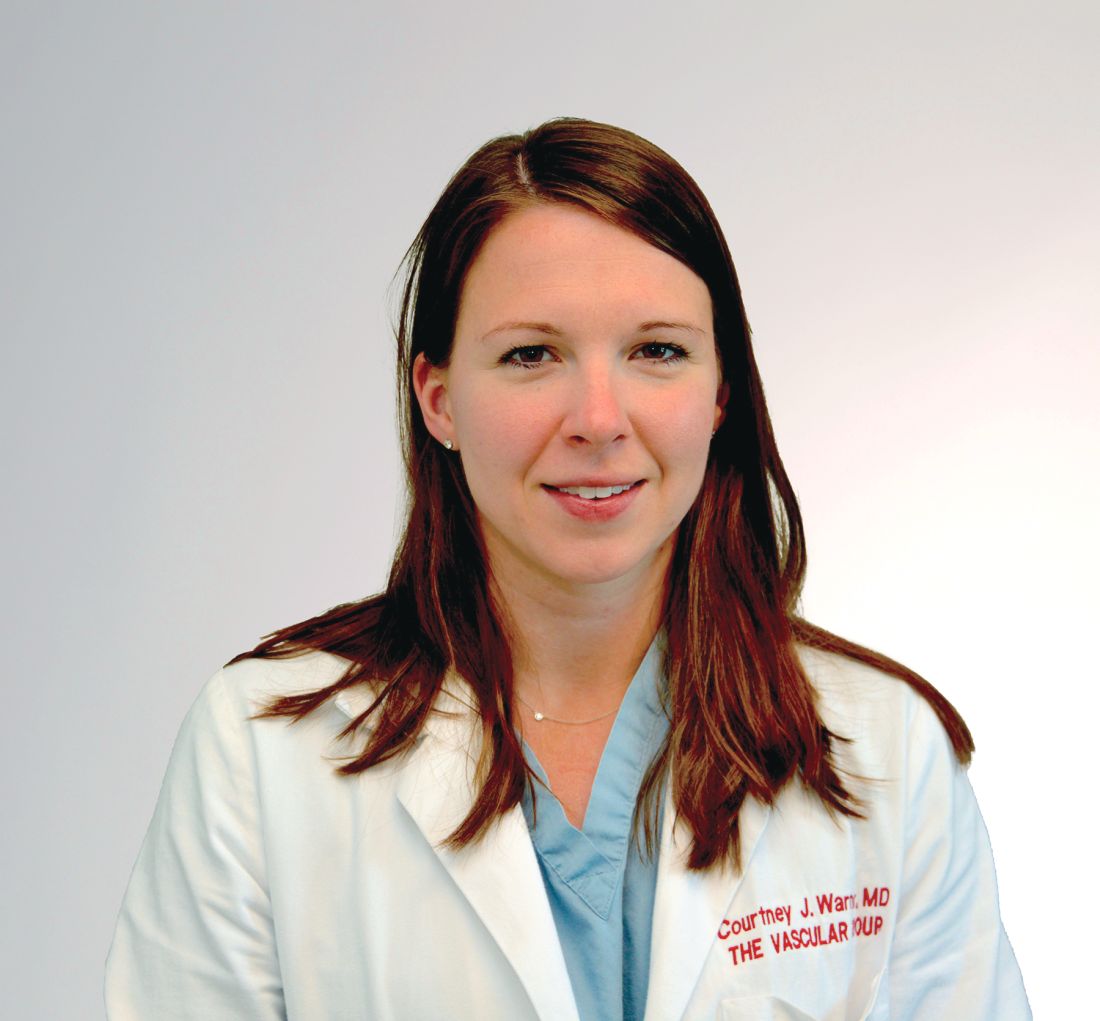
Young vascular surgeons looking to make their marks and balance their lives, as well as more experienced surgeons seeking tips for more effective practice and career management, should consider the session led by Jeffrey Siracuse, MD, of Boston Medical Center, and Courtney Warner, MD, of Albany Medical College, Saratoga Springs, N.Y.
“This will be a great and informative session that, although geared toward young surgeons, will be highly useful for surgeons of all experience levels,” Dr. Siracuse said of the session.
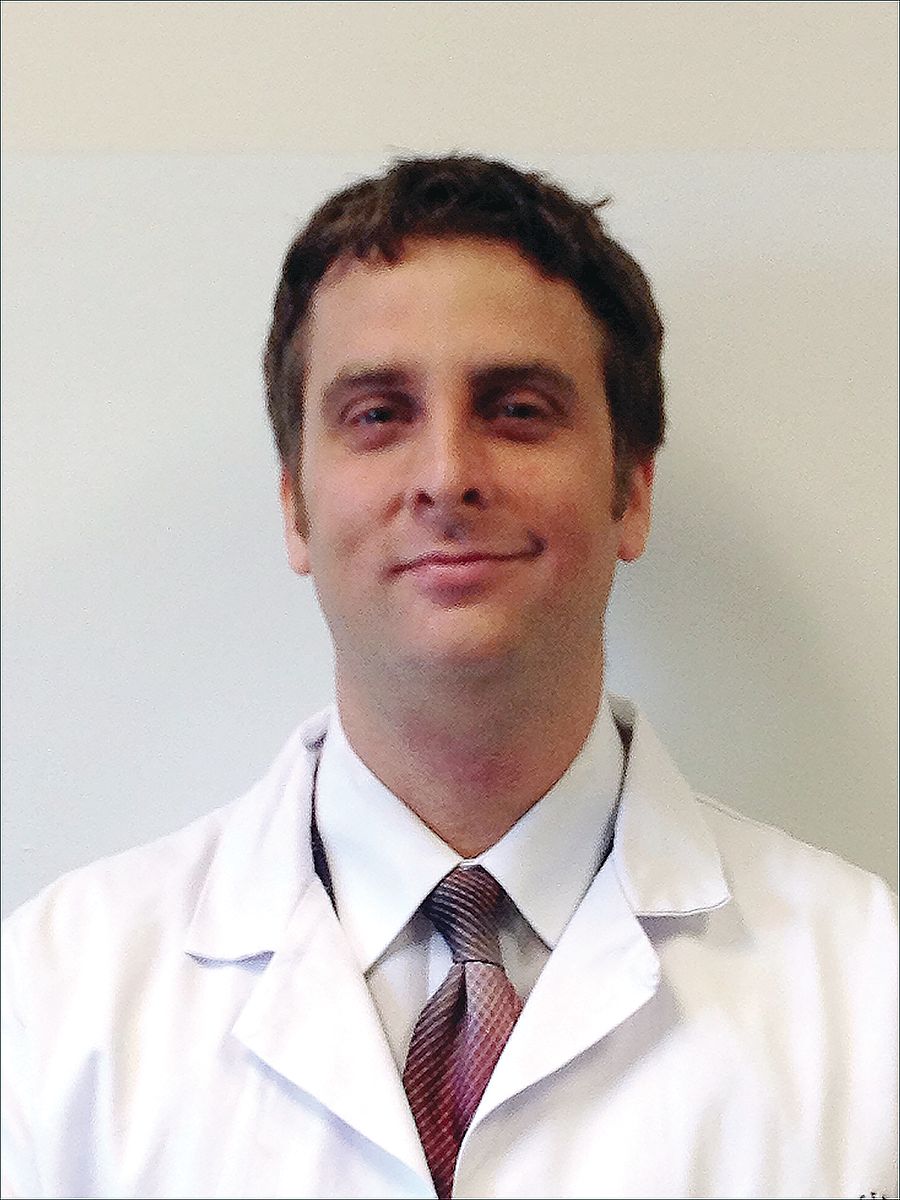
“Topics include building a successful academic practice, building a successful private practice, how to work with other specialties, how to negotiate a contract, how to improve one’s current job, and more on the business side of medicine,” said Dr. Siracuse. The discussions will be followed by a Q&A panel.
The first job after a fellowship is often the first “real job” of any type that new surgeons have had, Dr. Siracuse said. Medical school offers many things, but young surgeons may be underprepared for how to negotiate for one’s first surgical position and how to set oneself up for success, he explained. That said, the keys for success are significantly different for surgeons entering an academic setting or private practice, he noted.
The session kicks off with presenters addressing both types of practice.
Faisal Aziz, MD, of Penn State Hershey College of Medicine, Hershey, addresses the “Top 10 Roadblocks to a Successful Academic Practice,” and Scott Berman, MD, of Carondelet Medical Group in Tucson, Ariz., takes on the “Top 10 Roadblocks to a Successful Private Practice.”
Some subjects likely to prompt lively discussion among seasoned veteran surgeons as well as novices include how to effectively negotiate and renegotiate contracts. The contracts presentation, “Top 10 Tips on Negotiating Contracts and Other Things I Learned in Business School,” is scheduled to be given by Bruce Perler, MD, of Johns Hopkins University in Baltimore, Md.
In addition, surgeons at all levels of experience can benefit from tips on how to work with individuals in other specialties, especially if one is competing with them for patients and cases, Dr. Siracuse said. Brandon Propper, MD, of San Antonio Military Medical Center, Texas, steps up to the plate with his “Top 10 Ways to Work With Other Specialties.”
The Practice Management Tips and Tricks for Young Vascular Surgeons session is recommended by the Community Practice Committee and the Young Surgeons Committee.
Friday, June 22
1:30 – 3:00 p.m.
HCC, Room 311
C5: Practice Management Tips and Tricks for Young Vascular Surgeons
Young vascular surgeons looking to make their marks and balance their lives, as well as more experienced surgeons seeking tips for more effective practice and career management, should consider the session led by Jeffrey Siracuse, MD, of Boston Medical Center, and Courtney Warner, MD, of Albany Medical College, Saratoga Springs, N.Y.
“This will be a great and informative session that, although geared toward young surgeons, will be highly useful for surgeons of all experience levels,” Dr. Siracuse said of the session.
“Topics include building a successful academic practice, building a successful private practice, how to work with other specialties, how to negotiate a contract, how to improve one’s current job, and more on the business side of medicine,” said Dr. Siracuse. The discussions will be followed by a Q&A panel.
The first job after a fellowship is often the first “real job” of any type that new surgeons have had, Dr. Siracuse said. Medical school offers many things, but young surgeons may be underprepared for how to negotiate for one’s first surgical position and how to set oneself up for success, he explained. That said, the keys for success are significantly different for surgeons entering an academic setting or private practice, he noted.
The session kicks off with presenters addressing both types of practice.
Faisal Aziz, MD, of Penn State Hershey College of Medicine, Hershey, addresses the “Top 10 Roadblocks to a Successful Academic Practice,” and Scott Berman, MD, of Carondelet Medical Group in Tucson, Ariz., takes on the “Top 10 Roadblocks to a Successful Private Practice.”
Some subjects likely to prompt lively discussion among seasoned veteran surgeons as well as novices include how to effectively negotiate and renegotiate contracts. The contracts presentation, “Top 10 Tips on Negotiating Contracts and Other Things I Learned in Business School,” is scheduled to be given by Bruce Perler, MD, of Johns Hopkins University in Baltimore, Md.
In addition, surgeons at all levels of experience can benefit from tips on how to work with individuals in other specialties, especially if one is competing with them for patients and cases, Dr. Siracuse said. Brandon Propper, MD, of San Antonio Military Medical Center, Texas, steps up to the plate with his “Top 10 Ways to Work With Other Specialties.”
The Practice Management Tips and Tricks for Young Vascular Surgeons session is recommended by the Community Practice Committee and the Young Surgeons Committee.
Friday, June 22
1:30 – 3:00 p.m.
HCC, Room 311
C5: Practice Management Tips and Tricks for Young Vascular Surgeons
Young vascular surgeons looking to make their marks and balance their lives, as well as more experienced surgeons seeking tips for more effective practice and career management, should consider the session led by Jeffrey Siracuse, MD, of Boston Medical Center, and Courtney Warner, MD, of Albany Medical College, Saratoga Springs, N.Y.
“This will be a great and informative session that, although geared toward young surgeons, will be highly useful for surgeons of all experience levels,” Dr. Siracuse said of the session.
“Topics include building a successful academic practice, building a successful private practice, how to work with other specialties, how to negotiate a contract, how to improve one’s current job, and more on the business side of medicine,” said Dr. Siracuse. The discussions will be followed by a Q&A panel.
The first job after a fellowship is often the first “real job” of any type that new surgeons have had, Dr. Siracuse said. Medical school offers many things, but young surgeons may be underprepared for how to negotiate for one’s first surgical position and how to set oneself up for success, he explained. That said, the keys for success are significantly different for surgeons entering an academic setting or private practice, he noted.
The session kicks off with presenters addressing both types of practice.
Faisal Aziz, MD, of Penn State Hershey College of Medicine, Hershey, addresses the “Top 10 Roadblocks to a Successful Academic Practice,” and Scott Berman, MD, of Carondelet Medical Group in Tucson, Ariz., takes on the “Top 10 Roadblocks to a Successful Private Practice.”
Some subjects likely to prompt lively discussion among seasoned veteran surgeons as well as novices include how to effectively negotiate and renegotiate contracts. The contracts presentation, “Top 10 Tips on Negotiating Contracts and Other Things I Learned in Business School,” is scheduled to be given by Bruce Perler, MD, of Johns Hopkins University in Baltimore, Md.
In addition, surgeons at all levels of experience can benefit from tips on how to work with individuals in other specialties, especially if one is competing with them for patients and cases, Dr. Siracuse said. Brandon Propper, MD, of San Antonio Military Medical Center, Texas, steps up to the plate with his “Top 10 Ways to Work With Other Specialties.”
The Practice Management Tips and Tricks for Young Vascular Surgeons session is recommended by the Community Practice Committee and the Young Surgeons Committee.
Friday, June 22
1:30 – 3:00 p.m.
HCC, Room 311
C5: Practice Management Tips and Tricks for Young Vascular Surgeons
Mix and Mingle at Friday’s Closing Reception
Mark the closing of the Exhibit Hall by attending the Closing Reception, set for 4:30 to 5:30 p.m. Friday in the Auditorium on Level 2 of the Hynes Convention Center.
VAM attendees have one more chance to visit with vendors and check out innovations in devices and medications. Guests have another to meet with friends old and new, to relax, and to enjoy cocktails and hors d’oeuvres.
Tickets are required and are available at Registration.
Mark the closing of the Exhibit Hall by attending the Closing Reception, set for 4:30 to 5:30 p.m. Friday in the Auditorium on Level 2 of the Hynes Convention Center.
VAM attendees have one more chance to visit with vendors and check out innovations in devices and medications. Guests have another to meet with friends old and new, to relax, and to enjoy cocktails and hors d’oeuvres.
Tickets are required and are available at Registration.
Mark the closing of the Exhibit Hall by attending the Closing Reception, set for 4:30 to 5:30 p.m. Friday in the Auditorium on Level 2 of the Hynes Convention Center.
VAM attendees have one more chance to visit with vendors and check out innovations in devices and medications. Guests have another to meet with friends old and new, to relax, and to enjoy cocktails and hors d’oeuvres.
Tickets are required and are available at Registration.
Learn About Vascular Training Programs at Residency Fair
For those considering a career as a vascular surgeon, deciding on a training program is an important decision. Should it be a vascular fellowship (5+2) program, or one offering an integrated vascular residency (0+5)? Does following in the footsteps of Michael DeBakey, E. Stanley Crawford, and others at Baylor College of Medicine sound attractive? Or perhaps schools in the Southeast beckon.
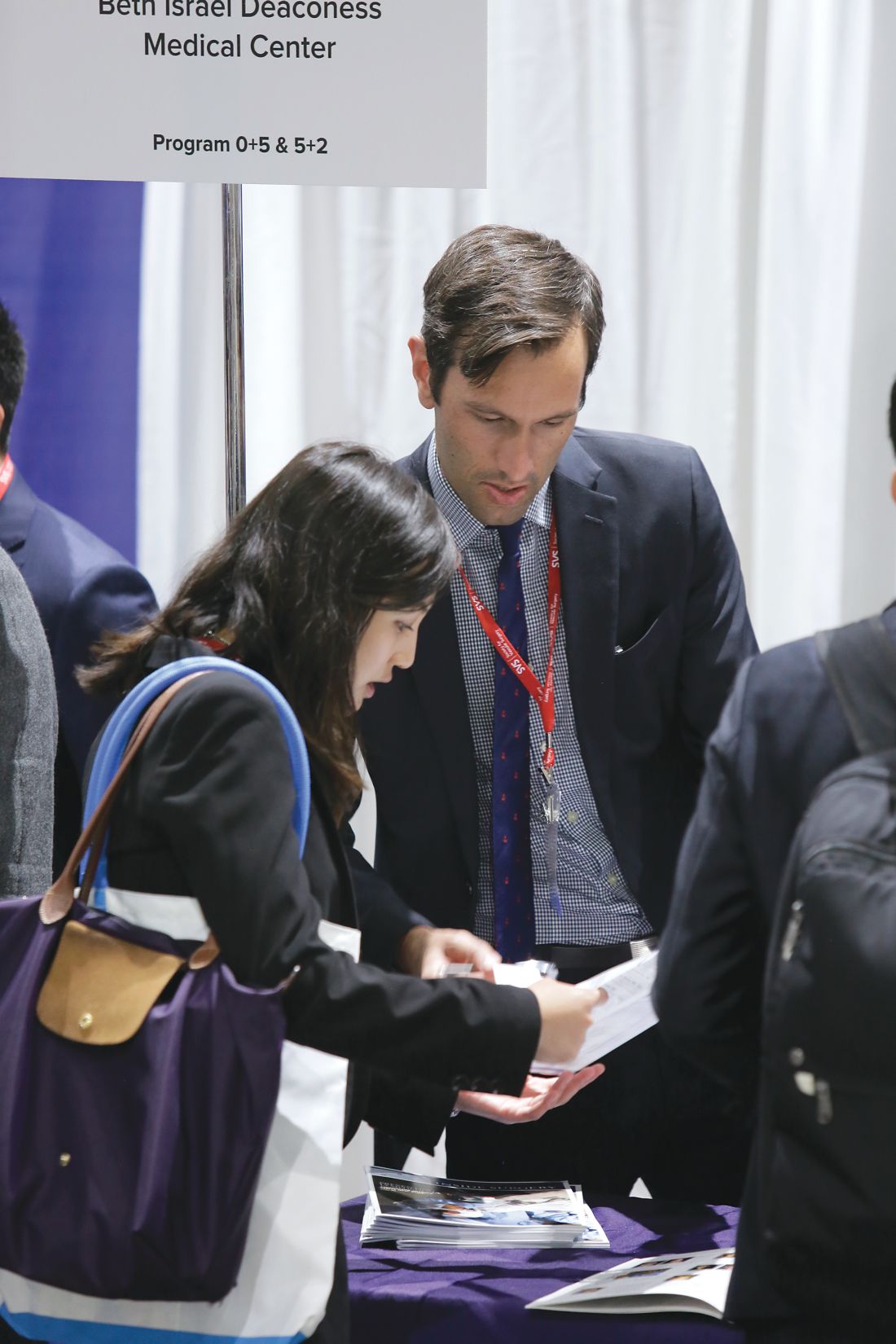
Come to the Residency Fair, from 5 to 6:30 p.m. Friday to help narrow down the choices. There won’t be carnival rides or elephant ears, but there WILL be information available. Representatives from 67 programs (as of May 22, 2018) will be available in Exhibit Hall B to discuss their programs in detail and answer questions. Programs are arranged by the types of training paradigms: 0+5, 5+2, plus those offering both training pathways. Students seeking the right educational fit can more easily look at programs to locate those in which they are specifically interested – or even consider a choice that they might have earlier dismissed but now seems promising.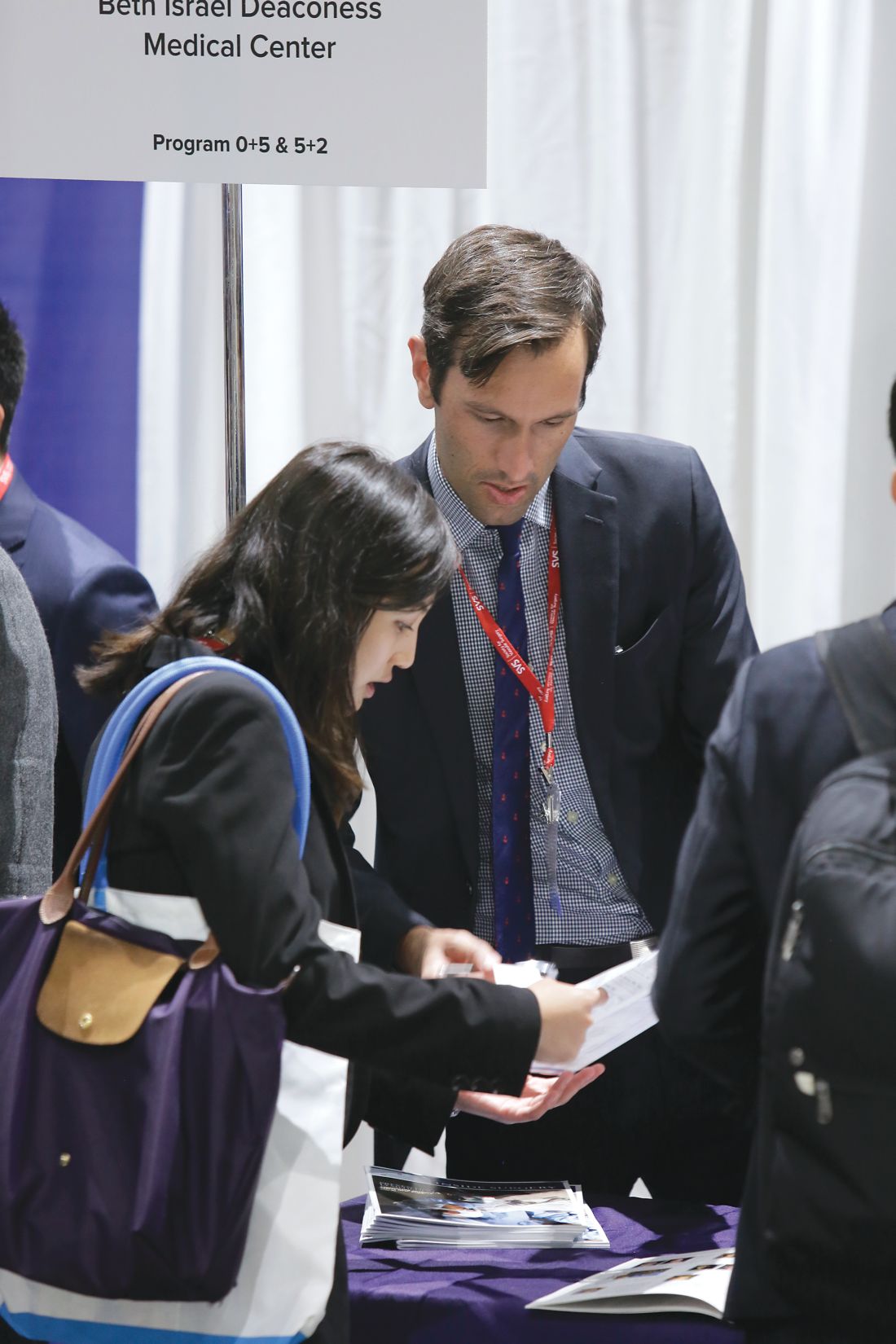
Residents and students also get the chance to network with program directors, faculty, and current trainees. A directory of all participating programs was distributed to students and residents earlier. The directory also will be available at the fair.
Advance registration is not required for the residency fair.
For those considering a career as a vascular surgeon, deciding on a training program is an important decision. Should it be a vascular fellowship (5+2) program, or one offering an integrated vascular residency (0+5)? Does following in the footsteps of Michael DeBakey, E. Stanley Crawford, and others at Baylor College of Medicine sound attractive? Or perhaps schools in the Southeast beckon.
Come to the Residency Fair, from 5 to 6:30 p.m. Friday to help narrow down the choices. There won’t be carnival rides or elephant ears, but there WILL be information available. Representatives from 67 programs (as of May 22, 2018) will be available in Exhibit Hall B to discuss their programs in detail and answer questions. Programs are arranged by the types of training paradigms: 0+5, 5+2, plus those offering both training pathways. Students seeking the right educational fit can more easily look at programs to locate those in which they are specifically interested – or even consider a choice that they might have earlier dismissed but now seems promising.
Residents and students also get the chance to network with program directors, faculty, and current trainees. A directory of all participating programs was distributed to students and residents earlier. The directory also will be available at the fair.
Advance registration is not required for the residency fair.
For those considering a career as a vascular surgeon, deciding on a training program is an important decision. Should it be a vascular fellowship (5+2) program, or one offering an integrated vascular residency (0+5)? Does following in the footsteps of Michael DeBakey, E. Stanley Crawford, and others at Baylor College of Medicine sound attractive? Or perhaps schools in the Southeast beckon.
Come to the Residency Fair, from 5 to 6:30 p.m. Friday to help narrow down the choices. There won’t be carnival rides or elephant ears, but there WILL be information available. Representatives from 67 programs (as of May 22, 2018) will be available in Exhibit Hall B to discuss their programs in detail and answer questions. Programs are arranged by the types of training paradigms: 0+5, 5+2, plus those offering both training pathways. Students seeking the right educational fit can more easily look at programs to locate those in which they are specifically interested – or even consider a choice that they might have earlier dismissed but now seems promising.
Residents and students also get the chance to network with program directors, faculty, and current trainees. A directory of all participating programs was distributed to students and residents earlier. The directory also will be available at the fair.
Advance registration is not required for the residency fair.
Advanced Practice Providers Vital to Vascular Team
The team approach has changed the entire field of medicine in the past 10-20 years and, in fact, is critical to optimal patient outcomes. That’s according to Anil Hingorani, MD, who will co-moderate a special forum Friday, “Improving Clinical Metrics With the Utilization of Advanced Practice Providers.”
It will be held from 1:30 to 3 p.m. in Ballroom A/B.
The team approach is front and center at this year’s Vascular Annual Meeting, which carries the theme: “Home of the Vascular Team – Partners in Patient Care.”
“Our vascular disease patients can be quite complex,” said Dr. Hingorani. “We will highlight that to take care of these complexities we need a team approach, and our team members can help tremendously.” This is true across the setting spectrum, be it rural, urban, suburban.
“Some NPs and PAs run our service. They help coordinate pre-op evaluations, post-op management, take care of research protocols, billing, and other office responsibilities,” he said.
He pointed out he is not a specialist in diabetes, but that his NP has a special interest and passion for the topic. The work she does for their diabetic patients “helps MY patients and helps MY procedures have better outcomes.”
PAs and NPs also help run research projects and are instrumental in working with fellows rotating through. With their work in what Dr. Hingorani referred to as the “three pillars” – clinical work, teaching, and research – they are tremendously important to the vascular team.
Advanced care providers also help improve outcomes, he said, when pay for performance and quantitating outcomes is becoming a standard part of health care. Admissions, discharges, surgical site infections, diabetes, follow-up all are important for patient care, and tracking all the details is vital to outcomes. It will be addressed in the forum, Dr. Hingorani said.
“Medicine is a specialty that hasn’t really caught on to MACRA, MIPS, and what pay for performance really entails,” he said. “Many are still figuring out, ‘What changes do I need to make to make this work for my patients and me? Where does my practice fit in?’ We’re going to have to keep working on that.”
Speakers will be primarily nurse practitioners and physician assistants. “We didn’t want surgeons telling PAs and NPs what they should be doing. It needs to be the PAs and NPs doing the speaking, focusing on issues important to them.”
Dr. Hingorani believes that the Vascular Annual Meeting is the first to stress the team approach theme. “I think it’s an important step and others will follow suit,” he said. “These ideas are resonating. They’re important and will be the way forward.
“I think we’ll be breaking new ground and will ripple across the societies.”
Besides a panel discussion at the end, forum topics include:
- Improving Metrics in Clinical Practice: The Value of APPs to a Vascular Practice
- There’s an APP for That: Workforce and Community Practice Experience
- National and International Trends in the Use of APPs, PAs in Surgery and Outcome Data
- Improving Metrics via Team-Based Care: The Wake Forest Baptist Health Experience
- Influence of APPs - MIPS and “Throughput” of Patients, Value/Quality/Financial Benefit and APPs
- Funny You Should Ask: What Advanced Practice Providers Bring to the Table
- How Advanced Practice Clinicians Can Add Value to Your Practice
- Driving Outcomes: University of Maryland Advanced Practice Providers Target Preventable Complications, Length of Stay, and Readmissions Univers LT Std
The team approach has changed the entire field of medicine in the past 10-20 years and, in fact, is critical to optimal patient outcomes. That’s according to Anil Hingorani, MD, who will co-moderate a special forum Friday, “Improving Clinical Metrics With the Utilization of Advanced Practice Providers.”
It will be held from 1:30 to 3 p.m. in Ballroom A/B.
The team approach is front and center at this year’s Vascular Annual Meeting, which carries the theme: “Home of the Vascular Team – Partners in Patient Care.”
“Our vascular disease patients can be quite complex,” said Dr. Hingorani. “We will highlight that to take care of these complexities we need a team approach, and our team members can help tremendously.” This is true across the setting spectrum, be it rural, urban, suburban.
“Some NPs and PAs run our service. They help coordinate pre-op evaluations, post-op management, take care of research protocols, billing, and other office responsibilities,” he said.
He pointed out he is not a specialist in diabetes, but that his NP has a special interest and passion for the topic. The work she does for their diabetic patients “helps MY patients and helps MY procedures have better outcomes.”
PAs and NPs also help run research projects and are instrumental in working with fellows rotating through. With their work in what Dr. Hingorani referred to as the “three pillars” – clinical work, teaching, and research – they are tremendously important to the vascular team.
Advanced care providers also help improve outcomes, he said, when pay for performance and quantitating outcomes is becoming a standard part of health care. Admissions, discharges, surgical site infections, diabetes, follow-up all are important for patient care, and tracking all the details is vital to outcomes. It will be addressed in the forum, Dr. Hingorani said.
“Medicine is a specialty that hasn’t really caught on to MACRA, MIPS, and what pay for performance really entails,” he said. “Many are still figuring out, ‘What changes do I need to make to make this work for my patients and me? Where does my practice fit in?’ We’re going to have to keep working on that.”
Speakers will be primarily nurse practitioners and physician assistants. “We didn’t want surgeons telling PAs and NPs what they should be doing. It needs to be the PAs and NPs doing the speaking, focusing on issues important to them.”
Dr. Hingorani believes that the Vascular Annual Meeting is the first to stress the team approach theme. “I think it’s an important step and others will follow suit,” he said. “These ideas are resonating. They’re important and will be the way forward.
“I think we’ll be breaking new ground and will ripple across the societies.”
Besides a panel discussion at the end, forum topics include:
- Improving Metrics in Clinical Practice: The Value of APPs to a Vascular Practice
- There’s an APP for That: Workforce and Community Practice Experience
- National and International Trends in the Use of APPs, PAs in Surgery and Outcome Data
- Improving Metrics via Team-Based Care: The Wake Forest Baptist Health Experience
- Influence of APPs - MIPS and “Throughput” of Patients, Value/Quality/Financial Benefit and APPs
- Funny You Should Ask: What Advanced Practice Providers Bring to the Table
- How Advanced Practice Clinicians Can Add Value to Your Practice
- Driving Outcomes: University of Maryland Advanced Practice Providers Target Preventable Complications, Length of Stay, and Readmissions Univers LT Std
The team approach has changed the entire field of medicine in the past 10-20 years and, in fact, is critical to optimal patient outcomes. That’s according to Anil Hingorani, MD, who will co-moderate a special forum Friday, “Improving Clinical Metrics With the Utilization of Advanced Practice Providers.”
It will be held from 1:30 to 3 p.m. in Ballroom A/B.
The team approach is front and center at this year’s Vascular Annual Meeting, which carries the theme: “Home of the Vascular Team – Partners in Patient Care.”
“Our vascular disease patients can be quite complex,” said Dr. Hingorani. “We will highlight that to take care of these complexities we need a team approach, and our team members can help tremendously.” This is true across the setting spectrum, be it rural, urban, suburban.
“Some NPs and PAs run our service. They help coordinate pre-op evaluations, post-op management, take care of research protocols, billing, and other office responsibilities,” he said.
He pointed out he is not a specialist in diabetes, but that his NP has a special interest and passion for the topic. The work she does for their diabetic patients “helps MY patients and helps MY procedures have better outcomes.”
PAs and NPs also help run research projects and are instrumental in working with fellows rotating through. With their work in what Dr. Hingorani referred to as the “three pillars” – clinical work, teaching, and research – they are tremendously important to the vascular team.
Advanced care providers also help improve outcomes, he said, when pay for performance and quantitating outcomes is becoming a standard part of health care. Admissions, discharges, surgical site infections, diabetes, follow-up all are important for patient care, and tracking all the details is vital to outcomes. It will be addressed in the forum, Dr. Hingorani said.
“Medicine is a specialty that hasn’t really caught on to MACRA, MIPS, and what pay for performance really entails,” he said. “Many are still figuring out, ‘What changes do I need to make to make this work for my patients and me? Where does my practice fit in?’ We’re going to have to keep working on that.”
Speakers will be primarily nurse practitioners and physician assistants. “We didn’t want surgeons telling PAs and NPs what they should be doing. It needs to be the PAs and NPs doing the speaking, focusing on issues important to them.”
Dr. Hingorani believes that the Vascular Annual Meeting is the first to stress the team approach theme. “I think it’s an important step and others will follow suit,” he said. “These ideas are resonating. They’re important and will be the way forward.
“I think we’ll be breaking new ground and will ripple across the societies.”
Besides a panel discussion at the end, forum topics include:
- Improving Metrics in Clinical Practice: The Value of APPs to a Vascular Practice
- There’s an APP for That: Workforce and Community Practice Experience
- National and International Trends in the Use of APPs, PAs in Surgery and Outcome Data
- Improving Metrics via Team-Based Care: The Wake Forest Baptist Health Experience
- Influence of APPs - MIPS and “Throughput” of Patients, Value/Quality/Financial Benefit and APPs
- Funny You Should Ask: What Advanced Practice Providers Bring to the Table
- How Advanced Practice Clinicians Can Add Value to Your Practice
- Driving Outcomes: University of Maryland Advanced Practice Providers Target Preventable Complications, Length of Stay, and Readmissions Univers LT Std
Closing Reception for Exhibit Hall
Friday evening’s Closing Reception, from 4:30 to 5:30 p.m. offers the final chance to visit the Exhibit Hall and talk with vendors, get information from the Society for Vascular Surgery at its booth (#1015), enter a drawing at the SVS Booth, take a picture at the SVS Selfie Station and go sleuthing as part of the SVS Scavenger Hunt, among a host of other activities. The reception coincides with the final hour of the Poster Competition, set for 3:30 to 5 p.m. Click here for more info.
Friday evening’s Closing Reception, from 4:30 to 5:30 p.m. offers the final chance to visit the Exhibit Hall and talk with vendors, get information from the Society for Vascular Surgery at its booth (#1015), enter a drawing at the SVS Booth, take a picture at the SVS Selfie Station and go sleuthing as part of the SVS Scavenger Hunt, among a host of other activities. The reception coincides with the final hour of the Poster Competition, set for 3:30 to 5 p.m. Click here for more info.
Friday evening’s Closing Reception, from 4:30 to 5:30 p.m. offers the final chance to visit the Exhibit Hall and talk with vendors, get information from the Society for Vascular Surgery at its booth (#1015), enter a drawing at the SVS Booth, take a picture at the SVS Selfie Station and go sleuthing as part of the SVS Scavenger Hunt, among a host of other activities. The reception coincides with the final hour of the Poster Competition, set for 3:30 to 5 p.m. Click here for more info.
Visit the Residency Fair
Simon and Garfunkel’s “Scarborough Fair,” the “State Fair” of movie fame, Bruce Springsteen’s “County Fair” that will attract everybody in town. And the SVS Residency Fair, showcasing nearly 70 training programs. Trainees can visit representatives from programs with different training paradigms and network with program directors, faculty and current trainees. Check it out here.
Simon and Garfunkel’s “Scarborough Fair,” the “State Fair” of movie fame, Bruce Springsteen’s “County Fair” that will attract everybody in town. And the SVS Residency Fair, showcasing nearly 70 training programs. Trainees can visit representatives from programs with different training paradigms and network with program directors, faculty and current trainees. Check it out here.
Simon and Garfunkel’s “Scarborough Fair,” the “State Fair” of movie fame, Bruce Springsteen’s “County Fair” that will attract everybody in town. And the SVS Residency Fair, showcasing nearly 70 training programs. Trainees can visit representatives from programs with different training paradigms and network with program directors, faculty and current trainees. Check it out here.
Session for Young Surgeons
Young vascular surgeons can get guidance on successfully transitioning from training to practice in C5: Management Tips and Tricks for Young Vascular Surgeons. It will be held from 1:30 to 3 p.m. in HCC, Room 311. The interactive program will focus on topics not necessarily covered in residency and is recommended by both the Community Practice and Young Surgeons committees. More info here.
Young vascular surgeons can get guidance on successfully transitioning from training to practice in C5: Management Tips and Tricks for Young Vascular Surgeons. It will be held from 1:30 to 3 p.m. in HCC, Room 311. The interactive program will focus on topics not necessarily covered in residency and is recommended by both the Community Practice and Young Surgeons committees. More info here.
Young vascular surgeons can get guidance on successfully transitioning from training to practice in C5: Management Tips and Tricks for Young Vascular Surgeons. It will be held from 1:30 to 3 p.m. in HCC, Room 311. The interactive program will focus on topics not necessarily covered in residency and is recommended by both the Community Practice and Young Surgeons committees. More info here.
A Look into the Future at the Crawford Forum
Will the demand be sufficient for the supply of the vascular surgery work force in the United States? That topic, along with potential solutions, will be front and center at the E. Stanley Crawford Critical Issues Forum from 10:30 a.m. to 12 p.m. See HCC, Ballroom A/B.
Will the demand be sufficient for the supply of the vascular surgery work force in the United States? That topic, along with potential solutions, will be front and center at the E. Stanley Crawford Critical Issues Forum from 10:30 a.m. to 12 p.m. See HCC, Ballroom A/B.
Will the demand be sufficient for the supply of the vascular surgery work force in the United States? That topic, along with potential solutions, will be front and center at the E. Stanley Crawford Critical Issues Forum from 10:30 a.m. to 12 p.m. See HCC, Ballroom A/B.
SVS von Liebig Forum: Complex Aortic Endografting
Innovative approaches to minimally invasive repair of the aorta will be featured during Thursday morning’s William J. von Liebig Forum.
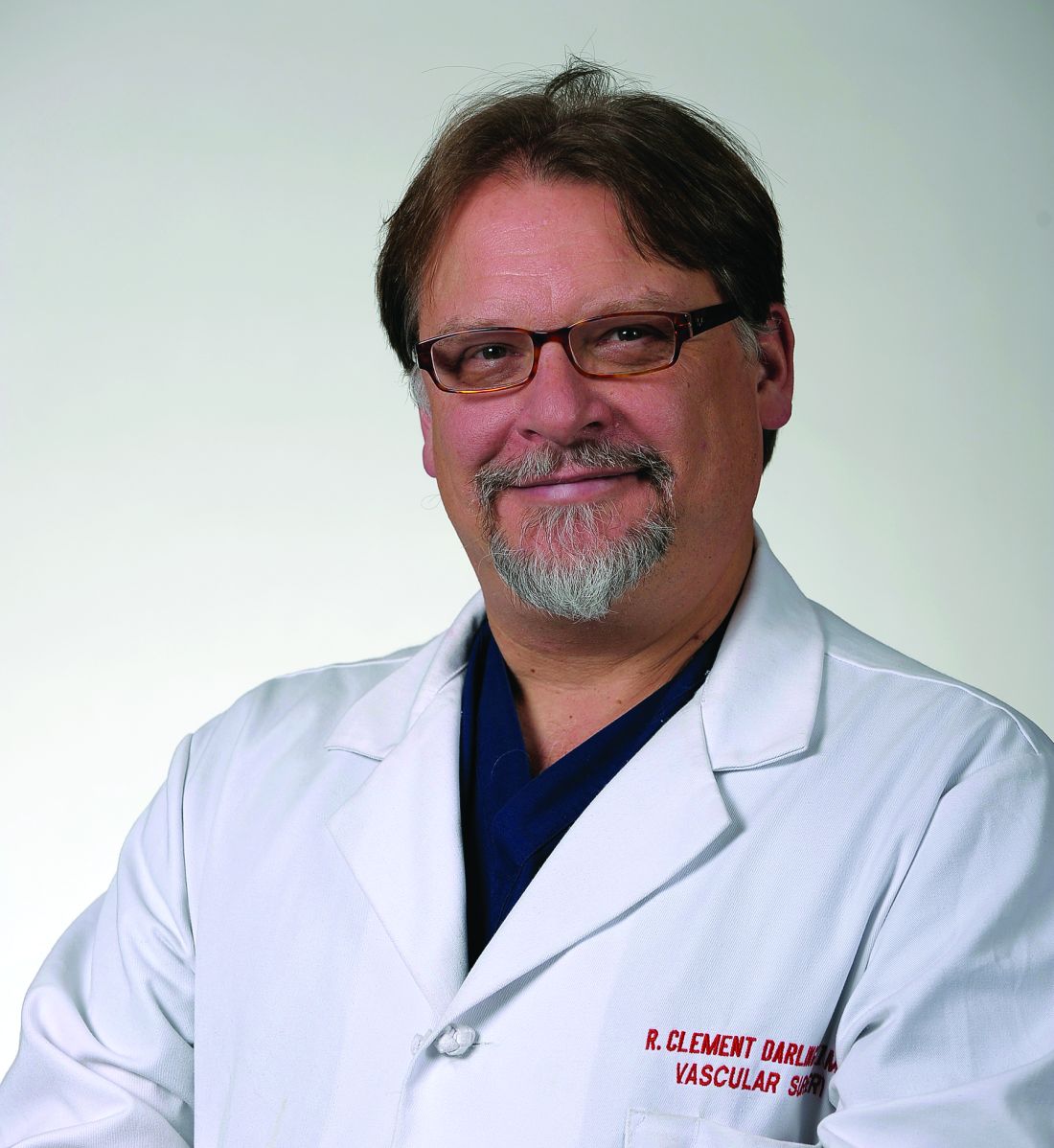
“This year, the forum’s focus is on complex aortic endografting for a wide variety of aortic diseases, predominantly thoracoabdominal aortic aneurysms and aortic dissections,” said session co-moderator Matthew Eagleton, MD, chief of the division of vascular and endovascular surgery at Massachusetts General Hospital in Boston. “Surgeons who treat aortic disease will learn about new devices and new techniques that they will want to incorporate into their practice. They’ll also learn whether some of the techniques and procedures they are currently employing are still worth doing or may have unforeseen risks. Should they change their practices and approaches to patients with complex aortic disease, or should they continue down the road and recognize that it’s safe for patients?” The session will feature eight abstracts from vascular surgeons in the United States and Europe that will accentuate some of the newer, advanced technology, said session co-moderator R. Clement Darling III, MD, chief of the division of vascular surgery at Albany Medical Center Hospital in New York.
“To minimize the complications of complex aortic aneurysm repair, endovascular technology has to be evaluated, and we need to know what works, what doesn’t, and what are the long-term outcomes,” he said. “These presentations will help us understand the best techniques and the best current and future technology in percutaneous repair of complex aneurysms from the aortic arch down to the abdominal aorta.”
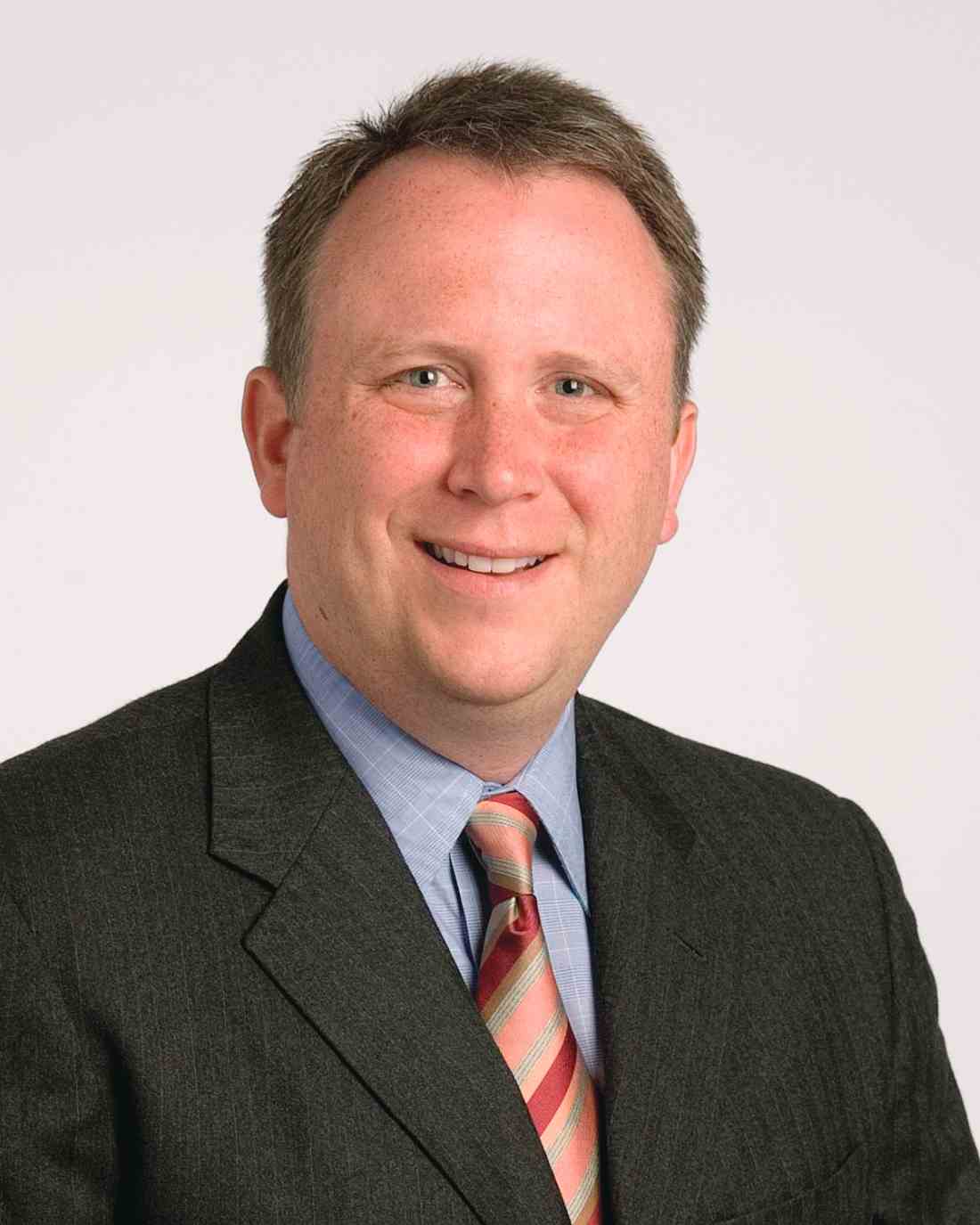
The program kicks off with a talk by Emanuel R. Tenorio, MD, PhD, of the Mayo Clinic about a prospective, nonrandomized study to evaluate cone beam computed tomography for technical assessment of standard and complex endovascular aortic repair. In other presentations, Tilo Kölbel, MD, PhD, of the University Heart Center Hamburg in Germany will discuss a single-center experience with a double-branched aortic arch endograft, technology not yet available in the United States. A U.S. national consortium, organized to better assess outcomes for endovascular therapy for complex aortic disease, will discuss their work with target artery outcomes after branched and fenestrated endovascular repair of pararenal and thoracoabdominal aortic aneurysms in the U.S. IDE (investigational device exemption) experience, and a group from Bologna, Italy, will discuss the risk of aneurysm rupture and target visceral vessel occlusion during the lead period of custom-made fenestrated/branched endografts.
Additional talks will go over percutaneous large-bore axillary artery access techniques for complicated EVAR (endovascular aneurysm repair) and current guidelines and indications for repair of abdominal aortic aneurysms.
One concern for much of this new technology is durability, Dr. Darling said. Jason Hurd, MD, of the University of Washington, Seattle, will discuss the long-term durability of a physician-modified endograft.
“We in the U.S. don’t have access to some of the technology that’s available worldwide, and there are physicians out there who do modifications of their own endografts,” Dr. Eagleton said. “This study happens to look at a prospectively maintained database from a physician-sponsored IDE study to specifically look at outcomes with regard to physician modification. The results of this are very important for us to know – is this something we can do for patients [who] need it, or is this something we should just shy away from completely? We don’t know the answer.”
Added Dr. Darling, “This presentation will allow us to see not only the current and future technology to be used but also how well it works over time. We are lucky to be involved in the evolution of minimally invasive technology for the repair of complex aortic pathology.”
Overall, said Dr. Darling, “This forum will outline the advances that have been made and some of the techniques that can be used to treat patients. Continued evaluation of the outcomes, applications and limitations of technology will help us take better care of patients.”
Thursday
8:30 – 10 a.m.
HCC, Ballroom A/B
S1: William J. von Liebig Forum
Innovative approaches to minimally invasive repair of the aorta will be featured during Thursday morning’s William J. von Liebig Forum.
“This year, the forum’s focus is on complex aortic endografting for a wide variety of aortic diseases, predominantly thoracoabdominal aortic aneurysms and aortic dissections,” said session co-moderator Matthew Eagleton, MD, chief of the division of vascular and endovascular surgery at Massachusetts General Hospital in Boston. “Surgeons who treat aortic disease will learn about new devices and new techniques that they will want to incorporate into their practice. They’ll also learn whether some of the techniques and procedures they are currently employing are still worth doing or may have unforeseen risks. Should they change their practices and approaches to patients with complex aortic disease, or should they continue down the road and recognize that it’s safe for patients?” The session will feature eight abstracts from vascular surgeons in the United States and Europe that will accentuate some of the newer, advanced technology, said session co-moderator R. Clement Darling III, MD, chief of the division of vascular surgery at Albany Medical Center Hospital in New York.
“To minimize the complications of complex aortic aneurysm repair, endovascular technology has to be evaluated, and we need to know what works, what doesn’t, and what are the long-term outcomes,” he said. “These presentations will help us understand the best techniques and the best current and future technology in percutaneous repair of complex aneurysms from the aortic arch down to the abdominal aorta.”
The program kicks off with a talk by Emanuel R. Tenorio, MD, PhD, of the Mayo Clinic about a prospective, nonrandomized study to evaluate cone beam computed tomography for technical assessment of standard and complex endovascular aortic repair. In other presentations, Tilo Kölbel, MD, PhD, of the University Heart Center Hamburg in Germany will discuss a single-center experience with a double-branched aortic arch endograft, technology not yet available in the United States. A U.S. national consortium, organized to better assess outcomes for endovascular therapy for complex aortic disease, will discuss their work with target artery outcomes after branched and fenestrated endovascular repair of pararenal and thoracoabdominal aortic aneurysms in the U.S. IDE (investigational device exemption) experience, and a group from Bologna, Italy, will discuss the risk of aneurysm rupture and target visceral vessel occlusion during the lead period of custom-made fenestrated/branched endografts.
Additional talks will go over percutaneous large-bore axillary artery access techniques for complicated EVAR (endovascular aneurysm repair) and current guidelines and indications for repair of abdominal aortic aneurysms.
One concern for much of this new technology is durability, Dr. Darling said. Jason Hurd, MD, of the University of Washington, Seattle, will discuss the long-term durability of a physician-modified endograft.
“We in the U.S. don’t have access to some of the technology that’s available worldwide, and there are physicians out there who do modifications of their own endografts,” Dr. Eagleton said. “This study happens to look at a prospectively maintained database from a physician-sponsored IDE study to specifically look at outcomes with regard to physician modification. The results of this are very important for us to know – is this something we can do for patients [who] need it, or is this something we should just shy away from completely? We don’t know the answer.”
Added Dr. Darling, “This presentation will allow us to see not only the current and future technology to be used but also how well it works over time. We are lucky to be involved in the evolution of minimally invasive technology for the repair of complex aortic pathology.”
Overall, said Dr. Darling, “This forum will outline the advances that have been made and some of the techniques that can be used to treat patients. Continued evaluation of the outcomes, applications and limitations of technology will help us take better care of patients.”
Thursday
8:30 – 10 a.m.
HCC, Ballroom A/B
S1: William J. von Liebig Forum
Innovative approaches to minimally invasive repair of the aorta will be featured during Thursday morning’s William J. von Liebig Forum.
“This year, the forum’s focus is on complex aortic endografting for a wide variety of aortic diseases, predominantly thoracoabdominal aortic aneurysms and aortic dissections,” said session co-moderator Matthew Eagleton, MD, chief of the division of vascular and endovascular surgery at Massachusetts General Hospital in Boston. “Surgeons who treat aortic disease will learn about new devices and new techniques that they will want to incorporate into their practice. They’ll also learn whether some of the techniques and procedures they are currently employing are still worth doing or may have unforeseen risks. Should they change their practices and approaches to patients with complex aortic disease, or should they continue down the road and recognize that it’s safe for patients?” The session will feature eight abstracts from vascular surgeons in the United States and Europe that will accentuate some of the newer, advanced technology, said session co-moderator R. Clement Darling III, MD, chief of the division of vascular surgery at Albany Medical Center Hospital in New York.
“To minimize the complications of complex aortic aneurysm repair, endovascular technology has to be evaluated, and we need to know what works, what doesn’t, and what are the long-term outcomes,” he said. “These presentations will help us understand the best techniques and the best current and future technology in percutaneous repair of complex aneurysms from the aortic arch down to the abdominal aorta.”
The program kicks off with a talk by Emanuel R. Tenorio, MD, PhD, of the Mayo Clinic about a prospective, nonrandomized study to evaluate cone beam computed tomography for technical assessment of standard and complex endovascular aortic repair. In other presentations, Tilo Kölbel, MD, PhD, of the University Heart Center Hamburg in Germany will discuss a single-center experience with a double-branched aortic arch endograft, technology not yet available in the United States. A U.S. national consortium, organized to better assess outcomes for endovascular therapy for complex aortic disease, will discuss their work with target artery outcomes after branched and fenestrated endovascular repair of pararenal and thoracoabdominal aortic aneurysms in the U.S. IDE (investigational device exemption) experience, and a group from Bologna, Italy, will discuss the risk of aneurysm rupture and target visceral vessel occlusion during the lead period of custom-made fenestrated/branched endografts.
Additional talks will go over percutaneous large-bore axillary artery access techniques for complicated EVAR (endovascular aneurysm repair) and current guidelines and indications for repair of abdominal aortic aneurysms.
One concern for much of this new technology is durability, Dr. Darling said. Jason Hurd, MD, of the University of Washington, Seattle, will discuss the long-term durability of a physician-modified endograft.
“We in the U.S. don’t have access to some of the technology that’s available worldwide, and there are physicians out there who do modifications of their own endografts,” Dr. Eagleton said. “This study happens to look at a prospectively maintained database from a physician-sponsored IDE study to specifically look at outcomes with regard to physician modification. The results of this are very important for us to know – is this something we can do for patients [who] need it, or is this something we should just shy away from completely? We don’t know the answer.”
Added Dr. Darling, “This presentation will allow us to see not only the current and future technology to be used but also how well it works over time. We are lucky to be involved in the evolution of minimally invasive technology for the repair of complex aortic pathology.”
Overall, said Dr. Darling, “This forum will outline the advances that have been made and some of the techniques that can be used to treat patients. Continued evaluation of the outcomes, applications and limitations of technology will help us take better care of patients.”
Thursday
8:30 – 10 a.m.
HCC, Ballroom A/B
S1: William J. von Liebig Forum