User login
Richard Franki is the associate editor who writes and creates graphs. He started with the company in 1987, when it was known as the International Medical News Group. In his years as a journalist, Richard has worked for Cap Cities/ABC, Disney, Harcourt, Elsevier, Quadrant, Frontline, and Internet Brands. In the 1990s, he was a contributor to the ill-fated Indications column, predecessor of Livin' on the MDedge.
Busiest week yet brings 2019 measles total to 555 cases
according to the Centers for Disease Control and Prevention.
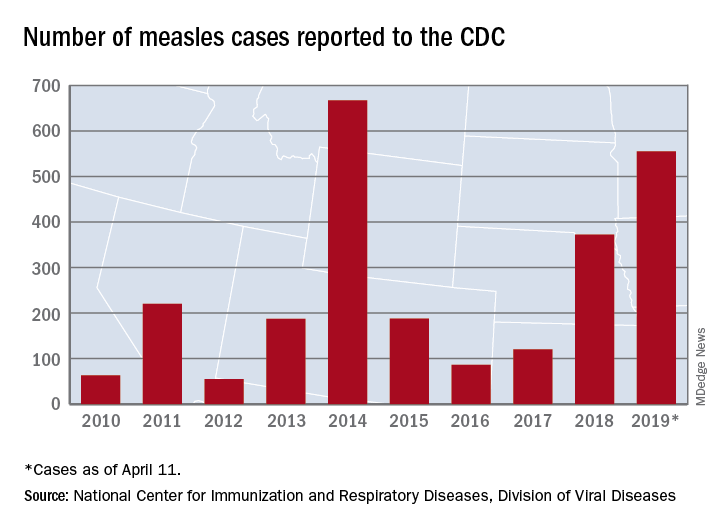
The 90 measles cases reported during the week ending April 11 mark the third consecutive weekly high for 2019, topping the 78 recorded during the week of April 4 and the 73 reported during the week of March 28. Meanwhile, this year’s total trails only the 667 cases reported in 2014 for the highest in the postelimination era, the CDC said April 15.
New York reported 26 new cases in Brooklyn’s Williamsburg neighborhood last week, which puts the borough at 227 for the year, with another two occurring in the Flushing section of Queens. A public health emergency declared on April 9 covers several zip codes in Williamsburg and requires unvaccinated individuals who may have been exposed to measles to receive “the measles-mumps-rubella vaccine in order to protect others in the community and help curtail the ongoing outbreak,” the city’s health department said in a written statement.
Maryland became the 20th state to report a measles case this year, and the state’s department of health said it was notifying those in the vicinity of a medical office building in Pikesville about possible exposure on April 2.
The recent outbreak in Michigan’s Oakland County did not result in any new patients over the last week and remains at 38 cases, with the state reporting one additional case in Wayne County. More recent reports of a case in Washtenaw County and another in Oakland County were reversed after additional testing, the state health department reported.
according to the Centers for Disease Control and Prevention.
The 90 measles cases reported during the week ending April 11 mark the third consecutive weekly high for 2019, topping the 78 recorded during the week of April 4 and the 73 reported during the week of March 28. Meanwhile, this year’s total trails only the 667 cases reported in 2014 for the highest in the postelimination era, the CDC said April 15.
New York reported 26 new cases in Brooklyn’s Williamsburg neighborhood last week, which puts the borough at 227 for the year, with another two occurring in the Flushing section of Queens. A public health emergency declared on April 9 covers several zip codes in Williamsburg and requires unvaccinated individuals who may have been exposed to measles to receive “the measles-mumps-rubella vaccine in order to protect others in the community and help curtail the ongoing outbreak,” the city’s health department said in a written statement.
Maryland became the 20th state to report a measles case this year, and the state’s department of health said it was notifying those in the vicinity of a medical office building in Pikesville about possible exposure on April 2.
The recent outbreak in Michigan’s Oakland County did not result in any new patients over the last week and remains at 38 cases, with the state reporting one additional case in Wayne County. More recent reports of a case in Washtenaw County and another in Oakland County were reversed after additional testing, the state health department reported.
according to the Centers for Disease Control and Prevention.
The 90 measles cases reported during the week ending April 11 mark the third consecutive weekly high for 2019, topping the 78 recorded during the week of April 4 and the 73 reported during the week of March 28. Meanwhile, this year’s total trails only the 667 cases reported in 2014 for the highest in the postelimination era, the CDC said April 15.
New York reported 26 new cases in Brooklyn’s Williamsburg neighborhood last week, which puts the borough at 227 for the year, with another two occurring in the Flushing section of Queens. A public health emergency declared on April 9 covers several zip codes in Williamsburg and requires unvaccinated individuals who may have been exposed to measles to receive “the measles-mumps-rubella vaccine in order to protect others in the community and help curtail the ongoing outbreak,” the city’s health department said in a written statement.
Maryland became the 20th state to report a measles case this year, and the state’s department of health said it was notifying those in the vicinity of a medical office building in Pikesville about possible exposure on April 2.
The recent outbreak in Michigan’s Oakland County did not result in any new patients over the last week and remains at 38 cases, with the state reporting one additional case in Wayne County. More recent reports of a case in Washtenaw County and another in Oakland County were reversed after additional testing, the state health department reported.
Cost gap widens between brand-name, generic drugs
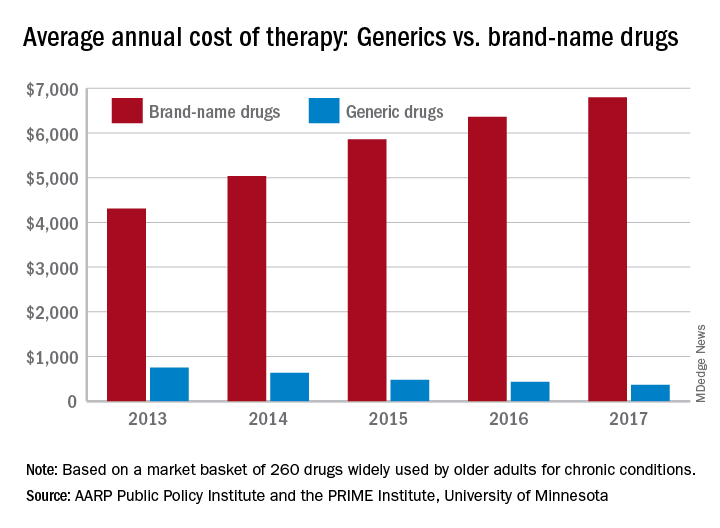
In 2017, the average retail cost of 260 generic drugs widely used by older adults for chronic conditions was $365 for a year of therapy, compared with $6,798 for brand-name drugs. In 2013, that same year of therapy with an average brand-name drug ($4,308) was only 5.7 times more expensive than the generic ($751), the AARP wrote in the report, produced in collaboration with the PRIME Institute at the University of Minnesota, Minneapolis.
“Generics account for nearly 9 out of every 10 prescriptions filled in the U.S. but represent less than a quarter of the country’s drug spending. These results highlight the importance of eliminating anticompetitive behavior by brand-name drug companies so that we get more lower-priced generic drugs on the market,” Debra Whitman, executive vice president and chief public policy officer at AARP, said in a written statement.
The average retail cost of a larger group of 390 generic drugs used by older adults fell by 9.3% from 2016 to 2017, compared with an increase of 8.4% for a group of 267 brand-name prescription drugs. Over that same time, the general inflation rate rose by 2.1%, the AARP noted.
The AARP’s annual Rx Price Watch Report is based on data from the Truven Health MarketScan research databases.
In 2017, the average retail cost of 260 generic drugs widely used by older adults for chronic conditions was $365 for a year of therapy, compared with $6,798 for brand-name drugs. In 2013, that same year of therapy with an average brand-name drug ($4,308) was only 5.7 times more expensive than the generic ($751), the AARP wrote in the report, produced in collaboration with the PRIME Institute at the University of Minnesota, Minneapolis.
“Generics account for nearly 9 out of every 10 prescriptions filled in the U.S. but represent less than a quarter of the country’s drug spending. These results highlight the importance of eliminating anticompetitive behavior by brand-name drug companies so that we get more lower-priced generic drugs on the market,” Debra Whitman, executive vice president and chief public policy officer at AARP, said in a written statement.
The average retail cost of a larger group of 390 generic drugs used by older adults fell by 9.3% from 2016 to 2017, compared with an increase of 8.4% for a group of 267 brand-name prescription drugs. Over that same time, the general inflation rate rose by 2.1%, the AARP noted.
The AARP’s annual Rx Price Watch Report is based on data from the Truven Health MarketScan research databases.
In 2017, the average retail cost of 260 generic drugs widely used by older adults for chronic conditions was $365 for a year of therapy, compared with $6,798 for brand-name drugs. In 2013, that same year of therapy with an average brand-name drug ($4,308) was only 5.7 times more expensive than the generic ($751), the AARP wrote in the report, produced in collaboration with the PRIME Institute at the University of Minnesota, Minneapolis.
“Generics account for nearly 9 out of every 10 prescriptions filled in the U.S. but represent less than a quarter of the country’s drug spending. These results highlight the importance of eliminating anticompetitive behavior by brand-name drug companies so that we get more lower-priced generic drugs on the market,” Debra Whitman, executive vice president and chief public policy officer at AARP, said in a written statement.
The average retail cost of a larger group of 390 generic drugs used by older adults fell by 9.3% from 2016 to 2017, compared with an increase of 8.4% for a group of 267 brand-name prescription drugs. Over that same time, the general inflation rate rose by 2.1%, the AARP noted.
The AARP’s annual Rx Price Watch Report is based on data from the Truven Health MarketScan research databases.
First-of-its-kind study looks at pregnancies in prison
according to a systematic study believed to be the first of its kind.
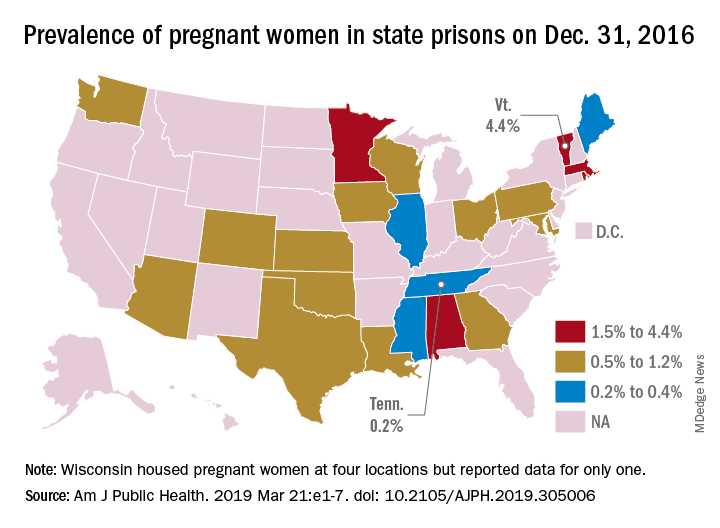
That works out to 0.6% of the 56,262 women housed in the 23 prison systems on Dec. 31, 2016, Carolyn Sufrin, MD, PhD, of Johns Hopkins University, Baltimore, and her associates wrote in the American Journal of Public Health.
Nearly 1,400 pregnant women were admitted to the 26 federal prisons that house women and 22 state prison systems over a 1-year period in 2016-2017. The prisons involved in the study represent 57% of all women incarcerated in the United States, they noted.
Among the pregnancies completed while women were in prison, there were 753 live births: 685 at state facilities and 68 at federal sites. About 6% of those births were preterm, compared with almost 10% nationally in 2016, and 32% were cesarean deliveries, Dr. Sufrin and her associates reported.
All but six births occurred in a hospital; three “were attributable to precipitous labor with prison nurses or paramedics in attendance, and details were not available for the others,” they wrote. Of the 8% of non–live birth pregnancies, 6% were miscarriages, 1% were abortions, and the remainder were stillbirths or ectopic pregnancies. There were three newborn deaths and no maternal deaths.
“That prison pregnancy data have previously not been systematically collected or reported signals a glaring disregard for the health and well-being of incarcerated pregnant women. The Bureau of Justice Statistics collects data on deaths during custody but not births during custody. Despite this marginalization, it is important to recognize that incarcerated women are still members of broader society, that most of them will be released, and that some will give birth while in custody; therefore, their pregnancies must be counted,” the investigators wrote.
The study was supported by the Society of Family Planning Research Fund and the Eunice Kennedy Shriver National Institute of Child Health and Development. The investigators had no conflicts of interest to report.
SOURCE: Sufrin C et al. Am J Public Health. 2019 Mar 21:e1-7. doi: 10.2105/AJPH.2019.305006.
according to a systematic study believed to be the first of its kind.
That works out to 0.6% of the 56,262 women housed in the 23 prison systems on Dec. 31, 2016, Carolyn Sufrin, MD, PhD, of Johns Hopkins University, Baltimore, and her associates wrote in the American Journal of Public Health.
Nearly 1,400 pregnant women were admitted to the 26 federal prisons that house women and 22 state prison systems over a 1-year period in 2016-2017. The prisons involved in the study represent 57% of all women incarcerated in the United States, they noted.
Among the pregnancies completed while women were in prison, there were 753 live births: 685 at state facilities and 68 at federal sites. About 6% of those births were preterm, compared with almost 10% nationally in 2016, and 32% were cesarean deliveries, Dr. Sufrin and her associates reported.
All but six births occurred in a hospital; three “were attributable to precipitous labor with prison nurses or paramedics in attendance, and details were not available for the others,” they wrote. Of the 8% of non–live birth pregnancies, 6% were miscarriages, 1% were abortions, and the remainder were stillbirths or ectopic pregnancies. There were three newborn deaths and no maternal deaths.
“That prison pregnancy data have previously not been systematically collected or reported signals a glaring disregard for the health and well-being of incarcerated pregnant women. The Bureau of Justice Statistics collects data on deaths during custody but not births during custody. Despite this marginalization, it is important to recognize that incarcerated women are still members of broader society, that most of them will be released, and that some will give birth while in custody; therefore, their pregnancies must be counted,” the investigators wrote.
The study was supported by the Society of Family Planning Research Fund and the Eunice Kennedy Shriver National Institute of Child Health and Development. The investigators had no conflicts of interest to report.
SOURCE: Sufrin C et al. Am J Public Health. 2019 Mar 21:e1-7. doi: 10.2105/AJPH.2019.305006.
according to a systematic study believed to be the first of its kind.
That works out to 0.6% of the 56,262 women housed in the 23 prison systems on Dec. 31, 2016, Carolyn Sufrin, MD, PhD, of Johns Hopkins University, Baltimore, and her associates wrote in the American Journal of Public Health.
Nearly 1,400 pregnant women were admitted to the 26 federal prisons that house women and 22 state prison systems over a 1-year period in 2016-2017. The prisons involved in the study represent 57% of all women incarcerated in the United States, they noted.
Among the pregnancies completed while women were in prison, there were 753 live births: 685 at state facilities and 68 at federal sites. About 6% of those births were preterm, compared with almost 10% nationally in 2016, and 32% were cesarean deliveries, Dr. Sufrin and her associates reported.
All but six births occurred in a hospital; three “were attributable to precipitous labor with prison nurses or paramedics in attendance, and details were not available for the others,” they wrote. Of the 8% of non–live birth pregnancies, 6% were miscarriages, 1% were abortions, and the remainder were stillbirths or ectopic pregnancies. There were three newborn deaths and no maternal deaths.
“That prison pregnancy data have previously not been systematically collected or reported signals a glaring disregard for the health and well-being of incarcerated pregnant women. The Bureau of Justice Statistics collects data on deaths during custody but not births during custody. Despite this marginalization, it is important to recognize that incarcerated women are still members of broader society, that most of them will be released, and that some will give birth while in custody; therefore, their pregnancies must be counted,” the investigators wrote.
The study was supported by the Society of Family Planning Research Fund and the Eunice Kennedy Shriver National Institute of Child Health and Development. The investigators had no conflicts of interest to report.
SOURCE: Sufrin C et al. Am J Public Health. 2019 Mar 21:e1-7. doi: 10.2105/AJPH.2019.305006.
FROM THE AMERICAN JOURNAL OF PUBLIC HEALTH
Eye bees, reversed innards, and the DNA van
Bees? Really?
This might be one of the weirdest thing we’ve ever seen. It’s definitely the weirdest thing this Taiwanese woman has ever seen, considering it’s BEES in her EYE.

One more time, for the people in the back: BEES. IN. HER. EYE.
The unfortunate 29-year-old, identified as He, reported to a hospital with sharp eye pain that she assumed was from dirt in her eyes after a vigorous afternoon of gardening near a grave site. Upon close inspection, the hospital’s head of ophthalmology noticed “something that looked like insect legs” floating in her eye and carefully pulled them out. (Pause to dry heave.)
The eyeball intruders turned out to be “sweat bees,” which nest in fallen trees and are attracted to human perspiration. The bees flew into He’s eye and started drinking from her tear duct, which was overproducing because of the immense pain she was in. Miraculously, He’s eyeball and sight are intact, and she’s expected to make a full recovery. The bees are fine, too.
Oh, and in case you’re wondering, sweat bees live all over the world. We’re wearing goggles outside from now on.
Flip it and reverse it
Imagine you’re back in your med school days, happily dissecting another cadaver. You pop the body open and … every organ is in the wrong place??

That’s what some students at Oregon Health & Science University (OHSU) experienced recently. They discovered their body donor had a condition called situs inversus with levocardia – meaning, her heart was in the right place (hah), but all her abdominal organs were transposed right to left. The deceased woman was Rose Marie Bentley, who had died at the ripe old age of 99 without ever knowing she had this condition.
What makes her remarkable is barely anyone with this condition lives to adulthood. Professor Cam Walker of OHSU estimates the odds are 1 in 50 million, and there are only two other known cases of older patients who lived with situs inversus. After taking a look at their mother’s medical records, Bentley’s children noted that the surgeon who removed her appendix recorded its strange location, but no one raised any alarm.
Ms. Bentley lived a full and happy life, despite her organs being a mirror image of virtually everyone else’s anatomy. Some people are just special.
Turn that smile upside down
Service with a smile. Put on a happy face. Let a smile be your umbrella. Seems like good advice, but don’t let these cliches fool you. They are all examples of surface acting – hiding feelings of annoyance behind a mask of forced pleasantness – and they’re not really good for you. At least not if you work with the public and are required to be nice.

Investigators at Penn State University and the University at Buffalo looked at survey data from nurses, teachers, and people in food service and found that they were more likely to drink after work than those who did not interact with the public on a regular basis. “In these jobs, there’s also often money tied to showing positive emotions and holding back negative feelings. Money gives you a motivation to override your natural tendencies, but doing it all day can be wearing,” lead investigator Alicia Grandey said in a written statement.
Personality also plays a part. The risk of increased drinking is greater for surface actors who are more impulsive. And it is stronger still for impulsive people who “also worked in jobs where employees have one-time service encounters with customers, like a call center or coffee shop, rather than relationships, like health care or education,” the investigators said.
They suggested that businesses could give their employees more autonomy, but we’ve got another idea. There are lots of awards for real actors, so how about one for surface actors? They could call it the Oscar … Mayer. Best performance in serving a drive-thru customer who smoked a little too much marijuana. Creative achievement while helping a credit card applicant who still doesn’t understand after being told the same thing five times. Stunt coordination while helping a patient use a bedpan (the “turn the other cheek” award). Choreography to get out of bed every day to face the blank stares of sullen teenagers (the “Lord, give me strength” award). The “okay, we get the picture, you can stop with the awards” award.
That’s not the ice cream truck
Any story that starts with strange men in white, unmarked vans is never going to end well. Especially when that strange man is offering $20 in exchange for DNA samples.

However, this is the situation that Louisville, Ky., finds itself in. According to WAVE3 News, the aforementioned men have been cruising the poorer neighborhoods of the city for a couple of months, offering money to anyone who belongs to Passport Health. Cheek swabs are collected, no questions are asked, and the person walks out with 20 extra dollars.
This is already shady territory, but to make things worse, Passport Health has denied any affiliation. And when asked by one of their customers, the men reported being with Freedom Health. The number the customer was given? Of course it didn’t work.
The cherry on top of the shady cake? According to a professor from the University of Louisville interviewed by WAVE3, the swabs can be used to test for only certain kinds of cancer, and those tests aren’t even commercially available yet. What, you mean this was all a scam? We’re shocked! SHOCKED!
Bees? Really?
This might be one of the weirdest thing we’ve ever seen. It’s definitely the weirdest thing this Taiwanese woman has ever seen, considering it’s BEES in her EYE.
One more time, for the people in the back: BEES. IN. HER. EYE.
The unfortunate 29-year-old, identified as He, reported to a hospital with sharp eye pain that she assumed was from dirt in her eyes after a vigorous afternoon of gardening near a grave site. Upon close inspection, the hospital’s head of ophthalmology noticed “something that looked like insect legs” floating in her eye and carefully pulled them out. (Pause to dry heave.)
The eyeball intruders turned out to be “sweat bees,” which nest in fallen trees and are attracted to human perspiration. The bees flew into He’s eye and started drinking from her tear duct, which was overproducing because of the immense pain she was in. Miraculously, He’s eyeball and sight are intact, and she’s expected to make a full recovery. The bees are fine, too.
Oh, and in case you’re wondering, sweat bees live all over the world. We’re wearing goggles outside from now on.
Flip it and reverse it
Imagine you’re back in your med school days, happily dissecting another cadaver. You pop the body open and … every organ is in the wrong place??
That’s what some students at Oregon Health & Science University (OHSU) experienced recently. They discovered their body donor had a condition called situs inversus with levocardia – meaning, her heart was in the right place (hah), but all her abdominal organs were transposed right to left. The deceased woman was Rose Marie Bentley, who had died at the ripe old age of 99 without ever knowing she had this condition.
What makes her remarkable is barely anyone with this condition lives to adulthood. Professor Cam Walker of OHSU estimates the odds are 1 in 50 million, and there are only two other known cases of older patients who lived with situs inversus. After taking a look at their mother’s medical records, Bentley’s children noted that the surgeon who removed her appendix recorded its strange location, but no one raised any alarm.
Ms. Bentley lived a full and happy life, despite her organs being a mirror image of virtually everyone else’s anatomy. Some people are just special.
Turn that smile upside down
Service with a smile. Put on a happy face. Let a smile be your umbrella. Seems like good advice, but don’t let these cliches fool you. They are all examples of surface acting – hiding feelings of annoyance behind a mask of forced pleasantness – and they’re not really good for you. At least not if you work with the public and are required to be nice.
Investigators at Penn State University and the University at Buffalo looked at survey data from nurses, teachers, and people in food service and found that they were more likely to drink after work than those who did not interact with the public on a regular basis. “In these jobs, there’s also often money tied to showing positive emotions and holding back negative feelings. Money gives you a motivation to override your natural tendencies, but doing it all day can be wearing,” lead investigator Alicia Grandey said in a written statement.
Personality also plays a part. The risk of increased drinking is greater for surface actors who are more impulsive. And it is stronger still for impulsive people who “also worked in jobs where employees have one-time service encounters with customers, like a call center or coffee shop, rather than relationships, like health care or education,” the investigators said.
They suggested that businesses could give their employees more autonomy, but we’ve got another idea. There are lots of awards for real actors, so how about one for surface actors? They could call it the Oscar … Mayer. Best performance in serving a drive-thru customer who smoked a little too much marijuana. Creative achievement while helping a credit card applicant who still doesn’t understand after being told the same thing five times. Stunt coordination while helping a patient use a bedpan (the “turn the other cheek” award). Choreography to get out of bed every day to face the blank stares of sullen teenagers (the “Lord, give me strength” award). The “okay, we get the picture, you can stop with the awards” award.
That’s not the ice cream truck
Any story that starts with strange men in white, unmarked vans is never going to end well. Especially when that strange man is offering $20 in exchange for DNA samples.
However, this is the situation that Louisville, Ky., finds itself in. According to WAVE3 News, the aforementioned men have been cruising the poorer neighborhoods of the city for a couple of months, offering money to anyone who belongs to Passport Health. Cheek swabs are collected, no questions are asked, and the person walks out with 20 extra dollars.
This is already shady territory, but to make things worse, Passport Health has denied any affiliation. And when asked by one of their customers, the men reported being with Freedom Health. The number the customer was given? Of course it didn’t work.
The cherry on top of the shady cake? According to a professor from the University of Louisville interviewed by WAVE3, the swabs can be used to test for only certain kinds of cancer, and those tests aren’t even commercially available yet. What, you mean this was all a scam? We’re shocked! SHOCKED!
Bees? Really?
This might be one of the weirdest thing we’ve ever seen. It’s definitely the weirdest thing this Taiwanese woman has ever seen, considering it’s BEES in her EYE.
One more time, for the people in the back: BEES. IN. HER. EYE.
The unfortunate 29-year-old, identified as He, reported to a hospital with sharp eye pain that she assumed was from dirt in her eyes after a vigorous afternoon of gardening near a grave site. Upon close inspection, the hospital’s head of ophthalmology noticed “something that looked like insect legs” floating in her eye and carefully pulled them out. (Pause to dry heave.)
The eyeball intruders turned out to be “sweat bees,” which nest in fallen trees and are attracted to human perspiration. The bees flew into He’s eye and started drinking from her tear duct, which was overproducing because of the immense pain she was in. Miraculously, He’s eyeball and sight are intact, and she’s expected to make a full recovery. The bees are fine, too.
Oh, and in case you’re wondering, sweat bees live all over the world. We’re wearing goggles outside from now on.
Flip it and reverse it
Imagine you’re back in your med school days, happily dissecting another cadaver. You pop the body open and … every organ is in the wrong place??
That’s what some students at Oregon Health & Science University (OHSU) experienced recently. They discovered their body donor had a condition called situs inversus with levocardia – meaning, her heart was in the right place (hah), but all her abdominal organs were transposed right to left. The deceased woman was Rose Marie Bentley, who had died at the ripe old age of 99 without ever knowing she had this condition.
What makes her remarkable is barely anyone with this condition lives to adulthood. Professor Cam Walker of OHSU estimates the odds are 1 in 50 million, and there are only two other known cases of older patients who lived with situs inversus. After taking a look at their mother’s medical records, Bentley’s children noted that the surgeon who removed her appendix recorded its strange location, but no one raised any alarm.
Ms. Bentley lived a full and happy life, despite her organs being a mirror image of virtually everyone else’s anatomy. Some people are just special.
Turn that smile upside down
Service with a smile. Put on a happy face. Let a smile be your umbrella. Seems like good advice, but don’t let these cliches fool you. They are all examples of surface acting – hiding feelings of annoyance behind a mask of forced pleasantness – and they’re not really good for you. At least not if you work with the public and are required to be nice.
Investigators at Penn State University and the University at Buffalo looked at survey data from nurses, teachers, and people in food service and found that they were more likely to drink after work than those who did not interact with the public on a regular basis. “In these jobs, there’s also often money tied to showing positive emotions and holding back negative feelings. Money gives you a motivation to override your natural tendencies, but doing it all day can be wearing,” lead investigator Alicia Grandey said in a written statement.
Personality also plays a part. The risk of increased drinking is greater for surface actors who are more impulsive. And it is stronger still for impulsive people who “also worked in jobs where employees have one-time service encounters with customers, like a call center or coffee shop, rather than relationships, like health care or education,” the investigators said.
They suggested that businesses could give their employees more autonomy, but we’ve got another idea. There are lots of awards for real actors, so how about one for surface actors? They could call it the Oscar … Mayer. Best performance in serving a drive-thru customer who smoked a little too much marijuana. Creative achievement while helping a credit card applicant who still doesn’t understand after being told the same thing five times. Stunt coordination while helping a patient use a bedpan (the “turn the other cheek” award). Choreography to get out of bed every day to face the blank stares of sullen teenagers (the “Lord, give me strength” award). The “okay, we get the picture, you can stop with the awards” award.
That’s not the ice cream truck
Any story that starts with strange men in white, unmarked vans is never going to end well. Especially when that strange man is offering $20 in exchange for DNA samples.
However, this is the situation that Louisville, Ky., finds itself in. According to WAVE3 News, the aforementioned men have been cruising the poorer neighborhoods of the city for a couple of months, offering money to anyone who belongs to Passport Health. Cheek swabs are collected, no questions are asked, and the person walks out with 20 extra dollars.
This is already shady territory, but to make things worse, Passport Health has denied any affiliation. And when asked by one of their customers, the men reported being with Freedom Health. The number the customer was given? Of course it didn’t work.
The cherry on top of the shady cake? According to a professor from the University of Louisville interviewed by WAVE3, the swabs can be used to test for only certain kinds of cancer, and those tests aren’t even commercially available yet. What, you mean this was all a scam? We’re shocked! SHOCKED!
Large measles outbreak reported in Michigan
A new measles outbreak in Michigan has already resulted in 39 cases, and four more states reported their first cases of 2019 during the week ending April 4, according to the Centers for Disease Control and Prevention
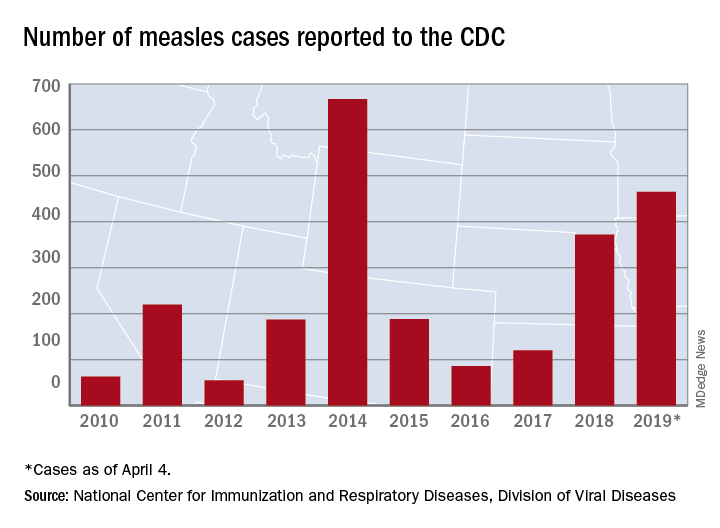
The measles virus has now infected individuals in Florida, Indiana, Massachusetts, and Nevada, which means that 19 states have now reported a total of 465 cases this year, and that is the second-highest total “reported in the U.S. since measles was eliminated in 2000,” the CDC said April 8.
The Michigan outbreak is mostly concentrated in Oakland County, where 38 cases have occurred. The county has posted an up-to-date list of exposure locations.
Not to be outdone, New York reported 45 new cases last week: 44 in Brooklyn and 1 in Queens. There have been 259 confirmed cases in the two boroughs since the outbreak began in October of last year.
Besides Michigan and New York City, there are five other outbreaks ongoing in the United States: Rockland County, N.Y.; Washington State (no new cases since March 22); Butte County, Calif.; Santa Cruz County, Calif.; and New Jersey, the CDC reported.
A judge in New York State temporarily blocked an order banning unimmunized children from public spaces in Rockland County and has set a hearing date of April 19, CNN reported. The ban, ordered by Rockland County Executive Ed Day, went into effect on March 27.
On April 2, the Maine Center for Disease Control & Prevention announced that an out-of-state resident with a confirmed case of measles had visited two health care offices – one in Falmouth and one in Westbrook – on March 27. No cases in Maine residents have been reported yet.
On a vaccine-related note, the Washington State Senate’s Health and Long Term Care Committee approved a proposal on April 1 that would “end the personal exemption for parents who don’t want their children vaccinated against measles,” the Spokane Spokesman-Review said. The bill, which would still allow medical and religious exemptions, has already passed the state’s House of Representatives and goes next to the full senate.
A new measles outbreak in Michigan has already resulted in 39 cases, and four more states reported their first cases of 2019 during the week ending April 4, according to the Centers for Disease Control and Prevention
The measles virus has now infected individuals in Florida, Indiana, Massachusetts, and Nevada, which means that 19 states have now reported a total of 465 cases this year, and that is the second-highest total “reported in the U.S. since measles was eliminated in 2000,” the CDC said April 8.
The Michigan outbreak is mostly concentrated in Oakland County, where 38 cases have occurred. The county has posted an up-to-date list of exposure locations.
Not to be outdone, New York reported 45 new cases last week: 44 in Brooklyn and 1 in Queens. There have been 259 confirmed cases in the two boroughs since the outbreak began in October of last year.
Besides Michigan and New York City, there are five other outbreaks ongoing in the United States: Rockland County, N.Y.; Washington State (no new cases since March 22); Butte County, Calif.; Santa Cruz County, Calif.; and New Jersey, the CDC reported.
A judge in New York State temporarily blocked an order banning unimmunized children from public spaces in Rockland County and has set a hearing date of April 19, CNN reported. The ban, ordered by Rockland County Executive Ed Day, went into effect on March 27.
On April 2, the Maine Center for Disease Control & Prevention announced that an out-of-state resident with a confirmed case of measles had visited two health care offices – one in Falmouth and one in Westbrook – on March 27. No cases in Maine residents have been reported yet.
On a vaccine-related note, the Washington State Senate’s Health and Long Term Care Committee approved a proposal on April 1 that would “end the personal exemption for parents who don’t want their children vaccinated against measles,” the Spokane Spokesman-Review said. The bill, which would still allow medical and religious exemptions, has already passed the state’s House of Representatives and goes next to the full senate.
A new measles outbreak in Michigan has already resulted in 39 cases, and four more states reported their first cases of 2019 during the week ending April 4, according to the Centers for Disease Control and Prevention
The measles virus has now infected individuals in Florida, Indiana, Massachusetts, and Nevada, which means that 19 states have now reported a total of 465 cases this year, and that is the second-highest total “reported in the U.S. since measles was eliminated in 2000,” the CDC said April 8.
The Michigan outbreak is mostly concentrated in Oakland County, where 38 cases have occurred. The county has posted an up-to-date list of exposure locations.
Not to be outdone, New York reported 45 new cases last week: 44 in Brooklyn and 1 in Queens. There have been 259 confirmed cases in the two boroughs since the outbreak began in October of last year.
Besides Michigan and New York City, there are five other outbreaks ongoing in the United States: Rockland County, N.Y.; Washington State (no new cases since March 22); Butte County, Calif.; Santa Cruz County, Calif.; and New Jersey, the CDC reported.
A judge in New York State temporarily blocked an order banning unimmunized children from public spaces in Rockland County and has set a hearing date of April 19, CNN reported. The ban, ordered by Rockland County Executive Ed Day, went into effect on March 27.
On April 2, the Maine Center for Disease Control & Prevention announced that an out-of-state resident with a confirmed case of measles had visited two health care offices – one in Falmouth and one in Westbrook – on March 27. No cases in Maine residents have been reported yet.
On a vaccine-related note, the Washington State Senate’s Health and Long Term Care Committee approved a proposal on April 1 that would “end the personal exemption for parents who don’t want their children vaccinated against measles,” the Spokane Spokesman-Review said. The bill, which would still allow medical and religious exemptions, has already passed the state’s House of Representatives and goes next to the full senate.
Flu activity falling but still elevated
Measures of influenza activity fell again as the flu season continues to make its later-than-usual departure this year, according to the Centers for Disease Control and Prevention.
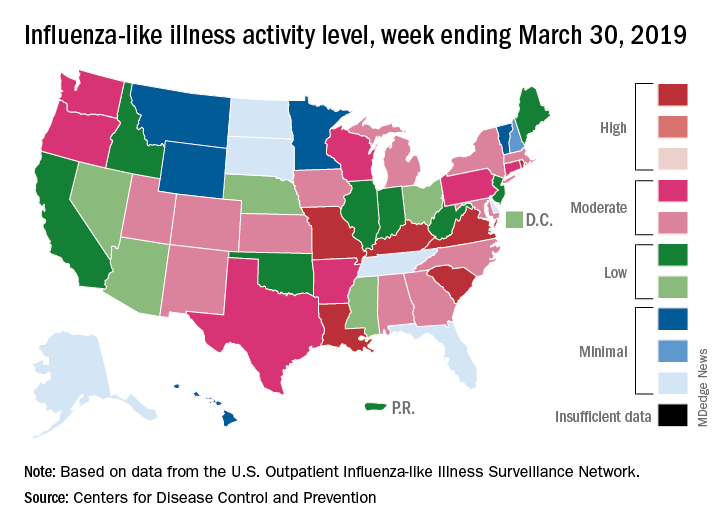
On the geographic front, the map of influenza-like illness (ILI) activity for the week ending March 30 shows that only 6 states are at level 10 on the CDC’s 1-10 scale, compared with 11 for the previous week, and that those same 6 states make up the entire membership of the high range of levels 8-10, which is down from 20 states a week ago, data from the CDC’s Outpatient ILI Surveillance Network show.
The proportion of outpatient visits for ILI, now at 3.2%, dropped for the sixth consecutive week after reaching its season high of 5.1% back in mid-February. The outpatient rate has now been at or above the national baseline of 2.2% for 19 weeks this season, the CDC’s influenza division said April 5, noting that the average for the past five seasons is 16 weeks.
Six flu-related pediatric deaths were reported in the week ending March 30, and the total is now 82 for the 2018-2019 season. Five of the six occurred during previous weeks of this season, and one occurred in the 2017-2018 season, the CDC said.
Measures of influenza activity fell again as the flu season continues to make its later-than-usual departure this year, according to the Centers for Disease Control and Prevention.
On the geographic front, the map of influenza-like illness (ILI) activity for the week ending March 30 shows that only 6 states are at level 10 on the CDC’s 1-10 scale, compared with 11 for the previous week, and that those same 6 states make up the entire membership of the high range of levels 8-10, which is down from 20 states a week ago, data from the CDC’s Outpatient ILI Surveillance Network show.
The proportion of outpatient visits for ILI, now at 3.2%, dropped for the sixth consecutive week after reaching its season high of 5.1% back in mid-February. The outpatient rate has now been at or above the national baseline of 2.2% for 19 weeks this season, the CDC’s influenza division said April 5, noting that the average for the past five seasons is 16 weeks.
Six flu-related pediatric deaths were reported in the week ending March 30, and the total is now 82 for the 2018-2019 season. Five of the six occurred during previous weeks of this season, and one occurred in the 2017-2018 season, the CDC said.
Measures of influenza activity fell again as the flu season continues to make its later-than-usual departure this year, according to the Centers for Disease Control and Prevention.
On the geographic front, the map of influenza-like illness (ILI) activity for the week ending March 30 shows that only 6 states are at level 10 on the CDC’s 1-10 scale, compared with 11 for the previous week, and that those same 6 states make up the entire membership of the high range of levels 8-10, which is down from 20 states a week ago, data from the CDC’s Outpatient ILI Surveillance Network show.
The proportion of outpatient visits for ILI, now at 3.2%, dropped for the sixth consecutive week after reaching its season high of 5.1% back in mid-February. The outpatient rate has now been at or above the national baseline of 2.2% for 19 weeks this season, the CDC’s influenza division said April 5, noting that the average for the past five seasons is 16 weeks.
Six flu-related pediatric deaths were reported in the week ending March 30, and the total is now 82 for the 2018-2019 season. Five of the six occurred during previous weeks of this season, and one occurred in the 2017-2018 season, the CDC said.
EHR parodies, hangover-free booze, and dubstep repellent
Epic tweets
Need a little break from seeing all your patients? Hop on Twitter for a few minutes – specifically, the Epic parody account.

A frustrated but hilarious physician somewhere on the East Coast created the account a month ago to brighten busy days and help other physicians connect through a shared hatred of Epic, the electronic health records system.
The account’s bio states: “My goal is to create confusion for doctors. I will not rest until doctors do nothing but click buttons. Eye contact is evil.” In continuing with this theme, the account dedicates many Tweets to decrying patient-doctor interaction and encouraging computer-doctor interaction instead. And it rails against the “shaming of data-entry clerks.”
If you, too, are frustrated with Epic or your own EHR system, submit them to @EPICEMRparody with the hashtag #EPICfail. Join the club.
Pour me another, bartender
All the beauty of alcohol without the soul-crushing hangover the next day? I’ll take two on the rocks, please.
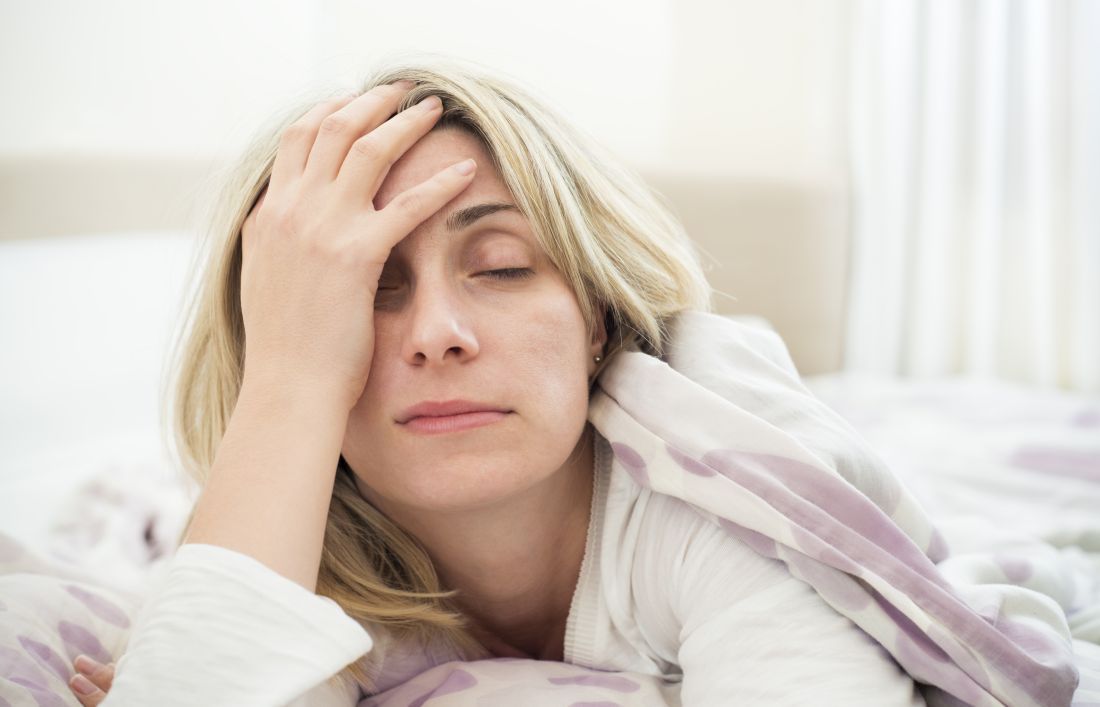
For the last decade, visionary, scientist, and soon-to-be hero David Nutt, DM, has been working on a formula for synthetic alcohol that gets you nice and tipsy, but spares you the hangover. Dr. Nutt has created a compound he calls “alcosynth” that triggers a buzz but doesn’t activate the brain receptors that cause the symptoms of hangover.
Dr. Nutt is confident that his alcohol will hit liquor stores in just 5 years. As the director of neuropsychopharmacology at the Imperial College London and a wine bar owner, he knows a bit more than the average person about alcohol and brain receptors. He realized that the brain’s GABA receptors can be stimulated by alcohol and developed his product, Alcarelle, to simulate that stimulation without causing headaches, nausea, dizziness, and other hangover symptoms.
Dr. Nutt guards his process pretty tightly, however – the secret to hangover-free booze is as precious as a golden ticket to the Wonka factory. Everyone’s going to want to get their hands on it!
Don’t just do something, lie there
As the Trump administration tries to implement work requirements for food stamps and Medicaid, the Artificial Gravity Bed Rest Study offers another way to get paid for doing nothing.
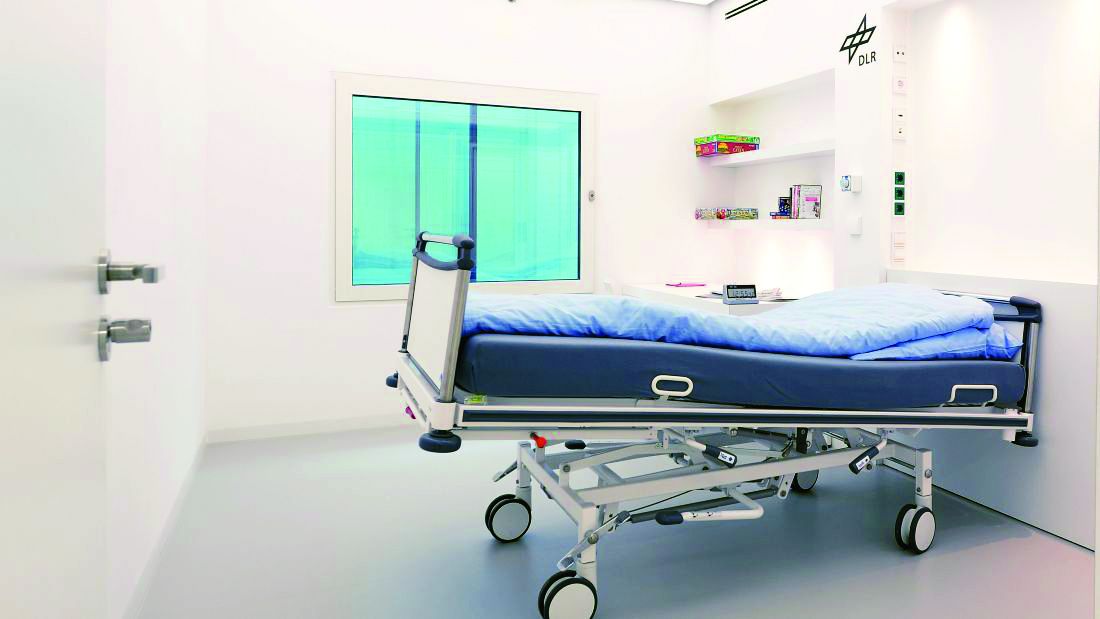
This joint effort between NASA, the European Space Agency, and the German Space Agency will recreate outer space conditions right here on earth – in Cologne, Germany, to be exact – by having participants lie down for 60 days with their heads 6 degrees below their feet, causing fluids in the body to shift toward their heads and reproducing conditions experienced by astronauts in the absence of gravity.
Unsurprisingly, not just anyone will be considered: Participants have to be women aged 24-55 years with body mass indexes of 19-30 kg/m2 who speak German and don’t smoke. Test subjects have to bathe, eat (the project’s website mentions pancakes), and go to the toilet while lying down, and they will spend 30 minutes a day in the human centrifuge – that’s the artificial gravity part of the study – to counteract the effects of weightlessness. They also will receive an expense allowance of about $18,500.
So, you can earn almost 20 grand as you get waited on, stuffed with pancakes, and massaged while catching up on your reading and relaxing for 2 months. Hmm, we may have gotten this backwards with that work requirement remark. Sounds more like a trial membership into the “1%,” so be sure to keep track of your portfolios.
That’s why mosquitoes don’t go to clubs
There’s not a whole lot of positive things that can be said about mosquitoes, spreaders of such wonderful diseases such as malaria and Zika. But we’ll give them this: They have good taste in music.

Those musical standards were the subject of a study published in Acta Tropica, in which female mosquitoes were starved for 12 hours, introduced to a fresh hamster for an all-you-can-eat buffet and a single male mosquito for reproductive purposes, then subjected to either silence or some extremely loud dubstep music, courtesy of the artist Skrillex. The researchers’ goal was simple: Is loud music an “environmentally friendly” repellent alternative?
In a blow to the egos of dubstep fans everywhere, not only did the mosquitoes forced to listen to Skrillex take longer to start sucking blood from the hamster, they sucked out less blood and made fewer attempts to reproduce with the lone male mosquito. According to the researchers, the so-called music’s aggressive vibrations disrupts the mosquito’s ability to fly and synchronize wing beats.
This is really a good news/bad news situation here. Good news, we’ve found an easy way to drive off a very annoying insect. Bad news, we have to suffer through loud dubstep music. Personally, we’ll take the mosquitoes.
Epic tweets
Need a little break from seeing all your patients? Hop on Twitter for a few minutes – specifically, the Epic parody account.
A frustrated but hilarious physician somewhere on the East Coast created the account a month ago to brighten busy days and help other physicians connect through a shared hatred of Epic, the electronic health records system.
The account’s bio states: “My goal is to create confusion for doctors. I will not rest until doctors do nothing but click buttons. Eye contact is evil.” In continuing with this theme, the account dedicates many Tweets to decrying patient-doctor interaction and encouraging computer-doctor interaction instead. And it rails against the “shaming of data-entry clerks.”
If you, too, are frustrated with Epic or your own EHR system, submit them to @EPICEMRparody with the hashtag #EPICfail. Join the club.
Pour me another, bartender
All the beauty of alcohol without the soul-crushing hangover the next day? I’ll take two on the rocks, please.
For the last decade, visionary, scientist, and soon-to-be hero David Nutt, DM, has been working on a formula for synthetic alcohol that gets you nice and tipsy, but spares you the hangover. Dr. Nutt has created a compound he calls “alcosynth” that triggers a buzz but doesn’t activate the brain receptors that cause the symptoms of hangover.
Dr. Nutt is confident that his alcohol will hit liquor stores in just 5 years. As the director of neuropsychopharmacology at the Imperial College London and a wine bar owner, he knows a bit more than the average person about alcohol and brain receptors. He realized that the brain’s GABA receptors can be stimulated by alcohol and developed his product, Alcarelle, to simulate that stimulation without causing headaches, nausea, dizziness, and other hangover symptoms.
Dr. Nutt guards his process pretty tightly, however – the secret to hangover-free booze is as precious as a golden ticket to the Wonka factory. Everyone’s going to want to get their hands on it!
Don’t just do something, lie there
As the Trump administration tries to implement work requirements for food stamps and Medicaid, the Artificial Gravity Bed Rest Study offers another way to get paid for doing nothing.
This joint effort between NASA, the European Space Agency, and the German Space Agency will recreate outer space conditions right here on earth – in Cologne, Germany, to be exact – by having participants lie down for 60 days with their heads 6 degrees below their feet, causing fluids in the body to shift toward their heads and reproducing conditions experienced by astronauts in the absence of gravity.
Unsurprisingly, not just anyone will be considered: Participants have to be women aged 24-55 years with body mass indexes of 19-30 kg/m2 who speak German and don’t smoke. Test subjects have to bathe, eat (the project’s website mentions pancakes), and go to the toilet while lying down, and they will spend 30 minutes a day in the human centrifuge – that’s the artificial gravity part of the study – to counteract the effects of weightlessness. They also will receive an expense allowance of about $18,500.
So, you can earn almost 20 grand as you get waited on, stuffed with pancakes, and massaged while catching up on your reading and relaxing for 2 months. Hmm, we may have gotten this backwards with that work requirement remark. Sounds more like a trial membership into the “1%,” so be sure to keep track of your portfolios.
That’s why mosquitoes don’t go to clubs
There’s not a whole lot of positive things that can be said about mosquitoes, spreaders of such wonderful diseases such as malaria and Zika. But we’ll give them this: They have good taste in music.
Those musical standards were the subject of a study published in Acta Tropica, in which female mosquitoes were starved for 12 hours, introduced to a fresh hamster for an all-you-can-eat buffet and a single male mosquito for reproductive purposes, then subjected to either silence or some extremely loud dubstep music, courtesy of the artist Skrillex. The researchers’ goal was simple: Is loud music an “environmentally friendly” repellent alternative?
In a blow to the egos of dubstep fans everywhere, not only did the mosquitoes forced to listen to Skrillex take longer to start sucking blood from the hamster, they sucked out less blood and made fewer attempts to reproduce with the lone male mosquito. According to the researchers, the so-called music’s aggressive vibrations disrupts the mosquito’s ability to fly and synchronize wing beats.
This is really a good news/bad news situation here. Good news, we’ve found an easy way to drive off a very annoying insect. Bad news, we have to suffer through loud dubstep music. Personally, we’ll take the mosquitoes.
Epic tweets
Need a little break from seeing all your patients? Hop on Twitter for a few minutes – specifically, the Epic parody account.
A frustrated but hilarious physician somewhere on the East Coast created the account a month ago to brighten busy days and help other physicians connect through a shared hatred of Epic, the electronic health records system.
The account’s bio states: “My goal is to create confusion for doctors. I will not rest until doctors do nothing but click buttons. Eye contact is evil.” In continuing with this theme, the account dedicates many Tweets to decrying patient-doctor interaction and encouraging computer-doctor interaction instead. And it rails against the “shaming of data-entry clerks.”
If you, too, are frustrated with Epic or your own EHR system, submit them to @EPICEMRparody with the hashtag #EPICfail. Join the club.
Pour me another, bartender
All the beauty of alcohol without the soul-crushing hangover the next day? I’ll take two on the rocks, please.
For the last decade, visionary, scientist, and soon-to-be hero David Nutt, DM, has been working on a formula for synthetic alcohol that gets you nice and tipsy, but spares you the hangover. Dr. Nutt has created a compound he calls “alcosynth” that triggers a buzz but doesn’t activate the brain receptors that cause the symptoms of hangover.
Dr. Nutt is confident that his alcohol will hit liquor stores in just 5 years. As the director of neuropsychopharmacology at the Imperial College London and a wine bar owner, he knows a bit more than the average person about alcohol and brain receptors. He realized that the brain’s GABA receptors can be stimulated by alcohol and developed his product, Alcarelle, to simulate that stimulation without causing headaches, nausea, dizziness, and other hangover symptoms.
Dr. Nutt guards his process pretty tightly, however – the secret to hangover-free booze is as precious as a golden ticket to the Wonka factory. Everyone’s going to want to get their hands on it!
Don’t just do something, lie there
As the Trump administration tries to implement work requirements for food stamps and Medicaid, the Artificial Gravity Bed Rest Study offers another way to get paid for doing nothing.
This joint effort between NASA, the European Space Agency, and the German Space Agency will recreate outer space conditions right here on earth – in Cologne, Germany, to be exact – by having participants lie down for 60 days with their heads 6 degrees below their feet, causing fluids in the body to shift toward their heads and reproducing conditions experienced by astronauts in the absence of gravity.
Unsurprisingly, not just anyone will be considered: Participants have to be women aged 24-55 years with body mass indexes of 19-30 kg/m2 who speak German and don’t smoke. Test subjects have to bathe, eat (the project’s website mentions pancakes), and go to the toilet while lying down, and they will spend 30 minutes a day in the human centrifuge – that’s the artificial gravity part of the study – to counteract the effects of weightlessness. They also will receive an expense allowance of about $18,500.
So, you can earn almost 20 grand as you get waited on, stuffed with pancakes, and massaged while catching up on your reading and relaxing for 2 months. Hmm, we may have gotten this backwards with that work requirement remark. Sounds more like a trial membership into the “1%,” so be sure to keep track of your portfolios.
That’s why mosquitoes don’t go to clubs
There’s not a whole lot of positive things that can be said about mosquitoes, spreaders of such wonderful diseases such as malaria and Zika. But we’ll give them this: They have good taste in music.
Those musical standards were the subject of a study published in Acta Tropica, in which female mosquitoes were starved for 12 hours, introduced to a fresh hamster for an all-you-can-eat buffet and a single male mosquito for reproductive purposes, then subjected to either silence or some extremely loud dubstep music, courtesy of the artist Skrillex. The researchers’ goal was simple: Is loud music an “environmentally friendly” repellent alternative?
In a blow to the egos of dubstep fans everywhere, not only did the mosquitoes forced to listen to Skrillex take longer to start sucking blood from the hamster, they sucked out less blood and made fewer attempts to reproduce with the lone male mosquito. According to the researchers, the so-called music’s aggressive vibrations disrupts the mosquito’s ability to fly and synchronize wing beats.
This is really a good news/bad news situation here. Good news, we’ve found an easy way to drive off a very annoying insect. Bad news, we have to suffer through loud dubstep music. Personally, we’ll take the mosquitoes.
Measles: Latest weekly count is the highest of the year
according to the Centers for Disease Control and Prevention.
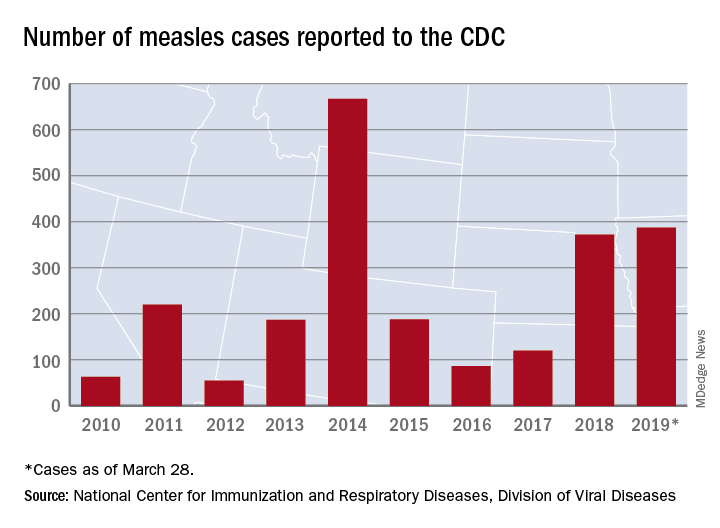
The 73 new cases of measles reported to the CDC during the week ending March 28 – more than any other single week so far in 2019 – brings the total number of cases for the year to 387, the CDC reported April 1. That surpasses the 372 reported in 2018 and is now the highest annual count since 667 cases were reported in 2014.
The ongoing outbreak in Rockland County, N.Y., which resulted in 6 new cases there last week and 52 for the year, prompted County Executive Ed Day to declare a state of emergency effective March 27 that bars unvaccinated individuals under age 18 years from public places for the next 30 days unless they receive an MMR vaccination.
“As this outbreak has continued our inspectors have begun to meet resistance from those they are trying to protect. They have been hung up on or told not to call again. They’ve been told ‘we’re not discussing this, do not come back,’ when visiting the homes of infected individuals as part of their investigations. This type of response is unacceptable and irresponsible. It endangers the health and well-being of others and displays a shocking lack of responsibility and concern for others in our community,” Mr. Day said in a written statement.
In addition to Rockland County, the CDC is currently tracking five other outbreaks: New York City, mainly Brooklyn (33 new cases last week); Washington state (74 cases for the year, but no new cases in the last week); New Jersey (10 total cases, with 8 related to an outbreak in Ocean and Monmouth Counties); and two in California (16 total cases, with 11 related to the outbreaks). One of the California outbreaks and the New Jersey outbreak are new, but the CDC is no longer reporting outbreaks in Texas and Illinois, so the total stays at six nationwide.
In related news from California, state Sen. Richard Pan (D), a pediatrician, and Assemblywoman Lorena Gonzalez (D) introduced a bill to monitor vaccine exemptions “by requiring the state health department to vet each medical exemption form written by physicians [and to] maintain a database of exemptions that would allow officials to monitor which doctors are granting the exemptions,” the Los Angeles Times reported.
according to the Centers for Disease Control and Prevention.
The 73 new cases of measles reported to the CDC during the week ending March 28 – more than any other single week so far in 2019 – brings the total number of cases for the year to 387, the CDC reported April 1. That surpasses the 372 reported in 2018 and is now the highest annual count since 667 cases were reported in 2014.
The ongoing outbreak in Rockland County, N.Y., which resulted in 6 new cases there last week and 52 for the year, prompted County Executive Ed Day to declare a state of emergency effective March 27 that bars unvaccinated individuals under age 18 years from public places for the next 30 days unless they receive an MMR vaccination.
“As this outbreak has continued our inspectors have begun to meet resistance from those they are trying to protect. They have been hung up on or told not to call again. They’ve been told ‘we’re not discussing this, do not come back,’ when visiting the homes of infected individuals as part of their investigations. This type of response is unacceptable and irresponsible. It endangers the health and well-being of others and displays a shocking lack of responsibility and concern for others in our community,” Mr. Day said in a written statement.
In addition to Rockland County, the CDC is currently tracking five other outbreaks: New York City, mainly Brooklyn (33 new cases last week); Washington state (74 cases for the year, but no new cases in the last week); New Jersey (10 total cases, with 8 related to an outbreak in Ocean and Monmouth Counties); and two in California (16 total cases, with 11 related to the outbreaks). One of the California outbreaks and the New Jersey outbreak are new, but the CDC is no longer reporting outbreaks in Texas and Illinois, so the total stays at six nationwide.
In related news from California, state Sen. Richard Pan (D), a pediatrician, and Assemblywoman Lorena Gonzalez (D) introduced a bill to monitor vaccine exemptions “by requiring the state health department to vet each medical exemption form written by physicians [and to] maintain a database of exemptions that would allow officials to monitor which doctors are granting the exemptions,” the Los Angeles Times reported.
according to the Centers for Disease Control and Prevention.
The 73 new cases of measles reported to the CDC during the week ending March 28 – more than any other single week so far in 2019 – brings the total number of cases for the year to 387, the CDC reported April 1. That surpasses the 372 reported in 2018 and is now the highest annual count since 667 cases were reported in 2014.
The ongoing outbreak in Rockland County, N.Y., which resulted in 6 new cases there last week and 52 for the year, prompted County Executive Ed Day to declare a state of emergency effective March 27 that bars unvaccinated individuals under age 18 years from public places for the next 30 days unless they receive an MMR vaccination.
“As this outbreak has continued our inspectors have begun to meet resistance from those they are trying to protect. They have been hung up on or told not to call again. They’ve been told ‘we’re not discussing this, do not come back,’ when visiting the homes of infected individuals as part of their investigations. This type of response is unacceptable and irresponsible. It endangers the health and well-being of others and displays a shocking lack of responsibility and concern for others in our community,” Mr. Day said in a written statement.
In addition to Rockland County, the CDC is currently tracking five other outbreaks: New York City, mainly Brooklyn (33 new cases last week); Washington state (74 cases for the year, but no new cases in the last week); New Jersey (10 total cases, with 8 related to an outbreak in Ocean and Monmouth Counties); and two in California (16 total cases, with 11 related to the outbreaks). One of the California outbreaks and the New Jersey outbreak are new, but the CDC is no longer reporting outbreaks in Texas and Illinois, so the total stays at six nationwide.
In related news from California, state Sen. Richard Pan (D), a pediatrician, and Assemblywoman Lorena Gonzalez (D) introduced a bill to monitor vaccine exemptions “by requiring the state health department to vet each medical exemption form written by physicians [and to] maintain a database of exemptions that would allow officials to monitor which doctors are granting the exemptions,” the Los Angeles Times reported.
2018-2019 flu season: Going but not gone yet
The 2018-2019 flu season again showed real signs of ending as influenza activity levels dropped during the week ending March 23, according to the Centers for Disease Control and Prevention.
Despite those declines, however, current levels of influenza-like illness (ILI) activity are still elevated enough that the CDC issued a health advisory on March 28 to inform clinicians about the “increasing proportion of activity due to influenza A(H3N2) viruses, continued circulation of influenza A(H1N1) viruses, and low levels of influenza B viruses.”
The CDC’s weekly flu report, released March 29, does show that the overall burden is improving. The national proportion of outpatient visits for ILI dropped from 4.3% for the week ending March 16 to 3.8% for the latest reporting week, the CDC’s influenza division reported. The figure for March 16 was originally reported to be 4.4% but was revised in the new report.
The length of this years’ flu season, when measured as the number of weeks at or above the baseline level of 2.2%, is now 18 weeks. By this measure, the last five seasons have averaged 16 weeks, the CDC noted.
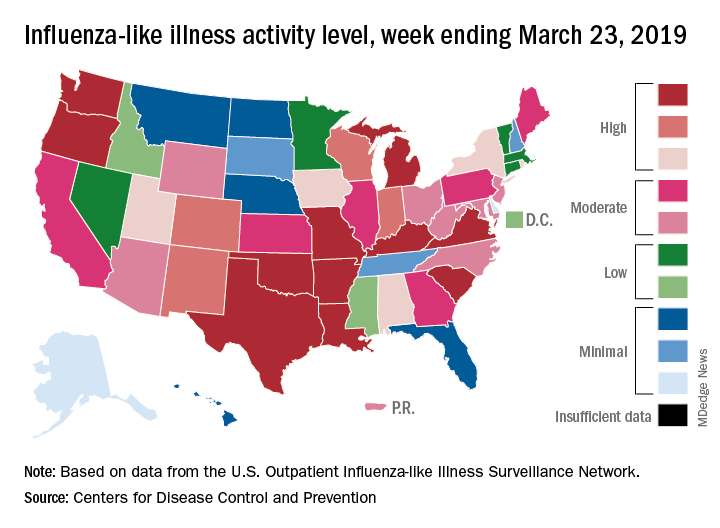
Influenza was considered widespread in 34 states and Puerto Rico for the week ending March 23, down from 44 states the previous week. The number of states at the highest level of ILI activity on the CDC’s 1-10 scale dropped from 20 to 11, and those in the high range (8-10) dropped from 26 to 20, data from the CDC’s Outpatient ILI Surveillance Network show.
There was one flu-related pediatric death during the week of March 23 but none reported from earlier weeks, which brings the total to 77 for the 2018-2019 season, the CDC said.
The 2018-2019 flu season again showed real signs of ending as influenza activity levels dropped during the week ending March 23, according to the Centers for Disease Control and Prevention.
Despite those declines, however, current levels of influenza-like illness (ILI) activity are still elevated enough that the CDC issued a health advisory on March 28 to inform clinicians about the “increasing proportion of activity due to influenza A(H3N2) viruses, continued circulation of influenza A(H1N1) viruses, and low levels of influenza B viruses.”
The CDC’s weekly flu report, released March 29, does show that the overall burden is improving. The national proportion of outpatient visits for ILI dropped from 4.3% for the week ending March 16 to 3.8% for the latest reporting week, the CDC’s influenza division reported. The figure for March 16 was originally reported to be 4.4% but was revised in the new report.
The length of this years’ flu season, when measured as the number of weeks at or above the baseline level of 2.2%, is now 18 weeks. By this measure, the last five seasons have averaged 16 weeks, the CDC noted.
Influenza was considered widespread in 34 states and Puerto Rico for the week ending March 23, down from 44 states the previous week. The number of states at the highest level of ILI activity on the CDC’s 1-10 scale dropped from 20 to 11, and those in the high range (8-10) dropped from 26 to 20, data from the CDC’s Outpatient ILI Surveillance Network show.
There was one flu-related pediatric death during the week of March 23 but none reported from earlier weeks, which brings the total to 77 for the 2018-2019 season, the CDC said.
The 2018-2019 flu season again showed real signs of ending as influenza activity levels dropped during the week ending March 23, according to the Centers for Disease Control and Prevention.
Despite those declines, however, current levels of influenza-like illness (ILI) activity are still elevated enough that the CDC issued a health advisory on March 28 to inform clinicians about the “increasing proportion of activity due to influenza A(H3N2) viruses, continued circulation of influenza A(H1N1) viruses, and low levels of influenza B viruses.”
The CDC’s weekly flu report, released March 29, does show that the overall burden is improving. The national proportion of outpatient visits for ILI dropped from 4.3% for the week ending March 16 to 3.8% for the latest reporting week, the CDC’s influenza division reported. The figure for March 16 was originally reported to be 4.4% but was revised in the new report.
The length of this years’ flu season, when measured as the number of weeks at or above the baseline level of 2.2%, is now 18 weeks. By this measure, the last five seasons have averaged 16 weeks, the CDC noted.
Influenza was considered widespread in 34 states and Puerto Rico for the week ending March 23, down from 44 states the previous week. The number of states at the highest level of ILI activity on the CDC’s 1-10 scale dropped from 20 to 11, and those in the high range (8-10) dropped from 26 to 20, data from the CDC’s Outpatient ILI Surveillance Network show.
There was one flu-related pediatric death during the week of March 23 but none reported from earlier weeks, which brings the total to 77 for the 2018-2019 season, the CDC said.
Montana named ‘best state to practice medicine’ in 2019
This year’s race for “best state to practice medicine” came down to the proverbial photo finish, with Montana edging out Wisconsin by 0.02 points, according to personal finance website WalletHub.
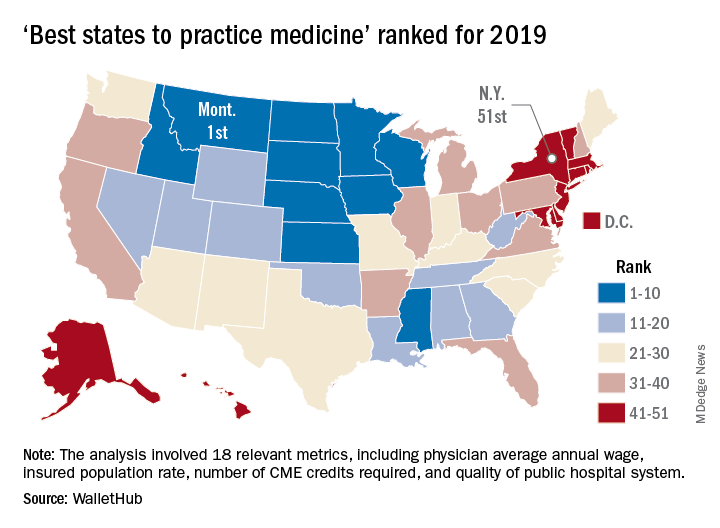
Montana had a total score of 69.15 out of 100 in the ranking of the best and worst states for doctors for 2019, with Wisconsin coming in at 69.13. The small degree of separation didn’t stop there, though, as third-place Idaho (68.55) and fourth-place Minnesota (68.32) both finished within a single point of the top, with Iowa a bit further behind at 67.58, WalletHub reported. In last year’s ranking, South Dakota won by more than 5 points over Nebraska, and in 2017 Iowa finished more than 2 points ahead of Minnesota.
The lowest-ranked state in 2019 was New York, with a score of 34.01 that was well below the 41.55 earned by 50th-place Washington, D.C. The rest of the bottom five was occupied by Rhode Island, New Jersey, and Connecticut, WalletHub said. New Jersey was the worst state in which to practice medicine in 2018, and New York finished last in 2017.
The rankings are based on 18 metrics across two broad categories: “opportunity and competition” (11 metrics worth 70 points) and “medical environment” (7 metrics worth 30 points). One metric in the opportunity and competition category, physicians’ average annual wage (adjusted for cost of living), was given double weight; other metrics included employer-based insurance rate, projected share of elderly population, punitiveness of state medical board, and malpractice award payout amount per capita.
Montana posted top-five scores in such areas as average physician monthly starting salary, share of medical residents retained, and presence of nationally accredited health departments. New York took big hits with bottom-five scores in adjusted average annual wage, projected competition, and annual cost of malpractice insurance, according to WalletHub.
This year’s race for “best state to practice medicine” came down to the proverbial photo finish, with Montana edging out Wisconsin by 0.02 points, according to personal finance website WalletHub.
Montana had a total score of 69.15 out of 100 in the ranking of the best and worst states for doctors for 2019, with Wisconsin coming in at 69.13. The small degree of separation didn’t stop there, though, as third-place Idaho (68.55) and fourth-place Minnesota (68.32) both finished within a single point of the top, with Iowa a bit further behind at 67.58, WalletHub reported. In last year’s ranking, South Dakota won by more than 5 points over Nebraska, and in 2017 Iowa finished more than 2 points ahead of Minnesota.
The lowest-ranked state in 2019 was New York, with a score of 34.01 that was well below the 41.55 earned by 50th-place Washington, D.C. The rest of the bottom five was occupied by Rhode Island, New Jersey, and Connecticut, WalletHub said. New Jersey was the worst state in which to practice medicine in 2018, and New York finished last in 2017.
The rankings are based on 18 metrics across two broad categories: “opportunity and competition” (11 metrics worth 70 points) and “medical environment” (7 metrics worth 30 points). One metric in the opportunity and competition category, physicians’ average annual wage (adjusted for cost of living), was given double weight; other metrics included employer-based insurance rate, projected share of elderly population, punitiveness of state medical board, and malpractice award payout amount per capita.
Montana posted top-five scores in such areas as average physician monthly starting salary, share of medical residents retained, and presence of nationally accredited health departments. New York took big hits with bottom-five scores in adjusted average annual wage, projected competition, and annual cost of malpractice insurance, according to WalletHub.
This year’s race for “best state to practice medicine” came down to the proverbial photo finish, with Montana edging out Wisconsin by 0.02 points, according to personal finance website WalletHub.
Montana had a total score of 69.15 out of 100 in the ranking of the best and worst states for doctors for 2019, with Wisconsin coming in at 69.13. The small degree of separation didn’t stop there, though, as third-place Idaho (68.55) and fourth-place Minnesota (68.32) both finished within a single point of the top, with Iowa a bit further behind at 67.58, WalletHub reported. In last year’s ranking, South Dakota won by more than 5 points over Nebraska, and in 2017 Iowa finished more than 2 points ahead of Minnesota.
The lowest-ranked state in 2019 was New York, with a score of 34.01 that was well below the 41.55 earned by 50th-place Washington, D.C. The rest of the bottom five was occupied by Rhode Island, New Jersey, and Connecticut, WalletHub said. New Jersey was the worst state in which to practice medicine in 2018, and New York finished last in 2017.
The rankings are based on 18 metrics across two broad categories: “opportunity and competition” (11 metrics worth 70 points) and “medical environment” (7 metrics worth 30 points). One metric in the opportunity and competition category, physicians’ average annual wage (adjusted for cost of living), was given double weight; other metrics included employer-based insurance rate, projected share of elderly population, punitiveness of state medical board, and malpractice award payout amount per capita.
Montana posted top-five scores in such areas as average physician monthly starting salary, share of medical residents retained, and presence of nationally accredited health departments. New York took big hits with bottom-five scores in adjusted average annual wage, projected competition, and annual cost of malpractice insurance, according to WalletHub.