User login
Richard Franki is the associate editor who writes and creates graphs. He started with the company in 1987, when it was known as the International Medical News Group. In his years as a journalist, Richard has worked for Cap Cities/ABC, Disney, Harcourt, Elsevier, Quadrant, Frontline, and Internet Brands. In the 1990s, he was a contributor to the ill-fated Indications column, predecessor of Livin' on the MDedge.
Flu season showing signs of decline
The 2018-2019 flu season may have peaked as measures of influenza-like illness (ILI) activity dropped in the first week of the new year, according to the U.S. Centers for Disease Control and Prevention.

The proportion of outpatients visits for ILI dropped to 3.5% for the week ending Jan. 5, 2019, after reaching 4.0% the previous week. Outpatient ILI visits first topped the national baseline of 2.2% during the week ending Dec. 8, 2018, and have remained above that value for 5 consecutive weeks, the CDC’s influenza division said on Jan. 11.
Flu activity reported by the states reflects the national drop: 10 states came in at level 10 on the CDC’s 1-10 scale of activity for the week ending Jan. 5 – down from 12 the week before – and a total of 15 were in the high range from 8 to 10, compared with 19 the previous week, the CDC said. Two states, Mississippi and Texas, dropped from level 10 to level 7, which the CDC categorizes as moderate activity.
A total of 73 ILI-related deaths were reported during the week ending Dec. 29 (the latest with data available; reporting less than 68% complete), which already exceeds the 71 deaths reported for the week ending Dec. 22 (reporting 85% complete). Flu deaths totaled 437 through the first 13 weeks of the 2018-2019 season, compared with the 1,659 that occurred during weeks 1-13 of the very severe 2017-2018 season, CDC data show.
For the week ending Jan. 5, the CDC received reports of three flu-related pediatric deaths, all of which occurred the previous week. For the season so far, there have been 16 pediatric deaths, compared with 20 at this point in the 2017-2018 season.
Estimates released during the flu season for the first time show that between 6 and 7 million Americans have been infected since Oct. 1, 2018, and that 69,000-84,000 people have been hospitalized with the flu through Jan. 5, 2019. These cumulative totals have previously been available only at the end of the season, the CDC noted.
The 2018-2019 flu season may have peaked as measures of influenza-like illness (ILI) activity dropped in the first week of the new year, according to the U.S. Centers for Disease Control and Prevention.
The proportion of outpatients visits for ILI dropped to 3.5% for the week ending Jan. 5, 2019, after reaching 4.0% the previous week. Outpatient ILI visits first topped the national baseline of 2.2% during the week ending Dec. 8, 2018, and have remained above that value for 5 consecutive weeks, the CDC’s influenza division said on Jan. 11.
Flu activity reported by the states reflects the national drop: 10 states came in at level 10 on the CDC’s 1-10 scale of activity for the week ending Jan. 5 – down from 12 the week before – and a total of 15 were in the high range from 8 to 10, compared with 19 the previous week, the CDC said. Two states, Mississippi and Texas, dropped from level 10 to level 7, which the CDC categorizes as moderate activity.
A total of 73 ILI-related deaths were reported during the week ending Dec. 29 (the latest with data available; reporting less than 68% complete), which already exceeds the 71 deaths reported for the week ending Dec. 22 (reporting 85% complete). Flu deaths totaled 437 through the first 13 weeks of the 2018-2019 season, compared with the 1,659 that occurred during weeks 1-13 of the very severe 2017-2018 season, CDC data show.
For the week ending Jan. 5, the CDC received reports of three flu-related pediatric deaths, all of which occurred the previous week. For the season so far, there have been 16 pediatric deaths, compared with 20 at this point in the 2017-2018 season.
Estimates released during the flu season for the first time show that between 6 and 7 million Americans have been infected since Oct. 1, 2018, and that 69,000-84,000 people have been hospitalized with the flu through Jan. 5, 2019. These cumulative totals have previously been available only at the end of the season, the CDC noted.
The 2018-2019 flu season may have peaked as measures of influenza-like illness (ILI) activity dropped in the first week of the new year, according to the U.S. Centers for Disease Control and Prevention.
The proportion of outpatients visits for ILI dropped to 3.5% for the week ending Jan. 5, 2019, after reaching 4.0% the previous week. Outpatient ILI visits first topped the national baseline of 2.2% during the week ending Dec. 8, 2018, and have remained above that value for 5 consecutive weeks, the CDC’s influenza division said on Jan. 11.
Flu activity reported by the states reflects the national drop: 10 states came in at level 10 on the CDC’s 1-10 scale of activity for the week ending Jan. 5 – down from 12 the week before – and a total of 15 were in the high range from 8 to 10, compared with 19 the previous week, the CDC said. Two states, Mississippi and Texas, dropped from level 10 to level 7, which the CDC categorizes as moderate activity.
A total of 73 ILI-related deaths were reported during the week ending Dec. 29 (the latest with data available; reporting less than 68% complete), which already exceeds the 71 deaths reported for the week ending Dec. 22 (reporting 85% complete). Flu deaths totaled 437 through the first 13 weeks of the 2018-2019 season, compared with the 1,659 that occurred during weeks 1-13 of the very severe 2017-2018 season, CDC data show.
For the week ending Jan. 5, the CDC received reports of three flu-related pediatric deaths, all of which occurred the previous week. For the season so far, there have been 16 pediatric deaths, compared with 20 at this point in the 2017-2018 season.
Estimates released during the flu season for the first time show that between 6 and 7 million Americans have been infected since Oct. 1, 2018, and that 69,000-84,000 people have been hospitalized with the flu through Jan. 5, 2019. These cumulative totals have previously been available only at the end of the season, the CDC noted.
Gout’s Golden Globe, resistance is fecal, eucalyptus eulogy
Eucalyptus eulogy
(“Taps” quietly plays in the background ... ) In some sad news, Quincy the diabetic koala has passed on to that great eucalyptus tree in the sky. The furry type 1 diabetic lived in San Diego, where he was recently fitted with a cutting-edge continuous glucose monitor (CGM). This allowed Quincy more time for his favorite activities (chewing and sleeping) and less time spent with pesky skin pricks.

Quincy died of pneumonia, and it is unclear whether his death was diabetes related. All we know is that he will be missed greatly. He was beloved by those with diabetes everywhere, animal or otherwise. Quincy’s successful CGM procedure also gives endocrinologists hope that the technology could eventually be used for similarly fragile humans, like babies. R.I.P., Quincy; we loved you. In lieu of flowers, donations may be made to his favorite charity, the Drop Bear Awareness Association.
What’s Latin for ‘poop’?
The study of the human microbiota has become incredibly important in recent years, but there’s no getting away from the fact that it entails experimenting on poop. Remarkably, no one’s come up with a proper technical name for this unsavory activity. However, thanks to a collaboration between a gastroenterologist and a classics professor at the University of North Carolina, that deficiency is no more. You’ve met the in vivo and in vitro study. Now, please welcome the “in vimo” study!

Why in vimo? The term fecal or “in feco” might seem obvious. But the Latin root word never referred to poop, and if there’s one thing scientists can’t have, it’s improper Latin usage. The Romans, it turns out, had lots of words for poop. The root word of laetamen referred to fertility, richness, and happiness – a tempting prospect – but was mostly used to refer to farm animal dung. Merda mostly referred to smell or stench, and stercus shared the same root word as scatology, which refers to obscene literature. Fimus, which specifically refers to manure, was thus the most precise, and it was used by literary giants such as Livy, Virgil, and Tacitus. A clear winner, and the in vimo study flushed the rest of the competition away.
And just in case you think these researchers are no fun, the name they chose for the active enzymes collected from their in vimo samples? Poopernatants. Yes, even doctors enjoy a good poop joke.
The new Breakfast Club
Researchers at the University of Illinois and the University of Texas have collaborated to study something that most of us fear greatly: high school cliques. The researchers, who may or may not have peaked in high school, took a look at high school peer crowds and influences that form those tight-knit bonds that last all of 4 years.

The study found that most of the classic cliques – the jocks, the popular crowd, the brains, the stoners, the loners – are still alive and well in today’s American school system. However, at least one new group has emerged in the last decade: the “anime/manga fans.” Researchers noted that although schools have become much more diverse, racial and ethnic stereotypes are alive and well. Thank God we only have to do high school once.
Resistance is fecal
And now, just in case you were wondering how long it would take to put our newfound knowledge of “in vimo” to use, here comes a study that has “in vimo” written all over it (metaphorically speaking, of course).
Researchers in Sweden and Finland decided to take a look at antibiotic resistance genes in sewage, because “antibiotics consumed by humans and animals are released into the environment in urine and fecal material contained in treated wastewaters and sludge applied to land.” Then they compared the abundance of the mobile antibiotic resistance genes with the abundance of a human fecal pollution marker.
That marker – a virus that infects bacteria in human feces but is rare in other animals – was “highly correlated to the abundance of antibiotic resistance genes in environmental samples,” they said in a separate written statement, which “indicates that fecal pollution can largely explain the increase in resistant bacteria often found in human-impacted environments.” The name of that marker, the virus found in feces, happens to be “crAssphage.” And yes, the A really is capitalized. Really. We are not making this up.
Gout wins a Golden Globe
Gout has a new poster girl: Great Britain’s Queen Anne. She’s been dead for more than 4 centuries, but a Hollywood version of this stout monarch is turning a famously royal affliction into the disease of the moment.
The credit goes to actress Olivia Colman, who just won a Golden Globe award for her brilliant performance in the earthy comedy “The Favourite.” Ms. Colman transforms the pain-wracked Queen Anne into a needy, manipulative, and loopy monarch who still manages to draw our sympathy.
Besides flummoxing American spell-checkers with its title, The Favourite glories in stretching the truth about the queen’s private life. But she really does seem to have had the “disease of kings,” which has long been linked to the rich, fatty diets enjoyed by blue bloods.
Now, there’s talk that high-protein, meat-friendly keto and paleo diets are boosting rates among the young. This theory got an airing last week in a New York Magazine article titled “Why Gout Is Making a Comeback.”
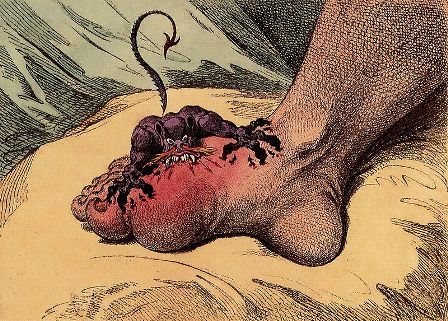
The truth may be more complicated. Over the last few years, researchers have cast doubt on the keto-leads-to-gout theory and suggested that fructose in sugar may be the real culprit. According to this hypothesis, gout afflicted British royals as they developed a communal sweet tooth during the early days of the sugar trade. Gout then spread to the general population as sugar became more accessible.
The gout debate will continue. As for Olivia Colman, she will soon grace smaller screens with her performance as Queen Elizabeth II in Netflix’s series “The Crown.”
QE II isn’t known for having suffered from any major diseases. But at her next checkup, we do think she should have that stiff upper lip looked at.

Eucalyptus eulogy
(“Taps” quietly plays in the background ... ) In some sad news, Quincy the diabetic koala has passed on to that great eucalyptus tree in the sky. The furry type 1 diabetic lived in San Diego, where he was recently fitted with a cutting-edge continuous glucose monitor (CGM). This allowed Quincy more time for his favorite activities (chewing and sleeping) and less time spent with pesky skin pricks.
Quincy died of pneumonia, and it is unclear whether his death was diabetes related. All we know is that he will be missed greatly. He was beloved by those with diabetes everywhere, animal or otherwise. Quincy’s successful CGM procedure also gives endocrinologists hope that the technology could eventually be used for similarly fragile humans, like babies. R.I.P., Quincy; we loved you. In lieu of flowers, donations may be made to his favorite charity, the Drop Bear Awareness Association.
What’s Latin for ‘poop’?
The study of the human microbiota has become incredibly important in recent years, but there’s no getting away from the fact that it entails experimenting on poop. Remarkably, no one’s come up with a proper technical name for this unsavory activity. However, thanks to a collaboration between a gastroenterologist and a classics professor at the University of North Carolina, that deficiency is no more. You’ve met the in vivo and in vitro study. Now, please welcome the “in vimo” study!
Why in vimo? The term fecal or “in feco” might seem obvious. But the Latin root word never referred to poop, and if there’s one thing scientists can’t have, it’s improper Latin usage. The Romans, it turns out, had lots of words for poop. The root word of laetamen referred to fertility, richness, and happiness – a tempting prospect – but was mostly used to refer to farm animal dung. Merda mostly referred to smell or stench, and stercus shared the same root word as scatology, which refers to obscene literature. Fimus, which specifically refers to manure, was thus the most precise, and it was used by literary giants such as Livy, Virgil, and Tacitus. A clear winner, and the in vimo study flushed the rest of the competition away.
And just in case you think these researchers are no fun, the name they chose for the active enzymes collected from their in vimo samples? Poopernatants. Yes, even doctors enjoy a good poop joke.
The new Breakfast Club
Researchers at the University of Illinois and the University of Texas have collaborated to study something that most of us fear greatly: high school cliques. The researchers, who may or may not have peaked in high school, took a look at high school peer crowds and influences that form those tight-knit bonds that last all of 4 years.
The study found that most of the classic cliques – the jocks, the popular crowd, the brains, the stoners, the loners – are still alive and well in today’s American school system. However, at least one new group has emerged in the last decade: the “anime/manga fans.” Researchers noted that although schools have become much more diverse, racial and ethnic stereotypes are alive and well. Thank God we only have to do high school once.
Resistance is fecal
And now, just in case you were wondering how long it would take to put our newfound knowledge of “in vimo” to use, here comes a study that has “in vimo” written all over it (metaphorically speaking, of course).
Researchers in Sweden and Finland decided to take a look at antibiotic resistance genes in sewage, because “antibiotics consumed by humans and animals are released into the environment in urine and fecal material contained in treated wastewaters and sludge applied to land.” Then they compared the abundance of the mobile antibiotic resistance genes with the abundance of a human fecal pollution marker.
That marker – a virus that infects bacteria in human feces but is rare in other animals – was “highly correlated to the abundance of antibiotic resistance genes in environmental samples,” they said in a separate written statement, which “indicates that fecal pollution can largely explain the increase in resistant bacteria often found in human-impacted environments.” The name of that marker, the virus found in feces, happens to be “crAssphage.” And yes, the A really is capitalized. Really. We are not making this up.
Gout wins a Golden Globe
Gout has a new poster girl: Great Britain’s Queen Anne. She’s been dead for more than 4 centuries, but a Hollywood version of this stout monarch is turning a famously royal affliction into the disease of the moment.
The credit goes to actress Olivia Colman, who just won a Golden Globe award for her brilliant performance in the earthy comedy “The Favourite.” Ms. Colman transforms the pain-wracked Queen Anne into a needy, manipulative, and loopy monarch who still manages to draw our sympathy.
Besides flummoxing American spell-checkers with its title, The Favourite glories in stretching the truth about the queen’s private life. But she really does seem to have had the “disease of kings,” which has long been linked to the rich, fatty diets enjoyed by blue bloods.
Now, there’s talk that high-protein, meat-friendly keto and paleo diets are boosting rates among the young. This theory got an airing last week in a New York Magazine article titled “Why Gout Is Making a Comeback.”
The truth may be more complicated. Over the last few years, researchers have cast doubt on the keto-leads-to-gout theory and suggested that fructose in sugar may be the real culprit. According to this hypothesis, gout afflicted British royals as they developed a communal sweet tooth during the early days of the sugar trade. Gout then spread to the general population as sugar became more accessible.
The gout debate will continue. As for Olivia Colman, she will soon grace smaller screens with her performance as Queen Elizabeth II in Netflix’s series “The Crown.”
QE II isn’t known for having suffered from any major diseases. But at her next checkup, we do think she should have that stiff upper lip looked at.
Eucalyptus eulogy
(“Taps” quietly plays in the background ... ) In some sad news, Quincy the diabetic koala has passed on to that great eucalyptus tree in the sky. The furry type 1 diabetic lived in San Diego, where he was recently fitted with a cutting-edge continuous glucose monitor (CGM). This allowed Quincy more time for his favorite activities (chewing and sleeping) and less time spent with pesky skin pricks.
Quincy died of pneumonia, and it is unclear whether his death was diabetes related. All we know is that he will be missed greatly. He was beloved by those with diabetes everywhere, animal or otherwise. Quincy’s successful CGM procedure also gives endocrinologists hope that the technology could eventually be used for similarly fragile humans, like babies. R.I.P., Quincy; we loved you. In lieu of flowers, donations may be made to his favorite charity, the Drop Bear Awareness Association.
What’s Latin for ‘poop’?
The study of the human microbiota has become incredibly important in recent years, but there’s no getting away from the fact that it entails experimenting on poop. Remarkably, no one’s come up with a proper technical name for this unsavory activity. However, thanks to a collaboration between a gastroenterologist and a classics professor at the University of North Carolina, that deficiency is no more. You’ve met the in vivo and in vitro study. Now, please welcome the “in vimo” study!
Why in vimo? The term fecal or “in feco” might seem obvious. But the Latin root word never referred to poop, and if there’s one thing scientists can’t have, it’s improper Latin usage. The Romans, it turns out, had lots of words for poop. The root word of laetamen referred to fertility, richness, and happiness – a tempting prospect – but was mostly used to refer to farm animal dung. Merda mostly referred to smell or stench, and stercus shared the same root word as scatology, which refers to obscene literature. Fimus, which specifically refers to manure, was thus the most precise, and it was used by literary giants such as Livy, Virgil, and Tacitus. A clear winner, and the in vimo study flushed the rest of the competition away.
And just in case you think these researchers are no fun, the name they chose for the active enzymes collected from their in vimo samples? Poopernatants. Yes, even doctors enjoy a good poop joke.
The new Breakfast Club
Researchers at the University of Illinois and the University of Texas have collaborated to study something that most of us fear greatly: high school cliques. The researchers, who may or may not have peaked in high school, took a look at high school peer crowds and influences that form those tight-knit bonds that last all of 4 years.
The study found that most of the classic cliques – the jocks, the popular crowd, the brains, the stoners, the loners – are still alive and well in today’s American school system. However, at least one new group has emerged in the last decade: the “anime/manga fans.” Researchers noted that although schools have become much more diverse, racial and ethnic stereotypes are alive and well. Thank God we only have to do high school once.
Resistance is fecal
And now, just in case you were wondering how long it would take to put our newfound knowledge of “in vimo” to use, here comes a study that has “in vimo” written all over it (metaphorically speaking, of course).
Researchers in Sweden and Finland decided to take a look at antibiotic resistance genes in sewage, because “antibiotics consumed by humans and animals are released into the environment in urine and fecal material contained in treated wastewaters and sludge applied to land.” Then they compared the abundance of the mobile antibiotic resistance genes with the abundance of a human fecal pollution marker.
That marker – a virus that infects bacteria in human feces but is rare in other animals – was “highly correlated to the abundance of antibiotic resistance genes in environmental samples,” they said in a separate written statement, which “indicates that fecal pollution can largely explain the increase in resistant bacteria often found in human-impacted environments.” The name of that marker, the virus found in feces, happens to be “crAssphage.” And yes, the A really is capitalized. Really. We are not making this up.
Gout wins a Golden Globe
Gout has a new poster girl: Great Britain’s Queen Anne. She’s been dead for more than 4 centuries, but a Hollywood version of this stout monarch is turning a famously royal affliction into the disease of the moment.
The credit goes to actress Olivia Colman, who just won a Golden Globe award for her brilliant performance in the earthy comedy “The Favourite.” Ms. Colman transforms the pain-wracked Queen Anne into a needy, manipulative, and loopy monarch who still manages to draw our sympathy.
Besides flummoxing American spell-checkers with its title, The Favourite glories in stretching the truth about the queen’s private life. But she really does seem to have had the “disease of kings,” which has long been linked to the rich, fatty diets enjoyed by blue bloods.
Now, there’s talk that high-protein, meat-friendly keto and paleo diets are boosting rates among the young. This theory got an airing last week in a New York Magazine article titled “Why Gout Is Making a Comeback.”
The truth may be more complicated. Over the last few years, researchers have cast doubt on the keto-leads-to-gout theory and suggested that fructose in sugar may be the real culprit. According to this hypothesis, gout afflicted British royals as they developed a communal sweet tooth during the early days of the sugar trade. Gout then spread to the general population as sugar became more accessible.
The gout debate will continue. As for Olivia Colman, she will soon grace smaller screens with her performance as Queen Elizabeth II in Netflix’s series “The Crown.”
QE II isn’t known for having suffered from any major diseases. But at her next checkup, we do think she should have that stiff upper lip looked at.
Flu season intensifies: High activity now in 19 states
The effects of the flu became much more widespread in the last full week of 2018 as the number of states with a high level of influenza activity more than doubled from the week before, according to the Centers for Disease Control and Prevention.
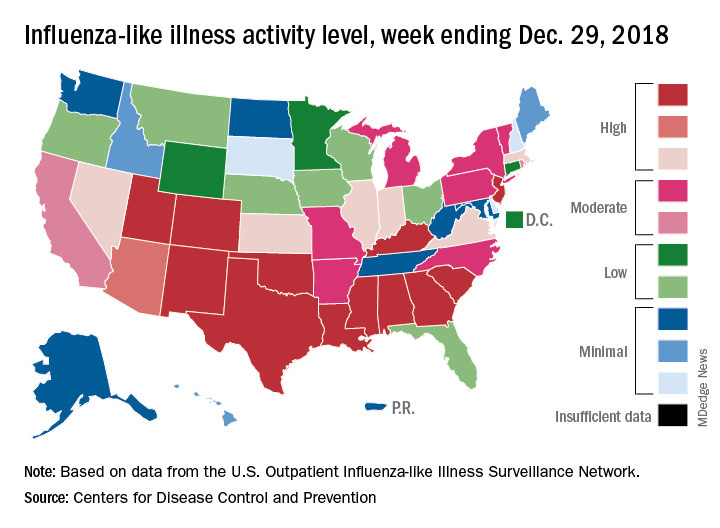
A total of 19 states were in the high range (8-10) on the CDC’s 1-10 scale of influenza-like illness (ILI) activity for the week ending Dec. 29, compared with 9 states the week before, the CDC’s influenza division reported Jan. 4. Of those 19 most-affected states, 12 were at level 10, 1 was at level 9, and 6 were at level 8. Geographic distribution of the virus was reported to be widespread in 24 states, the CDC said.
The proportion of outpatient visits for ILI – defined as fever (temperature of 100° F or greater) and cough and/or sore throat – rose to 4.1% for the week, which was up from 3.3% the previous week and well above the national baseline of 2.2%.
“The increase in the percentage of patient visits for ILI may be influenced in part by a reduction in routine health care visits during the winter holidays,” the report noted. There were 38 influenza deaths reported for the most recent week with available data (the week ending Dec. 22), although reporting for that week was just over 54% complete as of Jan. 4. For the previous weeks, 39 flu-related deaths occurred during the week ending Dec. 15 (reporting 84% complete) and 43 deaths during the week ending Dec. 8 (reporting 94% complete). For the respective weeks of last year’s flu season, total deaths were 359, 165, and 118, CDC data show.
For the week ending Dec. 29, two pediatric deaths were reported, one of which occurred the week before. For the 2018-2019 season so far, 13 flu-related pediatric deaths have been reported, the CDC said.
The effects of the flu became much more widespread in the last full week of 2018 as the number of states with a high level of influenza activity more than doubled from the week before, according to the Centers for Disease Control and Prevention.
A total of 19 states were in the high range (8-10) on the CDC’s 1-10 scale of influenza-like illness (ILI) activity for the week ending Dec. 29, compared with 9 states the week before, the CDC’s influenza division reported Jan. 4. Of those 19 most-affected states, 12 were at level 10, 1 was at level 9, and 6 were at level 8. Geographic distribution of the virus was reported to be widespread in 24 states, the CDC said.
The proportion of outpatient visits for ILI – defined as fever (temperature of 100° F or greater) and cough and/or sore throat – rose to 4.1% for the week, which was up from 3.3% the previous week and well above the national baseline of 2.2%.
“The increase in the percentage of patient visits for ILI may be influenced in part by a reduction in routine health care visits during the winter holidays,” the report noted. There were 38 influenza deaths reported for the most recent week with available data (the week ending Dec. 22), although reporting for that week was just over 54% complete as of Jan. 4. For the previous weeks, 39 flu-related deaths occurred during the week ending Dec. 15 (reporting 84% complete) and 43 deaths during the week ending Dec. 8 (reporting 94% complete). For the respective weeks of last year’s flu season, total deaths were 359, 165, and 118, CDC data show.
For the week ending Dec. 29, two pediatric deaths were reported, one of which occurred the week before. For the 2018-2019 season so far, 13 flu-related pediatric deaths have been reported, the CDC said.
The effects of the flu became much more widespread in the last full week of 2018 as the number of states with a high level of influenza activity more than doubled from the week before, according to the Centers for Disease Control and Prevention.
A total of 19 states were in the high range (8-10) on the CDC’s 1-10 scale of influenza-like illness (ILI) activity for the week ending Dec. 29, compared with 9 states the week before, the CDC’s influenza division reported Jan. 4. Of those 19 most-affected states, 12 were at level 10, 1 was at level 9, and 6 were at level 8. Geographic distribution of the virus was reported to be widespread in 24 states, the CDC said.
The proportion of outpatient visits for ILI – defined as fever (temperature of 100° F or greater) and cough and/or sore throat – rose to 4.1% for the week, which was up from 3.3% the previous week and well above the national baseline of 2.2%.
“The increase in the percentage of patient visits for ILI may be influenced in part by a reduction in routine health care visits during the winter holidays,” the report noted. There were 38 influenza deaths reported for the most recent week with available data (the week ending Dec. 22), although reporting for that week was just over 54% complete as of Jan. 4. For the previous weeks, 39 flu-related deaths occurred during the week ending Dec. 15 (reporting 84% complete) and 43 deaths during the week ending Dec. 8 (reporting 94% complete). For the respective weeks of last year’s flu season, total deaths were 359, 165, and 118, CDC data show.
For the week ending Dec. 29, two pediatric deaths were reported, one of which occurred the week before. For the 2018-2019 season so far, 13 flu-related pediatric deaths have been reported, the CDC said.
Transplanted food allergies, cavity-check hospital bills, and cancer-blocking houseplants
One lung, please (Hold the food allergy)
Is an organ transplant really worth the risk of developing a food allergy? Probably (er, definitely), but it still totally stinks. A 68-year-old woman suffered an allergic reaction to an innocent peanut butter and jelly sandwich earlier this year, after spending decades of eating peanut butter with no problem. Turns out, her lung transplant donor was allergic to peanuts and unfortunately passed that curse onto her. At least he wasn’t lactose intolerant – can you imagine suddenly being unable to eat cheese?!
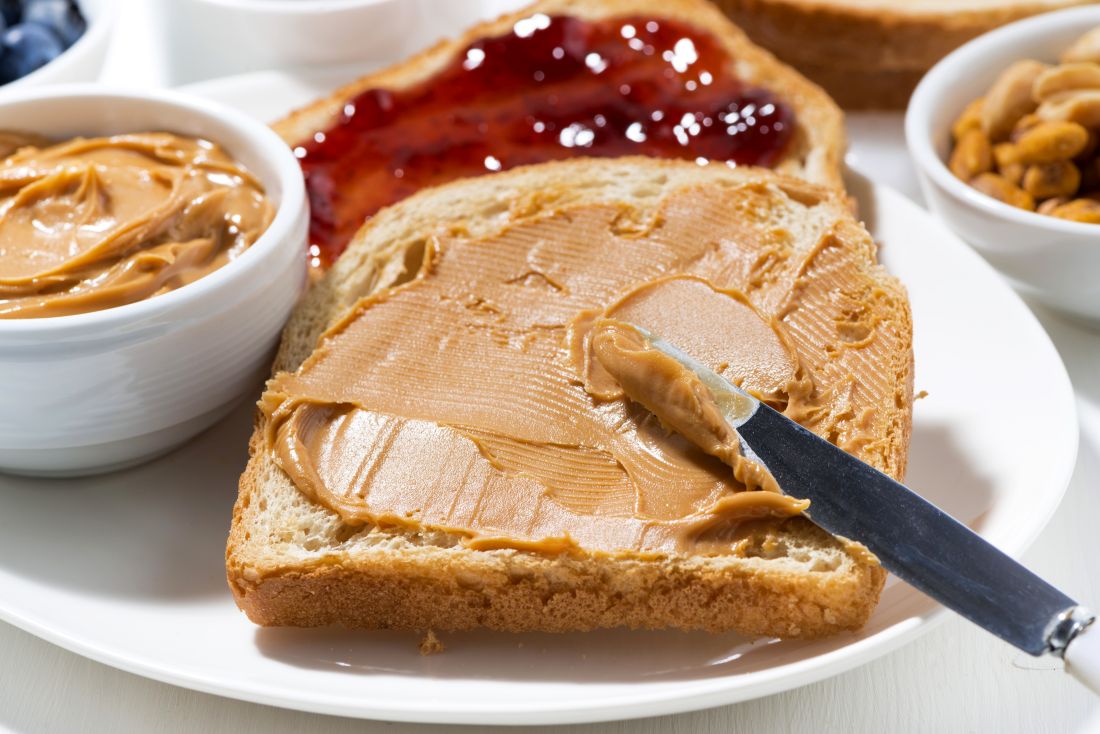
Passing on allergies via transplant is extremely rare; there are only about five cases of transplanted peanut allergies. The use of tacrolimus, an immunosuppressive drug, can also increase the risk of contracting food allergies post transplant. Luckily, the woman in question was still in the hospital when she began experiencing symptoms of an allergy attack, and doctors were able to correctly identify and punish the offending sandwich.
A debt of ingratitude
Medical personnel generally don’t get involved in searches for illegal drugs, but physicians at St. Joseph’s Hospital Health Center in Syracuse, N.Y., found themselves in just such a position. Because the police had a court order. Because the suspect said that he’d hidden drugs … in his rectum.

An x-ray had shown no evidence of drugs, but physicians there performed a sigmoidoscopy on Torrence Jackson after a hospital lawyer said “that a search warrant required the doctors to use ‘any means’ to retrieve the drugs,” according to a recent Syracuse.com report of the incident, which took place on Oct. 16, 2017. The sigmoidoscopy confirmed the x-ray finding, or lack thereof, and drug charges against Mr. Jackson eventually were thrown out.
The health care system, however, did its part to put a cherry on top of the situation: The hospital billed Mr. Jackson $4,595.12 for the procedure, and then said it would turn the matter over to a debt collector when he refused to pay.
Cancer-blocking plants?
All hail the GMOs! Researchers from the University of Washington have used genetic modification on a houseplant to turn it into a lean, green, chloroform-eatin’ machine. These mad scientists modified devil’s ivy to pull chloroform (found in chlorinated water) and benzene (found in gasoline) from the air and use them for plant growth.

These compounds are often so small they can’t be caught by air filters but can still cause damage – exposure to chloroform and benzene has been linked to cancer. Now, you can lessen your risk of cancer and enjoy some nice greenery in your home. Researchers have also started working on a new genetic modification to remove formaldehyde compounds from the air. It looks like the future of health is all about plants!
It must be true – it’s in a study

There’s untested, widely accepted truth, and then there’s empirically tested truth demonstrated in a rigorous scientific trial. Untested, widely accepted truth in point: Compared with using a simple backpack, parachute use is more likely to prevent death or major traumatic injury when leaping from an aircraft. Of course, no one’s ever done a study to prove it. Because, duh. Also, institutional review boards. Also, lawyers.
Until now.
Robert Yeh, M.D., of Harvard Medical School, and his colleagues began recruiting for just such a research trial while flying commercially. Few seat mates took up their randomized-to-parachute-or-backpack offer. That forced Dr. Yeh to recruit randomized participants from among fellow academics. Twenty-three research-minded souls agreed to make the leap for scientific progress from either a biplane or a helicopter, thereby making the study “Parachute use to prevent death and major trauma when jumping from aircraft: randomized controlled trial” a BMJ-published reality.
The results? “Our groundbreaking study found no statistically significant difference in the primary outcome between the treatment and control arms.”
How can the scientific method explain such a skydiving miracle? Because each and every study participant leaped ... 2 feet. From a parked biplane or helicopter.
“Although we can confidently recommend that individuals jumping from small stationary aircraft on the ground do not require parachutes, individual judgment should be exercised when applying these findings at higher altitudes.” It’s also possible the study authors are suggesting individual judgment should have a parachute, not a backpack, when physicians dive into a study’s scientific methodology.
One lung, please (Hold the food allergy)
Is an organ transplant really worth the risk of developing a food allergy? Probably (er, definitely), but it still totally stinks. A 68-year-old woman suffered an allergic reaction to an innocent peanut butter and jelly sandwich earlier this year, after spending decades of eating peanut butter with no problem. Turns out, her lung transplant donor was allergic to peanuts and unfortunately passed that curse onto her. At least he wasn’t lactose intolerant – can you imagine suddenly being unable to eat cheese?!
Passing on allergies via transplant is extremely rare; there are only about five cases of transplanted peanut allergies. The use of tacrolimus, an immunosuppressive drug, can also increase the risk of contracting food allergies post transplant. Luckily, the woman in question was still in the hospital when she began experiencing symptoms of an allergy attack, and doctors were able to correctly identify and punish the offending sandwich.
A debt of ingratitude
Medical personnel generally don’t get involved in searches for illegal drugs, but physicians at St. Joseph’s Hospital Health Center in Syracuse, N.Y., found themselves in just such a position. Because the police had a court order. Because the suspect said that he’d hidden drugs … in his rectum.
An x-ray had shown no evidence of drugs, but physicians there performed a sigmoidoscopy on Torrence Jackson after a hospital lawyer said “that a search warrant required the doctors to use ‘any means’ to retrieve the drugs,” according to a recent Syracuse.com report of the incident, which took place on Oct. 16, 2017. The sigmoidoscopy confirmed the x-ray finding, or lack thereof, and drug charges against Mr. Jackson eventually were thrown out.
The health care system, however, did its part to put a cherry on top of the situation: The hospital billed Mr. Jackson $4,595.12 for the procedure, and then said it would turn the matter over to a debt collector when he refused to pay.
Cancer-blocking plants?
All hail the GMOs! Researchers from the University of Washington have used genetic modification on a houseplant to turn it into a lean, green, chloroform-eatin’ machine. These mad scientists modified devil’s ivy to pull chloroform (found in chlorinated water) and benzene (found in gasoline) from the air and use them for plant growth.
These compounds are often so small they can’t be caught by air filters but can still cause damage – exposure to chloroform and benzene has been linked to cancer. Now, you can lessen your risk of cancer and enjoy some nice greenery in your home. Researchers have also started working on a new genetic modification to remove formaldehyde compounds from the air. It looks like the future of health is all about plants!
It must be true – it’s in a study
There’s untested, widely accepted truth, and then there’s empirically tested truth demonstrated in a rigorous scientific trial. Untested, widely accepted truth in point: Compared with using a simple backpack, parachute use is more likely to prevent death or major traumatic injury when leaping from an aircraft. Of course, no one’s ever done a study to prove it. Because, duh. Also, institutional review boards. Also, lawyers.
Until now.
Robert Yeh, M.D., of Harvard Medical School, and his colleagues began recruiting for just such a research trial while flying commercially. Few seat mates took up their randomized-to-parachute-or-backpack offer. That forced Dr. Yeh to recruit randomized participants from among fellow academics. Twenty-three research-minded souls agreed to make the leap for scientific progress from either a biplane or a helicopter, thereby making the study “Parachute use to prevent death and major trauma when jumping from aircraft: randomized controlled trial” a BMJ-published reality.
The results? “Our groundbreaking study found no statistically significant difference in the primary outcome between the treatment and control arms.”
How can the scientific method explain such a skydiving miracle? Because each and every study participant leaped ... 2 feet. From a parked biplane or helicopter.
“Although we can confidently recommend that individuals jumping from small stationary aircraft on the ground do not require parachutes, individual judgment should be exercised when applying these findings at higher altitudes.” It’s also possible the study authors are suggesting individual judgment should have a parachute, not a backpack, when physicians dive into a study’s scientific methodology.
One lung, please (Hold the food allergy)
Is an organ transplant really worth the risk of developing a food allergy? Probably (er, definitely), but it still totally stinks. A 68-year-old woman suffered an allergic reaction to an innocent peanut butter and jelly sandwich earlier this year, after spending decades of eating peanut butter with no problem. Turns out, her lung transplant donor was allergic to peanuts and unfortunately passed that curse onto her. At least he wasn’t lactose intolerant – can you imagine suddenly being unable to eat cheese?!
Passing on allergies via transplant is extremely rare; there are only about five cases of transplanted peanut allergies. The use of tacrolimus, an immunosuppressive drug, can also increase the risk of contracting food allergies post transplant. Luckily, the woman in question was still in the hospital when she began experiencing symptoms of an allergy attack, and doctors were able to correctly identify and punish the offending sandwich.
A debt of ingratitude
Medical personnel generally don’t get involved in searches for illegal drugs, but physicians at St. Joseph’s Hospital Health Center in Syracuse, N.Y., found themselves in just such a position. Because the police had a court order. Because the suspect said that he’d hidden drugs … in his rectum.
An x-ray had shown no evidence of drugs, but physicians there performed a sigmoidoscopy on Torrence Jackson after a hospital lawyer said “that a search warrant required the doctors to use ‘any means’ to retrieve the drugs,” according to a recent Syracuse.com report of the incident, which took place on Oct. 16, 2017. The sigmoidoscopy confirmed the x-ray finding, or lack thereof, and drug charges against Mr. Jackson eventually were thrown out.
The health care system, however, did its part to put a cherry on top of the situation: The hospital billed Mr. Jackson $4,595.12 for the procedure, and then said it would turn the matter over to a debt collector when he refused to pay.
Cancer-blocking plants?
All hail the GMOs! Researchers from the University of Washington have used genetic modification on a houseplant to turn it into a lean, green, chloroform-eatin’ machine. These mad scientists modified devil’s ivy to pull chloroform (found in chlorinated water) and benzene (found in gasoline) from the air and use them for plant growth.
These compounds are often so small they can’t be caught by air filters but can still cause damage – exposure to chloroform and benzene has been linked to cancer. Now, you can lessen your risk of cancer and enjoy some nice greenery in your home. Researchers have also started working on a new genetic modification to remove formaldehyde compounds from the air. It looks like the future of health is all about plants!
It must be true – it’s in a study
There’s untested, widely accepted truth, and then there’s empirically tested truth demonstrated in a rigorous scientific trial. Untested, widely accepted truth in point: Compared with using a simple backpack, parachute use is more likely to prevent death or major traumatic injury when leaping from an aircraft. Of course, no one’s ever done a study to prove it. Because, duh. Also, institutional review boards. Also, lawyers.
Until now.
Robert Yeh, M.D., of Harvard Medical School, and his colleagues began recruiting for just such a research trial while flying commercially. Few seat mates took up their randomized-to-parachute-or-backpack offer. That forced Dr. Yeh to recruit randomized participants from among fellow academics. Twenty-three research-minded souls agreed to make the leap for scientific progress from either a biplane or a helicopter, thereby making the study “Parachute use to prevent death and major trauma when jumping from aircraft: randomized controlled trial” a BMJ-published reality.
The results? “Our groundbreaking study found no statistically significant difference in the primary outcome between the treatment and control arms.”
How can the scientific method explain such a skydiving miracle? Because each and every study participant leaped ... 2 feet. From a parked biplane or helicopter.
“Although we can confidently recommend that individuals jumping from small stationary aircraft on the ground do not require parachutes, individual judgment should be exercised when applying these findings at higher altitudes.” It’s also possible the study authors are suggesting individual judgment should have a parachute, not a backpack, when physicians dive into a study’s scientific methodology.
CDC: Flu activity ‘high’ in nine states
according to the Centers for Disease Control and Prevention.
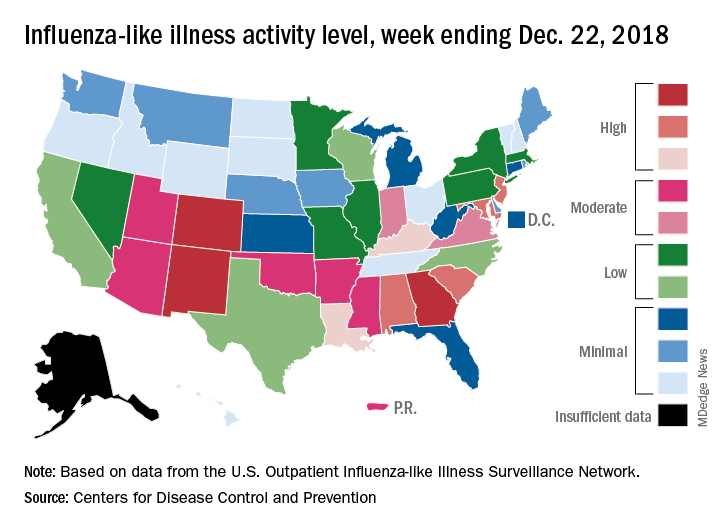
Patients with ILI made up an estimated 3.3% of outpatient visits for the week, which is up from 2.7% the previous week and well above the baseline rate of 2.2%, which the 2018-2019 flu season has now exceeded for the past 3 weeks, the CDC reported Dec. 28. ILI is defined “as fever (temperature of 100°F [37.8°C] or greater) and cough and/or sore throat.”
Three states – Colorado, Georgia, and New Mexico – are now at the highest level of flu activity on the CDC’s 1-10 scale, and nine states are in the “high” range (8-10), compared with two states in high range (both at level 10) for the week ending Dec. 15. Another seven states and Puerto Rico are now in the “moderate” range of 6-7, data from the CDC’s Outpatient ILI Surveillance Network show.
Four flu-related deaths in children were reported during the week ending Dec. 22, two of which occurred in previous weeks, which brings the total to 11 for the 2018-2019 season, the CDC reported.
according to the Centers for Disease Control and Prevention.
Patients with ILI made up an estimated 3.3% of outpatient visits for the week, which is up from 2.7% the previous week and well above the baseline rate of 2.2%, which the 2018-2019 flu season has now exceeded for the past 3 weeks, the CDC reported Dec. 28. ILI is defined “as fever (temperature of 100°F [37.8°C] or greater) and cough and/or sore throat.”
Three states – Colorado, Georgia, and New Mexico – are now at the highest level of flu activity on the CDC’s 1-10 scale, and nine states are in the “high” range (8-10), compared with two states in high range (both at level 10) for the week ending Dec. 15. Another seven states and Puerto Rico are now in the “moderate” range of 6-7, data from the CDC’s Outpatient ILI Surveillance Network show.
Four flu-related deaths in children were reported during the week ending Dec. 22, two of which occurred in previous weeks, which brings the total to 11 for the 2018-2019 season, the CDC reported.
according to the Centers for Disease Control and Prevention.
Patients with ILI made up an estimated 3.3% of outpatient visits for the week, which is up from 2.7% the previous week and well above the baseline rate of 2.2%, which the 2018-2019 flu season has now exceeded for the past 3 weeks, the CDC reported Dec. 28. ILI is defined “as fever (temperature of 100°F [37.8°C] or greater) and cough and/or sore throat.”
Three states – Colorado, Georgia, and New Mexico – are now at the highest level of flu activity on the CDC’s 1-10 scale, and nine states are in the “high” range (8-10), compared with two states in high range (both at level 10) for the week ending Dec. 15. Another seven states and Puerto Rico are now in the “moderate” range of 6-7, data from the CDC’s Outpatient ILI Surveillance Network show.
Four flu-related deaths in children were reported during the week ending Dec. 22, two of which occurred in previous weeks, which brings the total to 11 for the 2018-2019 season, the CDC reported.
2018-2019 flu season starts in earnest
National flu activity moved solidly into above-average territory during the week ending Dec. 15, as Colorado and Georgia took the lead with the highest activity levels in the country, according to the Centers for Disease Control and Prevention.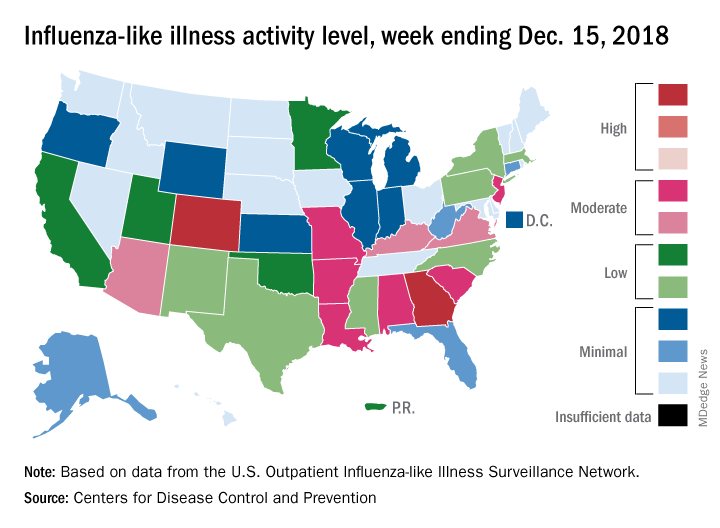
The proportion of outpatient visits for influenza-like illness (ILI) was 2.7% for the week, which was up from 2.3% the previous week and above the national baseline of 2.2%, the CDC reported. ILI is defined “as fever (temperature of 100°F [37.8°C] or greater) and cough and/or sore throat.”
Colorado and Georgia both reported ILI activity of 10 on the CDC’s 1-10 scale, making them the only states in the “high” range (8-10). Nine states and New York City had activity levels in the “moderate” range (6-7), Puerto Rico and 11 states were in the “low” range (4-5), and 28 states and the District of Columbia were in the “minimal” range (1-3), the CDC said.
During the comparable period of last year’s high-severity flu season, which ultimately resulted in 900,000 flu-related hospitalizations and 80,000 deaths (185 pediatric), nine states were already at level 10. For the 2018-2019 season so far, there have been seven ILI-related pediatric deaths, CDC data show.
National flu activity moved solidly into above-average territory during the week ending Dec. 15, as Colorado and Georgia took the lead with the highest activity levels in the country, according to the Centers for Disease Control and Prevention.
The proportion of outpatient visits for influenza-like illness (ILI) was 2.7% for the week, which was up from 2.3% the previous week and above the national baseline of 2.2%, the CDC reported. ILI is defined “as fever (temperature of 100°F [37.8°C] or greater) and cough and/or sore throat.”
Colorado and Georgia both reported ILI activity of 10 on the CDC’s 1-10 scale, making them the only states in the “high” range (8-10). Nine states and New York City had activity levels in the “moderate” range (6-7), Puerto Rico and 11 states were in the “low” range (4-5), and 28 states and the District of Columbia were in the “minimal” range (1-3), the CDC said.
During the comparable period of last year’s high-severity flu season, which ultimately resulted in 900,000 flu-related hospitalizations and 80,000 deaths (185 pediatric), nine states were already at level 10. For the 2018-2019 season so far, there have been seven ILI-related pediatric deaths, CDC data show.
National flu activity moved solidly into above-average territory during the week ending Dec. 15, as Colorado and Georgia took the lead with the highest activity levels in the country, according to the Centers for Disease Control and Prevention.
The proportion of outpatient visits for influenza-like illness (ILI) was 2.7% for the week, which was up from 2.3% the previous week and above the national baseline of 2.2%, the CDC reported. ILI is defined “as fever (temperature of 100°F [37.8°C] or greater) and cough and/or sore throat.”
Colorado and Georgia both reported ILI activity of 10 on the CDC’s 1-10 scale, making them the only states in the “high” range (8-10). Nine states and New York City had activity levels in the “moderate” range (6-7), Puerto Rico and 11 states were in the “low” range (4-5), and 28 states and the District of Columbia were in the “minimal” range (1-3), the CDC said.
During the comparable period of last year’s high-severity flu season, which ultimately resulted in 900,000 flu-related hospitalizations and 80,000 deaths (185 pediatric), nine states were already at level 10. For the 2018-2019 season so far, there have been seven ILI-related pediatric deaths, CDC data show.
Healthcare.gov activity surged in last week of open enrollment
A surge in activity during the last week of open enrollment at Healthcare.gov more than doubled the number of plans selected for the season, according to the Centers for Medicare & Medicaid Services.

Over 4.32 million plans were selected during week 7 (Dec. 9-15) of enrollment for the 2019 coverage year, exceeding the 4.13 million selected over the previous 6 weeks and bringing the total to 8.45 million, the CMS reported. During week 6 (Dec. 3-9), which was previously the busiest week of the year, 943,000 plans were selected by residents of the 39 states that use the Healthcare.gov platform.
This year’s week 7 total also topped the comparable number from last year’s enrollment period for the first time and closed the gap in cumulative selections from 11.7% after 6 weeks to 4.2%. Last year, a total of 8.82 million plans were selected for the 2018 coverage year, CMS said, while also noting that the data for this year “are preliminary and do not represent final 2019 Exchange Open Enrollment figures.”
CMS Administrator Seema Verma addressed the drop from 2018 to 2019: “With the lowest unemployment rate in 50 years, it’s possible that more Americans have employer based coverage, and don’t need exchange plans.” The CMS also estimated that “approximately 100,000 current exchange enrollees in Virginia will be eligible for” Medicaid now that the state has expanded its Medicaid population.
A surge in activity during the last week of open enrollment at Healthcare.gov more than doubled the number of plans selected for the season, according to the Centers for Medicare & Medicaid Services.
Over 4.32 million plans were selected during week 7 (Dec. 9-15) of enrollment for the 2019 coverage year, exceeding the 4.13 million selected over the previous 6 weeks and bringing the total to 8.45 million, the CMS reported. During week 6 (Dec. 3-9), which was previously the busiest week of the year, 943,000 plans were selected by residents of the 39 states that use the Healthcare.gov platform.
This year’s week 7 total also topped the comparable number from last year’s enrollment period for the first time and closed the gap in cumulative selections from 11.7% after 6 weeks to 4.2%. Last year, a total of 8.82 million plans were selected for the 2018 coverage year, CMS said, while also noting that the data for this year “are preliminary and do not represent final 2019 Exchange Open Enrollment figures.”
CMS Administrator Seema Verma addressed the drop from 2018 to 2019: “With the lowest unemployment rate in 50 years, it’s possible that more Americans have employer based coverage, and don’t need exchange plans.” The CMS also estimated that “approximately 100,000 current exchange enrollees in Virginia will be eligible for” Medicaid now that the state has expanded its Medicaid population.
A surge in activity during the last week of open enrollment at Healthcare.gov more than doubled the number of plans selected for the season, according to the Centers for Medicare & Medicaid Services.
Over 4.32 million plans were selected during week 7 (Dec. 9-15) of enrollment for the 2019 coverage year, exceeding the 4.13 million selected over the previous 6 weeks and bringing the total to 8.45 million, the CMS reported. During week 6 (Dec. 3-9), which was previously the busiest week of the year, 943,000 plans were selected by residents of the 39 states that use the Healthcare.gov platform.
This year’s week 7 total also topped the comparable number from last year’s enrollment period for the first time and closed the gap in cumulative selections from 11.7% after 6 weeks to 4.2%. Last year, a total of 8.82 million plans were selected for the 2018 coverage year, CMS said, while also noting that the data for this year “are preliminary and do not represent final 2019 Exchange Open Enrollment figures.”
CMS Administrator Seema Verma addressed the drop from 2018 to 2019: “With the lowest unemployment rate in 50 years, it’s possible that more Americans have employer based coverage, and don’t need exchange plans.” The CMS also estimated that “approximately 100,000 current exchange enrollees in Virginia will be eligible for” Medicaid now that the state has expanded its Medicaid population.
Cute aggression, a soused super spy, and hospital holiday discharges
I could just eat your little toes!
You know how people are weird around babies and act like they want to squeeze them to death? Yeah, that’s a real phenomenon that goes by the name “cute aggression.” It’s a neural response to adorable stimuli that makes us want to hug and pinch and even bite cute things – baby animals included. A researcher from the University of California, Riverside, took a look at why we do this weird, weird thing.

Using electrophysiology, Katherine Stavropoulos determined that the brain’s reward system plays an integral part in our inexplicable urge to nibble on babies and puppies. She hypothesizes that this may be an evolutionary adaptation, as a way of tempering the feelings of being positively overwhelmed by cuteness. Instead of becoming wholly incapacitated by the sight of your own progeny, your brain responds with some light aggression to snap you out of it and spur you to continue to provide for your young. Reason #12,849 that the human mind is one of the most bizarre things in this universe.
Shaken, not stirred
“No, Mr. Bond, I expect you to imbibe.” A new study published in the Medical Journal of Australia has taken a close look at James Bond’s drinking habits over the past 60 years. Unsurprisingly, researchers reported that 007 “has drunk heavily and consistently across 6 decades.” At least he’s consistent.

Study authors estimated that the secret agent’s peak blood alcohol content reached 0.36 g/dL, high enough to kill some people. Maybe weaker men perhaps, but not our Bond. His postdrinking activities include “fights, driving vehicles, gambling, sex, athletic extremes, and operating complex machinery, or devices.” He’s very good at multitasking. Researchers concluded that Bond has a severe drinking problem, according to DSM-5 criteria for alcohol use disorder. They recommend he seek professional help, and they also suggest that MI6 could be a more responsible employer by offering services for his drinking problem and likely PTSD.
“Home Alone,” with life-threatening injuries
The cinematic holiday hit “Home Alone” features an intrepid 8-year-old left alone to defend his house from the depredations of the two notorious Wet Bandits. While some say “intrepid,” others say “sadistic.” Young Kevin McCallister visits a veritable Spanish Inquisition’s worth of torments upon the iniquitous heads, torsos, and extremities of the larcenous duo: BB gunshots, falling steam irons, paint cans to the brain bucket, and everyone’s favorite theft deterrent, the old blowtorch-to-the-scalp routine.

The slapstick Wet Bandits survived their ordeal to burgle again in an equally painful sequel. But would Marv and Harry’s on-screen survival be possible in the world of real-life Sherman-Williams cans? Dr. Ryan St. Clair of the Weill Cornell Medical College in New York examined their celluloid injuries and offered some real-world diagnoses.
Close-range BB gunshots to the head and groin? They’d break the skin, sure. But the Wet Bandits’ skulls and scrotums would likely remain intact. Ah, but what about a steam iron to the face? Marv could expect a “blowout fracture,” leading to serious disfigurement and debilitating double vision. Paint can to the head? Ten pounds of paint can at the end of a 10-foot rope equals a roughly 2-kN blow to the face. Not only are the pair both out cold, they’re probably sporting toothless grins. And that blowtorch to the scalp? Harry’s now the victim of a full-thickness burn likely to cause skull bone necrosis that demands a transplant.
Dr. St. Clair’s expert medical summation? “This movie was way more believable when I was 8.”
Discharged for the holidays
No one wants to be in the hospital during the Christmas holiday, but the most wonderful time of the year could be the most dangerous time to leave the hospital. Canadian investigators compared a group of patients who were discharged during the 2-week holiday period with patients released during control periods before and after the holiday season.

The analysis revealed that the risk of death or readmission was higher within the next 7 days (odds ratio, 1.16), 14 days (OR, 1.14), and 30 days (OR, 1.09) for the group discharged during the holiday period (BMJ. 2018 Dec 10;363. doi: 10.1136/bmj.k4481). “The holiday period might be a time of reduced access to outpatient care” as caregivers take time off, the investigators suggested, or “patients might prefer to postpone their follow-up visit until their usual physician is available, or until the end of the holiday festivities or travel commitments.”
This hospital-related holiday danger is new information, of course, but maybe it’s not such a surprise. The beloved Christmas characters are, after all, a rather unhealthy bunch: Santa is obese, Rudolf has a stunningly severe case of rosacea, Charlie Brown is depressed, and don’t even get us started on the Grinch and his rapidly expanding heart.
I could just eat your little toes!
You know how people are weird around babies and act like they want to squeeze them to death? Yeah, that’s a real phenomenon that goes by the name “cute aggression.” It’s a neural response to adorable stimuli that makes us want to hug and pinch and even bite cute things – baby animals included. A researcher from the University of California, Riverside, took a look at why we do this weird, weird thing.
Using electrophysiology, Katherine Stavropoulos determined that the brain’s reward system plays an integral part in our inexplicable urge to nibble on babies and puppies. She hypothesizes that this may be an evolutionary adaptation, as a way of tempering the feelings of being positively overwhelmed by cuteness. Instead of becoming wholly incapacitated by the sight of your own progeny, your brain responds with some light aggression to snap you out of it and spur you to continue to provide for your young. Reason #12,849 that the human mind is one of the most bizarre things in this universe.
Shaken, not stirred
“No, Mr. Bond, I expect you to imbibe.” A new study published in the Medical Journal of Australia has taken a close look at James Bond’s drinking habits over the past 60 years. Unsurprisingly, researchers reported that 007 “has drunk heavily and consistently across 6 decades.” At least he’s consistent.
Study authors estimated that the secret agent’s peak blood alcohol content reached 0.36 g/dL, high enough to kill some people. Maybe weaker men perhaps, but not our Bond. His postdrinking activities include “fights, driving vehicles, gambling, sex, athletic extremes, and operating complex machinery, or devices.” He’s very good at multitasking. Researchers concluded that Bond has a severe drinking problem, according to DSM-5 criteria for alcohol use disorder. They recommend he seek professional help, and they also suggest that MI6 could be a more responsible employer by offering services for his drinking problem and likely PTSD.
“Home Alone,” with life-threatening injuries
The cinematic holiday hit “Home Alone” features an intrepid 8-year-old left alone to defend his house from the depredations of the two notorious Wet Bandits. While some say “intrepid,” others say “sadistic.” Young Kevin McCallister visits a veritable Spanish Inquisition’s worth of torments upon the iniquitous heads, torsos, and extremities of the larcenous duo: BB gunshots, falling steam irons, paint cans to the brain bucket, and everyone’s favorite theft deterrent, the old blowtorch-to-the-scalp routine.
The slapstick Wet Bandits survived their ordeal to burgle again in an equally painful sequel. But would Marv and Harry’s on-screen survival be possible in the world of real-life Sherman-Williams cans? Dr. Ryan St. Clair of the Weill Cornell Medical College in New York examined their celluloid injuries and offered some real-world diagnoses.
Close-range BB gunshots to the head and groin? They’d break the skin, sure. But the Wet Bandits’ skulls and scrotums would likely remain intact. Ah, but what about a steam iron to the face? Marv could expect a “blowout fracture,” leading to serious disfigurement and debilitating double vision. Paint can to the head? Ten pounds of paint can at the end of a 10-foot rope equals a roughly 2-kN blow to the face. Not only are the pair both out cold, they’re probably sporting toothless grins. And that blowtorch to the scalp? Harry’s now the victim of a full-thickness burn likely to cause skull bone necrosis that demands a transplant.
Dr. St. Clair’s expert medical summation? “This movie was way more believable when I was 8.”
Discharged for the holidays
No one wants to be in the hospital during the Christmas holiday, but the most wonderful time of the year could be the most dangerous time to leave the hospital. Canadian investigators compared a group of patients who were discharged during the 2-week holiday period with patients released during control periods before and after the holiday season.
The analysis revealed that the risk of death or readmission was higher within the next 7 days (odds ratio, 1.16), 14 days (OR, 1.14), and 30 days (OR, 1.09) for the group discharged during the holiday period (BMJ. 2018 Dec 10;363. doi: 10.1136/bmj.k4481). “The holiday period might be a time of reduced access to outpatient care” as caregivers take time off, the investigators suggested, or “patients might prefer to postpone their follow-up visit until their usual physician is available, or until the end of the holiday festivities or travel commitments.”
This hospital-related holiday danger is new information, of course, but maybe it’s not such a surprise. The beloved Christmas characters are, after all, a rather unhealthy bunch: Santa is obese, Rudolf has a stunningly severe case of rosacea, Charlie Brown is depressed, and don’t even get us started on the Grinch and his rapidly expanding heart.
I could just eat your little toes!
You know how people are weird around babies and act like they want to squeeze them to death? Yeah, that’s a real phenomenon that goes by the name “cute aggression.” It’s a neural response to adorable stimuli that makes us want to hug and pinch and even bite cute things – baby animals included. A researcher from the University of California, Riverside, took a look at why we do this weird, weird thing.
Using electrophysiology, Katherine Stavropoulos determined that the brain’s reward system plays an integral part in our inexplicable urge to nibble on babies and puppies. She hypothesizes that this may be an evolutionary adaptation, as a way of tempering the feelings of being positively overwhelmed by cuteness. Instead of becoming wholly incapacitated by the sight of your own progeny, your brain responds with some light aggression to snap you out of it and spur you to continue to provide for your young. Reason #12,849 that the human mind is one of the most bizarre things in this universe.
Shaken, not stirred
“No, Mr. Bond, I expect you to imbibe.” A new study published in the Medical Journal of Australia has taken a close look at James Bond’s drinking habits over the past 60 years. Unsurprisingly, researchers reported that 007 “has drunk heavily and consistently across 6 decades.” At least he’s consistent.
Study authors estimated that the secret agent’s peak blood alcohol content reached 0.36 g/dL, high enough to kill some people. Maybe weaker men perhaps, but not our Bond. His postdrinking activities include “fights, driving vehicles, gambling, sex, athletic extremes, and operating complex machinery, or devices.” He’s very good at multitasking. Researchers concluded that Bond has a severe drinking problem, according to DSM-5 criteria for alcohol use disorder. They recommend he seek professional help, and they also suggest that MI6 could be a more responsible employer by offering services for his drinking problem and likely PTSD.
“Home Alone,” with life-threatening injuries
The cinematic holiday hit “Home Alone” features an intrepid 8-year-old left alone to defend his house from the depredations of the two notorious Wet Bandits. While some say “intrepid,” others say “sadistic.” Young Kevin McCallister visits a veritable Spanish Inquisition’s worth of torments upon the iniquitous heads, torsos, and extremities of the larcenous duo: BB gunshots, falling steam irons, paint cans to the brain bucket, and everyone’s favorite theft deterrent, the old blowtorch-to-the-scalp routine.
The slapstick Wet Bandits survived their ordeal to burgle again in an equally painful sequel. But would Marv and Harry’s on-screen survival be possible in the world of real-life Sherman-Williams cans? Dr. Ryan St. Clair of the Weill Cornell Medical College in New York examined their celluloid injuries and offered some real-world diagnoses.
Close-range BB gunshots to the head and groin? They’d break the skin, sure. But the Wet Bandits’ skulls and scrotums would likely remain intact. Ah, but what about a steam iron to the face? Marv could expect a “blowout fracture,” leading to serious disfigurement and debilitating double vision. Paint can to the head? Ten pounds of paint can at the end of a 10-foot rope equals a roughly 2-kN blow to the face. Not only are the pair both out cold, they’re probably sporting toothless grins. And that blowtorch to the scalp? Harry’s now the victim of a full-thickness burn likely to cause skull bone necrosis that demands a transplant.
Dr. St. Clair’s expert medical summation? “This movie was way more believable when I was 8.”
Discharged for the holidays
No one wants to be in the hospital during the Christmas holiday, but the most wonderful time of the year could be the most dangerous time to leave the hospital. Canadian investigators compared a group of patients who were discharged during the 2-week holiday period with patients released during control periods before and after the holiday season.
The analysis revealed that the risk of death or readmission was higher within the next 7 days (odds ratio, 1.16), 14 days (OR, 1.14), and 30 days (OR, 1.09) for the group discharged during the holiday period (BMJ. 2018 Dec 10;363. doi: 10.1136/bmj.k4481). “The holiday period might be a time of reduced access to outpatient care” as caregivers take time off, the investigators suggested, or “patients might prefer to postpone their follow-up visit until their usual physician is available, or until the end of the holiday festivities or travel commitments.”
This hospital-related holiday danger is new information, of course, but maybe it’s not such a surprise. The beloved Christmas characters are, after all, a rather unhealthy bunch: Santa is obese, Rudolf has a stunningly severe case of rosacea, Charlie Brown is depressed, and don’t even get us started on the Grinch and his rapidly expanding heart.
Open enrollment 2019: Busiest week so far at HealthCare.gov
but the weekly and cumulative totals for plans selected continued to run below last year’s levels, according to the Centers for Medicare & Medicaid Services.
Over 934,000 plans were selected from Dec. 2 to Dec. 8, which puts the total at 4.13 million plans for the 2019 coverage year in the 39 states that use the HealthCare.gov platform, the CMS reported. Consumers renewing their coverage make up the majority of plans selected during week 6 (640,000) and cumulatively for the season (3.03 million), with new applications running at 295,000 for week 6 and 1.1 million overall.
Those numbers are down from last year, when 1.07 million plans (685,000 renewals and 389,000 new applications) were selected during week 6 of open enrollment for the 2018 coverage year, which brought the total for the season at the time to 4.68 million (3.30 million/1.38 million), CMS data show.
The deadline to enroll in a plan for 2019 is Dec. 15.
but the weekly and cumulative totals for plans selected continued to run below last year’s levels, according to the Centers for Medicare & Medicaid Services.
Over 934,000 plans were selected from Dec. 2 to Dec. 8, which puts the total at 4.13 million plans for the 2019 coverage year in the 39 states that use the HealthCare.gov platform, the CMS reported. Consumers renewing their coverage make up the majority of plans selected during week 6 (640,000) and cumulatively for the season (3.03 million), with new applications running at 295,000 for week 6 and 1.1 million overall.
Those numbers are down from last year, when 1.07 million plans (685,000 renewals and 389,000 new applications) were selected during week 6 of open enrollment for the 2018 coverage year, which brought the total for the season at the time to 4.68 million (3.30 million/1.38 million), CMS data show.
The deadline to enroll in a plan for 2019 is Dec. 15.
but the weekly and cumulative totals for plans selected continued to run below last year’s levels, according to the Centers for Medicare & Medicaid Services.
Over 934,000 plans were selected from Dec. 2 to Dec. 8, which puts the total at 4.13 million plans for the 2019 coverage year in the 39 states that use the HealthCare.gov platform, the CMS reported. Consumers renewing their coverage make up the majority of plans selected during week 6 (640,000) and cumulatively for the season (3.03 million), with new applications running at 295,000 for week 6 and 1.1 million overall.
Those numbers are down from last year, when 1.07 million plans (685,000 renewals and 389,000 new applications) were selected during week 6 of open enrollment for the 2018 coverage year, which brought the total for the season at the time to 4.68 million (3.30 million/1.38 million), CMS data show.
The deadline to enroll in a plan for 2019 is Dec. 15.
Bacterial contamination behind most cosmetics recalls
Most of the 313 cosmetic and personal care products recalled from 2002 to 2016 had problems with bacterial contamination, according to data obtained from the Food and Drug Administration.
, said Timothy M. Janetos, MD, and his associates at Northwestern University in Chicago. Bacterial contamination was by far the most common reason – 76% of the recalls over that period (11 class I, 217 class II, and 9 class II) – with unapproved ingredients and labeling problems well behind at 6%.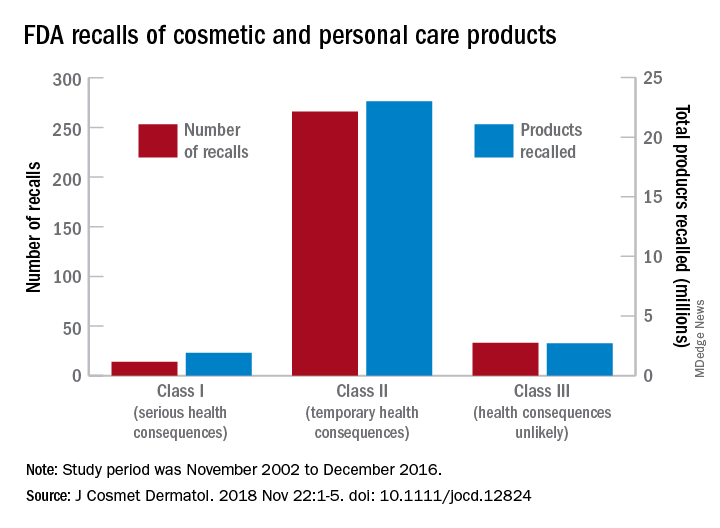
Recalls are classified by the FDA according to risk to patient safety: Class I means there is “reasonable probability of causing serious adverse health outcomes or death,” class II defines the risk as “temporary or reversible,” and class III recalls are “unlikely to cause an adverse health consequence,” they explained.
“While the number of total recalls per year was low in the context of the industry’s size and the ubiquity of cosmetic use by consumers (median: 17/year), these events involved millions of products distributed worldwide,” Dr. Janetos and his associates wrote. The class I recalls covered over 1.9 million products in distribution, the class II recalls accounted for 23 million products, and class II recalls involved over 2.7 million products.
Baby products were the category most likely to be affected, accounting for 76 (24%) of all recalls, the investigators said, with 30 involving one manufacturer of cleansing kits intended for hospital use. All but 3 of the 76 recalls resulted from bacterial contamination.
“The FDA currently has no authority to order a cosmetics manufacturer to recall a product,” they wrote, and “inspectors are only capable of inspecting 0.3% of foreign-imported products yearly,” so underreporting of such problems is likely. “Dermatologists are often the first to encounter [adverse events] related to cosmetic products and can help strengthen public safety by actively reporting these events and advocating for recalls,” said Dr. Janetos and his associates, who did not declare any conflicts of interest.
Information on reporting cosmetic-related complaints to the FDA is available on the FDA website at: https://www.fda.gov/Cosmetics/ComplianceEnforcement/AdverseEventReporting/default.htm.
[email protected]
SOURCE: Janetos TM et al. J Cosmet Dermatol. 2018 Nov 22:1-5. doi: 10.1111/jocd.12824.
Most of the 313 cosmetic and personal care products recalled from 2002 to 2016 had problems with bacterial contamination, according to data obtained from the Food and Drug Administration.
, said Timothy M. Janetos, MD, and his associates at Northwestern University in Chicago. Bacterial contamination was by far the most common reason – 76% of the recalls over that period (11 class I, 217 class II, and 9 class II) – with unapproved ingredients and labeling problems well behind at 6%.
Recalls are classified by the FDA according to risk to patient safety: Class I means there is “reasonable probability of causing serious adverse health outcomes or death,” class II defines the risk as “temporary or reversible,” and class III recalls are “unlikely to cause an adverse health consequence,” they explained.
“While the number of total recalls per year was low in the context of the industry’s size and the ubiquity of cosmetic use by consumers (median: 17/year), these events involved millions of products distributed worldwide,” Dr. Janetos and his associates wrote. The class I recalls covered over 1.9 million products in distribution, the class II recalls accounted for 23 million products, and class II recalls involved over 2.7 million products.
Baby products were the category most likely to be affected, accounting for 76 (24%) of all recalls, the investigators said, with 30 involving one manufacturer of cleansing kits intended for hospital use. All but 3 of the 76 recalls resulted from bacterial contamination.
“The FDA currently has no authority to order a cosmetics manufacturer to recall a product,” they wrote, and “inspectors are only capable of inspecting 0.3% of foreign-imported products yearly,” so underreporting of such problems is likely. “Dermatologists are often the first to encounter [adverse events] related to cosmetic products and can help strengthen public safety by actively reporting these events and advocating for recalls,” said Dr. Janetos and his associates, who did not declare any conflicts of interest.
Information on reporting cosmetic-related complaints to the FDA is available on the FDA website at: https://www.fda.gov/Cosmetics/ComplianceEnforcement/AdverseEventReporting/default.htm.
[email protected]
SOURCE: Janetos TM et al. J Cosmet Dermatol. 2018 Nov 22:1-5. doi: 10.1111/jocd.12824.
Most of the 313 cosmetic and personal care products recalled from 2002 to 2016 had problems with bacterial contamination, according to data obtained from the Food and Drug Administration.
, said Timothy M. Janetos, MD, and his associates at Northwestern University in Chicago. Bacterial contamination was by far the most common reason – 76% of the recalls over that period (11 class I, 217 class II, and 9 class II) – with unapproved ingredients and labeling problems well behind at 6%.
Recalls are classified by the FDA according to risk to patient safety: Class I means there is “reasonable probability of causing serious adverse health outcomes or death,” class II defines the risk as “temporary or reversible,” and class III recalls are “unlikely to cause an adverse health consequence,” they explained.
“While the number of total recalls per year was low in the context of the industry’s size and the ubiquity of cosmetic use by consumers (median: 17/year), these events involved millions of products distributed worldwide,” Dr. Janetos and his associates wrote. The class I recalls covered over 1.9 million products in distribution, the class II recalls accounted for 23 million products, and class II recalls involved over 2.7 million products.
Baby products were the category most likely to be affected, accounting for 76 (24%) of all recalls, the investigators said, with 30 involving one manufacturer of cleansing kits intended for hospital use. All but 3 of the 76 recalls resulted from bacterial contamination.
“The FDA currently has no authority to order a cosmetics manufacturer to recall a product,” they wrote, and “inspectors are only capable of inspecting 0.3% of foreign-imported products yearly,” so underreporting of such problems is likely. “Dermatologists are often the first to encounter [adverse events] related to cosmetic products and can help strengthen public safety by actively reporting these events and advocating for recalls,” said Dr. Janetos and his associates, who did not declare any conflicts of interest.
Information on reporting cosmetic-related complaints to the FDA is available on the FDA website at: https://www.fda.gov/Cosmetics/ComplianceEnforcement/AdverseEventReporting/default.htm.
[email protected]
SOURCE: Janetos TM et al. J Cosmet Dermatol. 2018 Nov 22:1-5. doi: 10.1111/jocd.12824.
FROM THE JOURNAL OF COSMETIC DERMATOLOGY