User login
Official news magazine of the Society of Hospital Medicine
Copyright by Society of Hospital Medicine or related companies. All rights reserved. ISSN 1553-085X
nav[contains(@class, 'nav-ce-stack nav-ce-stack__large-screen')]
header[@id='header']
div[contains(@class, 'header__large-screen')]
div[contains(@class, 'read-next-article')]
div[contains(@class, 'main-prefix')]
div[contains(@class, 'nav-primary')]
nav[contains(@class, 'nav-primary')]
section[contains(@class, 'footer-nav-section-wrapper')]
footer[@id='footer']
section[contains(@class, 'nav-hidden')]
div[contains(@class, 'ce-card-content')]
nav[contains(@class, 'nav-ce-stack')]
div[contains(@class, 'view-medstat-quiz-listing-panes')]
div[contains(@class, 'pane-article-sidebar-latest-news')]
div[contains(@class, 'pane-pub-article-hospitalist')]
New Tool Kit Available for Treating Patients with VTE
To ensure hospitalists have the latest information about diagnosis, treatment, and transition of hospitalized patients with venous thromboembolism (VTE), SHM has developed:
- An online tool kit, including a literature review; implementation guide; and other references, materials, and tools such as discharge instructions and checklists
- A webinar series with free CME
These resources are now available. Get the scoop at www.hospitalmedicine.org/VTEtreatment.
To ensure hospitalists have the latest information about diagnosis, treatment, and transition of hospitalized patients with venous thromboembolism (VTE), SHM has developed:
- An online tool kit, including a literature review; implementation guide; and other references, materials, and tools such as discharge instructions and checklists
- A webinar series with free CME
These resources are now available. Get the scoop at www.hospitalmedicine.org/VTEtreatment.
To ensure hospitalists have the latest information about diagnosis, treatment, and transition of hospitalized patients with venous thromboembolism (VTE), SHM has developed:
- An online tool kit, including a literature review; implementation guide; and other references, materials, and tools such as discharge instructions and checklists
- A webinar series with free CME
These resources are now available. Get the scoop at www.hospitalmedicine.org/VTEtreatment.
"Nonurgent" Patients Might Still End up Being Hospitalized
(Reuters Health) - Patients assigned a "nonurgent" status on arrival in the emergency room might still be sick enough to be hospitalized, a new study shows.
Patients deemed by triage nurses to be "nonurgent" often receive diagnostic services and procedures, and some are even admitted to critical care units, researchers found.
Triage was never intended to completely rule out severe illness, only to give patients an estimate of how long they may have to wait to see a doctor, the researchers note.
Dr. Renee Y. Hsia of the University of California, San Francisco and colleagues used a national survey of patient visits to the emergency department (E.D.) between 2009 and 2011, with triage scores assigned by a nurse when the patient arrived. The scores range from one to five, with one through three including immediate, emergency and urgent patients, and four and five being semi-urgent and nonurgent.
They used data on almost 60,000 observations of patients age 18 to 64 collected between 2009 and 2011, which represented 240 million E.D. visits. More than 90 percent had a score of one to
four and were deemed "urgent" visits, while about eight percent had a score of five and were "nonurgent."
Almost half of nonurgent visits involved diagnostic scans, imaging or blood tests, and a third involved procedures like splinting or giving intravenous fluids. For urgent visits, about three-quarters involved diagnostics and half involved procedures.
About four of every 100 non-urgent visits resulted in hospital admission, as reported in JAMA Internal Medicine.
Backache, acute upper respiratory infections, soft-tissue inflammation, and acute sore throat were among the 10 most common diagnoses for both urgent and non-urgent patients.
"Triage is normally done at the very beginning of the visit, usually by a triage nurse," Hsia told Reuters Health by email. "Triaging patients is an extremely difficult task, since patients are what we (as providers) call 'undifferentiated,' since there has not been time to do a full history and physical, and nurses have limited information upon which to base their determination."
"We should not expect triage categorization to be perfect, and one of the goals of this paper is to show that, indeed, triage is not," Hsia said.
Many states have policies that patients with Medicaid insurance who present to the E.D. for "non-urgent" visits will be charged a co-payment, which may keep people from seeking
needed care, even though the triage system is not perfect, she said.
"It is important that we do not blame the patient for going to the E.D. if there were no alternatives that were available in a timely manner," Hsia said.
"Our study cannot distinguish the reasons behind why we found such a high proportion of visits that received diagnostic services or procedures," she said.
Some of the procedures may not have needed to happen in an E.D. setting, but since the patients presented there, they were treated, Hsia added.
(Reuters Health) - Patients assigned a "nonurgent" status on arrival in the emergency room might still be sick enough to be hospitalized, a new study shows.
Patients deemed by triage nurses to be "nonurgent" often receive diagnostic services and procedures, and some are even admitted to critical care units, researchers found.
Triage was never intended to completely rule out severe illness, only to give patients an estimate of how long they may have to wait to see a doctor, the researchers note.
Dr. Renee Y. Hsia of the University of California, San Francisco and colleagues used a national survey of patient visits to the emergency department (E.D.) between 2009 and 2011, with triage scores assigned by a nurse when the patient arrived. The scores range from one to five, with one through three including immediate, emergency and urgent patients, and four and five being semi-urgent and nonurgent.
They used data on almost 60,000 observations of patients age 18 to 64 collected between 2009 and 2011, which represented 240 million E.D. visits. More than 90 percent had a score of one to
four and were deemed "urgent" visits, while about eight percent had a score of five and were "nonurgent."
Almost half of nonurgent visits involved diagnostic scans, imaging or blood tests, and a third involved procedures like splinting or giving intravenous fluids. For urgent visits, about three-quarters involved diagnostics and half involved procedures.
About four of every 100 non-urgent visits resulted in hospital admission, as reported in JAMA Internal Medicine.
Backache, acute upper respiratory infections, soft-tissue inflammation, and acute sore throat were among the 10 most common diagnoses for both urgent and non-urgent patients.
"Triage is normally done at the very beginning of the visit, usually by a triage nurse," Hsia told Reuters Health by email. "Triaging patients is an extremely difficult task, since patients are what we (as providers) call 'undifferentiated,' since there has not been time to do a full history and physical, and nurses have limited information upon which to base their determination."
"We should not expect triage categorization to be perfect, and one of the goals of this paper is to show that, indeed, triage is not," Hsia said.
Many states have policies that patients with Medicaid insurance who present to the E.D. for "non-urgent" visits will be charged a co-payment, which may keep people from seeking
needed care, even though the triage system is not perfect, she said.
"It is important that we do not blame the patient for going to the E.D. if there were no alternatives that were available in a timely manner," Hsia said.
"Our study cannot distinguish the reasons behind why we found such a high proportion of visits that received diagnostic services or procedures," she said.
Some of the procedures may not have needed to happen in an E.D. setting, but since the patients presented there, they were treated, Hsia added.
(Reuters Health) - Patients assigned a "nonurgent" status on arrival in the emergency room might still be sick enough to be hospitalized, a new study shows.
Patients deemed by triage nurses to be "nonurgent" often receive diagnostic services and procedures, and some are even admitted to critical care units, researchers found.
Triage was never intended to completely rule out severe illness, only to give patients an estimate of how long they may have to wait to see a doctor, the researchers note.
Dr. Renee Y. Hsia of the University of California, San Francisco and colleagues used a national survey of patient visits to the emergency department (E.D.) between 2009 and 2011, with triage scores assigned by a nurse when the patient arrived. The scores range from one to five, with one through three including immediate, emergency and urgent patients, and four and five being semi-urgent and nonurgent.
They used data on almost 60,000 observations of patients age 18 to 64 collected between 2009 and 2011, which represented 240 million E.D. visits. More than 90 percent had a score of one to
four and were deemed "urgent" visits, while about eight percent had a score of five and were "nonurgent."
Almost half of nonurgent visits involved diagnostic scans, imaging or blood tests, and a third involved procedures like splinting or giving intravenous fluids. For urgent visits, about three-quarters involved diagnostics and half involved procedures.
About four of every 100 non-urgent visits resulted in hospital admission, as reported in JAMA Internal Medicine.
Backache, acute upper respiratory infections, soft-tissue inflammation, and acute sore throat were among the 10 most common diagnoses for both urgent and non-urgent patients.
"Triage is normally done at the very beginning of the visit, usually by a triage nurse," Hsia told Reuters Health by email. "Triaging patients is an extremely difficult task, since patients are what we (as providers) call 'undifferentiated,' since there has not been time to do a full history and physical, and nurses have limited information upon which to base their determination."
"We should not expect triage categorization to be perfect, and one of the goals of this paper is to show that, indeed, triage is not," Hsia said.
Many states have policies that patients with Medicaid insurance who present to the E.D. for "non-urgent" visits will be charged a co-payment, which may keep people from seeking
needed care, even though the triage system is not perfect, she said.
"It is important that we do not blame the patient for going to the E.D. if there were no alternatives that were available in a timely manner," Hsia said.
"Our study cannot distinguish the reasons behind why we found such a high proportion of visits that received diagnostic services or procedures," she said.
Some of the procedures may not have needed to happen in an E.D. setting, but since the patients presented there, they were treated, Hsia added.
Attributes of Successful Hospitalist Groups
In the first two installments of my own list of attributes that are important underpinnings of successful hospitalist groups, I covered group culture and decision making, recruiting, the importance of a written policy and procedure manual and performance dashboard, and roles for advanced practice clinicians. I’ll continue numbering from last month and complete the list in this column.
7. Clear Reporting Relationships
Most hospitalists are employed by one entity, usually a hospital subcorporation or staffing company, yet in many respects they report to someone else, such as a hospital CMO. For many, this can feel like serving two masters.
As an example, a hospitalist is employed by St. Excellence Medical Group (SEMG), a subsidiary of St. Excellence Hospital. Yet the hospital CMO is the key person establishing hospitalist performance targets, mediating disagreements between hospitalists and cardiologists, etc. So the hospitalists and CMO might jointly make plans for changes in the hospitalist practice that have staffing or budgetary implications only to find that the SEMG president resists spending more on the hospitalist program. For some hospitalist groups, this problem of being stuck between two masters can be a real barrier to getting things done.
Because the employed physician group nearly always directs most of its attention to outpatient care, the hospitalists are sometimes an afterthought, sort of a like a neglected stepchild. And worse, I’ve worked with more than one organization in which the CMO and physician president of the employed physician group are engaged in a power struggle, with the hospitalist group (and other physician specialties) caught in the middle and suffering as a result.
I think the best way out of this dilemma is for the employed physician group to function as a management services organization, providing human resources (payroll, etc.) and revenue cycle functions to the hospitalist groups. But for nearly all other issues, such as policies and procedures, staffing, strategic planning, hiring and firing, etc., the lead hospitalist should report to the CMO.
8. Well-Organized Group Meetings
My experience is that nearly every hospitalist group has periodic meetings to discuss and make decisions on operational and clinical issues. But the effectiveness of the meetings varies a lot. In some cases, they’re little more than disorganized gripe sessions.
I think most groups should have monthly meetings scheduled for about an hour or a little longer. Attendance at most meetings should be the expectation; that means even those not working clinically that day should be expected to attend unless away on vacation or some other meaningful conflict. Simply not being on clinical service that day should not be a reason to miss the meeting. Attendance by phone periodically is usually fine, especially for those who would otherwise have a long drive to attend in person or have child care duties, etc.
An agenda should be circulated in advance of the meeting; minutes, afterward. The best minutes highlight any “to-do” items, including person responsible and target completion date. Tasks occurring over longer than a month should be tracked in the minutes of every meeting until resolved. All past meeting minutes should be readily accessible via a network computer drive for review by any member of the group at any time.
Although some of every meeting will typically need to be devoted to one-way communication from the group leader or others, ideally in every meeting meaningful time should be devoted to joint problem-solving by all in attendance to ensure all are engaged in the meetings and find them useful. Some one-way communication (e.g., regular reports of performance data) typically can be distributed via email and other means rather than devoting meeting time to review it.
9. Effective Compensation
The amount of compensation should be competitive with your market, but because compensation is typically seen as an entitlement, unusually high compensation amounts usually have little impact on performance. But the method of compensation can matter, that is, the portion of total dollars that are fixed, tied to production, or tied to performance.
I think it’s best if the compensation method is generally similar to the way Medicare and other payors reimburse physician services. As payors tie increasing portions of compensation to performance and bundled payments, it makes sense for these changes to be mirrored in hospitalist compensation formulas to the extent that is practical. As I’ve written in February 2014 and many other times, I think there will always be a role for a portion of compensation tied to individual productivity.
According to SHM’s 2014 State of Hospital Medicine report, 64% of hospitalist groups have some component of compensation tied to citizenship activities such as committee participation, grand rounds presentations, community talks, publications, etc. I described a citizenship bonus program in detail in my November 2011 column. And while I was once an advocate of it, I’m now ambivalent. My anecdotal experience with the group I’m part of and many others I’ve worked with makes me suspect that a bonus for good citizenship might just squash intrinsic motivation as described in Daniel Pink’s book Drive.
If you do tie some portion of compensation to citizenship, I strongly encourage not connecting it to basic expectations like meeting attendance or turning in billing data on time. These are standard parts of the job, and citizenship pay should be reserved for going beyond the basics.
10. Good Social Connections
The way things look to me, doctors across all specialties have historically enjoyed robust and rewarding social connections with one another. But with each passing year, the nature of the work, financial pressures, and even clinical vocabulary become more and more different; that is, our Venn diagrams overlap less and less.
I think doctors in different specialties are becoming less connected, and disagreements or new stresses can more easily divide us.
Although all hospitals and medical groups are working hard to implement operational and technical adjustments to keep up with changing clinical practice and reimbursement models, I see very few deliberately focused on maintaining or strengthening the social connections and feeling of occupational solidarity and shared mission across doctors and other providers (see my June 2010 column). Those that do so—to my way of thinking—will be uniquely positioned to weather the storm of rapid change much more effectively. TH

In the first two installments of my own list of attributes that are important underpinnings of successful hospitalist groups, I covered group culture and decision making, recruiting, the importance of a written policy and procedure manual and performance dashboard, and roles for advanced practice clinicians. I’ll continue numbering from last month and complete the list in this column.
7. Clear Reporting Relationships
Most hospitalists are employed by one entity, usually a hospital subcorporation or staffing company, yet in many respects they report to someone else, such as a hospital CMO. For many, this can feel like serving two masters.
As an example, a hospitalist is employed by St. Excellence Medical Group (SEMG), a subsidiary of St. Excellence Hospital. Yet the hospital CMO is the key person establishing hospitalist performance targets, mediating disagreements between hospitalists and cardiologists, etc. So the hospitalists and CMO might jointly make plans for changes in the hospitalist practice that have staffing or budgetary implications only to find that the SEMG president resists spending more on the hospitalist program. For some hospitalist groups, this problem of being stuck between two masters can be a real barrier to getting things done.
Because the employed physician group nearly always directs most of its attention to outpatient care, the hospitalists are sometimes an afterthought, sort of a like a neglected stepchild. And worse, I’ve worked with more than one organization in which the CMO and physician president of the employed physician group are engaged in a power struggle, with the hospitalist group (and other physician specialties) caught in the middle and suffering as a result.
I think the best way out of this dilemma is for the employed physician group to function as a management services organization, providing human resources (payroll, etc.) and revenue cycle functions to the hospitalist groups. But for nearly all other issues, such as policies and procedures, staffing, strategic planning, hiring and firing, etc., the lead hospitalist should report to the CMO.
8. Well-Organized Group Meetings
My experience is that nearly every hospitalist group has periodic meetings to discuss and make decisions on operational and clinical issues. But the effectiveness of the meetings varies a lot. In some cases, they’re little more than disorganized gripe sessions.
I think most groups should have monthly meetings scheduled for about an hour or a little longer. Attendance at most meetings should be the expectation; that means even those not working clinically that day should be expected to attend unless away on vacation or some other meaningful conflict. Simply not being on clinical service that day should not be a reason to miss the meeting. Attendance by phone periodically is usually fine, especially for those who would otherwise have a long drive to attend in person or have child care duties, etc.
An agenda should be circulated in advance of the meeting; minutes, afterward. The best minutes highlight any “to-do” items, including person responsible and target completion date. Tasks occurring over longer than a month should be tracked in the minutes of every meeting until resolved. All past meeting minutes should be readily accessible via a network computer drive for review by any member of the group at any time.
Although some of every meeting will typically need to be devoted to one-way communication from the group leader or others, ideally in every meeting meaningful time should be devoted to joint problem-solving by all in attendance to ensure all are engaged in the meetings and find them useful. Some one-way communication (e.g., regular reports of performance data) typically can be distributed via email and other means rather than devoting meeting time to review it.
9. Effective Compensation
The amount of compensation should be competitive with your market, but because compensation is typically seen as an entitlement, unusually high compensation amounts usually have little impact on performance. But the method of compensation can matter, that is, the portion of total dollars that are fixed, tied to production, or tied to performance.
I think it’s best if the compensation method is generally similar to the way Medicare and other payors reimburse physician services. As payors tie increasing portions of compensation to performance and bundled payments, it makes sense for these changes to be mirrored in hospitalist compensation formulas to the extent that is practical. As I’ve written in February 2014 and many other times, I think there will always be a role for a portion of compensation tied to individual productivity.
According to SHM’s 2014 State of Hospital Medicine report, 64% of hospitalist groups have some component of compensation tied to citizenship activities such as committee participation, grand rounds presentations, community talks, publications, etc. I described a citizenship bonus program in detail in my November 2011 column. And while I was once an advocate of it, I’m now ambivalent. My anecdotal experience with the group I’m part of and many others I’ve worked with makes me suspect that a bonus for good citizenship might just squash intrinsic motivation as described in Daniel Pink’s book Drive.
If you do tie some portion of compensation to citizenship, I strongly encourage not connecting it to basic expectations like meeting attendance or turning in billing data on time. These are standard parts of the job, and citizenship pay should be reserved for going beyond the basics.
10. Good Social Connections
The way things look to me, doctors across all specialties have historically enjoyed robust and rewarding social connections with one another. But with each passing year, the nature of the work, financial pressures, and even clinical vocabulary become more and more different; that is, our Venn diagrams overlap less and less.
I think doctors in different specialties are becoming less connected, and disagreements or new stresses can more easily divide us.
Although all hospitals and medical groups are working hard to implement operational and technical adjustments to keep up with changing clinical practice and reimbursement models, I see very few deliberately focused on maintaining or strengthening the social connections and feeling of occupational solidarity and shared mission across doctors and other providers (see my June 2010 column). Those that do so—to my way of thinking—will be uniquely positioned to weather the storm of rapid change much more effectively. TH
In the first two installments of my own list of attributes that are important underpinnings of successful hospitalist groups, I covered group culture and decision making, recruiting, the importance of a written policy and procedure manual and performance dashboard, and roles for advanced practice clinicians. I’ll continue numbering from last month and complete the list in this column.
7. Clear Reporting Relationships
Most hospitalists are employed by one entity, usually a hospital subcorporation or staffing company, yet in many respects they report to someone else, such as a hospital CMO. For many, this can feel like serving two masters.
As an example, a hospitalist is employed by St. Excellence Medical Group (SEMG), a subsidiary of St. Excellence Hospital. Yet the hospital CMO is the key person establishing hospitalist performance targets, mediating disagreements between hospitalists and cardiologists, etc. So the hospitalists and CMO might jointly make plans for changes in the hospitalist practice that have staffing or budgetary implications only to find that the SEMG president resists spending more on the hospitalist program. For some hospitalist groups, this problem of being stuck between two masters can be a real barrier to getting things done.
Because the employed physician group nearly always directs most of its attention to outpatient care, the hospitalists are sometimes an afterthought, sort of a like a neglected stepchild. And worse, I’ve worked with more than one organization in which the CMO and physician president of the employed physician group are engaged in a power struggle, with the hospitalist group (and other physician specialties) caught in the middle and suffering as a result.
I think the best way out of this dilemma is for the employed physician group to function as a management services organization, providing human resources (payroll, etc.) and revenue cycle functions to the hospitalist groups. But for nearly all other issues, such as policies and procedures, staffing, strategic planning, hiring and firing, etc., the lead hospitalist should report to the CMO.
8. Well-Organized Group Meetings
My experience is that nearly every hospitalist group has periodic meetings to discuss and make decisions on operational and clinical issues. But the effectiveness of the meetings varies a lot. In some cases, they’re little more than disorganized gripe sessions.
I think most groups should have monthly meetings scheduled for about an hour or a little longer. Attendance at most meetings should be the expectation; that means even those not working clinically that day should be expected to attend unless away on vacation or some other meaningful conflict. Simply not being on clinical service that day should not be a reason to miss the meeting. Attendance by phone periodically is usually fine, especially for those who would otherwise have a long drive to attend in person or have child care duties, etc.
An agenda should be circulated in advance of the meeting; minutes, afterward. The best minutes highlight any “to-do” items, including person responsible and target completion date. Tasks occurring over longer than a month should be tracked in the minutes of every meeting until resolved. All past meeting minutes should be readily accessible via a network computer drive for review by any member of the group at any time.
Although some of every meeting will typically need to be devoted to one-way communication from the group leader or others, ideally in every meeting meaningful time should be devoted to joint problem-solving by all in attendance to ensure all are engaged in the meetings and find them useful. Some one-way communication (e.g., regular reports of performance data) typically can be distributed via email and other means rather than devoting meeting time to review it.
9. Effective Compensation
The amount of compensation should be competitive with your market, but because compensation is typically seen as an entitlement, unusually high compensation amounts usually have little impact on performance. But the method of compensation can matter, that is, the portion of total dollars that are fixed, tied to production, or tied to performance.
I think it’s best if the compensation method is generally similar to the way Medicare and other payors reimburse physician services. As payors tie increasing portions of compensation to performance and bundled payments, it makes sense for these changes to be mirrored in hospitalist compensation formulas to the extent that is practical. As I’ve written in February 2014 and many other times, I think there will always be a role for a portion of compensation tied to individual productivity.
According to SHM’s 2014 State of Hospital Medicine report, 64% of hospitalist groups have some component of compensation tied to citizenship activities such as committee participation, grand rounds presentations, community talks, publications, etc. I described a citizenship bonus program in detail in my November 2011 column. And while I was once an advocate of it, I’m now ambivalent. My anecdotal experience with the group I’m part of and many others I’ve worked with makes me suspect that a bonus for good citizenship might just squash intrinsic motivation as described in Daniel Pink’s book Drive.
If you do tie some portion of compensation to citizenship, I strongly encourage not connecting it to basic expectations like meeting attendance or turning in billing data on time. These are standard parts of the job, and citizenship pay should be reserved for going beyond the basics.
10. Good Social Connections
The way things look to me, doctors across all specialties have historically enjoyed robust and rewarding social connections with one another. But with each passing year, the nature of the work, financial pressures, and even clinical vocabulary become more and more different; that is, our Venn diagrams overlap less and less.
I think doctors in different specialties are becoming less connected, and disagreements or new stresses can more easily divide us.
Although all hospitals and medical groups are working hard to implement operational and technical adjustments to keep up with changing clinical practice and reimbursement models, I see very few deliberately focused on maintaining or strengthening the social connections and feeling of occupational solidarity and shared mission across doctors and other providers (see my June 2010 column). Those that do so—to my way of thinking—will be uniquely positioned to weather the storm of rapid change much more effectively. TH
Prior clopidogrel tied to more events in medically treated ACS patients
NEW YORK (Reuters Health) - Among medically treated patients with acute coronary syndrome (ACS), prior clopidogrel therapy appears to be associated with more cardiovascular events, researchers have found.
As Dr. Chee Tang Chin told Reuters Health by email, "We found that among patients who were admitted for an acute coronary syndrome and did not undergo coronary revascularization, those patients who were already taking clopidogrel were at a higher risk for a subsequent
cardiovascular event, as compared to patients not taking clopidogrel on admission."
The study, a prespecified subanalysis of the TRILOGY ACS trial, was published online March 30 in Heart.
Of almost 9,000 patients, 73% first received clopidogrel in-hospital within 72 hours of presentation and daily until randomization to clopidogrel versus prasugrel (plus aspirin). The remaining 27% were taking clopidogrel prior to admission and continued daily clopidogrel therapy until the date of randomization.
Over 30 months, those with prior clopidogrel use had a significantly higher frequency of cardiovascular death, MI and stroke (20.8% vs. 18.3%, p=0.002). There was no significant difference in the frequency of bleeding events.
Dr. Chin pointed out that in the prior users, "This excess risk was largely accounted for by the higher burden of high-risk co-morbidities among this group, such as diabetes and prior
cardiovascular disease. However, consistent with the overall TRILOGY-ACS results, the use of a more potent antiplatelet agent such as prasugrel did not modify this risk."
"These results," Dr. Chin concluded, "are important as they imply that among ACS patients treated only medically, strategies beyond platelet inhibition need to be considered for further optimizing outcomes."
NEW YORK (Reuters Health) - Among medically treated patients with acute coronary syndrome (ACS), prior clopidogrel therapy appears to be associated with more cardiovascular events, researchers have found.
As Dr. Chee Tang Chin told Reuters Health by email, "We found that among patients who were admitted for an acute coronary syndrome and did not undergo coronary revascularization, those patients who were already taking clopidogrel were at a higher risk for a subsequent
cardiovascular event, as compared to patients not taking clopidogrel on admission."
The study, a prespecified subanalysis of the TRILOGY ACS trial, was published online March 30 in Heart.
Of almost 9,000 patients, 73% first received clopidogrel in-hospital within 72 hours of presentation and daily until randomization to clopidogrel versus prasugrel (plus aspirin). The remaining 27% were taking clopidogrel prior to admission and continued daily clopidogrel therapy until the date of randomization.
Over 30 months, those with prior clopidogrel use had a significantly higher frequency of cardiovascular death, MI and stroke (20.8% vs. 18.3%, p=0.002). There was no significant difference in the frequency of bleeding events.
Dr. Chin pointed out that in the prior users, "This excess risk was largely accounted for by the higher burden of high-risk co-morbidities among this group, such as diabetes and prior
cardiovascular disease. However, consistent with the overall TRILOGY-ACS results, the use of a more potent antiplatelet agent such as prasugrel did not modify this risk."
"These results," Dr. Chin concluded, "are important as they imply that among ACS patients treated only medically, strategies beyond platelet inhibition need to be considered for further optimizing outcomes."
NEW YORK (Reuters Health) - Among medically treated patients with acute coronary syndrome (ACS), prior clopidogrel therapy appears to be associated with more cardiovascular events, researchers have found.
As Dr. Chee Tang Chin told Reuters Health by email, "We found that among patients who were admitted for an acute coronary syndrome and did not undergo coronary revascularization, those patients who were already taking clopidogrel were at a higher risk for a subsequent
cardiovascular event, as compared to patients not taking clopidogrel on admission."
The study, a prespecified subanalysis of the TRILOGY ACS trial, was published online March 30 in Heart.
Of almost 9,000 patients, 73% first received clopidogrel in-hospital within 72 hours of presentation and daily until randomization to clopidogrel versus prasugrel (plus aspirin). The remaining 27% were taking clopidogrel prior to admission and continued daily clopidogrel therapy until the date of randomization.
Over 30 months, those with prior clopidogrel use had a significantly higher frequency of cardiovascular death, MI and stroke (20.8% vs. 18.3%, p=0.002). There was no significant difference in the frequency of bleeding events.
Dr. Chin pointed out that in the prior users, "This excess risk was largely accounted for by the higher burden of high-risk co-morbidities among this group, such as diabetes and prior
cardiovascular disease. However, consistent with the overall TRILOGY-ACS results, the use of a more potent antiplatelet agent such as prasugrel did not modify this risk."
"These results," Dr. Chin concluded, "are important as they imply that among ACS patients treated only medically, strategies beyond platelet inhibition need to be considered for further optimizing outcomes."
Stigma Keeps Some Cancer Patients from getting Palliative Care
(Reuters Health) - Some cancer patients may turn down care that could ease their pain and improve their quality of life because they think this type of "palliative" treatment amounts
to giving up and simply waiting to die, a small Canadian study suggests.
Even though the World Health Organization recommends early palliative care for patients living with any serious illness, negative attitudes among patients and family caregivers often lead them to reject this option, researchers note in the Canadian Medical Association Journal.
"Patients and caregivers in our study saw palliative care as being equated with death, loss of hope, dependency, and going into places you never get out of again," said lead study author Dr. Camilla Zimmermann, head of the division of palliative care at the University Health Network in Toronto.
"This is in stark contrast with the actual definition of palliative care, which is interdisciplinary care that provides quality of life for patients with any serious illness and their families, and that is provided throughout the course of the illness rather than only at the end of life," Zimmermann added by email.
Zimmermann and colleagues interviewed 48 cancer patients and 23 of their family caregivers in cases when life expectancy was six to 24 months.
The researchers randomly assigned 26 patients to receive palliative care in addition to standard cancer care, while another 22 patients had only standard care.
Twenty-two patients in the palliative care group and 20 in the control group were receiving chemotherapy.
Over four months, patients in the palliative care group had at least monthly palliative care clinic visits, while those in the standard care group didn't receive any formal interventions. Caregivers could attend clinic visits for the palliative care participants, but they weren't required to do so.
Patients were typically in their early to mid 60s. Most were married and had at least some education beyond high school.
Most family caregivers were spouses, but a few were children or other relatives.
Initial perceptions of palliative care were similar in both groups - patients generally thought this was done only for the dying. While patients in both groups thought of palliative care
as providing comfort, they also associated it with giving up on treatment.
Once some patients received palliative care, however, their thinking shifted. Some patients now saw this as a way to live life to the fullest despite the terminal diagnosis, while others
suggested that doctors might have better luck renaming this as something other than "palliative care."
Calling palliative care providers "pain specialists" because they treat discomfort and focus on quality of life would make this sound more appealing and less frightening, some patients
said after getting this type of care.
But in the control group, without any experience with palliative care during the study, patients didn't see the point of renaming it because they thought it would still carry the stigma of giving up and waiting to die.
"Palliative care should not be framed as a last resort option," said Dr. Anthony Caprio, a geriatrician and hospice and palliative medicine physician at Carolinas HealthCare System in
North Carolina.
"These `nothing left to do' conversations often frame palliative care as a way to help people die comfortably, rather than an approach to care that allows them to live with the highest quality of life for as long as possible," said Caprio, who wrote an editorial that was published with the study.
Using different language in discussions with patients can make a big difference, Caprio added.
"I often describe palliative care as an extra layer of support," Caprio said. "Who wouldn't want more support, especially during a difficult illness?"
(Reuters Health) - Some cancer patients may turn down care that could ease their pain and improve their quality of life because they think this type of "palliative" treatment amounts
to giving up and simply waiting to die, a small Canadian study suggests.
Even though the World Health Organization recommends early palliative care for patients living with any serious illness, negative attitudes among patients and family caregivers often lead them to reject this option, researchers note in the Canadian Medical Association Journal.
"Patients and caregivers in our study saw palliative care as being equated with death, loss of hope, dependency, and going into places you never get out of again," said lead study author Dr. Camilla Zimmermann, head of the division of palliative care at the University Health Network in Toronto.
"This is in stark contrast with the actual definition of palliative care, which is interdisciplinary care that provides quality of life for patients with any serious illness and their families, and that is provided throughout the course of the illness rather than only at the end of life," Zimmermann added by email.
Zimmermann and colleagues interviewed 48 cancer patients and 23 of their family caregivers in cases when life expectancy was six to 24 months.
The researchers randomly assigned 26 patients to receive palliative care in addition to standard cancer care, while another 22 patients had only standard care.
Twenty-two patients in the palliative care group and 20 in the control group were receiving chemotherapy.
Over four months, patients in the palliative care group had at least monthly palliative care clinic visits, while those in the standard care group didn't receive any formal interventions. Caregivers could attend clinic visits for the palliative care participants, but they weren't required to do so.
Patients were typically in their early to mid 60s. Most were married and had at least some education beyond high school.
Most family caregivers were spouses, but a few were children or other relatives.
Initial perceptions of palliative care were similar in both groups - patients generally thought this was done only for the dying. While patients in both groups thought of palliative care
as providing comfort, they also associated it with giving up on treatment.
Once some patients received palliative care, however, their thinking shifted. Some patients now saw this as a way to live life to the fullest despite the terminal diagnosis, while others
suggested that doctors might have better luck renaming this as something other than "palliative care."
Calling palliative care providers "pain specialists" because they treat discomfort and focus on quality of life would make this sound more appealing and less frightening, some patients
said after getting this type of care.
But in the control group, without any experience with palliative care during the study, patients didn't see the point of renaming it because they thought it would still carry the stigma of giving up and waiting to die.
"Palliative care should not be framed as a last resort option," said Dr. Anthony Caprio, a geriatrician and hospice and palliative medicine physician at Carolinas HealthCare System in
North Carolina.
"These `nothing left to do' conversations often frame palliative care as a way to help people die comfortably, rather than an approach to care that allows them to live with the highest quality of life for as long as possible," said Caprio, who wrote an editorial that was published with the study.
Using different language in discussions with patients can make a big difference, Caprio added.
"I often describe palliative care as an extra layer of support," Caprio said. "Who wouldn't want more support, especially during a difficult illness?"
(Reuters Health) - Some cancer patients may turn down care that could ease their pain and improve their quality of life because they think this type of "palliative" treatment amounts
to giving up and simply waiting to die, a small Canadian study suggests.
Even though the World Health Organization recommends early palliative care for patients living with any serious illness, negative attitudes among patients and family caregivers often lead them to reject this option, researchers note in the Canadian Medical Association Journal.
"Patients and caregivers in our study saw palliative care as being equated with death, loss of hope, dependency, and going into places you never get out of again," said lead study author Dr. Camilla Zimmermann, head of the division of palliative care at the University Health Network in Toronto.
"This is in stark contrast with the actual definition of palliative care, which is interdisciplinary care that provides quality of life for patients with any serious illness and their families, and that is provided throughout the course of the illness rather than only at the end of life," Zimmermann added by email.
Zimmermann and colleagues interviewed 48 cancer patients and 23 of their family caregivers in cases when life expectancy was six to 24 months.
The researchers randomly assigned 26 patients to receive palliative care in addition to standard cancer care, while another 22 patients had only standard care.
Twenty-two patients in the palliative care group and 20 in the control group were receiving chemotherapy.
Over four months, patients in the palliative care group had at least monthly palliative care clinic visits, while those in the standard care group didn't receive any formal interventions. Caregivers could attend clinic visits for the palliative care participants, but they weren't required to do so.
Patients were typically in their early to mid 60s. Most were married and had at least some education beyond high school.
Most family caregivers were spouses, but a few were children or other relatives.
Initial perceptions of palliative care were similar in both groups - patients generally thought this was done only for the dying. While patients in both groups thought of palliative care
as providing comfort, they also associated it with giving up on treatment.
Once some patients received palliative care, however, their thinking shifted. Some patients now saw this as a way to live life to the fullest despite the terminal diagnosis, while others
suggested that doctors might have better luck renaming this as something other than "palliative care."
Calling palliative care providers "pain specialists" because they treat discomfort and focus on quality of life would make this sound more appealing and less frightening, some patients
said after getting this type of care.
But in the control group, without any experience with palliative care during the study, patients didn't see the point of renaming it because they thought it would still carry the stigma of giving up and waiting to die.
"Palliative care should not be framed as a last resort option," said Dr. Anthony Caprio, a geriatrician and hospice and palliative medicine physician at Carolinas HealthCare System in
North Carolina.
"These `nothing left to do' conversations often frame palliative care as a way to help people die comfortably, rather than an approach to care that allows them to live with the highest quality of life for as long as possible," said Caprio, who wrote an editorial that was published with the study.
Using different language in discussions with patients can make a big difference, Caprio added.
"I often describe palliative care as an extra layer of support," Caprio said. "Who wouldn't want more support, especially during a difficult illness?"
Engaging Your Patients in Decision-Making Processes Yields Better Outcomes
Editor’s note: “Everything We Say and Do” is an informational series developed by SHM’s Patient Experience Committee to provide readers with thoughtful and actionable communication tactics that have great potential to positively impact patients’ experience of care. Each column will focus on how the contributor applies one of the “Key Communication” areas in practice.
View a chart outlining key communication tactics
What I Say and Do
I counsel and deliver the diagnosis or give recommendations through a dialogue, instead of a monologue, using active listening.
Why I Do It
The monologue, or lecture, is among the least effective ways to instill behavior change. Research studies have demonstrated that, after a monologue, only around 20% to 60% of medical information is remembered by the end of a visit. Out of what is remembered, less than 50% is accurate. Furthermore, 47% of Americans have health literacy levels below the intermediate range, defined as the ability to determine when to take a medication with food from reading the label.
Lecturing the patient without first understanding what the patient knows and finds important, and understanding the barriers to plan implementation, runs the risk of decreased comprehension, a lack of understanding, or a lack of personal relevance—all leading to decreased adherence. Doing the opposite, by involving the patient in decision making, inspires change that comes from within in the context of the patient’s own needs. This approach is more enduring, emphasizes self-accountability, and ultimately leads to better outcomes.
How I Do It
I open up a dialogue using the Cleveland Clinic’s ARIA approach as adapted from the REDE model of healthcare communication.1
- First, assess: What does the patient know about diagnosis and treatment? How much and what type of education does the patient desire/need? What are the patient’s treatment preferences and health literacy?
- Second, reflect on what the patient just said. Validate meaning and emotion.
- Third, inform the patient within the context of the patient’s perspectives and preferences. Speak slowly and provide small chunks of information at a time. Use understandable language and visual aids. (This will increase recall by 60%.)
- Finally, assess the patient’s understanding and emotional reaction to information provided.
- Repeat the cycle to introduce other chunks of information.
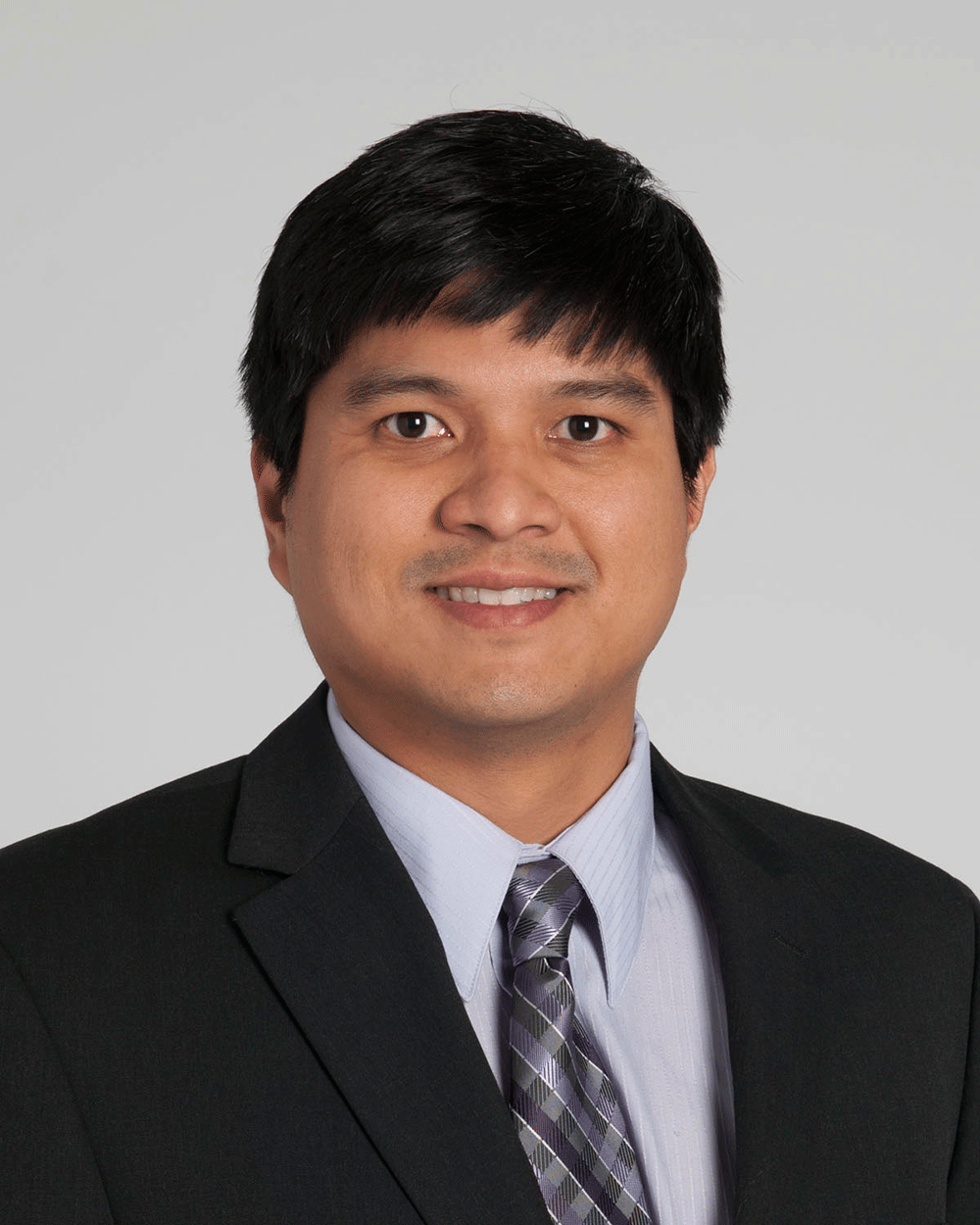
Dr. Velez is director of faculty development in the Center for Excellence in Healthcare Communication at the Cleveland Clinic.
Reference
- Windover A, Boissy A, Rice T, Gilligan T, Velez V, Merlino J. The REDE model of healthcare communication: optimizing relationship as a therapeutic agent. J Patient Exp. 2014;1(1):8-13.
Editor’s note: “Everything We Say and Do” is an informational series developed by SHM’s Patient Experience Committee to provide readers with thoughtful and actionable communication tactics that have great potential to positively impact patients’ experience of care. Each column will focus on how the contributor applies one of the “Key Communication” areas in practice.
View a chart outlining key communication tactics
What I Say and Do
I counsel and deliver the diagnosis or give recommendations through a dialogue, instead of a monologue, using active listening.
Why I Do It
The monologue, or lecture, is among the least effective ways to instill behavior change. Research studies have demonstrated that, after a monologue, only around 20% to 60% of medical information is remembered by the end of a visit. Out of what is remembered, less than 50% is accurate. Furthermore, 47% of Americans have health literacy levels below the intermediate range, defined as the ability to determine when to take a medication with food from reading the label.
Lecturing the patient without first understanding what the patient knows and finds important, and understanding the barriers to plan implementation, runs the risk of decreased comprehension, a lack of understanding, or a lack of personal relevance—all leading to decreased adherence. Doing the opposite, by involving the patient in decision making, inspires change that comes from within in the context of the patient’s own needs. This approach is more enduring, emphasizes self-accountability, and ultimately leads to better outcomes.
How I Do It
I open up a dialogue using the Cleveland Clinic’s ARIA approach as adapted from the REDE model of healthcare communication.1
- First, assess: What does the patient know about diagnosis and treatment? How much and what type of education does the patient desire/need? What are the patient’s treatment preferences and health literacy?
- Second, reflect on what the patient just said. Validate meaning and emotion.
- Third, inform the patient within the context of the patient’s perspectives and preferences. Speak slowly and provide small chunks of information at a time. Use understandable language and visual aids. (This will increase recall by 60%.)
- Finally, assess the patient’s understanding and emotional reaction to information provided.
- Repeat the cycle to introduce other chunks of information.
Dr. Velez is director of faculty development in the Center for Excellence in Healthcare Communication at the Cleveland Clinic.
Reference
- Windover A, Boissy A, Rice T, Gilligan T, Velez V, Merlino J. The REDE model of healthcare communication: optimizing relationship as a therapeutic agent. J Patient Exp. 2014;1(1):8-13.
Editor’s note: “Everything We Say and Do” is an informational series developed by SHM’s Patient Experience Committee to provide readers with thoughtful and actionable communication tactics that have great potential to positively impact patients’ experience of care. Each column will focus on how the contributor applies one of the “Key Communication” areas in practice.
View a chart outlining key communication tactics
What I Say and Do
I counsel and deliver the diagnosis or give recommendations through a dialogue, instead of a monologue, using active listening.
Why I Do It
The monologue, or lecture, is among the least effective ways to instill behavior change. Research studies have demonstrated that, after a monologue, only around 20% to 60% of medical information is remembered by the end of a visit. Out of what is remembered, less than 50% is accurate. Furthermore, 47% of Americans have health literacy levels below the intermediate range, defined as the ability to determine when to take a medication with food from reading the label.
Lecturing the patient without first understanding what the patient knows and finds important, and understanding the barriers to plan implementation, runs the risk of decreased comprehension, a lack of understanding, or a lack of personal relevance—all leading to decreased adherence. Doing the opposite, by involving the patient in decision making, inspires change that comes from within in the context of the patient’s own needs. This approach is more enduring, emphasizes self-accountability, and ultimately leads to better outcomes.
How I Do It
I open up a dialogue using the Cleveland Clinic’s ARIA approach as adapted from the REDE model of healthcare communication.1
- First, assess: What does the patient know about diagnosis and treatment? How much and what type of education does the patient desire/need? What are the patient’s treatment preferences and health literacy?
- Second, reflect on what the patient just said. Validate meaning and emotion.
- Third, inform the patient within the context of the patient’s perspectives and preferences. Speak slowly and provide small chunks of information at a time. Use understandable language and visual aids. (This will increase recall by 60%.)
- Finally, assess the patient’s understanding and emotional reaction to information provided.
- Repeat the cycle to introduce other chunks of information.
Dr. Velez is director of faculty development in the Center for Excellence in Healthcare Communication at the Cleveland Clinic.
Reference
- Windover A, Boissy A, Rice T, Gilligan T, Velez V, Merlino J. The REDE model of healthcare communication: optimizing relationship as a therapeutic agent. J Patient Exp. 2014;1(1):8-13.
Long-Term Βeta-Blocker Use May Cause More Harm in Patients Undergoing Surgery
Clinical question: What is the harm associated with long-term beta-blocker therapy in patients with uncomplicated hypertension undergoing non-cardiac surgery?

Background: Given the recent concerns over the validity of prior studies, there is uncertainty about which patients benefit most from perioperative beta-blockade. Current guidelines suggest continuing beta-blockers in the perioperative period. More data are needed to delineate which patients maximally benefit from perioperative beta-blockade.
Study design: Association study.
Setting: Danish nationwide cohort of patients.
Synopsis: Study investigators included 55,320 uncomplicated hypertension (no cardiovascular, renal, or liver disease) patients >19 years of age on ≥2 antihypertensive drugs undergoing non-cardiac surgery. In the 14,664 patients who received beta-blockers, the rates of 30-day major adverse cardiovascular events (MACE; cardiovascular death, nonfatal ischemic stroke, and nonfatal myocardial infarction) and 30-day all-cause mortality were 1.32% and 1.93%, respectively. However, in the 40,676 patients who did not receive beta-blockers, 30-day MACEs and 30-day all-cause mortality rates were 0.84% and 1.32%, respectively (P<0.001). When looking at the individual MACEs, cardiovascular death was the only statistically significant event with higher incidence (0.9% versus 0.45%, P<0.001).
Combination therapy with beta-blocker and RAS inhibitor, calcium channel blockers, or thiazide was associated with statistically significant higher risks of MACEs and all-cause mortality when compared to the combination of RAS inhibitor plus thiazide. Men >70 years of age or undergoing urgent surgery had the highest risk of harm. This study was not a randomized control trial, so caution must be used when attributing causality to beta-blockers, MACEs, and all-cause mortality.
Bottom line: Antihypertensive regimens containing beta-blockers may increase risk of perioperative MACEs and all-cause mortality in patients with uncomplicated hypertension.
Citation: Jorgensen ME, Hlatky MA, Kober L, et al. β-blocker-associated risks in patients with uncomplicated hypertension undergoing noncardiac surgery. JAMA Intern Med. 2015;175(12):1923-1931.
Clinical question: What is the harm associated with long-term beta-blocker therapy in patients with uncomplicated hypertension undergoing non-cardiac surgery?
Background: Given the recent concerns over the validity of prior studies, there is uncertainty about which patients benefit most from perioperative beta-blockade. Current guidelines suggest continuing beta-blockers in the perioperative period. More data are needed to delineate which patients maximally benefit from perioperative beta-blockade.
Study design: Association study.
Setting: Danish nationwide cohort of patients.
Synopsis: Study investigators included 55,320 uncomplicated hypertension (no cardiovascular, renal, or liver disease) patients >19 years of age on ≥2 antihypertensive drugs undergoing non-cardiac surgery. In the 14,664 patients who received beta-blockers, the rates of 30-day major adverse cardiovascular events (MACE; cardiovascular death, nonfatal ischemic stroke, and nonfatal myocardial infarction) and 30-day all-cause mortality were 1.32% and 1.93%, respectively. However, in the 40,676 patients who did not receive beta-blockers, 30-day MACEs and 30-day all-cause mortality rates were 0.84% and 1.32%, respectively (P<0.001). When looking at the individual MACEs, cardiovascular death was the only statistically significant event with higher incidence (0.9% versus 0.45%, P<0.001).
Combination therapy with beta-blocker and RAS inhibitor, calcium channel blockers, or thiazide was associated with statistically significant higher risks of MACEs and all-cause mortality when compared to the combination of RAS inhibitor plus thiazide. Men >70 years of age or undergoing urgent surgery had the highest risk of harm. This study was not a randomized control trial, so caution must be used when attributing causality to beta-blockers, MACEs, and all-cause mortality.
Bottom line: Antihypertensive regimens containing beta-blockers may increase risk of perioperative MACEs and all-cause mortality in patients with uncomplicated hypertension.
Citation: Jorgensen ME, Hlatky MA, Kober L, et al. β-blocker-associated risks in patients with uncomplicated hypertension undergoing noncardiac surgery. JAMA Intern Med. 2015;175(12):1923-1931.
Clinical question: What is the harm associated with long-term beta-blocker therapy in patients with uncomplicated hypertension undergoing non-cardiac surgery?
Background: Given the recent concerns over the validity of prior studies, there is uncertainty about which patients benefit most from perioperative beta-blockade. Current guidelines suggest continuing beta-blockers in the perioperative period. More data are needed to delineate which patients maximally benefit from perioperative beta-blockade.
Study design: Association study.
Setting: Danish nationwide cohort of patients.
Synopsis: Study investigators included 55,320 uncomplicated hypertension (no cardiovascular, renal, or liver disease) patients >19 years of age on ≥2 antihypertensive drugs undergoing non-cardiac surgery. In the 14,664 patients who received beta-blockers, the rates of 30-day major adverse cardiovascular events (MACE; cardiovascular death, nonfatal ischemic stroke, and nonfatal myocardial infarction) and 30-day all-cause mortality were 1.32% and 1.93%, respectively. However, in the 40,676 patients who did not receive beta-blockers, 30-day MACEs and 30-day all-cause mortality rates were 0.84% and 1.32%, respectively (P<0.001). When looking at the individual MACEs, cardiovascular death was the only statistically significant event with higher incidence (0.9% versus 0.45%, P<0.001).
Combination therapy with beta-blocker and RAS inhibitor, calcium channel blockers, or thiazide was associated with statistically significant higher risks of MACEs and all-cause mortality when compared to the combination of RAS inhibitor plus thiazide. Men >70 years of age or undergoing urgent surgery had the highest risk of harm. This study was not a randomized control trial, so caution must be used when attributing causality to beta-blockers, MACEs, and all-cause mortality.
Bottom line: Antihypertensive regimens containing beta-blockers may increase risk of perioperative MACEs and all-cause mortality in patients with uncomplicated hypertension.
Citation: Jorgensen ME, Hlatky MA, Kober L, et al. β-blocker-associated risks in patients with uncomplicated hypertension undergoing noncardiac surgery. JAMA Intern Med. 2015;175(12):1923-1931.

Depression Common among Physicians in Training
Clinical question: What is the prevalence of depression or depressive symptoms in resident physicians?
Background: Depression in resident physicians can lead to poor-quality medical care, increased errors, and long-term morbidity. Prevalence of depression or depressive symptoms has varied in prior studies, and more data are needed to better understand the true prevalence.
Study design: Systematic review and meta-analysis.
Setting: Surgical and nonsurgical residency programs in North America, Asia, Europe, South America, and Africa
Synopsis: Thirty-one cross-sectional studies (9,447 individuals) and 23 longitudinal studies (8,113 individuals) from January 1963 to September 2015 were included in this analysis, with the majority using self-reporting to identify residents with depression or depressive symptoms. Overall prevalence of depression or depressive symptoms was 28.8%, with a range of 20.9% to 43.2%, depending on the screening tool (95% CI, 25.3%–32.5%; P<0.001). There was an increased prevalence in depression or depressive symptoms as the calendar year progressed (slope=0.5% per calendar year increase; 95% CI, 0.03%–0.09%), with no difference in prevalence rates between surgical versus nonsurgical residents, U.S. versus elsewhere, cross-sectional versus longitudinal, or interns versus upper-level residents.
Because studies were heterogeneous with respect to the screening tools and resident population, the prevalence of depression or depressive symptoms cannot be precisely determined.
Bottom line: Prevalence of depression or depressive symptoms ranged from 20.9% to 43.2%, with pooled prevalence of 28.8%, and increased with time.
Citation: Mata DA, Ramos MA, Bansal N, et al. Prevalence of depression and depressive symptoms among resident physicians: a systematic review and met-analysis. JAMA. 2015;314(22):2373-2383.
Clinical question: What is the prevalence of depression or depressive symptoms in resident physicians?
Background: Depression in resident physicians can lead to poor-quality medical care, increased errors, and long-term morbidity. Prevalence of depression or depressive symptoms has varied in prior studies, and more data are needed to better understand the true prevalence.
Study design: Systematic review and meta-analysis.
Setting: Surgical and nonsurgical residency programs in North America, Asia, Europe, South America, and Africa
Synopsis: Thirty-one cross-sectional studies (9,447 individuals) and 23 longitudinal studies (8,113 individuals) from January 1963 to September 2015 were included in this analysis, with the majority using self-reporting to identify residents with depression or depressive symptoms. Overall prevalence of depression or depressive symptoms was 28.8%, with a range of 20.9% to 43.2%, depending on the screening tool (95% CI, 25.3%–32.5%; P<0.001). There was an increased prevalence in depression or depressive symptoms as the calendar year progressed (slope=0.5% per calendar year increase; 95% CI, 0.03%–0.09%), with no difference in prevalence rates between surgical versus nonsurgical residents, U.S. versus elsewhere, cross-sectional versus longitudinal, or interns versus upper-level residents.
Because studies were heterogeneous with respect to the screening tools and resident population, the prevalence of depression or depressive symptoms cannot be precisely determined.
Bottom line: Prevalence of depression or depressive symptoms ranged from 20.9% to 43.2%, with pooled prevalence of 28.8%, and increased with time.
Citation: Mata DA, Ramos MA, Bansal N, et al. Prevalence of depression and depressive symptoms among resident physicians: a systematic review and met-analysis. JAMA. 2015;314(22):2373-2383.
Clinical question: What is the prevalence of depression or depressive symptoms in resident physicians?
Background: Depression in resident physicians can lead to poor-quality medical care, increased errors, and long-term morbidity. Prevalence of depression or depressive symptoms has varied in prior studies, and more data are needed to better understand the true prevalence.
Study design: Systematic review and meta-analysis.
Setting: Surgical and nonsurgical residency programs in North America, Asia, Europe, South America, and Africa
Synopsis: Thirty-one cross-sectional studies (9,447 individuals) and 23 longitudinal studies (8,113 individuals) from January 1963 to September 2015 were included in this analysis, with the majority using self-reporting to identify residents with depression or depressive symptoms. Overall prevalence of depression or depressive symptoms was 28.8%, with a range of 20.9% to 43.2%, depending on the screening tool (95% CI, 25.3%–32.5%; P<0.001). There was an increased prevalence in depression or depressive symptoms as the calendar year progressed (slope=0.5% per calendar year increase; 95% CI, 0.03%–0.09%), with no difference in prevalence rates between surgical versus nonsurgical residents, U.S. versus elsewhere, cross-sectional versus longitudinal, or interns versus upper-level residents.
Because studies were heterogeneous with respect to the screening tools and resident population, the prevalence of depression or depressive symptoms cannot be precisely determined.
Bottom line: Prevalence of depression or depressive symptoms ranged from 20.9% to 43.2%, with pooled prevalence of 28.8%, and increased with time.
Citation: Mata DA, Ramos MA, Bansal N, et al. Prevalence of depression and depressive symptoms among resident physicians: a systematic review and met-analysis. JAMA. 2015;314(22):2373-2383.
Breakfast Based on Whey Protein May Help Manage Type 2 Diabetes
NEW YORK (Reuters Health) - A breakfast rich in whey protein may help people with type 2 diabetes manage their illness better, new research from Israel suggests.
"Whey protein, a byproduct of cheese manufacturing, lowers postprandial glycemia more than other protein sources," said lead author Dr. Daniela Jakubowicz from Wolfson Medical Center at Tel Aviv University."
We found that in type 2 diabetes, increasing protein content at breakfast has a greater impact on weight loss, glycated hemoglobin (HbA1C), satiety and postprandial glycemia when the protein source is whey protein, compared with other protein sources, such as eggs, tuna and soy," she told Reuters Health by email.
Dr. Jakubowicz and her group presented their findings April 1 at ENDO 2016, the annual meeting of the Endocrine Society, in Boston.
They randomly assigned 48 overweight and obese patients with type 2 diabetes to one of three isocaloric diets. Over 12 weeks, everyone ate a large breakfast, a medium-sized lunch and a small dinner, but the amount and source of each group's breakfast proteins differed.
At breakfast, the 17 participants in the whey group ate 36 g of protein as part of a whey protein shake consisting of 40% carbohydrate, 40% protein and 20% fat. The 16 participants in the high-protein group ate 36 g of protein in the form of eggs, tuna and cheese (40% carbs; 40% protein; 20% fat). The 15 in the high-carbohydrate group ate 13 g of protein in ready-to-eat cereals (65% carbs; 15% protein; 20% fat).
All three diets included a 660 kcal breakfast, a 567 cal lunch and a 276 cal dinner, with the same composition at lunch and dinner.
After 12 weeks, the participants in the whey protein group lost the most weight (7.6 kg vs. 6.1 kg for participants in the high-protein group and 3.5 kg for those in the high-carbohydrate group (p<0.0001).
Participants on the whey protein diet were less hungry during the day and had lower glucose spikes after meals compared with those on the other two diets.
The drop in HbA1C was 11.5% in the whey group, 7.7% in the protein group and 4.6% in the carbohydrate group (p<0.0001). Compared with the carbohydrate group, the percentage drop in HbA1c was greater by 41% in the protein group and by 64% in the whey group (p<0.0001).
"Whey protein was consumed only at breakfast; however, the improvement of glucose, insulin and glucagon-like peptide 1 (GLP-1) was also observed after lunch and dinner. The mechanism of this persistent beneficial effect of whey protein needs further research," Dr. Jakubowicz said.
Co-author Dr. Julio Wainstein, also at Wolfson Medical Center, added by email, "Usually, patients with type 2 diabetes are treated with a combination of several antidiabetic drugs to achieve adequate glucose regulation and decrease HbA1c. Whey protein should be considered an important adjuvant in the management of type 2 diabetes."
"Furthermore," Dr. Wainstein added, "it is possible that by adding whey protein to the diet, glucose regulation might be achieved with less medication, which is a valuable advantage in type 2 diabetes treatment."
The study had no commercial funding, and the authors declared no conflicts of interest.
NEW YORK (Reuters Health) - A breakfast rich in whey protein may help people with type 2 diabetes manage their illness better, new research from Israel suggests.
"Whey protein, a byproduct of cheese manufacturing, lowers postprandial glycemia more than other protein sources," said lead author Dr. Daniela Jakubowicz from Wolfson Medical Center at Tel Aviv University."
We found that in type 2 diabetes, increasing protein content at breakfast has a greater impact on weight loss, glycated hemoglobin (HbA1C), satiety and postprandial glycemia when the protein source is whey protein, compared with other protein sources, such as eggs, tuna and soy," she told Reuters Health by email.
Dr. Jakubowicz and her group presented their findings April 1 at ENDO 2016, the annual meeting of the Endocrine Society, in Boston.
They randomly assigned 48 overweight and obese patients with type 2 diabetes to one of three isocaloric diets. Over 12 weeks, everyone ate a large breakfast, a medium-sized lunch and a small dinner, but the amount and source of each group's breakfast proteins differed.
At breakfast, the 17 participants in the whey group ate 36 g of protein as part of a whey protein shake consisting of 40% carbohydrate, 40% protein and 20% fat. The 16 participants in the high-protein group ate 36 g of protein in the form of eggs, tuna and cheese (40% carbs; 40% protein; 20% fat). The 15 in the high-carbohydrate group ate 13 g of protein in ready-to-eat cereals (65% carbs; 15% protein; 20% fat).
All three diets included a 660 kcal breakfast, a 567 cal lunch and a 276 cal dinner, with the same composition at lunch and dinner.
After 12 weeks, the participants in the whey protein group lost the most weight (7.6 kg vs. 6.1 kg for participants in the high-protein group and 3.5 kg for those in the high-carbohydrate group (p<0.0001).
Participants on the whey protein diet were less hungry during the day and had lower glucose spikes after meals compared with those on the other two diets.
The drop in HbA1C was 11.5% in the whey group, 7.7% in the protein group and 4.6% in the carbohydrate group (p<0.0001). Compared with the carbohydrate group, the percentage drop in HbA1c was greater by 41% in the protein group and by 64% in the whey group (p<0.0001).
"Whey protein was consumed only at breakfast; however, the improvement of glucose, insulin and glucagon-like peptide 1 (GLP-1) was also observed after lunch and dinner. The mechanism of this persistent beneficial effect of whey protein needs further research," Dr. Jakubowicz said.
Co-author Dr. Julio Wainstein, also at Wolfson Medical Center, added by email, "Usually, patients with type 2 diabetes are treated with a combination of several antidiabetic drugs to achieve adequate glucose regulation and decrease HbA1c. Whey protein should be considered an important adjuvant in the management of type 2 diabetes."
"Furthermore," Dr. Wainstein added, "it is possible that by adding whey protein to the diet, glucose regulation might be achieved with less medication, which is a valuable advantage in type 2 diabetes treatment."
The study had no commercial funding, and the authors declared no conflicts of interest.
NEW YORK (Reuters Health) - A breakfast rich in whey protein may help people with type 2 diabetes manage their illness better, new research from Israel suggests.
"Whey protein, a byproduct of cheese manufacturing, lowers postprandial glycemia more than other protein sources," said lead author Dr. Daniela Jakubowicz from Wolfson Medical Center at Tel Aviv University."
We found that in type 2 diabetes, increasing protein content at breakfast has a greater impact on weight loss, glycated hemoglobin (HbA1C), satiety and postprandial glycemia when the protein source is whey protein, compared with other protein sources, such as eggs, tuna and soy," she told Reuters Health by email.
Dr. Jakubowicz and her group presented their findings April 1 at ENDO 2016, the annual meeting of the Endocrine Society, in Boston.
They randomly assigned 48 overweight and obese patients with type 2 diabetes to one of three isocaloric diets. Over 12 weeks, everyone ate a large breakfast, a medium-sized lunch and a small dinner, but the amount and source of each group's breakfast proteins differed.
At breakfast, the 17 participants in the whey group ate 36 g of protein as part of a whey protein shake consisting of 40% carbohydrate, 40% protein and 20% fat. The 16 participants in the high-protein group ate 36 g of protein in the form of eggs, tuna and cheese (40% carbs; 40% protein; 20% fat). The 15 in the high-carbohydrate group ate 13 g of protein in ready-to-eat cereals (65% carbs; 15% protein; 20% fat).
All three diets included a 660 kcal breakfast, a 567 cal lunch and a 276 cal dinner, with the same composition at lunch and dinner.
After 12 weeks, the participants in the whey protein group lost the most weight (7.6 kg vs. 6.1 kg for participants in the high-protein group and 3.5 kg for those in the high-carbohydrate group (p<0.0001).
Participants on the whey protein diet were less hungry during the day and had lower glucose spikes after meals compared with those on the other two diets.
The drop in HbA1C was 11.5% in the whey group, 7.7% in the protein group and 4.6% in the carbohydrate group (p<0.0001). Compared with the carbohydrate group, the percentage drop in HbA1c was greater by 41% in the protein group and by 64% in the whey group (p<0.0001).
"Whey protein was consumed only at breakfast; however, the improvement of glucose, insulin and glucagon-like peptide 1 (GLP-1) was also observed after lunch and dinner. The mechanism of this persistent beneficial effect of whey protein needs further research," Dr. Jakubowicz said.
Co-author Dr. Julio Wainstein, also at Wolfson Medical Center, added by email, "Usually, patients with type 2 diabetes are treated with a combination of several antidiabetic drugs to achieve adequate glucose regulation and decrease HbA1c. Whey protein should be considered an important adjuvant in the management of type 2 diabetes."
"Furthermore," Dr. Wainstein added, "it is possible that by adding whey protein to the diet, glucose regulation might be achieved with less medication, which is a valuable advantage in type 2 diabetes treatment."
The study had no commercial funding, and the authors declared no conflicts of interest.
Hospitalists' Career Path: A Pinch Unexpected, and Lots of Quality Leadership
I believe there is no better field than hospital medicine to find your career path, and there’s no better organization than SHM to support you as you follow that path. My path is probably similar to most, a little unplanned and a little unexpected, but I am sure each member has their story. Hospital medicine made an early impact on me during an internship where I was exposed to physician role models with terrific leadership skills. They were blazing trails by challenging long-held beliefs about the care of hospitalized patients.

The term “hospitalist” had not yet quite penetrated national consciousness, but Dr. Bob Wachter and Dr. Lee Goldman had already started implementing the model at the University of California, San Francisco, where I was privileged to be an intern during an exciting time. There, I learned directly from some of the individuals who would quickly become pioneers in hospital medicine, influencing a generation of physicians by putting definition and structure around the concept of a hospitalist.
During residency, I saw these hospitalists demonstrate key leadership attributes that distinguished from other physicians. They had an appreciation for the team, a collaborative approach, and an ability to understand the complexity of coordinating acute care. They led from the front, not from behind the lines. So it was no wonder that so many of my colleagues gravitated toward this new field.
After residency, my first job was at a community hospital in Marin, Calif., where a new hospitalist program had started just a year or two earlier. The same collaborative skills that created better patient care with nurses, pharmacists, and the medical staff were positively reinforced and recognized. I got married and had my first child, and my path took a turn east to the Cleveland Clinic. Now back in the academic world and after two more children, that path for me turned in highly unexpected ways—as a department chair, then as medical director for data and analytics, then briefly overseeing population health, and now as head of a hospital in the Cleveland Clinic system.
Stories like mine are not at all extraordinary. At HM16 in San Diego, I heard stories of hospitalists ascendant in their organizations, being given incredible responsibilities and a long rope. The day-to-day work we have done as hospitalists has been our training for all these roles. This daily practice demands a level of growth, development, and exposure that no other specialty requires. There is no better environment to learn about leadership, teaching, and complex systems than perhaps the most complex system of all—the hospital. In this environment, we have innumerable opportunities to find, pick, and create our own paths to improve our healthcare system at every level from the bedside to the top of the Centers for Medicare & Medicaid Services (CMS).
Hospital medicine puts so many components and challenges of healthcare in our daily practice: complex team problem-solving; relationships up, down, and across a hierarchy; IT; education; process improvement; ethics; medical staff politics. The successful hospitalist, by definition, has to be able to learn and attain mastery across a broad set of knowledge and skills. We have become naturals in a world of "matrixes management" because it is how we live our lives every day. This is why when our medical staffs and administration come looking for a project leader, a new department chair, a head of patient experience, a leader, or an educator, they come looking for us.
As SHM’s new president, I commit to SHM being the organization that is dedicated to helping you. It’s impossible to see around every corner, but starting in the coming year, I think SHM and hospitalists have to move forward in four key directions:
- Expand and engage SHM’s membership. Although we just reached our 15,000th member, there are 52,000 hospitalists, plus even more when you include advanced practice colleagues, whom we would like to become SHM members under our “big tent.” We want to draw in those hospitalists, show them how, whether it’s through our educational offerings, learning portal, or active involvement in projects and committees, we can engage them at every stage of their career—and ask them what else we can do to help them find their path and be prepared for it.
- We must continue pushing our members and projects to be focused on patient- and family-centered care. Every project that takes the extra steps of incorporating the thoughts and feelings of our patients and families will get a better result. I would like to see hospitalists everywhere take a strong position to remember that our patients and their families are our partners in their care; We need to lead on the patient experience and patient-centered care front. Two years ago, we launched the Patient Experience Committee to do just that, and it is an important research topic on the minds of the Journal of Hospital Medicine editors. After all, we are all people needing people.
- We have to move assertively to understand our role in an era of risk. While in many senses we have been managing risk either directly or indirectly for decades, the payment models of care (episodes, bundles, MIPS, ACOs) are evolving quickly, and we must stake out our place in this new risk-sharing world and identify our partners. Hospitalists need to have a clear message about how what we do mitigates risk and adds value. In the coming year, SHM will start to do that.
- In the coming years, we will need to clarify our position regarding specialty recognition, including our training programs. We already have many key components that we identify with as a specialty. While this is also something contentious and political, when we look at the divergence between what we have to do to be clinically effective (e.g., palliative medicine, ICU care, QI, leadership, etc.) and what our training programs provide for us, that gap appears to be increasing. SHM has stepped up with curriculum to fill these gaps and will continue to do so. However, we must question how best to train physicians for these roles and if the current model is sustainable and suitable.
I am privileged and honored to serve as your new president, and I ask each of you to look at yourselves and the opportunities that your practice provides you with to grow—personally and professionally—and make our system and specialty better. Look to SHM to help you, support you, and provide resources for you to walk your path. TH
Dr. Harte is a practicing hospitalist, president of the Society of Hospital Medicine, and president of Hillcrest Hospital in Mayfield Heights, Ohio, part of the Cleveland Clinic Health System. He is associate professor of medicine at the Lerner College of Medicine in Cleveland.
I believe there is no better field than hospital medicine to find your career path, and there’s no better organization than SHM to support you as you follow that path. My path is probably similar to most, a little unplanned and a little unexpected, but I am sure each member has their story. Hospital medicine made an early impact on me during an internship where I was exposed to physician role models with terrific leadership skills. They were blazing trails by challenging long-held beliefs about the care of hospitalized patients.
The term “hospitalist” had not yet quite penetrated national consciousness, but Dr. Bob Wachter and Dr. Lee Goldman had already started implementing the model at the University of California, San Francisco, where I was privileged to be an intern during an exciting time. There, I learned directly from some of the individuals who would quickly become pioneers in hospital medicine, influencing a generation of physicians by putting definition and structure around the concept of a hospitalist.
During residency, I saw these hospitalists demonstrate key leadership attributes that distinguished from other physicians. They had an appreciation for the team, a collaborative approach, and an ability to understand the complexity of coordinating acute care. They led from the front, not from behind the lines. So it was no wonder that so many of my colleagues gravitated toward this new field.
After residency, my first job was at a community hospital in Marin, Calif., where a new hospitalist program had started just a year or two earlier. The same collaborative skills that created better patient care with nurses, pharmacists, and the medical staff were positively reinforced and recognized. I got married and had my first child, and my path took a turn east to the Cleveland Clinic. Now back in the academic world and after two more children, that path for me turned in highly unexpected ways—as a department chair, then as medical director for data and analytics, then briefly overseeing population health, and now as head of a hospital in the Cleveland Clinic system.
Stories like mine are not at all extraordinary. At HM16 in San Diego, I heard stories of hospitalists ascendant in their organizations, being given incredible responsibilities and a long rope. The day-to-day work we have done as hospitalists has been our training for all these roles. This daily practice demands a level of growth, development, and exposure that no other specialty requires. There is no better environment to learn about leadership, teaching, and complex systems than perhaps the most complex system of all—the hospital. In this environment, we have innumerable opportunities to find, pick, and create our own paths to improve our healthcare system at every level from the bedside to the top of the Centers for Medicare & Medicaid Services (CMS).
Hospital medicine puts so many components and challenges of healthcare in our daily practice: complex team problem-solving; relationships up, down, and across a hierarchy; IT; education; process improvement; ethics; medical staff politics. The successful hospitalist, by definition, has to be able to learn and attain mastery across a broad set of knowledge and skills. We have become naturals in a world of "matrixes management" because it is how we live our lives every day. This is why when our medical staffs and administration come looking for a project leader, a new department chair, a head of patient experience, a leader, or an educator, they come looking for us.
As SHM’s new president, I commit to SHM being the organization that is dedicated to helping you. It’s impossible to see around every corner, but starting in the coming year, I think SHM and hospitalists have to move forward in four key directions:
- Expand and engage SHM’s membership. Although we just reached our 15,000th member, there are 52,000 hospitalists, plus even more when you include advanced practice colleagues, whom we would like to become SHM members under our “big tent.” We want to draw in those hospitalists, show them how, whether it’s through our educational offerings, learning portal, or active involvement in projects and committees, we can engage them at every stage of their career—and ask them what else we can do to help them find their path and be prepared for it.
- We must continue pushing our members and projects to be focused on patient- and family-centered care. Every project that takes the extra steps of incorporating the thoughts and feelings of our patients and families will get a better result. I would like to see hospitalists everywhere take a strong position to remember that our patients and their families are our partners in their care; We need to lead on the patient experience and patient-centered care front. Two years ago, we launched the Patient Experience Committee to do just that, and it is an important research topic on the minds of the Journal of Hospital Medicine editors. After all, we are all people needing people.
- We have to move assertively to understand our role in an era of risk. While in many senses we have been managing risk either directly or indirectly for decades, the payment models of care (episodes, bundles, MIPS, ACOs) are evolving quickly, and we must stake out our place in this new risk-sharing world and identify our partners. Hospitalists need to have a clear message about how what we do mitigates risk and adds value. In the coming year, SHM will start to do that.
- In the coming years, we will need to clarify our position regarding specialty recognition, including our training programs. We already have many key components that we identify with as a specialty. While this is also something contentious and political, when we look at the divergence between what we have to do to be clinically effective (e.g., palliative medicine, ICU care, QI, leadership, etc.) and what our training programs provide for us, that gap appears to be increasing. SHM has stepped up with curriculum to fill these gaps and will continue to do so. However, we must question how best to train physicians for these roles and if the current model is sustainable and suitable.
I am privileged and honored to serve as your new president, and I ask each of you to look at yourselves and the opportunities that your practice provides you with to grow—personally and professionally—and make our system and specialty better. Look to SHM to help you, support you, and provide resources for you to walk your path. TH
Dr. Harte is a practicing hospitalist, president of the Society of Hospital Medicine, and president of Hillcrest Hospital in Mayfield Heights, Ohio, part of the Cleveland Clinic Health System. He is associate professor of medicine at the Lerner College of Medicine in Cleveland.
I believe there is no better field than hospital medicine to find your career path, and there’s no better organization than SHM to support you as you follow that path. My path is probably similar to most, a little unplanned and a little unexpected, but I am sure each member has their story. Hospital medicine made an early impact on me during an internship where I was exposed to physician role models with terrific leadership skills. They were blazing trails by challenging long-held beliefs about the care of hospitalized patients.
The term “hospitalist” had not yet quite penetrated national consciousness, but Dr. Bob Wachter and Dr. Lee Goldman had already started implementing the model at the University of California, San Francisco, where I was privileged to be an intern during an exciting time. There, I learned directly from some of the individuals who would quickly become pioneers in hospital medicine, influencing a generation of physicians by putting definition and structure around the concept of a hospitalist.
During residency, I saw these hospitalists demonstrate key leadership attributes that distinguished from other physicians. They had an appreciation for the team, a collaborative approach, and an ability to understand the complexity of coordinating acute care. They led from the front, not from behind the lines. So it was no wonder that so many of my colleagues gravitated toward this new field.
After residency, my first job was at a community hospital in Marin, Calif., where a new hospitalist program had started just a year or two earlier. The same collaborative skills that created better patient care with nurses, pharmacists, and the medical staff were positively reinforced and recognized. I got married and had my first child, and my path took a turn east to the Cleveland Clinic. Now back in the academic world and after two more children, that path for me turned in highly unexpected ways—as a department chair, then as medical director for data and analytics, then briefly overseeing population health, and now as head of a hospital in the Cleveland Clinic system.
Stories like mine are not at all extraordinary. At HM16 in San Diego, I heard stories of hospitalists ascendant in their organizations, being given incredible responsibilities and a long rope. The day-to-day work we have done as hospitalists has been our training for all these roles. This daily practice demands a level of growth, development, and exposure that no other specialty requires. There is no better environment to learn about leadership, teaching, and complex systems than perhaps the most complex system of all—the hospital. In this environment, we have innumerable opportunities to find, pick, and create our own paths to improve our healthcare system at every level from the bedside to the top of the Centers for Medicare & Medicaid Services (CMS).
Hospital medicine puts so many components and challenges of healthcare in our daily practice: complex team problem-solving; relationships up, down, and across a hierarchy; IT; education; process improvement; ethics; medical staff politics. The successful hospitalist, by definition, has to be able to learn and attain mastery across a broad set of knowledge and skills. We have become naturals in a world of "matrixes management" because it is how we live our lives every day. This is why when our medical staffs and administration come looking for a project leader, a new department chair, a head of patient experience, a leader, or an educator, they come looking for us.
As SHM’s new president, I commit to SHM being the organization that is dedicated to helping you. It’s impossible to see around every corner, but starting in the coming year, I think SHM and hospitalists have to move forward in four key directions:
- Expand and engage SHM’s membership. Although we just reached our 15,000th member, there are 52,000 hospitalists, plus even more when you include advanced practice colleagues, whom we would like to become SHM members under our “big tent.” We want to draw in those hospitalists, show them how, whether it’s through our educational offerings, learning portal, or active involvement in projects and committees, we can engage them at every stage of their career—and ask them what else we can do to help them find their path and be prepared for it.
- We must continue pushing our members and projects to be focused on patient- and family-centered care. Every project that takes the extra steps of incorporating the thoughts and feelings of our patients and families will get a better result. I would like to see hospitalists everywhere take a strong position to remember that our patients and their families are our partners in their care; We need to lead on the patient experience and patient-centered care front. Two years ago, we launched the Patient Experience Committee to do just that, and it is an important research topic on the minds of the Journal of Hospital Medicine editors. After all, we are all people needing people.
- We have to move assertively to understand our role in an era of risk. While in many senses we have been managing risk either directly or indirectly for decades, the payment models of care (episodes, bundles, MIPS, ACOs) are evolving quickly, and we must stake out our place in this new risk-sharing world and identify our partners. Hospitalists need to have a clear message about how what we do mitigates risk and adds value. In the coming year, SHM will start to do that.
- In the coming years, we will need to clarify our position regarding specialty recognition, including our training programs. We already have many key components that we identify with as a specialty. While this is also something contentious and political, when we look at the divergence between what we have to do to be clinically effective (e.g., palliative medicine, ICU care, QI, leadership, etc.) and what our training programs provide for us, that gap appears to be increasing. SHM has stepped up with curriculum to fill these gaps and will continue to do so. However, we must question how best to train physicians for these roles and if the current model is sustainable and suitable.
I am privileged and honored to serve as your new president, and I ask each of you to look at yourselves and the opportunities that your practice provides you with to grow—personally and professionally—and make our system and specialty better. Look to SHM to help you, support you, and provide resources for you to walk your path. TH
Dr. Harte is a practicing hospitalist, president of the Society of Hospital Medicine, and president of Hillcrest Hospital in Mayfield Heights, Ohio, part of the Cleveland Clinic Health System. He is associate professor of medicine at the Lerner College of Medicine in Cleveland.