User login
MONARCH 2: Abemaciclib plus fulvestrant improves overall survival
BARCELONA – Adding the CDK4/6 inhibitor abemaciclib to fulvestrant significantly improves overall survival in hormone receptor–positive (HR+), human epidermal growth factor receptor 2–negative (HER2–) advanced breast cancer patients who progressed on prior endocrine therapy, according to findings from the phase 3 MONARCH 2 trial.

At a median follow-up of 47.7 months, overall survival – a secondary study endpoint – was 46.7 months in 446 patients randomized to receive abemaciclib and fulvestrant, compared with 37.3 months in 223 patients who received placebo and fulvestrant (hazard ratio, 0.757), George W. Sledge, MD, reported at the European Society for Medical Oncology Congress.
The overall survival benefit was consistent across stratification factors, which included site of metastasis (visceral, bone, or other) and resistance to prior endocrine therapy (primary versus secondary), but it was most pronounced in patients with visceral disease (HR, 0.675) and primary resistance to prior endocrine therapy (HR, 0.686), said Dr. Sledge, a professor of medicine at Stanford (Calif.) Medical Center.
Progression-free survival, the primary study endpoint, was 16.4 and 9.3 months at the previously reported 2-year follow-up in the treatment and placebo groups, respectively, and the current analysis showed progression-free survival to be “highly consistent” with those findings (16.9 vs. 9.3 months; HR, 0.563), he said.
“Of note, and of interest for further follow-up, a landmark analysis at 3 years shows that approximately three times as many patients on the abemaciclib arm remained progression free, compared to the control arm,” he added, also noting that time from randomization to postdiscontinuation chemotherapy was prolonged with abemaciclib, compared with placebo (50.2 vs. 22.1 months; HR, 0.625).
“A highly significant result,” he said.
At the 47.7 month follow-up, 17% and 4% of patients in the treatment and placebo groups, respectively, remained on treatment.
An additional exploratory analysis showed that 5.8% of patients receiving abemaciclib crossed over to another CDK4/6 inhibitor after discontinuation of therapy, compared with 17.0% of those in the placebo group.
“CDK4/6 inhibitors have emerged as standard-of-care treatment for patients with HR+, HER2– breast cancer,” he said, noting that abemaciclib is a selective CDK4/6 inhibitor with continuous, twice-daily oral administration. “It is approved for monotherapy after progression on endocrine therapy and prior chemotherapy in the metastatic setting, and ... in combination with endocrine therapy in the front-line setting and after progression.”
The global, randomized, double-blind MONARCH 2 trial assessed abemaciclib + fulvestrant in women with advanced endocrine therapy–resistant HR+, HER2– advanced breast cancer, including pre- or perimenopausal women with ovarian suppression and postmenopausal women.
Study participants were randomized 2:1 to receive 500 mg of fulvestrant per label instructions plus 150 mg of abemaciclib every 12 hours or placebo.
Treatment-emergent adverse events in MONARCH 2 were consistent with those previously reported in the primary analysis, Dr. Sledge said.
“Continued follow-up of MONARCH 2 is ongoing to further characterize the overall survival benefit and to look at exploratory efficacy and correlative endpoints,” he noted.
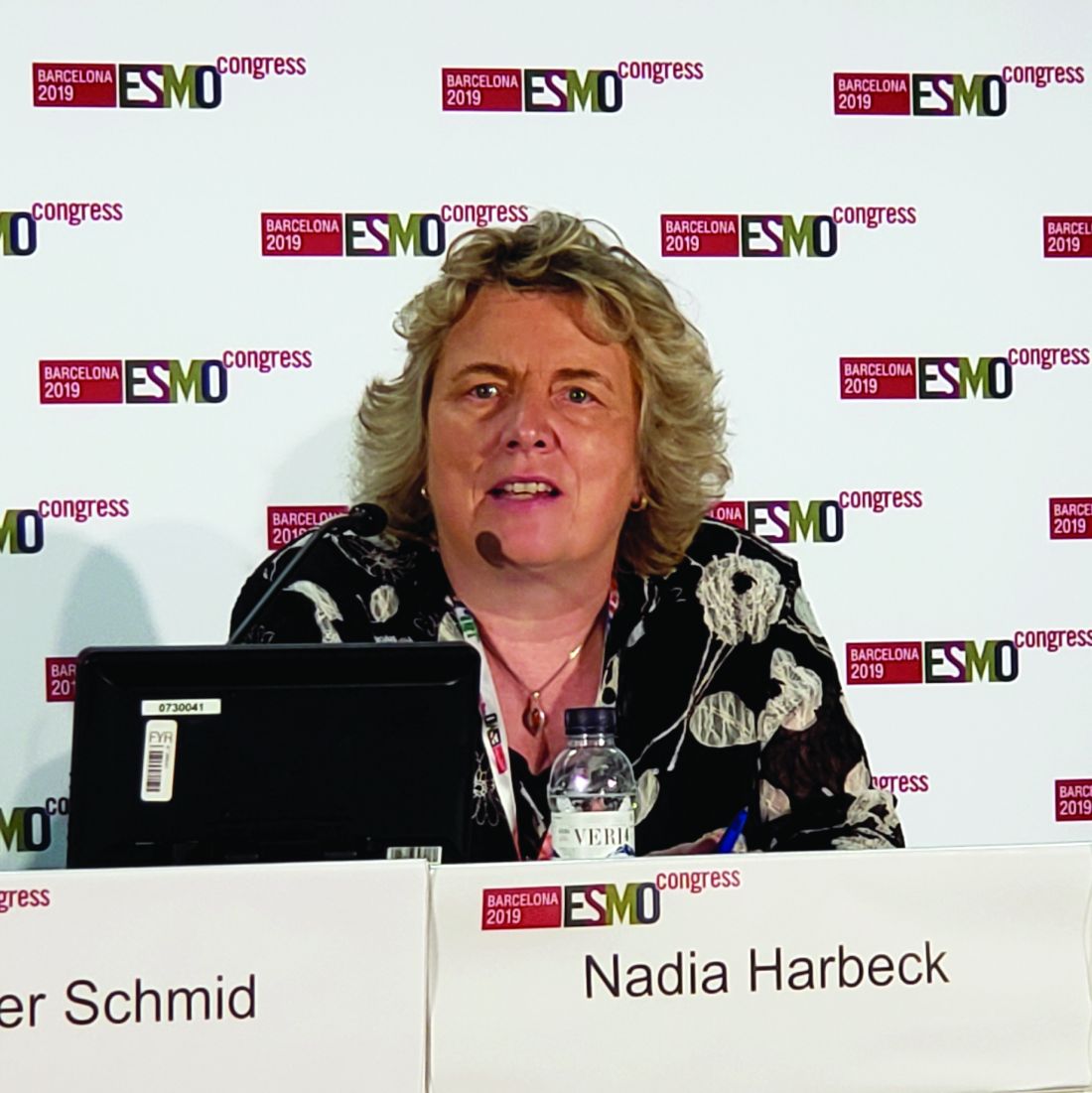
Speaking about the findings during a press conference at the meeting, Nadia Harbeck, MD, a professor at Ludwig Maximilians University, Munich, Germany, said they have important practice-changing implications.
“We were always struggling with whether to give these drugs first or second line, and I think now if we consider the first-line survival benefit ... [first-line use] should be standard of care,” she said, referring to CDK4/6 inhibitors and to findings from MONARCH 2 and prior studies of the inhibitors, including the MONALEESA-3 trial presented at the ESMO Congress.
MONALEESA-3 showed similar overall survival results with the CDK4/6 inhibitor ribociclib in postmenopausal women with HR+, HER2– advanced breast cancer.
“The data are highly clinically meaningful; I think they are going to make a huge impact on how we treat breast cancer,” Dr. Harbeck said.
Dr. Sledge has received trial support, research grants, and travel accommodations from Eli Lilly and Company; is a board member for Tessa Therapeutics; and is a consultant for Syndax, Symphogen, and Verseau Therapeutics. Dr. Harbeck disclosed financial relationships with Agendia, Amgen, AstraZeneca, Celgene, Daiichi-Sankyo, Genomic Health, Lilly, MSD, Nanostring, Novartis, Odonate, Pfizer, Roche, Sandoz/Hexal, and Seattle Genetics. She is also director of the West German Study Group and a member of the German AGO Breast Committee.
SOURCE: Sledge G et al., ESMO 2019, Abstract LBA6-PR.
BARCELONA – Adding the CDK4/6 inhibitor abemaciclib to fulvestrant significantly improves overall survival in hormone receptor–positive (HR+), human epidermal growth factor receptor 2–negative (HER2–) advanced breast cancer patients who progressed on prior endocrine therapy, according to findings from the phase 3 MONARCH 2 trial.
At a median follow-up of 47.7 months, overall survival – a secondary study endpoint – was 46.7 months in 446 patients randomized to receive abemaciclib and fulvestrant, compared with 37.3 months in 223 patients who received placebo and fulvestrant (hazard ratio, 0.757), George W. Sledge, MD, reported at the European Society for Medical Oncology Congress.
The overall survival benefit was consistent across stratification factors, which included site of metastasis (visceral, bone, or other) and resistance to prior endocrine therapy (primary versus secondary), but it was most pronounced in patients with visceral disease (HR, 0.675) and primary resistance to prior endocrine therapy (HR, 0.686), said Dr. Sledge, a professor of medicine at Stanford (Calif.) Medical Center.
Progression-free survival, the primary study endpoint, was 16.4 and 9.3 months at the previously reported 2-year follow-up in the treatment and placebo groups, respectively, and the current analysis showed progression-free survival to be “highly consistent” with those findings (16.9 vs. 9.3 months; HR, 0.563), he said.
“Of note, and of interest for further follow-up, a landmark analysis at 3 years shows that approximately three times as many patients on the abemaciclib arm remained progression free, compared to the control arm,” he added, also noting that time from randomization to postdiscontinuation chemotherapy was prolonged with abemaciclib, compared with placebo (50.2 vs. 22.1 months; HR, 0.625).
“A highly significant result,” he said.
At the 47.7 month follow-up, 17% and 4% of patients in the treatment and placebo groups, respectively, remained on treatment.
An additional exploratory analysis showed that 5.8% of patients receiving abemaciclib crossed over to another CDK4/6 inhibitor after discontinuation of therapy, compared with 17.0% of those in the placebo group.
“CDK4/6 inhibitors have emerged as standard-of-care treatment for patients with HR+, HER2– breast cancer,” he said, noting that abemaciclib is a selective CDK4/6 inhibitor with continuous, twice-daily oral administration. “It is approved for monotherapy after progression on endocrine therapy and prior chemotherapy in the metastatic setting, and ... in combination with endocrine therapy in the front-line setting and after progression.”
The global, randomized, double-blind MONARCH 2 trial assessed abemaciclib + fulvestrant in women with advanced endocrine therapy–resistant HR+, HER2– advanced breast cancer, including pre- or perimenopausal women with ovarian suppression and postmenopausal women.
Study participants were randomized 2:1 to receive 500 mg of fulvestrant per label instructions plus 150 mg of abemaciclib every 12 hours or placebo.
Treatment-emergent adverse events in MONARCH 2 were consistent with those previously reported in the primary analysis, Dr. Sledge said.
“Continued follow-up of MONARCH 2 is ongoing to further characterize the overall survival benefit and to look at exploratory efficacy and correlative endpoints,” he noted.
Speaking about the findings during a press conference at the meeting, Nadia Harbeck, MD, a professor at Ludwig Maximilians University, Munich, Germany, said they have important practice-changing implications.
“We were always struggling with whether to give these drugs first or second line, and I think now if we consider the first-line survival benefit ... [first-line use] should be standard of care,” she said, referring to CDK4/6 inhibitors and to findings from MONARCH 2 and prior studies of the inhibitors, including the MONALEESA-3 trial presented at the ESMO Congress.
MONALEESA-3 showed similar overall survival results with the CDK4/6 inhibitor ribociclib in postmenopausal women with HR+, HER2– advanced breast cancer.
“The data are highly clinically meaningful; I think they are going to make a huge impact on how we treat breast cancer,” Dr. Harbeck said.
Dr. Sledge has received trial support, research grants, and travel accommodations from Eli Lilly and Company; is a board member for Tessa Therapeutics; and is a consultant for Syndax, Symphogen, and Verseau Therapeutics. Dr. Harbeck disclosed financial relationships with Agendia, Amgen, AstraZeneca, Celgene, Daiichi-Sankyo, Genomic Health, Lilly, MSD, Nanostring, Novartis, Odonate, Pfizer, Roche, Sandoz/Hexal, and Seattle Genetics. She is also director of the West German Study Group and a member of the German AGO Breast Committee.
SOURCE: Sledge G et al., ESMO 2019, Abstract LBA6-PR.
BARCELONA – Adding the CDK4/6 inhibitor abemaciclib to fulvestrant significantly improves overall survival in hormone receptor–positive (HR+), human epidermal growth factor receptor 2–negative (HER2–) advanced breast cancer patients who progressed on prior endocrine therapy, according to findings from the phase 3 MONARCH 2 trial.
At a median follow-up of 47.7 months, overall survival – a secondary study endpoint – was 46.7 months in 446 patients randomized to receive abemaciclib and fulvestrant, compared with 37.3 months in 223 patients who received placebo and fulvestrant (hazard ratio, 0.757), George W. Sledge, MD, reported at the European Society for Medical Oncology Congress.
The overall survival benefit was consistent across stratification factors, which included site of metastasis (visceral, bone, or other) and resistance to prior endocrine therapy (primary versus secondary), but it was most pronounced in patients with visceral disease (HR, 0.675) and primary resistance to prior endocrine therapy (HR, 0.686), said Dr. Sledge, a professor of medicine at Stanford (Calif.) Medical Center.
Progression-free survival, the primary study endpoint, was 16.4 and 9.3 months at the previously reported 2-year follow-up in the treatment and placebo groups, respectively, and the current analysis showed progression-free survival to be “highly consistent” with those findings (16.9 vs. 9.3 months; HR, 0.563), he said.
“Of note, and of interest for further follow-up, a landmark analysis at 3 years shows that approximately three times as many patients on the abemaciclib arm remained progression free, compared to the control arm,” he added, also noting that time from randomization to postdiscontinuation chemotherapy was prolonged with abemaciclib, compared with placebo (50.2 vs. 22.1 months; HR, 0.625).
“A highly significant result,” he said.
At the 47.7 month follow-up, 17% and 4% of patients in the treatment and placebo groups, respectively, remained on treatment.
An additional exploratory analysis showed that 5.8% of patients receiving abemaciclib crossed over to another CDK4/6 inhibitor after discontinuation of therapy, compared with 17.0% of those in the placebo group.
“CDK4/6 inhibitors have emerged as standard-of-care treatment for patients with HR+, HER2– breast cancer,” he said, noting that abemaciclib is a selective CDK4/6 inhibitor with continuous, twice-daily oral administration. “It is approved for monotherapy after progression on endocrine therapy and prior chemotherapy in the metastatic setting, and ... in combination with endocrine therapy in the front-line setting and after progression.”
The global, randomized, double-blind MONARCH 2 trial assessed abemaciclib + fulvestrant in women with advanced endocrine therapy–resistant HR+, HER2– advanced breast cancer, including pre- or perimenopausal women with ovarian suppression and postmenopausal women.
Study participants were randomized 2:1 to receive 500 mg of fulvestrant per label instructions plus 150 mg of abemaciclib every 12 hours or placebo.
Treatment-emergent adverse events in MONARCH 2 were consistent with those previously reported in the primary analysis, Dr. Sledge said.
“Continued follow-up of MONARCH 2 is ongoing to further characterize the overall survival benefit and to look at exploratory efficacy and correlative endpoints,” he noted.
Speaking about the findings during a press conference at the meeting, Nadia Harbeck, MD, a professor at Ludwig Maximilians University, Munich, Germany, said they have important practice-changing implications.
“We were always struggling with whether to give these drugs first or second line, and I think now if we consider the first-line survival benefit ... [first-line use] should be standard of care,” she said, referring to CDK4/6 inhibitors and to findings from MONARCH 2 and prior studies of the inhibitors, including the MONALEESA-3 trial presented at the ESMO Congress.
MONALEESA-3 showed similar overall survival results with the CDK4/6 inhibitor ribociclib in postmenopausal women with HR+, HER2– advanced breast cancer.
“The data are highly clinically meaningful; I think they are going to make a huge impact on how we treat breast cancer,” Dr. Harbeck said.
Dr. Sledge has received trial support, research grants, and travel accommodations from Eli Lilly and Company; is a board member for Tessa Therapeutics; and is a consultant for Syndax, Symphogen, and Verseau Therapeutics. Dr. Harbeck disclosed financial relationships with Agendia, Amgen, AstraZeneca, Celgene, Daiichi-Sankyo, Genomic Health, Lilly, MSD, Nanostring, Novartis, Odonate, Pfizer, Roche, Sandoz/Hexal, and Seattle Genetics. She is also director of the West German Study Group and a member of the German AGO Breast Committee.
SOURCE: Sledge G et al., ESMO 2019, Abstract LBA6-PR.
REPORTING FROM ESMO 2019
Gene recurrence score helps predict successful combination therapy for early breast cancer
alone in a study of 1,389 women with hormone receptor–positive, ERBB2-negative, axillary node–negative breast cancer.
“The 21-gene recurrence score (RS) assay provides prognostic information for distant recurrence in hormone-receptor–positive, ERBB2-negative early breast cancer that is independent of clinicopathologic features and is also predictive of chemotherapy benefit when the RS is high,” wrote Joseph A. Sparano, MD, of Montefiore Medical Center, New York, and his colleagues. However, little is known about how this risk score applies to women with hormone receptor–positive, ERBB2-negative, axillary node–negative breast cancer, they said.
In the study published in JAMA Oncology, they identified 1,389 women with a recurrence score of 26-100 (the definition of a high recurrence risk). The average age of the patients was 56 years, and 71% were postmenopausal.
In addition to receiving endocrine therapy, the women were randomized to no chemotherapy (89 patients) or one of several chemotherapy regimens including docetaxel/cyclophosphamide (589 patients), anthracycline without a taxane (334 patients), an anthracycline and taxane (244 patients), cyclophosphamide/methotrexate/5-fluorouracil (52 patients), and other regimens (81 patients). Among those treated with chemotherapy, overall survival (OS) at 5 years was 96% and estimated rates of freedom from recurrence of breast cancer at a distant site, and from a distant and/or local regional site, at 5 years were 93% and 91%, respectively. At 5 years, the estimated rate of invasive disease–free survival (IDFS) was 88%.
When broken down by chemotherapy regimen, 5-year rates of freedom from recurrence of breast cancer at a distant site ranged from 92.3% to 95.5%, except for 88.5% for the cyclophosphamide/methotrexate/5-fluorouracil (CMF) group; the rate was 92.6% for patients in the no-chemotherapy group.
The 5-year rates of IDFS ranged from 84% to 91.3% in the chemotherapy groups, compared with 79.7% in the no-chemotherapy group.
The expected rates of distant recurrence in the overall patient population if treated with endocrine therapy alone was 78.8% at 5 years and 65.4% at 9 years, the researchers said. Rates among the patients with an RS of 26-30 if treated with endocrine therapy alone were 89.6% at 5 years and 80.6% at 9 years; rates for those with an RS of 31-100 were 70.7% and 54% for 5 and 9 years, respectively.
The study findings were limited by several factors including a lack of randomization to endocrine therapy alone and the relatively short follow-up period, the researchers noted. However, strengths include the large sample size and high rate of compliance with chemotherapy.
The results support data from previous studies and “add to the evidence base supporting the use of the 21-gene RS assay to guide the use of adjuvant chemotherapy in patients with hormone receptor–positive, ERBB2-negative, axillary node–negative breast cancer,” they concluded.
The study was supported in part by the National Cancer Institute, the Canadian Cancer Society Research Institute, the Breast Cancer Research Foundation, the Komen Foundation, and the Breast Cancer Research Stamp issued by the United States Postal Service. Dr. Sparano disclosed grants from the National Cancer Institute. Of the remaining authors, several disclosed receiving personal or speaker fees from the assay manufacturer, Genomic Health; one author received funding from the company during the study.
SOURCE: Sparano J et al. JAMA Oncol. 2019 Sep 30. doi: 10.1001/jamaoncol.2019.4794.
alone in a study of 1,389 women with hormone receptor–positive, ERBB2-negative, axillary node–negative breast cancer.
“The 21-gene recurrence score (RS) assay provides prognostic information for distant recurrence in hormone-receptor–positive, ERBB2-negative early breast cancer that is independent of clinicopathologic features and is also predictive of chemotherapy benefit when the RS is high,” wrote Joseph A. Sparano, MD, of Montefiore Medical Center, New York, and his colleagues. However, little is known about how this risk score applies to women with hormone receptor–positive, ERBB2-negative, axillary node–negative breast cancer, they said.
In the study published in JAMA Oncology, they identified 1,389 women with a recurrence score of 26-100 (the definition of a high recurrence risk). The average age of the patients was 56 years, and 71% were postmenopausal.
In addition to receiving endocrine therapy, the women were randomized to no chemotherapy (89 patients) or one of several chemotherapy regimens including docetaxel/cyclophosphamide (589 patients), anthracycline without a taxane (334 patients), an anthracycline and taxane (244 patients), cyclophosphamide/methotrexate/5-fluorouracil (52 patients), and other regimens (81 patients). Among those treated with chemotherapy, overall survival (OS) at 5 years was 96% and estimated rates of freedom from recurrence of breast cancer at a distant site, and from a distant and/or local regional site, at 5 years were 93% and 91%, respectively. At 5 years, the estimated rate of invasive disease–free survival (IDFS) was 88%.
When broken down by chemotherapy regimen, 5-year rates of freedom from recurrence of breast cancer at a distant site ranged from 92.3% to 95.5%, except for 88.5% for the cyclophosphamide/methotrexate/5-fluorouracil (CMF) group; the rate was 92.6% for patients in the no-chemotherapy group.
The 5-year rates of IDFS ranged from 84% to 91.3% in the chemotherapy groups, compared with 79.7% in the no-chemotherapy group.
The expected rates of distant recurrence in the overall patient population if treated with endocrine therapy alone was 78.8% at 5 years and 65.4% at 9 years, the researchers said. Rates among the patients with an RS of 26-30 if treated with endocrine therapy alone were 89.6% at 5 years and 80.6% at 9 years; rates for those with an RS of 31-100 were 70.7% and 54% for 5 and 9 years, respectively.
The study findings were limited by several factors including a lack of randomization to endocrine therapy alone and the relatively short follow-up period, the researchers noted. However, strengths include the large sample size and high rate of compliance with chemotherapy.
The results support data from previous studies and “add to the evidence base supporting the use of the 21-gene RS assay to guide the use of adjuvant chemotherapy in patients with hormone receptor–positive, ERBB2-negative, axillary node–negative breast cancer,” they concluded.
The study was supported in part by the National Cancer Institute, the Canadian Cancer Society Research Institute, the Breast Cancer Research Foundation, the Komen Foundation, and the Breast Cancer Research Stamp issued by the United States Postal Service. Dr. Sparano disclosed grants from the National Cancer Institute. Of the remaining authors, several disclosed receiving personal or speaker fees from the assay manufacturer, Genomic Health; one author received funding from the company during the study.
SOURCE: Sparano J et al. JAMA Oncol. 2019 Sep 30. doi: 10.1001/jamaoncol.2019.4794.
alone in a study of 1,389 women with hormone receptor–positive, ERBB2-negative, axillary node–negative breast cancer.
“The 21-gene recurrence score (RS) assay provides prognostic information for distant recurrence in hormone-receptor–positive, ERBB2-negative early breast cancer that is independent of clinicopathologic features and is also predictive of chemotherapy benefit when the RS is high,” wrote Joseph A. Sparano, MD, of Montefiore Medical Center, New York, and his colleagues. However, little is known about how this risk score applies to women with hormone receptor–positive, ERBB2-negative, axillary node–negative breast cancer, they said.
In the study published in JAMA Oncology, they identified 1,389 women with a recurrence score of 26-100 (the definition of a high recurrence risk). The average age of the patients was 56 years, and 71% were postmenopausal.
In addition to receiving endocrine therapy, the women were randomized to no chemotherapy (89 patients) or one of several chemotherapy regimens including docetaxel/cyclophosphamide (589 patients), anthracycline without a taxane (334 patients), an anthracycline and taxane (244 patients), cyclophosphamide/methotrexate/5-fluorouracil (52 patients), and other regimens (81 patients). Among those treated with chemotherapy, overall survival (OS) at 5 years was 96% and estimated rates of freedom from recurrence of breast cancer at a distant site, and from a distant and/or local regional site, at 5 years were 93% and 91%, respectively. At 5 years, the estimated rate of invasive disease–free survival (IDFS) was 88%.
When broken down by chemotherapy regimen, 5-year rates of freedom from recurrence of breast cancer at a distant site ranged from 92.3% to 95.5%, except for 88.5% for the cyclophosphamide/methotrexate/5-fluorouracil (CMF) group; the rate was 92.6% for patients in the no-chemotherapy group.
The 5-year rates of IDFS ranged from 84% to 91.3% in the chemotherapy groups, compared with 79.7% in the no-chemotherapy group.
The expected rates of distant recurrence in the overall patient population if treated with endocrine therapy alone was 78.8% at 5 years and 65.4% at 9 years, the researchers said. Rates among the patients with an RS of 26-30 if treated with endocrine therapy alone were 89.6% at 5 years and 80.6% at 9 years; rates for those with an RS of 31-100 were 70.7% and 54% for 5 and 9 years, respectively.
The study findings were limited by several factors including a lack of randomization to endocrine therapy alone and the relatively short follow-up period, the researchers noted. However, strengths include the large sample size and high rate of compliance with chemotherapy.
The results support data from previous studies and “add to the evidence base supporting the use of the 21-gene RS assay to guide the use of adjuvant chemotherapy in patients with hormone receptor–positive, ERBB2-negative, axillary node–negative breast cancer,” they concluded.
The study was supported in part by the National Cancer Institute, the Canadian Cancer Society Research Institute, the Breast Cancer Research Foundation, the Komen Foundation, and the Breast Cancer Research Stamp issued by the United States Postal Service. Dr. Sparano disclosed grants from the National Cancer Institute. Of the remaining authors, several disclosed receiving personal or speaker fees from the assay manufacturer, Genomic Health; one author received funding from the company during the study.
SOURCE: Sparano J et al. JAMA Oncol. 2019 Sep 30. doi: 10.1001/jamaoncol.2019.4794.
FROM JAMA ONCOLOGY
Physicians not yet comfortable with using social media to recruit for trials
Social media presents some unique opportunities, as well as unique challenges, when it comes to being a tool for clinical trial recruitment.

Some of those opportunities and challenges were identified following interview with 44 physicians affiliated with the City of Hope Comprehensive Cancer Center in Duarte, Calif.
“There were three main themes identified by physicians as potential advantages of social media use for trial recruitment, as follows: increased visibility and awareness, improved communications, and patient engagement,” Mina Sedrak, MD, an oncologist at City of Hope, and colleagues wrote in JAMA Open Network.
“Most physicians cited social media as a useful platform to increase awareness and visibility of clinical trials, recognizing it as a means to reach large populations and easily spread information about available trials,” the authors wrote. “They described social media as a way to easily disseminate clinical trial information online to patients, caregivers, and other physicians because of the large number of users on these platform.”
The interviewed physicians also identified a number of disadvantages of using social media for clinical trial recruitment, including increased administrative burden, risk of misinformation, lack of guidance, and limited outreach.
Physicians expressed “apprehension about the potential of social media to oversimplify trials or spread misinformation” and “concerns that information might be misconstrued because of the nature of the Internet,” Dr. Sedrak and colleagues wrote.
Three themes were identified by physicians when prompted to talk about potential strategies for effectively using social media for clinical trial recruitment, including institutional support, evidence, training.
“Physicians expressed interest in using social media for recruitment if they were provided institutional resources to manage recruitment efforts on social media,” the authors noted. Physicians also called for the establishment of methodology to guide physicians on how to use social media as a recruitment tool. Third, they wanted more education on how to use social media as a recruitment tool.
Even as the context of these findings reveal the pros and cons, Dr. Sedrak and colleagues observed that “our findings revealed that physicians are not currently comfortable with or prepared to effectively use social media for cancer clinical trial recruitment. Although their are some aspects of these new modes of communication that physicians are enthusiastic about (i.e., increased visibility and awareness), several important concerns remain. Notably, many physicians felt uncomfortable with the idea of using social media because of increased administrative burden and concerns of the complexities of clinical trials would not be appropriately communicated.”
Authors noted the limitations of the research, particularly that all the interviewers were affiliated with the same cancer center and may not be generalizable to wider practice settings. It also did not include the perspective of nonphysician research personnel, who are more involved in the recruitment aspects.
“Further research is needed to address potential concerns that may arise in the future and gain a more comprehensive understanding of the risks and benefits that social media pose in clinical settings,” the authors noted. “Before social media can be integrated into clinical trials, specific guidelines must be defined for such use.”
They noted that the American Society of Clinical Oncology is working on such guidelines.
SOURCE: Sedark MS et al. JAMA Netw Open. 2019 Sep 4;2(9):e1911528. doi: 10.1001/jamanetworkopen.2019.11528.
Social media presents some unique opportunities, as well as unique challenges, when it comes to being a tool for clinical trial recruitment.
Some of those opportunities and challenges were identified following interview with 44 physicians affiliated with the City of Hope Comprehensive Cancer Center in Duarte, Calif.
“There were three main themes identified by physicians as potential advantages of social media use for trial recruitment, as follows: increased visibility and awareness, improved communications, and patient engagement,” Mina Sedrak, MD, an oncologist at City of Hope, and colleagues wrote in JAMA Open Network.
“Most physicians cited social media as a useful platform to increase awareness and visibility of clinical trials, recognizing it as a means to reach large populations and easily spread information about available trials,” the authors wrote. “They described social media as a way to easily disseminate clinical trial information online to patients, caregivers, and other physicians because of the large number of users on these platform.”
The interviewed physicians also identified a number of disadvantages of using social media for clinical trial recruitment, including increased administrative burden, risk of misinformation, lack of guidance, and limited outreach.
Physicians expressed “apprehension about the potential of social media to oversimplify trials or spread misinformation” and “concerns that information might be misconstrued because of the nature of the Internet,” Dr. Sedrak and colleagues wrote.
Three themes were identified by physicians when prompted to talk about potential strategies for effectively using social media for clinical trial recruitment, including institutional support, evidence, training.
“Physicians expressed interest in using social media for recruitment if they were provided institutional resources to manage recruitment efforts on social media,” the authors noted. Physicians also called for the establishment of methodology to guide physicians on how to use social media as a recruitment tool. Third, they wanted more education on how to use social media as a recruitment tool.
Even as the context of these findings reveal the pros and cons, Dr. Sedrak and colleagues observed that “our findings revealed that physicians are not currently comfortable with or prepared to effectively use social media for cancer clinical trial recruitment. Although their are some aspects of these new modes of communication that physicians are enthusiastic about (i.e., increased visibility and awareness), several important concerns remain. Notably, many physicians felt uncomfortable with the idea of using social media because of increased administrative burden and concerns of the complexities of clinical trials would not be appropriately communicated.”
Authors noted the limitations of the research, particularly that all the interviewers were affiliated with the same cancer center and may not be generalizable to wider practice settings. It also did not include the perspective of nonphysician research personnel, who are more involved in the recruitment aspects.
“Further research is needed to address potential concerns that may arise in the future and gain a more comprehensive understanding of the risks and benefits that social media pose in clinical settings,” the authors noted. “Before social media can be integrated into clinical trials, specific guidelines must be defined for such use.”
They noted that the American Society of Clinical Oncology is working on such guidelines.
SOURCE: Sedark MS et al. JAMA Netw Open. 2019 Sep 4;2(9):e1911528. doi: 10.1001/jamanetworkopen.2019.11528.
Social media presents some unique opportunities, as well as unique challenges, when it comes to being a tool for clinical trial recruitment.
Some of those opportunities and challenges were identified following interview with 44 physicians affiliated with the City of Hope Comprehensive Cancer Center in Duarte, Calif.
“There were three main themes identified by physicians as potential advantages of social media use for trial recruitment, as follows: increased visibility and awareness, improved communications, and patient engagement,” Mina Sedrak, MD, an oncologist at City of Hope, and colleagues wrote in JAMA Open Network.
“Most physicians cited social media as a useful platform to increase awareness and visibility of clinical trials, recognizing it as a means to reach large populations and easily spread information about available trials,” the authors wrote. “They described social media as a way to easily disseminate clinical trial information online to patients, caregivers, and other physicians because of the large number of users on these platform.”
The interviewed physicians also identified a number of disadvantages of using social media for clinical trial recruitment, including increased administrative burden, risk of misinformation, lack of guidance, and limited outreach.
Physicians expressed “apprehension about the potential of social media to oversimplify trials or spread misinformation” and “concerns that information might be misconstrued because of the nature of the Internet,” Dr. Sedrak and colleagues wrote.
Three themes were identified by physicians when prompted to talk about potential strategies for effectively using social media for clinical trial recruitment, including institutional support, evidence, training.
“Physicians expressed interest in using social media for recruitment if they were provided institutional resources to manage recruitment efforts on social media,” the authors noted. Physicians also called for the establishment of methodology to guide physicians on how to use social media as a recruitment tool. Third, they wanted more education on how to use social media as a recruitment tool.
Even as the context of these findings reveal the pros and cons, Dr. Sedrak and colleagues observed that “our findings revealed that physicians are not currently comfortable with or prepared to effectively use social media for cancer clinical trial recruitment. Although their are some aspects of these new modes of communication that physicians are enthusiastic about (i.e., increased visibility and awareness), several important concerns remain. Notably, many physicians felt uncomfortable with the idea of using social media because of increased administrative burden and concerns of the complexities of clinical trials would not be appropriately communicated.”
Authors noted the limitations of the research, particularly that all the interviewers were affiliated with the same cancer center and may not be generalizable to wider practice settings. It also did not include the perspective of nonphysician research personnel, who are more involved in the recruitment aspects.
“Further research is needed to address potential concerns that may arise in the future and gain a more comprehensive understanding of the risks and benefits that social media pose in clinical settings,” the authors noted. “Before social media can be integrated into clinical trials, specific guidelines must be defined for such use.”
They noted that the American Society of Clinical Oncology is working on such guidelines.
SOURCE: Sedark MS et al. JAMA Netw Open. 2019 Sep 4;2(9):e1911528. doi: 10.1001/jamanetworkopen.2019.11528.
FROM JAMA OPEN NETWORK
AF risk is elevated after early-stage breast cancer diagnosis
Women with early-stage breast cancer are at elevated risk for atrial fibrillation (AF) short term and, to a lesser extent, long term, finds a large Canadian cohort study. Risk was higher for those who had received chemotherapy but not tied to specific cardiotoxic drugs or drug classes.
“Cardiovascular disease is a particularly pertinent clinical concern for women diagnosed with early-stage breast cancer,” note the investigators, led by Husam Abdel-Qadir, MD, PhD, FRCPC, Cardiology Clinic, Women’s College Hospital, Toronto. “Many early-stage breast cancer survivors are older than 65 years and have hypertension, diabetes, or left ventricular dysfunction. Accordingly, a diagnosis of AF would translate to a clinically relevant stroke risk for many early-stage breast cancer survivors.”
The investigators undertook a population-based retrospective cohort study of women in the province of Ontario with stage I-III breast cancer diagnosed between April 2007 and December 2016, matching them 1:3 to cancer-free control women on birth year and receipt of breast imaging.
An initial analysis, based on 95,539 breast cancer patients and 217,456 cancer-free controls, showed that the former and latter groups did not differ significantly on the prevalence of preexisting AF (5.3% vs. 5.2%; P = .21), according to results reported in JAMA Network Open.
Main analyses excluded women with preexisting AF, leaving 68,113 breast cancer patients and 204,330 cancer-free controls having a mean follow-up of 5.7 years. Both groups had a mean age of 60 years at baseline, and prevalences of cardiovascular comorbidities were similar. Within the breast cancer group, 50.4% had left-sided disease; overall, 53.2% received chemotherapy and 71.7% received radiation therapy.
At 10 years after diagnosis, breast cancer patients had a small but significant increase in AF incidence relative to control peers (7.4% vs. 6.8%; P less than .001). When the investigators looked at specific time periods, survivors had a significantly elevated AF risk in year 1 postdiagnosis (hazard ratio, 2.16) and after year 5 postdiagnosis (hazard ratio, 1.20), but not during years 2 through 5.
Analyses beginning 1 year after diagnosis showed a slightly smaller but still significant elevation of AF incidence for the breast cancer group at 9 years of follow-up (10 years after diagnosis) (7.0% vs. 6.5%; P less than .001).
Among breast cancer patients, those who received chemotherapy had a higher risk of AF than those who did not (adjusted hazard ratio, 1.23); however, this elevation of risk was not specifically tied to receipt of anthracyclines or trastuzumab (Herceptin) versus other chemotherapy. Risk was not elevated for those who received radiation therapy.
“Our study findings suggest that a diagnosis of early-stage breast cancer may be associated with a small increase in the risk of AF compared with that for cancer-free women,” Dr. Abdel-Qadir and coinvestigators noted. “Since the absolute risk is small, this finding does not warrant routine surveillance but rather should prompt consideration of AF in the differential diagnosis for women with compatible symptoms.
“The early and late periods of increased AF risk in early-stage breast cancer survivors warrant focused research to better understand the underlying causes and subsequent implications,” they concluded.
Dr. Abdel-Qadir reported receiving grants from the Canadian Cardiovascular Society during the conduct of the study, speaker fees from Amgen, and an honorarium for clinical events adjudication committee membership from the Canadian Vigour Centre for a study funded by AstraZeneca. The study was funded by the Canadian Cardiovascular Society Atrial Fibrillation Research Award.
SOURCE: Abdel-Qadir H et al. JAMA Netw Open. 2019 Sep 4;2(9):e1911838.
Women with early-stage breast cancer are at elevated risk for atrial fibrillation (AF) short term and, to a lesser extent, long term, finds a large Canadian cohort study. Risk was higher for those who had received chemotherapy but not tied to specific cardiotoxic drugs or drug classes.
“Cardiovascular disease is a particularly pertinent clinical concern for women diagnosed with early-stage breast cancer,” note the investigators, led by Husam Abdel-Qadir, MD, PhD, FRCPC, Cardiology Clinic, Women’s College Hospital, Toronto. “Many early-stage breast cancer survivors are older than 65 years and have hypertension, diabetes, or left ventricular dysfunction. Accordingly, a diagnosis of AF would translate to a clinically relevant stroke risk for many early-stage breast cancer survivors.”
The investigators undertook a population-based retrospective cohort study of women in the province of Ontario with stage I-III breast cancer diagnosed between April 2007 and December 2016, matching them 1:3 to cancer-free control women on birth year and receipt of breast imaging.
An initial analysis, based on 95,539 breast cancer patients and 217,456 cancer-free controls, showed that the former and latter groups did not differ significantly on the prevalence of preexisting AF (5.3% vs. 5.2%; P = .21), according to results reported in JAMA Network Open.
Main analyses excluded women with preexisting AF, leaving 68,113 breast cancer patients and 204,330 cancer-free controls having a mean follow-up of 5.7 years. Both groups had a mean age of 60 years at baseline, and prevalences of cardiovascular comorbidities were similar. Within the breast cancer group, 50.4% had left-sided disease; overall, 53.2% received chemotherapy and 71.7% received radiation therapy.
At 10 years after diagnosis, breast cancer patients had a small but significant increase in AF incidence relative to control peers (7.4% vs. 6.8%; P less than .001). When the investigators looked at specific time periods, survivors had a significantly elevated AF risk in year 1 postdiagnosis (hazard ratio, 2.16) and after year 5 postdiagnosis (hazard ratio, 1.20), but not during years 2 through 5.
Analyses beginning 1 year after diagnosis showed a slightly smaller but still significant elevation of AF incidence for the breast cancer group at 9 years of follow-up (10 years after diagnosis) (7.0% vs. 6.5%; P less than .001).
Among breast cancer patients, those who received chemotherapy had a higher risk of AF than those who did not (adjusted hazard ratio, 1.23); however, this elevation of risk was not specifically tied to receipt of anthracyclines or trastuzumab (Herceptin) versus other chemotherapy. Risk was not elevated for those who received radiation therapy.
“Our study findings suggest that a diagnosis of early-stage breast cancer may be associated with a small increase in the risk of AF compared with that for cancer-free women,” Dr. Abdel-Qadir and coinvestigators noted. “Since the absolute risk is small, this finding does not warrant routine surveillance but rather should prompt consideration of AF in the differential diagnosis for women with compatible symptoms.
“The early and late periods of increased AF risk in early-stage breast cancer survivors warrant focused research to better understand the underlying causes and subsequent implications,” they concluded.
Dr. Abdel-Qadir reported receiving grants from the Canadian Cardiovascular Society during the conduct of the study, speaker fees from Amgen, and an honorarium for clinical events adjudication committee membership from the Canadian Vigour Centre for a study funded by AstraZeneca. The study was funded by the Canadian Cardiovascular Society Atrial Fibrillation Research Award.
SOURCE: Abdel-Qadir H et al. JAMA Netw Open. 2019 Sep 4;2(9):e1911838.
Women with early-stage breast cancer are at elevated risk for atrial fibrillation (AF) short term and, to a lesser extent, long term, finds a large Canadian cohort study. Risk was higher for those who had received chemotherapy but not tied to specific cardiotoxic drugs or drug classes.
“Cardiovascular disease is a particularly pertinent clinical concern for women diagnosed with early-stage breast cancer,” note the investigators, led by Husam Abdel-Qadir, MD, PhD, FRCPC, Cardiology Clinic, Women’s College Hospital, Toronto. “Many early-stage breast cancer survivors are older than 65 years and have hypertension, diabetes, or left ventricular dysfunction. Accordingly, a diagnosis of AF would translate to a clinically relevant stroke risk for many early-stage breast cancer survivors.”
The investigators undertook a population-based retrospective cohort study of women in the province of Ontario with stage I-III breast cancer diagnosed between April 2007 and December 2016, matching them 1:3 to cancer-free control women on birth year and receipt of breast imaging.
An initial analysis, based on 95,539 breast cancer patients and 217,456 cancer-free controls, showed that the former and latter groups did not differ significantly on the prevalence of preexisting AF (5.3% vs. 5.2%; P = .21), according to results reported in JAMA Network Open.
Main analyses excluded women with preexisting AF, leaving 68,113 breast cancer patients and 204,330 cancer-free controls having a mean follow-up of 5.7 years. Both groups had a mean age of 60 years at baseline, and prevalences of cardiovascular comorbidities were similar. Within the breast cancer group, 50.4% had left-sided disease; overall, 53.2% received chemotherapy and 71.7% received radiation therapy.
At 10 years after diagnosis, breast cancer patients had a small but significant increase in AF incidence relative to control peers (7.4% vs. 6.8%; P less than .001). When the investigators looked at specific time periods, survivors had a significantly elevated AF risk in year 1 postdiagnosis (hazard ratio, 2.16) and after year 5 postdiagnosis (hazard ratio, 1.20), but not during years 2 through 5.
Analyses beginning 1 year after diagnosis showed a slightly smaller but still significant elevation of AF incidence for the breast cancer group at 9 years of follow-up (10 years after diagnosis) (7.0% vs. 6.5%; P less than .001).
Among breast cancer patients, those who received chemotherapy had a higher risk of AF than those who did not (adjusted hazard ratio, 1.23); however, this elevation of risk was not specifically tied to receipt of anthracyclines or trastuzumab (Herceptin) versus other chemotherapy. Risk was not elevated for those who received radiation therapy.
“Our study findings suggest that a diagnosis of early-stage breast cancer may be associated with a small increase in the risk of AF compared with that for cancer-free women,” Dr. Abdel-Qadir and coinvestigators noted. “Since the absolute risk is small, this finding does not warrant routine surveillance but rather should prompt consideration of AF in the differential diagnosis for women with compatible symptoms.
“The early and late periods of increased AF risk in early-stage breast cancer survivors warrant focused research to better understand the underlying causes and subsequent implications,” they concluded.
Dr. Abdel-Qadir reported receiving grants from the Canadian Cardiovascular Society during the conduct of the study, speaker fees from Amgen, and an honorarium for clinical events adjudication committee membership from the Canadian Vigour Centre for a study funded by AstraZeneca. The study was funded by the Canadian Cardiovascular Society Atrial Fibrillation Research Award.
SOURCE: Abdel-Qadir H et al. JAMA Netw Open. 2019 Sep 4;2(9):e1911838.
FROM JAMA NETWORK OPEN
Mortality after breast cancer diagnosis found higher for men
Sex predicts mortality after a breast cancer diagnosis, with male patients about one-fifth more likely than female counterparts to have died by the 5-year mark, finds a cohort study of more than 1.8 million patients. Clinical characteristics and undertreatment explained much, but not all, of this excess mortality.
“Studies have indicated that male patients with breast cancer had worse overall survival than their female counterparts, including those with early-stage disease, although results have been inconsistent,” the investigators note. However, “few studies have systematically investigated the factors associated with mortality in male patients with breast cancer or assessed whether breast cancer prognosis for men is congruent with that for women, accounting for the differences in clinical characteristics and treatment.”
Senior investigator Xiao-Ou Shu, MD, PhD, of the Vanderbilt Epidemiology Center, Vanderbilt-Ingram Cancer Center, Vanderbilt University, Nashville, Tenn., and coinvestigators conducted a nationwide, registry-based cohort study using the National Cancer Database to identify patients receiving a breast cancer diagnosis during 2004-2014. Analyses were based on 16,025 male patients (mean age, 63.3 years) having a median follow-up of 54.0 months and 1,800,708 female patients (mean age, 59.9 years) having a median follow-up of 60.5 months.
Results reported in JAMA Oncology showed that men had higher mortality across all stages (P less than .001 for each). Male patients also had poorer relative overall survival (45.8% vs. 60.4%, P less than .001), 3-year survival (86.4% vs. 91.7%, P less than .001), and 5-year survival (77.6% vs. 86.4%, P less than .001).
Age, clinical factors (tumor size; nodal status; stage, ER, PR, and HER2 statuses; histologic type; grade; lymphovascular invasion; OncotypeDX Breast Recurrence Score; and Charlson/Deyo score), and treatment factors (surgical procedure, chemotherapy, endocrine therapy, radiation therapy, and immunotherapy) collectively explained 63.3% of the excess mortality rate for male patients. They explained fully 66.0% of the excess mortality in the first 3 years after diagnosis, including 30.5% and 13.6% of that among patients with stage I and stage II disease, respectively.
However, even after adjustment for these factors plus race/ethnicity and access to care, men still had significantly higher risks of overall mortality (adjusted hazard ratio, 1.19), 3-year mortality (adjusted hazard ratio, 1.15), and 5-year mortality (adjusted hazard ratio, 1.19).
The database used did not contain information on causes of death or on cancer recurrence or progression events, precluding analyses of disease-free survival.
“Future research should focus on why and how clinical characteristics, as well as biological features, may have different implications for the survival of male and female patients with breast cancer,” Dr. Shu and coinvestigators recommended. “Additional factors, particularly compliance to treatment, biological attributes, and lifestyle factors (e.g., smoking, drinking, and obesity), should be assessed to help in developing treatments tailored for men, which would mitigate this sex-based disparity.”
Dr. Shu disclosed no relevant conflicts of interest. One author was funded by the program of the China Scholarship Council.
SOURCE: Wang F et al. JAMA Oncol. 2019 Sep 19. doi: 10.1001/jamaoncol.2019.2803.
Sex predicts mortality after a breast cancer diagnosis, with male patients about one-fifth more likely than female counterparts to have died by the 5-year mark, finds a cohort study of more than 1.8 million patients. Clinical characteristics and undertreatment explained much, but not all, of this excess mortality.
“Studies have indicated that male patients with breast cancer had worse overall survival than their female counterparts, including those with early-stage disease, although results have been inconsistent,” the investigators note. However, “few studies have systematically investigated the factors associated with mortality in male patients with breast cancer or assessed whether breast cancer prognosis for men is congruent with that for women, accounting for the differences in clinical characteristics and treatment.”
Senior investigator Xiao-Ou Shu, MD, PhD, of the Vanderbilt Epidemiology Center, Vanderbilt-Ingram Cancer Center, Vanderbilt University, Nashville, Tenn., and coinvestigators conducted a nationwide, registry-based cohort study using the National Cancer Database to identify patients receiving a breast cancer diagnosis during 2004-2014. Analyses were based on 16,025 male patients (mean age, 63.3 years) having a median follow-up of 54.0 months and 1,800,708 female patients (mean age, 59.9 years) having a median follow-up of 60.5 months.
Results reported in JAMA Oncology showed that men had higher mortality across all stages (P less than .001 for each). Male patients also had poorer relative overall survival (45.8% vs. 60.4%, P less than .001), 3-year survival (86.4% vs. 91.7%, P less than .001), and 5-year survival (77.6% vs. 86.4%, P less than .001).
Age, clinical factors (tumor size; nodal status; stage, ER, PR, and HER2 statuses; histologic type; grade; lymphovascular invasion; OncotypeDX Breast Recurrence Score; and Charlson/Deyo score), and treatment factors (surgical procedure, chemotherapy, endocrine therapy, radiation therapy, and immunotherapy) collectively explained 63.3% of the excess mortality rate for male patients. They explained fully 66.0% of the excess mortality in the first 3 years after diagnosis, including 30.5% and 13.6% of that among patients with stage I and stage II disease, respectively.
However, even after adjustment for these factors plus race/ethnicity and access to care, men still had significantly higher risks of overall mortality (adjusted hazard ratio, 1.19), 3-year mortality (adjusted hazard ratio, 1.15), and 5-year mortality (adjusted hazard ratio, 1.19).
The database used did not contain information on causes of death or on cancer recurrence or progression events, precluding analyses of disease-free survival.
“Future research should focus on why and how clinical characteristics, as well as biological features, may have different implications for the survival of male and female patients with breast cancer,” Dr. Shu and coinvestigators recommended. “Additional factors, particularly compliance to treatment, biological attributes, and lifestyle factors (e.g., smoking, drinking, and obesity), should be assessed to help in developing treatments tailored for men, which would mitigate this sex-based disparity.”
Dr. Shu disclosed no relevant conflicts of interest. One author was funded by the program of the China Scholarship Council.
SOURCE: Wang F et al. JAMA Oncol. 2019 Sep 19. doi: 10.1001/jamaoncol.2019.2803.
Sex predicts mortality after a breast cancer diagnosis, with male patients about one-fifth more likely than female counterparts to have died by the 5-year mark, finds a cohort study of more than 1.8 million patients. Clinical characteristics and undertreatment explained much, but not all, of this excess mortality.
“Studies have indicated that male patients with breast cancer had worse overall survival than their female counterparts, including those with early-stage disease, although results have been inconsistent,” the investigators note. However, “few studies have systematically investigated the factors associated with mortality in male patients with breast cancer or assessed whether breast cancer prognosis for men is congruent with that for women, accounting for the differences in clinical characteristics and treatment.”
Senior investigator Xiao-Ou Shu, MD, PhD, of the Vanderbilt Epidemiology Center, Vanderbilt-Ingram Cancer Center, Vanderbilt University, Nashville, Tenn., and coinvestigators conducted a nationwide, registry-based cohort study using the National Cancer Database to identify patients receiving a breast cancer diagnosis during 2004-2014. Analyses were based on 16,025 male patients (mean age, 63.3 years) having a median follow-up of 54.0 months and 1,800,708 female patients (mean age, 59.9 years) having a median follow-up of 60.5 months.
Results reported in JAMA Oncology showed that men had higher mortality across all stages (P less than .001 for each). Male patients also had poorer relative overall survival (45.8% vs. 60.4%, P less than .001), 3-year survival (86.4% vs. 91.7%, P less than .001), and 5-year survival (77.6% vs. 86.4%, P less than .001).
Age, clinical factors (tumor size; nodal status; stage, ER, PR, and HER2 statuses; histologic type; grade; lymphovascular invasion; OncotypeDX Breast Recurrence Score; and Charlson/Deyo score), and treatment factors (surgical procedure, chemotherapy, endocrine therapy, radiation therapy, and immunotherapy) collectively explained 63.3% of the excess mortality rate for male patients. They explained fully 66.0% of the excess mortality in the first 3 years after diagnosis, including 30.5% and 13.6% of that among patients with stage I and stage II disease, respectively.
However, even after adjustment for these factors plus race/ethnicity and access to care, men still had significantly higher risks of overall mortality (adjusted hazard ratio, 1.19), 3-year mortality (adjusted hazard ratio, 1.15), and 5-year mortality (adjusted hazard ratio, 1.19).
The database used did not contain information on causes of death or on cancer recurrence or progression events, precluding analyses of disease-free survival.
“Future research should focus on why and how clinical characteristics, as well as biological features, may have different implications for the survival of male and female patients with breast cancer,” Dr. Shu and coinvestigators recommended. “Additional factors, particularly compliance to treatment, biological attributes, and lifestyle factors (e.g., smoking, drinking, and obesity), should be assessed to help in developing treatments tailored for men, which would mitigate this sex-based disparity.”
Dr. Shu disclosed no relevant conflicts of interest. One author was funded by the program of the China Scholarship Council.
SOURCE: Wang F et al. JAMA Oncol. 2019 Sep 19. doi: 10.1001/jamaoncol.2019.2803.
FROM JAMA ONCOLOGY
Meta-analysis supports hormone therapy-targeted therapy combo for advanced breast cancer
Combined hormone therapy and targeted therapy should be the first choice for most postmenopausal women with recently diagnosed hormone receptor–positive, HER2-negative metastatic breast cancer, new data suggest.
Although guidelines support use of hormone therapies with or without targeted therapies in this population, up-front chemotherapy is still commonly used even in the absence of a visceral crisis, noted lead investigator Mario Giuliano, MD, PhD, of the department of clinical medicine and surgery at the University of Naples (Italy) Federico II, and colleagues.
The investigators undertook a systematic review and network meta-analysis of 140 randomized, controlled trials among 50,029 postmenopausal patients with hormone receptor–positive, HER2-negative metastatic breast cancer treated in the first- and/or second-line setting.
Study results, reported in Lancet Oncology, showed that relative to standard hormone therapy alone, the combination of hormone therapy with a targeted therapy – a CDK4/6 inhibitor, an mammalian target of rapamycin inhibitor, or an indicated phosphoinositide 3-kinase inhibitor – had significantly better efficacy, reducing the risk of progression-free survival events by more than half. In addition, no chemotherapy regimen, with or without targeted therapy, significantly outperformed the combination of hormone therapy with a CDK4/6 inhibitor.
Meanwhile, the hormone therapy–targeted therapy combinations had manageable toxicity, with the severity of adverse effects intermediate between that of hormone therapy alone and that of chemotherapy with or without targeted therapies.
“This study is, to our knowledge, the first to compare the efficacy and activity of all currently available chemotherapy and hormone therapy regimens, in combination with or without targeted therapies,” Dr. Giuliano and coinvestigators wrote. “[O]ur results corroborate the treatment algorithms recommended by the official oncology guidelines, supporting the use of new combinations of hormone therapies plus targeted therapies in the first-line or second-line setting in patients with hormone receptor-positive, HER2-negative metastatic breast cancer without visceral crisis.”
For the study, the investigators identified relevant phase 2 and phase 3 randomized, controlled trials published between 2000 and 2017, with the addition of several recently reported trials such as BOLERO-6 (JAMA Oncol. 2018;4:1367-74). Of the 140 trials ultimately included, 114 were used in the analysis of progression-free survival and time to progression, and 135 were used in the analysis of overall response.
Study results showed that when anastrozole (Arimidex) alone was the comparator, progression-free survival was significantly better with palbociclib (Ibrance) plus letrozole (Femara) (hazard ratio for events, 0.42); ribociclib (Kisqali) plus letrozole (HR, 0.43); abemaciclib (Verzenio) plus anastrozole or letrozole (HR, 0.42); palbociclib plus fulvestrant (Faslodex) (HR, 0.37); ribociclib plus fulvestrant (HR, 0.48); abemaciclib plus fulvestrant (HR, 0.44); everolimus (Afinitor) plus exemestane (Aromasin) (HR, 0.42); and, in patients with a PIK3CA mutation, the PI3K inhibitor alpelisib (Piqray) plus fulvestrant (HR, 0.39).
Several chemotherapy-based regimens, including anthracycline- and taxane-containing regimens, were also superior to anastrozole alone (hazard ratios, 0.41-0.47).
When palbociclib plus letrozole was the comparator, no chemotherapy or hormone therapy regimen yielded significantly better progression-free survival.
For the outcome of overall response, paclitaxel (Taxol) plus bevacizumab (Avastin) was the only clinically relevant regimen that significantly improved the likelihood of response relative to palbociclib plus letrozole (odds ratio, 8.95).
Dr. Giuliano reported that he receives honoraria from Amgen, AstraZeneca, Celgene, Eisai, Eli Lilly, Novartis, Pfizer,and Roche. The study did not receive any funding.
SOURCE: Giuliano M et al. Lancet Oncol. 2019 Sep 4. doi: 10.1016/S1470-2045(19)30420-6.
“This meta-analysis solidifies an increasingly accepted role for CDK4/6 inhibitors in the upfront treatment of postmenopausal women with hormone receptor–positive, HER2-negative metastatic breast cancer,” Azadeh Nasrazadani, PhD, MD, and Adam M. Brufsky, MD, PhD, wrote in an editorial published in Lancet Oncology. “These agents are starting to displace more toxic chemotherapy agents as frontline treatments for estrogen receptor–positive metastatic breast cancer in general practice because of, to some extent, their similar efficacy with substantially more favorable side-effect profiles.”
Nonetheless, chemotherapy still has a role in this population, typically in the later-line setting and in patients experiencing a visceral crisis, they noted. However, the better overall response rate seen with a chemotherapy regimen (paclitaxel plus bevacizumab), compared with a combination targeted and hormonal therapy regimen (palbociclib plus letrozole), may hinge on the specific CDK4/6 inhibitor. “Future studies are needed to identify the appropriate setting and sequence for chemotherapy in these patients,” they maintained.
Outcomes were similar for comparable regimens containing the three currently approved CDK4/6 inhibitors, but individual resistance mechanisms have yet to be elucidated, according to Dr. Nasrazadani and Dr. Brufsky. In addition, it is unclear how these agents may affect duration of response to subsequent therapies, as evidence of a broad overall survival benefit is lacking.
“With the ever-increasing range of targeted therapies gaining approval for metastatic breast cancer, the clinical and research community continues to move further away from a monotherapy approach,” they concluded. “Trials are currently in progress evaluating the role of inhibitors of phosphoinositide 3-kinase, mammalian target of rapamycin, and MEK, among others. How these agents will compare to previously frontline chemotherapy, and whether we will gain more success with the combinations of these targeted therapies in addition to CDK4/6 inhibitors remains to be seen.”
Dr. Nasrazadani is a fellow in the division of hematology/oncology at the University of Pittsburgh Medical Center–Magee-Women’s Hospital. Dr. Brufsky is associate chief of the division of hematology/oncology and codirector of the Comprehensive Breast Cancer Center at Magee-Women’s Hospital. Dr. Brufsky reported receiving personal fees from numerous pharmaceutical companies; Dr. Nasrazadani reported no conflicts of interest.
“This meta-analysis solidifies an increasingly accepted role for CDK4/6 inhibitors in the upfront treatment of postmenopausal women with hormone receptor–positive, HER2-negative metastatic breast cancer,” Azadeh Nasrazadani, PhD, MD, and Adam M. Brufsky, MD, PhD, wrote in an editorial published in Lancet Oncology. “These agents are starting to displace more toxic chemotherapy agents as frontline treatments for estrogen receptor–positive metastatic breast cancer in general practice because of, to some extent, their similar efficacy with substantially more favorable side-effect profiles.”
Nonetheless, chemotherapy still has a role in this population, typically in the later-line setting and in patients experiencing a visceral crisis, they noted. However, the better overall response rate seen with a chemotherapy regimen (paclitaxel plus bevacizumab), compared with a combination targeted and hormonal therapy regimen (palbociclib plus letrozole), may hinge on the specific CDK4/6 inhibitor. “Future studies are needed to identify the appropriate setting and sequence for chemotherapy in these patients,” they maintained.
Outcomes were similar for comparable regimens containing the three currently approved CDK4/6 inhibitors, but individual resistance mechanisms have yet to be elucidated, according to Dr. Nasrazadani and Dr. Brufsky. In addition, it is unclear how these agents may affect duration of response to subsequent therapies, as evidence of a broad overall survival benefit is lacking.
“With the ever-increasing range of targeted therapies gaining approval for metastatic breast cancer, the clinical and research community continues to move further away from a monotherapy approach,” they concluded. “Trials are currently in progress evaluating the role of inhibitors of phosphoinositide 3-kinase, mammalian target of rapamycin, and MEK, among others. How these agents will compare to previously frontline chemotherapy, and whether we will gain more success with the combinations of these targeted therapies in addition to CDK4/6 inhibitors remains to be seen.”
Dr. Nasrazadani is a fellow in the division of hematology/oncology at the University of Pittsburgh Medical Center–Magee-Women’s Hospital. Dr. Brufsky is associate chief of the division of hematology/oncology and codirector of the Comprehensive Breast Cancer Center at Magee-Women’s Hospital. Dr. Brufsky reported receiving personal fees from numerous pharmaceutical companies; Dr. Nasrazadani reported no conflicts of interest.
“This meta-analysis solidifies an increasingly accepted role for CDK4/6 inhibitors in the upfront treatment of postmenopausal women with hormone receptor–positive, HER2-negative metastatic breast cancer,” Azadeh Nasrazadani, PhD, MD, and Adam M. Brufsky, MD, PhD, wrote in an editorial published in Lancet Oncology. “These agents are starting to displace more toxic chemotherapy agents as frontline treatments for estrogen receptor–positive metastatic breast cancer in general practice because of, to some extent, their similar efficacy with substantially more favorable side-effect profiles.”
Nonetheless, chemotherapy still has a role in this population, typically in the later-line setting and in patients experiencing a visceral crisis, they noted. However, the better overall response rate seen with a chemotherapy regimen (paclitaxel plus bevacizumab), compared with a combination targeted and hormonal therapy regimen (palbociclib plus letrozole), may hinge on the specific CDK4/6 inhibitor. “Future studies are needed to identify the appropriate setting and sequence for chemotherapy in these patients,” they maintained.
Outcomes were similar for comparable regimens containing the three currently approved CDK4/6 inhibitors, but individual resistance mechanisms have yet to be elucidated, according to Dr. Nasrazadani and Dr. Brufsky. In addition, it is unclear how these agents may affect duration of response to subsequent therapies, as evidence of a broad overall survival benefit is lacking.
“With the ever-increasing range of targeted therapies gaining approval for metastatic breast cancer, the clinical and research community continues to move further away from a monotherapy approach,” they concluded. “Trials are currently in progress evaluating the role of inhibitors of phosphoinositide 3-kinase, mammalian target of rapamycin, and MEK, among others. How these agents will compare to previously frontline chemotherapy, and whether we will gain more success with the combinations of these targeted therapies in addition to CDK4/6 inhibitors remains to be seen.”
Dr. Nasrazadani is a fellow in the division of hematology/oncology at the University of Pittsburgh Medical Center–Magee-Women’s Hospital. Dr. Brufsky is associate chief of the division of hematology/oncology and codirector of the Comprehensive Breast Cancer Center at Magee-Women’s Hospital. Dr. Brufsky reported receiving personal fees from numerous pharmaceutical companies; Dr. Nasrazadani reported no conflicts of interest.
Combined hormone therapy and targeted therapy should be the first choice for most postmenopausal women with recently diagnosed hormone receptor–positive, HER2-negative metastatic breast cancer, new data suggest.
Although guidelines support use of hormone therapies with or without targeted therapies in this population, up-front chemotherapy is still commonly used even in the absence of a visceral crisis, noted lead investigator Mario Giuliano, MD, PhD, of the department of clinical medicine and surgery at the University of Naples (Italy) Federico II, and colleagues.
The investigators undertook a systematic review and network meta-analysis of 140 randomized, controlled trials among 50,029 postmenopausal patients with hormone receptor–positive, HER2-negative metastatic breast cancer treated in the first- and/or second-line setting.
Study results, reported in Lancet Oncology, showed that relative to standard hormone therapy alone, the combination of hormone therapy with a targeted therapy – a CDK4/6 inhibitor, an mammalian target of rapamycin inhibitor, or an indicated phosphoinositide 3-kinase inhibitor – had significantly better efficacy, reducing the risk of progression-free survival events by more than half. In addition, no chemotherapy regimen, with or without targeted therapy, significantly outperformed the combination of hormone therapy with a CDK4/6 inhibitor.
Meanwhile, the hormone therapy–targeted therapy combinations had manageable toxicity, with the severity of adverse effects intermediate between that of hormone therapy alone and that of chemotherapy with or without targeted therapies.
“This study is, to our knowledge, the first to compare the efficacy and activity of all currently available chemotherapy and hormone therapy regimens, in combination with or without targeted therapies,” Dr. Giuliano and coinvestigators wrote. “[O]ur results corroborate the treatment algorithms recommended by the official oncology guidelines, supporting the use of new combinations of hormone therapies plus targeted therapies in the first-line or second-line setting in patients with hormone receptor-positive, HER2-negative metastatic breast cancer without visceral crisis.”
For the study, the investigators identified relevant phase 2 and phase 3 randomized, controlled trials published between 2000 and 2017, with the addition of several recently reported trials such as BOLERO-6 (JAMA Oncol. 2018;4:1367-74). Of the 140 trials ultimately included, 114 were used in the analysis of progression-free survival and time to progression, and 135 were used in the analysis of overall response.
Study results showed that when anastrozole (Arimidex) alone was the comparator, progression-free survival was significantly better with palbociclib (Ibrance) plus letrozole (Femara) (hazard ratio for events, 0.42); ribociclib (Kisqali) plus letrozole (HR, 0.43); abemaciclib (Verzenio) plus anastrozole or letrozole (HR, 0.42); palbociclib plus fulvestrant (Faslodex) (HR, 0.37); ribociclib plus fulvestrant (HR, 0.48); abemaciclib plus fulvestrant (HR, 0.44); everolimus (Afinitor) plus exemestane (Aromasin) (HR, 0.42); and, in patients with a PIK3CA mutation, the PI3K inhibitor alpelisib (Piqray) plus fulvestrant (HR, 0.39).
Several chemotherapy-based regimens, including anthracycline- and taxane-containing regimens, were also superior to anastrozole alone (hazard ratios, 0.41-0.47).
When palbociclib plus letrozole was the comparator, no chemotherapy or hormone therapy regimen yielded significantly better progression-free survival.
For the outcome of overall response, paclitaxel (Taxol) plus bevacizumab (Avastin) was the only clinically relevant regimen that significantly improved the likelihood of response relative to palbociclib plus letrozole (odds ratio, 8.95).
Dr. Giuliano reported that he receives honoraria from Amgen, AstraZeneca, Celgene, Eisai, Eli Lilly, Novartis, Pfizer,and Roche. The study did not receive any funding.
SOURCE: Giuliano M et al. Lancet Oncol. 2019 Sep 4. doi: 10.1016/S1470-2045(19)30420-6.
Combined hormone therapy and targeted therapy should be the first choice for most postmenopausal women with recently diagnosed hormone receptor–positive, HER2-negative metastatic breast cancer, new data suggest.
Although guidelines support use of hormone therapies with or without targeted therapies in this population, up-front chemotherapy is still commonly used even in the absence of a visceral crisis, noted lead investigator Mario Giuliano, MD, PhD, of the department of clinical medicine and surgery at the University of Naples (Italy) Federico II, and colleagues.
The investigators undertook a systematic review and network meta-analysis of 140 randomized, controlled trials among 50,029 postmenopausal patients with hormone receptor–positive, HER2-negative metastatic breast cancer treated in the first- and/or second-line setting.
Study results, reported in Lancet Oncology, showed that relative to standard hormone therapy alone, the combination of hormone therapy with a targeted therapy – a CDK4/6 inhibitor, an mammalian target of rapamycin inhibitor, or an indicated phosphoinositide 3-kinase inhibitor – had significantly better efficacy, reducing the risk of progression-free survival events by more than half. In addition, no chemotherapy regimen, with or without targeted therapy, significantly outperformed the combination of hormone therapy with a CDK4/6 inhibitor.
Meanwhile, the hormone therapy–targeted therapy combinations had manageable toxicity, with the severity of adverse effects intermediate between that of hormone therapy alone and that of chemotherapy with or without targeted therapies.
“This study is, to our knowledge, the first to compare the efficacy and activity of all currently available chemotherapy and hormone therapy regimens, in combination with or without targeted therapies,” Dr. Giuliano and coinvestigators wrote. “[O]ur results corroborate the treatment algorithms recommended by the official oncology guidelines, supporting the use of new combinations of hormone therapies plus targeted therapies in the first-line or second-line setting in patients with hormone receptor-positive, HER2-negative metastatic breast cancer without visceral crisis.”
For the study, the investigators identified relevant phase 2 and phase 3 randomized, controlled trials published between 2000 and 2017, with the addition of several recently reported trials such as BOLERO-6 (JAMA Oncol. 2018;4:1367-74). Of the 140 trials ultimately included, 114 were used in the analysis of progression-free survival and time to progression, and 135 were used in the analysis of overall response.
Study results showed that when anastrozole (Arimidex) alone was the comparator, progression-free survival was significantly better with palbociclib (Ibrance) plus letrozole (Femara) (hazard ratio for events, 0.42); ribociclib (Kisqali) plus letrozole (HR, 0.43); abemaciclib (Verzenio) plus anastrozole or letrozole (HR, 0.42); palbociclib plus fulvestrant (Faslodex) (HR, 0.37); ribociclib plus fulvestrant (HR, 0.48); abemaciclib plus fulvestrant (HR, 0.44); everolimus (Afinitor) plus exemestane (Aromasin) (HR, 0.42); and, in patients with a PIK3CA mutation, the PI3K inhibitor alpelisib (Piqray) plus fulvestrant (HR, 0.39).
Several chemotherapy-based regimens, including anthracycline- and taxane-containing regimens, were also superior to anastrozole alone (hazard ratios, 0.41-0.47).
When palbociclib plus letrozole was the comparator, no chemotherapy or hormone therapy regimen yielded significantly better progression-free survival.
For the outcome of overall response, paclitaxel (Taxol) plus bevacizumab (Avastin) was the only clinically relevant regimen that significantly improved the likelihood of response relative to palbociclib plus letrozole (odds ratio, 8.95).
Dr. Giuliano reported that he receives honoraria from Amgen, AstraZeneca, Celgene, Eisai, Eli Lilly, Novartis, Pfizer,and Roche. The study did not receive any funding.
SOURCE: Giuliano M et al. Lancet Oncol. 2019 Sep 4. doi: 10.1016/S1470-2045(19)30420-6.
FROM LANCET ONCOLOGY
Ovarian function suppression gains support for premenopausal breast cancer
Adding 2 years of ovarian function suppression (OFS) to the standard 5-year regimen of tamoxifen could improve disease-free and overall survival in women with estrogen receptor–positive breast cancer who have been previously treated with chemotherapy and definitive surgery, according to results from the phase 3 ASTRRA trial.
The findings add support to recent results from the similarly designed Suppression of Ovarian Function Trial (SOFT), reported Hyun-Ah Kim, MD, PhD, of Korea Cancer Center Hospital, Seoul, and colleagues.
“Although OFS in breast cancer has been studied for decades and has been used widely in clinical practice, evidence for the benefits of adding OFS to standard adjuvant tamoxifen treatment is insufficient,” the investigators wrote in the Journal of Clinical Oncology.
The ASTRRA trial enrolled 1,483 premenopausal women aged 45 years or younger with estrogen receptor–positive breast cancer who had been previously treated with chemotherapy and definitive surgery. Of those, 1,293 women were randomized to receive either 5 years of tamoxifen, or the same regimen plus 2 years of OFS, at 35 treatment centers in South Korea. In all, 1,282 women were eligible for analysis.
The primary endpoint was disease-free survival, defined as secondary malignancy, invasive contralateral breast cancer, invasive local recurrence, regional recurrence, distant recurrence, or death from any cause. The secondary endpoint was overall survival.
After a median follow-up of 63 months, women who received OFS in addition to tamoxifen had an estimated disease-free survival rate of 91.1%, compared with 87.5% in those who received tamoxifen alone (P = .033). Similarly, adding OFS was associated with a better estimated 5-year overall survival rate, compared with standard monotherapy (99.4% vs. 97.8%; P = .029), Dr. Kim and associates said.
Despite having a shorter follow-up and smaller population size, the results from ASTRRA were similar to those from SOFT, most likely because ASTRRA patients had higher-risk disease, the investigators noted.
“The results of ASTRRA confirm the findings of SOFT, that the addition of OFS to tamoxifen provides survival benefits for women [who are] at sufficient risk for recurrence to receive adjuvant chemotherapy and who remain in a premenopausal state after chemotherapy,” they concluded.
The study was primarily funded by AstraZeneca, with additional support from the Korea Institute of Radiological and Medical Sciences. The investigators disclosed relationships with Novartis, Roche, Amgen, and others.
SOURCE: Kim HA et al. J Clin Oncol. 2019 Sep 16. doi: 10. 1200/JCO.19.00126.
Adding 2 years of ovarian function suppression (OFS) to the standard 5-year regimen of tamoxifen could improve disease-free and overall survival in women with estrogen receptor–positive breast cancer who have been previously treated with chemotherapy and definitive surgery, according to results from the phase 3 ASTRRA trial.
The findings add support to recent results from the similarly designed Suppression of Ovarian Function Trial (SOFT), reported Hyun-Ah Kim, MD, PhD, of Korea Cancer Center Hospital, Seoul, and colleagues.
“Although OFS in breast cancer has been studied for decades and has been used widely in clinical practice, evidence for the benefits of adding OFS to standard adjuvant tamoxifen treatment is insufficient,” the investigators wrote in the Journal of Clinical Oncology.
The ASTRRA trial enrolled 1,483 premenopausal women aged 45 years or younger with estrogen receptor–positive breast cancer who had been previously treated with chemotherapy and definitive surgery. Of those, 1,293 women were randomized to receive either 5 years of tamoxifen, or the same regimen plus 2 years of OFS, at 35 treatment centers in South Korea. In all, 1,282 women were eligible for analysis.
The primary endpoint was disease-free survival, defined as secondary malignancy, invasive contralateral breast cancer, invasive local recurrence, regional recurrence, distant recurrence, or death from any cause. The secondary endpoint was overall survival.
After a median follow-up of 63 months, women who received OFS in addition to tamoxifen had an estimated disease-free survival rate of 91.1%, compared with 87.5% in those who received tamoxifen alone (P = .033). Similarly, adding OFS was associated with a better estimated 5-year overall survival rate, compared with standard monotherapy (99.4% vs. 97.8%; P = .029), Dr. Kim and associates said.
Despite having a shorter follow-up and smaller population size, the results from ASTRRA were similar to those from SOFT, most likely because ASTRRA patients had higher-risk disease, the investigators noted.
“The results of ASTRRA confirm the findings of SOFT, that the addition of OFS to tamoxifen provides survival benefits for women [who are] at sufficient risk for recurrence to receive adjuvant chemotherapy and who remain in a premenopausal state after chemotherapy,” they concluded.
The study was primarily funded by AstraZeneca, with additional support from the Korea Institute of Radiological and Medical Sciences. The investigators disclosed relationships with Novartis, Roche, Amgen, and others.
SOURCE: Kim HA et al. J Clin Oncol. 2019 Sep 16. doi: 10. 1200/JCO.19.00126.
Adding 2 years of ovarian function suppression (OFS) to the standard 5-year regimen of tamoxifen could improve disease-free and overall survival in women with estrogen receptor–positive breast cancer who have been previously treated with chemotherapy and definitive surgery, according to results from the phase 3 ASTRRA trial.
The findings add support to recent results from the similarly designed Suppression of Ovarian Function Trial (SOFT), reported Hyun-Ah Kim, MD, PhD, of Korea Cancer Center Hospital, Seoul, and colleagues.
“Although OFS in breast cancer has been studied for decades and has been used widely in clinical practice, evidence for the benefits of adding OFS to standard adjuvant tamoxifen treatment is insufficient,” the investigators wrote in the Journal of Clinical Oncology.
The ASTRRA trial enrolled 1,483 premenopausal women aged 45 years or younger with estrogen receptor–positive breast cancer who had been previously treated with chemotherapy and definitive surgery. Of those, 1,293 women were randomized to receive either 5 years of tamoxifen, or the same regimen plus 2 years of OFS, at 35 treatment centers in South Korea. In all, 1,282 women were eligible for analysis.
The primary endpoint was disease-free survival, defined as secondary malignancy, invasive contralateral breast cancer, invasive local recurrence, regional recurrence, distant recurrence, or death from any cause. The secondary endpoint was overall survival.
After a median follow-up of 63 months, women who received OFS in addition to tamoxifen had an estimated disease-free survival rate of 91.1%, compared with 87.5% in those who received tamoxifen alone (P = .033). Similarly, adding OFS was associated with a better estimated 5-year overall survival rate, compared with standard monotherapy (99.4% vs. 97.8%; P = .029), Dr. Kim and associates said.
Despite having a shorter follow-up and smaller population size, the results from ASTRRA were similar to those from SOFT, most likely because ASTRRA patients had higher-risk disease, the investigators noted.
“The results of ASTRRA confirm the findings of SOFT, that the addition of OFS to tamoxifen provides survival benefits for women [who are] at sufficient risk for recurrence to receive adjuvant chemotherapy and who remain in a premenopausal state after chemotherapy,” they concluded.
The study was primarily funded by AstraZeneca, with additional support from the Korea Institute of Radiological and Medical Sciences. The investigators disclosed relationships with Novartis, Roche, Amgen, and others.
SOURCE: Kim HA et al. J Clin Oncol. 2019 Sep 16. doi: 10. 1200/JCO.19.00126.
FROM THE JOURNAL OF CLINICAL ONCOLOGY
FDA issues warning for CDK 4/6 inhibitors
The Food and Drug Administration is warning that the entire class of the cyclin-dependent kinase 4/6 (CDK 4/6) inhibitors used to treat advanced breast cancer may cause rare but severe inflammation of the lungs.

“We reviewed CDK 4/6 inhibitors cases from completed and ongoing clinical trials undertaken by manufacturers and their postmarket safety databases that described specific types of inflammation of the lungs, called interstitial lung disease and pneumonitis. Across the entire drug class, there were reports of serious cases, including fatalities,” the FDA said in a press statement.
The overall benefit of CDK 4/6 inhibitors, however, is still greater than the risks when used as prescribed, the agency said.
CDK 4/6 inhibitors are used in combination with hormone therapies to treat adults with hormone receptor–positive, human epidermal growth factor 2–negative advanced or metastatic breast cancer that has spread to other parts of the body. The FDA approved the CDK 4/6 inhibitors palbociclib (Ibrance) in 2015 and ribociclib (Kisqali) and abemaciclib (Verzenio) in 2017, based on improvements in progression-free survival.
Health care professionals should monitor patients regularly for pulmonary symptoms indicative of interstitial lung disease and/or pneumonitis. Signs and symptoms may include hypoxia, cough, dyspnea, or interstitial infiltrates on radiologic exams in patients in whom infectious, neoplastic, and other causes have been excluded. Interrupt CDK 4/6 inhibitor treatment in patients who have new or worsening respiratory symptoms, and permanently discontinue treatment in patients with severe interstitial lung disease and/or pneumonitis, the FDA said.
The Food and Drug Administration is warning that the entire class of the cyclin-dependent kinase 4/6 (CDK 4/6) inhibitors used to treat advanced breast cancer may cause rare but severe inflammation of the lungs.
“We reviewed CDK 4/6 inhibitors cases from completed and ongoing clinical trials undertaken by manufacturers and their postmarket safety databases that described specific types of inflammation of the lungs, called interstitial lung disease and pneumonitis. Across the entire drug class, there were reports of serious cases, including fatalities,” the FDA said in a press statement.
The overall benefit of CDK 4/6 inhibitors, however, is still greater than the risks when used as prescribed, the agency said.
CDK 4/6 inhibitors are used in combination with hormone therapies to treat adults with hormone receptor–positive, human epidermal growth factor 2–negative advanced or metastatic breast cancer that has spread to other parts of the body. The FDA approved the CDK 4/6 inhibitors palbociclib (Ibrance) in 2015 and ribociclib (Kisqali) and abemaciclib (Verzenio) in 2017, based on improvements in progression-free survival.
Health care professionals should monitor patients regularly for pulmonary symptoms indicative of interstitial lung disease and/or pneumonitis. Signs and symptoms may include hypoxia, cough, dyspnea, or interstitial infiltrates on radiologic exams in patients in whom infectious, neoplastic, and other causes have been excluded. Interrupt CDK 4/6 inhibitor treatment in patients who have new or worsening respiratory symptoms, and permanently discontinue treatment in patients with severe interstitial lung disease and/or pneumonitis, the FDA said.
The Food and Drug Administration is warning that the entire class of the cyclin-dependent kinase 4/6 (CDK 4/6) inhibitors used to treat advanced breast cancer may cause rare but severe inflammation of the lungs.
“We reviewed CDK 4/6 inhibitors cases from completed and ongoing clinical trials undertaken by manufacturers and their postmarket safety databases that described specific types of inflammation of the lungs, called interstitial lung disease and pneumonitis. Across the entire drug class, there were reports of serious cases, including fatalities,” the FDA said in a press statement.
The overall benefit of CDK 4/6 inhibitors, however, is still greater than the risks when used as prescribed, the agency said.
CDK 4/6 inhibitors are used in combination with hormone therapies to treat adults with hormone receptor–positive, human epidermal growth factor 2–negative advanced or metastatic breast cancer that has spread to other parts of the body. The FDA approved the CDK 4/6 inhibitors palbociclib (Ibrance) in 2015 and ribociclib (Kisqali) and abemaciclib (Verzenio) in 2017, based on improvements in progression-free survival.
Health care professionals should monitor patients regularly for pulmonary symptoms indicative of interstitial lung disease and/or pneumonitis. Signs and symptoms may include hypoxia, cough, dyspnea, or interstitial infiltrates on radiologic exams in patients in whom infectious, neoplastic, and other causes have been excluded. Interrupt CDK 4/6 inhibitor treatment in patients who have new or worsening respiratory symptoms, and permanently discontinue treatment in patients with severe interstitial lung disease and/or pneumonitis, the FDA said.
Prognostic significance of primary tumor location in breast cancer: An Analysis of the National Cancer Database (NCDB)
Background: The prognostic implication of tumor location in breast cancer remains unclear. Previous studies suggested that inner and lower quadrant-located tumors were associated with decreased survival.
Methods: The NCDB was quired to identify AJCC clinical stage I-III first female breast cancer patients with unilateral disease who underwent breast-conserving surgery from 2010 to 2016. Three mutually exclusive groups were created based on tumor location, which included outer (upper and lower outer quadrants), central, and inner (upper and lower inner quadrants) zones of the breast. Clinical and demographic variables were obtained. Unadjusted survival differences were examined with Kaplan- Meier method. Multivariate Cox regression model was employed to examine the association between zone group and survival.
Results: 125,800 patients were identified including 83,558 (66.4%), 6,764 (5.4%), and 35,449 (28.2%) patients within the outer, central, and inner zones. There was evidence of a difference in age and tumor size based on site (P<0.001). It was also found that there was an association between tumor zone and each of the following (P<0.05): race and ethnicity, Charlson-Deyo score, insurance, income, education, facility type, laterality, histology, utilization of chemotherapy, ER status, PR status, and HER2 status. There was no relationship between site and unadjusted survival (P=0.905). After adjusting for all else, a 5.7% decreased the risk of death was found upon the comparison of the outer vs. inner zone of the breast (95% CI: 0.4%-11.8%; P=0.037). In general, older African American Medicaid patients with increased Charlson-Deyo scores and hormone receptor-negative breast cancers from lower-income areas had decreased survival.
Conclusion: Outer zone breast cancer has a more favorable survival advantage when compared with inner zone cancers. A finding that warrants re-evaluation of the management approach to inner zone breast cancer.
Background: The prognostic implication of tumor location in breast cancer remains unclear. Previous studies suggested that inner and lower quadrant-located tumors were associated with decreased survival.
Methods: The NCDB was quired to identify AJCC clinical stage I-III first female breast cancer patients with unilateral disease who underwent breast-conserving surgery from 2010 to 2016. Three mutually exclusive groups were created based on tumor location, which included outer (upper and lower outer quadrants), central, and inner (upper and lower inner quadrants) zones of the breast. Clinical and demographic variables were obtained. Unadjusted survival differences were examined with Kaplan- Meier method. Multivariate Cox regression model was employed to examine the association between zone group and survival.
Results: 125,800 patients were identified including 83,558 (66.4%), 6,764 (5.4%), and 35,449 (28.2%) patients within the outer, central, and inner zones. There was evidence of a difference in age and tumor size based on site (P<0.001). It was also found that there was an association between tumor zone and each of the following (P<0.05): race and ethnicity, Charlson-Deyo score, insurance, income, education, facility type, laterality, histology, utilization of chemotherapy, ER status, PR status, and HER2 status. There was no relationship between site and unadjusted survival (P=0.905). After adjusting for all else, a 5.7% decreased the risk of death was found upon the comparison of the outer vs. inner zone of the breast (95% CI: 0.4%-11.8%; P=0.037). In general, older African American Medicaid patients with increased Charlson-Deyo scores and hormone receptor-negative breast cancers from lower-income areas had decreased survival.
Conclusion: Outer zone breast cancer has a more favorable survival advantage when compared with inner zone cancers. A finding that warrants re-evaluation of the management approach to inner zone breast cancer.
Background: The prognostic implication of tumor location in breast cancer remains unclear. Previous studies suggested that inner and lower quadrant-located tumors were associated with decreased survival.
Methods: The NCDB was quired to identify AJCC clinical stage I-III first female breast cancer patients with unilateral disease who underwent breast-conserving surgery from 2010 to 2016. Three mutually exclusive groups were created based on tumor location, which included outer (upper and lower outer quadrants), central, and inner (upper and lower inner quadrants) zones of the breast. Clinical and demographic variables were obtained. Unadjusted survival differences were examined with Kaplan- Meier method. Multivariate Cox regression model was employed to examine the association between zone group and survival.
Results: 125,800 patients were identified including 83,558 (66.4%), 6,764 (5.4%), and 35,449 (28.2%) patients within the outer, central, and inner zones. There was evidence of a difference in age and tumor size based on site (P<0.001). It was also found that there was an association between tumor zone and each of the following (P<0.05): race and ethnicity, Charlson-Deyo score, insurance, income, education, facility type, laterality, histology, utilization of chemotherapy, ER status, PR status, and HER2 status. There was no relationship between site and unadjusted survival (P=0.905). After adjusting for all else, a 5.7% decreased the risk of death was found upon the comparison of the outer vs. inner zone of the breast (95% CI: 0.4%-11.8%; P=0.037). In general, older African American Medicaid patients with increased Charlson-Deyo scores and hormone receptor-negative breast cancers from lower-income areas had decreased survival.
Conclusion: Outer zone breast cancer has a more favorable survival advantage when compared with inner zone cancers. A finding that warrants re-evaluation of the management approach to inner zone breast cancer.
Developing Community Partnerships to Improve Breast Cancer Survivorship for Young Women
Purpose: To improve breast cancer care and support services to the growing population of younger female Veterans diagnosed with breast cancer. To develop partnerships with non-profit community resources to meet specif c needs and increase resources for all patients living with a breast cancer diagnosis.
Background: Historically, the New Mexico Veterans Affairs Healthcare System (NMVAHCS) has provided care to a predominately male population. However, this demographic is evolving significantly due to an increased number of women serving during Operation Iraqi Freedom and Operation Enduring Freedom conflicts and with improved detection women are being diagnosed younger. Younger women diagnosed with breast cancer experience unique concerns and providers often neglect or avoid discussions involving these difficult topics.
Methods: We utilized grant funding through Living Beyond Breast Cancer (LBBC) to provide education and outreach support specific for younger women diagnosed before 45 years of age. The Surgical Cancer Care Coordinator attended training and was provided educational slide content, handouts, and media templates to promote on-site educational seminars. Four sessions were held: sex and intimacy, early menopause, late complications, and the role of genetics. Telehealth allowed women in rural sections of the state to participate.
Results: Pre and post-surveys were conducted at each session. Pre-survey results: 10% of attendees reported providers initiated sexual function conversations and 5% stated providers seemed comfortable answering questions regarding sexual function Postsurvey results: 100% of attendees felt empowered with knowledge and resources to improve intimacy and sexual relations with their partners. All 4 sessions provided information on topics not previously discussed and developed camaraderie support.
Conclusion: Educating and encouraging young women to discuss symptoms with their providers remains essential. While the VAHCS begins to increase access to women’s health, facilities can develop community partnerships to support unmet needs. Partnering with LBBC Young Women’s Initiative is an example of improving survivorship care without impacting facility budgets or experiencing bureaucratic constraints.
Purpose: To improve breast cancer care and support services to the growing population of younger female Veterans diagnosed with breast cancer. To develop partnerships with non-profit community resources to meet specif c needs and increase resources for all patients living with a breast cancer diagnosis.
Background: Historically, the New Mexico Veterans Affairs Healthcare System (NMVAHCS) has provided care to a predominately male population. However, this demographic is evolving significantly due to an increased number of women serving during Operation Iraqi Freedom and Operation Enduring Freedom conflicts and with improved detection women are being diagnosed younger. Younger women diagnosed with breast cancer experience unique concerns and providers often neglect or avoid discussions involving these difficult topics.
Methods: We utilized grant funding through Living Beyond Breast Cancer (LBBC) to provide education and outreach support specific for younger women diagnosed before 45 years of age. The Surgical Cancer Care Coordinator attended training and was provided educational slide content, handouts, and media templates to promote on-site educational seminars. Four sessions were held: sex and intimacy, early menopause, late complications, and the role of genetics. Telehealth allowed women in rural sections of the state to participate.
Results: Pre and post-surveys were conducted at each session. Pre-survey results: 10% of attendees reported providers initiated sexual function conversations and 5% stated providers seemed comfortable answering questions regarding sexual function Postsurvey results: 100% of attendees felt empowered with knowledge and resources to improve intimacy and sexual relations with their partners. All 4 sessions provided information on topics not previously discussed and developed camaraderie support.
Conclusion: Educating and encouraging young women to discuss symptoms with their providers remains essential. While the VAHCS begins to increase access to women’s health, facilities can develop community partnerships to support unmet needs. Partnering with LBBC Young Women’s Initiative is an example of improving survivorship care without impacting facility budgets or experiencing bureaucratic constraints.
Purpose: To improve breast cancer care and support services to the growing population of younger female Veterans diagnosed with breast cancer. To develop partnerships with non-profit community resources to meet specif c needs and increase resources for all patients living with a breast cancer diagnosis.
Background: Historically, the New Mexico Veterans Affairs Healthcare System (NMVAHCS) has provided care to a predominately male population. However, this demographic is evolving significantly due to an increased number of women serving during Operation Iraqi Freedom and Operation Enduring Freedom conflicts and with improved detection women are being diagnosed younger. Younger women diagnosed with breast cancer experience unique concerns and providers often neglect or avoid discussions involving these difficult topics.
Methods: We utilized grant funding through Living Beyond Breast Cancer (LBBC) to provide education and outreach support specific for younger women diagnosed before 45 years of age. The Surgical Cancer Care Coordinator attended training and was provided educational slide content, handouts, and media templates to promote on-site educational seminars. Four sessions were held: sex and intimacy, early menopause, late complications, and the role of genetics. Telehealth allowed women in rural sections of the state to participate.
Results: Pre and post-surveys were conducted at each session. Pre-survey results: 10% of attendees reported providers initiated sexual function conversations and 5% stated providers seemed comfortable answering questions regarding sexual function Postsurvey results: 100% of attendees felt empowered with knowledge and resources to improve intimacy and sexual relations with their partners. All 4 sessions provided information on topics not previously discussed and developed camaraderie support.
Conclusion: Educating and encouraging young women to discuss symptoms with their providers remains essential. While the VAHCS begins to increase access to women’s health, facilities can develop community partnerships to support unmet needs. Partnering with LBBC Young Women’s Initiative is an example of improving survivorship care without impacting facility budgets or experiencing bureaucratic constraints.