User login
Official Newspaper of the American College of Surgeons
Few physicians use EHRs to exchange data
About 40% of physicians in the United States have adopted a basic electronic health record system, but few are able to use those systems to exchange clinical information with other offices or generate quality metrics, according to a survey of more than 1,800 physicians.
The Harris Interactive survey found that 45% of primary care physicians and 41% of specialists met the criteria for having a "basic" EHR system, defined as a system that allows physicians to maintain problem and medication lists, view laboratory and radiology results, record clinical notes, and order prescriptions electronically.
A much smaller portion of physicians – 10% of those surveyed – met the study’s criteria for achieving "meaningful use" of their electronic systems. More primary care physicians (11%) were able to perform all 11 meaningful use elements identified by researchers, compared to 8% of specialists who were surveyed. The findings were published in the June 4 issue of the Annals of Internal Medicine (2013;158:791-9 [doi:10.7326/0003-4819-158-11-201306040-00003]).
The meaningful use definition created by the researchers is similar, but slightly less stringent, than is the stage 1 meaningful use criteria used by Medicare for its EHR incentive program. Physicians were most likely to be able to meet the requirements for viewing laboratory results, e-prescribing, viewing radiology images, and recording clinical notes. But they had more difficulty exchanging clinical summaries and laboratory results with other offices, generating quality metrics, and providing patients with after-visit summaries or copies of their health information, the researcher found.
"Computerized systems for patient panel management and quality reporting do not seem widespread, and where they are implemented, physicians reported that they are not always easy to use," the researchers wrote.
The study’s meaningful use numbers are much lower than those cited in a recent report from the Health and Human Services department, which put meaningful use by eligible providers, who are mainly physicians, at more than 50% as of April 2013. Part of the difference has to do with the timing of the survey, according to Dr. Jason M. Mitchell, director of the American Academy of Family Physician’s Center for Health IT. The survey published in the Annals was conducted between October 2011 and March 2012. During a similar timeframe (May 2011 to September 2012), the number of eligible professionals qualifying for meaningful use payments was a little more than 82,000. But uptake of EHRs and compliance with meaningful use soared in 2012, bringing the number of eligible professionals up to more than 291,000 by April 2013, according to HHS.
Other surveys of physician adoption may have substantially larger numbers because they only ask physicians if they are using an EHR. Dr. Mitchell said surveys of AAFP members estimate EHR adoption at about 73% as of the end of 2012 using that type of general question.
The study also noted that physicians are having difficult time in successfully using some EHR functionality, especially functions related to population management. For instance, 25% of physicians said they had difficulty or could not generate a list of patients by laboratory result even though they had a system that was supposed to perform that task.
Only in the last year or so have more vendors started to understand the importance of population-management functions, such as registry capability, said Dr. Mitchell. "It is difficult to get to those more advanced kinds of functions."
Another issue is that many EHRs don’t store information in discreet fields that can be searched later to aid in prevention or disease management, Dr. Mitchell said. Instead, physicians often dictate information into large text blocks that aren’t searchable by the system. Moving to systems that would allow doctors to search for all patients with a specific lab value, for example, will require both technological changes and more time-intensive data entry by physicians.
"We’re still trying to sell that concept to the providers who are running on the treadmill as quick as they can to be able to get patients seen," he said. "They are beginning to see the value of being able to do that data aggregation and looking at populations, but it’s different from what we’ve been doing."
The study also looked at how physicians viewed the increased use of EHRs in terms of their potential to improve the quality, cost, and efficiency of care. When it comes to quality, 57% of physicians said EHRs would have a positive impact vs. 28% who said they would have no effect and 13% who said they would have a negative impact. Physicians had similar opinions about the efficiency of care with 56% responding that EHRs would have a positive effect.
Physicians were less enthusiastic about the impact on cost of care. Only 34% said EHRs would have a positive impact, with 27% saying they would have no impact, and 38% saying EHRs would have a negative effect on cost.
The Harris Interactive study was conducted by mail between Oct. 19, 2011, and March 16, 2012. Physicians were contacted by mail up to four times. The research was funded by the Robert Wood Johnson foundation and the Commonwealth Fund.
On Twitter @MaryEllenNY
What stands out about the survey results in the Annals of Internal Medicine is the gap between how many physicians are getting payments from the federal government for the "meaningful use" of EHRs and how few seem to meet the criteria for meaningful use in the current study.
|
|
While the current study puts the percentage of physicians achieving meaningful use at about 10%, the federal government recently put that figure at more than 50%. But the discrepancy is likely explained by when the data was collected. The Annals survey was conducted from October 2011 to March 2012, whereas the government’s data is current as of April 2013.
A lot of the physicians who answered this survey were replying based on the EHR that they had at the time, which didn’t really have all of the software that was later developed to meet the meaningful use criteria. We are simply living in a new world every 6 months.
What isn’t changing is how unhappy physicians are with their EHR systems. Many really don’t feel that their system is helping them a lot, and in fact, many feel that it is hindering their ability to take care of patients.
Dr. Neil Skolnik is associate director of the family medicine residency program at Abington (Pa.) Memorial Hospital and professor of family and community medicine at Temple University, Philadelphia. He is editor-in-chief of Redi-Reference, a software company that creates medical handheld references. Dr. Skolnik also writes the "EHR Report" for Family Practice News.
What stands out about the survey results in the Annals of Internal Medicine is the gap between how many physicians are getting payments from the federal government for the "meaningful use" of EHRs and how few seem to meet the criteria for meaningful use in the current study.
|
|
|
While the current study puts the percentage of physicians achieving meaningful use at about 10%, the federal government recently put that figure at more than 50%. But the discrepancy is likely explained by when the data was collected. The Annals survey was conducted from October 2011 to March 2012, whereas the government’s data is current as of April 2013.
A lot of the physicians who answered this survey were replying based on the EHR that they had at the time, which didn’t really have all of the software that was later developed to meet the meaningful use criteria. We are simply living in a new world every 6 months.
What isn’t changing is how unhappy physicians are with their EHR systems. Many really don’t feel that their system is helping them a lot, and in fact, many feel that it is hindering their ability to take care of patients.
Dr. Neil Skolnik is associate director of the family medicine residency program at Abington (Pa.) Memorial Hospital and professor of family and community medicine at Temple University, Philadelphia. He is editor-in-chief of Redi-Reference, a software company that creates medical handheld references. Dr. Skolnik also writes the "EHR Report" for Family Practice News.
What stands out about the survey results in the Annals of Internal Medicine is the gap between how many physicians are getting payments from the federal government for the "meaningful use" of EHRs and how few seem to meet the criteria for meaningful use in the current study.
|
|
|
While the current study puts the percentage of physicians achieving meaningful use at about 10%, the federal government recently put that figure at more than 50%. But the discrepancy is likely explained by when the data was collected. The Annals survey was conducted from October 2011 to March 2012, whereas the government’s data is current as of April 2013.
A lot of the physicians who answered this survey were replying based on the EHR that they had at the time, which didn’t really have all of the software that was later developed to meet the meaningful use criteria. We are simply living in a new world every 6 months.
What isn’t changing is how unhappy physicians are with their EHR systems. Many really don’t feel that their system is helping them a lot, and in fact, many feel that it is hindering their ability to take care of patients.
Dr. Neil Skolnik is associate director of the family medicine residency program at Abington (Pa.) Memorial Hospital and professor of family and community medicine at Temple University, Philadelphia. He is editor-in-chief of Redi-Reference, a software company that creates medical handheld references. Dr. Skolnik also writes the "EHR Report" for Family Practice News.
About 40% of physicians in the United States have adopted a basic electronic health record system, but few are able to use those systems to exchange clinical information with other offices or generate quality metrics, according to a survey of more than 1,800 physicians.
The Harris Interactive survey found that 45% of primary care physicians and 41% of specialists met the criteria for having a "basic" EHR system, defined as a system that allows physicians to maintain problem and medication lists, view laboratory and radiology results, record clinical notes, and order prescriptions electronically.
A much smaller portion of physicians – 10% of those surveyed – met the study’s criteria for achieving "meaningful use" of their electronic systems. More primary care physicians (11%) were able to perform all 11 meaningful use elements identified by researchers, compared to 8% of specialists who were surveyed. The findings were published in the June 4 issue of the Annals of Internal Medicine (2013;158:791-9 [doi:10.7326/0003-4819-158-11-201306040-00003]).
The meaningful use definition created by the researchers is similar, but slightly less stringent, than is the stage 1 meaningful use criteria used by Medicare for its EHR incentive program. Physicians were most likely to be able to meet the requirements for viewing laboratory results, e-prescribing, viewing radiology images, and recording clinical notes. But they had more difficulty exchanging clinical summaries and laboratory results with other offices, generating quality metrics, and providing patients with after-visit summaries or copies of their health information, the researcher found.
"Computerized systems for patient panel management and quality reporting do not seem widespread, and where they are implemented, physicians reported that they are not always easy to use," the researchers wrote.
The study’s meaningful use numbers are much lower than those cited in a recent report from the Health and Human Services department, which put meaningful use by eligible providers, who are mainly physicians, at more than 50% as of April 2013. Part of the difference has to do with the timing of the survey, according to Dr. Jason M. Mitchell, director of the American Academy of Family Physician’s Center for Health IT. The survey published in the Annals was conducted between October 2011 and March 2012. During a similar timeframe (May 2011 to September 2012), the number of eligible professionals qualifying for meaningful use payments was a little more than 82,000. But uptake of EHRs and compliance with meaningful use soared in 2012, bringing the number of eligible professionals up to more than 291,000 by April 2013, according to HHS.
Other surveys of physician adoption may have substantially larger numbers because they only ask physicians if they are using an EHR. Dr. Mitchell said surveys of AAFP members estimate EHR adoption at about 73% as of the end of 2012 using that type of general question.
The study also noted that physicians are having difficult time in successfully using some EHR functionality, especially functions related to population management. For instance, 25% of physicians said they had difficulty or could not generate a list of patients by laboratory result even though they had a system that was supposed to perform that task.
Only in the last year or so have more vendors started to understand the importance of population-management functions, such as registry capability, said Dr. Mitchell. "It is difficult to get to those more advanced kinds of functions."
Another issue is that many EHRs don’t store information in discreet fields that can be searched later to aid in prevention or disease management, Dr. Mitchell said. Instead, physicians often dictate information into large text blocks that aren’t searchable by the system. Moving to systems that would allow doctors to search for all patients with a specific lab value, for example, will require both technological changes and more time-intensive data entry by physicians.
"We’re still trying to sell that concept to the providers who are running on the treadmill as quick as they can to be able to get patients seen," he said. "They are beginning to see the value of being able to do that data aggregation and looking at populations, but it’s different from what we’ve been doing."
The study also looked at how physicians viewed the increased use of EHRs in terms of their potential to improve the quality, cost, and efficiency of care. When it comes to quality, 57% of physicians said EHRs would have a positive impact vs. 28% who said they would have no effect and 13% who said they would have a negative impact. Physicians had similar opinions about the efficiency of care with 56% responding that EHRs would have a positive effect.
Physicians were less enthusiastic about the impact on cost of care. Only 34% said EHRs would have a positive impact, with 27% saying they would have no impact, and 38% saying EHRs would have a negative effect on cost.
The Harris Interactive study was conducted by mail between Oct. 19, 2011, and March 16, 2012. Physicians were contacted by mail up to four times. The research was funded by the Robert Wood Johnson foundation and the Commonwealth Fund.
On Twitter @MaryEllenNY
About 40% of physicians in the United States have adopted a basic electronic health record system, but few are able to use those systems to exchange clinical information with other offices or generate quality metrics, according to a survey of more than 1,800 physicians.
The Harris Interactive survey found that 45% of primary care physicians and 41% of specialists met the criteria for having a "basic" EHR system, defined as a system that allows physicians to maintain problem and medication lists, view laboratory and radiology results, record clinical notes, and order prescriptions electronically.
A much smaller portion of physicians – 10% of those surveyed – met the study’s criteria for achieving "meaningful use" of their electronic systems. More primary care physicians (11%) were able to perform all 11 meaningful use elements identified by researchers, compared to 8% of specialists who were surveyed. The findings were published in the June 4 issue of the Annals of Internal Medicine (2013;158:791-9 [doi:10.7326/0003-4819-158-11-201306040-00003]).
The meaningful use definition created by the researchers is similar, but slightly less stringent, than is the stage 1 meaningful use criteria used by Medicare for its EHR incentive program. Physicians were most likely to be able to meet the requirements for viewing laboratory results, e-prescribing, viewing radiology images, and recording clinical notes. But they had more difficulty exchanging clinical summaries and laboratory results with other offices, generating quality metrics, and providing patients with after-visit summaries or copies of their health information, the researcher found.
"Computerized systems for patient panel management and quality reporting do not seem widespread, and where they are implemented, physicians reported that they are not always easy to use," the researchers wrote.
The study’s meaningful use numbers are much lower than those cited in a recent report from the Health and Human Services department, which put meaningful use by eligible providers, who are mainly physicians, at more than 50% as of April 2013. Part of the difference has to do with the timing of the survey, according to Dr. Jason M. Mitchell, director of the American Academy of Family Physician’s Center for Health IT. The survey published in the Annals was conducted between October 2011 and March 2012. During a similar timeframe (May 2011 to September 2012), the number of eligible professionals qualifying for meaningful use payments was a little more than 82,000. But uptake of EHRs and compliance with meaningful use soared in 2012, bringing the number of eligible professionals up to more than 291,000 by April 2013, according to HHS.
Other surveys of physician adoption may have substantially larger numbers because they only ask physicians if they are using an EHR. Dr. Mitchell said surveys of AAFP members estimate EHR adoption at about 73% as of the end of 2012 using that type of general question.
The study also noted that physicians are having difficult time in successfully using some EHR functionality, especially functions related to population management. For instance, 25% of physicians said they had difficulty or could not generate a list of patients by laboratory result even though they had a system that was supposed to perform that task.
Only in the last year or so have more vendors started to understand the importance of population-management functions, such as registry capability, said Dr. Mitchell. "It is difficult to get to those more advanced kinds of functions."
Another issue is that many EHRs don’t store information in discreet fields that can be searched later to aid in prevention or disease management, Dr. Mitchell said. Instead, physicians often dictate information into large text blocks that aren’t searchable by the system. Moving to systems that would allow doctors to search for all patients with a specific lab value, for example, will require both technological changes and more time-intensive data entry by physicians.
"We’re still trying to sell that concept to the providers who are running on the treadmill as quick as they can to be able to get patients seen," he said. "They are beginning to see the value of being able to do that data aggregation and looking at populations, but it’s different from what we’ve been doing."
The study also looked at how physicians viewed the increased use of EHRs in terms of their potential to improve the quality, cost, and efficiency of care. When it comes to quality, 57% of physicians said EHRs would have a positive impact vs. 28% who said they would have no effect and 13% who said they would have a negative impact. Physicians had similar opinions about the efficiency of care with 56% responding that EHRs would have a positive effect.
Physicians were less enthusiastic about the impact on cost of care. Only 34% said EHRs would have a positive impact, with 27% saying they would have no impact, and 38% saying EHRs would have a negative effect on cost.
The Harris Interactive study was conducted by mail between Oct. 19, 2011, and March 16, 2012. Physicians were contacted by mail up to four times. The research was funded by the Robert Wood Johnson foundation and the Commonwealth Fund.
On Twitter @MaryEllenNY
FROM ANNALS OF INTERNAL MEDICINE
Major finding: About 40% of physicians are using a "basic" EHR and nearly 10% met the study’s criteria for "meaningful use" of the system.
Data source: A mailed survey of 1,820 U.S. physicians conducted between October 2011 and March 2012.
Disclosures: The study was funded by the Robert Wood Johnson Foundation and the Commonwealth Fund.
Risk-based strategy bests drug therapy after Crohn's surgery
ORLANDO – Risk-based drug treatment with colonoscopy at 6 months – and treatment step-up for recurrence – was significantly more effective in preventing postoperative recurrence of Crohn’s disease, compared with standard drug therapy alone, based on data from the POCER (Post-Operative Crohn’s Endoscopic Recurrence) study.
At an 18-month follow-up colonoscopy, 49% of patients randomized to a risk-based intervention had endoscopic recurrence, compared with 67% of those in a standard drug therapy arm, Dr. Peter De Cruz reported during a late-breaking abstract session at the annual Digestive Disease Week.
Researchers compared the two recurrence-prevention strategies in 174 subjects who were stratified as high risk or low risk based on smoking status, presence of perforating disease, and previous surgeries. The participants were randomized 2:1 to either active care or standard drug therapy. Approximately one-third of patients in the active care arm showed signs of early recurrence at a 6-month colonoscopy and thus received step-up treatment.
Complete mucosal normality was observed in 22% of those in the risk-based treatment arm, compared with 8% in the standard therapy arm; no significant differences were noted with respect to severe endoscopic recurrence or clinical recurrence, said Dr. De Cruz of St. Vincent’s Hospital, Melbourne, Australia.
Patients in the multicenter POCER study were adults undergoing intestinal resection of all macroscopic disease. The treatment arms were similar in terms of demographics, disease characteristics, and prior drug therapy. Of 122 patients in the risk-based treatment arm, 101 were high-risk, and 21 were low-risk. Of 52 patients in the standard drug therapy arm, 44 were high-risk, and 8 were low-risk.
All patients were treated beginning postoperatively with 3 months of 400 mg metronidazole twice daily. High-risk patients also received 2 mg/kg of azathioprine daily, or 1.5 mg/kg of 6 mercaptopurine. Those intolerant of thiopurine were treated with adalimumab induction, followed by 40 mg every 2 weeks. Low-risk patients received no additional treatment following the 3 months of metronidazole.
For recurrence at 6 months, low-risk patients were stepped up to thiopurine; high-risk patients on thiopurine were stepped up to 40 mg adalimumab every 2 weeks, and high-risk patients on adalimumab every 2 weeks stepped up to weekly adalimumab.
The endoscopic remission rate at 18 months was 25% for the low-risk patients who stepped up to thiopurine 41% for high-risk patients who stepped up to thiopurine, and 50% for those who stepped up to weekly adalimumab.
Overall, 39% of patients who stepped up at 6 months were in remission at 1 year. Notably, 31% of the low-risk patients with endoscopic remission at the 6-month colonoscopy, 46% of the high-risk patients on thiopurine, and 41% of the high-risk patients on adalimumab with endoscopic remission at 6 months had endoscopic recurrence 1 year later.
"We can’t afford to relax," Dr. De Cruz said regarding those patients with remission 6 months postoperatively.
This study also allowed for comparison of the efficacy of adalimumab and thiopurine given immediately postoperatively in the high-risk patients. At 6 months, adalimumab was associated with a nearly 80% endoscopic remission rate, compared with 55% for thiopurine, Dr. De Cruz noted.
At 18 months, there was no significant difference in the recurrence rates between patients treated with adalimumab immediately postoperatively and those stepped up to adalimumab in combination with thiopurine. There was, however, a trend toward reduced recurrence rates among those on immediate postoperative adalimumab.
A multivariate analysis showed that active smoking was significantly associated with an increased endoscopic recurrence rate at 18 months, whereas the intervention of endoscopy at 6 months was significantly associated with a reduced recurrence risk at 18 months.
Most prior studies of postoperative recurrence prevention in Crohn’s surgery patients have focused on drug therapy compared with placebo; few have focused on risk-based strategies, Dr. De Cruz noted.
The findings indicate that step-up therapy based on endoscopy is a viable postoperative strategy in patients at high risk of recurrence, he said. No unexpected serious adverse events occurred in this study.
Dr. De Cruz warned, however, that remission at 6 months is no guarantee of remission 1 year later.
"Intensifying treatment at 6 months brings about 40% of patients with recurrence into remission, and we found that a small group of patients had recurrent disease despite endoscopic monitoring and intense treatment," he said.
Dr. De Cruz reported having no disclosures. Several study coauthors disclosed relationships with multiple pharmaceutical companies.
ORLANDO – Risk-based drug treatment with colonoscopy at 6 months – and treatment step-up for recurrence – was significantly more effective in preventing postoperative recurrence of Crohn’s disease, compared with standard drug therapy alone, based on data from the POCER (Post-Operative Crohn’s Endoscopic Recurrence) study.
At an 18-month follow-up colonoscopy, 49% of patients randomized to a risk-based intervention had endoscopic recurrence, compared with 67% of those in a standard drug therapy arm, Dr. Peter De Cruz reported during a late-breaking abstract session at the annual Digestive Disease Week.
Researchers compared the two recurrence-prevention strategies in 174 subjects who were stratified as high risk or low risk based on smoking status, presence of perforating disease, and previous surgeries. The participants were randomized 2:1 to either active care or standard drug therapy. Approximately one-third of patients in the active care arm showed signs of early recurrence at a 6-month colonoscopy and thus received step-up treatment.
Complete mucosal normality was observed in 22% of those in the risk-based treatment arm, compared with 8% in the standard therapy arm; no significant differences were noted with respect to severe endoscopic recurrence or clinical recurrence, said Dr. De Cruz of St. Vincent’s Hospital, Melbourne, Australia.
Patients in the multicenter POCER study were adults undergoing intestinal resection of all macroscopic disease. The treatment arms were similar in terms of demographics, disease characteristics, and prior drug therapy. Of 122 patients in the risk-based treatment arm, 101 were high-risk, and 21 were low-risk. Of 52 patients in the standard drug therapy arm, 44 were high-risk, and 8 were low-risk.
All patients were treated beginning postoperatively with 3 months of 400 mg metronidazole twice daily. High-risk patients also received 2 mg/kg of azathioprine daily, or 1.5 mg/kg of 6 mercaptopurine. Those intolerant of thiopurine were treated with adalimumab induction, followed by 40 mg every 2 weeks. Low-risk patients received no additional treatment following the 3 months of metronidazole.
For recurrence at 6 months, low-risk patients were stepped up to thiopurine; high-risk patients on thiopurine were stepped up to 40 mg adalimumab every 2 weeks, and high-risk patients on adalimumab every 2 weeks stepped up to weekly adalimumab.
The endoscopic remission rate at 18 months was 25% for the low-risk patients who stepped up to thiopurine 41% for high-risk patients who stepped up to thiopurine, and 50% for those who stepped up to weekly adalimumab.
Overall, 39% of patients who stepped up at 6 months were in remission at 1 year. Notably, 31% of the low-risk patients with endoscopic remission at the 6-month colonoscopy, 46% of the high-risk patients on thiopurine, and 41% of the high-risk patients on adalimumab with endoscopic remission at 6 months had endoscopic recurrence 1 year later.
"We can’t afford to relax," Dr. De Cruz said regarding those patients with remission 6 months postoperatively.
This study also allowed for comparison of the efficacy of adalimumab and thiopurine given immediately postoperatively in the high-risk patients. At 6 months, adalimumab was associated with a nearly 80% endoscopic remission rate, compared with 55% for thiopurine, Dr. De Cruz noted.
At 18 months, there was no significant difference in the recurrence rates between patients treated with adalimumab immediately postoperatively and those stepped up to adalimumab in combination with thiopurine. There was, however, a trend toward reduced recurrence rates among those on immediate postoperative adalimumab.
A multivariate analysis showed that active smoking was significantly associated with an increased endoscopic recurrence rate at 18 months, whereas the intervention of endoscopy at 6 months was significantly associated with a reduced recurrence risk at 18 months.
Most prior studies of postoperative recurrence prevention in Crohn’s surgery patients have focused on drug therapy compared with placebo; few have focused on risk-based strategies, Dr. De Cruz noted.
The findings indicate that step-up therapy based on endoscopy is a viable postoperative strategy in patients at high risk of recurrence, he said. No unexpected serious adverse events occurred in this study.
Dr. De Cruz warned, however, that remission at 6 months is no guarantee of remission 1 year later.
"Intensifying treatment at 6 months brings about 40% of patients with recurrence into remission, and we found that a small group of patients had recurrent disease despite endoscopic monitoring and intense treatment," he said.
Dr. De Cruz reported having no disclosures. Several study coauthors disclosed relationships with multiple pharmaceutical companies.
ORLANDO – Risk-based drug treatment with colonoscopy at 6 months – and treatment step-up for recurrence – was significantly more effective in preventing postoperative recurrence of Crohn’s disease, compared with standard drug therapy alone, based on data from the POCER (Post-Operative Crohn’s Endoscopic Recurrence) study.
At an 18-month follow-up colonoscopy, 49% of patients randomized to a risk-based intervention had endoscopic recurrence, compared with 67% of those in a standard drug therapy arm, Dr. Peter De Cruz reported during a late-breaking abstract session at the annual Digestive Disease Week.
Researchers compared the two recurrence-prevention strategies in 174 subjects who were stratified as high risk or low risk based on smoking status, presence of perforating disease, and previous surgeries. The participants were randomized 2:1 to either active care or standard drug therapy. Approximately one-third of patients in the active care arm showed signs of early recurrence at a 6-month colonoscopy and thus received step-up treatment.
Complete mucosal normality was observed in 22% of those in the risk-based treatment arm, compared with 8% in the standard therapy arm; no significant differences were noted with respect to severe endoscopic recurrence or clinical recurrence, said Dr. De Cruz of St. Vincent’s Hospital, Melbourne, Australia.
Patients in the multicenter POCER study were adults undergoing intestinal resection of all macroscopic disease. The treatment arms were similar in terms of demographics, disease characteristics, and prior drug therapy. Of 122 patients in the risk-based treatment arm, 101 were high-risk, and 21 were low-risk. Of 52 patients in the standard drug therapy arm, 44 were high-risk, and 8 were low-risk.
All patients were treated beginning postoperatively with 3 months of 400 mg metronidazole twice daily. High-risk patients also received 2 mg/kg of azathioprine daily, or 1.5 mg/kg of 6 mercaptopurine. Those intolerant of thiopurine were treated with adalimumab induction, followed by 40 mg every 2 weeks. Low-risk patients received no additional treatment following the 3 months of metronidazole.
For recurrence at 6 months, low-risk patients were stepped up to thiopurine; high-risk patients on thiopurine were stepped up to 40 mg adalimumab every 2 weeks, and high-risk patients on adalimumab every 2 weeks stepped up to weekly adalimumab.
The endoscopic remission rate at 18 months was 25% for the low-risk patients who stepped up to thiopurine 41% for high-risk patients who stepped up to thiopurine, and 50% for those who stepped up to weekly adalimumab.
Overall, 39% of patients who stepped up at 6 months were in remission at 1 year. Notably, 31% of the low-risk patients with endoscopic remission at the 6-month colonoscopy, 46% of the high-risk patients on thiopurine, and 41% of the high-risk patients on adalimumab with endoscopic remission at 6 months had endoscopic recurrence 1 year later.
"We can’t afford to relax," Dr. De Cruz said regarding those patients with remission 6 months postoperatively.
This study also allowed for comparison of the efficacy of adalimumab and thiopurine given immediately postoperatively in the high-risk patients. At 6 months, adalimumab was associated with a nearly 80% endoscopic remission rate, compared with 55% for thiopurine, Dr. De Cruz noted.
At 18 months, there was no significant difference in the recurrence rates between patients treated with adalimumab immediately postoperatively and those stepped up to adalimumab in combination with thiopurine. There was, however, a trend toward reduced recurrence rates among those on immediate postoperative adalimumab.
A multivariate analysis showed that active smoking was significantly associated with an increased endoscopic recurrence rate at 18 months, whereas the intervention of endoscopy at 6 months was significantly associated with a reduced recurrence risk at 18 months.
Most prior studies of postoperative recurrence prevention in Crohn’s surgery patients have focused on drug therapy compared with placebo; few have focused on risk-based strategies, Dr. De Cruz noted.
The findings indicate that step-up therapy based on endoscopy is a viable postoperative strategy in patients at high risk of recurrence, he said. No unexpected serious adverse events occurred in this study.
Dr. De Cruz warned, however, that remission at 6 months is no guarantee of remission 1 year later.
"Intensifying treatment at 6 months brings about 40% of patients with recurrence into remission, and we found that a small group of patients had recurrent disease despite endoscopic monitoring and intense treatment," he said.
Dr. De Cruz reported having no disclosures. Several study coauthors disclosed relationships with multiple pharmaceutical companies.
AT DDW 2013
Major finding: 49% vs. 67% 18-month recurrence rates for risk-based vs. standard drug therapy.
Data source: Data from 174 adults in the randomized, controlled POCER study.
Disclosures: Dr. De Cruz reported having no disclosures. Several study co-authors disclosed relationships with multiple pharmaceutical companies.
Gastric bypass helps poorly controlled type 2 diabetes
In patients with mild to moderate obesity and poorly controlled type 2 diabetes, adding Roux-en-Y gastric bypass surgery to intensive lifestyle and medical management more than doubles the likelihood of achieving weight-loss and metabolic goals within 1 year, according to the results of a randomized trial reported in the June 5 issue of JAMA.
However, this potential benefit must be weighed against what appears to be a moderate risk of serious adverse events, even when the procedure is done by experienced medical teams, said Dr. Sayeed Ikramuddin of the department of surgery, University of Minnesota, Minneapolis, and his associates.
In addition, the permanence of weight loss and metabolic results following the first 1-2 years after the procedure remains uncertain, as do long-term adverse events, because so few studies have adequately followed patients past that point, the investigators wrote.

Dr. Ikramuddin and his colleagues drew these conclusions from their randomized trial of 120 patients with mild to moderate obesity (body mass index, 30.0-39.9 kg/m2) whose type 2 diabetes was poorly controlled on standard medical therapy.
In a separate report in the same issue of JAMA, Dr. Melinda Maggard-Gibbons of the University of California, Los Angeles, and her associates reported their findings from a systematic review of the literature regarding all types of bariatric surgery in similar patients with mild obesity (BMI, 30-35). They found that there still is not sufficient evidence to determine whether bariatric surgery is warranted in this patient population because of the lack of long-term data on safety and efficacy. They identified only four studies with a follow-up of more than 2 years, and those had small sample sizes or poor methodology that "preclude definitive conclusions."
Thus, neither of these investigations can support or refute the suggestion by some proponents that bariatric surgery should be extended to diabetic patients with low-grade obesity to improve their glycemic control.
In their prospective, unblinded clinical trial, Dr. Ikramuddin and his associates offered a free, intensive lifestyle and medical-therapy weight control program to the 120 study subjects at one academic medical center in Minnesota, one in New York, and two in Taiwan over a 3-year period. All patients were between 30 and 67 years of age and had hemoglobin A1c (HbA1c) levels of 8% or higher (mean, 9.6%); the average duration of diabetes was 9 years.
The program included daily weigh-ins and detailed diaries of eating and exercise, with caloric intake goals of 1,200-1,800 kcal/day and moderate physical activity for at least 325 min/week to achieve a weight loss of 1-2 pounds/week. The study subjects met regularly with trained interventionists to discuss weight management and to enhance adherence.
Patients could add orlistat or, until it was withdrawn from the market, sibutramine for weight control. Medications for glycemic control were added as necessary, as were aspirin therapy and medications to control cholesterol levels and blood pressure.
Half of the study subjects were then randomly assigned to undergo laparoscopic Roux-en-Y gastric bypass. This group was given multivitamin and mineral supplements.
The endpoint of the study was a triple outcome endorsed by the American Diabetes Association: an HbA1c level of less than 7%, a low-density lipoprotein (LDL) cholesterol level of less than 100 mg/dL, and a systolic blood pressure of less than 130 mm Hg at 1-year follow-up.
A total of 28 patients (49%) in the gastric bypass group achieved this end point, compared with only 11 (19%) in the lifestyle/medical management group, Dr. Ikramuddin and his colleagues reported (JAMA 2013;309:2240-49).
Of these three components of the combined endpoint, only HbA1c level showed a significant difference between the two study groups: 43 (75%) of the surgery group achieved an HbA1c level under 7%, compared with just 18 (32%) of the lifestyle/medical management group.
The difference in outcomes between the two groups was attributed chiefly to their difference in weight loss. The mean loss at 1 year was 26% of baseline weight after gastric bypass, compared with 8% with the intensive lifestyle/medication program.
Patients in the surgery group continued to lose weight throughout the year of follow-up, while those in the other group tended to lose weight during the first 6 months and plateau after that.
On average, at 1 year the patients in the surgery group required three fewer medications than did those in the other group to manage glycemia, dyslipidemia, and hypertension.
However, patients who underwent gastric bypass had 50% more serious adverse events and 55% more nonserious adverse events than did those who did not. "All surgeons performing gastric bypass in this study were experts; thus the occurrence of serious complications must be factored into the design of larger trials of effectiveness for patients with moderate obesity," Dr. Ikramuddin and his associates said.
The 22 serious adverse events in the surgery group included 4 perioperative and 6 late postoperative complications. The most serious complications involved anastomotic leakage that was not detected on routine postoperative upper-GI contrast studies. One of these patients eventually required extracorporeal membrane oxygenation; she developed anoxic brain injury, required lower-extremity amputation, and remains permanently disabled.
Nutritional deficiencies also developed relatively often in the bypass group, despite supplementation. These included iron, vitamin B, and vitamin D deficiencies, as well as hypoalbuminemia.
Other adverse events known to develop more than 1 year after gastric bypass include weight regain, internal hernias, anastomotic ulcers, hypoglycemia, anastomotic strictures, bleeding, bowel obstruction, kidney stones, and fractures.
Overall, these findings show that "the merit of gastric bypass treatment of moderately obese patients with type 2 diabetes depends on whether potential benefits make [these] risks acceptable," the investigators said.
In their systematic review of the literature, Dr. Maggard-Gibbons and her associates reviewed 1,291 studies but could find only 3 randomized trials that came close to directly comparing surgical against nonsurgical interventions in patients with BMIs of 30-35. The total number of patients in these trials was only 290, and individual-level data were available only for 13 patients with type 2 diabetes in this weight category.
They then altered their search criteria to include studies of patients with BMIs of 35-40 and studies that did not directly compare outcomes between surgical and nonsurgical approaches. Even then, "many of the studies were from single surgeons at single academic institutions and may not be representative of results in a general population of patients and surgeons."
Of greatest concern was the fact that "we found no long-term studies of postsurgery adverse events in patients with diabetes within our target BMI range," they said (JAMA 2013;309:2250-61).
The limited studies that were available consistently found that short-term weight loss and glycemic control were better for patients treated with bariatric surgery than for those who were not. However, the durability of these results is uncertain, and the amount of weight loss did not always correlate with the degree of improvement of metabolic factors. And it is not yet known whether these outcomes translate into reduction in the important macrovascular and microvascular effects of diabetes.
Moreover, although surgical complications were not common, those that did occur often were serious and required significant intervention. And of the few studies that did track later complications, most were not designed to do so and covered only "surgeon-reported outcomes from selected, experienced centers."
Thus, "the evidence is insufficient to reach conclusions about the appropriate use of bariatric surgery in this patient population, [and] performance of these procedures in this target population should be under close scientific scrutiny," Dr. Maggard-Gibbons and her colleagues said.
Dr. Irkamuddin’s study was supported by Covidien and the National Center for Advancing Translational Sciences. Dr. Irkamuddin reported ties to Novo Nordisk, USGI, and other companies; his associates reported ties to numerous industry sources. Dr. Maggard-Gibbons’ study was supported by the Agency for Healthcare Research and Quality; she and her associates reported no relevant financial conflicts of interest.
Proponents of bariatric surgery have proposed extending the treatment to diabetic patients with BMIs as low as 27. Since an estimated 4% of the U.S. population has low-grade obesity and diabetes, any proposal to treat such a large number of patients surgically must be carefully evaluated.
In addition, the long-term goal of such surgery isn’t simply weight loss; it is to reduce the microvascular and macrovascular complications of diabetes. It is not yet known whether the short-term success of bariatric surgery impacts this ultimate goal.
Moreover, as many as 50% of bariatric surgery patients who initially experience remission of diabetes are reported to later develop a recurrence, and the ramifications of such a temporary remission are not yet known, either.
Bruce M. Wolfe, M.D., and Jonathan Q. Purnell, M.D., are at Oregon Health and Science University, Portland. Steven H. Belle, Ph.D., is in the department of epidemiology at the University of Pittsburgh Graduate School of Public Health. They reported no financial conflicts of interest. These remarks were taken from their editorial accompanying the two reports on bariatric surgery (JAMA 2013;309:2274-5).
Proponents of bariatric surgery have proposed extending the treatment to diabetic patients with BMIs as low as 27. Since an estimated 4% of the U.S. population has low-grade obesity and diabetes, any proposal to treat such a large number of patients surgically must be carefully evaluated.
In addition, the long-term goal of such surgery isn’t simply weight loss; it is to reduce the microvascular and macrovascular complications of diabetes. It is not yet known whether the short-term success of bariatric surgery impacts this ultimate goal.
Moreover, as many as 50% of bariatric surgery patients who initially experience remission of diabetes are reported to later develop a recurrence, and the ramifications of such a temporary remission are not yet known, either.
Bruce M. Wolfe, M.D., and Jonathan Q. Purnell, M.D., are at Oregon Health and Science University, Portland. Steven H. Belle, Ph.D., is in the department of epidemiology at the University of Pittsburgh Graduate School of Public Health. They reported no financial conflicts of interest. These remarks were taken from their editorial accompanying the two reports on bariatric surgery (JAMA 2013;309:2274-5).
Proponents of bariatric surgery have proposed extending the treatment to diabetic patients with BMIs as low as 27. Since an estimated 4% of the U.S. population has low-grade obesity and diabetes, any proposal to treat such a large number of patients surgically must be carefully evaluated.
In addition, the long-term goal of such surgery isn’t simply weight loss; it is to reduce the microvascular and macrovascular complications of diabetes. It is not yet known whether the short-term success of bariatric surgery impacts this ultimate goal.
Moreover, as many as 50% of bariatric surgery patients who initially experience remission of diabetes are reported to later develop a recurrence, and the ramifications of such a temporary remission are not yet known, either.
Bruce M. Wolfe, M.D., and Jonathan Q. Purnell, M.D., are at Oregon Health and Science University, Portland. Steven H. Belle, Ph.D., is in the department of epidemiology at the University of Pittsburgh Graduate School of Public Health. They reported no financial conflicts of interest. These remarks were taken from their editorial accompanying the two reports on bariatric surgery (JAMA 2013;309:2274-5).
In patients with mild to moderate obesity and poorly controlled type 2 diabetes, adding Roux-en-Y gastric bypass surgery to intensive lifestyle and medical management more than doubles the likelihood of achieving weight-loss and metabolic goals within 1 year, according to the results of a randomized trial reported in the June 5 issue of JAMA.
However, this potential benefit must be weighed against what appears to be a moderate risk of serious adverse events, even when the procedure is done by experienced medical teams, said Dr. Sayeed Ikramuddin of the department of surgery, University of Minnesota, Minneapolis, and his associates.
In addition, the permanence of weight loss and metabolic results following the first 1-2 years after the procedure remains uncertain, as do long-term adverse events, because so few studies have adequately followed patients past that point, the investigators wrote.
Dr. Ikramuddin and his colleagues drew these conclusions from their randomized trial of 120 patients with mild to moderate obesity (body mass index, 30.0-39.9 kg/m2) whose type 2 diabetes was poorly controlled on standard medical therapy.
In a separate report in the same issue of JAMA, Dr. Melinda Maggard-Gibbons of the University of California, Los Angeles, and her associates reported their findings from a systematic review of the literature regarding all types of bariatric surgery in similar patients with mild obesity (BMI, 30-35). They found that there still is not sufficient evidence to determine whether bariatric surgery is warranted in this patient population because of the lack of long-term data on safety and efficacy. They identified only four studies with a follow-up of more than 2 years, and those had small sample sizes or poor methodology that "preclude definitive conclusions."
Thus, neither of these investigations can support or refute the suggestion by some proponents that bariatric surgery should be extended to diabetic patients with low-grade obesity to improve their glycemic control.
In their prospective, unblinded clinical trial, Dr. Ikramuddin and his associates offered a free, intensive lifestyle and medical-therapy weight control program to the 120 study subjects at one academic medical center in Minnesota, one in New York, and two in Taiwan over a 3-year period. All patients were between 30 and 67 years of age and had hemoglobin A1c (HbA1c) levels of 8% or higher (mean, 9.6%); the average duration of diabetes was 9 years.
The program included daily weigh-ins and detailed diaries of eating and exercise, with caloric intake goals of 1,200-1,800 kcal/day and moderate physical activity for at least 325 min/week to achieve a weight loss of 1-2 pounds/week. The study subjects met regularly with trained interventionists to discuss weight management and to enhance adherence.
Patients could add orlistat or, until it was withdrawn from the market, sibutramine for weight control. Medications for glycemic control were added as necessary, as were aspirin therapy and medications to control cholesterol levels and blood pressure.
Half of the study subjects were then randomly assigned to undergo laparoscopic Roux-en-Y gastric bypass. This group was given multivitamin and mineral supplements.
The endpoint of the study was a triple outcome endorsed by the American Diabetes Association: an HbA1c level of less than 7%, a low-density lipoprotein (LDL) cholesterol level of less than 100 mg/dL, and a systolic blood pressure of less than 130 mm Hg at 1-year follow-up.
A total of 28 patients (49%) in the gastric bypass group achieved this end point, compared with only 11 (19%) in the lifestyle/medical management group, Dr. Ikramuddin and his colleagues reported (JAMA 2013;309:2240-49).
Of these three components of the combined endpoint, only HbA1c level showed a significant difference between the two study groups: 43 (75%) of the surgery group achieved an HbA1c level under 7%, compared with just 18 (32%) of the lifestyle/medical management group.
The difference in outcomes between the two groups was attributed chiefly to their difference in weight loss. The mean loss at 1 year was 26% of baseline weight after gastric bypass, compared with 8% with the intensive lifestyle/medication program.
Patients in the surgery group continued to lose weight throughout the year of follow-up, while those in the other group tended to lose weight during the first 6 months and plateau after that.
On average, at 1 year the patients in the surgery group required three fewer medications than did those in the other group to manage glycemia, dyslipidemia, and hypertension.
However, patients who underwent gastric bypass had 50% more serious adverse events and 55% more nonserious adverse events than did those who did not. "All surgeons performing gastric bypass in this study were experts; thus the occurrence of serious complications must be factored into the design of larger trials of effectiveness for patients with moderate obesity," Dr. Ikramuddin and his associates said.
The 22 serious adverse events in the surgery group included 4 perioperative and 6 late postoperative complications. The most serious complications involved anastomotic leakage that was not detected on routine postoperative upper-GI contrast studies. One of these patients eventually required extracorporeal membrane oxygenation; she developed anoxic brain injury, required lower-extremity amputation, and remains permanently disabled.
Nutritional deficiencies also developed relatively often in the bypass group, despite supplementation. These included iron, vitamin B, and vitamin D deficiencies, as well as hypoalbuminemia.
Other adverse events known to develop more than 1 year after gastric bypass include weight regain, internal hernias, anastomotic ulcers, hypoglycemia, anastomotic strictures, bleeding, bowel obstruction, kidney stones, and fractures.
Overall, these findings show that "the merit of gastric bypass treatment of moderately obese patients with type 2 diabetes depends on whether potential benefits make [these] risks acceptable," the investigators said.
In their systematic review of the literature, Dr. Maggard-Gibbons and her associates reviewed 1,291 studies but could find only 3 randomized trials that came close to directly comparing surgical against nonsurgical interventions in patients with BMIs of 30-35. The total number of patients in these trials was only 290, and individual-level data were available only for 13 patients with type 2 diabetes in this weight category.
They then altered their search criteria to include studies of patients with BMIs of 35-40 and studies that did not directly compare outcomes between surgical and nonsurgical approaches. Even then, "many of the studies were from single surgeons at single academic institutions and may not be representative of results in a general population of patients and surgeons."
Of greatest concern was the fact that "we found no long-term studies of postsurgery adverse events in patients with diabetes within our target BMI range," they said (JAMA 2013;309:2250-61).
The limited studies that were available consistently found that short-term weight loss and glycemic control were better for patients treated with bariatric surgery than for those who were not. However, the durability of these results is uncertain, and the amount of weight loss did not always correlate with the degree of improvement of metabolic factors. And it is not yet known whether these outcomes translate into reduction in the important macrovascular and microvascular effects of diabetes.
Moreover, although surgical complications were not common, those that did occur often were serious and required significant intervention. And of the few studies that did track later complications, most were not designed to do so and covered only "surgeon-reported outcomes from selected, experienced centers."
Thus, "the evidence is insufficient to reach conclusions about the appropriate use of bariatric surgery in this patient population, [and] performance of these procedures in this target population should be under close scientific scrutiny," Dr. Maggard-Gibbons and her colleagues said.
Dr. Irkamuddin’s study was supported by Covidien and the National Center for Advancing Translational Sciences. Dr. Irkamuddin reported ties to Novo Nordisk, USGI, and other companies; his associates reported ties to numerous industry sources. Dr. Maggard-Gibbons’ study was supported by the Agency for Healthcare Research and Quality; she and her associates reported no relevant financial conflicts of interest.
In patients with mild to moderate obesity and poorly controlled type 2 diabetes, adding Roux-en-Y gastric bypass surgery to intensive lifestyle and medical management more than doubles the likelihood of achieving weight-loss and metabolic goals within 1 year, according to the results of a randomized trial reported in the June 5 issue of JAMA.
However, this potential benefit must be weighed against what appears to be a moderate risk of serious adverse events, even when the procedure is done by experienced medical teams, said Dr. Sayeed Ikramuddin of the department of surgery, University of Minnesota, Minneapolis, and his associates.
In addition, the permanence of weight loss and metabolic results following the first 1-2 years after the procedure remains uncertain, as do long-term adverse events, because so few studies have adequately followed patients past that point, the investigators wrote.
Dr. Ikramuddin and his colleagues drew these conclusions from their randomized trial of 120 patients with mild to moderate obesity (body mass index, 30.0-39.9 kg/m2) whose type 2 diabetes was poorly controlled on standard medical therapy.
In a separate report in the same issue of JAMA, Dr. Melinda Maggard-Gibbons of the University of California, Los Angeles, and her associates reported their findings from a systematic review of the literature regarding all types of bariatric surgery in similar patients with mild obesity (BMI, 30-35). They found that there still is not sufficient evidence to determine whether bariatric surgery is warranted in this patient population because of the lack of long-term data on safety and efficacy. They identified only four studies with a follow-up of more than 2 years, and those had small sample sizes or poor methodology that "preclude definitive conclusions."
Thus, neither of these investigations can support or refute the suggestion by some proponents that bariatric surgery should be extended to diabetic patients with low-grade obesity to improve their glycemic control.
In their prospective, unblinded clinical trial, Dr. Ikramuddin and his associates offered a free, intensive lifestyle and medical-therapy weight control program to the 120 study subjects at one academic medical center in Minnesota, one in New York, and two in Taiwan over a 3-year period. All patients were between 30 and 67 years of age and had hemoglobin A1c (HbA1c) levels of 8% or higher (mean, 9.6%); the average duration of diabetes was 9 years.
The program included daily weigh-ins and detailed diaries of eating and exercise, with caloric intake goals of 1,200-1,800 kcal/day and moderate physical activity for at least 325 min/week to achieve a weight loss of 1-2 pounds/week. The study subjects met regularly with trained interventionists to discuss weight management and to enhance adherence.
Patients could add orlistat or, until it was withdrawn from the market, sibutramine for weight control. Medications for glycemic control were added as necessary, as were aspirin therapy and medications to control cholesterol levels and blood pressure.
Half of the study subjects were then randomly assigned to undergo laparoscopic Roux-en-Y gastric bypass. This group was given multivitamin and mineral supplements.
The endpoint of the study was a triple outcome endorsed by the American Diabetes Association: an HbA1c level of less than 7%, a low-density lipoprotein (LDL) cholesterol level of less than 100 mg/dL, and a systolic blood pressure of less than 130 mm Hg at 1-year follow-up.
A total of 28 patients (49%) in the gastric bypass group achieved this end point, compared with only 11 (19%) in the lifestyle/medical management group, Dr. Ikramuddin and his colleagues reported (JAMA 2013;309:2240-49).
Of these three components of the combined endpoint, only HbA1c level showed a significant difference between the two study groups: 43 (75%) of the surgery group achieved an HbA1c level under 7%, compared with just 18 (32%) of the lifestyle/medical management group.
The difference in outcomes between the two groups was attributed chiefly to their difference in weight loss. The mean loss at 1 year was 26% of baseline weight after gastric bypass, compared with 8% with the intensive lifestyle/medication program.
Patients in the surgery group continued to lose weight throughout the year of follow-up, while those in the other group tended to lose weight during the first 6 months and plateau after that.
On average, at 1 year the patients in the surgery group required three fewer medications than did those in the other group to manage glycemia, dyslipidemia, and hypertension.
However, patients who underwent gastric bypass had 50% more serious adverse events and 55% more nonserious adverse events than did those who did not. "All surgeons performing gastric bypass in this study were experts; thus the occurrence of serious complications must be factored into the design of larger trials of effectiveness for patients with moderate obesity," Dr. Ikramuddin and his associates said.
The 22 serious adverse events in the surgery group included 4 perioperative and 6 late postoperative complications. The most serious complications involved anastomotic leakage that was not detected on routine postoperative upper-GI contrast studies. One of these patients eventually required extracorporeal membrane oxygenation; she developed anoxic brain injury, required lower-extremity amputation, and remains permanently disabled.
Nutritional deficiencies also developed relatively often in the bypass group, despite supplementation. These included iron, vitamin B, and vitamin D deficiencies, as well as hypoalbuminemia.
Other adverse events known to develop more than 1 year after gastric bypass include weight regain, internal hernias, anastomotic ulcers, hypoglycemia, anastomotic strictures, bleeding, bowel obstruction, kidney stones, and fractures.
Overall, these findings show that "the merit of gastric bypass treatment of moderately obese patients with type 2 diabetes depends on whether potential benefits make [these] risks acceptable," the investigators said.
In their systematic review of the literature, Dr. Maggard-Gibbons and her associates reviewed 1,291 studies but could find only 3 randomized trials that came close to directly comparing surgical against nonsurgical interventions in patients with BMIs of 30-35. The total number of patients in these trials was only 290, and individual-level data were available only for 13 patients with type 2 diabetes in this weight category.
They then altered their search criteria to include studies of patients with BMIs of 35-40 and studies that did not directly compare outcomes between surgical and nonsurgical approaches. Even then, "many of the studies were from single surgeons at single academic institutions and may not be representative of results in a general population of patients and surgeons."
Of greatest concern was the fact that "we found no long-term studies of postsurgery adverse events in patients with diabetes within our target BMI range," they said (JAMA 2013;309:2250-61).
The limited studies that were available consistently found that short-term weight loss and glycemic control were better for patients treated with bariatric surgery than for those who were not. However, the durability of these results is uncertain, and the amount of weight loss did not always correlate with the degree of improvement of metabolic factors. And it is not yet known whether these outcomes translate into reduction in the important macrovascular and microvascular effects of diabetes.
Moreover, although surgical complications were not common, those that did occur often were serious and required significant intervention. And of the few studies that did track later complications, most were not designed to do so and covered only "surgeon-reported outcomes from selected, experienced centers."
Thus, "the evidence is insufficient to reach conclusions about the appropriate use of bariatric surgery in this patient population, [and] performance of these procedures in this target population should be under close scientific scrutiny," Dr. Maggard-Gibbons and her colleagues said.
Dr. Irkamuddin’s study was supported by Covidien and the National Center for Advancing Translational Sciences. Dr. Irkamuddin reported ties to Novo Nordisk, USGI, and other companies; his associates reported ties to numerous industry sources. Dr. Maggard-Gibbons’ study was supported by the Agency for Healthcare Research and Quality; she and her associates reported no relevant financial conflicts of interest.
FROM JAMA
Major finding: Patients with mild to moderate obesity and type 2 diabetes who undergo bariatric surgery are much more likely to achieve weight-loss and metabolic goals in the short term than are those who do not have gastric bypass, but there is moderate risk of serious adverse events, and long-term outcomes are unknown.
Data source: A prospective randomized trial involving 120 patients with mild to moderate obesity and type 2 diabetes who were followed for 1 year, and a systematic review of the literature regarding surgical vs. nonsurgical treatment of mild obesity in patients with type 2 diabetes.
Disclosures: Dr. Irkamuddin’s study was supported by Covidien and the National Center for Advancing Translational Sciences. Dr. Irkamuddin reported ties to Novo Nordisk, USGI, and other companies; his associates reported ties to numerous industry sources. Dr. Maggard-Gibbons’ study was supported by the Agency for Healthcare Research and Quality; she and her associates reported no relevant financial conflicts of interest.

Feds turn to crowdsourcing for health care answers
WASHINGTON – The government wants you to analyze its data and come up with solutions to health system problems.
At Health Datapalooza IV, an annual conference dedicated to health data transparency, the Health and Human Services Department released vast amounts of data on electronic health record use and vendors, top outpatient procedures, and county-level data on Medicare expenditures and chronic conditions.

"A more data driven and transparent health care marketplace can help consumers and their families make important decisions about their care," HHS Secretary Kathleen Sebelius said in a statement. "The administration is committed to making the health system more transparent and harnessing data to empower consumers."
When it comes to electronic health records (EHR), the HHS Office of the National Coordinator for Health Information Technology (ONC) made public a huge database of information on 146,000 physicians who have sought help on how to become meaningful users of EHRs from the ONC’s 62 Regional Extension Centers.
The extension centers were established largely to help primary care physicians, especially those who work in underserved communities, Mat Kendall, director of the ONC Office of Provider Adoption Support, said in an interview. There are about 310,000 primary care physicians in the United States; a little less than half are working with an extension center, he said.
The database includes a unique identification for each provider or practice, and lists practice type, specialty, the stage of meaningful use, EHR vendor, and whether the practice has had issues that vendor.
If the data were aggregated, physicians might be able to see how many of their colleagues have experienced similar challenges with a particular EHR or vendor. Or, physicians could tell how many of their peers had reached meaningful use via a particular EHR, said Mr. Kendall.
"Ultimately what we’re trying to do is facilitate a way for people linking together," he said.
Sharing the data on those 146,000 physicians’ experience could help more physicians get to meaningful use, Mr. Kendall said. "We’ve really been working hard to analyze the data ourselves to identify opportunities for improvement, as well as challenges," he said. Now, others will be able to sift through it and look for weak and strong points, he said.
Overall, as of the end of April, more than 291,000 physicians and other eligible professionals had received incentive payments from the Medicare and Medicaid EHR Incentive Programs. Physicians can earn up to $44,000 in bonus payments from Medicare by being meaningful users of EHRs, and up to $63,750 over 6 years from Medicaid.
Also at the meeting, HHS officials announced they were releasing data on hospital charges for 30 outpatient procedures, including clinic visits, echocardiograms, and endoscopies, following the release in May of charge data on the 100 most common inpatient procedures performed on Medicare patients.
"I know that those of you in this room can help us figure out ways to make that data come alive, for policy makers, for researchers, and consumers," said Ms. Sebelius.
Finally, the agency made public a database on Medicare spending and use and chronic conditions in beneficiaries, down to the county level. In a statement, HHS officials said that these databases will help researchers, data innovators, and the public better understand Medicare spending and service use.
On Twitter @aliciaault
WASHINGTON – The government wants you to analyze its data and come up with solutions to health system problems.
At Health Datapalooza IV, an annual conference dedicated to health data transparency, the Health and Human Services Department released vast amounts of data on electronic health record use and vendors, top outpatient procedures, and county-level data on Medicare expenditures and chronic conditions.
"A more data driven and transparent health care marketplace can help consumers and their families make important decisions about their care," HHS Secretary Kathleen Sebelius said in a statement. "The administration is committed to making the health system more transparent and harnessing data to empower consumers."
When it comes to electronic health records (EHR), the HHS Office of the National Coordinator for Health Information Technology (ONC) made public a huge database of information on 146,000 physicians who have sought help on how to become meaningful users of EHRs from the ONC’s 62 Regional Extension Centers.
The extension centers were established largely to help primary care physicians, especially those who work in underserved communities, Mat Kendall, director of the ONC Office of Provider Adoption Support, said in an interview. There are about 310,000 primary care physicians in the United States; a little less than half are working with an extension center, he said.
The database includes a unique identification for each provider or practice, and lists practice type, specialty, the stage of meaningful use, EHR vendor, and whether the practice has had issues that vendor.
If the data were aggregated, physicians might be able to see how many of their colleagues have experienced similar challenges with a particular EHR or vendor. Or, physicians could tell how many of their peers had reached meaningful use via a particular EHR, said Mr. Kendall.
"Ultimately what we’re trying to do is facilitate a way for people linking together," he said.
Sharing the data on those 146,000 physicians’ experience could help more physicians get to meaningful use, Mr. Kendall said. "We’ve really been working hard to analyze the data ourselves to identify opportunities for improvement, as well as challenges," he said. Now, others will be able to sift through it and look for weak and strong points, he said.
Overall, as of the end of April, more than 291,000 physicians and other eligible professionals had received incentive payments from the Medicare and Medicaid EHR Incentive Programs. Physicians can earn up to $44,000 in bonus payments from Medicare by being meaningful users of EHRs, and up to $63,750 over 6 years from Medicaid.
Also at the meeting, HHS officials announced they were releasing data on hospital charges for 30 outpatient procedures, including clinic visits, echocardiograms, and endoscopies, following the release in May of charge data on the 100 most common inpatient procedures performed on Medicare patients.
"I know that those of you in this room can help us figure out ways to make that data come alive, for policy makers, for researchers, and consumers," said Ms. Sebelius.
Finally, the agency made public a database on Medicare spending and use and chronic conditions in beneficiaries, down to the county level. In a statement, HHS officials said that these databases will help researchers, data innovators, and the public better understand Medicare spending and service use.
On Twitter @aliciaault
WASHINGTON – The government wants you to analyze its data and come up with solutions to health system problems.
At Health Datapalooza IV, an annual conference dedicated to health data transparency, the Health and Human Services Department released vast amounts of data on electronic health record use and vendors, top outpatient procedures, and county-level data on Medicare expenditures and chronic conditions.
"A more data driven and transparent health care marketplace can help consumers and their families make important decisions about their care," HHS Secretary Kathleen Sebelius said in a statement. "The administration is committed to making the health system more transparent and harnessing data to empower consumers."
When it comes to electronic health records (EHR), the HHS Office of the National Coordinator for Health Information Technology (ONC) made public a huge database of information on 146,000 physicians who have sought help on how to become meaningful users of EHRs from the ONC’s 62 Regional Extension Centers.
The extension centers were established largely to help primary care physicians, especially those who work in underserved communities, Mat Kendall, director of the ONC Office of Provider Adoption Support, said in an interview. There are about 310,000 primary care physicians in the United States; a little less than half are working with an extension center, he said.
The database includes a unique identification for each provider or practice, and lists practice type, specialty, the stage of meaningful use, EHR vendor, and whether the practice has had issues that vendor.
If the data were aggregated, physicians might be able to see how many of their colleagues have experienced similar challenges with a particular EHR or vendor. Or, physicians could tell how many of their peers had reached meaningful use via a particular EHR, said Mr. Kendall.
"Ultimately what we’re trying to do is facilitate a way for people linking together," he said.
Sharing the data on those 146,000 physicians’ experience could help more physicians get to meaningful use, Mr. Kendall said. "We’ve really been working hard to analyze the data ourselves to identify opportunities for improvement, as well as challenges," he said. Now, others will be able to sift through it and look for weak and strong points, he said.
Overall, as of the end of April, more than 291,000 physicians and other eligible professionals had received incentive payments from the Medicare and Medicaid EHR Incentive Programs. Physicians can earn up to $44,000 in bonus payments from Medicare by being meaningful users of EHRs, and up to $63,750 over 6 years from Medicaid.
Also at the meeting, HHS officials announced they were releasing data on hospital charges for 30 outpatient procedures, including clinic visits, echocardiograms, and endoscopies, following the release in May of charge data on the 100 most common inpatient procedures performed on Medicare patients.
"I know that those of you in this room can help us figure out ways to make that data come alive, for policy makers, for researchers, and consumers," said Ms. Sebelius.
Finally, the agency made public a database on Medicare spending and use and chronic conditions in beneficiaries, down to the county level. In a statement, HHS officials said that these databases will help researchers, data innovators, and the public better understand Medicare spending and service use.
On Twitter @aliciaault
AT HEALTH DATAPALOOZA IV

Aspirin better than heparin at VTE prevention after total hip arthroplasty
Aspirin is an effective, safe, convenient, and inexpensive alternative to low-molecular-weight heparin for extended thromboprophylaxis after total hip arthroplasty, according to a report published online June 3 in Annals of Internal Medicine.
In a multicenter randomized trial involving 786 patients undergoing elective total hip replacement in Canada during a 3-year period, 28 days of oral aspirin prophylaxis was noninferior to and as safe as 28 days of subcutaneous dalteparin injections for preventing venous thromboembolism (VTE), according to Dr. David R. Anderson, who is professor of medicine, pathology, and community health and epidemiology of Dalhousie University, Halifax, N.S., and his associates in the EPCAT (Extended Prophylaxis Comparing Low-Molecular-Weight Heparin to Aspirin in Total Hip Arthroplasty) study.
During this trial, the novel oral anticoagulant rivaroxaban was approved for this indication in Canada, which prompted "a major shift" away from using dalteparin and toward using the new drug in clinical practice. In light of this development, it will be important to "evaluate the benefits and risks of aspirin as extended prophylaxis after [total hip replacement], compared with the new oral anticoagulant agents," noted the EPCAT investigators.
Their findings on the benefits of aspirin also indicate that its role for venous thromboprophylaxis in other settings should now be reconsidered as well, Dr. Anderson and his colleagues added.
In the EPCAT study, patients underwent elective unilateral total hip replacement at 12 university-affiliated tertiary medical centers and received thromboprophylaxis in the form of subcutaneous injections of dalteparin for 10 days. They were randomly assigned to continue receiving dalteparin injections and take placebo oral aspirin tablets (400 patients) or to receive placebo injections and begin taking oral aspirin (81 mg) every day for 28 days (386 patients).
The demographic, medical, and surgical characteristics of the two study groups were comparable. Patients, physicians, study coordinators, and members of the health care teams all were blinded to study assignment.
The introduction of rivaroxaban during the course of the study severely affected ongoing recruitment of subjects, because both patients and orthopedic surgeons became increasingly reluctant to participate in a study requiring daily injections for 38 days when a new oral agent was available. The EPCAT study was terminated early when completion of the intended enrollment appeared "unfeasible" and an interim analysis showed that the primary objective – establishing the noninferiority of aspirin – had been reached.
The primary efficacy outcome was the development of symptomatic proximal deep vein thrombosis (DVT) or pulmonary embolism (PE), confirmed by objective testing, during the 90 days after randomization. This outcome occurred in only 0.3% of the aspirin group, compared with 1.3% of the dalteparin group, establishing the noninferiority of aspirin therapy.
There was a single case of proximal DVT in the aspirin group, compared with two cases of proximal DVT and three of PE in the dalteparin group. Another patient in the dalteparin group developed a symptomatic distal DVT in her calf, "but this was not considered an outcome event," the investigators said.
No major bleeding events developed in the aspirin group, but there was one such event in the dalteparin group for an overall rate of 0.3%. Similarly, there were two clinically significant nonmajor bleeding events for aspirin (0.5% rate), compared with four for dalteparin (1.0% rate). And there were eight minor bleeding events for aspirin (2.1% rate), compared with 18 for dalteparin (4.5% rate).
"In a composite analysis of net clinical benefit that combined VTE and clinically relevant major and nonmajor bleeding complications as outcomes," 0.8% of patients receiving aspirin had complications, compared with 2.5% of patients receiving dalteparin.
There were no differences between the two study groups in secondary outcomes such as wound infections, arterial vascular events, MI, stroke, or deaths.
The EPCAT trial was supported by the Canadian Institutes for Health Research. Aspirin was provided by Bayer HealthCare and dalteparin by Pfizer Pharmaceuticals, but neither Bayer nor Pfizer was involved in the design, conduct, or analysis of the study.
Aspirin is an effective, safe, convenient, and inexpensive alternative to low-molecular-weight heparin for extended thromboprophylaxis after total hip arthroplasty, according to a report published online June 3 in Annals of Internal Medicine.
In a multicenter randomized trial involving 786 patients undergoing elective total hip replacement in Canada during a 3-year period, 28 days of oral aspirin prophylaxis was noninferior to and as safe as 28 days of subcutaneous dalteparin injections for preventing venous thromboembolism (VTE), according to Dr. David R. Anderson, who is professor of medicine, pathology, and community health and epidemiology of Dalhousie University, Halifax, N.S., and his associates in the EPCAT (Extended Prophylaxis Comparing Low-Molecular-Weight Heparin to Aspirin in Total Hip Arthroplasty) study.
During this trial, the novel oral anticoagulant rivaroxaban was approved for this indication in Canada, which prompted "a major shift" away from using dalteparin and toward using the new drug in clinical practice. In light of this development, it will be important to "evaluate the benefits and risks of aspirin as extended prophylaxis after [total hip replacement], compared with the new oral anticoagulant agents," noted the EPCAT investigators.
Their findings on the benefits of aspirin also indicate that its role for venous thromboprophylaxis in other settings should now be reconsidered as well, Dr. Anderson and his colleagues added.
In the EPCAT study, patients underwent elective unilateral total hip replacement at 12 university-affiliated tertiary medical centers and received thromboprophylaxis in the form of subcutaneous injections of dalteparin for 10 days. They were randomly assigned to continue receiving dalteparin injections and take placebo oral aspirin tablets (400 patients) or to receive placebo injections and begin taking oral aspirin (81 mg) every day for 28 days (386 patients).
The demographic, medical, and surgical characteristics of the two study groups were comparable. Patients, physicians, study coordinators, and members of the health care teams all were blinded to study assignment.
The introduction of rivaroxaban during the course of the study severely affected ongoing recruitment of subjects, because both patients and orthopedic surgeons became increasingly reluctant to participate in a study requiring daily injections for 38 days when a new oral agent was available. The EPCAT study was terminated early when completion of the intended enrollment appeared "unfeasible" and an interim analysis showed that the primary objective – establishing the noninferiority of aspirin – had been reached.
The primary efficacy outcome was the development of symptomatic proximal deep vein thrombosis (DVT) or pulmonary embolism (PE), confirmed by objective testing, during the 90 days after randomization. This outcome occurred in only 0.3% of the aspirin group, compared with 1.3% of the dalteparin group, establishing the noninferiority of aspirin therapy.
There was a single case of proximal DVT in the aspirin group, compared with two cases of proximal DVT and three of PE in the dalteparin group. Another patient in the dalteparin group developed a symptomatic distal DVT in her calf, "but this was not considered an outcome event," the investigators said.
No major bleeding events developed in the aspirin group, but there was one such event in the dalteparin group for an overall rate of 0.3%. Similarly, there were two clinically significant nonmajor bleeding events for aspirin (0.5% rate), compared with four for dalteparin (1.0% rate). And there were eight minor bleeding events for aspirin (2.1% rate), compared with 18 for dalteparin (4.5% rate).
"In a composite analysis of net clinical benefit that combined VTE and clinically relevant major and nonmajor bleeding complications as outcomes," 0.8% of patients receiving aspirin had complications, compared with 2.5% of patients receiving dalteparin.
There were no differences between the two study groups in secondary outcomes such as wound infections, arterial vascular events, MI, stroke, or deaths.
The EPCAT trial was supported by the Canadian Institutes for Health Research. Aspirin was provided by Bayer HealthCare and dalteparin by Pfizer Pharmaceuticals, but neither Bayer nor Pfizer was involved in the design, conduct, or analysis of the study.
Aspirin is an effective, safe, convenient, and inexpensive alternative to low-molecular-weight heparin for extended thromboprophylaxis after total hip arthroplasty, according to a report published online June 3 in Annals of Internal Medicine.
In a multicenter randomized trial involving 786 patients undergoing elective total hip replacement in Canada during a 3-year period, 28 days of oral aspirin prophylaxis was noninferior to and as safe as 28 days of subcutaneous dalteparin injections for preventing venous thromboembolism (VTE), according to Dr. David R. Anderson, who is professor of medicine, pathology, and community health and epidemiology of Dalhousie University, Halifax, N.S., and his associates in the EPCAT (Extended Prophylaxis Comparing Low-Molecular-Weight Heparin to Aspirin in Total Hip Arthroplasty) study.
During this trial, the novel oral anticoagulant rivaroxaban was approved for this indication in Canada, which prompted "a major shift" away from using dalteparin and toward using the new drug in clinical practice. In light of this development, it will be important to "evaluate the benefits and risks of aspirin as extended prophylaxis after [total hip replacement], compared with the new oral anticoagulant agents," noted the EPCAT investigators.
Their findings on the benefits of aspirin also indicate that its role for venous thromboprophylaxis in other settings should now be reconsidered as well, Dr. Anderson and his colleagues added.
In the EPCAT study, patients underwent elective unilateral total hip replacement at 12 university-affiliated tertiary medical centers and received thromboprophylaxis in the form of subcutaneous injections of dalteparin for 10 days. They were randomly assigned to continue receiving dalteparin injections and take placebo oral aspirin tablets (400 patients) or to receive placebo injections and begin taking oral aspirin (81 mg) every day for 28 days (386 patients).
The demographic, medical, and surgical characteristics of the two study groups were comparable. Patients, physicians, study coordinators, and members of the health care teams all were blinded to study assignment.
The introduction of rivaroxaban during the course of the study severely affected ongoing recruitment of subjects, because both patients and orthopedic surgeons became increasingly reluctant to participate in a study requiring daily injections for 38 days when a new oral agent was available. The EPCAT study was terminated early when completion of the intended enrollment appeared "unfeasible" and an interim analysis showed that the primary objective – establishing the noninferiority of aspirin – had been reached.
The primary efficacy outcome was the development of symptomatic proximal deep vein thrombosis (DVT) or pulmonary embolism (PE), confirmed by objective testing, during the 90 days after randomization. This outcome occurred in only 0.3% of the aspirin group, compared with 1.3% of the dalteparin group, establishing the noninferiority of aspirin therapy.
There was a single case of proximal DVT in the aspirin group, compared with two cases of proximal DVT and three of PE in the dalteparin group. Another patient in the dalteparin group developed a symptomatic distal DVT in her calf, "but this was not considered an outcome event," the investigators said.
No major bleeding events developed in the aspirin group, but there was one such event in the dalteparin group for an overall rate of 0.3%. Similarly, there were two clinically significant nonmajor bleeding events for aspirin (0.5% rate), compared with four for dalteparin (1.0% rate). And there were eight minor bleeding events for aspirin (2.1% rate), compared with 18 for dalteparin (4.5% rate).
"In a composite analysis of net clinical benefit that combined VTE and clinically relevant major and nonmajor bleeding complications as outcomes," 0.8% of patients receiving aspirin had complications, compared with 2.5% of patients receiving dalteparin.
There were no differences between the two study groups in secondary outcomes such as wound infections, arterial vascular events, MI, stroke, or deaths.
The EPCAT trial was supported by the Canadian Institutes for Health Research. Aspirin was provided by Bayer HealthCare and dalteparin by Pfizer Pharmaceuticals, but neither Bayer nor Pfizer was involved in the design, conduct, or analysis of the study.
FROM ANNALS OF INTERNAL MEDICINE
Major finding: The primary efficacy outcome – development of symptomatic proximal DVT or PE during the 90 days after total hip arthroplasty – occurred in only 0.3% of the aspirin group, compared with 1.3% of the dalteparin group, establishing the noninferiority of aspirin therapy.
Data source: A randomized multicenter double-blind trial comparing the effectiveness and safety of aspirin and dalteparin for thromboprophylaxis in 786 patients undergoing elective total hip replacement in Canada during a 3-year period.
Disclosures: The EPCAT trial was supported by the Canadian Institutes for Health Research. Aspirin was provided by Bayer HealthCare and dalteparin by Pfizer Pharmaceuticals, but neither Bayer nor Pfizer was involved in the design, conduct, or analysis of the study.
Sorafenib emerges as option for advanced thyroid cancer
CHICAGO – The long wait for a new medical therapy for advanced radioactive-refractory thyroid cancer is drawing to a close.
Twice-daily oral sorafenib (Nexavar) nearly doubled the median time to disease progression from 5.8 months with placebo to 10.8 months (hazard ratio, 0.587; P less than .0001) among 417 patients in the double-blind, international phase III DECISION study.
The benefit of sorafenib on this primary endpoint was seen across all patient characteristics, including age, histology, and geographic region, principal investigator Dr. Marcia S. Brose said during the plenary session at the annual meeting of the American Society of Clinical Oncology.
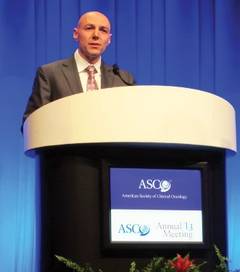
Median overall survival has not been reached for either arm, and will be strongly affected by the 71% of controls who crossed over to open-label treatment with the multikinase inhibitor.
No standard therapy exists for the 5%-15% of patients with thyroid cancer who are refractory to standard treatment with surgery and radioactive iodine (RAI). Doxorubicin (Adriamycin) chemotherapy was approved some 30 years ago, but it is ineffective and toxic.
"Sorafenib is a potential new treatment option for patients with locally advanced or metastatic radioactive-refractory differentiated thyroid cancer," said Dr. Brose, director of thyroid cancer therapeutics and head and neck clinical trials at the University of Pennsylvania, Philadelphia.
Approval sought in U.S. and abroad
DECISION (Study of sorafenib in locally advanced or metastatic patients with radioactive iodine refractory thyroid cancer) is the first phase III study to demonstrate treatment efficacy in this setting. Based on its results, a supplemental New Drug Application will be submitted for sorafenib by midyear in the United States, with global submissions to follow, according to study sponsors Bayer Healthcare Pharmaceuticals and Onyx Pharmaceuticals. The drug is already approved in the United States for advanced renal and liver cancer.
DECISION involved 417 patients in the United States, Europe, or Asia who had locally advanced or metastatic RAI-refractory differentiated thyroid cancer that had progressed within the previous 14 months and had received no prior chemotherapy, targeted therapy, or thalidomide. Patients received twice-daily sorafenib 400 mg or placebo. The majority had distant metastases (96%), 66% had papillary histology, and 61% had an ECOG performance status of 0. Their median age was 63 years.
Sorafenib did not induce any complete responses. Partial responses, defined by at least a 30% reduction in tumor size, occurred in 12.2% of sorafenib patients vs. 0.5% of controls, and lasted for a median of 10.2 months, Dr. Brose said. An additional 42% of patients experienced stable disease for more than 6 months, resulting in a disease control rate of 54% in the sorafenib arm vs. 34% in the placebo arm.
In all, 73% of sorafenib-treated patients had some tumor shrinkage, compared with 27% of placebo-treated patients, and this was often sufficient to relieve symptoms, she said.
It would have been nice to see more partial responses, but all responses were clinically meaningful, Dr. Brose said in an interview.
"Unlike other cancers, what’s interesting is that these patients can have 100 nodules in their chest and actually experience very few symptoms, but what will kill them is when those grow," she said. "So the more clinically important number that is going to prevent the hospitalizations and other complications is not so much the issue of response, but how long it lasts."
Whom and when to treat
Invited discussant Dr. Ezra Cohen, codirector of the head and neck cancer program at the University of Chicago Comprehensive Cancer Center, said not all iodine-refractory patients need treatment, noting that at 400 days, 25% of placebo-treated patients did not progress in DECISION.
The real question going forward is not whether all refractory differentiated thyroid cancer patients should receive sorafenib, but whom and when to treat, he said. Factors that will come into play are whether the patient is symptomatic, the location of the disease and whether that location will portend the onset of symptoms in the near future, and the growth rate of their anatomic disease.
"What you don’t see on this list is the change in chemical factors, and that is specifically thyroid globulin," Dr. Cohen said. "The rise in thyroid globulin, while often important to patients, in my opinion should not be used as a criterion to initiate therapy."
He pointed out that other vascular endothelial growth factor (VEGF) receptor inhibitors are currently being evaluated in iodine-refractory differentiated thyroid cancer, including the ongoing phase III trial of lenvatinib (NCT01321554). "If I had to guess, it will reinforce the data we just saw with sorafenib," he added.
Finally, Dr. Cohen said clinicians are already seeing a wave of patients in the clinic who are refractory to VEGF inhibitors, and that this emerging entity needs to be addressed and patients encouraged to enter clinical trials.
During a press briefing at the meeting, Dr. Gregory A. Masters, of the Helen F. Graham Cancer Center in Newark, Del., told reporters that apart from entering patients in clinical trials, there are no good options for patients who progress.
"Now we have an option where we know that we can prolong progression-free survival, and I think using this for our patients will become a very attractive option and I think, yes, it will become the standard of care," he said.
DECISION was funded by Bayer HealthCare Pharmaceuticals and Onyx Pharmaceuticals. Dr. Brose reported consulting fees, honoraria, and research funding from these companies. Dr. Cohen disclosed relationships with other companies.
Overall, thyroid cancer is very treatable and has an excellent prognosis. However, a subset of patients with thyroid cancer has disease that is resistant to radioactive iodine, and for those patients, especially those with metastatic disease, we have very limited treatment options. Traditional chemotherapy has had little to no efficacy against most thyroid cancers, leaving patients with the only option of enrolling in a clinical trial.

|
| Dr. Rebecca Sippel |
Thankfully, several phase II clinical trials of multikinase inhibitors have recently shown partial response rates in up to 50% of patients. Sorefenib is the first of these drugs to move on to a phase III clinical trial. This study showed disease stabilization in over 50% of patients and a significant improvement in progression-free survival (10.8 vs. 5.8 months). The results of this study will hopefully lead to sorafenib being the first FDA-approved treatment for radioactive iodine-resistant thyroid cancer, which will be a welcome addition to those of us treating patients with advanced thyroid cancer.
While the results of this study are exciting, it is clear that this is not going to be a cure for metastatic thyroid cancer. As with all multikinase inhibitors, not all patients will respond, and of those that do, it is likely that they will develop resistance to treatment, and that the benefits will not be long-standing. Therefore it is important that we continue to pursue our efforts to examine other drugs that have shown efficacy in early studies and also try to better understand the mechanisms behind multikinase drug resistance, so that we can continue to provide treatments and hope to our patients with radioactive iodine-resistant thyroid cancer.
Rebecca S. Sippel, M.D., FACS, is chief of endocrine surgery, department of surgery, University of Wisconsin-Madison.
Overall, thyroid cancer is very treatable and has an excellent prognosis. However, a subset of patients with thyroid cancer has disease that is resistant to radioactive iodine, and for those patients, especially those with metastatic disease, we have very limited treatment options. Traditional chemotherapy has had little to no efficacy against most thyroid cancers, leaving patients with the only option of enrolling in a clinical trial.
|
|
| Dr. Rebecca Sippel |
Thankfully, several phase II clinical trials of multikinase inhibitors have recently shown partial response rates in up to 50% of patients. Sorefenib is the first of these drugs to move on to a phase III clinical trial. This study showed disease stabilization in over 50% of patients and a significant improvement in progression-free survival (10.8 vs. 5.8 months). The results of this study will hopefully lead to sorafenib being the first FDA-approved treatment for radioactive iodine-resistant thyroid cancer, which will be a welcome addition to those of us treating patients with advanced thyroid cancer.
While the results of this study are exciting, it is clear that this is not going to be a cure for metastatic thyroid cancer. As with all multikinase inhibitors, not all patients will respond, and of those that do, it is likely that they will develop resistance to treatment, and that the benefits will not be long-standing. Therefore it is important that we continue to pursue our efforts to examine other drugs that have shown efficacy in early studies and also try to better understand the mechanisms behind multikinase drug resistance, so that we can continue to provide treatments and hope to our patients with radioactive iodine-resistant thyroid cancer.
Rebecca S. Sippel, M.D., FACS, is chief of endocrine surgery, department of surgery, University of Wisconsin-Madison.
Overall, thyroid cancer is very treatable and has an excellent prognosis. However, a subset of patients with thyroid cancer has disease that is resistant to radioactive iodine, and for those patients, especially those with metastatic disease, we have very limited treatment options. Traditional chemotherapy has had little to no efficacy against most thyroid cancers, leaving patients with the only option of enrolling in a clinical trial.
|
|
| Dr. Rebecca Sippel |
Thankfully, several phase II clinical trials of multikinase inhibitors have recently shown partial response rates in up to 50% of patients. Sorefenib is the first of these drugs to move on to a phase III clinical trial. This study showed disease stabilization in over 50% of patients and a significant improvement in progression-free survival (10.8 vs. 5.8 months). The results of this study will hopefully lead to sorafenib being the first FDA-approved treatment for radioactive iodine-resistant thyroid cancer, which will be a welcome addition to those of us treating patients with advanced thyroid cancer.
While the results of this study are exciting, it is clear that this is not going to be a cure for metastatic thyroid cancer. As with all multikinase inhibitors, not all patients will respond, and of those that do, it is likely that they will develop resistance to treatment, and that the benefits will not be long-standing. Therefore it is important that we continue to pursue our efforts to examine other drugs that have shown efficacy in early studies and also try to better understand the mechanisms behind multikinase drug resistance, so that we can continue to provide treatments and hope to our patients with radioactive iodine-resistant thyroid cancer.
Rebecca S. Sippel, M.D., FACS, is chief of endocrine surgery, department of surgery, University of Wisconsin-Madison.
CHICAGO – The long wait for a new medical therapy for advanced radioactive-refractory thyroid cancer is drawing to a close.
Twice-daily oral sorafenib (Nexavar) nearly doubled the median time to disease progression from 5.8 months with placebo to 10.8 months (hazard ratio, 0.587; P less than .0001) among 417 patients in the double-blind, international phase III DECISION study.
The benefit of sorafenib on this primary endpoint was seen across all patient characteristics, including age, histology, and geographic region, principal investigator Dr. Marcia S. Brose said during the plenary session at the annual meeting of the American Society of Clinical Oncology.
Median overall survival has not been reached for either arm, and will be strongly affected by the 71% of controls who crossed over to open-label treatment with the multikinase inhibitor.
No standard therapy exists for the 5%-15% of patients with thyroid cancer who are refractory to standard treatment with surgery and radioactive iodine (RAI). Doxorubicin (Adriamycin) chemotherapy was approved some 30 years ago, but it is ineffective and toxic.
"Sorafenib is a potential new treatment option for patients with locally advanced or metastatic radioactive-refractory differentiated thyroid cancer," said Dr. Brose, director of thyroid cancer therapeutics and head and neck clinical trials at the University of Pennsylvania, Philadelphia.
Approval sought in U.S. and abroad
DECISION (Study of sorafenib in locally advanced or metastatic patients with radioactive iodine refractory thyroid cancer) is the first phase III study to demonstrate treatment efficacy in this setting. Based on its results, a supplemental New Drug Application will be submitted for sorafenib by midyear in the United States, with global submissions to follow, according to study sponsors Bayer Healthcare Pharmaceuticals and Onyx Pharmaceuticals. The drug is already approved in the United States for advanced renal and liver cancer.
DECISION involved 417 patients in the United States, Europe, or Asia who had locally advanced or metastatic RAI-refractory differentiated thyroid cancer that had progressed within the previous 14 months and had received no prior chemotherapy, targeted therapy, or thalidomide. Patients received twice-daily sorafenib 400 mg or placebo. The majority had distant metastases (96%), 66% had papillary histology, and 61% had an ECOG performance status of 0. Their median age was 63 years.
Sorafenib did not induce any complete responses. Partial responses, defined by at least a 30% reduction in tumor size, occurred in 12.2% of sorafenib patients vs. 0.5% of controls, and lasted for a median of 10.2 months, Dr. Brose said. An additional 42% of patients experienced stable disease for more than 6 months, resulting in a disease control rate of 54% in the sorafenib arm vs. 34% in the placebo arm.
In all, 73% of sorafenib-treated patients had some tumor shrinkage, compared with 27% of placebo-treated patients, and this was often sufficient to relieve symptoms, she said.
It would have been nice to see more partial responses, but all responses were clinically meaningful, Dr. Brose said in an interview.
"Unlike other cancers, what’s interesting is that these patients can have 100 nodules in their chest and actually experience very few symptoms, but what will kill them is when those grow," she said. "So the more clinically important number that is going to prevent the hospitalizations and other complications is not so much the issue of response, but how long it lasts."
Whom and when to treat
Invited discussant Dr. Ezra Cohen, codirector of the head and neck cancer program at the University of Chicago Comprehensive Cancer Center, said not all iodine-refractory patients need treatment, noting that at 400 days, 25% of placebo-treated patients did not progress in DECISION.
The real question going forward is not whether all refractory differentiated thyroid cancer patients should receive sorafenib, but whom and when to treat, he said. Factors that will come into play are whether the patient is symptomatic, the location of the disease and whether that location will portend the onset of symptoms in the near future, and the growth rate of their anatomic disease.
"What you don’t see on this list is the change in chemical factors, and that is specifically thyroid globulin," Dr. Cohen said. "The rise in thyroid globulin, while often important to patients, in my opinion should not be used as a criterion to initiate therapy."
He pointed out that other vascular endothelial growth factor (VEGF) receptor inhibitors are currently being evaluated in iodine-refractory differentiated thyroid cancer, including the ongoing phase III trial of lenvatinib (NCT01321554). "If I had to guess, it will reinforce the data we just saw with sorafenib," he added.
Finally, Dr. Cohen said clinicians are already seeing a wave of patients in the clinic who are refractory to VEGF inhibitors, and that this emerging entity needs to be addressed and patients encouraged to enter clinical trials.
During a press briefing at the meeting, Dr. Gregory A. Masters, of the Helen F. Graham Cancer Center in Newark, Del., told reporters that apart from entering patients in clinical trials, there are no good options for patients who progress.
"Now we have an option where we know that we can prolong progression-free survival, and I think using this for our patients will become a very attractive option and I think, yes, it will become the standard of care," he said.
DECISION was funded by Bayer HealthCare Pharmaceuticals and Onyx Pharmaceuticals. Dr. Brose reported consulting fees, honoraria, and research funding from these companies. Dr. Cohen disclosed relationships with other companies.
CHICAGO – The long wait for a new medical therapy for advanced radioactive-refractory thyroid cancer is drawing to a close.
Twice-daily oral sorafenib (Nexavar) nearly doubled the median time to disease progression from 5.8 months with placebo to 10.8 months (hazard ratio, 0.587; P less than .0001) among 417 patients in the double-blind, international phase III DECISION study.
The benefit of sorafenib on this primary endpoint was seen across all patient characteristics, including age, histology, and geographic region, principal investigator Dr. Marcia S. Brose said during the plenary session at the annual meeting of the American Society of Clinical Oncology.
Median overall survival has not been reached for either arm, and will be strongly affected by the 71% of controls who crossed over to open-label treatment with the multikinase inhibitor.
No standard therapy exists for the 5%-15% of patients with thyroid cancer who are refractory to standard treatment with surgery and radioactive iodine (RAI). Doxorubicin (Adriamycin) chemotherapy was approved some 30 years ago, but it is ineffective and toxic.
"Sorafenib is a potential new treatment option for patients with locally advanced or metastatic radioactive-refractory differentiated thyroid cancer," said Dr. Brose, director of thyroid cancer therapeutics and head and neck clinical trials at the University of Pennsylvania, Philadelphia.
Approval sought in U.S. and abroad
DECISION (Study of sorafenib in locally advanced or metastatic patients with radioactive iodine refractory thyroid cancer) is the first phase III study to demonstrate treatment efficacy in this setting. Based on its results, a supplemental New Drug Application will be submitted for sorafenib by midyear in the United States, with global submissions to follow, according to study sponsors Bayer Healthcare Pharmaceuticals and Onyx Pharmaceuticals. The drug is already approved in the United States for advanced renal and liver cancer.
DECISION involved 417 patients in the United States, Europe, or Asia who had locally advanced or metastatic RAI-refractory differentiated thyroid cancer that had progressed within the previous 14 months and had received no prior chemotherapy, targeted therapy, or thalidomide. Patients received twice-daily sorafenib 400 mg or placebo. The majority had distant metastases (96%), 66% had papillary histology, and 61% had an ECOG performance status of 0. Their median age was 63 years.
Sorafenib did not induce any complete responses. Partial responses, defined by at least a 30% reduction in tumor size, occurred in 12.2% of sorafenib patients vs. 0.5% of controls, and lasted for a median of 10.2 months, Dr. Brose said. An additional 42% of patients experienced stable disease for more than 6 months, resulting in a disease control rate of 54% in the sorafenib arm vs. 34% in the placebo arm.
In all, 73% of sorafenib-treated patients had some tumor shrinkage, compared with 27% of placebo-treated patients, and this was often sufficient to relieve symptoms, she said.
It would have been nice to see more partial responses, but all responses were clinically meaningful, Dr. Brose said in an interview.
"Unlike other cancers, what’s interesting is that these patients can have 100 nodules in their chest and actually experience very few symptoms, but what will kill them is when those grow," she said. "So the more clinically important number that is going to prevent the hospitalizations and other complications is not so much the issue of response, but how long it lasts."
Whom and when to treat
Invited discussant Dr. Ezra Cohen, codirector of the head and neck cancer program at the University of Chicago Comprehensive Cancer Center, said not all iodine-refractory patients need treatment, noting that at 400 days, 25% of placebo-treated patients did not progress in DECISION.
The real question going forward is not whether all refractory differentiated thyroid cancer patients should receive sorafenib, but whom and when to treat, he said. Factors that will come into play are whether the patient is symptomatic, the location of the disease and whether that location will portend the onset of symptoms in the near future, and the growth rate of their anatomic disease.
"What you don’t see on this list is the change in chemical factors, and that is specifically thyroid globulin," Dr. Cohen said. "The rise in thyroid globulin, while often important to patients, in my opinion should not be used as a criterion to initiate therapy."
He pointed out that other vascular endothelial growth factor (VEGF) receptor inhibitors are currently being evaluated in iodine-refractory differentiated thyroid cancer, including the ongoing phase III trial of lenvatinib (NCT01321554). "If I had to guess, it will reinforce the data we just saw with sorafenib," he added.
Finally, Dr. Cohen said clinicians are already seeing a wave of patients in the clinic who are refractory to VEGF inhibitors, and that this emerging entity needs to be addressed and patients encouraged to enter clinical trials.
During a press briefing at the meeting, Dr. Gregory A. Masters, of the Helen F. Graham Cancer Center in Newark, Del., told reporters that apart from entering patients in clinical trials, there are no good options for patients who progress.
"Now we have an option where we know that we can prolong progression-free survival, and I think using this for our patients will become a very attractive option and I think, yes, it will become the standard of care," he said.
DECISION was funded by Bayer HealthCare Pharmaceuticals and Onyx Pharmaceuticals. Dr. Brose reported consulting fees, honoraria, and research funding from these companies. Dr. Cohen disclosed relationships with other companies.
AT THE ASCO ANNUAL MEETING 2013
Major finding: Median progression-free survival was 10.8 months with sorafenib and 5.8 months with placebo (P less than .0001).
Data source: Double-blind, phase III, randomized trial in 417 patients with radioactive iodine–refractory thyroid cancer that was locally advanced or metastatic.
Disclosures: DECISION was funded by Bayer HealthCare Pharmaceuticals and Onyx Pharmaceuticals. Dr. Brose reported consulting fees, honoraria, and research funding from these companies. Dr. Cohen disclosed relationships with other companies.

Mechanical bowel prep may up cancer-specific survival after CRC resection
PHOENIX – Improving cancer-specific survival after resection for colorectal cancer may be as simple as ordering preoperative mechanical bowel preparation, according to an analysis of data from a randomized trial conducted in Sweden and Germany.
Roughly half of the 841 patients studied had such preparation before their operation. The actuarial 5-year rate of cancer-specific survival was about 8% higher in this group, first author Dr. Åsa Collin of Uppsala University reported at the annual meeting of the American Society of Colon and Rectal Surgeons.
An analysis of cancer stage at the time of surgery suggested that the two groups were well matched on this measure. Preparation did not significantly decrease the rate of recurrence or increase the rate of overall survival.
Session attendee Dr. J. Daniel Stanley of University Surgical Associates in Chattanooga, Tenn., questioned whether the patients might have differed on other factors that influenced whether they underwent mechanical bowel preparation.
"Were some of them obstructed, which might indicate a different tumor biology than was reflected in the staging?" he asked.
"These were all elective surgeries, and there was no patient who we actually decided that they shouldn’t have preparation," Dr. Collin replied.
In an interview, session comoderator Dr. David Maron, a colorectal surgeon at the Cleveland Clinic in Weston, Fla., said, "What was interesting was that they didn’t show a significant difference in cancer recurrence, although it was close to significance. So the question remains, is it in fact the mechanical bowel prep, or could there be differences in the postoperative follow-up and even the postoperative treatment of those patients who developed recurrence?"
Guidelines leave preparation up to the treating surgeon, and several studies have found no benefit at least in the short term, he noted. "This is one of the first studies that have shown that perhaps from a long-term standpoint in patients with cancer, that there may be some benefit to preoperative preparation of the bowel, although again, it’s preliminary and there’s a lot of unknowns out there."
Dr. Collin and her colleagues analyzed data from a trial among patients who underwent an elective resection for cancer, adenoma, or diverticular disease of the colon at 21 hospitals in Sweden and Germany between 1999 and 2005.
Earlier results for the entire trial population, previously reported, showed no significant reduction in 30-day rates of complications with mechanical bowel preparation (Br. J. Surg. 2007;94:689-95).
The new, long-term results for just the 841 patients with colorectal cancer – 53% of whom had a mechanical bowel preparation before their surgery – indicated those undergoing this preparation had a higher actuarial 5-year rate of cancer-specific survival (90% vs. 82%; P = .03).
The two groups were similar in terms of the 5-year rate of recurrence (80% vs. 89%, P = .08) and overall survival, Dr. Collin said.
"We looked at tumor stage to see if the explanation for patients having no mechanical bowel preparation having poorer cancer-specific survival was that they had more advanced tumors, and there was no difference in the stages" between groups, she said, with the majority of patients in both groups having stage II or III disease.
Dr. Collin disclosed no conflicts of interest related to the research.
PHOENIX – Improving cancer-specific survival after resection for colorectal cancer may be as simple as ordering preoperative mechanical bowel preparation, according to an analysis of data from a randomized trial conducted in Sweden and Germany.
Roughly half of the 841 patients studied had such preparation before their operation. The actuarial 5-year rate of cancer-specific survival was about 8% higher in this group, first author Dr. Åsa Collin of Uppsala University reported at the annual meeting of the American Society of Colon and Rectal Surgeons.
An analysis of cancer stage at the time of surgery suggested that the two groups were well matched on this measure. Preparation did not significantly decrease the rate of recurrence or increase the rate of overall survival.
Session attendee Dr. J. Daniel Stanley of University Surgical Associates in Chattanooga, Tenn., questioned whether the patients might have differed on other factors that influenced whether they underwent mechanical bowel preparation.
"Were some of them obstructed, which might indicate a different tumor biology than was reflected in the staging?" he asked.
"These were all elective surgeries, and there was no patient who we actually decided that they shouldn’t have preparation," Dr. Collin replied.
In an interview, session comoderator Dr. David Maron, a colorectal surgeon at the Cleveland Clinic in Weston, Fla., said, "What was interesting was that they didn’t show a significant difference in cancer recurrence, although it was close to significance. So the question remains, is it in fact the mechanical bowel prep, or could there be differences in the postoperative follow-up and even the postoperative treatment of those patients who developed recurrence?"
Guidelines leave preparation up to the treating surgeon, and several studies have found no benefit at least in the short term, he noted. "This is one of the first studies that have shown that perhaps from a long-term standpoint in patients with cancer, that there may be some benefit to preoperative preparation of the bowel, although again, it’s preliminary and there’s a lot of unknowns out there."
Dr. Collin and her colleagues analyzed data from a trial among patients who underwent an elective resection for cancer, adenoma, or diverticular disease of the colon at 21 hospitals in Sweden and Germany between 1999 and 2005.
Earlier results for the entire trial population, previously reported, showed no significant reduction in 30-day rates of complications with mechanical bowel preparation (Br. J. Surg. 2007;94:689-95).
The new, long-term results for just the 841 patients with colorectal cancer – 53% of whom had a mechanical bowel preparation before their surgery – indicated those undergoing this preparation had a higher actuarial 5-year rate of cancer-specific survival (90% vs. 82%; P = .03).
The two groups were similar in terms of the 5-year rate of recurrence (80% vs. 89%, P = .08) and overall survival, Dr. Collin said.
"We looked at tumor stage to see if the explanation for patients having no mechanical bowel preparation having poorer cancer-specific survival was that they had more advanced tumors, and there was no difference in the stages" between groups, she said, with the majority of patients in both groups having stage II or III disease.
Dr. Collin disclosed no conflicts of interest related to the research.
PHOENIX – Improving cancer-specific survival after resection for colorectal cancer may be as simple as ordering preoperative mechanical bowel preparation, according to an analysis of data from a randomized trial conducted in Sweden and Germany.
Roughly half of the 841 patients studied had such preparation before their operation. The actuarial 5-year rate of cancer-specific survival was about 8% higher in this group, first author Dr. Åsa Collin of Uppsala University reported at the annual meeting of the American Society of Colon and Rectal Surgeons.
An analysis of cancer stage at the time of surgery suggested that the two groups were well matched on this measure. Preparation did not significantly decrease the rate of recurrence or increase the rate of overall survival.
Session attendee Dr. J. Daniel Stanley of University Surgical Associates in Chattanooga, Tenn., questioned whether the patients might have differed on other factors that influenced whether they underwent mechanical bowel preparation.
"Were some of them obstructed, which might indicate a different tumor biology than was reflected in the staging?" he asked.
"These were all elective surgeries, and there was no patient who we actually decided that they shouldn’t have preparation," Dr. Collin replied.
In an interview, session comoderator Dr. David Maron, a colorectal surgeon at the Cleveland Clinic in Weston, Fla., said, "What was interesting was that they didn’t show a significant difference in cancer recurrence, although it was close to significance. So the question remains, is it in fact the mechanical bowel prep, or could there be differences in the postoperative follow-up and even the postoperative treatment of those patients who developed recurrence?"
Guidelines leave preparation up to the treating surgeon, and several studies have found no benefit at least in the short term, he noted. "This is one of the first studies that have shown that perhaps from a long-term standpoint in patients with cancer, that there may be some benefit to preoperative preparation of the bowel, although again, it’s preliminary and there’s a lot of unknowns out there."
Dr. Collin and her colleagues analyzed data from a trial among patients who underwent an elective resection for cancer, adenoma, or diverticular disease of the colon at 21 hospitals in Sweden and Germany between 1999 and 2005.
Earlier results for the entire trial population, previously reported, showed no significant reduction in 30-day rates of complications with mechanical bowel preparation (Br. J. Surg. 2007;94:689-95).
The new, long-term results for just the 841 patients with colorectal cancer – 53% of whom had a mechanical bowel preparation before their surgery – indicated those undergoing this preparation had a higher actuarial 5-year rate of cancer-specific survival (90% vs. 82%; P = .03).
The two groups were similar in terms of the 5-year rate of recurrence (80% vs. 89%, P = .08) and overall survival, Dr. Collin said.
"We looked at tumor stage to see if the explanation for patients having no mechanical bowel preparation having poorer cancer-specific survival was that they had more advanced tumors, and there was no difference in the stages" between groups, she said, with the majority of patients in both groups having stage II or III disease.
Dr. Collin disclosed no conflicts of interest related to the research.
AT THE ASCRS ANNUAL MEETING
Major finding: Patients who had mechanical bowel preparation before surgery had a higher actuarial 5-year rate of cancer-specific survival (90% vs. 82%).
Data source: An analysis of 841 patients undergoing elective resection for colorectal cancer in a randomized trial.
Disclosures: Dr. Collin disclosed no relevant conflicts of interest.
Prostatectomy follow-up guidelines released
A new practice guideline released at the American Urological Association annual meeting presents the clinical framework to help weigh the risks and benefits of providing adjuvant and salvage radiation therapy after prostatectomy.
"There is now a document that guides us in offering the best clinical practices for anyone who undergoes radical prostatectomy regarding their follow-up care with radiotherapy," said Dr. Richard K. Valicenti of the department of radiation oncology at the University of California, Davis.
One practice standard in the guideline advises physicians to offer adjuvant radiotherapy to patients with adverse pathologic findings at prostatectomy, because studies have shown that this therapy can result in reductions in prostate-specific antigen (PSA) recurrence, local recurrence, and clinical progression. The adverse findings that would warrant this therapy include seminal vesicle invasion, positive surgical margins, or extraprostatic extension.
"The data are overwhelmingly consistent that it [radiotherapy] will improve on tumor control rates, as well as progression-free survival," Dr. Valicenti said, adding that these patients should also experience improved quality of life.
In addition to the above practice standard, the guideline, issued jointly by the American Society for Radiation Oncology (ASTRO) and the American Urological Association (AUA), made the following recommendations:
• Inform patients with localized prostate cancer considering radical prostatectomy about the possibility that the pathologic findings will predict a higher risk of cancer recurrence.
• Advise patients with adverse pathologic findings, including seminal vesicle invasion, positive surgical margins, and extraprostatic extension, that adjuvant radiation therapy compared with radical prostatectomy only reduces the risk of PSA recurrence, local recurrence, and clinical progression of cancer;
• Warn patients that they are a higher risk of developing metastatic prostate cancer or death from the disease if there is a PSA recurrence after surgery;
• Define biochemical recurrence as a detectable or rising PSA value after surgery that is greater than or equal to 0.2 ng/mL with a second confirmatory level greater than or equal to 0.2 ng/mL.
• Consider a restaging evaluation in patients with a PSA recurrence.
• Offer salvage radiation therapy to patients with PSA or local recurrence after radical prostatectomy in whom there is no evidence of distant metastatic disease.
• Inform patients that the effectiveness of radiation therapy for PSA recurrence is greatest when given at lower levels of PSA. and
• Inform patients that in addition to the benefits of controlling disease recurrence, radiation therapy could produce possible short- and long-term urinary, bowel, and sexual side effects.
Before recommending adjuvant or salvage radiotherapy, "look at the patients’ biological information obtained from the radical prostatectomy specimen, and balance that with the overall health status of the patients [and] concerns about certain aspects of quality of life, whether it be sexual activity or urinary function. They also need to balance that with any other medical conditions or previous treatments that would preclude the use of radiation therapy," Dr. Valicenti said.
"The Adjuvant and Salvage Radiotherapy After Prostatectomy: ASTRO/AUA Guideline" is a comprehensive review of 324 research articles on patients with detectable and undetectable PSA levels, toxicity, optimal imaging strategies, and the impact on quality of life to determine the appropriateness of radiation therapy in patients suspected of recurrence. Only studies in which PSA data were provided for at least 75% of patients were included in the guideline. The panel was led by Dr. Valicenti and Dr. Ian M. Thompson of the University of Texas Health Science Center.
The guideline is available at www.redjournal.org and www.auanet.org.
Dr. Valicenti reported no relevant disclosures.
A new practice guideline released at the American Urological Association annual meeting presents the clinical framework to help weigh the risks and benefits of providing adjuvant and salvage radiation therapy after prostatectomy.
"There is now a document that guides us in offering the best clinical practices for anyone who undergoes radical prostatectomy regarding their follow-up care with radiotherapy," said Dr. Richard K. Valicenti of the department of radiation oncology at the University of California, Davis.
One practice standard in the guideline advises physicians to offer adjuvant radiotherapy to patients with adverse pathologic findings at prostatectomy, because studies have shown that this therapy can result in reductions in prostate-specific antigen (PSA) recurrence, local recurrence, and clinical progression. The adverse findings that would warrant this therapy include seminal vesicle invasion, positive surgical margins, or extraprostatic extension.
"The data are overwhelmingly consistent that it [radiotherapy] will improve on tumor control rates, as well as progression-free survival," Dr. Valicenti said, adding that these patients should also experience improved quality of life.
In addition to the above practice standard, the guideline, issued jointly by the American Society for Radiation Oncology (ASTRO) and the American Urological Association (AUA), made the following recommendations:
• Inform patients with localized prostate cancer considering radical prostatectomy about the possibility that the pathologic findings will predict a higher risk of cancer recurrence.
• Advise patients with adverse pathologic findings, including seminal vesicle invasion, positive surgical margins, and extraprostatic extension, that adjuvant radiation therapy compared with radical prostatectomy only reduces the risk of PSA recurrence, local recurrence, and clinical progression of cancer;
• Warn patients that they are a higher risk of developing metastatic prostate cancer or death from the disease if there is a PSA recurrence after surgery;
• Define biochemical recurrence as a detectable or rising PSA value after surgery that is greater than or equal to 0.2 ng/mL with a second confirmatory level greater than or equal to 0.2 ng/mL.
• Consider a restaging evaluation in patients with a PSA recurrence.
• Offer salvage radiation therapy to patients with PSA or local recurrence after radical prostatectomy in whom there is no evidence of distant metastatic disease.
• Inform patients that the effectiveness of radiation therapy for PSA recurrence is greatest when given at lower levels of PSA. and
• Inform patients that in addition to the benefits of controlling disease recurrence, radiation therapy could produce possible short- and long-term urinary, bowel, and sexual side effects.
Before recommending adjuvant or salvage radiotherapy, "look at the patients’ biological information obtained from the radical prostatectomy specimen, and balance that with the overall health status of the patients [and] concerns about certain aspects of quality of life, whether it be sexual activity or urinary function. They also need to balance that with any other medical conditions or previous treatments that would preclude the use of radiation therapy," Dr. Valicenti said.
"The Adjuvant and Salvage Radiotherapy After Prostatectomy: ASTRO/AUA Guideline" is a comprehensive review of 324 research articles on patients with detectable and undetectable PSA levels, toxicity, optimal imaging strategies, and the impact on quality of life to determine the appropriateness of radiation therapy in patients suspected of recurrence. Only studies in which PSA data were provided for at least 75% of patients were included in the guideline. The panel was led by Dr. Valicenti and Dr. Ian M. Thompson of the University of Texas Health Science Center.
The guideline is available at www.redjournal.org and www.auanet.org.
Dr. Valicenti reported no relevant disclosures.
A new practice guideline released at the American Urological Association annual meeting presents the clinical framework to help weigh the risks and benefits of providing adjuvant and salvage radiation therapy after prostatectomy.
"There is now a document that guides us in offering the best clinical practices for anyone who undergoes radical prostatectomy regarding their follow-up care with radiotherapy," said Dr. Richard K. Valicenti of the department of radiation oncology at the University of California, Davis.
One practice standard in the guideline advises physicians to offer adjuvant radiotherapy to patients with adverse pathologic findings at prostatectomy, because studies have shown that this therapy can result in reductions in prostate-specific antigen (PSA) recurrence, local recurrence, and clinical progression. The adverse findings that would warrant this therapy include seminal vesicle invasion, positive surgical margins, or extraprostatic extension.
"The data are overwhelmingly consistent that it [radiotherapy] will improve on tumor control rates, as well as progression-free survival," Dr. Valicenti said, adding that these patients should also experience improved quality of life.
In addition to the above practice standard, the guideline, issued jointly by the American Society for Radiation Oncology (ASTRO) and the American Urological Association (AUA), made the following recommendations:
• Inform patients with localized prostate cancer considering radical prostatectomy about the possibility that the pathologic findings will predict a higher risk of cancer recurrence.
• Advise patients with adverse pathologic findings, including seminal vesicle invasion, positive surgical margins, and extraprostatic extension, that adjuvant radiation therapy compared with radical prostatectomy only reduces the risk of PSA recurrence, local recurrence, and clinical progression of cancer;
• Warn patients that they are a higher risk of developing metastatic prostate cancer or death from the disease if there is a PSA recurrence after surgery;
• Define biochemical recurrence as a detectable or rising PSA value after surgery that is greater than or equal to 0.2 ng/mL with a second confirmatory level greater than or equal to 0.2 ng/mL.
• Consider a restaging evaluation in patients with a PSA recurrence.
• Offer salvage radiation therapy to patients with PSA or local recurrence after radical prostatectomy in whom there is no evidence of distant metastatic disease.
• Inform patients that the effectiveness of radiation therapy for PSA recurrence is greatest when given at lower levels of PSA. and
• Inform patients that in addition to the benefits of controlling disease recurrence, radiation therapy could produce possible short- and long-term urinary, bowel, and sexual side effects.
Before recommending adjuvant or salvage radiotherapy, "look at the patients’ biological information obtained from the radical prostatectomy specimen, and balance that with the overall health status of the patients [and] concerns about certain aspects of quality of life, whether it be sexual activity or urinary function. They also need to balance that with any other medical conditions or previous treatments that would preclude the use of radiation therapy," Dr. Valicenti said.
"The Adjuvant and Salvage Radiotherapy After Prostatectomy: ASTRO/AUA Guideline" is a comprehensive review of 324 research articles on patients with detectable and undetectable PSA levels, toxicity, optimal imaging strategies, and the impact on quality of life to determine the appropriateness of radiation therapy in patients suspected of recurrence. Only studies in which PSA data were provided for at least 75% of patients were included in the guideline. The panel was led by Dr. Valicenti and Dr. Ian M. Thompson of the University of Texas Health Science Center.
The guideline is available at www.redjournal.org and www.auanet.org.
Dr. Valicenti reported no relevant disclosures.
FROM THE AUA ANNUAL MEETING
Universal treatment heads off ICU MRSA
A universal decolonization strategy reduced the risk of methicillin-resistant Staphylococcus aureus infections by 37% in intensive care units – a significant improvement over the recommended strategy of targeting only carriers.
The protocol was easy – daily intranasal mupirocin and chlorhexidine skin washing – and cheap, with a total cost of about US$40 per patient, Dr. Susan S. Huang and her colleagues wrote in the May 29 issue of the New England Journal of Medicine.
But the finding should also be viewed with a note of caution, wrote Dr. Huang of the University of California Irvine.

"Widespread use of chlorhexidine and mupirocin could possibly engender resistance," which has been reported in some prior studies of MRSA decolonization," she noted. A MRSA gene conferring chlorhexidine resistance has been found, but it’s still unclear whether it is clinically significant. "It will therefore be important for surveillance programs to monitor mupirocin and chlorhexidine resistance" (N. Engl. J. Med. 2013 [doi:10.1056/NEJMoa1207290])
The team studied three protocols designed to tamp down nosocomial MRSA infections: MRSA screening with isolation for positive patients; targeted isolation, with screening, isolating, and decolonizing of patients with MRSA; and universal decolonization of all patients.
The universal approach does not incorporate screening. Instead, commencing with admission to the ICU, every patient receives twice-daily intranasal mupirocin for 5 days and daily bathing with chlorhexidine-impregnated cloths for the entire ICU stay.
The study’s primary outcome was ICU-attributable MRSA positive cultures. Secondary outcomes were ICU-attributable MRSA bloodstream infections, and bloodstream infections caused by any other pathogen.
The authors randomized 43 hospitals (comprising 74 ICUs) to the protocols, which were employed in a total of 74,256 patients. These were a median of 65 years, with a variety of coexisting conditions, including diabetes (about 31%), renal failure (about 20%), cancer (about 11%), and liver failure (about 4%). About 10% had a past history of MRSA infection. The median ICU stay was 3 days, and the median hospital stay, 7 days.
The risk analysis compared each hospital’s results with its own baseline data. Universal decolonization was the most effective means of preventing MRSA-positive cultures, significantly reducing the risk of a MRSA-positive culture by 37% (odds ratio, 0.63). This result was significantly better than either the targeted screening protocol, which reduced the risk by 25% (OR, 0.75) or the screening/isolation protocol, which reduced the risk by 8% (OR 0.92).
There were no significant differences in the risk of MRSA bloodstream infections in any of the groups. However, the authors noted, universal decolonization was associated with a greater reduction than either screening/isolation or targeted decolonization’s (OR, 0.74 vs. 1.20 and 1.19, respectively).
Both universal and targeted decolonization significantly reduced the risk of a bloodstream infection caused by any pathogen (OR, 0.55 and 0.77, respectively). Screening/isolation did not significantly affect this outcome (OR, 0.98).
There were seven adverse events – two in the targeted decolonization and five in the targeted decolonization groups. All of these were skin reactions to the chlorhexidine bath and resolved when that was discontinued.
Although the authors said the intervention was inexpensive, they recommended a more-detailed cost analysis. Such a study would examine the US$40 per patient cost in light of cost reductions associated with cessation of screening, reduced isolation precautions, and reduced infections, and of the potentially increased costs associated with any emergence of resistant MRSA strains.
"It remains to be seen whether universal decolonization can obviate the need for all contact precautions for carriers of MRSA or other multidrug-resistant organisms," they added.
The study was funded by the U.S. Agency for Healthcare Research and Quality and the U.S. Centers for Disease Control and Prevention. Dr. Huang did not report having any financial disclosures, but several of the coauthors stated they had financial ties with Sage Products and Express Scripts.
This study of three interventions designed to prevent MRSA infections clearly identifies the most effective regimen – eliminate screening and treat every incoming ICU patient with the same protocol of nasal and dermal decolonization, Dr. Michael D. Edmond and his colleague wrote in an accompanying editorial (N. Engl. J. Med. 2013 [doi:10.1056/NEJMe1304831]).
The study not only identifies the most effective method of controlling MRSA, but also speaks volumes about the current standard protocol of screening patients and isolating those who carry the bacteria, wrote Dr. Edmond.
"The implications of this study are highly important," he noted. "The lack of effectiveness of active detection and isolation should prompt hospitals to discontinue the practice for control of endemic MRSA. A benefit will be a reduced proportion of patients requiring contact precautions, which is a patient-unfriendly practice that interferes with care. In addition, the folly of pursuing legislative mandates when evidence is lacking has now been shown, and laws mandating MRSA screening should be repealed."
Nevertheless, he said, it’s critical to keep on the alert. Any universally imposed decolonization could contribute to the emergence of a new, even stronger MRSA strain.
"In vitro resistance to chlorhexidine has been described, although its relevance remains uncertain. However, mupirocin resistance is well documented, associated with decolonization failure, and occurs commonly when mupirocin is used in a widespread fashion. Thus, we would urge caution in implementing the universal use of mupirocin in patients in the ICU."
Dr. Michael Edmond is the Richard P. Wenzel Professor of Internal Medicine in the division of infectious diseases at Virginia Commonwealth University, Richmond.
This study of three interventions designed to prevent MRSA infections clearly identifies the most effective regimen – eliminate screening and treat every incoming ICU patient with the same protocol of nasal and dermal decolonization, Dr. Michael D. Edmond and his colleague wrote in an accompanying editorial (N. Engl. J. Med. 2013 [doi:10.1056/NEJMe1304831]).
The study not only identifies the most effective method of controlling MRSA, but also speaks volumes about the current standard protocol of screening patients and isolating those who carry the bacteria, wrote Dr. Edmond.
"The implications of this study are highly important," he noted. "The lack of effectiveness of active detection and isolation should prompt hospitals to discontinue the practice for control of endemic MRSA. A benefit will be a reduced proportion of patients requiring contact precautions, which is a patient-unfriendly practice that interferes with care. In addition, the folly of pursuing legislative mandates when evidence is lacking has now been shown, and laws mandating MRSA screening should be repealed."
Nevertheless, he said, it’s critical to keep on the alert. Any universally imposed decolonization could contribute to the emergence of a new, even stronger MRSA strain.
"In vitro resistance to chlorhexidine has been described, although its relevance remains uncertain. However, mupirocin resistance is well documented, associated with decolonization failure, and occurs commonly when mupirocin is used in a widespread fashion. Thus, we would urge caution in implementing the universal use of mupirocin in patients in the ICU."
Dr. Michael Edmond is the Richard P. Wenzel Professor of Internal Medicine in the division of infectious diseases at Virginia Commonwealth University, Richmond.
This study of three interventions designed to prevent MRSA infections clearly identifies the most effective regimen – eliminate screening and treat every incoming ICU patient with the same protocol of nasal and dermal decolonization, Dr. Michael D. Edmond and his colleague wrote in an accompanying editorial (N. Engl. J. Med. 2013 [doi:10.1056/NEJMe1304831]).
The study not only identifies the most effective method of controlling MRSA, but also speaks volumes about the current standard protocol of screening patients and isolating those who carry the bacteria, wrote Dr. Edmond.
"The implications of this study are highly important," he noted. "The lack of effectiveness of active detection and isolation should prompt hospitals to discontinue the practice for control of endemic MRSA. A benefit will be a reduced proportion of patients requiring contact precautions, which is a patient-unfriendly practice that interferes with care. In addition, the folly of pursuing legislative mandates when evidence is lacking has now been shown, and laws mandating MRSA screening should be repealed."
Nevertheless, he said, it’s critical to keep on the alert. Any universally imposed decolonization could contribute to the emergence of a new, even stronger MRSA strain.
"In vitro resistance to chlorhexidine has been described, although its relevance remains uncertain. However, mupirocin resistance is well documented, associated with decolonization failure, and occurs commonly when mupirocin is used in a widespread fashion. Thus, we would urge caution in implementing the universal use of mupirocin in patients in the ICU."
Dr. Michael Edmond is the Richard P. Wenzel Professor of Internal Medicine in the division of infectious diseases at Virginia Commonwealth University, Richmond.
A universal decolonization strategy reduced the risk of methicillin-resistant Staphylococcus aureus infections by 37% in intensive care units – a significant improvement over the recommended strategy of targeting only carriers.
The protocol was easy – daily intranasal mupirocin and chlorhexidine skin washing – and cheap, with a total cost of about US$40 per patient, Dr. Susan S. Huang and her colleagues wrote in the May 29 issue of the New England Journal of Medicine.
But the finding should also be viewed with a note of caution, wrote Dr. Huang of the University of California Irvine.
"Widespread use of chlorhexidine and mupirocin could possibly engender resistance," which has been reported in some prior studies of MRSA decolonization," she noted. A MRSA gene conferring chlorhexidine resistance has been found, but it’s still unclear whether it is clinically significant. "It will therefore be important for surveillance programs to monitor mupirocin and chlorhexidine resistance" (N. Engl. J. Med. 2013 [doi:10.1056/NEJMoa1207290])
The team studied three protocols designed to tamp down nosocomial MRSA infections: MRSA screening with isolation for positive patients; targeted isolation, with screening, isolating, and decolonizing of patients with MRSA; and universal decolonization of all patients.
The universal approach does not incorporate screening. Instead, commencing with admission to the ICU, every patient receives twice-daily intranasal mupirocin for 5 days and daily bathing with chlorhexidine-impregnated cloths for the entire ICU stay.
The study’s primary outcome was ICU-attributable MRSA positive cultures. Secondary outcomes were ICU-attributable MRSA bloodstream infections, and bloodstream infections caused by any other pathogen.
The authors randomized 43 hospitals (comprising 74 ICUs) to the protocols, which were employed in a total of 74,256 patients. These were a median of 65 years, with a variety of coexisting conditions, including diabetes (about 31%), renal failure (about 20%), cancer (about 11%), and liver failure (about 4%). About 10% had a past history of MRSA infection. The median ICU stay was 3 days, and the median hospital stay, 7 days.
The risk analysis compared each hospital’s results with its own baseline data. Universal decolonization was the most effective means of preventing MRSA-positive cultures, significantly reducing the risk of a MRSA-positive culture by 37% (odds ratio, 0.63). This result was significantly better than either the targeted screening protocol, which reduced the risk by 25% (OR, 0.75) or the screening/isolation protocol, which reduced the risk by 8% (OR 0.92).
There were no significant differences in the risk of MRSA bloodstream infections in any of the groups. However, the authors noted, universal decolonization was associated with a greater reduction than either screening/isolation or targeted decolonization’s (OR, 0.74 vs. 1.20 and 1.19, respectively).
Both universal and targeted decolonization significantly reduced the risk of a bloodstream infection caused by any pathogen (OR, 0.55 and 0.77, respectively). Screening/isolation did not significantly affect this outcome (OR, 0.98).
There were seven adverse events – two in the targeted decolonization and five in the targeted decolonization groups. All of these were skin reactions to the chlorhexidine bath and resolved when that was discontinued.
Although the authors said the intervention was inexpensive, they recommended a more-detailed cost analysis. Such a study would examine the US$40 per patient cost in light of cost reductions associated with cessation of screening, reduced isolation precautions, and reduced infections, and of the potentially increased costs associated with any emergence of resistant MRSA strains.
"It remains to be seen whether universal decolonization can obviate the need for all contact precautions for carriers of MRSA or other multidrug-resistant organisms," they added.
The study was funded by the U.S. Agency for Healthcare Research and Quality and the U.S. Centers for Disease Control and Prevention. Dr. Huang did not report having any financial disclosures, but several of the coauthors stated they had financial ties with Sage Products and Express Scripts.
A universal decolonization strategy reduced the risk of methicillin-resistant Staphylococcus aureus infections by 37% in intensive care units – a significant improvement over the recommended strategy of targeting only carriers.
The protocol was easy – daily intranasal mupirocin and chlorhexidine skin washing – and cheap, with a total cost of about US$40 per patient, Dr. Susan S. Huang and her colleagues wrote in the May 29 issue of the New England Journal of Medicine.
But the finding should also be viewed with a note of caution, wrote Dr. Huang of the University of California Irvine.
"Widespread use of chlorhexidine and mupirocin could possibly engender resistance," which has been reported in some prior studies of MRSA decolonization," she noted. A MRSA gene conferring chlorhexidine resistance has been found, but it’s still unclear whether it is clinically significant. "It will therefore be important for surveillance programs to monitor mupirocin and chlorhexidine resistance" (N. Engl. J. Med. 2013 [doi:10.1056/NEJMoa1207290])
The team studied three protocols designed to tamp down nosocomial MRSA infections: MRSA screening with isolation for positive patients; targeted isolation, with screening, isolating, and decolonizing of patients with MRSA; and universal decolonization of all patients.
The universal approach does not incorporate screening. Instead, commencing with admission to the ICU, every patient receives twice-daily intranasal mupirocin for 5 days and daily bathing with chlorhexidine-impregnated cloths for the entire ICU stay.
The study’s primary outcome was ICU-attributable MRSA positive cultures. Secondary outcomes were ICU-attributable MRSA bloodstream infections, and bloodstream infections caused by any other pathogen.
The authors randomized 43 hospitals (comprising 74 ICUs) to the protocols, which were employed in a total of 74,256 patients. These were a median of 65 years, with a variety of coexisting conditions, including diabetes (about 31%), renal failure (about 20%), cancer (about 11%), and liver failure (about 4%). About 10% had a past history of MRSA infection. The median ICU stay was 3 days, and the median hospital stay, 7 days.
The risk analysis compared each hospital’s results with its own baseline data. Universal decolonization was the most effective means of preventing MRSA-positive cultures, significantly reducing the risk of a MRSA-positive culture by 37% (odds ratio, 0.63). This result was significantly better than either the targeted screening protocol, which reduced the risk by 25% (OR, 0.75) or the screening/isolation protocol, which reduced the risk by 8% (OR 0.92).
There were no significant differences in the risk of MRSA bloodstream infections in any of the groups. However, the authors noted, universal decolonization was associated with a greater reduction than either screening/isolation or targeted decolonization’s (OR, 0.74 vs. 1.20 and 1.19, respectively).
Both universal and targeted decolonization significantly reduced the risk of a bloodstream infection caused by any pathogen (OR, 0.55 and 0.77, respectively). Screening/isolation did not significantly affect this outcome (OR, 0.98).
There were seven adverse events – two in the targeted decolonization and five in the targeted decolonization groups. All of these were skin reactions to the chlorhexidine bath and resolved when that was discontinued.
Although the authors said the intervention was inexpensive, they recommended a more-detailed cost analysis. Such a study would examine the US$40 per patient cost in light of cost reductions associated with cessation of screening, reduced isolation precautions, and reduced infections, and of the potentially increased costs associated with any emergence of resistant MRSA strains.
"It remains to be seen whether universal decolonization can obviate the need for all contact precautions for carriers of MRSA or other multidrug-resistant organisms," they added.
The study was funded by the U.S. Agency for Healthcare Research and Quality and the U.S. Centers for Disease Control and Prevention. Dr. Huang did not report having any financial disclosures, but several of the coauthors stated they had financial ties with Sage Products and Express Scripts.
FROM THE NEW ENGLAND JOURNAL OF MEDICINE
Major finding: Universal MRSA decolonization reduced MRSA infections by 37% – a significant improvement over both targeted decolonization and screening/isolation.
Data source: Three interventions were employed in approximately 75,000 patients.
Disclosures: The study was funded by the U.S. Agency for Healthcare Research and Quality and the U.S. Centers for Disease Control and Prevention. Dr Huang did not report having any financial disclosures, but several of the coauthors stated they had financial ties with Sage Products and Express Scripts.

Anti-TNFs for ulcerative colitis up sepsis risk after some proctocolectomies
PHOENIX – Among patients with ulcerative colitis, preoperative therapy targeting tumor necrosis factor increases the risk of postoperative complications after two-stage restorative proctocolectomy procedures but not after three-stage ones, a study has shown.
A team at the Cleveland Clinic retrospectively assessed outcomes in more than 500 patients who underwent a restorative proctocolectomy for medically refractory ulcerative colitis during a recent 5-year period. Overall, 28% were receiving an agent that targets tumor necrosis factor (TNF) before their surgery.
The main results, reported at the annual meeting of the American Society of Colon and Rectal Surgeons, showed that among patients having an initial total proctocolectomy (TPC) with ileoanal pouch–anal anastomosis, preoperative anti-TNF therapy more than doubled the risk of pelvic sepsis in the subsequent year.
In contrast, among patients having an initial subtotal colectomy (STC) with end ileostomy, preoperative anti-TNF therapy did not significantly affect the risk of complications overall, or in the subset who went on to have completion proctectomy and ileoanal pouch–anal anastomosis.
"Considering the lack of [a randomized controlled trial], our conclusion is that preoperative exposure to biologics is associated with an increased risk of pelvic sepsis after TPC with ileoanal pouch–anal anastomosis," commented lead investigator Dr. Jinyu Gu, a colorectal surgeon at the Cleveland Clinic. "This risk can be mitigated by the performance of initial STC."
The study’s senior investigator, Dr. P. Ravi Kiran, noted the importance of studying late complications in this population.

"We consciously decided to include patients who developed complications up to 1 year after surgery because quite often, these patients will not manifest their pelvic sepsis until the stoma is closed," he explained. "Some of the previous data from our institution have also shown that if someone were to get pelvic complications or septic complications that resemble Crohn’s disease, it is unlikely that it is really the disease that does it within 1 year after surgery; it is usually septic complications that manifest in a delayed fashion. ... A problem with any study that does not include patients for a prolonged follow-up is that you cannot really know what are the long-term complications because the presence of a stoma sometimes keeps the pelvic infection hidden."
"We, as colorectal surgeons, have been questioning what to do with patients who are on anti-TNF therapy when we operate on them," session comoderator Dr. Janice Rafferty, chief of the division of colon and rectal surgery at the University of Cincinnati, commented in an interview.
"I think this tells us that if we do a pouch procedure on them, and they are on anti-TNF therapy, their risk for pelvic sepsis is higher than if they had a three-stage procedure and we get them off of anti-TNF therapy," she said. "That probably supports what most colorectal surgeons suspect and want to do, but I think the gastroenterologists are currently pushing us, saying there is not a lot of evidence to say that they have a worse outcome."
Session comoderator Dr. Bruce Robb of Indiana University in Indianapolis agreed and noted that the findings support a recent shift toward multistage procedures in this population.

"For a long time, we were talking about two- versus one-stage procedures, and now we are going back, I think, especially with the advent of laparoscopy; people are much happier to do a three-stage procedure than they were even 10 years ago," he said. "This study sort of validates a change in practice pattern that’s already in place."
Dr. Gu’s team retrospectively assessed outcomes in 588 patients who underwent a restorative proctocolectomy for medically refractory ulcerative colitis between 2006 and 2010. Patients with complicated colitis, colitis-associated neoplasia, and Crohn’s disease were excluded.
The investigators assessed the rates of a variety of postoperative complications: pelvic sepsis, leaking of the colorectal stump, wound infection, postoperative hemorrhage, thromboembolism, urinary tract infection, and pneumonia.
Patients were defined as receiving anti-TNF therapy preoperatively if they had received at least 12 weeks of infliximab (Remicade) or at least 4 weeks of adalimumab (Humira) or certolizumab (Cimzia).
Of the 181 patients whose initial surgery was TPC with ileoanal pouch–anal anastomosis, 14% were receiving anti-TNF therapy preoperatively.
Within this group, the 30-day rate of complications did not differ significantly between patients who were and were not receiving preoperative anti-TNF therapy.
But the cumulative 1-year rate of pelvic sepsis was twice as high in patients receiving anti-TNF therapy (32% vs. 16%, P = .012). In adjusted analyses, these patients still had a more than doubling of the risk of pelvic sepsis (hazard ratio, 2.62; P = .027).
Of the 407 patients whose initial surgery was STC with end ileostomy, 35% were receiving anti-TNF agents preoperatively.
Within this group, patients taking anti-TNF agents preoperatively did not have an elevated risk of any of the complications studied at either 30 days or 1 year. The findings were similar among the subset who went on to have a completion proctectomy and ileoanal pouch–anal anastomosis.
Dr. Gu and Dr. Kiran both disclosed no relevant financial conflicts.
PHOENIX – Among patients with ulcerative colitis, preoperative therapy targeting tumor necrosis factor increases the risk of postoperative complications after two-stage restorative proctocolectomy procedures but not after three-stage ones, a study has shown.
A team at the Cleveland Clinic retrospectively assessed outcomes in more than 500 patients who underwent a restorative proctocolectomy for medically refractory ulcerative colitis during a recent 5-year period. Overall, 28% were receiving an agent that targets tumor necrosis factor (TNF) before their surgery.
The main results, reported at the annual meeting of the American Society of Colon and Rectal Surgeons, showed that among patients having an initial total proctocolectomy (TPC) with ileoanal pouch–anal anastomosis, preoperative anti-TNF therapy more than doubled the risk of pelvic sepsis in the subsequent year.
In contrast, among patients having an initial subtotal colectomy (STC) with end ileostomy, preoperative anti-TNF therapy did not significantly affect the risk of complications overall, or in the subset who went on to have completion proctectomy and ileoanal pouch–anal anastomosis.
"Considering the lack of [a randomized controlled trial], our conclusion is that preoperative exposure to biologics is associated with an increased risk of pelvic sepsis after TPC with ileoanal pouch–anal anastomosis," commented lead investigator Dr. Jinyu Gu, a colorectal surgeon at the Cleveland Clinic. "This risk can be mitigated by the performance of initial STC."
The study’s senior investigator, Dr. P. Ravi Kiran, noted the importance of studying late complications in this population.
"We consciously decided to include patients who developed complications up to 1 year after surgery because quite often, these patients will not manifest their pelvic sepsis until the stoma is closed," he explained. "Some of the previous data from our institution have also shown that if someone were to get pelvic complications or septic complications that resemble Crohn’s disease, it is unlikely that it is really the disease that does it within 1 year after surgery; it is usually septic complications that manifest in a delayed fashion. ... A problem with any study that does not include patients for a prolonged follow-up is that you cannot really know what are the long-term complications because the presence of a stoma sometimes keeps the pelvic infection hidden."
"We, as colorectal surgeons, have been questioning what to do with patients who are on anti-TNF therapy when we operate on them," session comoderator Dr. Janice Rafferty, chief of the division of colon and rectal surgery at the University of Cincinnati, commented in an interview.
"I think this tells us that if we do a pouch procedure on them, and they are on anti-TNF therapy, their risk for pelvic sepsis is higher than if they had a three-stage procedure and we get them off of anti-TNF therapy," she said. "That probably supports what most colorectal surgeons suspect and want to do, but I think the gastroenterologists are currently pushing us, saying there is not a lot of evidence to say that they have a worse outcome."
Session comoderator Dr. Bruce Robb of Indiana University in Indianapolis agreed and noted that the findings support a recent shift toward multistage procedures in this population.
"For a long time, we were talking about two- versus one-stage procedures, and now we are going back, I think, especially with the advent of laparoscopy; people are much happier to do a three-stage procedure than they were even 10 years ago," he said. "This study sort of validates a change in practice pattern that’s already in place."
Dr. Gu’s team retrospectively assessed outcomes in 588 patients who underwent a restorative proctocolectomy for medically refractory ulcerative colitis between 2006 and 2010. Patients with complicated colitis, colitis-associated neoplasia, and Crohn’s disease were excluded.
The investigators assessed the rates of a variety of postoperative complications: pelvic sepsis, leaking of the colorectal stump, wound infection, postoperative hemorrhage, thromboembolism, urinary tract infection, and pneumonia.
Patients were defined as receiving anti-TNF therapy preoperatively if they had received at least 12 weeks of infliximab (Remicade) or at least 4 weeks of adalimumab (Humira) or certolizumab (Cimzia).
Of the 181 patients whose initial surgery was TPC with ileoanal pouch–anal anastomosis, 14% were receiving anti-TNF therapy preoperatively.
Within this group, the 30-day rate of complications did not differ significantly between patients who were and were not receiving preoperative anti-TNF therapy.
But the cumulative 1-year rate of pelvic sepsis was twice as high in patients receiving anti-TNF therapy (32% vs. 16%, P = .012). In adjusted analyses, these patients still had a more than doubling of the risk of pelvic sepsis (hazard ratio, 2.62; P = .027).
Of the 407 patients whose initial surgery was STC with end ileostomy, 35% were receiving anti-TNF agents preoperatively.
Within this group, patients taking anti-TNF agents preoperatively did not have an elevated risk of any of the complications studied at either 30 days or 1 year. The findings were similar among the subset who went on to have a completion proctectomy and ileoanal pouch–anal anastomosis.
Dr. Gu and Dr. Kiran both disclosed no relevant financial conflicts.
PHOENIX – Among patients with ulcerative colitis, preoperative therapy targeting tumor necrosis factor increases the risk of postoperative complications after two-stage restorative proctocolectomy procedures but not after three-stage ones, a study has shown.
A team at the Cleveland Clinic retrospectively assessed outcomes in more than 500 patients who underwent a restorative proctocolectomy for medically refractory ulcerative colitis during a recent 5-year period. Overall, 28% were receiving an agent that targets tumor necrosis factor (TNF) before their surgery.
The main results, reported at the annual meeting of the American Society of Colon and Rectal Surgeons, showed that among patients having an initial total proctocolectomy (TPC) with ileoanal pouch–anal anastomosis, preoperative anti-TNF therapy more than doubled the risk of pelvic sepsis in the subsequent year.
In contrast, among patients having an initial subtotal colectomy (STC) with end ileostomy, preoperative anti-TNF therapy did not significantly affect the risk of complications overall, or in the subset who went on to have completion proctectomy and ileoanal pouch–anal anastomosis.
"Considering the lack of [a randomized controlled trial], our conclusion is that preoperative exposure to biologics is associated with an increased risk of pelvic sepsis after TPC with ileoanal pouch–anal anastomosis," commented lead investigator Dr. Jinyu Gu, a colorectal surgeon at the Cleveland Clinic. "This risk can be mitigated by the performance of initial STC."
The study’s senior investigator, Dr. P. Ravi Kiran, noted the importance of studying late complications in this population.
"We consciously decided to include patients who developed complications up to 1 year after surgery because quite often, these patients will not manifest their pelvic sepsis until the stoma is closed," he explained. "Some of the previous data from our institution have also shown that if someone were to get pelvic complications or septic complications that resemble Crohn’s disease, it is unlikely that it is really the disease that does it within 1 year after surgery; it is usually septic complications that manifest in a delayed fashion. ... A problem with any study that does not include patients for a prolonged follow-up is that you cannot really know what are the long-term complications because the presence of a stoma sometimes keeps the pelvic infection hidden."
"We, as colorectal surgeons, have been questioning what to do with patients who are on anti-TNF therapy when we operate on them," session comoderator Dr. Janice Rafferty, chief of the division of colon and rectal surgery at the University of Cincinnati, commented in an interview.
"I think this tells us that if we do a pouch procedure on them, and they are on anti-TNF therapy, their risk for pelvic sepsis is higher than if they had a three-stage procedure and we get them off of anti-TNF therapy," she said. "That probably supports what most colorectal surgeons suspect and want to do, but I think the gastroenterologists are currently pushing us, saying there is not a lot of evidence to say that they have a worse outcome."
Session comoderator Dr. Bruce Robb of Indiana University in Indianapolis agreed and noted that the findings support a recent shift toward multistage procedures in this population.
"For a long time, we were talking about two- versus one-stage procedures, and now we are going back, I think, especially with the advent of laparoscopy; people are much happier to do a three-stage procedure than they were even 10 years ago," he said. "This study sort of validates a change in practice pattern that’s already in place."
Dr. Gu’s team retrospectively assessed outcomes in 588 patients who underwent a restorative proctocolectomy for medically refractory ulcerative colitis between 2006 and 2010. Patients with complicated colitis, colitis-associated neoplasia, and Crohn’s disease were excluded.
The investigators assessed the rates of a variety of postoperative complications: pelvic sepsis, leaking of the colorectal stump, wound infection, postoperative hemorrhage, thromboembolism, urinary tract infection, and pneumonia.
Patients were defined as receiving anti-TNF therapy preoperatively if they had received at least 12 weeks of infliximab (Remicade) or at least 4 weeks of adalimumab (Humira) or certolizumab (Cimzia).
Of the 181 patients whose initial surgery was TPC with ileoanal pouch–anal anastomosis, 14% were receiving anti-TNF therapy preoperatively.
Within this group, the 30-day rate of complications did not differ significantly between patients who were and were not receiving preoperative anti-TNF therapy.
But the cumulative 1-year rate of pelvic sepsis was twice as high in patients receiving anti-TNF therapy (32% vs. 16%, P = .012). In adjusted analyses, these patients still had a more than doubling of the risk of pelvic sepsis (hazard ratio, 2.62; P = .027).
Of the 407 patients whose initial surgery was STC with end ileostomy, 35% were receiving anti-TNF agents preoperatively.
Within this group, patients taking anti-TNF agents preoperatively did not have an elevated risk of any of the complications studied at either 30 days or 1 year. The findings were similar among the subset who went on to have a completion proctectomy and ileoanal pouch–anal anastomosis.
Dr. Gu and Dr. Kiran both disclosed no relevant financial conflicts.
AT THE ASCRS ANNUAL MEETING
Major finding: Preoperative anti-TNF therapy increased the risk of sepsis after initial total proctocolectomy with ileoanal pouch–anal anastomosis (HR, 2.62). In contrast, it did not increase the risk of any complications after initial subtotal colectomy with end ileostomy.
Data source: A retrospective cohort study of 588 patients with ulcerative colitis
Disclosures: Dr. Gu and Dr. Kiran disclosed no relevant financial conflicts.