User login
Preserved slides provide insight into European malaria

Photo from the Institute
of Evolutionary Biology
A new study published in PNAS has provided insights regarding the origin and spread of European malaria.
The malaria-causing parasites Plasmodium vivax and Plasmodium falciparum were eradicated in Europe in the mid-twentieth century.
Now, researchers have recovered genetic data from European samples of malaria preserved on microscope slides in the 1940s.
The team performed second-generation sequencing on DNA extracted from 3 of the slides, which generated millions of sequences of malaria-causing parasites.
The researchers were then able to reconstruct the parasites’ mitochondrial genomes and compare them with those of present-day samples worldwide.
“The European sequence of P vivax is closely related to the most common strain currently found in Central and South America,” said study author Carles Lalueza-Fox, PhD, of the Institute of Evolutionary Biology (Consejo Superior de Investigaciones Científicas-Universitat Pompeu Fabra) in Barcelona, Spain.
“This suggests that the pathogen was introduced to the Americas by European colonists after Columbus. In contrast, the European sequence of P falciparum belongs to a strain which has only been found in India. This indicates that the pathogen of the most severe form of malaria was introduced to Europe from the Indian subcontinent, probably some 2500 years ago.”
The European samples the researchers analyzed were dated between 1942 and 1944. They originate from an old antimalarial center inaugurated in 1925 in Sant Jaume d’Enveja, on the Ebro Delta, located in Spain’s north-eastern region of Tarragona.
The center’s head, Ildefonso Canicio, spent decades treating malaria sufferers who worked in the area’s rice fields and ultimately contracted the disease himself.
Following Dr Canicio’s death in 1961, some of his slides, which were used for diagnostic purposes, were saved from destruction when they were recognized by his descendants, who allowed them to be used in the current study.
“It is still possible to see malaria-carrying parasites on the slides when they are studied under the microscope,” Dr Lalueza-Fox said. “However, the quantity of the pathogen’s DNA available in a single drop of blood is very limited, and when you add to that the issue of poor preservation after 70 years, it is clear why this type of study has never been carried out.”
Still, the researchers said this study has shown that historic specimens can be an important source of insight into the genetics of extinct or eradicated pathogens.
“Analyzing the nuclear genome in these pathogens will allow us to know more about the mutations which have made current-day strains resistant to different drugs, given that the European Plasmodium which has been retrieved is older than all of these treatments,” said study author Pere Gelabert, also of the Institute of Evolutionary Biology. 
Photo from the Institute
of Evolutionary Biology
A new study published in PNAS has provided insights regarding the origin and spread of European malaria.
The malaria-causing parasites Plasmodium vivax and Plasmodium falciparum were eradicated in Europe in the mid-twentieth century.
Now, researchers have recovered genetic data from European samples of malaria preserved on microscope slides in the 1940s.
The team performed second-generation sequencing on DNA extracted from 3 of the slides, which generated millions of sequences of malaria-causing parasites.
The researchers were then able to reconstruct the parasites’ mitochondrial genomes and compare them with those of present-day samples worldwide.
“The European sequence of P vivax is closely related to the most common strain currently found in Central and South America,” said study author Carles Lalueza-Fox, PhD, of the Institute of Evolutionary Biology (Consejo Superior de Investigaciones Científicas-Universitat Pompeu Fabra) in Barcelona, Spain.
“This suggests that the pathogen was introduced to the Americas by European colonists after Columbus. In contrast, the European sequence of P falciparum belongs to a strain which has only been found in India. This indicates that the pathogen of the most severe form of malaria was introduced to Europe from the Indian subcontinent, probably some 2500 years ago.”
The European samples the researchers analyzed were dated between 1942 and 1944. They originate from an old antimalarial center inaugurated in 1925 in Sant Jaume d’Enveja, on the Ebro Delta, located in Spain’s north-eastern region of Tarragona.
The center’s head, Ildefonso Canicio, spent decades treating malaria sufferers who worked in the area’s rice fields and ultimately contracted the disease himself.
Following Dr Canicio’s death in 1961, some of his slides, which were used for diagnostic purposes, were saved from destruction when they were recognized by his descendants, who allowed them to be used in the current study.
“It is still possible to see malaria-carrying parasites on the slides when they are studied under the microscope,” Dr Lalueza-Fox said. “However, the quantity of the pathogen’s DNA available in a single drop of blood is very limited, and when you add to that the issue of poor preservation after 70 years, it is clear why this type of study has never been carried out.”
Still, the researchers said this study has shown that historic specimens can be an important source of insight into the genetics of extinct or eradicated pathogens.
“Analyzing the nuclear genome in these pathogens will allow us to know more about the mutations which have made current-day strains resistant to different drugs, given that the European Plasmodium which has been retrieved is older than all of these treatments,” said study author Pere Gelabert, also of the Institute of Evolutionary Biology.
Photo from the Institute
of Evolutionary Biology
A new study published in PNAS has provided insights regarding the origin and spread of European malaria.
The malaria-causing parasites Plasmodium vivax and Plasmodium falciparum were eradicated in Europe in the mid-twentieth century.
Now, researchers have recovered genetic data from European samples of malaria preserved on microscope slides in the 1940s.
The team performed second-generation sequencing on DNA extracted from 3 of the slides, which generated millions of sequences of malaria-causing parasites.
The researchers were then able to reconstruct the parasites’ mitochondrial genomes and compare them with those of present-day samples worldwide.
“The European sequence of P vivax is closely related to the most common strain currently found in Central and South America,” said study author Carles Lalueza-Fox, PhD, of the Institute of Evolutionary Biology (Consejo Superior de Investigaciones Científicas-Universitat Pompeu Fabra) in Barcelona, Spain.
“This suggests that the pathogen was introduced to the Americas by European colonists after Columbus. In contrast, the European sequence of P falciparum belongs to a strain which has only been found in India. This indicates that the pathogen of the most severe form of malaria was introduced to Europe from the Indian subcontinent, probably some 2500 years ago.”
The European samples the researchers analyzed were dated between 1942 and 1944. They originate from an old antimalarial center inaugurated in 1925 in Sant Jaume d’Enveja, on the Ebro Delta, located in Spain’s north-eastern region of Tarragona.
The center’s head, Ildefonso Canicio, spent decades treating malaria sufferers who worked in the area’s rice fields and ultimately contracted the disease himself.
Following Dr Canicio’s death in 1961, some of his slides, which were used for diagnostic purposes, were saved from destruction when they were recognized by his descendants, who allowed them to be used in the current study.
“It is still possible to see malaria-carrying parasites on the slides when they are studied under the microscope,” Dr Lalueza-Fox said. “However, the quantity of the pathogen’s DNA available in a single drop of blood is very limited, and when you add to that the issue of poor preservation after 70 years, it is clear why this type of study has never been carried out.”
Still, the researchers said this study has shown that historic specimens can be an important source of insight into the genetics of extinct or eradicated pathogens.
“Analyzing the nuclear genome in these pathogens will allow us to know more about the mutations which have made current-day strains resistant to different drugs, given that the European Plasmodium which has been retrieved is older than all of these treatments,” said study author Pere Gelabert, also of the Institute of Evolutionary Biology.
EMA and FDA collaborate to combat rare diseases

Photo courtesy of the FDA
The European Medicines Agency (EMA) and the US Food and Drug Administration (FDA) have set up a new working group, or “cluster,” on rare diseases.
This means the EMA and FDA will hold regular meetings via teleconference to share information on the regulation of medicines for rare diseases.
The cluster will provide a forum for the confidential exchange of draft documents, proposed policies, and detailed information supporting the scientific basis for decision-making on medicine development.
The agencies will exchange information on topics such as:
- The design of clinical trials in small populations and the use of statistical analysis methods
- The selection and validation of trial endpoints
- Preclinical evidence to support development programs
- The design of post-marketing studies—in particular, in the context of early access mechanisms such as the EMA’s conditional marketing authorization and the FDA’s accelerated approval
- Risk management strategies for long-term safety issues with medicines for rare diseases.
The first meeting of the rare diseases cluster took place on September 23, 2016. The cluster will initially meet once a month via teleconference and will be chaired jointly by the FDA and EMA.
The creation of this cluster is the latest step in the EMA’s and FDA’s wider objective to expand and reinforce international collaboration.
The clusters established by the agencies focus on areas where the parties involved could benefit from an intensified exchange of information and strengthened collaboration.
The existing EMA/FDA clusters address issues related to patient engagement, biosimilars, orphan medicines, cancer drugs, medicines for children, and pharmacovigilance, among other topics.
Photo courtesy of the FDA
The European Medicines Agency (EMA) and the US Food and Drug Administration (FDA) have set up a new working group, or “cluster,” on rare diseases.
This means the EMA and FDA will hold regular meetings via teleconference to share information on the regulation of medicines for rare diseases.
The cluster will provide a forum for the confidential exchange of draft documents, proposed policies, and detailed information supporting the scientific basis for decision-making on medicine development.
The agencies will exchange information on topics such as:
- The design of clinical trials in small populations and the use of statistical analysis methods
- The selection and validation of trial endpoints
- Preclinical evidence to support development programs
- The design of post-marketing studies—in particular, in the context of early access mechanisms such as the EMA’s conditional marketing authorization and the FDA’s accelerated approval
- Risk management strategies for long-term safety issues with medicines for rare diseases.
The first meeting of the rare diseases cluster took place on September 23, 2016. The cluster will initially meet once a month via teleconference and will be chaired jointly by the FDA and EMA.
The creation of this cluster is the latest step in the EMA’s and FDA’s wider objective to expand and reinforce international collaboration.
The clusters established by the agencies focus on areas where the parties involved could benefit from an intensified exchange of information and strengthened collaboration.
The existing EMA/FDA clusters address issues related to patient engagement, biosimilars, orphan medicines, cancer drugs, medicines for children, and pharmacovigilance, among other topics.
Photo courtesy of the FDA
The European Medicines Agency (EMA) and the US Food and Drug Administration (FDA) have set up a new working group, or “cluster,” on rare diseases.
This means the EMA and FDA will hold regular meetings via teleconference to share information on the regulation of medicines for rare diseases.
The cluster will provide a forum for the confidential exchange of draft documents, proposed policies, and detailed information supporting the scientific basis for decision-making on medicine development.
The agencies will exchange information on topics such as:
- The design of clinical trials in small populations and the use of statistical analysis methods
- The selection and validation of trial endpoints
- Preclinical evidence to support development programs
- The design of post-marketing studies—in particular, in the context of early access mechanisms such as the EMA’s conditional marketing authorization and the FDA’s accelerated approval
- Risk management strategies for long-term safety issues with medicines for rare diseases.
The first meeting of the rare diseases cluster took place on September 23, 2016. The cluster will initially meet once a month via teleconference and will be chaired jointly by the FDA and EMA.
The creation of this cluster is the latest step in the EMA’s and FDA’s wider objective to expand and reinforce international collaboration.
The clusters established by the agencies focus on areas where the parties involved could benefit from an intensified exchange of information and strengthened collaboration.
The existing EMA/FDA clusters address issues related to patient engagement, biosimilars, orphan medicines, cancer drugs, medicines for children, and pharmacovigilance, among other topics.
How anti-CD44 antibodies fight AML
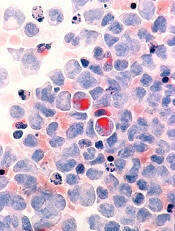
Image by Lance Liotta
New research appears to explain how antibodies that target CD44 fight acute myeloid leukemia (AML).
Previous research showed that anti-CD44 antibodies inhibit proliferation and induce differentiation in AML, but it wasn’t clear how or why this happens.
The new study suggests anti-CD44 antibodies work by inhibiting 2 “major players” of the PI3K/Akt/mTOR pathway—mTORC1 and mTORC2.
Jasmeen Merzaban, PhD, of King Abdullah University of Science and Technology in Thuwal, Saudi Arabia, and her colleagues described this discovery in a letter to Leukemia.
The researchers tested an anti-CD44 antibody known as A3D8 in cell lines representing different AML subtypes (HL60, THP-1, and KG1a) as well as a mouse model of AML.
In these experiments, A3D8 inhibited proliferation and induced differentiation in AML cells. This was accompanied by a decrease in phosphorylation of the mTORC1 and mTORC2 complexes, which was strongly correlated with inhibition of the PI3K/Akt pathway.
The researchers said this finding is important because a complete shutdown of mTOR signaling is probably needed to disrupt the multiple feedback loops that can fuel AML growth, and drugs that only inhibit one of these complexes have, in the past, failed to demonstrate a therapeutic benefit for patients with AML.
“A growing body of evidence suggests that a broader inhibitor would result in a more potent therapeutic effect,” Dr Merzaban said.
She and her colleagues believe an anti-CD44 antibody like A3D8 might just be that type of inhibitor.
They also noted that A3D8 was able to induce differentiation in different subtypes of AML and did not seem to present any toxicity issues.
“We show that the anti-CD44 antibody used for our studies had no effect on normal blood cells,” said Samah Gadhoum, PhD, a research scientist in Dr Merzaban’s lab.
“However, more work is needed to carefully determine the effect of these antibodies on other cells and other cellular functions within the body.”
The researchers are now conducting follow-up experiments, but they believe their results support the use of anti-CD44 antibodies to treat different types of AML.
Image by Lance Liotta
New research appears to explain how antibodies that target CD44 fight acute myeloid leukemia (AML).
Previous research showed that anti-CD44 antibodies inhibit proliferation and induce differentiation in AML, but it wasn’t clear how or why this happens.
The new study suggests anti-CD44 antibodies work by inhibiting 2 “major players” of the PI3K/Akt/mTOR pathway—mTORC1 and mTORC2.
Jasmeen Merzaban, PhD, of King Abdullah University of Science and Technology in Thuwal, Saudi Arabia, and her colleagues described this discovery in a letter to Leukemia.
The researchers tested an anti-CD44 antibody known as A3D8 in cell lines representing different AML subtypes (HL60, THP-1, and KG1a) as well as a mouse model of AML.
In these experiments, A3D8 inhibited proliferation and induced differentiation in AML cells. This was accompanied by a decrease in phosphorylation of the mTORC1 and mTORC2 complexes, which was strongly correlated with inhibition of the PI3K/Akt pathway.
The researchers said this finding is important because a complete shutdown of mTOR signaling is probably needed to disrupt the multiple feedback loops that can fuel AML growth, and drugs that only inhibit one of these complexes have, in the past, failed to demonstrate a therapeutic benefit for patients with AML.
“A growing body of evidence suggests that a broader inhibitor would result in a more potent therapeutic effect,” Dr Merzaban said.
She and her colleagues believe an anti-CD44 antibody like A3D8 might just be that type of inhibitor.
They also noted that A3D8 was able to induce differentiation in different subtypes of AML and did not seem to present any toxicity issues.
“We show that the anti-CD44 antibody used for our studies had no effect on normal blood cells,” said Samah Gadhoum, PhD, a research scientist in Dr Merzaban’s lab.
“However, more work is needed to carefully determine the effect of these antibodies on other cells and other cellular functions within the body.”
The researchers are now conducting follow-up experiments, but they believe their results support the use of anti-CD44 antibodies to treat different types of AML.
Image by Lance Liotta
New research appears to explain how antibodies that target CD44 fight acute myeloid leukemia (AML).
Previous research showed that anti-CD44 antibodies inhibit proliferation and induce differentiation in AML, but it wasn’t clear how or why this happens.
The new study suggests anti-CD44 antibodies work by inhibiting 2 “major players” of the PI3K/Akt/mTOR pathway—mTORC1 and mTORC2.
Jasmeen Merzaban, PhD, of King Abdullah University of Science and Technology in Thuwal, Saudi Arabia, and her colleagues described this discovery in a letter to Leukemia.
The researchers tested an anti-CD44 antibody known as A3D8 in cell lines representing different AML subtypes (HL60, THP-1, and KG1a) as well as a mouse model of AML.
In these experiments, A3D8 inhibited proliferation and induced differentiation in AML cells. This was accompanied by a decrease in phosphorylation of the mTORC1 and mTORC2 complexes, which was strongly correlated with inhibition of the PI3K/Akt pathway.
The researchers said this finding is important because a complete shutdown of mTOR signaling is probably needed to disrupt the multiple feedback loops that can fuel AML growth, and drugs that only inhibit one of these complexes have, in the past, failed to demonstrate a therapeutic benefit for patients with AML.
“A growing body of evidence suggests that a broader inhibitor would result in a more potent therapeutic effect,” Dr Merzaban said.
She and her colleagues believe an anti-CD44 antibody like A3D8 might just be that type of inhibitor.
They also noted that A3D8 was able to induce differentiation in different subtypes of AML and did not seem to present any toxicity issues.
“We show that the anti-CD44 antibody used for our studies had no effect on normal blood cells,” said Samah Gadhoum, PhD, a research scientist in Dr Merzaban’s lab.
“However, more work is needed to carefully determine the effect of these antibodies on other cells and other cellular functions within the body.”
The researchers are now conducting follow-up experiments, but they believe their results support the use of anti-CD44 antibodies to treat different types of AML.
Patients may have high expectations of phase 1 trials

Photo courtesy of NCI Clinical
Center/Mathews Media Group
Expectations may not correspond to reality for cancer patients considering enrollment in phase 1 trials, according to a study published in Cancer.
The study showed that, even after consulting with clinicians, nearly half of patients expected their tumors would shrink during the trial, and some patients expected to be cured.
In reality, the typical response rates of phase 1 cancer trials range from 4% to 20%, and patients survive for a median of 6 months.
Udai Banerji, MD, PhD, of The Institute of Cancer Research in London, England, and his colleagues conducted this study.
The team explored patients’ motivations for considering participation in phase 1 trials and assessed their expectations both before and after they consulted with clinicians.
The study included 396 patients who were considering enrollment in a phase 1 trial. All of these patients completed questionnaires prior to a consultation with a clinician, and 301 completed an abbreviated follow-up questionnaire after their consultation.
A majority of the patients said they were willing to enroll in a trial—72% pre-consultation and 84% after.
Before their consultation, 84% of patients ranked the possibility of tumor shrinkage as the most important reason for considering a phase 1 trial.
Fifty-six percent of patients said the most important reason was a lack of alternative treatments, 44% said it was their physician’s recommendation, and 38% said it was the possibility that the research might benefit others. (Patients could give the same rank to multiple reasons.)
Before their consultation, 43% of patients predicted their tumors would shrink if they participated in a trial. After the consultation, this increased to 47%, and 14% of patients thought they would be cured by participating in the trial. (Patients were not asked about the possibility of cure in the pre-consultation questionnaire.)
Before their consultation, 71% of patients said they expected moderate side effects related to the treatment being tested. This increased to 77% after the consultation. Only 11% of patients expected severe side effects pre-consultation, a figure that decreased to 7% after consultation.
Before consultation, about half of patients did not expect that weekly hospital visits would be required for participation in the trial. After the consultation, 93% of patients expected weekly visits.
“There is a positive message in this [study], which is that 84% of patients are willing to participate in phase 1 oncology studies after a discussion with clinical and nursing staff who lay out the conservative estimates of benefit and requirements of hospital visits,” Dr Banerji said.
“This is good for current and future patients and cancer medicine in general. [However,] the high percentage of patients expecting their tumors to shrink was a sobering finding. This creates a challenge for healthcare professionals to manage expectations but to do so without being patronizing or dismissing human hope.”
Photo courtesy of NCI Clinical
Center/Mathews Media Group
Expectations may not correspond to reality for cancer patients considering enrollment in phase 1 trials, according to a study published in Cancer.
The study showed that, even after consulting with clinicians, nearly half of patients expected their tumors would shrink during the trial, and some patients expected to be cured.
In reality, the typical response rates of phase 1 cancer trials range from 4% to 20%, and patients survive for a median of 6 months.
Udai Banerji, MD, PhD, of The Institute of Cancer Research in London, England, and his colleagues conducted this study.
The team explored patients’ motivations for considering participation in phase 1 trials and assessed their expectations both before and after they consulted with clinicians.
The study included 396 patients who were considering enrollment in a phase 1 trial. All of these patients completed questionnaires prior to a consultation with a clinician, and 301 completed an abbreviated follow-up questionnaire after their consultation.
A majority of the patients said they were willing to enroll in a trial—72% pre-consultation and 84% after.
Before their consultation, 84% of patients ranked the possibility of tumor shrinkage as the most important reason for considering a phase 1 trial.
Fifty-six percent of patients said the most important reason was a lack of alternative treatments, 44% said it was their physician’s recommendation, and 38% said it was the possibility that the research might benefit others. (Patients could give the same rank to multiple reasons.)
Before their consultation, 43% of patients predicted their tumors would shrink if they participated in a trial. After the consultation, this increased to 47%, and 14% of patients thought they would be cured by participating in the trial. (Patients were not asked about the possibility of cure in the pre-consultation questionnaire.)
Before their consultation, 71% of patients said they expected moderate side effects related to the treatment being tested. This increased to 77% after the consultation. Only 11% of patients expected severe side effects pre-consultation, a figure that decreased to 7% after consultation.
Before consultation, about half of patients did not expect that weekly hospital visits would be required for participation in the trial. After the consultation, 93% of patients expected weekly visits.
“There is a positive message in this [study], which is that 84% of patients are willing to participate in phase 1 oncology studies after a discussion with clinical and nursing staff who lay out the conservative estimates of benefit and requirements of hospital visits,” Dr Banerji said.
“This is good for current and future patients and cancer medicine in general. [However,] the high percentage of patients expecting their tumors to shrink was a sobering finding. This creates a challenge for healthcare professionals to manage expectations but to do so without being patronizing or dismissing human hope.”
Photo courtesy of NCI Clinical
Center/Mathews Media Group
Expectations may not correspond to reality for cancer patients considering enrollment in phase 1 trials, according to a study published in Cancer.
The study showed that, even after consulting with clinicians, nearly half of patients expected their tumors would shrink during the trial, and some patients expected to be cured.
In reality, the typical response rates of phase 1 cancer trials range from 4% to 20%, and patients survive for a median of 6 months.
Udai Banerji, MD, PhD, of The Institute of Cancer Research in London, England, and his colleagues conducted this study.
The team explored patients’ motivations for considering participation in phase 1 trials and assessed their expectations both before and after they consulted with clinicians.
The study included 396 patients who were considering enrollment in a phase 1 trial. All of these patients completed questionnaires prior to a consultation with a clinician, and 301 completed an abbreviated follow-up questionnaire after their consultation.
A majority of the patients said they were willing to enroll in a trial—72% pre-consultation and 84% after.
Before their consultation, 84% of patients ranked the possibility of tumor shrinkage as the most important reason for considering a phase 1 trial.
Fifty-six percent of patients said the most important reason was a lack of alternative treatments, 44% said it was their physician’s recommendation, and 38% said it was the possibility that the research might benefit others. (Patients could give the same rank to multiple reasons.)
Before their consultation, 43% of patients predicted their tumors would shrink if they participated in a trial. After the consultation, this increased to 47%, and 14% of patients thought they would be cured by participating in the trial. (Patients were not asked about the possibility of cure in the pre-consultation questionnaire.)
Before their consultation, 71% of patients said they expected moderate side effects related to the treatment being tested. This increased to 77% after the consultation. Only 11% of patients expected severe side effects pre-consultation, a figure that decreased to 7% after consultation.
Before consultation, about half of patients did not expect that weekly hospital visits would be required for participation in the trial. After the consultation, 93% of patients expected weekly visits.
“There is a positive message in this [study], which is that 84% of patients are willing to participate in phase 1 oncology studies after a discussion with clinical and nursing staff who lay out the conservative estimates of benefit and requirements of hospital visits,” Dr Banerji said.
“This is good for current and future patients and cancer medicine in general. [However,] the high percentage of patients expecting their tumors to shrink was a sobering finding. This creates a challenge for healthcare professionals to manage expectations but to do so without being patronizing or dismissing human hope.”
BET inhibitors could improve production of iPSCs

Image from Salk Institute
A study published in Cell Reports indicates that BET inhibitors can improve the reprogramming of human fibroblasts to create induced pluripotent stem cells (iPSCs).
According to researchers, this improvement in reprogramming can increase the yield of iPSCs from fibroblasts and enhance the quality of the iPSCs by ensuring that more somatic genes are efficiently turned down or turned off during reprogramming.
Study author Kejin Hu, PhD, of the University of Alabama at Birmingham, said the factors that are commonly used to create iPSCs from fibroblasts face a reprogramming barrier.
“If we can lower the barrier, we can enhance the reprogramming efficiency,” he explained. “My strategy is to use chemicals to erase the transcriptional program specific to the starting cells.”
Dr Hu and his colleagues found that BET-specific chemical inhibitors were effective in this regard.
For example, a low concentration of the BET inhibitor JQ1:
- Downregulated 390 fibroblast-specific genes when applied to naïve human fibroblasts
- Downregulated 651 fibroblast-specific genes when applied to human fibroblasts during reprogramming
- Increased the efficiency of successful reprogramming of human fibroblasts to iPSCs by 20-fold.
The researchers also found that fibroblasts change shape when treated with JQ1.
The cells transform from a long spindle shape to polygonal or rounded cells, which shows loss of fibroblast identity and transition to pluripotent stem cells. Presumably, genes that are needed to maintain the spindle shape are downregulated by JQ1.
Dr Hu proposed the following model to explain his team’s findings.
During normal cell division, active fibroblast genes are “bookmarked” by the attachment of BET proteins to acetylated chromatin during the mitotic phases, while RNA Polymerase II drops off of the chromatin.
At the start of interphase, these bookmarks guide the polymerase back to the genes, and they are transcribed by RNA Polymerase II.
In contrast, when JQ1 is added, the active fibroblast genes are de-bookmarked by the interaction of JQ1 with the BET proteins during the mitotic phases of cell division.
This “erases” the epigenetic memory of fibroblast gene expression, which, in turn, results in loss of fibroblast gene transcription when interphase returns.
This also increases the success of reprogramming into iPSCs.
Image from Salk Institute
A study published in Cell Reports indicates that BET inhibitors can improve the reprogramming of human fibroblasts to create induced pluripotent stem cells (iPSCs).
According to researchers, this improvement in reprogramming can increase the yield of iPSCs from fibroblasts and enhance the quality of the iPSCs by ensuring that more somatic genes are efficiently turned down or turned off during reprogramming.
Study author Kejin Hu, PhD, of the University of Alabama at Birmingham, said the factors that are commonly used to create iPSCs from fibroblasts face a reprogramming barrier.
“If we can lower the barrier, we can enhance the reprogramming efficiency,” he explained. “My strategy is to use chemicals to erase the transcriptional program specific to the starting cells.”
Dr Hu and his colleagues found that BET-specific chemical inhibitors were effective in this regard.
For example, a low concentration of the BET inhibitor JQ1:
- Downregulated 390 fibroblast-specific genes when applied to naïve human fibroblasts
- Downregulated 651 fibroblast-specific genes when applied to human fibroblasts during reprogramming
- Increased the efficiency of successful reprogramming of human fibroblasts to iPSCs by 20-fold.
The researchers also found that fibroblasts change shape when treated with JQ1.
The cells transform from a long spindle shape to polygonal or rounded cells, which shows loss of fibroblast identity and transition to pluripotent stem cells. Presumably, genes that are needed to maintain the spindle shape are downregulated by JQ1.
Dr Hu proposed the following model to explain his team’s findings.
During normal cell division, active fibroblast genes are “bookmarked” by the attachment of BET proteins to acetylated chromatin during the mitotic phases, while RNA Polymerase II drops off of the chromatin.
At the start of interphase, these bookmarks guide the polymerase back to the genes, and they are transcribed by RNA Polymerase II.
In contrast, when JQ1 is added, the active fibroblast genes are de-bookmarked by the interaction of JQ1 with the BET proteins during the mitotic phases of cell division.
This “erases” the epigenetic memory of fibroblast gene expression, which, in turn, results in loss of fibroblast gene transcription when interphase returns.
This also increases the success of reprogramming into iPSCs.
Image from Salk Institute
A study published in Cell Reports indicates that BET inhibitors can improve the reprogramming of human fibroblasts to create induced pluripotent stem cells (iPSCs).
According to researchers, this improvement in reprogramming can increase the yield of iPSCs from fibroblasts and enhance the quality of the iPSCs by ensuring that more somatic genes are efficiently turned down or turned off during reprogramming.
Study author Kejin Hu, PhD, of the University of Alabama at Birmingham, said the factors that are commonly used to create iPSCs from fibroblasts face a reprogramming barrier.
“If we can lower the barrier, we can enhance the reprogramming efficiency,” he explained. “My strategy is to use chemicals to erase the transcriptional program specific to the starting cells.”
Dr Hu and his colleagues found that BET-specific chemical inhibitors were effective in this regard.
For example, a low concentration of the BET inhibitor JQ1:
- Downregulated 390 fibroblast-specific genes when applied to naïve human fibroblasts
- Downregulated 651 fibroblast-specific genes when applied to human fibroblasts during reprogramming
- Increased the efficiency of successful reprogramming of human fibroblasts to iPSCs by 20-fold.
The researchers also found that fibroblasts change shape when treated with JQ1.
The cells transform from a long spindle shape to polygonal or rounded cells, which shows loss of fibroblast identity and transition to pluripotent stem cells. Presumably, genes that are needed to maintain the spindle shape are downregulated by JQ1.
Dr Hu proposed the following model to explain his team’s findings.
During normal cell division, active fibroblast genes are “bookmarked” by the attachment of BET proteins to acetylated chromatin during the mitotic phases, while RNA Polymerase II drops off of the chromatin.
At the start of interphase, these bookmarks guide the polymerase back to the genes, and they are transcribed by RNA Polymerase II.
In contrast, when JQ1 is added, the active fibroblast genes are de-bookmarked by the interaction of JQ1 with the BET proteins during the mitotic phases of cell division.
This “erases” the epigenetic memory of fibroblast gene expression, which, in turn, results in loss of fibroblast gene transcription when interphase returns.
This also increases the success of reprogramming into iPSCs.
Study: C-section increases risk of VTE

Photo by Nina Matthews
Research has shown that women have an increased risk of venous thromboembolism (VTE) after giving birth, but it’s believed that a cesarean section (CS) leaves a woman more vulnerable to VTE than a vaginal delivery (VD).
A meta-analysis published in CHEST supports this idea. The data showed that CS carried a greater risk of VTE than VD, and emergency CS was associated with a greater risk than elective CS.
“We found that CS is an important, independent risk factor for the development of VTE in the postpartum period and that approximately 3 VTE will occur for every 1000 CS performed, with greater risks for nonscheduled, emergency CS,” said study investigator Marc Blondon, MD, of Geneva University Hospitals in Geneva, Switzerland.
Analysis results
Dr Blondon and his colleagues evaluated 28 studies (most of them retrospective) comparing the risk of VTE after CS and VD (>53,000 VTEs) and 32 prospective studies reporting the risk of VTE after CS (218 VTEs).
In unadjusted analyses of the individual studies, the risk of VTE was 1 to 22 times higher after CS than after VD. The pooled random effect odds ratio (OR) was 3.7 (95% CI, 3.0-4.6).
The investigators said adjusting analyses for at least maternal age had a marginal effect in the 7 studies that included both univariate and multivariate analyses. The OR comparing CS with VD was 3.3 (95% CI, 2.5-4.5) in univariate analyses and 2.8 (95% CI, 2.1-3.8) in adjusted analyses.
Similarly, adjusting analyses for both maternal age and body mass index had a slight effect in the 4 studies in which researchers adjusted for at least these 2 factors. The pooled OR was 2.8 (95% CI, 2.1-3.7) in crude analyses and 2.5 (95% CI, 1.8-3.1) in adjusted analyses.
When the investigators combined all 7 studies reporting adjusted risk estimates, the OR was 2.7 (95% CI, 2.2-3.3).
The data also showed an increased risk of VTE for both elective and emergency CS when compared to VD. The pooled ORs were 2.3 (95% CI, 1.7-3.1) for elective CS and 3.6 (95% CI, 2.8-4.7) for emergency CS.
After adjustment (in 6 studies), the pooled ORs were 2.1 for elective CS and 2.8 for emergency CS.
Explanations and implications
The investigators noted that pregnant women become more susceptible to VTE due to a variety of factors, including venous stasis and trauma associated with delivery. In addition, hemostatic changes drive increases in some coagulation factors while decreasing bleeding inhibitors.
For some reason, these changes seem to be worse for women who deliver via CS.
“In the postpartum period specifically, women following CS exhibit greater activation of coagulation than women following VD, as reflected by greater D-dimer levels,” Dr Blondon explained.
“This outcome may be a result of the conditions leading to the CS or to the procedure itself, similar to the increased VTE risk following non-obstetric surgery. Furthermore, physical activity is reduced following CS compared with following VD, with delayed recovery of mobility occurring in the first 2 days following delivery.”
Dr Blondon and his colleagues said this study helps shed some light on VTE risks associated with CS. Practitioners should be aware of the risks, and further research is needed to plot the best course of action and inform future guidelines concerning thromboprophylaxis.
“Thromboprophylaxis [after CS] seems widely underutilized in the United States,” Dr Blondon said. “It is estimated that 75% of women following CS do not receive any prophylaxis in the postpartum period. This scenario may arise from a lack of recognition by care providers of the risk of VTE following CS.”
“Preventing postpartum VTE following CS may lead to an important reduction of its associated morbidity and mortality from a public health perspective. In this setting, further observational studies and randomized trials are needed to better appreciate the risks of VTE in specific groups following CS and to define the efficacy and safety of thromboprophylaxis.”
Photo by Nina Matthews
Research has shown that women have an increased risk of venous thromboembolism (VTE) after giving birth, but it’s believed that a cesarean section (CS) leaves a woman more vulnerable to VTE than a vaginal delivery (VD).
A meta-analysis published in CHEST supports this idea. The data showed that CS carried a greater risk of VTE than VD, and emergency CS was associated with a greater risk than elective CS.
“We found that CS is an important, independent risk factor for the development of VTE in the postpartum period and that approximately 3 VTE will occur for every 1000 CS performed, with greater risks for nonscheduled, emergency CS,” said study investigator Marc Blondon, MD, of Geneva University Hospitals in Geneva, Switzerland.
Analysis results
Dr Blondon and his colleagues evaluated 28 studies (most of them retrospective) comparing the risk of VTE after CS and VD (>53,000 VTEs) and 32 prospective studies reporting the risk of VTE after CS (218 VTEs).
In unadjusted analyses of the individual studies, the risk of VTE was 1 to 22 times higher after CS than after VD. The pooled random effect odds ratio (OR) was 3.7 (95% CI, 3.0-4.6).
The investigators said adjusting analyses for at least maternal age had a marginal effect in the 7 studies that included both univariate and multivariate analyses. The OR comparing CS with VD was 3.3 (95% CI, 2.5-4.5) in univariate analyses and 2.8 (95% CI, 2.1-3.8) in adjusted analyses.
Similarly, adjusting analyses for both maternal age and body mass index had a slight effect in the 4 studies in which researchers adjusted for at least these 2 factors. The pooled OR was 2.8 (95% CI, 2.1-3.7) in crude analyses and 2.5 (95% CI, 1.8-3.1) in adjusted analyses.
When the investigators combined all 7 studies reporting adjusted risk estimates, the OR was 2.7 (95% CI, 2.2-3.3).
The data also showed an increased risk of VTE for both elective and emergency CS when compared to VD. The pooled ORs were 2.3 (95% CI, 1.7-3.1) for elective CS and 3.6 (95% CI, 2.8-4.7) for emergency CS.
After adjustment (in 6 studies), the pooled ORs were 2.1 for elective CS and 2.8 for emergency CS.
Explanations and implications
The investigators noted that pregnant women become more susceptible to VTE due to a variety of factors, including venous stasis and trauma associated with delivery. In addition, hemostatic changes drive increases in some coagulation factors while decreasing bleeding inhibitors.
For some reason, these changes seem to be worse for women who deliver via CS.
“In the postpartum period specifically, women following CS exhibit greater activation of coagulation than women following VD, as reflected by greater D-dimer levels,” Dr Blondon explained.
“This outcome may be a result of the conditions leading to the CS or to the procedure itself, similar to the increased VTE risk following non-obstetric surgery. Furthermore, physical activity is reduced following CS compared with following VD, with delayed recovery of mobility occurring in the first 2 days following delivery.”
Dr Blondon and his colleagues said this study helps shed some light on VTE risks associated with CS. Practitioners should be aware of the risks, and further research is needed to plot the best course of action and inform future guidelines concerning thromboprophylaxis.
“Thromboprophylaxis [after CS] seems widely underutilized in the United States,” Dr Blondon said. “It is estimated that 75% of women following CS do not receive any prophylaxis in the postpartum period. This scenario may arise from a lack of recognition by care providers of the risk of VTE following CS.”
“Preventing postpartum VTE following CS may lead to an important reduction of its associated morbidity and mortality from a public health perspective. In this setting, further observational studies and randomized trials are needed to better appreciate the risks of VTE in specific groups following CS and to define the efficacy and safety of thromboprophylaxis.”
Photo by Nina Matthews
Research has shown that women have an increased risk of venous thromboembolism (VTE) after giving birth, but it’s believed that a cesarean section (CS) leaves a woman more vulnerable to VTE than a vaginal delivery (VD).
A meta-analysis published in CHEST supports this idea. The data showed that CS carried a greater risk of VTE than VD, and emergency CS was associated with a greater risk than elective CS.
“We found that CS is an important, independent risk factor for the development of VTE in the postpartum period and that approximately 3 VTE will occur for every 1000 CS performed, with greater risks for nonscheduled, emergency CS,” said study investigator Marc Blondon, MD, of Geneva University Hospitals in Geneva, Switzerland.
Analysis results
Dr Blondon and his colleagues evaluated 28 studies (most of them retrospective) comparing the risk of VTE after CS and VD (>53,000 VTEs) and 32 prospective studies reporting the risk of VTE after CS (218 VTEs).
In unadjusted analyses of the individual studies, the risk of VTE was 1 to 22 times higher after CS than after VD. The pooled random effect odds ratio (OR) was 3.7 (95% CI, 3.0-4.6).
The investigators said adjusting analyses for at least maternal age had a marginal effect in the 7 studies that included both univariate and multivariate analyses. The OR comparing CS with VD was 3.3 (95% CI, 2.5-4.5) in univariate analyses and 2.8 (95% CI, 2.1-3.8) in adjusted analyses.
Similarly, adjusting analyses for both maternal age and body mass index had a slight effect in the 4 studies in which researchers adjusted for at least these 2 factors. The pooled OR was 2.8 (95% CI, 2.1-3.7) in crude analyses and 2.5 (95% CI, 1.8-3.1) in adjusted analyses.
When the investigators combined all 7 studies reporting adjusted risk estimates, the OR was 2.7 (95% CI, 2.2-3.3).
The data also showed an increased risk of VTE for both elective and emergency CS when compared to VD. The pooled ORs were 2.3 (95% CI, 1.7-3.1) for elective CS and 3.6 (95% CI, 2.8-4.7) for emergency CS.
After adjustment (in 6 studies), the pooled ORs were 2.1 for elective CS and 2.8 for emergency CS.
Explanations and implications
The investigators noted that pregnant women become more susceptible to VTE due to a variety of factors, including venous stasis and trauma associated with delivery. In addition, hemostatic changes drive increases in some coagulation factors while decreasing bleeding inhibitors.
For some reason, these changes seem to be worse for women who deliver via CS.
“In the postpartum period specifically, women following CS exhibit greater activation of coagulation than women following VD, as reflected by greater D-dimer levels,” Dr Blondon explained.
“This outcome may be a result of the conditions leading to the CS or to the procedure itself, similar to the increased VTE risk following non-obstetric surgery. Furthermore, physical activity is reduced following CS compared with following VD, with delayed recovery of mobility occurring in the first 2 days following delivery.”
Dr Blondon and his colleagues said this study helps shed some light on VTE risks associated with CS. Practitioners should be aware of the risks, and further research is needed to plot the best course of action and inform future guidelines concerning thromboprophylaxis.
“Thromboprophylaxis [after CS] seems widely underutilized in the United States,” Dr Blondon said. “It is estimated that 75% of women following CS do not receive any prophylaxis in the postpartum period. This scenario may arise from a lack of recognition by care providers of the risk of VTE following CS.”
“Preventing postpartum VTE following CS may lead to an important reduction of its associated morbidity and mortality from a public health perspective. In this setting, further observational studies and randomized trials are needed to better appreciate the risks of VTE in specific groups following CS and to define the efficacy and safety of thromboprophylaxis.”
RAS mutations have contradictory roles in ALL

Photo by Debbie Vogel
New research has revealed relapse-specific mutations in pediatric acute lymphoblastic leukemia (ALL) and suggests that mutations in the RAS family may drive both resistance and sensitivity to treatment.
Specifically, the study showed that KRAS-mutant ALL cells were resistant to methotrexate but exhibited increased sensitivity to vincristine.
Hossein Khiabanian, PhD, of Rutgers Cancer Institute of New Jersey, and his colleagues reported these findings in PNAS.
The researchers performed whole-exome and whole-genome sequencing on samples from 55 pediatric patients with relapsed ALL, identified specific genomic changes, and validated these findings in 279 additional samples.
“We found that ALL relapse emerges from small, often clinically undetectable populations of cancer cells that are only partially genetically similar to the dominant leukemic population at diagnosis,” Dr Khiabanian said. “We also identified numerous new mutations in genes involved in drug resistance that are specific to relapsed ALL.”
In the first 55 patients (33 T-cell ALLs and 22 B-cell precursor ALLs), the researchers identified 27 recurrently mutated genes whose mutations were preferentially selected or retained at the time of relapse.
The team said 23 (85%) of these mutated genes were not previously implicated in ALL relapse—HTR3A, MED12, USP9X, CACNA1H, TENM3, AACS, SAMD4A, ANO5, PAPPA, NAALADL2, HIST3H2A, FZD7, TBX15, NEB, GREB1L, PLXNA4, SGK223, TSC1, PTPRG, FGF10, SYCP2, TRPM3, and EYS.
The researchers found mutations in the same genes when they analyzed 49 paired diagnosis and relapse B-cell precursor ALL samples as well as an additional 230 relapsed B-cell precursor ALL samples. In addition, the analyses revealed mutations in NT5C2, NR3C1, CREBBP, KMT2D, JAK2, JAK3, and TP53.
The team also noted that some patient samples showed retention or emergence of RAS mutant clones at relapse. In other patients, RAS mutant clones that were present at diagnosis were replaced by RAS wild-type populations at relapse.
The researchers said this suggests a role for both positive and negative selection evolutionary pressures in clonal evolution of RAS-mutant leukemia.
To investigate this further, they analyzed mouse and human wild-type and mutant RAS isogenic leukemia cells. In these experiments, KRAS-mutant cells showed increased sensitivity to vincristine and increased resistance to methotrexate.
“These results highlight how drug therapy can impact the evolution of leukemia and show a previously unrecognized role of RAS mutations as causes of both sensitivity and resistance to chemotherapy,” Dr Khiabanian said.
“Early identification of these mutations, as well as other genetic alterations that have been shown to induce therapeutic resistance in leukemia patients, is pertinent in guiding precision medicine treatment strategies and prevention of relapsed disease—a goal that is now being pursued in my lab at Rutgers.”
Photo by Debbie Vogel
New research has revealed relapse-specific mutations in pediatric acute lymphoblastic leukemia (ALL) and suggests that mutations in the RAS family may drive both resistance and sensitivity to treatment.
Specifically, the study showed that KRAS-mutant ALL cells were resistant to methotrexate but exhibited increased sensitivity to vincristine.
Hossein Khiabanian, PhD, of Rutgers Cancer Institute of New Jersey, and his colleagues reported these findings in PNAS.
The researchers performed whole-exome and whole-genome sequencing on samples from 55 pediatric patients with relapsed ALL, identified specific genomic changes, and validated these findings in 279 additional samples.
“We found that ALL relapse emerges from small, often clinically undetectable populations of cancer cells that are only partially genetically similar to the dominant leukemic population at diagnosis,” Dr Khiabanian said. “We also identified numerous new mutations in genes involved in drug resistance that are specific to relapsed ALL.”
In the first 55 patients (33 T-cell ALLs and 22 B-cell precursor ALLs), the researchers identified 27 recurrently mutated genes whose mutations were preferentially selected or retained at the time of relapse.
The team said 23 (85%) of these mutated genes were not previously implicated in ALL relapse—HTR3A, MED12, USP9X, CACNA1H, TENM3, AACS, SAMD4A, ANO5, PAPPA, NAALADL2, HIST3H2A, FZD7, TBX15, NEB, GREB1L, PLXNA4, SGK223, TSC1, PTPRG, FGF10, SYCP2, TRPM3, and EYS.
The researchers found mutations in the same genes when they analyzed 49 paired diagnosis and relapse B-cell precursor ALL samples as well as an additional 230 relapsed B-cell precursor ALL samples. In addition, the analyses revealed mutations in NT5C2, NR3C1, CREBBP, KMT2D, JAK2, JAK3, and TP53.
The team also noted that some patient samples showed retention or emergence of RAS mutant clones at relapse. In other patients, RAS mutant clones that were present at diagnosis were replaced by RAS wild-type populations at relapse.
The researchers said this suggests a role for both positive and negative selection evolutionary pressures in clonal evolution of RAS-mutant leukemia.
To investigate this further, they analyzed mouse and human wild-type and mutant RAS isogenic leukemia cells. In these experiments, KRAS-mutant cells showed increased sensitivity to vincristine and increased resistance to methotrexate.
“These results highlight how drug therapy can impact the evolution of leukemia and show a previously unrecognized role of RAS mutations as causes of both sensitivity and resistance to chemotherapy,” Dr Khiabanian said.
“Early identification of these mutations, as well as other genetic alterations that have been shown to induce therapeutic resistance in leukemia patients, is pertinent in guiding precision medicine treatment strategies and prevention of relapsed disease—a goal that is now being pursued in my lab at Rutgers.”
Photo by Debbie Vogel
New research has revealed relapse-specific mutations in pediatric acute lymphoblastic leukemia (ALL) and suggests that mutations in the RAS family may drive both resistance and sensitivity to treatment.
Specifically, the study showed that KRAS-mutant ALL cells were resistant to methotrexate but exhibited increased sensitivity to vincristine.
Hossein Khiabanian, PhD, of Rutgers Cancer Institute of New Jersey, and his colleagues reported these findings in PNAS.
The researchers performed whole-exome and whole-genome sequencing on samples from 55 pediatric patients with relapsed ALL, identified specific genomic changes, and validated these findings in 279 additional samples.
“We found that ALL relapse emerges from small, often clinically undetectable populations of cancer cells that are only partially genetically similar to the dominant leukemic population at diagnosis,” Dr Khiabanian said. “We also identified numerous new mutations in genes involved in drug resistance that are specific to relapsed ALL.”
In the first 55 patients (33 T-cell ALLs and 22 B-cell precursor ALLs), the researchers identified 27 recurrently mutated genes whose mutations were preferentially selected or retained at the time of relapse.
The team said 23 (85%) of these mutated genes were not previously implicated in ALL relapse—HTR3A, MED12, USP9X, CACNA1H, TENM3, AACS, SAMD4A, ANO5, PAPPA, NAALADL2, HIST3H2A, FZD7, TBX15, NEB, GREB1L, PLXNA4, SGK223, TSC1, PTPRG, FGF10, SYCP2, TRPM3, and EYS.
The researchers found mutations in the same genes when they analyzed 49 paired diagnosis and relapse B-cell precursor ALL samples as well as an additional 230 relapsed B-cell precursor ALL samples. In addition, the analyses revealed mutations in NT5C2, NR3C1, CREBBP, KMT2D, JAK2, JAK3, and TP53.
The team also noted that some patient samples showed retention or emergence of RAS mutant clones at relapse. In other patients, RAS mutant clones that were present at diagnosis were replaced by RAS wild-type populations at relapse.
The researchers said this suggests a role for both positive and negative selection evolutionary pressures in clonal evolution of RAS-mutant leukemia.
To investigate this further, they analyzed mouse and human wild-type and mutant RAS isogenic leukemia cells. In these experiments, KRAS-mutant cells showed increased sensitivity to vincristine and increased resistance to methotrexate.
“These results highlight how drug therapy can impact the evolution of leukemia and show a previously unrecognized role of RAS mutations as causes of both sensitivity and resistance to chemotherapy,” Dr Khiabanian said.
“Early identification of these mutations, as well as other genetic alterations that have been shown to induce therapeutic resistance in leukemia patients, is pertinent in guiding precision medicine treatment strategies and prevention of relapsed disease—a goal that is now being pursued in my lab at Rutgers.”
Targeting a protein receptor to treat AML, other diseases
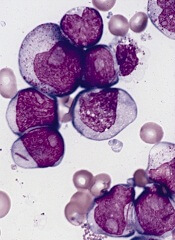
Researchers say they have determined the 3-dimensional, atomic structure of GPR56, an adhesion G protein-coupled receptor (aGPCR) linked to the development of several diseases, including acute myeloid leukemia (AML).
The team also engineered a molecule that can turn off GPR56, laying the groundwork for the development of treatments that target diseases mediated by GPR56 and other aGPCRs.
“Given the complicated biology mediated by aGPCRs, particularly in neurodevelopment, we believe our work will pave the way for future studies investigating the molecular details of these important processes, bringing us closer to the ultimate goal of combatting diseases influenced by aGPCRs,” said study author Gabriel Salzman, an MD/PhD student at the University of Chicago in Illinois.
Salzman and his colleagues detailed their work in the journal Neuron.
Over the past several years, researchers have discovered that aGPCRs play a range of biological roles, many of which are closely linked to human diseases.
aGPCRs are characterized by the presence of a large segment that sticks out into the extracellular space. However, a structural foundation for understanding the function of these extracellular regions has been lacking. And researchers didn’t know if these regions could be targeted for therapeutic intervention.
The focus of the current study is GPR56 (also known as ADGRG1), an aGPCR that has established biological roles in muscle cell development, neurodevelopment, and several cancers, including AML.
The researchers engineered a monobody molecule that binds to the extracellular region of GPR56 and causes intracellular signaling to decrease. They said this establishes that it’s possible to change the function of aGPCRs by targeting their extracellular regions with pharmaceuticals.
The team also determined the structure of the entire extracellular region of GPR56 at an atomic level, the first such structural description of any aGPCR. In doing so, they identified a unique protein domain called PLL, which, if deleted, corresponds to a naturally occurring variant of GPR56.
The researchers went on to show that deleting the PLL domain led to increased signaling, further supporting the concept that extracellular regions govern cell signaling.
Bioinformatics analysis also revealed a particular position in the PLL domain that is highly conserved across species, often a telltale sign of biological importance.
The researchers believe that understanding the biological roles played by aGPCR extracellular regions will give scientists more tools to develop treatments for diseases influenced by these protein receptors.
For example, recent studies have shown that AML therapy may benefit from GPR56 inhibition. And this study suggests a monobody like the one created by Salzman’s team might be useful in that respect.
“Our discovery that aGPCR extracellular regions regulate function in a multifaceted and complex manner provides important guidelines for developing therapeutics for diverse diseases in which aGPCRs play important roles,” Salzman said.
Researchers say they have determined the 3-dimensional, atomic structure of GPR56, an adhesion G protein-coupled receptor (aGPCR) linked to the development of several diseases, including acute myeloid leukemia (AML).
The team also engineered a molecule that can turn off GPR56, laying the groundwork for the development of treatments that target diseases mediated by GPR56 and other aGPCRs.
“Given the complicated biology mediated by aGPCRs, particularly in neurodevelopment, we believe our work will pave the way for future studies investigating the molecular details of these important processes, bringing us closer to the ultimate goal of combatting diseases influenced by aGPCRs,” said study author Gabriel Salzman, an MD/PhD student at the University of Chicago in Illinois.
Salzman and his colleagues detailed their work in the journal Neuron.
Over the past several years, researchers have discovered that aGPCRs play a range of biological roles, many of which are closely linked to human diseases.
aGPCRs are characterized by the presence of a large segment that sticks out into the extracellular space. However, a structural foundation for understanding the function of these extracellular regions has been lacking. And researchers didn’t know if these regions could be targeted for therapeutic intervention.
The focus of the current study is GPR56 (also known as ADGRG1), an aGPCR that has established biological roles in muscle cell development, neurodevelopment, and several cancers, including AML.
The researchers engineered a monobody molecule that binds to the extracellular region of GPR56 and causes intracellular signaling to decrease. They said this establishes that it’s possible to change the function of aGPCRs by targeting their extracellular regions with pharmaceuticals.
The team also determined the structure of the entire extracellular region of GPR56 at an atomic level, the first such structural description of any aGPCR. In doing so, they identified a unique protein domain called PLL, which, if deleted, corresponds to a naturally occurring variant of GPR56.
The researchers went on to show that deleting the PLL domain led to increased signaling, further supporting the concept that extracellular regions govern cell signaling.
Bioinformatics analysis also revealed a particular position in the PLL domain that is highly conserved across species, often a telltale sign of biological importance.
The researchers believe that understanding the biological roles played by aGPCR extracellular regions will give scientists more tools to develop treatments for diseases influenced by these protein receptors.
For example, recent studies have shown that AML therapy may benefit from GPR56 inhibition. And this study suggests a monobody like the one created by Salzman’s team might be useful in that respect.
“Our discovery that aGPCR extracellular regions regulate function in a multifaceted and complex manner provides important guidelines for developing therapeutics for diverse diseases in which aGPCRs play important roles,” Salzman said.
Researchers say they have determined the 3-dimensional, atomic structure of GPR56, an adhesion G protein-coupled receptor (aGPCR) linked to the development of several diseases, including acute myeloid leukemia (AML).
The team also engineered a molecule that can turn off GPR56, laying the groundwork for the development of treatments that target diseases mediated by GPR56 and other aGPCRs.
“Given the complicated biology mediated by aGPCRs, particularly in neurodevelopment, we believe our work will pave the way for future studies investigating the molecular details of these important processes, bringing us closer to the ultimate goal of combatting diseases influenced by aGPCRs,” said study author Gabriel Salzman, an MD/PhD student at the University of Chicago in Illinois.
Salzman and his colleagues detailed their work in the journal Neuron.
Over the past several years, researchers have discovered that aGPCRs play a range of biological roles, many of which are closely linked to human diseases.
aGPCRs are characterized by the presence of a large segment that sticks out into the extracellular space. However, a structural foundation for understanding the function of these extracellular regions has been lacking. And researchers didn’t know if these regions could be targeted for therapeutic intervention.
The focus of the current study is GPR56 (also known as ADGRG1), an aGPCR that has established biological roles in muscle cell development, neurodevelopment, and several cancers, including AML.
The researchers engineered a monobody molecule that binds to the extracellular region of GPR56 and causes intracellular signaling to decrease. They said this establishes that it’s possible to change the function of aGPCRs by targeting their extracellular regions with pharmaceuticals.
The team also determined the structure of the entire extracellular region of GPR56 at an atomic level, the first such structural description of any aGPCR. In doing so, they identified a unique protein domain called PLL, which, if deleted, corresponds to a naturally occurring variant of GPR56.
The researchers went on to show that deleting the PLL domain led to increased signaling, further supporting the concept that extracellular regions govern cell signaling.
Bioinformatics analysis also revealed a particular position in the PLL domain that is highly conserved across species, often a telltale sign of biological importance.
The researchers believe that understanding the biological roles played by aGPCR extracellular regions will give scientists more tools to develop treatments for diseases influenced by these protein receptors.
For example, recent studies have shown that AML therapy may benefit from GPR56 inhibition. And this study suggests a monobody like the one created by Salzman’s team might be useful in that respect.
“Our discovery that aGPCR extracellular regions regulate function in a multifaceted and complex manner provides important guidelines for developing therapeutics for diverse diseases in which aGPCRs play important roles,” Salzman said.
Malaria vaccine receives fast track designation

Image by Ute Frevert
and Margaret Shear
The US Food and Drug Administration (FDA) has granted fast track designation to an investigational malaria vaccine.
Sanaria® PfSPZ Vaccine is composed of live but weakened Plasmodium falciparum sporozoites and is being developed by Sanaria, Inc.
The FDA’s fast track program is designed to facilitate the development and expedite the review of products intended to treat or prevent serious or life-threatening conditions and address unmet medical need.
Through the FDA’s fast track program, a product may be eligible for priority review. In addition, the company developing the product may be allowed to submit sections of the biologic license application or new drug application on a rolling basis as data become available.
Fast track designation also provides the company with opportunities for more frequent meetings and written communications with the FDA.
Trials of Sanaria® PfSPZ Vaccine
In a phase 1 study published in Science in 2013, 80% of patients who received higher doses of Sanaria® PfSPZ Vaccine were protected from malaria at 3 weeks after vaccination.
In another phase 1 study published in Nature Medicine in 2016, 4 doses of the vaccine protected 73% of subjects from malaria at 3 weeks and 55% of subjects at 21 weeks.
Five of the subjects without parasitemia at 21 weeks were exposed to malaria-carrying mosquitoes again at 59 weeks, and none developed parasitemia.
To date, 1165 volunteers have received Sanaria’s PfSPZ-based products in more than 2 dozen clinical trials in the US, Europe, and Africa.
Clinical trials are in progress in Tanzania, Kenya, Mali, Burkina Faso, Germany, and the US, and are intended to begin soon in Equatorial Guinea.
Image by Ute Frevert
and Margaret Shear
The US Food and Drug Administration (FDA) has granted fast track designation to an investigational malaria vaccine.
Sanaria® PfSPZ Vaccine is composed of live but weakened Plasmodium falciparum sporozoites and is being developed by Sanaria, Inc.
The FDA’s fast track program is designed to facilitate the development and expedite the review of products intended to treat or prevent serious or life-threatening conditions and address unmet medical need.
Through the FDA’s fast track program, a product may be eligible for priority review. In addition, the company developing the product may be allowed to submit sections of the biologic license application or new drug application on a rolling basis as data become available.
Fast track designation also provides the company with opportunities for more frequent meetings and written communications with the FDA.
Trials of Sanaria® PfSPZ Vaccine
In a phase 1 study published in Science in 2013, 80% of patients who received higher doses of Sanaria® PfSPZ Vaccine were protected from malaria at 3 weeks after vaccination.
In another phase 1 study published in Nature Medicine in 2016, 4 doses of the vaccine protected 73% of subjects from malaria at 3 weeks and 55% of subjects at 21 weeks.
Five of the subjects without parasitemia at 21 weeks were exposed to malaria-carrying mosquitoes again at 59 weeks, and none developed parasitemia.
To date, 1165 volunteers have received Sanaria’s PfSPZ-based products in more than 2 dozen clinical trials in the US, Europe, and Africa.
Clinical trials are in progress in Tanzania, Kenya, Mali, Burkina Faso, Germany, and the US, and are intended to begin soon in Equatorial Guinea.
Image by Ute Frevert
and Margaret Shear
The US Food and Drug Administration (FDA) has granted fast track designation to an investigational malaria vaccine.
Sanaria® PfSPZ Vaccine is composed of live but weakened Plasmodium falciparum sporozoites and is being developed by Sanaria, Inc.
The FDA’s fast track program is designed to facilitate the development and expedite the review of products intended to treat or prevent serious or life-threatening conditions and address unmet medical need.
Through the FDA’s fast track program, a product may be eligible for priority review. In addition, the company developing the product may be allowed to submit sections of the biologic license application or new drug application on a rolling basis as data become available.
Fast track designation also provides the company with opportunities for more frequent meetings and written communications with the FDA.
Trials of Sanaria® PfSPZ Vaccine
In a phase 1 study published in Science in 2013, 80% of patients who received higher doses of Sanaria® PfSPZ Vaccine were protected from malaria at 3 weeks after vaccination.
In another phase 1 study published in Nature Medicine in 2016, 4 doses of the vaccine protected 73% of subjects from malaria at 3 weeks and 55% of subjects at 21 weeks.
Five of the subjects without parasitemia at 21 weeks were exposed to malaria-carrying mosquitoes again at 59 weeks, and none developed parasitemia.
To date, 1165 volunteers have received Sanaria’s PfSPZ-based products in more than 2 dozen clinical trials in the US, Europe, and Africa.
Clinical trials are in progress in Tanzania, Kenya, Mali, Burkina Faso, Germany, and the US, and are intended to begin soon in Equatorial Guinea.
Blood pressure drugs could treat cerebral malaria

vessel with nuclei in blue,
protein skeletons in red,
and beta-catenin in green.
Image courtesy of
NYU Langone Medical Center
Drugs intended to treat high blood pressure might also be effective for treating cerebral malaria, according to preclinical research published in the Journal of Clinical Investigation.
Researchers tested these drugs—angiotensin II (Ang II) receptor modulators—in mice.
In an initial experiment, 2 of the drugs—losartan and CGP-42112A—reduced the incidence of cerebral malaria.
In another experiment, 2 other Ang II receptor modulators—irbesartan and compound 21 (C21)—were each combined with the antimalarial chloroquine.
Both combinations improved survival in mice with cerebral malaria when compared to chloroquine alone.
“About 1 in 5 patients with cerebral malaria die within 48 hours of being admitted to the hospital—the time it takes for the parasite-killing drug to take effect,” said study author Ana Rodriguez, PhD, of NYU Langone Medical Center in New York.
“If we could add a drug that stopped hemorrhages during that window, it would buy time and save lives.”
With this research, Dr Rodriguez and her colleagues showed that Ang II receptor modulators inhibit the activation of beta-catenin, a protein that plays a key role in cerebral malaria.
The team found that when Plasmodium falciparum–infected red blood cells rupture over human brain microvascular endothelial cells, this activates beta-catenin, which mediates the disruption of interendothelial junctions.
But inhibiting the activation of beta-catenin with Ang II receptor modulators protects endothelial cells from this disruption.
The researchers demonstrated this by infecting mice with P berghei ANKA, treating them with losartan or CGP-42112A, and monitoring them for neurological symptoms.
Seventy-five percent of control mice developed cerebral malaria, compared to 13.3% of mice treated with losartan and 28.5% treated with CGP-42112A.
In another experiment, the researchers treated malaria-infected mice with chloroquine, alone or in combination with irbesartan or C21, only after neurological signs were evident.
The team observed an increase in survival for mice treated with irbesartan or C21. The survival rate was 18% for the mice treated only with chloroquine, 65% for mice given irbesartan, and 73% percent for mice treated with C21.
The researchers also found that mice treated with irbesartan or C21 experienced fewer, smaller hemorrhages. And, in most cases, these mice fully recovered.
Dr Rodriguez and her colleagues said the next steps for this research will be to investigate the exact molecules coming from ruptured P falciparum–infected red blood cells that signal to beta-catenin in vessel walls, and to conduct trials that test the effects of Ang II receptor modulators in patients with cerebral malaria.
vessel with nuclei in blue,
protein skeletons in red,
and beta-catenin in green.
Image courtesy of
NYU Langone Medical Center
Drugs intended to treat high blood pressure might also be effective for treating cerebral malaria, according to preclinical research published in the Journal of Clinical Investigation.
Researchers tested these drugs—angiotensin II (Ang II) receptor modulators—in mice.
In an initial experiment, 2 of the drugs—losartan and CGP-42112A—reduced the incidence of cerebral malaria.
In another experiment, 2 other Ang II receptor modulators—irbesartan and compound 21 (C21)—were each combined with the antimalarial chloroquine.
Both combinations improved survival in mice with cerebral malaria when compared to chloroquine alone.
“About 1 in 5 patients with cerebral malaria die within 48 hours of being admitted to the hospital—the time it takes for the parasite-killing drug to take effect,” said study author Ana Rodriguez, PhD, of NYU Langone Medical Center in New York.
“If we could add a drug that stopped hemorrhages during that window, it would buy time and save lives.”
With this research, Dr Rodriguez and her colleagues showed that Ang II receptor modulators inhibit the activation of beta-catenin, a protein that plays a key role in cerebral malaria.
The team found that when Plasmodium falciparum–infected red blood cells rupture over human brain microvascular endothelial cells, this activates beta-catenin, which mediates the disruption of interendothelial junctions.
But inhibiting the activation of beta-catenin with Ang II receptor modulators protects endothelial cells from this disruption.
The researchers demonstrated this by infecting mice with P berghei ANKA, treating them with losartan or CGP-42112A, and monitoring them for neurological symptoms.
Seventy-five percent of control mice developed cerebral malaria, compared to 13.3% of mice treated with losartan and 28.5% treated with CGP-42112A.
In another experiment, the researchers treated malaria-infected mice with chloroquine, alone or in combination with irbesartan or C21, only after neurological signs were evident.
The team observed an increase in survival for mice treated with irbesartan or C21. The survival rate was 18% for the mice treated only with chloroquine, 65% for mice given irbesartan, and 73% percent for mice treated with C21.
The researchers also found that mice treated with irbesartan or C21 experienced fewer, smaller hemorrhages. And, in most cases, these mice fully recovered.
Dr Rodriguez and her colleagues said the next steps for this research will be to investigate the exact molecules coming from ruptured P falciparum–infected red blood cells that signal to beta-catenin in vessel walls, and to conduct trials that test the effects of Ang II receptor modulators in patients with cerebral malaria.
vessel with nuclei in blue,
protein skeletons in red,
and beta-catenin in green.
Image courtesy of
NYU Langone Medical Center
Drugs intended to treat high blood pressure might also be effective for treating cerebral malaria, according to preclinical research published in the Journal of Clinical Investigation.
Researchers tested these drugs—angiotensin II (Ang II) receptor modulators—in mice.
In an initial experiment, 2 of the drugs—losartan and CGP-42112A—reduced the incidence of cerebral malaria.
In another experiment, 2 other Ang II receptor modulators—irbesartan and compound 21 (C21)—were each combined with the antimalarial chloroquine.
Both combinations improved survival in mice with cerebral malaria when compared to chloroquine alone.
“About 1 in 5 patients with cerebral malaria die within 48 hours of being admitted to the hospital—the time it takes for the parasite-killing drug to take effect,” said study author Ana Rodriguez, PhD, of NYU Langone Medical Center in New York.
“If we could add a drug that stopped hemorrhages during that window, it would buy time and save lives.”
With this research, Dr Rodriguez and her colleagues showed that Ang II receptor modulators inhibit the activation of beta-catenin, a protein that plays a key role in cerebral malaria.
The team found that when Plasmodium falciparum–infected red blood cells rupture over human brain microvascular endothelial cells, this activates beta-catenin, which mediates the disruption of interendothelial junctions.
But inhibiting the activation of beta-catenin with Ang II receptor modulators protects endothelial cells from this disruption.
The researchers demonstrated this by infecting mice with P berghei ANKA, treating them with losartan or CGP-42112A, and monitoring them for neurological symptoms.
Seventy-five percent of control mice developed cerebral malaria, compared to 13.3% of mice treated with losartan and 28.5% treated with CGP-42112A.
In another experiment, the researchers treated malaria-infected mice with chloroquine, alone or in combination with irbesartan or C21, only after neurological signs were evident.
The team observed an increase in survival for mice treated with irbesartan or C21. The survival rate was 18% for the mice treated only with chloroquine, 65% for mice given irbesartan, and 73% percent for mice treated with C21.
The researchers also found that mice treated with irbesartan or C21 experienced fewer, smaller hemorrhages. And, in most cases, these mice fully recovered.
Dr Rodriguez and her colleagues said the next steps for this research will be to investigate the exact molecules coming from ruptured P falciparum–infected red blood cells that signal to beta-catenin in vessel walls, and to conduct trials that test the effects of Ang II receptor modulators in patients with cerebral malaria.