User login
Radioembolization could be alternative to sorafenib in advanced liver cancer trial
AMSTERDAM – While there was no overall or progression-free survival benefit, results of the randomized, controlled phase III SARAH trial showed that the use of selective internal radioactive therapy (SIRT) was better tolerated than sorafenib for the treatment of patients with advanced liver cancer.
There was also early evidence that SIRT, using the radiopharmaceutical yttrium-90 (SIR-Spheres microspheres), reduced radiologic progression in the liver and improved tumor responses to a greater extent that did sorafenib.
“I feel [the results] will open a new door in the treatment of HCC [hepatocellular carcinoma],” study investigator Valérie Vilgrain, MD, of Hôpital Beaujon, Paris, said at the International Liver Congress, sponsored by the European Association for the Study of the Liver.
The standard treatment for advanced HCC at present is sorafenib, which is based on the SHARP trial findings that showed an overall survival of around 10.7 months, Dr. Vilgrain observed.
Transarterial chemoembolization (TACE) is the reference treatment for intermediate HCC, she said, and of the 467 patients included in the SARAH trial, just over 40% had failed to respond to two rounds of this therapy and had inoperable or advanced disease.
Dr. Frank Tacke, EASL vice secretary and professor of medicine in the department of gastroenterology, metabolic diseases, and intensive care medicine at University Hospital Aachen, Germany, said during a press briefing that the trial was “the first phase III, randomized controlled trial putting this intervention in perspective with current therapy.”
Dr. Tacke, who was not involved in the trial, added: “The overall survival is the same but there are so many patient-relevant parameters that are actually better in the one treatment [SIRT].”
The SARAH trial was conduced at 25 centers in France and there were 237 patients with a life expectancy of at least 3 months who were randomized to treatment with SIRT and 222 to treatment with sorafenib 800 mg daily.
The mean age of all randomized patients was 65 years, 90% were male, and 90% had cirrhosis. Cirrhosis was caused by alcoholic liver disease in 65%, hepatitis C virus infection in about one-quarter, and nonalcoholic steatohepatitis in roughly one-fifth of cases.
Comparing SIRT with sorafenib in all patients who were randomized, the median overall survival was 8.0 months versus 9.9 months (P = .018) and the median progression-free survival was a respective 4.1 months versus 3.7 months (P = .76). No differences in survival were observed when only patients who actually received the treatments were compared.
While there was no difference in radiologic progression seen overall – one of the secondary endpoints – when progression in the liver as the first site of progression was considered, there was a significant difference favoring the use of SIRT over sorafenib (P = .014), Dr. Vilgrain reported.
In addition, 26 (19%) of SIRT versus 23 (11.6%) of sorafenib-treated patients showed an objective response at 6 months, so there was “a strong signal” that SIRT could have an eventual edge over sorafenib but perhaps effects take longer to materialize (P = .042).
Fewer patients receiving SIRT than sorafenib experienced treatment-related adverse events (76.5% vs. 95%), with a median number of adverse events per patient of 5 and 10, respectively.
Adverse events of note that occurred less frequently in the SIRT than sorafenib arm were fatigue (20% vs. 41%), diarrhea (3% vs. 30%), abdominal pain (6% vs. 14%), hand-foot reaction (1% vs. 12%), infection (3% vs. 9%), weight loss (0% vs. 6%), and hypertension (0% vs. 5%).
Quality of life was significantly better in the SIRT group than in the sorafenib group over time, Dr. Vilgrain said. Quality of life was measured via the Global Health Status subscore of the EORTC QLQ-C30 scale.
Dr. Vilgrain noted during a press briefing that patients in the sorafenib group were able to start oral treatment 1 or 2 days after randomization, whereas there was a delay of 1-2 weeks before the patients randomized to SIRT could receive their treatment and just over one-quarter did not get SIRT as per the protocol, compared to 7% of those randomized to sorafenib.
Whether the lag time in patients getting their treatment might have affected the survival outcomes seen with the treatment is not known. Future studies look at reducing the time between randomization and SIRT, she said.
Dr. Vilgrain noted in an interview that SIRT was given as a single injection after an initial test injection. While it is possible to retreat patients, the study design was such that patients had to wait 6 months before they could be retreated and in theory a second treatment should not be needed.
The study was sponsored Assistance Publique – Hôpitaux de Paris (supported by grants from Sirtex Medical Limited. Dr. Vilgrain disclosed acting as a study investigator and receiving speaker fees from Guerbet and Sirtex, and speaker fees from SuperSonic Imagine and Toshiba.
AMSTERDAM – While there was no overall or progression-free survival benefit, results of the randomized, controlled phase III SARAH trial showed that the use of selective internal radioactive therapy (SIRT) was better tolerated than sorafenib for the treatment of patients with advanced liver cancer.
There was also early evidence that SIRT, using the radiopharmaceutical yttrium-90 (SIR-Spheres microspheres), reduced radiologic progression in the liver and improved tumor responses to a greater extent that did sorafenib.
“I feel [the results] will open a new door in the treatment of HCC [hepatocellular carcinoma],” study investigator Valérie Vilgrain, MD, of Hôpital Beaujon, Paris, said at the International Liver Congress, sponsored by the European Association for the Study of the Liver.
The standard treatment for advanced HCC at present is sorafenib, which is based on the SHARP trial findings that showed an overall survival of around 10.7 months, Dr. Vilgrain observed.
Transarterial chemoembolization (TACE) is the reference treatment for intermediate HCC, she said, and of the 467 patients included in the SARAH trial, just over 40% had failed to respond to two rounds of this therapy and had inoperable or advanced disease.
Dr. Frank Tacke, EASL vice secretary and professor of medicine in the department of gastroenterology, metabolic diseases, and intensive care medicine at University Hospital Aachen, Germany, said during a press briefing that the trial was “the first phase III, randomized controlled trial putting this intervention in perspective with current therapy.”
Dr. Tacke, who was not involved in the trial, added: “The overall survival is the same but there are so many patient-relevant parameters that are actually better in the one treatment [SIRT].”
The SARAH trial was conduced at 25 centers in France and there were 237 patients with a life expectancy of at least 3 months who were randomized to treatment with SIRT and 222 to treatment with sorafenib 800 mg daily.
The mean age of all randomized patients was 65 years, 90% were male, and 90% had cirrhosis. Cirrhosis was caused by alcoholic liver disease in 65%, hepatitis C virus infection in about one-quarter, and nonalcoholic steatohepatitis in roughly one-fifth of cases.
Comparing SIRT with sorafenib in all patients who were randomized, the median overall survival was 8.0 months versus 9.9 months (P = .018) and the median progression-free survival was a respective 4.1 months versus 3.7 months (P = .76). No differences in survival were observed when only patients who actually received the treatments were compared.
While there was no difference in radiologic progression seen overall – one of the secondary endpoints – when progression in the liver as the first site of progression was considered, there was a significant difference favoring the use of SIRT over sorafenib (P = .014), Dr. Vilgrain reported.
In addition, 26 (19%) of SIRT versus 23 (11.6%) of sorafenib-treated patients showed an objective response at 6 months, so there was “a strong signal” that SIRT could have an eventual edge over sorafenib but perhaps effects take longer to materialize (P = .042).
Fewer patients receiving SIRT than sorafenib experienced treatment-related adverse events (76.5% vs. 95%), with a median number of adverse events per patient of 5 and 10, respectively.
Adverse events of note that occurred less frequently in the SIRT than sorafenib arm were fatigue (20% vs. 41%), diarrhea (3% vs. 30%), abdominal pain (6% vs. 14%), hand-foot reaction (1% vs. 12%), infection (3% vs. 9%), weight loss (0% vs. 6%), and hypertension (0% vs. 5%).
Quality of life was significantly better in the SIRT group than in the sorafenib group over time, Dr. Vilgrain said. Quality of life was measured via the Global Health Status subscore of the EORTC QLQ-C30 scale.
Dr. Vilgrain noted during a press briefing that patients in the sorafenib group were able to start oral treatment 1 or 2 days after randomization, whereas there was a delay of 1-2 weeks before the patients randomized to SIRT could receive their treatment and just over one-quarter did not get SIRT as per the protocol, compared to 7% of those randomized to sorafenib.
Whether the lag time in patients getting their treatment might have affected the survival outcomes seen with the treatment is not known. Future studies look at reducing the time between randomization and SIRT, she said.
Dr. Vilgrain noted in an interview that SIRT was given as a single injection after an initial test injection. While it is possible to retreat patients, the study design was such that patients had to wait 6 months before they could be retreated and in theory a second treatment should not be needed.
The study was sponsored Assistance Publique – Hôpitaux de Paris (supported by grants from Sirtex Medical Limited. Dr. Vilgrain disclosed acting as a study investigator and receiving speaker fees from Guerbet and Sirtex, and speaker fees from SuperSonic Imagine and Toshiba.
AMSTERDAM – While there was no overall or progression-free survival benefit, results of the randomized, controlled phase III SARAH trial showed that the use of selective internal radioactive therapy (SIRT) was better tolerated than sorafenib for the treatment of patients with advanced liver cancer.
There was also early evidence that SIRT, using the radiopharmaceutical yttrium-90 (SIR-Spheres microspheres), reduced radiologic progression in the liver and improved tumor responses to a greater extent that did sorafenib.
“I feel [the results] will open a new door in the treatment of HCC [hepatocellular carcinoma],” study investigator Valérie Vilgrain, MD, of Hôpital Beaujon, Paris, said at the International Liver Congress, sponsored by the European Association for the Study of the Liver.
The standard treatment for advanced HCC at present is sorafenib, which is based on the SHARP trial findings that showed an overall survival of around 10.7 months, Dr. Vilgrain observed.
Transarterial chemoembolization (TACE) is the reference treatment for intermediate HCC, she said, and of the 467 patients included in the SARAH trial, just over 40% had failed to respond to two rounds of this therapy and had inoperable or advanced disease.
Dr. Frank Tacke, EASL vice secretary and professor of medicine in the department of gastroenterology, metabolic diseases, and intensive care medicine at University Hospital Aachen, Germany, said during a press briefing that the trial was “the first phase III, randomized controlled trial putting this intervention in perspective with current therapy.”
Dr. Tacke, who was not involved in the trial, added: “The overall survival is the same but there are so many patient-relevant parameters that are actually better in the one treatment [SIRT].”
The SARAH trial was conduced at 25 centers in France and there were 237 patients with a life expectancy of at least 3 months who were randomized to treatment with SIRT and 222 to treatment with sorafenib 800 mg daily.
The mean age of all randomized patients was 65 years, 90% were male, and 90% had cirrhosis. Cirrhosis was caused by alcoholic liver disease in 65%, hepatitis C virus infection in about one-quarter, and nonalcoholic steatohepatitis in roughly one-fifth of cases.
Comparing SIRT with sorafenib in all patients who were randomized, the median overall survival was 8.0 months versus 9.9 months (P = .018) and the median progression-free survival was a respective 4.1 months versus 3.7 months (P = .76). No differences in survival were observed when only patients who actually received the treatments were compared.
While there was no difference in radiologic progression seen overall – one of the secondary endpoints – when progression in the liver as the first site of progression was considered, there was a significant difference favoring the use of SIRT over sorafenib (P = .014), Dr. Vilgrain reported.
In addition, 26 (19%) of SIRT versus 23 (11.6%) of sorafenib-treated patients showed an objective response at 6 months, so there was “a strong signal” that SIRT could have an eventual edge over sorafenib but perhaps effects take longer to materialize (P = .042).
Fewer patients receiving SIRT than sorafenib experienced treatment-related adverse events (76.5% vs. 95%), with a median number of adverse events per patient of 5 and 10, respectively.
Adverse events of note that occurred less frequently in the SIRT than sorafenib arm were fatigue (20% vs. 41%), diarrhea (3% vs. 30%), abdominal pain (6% vs. 14%), hand-foot reaction (1% vs. 12%), infection (3% vs. 9%), weight loss (0% vs. 6%), and hypertension (0% vs. 5%).
Quality of life was significantly better in the SIRT group than in the sorafenib group over time, Dr. Vilgrain said. Quality of life was measured via the Global Health Status subscore of the EORTC QLQ-C30 scale.
Dr. Vilgrain noted during a press briefing that patients in the sorafenib group were able to start oral treatment 1 or 2 days after randomization, whereas there was a delay of 1-2 weeks before the patients randomized to SIRT could receive their treatment and just over one-quarter did not get SIRT as per the protocol, compared to 7% of those randomized to sorafenib.
Whether the lag time in patients getting their treatment might have affected the survival outcomes seen with the treatment is not known. Future studies look at reducing the time between randomization and SIRT, she said.
Dr. Vilgrain noted in an interview that SIRT was given as a single injection after an initial test injection. While it is possible to retreat patients, the study design was such that patients had to wait 6 months before they could be retreated and in theory a second treatment should not be needed.
The study was sponsored Assistance Publique – Hôpitaux de Paris (supported by grants from Sirtex Medical Limited. Dr. Vilgrain disclosed acting as a study investigator and receiving speaker fees from Guerbet and Sirtex, and speaker fees from SuperSonic Imagine and Toshiba.
AT ILC 2017
Key clinical point: Selective internal radiotherapy (SIRT) was found to be better tolerated than standard therapy but did not meet the primary endpoint of improved overall survival.
Major finding: Comparing SIRT with sorafenib in all patients who received it, the median overall survival was 8.0 months versus 9.9 months (P = .018).
Data source: SARAH, a prospective, randomized, open-label, multicenter, controlled phase III trial of radioembolization versus sorafenib for the treatment of 459 patients with advanced or inoperable hepatocellular carcinoma.
Disclosures: The study was sponsored Assistance Publique – Hôpitaux de Paris (supported by grants from Sirtex Medical Limited. Dr. Vilgrain disclosed acting as a study investigator and receiving speaker fees from Guerbet and Sirtex, and speaker fees from SuperSonic Imagine and Toshiba.
Fibrate could offer additional option for primary biliary cholangitis
AMSTERDAM – Patients with primary biliary cholangitis (PBC) who are not responding to first-line therapy with ursodeoxycholic acid (UDCA) may benefit from the addition of bezafibrate, randomized, double-blind, placebo-controlled study findings have suggested.
Almost one-third of the 50 patients who were treated with bezafibrate in addition to UDCA in the 2-year, phase III BEZURSO study met the primary endpoint for response, compared with none of the 50 patients in the control arm of the study.
The findings, presented as a late-breaking abstract at the International Liver Congress, sponsored by the European Association for the Study of the Liver (EASL), could be practice changing for a population of patients who have relatively few treatment options.

Although obeticholic acid was recently approved as a second-line treatment in combination with UDCA for PBC, one of the side effects of obeticholic acid is that it can cause pruritus, which is one of the symptoms of the condition as well. It can be tricky to explain to patients that there is a treatment but that this treatment might also increase their symptoms, Dr. Corpechot observed.
Between October 2012 and December 2014, mostly female patients (more than 92%), mean age 53 years, who were being treated with UDCA were recruited at 21 centers in France. For inclusion in the study, patients had to have an inadequate biochemical response to UDCA, which was defined by the Paris-2 criteria of an alkaline phosphatase (ALP) or an aspartate aminotransferase (AST) of more than 1.5 times the upper limit of normal (ULN), or a total bilirubin level of more than 17 micromol/L.
Patients were randomized to continue UDCA treatment (13-15 mg/kg per day) with or without the addition of bezafibrate, given as a 400-mg daily dose.
The primary endpoint was a complete biochemical response as defined by normal serum levels of total bilirubin, ALP, aminotransferases, albumin, and a normal prothrombin time at 2 years. The hypothesis was that 40% of the patients in the bezafibrate group and only 10% of patients in the UDCA group would reach this primary endpoint. The actual percentages were 30% and 10% (P less than .0001).
A significantly higher (67% vs. 0%) percentage of patients treated with the fibrate versus UDCA also achieved a normal serum ALP by 2 years, Dr. Corpechot reported, with a significant decrease seen by the third month of treatment.
The mean changes in all the biochemical parameters tested from baseline to the end of the study comparing the bezafibrate group with the control group were a respective –14% and +18% (P less than .0001) for total bilirubin, –60% and 0% for ALP (P less than .0001), –36% and 0% for alanine aminotransferase (P less than .0001), –8% and +8% for AST (P less than .05), –38% and +7% for gamma-glutamyl transferase (P less than .0001), 0% and –3% for albumin (P less than .05), and –16% and 0% for cholesterol (P less than .0001).
Other significant findings favoring the fibrate therapy were a significantly (–75% vs. 0%, P less than .01) decreased itch score (assessed with a visual analog scale) and a significantly lower (–10% vs. +10%, P less than .01) liver stiffness (assessed by transient elastography) at 2 years.
Importantly, the frequency of adverse events, including serious adverse events, did not differ significantly between the two groups.
Fibrates could thus offer a well tolerated and cheaper alternative, as they are already widely used in clinical practice, although they are not licensed for PBC treatment at the current time.
Dr. Tacke, professor of medicine in the department of gastroenterology, metabolic diseases and intensive care medicine at University Hospital Aachen, Germany, also noted that bezafibrate was a drug that “had been on the market for a very long time,” and was very inexpensive in comparison to obeticholic acid and, importantly, seemed to be very well tolerated in the study.
“One question the community will want to know is whether [bezafibrate] is as effective as obeticholic acid in the second-line treatment of PBC,” Dr. Tacke said. This is a question only a head-to-head study can answer and also it is not possible to say whether other fibrates may have the same benefit as bezafibrate as seen in this trial.
Although the study included only 100 patients, this was a relatively large study considering the disease area and that most patients given the primary treatment of UDCA will do well on it, Dr. Tacke acknowledged in an interview.
“What I like about this study is that they treated patients for 2 years and bezafibrate was given as an add-on treatment, so nobody was at risk for not receiving the UDCA, and they saw a very stable and solid improvement in the parameters studied,” Dr. Tacke said.
EASL launched new guidelines for the diagnosis and treatment of PBC to coincide with the meeting, which state that patients should be treated with UDCA for 1 year and then their biochemical response to treatment should assessed to see if they might need additional treatment. “Up to now, the second-line treatment recommended is obeticholic acid but off-label therapy is mentioned,” Dr. Tacke said.
He noted that there were small, nonrandomized studies with two fibrates – bezafibrate and fenofibrate – that have shown “very encouraging” results but that the current findings suggested that bezafibrate therapy may be an alternative, well-tolerated treatment option for patients failing to respond to standard UDCA therapy that could well be added into the guidelines when they are next revised.
The BEZURSO study was an investigator-led trial sponsored by the Assistance Publique – Hôpitaux de Paris. Dr. Corpechot disclosed financial relationships with Arrow Génériques, Intercept Pharma France, Mayoly-Spindler. Dr. Tacke had nothing to disclose.
AMSTERDAM – Patients with primary biliary cholangitis (PBC) who are not responding to first-line therapy with ursodeoxycholic acid (UDCA) may benefit from the addition of bezafibrate, randomized, double-blind, placebo-controlled study findings have suggested.
Almost one-third of the 50 patients who were treated with bezafibrate in addition to UDCA in the 2-year, phase III BEZURSO study met the primary endpoint for response, compared with none of the 50 patients in the control arm of the study.
The findings, presented as a late-breaking abstract at the International Liver Congress, sponsored by the European Association for the Study of the Liver (EASL), could be practice changing for a population of patients who have relatively few treatment options.
Although obeticholic acid was recently approved as a second-line treatment in combination with UDCA for PBC, one of the side effects of obeticholic acid is that it can cause pruritus, which is one of the symptoms of the condition as well. It can be tricky to explain to patients that there is a treatment but that this treatment might also increase their symptoms, Dr. Corpechot observed.
Between October 2012 and December 2014, mostly female patients (more than 92%), mean age 53 years, who were being treated with UDCA were recruited at 21 centers in France. For inclusion in the study, patients had to have an inadequate biochemical response to UDCA, which was defined by the Paris-2 criteria of an alkaline phosphatase (ALP) or an aspartate aminotransferase (AST) of more than 1.5 times the upper limit of normal (ULN), or a total bilirubin level of more than 17 micromol/L.
Patients were randomized to continue UDCA treatment (13-15 mg/kg per day) with or without the addition of bezafibrate, given as a 400-mg daily dose.
The primary endpoint was a complete biochemical response as defined by normal serum levels of total bilirubin, ALP, aminotransferases, albumin, and a normal prothrombin time at 2 years. The hypothesis was that 40% of the patients in the bezafibrate group and only 10% of patients in the UDCA group would reach this primary endpoint. The actual percentages were 30% and 10% (P less than .0001).
A significantly higher (67% vs. 0%) percentage of patients treated with the fibrate versus UDCA also achieved a normal serum ALP by 2 years, Dr. Corpechot reported, with a significant decrease seen by the third month of treatment.
The mean changes in all the biochemical parameters tested from baseline to the end of the study comparing the bezafibrate group with the control group were a respective –14% and +18% (P less than .0001) for total bilirubin, –60% and 0% for ALP (P less than .0001), –36% and 0% for alanine aminotransferase (P less than .0001), –8% and +8% for AST (P less than .05), –38% and +7% for gamma-glutamyl transferase (P less than .0001), 0% and –3% for albumin (P less than .05), and –16% and 0% for cholesterol (P less than .0001).
Other significant findings favoring the fibrate therapy were a significantly (–75% vs. 0%, P less than .01) decreased itch score (assessed with a visual analog scale) and a significantly lower (–10% vs. +10%, P less than .01) liver stiffness (assessed by transient elastography) at 2 years.
Importantly, the frequency of adverse events, including serious adverse events, did not differ significantly between the two groups.
Fibrates could thus offer a well tolerated and cheaper alternative, as they are already widely used in clinical practice, although they are not licensed for PBC treatment at the current time.
Dr. Tacke, professor of medicine in the department of gastroenterology, metabolic diseases and intensive care medicine at University Hospital Aachen, Germany, also noted that bezafibrate was a drug that “had been on the market for a very long time,” and was very inexpensive in comparison to obeticholic acid and, importantly, seemed to be very well tolerated in the study.
“One question the community will want to know is whether [bezafibrate] is as effective as obeticholic acid in the second-line treatment of PBC,” Dr. Tacke said. This is a question only a head-to-head study can answer and also it is not possible to say whether other fibrates may have the same benefit as bezafibrate as seen in this trial.
Although the study included only 100 patients, this was a relatively large study considering the disease area and that most patients given the primary treatment of UDCA will do well on it, Dr. Tacke acknowledged in an interview.
“What I like about this study is that they treated patients for 2 years and bezafibrate was given as an add-on treatment, so nobody was at risk for not receiving the UDCA, and they saw a very stable and solid improvement in the parameters studied,” Dr. Tacke said.
EASL launched new guidelines for the diagnosis and treatment of PBC to coincide with the meeting, which state that patients should be treated with UDCA for 1 year and then their biochemical response to treatment should assessed to see if they might need additional treatment. “Up to now, the second-line treatment recommended is obeticholic acid but off-label therapy is mentioned,” Dr. Tacke said.
He noted that there were small, nonrandomized studies with two fibrates – bezafibrate and fenofibrate – that have shown “very encouraging” results but that the current findings suggested that bezafibrate therapy may be an alternative, well-tolerated treatment option for patients failing to respond to standard UDCA therapy that could well be added into the guidelines when they are next revised.
The BEZURSO study was an investigator-led trial sponsored by the Assistance Publique – Hôpitaux de Paris. Dr. Corpechot disclosed financial relationships with Arrow Génériques, Intercept Pharma France, Mayoly-Spindler. Dr. Tacke had nothing to disclose.
AMSTERDAM – Patients with primary biliary cholangitis (PBC) who are not responding to first-line therapy with ursodeoxycholic acid (UDCA) may benefit from the addition of bezafibrate, randomized, double-blind, placebo-controlled study findings have suggested.
Almost one-third of the 50 patients who were treated with bezafibrate in addition to UDCA in the 2-year, phase III BEZURSO study met the primary endpoint for response, compared with none of the 50 patients in the control arm of the study.
The findings, presented as a late-breaking abstract at the International Liver Congress, sponsored by the European Association for the Study of the Liver (EASL), could be practice changing for a population of patients who have relatively few treatment options.
Although obeticholic acid was recently approved as a second-line treatment in combination with UDCA for PBC, one of the side effects of obeticholic acid is that it can cause pruritus, which is one of the symptoms of the condition as well. It can be tricky to explain to patients that there is a treatment but that this treatment might also increase their symptoms, Dr. Corpechot observed.
Between October 2012 and December 2014, mostly female patients (more than 92%), mean age 53 years, who were being treated with UDCA were recruited at 21 centers in France. For inclusion in the study, patients had to have an inadequate biochemical response to UDCA, which was defined by the Paris-2 criteria of an alkaline phosphatase (ALP) or an aspartate aminotransferase (AST) of more than 1.5 times the upper limit of normal (ULN), or a total bilirubin level of more than 17 micromol/L.
Patients were randomized to continue UDCA treatment (13-15 mg/kg per day) with or without the addition of bezafibrate, given as a 400-mg daily dose.
The primary endpoint was a complete biochemical response as defined by normal serum levels of total bilirubin, ALP, aminotransferases, albumin, and a normal prothrombin time at 2 years. The hypothesis was that 40% of the patients in the bezafibrate group and only 10% of patients in the UDCA group would reach this primary endpoint. The actual percentages were 30% and 10% (P less than .0001).
A significantly higher (67% vs. 0%) percentage of patients treated with the fibrate versus UDCA also achieved a normal serum ALP by 2 years, Dr. Corpechot reported, with a significant decrease seen by the third month of treatment.
The mean changes in all the biochemical parameters tested from baseline to the end of the study comparing the bezafibrate group with the control group were a respective –14% and +18% (P less than .0001) for total bilirubin, –60% and 0% for ALP (P less than .0001), –36% and 0% for alanine aminotransferase (P less than .0001), –8% and +8% for AST (P less than .05), –38% and +7% for gamma-glutamyl transferase (P less than .0001), 0% and –3% for albumin (P less than .05), and –16% and 0% for cholesterol (P less than .0001).
Other significant findings favoring the fibrate therapy were a significantly (–75% vs. 0%, P less than .01) decreased itch score (assessed with a visual analog scale) and a significantly lower (–10% vs. +10%, P less than .01) liver stiffness (assessed by transient elastography) at 2 years.
Importantly, the frequency of adverse events, including serious adverse events, did not differ significantly between the two groups.
Fibrates could thus offer a well tolerated and cheaper alternative, as they are already widely used in clinical practice, although they are not licensed for PBC treatment at the current time.
Dr. Tacke, professor of medicine in the department of gastroenterology, metabolic diseases and intensive care medicine at University Hospital Aachen, Germany, also noted that bezafibrate was a drug that “had been on the market for a very long time,” and was very inexpensive in comparison to obeticholic acid and, importantly, seemed to be very well tolerated in the study.
“One question the community will want to know is whether [bezafibrate] is as effective as obeticholic acid in the second-line treatment of PBC,” Dr. Tacke said. This is a question only a head-to-head study can answer and also it is not possible to say whether other fibrates may have the same benefit as bezafibrate as seen in this trial.
Although the study included only 100 patients, this was a relatively large study considering the disease area and that most patients given the primary treatment of UDCA will do well on it, Dr. Tacke acknowledged in an interview.
“What I like about this study is that they treated patients for 2 years and bezafibrate was given as an add-on treatment, so nobody was at risk for not receiving the UDCA, and they saw a very stable and solid improvement in the parameters studied,” Dr. Tacke said.
EASL launched new guidelines for the diagnosis and treatment of PBC to coincide with the meeting, which state that patients should be treated with UDCA for 1 year and then their biochemical response to treatment should assessed to see if they might need additional treatment. “Up to now, the second-line treatment recommended is obeticholic acid but off-label therapy is mentioned,” Dr. Tacke said.
He noted that there were small, nonrandomized studies with two fibrates – bezafibrate and fenofibrate – that have shown “very encouraging” results but that the current findings suggested that bezafibrate therapy may be an alternative, well-tolerated treatment option for patients failing to respond to standard UDCA therapy that could well be added into the guidelines when they are next revised.
The BEZURSO study was an investigator-led trial sponsored by the Assistance Publique – Hôpitaux de Paris. Dr. Corpechot disclosed financial relationships with Arrow Génériques, Intercept Pharma France, Mayoly-Spindler. Dr. Tacke had nothing to disclose.
AT ILC 2017
Key clinical point: Fibrates may offer another second-line treatment option for patients with primary biliary cholangitis (PBC), but their current use is off label.
Major finding: The primary endpoint of a complete biochemical response at 2 years was achieved by 30% and 0% of fibrate- and placebo-treated patients, respectively.
Data source: A multicenter, randomized, double-blind, placebo controlled phase III trial of bezafibrate added onto ursodeoxycholic acid (UDCA) versus UDCA in the treatment of 100 patients with PBC.
Disclosures: The BEZURSO study was an investigator-led trial sponsored by the Assistance Publique – Hôpitaux de Paris. Dr. Corpechot disclosed financial relationships with Arrow Génériques, Intercept Pharma France, Mayoly-Spindler. Dr. Tacke had nothing to disclose.

Norfloxacin improves short-term advanced cirrhosis survival
AMSTERDAM – Prolonged oral treatment with norfloxacin improved the survival of patients with Child-Pugh class C liver disease versus no antibiotic prophylaxis in a randomized, double-blind, placebo-controlled, phase III multicenter trial.
Fewer patients (15.3% vs. 24.5%) treated with norfloxacin for 6 months died by the 6-month mortality primary endpoint than did those treated with placebo, with a hazard ratio of 0.59 (95% confidence interval, 0.35-0.99; P = .047) favoring prolonged antibiotic treatment. Adjustments for the concomitant use of nonselective beta-blockers and corticosteroids did not greatly alter the significance of the findings (adjusted HR, 0.58; 95% CI, 0.34-0.98; P = .042).
“The results of this study provide evidence that 6 months of norfloxacin therapy reduces the risk of death in the short term, but not in the long term,” he observed in an official EASL press release.
The occurrence of infections at 6 months and 12 months were secondary outcomes of the study and showed that fewer infections overall (23.9% vs. 35.0%, P = .04) had occurred in the norfloxacin group versus the placebo group at 6 months, which was sustained at 12 months, suggesting an overhanging effect of the antibiotic treatment.
There was no difference between the groups in the incidence of other secondary endpoints including septic shock, systolic blood pressure, liver transplantation, kidney dysfunction, encephalopathy, and variceal bleeding at 6 months, Dr. Moreau reported on behalf of the NORFLOCIR study group.
Norfloxacin is a fluoroquinolone antibiotic and earlier data (Gastroenterology 2007;133:818-24) had suggested that its prolonged use could improve survival in patients with advanced cirrhosis significantly at 3 months and nonsignificantly at 12 months. This was a small study, however, and although several other small-sized trials followed, the long-term use of fluoroquinolone therapy to improve outcomes in patients cirrhosis remained debated,” Dr. Moreau said during his presentation of the study’s findings.
There was also the concern that such prolonged antibiotic use might up the risk for infection with gram-positive bacteria, he observed, but the current study’s finding showed that this was not the case. The cumulative incidence of gram-positive (3.4% vs. 8.1%, P = .08) infections was numerically although not significantly lower in the antibiotic-treated patients at 6 months while the cumulative incidence of gram-negative infections was significantly lowered (3.2% vs. 13.0%, P less than .005).
The study does have its limitations, Dr. Moreau conceded. Fewer patients were recruited than anticipated, 291 rather than a planned sample size of 392 patients, which was caused by a combination of factors – slow recruitment, termination of funding, and time expiry of the trial drug. Nevertheless, the study findings are strengthened by the fact it was conducted in 18 centers throughout France and that liver transplantation was taken into account as a potential competing risk.
During the trial, 144 patients with Child-Pugh class C cirrhosis were randomized to receive oral norfloxacin at a dose of 400 mg/day and 147 were randomized to a matching placebo daily for 6 months. Patients were followed for 6 additional months.
Just 3% of patients were lost to follow-up by the time of the primary endpoint assessment at 6 months, with just over half (55%) modifying their consent and almost half (46%) discontinuing the study because of death (15%), liver transplant (9%), elevated systolic blood pressure (9%), or patient decision (12%).
Patients included in the study were mostly middle-aged (55 years or older), male (more than 65%), and had alcoholic cirrhosis (greater than 74%) or alcoholic hepatitis (39%), with around 88% having ascites.
Dr. Moreau had nothing to disclose. The study was sponsored by the French government.
AMSTERDAM – Prolonged oral treatment with norfloxacin improved the survival of patients with Child-Pugh class C liver disease versus no antibiotic prophylaxis in a randomized, double-blind, placebo-controlled, phase III multicenter trial.
Fewer patients (15.3% vs. 24.5%) treated with norfloxacin for 6 months died by the 6-month mortality primary endpoint than did those treated with placebo, with a hazard ratio of 0.59 (95% confidence interval, 0.35-0.99; P = .047) favoring prolonged antibiotic treatment. Adjustments for the concomitant use of nonselective beta-blockers and corticosteroids did not greatly alter the significance of the findings (adjusted HR, 0.58; 95% CI, 0.34-0.98; P = .042).
“The results of this study provide evidence that 6 months of norfloxacin therapy reduces the risk of death in the short term, but not in the long term,” he observed in an official EASL press release.
The occurrence of infections at 6 months and 12 months were secondary outcomes of the study and showed that fewer infections overall (23.9% vs. 35.0%, P = .04) had occurred in the norfloxacin group versus the placebo group at 6 months, which was sustained at 12 months, suggesting an overhanging effect of the antibiotic treatment.
There was no difference between the groups in the incidence of other secondary endpoints including septic shock, systolic blood pressure, liver transplantation, kidney dysfunction, encephalopathy, and variceal bleeding at 6 months, Dr. Moreau reported on behalf of the NORFLOCIR study group.
Norfloxacin is a fluoroquinolone antibiotic and earlier data (Gastroenterology 2007;133:818-24) had suggested that its prolonged use could improve survival in patients with advanced cirrhosis significantly at 3 months and nonsignificantly at 12 months. This was a small study, however, and although several other small-sized trials followed, the long-term use of fluoroquinolone therapy to improve outcomes in patients cirrhosis remained debated,” Dr. Moreau said during his presentation of the study’s findings.
There was also the concern that such prolonged antibiotic use might up the risk for infection with gram-positive bacteria, he observed, but the current study’s finding showed that this was not the case. The cumulative incidence of gram-positive (3.4% vs. 8.1%, P = .08) infections was numerically although not significantly lower in the antibiotic-treated patients at 6 months while the cumulative incidence of gram-negative infections was significantly lowered (3.2% vs. 13.0%, P less than .005).
The study does have its limitations, Dr. Moreau conceded. Fewer patients were recruited than anticipated, 291 rather than a planned sample size of 392 patients, which was caused by a combination of factors – slow recruitment, termination of funding, and time expiry of the trial drug. Nevertheless, the study findings are strengthened by the fact it was conducted in 18 centers throughout France and that liver transplantation was taken into account as a potential competing risk.
During the trial, 144 patients with Child-Pugh class C cirrhosis were randomized to receive oral norfloxacin at a dose of 400 mg/day and 147 were randomized to a matching placebo daily for 6 months. Patients were followed for 6 additional months.
Just 3% of patients were lost to follow-up by the time of the primary endpoint assessment at 6 months, with just over half (55%) modifying their consent and almost half (46%) discontinuing the study because of death (15%), liver transplant (9%), elevated systolic blood pressure (9%), or patient decision (12%).
Patients included in the study were mostly middle-aged (55 years or older), male (more than 65%), and had alcoholic cirrhosis (greater than 74%) or alcoholic hepatitis (39%), with around 88% having ascites.
Dr. Moreau had nothing to disclose. The study was sponsored by the French government.
AMSTERDAM – Prolonged oral treatment with norfloxacin improved the survival of patients with Child-Pugh class C liver disease versus no antibiotic prophylaxis in a randomized, double-blind, placebo-controlled, phase III multicenter trial.
Fewer patients (15.3% vs. 24.5%) treated with norfloxacin for 6 months died by the 6-month mortality primary endpoint than did those treated with placebo, with a hazard ratio of 0.59 (95% confidence interval, 0.35-0.99; P = .047) favoring prolonged antibiotic treatment. Adjustments for the concomitant use of nonselective beta-blockers and corticosteroids did not greatly alter the significance of the findings (adjusted HR, 0.58; 95% CI, 0.34-0.98; P = .042).
“The results of this study provide evidence that 6 months of norfloxacin therapy reduces the risk of death in the short term, but not in the long term,” he observed in an official EASL press release.
The occurrence of infections at 6 months and 12 months were secondary outcomes of the study and showed that fewer infections overall (23.9% vs. 35.0%, P = .04) had occurred in the norfloxacin group versus the placebo group at 6 months, which was sustained at 12 months, suggesting an overhanging effect of the antibiotic treatment.
There was no difference between the groups in the incidence of other secondary endpoints including septic shock, systolic blood pressure, liver transplantation, kidney dysfunction, encephalopathy, and variceal bleeding at 6 months, Dr. Moreau reported on behalf of the NORFLOCIR study group.
Norfloxacin is a fluoroquinolone antibiotic and earlier data (Gastroenterology 2007;133:818-24) had suggested that its prolonged use could improve survival in patients with advanced cirrhosis significantly at 3 months and nonsignificantly at 12 months. This was a small study, however, and although several other small-sized trials followed, the long-term use of fluoroquinolone therapy to improve outcomes in patients cirrhosis remained debated,” Dr. Moreau said during his presentation of the study’s findings.
There was also the concern that such prolonged antibiotic use might up the risk for infection with gram-positive bacteria, he observed, but the current study’s finding showed that this was not the case. The cumulative incidence of gram-positive (3.4% vs. 8.1%, P = .08) infections was numerically although not significantly lower in the antibiotic-treated patients at 6 months while the cumulative incidence of gram-negative infections was significantly lowered (3.2% vs. 13.0%, P less than .005).
The study does have its limitations, Dr. Moreau conceded. Fewer patients were recruited than anticipated, 291 rather than a planned sample size of 392 patients, which was caused by a combination of factors – slow recruitment, termination of funding, and time expiry of the trial drug. Nevertheless, the study findings are strengthened by the fact it was conducted in 18 centers throughout France and that liver transplantation was taken into account as a potential competing risk.
During the trial, 144 patients with Child-Pugh class C cirrhosis were randomized to receive oral norfloxacin at a dose of 400 mg/day and 147 were randomized to a matching placebo daily for 6 months. Patients were followed for 6 additional months.
Just 3% of patients were lost to follow-up by the time of the primary endpoint assessment at 6 months, with just over half (55%) modifying their consent and almost half (46%) discontinuing the study because of death (15%), liver transplant (9%), elevated systolic blood pressure (9%), or patient decision (12%).
Patients included in the study were mostly middle-aged (55 years or older), male (more than 65%), and had alcoholic cirrhosis (greater than 74%) or alcoholic hepatitis (39%), with around 88% having ascites.
Dr. Moreau had nothing to disclose. The study was sponsored by the French government.
AT ILC 2017
Key clinical point: Prolonged antibiotic therapy proved beneficial in patients with advanced cirrhosis.
Major finding: Mortality at 6 months was significantly reduced with norfloxacin vs. placebo treatment (adjusted HR, 0.58; 95% CI, 0.34-0.98; P = .042).
Data source: A phase III, multicenter, randomized, double-blind, placebo-controlled trial of 291 patients with Child-Pugh class C cirrhosis who received either 400 mg of norfloxacin or placebo orally, once daily, for 6 months.
Disclosures: Dr. Moreau had nothing to disclose. The study was sponsored by the French government.
Fibromyalgia may affect one in five with ankylosing spondylitis
BIRMINGHAM, ENGLAND – One in five people with ankylosing spondylitis could have comorbid fibromyalgia, according to data from the British Society for Rheumatology Biologics Register for Ankylosing Spondylitis (BSRBR-AS).
The analysis, which included more than 880 patients with axial spondyloarthritis (SpA), found that 20.7% met 2011 research criteria for the chronic pain condition.
The prevalence of fibromyalgia was similar when the modified New York (mNY) criteria were used to diagnose SpA, at 19.7%, but slightly higher at 25.2% when SpA patients met the Assessment of SpondyloArthritis international Society (ASAS) imaging criteria but not mNY criteria, and substantially lower at 9.5% when SpA patients met ASAS clinical criteria only.

Dr. Macfarlane, chief investigator of the BSRBR-AS and professor and chair of clinical epidemiology at the University of Aberdeen (Scotland), added that having comorbid fibromyalgia might “distort the responses of some of the key patient-reported measures and that may lead to some patients having inappropriate therapy.”
So the aim of the present analysis was to provide data on the frequency of SpA and fibromyalgia co-occurrence, characterize which patients might be more likely to have both conditions, and also provide information that would inform future studies looking at the optimal management of such patients.
“The patients most likely to meet fibromyalgia criteria were female, either HLA-B27 negative or untested, and there was a particularly strong association with higher levels of [social] deprivation,” Dr. Macfarlane reported.
Patients who had both SpA and fibromyalgia also were found to be more likely to have been treated with a biologic than those who had SpA alone (51% vs. 32%), and there also was an associated with the time missed (15.1% vs. 2.5%) or impaired (50.8% vs. 22.8%) at work.
In a comparison of the characteristics of patients with SpA who met the fibromyalgia research criteria with those who did not, Dr. Macfarlane observed that they had worse disease activity, function, metrology, and global scores as measured using Bath Ankylosing Spondylitis disease indices:
• Disease activity scores were a respective 6.7 and 3.6, giving a difference of 3.1 (95% confidence interval, 2.9-3.3).
• Function scores were a respective 6.6 and 3.7, with a difference of 2.9 (95% CI, 2.6-3.3).
• Metrology scores were a respective 4.2 and 3.6, with a difference of 0.6 (95% CI, 0.3-0.9).
• Global scores were a respective 6.9 and 3.7, with a different of 3.2 (95% CI, 2.9-3.6).
Dr. Macfarlane reported that there were “extremely large differences” on the patient-reported measures of quality of life, depression, and anxiety. Other common problems in the group meeting the fibromyalgia criteria were sleeping difficulties and high levels of fatigue, he said.
Patients with both SpA and fibromyalgia fared worse on quality of life scores measured using the disease-specific Ankylosing Spondylitis Quality of Life (ASQoL) questionnaire where they scored a mean of 7.1 points (95% CI, 6.4-7.7) higher than did those with SpA alone.
The mean differences in depression and anxiety, both measured using the Hospital Anxiety and Depression Scale (HADS), was 4.8 (95% CI, 4.3-5.2) and 4.7 (95% CI, 4.1-5.2).
The mean difference in the sleep disturbance scale was 5.3 (95% CI, 4.5-6.0), and the mean difference in Chalder Fatigue Scale scores was 4.0 (95% CI, 3.5-4.4).
In contrast, there was no difference in the proportion of patients who had levels of C-reactive protein above 1 mg/dL or in the number of proportion of patients who had extraspinal manifestations of SpA, with the exception of tender or swollen joint counts.
Dr. Macfarlane noted that the fibromyalgia research criteria had not been validated for use in patients with axial SpA but that a grant had been awarded by Arthritis Research UK to look at this and also to look into optimizing options for managing patients with both conditions.
The BSRBR-AS is currently the newest of the biologics registries and began recruiting patients with axial SpA as of December 2012 from 82 centers across the United Kingdom. The register enrolls patients who have not previously been treated with a tumor necrosis factor inhibitor drug and are then followed-up for a 5-year period. The 2011 fibromyalgia research criteria have been used as part of the baseline assessment since September 2015, and clinicians also are asked to report whether they think that patients have fibromyalgia.
The BSRBR-AS is funded by the British Society for Rheumatology, which receives funds from AbbVie, Pfizer, and UCB. Dr. Macfarlane did not report having any conflicts of interest.
BIRMINGHAM, ENGLAND – One in five people with ankylosing spondylitis could have comorbid fibromyalgia, according to data from the British Society for Rheumatology Biologics Register for Ankylosing Spondylitis (BSRBR-AS).
The analysis, which included more than 880 patients with axial spondyloarthritis (SpA), found that 20.7% met 2011 research criteria for the chronic pain condition.
The prevalence of fibromyalgia was similar when the modified New York (mNY) criteria were used to diagnose SpA, at 19.7%, but slightly higher at 25.2% when SpA patients met the Assessment of SpondyloArthritis international Society (ASAS) imaging criteria but not mNY criteria, and substantially lower at 9.5% when SpA patients met ASAS clinical criteria only.
Dr. Macfarlane, chief investigator of the BSRBR-AS and professor and chair of clinical epidemiology at the University of Aberdeen (Scotland), added that having comorbid fibromyalgia might “distort the responses of some of the key patient-reported measures and that may lead to some patients having inappropriate therapy.”
So the aim of the present analysis was to provide data on the frequency of SpA and fibromyalgia co-occurrence, characterize which patients might be more likely to have both conditions, and also provide information that would inform future studies looking at the optimal management of such patients.
“The patients most likely to meet fibromyalgia criteria were female, either HLA-B27 negative or untested, and there was a particularly strong association with higher levels of [social] deprivation,” Dr. Macfarlane reported.
Patients who had both SpA and fibromyalgia also were found to be more likely to have been treated with a biologic than those who had SpA alone (51% vs. 32%), and there also was an associated with the time missed (15.1% vs. 2.5%) or impaired (50.8% vs. 22.8%) at work.
In a comparison of the characteristics of patients with SpA who met the fibromyalgia research criteria with those who did not, Dr. Macfarlane observed that they had worse disease activity, function, metrology, and global scores as measured using Bath Ankylosing Spondylitis disease indices:
• Disease activity scores were a respective 6.7 and 3.6, giving a difference of 3.1 (95% confidence interval, 2.9-3.3).
• Function scores were a respective 6.6 and 3.7, with a difference of 2.9 (95% CI, 2.6-3.3).
• Metrology scores were a respective 4.2 and 3.6, with a difference of 0.6 (95% CI, 0.3-0.9).
• Global scores were a respective 6.9 and 3.7, with a different of 3.2 (95% CI, 2.9-3.6).
Dr. Macfarlane reported that there were “extremely large differences” on the patient-reported measures of quality of life, depression, and anxiety. Other common problems in the group meeting the fibromyalgia criteria were sleeping difficulties and high levels of fatigue, he said.
Patients with both SpA and fibromyalgia fared worse on quality of life scores measured using the disease-specific Ankylosing Spondylitis Quality of Life (ASQoL) questionnaire where they scored a mean of 7.1 points (95% CI, 6.4-7.7) higher than did those with SpA alone.
The mean differences in depression and anxiety, both measured using the Hospital Anxiety and Depression Scale (HADS), was 4.8 (95% CI, 4.3-5.2) and 4.7 (95% CI, 4.1-5.2).
The mean difference in the sleep disturbance scale was 5.3 (95% CI, 4.5-6.0), and the mean difference in Chalder Fatigue Scale scores was 4.0 (95% CI, 3.5-4.4).
In contrast, there was no difference in the proportion of patients who had levels of C-reactive protein above 1 mg/dL or in the number of proportion of patients who had extraspinal manifestations of SpA, with the exception of tender or swollen joint counts.
Dr. Macfarlane noted that the fibromyalgia research criteria had not been validated for use in patients with axial SpA but that a grant had been awarded by Arthritis Research UK to look at this and also to look into optimizing options for managing patients with both conditions.
The BSRBR-AS is currently the newest of the biologics registries and began recruiting patients with axial SpA as of December 2012 from 82 centers across the United Kingdom. The register enrolls patients who have not previously been treated with a tumor necrosis factor inhibitor drug and are then followed-up for a 5-year period. The 2011 fibromyalgia research criteria have been used as part of the baseline assessment since September 2015, and clinicians also are asked to report whether they think that patients have fibromyalgia.
The BSRBR-AS is funded by the British Society for Rheumatology, which receives funds from AbbVie, Pfizer, and UCB. Dr. Macfarlane did not report having any conflicts of interest.
BIRMINGHAM, ENGLAND – One in five people with ankylosing spondylitis could have comorbid fibromyalgia, according to data from the British Society for Rheumatology Biologics Register for Ankylosing Spondylitis (BSRBR-AS).
The analysis, which included more than 880 patients with axial spondyloarthritis (SpA), found that 20.7% met 2011 research criteria for the chronic pain condition.
The prevalence of fibromyalgia was similar when the modified New York (mNY) criteria were used to diagnose SpA, at 19.7%, but slightly higher at 25.2% when SpA patients met the Assessment of SpondyloArthritis international Society (ASAS) imaging criteria but not mNY criteria, and substantially lower at 9.5% when SpA patients met ASAS clinical criteria only.
Dr. Macfarlane, chief investigator of the BSRBR-AS and professor and chair of clinical epidemiology at the University of Aberdeen (Scotland), added that having comorbid fibromyalgia might “distort the responses of some of the key patient-reported measures and that may lead to some patients having inappropriate therapy.”
So the aim of the present analysis was to provide data on the frequency of SpA and fibromyalgia co-occurrence, characterize which patients might be more likely to have both conditions, and also provide information that would inform future studies looking at the optimal management of such patients.
“The patients most likely to meet fibromyalgia criteria were female, either HLA-B27 negative or untested, and there was a particularly strong association with higher levels of [social] deprivation,” Dr. Macfarlane reported.
Patients who had both SpA and fibromyalgia also were found to be more likely to have been treated with a biologic than those who had SpA alone (51% vs. 32%), and there also was an associated with the time missed (15.1% vs. 2.5%) or impaired (50.8% vs. 22.8%) at work.
In a comparison of the characteristics of patients with SpA who met the fibromyalgia research criteria with those who did not, Dr. Macfarlane observed that they had worse disease activity, function, metrology, and global scores as measured using Bath Ankylosing Spondylitis disease indices:
• Disease activity scores were a respective 6.7 and 3.6, giving a difference of 3.1 (95% confidence interval, 2.9-3.3).
• Function scores were a respective 6.6 and 3.7, with a difference of 2.9 (95% CI, 2.6-3.3).
• Metrology scores were a respective 4.2 and 3.6, with a difference of 0.6 (95% CI, 0.3-0.9).
• Global scores were a respective 6.9 and 3.7, with a different of 3.2 (95% CI, 2.9-3.6).
Dr. Macfarlane reported that there were “extremely large differences” on the patient-reported measures of quality of life, depression, and anxiety. Other common problems in the group meeting the fibromyalgia criteria were sleeping difficulties and high levels of fatigue, he said.
Patients with both SpA and fibromyalgia fared worse on quality of life scores measured using the disease-specific Ankylosing Spondylitis Quality of Life (ASQoL) questionnaire where they scored a mean of 7.1 points (95% CI, 6.4-7.7) higher than did those with SpA alone.
The mean differences in depression and anxiety, both measured using the Hospital Anxiety and Depression Scale (HADS), was 4.8 (95% CI, 4.3-5.2) and 4.7 (95% CI, 4.1-5.2).
The mean difference in the sleep disturbance scale was 5.3 (95% CI, 4.5-6.0), and the mean difference in Chalder Fatigue Scale scores was 4.0 (95% CI, 3.5-4.4).
In contrast, there was no difference in the proportion of patients who had levels of C-reactive protein above 1 mg/dL or in the number of proportion of patients who had extraspinal manifestations of SpA, with the exception of tender or swollen joint counts.
Dr. Macfarlane noted that the fibromyalgia research criteria had not been validated for use in patients with axial SpA but that a grant had been awarded by Arthritis Research UK to look at this and also to look into optimizing options for managing patients with both conditions.
The BSRBR-AS is currently the newest of the biologics registries and began recruiting patients with axial SpA as of December 2012 from 82 centers across the United Kingdom. The register enrolls patients who have not previously been treated with a tumor necrosis factor inhibitor drug and are then followed-up for a 5-year period. The 2011 fibromyalgia research criteria have been used as part of the baseline assessment since September 2015, and clinicians also are asked to report whether they think that patients have fibromyalgia.
The BSRBR-AS is funded by the British Society for Rheumatology, which receives funds from AbbVie, Pfizer, and UCB. Dr. Macfarlane did not report having any conflicts of interest.
AT RHEUMATOLOGY 2017
Key clinical point:
Major finding: Of more than 880 patients with axial SpA, 20.7% met 2011 research criteria for the chronic pain condition.
Data source: British Society for Rheumatology Biologics Register for Ankylosing Spondylitis (BSRBR-AS).
Disclosures: The BSRBR-AS is funded by the British Society for Rheumatology, which receives funds from AbbVie, Pfizer, and UCB. Dr. Macfarlane did not report having any conflicts of interest.
Sarilumab showed sustained effect on RA progression at 3 years
BIRMINGHAM, ENGLAND – A “durable clinical response and stabilization of structural damage” was observed at 3 years of follow-up in the Long Term Evaluation of Sarilumab in Rheumatoid Arthritis Patients (SARIL-RA-EXTEND) study.
Désirée van der Heijde, MD, PhD, who reported the findings of the EXTEND study at the British Society for Rheumatology annual conference, noted that the benefit was seen regardless of the initial treatment that had been given at baseline.
The aim of the EXTEND trial was to examine the continuity of response to sarilumab seen in the MOBILITY trial, said Dr. van der Heijde, professor of rheumatology at Leiden (The Netherlands) University Medical Center.
Sarilumab is a fully human (IgG1) monoclonal antibody that binds to interleukin (IL)-6 receptors, both soluble and membrane-bound, and thus inhibits IL-6-mediated signaling through the soluble IL-6R alpha and membrane-bound IL-6R alpha receptors. It is undergoing regulatory approval in the United States, European Union, and Japan, but was recently approved in Canada for treatment of adult patients with moderate to severe rheumatoid arthritis (RA) who have had an inadequate response to one or more biologic or nonbiologic disease-modifying antirheumatic drugs (DMARDs) (Drugs. 2017;77:705-12).
In the MOBILITY trial, 1,197 patients who were being treated with methotrexate but who had an inadequate response were randomized to receive placebo (n = 398) or sarilumab given subcutaneously every 2 weeks at one of two doses: 150 mg (n = 400) or 200 mg (n = 399).
EXTEND allowed patients completing this trial who still had active disease to continue or start (if they had been given placebo) treatment with sarilumab at a dose of 200 mg given every 2 weeks, with dose reduction to 150 mg every 2 weeks if needed, in addition to methotrexate. A total of 901 patients participated in the extension study.
“In the MOBILITY trial, all three groups were very balanced, and if you then take the patients who entered the EXTEND trial, they are very similar to the patients who also were randomized into MOBILITY,” Dr. van der Heijde said.
This was a fairly typical RA population, she observed: About 80% were female, the mean age was 50 years, and the mean duration of RA was 9 years. About 20%-25% had prior treatment with a DMARD, more than 80% were rheumatoid factor or anti-CCP antibody positive. There were similar mean C-reactive protein (CRP) levels between the groups, and the 28-joint disease activity score (DAS28) with CRP was around 6, and Clinical Disease Activity Index (CDAI) score around 40.
Radiographs that were taken at baseline, at the end of year 2, and at the end of year 3 were reread by two independent readers and scored together in one session. Data had to be extrapolated for 29 patients who did not have a radiographs taken at year 3 but who had been seen during the third year of treatment.
The significant radiographic inhibition seen at the end of the MOBILITY trial in both the 150-mg and 200-mg active treatment groups was sustained in the EXTEND study.
“There is a small progression between year 2 and 3, and this progression is quite similar in all the three treatment arms,” Dr. van der Heijde reported, nothing that all patients were taking 200 mg of sarilumab at this point.
The mean change in the modified total Sharp score (mTSS) from year 2 to 3 was 0.35 in the patients who had originally been randomized to the placebo arm, 0.64 in patients originally randomized to 150 mg sarilumab every 2 weeks, and 0.44 in those originally taking 200 mg sarilumab every 2 weeks.
From baseline to year 3, the mean change in mTSS were a respective 3.3, 1.9, and 0.8.
“If you present the data in a different way, like the percentage of patients showing no progression, you see the differentiation between the patients who started on placebo versus those who were started on sarilumab 150 mg or 200 mg,” said Dr. van der Heijde.
At year 2, 67%, 59%, and 48% of patients treated with sarilumab 200 mg, sarilumab 150 mg, or placebo, respectively had no progression in mTSS (signified by a change from baseline of 0.5 points or more).
At year 3, corresponding rates were a respective 75%, 55%, and 49%.
DAS-28-CRP response at year 3 was similar across the initial treatment groups, Dr. van der Heijde observed. Reductions seen in the MOBILITY trial were clearly continued, she said. The percentage of patients achieving DAS-28-CRP of less than 2.6 was 22%, 34%, and 36% of placebo, sarilumab 150-mg, and sarilumab 200-mg treated patients at the end of the MOBILITY study. At the end of year 2, the corresponding numbers were 60%, 62%, and 62%, and by year 3, not much had changed in the percentage of patients achieving DAS-28-CRP of less than 2.6: 58% for placebo, 62% for sarilumab 150 mg, and 68% for sarilumab 200 mg.
Similar results were seen for patients achieving a CDAI of 2.8 or lower at years 2 and 3 in the extension study.
Treatment-emergent adverse events (TEAEs) occurred in 89.7% of patients over 3 years. One in five (20%) patients experienced serious adverse events, with 23% of patients discontinuing treatment because of TEAEs. There were 9 (0.8%) deaths during the trial.
TEAEs that occurred at rates of 5% or higher in any treatment group were neutropenia in 19.4%, increased alanine aminotransferase in 13.0%, and upper respiratory tract infections in 12.7%.
There were some changes in laboratory values, Dr. van der Heijde said, but “most of the changes were very small” and in line with the effects expected with IL-6 inhibition.
The study was sponsored by Sanofi Genzyme and Regeneron Pharmaceuticals. Dr. van der Heijde and coauthors disclosed receiving consulting fees, research grants, or both from multiple pharmaceutical companies, including the sponsors of the study. Dr. van der Heijde is director of Imaging Rheumatology.
BIRMINGHAM, ENGLAND – A “durable clinical response and stabilization of structural damage” was observed at 3 years of follow-up in the Long Term Evaluation of Sarilumab in Rheumatoid Arthritis Patients (SARIL-RA-EXTEND) study.
Désirée van der Heijde, MD, PhD, who reported the findings of the EXTEND study at the British Society for Rheumatology annual conference, noted that the benefit was seen regardless of the initial treatment that had been given at baseline.
The aim of the EXTEND trial was to examine the continuity of response to sarilumab seen in the MOBILITY trial, said Dr. van der Heijde, professor of rheumatology at Leiden (The Netherlands) University Medical Center.
Sarilumab is a fully human (IgG1) monoclonal antibody that binds to interleukin (IL)-6 receptors, both soluble and membrane-bound, and thus inhibits IL-6-mediated signaling through the soluble IL-6R alpha and membrane-bound IL-6R alpha receptors. It is undergoing regulatory approval in the United States, European Union, and Japan, but was recently approved in Canada for treatment of adult patients with moderate to severe rheumatoid arthritis (RA) who have had an inadequate response to one or more biologic or nonbiologic disease-modifying antirheumatic drugs (DMARDs) (Drugs. 2017;77:705-12).
In the MOBILITY trial, 1,197 patients who were being treated with methotrexate but who had an inadequate response were randomized to receive placebo (n = 398) or sarilumab given subcutaneously every 2 weeks at one of two doses: 150 mg (n = 400) or 200 mg (n = 399).
EXTEND allowed patients completing this trial who still had active disease to continue or start (if they had been given placebo) treatment with sarilumab at a dose of 200 mg given every 2 weeks, with dose reduction to 150 mg every 2 weeks if needed, in addition to methotrexate. A total of 901 patients participated in the extension study.
“In the MOBILITY trial, all three groups were very balanced, and if you then take the patients who entered the EXTEND trial, they are very similar to the patients who also were randomized into MOBILITY,” Dr. van der Heijde said.
This was a fairly typical RA population, she observed: About 80% were female, the mean age was 50 years, and the mean duration of RA was 9 years. About 20%-25% had prior treatment with a DMARD, more than 80% were rheumatoid factor or anti-CCP antibody positive. There were similar mean C-reactive protein (CRP) levels between the groups, and the 28-joint disease activity score (DAS28) with CRP was around 6, and Clinical Disease Activity Index (CDAI) score around 40.
Radiographs that were taken at baseline, at the end of year 2, and at the end of year 3 were reread by two independent readers and scored together in one session. Data had to be extrapolated for 29 patients who did not have a radiographs taken at year 3 but who had been seen during the third year of treatment.
The significant radiographic inhibition seen at the end of the MOBILITY trial in both the 150-mg and 200-mg active treatment groups was sustained in the EXTEND study.
“There is a small progression between year 2 and 3, and this progression is quite similar in all the three treatment arms,” Dr. van der Heijde reported, nothing that all patients were taking 200 mg of sarilumab at this point.
The mean change in the modified total Sharp score (mTSS) from year 2 to 3 was 0.35 in the patients who had originally been randomized to the placebo arm, 0.64 in patients originally randomized to 150 mg sarilumab every 2 weeks, and 0.44 in those originally taking 200 mg sarilumab every 2 weeks.
From baseline to year 3, the mean change in mTSS were a respective 3.3, 1.9, and 0.8.
“If you present the data in a different way, like the percentage of patients showing no progression, you see the differentiation between the patients who started on placebo versus those who were started on sarilumab 150 mg or 200 mg,” said Dr. van der Heijde.
At year 2, 67%, 59%, and 48% of patients treated with sarilumab 200 mg, sarilumab 150 mg, or placebo, respectively had no progression in mTSS (signified by a change from baseline of 0.5 points or more).
At year 3, corresponding rates were a respective 75%, 55%, and 49%.
DAS-28-CRP response at year 3 was similar across the initial treatment groups, Dr. van der Heijde observed. Reductions seen in the MOBILITY trial were clearly continued, she said. The percentage of patients achieving DAS-28-CRP of less than 2.6 was 22%, 34%, and 36% of placebo, sarilumab 150-mg, and sarilumab 200-mg treated patients at the end of the MOBILITY study. At the end of year 2, the corresponding numbers were 60%, 62%, and 62%, and by year 3, not much had changed in the percentage of patients achieving DAS-28-CRP of less than 2.6: 58% for placebo, 62% for sarilumab 150 mg, and 68% for sarilumab 200 mg.
Similar results were seen for patients achieving a CDAI of 2.8 or lower at years 2 and 3 in the extension study.
Treatment-emergent adverse events (TEAEs) occurred in 89.7% of patients over 3 years. One in five (20%) patients experienced serious adverse events, with 23% of patients discontinuing treatment because of TEAEs. There were 9 (0.8%) deaths during the trial.
TEAEs that occurred at rates of 5% or higher in any treatment group were neutropenia in 19.4%, increased alanine aminotransferase in 13.0%, and upper respiratory tract infections in 12.7%.
There were some changes in laboratory values, Dr. van der Heijde said, but “most of the changes were very small” and in line with the effects expected with IL-6 inhibition.
The study was sponsored by Sanofi Genzyme and Regeneron Pharmaceuticals. Dr. van der Heijde and coauthors disclosed receiving consulting fees, research grants, or both from multiple pharmaceutical companies, including the sponsors of the study. Dr. van der Heijde is director of Imaging Rheumatology.
BIRMINGHAM, ENGLAND – A “durable clinical response and stabilization of structural damage” was observed at 3 years of follow-up in the Long Term Evaluation of Sarilumab in Rheumatoid Arthritis Patients (SARIL-RA-EXTEND) study.
Désirée van der Heijde, MD, PhD, who reported the findings of the EXTEND study at the British Society for Rheumatology annual conference, noted that the benefit was seen regardless of the initial treatment that had been given at baseline.
The aim of the EXTEND trial was to examine the continuity of response to sarilumab seen in the MOBILITY trial, said Dr. van der Heijde, professor of rheumatology at Leiden (The Netherlands) University Medical Center.
Sarilumab is a fully human (IgG1) monoclonal antibody that binds to interleukin (IL)-6 receptors, both soluble and membrane-bound, and thus inhibits IL-6-mediated signaling through the soluble IL-6R alpha and membrane-bound IL-6R alpha receptors. It is undergoing regulatory approval in the United States, European Union, and Japan, but was recently approved in Canada for treatment of adult patients with moderate to severe rheumatoid arthritis (RA) who have had an inadequate response to one or more biologic or nonbiologic disease-modifying antirheumatic drugs (DMARDs) (Drugs. 2017;77:705-12).
In the MOBILITY trial, 1,197 patients who were being treated with methotrexate but who had an inadequate response were randomized to receive placebo (n = 398) or sarilumab given subcutaneously every 2 weeks at one of two doses: 150 mg (n = 400) or 200 mg (n = 399).
EXTEND allowed patients completing this trial who still had active disease to continue or start (if they had been given placebo) treatment with sarilumab at a dose of 200 mg given every 2 weeks, with dose reduction to 150 mg every 2 weeks if needed, in addition to methotrexate. A total of 901 patients participated in the extension study.
“In the MOBILITY trial, all three groups were very balanced, and if you then take the patients who entered the EXTEND trial, they are very similar to the patients who also were randomized into MOBILITY,” Dr. van der Heijde said.
This was a fairly typical RA population, she observed: About 80% were female, the mean age was 50 years, and the mean duration of RA was 9 years. About 20%-25% had prior treatment with a DMARD, more than 80% were rheumatoid factor or anti-CCP antibody positive. There were similar mean C-reactive protein (CRP) levels between the groups, and the 28-joint disease activity score (DAS28) with CRP was around 6, and Clinical Disease Activity Index (CDAI) score around 40.
Radiographs that were taken at baseline, at the end of year 2, and at the end of year 3 were reread by two independent readers and scored together in one session. Data had to be extrapolated for 29 patients who did not have a radiographs taken at year 3 but who had been seen during the third year of treatment.
The significant radiographic inhibition seen at the end of the MOBILITY trial in both the 150-mg and 200-mg active treatment groups was sustained in the EXTEND study.
“There is a small progression between year 2 and 3, and this progression is quite similar in all the three treatment arms,” Dr. van der Heijde reported, nothing that all patients were taking 200 mg of sarilumab at this point.
The mean change in the modified total Sharp score (mTSS) from year 2 to 3 was 0.35 in the patients who had originally been randomized to the placebo arm, 0.64 in patients originally randomized to 150 mg sarilumab every 2 weeks, and 0.44 in those originally taking 200 mg sarilumab every 2 weeks.
From baseline to year 3, the mean change in mTSS were a respective 3.3, 1.9, and 0.8.
“If you present the data in a different way, like the percentage of patients showing no progression, you see the differentiation between the patients who started on placebo versus those who were started on sarilumab 150 mg or 200 mg,” said Dr. van der Heijde.
At year 2, 67%, 59%, and 48% of patients treated with sarilumab 200 mg, sarilumab 150 mg, or placebo, respectively had no progression in mTSS (signified by a change from baseline of 0.5 points or more).
At year 3, corresponding rates were a respective 75%, 55%, and 49%.
DAS-28-CRP response at year 3 was similar across the initial treatment groups, Dr. van der Heijde observed. Reductions seen in the MOBILITY trial were clearly continued, she said. The percentage of patients achieving DAS-28-CRP of less than 2.6 was 22%, 34%, and 36% of placebo, sarilumab 150-mg, and sarilumab 200-mg treated patients at the end of the MOBILITY study. At the end of year 2, the corresponding numbers were 60%, 62%, and 62%, and by year 3, not much had changed in the percentage of patients achieving DAS-28-CRP of less than 2.6: 58% for placebo, 62% for sarilumab 150 mg, and 68% for sarilumab 200 mg.
Similar results were seen for patients achieving a CDAI of 2.8 or lower at years 2 and 3 in the extension study.
Treatment-emergent adverse events (TEAEs) occurred in 89.7% of patients over 3 years. One in five (20%) patients experienced serious adverse events, with 23% of patients discontinuing treatment because of TEAEs. There were 9 (0.8%) deaths during the trial.
TEAEs that occurred at rates of 5% or higher in any treatment group were neutropenia in 19.4%, increased alanine aminotransferase in 13.0%, and upper respiratory tract infections in 12.7%.
There were some changes in laboratory values, Dr. van der Heijde said, but “most of the changes were very small” and in line with the effects expected with IL-6 inhibition.
The study was sponsored by Sanofi Genzyme and Regeneron Pharmaceuticals. Dr. van der Heijde and coauthors disclosed receiving consulting fees, research grants, or both from multiple pharmaceutical companies, including the sponsors of the study. Dr. van der Heijde is director of Imaging Rheumatology.
AT RHEUMATOLOGY 2017
Key clinical point:
Major finding: The mean change in the modified total Sharp score (mTSS) from year 2 to 3 was 0.35 in the patients who had originally been randomized to the placebo arm, 0.64 in patients originally randomized to 150 mg sarilumab every 2 weeks, and 0.44 in those originally taking 200 mg sarilumab every 2 weeks.
Data source: SARIL-RA-EXTEND: a multicenter, uncontrolled extension study involving 1,197 patients who had participated in the phase III SARIL-RA-MOBILITY trial.
Disclosures: The study was sponsored by Sanofi Genzyme and Regeneron Pharmaceuticals. Dr. van der Heijde and her coauthors disclosed receiving consulting fees, research grants, or both from multiple pharmaceutical companies, including the sponsors of the study. Dr. van der Heijde is director of Imaging Rheumatology.
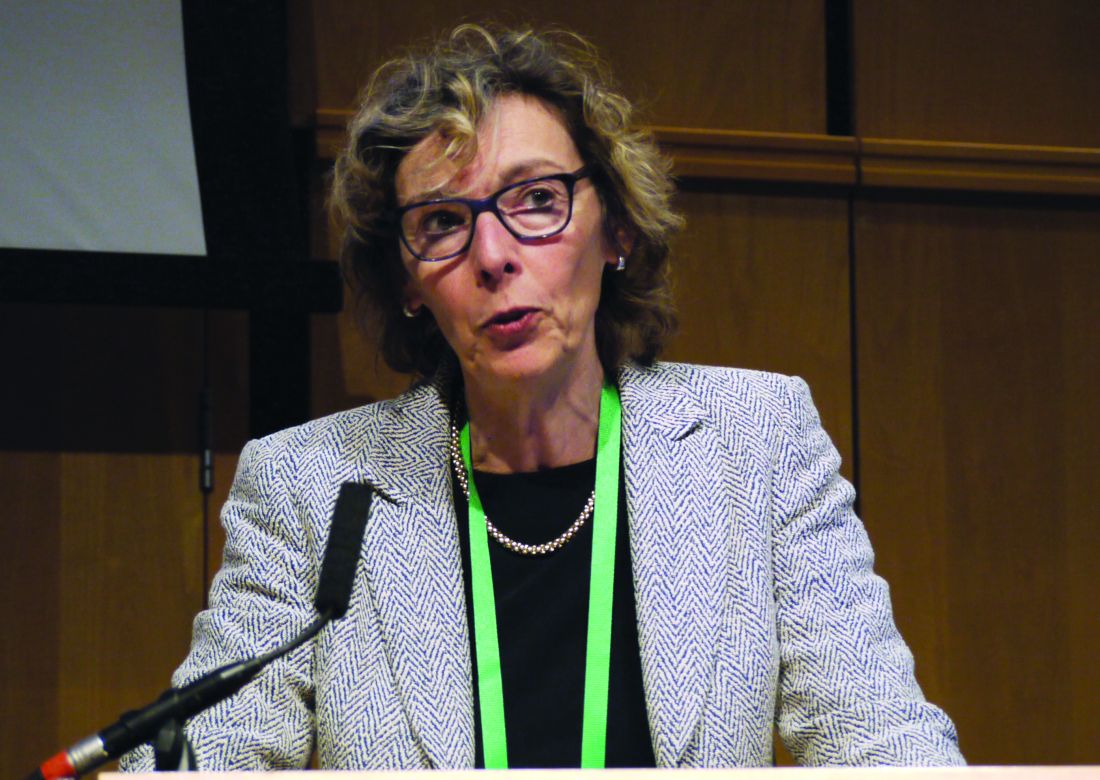
Trial supports naproxen over low-dose colchicine for acute gout
BIRMINGHAM, ENGLAND – Naproxen may be considered the first-choice treatment for patients with acute gout in primary care, based on the results of the CONTACT (Colchicine or Naproxen Treatment for Acute Gout) trial.
“Our findings suggest that both naproxen and low-dose colchicine are effective treatments for acute gout,” Edward Roddy, MD, said at the British Society for Rheumatology annual conference.
The trial results showed, however, that there might be “a small, early treatment difference” favoring naproxen, and that the nonsteroidal anti-inflammatory drug “appeared to be associated with fewer side effects and less use of rescue analgesia for gout than low-dose colchicine,” said Dr. Roddy, a rheumatologist at Keele University, Staffordshire, England.

CONTACT was a multicenter, randomized, open-label trial involving 399 patients recruited at 100 primary care practices. Participants were mostly men (87%) and had a mean age of 59 years.
“The eligibility criteria were designed to reflect the pragmatic nature of the trial, but also to enable us to recruit the sorts of patients in whom either treatment option would be appropriate in routine practice,” Dr. Roddy explained.
Patients were eligible for inclusion if they had consulted a general practitioner for gout in the preceding 2 years and had a recent attack of acute gout that had been clinically assessed. Patients with medical or other contraindications to using either drug were excluded.
After giving their informed consent and completing a baseline questionnaire, patients were randomized to receive either naproxen as a single 750-mg dose, then as 250 mg three times a day for a maximum of 7 days, which is the licensed dose for gout in the United Kingdom, or 500 mcg of colchicine three times a day for 4 days. Patients completed a daily diary for 1 week, noting any pain, side effects, and analgesic drug use and then completed a follow-up questionnaire 4 weeks later.
The primary outcome was the worst pain intensity experienced in the preceding 24 hours, assessed on days 1-7 with a 10-point numeric rating scale (where 10 was the worst pain experienced).
The results showed that pain was reduced to a similar extent in both groups, with a mean difference in pain score between the treatments of 0.20 (95% confidence interval, –0.60 to 0.20) at 7 days and 0.08 (95% CI, –0.54 to 0.39) at 4 weeks’ follow-up, after adjustment for patients’ age, sex, and individual pain scores at baseline.
Greater mean improvement in pain intensity was seen with naproxen than colchicine on the second day of treatment, with a mean difference in pain scores between the groups of 0.48 (95% CI, –0.86 to –0.09) but not on any other day.
During the first 7 days of the study, diarrhea was the most commonly reported side effect occurring in the low-dose colchicine arm, reported by 43.2% of patients vs. 18.0% of those treated with naproxen (adjusted odds ratio, 3.04; 95% CI, 1.75-5.27). Conversely, constipation was a less frequently reported side effect occurring in 4.8% and 18.7% of patients, respectively (OR, 0.20; 95% CI, 0.08-0.49).
Patients treated with low-dose colchicine were also more likely than those treated with naproxen to report headache during the first 7 days (20.5% vs. 10.7%; OR, 1.90; 95% CI, 1.01-3.58).
There were no deaths in the study, and the three serious adverse events that occurred were thought to be unrelated to the study treatment. One NSAID-treated patient developed hospital-acquired pneumonia after elective heart valve surgery, and another NSAID-treated patient had noncardiac chest pain needing hospital treatment. One patient in the colchicine arm developed osteomyelitis that required hospitalization, but it was later thought that the patient might not have had gout to start with.
Between days 1 and 7 of the study, patients treated with low-dose colchicine were more likely to use other analgesic medications than were those treated with naproxen. This included the use of acetaminophen (23.6% vs. 13.4%; adjusted OR, 2.04; 95% CI, 1.10-3.78) and codeine (14.6% vs. 4.7%; aOR, 3.38; 95% CI, 1.45-7.91).
Patients in the low-dose colchicine group were also more likely to use an NSAID other than naproxen at week 4 than were those in the naproxen arm (24.0% vs. 13.4%; aOR, 1.93; 95% CI, 1.05-3.55).
Other secondary endpoints assessed showed no significant difference between the treatments, including changes in global assessment of response, acute gout recurrence, number of health care consultations, and ability to work.
The study was funded by the National Institute for Health Research School for Primary Care Research. Dr. Roddy had no conflicts of interest.
It’s not surprising that a relatively high dose of an NSAID like naproxen worked well for acute gout in the CONTACT study. That has been shown for multiple NSAIDs, although the quality of that evidence has been questioned (Cochrane Database Syst Rev. 2014 Sep 16;[9]:CD010120). What’s surprising is that colchicine did so well. It would have been informative to include the percentage of patients that responded to each treatment based on a predefined criterion, such as a 50% or greater reduction in pain scores at a given time point. The total colchicine dose used is on the high end of the “low dose” protocols, at 6.0 mg over 4 days, identical to the maximum low-dose over 4 days using current U.S. guidelines (Arthritis Care Res. 2012;64:1447-61). The higher dose may account for its efficacy, but also undoubtedly contributed to the high diarrhea rate of 43% (Arthritis Rheum. 2010;62:1060-8).

Christopher M. Burns, MD, is a rheumatologist at Dartmouth-Hitchcock Medical Center, Lebanon, N.H. He has no relevant disclosures.
It’s not surprising that a relatively high dose of an NSAID like naproxen worked well for acute gout in the CONTACT study. That has been shown for multiple NSAIDs, although the quality of that evidence has been questioned (Cochrane Database Syst Rev. 2014 Sep 16;[9]:CD010120). What’s surprising is that colchicine did so well. It would have been informative to include the percentage of patients that responded to each treatment based on a predefined criterion, such as a 50% or greater reduction in pain scores at a given time point. The total colchicine dose used is on the high end of the “low dose” protocols, at 6.0 mg over 4 days, identical to the maximum low-dose over 4 days using current U.S. guidelines (Arthritis Care Res. 2012;64:1447-61). The higher dose may account for its efficacy, but also undoubtedly contributed to the high diarrhea rate of 43% (Arthritis Rheum. 2010;62:1060-8).
Christopher M. Burns, MD, is a rheumatologist at Dartmouth-Hitchcock Medical Center, Lebanon, N.H. He has no relevant disclosures.
It’s not surprising that a relatively high dose of an NSAID like naproxen worked well for acute gout in the CONTACT study. That has been shown for multiple NSAIDs, although the quality of that evidence has been questioned (Cochrane Database Syst Rev. 2014 Sep 16;[9]:CD010120). What’s surprising is that colchicine did so well. It would have been informative to include the percentage of patients that responded to each treatment based on a predefined criterion, such as a 50% or greater reduction in pain scores at a given time point. The total colchicine dose used is on the high end of the “low dose” protocols, at 6.0 mg over 4 days, identical to the maximum low-dose over 4 days using current U.S. guidelines (Arthritis Care Res. 2012;64:1447-61). The higher dose may account for its efficacy, but also undoubtedly contributed to the high diarrhea rate of 43% (Arthritis Rheum. 2010;62:1060-8).
Christopher M. Burns, MD, is a rheumatologist at Dartmouth-Hitchcock Medical Center, Lebanon, N.H. He has no relevant disclosures.
BIRMINGHAM, ENGLAND – Naproxen may be considered the first-choice treatment for patients with acute gout in primary care, based on the results of the CONTACT (Colchicine or Naproxen Treatment for Acute Gout) trial.
“Our findings suggest that both naproxen and low-dose colchicine are effective treatments for acute gout,” Edward Roddy, MD, said at the British Society for Rheumatology annual conference.
The trial results showed, however, that there might be “a small, early treatment difference” favoring naproxen, and that the nonsteroidal anti-inflammatory drug “appeared to be associated with fewer side effects and less use of rescue analgesia for gout than low-dose colchicine,” said Dr. Roddy, a rheumatologist at Keele University, Staffordshire, England.
CONTACT was a multicenter, randomized, open-label trial involving 399 patients recruited at 100 primary care practices. Participants were mostly men (87%) and had a mean age of 59 years.
“The eligibility criteria were designed to reflect the pragmatic nature of the trial, but also to enable us to recruit the sorts of patients in whom either treatment option would be appropriate in routine practice,” Dr. Roddy explained.
Patients were eligible for inclusion if they had consulted a general practitioner for gout in the preceding 2 years and had a recent attack of acute gout that had been clinically assessed. Patients with medical or other contraindications to using either drug were excluded.
After giving their informed consent and completing a baseline questionnaire, patients were randomized to receive either naproxen as a single 750-mg dose, then as 250 mg three times a day for a maximum of 7 days, which is the licensed dose for gout in the United Kingdom, or 500 mcg of colchicine three times a day for 4 days. Patients completed a daily diary for 1 week, noting any pain, side effects, and analgesic drug use and then completed a follow-up questionnaire 4 weeks later.
The primary outcome was the worst pain intensity experienced in the preceding 24 hours, assessed on days 1-7 with a 10-point numeric rating scale (where 10 was the worst pain experienced).
The results showed that pain was reduced to a similar extent in both groups, with a mean difference in pain score between the treatments of 0.20 (95% confidence interval, –0.60 to 0.20) at 7 days and 0.08 (95% CI, –0.54 to 0.39) at 4 weeks’ follow-up, after adjustment for patients’ age, sex, and individual pain scores at baseline.
Greater mean improvement in pain intensity was seen with naproxen than colchicine on the second day of treatment, with a mean difference in pain scores between the groups of 0.48 (95% CI, –0.86 to –0.09) but not on any other day.
During the first 7 days of the study, diarrhea was the most commonly reported side effect occurring in the low-dose colchicine arm, reported by 43.2% of patients vs. 18.0% of those treated with naproxen (adjusted odds ratio, 3.04; 95% CI, 1.75-5.27). Conversely, constipation was a less frequently reported side effect occurring in 4.8% and 18.7% of patients, respectively (OR, 0.20; 95% CI, 0.08-0.49).
Patients treated with low-dose colchicine were also more likely than those treated with naproxen to report headache during the first 7 days (20.5% vs. 10.7%; OR, 1.90; 95% CI, 1.01-3.58).
There were no deaths in the study, and the three serious adverse events that occurred were thought to be unrelated to the study treatment. One NSAID-treated patient developed hospital-acquired pneumonia after elective heart valve surgery, and another NSAID-treated patient had noncardiac chest pain needing hospital treatment. One patient in the colchicine arm developed osteomyelitis that required hospitalization, but it was later thought that the patient might not have had gout to start with.
Between days 1 and 7 of the study, patients treated with low-dose colchicine were more likely to use other analgesic medications than were those treated with naproxen. This included the use of acetaminophen (23.6% vs. 13.4%; adjusted OR, 2.04; 95% CI, 1.10-3.78) and codeine (14.6% vs. 4.7%; aOR, 3.38; 95% CI, 1.45-7.91).
Patients in the low-dose colchicine group were also more likely to use an NSAID other than naproxen at week 4 than were those in the naproxen arm (24.0% vs. 13.4%; aOR, 1.93; 95% CI, 1.05-3.55).
Other secondary endpoints assessed showed no significant difference between the treatments, including changes in global assessment of response, acute gout recurrence, number of health care consultations, and ability to work.
The study was funded by the National Institute for Health Research School for Primary Care Research. Dr. Roddy had no conflicts of interest.
BIRMINGHAM, ENGLAND – Naproxen may be considered the first-choice treatment for patients with acute gout in primary care, based on the results of the CONTACT (Colchicine or Naproxen Treatment for Acute Gout) trial.
“Our findings suggest that both naproxen and low-dose colchicine are effective treatments for acute gout,” Edward Roddy, MD, said at the British Society for Rheumatology annual conference.
The trial results showed, however, that there might be “a small, early treatment difference” favoring naproxen, and that the nonsteroidal anti-inflammatory drug “appeared to be associated with fewer side effects and less use of rescue analgesia for gout than low-dose colchicine,” said Dr. Roddy, a rheumatologist at Keele University, Staffordshire, England.
CONTACT was a multicenter, randomized, open-label trial involving 399 patients recruited at 100 primary care practices. Participants were mostly men (87%) and had a mean age of 59 years.
“The eligibility criteria were designed to reflect the pragmatic nature of the trial, but also to enable us to recruit the sorts of patients in whom either treatment option would be appropriate in routine practice,” Dr. Roddy explained.
Patients were eligible for inclusion if they had consulted a general practitioner for gout in the preceding 2 years and had a recent attack of acute gout that had been clinically assessed. Patients with medical or other contraindications to using either drug were excluded.
After giving their informed consent and completing a baseline questionnaire, patients were randomized to receive either naproxen as a single 750-mg dose, then as 250 mg three times a day for a maximum of 7 days, which is the licensed dose for gout in the United Kingdom, or 500 mcg of colchicine three times a day for 4 days. Patients completed a daily diary for 1 week, noting any pain, side effects, and analgesic drug use and then completed a follow-up questionnaire 4 weeks later.
The primary outcome was the worst pain intensity experienced in the preceding 24 hours, assessed on days 1-7 with a 10-point numeric rating scale (where 10 was the worst pain experienced).
The results showed that pain was reduced to a similar extent in both groups, with a mean difference in pain score between the treatments of 0.20 (95% confidence interval, –0.60 to 0.20) at 7 days and 0.08 (95% CI, –0.54 to 0.39) at 4 weeks’ follow-up, after adjustment for patients’ age, sex, and individual pain scores at baseline.
Greater mean improvement in pain intensity was seen with naproxen than colchicine on the second day of treatment, with a mean difference in pain scores between the groups of 0.48 (95% CI, –0.86 to –0.09) but not on any other day.
During the first 7 days of the study, diarrhea was the most commonly reported side effect occurring in the low-dose colchicine arm, reported by 43.2% of patients vs. 18.0% of those treated with naproxen (adjusted odds ratio, 3.04; 95% CI, 1.75-5.27). Conversely, constipation was a less frequently reported side effect occurring in 4.8% and 18.7% of patients, respectively (OR, 0.20; 95% CI, 0.08-0.49).
Patients treated with low-dose colchicine were also more likely than those treated with naproxen to report headache during the first 7 days (20.5% vs. 10.7%; OR, 1.90; 95% CI, 1.01-3.58).
There were no deaths in the study, and the three serious adverse events that occurred were thought to be unrelated to the study treatment. One NSAID-treated patient developed hospital-acquired pneumonia after elective heart valve surgery, and another NSAID-treated patient had noncardiac chest pain needing hospital treatment. One patient in the colchicine arm developed osteomyelitis that required hospitalization, but it was later thought that the patient might not have had gout to start with.
Between days 1 and 7 of the study, patients treated with low-dose colchicine were more likely to use other analgesic medications than were those treated with naproxen. This included the use of acetaminophen (23.6% vs. 13.4%; adjusted OR, 2.04; 95% CI, 1.10-3.78) and codeine (14.6% vs. 4.7%; aOR, 3.38; 95% CI, 1.45-7.91).
Patients in the low-dose colchicine group were also more likely to use an NSAID other than naproxen at week 4 than were those in the naproxen arm (24.0% vs. 13.4%; aOR, 1.93; 95% CI, 1.05-3.55).
Other secondary endpoints assessed showed no significant difference between the treatments, including changes in global assessment of response, acute gout recurrence, number of health care consultations, and ability to work.
The study was funded by the National Institute for Health Research School for Primary Care Research. Dr. Roddy had no conflicts of interest.
Key clinical point:
Major finding: The mean difference in pain score between the treatments was 0.20 (95% CI, –0.60 to 0.20) at 7 days, but there was greater mean improvement in pain intensity on day 2 with naproxen.
Data source: The Colchicine or Naproxen Treatment for Acute Gout trial, a randomized, multicenter, open-label trial involving 399 patients with acute gout.
Disclosures: The study was funded by the National Institute for Health Research School for Primary Care Research. Dr. Roddy had no conflicts of interest.
Long-term albumin shows survival benefit in decompensated cirrhosis
AMSTERDAM – Long-term treatment with human albumin improved the overall survival of patients with decompensated liver cirrhosis, compared with standard medical care, in a randomized, controlled trial presented at the International Liver Congress.
The final results of the ANSWER study showed that a 38% reduction in the risk of death could be achieved at 18 months’ follow-up by giving patients human albumin, with an overall survival of 78% vs. 66% in the two groups, respectively (hazard ratio, 0.62; 95% confidence interval, 0.40-0.95; P = .028).
“Long-term albumin administration to patients with decompensated cirrhosis may be seen as a disease-modifying treatment,” said the presenting study author, Mauro Bernardi, MD, professor in the department of medical and surgical sciences at the University of Bologna (Italy).
Not only was the overall survival improved, but there was improvement in the management of ascites, a reduction in the incidence of severe complications (such as spontaneous bacterial peritonitis, renal dysfunction, and hepatic encephalopathy), a reduction in the number of hospitalizations and duration of in-hospital treatment, and a signal for improved quality of life, he said.
“We know that it is good to give albumin as an infusion in many, many circumstances,” said Frank Tacke, MD, PhD, who was not involved in the study, during a press briefing at the meeting, sponsored by the European Association for the Study of the Liver (EASL).
“What we did not know before was if there was a role for giving albumin – which is unfortunately quite expensive – for a longer period of time in patients with liver cirrhosis,” said Dr. Tacke, who is the EASL vice-secretary and professor of medicine in the department of gastroenterology, metabolic diseases and intensive care medicine at University Hospital Aachen (Germany).
Although long-term treatment with human albumin is a relatively expensive treatment, particularly because it requires weekly infusion, Dr. Bernardi noted that a cost analysis was being performed, and potentially the cost of treatment could be offset by the reduction in paracentesis, duration of hospitalization, and reduced need for treating patients with complications, compared with standard medical care alone.
“The idea of supplying albumin to patients with advanced cirrhosis is quite an old one, and there is long debate. The point is that a reliable study that could resolve this was simply lacking up to now,” Dr. Bernard said at the briefing.
The results could mean that patients with decompensated cirrhosis now have a much-needed therapeutic option. These patients have “a very poor prognosis,” Dr. Bernardi said. The 1-year probability of survival is about 20%, and the only curative therapy at present is liver transplantation.
A total of 440 patients, mostly male with an average age of 61 years, with cirrhosis and uncomplicated ascites were randomized at 33 Italian centers to receive standard medical treatment alone (n = 213) or with human albumin (n = 218) given at an infused dose of 40 g twice a week for the first 2 weeks, then 40 g every week. The albumin used in the trial was provided by five different pharmaceutical companies and sent to a central location for generic relabeling and distribution out to the participating trial centers.
Significantly fewer patients who were given human albumin than those who were not (66% vs. 38%, P less than .001) needed at least one paracentesis. The incidence rate for the removal of peritoneal fluid in the standard medical treatment arm was 3.5/person per year. There was a 54% reduction in this rate by the addition of human albumin (HR = 0.46; 95% CI, 0.40-0.53; P less than .0001). There was also a significant 46% reduction in the incidence of refractory ascites (48% vs. 25%, P less than .0001).
Patients who received standard medical treatment plus albumin needed fewer hospitalizations and fewer days of in-hospital care per person per year than those in the standard care–only arm. The use of human albumin reduced the number of hospital stays by 35% (HR = 0.65; 95% CI, 0.55-0.77; P less than .0001) and the duration of days in hospital by 45% (HR = 0.55; 95% CI, 0.52-0.58; P less than .0001).
Although not statistically significant, a trend for greater improvements and fewer decreases in quality of life, as measured using the EQ-5D visual assessment scale, at 3, 6, and 12 months, was seen with the use of human albumin.
Four patients had adverse drug reactions: two were mild allergic reactions, and two were potentially life-threatening septic shock that needed intensive care treatment. One of the latter cases might have been caused by pneumonia, and the other required study interruption. But in all cases the patients recovered, Dr. Bernardi reported.
The study was funded by the Italian Drug Agency. Dr. Bernardi had acted as a speaker for and consultant to CLS Behring and Baxter Healthcare, and as a speaker to the Plasma Protein Therapeutics Association’s Europe division, Grifols, Gilead Sciences, and AbbVie Italia. Dr. Tacke had nothing to disclose.
AMSTERDAM – Long-term treatment with human albumin improved the overall survival of patients with decompensated liver cirrhosis, compared with standard medical care, in a randomized, controlled trial presented at the International Liver Congress.
The final results of the ANSWER study showed that a 38% reduction in the risk of death could be achieved at 18 months’ follow-up by giving patients human albumin, with an overall survival of 78% vs. 66% in the two groups, respectively (hazard ratio, 0.62; 95% confidence interval, 0.40-0.95; P = .028).
“Long-term albumin administration to patients with decompensated cirrhosis may be seen as a disease-modifying treatment,” said the presenting study author, Mauro Bernardi, MD, professor in the department of medical and surgical sciences at the University of Bologna (Italy).
Not only was the overall survival improved, but there was improvement in the management of ascites, a reduction in the incidence of severe complications (such as spontaneous bacterial peritonitis, renal dysfunction, and hepatic encephalopathy), a reduction in the number of hospitalizations and duration of in-hospital treatment, and a signal for improved quality of life, he said.
“We know that it is good to give albumin as an infusion in many, many circumstances,” said Frank Tacke, MD, PhD, who was not involved in the study, during a press briefing at the meeting, sponsored by the European Association for the Study of the Liver (EASL).
“What we did not know before was if there was a role for giving albumin – which is unfortunately quite expensive – for a longer period of time in patients with liver cirrhosis,” said Dr. Tacke, who is the EASL vice-secretary and professor of medicine in the department of gastroenterology, metabolic diseases and intensive care medicine at University Hospital Aachen (Germany).
Although long-term treatment with human albumin is a relatively expensive treatment, particularly because it requires weekly infusion, Dr. Bernardi noted that a cost analysis was being performed, and potentially the cost of treatment could be offset by the reduction in paracentesis, duration of hospitalization, and reduced need for treating patients with complications, compared with standard medical care alone.
“The idea of supplying albumin to patients with advanced cirrhosis is quite an old one, and there is long debate. The point is that a reliable study that could resolve this was simply lacking up to now,” Dr. Bernard said at the briefing.
The results could mean that patients with decompensated cirrhosis now have a much-needed therapeutic option. These patients have “a very poor prognosis,” Dr. Bernardi said. The 1-year probability of survival is about 20%, and the only curative therapy at present is liver transplantation.
A total of 440 patients, mostly male with an average age of 61 years, with cirrhosis and uncomplicated ascites were randomized at 33 Italian centers to receive standard medical treatment alone (n = 213) or with human albumin (n = 218) given at an infused dose of 40 g twice a week for the first 2 weeks, then 40 g every week. The albumin used in the trial was provided by five different pharmaceutical companies and sent to a central location for generic relabeling and distribution out to the participating trial centers.
Significantly fewer patients who were given human albumin than those who were not (66% vs. 38%, P less than .001) needed at least one paracentesis. The incidence rate for the removal of peritoneal fluid in the standard medical treatment arm was 3.5/person per year. There was a 54% reduction in this rate by the addition of human albumin (HR = 0.46; 95% CI, 0.40-0.53; P less than .0001). There was also a significant 46% reduction in the incidence of refractory ascites (48% vs. 25%, P less than .0001).
Patients who received standard medical treatment plus albumin needed fewer hospitalizations and fewer days of in-hospital care per person per year than those in the standard care–only arm. The use of human albumin reduced the number of hospital stays by 35% (HR = 0.65; 95% CI, 0.55-0.77; P less than .0001) and the duration of days in hospital by 45% (HR = 0.55; 95% CI, 0.52-0.58; P less than .0001).
Although not statistically significant, a trend for greater improvements and fewer decreases in quality of life, as measured using the EQ-5D visual assessment scale, at 3, 6, and 12 months, was seen with the use of human albumin.
Four patients had adverse drug reactions: two were mild allergic reactions, and two were potentially life-threatening septic shock that needed intensive care treatment. One of the latter cases might have been caused by pneumonia, and the other required study interruption. But in all cases the patients recovered, Dr. Bernardi reported.
The study was funded by the Italian Drug Agency. Dr. Bernardi had acted as a speaker for and consultant to CLS Behring and Baxter Healthcare, and as a speaker to the Plasma Protein Therapeutics Association’s Europe division, Grifols, Gilead Sciences, and AbbVie Italia. Dr. Tacke had nothing to disclose.
AMSTERDAM – Long-term treatment with human albumin improved the overall survival of patients with decompensated liver cirrhosis, compared with standard medical care, in a randomized, controlled trial presented at the International Liver Congress.
The final results of the ANSWER study showed that a 38% reduction in the risk of death could be achieved at 18 months’ follow-up by giving patients human albumin, with an overall survival of 78% vs. 66% in the two groups, respectively (hazard ratio, 0.62; 95% confidence interval, 0.40-0.95; P = .028).
“Long-term albumin administration to patients with decompensated cirrhosis may be seen as a disease-modifying treatment,” said the presenting study author, Mauro Bernardi, MD, professor in the department of medical and surgical sciences at the University of Bologna (Italy).
Not only was the overall survival improved, but there was improvement in the management of ascites, a reduction in the incidence of severe complications (such as spontaneous bacterial peritonitis, renal dysfunction, and hepatic encephalopathy), a reduction in the number of hospitalizations and duration of in-hospital treatment, and a signal for improved quality of life, he said.
“We know that it is good to give albumin as an infusion in many, many circumstances,” said Frank Tacke, MD, PhD, who was not involved in the study, during a press briefing at the meeting, sponsored by the European Association for the Study of the Liver (EASL).
“What we did not know before was if there was a role for giving albumin – which is unfortunately quite expensive – for a longer period of time in patients with liver cirrhosis,” said Dr. Tacke, who is the EASL vice-secretary and professor of medicine in the department of gastroenterology, metabolic diseases and intensive care medicine at University Hospital Aachen (Germany).
Although long-term treatment with human albumin is a relatively expensive treatment, particularly because it requires weekly infusion, Dr. Bernardi noted that a cost analysis was being performed, and potentially the cost of treatment could be offset by the reduction in paracentesis, duration of hospitalization, and reduced need for treating patients with complications, compared with standard medical care alone.
“The idea of supplying albumin to patients with advanced cirrhosis is quite an old one, and there is long debate. The point is that a reliable study that could resolve this was simply lacking up to now,” Dr. Bernard said at the briefing.
The results could mean that patients with decompensated cirrhosis now have a much-needed therapeutic option. These patients have “a very poor prognosis,” Dr. Bernardi said. The 1-year probability of survival is about 20%, and the only curative therapy at present is liver transplantation.
A total of 440 patients, mostly male with an average age of 61 years, with cirrhosis and uncomplicated ascites were randomized at 33 Italian centers to receive standard medical treatment alone (n = 213) or with human albumin (n = 218) given at an infused dose of 40 g twice a week for the first 2 weeks, then 40 g every week. The albumin used in the trial was provided by five different pharmaceutical companies and sent to a central location for generic relabeling and distribution out to the participating trial centers.
Significantly fewer patients who were given human albumin than those who were not (66% vs. 38%, P less than .001) needed at least one paracentesis. The incidence rate for the removal of peritoneal fluid in the standard medical treatment arm was 3.5/person per year. There was a 54% reduction in this rate by the addition of human albumin (HR = 0.46; 95% CI, 0.40-0.53; P less than .0001). There was also a significant 46% reduction in the incidence of refractory ascites (48% vs. 25%, P less than .0001).
Patients who received standard medical treatment plus albumin needed fewer hospitalizations and fewer days of in-hospital care per person per year than those in the standard care–only arm. The use of human albumin reduced the number of hospital stays by 35% (HR = 0.65; 95% CI, 0.55-0.77; P less than .0001) and the duration of days in hospital by 45% (HR = 0.55; 95% CI, 0.52-0.58; P less than .0001).
Although not statistically significant, a trend for greater improvements and fewer decreases in quality of life, as measured using the EQ-5D visual assessment scale, at 3, 6, and 12 months, was seen with the use of human albumin.
Four patients had adverse drug reactions: two were mild allergic reactions, and two were potentially life-threatening septic shock that needed intensive care treatment. One of the latter cases might have been caused by pneumonia, and the other required study interruption. But in all cases the patients recovered, Dr. Bernardi reported.
The study was funded by the Italian Drug Agency. Dr. Bernardi had acted as a speaker for and consultant to CLS Behring and Baxter Healthcare, and as a speaker to the Plasma Protein Therapeutics Association’s Europe division, Grifols, Gilead Sciences, and AbbVie Italia. Dr. Tacke had nothing to disclose.
AT ILC 2017
Key clinical point: A weekly infusion of human albumin has a beneficial effect in patients with decompensated cirrhosis.
Major finding: Overall survival was 78% vs. 66% for standard medical care with albumin vs. no albumin (HR, 0.62; 95% CI, 0.40-0.95; P = .028).
Data source: The ANSWER study, a multicenter, open-label, randomized clinical trial of 440 patients with decompensated cirrhosis.
Disclosures: The study was funded by the Italian Drug Agency. Dr. Bernardi had acted as a speaker for and consultant to CLS Behring and Baxter Healthcare, and as a speaker to the Plasma Protein Therapeutics Association’s Europe division, Grifols, Gilead Sciences, and AbbVie Italia. Dr. Tacke had nothing to disclose.
WHO report sets baseline for viral hepatitis elimination
AMSTERDAM – An estimated 328 million people worldwide were living with chronic hepatitis B or C virus infection in 2015 according to a new report issued by the World Health Organization and launched at the International Liver Congress sponsored by the European Association for the Study of the Liver (EASL).
The WHO Global Hepatitis Report gives the worldwide prevalence of chronic hepatitis B (HBV) infection as 257 million and that of chronic hepatitis C (HCV) infection as 71 million at this time point, reported Yvan Hutin, MD, medical officer at the WHO Department of HIV and Global Hepatitis Programme (HIV/GHP) in Geneva.
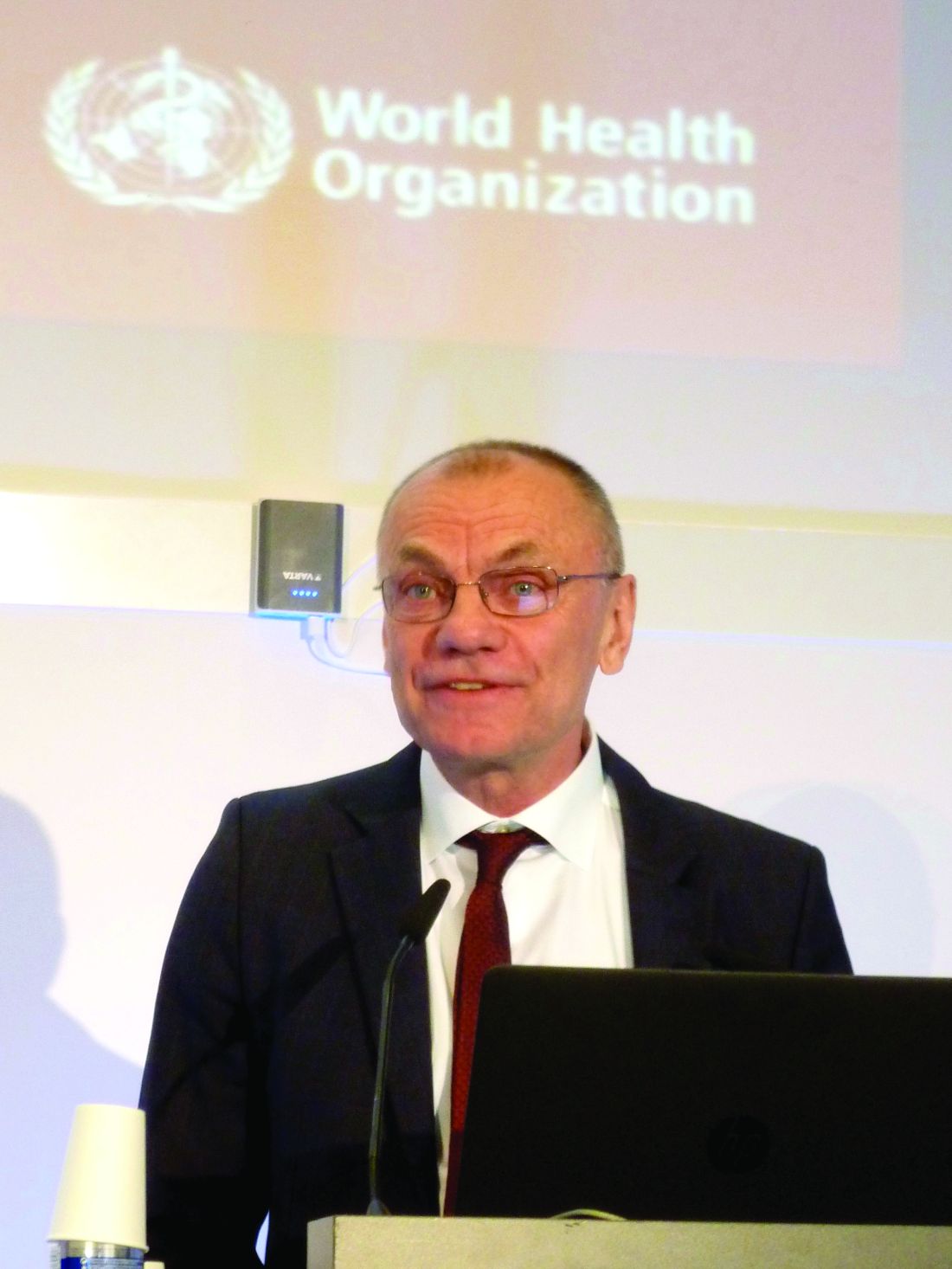
Dr. Hutin explained that the report was needed as it sets the baseline or “year zero” for tracking the success of WHO’s new global health sector strategy on viral hepatitis, which aims to eliminate viral hepatitis as a public health threat, reduce the number of new HBV and HCV infections by 90%, and reduce viral hepatitis mortality by 65% by 2030.
The report was “a very important statement for all of us who work in this field,” said EASL Vice-Secretary Tom Hemming Karslen, MD, during a press briefing. “This is a wonderful initiative helping all the activities that are now already ongoing and need to be strengthened to move in a coordinated manner.”
The launch of the report at the International Liver Congress was “win-win situation”, Gottfried Hirnschall, MD, director of the WHO Department of HIV/GHP, said at the press briefing.
“We are in the era of elimination. It is not only the commitment of the WHO, it is the commitment of the 194 member states who have signed up for elimination,” he said.
“An important message is that people are still dying of hepatitis, the numbers are still going up,” Dr. Hirnschall said. There were an estimated 1.34 million viral hepatitis deaths worldwide in 2015, most (95%) were due to the development of cirrhosis or hepatocellular carcinoma, according to the new report. “We have a public health issue that obviously still needs to be addressed.”
Three decades ago, little could be done to prevent or treat infection with HBV or HCV, Dr. Hutin said during the opening general scientific session. A lot has changed since then, prevention of hepatitis B started to become a reality with the availability of a vaccine and understanding of the importance of improved blood safety and injection practices. Since 2010, there have also been improvements in the drugs available to treat, and potentially eliminate, HCV, notably direct-acting antiviral agents.
“To reach elimination, we modeled that we needed to reach sufficient service coverage for five core interventions,” Dr. Hutin said. Specifically:
- At least 90% of the world’s eligible population receives the three-dose hepatitis B vaccine
- 100% of blood donations are screened appropriately
- Proper injection technique is employed in 90% of cases
- Clean needles made available where they are needed
- 90% of people infected are diagnosed and 80% are treated.
Vaccination against HBV has been one success in the past 20 years, Ana Maria Henao Restrepo, MD, medical officer at the WHO Department of Immunization Vaccination and Biologicals, said at the press briefing.
Vaccination against HBV started in 1982, she said, “when the first safe and effective vaccine became available, and now four out of five children receive this life-saving vaccine. We are very pleased with this achievement but we know that there is still more work to do.”
The WHO report estimates that the global incidence of chronic HBV infection in children under 5 years of age was reduced from 4.7% in the pre-vaccination era to 1.3% in 2015 because of immunization.
But while uptake of the three-dose hepatitis B vaccine has increased, with 85% coverage of the worlds population in 2015, the number of children receiving this vaccine at birth is just 39% overall, with lower rates in the African region.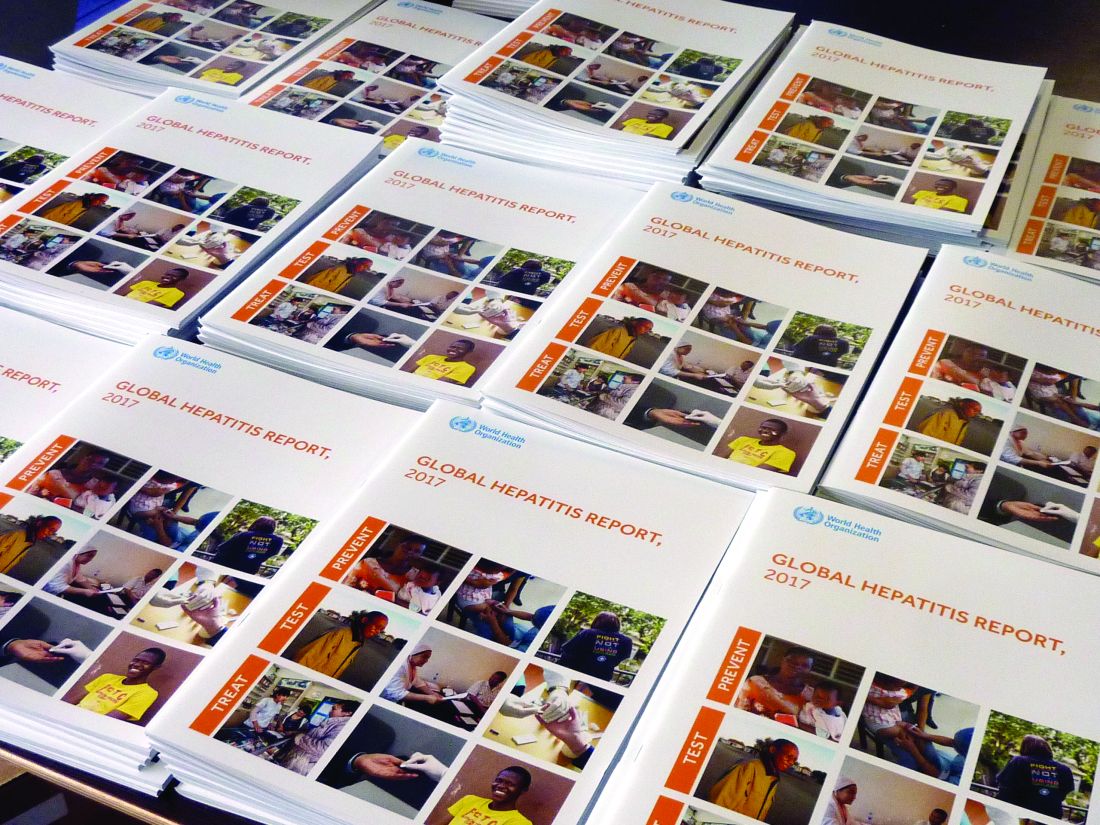
“Unsafe health care injections and injection drug use continue to transmit HCV, particularly in the eastern Mediterranean region and the European region,” Dr. Hutin said.
The WHO has already set up a campaign to improve blood and injection safety called “Get the Point,” but there is still a long way to go. The target is to provide 300 needle and syringe sets per person per year to people who inject drugs; the current rate is around 27 sets.
Of the 257 people infected with hepatitis B in 2015, only 9% were diagnosed and 1.7 million received treatment. As for hepatitis C, 20% of 71 million were diagnosed and 1.1 million received treatment.
“We need a public health approach that delivers all the basic services to all, including to specific groups that may differ from the general population in terms of incidence, prevalence, vulnerability, or needs,” said Dr. Hutin. This includes health care workers, intravenous drug users, prisoners, migrants, blood donors, men who have sex with men, sex workers, and indigenous populations.
“We have all the tools we need to eliminate hepatitis,” he said, adding that improved point of care tests, a functional cure for HBV, and a vaccine against HCV would accelerate the process.
“A year ago, elimination by 2030 looked very ambitious, but not that we’ve carefully looked at the baseline, it seems that we have a start. It’s going to be a lot of work but the train has left the station and we should get there,” Dr. Hutin concluded.
The U.S. Centers for Disease Control and Prevention provided funding for the production of the report. All speakers had no conflicts of interest.
AMSTERDAM – An estimated 328 million people worldwide were living with chronic hepatitis B or C virus infection in 2015 according to a new report issued by the World Health Organization and launched at the International Liver Congress sponsored by the European Association for the Study of the Liver (EASL).
The WHO Global Hepatitis Report gives the worldwide prevalence of chronic hepatitis B (HBV) infection as 257 million and that of chronic hepatitis C (HCV) infection as 71 million at this time point, reported Yvan Hutin, MD, medical officer at the WHO Department of HIV and Global Hepatitis Programme (HIV/GHP) in Geneva.
Dr. Hutin explained that the report was needed as it sets the baseline or “year zero” for tracking the success of WHO’s new global health sector strategy on viral hepatitis, which aims to eliminate viral hepatitis as a public health threat, reduce the number of new HBV and HCV infections by 90%, and reduce viral hepatitis mortality by 65% by 2030.
The report was “a very important statement for all of us who work in this field,” said EASL Vice-Secretary Tom Hemming Karslen, MD, during a press briefing. “This is a wonderful initiative helping all the activities that are now already ongoing and need to be strengthened to move in a coordinated manner.”
The launch of the report at the International Liver Congress was “win-win situation”, Gottfried Hirnschall, MD, director of the WHO Department of HIV/GHP, said at the press briefing.
“We are in the era of elimination. It is not only the commitment of the WHO, it is the commitment of the 194 member states who have signed up for elimination,” he said.
“An important message is that people are still dying of hepatitis, the numbers are still going up,” Dr. Hirnschall said. There were an estimated 1.34 million viral hepatitis deaths worldwide in 2015, most (95%) were due to the development of cirrhosis or hepatocellular carcinoma, according to the new report. “We have a public health issue that obviously still needs to be addressed.”
Three decades ago, little could be done to prevent or treat infection with HBV or HCV, Dr. Hutin said during the opening general scientific session. A lot has changed since then, prevention of hepatitis B started to become a reality with the availability of a vaccine and understanding of the importance of improved blood safety and injection practices. Since 2010, there have also been improvements in the drugs available to treat, and potentially eliminate, HCV, notably direct-acting antiviral agents.
“To reach elimination, we modeled that we needed to reach sufficient service coverage for five core interventions,” Dr. Hutin said. Specifically:
- At least 90% of the world’s eligible population receives the three-dose hepatitis B vaccine
- 100% of blood donations are screened appropriately
- Proper injection technique is employed in 90% of cases
- Clean needles made available where they are needed
- 90% of people infected are diagnosed and 80% are treated.
Vaccination against HBV has been one success in the past 20 years, Ana Maria Henao Restrepo, MD, medical officer at the WHO Department of Immunization Vaccination and Biologicals, said at the press briefing.
Vaccination against HBV started in 1982, she said, “when the first safe and effective vaccine became available, and now four out of five children receive this life-saving vaccine. We are very pleased with this achievement but we know that there is still more work to do.”
The WHO report estimates that the global incidence of chronic HBV infection in children under 5 years of age was reduced from 4.7% in the pre-vaccination era to 1.3% in 2015 because of immunization.
But while uptake of the three-dose hepatitis B vaccine has increased, with 85% coverage of the worlds population in 2015, the number of children receiving this vaccine at birth is just 39% overall, with lower rates in the African region.
“Unsafe health care injections and injection drug use continue to transmit HCV, particularly in the eastern Mediterranean region and the European region,” Dr. Hutin said.
The WHO has already set up a campaign to improve blood and injection safety called “Get the Point,” but there is still a long way to go. The target is to provide 300 needle and syringe sets per person per year to people who inject drugs; the current rate is around 27 sets.
Of the 257 people infected with hepatitis B in 2015, only 9% were diagnosed and 1.7 million received treatment. As for hepatitis C, 20% of 71 million were diagnosed and 1.1 million received treatment.
“We need a public health approach that delivers all the basic services to all, including to specific groups that may differ from the general population in terms of incidence, prevalence, vulnerability, or needs,” said Dr. Hutin. This includes health care workers, intravenous drug users, prisoners, migrants, blood donors, men who have sex with men, sex workers, and indigenous populations.
“We have all the tools we need to eliminate hepatitis,” he said, adding that improved point of care tests, a functional cure for HBV, and a vaccine against HCV would accelerate the process.
“A year ago, elimination by 2030 looked very ambitious, but not that we’ve carefully looked at the baseline, it seems that we have a start. It’s going to be a lot of work but the train has left the station and we should get there,” Dr. Hutin concluded.
The U.S. Centers for Disease Control and Prevention provided funding for the production of the report. All speakers had no conflicts of interest.
AMSTERDAM – An estimated 328 million people worldwide were living with chronic hepatitis B or C virus infection in 2015 according to a new report issued by the World Health Organization and launched at the International Liver Congress sponsored by the European Association for the Study of the Liver (EASL).
The WHO Global Hepatitis Report gives the worldwide prevalence of chronic hepatitis B (HBV) infection as 257 million and that of chronic hepatitis C (HCV) infection as 71 million at this time point, reported Yvan Hutin, MD, medical officer at the WHO Department of HIV and Global Hepatitis Programme (HIV/GHP) in Geneva.
Dr. Hutin explained that the report was needed as it sets the baseline or “year zero” for tracking the success of WHO’s new global health sector strategy on viral hepatitis, which aims to eliminate viral hepatitis as a public health threat, reduce the number of new HBV and HCV infections by 90%, and reduce viral hepatitis mortality by 65% by 2030.
The report was “a very important statement for all of us who work in this field,” said EASL Vice-Secretary Tom Hemming Karslen, MD, during a press briefing. “This is a wonderful initiative helping all the activities that are now already ongoing and need to be strengthened to move in a coordinated manner.”
The launch of the report at the International Liver Congress was “win-win situation”, Gottfried Hirnschall, MD, director of the WHO Department of HIV/GHP, said at the press briefing.
“We are in the era of elimination. It is not only the commitment of the WHO, it is the commitment of the 194 member states who have signed up for elimination,” he said.
“An important message is that people are still dying of hepatitis, the numbers are still going up,” Dr. Hirnschall said. There were an estimated 1.34 million viral hepatitis deaths worldwide in 2015, most (95%) were due to the development of cirrhosis or hepatocellular carcinoma, according to the new report. “We have a public health issue that obviously still needs to be addressed.”
Three decades ago, little could be done to prevent or treat infection with HBV or HCV, Dr. Hutin said during the opening general scientific session. A lot has changed since then, prevention of hepatitis B started to become a reality with the availability of a vaccine and understanding of the importance of improved blood safety and injection practices. Since 2010, there have also been improvements in the drugs available to treat, and potentially eliminate, HCV, notably direct-acting antiviral agents.
“To reach elimination, we modeled that we needed to reach sufficient service coverage for five core interventions,” Dr. Hutin said. Specifically:
- At least 90% of the world’s eligible population receives the three-dose hepatitis B vaccine
- 100% of blood donations are screened appropriately
- Proper injection technique is employed in 90% of cases
- Clean needles made available where they are needed
- 90% of people infected are diagnosed and 80% are treated.
Vaccination against HBV has been one success in the past 20 years, Ana Maria Henao Restrepo, MD, medical officer at the WHO Department of Immunization Vaccination and Biologicals, said at the press briefing.
Vaccination against HBV started in 1982, she said, “when the first safe and effective vaccine became available, and now four out of five children receive this life-saving vaccine. We are very pleased with this achievement but we know that there is still more work to do.”
The WHO report estimates that the global incidence of chronic HBV infection in children under 5 years of age was reduced from 4.7% in the pre-vaccination era to 1.3% in 2015 because of immunization.
But while uptake of the three-dose hepatitis B vaccine has increased, with 85% coverage of the worlds population in 2015, the number of children receiving this vaccine at birth is just 39% overall, with lower rates in the African region.
“Unsafe health care injections and injection drug use continue to transmit HCV, particularly in the eastern Mediterranean region and the European region,” Dr. Hutin said.
The WHO has already set up a campaign to improve blood and injection safety called “Get the Point,” but there is still a long way to go. The target is to provide 300 needle and syringe sets per person per year to people who inject drugs; the current rate is around 27 sets.
Of the 257 people infected with hepatitis B in 2015, only 9% were diagnosed and 1.7 million received treatment. As for hepatitis C, 20% of 71 million were diagnosed and 1.1 million received treatment.
“We need a public health approach that delivers all the basic services to all, including to specific groups that may differ from the general population in terms of incidence, prevalence, vulnerability, or needs,” said Dr. Hutin. This includes health care workers, intravenous drug users, prisoners, migrants, blood donors, men who have sex with men, sex workers, and indigenous populations.
“We have all the tools we need to eliminate hepatitis,” he said, adding that improved point of care tests, a functional cure for HBV, and a vaccine against HCV would accelerate the process.
“A year ago, elimination by 2030 looked very ambitious, but not that we’ve carefully looked at the baseline, it seems that we have a start. It’s going to be a lot of work but the train has left the station and we should get there,” Dr. Hutin concluded.
The U.S. Centers for Disease Control and Prevention provided funding for the production of the report. All speakers had no conflicts of interest.
AT ILC 2017
Toxicity high for SBRT in centrally-located lung tumors
VIENNA – Stereotactic body radiotherapy (SBRT) proved too toxic for many of patients recruited into a multinational phase II trial with centrally-located lung tumors.
The majority of patients experienced some type of adverse effect, with 28% experiencing serious (grade 3-5) adverse effects.
“Our major concern now is that we had six cases of grade 5 bleedings,” Karen Lindberg, MD, said at the World Conference on Lung Cancer. “Tumor location seems to be a risk factor for bleeding,” she added, with five of the six cases seen in patients who had tumors close to a main bronchus (group A). The other case was in patient who had tumors close to a lobular bronchus (group B).
“The classical definition of a centrally-located lung tumor is a tumor residing within or touching an imaginary zone 2 cm around the proximal bronchial tree,” explained Dr. Lindberg of Karolinska University Hospital and the Karolinska Institutet in Stockholm, who presented the first results of the Nordic HILUS Trial.
“When we designed this study we wanted to look at very centrally located tumors, so we tightened up this definition to look at tumors that occurred within 1 cm around the proximal bronchial tree,” she said at the meeting, which was sponsored by the International Association for the Study of Lung Cancer.
During the trial, SBRT was to be delivered at a dose of 7 Gray (Gy) in 8 fractions at 65%-75% isodose lines to ultra-centrally-located tumors. Dose constraints were stipulated for tumors situated very close to the spinal cord, contralateral main bronchus, and trachea, with some dosing recommendations on reducing the dose delivered to tumors that were ipsilateral to the main bronchus, or very close to the esophagus or heart.
A total of 74 patients with centrally-located, locally progressive tumors, which were less than 5 cm in size and due to non–small-cell lung cancer (NSCLC) or metastatic lung disease from another solid tumor, were recruited. Patients had to have a good performance status and life expectancy of 3 months.
Patients with brain metastases or tumors that reached through the wall of a main bronchus were excluded as were those who were taking any concomitant systemic therapy.
The mean age of the recruited patients was 71 years; 58 (78%) had NSCLC, of which 20 (27%) had adenomas and 19 (26%) had squamous cell cancers. Of those with secondary lung tumors, eight (11%), had primary renal cell carcinoma and four (5%) had colorectal cancer.
After a follow-up of 18.6 months, 31 (42%) patients had died.
The most common adverse events reported were grade 1-2 dyspnea, cough, and fatigue. However, there was a high rate of grade 3 (dyspnea, fatigue, pain, pneumonitis, and heart rhythm disturbance), 4 (pain, lung infection, fever, heart rhythm disturbance, fistula, and pneumothorax) and 5 toxicities (pneumonitis and bleeding).
Bleeding often occurred without warning and had an acute onset and toll.
Seven patients (six in group A and one in group B) may have suffered grade 5 side effects; six patients experienced lethal hemoptysis after a median of 15.5 months (2.5-21 months) and one patient suffered from a lethal pneumonitis 5 months post study treatment. The reintroduction of TKIs may also have played a role, Dr. Lindberg suggested.
SBRT for early stage NSCLC is very effective and “generates outstanding tumor control”, said Feng-Ming Kong, MD, of Indiana University, Indianapolis, who was invited to comment on the findings.
Most studies of SBRT have looked at peripherally-located tumors, however, so the study by the NORDIC Study Group provides valuable information on a more centrally-located approach. The big question of course is what caused the bleeding.
“What percentage of TKI patients had bleeding and how many of them had a TKI without bleeding?” Dr. Kong asked. Other questions around dosing remain: How much radiation was delivered to the great vessels such as the pulmonary artery, and how much of the dose hit critical structures? And, were tumors invading the pulmonary artery?
“SBRT may be applied for centrally-located tumors safely with other prescription regimens, she suggested, such as 10-11 Gy given in 5 fractions. That is assuming that “the dose limits of normal tissues are strictly controlled and the patients are carefully selected to exclude T4 diseases for adjacent organ invasion.”
The NORDIC SBRT Study Group conducted the study. Dr. Lindberg had no conflicts of interest to disclose. Dr. Kong has received research grants from the National Cancer Institute (part of the National Institutes of Health) and speakers honorarium and travel support from Varian Medical.
VIENNA – Stereotactic body radiotherapy (SBRT) proved too toxic for many of patients recruited into a multinational phase II trial with centrally-located lung tumors.
The majority of patients experienced some type of adverse effect, with 28% experiencing serious (grade 3-5) adverse effects.
“Our major concern now is that we had six cases of grade 5 bleedings,” Karen Lindberg, MD, said at the World Conference on Lung Cancer. “Tumor location seems to be a risk factor for bleeding,” she added, with five of the six cases seen in patients who had tumors close to a main bronchus (group A). The other case was in patient who had tumors close to a lobular bronchus (group B).
“The classical definition of a centrally-located lung tumor is a tumor residing within or touching an imaginary zone 2 cm around the proximal bronchial tree,” explained Dr. Lindberg of Karolinska University Hospital and the Karolinska Institutet in Stockholm, who presented the first results of the Nordic HILUS Trial.
“When we designed this study we wanted to look at very centrally located tumors, so we tightened up this definition to look at tumors that occurred within 1 cm around the proximal bronchial tree,” she said at the meeting, which was sponsored by the International Association for the Study of Lung Cancer.
During the trial, SBRT was to be delivered at a dose of 7 Gray (Gy) in 8 fractions at 65%-75% isodose lines to ultra-centrally-located tumors. Dose constraints were stipulated for tumors situated very close to the spinal cord, contralateral main bronchus, and trachea, with some dosing recommendations on reducing the dose delivered to tumors that were ipsilateral to the main bronchus, or very close to the esophagus or heart.
A total of 74 patients with centrally-located, locally progressive tumors, which were less than 5 cm in size and due to non–small-cell lung cancer (NSCLC) or metastatic lung disease from another solid tumor, were recruited. Patients had to have a good performance status and life expectancy of 3 months.
Patients with brain metastases or tumors that reached through the wall of a main bronchus were excluded as were those who were taking any concomitant systemic therapy.
The mean age of the recruited patients was 71 years; 58 (78%) had NSCLC, of which 20 (27%) had adenomas and 19 (26%) had squamous cell cancers. Of those with secondary lung tumors, eight (11%), had primary renal cell carcinoma and four (5%) had colorectal cancer.
After a follow-up of 18.6 months, 31 (42%) patients had died.
The most common adverse events reported were grade 1-2 dyspnea, cough, and fatigue. However, there was a high rate of grade 3 (dyspnea, fatigue, pain, pneumonitis, and heart rhythm disturbance), 4 (pain, lung infection, fever, heart rhythm disturbance, fistula, and pneumothorax) and 5 toxicities (pneumonitis and bleeding).
Bleeding often occurred without warning and had an acute onset and toll.
Seven patients (six in group A and one in group B) may have suffered grade 5 side effects; six patients experienced lethal hemoptysis after a median of 15.5 months (2.5-21 months) and one patient suffered from a lethal pneumonitis 5 months post study treatment. The reintroduction of TKIs may also have played a role, Dr. Lindberg suggested.
SBRT for early stage NSCLC is very effective and “generates outstanding tumor control”, said Feng-Ming Kong, MD, of Indiana University, Indianapolis, who was invited to comment on the findings.
Most studies of SBRT have looked at peripherally-located tumors, however, so the study by the NORDIC Study Group provides valuable information on a more centrally-located approach. The big question of course is what caused the bleeding.
“What percentage of TKI patients had bleeding and how many of them had a TKI without bleeding?” Dr. Kong asked. Other questions around dosing remain: How much radiation was delivered to the great vessels such as the pulmonary artery, and how much of the dose hit critical structures? And, were tumors invading the pulmonary artery?
“SBRT may be applied for centrally-located tumors safely with other prescription regimens, she suggested, such as 10-11 Gy given in 5 fractions. That is assuming that “the dose limits of normal tissues are strictly controlled and the patients are carefully selected to exclude T4 diseases for adjacent organ invasion.”
The NORDIC SBRT Study Group conducted the study. Dr. Lindberg had no conflicts of interest to disclose. Dr. Kong has received research grants from the National Cancer Institute (part of the National Institutes of Health) and speakers honorarium and travel support from Varian Medical.
VIENNA – Stereotactic body radiotherapy (SBRT) proved too toxic for many of patients recruited into a multinational phase II trial with centrally-located lung tumors.
The majority of patients experienced some type of adverse effect, with 28% experiencing serious (grade 3-5) adverse effects.
“Our major concern now is that we had six cases of grade 5 bleedings,” Karen Lindberg, MD, said at the World Conference on Lung Cancer. “Tumor location seems to be a risk factor for bleeding,” she added, with five of the six cases seen in patients who had tumors close to a main bronchus (group A). The other case was in patient who had tumors close to a lobular bronchus (group B).
“The classical definition of a centrally-located lung tumor is a tumor residing within or touching an imaginary zone 2 cm around the proximal bronchial tree,” explained Dr. Lindberg of Karolinska University Hospital and the Karolinska Institutet in Stockholm, who presented the first results of the Nordic HILUS Trial.
“When we designed this study we wanted to look at very centrally located tumors, so we tightened up this definition to look at tumors that occurred within 1 cm around the proximal bronchial tree,” she said at the meeting, which was sponsored by the International Association for the Study of Lung Cancer.
During the trial, SBRT was to be delivered at a dose of 7 Gray (Gy) in 8 fractions at 65%-75% isodose lines to ultra-centrally-located tumors. Dose constraints were stipulated for tumors situated very close to the spinal cord, contralateral main bronchus, and trachea, with some dosing recommendations on reducing the dose delivered to tumors that were ipsilateral to the main bronchus, or very close to the esophagus or heart.
A total of 74 patients with centrally-located, locally progressive tumors, which were less than 5 cm in size and due to non–small-cell lung cancer (NSCLC) or metastatic lung disease from another solid tumor, were recruited. Patients had to have a good performance status and life expectancy of 3 months.
Patients with brain metastases or tumors that reached through the wall of a main bronchus were excluded as were those who were taking any concomitant systemic therapy.
The mean age of the recruited patients was 71 years; 58 (78%) had NSCLC, of which 20 (27%) had adenomas and 19 (26%) had squamous cell cancers. Of those with secondary lung tumors, eight (11%), had primary renal cell carcinoma and four (5%) had colorectal cancer.
After a follow-up of 18.6 months, 31 (42%) patients had died.
The most common adverse events reported were grade 1-2 dyspnea, cough, and fatigue. However, there was a high rate of grade 3 (dyspnea, fatigue, pain, pneumonitis, and heart rhythm disturbance), 4 (pain, lung infection, fever, heart rhythm disturbance, fistula, and pneumothorax) and 5 toxicities (pneumonitis and bleeding).
Bleeding often occurred without warning and had an acute onset and toll.
Seven patients (six in group A and one in group B) may have suffered grade 5 side effects; six patients experienced lethal hemoptysis after a median of 15.5 months (2.5-21 months) and one patient suffered from a lethal pneumonitis 5 months post study treatment. The reintroduction of TKIs may also have played a role, Dr. Lindberg suggested.
SBRT for early stage NSCLC is very effective and “generates outstanding tumor control”, said Feng-Ming Kong, MD, of Indiana University, Indianapolis, who was invited to comment on the findings.
Most studies of SBRT have looked at peripherally-located tumors, however, so the study by the NORDIC Study Group provides valuable information on a more centrally-located approach. The big question of course is what caused the bleeding.
“What percentage of TKI patients had bleeding and how many of them had a TKI without bleeding?” Dr. Kong asked. Other questions around dosing remain: How much radiation was delivered to the great vessels such as the pulmonary artery, and how much of the dose hit critical structures? And, were tumors invading the pulmonary artery?
“SBRT may be applied for centrally-located tumors safely with other prescription regimens, she suggested, such as 10-11 Gy given in 5 fractions. That is assuming that “the dose limits of normal tissues are strictly controlled and the patients are carefully selected to exclude T4 diseases for adjacent organ invasion.”
The NORDIC SBRT Study Group conducted the study. Dr. Lindberg had no conflicts of interest to disclose. Dr. Kong has received research grants from the National Cancer Institute (part of the National Institutes of Health) and speakers honorarium and travel support from Varian Medical.
AT WCLC 2016
Key clinical point: Stereotactic body radiotherapy (SBRT) proved too toxic for many of patients recruited into a multinational phase II trial with centrally-located lung tumors.
Major finding: There was a high rate of grade 3, 4, and 5 toxicities, including six cases of grade 5 bleeding.
Data source: The phase II non-randomized HILUS trial of 74 patients with centrally-located lung tumors treated with SBRT.
Disclosures: The NORDIC SBRT Study Group conducted the study. Dr. Lindberg had no conflicts of interest to disclose. Dr. Kong has received research grants from the National Cancer Institute (part of the National Institutes of Health) and speakers honorarium and travel support from Varian Medical.
c-Myc could be key to alisertib potential in small-cell lung cancer
VIENNA – The investigational agent alisertib plus paclitaxel improved progression-free survival (PFS), compared with paclitaxel plus placebo, in a randomized, double-blind, phase II study of patients with relapsed or refractory small-cell lung cancer (SCLC).
The median PFS was 3.32 months with alisertib/paclitaxel and 2.17 months with paclitaxel/placebo, giving an overall 30% improvement with the combination (hazard ratio, 0.71; 95% confidence interval, 0.509-0.985; P = .038).
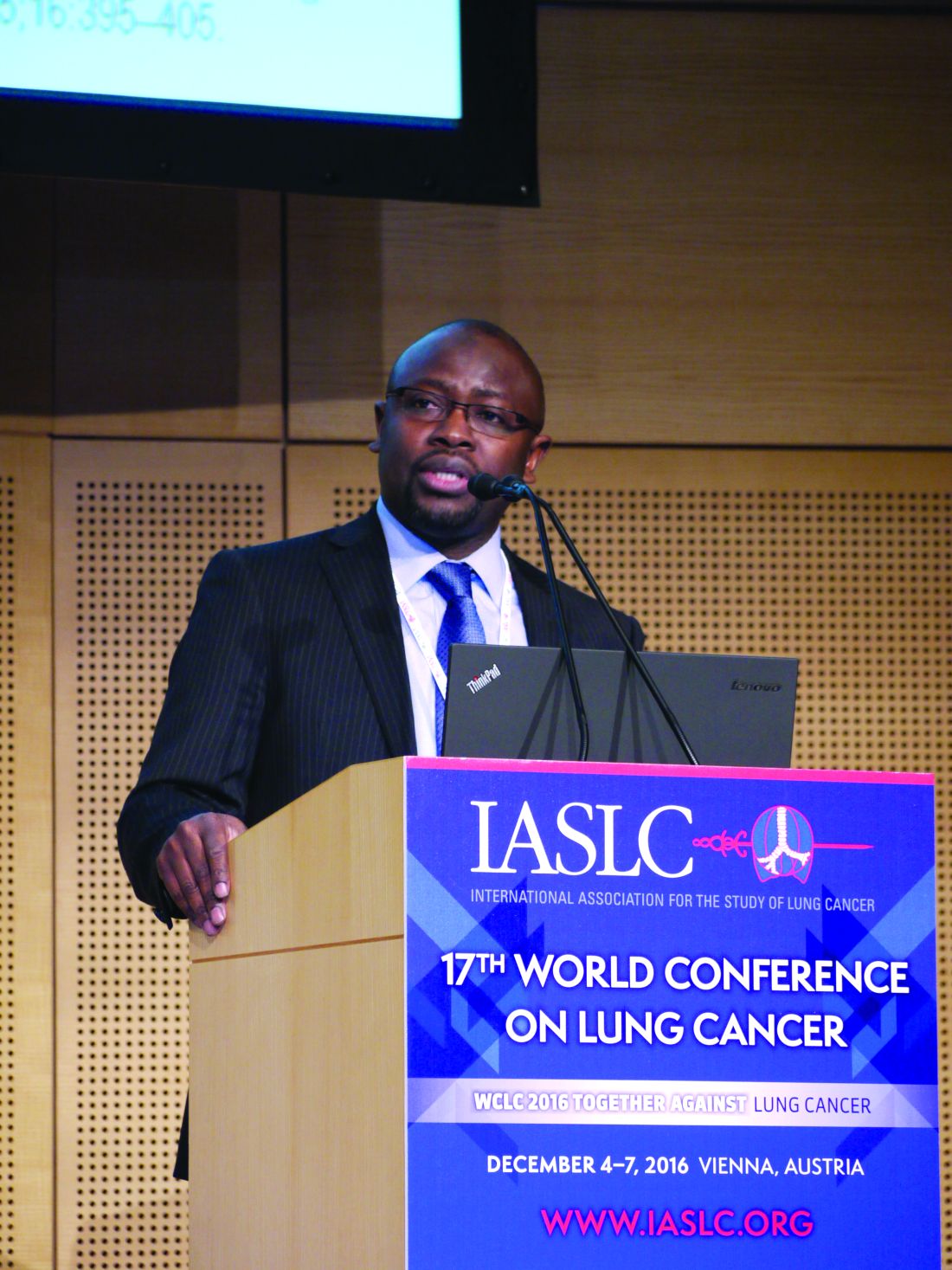
“c-Myc protein expression showed a strong association with improved PFS, despite the small number of evaluable patients,” study investigator Taofeek Owonikoko, MD, of Emory University, Atlanta, said at the World Conference on Lung Cancer.
Amplification and overexpression of c-Myc is a strong oncogenic driver in many cancers, he explained. Around 18%-31% of SCLCs overexpress the protein, and it is often found in patients with chemorefractory disease, he said.
In the study, longer PFS was achieved in patients treated with alisertib/paclitaxel than in those given placebo/paclitaxel if they were c-Myc positive (4.64 vs. 2.27 months; HR, 0.29). Conversely, patients who were c-Myc negative had a shorter PFS with the combination (3.32 vs. 5.16 months; HR, 11.8).
“A prospective study is needed to further validate the predictive value of c-Myc in the clinic,” Dr. Owonikoko said at the meeting, which was sponsored by the International Association for the Study of Lung Cancer.
Alisertib is an aurora A kinase inhibitor that has already been shown to have antitumor activity in patients with solid tumors, including those with SCLC (Lancet Oncol. 2015;16[4]:395-405).
The current phase II study was designed to evaluate the efficacy and safety of alisertib in combination with paclitaxel, compared with placebo plus paclitaxel, in a larger population of patients with SCLC who had relapsed within 6 months or did not respond to standard first-line, platinum-based chemotherapy.
Treatment was given in 28-day cycles, with patients randomized to the combination receiving alisertib at an oral, 40-mg, twice-daily dose on days 1-3, 8-10, and 15-17 and paclitaxel administered intravenously at a dose of 60 mg/m2 IV on days 1, 8, 15. Patients randomized to the control arm received a matched placebo plus paclitaxel given on the same days but at a dose of 80 mg/m2.
Overall, 178 patients were randomized, with a mean age of 62 years, and just over half (57%) were men.
Numerically higher objective response rates (22% vs. 18%), disease control rates (77 vs. 67%), and overall survival (6.87 vs. 5.58 months) also were seen with the combination over paclitaxel alone, although they did not achieve statistical significance.
Additional toxicities were observed with the combination treatment versus paclitaxel. Many of these were to be expected, Dr. Owonikoko said. Almost all (99% vs. 96%) of patients reported some type of adverse event, of which 75% and 51% were grade 3 or higher, respectively. Common any-grade adverse effects were diarrhea (59% vs. 20%), neutropenia (49% vs. 8%), anemia (44% vs. 20%), and fatigue (44% vs. 33%).
These toxicities, however, did not appear to affect patients’ quality of life, Dr. Owonikoko said, as comparable changes in quality-of-life scores using the European Organization for Research and Treatment of Cancer Quality of Life Questionnaire C30 instrument were observed. There was even an indication that patients taking alisertib/paclitaxel might have improved lung-related symptoms, such as shortness of breath and worsening cough.
The treatment of SCLC, particularly in the second-line setting, remains challenging, observed the invited discussant for the trial Jens Benn Sørensen, MD, of the Finsen Centre at Rigshospitalet, Copenhagen.
“There have been no major improvements in the last decade and there are no targeted agents approved for use,” Dr. Sørensen said. Although that is not for lack of trying, he qualified.
When first-line therapies fail, the guideline-recommended option is to put patients back on platinum-based chemotherapy if they were sensitive to such chemotherapy. If not, then topotecan is often an appropriate, reasonably tolerated option.
“The clinical relevance of second-line paclitaxel/alisertib in all comers is questionable,” he said. The PFS improvement of 1.2 months in this phase II study seems “mostly at the same level” when comparing trials of second-line, single-agent topotecan.
“However, the use of c-Myc as a predictor for efficacy seems very promising and should clearly be explored,” Dr. Sørensen noted.
He also suggested that it might be interesting to look into the combination of topotecan and alisertib versus topotecan alone in c-Myc-positive patients.
The study was funded by Millennium Pharmaceuticals, a wholly owned subsidiary of Takeda Pharmaceutical Company. Dr. Owonikoko disclosed consulting for Takeda and several other pharmaceutical companies. Dr. Sørensen did not have disclosures.
VIENNA – The investigational agent alisertib plus paclitaxel improved progression-free survival (PFS), compared with paclitaxel plus placebo, in a randomized, double-blind, phase II study of patients with relapsed or refractory small-cell lung cancer (SCLC).
The median PFS was 3.32 months with alisertib/paclitaxel and 2.17 months with paclitaxel/placebo, giving an overall 30% improvement with the combination (hazard ratio, 0.71; 95% confidence interval, 0.509-0.985; P = .038).
“c-Myc protein expression showed a strong association with improved PFS, despite the small number of evaluable patients,” study investigator Taofeek Owonikoko, MD, of Emory University, Atlanta, said at the World Conference on Lung Cancer.
Amplification and overexpression of c-Myc is a strong oncogenic driver in many cancers, he explained. Around 18%-31% of SCLCs overexpress the protein, and it is often found in patients with chemorefractory disease, he said.
In the study, longer PFS was achieved in patients treated with alisertib/paclitaxel than in those given placebo/paclitaxel if they were c-Myc positive (4.64 vs. 2.27 months; HR, 0.29). Conversely, patients who were c-Myc negative had a shorter PFS with the combination (3.32 vs. 5.16 months; HR, 11.8).
“A prospective study is needed to further validate the predictive value of c-Myc in the clinic,” Dr. Owonikoko said at the meeting, which was sponsored by the International Association for the Study of Lung Cancer.
Alisertib is an aurora A kinase inhibitor that has already been shown to have antitumor activity in patients with solid tumors, including those with SCLC (Lancet Oncol. 2015;16[4]:395-405).
The current phase II study was designed to evaluate the efficacy and safety of alisertib in combination with paclitaxel, compared with placebo plus paclitaxel, in a larger population of patients with SCLC who had relapsed within 6 months or did not respond to standard first-line, platinum-based chemotherapy.
Treatment was given in 28-day cycles, with patients randomized to the combination receiving alisertib at an oral, 40-mg, twice-daily dose on days 1-3, 8-10, and 15-17 and paclitaxel administered intravenously at a dose of 60 mg/m2 IV on days 1, 8, 15. Patients randomized to the control arm received a matched placebo plus paclitaxel given on the same days but at a dose of 80 mg/m2.
Overall, 178 patients were randomized, with a mean age of 62 years, and just over half (57%) were men.
Numerically higher objective response rates (22% vs. 18%), disease control rates (77 vs. 67%), and overall survival (6.87 vs. 5.58 months) also were seen with the combination over paclitaxel alone, although they did not achieve statistical significance.
Additional toxicities were observed with the combination treatment versus paclitaxel. Many of these were to be expected, Dr. Owonikoko said. Almost all (99% vs. 96%) of patients reported some type of adverse event, of which 75% and 51% were grade 3 or higher, respectively. Common any-grade adverse effects were diarrhea (59% vs. 20%), neutropenia (49% vs. 8%), anemia (44% vs. 20%), and fatigue (44% vs. 33%).
These toxicities, however, did not appear to affect patients’ quality of life, Dr. Owonikoko said, as comparable changes in quality-of-life scores using the European Organization for Research and Treatment of Cancer Quality of Life Questionnaire C30 instrument were observed. There was even an indication that patients taking alisertib/paclitaxel might have improved lung-related symptoms, such as shortness of breath and worsening cough.
The treatment of SCLC, particularly in the second-line setting, remains challenging, observed the invited discussant for the trial Jens Benn Sørensen, MD, of the Finsen Centre at Rigshospitalet, Copenhagen.
“There have been no major improvements in the last decade and there are no targeted agents approved for use,” Dr. Sørensen said. Although that is not for lack of trying, he qualified.
When first-line therapies fail, the guideline-recommended option is to put patients back on platinum-based chemotherapy if they were sensitive to such chemotherapy. If not, then topotecan is often an appropriate, reasonably tolerated option.
“The clinical relevance of second-line paclitaxel/alisertib in all comers is questionable,” he said. The PFS improvement of 1.2 months in this phase II study seems “mostly at the same level” when comparing trials of second-line, single-agent topotecan.
“However, the use of c-Myc as a predictor for efficacy seems very promising and should clearly be explored,” Dr. Sørensen noted.
He also suggested that it might be interesting to look into the combination of topotecan and alisertib versus topotecan alone in c-Myc-positive patients.
The study was funded by Millennium Pharmaceuticals, a wholly owned subsidiary of Takeda Pharmaceutical Company. Dr. Owonikoko disclosed consulting for Takeda and several other pharmaceutical companies. Dr. Sørensen did not have disclosures.
VIENNA – The investigational agent alisertib plus paclitaxel improved progression-free survival (PFS), compared with paclitaxel plus placebo, in a randomized, double-blind, phase II study of patients with relapsed or refractory small-cell lung cancer (SCLC).
The median PFS was 3.32 months with alisertib/paclitaxel and 2.17 months with paclitaxel/placebo, giving an overall 30% improvement with the combination (hazard ratio, 0.71; 95% confidence interval, 0.509-0.985; P = .038).
“c-Myc protein expression showed a strong association with improved PFS, despite the small number of evaluable patients,” study investigator Taofeek Owonikoko, MD, of Emory University, Atlanta, said at the World Conference on Lung Cancer.
Amplification and overexpression of c-Myc is a strong oncogenic driver in many cancers, he explained. Around 18%-31% of SCLCs overexpress the protein, and it is often found in patients with chemorefractory disease, he said.
In the study, longer PFS was achieved in patients treated with alisertib/paclitaxel than in those given placebo/paclitaxel if they were c-Myc positive (4.64 vs. 2.27 months; HR, 0.29). Conversely, patients who were c-Myc negative had a shorter PFS with the combination (3.32 vs. 5.16 months; HR, 11.8).
“A prospective study is needed to further validate the predictive value of c-Myc in the clinic,” Dr. Owonikoko said at the meeting, which was sponsored by the International Association for the Study of Lung Cancer.
Alisertib is an aurora A kinase inhibitor that has already been shown to have antitumor activity in patients with solid tumors, including those with SCLC (Lancet Oncol. 2015;16[4]:395-405).
The current phase II study was designed to evaluate the efficacy and safety of alisertib in combination with paclitaxel, compared with placebo plus paclitaxel, in a larger population of patients with SCLC who had relapsed within 6 months or did not respond to standard first-line, platinum-based chemotherapy.
Treatment was given in 28-day cycles, with patients randomized to the combination receiving alisertib at an oral, 40-mg, twice-daily dose on days 1-3, 8-10, and 15-17 and paclitaxel administered intravenously at a dose of 60 mg/m2 IV on days 1, 8, 15. Patients randomized to the control arm received a matched placebo plus paclitaxel given on the same days but at a dose of 80 mg/m2.
Overall, 178 patients were randomized, with a mean age of 62 years, and just over half (57%) were men.
Numerically higher objective response rates (22% vs. 18%), disease control rates (77 vs. 67%), and overall survival (6.87 vs. 5.58 months) also were seen with the combination over paclitaxel alone, although they did not achieve statistical significance.
Additional toxicities were observed with the combination treatment versus paclitaxel. Many of these were to be expected, Dr. Owonikoko said. Almost all (99% vs. 96%) of patients reported some type of adverse event, of which 75% and 51% were grade 3 or higher, respectively. Common any-grade adverse effects were diarrhea (59% vs. 20%), neutropenia (49% vs. 8%), anemia (44% vs. 20%), and fatigue (44% vs. 33%).
These toxicities, however, did not appear to affect patients’ quality of life, Dr. Owonikoko said, as comparable changes in quality-of-life scores using the European Organization for Research and Treatment of Cancer Quality of Life Questionnaire C30 instrument were observed. There was even an indication that patients taking alisertib/paclitaxel might have improved lung-related symptoms, such as shortness of breath and worsening cough.
The treatment of SCLC, particularly in the second-line setting, remains challenging, observed the invited discussant for the trial Jens Benn Sørensen, MD, of the Finsen Centre at Rigshospitalet, Copenhagen.
“There have been no major improvements in the last decade and there are no targeted agents approved for use,” Dr. Sørensen said. Although that is not for lack of trying, he qualified.
When first-line therapies fail, the guideline-recommended option is to put patients back on platinum-based chemotherapy if they were sensitive to such chemotherapy. If not, then topotecan is often an appropriate, reasonably tolerated option.
“The clinical relevance of second-line paclitaxel/alisertib in all comers is questionable,” he said. The PFS improvement of 1.2 months in this phase II study seems “mostly at the same level” when comparing trials of second-line, single-agent topotecan.
“However, the use of c-Myc as a predictor for efficacy seems very promising and should clearly be explored,” Dr. Sørensen noted.
He also suggested that it might be interesting to look into the combination of topotecan and alisertib versus topotecan alone in c-Myc-positive patients.
The study was funded by Millennium Pharmaceuticals, a wholly owned subsidiary of Takeda Pharmaceutical Company. Dr. Owonikoko disclosed consulting for Takeda and several other pharmaceutical companies. Dr. Sørensen did not have disclosures.
AT WCLC 2016
Key clinical point: Alisertib/paclitaxel is an investigational combination that was tested for the treatment of relapsed or refractory small-cell lung cancer (SCLC).
Major finding: Improved progression-free survival was seen with the combination versus paclitaxel alone (3.2 vs. 2.17 months, P less than .038).
Data source: Randomized, double-blind, multicenter, phase II study of alisertib/paclitaxel versus placebo/paclitaxel in 178 patients with relapsed or refractory SCLC.
Disclosures: The study was funded by Millennium Pharmaceuticals, a wholly owned subsidiary of Takeda Pharmaceutical Company. Dr. Owonikoko disclosed consulting for Takeda and several other pharmaceutical companies. Dr. Sørensen had no conflicts of interest to disclose.