User login
HM16 Q&A: What Problem Do You Hope Health IT Solves?
With the rolling out of the Health IT track on the second full day of HM16, The Hospitalist asked: What problem do you hope health IT solves or helps you solve over the next five years?
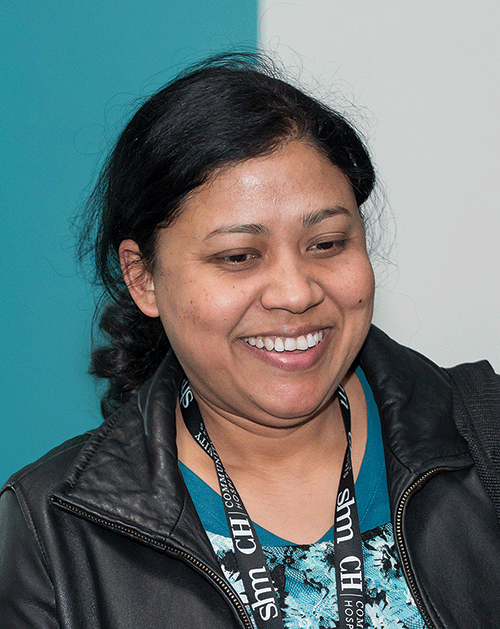
Farhanaz Chowdhury, MD, hospitalist, HSHS St. Elizabeth’s Hospital, Belleville, Ill.
“I think that hospital health systems are very primitive. When they make that software, physicians should be more involved so that in everyday life, what we see when we are facing all those problems, you have an algorithm if you want to do something. It should pop up so that you don’t have to write it down and scroll all over.”
Michael Lintner, MD, hospitalist, Aspen Valley Hospital, Colo.

“I think probably the main thing would be work flow, facilitating work flow. I think today hospitalists are just getting more and more and more work. Patient loads are getting increasingly bigger. I think with IT, [we need] systems that facilitate and help with the work flow and help the hospitalist’s day go smoother because there are so many things that we do.”
Miguel Lizardo, MD, hospitalist, University of Massachusetts Memorial Medical Center, Worcester
“It takes a lot of time to interact with the EMRs and all the technology that we have to use. If they can find a way that we can use it in a more user-friendly [way] so that it takes not a long time, that would be great. At least the EMRs that I’ve been in contact with are too cumbersome, too many clicks to get where you want, a bunch of steps to document what you need to. You really are away from the patient and spending a lot of time trying to document.”
Sandeep Palikhel, PA-C, Baylor University Medical Center, Waco, Tex.
“Definitely accuracy. In Texas, where I practice, we get a lot of transfers from rural areas because we are a Level 1 trauma hospital. We get these discharge summaries or progress notes from other hospitals that are handwritten. A lot of information gets missed whenever we’re reading it because it’s not legible, first thing, and it’s not as detail-oriented as the EHRs would be. So that definitely helps. Even going through a medication list, it helps so much to go through an EHR versus going through a handwritten medication list. That’s what I mean by accuracy.”
With the rolling out of the Health IT track on the second full day of HM16, The Hospitalist asked: What problem do you hope health IT solves or helps you solve over the next five years?
Farhanaz Chowdhury, MD, hospitalist, HSHS St. Elizabeth’s Hospital, Belleville, Ill.
“I think that hospital health systems are very primitive. When they make that software, physicians should be more involved so that in everyday life, what we see when we are facing all those problems, you have an algorithm if you want to do something. It should pop up so that you don’t have to write it down and scroll all over.”
Michael Lintner, MD, hospitalist, Aspen Valley Hospital, Colo.
“I think probably the main thing would be work flow, facilitating work flow. I think today hospitalists are just getting more and more and more work. Patient loads are getting increasingly bigger. I think with IT, [we need] systems that facilitate and help with the work flow and help the hospitalist’s day go smoother because there are so many things that we do.”
Miguel Lizardo, MD, hospitalist, University of Massachusetts Memorial Medical Center, Worcester
“It takes a lot of time to interact with the EMRs and all the technology that we have to use. If they can find a way that we can use it in a more user-friendly [way] so that it takes not a long time, that would be great. At least the EMRs that I’ve been in contact with are too cumbersome, too many clicks to get where you want, a bunch of steps to document what you need to. You really are away from the patient and spending a lot of time trying to document.”
Sandeep Palikhel, PA-C, Baylor University Medical Center, Waco, Tex.
“Definitely accuracy. In Texas, where I practice, we get a lot of transfers from rural areas because we are a Level 1 trauma hospital. We get these discharge summaries or progress notes from other hospitals that are handwritten. A lot of information gets missed whenever we’re reading it because it’s not legible, first thing, and it’s not as detail-oriented as the EHRs would be. So that definitely helps. Even going through a medication list, it helps so much to go through an EHR versus going through a handwritten medication list. That’s what I mean by accuracy.”
With the rolling out of the Health IT track on the second full day of HM16, The Hospitalist asked: What problem do you hope health IT solves or helps you solve over the next five years?
Farhanaz Chowdhury, MD, hospitalist, HSHS St. Elizabeth’s Hospital, Belleville, Ill.
“I think that hospital health systems are very primitive. When they make that software, physicians should be more involved so that in everyday life, what we see when we are facing all those problems, you have an algorithm if you want to do something. It should pop up so that you don’t have to write it down and scroll all over.”
Michael Lintner, MD, hospitalist, Aspen Valley Hospital, Colo.
“I think probably the main thing would be work flow, facilitating work flow. I think today hospitalists are just getting more and more and more work. Patient loads are getting increasingly bigger. I think with IT, [we need] systems that facilitate and help with the work flow and help the hospitalist’s day go smoother because there are so many things that we do.”
Miguel Lizardo, MD, hospitalist, University of Massachusetts Memorial Medical Center, Worcester
“It takes a lot of time to interact with the EMRs and all the technology that we have to use. If they can find a way that we can use it in a more user-friendly [way] so that it takes not a long time, that would be great. At least the EMRs that I’ve been in contact with are too cumbersome, too many clicks to get where you want, a bunch of steps to document what you need to. You really are away from the patient and spending a lot of time trying to document.”
Sandeep Palikhel, PA-C, Baylor University Medical Center, Waco, Tex.
“Definitely accuracy. In Texas, where I practice, we get a lot of transfers from rural areas because we are a Level 1 trauma hospital. We get these discharge summaries or progress notes from other hospitals that are handwritten. A lot of information gets missed whenever we’re reading it because it’s not legible, first thing, and it’s not as detail-oriented as the EHRs would be. So that definitely helps. Even going through a medication list, it helps so much to go through an EHR versus going through a handwritten medication list. That’s what I mean by accuracy.”
New Findings Show: Factors Contributing to the Prevalence in readmission for Bariatric Surgery Patients
NEW YORK (Reuters Health) - About one in 20 bariatric surgery patients are readmitted to the hospital within 30 days of having the procedure, according to new findings.
Readmissions are increasingly being used as a quality metric for surgical procedures, Dr. John Morton of Stanford University in California and colleagues note in their report, published online March 19 in the American Journal of Surgery.
"While (the Centers for Medicare and Medicaid Services) has not addressed bariatric surgery readmissions to date, other payors have made readmissions a priority," they add. "Data regarding bariatric surgery readmissions are critical to help better understand and drive quality improvement in this area.
"To investigate the prevalence, causes and risk factors for readmission following bariatric surgery, the researchers looked at data from the 2012 American College of Surgeons National Surgical Quality Improvement Program Public Use File dataset on nearly 18,300 bariatric patients, of whom 55% had laparoscopic Roux-en-Y gastric bypass (LRYGB), 10% had laparoscopic adjustable gastric banding (LAGB), and 35% had laparoscopic sleeve gastrectomy (LSG).
There were 955 readmissions (5.22%), most commonly for gastrointestinal causes (45%), dietary reasons (34%) and bleeding (7%). Readmission rates were nearly 7% for LRYGB; just under 2% for LAGB; and 4% for LSG.
The patients who were readmitted had a significantly longer average operating time (132 vs. 115 minutes) and length of stay (2.76 days vs. 2.23). Forty percent had a complication, versus 4% of patients who were not readmitted. Patients who were readmitted were also more likely to have a body mass index above 50, preoperative diabetes, chronic obstructive pulmonary disease, and hypertension.
Factors independently associated with readmission included African-American race (odds ratio, 1.53), complication (OR, 11.3) and resident involvement (OR, 0.53).
"Other studies have also demonstrated similar predictors of readmission and have also demonstrated that length of stay may also play a role in readmission rates," Dr. Morton and his team state. "This study helps demonstrate that bariatric surgery readmissions are prevalent and potentially preventable."
NEW YORK (Reuters Health) - About one in 20 bariatric surgery patients are readmitted to the hospital within 30 days of having the procedure, according to new findings.
Readmissions are increasingly being used as a quality metric for surgical procedures, Dr. John Morton of Stanford University in California and colleagues note in their report, published online March 19 in the American Journal of Surgery.
"While (the Centers for Medicare and Medicaid Services) has not addressed bariatric surgery readmissions to date, other payors have made readmissions a priority," they add. "Data regarding bariatric surgery readmissions are critical to help better understand and drive quality improvement in this area.
"To investigate the prevalence, causes and risk factors for readmission following bariatric surgery, the researchers looked at data from the 2012 American College of Surgeons National Surgical Quality Improvement Program Public Use File dataset on nearly 18,300 bariatric patients, of whom 55% had laparoscopic Roux-en-Y gastric bypass (LRYGB), 10% had laparoscopic adjustable gastric banding (LAGB), and 35% had laparoscopic sleeve gastrectomy (LSG).
There were 955 readmissions (5.22%), most commonly for gastrointestinal causes (45%), dietary reasons (34%) and bleeding (7%). Readmission rates were nearly 7% for LRYGB; just under 2% for LAGB; and 4% for LSG.
The patients who were readmitted had a significantly longer average operating time (132 vs. 115 minutes) and length of stay (2.76 days vs. 2.23). Forty percent had a complication, versus 4% of patients who were not readmitted. Patients who were readmitted were also more likely to have a body mass index above 50, preoperative diabetes, chronic obstructive pulmonary disease, and hypertension.
Factors independently associated with readmission included African-American race (odds ratio, 1.53), complication (OR, 11.3) and resident involvement (OR, 0.53).
"Other studies have also demonstrated similar predictors of readmission and have also demonstrated that length of stay may also play a role in readmission rates," Dr. Morton and his team state. "This study helps demonstrate that bariatric surgery readmissions are prevalent and potentially preventable."
NEW YORK (Reuters Health) - About one in 20 bariatric surgery patients are readmitted to the hospital within 30 days of having the procedure, according to new findings.
Readmissions are increasingly being used as a quality metric for surgical procedures, Dr. John Morton of Stanford University in California and colleagues note in their report, published online March 19 in the American Journal of Surgery.
"While (the Centers for Medicare and Medicaid Services) has not addressed bariatric surgery readmissions to date, other payors have made readmissions a priority," they add. "Data regarding bariatric surgery readmissions are critical to help better understand and drive quality improvement in this area.
"To investigate the prevalence, causes and risk factors for readmission following bariatric surgery, the researchers looked at data from the 2012 American College of Surgeons National Surgical Quality Improvement Program Public Use File dataset on nearly 18,300 bariatric patients, of whom 55% had laparoscopic Roux-en-Y gastric bypass (LRYGB), 10% had laparoscopic adjustable gastric banding (LAGB), and 35% had laparoscopic sleeve gastrectomy (LSG).
There were 955 readmissions (5.22%), most commonly for gastrointestinal causes (45%), dietary reasons (34%) and bleeding (7%). Readmission rates were nearly 7% for LRYGB; just under 2% for LAGB; and 4% for LSG.
The patients who were readmitted had a significantly longer average operating time (132 vs. 115 minutes) and length of stay (2.76 days vs. 2.23). Forty percent had a complication, versus 4% of patients who were not readmitted. Patients who were readmitted were also more likely to have a body mass index above 50, preoperative diabetes, chronic obstructive pulmonary disease, and hypertension.
Factors independently associated with readmission included African-American race (odds ratio, 1.53), complication (OR, 11.3) and resident involvement (OR, 0.53).
"Other studies have also demonstrated similar predictors of readmission and have also demonstrated that length of stay may also play a role in readmission rates," Dr. Morton and his team state. "This study helps demonstrate that bariatric surgery readmissions are prevalent and potentially preventable."
New Analysis shows that Women who Develop Diabetes while Pregnant are Likely to Develop Fatty Liver Disease
(Reuters Health) - Women who develop diabetes while pregnant may be at elevated risk of also developing a dangerous build up of fat in their livers when they reach middle age, according to a new analysis.
The common risk factor for both gestational diabetes and non-alcoholic fatty liver disease, researchers say, is trouble making or using the hormone insulin to manage blood sugar, known as insulin resistance.
"We hope that early identification can promote healthy lifestyle changes that prevent or slow disease progression," said lead author Dr. Veeral Ajmera of the University of California, San Francisco.
"Pregnancy stresses the body in many ways, one of which is the ability to manage blood sugar," Ajmera said by email. "During pregnancy a woman's body becomes more resistant to insulin, which is the hormone required to decrease the blood sugar."
Insulin resistance is also "central to development of non-alcoholic fatty liver disease," which affects 20 percent to 30 percent of adults in the western world, the study team writes in The American Journal of Gastroenterology. Non-alcoholic fatty liver disease is the most common chronic liver disease in the United States.
Fatty liver disease is often diagnosed later in life, Ajmera told Reuters Health. So the researchers used long-term data to see if diabetes during pregnancy made a woman more likely to develop fatty liver disease 25 years later.
The researchers analyzed information about 1,115 black and white women recruited between 1985-1986 in four cities across the United States who gave birth to at least one child.
The participants did not have diabetes before becoming pregnant and the study excluded people who had liver issues related to alcohol, HIV, hepatitis or medications.
At the start of the study, women reported on whether they first experienced diabetes during pregnancy, and researchers confirmed the diagnosis with blood test results. Twenty-five years later, the women received more blood tests as well as CT scans of their livers to check if they had fatty liver disease.
At the beginning of the study, 124 women reported that they developed diabetes while they were pregnant. These women were more likely than those who did not experience gestational diabetes to be overweight. They also had higher degrees of insulin resistance when they were younger as well as at the 25-year follow up.
The women who experienced diabetes during pregnancy were also more likely to have developed diabetes again at some point in the following 25 years.
Overall, 75 women were diagnosed with non-alcoholic fatty liver disease when they were middle aged. Women who had diabetes during pregnancy were more than twice as likely as those who didn't to later develop fatty liver disease.
After researchers adjusted for diabetes that some women experienced outside of pregnancy, the risk of non-alcoholic fatty liver disease was still 50 percent higher for women who had gestational diabetes compared to those who didn't.
Fatty liver disease can have grave health effects and can even lead to cirrhosis, a condition that causes liver damage and possible failure, said Simon Taylor-Robinson, a professor of medicine at Imperial College London in the U.K. who wasn't involved in the study.
He advocates changes in diet to avoid the insulin resistance that leads to diabetes and fatty liver disease. "Many women are obese - so it is a matter of reducing weight and eating sensibly," he said.
Taylor-Robinson recommends eating fewer carbohydrates, more proteins and vegetables, and in particular, avoiding large amounts of fruit juice, which can contain a lot of sugar.
Ajmera also advised lifestyle changes, especially adding exercise. "We recommend either aerobic or resistance training for 30 minutes five times per week," he said.
"There are consequences to obesity and this includes cirrhosis, liver cancer and heart disease," Taylor-Robinson said. "Those people who become diabetic during pregnancy have strong risks of developing these complications later in life if attention isn't given to weight, diet and exercise."
(Reuters Health) - Women who develop diabetes while pregnant may be at elevated risk of also developing a dangerous build up of fat in their livers when they reach middle age, according to a new analysis.
The common risk factor for both gestational diabetes and non-alcoholic fatty liver disease, researchers say, is trouble making or using the hormone insulin to manage blood sugar, known as insulin resistance.
"We hope that early identification can promote healthy lifestyle changes that prevent or slow disease progression," said lead author Dr. Veeral Ajmera of the University of California, San Francisco.
"Pregnancy stresses the body in many ways, one of which is the ability to manage blood sugar," Ajmera said by email. "During pregnancy a woman's body becomes more resistant to insulin, which is the hormone required to decrease the blood sugar."
Insulin resistance is also "central to development of non-alcoholic fatty liver disease," which affects 20 percent to 30 percent of adults in the western world, the study team writes in The American Journal of Gastroenterology. Non-alcoholic fatty liver disease is the most common chronic liver disease in the United States.
Fatty liver disease is often diagnosed later in life, Ajmera told Reuters Health. So the researchers used long-term data to see if diabetes during pregnancy made a woman more likely to develop fatty liver disease 25 years later.
The researchers analyzed information about 1,115 black and white women recruited between 1985-1986 in four cities across the United States who gave birth to at least one child.
The participants did not have diabetes before becoming pregnant and the study excluded people who had liver issues related to alcohol, HIV, hepatitis or medications.
At the start of the study, women reported on whether they first experienced diabetes during pregnancy, and researchers confirmed the diagnosis with blood test results. Twenty-five years later, the women received more blood tests as well as CT scans of their livers to check if they had fatty liver disease.
At the beginning of the study, 124 women reported that they developed diabetes while they were pregnant. These women were more likely than those who did not experience gestational diabetes to be overweight. They also had higher degrees of insulin resistance when they were younger as well as at the 25-year follow up.
The women who experienced diabetes during pregnancy were also more likely to have developed diabetes again at some point in the following 25 years.
Overall, 75 women were diagnosed with non-alcoholic fatty liver disease when they were middle aged. Women who had diabetes during pregnancy were more than twice as likely as those who didn't to later develop fatty liver disease.
After researchers adjusted for diabetes that some women experienced outside of pregnancy, the risk of non-alcoholic fatty liver disease was still 50 percent higher for women who had gestational diabetes compared to those who didn't.
Fatty liver disease can have grave health effects and can even lead to cirrhosis, a condition that causes liver damage and possible failure, said Simon Taylor-Robinson, a professor of medicine at Imperial College London in the U.K. who wasn't involved in the study.
He advocates changes in diet to avoid the insulin resistance that leads to diabetes and fatty liver disease. "Many women are obese - so it is a matter of reducing weight and eating sensibly," he said.
Taylor-Robinson recommends eating fewer carbohydrates, more proteins and vegetables, and in particular, avoiding large amounts of fruit juice, which can contain a lot of sugar.
Ajmera also advised lifestyle changes, especially adding exercise. "We recommend either aerobic or resistance training for 30 minutes five times per week," he said.
"There are consequences to obesity and this includes cirrhosis, liver cancer and heart disease," Taylor-Robinson said. "Those people who become diabetic during pregnancy have strong risks of developing these complications later in life if attention isn't given to weight, diet and exercise."
(Reuters Health) - Women who develop diabetes while pregnant may be at elevated risk of also developing a dangerous build up of fat in their livers when they reach middle age, according to a new analysis.
The common risk factor for both gestational diabetes and non-alcoholic fatty liver disease, researchers say, is trouble making or using the hormone insulin to manage blood sugar, known as insulin resistance.
"We hope that early identification can promote healthy lifestyle changes that prevent or slow disease progression," said lead author Dr. Veeral Ajmera of the University of California, San Francisco.
"Pregnancy stresses the body in many ways, one of which is the ability to manage blood sugar," Ajmera said by email. "During pregnancy a woman's body becomes more resistant to insulin, which is the hormone required to decrease the blood sugar."
Insulin resistance is also "central to development of non-alcoholic fatty liver disease," which affects 20 percent to 30 percent of adults in the western world, the study team writes in The American Journal of Gastroenterology. Non-alcoholic fatty liver disease is the most common chronic liver disease in the United States.
Fatty liver disease is often diagnosed later in life, Ajmera told Reuters Health. So the researchers used long-term data to see if diabetes during pregnancy made a woman more likely to develop fatty liver disease 25 years later.
The researchers analyzed information about 1,115 black and white women recruited between 1985-1986 in four cities across the United States who gave birth to at least one child.
The participants did not have diabetes before becoming pregnant and the study excluded people who had liver issues related to alcohol, HIV, hepatitis or medications.
At the start of the study, women reported on whether they first experienced diabetes during pregnancy, and researchers confirmed the diagnosis with blood test results. Twenty-five years later, the women received more blood tests as well as CT scans of their livers to check if they had fatty liver disease.
At the beginning of the study, 124 women reported that they developed diabetes while they were pregnant. These women were more likely than those who did not experience gestational diabetes to be overweight. They also had higher degrees of insulin resistance when they were younger as well as at the 25-year follow up.
The women who experienced diabetes during pregnancy were also more likely to have developed diabetes again at some point in the following 25 years.
Overall, 75 women were diagnosed with non-alcoholic fatty liver disease when they were middle aged. Women who had diabetes during pregnancy were more than twice as likely as those who didn't to later develop fatty liver disease.
After researchers adjusted for diabetes that some women experienced outside of pregnancy, the risk of non-alcoholic fatty liver disease was still 50 percent higher for women who had gestational diabetes compared to those who didn't.
Fatty liver disease can have grave health effects and can even lead to cirrhosis, a condition that causes liver damage and possible failure, said Simon Taylor-Robinson, a professor of medicine at Imperial College London in the U.K. who wasn't involved in the study.
He advocates changes in diet to avoid the insulin resistance that leads to diabetes and fatty liver disease. "Many women are obese - so it is a matter of reducing weight and eating sensibly," he said.
Taylor-Robinson recommends eating fewer carbohydrates, more proteins and vegetables, and in particular, avoiding large amounts of fruit juice, which can contain a lot of sugar.
Ajmera also advised lifestyle changes, especially adding exercise. "We recommend either aerobic or resistance training for 30 minutes five times per week," he said.
"There are consequences to obesity and this includes cirrhosis, liver cancer and heart disease," Taylor-Robinson said. "Those people who become diabetic during pregnancy have strong risks of developing these complications later in life if attention isn't given to weight, diet and exercise."
The Society of Hospital Medicine is partnering with 18 U.S. Hospitals to Improve Patient Outcomes through Medication Reconciliation
The Society of Hospital Medicine Center for Hospital Innovation is supporting the implementation of a second iteration of the Multi-Center Medication Reconciliation Quality Improvement Study, or MARQUIS2. This is a mentored implementation program developed to assist hospitals and hospital clinicians with developing better ways for medications to be prescribed, recorded and reconciled accurately and safely at times of care transitions, e.g., when patients enter and leave the hospital. The ultimate goal of the study is reduce medication errors, adverse drug events and patient harm during transitions of care. The program is funded through a grant provided by the Agency for Healthcare Research and Quality (AHRQ).
Unintentional medication discrepancies during transitions in care represent a major threat to patient safety. Medication reconciliation enables healthcare providers – and hospitalists in particular – to avoid medication errors such as omissions, duplications, dosing errors and adverse drug interactions and should be completed at every transition of care, including hospital admission and discharge. Beginning in April 2016, SHM will begin working with 18 selected hospital sites to identify, implement and sustain medication reconciliation interventions with guidance from expert physician mentors. Key examples of intervention components include educating providers on how to take a best possible medication history, improving access to preadmission medication sources, encouraging patient ownership of medication lists and identifying patients at higher risk for adverse drug events in need of more intensive efforts.
The Society of Hospital Medicine Center for Hospital Innovation is supporting the implementation of a second iteration of the Multi-Center Medication Reconciliation Quality Improvement Study, or MARQUIS2. This is a mentored implementation program developed to assist hospitals and hospital clinicians with developing better ways for medications to be prescribed, recorded and reconciled accurately and safely at times of care transitions, e.g., when patients enter and leave the hospital. The ultimate goal of the study is reduce medication errors, adverse drug events and patient harm during transitions of care. The program is funded through a grant provided by the Agency for Healthcare Research and Quality (AHRQ).
Unintentional medication discrepancies during transitions in care represent a major threat to patient safety. Medication reconciliation enables healthcare providers – and hospitalists in particular – to avoid medication errors such as omissions, duplications, dosing errors and adverse drug interactions and should be completed at every transition of care, including hospital admission and discharge. Beginning in April 2016, SHM will begin working with 18 selected hospital sites to identify, implement and sustain medication reconciliation interventions with guidance from expert physician mentors. Key examples of intervention components include educating providers on how to take a best possible medication history, improving access to preadmission medication sources, encouraging patient ownership of medication lists and identifying patients at higher risk for adverse drug events in need of more intensive efforts.
The Society of Hospital Medicine Center for Hospital Innovation is supporting the implementation of a second iteration of the Multi-Center Medication Reconciliation Quality Improvement Study, or MARQUIS2. This is a mentored implementation program developed to assist hospitals and hospital clinicians with developing better ways for medications to be prescribed, recorded and reconciled accurately and safely at times of care transitions, e.g., when patients enter and leave the hospital. The ultimate goal of the study is reduce medication errors, adverse drug events and patient harm during transitions of care. The program is funded through a grant provided by the Agency for Healthcare Research and Quality (AHRQ).
Unintentional medication discrepancies during transitions in care represent a major threat to patient safety. Medication reconciliation enables healthcare providers – and hospitalists in particular – to avoid medication errors such as omissions, duplications, dosing errors and adverse drug interactions and should be completed at every transition of care, including hospital admission and discharge. Beginning in April 2016, SHM will begin working with 18 selected hospital sites to identify, implement and sustain medication reconciliation interventions with guidance from expert physician mentors. Key examples of intervention components include educating providers on how to take a best possible medication history, improving access to preadmission medication sources, encouraging patient ownership of medication lists and identifying patients at higher risk for adverse drug events in need of more intensive efforts.
Sign Up to Receive State of Hospital Medicine Report

Having credible information about how HM groups are structured and operate will benefit the entire healthcare industry and those involved in public policy and research. The survey results will be used by a wide variety of individuals and organizations to make important decisions about practice design and resource allocation.
Visit www.hospitalmedicine.org/survey and complete the notification form to be the first to know when the SOHM report becomes available this fall.
Brett Radler is SHM’s communications coordinator.
Having credible information about how HM groups are structured and operate will benefit the entire healthcare industry and those involved in public policy and research. The survey results will be used by a wide variety of individuals and organizations to make important decisions about practice design and resource allocation.
Visit www.hospitalmedicine.org/survey and complete the notification form to be the first to know when the SOHM report becomes available this fall.
Brett Radler is SHM’s communications coordinator.
Having credible information about how HM groups are structured and operate will benefit the entire healthcare industry and those involved in public policy and research. The survey results will be used by a wide variety of individuals and organizations to make important decisions about practice design and resource allocation.
Visit www.hospitalmedicine.org/survey and complete the notification form to be the first to know when the SOHM report becomes available this fall.
Brett Radler is SHM’s communications coordinator.
HM16 Q&A: How Can Hospitalists Avoid Burnout?
Robert Wachter, MD, MHM, chief of the Division of Hospital Medicine at the University of California San Francisco, in his annual address touched on some of the challenges for hospital medicine at the 20-year mark. The Hospitalist asked attendees: How can hospitalists continue to be change leaders and project leaders while also avoiding burnout?

Tamika Smith, MD, hospitalist, Alta Bates Summit Medical Center, Berkeley, Calif.
“I actually consider myself the poster child for work-life balance. I’m a nocturnist. Honestly, I think the secret is to work less. I work 12 to 14 shifts a month; that is how I make it sustainable. … I know that’s my magic number.”
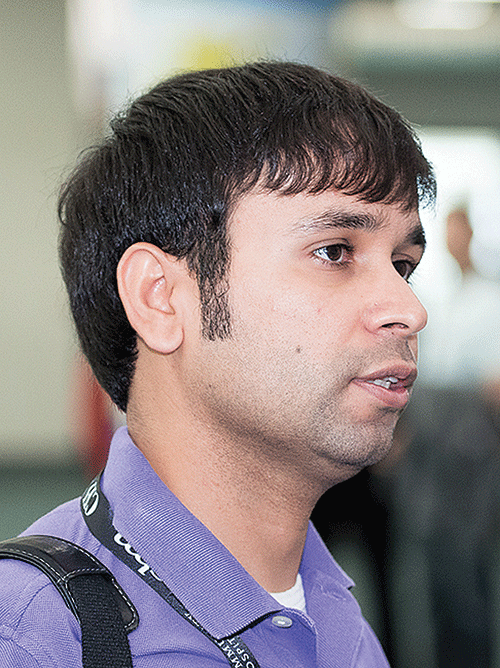
Nisheeth Rai, DO, Aspirus Wausau Hospital, Wausau, Wis.
“I think you have to find a fair balance between your clinical duties. How do you balance the clinical aspect of things? How do you get into more of the management and more projects within the hospital system? We don’t know quite yet, but I think it’s an evolving thing where we’ll just see how the field evolves in the next couple years.”
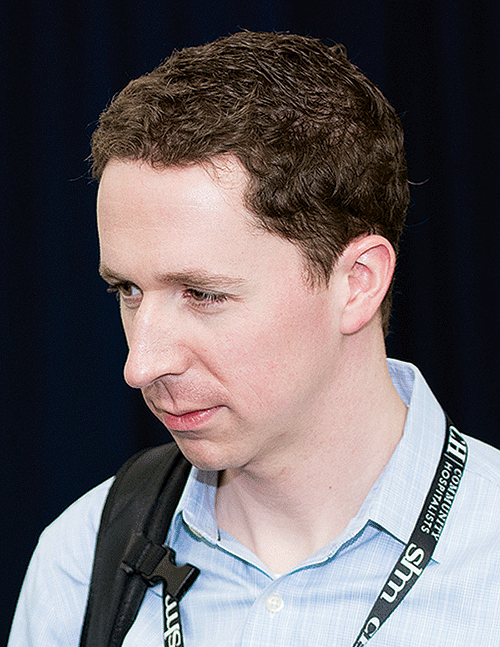
Nathan Houchens, MD, hospitalist, VA Ann Arbor Healthcare System, Mich.
“It helps to know some of the fundamentals around change behavior. I think it’s also fundamental to recognize that it’s a relationship-based field and that without investment and capital in people it’s very difficult to make change sustainable.”
Janie Mathis, DO, cardiovascular hospitalist, Intermountain Medical Center, Salt Lake City
“I guess have some nonclinical time on the schedule. Schedule off from the nights and swing [shifts], and maybe have that as part of their contract and part of their job description. Have it as part of maybe your bonus, add that into your compensation, so you’re motivated to do it since you’re not going to get time off.”
Robert Wachter, MD, MHM, chief of the Division of Hospital Medicine at the University of California San Francisco, in his annual address touched on some of the challenges for hospital medicine at the 20-year mark. The Hospitalist asked attendees: How can hospitalists continue to be change leaders and project leaders while also avoiding burnout?
Tamika Smith, MD, hospitalist, Alta Bates Summit Medical Center, Berkeley, Calif.
“I actually consider myself the poster child for work-life balance. I’m a nocturnist. Honestly, I think the secret is to work less. I work 12 to 14 shifts a month; that is how I make it sustainable. … I know that’s my magic number.”
Nisheeth Rai, DO, Aspirus Wausau Hospital, Wausau, Wis.
“I think you have to find a fair balance between your clinical duties. How do you balance the clinical aspect of things? How do you get into more of the management and more projects within the hospital system? We don’t know quite yet, but I think it’s an evolving thing where we’ll just see how the field evolves in the next couple years.”
Nathan Houchens, MD, hospitalist, VA Ann Arbor Healthcare System, Mich.
“It helps to know some of the fundamentals around change behavior. I think it’s also fundamental to recognize that it’s a relationship-based field and that without investment and capital in people it’s very difficult to make change sustainable.”
Janie Mathis, DO, cardiovascular hospitalist, Intermountain Medical Center, Salt Lake City
“I guess have some nonclinical time on the schedule. Schedule off from the nights and swing [shifts], and maybe have that as part of their contract and part of their job description. Have it as part of maybe your bonus, add that into your compensation, so you’re motivated to do it since you’re not going to get time off.”
Robert Wachter, MD, MHM, chief of the Division of Hospital Medicine at the University of California San Francisco, in his annual address touched on some of the challenges for hospital medicine at the 20-year mark. The Hospitalist asked attendees: How can hospitalists continue to be change leaders and project leaders while also avoiding burnout?
Tamika Smith, MD, hospitalist, Alta Bates Summit Medical Center, Berkeley, Calif.
“I actually consider myself the poster child for work-life balance. I’m a nocturnist. Honestly, I think the secret is to work less. I work 12 to 14 shifts a month; that is how I make it sustainable. … I know that’s my magic number.”
Nisheeth Rai, DO, Aspirus Wausau Hospital, Wausau, Wis.
“I think you have to find a fair balance between your clinical duties. How do you balance the clinical aspect of things? How do you get into more of the management and more projects within the hospital system? We don’t know quite yet, but I think it’s an evolving thing where we’ll just see how the field evolves in the next couple years.”
Nathan Houchens, MD, hospitalist, VA Ann Arbor Healthcare System, Mich.
“It helps to know some of the fundamentals around change behavior. I think it’s also fundamental to recognize that it’s a relationship-based field and that without investment and capital in people it’s very difficult to make change sustainable.”
Janie Mathis, DO, cardiovascular hospitalist, Intermountain Medical Center, Salt Lake City
“I guess have some nonclinical time on the schedule. Schedule off from the nights and swing [shifts], and maybe have that as part of their contract and part of their job description. Have it as part of maybe your bonus, add that into your compensation, so you’re motivated to do it since you’re not going to get time off.”
QUIZ: Which Strategy Should Hospitalists Employ to Reduce the Risk of Opioid Misuse?
[WpProQuiz 6]
[WpProQuiz_toplist 6]
[WpProQuiz 6]
[WpProQuiz_toplist 6]
[WpProQuiz 6]
[WpProQuiz_toplist 6]
Ischemic Hepatitis Associated with High Inpatient Mortality
Clinical question: What is the incidence and outcome of patients with ischemic hepatitis?

Background: Ischemic hepatitis, or shock liver, is often diagnosed in patients with massive increase in aminotransferase levels most often exceeding 1000 IU/L in the setting of hepatic hypoperfusion. The data on overall incidence and mortality of these patients are limited.
Study Design: Systematic review and meta-analysis.
Setting: Variable.
Synopsis: Using a combination of PubMed, Embase, and Web of Science, the study included 24 papers on incidence and outcomes of ischemic hepatitis published between 1965 and 2015 with a combined total of 1,782 cases. The incidence of ischemic hepatitis varied based on patient location with incidence of 2/1000 in all inpatient admissions and 2.5/100 in ICU admissions. The majority of patients suffered from cardiac comorbidities and decompensation during their admission. Inpatient mortality with ischemic hepatitis was 49%.
Interestingly, only 52.9% of patients had an episode of documented hypotension.
Hospitalists taking care of patients with massive rise in aminotransferases should consider ischemic hepatitis higher in their differential, even in the absence of documented hypotension.
There was significant variability in study design, sample size, and inclusion criteria among the studies, which reduces generalizability of this systematic review.
Bottom line: Ischemic hepatitis is associated with very high mortality and should be suspected in patients with high levels of alanine aminotransferase/aspartate aminotransferase even in the absence of documented hypotension.
Citation: Tapper EB, Sengupta N, Bonder A. The incidence and outcomes of ischemic hepatitis: a systematic review with meta-analysis. Am J Med. 2015;128(12):1314-1321.
Short Take
Music Can Help Ease Pain and Anxiety after Surgery
A systematic review and meta-analysis showed that music reduces pain and anxiety and decreases the need for pain medication in postoperative patients regardless of type of music or at what interval of the operative period the music was initiated.
Citation: Hole J, Hirsch M, Ball E, Meads C. Music as an aid for postoperative recovery in adults: a systematic review and meta-analysis. Lancet. 2015;386(10004):1659-1671
Clinical question: What is the incidence and outcome of patients with ischemic hepatitis?
Background: Ischemic hepatitis, or shock liver, is often diagnosed in patients with massive increase in aminotransferase levels most often exceeding 1000 IU/L in the setting of hepatic hypoperfusion. The data on overall incidence and mortality of these patients are limited.
Study Design: Systematic review and meta-analysis.
Setting: Variable.
Synopsis: Using a combination of PubMed, Embase, and Web of Science, the study included 24 papers on incidence and outcomes of ischemic hepatitis published between 1965 and 2015 with a combined total of 1,782 cases. The incidence of ischemic hepatitis varied based on patient location with incidence of 2/1000 in all inpatient admissions and 2.5/100 in ICU admissions. The majority of patients suffered from cardiac comorbidities and decompensation during their admission. Inpatient mortality with ischemic hepatitis was 49%.
Interestingly, only 52.9% of patients had an episode of documented hypotension.
Hospitalists taking care of patients with massive rise in aminotransferases should consider ischemic hepatitis higher in their differential, even in the absence of documented hypotension.
There was significant variability in study design, sample size, and inclusion criteria among the studies, which reduces generalizability of this systematic review.
Bottom line: Ischemic hepatitis is associated with very high mortality and should be suspected in patients with high levels of alanine aminotransferase/aspartate aminotransferase even in the absence of documented hypotension.
Citation: Tapper EB, Sengupta N, Bonder A. The incidence and outcomes of ischemic hepatitis: a systematic review with meta-analysis. Am J Med. 2015;128(12):1314-1321.
Short Take
Music Can Help Ease Pain and Anxiety after Surgery
A systematic review and meta-analysis showed that music reduces pain and anxiety and decreases the need for pain medication in postoperative patients regardless of type of music or at what interval of the operative period the music was initiated.
Citation: Hole J, Hirsch M, Ball E, Meads C. Music as an aid for postoperative recovery in adults: a systematic review and meta-analysis. Lancet. 2015;386(10004):1659-1671
Clinical question: What is the incidence and outcome of patients with ischemic hepatitis?
Background: Ischemic hepatitis, or shock liver, is often diagnosed in patients with massive increase in aminotransferase levels most often exceeding 1000 IU/L in the setting of hepatic hypoperfusion. The data on overall incidence and mortality of these patients are limited.
Study Design: Systematic review and meta-analysis.
Setting: Variable.
Synopsis: Using a combination of PubMed, Embase, and Web of Science, the study included 24 papers on incidence and outcomes of ischemic hepatitis published between 1965 and 2015 with a combined total of 1,782 cases. The incidence of ischemic hepatitis varied based on patient location with incidence of 2/1000 in all inpatient admissions and 2.5/100 in ICU admissions. The majority of patients suffered from cardiac comorbidities and decompensation during their admission. Inpatient mortality with ischemic hepatitis was 49%.
Interestingly, only 52.9% of patients had an episode of documented hypotension.
Hospitalists taking care of patients with massive rise in aminotransferases should consider ischemic hepatitis higher in their differential, even in the absence of documented hypotension.
There was significant variability in study design, sample size, and inclusion criteria among the studies, which reduces generalizability of this systematic review.
Bottom line: Ischemic hepatitis is associated with very high mortality and should be suspected in patients with high levels of alanine aminotransferase/aspartate aminotransferase even in the absence of documented hypotension.
Citation: Tapper EB, Sengupta N, Bonder A. The incidence and outcomes of ischemic hepatitis: a systematic review with meta-analysis. Am J Med. 2015;128(12):1314-1321.
Short Take
Music Can Help Ease Pain and Anxiety after Surgery
A systematic review and meta-analysis showed that music reduces pain and anxiety and decreases the need for pain medication in postoperative patients regardless of type of music or at what interval of the operative period the music was initiated.
Citation: Hole J, Hirsch M, Ball E, Meads C. Music as an aid for postoperative recovery in adults: a systematic review and meta-analysis. Lancet. 2015;386(10004):1659-1671

SHM I-PASS Leader Spearheads Fight for Safe Water in Flint
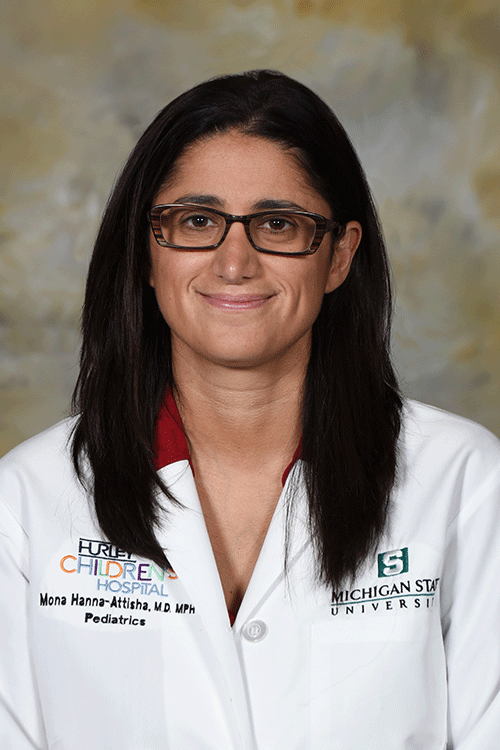
Mona Hanna-Attisha, MD, MPH, the director of the pediatric residency program at Hurley Children’s Hospital and an assistant professor of pediatrics at Michigan State University, has been instrumental in the fight for clean and safe water for residents in Flint, Mich.
Dr. Hanna-Attisha has been a fundamental co-site leader with the SHM I-PASS mentored implementation program and minimized her role in the program as she became the unofficial spokesperson for the Flint water crisis. In January 2016, Dr. Hanna-Attisha took on the lead role for the Pediatric Public Health Initiative with Michigan State University and Hurley Children’s Hospital.
Dr. Hanna-Attisha is a Michigan native and completed her undergraduate degree at the University of Michigan in Ann Arbor. She completed medical school at Michigan State University College of Human Medicine, completed her residency and chief residency at the Children’s Hospital of Michigan, and earned her master’s degree at the University of Michigan School of Public Health.
Dr. Hanna-Attisha’s training and experience has focused heavily on environmental toxins and health disparities, so it’s no surprise that she is deeply involved with addressing the public health emergency in Flint as well as taking measures to ensure continued research and action regarding the impact the contaminated water had on the residents of Flint. Dr. Hanna-Attisha is working with a team of experts to develop evidence-based interventions that will aid in improving the health and development of children and families affected by Flint’s contaminated water. She is educating families on nutrition and diets high in iron, calcium, and vitamin C in order to help manage the effects of contamination.
A report from a Virginia Tech Research Team ignited the investigation into Flint’s water issues and also fueled Dr. Hanna-Attisha’s investigation into the blood-lead levels in the children of Flint. It has been close to two years that the residents of Flint have been exposed to severely toxic levels of lead from the city’s tap water, and Dr. Hanna-Attisha’s analysis of children’s blood-lead levels has been highlighted and published in numerous publications, including the American Journal of Public Health.
The water crisis in Flint hits close to home for Dr. Hanna-Attisha, and the dedication she has to her local community is astounding. It shows in the work she has been doing in her new role with the Pediatric Public Health Initiative.
SHM is proud of all the outstanding work she is doing and appreciates her contributions to the SHM I-PASS program. To keep up to date with Dr. Hanna-Attisha, follow her on Twitter @MonaHannaA.
Mobola Owolabi is senior project manager in SHM’s Center for Hospital Innovation and Improvement.
Mona Hanna-Attisha, MD, MPH, the director of the pediatric residency program at Hurley Children’s Hospital and an assistant professor of pediatrics at Michigan State University, has been instrumental in the fight for clean and safe water for residents in Flint, Mich.
Dr. Hanna-Attisha has been a fundamental co-site leader with the SHM I-PASS mentored implementation program and minimized her role in the program as she became the unofficial spokesperson for the Flint water crisis. In January 2016, Dr. Hanna-Attisha took on the lead role for the Pediatric Public Health Initiative with Michigan State University and Hurley Children’s Hospital.
Dr. Hanna-Attisha is a Michigan native and completed her undergraduate degree at the University of Michigan in Ann Arbor. She completed medical school at Michigan State University College of Human Medicine, completed her residency and chief residency at the Children’s Hospital of Michigan, and earned her master’s degree at the University of Michigan School of Public Health.
Dr. Hanna-Attisha’s training and experience has focused heavily on environmental toxins and health disparities, so it’s no surprise that she is deeply involved with addressing the public health emergency in Flint as well as taking measures to ensure continued research and action regarding the impact the contaminated water had on the residents of Flint. Dr. Hanna-Attisha is working with a team of experts to develop evidence-based interventions that will aid in improving the health and development of children and families affected by Flint’s contaminated water. She is educating families on nutrition and diets high in iron, calcium, and vitamin C in order to help manage the effects of contamination.
A report from a Virginia Tech Research Team ignited the investigation into Flint’s water issues and also fueled Dr. Hanna-Attisha’s investigation into the blood-lead levels in the children of Flint. It has been close to two years that the residents of Flint have been exposed to severely toxic levels of lead from the city’s tap water, and Dr. Hanna-Attisha’s analysis of children’s blood-lead levels has been highlighted and published in numerous publications, including the American Journal of Public Health.
The water crisis in Flint hits close to home for Dr. Hanna-Attisha, and the dedication she has to her local community is astounding. It shows in the work she has been doing in her new role with the Pediatric Public Health Initiative.
SHM is proud of all the outstanding work she is doing and appreciates her contributions to the SHM I-PASS program. To keep up to date with Dr. Hanna-Attisha, follow her on Twitter @MonaHannaA.
Mobola Owolabi is senior project manager in SHM’s Center for Hospital Innovation and Improvement.
Mona Hanna-Attisha, MD, MPH, the director of the pediatric residency program at Hurley Children’s Hospital and an assistant professor of pediatrics at Michigan State University, has been instrumental in the fight for clean and safe water for residents in Flint, Mich.
Dr. Hanna-Attisha has been a fundamental co-site leader with the SHM I-PASS mentored implementation program and minimized her role in the program as she became the unofficial spokesperson for the Flint water crisis. In January 2016, Dr. Hanna-Attisha took on the lead role for the Pediatric Public Health Initiative with Michigan State University and Hurley Children’s Hospital.
Dr. Hanna-Attisha is a Michigan native and completed her undergraduate degree at the University of Michigan in Ann Arbor. She completed medical school at Michigan State University College of Human Medicine, completed her residency and chief residency at the Children’s Hospital of Michigan, and earned her master’s degree at the University of Michigan School of Public Health.
Dr. Hanna-Attisha’s training and experience has focused heavily on environmental toxins and health disparities, so it’s no surprise that she is deeply involved with addressing the public health emergency in Flint as well as taking measures to ensure continued research and action regarding the impact the contaminated water had on the residents of Flint. Dr. Hanna-Attisha is working with a team of experts to develop evidence-based interventions that will aid in improving the health and development of children and families affected by Flint’s contaminated water. She is educating families on nutrition and diets high in iron, calcium, and vitamin C in order to help manage the effects of contamination.
A report from a Virginia Tech Research Team ignited the investigation into Flint’s water issues and also fueled Dr. Hanna-Attisha’s investigation into the blood-lead levels in the children of Flint. It has been close to two years that the residents of Flint have been exposed to severely toxic levels of lead from the city’s tap water, and Dr. Hanna-Attisha’s analysis of children’s blood-lead levels has been highlighted and published in numerous publications, including the American Journal of Public Health.
The water crisis in Flint hits close to home for Dr. Hanna-Attisha, and the dedication she has to her local community is astounding. It shows in the work she has been doing in her new role with the Pediatric Public Health Initiative.
SHM is proud of all the outstanding work she is doing and appreciates her contributions to the SHM I-PASS program. To keep up to date with Dr. Hanna-Attisha, follow her on Twitter @MonaHannaA.
Mobola Owolabi is senior project manager in SHM’s Center for Hospital Innovation and Improvement.
HM16 Speakers Focus on Public Health, Leadership, Future of Hospital Medicine
SAN DIEGO — Hospital medicine’s annual extravaganza nestled into the southwestern corner of the country in March, with a record 4,000 hospitalists and others expanding their knowledge of clinical care, management, leadership, technology, and quality improvement.
They listened, they laughed, they learned.
Read more about the knowledge, experiences hospitalists shared at HM16.
Between the nitty-gritty of the workshops, expert panels, and forums, three high-profile speakers offered broad and insightful perspectives:
- U.S. Surgeon General Vivek Murthy, MD, MBA, a hospitalist by training, on his experiences as a hospitalist and his thoughts on the importance of public health in America;
- New SHM President Brian Harte, MD, SFHM, on the role of hospital medicine in cultivating leadership; and
- Hospitalist pioneer Robert Wachter, MD, MHM, on the future of hospital medicine as it reaches its 20th year since he introduced the term “hospitalist” in a New England Journal of Medicine article.
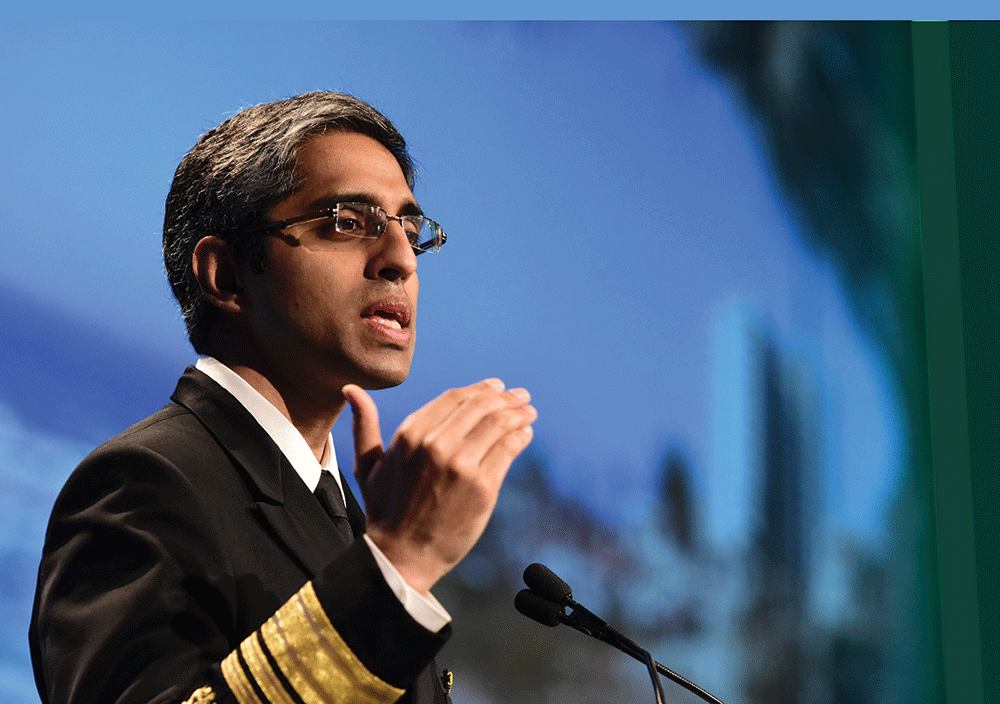
Dr. Murthy, formerly a hospitalist at Brigham and Women’s Hospital in Boston who in 2009 founded Doctors for America, an organization for healthcare improvement in the U.S., said his career as a hospitalist came as a surprise to him.
“When I was in medical school, I didn’t even know what a hospitalist was,” he said. “When I became a hospitalist, I thought it would be a temporary gig, something I did for a couple of years while I figured out what I really wanted to do. But as it turned out, I really loved what I did as a hospitalist. I love teaching. I love caring for patients. I love being part of a tight-knit team.”
He called good health “the key to opportunity,” explaining health is “intrinsically connected to the American dream.”
Hospitalists can play a role in building a “foundation for health,” he said. Four ingredients to this, he said, are creating a culture in which “healthy is equated with happiness” rather than associated with an attitude of “suck it up and eat your spinach”; changing our environment, such as adding sidewalks to encourage walking, to promote healthy behavior change; focusing on the spirit and mind as well as the body; and cultivating our ability to give and receive kindness, which he called “a source of healing.”
Dr. Harte described hospital medicine as “fertile ground” for leadership development.
“Our day-to-day experiences provide a leadership incubator that really no other specialty can claim,” he said.
He said he hopes that over the next several years, hospitalists and SHM make strides in these areas:
- Continuing and expanding membership;
- Continuing to push members and projects to focus on the Triple Aim, particularly patient- and family-centered care; and
- Better understanding hospitalists’ role in the era of risk.
“We need to clarify our position regarding specialty training and our training programs,” he added.
Dr. Harte recognized that such a discussion can get “difficult and contentious and political,” but that “when we look at what we have to do to be clinically effective, and what our current training programs and family medicine, internal medicine, and pediatrics provide for us, that gap to me only appears to be increasing.”
He said SHM has and will “continue to step up with curricula to fill those gaps.” However, he also said hospitalists “have to question what is the best way to train physicians for the roles of providers in the acute-care setting.”
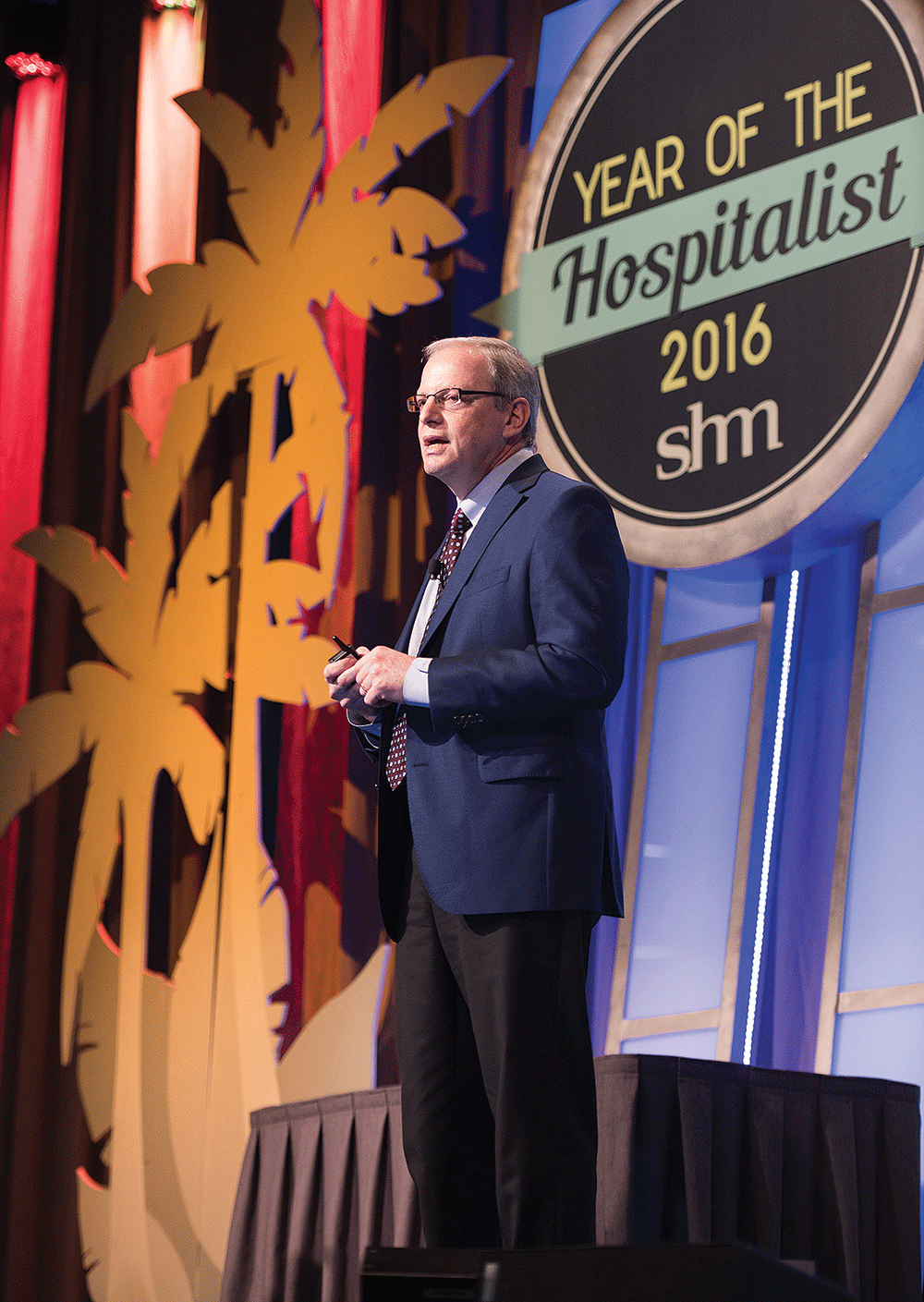
Dr. Wachter, keeping his tradition of giving the final talk of the four-day conference, retraced the roots and successes of the field over the last 20 years. It was part history lesson, part report card, and part prognostication.
What the field has gotten wrong, so far, amounts to “an amazingly short list,” he said, but it’s not a nonexistent list.
“I think one thing we got wrong was a 7-days-on/7-days-off schedule,” he said, drawing applause. While it might be appealing to a 35-year-old doctor, he added, “I don’t believe this is a viable schedule for a 60-year-old.”
HM modeled itself after its closest cousin, emergency medicine, in which doctors frequently work 10- to 12-hour shifts every other day. Since that every-other-day schedule is not good for continuity, HM essentially strung together shifts for as many consecutive days as possible, leading to the 7-on/7-off. Now, many clinicians won’t consider positions without such a schedule even though it’s not a schedule suitable for everyone.
“I think we’ve shot ourselves in the foot,” he said. “Because what it means is you take all the work that needs to be done and you shove it into a very small amount of space. Therefore, the amount of intensity in that work that you have is, I think, undoable over time. I hope we rethink that.”
He cautioned that SHM is near the age when, all too often, societies begin to be complacent and needs to guard against the instinct to keep doing things as they have always been done.
“We need to instinctively say, ‘Wait a second, am I turning into all of those other societies that have become irrelevant—or less relevant—because of that reflex?’” he questioned.
He predicted that, even though value in care is now becoming an obsession, the digitization of healthcare ultimately will have a deeper impact on medicine.
“You ask me 10 years from now, I’m guessing that the fact that we’ve just gone from analog to digital will have turned out to be a bigger transformation,” he explained. “And the reason I say that is if you look at the history of every other industry that went from analog to digital, eventually the industries got turned upside down.”
Burnout, a prominent topic at the meeting, still doesn’t seem to be worse in hospital medicine than in many other specialties, he said, but it is a concern.
“We need to rethink this. We need to come up with some new practice models using information technology in new ways, collaborating with members of the team in different ways,” he said. “We have to take this issue and figure out a way of solving it.”
Dr. Wachter said hospital medicine needs to keep innovating and finding ways to add value; otherwise, the financial support hospitals give to hospital medicine could begin to shrink.
The field is facing challenges, he said, but he is clearly proud of its accomplishments. He said that before he went out on the stage at an early conference he organized in 1998, during the early days of hospital medicine, his wife asked him, “Are you sure this is a good idea?”
“What I said to her was, ‘It is a good idea, and it will be a good idea if we are successful in recruiting and retaining young people, innovative people who want to change the world,’” he said. “I think we have done that, and I thank all of you for turning this into a good idea.” TH
Thomas R. Collins is a freelance writer in South Florida.
SAN DIEGO — Hospital medicine’s annual extravaganza nestled into the southwestern corner of the country in March, with a record 4,000 hospitalists and others expanding their knowledge of clinical care, management, leadership, technology, and quality improvement.
They listened, they laughed, they learned.
Read more about the knowledge, experiences hospitalists shared at HM16.
Between the nitty-gritty of the workshops, expert panels, and forums, three high-profile speakers offered broad and insightful perspectives:
- U.S. Surgeon General Vivek Murthy, MD, MBA, a hospitalist by training, on his experiences as a hospitalist and his thoughts on the importance of public health in America;
- New SHM President Brian Harte, MD, SFHM, on the role of hospital medicine in cultivating leadership; and
- Hospitalist pioneer Robert Wachter, MD, MHM, on the future of hospital medicine as it reaches its 20th year since he introduced the term “hospitalist” in a New England Journal of Medicine article.
Dr. Murthy, formerly a hospitalist at Brigham and Women’s Hospital in Boston who in 2009 founded Doctors for America, an organization for healthcare improvement in the U.S., said his career as a hospitalist came as a surprise to him.
“When I was in medical school, I didn’t even know what a hospitalist was,” he said. “When I became a hospitalist, I thought it would be a temporary gig, something I did for a couple of years while I figured out what I really wanted to do. But as it turned out, I really loved what I did as a hospitalist. I love teaching. I love caring for patients. I love being part of a tight-knit team.”
He called good health “the key to opportunity,” explaining health is “intrinsically connected to the American dream.”
Hospitalists can play a role in building a “foundation for health,” he said. Four ingredients to this, he said, are creating a culture in which “healthy is equated with happiness” rather than associated with an attitude of “suck it up and eat your spinach”; changing our environment, such as adding sidewalks to encourage walking, to promote healthy behavior change; focusing on the spirit and mind as well as the body; and cultivating our ability to give and receive kindness, which he called “a source of healing.”
Dr. Harte described hospital medicine as “fertile ground” for leadership development.
“Our day-to-day experiences provide a leadership incubator that really no other specialty can claim,” he said.
He said he hopes that over the next several years, hospitalists and SHM make strides in these areas:
- Continuing and expanding membership;
- Continuing to push members and projects to focus on the Triple Aim, particularly patient- and family-centered care; and
- Better understanding hospitalists’ role in the era of risk.
“We need to clarify our position regarding specialty training and our training programs,” he added.
Dr. Harte recognized that such a discussion can get “difficult and contentious and political,” but that “when we look at what we have to do to be clinically effective, and what our current training programs and family medicine, internal medicine, and pediatrics provide for us, that gap to me only appears to be increasing.”
He said SHM has and will “continue to step up with curricula to fill those gaps.” However, he also said hospitalists “have to question what is the best way to train physicians for the roles of providers in the acute-care setting.”
Dr. Wachter, keeping his tradition of giving the final talk of the four-day conference, retraced the roots and successes of the field over the last 20 years. It was part history lesson, part report card, and part prognostication.
What the field has gotten wrong, so far, amounts to “an amazingly short list,” he said, but it’s not a nonexistent list.
“I think one thing we got wrong was a 7-days-on/7-days-off schedule,” he said, drawing applause. While it might be appealing to a 35-year-old doctor, he added, “I don’t believe this is a viable schedule for a 60-year-old.”
HM modeled itself after its closest cousin, emergency medicine, in which doctors frequently work 10- to 12-hour shifts every other day. Since that every-other-day schedule is not good for continuity, HM essentially strung together shifts for as many consecutive days as possible, leading to the 7-on/7-off. Now, many clinicians won’t consider positions without such a schedule even though it’s not a schedule suitable for everyone.
“I think we’ve shot ourselves in the foot,” he said. “Because what it means is you take all the work that needs to be done and you shove it into a very small amount of space. Therefore, the amount of intensity in that work that you have is, I think, undoable over time. I hope we rethink that.”
He cautioned that SHM is near the age when, all too often, societies begin to be complacent and needs to guard against the instinct to keep doing things as they have always been done.
“We need to instinctively say, ‘Wait a second, am I turning into all of those other societies that have become irrelevant—or less relevant—because of that reflex?’” he questioned.
He predicted that, even though value in care is now becoming an obsession, the digitization of healthcare ultimately will have a deeper impact on medicine.
“You ask me 10 years from now, I’m guessing that the fact that we’ve just gone from analog to digital will have turned out to be a bigger transformation,” he explained. “And the reason I say that is if you look at the history of every other industry that went from analog to digital, eventually the industries got turned upside down.”
Burnout, a prominent topic at the meeting, still doesn’t seem to be worse in hospital medicine than in many other specialties, he said, but it is a concern.
“We need to rethink this. We need to come up with some new practice models using information technology in new ways, collaborating with members of the team in different ways,” he said. “We have to take this issue and figure out a way of solving it.”
Dr. Wachter said hospital medicine needs to keep innovating and finding ways to add value; otherwise, the financial support hospitals give to hospital medicine could begin to shrink.
The field is facing challenges, he said, but he is clearly proud of its accomplishments. He said that before he went out on the stage at an early conference he organized in 1998, during the early days of hospital medicine, his wife asked him, “Are you sure this is a good idea?”
“What I said to her was, ‘It is a good idea, and it will be a good idea if we are successful in recruiting and retaining young people, innovative people who want to change the world,’” he said. “I think we have done that, and I thank all of you for turning this into a good idea.” TH
Thomas R. Collins is a freelance writer in South Florida.
SAN DIEGO — Hospital medicine’s annual extravaganza nestled into the southwestern corner of the country in March, with a record 4,000 hospitalists and others expanding their knowledge of clinical care, management, leadership, technology, and quality improvement.
They listened, they laughed, they learned.
Read more about the knowledge, experiences hospitalists shared at HM16.
Between the nitty-gritty of the workshops, expert panels, and forums, three high-profile speakers offered broad and insightful perspectives:
- U.S. Surgeon General Vivek Murthy, MD, MBA, a hospitalist by training, on his experiences as a hospitalist and his thoughts on the importance of public health in America;
- New SHM President Brian Harte, MD, SFHM, on the role of hospital medicine in cultivating leadership; and
- Hospitalist pioneer Robert Wachter, MD, MHM, on the future of hospital medicine as it reaches its 20th year since he introduced the term “hospitalist” in a New England Journal of Medicine article.
Dr. Murthy, formerly a hospitalist at Brigham and Women’s Hospital in Boston who in 2009 founded Doctors for America, an organization for healthcare improvement in the U.S., said his career as a hospitalist came as a surprise to him.
“When I was in medical school, I didn’t even know what a hospitalist was,” he said. “When I became a hospitalist, I thought it would be a temporary gig, something I did for a couple of years while I figured out what I really wanted to do. But as it turned out, I really loved what I did as a hospitalist. I love teaching. I love caring for patients. I love being part of a tight-knit team.”
He called good health “the key to opportunity,” explaining health is “intrinsically connected to the American dream.”
Hospitalists can play a role in building a “foundation for health,” he said. Four ingredients to this, he said, are creating a culture in which “healthy is equated with happiness” rather than associated with an attitude of “suck it up and eat your spinach”; changing our environment, such as adding sidewalks to encourage walking, to promote healthy behavior change; focusing on the spirit and mind as well as the body; and cultivating our ability to give and receive kindness, which he called “a source of healing.”
Dr. Harte described hospital medicine as “fertile ground” for leadership development.
“Our day-to-day experiences provide a leadership incubator that really no other specialty can claim,” he said.
He said he hopes that over the next several years, hospitalists and SHM make strides in these areas:
- Continuing and expanding membership;
- Continuing to push members and projects to focus on the Triple Aim, particularly patient- and family-centered care; and
- Better understanding hospitalists’ role in the era of risk.
“We need to clarify our position regarding specialty training and our training programs,” he added.
Dr. Harte recognized that such a discussion can get “difficult and contentious and political,” but that “when we look at what we have to do to be clinically effective, and what our current training programs and family medicine, internal medicine, and pediatrics provide for us, that gap to me only appears to be increasing.”
He said SHM has and will “continue to step up with curricula to fill those gaps.” However, he also said hospitalists “have to question what is the best way to train physicians for the roles of providers in the acute-care setting.”
Dr. Wachter, keeping his tradition of giving the final talk of the four-day conference, retraced the roots and successes of the field over the last 20 years. It was part history lesson, part report card, and part prognostication.
What the field has gotten wrong, so far, amounts to “an amazingly short list,” he said, but it’s not a nonexistent list.
“I think one thing we got wrong was a 7-days-on/7-days-off schedule,” he said, drawing applause. While it might be appealing to a 35-year-old doctor, he added, “I don’t believe this is a viable schedule for a 60-year-old.”
HM modeled itself after its closest cousin, emergency medicine, in which doctors frequently work 10- to 12-hour shifts every other day. Since that every-other-day schedule is not good for continuity, HM essentially strung together shifts for as many consecutive days as possible, leading to the 7-on/7-off. Now, many clinicians won’t consider positions without such a schedule even though it’s not a schedule suitable for everyone.
“I think we’ve shot ourselves in the foot,” he said. “Because what it means is you take all the work that needs to be done and you shove it into a very small amount of space. Therefore, the amount of intensity in that work that you have is, I think, undoable over time. I hope we rethink that.”
He cautioned that SHM is near the age when, all too often, societies begin to be complacent and needs to guard against the instinct to keep doing things as they have always been done.
“We need to instinctively say, ‘Wait a second, am I turning into all of those other societies that have become irrelevant—or less relevant—because of that reflex?’” he questioned.
He predicted that, even though value in care is now becoming an obsession, the digitization of healthcare ultimately will have a deeper impact on medicine.
“You ask me 10 years from now, I’m guessing that the fact that we’ve just gone from analog to digital will have turned out to be a bigger transformation,” he explained. “And the reason I say that is if you look at the history of every other industry that went from analog to digital, eventually the industries got turned upside down.”
Burnout, a prominent topic at the meeting, still doesn’t seem to be worse in hospital medicine than in many other specialties, he said, but it is a concern.
“We need to rethink this. We need to come up with some new practice models using information technology in new ways, collaborating with members of the team in different ways,” he said. “We have to take this issue and figure out a way of solving it.”
Dr. Wachter said hospital medicine needs to keep innovating and finding ways to add value; otherwise, the financial support hospitals give to hospital medicine could begin to shrink.
The field is facing challenges, he said, but he is clearly proud of its accomplishments. He said that before he went out on the stage at an early conference he organized in 1998, during the early days of hospital medicine, his wife asked him, “Are you sure this is a good idea?”
“What I said to her was, ‘It is a good idea, and it will be a good idea if we are successful in recruiting and retaining young people, innovative people who want to change the world,’” he said. “I think we have done that, and I thank all of you for turning this into a good idea.” TH
Thomas R. Collins is a freelance writer in South Florida.