User login
Volume matters: Whipple success hinges on surgeon experience
MIAMI BEACH – Studies continue to confirm it: When it comes to complex surgical procedures, higher volume equals better outcomes. But like the chicken-or-egg conundrum, researchers are asking which factor comes first – surgeon or facility.
Data presented at the annual meeting of the Americas Hepato-Pancreato-Biliary Association suggest that personal experience makes the biggest difference, at least for the difficult Whipple procedure. Surgeons who performed the highest number of pancreaticoduodenectomies each year had the best outcomes; when they transferred to low-volume hospitals with historically poor results, these surgeons improved perioperative complications, mortality, and readmissions, and lowered costs.
"The salutary effects of being a high-volume hospital for pancreaticoduodenectomy are transferred when high-volume surgeons relocate," said Dr. Paul Toomey. "It seems that the benefits of a high-volume hospital are more due to who does the surgery rather than where it’s undertaken."
Dr. Toomey, a surgical fellow at the Florida Hospital, Tampa, had a unique opportunity to study what happens when two surgeons highly experienced in the Whipple procedure transferred from a busy hospital to low-volume facilities. The surgeons, who together performed more than 100 of the procedures each year, moved for personal reasons, Dr. Toomey said in an interview.
The study focused on perioperative outcomes, mortality, and readmissions in two groups of Whipple patients: the last 50 undertaken at the high-volume hospital (more than 12 pancreaticoduodenectomies per year), and the first 50 at the low-volume hospital where they worked afterward.
The patient groups were similar. Their mean age was 78 years, a little more than half were men, and the average American Society of Anesthesiologists class was 3. The rates of malignancy were similar in the high- and low-volume centers (88% vs. 82%, respectively).
Overall, the average operative time was 252 minutes, with an estimated blood loss of 300 mL. Patients were in intensive care for 2 days, with an average hospital stay of 9 days. The readmission rate was 19% and 30-day mortality, 5%.
But when Dr. Toomey compared the two time periods, he found significant differences in outcomes, which appeared to be associated with the transfer of the highly experienced surgeons. In fact, he said, outcomes were actually much better at the low- than the high-volume centers after the transfer.
The mean operative time at the low-volume centers was 205 minutes, compared with 305 minutes at the high-volume centers. Estimated blood loss was also less at the low-volume centers (350 vs. 255 mL). ICU stays were significantly shorter (1 vs. 3 days), as was total length of stay (7 vs. 12 days). Readmission rates over 30 days were similar (20% vs. 18%), as was 30-day mortality (4% vs. 6%).
"The salutary benefits of being a high-volume hospital for pancreaticoduodenectomy seem to be transferred when high-volume surgeons relocate," Dr. Toomey said. "The benefits of a high-volume hospital may be more due to who does the pancreaticoduodenectomy rather than where the pancreaticoduodenectomy is undertaken."
Dr. Thomas Wood, also of the Florida Hospital, found a similar trend in his study, which examined Whipple outcomes statewide over 20 years. He related the outcomes to concentration, rather decentralization, of care.
For his study, Dr. Wood examined data from the Florida Agency for Health Care Administration, collected over three 3-year epochs: 1992-1994, 2001-2003, and 2010-2012. The data were sorted by surgeon volume of pancreaticoduodenectomy during these periods and correlated to length of stay, in-hospital mortality, and hospital charges, which were adjusted to 2012 dollars.
Over the 9 years, 893 surgeons performed 3,531 pancreaticoduodenectomies. During each epoch, the number of surgeons went down as the number of operations increased.
In the first epoch, 363 surgeons performed 729 operations. In the second, 334 surgeons performed 1,233 surgeries, and in the third, 196 performed 1,569 operations.
"By 2010-2012, 46% fewer surgeons undertook 115% more surgeries compared to the first period," Dr. Wood said. "In 1992-1994, 62% of pancreaticoduodenectomies were undertaken by surgeons who performed one or fewer per year. This fell to 13% by 2010-2012."
At the same time, the number of surgeons who performed more than 36 procedures in each 3-year period (12 per year) grew significantly. In the first epoch, one surgeon alone performed 45 procedures. In the second, six surgeons performed a total of 361. And in the third epoch, 11 surgeons performed 806 Whipples.
"From [the first through third periods,] there was an 11-fold increase in the number of high-volume surgeons and a corresponding 18-fold increase in the number of pancreaticoduodenectomies by surgeons who were performing at least 12 each year. They were performing more than 50% of these operations."
A separate analysis of just the 2010-2012 data evaluated outcomes by surgeons’ operation volume.
In the first epoch, in-hospital mortality was about 12%. In the second, it fell to 8%, and by the third, to 4%. Patients whose surgeons performed one to nine procedures (up to three per year) were hospitalized an average of about 14 days. Those whose surgeons performed 19 to 36 procedures (up to 12 per year) stayed an average of 8 days – a significant difference.
Mortality followed the same pattern. About 9% of patients whose surgeons performed one to three procedures per year died after surgery, compared with 2% of those whose doctors performed 12 procedures per year.
These more experienced surgeons also discharged more patients to home rather than nursing facilities (88% vs. 82%, a significant difference).
Both hospital and surgeon volume also affected costs. Overall, hospital costs increased significantly, even after adjustment for inflation, jumping from $93,000 to $133,000. But surgeons who performed at least 12 Whipples per year did so at a half the cost of those who performed 1-3 per year ($100,000 vs. $200,000).
"Suffice it to say, the busiest surgeons got the best results," Dr. Wood said.
Despite advances in centralizing this kind of specialized care, though, many low-volume centers are still performing the operations, said Dr. Jeffrey Sutton of the University of Cincinnati. "Research continues to show that high-volume centers have better outcomes," he said. "And yet a significant number of cases are still being done at hospitals that do less than one per year."
If research data aren’t enough to persuade hospitals to send patients to regional centers, Dr. Sutton wondered, could money be a motivating factor? He examined the records of almost 10,000 Whipple operations performed at 419 centers that are part of the University Health Systems Consortium clinical database. Of these, 120 were academic centers and 299 were affiliated hospitals. The procedures were performed from 2009 to 2011. Clinical outcomes included length of stay, mortality, and readmissions. He also assessed the cost of both the index admission and readmissions.
Hospitals were divided into volume quintiles of lowest, low, middle, high, and highest. The lowest-volume centers performed up to 21 cases/year in 2009 to up to 23 in 2011. The highest-volume centers performed up to 180 cases/year in 2009 and up to 216 in 2011.
Intraoperative mortality hovered around 2% at the middle-, high-, and highest-volume centers. At the low-volume centers, it reached 2.5% – not significantly different. But at the lowest-volume centers, 30-day mortality was significantly higher – nearly 4%.
Length of stay was similarly associated with volume. In low-, middle-, and high-volume centers, it was about 9 days. But in the lowest-volume centers, the average length of stay was 11 days – significantly longer than any of the others.
Readmission rates over the first postoperative month were also lowest in the highest-volume centers (16.5%). In the low-volume centers, 30-day readmission was just under 19%. But in the middle-, low-, and lowest-volume centers, it was significantly greater, hovering at nearly 20%.
"It’s not only that lower-volume centers are holding on to patients longer, they also are readmitting those same patients significantly more often," Dr. Sutton noted.
The cost analysis looked at Medicare charge data. "When both index and readmission costs were considered, the median per-patient cost at the lowest-volume centers was $23,005 – 11% more than at the highest-volume center."
But there was no significant difference in the cost of readmissions. "That means that the difference of about $2,263 extra per case was based solely on the index admission," Dr. Sutton said. "Essentially what we saw was that the more cases that are performed, the cheaper each individual case becomes."
"To put it bluntly, some low-volume centers are currently reimbursed higher sums of money for delivering suboptimal care to patients," Dr. Sutton said in an interview. In our current health care climate, which emphasizes improved outcomes at lower costs, this is a travesty. As health service researchers, it is our obligation to our patients to analyze and disseminate these data in an effort to urge policymakers to limit the financial reimbursements for poorer-performing providers."
None of the researchers quoted in this article reported any financial disclosures.
MIAMI BEACH – Studies continue to confirm it: When it comes to complex surgical procedures, higher volume equals better outcomes. But like the chicken-or-egg conundrum, researchers are asking which factor comes first – surgeon or facility.
Data presented at the annual meeting of the Americas Hepato-Pancreato-Biliary Association suggest that personal experience makes the biggest difference, at least for the difficult Whipple procedure. Surgeons who performed the highest number of pancreaticoduodenectomies each year had the best outcomes; when they transferred to low-volume hospitals with historically poor results, these surgeons improved perioperative complications, mortality, and readmissions, and lowered costs.
"The salutary effects of being a high-volume hospital for pancreaticoduodenectomy are transferred when high-volume surgeons relocate," said Dr. Paul Toomey. "It seems that the benefits of a high-volume hospital are more due to who does the surgery rather than where it’s undertaken."
Dr. Toomey, a surgical fellow at the Florida Hospital, Tampa, had a unique opportunity to study what happens when two surgeons highly experienced in the Whipple procedure transferred from a busy hospital to low-volume facilities. The surgeons, who together performed more than 100 of the procedures each year, moved for personal reasons, Dr. Toomey said in an interview.
The study focused on perioperative outcomes, mortality, and readmissions in two groups of Whipple patients: the last 50 undertaken at the high-volume hospital (more than 12 pancreaticoduodenectomies per year), and the first 50 at the low-volume hospital where they worked afterward.
The patient groups were similar. Their mean age was 78 years, a little more than half were men, and the average American Society of Anesthesiologists class was 3. The rates of malignancy were similar in the high- and low-volume centers (88% vs. 82%, respectively).
Overall, the average operative time was 252 minutes, with an estimated blood loss of 300 mL. Patients were in intensive care for 2 days, with an average hospital stay of 9 days. The readmission rate was 19% and 30-day mortality, 5%.
But when Dr. Toomey compared the two time periods, he found significant differences in outcomes, which appeared to be associated with the transfer of the highly experienced surgeons. In fact, he said, outcomes were actually much better at the low- than the high-volume centers after the transfer.
The mean operative time at the low-volume centers was 205 minutes, compared with 305 minutes at the high-volume centers. Estimated blood loss was also less at the low-volume centers (350 vs. 255 mL). ICU stays were significantly shorter (1 vs. 3 days), as was total length of stay (7 vs. 12 days). Readmission rates over 30 days were similar (20% vs. 18%), as was 30-day mortality (4% vs. 6%).
"The salutary benefits of being a high-volume hospital for pancreaticoduodenectomy seem to be transferred when high-volume surgeons relocate," Dr. Toomey said. "The benefits of a high-volume hospital may be more due to who does the pancreaticoduodenectomy rather than where the pancreaticoduodenectomy is undertaken."
Dr. Thomas Wood, also of the Florida Hospital, found a similar trend in his study, which examined Whipple outcomes statewide over 20 years. He related the outcomes to concentration, rather decentralization, of care.
For his study, Dr. Wood examined data from the Florida Agency for Health Care Administration, collected over three 3-year epochs: 1992-1994, 2001-2003, and 2010-2012. The data were sorted by surgeon volume of pancreaticoduodenectomy during these periods and correlated to length of stay, in-hospital mortality, and hospital charges, which were adjusted to 2012 dollars.
Over the 9 years, 893 surgeons performed 3,531 pancreaticoduodenectomies. During each epoch, the number of surgeons went down as the number of operations increased.
In the first epoch, 363 surgeons performed 729 operations. In the second, 334 surgeons performed 1,233 surgeries, and in the third, 196 performed 1,569 operations.
"By 2010-2012, 46% fewer surgeons undertook 115% more surgeries compared to the first period," Dr. Wood said. "In 1992-1994, 62% of pancreaticoduodenectomies were undertaken by surgeons who performed one or fewer per year. This fell to 13% by 2010-2012."
At the same time, the number of surgeons who performed more than 36 procedures in each 3-year period (12 per year) grew significantly. In the first epoch, one surgeon alone performed 45 procedures. In the second, six surgeons performed a total of 361. And in the third epoch, 11 surgeons performed 806 Whipples.
"From [the first through third periods,] there was an 11-fold increase in the number of high-volume surgeons and a corresponding 18-fold increase in the number of pancreaticoduodenectomies by surgeons who were performing at least 12 each year. They were performing more than 50% of these operations."
A separate analysis of just the 2010-2012 data evaluated outcomes by surgeons’ operation volume.
In the first epoch, in-hospital mortality was about 12%. In the second, it fell to 8%, and by the third, to 4%. Patients whose surgeons performed one to nine procedures (up to three per year) were hospitalized an average of about 14 days. Those whose surgeons performed 19 to 36 procedures (up to 12 per year) stayed an average of 8 days – a significant difference.
Mortality followed the same pattern. About 9% of patients whose surgeons performed one to three procedures per year died after surgery, compared with 2% of those whose doctors performed 12 procedures per year.
These more experienced surgeons also discharged more patients to home rather than nursing facilities (88% vs. 82%, a significant difference).
Both hospital and surgeon volume also affected costs. Overall, hospital costs increased significantly, even after adjustment for inflation, jumping from $93,000 to $133,000. But surgeons who performed at least 12 Whipples per year did so at a half the cost of those who performed 1-3 per year ($100,000 vs. $200,000).
"Suffice it to say, the busiest surgeons got the best results," Dr. Wood said.
Despite advances in centralizing this kind of specialized care, though, many low-volume centers are still performing the operations, said Dr. Jeffrey Sutton of the University of Cincinnati. "Research continues to show that high-volume centers have better outcomes," he said. "And yet a significant number of cases are still being done at hospitals that do less than one per year."
If research data aren’t enough to persuade hospitals to send patients to regional centers, Dr. Sutton wondered, could money be a motivating factor? He examined the records of almost 10,000 Whipple operations performed at 419 centers that are part of the University Health Systems Consortium clinical database. Of these, 120 were academic centers and 299 were affiliated hospitals. The procedures were performed from 2009 to 2011. Clinical outcomes included length of stay, mortality, and readmissions. He also assessed the cost of both the index admission and readmissions.
Hospitals were divided into volume quintiles of lowest, low, middle, high, and highest. The lowest-volume centers performed up to 21 cases/year in 2009 to up to 23 in 2011. The highest-volume centers performed up to 180 cases/year in 2009 and up to 216 in 2011.
Intraoperative mortality hovered around 2% at the middle-, high-, and highest-volume centers. At the low-volume centers, it reached 2.5% – not significantly different. But at the lowest-volume centers, 30-day mortality was significantly higher – nearly 4%.
Length of stay was similarly associated with volume. In low-, middle-, and high-volume centers, it was about 9 days. But in the lowest-volume centers, the average length of stay was 11 days – significantly longer than any of the others.
Readmission rates over the first postoperative month were also lowest in the highest-volume centers (16.5%). In the low-volume centers, 30-day readmission was just under 19%. But in the middle-, low-, and lowest-volume centers, it was significantly greater, hovering at nearly 20%.
"It’s not only that lower-volume centers are holding on to patients longer, they also are readmitting those same patients significantly more often," Dr. Sutton noted.
The cost analysis looked at Medicare charge data. "When both index and readmission costs were considered, the median per-patient cost at the lowest-volume centers was $23,005 – 11% more than at the highest-volume center."
But there was no significant difference in the cost of readmissions. "That means that the difference of about $2,263 extra per case was based solely on the index admission," Dr. Sutton said. "Essentially what we saw was that the more cases that are performed, the cheaper each individual case becomes."
"To put it bluntly, some low-volume centers are currently reimbursed higher sums of money for delivering suboptimal care to patients," Dr. Sutton said in an interview. In our current health care climate, which emphasizes improved outcomes at lower costs, this is a travesty. As health service researchers, it is our obligation to our patients to analyze and disseminate these data in an effort to urge policymakers to limit the financial reimbursements for poorer-performing providers."
None of the researchers quoted in this article reported any financial disclosures.
MIAMI BEACH – Studies continue to confirm it: When it comes to complex surgical procedures, higher volume equals better outcomes. But like the chicken-or-egg conundrum, researchers are asking which factor comes first – surgeon or facility.
Data presented at the annual meeting of the Americas Hepato-Pancreato-Biliary Association suggest that personal experience makes the biggest difference, at least for the difficult Whipple procedure. Surgeons who performed the highest number of pancreaticoduodenectomies each year had the best outcomes; when they transferred to low-volume hospitals with historically poor results, these surgeons improved perioperative complications, mortality, and readmissions, and lowered costs.
"The salutary effects of being a high-volume hospital for pancreaticoduodenectomy are transferred when high-volume surgeons relocate," said Dr. Paul Toomey. "It seems that the benefits of a high-volume hospital are more due to who does the surgery rather than where it’s undertaken."
Dr. Toomey, a surgical fellow at the Florida Hospital, Tampa, had a unique opportunity to study what happens when two surgeons highly experienced in the Whipple procedure transferred from a busy hospital to low-volume facilities. The surgeons, who together performed more than 100 of the procedures each year, moved for personal reasons, Dr. Toomey said in an interview.
The study focused on perioperative outcomes, mortality, and readmissions in two groups of Whipple patients: the last 50 undertaken at the high-volume hospital (more than 12 pancreaticoduodenectomies per year), and the first 50 at the low-volume hospital where they worked afterward.
The patient groups were similar. Their mean age was 78 years, a little more than half were men, and the average American Society of Anesthesiologists class was 3. The rates of malignancy were similar in the high- and low-volume centers (88% vs. 82%, respectively).
Overall, the average operative time was 252 minutes, with an estimated blood loss of 300 mL. Patients were in intensive care for 2 days, with an average hospital stay of 9 days. The readmission rate was 19% and 30-day mortality, 5%.
But when Dr. Toomey compared the two time periods, he found significant differences in outcomes, which appeared to be associated with the transfer of the highly experienced surgeons. In fact, he said, outcomes were actually much better at the low- than the high-volume centers after the transfer.
The mean operative time at the low-volume centers was 205 minutes, compared with 305 minutes at the high-volume centers. Estimated blood loss was also less at the low-volume centers (350 vs. 255 mL). ICU stays were significantly shorter (1 vs. 3 days), as was total length of stay (7 vs. 12 days). Readmission rates over 30 days were similar (20% vs. 18%), as was 30-day mortality (4% vs. 6%).
"The salutary benefits of being a high-volume hospital for pancreaticoduodenectomy seem to be transferred when high-volume surgeons relocate," Dr. Toomey said. "The benefits of a high-volume hospital may be more due to who does the pancreaticoduodenectomy rather than where the pancreaticoduodenectomy is undertaken."
Dr. Thomas Wood, also of the Florida Hospital, found a similar trend in his study, which examined Whipple outcomes statewide over 20 years. He related the outcomes to concentration, rather decentralization, of care.
For his study, Dr. Wood examined data from the Florida Agency for Health Care Administration, collected over three 3-year epochs: 1992-1994, 2001-2003, and 2010-2012. The data were sorted by surgeon volume of pancreaticoduodenectomy during these periods and correlated to length of stay, in-hospital mortality, and hospital charges, which were adjusted to 2012 dollars.
Over the 9 years, 893 surgeons performed 3,531 pancreaticoduodenectomies. During each epoch, the number of surgeons went down as the number of operations increased.
In the first epoch, 363 surgeons performed 729 operations. In the second, 334 surgeons performed 1,233 surgeries, and in the third, 196 performed 1,569 operations.
"By 2010-2012, 46% fewer surgeons undertook 115% more surgeries compared to the first period," Dr. Wood said. "In 1992-1994, 62% of pancreaticoduodenectomies were undertaken by surgeons who performed one or fewer per year. This fell to 13% by 2010-2012."
At the same time, the number of surgeons who performed more than 36 procedures in each 3-year period (12 per year) grew significantly. In the first epoch, one surgeon alone performed 45 procedures. In the second, six surgeons performed a total of 361. And in the third epoch, 11 surgeons performed 806 Whipples.
"From [the first through third periods,] there was an 11-fold increase in the number of high-volume surgeons and a corresponding 18-fold increase in the number of pancreaticoduodenectomies by surgeons who were performing at least 12 each year. They were performing more than 50% of these operations."
A separate analysis of just the 2010-2012 data evaluated outcomes by surgeons’ operation volume.
In the first epoch, in-hospital mortality was about 12%. In the second, it fell to 8%, and by the third, to 4%. Patients whose surgeons performed one to nine procedures (up to three per year) were hospitalized an average of about 14 days. Those whose surgeons performed 19 to 36 procedures (up to 12 per year) stayed an average of 8 days – a significant difference.
Mortality followed the same pattern. About 9% of patients whose surgeons performed one to three procedures per year died after surgery, compared with 2% of those whose doctors performed 12 procedures per year.
These more experienced surgeons also discharged more patients to home rather than nursing facilities (88% vs. 82%, a significant difference).
Both hospital and surgeon volume also affected costs. Overall, hospital costs increased significantly, even after adjustment for inflation, jumping from $93,000 to $133,000. But surgeons who performed at least 12 Whipples per year did so at a half the cost of those who performed 1-3 per year ($100,000 vs. $200,000).
"Suffice it to say, the busiest surgeons got the best results," Dr. Wood said.
Despite advances in centralizing this kind of specialized care, though, many low-volume centers are still performing the operations, said Dr. Jeffrey Sutton of the University of Cincinnati. "Research continues to show that high-volume centers have better outcomes," he said. "And yet a significant number of cases are still being done at hospitals that do less than one per year."
If research data aren’t enough to persuade hospitals to send patients to regional centers, Dr. Sutton wondered, could money be a motivating factor? He examined the records of almost 10,000 Whipple operations performed at 419 centers that are part of the University Health Systems Consortium clinical database. Of these, 120 were academic centers and 299 were affiliated hospitals. The procedures were performed from 2009 to 2011. Clinical outcomes included length of stay, mortality, and readmissions. He also assessed the cost of both the index admission and readmissions.
Hospitals were divided into volume quintiles of lowest, low, middle, high, and highest. The lowest-volume centers performed up to 21 cases/year in 2009 to up to 23 in 2011. The highest-volume centers performed up to 180 cases/year in 2009 and up to 216 in 2011.
Intraoperative mortality hovered around 2% at the middle-, high-, and highest-volume centers. At the low-volume centers, it reached 2.5% – not significantly different. But at the lowest-volume centers, 30-day mortality was significantly higher – nearly 4%.
Length of stay was similarly associated with volume. In low-, middle-, and high-volume centers, it was about 9 days. But in the lowest-volume centers, the average length of stay was 11 days – significantly longer than any of the others.
Readmission rates over the first postoperative month were also lowest in the highest-volume centers (16.5%). In the low-volume centers, 30-day readmission was just under 19%. But in the middle-, low-, and lowest-volume centers, it was significantly greater, hovering at nearly 20%.
"It’s not only that lower-volume centers are holding on to patients longer, they also are readmitting those same patients significantly more often," Dr. Sutton noted.
The cost analysis looked at Medicare charge data. "When both index and readmission costs were considered, the median per-patient cost at the lowest-volume centers was $23,005 – 11% more than at the highest-volume center."
But there was no significant difference in the cost of readmissions. "That means that the difference of about $2,263 extra per case was based solely on the index admission," Dr. Sutton said. "Essentially what we saw was that the more cases that are performed, the cheaper each individual case becomes."
"To put it bluntly, some low-volume centers are currently reimbursed higher sums of money for delivering suboptimal care to patients," Dr. Sutton said in an interview. In our current health care climate, which emphasizes improved outcomes at lower costs, this is a travesty. As health service researchers, it is our obligation to our patients to analyze and disseminate these data in an effort to urge policymakers to limit the financial reimbursements for poorer-performing providers."
None of the researchers quoted in this article reported any financial disclosures.
AT AHPBA 2014
Major finding: When high-volume surgeons transferred to low-volume institutions, these surgeons improved perioperative complications, mortality, and readmissions, and lowered costs in the low-volume institutions. The mean operative time at the low-volume centers was 205 minutes, compared with 305 minutes at the high-volume centers. Estimated blood loss was also less at the low-volume centers (350 vs. 255 mL), as was total length of stay (7 vs. 12 days).
Data source: Data from more than 100 Whipple procedures performed by two experienced surgeons who transferred to low-volume institutions.
Disclosures: None of the researchers quoted in this article reported any financial disclosures.
No propofol reactions seen in egg, soy allergic patients
SAN DIEGO – Patients with food allergies – including those with a history of anaphylaxis – had no adverse reactions to propofol administered for anesthesia during endoscopy, based on a study that included 160 patients with food allergies.
Intravenous propofol (2,6-diisopropylphenol) includes lipid suspensions that contain egg lecithin/phosphatide and soy oil, ingredients that have raised "concern regarding administration of propofol in patients with egg and soy allergy," explained Dr. Harshna Mehta, a pediatric allergist-immunologist at the Icahn School of Medicine at Mount Sinai, New York. "Additionally, since the peanut is a legume similar to soy, there is also potential concern for peanut allergic patients."

Case reports of propofol-associated allergic reactions – presumably related to cross-reactivity to foods – have appeared in the medical literature. "However, most of these cases lacked confirmatory testing for actual food allergy vs. mere sensitization," Dr. Mehta said in an interview before the annual meeting of the American Academy of Allergy, Asthma, and Immunology, where the study results were presented.
Prior to this study, the largest study included 28 egg allergic patients, with two having a history of anaphylaxis (Anesth. Analg. 2011;113: 140-4).
Dr. Mehta and her associates reviewed the records of 563 patients who had endoscopies performed at the Mount Sinai Center for Eosinophilic Disorders from November 2004 to January 2014.
The researchers identified 160 patients with a median age of 14 years who had one or more food allergies, including 31 with a history of anaphylaxis. Egg, peanut, and soy allergies were confirmed based on finding elevated food specific serum IgE levels, positive skin prick tests and/or convincing allergic reaction history. Patients were included in the study if anesthesia records indicated propofol as the chief anesthetic administered.
Of the 160 patients, 95 had evidence of egg allergy (median egg-IgE = 9.57 kIU/L); 15 of these patients had a history of an anaphylactic reaction to egg. Of the 28 patients with confirmed soy allergy (median soy-IgE = 6.63 kU/L), 2 had a history of anaphylaxis. Dr. Mehta also reported that 117 patients had peanut allergy (median peanut-IgE =38.8 kIU/L); 11 o these patients had a history of anaphylaxis to peanuts.
There were no reported reactions to propofol in any of the patients.
"The most surprising finding was the number of egg/peanut/soy patients who have significant allergic comorbidities – such as history of anaphylaxis, allergic rhinitis, asthma, and atopic disease – that have safely received this medication," Dr. Mehta noted. "We are still in the process of determining the statistical confidence with which we can say how safe propofol is for administration to egg/soy/peanut allergic patients. We are also planning to test the product in the laboratory for the presence of egg protein."
Dr. Mehta said that she had no relevant financial conflicts to disclose.
SAN DIEGO – Patients with food allergies – including those with a history of anaphylaxis – had no adverse reactions to propofol administered for anesthesia during endoscopy, based on a study that included 160 patients with food allergies.
Intravenous propofol (2,6-diisopropylphenol) includes lipid suspensions that contain egg lecithin/phosphatide and soy oil, ingredients that have raised "concern regarding administration of propofol in patients with egg and soy allergy," explained Dr. Harshna Mehta, a pediatric allergist-immunologist at the Icahn School of Medicine at Mount Sinai, New York. "Additionally, since the peanut is a legume similar to soy, there is also potential concern for peanut allergic patients."
Case reports of propofol-associated allergic reactions – presumably related to cross-reactivity to foods – have appeared in the medical literature. "However, most of these cases lacked confirmatory testing for actual food allergy vs. mere sensitization," Dr. Mehta said in an interview before the annual meeting of the American Academy of Allergy, Asthma, and Immunology, where the study results were presented.
Prior to this study, the largest study included 28 egg allergic patients, with two having a history of anaphylaxis (Anesth. Analg. 2011;113: 140-4).
Dr. Mehta and her associates reviewed the records of 563 patients who had endoscopies performed at the Mount Sinai Center for Eosinophilic Disorders from November 2004 to January 2014.
The researchers identified 160 patients with a median age of 14 years who had one or more food allergies, including 31 with a history of anaphylaxis. Egg, peanut, and soy allergies were confirmed based on finding elevated food specific serum IgE levels, positive skin prick tests and/or convincing allergic reaction history. Patients were included in the study if anesthesia records indicated propofol as the chief anesthetic administered.
Of the 160 patients, 95 had evidence of egg allergy (median egg-IgE = 9.57 kIU/L); 15 of these patients had a history of an anaphylactic reaction to egg. Of the 28 patients with confirmed soy allergy (median soy-IgE = 6.63 kU/L), 2 had a history of anaphylaxis. Dr. Mehta also reported that 117 patients had peanut allergy (median peanut-IgE =38.8 kIU/L); 11 o these patients had a history of anaphylaxis to peanuts.
There were no reported reactions to propofol in any of the patients.
"The most surprising finding was the number of egg/peanut/soy patients who have significant allergic comorbidities – such as history of anaphylaxis, allergic rhinitis, asthma, and atopic disease – that have safely received this medication," Dr. Mehta noted. "We are still in the process of determining the statistical confidence with which we can say how safe propofol is for administration to egg/soy/peanut allergic patients. We are also planning to test the product in the laboratory for the presence of egg protein."
Dr. Mehta said that she had no relevant financial conflicts to disclose.
SAN DIEGO – Patients with food allergies – including those with a history of anaphylaxis – had no adverse reactions to propofol administered for anesthesia during endoscopy, based on a study that included 160 patients with food allergies.
Intravenous propofol (2,6-diisopropylphenol) includes lipid suspensions that contain egg lecithin/phosphatide and soy oil, ingredients that have raised "concern regarding administration of propofol in patients with egg and soy allergy," explained Dr. Harshna Mehta, a pediatric allergist-immunologist at the Icahn School of Medicine at Mount Sinai, New York. "Additionally, since the peanut is a legume similar to soy, there is also potential concern for peanut allergic patients."
Case reports of propofol-associated allergic reactions – presumably related to cross-reactivity to foods – have appeared in the medical literature. "However, most of these cases lacked confirmatory testing for actual food allergy vs. mere sensitization," Dr. Mehta said in an interview before the annual meeting of the American Academy of Allergy, Asthma, and Immunology, where the study results were presented.
Prior to this study, the largest study included 28 egg allergic patients, with two having a history of anaphylaxis (Anesth. Analg. 2011;113: 140-4).
Dr. Mehta and her associates reviewed the records of 563 patients who had endoscopies performed at the Mount Sinai Center for Eosinophilic Disorders from November 2004 to January 2014.
The researchers identified 160 patients with a median age of 14 years who had one or more food allergies, including 31 with a history of anaphylaxis. Egg, peanut, and soy allergies were confirmed based on finding elevated food specific serum IgE levels, positive skin prick tests and/or convincing allergic reaction history. Patients were included in the study if anesthesia records indicated propofol as the chief anesthetic administered.
Of the 160 patients, 95 had evidence of egg allergy (median egg-IgE = 9.57 kIU/L); 15 of these patients had a history of an anaphylactic reaction to egg. Of the 28 patients with confirmed soy allergy (median soy-IgE = 6.63 kU/L), 2 had a history of anaphylaxis. Dr. Mehta also reported that 117 patients had peanut allergy (median peanut-IgE =38.8 kIU/L); 11 o these patients had a history of anaphylaxis to peanuts.
There were no reported reactions to propofol in any of the patients.
"The most surprising finding was the number of egg/peanut/soy patients who have significant allergic comorbidities – such as history of anaphylaxis, allergic rhinitis, asthma, and atopic disease – that have safely received this medication," Dr. Mehta noted. "We are still in the process of determining the statistical confidence with which we can say how safe propofol is for administration to egg/soy/peanut allergic patients. We are also planning to test the product in the laboratory for the presence of egg protein."
Dr. Mehta said that she had no relevant financial conflicts to disclose.
AT THE 2014 AAAAI ANNUAL MEETING
Major finding: No allergic reactions were reported in patients with known food allergies who received propofol prior to undergoing endoscopy.
Data source: A review of records from 160 food allergy patients who had endoscopies performed at the Mount Sinai Center for Eosinophilic Disorders from November 2004 to January 2014.
Disclosures: Dr. Mehta said that she had no relevant financial conflicts to disclose.

The future of obesity treatments could include endoscopically placed devices
WASHINGTON – Endoscopically placed devices that include intragastric balloons and gastrointestinal liners are being evaluated for the treatment of obesity and could eventually fill some of the current void in treatment options that fall between lifestyle changes and surgical treatments.
These types of devices are the new paradigm for obesity treatments, and many are already available in Europe and elsewhere, Dr. Richard Rothstein said at a public workshop cosponsored by the Food and Drug Administration and the American Gastroenterological Association. Some have been evaluated in studies that use diabetes control measures as the main outcome endpoint, rather than weight loss, he noted.
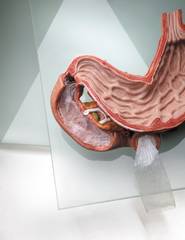
Dr. Rothstein, the Joseph M. Huber Professor of Medicine and chair of the department of medicine, Geisel School of Medicine at Dartmouth, Hanover, N.H., provided an overview of some of the devices, which include sleeves, techniques, and devices used to reduce gastric volume such as balloons, and surgical tools used to sew or staple the stomach together.
Endoscopic treatments for obesity are less invasive, less expensive, reversible, and are performed as outpatient procedures, he said, noting that patients may be willing to pay for these procedures out of pocket.
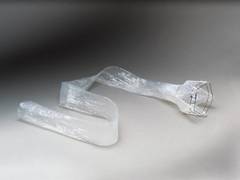
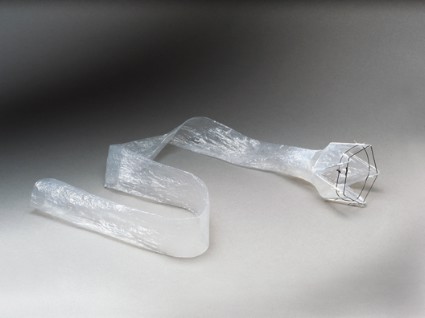
In early studies, the endoscopically delivered EndoBarrier resulted in weight loss and was well tolerated, said Dr. Rothstein, who is an adviser to the manufacturer, GI Dynamics. This is a flexible, tube-shaped liner that forms a physical barrier between food and the intestinal wall, according to the manufacturer. The device, which mimics malabsorptive surgical procedures, has been available for 3 years in Europe, Australia, and South America and is being evaluated in a pivotal U.S. study, the ENDO trial, for treating patients who are obese and have uncontrolled type 2 diabetes.
Andy Levine, who was chief technology officer at GI Dynamics and is now an adviser to the company, said that to date, the EndoBarrier, which completely covers the duodenum and the proximal jejunum and is anchored in the duodenal bulb distal to the pylorus, has been placed in more than 1,300 people worldwide. The device creates a "a complete bypass," so the food from the stomach goes through the flexible soft liner, driven by peristalsis, and the bile and pancreatic enzymes pass on the outside of the liner, with all mixing in the bowel, said Mr. Levine, who is now the leader of business development for medical devices and robotics at the Wyss Institute for Biologically Inspired Engineering at Harvard University, Boston.
In studies, improvements in type 2 diabetes measures are being used as endpoints, since showing improvement in obesity comorbidities was determined to be important for reimbursement, "and the technology had a unique impact on diabetes."
Based on experience with the device to date, Mr. Levine said that for the first 9-10 months, patients lose about 10%-20% of their body weight and many have been able to discontinue insulin and stay on oral therapy. Following removal of the device at 1 year, there is a slow rebound in weight and hemoglobin A1c values. While this might appear to be a temporary solution for a chronic problem, "we’re certainly treating it, and in some ways may be reversing the disease at least for awhile," he said, pointing out that the device addresses the need to break the cycle of continuing weight gain and helps patients discontinue diabetes medications, especially insulin.
A variety of newer, improved versions of endoscopically placed balloons are also being studied, including the ReShape, a double balloon device, Dr. Rothstein said.
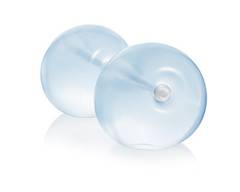
During the same session, Richard Thompson, president and CEO of ReShape Medical, a small venture capital–funded company, said that the ReShape Duo intragastric device is made up of two balloons that contain a total of about 900 mL of fluid, which occupy space in the stomach without the discomfort and distension that can occur with one large balloon. This device is designed to reduce the risk of migration, which can occurs when a balloon deflates and migrates to the intestine where it can cause a blockage. If one balloon deflates the other remains inflated, and because there is blue dye in the balloons, when one deflates, the dye is visible in urine to alert the patient, he noted. ReShape Duo has been available in Europe for more than 2 years.
The U.S. trial evaluating the device in 325 patients is almost completed, and the company recently announced that the primary endpoints that assessed weight loss and responder rates had been met. The company plans to file for FDA approval in the second quarter of 2014.
Dr. Rothstein said that other nonsurgical devices being developed include those that do not require endoscopic placement, such as bezoars or balloons that are swallowed by the patient and function as temporary "space-occupying devices," he said. One example is a capsule that contains beads, which swell up in the stomach and take up space after the capsule is swallowed – which may affect satiety and result in weight loss if ingested before a meal, he said.
Techniques that bring aspects of the proximal stomach together represent another approach, using devices to sew and stitch up the stomach, compartmentalizing the stomach, creating "if you will, an endoscopic gastric sleeve," he said, noting there are not much data available on this approach.
Data from studies that are sham-controlled and have adequate sample sizes are needed to determine the role of these therapies, as they are developed, and they need to be shown to have "reasonable durability," and a safety profile with minimal complications, with cost-effectiveness data, Dr. Rothstein said. And as they become available, it will be necessary to "tease out" which patient groups respond best to which therapy, such as balloons or bezoars, or gastric bypass surgery, he added.
WASHINGTON – Endoscopically placed devices that include intragastric balloons and gastrointestinal liners are being evaluated for the treatment of obesity and could eventually fill some of the current void in treatment options that fall between lifestyle changes and surgical treatments.
These types of devices are the new paradigm for obesity treatments, and many are already available in Europe and elsewhere, Dr. Richard Rothstein said at a public workshop cosponsored by the Food and Drug Administration and the American Gastroenterological Association. Some have been evaluated in studies that use diabetes control measures as the main outcome endpoint, rather than weight loss, he noted.
Dr. Rothstein, the Joseph M. Huber Professor of Medicine and chair of the department of medicine, Geisel School of Medicine at Dartmouth, Hanover, N.H., provided an overview of some of the devices, which include sleeves, techniques, and devices used to reduce gastric volume such as balloons, and surgical tools used to sew or staple the stomach together.
Endoscopic treatments for obesity are less invasive, less expensive, reversible, and are performed as outpatient procedures, he said, noting that patients may be willing to pay for these procedures out of pocket.
In early studies, the endoscopically delivered EndoBarrier resulted in weight loss and was well tolerated, said Dr. Rothstein, who is an adviser to the manufacturer, GI Dynamics. This is a flexible, tube-shaped liner that forms a physical barrier between food and the intestinal wall, according to the manufacturer. The device, which mimics malabsorptive surgical procedures, has been available for 3 years in Europe, Australia, and South America and is being evaluated in a pivotal U.S. study, the ENDO trial, for treating patients who are obese and have uncontrolled type 2 diabetes.
Andy Levine, who was chief technology officer at GI Dynamics and is now an adviser to the company, said that to date, the EndoBarrier, which completely covers the duodenum and the proximal jejunum and is anchored in the duodenal bulb distal to the pylorus, has been placed in more than 1,300 people worldwide. The device creates a "a complete bypass," so the food from the stomach goes through the flexible soft liner, driven by peristalsis, and the bile and pancreatic enzymes pass on the outside of the liner, with all mixing in the bowel, said Mr. Levine, who is now the leader of business development for medical devices and robotics at the Wyss Institute for Biologically Inspired Engineering at Harvard University, Boston.
In studies, improvements in type 2 diabetes measures are being used as endpoints, since showing improvement in obesity comorbidities was determined to be important for reimbursement, "and the technology had a unique impact on diabetes."
Based on experience with the device to date, Mr. Levine said that for the first 9-10 months, patients lose about 10%-20% of their body weight and many have been able to discontinue insulin and stay on oral therapy. Following removal of the device at 1 year, there is a slow rebound in weight and hemoglobin A1c values. While this might appear to be a temporary solution for a chronic problem, "we’re certainly treating it, and in some ways may be reversing the disease at least for awhile," he said, pointing out that the device addresses the need to break the cycle of continuing weight gain and helps patients discontinue diabetes medications, especially insulin.
A variety of newer, improved versions of endoscopically placed balloons are also being studied, including the ReShape, a double balloon device, Dr. Rothstein said.
During the same session, Richard Thompson, president and CEO of ReShape Medical, a small venture capital–funded company, said that the ReShape Duo intragastric device is made up of two balloons that contain a total of about 900 mL of fluid, which occupy space in the stomach without the discomfort and distension that can occur with one large balloon. This device is designed to reduce the risk of migration, which can occurs when a balloon deflates and migrates to the intestine where it can cause a blockage. If one balloon deflates the other remains inflated, and because there is blue dye in the balloons, when one deflates, the dye is visible in urine to alert the patient, he noted. ReShape Duo has been available in Europe for more than 2 years.
The U.S. trial evaluating the device in 325 patients is almost completed, and the company recently announced that the primary endpoints that assessed weight loss and responder rates had been met. The company plans to file for FDA approval in the second quarter of 2014.
Dr. Rothstein said that other nonsurgical devices being developed include those that do not require endoscopic placement, such as bezoars or balloons that are swallowed by the patient and function as temporary "space-occupying devices," he said. One example is a capsule that contains beads, which swell up in the stomach and take up space after the capsule is swallowed – which may affect satiety and result in weight loss if ingested before a meal, he said.
Techniques that bring aspects of the proximal stomach together represent another approach, using devices to sew and stitch up the stomach, compartmentalizing the stomach, creating "if you will, an endoscopic gastric sleeve," he said, noting there are not much data available on this approach.
Data from studies that are sham-controlled and have adequate sample sizes are needed to determine the role of these therapies, as they are developed, and they need to be shown to have "reasonable durability," and a safety profile with minimal complications, with cost-effectiveness data, Dr. Rothstein said. And as they become available, it will be necessary to "tease out" which patient groups respond best to which therapy, such as balloons or bezoars, or gastric bypass surgery, he added.
WASHINGTON – Endoscopically placed devices that include intragastric balloons and gastrointestinal liners are being evaluated for the treatment of obesity and could eventually fill some of the current void in treatment options that fall between lifestyle changes and surgical treatments.
These types of devices are the new paradigm for obesity treatments, and many are already available in Europe and elsewhere, Dr. Richard Rothstein said at a public workshop cosponsored by the Food and Drug Administration and the American Gastroenterological Association. Some have been evaluated in studies that use diabetes control measures as the main outcome endpoint, rather than weight loss, he noted.
Dr. Rothstein, the Joseph M. Huber Professor of Medicine and chair of the department of medicine, Geisel School of Medicine at Dartmouth, Hanover, N.H., provided an overview of some of the devices, which include sleeves, techniques, and devices used to reduce gastric volume such as balloons, and surgical tools used to sew or staple the stomach together.
Endoscopic treatments for obesity are less invasive, less expensive, reversible, and are performed as outpatient procedures, he said, noting that patients may be willing to pay for these procedures out of pocket.
In early studies, the endoscopically delivered EndoBarrier resulted in weight loss and was well tolerated, said Dr. Rothstein, who is an adviser to the manufacturer, GI Dynamics. This is a flexible, tube-shaped liner that forms a physical barrier between food and the intestinal wall, according to the manufacturer. The device, which mimics malabsorptive surgical procedures, has been available for 3 years in Europe, Australia, and South America and is being evaluated in a pivotal U.S. study, the ENDO trial, for treating patients who are obese and have uncontrolled type 2 diabetes.
Andy Levine, who was chief technology officer at GI Dynamics and is now an adviser to the company, said that to date, the EndoBarrier, which completely covers the duodenum and the proximal jejunum and is anchored in the duodenal bulb distal to the pylorus, has been placed in more than 1,300 people worldwide. The device creates a "a complete bypass," so the food from the stomach goes through the flexible soft liner, driven by peristalsis, and the bile and pancreatic enzymes pass on the outside of the liner, with all mixing in the bowel, said Mr. Levine, who is now the leader of business development for medical devices and robotics at the Wyss Institute for Biologically Inspired Engineering at Harvard University, Boston.
In studies, improvements in type 2 diabetes measures are being used as endpoints, since showing improvement in obesity comorbidities was determined to be important for reimbursement, "and the technology had a unique impact on diabetes."
Based on experience with the device to date, Mr. Levine said that for the first 9-10 months, patients lose about 10%-20% of their body weight and many have been able to discontinue insulin and stay on oral therapy. Following removal of the device at 1 year, there is a slow rebound in weight and hemoglobin A1c values. While this might appear to be a temporary solution for a chronic problem, "we’re certainly treating it, and in some ways may be reversing the disease at least for awhile," he said, pointing out that the device addresses the need to break the cycle of continuing weight gain and helps patients discontinue diabetes medications, especially insulin.
A variety of newer, improved versions of endoscopically placed balloons are also being studied, including the ReShape, a double balloon device, Dr. Rothstein said.
During the same session, Richard Thompson, president and CEO of ReShape Medical, a small venture capital–funded company, said that the ReShape Duo intragastric device is made up of two balloons that contain a total of about 900 mL of fluid, which occupy space in the stomach without the discomfort and distension that can occur with one large balloon. This device is designed to reduce the risk of migration, which can occurs when a balloon deflates and migrates to the intestine where it can cause a blockage. If one balloon deflates the other remains inflated, and because there is blue dye in the balloons, when one deflates, the dye is visible in urine to alert the patient, he noted. ReShape Duo has been available in Europe for more than 2 years.
The U.S. trial evaluating the device in 325 patients is almost completed, and the company recently announced that the primary endpoints that assessed weight loss and responder rates had been met. The company plans to file for FDA approval in the second quarter of 2014.
Dr. Rothstein said that other nonsurgical devices being developed include those that do not require endoscopic placement, such as bezoars or balloons that are swallowed by the patient and function as temporary "space-occupying devices," he said. One example is a capsule that contains beads, which swell up in the stomach and take up space after the capsule is swallowed – which may affect satiety and result in weight loss if ingested before a meal, he said.
Techniques that bring aspects of the proximal stomach together represent another approach, using devices to sew and stitch up the stomach, compartmentalizing the stomach, creating "if you will, an endoscopic gastric sleeve," he said, noting there are not much data available on this approach.
Data from studies that are sham-controlled and have adequate sample sizes are needed to determine the role of these therapies, as they are developed, and they need to be shown to have "reasonable durability," and a safety profile with minimal complications, with cost-effectiveness data, Dr. Rothstein said. And as they become available, it will be necessary to "tease out" which patient groups respond best to which therapy, such as balloons or bezoars, or gastric bypass surgery, he added.
AT AN FDA/AGA WORKSHOP
Multiple gut operations tip scale against laparoscopic gall bladder surgery
NAPLES, FLA. – Only fewer prior abdominal surgeries predicted successful laparoscopic gall bladder surgery after percutaneous cholecystostomy tube placement in a review of 245 patients.
Notably, the degree of illness at the time of percutaneous cholecystostomy tube (PCT) placement did not seem to influence the rate of laparoscopy, Dr. Mohammad Khasawneh reported at the annual scientific assembly of the Eastern Association for the Surgery of Trauma.
"Our data suggest that having three or more prior abdominal operations seemed to reliably lean toward conversion to an open cholecystectomy," he said in an interview.
Many patients with high operative morbidity and mortality risk developing cholecystitis and are treated with PCT drainage. Cholecystectomy after PCT placement is the definitive treatment for cholecystitis among patients whose risk profile improves, but it is unclear which patients will be able to have a laparoscopic cholecystectomy, explained Dr. Khasawneh, with the department of surgery at the Mayo Clinic, Rochester, Minn.
The investigators reviewed 245 patients who had a PCT placed at the clinic from 2009 to 2011. Their median age was 71 years, and two-thirds were male. Of these, 43 patients died, 131 were not surgical candidates, and 71 went on to interval cholecystectomy in a median of 55 days (range, 42-75 days).
Laparoscopy was planned for 63 patients (89%) and successfully completed in 50 (79%), with 13 converted to open surgery. Eight cases were originally planned for open surgery.
The high mortality rate after PCT placement (17.5%) was due to the presence of comorbid conditions, according to Dr. Khasawneh.
Index admission comorbidities among cholecystectomy and non-cholecystectomy patients were prior abdominal surgeries (44% vs. 55%, respectively), mechanical ventilation (8% vs. 16%), steroid use (8.5% vs. 15%), anticoagulation use (28% vs. 32%), vasopressor use (10% both), and dysrhythmia (23% vs. 27%).
Interval cholecystectomy patients had a significantly lower overall Charlson Comorbidity Index (5 vs. 6; P = .005) and spent significantly less time in the intensive care unit (3 vs. 7 days; P less than .01) and hospital (6 vs. 9 days; P less than .01), he reported.
In multivariable regression analysis, comorbidity index and number of prior abdominal operations significantly predicted interval cholecystectomy, whereas age (odds ratio, 1.1; P = .39), presence of stones (OR, 1.7; P = .11), and mechanical ventilation at the time of PCT drainage (OR, 0.55; P = .12) did not.
Only the number of prior abdominal operations significantly predicted laparoscopic cholecystectomy (OR, 0.52; P = .02), Dr. Khasawneh reported.
"Patients who are medically cleared for cholecystectomy should have an attempt at laparoscopic cholecystectomy unless they have multiple prior operations," the authors concluded.
Dr. Khasawneh and his coauthors reported having no financial disclosures.
NAPLES, FLA. – Only fewer prior abdominal surgeries predicted successful laparoscopic gall bladder surgery after percutaneous cholecystostomy tube placement in a review of 245 patients.
Notably, the degree of illness at the time of percutaneous cholecystostomy tube (PCT) placement did not seem to influence the rate of laparoscopy, Dr. Mohammad Khasawneh reported at the annual scientific assembly of the Eastern Association for the Surgery of Trauma.
"Our data suggest that having three or more prior abdominal operations seemed to reliably lean toward conversion to an open cholecystectomy," he said in an interview.
Many patients with high operative morbidity and mortality risk developing cholecystitis and are treated with PCT drainage. Cholecystectomy after PCT placement is the definitive treatment for cholecystitis among patients whose risk profile improves, but it is unclear which patients will be able to have a laparoscopic cholecystectomy, explained Dr. Khasawneh, with the department of surgery at the Mayo Clinic, Rochester, Minn.
The investigators reviewed 245 patients who had a PCT placed at the clinic from 2009 to 2011. Their median age was 71 years, and two-thirds were male. Of these, 43 patients died, 131 were not surgical candidates, and 71 went on to interval cholecystectomy in a median of 55 days (range, 42-75 days).
Laparoscopy was planned for 63 patients (89%) and successfully completed in 50 (79%), with 13 converted to open surgery. Eight cases were originally planned for open surgery.
The high mortality rate after PCT placement (17.5%) was due to the presence of comorbid conditions, according to Dr. Khasawneh.
Index admission comorbidities among cholecystectomy and non-cholecystectomy patients were prior abdominal surgeries (44% vs. 55%, respectively), mechanical ventilation (8% vs. 16%), steroid use (8.5% vs. 15%), anticoagulation use (28% vs. 32%), vasopressor use (10% both), and dysrhythmia (23% vs. 27%).
Interval cholecystectomy patients had a significantly lower overall Charlson Comorbidity Index (5 vs. 6; P = .005) and spent significantly less time in the intensive care unit (3 vs. 7 days; P less than .01) and hospital (6 vs. 9 days; P less than .01), he reported.
In multivariable regression analysis, comorbidity index and number of prior abdominal operations significantly predicted interval cholecystectomy, whereas age (odds ratio, 1.1; P = .39), presence of stones (OR, 1.7; P = .11), and mechanical ventilation at the time of PCT drainage (OR, 0.55; P = .12) did not.
Only the number of prior abdominal operations significantly predicted laparoscopic cholecystectomy (OR, 0.52; P = .02), Dr. Khasawneh reported.
"Patients who are medically cleared for cholecystectomy should have an attempt at laparoscopic cholecystectomy unless they have multiple prior operations," the authors concluded.
Dr. Khasawneh and his coauthors reported having no financial disclosures.
NAPLES, FLA. – Only fewer prior abdominal surgeries predicted successful laparoscopic gall bladder surgery after percutaneous cholecystostomy tube placement in a review of 245 patients.
Notably, the degree of illness at the time of percutaneous cholecystostomy tube (PCT) placement did not seem to influence the rate of laparoscopy, Dr. Mohammad Khasawneh reported at the annual scientific assembly of the Eastern Association for the Surgery of Trauma.
"Our data suggest that having three or more prior abdominal operations seemed to reliably lean toward conversion to an open cholecystectomy," he said in an interview.
Many patients with high operative morbidity and mortality risk developing cholecystitis and are treated with PCT drainage. Cholecystectomy after PCT placement is the definitive treatment for cholecystitis among patients whose risk profile improves, but it is unclear which patients will be able to have a laparoscopic cholecystectomy, explained Dr. Khasawneh, with the department of surgery at the Mayo Clinic, Rochester, Minn.
The investigators reviewed 245 patients who had a PCT placed at the clinic from 2009 to 2011. Their median age was 71 years, and two-thirds were male. Of these, 43 patients died, 131 were not surgical candidates, and 71 went on to interval cholecystectomy in a median of 55 days (range, 42-75 days).
Laparoscopy was planned for 63 patients (89%) and successfully completed in 50 (79%), with 13 converted to open surgery. Eight cases were originally planned for open surgery.
The high mortality rate after PCT placement (17.5%) was due to the presence of comorbid conditions, according to Dr. Khasawneh.
Index admission comorbidities among cholecystectomy and non-cholecystectomy patients were prior abdominal surgeries (44% vs. 55%, respectively), mechanical ventilation (8% vs. 16%), steroid use (8.5% vs. 15%), anticoagulation use (28% vs. 32%), vasopressor use (10% both), and dysrhythmia (23% vs. 27%).
Interval cholecystectomy patients had a significantly lower overall Charlson Comorbidity Index (5 vs. 6; P = .005) and spent significantly less time in the intensive care unit (3 vs. 7 days; P less than .01) and hospital (6 vs. 9 days; P less than .01), he reported.
In multivariable regression analysis, comorbidity index and number of prior abdominal operations significantly predicted interval cholecystectomy, whereas age (odds ratio, 1.1; P = .39), presence of stones (OR, 1.7; P = .11), and mechanical ventilation at the time of PCT drainage (OR, 0.55; P = .12) did not.
Only the number of prior abdominal operations significantly predicted laparoscopic cholecystectomy (OR, 0.52; P = .02), Dr. Khasawneh reported.
"Patients who are medically cleared for cholecystectomy should have an attempt at laparoscopic cholecystectomy unless they have multiple prior operations," the authors concluded.
Dr. Khasawneh and his coauthors reported having no financial disclosures.
AT THE EAST SCIENTIFIC ASSEMBLY
Major finding: Fewer prior abdominal operations significantly predict successful laparoscopic cholecystectomy (OR, 0.52; P = .02).
Data source: A retrospective study of 245 patients with a percutaneous cholecystostomy tube.
Disclosures: Dr. Khasawneh and his coauthors reported having no financial disclosures.
Esophagectomy treatment response nodes provide prognostic information
ORLANDO – Tumor response nodes obtained from patients who undergo esophagectomy for early-stage adenocarcinoma provide valuable prognostic information, according to Dr. Dylan Nieman.
Such nodes – lymph nodes with evidence of neoadjuvant treatment effect without residual cancer cells – may mark the prior spread of tumor, and should be counted as positive, Dr. Nieman of the University of Rochester (N.Y.) said at the annual meeting of the Society of Thoracic Surgeons.
The current practice of ignoring these nodes likely results in systematic pathologic understaging, he explained.
In 90 patients who underwent esophagectomy after neoadjuvant therapy for esophageal adenocarcinoma, the median number of nodes found per resection specimen was 18. A total of 100 tumor response nodes without viable malignant cells were identified in 38 (42%) of the patients.
The majority of the patients with treatment response nodes had only one node detected, Dr. Nieman said.
The median survival for the entire cohort was 55.6 months, and the 5-year survival was 35%. The median survival of patients with evidence of treatment response nodes was poorer, but not significantly different from those without treatment response nodes (45.9 vs. 55.6 months), he noted.
"However, for a subset of 62 patients classified as having limited or no nodal involvement – that is, AJCC N0 or N1 – the presence of treatment response nodes was associated with significantly poorer survival. This effect remained when adjusting for patient age and [American Joint Committee on Cancer] stage (hazard ratio, 2.7)," he said.
In a subset of 46 patients with pathologic AJCC stage 2B or less, the presence of treatment response nodes was still associated with poorer survival, even after adjustment for age and AJCC stage.
"To look at this a different way, if tumor response nodes were to be counted as positive, the nodal status of 29 of these patients would be upstaged. This includes 18 of 39 patients, or 46%, who were classified as node negative, and 8 of 23 patients, or 34%, who were classified as N1 by AJCC pathological assessment," he said.
The recategorization of those 29 patients resulted in better survival for the entire group, but particularly for those in the lowest-stage group, he noted.
When investigators modeled stage-adjusted survival, the counting of tumor response nodes as positive offered a better model fit, compared with following the current practice of ignoring tumor response nodes, he explained.
Patients included in the study were identified from a prospectively collected clinical database of esophagectomy patients, and were treated with neoadjuvant therapy for esophageal adenocarcinoma between 2006 and 2011. Most (82 of 90) were men. The patients had a mean age of 62 years, and were followed for a median of 27 months. Forty patients received preoperative chemotherapy, and 50 received preoperative chemoradiation.
In all cases, pathologic resection margins were negative.
On pathologic review, the majority had T3 tumors. More than 40% were staged as node negative, and more than two-thirds were staged with N0 or N1 disease.
"Prior to neoadjuvant therapy, all of these patients were clinically staged stage 2 or stage 3, but at the time of resection after neoadjuvant therapy, by AJCC staging, 24% of the patients were stage 0 or 1, 27% were stage 2, and almost half were stage 3," he said.
The findings are notable, because the current AJCC pathologic staging for esophageal adenocarcinoma is derived from the experience of patients undergoing esophagectomy alone. This approach has unclear relevance in patients who receive multimodality therapy, which has supplanted primary surgery as the standard of care for locoregionally advanced esophageal adenocarcinoma, he said.
"Future efforts at revising the staging system for esophageal adenocarcinoma should consider treatment response lymph nodes. ... We currently have pathological staging models that are of limited usefulness for our neoadjuvantly treated population. Perhaps consideration of these nodes can help improve that," he concluded.
Dr. Nieman reported having no financial disclosures.
ORLANDO – Tumor response nodes obtained from patients who undergo esophagectomy for early-stage adenocarcinoma provide valuable prognostic information, according to Dr. Dylan Nieman.
Such nodes – lymph nodes with evidence of neoadjuvant treatment effect without residual cancer cells – may mark the prior spread of tumor, and should be counted as positive, Dr. Nieman of the University of Rochester (N.Y.) said at the annual meeting of the Society of Thoracic Surgeons.
The current practice of ignoring these nodes likely results in systematic pathologic understaging, he explained.
In 90 patients who underwent esophagectomy after neoadjuvant therapy for esophageal adenocarcinoma, the median number of nodes found per resection specimen was 18. A total of 100 tumor response nodes without viable malignant cells were identified in 38 (42%) of the patients.
The majority of the patients with treatment response nodes had only one node detected, Dr. Nieman said.
The median survival for the entire cohort was 55.6 months, and the 5-year survival was 35%. The median survival of patients with evidence of treatment response nodes was poorer, but not significantly different from those without treatment response nodes (45.9 vs. 55.6 months), he noted.
"However, for a subset of 62 patients classified as having limited or no nodal involvement – that is, AJCC N0 or N1 – the presence of treatment response nodes was associated with significantly poorer survival. This effect remained when adjusting for patient age and [American Joint Committee on Cancer] stage (hazard ratio, 2.7)," he said.
In a subset of 46 patients with pathologic AJCC stage 2B or less, the presence of treatment response nodes was still associated with poorer survival, even after adjustment for age and AJCC stage.
"To look at this a different way, if tumor response nodes were to be counted as positive, the nodal status of 29 of these patients would be upstaged. This includes 18 of 39 patients, or 46%, who were classified as node negative, and 8 of 23 patients, or 34%, who were classified as N1 by AJCC pathological assessment," he said.
The recategorization of those 29 patients resulted in better survival for the entire group, but particularly for those in the lowest-stage group, he noted.
When investigators modeled stage-adjusted survival, the counting of tumor response nodes as positive offered a better model fit, compared with following the current practice of ignoring tumor response nodes, he explained.
Patients included in the study were identified from a prospectively collected clinical database of esophagectomy patients, and were treated with neoadjuvant therapy for esophageal adenocarcinoma between 2006 and 2011. Most (82 of 90) were men. The patients had a mean age of 62 years, and were followed for a median of 27 months. Forty patients received preoperative chemotherapy, and 50 received preoperative chemoradiation.
In all cases, pathologic resection margins were negative.
On pathologic review, the majority had T3 tumors. More than 40% were staged as node negative, and more than two-thirds were staged with N0 or N1 disease.
"Prior to neoadjuvant therapy, all of these patients were clinically staged stage 2 or stage 3, but at the time of resection after neoadjuvant therapy, by AJCC staging, 24% of the patients were stage 0 or 1, 27% were stage 2, and almost half were stage 3," he said.
The findings are notable, because the current AJCC pathologic staging for esophageal adenocarcinoma is derived from the experience of patients undergoing esophagectomy alone. This approach has unclear relevance in patients who receive multimodality therapy, which has supplanted primary surgery as the standard of care for locoregionally advanced esophageal adenocarcinoma, he said.
"Future efforts at revising the staging system for esophageal adenocarcinoma should consider treatment response lymph nodes. ... We currently have pathological staging models that are of limited usefulness for our neoadjuvantly treated population. Perhaps consideration of these nodes can help improve that," he concluded.
Dr. Nieman reported having no financial disclosures.
ORLANDO – Tumor response nodes obtained from patients who undergo esophagectomy for early-stage adenocarcinoma provide valuable prognostic information, according to Dr. Dylan Nieman.
Such nodes – lymph nodes with evidence of neoadjuvant treatment effect without residual cancer cells – may mark the prior spread of tumor, and should be counted as positive, Dr. Nieman of the University of Rochester (N.Y.) said at the annual meeting of the Society of Thoracic Surgeons.
The current practice of ignoring these nodes likely results in systematic pathologic understaging, he explained.
In 90 patients who underwent esophagectomy after neoadjuvant therapy for esophageal adenocarcinoma, the median number of nodes found per resection specimen was 18. A total of 100 tumor response nodes without viable malignant cells were identified in 38 (42%) of the patients.
The majority of the patients with treatment response nodes had only one node detected, Dr. Nieman said.
The median survival for the entire cohort was 55.6 months, and the 5-year survival was 35%. The median survival of patients with evidence of treatment response nodes was poorer, but not significantly different from those without treatment response nodes (45.9 vs. 55.6 months), he noted.
"However, for a subset of 62 patients classified as having limited or no nodal involvement – that is, AJCC N0 or N1 – the presence of treatment response nodes was associated with significantly poorer survival. This effect remained when adjusting for patient age and [American Joint Committee on Cancer] stage (hazard ratio, 2.7)," he said.
In a subset of 46 patients with pathologic AJCC stage 2B or less, the presence of treatment response nodes was still associated with poorer survival, even after adjustment for age and AJCC stage.
"To look at this a different way, if tumor response nodes were to be counted as positive, the nodal status of 29 of these patients would be upstaged. This includes 18 of 39 patients, or 46%, who were classified as node negative, and 8 of 23 patients, or 34%, who were classified as N1 by AJCC pathological assessment," he said.
The recategorization of those 29 patients resulted in better survival for the entire group, but particularly for those in the lowest-stage group, he noted.
When investigators modeled stage-adjusted survival, the counting of tumor response nodes as positive offered a better model fit, compared with following the current practice of ignoring tumor response nodes, he explained.
Patients included in the study were identified from a prospectively collected clinical database of esophagectomy patients, and were treated with neoadjuvant therapy for esophageal adenocarcinoma between 2006 and 2011. Most (82 of 90) were men. The patients had a mean age of 62 years, and were followed for a median of 27 months. Forty patients received preoperative chemotherapy, and 50 received preoperative chemoradiation.
In all cases, pathologic resection margins were negative.
On pathologic review, the majority had T3 tumors. More than 40% were staged as node negative, and more than two-thirds were staged with N0 or N1 disease.
"Prior to neoadjuvant therapy, all of these patients were clinically staged stage 2 or stage 3, but at the time of resection after neoadjuvant therapy, by AJCC staging, 24% of the patients were stage 0 or 1, 27% were stage 2, and almost half were stage 3," he said.
The findings are notable, because the current AJCC pathologic staging for esophageal adenocarcinoma is derived from the experience of patients undergoing esophagectomy alone. This approach has unclear relevance in patients who receive multimodality therapy, which has supplanted primary surgery as the standard of care for locoregionally advanced esophageal adenocarcinoma, he said.
"Future efforts at revising the staging system for esophageal adenocarcinoma should consider treatment response lymph nodes. ... We currently have pathological staging models that are of limited usefulness for our neoadjuvantly treated population. Perhaps consideration of these nodes can help improve that," he concluded.
Dr. Nieman reported having no financial disclosures.
AT THE STS ANNUAL MEETING
Major finding: In 62 patients classified as having limited or no nodal involvement, the presence of treatment response nodes was associated with significantly poorer survival (adjusted hazard ratio, 2.7).
Data source: A review of 90 prospectively collected cases.
Disclosures: Dr. Nieman reported having no financial disclosures.
Cryopreserved blood transfusions making a comeback
NAPLES, FLA. – Transfusions using cryopreserved red blood cells may be superior to those using standard blood storage techniques, updated analyses of a prospective study showed.
Cryopreservation minimizes the biochemical insult associated with transfusions and also appears to reduce the storage lesion, or the biochemical and structural changes that occur during refrigeration and adversely affect perfusion and oxygen off-loading, Dr. David A. Hampton said at the annual scientific assembly of the Eastern Association for the Surgery of Trauma (EAST).
Cryopreserved red blood cells (CPRBCs), which are Food and Drug Administration approved for a 10-year storage life, had a median shelf life of 588 days vs. just 14 days for standard liquid preserved packed red blood cells (LPRBCs) (P less than .01).
CPRBC transfusions were used by the U.S. Navy during the Vietnam War and extensively in civilian hospitals until the FDA extended the shelf life of LPRBCs from 21 to 42 days. Secondary to concerns of poor screening practices and the rise in hepatitis and HIV in the 1980s, CPRBCs fell out of favor for routine transfusion and are currently used for patients with rare blood types or if liquid stores run out.

Researchers at five U.S. centers, however, are currently investigating the efficacy and clinical outcomes of CPRBC transfusions as compared with LPRBCs, with results expected later this summer, according to Dr. Hampton, a fourth-year surgery resident at Oregon Health and Science University (OHSU), Portland.
"There haven’t been large, robust studies of this issue, but once that’s been done, we hope the paradigm will shift from LPRBCs to an increase in CPRBC usage," he said in an interview. "All of the current studies are quite favorable and support this change."
European investigators have already shown that autologous CPRBC transfusions do not elicit an inflammatory response in healthy controls (Transfusion 2013;53:28-33), while OHSU previously reported that tissue oxygenation is superior in trauma patients receiving cryopreserved rather than standard blood transfusions during the first 3 hours after transfusion (J. Trauma Acute Care Surg. 2013;74:371-6).
The results presented at EAST were based on biochemical analyses performed on the same 57 adult trauma patients with an Injury Severity Score (ISS) of more than 4 randomized to receive 1-2 U of CPRBCs or LPRBCs.
The standard and cryopreserved groups were similar with respect to age (44 years vs. 50 years), male gender (66% vs. 73%), blunt injury mechanism (97% vs. 86%), ISS (26 vs. 17), APACHE II scores (11 for both), and number of units transfused (3.1 vs. 3.6).
The correction of anemia was similar between the CPRBC and LPRBC groups 12 hours post transfusion (hemoglobin level at 24.6 g/dL vs. 24.8 g/dL) and at discharge (26.0 g/dL vs. 25.8 g/dL), Dr. Hampton said.
The CPRBC group, however, had significantly increased concentrations of 2,3-diphosphoglycerate (DPG) (P less than .04), a protein that enhances oxygen delivery and is virtually undetectable in LPRBCs after 3 weeks of storage.
The CPRBC group had significantly lower levels of serum amyloid P (1.8 mg/dL vs. 34 mg/dL; P less than .01) and C-reactive protein (0.16 mg/dL vs. 5 mg/dL; P less than .01). Elevated levels of these proteins can potentiate anticoagulation, making it difficult to dose heparin, which in turn increases bleeding risk, Dr. Hampton explained.

CPRBC patients also had significantly lower levels of interleukin-8 (P less than .04) and tumor necrosis factor–alpha (P less than .05). Elevated levels of these proinflammatory cytokines are directly associated with transfusion-related acute lung injury.
Clinical outcomes were mixed in the study, which won the Raymond H. Alexander resident paper competition at the meeting. The cryopreserved group tended to have less acute renal failure (5% vs. 9%), multiple organ failure (9% vs. 12%), and posttransfusion fever (0% vs. 3%), but were twice as likely to experience deep vein thrombosis (32% vs. 15%) and stayed longer in the hospital (16 days vs. 11 days). Respiratory failure occurred in 32% of patients in both groups. None of the differences reached statistical significance, he said.
The results clearly show that cryopreserved RBCs increase 2,3-DPG concentrations, but the oxygen metric of real interest is whether they can increase end-organ oxygen consumption, said Dr. Levi Procter of the University of Kentucky Medical Center, Lexington, who was invited to discuss the study.
He also noted that cryopreserved blood is more expensive than standard refrigerated blood and requires time to thaw, which can be problematic when patients arrive in shock and need an immediate transfusion.
Cryopreserved blood costs about $400 vs. $200 for standard blood, but the differential is negligible given the longer shelf life, Dr. Hampton said. The FDA has approved a 14-day postthaw shelf life, so cryopreserved blood can be thawed and kept on hand in the trauma bay. In a busy level I trauma center, this pre-positioned blood will be used fairly quickly by incoming patients or those within the wards.
"Any hospital that performs transfusions is a candidate for frozen blood," he told this publication. "However, the tertiary referral centers with larger patient populations are where you will most likely see the best results."
Dr. Hampton reported study sponsorship from the U.S. Air Force Research Laboratory. Dr. Procter reported no financial disclosures.
NAPLES, FLA. – Transfusions using cryopreserved red blood cells may be superior to those using standard blood storage techniques, updated analyses of a prospective study showed.
Cryopreservation minimizes the biochemical insult associated with transfusions and also appears to reduce the storage lesion, or the biochemical and structural changes that occur during refrigeration and adversely affect perfusion and oxygen off-loading, Dr. David A. Hampton said at the annual scientific assembly of the Eastern Association for the Surgery of Trauma (EAST).
Cryopreserved red blood cells (CPRBCs), which are Food and Drug Administration approved for a 10-year storage life, had a median shelf life of 588 days vs. just 14 days for standard liquid preserved packed red blood cells (LPRBCs) (P less than .01).
CPRBC transfusions were used by the U.S. Navy during the Vietnam War and extensively in civilian hospitals until the FDA extended the shelf life of LPRBCs from 21 to 42 days. Secondary to concerns of poor screening practices and the rise in hepatitis and HIV in the 1980s, CPRBCs fell out of favor for routine transfusion and are currently used for patients with rare blood types or if liquid stores run out.
Researchers at five U.S. centers, however, are currently investigating the efficacy and clinical outcomes of CPRBC transfusions as compared with LPRBCs, with results expected later this summer, according to Dr. Hampton, a fourth-year surgery resident at Oregon Health and Science University (OHSU), Portland.
"There haven’t been large, robust studies of this issue, but once that’s been done, we hope the paradigm will shift from LPRBCs to an increase in CPRBC usage," he said in an interview. "All of the current studies are quite favorable and support this change."
European investigators have already shown that autologous CPRBC transfusions do not elicit an inflammatory response in healthy controls (Transfusion 2013;53:28-33), while OHSU previously reported that tissue oxygenation is superior in trauma patients receiving cryopreserved rather than standard blood transfusions during the first 3 hours after transfusion (J. Trauma Acute Care Surg. 2013;74:371-6).
The results presented at EAST were based on biochemical analyses performed on the same 57 adult trauma patients with an Injury Severity Score (ISS) of more than 4 randomized to receive 1-2 U of CPRBCs or LPRBCs.
The standard and cryopreserved groups were similar with respect to age (44 years vs. 50 years), male gender (66% vs. 73%), blunt injury mechanism (97% vs. 86%), ISS (26 vs. 17), APACHE II scores (11 for both), and number of units transfused (3.1 vs. 3.6).
The correction of anemia was similar between the CPRBC and LPRBC groups 12 hours post transfusion (hemoglobin level at 24.6 g/dL vs. 24.8 g/dL) and at discharge (26.0 g/dL vs. 25.8 g/dL), Dr. Hampton said.
The CPRBC group, however, had significantly increased concentrations of 2,3-diphosphoglycerate (DPG) (P less than .04), a protein that enhances oxygen delivery and is virtually undetectable in LPRBCs after 3 weeks of storage.
The CPRBC group had significantly lower levels of serum amyloid P (1.8 mg/dL vs. 34 mg/dL; P less than .01) and C-reactive protein (0.16 mg/dL vs. 5 mg/dL; P less than .01). Elevated levels of these proteins can potentiate anticoagulation, making it difficult to dose heparin, which in turn increases bleeding risk, Dr. Hampton explained.
CPRBC patients also had significantly lower levels of interleukin-8 (P less than .04) and tumor necrosis factor–alpha (P less than .05). Elevated levels of these proinflammatory cytokines are directly associated with transfusion-related acute lung injury.
Clinical outcomes were mixed in the study, which won the Raymond H. Alexander resident paper competition at the meeting. The cryopreserved group tended to have less acute renal failure (5% vs. 9%), multiple organ failure (9% vs. 12%), and posttransfusion fever (0% vs. 3%), but were twice as likely to experience deep vein thrombosis (32% vs. 15%) and stayed longer in the hospital (16 days vs. 11 days). Respiratory failure occurred in 32% of patients in both groups. None of the differences reached statistical significance, he said.
The results clearly show that cryopreserved RBCs increase 2,3-DPG concentrations, but the oxygen metric of real interest is whether they can increase end-organ oxygen consumption, said Dr. Levi Procter of the University of Kentucky Medical Center, Lexington, who was invited to discuss the study.
He also noted that cryopreserved blood is more expensive than standard refrigerated blood and requires time to thaw, which can be problematic when patients arrive in shock and need an immediate transfusion.
Cryopreserved blood costs about $400 vs. $200 for standard blood, but the differential is negligible given the longer shelf life, Dr. Hampton said. The FDA has approved a 14-day postthaw shelf life, so cryopreserved blood can be thawed and kept on hand in the trauma bay. In a busy level I trauma center, this pre-positioned blood will be used fairly quickly by incoming patients or those within the wards.
"Any hospital that performs transfusions is a candidate for frozen blood," he told this publication. "However, the tertiary referral centers with larger patient populations are where you will most likely see the best results."
Dr. Hampton reported study sponsorship from the U.S. Air Force Research Laboratory. Dr. Procter reported no financial disclosures.
NAPLES, FLA. – Transfusions using cryopreserved red blood cells may be superior to those using standard blood storage techniques, updated analyses of a prospective study showed.
Cryopreservation minimizes the biochemical insult associated with transfusions and also appears to reduce the storage lesion, or the biochemical and structural changes that occur during refrigeration and adversely affect perfusion and oxygen off-loading, Dr. David A. Hampton said at the annual scientific assembly of the Eastern Association for the Surgery of Trauma (EAST).
Cryopreserved red blood cells (CPRBCs), which are Food and Drug Administration approved for a 10-year storage life, had a median shelf life of 588 days vs. just 14 days for standard liquid preserved packed red blood cells (LPRBCs) (P less than .01).
CPRBC transfusions were used by the U.S. Navy during the Vietnam War and extensively in civilian hospitals until the FDA extended the shelf life of LPRBCs from 21 to 42 days. Secondary to concerns of poor screening practices and the rise in hepatitis and HIV in the 1980s, CPRBCs fell out of favor for routine transfusion and are currently used for patients with rare blood types or if liquid stores run out.
Researchers at five U.S. centers, however, are currently investigating the efficacy and clinical outcomes of CPRBC transfusions as compared with LPRBCs, with results expected later this summer, according to Dr. Hampton, a fourth-year surgery resident at Oregon Health and Science University (OHSU), Portland.
"There haven’t been large, robust studies of this issue, but once that’s been done, we hope the paradigm will shift from LPRBCs to an increase in CPRBC usage," he said in an interview. "All of the current studies are quite favorable and support this change."
European investigators have already shown that autologous CPRBC transfusions do not elicit an inflammatory response in healthy controls (Transfusion 2013;53:28-33), while OHSU previously reported that tissue oxygenation is superior in trauma patients receiving cryopreserved rather than standard blood transfusions during the first 3 hours after transfusion (J. Trauma Acute Care Surg. 2013;74:371-6).
The results presented at EAST were based on biochemical analyses performed on the same 57 adult trauma patients with an Injury Severity Score (ISS) of more than 4 randomized to receive 1-2 U of CPRBCs or LPRBCs.
The standard and cryopreserved groups were similar with respect to age (44 years vs. 50 years), male gender (66% vs. 73%), blunt injury mechanism (97% vs. 86%), ISS (26 vs. 17), APACHE II scores (11 for both), and number of units transfused (3.1 vs. 3.6).
The correction of anemia was similar between the CPRBC and LPRBC groups 12 hours post transfusion (hemoglobin level at 24.6 g/dL vs. 24.8 g/dL) and at discharge (26.0 g/dL vs. 25.8 g/dL), Dr. Hampton said.
The CPRBC group, however, had significantly increased concentrations of 2,3-diphosphoglycerate (DPG) (P less than .04), a protein that enhances oxygen delivery and is virtually undetectable in LPRBCs after 3 weeks of storage.
The CPRBC group had significantly lower levels of serum amyloid P (1.8 mg/dL vs. 34 mg/dL; P less than .01) and C-reactive protein (0.16 mg/dL vs. 5 mg/dL; P less than .01). Elevated levels of these proteins can potentiate anticoagulation, making it difficult to dose heparin, which in turn increases bleeding risk, Dr. Hampton explained.
CPRBC patients also had significantly lower levels of interleukin-8 (P less than .04) and tumor necrosis factor–alpha (P less than .05). Elevated levels of these proinflammatory cytokines are directly associated with transfusion-related acute lung injury.
Clinical outcomes were mixed in the study, which won the Raymond H. Alexander resident paper competition at the meeting. The cryopreserved group tended to have less acute renal failure (5% vs. 9%), multiple organ failure (9% vs. 12%), and posttransfusion fever (0% vs. 3%), but were twice as likely to experience deep vein thrombosis (32% vs. 15%) and stayed longer in the hospital (16 days vs. 11 days). Respiratory failure occurred in 32% of patients in both groups. None of the differences reached statistical significance, he said.
The results clearly show that cryopreserved RBCs increase 2,3-DPG concentrations, but the oxygen metric of real interest is whether they can increase end-organ oxygen consumption, said Dr. Levi Procter of the University of Kentucky Medical Center, Lexington, who was invited to discuss the study.
He also noted that cryopreserved blood is more expensive than standard refrigerated blood and requires time to thaw, which can be problematic when patients arrive in shock and need an immediate transfusion.
Cryopreserved blood costs about $400 vs. $200 for standard blood, but the differential is negligible given the longer shelf life, Dr. Hampton said. The FDA has approved a 14-day postthaw shelf life, so cryopreserved blood can be thawed and kept on hand in the trauma bay. In a busy level I trauma center, this pre-positioned blood will be used fairly quickly by incoming patients or those within the wards.
"Any hospital that performs transfusions is a candidate for frozen blood," he told this publication. "However, the tertiary referral centers with larger patient populations are where you will most likely see the best results."
Dr. Hampton reported study sponsorship from the U.S. Air Force Research Laboratory. Dr. Procter reported no financial disclosures.
At EAST SCIENTIFIC ASSEMBLY 2014
Major finding: Patients receiving cryopreserved red blood cells had higher 2,3 DPG concentrations (P less than .04), compared with patients receiving liquid preserved red blood cells.
Data source: A prospective double blind study of 57 adult trauma patients.
Disclosures: Dr. Hampton reported study sponsorship from the U.S. Air Force Research Laboratory. Dr. Procter reported no financial disclosures.

Sleeve gastrectomy often worsens GERD
Laparoscopic sleeve gastrectomy not only fails to improve gastroesophageal reflux disease in most patients who undergo the weight-loss procedure, it actually worsens GERD symptoms in many of them and induces GERD in 9%, according to a report published online Feb. 5 in JAMA Surgery.
In addition, patients with preexisting GERD who undergo laparoscopic sleeve gastrectomy (LSG) have high rates of surgical complications; revision surgery; failure to achieve weight loss; and failure to resolve weight-related comorbidities such as diabetes, obstructive sleep apnea, and hypertension. In contrast, patients who undergo gastric bypass show significant improvement in all of these outcomes, said Dr. Cecily E. DuPree and her associates in the department of surgery, Madigan Army Medical Center, Fort Lewis, Wash.
Based on the findings from their study of a national database including 4,832 patients who had laparoscopic sleeve gastrectomy (LSG) and 33,867 who had gastric bypass (GB), "we believe that all patients should be evaluated for the presence and severity of GERD and counseled regarding the relative efficacy of LSG vs. GB or other bariatric operations before surgery. Although there is no definitive evidence to support the listing of GERD as an absolute contraindication to LSG, the available data suggest that the presence of preexisting severe GERD or esophageal dysmotility may be considered a relative contraindication," they said.
Dr. DuPree and her colleagues noted that until now, the sleeve procedure’s effect on GERD was unknown. Small, single-center series "have raised significant concerns," but no large study has examined the issue. So she and her associates used data from a large, nationwide database (the Bariatric Outcomes Longitudinal Database) to track the resolution, persistence, or development of GERD in 4,832 patients who underwent laparoscopic sleeve gastrectomy in 2007-2010, comparing their outcomes with those of 33,867 patients who underwent gastric bypass during the same period and served as controls.
The overall prevalence of GERD was 49.7% in the entire study population, and that of severe GERD was 25.7%, confirming that this disorder is very common in candidates for bariatric surgery.
The prevalence of GERD was 44.5% among patients undergoing the sleeve procedure. "This highlights the concern that there is a large population at risk of adverse outcomes after LSG if the procedure is associated with anatomical or physiologic changes that increase the risk of postoperative GERD," the investigators noted.
Most LSG patients (84.1%) had persistent GERD symptoms after the procedure; only 15.9% reported resolution of symptoms. An additional 9.0% of LSG patients reported postoperative worsening of GERD symptoms. And 8.6% of patients who didn’t have GERD before undergoing sleeve gastrectomy developed the disorder afterward.
In contrast, most patients who underwent gastric bypass showed complete resolution (62.8%) or stabilization (17.6%) of GERD symptoms. Only 2.2% reported worsening GERD symptoms, and none developed de novo symptoms.
Among the LSG patients, the complication rate was significantly higher in those with preexisting GERD (15.1%) or preexisting severe GERD (16.3%) than in those without GERD (10.6%). "There was also a small but statistically significant increase in the need for revisional surgery between LSG patients with and without preoperative GERD symptoms (0.6% vs. 0.3%)," the investigators wrote (JAMA Surg. 2014 [doi:10.1001/jamasurg.2013.4323]).
In contrast, the presence of GERD had no effect on complications in the control group.
Similarly, the rate of failure to lose weight was higher in LSG patients with preoperative GERD and in LSG patients with severe preoperative GERD than in those without GERD. Again, the presence of GERD had no such effect on weight loss in the gastric bypass patients.
In addition, the percentage of patients who showed resolution of comorbidities was significantly decreased among patients with preoperative GERD who underwent LSG, compared with all other groups.
"These data raise significant concerns about the effect of LSG on the obesity-related comorbidity of GERD and suggest that most patients with preexisting GERD will have either no improvement or possibly worsening of their symptoms after LSG," Dr. DuPree and her associates said.
The exact reason why the sleeve procedure could contribute to the worsening of reflux or the de novo development of GERD is not known, but there are several anatomical or physiologic factors that may play a role. Laparoscopic sleeve gastrectomy may decrease lower esophageal sphincter resting tone, and it may disrupt the antropyloric pump mechanism or narrow the pylorus.
It is also possible that an excessively large or dilated gastric sleeve may retain the capacity for increased acid production, causing reflux, or that it may decrease esophageal acid clearance. And a hiatal hernia that is unrecognized at the time of surgery or that develops afterward could also produce reflux symptoms.
Modifying surgical technique so that sleeve size and volume are attended to, narrowing of the gastric body or pylorus is avoided, and hiatal hernias are assiduously identified and repaired may reduce the risk of post-LSG GERD, the investigators said.
Laparoscopic sleeve gastrectomy not only fails to improve gastroesophageal reflux disease in most patients who undergo the weight-loss procedure, it actually worsens GERD symptoms in many of them and induces GERD in 9%, according to a report published online Feb. 5 in JAMA Surgery.
In addition, patients with preexisting GERD who undergo laparoscopic sleeve gastrectomy (LSG) have high rates of surgical complications; revision surgery; failure to achieve weight loss; and failure to resolve weight-related comorbidities such as diabetes, obstructive sleep apnea, and hypertension. In contrast, patients who undergo gastric bypass show significant improvement in all of these outcomes, said Dr. Cecily E. DuPree and her associates in the department of surgery, Madigan Army Medical Center, Fort Lewis, Wash.
Based on the findings from their study of a national database including 4,832 patients who had laparoscopic sleeve gastrectomy (LSG) and 33,867 who had gastric bypass (GB), "we believe that all patients should be evaluated for the presence and severity of GERD and counseled regarding the relative efficacy of LSG vs. GB or other bariatric operations before surgery. Although there is no definitive evidence to support the listing of GERD as an absolute contraindication to LSG, the available data suggest that the presence of preexisting severe GERD or esophageal dysmotility may be considered a relative contraindication," they said.
Dr. DuPree and her colleagues noted that until now, the sleeve procedure’s effect on GERD was unknown. Small, single-center series "have raised significant concerns," but no large study has examined the issue. So she and her associates used data from a large, nationwide database (the Bariatric Outcomes Longitudinal Database) to track the resolution, persistence, or development of GERD in 4,832 patients who underwent laparoscopic sleeve gastrectomy in 2007-2010, comparing their outcomes with those of 33,867 patients who underwent gastric bypass during the same period and served as controls.
The overall prevalence of GERD was 49.7% in the entire study population, and that of severe GERD was 25.7%, confirming that this disorder is very common in candidates for bariatric surgery.
The prevalence of GERD was 44.5% among patients undergoing the sleeve procedure. "This highlights the concern that there is a large population at risk of adverse outcomes after LSG if the procedure is associated with anatomical or physiologic changes that increase the risk of postoperative GERD," the investigators noted.
Most LSG patients (84.1%) had persistent GERD symptoms after the procedure; only 15.9% reported resolution of symptoms. An additional 9.0% of LSG patients reported postoperative worsening of GERD symptoms. And 8.6% of patients who didn’t have GERD before undergoing sleeve gastrectomy developed the disorder afterward.
In contrast, most patients who underwent gastric bypass showed complete resolution (62.8%) or stabilization (17.6%) of GERD symptoms. Only 2.2% reported worsening GERD symptoms, and none developed de novo symptoms.
Among the LSG patients, the complication rate was significantly higher in those with preexisting GERD (15.1%) or preexisting severe GERD (16.3%) than in those without GERD (10.6%). "There was also a small but statistically significant increase in the need for revisional surgery between LSG patients with and without preoperative GERD symptoms (0.6% vs. 0.3%)," the investigators wrote (JAMA Surg. 2014 [doi:10.1001/jamasurg.2013.4323]).
In contrast, the presence of GERD had no effect on complications in the control group.
Similarly, the rate of failure to lose weight was higher in LSG patients with preoperative GERD and in LSG patients with severe preoperative GERD than in those without GERD. Again, the presence of GERD had no such effect on weight loss in the gastric bypass patients.
In addition, the percentage of patients who showed resolution of comorbidities was significantly decreased among patients with preoperative GERD who underwent LSG, compared with all other groups.
"These data raise significant concerns about the effect of LSG on the obesity-related comorbidity of GERD and suggest that most patients with preexisting GERD will have either no improvement or possibly worsening of their symptoms after LSG," Dr. DuPree and her associates said.
The exact reason why the sleeve procedure could contribute to the worsening of reflux or the de novo development of GERD is not known, but there are several anatomical or physiologic factors that may play a role. Laparoscopic sleeve gastrectomy may decrease lower esophageal sphincter resting tone, and it may disrupt the antropyloric pump mechanism or narrow the pylorus.
It is also possible that an excessively large or dilated gastric sleeve may retain the capacity for increased acid production, causing reflux, or that it may decrease esophageal acid clearance. And a hiatal hernia that is unrecognized at the time of surgery or that develops afterward could also produce reflux symptoms.
Modifying surgical technique so that sleeve size and volume are attended to, narrowing of the gastric body or pylorus is avoided, and hiatal hernias are assiduously identified and repaired may reduce the risk of post-LSG GERD, the investigators said.
Laparoscopic sleeve gastrectomy not only fails to improve gastroesophageal reflux disease in most patients who undergo the weight-loss procedure, it actually worsens GERD symptoms in many of them and induces GERD in 9%, according to a report published online Feb. 5 in JAMA Surgery.
In addition, patients with preexisting GERD who undergo laparoscopic sleeve gastrectomy (LSG) have high rates of surgical complications; revision surgery; failure to achieve weight loss; and failure to resolve weight-related comorbidities such as diabetes, obstructive sleep apnea, and hypertension. In contrast, patients who undergo gastric bypass show significant improvement in all of these outcomes, said Dr. Cecily E. DuPree and her associates in the department of surgery, Madigan Army Medical Center, Fort Lewis, Wash.
Based on the findings from their study of a national database including 4,832 patients who had laparoscopic sleeve gastrectomy (LSG) and 33,867 who had gastric bypass (GB), "we believe that all patients should be evaluated for the presence and severity of GERD and counseled regarding the relative efficacy of LSG vs. GB or other bariatric operations before surgery. Although there is no definitive evidence to support the listing of GERD as an absolute contraindication to LSG, the available data suggest that the presence of preexisting severe GERD or esophageal dysmotility may be considered a relative contraindication," they said.
Dr. DuPree and her colleagues noted that until now, the sleeve procedure’s effect on GERD was unknown. Small, single-center series "have raised significant concerns," but no large study has examined the issue. So she and her associates used data from a large, nationwide database (the Bariatric Outcomes Longitudinal Database) to track the resolution, persistence, or development of GERD in 4,832 patients who underwent laparoscopic sleeve gastrectomy in 2007-2010, comparing their outcomes with those of 33,867 patients who underwent gastric bypass during the same period and served as controls.
The overall prevalence of GERD was 49.7% in the entire study population, and that of severe GERD was 25.7%, confirming that this disorder is very common in candidates for bariatric surgery.
The prevalence of GERD was 44.5% among patients undergoing the sleeve procedure. "This highlights the concern that there is a large population at risk of adverse outcomes after LSG if the procedure is associated with anatomical or physiologic changes that increase the risk of postoperative GERD," the investigators noted.
Most LSG patients (84.1%) had persistent GERD symptoms after the procedure; only 15.9% reported resolution of symptoms. An additional 9.0% of LSG patients reported postoperative worsening of GERD symptoms. And 8.6% of patients who didn’t have GERD before undergoing sleeve gastrectomy developed the disorder afterward.
In contrast, most patients who underwent gastric bypass showed complete resolution (62.8%) or stabilization (17.6%) of GERD symptoms. Only 2.2% reported worsening GERD symptoms, and none developed de novo symptoms.
Among the LSG patients, the complication rate was significantly higher in those with preexisting GERD (15.1%) or preexisting severe GERD (16.3%) than in those without GERD (10.6%). "There was also a small but statistically significant increase in the need for revisional surgery between LSG patients with and without preoperative GERD symptoms (0.6% vs. 0.3%)," the investigators wrote (JAMA Surg. 2014 [doi:10.1001/jamasurg.2013.4323]).
In contrast, the presence of GERD had no effect on complications in the control group.
Similarly, the rate of failure to lose weight was higher in LSG patients with preoperative GERD and in LSG patients with severe preoperative GERD than in those without GERD. Again, the presence of GERD had no such effect on weight loss in the gastric bypass patients.
In addition, the percentage of patients who showed resolution of comorbidities was significantly decreased among patients with preoperative GERD who underwent LSG, compared with all other groups.
"These data raise significant concerns about the effect of LSG on the obesity-related comorbidity of GERD and suggest that most patients with preexisting GERD will have either no improvement or possibly worsening of their symptoms after LSG," Dr. DuPree and her associates said.
The exact reason why the sleeve procedure could contribute to the worsening of reflux or the de novo development of GERD is not known, but there are several anatomical or physiologic factors that may play a role. Laparoscopic sleeve gastrectomy may decrease lower esophageal sphincter resting tone, and it may disrupt the antropyloric pump mechanism or narrow the pylorus.
It is also possible that an excessively large or dilated gastric sleeve may retain the capacity for increased acid production, causing reflux, or that it may decrease esophageal acid clearance. And a hiatal hernia that is unrecognized at the time of surgery or that develops afterward could also produce reflux symptoms.
Modifying surgical technique so that sleeve size and volume are attended to, narrowing of the gastric body or pylorus is avoided, and hiatal hernias are assiduously identified and repaired may reduce the risk of post-LSG GERD, the investigators said.
FROM JAMA SURGERY
Major finding: 84.1% of the sleeve gastrectomy patients had persistent GERD symptoms after the procedure, and 9% had worsening of GERD; another 8.6% who didn’t have GERD before undergoing the procedure developed it afterward.
Data source: An analysis of data on 4,832 adults across the United States who underwent laparoscopic sleeve gastrectomy and 33,867 who underwent gastric bypass in 2007-2010, of whom approximately half had preexisting GERD.
Disclosures: No financial conflicts of interest were reported.
CVS to discontinue sale of tobacco products
CVS Pharmacy will stop selling cigarettes and other tobacco products by October of this year, the company announced Feb. 5.
CVS President and Chief Executive Officer Larry Merlo said in a statement that the sale of tobacco products is contrary to CVS’s responsibility to help patients manage chronic diseases such as high blood pressure, high cholesterol, and diabetes. "All of these conditions are made worse by smoking," he said. "Tobacco products have no place in a setting where health care is delivered."
In addition to pulling cigarettes from its shelves, CVS also plans to launch a national smoking cessation program in the spring for those trying to quit, Mr. Merlo added.
Dr. Troyen A. Brennan, CVS executive vice president and chief medical officer, and Dr. Steven A. Schroeder, of the Smoking Cessation Leadership Center at the University of California, San Francisco, further explained the decision in a JAMA commentary (JAMA 2014 Feb. 5 [doi:10.1001/jama.2014.686]). "This action may not lead many people to stop smoking; smokers will probably simply go elsewhere to buy cigarettes," they wrote. "But if other retailers follow this lead, tobacco products will become much more difficult to obtain."

U.S. Department of Health and Human Services secretary Kathleen Sebelius praised the effort in a statement, calling the move an "unprecedented step in the retail industry" that would contribute to positive health effects for the next generation.
"Nearly 500,000 Americans die early each year due to smoking, and smoking costs us $289 billion annually," she said, citing the recently released 50th Anniversary Surgeon General Report on smoking and health. "If we fail to reverse course, 5.6 million American children alive today will die prematurely due to smoking."
CVS’s decision also drew support from the American Medical Association. AMA president Dr. Ardis Dee Hoven said in a statement that she applauds the company’s decision to put public health first and recognize the importance of "supporting health and wellness instead of contributing to disease and death caused by tobacco use." Dr. Hoven also said she hoped the change would inspire other pharmacies to follow suit by ending cigarette sales in stores.
Dr. W. Michael Alberts, chief medical officer at Moffitt Cancer Center in Tampa, also voiced approval. "This is a major decision by CVS," he said in an interview. "It may even be a watershed moment akin to the decision to ban smoking on airplanes. Let’s hope such decisions become commonplace in corporate boardrooms."
CVS Pharmacy will stop selling cigarettes and other tobacco products by October of this year, the company announced Feb. 5.
CVS President and Chief Executive Officer Larry Merlo said in a statement that the sale of tobacco products is contrary to CVS’s responsibility to help patients manage chronic diseases such as high blood pressure, high cholesterol, and diabetes. "All of these conditions are made worse by smoking," he said. "Tobacco products have no place in a setting where health care is delivered."
In addition to pulling cigarettes from its shelves, CVS also plans to launch a national smoking cessation program in the spring for those trying to quit, Mr. Merlo added.
Dr. Troyen A. Brennan, CVS executive vice president and chief medical officer, and Dr. Steven A. Schroeder, of the Smoking Cessation Leadership Center at the University of California, San Francisco, further explained the decision in a JAMA commentary (JAMA 2014 Feb. 5 [doi:10.1001/jama.2014.686]). "This action may not lead many people to stop smoking; smokers will probably simply go elsewhere to buy cigarettes," they wrote. "But if other retailers follow this lead, tobacco products will become much more difficult to obtain."
U.S. Department of Health and Human Services secretary Kathleen Sebelius praised the effort in a statement, calling the move an "unprecedented step in the retail industry" that would contribute to positive health effects for the next generation.
"Nearly 500,000 Americans die early each year due to smoking, and smoking costs us $289 billion annually," she said, citing the recently released 50th Anniversary Surgeon General Report on smoking and health. "If we fail to reverse course, 5.6 million American children alive today will die prematurely due to smoking."
CVS’s decision also drew support from the American Medical Association. AMA president Dr. Ardis Dee Hoven said in a statement that she applauds the company’s decision to put public health first and recognize the importance of "supporting health and wellness instead of contributing to disease and death caused by tobacco use." Dr. Hoven also said she hoped the change would inspire other pharmacies to follow suit by ending cigarette sales in stores.
Dr. W. Michael Alberts, chief medical officer at Moffitt Cancer Center in Tampa, also voiced approval. "This is a major decision by CVS," he said in an interview. "It may even be a watershed moment akin to the decision to ban smoking on airplanes. Let’s hope such decisions become commonplace in corporate boardrooms."
CVS Pharmacy will stop selling cigarettes and other tobacco products by October of this year, the company announced Feb. 5.
CVS President and Chief Executive Officer Larry Merlo said in a statement that the sale of tobacco products is contrary to CVS’s responsibility to help patients manage chronic diseases such as high blood pressure, high cholesterol, and diabetes. "All of these conditions are made worse by smoking," he said. "Tobacco products have no place in a setting where health care is delivered."
In addition to pulling cigarettes from its shelves, CVS also plans to launch a national smoking cessation program in the spring for those trying to quit, Mr. Merlo added.
Dr. Troyen A. Brennan, CVS executive vice president and chief medical officer, and Dr. Steven A. Schroeder, of the Smoking Cessation Leadership Center at the University of California, San Francisco, further explained the decision in a JAMA commentary (JAMA 2014 Feb. 5 [doi:10.1001/jama.2014.686]). "This action may not lead many people to stop smoking; smokers will probably simply go elsewhere to buy cigarettes," they wrote. "But if other retailers follow this lead, tobacco products will become much more difficult to obtain."
U.S. Department of Health and Human Services secretary Kathleen Sebelius praised the effort in a statement, calling the move an "unprecedented step in the retail industry" that would contribute to positive health effects for the next generation.
"Nearly 500,000 Americans die early each year due to smoking, and smoking costs us $289 billion annually," she said, citing the recently released 50th Anniversary Surgeon General Report on smoking and health. "If we fail to reverse course, 5.6 million American children alive today will die prematurely due to smoking."
CVS’s decision also drew support from the American Medical Association. AMA president Dr. Ardis Dee Hoven said in a statement that she applauds the company’s decision to put public health first and recognize the importance of "supporting health and wellness instead of contributing to disease and death caused by tobacco use." Dr. Hoven also said she hoped the change would inspire other pharmacies to follow suit by ending cigarette sales in stores.
Dr. W. Michael Alberts, chief medical officer at Moffitt Cancer Center in Tampa, also voiced approval. "This is a major decision by CVS," he said in an interview. "It may even be a watershed moment akin to the decision to ban smoking on airplanes. Let’s hope such decisions become commonplace in corporate boardrooms."

Real-world data backs rivaroxaban for postop VTE prevention
NEW ORLEANS – In routine practice, rivaroxaban was superior to low-molecular-weight heparin for venous thromboembolism prevention in older adults undergoing hip or knee arthroplasty, without an increase in bleeding risk.
Among 24,321 patients, aged 66 years or older, the 30-day VTE event rate was 0.47% for rivaroxaban (Xarelto) (61 events) and 0.81% for low-molecular-weight heparin (LMWH) (93 events).
These findings resulted in an unadjusted relative risk of 0.58, which was statistically significant (P = .001) and did not change after adjustment for significant covariates, Dr. Alejandro Lazo-Langner said during an antithrombotic therapy session at the annual meeting of the American Society of Hematology.
There were 23 major bleeding events in both the rivaroxaban (0.18%) and LMWH (0.20%) groups. The unadjusted relative risk was 0.89 (P = .700) and did not change after adjustment in the population-based, retrospective cohort analysis.

Rivaroxaban has been the subject of numerous randomized controlled trials, but "We don’t have much real-life data in these patients," said Dr. Lazo-Langner, a hematologist specializing in thromboembolic diseases at Western University, London, Ontario, Canada.
In a meta-analysis of eight randomized rivaroxaban trials, the factor Xa inhibitor was associated with a significant 52% reduction in thrombosis after total hip or knee replacement, compared with enoxaparin (Lovenox) in roughly 14,000 patients (BMJ 2012;344:e3675 [doi:10.1136/bmj.e3675]). This came at a cost, however, of a slightly increased risk of clinically significant bleeding (relative risk, 1.25), he noted.
For the current analysis,the investigators used linked health care databases in Ontario to identify 24,321 patients who received an outpatient prescription for rivaroxaban or subcutaneous LMWH including dalteparin (Fragmin), tinzaparin (Innohep), or enoxaparin on discharge after total hip or knee arthroplasty between 2002 and 2012 across 121 hospitals.
Their average age was 74 years, 59% were women, and 12,850 received rivaroxaban. The anticoagulants were prescribed for a median of 14 days. Patients were excluded if they had other indications for anticoagulation, prosthetic mechanical heart valves, required dialysis, or lived in a long-term-care facility.
At 90 days, the VTE event rate was significantly lower in the rivaroxaban group than in the LMWH group (0.71% vs. 1.20%; adjusted RR, 0.59; P = .001). Once again, major bleeding events were similar (0.24% vs. 0.27%; adjusted RR, 0.63; P = .138), Dr. Lazo-Langner reported.
No differences were observed between the two groups at 30 or 90 days for hospitalization with endoscopy or hospitalization with major bleeding or endoscopy.
All-cause mortality was not estimable at 30 days but was lower with rivaroxaban at 90 days (16 deaths vs. 25 deaths; adjusted RR, 0.52; P = .058).
Additional analyses were conducted to test the robustness of the findings and no differences in rates of thrombosis were found when the analysis was restricted to 2009 to 2012, by type of joint replacement, or different low-molecular-weight heparins, he said.
Finally, a cost analysis was performed that showed a modest, but significant increase in direct drug costs to patients prescribed LMWH rather than rivaroxaban (Canadian $242 vs. $228; P less than .001) and home-care costs, likely from increased nursing ($1,082 vs. $959; P less than .001), Dr. Lazo-Langner said.
During a discussion of the results, he said there was no difference in novel anticoagulant use across surgeons or hospital settings, which was academic for 21% of LMWH patients and 15% of rivaroxaban patients.
Session comoderator Dr. Elaine Hylek, professor of medicine at Boston University, called this reassuring, but also urged caution in extrapolating conclusions on treatment effect outside a randomized trial.
Dr. Lazo-Langner reported research funding from Alexion, serving as a speaker for Pfizer, and honoraria from Pfizer, Leo Pharma, and Boehringer Ingelheim.
NEW ORLEANS – In routine practice, rivaroxaban was superior to low-molecular-weight heparin for venous thromboembolism prevention in older adults undergoing hip or knee arthroplasty, without an increase in bleeding risk.
Among 24,321 patients, aged 66 years or older, the 30-day VTE event rate was 0.47% for rivaroxaban (Xarelto) (61 events) and 0.81% for low-molecular-weight heparin (LMWH) (93 events).
These findings resulted in an unadjusted relative risk of 0.58, which was statistically significant (P = .001) and did not change after adjustment for significant covariates, Dr. Alejandro Lazo-Langner said during an antithrombotic therapy session at the annual meeting of the American Society of Hematology.
There were 23 major bleeding events in both the rivaroxaban (0.18%) and LMWH (0.20%) groups. The unadjusted relative risk was 0.89 (P = .700) and did not change after adjustment in the population-based, retrospective cohort analysis.
Rivaroxaban has been the subject of numerous randomized controlled trials, but "We don’t have much real-life data in these patients," said Dr. Lazo-Langner, a hematologist specializing in thromboembolic diseases at Western University, London, Ontario, Canada.
In a meta-analysis of eight randomized rivaroxaban trials, the factor Xa inhibitor was associated with a significant 52% reduction in thrombosis after total hip or knee replacement, compared with enoxaparin (Lovenox) in roughly 14,000 patients (BMJ 2012;344:e3675 [doi:10.1136/bmj.e3675]). This came at a cost, however, of a slightly increased risk of clinically significant bleeding (relative risk, 1.25), he noted.
For the current analysis,the investigators used linked health care databases in Ontario to identify 24,321 patients who received an outpatient prescription for rivaroxaban or subcutaneous LMWH including dalteparin (Fragmin), tinzaparin (Innohep), or enoxaparin on discharge after total hip or knee arthroplasty between 2002 and 2012 across 121 hospitals.
Their average age was 74 years, 59% were women, and 12,850 received rivaroxaban. The anticoagulants were prescribed for a median of 14 days. Patients were excluded if they had other indications for anticoagulation, prosthetic mechanical heart valves, required dialysis, or lived in a long-term-care facility.
At 90 days, the VTE event rate was significantly lower in the rivaroxaban group than in the LMWH group (0.71% vs. 1.20%; adjusted RR, 0.59; P = .001). Once again, major bleeding events were similar (0.24% vs. 0.27%; adjusted RR, 0.63; P = .138), Dr. Lazo-Langner reported.
No differences were observed between the two groups at 30 or 90 days for hospitalization with endoscopy or hospitalization with major bleeding or endoscopy.
All-cause mortality was not estimable at 30 days but was lower with rivaroxaban at 90 days (16 deaths vs. 25 deaths; adjusted RR, 0.52; P = .058).
Additional analyses were conducted to test the robustness of the findings and no differences in rates of thrombosis were found when the analysis was restricted to 2009 to 2012, by type of joint replacement, or different low-molecular-weight heparins, he said.
Finally, a cost analysis was performed that showed a modest, but significant increase in direct drug costs to patients prescribed LMWH rather than rivaroxaban (Canadian $242 vs. $228; P less than .001) and home-care costs, likely from increased nursing ($1,082 vs. $959; P less than .001), Dr. Lazo-Langner said.
During a discussion of the results, he said there was no difference in novel anticoagulant use across surgeons or hospital settings, which was academic for 21% of LMWH patients and 15% of rivaroxaban patients.
Session comoderator Dr. Elaine Hylek, professor of medicine at Boston University, called this reassuring, but also urged caution in extrapolating conclusions on treatment effect outside a randomized trial.
Dr. Lazo-Langner reported research funding from Alexion, serving as a speaker for Pfizer, and honoraria from Pfizer, Leo Pharma, and Boehringer Ingelheim.
NEW ORLEANS – In routine practice, rivaroxaban was superior to low-molecular-weight heparin for venous thromboembolism prevention in older adults undergoing hip or knee arthroplasty, without an increase in bleeding risk.
Among 24,321 patients, aged 66 years or older, the 30-day VTE event rate was 0.47% for rivaroxaban (Xarelto) (61 events) and 0.81% for low-molecular-weight heparin (LMWH) (93 events).
These findings resulted in an unadjusted relative risk of 0.58, which was statistically significant (P = .001) and did not change after adjustment for significant covariates, Dr. Alejandro Lazo-Langner said during an antithrombotic therapy session at the annual meeting of the American Society of Hematology.
There were 23 major bleeding events in both the rivaroxaban (0.18%) and LMWH (0.20%) groups. The unadjusted relative risk was 0.89 (P = .700) and did not change after adjustment in the population-based, retrospective cohort analysis.
Rivaroxaban has been the subject of numerous randomized controlled trials, but "We don’t have much real-life data in these patients," said Dr. Lazo-Langner, a hematologist specializing in thromboembolic diseases at Western University, London, Ontario, Canada.
In a meta-analysis of eight randomized rivaroxaban trials, the factor Xa inhibitor was associated with a significant 52% reduction in thrombosis after total hip or knee replacement, compared with enoxaparin (Lovenox) in roughly 14,000 patients (BMJ 2012;344:e3675 [doi:10.1136/bmj.e3675]). This came at a cost, however, of a slightly increased risk of clinically significant bleeding (relative risk, 1.25), he noted.
For the current analysis,the investigators used linked health care databases in Ontario to identify 24,321 patients who received an outpatient prescription for rivaroxaban or subcutaneous LMWH including dalteparin (Fragmin), tinzaparin (Innohep), or enoxaparin on discharge after total hip or knee arthroplasty between 2002 and 2012 across 121 hospitals.
Their average age was 74 years, 59% were women, and 12,850 received rivaroxaban. The anticoagulants were prescribed for a median of 14 days. Patients were excluded if they had other indications for anticoagulation, prosthetic mechanical heart valves, required dialysis, or lived in a long-term-care facility.
At 90 days, the VTE event rate was significantly lower in the rivaroxaban group than in the LMWH group (0.71% vs. 1.20%; adjusted RR, 0.59; P = .001). Once again, major bleeding events were similar (0.24% vs. 0.27%; adjusted RR, 0.63; P = .138), Dr. Lazo-Langner reported.
No differences were observed between the two groups at 30 or 90 days for hospitalization with endoscopy or hospitalization with major bleeding or endoscopy.
All-cause mortality was not estimable at 30 days but was lower with rivaroxaban at 90 days (16 deaths vs. 25 deaths; adjusted RR, 0.52; P = .058).
Additional analyses were conducted to test the robustness of the findings and no differences in rates of thrombosis were found when the analysis was restricted to 2009 to 2012, by type of joint replacement, or different low-molecular-weight heparins, he said.
Finally, a cost analysis was performed that showed a modest, but significant increase in direct drug costs to patients prescribed LMWH rather than rivaroxaban (Canadian $242 vs. $228; P less than .001) and home-care costs, likely from increased nursing ($1,082 vs. $959; P less than .001), Dr. Lazo-Langner said.
During a discussion of the results, he said there was no difference in novel anticoagulant use across surgeons or hospital settings, which was academic for 21% of LMWH patients and 15% of rivaroxaban patients.
Session comoderator Dr. Elaine Hylek, professor of medicine at Boston University, called this reassuring, but also urged caution in extrapolating conclusions on treatment effect outside a randomized trial.
Dr. Lazo-Langner reported research funding from Alexion, serving as a speaker for Pfizer, and honoraria from Pfizer, Leo Pharma, and Boehringer Ingelheim.
AT ASH 2013
Major finding: The 30-day VTE event rate was 0.47% for rivaroxaban and 0.81% for low molecular weight heparin (unadjusted RR, 0.58; P = .001).
Data source: Population-based, retrospective cohort study of 24,321 patients undergoing hip or knee arthroplasty
Disclosures: Dr. Lazo-Langner reported research funding from Alexion, serving as a speaker for Pfizer, and honoraria from Pfizer, Leo Pharma, and Boehringer Ingelheim.
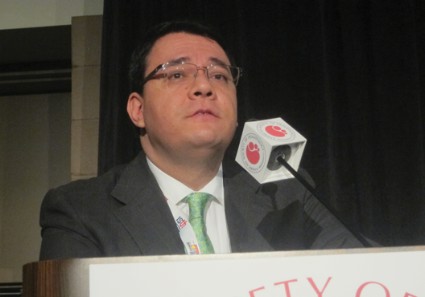
Give calcium before and after thyroidectomies in gastric bypass patients
Patients who’ve had roux-en-Y gastric bypasses have higher incidences of recalcitrant, symptomatic hypocalcemia after thyroidectomies and spend more time in the hospital afterward for intravenous calcium, according to investigators from the Massachusetts General Hospital in Boston.
Because of that, "it is necessary to ensure that all patients with prior RYGBPs [roux-en-Y gastric bypasses] [take] oral calcium supplements before thyroidectomy," and afterward "recalcitrant, postoperative hypocalcemia should be anticipated, calcium levels closely monitored, and early calcium and vitamin D supplementation initiated preemptively," said the researchers, led by endocrine surgery fellow Dr. Travis McKenzie (Surgery 2013;154:1300-6).
Based on the findings, "we recommend starting oral calcium as early as possible in the evaluation phase before thyroidectomy," supplementing with 1.5-2 gm/day of oral calcium, as per American Society for Metabolic and Bariatric Surgery guidelines. "We prefer calcium citrate, because it has better bioavailability when compared with calcium carbonate after RYGBP." Vitamin D–deficient patients should also get calcitriol (0.25 mcg orally twice daily) for 7 days before the operation, they said.
The team compared outcomes in 19 patients who underwent thyroidectomies an average of 53 months after gastric bypass to outcomes in 38 age-, sex-, and body mass index–matched controls, with pre-bypass BMI matched in the study group to pre-thyroidectomy BMI in the control group, about 45 kg/m2 in both cases. Almost all of the patients in both arms had total thyroidectomies, and thyroid malignancies were found in about half of each.
Overall, eight (42%) of the previous-bypass patients, but none of the controls, developed hypocalcemia after thyroid surgery (P less than .01) and four (21%) – but, again, no controls – required intravenous calcium (P less than .01). The need for intravenous calcium, in turn, led to longer hospital stays in the bypass group (2.2 vs. 1.2 days; P = .02). In the bypass group, about 4 patients, 20%, who were on calcium and vitamin D supplements before surgery developed postop symptomatic hypocalcemia, vs. 11 (58%) of those who were not on supplements (P = .18).
Among the 16 bypass patients and 33 controls who did not have intentional parathyroidectomies as part of their operations, both symptomatic postop hypocalcemia (6 patients; 38% vs 0%; P less than.01) and use of intravenous calcium (3 patients;19% vs. 0%; P = .03) were higher in the bypass group.
In addition to preop calcium supplements, all Mass General patients with previous RYGBPs are now started immediately on postop calcium citrate with vitamin D3 (200-mg elemental calcium/tablet), two tablets four times daily, which is continued indefinitely. "We do not feel that higher dosing will increase efficacy as absorption is limited beyond these doses." Patients also get post-op calcitriol (0.25 mcg orally twice daily) for at least a week, and stopped at that point only if there are no symptoms of hypocalcemia, the investigators said.
The problem "is likely multifactorial, including relative hypoparathyroidism after thyroidectomy in the setting of malabsorptive enteric anatomy and metabolic bone disease," they noted.
"An argument has been made that PTH [parathyroid hormone] testing may allow early identification of patients at risk for hypocalcemia after thyroidectomy, prompting early initiation of calcium and calcitriol when PTH is less than [10 mcg/L]. This finding would not change our immediate management since all patients after thyroidectomy in the setting of previous RYGBP are now maintained on both calcium and calcitriol postoperatively. Furthermore, following PTH levels in this unique patient population may not be accurate because secondary hyperparathyroidism is frequently present after RYGBP. In our study group, patients with symptomatic hypocalcemia had an average PTH of [34 mcg/L]," the investigators said.
Patients were, on average, about 50 years old in both study arms, and more than 90% of the subjects were women. No one developed permanent hypoparathyroidism in either arm.
The work was funded in part by the National Cancer Institute and the Massachusetts General Hospital Department of Surgery. Investigator disclosures were not available.
This article focuses on the challenges associated with the management of transient hypocalcemia after thyroidectomy in patients with a history of a gastric bypass. While for most patients, this is a transient problem, in a subset of patients, their hypoparathyroidism ends up being permanent. While, thankfully, permanent hypoparathyroidism is a rare complication after thyroidectomy, in this cohort of patients, it can be a disastrous situation. Because of the altered absorption of calcium and vitamin D, permanent hypoparathyroidism can be almost impossible to manage effectively in this population. This is something that both bariatric and endocrine surgeons need to know and think about.

|
|
Our institution took care of a patient who had hypoparathyroidism following a thyroidectomy 10 years earlier. She was well managed on calcium and vitamin D, but then had a gastric bypass; the surgeon didn’t realize her past medical history made her a poor candidate. Afterward, she had to be repeatedly admitted for intravenous calcium, as her symptoms could not be controlled with even massive doses of calcium and vitamin D. Ultimately, she needed to have her gastric bypass reversed so she could absorb oral calcium more effectively.
For many patients with nodular thyroid disease, we need to decide whether to do a lobectomy or remove the whole thyroid. I think surgeons can get a bit cavalier about total thyroidectomies because the risk of hypoparathyroidism is very low in most patients, but the risk/benefit ratio is clearly different in this population. Because of this concern, we have a higher threshold to do total thyroidectomies in patients with a history of a gastric bypass. We specifically ask on our endocrine surgery in-take forms if patients have had a gastric bypass; we don’t assume patients will self-report, because it’s often something they want to keep private. When we see that have had a bypass, it frames our conversation about whether or not to have surgery, and the extent of surgery.
Dr. Rebecca Sippel is an associate professor and chief of the section of endocrine surgery at the University of Wisconsin (Madison). She is also an editorial adviser for Surgery News.
This article focuses on the challenges associated with the management of transient hypocalcemia after thyroidectomy in patients with a history of a gastric bypass. While for most patients, this is a transient problem, in a subset of patients, their hypoparathyroidism ends up being permanent. While, thankfully, permanent hypoparathyroidism is a rare complication after thyroidectomy, in this cohort of patients, it can be a disastrous situation. Because of the altered absorption of calcium and vitamin D, permanent hypoparathyroidism can be almost impossible to manage effectively in this population. This is something that both bariatric and endocrine surgeons need to know and think about.
|
|
|
Our institution took care of a patient who had hypoparathyroidism following a thyroidectomy 10 years earlier. She was well managed on calcium and vitamin D, but then had a gastric bypass; the surgeon didn’t realize her past medical history made her a poor candidate. Afterward, she had to be repeatedly admitted for intravenous calcium, as her symptoms could not be controlled with even massive doses of calcium and vitamin D. Ultimately, she needed to have her gastric bypass reversed so she could absorb oral calcium more effectively.
For many patients with nodular thyroid disease, we need to decide whether to do a lobectomy or remove the whole thyroid. I think surgeons can get a bit cavalier about total thyroidectomies because the risk of hypoparathyroidism is very low in most patients, but the risk/benefit ratio is clearly different in this population. Because of this concern, we have a higher threshold to do total thyroidectomies in patients with a history of a gastric bypass. We specifically ask on our endocrine surgery in-take forms if patients have had a gastric bypass; we don’t assume patients will self-report, because it’s often something they want to keep private. When we see that have had a bypass, it frames our conversation about whether or not to have surgery, and the extent of surgery.
Dr. Rebecca Sippel is an associate professor and chief of the section of endocrine surgery at the University of Wisconsin (Madison). She is also an editorial adviser for Surgery News.
This article focuses on the challenges associated with the management of transient hypocalcemia after thyroidectomy in patients with a history of a gastric bypass. While for most patients, this is a transient problem, in a subset of patients, their hypoparathyroidism ends up being permanent. While, thankfully, permanent hypoparathyroidism is a rare complication after thyroidectomy, in this cohort of patients, it can be a disastrous situation. Because of the altered absorption of calcium and vitamin D, permanent hypoparathyroidism can be almost impossible to manage effectively in this population. This is something that both bariatric and endocrine surgeons need to know and think about.
|
|
|
Our institution took care of a patient who had hypoparathyroidism following a thyroidectomy 10 years earlier. She was well managed on calcium and vitamin D, but then had a gastric bypass; the surgeon didn’t realize her past medical history made her a poor candidate. Afterward, she had to be repeatedly admitted for intravenous calcium, as her symptoms could not be controlled with even massive doses of calcium and vitamin D. Ultimately, she needed to have her gastric bypass reversed so she could absorb oral calcium more effectively.
For many patients with nodular thyroid disease, we need to decide whether to do a lobectomy or remove the whole thyroid. I think surgeons can get a bit cavalier about total thyroidectomies because the risk of hypoparathyroidism is very low in most patients, but the risk/benefit ratio is clearly different in this population. Because of this concern, we have a higher threshold to do total thyroidectomies in patients with a history of a gastric bypass. We specifically ask on our endocrine surgery in-take forms if patients have had a gastric bypass; we don’t assume patients will self-report, because it’s often something they want to keep private. When we see that have had a bypass, it frames our conversation about whether or not to have surgery, and the extent of surgery.
Dr. Rebecca Sippel is an associate professor and chief of the section of endocrine surgery at the University of Wisconsin (Madison). She is also an editorial adviser for Surgery News.
Patients who’ve had roux-en-Y gastric bypasses have higher incidences of recalcitrant, symptomatic hypocalcemia after thyroidectomies and spend more time in the hospital afterward for intravenous calcium, according to investigators from the Massachusetts General Hospital in Boston.
Because of that, "it is necessary to ensure that all patients with prior RYGBPs [roux-en-Y gastric bypasses] [take] oral calcium supplements before thyroidectomy," and afterward "recalcitrant, postoperative hypocalcemia should be anticipated, calcium levels closely monitored, and early calcium and vitamin D supplementation initiated preemptively," said the researchers, led by endocrine surgery fellow Dr. Travis McKenzie (Surgery 2013;154:1300-6).
Based on the findings, "we recommend starting oral calcium as early as possible in the evaluation phase before thyroidectomy," supplementing with 1.5-2 gm/day of oral calcium, as per American Society for Metabolic and Bariatric Surgery guidelines. "We prefer calcium citrate, because it has better bioavailability when compared with calcium carbonate after RYGBP." Vitamin D–deficient patients should also get calcitriol (0.25 mcg orally twice daily) for 7 days before the operation, they said.
The team compared outcomes in 19 patients who underwent thyroidectomies an average of 53 months after gastric bypass to outcomes in 38 age-, sex-, and body mass index–matched controls, with pre-bypass BMI matched in the study group to pre-thyroidectomy BMI in the control group, about 45 kg/m2 in both cases. Almost all of the patients in both arms had total thyroidectomies, and thyroid malignancies were found in about half of each.
Overall, eight (42%) of the previous-bypass patients, but none of the controls, developed hypocalcemia after thyroid surgery (P less than .01) and four (21%) – but, again, no controls – required intravenous calcium (P less than .01). The need for intravenous calcium, in turn, led to longer hospital stays in the bypass group (2.2 vs. 1.2 days; P = .02). In the bypass group, about 4 patients, 20%, who were on calcium and vitamin D supplements before surgery developed postop symptomatic hypocalcemia, vs. 11 (58%) of those who were not on supplements (P = .18).
Among the 16 bypass patients and 33 controls who did not have intentional parathyroidectomies as part of their operations, both symptomatic postop hypocalcemia (6 patients; 38% vs 0%; P less than.01) and use of intravenous calcium (3 patients;19% vs. 0%; P = .03) were higher in the bypass group.
In addition to preop calcium supplements, all Mass General patients with previous RYGBPs are now started immediately on postop calcium citrate with vitamin D3 (200-mg elemental calcium/tablet), two tablets four times daily, which is continued indefinitely. "We do not feel that higher dosing will increase efficacy as absorption is limited beyond these doses." Patients also get post-op calcitriol (0.25 mcg orally twice daily) for at least a week, and stopped at that point only if there are no symptoms of hypocalcemia, the investigators said.
The problem "is likely multifactorial, including relative hypoparathyroidism after thyroidectomy in the setting of malabsorptive enteric anatomy and metabolic bone disease," they noted.
"An argument has been made that PTH [parathyroid hormone] testing may allow early identification of patients at risk for hypocalcemia after thyroidectomy, prompting early initiation of calcium and calcitriol when PTH is less than [10 mcg/L]. This finding would not change our immediate management since all patients after thyroidectomy in the setting of previous RYGBP are now maintained on both calcium and calcitriol postoperatively. Furthermore, following PTH levels in this unique patient population may not be accurate because secondary hyperparathyroidism is frequently present after RYGBP. In our study group, patients with symptomatic hypocalcemia had an average PTH of [34 mcg/L]," the investigators said.
Patients were, on average, about 50 years old in both study arms, and more than 90% of the subjects were women. No one developed permanent hypoparathyroidism in either arm.
The work was funded in part by the National Cancer Institute and the Massachusetts General Hospital Department of Surgery. Investigator disclosures were not available.
Patients who’ve had roux-en-Y gastric bypasses have higher incidences of recalcitrant, symptomatic hypocalcemia after thyroidectomies and spend more time in the hospital afterward for intravenous calcium, according to investigators from the Massachusetts General Hospital in Boston.
Because of that, "it is necessary to ensure that all patients with prior RYGBPs [roux-en-Y gastric bypasses] [take] oral calcium supplements before thyroidectomy," and afterward "recalcitrant, postoperative hypocalcemia should be anticipated, calcium levels closely monitored, and early calcium and vitamin D supplementation initiated preemptively," said the researchers, led by endocrine surgery fellow Dr. Travis McKenzie (Surgery 2013;154:1300-6).
Based on the findings, "we recommend starting oral calcium as early as possible in the evaluation phase before thyroidectomy," supplementing with 1.5-2 gm/day of oral calcium, as per American Society for Metabolic and Bariatric Surgery guidelines. "We prefer calcium citrate, because it has better bioavailability when compared with calcium carbonate after RYGBP." Vitamin D–deficient patients should also get calcitriol (0.25 mcg orally twice daily) for 7 days before the operation, they said.
The team compared outcomes in 19 patients who underwent thyroidectomies an average of 53 months after gastric bypass to outcomes in 38 age-, sex-, and body mass index–matched controls, with pre-bypass BMI matched in the study group to pre-thyroidectomy BMI in the control group, about 45 kg/m2 in both cases. Almost all of the patients in both arms had total thyroidectomies, and thyroid malignancies were found in about half of each.
Overall, eight (42%) of the previous-bypass patients, but none of the controls, developed hypocalcemia after thyroid surgery (P less than .01) and four (21%) – but, again, no controls – required intravenous calcium (P less than .01). The need for intravenous calcium, in turn, led to longer hospital stays in the bypass group (2.2 vs. 1.2 days; P = .02). In the bypass group, about 4 patients, 20%, who were on calcium and vitamin D supplements before surgery developed postop symptomatic hypocalcemia, vs. 11 (58%) of those who were not on supplements (P = .18).
Among the 16 bypass patients and 33 controls who did not have intentional parathyroidectomies as part of their operations, both symptomatic postop hypocalcemia (6 patients; 38% vs 0%; P less than.01) and use of intravenous calcium (3 patients;19% vs. 0%; P = .03) were higher in the bypass group.
In addition to preop calcium supplements, all Mass General patients with previous RYGBPs are now started immediately on postop calcium citrate with vitamin D3 (200-mg elemental calcium/tablet), two tablets four times daily, which is continued indefinitely. "We do not feel that higher dosing will increase efficacy as absorption is limited beyond these doses." Patients also get post-op calcitriol (0.25 mcg orally twice daily) for at least a week, and stopped at that point only if there are no symptoms of hypocalcemia, the investigators said.
The problem "is likely multifactorial, including relative hypoparathyroidism after thyroidectomy in the setting of malabsorptive enteric anatomy and metabolic bone disease," they noted.
"An argument has been made that PTH [parathyroid hormone] testing may allow early identification of patients at risk for hypocalcemia after thyroidectomy, prompting early initiation of calcium and calcitriol when PTH is less than [10 mcg/L]. This finding would not change our immediate management since all patients after thyroidectomy in the setting of previous RYGBP are now maintained on both calcium and calcitriol postoperatively. Furthermore, following PTH levels in this unique patient population may not be accurate because secondary hyperparathyroidism is frequently present after RYGBP. In our study group, patients with symptomatic hypocalcemia had an average PTH of [34 mcg/L]," the investigators said.
Patients were, on average, about 50 years old in both study arms, and more than 90% of the subjects were women. No one developed permanent hypoparathyroidism in either arm.
The work was funded in part by the National Cancer Institute and the Massachusetts General Hospital Department of Surgery. Investigator disclosures were not available.
FROM SURGERY
Major finding: Almost half (42%) of patients who have had gastric bypasses develop recalcitrant, symptomatic hypocalcemia after thyroidectomies. Patients who have not had gastric bypasses do not become symptomatically hypocalcemic.
Data source: A retrospective study of 57 thyroidectomy patients
Disclosures: The work was funded in part by the National Cancer Institute and Massachusetts General Hospital. Investigator disclosures were not available.
