User login
Buy the IBD, get the comorbidity for free
Chronic conditions, such as arthritis and respiratory disease, are significantly more common in adults with inflammatory bowel disease than in those without IBD, according to the Centers for Disease Control and Prevention.
The age-adjusted prevalence of arthritis in adults with IBD is 36.3%, compared with 21.1% for those without IBD, and the prevalence of respiratory disease is 27.3% for IBD patients and 16.6% for non-IBD patients, CDC investigators reported in the Morbidity and Mortality Weekly Report.
Other comorbid chronic conditions with a significantly higher prevalence in patients with IBD than in those without were ulcer (26% vs. 5.5%), cardiovascular disease (19.2% vs. 12%), and cancer (13.7% vs. 8.1%), said Fang Xu, PhD, of the CDC’s National Center for Chronic Disease Prevention and Health Promotion and associates.
Serious psychological distress in the past 30 days was significantly more prevalent in adults with IBD (7.4%) than in those without it (3.4%), and those with IBD were also significantly more likely to report averaging less than 7 hours of sleep than were those without IBD (38.2% vs. 32.2%), according to their analysis of the 2015 and 2016 National Health Interview Surveys.
“Given the disease’s complexity and the effects of chronic conditions and symptoms, optimal IBD care might require a multidisciplinary approach that includes gastroenterologists, preventive medicine specialists, and other medical practitioners,” the investigators wrote.
SOURCE: Xu F et al. MMWR. 2018 Feb 16;67(6);190-5.
Chronic conditions, such as arthritis and respiratory disease, are significantly more common in adults with inflammatory bowel disease than in those without IBD, according to the Centers for Disease Control and Prevention.
The age-adjusted prevalence of arthritis in adults with IBD is 36.3%, compared with 21.1% for those without IBD, and the prevalence of respiratory disease is 27.3% for IBD patients and 16.6% for non-IBD patients, CDC investigators reported in the Morbidity and Mortality Weekly Report.
Other comorbid chronic conditions with a significantly higher prevalence in patients with IBD than in those without were ulcer (26% vs. 5.5%), cardiovascular disease (19.2% vs. 12%), and cancer (13.7% vs. 8.1%), said Fang Xu, PhD, of the CDC’s National Center for Chronic Disease Prevention and Health Promotion and associates.
Serious psychological distress in the past 30 days was significantly more prevalent in adults with IBD (7.4%) than in those without it (3.4%), and those with IBD were also significantly more likely to report averaging less than 7 hours of sleep than were those without IBD (38.2% vs. 32.2%), according to their analysis of the 2015 and 2016 National Health Interview Surveys.
“Given the disease’s complexity and the effects of chronic conditions and symptoms, optimal IBD care might require a multidisciplinary approach that includes gastroenterologists, preventive medicine specialists, and other medical practitioners,” the investigators wrote.
SOURCE: Xu F et al. MMWR. 2018 Feb 16;67(6);190-5.
Chronic conditions, such as arthritis and respiratory disease, are significantly more common in adults with inflammatory bowel disease than in those without IBD, according to the Centers for Disease Control and Prevention.
The age-adjusted prevalence of arthritis in adults with IBD is 36.3%, compared with 21.1% for those without IBD, and the prevalence of respiratory disease is 27.3% for IBD patients and 16.6% for non-IBD patients, CDC investigators reported in the Morbidity and Mortality Weekly Report.
Other comorbid chronic conditions with a significantly higher prevalence in patients with IBD than in those without were ulcer (26% vs. 5.5%), cardiovascular disease (19.2% vs. 12%), and cancer (13.7% vs. 8.1%), said Fang Xu, PhD, of the CDC’s National Center for Chronic Disease Prevention and Health Promotion and associates.
Serious psychological distress in the past 30 days was significantly more prevalent in adults with IBD (7.4%) than in those without it (3.4%), and those with IBD were also significantly more likely to report averaging less than 7 hours of sleep than were those without IBD (38.2% vs. 32.2%), according to their analysis of the 2015 and 2016 National Health Interview Surveys.
“Given the disease’s complexity and the effects of chronic conditions and symptoms, optimal IBD care might require a multidisciplinary approach that includes gastroenterologists, preventive medicine specialists, and other medical practitioners,” the investigators wrote.
SOURCE: Xu F et al. MMWR. 2018 Feb 16;67(6);190-5.
FROM MMWR
Letter from the Editor: IBD drugs, ‘liquid biopsies,’ and DDW
The coming months will provide us a welcome relief from health care politics as we turn our attention to the science of medicine. Digestive Disease Week® (DDW) will occur from June 2 to 5 in Washington, DC. Major themes already are emerging and implications for our clinical practices are exciting. In this month’s issue of GI & Hepatology News, we summarize a presentation about the IBD medication pipeline given by Dr. Bill Sandborn (UCSD) at the Crohn’s & Colitis CongressTM (a partnership between the Crohn’s & Colitis Foundation and AGA, in Las Vegas). The number of medications that will enter clinical practice is impressive and so is the variety of antigen targets. Over the last several decades, we have defined multiple inflammatory pathways that can lead to IBD and developed medications that modify abnormal immune responses. We are entering an era of precision medicine never before seen in our specialty. Most of these biological medications can be given orally or subcutaneously, precluding the need for infusion centers. I anticipate an enormous offering of IBD-related science at DDW®.

The Board of Editors appreciates the feedback that many of you sent us in our latest readership survey. Each month, we try hard to collect articles of clinical interest to the wide variety of clinicians and researchers that read GI & Hepatology News. We will continue to improve our offerings based on your valuable opinions.
John I. Allen, MD, MBA, AGAF
Editor in Chief
The coming months will provide us a welcome relief from health care politics as we turn our attention to the science of medicine. Digestive Disease Week® (DDW) will occur from June 2 to 5 in Washington, DC. Major themes already are emerging and implications for our clinical practices are exciting. In this month’s issue of GI & Hepatology News, we summarize a presentation about the IBD medication pipeline given by Dr. Bill Sandborn (UCSD) at the Crohn’s & Colitis CongressTM (a partnership between the Crohn’s & Colitis Foundation and AGA, in Las Vegas). The number of medications that will enter clinical practice is impressive and so is the variety of antigen targets. Over the last several decades, we have defined multiple inflammatory pathways that can lead to IBD and developed medications that modify abnormal immune responses. We are entering an era of precision medicine never before seen in our specialty. Most of these biological medications can be given orally or subcutaneously, precluding the need for infusion centers. I anticipate an enormous offering of IBD-related science at DDW®.
The Board of Editors appreciates the feedback that many of you sent us in our latest readership survey. Each month, we try hard to collect articles of clinical interest to the wide variety of clinicians and researchers that read GI & Hepatology News. We will continue to improve our offerings based on your valuable opinions.
John I. Allen, MD, MBA, AGAF
Editor in Chief
The coming months will provide us a welcome relief from health care politics as we turn our attention to the science of medicine. Digestive Disease Week® (DDW) will occur from June 2 to 5 in Washington, DC. Major themes already are emerging and implications for our clinical practices are exciting. In this month’s issue of GI & Hepatology News, we summarize a presentation about the IBD medication pipeline given by Dr. Bill Sandborn (UCSD) at the Crohn’s & Colitis CongressTM (a partnership between the Crohn’s & Colitis Foundation and AGA, in Las Vegas). The number of medications that will enter clinical practice is impressive and so is the variety of antigen targets. Over the last several decades, we have defined multiple inflammatory pathways that can lead to IBD and developed medications that modify abnormal immune responses. We are entering an era of precision medicine never before seen in our specialty. Most of these biological medications can be given orally or subcutaneously, precluding the need for infusion centers. I anticipate an enormous offering of IBD-related science at DDW®.
The Board of Editors appreciates the feedback that many of you sent us in our latest readership survey. Each month, we try hard to collect articles of clinical interest to the wide variety of clinicians and researchers that read GI & Hepatology News. We will continue to improve our offerings based on your valuable opinions.
John I. Allen, MD, MBA, AGAF
Editor in Chief
Ulcerative colitis is disabling over time
Between 70% and 80% of patients with ulcerative colitis relapsed within 10 years of diagnosis and 10%-15% had aggressive disease in a meta-analysis of 17 population-based cohorts spanning 1935 to 2016.
However, “contemporary population-based cohorts of patients diagnosed in the biologic era are lacking,” [and they] “may inform us of the population-level impact of paradigm shifts in approach to ulcerative colitis management during the last decade, such as early use of disease-modifying biologic therapy and treat-to-target [strategies],” wrote Mathurin Fumery, MD, of the University of California San Diego, La Jolla. The report was published in Clinical Gastroenterology and Hepatology (2017 Jun 16. doi: 10.1016/j.cgh.2017.06.016).
Population-based observational cohort studies follow an entire group in a geographic area over an extended time, which better characterizes the true natural history of disease outside highly controlled settings of clinical trials, the reviewers noted. They searched MEDLINE for population-based longitudinal studies of adults with newly diagnosed ulcerative colitis, whose medical records were reviewed, and who were followed for at least a year. They identified 60 such studies of 17 cohorts that included 15,316 patients in southern and northern Europe, Australia, Israel, the United States, Canada, China, Hong Kong, Indonesia, Sri Lanka, Macau, Malaysia, Singapore, and Thailand.
Left-sided colitis was most common (median, 40%; interquartile range, 33%-45%) and about 10%-30% of patients had disease extension. Patients tended to have mild to moderate disease that was most active at diagnosis and subsequently alternated between remission and mild activity. However, nearly half of patients were hospitalized at some point because of ulcerative colitis, and about half of that subgroup was rehospitalized within 5 years. Furthermore, up to 15% of patients with ulcerative colitis underwent colectomy within 10 years, a risk that mucosal healing helped mitigate. Use of corticosteroids dropped over time as the prevalence of immunomodulators and anti–tumor necrosis factor therapy rose.
“Although ulcerative colitis is not associated with an increased risk of mortality, it is associated with high morbidity and work disability, comparable to Crohn’s disease,” the reviewers concluded. Not only are contemporary population-level data lacking, but it also remains unclear whether treating patients with ulcerative colitis according to baseline risk affects the disease course, or whether the natural history of this disease differs in newly industrialized nations or the Asia-Oceania region, they added.
Dr. Fumery disclosed support from the French Society of Gastroenterology, AbbVie, MSD, Takeda, and Ferring. Coinvestigators disclosed ties to numerous pharmaceutical companies.
SOURCE: Fumery M et al. Clin Gastroenterol Hepatol. 2017 Jun 16. doi: 10.1016/j.cgh.2017.06.016.
Understanding the natural history of ulcerative colitis (UC) is imperative especially in view of emerging therapies that could have the potential to alter the natural course of disease. Dr. Fumery and his colleagues are to be congratulated for conducting a comprehensive review of different inception cohorts across the world and evaluating different facets of the disease. They found that the majority of patients had a mild-moderate disease course, which was most active at the time of diagnosis. Approximately half the patients require UC-related hospitalization at some time during the course of their disease. Similarly, 50% of patients received corticosteroids, and while almost all patients with UC were treated with mesalamine within 1 year of diagnosis, 30%-40% are not on mesalamine long term. They also identified consistent predictors of poor prognosis, including young age at diagnosis, extensive disease, early need for corticosteroids, and elevated biochemical markers.
These results are reassuring because they reinforce the previous observations that roughly half the patients with UC have an uncomplicated disease course and that the first few years of disease are the most aggressive. A good indicator was that the proportion of patients receiving corticosteroids decreased over time. The disheartening news was that the long-term colectomy rates have generally remained stable over time.

Nabeel Khan, MD, is assistant professor of clinical medicine, University of Pennsylvania, Philadelphia, and director of gastroenterology, Philadelphia Veterans Affairs Medical Center. He has received research grants from Takeda, Luitpold, and Pfizer.
Understanding the natural history of ulcerative colitis (UC) is imperative especially in view of emerging therapies that could have the potential to alter the natural course of disease. Dr. Fumery and his colleagues are to be congratulated for conducting a comprehensive review of different inception cohorts across the world and evaluating different facets of the disease. They found that the majority of patients had a mild-moderate disease course, which was most active at the time of diagnosis. Approximately half the patients require UC-related hospitalization at some time during the course of their disease. Similarly, 50% of patients received corticosteroids, and while almost all patients with UC were treated with mesalamine within 1 year of diagnosis, 30%-40% are not on mesalamine long term. They also identified consistent predictors of poor prognosis, including young age at diagnosis, extensive disease, early need for corticosteroids, and elevated biochemical markers.
These results are reassuring because they reinforce the previous observations that roughly half the patients with UC have an uncomplicated disease course and that the first few years of disease are the most aggressive. A good indicator was that the proportion of patients receiving corticosteroids decreased over time. The disheartening news was that the long-term colectomy rates have generally remained stable over time.
Nabeel Khan, MD, is assistant professor of clinical medicine, University of Pennsylvania, Philadelphia, and director of gastroenterology, Philadelphia Veterans Affairs Medical Center. He has received research grants from Takeda, Luitpold, and Pfizer.
Understanding the natural history of ulcerative colitis (UC) is imperative especially in view of emerging therapies that could have the potential to alter the natural course of disease. Dr. Fumery and his colleagues are to be congratulated for conducting a comprehensive review of different inception cohorts across the world and evaluating different facets of the disease. They found that the majority of patients had a mild-moderate disease course, which was most active at the time of diagnosis. Approximately half the patients require UC-related hospitalization at some time during the course of their disease. Similarly, 50% of patients received corticosteroids, and while almost all patients with UC were treated with mesalamine within 1 year of diagnosis, 30%-40% are not on mesalamine long term. They also identified consistent predictors of poor prognosis, including young age at diagnosis, extensive disease, early need for corticosteroids, and elevated biochemical markers.
These results are reassuring because they reinforce the previous observations that roughly half the patients with UC have an uncomplicated disease course and that the first few years of disease are the most aggressive. A good indicator was that the proportion of patients receiving corticosteroids decreased over time. The disheartening news was that the long-term colectomy rates have generally remained stable over time.
Nabeel Khan, MD, is assistant professor of clinical medicine, University of Pennsylvania, Philadelphia, and director of gastroenterology, Philadelphia Veterans Affairs Medical Center. He has received research grants from Takeda, Luitpold, and Pfizer.
Between 70% and 80% of patients with ulcerative colitis relapsed within 10 years of diagnosis and 10%-15% had aggressive disease in a meta-analysis of 17 population-based cohorts spanning 1935 to 2016.
However, “contemporary population-based cohorts of patients diagnosed in the biologic era are lacking,” [and they] “may inform us of the population-level impact of paradigm shifts in approach to ulcerative colitis management during the last decade, such as early use of disease-modifying biologic therapy and treat-to-target [strategies],” wrote Mathurin Fumery, MD, of the University of California San Diego, La Jolla. The report was published in Clinical Gastroenterology and Hepatology (2017 Jun 16. doi: 10.1016/j.cgh.2017.06.016).
Population-based observational cohort studies follow an entire group in a geographic area over an extended time, which better characterizes the true natural history of disease outside highly controlled settings of clinical trials, the reviewers noted. They searched MEDLINE for population-based longitudinal studies of adults with newly diagnosed ulcerative colitis, whose medical records were reviewed, and who were followed for at least a year. They identified 60 such studies of 17 cohorts that included 15,316 patients in southern and northern Europe, Australia, Israel, the United States, Canada, China, Hong Kong, Indonesia, Sri Lanka, Macau, Malaysia, Singapore, and Thailand.
Left-sided colitis was most common (median, 40%; interquartile range, 33%-45%) and about 10%-30% of patients had disease extension. Patients tended to have mild to moderate disease that was most active at diagnosis and subsequently alternated between remission and mild activity. However, nearly half of patients were hospitalized at some point because of ulcerative colitis, and about half of that subgroup was rehospitalized within 5 years. Furthermore, up to 15% of patients with ulcerative colitis underwent colectomy within 10 years, a risk that mucosal healing helped mitigate. Use of corticosteroids dropped over time as the prevalence of immunomodulators and anti–tumor necrosis factor therapy rose.
“Although ulcerative colitis is not associated with an increased risk of mortality, it is associated with high morbidity and work disability, comparable to Crohn’s disease,” the reviewers concluded. Not only are contemporary population-level data lacking, but it also remains unclear whether treating patients with ulcerative colitis according to baseline risk affects the disease course, or whether the natural history of this disease differs in newly industrialized nations or the Asia-Oceania region, they added.
Dr. Fumery disclosed support from the French Society of Gastroenterology, AbbVie, MSD, Takeda, and Ferring. Coinvestigators disclosed ties to numerous pharmaceutical companies.
SOURCE: Fumery M et al. Clin Gastroenterol Hepatol. 2017 Jun 16. doi: 10.1016/j.cgh.2017.06.016.
Between 70% and 80% of patients with ulcerative colitis relapsed within 10 years of diagnosis and 10%-15% had aggressive disease in a meta-analysis of 17 population-based cohorts spanning 1935 to 2016.
However, “contemporary population-based cohorts of patients diagnosed in the biologic era are lacking,” [and they] “may inform us of the population-level impact of paradigm shifts in approach to ulcerative colitis management during the last decade, such as early use of disease-modifying biologic therapy and treat-to-target [strategies],” wrote Mathurin Fumery, MD, of the University of California San Diego, La Jolla. The report was published in Clinical Gastroenterology and Hepatology (2017 Jun 16. doi: 10.1016/j.cgh.2017.06.016).
Population-based observational cohort studies follow an entire group in a geographic area over an extended time, which better characterizes the true natural history of disease outside highly controlled settings of clinical trials, the reviewers noted. They searched MEDLINE for population-based longitudinal studies of adults with newly diagnosed ulcerative colitis, whose medical records were reviewed, and who were followed for at least a year. They identified 60 such studies of 17 cohorts that included 15,316 patients in southern and northern Europe, Australia, Israel, the United States, Canada, China, Hong Kong, Indonesia, Sri Lanka, Macau, Malaysia, Singapore, and Thailand.
Left-sided colitis was most common (median, 40%; interquartile range, 33%-45%) and about 10%-30% of patients had disease extension. Patients tended to have mild to moderate disease that was most active at diagnosis and subsequently alternated between remission and mild activity. However, nearly half of patients were hospitalized at some point because of ulcerative colitis, and about half of that subgroup was rehospitalized within 5 years. Furthermore, up to 15% of patients with ulcerative colitis underwent colectomy within 10 years, a risk that mucosal healing helped mitigate. Use of corticosteroids dropped over time as the prevalence of immunomodulators and anti–tumor necrosis factor therapy rose.
“Although ulcerative colitis is not associated with an increased risk of mortality, it is associated with high morbidity and work disability, comparable to Crohn’s disease,” the reviewers concluded. Not only are contemporary population-level data lacking, but it also remains unclear whether treating patients with ulcerative colitis according to baseline risk affects the disease course, or whether the natural history of this disease differs in newly industrialized nations or the Asia-Oceania region, they added.
Dr. Fumery disclosed support from the French Society of Gastroenterology, AbbVie, MSD, Takeda, and Ferring. Coinvestigators disclosed ties to numerous pharmaceutical companies.
SOURCE: Fumery M et al. Clin Gastroenterol Hepatol. 2017 Jun 16. doi: 10.1016/j.cgh.2017.06.016.
FROM CLINICAL GASTROENTEROLOGY AND HEPATOLOGY
Key clinical point: Although usually mild to moderate in severity, ulcerative colitis is disabling over time.
Major finding: Cumulative risk of relapse was 70%-80% at 10 years.
Data source: A systematic review and analysis of 17 population-based cohorts.
Disclosures: Dr. Fumery disclosed support from the French Society of Gastroenterology, Abbvie, MSD, Takeda, and Ferring. Coinvestigators disclosed ties to numerous pharmaceutical companies.
Source: Fumery M et al. Clin Gastroenterol Hepatol. 2017 Jun 16. doi: 10.1016/j.cgh.2017.06.016.
Gut-homing protein predicts HIV-acquisition, disease progression in women
Higher frequency of alpha4beta7 expression in the CD4 T cells in the gut was associated with increased HIV acquisition and severity, according to the results of a retrospective comparative analysis of blood samples from patients in the CAPRISA 004 study.

Researchers compared samples from patients who eventually developed HIV with samples from those who did not; they also assessed human study cohorts from Kenya and the RV254/Search 010 cohort in Thailand, according to an online report in Science Translational Medicine. In addition, they obtained data from nonhuman primates (NHPs) challenged with simian immunodeficiency virus (SIV) to compare results between primate species.
They found that alpha4beta7+ CD4+ T cells were depleted very early in HIV infection, particularly in the gut, and the initiation of antiretroviral therapy (ART) was unable to restore the normal levels of those cells even when provided at the earliest time point. Citing the literature, the researchers speculated that interactions between alpha4beta7 and the HIV env protein may assist the virus in locating its ideal target cells, and that high levels of alpha4beta7+ CD4+ T cells were associated with preferential infection by HIV-1 types containing motifs associated with higher alpha4beta7 binding, which are overrepresented in the region where the CAPRISA004 study was conducted.
“Although the association of alpha4beta7 and HIV expression was relatively modest, results were consistent in independent cohorts in two different countries and in NHPs,” according to Aida Sivro, PhD, of the Centre for the AIDS Programme of Research and her colleagues on behalf of the CAPRISA004 and RS254 study groups.
NHP studies showed some promise in this regard because, while ART alone did not lead to immune restoration of these T cells, “ART in combination with anti-alpha4beta7 did so in NHPs,” the researchers concluded, suggesting the possibility of additional therapeutic interventions in humans.
The authors reported having no disclosures. The CAPRISA 004 study was funded by the U.S. National Institutes of Health, U.S. Agency for International Development, and the South African Department of Science and Technology.
SOURCE: Sivro A et al. Sci Transl Med. 2018 Jan 24;10(425):eaam6354.
Higher frequency of alpha4beta7 expression in the CD4 T cells in the gut was associated with increased HIV acquisition and severity, according to the results of a retrospective comparative analysis of blood samples from patients in the CAPRISA 004 study.
Researchers compared samples from patients who eventually developed HIV with samples from those who did not; they also assessed human study cohorts from Kenya and the RV254/Search 010 cohort in Thailand, according to an online report in Science Translational Medicine. In addition, they obtained data from nonhuman primates (NHPs) challenged with simian immunodeficiency virus (SIV) to compare results between primate species.
They found that alpha4beta7+ CD4+ T cells were depleted very early in HIV infection, particularly in the gut, and the initiation of antiretroviral therapy (ART) was unable to restore the normal levels of those cells even when provided at the earliest time point. Citing the literature, the researchers speculated that interactions between alpha4beta7 and the HIV env protein may assist the virus in locating its ideal target cells, and that high levels of alpha4beta7+ CD4+ T cells were associated with preferential infection by HIV-1 types containing motifs associated with higher alpha4beta7 binding, which are overrepresented in the region where the CAPRISA004 study was conducted.
“Although the association of alpha4beta7 and HIV expression was relatively modest, results were consistent in independent cohorts in two different countries and in NHPs,” according to Aida Sivro, PhD, of the Centre for the AIDS Programme of Research and her colleagues on behalf of the CAPRISA004 and RS254 study groups.
NHP studies showed some promise in this regard because, while ART alone did not lead to immune restoration of these T cells, “ART in combination with anti-alpha4beta7 did so in NHPs,” the researchers concluded, suggesting the possibility of additional therapeutic interventions in humans.
The authors reported having no disclosures. The CAPRISA 004 study was funded by the U.S. National Institutes of Health, U.S. Agency for International Development, and the South African Department of Science and Technology.
SOURCE: Sivro A et al. Sci Transl Med. 2018 Jan 24;10(425):eaam6354.
Higher frequency of alpha4beta7 expression in the CD4 T cells in the gut was associated with increased HIV acquisition and severity, according to the results of a retrospective comparative analysis of blood samples from patients in the CAPRISA 004 study.
Researchers compared samples from patients who eventually developed HIV with samples from those who did not; they also assessed human study cohorts from Kenya and the RV254/Search 010 cohort in Thailand, according to an online report in Science Translational Medicine. In addition, they obtained data from nonhuman primates (NHPs) challenged with simian immunodeficiency virus (SIV) to compare results between primate species.
They found that alpha4beta7+ CD4+ T cells were depleted very early in HIV infection, particularly in the gut, and the initiation of antiretroviral therapy (ART) was unable to restore the normal levels of those cells even when provided at the earliest time point. Citing the literature, the researchers speculated that interactions between alpha4beta7 and the HIV env protein may assist the virus in locating its ideal target cells, and that high levels of alpha4beta7+ CD4+ T cells were associated with preferential infection by HIV-1 types containing motifs associated with higher alpha4beta7 binding, which are overrepresented in the region where the CAPRISA004 study was conducted.
“Although the association of alpha4beta7 and HIV expression was relatively modest, results were consistent in independent cohorts in two different countries and in NHPs,” according to Aida Sivro, PhD, of the Centre for the AIDS Programme of Research and her colleagues on behalf of the CAPRISA004 and RS254 study groups.
NHP studies showed some promise in this regard because, while ART alone did not lead to immune restoration of these T cells, “ART in combination with anti-alpha4beta7 did so in NHPs,” the researchers concluded, suggesting the possibility of additional therapeutic interventions in humans.
The authors reported having no disclosures. The CAPRISA 004 study was funded by the U.S. National Institutes of Health, U.S. Agency for International Development, and the South African Department of Science and Technology.
SOURCE: Sivro A et al. Sci Transl Med. 2018 Jan 24;10(425):eaam6354.
FROM SCIENCE TRANSLATIONAL MEDICINE
Key clinical point: CD4+ T cells expressing the protein were rapidly depleted very early in HIV infection.
Major finding: HIV outcomes and alpha4beta7 expression appear linked.
Study details: Blood samples analyzed from the CAPRISA 004 study comparing HIV-infected patients and controls.
Disclosures: The CAPRISA 004 study was funded by the U.S. National Institutes of Health, U.S. Agency for International Development, and the South African Department of Science and Technology.
Source: Sivro A et al. Sci Transl Med. 2018 Jan 24;10(425):eaam6354.
Expert shares tips for positioning biologics in IBD patient treatment
LAS VEGAS – In the clinical opinion of Edward V. Loftus Jr., MD, biologics for inflammatory bowel disease (IBD) patients are best positioned based on age, personal medical history, and the presence of extraintestinal manifestations.
“ and is the way to go if you’re trying to change the trajectory of illness,” Dr. Loftus said at the Crohn’s & Colitis Congress, a partnership of the Crohn’s & Colitis Foundation and the American Gastroenterological Association.

In general, patients who are younger at diagnosis are going to have more severe disease than patients diagnosed older, said Dr. Loftus, professor of medicine at the Mayo Clinic, Rochester, Minn. “For CD [Crohn’s disease], the presence of fistulizing disease, especially internal fistulas, and to a lesser extent perianal fistulas, and then the presence of small-bowel disease or proximal GI disease, are all harbingers of more aggressive disease,” he said. “Multiple studies show that the time interval between diagnosis and development of intestinal complications is shorter in patients with small-bowel disease relative to colonic disease. When you add up those factors, you’re talking about 70% of CD patients, if not more. Most Crohn’s patients are going to be high-risk patients.”
For ulcerative colitis (UC), being male is a risk factor for hospitalization, surgery, and for developing colon cancer. On average, males are twice as likely as females to require surgery, and they’re twice as likely to develop colon cancer. Other predictors in UC for high-risk disease include early need for hospitalization, early need for corticosteroids, and extensive colitis at diagnosis. “You’re thinking about these things because how you’re going to treat these patients is going to differ,” he said.
According to Dr. Loftus, aminosalicylate (5-ASA) drugs are the frontline drugs of choice for low-risk UC patients with mild symptoms. “If they’re having moderate symptoms, you might initially start with a corticosteroid taper,” he noted. “That can be either prednisone or budesonide MMX. In a patient with really active symptoms, they’re going to go to IV steroids or maybe directly to anti-TNF [tumor necrosis factor] therapy.” For low-risk CD patients, consider budesonide taper then observation. “If they don’t flare again, maybe monitor that patient periodically,” he advised. “For high-risk patients, consider biologic therapy with or without thiopurine or methotrexate.”
A recent analysis of Medicare and Medicaid data from 2006 to 2013 found a significantly higher rate of mortality in IBD patients treated with prolonged corticosteroids than that seen in those treated with anti-TNF therapy (Am J Gastroenterol. Jan 16, 2018. doi: 10.1038/ajg2017.479). “That should give you pause,” Dr. Loftus said. “Don’t just put your patient on prednisone because you think it’s the easiest and safest thing to do. It’s not. It’s much more dangerous and has implications [for] the patient’s life expectancy.”
Some data are beginning to emerge about the use of biosimilars in IBD, mostly from Europe. Investigators of one randomized, controlled trial of biosimilar CT-P13 vs. originator infliximab in CD presented at the 2017 Digestive Disease Week meeting; they found in their trial that at week 6 all clinical endpoints were similar between the two agents. “If you’re forced to change your patient to this particular biosimilar, I wouldn’t be too worried about it,” Dr. Loftus said. “Of course, I’m not necessarily going to switch unless my institution or a particular third-party payer mandate it.”
In a published study funded by the Norwegian government, researchers conducted a prospective trial of switching from infliximab to CT-P13 in patients with a variety of conditions (Lancet. 2017;389:2304-16). Overall, the clinical failure rate was the same for both agents. Among CD patients, the researchers observed a nonsignificant trend toward disease worsening among those on the biosimilar, “but there was essentially no difference,” Dr. Loftus said.
He went on to discuss vedolizumab, a monoclonal antibody to alpha4beta7 integrin approved in 2014 for patients with moderate to severely active UC or CD. Phase 3 data from GEMINI I in moderate to severe UC found that relevant clinical endpoints were met by week 6 and they persisted at week 52 at both doses (N Engl J Med. 2013;369[8]:699-710). “For CD, the use of vedolizumab is a bit of a mixed picture,” Dr. Loftus said. “In GEMINI II, some of the primary endpoints were met at week 6, but at least one was missed (N Engl J Med. 2013;369[8]:711-21). The same thing was seen in GEMINI III. There’s a sense here that vedolizumab takes a little bit longer to work in CD.”
Integrated safety analyses of the GEMINI trials found no signal for increased rates of serious adverse events, and no cases of progressive multifocal leukoencephalopathy have been reported (J Crohns Colitis. 2017;11[2]:185-90). “The risk factors for serious infections were prior anti-TNF failure and opioid analgesic use in UC patients and younger age, steroid use, and opioid analgesic use in CD patients,” Dr. Loftus said.
In a trial of CD patients failing anti-TNF therapy, researchers observed a robust clinical response with ustekinumab, compared with placebo, at week 6 (N Engl J Med. 2016;375:1946-60). Even greater effects were observed in UNITI-2, a trial of ustekinumab in CD patients who hadn’t failed anti-TNFs.
Dr. Loftus cautioned that elderly and immunocompromised patients face an increased risk for infections when they’re placed on anti-TNF therapy. At the same time, researchers used a French database to determine the risk of lymphoma in IBD patients stratified by medication. For patients unexposed to such therapies, the risk of lymphoma was 1:4,000. For patients on thiopurine monotherapy, the risk was about 1:2,000; it was about 1:2,500 for those on anti-TNF monotherapy and about 1:1,000 for those on combination therapy (JAMA. 2017;318:1679-86). “One of the messages in this study is we can reassure our more risk-averse patients that the absolute risk of lymphoma is very low, even among patients on combination therapy,” he said.
Dr. Loftus called for head-to-head trials comparing the individual biologic agents and shared his recommendations on how to position currently available therapies. “I would say that for the average ‘bread and butter’ Crohn’s patient, anti-TNF therapy is the way to go,” he said. “For perianal fistulizing patients, I’m going to go with anti-TNF therapy, such as infliximab or adalimumab. For a patient with active extraintestinal manifestations, such as spondyloarthropathy, uveitis, and pyoderma, anti-TNF therapy is the way to go. However, with an elderly or immunosuppressed patient, consider vedolizumab or ustekinumab. For patients with a personal history of malignancy, an anti-TNF is very reasonable, but it may be easier to convince them to consider vedolizumab or ustekinumab.”
Recommendations for UC are largely similar, he continued. “However, I think we have enough data from GEMINI I and the integrated safety data with vedolizumab to say that, for the average ‘bread and butter’ UC patient, anti-TNF therapy or vedolizumab are appropriate. For a patient with extraintestinal manifestations I would avoid vedolizumab initially and try anti-TNF therapy. For patients with acute severe colitis, we have the bulk of evidence for efficacy resting with infliximab, so I would go with that. For the elderly or immunosuppressed patient, I would go with vedolizumab. For the person with a history of malignancy, an anti-TNF agent is reasonable, but consider vedolizumab.”
Dr. Loftus disclosed that he has consulted for AbbVie, Takeda Pharmaceutical, Janssen Pharmaceutica, UCB, Pfizer, Amgen, Eli Lilly, Celltrion Healthcare, Napo Pharmaceuticals. He has also received research support from AbbVie, Takeda Pharmaceutical, Janssen Pharmaceutica, UCB, Pfizer, Amgen, Genentech, Seres Pharmaceuticals, MedImmune, Allergan, and Robarts Clinical Trials.
*This story was updated on 3/26.
LAS VEGAS – In the clinical opinion of Edward V. Loftus Jr., MD, biologics for inflammatory bowel disease (IBD) patients are best positioned based on age, personal medical history, and the presence of extraintestinal manifestations.
“ and is the way to go if you’re trying to change the trajectory of illness,” Dr. Loftus said at the Crohn’s & Colitis Congress, a partnership of the Crohn’s & Colitis Foundation and the American Gastroenterological Association.
In general, patients who are younger at diagnosis are going to have more severe disease than patients diagnosed older, said Dr. Loftus, professor of medicine at the Mayo Clinic, Rochester, Minn. “For CD [Crohn’s disease], the presence of fistulizing disease, especially internal fistulas, and to a lesser extent perianal fistulas, and then the presence of small-bowel disease or proximal GI disease, are all harbingers of more aggressive disease,” he said. “Multiple studies show that the time interval between diagnosis and development of intestinal complications is shorter in patients with small-bowel disease relative to colonic disease. When you add up those factors, you’re talking about 70% of CD patients, if not more. Most Crohn’s patients are going to be high-risk patients.”
For ulcerative colitis (UC), being male is a risk factor for hospitalization, surgery, and for developing colon cancer. On average, males are twice as likely as females to require surgery, and they’re twice as likely to develop colon cancer. Other predictors in UC for high-risk disease include early need for hospitalization, early need for corticosteroids, and extensive colitis at diagnosis. “You’re thinking about these things because how you’re going to treat these patients is going to differ,” he said.
According to Dr. Loftus, aminosalicylate (5-ASA) drugs are the frontline drugs of choice for low-risk UC patients with mild symptoms. “If they’re having moderate symptoms, you might initially start with a corticosteroid taper,” he noted. “That can be either prednisone or budesonide MMX. In a patient with really active symptoms, they’re going to go to IV steroids or maybe directly to anti-TNF [tumor necrosis factor] therapy.” For low-risk CD patients, consider budesonide taper then observation. “If they don’t flare again, maybe monitor that patient periodically,” he advised. “For high-risk patients, consider biologic therapy with or without thiopurine or methotrexate.”
A recent analysis of Medicare and Medicaid data from 2006 to 2013 found a significantly higher rate of mortality in IBD patients treated with prolonged corticosteroids than that seen in those treated with anti-TNF therapy (Am J Gastroenterol. Jan 16, 2018. doi: 10.1038/ajg2017.479). “That should give you pause,” Dr. Loftus said. “Don’t just put your patient on prednisone because you think it’s the easiest and safest thing to do. It’s not. It’s much more dangerous and has implications [for] the patient’s life expectancy.”
Some data are beginning to emerge about the use of biosimilars in IBD, mostly from Europe. Investigators of one randomized, controlled trial of biosimilar CT-P13 vs. originator infliximab in CD presented at the 2017 Digestive Disease Week meeting; they found in their trial that at week 6 all clinical endpoints were similar between the two agents. “If you’re forced to change your patient to this particular biosimilar, I wouldn’t be too worried about it,” Dr. Loftus said. “Of course, I’m not necessarily going to switch unless my institution or a particular third-party payer mandate it.”
In a published study funded by the Norwegian government, researchers conducted a prospective trial of switching from infliximab to CT-P13 in patients with a variety of conditions (Lancet. 2017;389:2304-16). Overall, the clinical failure rate was the same for both agents. Among CD patients, the researchers observed a nonsignificant trend toward disease worsening among those on the biosimilar, “but there was essentially no difference,” Dr. Loftus said.
He went on to discuss vedolizumab, a monoclonal antibody to alpha4beta7 integrin approved in 2014 for patients with moderate to severely active UC or CD. Phase 3 data from GEMINI I in moderate to severe UC found that relevant clinical endpoints were met by week 6 and they persisted at week 52 at both doses (N Engl J Med. 2013;369[8]:699-710). “For CD, the use of vedolizumab is a bit of a mixed picture,” Dr. Loftus said. “In GEMINI II, some of the primary endpoints were met at week 6, but at least one was missed (N Engl J Med. 2013;369[8]:711-21). The same thing was seen in GEMINI III. There’s a sense here that vedolizumab takes a little bit longer to work in CD.”
Integrated safety analyses of the GEMINI trials found no signal for increased rates of serious adverse events, and no cases of progressive multifocal leukoencephalopathy have been reported (J Crohns Colitis. 2017;11[2]:185-90). “The risk factors for serious infections were prior anti-TNF failure and opioid analgesic use in UC patients and younger age, steroid use, and opioid analgesic use in CD patients,” Dr. Loftus said.
In a trial of CD patients failing anti-TNF therapy, researchers observed a robust clinical response with ustekinumab, compared with placebo, at week 6 (N Engl J Med. 2016;375:1946-60). Even greater effects were observed in UNITI-2, a trial of ustekinumab in CD patients who hadn’t failed anti-TNFs.
Dr. Loftus cautioned that elderly and immunocompromised patients face an increased risk for infections when they’re placed on anti-TNF therapy. At the same time, researchers used a French database to determine the risk of lymphoma in IBD patients stratified by medication. For patients unexposed to such therapies, the risk of lymphoma was 1:4,000. For patients on thiopurine monotherapy, the risk was about 1:2,000; it was about 1:2,500 for those on anti-TNF monotherapy and about 1:1,000 for those on combination therapy (JAMA. 2017;318:1679-86). “One of the messages in this study is we can reassure our more risk-averse patients that the absolute risk of lymphoma is very low, even among patients on combination therapy,” he said.
Dr. Loftus called for head-to-head trials comparing the individual biologic agents and shared his recommendations on how to position currently available therapies. “I would say that for the average ‘bread and butter’ Crohn’s patient, anti-TNF therapy is the way to go,” he said. “For perianal fistulizing patients, I’m going to go with anti-TNF therapy, such as infliximab or adalimumab. For a patient with active extraintestinal manifestations, such as spondyloarthropathy, uveitis, and pyoderma, anti-TNF therapy is the way to go. However, with an elderly or immunosuppressed patient, consider vedolizumab or ustekinumab. For patients with a personal history of malignancy, an anti-TNF is very reasonable, but it may be easier to convince them to consider vedolizumab or ustekinumab.”
Recommendations for UC are largely similar, he continued. “However, I think we have enough data from GEMINI I and the integrated safety data with vedolizumab to say that, for the average ‘bread and butter’ UC patient, anti-TNF therapy or vedolizumab are appropriate. For a patient with extraintestinal manifestations I would avoid vedolizumab initially and try anti-TNF therapy. For patients with acute severe colitis, we have the bulk of evidence for efficacy resting with infliximab, so I would go with that. For the elderly or immunosuppressed patient, I would go with vedolizumab. For the person with a history of malignancy, an anti-TNF agent is reasonable, but consider vedolizumab.”
Dr. Loftus disclosed that he has consulted for AbbVie, Takeda Pharmaceutical, Janssen Pharmaceutica, UCB, Pfizer, Amgen, Eli Lilly, Celltrion Healthcare, Napo Pharmaceuticals. He has also received research support from AbbVie, Takeda Pharmaceutical, Janssen Pharmaceutica, UCB, Pfizer, Amgen, Genentech, Seres Pharmaceuticals, MedImmune, Allergan, and Robarts Clinical Trials.
*This story was updated on 3/26.
LAS VEGAS – In the clinical opinion of Edward V. Loftus Jr., MD, biologics for inflammatory bowel disease (IBD) patients are best positioned based on age, personal medical history, and the presence of extraintestinal manifestations.
“ and is the way to go if you’re trying to change the trajectory of illness,” Dr. Loftus said at the Crohn’s & Colitis Congress, a partnership of the Crohn’s & Colitis Foundation and the American Gastroenterological Association.
In general, patients who are younger at diagnosis are going to have more severe disease than patients diagnosed older, said Dr. Loftus, professor of medicine at the Mayo Clinic, Rochester, Minn. “For CD [Crohn’s disease], the presence of fistulizing disease, especially internal fistulas, and to a lesser extent perianal fistulas, and then the presence of small-bowel disease or proximal GI disease, are all harbingers of more aggressive disease,” he said. “Multiple studies show that the time interval between diagnosis and development of intestinal complications is shorter in patients with small-bowel disease relative to colonic disease. When you add up those factors, you’re talking about 70% of CD patients, if not more. Most Crohn’s patients are going to be high-risk patients.”
For ulcerative colitis (UC), being male is a risk factor for hospitalization, surgery, and for developing colon cancer. On average, males are twice as likely as females to require surgery, and they’re twice as likely to develop colon cancer. Other predictors in UC for high-risk disease include early need for hospitalization, early need for corticosteroids, and extensive colitis at diagnosis. “You’re thinking about these things because how you’re going to treat these patients is going to differ,” he said.
According to Dr. Loftus, aminosalicylate (5-ASA) drugs are the frontline drugs of choice for low-risk UC patients with mild symptoms. “If they’re having moderate symptoms, you might initially start with a corticosteroid taper,” he noted. “That can be either prednisone or budesonide MMX. In a patient with really active symptoms, they’re going to go to IV steroids or maybe directly to anti-TNF [tumor necrosis factor] therapy.” For low-risk CD patients, consider budesonide taper then observation. “If they don’t flare again, maybe monitor that patient periodically,” he advised. “For high-risk patients, consider biologic therapy with or without thiopurine or methotrexate.”
A recent analysis of Medicare and Medicaid data from 2006 to 2013 found a significantly higher rate of mortality in IBD patients treated with prolonged corticosteroids than that seen in those treated with anti-TNF therapy (Am J Gastroenterol. Jan 16, 2018. doi: 10.1038/ajg2017.479). “That should give you pause,” Dr. Loftus said. “Don’t just put your patient on prednisone because you think it’s the easiest and safest thing to do. It’s not. It’s much more dangerous and has implications [for] the patient’s life expectancy.”
Some data are beginning to emerge about the use of biosimilars in IBD, mostly from Europe. Investigators of one randomized, controlled trial of biosimilar CT-P13 vs. originator infliximab in CD presented at the 2017 Digestive Disease Week meeting; they found in their trial that at week 6 all clinical endpoints were similar between the two agents. “If you’re forced to change your patient to this particular biosimilar, I wouldn’t be too worried about it,” Dr. Loftus said. “Of course, I’m not necessarily going to switch unless my institution or a particular third-party payer mandate it.”
In a published study funded by the Norwegian government, researchers conducted a prospective trial of switching from infliximab to CT-P13 in patients with a variety of conditions (Lancet. 2017;389:2304-16). Overall, the clinical failure rate was the same for both agents. Among CD patients, the researchers observed a nonsignificant trend toward disease worsening among those on the biosimilar, “but there was essentially no difference,” Dr. Loftus said.
He went on to discuss vedolizumab, a monoclonal antibody to alpha4beta7 integrin approved in 2014 for patients with moderate to severely active UC or CD. Phase 3 data from GEMINI I in moderate to severe UC found that relevant clinical endpoints were met by week 6 and they persisted at week 52 at both doses (N Engl J Med. 2013;369[8]:699-710). “For CD, the use of vedolizumab is a bit of a mixed picture,” Dr. Loftus said. “In GEMINI II, some of the primary endpoints were met at week 6, but at least one was missed (N Engl J Med. 2013;369[8]:711-21). The same thing was seen in GEMINI III. There’s a sense here that vedolizumab takes a little bit longer to work in CD.”
Integrated safety analyses of the GEMINI trials found no signal for increased rates of serious adverse events, and no cases of progressive multifocal leukoencephalopathy have been reported (J Crohns Colitis. 2017;11[2]:185-90). “The risk factors for serious infections were prior anti-TNF failure and opioid analgesic use in UC patients and younger age, steroid use, and opioid analgesic use in CD patients,” Dr. Loftus said.
In a trial of CD patients failing anti-TNF therapy, researchers observed a robust clinical response with ustekinumab, compared with placebo, at week 6 (N Engl J Med. 2016;375:1946-60). Even greater effects were observed in UNITI-2, a trial of ustekinumab in CD patients who hadn’t failed anti-TNFs.
Dr. Loftus cautioned that elderly and immunocompromised patients face an increased risk for infections when they’re placed on anti-TNF therapy. At the same time, researchers used a French database to determine the risk of lymphoma in IBD patients stratified by medication. For patients unexposed to such therapies, the risk of lymphoma was 1:4,000. For patients on thiopurine monotherapy, the risk was about 1:2,000; it was about 1:2,500 for those on anti-TNF monotherapy and about 1:1,000 for those on combination therapy (JAMA. 2017;318:1679-86). “One of the messages in this study is we can reassure our more risk-averse patients that the absolute risk of lymphoma is very low, even among patients on combination therapy,” he said.
Dr. Loftus called for head-to-head trials comparing the individual biologic agents and shared his recommendations on how to position currently available therapies. “I would say that for the average ‘bread and butter’ Crohn’s patient, anti-TNF therapy is the way to go,” he said. “For perianal fistulizing patients, I’m going to go with anti-TNF therapy, such as infliximab or adalimumab. For a patient with active extraintestinal manifestations, such as spondyloarthropathy, uveitis, and pyoderma, anti-TNF therapy is the way to go. However, with an elderly or immunosuppressed patient, consider vedolizumab or ustekinumab. For patients with a personal history of malignancy, an anti-TNF is very reasonable, but it may be easier to convince them to consider vedolizumab or ustekinumab.”
Recommendations for UC are largely similar, he continued. “However, I think we have enough data from GEMINI I and the integrated safety data with vedolizumab to say that, for the average ‘bread and butter’ UC patient, anti-TNF therapy or vedolizumab are appropriate. For a patient with extraintestinal manifestations I would avoid vedolizumab initially and try anti-TNF therapy. For patients with acute severe colitis, we have the bulk of evidence for efficacy resting with infliximab, so I would go with that. For the elderly or immunosuppressed patient, I would go with vedolizumab. For the person with a history of malignancy, an anti-TNF agent is reasonable, but consider vedolizumab.”
Dr. Loftus disclosed that he has consulted for AbbVie, Takeda Pharmaceutical, Janssen Pharmaceutica, UCB, Pfizer, Amgen, Eli Lilly, Celltrion Healthcare, Napo Pharmaceuticals. He has also received research support from AbbVie, Takeda Pharmaceutical, Janssen Pharmaceutica, UCB, Pfizer, Amgen, Genentech, Seres Pharmaceuticals, MedImmune, Allergan, and Robarts Clinical Trials.
*This story was updated on 3/26.
EXPERT ANALYSIS FROM THE CROHN’S & COLITIS CONGRESS
Study spotlights body image dissatisfaction in pediatric IBD
LAS VEGAS – Among current steroid use, higher body mass index percentile, and comorbid mood disorder.
The findings come from a cross-sectional study of 664 patients enrolled in the Crohn’s & Colitis Foundation’s Partners Kids & Teens cohort, presented by Jennifer Claytor, MS, at the Crohn’s & Colitis Congress, a partnership of the Crohn’s & Colitis Foundation and the American Gastroenterological Association.
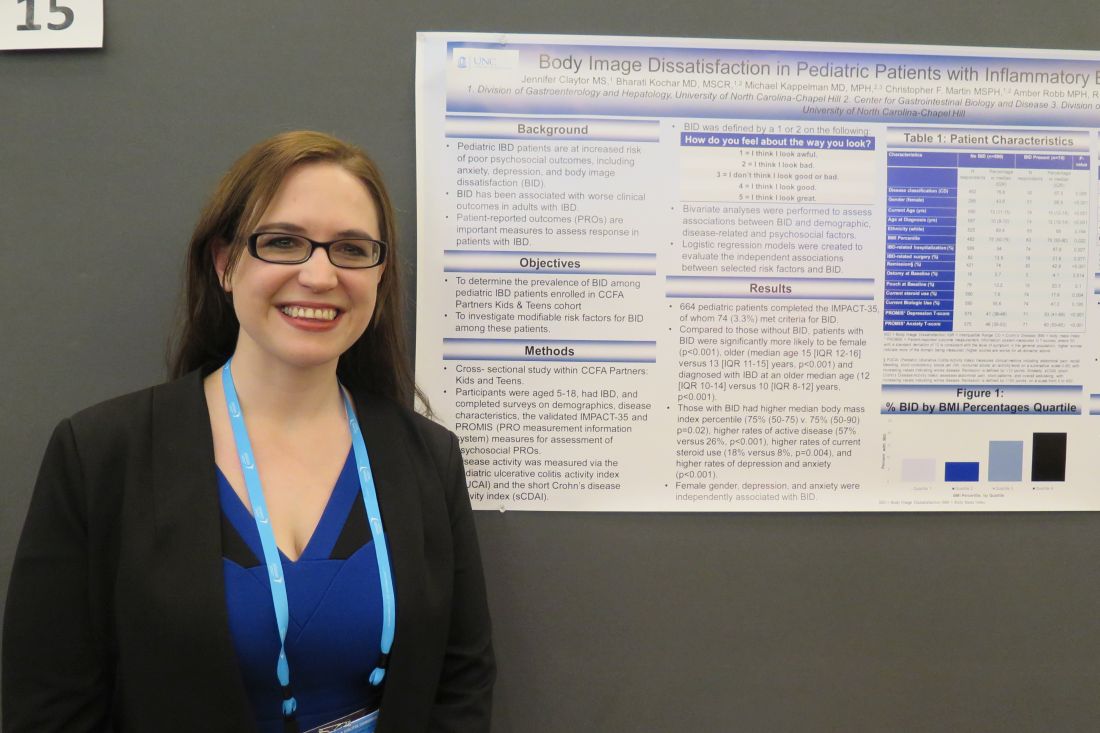
Ms. Claytor, a fourth-year medical student at the University of North Carolina at Chapel Hill, and her associates asked study participants aged 5-18 years to complete surveys on demographics, disease characteristics, and the IMPACT-35 questionnaire and Patient-Reported Outcomes Measurement Information System (PROMIS) tools for assessment of psychological patient-reported outcomes. The pediatric ulcerative colitis activity index and the short Crohn’s disease activity index were used to measure disease activity.
The researchers classified body image dissatisfaction as being present if the patients selected “I look awful” or “I look bad” from the list of possible responses to the question, “How do you feel about the way you look?” Next, they performed bivariate analyses to assess associations between body image dissatisfaction and demographic, disease-related, and psychosocial factors and created logistic regression models to evaluate independent associations between selected risk factors and body image dissatisfaction. “There has been some literature which suggests that for boys, weight and not body image dissatisfaction predicts worse psychosocial outcomes,” Ms. Claytor said. “But for girls it’s body image dissatisfaction, irrespective of weight.”
Of the 664 patients, 74 (3.3%) met criteria for body image dissatisfaction. Compared with patients who did not meet criteria for body image dissatisfaction, those who did were significantly more likely to be female (69% vs. 44%, respectively; P less than .001), older (mean age of 15 vs. 13 years; P less than .001), and diagnosed with IBD an older age (median of 12 vs. 10 years; P less than .001). Ms. Claytor and her associates also found that individuals with body image dissatisfaction had a higher median BMI percentile (P = .02), higher rates of active disease (57% vs. 26%; P less than .001), higher rates of current steroid use (18% vs. 8%; P = .004), and higher rates of depression and anxiety (P less than .001).
After adjusting for age, body mass index, remission, steroid use, and other factors, the odds for developing body image dissatisfaction was highest among those with anxiety (odds ratio, 5.42), followed by depression (OR, 4.73), female gender (OR, 2.31), and current steroid use (OR, 1.59). “I think this points to the need for enhanced counseling services and being aware of these characteristics,” Ms. Claytor said. She reported having no financial disclosures.
SOURCE: Claytor J et al. Crohn’s & Colitis Congress, Poster 15.
*This story was updated on 3/26.
LAS VEGAS – Among current steroid use, higher body mass index percentile, and comorbid mood disorder.
The findings come from a cross-sectional study of 664 patients enrolled in the Crohn’s & Colitis Foundation’s Partners Kids & Teens cohort, presented by Jennifer Claytor, MS, at the Crohn’s & Colitis Congress, a partnership of the Crohn’s & Colitis Foundation and the American Gastroenterological Association.
Ms. Claytor, a fourth-year medical student at the University of North Carolina at Chapel Hill, and her associates asked study participants aged 5-18 years to complete surveys on demographics, disease characteristics, and the IMPACT-35 questionnaire and Patient-Reported Outcomes Measurement Information System (PROMIS) tools for assessment of psychological patient-reported outcomes. The pediatric ulcerative colitis activity index and the short Crohn’s disease activity index were used to measure disease activity.
The researchers classified body image dissatisfaction as being present if the patients selected “I look awful” or “I look bad” from the list of possible responses to the question, “How do you feel about the way you look?” Next, they performed bivariate analyses to assess associations between body image dissatisfaction and demographic, disease-related, and psychosocial factors and created logistic regression models to evaluate independent associations between selected risk factors and body image dissatisfaction. “There has been some literature which suggests that for boys, weight and not body image dissatisfaction predicts worse psychosocial outcomes,” Ms. Claytor said. “But for girls it’s body image dissatisfaction, irrespective of weight.”
Of the 664 patients, 74 (3.3%) met criteria for body image dissatisfaction. Compared with patients who did not meet criteria for body image dissatisfaction, those who did were significantly more likely to be female (69% vs. 44%, respectively; P less than .001), older (mean age of 15 vs. 13 years; P less than .001), and diagnosed with IBD an older age (median of 12 vs. 10 years; P less than .001). Ms. Claytor and her associates also found that individuals with body image dissatisfaction had a higher median BMI percentile (P = .02), higher rates of active disease (57% vs. 26%; P less than .001), higher rates of current steroid use (18% vs. 8%; P = .004), and higher rates of depression and anxiety (P less than .001).
After adjusting for age, body mass index, remission, steroid use, and other factors, the odds for developing body image dissatisfaction was highest among those with anxiety (odds ratio, 5.42), followed by depression (OR, 4.73), female gender (OR, 2.31), and current steroid use (OR, 1.59). “I think this points to the need for enhanced counseling services and being aware of these characteristics,” Ms. Claytor said. She reported having no financial disclosures.
SOURCE: Claytor J et al. Crohn’s & Colitis Congress, Poster 15.
*This story was updated on 3/26.
LAS VEGAS – Among current steroid use, higher body mass index percentile, and comorbid mood disorder.
The findings come from a cross-sectional study of 664 patients enrolled in the Crohn’s & Colitis Foundation’s Partners Kids & Teens cohort, presented by Jennifer Claytor, MS, at the Crohn’s & Colitis Congress, a partnership of the Crohn’s & Colitis Foundation and the American Gastroenterological Association.
Ms. Claytor, a fourth-year medical student at the University of North Carolina at Chapel Hill, and her associates asked study participants aged 5-18 years to complete surveys on demographics, disease characteristics, and the IMPACT-35 questionnaire and Patient-Reported Outcomes Measurement Information System (PROMIS) tools for assessment of psychological patient-reported outcomes. The pediatric ulcerative colitis activity index and the short Crohn’s disease activity index were used to measure disease activity.
The researchers classified body image dissatisfaction as being present if the patients selected “I look awful” or “I look bad” from the list of possible responses to the question, “How do you feel about the way you look?” Next, they performed bivariate analyses to assess associations between body image dissatisfaction and demographic, disease-related, and psychosocial factors and created logistic regression models to evaluate independent associations between selected risk factors and body image dissatisfaction. “There has been some literature which suggests that for boys, weight and not body image dissatisfaction predicts worse psychosocial outcomes,” Ms. Claytor said. “But for girls it’s body image dissatisfaction, irrespective of weight.”
Of the 664 patients, 74 (3.3%) met criteria for body image dissatisfaction. Compared with patients who did not meet criteria for body image dissatisfaction, those who did were significantly more likely to be female (69% vs. 44%, respectively; P less than .001), older (mean age of 15 vs. 13 years; P less than .001), and diagnosed with IBD an older age (median of 12 vs. 10 years; P less than .001). Ms. Claytor and her associates also found that individuals with body image dissatisfaction had a higher median BMI percentile (P = .02), higher rates of active disease (57% vs. 26%; P less than .001), higher rates of current steroid use (18% vs. 8%; P = .004), and higher rates of depression and anxiety (P less than .001).
After adjusting for age, body mass index, remission, steroid use, and other factors, the odds for developing body image dissatisfaction was highest among those with anxiety (odds ratio, 5.42), followed by depression (OR, 4.73), female gender (OR, 2.31), and current steroid use (OR, 1.59). “I think this points to the need for enhanced counseling services and being aware of these characteristics,” Ms. Claytor said. She reported having no financial disclosures.
SOURCE: Claytor J et al. Crohn’s & Colitis Congress, Poster 15.
*This story was updated on 3/26.
REPORTING FROM CROHN’S & COLITIS CONGRESS
Key clinical point: Interventions to target modifiable risk factors for body image dissatisfaction may improve quality of life in pediatric IBD patients.
Major finding: The odds for developing body image dissatisfaction were highest among those with anxiety (odds ratio, 5.42), followed by depression (OR, 4.73) and female gender (OR, 2.31).
Study details: A cross-sectional study of 664 patients enrolled in the Crohn’s & Colitis Foundation’s Partners Kids & Teens cohort.
Disclosures: Ms. Claytor reported having no financial disclosures.
Source: Claytor J et al. Crohn’s & Colitis Congress, Poster 15.
High patient activation linked to clinical remission in IBD
LAS VEGAS – results from a longitudinal analysis suggest.
“Patient activation is defined as understanding one’s role in the health care process and having the knowledge, skills, and confidence to manage one’s health,” Edward L. Barnes, MD, MPH, said at the Crohn’s & Colitis Congress, a partnership of the Crohn’s & Colitis Foundation and the American Gastroenterological Association. “It emphasizes an individual’s willingness to take independent actions and manage their own health care. In many chronic conditions, higher levels of patient activation have been linked to improved health outcomes, better patient experiences related to health care, higher quality of life scores, and lower overall health care costs.”

A 13-question survey known as the Patient Activation Measure from Insignia Health can be used to assess patient activation (Health Serv Res 2005;4096 Pt 1:1918-30). This measure is scored from zero to 100 and allows the categorization of individuals into four levels of activation. In level 1, the patient believes an active role is important. In level 2, the patient has the confidence and knowledge to take action. In level 3 the patient takes action, and in level 4, the patient stays the course during stress.
Dr. Barnes and his associates set out to evaluate the demographic and clinical characteristics associated with higher patient activation in patients with IBD. A secondary aim was to determine whether higher levels of patient care are associated with decreased frequency of relapse or flare. They performed a prospective cohort study of individuals who participated in the Crohn’s and Colitis Foundation’s Partners Internet cohort. Consecutive participants who completed a Partners survey between June 2, 2016, and Jan. 5, 2017, were asked to complete the Patient Activation Measure as an optional module. Clinical remission was defined via the short Crohn’s Disease Activity Index (a score of 150 or lower) and the Simple Clinical Colitis Activity Index (a score of 2 or less).
High patient activation was defined as level 3 or level 4 on the Patient Activation Measure, and multivariable logistic regression was used to evaluate predictors of patient activation level and the relationship between level of patient activation and clinical remission. All covariates included in the multivariable analyses were identified a priori based on prior association with patient activation or clinical disease activity in IBD.
The survey was administered to 1,486 participants. Of these, 1,082 (73%) completed follow-up surveys, including assessments of disease activity. The mean age of respondents was 44 years, 74% were female, 5% were nonwhite, and 77% reported their highest education level as college or graduate school. The mean disease duration was 14.4 years.
Patients with less than a 12th grade education were significantly associated with a decreased odds of having patient activation (adjusted odds ratio 0.25 [95% confidence interval, 0.07-0.94]). Although nonsignificant after adjustment for potential confounders, nonwhite race was also associated with decreased odds of high patient activation (aOR 0.64). Meanwhile, there was a trend among those who graduated from college or graduate school in predicting high patient activation level (aOR of 1.44 and 1.36, respectively).
After adjustment for race, educational status, time since diagnosis, smoking status, and history of IBD-related surgery among patients with Crohn’s disease, patients with higher patient activation were more likely to be in clinical remission at follow-up for both Crohn’s disease (71% vs. 62%; aOR of 1.60 [95% CI, 1.00-2.57], P = .05) and ulcerative colitis (54% vs. 34%; aOR 2.23, respectively; [95% CI, 1.15-4.19], P = .01).
Dr. Barnes acknowledged certain limitations of the study, including the fact that study participants comprised a voluntary, Internet-based cohort. “Participants may exhibit higher levels of patient activation than the general population of patients with IBD,” he said. “There may be an overrepresentation of college graduates in this sample, and the racial and ethnic makeup of this cohort may be different from that of a clinic-based population or the general population of patients with IBD.” He added that there might be unmeasured confounders in the relationship between patient activation and remission that the researchers could not assess.
“Patient activation appears to impact the disease course in patients with CD [Crohn’s disease] and UC [ulcerative colitis],” Dr. Barnes concluded. “The effect of patient activation on the disease course may be larger in UC than in CD. Efforts to improve patient activation in patients with IBD may have the ability to ultimately improve clinical outcomes.”
He reported having no financial disclosures.
*This story was updated on 3/26.
SOURCE: Barnes EL et al. Crohn’s & Colitis Congress, Clinical Abstract 12.
LAS VEGAS – results from a longitudinal analysis suggest.
“Patient activation is defined as understanding one’s role in the health care process and having the knowledge, skills, and confidence to manage one’s health,” Edward L. Barnes, MD, MPH, said at the Crohn’s & Colitis Congress, a partnership of the Crohn’s & Colitis Foundation and the American Gastroenterological Association. “It emphasizes an individual’s willingness to take independent actions and manage their own health care. In many chronic conditions, higher levels of patient activation have been linked to improved health outcomes, better patient experiences related to health care, higher quality of life scores, and lower overall health care costs.”
A 13-question survey known as the Patient Activation Measure from Insignia Health can be used to assess patient activation (Health Serv Res 2005;4096 Pt 1:1918-30). This measure is scored from zero to 100 and allows the categorization of individuals into four levels of activation. In level 1, the patient believes an active role is important. In level 2, the patient has the confidence and knowledge to take action. In level 3 the patient takes action, and in level 4, the patient stays the course during stress.
Dr. Barnes and his associates set out to evaluate the demographic and clinical characteristics associated with higher patient activation in patients with IBD. A secondary aim was to determine whether higher levels of patient care are associated with decreased frequency of relapse or flare. They performed a prospective cohort study of individuals who participated in the Crohn’s and Colitis Foundation’s Partners Internet cohort. Consecutive participants who completed a Partners survey between June 2, 2016, and Jan. 5, 2017, were asked to complete the Patient Activation Measure as an optional module. Clinical remission was defined via the short Crohn’s Disease Activity Index (a score of 150 or lower) and the Simple Clinical Colitis Activity Index (a score of 2 or less).
High patient activation was defined as level 3 or level 4 on the Patient Activation Measure, and multivariable logistic regression was used to evaluate predictors of patient activation level and the relationship between level of patient activation and clinical remission. All covariates included in the multivariable analyses were identified a priori based on prior association with patient activation or clinical disease activity in IBD.
The survey was administered to 1,486 participants. Of these, 1,082 (73%) completed follow-up surveys, including assessments of disease activity. The mean age of respondents was 44 years, 74% were female, 5% were nonwhite, and 77% reported their highest education level as college or graduate school. The mean disease duration was 14.4 years.
Patients with less than a 12th grade education were significantly associated with a decreased odds of having patient activation (adjusted odds ratio 0.25 [95% confidence interval, 0.07-0.94]). Although nonsignificant after adjustment for potential confounders, nonwhite race was also associated with decreased odds of high patient activation (aOR 0.64). Meanwhile, there was a trend among those who graduated from college or graduate school in predicting high patient activation level (aOR of 1.44 and 1.36, respectively).
After adjustment for race, educational status, time since diagnosis, smoking status, and history of IBD-related surgery among patients with Crohn’s disease, patients with higher patient activation were more likely to be in clinical remission at follow-up for both Crohn’s disease (71% vs. 62%; aOR of 1.60 [95% CI, 1.00-2.57], P = .05) and ulcerative colitis (54% vs. 34%; aOR 2.23, respectively; [95% CI, 1.15-4.19], P = .01).
Dr. Barnes acknowledged certain limitations of the study, including the fact that study participants comprised a voluntary, Internet-based cohort. “Participants may exhibit higher levels of patient activation than the general population of patients with IBD,” he said. “There may be an overrepresentation of college graduates in this sample, and the racial and ethnic makeup of this cohort may be different from that of a clinic-based population or the general population of patients with IBD.” He added that there might be unmeasured confounders in the relationship between patient activation and remission that the researchers could not assess.
“Patient activation appears to impact the disease course in patients with CD [Crohn’s disease] and UC [ulcerative colitis],” Dr. Barnes concluded. “The effect of patient activation on the disease course may be larger in UC than in CD. Efforts to improve patient activation in patients with IBD may have the ability to ultimately improve clinical outcomes.”
He reported having no financial disclosures.
*This story was updated on 3/26.
SOURCE: Barnes EL et al. Crohn’s & Colitis Congress, Clinical Abstract 12.
LAS VEGAS – results from a longitudinal analysis suggest.
“Patient activation is defined as understanding one’s role in the health care process and having the knowledge, skills, and confidence to manage one’s health,” Edward L. Barnes, MD, MPH, said at the Crohn’s & Colitis Congress, a partnership of the Crohn’s & Colitis Foundation and the American Gastroenterological Association. “It emphasizes an individual’s willingness to take independent actions and manage their own health care. In many chronic conditions, higher levels of patient activation have been linked to improved health outcomes, better patient experiences related to health care, higher quality of life scores, and lower overall health care costs.”
A 13-question survey known as the Patient Activation Measure from Insignia Health can be used to assess patient activation (Health Serv Res 2005;4096 Pt 1:1918-30). This measure is scored from zero to 100 and allows the categorization of individuals into four levels of activation. In level 1, the patient believes an active role is important. In level 2, the patient has the confidence and knowledge to take action. In level 3 the patient takes action, and in level 4, the patient stays the course during stress.
Dr. Barnes and his associates set out to evaluate the demographic and clinical characteristics associated with higher patient activation in patients with IBD. A secondary aim was to determine whether higher levels of patient care are associated with decreased frequency of relapse or flare. They performed a prospective cohort study of individuals who participated in the Crohn’s and Colitis Foundation’s Partners Internet cohort. Consecutive participants who completed a Partners survey between June 2, 2016, and Jan. 5, 2017, were asked to complete the Patient Activation Measure as an optional module. Clinical remission was defined via the short Crohn’s Disease Activity Index (a score of 150 or lower) and the Simple Clinical Colitis Activity Index (a score of 2 or less).
High patient activation was defined as level 3 or level 4 on the Patient Activation Measure, and multivariable logistic regression was used to evaluate predictors of patient activation level and the relationship between level of patient activation and clinical remission. All covariates included in the multivariable analyses were identified a priori based on prior association with patient activation or clinical disease activity in IBD.
The survey was administered to 1,486 participants. Of these, 1,082 (73%) completed follow-up surveys, including assessments of disease activity. The mean age of respondents was 44 years, 74% were female, 5% were nonwhite, and 77% reported their highest education level as college or graduate school. The mean disease duration was 14.4 years.
Patients with less than a 12th grade education were significantly associated with a decreased odds of having patient activation (adjusted odds ratio 0.25 [95% confidence interval, 0.07-0.94]). Although nonsignificant after adjustment for potential confounders, nonwhite race was also associated with decreased odds of high patient activation (aOR 0.64). Meanwhile, there was a trend among those who graduated from college or graduate school in predicting high patient activation level (aOR of 1.44 and 1.36, respectively).
After adjustment for race, educational status, time since diagnosis, smoking status, and history of IBD-related surgery among patients with Crohn’s disease, patients with higher patient activation were more likely to be in clinical remission at follow-up for both Crohn’s disease (71% vs. 62%; aOR of 1.60 [95% CI, 1.00-2.57], P = .05) and ulcerative colitis (54% vs. 34%; aOR 2.23, respectively; [95% CI, 1.15-4.19], P = .01).
Dr. Barnes acknowledged certain limitations of the study, including the fact that study participants comprised a voluntary, Internet-based cohort. “Participants may exhibit higher levels of patient activation than the general population of patients with IBD,” he said. “There may be an overrepresentation of college graduates in this sample, and the racial and ethnic makeup of this cohort may be different from that of a clinic-based population or the general population of patients with IBD.” He added that there might be unmeasured confounders in the relationship between patient activation and remission that the researchers could not assess.
“Patient activation appears to impact the disease course in patients with CD [Crohn’s disease] and UC [ulcerative colitis],” Dr. Barnes concluded. “The effect of patient activation on the disease course may be larger in UC than in CD. Efforts to improve patient activation in patients with IBD may have the ability to ultimately improve clinical outcomes.”
He reported having no financial disclosures.
*This story was updated on 3/26.
SOURCE: Barnes EL et al. Crohn’s & Colitis Congress, Clinical Abstract 12.
REPORTING FROM THE CROHN’S & COLITIS CONGRESS
Key clinical point: Patient activation appears to impact the disease course in IBD patients.
Major finding: Individuals with higher patient activation were more likely to be in clinical remission at follow-up for both CD and UC (adjusted OR of 1.60 vs. adjusted OR of 2.23, respectively).
Study details: Responses from 1,082 IBD patients who participated in the Crohn’s and Colitis Foundation’s Partners Internet cohort.
Disclosures: Dr. Barnes reported having no financial disclosures.
Source: Barnes EL et al. Crohn’s & Colitis Congress, Clinical Abstract 12.
Many drugs in the pipeline for IBD treatment
LAS VEGAS – .
“The challenge for all of us is to integrate the right drugs for the right patients,” William J. Sandborn, MD, AGAF, said at the inaugural Crohn’s & Colitis Congress, a partnership of the Crohn’s & Colitis Foundation and the American Gastroenterological Association.

Dr. Sandborn, professor and chief of the division of gastroenterology at the University of California, San Diego, began his presentation by highlighting anti-integrin therapies for inflammatory bowel disease (IBD) treatment. These leukocyte membrane glycoproteins target beta1 and beta7 subunits. They interact with endothelial ligands VCAM-1, fibronectin, and MadCAM-1, and mediate leukocyte adhesion and trafficking. Approved anti-integrin therapies to date include natalizumab and vedolizumab, while investigational therapies include etrolizumab, PF-00547,659, abrilumab, and AJM 300.
In a phase 2 study of etrolizumab as induction therapy for moderate to severe UC, Séverine Vermeire, MD, Dr. Sandborn, and associates randomized 124 patients to one of two dose levels of subcutaneous etrolizumab (100 mg at weeks 0, 4, and 8, with placebo at week 2 or a 420-mg loading dose at week 0 followed by 300 mg at weeks 2, 4, and 8), or matching placebo (The Lancet 2014 348;309-18). They found that etrolizumab was more likely to lead to clinical remission at week 10 than was placebo, especially at the 100-mg dose. Meanwhile, a more recent study of the anti-MAdCAM antibody PF-00547659 in patients with moderate to severe ulcerative colitis found that it was better than placebo for induction of remission (The Lancet 2017;390:135-144). Investigators for the trial, known as TURANDOT, found that the greatest clinical effects were observed with the 22.5-mg and 75-mg doses. “This is now being taken forward in phase 3 trials by Shire,” Dr. Sandborn said.
The anti-interleukin 12/23 antibody (p40) ustekinumab is being investigated for efficacy in UC, while anti-interleukin 23 (p19) antibodies being studied include brazikumab (MEDI2070), risankizumab (BI 6555066), geslekumab, mirikizumab (LY3074828), and tildrakizumab (MK 3222). In 2015, Janssen launched NCT02407236, with the aim of evaluating the effectiveness and safety of continuing ustekinumab as a subcutaneous (injection) maintenance therapy in patients with moderately to severely active UC who have demonstrated a clinical response to an induction treatment with intravenous ustekinumab. The estimated primary completion date is April 12, 2018. Meanwhile, a phase 2a trial of 119 patients with moderate to severe Crohn’s disease who had failed treatment with tumor necrosis factor (TNF) antagonists showed that treatment with MEDI2070 was associated with clinical improvement after 8 and 24 weeks of therapy (Gastroenterol 2017;153:77-86). The investigators also found that patients with baseline serum IL-22 concentrations above the median threshold concentration of 15.6 pg/mL treated with MEDI2070 had higher rates of clinical response and remission, compared with those with baseline concentrations below this threshold. According to Dr. Sandborn, who was not involved in the study, these results provide support for further research on the value of IL-22 serum concentrations to predict response to MEDI2070. “It’s a small study and is hypothesis generating,” he said. “This will need to be confirmed in subsequent trials.”
In a short-term study of 121 patients with active Crohn’s disease, Brian G. Feagan, MD, Dr. Sandborn, and associates found that risankizumab was more effective than placebo for inducing clinical remission, particularly at the 600-mg dose, compared with the 200-mg dose (Lancet 2017;389:1699-709). The researchers also observed significant differences in endoscopic remission among patients on the study drug, compared with those on placebo (17% vs. 3%; P = .0015) as well as endoscopic response (32% vs. 13%; P = .0104). The trial provides further evidence that selective blockade of interleukin 23 via inhibition of p19 might be a viable therapeutic approach in Crohn’s disease.
Janus kinase (JAK) inhibitors under investigation for Crohn’s disease include tofacitinib, filgotinib, upadacitinib, baricitinib, and TD-1473. In the OCTAVE Induction 1 trial led by Dr. Sandborn, 18.5% of the patients in the tofacitinib group achieved remission at 8 weeks, compared with 8.2% in the placebo group (P = .007); in the OCTAVE Induction 2 trial, remission occurred in 16.6% vs. 3.6% (P less than .001). In the OCTAVE Sustain trial, remission at 52 weeks occurred in 34.3% of the patients in the 5-mg tofacitinib group and 40.6% in the 10-mg tofacitinib group vs. 11.1% in the placebo group (P less than 0.001 for both comparisons with placebo; N Engl J Med. 2017;376:1723-36). “In subgroup analyses, it looks like the 10-mg dose is more effective for maintenance in patients who previously received anti-TNF therapy,” said Dr. Sandborn, who also directs the UCSD IBD Center. “All secondary outcomes were positive. You don’t see that very often. It tells you that this is a really effective therapy. It’s currently being reviewed by the FDA.”
Meanwhile, a phase 2 trial found that a higher percentage of patients with mild to moderate Crohn’s disease who received a 200-mg dose of filgotinib over 10 weeks achieved clinical remission, compared with those who received placebo (47% vs. 23%, respectively; P = .0077; The Lancet 2017;389:266-75). Serious treatment-emergent adverse effects occurred in 9% of the 152 patients treated with filgotinib and 3 of the 67 patients treated with placebo. According to Dr. Sandborn, filgotinib is currently in phase 3 development trials for both Crohn’s Disease and UC. At the same time, results from an unpublished study presented at the annual Digestive Disease Week in 2017 found that 16 weeks of treatment with the investigational agent upadacitinib led to modified clinical remission in 37% of patients on the 24-mg bid dose, compared with 30% of patients in the 6-mg bid dose. There was also a dose response for endoscopic response. “Based on these data, this drug is now in a phase 3 trial, so lots of JAK inhibitors are coming along,” he said.
Sphingosine-1–phosphate receptor 1 (S1P1) modulators currently under investigation include fingolimod (not studied in IBD), ozanimod, and etrasimod. “These modulators cause the S1P1 receptors that are expressed on the surface of positive lymphocytes to be eluded back into the cell, which leads to a reversible reduction in circulating lymphocytes in the blood,” Dr. Sandborn explained. In a phase 2 trial, he and his associates found that UC patients who received ozanimod at a daily dose of 1 mg had a slightly higher rate of clinical remission, compared with those who received placebo, but the study was not sufficiently powered to establish clinical efficacy or assess safety (N Engl J. Med 2016;374:1754-62).
Dr. Sandborn reported having consulting relationships with Takeda, Genentech, Pfizer, Shire, Amgen, and many other pharmaceutical companies.
LAS VEGAS – .
“The challenge for all of us is to integrate the right drugs for the right patients,” William J. Sandborn, MD, AGAF, said at the inaugural Crohn’s & Colitis Congress, a partnership of the Crohn’s & Colitis Foundation and the American Gastroenterological Association.
Dr. Sandborn, professor and chief of the division of gastroenterology at the University of California, San Diego, began his presentation by highlighting anti-integrin therapies for inflammatory bowel disease (IBD) treatment. These leukocyte membrane glycoproteins target beta1 and beta7 subunits. They interact with endothelial ligands VCAM-1, fibronectin, and MadCAM-1, and mediate leukocyte adhesion and trafficking. Approved anti-integrin therapies to date include natalizumab and vedolizumab, while investigational therapies include etrolizumab, PF-00547,659, abrilumab, and AJM 300.
In a phase 2 study of etrolizumab as induction therapy for moderate to severe UC, Séverine Vermeire, MD, Dr. Sandborn, and associates randomized 124 patients to one of two dose levels of subcutaneous etrolizumab (100 mg at weeks 0, 4, and 8, with placebo at week 2 or a 420-mg loading dose at week 0 followed by 300 mg at weeks 2, 4, and 8), or matching placebo (The Lancet 2014 348;309-18). They found that etrolizumab was more likely to lead to clinical remission at week 10 than was placebo, especially at the 100-mg dose. Meanwhile, a more recent study of the anti-MAdCAM antibody PF-00547659 in patients with moderate to severe ulcerative colitis found that it was better than placebo for induction of remission (The Lancet 2017;390:135-144). Investigators for the trial, known as TURANDOT, found that the greatest clinical effects were observed with the 22.5-mg and 75-mg doses. “This is now being taken forward in phase 3 trials by Shire,” Dr. Sandborn said.
The anti-interleukin 12/23 antibody (p40) ustekinumab is being investigated for efficacy in UC, while anti-interleukin 23 (p19) antibodies being studied include brazikumab (MEDI2070), risankizumab (BI 6555066), geslekumab, mirikizumab (LY3074828), and tildrakizumab (MK 3222). In 2015, Janssen launched NCT02407236, with the aim of evaluating the effectiveness and safety of continuing ustekinumab as a subcutaneous (injection) maintenance therapy in patients with moderately to severely active UC who have demonstrated a clinical response to an induction treatment with intravenous ustekinumab. The estimated primary completion date is April 12, 2018. Meanwhile, a phase 2a trial of 119 patients with moderate to severe Crohn’s disease who had failed treatment with tumor necrosis factor (TNF) antagonists showed that treatment with MEDI2070 was associated with clinical improvement after 8 and 24 weeks of therapy (Gastroenterol 2017;153:77-86). The investigators also found that patients with baseline serum IL-22 concentrations above the median threshold concentration of 15.6 pg/mL treated with MEDI2070 had higher rates of clinical response and remission, compared with those with baseline concentrations below this threshold. According to Dr. Sandborn, who was not involved in the study, these results provide support for further research on the value of IL-22 serum concentrations to predict response to MEDI2070. “It’s a small study and is hypothesis generating,” he said. “This will need to be confirmed in subsequent trials.”
In a short-term study of 121 patients with active Crohn’s disease, Brian G. Feagan, MD, Dr. Sandborn, and associates found that risankizumab was more effective than placebo for inducing clinical remission, particularly at the 600-mg dose, compared with the 200-mg dose (Lancet 2017;389:1699-709). The researchers also observed significant differences in endoscopic remission among patients on the study drug, compared with those on placebo (17% vs. 3%; P = .0015) as well as endoscopic response (32% vs. 13%; P = .0104). The trial provides further evidence that selective blockade of interleukin 23 via inhibition of p19 might be a viable therapeutic approach in Crohn’s disease.
Janus kinase (JAK) inhibitors under investigation for Crohn’s disease include tofacitinib, filgotinib, upadacitinib, baricitinib, and TD-1473. In the OCTAVE Induction 1 trial led by Dr. Sandborn, 18.5% of the patients in the tofacitinib group achieved remission at 8 weeks, compared with 8.2% in the placebo group (P = .007); in the OCTAVE Induction 2 trial, remission occurred in 16.6% vs. 3.6% (P less than .001). In the OCTAVE Sustain trial, remission at 52 weeks occurred in 34.3% of the patients in the 5-mg tofacitinib group and 40.6% in the 10-mg tofacitinib group vs. 11.1% in the placebo group (P less than 0.001 for both comparisons with placebo; N Engl J Med. 2017;376:1723-36). “In subgroup analyses, it looks like the 10-mg dose is more effective for maintenance in patients who previously received anti-TNF therapy,” said Dr. Sandborn, who also directs the UCSD IBD Center. “All secondary outcomes were positive. You don’t see that very often. It tells you that this is a really effective therapy. It’s currently being reviewed by the FDA.”
Meanwhile, a phase 2 trial found that a higher percentage of patients with mild to moderate Crohn’s disease who received a 200-mg dose of filgotinib over 10 weeks achieved clinical remission, compared with those who received placebo (47% vs. 23%, respectively; P = .0077; The Lancet 2017;389:266-75). Serious treatment-emergent adverse effects occurred in 9% of the 152 patients treated with filgotinib and 3 of the 67 patients treated with placebo. According to Dr. Sandborn, filgotinib is currently in phase 3 development trials for both Crohn’s Disease and UC. At the same time, results from an unpublished study presented at the annual Digestive Disease Week in 2017 found that 16 weeks of treatment with the investigational agent upadacitinib led to modified clinical remission in 37% of patients on the 24-mg bid dose, compared with 30% of patients in the 6-mg bid dose. There was also a dose response for endoscopic response. “Based on these data, this drug is now in a phase 3 trial, so lots of JAK inhibitors are coming along,” he said.
Sphingosine-1–phosphate receptor 1 (S1P1) modulators currently under investigation include fingolimod (not studied in IBD), ozanimod, and etrasimod. “These modulators cause the S1P1 receptors that are expressed on the surface of positive lymphocytes to be eluded back into the cell, which leads to a reversible reduction in circulating lymphocytes in the blood,” Dr. Sandborn explained. In a phase 2 trial, he and his associates found that UC patients who received ozanimod at a daily dose of 1 mg had a slightly higher rate of clinical remission, compared with those who received placebo, but the study was not sufficiently powered to establish clinical efficacy or assess safety (N Engl J. Med 2016;374:1754-62).
Dr. Sandborn reported having consulting relationships with Takeda, Genentech, Pfizer, Shire, Amgen, and many other pharmaceutical companies.
LAS VEGAS – .
“The challenge for all of us is to integrate the right drugs for the right patients,” William J. Sandborn, MD, AGAF, said at the inaugural Crohn’s & Colitis Congress, a partnership of the Crohn’s & Colitis Foundation and the American Gastroenterological Association.
Dr. Sandborn, professor and chief of the division of gastroenterology at the University of California, San Diego, began his presentation by highlighting anti-integrin therapies for inflammatory bowel disease (IBD) treatment. These leukocyte membrane glycoproteins target beta1 and beta7 subunits. They interact with endothelial ligands VCAM-1, fibronectin, and MadCAM-1, and mediate leukocyte adhesion and trafficking. Approved anti-integrin therapies to date include natalizumab and vedolizumab, while investigational therapies include etrolizumab, PF-00547,659, abrilumab, and AJM 300.
In a phase 2 study of etrolizumab as induction therapy for moderate to severe UC, Séverine Vermeire, MD, Dr. Sandborn, and associates randomized 124 patients to one of two dose levels of subcutaneous etrolizumab (100 mg at weeks 0, 4, and 8, with placebo at week 2 or a 420-mg loading dose at week 0 followed by 300 mg at weeks 2, 4, and 8), or matching placebo (The Lancet 2014 348;309-18). They found that etrolizumab was more likely to lead to clinical remission at week 10 than was placebo, especially at the 100-mg dose. Meanwhile, a more recent study of the anti-MAdCAM antibody PF-00547659 in patients with moderate to severe ulcerative colitis found that it was better than placebo for induction of remission (The Lancet 2017;390:135-144). Investigators for the trial, known as TURANDOT, found that the greatest clinical effects were observed with the 22.5-mg and 75-mg doses. “This is now being taken forward in phase 3 trials by Shire,” Dr. Sandborn said.
The anti-interleukin 12/23 antibody (p40) ustekinumab is being investigated for efficacy in UC, while anti-interleukin 23 (p19) antibodies being studied include brazikumab (MEDI2070), risankizumab (BI 6555066), geslekumab, mirikizumab (LY3074828), and tildrakizumab (MK 3222). In 2015, Janssen launched NCT02407236, with the aim of evaluating the effectiveness and safety of continuing ustekinumab as a subcutaneous (injection) maintenance therapy in patients with moderately to severely active UC who have demonstrated a clinical response to an induction treatment with intravenous ustekinumab. The estimated primary completion date is April 12, 2018. Meanwhile, a phase 2a trial of 119 patients with moderate to severe Crohn’s disease who had failed treatment with tumor necrosis factor (TNF) antagonists showed that treatment with MEDI2070 was associated with clinical improvement after 8 and 24 weeks of therapy (Gastroenterol 2017;153:77-86). The investigators also found that patients with baseline serum IL-22 concentrations above the median threshold concentration of 15.6 pg/mL treated with MEDI2070 had higher rates of clinical response and remission, compared with those with baseline concentrations below this threshold. According to Dr. Sandborn, who was not involved in the study, these results provide support for further research on the value of IL-22 serum concentrations to predict response to MEDI2070. “It’s a small study and is hypothesis generating,” he said. “This will need to be confirmed in subsequent trials.”
In a short-term study of 121 patients with active Crohn’s disease, Brian G. Feagan, MD, Dr. Sandborn, and associates found that risankizumab was more effective than placebo for inducing clinical remission, particularly at the 600-mg dose, compared with the 200-mg dose (Lancet 2017;389:1699-709). The researchers also observed significant differences in endoscopic remission among patients on the study drug, compared with those on placebo (17% vs. 3%; P = .0015) as well as endoscopic response (32% vs. 13%; P = .0104). The trial provides further evidence that selective blockade of interleukin 23 via inhibition of p19 might be a viable therapeutic approach in Crohn’s disease.
Janus kinase (JAK) inhibitors under investigation for Crohn’s disease include tofacitinib, filgotinib, upadacitinib, baricitinib, and TD-1473. In the OCTAVE Induction 1 trial led by Dr. Sandborn, 18.5% of the patients in the tofacitinib group achieved remission at 8 weeks, compared with 8.2% in the placebo group (P = .007); in the OCTAVE Induction 2 trial, remission occurred in 16.6% vs. 3.6% (P less than .001). In the OCTAVE Sustain trial, remission at 52 weeks occurred in 34.3% of the patients in the 5-mg tofacitinib group and 40.6% in the 10-mg tofacitinib group vs. 11.1% in the placebo group (P less than 0.001 for both comparisons with placebo; N Engl J Med. 2017;376:1723-36). “In subgroup analyses, it looks like the 10-mg dose is more effective for maintenance in patients who previously received anti-TNF therapy,” said Dr. Sandborn, who also directs the UCSD IBD Center. “All secondary outcomes were positive. You don’t see that very often. It tells you that this is a really effective therapy. It’s currently being reviewed by the FDA.”
Meanwhile, a phase 2 trial found that a higher percentage of patients with mild to moderate Crohn’s disease who received a 200-mg dose of filgotinib over 10 weeks achieved clinical remission, compared with those who received placebo (47% vs. 23%, respectively; P = .0077; The Lancet 2017;389:266-75). Serious treatment-emergent adverse effects occurred in 9% of the 152 patients treated with filgotinib and 3 of the 67 patients treated with placebo. According to Dr. Sandborn, filgotinib is currently in phase 3 development trials for both Crohn’s Disease and UC. At the same time, results from an unpublished study presented at the annual Digestive Disease Week in 2017 found that 16 weeks of treatment with the investigational agent upadacitinib led to modified clinical remission in 37% of patients on the 24-mg bid dose, compared with 30% of patients in the 6-mg bid dose. There was also a dose response for endoscopic response. “Based on these data, this drug is now in a phase 3 trial, so lots of JAK inhibitors are coming along,” he said.
Sphingosine-1–phosphate receptor 1 (S1P1) modulators currently under investigation include fingolimod (not studied in IBD), ozanimod, and etrasimod. “These modulators cause the S1P1 receptors that are expressed on the surface of positive lymphocytes to be eluded back into the cell, which leads to a reversible reduction in circulating lymphocytes in the blood,” Dr. Sandborn explained. In a phase 2 trial, he and his associates found that UC patients who received ozanimod at a daily dose of 1 mg had a slightly higher rate of clinical remission, compared with those who received placebo, but the study was not sufficiently powered to establish clinical efficacy or assess safety (N Engl J. Med 2016;374:1754-62).
Dr. Sandborn reported having consulting relationships with Takeda, Genentech, Pfizer, Shire, Amgen, and many other pharmaceutical companies.
EXPERT ANALYSIS FROM THE CROHN’S & COLITIS CONGRESS
VIDEO: Gluten-free diet tied to heavy metal bioaccumulation
A gluten-free diet was associated with significantly increased blood levels of mercury, lead, and cadmium and with significantly increased urinary levels of arsenic in a large cross-sectional population-based survey study.
Source: American Gastroenterological Association
After researchers controlled for demographic characteristics, “levels of all heavy metals remained significantly higher in persons following a gluten-free diet, compared with those not following a gluten-free diet,” Stephanie L. Raehsler, MPH, of Mayo Clinic in Rochester, Minn., wrote with her associates in an article published in the February issue of Clinical Gastroenterology and Hepatology.
The purported (unproven) benefits of a gluten-free diet (GFD) have propelled them into the mainstream outside the settings of celiac disease, dermatitis herpetiformis, and wheat allergy. However, GFDs have been linked to nutritional deficits of iron, ferritin, zinc, and fiber, to increased consumption of sugar, fats, and salt, and to excessive bioaccumulation of mercury, the investigators noted.
High intake of rice, a staple of many GFDs, also has been associated with elevated urinary excretion of arsenic (PLoS One. 2014 Sep 8;9[9]:e104768. doi: 10.1371/journal.pone.0104768). To further characterize these relationships, the researchers analyzed data for 2009 through 2012 from 11,354 participants in the National Health and Nutrition Examination Survey (NHANES). Blood levels of lead, mercury, and cadmium were available from 115 participants who reported following a GFD, and data on urinary arsenic levels were available from 32 such individuals.
In the overall study group, blood mercury levels averaged 1.37 mcg/L (95% confidence interval, 1.02-1.85 mcg/L) among persons on a GFD and 0.93 mcg/L (95% CI, 0.86-1.0 mcg/L) in persons not on a GFD (P = .008). Individuals on a GFD also had significantly higher total blood levels of lead (1.42 vs. 1.13 mcg/L; P = .007 ) and cadmium (0.42 vs. 0.34; P = .03), and they had significantly higher urinary levels of total arsenic (15.2 vs. 8.4 mcg/L; P = .003). These significant differences persisted after researchers controlled for age, sex, race, and smoking status.
Additionally, among 101 individuals on GFDs who had no laboratory or clinical indication of celiac disease, blood levels of total mercury were significantly elevated, compared with individuals not on a GFD (1.40 vs. 0.93 mcg/L; P = .02), as were blood lead concentrations (1.44 vs. 1.13 mcg/L; P = .01) and urinary arsenic levels (14.7 vs. 8.3 mcg/L; P = .01). Blood cadmium levels also were increased (0.42 vs. 0.34 mcg/L), but this difference did not reach statistical significance (P = .06).
Individuals who reported eating fish or shellfish in the past month had higher blood mercury levels than those who did not, regardless of whether they were on a GFD. However, only two individuals in the study exceeded the toxicity threshold for mercury and neither was on a GFD, the researchers said. For most individuals on a GFD, levels of all heavy metals except urinary arsenic stayed under the recognized limits for toxicity, they noted.
The number of respondents following a GFD was small, but the investigators followed NHANES recommendations on sampling weights and sample design variables. Also, although the NHANES included only one question on GFDs, trained interviewers were used to help minimize bias. “Studies are needed to determine the long-term effects of accumulation of these elements in persons on a GFD,” the researchers concluded.
The Centers for Disease Control and Prevention provided partial funding. The researchers reported having no conflicts of interest.
SOURCE: Raehsler S et al. Clin Gastro Hepatol. 2018;(in press).
A gluten-free diet was associated with significantly increased blood levels of mercury, lead, and cadmium and with significantly increased urinary levels of arsenic in a large cross-sectional population-based survey study.
Source: American Gastroenterological Association
After researchers controlled for demographic characteristics, “levels of all heavy metals remained significantly higher in persons following a gluten-free diet, compared with those not following a gluten-free diet,” Stephanie L. Raehsler, MPH, of Mayo Clinic in Rochester, Minn., wrote with her associates in an article published in the February issue of Clinical Gastroenterology and Hepatology.
The purported (unproven) benefits of a gluten-free diet (GFD) have propelled them into the mainstream outside the settings of celiac disease, dermatitis herpetiformis, and wheat allergy. However, GFDs have been linked to nutritional deficits of iron, ferritin, zinc, and fiber, to increased consumption of sugar, fats, and salt, and to excessive bioaccumulation of mercury, the investigators noted.
High intake of rice, a staple of many GFDs, also has been associated with elevated urinary excretion of arsenic (PLoS One. 2014 Sep 8;9[9]:e104768. doi: 10.1371/journal.pone.0104768). To further characterize these relationships, the researchers analyzed data for 2009 through 2012 from 11,354 participants in the National Health and Nutrition Examination Survey (NHANES). Blood levels of lead, mercury, and cadmium were available from 115 participants who reported following a GFD, and data on urinary arsenic levels were available from 32 such individuals.
In the overall study group, blood mercury levels averaged 1.37 mcg/L (95% confidence interval, 1.02-1.85 mcg/L) among persons on a GFD and 0.93 mcg/L (95% CI, 0.86-1.0 mcg/L) in persons not on a GFD (P = .008). Individuals on a GFD also had significantly higher total blood levels of lead (1.42 vs. 1.13 mcg/L; P = .007 ) and cadmium (0.42 vs. 0.34; P = .03), and they had significantly higher urinary levels of total arsenic (15.2 vs. 8.4 mcg/L; P = .003). These significant differences persisted after researchers controlled for age, sex, race, and smoking status.
Additionally, among 101 individuals on GFDs who had no laboratory or clinical indication of celiac disease, blood levels of total mercury were significantly elevated, compared with individuals not on a GFD (1.40 vs. 0.93 mcg/L; P = .02), as were blood lead concentrations (1.44 vs. 1.13 mcg/L; P = .01) and urinary arsenic levels (14.7 vs. 8.3 mcg/L; P = .01). Blood cadmium levels also were increased (0.42 vs. 0.34 mcg/L), but this difference did not reach statistical significance (P = .06).
Individuals who reported eating fish or shellfish in the past month had higher blood mercury levels than those who did not, regardless of whether they were on a GFD. However, only two individuals in the study exceeded the toxicity threshold for mercury and neither was on a GFD, the researchers said. For most individuals on a GFD, levels of all heavy metals except urinary arsenic stayed under the recognized limits for toxicity, they noted.
The number of respondents following a GFD was small, but the investigators followed NHANES recommendations on sampling weights and sample design variables. Also, although the NHANES included only one question on GFDs, trained interviewers were used to help minimize bias. “Studies are needed to determine the long-term effects of accumulation of these elements in persons on a GFD,” the researchers concluded.
The Centers for Disease Control and Prevention provided partial funding. The researchers reported having no conflicts of interest.
SOURCE: Raehsler S et al. Clin Gastro Hepatol. 2018;(in press).
A gluten-free diet was associated with significantly increased blood levels of mercury, lead, and cadmium and with significantly increased urinary levels of arsenic in a large cross-sectional population-based survey study.
Source: American Gastroenterological Association
After researchers controlled for demographic characteristics, “levels of all heavy metals remained significantly higher in persons following a gluten-free diet, compared with those not following a gluten-free diet,” Stephanie L. Raehsler, MPH, of Mayo Clinic in Rochester, Minn., wrote with her associates in an article published in the February issue of Clinical Gastroenterology and Hepatology.
The purported (unproven) benefits of a gluten-free diet (GFD) have propelled them into the mainstream outside the settings of celiac disease, dermatitis herpetiformis, and wheat allergy. However, GFDs have been linked to nutritional deficits of iron, ferritin, zinc, and fiber, to increased consumption of sugar, fats, and salt, and to excessive bioaccumulation of mercury, the investigators noted.
High intake of rice, a staple of many GFDs, also has been associated with elevated urinary excretion of arsenic (PLoS One. 2014 Sep 8;9[9]:e104768. doi: 10.1371/journal.pone.0104768). To further characterize these relationships, the researchers analyzed data for 2009 through 2012 from 11,354 participants in the National Health and Nutrition Examination Survey (NHANES). Blood levels of lead, mercury, and cadmium were available from 115 participants who reported following a GFD, and data on urinary arsenic levels were available from 32 such individuals.
In the overall study group, blood mercury levels averaged 1.37 mcg/L (95% confidence interval, 1.02-1.85 mcg/L) among persons on a GFD and 0.93 mcg/L (95% CI, 0.86-1.0 mcg/L) in persons not on a GFD (P = .008). Individuals on a GFD also had significantly higher total blood levels of lead (1.42 vs. 1.13 mcg/L; P = .007 ) and cadmium (0.42 vs. 0.34; P = .03), and they had significantly higher urinary levels of total arsenic (15.2 vs. 8.4 mcg/L; P = .003). These significant differences persisted after researchers controlled for age, sex, race, and smoking status.
Additionally, among 101 individuals on GFDs who had no laboratory or clinical indication of celiac disease, blood levels of total mercury were significantly elevated, compared with individuals not on a GFD (1.40 vs. 0.93 mcg/L; P = .02), as were blood lead concentrations (1.44 vs. 1.13 mcg/L; P = .01) and urinary arsenic levels (14.7 vs. 8.3 mcg/L; P = .01). Blood cadmium levels also were increased (0.42 vs. 0.34 mcg/L), but this difference did not reach statistical significance (P = .06).
Individuals who reported eating fish or shellfish in the past month had higher blood mercury levels than those who did not, regardless of whether they were on a GFD. However, only two individuals in the study exceeded the toxicity threshold for mercury and neither was on a GFD, the researchers said. For most individuals on a GFD, levels of all heavy metals except urinary arsenic stayed under the recognized limits for toxicity, they noted.
The number of respondents following a GFD was small, but the investigators followed NHANES recommendations on sampling weights and sample design variables. Also, although the NHANES included only one question on GFDs, trained interviewers were used to help minimize bias. “Studies are needed to determine the long-term effects of accumulation of these elements in persons on a GFD,” the researchers concluded.
The Centers for Disease Control and Prevention provided partial funding. The researchers reported having no conflicts of interest.
SOURCE: Raehsler S et al. Clin Gastro Hepatol. 2018;(in press).
FROM CLINICAL GASTROENTEROLOGY AND HEPATOLOGY
Key clinical point: A gluten-free diet was associated with significantly increased bioaccumulation of several heavy metals.
Major finding: After accounting for demographic factors, blood or urinary levels of lead, cadmium, arsenic, and mercury were significantly higher in persons following a gluten-free diet, compared with those who did not follow a gluten-free diet.
Data source: A population-based, cross-sectional study of 11,354 respondents to NHANES 2009-2012, including 115 persons on a gluten-free diet.
Disclosures: The Centers for Disease Control and Prevention provided partial funding. The researchers reported having no conflicts of interest.
Source: Raehsler S et al. Clin Gastro Hepatol. 2018 (in press).
One in five Crohn’s disease patients have major complications after infliximab withdrawal
About , according to research published in the February issue of Clinical Gastroenterology and Hepatology (doi: 10.1016/j.cgh.2017.09.061).
About 70% of patients remained free of both infliximab restart failure and major complications, said Catherine Reenaers, MD, PhD, of Centre Hospitalier Universitaire de Liège (Belgium), and her associates. Significant predictors of major complications included upper gastrointestinal disease at the time of infliximab withdrawal, white blood cell count of at least 5.0 x 10⁹ per L, and hemoglobin level under 12.5 g per dL. “Patients with at least two of these factors had a more than 40% risk of major complication in the 7 years following infliximab withdrawal,” the researchers reported.
Little is known about long-term outcomes after patients with Crohn’s disease withdraw from infliximab. Therefore, Dr. Reenaers and her associates retrospectively studied 102 patients with Crohn’s disease who had received infliximab and an antimetabolite (azathioprine, mercaptopurine, or methotrexate) for at least 12 months, had been in steroid-free clinical remission for at least 6 months, and then withdrew from infliximab. Patients were recruited from 19 centers in Belgium and France and were originally part of a prospective cohort study of infliximab withdrawal in Crohn’s disease (Gastroenterology. 2012;142[1]:63-70.e5).
About half of patients relapsed and restarted infliximab within 12 months, which is in line with other studies, the researchers noted. Over a median follow-up of 83 months (interquartile range, 71-93 months), 21% (95% confidence interval, 13.1%-30.3%) of patients had no complications, did not restart infliximab, and started no other biologics. In all, 70.2% of patients (95% CI, 60.2%-80.1%) had no major complications and did not fail to respond after restarting infliximab.
Eighteen patients (19%; 95% CI, 10%-27%) developed major complications: 14 who required surgery and 4 who developed new complex perianal lesions. In a multivariable model, the strongest independent predictor of major complications was leukocytosis (hazard ratio, 10.5; 95% CI, 1.3-83; P less than .002), followed by upper gastrointestinal disease (HR, 5.8; 95% CI, 1.5-22) and low hemoglobin level (HR, 4.1; 95% CI, 1.5-21.8; P less than .01). The 13 patients who lacked these risk factors had no major complications of infliximab withdrawal. Among 72 patients who had at least one risk factor, 16.3% (95% CI, 7%-25%) developed major complications over 7 years. Strikingly, among 17 with at least two risk factors, 43% (95% CI, 17%-69%) developed major complications over 7 years, the researchers noted.
Complications emerged a median of 50 months (interquartile range, 41-73 months) after patients received their last infliximab infusion, highlighting the need for close long-term monitoring even if patients show no signs of early clinical relapse after infliximab withdrawal, the investigators said. “One strength of this cohort was the homogeneity of the population,” they stressed. “Most studies of anti–tumor necrosis factor withdrawal after clinical remission were limited by heterogeneous populations, variable lengths of infliximab treatment before discontinuation, and variable use of immunomodulators and corticosteroids. In [our] cohort, the population was homogenous, infliximab withdrawal was standardized, and the disease characteristics at the time of stopping were collected prospectively.” Although follow-up times varied, less than 5% of patients were followed for less than 3 years, they noted.
The researchers did not acknowledge external funding sources. Dr. Reenaers disclosed ties to AbbVie, Takeda, MSD, Mundipharma, Hospira, and Ferring.
SOURCE: Reenaers C et al. Clin Gastro Hepatol 2018 February (in press).
The option of stopping a biologic agent is an attractive prospect for most Crohn's disease (CD) patients in stable clinical remission. The STORI trial, published in 2012, was among the earliest and select few studies addressing withdrawal of biologic therapy in CD among patients in sustained clinical remission with combination therapy (infliximab and thiopurine/methotrexate) for at least 6 months. Almost 50% of patients experienced disease relapse within a year of stopping infliximab in the trial.
Reenaers et al. recently published long-term follow-up of the original STORI cohort. After a median follow-up time of 7 years; four out five patients previously in clinical remission with combination therapy experienced worsening disease activity following withdrawal of infliximab. While the majority (70%) were able to resume infliximab and recapture disease response without any untoward adverse effects; one in five patients experienced major disease-related complications such as complex perianal disease or need for abdominal surgery. Upper GI tract involvement, high white blood cell count, and low hemoglobin concentration were associated with increased likelihood of a major complication. Notably, median time to a major complication was almost 4 years.
These results are similar to long-term relapse rates reported in other studies of withdrawal of therapy in CD. While biomarkers such as C-reactive protein, fecal calprotectin, along with endoscopic disease activity are reliable predictors of short-term relapse; clinical factors such as family history of CD, disease extent, stricturing or penetrating disease, and cigarette smoking are more relevant predictors of long-term disease activity. It is important to consider both types of predictors when considering withdrawal of therapy in CD.
Lastly, while the majority of patients who relapse following withdrawal of a biologic agent will do so within a year or two, a subset may not experience disease-related complications for several years - underscoring the need for long-term follow-up.
Manreet Kaur, MD, is assistant professor in the division of gastroenterology and hepatology; medical director, Inflammatory Bowel Disease Center, and medical director, faculty group practice, Baylor College of Medicine, Houston.
The option of stopping a biologic agent is an attractive prospect for most Crohn's disease (CD) patients in stable clinical remission. The STORI trial, published in 2012, was among the earliest and select few studies addressing withdrawal of biologic therapy in CD among patients in sustained clinical remission with combination therapy (infliximab and thiopurine/methotrexate) for at least 6 months. Almost 50% of patients experienced disease relapse within a year of stopping infliximab in the trial.
Reenaers et al. recently published long-term follow-up of the original STORI cohort. After a median follow-up time of 7 years; four out five patients previously in clinical remission with combination therapy experienced worsening disease activity following withdrawal of infliximab. While the majority (70%) were able to resume infliximab and recapture disease response without any untoward adverse effects; one in five patients experienced major disease-related complications such as complex perianal disease or need for abdominal surgery. Upper GI tract involvement, high white blood cell count, and low hemoglobin concentration were associated with increased likelihood of a major complication. Notably, median time to a major complication was almost 4 years.
These results are similar to long-term relapse rates reported in other studies of withdrawal of therapy in CD. While biomarkers such as C-reactive protein, fecal calprotectin, along with endoscopic disease activity are reliable predictors of short-term relapse; clinical factors such as family history of CD, disease extent, stricturing or penetrating disease, and cigarette smoking are more relevant predictors of long-term disease activity. It is important to consider both types of predictors when considering withdrawal of therapy in CD.
Lastly, while the majority of patients who relapse following withdrawal of a biologic agent will do so within a year or two, a subset may not experience disease-related complications for several years - underscoring the need for long-term follow-up.
Manreet Kaur, MD, is assistant professor in the division of gastroenterology and hepatology; medical director, Inflammatory Bowel Disease Center, and medical director, faculty group practice, Baylor College of Medicine, Houston.
The option of stopping a biologic agent is an attractive prospect for most Crohn's disease (CD) patients in stable clinical remission. The STORI trial, published in 2012, was among the earliest and select few studies addressing withdrawal of biologic therapy in CD among patients in sustained clinical remission with combination therapy (infliximab and thiopurine/methotrexate) for at least 6 months. Almost 50% of patients experienced disease relapse within a year of stopping infliximab in the trial.
Reenaers et al. recently published long-term follow-up of the original STORI cohort. After a median follow-up time of 7 years; four out five patients previously in clinical remission with combination therapy experienced worsening disease activity following withdrawal of infliximab. While the majority (70%) were able to resume infliximab and recapture disease response without any untoward adverse effects; one in five patients experienced major disease-related complications such as complex perianal disease or need for abdominal surgery. Upper GI tract involvement, high white blood cell count, and low hemoglobin concentration were associated with increased likelihood of a major complication. Notably, median time to a major complication was almost 4 years.
These results are similar to long-term relapse rates reported in other studies of withdrawal of therapy in CD. While biomarkers such as C-reactive protein, fecal calprotectin, along with endoscopic disease activity are reliable predictors of short-term relapse; clinical factors such as family history of CD, disease extent, stricturing or penetrating disease, and cigarette smoking are more relevant predictors of long-term disease activity. It is important to consider both types of predictors when considering withdrawal of therapy in CD.
Lastly, while the majority of patients who relapse following withdrawal of a biologic agent will do so within a year or two, a subset may not experience disease-related complications for several years - underscoring the need for long-term follow-up.
Manreet Kaur, MD, is assistant professor in the division of gastroenterology and hepatology; medical director, Inflammatory Bowel Disease Center, and medical director, faculty group practice, Baylor College of Medicine, Houston.
About , according to research published in the February issue of Clinical Gastroenterology and Hepatology (doi: 10.1016/j.cgh.2017.09.061).
About 70% of patients remained free of both infliximab restart failure and major complications, said Catherine Reenaers, MD, PhD, of Centre Hospitalier Universitaire de Liège (Belgium), and her associates. Significant predictors of major complications included upper gastrointestinal disease at the time of infliximab withdrawal, white blood cell count of at least 5.0 x 10⁹ per L, and hemoglobin level under 12.5 g per dL. “Patients with at least two of these factors had a more than 40% risk of major complication in the 7 years following infliximab withdrawal,” the researchers reported.
Little is known about long-term outcomes after patients with Crohn’s disease withdraw from infliximab. Therefore, Dr. Reenaers and her associates retrospectively studied 102 patients with Crohn’s disease who had received infliximab and an antimetabolite (azathioprine, mercaptopurine, or methotrexate) for at least 12 months, had been in steroid-free clinical remission for at least 6 months, and then withdrew from infliximab. Patients were recruited from 19 centers in Belgium and France and were originally part of a prospective cohort study of infliximab withdrawal in Crohn’s disease (Gastroenterology. 2012;142[1]:63-70.e5).
About half of patients relapsed and restarted infliximab within 12 months, which is in line with other studies, the researchers noted. Over a median follow-up of 83 months (interquartile range, 71-93 months), 21% (95% confidence interval, 13.1%-30.3%) of patients had no complications, did not restart infliximab, and started no other biologics. In all, 70.2% of patients (95% CI, 60.2%-80.1%) had no major complications and did not fail to respond after restarting infliximab.
Eighteen patients (19%; 95% CI, 10%-27%) developed major complications: 14 who required surgery and 4 who developed new complex perianal lesions. In a multivariable model, the strongest independent predictor of major complications was leukocytosis (hazard ratio, 10.5; 95% CI, 1.3-83; P less than .002), followed by upper gastrointestinal disease (HR, 5.8; 95% CI, 1.5-22) and low hemoglobin level (HR, 4.1; 95% CI, 1.5-21.8; P less than .01). The 13 patients who lacked these risk factors had no major complications of infliximab withdrawal. Among 72 patients who had at least one risk factor, 16.3% (95% CI, 7%-25%) developed major complications over 7 years. Strikingly, among 17 with at least two risk factors, 43% (95% CI, 17%-69%) developed major complications over 7 years, the researchers noted.
Complications emerged a median of 50 months (interquartile range, 41-73 months) after patients received their last infliximab infusion, highlighting the need for close long-term monitoring even if patients show no signs of early clinical relapse after infliximab withdrawal, the investigators said. “One strength of this cohort was the homogeneity of the population,” they stressed. “Most studies of anti–tumor necrosis factor withdrawal after clinical remission were limited by heterogeneous populations, variable lengths of infliximab treatment before discontinuation, and variable use of immunomodulators and corticosteroids. In [our] cohort, the population was homogenous, infliximab withdrawal was standardized, and the disease characteristics at the time of stopping were collected prospectively.” Although follow-up times varied, less than 5% of patients were followed for less than 3 years, they noted.
The researchers did not acknowledge external funding sources. Dr. Reenaers disclosed ties to AbbVie, Takeda, MSD, Mundipharma, Hospira, and Ferring.
SOURCE: Reenaers C et al. Clin Gastro Hepatol 2018 February (in press).
About , according to research published in the February issue of Clinical Gastroenterology and Hepatology (doi: 10.1016/j.cgh.2017.09.061).
About 70% of patients remained free of both infliximab restart failure and major complications, said Catherine Reenaers, MD, PhD, of Centre Hospitalier Universitaire de Liège (Belgium), and her associates. Significant predictors of major complications included upper gastrointestinal disease at the time of infliximab withdrawal, white blood cell count of at least 5.0 x 10⁹ per L, and hemoglobin level under 12.5 g per dL. “Patients with at least two of these factors had a more than 40% risk of major complication in the 7 years following infliximab withdrawal,” the researchers reported.
Little is known about long-term outcomes after patients with Crohn’s disease withdraw from infliximab. Therefore, Dr. Reenaers and her associates retrospectively studied 102 patients with Crohn’s disease who had received infliximab and an antimetabolite (azathioprine, mercaptopurine, or methotrexate) for at least 12 months, had been in steroid-free clinical remission for at least 6 months, and then withdrew from infliximab. Patients were recruited from 19 centers in Belgium and France and were originally part of a prospective cohort study of infliximab withdrawal in Crohn’s disease (Gastroenterology. 2012;142[1]:63-70.e5).
About half of patients relapsed and restarted infliximab within 12 months, which is in line with other studies, the researchers noted. Over a median follow-up of 83 months (interquartile range, 71-93 months), 21% (95% confidence interval, 13.1%-30.3%) of patients had no complications, did not restart infliximab, and started no other biologics. In all, 70.2% of patients (95% CI, 60.2%-80.1%) had no major complications and did not fail to respond after restarting infliximab.
Eighteen patients (19%; 95% CI, 10%-27%) developed major complications: 14 who required surgery and 4 who developed new complex perianal lesions. In a multivariable model, the strongest independent predictor of major complications was leukocytosis (hazard ratio, 10.5; 95% CI, 1.3-83; P less than .002), followed by upper gastrointestinal disease (HR, 5.8; 95% CI, 1.5-22) and low hemoglobin level (HR, 4.1; 95% CI, 1.5-21.8; P less than .01). The 13 patients who lacked these risk factors had no major complications of infliximab withdrawal. Among 72 patients who had at least one risk factor, 16.3% (95% CI, 7%-25%) developed major complications over 7 years. Strikingly, among 17 with at least two risk factors, 43% (95% CI, 17%-69%) developed major complications over 7 years, the researchers noted.
Complications emerged a median of 50 months (interquartile range, 41-73 months) after patients received their last infliximab infusion, highlighting the need for close long-term monitoring even if patients show no signs of early clinical relapse after infliximab withdrawal, the investigators said. “One strength of this cohort was the homogeneity of the population,” they stressed. “Most studies of anti–tumor necrosis factor withdrawal after clinical remission were limited by heterogeneous populations, variable lengths of infliximab treatment before discontinuation, and variable use of immunomodulators and corticosteroids. In [our] cohort, the population was homogenous, infliximab withdrawal was standardized, and the disease characteristics at the time of stopping were collected prospectively.” Although follow-up times varied, less than 5% of patients were followed for less than 3 years, they noted.
The researchers did not acknowledge external funding sources. Dr. Reenaers disclosed ties to AbbVie, Takeda, MSD, Mundipharma, Hospira, and Ferring.
SOURCE: Reenaers C et al. Clin Gastro Hepatol 2018 February (in press).
FROM CLINICAL GASTROENTEROLOGY AND HEPATOLOGY
Key clinical point: Over 7 years, about one in five patients with remitted Crohn’s disease developed a major complication after withdrawing from infliximab, despite remaining on an antimetabolite.
Major finding: Eighteen patients (19%; 95% CI, 10%-27%) developed major complications: Fourteen needed surgery and four developed new complex perianal lesions.
Data source: A cohort study of 102 patients with Crohn’s disease who had received infliximab and an antimetabolite for at least 12 months, had been in steroid-free clinical remission for at least 6 months, and who then withdrew from infliximab.
Disclosures: The researchers did not acknowledge external funding sources. Dr. Reenaers disclosed ties to AbbVie, Takeda, MSD, Mundipharma, Hospira, and Ferring.
Source: Reenaers C et al. Clin Gastroenterol Hepatol. 2018 February (in press).