User login
EHR alerts flag acute kidney injury and avert progression
ORLANDO – Automated alerts sent to clinicians via patients’ electronic health records identified patients with diagnosable acute kidney injury (AKI) who were taking one or more medications that could potentially further worsen their renal function. This led to a significant increase in discontinuations of the problematic drugs and better clinical outcomes in a subgroup of patients in a new multicenter, randomized study with more than 5,000 participants.
“Automated alerts for AKI can increase the rate of cessation of potentially nephrotoxic medications without endangering patients,” said F. Perry Wilson, MD, at Kidney Week 2022, organized by the American Society of Nephrology.
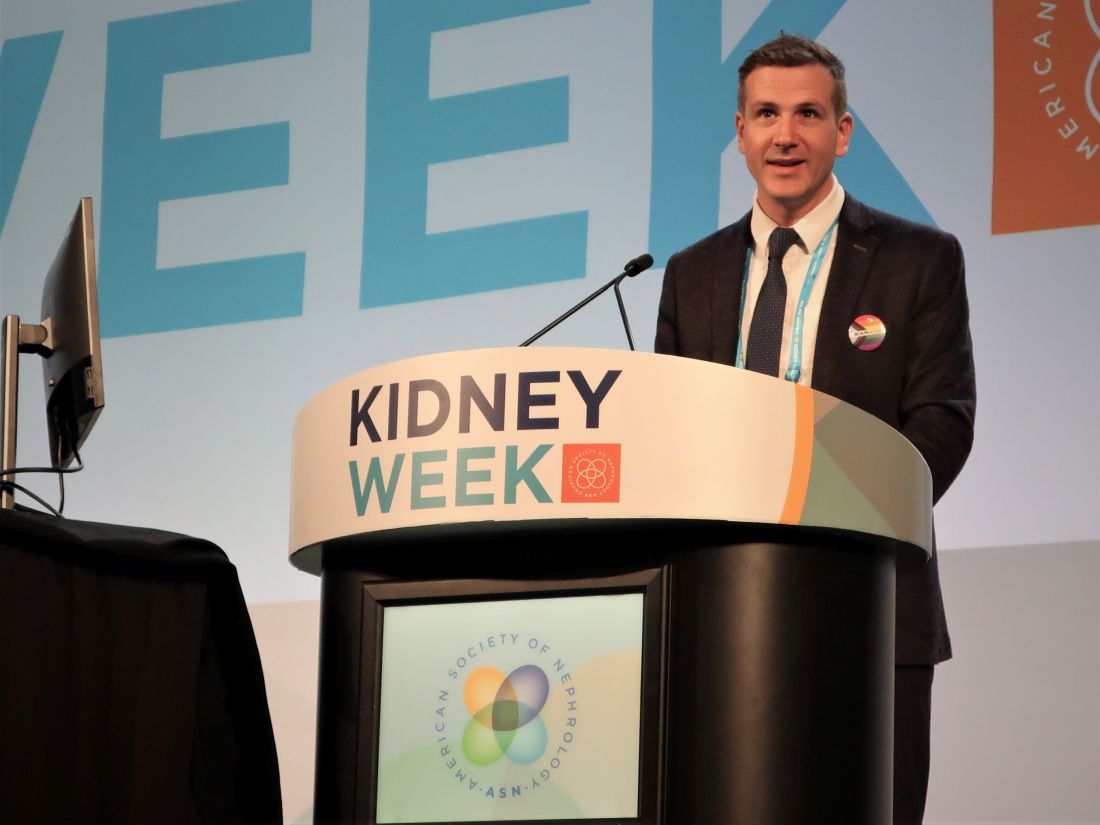
In addition, the study provides “limited evidence that these alerts change clinical practice,” said Dr. Wilson, a nephrologist and director of the clinical and translational research accelerator at Yale School of Medicine in New Haven, Conn.
“It was encouraging to get providers to change their behavior” by quickly stopping treatment with potentially nephrotoxic medications in patients with incident AKI. But the results also confirmed that “patient decision-support systems tend to not be panaceas,” Dr. Wilson explained in an interview. Instead, “they tend to marginally improve” patients’ clinical status.
“Our hope is that widespread use may make some difference on a population scale, but rarely are these game changers,” he admitted.
“This was a very nice study showing how we can leverage the EHR to look not only at drugs but also contrast agents to direct educational efforts aimed at clinicians about when to discontinue” these treatments, commented Karen A. Griffin, MD, who was not involved with the study.
A danger for alert fatigue
But the results also showed that more research is needed to better refine this approach, added Dr. Griffin, a professor at Loyola University Chicago, Maywood, Ill., and chief of the renal section at the Edward Hines Jr. VA Medical Center in Hines, Ill. And she expressed caution about expanding the alerts that clinicians receive “because of the potential for alert fatigue.”

Dr. Wilson also acknowledged the danger for alert fatigue. “We’re doing these studies to try to reduce the number of alerts,” he said. “Most clinicians say that if we could show an alert improves patient outcomes, they would embrace it.”
Dr. Wilson and associates designed their current study to evaluate an enhanced type of alert that not only warned clinicians that a patient had developed AKI but also gave them an option to potentially intervene by stopping treatment with a medication that could possibly exacerbate worsening renal function. This enhancement followed their experience in a 2021 study that tested a purely informational alert that gave physicians no guidance about what actions to take to more quickly resolve the AKI.
These findings plus results from other studies suggested that “purely informational alerts may not be enough. They need to be linked” to suggested changes in patient management, Dr. Wilson explained.
Targeting NSAIDS, RAAS inhibitors, and PPIs
The new study used automated EHR analysis to not only identify patients with incident AKI, but also to flag medications these patients were receiving from any of three classes suspected of worsening renal function: nonsteroidal anti-inflammatory drugs, renin-angiotensin-aldosterone system (RAAS) inhibitors (which include angiotensin-converting enzyme inhibitors and angiotensin receptor blockers), and proton-pump inhibitors (PPIs).
“Our hypothesis was that giving clinicians actionable advice could significantly improve patient outcomes,” Dr. Wilson said. “NSAIDs are frequently discontinued” in patients who develop AKI. “RAAS inhibitors are sometimes discontinued,” although the benefit from doing this remains unproven and controversial. “PPIs are rarely discontinued,” and may be an underappreciated contributor to AKI by causing interstitial nephritis in some patients.
The prospective study included 5,060 adults admitted with a diagnosis of stage 1 AKI at any of four Yale-affiliated teaching hospitals who were also taking agents from at least one of the three targeted drug classes at the time of admission. Clinicians caring for 2,532 of these patients received an alert about the AKI diagnosis and use of the questionable medications, while those caring for the 2,528 control patients received no alert and delivered usual care.
The study excluded patients with higher-risk profiles, including those with extremely elevated serum creatinine levels at admission (4.0 mg/dL or higher), those recently treated with dialysis, and patients with end-stage kidney disease.
The study had two primary outcomes. One measured the impact of the intervention on stopping the targeted drugs. The second assessed the clinical effect of the intervention on progression of AKI to a higher stage, need for dialysis, or death during either the duration of hospitalization or during the first 14 days following randomization.
Overall, a 9% relative increase in discontinuations
In general, the intervention had a modest but significant effect on cessation of the targeted drug classes within 24 hours of sending the alert.
Overall, there was about a 58% discontinuation rate among controls and about a 62% discontinuation rate among patients managed using the alerts, a significant 9% relative increase in any drug discontinuation, Dr. Wilson reported.
Discontinuations of NSAIDs occurred at the highest rate, in about 80% of patients in both groups, and the intervention showed no significant effect on stopping agents from this class. Discontinuations of RAAS inhibitors showed the largest absolute difference in between-group effect, about a 10–percentage point increase that represented a significant 14% relative increase in stopping agents from this class. Discontinuations of PPIs occurred at the lowest rate, in roughly 20% of patients, but the alert intervention had the greatest impact by raising the relative rate of stopping by a significant 26% compared with controls.
Analysis of the effect of the intervention on the combined clinical outcome showed a less robust impact. The alerts produced no significant change in the clinical outcome overall, or in the use of NSAIDs or RAAS inhibitors. However, the change in use of PPIs following the alerts significantly linked with a 12% relative drop in the incidence of the combined clinical endpoint of progression of AKI to a higher stage, need for dialysis, or death.
The results were consistent across several prespecified subgroups based on parameters such as age, sex, and race, but these analyses showed a signal that the alerts were most helpful for patients who had serum creatinine levels at admission of less than 0.5 mg/dL.
Dr. Wilson speculated that the alerts might have been especially effective for these patients because their low creatinine levels might otherwise mask AKI onset.
A safety analysis showed no evidence that the alert interventions and drug cessations increased the incidence of any complications.
PPIs may distinguish ‘sicker’ patients
Dr. Wilson cited two potential explanations for why the tested alerts appeared most effective for patients taking a PPI at the time of admission. One is that PPIs are underappreciated as a contributor to AKI, a possibility supported by the low rates of discontinuation in both the control and intervention groups.
In addition, treatment with a PPI may be a marker of “sicker” patients who may have more to gain from quicker identification of their AKI. For example, 28% of the patients who were taking a PPI at admission were in the ICU when they entered the study compared with a 14% rate of ICU care among everyone else.
PPIs were also the most-used targeted drug class among enrolled patients, used by 65% at baseline, compared with 53% who were taking a RAAS inhibitor and about 31% who were taking an NSAID. About 6% of enrolled patients were taking agents from all three classes at baseline, and 36% were on treatment with agents from two of the classes.
The next step is to assess adding more refinement to the alert process, Dr. Wilson said. He and his associates are now running a study in which an AKI alert goes to a “kidney action team” that includes a trained clinician and a pharmacist. The team would review the patient who triggered the alert and quickly make an individualized assessment of the best intervention for resolving the AKI.
The study received no commercial funding. Dr. Wilson has received research funding from AstraZeneca, Boehringer Ingelheim, Vifor, and Whoop. Dr. Griffin has reported no relevant financial relationships.
A version of this article first appeared on Medscape.com.
ORLANDO – Automated alerts sent to clinicians via patients’ electronic health records identified patients with diagnosable acute kidney injury (AKI) who were taking one or more medications that could potentially further worsen their renal function. This led to a significant increase in discontinuations of the problematic drugs and better clinical outcomes in a subgroup of patients in a new multicenter, randomized study with more than 5,000 participants.
“Automated alerts for AKI can increase the rate of cessation of potentially nephrotoxic medications without endangering patients,” said F. Perry Wilson, MD, at Kidney Week 2022, organized by the American Society of Nephrology.
In addition, the study provides “limited evidence that these alerts change clinical practice,” said Dr. Wilson, a nephrologist and director of the clinical and translational research accelerator at Yale School of Medicine in New Haven, Conn.
“It was encouraging to get providers to change their behavior” by quickly stopping treatment with potentially nephrotoxic medications in patients with incident AKI. But the results also confirmed that “patient decision-support systems tend to not be panaceas,” Dr. Wilson explained in an interview. Instead, “they tend to marginally improve” patients’ clinical status.
“Our hope is that widespread use may make some difference on a population scale, but rarely are these game changers,” he admitted.
“This was a very nice study showing how we can leverage the EHR to look not only at drugs but also contrast agents to direct educational efforts aimed at clinicians about when to discontinue” these treatments, commented Karen A. Griffin, MD, who was not involved with the study.
A danger for alert fatigue
But the results also showed that more research is needed to better refine this approach, added Dr. Griffin, a professor at Loyola University Chicago, Maywood, Ill., and chief of the renal section at the Edward Hines Jr. VA Medical Center in Hines, Ill. And she expressed caution about expanding the alerts that clinicians receive “because of the potential for alert fatigue.”
Dr. Wilson also acknowledged the danger for alert fatigue. “We’re doing these studies to try to reduce the number of alerts,” he said. “Most clinicians say that if we could show an alert improves patient outcomes, they would embrace it.”
Dr. Wilson and associates designed their current study to evaluate an enhanced type of alert that not only warned clinicians that a patient had developed AKI but also gave them an option to potentially intervene by stopping treatment with a medication that could possibly exacerbate worsening renal function. This enhancement followed their experience in a 2021 study that tested a purely informational alert that gave physicians no guidance about what actions to take to more quickly resolve the AKI.
These findings plus results from other studies suggested that “purely informational alerts may not be enough. They need to be linked” to suggested changes in patient management, Dr. Wilson explained.
Targeting NSAIDS, RAAS inhibitors, and PPIs
The new study used automated EHR analysis to not only identify patients with incident AKI, but also to flag medications these patients were receiving from any of three classes suspected of worsening renal function: nonsteroidal anti-inflammatory drugs, renin-angiotensin-aldosterone system (RAAS) inhibitors (which include angiotensin-converting enzyme inhibitors and angiotensin receptor blockers), and proton-pump inhibitors (PPIs).
“Our hypothesis was that giving clinicians actionable advice could significantly improve patient outcomes,” Dr. Wilson said. “NSAIDs are frequently discontinued” in patients who develop AKI. “RAAS inhibitors are sometimes discontinued,” although the benefit from doing this remains unproven and controversial. “PPIs are rarely discontinued,” and may be an underappreciated contributor to AKI by causing interstitial nephritis in some patients.
The prospective study included 5,060 adults admitted with a diagnosis of stage 1 AKI at any of four Yale-affiliated teaching hospitals who were also taking agents from at least one of the three targeted drug classes at the time of admission. Clinicians caring for 2,532 of these patients received an alert about the AKI diagnosis and use of the questionable medications, while those caring for the 2,528 control patients received no alert and delivered usual care.
The study excluded patients with higher-risk profiles, including those with extremely elevated serum creatinine levels at admission (4.0 mg/dL or higher), those recently treated with dialysis, and patients with end-stage kidney disease.
The study had two primary outcomes. One measured the impact of the intervention on stopping the targeted drugs. The second assessed the clinical effect of the intervention on progression of AKI to a higher stage, need for dialysis, or death during either the duration of hospitalization or during the first 14 days following randomization.
Overall, a 9% relative increase in discontinuations
In general, the intervention had a modest but significant effect on cessation of the targeted drug classes within 24 hours of sending the alert.
Overall, there was about a 58% discontinuation rate among controls and about a 62% discontinuation rate among patients managed using the alerts, a significant 9% relative increase in any drug discontinuation, Dr. Wilson reported.
Discontinuations of NSAIDs occurred at the highest rate, in about 80% of patients in both groups, and the intervention showed no significant effect on stopping agents from this class. Discontinuations of RAAS inhibitors showed the largest absolute difference in between-group effect, about a 10–percentage point increase that represented a significant 14% relative increase in stopping agents from this class. Discontinuations of PPIs occurred at the lowest rate, in roughly 20% of patients, but the alert intervention had the greatest impact by raising the relative rate of stopping by a significant 26% compared with controls.
Analysis of the effect of the intervention on the combined clinical outcome showed a less robust impact. The alerts produced no significant change in the clinical outcome overall, or in the use of NSAIDs or RAAS inhibitors. However, the change in use of PPIs following the alerts significantly linked with a 12% relative drop in the incidence of the combined clinical endpoint of progression of AKI to a higher stage, need for dialysis, or death.
The results were consistent across several prespecified subgroups based on parameters such as age, sex, and race, but these analyses showed a signal that the alerts were most helpful for patients who had serum creatinine levels at admission of less than 0.5 mg/dL.
Dr. Wilson speculated that the alerts might have been especially effective for these patients because their low creatinine levels might otherwise mask AKI onset.
A safety analysis showed no evidence that the alert interventions and drug cessations increased the incidence of any complications.
PPIs may distinguish ‘sicker’ patients
Dr. Wilson cited two potential explanations for why the tested alerts appeared most effective for patients taking a PPI at the time of admission. One is that PPIs are underappreciated as a contributor to AKI, a possibility supported by the low rates of discontinuation in both the control and intervention groups.
In addition, treatment with a PPI may be a marker of “sicker” patients who may have more to gain from quicker identification of their AKI. For example, 28% of the patients who were taking a PPI at admission were in the ICU when they entered the study compared with a 14% rate of ICU care among everyone else.
PPIs were also the most-used targeted drug class among enrolled patients, used by 65% at baseline, compared with 53% who were taking a RAAS inhibitor and about 31% who were taking an NSAID. About 6% of enrolled patients were taking agents from all three classes at baseline, and 36% were on treatment with agents from two of the classes.
The next step is to assess adding more refinement to the alert process, Dr. Wilson said. He and his associates are now running a study in which an AKI alert goes to a “kidney action team” that includes a trained clinician and a pharmacist. The team would review the patient who triggered the alert and quickly make an individualized assessment of the best intervention for resolving the AKI.
The study received no commercial funding. Dr. Wilson has received research funding from AstraZeneca, Boehringer Ingelheim, Vifor, and Whoop. Dr. Griffin has reported no relevant financial relationships.
A version of this article first appeared on Medscape.com.
ORLANDO – Automated alerts sent to clinicians via patients’ electronic health records identified patients with diagnosable acute kidney injury (AKI) who were taking one or more medications that could potentially further worsen their renal function. This led to a significant increase in discontinuations of the problematic drugs and better clinical outcomes in a subgroup of patients in a new multicenter, randomized study with more than 5,000 participants.
“Automated alerts for AKI can increase the rate of cessation of potentially nephrotoxic medications without endangering patients,” said F. Perry Wilson, MD, at Kidney Week 2022, organized by the American Society of Nephrology.
In addition, the study provides “limited evidence that these alerts change clinical practice,” said Dr. Wilson, a nephrologist and director of the clinical and translational research accelerator at Yale School of Medicine in New Haven, Conn.
“It was encouraging to get providers to change their behavior” by quickly stopping treatment with potentially nephrotoxic medications in patients with incident AKI. But the results also confirmed that “patient decision-support systems tend to not be panaceas,” Dr. Wilson explained in an interview. Instead, “they tend to marginally improve” patients’ clinical status.
“Our hope is that widespread use may make some difference on a population scale, but rarely are these game changers,” he admitted.
“This was a very nice study showing how we can leverage the EHR to look not only at drugs but also contrast agents to direct educational efforts aimed at clinicians about when to discontinue” these treatments, commented Karen A. Griffin, MD, who was not involved with the study.
A danger for alert fatigue
But the results also showed that more research is needed to better refine this approach, added Dr. Griffin, a professor at Loyola University Chicago, Maywood, Ill., and chief of the renal section at the Edward Hines Jr. VA Medical Center in Hines, Ill. And she expressed caution about expanding the alerts that clinicians receive “because of the potential for alert fatigue.”
Dr. Wilson also acknowledged the danger for alert fatigue. “We’re doing these studies to try to reduce the number of alerts,” he said. “Most clinicians say that if we could show an alert improves patient outcomes, they would embrace it.”
Dr. Wilson and associates designed their current study to evaluate an enhanced type of alert that not only warned clinicians that a patient had developed AKI but also gave them an option to potentially intervene by stopping treatment with a medication that could possibly exacerbate worsening renal function. This enhancement followed their experience in a 2021 study that tested a purely informational alert that gave physicians no guidance about what actions to take to more quickly resolve the AKI.
These findings plus results from other studies suggested that “purely informational alerts may not be enough. They need to be linked” to suggested changes in patient management, Dr. Wilson explained.
Targeting NSAIDS, RAAS inhibitors, and PPIs
The new study used automated EHR analysis to not only identify patients with incident AKI, but also to flag medications these patients were receiving from any of three classes suspected of worsening renal function: nonsteroidal anti-inflammatory drugs, renin-angiotensin-aldosterone system (RAAS) inhibitors (which include angiotensin-converting enzyme inhibitors and angiotensin receptor blockers), and proton-pump inhibitors (PPIs).
“Our hypothesis was that giving clinicians actionable advice could significantly improve patient outcomes,” Dr. Wilson said. “NSAIDs are frequently discontinued” in patients who develop AKI. “RAAS inhibitors are sometimes discontinued,” although the benefit from doing this remains unproven and controversial. “PPIs are rarely discontinued,” and may be an underappreciated contributor to AKI by causing interstitial nephritis in some patients.
The prospective study included 5,060 adults admitted with a diagnosis of stage 1 AKI at any of four Yale-affiliated teaching hospitals who were also taking agents from at least one of the three targeted drug classes at the time of admission. Clinicians caring for 2,532 of these patients received an alert about the AKI diagnosis and use of the questionable medications, while those caring for the 2,528 control patients received no alert and delivered usual care.
The study excluded patients with higher-risk profiles, including those with extremely elevated serum creatinine levels at admission (4.0 mg/dL or higher), those recently treated with dialysis, and patients with end-stage kidney disease.
The study had two primary outcomes. One measured the impact of the intervention on stopping the targeted drugs. The second assessed the clinical effect of the intervention on progression of AKI to a higher stage, need for dialysis, or death during either the duration of hospitalization or during the first 14 days following randomization.
Overall, a 9% relative increase in discontinuations
In general, the intervention had a modest but significant effect on cessation of the targeted drug classes within 24 hours of sending the alert.
Overall, there was about a 58% discontinuation rate among controls and about a 62% discontinuation rate among patients managed using the alerts, a significant 9% relative increase in any drug discontinuation, Dr. Wilson reported.
Discontinuations of NSAIDs occurred at the highest rate, in about 80% of patients in both groups, and the intervention showed no significant effect on stopping agents from this class. Discontinuations of RAAS inhibitors showed the largest absolute difference in between-group effect, about a 10–percentage point increase that represented a significant 14% relative increase in stopping agents from this class. Discontinuations of PPIs occurred at the lowest rate, in roughly 20% of patients, but the alert intervention had the greatest impact by raising the relative rate of stopping by a significant 26% compared with controls.
Analysis of the effect of the intervention on the combined clinical outcome showed a less robust impact. The alerts produced no significant change in the clinical outcome overall, or in the use of NSAIDs or RAAS inhibitors. However, the change in use of PPIs following the alerts significantly linked with a 12% relative drop in the incidence of the combined clinical endpoint of progression of AKI to a higher stage, need for dialysis, or death.
The results were consistent across several prespecified subgroups based on parameters such as age, sex, and race, but these analyses showed a signal that the alerts were most helpful for patients who had serum creatinine levels at admission of less than 0.5 mg/dL.
Dr. Wilson speculated that the alerts might have been especially effective for these patients because their low creatinine levels might otherwise mask AKI onset.
A safety analysis showed no evidence that the alert interventions and drug cessations increased the incidence of any complications.
PPIs may distinguish ‘sicker’ patients
Dr. Wilson cited two potential explanations for why the tested alerts appeared most effective for patients taking a PPI at the time of admission. One is that PPIs are underappreciated as a contributor to AKI, a possibility supported by the low rates of discontinuation in both the control and intervention groups.
In addition, treatment with a PPI may be a marker of “sicker” patients who may have more to gain from quicker identification of their AKI. For example, 28% of the patients who were taking a PPI at admission were in the ICU when they entered the study compared with a 14% rate of ICU care among everyone else.
PPIs were also the most-used targeted drug class among enrolled patients, used by 65% at baseline, compared with 53% who were taking a RAAS inhibitor and about 31% who were taking an NSAID. About 6% of enrolled patients were taking agents from all three classes at baseline, and 36% were on treatment with agents from two of the classes.
The next step is to assess adding more refinement to the alert process, Dr. Wilson said. He and his associates are now running a study in which an AKI alert goes to a “kidney action team” that includes a trained clinician and a pharmacist. The team would review the patient who triggered the alert and quickly make an individualized assessment of the best intervention for resolving the AKI.
The study received no commercial funding. Dr. Wilson has received research funding from AstraZeneca, Boehringer Ingelheim, Vifor, and Whoop. Dr. Griffin has reported no relevant financial relationships.
A version of this article first appeared on Medscape.com.
AT KIDNEY WEEK 2022
Dialysis not always best option in advanced kidney disease
ORLANDO – , new research shows.
“Patients mostly start dialysis because of unpleasant symptoms that cause suffering, including high potassium levels and high levels of uremic toxins in the blood,” senior author Kamyar Kalantar-Zadeh, MD, PhD, MPH, told this news organization.
“Conservative management serves to address and manage these symptoms and levels of toxicities without dialysis, so conservative management is an alternative approach, and patients should always be given a choice between [the two],” stressed Dr. Kalantar-Zadeh, professor of medicine at the University of California, Irvine.
The results were presented during the annual meeting of the American Society of Nephrology.
“There has been growing recognition of the importance of conservative nondialytic management as an alternative patient-centered treatment strategy for advanced kidney disease. However, conservative management remains under-utilized in the United States, which may in part be due to uncertainties regarding which patients will most benefit from dialysis versus nondialytic treatment,” said first author Connie Rhee, MD, also of the University of California, Irvine.
“We hope that these findings and further research can help inform treatment options for patients, care partners, and providers in the shared decision-making process of conservative management versus dialysis,” added Dr. Rhee, in a press release from the American Society of Nephrology.
Asked for comment, Sarah Davison, MD, noted that part of the Society’s strategy is, in fact, to promote conservative kidney management (CKM) as a key component of integrated care for patients with kidney failure. Dr. Davison is professor of medicine and chair of the International Society Working Group for Kidney Supportive Care and Conservative Kidney Management.
“We’ve recognized for a long time that there are many patients for whom dialysis provides neither a survival advantage nor a quality of life advantage,” she told this news organization.
“These patients tend to be those who have multiple morbidities, who are more frail, and who tend to be older, and in fact, the patients can live as long, if not longer, with better symptom management and better quality of life by not being on dialysis,” she stressed.
Study details
In the study, using data from the Optum Labs Data Warehouse, patients with advanced CKD were categorized according to whether or not they received conservative management, defined as those who did not receive dialysis within 2 years of the index eGFR (first eGFR < 25 mL/min/1.73m2) versus receipt of dialysis parsed as late versus early dialysis transition (eGFR < 15 vs. ≥ 15 mL/min/1.73m2 at dialysis initiation).
Hospitalization rates were compared between those treated with conservative management, compared with late or early dialysis.
“Among 309,188 advanced CKD patients who met eligibility [criteria], 55% of patients had greater than or equal to 1 hospitalization(s) within 2 years of the index eGFR,” the authors report. The most common causes of hospitalization among all patients were congestive heart failure, respiratory symptoms, or hypertension.
In most racial groups (non-Hispanic White, non-Hispanic Black, and Hispanic patients), patients on dialysis had higher hospitalization rates than those who received conservative management, and patients who started dialysis early (transitioned to dialysis at higher levels of kidney function) demonstrated the highest rates across all age groups, compared with those who started dialysis late (transitioned to dialysis at lower levels of kidney function) or were treated with conservative management.
Among Asian patients, those on dialysis also had higher hospitalization rates than those receiving conservative management, but patients who started dialysis late had higher rates than those on early dialysis, especially in older age groups, possibly because they were sicker, Dr. Kalantar-Zadeh suggested.
Conservative care has pros and cons, but Canada has embraced it
As Dr. Kalantar-Zadeh explained, conservative management has its pros and cons, compared with dialysis. “Conservative management requires that patients work with the multidisciplinary team including nephrologists, nutritionists, and others to try to manage CKD without dialysis, so it requires patient participation.”
On the other hand, dialysis is both easier and more lucrative than conservative management, at least for nephrologists, as they are well-trained in dialysis care, and it can be systematically applied. As to which patients with CKD might be optimal candidates for conservative management, Dr. Kalantar-Zadeh agreed this requires further study.
But he acknowledged that most nephrologists are not hugely supportive of conservative management because they are less well-trained in it, and it is more time-consuming. The one promising change is a new model introduced in 2022, a value-based kidney care model, that, if implemented, will be more incentivizing for nephrologists to offer conservative care more widely.
Dr. Davison meanwhile believes the “vast majority” of nephrologists based in Canada – as she is – are “highly supportive” of CKM as an important modality.
“The challenge, however, is that many nephrologists remain unsure as to how to best deliver or optimize all aspects of CKM, whether that is symptom management, advanced care planning, or how they must manage symptoms to align with a patient’s goals,” Dr. Davison explained.
“But it’s not that they do not believe in the value of CKM.”
Indeed, in her province, Alberta, nephrologists have been offering CKM for decades, and while they are currently standardizing care to make it easier to deliver, there is no financial incentive to offer dialysis over CKM.
“We are now seeing those elements of kidney supportive care as part of core competencies to manage any person with chronic illness, including CKD,” Dr. Davison said.
“So it’s absolutely doable, and contrary to one of the myths about CKM, it is not more time-consuming than dialysis – not when you know how to do it. You are just shifting your focus,” she emphasized.
The study was funded by the National Institute of Diabetes and Digestive and Kidney Diseases. Dr. Kalantar-Zadeh has reported receiving honoraria and medical directorship fees from Fresenius and DaVita. Dr. Davison has reported no relevant financial relationships.
A version of this article first appeared on Medscape.com.
ORLANDO – , new research shows.
“Patients mostly start dialysis because of unpleasant symptoms that cause suffering, including high potassium levels and high levels of uremic toxins in the blood,” senior author Kamyar Kalantar-Zadeh, MD, PhD, MPH, told this news organization.
“Conservative management serves to address and manage these symptoms and levels of toxicities without dialysis, so conservative management is an alternative approach, and patients should always be given a choice between [the two],” stressed Dr. Kalantar-Zadeh, professor of medicine at the University of California, Irvine.
The results were presented during the annual meeting of the American Society of Nephrology.
“There has been growing recognition of the importance of conservative nondialytic management as an alternative patient-centered treatment strategy for advanced kidney disease. However, conservative management remains under-utilized in the United States, which may in part be due to uncertainties regarding which patients will most benefit from dialysis versus nondialytic treatment,” said first author Connie Rhee, MD, also of the University of California, Irvine.
“We hope that these findings and further research can help inform treatment options for patients, care partners, and providers in the shared decision-making process of conservative management versus dialysis,” added Dr. Rhee, in a press release from the American Society of Nephrology.
Asked for comment, Sarah Davison, MD, noted that part of the Society’s strategy is, in fact, to promote conservative kidney management (CKM) as a key component of integrated care for patients with kidney failure. Dr. Davison is professor of medicine and chair of the International Society Working Group for Kidney Supportive Care and Conservative Kidney Management.
“We’ve recognized for a long time that there are many patients for whom dialysis provides neither a survival advantage nor a quality of life advantage,” she told this news organization.
“These patients tend to be those who have multiple morbidities, who are more frail, and who tend to be older, and in fact, the patients can live as long, if not longer, with better symptom management and better quality of life by not being on dialysis,” she stressed.
Study details
In the study, using data from the Optum Labs Data Warehouse, patients with advanced CKD were categorized according to whether or not they received conservative management, defined as those who did not receive dialysis within 2 years of the index eGFR (first eGFR < 25 mL/min/1.73m2) versus receipt of dialysis parsed as late versus early dialysis transition (eGFR < 15 vs. ≥ 15 mL/min/1.73m2 at dialysis initiation).
Hospitalization rates were compared between those treated with conservative management, compared with late or early dialysis.
“Among 309,188 advanced CKD patients who met eligibility [criteria], 55% of patients had greater than or equal to 1 hospitalization(s) within 2 years of the index eGFR,” the authors report. The most common causes of hospitalization among all patients were congestive heart failure, respiratory symptoms, or hypertension.
In most racial groups (non-Hispanic White, non-Hispanic Black, and Hispanic patients), patients on dialysis had higher hospitalization rates than those who received conservative management, and patients who started dialysis early (transitioned to dialysis at higher levels of kidney function) demonstrated the highest rates across all age groups, compared with those who started dialysis late (transitioned to dialysis at lower levels of kidney function) or were treated with conservative management.
Among Asian patients, those on dialysis also had higher hospitalization rates than those receiving conservative management, but patients who started dialysis late had higher rates than those on early dialysis, especially in older age groups, possibly because they were sicker, Dr. Kalantar-Zadeh suggested.
Conservative care has pros and cons, but Canada has embraced it
As Dr. Kalantar-Zadeh explained, conservative management has its pros and cons, compared with dialysis. “Conservative management requires that patients work with the multidisciplinary team including nephrologists, nutritionists, and others to try to manage CKD without dialysis, so it requires patient participation.”
On the other hand, dialysis is both easier and more lucrative than conservative management, at least for nephrologists, as they are well-trained in dialysis care, and it can be systematically applied. As to which patients with CKD might be optimal candidates for conservative management, Dr. Kalantar-Zadeh agreed this requires further study.
But he acknowledged that most nephrologists are not hugely supportive of conservative management because they are less well-trained in it, and it is more time-consuming. The one promising change is a new model introduced in 2022, a value-based kidney care model, that, if implemented, will be more incentivizing for nephrologists to offer conservative care more widely.
Dr. Davison meanwhile believes the “vast majority” of nephrologists based in Canada – as she is – are “highly supportive” of CKM as an important modality.
“The challenge, however, is that many nephrologists remain unsure as to how to best deliver or optimize all aspects of CKM, whether that is symptom management, advanced care planning, or how they must manage symptoms to align with a patient’s goals,” Dr. Davison explained.
“But it’s not that they do not believe in the value of CKM.”
Indeed, in her province, Alberta, nephrologists have been offering CKM for decades, and while they are currently standardizing care to make it easier to deliver, there is no financial incentive to offer dialysis over CKM.
“We are now seeing those elements of kidney supportive care as part of core competencies to manage any person with chronic illness, including CKD,” Dr. Davison said.
“So it’s absolutely doable, and contrary to one of the myths about CKM, it is not more time-consuming than dialysis – not when you know how to do it. You are just shifting your focus,” she emphasized.
The study was funded by the National Institute of Diabetes and Digestive and Kidney Diseases. Dr. Kalantar-Zadeh has reported receiving honoraria and medical directorship fees from Fresenius and DaVita. Dr. Davison has reported no relevant financial relationships.
A version of this article first appeared on Medscape.com.
ORLANDO – , new research shows.
“Patients mostly start dialysis because of unpleasant symptoms that cause suffering, including high potassium levels and high levels of uremic toxins in the blood,” senior author Kamyar Kalantar-Zadeh, MD, PhD, MPH, told this news organization.
“Conservative management serves to address and manage these symptoms and levels of toxicities without dialysis, so conservative management is an alternative approach, and patients should always be given a choice between [the two],” stressed Dr. Kalantar-Zadeh, professor of medicine at the University of California, Irvine.
The results were presented during the annual meeting of the American Society of Nephrology.
“There has been growing recognition of the importance of conservative nondialytic management as an alternative patient-centered treatment strategy for advanced kidney disease. However, conservative management remains under-utilized in the United States, which may in part be due to uncertainties regarding which patients will most benefit from dialysis versus nondialytic treatment,” said first author Connie Rhee, MD, also of the University of California, Irvine.
“We hope that these findings and further research can help inform treatment options for patients, care partners, and providers in the shared decision-making process of conservative management versus dialysis,” added Dr. Rhee, in a press release from the American Society of Nephrology.
Asked for comment, Sarah Davison, MD, noted that part of the Society’s strategy is, in fact, to promote conservative kidney management (CKM) as a key component of integrated care for patients with kidney failure. Dr. Davison is professor of medicine and chair of the International Society Working Group for Kidney Supportive Care and Conservative Kidney Management.
“We’ve recognized for a long time that there are many patients for whom dialysis provides neither a survival advantage nor a quality of life advantage,” she told this news organization.
“These patients tend to be those who have multiple morbidities, who are more frail, and who tend to be older, and in fact, the patients can live as long, if not longer, with better symptom management and better quality of life by not being on dialysis,” she stressed.
Study details
In the study, using data from the Optum Labs Data Warehouse, patients with advanced CKD were categorized according to whether or not they received conservative management, defined as those who did not receive dialysis within 2 years of the index eGFR (first eGFR < 25 mL/min/1.73m2) versus receipt of dialysis parsed as late versus early dialysis transition (eGFR < 15 vs. ≥ 15 mL/min/1.73m2 at dialysis initiation).
Hospitalization rates were compared between those treated with conservative management, compared with late or early dialysis.
“Among 309,188 advanced CKD patients who met eligibility [criteria], 55% of patients had greater than or equal to 1 hospitalization(s) within 2 years of the index eGFR,” the authors report. The most common causes of hospitalization among all patients were congestive heart failure, respiratory symptoms, or hypertension.
In most racial groups (non-Hispanic White, non-Hispanic Black, and Hispanic patients), patients on dialysis had higher hospitalization rates than those who received conservative management, and patients who started dialysis early (transitioned to dialysis at higher levels of kidney function) demonstrated the highest rates across all age groups, compared with those who started dialysis late (transitioned to dialysis at lower levels of kidney function) or were treated with conservative management.
Among Asian patients, those on dialysis also had higher hospitalization rates than those receiving conservative management, but patients who started dialysis late had higher rates than those on early dialysis, especially in older age groups, possibly because they were sicker, Dr. Kalantar-Zadeh suggested.
Conservative care has pros and cons, but Canada has embraced it
As Dr. Kalantar-Zadeh explained, conservative management has its pros and cons, compared with dialysis. “Conservative management requires that patients work with the multidisciplinary team including nephrologists, nutritionists, and others to try to manage CKD without dialysis, so it requires patient participation.”
On the other hand, dialysis is both easier and more lucrative than conservative management, at least for nephrologists, as they are well-trained in dialysis care, and it can be systematically applied. As to which patients with CKD might be optimal candidates for conservative management, Dr. Kalantar-Zadeh agreed this requires further study.
But he acknowledged that most nephrologists are not hugely supportive of conservative management because they are less well-trained in it, and it is more time-consuming. The one promising change is a new model introduced in 2022, a value-based kidney care model, that, if implemented, will be more incentivizing for nephrologists to offer conservative care more widely.
Dr. Davison meanwhile believes the “vast majority” of nephrologists based in Canada – as she is – are “highly supportive” of CKM as an important modality.
“The challenge, however, is that many nephrologists remain unsure as to how to best deliver or optimize all aspects of CKM, whether that is symptom management, advanced care planning, or how they must manage symptoms to align with a patient’s goals,” Dr. Davison explained.
“But it’s not that they do not believe in the value of CKM.”
Indeed, in her province, Alberta, nephrologists have been offering CKM for decades, and while they are currently standardizing care to make it easier to deliver, there is no financial incentive to offer dialysis over CKM.
“We are now seeing those elements of kidney supportive care as part of core competencies to manage any person with chronic illness, including CKD,” Dr. Davison said.
“So it’s absolutely doable, and contrary to one of the myths about CKM, it is not more time-consuming than dialysis – not when you know how to do it. You are just shifting your focus,” she emphasized.
The study was funded by the National Institute of Diabetes and Digestive and Kidney Diseases. Dr. Kalantar-Zadeh has reported receiving honoraria and medical directorship fees from Fresenius and DaVita. Dr. Davison has reported no relevant financial relationships.
A version of this article first appeared on Medscape.com.
AT KIDNEY WEEK 2022
Promising new antibiotic emerges for treating UTIs
A new antibiotic for urinary tract infections is heading toward government approval.
It would be the first new treatment in 20 years for UTIs, which affect more than half of women at least sometime in their lives, according to data compiled by the Department of Health and Human Services.
Called Gepotidacin, the antibiotic’s trial has halted enrollment early due to excellent effectiveness and safety results thus far, drugmaker GSK announced in a press release Nov. 3. GSK will seek approval and peer-reviewed publication early next year.
There is a need for new antibiotics such as this because of increasing antibiotic resistance. Antibiotic resistance to bacteria has become so prevalent that the World Health Organization recently began publishing a list of bacteria that pose the greatest public health threats.
“It’s definitely a big deal,” Cindy Liu, MD, MPH, PhD, of the Antibiotic Resistance Action Center at George Washington University, told CNN.
However, antibiotics are not a particularly profitable type of drug, The Wall Street Journal reported. The newspaper noted that they need to be used sparingly to limit resistance, and the cheapest option is usually prescribed. Some small companies that make antibiotics have even gone bankrupt recently, the Journal noted.
The U.S. government has invested in GSK’s development of Gepotidacin. The company predicts the drug could be a “blockbuster” and earn more than $1 billion due to UTI resistance to other drugs, the Journal reported.
“I think it will be really interesting and important to the field to see both how the drug companies sort of market this product and sort of how it does,” Dr. Liu said.
A version of this article first appeared on Medscape.com.
A new antibiotic for urinary tract infections is heading toward government approval.
It would be the first new treatment in 20 years for UTIs, which affect more than half of women at least sometime in their lives, according to data compiled by the Department of Health and Human Services.
Called Gepotidacin, the antibiotic’s trial has halted enrollment early due to excellent effectiveness and safety results thus far, drugmaker GSK announced in a press release Nov. 3. GSK will seek approval and peer-reviewed publication early next year.
There is a need for new antibiotics such as this because of increasing antibiotic resistance. Antibiotic resistance to bacteria has become so prevalent that the World Health Organization recently began publishing a list of bacteria that pose the greatest public health threats.
“It’s definitely a big deal,” Cindy Liu, MD, MPH, PhD, of the Antibiotic Resistance Action Center at George Washington University, told CNN.
However, antibiotics are not a particularly profitable type of drug, The Wall Street Journal reported. The newspaper noted that they need to be used sparingly to limit resistance, and the cheapest option is usually prescribed. Some small companies that make antibiotics have even gone bankrupt recently, the Journal noted.
The U.S. government has invested in GSK’s development of Gepotidacin. The company predicts the drug could be a “blockbuster” and earn more than $1 billion due to UTI resistance to other drugs, the Journal reported.
“I think it will be really interesting and important to the field to see both how the drug companies sort of market this product and sort of how it does,” Dr. Liu said.
A version of this article first appeared on Medscape.com.
A new antibiotic for urinary tract infections is heading toward government approval.
It would be the first new treatment in 20 years for UTIs, which affect more than half of women at least sometime in their lives, according to data compiled by the Department of Health and Human Services.
Called Gepotidacin, the antibiotic’s trial has halted enrollment early due to excellent effectiveness and safety results thus far, drugmaker GSK announced in a press release Nov. 3. GSK will seek approval and peer-reviewed publication early next year.
There is a need for new antibiotics such as this because of increasing antibiotic resistance. Antibiotic resistance to bacteria has become so prevalent that the World Health Organization recently began publishing a list of bacteria that pose the greatest public health threats.
“It’s definitely a big deal,” Cindy Liu, MD, MPH, PhD, of the Antibiotic Resistance Action Center at George Washington University, told CNN.
However, antibiotics are not a particularly profitable type of drug, The Wall Street Journal reported. The newspaper noted that they need to be used sparingly to limit resistance, and the cheapest option is usually prescribed. Some small companies that make antibiotics have even gone bankrupt recently, the Journal noted.
The U.S. government has invested in GSK’s development of Gepotidacin. The company predicts the drug could be a “blockbuster” and earn more than $1 billion due to UTI resistance to other drugs, the Journal reported.
“I think it will be really interesting and important to the field to see both how the drug companies sort of market this product and sort of how it does,” Dr. Liu said.
A version of this article first appeared on Medscape.com.
Study sheds new light on RAS inhibitors’ role for advanced CKD
ORLANDO – Treatment with a renin-angiotensin system (RAS) inhibitor is widely accepted as standard practice for slowing progression of chronic kidney disease (CKD), but data have been inconsistent as to whether there is benefit to continuing RAS inhibition when patients develop advanced CKD, defined as an estimated glomerular filtration rate (eGFR) of less than 30 mL/min per 1.73 m2.
Now, in STOP ACEi, a new multicenter, randomized trial of 411 patients, , for 3 years.
People who continued RAS inhibitor treatment did not develop a significant or clinically relevant decrease in eGFR, the study’s primary outcome, both overall as well as in several prespecified subgroups compared with those who discontinued treatment, said Sunil Bhandari, MBChB, PhD, and associates, who presented the research in a poster at the annual meeting of the American Society of Nephrology.
“I hope these results will reassure clinicians to continue ACE inhibitors or ARBs” in patients with advanced CKD, “with their known beneficial cardiovascular effects,” Dr. Bhandari said in an interview.
The results were simultaneously published in the New England Journal of Medicine.
Similar eGFR levels after 3 years
While it’s clear that in patients with mild or moderate CKD, treatment with a RAS inhibitor, which includes angiotensin-converting enzyme (ACE) inhibitors and angiotensin-receptor blockers (ARBs), reduces blood pressure, slows decline in eGFR, reduces proteinuria, and delays progression to advanced CKD, there has been little evidence that the use of RAS inhibitors benefits patients with advanced CKD.
Data from previous trials have been inconsistent regarding whether the use of RAS inhibitors is nephroprotective in patients with advanced CKD, say Dr. Bhandari, a nephrologist and professor at Hull York Medical School, Hull, England, and colleagues.
“Current guidelines do not provide specific advice on whether to continue or stop ACE inhibitors or ARBs for advanced chronic kidney disease,” they also note.
And so they decided to assess whether discontinuation of ACE inhibitors/ARBs could slow progression of CKD in patients with advanced CKD.
Three years after 206 study participants stopped RAS inhibitor treatment, the least-squares mean eGFR was 12.6 mL/min per 1.73m2 in the discontinuation group and 13.3 mL/min per 1.73 m2 in the 205 patients in the continuation group, a difference that was not significant.
In addition to the primary outcome, 62% of patients who stopped RAS inhibitor treatment and 56% of those who continued developed end-stage kidney disease or required renal-replacement therapy, which translated into an adjusted hazard ratio of 1.28 for this outcome among those who discontinued compared with those who continued, which was just short of significance (95% CI, 0.99-1.65).
The two study groups also showed no significant differences in the 3-year incidence of hospitalization for any reason, cardiovascular events, or deaths. The two groups also showed no meaningful differences in various domains of quality of life and no differences in serious adverse effects.
Participants had an eGFR less than 30 mL/min per 1.73 m2
The study ran at 39 United Kingdom centers in 2014-2019. Investigators enrolled adults with an eGFR of less than 30 mL/min per 1.73 m2 who were not on dialysis and had not received a kidney transplant. In addition, all enrolled patients had to have an annual drop in eGFR of more than 2 mL/min per 1.73 m2 during the prior 2 years and had to have been on treatment with at least one RAS inhibitor for more than 6 months.
The randomization protocol insured balanced distribution of subjects between the two study arms by age, eGFR, presence of diabetes, and level of proteinuria, among other factors. The study design also mandated that participants maintain a blood pressure of no more than 140/85 mm Hg.
Those who discontinued RAS-inhibitor treatment could receive any guideline-recommended antihypertensive agent that was not a RAS inhibitor, although adding a RAS inhibitor was permitted as a last treatment resort.
People in the maintenance group could receive whichever additional antihypertensive agents their treating clinicians deemed necessary for maintaining the target blood pressure.
The enrolled population was a median age of 63 years old and 68% were men. Their average eGFR at baseline was 18 mL/min per 1.73 m2, and 118 (29%) had an eGFR of less than 15 mL/min per 1.73 m2. Their median level of proteinuria was 115 mg/mmol (about 1,018 mg/g). Diabetes was prevalent in 37%, and 58% of participants were taking at least three antihypertensive medications at entry.
Among the study’s limitations, the researchers cited the open-label design, which may have affected clinical care and the tally of subjective endpoints, including quality of life and exercise capacity. Also, because the study enrolled people who were on a RAS inhibitor at the time of randomization, it did not include anyone who had already discontinued these agents.
Continue RAS inhibitors in advanced CKD for best outcomes
Dr. Bhandari and colleagues note that in a large observational trial published in January 2021, Swedish researchers found an increase in the incidence of major cardiovascular events and death among patients with advanced CKD who had discontinued RAS inhibitors.
But they observe, “Our trial did not have sufficient power to investigate the effect of the discontinuation of RAS inhibitors on cardiovascular events or mortality. However, because our findings are consistent with a lack of advantage for such discontinuation with respect to kidney function, there is little rationale to conduct a larger randomized trial to investigate cardiovascular safety.”
“Our findings do not support the hypothesis that the discontinuation of RAS inhibitors in patients with advanced and progressive chronic kidney disease would improve kidney function, quality of life, or exercise capacity.”
“The results of this trial will inform future clinical practice worldwide and guideline recommendations,” they conclude.
STOP ACEi received no commercial funding. Dr. Bhandari has reported no relevant financial relationships.
A version of this article first appeared on Medscape.com.
ORLANDO – Treatment with a renin-angiotensin system (RAS) inhibitor is widely accepted as standard practice for slowing progression of chronic kidney disease (CKD), but data have been inconsistent as to whether there is benefit to continuing RAS inhibition when patients develop advanced CKD, defined as an estimated glomerular filtration rate (eGFR) of less than 30 mL/min per 1.73 m2.
Now, in STOP ACEi, a new multicenter, randomized trial of 411 patients, , for 3 years.
People who continued RAS inhibitor treatment did not develop a significant or clinically relevant decrease in eGFR, the study’s primary outcome, both overall as well as in several prespecified subgroups compared with those who discontinued treatment, said Sunil Bhandari, MBChB, PhD, and associates, who presented the research in a poster at the annual meeting of the American Society of Nephrology.
“I hope these results will reassure clinicians to continue ACE inhibitors or ARBs” in patients with advanced CKD, “with their known beneficial cardiovascular effects,” Dr. Bhandari said in an interview.
The results were simultaneously published in the New England Journal of Medicine.
Similar eGFR levels after 3 years
While it’s clear that in patients with mild or moderate CKD, treatment with a RAS inhibitor, which includes angiotensin-converting enzyme (ACE) inhibitors and angiotensin-receptor blockers (ARBs), reduces blood pressure, slows decline in eGFR, reduces proteinuria, and delays progression to advanced CKD, there has been little evidence that the use of RAS inhibitors benefits patients with advanced CKD.
Data from previous trials have been inconsistent regarding whether the use of RAS inhibitors is nephroprotective in patients with advanced CKD, say Dr. Bhandari, a nephrologist and professor at Hull York Medical School, Hull, England, and colleagues.
“Current guidelines do not provide specific advice on whether to continue or stop ACE inhibitors or ARBs for advanced chronic kidney disease,” they also note.
And so they decided to assess whether discontinuation of ACE inhibitors/ARBs could slow progression of CKD in patients with advanced CKD.
Three years after 206 study participants stopped RAS inhibitor treatment, the least-squares mean eGFR was 12.6 mL/min per 1.73m2 in the discontinuation group and 13.3 mL/min per 1.73 m2 in the 205 patients in the continuation group, a difference that was not significant.
In addition to the primary outcome, 62% of patients who stopped RAS inhibitor treatment and 56% of those who continued developed end-stage kidney disease or required renal-replacement therapy, which translated into an adjusted hazard ratio of 1.28 for this outcome among those who discontinued compared with those who continued, which was just short of significance (95% CI, 0.99-1.65).
The two study groups also showed no significant differences in the 3-year incidence of hospitalization for any reason, cardiovascular events, or deaths. The two groups also showed no meaningful differences in various domains of quality of life and no differences in serious adverse effects.
Participants had an eGFR less than 30 mL/min per 1.73 m2
The study ran at 39 United Kingdom centers in 2014-2019. Investigators enrolled adults with an eGFR of less than 30 mL/min per 1.73 m2 who were not on dialysis and had not received a kidney transplant. In addition, all enrolled patients had to have an annual drop in eGFR of more than 2 mL/min per 1.73 m2 during the prior 2 years and had to have been on treatment with at least one RAS inhibitor for more than 6 months.
The randomization protocol insured balanced distribution of subjects between the two study arms by age, eGFR, presence of diabetes, and level of proteinuria, among other factors. The study design also mandated that participants maintain a blood pressure of no more than 140/85 mm Hg.
Those who discontinued RAS-inhibitor treatment could receive any guideline-recommended antihypertensive agent that was not a RAS inhibitor, although adding a RAS inhibitor was permitted as a last treatment resort.
People in the maintenance group could receive whichever additional antihypertensive agents their treating clinicians deemed necessary for maintaining the target blood pressure.
The enrolled population was a median age of 63 years old and 68% were men. Their average eGFR at baseline was 18 mL/min per 1.73 m2, and 118 (29%) had an eGFR of less than 15 mL/min per 1.73 m2. Their median level of proteinuria was 115 mg/mmol (about 1,018 mg/g). Diabetes was prevalent in 37%, and 58% of participants were taking at least three antihypertensive medications at entry.
Among the study’s limitations, the researchers cited the open-label design, which may have affected clinical care and the tally of subjective endpoints, including quality of life and exercise capacity. Also, because the study enrolled people who were on a RAS inhibitor at the time of randomization, it did not include anyone who had already discontinued these agents.
Continue RAS inhibitors in advanced CKD for best outcomes
Dr. Bhandari and colleagues note that in a large observational trial published in January 2021, Swedish researchers found an increase in the incidence of major cardiovascular events and death among patients with advanced CKD who had discontinued RAS inhibitors.
But they observe, “Our trial did not have sufficient power to investigate the effect of the discontinuation of RAS inhibitors on cardiovascular events or mortality. However, because our findings are consistent with a lack of advantage for such discontinuation with respect to kidney function, there is little rationale to conduct a larger randomized trial to investigate cardiovascular safety.”
“Our findings do not support the hypothesis that the discontinuation of RAS inhibitors in patients with advanced and progressive chronic kidney disease would improve kidney function, quality of life, or exercise capacity.”
“The results of this trial will inform future clinical practice worldwide and guideline recommendations,” they conclude.
STOP ACEi received no commercial funding. Dr. Bhandari has reported no relevant financial relationships.
A version of this article first appeared on Medscape.com.
ORLANDO – Treatment with a renin-angiotensin system (RAS) inhibitor is widely accepted as standard practice for slowing progression of chronic kidney disease (CKD), but data have been inconsistent as to whether there is benefit to continuing RAS inhibition when patients develop advanced CKD, defined as an estimated glomerular filtration rate (eGFR) of less than 30 mL/min per 1.73 m2.
Now, in STOP ACEi, a new multicenter, randomized trial of 411 patients, , for 3 years.
People who continued RAS inhibitor treatment did not develop a significant or clinically relevant decrease in eGFR, the study’s primary outcome, both overall as well as in several prespecified subgroups compared with those who discontinued treatment, said Sunil Bhandari, MBChB, PhD, and associates, who presented the research in a poster at the annual meeting of the American Society of Nephrology.
“I hope these results will reassure clinicians to continue ACE inhibitors or ARBs” in patients with advanced CKD, “with their known beneficial cardiovascular effects,” Dr. Bhandari said in an interview.
The results were simultaneously published in the New England Journal of Medicine.
Similar eGFR levels after 3 years
While it’s clear that in patients with mild or moderate CKD, treatment with a RAS inhibitor, which includes angiotensin-converting enzyme (ACE) inhibitors and angiotensin-receptor blockers (ARBs), reduces blood pressure, slows decline in eGFR, reduces proteinuria, and delays progression to advanced CKD, there has been little evidence that the use of RAS inhibitors benefits patients with advanced CKD.
Data from previous trials have been inconsistent regarding whether the use of RAS inhibitors is nephroprotective in patients with advanced CKD, say Dr. Bhandari, a nephrologist and professor at Hull York Medical School, Hull, England, and colleagues.
“Current guidelines do not provide specific advice on whether to continue or stop ACE inhibitors or ARBs for advanced chronic kidney disease,” they also note.
And so they decided to assess whether discontinuation of ACE inhibitors/ARBs could slow progression of CKD in patients with advanced CKD.
Three years after 206 study participants stopped RAS inhibitor treatment, the least-squares mean eGFR was 12.6 mL/min per 1.73m2 in the discontinuation group and 13.3 mL/min per 1.73 m2 in the 205 patients in the continuation group, a difference that was not significant.
In addition to the primary outcome, 62% of patients who stopped RAS inhibitor treatment and 56% of those who continued developed end-stage kidney disease or required renal-replacement therapy, which translated into an adjusted hazard ratio of 1.28 for this outcome among those who discontinued compared with those who continued, which was just short of significance (95% CI, 0.99-1.65).
The two study groups also showed no significant differences in the 3-year incidence of hospitalization for any reason, cardiovascular events, or deaths. The two groups also showed no meaningful differences in various domains of quality of life and no differences in serious adverse effects.
Participants had an eGFR less than 30 mL/min per 1.73 m2
The study ran at 39 United Kingdom centers in 2014-2019. Investigators enrolled adults with an eGFR of less than 30 mL/min per 1.73 m2 who were not on dialysis and had not received a kidney transplant. In addition, all enrolled patients had to have an annual drop in eGFR of more than 2 mL/min per 1.73 m2 during the prior 2 years and had to have been on treatment with at least one RAS inhibitor for more than 6 months.
The randomization protocol insured balanced distribution of subjects between the two study arms by age, eGFR, presence of diabetes, and level of proteinuria, among other factors. The study design also mandated that participants maintain a blood pressure of no more than 140/85 mm Hg.
Those who discontinued RAS-inhibitor treatment could receive any guideline-recommended antihypertensive agent that was not a RAS inhibitor, although adding a RAS inhibitor was permitted as a last treatment resort.
People in the maintenance group could receive whichever additional antihypertensive agents their treating clinicians deemed necessary for maintaining the target blood pressure.
The enrolled population was a median age of 63 years old and 68% were men. Their average eGFR at baseline was 18 mL/min per 1.73 m2, and 118 (29%) had an eGFR of less than 15 mL/min per 1.73 m2. Their median level of proteinuria was 115 mg/mmol (about 1,018 mg/g). Diabetes was prevalent in 37%, and 58% of participants were taking at least three antihypertensive medications at entry.
Among the study’s limitations, the researchers cited the open-label design, which may have affected clinical care and the tally of subjective endpoints, including quality of life and exercise capacity. Also, because the study enrolled people who were on a RAS inhibitor at the time of randomization, it did not include anyone who had already discontinued these agents.
Continue RAS inhibitors in advanced CKD for best outcomes
Dr. Bhandari and colleagues note that in a large observational trial published in January 2021, Swedish researchers found an increase in the incidence of major cardiovascular events and death among patients with advanced CKD who had discontinued RAS inhibitors.
But they observe, “Our trial did not have sufficient power to investigate the effect of the discontinuation of RAS inhibitors on cardiovascular events or mortality. However, because our findings are consistent with a lack of advantage for such discontinuation with respect to kidney function, there is little rationale to conduct a larger randomized trial to investigate cardiovascular safety.”
“Our findings do not support the hypothesis that the discontinuation of RAS inhibitors in patients with advanced and progressive chronic kidney disease would improve kidney function, quality of life, or exercise capacity.”
“The results of this trial will inform future clinical practice worldwide and guideline recommendations,” they conclude.
STOP ACEi received no commercial funding. Dr. Bhandari has reported no relevant financial relationships.
A version of this article first appeared on Medscape.com.
AT KIDNEY WEEK 2022
Moving the needle: SGLT2 inhibitor role for isolated kidney disease
ORLANDO – in a pivotal trial with more than 6,600 patients.
This confirms the efficacy for this population that was previously seen with dapagliflozin, another agent from the same class, in the DAPA-CKD trial.
In the new trial, EMPA-Kidney, treatment with empagliflozin 10 mg daily for a median of 2.0 years led to a significant 28% relative risk reduction in the primary combined endpoint in comparison with placebo, William G. Herrington, MD, reported at the annual meeting of the American Society of Nephrology.
The results were simultaneously published in the New England Journal of Medicine.
In 2020, a different team of researchers running DAPA-CKD reported that during a median of 2.4 years, treatment of 4,304 patients with dapagliflozin 10 mg daily resulted in a significant 39% relative risk reduction, compared with placebo for an identical combined primary endpoint. Enrollment criteria for the DAPA-CKD trial were mostly similar to that of the current trial.
‘Remarkably similar’ findings
Results from EMPA-Kidney and DAPA-CKD are “remarkably similar,” said Dr. Herrington during a press briefing at the meeting.
He also noted that when the EMPA-Kidney study began – before results from DAPA-CKD were known – “we never imagined such a large effect” on important endpoints in people with CKD.
In addition to cardiovascular death, the combined primary endpoint included the incidence of renal death, incident end-stage kidney disease, a sustained decrease in estimated glomerular filtration rate to less than 10 mL/min per 1.73m2, or a sustained decrease in eGFR of at least 40% from baseline.
Having similar evidence from both trials “will hopefully provide people with the confidence to start to use SGLT2 inhibitors as standard care in people with CKD” who match enrollment criteria of the two trials, added Dr. Herrington, a nephrologist at the University of Oxford (England).
The analyses he reported also showed that empagliflozin had similar efficacy for the primary endpoint regardless of whether patients had type 2 diabetes at the time of enrollment and regardless of their eGFR at entry.
To enter EMPA-Kidney, people needed to have either an eGFR of 20-44 mL/min per 1.73m2 with no minimum level of albuminuria or an eGFR of 45-89 mL/min per 1.73m2 with a urine albumin-to-creatinine ratio (UACR) of at least 200 mg/g.
In contrast, to enroll in DAPA-CKD, patients had to have a UACR of at least 200 mg/g. This means that for the first time, EMPA-Kidney produced data on the relationship between albuminuria severity and the impact of treatment with an SGLT2 inhibitor in the enrolled population.
A signal of greater efficacy with higher UACR
A total of 6,609 patients underwent randomization in EMPA-Kidney. During a median of 2.0 years of follow-up, the primary endpoint – progression of kidney disease or death from cardiovascular causes – occurred in 432 of 3,304 patients (13.1%) in the empagliflozin group and in 558 of 3,305 patients (16.9%) in the placebo group (hazard ratio, 0.72; P < .001).
The results “suggested that the effects [of empagliflozin] are greater in patients with higher levels of albuminuria, with statistically significant heterogeneity between this subgroup and those with a UACR of less than 200 mg/g (P = .02),” Dr. Herrington said.
Of the study population, 54% had no evidence of diabetes at enrollment.
Having data from a second large trial of an SGLT2 inhibitor that included people with isolated CKD who did not have diabetes or heart failure “will start to move the needle” on using this class of drugs in these types of patients, commented F. Perry Wilson, MD, a nephrologist at Yale University, New Haven, Conn.
On the basis of the DAPA-CKD results, in April 2021 the Food and Drug Administration expanded dapagliflozin’s indications to include CKD, yet, “a lot of nephrologists consider SGLT2 inhibitors to be agents for people with diabetes or heart failure, and they defer prescribing them to endocrinologists and cardiologists,” Dr. Wilson said in an interview.
‘Flozinators’ rising
But Pascale H. Lane, MD, a pediatric nephrologist at the University of Oklahoma Health Sciences Center, Oklahoma City, commented that many nephrologists she knows have been prescribing dapagliflozin “widely” to their patients with CKD.
“I know many adult nephrologists who use it almost universally now,” Dr. Lane said. “They call themselves ‘flozinators.’ ”
EMPA-Kidney was sponsored by Boehringer Ingelheim, the company that along with Lilly markets empagliflozin (Jardiance). Dr. Herrington, Dr. Wilson, and Dr. Lane disclosed no relevant financial relationships.
A version of this article first appeared on Medscape.com.
ORLANDO – in a pivotal trial with more than 6,600 patients.
This confirms the efficacy for this population that was previously seen with dapagliflozin, another agent from the same class, in the DAPA-CKD trial.
In the new trial, EMPA-Kidney, treatment with empagliflozin 10 mg daily for a median of 2.0 years led to a significant 28% relative risk reduction in the primary combined endpoint in comparison with placebo, William G. Herrington, MD, reported at the annual meeting of the American Society of Nephrology.
The results were simultaneously published in the New England Journal of Medicine.
In 2020, a different team of researchers running DAPA-CKD reported that during a median of 2.4 years, treatment of 4,304 patients with dapagliflozin 10 mg daily resulted in a significant 39% relative risk reduction, compared with placebo for an identical combined primary endpoint. Enrollment criteria for the DAPA-CKD trial were mostly similar to that of the current trial.
‘Remarkably similar’ findings
Results from EMPA-Kidney and DAPA-CKD are “remarkably similar,” said Dr. Herrington during a press briefing at the meeting.
He also noted that when the EMPA-Kidney study began – before results from DAPA-CKD were known – “we never imagined such a large effect” on important endpoints in people with CKD.
In addition to cardiovascular death, the combined primary endpoint included the incidence of renal death, incident end-stage kidney disease, a sustained decrease in estimated glomerular filtration rate to less than 10 mL/min per 1.73m2, or a sustained decrease in eGFR of at least 40% from baseline.
Having similar evidence from both trials “will hopefully provide people with the confidence to start to use SGLT2 inhibitors as standard care in people with CKD” who match enrollment criteria of the two trials, added Dr. Herrington, a nephrologist at the University of Oxford (England).
The analyses he reported also showed that empagliflozin had similar efficacy for the primary endpoint regardless of whether patients had type 2 diabetes at the time of enrollment and regardless of their eGFR at entry.
To enter EMPA-Kidney, people needed to have either an eGFR of 20-44 mL/min per 1.73m2 with no minimum level of albuminuria or an eGFR of 45-89 mL/min per 1.73m2 with a urine albumin-to-creatinine ratio (UACR) of at least 200 mg/g.
In contrast, to enroll in DAPA-CKD, patients had to have a UACR of at least 200 mg/g. This means that for the first time, EMPA-Kidney produced data on the relationship between albuminuria severity and the impact of treatment with an SGLT2 inhibitor in the enrolled population.
A signal of greater efficacy with higher UACR
A total of 6,609 patients underwent randomization in EMPA-Kidney. During a median of 2.0 years of follow-up, the primary endpoint – progression of kidney disease or death from cardiovascular causes – occurred in 432 of 3,304 patients (13.1%) in the empagliflozin group and in 558 of 3,305 patients (16.9%) in the placebo group (hazard ratio, 0.72; P < .001).
The results “suggested that the effects [of empagliflozin] are greater in patients with higher levels of albuminuria, with statistically significant heterogeneity between this subgroup and those with a UACR of less than 200 mg/g (P = .02),” Dr. Herrington said.
Of the study population, 54% had no evidence of diabetes at enrollment.
Having data from a second large trial of an SGLT2 inhibitor that included people with isolated CKD who did not have diabetes or heart failure “will start to move the needle” on using this class of drugs in these types of patients, commented F. Perry Wilson, MD, a nephrologist at Yale University, New Haven, Conn.
On the basis of the DAPA-CKD results, in April 2021 the Food and Drug Administration expanded dapagliflozin’s indications to include CKD, yet, “a lot of nephrologists consider SGLT2 inhibitors to be agents for people with diabetes or heart failure, and they defer prescribing them to endocrinologists and cardiologists,” Dr. Wilson said in an interview.
‘Flozinators’ rising
But Pascale H. Lane, MD, a pediatric nephrologist at the University of Oklahoma Health Sciences Center, Oklahoma City, commented that many nephrologists she knows have been prescribing dapagliflozin “widely” to their patients with CKD.
“I know many adult nephrologists who use it almost universally now,” Dr. Lane said. “They call themselves ‘flozinators.’ ”
EMPA-Kidney was sponsored by Boehringer Ingelheim, the company that along with Lilly markets empagliflozin (Jardiance). Dr. Herrington, Dr. Wilson, and Dr. Lane disclosed no relevant financial relationships.
A version of this article first appeared on Medscape.com.
ORLANDO – in a pivotal trial with more than 6,600 patients.
This confirms the efficacy for this population that was previously seen with dapagliflozin, another agent from the same class, in the DAPA-CKD trial.
In the new trial, EMPA-Kidney, treatment with empagliflozin 10 mg daily for a median of 2.0 years led to a significant 28% relative risk reduction in the primary combined endpoint in comparison with placebo, William G. Herrington, MD, reported at the annual meeting of the American Society of Nephrology.
The results were simultaneously published in the New England Journal of Medicine.
In 2020, a different team of researchers running DAPA-CKD reported that during a median of 2.4 years, treatment of 4,304 patients with dapagliflozin 10 mg daily resulted in a significant 39% relative risk reduction, compared with placebo for an identical combined primary endpoint. Enrollment criteria for the DAPA-CKD trial were mostly similar to that of the current trial.
‘Remarkably similar’ findings
Results from EMPA-Kidney and DAPA-CKD are “remarkably similar,” said Dr. Herrington during a press briefing at the meeting.
He also noted that when the EMPA-Kidney study began – before results from DAPA-CKD were known – “we never imagined such a large effect” on important endpoints in people with CKD.
In addition to cardiovascular death, the combined primary endpoint included the incidence of renal death, incident end-stage kidney disease, a sustained decrease in estimated glomerular filtration rate to less than 10 mL/min per 1.73m2, or a sustained decrease in eGFR of at least 40% from baseline.
Having similar evidence from both trials “will hopefully provide people with the confidence to start to use SGLT2 inhibitors as standard care in people with CKD” who match enrollment criteria of the two trials, added Dr. Herrington, a nephrologist at the University of Oxford (England).
The analyses he reported also showed that empagliflozin had similar efficacy for the primary endpoint regardless of whether patients had type 2 diabetes at the time of enrollment and regardless of their eGFR at entry.
To enter EMPA-Kidney, people needed to have either an eGFR of 20-44 mL/min per 1.73m2 with no minimum level of albuminuria or an eGFR of 45-89 mL/min per 1.73m2 with a urine albumin-to-creatinine ratio (UACR) of at least 200 mg/g.
In contrast, to enroll in DAPA-CKD, patients had to have a UACR of at least 200 mg/g. This means that for the first time, EMPA-Kidney produced data on the relationship between albuminuria severity and the impact of treatment with an SGLT2 inhibitor in the enrolled population.
A signal of greater efficacy with higher UACR
A total of 6,609 patients underwent randomization in EMPA-Kidney. During a median of 2.0 years of follow-up, the primary endpoint – progression of kidney disease or death from cardiovascular causes – occurred in 432 of 3,304 patients (13.1%) in the empagliflozin group and in 558 of 3,305 patients (16.9%) in the placebo group (hazard ratio, 0.72; P < .001).
The results “suggested that the effects [of empagliflozin] are greater in patients with higher levels of albuminuria, with statistically significant heterogeneity between this subgroup and those with a UACR of less than 200 mg/g (P = .02),” Dr. Herrington said.
Of the study population, 54% had no evidence of diabetes at enrollment.
Having data from a second large trial of an SGLT2 inhibitor that included people with isolated CKD who did not have diabetes or heart failure “will start to move the needle” on using this class of drugs in these types of patients, commented F. Perry Wilson, MD, a nephrologist at Yale University, New Haven, Conn.
On the basis of the DAPA-CKD results, in April 2021 the Food and Drug Administration expanded dapagliflozin’s indications to include CKD, yet, “a lot of nephrologists consider SGLT2 inhibitors to be agents for people with diabetes or heart failure, and they defer prescribing them to endocrinologists and cardiologists,” Dr. Wilson said in an interview.
‘Flozinators’ rising
But Pascale H. Lane, MD, a pediatric nephrologist at the University of Oklahoma Health Sciences Center, Oklahoma City, commented that many nephrologists she knows have been prescribing dapagliflozin “widely” to their patients with CKD.
“I know many adult nephrologists who use it almost universally now,” Dr. Lane said. “They call themselves ‘flozinators.’ ”
EMPA-Kidney was sponsored by Boehringer Ingelheim, the company that along with Lilly markets empagliflozin (Jardiance). Dr. Herrington, Dr. Wilson, and Dr. Lane disclosed no relevant financial relationships.
A version of this article first appeared on Medscape.com.
AT KIDNEY WEEK 2022
Kidney function may help docs pick antiplatelet mix after stroke
Renal function should be considered when determining whether to pick ticagrelor-aspirin or clopidogrel-aspirin as the antiplatelet therapy for patients with minor stroke, according to new research.
The study, which was conducted in 202 centers in China and published in Annals of Internal Medicine, indicates that when patients had normal kidney function, ticagrelor-aspirin, compared with clopidogrel-aspirin, substantially reduced the risk for recurrent stroke within 90 days of follow-up.
However, this effect was not seen in patients with mildly, moderately or severely decreased kidney function.
Rates of severe or moderate bleeding did not differ substantially between the two treatments.
Results gleaned from CHANCE-2 data
The researchers, led by Anxin Wang, PhD, from Capital Medical University in Beijing, conducted a post hoc analysis of the CHANCE-2 (Clopidogrel in High-Risk Patients with Acute Nondisabling Cerebrovascular Events-II) trial.
The trial included 6,378 patients who carried cytochrome P450 2C19 (CYP2C19) loss-of-function (LOF) alleles who had experienced a minor stroke or transient ischemic attack.
Patients received either ticagrelor-aspirin or clopidogrel-aspirin, and their renal function was measured by estimated glomerular filtration rate. The authors listed as a limitation that no data were available on the presence of albuminuria or proteinuria.
The researchers investigated what effect renal function had on the efficacy and safety of the therapies.
Differences in the therapies
Clopidogrel-aspirin is often recommended for preventing stroke. It can reduce thrombotic risk in patients with impaired kidney function, the authors noted. Ticagrelor can provide greater, faster, and more consistent P2Y12 inhibition than clopidogrel, and evidence shows it is effective in preventing stroke recurrence, particularly in people carrying CYP2C19 LOF alleles.
When people have reduced kidney function, clopidogrel may be harder to clear than ticagrelor and there may be increased plasma concentrations, so function is important to consider when choosing an antiplatelet therapy, the authors wrote.
Choice may come down to cost
Geoffrey Barnes, MD, MSc, associate professor of vascular and cardiovascular medicine at University of Michigan Medicine in Ann Arbor, said in an interview that there has been momentum toward ticagrelor as a more potent choice than clopidogrel not just in populations with minor stroke but for people with MI and coronary stents.
He said he found the results surprising and was intrigued that this paper suggests looking more skeptically at ticagrelor when kidney function is impaired.
Still, the choice may also come down to what the patient can afford at the pharmacy, he said.
“The reality is many patients still get clopidogrel either because that’s what their physicians have been prescribing for well over a decade or because of cost issues, and clopidogrel, for many patients, can be less expensive,” Dr. Barnes noted.
He said he would like to see more study in different populations as the prevalence of people carrying CYP2C19 allele differs by race and results might be different in a non-Asian population. That allele is thought to affect how clopidogrel is metabolized.
Study should spur more research
Nada El Husseini, MD, associate professor of neurology and Duke Telestroke Medical Director at Duke University Medical Center, Durham, N.C., said the study is hypothesis generating, but shouldn’t be thought of as the last word on the subject.
She pointed out some additional limitations of the study, including that it was a post hoc analysis. She explained that the question researchers asked in this study – about effect of kidney function on the safety and efficacy of the therapies – was not the focus of the original CHANCE-2 study, and, as such, the post hoc study may have been underpowered to answer the renal function question.
The authors acknowledged that limitation, noting that “the proportion of patients with severely decreased renal function was low.”
Among 6,378 patients, 4,050 (63.5%) had normal kidney function, 2,010 (31.5%) had mildly decreased function, and 318 (5.0%) had moderately to severely decreased function.
The study was funded by the Ministry of Science and Technology of the People’s Republic of China, the Beijing Municipal Science and Technology Commission, the Chinese Stroke Association, the National Science and Technology Major Project and the Beijing Municipal Administration of Hospitals Incubating Program). Salubris Pharmaceuticals contributed ticagrelor and, clopidogrel at no cost and with no restrictions. Dr. Wang reported no relevant financial relationships. Dr. Barnes and Dr. El Husseini reported no relevant financial relationships.
Renal function should be considered when determining whether to pick ticagrelor-aspirin or clopidogrel-aspirin as the antiplatelet therapy for patients with minor stroke, according to new research.
The study, which was conducted in 202 centers in China and published in Annals of Internal Medicine, indicates that when patients had normal kidney function, ticagrelor-aspirin, compared with clopidogrel-aspirin, substantially reduced the risk for recurrent stroke within 90 days of follow-up.
However, this effect was not seen in patients with mildly, moderately or severely decreased kidney function.
Rates of severe or moderate bleeding did not differ substantially between the two treatments.
Results gleaned from CHANCE-2 data
The researchers, led by Anxin Wang, PhD, from Capital Medical University in Beijing, conducted a post hoc analysis of the CHANCE-2 (Clopidogrel in High-Risk Patients with Acute Nondisabling Cerebrovascular Events-II) trial.
The trial included 6,378 patients who carried cytochrome P450 2C19 (CYP2C19) loss-of-function (LOF) alleles who had experienced a minor stroke or transient ischemic attack.
Patients received either ticagrelor-aspirin or clopidogrel-aspirin, and their renal function was measured by estimated glomerular filtration rate. The authors listed as a limitation that no data were available on the presence of albuminuria or proteinuria.
The researchers investigated what effect renal function had on the efficacy and safety of the therapies.
Differences in the therapies
Clopidogrel-aspirin is often recommended for preventing stroke. It can reduce thrombotic risk in patients with impaired kidney function, the authors noted. Ticagrelor can provide greater, faster, and more consistent P2Y12 inhibition than clopidogrel, and evidence shows it is effective in preventing stroke recurrence, particularly in people carrying CYP2C19 LOF alleles.
When people have reduced kidney function, clopidogrel may be harder to clear than ticagrelor and there may be increased plasma concentrations, so function is important to consider when choosing an antiplatelet therapy, the authors wrote.
Choice may come down to cost
Geoffrey Barnes, MD, MSc, associate professor of vascular and cardiovascular medicine at University of Michigan Medicine in Ann Arbor, said in an interview that there has been momentum toward ticagrelor as a more potent choice than clopidogrel not just in populations with minor stroke but for people with MI and coronary stents.
He said he found the results surprising and was intrigued that this paper suggests looking more skeptically at ticagrelor when kidney function is impaired.
Still, the choice may also come down to what the patient can afford at the pharmacy, he said.
“The reality is many patients still get clopidogrel either because that’s what their physicians have been prescribing for well over a decade or because of cost issues, and clopidogrel, for many patients, can be less expensive,” Dr. Barnes noted.
He said he would like to see more study in different populations as the prevalence of people carrying CYP2C19 allele differs by race and results might be different in a non-Asian population. That allele is thought to affect how clopidogrel is metabolized.
Study should spur more research
Nada El Husseini, MD, associate professor of neurology and Duke Telestroke Medical Director at Duke University Medical Center, Durham, N.C., said the study is hypothesis generating, but shouldn’t be thought of as the last word on the subject.
She pointed out some additional limitations of the study, including that it was a post hoc analysis. She explained that the question researchers asked in this study – about effect of kidney function on the safety and efficacy of the therapies – was not the focus of the original CHANCE-2 study, and, as such, the post hoc study may have been underpowered to answer the renal function question.
The authors acknowledged that limitation, noting that “the proportion of patients with severely decreased renal function was low.”
Among 6,378 patients, 4,050 (63.5%) had normal kidney function, 2,010 (31.5%) had mildly decreased function, and 318 (5.0%) had moderately to severely decreased function.
The study was funded by the Ministry of Science and Technology of the People’s Republic of China, the Beijing Municipal Science and Technology Commission, the Chinese Stroke Association, the National Science and Technology Major Project and the Beijing Municipal Administration of Hospitals Incubating Program). Salubris Pharmaceuticals contributed ticagrelor and, clopidogrel at no cost and with no restrictions. Dr. Wang reported no relevant financial relationships. Dr. Barnes and Dr. El Husseini reported no relevant financial relationships.
Renal function should be considered when determining whether to pick ticagrelor-aspirin or clopidogrel-aspirin as the antiplatelet therapy for patients with minor stroke, according to new research.
The study, which was conducted in 202 centers in China and published in Annals of Internal Medicine, indicates that when patients had normal kidney function, ticagrelor-aspirin, compared with clopidogrel-aspirin, substantially reduced the risk for recurrent stroke within 90 days of follow-up.
However, this effect was not seen in patients with mildly, moderately or severely decreased kidney function.
Rates of severe or moderate bleeding did not differ substantially between the two treatments.
Results gleaned from CHANCE-2 data
The researchers, led by Anxin Wang, PhD, from Capital Medical University in Beijing, conducted a post hoc analysis of the CHANCE-2 (Clopidogrel in High-Risk Patients with Acute Nondisabling Cerebrovascular Events-II) trial.
The trial included 6,378 patients who carried cytochrome P450 2C19 (CYP2C19) loss-of-function (LOF) alleles who had experienced a minor stroke or transient ischemic attack.
Patients received either ticagrelor-aspirin or clopidogrel-aspirin, and their renal function was measured by estimated glomerular filtration rate. The authors listed as a limitation that no data were available on the presence of albuminuria or proteinuria.
The researchers investigated what effect renal function had on the efficacy and safety of the therapies.
Differences in the therapies
Clopidogrel-aspirin is often recommended for preventing stroke. It can reduce thrombotic risk in patients with impaired kidney function, the authors noted. Ticagrelor can provide greater, faster, and more consistent P2Y12 inhibition than clopidogrel, and evidence shows it is effective in preventing stroke recurrence, particularly in people carrying CYP2C19 LOF alleles.
When people have reduced kidney function, clopidogrel may be harder to clear than ticagrelor and there may be increased plasma concentrations, so function is important to consider when choosing an antiplatelet therapy, the authors wrote.
Choice may come down to cost
Geoffrey Barnes, MD, MSc, associate professor of vascular and cardiovascular medicine at University of Michigan Medicine in Ann Arbor, said in an interview that there has been momentum toward ticagrelor as a more potent choice than clopidogrel not just in populations with minor stroke but for people with MI and coronary stents.
He said he found the results surprising and was intrigued that this paper suggests looking more skeptically at ticagrelor when kidney function is impaired.
Still, the choice may also come down to what the patient can afford at the pharmacy, he said.
“The reality is many patients still get clopidogrel either because that’s what their physicians have been prescribing for well over a decade or because of cost issues, and clopidogrel, for many patients, can be less expensive,” Dr. Barnes noted.
He said he would like to see more study in different populations as the prevalence of people carrying CYP2C19 allele differs by race and results might be different in a non-Asian population. That allele is thought to affect how clopidogrel is metabolized.
Study should spur more research
Nada El Husseini, MD, associate professor of neurology and Duke Telestroke Medical Director at Duke University Medical Center, Durham, N.C., said the study is hypothesis generating, but shouldn’t be thought of as the last word on the subject.
She pointed out some additional limitations of the study, including that it was a post hoc analysis. She explained that the question researchers asked in this study – about effect of kidney function on the safety and efficacy of the therapies – was not the focus of the original CHANCE-2 study, and, as such, the post hoc study may have been underpowered to answer the renal function question.
The authors acknowledged that limitation, noting that “the proportion of patients with severely decreased renal function was low.”
Among 6,378 patients, 4,050 (63.5%) had normal kidney function, 2,010 (31.5%) had mildly decreased function, and 318 (5.0%) had moderately to severely decreased function.
The study was funded by the Ministry of Science and Technology of the People’s Republic of China, the Beijing Municipal Science and Technology Commission, the Chinese Stroke Association, the National Science and Technology Major Project and the Beijing Municipal Administration of Hospitals Incubating Program). Salubris Pharmaceuticals contributed ticagrelor and, clopidogrel at no cost and with no restrictions. Dr. Wang reported no relevant financial relationships. Dr. Barnes and Dr. El Husseini reported no relevant financial relationships.
FROM ANNALS OF INTERNAL MEDICINE
Terlipressin decreases need for renal replacement therapy in liver transplant recipients
In a subgroup of patients with hepatorenal syndrome type 1 (HRS) who received a liver transplant, terlipressin treatment appears to reduce the need for renal replacement therapy (RRT) through 12 months of follow-up, according to a study presented at the annual meeting of the American College of Gastroenterology.
Among transplant recipients, overall 12-month survival was 11% higher for those treated with terlipressin compared with placebo, said K. Rajender Reddy, MD, director of hepatology and medical director of liver transplantation at the University of Pennsylvania, Philadelphia.
“Hepatorenal syndrome type 1 is a potentially reversible form of acute kidney injury that occurs in the setting of end-stage liver disease,” he said.
Liver transplantation, which eliminates end-stage liver disease, is the only definitive treatment for HRS. However, renal replacement therapy is common and associated with poor clinical outcomes and low patient survival rates in both the pretransplant and posttransplant settings, he noted.
Terlipressin, an injectable synthetic vasopressin analogue, restores renal blood flow and reverses HRS in 20%-40% of patients, Dr. Reddy said. In September, the U.S. Food and Drug Administration approved terlipressin (Terlivaz) for patients with HRS type 1. The label has a boxed warning for serious or fatal respiratory failure.
The safety and efficacy were assessed in the phase 3 CONFIRM trial, which Dr. Reddy and colleagues previously published. The randomized, placebo-controlled study demonstrated that terlipressin reversed HRS and reduced the need for RRT through day 30. The reversal of HRS with terlipressin did not improve 90-day survival as compared with placebo, which researchers attributed to a higher death rate within 90 days after the first dose despite improved kidney function.
A closer look at the liver transplant patients
In the subgroup analysis of the CONFIRM study, Dr. Reddy and colleagues analyzed the clinical outcomes through 12 months of follow-up in patients with HRS who received a liver transplant. They looked at the incidence of verified HRS reversal, HRS reversal, need for RRT, and overall survival.
Verified HRS reversal was defined as two consecutive serum creatinine measurements of 1.5 mg/dL or less at least 2 hours apart up to day 14 and survival without RRT for at least 10 days. HRS reversal was defined as a serum creatinine level of 1.5 mg/dL or less while on treatment. In addition, the need for RRT and overall survival were assessed at days 30, 60, 90, 180, and 365.
RRT was defined as any procedure that replaced nonendocrine kidney function, including continuous hemofiltration and hemodialysis, intermittent hemodialysis, peritoneal dialysis, ultrafiltration, or other dialysis and filtration techniques.
In the CONFIRM study, 199 patients with HRS were treated with terlipressin plus albumin, and 101 patients were treated with placebo plus albumin for up to 14 days. In the terlipressin group, 46 patients received liver transplants within the first 2 months of the study, as did 29 in the placebo group. Two patients in the terlipressin group and one in the placebo group received a simultaneous liver-kidney transplant.
Meaningful clinical outcomes
In the 12-month follow-up subgroup analysis, verified HRS reversal was statistically comparable between the groups, with a 30% decrease in the terlipressin group and 17% decrease in the placebo group, Dr. Reddy reported.
HRS reversal was higher in the terlipressin group, at 37%, as compared with 14% in the placebo group.
The pretransplant need for RRT was lower in the terlipressin group, at 30%, as compared with 62% in the placebo group. The posttransplant need for RRT remained numerically lower in the terlipressin group at all time points and was significantly lower at day 180 and day 365.
Overall survival for transplant recipients in the terlipressin group was 94%, as compared with 83% in the placebo group. Posttreatment adverse events and severe adverse events were similar between the groups.
“Collectively, these data indicate that terlipressin treatment in patients with HRS led to better long-term clinical outcomes in those who received a liver transplant,” Dr. Reddy said.
The study was funded by Mallinckrodt Pharmaceuticals, which manufactures terlipressin. One author is an employee of Mallinckrodt, and the other authors have served in an advisory role or received grant support from Mallinckrodt. The authors also disclosed consultant roles and research support from several other pharmaceutical companies.
In a subgroup of patients with hepatorenal syndrome type 1 (HRS) who received a liver transplant, terlipressin treatment appears to reduce the need for renal replacement therapy (RRT) through 12 months of follow-up, according to a study presented at the annual meeting of the American College of Gastroenterology.
Among transplant recipients, overall 12-month survival was 11% higher for those treated with terlipressin compared with placebo, said K. Rajender Reddy, MD, director of hepatology and medical director of liver transplantation at the University of Pennsylvania, Philadelphia.
“Hepatorenal syndrome type 1 is a potentially reversible form of acute kidney injury that occurs in the setting of end-stage liver disease,” he said.
Liver transplantation, which eliminates end-stage liver disease, is the only definitive treatment for HRS. However, renal replacement therapy is common and associated with poor clinical outcomes and low patient survival rates in both the pretransplant and posttransplant settings, he noted.
Terlipressin, an injectable synthetic vasopressin analogue, restores renal blood flow and reverses HRS in 20%-40% of patients, Dr. Reddy said. In September, the U.S. Food and Drug Administration approved terlipressin (Terlivaz) for patients with HRS type 1. The label has a boxed warning for serious or fatal respiratory failure.
The safety and efficacy were assessed in the phase 3 CONFIRM trial, which Dr. Reddy and colleagues previously published. The randomized, placebo-controlled study demonstrated that terlipressin reversed HRS and reduced the need for RRT through day 30. The reversal of HRS with terlipressin did not improve 90-day survival as compared with placebo, which researchers attributed to a higher death rate within 90 days after the first dose despite improved kidney function.
A closer look at the liver transplant patients
In the subgroup analysis of the CONFIRM study, Dr. Reddy and colleagues analyzed the clinical outcomes through 12 months of follow-up in patients with HRS who received a liver transplant. They looked at the incidence of verified HRS reversal, HRS reversal, need for RRT, and overall survival.
Verified HRS reversal was defined as two consecutive serum creatinine measurements of 1.5 mg/dL or less at least 2 hours apart up to day 14 and survival without RRT for at least 10 days. HRS reversal was defined as a serum creatinine level of 1.5 mg/dL or less while on treatment. In addition, the need for RRT and overall survival were assessed at days 30, 60, 90, 180, and 365.
RRT was defined as any procedure that replaced nonendocrine kidney function, including continuous hemofiltration and hemodialysis, intermittent hemodialysis, peritoneal dialysis, ultrafiltration, or other dialysis and filtration techniques.
In the CONFIRM study, 199 patients with HRS were treated with terlipressin plus albumin, and 101 patients were treated with placebo plus albumin for up to 14 days. In the terlipressin group, 46 patients received liver transplants within the first 2 months of the study, as did 29 in the placebo group. Two patients in the terlipressin group and one in the placebo group received a simultaneous liver-kidney transplant.
Meaningful clinical outcomes
In the 12-month follow-up subgroup analysis, verified HRS reversal was statistically comparable between the groups, with a 30% decrease in the terlipressin group and 17% decrease in the placebo group, Dr. Reddy reported.
HRS reversal was higher in the terlipressin group, at 37%, as compared with 14% in the placebo group.
The pretransplant need for RRT was lower in the terlipressin group, at 30%, as compared with 62% in the placebo group. The posttransplant need for RRT remained numerically lower in the terlipressin group at all time points and was significantly lower at day 180 and day 365.
Overall survival for transplant recipients in the terlipressin group was 94%, as compared with 83% in the placebo group. Posttreatment adverse events and severe adverse events were similar between the groups.
“Collectively, these data indicate that terlipressin treatment in patients with HRS led to better long-term clinical outcomes in those who received a liver transplant,” Dr. Reddy said.
The study was funded by Mallinckrodt Pharmaceuticals, which manufactures terlipressin. One author is an employee of Mallinckrodt, and the other authors have served in an advisory role or received grant support from Mallinckrodt. The authors also disclosed consultant roles and research support from several other pharmaceutical companies.
In a subgroup of patients with hepatorenal syndrome type 1 (HRS) who received a liver transplant, terlipressin treatment appears to reduce the need for renal replacement therapy (RRT) through 12 months of follow-up, according to a study presented at the annual meeting of the American College of Gastroenterology.
Among transplant recipients, overall 12-month survival was 11% higher for those treated with terlipressin compared with placebo, said K. Rajender Reddy, MD, director of hepatology and medical director of liver transplantation at the University of Pennsylvania, Philadelphia.
“Hepatorenal syndrome type 1 is a potentially reversible form of acute kidney injury that occurs in the setting of end-stage liver disease,” he said.
Liver transplantation, which eliminates end-stage liver disease, is the only definitive treatment for HRS. However, renal replacement therapy is common and associated with poor clinical outcomes and low patient survival rates in both the pretransplant and posttransplant settings, he noted.
Terlipressin, an injectable synthetic vasopressin analogue, restores renal blood flow and reverses HRS in 20%-40% of patients, Dr. Reddy said. In September, the U.S. Food and Drug Administration approved terlipressin (Terlivaz) for patients with HRS type 1. The label has a boxed warning for serious or fatal respiratory failure.
The safety and efficacy were assessed in the phase 3 CONFIRM trial, which Dr. Reddy and colleagues previously published. The randomized, placebo-controlled study demonstrated that terlipressin reversed HRS and reduced the need for RRT through day 30. The reversal of HRS with terlipressin did not improve 90-day survival as compared with placebo, which researchers attributed to a higher death rate within 90 days after the first dose despite improved kidney function.
A closer look at the liver transplant patients
In the subgroup analysis of the CONFIRM study, Dr. Reddy and colleagues analyzed the clinical outcomes through 12 months of follow-up in patients with HRS who received a liver transplant. They looked at the incidence of verified HRS reversal, HRS reversal, need for RRT, and overall survival.
Verified HRS reversal was defined as two consecutive serum creatinine measurements of 1.5 mg/dL or less at least 2 hours apart up to day 14 and survival without RRT for at least 10 days. HRS reversal was defined as a serum creatinine level of 1.5 mg/dL or less while on treatment. In addition, the need for RRT and overall survival were assessed at days 30, 60, 90, 180, and 365.
RRT was defined as any procedure that replaced nonendocrine kidney function, including continuous hemofiltration and hemodialysis, intermittent hemodialysis, peritoneal dialysis, ultrafiltration, or other dialysis and filtration techniques.
In the CONFIRM study, 199 patients with HRS were treated with terlipressin plus albumin, and 101 patients were treated with placebo plus albumin for up to 14 days. In the terlipressin group, 46 patients received liver transplants within the first 2 months of the study, as did 29 in the placebo group. Two patients in the terlipressin group and one in the placebo group received a simultaneous liver-kidney transplant.
Meaningful clinical outcomes
In the 12-month follow-up subgroup analysis, verified HRS reversal was statistically comparable between the groups, with a 30% decrease in the terlipressin group and 17% decrease in the placebo group, Dr. Reddy reported.
HRS reversal was higher in the terlipressin group, at 37%, as compared with 14% in the placebo group.
The pretransplant need for RRT was lower in the terlipressin group, at 30%, as compared with 62% in the placebo group. The posttransplant need for RRT remained numerically lower in the terlipressin group at all time points and was significantly lower at day 180 and day 365.
Overall survival for transplant recipients in the terlipressin group was 94%, as compared with 83% in the placebo group. Posttreatment adverse events and severe adverse events were similar between the groups.
“Collectively, these data indicate that terlipressin treatment in patients with HRS led to better long-term clinical outcomes in those who received a liver transplant,” Dr. Reddy said.
The study was funded by Mallinckrodt Pharmaceuticals, which manufactures terlipressin. One author is an employee of Mallinckrodt, and the other authors have served in an advisory role or received grant support from Mallinckrodt. The authors also disclosed consultant roles and research support from several other pharmaceutical companies.
FROM ACG 2022
Goodbye ‘diabetes insipidus’, hello ‘AVP-D’ and ‘AVP-R’
An international group representing leading endocrinology associations has recommended that the name “diabetes insipidus” – which in some cases has led to harm – be changed to eliminate confusion with “diabetes mellitus” and to reflect the former condition’s pathophysiology.
The new proposed names are arginine vasopressin deficiency (AVP-D) for central (also called “cranial”) etiologies and arginine vasopressin resistance (AVP-R) for nephrogenic (kidney) etiologies.
“What we’re proposing is to rename the disease according to the pathophysiology that defines it,” statement co-author Joseph G. Verbalis, MD, professor of medicine and chief of endocrinology and metabolism at Georgetown University Medical Center, Washington, told this news organization.
The statement advises that henceforth the new names be used in manuscripts and the medical literature while keeping the old names in parentheses during a transition period, as in “AVP-deficiency (cranial diabetes insipidus)” and “AVP-resistance (nephrogenic diabetes insipidus).”
The condition formerly known as diabetes insipidus is relatively rare, occurring in about 1 person per 10-15,000 population. It is caused by either deficient production or resistance in the kidney to the hormone AVP, normally produced by the hypothalamus and stored in the pituitary gland. AVP, also called antidiuretic hormone, regulates the body’s water level and urine production by the kidney.
Both etiologies lead to extreme thirst and excessive production of urine. Common causes of the deficiency include head trauma or brain tumor, while resistance in the kidney is often congenital. It is currently treated with a synthetic form of AVP called desmopressin and fluid replacement.
What’s in a name?
The proposal to change the name by the Working Group for Renaming Diabetes Insipidus is endorsed by The Endocrine Society, European Society of Endocrinology, Pituitary Society, Society for Endocrinology, European Society for Paediatric Endocrinology, Endocrine Society of Australia, Brazilian Endocrine Society, and Japanese Endocrine Society and is under review by several other societies. It was published as a position statement in several of those society’s journals, with more to follow.
Historically, the word “diabetes,” a Greek word meaning “siphon,” was used in the 1st and 2nd century BC to describe excess flow of urine. The Latin word “mellitus” or “honey” was added in the late 17th century to describe the sweetness of the urine in the dysglycemic condition.
A century later, the Latin word “insipidus,” meaning insipid or tasteless, was coined to distinguish between the two types of polyuria, the position statement details.
In the late 19th to early 20th century, the vasopressor and antidiuretic actions of posterior pituitary extracts were discovered and used to treat people with both the central and nephrogenic etiologies, which were also recognized around that time, yet the name “diabetes insipidus” has persisted.
“From a historical perspective, the name is perfectly appropriate. At the time it was identified, and it was realized that it was different from diabetes mellitus, that was a perfectly appropriate terminology based on what was known in the late 19th century – but not now. It has persisted through the years simply because in medicine there’s a lot of inertia for change ... It’s just always been called that. If there’s not a compelling reason to change a name, generally there’s no move to change it,” Dr. Verbalis observed.
‘Dramatic cases of patient mismanagement’ due to name confusion
Unfortunately, the urgency for the change arose from tragedy. In 2009, a 22-year-old man was admitted to the orthopedics department of a London teaching hospital for a hip replacement. Despite his known panhypopituitarism and diabetes insipidus, the nurses continually checked his blood glucose but didn’t give him desmopressin or sufficient fluids. Laboratory testing showed normal glucose, but his serum sodium was 149 mmol/L. The morning after his operation, he had a fatal cardiac arrest with a serum sodium of 169 mmol/L.
“The nurses thought he had diabetes mellitus ... So that was death due to failure to recognize that diabetes insipidus is not diabetes mellitus,” Dr. Verbalis said. “If he had been admitted to endocrinology, this wouldn’t have happened. But he was admitted to orthopedics. Non-endocrinologists are not so aware of diabetes insipidus, because it is a rare disease.”
In 2016, National Health Service England issued a patient safety alert about the “risk of severe harm or death when desmopressin is omitted or delayed in patients with cranial diabetes insipidus,” citing at least four incidents within the prior 7 years where omission of desmopressin had resulted in severe dehydration and death, with another 76 cases of omission or delay that were acted on before the patients became critically ill.
Further impetus for the name change came from the results of an anonymous web-based survey of 1,034 adult and pediatric patients with central diabetes insipidus conducted between August 2021 and February 2022. Overall, 80% reported encountering situations in which their condition had been confused with diabetes mellitus by health care professionals, and 85% supported renaming the disease.
There was some divergence in opinion as to what the new name(s) should be, but clear agreement that the term “diabetes” should not be part of it.
“We’ve only become recently aware that there are dramatic cases of patient mismanagement due to the confusion caused by the word ‘diabetes.’ We think patients should have a voice. If a legitimate patient survey says over 80% think this name should be changed, then I think we as endocrinologists need to pay attention to that,” Dr. Verbalis said.
But while endocrinologists are the ones who see these patients the most often, Dr. Verbalis said a main aim of the position statement “is really to change the mindset of non-endocrinologist doctors and nurses and other health care professionals that this is not diabetes mellitus. It’s a totally different disease. And if we give it a totally different name, then I think they will better recognize that.”
As to how long Dr. Verbalis thinks it will take for the new names to catch on, he pointed out that it’s taken about a decade for the rheumatology field to fully adopt the name “granulomatosis with polyangiitis” as a replacement for “Wegener’s granulomatosis” after the eponymous physician’s Nazi ties were revealed.
“So we’re not anticipating that this is going to change terminology tomorrow. It’s a long process. We just wanted to get the process started,” he said.
Dr. Verbalis has reported consulting for Otsuka.
A version of this article first appeared on Medscape.com.
An international group representing leading endocrinology associations has recommended that the name “diabetes insipidus” – which in some cases has led to harm – be changed to eliminate confusion with “diabetes mellitus” and to reflect the former condition’s pathophysiology.
The new proposed names are arginine vasopressin deficiency (AVP-D) for central (also called “cranial”) etiologies and arginine vasopressin resistance (AVP-R) for nephrogenic (kidney) etiologies.
“What we’re proposing is to rename the disease according to the pathophysiology that defines it,” statement co-author Joseph G. Verbalis, MD, professor of medicine and chief of endocrinology and metabolism at Georgetown University Medical Center, Washington, told this news organization.
The statement advises that henceforth the new names be used in manuscripts and the medical literature while keeping the old names in parentheses during a transition period, as in “AVP-deficiency (cranial diabetes insipidus)” and “AVP-resistance (nephrogenic diabetes insipidus).”
The condition formerly known as diabetes insipidus is relatively rare, occurring in about 1 person per 10-15,000 population. It is caused by either deficient production or resistance in the kidney to the hormone AVP, normally produced by the hypothalamus and stored in the pituitary gland. AVP, also called antidiuretic hormone, regulates the body’s water level and urine production by the kidney.
Both etiologies lead to extreme thirst and excessive production of urine. Common causes of the deficiency include head trauma or brain tumor, while resistance in the kidney is often congenital. It is currently treated with a synthetic form of AVP called desmopressin and fluid replacement.
What’s in a name?
The proposal to change the name by the Working Group for Renaming Diabetes Insipidus is endorsed by The Endocrine Society, European Society of Endocrinology, Pituitary Society, Society for Endocrinology, European Society for Paediatric Endocrinology, Endocrine Society of Australia, Brazilian Endocrine Society, and Japanese Endocrine Society and is under review by several other societies. It was published as a position statement in several of those society’s journals, with more to follow.
Historically, the word “diabetes,” a Greek word meaning “siphon,” was used in the 1st and 2nd century BC to describe excess flow of urine. The Latin word “mellitus” or “honey” was added in the late 17th century to describe the sweetness of the urine in the dysglycemic condition.
A century later, the Latin word “insipidus,” meaning insipid or tasteless, was coined to distinguish between the two types of polyuria, the position statement details.
In the late 19th to early 20th century, the vasopressor and antidiuretic actions of posterior pituitary extracts were discovered and used to treat people with both the central and nephrogenic etiologies, which were also recognized around that time, yet the name “diabetes insipidus” has persisted.
“From a historical perspective, the name is perfectly appropriate. At the time it was identified, and it was realized that it was different from diabetes mellitus, that was a perfectly appropriate terminology based on what was known in the late 19th century – but not now. It has persisted through the years simply because in medicine there’s a lot of inertia for change ... It’s just always been called that. If there’s not a compelling reason to change a name, generally there’s no move to change it,” Dr. Verbalis observed.
‘Dramatic cases of patient mismanagement’ due to name confusion
Unfortunately, the urgency for the change arose from tragedy. In 2009, a 22-year-old man was admitted to the orthopedics department of a London teaching hospital for a hip replacement. Despite his known panhypopituitarism and diabetes insipidus, the nurses continually checked his blood glucose but didn’t give him desmopressin or sufficient fluids. Laboratory testing showed normal glucose, but his serum sodium was 149 mmol/L. The morning after his operation, he had a fatal cardiac arrest with a serum sodium of 169 mmol/L.
“The nurses thought he had diabetes mellitus ... So that was death due to failure to recognize that diabetes insipidus is not diabetes mellitus,” Dr. Verbalis said. “If he had been admitted to endocrinology, this wouldn’t have happened. But he was admitted to orthopedics. Non-endocrinologists are not so aware of diabetes insipidus, because it is a rare disease.”
In 2016, National Health Service England issued a patient safety alert about the “risk of severe harm or death when desmopressin is omitted or delayed in patients with cranial diabetes insipidus,” citing at least four incidents within the prior 7 years where omission of desmopressin had resulted in severe dehydration and death, with another 76 cases of omission or delay that were acted on before the patients became critically ill.
Further impetus for the name change came from the results of an anonymous web-based survey of 1,034 adult and pediatric patients with central diabetes insipidus conducted between August 2021 and February 2022. Overall, 80% reported encountering situations in which their condition had been confused with diabetes mellitus by health care professionals, and 85% supported renaming the disease.
There was some divergence in opinion as to what the new name(s) should be, but clear agreement that the term “diabetes” should not be part of it.
“We’ve only become recently aware that there are dramatic cases of patient mismanagement due to the confusion caused by the word ‘diabetes.’ We think patients should have a voice. If a legitimate patient survey says over 80% think this name should be changed, then I think we as endocrinologists need to pay attention to that,” Dr. Verbalis said.
But while endocrinologists are the ones who see these patients the most often, Dr. Verbalis said a main aim of the position statement “is really to change the mindset of non-endocrinologist doctors and nurses and other health care professionals that this is not diabetes mellitus. It’s a totally different disease. And if we give it a totally different name, then I think they will better recognize that.”
As to how long Dr. Verbalis thinks it will take for the new names to catch on, he pointed out that it’s taken about a decade for the rheumatology field to fully adopt the name “granulomatosis with polyangiitis” as a replacement for “Wegener’s granulomatosis” after the eponymous physician’s Nazi ties were revealed.
“So we’re not anticipating that this is going to change terminology tomorrow. It’s a long process. We just wanted to get the process started,” he said.
Dr. Verbalis has reported consulting for Otsuka.
A version of this article first appeared on Medscape.com.
An international group representing leading endocrinology associations has recommended that the name “diabetes insipidus” – which in some cases has led to harm – be changed to eliminate confusion with “diabetes mellitus” and to reflect the former condition’s pathophysiology.
The new proposed names are arginine vasopressin deficiency (AVP-D) for central (also called “cranial”) etiologies and arginine vasopressin resistance (AVP-R) for nephrogenic (kidney) etiologies.
“What we’re proposing is to rename the disease according to the pathophysiology that defines it,” statement co-author Joseph G. Verbalis, MD, professor of medicine and chief of endocrinology and metabolism at Georgetown University Medical Center, Washington, told this news organization.
The statement advises that henceforth the new names be used in manuscripts and the medical literature while keeping the old names in parentheses during a transition period, as in “AVP-deficiency (cranial diabetes insipidus)” and “AVP-resistance (nephrogenic diabetes insipidus).”
The condition formerly known as diabetes insipidus is relatively rare, occurring in about 1 person per 10-15,000 population. It is caused by either deficient production or resistance in the kidney to the hormone AVP, normally produced by the hypothalamus and stored in the pituitary gland. AVP, also called antidiuretic hormone, regulates the body’s water level and urine production by the kidney.
Both etiologies lead to extreme thirst and excessive production of urine. Common causes of the deficiency include head trauma or brain tumor, while resistance in the kidney is often congenital. It is currently treated with a synthetic form of AVP called desmopressin and fluid replacement.
What’s in a name?
The proposal to change the name by the Working Group for Renaming Diabetes Insipidus is endorsed by The Endocrine Society, European Society of Endocrinology, Pituitary Society, Society for Endocrinology, European Society for Paediatric Endocrinology, Endocrine Society of Australia, Brazilian Endocrine Society, and Japanese Endocrine Society and is under review by several other societies. It was published as a position statement in several of those society’s journals, with more to follow.
Historically, the word “diabetes,” a Greek word meaning “siphon,” was used in the 1st and 2nd century BC to describe excess flow of urine. The Latin word “mellitus” or “honey” was added in the late 17th century to describe the sweetness of the urine in the dysglycemic condition.
A century later, the Latin word “insipidus,” meaning insipid or tasteless, was coined to distinguish between the two types of polyuria, the position statement details.
In the late 19th to early 20th century, the vasopressor and antidiuretic actions of posterior pituitary extracts were discovered and used to treat people with both the central and nephrogenic etiologies, which were also recognized around that time, yet the name “diabetes insipidus” has persisted.
“From a historical perspective, the name is perfectly appropriate. At the time it was identified, and it was realized that it was different from diabetes mellitus, that was a perfectly appropriate terminology based on what was known in the late 19th century – but not now. It has persisted through the years simply because in medicine there’s a lot of inertia for change ... It’s just always been called that. If there’s not a compelling reason to change a name, generally there’s no move to change it,” Dr. Verbalis observed.
‘Dramatic cases of patient mismanagement’ due to name confusion
Unfortunately, the urgency for the change arose from tragedy. In 2009, a 22-year-old man was admitted to the orthopedics department of a London teaching hospital for a hip replacement. Despite his known panhypopituitarism and diabetes insipidus, the nurses continually checked his blood glucose but didn’t give him desmopressin or sufficient fluids. Laboratory testing showed normal glucose, but his serum sodium was 149 mmol/L. The morning after his operation, he had a fatal cardiac arrest with a serum sodium of 169 mmol/L.
“The nurses thought he had diabetes mellitus ... So that was death due to failure to recognize that diabetes insipidus is not diabetes mellitus,” Dr. Verbalis said. “If he had been admitted to endocrinology, this wouldn’t have happened. But he was admitted to orthopedics. Non-endocrinologists are not so aware of diabetes insipidus, because it is a rare disease.”
In 2016, National Health Service England issued a patient safety alert about the “risk of severe harm or death when desmopressin is omitted or delayed in patients with cranial diabetes insipidus,” citing at least four incidents within the prior 7 years where omission of desmopressin had resulted in severe dehydration and death, with another 76 cases of omission or delay that were acted on before the patients became critically ill.
Further impetus for the name change came from the results of an anonymous web-based survey of 1,034 adult and pediatric patients with central diabetes insipidus conducted between August 2021 and February 2022. Overall, 80% reported encountering situations in which their condition had been confused with diabetes mellitus by health care professionals, and 85% supported renaming the disease.
There was some divergence in opinion as to what the new name(s) should be, but clear agreement that the term “diabetes” should not be part of it.
“We’ve only become recently aware that there are dramatic cases of patient mismanagement due to the confusion caused by the word ‘diabetes.’ We think patients should have a voice. If a legitimate patient survey says over 80% think this name should be changed, then I think we as endocrinologists need to pay attention to that,” Dr. Verbalis said.
But while endocrinologists are the ones who see these patients the most often, Dr. Verbalis said a main aim of the position statement “is really to change the mindset of non-endocrinologist doctors and nurses and other health care professionals that this is not diabetes mellitus. It’s a totally different disease. And if we give it a totally different name, then I think they will better recognize that.”
As to how long Dr. Verbalis thinks it will take for the new names to catch on, he pointed out that it’s taken about a decade for the rheumatology field to fully adopt the name “granulomatosis with polyangiitis” as a replacement for “Wegener’s granulomatosis” after the eponymous physician’s Nazi ties were revealed.
“So we’re not anticipating that this is going to change terminology tomorrow. It’s a long process. We just wanted to get the process started,” he said.
Dr. Verbalis has reported consulting for Otsuka.
A version of this article first appeared on Medscape.com.
Islet transplants in type 1 diabetes durable up to 8 years
Transplantation of cadaveric pancreatic islet cells resulted in graft survival and function with acceptable safety for up to 8 years in selected individuals with type 1 diabetes, new research finds.
The study is a long-term follow-up of two phase 3 pivotal trials from the Clinical Islet Transplantation Consortium of a purified human pancreatic islet cell product for treating people with type 1 diabetes.
One trial involved islet transplantation in 48 people who experienced severe hypoglycemia and hypoglycemic unawareness, and the other trial included 24 people who also experienced those complications and were already receiving immunosuppression following kidney transplant. The trials, both registered with the U.S. Food and Drug Administration (FDA), met their primary efficacy and safety endpoints at 2- and 3-year timepoints.
The follow-up data have now been published in Diabetes Care by Michael Rickels, MD, and colleagues.
The procedure involved infusion through the hepatic portal vein of one or more purified human pancreatic islet products under standardized immunosuppression using methods that Dr. Rickels and colleagues have been developing since 2004. The approach involves multiple modalities to protect the islets prior to transplantation.
Among the 34 islet-alone and eight islet-after–kidney transplant recipients who entered the extended follow-up, durable graft survival allowing for achievement of glycemic targets occurred without severe hypoglycemia or adverse effects from immunosuppression.
The primary outcome, actuarial survival of graft islet function, was 56% at the maximum follow-up of 8.3 years for the islet-only transplantation group and 49% at 7.3 years for the islet-after–kidney transplantation group (P = .004).
The findings suggest that “in the long run, islet transplantation has efficacy, including among those who have had kidney transplants ... Most type 1 diabetes patients are improved tremendously with current insulin delivery systems ... but for those having the most difficulty controlling their blood sugar – and those whose diabetes has already been complicated by needing a kidney transplant – the outcomes we saw in this study are what we’ve been hoping to achieve for more than 20 years,” said Dr. Rickels in a statement from his institution, the University of Pennsylvania, Philadelphia.
In the initial trials at day 75 after the initial transplant, 87.5% of the islet-alone and 71% of the islet-after–kidney transplant group achieved hemoglobin A1c under 7%, and 85% and 54%, respectively, achieved A1c at or under 6.5%. At the end of maximal follow-up, 49% of islet-only transplant recipients maintained A1c under 7%, although none had A1c at or under 6.5%. For the islet-after–kidney transplant group, these proportions were 35% and 17%, respectively (P = .0017 for A1c under 7.0% and P < .0001 for A1c ≤ 6.5%, respectively, between the groups).
There were 12 severe hypoglycemic episodes in five patients (three islet-alone and two islet-after–kidney transplant group) during the initial trials, but no additional episodes occurred in either group during long-term follow-up.
Overall, 53 individuals – 37 in the islet-alone and 16 in the islet-after–kidney transplant group – or 74% of the total, achieved a period of insulin independence with A1c under 7%, ranging from 36 to 481 days. The range of time to achieving insulin independence reflects individuals who received one, two, or three islet infusions.
The fact that most patients achieved insulin independence following just one (n = 20) or two (n = 30) infusions and only three patients required three infusions was notable, Dr. Rickels said.
“Currently, around the world, there’s an expectation of two to three donor pancreases being needed. Here, it’s one, maybe two. It’s a much more efficient protocol and opens up access for more islet transplantation as a hoped-for alternative to pancreas transplants.”
Of those who achieved insulin independence, 30 (57%) remained insulin-independent throughout follow-up (20 of 37 islet-alone and 10 of 16 islet-after–kidney transplant patients), with no difference in duration of insulin independence between the groups.
There were no deaths during post-transplant follow-up. Rates of serious adverse events were 0.31 and 0.43 per patient-year for the islet-after–kidney and islet-alone transplant groups, respectively. Of a total of 104 serious adverse events, 65 occurred during the initial trials and had been previously reported. Of the additional 39 serious adverse events that occurred during long-term follow-up, 11 were possibly due to immunosuppression and 27 were deemed unrelated to the procedures.
According to Dr. Rickels, “These are the most seriously affected patients, and you’d be expecting to see some hospitalizations in a population managed on immunosuppression therapy ... It’s important to note that none of the adverse events were related to the actual islet product. Also, kidney function remained stable during long-term follow-up in both cohorts, in fact, improving in those who had kidney transplants.”
Overall, he said, “This is a much less invasive procedure that opens itself up to significantly fewer complications than what many of these patients would otherwise require, a pancreas transplant, which involves major abdominal surgery.”
The investigators plan to submit these data as part of a biologic license application (BLA) to the FDA.
The research was supported by grants from JDRF, the National Institute of Diabetes and Digestive and Kidney Diseases, and the National Institute of Allergy and Infectious Diseases. Dr. Rickels has reported receiving consulting fees from Sernova and Vertex Pharmaceuticals.
A version of this article first appeared on Medscape.com.
Transplantation of cadaveric pancreatic islet cells resulted in graft survival and function with acceptable safety for up to 8 years in selected individuals with type 1 diabetes, new research finds.
The study is a long-term follow-up of two phase 3 pivotal trials from the Clinical Islet Transplantation Consortium of a purified human pancreatic islet cell product for treating people with type 1 diabetes.
One trial involved islet transplantation in 48 people who experienced severe hypoglycemia and hypoglycemic unawareness, and the other trial included 24 people who also experienced those complications and were already receiving immunosuppression following kidney transplant. The trials, both registered with the U.S. Food and Drug Administration (FDA), met their primary efficacy and safety endpoints at 2- and 3-year timepoints.
The follow-up data have now been published in Diabetes Care by Michael Rickels, MD, and colleagues.
The procedure involved infusion through the hepatic portal vein of one or more purified human pancreatic islet products under standardized immunosuppression using methods that Dr. Rickels and colleagues have been developing since 2004. The approach involves multiple modalities to protect the islets prior to transplantation.
Among the 34 islet-alone and eight islet-after–kidney transplant recipients who entered the extended follow-up, durable graft survival allowing for achievement of glycemic targets occurred without severe hypoglycemia or adverse effects from immunosuppression.
The primary outcome, actuarial survival of graft islet function, was 56% at the maximum follow-up of 8.3 years for the islet-only transplantation group and 49% at 7.3 years for the islet-after–kidney transplantation group (P = .004).
The findings suggest that “in the long run, islet transplantation has efficacy, including among those who have had kidney transplants ... Most type 1 diabetes patients are improved tremendously with current insulin delivery systems ... but for those having the most difficulty controlling their blood sugar – and those whose diabetes has already been complicated by needing a kidney transplant – the outcomes we saw in this study are what we’ve been hoping to achieve for more than 20 years,” said Dr. Rickels in a statement from his institution, the University of Pennsylvania, Philadelphia.
In the initial trials at day 75 after the initial transplant, 87.5% of the islet-alone and 71% of the islet-after–kidney transplant group achieved hemoglobin A1c under 7%, and 85% and 54%, respectively, achieved A1c at or under 6.5%. At the end of maximal follow-up, 49% of islet-only transplant recipients maintained A1c under 7%, although none had A1c at or under 6.5%. For the islet-after–kidney transplant group, these proportions were 35% and 17%, respectively (P = .0017 for A1c under 7.0% and P < .0001 for A1c ≤ 6.5%, respectively, between the groups).
There were 12 severe hypoglycemic episodes in five patients (three islet-alone and two islet-after–kidney transplant group) during the initial trials, but no additional episodes occurred in either group during long-term follow-up.
Overall, 53 individuals – 37 in the islet-alone and 16 in the islet-after–kidney transplant group – or 74% of the total, achieved a period of insulin independence with A1c under 7%, ranging from 36 to 481 days. The range of time to achieving insulin independence reflects individuals who received one, two, or three islet infusions.
The fact that most patients achieved insulin independence following just one (n = 20) or two (n = 30) infusions and only three patients required three infusions was notable, Dr. Rickels said.
“Currently, around the world, there’s an expectation of two to three donor pancreases being needed. Here, it’s one, maybe two. It’s a much more efficient protocol and opens up access for more islet transplantation as a hoped-for alternative to pancreas transplants.”
Of those who achieved insulin independence, 30 (57%) remained insulin-independent throughout follow-up (20 of 37 islet-alone and 10 of 16 islet-after–kidney transplant patients), with no difference in duration of insulin independence between the groups.
There were no deaths during post-transplant follow-up. Rates of serious adverse events were 0.31 and 0.43 per patient-year for the islet-after–kidney and islet-alone transplant groups, respectively. Of a total of 104 serious adverse events, 65 occurred during the initial trials and had been previously reported. Of the additional 39 serious adverse events that occurred during long-term follow-up, 11 were possibly due to immunosuppression and 27 were deemed unrelated to the procedures.
According to Dr. Rickels, “These are the most seriously affected patients, and you’d be expecting to see some hospitalizations in a population managed on immunosuppression therapy ... It’s important to note that none of the adverse events were related to the actual islet product. Also, kidney function remained stable during long-term follow-up in both cohorts, in fact, improving in those who had kidney transplants.”
Overall, he said, “This is a much less invasive procedure that opens itself up to significantly fewer complications than what many of these patients would otherwise require, a pancreas transplant, which involves major abdominal surgery.”
The investigators plan to submit these data as part of a biologic license application (BLA) to the FDA.
The research was supported by grants from JDRF, the National Institute of Diabetes and Digestive and Kidney Diseases, and the National Institute of Allergy and Infectious Diseases. Dr. Rickels has reported receiving consulting fees from Sernova and Vertex Pharmaceuticals.
A version of this article first appeared on Medscape.com.
Transplantation of cadaveric pancreatic islet cells resulted in graft survival and function with acceptable safety for up to 8 years in selected individuals with type 1 diabetes, new research finds.
The study is a long-term follow-up of two phase 3 pivotal trials from the Clinical Islet Transplantation Consortium of a purified human pancreatic islet cell product for treating people with type 1 diabetes.
One trial involved islet transplantation in 48 people who experienced severe hypoglycemia and hypoglycemic unawareness, and the other trial included 24 people who also experienced those complications and were already receiving immunosuppression following kidney transplant. The trials, both registered with the U.S. Food and Drug Administration (FDA), met their primary efficacy and safety endpoints at 2- and 3-year timepoints.
The follow-up data have now been published in Diabetes Care by Michael Rickels, MD, and colleagues.
The procedure involved infusion through the hepatic portal vein of one or more purified human pancreatic islet products under standardized immunosuppression using methods that Dr. Rickels and colleagues have been developing since 2004. The approach involves multiple modalities to protect the islets prior to transplantation.
Among the 34 islet-alone and eight islet-after–kidney transplant recipients who entered the extended follow-up, durable graft survival allowing for achievement of glycemic targets occurred without severe hypoglycemia or adverse effects from immunosuppression.
The primary outcome, actuarial survival of graft islet function, was 56% at the maximum follow-up of 8.3 years for the islet-only transplantation group and 49% at 7.3 years for the islet-after–kidney transplantation group (P = .004).
The findings suggest that “in the long run, islet transplantation has efficacy, including among those who have had kidney transplants ... Most type 1 diabetes patients are improved tremendously with current insulin delivery systems ... but for those having the most difficulty controlling their blood sugar – and those whose diabetes has already been complicated by needing a kidney transplant – the outcomes we saw in this study are what we’ve been hoping to achieve for more than 20 years,” said Dr. Rickels in a statement from his institution, the University of Pennsylvania, Philadelphia.
In the initial trials at day 75 after the initial transplant, 87.5% of the islet-alone and 71% of the islet-after–kidney transplant group achieved hemoglobin A1c under 7%, and 85% and 54%, respectively, achieved A1c at or under 6.5%. At the end of maximal follow-up, 49% of islet-only transplant recipients maintained A1c under 7%, although none had A1c at or under 6.5%. For the islet-after–kidney transplant group, these proportions were 35% and 17%, respectively (P = .0017 for A1c under 7.0% and P < .0001 for A1c ≤ 6.5%, respectively, between the groups).
There were 12 severe hypoglycemic episodes in five patients (three islet-alone and two islet-after–kidney transplant group) during the initial trials, but no additional episodes occurred in either group during long-term follow-up.
Overall, 53 individuals – 37 in the islet-alone and 16 in the islet-after–kidney transplant group – or 74% of the total, achieved a period of insulin independence with A1c under 7%, ranging from 36 to 481 days. The range of time to achieving insulin independence reflects individuals who received one, two, or three islet infusions.
The fact that most patients achieved insulin independence following just one (n = 20) or two (n = 30) infusions and only three patients required three infusions was notable, Dr. Rickels said.
“Currently, around the world, there’s an expectation of two to three donor pancreases being needed. Here, it’s one, maybe two. It’s a much more efficient protocol and opens up access for more islet transplantation as a hoped-for alternative to pancreas transplants.”
Of those who achieved insulin independence, 30 (57%) remained insulin-independent throughout follow-up (20 of 37 islet-alone and 10 of 16 islet-after–kidney transplant patients), with no difference in duration of insulin independence between the groups.
There were no deaths during post-transplant follow-up. Rates of serious adverse events were 0.31 and 0.43 per patient-year for the islet-after–kidney and islet-alone transplant groups, respectively. Of a total of 104 serious adverse events, 65 occurred during the initial trials and had been previously reported. Of the additional 39 serious adverse events that occurred during long-term follow-up, 11 were possibly due to immunosuppression and 27 were deemed unrelated to the procedures.
According to Dr. Rickels, “These are the most seriously affected patients, and you’d be expecting to see some hospitalizations in a population managed on immunosuppression therapy ... It’s important to note that none of the adverse events were related to the actual islet product. Also, kidney function remained stable during long-term follow-up in both cohorts, in fact, improving in those who had kidney transplants.”
Overall, he said, “This is a much less invasive procedure that opens itself up to significantly fewer complications than what many of these patients would otherwise require, a pancreas transplant, which involves major abdominal surgery.”
The investigators plan to submit these data as part of a biologic license application (BLA) to the FDA.
The research was supported by grants from JDRF, the National Institute of Diabetes and Digestive and Kidney Diseases, and the National Institute of Allergy and Infectious Diseases. Dr. Rickels has reported receiving consulting fees from Sernova and Vertex Pharmaceuticals.
A version of this article first appeared on Medscape.com.
FROM DIABETES CARE
‘Too good to be true’? Ultrasound safely treats kidney stones
Treatment with transcutaneous, focused ultrasound safely led to the repositioning and rupture of a majority of stones in the ureter when tested in 29 people at two U.S. centers in the first human feasibility study of the technology.*
potentially relieving pain and facilitating passage in awake patients,” write M. Kennedy Hall, MD, an emergency medicine physician at the University of Washington School of Medicine, Seattle, and co-authors in a report published in the Journal of Urology.
“This is the first human trial in awake subjects” of this method for nonsurgically facilitating ureteral stone clearance, and the results of limited patient discomfort and stone motion in 66% of treated patients seem “almost too good to be true,” comments Karen L. Stern, MD, a urologist at the Mayo Clinic, Phoenix, in an accompanying editorial.
However, Dr. Stern notes two study limitations. First, to correctly target the focused ultrasound clinicians first need to visualize a stone with ultrasound. However, “most urologists are not experienced in ultrasound,” a limitation that could mean the treatment may be more likely performed by emergency physicians or radiologists in the future.
Second, the study had no control patients, and Dr. Stern cautions that the clinical significance of BWL cannot be definitively assessed without a randomized trial that directly compares the new method with either spontaneous stone passage or medical expulsion therapy.
“The authors showed a distal ureteral stone passage [rate] of 81%, but those stones passed within days, not minutes, of the procedure, and that rate is not too far off published data on spontaneous passage,” Dr. Stern notes in her editorial.*
Despite these caveats, Dr. Stern calls the potential for BWL “immense.”
Ultrasound for 10 minutes or less
The study enrolled adults who presented to the University of Washington emergency department or endo-urology clinic with a proximal or distal ureteral stone. Twenty-nine awake, unanesthetized patients in whom clinicians had an unobstructed view of a stone in the focal zone received ultrasound treatment performed by trained personnel.
Treatment involved ultrasound bursts of up to 3 seconds for stone propulsion and 30 seconds at a time for BWL. Total ultrasound exposure could not exceed 10 minutes, and no patient underwent more than one treatment. Sixteen patients received treatment for propulsion only, and 13 received both propulsion and BWL treatments.
The primary outcome was stone motion, which occurred in 19 of the 29 patients (66%). A prespecified secondary outcome was passage of the stone in the 26 patients with distal stones. Among the 21 patients with at least 14 days of follow-up, passage occurred in 18 (86%) after an average of 3.9 days following treatment. The researchers also confirmed stone fragmentation in five of the 13 patients (38%) who received BWL treatment.
The researchers infer that ultrasound treatment facilitated stone passage by stone propulsion, fragmentation, and peristalsis.
Mathew D. Sorensen, MD, a study co-investigator, likened the effect of ultrasound on the stones to a leaf blower on garden debris.
“Essentially, we use the acoustic energy of ultrasound, which gets focused on the stone and creates movement, like a blower,” said Dr. Sorensen, a urologist at the University of Washington School of Medicine. “A push of energy lasts a second or two, sort of a sweeping movement to try to get fragments to move out of what’s usually the bottom of the kidney, toward the exit. Because the energy moves in one way, away from the probe, it’s sort of like playing pool,” he explained.
All 29 treated patients in the current study tolerated the procedure, and none experienced unanticipated events. No patients needed to visit the emergency department or an intervention because of the treatment, and there were no observed ureter injuries.
Pain scores dropped significantly, procedure is ‘nearly painless’
Assessment of pain scores by each patient before and after treatment showed overall significant decreases in both mean and median scores, with 10 patients reporting decreased pain and two reporting increased pain.
When discomfort occurred during the procedure it was described by patients as either similar to a pinprick or as a referred sensation to pass urine and the stone. These effects occurred during 18 of 820 (2%) total propulsive bursts of ultrasound administered.
“It’s nearly painless, and you can do it while the patient is awake, and without sedation, which is critical,” said Dr. Hall in a statement from the University of Washington School of Medicine. He envisions eventually performing the procedure in a clinic or emergency department setting.
All three patients with a proximal stone and three patients with a distal stone who did not pass their stone after treatment underwent surgical stone removal.
The researchers acknowledge that a lack of a control group was a study limitation. They cite a historical, spontaneous stone passage rate of 54% included in a 2016 guideline from the American Urological Association and based on a meta-analysis of 27 studies with 1,205 total patients.
The study was funded by the United States National Aeronautics and Space Administration, which is interested in having a technology available to treat ureteral stones that may develop during prolonged space travel.
The study received no commercial funding. Four of the study’s 23 authors, including Dr. Sorensen, are consultants to and hold equity in SonoMotion, a company that has licensed the tested technology from the University of Washington for commercial development. The report did not identify a specific manufacturer of the ultrasound equipment used for treatment.
A version of this article first appeared on Medscape.com.
*Correction, 10/21/22: An earlier version of this article misstated the location of the stones. They were in the ureter.
Treatment with transcutaneous, focused ultrasound safely led to the repositioning and rupture of a majority of stones in the ureter when tested in 29 people at two U.S. centers in the first human feasibility study of the technology.*
potentially relieving pain and facilitating passage in awake patients,” write M. Kennedy Hall, MD, an emergency medicine physician at the University of Washington School of Medicine, Seattle, and co-authors in a report published in the Journal of Urology.
“This is the first human trial in awake subjects” of this method for nonsurgically facilitating ureteral stone clearance, and the results of limited patient discomfort and stone motion in 66% of treated patients seem “almost too good to be true,” comments Karen L. Stern, MD, a urologist at the Mayo Clinic, Phoenix, in an accompanying editorial.
However, Dr. Stern notes two study limitations. First, to correctly target the focused ultrasound clinicians first need to visualize a stone with ultrasound. However, “most urologists are not experienced in ultrasound,” a limitation that could mean the treatment may be more likely performed by emergency physicians or radiologists in the future.
Second, the study had no control patients, and Dr. Stern cautions that the clinical significance of BWL cannot be definitively assessed without a randomized trial that directly compares the new method with either spontaneous stone passage or medical expulsion therapy.
“The authors showed a distal ureteral stone passage [rate] of 81%, but those stones passed within days, not minutes, of the procedure, and that rate is not too far off published data on spontaneous passage,” Dr. Stern notes in her editorial.*
Despite these caveats, Dr. Stern calls the potential for BWL “immense.”
Ultrasound for 10 minutes or less
The study enrolled adults who presented to the University of Washington emergency department or endo-urology clinic with a proximal or distal ureteral stone. Twenty-nine awake, unanesthetized patients in whom clinicians had an unobstructed view of a stone in the focal zone received ultrasound treatment performed by trained personnel.
Treatment involved ultrasound bursts of up to 3 seconds for stone propulsion and 30 seconds at a time for BWL. Total ultrasound exposure could not exceed 10 minutes, and no patient underwent more than one treatment. Sixteen patients received treatment for propulsion only, and 13 received both propulsion and BWL treatments.
The primary outcome was stone motion, which occurred in 19 of the 29 patients (66%). A prespecified secondary outcome was passage of the stone in the 26 patients with distal stones. Among the 21 patients with at least 14 days of follow-up, passage occurred in 18 (86%) after an average of 3.9 days following treatment. The researchers also confirmed stone fragmentation in five of the 13 patients (38%) who received BWL treatment.
The researchers infer that ultrasound treatment facilitated stone passage by stone propulsion, fragmentation, and peristalsis.
Mathew D. Sorensen, MD, a study co-investigator, likened the effect of ultrasound on the stones to a leaf blower on garden debris.
“Essentially, we use the acoustic energy of ultrasound, which gets focused on the stone and creates movement, like a blower,” said Dr. Sorensen, a urologist at the University of Washington School of Medicine. “A push of energy lasts a second or two, sort of a sweeping movement to try to get fragments to move out of what’s usually the bottom of the kidney, toward the exit. Because the energy moves in one way, away from the probe, it’s sort of like playing pool,” he explained.
All 29 treated patients in the current study tolerated the procedure, and none experienced unanticipated events. No patients needed to visit the emergency department or an intervention because of the treatment, and there were no observed ureter injuries.
Pain scores dropped significantly, procedure is ‘nearly painless’
Assessment of pain scores by each patient before and after treatment showed overall significant decreases in both mean and median scores, with 10 patients reporting decreased pain and two reporting increased pain.
When discomfort occurred during the procedure it was described by patients as either similar to a pinprick or as a referred sensation to pass urine and the stone. These effects occurred during 18 of 820 (2%) total propulsive bursts of ultrasound administered.
“It’s nearly painless, and you can do it while the patient is awake, and without sedation, which is critical,” said Dr. Hall in a statement from the University of Washington School of Medicine. He envisions eventually performing the procedure in a clinic or emergency department setting.
All three patients with a proximal stone and three patients with a distal stone who did not pass their stone after treatment underwent surgical stone removal.
The researchers acknowledge that a lack of a control group was a study limitation. They cite a historical, spontaneous stone passage rate of 54% included in a 2016 guideline from the American Urological Association and based on a meta-analysis of 27 studies with 1,205 total patients.
The study was funded by the United States National Aeronautics and Space Administration, which is interested in having a technology available to treat ureteral stones that may develop during prolonged space travel.
The study received no commercial funding. Four of the study’s 23 authors, including Dr. Sorensen, are consultants to and hold equity in SonoMotion, a company that has licensed the tested technology from the University of Washington for commercial development. The report did not identify a specific manufacturer of the ultrasound equipment used for treatment.
A version of this article first appeared on Medscape.com.
*Correction, 10/21/22: An earlier version of this article misstated the location of the stones. They were in the ureter.
Treatment with transcutaneous, focused ultrasound safely led to the repositioning and rupture of a majority of stones in the ureter when tested in 29 people at two U.S. centers in the first human feasibility study of the technology.*
potentially relieving pain and facilitating passage in awake patients,” write M. Kennedy Hall, MD, an emergency medicine physician at the University of Washington School of Medicine, Seattle, and co-authors in a report published in the Journal of Urology.
“This is the first human trial in awake subjects” of this method for nonsurgically facilitating ureteral stone clearance, and the results of limited patient discomfort and stone motion in 66% of treated patients seem “almost too good to be true,” comments Karen L. Stern, MD, a urologist at the Mayo Clinic, Phoenix, in an accompanying editorial.
However, Dr. Stern notes two study limitations. First, to correctly target the focused ultrasound clinicians first need to visualize a stone with ultrasound. However, “most urologists are not experienced in ultrasound,” a limitation that could mean the treatment may be more likely performed by emergency physicians or radiologists in the future.
Second, the study had no control patients, and Dr. Stern cautions that the clinical significance of BWL cannot be definitively assessed without a randomized trial that directly compares the new method with either spontaneous stone passage or medical expulsion therapy.
“The authors showed a distal ureteral stone passage [rate] of 81%, but those stones passed within days, not minutes, of the procedure, and that rate is not too far off published data on spontaneous passage,” Dr. Stern notes in her editorial.*
Despite these caveats, Dr. Stern calls the potential for BWL “immense.”
Ultrasound for 10 minutes or less
The study enrolled adults who presented to the University of Washington emergency department or endo-urology clinic with a proximal or distal ureteral stone. Twenty-nine awake, unanesthetized patients in whom clinicians had an unobstructed view of a stone in the focal zone received ultrasound treatment performed by trained personnel.
Treatment involved ultrasound bursts of up to 3 seconds for stone propulsion and 30 seconds at a time for BWL. Total ultrasound exposure could not exceed 10 minutes, and no patient underwent more than one treatment. Sixteen patients received treatment for propulsion only, and 13 received both propulsion and BWL treatments.
The primary outcome was stone motion, which occurred in 19 of the 29 patients (66%). A prespecified secondary outcome was passage of the stone in the 26 patients with distal stones. Among the 21 patients with at least 14 days of follow-up, passage occurred in 18 (86%) after an average of 3.9 days following treatment. The researchers also confirmed stone fragmentation in five of the 13 patients (38%) who received BWL treatment.
The researchers infer that ultrasound treatment facilitated stone passage by stone propulsion, fragmentation, and peristalsis.
Mathew D. Sorensen, MD, a study co-investigator, likened the effect of ultrasound on the stones to a leaf blower on garden debris.
“Essentially, we use the acoustic energy of ultrasound, which gets focused on the stone and creates movement, like a blower,” said Dr. Sorensen, a urologist at the University of Washington School of Medicine. “A push of energy lasts a second or two, sort of a sweeping movement to try to get fragments to move out of what’s usually the bottom of the kidney, toward the exit. Because the energy moves in one way, away from the probe, it’s sort of like playing pool,” he explained.
All 29 treated patients in the current study tolerated the procedure, and none experienced unanticipated events. No patients needed to visit the emergency department or an intervention because of the treatment, and there were no observed ureter injuries.
Pain scores dropped significantly, procedure is ‘nearly painless’
Assessment of pain scores by each patient before and after treatment showed overall significant decreases in both mean and median scores, with 10 patients reporting decreased pain and two reporting increased pain.
When discomfort occurred during the procedure it was described by patients as either similar to a pinprick or as a referred sensation to pass urine and the stone. These effects occurred during 18 of 820 (2%) total propulsive bursts of ultrasound administered.
“It’s nearly painless, and you can do it while the patient is awake, and without sedation, which is critical,” said Dr. Hall in a statement from the University of Washington School of Medicine. He envisions eventually performing the procedure in a clinic or emergency department setting.
All three patients with a proximal stone and three patients with a distal stone who did not pass their stone after treatment underwent surgical stone removal.
The researchers acknowledge that a lack of a control group was a study limitation. They cite a historical, spontaneous stone passage rate of 54% included in a 2016 guideline from the American Urological Association and based on a meta-analysis of 27 studies with 1,205 total patients.
The study was funded by the United States National Aeronautics and Space Administration, which is interested in having a technology available to treat ureteral stones that may develop during prolonged space travel.
The study received no commercial funding. Four of the study’s 23 authors, including Dr. Sorensen, are consultants to and hold equity in SonoMotion, a company that has licensed the tested technology from the University of Washington for commercial development. The report did not identify a specific manufacturer of the ultrasound equipment used for treatment.
A version of this article first appeared on Medscape.com.
*Correction, 10/21/22: An earlier version of this article misstated the location of the stones. They were in the ureter.
FROM THE JOURNAL OF UROLOGY