User login
Official Newspaper of the American College of Surgeons
ACS and AGS release geriatric perioperative recommendations
The American College of Surgeons National Surgical Quality Improvement Program (ACS NSQIP®) and the American Geriatrics Society (AGS) Geriatrics-for-Specialists Initiative, with support from the John A. Hartford Foundation, on January 4 released Optimal Perioperative Management of the Geriatric Patient: A Best Practices Guideline. The consensus-based national guideline addresses perioperative care for patients ages 65 and older as defined by Medicare regulations. This population continues to grow, with more than 40 million older adults now living in the U.S., a number that is expected to more than double to 89 million by 2050.
The new guideline has been published on the Journal of the American College of Surgeons (JACS) website and will run later this year in the print version of JACS and the Journal of the American Geriatrics Society. In addition, the ACS and AGS posted a freestanding volume of this perioperative guideline at facs.org/quality-programs/acs-nsqip/geriatric-periop-guideline.
A framework for excellence
The guideline provides a framework for addressing the complex issues facing patients of advanced age, who are more likely to experience postoperative complications and prolonged recovery. The ACS/AGS Geriatric Surgery Task Force developed the guideline with an expert multidisciplinary panel, which evaluated current evidence and best practices in the medical literature to produce expert recommendations for surgeons, anesthesiologists, and allied health care professionals who work with older adults. This consensus-based guideline is “not a substitute for clinical judgment and experience,” the authors explain, but it can support tailored, comprehensive geriatric evaluations.
“It’s inspiring to see our collaboration achieve this next milestone. This new interdisciplinary guideline provides us with another meaningful tool for improving geriatric surgical care. We now have expert recommendations in place for older patients that range from preoperative assessment to perioperative management,” said guideline co-author Clifford Y. Ko, MD, MS, MSHS, FACS, Director of ACS NSQIP, and Principal Investigator of the Coalition for Quality in Geriatric Surgery (CQGS) Project.
The American College of Surgeons National Surgical Quality Improvement Program (ACS NSQIP®) and the American Geriatrics Society (AGS) Geriatrics-for-Specialists Initiative, with support from the John A. Hartford Foundation, on January 4 released Optimal Perioperative Management of the Geriatric Patient: A Best Practices Guideline. The consensus-based national guideline addresses perioperative care for patients ages 65 and older as defined by Medicare regulations. This population continues to grow, with more than 40 million older adults now living in the U.S., a number that is expected to more than double to 89 million by 2050.
The new guideline has been published on the Journal of the American College of Surgeons (JACS) website and will run later this year in the print version of JACS and the Journal of the American Geriatrics Society. In addition, the ACS and AGS posted a freestanding volume of this perioperative guideline at facs.org/quality-programs/acs-nsqip/geriatric-periop-guideline.
A framework for excellence
The guideline provides a framework for addressing the complex issues facing patients of advanced age, who are more likely to experience postoperative complications and prolonged recovery. The ACS/AGS Geriatric Surgery Task Force developed the guideline with an expert multidisciplinary panel, which evaluated current evidence and best practices in the medical literature to produce expert recommendations for surgeons, anesthesiologists, and allied health care professionals who work with older adults. This consensus-based guideline is “not a substitute for clinical judgment and experience,” the authors explain, but it can support tailored, comprehensive geriatric evaluations.
“It’s inspiring to see our collaboration achieve this next milestone. This new interdisciplinary guideline provides us with another meaningful tool for improving geriatric surgical care. We now have expert recommendations in place for older patients that range from preoperative assessment to perioperative management,” said guideline co-author Clifford Y. Ko, MD, MS, MSHS, FACS, Director of ACS NSQIP, and Principal Investigator of the Coalition for Quality in Geriatric Surgery (CQGS) Project.
The American College of Surgeons National Surgical Quality Improvement Program (ACS NSQIP®) and the American Geriatrics Society (AGS) Geriatrics-for-Specialists Initiative, with support from the John A. Hartford Foundation, on January 4 released Optimal Perioperative Management of the Geriatric Patient: A Best Practices Guideline. The consensus-based national guideline addresses perioperative care for patients ages 65 and older as defined by Medicare regulations. This population continues to grow, with more than 40 million older adults now living in the U.S., a number that is expected to more than double to 89 million by 2050.
The new guideline has been published on the Journal of the American College of Surgeons (JACS) website and will run later this year in the print version of JACS and the Journal of the American Geriatrics Society. In addition, the ACS and AGS posted a freestanding volume of this perioperative guideline at facs.org/quality-programs/acs-nsqip/geriatric-periop-guideline.
A framework for excellence
The guideline provides a framework for addressing the complex issues facing patients of advanced age, who are more likely to experience postoperative complications and prolonged recovery. The ACS/AGS Geriatric Surgery Task Force developed the guideline with an expert multidisciplinary panel, which evaluated current evidence and best practices in the medical literature to produce expert recommendations for surgeons, anesthesiologists, and allied health care professionals who work with older adults. This consensus-based guideline is “not a substitute for clinical judgment and experience,” the authors explain, but it can support tailored, comprehensive geriatric evaluations.
“It’s inspiring to see our collaboration achieve this next milestone. This new interdisciplinary guideline provides us with another meaningful tool for improving geriatric surgical care. We now have expert recommendations in place for older patients that range from preoperative assessment to perioperative management,” said guideline co-author Clifford Y. Ko, MD, MS, MSHS, FACS, Director of ACS NSQIP, and Principal Investigator of the Coalition for Quality in Geriatric Surgery (CQGS) Project.
Nominations for 2016 volunteerism and humanitarian awards due February 29
The American College of Surgeons (ACS), in association with Pfizer, Inc., is accepting nominations for the 2016 Surgical Volunteerism Award(s) and Surgical Humanitarian Award. All nominations must be received by February 29, 2016.
Volunteerism Awards
The ACS/Pfizer Surgical Volunteerism Award—offered in four potential categories—recognizes surgeons who are committed to giving back to society by making significant contributions to surgical care through organized volunteer activities. The awards for domestic, international, and military outreach are intended for ACS Fellows in active surgical practice whose volunteer activities go above and beyond the usual professional commitments or for retired Fellows who have been involved in volunteerism in the course of active practice and into retirement. Resident Members and Associate Fellows of the College who have been involved in significant surgical volunteer activities as part of their postgraduate surgical training are eligible for the Resident award. Surgeons of all specialties are eligible for each of these awards.
For the purposes of these awards, “volunteerism” is defined as professional work in which one’s time or talents are donated for charitable clinical, educational, or other worthwhile activities related to surgery. Volunteerism in this case does not refer to uncompensated care provided as a matter of necessity in most clinical practices. Instead, volunteerism should be characterized by prospective, planned surgical care to underserved patients with no anticipation of reimbursement or economic gain.
Humanitarian Award
The ACS/Pfizer Surgical Humanitarian Award recognizes an ACS Fellow whose career has been dedicated to ensuring the provision of surgical care to underserved populations without expectation of commensurate reimbursement. This award is intended for surgeons who have dedicated a significant portion of their surgical careers to full-time or near full-time humanitarian efforts rather than routine surgical practice. Examples include a career dedicated to missionary surgery, the founding and ongoing operations of a charitable organization dedicated to providing surgical care to the underserved, or a retirement characterized by surgical volunteer outreach. Having received compensation for this work does not preclude a nominee from consideration and, in fact, may be expected based on the extent of the professional obligation.
The ACS Board of Governors’ Surgical Volunteerism and Humanitarian Awards Workgroup will evaluate the nominations and forward their selections to the Board of Governors’ Executive Committee for final approval.
Nominations
The following conditions apply to the nominations process:
• Self-nominations are permissible but require at least one outside letter of support
• Re-nomination of previous nominees is acceptable but requires completion of a new application
For the nominee to have a fair review, detailed information is required, including the following:
• Demographic information about the nominee and nominator
• Details about the nominator’s relationship to the nominee, along with background information on the nominee’s career in surgery
• Completion of seven questions related to the nominee’s volunteerism or humanitarian work (2,500 characters maximum for each question) to include questions on the following: type of service provided, sustainability of programs, advocacy efforts, additional roles, and others
The nomination website will open January 4 for electronic submission and can be accessed through the Operation Giving Back (OBG) section of the ACS website at facs.org/ogb. For more information, contact the OGB at [email protected].
The American College of Surgeons (ACS), in association with Pfizer, Inc., is accepting nominations for the 2016 Surgical Volunteerism Award(s) and Surgical Humanitarian Award. All nominations must be received by February 29, 2016.
Volunteerism Awards
The ACS/Pfizer Surgical Volunteerism Award—offered in four potential categories—recognizes surgeons who are committed to giving back to society by making significant contributions to surgical care through organized volunteer activities. The awards for domestic, international, and military outreach are intended for ACS Fellows in active surgical practice whose volunteer activities go above and beyond the usual professional commitments or for retired Fellows who have been involved in volunteerism in the course of active practice and into retirement. Resident Members and Associate Fellows of the College who have been involved in significant surgical volunteer activities as part of their postgraduate surgical training are eligible for the Resident award. Surgeons of all specialties are eligible for each of these awards.
For the purposes of these awards, “volunteerism” is defined as professional work in which one’s time or talents are donated for charitable clinical, educational, or other worthwhile activities related to surgery. Volunteerism in this case does not refer to uncompensated care provided as a matter of necessity in most clinical practices. Instead, volunteerism should be characterized by prospective, planned surgical care to underserved patients with no anticipation of reimbursement or economic gain.
Humanitarian Award
The ACS/Pfizer Surgical Humanitarian Award recognizes an ACS Fellow whose career has been dedicated to ensuring the provision of surgical care to underserved populations without expectation of commensurate reimbursement. This award is intended for surgeons who have dedicated a significant portion of their surgical careers to full-time or near full-time humanitarian efforts rather than routine surgical practice. Examples include a career dedicated to missionary surgery, the founding and ongoing operations of a charitable organization dedicated to providing surgical care to the underserved, or a retirement characterized by surgical volunteer outreach. Having received compensation for this work does not preclude a nominee from consideration and, in fact, may be expected based on the extent of the professional obligation.
The ACS Board of Governors’ Surgical Volunteerism and Humanitarian Awards Workgroup will evaluate the nominations and forward their selections to the Board of Governors’ Executive Committee for final approval.
Nominations
The following conditions apply to the nominations process:
• Self-nominations are permissible but require at least one outside letter of support
• Re-nomination of previous nominees is acceptable but requires completion of a new application
For the nominee to have a fair review, detailed information is required, including the following:
• Demographic information about the nominee and nominator
• Details about the nominator’s relationship to the nominee, along with background information on the nominee’s career in surgery
• Completion of seven questions related to the nominee’s volunteerism or humanitarian work (2,500 characters maximum for each question) to include questions on the following: type of service provided, sustainability of programs, advocacy efforts, additional roles, and others
The nomination website will open January 4 for electronic submission and can be accessed through the Operation Giving Back (OBG) section of the ACS website at facs.org/ogb. For more information, contact the OGB at [email protected].
The American College of Surgeons (ACS), in association with Pfizer, Inc., is accepting nominations for the 2016 Surgical Volunteerism Award(s) and Surgical Humanitarian Award. All nominations must be received by February 29, 2016.
Volunteerism Awards
The ACS/Pfizer Surgical Volunteerism Award—offered in four potential categories—recognizes surgeons who are committed to giving back to society by making significant contributions to surgical care through organized volunteer activities. The awards for domestic, international, and military outreach are intended for ACS Fellows in active surgical practice whose volunteer activities go above and beyond the usual professional commitments or for retired Fellows who have been involved in volunteerism in the course of active practice and into retirement. Resident Members and Associate Fellows of the College who have been involved in significant surgical volunteer activities as part of their postgraduate surgical training are eligible for the Resident award. Surgeons of all specialties are eligible for each of these awards.
For the purposes of these awards, “volunteerism” is defined as professional work in which one’s time or talents are donated for charitable clinical, educational, or other worthwhile activities related to surgery. Volunteerism in this case does not refer to uncompensated care provided as a matter of necessity in most clinical practices. Instead, volunteerism should be characterized by prospective, planned surgical care to underserved patients with no anticipation of reimbursement or economic gain.
Humanitarian Award
The ACS/Pfizer Surgical Humanitarian Award recognizes an ACS Fellow whose career has been dedicated to ensuring the provision of surgical care to underserved populations without expectation of commensurate reimbursement. This award is intended for surgeons who have dedicated a significant portion of their surgical careers to full-time or near full-time humanitarian efforts rather than routine surgical practice. Examples include a career dedicated to missionary surgery, the founding and ongoing operations of a charitable organization dedicated to providing surgical care to the underserved, or a retirement characterized by surgical volunteer outreach. Having received compensation for this work does not preclude a nominee from consideration and, in fact, may be expected based on the extent of the professional obligation.
The ACS Board of Governors’ Surgical Volunteerism and Humanitarian Awards Workgroup will evaluate the nominations and forward their selections to the Board of Governors’ Executive Committee for final approval.
Nominations
The following conditions apply to the nominations process:
• Self-nominations are permissible but require at least one outside letter of support
• Re-nomination of previous nominees is acceptable but requires completion of a new application
For the nominee to have a fair review, detailed information is required, including the following:
• Demographic information about the nominee and nominator
• Details about the nominator’s relationship to the nominee, along with background information on the nominee’s career in surgery
• Completion of seven questions related to the nominee’s volunteerism or humanitarian work (2,500 characters maximum for each question) to include questions on the following: type of service provided, sustainability of programs, advocacy efforts, additional roles, and others
The nomination website will open January 4 for electronic submission and can be accessed through the Operation Giving Back (OBG) section of the ACS website at facs.org/ogb. For more information, contact the OGB at [email protected].
Last chance to register for 2016 ACS-AEI Consortium Meeting
February 29 is the deadline to register for the ninth annual American College of Surgeons Accredited Education Institutes (ACS-AEI) Consortium Meeting, which will take place March 7−8 at the Swissôtel Chicago, IL. The ACS-AEI Consortium, sponsored by the ACS Division of Education, is a global network of 94 ACS-AEIs that use simulation-based technology to educate and train practicing surgeons, surgical residents, medical students, and members of the surgical team.
Meeting sessions will examine various aspects of simulation-based training, including emerging technologies in simulation. Two interactive debates will explore whether higher fidelity is better for learning and whether Maintenance of Certification (MOC) for simulation is ready to be launched on a national level. Participants will have access to interactive workshops, scientific paper presentations, posters, and networking opportunities. Graham T. McMahon, MD, MMSc, president and chief executive officer of the Accreditation Council for Continuing Medical Education, will deliver the keynote address, and a special panel will discuss simulation as a means of advancing continuing medical education.
Visit the ACS website at facs.org/education/accreditation/aei/consortium-meeting to view the agenda, register for the meeting, and reserve a hotel room.
For more information about the meeting or the AEI Program, contact Cathy Wojcik, Administrator, Program for Accreditation of Education Institutes, at [email protected].
February 29 is the deadline to register for the ninth annual American College of Surgeons Accredited Education Institutes (ACS-AEI) Consortium Meeting, which will take place March 7−8 at the Swissôtel Chicago, IL. The ACS-AEI Consortium, sponsored by the ACS Division of Education, is a global network of 94 ACS-AEIs that use simulation-based technology to educate and train practicing surgeons, surgical residents, medical students, and members of the surgical team.
Meeting sessions will examine various aspects of simulation-based training, including emerging technologies in simulation. Two interactive debates will explore whether higher fidelity is better for learning and whether Maintenance of Certification (MOC) for simulation is ready to be launched on a national level. Participants will have access to interactive workshops, scientific paper presentations, posters, and networking opportunities. Graham T. McMahon, MD, MMSc, president and chief executive officer of the Accreditation Council for Continuing Medical Education, will deliver the keynote address, and a special panel will discuss simulation as a means of advancing continuing medical education.
Visit the ACS website at facs.org/education/accreditation/aei/consortium-meeting to view the agenda, register for the meeting, and reserve a hotel room.
For more information about the meeting or the AEI Program, contact Cathy Wojcik, Administrator, Program for Accreditation of Education Institutes, at [email protected].
February 29 is the deadline to register for the ninth annual American College of Surgeons Accredited Education Institutes (ACS-AEI) Consortium Meeting, which will take place March 7−8 at the Swissôtel Chicago, IL. The ACS-AEI Consortium, sponsored by the ACS Division of Education, is a global network of 94 ACS-AEIs that use simulation-based technology to educate and train practicing surgeons, surgical residents, medical students, and members of the surgical team.
Meeting sessions will examine various aspects of simulation-based training, including emerging technologies in simulation. Two interactive debates will explore whether higher fidelity is better for learning and whether Maintenance of Certification (MOC) for simulation is ready to be launched on a national level. Participants will have access to interactive workshops, scientific paper presentations, posters, and networking opportunities. Graham T. McMahon, MD, MMSc, president and chief executive officer of the Accreditation Council for Continuing Medical Education, will deliver the keynote address, and a special panel will discuss simulation as a means of advancing continuing medical education.
Visit the ACS website at facs.org/education/accreditation/aei/consortium-meeting to view the agenda, register for the meeting, and reserve a hotel room.
For more information about the meeting or the AEI Program, contact Cathy Wojcik, Administrator, Program for Accreditation of Education Institutes, at [email protected].
$10 Million Closer to Meeting the Trauma Challenge
Tucked within the $1.1 trillion omnibus spending bill passed just before the end of 2015 is a $10 million line item for a Trauma Clinical Research Program within the Department of Defense (DOD) Health Program. The program will create a coordinated, multi-institution, clinical research network to advance the study of military-relevant topics in trauma care and trauma systems.
How that appropriation got there is a tale that starts more than 50 years ago, and includes the perseverance of a small band of trauma surgeons and the vision of the U.S. Combat Casualty Care Research Program.

A landmark 1966 National Academy of Sciences report declared, “Research in trauma has suffered from the lack of recognition of trauma as a major public health problem … The most significant obstacle at present is the lack of long-term funding.”1 And with underfunding, predictions that the unnecessary toll of injury would persist came true.2 Under-resourced surgical societies, steep competition for a dwindling number of national grants, and no federal agency specifically directed toward injury and trauma research have led to trauma becoming one of the gravest and most costly health problems in America.
By 2014, trauma, the No. 1 killer of Americans through age 46, was claiming more than 130,000 Americans each year. Along with the tragic loss of life, trauma has become one of the most expensive medical problems in the United States. “No other ‘plague’ of this magnitude is tolerated in modern society,” bemoaned a group of public health professionals.3 Most recently, a 2015 study by the Centers for Disease Control and Prevention estimated that the annual financial toll of traumatic injury in the United States amounted to $671 billion.
It became clear to the trauma and acute care surgical community that a large-scale collaborative effort would be necessary to turn the tide on trauma research funding. Last year, five leading trauma-related societies united around one goal under one banner: the Coalition for National Trauma Research (CNTR).
CNTR, which combines the strengths of the American Association for the Surgery of Trauma (AAST), National Trauma Institute (NTI), Eastern Association for the Surgery of Trauma (EAST), American College of Surgeons Committee on Trauma (COT), and Western Trauma Association (WTA), was launched at the 2014 AAST Annual Meeting.4
These organizations are working together to advance a national trauma research agenda, build research infrastructure, and secure a sustained level of federal funding.
CNTR’s first order of business was a day of advocacy on Capitol Hill in February 2015, facilitating a total of 114 lawmaker visits for 40 surgeons from across the United States. When it was over, CNTR had gained the support of 49 House members who requested $30 million be allocated to the DOD budget for a National Clinical Trauma Research Program – a civilian, multi-institutional clinical trials network supporting Combat Casualty Care research programs. (The amount was whittled down to $10 million during the appropriations process.)
The $10 million will merely get the program off the ground, and the Department of Defense aims to build the program into its annual budget going forward. The designated network of research centers will investigate improved treatments for traumatic injuries suffered by our soldiers, many of which are similar to the injuries suffered by civilians on a massive scale, including those injuries related to traffic collisions and violence.
CNTR, now in the position to respond with research proposals, has assembled a group of more than 140 trauma centers willing to be part of the clinical trials network, once the DOD establishes it. The organization will reprise its Trauma Research Advocacy Day in Washington in February 2016, with surgeons returning to ask for the additional $20 million in start-up funding left on the table last year.
I believe this is good for all of surgery, and I know trauma research should be funded at a level commensurate with the public health problem. With the help of the Coalition for National Trauma Research, we just gained some significant traction. Please consider lending your support to this critical endeavor.
To learn more about CNTR and to get involved, visit CoalitionNTR.org.
1. Committee on Trauma and Committee on Shock, Division of Medical Sciences, National Academy of Sciences, and National Research Council. Accidental Death and Disability: The Neglected Disease of Modern Society (Washington, DC: National Academies Press, 1966).
2. Committee on the Future of Emergency Care in the United States Health System, Board on Health Care Services. Hospital-Based Emergency Care: At the Breaking Point. (Washington, DC: Institute of Medicine of the National Academies, 2006).
3. Runyan, Carol W. et al. An Urgent Call to Action in Support of Injury Control Research Centers. Am J Prev Med. 2010;39(1)89-92.
4. Cioffi, William. Responsibility: AAST 2014 Presidential Address. J Trauma Acute Care Surg. 2015;78(4)661-70.
Dr. Stewart serves as the Chair of the American College of Surgeons Committee on Trauma and as the Chair of the Department of Surgery at the University of Texas Health Science Center at San Antonio School of Medicine. He is a Board member of CNTR and the National Trauma Institute.
Tucked within the $1.1 trillion omnibus spending bill passed just before the end of 2015 is a $10 million line item for a Trauma Clinical Research Program within the Department of Defense (DOD) Health Program. The program will create a coordinated, multi-institution, clinical research network to advance the study of military-relevant topics in trauma care and trauma systems.
How that appropriation got there is a tale that starts more than 50 years ago, and includes the perseverance of a small band of trauma surgeons and the vision of the U.S. Combat Casualty Care Research Program.
A landmark 1966 National Academy of Sciences report declared, “Research in trauma has suffered from the lack of recognition of trauma as a major public health problem … The most significant obstacle at present is the lack of long-term funding.”1 And with underfunding, predictions that the unnecessary toll of injury would persist came true.2 Under-resourced surgical societies, steep competition for a dwindling number of national grants, and no federal agency specifically directed toward injury and trauma research have led to trauma becoming one of the gravest and most costly health problems in America.
By 2014, trauma, the No. 1 killer of Americans through age 46, was claiming more than 130,000 Americans each year. Along with the tragic loss of life, trauma has become one of the most expensive medical problems in the United States. “No other ‘plague’ of this magnitude is tolerated in modern society,” bemoaned a group of public health professionals.3 Most recently, a 2015 study by the Centers for Disease Control and Prevention estimated that the annual financial toll of traumatic injury in the United States amounted to $671 billion.
It became clear to the trauma and acute care surgical community that a large-scale collaborative effort would be necessary to turn the tide on trauma research funding. Last year, five leading trauma-related societies united around one goal under one banner: the Coalition for National Trauma Research (CNTR).
CNTR, which combines the strengths of the American Association for the Surgery of Trauma (AAST), National Trauma Institute (NTI), Eastern Association for the Surgery of Trauma (EAST), American College of Surgeons Committee on Trauma (COT), and Western Trauma Association (WTA), was launched at the 2014 AAST Annual Meeting.4
These organizations are working together to advance a national trauma research agenda, build research infrastructure, and secure a sustained level of federal funding.
CNTR’s first order of business was a day of advocacy on Capitol Hill in February 2015, facilitating a total of 114 lawmaker visits for 40 surgeons from across the United States. When it was over, CNTR had gained the support of 49 House members who requested $30 million be allocated to the DOD budget for a National Clinical Trauma Research Program – a civilian, multi-institutional clinical trials network supporting Combat Casualty Care research programs. (The amount was whittled down to $10 million during the appropriations process.)
The $10 million will merely get the program off the ground, and the Department of Defense aims to build the program into its annual budget going forward. The designated network of research centers will investigate improved treatments for traumatic injuries suffered by our soldiers, many of which are similar to the injuries suffered by civilians on a massive scale, including those injuries related to traffic collisions and violence.
CNTR, now in the position to respond with research proposals, has assembled a group of more than 140 trauma centers willing to be part of the clinical trials network, once the DOD establishes it. The organization will reprise its Trauma Research Advocacy Day in Washington in February 2016, with surgeons returning to ask for the additional $20 million in start-up funding left on the table last year.
I believe this is good for all of surgery, and I know trauma research should be funded at a level commensurate with the public health problem. With the help of the Coalition for National Trauma Research, we just gained some significant traction. Please consider lending your support to this critical endeavor.
To learn more about CNTR and to get involved, visit CoalitionNTR.org.
1. Committee on Trauma and Committee on Shock, Division of Medical Sciences, National Academy of Sciences, and National Research Council. Accidental Death and Disability: The Neglected Disease of Modern Society (Washington, DC: National Academies Press, 1966).
2. Committee on the Future of Emergency Care in the United States Health System, Board on Health Care Services. Hospital-Based Emergency Care: At the Breaking Point. (Washington, DC: Institute of Medicine of the National Academies, 2006).
3. Runyan, Carol W. et al. An Urgent Call to Action in Support of Injury Control Research Centers. Am J Prev Med. 2010;39(1)89-92.
4. Cioffi, William. Responsibility: AAST 2014 Presidential Address. J Trauma Acute Care Surg. 2015;78(4)661-70.
Dr. Stewart serves as the Chair of the American College of Surgeons Committee on Trauma and as the Chair of the Department of Surgery at the University of Texas Health Science Center at San Antonio School of Medicine. He is a Board member of CNTR and the National Trauma Institute.
Tucked within the $1.1 trillion omnibus spending bill passed just before the end of 2015 is a $10 million line item for a Trauma Clinical Research Program within the Department of Defense (DOD) Health Program. The program will create a coordinated, multi-institution, clinical research network to advance the study of military-relevant topics in trauma care and trauma systems.
How that appropriation got there is a tale that starts more than 50 years ago, and includes the perseverance of a small band of trauma surgeons and the vision of the U.S. Combat Casualty Care Research Program.
A landmark 1966 National Academy of Sciences report declared, “Research in trauma has suffered from the lack of recognition of trauma as a major public health problem … The most significant obstacle at present is the lack of long-term funding.”1 And with underfunding, predictions that the unnecessary toll of injury would persist came true.2 Under-resourced surgical societies, steep competition for a dwindling number of national grants, and no federal agency specifically directed toward injury and trauma research have led to trauma becoming one of the gravest and most costly health problems in America.
By 2014, trauma, the No. 1 killer of Americans through age 46, was claiming more than 130,000 Americans each year. Along with the tragic loss of life, trauma has become one of the most expensive medical problems in the United States. “No other ‘plague’ of this magnitude is tolerated in modern society,” bemoaned a group of public health professionals.3 Most recently, a 2015 study by the Centers for Disease Control and Prevention estimated that the annual financial toll of traumatic injury in the United States amounted to $671 billion.
It became clear to the trauma and acute care surgical community that a large-scale collaborative effort would be necessary to turn the tide on trauma research funding. Last year, five leading trauma-related societies united around one goal under one banner: the Coalition for National Trauma Research (CNTR).
CNTR, which combines the strengths of the American Association for the Surgery of Trauma (AAST), National Trauma Institute (NTI), Eastern Association for the Surgery of Trauma (EAST), American College of Surgeons Committee on Trauma (COT), and Western Trauma Association (WTA), was launched at the 2014 AAST Annual Meeting.4
These organizations are working together to advance a national trauma research agenda, build research infrastructure, and secure a sustained level of federal funding.
CNTR’s first order of business was a day of advocacy on Capitol Hill in February 2015, facilitating a total of 114 lawmaker visits for 40 surgeons from across the United States. When it was over, CNTR had gained the support of 49 House members who requested $30 million be allocated to the DOD budget for a National Clinical Trauma Research Program – a civilian, multi-institutional clinical trials network supporting Combat Casualty Care research programs. (The amount was whittled down to $10 million during the appropriations process.)
The $10 million will merely get the program off the ground, and the Department of Defense aims to build the program into its annual budget going forward. The designated network of research centers will investigate improved treatments for traumatic injuries suffered by our soldiers, many of which are similar to the injuries suffered by civilians on a massive scale, including those injuries related to traffic collisions and violence.
CNTR, now in the position to respond with research proposals, has assembled a group of more than 140 trauma centers willing to be part of the clinical trials network, once the DOD establishes it. The organization will reprise its Trauma Research Advocacy Day in Washington in February 2016, with surgeons returning to ask for the additional $20 million in start-up funding left on the table last year.
I believe this is good for all of surgery, and I know trauma research should be funded at a level commensurate with the public health problem. With the help of the Coalition for National Trauma Research, we just gained some significant traction. Please consider lending your support to this critical endeavor.
To learn more about CNTR and to get involved, visit CoalitionNTR.org.
1. Committee on Trauma and Committee on Shock, Division of Medical Sciences, National Academy of Sciences, and National Research Council. Accidental Death and Disability: The Neglected Disease of Modern Society (Washington, DC: National Academies Press, 1966).
2. Committee on the Future of Emergency Care in the United States Health System, Board on Health Care Services. Hospital-Based Emergency Care: At the Breaking Point. (Washington, DC: Institute of Medicine of the National Academies, 2006).
3. Runyan, Carol W. et al. An Urgent Call to Action in Support of Injury Control Research Centers. Am J Prev Med. 2010;39(1)89-92.
4. Cioffi, William. Responsibility: AAST 2014 Presidential Address. J Trauma Acute Care Surg. 2015;78(4)661-70.
Dr. Stewart serves as the Chair of the American College of Surgeons Committee on Trauma and as the Chair of the Department of Surgery at the University of Texas Health Science Center at San Antonio School of Medicine. He is a Board member of CNTR and the National Trauma Institute.
Fresh press: ACS Surgery News February issue online
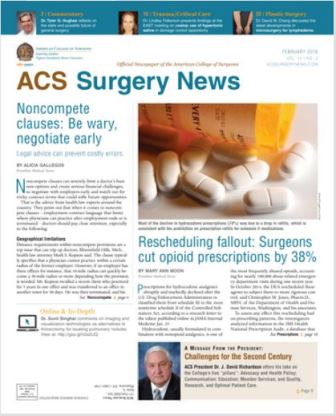
The February ACS Surgery News digital issue is available online.
This month’s issue features a report on recent trends in prescribing by surgeons in the wake of the DEA reclassification of hydrocodone-containing drugs, a review of the perils of “noncompete” clauses in employment contracts, and a message from the President of the American College of Surgeons, Dr. J. David Richardson.
Don’t miss the commentary on General Surgery’s Place in the World by Dr. Tyler Hughes, now the Associate Editor of ACS Surgery News.
Use the mobile app to download the issue or view as a pdf.
The February ACS Surgery News digital issue is available online.
This month’s issue features a report on recent trends in prescribing by surgeons in the wake of the DEA reclassification of hydrocodone-containing drugs, a review of the perils of “noncompete” clauses in employment contracts, and a message from the President of the American College of Surgeons, Dr. J. David Richardson.
Don’t miss the commentary on General Surgery’s Place in the World by Dr. Tyler Hughes, now the Associate Editor of ACS Surgery News.
Use the mobile app to download the issue or view as a pdf.
The February ACS Surgery News digital issue is available online.
This month’s issue features a report on recent trends in prescribing by surgeons in the wake of the DEA reclassification of hydrocodone-containing drugs, a review of the perils of “noncompete” clauses in employment contracts, and a message from the President of the American College of Surgeons, Dr. J. David Richardson.
Don’t miss the commentary on General Surgery’s Place in the World by Dr. Tyler Hughes, now the Associate Editor of ACS Surgery News.
Use the mobile app to download the issue or view as a pdf.
From the Washington Office: Medicare audit accountability
The Recovery Audit Contractor (RAC) program was launched in 2010 by the Centers for Medicare and Medicaid Services (CMS) with the intention of identifying and preventing improper payments to Medicare providers. Recovery Audit Contractors are paid on “contingency fee” basis, i.e. a commission on each claim that they deny. Some have thus likened their actions to those of ‘bounty hunters.” Though there is an appeals process, hospitals and physicians bear the cost of audits, denials, and appeals, regardless of the ultimate outcome of the appeals process.
Because of the lack of accountability in the RAC process, concern has been expressed about both the number of inaccurate findings as well as the high volume of appeals. As evidence, the American Hospital Association (AHA) reported that the Office of the Inspector General (OIG) found that 49% of hospital denials are appealed and 72% of the appeals brought before an Administrative Law Judge are overturned in favor of the hospital.
In response to these concerns, Rep. George Holding (R-NC) introduced the H.R. 2568, the Fair Medical Audits Act in May 2015. The bill was jointly referred to the Ways and Means and Energy and Commerce committees in the House of Representatives for further consideration. Currently, H.R. 2568 has 23 cosponsors.
H.R. 2568 addresses many of the concerns in the RAC program by:
• Enhancing transparency in the audit process to improve compliance.
• Improving the claims-review process by mandating that contractors meet appropriate knowledge and experience requirements.
• Promoting provider education while increasing RAC accountability for inaccurate audit findings.
• Ensuring accuracy of those overpayment amounts calculated by contractors using extrapolation methodology.
• Requiring contractors to reimburse certain documentation requests to reduce provider burdens.
• Delaying payment to RACs until after external appeal.
• Reducing the appeals backlog by shortening the “look-back” period.
On Dec. 3, 2015, the American College of Surgeons joined 10 other surgical associations in sending a letter of support to Representative Holding thanking him for introducing the Fair Medical Audits Act. In addition, an ACTION ALERT was posted on the SurgeonsVoice website to facilitate the efforts of Fellows in contacting their individual representatives urging they support the legislation. I would urge all Fellows to log onto www.surgeonsvoice.org, and then click on the “TAKE ACTION” tab on the right side of the screen. It takes only a few moments to send a message to your Member of Congress requesting their assistance in passing this sensible legislation increasing accountability in the Medicare Recovery Audit Contractor program.
Until next month …
Dr. Patrick V. Bailey is an ACS Fellow, a pediatric surgeon, and Medical Director, Advocacy, for the Division of Advocacy and Health Policy, in the ACS offices in Washington, D.C.
The Recovery Audit Contractor (RAC) program was launched in 2010 by the Centers for Medicare and Medicaid Services (CMS) with the intention of identifying and preventing improper payments to Medicare providers. Recovery Audit Contractors are paid on “contingency fee” basis, i.e. a commission on each claim that they deny. Some have thus likened their actions to those of ‘bounty hunters.” Though there is an appeals process, hospitals and physicians bear the cost of audits, denials, and appeals, regardless of the ultimate outcome of the appeals process.
Because of the lack of accountability in the RAC process, concern has been expressed about both the number of inaccurate findings as well as the high volume of appeals. As evidence, the American Hospital Association (AHA) reported that the Office of the Inspector General (OIG) found that 49% of hospital denials are appealed and 72% of the appeals brought before an Administrative Law Judge are overturned in favor of the hospital.
In response to these concerns, Rep. George Holding (R-NC) introduced the H.R. 2568, the Fair Medical Audits Act in May 2015. The bill was jointly referred to the Ways and Means and Energy and Commerce committees in the House of Representatives for further consideration. Currently, H.R. 2568 has 23 cosponsors.
H.R. 2568 addresses many of the concerns in the RAC program by:
• Enhancing transparency in the audit process to improve compliance.
• Improving the claims-review process by mandating that contractors meet appropriate knowledge and experience requirements.
• Promoting provider education while increasing RAC accountability for inaccurate audit findings.
• Ensuring accuracy of those overpayment amounts calculated by contractors using extrapolation methodology.
• Requiring contractors to reimburse certain documentation requests to reduce provider burdens.
• Delaying payment to RACs until after external appeal.
• Reducing the appeals backlog by shortening the “look-back” period.
On Dec. 3, 2015, the American College of Surgeons joined 10 other surgical associations in sending a letter of support to Representative Holding thanking him for introducing the Fair Medical Audits Act. In addition, an ACTION ALERT was posted on the SurgeonsVoice website to facilitate the efforts of Fellows in contacting their individual representatives urging they support the legislation. I would urge all Fellows to log onto www.surgeonsvoice.org, and then click on the “TAKE ACTION” tab on the right side of the screen. It takes only a few moments to send a message to your Member of Congress requesting their assistance in passing this sensible legislation increasing accountability in the Medicare Recovery Audit Contractor program.
Until next month …
Dr. Patrick V. Bailey is an ACS Fellow, a pediatric surgeon, and Medical Director, Advocacy, for the Division of Advocacy and Health Policy, in the ACS offices in Washington, D.C.
The Recovery Audit Contractor (RAC) program was launched in 2010 by the Centers for Medicare and Medicaid Services (CMS) with the intention of identifying and preventing improper payments to Medicare providers. Recovery Audit Contractors are paid on “contingency fee” basis, i.e. a commission on each claim that they deny. Some have thus likened their actions to those of ‘bounty hunters.” Though there is an appeals process, hospitals and physicians bear the cost of audits, denials, and appeals, regardless of the ultimate outcome of the appeals process.
Because of the lack of accountability in the RAC process, concern has been expressed about both the number of inaccurate findings as well as the high volume of appeals. As evidence, the American Hospital Association (AHA) reported that the Office of the Inspector General (OIG) found that 49% of hospital denials are appealed and 72% of the appeals brought before an Administrative Law Judge are overturned in favor of the hospital.
In response to these concerns, Rep. George Holding (R-NC) introduced the H.R. 2568, the Fair Medical Audits Act in May 2015. The bill was jointly referred to the Ways and Means and Energy and Commerce committees in the House of Representatives for further consideration. Currently, H.R. 2568 has 23 cosponsors.
H.R. 2568 addresses many of the concerns in the RAC program by:
• Enhancing transparency in the audit process to improve compliance.
• Improving the claims-review process by mandating that contractors meet appropriate knowledge and experience requirements.
• Promoting provider education while increasing RAC accountability for inaccurate audit findings.
• Ensuring accuracy of those overpayment amounts calculated by contractors using extrapolation methodology.
• Requiring contractors to reimburse certain documentation requests to reduce provider burdens.
• Delaying payment to RACs until after external appeal.
• Reducing the appeals backlog by shortening the “look-back” period.
On Dec. 3, 2015, the American College of Surgeons joined 10 other surgical associations in sending a letter of support to Representative Holding thanking him for introducing the Fair Medical Audits Act. In addition, an ACTION ALERT was posted on the SurgeonsVoice website to facilitate the efforts of Fellows in contacting their individual representatives urging they support the legislation. I would urge all Fellows to log onto www.surgeonsvoice.org, and then click on the “TAKE ACTION” tab on the right side of the screen. It takes only a few moments to send a message to your Member of Congress requesting their assistance in passing this sensible legislation increasing accountability in the Medicare Recovery Audit Contractor program.
Until next month …
Dr. Patrick V. Bailey is an ACS Fellow, a pediatric surgeon, and Medical Director, Advocacy, for the Division of Advocacy and Health Policy, in the ACS offices in Washington, D.C.
The American College of Surgeons: Challenges for the Second Century
As the American College of Surgeons enters its second century, the challenge before us is to uphold the traditions and values of the past while embracing the future with enthusiasm.
The ACS Board of Governors, which represents the broad constituencies of the College, uses the term “pillars” to define the College’s core activities. Although these areas of focus will likely change in time, I would like to offer some thoughts regarding the current pillars and likely future challenges for each.
Communications
The College leadership is sensitive and responsive to the concerns and desires of Fellows; however, some members maintain that the leadership isn’t aware of what they are experiencing in practice. To eliminate this disconnect, Fellows should take advantage of some of the communications vehicles that the College now offers to encourage interaction between the Fellows and the leadership.
We now have more than 100 online “Communities” that allow members to engage in real-time discussions issues of mutual interest. Embrace your specialty’s Community and become enmeshed in conversations about advocacy, rural surgery, international surgery, and so on. ACS leaders are active in these Communities and pay attention to the concerns raised in these forums.
Member services
At the 2015 ACS Leadership & Advocacy Summit, retired U.S. Army General Stanley McChrystal offered his perspective on leadership. One theme he articulated is that leaders should actively engage with the rank-and-file troops. Building on that viewpoint, I would opine that for the ACS to succeed, we need the active and sustained engagement of our surgeons in the field.
Indeed, it has been the College’s experience that these members are the innovators who move the organization forward. For example, the Advanced Trauma Life Support® program is one of the most successful programs in ACS history. This course wasn’t a pipe dream of a regent; rather it was developed by surgeons in Nebraska who saw a need and acted on it. Similarly, the women and men practicing in rural areas created an Advisory Council for Rural Surgery and the online Rural Surgery Community to address the concerns of individuals who practice in nonmetropolitan areas.
For young Fellows, local involvement may be an ideal starting point. Many ACS chapters are floundering and need the energy and creativity young Fellows bring to the table.
Quality
Setting the standards for the delivery of quality surgical care was a core objective of the College’s founders, and quality improvement (QI) remains a primary mission. Although most surgeons are committed to providing high-quality care, they are less likely to participate in QI programs at their institutions.
Quality, which will be increasingly data and outcomes driven, is the benchmark by which future surgeons will be judged. Surgeons must own quality. Its measurement must be local, personal, accurate, and risk adjusted.
Recognizing that if surgeons don’t take ownership of this space, someone else will, the ACS has invested millions of dollars in QI programs – including the ACS National Surgical Quality Improvement Program (ACS NSQIP®) and “QIPs” for trauma, cancer, and bariatric surgery. However, surgeons and their institutions must use them if they are to have a meaningful effect on patient care. If your hospital can’t afford to participate in ACS NSQIP, find a partner, build a consortium or cooperative, or create your own QI measurement tool. Specialty societies have registries that you can tap. One way or another, though, tomorrow’s surgeons will need a record of all cases and outcomes and a means to critically evaluate their performance.
Education
Since the first Clinical Congress more than 100 years ago, education has been the heart of all College efforts. The ACS now offers educational activities programs for surgeons at all levels, but mostly continuing education for practicing surgeons while other groups have assumed control over residency training. In my opinion, the greatest threat to the provision of quality surgical care in the future is the erosion of core surgical training.
I have spent 18 years as a general surgery residency program director; 7 years on the American Board of Surgery, including 1 as chair; and 7 years on the Residency Review Committee for Surgery, including 1 as vice-chair. These experiences have convinced me that future ACS leaders should demand radical changes in surgical training paradigms.
Undoubtedly, any attempt to fundamentally change training will be met with resistance from organizations currently in control. We should engage these bodies in a cooperative spirit; however, real solutions may require a surgical approach – a thoughtful, calculated plan that can be executed decisively.
Advocacy
The College entered the advocacy arena somewhat late but has become an influential force in the halls of Congress and the statehouses, at think tank meetings, with payers, and in discussions with other stakeholders.
Unfortunately, most surgeons have little understanding of how the work of our Division of Advocacy and Health Policy affects their daily practices, and have little time to devote to grassroots efforts. But as medicine becomes more regulated, it is imperative that all surgeons advocate for their profession and their patients.
Indeed, surgical practice is changing quickly. Approximately 80 percent of surgeons are now employees of health care networks or institutions rather than in private practice, and the number of surgeon employees will likely reach 100% soon. Problems have already surfaced for surgeons with contracts, including terminations without cause and other issues. Bundled care payments for all health care services, including hospital and physician services, may be on the horizon. These changes could have deleterious effect on patient care.
As corporate medicine continues to grow and consolidate, a new form of representation may be needed to protect the interest of surgeons and their patients. The College would be the ideal group to lead such an effort.
Your anchor
Although this piece has suggested challenges College Fellows may encounter in the future, in truth, I have no idea what obstacles lie ahead. When times get rough, and they likely will, be certain of your anchors: your family, your friends, your faith, and your profession. The ACS can be that professional anchor.
Dr. Richardson is professor of surgery and vice-chairman, department of surgery, University of Louisville (Ky.) School of Medicine, and President of the American College of Surgeons.
As the American College of Surgeons enters its second century, the challenge before us is to uphold the traditions and values of the past while embracing the future with enthusiasm.
The ACS Board of Governors, which represents the broad constituencies of the College, uses the term “pillars” to define the College’s core activities. Although these areas of focus will likely change in time, I would like to offer some thoughts regarding the current pillars and likely future challenges for each.
Communications
The College leadership is sensitive and responsive to the concerns and desires of Fellows; however, some members maintain that the leadership isn’t aware of what they are experiencing in practice. To eliminate this disconnect, Fellows should take advantage of some of the communications vehicles that the College now offers to encourage interaction between the Fellows and the leadership.
We now have more than 100 online “Communities” that allow members to engage in real-time discussions issues of mutual interest. Embrace your specialty’s Community and become enmeshed in conversations about advocacy, rural surgery, international surgery, and so on. ACS leaders are active in these Communities and pay attention to the concerns raised in these forums.
Member services
At the 2015 ACS Leadership & Advocacy Summit, retired U.S. Army General Stanley McChrystal offered his perspective on leadership. One theme he articulated is that leaders should actively engage with the rank-and-file troops. Building on that viewpoint, I would opine that for the ACS to succeed, we need the active and sustained engagement of our surgeons in the field.
Indeed, it has been the College’s experience that these members are the innovators who move the organization forward. For example, the Advanced Trauma Life Support® program is one of the most successful programs in ACS history. This course wasn’t a pipe dream of a regent; rather it was developed by surgeons in Nebraska who saw a need and acted on it. Similarly, the women and men practicing in rural areas created an Advisory Council for Rural Surgery and the online Rural Surgery Community to address the concerns of individuals who practice in nonmetropolitan areas.
For young Fellows, local involvement may be an ideal starting point. Many ACS chapters are floundering and need the energy and creativity young Fellows bring to the table.
Quality
Setting the standards for the delivery of quality surgical care was a core objective of the College’s founders, and quality improvement (QI) remains a primary mission. Although most surgeons are committed to providing high-quality care, they are less likely to participate in QI programs at their institutions.
Quality, which will be increasingly data and outcomes driven, is the benchmark by which future surgeons will be judged. Surgeons must own quality. Its measurement must be local, personal, accurate, and risk adjusted.
Recognizing that if surgeons don’t take ownership of this space, someone else will, the ACS has invested millions of dollars in QI programs – including the ACS National Surgical Quality Improvement Program (ACS NSQIP®) and “QIPs” for trauma, cancer, and bariatric surgery. However, surgeons and their institutions must use them if they are to have a meaningful effect on patient care. If your hospital can’t afford to participate in ACS NSQIP, find a partner, build a consortium or cooperative, or create your own QI measurement tool. Specialty societies have registries that you can tap. One way or another, though, tomorrow’s surgeons will need a record of all cases and outcomes and a means to critically evaluate their performance.
Education
Since the first Clinical Congress more than 100 years ago, education has been the heart of all College efforts. The ACS now offers educational activities programs for surgeons at all levels, but mostly continuing education for practicing surgeons while other groups have assumed control over residency training. In my opinion, the greatest threat to the provision of quality surgical care in the future is the erosion of core surgical training.
I have spent 18 years as a general surgery residency program director; 7 years on the American Board of Surgery, including 1 as chair; and 7 years on the Residency Review Committee for Surgery, including 1 as vice-chair. These experiences have convinced me that future ACS leaders should demand radical changes in surgical training paradigms.
Undoubtedly, any attempt to fundamentally change training will be met with resistance from organizations currently in control. We should engage these bodies in a cooperative spirit; however, real solutions may require a surgical approach – a thoughtful, calculated plan that can be executed decisively.
Advocacy
The College entered the advocacy arena somewhat late but has become an influential force in the halls of Congress and the statehouses, at think tank meetings, with payers, and in discussions with other stakeholders.
Unfortunately, most surgeons have little understanding of how the work of our Division of Advocacy and Health Policy affects their daily practices, and have little time to devote to grassroots efforts. But as medicine becomes more regulated, it is imperative that all surgeons advocate for their profession and their patients.
Indeed, surgical practice is changing quickly. Approximately 80 percent of surgeons are now employees of health care networks or institutions rather than in private practice, and the number of surgeon employees will likely reach 100% soon. Problems have already surfaced for surgeons with contracts, including terminations without cause and other issues. Bundled care payments for all health care services, including hospital and physician services, may be on the horizon. These changes could have deleterious effect on patient care.
As corporate medicine continues to grow and consolidate, a new form of representation may be needed to protect the interest of surgeons and their patients. The College would be the ideal group to lead such an effort.
Your anchor
Although this piece has suggested challenges College Fellows may encounter in the future, in truth, I have no idea what obstacles lie ahead. When times get rough, and they likely will, be certain of your anchors: your family, your friends, your faith, and your profession. The ACS can be that professional anchor.
Dr. Richardson is professor of surgery and vice-chairman, department of surgery, University of Louisville (Ky.) School of Medicine, and President of the American College of Surgeons.
As the American College of Surgeons enters its second century, the challenge before us is to uphold the traditions and values of the past while embracing the future with enthusiasm.
The ACS Board of Governors, which represents the broad constituencies of the College, uses the term “pillars” to define the College’s core activities. Although these areas of focus will likely change in time, I would like to offer some thoughts regarding the current pillars and likely future challenges for each.
Communications
The College leadership is sensitive and responsive to the concerns and desires of Fellows; however, some members maintain that the leadership isn’t aware of what they are experiencing in practice. To eliminate this disconnect, Fellows should take advantage of some of the communications vehicles that the College now offers to encourage interaction between the Fellows and the leadership.
We now have more than 100 online “Communities” that allow members to engage in real-time discussions issues of mutual interest. Embrace your specialty’s Community and become enmeshed in conversations about advocacy, rural surgery, international surgery, and so on. ACS leaders are active in these Communities and pay attention to the concerns raised in these forums.
Member services
At the 2015 ACS Leadership & Advocacy Summit, retired U.S. Army General Stanley McChrystal offered his perspective on leadership. One theme he articulated is that leaders should actively engage with the rank-and-file troops. Building on that viewpoint, I would opine that for the ACS to succeed, we need the active and sustained engagement of our surgeons in the field.
Indeed, it has been the College’s experience that these members are the innovators who move the organization forward. For example, the Advanced Trauma Life Support® program is one of the most successful programs in ACS history. This course wasn’t a pipe dream of a regent; rather it was developed by surgeons in Nebraska who saw a need and acted on it. Similarly, the women and men practicing in rural areas created an Advisory Council for Rural Surgery and the online Rural Surgery Community to address the concerns of individuals who practice in nonmetropolitan areas.
For young Fellows, local involvement may be an ideal starting point. Many ACS chapters are floundering and need the energy and creativity young Fellows bring to the table.
Quality
Setting the standards for the delivery of quality surgical care was a core objective of the College’s founders, and quality improvement (QI) remains a primary mission. Although most surgeons are committed to providing high-quality care, they are less likely to participate in QI programs at their institutions.
Quality, which will be increasingly data and outcomes driven, is the benchmark by which future surgeons will be judged. Surgeons must own quality. Its measurement must be local, personal, accurate, and risk adjusted.
Recognizing that if surgeons don’t take ownership of this space, someone else will, the ACS has invested millions of dollars in QI programs – including the ACS National Surgical Quality Improvement Program (ACS NSQIP®) and “QIPs” for trauma, cancer, and bariatric surgery. However, surgeons and their institutions must use them if they are to have a meaningful effect on patient care. If your hospital can’t afford to participate in ACS NSQIP, find a partner, build a consortium or cooperative, or create your own QI measurement tool. Specialty societies have registries that you can tap. One way or another, though, tomorrow’s surgeons will need a record of all cases and outcomes and a means to critically evaluate their performance.
Education
Since the first Clinical Congress more than 100 years ago, education has been the heart of all College efforts. The ACS now offers educational activities programs for surgeons at all levels, but mostly continuing education for practicing surgeons while other groups have assumed control over residency training. In my opinion, the greatest threat to the provision of quality surgical care in the future is the erosion of core surgical training.
I have spent 18 years as a general surgery residency program director; 7 years on the American Board of Surgery, including 1 as chair; and 7 years on the Residency Review Committee for Surgery, including 1 as vice-chair. These experiences have convinced me that future ACS leaders should demand radical changes in surgical training paradigms.
Undoubtedly, any attempt to fundamentally change training will be met with resistance from organizations currently in control. We should engage these bodies in a cooperative spirit; however, real solutions may require a surgical approach – a thoughtful, calculated plan that can be executed decisively.
Advocacy
The College entered the advocacy arena somewhat late but has become an influential force in the halls of Congress and the statehouses, at think tank meetings, with payers, and in discussions with other stakeholders.
Unfortunately, most surgeons have little understanding of how the work of our Division of Advocacy and Health Policy affects their daily practices, and have little time to devote to grassroots efforts. But as medicine becomes more regulated, it is imperative that all surgeons advocate for their profession and their patients.
Indeed, surgical practice is changing quickly. Approximately 80 percent of surgeons are now employees of health care networks or institutions rather than in private practice, and the number of surgeon employees will likely reach 100% soon. Problems have already surfaced for surgeons with contracts, including terminations without cause and other issues. Bundled care payments for all health care services, including hospital and physician services, may be on the horizon. These changes could have deleterious effect on patient care.
As corporate medicine continues to grow and consolidate, a new form of representation may be needed to protect the interest of surgeons and their patients. The College would be the ideal group to lead such an effort.
Your anchor
Although this piece has suggested challenges College Fellows may encounter in the future, in truth, I have no idea what obstacles lie ahead. When times get rough, and they likely will, be certain of your anchors: your family, your friends, your faith, and your profession. The ACS can be that professional anchor.
Dr. Richardson is professor of surgery and vice-chairman, department of surgery, University of Louisville (Ky.) School of Medicine, and President of the American College of Surgeons.
Study finds lower-than-expected rate of occult uterine sarcoma
The risk of finding occult uterine sarcoma during hysterectomy for benign indications was lower than expected in a single-center retrospective cohort study, at 0.089%, or 1 in 1,124 hysterectomies, according to a recent analysis.
This is markedly lower than the estimated risks in previous studies, which ranged from 1 in 204 to 1 in 667 procedures for women with presumed myomas. The American College of Obstetricians and Gynecologists estimated the risk to be 1 in 500 hysterectomies, and the Food and Drug Administration pegged it at 1 in 352 based on a pooled analysis of nine studies of women undergoing hysterectomy or myomectomy for presumed myomas. The last estimate in particular has been criticized as inaccurate because of concerns about the quality of data and methodologic flaws of the nine studies, reported Dr. Kimberly A. Kho of the University of Texas Southwestern Medical Center, Dallas, and her associates (Obstet. Gynecol. 2016;127:468-73.).

The investigators analyzed information in a database for all 10,119 hysterectomies performed for benign indications at their medical center during a 14-year period, and correlated it with data concerning all cases of uterine sarcoma in their center’s tumor registry. A total of 59.4% of these procedures used an abdominal approach, 21.6% were laparoscopic or robot assisted, and 18.9% used a vaginal approach. The most common indications were leiomyomata (37%), abnormal uterine bleeding (28%), and pelvic organ prolapse (11%).
Nine women were found to have an occult uterine sarcoma, including five leiomyosarcomas, two endometrial stromal sarcomas, and two uterine adenocarcinomas.
“All patients had received up-to-date cervical cancer screening and, in the majority of cases, women had received preoperative evaluation with either endometrial sampling or imaging, which did not suggest malignancy. Of the suggested risk factors for sarcoma, it is notable that none of the women we identified were postmenopausal, exposed to pelvic radiation or tamoxifen, nor had a family history of cancer,” the researchers wrote.
Only one patient underwent manual morcellation of a large, bulky uterus before her sarcoma was discovered during total abdominal hysterectomy. The abdominal cavity was then thoroughly explored, and no suspicious lesions were found. This patient later received chemotherapy and had no evidence of disease 3 years later.
The study findings may be helpful for surgical planning and for counseling patients about management options. “It is important to stress that although low, the risk of encountering an occult sarcoma exists. Hence, ongoing efforts to identify potentially safer methods for tissue extraction are essential, as are efforts to improve preoperative identification of malignancies,” the researchers noted.
The study was supported by the University of Texas Southwestern Medical Center. Dr. Kho reported ties to Actamax Surgical Materials and Applied Medical; one of her associates reported ties to AstraZeneca and Genentech.
The risk of finding occult uterine sarcoma during hysterectomy for benign indications was lower than expected in a single-center retrospective cohort study, at 0.089%, or 1 in 1,124 hysterectomies, according to a recent analysis.
This is markedly lower than the estimated risks in previous studies, which ranged from 1 in 204 to 1 in 667 procedures for women with presumed myomas. The American College of Obstetricians and Gynecologists estimated the risk to be 1 in 500 hysterectomies, and the Food and Drug Administration pegged it at 1 in 352 based on a pooled analysis of nine studies of women undergoing hysterectomy or myomectomy for presumed myomas. The last estimate in particular has been criticized as inaccurate because of concerns about the quality of data and methodologic flaws of the nine studies, reported Dr. Kimberly A. Kho of the University of Texas Southwestern Medical Center, Dallas, and her associates (Obstet. Gynecol. 2016;127:468-73.).
The investigators analyzed information in a database for all 10,119 hysterectomies performed for benign indications at their medical center during a 14-year period, and correlated it with data concerning all cases of uterine sarcoma in their center’s tumor registry. A total of 59.4% of these procedures used an abdominal approach, 21.6% were laparoscopic or robot assisted, and 18.9% used a vaginal approach. The most common indications were leiomyomata (37%), abnormal uterine bleeding (28%), and pelvic organ prolapse (11%).
Nine women were found to have an occult uterine sarcoma, including five leiomyosarcomas, two endometrial stromal sarcomas, and two uterine adenocarcinomas.
“All patients had received up-to-date cervical cancer screening and, in the majority of cases, women had received preoperative evaluation with either endometrial sampling or imaging, which did not suggest malignancy. Of the suggested risk factors for sarcoma, it is notable that none of the women we identified were postmenopausal, exposed to pelvic radiation or tamoxifen, nor had a family history of cancer,” the researchers wrote.
Only one patient underwent manual morcellation of a large, bulky uterus before her sarcoma was discovered during total abdominal hysterectomy. The abdominal cavity was then thoroughly explored, and no suspicious lesions were found. This patient later received chemotherapy and had no evidence of disease 3 years later.
The study findings may be helpful for surgical planning and for counseling patients about management options. “It is important to stress that although low, the risk of encountering an occult sarcoma exists. Hence, ongoing efforts to identify potentially safer methods for tissue extraction are essential, as are efforts to improve preoperative identification of malignancies,” the researchers noted.
The study was supported by the University of Texas Southwestern Medical Center. Dr. Kho reported ties to Actamax Surgical Materials and Applied Medical; one of her associates reported ties to AstraZeneca and Genentech.
The risk of finding occult uterine sarcoma during hysterectomy for benign indications was lower than expected in a single-center retrospective cohort study, at 0.089%, or 1 in 1,124 hysterectomies, according to a recent analysis.
This is markedly lower than the estimated risks in previous studies, which ranged from 1 in 204 to 1 in 667 procedures for women with presumed myomas. The American College of Obstetricians and Gynecologists estimated the risk to be 1 in 500 hysterectomies, and the Food and Drug Administration pegged it at 1 in 352 based on a pooled analysis of nine studies of women undergoing hysterectomy or myomectomy for presumed myomas. The last estimate in particular has been criticized as inaccurate because of concerns about the quality of data and methodologic flaws of the nine studies, reported Dr. Kimberly A. Kho of the University of Texas Southwestern Medical Center, Dallas, and her associates (Obstet. Gynecol. 2016;127:468-73.).
The investigators analyzed information in a database for all 10,119 hysterectomies performed for benign indications at their medical center during a 14-year period, and correlated it with data concerning all cases of uterine sarcoma in their center’s tumor registry. A total of 59.4% of these procedures used an abdominal approach, 21.6% were laparoscopic or robot assisted, and 18.9% used a vaginal approach. The most common indications were leiomyomata (37%), abnormal uterine bleeding (28%), and pelvic organ prolapse (11%).
Nine women were found to have an occult uterine sarcoma, including five leiomyosarcomas, two endometrial stromal sarcomas, and two uterine adenocarcinomas.
“All patients had received up-to-date cervical cancer screening and, in the majority of cases, women had received preoperative evaluation with either endometrial sampling or imaging, which did not suggest malignancy. Of the suggested risk factors for sarcoma, it is notable that none of the women we identified were postmenopausal, exposed to pelvic radiation or tamoxifen, nor had a family history of cancer,” the researchers wrote.
Only one patient underwent manual morcellation of a large, bulky uterus before her sarcoma was discovered during total abdominal hysterectomy. The abdominal cavity was then thoroughly explored, and no suspicious lesions were found. This patient later received chemotherapy and had no evidence of disease 3 years later.
The study findings may be helpful for surgical planning and for counseling patients about management options. “It is important to stress that although low, the risk of encountering an occult sarcoma exists. Hence, ongoing efforts to identify potentially safer methods for tissue extraction are essential, as are efforts to improve preoperative identification of malignancies,” the researchers noted.
The study was supported by the University of Texas Southwestern Medical Center. Dr. Kho reported ties to Actamax Surgical Materials and Applied Medical; one of her associates reported ties to AstraZeneca and Genentech.
FROM OBSTETRICS & GYNECOLOGY
Key clinical point: The rate of occult uterine sarcoma in women undergoing hysterectomy for benign indications was lower than expected at 0.089%.
Major finding: A total of 9 out of 10,119 women were found to have an occult uterine sarcoma, including five leiomyosarcomas, two endometrial stromal sarcomas, and two uterine adenocarcinomas.
Data source: A retrospective single-center cohort study involving 10,119 hysterectomies performed during a 14-year period.
Disclosures: The study was supported by the University of Texas Southwestern Medical Center. Dr. Kho reported ties to Actamax Surgical Materials and Applied Medical; one of her associates reported ties to AstraZeneca and Genentech.

General surgery’s place in the world
I heard the expression, “This is the age of specialization” the other day and I winced. As a general surgeon, I understood the implicit corollary that I was not a specialist. I disagree, by the way. As a person interested in the public good, I winced because subspecialization is an oft-repeated mantra as a solution to all the surgical world’s problems. That just isn’t so, any more than that generalism is the solution. As my father used to say, “All generalizations are false – including this one.”
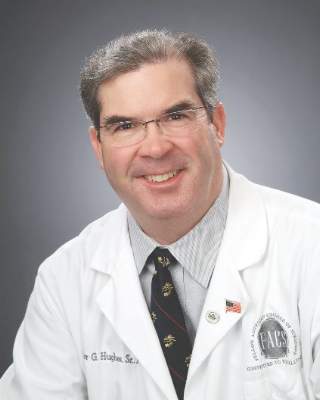
We have more than one issue in surgery today. Simply creating more and more subspecialists who do less and less of an area of surgery on the premise that high-volume repetitive practice creates the best public good is too narrow a view, because there is more to success in surgery than the simple performance of the procedure itself. Further, the definition of an outcome is becoming far too quantitative at the expense of an overall qualitative reality from the patient’s point of view.
The Lancet Global Surgery Commission reports that 1.5 billion people in the world have no access to surgical care when they need it and that 5 billion have no access to timely surgical care. As the Australians (presented at the Royal Australasian College of Surgeons) have found, the local conditions that result in delay in diagnosis (as well as treatment) play the major role in poor outcomes. We tend to think of the Lancet numbers as applying to underdeveloped countries, but even in the United States there are underserved areas. Successful solutions in developed countries may well mean templates for solutions in those less developed countries.
The point of this is to state that in our rush to improve the quantitative measurable results such as 30-day mortality, we find answers that lead us away from the qualitative results patients want and deserve. In relentlessly pursuing these results, we risk creating situations of inequality and unmet needs far greater than the risks to an individual patient vis à vis arbitrary definitions of outcome.
The specialty of general surgery can be described in this country as in decline. Over the past 50 years several core components of what a general surgeon did have been excised. Some of this has come through obvious advances, some through economics, and some through abdication of our surgical roles. In aggregate, this trend is leading to a further crisis that was no doubt unintended by those who made the individual decisions and changes.
Within very major training centers, the need for the general surgeon is eclipsed by the plethora of subspecialists available. Many of my academic friends at such institutions admit there really isn’t a job for the broad-based surgeon except for covering call (the acute care surgeon). The problem is that the model of a wonderful fully resourced major center doesn’t translate to suburbia, exurbias, and rural settings where most of the U.S. population resides.
We need a new definition and era of general surgery both for the United States and the rest of the world. Without it, I fear we will drift into a fragmented, patient-unfriendly, bankrupting system that treats late-diagnosed patients who travel at great personal pain to overloaded centers.
The new general surgeon I envision will not proudly proclaim that there is no operation he or she can’t do. That attitude is as outdated as resident work hours equal to the number of hours in the week, banning women from surgical careers, paying residents in room and board, or firing residents for getting married. The general surgery community must accept that times and science have changed for highly complex operations, but that the performance of “standard” and moderately complex operations must remain in the arsenal of the general surgeon. At the same time, subspecialists need to recognize that they must keep a “hands off” attitude toward these core general surgery cases and respect the obvious need throughout the world for the well-trained generalist.
Patients want a doctor they know who is close to home and who has surgical cognition of a wide nature with multiple skills to solve their problems. This local surgeon they know and trust needs to be part of a system that supports the local surgeon’s decision to send the patient to the “center” with neither economic penalty nor the implied message that the local surgeon isn’t quite up to the task.
To know everything about everything is as hard as knowing a lot about a relatively small body of knowledge, perhaps harder. To the patient, they want both – knowledgeable and dependable surgeons locally who can meet perhaps 80% of their surgical needs but also the subspecialist who can stop their heart for an hour, repair their liver or heart problem, and then reboot them. Ask yourself as a surgeon, isn’t that what you want as well for yourself? Would you really prefer to have your gall bladder out 70, 100, 400 miles away or 20 minutes from your home with equally good results?
The generalization I propose is that we need a more sensible approach than the big center vs. small center fight we have now. The Kansas City Royals shouldn’t ever win a World Series. They are a small-market team with a constrained budget, but they formed a mass of generalists and some spectacularly good specialists. That’s how they won in 2015 against the common wisdom of baseball and statistics.
I ask all to support the efforts of the American College of Surgeons, American Board of Surgery, Residency Review Committee, the Association of Program Directors in Surgery, the Accreditation Council of Graduate Medical Education, and the various subspecialty societies in supporting the growing effort to redesign general surgery education and establish its place in this century for the good of all those patients far and wide who cannot, will not, and should not be forced into an uncoordinated system of surgical care.
Dr. Hughes is an ACS Fellow with the department of general surgery, McPherson Hospital, McPherson, Kan., and is the Editor in Chief of ACS Communities. He is also Associate Editor for ACS Surgery News.
I heard the expression, “This is the age of specialization” the other day and I winced. As a general surgeon, I understood the implicit corollary that I was not a specialist. I disagree, by the way. As a person interested in the public good, I winced because subspecialization is an oft-repeated mantra as a solution to all the surgical world’s problems. That just isn’t so, any more than that generalism is the solution. As my father used to say, “All generalizations are false – including this one.”
We have more than one issue in surgery today. Simply creating more and more subspecialists who do less and less of an area of surgery on the premise that high-volume repetitive practice creates the best public good is too narrow a view, because there is more to success in surgery than the simple performance of the procedure itself. Further, the definition of an outcome is becoming far too quantitative at the expense of an overall qualitative reality from the patient’s point of view.
The Lancet Global Surgery Commission reports that 1.5 billion people in the world have no access to surgical care when they need it and that 5 billion have no access to timely surgical care. As the Australians (presented at the Royal Australasian College of Surgeons) have found, the local conditions that result in delay in diagnosis (as well as treatment) play the major role in poor outcomes. We tend to think of the Lancet numbers as applying to underdeveloped countries, but even in the United States there are underserved areas. Successful solutions in developed countries may well mean templates for solutions in those less developed countries.
The point of this is to state that in our rush to improve the quantitative measurable results such as 30-day mortality, we find answers that lead us away from the qualitative results patients want and deserve. In relentlessly pursuing these results, we risk creating situations of inequality and unmet needs far greater than the risks to an individual patient vis à vis arbitrary definitions of outcome.
The specialty of general surgery can be described in this country as in decline. Over the past 50 years several core components of what a general surgeon did have been excised. Some of this has come through obvious advances, some through economics, and some through abdication of our surgical roles. In aggregate, this trend is leading to a further crisis that was no doubt unintended by those who made the individual decisions and changes.
Within very major training centers, the need for the general surgeon is eclipsed by the plethora of subspecialists available. Many of my academic friends at such institutions admit there really isn’t a job for the broad-based surgeon except for covering call (the acute care surgeon). The problem is that the model of a wonderful fully resourced major center doesn’t translate to suburbia, exurbias, and rural settings where most of the U.S. population resides.
We need a new definition and era of general surgery both for the United States and the rest of the world. Without it, I fear we will drift into a fragmented, patient-unfriendly, bankrupting system that treats late-diagnosed patients who travel at great personal pain to overloaded centers.
The new general surgeon I envision will not proudly proclaim that there is no operation he or she can’t do. That attitude is as outdated as resident work hours equal to the number of hours in the week, banning women from surgical careers, paying residents in room and board, or firing residents for getting married. The general surgery community must accept that times and science have changed for highly complex operations, but that the performance of “standard” and moderately complex operations must remain in the arsenal of the general surgeon. At the same time, subspecialists need to recognize that they must keep a “hands off” attitude toward these core general surgery cases and respect the obvious need throughout the world for the well-trained generalist.
Patients want a doctor they know who is close to home and who has surgical cognition of a wide nature with multiple skills to solve their problems. This local surgeon they know and trust needs to be part of a system that supports the local surgeon’s decision to send the patient to the “center” with neither economic penalty nor the implied message that the local surgeon isn’t quite up to the task.
To know everything about everything is as hard as knowing a lot about a relatively small body of knowledge, perhaps harder. To the patient, they want both – knowledgeable and dependable surgeons locally who can meet perhaps 80% of their surgical needs but also the subspecialist who can stop their heart for an hour, repair their liver or heart problem, and then reboot them. Ask yourself as a surgeon, isn’t that what you want as well for yourself? Would you really prefer to have your gall bladder out 70, 100, 400 miles away or 20 minutes from your home with equally good results?
The generalization I propose is that we need a more sensible approach than the big center vs. small center fight we have now. The Kansas City Royals shouldn’t ever win a World Series. They are a small-market team with a constrained budget, but they formed a mass of generalists and some spectacularly good specialists. That’s how they won in 2015 against the common wisdom of baseball and statistics.
I ask all to support the efforts of the American College of Surgeons, American Board of Surgery, Residency Review Committee, the Association of Program Directors in Surgery, the Accreditation Council of Graduate Medical Education, and the various subspecialty societies in supporting the growing effort to redesign general surgery education and establish its place in this century for the good of all those patients far and wide who cannot, will not, and should not be forced into an uncoordinated system of surgical care.
Dr. Hughes is an ACS Fellow with the department of general surgery, McPherson Hospital, McPherson, Kan., and is the Editor in Chief of ACS Communities. He is also Associate Editor for ACS Surgery News.
I heard the expression, “This is the age of specialization” the other day and I winced. As a general surgeon, I understood the implicit corollary that I was not a specialist. I disagree, by the way. As a person interested in the public good, I winced because subspecialization is an oft-repeated mantra as a solution to all the surgical world’s problems. That just isn’t so, any more than that generalism is the solution. As my father used to say, “All generalizations are false – including this one.”
We have more than one issue in surgery today. Simply creating more and more subspecialists who do less and less of an area of surgery on the premise that high-volume repetitive practice creates the best public good is too narrow a view, because there is more to success in surgery than the simple performance of the procedure itself. Further, the definition of an outcome is becoming far too quantitative at the expense of an overall qualitative reality from the patient’s point of view.
The Lancet Global Surgery Commission reports that 1.5 billion people in the world have no access to surgical care when they need it and that 5 billion have no access to timely surgical care. As the Australians (presented at the Royal Australasian College of Surgeons) have found, the local conditions that result in delay in diagnosis (as well as treatment) play the major role in poor outcomes. We tend to think of the Lancet numbers as applying to underdeveloped countries, but even in the United States there are underserved areas. Successful solutions in developed countries may well mean templates for solutions in those less developed countries.
The point of this is to state that in our rush to improve the quantitative measurable results such as 30-day mortality, we find answers that lead us away from the qualitative results patients want and deserve. In relentlessly pursuing these results, we risk creating situations of inequality and unmet needs far greater than the risks to an individual patient vis à vis arbitrary definitions of outcome.
The specialty of general surgery can be described in this country as in decline. Over the past 50 years several core components of what a general surgeon did have been excised. Some of this has come through obvious advances, some through economics, and some through abdication of our surgical roles. In aggregate, this trend is leading to a further crisis that was no doubt unintended by those who made the individual decisions and changes.
Within very major training centers, the need for the general surgeon is eclipsed by the plethora of subspecialists available. Many of my academic friends at such institutions admit there really isn’t a job for the broad-based surgeon except for covering call (the acute care surgeon). The problem is that the model of a wonderful fully resourced major center doesn’t translate to suburbia, exurbias, and rural settings where most of the U.S. population resides.
We need a new definition and era of general surgery both for the United States and the rest of the world. Without it, I fear we will drift into a fragmented, patient-unfriendly, bankrupting system that treats late-diagnosed patients who travel at great personal pain to overloaded centers.
The new general surgeon I envision will not proudly proclaim that there is no operation he or she can’t do. That attitude is as outdated as resident work hours equal to the number of hours in the week, banning women from surgical careers, paying residents in room and board, or firing residents for getting married. The general surgery community must accept that times and science have changed for highly complex operations, but that the performance of “standard” and moderately complex operations must remain in the arsenal of the general surgeon. At the same time, subspecialists need to recognize that they must keep a “hands off” attitude toward these core general surgery cases and respect the obvious need throughout the world for the well-trained generalist.
Patients want a doctor they know who is close to home and who has surgical cognition of a wide nature with multiple skills to solve their problems. This local surgeon they know and trust needs to be part of a system that supports the local surgeon’s decision to send the patient to the “center” with neither economic penalty nor the implied message that the local surgeon isn’t quite up to the task.
To know everything about everything is as hard as knowing a lot about a relatively small body of knowledge, perhaps harder. To the patient, they want both – knowledgeable and dependable surgeons locally who can meet perhaps 80% of their surgical needs but also the subspecialist who can stop their heart for an hour, repair their liver or heart problem, and then reboot them. Ask yourself as a surgeon, isn’t that what you want as well for yourself? Would you really prefer to have your gall bladder out 70, 100, 400 miles away or 20 minutes from your home with equally good results?
The generalization I propose is that we need a more sensible approach than the big center vs. small center fight we have now. The Kansas City Royals shouldn’t ever win a World Series. They are a small-market team with a constrained budget, but they formed a mass of generalists and some spectacularly good specialists. That’s how they won in 2015 against the common wisdom of baseball and statistics.
I ask all to support the efforts of the American College of Surgeons, American Board of Surgery, Residency Review Committee, the Association of Program Directors in Surgery, the Accreditation Council of Graduate Medical Education, and the various subspecialty societies in supporting the growing effort to redesign general surgery education and establish its place in this century for the good of all those patients far and wide who cannot, will not, and should not be forced into an uncoordinated system of surgical care.
Dr. Hughes is an ACS Fellow with the department of general surgery, McPherson Hospital, McPherson, Kan., and is the Editor in Chief of ACS Communities. He is also Associate Editor for ACS Surgery News.
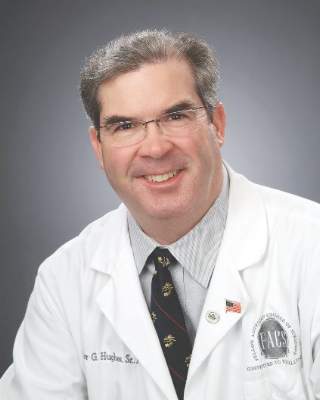
Change to NPDB guidebook redefines ‘investigation’
AUSTIN, TEX. – Physicians could face more reportable actions to the National Practitioner Data Bank (NPDB) under changes to the data bank’s guidebook.
In its last update of the guidebook, the Health Resources and Services Administration (HRSA) expanded its definition of “investigation” and now interprets the term “expansively” and will not be limited by how hospital bylaws define an investigation.
Data bank officials will review a health care entity’s bylaws and other documents for assistance in determining whether an investigation has started or is ongoing, but they retain “the ultimate authority to determine whether an investigation exists,” according to the guidebook.
The change is significant because it means more reviews by health care entities could be considered investigations by the data bank, regardless of how hospitals regard the assessment, Michael A. Cassidy said at the meeting, which was held by the American Health Lawyers Association.

Investigations alone are not reportable to the data bank, but actions taken by doctors during investigations are. This includes:
• Resignation of clinical privileges.
• Failure to renew clinical privileges.
• Lapse of license.
• Leave of absence.
• Relinquishment of panel membership.
The guidebook notes that a routine, formal peer review process under which a health care entity evaluates, against defined measures, privilege-specific competence of all practitioners is not considered an investigation by the NPDB. However, a formal, “targeted process used when issues related to a specific practitioner’s professional competence or conduct are identified” is considered an investigation for purposes of reporting to the NPDB.
The catch for doctors is that their awareness of an investigation is immaterial, said Mr. Cassidy, a Pittsburgh-based health law attorney. In the past, a doctor’s awareness of an investigation was a prerequisite for filing a report with the data bank.
The HRSA’s stance is that “physicians’ awareness of the investigation doesn’t have any impact on whether it’s an investigation or not,” Mr. Cassidy said in an interview. “From a physician standpoint, they want to be aware all the time whether an investigation has started. If they don’t find out an investigation has started until after they get a decision, it’s too late to forestall any of the reporting consequences.”
In addition, the NPDB considers an investigation ongoing until the health care entity takes a final action or formally closes the investigation. Formal closure is not defined, but written notice to the doctor would likely be the best evidence, according to Mr. Cassidy.
Changing medical staff bylaws to include doctors early in the process could help mitigate future investigation woes, he advised.
“It is not enough simply to provide that the doctor will be advised when an investigation starts because that triggers the reporting requirements, and places the parties in an adversarial position,” he said. “The bylaws should require notification to the physician whenever a complaint is made so that the physician can defend himself before it becomes an investigation.”
On Twitter @legal_med
AUSTIN, TEX. – Physicians could face more reportable actions to the National Practitioner Data Bank (NPDB) under changes to the data bank’s guidebook.
In its last update of the guidebook, the Health Resources and Services Administration (HRSA) expanded its definition of “investigation” and now interprets the term “expansively” and will not be limited by how hospital bylaws define an investigation.
Data bank officials will review a health care entity’s bylaws and other documents for assistance in determining whether an investigation has started or is ongoing, but they retain “the ultimate authority to determine whether an investigation exists,” according to the guidebook.
The change is significant because it means more reviews by health care entities could be considered investigations by the data bank, regardless of how hospitals regard the assessment, Michael A. Cassidy said at the meeting, which was held by the American Health Lawyers Association.
Investigations alone are not reportable to the data bank, but actions taken by doctors during investigations are. This includes:
• Resignation of clinical privileges.
• Failure to renew clinical privileges.
• Lapse of license.
• Leave of absence.
• Relinquishment of panel membership.
The guidebook notes that a routine, formal peer review process under which a health care entity evaluates, against defined measures, privilege-specific competence of all practitioners is not considered an investigation by the NPDB. However, a formal, “targeted process used when issues related to a specific practitioner’s professional competence or conduct are identified” is considered an investigation for purposes of reporting to the NPDB.
The catch for doctors is that their awareness of an investigation is immaterial, said Mr. Cassidy, a Pittsburgh-based health law attorney. In the past, a doctor’s awareness of an investigation was a prerequisite for filing a report with the data bank.
The HRSA’s stance is that “physicians’ awareness of the investigation doesn’t have any impact on whether it’s an investigation or not,” Mr. Cassidy said in an interview. “From a physician standpoint, they want to be aware all the time whether an investigation has started. If they don’t find out an investigation has started until after they get a decision, it’s too late to forestall any of the reporting consequences.”
In addition, the NPDB considers an investigation ongoing until the health care entity takes a final action or formally closes the investigation. Formal closure is not defined, but written notice to the doctor would likely be the best evidence, according to Mr. Cassidy.
Changing medical staff bylaws to include doctors early in the process could help mitigate future investigation woes, he advised.
“It is not enough simply to provide that the doctor will be advised when an investigation starts because that triggers the reporting requirements, and places the parties in an adversarial position,” he said. “The bylaws should require notification to the physician whenever a complaint is made so that the physician can defend himself before it becomes an investigation.”
On Twitter @legal_med
AUSTIN, TEX. – Physicians could face more reportable actions to the National Practitioner Data Bank (NPDB) under changes to the data bank’s guidebook.
In its last update of the guidebook, the Health Resources and Services Administration (HRSA) expanded its definition of “investigation” and now interprets the term “expansively” and will not be limited by how hospital bylaws define an investigation.
Data bank officials will review a health care entity’s bylaws and other documents for assistance in determining whether an investigation has started or is ongoing, but they retain “the ultimate authority to determine whether an investigation exists,” according to the guidebook.
The change is significant because it means more reviews by health care entities could be considered investigations by the data bank, regardless of how hospitals regard the assessment, Michael A. Cassidy said at the meeting, which was held by the American Health Lawyers Association.
Investigations alone are not reportable to the data bank, but actions taken by doctors during investigations are. This includes:
• Resignation of clinical privileges.
• Failure to renew clinical privileges.
• Lapse of license.
• Leave of absence.
• Relinquishment of panel membership.
The guidebook notes that a routine, formal peer review process under which a health care entity evaluates, against defined measures, privilege-specific competence of all practitioners is not considered an investigation by the NPDB. However, a formal, “targeted process used when issues related to a specific practitioner’s professional competence or conduct are identified” is considered an investigation for purposes of reporting to the NPDB.
The catch for doctors is that their awareness of an investigation is immaterial, said Mr. Cassidy, a Pittsburgh-based health law attorney. In the past, a doctor’s awareness of an investigation was a prerequisite for filing a report with the data bank.
The HRSA’s stance is that “physicians’ awareness of the investigation doesn’t have any impact on whether it’s an investigation or not,” Mr. Cassidy said in an interview. “From a physician standpoint, they want to be aware all the time whether an investigation has started. If they don’t find out an investigation has started until after they get a decision, it’s too late to forestall any of the reporting consequences.”
In addition, the NPDB considers an investigation ongoing until the health care entity takes a final action or formally closes the investigation. Formal closure is not defined, but written notice to the doctor would likely be the best evidence, according to Mr. Cassidy.
Changing medical staff bylaws to include doctors early in the process could help mitigate future investigation woes, he advised.
“It is not enough simply to provide that the doctor will be advised when an investigation starts because that triggers the reporting requirements, and places the parties in an adversarial position,” he said. “The bylaws should require notification to the physician whenever a complaint is made so that the physician can defend himself before it becomes an investigation.”
On Twitter @legal_med
AT THE PHYSICIANS AND HOSPITALS LAW INSTITUTE