User login
Treatment Trends in Stage 3 Prostate Cancer in VA vs Academic Centers
Background: Prostate cancer is the second leading cause of cancer death in American men, diagnosed mainly in older men. Treatment options for stage 3 prostate cancer include external beam radiation plus hormone therapy (HT) vs external beam radiation plus brachytherapy vs radical prostatectomy in selected cases.
Methodology: A total of 52,384 patients with stage 3 prostate cancer have been studied from national cancer database comparing Veterans Affairs Hospital (VAH) vs Academic Centers from years 2003-2013. Fisher exact test was used to make direct comparisons between centers and treatment type. We used a Bonferroni-adjusted P.
Results: Within both the 50-59 and 60-69-year-old age groups, when compared to Academic hospitals, VAH performed surgery alone at a lower rate (87.6% vs 77.4% and 86.1% vs 77.7%, respectively) and performed Surgery + Radiation and Radiation + Hormone therapy at a significantly higher rate (8.2% vs 15.0% and 6.8% vs 10.0%, respectively). In 70-79 year age group, when compared to Academic hospitals, VAH performed surgery alone at a lower rate (73.5% vs 43.1%) and Hormone therapy only and Radiation + Hormone therapy at significantly higher rate (3.7% vs 17.3% and 20.8% vs 33.9%, respectively) (all P < .001).
Conclusion: In VAH, people within age groups of 50-59, 60-69 years had more surgery plus radiation, radiation plus HT and less surgery alone than Academic centers. In 70-79 age group, VAH performed much more HT only, radiation plus HT and less surgery alone than Academic Centers.
Background: Prostate cancer is the second leading cause of cancer death in American men, diagnosed mainly in older men. Treatment options for stage 3 prostate cancer include external beam radiation plus hormone therapy (HT) vs external beam radiation plus brachytherapy vs radical prostatectomy in selected cases.
Methodology: A total of 52,384 patients with stage 3 prostate cancer have been studied from national cancer database comparing Veterans Affairs Hospital (VAH) vs Academic Centers from years 2003-2013. Fisher exact test was used to make direct comparisons between centers and treatment type. We used a Bonferroni-adjusted P.
Results: Within both the 50-59 and 60-69-year-old age groups, when compared to Academic hospitals, VAH performed surgery alone at a lower rate (87.6% vs 77.4% and 86.1% vs 77.7%, respectively) and performed Surgery + Radiation and Radiation + Hormone therapy at a significantly higher rate (8.2% vs 15.0% and 6.8% vs 10.0%, respectively). In 70-79 year age group, when compared to Academic hospitals, VAH performed surgery alone at a lower rate (73.5% vs 43.1%) and Hormone therapy only and Radiation + Hormone therapy at significantly higher rate (3.7% vs 17.3% and 20.8% vs 33.9%, respectively) (all P < .001).
Conclusion: In VAH, people within age groups of 50-59, 60-69 years had more surgery plus radiation, radiation plus HT and less surgery alone than Academic centers. In 70-79 age group, VAH performed much more HT only, radiation plus HT and less surgery alone than Academic Centers.
Background: Prostate cancer is the second leading cause of cancer death in American men, diagnosed mainly in older men. Treatment options for stage 3 prostate cancer include external beam radiation plus hormone therapy (HT) vs external beam radiation plus brachytherapy vs radical prostatectomy in selected cases.
Methodology: A total of 52,384 patients with stage 3 prostate cancer have been studied from national cancer database comparing Veterans Affairs Hospital (VAH) vs Academic Centers from years 2003-2013. Fisher exact test was used to make direct comparisons between centers and treatment type. We used a Bonferroni-adjusted P.
Results: Within both the 50-59 and 60-69-year-old age groups, when compared to Academic hospitals, VAH performed surgery alone at a lower rate (87.6% vs 77.4% and 86.1% vs 77.7%, respectively) and performed Surgery + Radiation and Radiation + Hormone therapy at a significantly higher rate (8.2% vs 15.0% and 6.8% vs 10.0%, respectively). In 70-79 year age group, when compared to Academic hospitals, VAH performed surgery alone at a lower rate (73.5% vs 43.1%) and Hormone therapy only and Radiation + Hormone therapy at significantly higher rate (3.7% vs 17.3% and 20.8% vs 33.9%, respectively) (all P < .001).
Conclusion: In VAH, people within age groups of 50-59, 60-69 years had more surgery plus radiation, radiation plus HT and less surgery alone than Academic centers. In 70-79 age group, VAH performed much more HT only, radiation plus HT and less surgery alone than Academic Centers.
Big Data, Precision Oncology, and Virtual Cancer Centers: The VA’s Initiatives Transforming Cancer Care
The VA’s National Oncology Program Office is an active participant in the White House’s Cancer Moonshot Initiative. This presentation will summarize efforts underway to provide Veterans with state of the art cancer care in a learning healthcare system. To achieve the goals of the Cancer Moonshot Initiative and Precision Oncology, the VA needs to: Provide all Veterans with timely access to coordinated, interdisciplinary, disease-specific cancer care; identify and facilitate VA medical center participation in compelling clinical trials that are designed to test novel therapeutics targeted at mutations with a high prevalence among Veterans; and, improve the infrastructure and capability for VA clinicians to practice in a learning healthcare system through decision support tool and robust data analytics.
The VA National Program Office has partnered with the National Cancer Institute (NCI) and the White House to implement innovations designed to achieve these objectives. It has received funding to provide Veterans access to next generation sequencing of tumor tissue. Data generated from analysis of the cancer genome will be analyzed by IBM’s Watson computers.
We are also developing a governance structure for national, multisite clinical trials. It will be similar in formatto NCI’s cooperative groups with oncologists leading diseases committees to evaluate which treatment clinical trials should be conducted nationally within the VA. We have developed national contract research agreements with the large pharmaceutical companies to facilitate national clinical trials. We have also developed agreements with VA Central Office and NCI that will allow industry funded studies to be submitted to the VA Centralized Institutional Review Boards (C-IRB) and VAMCs will be able to accept studies that have been approved by NCI’s centralized IRB. We are leveraging Connected/Tele-health technologies to develop Virtual Tumors Boards and Virtual Cancer Centers. These Virtual Cancer Centers are designed to provide access to expedited workup by specialized clinicians using evidence-based guidelines and clinical care pathways.
The VA’s National Oncology Program Office is an active participant in the White House’s Cancer Moonshot Initiative. This presentation will summarize efforts underway to provide Veterans with state of the art cancer care in a learning healthcare system. To achieve the goals of the Cancer Moonshot Initiative and Precision Oncology, the VA needs to: Provide all Veterans with timely access to coordinated, interdisciplinary, disease-specific cancer care; identify and facilitate VA medical center participation in compelling clinical trials that are designed to test novel therapeutics targeted at mutations with a high prevalence among Veterans; and, improve the infrastructure and capability for VA clinicians to practice in a learning healthcare system through decision support tool and robust data analytics.
The VA National Program Office has partnered with the National Cancer Institute (NCI) and the White House to implement innovations designed to achieve these objectives. It has received funding to provide Veterans access to next generation sequencing of tumor tissue. Data generated from analysis of the cancer genome will be analyzed by IBM’s Watson computers.
We are also developing a governance structure for national, multisite clinical trials. It will be similar in formatto NCI’s cooperative groups with oncologists leading diseases committees to evaluate which treatment clinical trials should be conducted nationally within the VA. We have developed national contract research agreements with the large pharmaceutical companies to facilitate national clinical trials. We have also developed agreements with VA Central Office and NCI that will allow industry funded studies to be submitted to the VA Centralized Institutional Review Boards (C-IRB) and VAMCs will be able to accept studies that have been approved by NCI’s centralized IRB. We are leveraging Connected/Tele-health technologies to develop Virtual Tumors Boards and Virtual Cancer Centers. These Virtual Cancer Centers are designed to provide access to expedited workup by specialized clinicians using evidence-based guidelines and clinical care pathways.
The VA’s National Oncology Program Office is an active participant in the White House’s Cancer Moonshot Initiative. This presentation will summarize efforts underway to provide Veterans with state of the art cancer care in a learning healthcare system. To achieve the goals of the Cancer Moonshot Initiative and Precision Oncology, the VA needs to: Provide all Veterans with timely access to coordinated, interdisciplinary, disease-specific cancer care; identify and facilitate VA medical center participation in compelling clinical trials that are designed to test novel therapeutics targeted at mutations with a high prevalence among Veterans; and, improve the infrastructure and capability for VA clinicians to practice in a learning healthcare system through decision support tool and robust data analytics.
The VA National Program Office has partnered with the National Cancer Institute (NCI) and the White House to implement innovations designed to achieve these objectives. It has received funding to provide Veterans access to next generation sequencing of tumor tissue. Data generated from analysis of the cancer genome will be analyzed by IBM’s Watson computers.
We are also developing a governance structure for national, multisite clinical trials. It will be similar in formatto NCI’s cooperative groups with oncologists leading diseases committees to evaluate which treatment clinical trials should be conducted nationally within the VA. We have developed national contract research agreements with the large pharmaceutical companies to facilitate national clinical trials. We have also developed agreements with VA Central Office and NCI that will allow industry funded studies to be submitted to the VA Centralized Institutional Review Boards (C-IRB) and VAMCs will be able to accept studies that have been approved by NCI’s centralized IRB. We are leveraging Connected/Tele-health technologies to develop Virtual Tumors Boards and Virtual Cancer Centers. These Virtual Cancer Centers are designed to provide access to expedited workup by specialized clinicians using evidence-based guidelines and clinical care pathways.
Blood cells emerge through internal struggle, study suggests
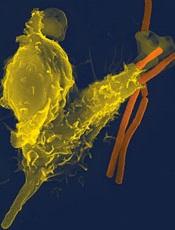
Image by Volker Brinkmann
Developing blood cells are caught in a tug of war between competing gene regulatory networks before finally deciding what type of cell to become, according to a study published in Nature.
Researchers found that, as developing blood cells are triggered by a multitude of genetic signals firing on and off, they are pulled back and forth in fluctuating multi-lineage states before finally becoming specific cell types.
The team still doesn’t understand exactly what drives the cells to an eventual fate, but their work suggests that competing gene networks induce dynamic instability, resulting in mixed-lineage states that are necessary to prime newly forming cells for that decision.
“It is somewhat chaotic, but, from that chaos, results order,” said study author Harinder Singh, PhD, of Cincinnati Children’s Hospital Medical Center in Ohio.
“It’s a finding that helps us address a fundamental question of developmental biology: What are the nature of the intermediate states and the networks of regulatory genes that underlie cell-type specification?”
Although the finding requires additional study to better understand the back-and-forth nature of this process, the research may eventually provide new insights into developmental miscues that cause disease, according to study author H. Leighton Grimes, PhD, of Cincinnati Children’s.
“How do blood cells know to become neutrophils or monocytes?” Dr Grimes asked. “Two thirds of your bone marrow is taken up with this activity, and the number of cells has to be exquisitely balanced. Too many or too few of either can kill you.”
For this study, Dr Grimes and his colleagues looked specifically at the formation of neutrophils and macrophages. The researchers studied mouse cells as they developed in a natural state using single-cell RNA sequencing.
The team also used a bioinformatics computer program known as iterative clustering and guide-gene selection (ICGS). They used ICGS to process and analyze sequencing and biological data to identify the various transitioning or shifting genomic and cellular states of developing blood cells.
Dynamic instability
Researchers previously proposed that neutrophils and macrophages result from a bi-stable gene regulatory network—one that can manifest either of 2 stable states. But the different cellular transition states and underlying molecular dynamics of development have remained unknown.
Dr Grimes and his colleagues said their analysis of developing blood cells captured a prevalent mixed-lineage intermediate.
These intermediates expressed a combination of genes, including those typical of hematopoietic stem and progenitor cells and some genes that are specific for red blood cells, platelets, macrophages, and neutrophils. This seemed to reflect competing genetic programs.
The researchers also observed the developing cells moving through a rare state where they encountered turbulence known as dynamic instability. This was caused by 2 counteracting myeloid gene regulatory networks.
Two key components of the counteracting gene networks were Irf8 and Gfi1, genes that are involved in blood cell formation. When Irf8 and Gfi1 were eliminated from the picture, the rare cells could be trapped in an intermediate state.
As they continue this work, the researchers want to gain a clearer understanding of what finally causes cells in intermediate states of dynamic instability to assume specific fates.
The team suggests the influence of 2 simultaneous and counteracting gene networks generates internal oscillations that are eventually stabilized by unknown mechanisms to generate 1 of 2 different cell fates. 
Image by Volker Brinkmann
Developing blood cells are caught in a tug of war between competing gene regulatory networks before finally deciding what type of cell to become, according to a study published in Nature.
Researchers found that, as developing blood cells are triggered by a multitude of genetic signals firing on and off, they are pulled back and forth in fluctuating multi-lineage states before finally becoming specific cell types.
The team still doesn’t understand exactly what drives the cells to an eventual fate, but their work suggests that competing gene networks induce dynamic instability, resulting in mixed-lineage states that are necessary to prime newly forming cells for that decision.
“It is somewhat chaotic, but, from that chaos, results order,” said study author Harinder Singh, PhD, of Cincinnati Children’s Hospital Medical Center in Ohio.
“It’s a finding that helps us address a fundamental question of developmental biology: What are the nature of the intermediate states and the networks of regulatory genes that underlie cell-type specification?”
Although the finding requires additional study to better understand the back-and-forth nature of this process, the research may eventually provide new insights into developmental miscues that cause disease, according to study author H. Leighton Grimes, PhD, of Cincinnati Children’s.
“How do blood cells know to become neutrophils or monocytes?” Dr Grimes asked. “Two thirds of your bone marrow is taken up with this activity, and the number of cells has to be exquisitely balanced. Too many or too few of either can kill you.”
For this study, Dr Grimes and his colleagues looked specifically at the formation of neutrophils and macrophages. The researchers studied mouse cells as they developed in a natural state using single-cell RNA sequencing.
The team also used a bioinformatics computer program known as iterative clustering and guide-gene selection (ICGS). They used ICGS to process and analyze sequencing and biological data to identify the various transitioning or shifting genomic and cellular states of developing blood cells.
Dynamic instability
Researchers previously proposed that neutrophils and macrophages result from a bi-stable gene regulatory network—one that can manifest either of 2 stable states. But the different cellular transition states and underlying molecular dynamics of development have remained unknown.
Dr Grimes and his colleagues said their analysis of developing blood cells captured a prevalent mixed-lineage intermediate.
These intermediates expressed a combination of genes, including those typical of hematopoietic stem and progenitor cells and some genes that are specific for red blood cells, platelets, macrophages, and neutrophils. This seemed to reflect competing genetic programs.
The researchers also observed the developing cells moving through a rare state where they encountered turbulence known as dynamic instability. This was caused by 2 counteracting myeloid gene regulatory networks.
Two key components of the counteracting gene networks were Irf8 and Gfi1, genes that are involved in blood cell formation. When Irf8 and Gfi1 were eliminated from the picture, the rare cells could be trapped in an intermediate state.
As they continue this work, the researchers want to gain a clearer understanding of what finally causes cells in intermediate states of dynamic instability to assume specific fates.
The team suggests the influence of 2 simultaneous and counteracting gene networks generates internal oscillations that are eventually stabilized by unknown mechanisms to generate 1 of 2 different cell fates.
Image by Volker Brinkmann
Developing blood cells are caught in a tug of war between competing gene regulatory networks before finally deciding what type of cell to become, according to a study published in Nature.
Researchers found that, as developing blood cells are triggered by a multitude of genetic signals firing on and off, they are pulled back and forth in fluctuating multi-lineage states before finally becoming specific cell types.
The team still doesn’t understand exactly what drives the cells to an eventual fate, but their work suggests that competing gene networks induce dynamic instability, resulting in mixed-lineage states that are necessary to prime newly forming cells for that decision.
“It is somewhat chaotic, but, from that chaos, results order,” said study author Harinder Singh, PhD, of Cincinnati Children’s Hospital Medical Center in Ohio.
“It’s a finding that helps us address a fundamental question of developmental biology: What are the nature of the intermediate states and the networks of regulatory genes that underlie cell-type specification?”
Although the finding requires additional study to better understand the back-and-forth nature of this process, the research may eventually provide new insights into developmental miscues that cause disease, according to study author H. Leighton Grimes, PhD, of Cincinnati Children’s.
“How do blood cells know to become neutrophils or monocytes?” Dr Grimes asked. “Two thirds of your bone marrow is taken up with this activity, and the number of cells has to be exquisitely balanced. Too many or too few of either can kill you.”
For this study, Dr Grimes and his colleagues looked specifically at the formation of neutrophils and macrophages. The researchers studied mouse cells as they developed in a natural state using single-cell RNA sequencing.
The team also used a bioinformatics computer program known as iterative clustering and guide-gene selection (ICGS). They used ICGS to process and analyze sequencing and biological data to identify the various transitioning or shifting genomic and cellular states of developing blood cells.
Dynamic instability
Researchers previously proposed that neutrophils and macrophages result from a bi-stable gene regulatory network—one that can manifest either of 2 stable states. But the different cellular transition states and underlying molecular dynamics of development have remained unknown.
Dr Grimes and his colleagues said their analysis of developing blood cells captured a prevalent mixed-lineage intermediate.
These intermediates expressed a combination of genes, including those typical of hematopoietic stem and progenitor cells and some genes that are specific for red blood cells, platelets, macrophages, and neutrophils. This seemed to reflect competing genetic programs.
The researchers also observed the developing cells moving through a rare state where they encountered turbulence known as dynamic instability. This was caused by 2 counteracting myeloid gene regulatory networks.
Two key components of the counteracting gene networks were Irf8 and Gfi1, genes that are involved in blood cell formation. When Irf8 and Gfi1 were eliminated from the picture, the rare cells could be trapped in an intermediate state.
As they continue this work, the researchers want to gain a clearer understanding of what finally causes cells in intermediate states of dynamic instability to assume specific fates.
The team suggests the influence of 2 simultaneous and counteracting gene networks generates internal oscillations that are eventually stabilized by unknown mechanisms to generate 1 of 2 different cell fates.
Fluticasone furoate/vilanterol edged out usual COPD care in real-world trial
A once-daily inhaled combination of fluticasone furoate and vilanterol was associated with an 8% lower rate of exacerbations in chronic obstructive pulmonary disease (COPD) than was usual care, with no increase in adverse effects, according to a multicenter trial designed to reflect real-world practice.
“Future effectiveness studies [like this one] are likely to influence clinical guidelines, not only for COPD but [also] for many other chronic diseases,” said Jørgen Vestbo, MD, of University Hospital of South Manchester NHS Foundation Trust, Manchester, England, and his associates, for the Salford Lung Study investigators. The findings were presented at the annual congress of the European Respiratory Society and published simultaneously in the New England Journal of Medicine.

Current COPD guidelines are based on clinical trials of carefully selected and monitored patients, which substantially limits their usefulness in everyday practice, the researchers said. To help address that problem, their 12-month, prospective, open-label, parallel-group, randomized study enrolled 2,799 COPD patients in 75 general practices within a single urban area in the United Kingdom. Patients received 100 mcg of fluticasone furoate and 25 mcg of vilanterol or usual care. The primary outcome was the rate of moderate or severe exacerbations among patients who had experienced an exacerbation within 1 year before enrollment. Patients received all treatment from their usual providers and were monitored remotely for safety through electronic health records (N Engl J Med. 2016 Sep 4. doi: 10.1056/NEJMoa1608033).
Fluticasone furoate/vilanterol was associated with 1.74 moderate or severe exacerbations per year, compared with 1.9 events per year with usual-care group, for a statistically significant difference of 8.4% (95% confidence interval, 1.1%-15.2%; P = .02). The trial arms had similar rates of COPD-related health care visits and first moderate or severe exacerbations. They also did not notably differ in terms of serious adverse events of special interest, such as cardiovascular events (which affected 8% of patients in each group) or pneumonia (which affected 7% of fluticasone furoate/vilanterol patients and 6% of usual-care patients). Thirteen patients in each group developed fatal pneumonia, of which one case was considered related to usual care. The only other treatment-related death involved of deep-vein thrombosis and pulmonary embolism in a patient receiving fluticasone furoate/vilanterol.
Medication switches were about twice as common (22%) in the intervention group than in the usual care group (11%), perhaps because of the open-label nature of the trial, the researchers said. Only 4% of patients receiving fluticasone furoate/vilanterol needed better disease control, half the rate of the usual care group.
GlaxoSmithKline funded the trial. Dr. Vestbo reported personal fees from GlaxoSmithKline while the study was conducted.
A once-daily inhaled combination of fluticasone furoate and vilanterol was associated with an 8% lower rate of exacerbations in chronic obstructive pulmonary disease (COPD) than was usual care, with no increase in adverse effects, according to a multicenter trial designed to reflect real-world practice.
“Future effectiveness studies [like this one] are likely to influence clinical guidelines, not only for COPD but [also] for many other chronic diseases,” said Jørgen Vestbo, MD, of University Hospital of South Manchester NHS Foundation Trust, Manchester, England, and his associates, for the Salford Lung Study investigators. The findings were presented at the annual congress of the European Respiratory Society and published simultaneously in the New England Journal of Medicine.
Current COPD guidelines are based on clinical trials of carefully selected and monitored patients, which substantially limits their usefulness in everyday practice, the researchers said. To help address that problem, their 12-month, prospective, open-label, parallel-group, randomized study enrolled 2,799 COPD patients in 75 general practices within a single urban area in the United Kingdom. Patients received 100 mcg of fluticasone furoate and 25 mcg of vilanterol or usual care. The primary outcome was the rate of moderate or severe exacerbations among patients who had experienced an exacerbation within 1 year before enrollment. Patients received all treatment from their usual providers and were monitored remotely for safety through electronic health records (N Engl J Med. 2016 Sep 4. doi: 10.1056/NEJMoa1608033).
Fluticasone furoate/vilanterol was associated with 1.74 moderate or severe exacerbations per year, compared with 1.9 events per year with usual-care group, for a statistically significant difference of 8.4% (95% confidence interval, 1.1%-15.2%; P = .02). The trial arms had similar rates of COPD-related health care visits and first moderate or severe exacerbations. They also did not notably differ in terms of serious adverse events of special interest, such as cardiovascular events (which affected 8% of patients in each group) or pneumonia (which affected 7% of fluticasone furoate/vilanterol patients and 6% of usual-care patients). Thirteen patients in each group developed fatal pneumonia, of which one case was considered related to usual care. The only other treatment-related death involved of deep-vein thrombosis and pulmonary embolism in a patient receiving fluticasone furoate/vilanterol.
Medication switches were about twice as common (22%) in the intervention group than in the usual care group (11%), perhaps because of the open-label nature of the trial, the researchers said. Only 4% of patients receiving fluticasone furoate/vilanterol needed better disease control, half the rate of the usual care group.
GlaxoSmithKline funded the trial. Dr. Vestbo reported personal fees from GlaxoSmithKline while the study was conducted.
A once-daily inhaled combination of fluticasone furoate and vilanterol was associated with an 8% lower rate of exacerbations in chronic obstructive pulmonary disease (COPD) than was usual care, with no increase in adverse effects, according to a multicenter trial designed to reflect real-world practice.
“Future effectiveness studies [like this one] are likely to influence clinical guidelines, not only for COPD but [also] for many other chronic diseases,” said Jørgen Vestbo, MD, of University Hospital of South Manchester NHS Foundation Trust, Manchester, England, and his associates, for the Salford Lung Study investigators. The findings were presented at the annual congress of the European Respiratory Society and published simultaneously in the New England Journal of Medicine.
Current COPD guidelines are based on clinical trials of carefully selected and monitored patients, which substantially limits their usefulness in everyday practice, the researchers said. To help address that problem, their 12-month, prospective, open-label, parallel-group, randomized study enrolled 2,799 COPD patients in 75 general practices within a single urban area in the United Kingdom. Patients received 100 mcg of fluticasone furoate and 25 mcg of vilanterol or usual care. The primary outcome was the rate of moderate or severe exacerbations among patients who had experienced an exacerbation within 1 year before enrollment. Patients received all treatment from their usual providers and were monitored remotely for safety through electronic health records (N Engl J Med. 2016 Sep 4. doi: 10.1056/NEJMoa1608033).
Fluticasone furoate/vilanterol was associated with 1.74 moderate or severe exacerbations per year, compared with 1.9 events per year with usual-care group, for a statistically significant difference of 8.4% (95% confidence interval, 1.1%-15.2%; P = .02). The trial arms had similar rates of COPD-related health care visits and first moderate or severe exacerbations. They also did not notably differ in terms of serious adverse events of special interest, such as cardiovascular events (which affected 8% of patients in each group) or pneumonia (which affected 7% of fluticasone furoate/vilanterol patients and 6% of usual-care patients). Thirteen patients in each group developed fatal pneumonia, of which one case was considered related to usual care. The only other treatment-related death involved of deep-vein thrombosis and pulmonary embolism in a patient receiving fluticasone furoate/vilanterol.
Medication switches were about twice as common (22%) in the intervention group than in the usual care group (11%), perhaps because of the open-label nature of the trial, the researchers said. Only 4% of patients receiving fluticasone furoate/vilanterol needed better disease control, half the rate of the usual care group.
GlaxoSmithKline funded the trial. Dr. Vestbo reported personal fees from GlaxoSmithKline while the study was conducted.
FROM ERS 2016
Key clinical point: A once-daily inhaled combination of fluticasone furoate and vilanterol was associated with statistically fewer COPD exacerbations compared with usual care in a real-world trial.
Major finding: The rate of moderate or severe exacerbations was 8% lower with fluticasone furoate/vilanterol group, compared with usual care (P = .02).
Data source: A 12-month, prospective, randomized open-label study of 2,799 COPD patients seen in general urban practices.
Disclosures: GlaxoSmithKline funded the trial. Dr. Vestbo reported personal fees from GlaxoSmithKline while the study was conducted.

Hematology/Oncology Ordersets: A VA VISN 09 Wide Initiative
Purpose: Develop ordersets that seamlessly enter chemotherapy and biologics orders from CPRS to Pharmacy’s VISTA program (pVista) and CPRS notes within the VISN.
Background: Hematology/Oncology orders ranged from paper to CPRS within the VISN. CPRS orders must be reentered into pVistA by the pharmacist, a safety issue. Commercial proprietary programs were expensive and didn’t translate to pVistA. The COEMS program isn’t available within the VA may not interface seamlessly with pVistA. Therefore, VISN 09 Medicine Service Line’s Oncology Committee (MSLOC) decided to develop ordersets in CPRS that enter treatment notes and orders into pVistA.
Methods: Ordersets development was MSLOC highest priority (2015). MSLOC met monthly by phone identifying resources, reviewing available ordersets, and translating into pVistA. MSLOC developed a timeline for orderset implementation. Progress was discussed monthly and documented with screen shots. Site visits will be completed before 2017.
Data Analysis: Flowsheets included: 1. facility resources: treatment area, providers, staffing, oncology pharmacy, ADPACs, and CACs; 2. Mechanisms of orders and notes entering/ recording; 3. Dosing and safety checks; 4. Available ordersets.
Results: In 2016 our ordersets were established as a “best practice”. VISN issued a suspense to implement electronic ordersets by 2017. The timeline included: 1. team development (fall 2015)-providers, pharmacists, pharmacy ADPAC, CACs; 2. Review of available ordersets (winter 2016); 3. Orderset development (winter-spring 2016); 4. Progress assessment (spring 2016); 5. Site visits (summer 2016). Results varied by VISN site: 2/5 of VAs were already paperless; 4/5 are now paperless; 2/5 have completely updated ordersets; 1/5 still uses paper and have only begun implementing ordersets. 1/5 ordersets completed chemotherapy notes; this will be implemented at all sites.
Implications: Using limited VA resources, ordersets can seamlessly enter pVistA. Results vary within VISN sites; switching from paper to electronic requires a paradigm shift. In approximately 18 months ordersets have been revised and updated. Chemotherapy ordersets now are generated electronically in 4/5 VAs. A team of MSLOC, providers, and staff have implemented this. In 2017 MSLOC will quantify the effectiveness of the initiative to improve patient care, safety, and efficiency.
Purpose: Develop ordersets that seamlessly enter chemotherapy and biologics orders from CPRS to Pharmacy’s VISTA program (pVista) and CPRS notes within the VISN.
Background: Hematology/Oncology orders ranged from paper to CPRS within the VISN. CPRS orders must be reentered into pVistA by the pharmacist, a safety issue. Commercial proprietary programs were expensive and didn’t translate to pVistA. The COEMS program isn’t available within the VA may not interface seamlessly with pVistA. Therefore, VISN 09 Medicine Service Line’s Oncology Committee (MSLOC) decided to develop ordersets in CPRS that enter treatment notes and orders into pVistA.
Methods: Ordersets development was MSLOC highest priority (2015). MSLOC met monthly by phone identifying resources, reviewing available ordersets, and translating into pVistA. MSLOC developed a timeline for orderset implementation. Progress was discussed monthly and documented with screen shots. Site visits will be completed before 2017.
Data Analysis: Flowsheets included: 1. facility resources: treatment area, providers, staffing, oncology pharmacy, ADPACs, and CACs; 2. Mechanisms of orders and notes entering/ recording; 3. Dosing and safety checks; 4. Available ordersets.
Results: In 2016 our ordersets were established as a “best practice”. VISN issued a suspense to implement electronic ordersets by 2017. The timeline included: 1. team development (fall 2015)-providers, pharmacists, pharmacy ADPAC, CACs; 2. Review of available ordersets (winter 2016); 3. Orderset development (winter-spring 2016); 4. Progress assessment (spring 2016); 5. Site visits (summer 2016). Results varied by VISN site: 2/5 of VAs were already paperless; 4/5 are now paperless; 2/5 have completely updated ordersets; 1/5 still uses paper and have only begun implementing ordersets. 1/5 ordersets completed chemotherapy notes; this will be implemented at all sites.
Implications: Using limited VA resources, ordersets can seamlessly enter pVistA. Results vary within VISN sites; switching from paper to electronic requires a paradigm shift. In approximately 18 months ordersets have been revised and updated. Chemotherapy ordersets now are generated electronically in 4/5 VAs. A team of MSLOC, providers, and staff have implemented this. In 2017 MSLOC will quantify the effectiveness of the initiative to improve patient care, safety, and efficiency.
Purpose: Develop ordersets that seamlessly enter chemotherapy and biologics orders from CPRS to Pharmacy’s VISTA program (pVista) and CPRS notes within the VISN.
Background: Hematology/Oncology orders ranged from paper to CPRS within the VISN. CPRS orders must be reentered into pVistA by the pharmacist, a safety issue. Commercial proprietary programs were expensive and didn’t translate to pVistA. The COEMS program isn’t available within the VA may not interface seamlessly with pVistA. Therefore, VISN 09 Medicine Service Line’s Oncology Committee (MSLOC) decided to develop ordersets in CPRS that enter treatment notes and orders into pVistA.
Methods: Ordersets development was MSLOC highest priority (2015). MSLOC met monthly by phone identifying resources, reviewing available ordersets, and translating into pVistA. MSLOC developed a timeline for orderset implementation. Progress was discussed monthly and documented with screen shots. Site visits will be completed before 2017.
Data Analysis: Flowsheets included: 1. facility resources: treatment area, providers, staffing, oncology pharmacy, ADPACs, and CACs; 2. Mechanisms of orders and notes entering/ recording; 3. Dosing and safety checks; 4. Available ordersets.
Results: In 2016 our ordersets were established as a “best practice”. VISN issued a suspense to implement electronic ordersets by 2017. The timeline included: 1. team development (fall 2015)-providers, pharmacists, pharmacy ADPAC, CACs; 2. Review of available ordersets (winter 2016); 3. Orderset development (winter-spring 2016); 4. Progress assessment (spring 2016); 5. Site visits (summer 2016). Results varied by VISN site: 2/5 of VAs were already paperless; 4/5 are now paperless; 2/5 have completely updated ordersets; 1/5 still uses paper and have only begun implementing ordersets. 1/5 ordersets completed chemotherapy notes; this will be implemented at all sites.
Implications: Using limited VA resources, ordersets can seamlessly enter pVistA. Results vary within VISN sites; switching from paper to electronic requires a paradigm shift. In approximately 18 months ordersets have been revised and updated. Chemotherapy ordersets now are generated electronically in 4/5 VAs. A team of MSLOC, providers, and staff have implemented this. In 2017 MSLOC will quantify the effectiveness of the initiative to improve patient care, safety, and efficiency.
Double-Expressor Lymphoma (DEL) in Veterans at DC VAMC
Purpose: To identify DEL amongst veteran patients with diffuse large B cell lymphoma (DLBCL) and its outcome.
Background: Molecular profile determines prognosis in DLBCL. Activated B-cell (ABC), a subtype of DLBCL, is associated with poor outcome compared to germinal center Bcell (GCB). Poor response to standard chemotherapy is seen with double-hit lymphomas as detected by FISH (5% -10% of DLBCL) and DELs that express both MYC and BCL-2 as detected by immunohistochemistry (IHC) (cutoffs—30% MYC, 40% BCL-2), with a median overall survival of <12 months.
Methods: Sixty-nine DLBCL patients diagnosed at DC VAMC from 1/1996-4/2016 were identified utilizing cancer registry. IHC stains were reviewed for CD3, CD10, CD20, BCL-2, BCL-6, C-MYC, MUM-1, MIB1, and p53. DLBCL were sub-classified as GCB and ABC based on CD10, BCL6 and MUM1 stains. Demographic data, diagnosis, treatment and outcome in terms of relapse and death are analyzed and will be presented at the meeting.
Results: Of the 69 DLBCL cases, only 37 met inclusion criteria; 32 were excluded due to unavailable blocks (20, mostly sent to outside institutions), tissue exhaustion with incomplete IHC data (6), T-cell rich B cell lymphoma (5) and pending (1). 20 cases are GCB and 17 ABC. All cases are CD20 positive with high mib1. MYC is positive in 17 cases (46%) and 15 of them double positive for BCL-2 (40%).
Implications/Future Directions: DLBCL veterans at the DC VAMC have a high percentage of double expressors when compared to the literature. It will be important to examine clinical data, treatment, and outcome to develop better treatment guidelines for double-expressor DLBCL. Future studies are in plan to compare double hit lymphomas to double expressors.
Purpose: To identify DEL amongst veteran patients with diffuse large B cell lymphoma (DLBCL) and its outcome.
Background: Molecular profile determines prognosis in DLBCL. Activated B-cell (ABC), a subtype of DLBCL, is associated with poor outcome compared to germinal center Bcell (GCB). Poor response to standard chemotherapy is seen with double-hit lymphomas as detected by FISH (5% -10% of DLBCL) and DELs that express both MYC and BCL-2 as detected by immunohistochemistry (IHC) (cutoffs—30% MYC, 40% BCL-2), with a median overall survival of <12 months.
Methods: Sixty-nine DLBCL patients diagnosed at DC VAMC from 1/1996-4/2016 were identified utilizing cancer registry. IHC stains were reviewed for CD3, CD10, CD20, BCL-2, BCL-6, C-MYC, MUM-1, MIB1, and p53. DLBCL were sub-classified as GCB and ABC based on CD10, BCL6 and MUM1 stains. Demographic data, diagnosis, treatment and outcome in terms of relapse and death are analyzed and will be presented at the meeting.
Results: Of the 69 DLBCL cases, only 37 met inclusion criteria; 32 were excluded due to unavailable blocks (20, mostly sent to outside institutions), tissue exhaustion with incomplete IHC data (6), T-cell rich B cell lymphoma (5) and pending (1). 20 cases are GCB and 17 ABC. All cases are CD20 positive with high mib1. MYC is positive in 17 cases (46%) and 15 of them double positive for BCL-2 (40%).
Implications/Future Directions: DLBCL veterans at the DC VAMC have a high percentage of double expressors when compared to the literature. It will be important to examine clinical data, treatment, and outcome to develop better treatment guidelines for double-expressor DLBCL. Future studies are in plan to compare double hit lymphomas to double expressors.
Purpose: To identify DEL amongst veteran patients with diffuse large B cell lymphoma (DLBCL) and its outcome.
Background: Molecular profile determines prognosis in DLBCL. Activated B-cell (ABC), a subtype of DLBCL, is associated with poor outcome compared to germinal center Bcell (GCB). Poor response to standard chemotherapy is seen with double-hit lymphomas as detected by FISH (5% -10% of DLBCL) and DELs that express both MYC and BCL-2 as detected by immunohistochemistry (IHC) (cutoffs—30% MYC, 40% BCL-2), with a median overall survival of <12 months.
Methods: Sixty-nine DLBCL patients diagnosed at DC VAMC from 1/1996-4/2016 were identified utilizing cancer registry. IHC stains were reviewed for CD3, CD10, CD20, BCL-2, BCL-6, C-MYC, MUM-1, MIB1, and p53. DLBCL were sub-classified as GCB and ABC based on CD10, BCL6 and MUM1 stains. Demographic data, diagnosis, treatment and outcome in terms of relapse and death are analyzed and will be presented at the meeting.
Results: Of the 69 DLBCL cases, only 37 met inclusion criteria; 32 were excluded due to unavailable blocks (20, mostly sent to outside institutions), tissue exhaustion with incomplete IHC data (6), T-cell rich B cell lymphoma (5) and pending (1). 20 cases are GCB and 17 ABC. All cases are CD20 positive with high mib1. MYC is positive in 17 cases (46%) and 15 of them double positive for BCL-2 (40%).
Implications/Future Directions: DLBCL veterans at the DC VAMC have a high percentage of double expressors when compared to the literature. It will be important to examine clinical data, treatment, and outcome to develop better treatment guidelines for double-expressor DLBCL. Future studies are in plan to compare double hit lymphomas to double expressors.
Demographic and Clinical Characteristics of Patients With Polycythemia Vera (PV) in the U.S. Veterans Population
Introduction: PV is associated with an increased risk of thrombosis, which contributes to morbidity and mortality of patients. Limited data exist on patients with PV among the Veterans Health Administration (VHA) population. The objective of this study is to describe the demographic and clinical characteristics of patients with PV in the VHA population.
Methods: A retrospective, observational analysis was conducted using longitudinal data from the VHA database. The analysis included adult patients who had ≥ 2 claims for PV (ICD-9 238.4) ≥ 30 days apart between 01/01/2007 and 12/31/2009 and ≥ 12 months of continuous enrollment before the first PV claim (index date). Patients were followed from the index date until the earliest date of death, disenrollment, or end of study (9/30/2012). Demographics and comorbid conditions during the pre-index period, and cytoreductive treatments, select laboratory values, thrombotic event (TE) rate, and mortality rate during the follow-up period are reported.
Results: The analysis included 7718 patients with PV; most patients were ≥ 60 years of age (70.7%), male (97.9%), and white (63.9%). The 3 most common comorbid conditions reported during the pre-index period were hypertension (71.7%), dyslipidemia (54.2%), and diabetes (24.0%). Additionally, 8.8% had arterial thrombosis, 4.5% had venous thrombosis, and 8.7% had bleeding. During the follow-up period (median 4.8 years), 23.2% of patients received cytoreductive pharmacotherapy (86.7% hydroxyurea), 32.8% had phlebotomy, and 53.0% had neither cytoreductive therapy nor phlebotomy. 86.4% and 63.3% of patients were using antihypertensive agents and anti-lipid medications, respectively. 86.7% of patients had ≥ 2 elevated HCT levels (≥ 45%) and 37.3% had ≥ 2 elevated WBC counts ( ≥ 11*109/L). 22.9% of patients had ≥ 1 TE (16.5% arterial thrombosis and 8.78% venous thrombosis). The TE rate was 60.5 per 1,000 patient years. Deaths due to any cause were reported for 23.0% of patients during follow-up.
Conclusion: The TE burden is significant among patients with PV in the VHA population. A large proportion of patients had elevated blood values, which may indicate uncontrolled PV, and may predispose patients to greater risk of clinical complications and consequences of PV.
Introduction: PV is associated with an increased risk of thrombosis, which contributes to morbidity and mortality of patients. Limited data exist on patients with PV among the Veterans Health Administration (VHA) population. The objective of this study is to describe the demographic and clinical characteristics of patients with PV in the VHA population.
Methods: A retrospective, observational analysis was conducted using longitudinal data from the VHA database. The analysis included adult patients who had ≥ 2 claims for PV (ICD-9 238.4) ≥ 30 days apart between 01/01/2007 and 12/31/2009 and ≥ 12 months of continuous enrollment before the first PV claim (index date). Patients were followed from the index date until the earliest date of death, disenrollment, or end of study (9/30/2012). Demographics and comorbid conditions during the pre-index period, and cytoreductive treatments, select laboratory values, thrombotic event (TE) rate, and mortality rate during the follow-up period are reported.
Results: The analysis included 7718 patients with PV; most patients were ≥ 60 years of age (70.7%), male (97.9%), and white (63.9%). The 3 most common comorbid conditions reported during the pre-index period were hypertension (71.7%), dyslipidemia (54.2%), and diabetes (24.0%). Additionally, 8.8% had arterial thrombosis, 4.5% had venous thrombosis, and 8.7% had bleeding. During the follow-up period (median 4.8 years), 23.2% of patients received cytoreductive pharmacotherapy (86.7% hydroxyurea), 32.8% had phlebotomy, and 53.0% had neither cytoreductive therapy nor phlebotomy. 86.4% and 63.3% of patients were using antihypertensive agents and anti-lipid medications, respectively. 86.7% of patients had ≥ 2 elevated HCT levels (≥ 45%) and 37.3% had ≥ 2 elevated WBC counts ( ≥ 11*109/L). 22.9% of patients had ≥ 1 TE (16.5% arterial thrombosis and 8.78% venous thrombosis). The TE rate was 60.5 per 1,000 patient years. Deaths due to any cause were reported for 23.0% of patients during follow-up.
Conclusion: The TE burden is significant among patients with PV in the VHA population. A large proportion of patients had elevated blood values, which may indicate uncontrolled PV, and may predispose patients to greater risk of clinical complications and consequences of PV.
Introduction: PV is associated with an increased risk of thrombosis, which contributes to morbidity and mortality of patients. Limited data exist on patients with PV among the Veterans Health Administration (VHA) population. The objective of this study is to describe the demographic and clinical characteristics of patients with PV in the VHA population.
Methods: A retrospective, observational analysis was conducted using longitudinal data from the VHA database. The analysis included adult patients who had ≥ 2 claims for PV (ICD-9 238.4) ≥ 30 days apart between 01/01/2007 and 12/31/2009 and ≥ 12 months of continuous enrollment before the first PV claim (index date). Patients were followed from the index date until the earliest date of death, disenrollment, or end of study (9/30/2012). Demographics and comorbid conditions during the pre-index period, and cytoreductive treatments, select laboratory values, thrombotic event (TE) rate, and mortality rate during the follow-up period are reported.
Results: The analysis included 7718 patients with PV; most patients were ≥ 60 years of age (70.7%), male (97.9%), and white (63.9%). The 3 most common comorbid conditions reported during the pre-index period were hypertension (71.7%), dyslipidemia (54.2%), and diabetes (24.0%). Additionally, 8.8% had arterial thrombosis, 4.5% had venous thrombosis, and 8.7% had bleeding. During the follow-up period (median 4.8 years), 23.2% of patients received cytoreductive pharmacotherapy (86.7% hydroxyurea), 32.8% had phlebotomy, and 53.0% had neither cytoreductive therapy nor phlebotomy. 86.4% and 63.3% of patients were using antihypertensive agents and anti-lipid medications, respectively. 86.7% of patients had ≥ 2 elevated HCT levels (≥ 45%) and 37.3% had ≥ 2 elevated WBC counts ( ≥ 11*109/L). 22.9% of patients had ≥ 1 TE (16.5% arterial thrombosis and 8.78% venous thrombosis). The TE rate was 60.5 per 1,000 patient years. Deaths due to any cause were reported for 23.0% of patients during follow-up.
Conclusion: The TE burden is significant among patients with PV in the VHA population. A large proportion of patients had elevated blood values, which may indicate uncontrolled PV, and may predispose patients to greater risk of clinical complications and consequences of PV.
Breast Cancer Screening Improvement Initiative
The purpose of the initiative is to increase the percentage of eligible female veterans who receive biennial mammography to over 80% consistently at the Minneapolis VA (MVA) medical center.
The External Peer Review Program (EPRP) evaluates a number of charts each month to report quality of care on a variety of performance measures. Breast Cancer Screening is among those evaluated with the goal of a 77% completion rate. In 2012 the average EPRP showed MVA’s completion rate at 77%. It also highlighted that it was below target for 4 months. Clinical Reminders are relied upon for provider notification, however, the current process depends on clinicians going into individual charts to see and act on them. Oftentimes this is not done in an acceptable amount of time.
The Corporate Data Warehouse (CDW) stores clinical information from VistA. A pro-active process to address biennial mammography completion was reproduced using methods that query the CDW. Reports that evaluated all veterans, overdue or nearly due, for breast cancer screening were created. Lists of these patients were generated and sent to providers/PACT teams for evaluation and resolution. These “push” reports were distributed quarterly, starting in January 2014, and increased to monthly in 2015.
EPRP results are highly variable and depend on the sample selection for any given month. Therefore a rolling 12 month average, median, and standard deviation of the samples are reported along with actual monthly values.
The MVA breast cancer screening rate, as reported by EPRP, improved from a 12 month average of 80% to a 12 month average of 95% over 2 years. The variability/standard deviation was reduced by 50% as quality improved.
“Push” reports can help improve rates of early breast cancer detection by screening within the recommended period of time. This panel management tool can be created at any VA facility and can be extrapolated to other quality measures.
The purpose of the initiative is to increase the percentage of eligible female veterans who receive biennial mammography to over 80% consistently at the Minneapolis VA (MVA) medical center.
The External Peer Review Program (EPRP) evaluates a number of charts each month to report quality of care on a variety of performance measures. Breast Cancer Screening is among those evaluated with the goal of a 77% completion rate. In 2012 the average EPRP showed MVA’s completion rate at 77%. It also highlighted that it was below target for 4 months. Clinical Reminders are relied upon for provider notification, however, the current process depends on clinicians going into individual charts to see and act on them. Oftentimes this is not done in an acceptable amount of time.
The Corporate Data Warehouse (CDW) stores clinical information from VistA. A pro-active process to address biennial mammography completion was reproduced using methods that query the CDW. Reports that evaluated all veterans, overdue or nearly due, for breast cancer screening were created. Lists of these patients were generated and sent to providers/PACT teams for evaluation and resolution. These “push” reports were distributed quarterly, starting in January 2014, and increased to monthly in 2015.
EPRP results are highly variable and depend on the sample selection for any given month. Therefore a rolling 12 month average, median, and standard deviation of the samples are reported along with actual monthly values.
The MVA breast cancer screening rate, as reported by EPRP, improved from a 12 month average of 80% to a 12 month average of 95% over 2 years. The variability/standard deviation was reduced by 50% as quality improved.
“Push” reports can help improve rates of early breast cancer detection by screening within the recommended period of time. This panel management tool can be created at any VA facility and can be extrapolated to other quality measures.
The purpose of the initiative is to increase the percentage of eligible female veterans who receive biennial mammography to over 80% consistently at the Minneapolis VA (MVA) medical center.
The External Peer Review Program (EPRP) evaluates a number of charts each month to report quality of care on a variety of performance measures. Breast Cancer Screening is among those evaluated with the goal of a 77% completion rate. In 2012 the average EPRP showed MVA’s completion rate at 77%. It also highlighted that it was below target for 4 months. Clinical Reminders are relied upon for provider notification, however, the current process depends on clinicians going into individual charts to see and act on them. Oftentimes this is not done in an acceptable amount of time.
The Corporate Data Warehouse (CDW) stores clinical information from VistA. A pro-active process to address biennial mammography completion was reproduced using methods that query the CDW. Reports that evaluated all veterans, overdue or nearly due, for breast cancer screening were created. Lists of these patients were generated and sent to providers/PACT teams for evaluation and resolution. These “push” reports were distributed quarterly, starting in January 2014, and increased to monthly in 2015.
EPRP results are highly variable and depend on the sample selection for any given month. Therefore a rolling 12 month average, median, and standard deviation of the samples are reported along with actual monthly values.
The MVA breast cancer screening rate, as reported by EPRP, improved from a 12 month average of 80% to a 12 month average of 95% over 2 years. The variability/standard deviation was reduced by 50% as quality improved.
“Push” reports can help improve rates of early breast cancer detection by screening within the recommended period of time. This panel management tool can be created at any VA facility and can be extrapolated to other quality measures.
Evaluation of Acute Toxicities of Hypofractionated Radiotherapy Using Volumetric Arc Therapy
Purpose: Traditional radiation therapy for prostate cancer is given over 39 – 42 daily fractions. There have been increasing efforts to decrease the treatment time by using hypofractionated radiotherapy. The purpose of this retrospective study is to evaluate the acute toxicities (RTOG definition) in prostate cancer patients when using hypofractionated radiotherapy.
Methods: 42 patients were treated with 25 daily fractions from 2014 – 2015. Patient, tumor, and dosimetric factors (rectal and bladder min dose, max dose, mean dose, median dose, volume, V31, V50, as well as PTV max, min, mean, and median doses) were analyzed to find associations between acute (< 90 days) GU and GI toxicities.
Results: The median age was 68 with a median follow-up of 18 months. There were 2 low, 12 intermediate, and 18 high risk patients (NCCN criteria). Dose fractionations schemas used were 267 cGy (n = 6), 270 cGy (n = 14); 275 cGy (n = 17), and some high risk patients received a simultaneous integrated boost (SIB) of 300 cGy (n = 5) to a smaller volume of the prostate. 13 patients received pelvic irradiation via SIB at 200 cGy per fraction. 10 patients received no androgen deprivation therapy (ADT), 15 received short term ADT (≤ 6 months), and 17 received long term ADT (> 6 months). Grade 0 acute GU toxicity occurred in 12 patients (29%), grade 1 in 7 (17%), grade 2 in 22 (52%), and grade 3 in 1 (2%). Grade 0 acute GI toxicity occurred in 30 patients (71%), grade 1 in 5 (12%), grade 2 in 7 (17), and no grade 3 toxicity. There were no grade 4 or 5 toxicities. On univariate analysis, factors positively associated with acute GU toxicity were AUA score (P = .02) and PTV max dose (P = .04); acute GI were pelvic radiation (P = .04) and rectal min dose (P = .02). These factors were not significant on multivariate analysis.
Conclusion: Volumetric Arc Therapy based hypofractionated radiotherapy was well tolerated and is an acceptable treatment for prostate cancer patients. Larger and adequately powered studies are needed to validate these findings.
Purpose: Traditional radiation therapy for prostate cancer is given over 39 – 42 daily fractions. There have been increasing efforts to decrease the treatment time by using hypofractionated radiotherapy. The purpose of this retrospective study is to evaluate the acute toxicities (RTOG definition) in prostate cancer patients when using hypofractionated radiotherapy.
Methods: 42 patients were treated with 25 daily fractions from 2014 – 2015. Patient, tumor, and dosimetric factors (rectal and bladder min dose, max dose, mean dose, median dose, volume, V31, V50, as well as PTV max, min, mean, and median doses) were analyzed to find associations between acute (< 90 days) GU and GI toxicities.
Results: The median age was 68 with a median follow-up of 18 months. There were 2 low, 12 intermediate, and 18 high risk patients (NCCN criteria). Dose fractionations schemas used were 267 cGy (n = 6), 270 cGy (n = 14); 275 cGy (n = 17), and some high risk patients received a simultaneous integrated boost (SIB) of 300 cGy (n = 5) to a smaller volume of the prostate. 13 patients received pelvic irradiation via SIB at 200 cGy per fraction. 10 patients received no androgen deprivation therapy (ADT), 15 received short term ADT (≤ 6 months), and 17 received long term ADT (> 6 months). Grade 0 acute GU toxicity occurred in 12 patients (29%), grade 1 in 7 (17%), grade 2 in 22 (52%), and grade 3 in 1 (2%). Grade 0 acute GI toxicity occurred in 30 patients (71%), grade 1 in 5 (12%), grade 2 in 7 (17), and no grade 3 toxicity. There were no grade 4 or 5 toxicities. On univariate analysis, factors positively associated with acute GU toxicity were AUA score (P = .02) and PTV max dose (P = .04); acute GI were pelvic radiation (P = .04) and rectal min dose (P = .02). These factors were not significant on multivariate analysis.
Conclusion: Volumetric Arc Therapy based hypofractionated radiotherapy was well tolerated and is an acceptable treatment for prostate cancer patients. Larger and adequately powered studies are needed to validate these findings.
Purpose: Traditional radiation therapy for prostate cancer is given over 39 – 42 daily fractions. There have been increasing efforts to decrease the treatment time by using hypofractionated radiotherapy. The purpose of this retrospective study is to evaluate the acute toxicities (RTOG definition) in prostate cancer patients when using hypofractionated radiotherapy.
Methods: 42 patients were treated with 25 daily fractions from 2014 – 2015. Patient, tumor, and dosimetric factors (rectal and bladder min dose, max dose, mean dose, median dose, volume, V31, V50, as well as PTV max, min, mean, and median doses) were analyzed to find associations between acute (< 90 days) GU and GI toxicities.
Results: The median age was 68 with a median follow-up of 18 months. There were 2 low, 12 intermediate, and 18 high risk patients (NCCN criteria). Dose fractionations schemas used were 267 cGy (n = 6), 270 cGy (n = 14); 275 cGy (n = 17), and some high risk patients received a simultaneous integrated boost (SIB) of 300 cGy (n = 5) to a smaller volume of the prostate. 13 patients received pelvic irradiation via SIB at 200 cGy per fraction. 10 patients received no androgen deprivation therapy (ADT), 15 received short term ADT (≤ 6 months), and 17 received long term ADT (> 6 months). Grade 0 acute GU toxicity occurred in 12 patients (29%), grade 1 in 7 (17%), grade 2 in 22 (52%), and grade 3 in 1 (2%). Grade 0 acute GI toxicity occurred in 30 patients (71%), grade 1 in 5 (12%), grade 2 in 7 (17), and no grade 3 toxicity. There were no grade 4 or 5 toxicities. On univariate analysis, factors positively associated with acute GU toxicity were AUA score (P = .02) and PTV max dose (P = .04); acute GI were pelvic radiation (P = .04) and rectal min dose (P = .02). These factors were not significant on multivariate analysis.
Conclusion: Volumetric Arc Therapy based hypofractionated radiotherapy was well tolerated and is an acceptable treatment for prostate cancer patients. Larger and adequately powered studies are needed to validate these findings.
Distress Screening at the Central Arkansas Veterans Healthcare System Hematology/Oncology Clinics: A Quality Improvement Project
Purpose: Distress screening (DS) of cancer patients is likely to improve access to supportive care services and adherence to cancer treatment.
Background: We assessed DS at the CAVHS and the University of Arkansas for Medical Sciences by completing Quality Oncology and Practice Initiatives (QOPI) survey. At baseline, we identified assessment of distress screening in only 15% of patients compared to the national average of 50%.
Methods: Based on QOPI data, we performed 3 Plan-Do-Study-Act (PDSA) cycles. We implemented a DS template on computer patient record system (CPRS) at the CAVHS hematology-oncology clinic, validated the template after initial use, and modified it in each PDSA cycle.
Results: At baseline DS was identified in 18 out of 121 charts (15%) per QOPI survey results in 2013 Spring Round. During our first PDSA cycle, we decided to add DS templates to all electronic medical notes in CPRS. We validated the template in 20 patient charts. Thereafter, in the second PDSA cycle, we modified the template and included distress thermometer (DT). After this intervention, we noted distress screening in 27 of 100 charts from 14 providers. Out of these 27 patients, 4 had a distress score of 4 or greater; these patients were all referred to subspecialty services. We did a third PDSA cycle and DS improved to 46% (51 out of 111 charts) on QOPI 2015 Spring Round. Subsequently, we added daily reminders at staff meetings, weekly e-mail reminders, and visual DT in each clinic room to perform DS and improved DS to 55 screenings out of 100 charts audited (27% to 55%). In these patients, only 1 had score of 4 and 7 had scores of 3. Intervention was offered in 15 out of 55 (27.2%) patients including counseling and referral to subspecialty services.
Conclusion: Distress screening is important for identifying patients who need intervention. QOPI is an excellent method of evaluating compliance to distress screening and PDSA cycles are effective in improving compliance. We improved DS by more than 200% using QOPI, PDSA and other quality improvement methods.
Purpose: Distress screening (DS) of cancer patients is likely to improve access to supportive care services and adherence to cancer treatment.
Background: We assessed DS at the CAVHS and the University of Arkansas for Medical Sciences by completing Quality Oncology and Practice Initiatives (QOPI) survey. At baseline, we identified assessment of distress screening in only 15% of patients compared to the national average of 50%.
Methods: Based on QOPI data, we performed 3 Plan-Do-Study-Act (PDSA) cycles. We implemented a DS template on computer patient record system (CPRS) at the CAVHS hematology-oncology clinic, validated the template after initial use, and modified it in each PDSA cycle.
Results: At baseline DS was identified in 18 out of 121 charts (15%) per QOPI survey results in 2013 Spring Round. During our first PDSA cycle, we decided to add DS templates to all electronic medical notes in CPRS. We validated the template in 20 patient charts. Thereafter, in the second PDSA cycle, we modified the template and included distress thermometer (DT). After this intervention, we noted distress screening in 27 of 100 charts from 14 providers. Out of these 27 patients, 4 had a distress score of 4 or greater; these patients were all referred to subspecialty services. We did a third PDSA cycle and DS improved to 46% (51 out of 111 charts) on QOPI 2015 Spring Round. Subsequently, we added daily reminders at staff meetings, weekly e-mail reminders, and visual DT in each clinic room to perform DS and improved DS to 55 screenings out of 100 charts audited (27% to 55%). In these patients, only 1 had score of 4 and 7 had scores of 3. Intervention was offered in 15 out of 55 (27.2%) patients including counseling and referral to subspecialty services.
Conclusion: Distress screening is important for identifying patients who need intervention. QOPI is an excellent method of evaluating compliance to distress screening and PDSA cycles are effective in improving compliance. We improved DS by more than 200% using QOPI, PDSA and other quality improvement methods.
Purpose: Distress screening (DS) of cancer patients is likely to improve access to supportive care services and adherence to cancer treatment.
Background: We assessed DS at the CAVHS and the University of Arkansas for Medical Sciences by completing Quality Oncology and Practice Initiatives (QOPI) survey. At baseline, we identified assessment of distress screening in only 15% of patients compared to the national average of 50%.
Methods: Based on QOPI data, we performed 3 Plan-Do-Study-Act (PDSA) cycles. We implemented a DS template on computer patient record system (CPRS) at the CAVHS hematology-oncology clinic, validated the template after initial use, and modified it in each PDSA cycle.
Results: At baseline DS was identified in 18 out of 121 charts (15%) per QOPI survey results in 2013 Spring Round. During our first PDSA cycle, we decided to add DS templates to all electronic medical notes in CPRS. We validated the template in 20 patient charts. Thereafter, in the second PDSA cycle, we modified the template and included distress thermometer (DT). After this intervention, we noted distress screening in 27 of 100 charts from 14 providers. Out of these 27 patients, 4 had a distress score of 4 or greater; these patients were all referred to subspecialty services. We did a third PDSA cycle and DS improved to 46% (51 out of 111 charts) on QOPI 2015 Spring Round. Subsequently, we added daily reminders at staff meetings, weekly e-mail reminders, and visual DT in each clinic room to perform DS and improved DS to 55 screenings out of 100 charts audited (27% to 55%). In these patients, only 1 had score of 4 and 7 had scores of 3. Intervention was offered in 15 out of 55 (27.2%) patients including counseling and referral to subspecialty services.
Conclusion: Distress screening is important for identifying patients who need intervention. QOPI is an excellent method of evaluating compliance to distress screening and PDSA cycles are effective in improving compliance. We improved DS by more than 200% using QOPI, PDSA and other quality improvement methods.