User login
First Denosumab Biosimilar Approved in Two Different Formulations
The US Food and Drug Administration (FDA) has approved the first biosimilar to denosumab, denosumab-bddz (Wyost/Jubbonti).
The biosimilar was also granted interchangeability status, which allows pharmacists to substitute the biosimilar for the reference product without involving the prescribing clinician (according to state law). Sandoz announced the approval on March 5, 2024. The lower dosage of denosumab-bddz, marketed as Jubbonti, was also approved by Health Canada in February.
The FDA approval “is based on robust clinical studies and accompanied by labeling with safety warnings,” according to the press release. Like the reference products Prolia and Xgeva, denosumab-bddz is approved for two indications at separate doses.
Wyost (120-mg/1.7-mL injection) is approved to:
- Prevent skeletal-related events in patients with multiple myeloma and in patients with bone metastases from solid tumors
- Treat adults and skeletally mature adolescents with giant cell tumor of bone that is unresectable or where surgical resection is likely to result in severe morbidity
- Treat hypercalcemia of cancer that is refractory to bisphosphonate therapy
Jubbonti (60-mg/1-mL injection) is approved to:
- Treat postmenopausal women with osteoporosis who are at high risk for fracture
- Increase bone mass in men with osteoporosis who are at high risk for fracture
- Treat glucocorticoid-induced osteoporosis in men and women who are at high risk for fracture
- Increase bone mass in men who are at high risk for fracture who are receiving androgen deprivation therapy for nonmetastatic prostate cancer
- Increase bone mass in women who are at high risk for fracture who are receiving adjuvant aromatase inhibitor therapy for breast cancer.
Both doses are contraindicated for hypocalcemia and known clinically significant hypersensitivity to denosumab products. Exposure to denosumab products during pregnancy can cause fetal harm, so women of reproductive potential should be advised to use effective contraception during therapy and for at least 5 months after the last dose of denosumab-bddz.
Sandoz did not provide information on US launch details, citing “ongoing patent litigation around these products.”
A version of this article appeared on Medscape.com.
The US Food and Drug Administration (FDA) has approved the first biosimilar to denosumab, denosumab-bddz (Wyost/Jubbonti).
The biosimilar was also granted interchangeability status, which allows pharmacists to substitute the biosimilar for the reference product without involving the prescribing clinician (according to state law). Sandoz announced the approval on March 5, 2024. The lower dosage of denosumab-bddz, marketed as Jubbonti, was also approved by Health Canada in February.
The FDA approval “is based on robust clinical studies and accompanied by labeling with safety warnings,” according to the press release. Like the reference products Prolia and Xgeva, denosumab-bddz is approved for two indications at separate doses.
Wyost (120-mg/1.7-mL injection) is approved to:
- Prevent skeletal-related events in patients with multiple myeloma and in patients with bone metastases from solid tumors
- Treat adults and skeletally mature adolescents with giant cell tumor of bone that is unresectable or where surgical resection is likely to result in severe morbidity
- Treat hypercalcemia of cancer that is refractory to bisphosphonate therapy
Jubbonti (60-mg/1-mL injection) is approved to:
- Treat postmenopausal women with osteoporosis who are at high risk for fracture
- Increase bone mass in men with osteoporosis who are at high risk for fracture
- Treat glucocorticoid-induced osteoporosis in men and women who are at high risk for fracture
- Increase bone mass in men who are at high risk for fracture who are receiving androgen deprivation therapy for nonmetastatic prostate cancer
- Increase bone mass in women who are at high risk for fracture who are receiving adjuvant aromatase inhibitor therapy for breast cancer.
Both doses are contraindicated for hypocalcemia and known clinically significant hypersensitivity to denosumab products. Exposure to denosumab products during pregnancy can cause fetal harm, so women of reproductive potential should be advised to use effective contraception during therapy and for at least 5 months after the last dose of denosumab-bddz.
Sandoz did not provide information on US launch details, citing “ongoing patent litigation around these products.”
A version of this article appeared on Medscape.com.
The US Food and Drug Administration (FDA) has approved the first biosimilar to denosumab, denosumab-bddz (Wyost/Jubbonti).
The biosimilar was also granted interchangeability status, which allows pharmacists to substitute the biosimilar for the reference product without involving the prescribing clinician (according to state law). Sandoz announced the approval on March 5, 2024. The lower dosage of denosumab-bddz, marketed as Jubbonti, was also approved by Health Canada in February.
The FDA approval “is based on robust clinical studies and accompanied by labeling with safety warnings,” according to the press release. Like the reference products Prolia and Xgeva, denosumab-bddz is approved for two indications at separate doses.
Wyost (120-mg/1.7-mL injection) is approved to:
- Prevent skeletal-related events in patients with multiple myeloma and in patients with bone metastases from solid tumors
- Treat adults and skeletally mature adolescents with giant cell tumor of bone that is unresectable or where surgical resection is likely to result in severe morbidity
- Treat hypercalcemia of cancer that is refractory to bisphosphonate therapy
Jubbonti (60-mg/1-mL injection) is approved to:
- Treat postmenopausal women with osteoporosis who are at high risk for fracture
- Increase bone mass in men with osteoporosis who are at high risk for fracture
- Treat glucocorticoid-induced osteoporosis in men and women who are at high risk for fracture
- Increase bone mass in men who are at high risk for fracture who are receiving androgen deprivation therapy for nonmetastatic prostate cancer
- Increase bone mass in women who are at high risk for fracture who are receiving adjuvant aromatase inhibitor therapy for breast cancer.
Both doses are contraindicated for hypocalcemia and known clinically significant hypersensitivity to denosumab products. Exposure to denosumab products during pregnancy can cause fetal harm, so women of reproductive potential should be advised to use effective contraception during therapy and for at least 5 months after the last dose of denosumab-bddz.
Sandoz did not provide information on US launch details, citing “ongoing patent litigation around these products.”
A version of this article appeared on Medscape.com.
What Is the Long-Term Mortality Risk for Men With HR+ Breast Cancer?
Breast cancer-specific mortality risk in men with hormone receptor–positive breast cancer persists for at least 20 years, but patterns of breast cancer–specific mortality (BCSM) are distinct from those in women, a new study finds.
Previous studies in women with hormone receptor–positive (HR+) breast cancer have shown a risk of distant recurrence and death for at least 20 years after diagnosis, but data for men are limited, wrote Julieta Leone, MD, of the Dana Farber Cancer Institute, Boston, and colleagues.
What is Known About Hormone Receptor–Positive Breast Cancer Mortality in Men vs. Women?
Invasive breast cancer in men is rare and consequently understudied, the researchers wrote. Previous studies of BCSM in men with more than 5 years’ follow-up consist mainly of case series at single institutions, the researchers wrote in JAMA Oncology (2024 Feb 29. doi: 10.1001/jamaoncol.2023.7194).
“We believed it would be important to study this issue to help inform the management of men with breast cancer,” corresponding author, José P. Leone, MD, said in an interview.
In 2021, Dr. J.P. Leone and colleagues published a study in Breast Cancer Research and Treatment that examined the 20-year risk of BCSM in women that included more than 36,000 individuals who had survived for 5 years, with a median of 14 years’ follow-up.
In that study of women, the BCSM risk at 20 years was significantly higher for those with HR-negative tumors, but the risk was still elevated for both types. Patients with stage IIIC HR-positive disease had four times the risk of BCSM over 20 years and those with stage IIIC HR-negative disease had seven times the risk of BCSM over 20 years compared with the risk of death not related to breast cancer, the researchers wrote.
Another study of nearly 2,400 men with breast cancer (mainly HR+) by Dr. J.P. Leone and colleagues showed that cancer stage, tumor subtype, and race were associated with overall survival and breast cancer-specific survival.
What Does the New Study Add?
The current study included 2,836 men diagnosed with stage I to stage III HR+ breast cancer between 1990 and 2008, using data from the Surveillance, Epidemiology, and End Results (SEER) database.
“We found that in men with breast cancer, the risk of breast cancer mortality persists for at least 20 years and that [the risk] depends on traditional clinicopathologic factors, such as age, tumor size, nodal status and tumor grade,” Dr. J.P. Leone said in an interview.
“The prolonged risk [of breast-cancer specific mortality] over 20 years that we observed in our study is similar to that previously reported in women; however, the kinetics of the risk over the 20-year period appears different in men,” he emphasized.
The men in the study, especially those with a higher stage of disease, appeared to have a bimodal distribution of the BRCA mortality risk, he said.
Two peaks were identified, he explained; an early peak in mortality risk at approximately 4 years from diagnosis and another at approximately 11 years after diagnosis.
Although women with breast cancer had a prolonged risk of breast cancer mortality, “the kinetics of the risk does not include 2 peaks, even in women with higher stage of disease.” In women with higher stage breast cancer, the peak mortality risk occurs approximately 5 years after diagnosis, he said.
The reasons for the later peak in men remain unclear, the researchers wrote in the study, but possible explanations include nonadherence to endocrine therapy, differences in tumor biologic factors, and differences in the tumor microenvironment between men and women, they noted, in the discussion section.
What Drives the Risk?
Key factors for breast cancer-specific mortality were age, tumor stage, and tumor grade.
The cumulative 20-year risk of BCSM in the current study was 12.4%, 26.2%, and 46.0% for stage I, II, and III, respectively. The adjusted BCSM risk was increased in patients younger than 50 years, those with grade II or III/IV tumors, and those with stage II or III disease.
What Are the Limitations?
The current study by Leone and colleagues was limited by the relatively small subgroup sample of men with stage III and N3 disease, lack of data on the use of systemic therapies, and lack of data on human epidermal growth factor receptor 2 gene (ERBB2), the researchers wrote. However, the long-term follow-up strengthened the results, and the study is the first known to assess 20-year BCSM risk in men with nonmetastatic HR+ breast cancer.
What Do Oncologists Need to Know About the Study?
The study findings indicate that the risk of breast cancer mortality persists for 20 years in men with hormone receptor–positive breast cancer, Dr. J.P. Leone said in an interview. As in women, the risk depends on traditional clinicopathologic factors, he noted.
“However, the kinetics of that risk appears to be different between men and women. In order to reduce the breast cancer mortality risk in men with hormone receptor–positive breast cancer, it will be important for men to consider the benefits of the treatment options that may be indicated for their specific situation,” he said.
“I think early detection is also very important,” he emphasized. To that end, increased awareness of the possibility for breast cancer in men, as well as prompt intervention when breast cancer is suspected, will help to improve early detection when the risk of breast cancer mortality is lower, he added.
What Are the Next Steps for Research?
“I think our study underscores the need for additional research to improve our adjuvant therapy options in both men and women with hormone receptor-positive breast cancer, to reduce the risk of long-term mortality,” he said.
The study received no outside funding. Lead author Julieta Leone had no financial conflicts to disclose. Dr. José P. Leone disclosed receiving institutional grants from Kazia Therapeutics and Seagen unrelated to the current study.
Breast cancer-specific mortality risk in men with hormone receptor–positive breast cancer persists for at least 20 years, but patterns of breast cancer–specific mortality (BCSM) are distinct from those in women, a new study finds.
Previous studies in women with hormone receptor–positive (HR+) breast cancer have shown a risk of distant recurrence and death for at least 20 years after diagnosis, but data for men are limited, wrote Julieta Leone, MD, of the Dana Farber Cancer Institute, Boston, and colleagues.
What is Known About Hormone Receptor–Positive Breast Cancer Mortality in Men vs. Women?
Invasive breast cancer in men is rare and consequently understudied, the researchers wrote. Previous studies of BCSM in men with more than 5 years’ follow-up consist mainly of case series at single institutions, the researchers wrote in JAMA Oncology (2024 Feb 29. doi: 10.1001/jamaoncol.2023.7194).
“We believed it would be important to study this issue to help inform the management of men with breast cancer,” corresponding author, José P. Leone, MD, said in an interview.
In 2021, Dr. J.P. Leone and colleagues published a study in Breast Cancer Research and Treatment that examined the 20-year risk of BCSM in women that included more than 36,000 individuals who had survived for 5 years, with a median of 14 years’ follow-up.
In that study of women, the BCSM risk at 20 years was significantly higher for those with HR-negative tumors, but the risk was still elevated for both types. Patients with stage IIIC HR-positive disease had four times the risk of BCSM over 20 years and those with stage IIIC HR-negative disease had seven times the risk of BCSM over 20 years compared with the risk of death not related to breast cancer, the researchers wrote.
Another study of nearly 2,400 men with breast cancer (mainly HR+) by Dr. J.P. Leone and colleagues showed that cancer stage, tumor subtype, and race were associated with overall survival and breast cancer-specific survival.
What Does the New Study Add?
The current study included 2,836 men diagnosed with stage I to stage III HR+ breast cancer between 1990 and 2008, using data from the Surveillance, Epidemiology, and End Results (SEER) database.
“We found that in men with breast cancer, the risk of breast cancer mortality persists for at least 20 years and that [the risk] depends on traditional clinicopathologic factors, such as age, tumor size, nodal status and tumor grade,” Dr. J.P. Leone said in an interview.
“The prolonged risk [of breast-cancer specific mortality] over 20 years that we observed in our study is similar to that previously reported in women; however, the kinetics of the risk over the 20-year period appears different in men,” he emphasized.
The men in the study, especially those with a higher stage of disease, appeared to have a bimodal distribution of the BRCA mortality risk, he said.
Two peaks were identified, he explained; an early peak in mortality risk at approximately 4 years from diagnosis and another at approximately 11 years after diagnosis.
Although women with breast cancer had a prolonged risk of breast cancer mortality, “the kinetics of the risk does not include 2 peaks, even in women with higher stage of disease.” In women with higher stage breast cancer, the peak mortality risk occurs approximately 5 years after diagnosis, he said.
The reasons for the later peak in men remain unclear, the researchers wrote in the study, but possible explanations include nonadherence to endocrine therapy, differences in tumor biologic factors, and differences in the tumor microenvironment between men and women, they noted, in the discussion section.
What Drives the Risk?
Key factors for breast cancer-specific mortality were age, tumor stage, and tumor grade.
The cumulative 20-year risk of BCSM in the current study was 12.4%, 26.2%, and 46.0% for stage I, II, and III, respectively. The adjusted BCSM risk was increased in patients younger than 50 years, those with grade II or III/IV tumors, and those with stage II or III disease.
What Are the Limitations?
The current study by Leone and colleagues was limited by the relatively small subgroup sample of men with stage III and N3 disease, lack of data on the use of systemic therapies, and lack of data on human epidermal growth factor receptor 2 gene (ERBB2), the researchers wrote. However, the long-term follow-up strengthened the results, and the study is the first known to assess 20-year BCSM risk in men with nonmetastatic HR+ breast cancer.
What Do Oncologists Need to Know About the Study?
The study findings indicate that the risk of breast cancer mortality persists for 20 years in men with hormone receptor–positive breast cancer, Dr. J.P. Leone said in an interview. As in women, the risk depends on traditional clinicopathologic factors, he noted.
“However, the kinetics of that risk appears to be different between men and women. In order to reduce the breast cancer mortality risk in men with hormone receptor–positive breast cancer, it will be important for men to consider the benefits of the treatment options that may be indicated for their specific situation,” he said.
“I think early detection is also very important,” he emphasized. To that end, increased awareness of the possibility for breast cancer in men, as well as prompt intervention when breast cancer is suspected, will help to improve early detection when the risk of breast cancer mortality is lower, he added.
What Are the Next Steps for Research?
“I think our study underscores the need for additional research to improve our adjuvant therapy options in both men and women with hormone receptor-positive breast cancer, to reduce the risk of long-term mortality,” he said.
The study received no outside funding. Lead author Julieta Leone had no financial conflicts to disclose. Dr. José P. Leone disclosed receiving institutional grants from Kazia Therapeutics and Seagen unrelated to the current study.
Breast cancer-specific mortality risk in men with hormone receptor–positive breast cancer persists for at least 20 years, but patterns of breast cancer–specific mortality (BCSM) are distinct from those in women, a new study finds.
Previous studies in women with hormone receptor–positive (HR+) breast cancer have shown a risk of distant recurrence and death for at least 20 years after diagnosis, but data for men are limited, wrote Julieta Leone, MD, of the Dana Farber Cancer Institute, Boston, and colleagues.
What is Known About Hormone Receptor–Positive Breast Cancer Mortality in Men vs. Women?
Invasive breast cancer in men is rare and consequently understudied, the researchers wrote. Previous studies of BCSM in men with more than 5 years’ follow-up consist mainly of case series at single institutions, the researchers wrote in JAMA Oncology (2024 Feb 29. doi: 10.1001/jamaoncol.2023.7194).
“We believed it would be important to study this issue to help inform the management of men with breast cancer,” corresponding author, José P. Leone, MD, said in an interview.
In 2021, Dr. J.P. Leone and colleagues published a study in Breast Cancer Research and Treatment that examined the 20-year risk of BCSM in women that included more than 36,000 individuals who had survived for 5 years, with a median of 14 years’ follow-up.
In that study of women, the BCSM risk at 20 years was significantly higher for those with HR-negative tumors, but the risk was still elevated for both types. Patients with stage IIIC HR-positive disease had four times the risk of BCSM over 20 years and those with stage IIIC HR-negative disease had seven times the risk of BCSM over 20 years compared with the risk of death not related to breast cancer, the researchers wrote.
Another study of nearly 2,400 men with breast cancer (mainly HR+) by Dr. J.P. Leone and colleagues showed that cancer stage, tumor subtype, and race were associated with overall survival and breast cancer-specific survival.
What Does the New Study Add?
The current study included 2,836 men diagnosed with stage I to stage III HR+ breast cancer between 1990 and 2008, using data from the Surveillance, Epidemiology, and End Results (SEER) database.
“We found that in men with breast cancer, the risk of breast cancer mortality persists for at least 20 years and that [the risk] depends on traditional clinicopathologic factors, such as age, tumor size, nodal status and tumor grade,” Dr. J.P. Leone said in an interview.
“The prolonged risk [of breast-cancer specific mortality] over 20 years that we observed in our study is similar to that previously reported in women; however, the kinetics of the risk over the 20-year period appears different in men,” he emphasized.
The men in the study, especially those with a higher stage of disease, appeared to have a bimodal distribution of the BRCA mortality risk, he said.
Two peaks were identified, he explained; an early peak in mortality risk at approximately 4 years from diagnosis and another at approximately 11 years after diagnosis.
Although women with breast cancer had a prolonged risk of breast cancer mortality, “the kinetics of the risk does not include 2 peaks, even in women with higher stage of disease.” In women with higher stage breast cancer, the peak mortality risk occurs approximately 5 years after diagnosis, he said.
The reasons for the later peak in men remain unclear, the researchers wrote in the study, but possible explanations include nonadherence to endocrine therapy, differences in tumor biologic factors, and differences in the tumor microenvironment between men and women, they noted, in the discussion section.
What Drives the Risk?
Key factors for breast cancer-specific mortality were age, tumor stage, and tumor grade.
The cumulative 20-year risk of BCSM in the current study was 12.4%, 26.2%, and 46.0% for stage I, II, and III, respectively. The adjusted BCSM risk was increased in patients younger than 50 years, those with grade II or III/IV tumors, and those with stage II or III disease.
What Are the Limitations?
The current study by Leone and colleagues was limited by the relatively small subgroup sample of men with stage III and N3 disease, lack of data on the use of systemic therapies, and lack of data on human epidermal growth factor receptor 2 gene (ERBB2), the researchers wrote. However, the long-term follow-up strengthened the results, and the study is the first known to assess 20-year BCSM risk in men with nonmetastatic HR+ breast cancer.
What Do Oncologists Need to Know About the Study?
The study findings indicate that the risk of breast cancer mortality persists for 20 years in men with hormone receptor–positive breast cancer, Dr. J.P. Leone said in an interview. As in women, the risk depends on traditional clinicopathologic factors, he noted.
“However, the kinetics of that risk appears to be different between men and women. In order to reduce the breast cancer mortality risk in men with hormone receptor–positive breast cancer, it will be important for men to consider the benefits of the treatment options that may be indicated for their specific situation,” he said.
“I think early detection is also very important,” he emphasized. To that end, increased awareness of the possibility for breast cancer in men, as well as prompt intervention when breast cancer is suspected, will help to improve early detection when the risk of breast cancer mortality is lower, he added.
What Are the Next Steps for Research?
“I think our study underscores the need for additional research to improve our adjuvant therapy options in both men and women with hormone receptor-positive breast cancer, to reduce the risk of long-term mortality,” he said.
The study received no outside funding. Lead author Julieta Leone had no financial conflicts to disclose. Dr. José P. Leone disclosed receiving institutional grants from Kazia Therapeutics and Seagen unrelated to the current study.
FROM JAMA ONCOLOGY
FDA Removes Harmful Chemicals From Food Packaging
Issued on February 28, 2024, “this means the major source of dietary exposure to PFAS from food packaging like fast-food wrappers, microwave popcorn bags, take-out paperboard containers, and pet food bags is being eliminated,” the FDA said in a statement.
In 2020, the FDA had secured commitments from manufacturers to stop selling products containing PFAS used in the food packaging for grease-proofing. “Today’s announcement marks the fulfillment of these voluntary commitments,” according to the agency.
PFAS, a class of thousands of chemicals also called “forever chemicals” are widely used in consumer and industrial products. People may be exposed via contaminated food packaging (although perhaps no longer in the United States) or occupationally. Studies have found that some PFAS disrupt hormones including estrogen and testosterone, whereas others may impair thyroid function.
Endocrine Society Report Sounds the Alarm About PFAS and Others
The FDA’s announcement came just 2 days after the Endocrine Society issued a new alarm about the human health dangers from environmental EDCs including PFAS in a report covering the latest science.
“Endocrine disrupting chemicals” are individual substances or mixtures that can interfere with natural hormonal function, leading to disease or even death. Many are ubiquitous in the modern environment and contribute to a wide range of human diseases.
The new report Endocrine Disrupting Chemicals: Threats to Human Health was issued jointly with the International Pollutants Elimination Network (IPEN), a global advocacy organization. It’s an update to the Endocrine Society’s 2015 report, providing new data on the endocrine-disrupting substances previously covered and adding four EDCs not discussed in that document: Pesticides, plastics, PFAS, and children’s products containing arsenic.
At a briefing held during the United Nations Environment Assembly meeting in Nairobi, Kenya, last week, the new report’s lead author Andrea C. Gore, PhD, of the University of Texas at Austin, noted, “A well-established body of scientific research indicates that endocrine-disrupting chemicals that are part of our daily lives are making us more susceptible to reproductive disorders, cancer, diabetes, obesity, heart disease, and other serious health conditions.”
Added Dr. Gore, who is also a member of the Endocrine Society’s Board of Directors, “These chemicals pose particularly serious risks to pregnant women and children. Now is the time for the UN Environment Assembly and other global policymakers to take action to address this threat to public health.”
While the science has been emerging rapidly, global and national chemical control policies haven’t kept up, the authors said. Of particular concern is that EDCs behave differently from other chemicals in many ways, including that even very low-dose exposures can pose health threats, but policies thus far haven’t dealt with that aspect.
Moreover, “the effects of low doses cannot be predicted by the effects observed at high doses. This means there may be no safe dose for exposure to EDCs,” according to the report.
Exposures can come from household products, including furniture, toys, and food packages, as well as electronics building materials and cosmetics. These chemicals are also in the outdoor environment, via pesticides, air pollution, and industrial waste.
“IPEN and the Endocrine Society call for chemical regulations based on the most modern scientific understanding of how hormones act and how EDCs can perturb these actions. We work to educate policy makers in global, regional, and national government assemblies and help ensure that regulations correlate with current scientific understanding,” they said in the report.
New Data on Four Classes of EDCs
Chapters of the report summarized the latest information about the science of EDCs and their links to endocrine disease and real-world exposure. It included a special section about “EDCs throughout the plastics life cycle” and a summary of the links between EDCs and climate change.
The report reviewed three pesticides, including the world’s most heavily applied herbicide, glycophosphate. Exposures can occur directly from the air, water, dust, and food residues. Recent data linked glycophosphate to adverse reproductive health outcomes.
Two toxic plastic chemicals, phthalates and bisphenols, are present in personal care products, among others. Emerging evidence links them with impaired neurodevelopment, leading to impaired cognitive function, learning, attention, and impulsivity.
Arsenic has long been linked to human health conditions including cancer, but more recent evidence finds it can disrupt multiple endocrine systems and lead to metabolic conditions including diabetes, reproductive dysfunction, and cardiovascular and neurocognitive conditions.
The special section about plastics noted that they are made from fossil fuels and chemicals, including many toxic substances that are known or suspected EDCs. People who live near plastic production facilities or waste dumps may be at greatest risk, but anyone can be exposed using any plastic product. Plastic waste disposal is increasingly problematic and often foisted on lower- and middle-income countries.
‘Additional Education and Awareness-Raising Among Stakeholders Remain Necessary’
Policies aimed at reducing human health risks from EDCs have included the 2022 Plastics Treaty, a resolution adopted by 175 countries at the United Nations Environmental Assembly that “may be a significant step toward global control of plastics and elimination of threats from exposures to EDCs in plastics,” the report said.
The authors added, “While significant progress has been made in recent years connecting scientific advances on EDCs with health-protective policies, additional education and awareness-raising among stakeholders remain necessary to achieve a safer and more sustainable environment that minimizes exposure to these harmful chemicals.”
The document was produced with financial contributions from the Government of Sweden, the Tides Foundation, Passport Foundation, and other donors.
A version of this article appeared on Medscape.com.
Issued on February 28, 2024, “this means the major source of dietary exposure to PFAS from food packaging like fast-food wrappers, microwave popcorn bags, take-out paperboard containers, and pet food bags is being eliminated,” the FDA said in a statement.
In 2020, the FDA had secured commitments from manufacturers to stop selling products containing PFAS used in the food packaging for grease-proofing. “Today’s announcement marks the fulfillment of these voluntary commitments,” according to the agency.
PFAS, a class of thousands of chemicals also called “forever chemicals” are widely used in consumer and industrial products. People may be exposed via contaminated food packaging (although perhaps no longer in the United States) or occupationally. Studies have found that some PFAS disrupt hormones including estrogen and testosterone, whereas others may impair thyroid function.
Endocrine Society Report Sounds the Alarm About PFAS and Others
The FDA’s announcement came just 2 days after the Endocrine Society issued a new alarm about the human health dangers from environmental EDCs including PFAS in a report covering the latest science.
“Endocrine disrupting chemicals” are individual substances or mixtures that can interfere with natural hormonal function, leading to disease or even death. Many are ubiquitous in the modern environment and contribute to a wide range of human diseases.
The new report Endocrine Disrupting Chemicals: Threats to Human Health was issued jointly with the International Pollutants Elimination Network (IPEN), a global advocacy organization. It’s an update to the Endocrine Society’s 2015 report, providing new data on the endocrine-disrupting substances previously covered and adding four EDCs not discussed in that document: Pesticides, plastics, PFAS, and children’s products containing arsenic.
At a briefing held during the United Nations Environment Assembly meeting in Nairobi, Kenya, last week, the new report’s lead author Andrea C. Gore, PhD, of the University of Texas at Austin, noted, “A well-established body of scientific research indicates that endocrine-disrupting chemicals that are part of our daily lives are making us more susceptible to reproductive disorders, cancer, diabetes, obesity, heart disease, and other serious health conditions.”
Added Dr. Gore, who is also a member of the Endocrine Society’s Board of Directors, “These chemicals pose particularly serious risks to pregnant women and children. Now is the time for the UN Environment Assembly and other global policymakers to take action to address this threat to public health.”
While the science has been emerging rapidly, global and national chemical control policies haven’t kept up, the authors said. Of particular concern is that EDCs behave differently from other chemicals in many ways, including that even very low-dose exposures can pose health threats, but policies thus far haven’t dealt with that aspect.
Moreover, “the effects of low doses cannot be predicted by the effects observed at high doses. This means there may be no safe dose for exposure to EDCs,” according to the report.
Exposures can come from household products, including furniture, toys, and food packages, as well as electronics building materials and cosmetics. These chemicals are also in the outdoor environment, via pesticides, air pollution, and industrial waste.
“IPEN and the Endocrine Society call for chemical regulations based on the most modern scientific understanding of how hormones act and how EDCs can perturb these actions. We work to educate policy makers in global, regional, and national government assemblies and help ensure that regulations correlate with current scientific understanding,” they said in the report.
New Data on Four Classes of EDCs
Chapters of the report summarized the latest information about the science of EDCs and their links to endocrine disease and real-world exposure. It included a special section about “EDCs throughout the plastics life cycle” and a summary of the links between EDCs and climate change.
The report reviewed three pesticides, including the world’s most heavily applied herbicide, glycophosphate. Exposures can occur directly from the air, water, dust, and food residues. Recent data linked glycophosphate to adverse reproductive health outcomes.
Two toxic plastic chemicals, phthalates and bisphenols, are present in personal care products, among others. Emerging evidence links them with impaired neurodevelopment, leading to impaired cognitive function, learning, attention, and impulsivity.
Arsenic has long been linked to human health conditions including cancer, but more recent evidence finds it can disrupt multiple endocrine systems and lead to metabolic conditions including diabetes, reproductive dysfunction, and cardiovascular and neurocognitive conditions.
The special section about plastics noted that they are made from fossil fuels and chemicals, including many toxic substances that are known or suspected EDCs. People who live near plastic production facilities or waste dumps may be at greatest risk, but anyone can be exposed using any plastic product. Plastic waste disposal is increasingly problematic and often foisted on lower- and middle-income countries.
‘Additional Education and Awareness-Raising Among Stakeholders Remain Necessary’
Policies aimed at reducing human health risks from EDCs have included the 2022 Plastics Treaty, a resolution adopted by 175 countries at the United Nations Environmental Assembly that “may be a significant step toward global control of plastics and elimination of threats from exposures to EDCs in plastics,” the report said.
The authors added, “While significant progress has been made in recent years connecting scientific advances on EDCs with health-protective policies, additional education and awareness-raising among stakeholders remain necessary to achieve a safer and more sustainable environment that minimizes exposure to these harmful chemicals.”
The document was produced with financial contributions from the Government of Sweden, the Tides Foundation, Passport Foundation, and other donors.
A version of this article appeared on Medscape.com.
Issued on February 28, 2024, “this means the major source of dietary exposure to PFAS from food packaging like fast-food wrappers, microwave popcorn bags, take-out paperboard containers, and pet food bags is being eliminated,” the FDA said in a statement.
In 2020, the FDA had secured commitments from manufacturers to stop selling products containing PFAS used in the food packaging for grease-proofing. “Today’s announcement marks the fulfillment of these voluntary commitments,” according to the agency.
PFAS, a class of thousands of chemicals also called “forever chemicals” are widely used in consumer and industrial products. People may be exposed via contaminated food packaging (although perhaps no longer in the United States) or occupationally. Studies have found that some PFAS disrupt hormones including estrogen and testosterone, whereas others may impair thyroid function.
Endocrine Society Report Sounds the Alarm About PFAS and Others
The FDA’s announcement came just 2 days after the Endocrine Society issued a new alarm about the human health dangers from environmental EDCs including PFAS in a report covering the latest science.
“Endocrine disrupting chemicals” are individual substances or mixtures that can interfere with natural hormonal function, leading to disease or even death. Many are ubiquitous in the modern environment and contribute to a wide range of human diseases.
The new report Endocrine Disrupting Chemicals: Threats to Human Health was issued jointly with the International Pollutants Elimination Network (IPEN), a global advocacy organization. It’s an update to the Endocrine Society’s 2015 report, providing new data on the endocrine-disrupting substances previously covered and adding four EDCs not discussed in that document: Pesticides, plastics, PFAS, and children’s products containing arsenic.
At a briefing held during the United Nations Environment Assembly meeting in Nairobi, Kenya, last week, the new report’s lead author Andrea C. Gore, PhD, of the University of Texas at Austin, noted, “A well-established body of scientific research indicates that endocrine-disrupting chemicals that are part of our daily lives are making us more susceptible to reproductive disorders, cancer, diabetes, obesity, heart disease, and other serious health conditions.”
Added Dr. Gore, who is also a member of the Endocrine Society’s Board of Directors, “These chemicals pose particularly serious risks to pregnant women and children. Now is the time for the UN Environment Assembly and other global policymakers to take action to address this threat to public health.”
While the science has been emerging rapidly, global and national chemical control policies haven’t kept up, the authors said. Of particular concern is that EDCs behave differently from other chemicals in many ways, including that even very low-dose exposures can pose health threats, but policies thus far haven’t dealt with that aspect.
Moreover, “the effects of low doses cannot be predicted by the effects observed at high doses. This means there may be no safe dose for exposure to EDCs,” according to the report.
Exposures can come from household products, including furniture, toys, and food packages, as well as electronics building materials and cosmetics. These chemicals are also in the outdoor environment, via pesticides, air pollution, and industrial waste.
“IPEN and the Endocrine Society call for chemical regulations based on the most modern scientific understanding of how hormones act and how EDCs can perturb these actions. We work to educate policy makers in global, regional, and national government assemblies and help ensure that regulations correlate with current scientific understanding,” they said in the report.
New Data on Four Classes of EDCs
Chapters of the report summarized the latest information about the science of EDCs and their links to endocrine disease and real-world exposure. It included a special section about “EDCs throughout the plastics life cycle” and a summary of the links between EDCs and climate change.
The report reviewed three pesticides, including the world’s most heavily applied herbicide, glycophosphate. Exposures can occur directly from the air, water, dust, and food residues. Recent data linked glycophosphate to adverse reproductive health outcomes.
Two toxic plastic chemicals, phthalates and bisphenols, are present in personal care products, among others. Emerging evidence links them with impaired neurodevelopment, leading to impaired cognitive function, learning, attention, and impulsivity.
Arsenic has long been linked to human health conditions including cancer, but more recent evidence finds it can disrupt multiple endocrine systems and lead to metabolic conditions including diabetes, reproductive dysfunction, and cardiovascular and neurocognitive conditions.
The special section about plastics noted that they are made from fossil fuels and chemicals, including many toxic substances that are known or suspected EDCs. People who live near plastic production facilities or waste dumps may be at greatest risk, but anyone can be exposed using any plastic product. Plastic waste disposal is increasingly problematic and often foisted on lower- and middle-income countries.
‘Additional Education and Awareness-Raising Among Stakeholders Remain Necessary’
Policies aimed at reducing human health risks from EDCs have included the 2022 Plastics Treaty, a resolution adopted by 175 countries at the United Nations Environmental Assembly that “may be a significant step toward global control of plastics and elimination of threats from exposures to EDCs in plastics,” the report said.
The authors added, “While significant progress has been made in recent years connecting scientific advances on EDCs with health-protective policies, additional education and awareness-raising among stakeholders remain necessary to achieve a safer and more sustainable environment that minimizes exposure to these harmful chemicals.”
The document was produced with financial contributions from the Government of Sweden, the Tides Foundation, Passport Foundation, and other donors.
A version of this article appeared on Medscape.com.
Doxorubicin Increases Breast Cancer Risk in Women With Hodgkin Lymphoma
TOPLINE:
METHODOLOGY:
- Doxorubicin is a mainstay of Hodgkin lymphoma treatment.
- Studies suggest that girls with Hodgkin lymphoma who receive doxorubicin have a higher risk for breast cancer later in life, but it is unclear if women treated as adults face that same risk.
- To find out, investigators reviewed breast cancer incidence in 1964 Dutch women, ages 15-50, who were treated for Hodgkin lymphoma from 1975 to 2008.
- Patients had survived for at least 5 years, and 57% received doxorubicin.
TAKEAWAY:
- Women treated with doxorubicin had a 40% higher risk for breast cancer, and that risk was independent of age of treatment, receipt of chest radiation, and the use of gonadotoxic agents.
- The risk for breast cancer with doxorubicin was dose-dependent, with each 100 mg/m2 dose increment increasing the risk by 18%.
- The findings held whether women were treated years ago or more recently, despite the evolution of treatment strategies for Hodgkin lymphoma.
- After 30 years of follow-up, nearly one in five survivors (20.8%) developed breast cancer. It took 20 years for the elevated risk for breast cancer following treatment with doxorubicin to emerge.
IN PRACTICE:
The study suggests that adolescent and adult women survivors of Hodgkin lymphoma who received doxorubicin have an increased risk for breast cancer, and this risk is independent of age at first Hodgkin lymphoma treatment, receipt of chest radiotherapy, and gonadotoxic treatment, the authors concluded. “Our results have implications for [breast cancer] surveillance guidelines for [Hodgkin lymphoma] survivors and treatment strategies for patients with newly diagnosed” Hodgkin lymphoma.
SOURCE:
The study, led by Suzanne Neppelenbroek of the Netherlands Cancer Institute, Amsterdam, was published February 15 in the Journal of Clinical Oncology.
LIMITATIONS:
Recruitment ended in 2008 before the advent of newer treatments such as antibody-drug conjugates and immune checkpoint inhibitors.
DISCLOSURES:
The work was funded by the Dutch Cancer Society. Several authors reported ties to Lilly, AbbVie, Amgen, and other companies.
A version of this article appeared on Medscape.com.
TOPLINE:
METHODOLOGY:
- Doxorubicin is a mainstay of Hodgkin lymphoma treatment.
- Studies suggest that girls with Hodgkin lymphoma who receive doxorubicin have a higher risk for breast cancer later in life, but it is unclear if women treated as adults face that same risk.
- To find out, investigators reviewed breast cancer incidence in 1964 Dutch women, ages 15-50, who were treated for Hodgkin lymphoma from 1975 to 2008.
- Patients had survived for at least 5 years, and 57% received doxorubicin.
TAKEAWAY:
- Women treated with doxorubicin had a 40% higher risk for breast cancer, and that risk was independent of age of treatment, receipt of chest radiation, and the use of gonadotoxic agents.
- The risk for breast cancer with doxorubicin was dose-dependent, with each 100 mg/m2 dose increment increasing the risk by 18%.
- The findings held whether women were treated years ago or more recently, despite the evolution of treatment strategies for Hodgkin lymphoma.
- After 30 years of follow-up, nearly one in five survivors (20.8%) developed breast cancer. It took 20 years for the elevated risk for breast cancer following treatment with doxorubicin to emerge.
IN PRACTICE:
The study suggests that adolescent and adult women survivors of Hodgkin lymphoma who received doxorubicin have an increased risk for breast cancer, and this risk is independent of age at first Hodgkin lymphoma treatment, receipt of chest radiotherapy, and gonadotoxic treatment, the authors concluded. “Our results have implications for [breast cancer] surveillance guidelines for [Hodgkin lymphoma] survivors and treatment strategies for patients with newly diagnosed” Hodgkin lymphoma.
SOURCE:
The study, led by Suzanne Neppelenbroek of the Netherlands Cancer Institute, Amsterdam, was published February 15 in the Journal of Clinical Oncology.
LIMITATIONS:
Recruitment ended in 2008 before the advent of newer treatments such as antibody-drug conjugates and immune checkpoint inhibitors.
DISCLOSURES:
The work was funded by the Dutch Cancer Society. Several authors reported ties to Lilly, AbbVie, Amgen, and other companies.
A version of this article appeared on Medscape.com.
TOPLINE:
METHODOLOGY:
- Doxorubicin is a mainstay of Hodgkin lymphoma treatment.
- Studies suggest that girls with Hodgkin lymphoma who receive doxorubicin have a higher risk for breast cancer later in life, but it is unclear if women treated as adults face that same risk.
- To find out, investigators reviewed breast cancer incidence in 1964 Dutch women, ages 15-50, who were treated for Hodgkin lymphoma from 1975 to 2008.
- Patients had survived for at least 5 years, and 57% received doxorubicin.
TAKEAWAY:
- Women treated with doxorubicin had a 40% higher risk for breast cancer, and that risk was independent of age of treatment, receipt of chest radiation, and the use of gonadotoxic agents.
- The risk for breast cancer with doxorubicin was dose-dependent, with each 100 mg/m2 dose increment increasing the risk by 18%.
- The findings held whether women were treated years ago or more recently, despite the evolution of treatment strategies for Hodgkin lymphoma.
- After 30 years of follow-up, nearly one in five survivors (20.8%) developed breast cancer. It took 20 years for the elevated risk for breast cancer following treatment with doxorubicin to emerge.
IN PRACTICE:
The study suggests that adolescent and adult women survivors of Hodgkin lymphoma who received doxorubicin have an increased risk for breast cancer, and this risk is independent of age at first Hodgkin lymphoma treatment, receipt of chest radiotherapy, and gonadotoxic treatment, the authors concluded. “Our results have implications for [breast cancer] surveillance guidelines for [Hodgkin lymphoma] survivors and treatment strategies for patients with newly diagnosed” Hodgkin lymphoma.
SOURCE:
The study, led by Suzanne Neppelenbroek of the Netherlands Cancer Institute, Amsterdam, was published February 15 in the Journal of Clinical Oncology.
LIMITATIONS:
Recruitment ended in 2008 before the advent of newer treatments such as antibody-drug conjugates and immune checkpoint inhibitors.
DISCLOSURES:
The work was funded by the Dutch Cancer Society. Several authors reported ties to Lilly, AbbVie, Amgen, and other companies.
A version of this article appeared on Medscape.com.
Commentary: New Research on BC Chemotherapies, March 2024

The phase 3 KEYNOTE-355 trial established the role of chemotherapy in combination with pembrolizumab in the first-line setting for programmed death-ligand 1 (PD-L1)–positive advanced triple-negative breast cancer (TNBC). Patients unselected for PD-L1 status in this trial who received platinum- or taxane-based chemotherapy with placebo had a median progression-free survival of 5.6 months.[3] Strategies to improve upon efficacy and tolerability are desired in this space, and various trials have evaluated "switch maintenance" that involves receipt of an intensive induction regimen followed by a switch to an alternative/more tolerable regimen after response is achieved.[4] The phase II DORA trial randomized 45 patients with advanced TNBC and ongoing stable disease or complete or partial response from first- or second-line platinum-based chemotherapy to a maintenance regimen of olaparib (300 mg orally twice daily) with or without durvalumab (1500 mg on day 1 and every 4 weeks) (Tan et al). At a median follow-up of 9.8 months, median progression-free survival was 4.0 months (95% CI 2.6-6.1) with olaparib and 6.1 months (95% CI 3.7-10.1) with the combination; both were significantly longer than the historical control of continued platinum-based therapy (P = .0023 and P < .0001, respectively). Durable disease control appeared more pronounced in patients with complete or partial response to prior platinum therapy, and no new safety signals were observed. Future efforts to study this approach include the phase 2/3 KEYLYNK-009 trial, which is evaluating olaparib plus pembrolizumab maintenance therapy after first-line chemotherapy plus pembrolizumab for TNBC.[5]
TNBC is a heterogenous subtype, characterized by aggressive biology, and it benefits from chemotherapy and immunotherapy treatment approaches. Presently, the management of early-stage TNBC often involves neoadjuvant systemic therapy; however, a proportion of patients receive treatment in the postoperative setting, highlighting the relevance of time to initiation of adjuvant therapy as well.[6] Various prior studies have showed that delayed administration of adjuvant chemotherapy for EBC can lead to adverse survival outcomes. Furthermore, this effect is subtype-dependent, with more aggressive tumors (luminal B, triple-negative, human epidermal growth factor receptor 2 [HER2]-positive) exhibiting inferior outcomes with delayed chemotherapy.[7] A retrospective cohort study that included 245 patients with early TNBC who received adjuvant chemotherapy after surgery evaluated the impact of time to initiation of adjuvant therapy in this population (Hatzipanagiotou et al). Superior survival outcomes were observed for the group receiving systemic therapy 22-28 days after surgery (median overall survival 10.2 years) compared with those receiving adjuvant chemotherapy at later time points (29-35 days, 36-42 days, and >6 weeks after surgery; median overall survival 8.3 years, 7.8 years, and 6.9 years, respectively). Patients receiving chemotherapy 22-28 days after surgery had significantly better survival than those receiving chemotherapy 29-35 days (P = .043) and >6 weeks (P = 0.033) postoperatively. This study emphasizes the importance of timely administration of adjuvant chemotherapy for early TNBC, and efforts aimed to identify potential challenges and propose solutions to optimize outcomes in this space are valuable.
Additional References
- Gnant M, Frantal S, Pfeiler G, et al, for the Austrian Breast & Colorectal Cancer Study Group. Long-term outcomes of adjuvant denosumab in breast cancer. NEJM Evid. 2022;1:EVIDoa2200162. doi: 10.1056/EVIDoa2200162 Source
- Fassio A, Idolazzi L, Rossini M, et al. The obesity paradox and osteoporosis. Eating and Weight Disorders - Studies on Anorexia, Bulimia and Obesity. 2018;23:293-30 doi: 10.1007/s40519-018-0505-2 Source
- Cortes J, Cescon DW, Rugo HS, et al, for the KEYNOTE-355 Investigators. Pembrolizumab plus chemotherapy versus placebo plus chemotherapy for previously untreated locally recurrent inoperable or metastatic triple-negative breast cancer (KEYNOTE-355): A randomised, placebo-controlled, double-blind, phase 3 clinical trial. Lancet. 2020;396:1817-1828. doi: 10.1016/S0140-6736(20)32531-9 Source
- Bachelot T, Filleron T, Bieche I, et al. Durvalumab compared to maintenance chemotherapy in metastatic breast cancer: The randomized phase II SAFIR02-BREAST IMMUNO trial. Nat Med. 2021;27:250-255. doi: 10.1038/s41591-020-01189-2 Source
- Saji S, Cussac AL, Andre F, et al. 68TiP KEYLYNK-009: a phase II/III, open-label, randomized study of pembrolizumab (pembro) + olaparib (ola) vs pembro + chemotherapy after induction with first-line (1L) pembro + chemo in patients (pts) with locally recurrent inoperable or metastatic TNBC (abstract). Ann Oncol. 2020;31(Suppl 6):S1268. doi: 10.1016/j.annonc.2020.10.088 Source
- Ortmann O, Blohmer JU, Sibert NT, et al for 55 breast cancer centers certified by the German Cancer Society. Current clinical practice and outcome of neoadjuvant chemotherapy for early breast cancer: Analysis of individual data from 94,638 patients treated in 55 breast cancer centers. J Cancer Res Clin Oncol. 2023;149:1195-1209. doi: 10.1007/s00432-022-03938-x Source
- Yu KD, Fan L, Qiu LX, et al. Influence of delayed initiation of adjuvant chemotherapy on breast cancer survival is subtype-dependent. Oncotarget. 2017;8:46549-46556. doi: 10.18632/oncotarget.10551 Source
The phase 3 KEYNOTE-355 trial established the role of chemotherapy in combination with pembrolizumab in the first-line setting for programmed death-ligand 1 (PD-L1)–positive advanced triple-negative breast cancer (TNBC). Patients unselected for PD-L1 status in this trial who received platinum- or taxane-based chemotherapy with placebo had a median progression-free survival of 5.6 months.[3] Strategies to improve upon efficacy and tolerability are desired in this space, and various trials have evaluated "switch maintenance" that involves receipt of an intensive induction regimen followed by a switch to an alternative/more tolerable regimen after response is achieved.[4] The phase II DORA trial randomized 45 patients with advanced TNBC and ongoing stable disease or complete or partial response from first- or second-line platinum-based chemotherapy to a maintenance regimen of olaparib (300 mg orally twice daily) with or without durvalumab (1500 mg on day 1 and every 4 weeks) (Tan et al). At a median follow-up of 9.8 months, median progression-free survival was 4.0 months (95% CI 2.6-6.1) with olaparib and 6.1 months (95% CI 3.7-10.1) with the combination; both were significantly longer than the historical control of continued platinum-based therapy (P = .0023 and P < .0001, respectively). Durable disease control appeared more pronounced in patients with complete or partial response to prior platinum therapy, and no new safety signals were observed. Future efforts to study this approach include the phase 2/3 KEYLYNK-009 trial, which is evaluating olaparib plus pembrolizumab maintenance therapy after first-line chemotherapy plus pembrolizumab for TNBC.[5]
TNBC is a heterogenous subtype, characterized by aggressive biology, and it benefits from chemotherapy and immunotherapy treatment approaches. Presently, the management of early-stage TNBC often involves neoadjuvant systemic therapy; however, a proportion of patients receive treatment in the postoperative setting, highlighting the relevance of time to initiation of adjuvant therapy as well.[6] Various prior studies have showed that delayed administration of adjuvant chemotherapy for EBC can lead to adverse survival outcomes. Furthermore, this effect is subtype-dependent, with more aggressive tumors (luminal B, triple-negative, human epidermal growth factor receptor 2 [HER2]-positive) exhibiting inferior outcomes with delayed chemotherapy.[7] A retrospective cohort study that included 245 patients with early TNBC who received adjuvant chemotherapy after surgery evaluated the impact of time to initiation of adjuvant therapy in this population (Hatzipanagiotou et al). Superior survival outcomes were observed for the group receiving systemic therapy 22-28 days after surgery (median overall survival 10.2 years) compared with those receiving adjuvant chemotherapy at later time points (29-35 days, 36-42 days, and >6 weeks after surgery; median overall survival 8.3 years, 7.8 years, and 6.9 years, respectively). Patients receiving chemotherapy 22-28 days after surgery had significantly better survival than those receiving chemotherapy 29-35 days (P = .043) and >6 weeks (P = 0.033) postoperatively. This study emphasizes the importance of timely administration of adjuvant chemotherapy for early TNBC, and efforts aimed to identify potential challenges and propose solutions to optimize outcomes in this space are valuable.
Additional References
- Gnant M, Frantal S, Pfeiler G, et al, for the Austrian Breast & Colorectal Cancer Study Group. Long-term outcomes of adjuvant denosumab in breast cancer. NEJM Evid. 2022;1:EVIDoa2200162. doi: 10.1056/EVIDoa2200162 Source
- Fassio A, Idolazzi L, Rossini M, et al. The obesity paradox and osteoporosis. Eating and Weight Disorders - Studies on Anorexia, Bulimia and Obesity. 2018;23:293-30 doi: 10.1007/s40519-018-0505-2 Source
- Cortes J, Cescon DW, Rugo HS, et al, for the KEYNOTE-355 Investigators. Pembrolizumab plus chemotherapy versus placebo plus chemotherapy for previously untreated locally recurrent inoperable or metastatic triple-negative breast cancer (KEYNOTE-355): A randomised, placebo-controlled, double-blind, phase 3 clinical trial. Lancet. 2020;396:1817-1828. doi: 10.1016/S0140-6736(20)32531-9 Source
- Bachelot T, Filleron T, Bieche I, et al. Durvalumab compared to maintenance chemotherapy in metastatic breast cancer: The randomized phase II SAFIR02-BREAST IMMUNO trial. Nat Med. 2021;27:250-255. doi: 10.1038/s41591-020-01189-2 Source
- Saji S, Cussac AL, Andre F, et al. 68TiP KEYLYNK-009: a phase II/III, open-label, randomized study of pembrolizumab (pembro) + olaparib (ola) vs pembro + chemotherapy after induction with first-line (1L) pembro + chemo in patients (pts) with locally recurrent inoperable or metastatic TNBC (abstract). Ann Oncol. 2020;31(Suppl 6):S1268. doi: 10.1016/j.annonc.2020.10.088 Source
- Ortmann O, Blohmer JU, Sibert NT, et al for 55 breast cancer centers certified by the German Cancer Society. Current clinical practice and outcome of neoadjuvant chemotherapy for early breast cancer: Analysis of individual data from 94,638 patients treated in 55 breast cancer centers. J Cancer Res Clin Oncol. 2023;149:1195-1209. doi: 10.1007/s00432-022-03938-x Source
- Yu KD, Fan L, Qiu LX, et al. Influence of delayed initiation of adjuvant chemotherapy on breast cancer survival is subtype-dependent. Oncotarget. 2017;8:46549-46556. doi: 10.18632/oncotarget.10551 Source
The phase 3 KEYNOTE-355 trial established the role of chemotherapy in combination with pembrolizumab in the first-line setting for programmed death-ligand 1 (PD-L1)–positive advanced triple-negative breast cancer (TNBC). Patients unselected for PD-L1 status in this trial who received platinum- or taxane-based chemotherapy with placebo had a median progression-free survival of 5.6 months.[3] Strategies to improve upon efficacy and tolerability are desired in this space, and various trials have evaluated "switch maintenance" that involves receipt of an intensive induction regimen followed by a switch to an alternative/more tolerable regimen after response is achieved.[4] The phase II DORA trial randomized 45 patients with advanced TNBC and ongoing stable disease or complete or partial response from first- or second-line platinum-based chemotherapy to a maintenance regimen of olaparib (300 mg orally twice daily) with or without durvalumab (1500 mg on day 1 and every 4 weeks) (Tan et al). At a median follow-up of 9.8 months, median progression-free survival was 4.0 months (95% CI 2.6-6.1) with olaparib and 6.1 months (95% CI 3.7-10.1) with the combination; both were significantly longer than the historical control of continued platinum-based therapy (P = .0023 and P < .0001, respectively). Durable disease control appeared more pronounced in patients with complete or partial response to prior platinum therapy, and no new safety signals were observed. Future efforts to study this approach include the phase 2/3 KEYLYNK-009 trial, which is evaluating olaparib plus pembrolizumab maintenance therapy after first-line chemotherapy plus pembrolizumab for TNBC.[5]
TNBC is a heterogenous subtype, characterized by aggressive biology, and it benefits from chemotherapy and immunotherapy treatment approaches. Presently, the management of early-stage TNBC often involves neoadjuvant systemic therapy; however, a proportion of patients receive treatment in the postoperative setting, highlighting the relevance of time to initiation of adjuvant therapy as well.[6] Various prior studies have showed that delayed administration of adjuvant chemotherapy for EBC can lead to adverse survival outcomes. Furthermore, this effect is subtype-dependent, with more aggressive tumors (luminal B, triple-negative, human epidermal growth factor receptor 2 [HER2]-positive) exhibiting inferior outcomes with delayed chemotherapy.[7] A retrospective cohort study that included 245 patients with early TNBC who received adjuvant chemotherapy after surgery evaluated the impact of time to initiation of adjuvant therapy in this population (Hatzipanagiotou et al). Superior survival outcomes were observed for the group receiving systemic therapy 22-28 days after surgery (median overall survival 10.2 years) compared with those receiving adjuvant chemotherapy at later time points (29-35 days, 36-42 days, and >6 weeks after surgery; median overall survival 8.3 years, 7.8 years, and 6.9 years, respectively). Patients receiving chemotherapy 22-28 days after surgery had significantly better survival than those receiving chemotherapy 29-35 days (P = .043) and >6 weeks (P = 0.033) postoperatively. This study emphasizes the importance of timely administration of adjuvant chemotherapy for early TNBC, and efforts aimed to identify potential challenges and propose solutions to optimize outcomes in this space are valuable.
Additional References
- Gnant M, Frantal S, Pfeiler G, et al, for the Austrian Breast & Colorectal Cancer Study Group. Long-term outcomes of adjuvant denosumab in breast cancer. NEJM Evid. 2022;1:EVIDoa2200162. doi: 10.1056/EVIDoa2200162 Source
- Fassio A, Idolazzi L, Rossini M, et al. The obesity paradox and osteoporosis. Eating and Weight Disorders - Studies on Anorexia, Bulimia and Obesity. 2018;23:293-30 doi: 10.1007/s40519-018-0505-2 Source
- Cortes J, Cescon DW, Rugo HS, et al, for the KEYNOTE-355 Investigators. Pembrolizumab plus chemotherapy versus placebo plus chemotherapy for previously untreated locally recurrent inoperable or metastatic triple-negative breast cancer (KEYNOTE-355): A randomised, placebo-controlled, double-blind, phase 3 clinical trial. Lancet. 2020;396:1817-1828. doi: 10.1016/S0140-6736(20)32531-9 Source
- Bachelot T, Filleron T, Bieche I, et al. Durvalumab compared to maintenance chemotherapy in metastatic breast cancer: The randomized phase II SAFIR02-BREAST IMMUNO trial. Nat Med. 2021;27:250-255. doi: 10.1038/s41591-020-01189-2 Source
- Saji S, Cussac AL, Andre F, et al. 68TiP KEYLYNK-009: a phase II/III, open-label, randomized study of pembrolizumab (pembro) + olaparib (ola) vs pembro + chemotherapy after induction with first-line (1L) pembro + chemo in patients (pts) with locally recurrent inoperable or metastatic TNBC (abstract). Ann Oncol. 2020;31(Suppl 6):S1268. doi: 10.1016/j.annonc.2020.10.088 Source
- Ortmann O, Blohmer JU, Sibert NT, et al for 55 breast cancer centers certified by the German Cancer Society. Current clinical practice and outcome of neoadjuvant chemotherapy for early breast cancer: Analysis of individual data from 94,638 patients treated in 55 breast cancer centers. J Cancer Res Clin Oncol. 2023;149:1195-1209. doi: 10.1007/s00432-022-03938-x Source
- Yu KD, Fan L, Qiu LX, et al. Influence of delayed initiation of adjuvant chemotherapy on breast cancer survival is subtype-dependent. Oncotarget. 2017;8:46549-46556. doi: 10.18632/oncotarget.10551 Source
Are Food Emulsifiers Associated With Increased Cancer Risk?
Food emulsifiers are among the most widespread food additives.
Ultraprocessed foods constitute a significant part of our diet, representing approximately 30% of energy intake in France.
Large epidemiologic studies have already linked diets rich in ultraprocessed products to an increased risk for cardiovascular diseases, diabetes, obesity, and mortality. Possible explanations for this association include the presence of additives, particularly emulsifiers. These additives are intended to improve the texture and shelf life of foods.
Recent experimental studies have shown that emulsifiers alter the gut microbiota and may lead to low-grade inflammation. Dysbiosis and chronic inflammation not only increase the risk for inflammatory bowel diseases but are also implicated in the etiology of several other chronic pathologies and certain extraintestinal cancers.
The NutriNet-Santé study provided extensive information on the dietary habits of > 100,000 French participants. A new analysis was conducted, examining the possible link between the presence of emulsifiers in the diet and cancer occurrence. Data from 92,000 participants (78.8% women) were utilized. They covered an average follow-up of 6.7 years, during which 2604 cancer cases were diagnosed, including 750 breast cancers, 322 prostate cancers, and 207 colorectal cancers.
In this cohort, the risk for cancer increased with a higher presence in the diet of products containing certain emulsifiers widely used in industrial food in Europe: Carrageenans (E407), mono- and diglycerides of fatty acids (E471), pectins (E440), and sodium carbonate (E500).
Notably, the highest consumption of mono- and diglycerides of fatty acids (E471) was associated with a 15% increase in the risk for all types of cancer, a 24% increase in breast cancer risk, and a 46% increase in prostate cancer risk. The highest consumption of carrageenans (E407) was associated with a 28% increase in breast cancer risk.
In an analysis by menopausal status, the risk for breast cancer before menopause was associated with high consumption of diphosphates (E450; 45% increase), pectins (E440; 55% increase), and sodium bicarbonate (E500; 48% increase). No link was found between emulsifier consumption and colorectal cancer risk. While some associations were observed for other emulsifiers, they did not persist in sensitivity analyses.
The European Food Safety Agency recently evaluated the risks of emulsifiers, however, and found no safety issues or need to limit daily consumption of several of them, notably E471.
It is certain that cancer is multifactorial, and a single factor (here, exposure to emulsifiers) will not significantly increase the risk. However, while not essential to human health, emulsifiers are widely prevalent in the global market. Therefore, if causality is established, the increased risk could translate into a significant number of preventable cancers at the population level. Confirmation of this causal link will need to be obtained through experimental and epidemiological studies.
This story was translated from JIM, which is part of the Medscape professional network, using several editorial tools, including AI, as part of the process. Human editors reviewed this content before publication. A version of this article appeared on Medscape.com.
Food emulsifiers are among the most widespread food additives.
Ultraprocessed foods constitute a significant part of our diet, representing approximately 30% of energy intake in France.
Large epidemiologic studies have already linked diets rich in ultraprocessed products to an increased risk for cardiovascular diseases, diabetes, obesity, and mortality. Possible explanations for this association include the presence of additives, particularly emulsifiers. These additives are intended to improve the texture and shelf life of foods.
Recent experimental studies have shown that emulsifiers alter the gut microbiota and may lead to low-grade inflammation. Dysbiosis and chronic inflammation not only increase the risk for inflammatory bowel diseases but are also implicated in the etiology of several other chronic pathologies and certain extraintestinal cancers.
The NutriNet-Santé study provided extensive information on the dietary habits of > 100,000 French participants. A new analysis was conducted, examining the possible link between the presence of emulsifiers in the diet and cancer occurrence. Data from 92,000 participants (78.8% women) were utilized. They covered an average follow-up of 6.7 years, during which 2604 cancer cases were diagnosed, including 750 breast cancers, 322 prostate cancers, and 207 colorectal cancers.
In this cohort, the risk for cancer increased with a higher presence in the diet of products containing certain emulsifiers widely used in industrial food in Europe: Carrageenans (E407), mono- and diglycerides of fatty acids (E471), pectins (E440), and sodium carbonate (E500).
Notably, the highest consumption of mono- and diglycerides of fatty acids (E471) was associated with a 15% increase in the risk for all types of cancer, a 24% increase in breast cancer risk, and a 46% increase in prostate cancer risk. The highest consumption of carrageenans (E407) was associated with a 28% increase in breast cancer risk.
In an analysis by menopausal status, the risk for breast cancer before menopause was associated with high consumption of diphosphates (E450; 45% increase), pectins (E440; 55% increase), and sodium bicarbonate (E500; 48% increase). No link was found between emulsifier consumption and colorectal cancer risk. While some associations were observed for other emulsifiers, they did not persist in sensitivity analyses.
The European Food Safety Agency recently evaluated the risks of emulsifiers, however, and found no safety issues or need to limit daily consumption of several of them, notably E471.
It is certain that cancer is multifactorial, and a single factor (here, exposure to emulsifiers) will not significantly increase the risk. However, while not essential to human health, emulsifiers are widely prevalent in the global market. Therefore, if causality is established, the increased risk could translate into a significant number of preventable cancers at the population level. Confirmation of this causal link will need to be obtained through experimental and epidemiological studies.
This story was translated from JIM, which is part of the Medscape professional network, using several editorial tools, including AI, as part of the process. Human editors reviewed this content before publication. A version of this article appeared on Medscape.com.
Food emulsifiers are among the most widespread food additives.
Ultraprocessed foods constitute a significant part of our diet, representing approximately 30% of energy intake in France.
Large epidemiologic studies have already linked diets rich in ultraprocessed products to an increased risk for cardiovascular diseases, diabetes, obesity, and mortality. Possible explanations for this association include the presence of additives, particularly emulsifiers. These additives are intended to improve the texture and shelf life of foods.
Recent experimental studies have shown that emulsifiers alter the gut microbiota and may lead to low-grade inflammation. Dysbiosis and chronic inflammation not only increase the risk for inflammatory bowel diseases but are also implicated in the etiology of several other chronic pathologies and certain extraintestinal cancers.
The NutriNet-Santé study provided extensive information on the dietary habits of > 100,000 French participants. A new analysis was conducted, examining the possible link between the presence of emulsifiers in the diet and cancer occurrence. Data from 92,000 participants (78.8% women) were utilized. They covered an average follow-up of 6.7 years, during which 2604 cancer cases were diagnosed, including 750 breast cancers, 322 prostate cancers, and 207 colorectal cancers.
In this cohort, the risk for cancer increased with a higher presence in the diet of products containing certain emulsifiers widely used in industrial food in Europe: Carrageenans (E407), mono- and diglycerides of fatty acids (E471), pectins (E440), and sodium carbonate (E500).
Notably, the highest consumption of mono- and diglycerides of fatty acids (E471) was associated with a 15% increase in the risk for all types of cancer, a 24% increase in breast cancer risk, and a 46% increase in prostate cancer risk. The highest consumption of carrageenans (E407) was associated with a 28% increase in breast cancer risk.
In an analysis by menopausal status, the risk for breast cancer before menopause was associated with high consumption of diphosphates (E450; 45% increase), pectins (E440; 55% increase), and sodium bicarbonate (E500; 48% increase). No link was found between emulsifier consumption and colorectal cancer risk. While some associations were observed for other emulsifiers, they did not persist in sensitivity analyses.
The European Food Safety Agency recently evaluated the risks of emulsifiers, however, and found no safety issues or need to limit daily consumption of several of them, notably E471.
It is certain that cancer is multifactorial, and a single factor (here, exposure to emulsifiers) will not significantly increase the risk. However, while not essential to human health, emulsifiers are widely prevalent in the global market. Therefore, if causality is established, the increased risk could translate into a significant number of preventable cancers at the population level. Confirmation of this causal link will need to be obtained through experimental and epidemiological studies.
This story was translated from JIM, which is part of the Medscape professional network, using several editorial tools, including AI, as part of the process. Human editors reviewed this content before publication. A version of this article appeared on Medscape.com.
Democratic Lawmakers Press Pfizer on Chemotherapy Drug Shortages
In a statement about their February 21 action, the legislators, led by Rep. Jamie Raskin (D-Md.), the committee’s ranking minority member, described their work as a follow up to an earlier investigation into price hikes of generic drugs. While the committee members queried Pfizer over the three oncology medications only, they also sent letters to drugmakers Teva and Sandoz with respect to shortages in other drug classes.
A representative for Pfizer confirmed to MDedge Oncology that the company had received the representatives’ letter but said “we have no further details to provide at this time.”
What is the basis for concern?
All three generic chemotherapy drugs are mainstay treatments used across a broad array of cancers. Though shortages have been reported for several years, they became especially acute after December 2022, when an inspection by the US Food and Drug Administration (FDA) led to regulatory action against an Indian manufacturer, Intas, that produced up to half of the platinum-based therapies supplied globally. The National Comprehensive Cancer Care Network reported in October 2023 that more than 90% of its member centers were struggling to maintain adequate supplies of carboplatin, and 70% had trouble obtaining cisplatin, while the American Society of Clinical Oncology published clinical guidance on alternative treatment strategies.
What has the government done in response to the recent shortages?
The White House and the FDA announced in September that they were working with several manufacturers to help increase supplies of the platinum-based chemotherapies and of methotrexate, and taking measures that included relaxing rules on imports. Recent guidance under a pandemic-era federal law, the 2020 CARES Act, strengthened manufacturer reporting requirements related to drug shortages, and other measures have been proposed. While federal regulators have many tools with which to address drug shortages, they cannot legally oblige a manufacturer to increase production of a drug.
What can the lawmakers expect to achieve with their letter?
By pressuring Pfizer publicly, the lawmakers may be able to nudge the company to take measures to assure more consistent supplies of the three drugs. The lawmakers also said they hoped to glean from Pfizer more insight into the root causes of the shortages and potential remedies. They noted that, in a May 2023 letter by Pfizer to customers, the company had warned of depleted and limited supplies of the three drugs and said it was “working diligently” to increase output. However, the lawmakers wrote, “the root cause is not yet resolved and carboplatin, cisplatin, and methotrexate continue to experience residual delays.”
Why did the committee target Pfizer specifically?
Pfizer and its subsidiaries are among the major manufacturers of the three generic chemotherapy agents mentioned in the letter. The legislators noted that “pharmaceutical companies may not be motivated to produce generic drugs like carboplatin, cisplatin, and methotrexate, because they are not as lucrative as producing patented brand name drugs,” and that “as a principal supplier of carboplatin, cisplatin, and methotrexate, it is critical that Pfizer continues to increase production of these life-sustaining cancer medications, even amidst potential lower profitability.”
The committee members also made reference to news reports of price-gouging with these medications, as smaller hospitals or oncology centers are forced to turn to unscrupulous third-party suppliers.
What is being demanded of Pfizer?
Pfizer was given until March 6 to respond, in writing and in a briefing with committee staff, to a six questions. These queries concern what specific steps the company has taken to increase supplies of the three generic oncology drugs, what Pfizer is doing to help avert price-gouging, whether further oncology drug shortages are anticipated, and how the company is working with the FDA on the matter.
In a statement about their February 21 action, the legislators, led by Rep. Jamie Raskin (D-Md.), the committee’s ranking minority member, described their work as a follow up to an earlier investigation into price hikes of generic drugs. While the committee members queried Pfizer over the three oncology medications only, they also sent letters to drugmakers Teva and Sandoz with respect to shortages in other drug classes.
A representative for Pfizer confirmed to MDedge Oncology that the company had received the representatives’ letter but said “we have no further details to provide at this time.”
What is the basis for concern?
All three generic chemotherapy drugs are mainstay treatments used across a broad array of cancers. Though shortages have been reported for several years, they became especially acute after December 2022, when an inspection by the US Food and Drug Administration (FDA) led to regulatory action against an Indian manufacturer, Intas, that produced up to half of the platinum-based therapies supplied globally. The National Comprehensive Cancer Care Network reported in October 2023 that more than 90% of its member centers were struggling to maintain adequate supplies of carboplatin, and 70% had trouble obtaining cisplatin, while the American Society of Clinical Oncology published clinical guidance on alternative treatment strategies.
What has the government done in response to the recent shortages?
The White House and the FDA announced in September that they were working with several manufacturers to help increase supplies of the platinum-based chemotherapies and of methotrexate, and taking measures that included relaxing rules on imports. Recent guidance under a pandemic-era federal law, the 2020 CARES Act, strengthened manufacturer reporting requirements related to drug shortages, and other measures have been proposed. While federal regulators have many tools with which to address drug shortages, they cannot legally oblige a manufacturer to increase production of a drug.
What can the lawmakers expect to achieve with their letter?
By pressuring Pfizer publicly, the lawmakers may be able to nudge the company to take measures to assure more consistent supplies of the three drugs. The lawmakers also said they hoped to glean from Pfizer more insight into the root causes of the shortages and potential remedies. They noted that, in a May 2023 letter by Pfizer to customers, the company had warned of depleted and limited supplies of the three drugs and said it was “working diligently” to increase output. However, the lawmakers wrote, “the root cause is not yet resolved and carboplatin, cisplatin, and methotrexate continue to experience residual delays.”
Why did the committee target Pfizer specifically?
Pfizer and its subsidiaries are among the major manufacturers of the three generic chemotherapy agents mentioned in the letter. The legislators noted that “pharmaceutical companies may not be motivated to produce generic drugs like carboplatin, cisplatin, and methotrexate, because they are not as lucrative as producing patented brand name drugs,” and that “as a principal supplier of carboplatin, cisplatin, and methotrexate, it is critical that Pfizer continues to increase production of these life-sustaining cancer medications, even amidst potential lower profitability.”
The committee members also made reference to news reports of price-gouging with these medications, as smaller hospitals or oncology centers are forced to turn to unscrupulous third-party suppliers.
What is being demanded of Pfizer?
Pfizer was given until March 6 to respond, in writing and in a briefing with committee staff, to a six questions. These queries concern what specific steps the company has taken to increase supplies of the three generic oncology drugs, what Pfizer is doing to help avert price-gouging, whether further oncology drug shortages are anticipated, and how the company is working with the FDA on the matter.
In a statement about their February 21 action, the legislators, led by Rep. Jamie Raskin (D-Md.), the committee’s ranking minority member, described their work as a follow up to an earlier investigation into price hikes of generic drugs. While the committee members queried Pfizer over the three oncology medications only, they also sent letters to drugmakers Teva and Sandoz with respect to shortages in other drug classes.
A representative for Pfizer confirmed to MDedge Oncology that the company had received the representatives’ letter but said “we have no further details to provide at this time.”
What is the basis for concern?
All three generic chemotherapy drugs are mainstay treatments used across a broad array of cancers. Though shortages have been reported for several years, they became especially acute after December 2022, when an inspection by the US Food and Drug Administration (FDA) led to regulatory action against an Indian manufacturer, Intas, that produced up to half of the platinum-based therapies supplied globally. The National Comprehensive Cancer Care Network reported in October 2023 that more than 90% of its member centers were struggling to maintain adequate supplies of carboplatin, and 70% had trouble obtaining cisplatin, while the American Society of Clinical Oncology published clinical guidance on alternative treatment strategies.
What has the government done in response to the recent shortages?
The White House and the FDA announced in September that they were working with several manufacturers to help increase supplies of the platinum-based chemotherapies and of methotrexate, and taking measures that included relaxing rules on imports. Recent guidance under a pandemic-era federal law, the 2020 CARES Act, strengthened manufacturer reporting requirements related to drug shortages, and other measures have been proposed. While federal regulators have many tools with which to address drug shortages, they cannot legally oblige a manufacturer to increase production of a drug.
What can the lawmakers expect to achieve with their letter?
By pressuring Pfizer publicly, the lawmakers may be able to nudge the company to take measures to assure more consistent supplies of the three drugs. The lawmakers also said they hoped to glean from Pfizer more insight into the root causes of the shortages and potential remedies. They noted that, in a May 2023 letter by Pfizer to customers, the company had warned of depleted and limited supplies of the three drugs and said it was “working diligently” to increase output. However, the lawmakers wrote, “the root cause is not yet resolved and carboplatin, cisplatin, and methotrexate continue to experience residual delays.”
Why did the committee target Pfizer specifically?
Pfizer and its subsidiaries are among the major manufacturers of the three generic chemotherapy agents mentioned in the letter. The legislators noted that “pharmaceutical companies may not be motivated to produce generic drugs like carboplatin, cisplatin, and methotrexate, because they are not as lucrative as producing patented brand name drugs,” and that “as a principal supplier of carboplatin, cisplatin, and methotrexate, it is critical that Pfizer continues to increase production of these life-sustaining cancer medications, even amidst potential lower profitability.”
The committee members also made reference to news reports of price-gouging with these medications, as smaller hospitals or oncology centers are forced to turn to unscrupulous third-party suppliers.
What is being demanded of Pfizer?
Pfizer was given until March 6 to respond, in writing and in a briefing with committee staff, to a six questions. These queries concern what specific steps the company has taken to increase supplies of the three generic oncology drugs, what Pfizer is doing to help avert price-gouging, whether further oncology drug shortages are anticipated, and how the company is working with the FDA on the matter.
Is Mammography Ready for AI? Opinions Mixed on Usage, Cost Methods
Screening mammograms miss close to one in eight breast cancers. But early research suggests artificial intelligence (AI) could close this detection gap and markedly improve early diagnosis of the disease. Still, questions remain regarding how to best incorporate AI into screenings and whether it’s too soon to deploy the technology.
Already, some radiology clinics are offering AI analysis of mammograms through an add-on cost method.
Mammography patients who visit RadNet facilities, for example, have the option of an additional AI screening of their images. RadNet, the largest national owner and operator of fixed-site diagnostic imaging centers in the United States with more than 370 locations, first launched its AI program in the Northeast. The company has now rolled out its product across all regions in the country.
Because the AI is not reimbursed by insurers, patients must pay a $40 out-of-pocket fee if they want the AI analysis.
“RadNet practices have identified more than 400 women whose cancer was found earlier than it would have been had the AI not been present,” said Greg Sorensen MD, chief science officer for RadNet.
How RadNet’s AI Program Works
Patients coming to RadNet facilities for screening mammography undergo 3D high-resolution mammography that includes the use of 70-micron resolution detector technology, said Dr. Sorensen. The mammogram is reviewed by a qualified radiologist with assistance from two Food and Drug Administration–cleared AI programs, Saige-Q and Saige-Density. The radiologist then makes an interpretation.
Saige-Q is an AI tool that helps identify more suspicious mammograms by providing a quick signal to radiologists if the AI considers a given mammogram to be in a suspicious category, according to Dr. Sorensen. Saige-Density provides a density rating for each mammogram using one of the four standard categories:
- A. Almost entirely fatty
- B. Scattered areas of fibroglandular density
- C. Heterogeneously dense
- D. Extremely dense
Starting in September 2024, the FDA will require all mammogram reports to indicate density.
For patients who choose the $40 add-on service, called Enhanced Breast Cancer Detection, two other FDA-registered AI programs are also applied: Saige-Dx and Saige-Assure. These AI programs go a step further by placing marks on areas within the images that they find suspicious. Mammograms flagged as “high-suspicion” by the AI are then reviewed by a second human radiologist. The first and second radiologists confer to agree on a final diagnosis, Dr. Sorensen explained.
“Our research shows that approximately 20% more cancers are found when the safeguard review process is in place,” Dr. Sorensen said. “We also have seen [30%] decreases in recall rates” — the percentage of screening cases in which further tests are recommended by the radiologist.
Bethesda radiologist Janet Storella, MD, has used the AI program for about 3 years and said the technology has improved her screening performance.
The AI is linked to her practice’s imaging software, and radiologists have the option of turning the AI on at any time during their reading of screening mammograms, Dr. Storella explained. Some radiologists review the mammogram first and then initiate the AI, while others like Dr. Storella turn it on at the start, she said. Once initiated, the AI draws bounding boxes — or outlines — around areas that it deems suspicious.
The AI helps focus Dr. Storella’s attention on suspicious areas and grades the level of suspicion into one of four categories: high, intermediate, low, and minimal, she said.
“I find it especially useful in patients who have dense breast tissue,” said Dr. Storella, medical director of women’s imaging at Community Radiology Associates, a RadNet practice. “In these situations, the tissue on the mammogram is a field of white, and cancers are also white, so you’re looking for that little white golf ball on a sea of snow. The AI really helps hone that down to specific areas.”
About 35% of RadNet’s screening mammography patients have enrolled in the Enhanced Breast Cancer Detection program, according to RadNet data. In a recent study of nine general radiologists and nine breast imaging specialists, all radiologists improved their interpretation performance of DBT screening mammograms when reading with RadNet’s AI versus without it. (An average AUC [area under the receiver operating characteristic curve] of 0.93 versus 0.87, demonstrating a difference in AUC of 0.06 (95% CI, 0.04-0.08; P < .001)
Is Mammography Ready for AI?
RadNet is among a growing number of commercial companies offering AI solutions for mammography. MammoScreen and Hologic, for example, are two other companies that provide AI programs to assist radiologists in reading screening mammograms.
“We are at the start of the AI integration into breast imaging at this point,” said Laura Heacock, MD, a breast imaging radiologist and associate professor of radiology at NYU Langone Health. “There are multiple commercial AI models now available to radiologists to use in their practice [ and] there will likely be more. We’re in the transition stage where people are still deciding: Which is the best model to go with? How do I put it in my system? How do I ensure it works they way it was intended? Every practice and medical system will have a different answer to that question.”
At NYU Langone Health, researchers have been developing and studying optimal AI models for breast imaging for several years, Dr. Heacock said. Researchers thus far, have developed AI models for 2D digital mammography, 3D mammograms, breast ultrasound, and breast MRI. Similar to commercial AI systems, the AI is embedded into the picture archiving and communication (PACS) system used by radiologists to review images. Radiologists press a button to launch the AI, which draws a box around suspicious areas of the image and scores the suspicion.
“I take a look of where it is on the mammogram and decide whether that fits my level of suspicion,” Dr. Heacock said. The AI may not understand things about the mammogram like we do. For example, surgical scars look very suspicious to an AI model. But if I’m looking at a mammogram where [the patient] has had a stable scar that hasn’t changed in 10 years, I’m not concerned that the AI found it suspicious. My clinical judgment is the ultimate decider. This is just an additional piece of information that’s helpful to me.”
Research by New York University (NYU) has shown that when used by an expert radiologist the AI models have improved breast cancer detection in all four modalities, she said.
However, the AI has not yet launched at NYU Langone. More research is needed before deploying the technology, according to Dr. Heacock.
“At NYU, we are still testing the benefits to patients,” she said. “We know it improves cancer detection, but we want to make sure there are no drawbacks. We are still exploring the best ways to put it into effect at our institution.”
Dr. Heacock pointed to recent studies on AI in screening mammography that show promise.
An analysis of more than 80,000 women, for example, published in The Lancet Oncology in August, found that AI-supported screen reading led to a similar cancer detection rate as compared with a two-person reader system. This screening resulted in 244 screen-detected cancers, 861 recalls, and a total of 46,345 screen readings, according to the study. Standard screening resulted in 203 screen-detected cancers, 817 recalls, and a total of 83,231 screen readings.
The AI system also reduced the screen-reading workload for radiologists by 44%, the study found.
Meanwhile, a September 2023 study, published in The Lancet Digital Health, found that replacing one radiologist with AI resulted in more cancer detection without a large increase in false-positive cases. The AI led to a 4% higher, noninferior cancer detection rate, compared with radiologist double reading, the study found.
Dr. Heacock emphasized that both studies were conducted in Europe where the standard is for two radiologists to evaluate mammograms.
“That makes the results exciting, but not directly applicable to US practice just yet,” she said.
What Do the Experts Recommend?
Stamatia V. Destounis, MD, FACR, chair of the American College of Radiology (ACR) Breast Imaging Commission, said the college welcomes ongoing research into the efficacy of AI technologies and that AI may prove to be beneficial as an improved workflow tool.
The ACR has not released any guidance about the use of AI for radiologists and have no recommendation about best practices, Dr. Destounis said.
“The decisions regarding which technologies that various health systems and radiology sites choose to use are made by those facilities,” she said.
Dr. Destounis said more research is needed to demonstrate whether or not AI technologies help radiologists produce better results in identifying disease, injury, and illnesses among the general population or in specific groups — whether based on age, physical characteristics, race, ethnicity or risk status for breast cancer.
“Also, a way to measure each AI product is needed so that we can be certain they are relatively equivalent in their efficacy and accuracy — initially and over a prolonged period of time,” she said.
No consensus or concrete recommendation exists about the use of AI in mammography screening, adds Peter P. Yu, MD, FACP, FASCO, physician-in-chief at the Hartford HealthCare Cancer Institute and a member of the newly-created American Society of Clinical Oncology AI task force.
One of the many discussions concerning AI is to what degree patients should be aware that AI is being used in their healthcare and whether they should be required to give consent to its use, Dr. Yu said.
If AI is used to assist radiologists with mammographic interpretation, radiologists should discuss with patients how it’s being used and explain the ultimate reading is in the hands of their physician radiologist, he said.
“In the unlikely situation where there wasn’t a human in the loop and AI was in effect making a medical decision, the patient needs to be aware,” he said. “I’m not aware that any such situation exists today. AI is more likely to be subtly embedded in the software that operates technology, much like it is embedded in manufacturing and transportation.”
Who Will Pay for AI?
When it comes to payment, Dr. Yu said shifting the cost of AI to patients creates serious risk.
“It has enormous potential to increase health inequities,” he said. “If we believe health care is a fundamental human right, AI should inure to the benefit of all, not just those who can afford it. Healthcare should not be a luxury item; if it works, it works for all.”
In general, the issue of payment for AI is still pretty “thorny,” Dr. Heacock noted. Currently, there’s no way for physicians to request direct reimbursement for AI reads of mammograms.
While Dr. Heacock says she is sympathetic to the companies that spend significant time and effort on their AI technology, she doesn’t think charging patients is the right solution.
“We know that many women already have difficulty in paying for mammography-related services and this is just one more charge to confuse them or that they can’t pay,” she said.
Dr. Sorensen expects that, similar to 3D mammography, payers will eventually cover RadNet’s AI technology and that patients will no longer need to pay out of pocket. One Blue Cross carrier will start covering the AI in April 2024, he said.
Screening mammograms miss close to one in eight breast cancers. But early research suggests artificial intelligence (AI) could close this detection gap and markedly improve early diagnosis of the disease. Still, questions remain regarding how to best incorporate AI into screenings and whether it’s too soon to deploy the technology.
Already, some radiology clinics are offering AI analysis of mammograms through an add-on cost method.
Mammography patients who visit RadNet facilities, for example, have the option of an additional AI screening of their images. RadNet, the largest national owner and operator of fixed-site diagnostic imaging centers in the United States with more than 370 locations, first launched its AI program in the Northeast. The company has now rolled out its product across all regions in the country.
Because the AI is not reimbursed by insurers, patients must pay a $40 out-of-pocket fee if they want the AI analysis.
“RadNet practices have identified more than 400 women whose cancer was found earlier than it would have been had the AI not been present,” said Greg Sorensen MD, chief science officer for RadNet.
How RadNet’s AI Program Works
Patients coming to RadNet facilities for screening mammography undergo 3D high-resolution mammography that includes the use of 70-micron resolution detector technology, said Dr. Sorensen. The mammogram is reviewed by a qualified radiologist with assistance from two Food and Drug Administration–cleared AI programs, Saige-Q and Saige-Density. The radiologist then makes an interpretation.
Saige-Q is an AI tool that helps identify more suspicious mammograms by providing a quick signal to radiologists if the AI considers a given mammogram to be in a suspicious category, according to Dr. Sorensen. Saige-Density provides a density rating for each mammogram using one of the four standard categories:
- A. Almost entirely fatty
- B. Scattered areas of fibroglandular density
- C. Heterogeneously dense
- D. Extremely dense
Starting in September 2024, the FDA will require all mammogram reports to indicate density.
For patients who choose the $40 add-on service, called Enhanced Breast Cancer Detection, two other FDA-registered AI programs are also applied: Saige-Dx and Saige-Assure. These AI programs go a step further by placing marks on areas within the images that they find suspicious. Mammograms flagged as “high-suspicion” by the AI are then reviewed by a second human radiologist. The first and second radiologists confer to agree on a final diagnosis, Dr. Sorensen explained.
“Our research shows that approximately 20% more cancers are found when the safeguard review process is in place,” Dr. Sorensen said. “We also have seen [30%] decreases in recall rates” — the percentage of screening cases in which further tests are recommended by the radiologist.
Bethesda radiologist Janet Storella, MD, has used the AI program for about 3 years and said the technology has improved her screening performance.
The AI is linked to her practice’s imaging software, and radiologists have the option of turning the AI on at any time during their reading of screening mammograms, Dr. Storella explained. Some radiologists review the mammogram first and then initiate the AI, while others like Dr. Storella turn it on at the start, she said. Once initiated, the AI draws bounding boxes — or outlines — around areas that it deems suspicious.
The AI helps focus Dr. Storella’s attention on suspicious areas and grades the level of suspicion into one of four categories: high, intermediate, low, and minimal, she said.
“I find it especially useful in patients who have dense breast tissue,” said Dr. Storella, medical director of women’s imaging at Community Radiology Associates, a RadNet practice. “In these situations, the tissue on the mammogram is a field of white, and cancers are also white, so you’re looking for that little white golf ball on a sea of snow. The AI really helps hone that down to specific areas.”
About 35% of RadNet’s screening mammography patients have enrolled in the Enhanced Breast Cancer Detection program, according to RadNet data. In a recent study of nine general radiologists and nine breast imaging specialists, all radiologists improved their interpretation performance of DBT screening mammograms when reading with RadNet’s AI versus without it. (An average AUC [area under the receiver operating characteristic curve] of 0.93 versus 0.87, demonstrating a difference in AUC of 0.06 (95% CI, 0.04-0.08; P < .001)
Is Mammography Ready for AI?
RadNet is among a growing number of commercial companies offering AI solutions for mammography. MammoScreen and Hologic, for example, are two other companies that provide AI programs to assist radiologists in reading screening mammograms.
“We are at the start of the AI integration into breast imaging at this point,” said Laura Heacock, MD, a breast imaging radiologist and associate professor of radiology at NYU Langone Health. “There are multiple commercial AI models now available to radiologists to use in their practice [ and] there will likely be more. We’re in the transition stage where people are still deciding: Which is the best model to go with? How do I put it in my system? How do I ensure it works they way it was intended? Every practice and medical system will have a different answer to that question.”
At NYU Langone Health, researchers have been developing and studying optimal AI models for breast imaging for several years, Dr. Heacock said. Researchers thus far, have developed AI models for 2D digital mammography, 3D mammograms, breast ultrasound, and breast MRI. Similar to commercial AI systems, the AI is embedded into the picture archiving and communication (PACS) system used by radiologists to review images. Radiologists press a button to launch the AI, which draws a box around suspicious areas of the image and scores the suspicion.
“I take a look of where it is on the mammogram and decide whether that fits my level of suspicion,” Dr. Heacock said. The AI may not understand things about the mammogram like we do. For example, surgical scars look very suspicious to an AI model. But if I’m looking at a mammogram where [the patient] has had a stable scar that hasn’t changed in 10 years, I’m not concerned that the AI found it suspicious. My clinical judgment is the ultimate decider. This is just an additional piece of information that’s helpful to me.”
Research by New York University (NYU) has shown that when used by an expert radiologist the AI models have improved breast cancer detection in all four modalities, she said.
However, the AI has not yet launched at NYU Langone. More research is needed before deploying the technology, according to Dr. Heacock.
“At NYU, we are still testing the benefits to patients,” she said. “We know it improves cancer detection, but we want to make sure there are no drawbacks. We are still exploring the best ways to put it into effect at our institution.”
Dr. Heacock pointed to recent studies on AI in screening mammography that show promise.
An analysis of more than 80,000 women, for example, published in The Lancet Oncology in August, found that AI-supported screen reading led to a similar cancer detection rate as compared with a two-person reader system. This screening resulted in 244 screen-detected cancers, 861 recalls, and a total of 46,345 screen readings, according to the study. Standard screening resulted in 203 screen-detected cancers, 817 recalls, and a total of 83,231 screen readings.
The AI system also reduced the screen-reading workload for radiologists by 44%, the study found.
Meanwhile, a September 2023 study, published in The Lancet Digital Health, found that replacing one radiologist with AI resulted in more cancer detection without a large increase in false-positive cases. The AI led to a 4% higher, noninferior cancer detection rate, compared with radiologist double reading, the study found.
Dr. Heacock emphasized that both studies were conducted in Europe where the standard is for two radiologists to evaluate mammograms.
“That makes the results exciting, but not directly applicable to US practice just yet,” she said.
What Do the Experts Recommend?
Stamatia V. Destounis, MD, FACR, chair of the American College of Radiology (ACR) Breast Imaging Commission, said the college welcomes ongoing research into the efficacy of AI technologies and that AI may prove to be beneficial as an improved workflow tool.
The ACR has not released any guidance about the use of AI for radiologists and have no recommendation about best practices, Dr. Destounis said.
“The decisions regarding which technologies that various health systems and radiology sites choose to use are made by those facilities,” she said.
Dr. Destounis said more research is needed to demonstrate whether or not AI technologies help radiologists produce better results in identifying disease, injury, and illnesses among the general population or in specific groups — whether based on age, physical characteristics, race, ethnicity or risk status for breast cancer.
“Also, a way to measure each AI product is needed so that we can be certain they are relatively equivalent in their efficacy and accuracy — initially and over a prolonged period of time,” she said.
No consensus or concrete recommendation exists about the use of AI in mammography screening, adds Peter P. Yu, MD, FACP, FASCO, physician-in-chief at the Hartford HealthCare Cancer Institute and a member of the newly-created American Society of Clinical Oncology AI task force.
One of the many discussions concerning AI is to what degree patients should be aware that AI is being used in their healthcare and whether they should be required to give consent to its use, Dr. Yu said.
If AI is used to assist radiologists with mammographic interpretation, radiologists should discuss with patients how it’s being used and explain the ultimate reading is in the hands of their physician radiologist, he said.
“In the unlikely situation where there wasn’t a human in the loop and AI was in effect making a medical decision, the patient needs to be aware,” he said. “I’m not aware that any such situation exists today. AI is more likely to be subtly embedded in the software that operates technology, much like it is embedded in manufacturing and transportation.”
Who Will Pay for AI?
When it comes to payment, Dr. Yu said shifting the cost of AI to patients creates serious risk.
“It has enormous potential to increase health inequities,” he said. “If we believe health care is a fundamental human right, AI should inure to the benefit of all, not just those who can afford it. Healthcare should not be a luxury item; if it works, it works for all.”
In general, the issue of payment for AI is still pretty “thorny,” Dr. Heacock noted. Currently, there’s no way for physicians to request direct reimbursement for AI reads of mammograms.
While Dr. Heacock says she is sympathetic to the companies that spend significant time and effort on their AI technology, she doesn’t think charging patients is the right solution.
“We know that many women already have difficulty in paying for mammography-related services and this is just one more charge to confuse them or that they can’t pay,” she said.
Dr. Sorensen expects that, similar to 3D mammography, payers will eventually cover RadNet’s AI technology and that patients will no longer need to pay out of pocket. One Blue Cross carrier will start covering the AI in April 2024, he said.
Screening mammograms miss close to one in eight breast cancers. But early research suggests artificial intelligence (AI) could close this detection gap and markedly improve early diagnosis of the disease. Still, questions remain regarding how to best incorporate AI into screenings and whether it’s too soon to deploy the technology.
Already, some radiology clinics are offering AI analysis of mammograms through an add-on cost method.
Mammography patients who visit RadNet facilities, for example, have the option of an additional AI screening of their images. RadNet, the largest national owner and operator of fixed-site diagnostic imaging centers in the United States with more than 370 locations, first launched its AI program in the Northeast. The company has now rolled out its product across all regions in the country.
Because the AI is not reimbursed by insurers, patients must pay a $40 out-of-pocket fee if they want the AI analysis.
“RadNet practices have identified more than 400 women whose cancer was found earlier than it would have been had the AI not been present,” said Greg Sorensen MD, chief science officer for RadNet.
How RadNet’s AI Program Works
Patients coming to RadNet facilities for screening mammography undergo 3D high-resolution mammography that includes the use of 70-micron resolution detector technology, said Dr. Sorensen. The mammogram is reviewed by a qualified radiologist with assistance from two Food and Drug Administration–cleared AI programs, Saige-Q and Saige-Density. The radiologist then makes an interpretation.
Saige-Q is an AI tool that helps identify more suspicious mammograms by providing a quick signal to radiologists if the AI considers a given mammogram to be in a suspicious category, according to Dr. Sorensen. Saige-Density provides a density rating for each mammogram using one of the four standard categories:
- A. Almost entirely fatty
- B. Scattered areas of fibroglandular density
- C. Heterogeneously dense
- D. Extremely dense
Starting in September 2024, the FDA will require all mammogram reports to indicate density.
For patients who choose the $40 add-on service, called Enhanced Breast Cancer Detection, two other FDA-registered AI programs are also applied: Saige-Dx and Saige-Assure. These AI programs go a step further by placing marks on areas within the images that they find suspicious. Mammograms flagged as “high-suspicion” by the AI are then reviewed by a second human radiologist. The first and second radiologists confer to agree on a final diagnosis, Dr. Sorensen explained.
“Our research shows that approximately 20% more cancers are found when the safeguard review process is in place,” Dr. Sorensen said. “We also have seen [30%] decreases in recall rates” — the percentage of screening cases in which further tests are recommended by the radiologist.
Bethesda radiologist Janet Storella, MD, has used the AI program for about 3 years and said the technology has improved her screening performance.
The AI is linked to her practice’s imaging software, and radiologists have the option of turning the AI on at any time during their reading of screening mammograms, Dr. Storella explained. Some radiologists review the mammogram first and then initiate the AI, while others like Dr. Storella turn it on at the start, she said. Once initiated, the AI draws bounding boxes — or outlines — around areas that it deems suspicious.
The AI helps focus Dr. Storella’s attention on suspicious areas and grades the level of suspicion into one of four categories: high, intermediate, low, and minimal, she said.
“I find it especially useful in patients who have dense breast tissue,” said Dr. Storella, medical director of women’s imaging at Community Radiology Associates, a RadNet practice. “In these situations, the tissue on the mammogram is a field of white, and cancers are also white, so you’re looking for that little white golf ball on a sea of snow. The AI really helps hone that down to specific areas.”
About 35% of RadNet’s screening mammography patients have enrolled in the Enhanced Breast Cancer Detection program, according to RadNet data. In a recent study of nine general radiologists and nine breast imaging specialists, all radiologists improved their interpretation performance of DBT screening mammograms when reading with RadNet’s AI versus without it. (An average AUC [area under the receiver operating characteristic curve] of 0.93 versus 0.87, demonstrating a difference in AUC of 0.06 (95% CI, 0.04-0.08; P < .001)
Is Mammography Ready for AI?
RadNet is among a growing number of commercial companies offering AI solutions for mammography. MammoScreen and Hologic, for example, are two other companies that provide AI programs to assist radiologists in reading screening mammograms.
“We are at the start of the AI integration into breast imaging at this point,” said Laura Heacock, MD, a breast imaging radiologist and associate professor of radiology at NYU Langone Health. “There are multiple commercial AI models now available to radiologists to use in their practice [ and] there will likely be more. We’re in the transition stage where people are still deciding: Which is the best model to go with? How do I put it in my system? How do I ensure it works they way it was intended? Every practice and medical system will have a different answer to that question.”
At NYU Langone Health, researchers have been developing and studying optimal AI models for breast imaging for several years, Dr. Heacock said. Researchers thus far, have developed AI models for 2D digital mammography, 3D mammograms, breast ultrasound, and breast MRI. Similar to commercial AI systems, the AI is embedded into the picture archiving and communication (PACS) system used by radiologists to review images. Radiologists press a button to launch the AI, which draws a box around suspicious areas of the image and scores the suspicion.
“I take a look of where it is on the mammogram and decide whether that fits my level of suspicion,” Dr. Heacock said. The AI may not understand things about the mammogram like we do. For example, surgical scars look very suspicious to an AI model. But if I’m looking at a mammogram where [the patient] has had a stable scar that hasn’t changed in 10 years, I’m not concerned that the AI found it suspicious. My clinical judgment is the ultimate decider. This is just an additional piece of information that’s helpful to me.”
Research by New York University (NYU) has shown that when used by an expert radiologist the AI models have improved breast cancer detection in all four modalities, she said.
However, the AI has not yet launched at NYU Langone. More research is needed before deploying the technology, according to Dr. Heacock.
“At NYU, we are still testing the benefits to patients,” she said. “We know it improves cancer detection, but we want to make sure there are no drawbacks. We are still exploring the best ways to put it into effect at our institution.”
Dr. Heacock pointed to recent studies on AI in screening mammography that show promise.
An analysis of more than 80,000 women, for example, published in The Lancet Oncology in August, found that AI-supported screen reading led to a similar cancer detection rate as compared with a two-person reader system. This screening resulted in 244 screen-detected cancers, 861 recalls, and a total of 46,345 screen readings, according to the study. Standard screening resulted in 203 screen-detected cancers, 817 recalls, and a total of 83,231 screen readings.
The AI system also reduced the screen-reading workload for radiologists by 44%, the study found.
Meanwhile, a September 2023 study, published in The Lancet Digital Health, found that replacing one radiologist with AI resulted in more cancer detection without a large increase in false-positive cases. The AI led to a 4% higher, noninferior cancer detection rate, compared with radiologist double reading, the study found.
Dr. Heacock emphasized that both studies were conducted in Europe where the standard is for two radiologists to evaluate mammograms.
“That makes the results exciting, but not directly applicable to US practice just yet,” she said.
What Do the Experts Recommend?
Stamatia V. Destounis, MD, FACR, chair of the American College of Radiology (ACR) Breast Imaging Commission, said the college welcomes ongoing research into the efficacy of AI technologies and that AI may prove to be beneficial as an improved workflow tool.
The ACR has not released any guidance about the use of AI for radiologists and have no recommendation about best practices, Dr. Destounis said.
“The decisions regarding which technologies that various health systems and radiology sites choose to use are made by those facilities,” she said.
Dr. Destounis said more research is needed to demonstrate whether or not AI technologies help radiologists produce better results in identifying disease, injury, and illnesses among the general population or in specific groups — whether based on age, physical characteristics, race, ethnicity or risk status for breast cancer.
“Also, a way to measure each AI product is needed so that we can be certain they are relatively equivalent in their efficacy and accuracy — initially and over a prolonged period of time,” she said.
No consensus or concrete recommendation exists about the use of AI in mammography screening, adds Peter P. Yu, MD, FACP, FASCO, physician-in-chief at the Hartford HealthCare Cancer Institute and a member of the newly-created American Society of Clinical Oncology AI task force.
One of the many discussions concerning AI is to what degree patients should be aware that AI is being used in their healthcare and whether they should be required to give consent to its use, Dr. Yu said.
If AI is used to assist radiologists with mammographic interpretation, radiologists should discuss with patients how it’s being used and explain the ultimate reading is in the hands of their physician radiologist, he said.
“In the unlikely situation where there wasn’t a human in the loop and AI was in effect making a medical decision, the patient needs to be aware,” he said. “I’m not aware that any such situation exists today. AI is more likely to be subtly embedded in the software that operates technology, much like it is embedded in manufacturing and transportation.”
Who Will Pay for AI?
When it comes to payment, Dr. Yu said shifting the cost of AI to patients creates serious risk.
“It has enormous potential to increase health inequities,” he said. “If we believe health care is a fundamental human right, AI should inure to the benefit of all, not just those who can afford it. Healthcare should not be a luxury item; if it works, it works for all.”
In general, the issue of payment for AI is still pretty “thorny,” Dr. Heacock noted. Currently, there’s no way for physicians to request direct reimbursement for AI reads of mammograms.
While Dr. Heacock says she is sympathetic to the companies that spend significant time and effort on their AI technology, she doesn’t think charging patients is the right solution.
“We know that many women already have difficulty in paying for mammography-related services and this is just one more charge to confuse them or that they can’t pay,” she said.
Dr. Sorensen expects that, similar to 3D mammography, payers will eventually cover RadNet’s AI technology and that patients will no longer need to pay out of pocket. One Blue Cross carrier will start covering the AI in April 2024, he said.
Unleashing Our Immune Response to Quash Cancer
This article was originally published on February 10 in Eric Topol’s substack “Ground Truths.”
It’s astounding how devious cancer cells and tumor tissue can be. This week in Science we learned how certain lung cancer cells can function like “Catch Me If You Can” — changing their driver mutation and cell identity to escape targeted therapy. This histologic transformation, as seen in an experimental model, is just one of so many cancer tricks that we are learning about.
Recently, as shown by single-cell sequencing, cancer cells can steal the mitochondria from T cells, a double whammy that turbocharges cancer cells with the hijacked fuel supply and, at the same time, dismantles the immune response.
Last week, we saw how tumor cells can release a virus-like protein that unleashes a vicious autoimmune response.
And then there’s the finding that cancer cell spread predominantly is occurring while we sleep.
As I previously reviewed, the ability for cancer cells to hijack neurons and neural circuits is now well established, no less their ability to reprogram neurons to become adrenergic and stimulate tumor progression, and interfere with the immune response. Stay tuned on that for a new Ground Truths podcast with Prof Michelle Monje, a leader in cancer neuroscience, which will post soon.
Add advancing age’s immunosenescence as yet another challenge to the long and growing list of formidable ways that cancer cells, and the tumor microenvironment, evade our immune response.
An Ever-Expanding Armamentarium
Immune Checkpoint Inhibitors
The field of immunotherapies took off with the immune checkpoint inhibitors, first approved by the FDA in 2011, that take the brakes off of T cells, with the programmed death-1 (PD-1), PD-ligand1, and anti-CTLA-4 monoclonal antibodies.
But we’re clearly learning they are not enough to prevail over cancer with common recurrences, only short term success in most patients, with some notable exceptions. Adding other immune response strategies, such as a vaccine, or antibody-drug conjugates, or engineered T cells, are showing improved chances for success.
Therapeutic Cancer Vaccines
There are many therapeutic cancer vaccines in the works, as reviewed in depth here.
Here’s a list of ongoing clinical trials of cancer vaccines. You’ll note most of these are on top of a checkpoint inhibitor and use personalized neoantigens (cancer cell surface proteins) derived from sequencing (whole-exome or whole genome, RNA-sequencing and HLA-profiling) the patient’s tumor.
An example of positive findings is with the combination of an mRNA-nanoparticle vaccine with up to 34 personalized neoantigens and pembrolizumab (Keytruda) vs pembrolizumab alone in advanced melanoma after resection, with improved outcomes at 3-year follow-up, cutting death or relapse rate in half.
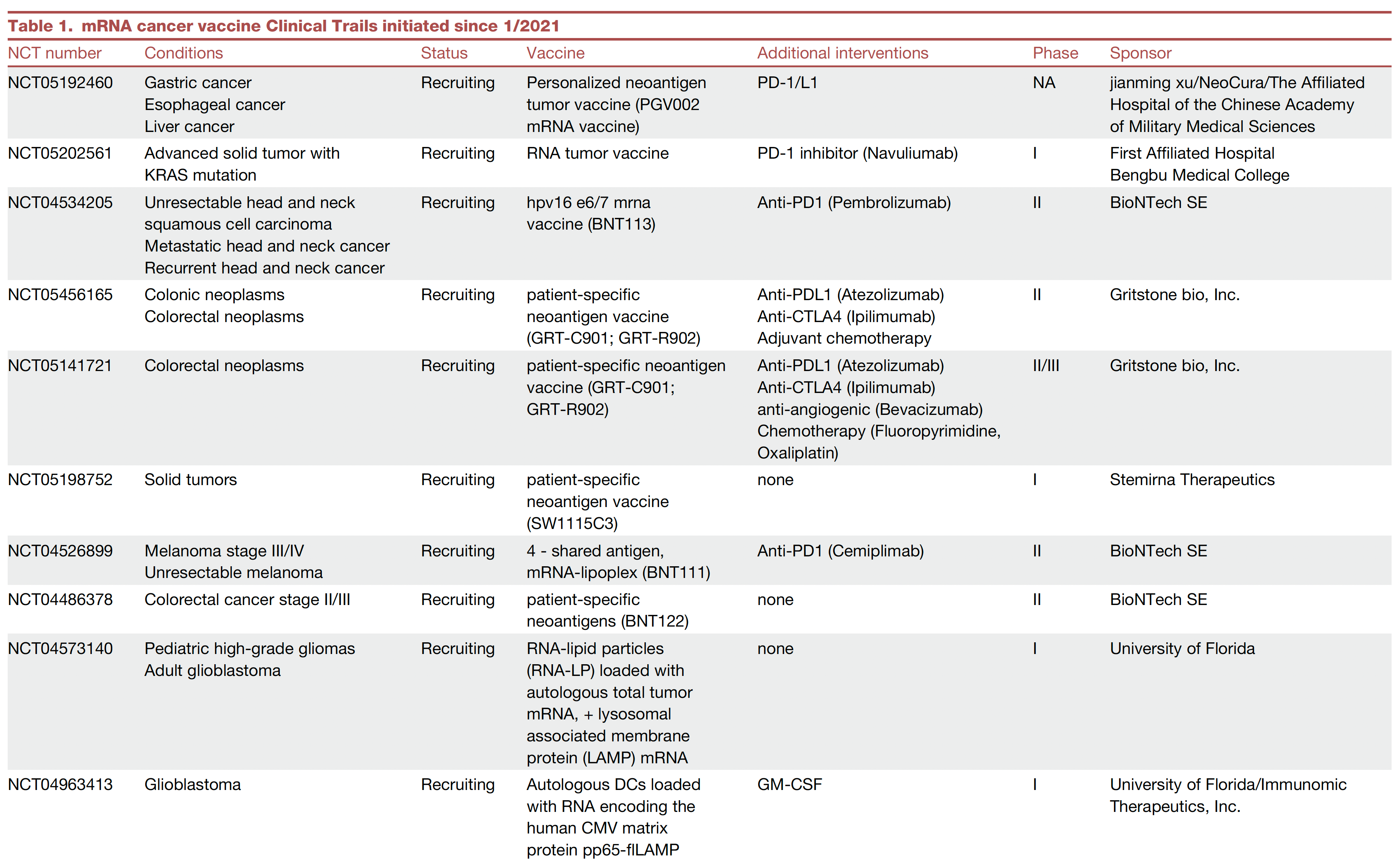
Antibody-Drug Conjugates (ADC)
There is considerable excitement about antibody-drug conjugates (ADC) whereby a linker is used to attach a chemotherapy agent to the checkpoint inhibitor antibody, specifically targeting the cancer cell and facilitating entry of the chemotherapy into the cell. Akin to these are bispecific antibodies (BiTEs, binding to a tumor antigen and T cell receptor simultaneously), both of these conjugates acting as “biologic” or “guided” missiles.
A very good example of the potency of an ADC was seen in a “HER2-low” breast cancer randomized trial. The absence or very low expression or amplification of the HER2 receptor is common in breast cancer and successful treatment has been elusive. A randomized trial of an ADC (trastuzumab deruxtecan) compared to physician’s choice therapy demonstrated a marked success for progression-free survival in HER2-low patients, which was characterized as “unheard-of success” by media coverage.
This strategy is being used to target some of the most difficult cancer driver mutations such as TP53 and KRAS.
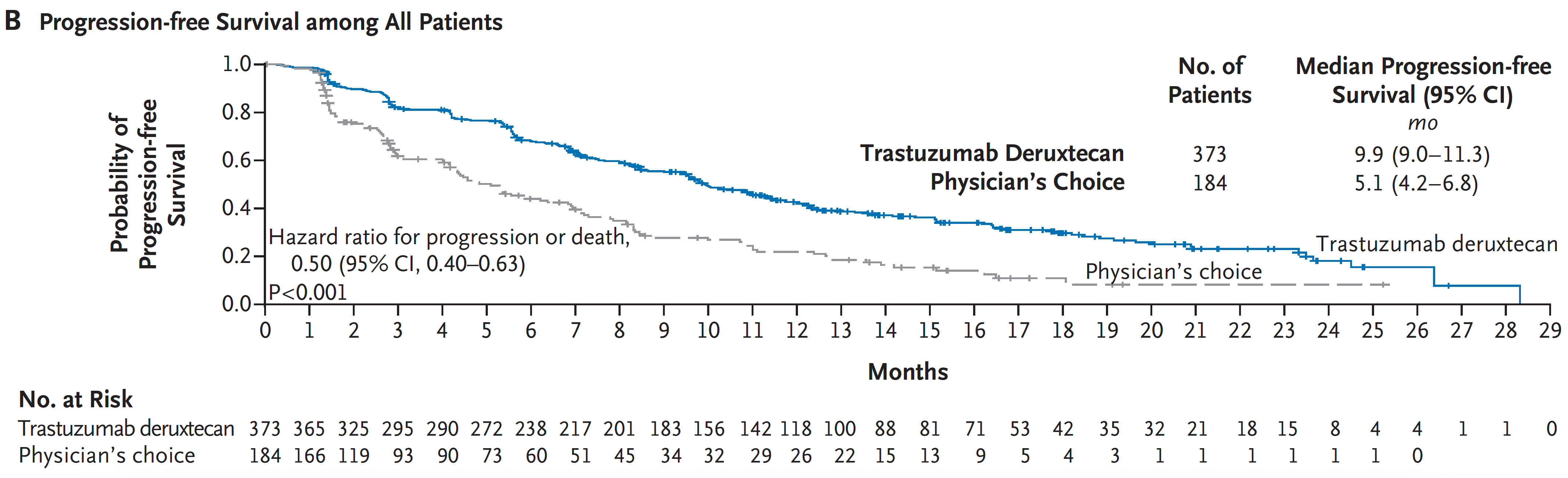
Oncolytic Viruses
Modifying viruses to infect the tumor and make it more visible to the immune system, potentiating anti-tumor responses, known as oncolytic viruses, have been proposed as a way to rev up the immune response for a long time but without positive Phase 3 clinical trials.
After decades of failure, a recent trial in refractory bladder cancer showed marked success, along with others, summarized here, now providing very encouraging results. It looks like oncolytic viruses are on a comeback path.
Engineering T Cells (Chimeric Antigen Receptor [CAR-T])
As I recently reviewed, there are over 500 ongoing clinical trials to build on the success of the first CAR-T approval for leukemia 7 years ago. I won’t go through that all again here, but to reiterate most of the success to date has been in “liquid” blood (leukemia and lymphoma) cancer tumors. This week in Nature is the discovery of a T cell cancer mutation, a gene fusion CARD11-PIK3R3, from a T cell lymphoma that can potentially be used to augment CAR-T efficacy. It has pronounced and prolonged effects in the experimental model. Instead of 1 million cells needed for treatment, even 20,000 were enough to melt the tumor. This is a noteworthy discovery since CAR-T work to date has largely not exploited such naturally occurring mutations, while instead concentrating on those seen in the patient’s set of key tumor mutations.
As currently conceived, CAR-T, and what is being referred to more broadly as adoptive cell therapies, involves removing T cells from the patient’s body and engineering their activation, then reintroducing them back to the patient. This is laborious, technically difficult, and very expensive. Recently, the idea of achieving all of this via an injection of virus that specifically infects T cells and inserts the genes needed, was advanced by two biotech companies with preclinical results, one in non-human primates.
Gearing up to meet the challenge of solid tumor CAR-T intervention, there’s more work using CRISPR genome editing of T cell receptors. A.I. is increasingly being exploited to process the data from sequencing and identify optimal neoantigens.
Instead of just CAR-T, we’re seeing the emergence of CAR-macrophage and CAR-natural killer (NK) cells strategies, and rapidly expanding potential combinations of all the strategies I’ve mentioned. No less, there’s been maturation of on-off suicide switches programmed in, to limit cytokine release and promote safety of these interventions. Overall, major side effects of immunotherapies are not only cytokine release syndromes, but also include interstitial pneumonitis and neurotoxicity.
Summary
Given the multitude of ways cancer cells and tumor tissue can evade our immune response, durably successful treatment remains a daunting challenge. But the ingenuity of so many different approaches to unleash our immune response, and their combinations, provides considerable hope that we’ll increasingly meet the challenge in the years ahead. We have clearly learned that combining different immunotherapy strategies will be essential for many patients with the most resilient solid tumors.
Of concern, as noted by a recent editorial in The Lancet, entitled “Cancer Research Equity: Innovations For The Many, Not The Few,” is that these individualized, sophisticated strategies are not scalable; they will have limited reach and benefit. The movement towards “off the shelf” CAR-T and inexpensive, orally active checkpoint inhibitors may help mitigate this issue.
Notwithstanding this important concern, we’re seeing an array of diverse and potent immunotherapy strategies that are providing highly encouraging results, engendering more excitement than we’ve seen in this space for some time. These should propel substantial improvements in outcomes for patients in the years ahead. It can’t happen soon enough.
Thanks for reading this edition of Ground Truths. If you found it informative, please share it with your colleagues.
Dr. Topol has disclosed the following relevant financial relationships: Serve(d) as a director, officer, partner, employee, advisor, consultant, or trustee for Dexcom; Illumina; Molecular Stethoscope; Quest Diagnostics; Blue Cross Blue Shield Association. Received research grant from National Institutes of Health.
A version of this article appeared on Medscape.com.
This article was originally published on February 10 in Eric Topol’s substack “Ground Truths.”
It’s astounding how devious cancer cells and tumor tissue can be. This week in Science we learned how certain lung cancer cells can function like “Catch Me If You Can” — changing their driver mutation and cell identity to escape targeted therapy. This histologic transformation, as seen in an experimental model, is just one of so many cancer tricks that we are learning about.
Recently, as shown by single-cell sequencing, cancer cells can steal the mitochondria from T cells, a double whammy that turbocharges cancer cells with the hijacked fuel supply and, at the same time, dismantles the immune response.
Last week, we saw how tumor cells can release a virus-like protein that unleashes a vicious autoimmune response.
And then there’s the finding that cancer cell spread predominantly is occurring while we sleep.
As I previously reviewed, the ability for cancer cells to hijack neurons and neural circuits is now well established, no less their ability to reprogram neurons to become adrenergic and stimulate tumor progression, and interfere with the immune response. Stay tuned on that for a new Ground Truths podcast with Prof Michelle Monje, a leader in cancer neuroscience, which will post soon.
Add advancing age’s immunosenescence as yet another challenge to the long and growing list of formidable ways that cancer cells, and the tumor microenvironment, evade our immune response.
An Ever-Expanding Armamentarium
Immune Checkpoint Inhibitors
The field of immunotherapies took off with the immune checkpoint inhibitors, first approved by the FDA in 2011, that take the brakes off of T cells, with the programmed death-1 (PD-1), PD-ligand1, and anti-CTLA-4 monoclonal antibodies.
But we’re clearly learning they are not enough to prevail over cancer with common recurrences, only short term success in most patients, with some notable exceptions. Adding other immune response strategies, such as a vaccine, or antibody-drug conjugates, or engineered T cells, are showing improved chances for success.
Therapeutic Cancer Vaccines
There are many therapeutic cancer vaccines in the works, as reviewed in depth here.
Here’s a list of ongoing clinical trials of cancer vaccines. You’ll note most of these are on top of a checkpoint inhibitor and use personalized neoantigens (cancer cell surface proteins) derived from sequencing (whole-exome or whole genome, RNA-sequencing and HLA-profiling) the patient’s tumor.
An example of positive findings is with the combination of an mRNA-nanoparticle vaccine with up to 34 personalized neoantigens and pembrolizumab (Keytruda) vs pembrolizumab alone in advanced melanoma after resection, with improved outcomes at 3-year follow-up, cutting death or relapse rate in half.
Antibody-Drug Conjugates (ADC)
There is considerable excitement about antibody-drug conjugates (ADC) whereby a linker is used to attach a chemotherapy agent to the checkpoint inhibitor antibody, specifically targeting the cancer cell and facilitating entry of the chemotherapy into the cell. Akin to these are bispecific antibodies (BiTEs, binding to a tumor antigen and T cell receptor simultaneously), both of these conjugates acting as “biologic” or “guided” missiles.
A very good example of the potency of an ADC was seen in a “HER2-low” breast cancer randomized trial. The absence or very low expression or amplification of the HER2 receptor is common in breast cancer and successful treatment has been elusive. A randomized trial of an ADC (trastuzumab deruxtecan) compared to physician’s choice therapy demonstrated a marked success for progression-free survival in HER2-low patients, which was characterized as “unheard-of success” by media coverage.
This strategy is being used to target some of the most difficult cancer driver mutations such as TP53 and KRAS.
Oncolytic Viruses
Modifying viruses to infect the tumor and make it more visible to the immune system, potentiating anti-tumor responses, known as oncolytic viruses, have been proposed as a way to rev up the immune response for a long time but without positive Phase 3 clinical trials.
After decades of failure, a recent trial in refractory bladder cancer showed marked success, along with others, summarized here, now providing very encouraging results. It looks like oncolytic viruses are on a comeback path.
Engineering T Cells (Chimeric Antigen Receptor [CAR-T])
As I recently reviewed, there are over 500 ongoing clinical trials to build on the success of the first CAR-T approval for leukemia 7 years ago. I won’t go through that all again here, but to reiterate most of the success to date has been in “liquid” blood (leukemia and lymphoma) cancer tumors. This week in Nature is the discovery of a T cell cancer mutation, a gene fusion CARD11-PIK3R3, from a T cell lymphoma that can potentially be used to augment CAR-T efficacy. It has pronounced and prolonged effects in the experimental model. Instead of 1 million cells needed for treatment, even 20,000 were enough to melt the tumor. This is a noteworthy discovery since CAR-T work to date has largely not exploited such naturally occurring mutations, while instead concentrating on those seen in the patient’s set of key tumor mutations.
As currently conceived, CAR-T, and what is being referred to more broadly as adoptive cell therapies, involves removing T cells from the patient’s body and engineering their activation, then reintroducing them back to the patient. This is laborious, technically difficult, and very expensive. Recently, the idea of achieving all of this via an injection of virus that specifically infects T cells and inserts the genes needed, was advanced by two biotech companies with preclinical results, one in non-human primates.
Gearing up to meet the challenge of solid tumor CAR-T intervention, there’s more work using CRISPR genome editing of T cell receptors. A.I. is increasingly being exploited to process the data from sequencing and identify optimal neoantigens.
Instead of just CAR-T, we’re seeing the emergence of CAR-macrophage and CAR-natural killer (NK) cells strategies, and rapidly expanding potential combinations of all the strategies I’ve mentioned. No less, there’s been maturation of on-off suicide switches programmed in, to limit cytokine release and promote safety of these interventions. Overall, major side effects of immunotherapies are not only cytokine release syndromes, but also include interstitial pneumonitis and neurotoxicity.
Summary
Given the multitude of ways cancer cells and tumor tissue can evade our immune response, durably successful treatment remains a daunting challenge. But the ingenuity of so many different approaches to unleash our immune response, and their combinations, provides considerable hope that we’ll increasingly meet the challenge in the years ahead. We have clearly learned that combining different immunotherapy strategies will be essential for many patients with the most resilient solid tumors.
Of concern, as noted by a recent editorial in The Lancet, entitled “Cancer Research Equity: Innovations For The Many, Not The Few,” is that these individualized, sophisticated strategies are not scalable; they will have limited reach and benefit. The movement towards “off the shelf” CAR-T and inexpensive, orally active checkpoint inhibitors may help mitigate this issue.
Notwithstanding this important concern, we’re seeing an array of diverse and potent immunotherapy strategies that are providing highly encouraging results, engendering more excitement than we’ve seen in this space for some time. These should propel substantial improvements in outcomes for patients in the years ahead. It can’t happen soon enough.
Thanks for reading this edition of Ground Truths. If you found it informative, please share it with your colleagues.
Dr. Topol has disclosed the following relevant financial relationships: Serve(d) as a director, officer, partner, employee, advisor, consultant, or trustee for Dexcom; Illumina; Molecular Stethoscope; Quest Diagnostics; Blue Cross Blue Shield Association. Received research grant from National Institutes of Health.
A version of this article appeared on Medscape.com.
This article was originally published on February 10 in Eric Topol’s substack “Ground Truths.”
It’s astounding how devious cancer cells and tumor tissue can be. This week in Science we learned how certain lung cancer cells can function like “Catch Me If You Can” — changing their driver mutation and cell identity to escape targeted therapy. This histologic transformation, as seen in an experimental model, is just one of so many cancer tricks that we are learning about.
Recently, as shown by single-cell sequencing, cancer cells can steal the mitochondria from T cells, a double whammy that turbocharges cancer cells with the hijacked fuel supply and, at the same time, dismantles the immune response.
Last week, we saw how tumor cells can release a virus-like protein that unleashes a vicious autoimmune response.
And then there’s the finding that cancer cell spread predominantly is occurring while we sleep.
As I previously reviewed, the ability for cancer cells to hijack neurons and neural circuits is now well established, no less their ability to reprogram neurons to become adrenergic and stimulate tumor progression, and interfere with the immune response. Stay tuned on that for a new Ground Truths podcast with Prof Michelle Monje, a leader in cancer neuroscience, which will post soon.
Add advancing age’s immunosenescence as yet another challenge to the long and growing list of formidable ways that cancer cells, and the tumor microenvironment, evade our immune response.
An Ever-Expanding Armamentarium
Immune Checkpoint Inhibitors
The field of immunotherapies took off with the immune checkpoint inhibitors, first approved by the FDA in 2011, that take the brakes off of T cells, with the programmed death-1 (PD-1), PD-ligand1, and anti-CTLA-4 monoclonal antibodies.
But we’re clearly learning they are not enough to prevail over cancer with common recurrences, only short term success in most patients, with some notable exceptions. Adding other immune response strategies, such as a vaccine, or antibody-drug conjugates, or engineered T cells, are showing improved chances for success.
Therapeutic Cancer Vaccines
There are many therapeutic cancer vaccines in the works, as reviewed in depth here.
Here’s a list of ongoing clinical trials of cancer vaccines. You’ll note most of these are on top of a checkpoint inhibitor and use personalized neoantigens (cancer cell surface proteins) derived from sequencing (whole-exome or whole genome, RNA-sequencing and HLA-profiling) the patient’s tumor.
An example of positive findings is with the combination of an mRNA-nanoparticle vaccine with up to 34 personalized neoantigens and pembrolizumab (Keytruda) vs pembrolizumab alone in advanced melanoma after resection, with improved outcomes at 3-year follow-up, cutting death or relapse rate in half.
Antibody-Drug Conjugates (ADC)
There is considerable excitement about antibody-drug conjugates (ADC) whereby a linker is used to attach a chemotherapy agent to the checkpoint inhibitor antibody, specifically targeting the cancer cell and facilitating entry of the chemotherapy into the cell. Akin to these are bispecific antibodies (BiTEs, binding to a tumor antigen and T cell receptor simultaneously), both of these conjugates acting as “biologic” or “guided” missiles.
A very good example of the potency of an ADC was seen in a “HER2-low” breast cancer randomized trial. The absence or very low expression or amplification of the HER2 receptor is common in breast cancer and successful treatment has been elusive. A randomized trial of an ADC (trastuzumab deruxtecan) compared to physician’s choice therapy demonstrated a marked success for progression-free survival in HER2-low patients, which was characterized as “unheard-of success” by media coverage.
This strategy is being used to target some of the most difficult cancer driver mutations such as TP53 and KRAS.
Oncolytic Viruses
Modifying viruses to infect the tumor and make it more visible to the immune system, potentiating anti-tumor responses, known as oncolytic viruses, have been proposed as a way to rev up the immune response for a long time but without positive Phase 3 clinical trials.
After decades of failure, a recent trial in refractory bladder cancer showed marked success, along with others, summarized here, now providing very encouraging results. It looks like oncolytic viruses are on a comeback path.
Engineering T Cells (Chimeric Antigen Receptor [CAR-T])
As I recently reviewed, there are over 500 ongoing clinical trials to build on the success of the first CAR-T approval for leukemia 7 years ago. I won’t go through that all again here, but to reiterate most of the success to date has been in “liquid” blood (leukemia and lymphoma) cancer tumors. This week in Nature is the discovery of a T cell cancer mutation, a gene fusion CARD11-PIK3R3, from a T cell lymphoma that can potentially be used to augment CAR-T efficacy. It has pronounced and prolonged effects in the experimental model. Instead of 1 million cells needed for treatment, even 20,000 were enough to melt the tumor. This is a noteworthy discovery since CAR-T work to date has largely not exploited such naturally occurring mutations, while instead concentrating on those seen in the patient’s set of key tumor mutations.
As currently conceived, CAR-T, and what is being referred to more broadly as adoptive cell therapies, involves removing T cells from the patient’s body and engineering their activation, then reintroducing them back to the patient. This is laborious, technically difficult, and very expensive. Recently, the idea of achieving all of this via an injection of virus that specifically infects T cells and inserts the genes needed, was advanced by two biotech companies with preclinical results, one in non-human primates.
Gearing up to meet the challenge of solid tumor CAR-T intervention, there’s more work using CRISPR genome editing of T cell receptors. A.I. is increasingly being exploited to process the data from sequencing and identify optimal neoantigens.
Instead of just CAR-T, we’re seeing the emergence of CAR-macrophage and CAR-natural killer (NK) cells strategies, and rapidly expanding potential combinations of all the strategies I’ve mentioned. No less, there’s been maturation of on-off suicide switches programmed in, to limit cytokine release and promote safety of these interventions. Overall, major side effects of immunotherapies are not only cytokine release syndromes, but also include interstitial pneumonitis and neurotoxicity.
Summary
Given the multitude of ways cancer cells and tumor tissue can evade our immune response, durably successful treatment remains a daunting challenge. But the ingenuity of so many different approaches to unleash our immune response, and their combinations, provides considerable hope that we’ll increasingly meet the challenge in the years ahead. We have clearly learned that combining different immunotherapy strategies will be essential for many patients with the most resilient solid tumors.
Of concern, as noted by a recent editorial in The Lancet, entitled “Cancer Research Equity: Innovations For The Many, Not The Few,” is that these individualized, sophisticated strategies are not scalable; they will have limited reach and benefit. The movement towards “off the shelf” CAR-T and inexpensive, orally active checkpoint inhibitors may help mitigate this issue.
Notwithstanding this important concern, we’re seeing an array of diverse and potent immunotherapy strategies that are providing highly encouraging results, engendering more excitement than we’ve seen in this space for some time. These should propel substantial improvements in outcomes for patients in the years ahead. It can’t happen soon enough.
Thanks for reading this edition of Ground Truths. If you found it informative, please share it with your colleagues.
Dr. Topol has disclosed the following relevant financial relationships: Serve(d) as a director, officer, partner, employee, advisor, consultant, or trustee for Dexcom; Illumina; Molecular Stethoscope; Quest Diagnostics; Blue Cross Blue Shield Association. Received research grant from National Institutes of Health.
A version of this article appeared on Medscape.com.
Good Efficacy-Safety Profile of nab-Paclitaxel in Taxane-pretreated Metastatic Breast Cancer
Key clinical point: Nanoparticle albumin‐bound (nab) paclitaxel showed promising clinical activity and tolerable safety in patients with metastatic breast cancer (BC) who were previously treated with taxanes, regardless of their sensitivity or resistance to taxane therapy.
Major finding: The median progression-free survival (PFS) was 7.20 months (95% CI 6.63-7.80 months) for all patients. The median PFS was significantly longer (7.57 vs 4.43 months; P < .001) and the disease control rate was 88.24% vs 68.00% in patients who were taxane-sensitive vs taxane-resistant. Neutropenia (21.19%), leukopenia (19.49%), and sensory neuropathy (6.36%) were the most frequent grade 3-4 adverse events.
Study details: Findings are from a retrospective study including 236 taxane-pretreated women with metastatic BC, of whom 184 were sensitive and 52 were resistant to taxanes based on previous treatment and received nab-paclitaxel as monotherapy or combination therapy.
Disclosures: This study was supported by the Jiangsu Provincial Medical Youth Talent and the Talents Program of Jiangsu Cancer Hospital, China. The authors declared no conflicts of interest.
Source: Xiong W, Xu T, Liu X, Zhang L, Yuan Y. Efficacy and safety of nanoparticle albumin-bound paclitaxel in taxane-pretreated metastatic breast cancer patients. Cancer. 2024 (Jan 25). doi: 10.1002/cncr.35206 Source
Key clinical point: Nanoparticle albumin‐bound (nab) paclitaxel showed promising clinical activity and tolerable safety in patients with metastatic breast cancer (BC) who were previously treated with taxanes, regardless of their sensitivity or resistance to taxane therapy.
Major finding: The median progression-free survival (PFS) was 7.20 months (95% CI 6.63-7.80 months) for all patients. The median PFS was significantly longer (7.57 vs 4.43 months; P < .001) and the disease control rate was 88.24% vs 68.00% in patients who were taxane-sensitive vs taxane-resistant. Neutropenia (21.19%), leukopenia (19.49%), and sensory neuropathy (6.36%) were the most frequent grade 3-4 adverse events.
Study details: Findings are from a retrospective study including 236 taxane-pretreated women with metastatic BC, of whom 184 were sensitive and 52 were resistant to taxanes based on previous treatment and received nab-paclitaxel as monotherapy or combination therapy.
Disclosures: This study was supported by the Jiangsu Provincial Medical Youth Talent and the Talents Program of Jiangsu Cancer Hospital, China. The authors declared no conflicts of interest.
Source: Xiong W, Xu T, Liu X, Zhang L, Yuan Y. Efficacy and safety of nanoparticle albumin-bound paclitaxel in taxane-pretreated metastatic breast cancer patients. Cancer. 2024 (Jan 25). doi: 10.1002/cncr.35206 Source
Key clinical point: Nanoparticle albumin‐bound (nab) paclitaxel showed promising clinical activity and tolerable safety in patients with metastatic breast cancer (BC) who were previously treated with taxanes, regardless of their sensitivity or resistance to taxane therapy.
Major finding: The median progression-free survival (PFS) was 7.20 months (95% CI 6.63-7.80 months) for all patients. The median PFS was significantly longer (7.57 vs 4.43 months; P < .001) and the disease control rate was 88.24% vs 68.00% in patients who were taxane-sensitive vs taxane-resistant. Neutropenia (21.19%), leukopenia (19.49%), and sensory neuropathy (6.36%) were the most frequent grade 3-4 adverse events.
Study details: Findings are from a retrospective study including 236 taxane-pretreated women with metastatic BC, of whom 184 were sensitive and 52 were resistant to taxanes based on previous treatment and received nab-paclitaxel as monotherapy or combination therapy.
Disclosures: This study was supported by the Jiangsu Provincial Medical Youth Talent and the Talents Program of Jiangsu Cancer Hospital, China. The authors declared no conflicts of interest.
Source: Xiong W, Xu T, Liu X, Zhang L, Yuan Y. Efficacy and safety of nanoparticle albumin-bound paclitaxel in taxane-pretreated metastatic breast cancer patients. Cancer. 2024 (Jan 25). doi: 10.1002/cncr.35206 Source