User login
Choosing Wisely: Second-round GI test list fine tuned
WASHINGTON – More than a dozen medical groups have issued new lists of tests and procedures that they say are often unnecessary and overused and should be questioned by both physicians and patients.
The lists – issued by 17 physician organizations on Feb. 21 – comprise the second iteration of the Choosing Wisely campaign, launched by the American Board of Internal Medicine Foundation in April 2012. The lists, compiled by each group as "Five Things Physicians and Patients Should Question," are evidence-based recommendations to help physicians and patients make decisions together.
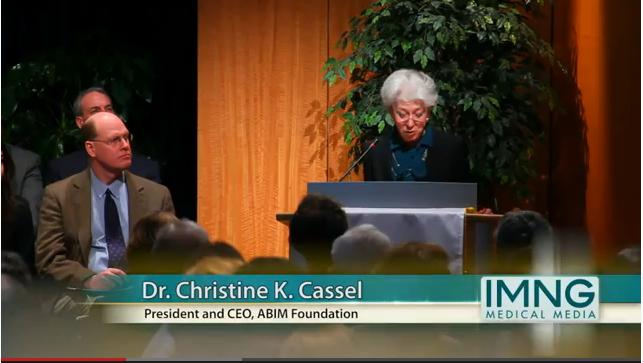
"Patient empowerment and appropriate care is what Choosing Wisely is all about," ABIM Foundation president and CEO Christine Cassel said at the press conference. The groups aim to change the perception that, "more is always better," she said.
Groups such as AARP, the National Business Group on Health, labor unions, and even Wikipedia have been brought into the campaign. Patient outreach is spearheaded by Consumer Reports, which is producing patient-friendly brochures based on the lists.
The first lists were issued in April 2012 and covered procedures and tests deemed overused by the American Academy of Family Physicians (AAFP), the American College of Physicians, the American Gastroenterological Association, and six other physician organizations.
"As part of our longstanding efforts to address the issues associated with health care utilization, the AGA is pleased to be a part of the Choosing Wisely campaign, which aims to build a more sustainable health care system that delivers high-quality, effective care," said Lawrence R. Kosinski, M.D., MBA, AGAF, chair of the AGA Institute Practice Management and Economics Committee. "AGA’s participation in Choosing Wisely is a natural extension of our years of work defining quality gastroenterological care and giving gastroenterologists tools for working with patients."
Each "Five Things" list is the result of a long process within the organization, which is explained at the end of the list. And each recommendation is accompanied by the reasoning and evidence for its selection.
The AGA’s list of Five Things makes the following recommendations:
• For pharmacological treatment of patients with gastroesophageal reflux disease (GERD), long-term acid suppression therapy (proton pump inhibitors or histamine2 receptor antagonists) should be titrated to the lowest effective dose needed to achieve therapeutic goals.
The main identifiable risk associated with reducing or discontinuing acid suppression therapy is an increased symptom burden. The decision regarding the need for (and dosage of) maintenance therapy is driven by the impact of those residual symptoms on the patient’s quality of life rather than as a disease control measure.
• Do not repeat colorectal cancer screening (by any method) for 10 years after a high-quality colonoscopy is negative in average-risk individuals.
A screening colonoscopy every 10 years is the recommended interval for adults without increased risk for colorectal cancer, beginning at age 50 years. Published studies indicate the risk of cancer is low for 10 years after a high-quality colonoscopy fails to detect neoplasia in this population.
• Do not repeat colonoscopy for at least 5 years for patients who have one or two small (less than 1 cm) adenomatous polyps, without high-grade dysplasia, completely removed via a high-quality colonoscopy.
The timing of a follow-up surveillance colonoscopy should be determined based on the results of a previous high-quality colonoscopy. Evidence-based (published) guidelines provide recommendations that patients with one or two small tubular adenomas with low-grade dysplasia have surveillance colonoscopy 5-10 years after initial polypectomy. "The precise timing within this interval should be based on other clinical factors (such as prior colonoscopy findings, family history, and the preferences of the patient and judgment of the physician)."
• For a patient who is diagnosed with Barrett’s esophagus who has undergone a second endoscopy that confirms the absence of dysplasia on biopsy, a follow-up surveillance examination should not be performed in less than 3 years as per published guidelines.
In patients with Barrett’s esophagus without dysplasia (cellular changes) the risk of cancer is very low. In these patients, it is appropriate and safe to examine the esophagus and check for dysplasia no more often than every 3 years because if these cellular changes occur, they do so very slowly.
• For a patient with functional abdominal pain syndrome (as per ROME III criteria) computed tomography (CT) scans should not be repeated unless there is a major change in clinical findings or symptoms.
There is a small but measurable increase in one’s cancer risk from x-ray exposure. An abdominal CT scan is one of the higher-radiation exposure x-rays – equivalent to 3 years of natural background radiation. Because of this risk and the high costs of this procedure, CT scans should be performed only when they are likely to provide useful information that changes patient management.
Click here to learn more about AGA’s involvement and download the patient reports.
Later this year, several groups will add to their lists and a new cohort of physician organizations will join the effort, ABIM’s Dr. Cassell noted.
"I don’t think we can overcommunicate on this issue – to patients, to providers, to employers," Dr. David L. Longworth, chairman of the Medicine Institute at the Cleveland Clinic, said at the briefing. "We need to reframe expectations and educate people about what is and is not appropriate."
All of the lists can be found at the Choosing Wisely website.
On Twitter @aliciaault
WASHINGTON – More than a dozen medical groups have issued new lists of tests and procedures that they say are often unnecessary and overused and should be questioned by both physicians and patients.
The lists – issued by 17 physician organizations on Feb. 21 – comprise the second iteration of the Choosing Wisely campaign, launched by the American Board of Internal Medicine Foundation in April 2012. The lists, compiled by each group as "Five Things Physicians and Patients Should Question," are evidence-based recommendations to help physicians and patients make decisions together.
"Patient empowerment and appropriate care is what Choosing Wisely is all about," ABIM Foundation president and CEO Christine Cassel said at the press conference. The groups aim to change the perception that, "more is always better," she said.
Groups such as AARP, the National Business Group on Health, labor unions, and even Wikipedia have been brought into the campaign. Patient outreach is spearheaded by Consumer Reports, which is producing patient-friendly brochures based on the lists.
The first lists were issued in April 2012 and covered procedures and tests deemed overused by the American Academy of Family Physicians (AAFP), the American College of Physicians, the American Gastroenterological Association, and six other physician organizations.
"As part of our longstanding efforts to address the issues associated with health care utilization, the AGA is pleased to be a part of the Choosing Wisely campaign, which aims to build a more sustainable health care system that delivers high-quality, effective care," said Lawrence R. Kosinski, M.D., MBA, AGAF, chair of the AGA Institute Practice Management and Economics Committee. "AGA’s participation in Choosing Wisely is a natural extension of our years of work defining quality gastroenterological care and giving gastroenterologists tools for working with patients."
Each "Five Things" list is the result of a long process within the organization, which is explained at the end of the list. And each recommendation is accompanied by the reasoning and evidence for its selection.
The AGA’s list of Five Things makes the following recommendations:
• For pharmacological treatment of patients with gastroesophageal reflux disease (GERD), long-term acid suppression therapy (proton pump inhibitors or histamine2 receptor antagonists) should be titrated to the lowest effective dose needed to achieve therapeutic goals.
The main identifiable risk associated with reducing or discontinuing acid suppression therapy is an increased symptom burden. The decision regarding the need for (and dosage of) maintenance therapy is driven by the impact of those residual symptoms on the patient’s quality of life rather than as a disease control measure.
• Do not repeat colorectal cancer screening (by any method) for 10 years after a high-quality colonoscopy is negative in average-risk individuals.
A screening colonoscopy every 10 years is the recommended interval for adults without increased risk for colorectal cancer, beginning at age 50 years. Published studies indicate the risk of cancer is low for 10 years after a high-quality colonoscopy fails to detect neoplasia in this population.
• Do not repeat colonoscopy for at least 5 years for patients who have one or two small (less than 1 cm) adenomatous polyps, without high-grade dysplasia, completely removed via a high-quality colonoscopy.
The timing of a follow-up surveillance colonoscopy should be determined based on the results of a previous high-quality colonoscopy. Evidence-based (published) guidelines provide recommendations that patients with one or two small tubular adenomas with low-grade dysplasia have surveillance colonoscopy 5-10 years after initial polypectomy. "The precise timing within this interval should be based on other clinical factors (such as prior colonoscopy findings, family history, and the preferences of the patient and judgment of the physician)."
• For a patient who is diagnosed with Barrett’s esophagus who has undergone a second endoscopy that confirms the absence of dysplasia on biopsy, a follow-up surveillance examination should not be performed in less than 3 years as per published guidelines.
In patients with Barrett’s esophagus without dysplasia (cellular changes) the risk of cancer is very low. In these patients, it is appropriate and safe to examine the esophagus and check for dysplasia no more often than every 3 years because if these cellular changes occur, they do so very slowly.
• For a patient with functional abdominal pain syndrome (as per ROME III criteria) computed tomography (CT) scans should not be repeated unless there is a major change in clinical findings or symptoms.
There is a small but measurable increase in one’s cancer risk from x-ray exposure. An abdominal CT scan is one of the higher-radiation exposure x-rays – equivalent to 3 years of natural background radiation. Because of this risk and the high costs of this procedure, CT scans should be performed only when they are likely to provide useful information that changes patient management.
Click here to learn more about AGA’s involvement and download the patient reports.
Later this year, several groups will add to their lists and a new cohort of physician organizations will join the effort, ABIM’s Dr. Cassell noted.
"I don’t think we can overcommunicate on this issue – to patients, to providers, to employers," Dr. David L. Longworth, chairman of the Medicine Institute at the Cleveland Clinic, said at the briefing. "We need to reframe expectations and educate people about what is and is not appropriate."
All of the lists can be found at the Choosing Wisely website.
On Twitter @aliciaault
WASHINGTON – More than a dozen medical groups have issued new lists of tests and procedures that they say are often unnecessary and overused and should be questioned by both physicians and patients.
The lists – issued by 17 physician organizations on Feb. 21 – comprise the second iteration of the Choosing Wisely campaign, launched by the American Board of Internal Medicine Foundation in April 2012. The lists, compiled by each group as "Five Things Physicians and Patients Should Question," are evidence-based recommendations to help physicians and patients make decisions together.
"Patient empowerment and appropriate care is what Choosing Wisely is all about," ABIM Foundation president and CEO Christine Cassel said at the press conference. The groups aim to change the perception that, "more is always better," she said.
Groups such as AARP, the National Business Group on Health, labor unions, and even Wikipedia have been brought into the campaign. Patient outreach is spearheaded by Consumer Reports, which is producing patient-friendly brochures based on the lists.
The first lists were issued in April 2012 and covered procedures and tests deemed overused by the American Academy of Family Physicians (AAFP), the American College of Physicians, the American Gastroenterological Association, and six other physician organizations.
"As part of our longstanding efforts to address the issues associated with health care utilization, the AGA is pleased to be a part of the Choosing Wisely campaign, which aims to build a more sustainable health care system that delivers high-quality, effective care," said Lawrence R. Kosinski, M.D., MBA, AGAF, chair of the AGA Institute Practice Management and Economics Committee. "AGA’s participation in Choosing Wisely is a natural extension of our years of work defining quality gastroenterological care and giving gastroenterologists tools for working with patients."
Each "Five Things" list is the result of a long process within the organization, which is explained at the end of the list. And each recommendation is accompanied by the reasoning and evidence for its selection.
The AGA’s list of Five Things makes the following recommendations:
• For pharmacological treatment of patients with gastroesophageal reflux disease (GERD), long-term acid suppression therapy (proton pump inhibitors or histamine2 receptor antagonists) should be titrated to the lowest effective dose needed to achieve therapeutic goals.
The main identifiable risk associated with reducing or discontinuing acid suppression therapy is an increased symptom burden. The decision regarding the need for (and dosage of) maintenance therapy is driven by the impact of those residual symptoms on the patient’s quality of life rather than as a disease control measure.
• Do not repeat colorectal cancer screening (by any method) for 10 years after a high-quality colonoscopy is negative in average-risk individuals.
A screening colonoscopy every 10 years is the recommended interval for adults without increased risk for colorectal cancer, beginning at age 50 years. Published studies indicate the risk of cancer is low for 10 years after a high-quality colonoscopy fails to detect neoplasia in this population.
• Do not repeat colonoscopy for at least 5 years for patients who have one or two small (less than 1 cm) adenomatous polyps, without high-grade dysplasia, completely removed via a high-quality colonoscopy.
The timing of a follow-up surveillance colonoscopy should be determined based on the results of a previous high-quality colonoscopy. Evidence-based (published) guidelines provide recommendations that patients with one or two small tubular adenomas with low-grade dysplasia have surveillance colonoscopy 5-10 years after initial polypectomy. "The precise timing within this interval should be based on other clinical factors (such as prior colonoscopy findings, family history, and the preferences of the patient and judgment of the physician)."
• For a patient who is diagnosed with Barrett’s esophagus who has undergone a second endoscopy that confirms the absence of dysplasia on biopsy, a follow-up surveillance examination should not be performed in less than 3 years as per published guidelines.
In patients with Barrett’s esophagus without dysplasia (cellular changes) the risk of cancer is very low. In these patients, it is appropriate and safe to examine the esophagus and check for dysplasia no more often than every 3 years because if these cellular changes occur, they do so very slowly.
• For a patient with functional abdominal pain syndrome (as per ROME III criteria) computed tomography (CT) scans should not be repeated unless there is a major change in clinical findings or symptoms.
There is a small but measurable increase in one’s cancer risk from x-ray exposure. An abdominal CT scan is one of the higher-radiation exposure x-rays – equivalent to 3 years of natural background radiation. Because of this risk and the high costs of this procedure, CT scans should be performed only when they are likely to provide useful information that changes patient management.
Click here to learn more about AGA’s involvement and download the patient reports.
Later this year, several groups will add to their lists and a new cohort of physician organizations will join the effort, ABIM’s Dr. Cassell noted.
"I don’t think we can overcommunicate on this issue – to patients, to providers, to employers," Dr. David L. Longworth, chairman of the Medicine Institute at the Cleveland Clinic, said at the briefing. "We need to reframe expectations and educate people about what is and is not appropriate."
All of the lists can be found at the Choosing Wisely website.
On Twitter @aliciaault
AT A PRESS CONFERENCE HELD BY THE AMERICAN BOARD OF INTERNAL MEDICINE
FDA approves novel oral estrogen for postmenopausal dyspareunia
The Food and Drug Administration has approved the novel selective estrogen receptor modulator ospemifene (Osphena) to treat moderate to severe dyspareunia due to vulvar and vaginal atrophy.
"Dyspareunia is among the problems most frequently reported by postmenopausal women," Dr. Victoria Kusiak, deputy director of the Office of Drug Evaluation III in the FDA’s Center for Drug Evaluation and Research, said in a statement. "Osphena provides an additional treatment option for women seeking relief."
The once-daily pill acts like an estrogen on vaginal tissues, thickening them in the face of declining estrogen levels during menopause, according to the FDA. That may help alleviate pain during intercourse that occurs as a result of the thinned and fragile tissues.
According to ospemifene maker Shionogi Inc. of Florham Park, N.J., 32 million postmenopausal women in the United States experience symptoms of vulvar and vaginal atrophy (VVA). The company claims that only 7% or so are being treated with a prescription medication.
"While more than half of all women in the U.S. will experience symptoms of VVA at some time in their postmenopausal life, the vast majority of women with VVA are not being treated with a prescription medication because women and their health care professionals are not proactively discussing the condition, and its associated symptoms," Dr. David J. Portman, director of the Columbus (Ohio) Center for Women’s Health Research, said in a statement issued by Shionogi.
Most dyspareunia is addressed with over-the-counter moisturizers or creams, or with prescription tablets, creams, or rings, which are inserted vaginally.
Physicians and patients often seek alternatives because of concerns that those prescription estrogen-based treatments may also have effects on breast and endometrial tissue.
Ospemifene, however, will come with a boxed warning about the potential to act on endometrial tissue, which could lead to bleeding, precancerous, or cancerous conditions. The FDA said that ospemifene "should be prescribed for the shortest duration consistent with treatment goals and risks for the individual woman."
Even so, a 180-patient study presented at the American College of Obstetricians and Gynecologists annual meeting in June 2012 showed that ospemifene had minimal effects on the endometrial lining, compared with placebo.
The drug’s label also will contain a warning about increased rates of thrombotic and hemorrhagic strokes (pegging the incidence at 0.72 and 1.45 per 1,000 women, respectively). The label also will state the rate of deep vein thrombosis in ospemifene users (1.45 per 1,000 women). The FDA said that these elevated risks are lower than with therapies that contain only estrogen.
In three studies of 1,889 postmenopausal women with symptoms of vulvar and vaginal atrophy, women were randomly assigned to receive ospemifene or placebo. The first two studies showed a statistically significant improvement of dyspareunia in women treated with ospemifene after 12 weeks, compared with women treated with placebo. The third study showed that ospemifene was a safe drug for treating dyspareunia. Results from one of the first two trials were presented at the annual meeting of the North American Menopause Society in 2011.
The FDA reports that other common side effects reported during trials of ospemifene included hot flush/flashes, vaginal discharge, muscle spasms, genital discharge, and excessive sweating.
On Twitter @aliciaault
The Food and Drug Administration has approved the novel selective estrogen receptor modulator ospemifene (Osphena) to treat moderate to severe dyspareunia due to vulvar and vaginal atrophy.
"Dyspareunia is among the problems most frequently reported by postmenopausal women," Dr. Victoria Kusiak, deputy director of the Office of Drug Evaluation III in the FDA’s Center for Drug Evaluation and Research, said in a statement. "Osphena provides an additional treatment option for women seeking relief."
The once-daily pill acts like an estrogen on vaginal tissues, thickening them in the face of declining estrogen levels during menopause, according to the FDA. That may help alleviate pain during intercourse that occurs as a result of the thinned and fragile tissues.
According to ospemifene maker Shionogi Inc. of Florham Park, N.J., 32 million postmenopausal women in the United States experience symptoms of vulvar and vaginal atrophy (VVA). The company claims that only 7% or so are being treated with a prescription medication.
"While more than half of all women in the U.S. will experience symptoms of VVA at some time in their postmenopausal life, the vast majority of women with VVA are not being treated with a prescription medication because women and their health care professionals are not proactively discussing the condition, and its associated symptoms," Dr. David J. Portman, director of the Columbus (Ohio) Center for Women’s Health Research, said in a statement issued by Shionogi.
Most dyspareunia is addressed with over-the-counter moisturizers or creams, or with prescription tablets, creams, or rings, which are inserted vaginally.
Physicians and patients often seek alternatives because of concerns that those prescription estrogen-based treatments may also have effects on breast and endometrial tissue.
Ospemifene, however, will come with a boxed warning about the potential to act on endometrial tissue, which could lead to bleeding, precancerous, or cancerous conditions. The FDA said that ospemifene "should be prescribed for the shortest duration consistent with treatment goals and risks for the individual woman."
Even so, a 180-patient study presented at the American College of Obstetricians and Gynecologists annual meeting in June 2012 showed that ospemifene had minimal effects on the endometrial lining, compared with placebo.
The drug’s label also will contain a warning about increased rates of thrombotic and hemorrhagic strokes (pegging the incidence at 0.72 and 1.45 per 1,000 women, respectively). The label also will state the rate of deep vein thrombosis in ospemifene users (1.45 per 1,000 women). The FDA said that these elevated risks are lower than with therapies that contain only estrogen.
In three studies of 1,889 postmenopausal women with symptoms of vulvar and vaginal atrophy, women were randomly assigned to receive ospemifene or placebo. The first two studies showed a statistically significant improvement of dyspareunia in women treated with ospemifene after 12 weeks, compared with women treated with placebo. The third study showed that ospemifene was a safe drug for treating dyspareunia. Results from one of the first two trials were presented at the annual meeting of the North American Menopause Society in 2011.
The FDA reports that other common side effects reported during trials of ospemifene included hot flush/flashes, vaginal discharge, muscle spasms, genital discharge, and excessive sweating.
On Twitter @aliciaault
The Food and Drug Administration has approved the novel selective estrogen receptor modulator ospemifene (Osphena) to treat moderate to severe dyspareunia due to vulvar and vaginal atrophy.
"Dyspareunia is among the problems most frequently reported by postmenopausal women," Dr. Victoria Kusiak, deputy director of the Office of Drug Evaluation III in the FDA’s Center for Drug Evaluation and Research, said in a statement. "Osphena provides an additional treatment option for women seeking relief."
The once-daily pill acts like an estrogen on vaginal tissues, thickening them in the face of declining estrogen levels during menopause, according to the FDA. That may help alleviate pain during intercourse that occurs as a result of the thinned and fragile tissues.
According to ospemifene maker Shionogi Inc. of Florham Park, N.J., 32 million postmenopausal women in the United States experience symptoms of vulvar and vaginal atrophy (VVA). The company claims that only 7% or so are being treated with a prescription medication.
"While more than half of all women in the U.S. will experience symptoms of VVA at some time in their postmenopausal life, the vast majority of women with VVA are not being treated with a prescription medication because women and their health care professionals are not proactively discussing the condition, and its associated symptoms," Dr. David J. Portman, director of the Columbus (Ohio) Center for Women’s Health Research, said in a statement issued by Shionogi.
Most dyspareunia is addressed with over-the-counter moisturizers or creams, or with prescription tablets, creams, or rings, which are inserted vaginally.
Physicians and patients often seek alternatives because of concerns that those prescription estrogen-based treatments may also have effects on breast and endometrial tissue.
Ospemifene, however, will come with a boxed warning about the potential to act on endometrial tissue, which could lead to bleeding, precancerous, or cancerous conditions. The FDA said that ospemifene "should be prescribed for the shortest duration consistent with treatment goals and risks for the individual woman."
Even so, a 180-patient study presented at the American College of Obstetricians and Gynecologists annual meeting in June 2012 showed that ospemifene had minimal effects on the endometrial lining, compared with placebo.
The drug’s label also will contain a warning about increased rates of thrombotic and hemorrhagic strokes (pegging the incidence at 0.72 and 1.45 per 1,000 women, respectively). The label also will state the rate of deep vein thrombosis in ospemifene users (1.45 per 1,000 women). The FDA said that these elevated risks are lower than with therapies that contain only estrogen.
In three studies of 1,889 postmenopausal women with symptoms of vulvar and vaginal atrophy, women were randomly assigned to receive ospemifene or placebo. The first two studies showed a statistically significant improvement of dyspareunia in women treated with ospemifene after 12 weeks, compared with women treated with placebo. The third study showed that ospemifene was a safe drug for treating dyspareunia. Results from one of the first two trials were presented at the annual meeting of the North American Menopause Society in 2011.
The FDA reports that other common side effects reported during trials of ospemifene included hot flush/flashes, vaginal discharge, muscle spasms, genital discharge, and excessive sweating.
On Twitter @aliciaault
Outcomes no better at bariatric centers of excellence
Centers of Excellence for bariatric surgery – the only locations where the procedures are covered by Medicare – do not yield fewer complications or better outcomes for patients.
The Centers for Medicare and Medicaid Services established the Centers of Excellence in 2006 with an eye on increasing safety and decreasing negative outcomes.
Dr. Justin B. Dimick of the University of Michigan, Ann Arbor, and his colleagues, reviewed bariatric surgeries performed before and after that policy went into effect and found that there were no statistically significant improvement in complications, serious complications, or reoperations. Their findings were published Feb. 26 in JAMA.
The overall safety of bariatric surgery has increased over the years, Dr. Dimick noted, as surgeons have increasingly chosen less-invasive, lower-risk procedures such as laparoscopic gastric banding, rather than higher-risk, open procedures. Surgeons’ experience has increased and technology has improved as well; both trends have made the operations easier and less dangerous.

"Our study found large improvements in bariatric surgery outcomes over time even after adjusting for changes in procedure use," he wrote.
Taking into account patient factors such as age and comorbidities, procedure type, and year of operation, 5.5% of patients at a COE hospital had any complication, compared with 6% for those at a nondesignated facility. For serious complications, the rate was 2.2% at COEs vs. 2.5% at non-COEs. The reoperation rate was 0.83% for patients in COE hospitals, compared with 0.96% at nondesignated facilities (JAMA 2013;309:792-9).
The results were drawn from comparisons of discharge data from 2004-2009 in 12 states, chosen for geographic diversity. The discharges were for Medicare and non-Medicare patients, and the researchers examined outcomes for the 2 years before the CMS policy change and about 3 years after. Overall, there were 6,723 Medicare patients who had bariatric surgery before 2006, and 15,684 who had it afterward. For non-Medicare patients, the data covered 95,558 procedures before the change, and 155,117 afterward.
Facilities can gain the Centers of Excellence designation if they meet three primary criteria: provide accommodations for obese patients, and other structural elements; perform a minimum volume of 125 cases per year; and, submit data to either the American College of Surgeons or the American Society of Metabolic and Bariatric Surgery registry. Facilities are certified by the ACS or the ASMBS. Since 2006, the CMS has designated almost 600 facilities as a Bariatric Center of Excellence.
The structural resources required by the CMS do not differ much from what the Joint Commission requires, Dr. Dimick wrote, and volume standards don’t necessarily correlate with quality. He added that the registry data are not used in any kind of continuous quality improvement process, and thus probably do not have much of an impact.
The ACS and the ASMBS have been developing new outcomes measures and standards for that registry, the Metabolic and Bariatric Surgery Accreditation and Quality Improvement Program (MBSAQIP). Public comment closed on Jan. 15. The organizations said they expected to incorporate any comments into a final draft.
The CMS policy restricting coverage to Centers of Excellence should be revisited, Dr. Dimick advised. The policy does not appear to improve outcomes and may even have the unintended consequence of "sacrificing long-term effectiveness for improved short-term safety."
The study was supported by grants from the National Institute on Aging and the Agency for Healthcare Research and Quality. The authors had no relevant disclosures.
On Twitter @aliciaault
Since the Medicare policy decision 7 years ago, the Centers of Excellence have contributed to notable improvements in bariatric surgery, primarily by increasing awareness of variation between centers and focusing the attention of physicians, hospital health care personnel and administrators, and payers on the need to improve quality and safety. However, the limitations of COEs are now recognized by the American Society for Metabolic and Bariatric Surgery and the American College of Surgeons, which have joined forces and have an initiative underway to develop new standards, with an increased focus on more robust outcome measures.
As the CMS and the surgical societies reexamine the COE policy in bariatric surgery, there is an opportunity for them to be creative; to catapult surgical outcomes science forward through scalable approaches to data sharing, measurement, collaborative networks and comparative effectiveness research; and to design a program that can not only identify high-quality hospitals, but also provide a sustained mechanism for quality improvement.
Dr. Caprice C. Greenberg is associate professor of surgery at the University of Wisconsin, Madison, and director of the Wisconsin Surgical Outcomes Research Program. Her remarks were made in an editorial accompanying Dr. Dimick’s report (JAMA 2013;309:827-8).
The Centers for Medicare and Medicaid Services,
Dr. Justin B. Dimick
Since the Medicare policy decision 7 years ago, the Centers of Excellence have contributed to notable improvements in bariatric surgery, primarily by increasing awareness of variation between centers and focusing the attention of physicians, hospital health care personnel and administrators, and payers on the need to improve quality and safety. However, the limitations of COEs are now recognized by the American Society for Metabolic and Bariatric Surgery and the American College of Surgeons, which have joined forces and have an initiative underway to develop new standards, with an increased focus on more robust outcome measures.
As the CMS and the surgical societies reexamine the COE policy in bariatric surgery, there is an opportunity for them to be creative; to catapult surgical outcomes science forward through scalable approaches to data sharing, measurement, collaborative networks and comparative effectiveness research; and to design a program that can not only identify high-quality hospitals, but also provide a sustained mechanism for quality improvement.
Dr. Caprice C. Greenberg is associate professor of surgery at the University of Wisconsin, Madison, and director of the Wisconsin Surgical Outcomes Research Program. Her remarks were made in an editorial accompanying Dr. Dimick’s report (JAMA 2013;309:827-8).
Since the Medicare policy decision 7 years ago, the Centers of Excellence have contributed to notable improvements in bariatric surgery, primarily by increasing awareness of variation between centers and focusing the attention of physicians, hospital health care personnel and administrators, and payers on the need to improve quality and safety. However, the limitations of COEs are now recognized by the American Society for Metabolic and Bariatric Surgery and the American College of Surgeons, which have joined forces and have an initiative underway to develop new standards, with an increased focus on more robust outcome measures.
As the CMS and the surgical societies reexamine the COE policy in bariatric surgery, there is an opportunity for them to be creative; to catapult surgical outcomes science forward through scalable approaches to data sharing, measurement, collaborative networks and comparative effectiveness research; and to design a program that can not only identify high-quality hospitals, but also provide a sustained mechanism for quality improvement.
Dr. Caprice C. Greenberg is associate professor of surgery at the University of Wisconsin, Madison, and director of the Wisconsin Surgical Outcomes Research Program. Her remarks were made in an editorial accompanying Dr. Dimick’s report (JAMA 2013;309:827-8).
Centers of Excellence for bariatric surgery – the only locations where the procedures are covered by Medicare – do not yield fewer complications or better outcomes for patients.
The Centers for Medicare and Medicaid Services established the Centers of Excellence in 2006 with an eye on increasing safety and decreasing negative outcomes.
Dr. Justin B. Dimick of the University of Michigan, Ann Arbor, and his colleagues, reviewed bariatric surgeries performed before and after that policy went into effect and found that there were no statistically significant improvement in complications, serious complications, or reoperations. Their findings were published Feb. 26 in JAMA.
The overall safety of bariatric surgery has increased over the years, Dr. Dimick noted, as surgeons have increasingly chosen less-invasive, lower-risk procedures such as laparoscopic gastric banding, rather than higher-risk, open procedures. Surgeons’ experience has increased and technology has improved as well; both trends have made the operations easier and less dangerous.
"Our study found large improvements in bariatric surgery outcomes over time even after adjusting for changes in procedure use," he wrote.
Taking into account patient factors such as age and comorbidities, procedure type, and year of operation, 5.5% of patients at a COE hospital had any complication, compared with 6% for those at a nondesignated facility. For serious complications, the rate was 2.2% at COEs vs. 2.5% at non-COEs. The reoperation rate was 0.83% for patients in COE hospitals, compared with 0.96% at nondesignated facilities (JAMA 2013;309:792-9).
The results were drawn from comparisons of discharge data from 2004-2009 in 12 states, chosen for geographic diversity. The discharges were for Medicare and non-Medicare patients, and the researchers examined outcomes for the 2 years before the CMS policy change and about 3 years after. Overall, there were 6,723 Medicare patients who had bariatric surgery before 2006, and 15,684 who had it afterward. For non-Medicare patients, the data covered 95,558 procedures before the change, and 155,117 afterward.
Facilities can gain the Centers of Excellence designation if they meet three primary criteria: provide accommodations for obese patients, and other structural elements; perform a minimum volume of 125 cases per year; and, submit data to either the American College of Surgeons or the American Society of Metabolic and Bariatric Surgery registry. Facilities are certified by the ACS or the ASMBS. Since 2006, the CMS has designated almost 600 facilities as a Bariatric Center of Excellence.
The structural resources required by the CMS do not differ much from what the Joint Commission requires, Dr. Dimick wrote, and volume standards don’t necessarily correlate with quality. He added that the registry data are not used in any kind of continuous quality improvement process, and thus probably do not have much of an impact.
The ACS and the ASMBS have been developing new outcomes measures and standards for that registry, the Metabolic and Bariatric Surgery Accreditation and Quality Improvement Program (MBSAQIP). Public comment closed on Jan. 15. The organizations said they expected to incorporate any comments into a final draft.
The CMS policy restricting coverage to Centers of Excellence should be revisited, Dr. Dimick advised. The policy does not appear to improve outcomes and may even have the unintended consequence of "sacrificing long-term effectiveness for improved short-term safety."
The study was supported by grants from the National Institute on Aging and the Agency for Healthcare Research and Quality. The authors had no relevant disclosures.
On Twitter @aliciaault
Centers of Excellence for bariatric surgery – the only locations where the procedures are covered by Medicare – do not yield fewer complications or better outcomes for patients.
The Centers for Medicare and Medicaid Services established the Centers of Excellence in 2006 with an eye on increasing safety and decreasing negative outcomes.
Dr. Justin B. Dimick of the University of Michigan, Ann Arbor, and his colleagues, reviewed bariatric surgeries performed before and after that policy went into effect and found that there were no statistically significant improvement in complications, serious complications, or reoperations. Their findings were published Feb. 26 in JAMA.
The overall safety of bariatric surgery has increased over the years, Dr. Dimick noted, as surgeons have increasingly chosen less-invasive, lower-risk procedures such as laparoscopic gastric banding, rather than higher-risk, open procedures. Surgeons’ experience has increased and technology has improved as well; both trends have made the operations easier and less dangerous.
"Our study found large improvements in bariatric surgery outcomes over time even after adjusting for changes in procedure use," he wrote.
Taking into account patient factors such as age and comorbidities, procedure type, and year of operation, 5.5% of patients at a COE hospital had any complication, compared with 6% for those at a nondesignated facility. For serious complications, the rate was 2.2% at COEs vs. 2.5% at non-COEs. The reoperation rate was 0.83% for patients in COE hospitals, compared with 0.96% at nondesignated facilities (JAMA 2013;309:792-9).
The results were drawn from comparisons of discharge data from 2004-2009 in 12 states, chosen for geographic diversity. The discharges were for Medicare and non-Medicare patients, and the researchers examined outcomes for the 2 years before the CMS policy change and about 3 years after. Overall, there were 6,723 Medicare patients who had bariatric surgery before 2006, and 15,684 who had it afterward. For non-Medicare patients, the data covered 95,558 procedures before the change, and 155,117 afterward.
Facilities can gain the Centers of Excellence designation if they meet three primary criteria: provide accommodations for obese patients, and other structural elements; perform a minimum volume of 125 cases per year; and, submit data to either the American College of Surgeons or the American Society of Metabolic and Bariatric Surgery registry. Facilities are certified by the ACS or the ASMBS. Since 2006, the CMS has designated almost 600 facilities as a Bariatric Center of Excellence.
The structural resources required by the CMS do not differ much from what the Joint Commission requires, Dr. Dimick wrote, and volume standards don’t necessarily correlate with quality. He added that the registry data are not used in any kind of continuous quality improvement process, and thus probably do not have much of an impact.
The ACS and the ASMBS have been developing new outcomes measures and standards for that registry, the Metabolic and Bariatric Surgery Accreditation and Quality Improvement Program (MBSAQIP). Public comment closed on Jan. 15. The organizations said they expected to incorporate any comments into a final draft.
The CMS policy restricting coverage to Centers of Excellence should be revisited, Dr. Dimick advised. The policy does not appear to improve outcomes and may even have the unintended consequence of "sacrificing long-term effectiveness for improved short-term safety."
The study was supported by grants from the National Institute on Aging and the Agency for Healthcare Research and Quality. The authors had no relevant disclosures.
On Twitter @aliciaault
The Centers for Medicare and Medicaid Services,
Dr. Justin B. Dimick
The Centers for Medicare and Medicaid Services,
Dr. Justin B. Dimick
FROM JAMA
Major finding: Complication rates were 5.5% at Centers of Excellence, compared with 6% at nondesignated facilities. Reoperation rates were 0.83% for COEs, compared with 0.96% at nondesignated facilities.
Data source: A retrospective, longitudinal study using Medicare and non-Medicare hospital discharge data for 321,464 patients from 12 states for 2004-2009.
Disclosures: The study was supported by grants from the National Institute on Aging and the Agency for Healthcare Research and Quality. The authors had no relevant disclosures.

Cancer deaths declined 20% since 1991
Cancer deaths have declined 20% since 1991, which means there were 1.2 million fewer deaths from cancer in 2009, according to the American Cancer Society.
The overall cancer death rate decreased from 215 per 100,000 in 1991 to 173 per 100,000 in 2009. Death rates declined more sharply for colon and rectal cancers in both men and women, for cancers of the lung and prostate in men, and for breast cancers in women. The ACS attributes the drops to decreases in smoking and improvements in early detection and treatment.
The most common causes of cancer death in Americans, accounting for 50% of cancer deaths, are cancers of the colorectum, lung and bronchus, and prostate in men; and cancers of the colorectum, lung and bronchus, breast in women. This year, there will be 1.6 million cancer cases and 580,350 cancer deaths; lung cancers will account for 25% of cancer deaths in men and women this year, according to estimates from the ACS.
In men, colorectal cancer deaths declined annually by 2% during 1992-2002, 4% during 2002-2005, and 2.4% during 2005-2009; the rates in women were -1.7% during 1992-2001 and -3.1% during 2001-2009.
The mortality figures and incidence data are contained in two reports: Cancer Facts & Figures 2013 and Cancer Statistics 2013 (CA Cancer J. Clin. 2013;63:11-30).
Incidence rates are on the decline for most cancers with the exception of pancreatic, liver, and thyroid cancer, and melanoma.
Death rates from pancreatic cancer have increased over the last decade, due to what the ACS called "a lack progress in primary prevention, early diagnosis, and treatment of this cancer." The ACS report included a special section devoted to updated information on the occurrence and treatment of pancreatic cancer. Most patients with pancreatic cancer die within a year of diagnosis; the overall 5-year survival rate was 6% during 2002-2008.
During 1992-2009, deaths from liver and intrahepatic bile duct cancers increased by 2.3% in men and by 1.3% in women. The incidence of those cancers increased by 3.7% and 3%, respectively, over the same time period.
The ACS also noted that the disparity in cancer outcomes based on ethnicity and income, "particularly [among] those diagnosed with colorectal or breast cancer where earlier detection and better treatments are credited for the improving trends," said John R. Seffrin, Ph.D., chief executive officer of the ACS, in a statement. "We can and must close this gap so that people are not punished for having the misfortune of being born poor and disadvantaged."
The 5-year survival rate in 2002-2008 for white women with breast cancer, for instance, was 92%, whereas for black women, it was 78%. For colon cancer, the 5-year survival rate was 66% for whites, but 55% for blacks.
On Twitter @aliciaault
Cancer deaths have declined 20% since 1991, which means there were 1.2 million fewer deaths from cancer in 2009, according to the American Cancer Society.
The overall cancer death rate decreased from 215 per 100,000 in 1991 to 173 per 100,000 in 2009. Death rates declined more sharply for colon and rectal cancers in both men and women, for cancers of the lung and prostate in men, and for breast cancers in women. The ACS attributes the drops to decreases in smoking and improvements in early detection and treatment.
The most common causes of cancer death in Americans, accounting for 50% of cancer deaths, are cancers of the colorectum, lung and bronchus, and prostate in men; and cancers of the colorectum, lung and bronchus, breast in women. This year, there will be 1.6 million cancer cases and 580,350 cancer deaths; lung cancers will account for 25% of cancer deaths in men and women this year, according to estimates from the ACS.
In men, colorectal cancer deaths declined annually by 2% during 1992-2002, 4% during 2002-2005, and 2.4% during 2005-2009; the rates in women were -1.7% during 1992-2001 and -3.1% during 2001-2009.
The mortality figures and incidence data are contained in two reports: Cancer Facts & Figures 2013 and Cancer Statistics 2013 (CA Cancer J. Clin. 2013;63:11-30).
Incidence rates are on the decline for most cancers with the exception of pancreatic, liver, and thyroid cancer, and melanoma.
Death rates from pancreatic cancer have increased over the last decade, due to what the ACS called "a lack progress in primary prevention, early diagnosis, and treatment of this cancer." The ACS report included a special section devoted to updated information on the occurrence and treatment of pancreatic cancer. Most patients with pancreatic cancer die within a year of diagnosis; the overall 5-year survival rate was 6% during 2002-2008.
During 1992-2009, deaths from liver and intrahepatic bile duct cancers increased by 2.3% in men and by 1.3% in women. The incidence of those cancers increased by 3.7% and 3%, respectively, over the same time period.
The ACS also noted that the disparity in cancer outcomes based on ethnicity and income, "particularly [among] those diagnosed with colorectal or breast cancer where earlier detection and better treatments are credited for the improving trends," said John R. Seffrin, Ph.D., chief executive officer of the ACS, in a statement. "We can and must close this gap so that people are not punished for having the misfortune of being born poor and disadvantaged."
The 5-year survival rate in 2002-2008 for white women with breast cancer, for instance, was 92%, whereas for black women, it was 78%. For colon cancer, the 5-year survival rate was 66% for whites, but 55% for blacks.
On Twitter @aliciaault
Cancer deaths have declined 20% since 1991, which means there were 1.2 million fewer deaths from cancer in 2009, according to the American Cancer Society.
The overall cancer death rate decreased from 215 per 100,000 in 1991 to 173 per 100,000 in 2009. Death rates declined more sharply for colon and rectal cancers in both men and women, for cancers of the lung and prostate in men, and for breast cancers in women. The ACS attributes the drops to decreases in smoking and improvements in early detection and treatment.
The most common causes of cancer death in Americans, accounting for 50% of cancer deaths, are cancers of the colorectum, lung and bronchus, and prostate in men; and cancers of the colorectum, lung and bronchus, breast in women. This year, there will be 1.6 million cancer cases and 580,350 cancer deaths; lung cancers will account for 25% of cancer deaths in men and women this year, according to estimates from the ACS.
In men, colorectal cancer deaths declined annually by 2% during 1992-2002, 4% during 2002-2005, and 2.4% during 2005-2009; the rates in women were -1.7% during 1992-2001 and -3.1% during 2001-2009.
The mortality figures and incidence data are contained in two reports: Cancer Facts & Figures 2013 and Cancer Statistics 2013 (CA Cancer J. Clin. 2013;63:11-30).
Incidence rates are on the decline for most cancers with the exception of pancreatic, liver, and thyroid cancer, and melanoma.
Death rates from pancreatic cancer have increased over the last decade, due to what the ACS called "a lack progress in primary prevention, early diagnosis, and treatment of this cancer." The ACS report included a special section devoted to updated information on the occurrence and treatment of pancreatic cancer. Most patients with pancreatic cancer die within a year of diagnosis; the overall 5-year survival rate was 6% during 2002-2008.
During 1992-2009, deaths from liver and intrahepatic bile duct cancers increased by 2.3% in men and by 1.3% in women. The incidence of those cancers increased by 3.7% and 3%, respectively, over the same time period.
The ACS also noted that the disparity in cancer outcomes based on ethnicity and income, "particularly [among] those diagnosed with colorectal or breast cancer where earlier detection and better treatments are credited for the improving trends," said John R. Seffrin, Ph.D., chief executive officer of the ACS, in a statement. "We can and must close this gap so that people are not punished for having the misfortune of being born poor and disadvantaged."
The 5-year survival rate in 2002-2008 for white women with breast cancer, for instance, was 92%, whereas for black women, it was 78%. For colon cancer, the 5-year survival rate was 66% for whites, but 55% for blacks.
On Twitter @aliciaault
Choosing Wisely: More tests questioned in second round
More than a dozen medical groups have issued new lists of tests and procedures that they say are often unnecessary and overused and should be questioned by both physicians and patients.
The lists – issued by 17 physician organizations on Feb. 21 – comprise the second iteration of the Choosing Wisely campaign, launched by the American Board of Internal Medicine Foundation in April 2012. The lists, compiled by each group as "Five Things Physicians and Patients Should Question," are evidence-based recommendations to help physicians and patients make decisions together.
"Patient empowerment and appropriate care is what Choosing Wisely is all about," ABIM Foundation President and CEO Christine Cassel said at a press conference held by the ABIM. The groups aim to change the perception that "more is always better," she said.
Groups such as AARP, the National Business Group on Health, labor unions, and even Wikipedia have been brought into the campaign. Patient outreach is spearheaded by Consumer Reports, which is producing patient-friendly brochures based on the lists.
The first lists were issued in April 2012 and covered procedures and tests deemed overused by the American Academy of Family Physicians and the American College of Physicians.
Each "Five Things" list is the result of a long process within the organization, which is explained at the end of the list. And each recommendation is accompanied by the reasoning and evidence for its selection.
Later this year, several groups will add to their lists and a new cohort of physician organizations will join the effort, ABIM’s Dr. Cassell noted.
"I don’t think we can overcommunicate on this issue – to patients, to providers, to employers," Dr. David L. Longworth, chairman of the Medicine Institute at the Cleveland Clinic, said at the briefing. "We need to reframe expectations and educate people about what is and is not appropriate."
All of the lists can be found at the Choosing Wisely website.
On Twitter @aliciaault
More than a dozen medical groups have issued new lists of tests and procedures that they say are often unnecessary and overused and should be questioned by both physicians and patients.
The lists – issued by 17 physician organizations on Feb. 21 – comprise the second iteration of the Choosing Wisely campaign, launched by the American Board of Internal Medicine Foundation in April 2012. The lists, compiled by each group as "Five Things Physicians and Patients Should Question," are evidence-based recommendations to help physicians and patients make decisions together.
"Patient empowerment and appropriate care is what Choosing Wisely is all about," ABIM Foundation President and CEO Christine Cassel said at a press conference held by the ABIM. The groups aim to change the perception that "more is always better," she said.
Groups such as AARP, the National Business Group on Health, labor unions, and even Wikipedia have been brought into the campaign. Patient outreach is spearheaded by Consumer Reports, which is producing patient-friendly brochures based on the lists.
The first lists were issued in April 2012 and covered procedures and tests deemed overused by the American Academy of Family Physicians and the American College of Physicians.
Each "Five Things" list is the result of a long process within the organization, which is explained at the end of the list. And each recommendation is accompanied by the reasoning and evidence for its selection.
Later this year, several groups will add to their lists and a new cohort of physician organizations will join the effort, ABIM’s Dr. Cassell noted.
"I don’t think we can overcommunicate on this issue – to patients, to providers, to employers," Dr. David L. Longworth, chairman of the Medicine Institute at the Cleveland Clinic, said at the briefing. "We need to reframe expectations and educate people about what is and is not appropriate."
All of the lists can be found at the Choosing Wisely website.
On Twitter @aliciaault
More than a dozen medical groups have issued new lists of tests and procedures that they say are often unnecessary and overused and should be questioned by both physicians and patients.
The lists – issued by 17 physician organizations on Feb. 21 – comprise the second iteration of the Choosing Wisely campaign, launched by the American Board of Internal Medicine Foundation in April 2012. The lists, compiled by each group as "Five Things Physicians and Patients Should Question," are evidence-based recommendations to help physicians and patients make decisions together.
"Patient empowerment and appropriate care is what Choosing Wisely is all about," ABIM Foundation President and CEO Christine Cassel said at a press conference held by the ABIM. The groups aim to change the perception that "more is always better," she said.
Groups such as AARP, the National Business Group on Health, labor unions, and even Wikipedia have been brought into the campaign. Patient outreach is spearheaded by Consumer Reports, which is producing patient-friendly brochures based on the lists.
The first lists were issued in April 2012 and covered procedures and tests deemed overused by the American Academy of Family Physicians and the American College of Physicians.
Each "Five Things" list is the result of a long process within the organization, which is explained at the end of the list. And each recommendation is accompanied by the reasoning and evidence for its selection.
Later this year, several groups will add to their lists and a new cohort of physician organizations will join the effort, ABIM’s Dr. Cassell noted.
"I don’t think we can overcommunicate on this issue – to patients, to providers, to employers," Dr. David L. Longworth, chairman of the Medicine Institute at the Cleveland Clinic, said at the briefing. "We need to reframe expectations and educate people about what is and is not appropriate."
All of the lists can be found at the Choosing Wisely website.
On Twitter @aliciaault
AT A PRESS CONFERENCE HELD BY THE AMERICAN BOARD OF INTERNAL MEDICINE
Doctors support bipartisan SGR repeal bill
WASHINGTON –A bill with bipartisan sponsors has been introduced in the U.S. House of Representatives to permanently repeal Medicare’s Sustainable Growth Rate formula.
Rep. Joe Heck (R-Nev.) and Rep. Allyson Schwartz (D-Penn.) unveiled their proposal at a briefing with reporters on Feb. 6. They were surrounded by supporters, including representatives from the American College of Physicians, the American Academy of Family Physicians, the American College of Osteopathic Family Physicians, and the National Coalition on Health Care.
In addition to repealing the SGR, the bill also "stabilizes the current payment system for physicians," said Rep. Schwartz, who added that it also "aggressively" tests new payment and delivery models and rewards high value, high quality health care.

Rep. Schwartz and Rep. Heck, an osteopathic physician trained in emergency medicine, also introduced the bill in the last Congress. But both said that they think that legislators are primed to act, in part because of the struggle to reduce health care spending and the deficit.
If the SGR is not replaced or repealed by the end of the year, physicians will see a 27% reduction in pay beginning in January 2014. Each year the cuts are delayed merely adds more on to the final tally for fixing the formula, noted Rep. Heck. The Congressional Budget Office estimated in its latest economic outlook released on Feb. 5 that it would cost about $138 billion to permanently repeal the SGR. That’s less than the $245 billion in previous CBO estimates.
"The time right now is perfect to finally pass this legislation," said Rep. Heck.
"I think the imminent process of sequestration may add a little urgency to reform because across the board cuts are not going to get us where we need to go," said John Rother, president and CEO of the National Coalition on Health Care, an umbrella group representing medical societies, businesses, unions, health care providers, religious associations, insurers, and consumers. "And the alternative here is smarter and much more oriented toward value, and it provides a very practical and beneficial alternative to the kind of meat-axe approaches in sequestration," Mr. Rother said.
Physician groups said they are hopeful that the proposal has legs this year. Dr. Carla H. Ginsburg, AGAF, chair of the Public Affairs and Advocacy Committee for the AGA said, "The AGA applauds Rep. Schwartz and [Rep.] Heck for offering a bipartisan plan to address the broken Medicare physician payment system and transition physicians into a system that rewards physicians for improved quality and efficiency....However, we are concerned about any proposal that penalizes physicians who remain in a fee-for-service model. It is important to recognize the variations in practices and diversity both geographically and in size of practice and to provide physicians with options of delivery models that may work best for them. "
Dr. Chuck Cutler, chair-elect of the ACP Board of Regents, said that "the stability that this bill brings to the marketplace and to our practice is particularly encouraging." He also said that the ACP was happy that the bill would maintain 2013 payment levels through the end of 2014 and then provide "positive and predictable updates" through 2019.
That is especially important as physicians test out new delivery and payment models, said Dr. Cutler.
From 2015 to 2018, the bill calls for annual increases of 2.5% for primary care, preventive, and care-coordination services. All other physicians would get a 0.5% increase for the 4-year period.
By 2019, physicians who continue to use a volume-drive fee-for-service model would get a smaller increase than would those who have transitioned to new models.
In addition to the groups who participated in the briefing, the bill also is supported by the American College of Obstetricians and Gynecologists, the Society of Hospital Medicine, the American College of Rheumatology, the American College of Cardiology, the American Academy of Neurology, and the American Academy of Pediatrics.
On Twitter @aliciaault
WASHINGTON –A bill with bipartisan sponsors has been introduced in the U.S. House of Representatives to permanently repeal Medicare’s Sustainable Growth Rate formula.
Rep. Joe Heck (R-Nev.) and Rep. Allyson Schwartz (D-Penn.) unveiled their proposal at a briefing with reporters on Feb. 6. They were surrounded by supporters, including representatives from the American College of Physicians, the American Academy of Family Physicians, the American College of Osteopathic Family Physicians, and the National Coalition on Health Care.
In addition to repealing the SGR, the bill also "stabilizes the current payment system for physicians," said Rep. Schwartz, who added that it also "aggressively" tests new payment and delivery models and rewards high value, high quality health care.
Rep. Schwartz and Rep. Heck, an osteopathic physician trained in emergency medicine, also introduced the bill in the last Congress. But both said that they think that legislators are primed to act, in part because of the struggle to reduce health care spending and the deficit.
If the SGR is not replaced or repealed by the end of the year, physicians will see a 27% reduction in pay beginning in January 2014. Each year the cuts are delayed merely adds more on to the final tally for fixing the formula, noted Rep. Heck. The Congressional Budget Office estimated in its latest economic outlook released on Feb. 5 that it would cost about $138 billion to permanently repeal the SGR. That’s less than the $245 billion in previous CBO estimates.
"The time right now is perfect to finally pass this legislation," said Rep. Heck.
"I think the imminent process of sequestration may add a little urgency to reform because across the board cuts are not going to get us where we need to go," said John Rother, president and CEO of the National Coalition on Health Care, an umbrella group representing medical societies, businesses, unions, health care providers, religious associations, insurers, and consumers. "And the alternative here is smarter and much more oriented toward value, and it provides a very practical and beneficial alternative to the kind of meat-axe approaches in sequestration," Mr. Rother said.
Physician groups said they are hopeful that the proposal has legs this year. Dr. Carla H. Ginsburg, AGAF, chair of the Public Affairs and Advocacy Committee for the AGA said, "The AGA applauds Rep. Schwartz and [Rep.] Heck for offering a bipartisan plan to address the broken Medicare physician payment system and transition physicians into a system that rewards physicians for improved quality and efficiency....However, we are concerned about any proposal that penalizes physicians who remain in a fee-for-service model. It is important to recognize the variations in practices and diversity both geographically and in size of practice and to provide physicians with options of delivery models that may work best for them. "
Dr. Chuck Cutler, chair-elect of the ACP Board of Regents, said that "the stability that this bill brings to the marketplace and to our practice is particularly encouraging." He also said that the ACP was happy that the bill would maintain 2013 payment levels through the end of 2014 and then provide "positive and predictable updates" through 2019.
That is especially important as physicians test out new delivery and payment models, said Dr. Cutler.
From 2015 to 2018, the bill calls for annual increases of 2.5% for primary care, preventive, and care-coordination services. All other physicians would get a 0.5% increase for the 4-year period.
By 2019, physicians who continue to use a volume-drive fee-for-service model would get a smaller increase than would those who have transitioned to new models.
In addition to the groups who participated in the briefing, the bill also is supported by the American College of Obstetricians and Gynecologists, the Society of Hospital Medicine, the American College of Rheumatology, the American College of Cardiology, the American Academy of Neurology, and the American Academy of Pediatrics.
On Twitter @aliciaault
WASHINGTON –A bill with bipartisan sponsors has been introduced in the U.S. House of Representatives to permanently repeal Medicare’s Sustainable Growth Rate formula.
Rep. Joe Heck (R-Nev.) and Rep. Allyson Schwartz (D-Penn.) unveiled their proposal at a briefing with reporters on Feb. 6. They were surrounded by supporters, including representatives from the American College of Physicians, the American Academy of Family Physicians, the American College of Osteopathic Family Physicians, and the National Coalition on Health Care.
In addition to repealing the SGR, the bill also "stabilizes the current payment system for physicians," said Rep. Schwartz, who added that it also "aggressively" tests new payment and delivery models and rewards high value, high quality health care.
Rep. Schwartz and Rep. Heck, an osteopathic physician trained in emergency medicine, also introduced the bill in the last Congress. But both said that they think that legislators are primed to act, in part because of the struggle to reduce health care spending and the deficit.
If the SGR is not replaced or repealed by the end of the year, physicians will see a 27% reduction in pay beginning in January 2014. Each year the cuts are delayed merely adds more on to the final tally for fixing the formula, noted Rep. Heck. The Congressional Budget Office estimated in its latest economic outlook released on Feb. 5 that it would cost about $138 billion to permanently repeal the SGR. That’s less than the $245 billion in previous CBO estimates.
"The time right now is perfect to finally pass this legislation," said Rep. Heck.
"I think the imminent process of sequestration may add a little urgency to reform because across the board cuts are not going to get us where we need to go," said John Rother, president and CEO of the National Coalition on Health Care, an umbrella group representing medical societies, businesses, unions, health care providers, religious associations, insurers, and consumers. "And the alternative here is smarter and much more oriented toward value, and it provides a very practical and beneficial alternative to the kind of meat-axe approaches in sequestration," Mr. Rother said.
Physician groups said they are hopeful that the proposal has legs this year. Dr. Carla H. Ginsburg, AGAF, chair of the Public Affairs and Advocacy Committee for the AGA said, "The AGA applauds Rep. Schwartz and [Rep.] Heck for offering a bipartisan plan to address the broken Medicare physician payment system and transition physicians into a system that rewards physicians for improved quality and efficiency....However, we are concerned about any proposal that penalizes physicians who remain in a fee-for-service model. It is important to recognize the variations in practices and diversity both geographically and in size of practice and to provide physicians with options of delivery models that may work best for them. "
Dr. Chuck Cutler, chair-elect of the ACP Board of Regents, said that "the stability that this bill brings to the marketplace and to our practice is particularly encouraging." He also said that the ACP was happy that the bill would maintain 2013 payment levels through the end of 2014 and then provide "positive and predictable updates" through 2019.
That is especially important as physicians test out new delivery and payment models, said Dr. Cutler.
From 2015 to 2018, the bill calls for annual increases of 2.5% for primary care, preventive, and care-coordination services. All other physicians would get a 0.5% increase for the 4-year period.
By 2019, physicians who continue to use a volume-drive fee-for-service model would get a smaller increase than would those who have transitioned to new models.
In addition to the groups who participated in the briefing, the bill also is supported by the American College of Obstetricians and Gynecologists, the Society of Hospital Medicine, the American College of Rheumatology, the American College of Cardiology, the American Academy of Neurology, and the American Academy of Pediatrics.
On Twitter @aliciaault

Doctors support bipartisan SGR repeal bill
WASHINGTON -- A bill with bipartisan sponsors has been introduced in the U.S. House of Representatives to permanently repeal Medicare's Sustainable Growth Rate formula.
Rep. Joe Heck (R-Nev.) and Rep. Allyson Schwartz (D-Penn.) unveiled their proposal at a briefing with reporters on Feb. 6. They were surrounded by supporters, including representatives from the American College of Physicians, the American Academy of Family Physicians, the American College of Osteopathic Family Physicians, and the National Coalition on Health Care.

In addition to repealing the SGR, the bill also "stabilizes the current payment system for physicians, and it institutes measures to ensure access to primary care with increased updates for primary care physicians in the short term," said Rep. Schwartz, who added that it also "aggressively" tests new payment and delivery models and rewards high value, high quality health care.
Rep. Schwartz and Rep. Heck, an osteopathic physician trained in emergency medicine, also introduced the bill in the last Congress. But both said that they think that legislators are primed to act, in part because of the struggle to reduce health care spending and the deficit.
If the SGR is not replaced or repealed by the end of the year, physicians will see a 27% reduction in pay beginning in January 2014. Each year the cuts are delayed merely adds more on to the final tally for fixing the formula, noted Rep. Heck. The Congressional Budget Office estimated in its latest economic outlook released on Feb. 5 that it would cost about $138 billion to permanently repeal the SGR. That's less than the $245 billion in previous CBO estimates.
"The time right now is perfect to finally pass this legislation," said Rep. Heck.
"I think the imminent process of sequestration may add a little urgency to reform because across the board cuts are not going to get us where we need to go," said John Rother, president and CEO of the National Coalition on Health Care, an umbrella group representing medical societies, businesses, unions, health care providers, religious associations, insurers, and consumers. "And the alternative here is smarter and much more oriented toward value, and it provides a very practical and beneficial alternative to the kind of meat-axe approaches in sequestration," Mr. Rother said.
Physician groups said they are hopeful that the proposal has legs this year.
The constant uncertainty about whether SGR cuts will occur "undermines the family doctor's ability to continue to keep doors open and to invest in their practices," said Dr. Jeffrey Cain, president of the AAFP. He praised the Heck-Schwartz bill, which had not been officially introduced in the House at press time, saying that it would put an end to "the annual question of whether physicians can continue to afford to practice in Medicare," and that it also "stabilizes the Medicare cost system and provides solutions that are based on successful and proven methods that can improve quality and incent value."
Dr. Chuck Cutler, chair-elect of the ACP Board of Regents, said that "the stability that this bill brings to the marketplace and to our practice is particularly encouraging." He also said that the ACP was happy that the bill would maintain 2013 payment levels through the end of 2014 and then provide "positive and predictable updates" through 2019.
That is especially important as physicians test out new delivery and payment models, said Dr. Cutler.
From 2015 to 2018, the bill calls for annual increases of 2.5% for primary care, preventive, and care-coordination services. All other physicians would get a 0.5% increase for the 4-year period.
By 2019, physicians who continue to use a volume-drive fee-for-service model would get a smaller increase than would those who have transitioned to new models.
In addition to the groups who participated in the briefing, the bill also is supported by the American College of Obstetricians and Gynecologists, the Society of Hospital Medicine, the American College of Rheumatology, the American College of Cardiology, the American Academy of Neurology, and the American Academy of Pediatrics.
On Twitter @aliciaault
WASHINGTON -- A bill with bipartisan sponsors has been introduced in the U.S. House of Representatives to permanently repeal Medicare's Sustainable Growth Rate formula.
Rep. Joe Heck (R-Nev.) and Rep. Allyson Schwartz (D-Penn.) unveiled their proposal at a briefing with reporters on Feb. 6. They were surrounded by supporters, including representatives from the American College of Physicians, the American Academy of Family Physicians, the American College of Osteopathic Family Physicians, and the National Coalition on Health Care.
In addition to repealing the SGR, the bill also "stabilizes the current payment system for physicians, and it institutes measures to ensure access to primary care with increased updates for primary care physicians in the short term," said Rep. Schwartz, who added that it also "aggressively" tests new payment and delivery models and rewards high value, high quality health care.
Rep. Schwartz and Rep. Heck, an osteopathic physician trained in emergency medicine, also introduced the bill in the last Congress. But both said that they think that legislators are primed to act, in part because of the struggle to reduce health care spending and the deficit.
If the SGR is not replaced or repealed by the end of the year, physicians will see a 27% reduction in pay beginning in January 2014. Each year the cuts are delayed merely adds more on to the final tally for fixing the formula, noted Rep. Heck. The Congressional Budget Office estimated in its latest economic outlook released on Feb. 5 that it would cost about $138 billion to permanently repeal the SGR. That's less than the $245 billion in previous CBO estimates.
"The time right now is perfect to finally pass this legislation," said Rep. Heck.
"I think the imminent process of sequestration may add a little urgency to reform because across the board cuts are not going to get us where we need to go," said John Rother, president and CEO of the National Coalition on Health Care, an umbrella group representing medical societies, businesses, unions, health care providers, religious associations, insurers, and consumers. "And the alternative here is smarter and much more oriented toward value, and it provides a very practical and beneficial alternative to the kind of meat-axe approaches in sequestration," Mr. Rother said.
Physician groups said they are hopeful that the proposal has legs this year.
The constant uncertainty about whether SGR cuts will occur "undermines the family doctor's ability to continue to keep doors open and to invest in their practices," said Dr. Jeffrey Cain, president of the AAFP. He praised the Heck-Schwartz bill, which had not been officially introduced in the House at press time, saying that it would put an end to "the annual question of whether physicians can continue to afford to practice in Medicare," and that it also "stabilizes the Medicare cost system and provides solutions that are based on successful and proven methods that can improve quality and incent value."
Dr. Chuck Cutler, chair-elect of the ACP Board of Regents, said that "the stability that this bill brings to the marketplace and to our practice is particularly encouraging." He also said that the ACP was happy that the bill would maintain 2013 payment levels through the end of 2014 and then provide "positive and predictable updates" through 2019.
That is especially important as physicians test out new delivery and payment models, said Dr. Cutler.
From 2015 to 2018, the bill calls for annual increases of 2.5% for primary care, preventive, and care-coordination services. All other physicians would get a 0.5% increase for the 4-year period.
By 2019, physicians who continue to use a volume-drive fee-for-service model would get a smaller increase than would those who have transitioned to new models.
In addition to the groups who participated in the briefing, the bill also is supported by the American College of Obstetricians and Gynecologists, the Society of Hospital Medicine, the American College of Rheumatology, the American College of Cardiology, the American Academy of Neurology, and the American Academy of Pediatrics.
On Twitter @aliciaault
WASHINGTON -- A bill with bipartisan sponsors has been introduced in the U.S. House of Representatives to permanently repeal Medicare's Sustainable Growth Rate formula.
Rep. Joe Heck (R-Nev.) and Rep. Allyson Schwartz (D-Penn.) unveiled their proposal at a briefing with reporters on Feb. 6. They were surrounded by supporters, including representatives from the American College of Physicians, the American Academy of Family Physicians, the American College of Osteopathic Family Physicians, and the National Coalition on Health Care.
In addition to repealing the SGR, the bill also "stabilizes the current payment system for physicians, and it institutes measures to ensure access to primary care with increased updates for primary care physicians in the short term," said Rep. Schwartz, who added that it also "aggressively" tests new payment and delivery models and rewards high value, high quality health care.
Rep. Schwartz and Rep. Heck, an osteopathic physician trained in emergency medicine, also introduced the bill in the last Congress. But both said that they think that legislators are primed to act, in part because of the struggle to reduce health care spending and the deficit.
If the SGR is not replaced or repealed by the end of the year, physicians will see a 27% reduction in pay beginning in January 2014. Each year the cuts are delayed merely adds more on to the final tally for fixing the formula, noted Rep. Heck. The Congressional Budget Office estimated in its latest economic outlook released on Feb. 5 that it would cost about $138 billion to permanently repeal the SGR. That's less than the $245 billion in previous CBO estimates.
"The time right now is perfect to finally pass this legislation," said Rep. Heck.
"I think the imminent process of sequestration may add a little urgency to reform because across the board cuts are not going to get us where we need to go," said John Rother, president and CEO of the National Coalition on Health Care, an umbrella group representing medical societies, businesses, unions, health care providers, religious associations, insurers, and consumers. "And the alternative here is smarter and much more oriented toward value, and it provides a very practical and beneficial alternative to the kind of meat-axe approaches in sequestration," Mr. Rother said.
Physician groups said they are hopeful that the proposal has legs this year.
The constant uncertainty about whether SGR cuts will occur "undermines the family doctor's ability to continue to keep doors open and to invest in their practices," said Dr. Jeffrey Cain, president of the AAFP. He praised the Heck-Schwartz bill, which had not been officially introduced in the House at press time, saying that it would put an end to "the annual question of whether physicians can continue to afford to practice in Medicare," and that it also "stabilizes the Medicare cost system and provides solutions that are based on successful and proven methods that can improve quality and incent value."
Dr. Chuck Cutler, chair-elect of the ACP Board of Regents, said that "the stability that this bill brings to the marketplace and to our practice is particularly encouraging." He also said that the ACP was happy that the bill would maintain 2013 payment levels through the end of 2014 and then provide "positive and predictable updates" through 2019.
That is especially important as physicians test out new delivery and payment models, said Dr. Cutler.
From 2015 to 2018, the bill calls for annual increases of 2.5% for primary care, preventive, and care-coordination services. All other physicians would get a 0.5% increase for the 4-year period.
By 2019, physicians who continue to use a volume-drive fee-for-service model would get a smaller increase than would those who have transitioned to new models.
In addition to the groups who participated in the briefing, the bill also is supported by the American College of Obstetricians and Gynecologists, the Society of Hospital Medicine, the American College of Rheumatology, the American College of Cardiology, the American Academy of Neurology, and the American Academy of Pediatrics.
On Twitter @aliciaault

Medicaid pay bump delayed until at least April
An increase in Medicaid pay for physicians providing primary care services scheduled for Jan. 1 will not start flowing into practices until at least April 1.
Under the Affordable Care Act, physicians providing certain primary care services to Medicaid patients will be paid at the higher Medicare rate in 2013 and 2014. However, regulations to implement these provisions of the ACA were not issued until last November.

That late date did not allow states enough time to complete all the necessary paperwork to start paying physicians at the higher rate, according to Matt Salo, executive director of the National Association of Medicaid Directors.
"I’m betting most states won’t get money flowing until March 31 or so – the end of the quarter – but that it will be retroactive to January 1," Mr. Salo said in an interview.
The Centers for Medicare and Medicaid Services (CMS) gave states until Mar. 31 to submit a plan amendment outlining how they will pay physicians the new rates. States also must work out how to verify physician eligibility, which could delay even further the pay increase.
"This is a very complex issue, and the eligibility attestation is just one of a host of challenges we’ll need to figure out between now and then," Mr. Salo said.
Doctors have registered their concern in letters to the National Association of Medicaid Directors and the National Governors Association.
"We urge states to take the necessary steps to implement the primary care payment increase by filing the required state plan amendment with CMS as soon as possible," according to a letter signed by the American Medical Association, the American Academy of Family Physicians (AAFP), the American College of Physicians, the American Academy of Pediatrics, and the American Osteopathic Association.
The organizations also said that state Medicaid programs should reach out to physicians to let them know they might be eligible for the increased pay, even those who have not previously participated in Medicaid. "This will maximize physician participation," according to the letter.
Mr. Salo said that these concerns were echoed in a letter he received from the Medical Group Management Association.
"We are hearing concerns from our members, who have inquired about the increased payments with their state Medicaid agency, that many Medicaid customer service representatives or agency staff members say they are unaware that this increased payment exists and have no further information to provide," wrote Dr. Susan Turney, president and CEO of the MGMA.
She, too, said that state Medicaid agencies should get the word out to physicians that they will be able to seek an increase in pay.
According to the law, doctors who are board certified by the American Board of Medical Specialties, the American Osteopathic Association, and the American Board of Physician Specialties will receive Medicare rates for evaluation and management (E&M) codes between 99201 and 99499 and vaccine administration codes 90460, 90461, 90471, 90472, 90473, and 90474. The codes also cover hospital observation and consultation for inpatient services provided by nonadmitting physicians, emergency department services, and critical care services.
Emergency physicians and obstetricians cannot, however, be compensated at the Medicare level for services under Medicaid.
According to the AAFP, certain other E&M codes not normally paid by Medicare will also be covered, including new patient/initial comprehensive preventive medicine codes 99381-99387; risk factor and behavioral intervention codes 99401-99404, 99408, 99409, 99411, 99412, 99420 and 99429; and E&M/non face-to-face physician service codes 99441-99444, among others.
If a state Medicaid program does not currently pay for those services, it will not be covered under the new rates, according to the AAFP.
Physicians likely will have to prove either that they are board certified in an eligible specialty or subspecialty and/or that 60% of their Medicaid claims for the prior year were for the E&M codes specified, according to the American College of Physicians. CMS has compiled a list of frequently asked questions on the higher rate on its website.

CMS estimated in November that some $5.6 billion in additional money would go to physicians in 2013 and $5.7 billion additional in 2014.
While many physicians may not have counted on that money starting to come in on Jan. 1, "everyone would have liked that," Dr. Reid Blackwelder, president-elect of the AAFP, said in an interview.
"We fully expect most states to be up and running probably sometime in the next 3-6 months, with payments being retroactive," he said.
The AAFP is telling its members that "if you’re already seeing Medicaid patients, keep doing that," Dr. Blackwelder said. "We know that providing preventive services and increasing access to care are one of the most important ways of decreasing overall health costs."
[email protected] On Twitter @aliciaault
Affordable Care Act, higher Medicare rate in 2013 and 2014, Matt Salo, National Association of Medicaid Directors, The Centers for Medicare and Medicaid Services, CMS, plan amendment, National Association of Medicaid Directors
An increase in Medicaid pay for physicians providing primary care services scheduled for Jan. 1 will not start flowing into practices until at least April 1.
Under the Affordable Care Act, physicians providing certain primary care services to Medicaid patients will be paid at the higher Medicare rate in 2013 and 2014. However, regulations to implement these provisions of the ACA were not issued until last November.
That late date did not allow states enough time to complete all the necessary paperwork to start paying physicians at the higher rate, according to Matt Salo, executive director of the National Association of Medicaid Directors.
"I’m betting most states won’t get money flowing until March 31 or so – the end of the quarter – but that it will be retroactive to January 1," Mr. Salo said in an interview.
The Centers for Medicare and Medicaid Services (CMS) gave states until Mar. 31 to submit a plan amendment outlining how they will pay physicians the new rates. States also must work out how to verify physician eligibility, which could delay even further the pay increase.
"This is a very complex issue, and the eligibility attestation is just one of a host of challenges we’ll need to figure out between now and then," Mr. Salo said.
Doctors have registered their concern in letters to the National Association of Medicaid Directors and the National Governors Association.
"We urge states to take the necessary steps to implement the primary care payment increase by filing the required state plan amendment with CMS as soon as possible," according to a letter signed by the American Medical Association, the American Academy of Family Physicians (AAFP), the American College of Physicians, the American Academy of Pediatrics, and the American Osteopathic Association.
The organizations also said that state Medicaid programs should reach out to physicians to let them know they might be eligible for the increased pay, even those who have not previously participated in Medicaid. "This will maximize physician participation," according to the letter.
Mr. Salo said that these concerns were echoed in a letter he received from the Medical Group Management Association.
"We are hearing concerns from our members, who have inquired about the increased payments with their state Medicaid agency, that many Medicaid customer service representatives or agency staff members say they are unaware that this increased payment exists and have no further information to provide," wrote Dr. Susan Turney, president and CEO of the MGMA.
She, too, said that state Medicaid agencies should get the word out to physicians that they will be able to seek an increase in pay.
According to the law, doctors who are board certified by the American Board of Medical Specialties, the American Osteopathic Association, and the American Board of Physician Specialties will receive Medicare rates for evaluation and management (E&M) codes between 99201 and 99499 and vaccine administration codes 90460, 90461, 90471, 90472, 90473, and 90474. The codes also cover hospital observation and consultation for inpatient services provided by nonadmitting physicians, emergency department services, and critical care services.
Emergency physicians and obstetricians cannot, however, be compensated at the Medicare level for services under Medicaid.
According to the AAFP, certain other E&M codes not normally paid by Medicare will also be covered, including new patient/initial comprehensive preventive medicine codes 99381-99387; risk factor and behavioral intervention codes 99401-99404, 99408, 99409, 99411, 99412, 99420 and 99429; and E&M/non face-to-face physician service codes 99441-99444, among others.
If a state Medicaid program does not currently pay for those services, it will not be covered under the new rates, according to the AAFP.
Physicians likely will have to prove either that they are board certified in an eligible specialty or subspecialty and/or that 60% of their Medicaid claims for the prior year were for the E&M codes specified, according to the American College of Physicians. CMS has compiled a list of frequently asked questions on the higher rate on its website.
CMS estimated in November that some $5.6 billion in additional money would go to physicians in 2013 and $5.7 billion additional in 2014.
While many physicians may not have counted on that money starting to come in on Jan. 1, "everyone would have liked that," Dr. Reid Blackwelder, president-elect of the AAFP, said in an interview.
"We fully expect most states to be up and running probably sometime in the next 3-6 months, with payments being retroactive," he said.
The AAFP is telling its members that "if you’re already seeing Medicaid patients, keep doing that," Dr. Blackwelder said. "We know that providing preventive services and increasing access to care are one of the most important ways of decreasing overall health costs."
[email protected] On Twitter @aliciaault
An increase in Medicaid pay for physicians providing primary care services scheduled for Jan. 1 will not start flowing into practices until at least April 1.
Under the Affordable Care Act, physicians providing certain primary care services to Medicaid patients will be paid at the higher Medicare rate in 2013 and 2014. However, regulations to implement these provisions of the ACA were not issued until last November.
That late date did not allow states enough time to complete all the necessary paperwork to start paying physicians at the higher rate, according to Matt Salo, executive director of the National Association of Medicaid Directors.
"I’m betting most states won’t get money flowing until March 31 or so – the end of the quarter – but that it will be retroactive to January 1," Mr. Salo said in an interview.
The Centers for Medicare and Medicaid Services (CMS) gave states until Mar. 31 to submit a plan amendment outlining how they will pay physicians the new rates. States also must work out how to verify physician eligibility, which could delay even further the pay increase.
"This is a very complex issue, and the eligibility attestation is just one of a host of challenges we’ll need to figure out between now and then," Mr. Salo said.
Doctors have registered their concern in letters to the National Association of Medicaid Directors and the National Governors Association.
"We urge states to take the necessary steps to implement the primary care payment increase by filing the required state plan amendment with CMS as soon as possible," according to a letter signed by the American Medical Association, the American Academy of Family Physicians (AAFP), the American College of Physicians, the American Academy of Pediatrics, and the American Osteopathic Association.
The organizations also said that state Medicaid programs should reach out to physicians to let them know they might be eligible for the increased pay, even those who have not previously participated in Medicaid. "This will maximize physician participation," according to the letter.
Mr. Salo said that these concerns were echoed in a letter he received from the Medical Group Management Association.
"We are hearing concerns from our members, who have inquired about the increased payments with their state Medicaid agency, that many Medicaid customer service representatives or agency staff members say they are unaware that this increased payment exists and have no further information to provide," wrote Dr. Susan Turney, president and CEO of the MGMA.
She, too, said that state Medicaid agencies should get the word out to physicians that they will be able to seek an increase in pay.
According to the law, doctors who are board certified by the American Board of Medical Specialties, the American Osteopathic Association, and the American Board of Physician Specialties will receive Medicare rates for evaluation and management (E&M) codes between 99201 and 99499 and vaccine administration codes 90460, 90461, 90471, 90472, 90473, and 90474. The codes also cover hospital observation and consultation for inpatient services provided by nonadmitting physicians, emergency department services, and critical care services.
Emergency physicians and obstetricians cannot, however, be compensated at the Medicare level for services under Medicaid.
According to the AAFP, certain other E&M codes not normally paid by Medicare will also be covered, including new patient/initial comprehensive preventive medicine codes 99381-99387; risk factor and behavioral intervention codes 99401-99404, 99408, 99409, 99411, 99412, 99420 and 99429; and E&M/non face-to-face physician service codes 99441-99444, among others.
If a state Medicaid program does not currently pay for those services, it will not be covered under the new rates, according to the AAFP.
Physicians likely will have to prove either that they are board certified in an eligible specialty or subspecialty and/or that 60% of their Medicaid claims for the prior year were for the E&M codes specified, according to the American College of Physicians. CMS has compiled a list of frequently asked questions on the higher rate on its website.
CMS estimated in November that some $5.6 billion in additional money would go to physicians in 2013 and $5.7 billion additional in 2014.
While many physicians may not have counted on that money starting to come in on Jan. 1, "everyone would have liked that," Dr. Reid Blackwelder, president-elect of the AAFP, said in an interview.
"We fully expect most states to be up and running probably sometime in the next 3-6 months, with payments being retroactive," he said.
The AAFP is telling its members that "if you’re already seeing Medicaid patients, keep doing that," Dr. Blackwelder said. "We know that providing preventive services and increasing access to care are one of the most important ways of decreasing overall health costs."
[email protected] On Twitter @aliciaault
Affordable Care Act, higher Medicare rate in 2013 and 2014, Matt Salo, National Association of Medicaid Directors, The Centers for Medicare and Medicaid Services, CMS, plan amendment, National Association of Medicaid Directors
Affordable Care Act, higher Medicare rate in 2013 and 2014, Matt Salo, National Association of Medicaid Directors, The Centers for Medicare and Medicaid Services, CMS, plan amendment, National Association of Medicaid Directors

Doctors support bipartisan SGR repeal bill
A bill with bipartisan sponsors has been introduced in the U.S. House of Representatives to permanently repeal Medicare's Sustainable Growth Rate formula.
Rep. Joe Heck (R-Nev.) and Rep. Allyson Schwartz (D-Penn.) unveiled their proposal at a briefing with reporters on Feb. 6. They were surrounded by supporters, including representatives from the American College of Physicians, the American Academy of Family Physicians, the American College of Osteopathic Family Physicians, and the National Coalition on Health Care.
In addition to repealing the SGR, the bill also "stabilizes the current payment system for physicians, and it institutes measures to ensure access to primary care with increased updates for primary care physicians in the short term," said Rep. Schwartz, who added that it also "aggressively" tests new payment and delivery models and rewards high value, high quality health care.
Rep. Schwartz and Rep. Heck, an osteopathic physician trained in emergency medicine, also introduced the bill in the last Congress. But both said that they think that legislators are primed to act, in part because of the struggle to reduce health care spending and the deficit.
If the SGR is not replaced or repealed by the end of the year, physicians will see a 27% reduction in pay beginning in January 2014. Each year the cuts are delayed merely adds more on to the final tally for fixing the formula, noted Rep. Heck. The Congressional Budget Office estimated in its latest economic outlook released on Feb. 5 that it would cost about $138 billion to permanently repeal the SGR. That's less than the $245 billion in previous CBO estimates.
"The time right now is perfect to finally pass this legislation," said Rep. Heck.
"I think the imminent process of sequestration may add a little urgency to reform because across the board cuts are not going to get us where we need to go," said John Rother, president and CEO of the National Coalition on Health Care, an umbrella group representing medical societies, businesses, unions, health care providers, religious associations, insurers, and consumers. "And the alternative here is smarter and much more oriented toward value, and it provides a very practical and beneficial alternative to the kind of meat-axe approaches in sequestration," Mr. Rother said.
Physician groups said they are hopeful that the proposal has legs this year.
The constant uncertainty about whether SGR cuts will occur, "undermines the family doctor's ability to continue to keep doors open and to invest in their practices," said Dr. Jeffrey Cain, president of the AAFP. He praised the Heck-Schwartz bill, which had not been officially introduced in the House at press time, saying that it would put an end to "the annual question of whether physicians can continue to afford to practice in Medicare," and that it also "stabilizes the Medicare cost system and provides solutions that are based on successful and proven methods that can improve quality and incent value."
Dr. Chuck Cutler, chair-elect of the ACP Board of Regents, said that "the stability that this bill brings to the marketplace and to our practice is particularly encouraging." He also said that the ACP was happy that the bill would maintain 2013 payment levels through the end of 2014 and then provide "positive and predictable updates" through 2019.
That is especially important as physicians test out new delivery and payment models, said Dr. Cutler.
From 2015 to 2018, the bill calls for annual increases of 2.5% for primary care, preventive, and care-coordination services. All other physicians would get a 0.5% increase for the 4-year period.
By 2019, physicians who continue to use a volume-drive fee-for-service model would get a smaller increase than would those who have transitioned to new models.
In addition to the groups who participated in the briefing, the bill also is supported by the American College of Obstetricians and Gynecologists, the Society of Hospital Medicine, the American College of Rheumatology, the American College of Cardiology, the American Academy of Neurology, and the American Academy of Pediatrics.
On Twitter @aliciaault
A bill with bipartisan sponsors has been introduced in the U.S. House of Representatives to permanently repeal Medicare's Sustainable Growth Rate formula.
Rep. Joe Heck (R-Nev.) and Rep. Allyson Schwartz (D-Penn.) unveiled their proposal at a briefing with reporters on Feb. 6. They were surrounded by supporters, including representatives from the American College of Physicians, the American Academy of Family Physicians, the American College of Osteopathic Family Physicians, and the National Coalition on Health Care.
In addition to repealing the SGR, the bill also "stabilizes the current payment system for physicians, and it institutes measures to ensure access to primary care with increased updates for primary care physicians in the short term," said Rep. Schwartz, who added that it also "aggressively" tests new payment and delivery models and rewards high value, high quality health care.
Rep. Schwartz and Rep. Heck, an osteopathic physician trained in emergency medicine, also introduced the bill in the last Congress. But both said that they think that legislators are primed to act, in part because of the struggle to reduce health care spending and the deficit.
If the SGR is not replaced or repealed by the end of the year, physicians will see a 27% reduction in pay beginning in January 2014. Each year the cuts are delayed merely adds more on to the final tally for fixing the formula, noted Rep. Heck. The Congressional Budget Office estimated in its latest economic outlook released on Feb. 5 that it would cost about $138 billion to permanently repeal the SGR. That's less than the $245 billion in previous CBO estimates.
"The time right now is perfect to finally pass this legislation," said Rep. Heck.
"I think the imminent process of sequestration may add a little urgency to reform because across the board cuts are not going to get us where we need to go," said John Rother, president and CEO of the National Coalition on Health Care, an umbrella group representing medical societies, businesses, unions, health care providers, religious associations, insurers, and consumers. "And the alternative here is smarter and much more oriented toward value, and it provides a very practical and beneficial alternative to the kind of meat-axe approaches in sequestration," Mr. Rother said.
Physician groups said they are hopeful that the proposal has legs this year.
The constant uncertainty about whether SGR cuts will occur, "undermines the family doctor's ability to continue to keep doors open and to invest in their practices," said Dr. Jeffrey Cain, president of the AAFP. He praised the Heck-Schwartz bill, which had not been officially introduced in the House at press time, saying that it would put an end to "the annual question of whether physicians can continue to afford to practice in Medicare," and that it also "stabilizes the Medicare cost system and provides solutions that are based on successful and proven methods that can improve quality and incent value."
Dr. Chuck Cutler, chair-elect of the ACP Board of Regents, said that "the stability that this bill brings to the marketplace and to our practice is particularly encouraging." He also said that the ACP was happy that the bill would maintain 2013 payment levels through the end of 2014 and then provide "positive and predictable updates" through 2019.
That is especially important as physicians test out new delivery and payment models, said Dr. Cutler.
From 2015 to 2018, the bill calls for annual increases of 2.5% for primary care, preventive, and care-coordination services. All other physicians would get a 0.5% increase for the 4-year period.
By 2019, physicians who continue to use a volume-drive fee-for-service model would get a smaller increase than would those who have transitioned to new models.
In addition to the groups who participated in the briefing, the bill also is supported by the American College of Obstetricians and Gynecologists, the Society of Hospital Medicine, the American College of Rheumatology, the American College of Cardiology, the American Academy of Neurology, and the American Academy of Pediatrics.
On Twitter @aliciaault
A bill with bipartisan sponsors has been introduced in the U.S. House of Representatives to permanently repeal Medicare's Sustainable Growth Rate formula.
Rep. Joe Heck (R-Nev.) and Rep. Allyson Schwartz (D-Penn.) unveiled their proposal at a briefing with reporters on Feb. 6. They were surrounded by supporters, including representatives from the American College of Physicians, the American Academy of Family Physicians, the American College of Osteopathic Family Physicians, and the National Coalition on Health Care.
In addition to repealing the SGR, the bill also "stabilizes the current payment system for physicians, and it institutes measures to ensure access to primary care with increased updates for primary care physicians in the short term," said Rep. Schwartz, who added that it also "aggressively" tests new payment and delivery models and rewards high value, high quality health care.
Rep. Schwartz and Rep. Heck, an osteopathic physician trained in emergency medicine, also introduced the bill in the last Congress. But both said that they think that legislators are primed to act, in part because of the struggle to reduce health care spending and the deficit.
If the SGR is not replaced or repealed by the end of the year, physicians will see a 27% reduction in pay beginning in January 2014. Each year the cuts are delayed merely adds more on to the final tally for fixing the formula, noted Rep. Heck. The Congressional Budget Office estimated in its latest economic outlook released on Feb. 5 that it would cost about $138 billion to permanently repeal the SGR. That's less than the $245 billion in previous CBO estimates.
"The time right now is perfect to finally pass this legislation," said Rep. Heck.
"I think the imminent process of sequestration may add a little urgency to reform because across the board cuts are not going to get us where we need to go," said John Rother, president and CEO of the National Coalition on Health Care, an umbrella group representing medical societies, businesses, unions, health care providers, religious associations, insurers, and consumers. "And the alternative here is smarter and much more oriented toward value, and it provides a very practical and beneficial alternative to the kind of meat-axe approaches in sequestration," Mr. Rother said.
Physician groups said they are hopeful that the proposal has legs this year.
The constant uncertainty about whether SGR cuts will occur, "undermines the family doctor's ability to continue to keep doors open and to invest in their practices," said Dr. Jeffrey Cain, president of the AAFP. He praised the Heck-Schwartz bill, which had not been officially introduced in the House at press time, saying that it would put an end to "the annual question of whether physicians can continue to afford to practice in Medicare," and that it also "stabilizes the Medicare cost system and provides solutions that are based on successful and proven methods that can improve quality and incent value."
Dr. Chuck Cutler, chair-elect of the ACP Board of Regents, said that "the stability that this bill brings to the marketplace and to our practice is particularly encouraging." He also said that the ACP was happy that the bill would maintain 2013 payment levels through the end of 2014 and then provide "positive and predictable updates" through 2019.
That is especially important as physicians test out new delivery and payment models, said Dr. Cutler.
From 2015 to 2018, the bill calls for annual increases of 2.5% for primary care, preventive, and care-coordination services. All other physicians would get a 0.5% increase for the 4-year period.
By 2019, physicians who continue to use a volume-drive fee-for-service model would get a smaller increase than would those who have transitioned to new models.
In addition to the groups who participated in the briefing, the bill also is supported by the American College of Obstetricians and Gynecologists, the Society of Hospital Medicine, the American College of Rheumatology, the American College of Cardiology, the American Academy of Neurology, and the American Academy of Pediatrics.
On Twitter @aliciaault

Photo-aging tool dissuades teens from smoking
NEW ORLEANS – Use of photo-aging software helped persuade young people to stop smoking in a small Australian study.
Oksana Burford, a lecturer and doctoral candidate in the School of Pharmacy at Curtin University in Perth, Western Australia, said that she and her colleagues were hoping to find a way to motivate young smokers to quit, as they are generally resistant to most messages. Previous studies have shown, however, that young people do respond to graphic imagery, she said at the annual meeting of the North American Primary Care Research Group.
Ms. Burford decided to test a software program that would show teens and young adults how they would look in their 50s and 60s if they continued to smoke. She used face-aging software – called April – which is marketed by Toronto-based Aprilage Inc.
That company was started in 1998 to help develop the software, which was created for an exhibit at the Ontario Science Center. The Roswell Park Cancer Institute in Buffalo, N.Y., also was very involved in developing the first version of April, and it has been used by many antismoking and substance abuse programs around the world, according to the company.
The photo-aging program is available to clinicians who want to use it in their offices, and individuals also can use the program on the web by visiting http://www.ageme.com/.
Ms. Burford conducted a randomized controlled study at eight pharmacy sites around Western Australia, targeting young smokers. About 1,500 were screened and 213 were deemed eligible for study. In the end, 160 participated – 80 in the control group and 80 in the intervention group. The participants were smokers, aged 18-30, and they had to give informed consent and be available for 6 months of telephone follow-up.
All participants were asked to complete a baseline questionnaire: 56 (70%) in the control group and 48 (60%) in the intervention group completed the form. All received a self-care guide on smoking. For the intervention group, Ms. Burford took a photo of each, downloaded it onto her laptop, and then showed them what they would look like as a smoker or a nonsmoker at age 55. They also were given the photo-aging results to have at home.
Ms. Burford and her colleagues followed up with all subjects by phone at 1, 3, and 6 months.
At 6 months, only 5 of the 80 people in the control group self-reported as nonsmokers. Only 1 of the 5 agreed to a breath test to confirm whether they had actually quit. Just 11 of the 22 in the intervention group who said they had quit agreed to the confirmatory test.
The researchers calculated a Fagerstrom score for all the participants at baseline and at 6 months. Most clinicians use a modified, six-question Fagerstrom quiz, which is a measure of physical dependence on nicotine. The higher the score, the more intense the dependence.
For the control group, 11 moved to a lower category (14%), 68 (85%) had no change, and 1 (1%) moved to a higher category. For the intervention group, 41 (51%) moved to a lower category (this was significant, with a P value of .0001), 39 (49%) had no change, and none moved to a higher group.
The researchers assumed that subjects who did not return follow-up calls continued to smoke, Ms. Burford said. Overall, one in seven smokers quit after viewing their photo-aged selves. Ms. Burford concluded that the software program is an effective motivator in getting young people to quit, but she noted some limitations of the study, including the lack of blinding for participants and researchers and the low number of breath-test verifications in the control group.
Ms. Burford reported no conflicts.
On Twitter @aliciaault
NEW ORLEANS – Use of photo-aging software helped persuade young people to stop smoking in a small Australian study.
Oksana Burford, a lecturer and doctoral candidate in the School of Pharmacy at Curtin University in Perth, Western Australia, said that she and her colleagues were hoping to find a way to motivate young smokers to quit, as they are generally resistant to most messages. Previous studies have shown, however, that young people do respond to graphic imagery, she said at the annual meeting of the North American Primary Care Research Group.
Ms. Burford decided to test a software program that would show teens and young adults how they would look in their 50s and 60s if they continued to smoke. She used face-aging software – called April – which is marketed by Toronto-based Aprilage Inc.
That company was started in 1998 to help develop the software, which was created for an exhibit at the Ontario Science Center. The Roswell Park Cancer Institute in Buffalo, N.Y., also was very involved in developing the first version of April, and it has been used by many antismoking and substance abuse programs around the world, according to the company.
The photo-aging program is available to clinicians who want to use it in their offices, and individuals also can use the program on the web by visiting http://www.ageme.com/.
Ms. Burford conducted a randomized controlled study at eight pharmacy sites around Western Australia, targeting young smokers. About 1,500 were screened and 213 were deemed eligible for study. In the end, 160 participated – 80 in the control group and 80 in the intervention group. The participants were smokers, aged 18-30, and they had to give informed consent and be available for 6 months of telephone follow-up.
All participants were asked to complete a baseline questionnaire: 56 (70%) in the control group and 48 (60%) in the intervention group completed the form. All received a self-care guide on smoking. For the intervention group, Ms. Burford took a photo of each, downloaded it onto her laptop, and then showed them what they would look like as a smoker or a nonsmoker at age 55. They also were given the photo-aging results to have at home.
Ms. Burford and her colleagues followed up with all subjects by phone at 1, 3, and 6 months.
At 6 months, only 5 of the 80 people in the control group self-reported as nonsmokers. Only 1 of the 5 agreed to a breath test to confirm whether they had actually quit. Just 11 of the 22 in the intervention group who said they had quit agreed to the confirmatory test.
The researchers calculated a Fagerstrom score for all the participants at baseline and at 6 months. Most clinicians use a modified, six-question Fagerstrom quiz, which is a measure of physical dependence on nicotine. The higher the score, the more intense the dependence.
For the control group, 11 moved to a lower category (14%), 68 (85%) had no change, and 1 (1%) moved to a higher category. For the intervention group, 41 (51%) moved to a lower category (this was significant, with a P value of .0001), 39 (49%) had no change, and none moved to a higher group.
The researchers assumed that subjects who did not return follow-up calls continued to smoke, Ms. Burford said. Overall, one in seven smokers quit after viewing their photo-aged selves. Ms. Burford concluded that the software program is an effective motivator in getting young people to quit, but she noted some limitations of the study, including the lack of blinding for participants and researchers and the low number of breath-test verifications in the control group.
Ms. Burford reported no conflicts.
On Twitter @aliciaault
NEW ORLEANS – Use of photo-aging software helped persuade young people to stop smoking in a small Australian study.
Oksana Burford, a lecturer and doctoral candidate in the School of Pharmacy at Curtin University in Perth, Western Australia, said that she and her colleagues were hoping to find a way to motivate young smokers to quit, as they are generally resistant to most messages. Previous studies have shown, however, that young people do respond to graphic imagery, she said at the annual meeting of the North American Primary Care Research Group.
Ms. Burford decided to test a software program that would show teens and young adults how they would look in their 50s and 60s if they continued to smoke. She used face-aging software – called April – which is marketed by Toronto-based Aprilage Inc.
That company was started in 1998 to help develop the software, which was created for an exhibit at the Ontario Science Center. The Roswell Park Cancer Institute in Buffalo, N.Y., also was very involved in developing the first version of April, and it has been used by many antismoking and substance abuse programs around the world, according to the company.
The photo-aging program is available to clinicians who want to use it in their offices, and individuals also can use the program on the web by visiting http://www.ageme.com/.
Ms. Burford conducted a randomized controlled study at eight pharmacy sites around Western Australia, targeting young smokers. About 1,500 were screened and 213 were deemed eligible for study. In the end, 160 participated – 80 in the control group and 80 in the intervention group. The participants were smokers, aged 18-30, and they had to give informed consent and be available for 6 months of telephone follow-up.
All participants were asked to complete a baseline questionnaire: 56 (70%) in the control group and 48 (60%) in the intervention group completed the form. All received a self-care guide on smoking. For the intervention group, Ms. Burford took a photo of each, downloaded it onto her laptop, and then showed them what they would look like as a smoker or a nonsmoker at age 55. They also were given the photo-aging results to have at home.
Ms. Burford and her colleagues followed up with all subjects by phone at 1, 3, and 6 months.
At 6 months, only 5 of the 80 people in the control group self-reported as nonsmokers. Only 1 of the 5 agreed to a breath test to confirm whether they had actually quit. Just 11 of the 22 in the intervention group who said they had quit agreed to the confirmatory test.
The researchers calculated a Fagerstrom score for all the participants at baseline and at 6 months. Most clinicians use a modified, six-question Fagerstrom quiz, which is a measure of physical dependence on nicotine. The higher the score, the more intense the dependence.
For the control group, 11 moved to a lower category (14%), 68 (85%) had no change, and 1 (1%) moved to a higher category. For the intervention group, 41 (51%) moved to a lower category (this was significant, with a P value of .0001), 39 (49%) had no change, and none moved to a higher group.
The researchers assumed that subjects who did not return follow-up calls continued to smoke, Ms. Burford said. Overall, one in seven smokers quit after viewing their photo-aged selves. Ms. Burford concluded that the software program is an effective motivator in getting young people to quit, but she noted some limitations of the study, including the lack of blinding for participants and researchers and the low number of breath-test verifications in the control group.
Ms. Burford reported no conflicts.
On Twitter @aliciaault
AT THE ANNUAL MEETING OF THE NORTH AMERICAN PRIMARY CARE RESEARCH GROUP
Major Finding: One in seven young smokers quit 6 months after viewing photo-aged pictures of themselves.
Data Source: A prospective, randomized study of 160 men and women at pharmacy sites in Western Australia.
Disclosures: Ms. Burford reported no conflicts.