User login
Bicarb, acetylcysteine during angiography don’t protect kidneys
Periprocedural administration of intravenous sodium bicarbonate did not improve outcomes compared with standard sodium chloride in patients with impaired kidney function undergoing angiography, according to results of a randomized study of 5,177 patients.
In addition, there was no benefit for oral acetylcysteine administration over placebo for mitigating those same postangiography risks, Steven D. Weisbord, MD, said at the American Heart Association scientific sessions in Anaheim, Calif.
Hypothetically, both sodium bicarbonate and acetylcysteine could help prevent acute kidney injury associated with contrast material used during angiography, said Dr. Weisbord of the University of Pittsburgh.
However, multiple studies of the two agents have yielded “inconsistent results … consequently, equipoise exists regarding these interventions, despite their widespread use in clinical practice,” Dr. Weisbord said.
To provide more definitive evidence, Dr. Weisbord and his colleagues conducted PRESERVE, a multicenter, randomized, controlled trial comprising 5,177 patients scheduled for angiography who were at high risk of renal complications. Using a 2-by-2 factorial design, patients were randomized to receive intravenous 1.26% sodium bicarbonate or intravenous 0.9% sodium chloride, and to 5 days of oral acetylcysteine or oral placebo.
They found no significant differences between arms in the study’s composite primary endpoint of death, need for dialysis, or persistent increase in serum creatinine by 50% or more.
That composite endpoint occurred in 4.4% of patients receiving sodium bicarbonate, and similarly in 4.7% of patients receiving sodium chloride.
Likewise, the endpoint occurred in 4.6% of patients in the acetylcysteine group and 4.5% of the placebo group, Dr. Weisbord reported.
The investigators had planned to enroll 7,680 patients, but the sponsor of the trial stopped the study after enrollment of 5,177 based on the results showing no significant benefit of either treatment, he noted.
There are a few reasons why results of PRESERVE might show a lack of benefit for these agents, in contrast to some previous studies suggesting both the treatments might reduce risk of contrast-associated renal complications in high-risk patients.
Notably, “most of these interventions have been underpowered,” Dr. Weisbord noted.
Also, most previous trials used a primary endpoint of increase in blood creatinine level within days of the angiography. By contrast, the primary endpoint of the current study was a composite of serious adverse events “that are recognized sequelae of acute kidney injury,” he added.
Although subsequent investigations could shed new light on the controversy, the findings of PRESERVE support the “strong likelihood that these interventions are not clinically effective” in preventing acute kidney injury or longer-term adverse outcomes after angiography, he concluded.
The PRESERVE results were published simultaneously with Dr. Weisbord’s presentation (N Engl J Med. 2017 Nov 12. doi: 10.1056/NEJMoa1710933).
The study was supported by the U.S. Department of Veterans Affairs Office of Research and Development and the National Health and Medical Research Council of Australia. Dr. Weisbord reported receiving personal fees from Durect outside the submitted work.
Periprocedural administration of intravenous sodium bicarbonate did not improve outcomes compared with standard sodium chloride in patients with impaired kidney function undergoing angiography, according to results of a randomized study of 5,177 patients.
In addition, there was no benefit for oral acetylcysteine administration over placebo for mitigating those same postangiography risks, Steven D. Weisbord, MD, said at the American Heart Association scientific sessions in Anaheim, Calif.
Hypothetically, both sodium bicarbonate and acetylcysteine could help prevent acute kidney injury associated with contrast material used during angiography, said Dr. Weisbord of the University of Pittsburgh.
However, multiple studies of the two agents have yielded “inconsistent results … consequently, equipoise exists regarding these interventions, despite their widespread use in clinical practice,” Dr. Weisbord said.
To provide more definitive evidence, Dr. Weisbord and his colleagues conducted PRESERVE, a multicenter, randomized, controlled trial comprising 5,177 patients scheduled for angiography who were at high risk of renal complications. Using a 2-by-2 factorial design, patients were randomized to receive intravenous 1.26% sodium bicarbonate or intravenous 0.9% sodium chloride, and to 5 days of oral acetylcysteine or oral placebo.
They found no significant differences between arms in the study’s composite primary endpoint of death, need for dialysis, or persistent increase in serum creatinine by 50% or more.
That composite endpoint occurred in 4.4% of patients receiving sodium bicarbonate, and similarly in 4.7% of patients receiving sodium chloride.
Likewise, the endpoint occurred in 4.6% of patients in the acetylcysteine group and 4.5% of the placebo group, Dr. Weisbord reported.
The investigators had planned to enroll 7,680 patients, but the sponsor of the trial stopped the study after enrollment of 5,177 based on the results showing no significant benefit of either treatment, he noted.
There are a few reasons why results of PRESERVE might show a lack of benefit for these agents, in contrast to some previous studies suggesting both the treatments might reduce risk of contrast-associated renal complications in high-risk patients.
Notably, “most of these interventions have been underpowered,” Dr. Weisbord noted.
Also, most previous trials used a primary endpoint of increase in blood creatinine level within days of the angiography. By contrast, the primary endpoint of the current study was a composite of serious adverse events “that are recognized sequelae of acute kidney injury,” he added.
Although subsequent investigations could shed new light on the controversy, the findings of PRESERVE support the “strong likelihood that these interventions are not clinically effective” in preventing acute kidney injury or longer-term adverse outcomes after angiography, he concluded.
The PRESERVE results were published simultaneously with Dr. Weisbord’s presentation (N Engl J Med. 2017 Nov 12. doi: 10.1056/NEJMoa1710933).
The study was supported by the U.S. Department of Veterans Affairs Office of Research and Development and the National Health and Medical Research Council of Australia. Dr. Weisbord reported receiving personal fees from Durect outside the submitted work.
Periprocedural administration of intravenous sodium bicarbonate did not improve outcomes compared with standard sodium chloride in patients with impaired kidney function undergoing angiography, according to results of a randomized study of 5,177 patients.
In addition, there was no benefit for oral acetylcysteine administration over placebo for mitigating those same postangiography risks, Steven D. Weisbord, MD, said at the American Heart Association scientific sessions in Anaheim, Calif.
Hypothetically, both sodium bicarbonate and acetylcysteine could help prevent acute kidney injury associated with contrast material used during angiography, said Dr. Weisbord of the University of Pittsburgh.
However, multiple studies of the two agents have yielded “inconsistent results … consequently, equipoise exists regarding these interventions, despite their widespread use in clinical practice,” Dr. Weisbord said.
To provide more definitive evidence, Dr. Weisbord and his colleagues conducted PRESERVE, a multicenter, randomized, controlled trial comprising 5,177 patients scheduled for angiography who were at high risk of renal complications. Using a 2-by-2 factorial design, patients were randomized to receive intravenous 1.26% sodium bicarbonate or intravenous 0.9% sodium chloride, and to 5 days of oral acetylcysteine or oral placebo.
They found no significant differences between arms in the study’s composite primary endpoint of death, need for dialysis, or persistent increase in serum creatinine by 50% or more.
That composite endpoint occurred in 4.4% of patients receiving sodium bicarbonate, and similarly in 4.7% of patients receiving sodium chloride.
Likewise, the endpoint occurred in 4.6% of patients in the acetylcysteine group and 4.5% of the placebo group, Dr. Weisbord reported.
The investigators had planned to enroll 7,680 patients, but the sponsor of the trial stopped the study after enrollment of 5,177 based on the results showing no significant benefit of either treatment, he noted.
There are a few reasons why results of PRESERVE might show a lack of benefit for these agents, in contrast to some previous studies suggesting both the treatments might reduce risk of contrast-associated renal complications in high-risk patients.
Notably, “most of these interventions have been underpowered,” Dr. Weisbord noted.
Also, most previous trials used a primary endpoint of increase in blood creatinine level within days of the angiography. By contrast, the primary endpoint of the current study was a composite of serious adverse events “that are recognized sequelae of acute kidney injury,” he added.
Although subsequent investigations could shed new light on the controversy, the findings of PRESERVE support the “strong likelihood that these interventions are not clinically effective” in preventing acute kidney injury or longer-term adverse outcomes after angiography, he concluded.
The PRESERVE results were published simultaneously with Dr. Weisbord’s presentation (N Engl J Med. 2017 Nov 12. doi: 10.1056/NEJMoa1710933).
The study was supported by the U.S. Department of Veterans Affairs Office of Research and Development and the National Health and Medical Research Council of Australia. Dr. Weisbord reported receiving personal fees from Durect outside the submitted work.
FROM THE AHA SCIENTIFIC SESSIONS
Key clinical point:
Major finding: The composite primary endpoint of death, need for dialysis, or persistent increase in serum creatinine was similar regardless of which treatments the patients received.
Data source: PRESERVE, a randomized study using a 2-by-2 factorial design to evaluate intravenous sodium bicarbonate versus sodium chloride and acetylcysteine versus placebo in 5,177 patients at high risk of renal complications.
Disclosures: PRESERVE was supported by the U.S. Department of Veterans Affairs Office of Research and Development and the National Health and Medical Research Council of Australia. Dr. Weisbord reported receiving personal fees from Durect outside the submitted work.
In children with ALL, physical and emotional effects persist
Among children with average-risk acute lymphoblastic leukemia (ALL), those with impairments in physical and emotional functioning at 2 months after diagnosis are likely to have continuing difficulties over 2 years later, based on the results of a 594-patient study published online in Cancer (2017 Nov 7. doi: 10.1002/cncr.31085).
Evaluations of quality of life and family functioning as early as 2 months after diagnosis identified those at highest risk of continued impairment, and can be used to target patients and their families for interventions and risk factor modification, the researchers said.
“These results provide a compelling rationale to screen patients for physical and emotional functioning early in therapy to target interventions toward patients at the highest risk of later impairment,” wrote lead author Daniel J. Zheng, MD, of the section of pediatric hematology-oncology at Yale University, New Haven, Conn., and coauthors.
Dr. Zheng and his colleagues measured impairments in children with average-risk ALL using the Pediatric Quality of Life Inventory Generic Core Scales Version 4.0 (PedsQL4.0), a 23-item survey that measures a child’s quality of life, and the 12-question General Functioning subscale of the McMaster Family Assessment Device (FAD-GF). Both are quick and low-cost screening measures that can be conducted in the clinic, they added. Evaluations occurred at approximately 2 months, 8 months, 17 months, 26 months, and 38 months (boys only) after diagnosis. The mean age of participants at diagnosis was 6.0 years (standard deviation, 1.6 years).
At 2 months after diagnosis, 36.5% of the children had impairments in physical functioning, and 26.2% had impairments in emotional functioning. The population norms for these measures are 2.3% for both scales, investigators wrote. At a 26-month evaluation, levels of impairment were still 11.9% for physical and 9.8% for emotional functioning.
Boys had an additional 38-month evaluation, at which time there were no significant differences in quality of life outcomes versus those observed at 26 months in the girls.
Unhealthy family functioning was a significant predictor of emotional impairment (odds ratio, 1.5; 95% confidence interval, 1.1-2.1) in multivariate models controlling for age and sex.
Strategies are needed to “intervene early and help the substantial proportion of children” with quality of life impairments, the researchers said. In particular, family functioning is “potentially modifiable with early intervention,” as suggested by a series of promising studies of techniques such as stress management sessions for parents. Most techniques feature a “targeted family-centered approach to psychosocial needs” that includes “embedded psychologists” as part of the multidisciplinary cancer care team.
Study funding came from the National Institutes of Health, National Cancer Institute, and the St. Baldrick’s Foundation. Dr. Zheng reported funding from a Yale Medical Student research fellowship, while coauthors reported conflict of interest disclosures from entities including Amgen, Takeda Pharmaceuticals International, and Shire Pharmaceuticals.
Among children with average-risk acute lymphoblastic leukemia (ALL), those with impairments in physical and emotional functioning at 2 months after diagnosis are likely to have continuing difficulties over 2 years later, based on the results of a 594-patient study published online in Cancer (2017 Nov 7. doi: 10.1002/cncr.31085).
Evaluations of quality of life and family functioning as early as 2 months after diagnosis identified those at highest risk of continued impairment, and can be used to target patients and their families for interventions and risk factor modification, the researchers said.
“These results provide a compelling rationale to screen patients for physical and emotional functioning early in therapy to target interventions toward patients at the highest risk of later impairment,” wrote lead author Daniel J. Zheng, MD, of the section of pediatric hematology-oncology at Yale University, New Haven, Conn., and coauthors.
Dr. Zheng and his colleagues measured impairments in children with average-risk ALL using the Pediatric Quality of Life Inventory Generic Core Scales Version 4.0 (PedsQL4.0), a 23-item survey that measures a child’s quality of life, and the 12-question General Functioning subscale of the McMaster Family Assessment Device (FAD-GF). Both are quick and low-cost screening measures that can be conducted in the clinic, they added. Evaluations occurred at approximately 2 months, 8 months, 17 months, 26 months, and 38 months (boys only) after diagnosis. The mean age of participants at diagnosis was 6.0 years (standard deviation, 1.6 years).
At 2 months after diagnosis, 36.5% of the children had impairments in physical functioning, and 26.2% had impairments in emotional functioning. The population norms for these measures are 2.3% for both scales, investigators wrote. At a 26-month evaluation, levels of impairment were still 11.9% for physical and 9.8% for emotional functioning.
Boys had an additional 38-month evaluation, at which time there were no significant differences in quality of life outcomes versus those observed at 26 months in the girls.
Unhealthy family functioning was a significant predictor of emotional impairment (odds ratio, 1.5; 95% confidence interval, 1.1-2.1) in multivariate models controlling for age and sex.
Strategies are needed to “intervene early and help the substantial proportion of children” with quality of life impairments, the researchers said. In particular, family functioning is “potentially modifiable with early intervention,” as suggested by a series of promising studies of techniques such as stress management sessions for parents. Most techniques feature a “targeted family-centered approach to psychosocial needs” that includes “embedded psychologists” as part of the multidisciplinary cancer care team.
Study funding came from the National Institutes of Health, National Cancer Institute, and the St. Baldrick’s Foundation. Dr. Zheng reported funding from a Yale Medical Student research fellowship, while coauthors reported conflict of interest disclosures from entities including Amgen, Takeda Pharmaceuticals International, and Shire Pharmaceuticals.
Among children with average-risk acute lymphoblastic leukemia (ALL), those with impairments in physical and emotional functioning at 2 months after diagnosis are likely to have continuing difficulties over 2 years later, based on the results of a 594-patient study published online in Cancer (2017 Nov 7. doi: 10.1002/cncr.31085).
Evaluations of quality of life and family functioning as early as 2 months after diagnosis identified those at highest risk of continued impairment, and can be used to target patients and their families for interventions and risk factor modification, the researchers said.
“These results provide a compelling rationale to screen patients for physical and emotional functioning early in therapy to target interventions toward patients at the highest risk of later impairment,” wrote lead author Daniel J. Zheng, MD, of the section of pediatric hematology-oncology at Yale University, New Haven, Conn., and coauthors.
Dr. Zheng and his colleagues measured impairments in children with average-risk ALL using the Pediatric Quality of Life Inventory Generic Core Scales Version 4.0 (PedsQL4.0), a 23-item survey that measures a child’s quality of life, and the 12-question General Functioning subscale of the McMaster Family Assessment Device (FAD-GF). Both are quick and low-cost screening measures that can be conducted in the clinic, they added. Evaluations occurred at approximately 2 months, 8 months, 17 months, 26 months, and 38 months (boys only) after diagnosis. The mean age of participants at diagnosis was 6.0 years (standard deviation, 1.6 years).
At 2 months after diagnosis, 36.5% of the children had impairments in physical functioning, and 26.2% had impairments in emotional functioning. The population norms for these measures are 2.3% for both scales, investigators wrote. At a 26-month evaluation, levels of impairment were still 11.9% for physical and 9.8% for emotional functioning.
Boys had an additional 38-month evaluation, at which time there were no significant differences in quality of life outcomes versus those observed at 26 months in the girls.
Unhealthy family functioning was a significant predictor of emotional impairment (odds ratio, 1.5; 95% confidence interval, 1.1-2.1) in multivariate models controlling for age and sex.
Strategies are needed to “intervene early and help the substantial proportion of children” with quality of life impairments, the researchers said. In particular, family functioning is “potentially modifiable with early intervention,” as suggested by a series of promising studies of techniques such as stress management sessions for parents. Most techniques feature a “targeted family-centered approach to psychosocial needs” that includes “embedded psychologists” as part of the multidisciplinary cancer care team.
Study funding came from the National Institutes of Health, National Cancer Institute, and the St. Baldrick’s Foundation. Dr. Zheng reported funding from a Yale Medical Student research fellowship, while coauthors reported conflict of interest disclosures from entities including Amgen, Takeda Pharmaceuticals International, and Shire Pharmaceuticals.
FROM CANCER
Key clinical point: Simple
Major finding: At 26 months after diagnosis, a considerable proportion of children identified at 2 months after diagnosis still had impairments in physical functioning (11.9%) and emotional functioning (9.8%).
Data source: A prospective cohort study of 594 participants with average-risk ALL in the Children’s Oncology Group AALL0932 trial.
Disclosures: The National Institutes of Health, National Cancer Institute, and St. Baldrick’s Foundation provided funding for the study.
PCI outcomes not better at top-ranked hospitals
Outcomes after percutaneous coronary intervention (PCI) are not superior when performed in U.S. hospitals ranked as “best” in a prominent national rating system as compared with nonranked hospitals, according to results of a recent retrospective analysis.
Rates of in-hospital mortality, acute kidney injury, and bleeding were similar for hospitals in the 2015 U.S. News & World Report’s “Best Hospitals” rankings and nonranked hospitals, Devraj Sukul, MD, reported at the American Heart Association Scientific Sessions.
“These findings should reassure patients that safe and appropriate PCI is being performed across the country,” said Dr. Sukul of the Division of Cardiovascular Medicine, University of Michigan, Ann Arbor.
The findings, published simultaneously (JACC Cardiovasc Interv. 2017 Nov 12. doi: 10.1016/j.jcin.2017.10.042) were based on a retrospective analysis of PCIs documented in the National Cardiovascular Data Registry CathPCI Registry.
Dr. Sukul and his colleagues limited their analysis to hospitals that both participated in that registry and performed at least 400 PCIs during July 2014–June 2015. That narrowed it down to 654 hospitals, including 44 out of the 50 hospitals ranked by U.S. News & World Report in 2015.
A total of 509,153 PCIs were performed over the 1-year study period, including 55,550 (10.9%) performed at the top-ranked hospitals.
After adjusting for patient risk, there was no difference in post-PCI in-hospital mortality between top-ranked and nonranked hospitals investigators reported (adjusted odds ratio, 0.96; P = .64).
There were also no differences in acute kidney injury (adjusted OR, 1.10; P = .1) or bleeding (adjusted OR, 1.15; P = .052) for top-ranked vs. nonranked hospitals, according to investigators.
In addition, top-ranked hospitals had a “slightly lower proportion” of appropriate PCI, Dr. Sukul reported.
Though rates of appropriate PCI were relatively high in both groups, odds of appropriate PCI were nevertheless significantly higher at nonranked hospitals (89.2% for ranked and 92.8% for nonranked hospitals; P less than .001).
Appropriate PCIs – those based on evidence-based indications – have been increasingly emphasized over the past decade.
Although some recent reports suggest hospital-level appropriateness may not necessarily correlate with clinical outcomes, Dr. Sukul remarked, “we believe that PCI appropriateness is an important indicator of quality, serving as a measure of physician decision-making when faced with treating the vast array of coronary artery disease presentations.”
Dr. Sukul is supported by a National Institutes of Health postdoctoral research training grant.
It should be welcome news to the public that outcomes of PCI conducted at top-ranked hospitals were not superior to those of procedures performed at nonranked hospitals.
This study addresses what is often the foremost question of a patient and their family in their hometown: Is my local hospital doing a good job? To the extent measured by the variables in this study, it is reassuring that the answer appears to be “Yes.”
It is hard to argue that health care should be immune from rankings in an era where consumers have access to ratings for just about every product and service available.
However, the public may be confused regarding the multiple national hospital ranking systems that are available today, particularly since these rating systems do not consistently identify hospitals as top performers.
Each rating system uses different data sources, has its own rating methodology, defines different measures of performance, and has a different focus. Many have argued that transparency will improve health care but, for the public, this is getting to the point of “too much information.”
Gregory J. Dehmer, MD, of the Department of Medicine (Cardiology Division) Texas A&M University, and Baylor Scott & White Health, Temple, made the comments above in an accompanying editorial (JACC Cardiovasc Interv. 2017 Nov 1. doi: 10.1016/j.jcin.2017.11.001). He reported no financial relationships relevant to the topic.
It should be welcome news to the public that outcomes of PCI conducted at top-ranked hospitals were not superior to those of procedures performed at nonranked hospitals.
This study addresses what is often the foremost question of a patient and their family in their hometown: Is my local hospital doing a good job? To the extent measured by the variables in this study, it is reassuring that the answer appears to be “Yes.”
It is hard to argue that health care should be immune from rankings in an era where consumers have access to ratings for just about every product and service available.
However, the public may be confused regarding the multiple national hospital ranking systems that are available today, particularly since these rating systems do not consistently identify hospitals as top performers.
Each rating system uses different data sources, has its own rating methodology, defines different measures of performance, and has a different focus. Many have argued that transparency will improve health care but, for the public, this is getting to the point of “too much information.”
Gregory J. Dehmer, MD, of the Department of Medicine (Cardiology Division) Texas A&M University, and Baylor Scott & White Health, Temple, made the comments above in an accompanying editorial (JACC Cardiovasc Interv. 2017 Nov 1. doi: 10.1016/j.jcin.2017.11.001). He reported no financial relationships relevant to the topic.
It should be welcome news to the public that outcomes of PCI conducted at top-ranked hospitals were not superior to those of procedures performed at nonranked hospitals.
This study addresses what is often the foremost question of a patient and their family in their hometown: Is my local hospital doing a good job? To the extent measured by the variables in this study, it is reassuring that the answer appears to be “Yes.”
It is hard to argue that health care should be immune from rankings in an era where consumers have access to ratings for just about every product and service available.
However, the public may be confused regarding the multiple national hospital ranking systems that are available today, particularly since these rating systems do not consistently identify hospitals as top performers.
Each rating system uses different data sources, has its own rating methodology, defines different measures of performance, and has a different focus. Many have argued that transparency will improve health care but, for the public, this is getting to the point of “too much information.”
Gregory J. Dehmer, MD, of the Department of Medicine (Cardiology Division) Texas A&M University, and Baylor Scott & White Health, Temple, made the comments above in an accompanying editorial (JACC Cardiovasc Interv. 2017 Nov 1. doi: 10.1016/j.jcin.2017.11.001). He reported no financial relationships relevant to the topic.
Outcomes after percutaneous coronary intervention (PCI) are not superior when performed in U.S. hospitals ranked as “best” in a prominent national rating system as compared with nonranked hospitals, according to results of a recent retrospective analysis.
Rates of in-hospital mortality, acute kidney injury, and bleeding were similar for hospitals in the 2015 U.S. News & World Report’s “Best Hospitals” rankings and nonranked hospitals, Devraj Sukul, MD, reported at the American Heart Association Scientific Sessions.
“These findings should reassure patients that safe and appropriate PCI is being performed across the country,” said Dr. Sukul of the Division of Cardiovascular Medicine, University of Michigan, Ann Arbor.
The findings, published simultaneously (JACC Cardiovasc Interv. 2017 Nov 12. doi: 10.1016/j.jcin.2017.10.042) were based on a retrospective analysis of PCIs documented in the National Cardiovascular Data Registry CathPCI Registry.
Dr. Sukul and his colleagues limited their analysis to hospitals that both participated in that registry and performed at least 400 PCIs during July 2014–June 2015. That narrowed it down to 654 hospitals, including 44 out of the 50 hospitals ranked by U.S. News & World Report in 2015.
A total of 509,153 PCIs were performed over the 1-year study period, including 55,550 (10.9%) performed at the top-ranked hospitals.
After adjusting for patient risk, there was no difference in post-PCI in-hospital mortality between top-ranked and nonranked hospitals investigators reported (adjusted odds ratio, 0.96; P = .64).
There were also no differences in acute kidney injury (adjusted OR, 1.10; P = .1) or bleeding (adjusted OR, 1.15; P = .052) for top-ranked vs. nonranked hospitals, according to investigators.
In addition, top-ranked hospitals had a “slightly lower proportion” of appropriate PCI, Dr. Sukul reported.
Though rates of appropriate PCI were relatively high in both groups, odds of appropriate PCI were nevertheless significantly higher at nonranked hospitals (89.2% for ranked and 92.8% for nonranked hospitals; P less than .001).
Appropriate PCIs – those based on evidence-based indications – have been increasingly emphasized over the past decade.
Although some recent reports suggest hospital-level appropriateness may not necessarily correlate with clinical outcomes, Dr. Sukul remarked, “we believe that PCI appropriateness is an important indicator of quality, serving as a measure of physician decision-making when faced with treating the vast array of coronary artery disease presentations.”
Dr. Sukul is supported by a National Institutes of Health postdoctoral research training grant.
Outcomes after percutaneous coronary intervention (PCI) are not superior when performed in U.S. hospitals ranked as “best” in a prominent national rating system as compared with nonranked hospitals, according to results of a recent retrospective analysis.
Rates of in-hospital mortality, acute kidney injury, and bleeding were similar for hospitals in the 2015 U.S. News & World Report’s “Best Hospitals” rankings and nonranked hospitals, Devraj Sukul, MD, reported at the American Heart Association Scientific Sessions.
“These findings should reassure patients that safe and appropriate PCI is being performed across the country,” said Dr. Sukul of the Division of Cardiovascular Medicine, University of Michigan, Ann Arbor.
The findings, published simultaneously (JACC Cardiovasc Interv. 2017 Nov 12. doi: 10.1016/j.jcin.2017.10.042) were based on a retrospective analysis of PCIs documented in the National Cardiovascular Data Registry CathPCI Registry.
Dr. Sukul and his colleagues limited their analysis to hospitals that both participated in that registry and performed at least 400 PCIs during July 2014–June 2015. That narrowed it down to 654 hospitals, including 44 out of the 50 hospitals ranked by U.S. News & World Report in 2015.
A total of 509,153 PCIs were performed over the 1-year study period, including 55,550 (10.9%) performed at the top-ranked hospitals.
After adjusting for patient risk, there was no difference in post-PCI in-hospital mortality between top-ranked and nonranked hospitals investigators reported (adjusted odds ratio, 0.96; P = .64).
There were also no differences in acute kidney injury (adjusted OR, 1.10; P = .1) or bleeding (adjusted OR, 1.15; P = .052) for top-ranked vs. nonranked hospitals, according to investigators.
In addition, top-ranked hospitals had a “slightly lower proportion” of appropriate PCI, Dr. Sukul reported.
Though rates of appropriate PCI were relatively high in both groups, odds of appropriate PCI were nevertheless significantly higher at nonranked hospitals (89.2% for ranked and 92.8% for nonranked hospitals; P less than .001).
Appropriate PCIs – those based on evidence-based indications – have been increasingly emphasized over the past decade.
Although some recent reports suggest hospital-level appropriateness may not necessarily correlate with clinical outcomes, Dr. Sukul remarked, “we believe that PCI appropriateness is an important indicator of quality, serving as a measure of physician decision-making when faced with treating the vast array of coronary artery disease presentations.”
Dr. Sukul is supported by a National Institutes of Health postdoctoral research training grant.
FROM THE AHA SCIENTIFIC SESSIONS
Key clinical point: Percutaneous coronary intervention (PCI) performed at the 50 “Best Hospitals” in U.S. News & World Report rankings was not associated with better outcomes, compared with PCI at other hospitals.
Major finding: There was no significant difference between ranked and nonranked hospitals for PCI-associated in-hospital mortality (adjusted OR, 0.96; 95% CI, 0.83-1.12; P = 0.64), acute kidney injury, or bleeding.
Data source: A retrospective analysis of 509,153 PCIs included in the National Cardiovascular Data Registry CathPCI Registry.
Disclosures: First author Dr. Devraj Sukul is supported by a National Institutes of Health postdoctoral research training grant. Coauthors reported disclosures including AstraZeneca, Regado Biosciences, and Pfizer, among others.
Tezacaftor-ivacaftor safe, effective in Phe508del CF
, according to results of a 24-week randomized, placebo-controlled clinical trial.
Patients receiving the tezacaftor-ivacaftor combination experienced a mean increase in their percentage of predicted forced expiratory volume in 1 second of 3.4 percentage points, compared with a mean decrease of 0.6 percentage points in the control group, at the end of the trial (P less than .001). The pulmonary exacerbation rate was 35% lower in the tezacaftor-ivacaftor treatment arm than in the placebo arm (P = .005), data show. These results were recently published in the New England Journal of Medicine (2017 Nov 3. doi: 10.1056/NEJMoa1709846).
Ivacaftor was the first approved modulator of the cystic fibrosis transmembrane conductance regulator (CFTR) protein, and tezacaftor is an investigational CFTR corrector. Tezacaftor demonstrated efficacy in a previous phase 2 trial that included patients either homozygous for the Phe508del mutation or heterozygous for the Phe508del and G551D mutations, Dr. Taylor-Cousar and her coauthors said in their report.
The combination of ivacaftor and another CFTR corrector, lumacaftor, is already available to treat cystic fibrosis patients who are homozygous for the Phe508del CFTR mutation. However, not all patients can receive lumacaftor-ivacaftor because of its respiratory side effects, and lumacaftor is associated with “prohibitive drug-drug interactions” due to considerable cytochrome P-450-3A induction, according to the study authors.
“The improved safety profile of combination therapy with tezacaftor-ivacaftor, as compared with currently available therapy, in addition to its effect on multiple efficacy end points, supports its use in a broad range of patients with cystic fibrosis,” wrote Dr. Taylor-Cousar and her colleagues.
The phase 3 trial included 509 cystic fibrosis patients at least 12 years of age who were homozygous for the CFTR Phe508del mutation. The mean percentage of predicted forced expiratory volume in 1 second of the patients was 60.0, at baseline.
All patients were randomized to combination therapy with tezacaftor 100 mg once daily and ivacaftor 150 mg twice daily, or matched placebo. A total of 475 patients completed the 24-week trial. The incidence of serious adverse events was just 12.4% of tezacaftor-ivacaftor–treated patients, compared with 18.2% in the placebo arm, and no serious adverse events led to treatment discontinuation.
“The rate of respiratory adverse events was not higher in the tezacaftor-ivacaftor group than in the placebo group, which shows that the safety profile for tezacaftor-ivacaftor is better than that reported for lumacaftor-ivacaftor,” Dr. Taylor-Cousar and her colleagues wrote.
Treatments that modulate CFTR are promising, according to the authors, because they treat the underlying cause of cystic fibrosis.
Vertex Pharmaceuticals supported the study. Dr. Taylor-Cousar reported personal fees from Vertex Pharmaceuticals outside of the submitted work. Full disclosures for all authors were published on the New England Journal of Medicine website.
, according to results of a 24-week randomized, placebo-controlled clinical trial.
Patients receiving the tezacaftor-ivacaftor combination experienced a mean increase in their percentage of predicted forced expiratory volume in 1 second of 3.4 percentage points, compared with a mean decrease of 0.6 percentage points in the control group, at the end of the trial (P less than .001). The pulmonary exacerbation rate was 35% lower in the tezacaftor-ivacaftor treatment arm than in the placebo arm (P = .005), data show. These results were recently published in the New England Journal of Medicine (2017 Nov 3. doi: 10.1056/NEJMoa1709846).
Ivacaftor was the first approved modulator of the cystic fibrosis transmembrane conductance regulator (CFTR) protein, and tezacaftor is an investigational CFTR corrector. Tezacaftor demonstrated efficacy in a previous phase 2 trial that included patients either homozygous for the Phe508del mutation or heterozygous for the Phe508del and G551D mutations, Dr. Taylor-Cousar and her coauthors said in their report.
The combination of ivacaftor and another CFTR corrector, lumacaftor, is already available to treat cystic fibrosis patients who are homozygous for the Phe508del CFTR mutation. However, not all patients can receive lumacaftor-ivacaftor because of its respiratory side effects, and lumacaftor is associated with “prohibitive drug-drug interactions” due to considerable cytochrome P-450-3A induction, according to the study authors.
“The improved safety profile of combination therapy with tezacaftor-ivacaftor, as compared with currently available therapy, in addition to its effect on multiple efficacy end points, supports its use in a broad range of patients with cystic fibrosis,” wrote Dr. Taylor-Cousar and her colleagues.
The phase 3 trial included 509 cystic fibrosis patients at least 12 years of age who were homozygous for the CFTR Phe508del mutation. The mean percentage of predicted forced expiratory volume in 1 second of the patients was 60.0, at baseline.
All patients were randomized to combination therapy with tezacaftor 100 mg once daily and ivacaftor 150 mg twice daily, or matched placebo. A total of 475 patients completed the 24-week trial. The incidence of serious adverse events was just 12.4% of tezacaftor-ivacaftor–treated patients, compared with 18.2% in the placebo arm, and no serious adverse events led to treatment discontinuation.
“The rate of respiratory adverse events was not higher in the tezacaftor-ivacaftor group than in the placebo group, which shows that the safety profile for tezacaftor-ivacaftor is better than that reported for lumacaftor-ivacaftor,” Dr. Taylor-Cousar and her colleagues wrote.
Treatments that modulate CFTR are promising, according to the authors, because they treat the underlying cause of cystic fibrosis.
Vertex Pharmaceuticals supported the study. Dr. Taylor-Cousar reported personal fees from Vertex Pharmaceuticals outside of the submitted work. Full disclosures for all authors were published on the New England Journal of Medicine website.
, according to results of a 24-week randomized, placebo-controlled clinical trial.
Patients receiving the tezacaftor-ivacaftor combination experienced a mean increase in their percentage of predicted forced expiratory volume in 1 second of 3.4 percentage points, compared with a mean decrease of 0.6 percentage points in the control group, at the end of the trial (P less than .001). The pulmonary exacerbation rate was 35% lower in the tezacaftor-ivacaftor treatment arm than in the placebo arm (P = .005), data show. These results were recently published in the New England Journal of Medicine (2017 Nov 3. doi: 10.1056/NEJMoa1709846).
Ivacaftor was the first approved modulator of the cystic fibrosis transmembrane conductance regulator (CFTR) protein, and tezacaftor is an investigational CFTR corrector. Tezacaftor demonstrated efficacy in a previous phase 2 trial that included patients either homozygous for the Phe508del mutation or heterozygous for the Phe508del and G551D mutations, Dr. Taylor-Cousar and her coauthors said in their report.
The combination of ivacaftor and another CFTR corrector, lumacaftor, is already available to treat cystic fibrosis patients who are homozygous for the Phe508del CFTR mutation. However, not all patients can receive lumacaftor-ivacaftor because of its respiratory side effects, and lumacaftor is associated with “prohibitive drug-drug interactions” due to considerable cytochrome P-450-3A induction, according to the study authors.
“The improved safety profile of combination therapy with tezacaftor-ivacaftor, as compared with currently available therapy, in addition to its effect on multiple efficacy end points, supports its use in a broad range of patients with cystic fibrosis,” wrote Dr. Taylor-Cousar and her colleagues.
The phase 3 trial included 509 cystic fibrosis patients at least 12 years of age who were homozygous for the CFTR Phe508del mutation. The mean percentage of predicted forced expiratory volume in 1 second of the patients was 60.0, at baseline.
All patients were randomized to combination therapy with tezacaftor 100 mg once daily and ivacaftor 150 mg twice daily, or matched placebo. A total of 475 patients completed the 24-week trial. The incidence of serious adverse events was just 12.4% of tezacaftor-ivacaftor–treated patients, compared with 18.2% in the placebo arm, and no serious adverse events led to treatment discontinuation.
“The rate of respiratory adverse events was not higher in the tezacaftor-ivacaftor group than in the placebo group, which shows that the safety profile for tezacaftor-ivacaftor is better than that reported for lumacaftor-ivacaftor,” Dr. Taylor-Cousar and her colleagues wrote.
Treatments that modulate CFTR are promising, according to the authors, because they treat the underlying cause of cystic fibrosis.
Vertex Pharmaceuticals supported the study. Dr. Taylor-Cousar reported personal fees from Vertex Pharmaceuticals outside of the submitted work. Full disclosures for all authors were published on the New England Journal of Medicine website.
FROM THE NEW ENGLAND JOURNAL OF MEDICINE
Key clinical point: In patients with cystic fibrosis homozygous for the Phe508del mutation, combined tezacaftor-ivacaftor treatment was effective, with a safety profile comparing favorably to currently available therapies.
Major finding: Patients receiving the tezacaftor-ivacaftor combination experienced a mean increase in their percentage of predicted forced expiratory volume in 1 second of 3.4 percentage points, compared with a decrease of 0.6 percentage points in the control group, at the end of the trial (P less than .001).
Data source: A phase 3, randomized, double-blind, multicenter, placebo-controlled, trial (EVOLVE) including 509 patients at least 12 years of age with cystic fibrosis homozygous for the Phe508del CFTR mutation.
Disclosures: Vertex Pharmaceuticals supported the study. First author Jennifer L. Taylor-Cousar, MD, reported personal fees from Vertex Pharmaceuticals outside of the submitted work. Full disclosures for all authors were published on the New England Journal of Medicine website.
Red cell age: No impact on mortality after transfusion
Critically ill patients who received transfusions of the freshest-available red cells had a mortality rate similar to that of patients who received standard-issue, oldest-available red cells, according to results from a large randomized trial.
In some earlier studies, transfusion of older red cells was linked to increased mortality for critically ill, surgical, and trauma patients. But the new results provide “strong evidence” that transfusing very fresh red cells rather than older red cells “provides no clinically meaningful benefits” in the critically ill population, reported D. James Cooper, MD, of Monash University, Melbourne, and his colleagues.
“Our results support the current international usual practice of transfusing patients with the oldest red cells available,” the researchers wrote in the report on the trial, known as TRANSFUSE (Standard Issue Transfusion versus Fresher Red-Cell Use in Intensive Care).
Red cells are stored up to 42 days and can undergo biochemical, structural, or metabolic changes during that time that “may cause harm,” the researchers wrote. However, blood banks typically issue the oldest compatible red cell units available to them, and it’s uncertain whether doing so increases mortality.
To see if the age of red cells impacted mortality, Dr. Cooper and has colleagues at 59 centers in five countries randomized 4,994 critically ill adults to receive the freshest-available or standard oldest-available red cells (N Engl J Med. 2017;377:1858-67).
At 90 days after transfusion, mortality was 24.8% in the group of patients receiving the freshest-available red cells, and 24.1% for the oldest-available group, or an absolute risk difference of just 0.7 percentage points (95% confidence interval, –1.7 to 3.1; P = .57).
“Among the many secondary outcomes tested, we noted a nominal difference in febrile nonhemolytic transfusion reactions that was small, and we are not sure of its clinical significance,” the researchers wrote.
The average duration of red cell storage was 11.8 days versus 22.4 days for the freshest-available and oldest-available groups, respectively.
The TRANSFUSE trial is not the first to suggest that age of red blood cells does not make a difference in mortality after transfusion. There were two earlier trials, ABLE (Age of Blood Evaluation) and INFORM (Informing Fresh versus Old Red Cell Management) that came to similar conclusions. However, the ABLE trial had a small sample size, and INFORM had “limited outcome data” including a low mortality rate “suggesting low illness severity,” the researchers noted.
“The lower in-hospital mortality in the ICU subgroup in the INFORM trial (13.0%) than that observed in our trial at 90 days (24.5%) is consistent with lower illness severity in the INFORM patients,” they wrote.
The study was funded by organizations including the Australian National Health and Medical Research Council. Dr. Cooper reported receiving consulting fees from Eustralis Pharmaceuticals that were paid to Monash University. No other potential conflicts of interest were reported.
Critically ill patients who received transfusions of the freshest-available red cells had a mortality rate similar to that of patients who received standard-issue, oldest-available red cells, according to results from a large randomized trial.
In some earlier studies, transfusion of older red cells was linked to increased mortality for critically ill, surgical, and trauma patients. But the new results provide “strong evidence” that transfusing very fresh red cells rather than older red cells “provides no clinically meaningful benefits” in the critically ill population, reported D. James Cooper, MD, of Monash University, Melbourne, and his colleagues.
“Our results support the current international usual practice of transfusing patients with the oldest red cells available,” the researchers wrote in the report on the trial, known as TRANSFUSE (Standard Issue Transfusion versus Fresher Red-Cell Use in Intensive Care).
Red cells are stored up to 42 days and can undergo biochemical, structural, or metabolic changes during that time that “may cause harm,” the researchers wrote. However, blood banks typically issue the oldest compatible red cell units available to them, and it’s uncertain whether doing so increases mortality.
To see if the age of red cells impacted mortality, Dr. Cooper and has colleagues at 59 centers in five countries randomized 4,994 critically ill adults to receive the freshest-available or standard oldest-available red cells (N Engl J Med. 2017;377:1858-67).
At 90 days after transfusion, mortality was 24.8% in the group of patients receiving the freshest-available red cells, and 24.1% for the oldest-available group, or an absolute risk difference of just 0.7 percentage points (95% confidence interval, –1.7 to 3.1; P = .57).
“Among the many secondary outcomes tested, we noted a nominal difference in febrile nonhemolytic transfusion reactions that was small, and we are not sure of its clinical significance,” the researchers wrote.
The average duration of red cell storage was 11.8 days versus 22.4 days for the freshest-available and oldest-available groups, respectively.
The TRANSFUSE trial is not the first to suggest that age of red blood cells does not make a difference in mortality after transfusion. There were two earlier trials, ABLE (Age of Blood Evaluation) and INFORM (Informing Fresh versus Old Red Cell Management) that came to similar conclusions. However, the ABLE trial had a small sample size, and INFORM had “limited outcome data” including a low mortality rate “suggesting low illness severity,” the researchers noted.
“The lower in-hospital mortality in the ICU subgroup in the INFORM trial (13.0%) than that observed in our trial at 90 days (24.5%) is consistent with lower illness severity in the INFORM patients,” they wrote.
The study was funded by organizations including the Australian National Health and Medical Research Council. Dr. Cooper reported receiving consulting fees from Eustralis Pharmaceuticals that were paid to Monash University. No other potential conflicts of interest were reported.
Critically ill patients who received transfusions of the freshest-available red cells had a mortality rate similar to that of patients who received standard-issue, oldest-available red cells, according to results from a large randomized trial.
In some earlier studies, transfusion of older red cells was linked to increased mortality for critically ill, surgical, and trauma patients. But the new results provide “strong evidence” that transfusing very fresh red cells rather than older red cells “provides no clinically meaningful benefits” in the critically ill population, reported D. James Cooper, MD, of Monash University, Melbourne, and his colleagues.
“Our results support the current international usual practice of transfusing patients with the oldest red cells available,” the researchers wrote in the report on the trial, known as TRANSFUSE (Standard Issue Transfusion versus Fresher Red-Cell Use in Intensive Care).
Red cells are stored up to 42 days and can undergo biochemical, structural, or metabolic changes during that time that “may cause harm,” the researchers wrote. However, blood banks typically issue the oldest compatible red cell units available to them, and it’s uncertain whether doing so increases mortality.
To see if the age of red cells impacted mortality, Dr. Cooper and has colleagues at 59 centers in five countries randomized 4,994 critically ill adults to receive the freshest-available or standard oldest-available red cells (N Engl J Med. 2017;377:1858-67).
At 90 days after transfusion, mortality was 24.8% in the group of patients receiving the freshest-available red cells, and 24.1% for the oldest-available group, or an absolute risk difference of just 0.7 percentage points (95% confidence interval, –1.7 to 3.1; P = .57).
“Among the many secondary outcomes tested, we noted a nominal difference in febrile nonhemolytic transfusion reactions that was small, and we are not sure of its clinical significance,” the researchers wrote.
The average duration of red cell storage was 11.8 days versus 22.4 days for the freshest-available and oldest-available groups, respectively.
The TRANSFUSE trial is not the first to suggest that age of red blood cells does not make a difference in mortality after transfusion. There were two earlier trials, ABLE (Age of Blood Evaluation) and INFORM (Informing Fresh versus Old Red Cell Management) that came to similar conclusions. However, the ABLE trial had a small sample size, and INFORM had “limited outcome data” including a low mortality rate “suggesting low illness severity,” the researchers noted.
“The lower in-hospital mortality in the ICU subgroup in the INFORM trial (13.0%) than that observed in our trial at 90 days (24.5%) is consistent with lower illness severity in the INFORM patients,” they wrote.
The study was funded by organizations including the Australian National Health and Medical Research Council. Dr. Cooper reported receiving consulting fees from Eustralis Pharmaceuticals that were paid to Monash University. No other potential conflicts of interest were reported.
FROM THE NEW ENGLAND JOURNAL OF MEDICINE
Key clinical point:
Major finding: Mortality at 90 days after transfusion was 24.8% in patients receiving the freshest-available red cells and 24.1% in patients receiving standard-issue, oldest-available red cells (P = 0.57).
Data source: An international, randomized, double-blind trial including nearly 5,000 critically ill adults at 59 centers in five countries.
Disclosures: The study was funded by organizations including the Australian National Health and Medical Research Council. Dr. Cooper reported receiving consulting fees from Eustralis Pharmaceuticals that were paid to Monash University. No other potential conflicts of interest were reported.
Breast cancer recurrence risk substantial after endocrine treatment
Women who stop adjuvant endocrine therapy after 5 years are still at substantial risk of distant recurrence over the next 15 years, even if their tumors were small, according to results of a recent meta-analysis of 88 clinical trials.
For women with T1N0 disease, the annual rate of distant recurrence was approximately 1% each year during 5-20 years, resulting in a cumulative risk of distant recurrence of 13%, authors of the meta-analysis reported (N Engl J Med. 2017 Nov. 8. doi: 10.1056/NEJMoa1701830).
Tumor diameter and nodal status was associated with the risk of distant recurrence during the later years and was approximately additive, with the risk increasing from 13% for T1N0 to 41% for T2N4–9 disease, wrote investigator Hongchao Pan, PhD, of the Nuffield Department of Population Health, University of Oxford, England, and his coauthors.
“Recognition of the magnitude of the long-term risks of ER-positive disease can help women and their health care professionals decide whether to extend therapy beyond 5 years and whether to persist if adverse events occur,” the authors wrote in the report.
The meta-analysis by Dr. Pan and his colleagues included 62,923 women with ER-positive breast cancer who were free of disease after 5 years of scheduled endocrine therapy.
They had hoped to identify a subgroup of women with a recurrence risks so small that the risk of additional side effects caused by extending endocrine therapy would outweigh any potential benefits of that additional treatment. However, the finding of measurable risk even in the women with T1N0 disease led them to recommend that extending endocrine therapy at least be considered for all patients.
“An absolute reduction of a few percentage points in the risk of distant metastases over the next 15 years might well be possible even for such low-risk women, with correspondingly greater absolute benefits for women with larger tumors or node-positive disease,” they wrote.
Whether reducing risk translates into improved survival remains to be seen.
As of now, “reliable trial evidence is not yet available” to confirm the clinical benefit of extending endocrine therapy beyond 5 years, the authors noted.
Cancer Research UK and others funded the study. Senior author Daniel F. Hayes, MD, reported grant support from Eli Lilly, Janssen Research & Development, Veridex, Puma, Pfizer, and AstraZeneca, among other disclosures. Full disclosures for all authors were provided on the NEJM website.
“This study reaffirms the potential for recurrences very late after the original diagnosis, an observation made with other datasets as well. This pattern of recurrence is most consistent with hormone-sensitive breast cancer,” William J. Gradishar, MD, said in an interview.

Dr. William J. Gradishar is the Betsy Bramsen Professor of Breast Oncology & professor of medicine at Northwestern University, Chicago.
“This study reaffirms the potential for recurrences very late after the original diagnosis, an observation made with other datasets as well. This pattern of recurrence is most consistent with hormone-sensitive breast cancer,” William J. Gradishar, MD, said in an interview.
Dr. William J. Gradishar is the Betsy Bramsen Professor of Breast Oncology & professor of medicine at Northwestern University, Chicago.
“This study reaffirms the potential for recurrences very late after the original diagnosis, an observation made with other datasets as well. This pattern of recurrence is most consistent with hormone-sensitive breast cancer,” William J. Gradishar, MD, said in an interview.
Dr. William J. Gradishar is the Betsy Bramsen Professor of Breast Oncology & professor of medicine at Northwestern University, Chicago.
Women who stop adjuvant endocrine therapy after 5 years are still at substantial risk of distant recurrence over the next 15 years, even if their tumors were small, according to results of a recent meta-analysis of 88 clinical trials.
For women with T1N0 disease, the annual rate of distant recurrence was approximately 1% each year during 5-20 years, resulting in a cumulative risk of distant recurrence of 13%, authors of the meta-analysis reported (N Engl J Med. 2017 Nov. 8. doi: 10.1056/NEJMoa1701830).
Tumor diameter and nodal status was associated with the risk of distant recurrence during the later years and was approximately additive, with the risk increasing from 13% for T1N0 to 41% for T2N4–9 disease, wrote investigator Hongchao Pan, PhD, of the Nuffield Department of Population Health, University of Oxford, England, and his coauthors.
“Recognition of the magnitude of the long-term risks of ER-positive disease can help women and their health care professionals decide whether to extend therapy beyond 5 years and whether to persist if adverse events occur,” the authors wrote in the report.
The meta-analysis by Dr. Pan and his colleagues included 62,923 women with ER-positive breast cancer who were free of disease after 5 years of scheduled endocrine therapy.
They had hoped to identify a subgroup of women with a recurrence risks so small that the risk of additional side effects caused by extending endocrine therapy would outweigh any potential benefits of that additional treatment. However, the finding of measurable risk even in the women with T1N0 disease led them to recommend that extending endocrine therapy at least be considered for all patients.
“An absolute reduction of a few percentage points in the risk of distant metastases over the next 15 years might well be possible even for such low-risk women, with correspondingly greater absolute benefits for women with larger tumors or node-positive disease,” they wrote.
Whether reducing risk translates into improved survival remains to be seen.
As of now, “reliable trial evidence is not yet available” to confirm the clinical benefit of extending endocrine therapy beyond 5 years, the authors noted.
Cancer Research UK and others funded the study. Senior author Daniel F. Hayes, MD, reported grant support from Eli Lilly, Janssen Research & Development, Veridex, Puma, Pfizer, and AstraZeneca, among other disclosures. Full disclosures for all authors were provided on the NEJM website.
Women who stop adjuvant endocrine therapy after 5 years are still at substantial risk of distant recurrence over the next 15 years, even if their tumors were small, according to results of a recent meta-analysis of 88 clinical trials.
For women with T1N0 disease, the annual rate of distant recurrence was approximately 1% each year during 5-20 years, resulting in a cumulative risk of distant recurrence of 13%, authors of the meta-analysis reported (N Engl J Med. 2017 Nov. 8. doi: 10.1056/NEJMoa1701830).
Tumor diameter and nodal status was associated with the risk of distant recurrence during the later years and was approximately additive, with the risk increasing from 13% for T1N0 to 41% for T2N4–9 disease, wrote investigator Hongchao Pan, PhD, of the Nuffield Department of Population Health, University of Oxford, England, and his coauthors.
“Recognition of the magnitude of the long-term risks of ER-positive disease can help women and their health care professionals decide whether to extend therapy beyond 5 years and whether to persist if adverse events occur,” the authors wrote in the report.
The meta-analysis by Dr. Pan and his colleagues included 62,923 women with ER-positive breast cancer who were free of disease after 5 years of scheduled endocrine therapy.
They had hoped to identify a subgroup of women with a recurrence risks so small that the risk of additional side effects caused by extending endocrine therapy would outweigh any potential benefits of that additional treatment. However, the finding of measurable risk even in the women with T1N0 disease led them to recommend that extending endocrine therapy at least be considered for all patients.
“An absolute reduction of a few percentage points in the risk of distant metastases over the next 15 years might well be possible even for such low-risk women, with correspondingly greater absolute benefits for women with larger tumors or node-positive disease,” they wrote.
Whether reducing risk translates into improved survival remains to be seen.
As of now, “reliable trial evidence is not yet available” to confirm the clinical benefit of extending endocrine therapy beyond 5 years, the authors noted.
Cancer Research UK and others funded the study. Senior author Daniel F. Hayes, MD, reported grant support from Eli Lilly, Janssen Research & Development, Veridex, Puma, Pfizer, and AstraZeneca, among other disclosures. Full disclosures for all authors were provided on the NEJM website.
FROM THE NEW ENGLAND JOURNAL OF MEDICINE
Key clinical point: Among women with early-stage, estrogen-receptor (ER)–positive breast cancer who stop adjuvant endocrine therapy after 5 years, distant recurrences happened at a steady rate over the ensuing 15 years.
Major finding: Distant recurrence risk ranged from 10% to 41%, depending on tumor diameter and nodal status (TN) and tumor grade.
Data source: A meta-analysis of 88 trials including 62,923 women with ER-positive breast cancer who were disease free after 5 years of scheduled endocrine therapy.
Disclosures: The study was funded by Cancer Research UK and others. Senior author Daniel F. Hayes, MD, reported grant support from Eli Lilly, Janssen Research & Development, Veridex, Puma, Pfizer, and AstraZeneca, among other disclosures. Full disclosures for all authors were provided on the NEJM website.
New persistent opioid use common after cancer surgery
New and persistent opioid use is a common complication of surgery in patients with early-stage cancer, according to results of a retrospective cohort study.
The risk of new persistent opioid use was 10.4% (95% confidence interval, 10.1%-10.7%) among patients undergoing curative-intent cancer surgery, according to the report, which was based on examination of 68,463 deidentified insurance claims from employer health plans from 2010 to 2014.
“This problem requires changes to prescribing guidelines and patient counseling during the surveillance and survivorship phases of care,” wrote Jay Soong-Jin Lee, MD, and his colleagues at the University of Michigan, Ann Arbor (J Clin Oncol. 2017 Oct 19. doi: 10.1200/JCO.2017.74.1363).
One year after the surgery, patients who developed new persistent opioid use were still filling prescriptions at high daily opioid doses, equivalent to six hydrocodone 5-mg tablets per day, according Dr. Lee and his colleagues.
“This dose is similar to intermittent and chronic opioid users [in the insurance claim data], suggesting that patients with new persistent opioid use may transition to chronic opioid use,” they said in the study report.
Adjuvant chemotherapy was a “strong risk factor” for new persistent opioid use, they added, though use was still common among patients who had no adjuvant chemotherapy. Rates of new persistent opioid use ranged from 15% to 21% for adjuvant therapy patient groups, compared with 7%-11% for no advjuvant therapy, data show.
Previous studies suggested a 6%-8% risk of new persistent opioid use among surgical patients, but those studies either did not focus on cancer patients or excluded them entirely, Dr. Lee and his coauthors noted.
Strategies are needed to combat new persistent opioid use after curative-intent surgery, they added.
They recommended further study to develop evidence-based guidelines to reduce excessive opioid prescribing and screening tools to identify at-risk patients (e.g., those with psychosocial factors).
Surgeons should be more active in counseling patients on the potential risks of opioids and how to keep use to a minimum after surgery, they added.
“Given the high risk of new persistent opioid use in this population, physicians should consider universal precautions … including educating patients on safe use, storage, and disposal,” they wrote.
Dr. Lee disclosed no relationships relevant to the study, while several coauthors reported relationships with Neuros Medical, Merck, and Anesthesia Associates of Ann Arbor.
New and persistent opioid use is a common complication of surgery in patients with early-stage cancer, according to results of a retrospective cohort study.
The risk of new persistent opioid use was 10.4% (95% confidence interval, 10.1%-10.7%) among patients undergoing curative-intent cancer surgery, according to the report, which was based on examination of 68,463 deidentified insurance claims from employer health plans from 2010 to 2014.
“This problem requires changes to prescribing guidelines and patient counseling during the surveillance and survivorship phases of care,” wrote Jay Soong-Jin Lee, MD, and his colleagues at the University of Michigan, Ann Arbor (J Clin Oncol. 2017 Oct 19. doi: 10.1200/JCO.2017.74.1363).
One year after the surgery, patients who developed new persistent opioid use were still filling prescriptions at high daily opioid doses, equivalent to six hydrocodone 5-mg tablets per day, according Dr. Lee and his colleagues.
“This dose is similar to intermittent and chronic opioid users [in the insurance claim data], suggesting that patients with new persistent opioid use may transition to chronic opioid use,” they said in the study report.
Adjuvant chemotherapy was a “strong risk factor” for new persistent opioid use, they added, though use was still common among patients who had no adjuvant chemotherapy. Rates of new persistent opioid use ranged from 15% to 21% for adjuvant therapy patient groups, compared with 7%-11% for no advjuvant therapy, data show.
Previous studies suggested a 6%-8% risk of new persistent opioid use among surgical patients, but those studies either did not focus on cancer patients or excluded them entirely, Dr. Lee and his coauthors noted.
Strategies are needed to combat new persistent opioid use after curative-intent surgery, they added.
They recommended further study to develop evidence-based guidelines to reduce excessive opioid prescribing and screening tools to identify at-risk patients (e.g., those with psychosocial factors).
Surgeons should be more active in counseling patients on the potential risks of opioids and how to keep use to a minimum after surgery, they added.
“Given the high risk of new persistent opioid use in this population, physicians should consider universal precautions … including educating patients on safe use, storage, and disposal,” they wrote.
Dr. Lee disclosed no relationships relevant to the study, while several coauthors reported relationships with Neuros Medical, Merck, and Anesthesia Associates of Ann Arbor.
New and persistent opioid use is a common complication of surgery in patients with early-stage cancer, according to results of a retrospective cohort study.
The risk of new persistent opioid use was 10.4% (95% confidence interval, 10.1%-10.7%) among patients undergoing curative-intent cancer surgery, according to the report, which was based on examination of 68,463 deidentified insurance claims from employer health plans from 2010 to 2014.
“This problem requires changes to prescribing guidelines and patient counseling during the surveillance and survivorship phases of care,” wrote Jay Soong-Jin Lee, MD, and his colleagues at the University of Michigan, Ann Arbor (J Clin Oncol. 2017 Oct 19. doi: 10.1200/JCO.2017.74.1363).
One year after the surgery, patients who developed new persistent opioid use were still filling prescriptions at high daily opioid doses, equivalent to six hydrocodone 5-mg tablets per day, according Dr. Lee and his colleagues.
“This dose is similar to intermittent and chronic opioid users [in the insurance claim data], suggesting that patients with new persistent opioid use may transition to chronic opioid use,” they said in the study report.
Adjuvant chemotherapy was a “strong risk factor” for new persistent opioid use, they added, though use was still common among patients who had no adjuvant chemotherapy. Rates of new persistent opioid use ranged from 15% to 21% for adjuvant therapy patient groups, compared with 7%-11% for no advjuvant therapy, data show.
Previous studies suggested a 6%-8% risk of new persistent opioid use among surgical patients, but those studies either did not focus on cancer patients or excluded them entirely, Dr. Lee and his coauthors noted.
Strategies are needed to combat new persistent opioid use after curative-intent surgery, they added.
They recommended further study to develop evidence-based guidelines to reduce excessive opioid prescribing and screening tools to identify at-risk patients (e.g., those with psychosocial factors).
Surgeons should be more active in counseling patients on the potential risks of opioids and how to keep use to a minimum after surgery, they added.
“Given the high risk of new persistent opioid use in this population, physicians should consider universal precautions … including educating patients on safe use, storage, and disposal,” they wrote.
Dr. Lee disclosed no relationships relevant to the study, while several coauthors reported relationships with Neuros Medical, Merck, and Anesthesia Associates of Ann Arbor.
FROM JOURNAL OF CLINICAL ONCOLOGY
Key clinical point: Prescribing guidelines and patient counseling need to change to combat new persistent opioid use, which authors confirmed is a common problem in patients undergoing surgery for early-stage cancer.
Major finding: The risk of new persistent opioid use was 10.4% (95% CI, 10.1%-10.7%) among patients undergoing curative-intent cancer surgery.
Data source: Retrospective cohort study based on examination of deidentified insurance claims from employer health plans from 2010 to 2014.
Disclosures: First author Jay Soong-Jin Lee, MD, had no relationships to disclose. Coauthors reported relationships with Neuros Medical and Merck and Anesthesia Associates of Ann Arbor.
Warfarin may protect against cancer
Warfarin, the most frequently used anticoagulant worldwide, may be associated with a lower incidence of cancer incidence across a broad range of cancer types, according to results of a large, retrospective population-based cohort study.
Compared with non-users, warfarin users had a significantly lower rate of cancer overall (age- and sex-adjusted incidence rate ratio [IRR], .84; 95% CI, 0.82-0.86) and in common organ-specific cancer sites, according to the study, which included nearly 1.3 million individuals over 50 years of age in the Norwegian National Registry.
“An unintended consequence of this switch to new oral anticoagulants may be an increased incidence of cancer, which is an important consideration for public health,” Gry S. Haaland, MD, Department of Biomedicine, University of Bergen, Norway and her colleagues wrote in the report.
The study included population registry data on nearly 1.3 million Norwegians, correlated with more data from a prescription database and cancer registry in that country.
While there was no correlation between warfarin use and colon cancer, there were significantly reduced age- and sex-adjusted IRRs associated with other common organ-specific sites such as lung (.80); prostate (.69); and breast (.90), Dr. Haaland and her colleagues reported.
A subgroup analysis of the 33,313 patients (35.8%) with atrial fibrillation showed a significantly lower IRR for all cancer sites (IRR, .625) and most prevalent sites (compared with nonusers): IRR for prostate was.60; lung was.39; and the IRR for female breast cancer was .72.
The potential anticancer effects of warfarin have been suggested in various experimental cancer models. In particular, warfarin at doses not reaching anticoagulation levels has been shown to inhibits AXL receptor tyrosine kinase–dependent tumorigenesis, the authors said.
Beyond those models, there have been “conflicting conclusions” in the medical literature regarding whether warfarin protects against cancer, they added.
While some studies have shown no such association, Dr. Haaland and colleagues say they used a “stricter definition” of warfarin use that included at least 6 months of a warfarin prescription. Moreover, they only counted cancer cases that were diagnosed at least 2 years after the first prescription.
“Our data indicate that warfarin provides a possible cancer protection, a finding that may have important implications for choosing medications for patients who need anticoagulation,” the authors concluded.
However, further study is needed to better understand the mechanisms by which warfarin exerts this protective effect, they added.
Warfarin, the most frequently used anticoagulant worldwide, may be associated with a lower incidence of cancer incidence across a broad range of cancer types, according to results of a large, retrospective population-based cohort study.
Compared with non-users, warfarin users had a significantly lower rate of cancer overall (age- and sex-adjusted incidence rate ratio [IRR], .84; 95% CI, 0.82-0.86) and in common organ-specific cancer sites, according to the study, which included nearly 1.3 million individuals over 50 years of age in the Norwegian National Registry.
“An unintended consequence of this switch to new oral anticoagulants may be an increased incidence of cancer, which is an important consideration for public health,” Gry S. Haaland, MD, Department of Biomedicine, University of Bergen, Norway and her colleagues wrote in the report.
The study included population registry data on nearly 1.3 million Norwegians, correlated with more data from a prescription database and cancer registry in that country.
While there was no correlation between warfarin use and colon cancer, there were significantly reduced age- and sex-adjusted IRRs associated with other common organ-specific sites such as lung (.80); prostate (.69); and breast (.90), Dr. Haaland and her colleagues reported.
A subgroup analysis of the 33,313 patients (35.8%) with atrial fibrillation showed a significantly lower IRR for all cancer sites (IRR, .625) and most prevalent sites (compared with nonusers): IRR for prostate was.60; lung was.39; and the IRR for female breast cancer was .72.
The potential anticancer effects of warfarin have been suggested in various experimental cancer models. In particular, warfarin at doses not reaching anticoagulation levels has been shown to inhibits AXL receptor tyrosine kinase–dependent tumorigenesis, the authors said.
Beyond those models, there have been “conflicting conclusions” in the medical literature regarding whether warfarin protects against cancer, they added.
While some studies have shown no such association, Dr. Haaland and colleagues say they used a “stricter definition” of warfarin use that included at least 6 months of a warfarin prescription. Moreover, they only counted cancer cases that were diagnosed at least 2 years after the first prescription.
“Our data indicate that warfarin provides a possible cancer protection, a finding that may have important implications for choosing medications for patients who need anticoagulation,” the authors concluded.
However, further study is needed to better understand the mechanisms by which warfarin exerts this protective effect, they added.
Warfarin, the most frequently used anticoagulant worldwide, may be associated with a lower incidence of cancer incidence across a broad range of cancer types, according to results of a large, retrospective population-based cohort study.
Compared with non-users, warfarin users had a significantly lower rate of cancer overall (age- and sex-adjusted incidence rate ratio [IRR], .84; 95% CI, 0.82-0.86) and in common organ-specific cancer sites, according to the study, which included nearly 1.3 million individuals over 50 years of age in the Norwegian National Registry.
“An unintended consequence of this switch to new oral anticoagulants may be an increased incidence of cancer, which is an important consideration for public health,” Gry S. Haaland, MD, Department of Biomedicine, University of Bergen, Norway and her colleagues wrote in the report.
The study included population registry data on nearly 1.3 million Norwegians, correlated with more data from a prescription database and cancer registry in that country.
While there was no correlation between warfarin use and colon cancer, there were significantly reduced age- and sex-adjusted IRRs associated with other common organ-specific sites such as lung (.80); prostate (.69); and breast (.90), Dr. Haaland and her colleagues reported.
A subgroup analysis of the 33,313 patients (35.8%) with atrial fibrillation showed a significantly lower IRR for all cancer sites (IRR, .625) and most prevalent sites (compared with nonusers): IRR for prostate was.60; lung was.39; and the IRR for female breast cancer was .72.
The potential anticancer effects of warfarin have been suggested in various experimental cancer models. In particular, warfarin at doses not reaching anticoagulation levels has been shown to inhibits AXL receptor tyrosine kinase–dependent tumorigenesis, the authors said.
Beyond those models, there have been “conflicting conclusions” in the medical literature regarding whether warfarin protects against cancer, they added.
While some studies have shown no such association, Dr. Haaland and colleagues say they used a “stricter definition” of warfarin use that included at least 6 months of a warfarin prescription. Moreover, they only counted cancer cases that were diagnosed at least 2 years after the first prescription.
“Our data indicate that warfarin provides a possible cancer protection, a finding that may have important implications for choosing medications for patients who need anticoagulation,” the authors concluded.
However, further study is needed to better understand the mechanisms by which warfarin exerts this protective effect, they added.
FROM JAMA INTERNAL MEDICINE
Key clinical point: Warfarin may have broad anticancer effects, a finding which could have implications for choice of anticoagulant.
Major finding: Compared with warfarin non-users, warfarin users had a significantly lower rate of cancer overall (age- and sex-adjusted incidence rate ratio [IRR], 0.84) and in common organ-specific cancer sites.
Data source: A retrospective population-based cohort study of nearly 1.3 million individuals over 50 years of age in the Norwegian National Registry.
Disclosures: James B. Lorens, PhD, reported ownership interest in BerGenBio ASA.
Heart surgery halves in-hospital mortality in trisomy 13 and 18
For infants with trisomy 13 or trisomy 18, congenital heart surgery is associated with a significant decrease in in-hospital mortality, according to results of a large, retrospective, multicenter cohort study.
In-hospital mortality was 45% lower in trisomy 13 patients (P = .003) and 64% lower in trisomy 18 patients (P less than.001) who underwent surgery, data show (Pediatrics 140(5); 2017. doi: https://doi.org/10.1542/peds.2017-0772).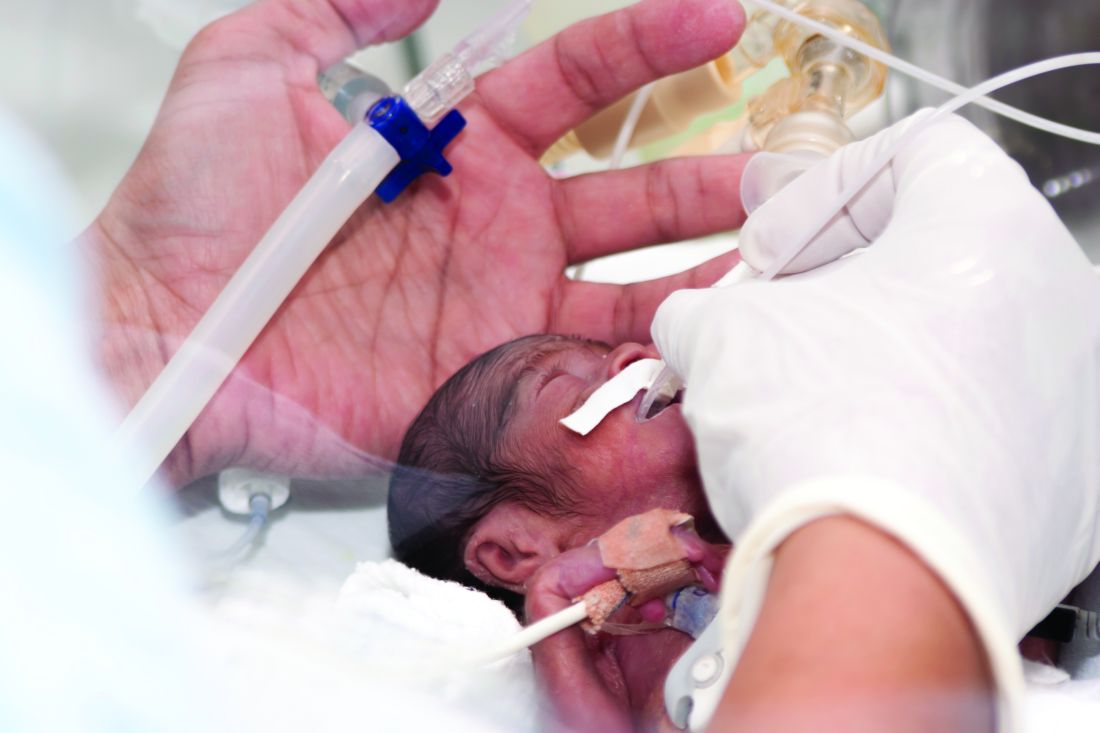
The study, based on records from the 44 participating children’s hospitals represented in the Pediatric Health Information System (PHIS) database, included 1,668 newborns with trisomy 13 or 18 who were admitted within 14 days of birth. Median age at admission was less than 1 day for both groups.
Congenital heart disease was present in 925 out of 1,020 infants with trisomy 18 (91%) and 555 out of 648 with trisomy 13 (86%), the report stated.
For those infants with congenital heart disease, overall mortality was highest during the first hospital admission (63%), investigators wrote. However, for those undergoing congenital heart surgery, multivariate analysis showed decreased in-hospital mortality vs. those who had no surgery for both the trisomy 13 (30% vs. 55%, respectively, P = .003) and the trisomy 18 groups (16% vs. 44%, P less than .001).
This is not only the largest-ever study of trisomy 13 and 18 ever reported, according to the investigators, but also the first to show that higher weight, female sex, and older age at admission are associated with improved survival following congenital heart surgery among these patients. Multiple logistic regression analysis showed significant effects of these risk factors on mortality for both the trisomy 13 and 18 infant subsets, according to Dr. Kosiv and her colleagues.
These findings come at a time when many centers elect not to perform congenital heart surgery in trisomy 13 and 18 patients, the investigators wrote, noting that management is typically limited to medical strategies due to the “markedly short life expectancy” and grave prognosis associated with the condition.
Mortality was markedly decreased, but still considerably higher than what would be expected for congenital heart surgery in the general population, which is an important consideration for families and practitioners who are considering the procedure, investigators said in their report.
Nevertheless, the present findings suggest that “CHS may not be futile, at least not in the short-term, in patients with T13 and T18,” Dr. Kosiv and colleagues wrote. “Additionally, these results suggest that CHS may allow families to be able to take their children home and avoid [them] dying in the hospital.”
The article by Kosiv and colleagues provides “compelling evidence that congenital heart surgery can be considered” in infants with trisomy 13 or 18, according Kathy J. Jenkins, MD, MPH, and Amy E. Roberts, MD in their accompanying editorial. The decision, however, should be made as part of a comprehensive treatment plan, they said.
“In our view, this should only occur when parents are fully informed of the still significant residual infant mortality risk with cardiac surgery … and unavoidable, severe neurocognitive delays,” they wrote in their editorial.
Caregivers helping families make the decision, they added, should be aware that delays in decision-making might make operations impossible or even more risky than they already are.
“The revolution in congenital heart surgery … has now changed the equation for infants with trisomy 18 and 13 just as it did for trisomy 21 in the past,” the authors wrote. “However, numerous factors must be taken into account to optimize decision-making for each infant and family.”
Dr. Jenkins, MD, MPH, and Dr. Roberts, MD are with the Department of Cardiology, Boston Children’s Hospital, Boston, Massachusetts. These comments are based on their editorial (Pediatrics 2017. doi: https://doi.org/10.1542/peds.2017-2809). The authors reported no potential conflicts of interest.
The article by Kosiv and colleagues provides “compelling evidence that congenital heart surgery can be considered” in infants with trisomy 13 or 18, according Kathy J. Jenkins, MD, MPH, and Amy E. Roberts, MD in their accompanying editorial. The decision, however, should be made as part of a comprehensive treatment plan, they said.
“In our view, this should only occur when parents are fully informed of the still significant residual infant mortality risk with cardiac surgery … and unavoidable, severe neurocognitive delays,” they wrote in their editorial.
Caregivers helping families make the decision, they added, should be aware that delays in decision-making might make operations impossible or even more risky than they already are.
“The revolution in congenital heart surgery … has now changed the equation for infants with trisomy 18 and 13 just as it did for trisomy 21 in the past,” the authors wrote. “However, numerous factors must be taken into account to optimize decision-making for each infant and family.”
Dr. Jenkins, MD, MPH, and Dr. Roberts, MD are with the Department of Cardiology, Boston Children’s Hospital, Boston, Massachusetts. These comments are based on their editorial (Pediatrics 2017. doi: https://doi.org/10.1542/peds.2017-2809). The authors reported no potential conflicts of interest.
The article by Kosiv and colleagues provides “compelling evidence that congenital heart surgery can be considered” in infants with trisomy 13 or 18, according Kathy J. Jenkins, MD, MPH, and Amy E. Roberts, MD in their accompanying editorial. The decision, however, should be made as part of a comprehensive treatment plan, they said.
“In our view, this should only occur when parents are fully informed of the still significant residual infant mortality risk with cardiac surgery … and unavoidable, severe neurocognitive delays,” they wrote in their editorial.
Caregivers helping families make the decision, they added, should be aware that delays in decision-making might make operations impossible or even more risky than they already are.
“The revolution in congenital heart surgery … has now changed the equation for infants with trisomy 18 and 13 just as it did for trisomy 21 in the past,” the authors wrote. “However, numerous factors must be taken into account to optimize decision-making for each infant and family.”
Dr. Jenkins, MD, MPH, and Dr. Roberts, MD are with the Department of Cardiology, Boston Children’s Hospital, Boston, Massachusetts. These comments are based on their editorial (Pediatrics 2017. doi: https://doi.org/10.1542/peds.2017-2809). The authors reported no potential conflicts of interest.
For infants with trisomy 13 or trisomy 18, congenital heart surgery is associated with a significant decrease in in-hospital mortality, according to results of a large, retrospective, multicenter cohort study.
In-hospital mortality was 45% lower in trisomy 13 patients (P = .003) and 64% lower in trisomy 18 patients (P less than.001) who underwent surgery, data show (Pediatrics 140(5); 2017. doi: https://doi.org/10.1542/peds.2017-0772).
The study, based on records from the 44 participating children’s hospitals represented in the Pediatric Health Information System (PHIS) database, included 1,668 newborns with trisomy 13 or 18 who were admitted within 14 days of birth. Median age at admission was less than 1 day for both groups.
Congenital heart disease was present in 925 out of 1,020 infants with trisomy 18 (91%) and 555 out of 648 with trisomy 13 (86%), the report stated.
For those infants with congenital heart disease, overall mortality was highest during the first hospital admission (63%), investigators wrote. However, for those undergoing congenital heart surgery, multivariate analysis showed decreased in-hospital mortality vs. those who had no surgery for both the trisomy 13 (30% vs. 55%, respectively, P = .003) and the trisomy 18 groups (16% vs. 44%, P less than .001).
This is not only the largest-ever study of trisomy 13 and 18 ever reported, according to the investigators, but also the first to show that higher weight, female sex, and older age at admission are associated with improved survival following congenital heart surgery among these patients. Multiple logistic regression analysis showed significant effects of these risk factors on mortality for both the trisomy 13 and 18 infant subsets, according to Dr. Kosiv and her colleagues.
These findings come at a time when many centers elect not to perform congenital heart surgery in trisomy 13 and 18 patients, the investigators wrote, noting that management is typically limited to medical strategies due to the “markedly short life expectancy” and grave prognosis associated with the condition.
Mortality was markedly decreased, but still considerably higher than what would be expected for congenital heart surgery in the general population, which is an important consideration for families and practitioners who are considering the procedure, investigators said in their report.
Nevertheless, the present findings suggest that “CHS may not be futile, at least not in the short-term, in patients with T13 and T18,” Dr. Kosiv and colleagues wrote. “Additionally, these results suggest that CHS may allow families to be able to take their children home and avoid [them] dying in the hospital.”
For infants with trisomy 13 or trisomy 18, congenital heart surgery is associated with a significant decrease in in-hospital mortality, according to results of a large, retrospective, multicenter cohort study.
In-hospital mortality was 45% lower in trisomy 13 patients (P = .003) and 64% lower in trisomy 18 patients (P less than.001) who underwent surgery, data show (Pediatrics 140(5); 2017. doi: https://doi.org/10.1542/peds.2017-0772).
The study, based on records from the 44 participating children’s hospitals represented in the Pediatric Health Information System (PHIS) database, included 1,668 newborns with trisomy 13 or 18 who were admitted within 14 days of birth. Median age at admission was less than 1 day for both groups.
Congenital heart disease was present in 925 out of 1,020 infants with trisomy 18 (91%) and 555 out of 648 with trisomy 13 (86%), the report stated.
For those infants with congenital heart disease, overall mortality was highest during the first hospital admission (63%), investigators wrote. However, for those undergoing congenital heart surgery, multivariate analysis showed decreased in-hospital mortality vs. those who had no surgery for both the trisomy 13 (30% vs. 55%, respectively, P = .003) and the trisomy 18 groups (16% vs. 44%, P less than .001).
This is not only the largest-ever study of trisomy 13 and 18 ever reported, according to the investigators, but also the first to show that higher weight, female sex, and older age at admission are associated with improved survival following congenital heart surgery among these patients. Multiple logistic regression analysis showed significant effects of these risk factors on mortality for both the trisomy 13 and 18 infant subsets, according to Dr. Kosiv and her colleagues.
These findings come at a time when many centers elect not to perform congenital heart surgery in trisomy 13 and 18 patients, the investigators wrote, noting that management is typically limited to medical strategies due to the “markedly short life expectancy” and grave prognosis associated with the condition.
Mortality was markedly decreased, but still considerably higher than what would be expected for congenital heart surgery in the general population, which is an important consideration for families and practitioners who are considering the procedure, investigators said in their report.
Nevertheless, the present findings suggest that “CHS may not be futile, at least not in the short-term, in patients with T13 and T18,” Dr. Kosiv and colleagues wrote. “Additionally, these results suggest that CHS may allow families to be able to take their children home and avoid [them] dying in the hospital.”
FROM PEDIATRICS
Key clinical point: Despite many centers choosing not to perform congenital heart surgery in infants with trisomy 13 and trisomy 18, doing so cuts in-hospital mortality by more than half.
Major finding: In-hospital mortality was 45% lower in trisomy 13 patients (P = 0.003) and 64% lower in trisomy 18 patients (P < 0.001) who underwent surgery.
Data source: A large, retrospective, multicenter cohort study of 1,668 newborns with trisomy 13 or 18 admitted within 14 days of birth.
Disclosures: The authors reported no potential conflicts of interest.
Nivolumab linked to CNS disorder in case report
Autoimmune encephalitis may be a potentially severe complication of immune checkpoint inhibitor therapy, a case report suggests.
The recently published report describes a 53-year-old man with B-cell non-Hodgkin lymphoma who presented with double vision, ataxia, impaired speech, and mild cognitive dysfunction following treatment with the immune checkpoint inhibitor nivolumab.
Neuropathologic examination of a biopsied brain lesion found on cranial MRI showed a T cell–dominated inflammatory process thought to be autoimmune in origin, according to Herwig Strik, MD, of the department of neurology at Philipps University of Marburg (Germany), and his colleagues (Eur J Cancer. 2017 Oct 16. doi: 10.1016/j.ejca.2017.09.026).
After the patient stopped taking nivolumab and the inflammatory process was treated, his “clinical neurological and radiological status remained stable but disabling with fluctuating dysarthria and ataxia,” Dr. Strik and his colleagues wrote.
“Since these novel anticancer agents are increasingly used, this severe complication should be recognized soon and treatment should be terminated to avoid chronification,” they said in the report.
Nivolumab and other checkpoint inhibitors are known to have autoimmune side effects in some cases that can affect the pulmonary, gastrointestinal, and endocrine systems, the authors said.
Several previous case reports have detailed encephalitis occurring in cancer patients receiving nivolumab, the combination of nivolumab plus the immune checkpoint inhibitor ipilimumab, or ipilimumab alone. The authors said they believe that this case report is the first to describe multifocal CNS inflammation following nivolumab treatment for systemic lymphoma.
The patient was diagnosed with B-cell non-Hodgkin lymphoma in 2005, according to the case report. He was first treated in 2009 with R-CHOP (rituximab, cyclophosphamide, doxorubicin, vincristine, and prednisolone), followed by stem cell apheresis, radioimmunotherapy, and rituximab; he then received R-DHAP (rituximab, dexamethasone, high-dose cytarabine, and cisplatin) in August 2014, followed by autologous stem cell transplantation in October of that year. The patient started nivolumab maintenance therapy in February 2015 but started experiencing neurological symptoms that eventually led to ending nivolumab treatment in September 2015.
The patient’s lymphoma relapsed in June 2016. “The disabling neurological symptoms and his personal situation, however, worsened the patient’s depressive symptoms so severely that he went abroad to commit assisted suicide,” wrote Dr. Strik and his colleagues.
The authors proposed the term “immune checkpoint inhibitor–associated CNS autoimmune disorder (ICICAD)” to describe the inflammatory condition described in the case report.
They declared no conflicts of interest related to the case report and did not receive grant support for conducting the research described in it.
Autoimmune encephalitis may be a potentially severe complication of immune checkpoint inhibitor therapy, a case report suggests.
The recently published report describes a 53-year-old man with B-cell non-Hodgkin lymphoma who presented with double vision, ataxia, impaired speech, and mild cognitive dysfunction following treatment with the immune checkpoint inhibitor nivolumab.
Neuropathologic examination of a biopsied brain lesion found on cranial MRI showed a T cell–dominated inflammatory process thought to be autoimmune in origin, according to Herwig Strik, MD, of the department of neurology at Philipps University of Marburg (Germany), and his colleagues (Eur J Cancer. 2017 Oct 16. doi: 10.1016/j.ejca.2017.09.026).
After the patient stopped taking nivolumab and the inflammatory process was treated, his “clinical neurological and radiological status remained stable but disabling with fluctuating dysarthria and ataxia,” Dr. Strik and his colleagues wrote.
“Since these novel anticancer agents are increasingly used, this severe complication should be recognized soon and treatment should be terminated to avoid chronification,” they said in the report.
Nivolumab and other checkpoint inhibitors are known to have autoimmune side effects in some cases that can affect the pulmonary, gastrointestinal, and endocrine systems, the authors said.
Several previous case reports have detailed encephalitis occurring in cancer patients receiving nivolumab, the combination of nivolumab plus the immune checkpoint inhibitor ipilimumab, or ipilimumab alone. The authors said they believe that this case report is the first to describe multifocal CNS inflammation following nivolumab treatment for systemic lymphoma.
The patient was diagnosed with B-cell non-Hodgkin lymphoma in 2005, according to the case report. He was first treated in 2009 with R-CHOP (rituximab, cyclophosphamide, doxorubicin, vincristine, and prednisolone), followed by stem cell apheresis, radioimmunotherapy, and rituximab; he then received R-DHAP (rituximab, dexamethasone, high-dose cytarabine, and cisplatin) in August 2014, followed by autologous stem cell transplantation in October of that year. The patient started nivolumab maintenance therapy in February 2015 but started experiencing neurological symptoms that eventually led to ending nivolumab treatment in September 2015.
The patient’s lymphoma relapsed in June 2016. “The disabling neurological symptoms and his personal situation, however, worsened the patient’s depressive symptoms so severely that he went abroad to commit assisted suicide,” wrote Dr. Strik and his colleagues.
The authors proposed the term “immune checkpoint inhibitor–associated CNS autoimmune disorder (ICICAD)” to describe the inflammatory condition described in the case report.
They declared no conflicts of interest related to the case report and did not receive grant support for conducting the research described in it.
Autoimmune encephalitis may be a potentially severe complication of immune checkpoint inhibitor therapy, a case report suggests.
The recently published report describes a 53-year-old man with B-cell non-Hodgkin lymphoma who presented with double vision, ataxia, impaired speech, and mild cognitive dysfunction following treatment with the immune checkpoint inhibitor nivolumab.
Neuropathologic examination of a biopsied brain lesion found on cranial MRI showed a T cell–dominated inflammatory process thought to be autoimmune in origin, according to Herwig Strik, MD, of the department of neurology at Philipps University of Marburg (Germany), and his colleagues (Eur J Cancer. 2017 Oct 16. doi: 10.1016/j.ejca.2017.09.026).
After the patient stopped taking nivolumab and the inflammatory process was treated, his “clinical neurological and radiological status remained stable but disabling with fluctuating dysarthria and ataxia,” Dr. Strik and his colleagues wrote.
“Since these novel anticancer agents are increasingly used, this severe complication should be recognized soon and treatment should be terminated to avoid chronification,” they said in the report.
Nivolumab and other checkpoint inhibitors are known to have autoimmune side effects in some cases that can affect the pulmonary, gastrointestinal, and endocrine systems, the authors said.
Several previous case reports have detailed encephalitis occurring in cancer patients receiving nivolumab, the combination of nivolumab plus the immune checkpoint inhibitor ipilimumab, or ipilimumab alone. The authors said they believe that this case report is the first to describe multifocal CNS inflammation following nivolumab treatment for systemic lymphoma.
The patient was diagnosed with B-cell non-Hodgkin lymphoma in 2005, according to the case report. He was first treated in 2009 with R-CHOP (rituximab, cyclophosphamide, doxorubicin, vincristine, and prednisolone), followed by stem cell apheresis, radioimmunotherapy, and rituximab; he then received R-DHAP (rituximab, dexamethasone, high-dose cytarabine, and cisplatin) in August 2014, followed by autologous stem cell transplantation in October of that year. The patient started nivolumab maintenance therapy in February 2015 but started experiencing neurological symptoms that eventually led to ending nivolumab treatment in September 2015.
The patient’s lymphoma relapsed in June 2016. “The disabling neurological symptoms and his personal situation, however, worsened the patient’s depressive symptoms so severely that he went abroad to commit assisted suicide,” wrote Dr. Strik and his colleagues.
The authors proposed the term “immune checkpoint inhibitor–associated CNS autoimmune disorder (ICICAD)” to describe the inflammatory condition described in the case report.
They declared no conflicts of interest related to the case report and did not receive grant support for conducting the research described in it.
FROM THE EUROPEAN JOURNAL OF CANCER
Key clinical point: Autoimmune encephalitis may be a potential complication of checkpoint inhibitor therapy.
Major finding: A patient with B-cell non-Hodgkin lymphoma presented with double vision, ataxia, impaired speech, and mild cognitive dysfunction following treatment with nivolumab. Examination of a brain lesion showed a T cell–dominated inflammatory process thought to be autoimmune in origin.
Data source: A case report of a 53-year-old man with B-cell non-Hodgkin lymphoma (B-NHL) who received nivolumab maintenance treatment.
Disclosures: The authors declared no conflicts of interest and did not receive grant support for the research.