User login
Ultrathin, biodegradable stent proves noninferior to durable polymer stent
An ultrathin, sirolimus-eluting biodegradable stent was noninferior to a durable everolimus-eluting stent for a primary endpoint of target lesion failure, according to the results of a 12-month randomized, single-blind trial presented at the annual congress of the European Society of Cardiology.
The noninferiority BIOSCIENCE trial in 2,119 patients – 1063 given the sirolimus-eluting, biodegradable stent, and 1,056 given the durable everolimus-eluting stent – recorded a 6.5% failure rate with sirolimus-eluting stent and 6.6% failure rate with the everolimus-eluting stent, and found no significant differences in the rates of definite stent thrombosis.
However, the investigators did note slightly better outcomes among patients with ST-segment elevation myocardial infarction given the biodegradable, stent compared with those given the durable polymer stent, according to a paper simultaneously published online September 1 in The Lancet [http://dx.doi.org/10.1016/ S0140-6736(14)61038-2].
"Our findings document excellent clinical outcomes for both stent types in a patient population with minimal exclusion criteria – a substantial proportion of whom presented with acute coronary syndromes and complex lesion characteristics," wrote Dr. Thomas Pilgrim, from University Hospital, Bern, Switzerland, and colleagues.
Biodegradable polymer stents have the potential to abolish the late adverse outcomes from durable polymer, such as late stent thrombosis and neoatherosclerosis, which may result from permanent contact between fluoropolymers and the vessel wall, an accompanying editorial noted.
"The large body of accumulated scientific evidence, including the important results from BIOSCIENCE, should trigger research efforts and economic resources to focus on functional restoration of the stented coronary artery, for example, with fully bioresorbable vascular scaffolds," wrote the editorial’s authors Dr. Julinda Mehilli from the Munich (Germany) University Clinic, and Dr. Steffen Massberg of the Munich Heart Alliance.
The study was partly funded by a grant from the Swiss National Science Foundation, and some authors declared travel expenses, grants, lecture fees and other funding from a range of companies including the stent’s manufacturer Biotronik. Dr Mehilli declared speaker’s fees from Abbott Vascular, Biotronik, and Lilly/Daiichi Sankyo.
An ultrathin, sirolimus-eluting biodegradable stent was noninferior to a durable everolimus-eluting stent for a primary endpoint of target lesion failure, according to the results of a 12-month randomized, single-blind trial presented at the annual congress of the European Society of Cardiology.
The noninferiority BIOSCIENCE trial in 2,119 patients – 1063 given the sirolimus-eluting, biodegradable stent, and 1,056 given the durable everolimus-eluting stent – recorded a 6.5% failure rate with sirolimus-eluting stent and 6.6% failure rate with the everolimus-eluting stent, and found no significant differences in the rates of definite stent thrombosis.
However, the investigators did note slightly better outcomes among patients with ST-segment elevation myocardial infarction given the biodegradable, stent compared with those given the durable polymer stent, according to a paper simultaneously published online September 1 in The Lancet [http://dx.doi.org/10.1016/ S0140-6736(14)61038-2].
"Our findings document excellent clinical outcomes for both stent types in a patient population with minimal exclusion criteria – a substantial proportion of whom presented with acute coronary syndromes and complex lesion characteristics," wrote Dr. Thomas Pilgrim, from University Hospital, Bern, Switzerland, and colleagues.
Biodegradable polymer stents have the potential to abolish the late adverse outcomes from durable polymer, such as late stent thrombosis and neoatherosclerosis, which may result from permanent contact between fluoropolymers and the vessel wall, an accompanying editorial noted.
"The large body of accumulated scientific evidence, including the important results from BIOSCIENCE, should trigger research efforts and economic resources to focus on functional restoration of the stented coronary artery, for example, with fully bioresorbable vascular scaffolds," wrote the editorial’s authors Dr. Julinda Mehilli from the Munich (Germany) University Clinic, and Dr. Steffen Massberg of the Munich Heart Alliance.
The study was partly funded by a grant from the Swiss National Science Foundation, and some authors declared travel expenses, grants, lecture fees and other funding from a range of companies including the stent’s manufacturer Biotronik. Dr Mehilli declared speaker’s fees from Abbott Vascular, Biotronik, and Lilly/Daiichi Sankyo.
An ultrathin, sirolimus-eluting biodegradable stent was noninferior to a durable everolimus-eluting stent for a primary endpoint of target lesion failure, according to the results of a 12-month randomized, single-blind trial presented at the annual congress of the European Society of Cardiology.
The noninferiority BIOSCIENCE trial in 2,119 patients – 1063 given the sirolimus-eluting, biodegradable stent, and 1,056 given the durable everolimus-eluting stent – recorded a 6.5% failure rate with sirolimus-eluting stent and 6.6% failure rate with the everolimus-eluting stent, and found no significant differences in the rates of definite stent thrombosis.
However, the investigators did note slightly better outcomes among patients with ST-segment elevation myocardial infarction given the biodegradable, stent compared with those given the durable polymer stent, according to a paper simultaneously published online September 1 in The Lancet [http://dx.doi.org/10.1016/ S0140-6736(14)61038-2].
"Our findings document excellent clinical outcomes for both stent types in a patient population with minimal exclusion criteria – a substantial proportion of whom presented with acute coronary syndromes and complex lesion characteristics," wrote Dr. Thomas Pilgrim, from University Hospital, Bern, Switzerland, and colleagues.
Biodegradable polymer stents have the potential to abolish the late adverse outcomes from durable polymer, such as late stent thrombosis and neoatherosclerosis, which may result from permanent contact between fluoropolymers and the vessel wall, an accompanying editorial noted.
"The large body of accumulated scientific evidence, including the important results from BIOSCIENCE, should trigger research efforts and economic resources to focus on functional restoration of the stented coronary artery, for example, with fully bioresorbable vascular scaffolds," wrote the editorial’s authors Dr. Julinda Mehilli from the Munich (Germany) University Clinic, and Dr. Steffen Massberg of the Munich Heart Alliance.
The study was partly funded by a grant from the Swiss National Science Foundation, and some authors declared travel expenses, grants, lecture fees and other funding from a range of companies including the stent’s manufacturer Biotronik. Dr Mehilli declared speaker’s fees from Abbott Vascular, Biotronik, and Lilly/Daiichi Sankyo.
FROM THE ESC CONGRESS 2014
Key clinical point: An ultrathin sirolimus-eluting stent made from biodegradable polymer was noninferior to a durable polymer everolimus-eluting stent.
Major finding: The primary endpoint of target-lesion failure was 6.5% with the biodegradable stent and 6.6% with the durable stent.
Data source: BIOSCIENCE, a randomized, single-blind, noninferiority trial in 2,119 patients.
Disclosures: BIOSCIENCE was partly funded by a grant from the Swiss National Science Foundation, and some authors declared travel expenses, grants, lecture fees and other funding from a range of companies including the stent’s manufacturer Biotronik.
Aortic dissection associated with obstructive sleep apnea syndrome
Aortic dissection is significantly associated with obstructive sleep apnea, according to a Chinese study that found 81.7% of patients with Stanford’s type B aortic dissection have obstructive sleep apnea, compared with 67.2% of controls with suspected sleep apnea but no aortic disease.
A cross-sectional study in 82 patients with aortic dissection (AD), compared with 116 controls, showed individuals with aortic dissection had a higher apnea-hypopnea index, higher Berlin scores (75.6% vs. 54.3% high risk), a higher mean 4% oxygen desaturation index (16 vs. 7 events/hour), and a lower oxygen saturation during sleep (average, 87% vs. 93%). All findings were statistically significant.
"Recently, Saruhara et al. showed that patients with aortic diseases frequently suffered from moderate to severe OSAS [obstructive sleep apnea syndrome] and recommended that screening for OSAS may be helpful for early detection of patients with aortic disease," wrote Dr. Xuemin Zhang of the Peking University People’s Hospital and colleagues, in the 7 Aug. online edition of the Annals of Vascular Surgery [doi:10.1016/j.avsg.2014.07.014].
"Our results suggest that there is a strong association between OSAS and AD, supporting OSAS as an independent risk factor for type B AD."
The study was supported by a grant from the Foundation of Peking University People’s Hospital for Clinical Trial. There were no conflicts of interest declared.
Aortic dissection is significantly associated with obstructive sleep apnea, according to a Chinese study that found 81.7% of patients with Stanford’s type B aortic dissection have obstructive sleep apnea, compared with 67.2% of controls with suspected sleep apnea but no aortic disease.
A cross-sectional study in 82 patients with aortic dissection (AD), compared with 116 controls, showed individuals with aortic dissection had a higher apnea-hypopnea index, higher Berlin scores (75.6% vs. 54.3% high risk), a higher mean 4% oxygen desaturation index (16 vs. 7 events/hour), and a lower oxygen saturation during sleep (average, 87% vs. 93%). All findings were statistically significant.
"Recently, Saruhara et al. showed that patients with aortic diseases frequently suffered from moderate to severe OSAS [obstructive sleep apnea syndrome] and recommended that screening for OSAS may be helpful for early detection of patients with aortic disease," wrote Dr. Xuemin Zhang of the Peking University People’s Hospital and colleagues, in the 7 Aug. online edition of the Annals of Vascular Surgery [doi:10.1016/j.avsg.2014.07.014].
"Our results suggest that there is a strong association between OSAS and AD, supporting OSAS as an independent risk factor for type B AD."
The study was supported by a grant from the Foundation of Peking University People’s Hospital for Clinical Trial. There were no conflicts of interest declared.
Aortic dissection is significantly associated with obstructive sleep apnea, according to a Chinese study that found 81.7% of patients with Stanford’s type B aortic dissection have obstructive sleep apnea, compared with 67.2% of controls with suspected sleep apnea but no aortic disease.
A cross-sectional study in 82 patients with aortic dissection (AD), compared with 116 controls, showed individuals with aortic dissection had a higher apnea-hypopnea index, higher Berlin scores (75.6% vs. 54.3% high risk), a higher mean 4% oxygen desaturation index (16 vs. 7 events/hour), and a lower oxygen saturation during sleep (average, 87% vs. 93%). All findings were statistically significant.
"Recently, Saruhara et al. showed that patients with aortic diseases frequently suffered from moderate to severe OSAS [obstructive sleep apnea syndrome] and recommended that screening for OSAS may be helpful for early detection of patients with aortic disease," wrote Dr. Xuemin Zhang of the Peking University People’s Hospital and colleagues, in the 7 Aug. online edition of the Annals of Vascular Surgery [doi:10.1016/j.avsg.2014.07.014].
"Our results suggest that there is a strong association between OSAS and AD, supporting OSAS as an independent risk factor for type B AD."
The study was supported by a grant from the Foundation of Peking University People’s Hospital for Clinical Trial. There were no conflicts of interest declared.
FROM ANNALS OF VASCULAR SURGERY
Major finding: Aortic dissection is significantly associated with obstructive sleep apnea, with 81.7% of patients with Stanford’s type B aortic dissection having obstructive sleep apnea, compared with 67.2% of controls with suspected sleep apnea but no aortic disease.
Data source: A cross-sectional study in 82 patients with aortic dissection and 116 controls.
Disclosures: The study was supported by a grant from the Foundation of Peking University People’s Hospital for Clinical Trial. There were no conflicts of interest declared.
More dose escalation and cost with infliximab, compared with other TNF inhibitors in RA
Infliximab is associated with high rates of dose escalation and a larger overall cost, compared with adalimumab and etanercept in patients with rheumatoid arthritis, without any additional gains in effectiveness, according to analysis of data from 563 patients in the Veterans Affairs Rheumatoid Arthritis registry.
Of patients on etanercept, 2% underwent dose escalation, compared with 16% of patients on adalimumab and 64% of patients on infliximab. Annual costs for the first course of TNF inhibitor therapy were $13,100 for adalimumab, $13,500 for etanercept, and $16,900 for the intravenously-administered infliximab.

Researchers found the duration of treatment, and persistence with the first course of agent, were similar between treatment groups, and they also saw no statistically significant differences in improvements in mean DAS28 score between the three agents.
"These data and our observations suggest that dose escalation is often associated with added costs without increased benefit," wrote Dr. Grant W. Cannon of the VA Salt Lake City Health Care System and his associates in the Aug. 15 online issue of The Journal of Rheumatology [doi:10.3899/jrheum.140164].
The study was sponsored by Immunex, makers of Enbrel (etanercept); Wyeth, partner of Immunex; and the Veterans Administration Health Services. No other conflicts of interest were declared.
Infliximab is associated with high rates of dose escalation and a larger overall cost, compared with adalimumab and etanercept in patients with rheumatoid arthritis, without any additional gains in effectiveness, according to analysis of data from 563 patients in the Veterans Affairs Rheumatoid Arthritis registry.
Of patients on etanercept, 2% underwent dose escalation, compared with 16% of patients on adalimumab and 64% of patients on infliximab. Annual costs for the first course of TNF inhibitor therapy were $13,100 for adalimumab, $13,500 for etanercept, and $16,900 for the intravenously-administered infliximab.
Researchers found the duration of treatment, and persistence with the first course of agent, were similar between treatment groups, and they also saw no statistically significant differences in improvements in mean DAS28 score between the three agents.
"These data and our observations suggest that dose escalation is often associated with added costs without increased benefit," wrote Dr. Grant W. Cannon of the VA Salt Lake City Health Care System and his associates in the Aug. 15 online issue of The Journal of Rheumatology [doi:10.3899/jrheum.140164].
The study was sponsored by Immunex, makers of Enbrel (etanercept); Wyeth, partner of Immunex; and the Veterans Administration Health Services. No other conflicts of interest were declared.
Infliximab is associated with high rates of dose escalation and a larger overall cost, compared with adalimumab and etanercept in patients with rheumatoid arthritis, without any additional gains in effectiveness, according to analysis of data from 563 patients in the Veterans Affairs Rheumatoid Arthritis registry.
Of patients on etanercept, 2% underwent dose escalation, compared with 16% of patients on adalimumab and 64% of patients on infliximab. Annual costs for the first course of TNF inhibitor therapy were $13,100 for adalimumab, $13,500 for etanercept, and $16,900 for the intravenously-administered infliximab.
Researchers found the duration of treatment, and persistence with the first course of agent, were similar between treatment groups, and they also saw no statistically significant differences in improvements in mean DAS28 score between the three agents.
"These data and our observations suggest that dose escalation is often associated with added costs without increased benefit," wrote Dr. Grant W. Cannon of the VA Salt Lake City Health Care System and his associates in the Aug. 15 online issue of The Journal of Rheumatology [doi:10.3899/jrheum.140164].
The study was sponsored by Immunex, makers of Enbrel (etanercept); Wyeth, partner of Immunex; and the Veterans Administration Health Services. No other conflicts of interest were declared.
FROM THE JOURNAL OF RHEUMATOLOGY
Major finding: Only 2% of rheumatoid patients on etanercept underwent dose escalation, compared with 16% of patients on adalimumab and 64% of patients on infliximab, while annual costs for the first course of TNF inhibitor therapy were $13,100 for adalimumab, $13,500 for etanercept, and $16,900 for the intravenously-administered infliximab, without any significant differences in disease activity scores.
Data source: Analysis of longitudinal data from 563 patients in the Veterans Affairs Rheumatoid Arthritis registry
Disclosures: The study was sponsored by Immunex, makers of Enbrel (etanercept); Wyeth, partner of Immunex in; and the Veterans Administration Health Services. No other conflicts of interest were declared.

Quality of life gains achieved with comprehensive disease control in RA
Comprehensive disease control in rheumatoid arthritis is associated with meaningful benefits such as short- and long-term improvements in quality of life, pain, fatigue, and work attendance, a meta-analysis has found.
Using pooled data from three randomized controlled trials of adalimumab plus methotrexate in 1,467 patients with early- or late-stage rheumatoid arthritis, researchers found mean improvements of 20 points in pain scores from baseline, 5.8 points in fatigue scores, 10.8 points in physical quality of life scores, and 3.1 points in mental quality of life scores, among patients who achieved comprehensive disease control at 26 weeks – all of which were significantly greater than those of patients who did not achieve CDC.

Compared with patients achieving Disease Activity Score remission alone, "CDC achievement was associated with statistically significant and clinically meaningful differences of 7.0 (4.0-10.0) and 6.9 (3.5-10.4) in SF-36 PCS [Short Form-36 physical component scores] at weeks 26 and 52, respectively," wrote Dr. Paul Emery and his colleagues. Dr. Emery is director of the Leeds (England) Institute of Rheumatic & Musculoskeletal Medicine, and director of the Leeds Musculoskeletal Biomedical Research Unit.
The researchers defined CDC as achievement of a 28-joint Disease Activity Score using C-reactive protein of less than 2.6, a Health Assessment Questionnaire score below 0.5, and change from baseline in modified total Sharp score of 0.5 or less, according to the paper, which was published online Aug. 19 in Annals of the Rheumatic Diseases (doi: 10.1136/annrheumdis-2014-205302).
The study was funded by AbbVie. Three authors are AbbVie employees, and the other authors reported grant support and consultancies for a range of pharmaceutical companies.
Comprehensive disease control in rheumatoid arthritis is associated with meaningful benefits such as short- and long-term improvements in quality of life, pain, fatigue, and work attendance, a meta-analysis has found.
Using pooled data from three randomized controlled trials of adalimumab plus methotrexate in 1,467 patients with early- or late-stage rheumatoid arthritis, researchers found mean improvements of 20 points in pain scores from baseline, 5.8 points in fatigue scores, 10.8 points in physical quality of life scores, and 3.1 points in mental quality of life scores, among patients who achieved comprehensive disease control at 26 weeks – all of which were significantly greater than those of patients who did not achieve CDC.
Compared with patients achieving Disease Activity Score remission alone, "CDC achievement was associated with statistically significant and clinically meaningful differences of 7.0 (4.0-10.0) and 6.9 (3.5-10.4) in SF-36 PCS [Short Form-36 physical component scores] at weeks 26 and 52, respectively," wrote Dr. Paul Emery and his colleagues. Dr. Emery is director of the Leeds (England) Institute of Rheumatic & Musculoskeletal Medicine, and director of the Leeds Musculoskeletal Biomedical Research Unit.
The researchers defined CDC as achievement of a 28-joint Disease Activity Score using C-reactive protein of less than 2.6, a Health Assessment Questionnaire score below 0.5, and change from baseline in modified total Sharp score of 0.5 or less, according to the paper, which was published online Aug. 19 in Annals of the Rheumatic Diseases (doi: 10.1136/annrheumdis-2014-205302).
The study was funded by AbbVie. Three authors are AbbVie employees, and the other authors reported grant support and consultancies for a range of pharmaceutical companies.
Comprehensive disease control in rheumatoid arthritis is associated with meaningful benefits such as short- and long-term improvements in quality of life, pain, fatigue, and work attendance, a meta-analysis has found.
Using pooled data from three randomized controlled trials of adalimumab plus methotrexate in 1,467 patients with early- or late-stage rheumatoid arthritis, researchers found mean improvements of 20 points in pain scores from baseline, 5.8 points in fatigue scores, 10.8 points in physical quality of life scores, and 3.1 points in mental quality of life scores, among patients who achieved comprehensive disease control at 26 weeks – all of which were significantly greater than those of patients who did not achieve CDC.
Compared with patients achieving Disease Activity Score remission alone, "CDC achievement was associated with statistically significant and clinically meaningful differences of 7.0 (4.0-10.0) and 6.9 (3.5-10.4) in SF-36 PCS [Short Form-36 physical component scores] at weeks 26 and 52, respectively," wrote Dr. Paul Emery and his colleagues. Dr. Emery is director of the Leeds (England) Institute of Rheumatic & Musculoskeletal Medicine, and director of the Leeds Musculoskeletal Biomedical Research Unit.
The researchers defined CDC as achievement of a 28-joint Disease Activity Score using C-reactive protein of less than 2.6, a Health Assessment Questionnaire score below 0.5, and change from baseline in modified total Sharp score of 0.5 or less, according to the paper, which was published online Aug. 19 in Annals of the Rheumatic Diseases (doi: 10.1136/annrheumdis-2014-205302).
The study was funded by AbbVie. Three authors are AbbVie employees, and the other authors reported grant support and consultancies for a range of pharmaceutical companies.
FROM ANNALS OF THE RHEUMATIC DISEASES
Key clinical point: Disease control in rheumatoid arthritis translates into meaningful improvements in quality of life.
Major finding: Patients with rheumatoid arthritis who achieved comprehensive disease control (CDC) at week 26 (n = 200) had significantly greater improvements in VAS-Pain (46.9 vs. 26.9), FACIT-F (13.3 vs. 7.5), SF-36 PCS (19.7 vs. 8.9), and SF-36 MCS (8.1 vs. 5.0) than patients who did not achieve CDC (n = 1,267). The gains persisted to 52 weeks of follow-up.
Data source: Meta-analysis of pooled data from three randomized controlled trials of adalimumab plus methotrexate in 1,467 patients with early- or late-stage rheumatoid arthritis.
Disclosures: The study was funded by AbbVie. Three authors are AbbVie employees.

Permacol shows low recurrence rates for hernia repair, even in high-risk patients
The collagen-based Permacol surgical implant is safe and feasible for incisional and ventral hernia repair, according to the authors of a study that found hernia recurrence probabilities of 5.8%, 16.6%, and 31.0% at 1, 2, and 3 years, respectively.
Retrospective data from 343 patients with 213 incisional and 130 ventral hernias, treated with the cross-linked porcine collagen product, showed open surgery was associated with a significantly higher rate of recurrence than laparoscopic surgery at 12 months (7.7% vs. 2.5%, P = .047).
Mesh location also affected recurrence rates at 12 months, with onlay (suprafascial) repair associated with an 18.9% recurrence rate, compared with 2.4% for underlay (subfascial, intraperitoneal) repair. But wound classification, wound infection, and seromas did not impact the risk of recurrence at 12 or 24 months (Int. J. Surg. 2014;12:296-303).
Dr. Bipan Chand of the Loyola Center for Metabolic Surgery and Bariatric Care, Loyola University, and colleagues described the study as the largest retrospective multinational study to date evaluating outcomes from hernia repair using Permacol.
"Despite an initially enthusiastic adoption [of collagen-based prosthetics] by the surgical community, clinical data supporting product safety and efficacy and proper indication is needed," the authors wrote.
"The use of biologics is still controversial in class III (contaminated) and IV (infected) wounds and fields with increased collagenase due to potential accelerated breakdown of the collagen-based materials in these more hostile environments and limited evidence of long-term efficacy under those conditions."
At the time of surgery, 8.2% of patients had class III wounds and 6.4% had class IV.
Researchers observed a 1-year hernia recurrence rate of 7.4% in clean wounds and 4.5% in dirty wounds, compared with another study using a non–cross-linked biologic that recorded recurrence rates of 39% in dirty wounds and 5% in clean wounds after 1 year.
There was a 15.2% rate of wound infection and a 19% incidence of seroma. In addition, there was a 3.2% incidence of hematoma and a 0.9% incidence of fistula. One patient required reoperation to remove the mesh, which the authors said was procedure related.
Biologic mesh such as Permacol includes an intact extracellular matrix that supports tissue incorporation, revascularization, and cell repopulation that may also help to clear bacterial contamination, the authors reported.
"Permacol surgical implant was shown to be safe and feasible with low rates of postoperative morbidity even in patients with higher risk of failure," the researchers wrote.
"We recommend optimizing controllable patient conditions, performing these complex operations on an elective basis, reducing the bioburden of the wound, and reapproximating the fascial midline while utilizing Permacol surgical implant as reinforcement."
The study was sponsored and funded by Covidien, who also provided editorial support. Most authors declared a range of honoraria, consultancies, lecture fees, and travel support, including from Covidien.
The collagen-based Permacol surgical implant is safe and feasible for incisional and ventral hernia repair, according to the authors of a study that found hernia recurrence probabilities of 5.8%, 16.6%, and 31.0% at 1, 2, and 3 years, respectively.
Retrospective data from 343 patients with 213 incisional and 130 ventral hernias, treated with the cross-linked porcine collagen product, showed open surgery was associated with a significantly higher rate of recurrence than laparoscopic surgery at 12 months (7.7% vs. 2.5%, P = .047).
Mesh location also affected recurrence rates at 12 months, with onlay (suprafascial) repair associated with an 18.9% recurrence rate, compared with 2.4% for underlay (subfascial, intraperitoneal) repair. But wound classification, wound infection, and seromas did not impact the risk of recurrence at 12 or 24 months (Int. J. Surg. 2014;12:296-303).
Dr. Bipan Chand of the Loyola Center for Metabolic Surgery and Bariatric Care, Loyola University, and colleagues described the study as the largest retrospective multinational study to date evaluating outcomes from hernia repair using Permacol.
"Despite an initially enthusiastic adoption [of collagen-based prosthetics] by the surgical community, clinical data supporting product safety and efficacy and proper indication is needed," the authors wrote.
"The use of biologics is still controversial in class III (contaminated) and IV (infected) wounds and fields with increased collagenase due to potential accelerated breakdown of the collagen-based materials in these more hostile environments and limited evidence of long-term efficacy under those conditions."
At the time of surgery, 8.2% of patients had class III wounds and 6.4% had class IV.
Researchers observed a 1-year hernia recurrence rate of 7.4% in clean wounds and 4.5% in dirty wounds, compared with another study using a non–cross-linked biologic that recorded recurrence rates of 39% in dirty wounds and 5% in clean wounds after 1 year.
There was a 15.2% rate of wound infection and a 19% incidence of seroma. In addition, there was a 3.2% incidence of hematoma and a 0.9% incidence of fistula. One patient required reoperation to remove the mesh, which the authors said was procedure related.
Biologic mesh such as Permacol includes an intact extracellular matrix that supports tissue incorporation, revascularization, and cell repopulation that may also help to clear bacterial contamination, the authors reported.
"Permacol surgical implant was shown to be safe and feasible with low rates of postoperative morbidity even in patients with higher risk of failure," the researchers wrote.
"We recommend optimizing controllable patient conditions, performing these complex operations on an elective basis, reducing the bioburden of the wound, and reapproximating the fascial midline while utilizing Permacol surgical implant as reinforcement."
The study was sponsored and funded by Covidien, who also provided editorial support. Most authors declared a range of honoraria, consultancies, lecture fees, and travel support, including from Covidien.
The collagen-based Permacol surgical implant is safe and feasible for incisional and ventral hernia repair, according to the authors of a study that found hernia recurrence probabilities of 5.8%, 16.6%, and 31.0% at 1, 2, and 3 years, respectively.
Retrospective data from 343 patients with 213 incisional and 130 ventral hernias, treated with the cross-linked porcine collagen product, showed open surgery was associated with a significantly higher rate of recurrence than laparoscopic surgery at 12 months (7.7% vs. 2.5%, P = .047).
Mesh location also affected recurrence rates at 12 months, with onlay (suprafascial) repair associated with an 18.9% recurrence rate, compared with 2.4% for underlay (subfascial, intraperitoneal) repair. But wound classification, wound infection, and seromas did not impact the risk of recurrence at 12 or 24 months (Int. J. Surg. 2014;12:296-303).
Dr. Bipan Chand of the Loyola Center for Metabolic Surgery and Bariatric Care, Loyola University, and colleagues described the study as the largest retrospective multinational study to date evaluating outcomes from hernia repair using Permacol.
"Despite an initially enthusiastic adoption [of collagen-based prosthetics] by the surgical community, clinical data supporting product safety and efficacy and proper indication is needed," the authors wrote.
"The use of biologics is still controversial in class III (contaminated) and IV (infected) wounds and fields with increased collagenase due to potential accelerated breakdown of the collagen-based materials in these more hostile environments and limited evidence of long-term efficacy under those conditions."
At the time of surgery, 8.2% of patients had class III wounds and 6.4% had class IV.
Researchers observed a 1-year hernia recurrence rate of 7.4% in clean wounds and 4.5% in dirty wounds, compared with another study using a non–cross-linked biologic that recorded recurrence rates of 39% in dirty wounds and 5% in clean wounds after 1 year.
There was a 15.2% rate of wound infection and a 19% incidence of seroma. In addition, there was a 3.2% incidence of hematoma and a 0.9% incidence of fistula. One patient required reoperation to remove the mesh, which the authors said was procedure related.
Biologic mesh such as Permacol includes an intact extracellular matrix that supports tissue incorporation, revascularization, and cell repopulation that may also help to clear bacterial contamination, the authors reported.
"Permacol surgical implant was shown to be safe and feasible with low rates of postoperative morbidity even in patients with higher risk of failure," the researchers wrote.
"We recommend optimizing controllable patient conditions, performing these complex operations on an elective basis, reducing the bioburden of the wound, and reapproximating the fascial midline while utilizing Permacol surgical implant as reinforcement."
The study was sponsored and funded by Covidien, who also provided editorial support. Most authors declared a range of honoraria, consultancies, lecture fees, and travel support, including from Covidien.
FROM INTERNATIONAL JOURNAL OF SURGERY
Key clinical point: For hernia repair, consider utilizing Permacol surgical implant in cases where controllable patient conditions can be optimized and the bioburden of the wound can be reduced.
Major finding: The cross-linked porcine collagen surgical implant Permacol is associated with hernia recurrence probabilities of 5.8%, 16.6%, and 31.0% at 1, 2, and 3 years, respectively.
Data source: A retrospective, multinational cohort study
Disclosures: The study was sponsored and funded by Covidien, who also provided editorial support. Most authors declared a range of honoraria, consultancies, lecture fees, and travel support, including from Covidien.
CPAP, adenotonsillectomy benefits similar for OSA in Down syndrome
Adenotonsillectomy and CPAP achieve similar improvements in apnea-hypopnea index among children with obstructive sleep apnea and Down syndrome or mucopolysaccharidoses, although the benefits from continuous positive airway pressure are more immediate, researchers said.
Dr. Shyam Sudhakar Sudarsan and colleagues from the Madras ENT Research Foundation in Chennai, India, performed a prospective, randomized comparative study in 124 syndromic children aged 6-12 years.

They found that children in both arms of the study achieved a mean apnea-hypopnea index of just over 1 at 12 months after randomization, with no statistically significant difference between CPAP and adenotonsillectomy.
"A striking observation from values of CPAP group was that, the child, if tolerant of a nasal mask/CPAP, showed statistically significant improvement by 6 months itself and this was maintained over a period of time," the authors wrote (Int. J. Pediatr. Otorhinolaryngol. 2014;78:1526-33).
"But in T&A [adenotonsillectomy] group, the improvement was gradual and statistically significant over a period of time," the authors said, suggesting that adenotonsillectomy in this group of high-risk children should be viewed as "beneficial rather than uniformly curative" for obstructive sleep apnea.
There were no conflicts of interest declared.
Adenotonsillectomy and CPAP achieve similar improvements in apnea-hypopnea index among children with obstructive sleep apnea and Down syndrome or mucopolysaccharidoses, although the benefits from continuous positive airway pressure are more immediate, researchers said.
Dr. Shyam Sudhakar Sudarsan and colleagues from the Madras ENT Research Foundation in Chennai, India, performed a prospective, randomized comparative study in 124 syndromic children aged 6-12 years.
They found that children in both arms of the study achieved a mean apnea-hypopnea index of just over 1 at 12 months after randomization, with no statistically significant difference between CPAP and adenotonsillectomy.
"A striking observation from values of CPAP group was that, the child, if tolerant of a nasal mask/CPAP, showed statistically significant improvement by 6 months itself and this was maintained over a period of time," the authors wrote (Int. J. Pediatr. Otorhinolaryngol. 2014;78:1526-33).
"But in T&A [adenotonsillectomy] group, the improvement was gradual and statistically significant over a period of time," the authors said, suggesting that adenotonsillectomy in this group of high-risk children should be viewed as "beneficial rather than uniformly curative" for obstructive sleep apnea.
There were no conflicts of interest declared.
Adenotonsillectomy and CPAP achieve similar improvements in apnea-hypopnea index among children with obstructive sleep apnea and Down syndrome or mucopolysaccharidoses, although the benefits from continuous positive airway pressure are more immediate, researchers said.
Dr. Shyam Sudhakar Sudarsan and colleagues from the Madras ENT Research Foundation in Chennai, India, performed a prospective, randomized comparative study in 124 syndromic children aged 6-12 years.
They found that children in both arms of the study achieved a mean apnea-hypopnea index of just over 1 at 12 months after randomization, with no statistically significant difference between CPAP and adenotonsillectomy.
"A striking observation from values of CPAP group was that, the child, if tolerant of a nasal mask/CPAP, showed statistically significant improvement by 6 months itself and this was maintained over a period of time," the authors wrote (Int. J. Pediatr. Otorhinolaryngol. 2014;78:1526-33).
"But in T&A [adenotonsillectomy] group, the improvement was gradual and statistically significant over a period of time," the authors said, suggesting that adenotonsillectomy in this group of high-risk children should be viewed as "beneficial rather than uniformly curative" for obstructive sleep apnea.
There were no conflicts of interest declared.
FROM INTERNATIONAL JOURNAL OF PEDIATRIC OTORHINOLARYNGOLOGY
Key clinical point: Adenotonsillectomy can be suggested as a first-line treatment in syndromic children.
Major finding: Adenotonsillectomy and CPAP achieve similar improvements in apnea-hypopnea index among children with OSA and Down syndrome, although the improvements following adenotonsillectomy occur more gradually.
Data source: Prospective, randomized comparative study in 124 children with Down syndrome or mucopolysaccharidoses.
Disclosures: No conflicts of interest were declared.

Statins associated with significant decrease in risk of hepatocellular carcinoma
Use of statins for any duration of time is associated with a significant reduction in the risk of hepatocellular carcinoma in low-risk populations.
A nested case-control study among 94 cases of hepatocellular carcinoma matched to 468 controls showed a 68% decrease in the risk of hepatocellular carcinoma among patients using statins for less than 2 years and a 69% decrease among patients using them for more than 2 years, compared with nonusers, according to a paper published online Aug. 8 in Cancer Epidemiology (dx.doi.org/10.1016/j.canep.2014.06.009).

The decrease in risk was similar after adjusting for pre-existing medical conditions and hepatocellular carcinoma risk factors, such as type 2 diabetes, hepatitis, hypertension, and alcohol-related conditions.
Katherine A. McGlynn, Ph.D., M.P.H., of the National Cancer Institute and her associates acknowledged that the results may reflect lower prescribing of statins to individuals with liver disease because of concerns about an association between elevated aminotransferase and statin therapy, and said further analysis may help to clarify the issue.
No conflicts of interest were declared.
Use of statins for any duration of time is associated with a significant reduction in the risk of hepatocellular carcinoma in low-risk populations.
A nested case-control study among 94 cases of hepatocellular carcinoma matched to 468 controls showed a 68% decrease in the risk of hepatocellular carcinoma among patients using statins for less than 2 years and a 69% decrease among patients using them for more than 2 years, compared with nonusers, according to a paper published online Aug. 8 in Cancer Epidemiology (dx.doi.org/10.1016/j.canep.2014.06.009).
The decrease in risk was similar after adjusting for pre-existing medical conditions and hepatocellular carcinoma risk factors, such as type 2 diabetes, hepatitis, hypertension, and alcohol-related conditions.
Katherine A. McGlynn, Ph.D., M.P.H., of the National Cancer Institute and her associates acknowledged that the results may reflect lower prescribing of statins to individuals with liver disease because of concerns about an association between elevated aminotransferase and statin therapy, and said further analysis may help to clarify the issue.
No conflicts of interest were declared.
Use of statins for any duration of time is associated with a significant reduction in the risk of hepatocellular carcinoma in low-risk populations.
A nested case-control study among 94 cases of hepatocellular carcinoma matched to 468 controls showed a 68% decrease in the risk of hepatocellular carcinoma among patients using statins for less than 2 years and a 69% decrease among patients using them for more than 2 years, compared with nonusers, according to a paper published online Aug. 8 in Cancer Epidemiology (dx.doi.org/10.1016/j.canep.2014.06.009).
The decrease in risk was similar after adjusting for pre-existing medical conditions and hepatocellular carcinoma risk factors, such as type 2 diabetes, hepatitis, hypertension, and alcohol-related conditions.
Katherine A. McGlynn, Ph.D., M.P.H., of the National Cancer Institute and her associates acknowledged that the results may reflect lower prescribing of statins to individuals with liver disease because of concerns about an association between elevated aminotransferase and statin therapy, and said further analysis may help to clarify the issue.
No conflicts of interest were declared.
FROM CANCER EPIDEMIOLOGY
Key clinical point: Statin use may significantly reduce the risk of hepatocellular carcinoma.
Major finding: Statin use for less than 2 years is associated with a significant 68% decrease in the risk of hepatocellular carcinoma, and a 69% decrease among patients using them for more than 2 years, compared with nonusers.
Data source: A nested case-control study among 94 cases of hepatocellular carcinoma matched to 468 controls.
Disclosures: No conflicts of interest were declared.

Autoantibody profile may affect the number and size of RA bone erosions
Rheumatoid arthritis patients who tested positive for both rheumatoid factor and anticitrullinated protein antibodies showed a greater prevalence and size of bone erosions than did patients who came up negative for both in a prospective cohort study.
High-resolution peripheral quantitative CT revealed a prevalence of around 5.35 bone erosions per patient among 112 who were positive for both rheumatoid factor (RF) and anticitrullinated protein antibodies (ACPAs), compared with 2.49 in 69 who were negative for both of the autoantibodies. Another 29 patients who were ACPA positive and RH negative had 2.41 erosions, while 28 patients who were ACPA negative and RH positive had 2.00 erosions. The size of the bone erosion had a similar pattern, with the greatest volume observed in patients positive for both autoantibodies (7.66 mm3), followed by ACPA-positive patients (6.20 mm3), patients negative for both autoantibodies (3.32 mm3), and RH-positive patients (2.76 mm3).
The size of erosions was also associated with the presence and titer of rheumatoid factor in ACPA-positive but not ACPA-negative patients (Ann. Rheum. Dis. 2014 Aug. 12 [doi:10.1136/annrheumdis-2014-205428]).
"These observations suggest that RF may act as an enhancer of bone loss in patients with RA, and acts as an additive to ACPAs," wrote Dr. Carolin Hecht of the University of Erlangen-Nuremberg (Germany) and colleagues.
The study was supported by the Deutsche Forschungsgemeinschaft, the Bundesministerium fu¨r Bildung und Forschung, the Marie Curie project OSTEOIMMUNE, the TEAM and MASTERSWITCH projects of the European Union, and the IMI-funded project BTCure. There were no other conflicts of interest declared.
Rheumatoid arthritis patients who tested positive for both rheumatoid factor and anticitrullinated protein antibodies showed a greater prevalence and size of bone erosions than did patients who came up negative for both in a prospective cohort study.
High-resolution peripheral quantitative CT revealed a prevalence of around 5.35 bone erosions per patient among 112 who were positive for both rheumatoid factor (RF) and anticitrullinated protein antibodies (ACPAs), compared with 2.49 in 69 who were negative for both of the autoantibodies. Another 29 patients who were ACPA positive and RH negative had 2.41 erosions, while 28 patients who were ACPA negative and RH positive had 2.00 erosions. The size of the bone erosion had a similar pattern, with the greatest volume observed in patients positive for both autoantibodies (7.66 mm3), followed by ACPA-positive patients (6.20 mm3), patients negative for both autoantibodies (3.32 mm3), and RH-positive patients (2.76 mm3).
The size of erosions was also associated with the presence and titer of rheumatoid factor in ACPA-positive but not ACPA-negative patients (Ann. Rheum. Dis. 2014 Aug. 12 [doi:10.1136/annrheumdis-2014-205428]).
"These observations suggest that RF may act as an enhancer of bone loss in patients with RA, and acts as an additive to ACPAs," wrote Dr. Carolin Hecht of the University of Erlangen-Nuremberg (Germany) and colleagues.
The study was supported by the Deutsche Forschungsgemeinschaft, the Bundesministerium fu¨r Bildung und Forschung, the Marie Curie project OSTEOIMMUNE, the TEAM and MASTERSWITCH projects of the European Union, and the IMI-funded project BTCure. There were no other conflicts of interest declared.
Rheumatoid arthritis patients who tested positive for both rheumatoid factor and anticitrullinated protein antibodies showed a greater prevalence and size of bone erosions than did patients who came up negative for both in a prospective cohort study.
High-resolution peripheral quantitative CT revealed a prevalence of around 5.35 bone erosions per patient among 112 who were positive for both rheumatoid factor (RF) and anticitrullinated protein antibodies (ACPAs), compared with 2.49 in 69 who were negative for both of the autoantibodies. Another 29 patients who were ACPA positive and RH negative had 2.41 erosions, while 28 patients who were ACPA negative and RH positive had 2.00 erosions. The size of the bone erosion had a similar pattern, with the greatest volume observed in patients positive for both autoantibodies (7.66 mm3), followed by ACPA-positive patients (6.20 mm3), patients negative for both autoantibodies (3.32 mm3), and RH-positive patients (2.76 mm3).
The size of erosions was also associated with the presence and titer of rheumatoid factor in ACPA-positive but not ACPA-negative patients (Ann. Rheum. Dis. 2014 Aug. 12 [doi:10.1136/annrheumdis-2014-205428]).
"These observations suggest that RF may act as an enhancer of bone loss in patients with RA, and acts as an additive to ACPAs," wrote Dr. Carolin Hecht of the University of Erlangen-Nuremberg (Germany) and colleagues.
The study was supported by the Deutsche Forschungsgemeinschaft, the Bundesministerium fu¨r Bildung und Forschung, the Marie Curie project OSTEOIMMUNE, the TEAM and MASTERSWITCH projects of the European Union, and the IMI-funded project BTCure. There were no other conflicts of interest declared.
FROM ANNALS OF THE RHEUMATIC DISEASES
Key clinical point: RF may enhance the loss of bone in patients who are positive for ACPAs.
Major finding: There was a prevalence of around 5.35 bone erosions per patient among 112 who were positive for both rheumatoid factor and anticitrullinated protein antibodies, compared with 2.49 in 69 who were negative for both of the autoantibodies.
Data source: A prospective cohort study in 238 patients with rheumatoid arthritis.
Disclosures: The study was supported by the Deutsche Forschungsgemeinschaft, the Bundesministerium fu¨r Bildung und Forschung, the Marie Curie project OSTEOIMMUNE, the TEAM and MASTERSWITCH projects of the European Union, and the IMI-funded project BTCure.
Clarithromycin Found to Increase Risk For Cardiac Death in Women
Clarithromycin use is linked to a significant increase in the risk of cardiac death, compared with penicillin, particularly among women, according to findings from a large Danish cohort study, which also found that roxithromycin carried no such increased risk.
Analysis of registry data from more than 5 million Danish adults prescribed 7-day courses of clarithromycin (n = 160,297), roxithromycin (n = 588,988), or penicillin V (n = 4,355,309) showed an overall 76% increase in the risk of cardiac death associated with clarithromycin. The risk was increased nearly threefold in women (adjusted rate ratio, 2.83), and it was a nonsignificant 4% higher in men, reported Henrik Svanström and his colleagues from the Statens Serum Institut, Copenhagen.
The researchers found no effect of age or concomitant use of cytochrome P450 3A inhibiting drugs on the risk of cardiac death. However, the study could not rule out confounding by lifestyle and health factors such as smoking and body mass index, they said in their report, which was published online Aug. 19 in BMJ (2014;349:g4930 [doi: 10.1136/bmj.g4930]).
"In absolute terms, 37 (95% confidence interval, 4-90) excess cardiac deaths occurred per 1 million treatment courses associated with current use of clarithromycin, compared with current penicillin V use in this study," the investigators wrote.
Mr. Svanström and his associates declared that they had no financial conflicts of interest relevant to this research.
Clarithromycin use is linked to a significant increase in the risk of cardiac death, compared with penicillin, particularly among women, according to findings from a large Danish cohort study, which also found that roxithromycin carried no such increased risk.
Analysis of registry data from more than 5 million Danish adults prescribed 7-day courses of clarithromycin (n = 160,297), roxithromycin (n = 588,988), or penicillin V (n = 4,355,309) showed an overall 76% increase in the risk of cardiac death associated with clarithromycin. The risk was increased nearly threefold in women (adjusted rate ratio, 2.83), and it was a nonsignificant 4% higher in men, reported Henrik Svanström and his colleagues from the Statens Serum Institut, Copenhagen.
The researchers found no effect of age or concomitant use of cytochrome P450 3A inhibiting drugs on the risk of cardiac death. However, the study could not rule out confounding by lifestyle and health factors such as smoking and body mass index, they said in their report, which was published online Aug. 19 in BMJ (2014;349:g4930 [doi: 10.1136/bmj.g4930]).
"In absolute terms, 37 (95% confidence interval, 4-90) excess cardiac deaths occurred per 1 million treatment courses associated with current use of clarithromycin, compared with current penicillin V use in this study," the investigators wrote.
Mr. Svanström and his associates declared that they had no financial conflicts of interest relevant to this research.
Clarithromycin use is linked to a significant increase in the risk of cardiac death, compared with penicillin, particularly among women, according to findings from a large Danish cohort study, which also found that roxithromycin carried no such increased risk.
Analysis of registry data from more than 5 million Danish adults prescribed 7-day courses of clarithromycin (n = 160,297), roxithromycin (n = 588,988), or penicillin V (n = 4,355,309) showed an overall 76% increase in the risk of cardiac death associated with clarithromycin. The risk was increased nearly threefold in women (adjusted rate ratio, 2.83), and it was a nonsignificant 4% higher in men, reported Henrik Svanström and his colleagues from the Statens Serum Institut, Copenhagen.
The researchers found no effect of age or concomitant use of cytochrome P450 3A inhibiting drugs on the risk of cardiac death. However, the study could not rule out confounding by lifestyle and health factors such as smoking and body mass index, they said in their report, which was published online Aug. 19 in BMJ (2014;349:g4930 [doi: 10.1136/bmj.g4930]).
"In absolute terms, 37 (95% confidence interval, 4-90) excess cardiac deaths occurred per 1 million treatment courses associated with current use of clarithromycin, compared with current penicillin V use in this study," the investigators wrote.
Mr. Svanström and his associates declared that they had no financial conflicts of interest relevant to this research.
FROM BMJ

Anti-adalimumab antibodies mean poorer outcomes in psoriatic arthritis
Psoriatic arthritis patients with detectable anti-adalimumab antibodies have significantly lower serum adalimumab concentrations and poorer clinical outcomes at 28 weeks and 52 weeks of treatment, than did patients without antibodies in a prospective cohort study of 103 patients.
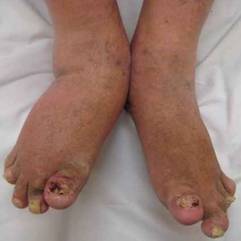
At week 52, the 23 patients with detectable anti-adalimumab antibodies had a median adalimumab concentration of 0.9 mg/L, compared with 9.4 mg/L in the 80 patients without detectable antibodies, as well as significantly higher C-reactive protein, Psoriasis Area Severity Index score, and 28-joint Disease Activity Score.
The researchers, led by Erik H. Vogelzang of the Jan van Breemen Research Institute/Reade in Amsterdam, also found that patients on adalimumab monotherapy had significantly lower median adalimumab concentrations at 28 and 52 weeks, compared with patients taking adalimumab and concomitant methotrexate (Ann. Rheum. Dis. 2014 [doi:10.1136/annrheumdis-2014-205554]).
"Further studies regarding measuring drug concentrations would be relevant, since this could give more insight on the cause of inadequate response, especially since treatment options in PsA [psoriatic arthritis] are limited," the investigators wrote.
The study was partly supported by AbbVie and Pfizer. The authors declared a range of consultancies, lecture fees, and research grants from the pharmaceutical industry.
Psoriatic arthritis patients with detectable anti-adalimumab antibodies have significantly lower serum adalimumab concentrations and poorer clinical outcomes at 28 weeks and 52 weeks of treatment, than did patients without antibodies in a prospective cohort study of 103 patients.
At week 52, the 23 patients with detectable anti-adalimumab antibodies had a median adalimumab concentration of 0.9 mg/L, compared with 9.4 mg/L in the 80 patients without detectable antibodies, as well as significantly higher C-reactive protein, Psoriasis Area Severity Index score, and 28-joint Disease Activity Score.
The researchers, led by Erik H. Vogelzang of the Jan van Breemen Research Institute/Reade in Amsterdam, also found that patients on adalimumab monotherapy had significantly lower median adalimumab concentrations at 28 and 52 weeks, compared with patients taking adalimumab and concomitant methotrexate (Ann. Rheum. Dis. 2014 [doi:10.1136/annrheumdis-2014-205554]).
"Further studies regarding measuring drug concentrations would be relevant, since this could give more insight on the cause of inadequate response, especially since treatment options in PsA [psoriatic arthritis] are limited," the investigators wrote.
The study was partly supported by AbbVie and Pfizer. The authors declared a range of consultancies, lecture fees, and research grants from the pharmaceutical industry.
Psoriatic arthritis patients with detectable anti-adalimumab antibodies have significantly lower serum adalimumab concentrations and poorer clinical outcomes at 28 weeks and 52 weeks of treatment, than did patients without antibodies in a prospective cohort study of 103 patients.
At week 52, the 23 patients with detectable anti-adalimumab antibodies had a median adalimumab concentration of 0.9 mg/L, compared with 9.4 mg/L in the 80 patients without detectable antibodies, as well as significantly higher C-reactive protein, Psoriasis Area Severity Index score, and 28-joint Disease Activity Score.
The researchers, led by Erik H. Vogelzang of the Jan van Breemen Research Institute/Reade in Amsterdam, also found that patients on adalimumab monotherapy had significantly lower median adalimumab concentrations at 28 and 52 weeks, compared with patients taking adalimumab and concomitant methotrexate (Ann. Rheum. Dis. 2014 [doi:10.1136/annrheumdis-2014-205554]).
"Further studies regarding measuring drug concentrations would be relevant, since this could give more insight on the cause of inadequate response, especially since treatment options in PsA [psoriatic arthritis] are limited," the investigators wrote.
The study was partly supported by AbbVie and Pfizer. The authors declared a range of consultancies, lecture fees, and research grants from the pharmaceutical industry.
FROM ANNALS OF RHEUMATIC DISEASES
Key clinical point: The presence of anti-adalimumab antibodies results in lower adalimumab concentrations and poorer clinical outcome.
Major finding: Patients with detectable anti-adalimumab antibodies had a median adalimumab concentration of 0.9 mg/L, compared with 9.4 mg/L in patients without detectable antibodies.
Data source: Prospective cohort study in 103 patients with psoriatic arthritis.
Disclosures: The study was partly supported by AbbVie and Pfizer. The authors declared a range of consultancies, lecture fees, and research grants from the pharmaceutical industry.