User login
Pediatric psychogenic seizures linked to anxiety, depression
Young people diagnosed with psychogenic nonepileptic seizures have significantly more medical, neurologic, and psychiatric diagnoses; use more medications and medical services, and report having experienced significantly more adversity than did their siblings, according to a study of the biopsychosocial risk factor profile of pediatric sufferers.
Researchers conducted an exploratory study in 55 youth diagnosed with psychogenic nonepileptic seizures (PNES), and 35 sibling controls, finding those with PNES had a much higher incidence of anxiety, depression, posttraumatic stress disorder, and significantly higher somatization and anxiety sensitivity scores than did their non-PNES siblings.
The young people who had been diagnosed with PNES were aged 8-18 years and were living with the same parents as their siblings.
While cases and controls did not differ much in terms of daily hassles, those with PNES were more likely to report experiences of domestic or community violence, bullying, and serious medical problems, according to a paper published online (Epilepsia 2014 Sept. 19 [doi:10.1111/epi.12773]). Previous studies have shown that among young people with PNES, “the most common adversities are family discord, school problems, bullying, and interpersonal problems, but not physical or sexual abuse,” the authors wrote. “Since these studies were retrospective and did not include controls, it remains to be determine which of these adversities are specific risk factors for pediatric PNES,” wrote Dr. Sigita Plioplys, a professor of psychiatry and behavioral sciences at Northwestern University, and head of the Pediatric Neuropsychiatry Clinic at the Ann & Robert H. Lurie Children’s Hospital, both in Chicago, and her associates.
Most of the subjects in the current study were older adolescent girls (mean age was 14.8 years), and this limitation means the conclusions are not generalizable to either younger children or boys with PNES.
Still, the current findings “underscore the need for psychiatric treatment studies, exploring insight-oriented, family, trauma-based, and cognitive-behavioral therapies, as well as pharmacotherapeutic modalities to determine which approach should be utilized to address the illness’s complex biopsychosocial risk factor profile,” Dr. Plioplys and her associates wrote.
The study was supported by funding from the Epilepsy Foundation, the Feinberg School of Medicine at Northwestern, and UCLA Semel Institute for Neuroscience and Human Behavior. Three authors reported book royalties on related subjects, but no other conflicts of interest were declared.
Young people diagnosed with psychogenic nonepileptic seizures have significantly more medical, neurologic, and psychiatric diagnoses; use more medications and medical services, and report having experienced significantly more adversity than did their siblings, according to a study of the biopsychosocial risk factor profile of pediatric sufferers.
Researchers conducted an exploratory study in 55 youth diagnosed with psychogenic nonepileptic seizures (PNES), and 35 sibling controls, finding those with PNES had a much higher incidence of anxiety, depression, posttraumatic stress disorder, and significantly higher somatization and anxiety sensitivity scores than did their non-PNES siblings.
The young people who had been diagnosed with PNES were aged 8-18 years and were living with the same parents as their siblings.
While cases and controls did not differ much in terms of daily hassles, those with PNES were more likely to report experiences of domestic or community violence, bullying, and serious medical problems, according to a paper published online (Epilepsia 2014 Sept. 19 [doi:10.1111/epi.12773]). Previous studies have shown that among young people with PNES, “the most common adversities are family discord, school problems, bullying, and interpersonal problems, but not physical or sexual abuse,” the authors wrote. “Since these studies were retrospective and did not include controls, it remains to be determine which of these adversities are specific risk factors for pediatric PNES,” wrote Dr. Sigita Plioplys, a professor of psychiatry and behavioral sciences at Northwestern University, and head of the Pediatric Neuropsychiatry Clinic at the Ann & Robert H. Lurie Children’s Hospital, both in Chicago, and her associates.
Most of the subjects in the current study were older adolescent girls (mean age was 14.8 years), and this limitation means the conclusions are not generalizable to either younger children or boys with PNES.
Still, the current findings “underscore the need for psychiatric treatment studies, exploring insight-oriented, family, trauma-based, and cognitive-behavioral therapies, as well as pharmacotherapeutic modalities to determine which approach should be utilized to address the illness’s complex biopsychosocial risk factor profile,” Dr. Plioplys and her associates wrote.
The study was supported by funding from the Epilepsy Foundation, the Feinberg School of Medicine at Northwestern, and UCLA Semel Institute for Neuroscience and Human Behavior. Three authors reported book royalties on related subjects, but no other conflicts of interest were declared.
Young people diagnosed with psychogenic nonepileptic seizures have significantly more medical, neurologic, and psychiatric diagnoses; use more medications and medical services, and report having experienced significantly more adversity than did their siblings, according to a study of the biopsychosocial risk factor profile of pediatric sufferers.
Researchers conducted an exploratory study in 55 youth diagnosed with psychogenic nonepileptic seizures (PNES), and 35 sibling controls, finding those with PNES had a much higher incidence of anxiety, depression, posttraumatic stress disorder, and significantly higher somatization and anxiety sensitivity scores than did their non-PNES siblings.
The young people who had been diagnosed with PNES were aged 8-18 years and were living with the same parents as their siblings.
While cases and controls did not differ much in terms of daily hassles, those with PNES were more likely to report experiences of domestic or community violence, bullying, and serious medical problems, according to a paper published online (Epilepsia 2014 Sept. 19 [doi:10.1111/epi.12773]). Previous studies have shown that among young people with PNES, “the most common adversities are family discord, school problems, bullying, and interpersonal problems, but not physical or sexual abuse,” the authors wrote. “Since these studies were retrospective and did not include controls, it remains to be determine which of these adversities are specific risk factors for pediatric PNES,” wrote Dr. Sigita Plioplys, a professor of psychiatry and behavioral sciences at Northwestern University, and head of the Pediatric Neuropsychiatry Clinic at the Ann & Robert H. Lurie Children’s Hospital, both in Chicago, and her associates.
Most of the subjects in the current study were older adolescent girls (mean age was 14.8 years), and this limitation means the conclusions are not generalizable to either younger children or boys with PNES.
Still, the current findings “underscore the need for psychiatric treatment studies, exploring insight-oriented, family, trauma-based, and cognitive-behavioral therapies, as well as pharmacotherapeutic modalities to determine which approach should be utilized to address the illness’s complex biopsychosocial risk factor profile,” Dr. Plioplys and her associates wrote.
The study was supported by funding from the Epilepsy Foundation, the Feinberg School of Medicine at Northwestern, and UCLA Semel Institute for Neuroscience and Human Behavior. Three authors reported book royalties on related subjects, but no other conflicts of interest were declared.
FROM EPILEPSIA
Key clinical point: Psychogenic nonepileptic seizures are associated with more medical, neurologic, and psychiatric diagnoses.
Major finding: Young people with psychogenic nonepileptic seizures report more anxiety, depression, PTSD, and somatization scores than do sibling controls.
Data source: Case-control study of 55 youths diagnosed with psychogenic nonepileptic seizures and 35 sibling controls.
Disclosures: The study was supported by funding from the Epilepsy Foundation, the Feinberg School of Medicine at Northwestern University, and UCLA Semel Institute for Neuroscience and Human Behavior. Three authors reported book royalties on related subjects, but no other conflicts of interest were declared.
Memory problems more common in psychogenic nonepileptic seizures plus PTSD
Individuals suffering from psychogenic nonepileptic seizures with posttraumatic stress disorder have significant verbal and visual memory impairments, and a greater likelihood of a history of substance abuse than individuals without PTSD, even if those individuals have a history of trauma, investigators have found in a case-control study.
“Up to 90% of patients with PNESs [psychogenic nonepileptic seizures] have been reported to have histories of significant traumatic experiences, with particularly high instances of childhood sexual and physical abuse, compared with control groups and the general population,” wrote Lorna Myers, Ph.D., of the Northeast Regional Epilepsy Group, New York, and her associates.
Those with psychogenic nonepileptic seizures and PTSD had the highest rates of psychiatric medication use, substance abuse, history of rape, and history of physical abuse, compared with individuals who had psychogenic nonepileptic seizures without a diagnosis of PTSD but with a history of trauma, and individuals with psychogenic nonepileptic seizures and no history of trauma, according to the study (Epilepsy & Behavior 2014;37:82-6).
Investigators for the study – which enrolled 17 people with psychogenic nonepileptic seizures and PTSD, 29 people with psychogenic nonepileptic seizures and a history of trauma but no PTSD, and 17 individuals with psychogenic nonepileptic seizures but no PTSD or trauma history – also found that those with psychogenic nonepileptic seizures and PTSD scored lowest in delayed narrative memory, and showed the highest scores for self-perceived verbal memory, visuospatial memory, and overall Memory Complaints Inventory.
Dr. Myers and her associates cited several limitations. For example, they did not collect data on the patients’ ethnic or racial backgrounds, which suggests that information on “PNES pathology and neuropsychological functions” might have been missed.
The authors declared no conflicts of interest.
Individuals suffering from psychogenic nonepileptic seizures with posttraumatic stress disorder have significant verbal and visual memory impairments, and a greater likelihood of a history of substance abuse than individuals without PTSD, even if those individuals have a history of trauma, investigators have found in a case-control study.
“Up to 90% of patients with PNESs [psychogenic nonepileptic seizures] have been reported to have histories of significant traumatic experiences, with particularly high instances of childhood sexual and physical abuse, compared with control groups and the general population,” wrote Lorna Myers, Ph.D., of the Northeast Regional Epilepsy Group, New York, and her associates.
Those with psychogenic nonepileptic seizures and PTSD had the highest rates of psychiatric medication use, substance abuse, history of rape, and history of physical abuse, compared with individuals who had psychogenic nonepileptic seizures without a diagnosis of PTSD but with a history of trauma, and individuals with psychogenic nonepileptic seizures and no history of trauma, according to the study (Epilepsy & Behavior 2014;37:82-6).
Investigators for the study – which enrolled 17 people with psychogenic nonepileptic seizures and PTSD, 29 people with psychogenic nonepileptic seizures and a history of trauma but no PTSD, and 17 individuals with psychogenic nonepileptic seizures but no PTSD or trauma history – also found that those with psychogenic nonepileptic seizures and PTSD scored lowest in delayed narrative memory, and showed the highest scores for self-perceived verbal memory, visuospatial memory, and overall Memory Complaints Inventory.
Dr. Myers and her associates cited several limitations. For example, they did not collect data on the patients’ ethnic or racial backgrounds, which suggests that information on “PNES pathology and neuropsychological functions” might have been missed.
The authors declared no conflicts of interest.
Individuals suffering from psychogenic nonepileptic seizures with posttraumatic stress disorder have significant verbal and visual memory impairments, and a greater likelihood of a history of substance abuse than individuals without PTSD, even if those individuals have a history of trauma, investigators have found in a case-control study.
“Up to 90% of patients with PNESs [psychogenic nonepileptic seizures] have been reported to have histories of significant traumatic experiences, with particularly high instances of childhood sexual and physical abuse, compared with control groups and the general population,” wrote Lorna Myers, Ph.D., of the Northeast Regional Epilepsy Group, New York, and her associates.
Those with psychogenic nonepileptic seizures and PTSD had the highest rates of psychiatric medication use, substance abuse, history of rape, and history of physical abuse, compared with individuals who had psychogenic nonepileptic seizures without a diagnosis of PTSD but with a history of trauma, and individuals with psychogenic nonepileptic seizures and no history of trauma, according to the study (Epilepsy & Behavior 2014;37:82-6).
Investigators for the study – which enrolled 17 people with psychogenic nonepileptic seizures and PTSD, 29 people with psychogenic nonepileptic seizures and a history of trauma but no PTSD, and 17 individuals with psychogenic nonepileptic seizures but no PTSD or trauma history – also found that those with psychogenic nonepileptic seizures and PTSD scored lowest in delayed narrative memory, and showed the highest scores for self-perceived verbal memory, visuospatial memory, and overall Memory Complaints Inventory.
Dr. Myers and her associates cited several limitations. For example, they did not collect data on the patients’ ethnic or racial backgrounds, which suggests that information on “PNES pathology and neuropsychological functions” might have been missed.
The authors declared no conflicts of interest.
FROM EPILEPSY & BEHAVIOR
Key clinical point: Individuals with psychogenic nonepileptic seizures and PTSD have worse memory problems and higher rates of substance abuse.
Major finding: Substance abuse, memory problems, and history of trauma were more likely in psychogenic nonepileptic seizures plus PTSD than without PTSD.
Data source: Case-control study among 17 people with psychogenic nonepileptic seizures and PTSD, 29 people with psychogenic nonepileptic seizures and a history of trauma but no PTSD, and 17 individuals with psychogenic nonepileptic seizures but no PTSD or trauma history.
Disclosures: The authors declared no conflicts of interest.
E-cigarettes don’t help cancer patients quit smoking
Though e-cigarette use increased among smokers diagnosed with cancer, it did not lead to greater success with tobacco cessation, according to a study among cancer patients referred to a tobacco quit program.
The prospective cohort study of 1,074 cancer patients found the prevalence of e-cigarette use increased from 10.6% of participants enrolled in 2012 to 38.5% of patients in 2013, with 92% of e-cigarette users reporting dual use with traditional cigarettes.

At study entry, e-cigarette users were more nicotine dependent than were nonusers, had more prior quit attempts, and were more likely to be diagnosed with thoracic and head or neck cancers. Smoking cessation outcomes were collected from 414 patients, and after adjustment for nicotine dependence, number of past quit attempts, and cancer diagnosis, e-cigarette users were twice as likely to still be smoking at follow-up (odds ratio, 2.0; 95% confidence interval, 1.2-3.3; P less than .01), Sarah P. Borderud and her colleagues reported online Sept. 22 in Cancer [doi:10.1002/cncr.28811].
“Although we speculate that patients may be drawn to e-cigarette use for harm reduction, the findings of the current study provide no evidence to support oncologists recommending e-cigarette use among patients with cancer who are advised to quit smoking,” wrote Ms. Borderud, an epidemiologist at Memorial Sloan-Kettering Cancer Center, N.Y., and her colleagues.
No conflicts of interest were declared.
Though e-cigarette use increased among smokers diagnosed with cancer, it did not lead to greater success with tobacco cessation, according to a study among cancer patients referred to a tobacco quit program.
The prospective cohort study of 1,074 cancer patients found the prevalence of e-cigarette use increased from 10.6% of participants enrolled in 2012 to 38.5% of patients in 2013, with 92% of e-cigarette users reporting dual use with traditional cigarettes.
At study entry, e-cigarette users were more nicotine dependent than were nonusers, had more prior quit attempts, and were more likely to be diagnosed with thoracic and head or neck cancers. Smoking cessation outcomes were collected from 414 patients, and after adjustment for nicotine dependence, number of past quit attempts, and cancer diagnosis, e-cigarette users were twice as likely to still be smoking at follow-up (odds ratio, 2.0; 95% confidence interval, 1.2-3.3; P less than .01), Sarah P. Borderud and her colleagues reported online Sept. 22 in Cancer [doi:10.1002/cncr.28811].
“Although we speculate that patients may be drawn to e-cigarette use for harm reduction, the findings of the current study provide no evidence to support oncologists recommending e-cigarette use among patients with cancer who are advised to quit smoking,” wrote Ms. Borderud, an epidemiologist at Memorial Sloan-Kettering Cancer Center, N.Y., and her colleagues.
No conflicts of interest were declared.
Though e-cigarette use increased among smokers diagnosed with cancer, it did not lead to greater success with tobacco cessation, according to a study among cancer patients referred to a tobacco quit program.
The prospective cohort study of 1,074 cancer patients found the prevalence of e-cigarette use increased from 10.6% of participants enrolled in 2012 to 38.5% of patients in 2013, with 92% of e-cigarette users reporting dual use with traditional cigarettes.
At study entry, e-cigarette users were more nicotine dependent than were nonusers, had more prior quit attempts, and were more likely to be diagnosed with thoracic and head or neck cancers. Smoking cessation outcomes were collected from 414 patients, and after adjustment for nicotine dependence, number of past quit attempts, and cancer diagnosis, e-cigarette users were twice as likely to still be smoking at follow-up (odds ratio, 2.0; 95% confidence interval, 1.2-3.3; P less than .01), Sarah P. Borderud and her colleagues reported online Sept. 22 in Cancer [doi:10.1002/cncr.28811].
“Although we speculate that patients may be drawn to e-cigarette use for harm reduction, the findings of the current study provide no evidence to support oncologists recommending e-cigarette use among patients with cancer who are advised to quit smoking,” wrote Ms. Borderud, an epidemiologist at Memorial Sloan-Kettering Cancer Center, N.Y., and her colleagues.
No conflicts of interest were declared.
FROM CANCER
Key clinical point: E-cigarette use increased among smoking cancer patients, but users were not more likely to succeed in tobacco quit program.
Major finding: E-cigarette users twice as likely to still be smoking at quit program follow-up.
Data source: Prospective cohort study in 1,074 cancer patients enrolled in a tobacco quit program.
Disclosures: There were no conflicts of interest disclosed.
Urinary incontinence guidelines recommend nonpharmacologic therapy as first line
Women with stress urinary incontinence should be managed with pelvic floor muscle training as the first-line therapy, according to new guidelines from the American College of Physicians, which also recommended against systemic pharmacologic therapy for the condition.
The review of all English-language literature from 1990 to 2013 on nonsurgical management of urinary incontinence in women found there was high-quality evidence in favor of nonpharmacologic therapy with pelvic floor muscle training as the first-line treatment for both stress and mixed urinary continence.
Defining ‘clinical success’ as a 50% reduction in the frequency of urinary incontinence episodes, the guidelines concluded there was evidence to make a strong recommendation for bladder training in women with urgency urinary incontinence (UI). The addition of pelvic floor muscle training was not found to result in any additional benefit, compared with bladder training alone, for those with urgency incontinence.
While the guidelines advised against pharmacologic therapy for stress incontinence, they did find evidence in favor of pharmacologic therapy as a second-line option for urgency urinary incontinence if bladder training had been unsuccessful, with the choice of agent to be based on tolerability, adverse effect profile, ease of use, and cost.
“Pharmacologic therapies were effective and equally efficacious at managing urgency UI and had a moderate magnitude of benefit in achieving continence rates but were associated with adverse effects,” Dr. Amir Qaseem from the American College of Physicians and his colleagues wrote in the Sept. 15 issue of the Annals of Internal Medicine.
For urgency urinary incontinence, the guidelines found oxybutynin, tolterodine, darifenacin, solifenacin, fesoterodine, and trospium chloride increased continence rates. However patients were less likely to experience adverse events resulting in discontinuation with solifenacin, and the highest risk of discontinuation was found with oxybutynin.
“Evidence was insufficient to evaluate the comparative effectiveness of nonpharmacologic versus pharmacologic treatments for UI, and nonpharmacologic treatment should be considered first-line therapy.”
The authors also strongly recommended weight loss and exercise to improve continence in obese women, pointing out that the benefits would extend beyond relief of urinary incontinence (Ann. of Intern. Med. 2014 Sept. 15 [doi:10.7326/M13-2410]).
The prevalence of urinary incontinence ranges from one in four women aged 14-21 years, to three-quarters of all women older than 75 years; however, the authors suggested that these figures underestimated the true incidence because at least half of all incontinent women do not tell their physicians.
Because of this fact, the guidelines also suggested that physicians take the lead in routinely asking female patients about troublesome UI symptoms, and following up with a focused history, physical examination, and evaluation of neurologic symptoms.
“Asking such questions as “Do you have a problem with urinary incontinence (of your bladder) that is bothersome enough that you would like to know more about how it could be treated?” as part of a quality-improvement intervention has been shown to increase appropriate care by 15% in patients aged 75 years or older,” the authors wrote.
Some authors declared conflicts of interest including stock options, fees, royalties from a range of private and public organizations. Disclosures can be viewed on the ACP website.
Women with stress urinary incontinence should be managed with pelvic floor muscle training as the first-line therapy, according to new guidelines from the American College of Physicians, which also recommended against systemic pharmacologic therapy for the condition.
The review of all English-language literature from 1990 to 2013 on nonsurgical management of urinary incontinence in women found there was high-quality evidence in favor of nonpharmacologic therapy with pelvic floor muscle training as the first-line treatment for both stress and mixed urinary continence.
Defining ‘clinical success’ as a 50% reduction in the frequency of urinary incontinence episodes, the guidelines concluded there was evidence to make a strong recommendation for bladder training in women with urgency urinary incontinence (UI). The addition of pelvic floor muscle training was not found to result in any additional benefit, compared with bladder training alone, for those with urgency incontinence.
While the guidelines advised against pharmacologic therapy for stress incontinence, they did find evidence in favor of pharmacologic therapy as a second-line option for urgency urinary incontinence if bladder training had been unsuccessful, with the choice of agent to be based on tolerability, adverse effect profile, ease of use, and cost.
“Pharmacologic therapies were effective and equally efficacious at managing urgency UI and had a moderate magnitude of benefit in achieving continence rates but were associated with adverse effects,” Dr. Amir Qaseem from the American College of Physicians and his colleagues wrote in the Sept. 15 issue of the Annals of Internal Medicine.
For urgency urinary incontinence, the guidelines found oxybutynin, tolterodine, darifenacin, solifenacin, fesoterodine, and trospium chloride increased continence rates. However patients were less likely to experience adverse events resulting in discontinuation with solifenacin, and the highest risk of discontinuation was found with oxybutynin.
“Evidence was insufficient to evaluate the comparative effectiveness of nonpharmacologic versus pharmacologic treatments for UI, and nonpharmacologic treatment should be considered first-line therapy.”
The authors also strongly recommended weight loss and exercise to improve continence in obese women, pointing out that the benefits would extend beyond relief of urinary incontinence (Ann. of Intern. Med. 2014 Sept. 15 [doi:10.7326/M13-2410]).
The prevalence of urinary incontinence ranges from one in four women aged 14-21 years, to three-quarters of all women older than 75 years; however, the authors suggested that these figures underestimated the true incidence because at least half of all incontinent women do not tell their physicians.
Because of this fact, the guidelines also suggested that physicians take the lead in routinely asking female patients about troublesome UI symptoms, and following up with a focused history, physical examination, and evaluation of neurologic symptoms.
“Asking such questions as “Do you have a problem with urinary incontinence (of your bladder) that is bothersome enough that you would like to know more about how it could be treated?” as part of a quality-improvement intervention has been shown to increase appropriate care by 15% in patients aged 75 years or older,” the authors wrote.
Some authors declared conflicts of interest including stock options, fees, royalties from a range of private and public organizations. Disclosures can be viewed on the ACP website.
Women with stress urinary incontinence should be managed with pelvic floor muscle training as the first-line therapy, according to new guidelines from the American College of Physicians, which also recommended against systemic pharmacologic therapy for the condition.
The review of all English-language literature from 1990 to 2013 on nonsurgical management of urinary incontinence in women found there was high-quality evidence in favor of nonpharmacologic therapy with pelvic floor muscle training as the first-line treatment for both stress and mixed urinary continence.
Defining ‘clinical success’ as a 50% reduction in the frequency of urinary incontinence episodes, the guidelines concluded there was evidence to make a strong recommendation for bladder training in women with urgency urinary incontinence (UI). The addition of pelvic floor muscle training was not found to result in any additional benefit, compared with bladder training alone, for those with urgency incontinence.
While the guidelines advised against pharmacologic therapy for stress incontinence, they did find evidence in favor of pharmacologic therapy as a second-line option for urgency urinary incontinence if bladder training had been unsuccessful, with the choice of agent to be based on tolerability, adverse effect profile, ease of use, and cost.
“Pharmacologic therapies were effective and equally efficacious at managing urgency UI and had a moderate magnitude of benefit in achieving continence rates but were associated with adverse effects,” Dr. Amir Qaseem from the American College of Physicians and his colleagues wrote in the Sept. 15 issue of the Annals of Internal Medicine.
For urgency urinary incontinence, the guidelines found oxybutynin, tolterodine, darifenacin, solifenacin, fesoterodine, and trospium chloride increased continence rates. However patients were less likely to experience adverse events resulting in discontinuation with solifenacin, and the highest risk of discontinuation was found with oxybutynin.
“Evidence was insufficient to evaluate the comparative effectiveness of nonpharmacologic versus pharmacologic treatments for UI, and nonpharmacologic treatment should be considered first-line therapy.”
The authors also strongly recommended weight loss and exercise to improve continence in obese women, pointing out that the benefits would extend beyond relief of urinary incontinence (Ann. of Intern. Med. 2014 Sept. 15 [doi:10.7326/M13-2410]).
The prevalence of urinary incontinence ranges from one in four women aged 14-21 years, to three-quarters of all women older than 75 years; however, the authors suggested that these figures underestimated the true incidence because at least half of all incontinent women do not tell their physicians.
Because of this fact, the guidelines also suggested that physicians take the lead in routinely asking female patients about troublesome UI symptoms, and following up with a focused history, physical examination, and evaluation of neurologic symptoms.
“Asking such questions as “Do you have a problem with urinary incontinence (of your bladder) that is bothersome enough that you would like to know more about how it could be treated?” as part of a quality-improvement intervention has been shown to increase appropriate care by 15% in patients aged 75 years or older,” the authors wrote.
Some authors declared conflicts of interest including stock options, fees, royalties from a range of private and public organizations. Disclosures can be viewed on the ACP website.
FROM ANNALS OF INTERNAL MEDICINE
Anal high-grade squamous intraepithelial lesions cleared in 42% of gay men
MELBOURNE – High-grade squamous intraepithelial lesions are prevalent among HIV-positive gay men and a significant number of these anal lesions resolve spontaneously, according to data from a longitudinal observational cohort study.
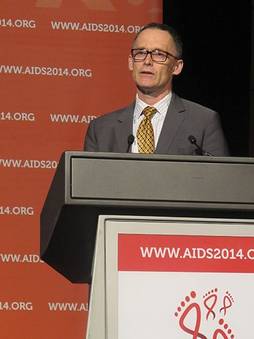
The Study of the Prevention of Anal Cancer (SPANC) is a 3-year prospective study of the natural history of anal HPV infection, which has so far enrolled 350 homosexual men over 35 years old. Dr. Andrew Grulich from the Kirby Institute, University of New South Wales, Sydney, presented trial data at the 20th International AIDS Conference that showed a 42% clearance rate for high-grade squamous intraepithelial lesions (HSIL).
Anal lesions that result from human papillomavirus infection are difficult to treat, and there is no evidence for the effectiveness of treatment, Dr. Grulich said. Further, anal lesions are far less likely than cervical lesions to progress to cancer. However, questions remain about which men are more likely to have persistent high-grade disease and therefore are at a higher risk of progression to cancer.
Interim data from the SPANC study found a 46% prevalence of HSIL among HIV-positive gay men and a 34% prevalence among HIV-negative gay men. The higher rate among HIV-positive individuals was largely driven by a higher prevalence of more advanced anal intraepithelial neoplasia.
Men with persistent infections due to human papillomavirus (HPV) 16 – the subtype most commonly associated with anal cancer – were much less likely to clear the high-grade lesions (hazard ratio = 0.22, 95% confidence interval, 0.11-0.46), as were men with multiple subtypes of HPV.
"What we’ve been able to show is that high-grade disease is very dynamic, with one in six [gay] men getting it and of those who get it about 40% clearing it each year," Dr. Grulich told the conference.
"Not all high-grade disease requires treatment," he said. "These data suggest that treatment can be targeted at those with persistent high-grade disease because much high-grade disease diagnosed on a single occasion will simply go away."
Treatment practices for HSIL vary with some choosing a ‘watch and wait’ approach and others choosing ablative treatment. Dr. Grulich suggested treatment based on "red flags" that suggest a higher risk of progression to cancer.
"If [the patient] is HPV 16–positive, that’s a definite red flag because 90% of anal cancer is caused by that one subtype," Dr. Grulich said. Also, high-grade disease that doesn’t clear is another red flag.
"I think it’s perfectly reasonable, given the state of the science, if you’re doing high-resolution anoscopy and you diagnose (HSIL), to explain to the patient that it’s highly likely to go away but it may not, and therefore get the patient back in about a year," he said.
The study is funded by the National Health and Medical Research Council of Australia, and the Cancer Council NSW. Some authors declared financial ties to pharmaceutical companies including a manufacturer of HPV vaccines.
MELBOURNE – High-grade squamous intraepithelial lesions are prevalent among HIV-positive gay men and a significant number of these anal lesions resolve spontaneously, according to data from a longitudinal observational cohort study.
The Study of the Prevention of Anal Cancer (SPANC) is a 3-year prospective study of the natural history of anal HPV infection, which has so far enrolled 350 homosexual men over 35 years old. Dr. Andrew Grulich from the Kirby Institute, University of New South Wales, Sydney, presented trial data at the 20th International AIDS Conference that showed a 42% clearance rate for high-grade squamous intraepithelial lesions (HSIL).
Anal lesions that result from human papillomavirus infection are difficult to treat, and there is no evidence for the effectiveness of treatment, Dr. Grulich said. Further, anal lesions are far less likely than cervical lesions to progress to cancer. However, questions remain about which men are more likely to have persistent high-grade disease and therefore are at a higher risk of progression to cancer.
Interim data from the SPANC study found a 46% prevalence of HSIL among HIV-positive gay men and a 34% prevalence among HIV-negative gay men. The higher rate among HIV-positive individuals was largely driven by a higher prevalence of more advanced anal intraepithelial neoplasia.
Men with persistent infections due to human papillomavirus (HPV) 16 – the subtype most commonly associated with anal cancer – were much less likely to clear the high-grade lesions (hazard ratio = 0.22, 95% confidence interval, 0.11-0.46), as were men with multiple subtypes of HPV.
"What we’ve been able to show is that high-grade disease is very dynamic, with one in six [gay] men getting it and of those who get it about 40% clearing it each year," Dr. Grulich told the conference.
"Not all high-grade disease requires treatment," he said. "These data suggest that treatment can be targeted at those with persistent high-grade disease because much high-grade disease diagnosed on a single occasion will simply go away."
Treatment practices for HSIL vary with some choosing a ‘watch and wait’ approach and others choosing ablative treatment. Dr. Grulich suggested treatment based on "red flags" that suggest a higher risk of progression to cancer.
"If [the patient] is HPV 16–positive, that’s a definite red flag because 90% of anal cancer is caused by that one subtype," Dr. Grulich said. Also, high-grade disease that doesn’t clear is another red flag.
"I think it’s perfectly reasonable, given the state of the science, if you’re doing high-resolution anoscopy and you diagnose (HSIL), to explain to the patient that it’s highly likely to go away but it may not, and therefore get the patient back in about a year," he said.
The study is funded by the National Health and Medical Research Council of Australia, and the Cancer Council NSW. Some authors declared financial ties to pharmaceutical companies including a manufacturer of HPV vaccines.
MELBOURNE – High-grade squamous intraepithelial lesions are prevalent among HIV-positive gay men and a significant number of these anal lesions resolve spontaneously, according to data from a longitudinal observational cohort study.
The Study of the Prevention of Anal Cancer (SPANC) is a 3-year prospective study of the natural history of anal HPV infection, which has so far enrolled 350 homosexual men over 35 years old. Dr. Andrew Grulich from the Kirby Institute, University of New South Wales, Sydney, presented trial data at the 20th International AIDS Conference that showed a 42% clearance rate for high-grade squamous intraepithelial lesions (HSIL).
Anal lesions that result from human papillomavirus infection are difficult to treat, and there is no evidence for the effectiveness of treatment, Dr. Grulich said. Further, anal lesions are far less likely than cervical lesions to progress to cancer. However, questions remain about which men are more likely to have persistent high-grade disease and therefore are at a higher risk of progression to cancer.
Interim data from the SPANC study found a 46% prevalence of HSIL among HIV-positive gay men and a 34% prevalence among HIV-negative gay men. The higher rate among HIV-positive individuals was largely driven by a higher prevalence of more advanced anal intraepithelial neoplasia.
Men with persistent infections due to human papillomavirus (HPV) 16 – the subtype most commonly associated with anal cancer – were much less likely to clear the high-grade lesions (hazard ratio = 0.22, 95% confidence interval, 0.11-0.46), as were men with multiple subtypes of HPV.
"What we’ve been able to show is that high-grade disease is very dynamic, with one in six [gay] men getting it and of those who get it about 40% clearing it each year," Dr. Grulich told the conference.
"Not all high-grade disease requires treatment," he said. "These data suggest that treatment can be targeted at those with persistent high-grade disease because much high-grade disease diagnosed on a single occasion will simply go away."
Treatment practices for HSIL vary with some choosing a ‘watch and wait’ approach and others choosing ablative treatment. Dr. Grulich suggested treatment based on "red flags" that suggest a higher risk of progression to cancer.
"If [the patient] is HPV 16–positive, that’s a definite red flag because 90% of anal cancer is caused by that one subtype," Dr. Grulich said. Also, high-grade disease that doesn’t clear is another red flag.
"I think it’s perfectly reasonable, given the state of the science, if you’re doing high-resolution anoscopy and you diagnose (HSIL), to explain to the patient that it’s highly likely to go away but it may not, and therefore get the patient back in about a year," he said.
The study is funded by the National Health and Medical Research Council of Australia, and the Cancer Council NSW. Some authors declared financial ties to pharmaceutical companies including a manufacturer of HPV vaccines.
AT AIDS 2014
Key clinical point: Watchful waiting may be an option for gay men with anal high-grade squamous intraepithelial lesions if the lesion is not HPV 16 positive and has not been present for more than a year.
Major finding: Over 40% of anal high-grade squamous intraepithelial lesions clear spontaneously without treatment, with similar clearance rates for HIV-positive and HIV-negative gay men.
Data source: Interim data on 350 gay men over 35 years old enrolled in SPANC, a 3-year prospective study of the natural history of anal HPV infection.
Disclosures: The study is funded by the National Health and Medical Research Council of Australia and the Cancer Council NSW. Some authors declared financial ties to pharmaceutical companies including a manufacturer of HPV vaccines.
Prolonged remission in systemic lupus erythematosus rare but more likely in milder disease
Prolonged clinical remission in systemic lupus erythematosus is a rare occurrence, but is more likely to occur in individuals with milder earlier disease who have had less need for corticosteroid and/or immunosuppressive treatment, and therefore less damage, according to data from an observational case-control cohort study.
The study of 1613 patients with systemic lupus erythematosus (SLE) found 38 (2.4%) achieved prolonged remission – defined as Systemic Lupus Erythematosus Disease Activity Index of 0, 2, or 4 for at least 5 consecutive years – while not taking corticosteroids or immunosuppressives, as reported in a paper published online August 1 in The Journal of Rheumatology [doi:10.3899/jrheum.131137].
Mean time to remission from clinic entry was 9.1 years, patients achieved remission for an average of 11.5 years, and those who achieved remission had experienced fewer skin, central nervous system, and pulmonary manifestations, and had accrued significantly less organ damage than those who did not achieve remission.
"There was no difference in antimalarial use between groups, but overall prednisone use and cumulative dose was significantly lower among cases at the start of their prolonged remission period, as was the use of immunosuppressive agents," wrote Dr. Amanda J. Steiman and colleagues from the University of Toronto Lupus Clinic.
There were no conflicts of interest declared.
Prolonged clinical remission in systemic lupus erythematosus is a rare occurrence, but is more likely to occur in individuals with milder earlier disease who have had less need for corticosteroid and/or immunosuppressive treatment, and therefore less damage, according to data from an observational case-control cohort study.
The study of 1613 patients with systemic lupus erythematosus (SLE) found 38 (2.4%) achieved prolonged remission – defined as Systemic Lupus Erythematosus Disease Activity Index of 0, 2, or 4 for at least 5 consecutive years – while not taking corticosteroids or immunosuppressives, as reported in a paper published online August 1 in The Journal of Rheumatology [doi:10.3899/jrheum.131137].
Mean time to remission from clinic entry was 9.1 years, patients achieved remission for an average of 11.5 years, and those who achieved remission had experienced fewer skin, central nervous system, and pulmonary manifestations, and had accrued significantly less organ damage than those who did not achieve remission.
"There was no difference in antimalarial use between groups, but overall prednisone use and cumulative dose was significantly lower among cases at the start of their prolonged remission period, as was the use of immunosuppressive agents," wrote Dr. Amanda J. Steiman and colleagues from the University of Toronto Lupus Clinic.
There were no conflicts of interest declared.
Prolonged clinical remission in systemic lupus erythematosus is a rare occurrence, but is more likely to occur in individuals with milder earlier disease who have had less need for corticosteroid and/or immunosuppressive treatment, and therefore less damage, according to data from an observational case-control cohort study.
The study of 1613 patients with systemic lupus erythematosus (SLE) found 38 (2.4%) achieved prolonged remission – defined as Systemic Lupus Erythematosus Disease Activity Index of 0, 2, or 4 for at least 5 consecutive years – while not taking corticosteroids or immunosuppressives, as reported in a paper published online August 1 in The Journal of Rheumatology [doi:10.3899/jrheum.131137].
Mean time to remission from clinic entry was 9.1 years, patients achieved remission for an average of 11.5 years, and those who achieved remission had experienced fewer skin, central nervous system, and pulmonary manifestations, and had accrued significantly less organ damage than those who did not achieve remission.
"There was no difference in antimalarial use between groups, but overall prednisone use and cumulative dose was significantly lower among cases at the start of their prolonged remission period, as was the use of immunosuppressive agents," wrote Dr. Amanda J. Steiman and colleagues from the University of Toronto Lupus Clinic.
There were no conflicts of interest declared.
FROM THE JOURNAL OF RHEUMATOLOGY
Key clinical point: Prolonged clinical remission in systemic lupus erythematosus is more likely to occur in individuals with milder earlier disease who have had less need for corticosteroid and/or immunosuppressive treatment, and therefore less damage.
Major finding: Prolonged clinical remission in systemic lupus erythematosus occurs in 2.4% of individuals and is more likely among those with milder earlier disease, with less accrued organ damage and fewer skin, central nervous system, and pulmonary manifestations.
Data source: Observational case-control cohort study among 1613 patients with systemic lupus erythematosus.
Disclosures: No conflicts of interest declared.
Lupus severity and genotype associated with greater risk of pneumonia
Patients with systemic lupus erythematosus are at significantly greater risk of pneumonia compared with the general population, particularly those with more severe disease and those with the FCGR2A HH genotype, a case-control study has shown.
Data from 232 patients with systemic lupus erythematosus (SLE) showed 15% had experienced one or more episodes of pneumonia – representing a standardized incidence ratio of 5.1 – while there were nearly four times as many patients with a Katz Severity Index equal to or greater than three among the cases compared with 196 controls.
Immunogenetic analysis revealed that the FCGR2A HH genotype was three times more common in SLE patients who experienced pneumonia compared with those who did not, according to a paper published online Aug. 1 in The Journal of Rheumatology (doi: 10.3899/jrheum.131470).
"Remarkably, only 6 patients (13%, 22% considering only pneumonia events after SLE diagnosis) were receiving immunosuppressive therapy at the time of pneumonia," wrote Dr. Iñigo Rúa-Figueroa and colleagues at Hospital Universitario de Gran Canaria Doctor Negrín, Las Palmas de Gran Canaria, Spain.
The study was supported by grants from the Ministerio de Economía y Competitividad, the European Regional Development Fund-European Social Fund, and the Sociedad Española de Neumología y Cirugía Torácica. Two of the investigators received grants from Universidad de Las Palmas de Gran Canaria, and one from the Ministerio de Economía y Competitividad. Hoffmann-La Roche provided funding for translation of the paper. The remaining authors had no relevant financial disclosures.
Patients with systemic lupus erythematosus are at significantly greater risk of pneumonia compared with the general population, particularly those with more severe disease and those with the FCGR2A HH genotype, a case-control study has shown.
Data from 232 patients with systemic lupus erythematosus (SLE) showed 15% had experienced one or more episodes of pneumonia – representing a standardized incidence ratio of 5.1 – while there were nearly four times as many patients with a Katz Severity Index equal to or greater than three among the cases compared with 196 controls.
Immunogenetic analysis revealed that the FCGR2A HH genotype was three times more common in SLE patients who experienced pneumonia compared with those who did not, according to a paper published online Aug. 1 in The Journal of Rheumatology (doi: 10.3899/jrheum.131470).
"Remarkably, only 6 patients (13%, 22% considering only pneumonia events after SLE diagnosis) were receiving immunosuppressive therapy at the time of pneumonia," wrote Dr. Iñigo Rúa-Figueroa and colleagues at Hospital Universitario de Gran Canaria Doctor Negrín, Las Palmas de Gran Canaria, Spain.
The study was supported by grants from the Ministerio de Economía y Competitividad, the European Regional Development Fund-European Social Fund, and the Sociedad Española de Neumología y Cirugía Torácica. Two of the investigators received grants from Universidad de Las Palmas de Gran Canaria, and one from the Ministerio de Economía y Competitividad. Hoffmann-La Roche provided funding for translation of the paper. The remaining authors had no relevant financial disclosures.
Patients with systemic lupus erythematosus are at significantly greater risk of pneumonia compared with the general population, particularly those with more severe disease and those with the FCGR2A HH genotype, a case-control study has shown.
Data from 232 patients with systemic lupus erythematosus (SLE) showed 15% had experienced one or more episodes of pneumonia – representing a standardized incidence ratio of 5.1 – while there were nearly four times as many patients with a Katz Severity Index equal to or greater than three among the cases compared with 196 controls.
Immunogenetic analysis revealed that the FCGR2A HH genotype was three times more common in SLE patients who experienced pneumonia compared with those who did not, according to a paper published online Aug. 1 in The Journal of Rheumatology (doi: 10.3899/jrheum.131470).
"Remarkably, only 6 patients (13%, 22% considering only pneumonia events after SLE diagnosis) were receiving immunosuppressive therapy at the time of pneumonia," wrote Dr. Iñigo Rúa-Figueroa and colleagues at Hospital Universitario de Gran Canaria Doctor Negrín, Las Palmas de Gran Canaria, Spain.
The study was supported by grants from the Ministerio de Economía y Competitividad, the European Regional Development Fund-European Social Fund, and the Sociedad Española de Neumología y Cirugía Torácica. Two of the investigators received grants from Universidad de Las Palmas de Gran Canaria, and one from the Ministerio de Economía y Competitividad. Hoffmann-La Roche provided funding for translation of the paper. The remaining authors had no relevant financial disclosures.
FROM THE JOURNAL OF RHEUMATOLOGY
Key clinical point: Beware pneumonia in patients with severe SLE.
Major finding: Pneumonia is five times more common among patients with systemic lupus erythematosus than among the general population, and individuals with more severe lupus or with the FCGR2A HH genotype are at even greater risk.
Data source: Case-control study of 232 patients with systemic lupus erythematosus, 36 of whom had experienced at least one episode of pneumonia.
Disclosures: The study was supported by grants from the Ministerio de Economía y Competitividad, the European Regional Development Fund-European Social Fund, and the Sociedad Española de Neumología y Cirugía Torácica. Two investigators received grants from Universidad de Las Palmas de Gran Canaria, and one from the Ministerio de Economía y Competitividad. Hoffmann-La Roche provided funding for translation of the paper. The remaining authors had no relevant financial disclosures.
Daily cannabis use in teens linked to lower educational attainment, increased suicide risk
Individuals using cannabis on a daily basis before the age of 17 years are significantly less likely to complete high school and obtain a degree and significantly more likely to be cannabis dependent, use other illicit drugs, and attempt suicide by age 30 years, results of a metaanalysis have shown.
Researchers combined and analyzed individual patient data from three large longitudinal studies involving a total of 3,765 participants, finding that those who smoked cannabis on a daily basis when young were 63% less likely to complete high school and 62% less likely to attain a degree, compared with never-smokers.
"Furthermore, daily users had odds of later cannabis dependence that were 18 times higher, odds of use of other illicit drugs that were eight times higher, and odds of suicide attempt that were seven times higher," wrote Edmund Silins, Ph.D., from the Drug and Alcohol Research Centre, University of New South Wales, Sydney, and his colleagues.
The researchers also found clear evidence of a dose-response association between the intensity of cannabis use and the degree of impact on later outcomes, even after accounting for potential confounders such as age, sex, ethnicity, socioeconomic status, and mental illness, according to Dr. Silins and his associates (Lancet Psychiatry 2014 Sept. 9).
Participants were categorized into five groups according to the intensity of cannabis use: never-users, less than monthly, monthly or more, weekly or more, and daily users, with never-users serving as the control group.
"The unique thing about this study is that up to now, existing studies are pretty limited in statistical power to examine heavy cannabis use specifically in younger groups, because there aren’t that many heavy users before the age of 17," he said in an interview. "We focused on the results for daily users because they’re the most extreme, and also the most important to consider because they’re the group that are likely to keep using and also have problems later."
After they adjusted for confounders, the investigators did not find an association between daily cannabis use and either welfare dependence or depression.
The authors said that the findings were particularly relevant, given movements toward the legalization of cannabis in several countries.
"The findings strongly suggest any reforms to cannabis legislation should be carefully evaluated to make sure that they would reduce adolescent cannabis use and prevent any potentially adverse effects on adolescent development," Dr. Silins said.
The investigators cited several limitations. For example, the data were obtained by self-report, "which might be subject to socially desirable response bias, the extent of which can vary with age," they wrote.
In an accompanying editorial, Dr. Merete Nordentoft of the Mental Health Center Copenhagen said that there was some debate about whether the link between cannabis and low educational attainment was influenced by socioeconomic group, whether cannabis use may be a marker of already-established development disadvantage, or whether it was a truly causal association.
"[This] report, which is based on participant-level data from three studies from Australia and New Zealand, clearly shows a dose-response association between frequency of cannabis use in adolescence and ability to complete specific tasks that mark the transition to adulthood, specifically the ability to achieve high levels of education," Dr. Nordentoft wrote.
The study was funded by the Australian Government National Health and Medical Research Council. No other conflicts of interest were declared.
Individuals using cannabis on a daily basis before the age of 17 years are significantly less likely to complete high school and obtain a degree and significantly more likely to be cannabis dependent, use other illicit drugs, and attempt suicide by age 30 years, results of a metaanalysis have shown.
Researchers combined and analyzed individual patient data from three large longitudinal studies involving a total of 3,765 participants, finding that those who smoked cannabis on a daily basis when young were 63% less likely to complete high school and 62% less likely to attain a degree, compared with never-smokers.
"Furthermore, daily users had odds of later cannabis dependence that were 18 times higher, odds of use of other illicit drugs that were eight times higher, and odds of suicide attempt that were seven times higher," wrote Edmund Silins, Ph.D., from the Drug and Alcohol Research Centre, University of New South Wales, Sydney, and his colleagues.
The researchers also found clear evidence of a dose-response association between the intensity of cannabis use and the degree of impact on later outcomes, even after accounting for potential confounders such as age, sex, ethnicity, socioeconomic status, and mental illness, according to Dr. Silins and his associates (Lancet Psychiatry 2014 Sept. 9).
Participants were categorized into five groups according to the intensity of cannabis use: never-users, less than monthly, monthly or more, weekly or more, and daily users, with never-users serving as the control group.
"The unique thing about this study is that up to now, existing studies are pretty limited in statistical power to examine heavy cannabis use specifically in younger groups, because there aren’t that many heavy users before the age of 17," he said in an interview. "We focused on the results for daily users because they’re the most extreme, and also the most important to consider because they’re the group that are likely to keep using and also have problems later."
After they adjusted for confounders, the investigators did not find an association between daily cannabis use and either welfare dependence or depression.
The authors said that the findings were particularly relevant, given movements toward the legalization of cannabis in several countries.
"The findings strongly suggest any reforms to cannabis legislation should be carefully evaluated to make sure that they would reduce adolescent cannabis use and prevent any potentially adverse effects on adolescent development," Dr. Silins said.
The investigators cited several limitations. For example, the data were obtained by self-report, "which might be subject to socially desirable response bias, the extent of which can vary with age," they wrote.
In an accompanying editorial, Dr. Merete Nordentoft of the Mental Health Center Copenhagen said that there was some debate about whether the link between cannabis and low educational attainment was influenced by socioeconomic group, whether cannabis use may be a marker of already-established development disadvantage, or whether it was a truly causal association.
"[This] report, which is based on participant-level data from three studies from Australia and New Zealand, clearly shows a dose-response association between frequency of cannabis use in adolescence and ability to complete specific tasks that mark the transition to adulthood, specifically the ability to achieve high levels of education," Dr. Nordentoft wrote.
The study was funded by the Australian Government National Health and Medical Research Council. No other conflicts of interest were declared.
Individuals using cannabis on a daily basis before the age of 17 years are significantly less likely to complete high school and obtain a degree and significantly more likely to be cannabis dependent, use other illicit drugs, and attempt suicide by age 30 years, results of a metaanalysis have shown.
Researchers combined and analyzed individual patient data from three large longitudinal studies involving a total of 3,765 participants, finding that those who smoked cannabis on a daily basis when young were 63% less likely to complete high school and 62% less likely to attain a degree, compared with never-smokers.
"Furthermore, daily users had odds of later cannabis dependence that were 18 times higher, odds of use of other illicit drugs that were eight times higher, and odds of suicide attempt that were seven times higher," wrote Edmund Silins, Ph.D., from the Drug and Alcohol Research Centre, University of New South Wales, Sydney, and his colleagues.
The researchers also found clear evidence of a dose-response association between the intensity of cannabis use and the degree of impact on later outcomes, even after accounting for potential confounders such as age, sex, ethnicity, socioeconomic status, and mental illness, according to Dr. Silins and his associates (Lancet Psychiatry 2014 Sept. 9).
Participants were categorized into five groups according to the intensity of cannabis use: never-users, less than monthly, monthly or more, weekly or more, and daily users, with never-users serving as the control group.
"The unique thing about this study is that up to now, existing studies are pretty limited in statistical power to examine heavy cannabis use specifically in younger groups, because there aren’t that many heavy users before the age of 17," he said in an interview. "We focused on the results for daily users because they’re the most extreme, and also the most important to consider because they’re the group that are likely to keep using and also have problems later."
After they adjusted for confounders, the investigators did not find an association between daily cannabis use and either welfare dependence or depression.
The authors said that the findings were particularly relevant, given movements toward the legalization of cannabis in several countries.
"The findings strongly suggest any reforms to cannabis legislation should be carefully evaluated to make sure that they would reduce adolescent cannabis use and prevent any potentially adverse effects on adolescent development," Dr. Silins said.
The investigators cited several limitations. For example, the data were obtained by self-report, "which might be subject to socially desirable response bias, the extent of which can vary with age," they wrote.
In an accompanying editorial, Dr. Merete Nordentoft of the Mental Health Center Copenhagen said that there was some debate about whether the link between cannabis and low educational attainment was influenced by socioeconomic group, whether cannabis use may be a marker of already-established development disadvantage, or whether it was a truly causal association.
"[This] report, which is based on participant-level data from three studies from Australia and New Zealand, clearly shows a dose-response association between frequency of cannabis use in adolescence and ability to complete specific tasks that mark the transition to adulthood, specifically the ability to achieve high levels of education," Dr. Nordentoft wrote.
The study was funded by the Australian Government National Health and Medical Research Council. No other conflicts of interest were declared.
FROM THE LANCET PSYCHIATRY

Daily cannabis use in teens linked to lower educational attainment, increased suicide risk
Individuals using cannabis on a daily basis before the age of 17 years are significantly less likely to complete high school and obtain a degree and significantly more likely to be cannabis dependent, use other illicit drugs, and attempt suicide by age 30 years, results of a metaanalysis have shown.
Researchers combined and analyzed individual patient data from three large longitudinal studies involving a total of 3,765 participants, finding that those who smoked cannabis on a daily basis when young were 63% less likely to complete high school and 62% less likely to attain a degree, compared with never-smokers.

"Furthermore, daily users had odds of later cannabis dependence that were 18 times higher, odds of use of other illicit drugs that were eight times higher, and odds of suicide attempt that were seven times higher," wrote Edmund Silins, Ph.D., from the Drug and Alcohol Research Centre, University of New South Wales, Sydney, and his colleagues.
The researchers also found clear evidence of a dose-response association between the intensity of cannabis use and the degree of impact on later outcomes, even after accounting for potential confounders such as age, sex, ethnicity, socioeconomic status, and mental illness, according to Dr. Silins and his associates (Lancet Psychiatry 2014 Sept. 9).
Participants were categorized into five groups according to the intensity of cannabis use: never-users, less than monthly, monthly or more, weekly or more, and daily users, with never-users serving as the control group.
"The unique thing about this study is that up to now, existing studies are pretty limited in statistical power to examine heavy cannabis use specifically in younger groups, because there aren’t that many heavy users before the age of 17," he said in an interview. "We focused on the results for daily users because they’re the most extreme, and also the most important to consider because they’re the group that are likely to keep using and also have problems later."
After they adjusted for confounders, the investigators did not find an association between daily cannabis use and either welfare dependence or depression.
The authors said that the findings were particularly relevant, given movements toward the legalization of cannabis in several countries.
"The findings strongly suggest any reforms to cannabis legislation should be carefully evaluated to make sure that they would reduce adolescent cannabis use and prevent any potentially adverse effects on adolescent development," Dr. Silins said.
The investigators cited several limitations. For example, the data were obtained by self-report, "which might be subject to socially desirable response bias, the extent of which can vary with age," they wrote.
In an accompanying editorial, Dr. Merete Nordentoft of the Mental Health Center Copenhagen said that there was some debate about whether the link between cannabis and low educational attainment was influenced by socioeconomic group, whether cannabis use may be a marker of already-established development disadvantage, or whether it was a truly causal association.
"[This] report, which is based on participant-level data from three studies from Australia and New Zealand, clearly shows a dose-response association between frequency of cannabis use in adolescence and ability to complete specific tasks that mark the transition to adulthood, specifically the ability to achieve high levels of education," Dr. Nordentoft wrote.
The study was funded by the Australian Government National Health and Medical Research Council. No other conflicts of interest were declared.
Individuals using cannabis on a daily basis before the age of 17 years are significantly less likely to complete high school and obtain a degree and significantly more likely to be cannabis dependent, use other illicit drugs, and attempt suicide by age 30 years, results of a metaanalysis have shown.
Researchers combined and analyzed individual patient data from three large longitudinal studies involving a total of 3,765 participants, finding that those who smoked cannabis on a daily basis when young were 63% less likely to complete high school and 62% less likely to attain a degree, compared with never-smokers.
"Furthermore, daily users had odds of later cannabis dependence that were 18 times higher, odds of use of other illicit drugs that were eight times higher, and odds of suicide attempt that were seven times higher," wrote Edmund Silins, Ph.D., from the Drug and Alcohol Research Centre, University of New South Wales, Sydney, and his colleagues.
The researchers also found clear evidence of a dose-response association between the intensity of cannabis use and the degree of impact on later outcomes, even after accounting for potential confounders such as age, sex, ethnicity, socioeconomic status, and mental illness, according to Dr. Silins and his associates (Lancet Psychiatry 2014 Sept. 9).
Participants were categorized into five groups according to the intensity of cannabis use: never-users, less than monthly, monthly or more, weekly or more, and daily users, with never-users serving as the control group.
"The unique thing about this study is that up to now, existing studies are pretty limited in statistical power to examine heavy cannabis use specifically in younger groups, because there aren’t that many heavy users before the age of 17," he said in an interview. "We focused on the results for daily users because they’re the most extreme, and also the most important to consider because they’re the group that are likely to keep using and also have problems later."
After they adjusted for confounders, the investigators did not find an association between daily cannabis use and either welfare dependence or depression.
The authors said that the findings were particularly relevant, given movements toward the legalization of cannabis in several countries.
"The findings strongly suggest any reforms to cannabis legislation should be carefully evaluated to make sure that they would reduce adolescent cannabis use and prevent any potentially adverse effects on adolescent development," Dr. Silins said.
The investigators cited several limitations. For example, the data were obtained by self-report, "which might be subject to socially desirable response bias, the extent of which can vary with age," they wrote.
In an accompanying editorial, Dr. Merete Nordentoft of the Mental Health Center Copenhagen said that there was some debate about whether the link between cannabis and low educational attainment was influenced by socioeconomic group, whether cannabis use may be a marker of already-established development disadvantage, or whether it was a truly causal association.
"[This] report, which is based on participant-level data from three studies from Australia and New Zealand, clearly shows a dose-response association between frequency of cannabis use in adolescence and ability to complete specific tasks that mark the transition to adulthood, specifically the ability to achieve high levels of education," Dr. Nordentoft wrote.
The study was funded by the Australian Government National Health and Medical Research Council. No other conflicts of interest were declared.
Individuals using cannabis on a daily basis before the age of 17 years are significantly less likely to complete high school and obtain a degree and significantly more likely to be cannabis dependent, use other illicit drugs, and attempt suicide by age 30 years, results of a metaanalysis have shown.
Researchers combined and analyzed individual patient data from three large longitudinal studies involving a total of 3,765 participants, finding that those who smoked cannabis on a daily basis when young were 63% less likely to complete high school and 62% less likely to attain a degree, compared with never-smokers.
"Furthermore, daily users had odds of later cannabis dependence that were 18 times higher, odds of use of other illicit drugs that were eight times higher, and odds of suicide attempt that were seven times higher," wrote Edmund Silins, Ph.D., from the Drug and Alcohol Research Centre, University of New South Wales, Sydney, and his colleagues.
The researchers also found clear evidence of a dose-response association between the intensity of cannabis use and the degree of impact on later outcomes, even after accounting for potential confounders such as age, sex, ethnicity, socioeconomic status, and mental illness, according to Dr. Silins and his associates (Lancet Psychiatry 2014 Sept. 9).
Participants were categorized into five groups according to the intensity of cannabis use: never-users, less than monthly, monthly or more, weekly or more, and daily users, with never-users serving as the control group.
"The unique thing about this study is that up to now, existing studies are pretty limited in statistical power to examine heavy cannabis use specifically in younger groups, because there aren’t that many heavy users before the age of 17," he said in an interview. "We focused on the results for daily users because they’re the most extreme, and also the most important to consider because they’re the group that are likely to keep using and also have problems later."
After they adjusted for confounders, the investigators did not find an association between daily cannabis use and either welfare dependence or depression.
The authors said that the findings were particularly relevant, given movements toward the legalization of cannabis in several countries.
"The findings strongly suggest any reforms to cannabis legislation should be carefully evaluated to make sure that they would reduce adolescent cannabis use and prevent any potentially adverse effects on adolescent development," Dr. Silins said.
The investigators cited several limitations. For example, the data were obtained by self-report, "which might be subject to socially desirable response bias, the extent of which can vary with age," they wrote.
In an accompanying editorial, Dr. Merete Nordentoft of the Mental Health Center Copenhagen said that there was some debate about whether the link between cannabis and low educational attainment was influenced by socioeconomic group, whether cannabis use may be a marker of already-established development disadvantage, or whether it was a truly causal association.
"[This] report, which is based on participant-level data from three studies from Australia and New Zealand, clearly shows a dose-response association between frequency of cannabis use in adolescence and ability to complete specific tasks that mark the transition to adulthood, specifically the ability to achieve high levels of education," Dr. Nordentoft wrote.
The study was funded by the Australian Government National Health and Medical Research Council. No other conflicts of interest were declared.
FROM THE LANCET PSYCHIATRY
Key clinical point: Prevention or delay of cannabis use in adolescence is likely to have broad health and social benefits.
Major finding: Young people who smoke cannabis on a daily basis before age 17 years are 63% less likely to complete high school and 62% less likely to attain a degree, compared with never-smokers, and have a nearly seven-fold increase in the risk of suicide attempts before age 30.
Data source: Meta-analysis of three longitudinal cohort studies involving 3,765 participants.
Disclosures: The study was funded by the Australian Government National Health and Medical Research Council. No other conflicts of interest were declared.

No mortality benefit from bilateral mastectomy, vs. breast-conserving surgery with radiation
The use of bilateral mastectomy has increased significantly in California, but the results from an observational cohort study show it achieves similar mortality reductions to breast-conserving surgery plus radiation, while unilateral mastectomy is associated with higher mortality.
In an analysis of data from nearly 190,000 patients in the population-based California Cancer Registry, no significant differences were found in all-cause mortality between patients who underwent bilateral mastectomy and those who had breast-conserving surgery with radiation (HR, 1.02 [95%CI, 0.94-1.11]); however, unilateral mastectomy was linked to 35% higher all-cause mortality than was breast-conserving surgery with radiation (HR, 1.35 [95% CI, 1.32-1.39]).
Dr. Allison W. Kurian of Stanford (Calif.)University and colleagues also found the rate of bilateral mastectomy had increased 14.3% each year, from 2% of all patients in 1998 to 12.3% in 2011, with it more commonly used among non-Hispanic white women, those with private insurance, and those who received care at a National Cancer Institute–designated cancer center, according to a paper published Sept. 2 in JAMA [doi:10.1001/jama.2014.10707].
"In a time of increasing concern over treatment, the risk-benefit ratio of bilateral mastectomy warrants careful consideration and raises the larger question of how physicians and society should respond to a patient’s preference for a morbid, costly intervention of dubious effectiveness," the authors wrote.
In an accompanying editorial, Dr. Lisa A. Newman of the comprehensive cancer center, University of Michigan, Ann Arbor, said the findings refute patient assumptions that bilateral mastectomy represents their best chance for a cure, and for eliminating the perceived cancer threat to the unaffected breast, and advocated a more calm and considered approach to treatment decision making (JAMA 2014 Sept. 2 [doi:10.1001/jama.2014.11308]).
"Physicians should not permit excessive treatment delays to compromise outcomes, but the initial few weeks surrounding the diagnosis are more effectively utilized by time invested in patient education and procedures that contribute to comprehensive treatment planning as opposed to hastily coordinating impulsive, irreversible surgical plans," Dr. Newman wrote.
The study was supported by the Jan Weimer Junior Faculty Chair in Breast Oncology, the Suzanne Pride Bryan Fund for Breast Cancer Research at Stanford Cancer Institute, and the National Cancer Institute. Two authors reported grants from Genentech for other work, but there were no other conflicts of interest disclosed.
The use of bilateral mastectomy has increased significantly in California, but the results from an observational cohort study show it achieves similar mortality reductions to breast-conserving surgery plus radiation, while unilateral mastectomy is associated with higher mortality.
In an analysis of data from nearly 190,000 patients in the population-based California Cancer Registry, no significant differences were found in all-cause mortality between patients who underwent bilateral mastectomy and those who had breast-conserving surgery with radiation (HR, 1.02 [95%CI, 0.94-1.11]); however, unilateral mastectomy was linked to 35% higher all-cause mortality than was breast-conserving surgery with radiation (HR, 1.35 [95% CI, 1.32-1.39]).
Dr. Allison W. Kurian of Stanford (Calif.)University and colleagues also found the rate of bilateral mastectomy had increased 14.3% each year, from 2% of all patients in 1998 to 12.3% in 2011, with it more commonly used among non-Hispanic white women, those with private insurance, and those who received care at a National Cancer Institute–designated cancer center, according to a paper published Sept. 2 in JAMA [doi:10.1001/jama.2014.10707].
"In a time of increasing concern over treatment, the risk-benefit ratio of bilateral mastectomy warrants careful consideration and raises the larger question of how physicians and society should respond to a patient’s preference for a morbid, costly intervention of dubious effectiveness," the authors wrote.
In an accompanying editorial, Dr. Lisa A. Newman of the comprehensive cancer center, University of Michigan, Ann Arbor, said the findings refute patient assumptions that bilateral mastectomy represents their best chance for a cure, and for eliminating the perceived cancer threat to the unaffected breast, and advocated a more calm and considered approach to treatment decision making (JAMA 2014 Sept. 2 [doi:10.1001/jama.2014.11308]).
"Physicians should not permit excessive treatment delays to compromise outcomes, but the initial few weeks surrounding the diagnosis are more effectively utilized by time invested in patient education and procedures that contribute to comprehensive treatment planning as opposed to hastily coordinating impulsive, irreversible surgical plans," Dr. Newman wrote.
The study was supported by the Jan Weimer Junior Faculty Chair in Breast Oncology, the Suzanne Pride Bryan Fund for Breast Cancer Research at Stanford Cancer Institute, and the National Cancer Institute. Two authors reported grants from Genentech for other work, but there were no other conflicts of interest disclosed.
The use of bilateral mastectomy has increased significantly in California, but the results from an observational cohort study show it achieves similar mortality reductions to breast-conserving surgery plus radiation, while unilateral mastectomy is associated with higher mortality.
In an analysis of data from nearly 190,000 patients in the population-based California Cancer Registry, no significant differences were found in all-cause mortality between patients who underwent bilateral mastectomy and those who had breast-conserving surgery with radiation (HR, 1.02 [95%CI, 0.94-1.11]); however, unilateral mastectomy was linked to 35% higher all-cause mortality than was breast-conserving surgery with radiation (HR, 1.35 [95% CI, 1.32-1.39]).
Dr. Allison W. Kurian of Stanford (Calif.)University and colleagues also found the rate of bilateral mastectomy had increased 14.3% each year, from 2% of all patients in 1998 to 12.3% in 2011, with it more commonly used among non-Hispanic white women, those with private insurance, and those who received care at a National Cancer Institute–designated cancer center, according to a paper published Sept. 2 in JAMA [doi:10.1001/jama.2014.10707].
"In a time of increasing concern over treatment, the risk-benefit ratio of bilateral mastectomy warrants careful consideration and raises the larger question of how physicians and society should respond to a patient’s preference for a morbid, costly intervention of dubious effectiveness," the authors wrote.
In an accompanying editorial, Dr. Lisa A. Newman of the comprehensive cancer center, University of Michigan, Ann Arbor, said the findings refute patient assumptions that bilateral mastectomy represents their best chance for a cure, and for eliminating the perceived cancer threat to the unaffected breast, and advocated a more calm and considered approach to treatment decision making (JAMA 2014 Sept. 2 [doi:10.1001/jama.2014.11308]).
"Physicians should not permit excessive treatment delays to compromise outcomes, but the initial few weeks surrounding the diagnosis are more effectively utilized by time invested in patient education and procedures that contribute to comprehensive treatment planning as opposed to hastily coordinating impulsive, irreversible surgical plans," Dr. Newman wrote.
The study was supported by the Jan Weimer Junior Faculty Chair in Breast Oncology, the Suzanne Pride Bryan Fund for Breast Cancer Research at Stanford Cancer Institute, and the National Cancer Institute. Two authors reported grants from Genentech for other work, but there were no other conflicts of interest disclosed.
FROM JAMA
Key clinical point: There is no mortality benefit associated with bilateral mastectomy, compared with breast-conserving surgery, and a higher mortality associated uniquely with unilateral mastectomy.
Major finding: Compared with breast-conserving surgery with radiation, bilateral mastectomy was not associated with a mortality difference (HR, 1.02 [95%CI, 0.94-1.11]), whereas unilateral mastectomy was associated with higher mortality (HR, 1.35 [95% CI, 1.32-1.39]).
Data source: An observational cohort study using data from 189,734 patients in the population-based California Cancer Registry.
Disclosures: The study was supported by the Jan Weimer Junior Faculty Chair in Breast Oncology, the Suzanne Pride Bryan Fund for Breast Cancer Research at Stanford Cancer Institute, and the National Cancer Institute. Two authors reported grants from Genentech for other work, but there were no other conflicts of interest disclosed.