User login
Autism screening tests fall short
Children whose autism was not detected by the Modified Checklist for Autism in Toddlers (M-CHAT) at 18 months old were more likely to have delays in social, communication, and fine and gross motor skills at the time of the screen, compared with other children who had negative results, according to findings from a retrospective analysis of 68,197 screen-negative cases in the Norwegian Mother and Child Cohort Study.
Parents of children with false-negative M-CHAT results rated their children’s gross and fine motor skills and social and communication skills at 18 months as less developed than did parents of children with true-negative screens. For girls who had false-negative results and were later diagnosed with autism, the delays were more pronounced, compared with girls with true-negative results. Also, girls later diagnosed with autism were rated as less shy than girls with true-negative scores. Shyness was more common in boys later diagnosed with autism than in boys with true-negative scores.
“When trying to determine if a young child is exhibiting autism symptoms, clinicians should not rely solely on a single instrument but consider parental concerns and draw on other developmental surveillance instruments, as well as their clinical judgment. ... The clinicians also need to be particularly wary about discounting symptoms of social difficulties in girls because they may be masked by limited shyness or social inhibition,” wrote Roald A. Øien, MA, of the University of Tromsø (Norway) and Yale University in New Haven, Conn., and his associates in Pediatrics.
The researchers noted that the study was based on use of a previous M-CHAT version. The findings may not be relevant to the updated M-CHAT-R/F, which has 20 questions, new cutoffs, and a recommended follow-up interview.
Of the Norwegian children who were at least 40 months old at the time of the study, 67,969 had true-negative M-CHAT screens, and 228 had false-negative screens based on later diagnoses reported in the Autism Birth Cohort, a substudy of the Norwegian Mother and Child Cohort Study.
The 18-month-olds had been assessed with the M-CHAT, selected items from the Ages and Stages Questionnaire and the Emotionality Activity Sociability Temperament Survey. Of the 23 pass-fail M-CHAT items, 6 are highly predictive of a later ASD diagnosis; a positive screen is failure of at least 2 of those 6 items.
Both boys and girls with false negatives were less social and had lower communication and gross motor skills, compared with their true-negative counterparts, but these differences were greater between false-negative and true-negative girls. Fine motor skills were also significantly lower in those with false negatives than in those with true negatives, but the magnitude was no different between girls and boys.
Overall, boys had more advanced gross motor skills and higher activity levels than girls, independent of true- or false-negative status.
In post hoc analyses, boys with false-negative results were rated as more shy than boys with true-negative results. Girls with false negatives were rated as less shy than girls with true negatives and boys with false negatives. Ratings of emotionality and activity did not differ among the children with true or false negatives.
The authors speculated that girls with false negatives may have “somewhat lower levels of social fearfulness or lower inhibitory control, compared with boys.”
The authors also suggested possible reasons for the false negatives, including parents’ difficulty in matching behaviors described in the M-CHAT with their children’s behaviors and the lack of graded responses on the M-CHAT, which may influence parents’ responses.
By comparison, the Ages and Stages Questionnaire “gives parents the opportunity to express that the children exhibit skills occasionally albeit inconsistently, which may allow them to express their concerns and perceptions in a more graded manner,” the authors wrote.
Another possible reason for false negatives, the authors suggested, is that symptoms in those with autism spectrum disorder may manifest differently in early childhood, partly depending on the level of the child’s verbal and nonverbal skills.
“We believe that our results contribute, at a fundamental level, to our understanding of early screening for ASD, and we highlight the discrepancy between hard cutoff criteria for autism and the social-communicative, developmental, and temperamental signatures of emerging or subthreshold autism phenotypes,” the authors wrote. They noted a need for screens that take into account temperament and verbal and nonverbal skill levels.
The research was funded by the Norwegian Ministry of Health and Care Services, the Norwegian Ministry of Education and Research, the Research Council of Norway and Functional Genomics in Norway, the National Institute of Neurological Disorders and Stroke and the National Institute of Environmental Health Sciences. Dr Hornig coinvented an intestinal microbiome biomarker for autism which has patents assigned to Columbia University.
SOURCE: Øien RA et al. Pediatrics. 2018;141(6):e20173596.
The investigators’ conclusions that more sensitive autism spectrum disorders (ASD) screening tools are needed may need to be tempered.
The study authors conclude that, even among children who screen negative on the M-CHAT, those with ASD frequently display early signs and symptoms that, with more sensitive screening instruments, may enhance early detection.
While such a conclusion is logical, the study data indicate that the M-CHAT had a sensitivity of 23% in this population, which is dramatically lower than the sensitivity reported in other studies. If the sensitivity of the updated M-CHAT-R screening tool is truly 91%, as has been claimed, it is hard to argue that more sensitive screening tools are needed.
As the M-CHAT-R was developed to improve usability and decrease the false-positive rate of the M-CHAT, the difference in screening tools is unlikely to account for the low sensitivity of the M-CHAT in this population. Possibilities that may factor into the low sensitivity include timing (the M-CHATs were evaluated only at 18 months), differential follow-up across false- and true-negative screens, or population differences in the Norwegian study and previous work.
These criticisms withstanding, the current study does send a clear warning that the M-CHAT likely does not equally identify all manifestations, or clinical phenotypes, of ASD. The findings lend credence to the concern of the USPSTF (U.S. Preventive Services Task Force) that “clinical and convenience samples do not adequately demonstrate the psychometric properties of screeners in practice.” In this study, the researchers reinforce the notion that screened and clinical populations may be systematically different and that more research is needed to understand such differences.
This commentary is edited from an accompanying editorial in Pediatrics (2018;141[6]:e20180965) by Sarabeth Broder-Fingert, MD, MPH; Emily Feinberg, ScD; and Michael Silverstein, MD, MPH, of the Boston University/Boston Medical Center. Dr Silverstein is a member of the U.S. Preventive Services Task Force but speaks here for himself alone.
The investigators’ conclusions that more sensitive autism spectrum disorders (ASD) screening tools are needed may need to be tempered.
The study authors conclude that, even among children who screen negative on the M-CHAT, those with ASD frequently display early signs and symptoms that, with more sensitive screening instruments, may enhance early detection.
While such a conclusion is logical, the study data indicate that the M-CHAT had a sensitivity of 23% in this population, which is dramatically lower than the sensitivity reported in other studies. If the sensitivity of the updated M-CHAT-R screening tool is truly 91%, as has been claimed, it is hard to argue that more sensitive screening tools are needed.
As the M-CHAT-R was developed to improve usability and decrease the false-positive rate of the M-CHAT, the difference in screening tools is unlikely to account for the low sensitivity of the M-CHAT in this population. Possibilities that may factor into the low sensitivity include timing (the M-CHATs were evaluated only at 18 months), differential follow-up across false- and true-negative screens, or population differences in the Norwegian study and previous work.
These criticisms withstanding, the current study does send a clear warning that the M-CHAT likely does not equally identify all manifestations, or clinical phenotypes, of ASD. The findings lend credence to the concern of the USPSTF (U.S. Preventive Services Task Force) that “clinical and convenience samples do not adequately demonstrate the psychometric properties of screeners in practice.” In this study, the researchers reinforce the notion that screened and clinical populations may be systematically different and that more research is needed to understand such differences.
This commentary is edited from an accompanying editorial in Pediatrics (2018;141[6]:e20180965) by Sarabeth Broder-Fingert, MD, MPH; Emily Feinberg, ScD; and Michael Silverstein, MD, MPH, of the Boston University/Boston Medical Center. Dr Silverstein is a member of the U.S. Preventive Services Task Force but speaks here for himself alone.
The investigators’ conclusions that more sensitive autism spectrum disorders (ASD) screening tools are needed may need to be tempered.
The study authors conclude that, even among children who screen negative on the M-CHAT, those with ASD frequently display early signs and symptoms that, with more sensitive screening instruments, may enhance early detection.
While such a conclusion is logical, the study data indicate that the M-CHAT had a sensitivity of 23% in this population, which is dramatically lower than the sensitivity reported in other studies. If the sensitivity of the updated M-CHAT-R screening tool is truly 91%, as has been claimed, it is hard to argue that more sensitive screening tools are needed.
As the M-CHAT-R was developed to improve usability and decrease the false-positive rate of the M-CHAT, the difference in screening tools is unlikely to account for the low sensitivity of the M-CHAT in this population. Possibilities that may factor into the low sensitivity include timing (the M-CHATs were evaluated only at 18 months), differential follow-up across false- and true-negative screens, or population differences in the Norwegian study and previous work.
These criticisms withstanding, the current study does send a clear warning that the M-CHAT likely does not equally identify all manifestations, or clinical phenotypes, of ASD. The findings lend credence to the concern of the USPSTF (U.S. Preventive Services Task Force) that “clinical and convenience samples do not adequately demonstrate the psychometric properties of screeners in practice.” In this study, the researchers reinforce the notion that screened and clinical populations may be systematically different and that more research is needed to understand such differences.
This commentary is edited from an accompanying editorial in Pediatrics (2018;141[6]:e20180965) by Sarabeth Broder-Fingert, MD, MPH; Emily Feinberg, ScD; and Michael Silverstein, MD, MPH, of the Boston University/Boston Medical Center. Dr Silverstein is a member of the U.S. Preventive Services Task Force but speaks here for himself alone.
Children whose autism was not detected by the Modified Checklist for Autism in Toddlers (M-CHAT) at 18 months old were more likely to have delays in social, communication, and fine and gross motor skills at the time of the screen, compared with other children who had negative results, according to findings from a retrospective analysis of 68,197 screen-negative cases in the Norwegian Mother and Child Cohort Study.
Parents of children with false-negative M-CHAT results rated their children’s gross and fine motor skills and social and communication skills at 18 months as less developed than did parents of children with true-negative screens. For girls who had false-negative results and were later diagnosed with autism, the delays were more pronounced, compared with girls with true-negative results. Also, girls later diagnosed with autism were rated as less shy than girls with true-negative scores. Shyness was more common in boys later diagnosed with autism than in boys with true-negative scores.
“When trying to determine if a young child is exhibiting autism symptoms, clinicians should not rely solely on a single instrument but consider parental concerns and draw on other developmental surveillance instruments, as well as their clinical judgment. ... The clinicians also need to be particularly wary about discounting symptoms of social difficulties in girls because they may be masked by limited shyness or social inhibition,” wrote Roald A. Øien, MA, of the University of Tromsø (Norway) and Yale University in New Haven, Conn., and his associates in Pediatrics.
The researchers noted that the study was based on use of a previous M-CHAT version. The findings may not be relevant to the updated M-CHAT-R/F, which has 20 questions, new cutoffs, and a recommended follow-up interview.
Of the Norwegian children who were at least 40 months old at the time of the study, 67,969 had true-negative M-CHAT screens, and 228 had false-negative screens based on later diagnoses reported in the Autism Birth Cohort, a substudy of the Norwegian Mother and Child Cohort Study.
The 18-month-olds had been assessed with the M-CHAT, selected items from the Ages and Stages Questionnaire and the Emotionality Activity Sociability Temperament Survey. Of the 23 pass-fail M-CHAT items, 6 are highly predictive of a later ASD diagnosis; a positive screen is failure of at least 2 of those 6 items.
Both boys and girls with false negatives were less social and had lower communication and gross motor skills, compared with their true-negative counterparts, but these differences were greater between false-negative and true-negative girls. Fine motor skills were also significantly lower in those with false negatives than in those with true negatives, but the magnitude was no different between girls and boys.
Overall, boys had more advanced gross motor skills and higher activity levels than girls, independent of true- or false-negative status.
In post hoc analyses, boys with false-negative results were rated as more shy than boys with true-negative results. Girls with false negatives were rated as less shy than girls with true negatives and boys with false negatives. Ratings of emotionality and activity did not differ among the children with true or false negatives.
The authors speculated that girls with false negatives may have “somewhat lower levels of social fearfulness or lower inhibitory control, compared with boys.”
The authors also suggested possible reasons for the false negatives, including parents’ difficulty in matching behaviors described in the M-CHAT with their children’s behaviors and the lack of graded responses on the M-CHAT, which may influence parents’ responses.
By comparison, the Ages and Stages Questionnaire “gives parents the opportunity to express that the children exhibit skills occasionally albeit inconsistently, which may allow them to express their concerns and perceptions in a more graded manner,” the authors wrote.
Another possible reason for false negatives, the authors suggested, is that symptoms in those with autism spectrum disorder may manifest differently in early childhood, partly depending on the level of the child’s verbal and nonverbal skills.
“We believe that our results contribute, at a fundamental level, to our understanding of early screening for ASD, and we highlight the discrepancy between hard cutoff criteria for autism and the social-communicative, developmental, and temperamental signatures of emerging or subthreshold autism phenotypes,” the authors wrote. They noted a need for screens that take into account temperament and verbal and nonverbal skill levels.
The research was funded by the Norwegian Ministry of Health and Care Services, the Norwegian Ministry of Education and Research, the Research Council of Norway and Functional Genomics in Norway, the National Institute of Neurological Disorders and Stroke and the National Institute of Environmental Health Sciences. Dr Hornig coinvented an intestinal microbiome biomarker for autism which has patents assigned to Columbia University.
SOURCE: Øien RA et al. Pediatrics. 2018;141(6):e20173596.
Children whose autism was not detected by the Modified Checklist for Autism in Toddlers (M-CHAT) at 18 months old were more likely to have delays in social, communication, and fine and gross motor skills at the time of the screen, compared with other children who had negative results, according to findings from a retrospective analysis of 68,197 screen-negative cases in the Norwegian Mother and Child Cohort Study.
Parents of children with false-negative M-CHAT results rated their children’s gross and fine motor skills and social and communication skills at 18 months as less developed than did parents of children with true-negative screens. For girls who had false-negative results and were later diagnosed with autism, the delays were more pronounced, compared with girls with true-negative results. Also, girls later diagnosed with autism were rated as less shy than girls with true-negative scores. Shyness was more common in boys later diagnosed with autism than in boys with true-negative scores.
“When trying to determine if a young child is exhibiting autism symptoms, clinicians should not rely solely on a single instrument but consider parental concerns and draw on other developmental surveillance instruments, as well as their clinical judgment. ... The clinicians also need to be particularly wary about discounting symptoms of social difficulties in girls because they may be masked by limited shyness or social inhibition,” wrote Roald A. Øien, MA, of the University of Tromsø (Norway) and Yale University in New Haven, Conn., and his associates in Pediatrics.
The researchers noted that the study was based on use of a previous M-CHAT version. The findings may not be relevant to the updated M-CHAT-R/F, which has 20 questions, new cutoffs, and a recommended follow-up interview.
Of the Norwegian children who were at least 40 months old at the time of the study, 67,969 had true-negative M-CHAT screens, and 228 had false-negative screens based on later diagnoses reported in the Autism Birth Cohort, a substudy of the Norwegian Mother and Child Cohort Study.
The 18-month-olds had been assessed with the M-CHAT, selected items from the Ages and Stages Questionnaire and the Emotionality Activity Sociability Temperament Survey. Of the 23 pass-fail M-CHAT items, 6 are highly predictive of a later ASD diagnosis; a positive screen is failure of at least 2 of those 6 items.
Both boys and girls with false negatives were less social and had lower communication and gross motor skills, compared with their true-negative counterparts, but these differences were greater between false-negative and true-negative girls. Fine motor skills were also significantly lower in those with false negatives than in those with true negatives, but the magnitude was no different between girls and boys.
Overall, boys had more advanced gross motor skills and higher activity levels than girls, independent of true- or false-negative status.
In post hoc analyses, boys with false-negative results were rated as more shy than boys with true-negative results. Girls with false negatives were rated as less shy than girls with true negatives and boys with false negatives. Ratings of emotionality and activity did not differ among the children with true or false negatives.
The authors speculated that girls with false negatives may have “somewhat lower levels of social fearfulness or lower inhibitory control, compared with boys.”
The authors also suggested possible reasons for the false negatives, including parents’ difficulty in matching behaviors described in the M-CHAT with their children’s behaviors and the lack of graded responses on the M-CHAT, which may influence parents’ responses.
By comparison, the Ages and Stages Questionnaire “gives parents the opportunity to express that the children exhibit skills occasionally albeit inconsistently, which may allow them to express their concerns and perceptions in a more graded manner,” the authors wrote.
Another possible reason for false negatives, the authors suggested, is that symptoms in those with autism spectrum disorder may manifest differently in early childhood, partly depending on the level of the child’s verbal and nonverbal skills.
“We believe that our results contribute, at a fundamental level, to our understanding of early screening for ASD, and we highlight the discrepancy between hard cutoff criteria for autism and the social-communicative, developmental, and temperamental signatures of emerging or subthreshold autism phenotypes,” the authors wrote. They noted a need for screens that take into account temperament and verbal and nonverbal skill levels.
The research was funded by the Norwegian Ministry of Health and Care Services, the Norwegian Ministry of Education and Research, the Research Council of Norway and Functional Genomics in Norway, the National Institute of Neurological Disorders and Stroke and the National Institute of Environmental Health Sciences. Dr Hornig coinvented an intestinal microbiome biomarker for autism which has patents assigned to Columbia University.
SOURCE: Øien RA et al. Pediatrics. 2018;141(6):e20173596.
FROM PEDIATRICS
Key clinical point: Despite false negatives on the M-CHAT autism screen, 18-month-olds showed delays in multiple domains.
Major finding: Children with autism screening false negatives had lower social, communication and motor skills at 18 months old than children with true negatives, particularly among girls.
Data source: The findings are based on a retrospective analysis of 68,197 of negative screens on the M-CHAT among Norwegian 18-month-olds.
Disclosures: The research was funded by the Norwegian Ministry of Health and Care Services, the Norwegian Ministry of Education and Research, the Research Council of Norway, Functional Genomics in Norway, the National Institute of Neurological Disorders and Stroke, and the National Institute of Environmental Health Sciences. Dr. Hornig coinvented an intestinal microbiome biomarker test for autism which has patents assigned to Columbia University, New York.
Source: Øien RA et al. Pediatrics. 2018;141(6):e20173596.
Too few Michigan children with SCD receive pneumococcal, meningococcal vaccines
Substantial percentages of children with sickle cell disease are not receiving certain recommended vaccines on time or at all, found a study examining receipt of pneumococcal and meningococcal vaccines among children born in Michigan.
Although these children were more likely to be up-to-date on their pneumococcal vaccines than others their age without sickle cell disease (SCD), nearly one-third had not received all their pneumococcal vaccines by 36 months old. These children are at higher risk of meningococcal and invasive pneumococcal disease because they lack normal spleen function.
ACIP has recommended since February 2010 that all children receive the 13-valent pneumococcal conjugate vaccine (PCV13), which replaced the 7-valent pneumococcal conjugate vaccine (PCV7) that had been recommended since October 2000.
But ACIP also recommends that children with SCD receive two doses of the 23-valent polysaccharide vaccine (PPV23), starting at 2 years old. These children also should receive a PCV13 dose before age 18 years, even if they received the full PCV7 vaccine series.
“By directly including SCD status in a child’s immunization record, an immunization information system could use a specialized algorithm to indicate to healthcare providers which vaccines should be given to a patient with SCD, which may differ from a typical patient,” Dr. Wagner and his colleagues wrote in The Journal of Pediatrics.
“Educational campaigns targeted to parents of these children and their providers could also help advance the importance of vaccination, particularly as more vaccines enter the market, many of which may be highly recommended for children with SCD,” they said.
The researchers matched 1,022 children with SCD to 3,725 children without SCD based on age, sex, race, and zip code. The data was based on the Michigan Care Improvement Registry (MCIR), Michigan Vital Records live birth file, and the Michigan Newborn Screening Program for children born in the state between April 1, 1995, and January 1, 2014.
At age 36 months, 69% of children with SCD had been fully vaccinated with the pneumococcal conjugate vaccine series, compared with 45% of children without SCD. The meningococcal vaccine had been administered to 59% of children with SCD.
Children with SCD were more likely than those without the disease to be up-to-date on their pneumococcal vaccine(s) at 5, 7 and 16 months old.
Nevertheless, substantial percentages of children with SCD who received the complete series of the 7-valent pneumococcal conjugate vaccine had not received two other pneumococcal vaccines. Just over 29% were missing a dose of PCV13, 21.8% of children over 2 years old had not received any dose of PPV23, and 50.7% had not received a second dose of PPV23 by the age of 10 years.
The authors drew attention to the complexity of ACIP recommendations, however: ACIP released 7 recommendations a year, on average, between 2006 and 2015.
“Although providers have a responsibility to educate themselves on how best to protect children with high-risk conditions, these figures speak to the need for MCIR, the state’s immunization information system, to provide additional information on children, such as those who have sickle cell disease, who have special vaccination recommendations,” the authors wrote.
The authors reported no conflicts of interest. No external funding was noted.
SOURCE: Wagner AL et al. J Pediatr. J Pediatr. 2018 May;196:223-9.
This study is particularly valuable because of the “depth, breadth and completeness” of data from across an entire state, a control group that is socioeconomically matched, and a study that was done during a time when new, life-saving vaccines were licensed and recommended. The many changes in the recommendations because of new vaccines and new understanding of the best use of these vaccines make for a complex schedule, but we health care providers need to keep current and to educate parents so their children are protected against infectious diseases. For parents of children with sickle cell disease, the schedule is more complex and the need is greater because of their extreme vulnerability. Wagner et al. suggest that “a proactive electronic prompt to providers [and parents] for vaccines needed for children with special conditions [as exists for the general immunization schedule] is needed – and seems doable.”
Sarah S. Long, MD, is a professor of pediatrics at Drexel University, Philadelphia. She is an associate editor of the Journal of Pediatrics and the Red Book Report of the Committee on Infectious Diseases of the American Academy of Pediatrics. She reported no disclosures. This is a summary of her editorial accompanying the article by Wagner et al. (J. Pediatr. 2018;196:3).
This study is particularly valuable because of the “depth, breadth and completeness” of data from across an entire state, a control group that is socioeconomically matched, and a study that was done during a time when new, life-saving vaccines were licensed and recommended. The many changes in the recommendations because of new vaccines and new understanding of the best use of these vaccines make for a complex schedule, but we health care providers need to keep current and to educate parents so their children are protected against infectious diseases. For parents of children with sickle cell disease, the schedule is more complex and the need is greater because of their extreme vulnerability. Wagner et al. suggest that “a proactive electronic prompt to providers [and parents] for vaccines needed for children with special conditions [as exists for the general immunization schedule] is needed – and seems doable.”
Sarah S. Long, MD, is a professor of pediatrics at Drexel University, Philadelphia. She is an associate editor of the Journal of Pediatrics and the Red Book Report of the Committee on Infectious Diseases of the American Academy of Pediatrics. She reported no disclosures. This is a summary of her editorial accompanying the article by Wagner et al. (J. Pediatr. 2018;196:3).
This study is particularly valuable because of the “depth, breadth and completeness” of data from across an entire state, a control group that is socioeconomically matched, and a study that was done during a time when new, life-saving vaccines were licensed and recommended. The many changes in the recommendations because of new vaccines and new understanding of the best use of these vaccines make for a complex schedule, but we health care providers need to keep current and to educate parents so their children are protected against infectious diseases. For parents of children with sickle cell disease, the schedule is more complex and the need is greater because of their extreme vulnerability. Wagner et al. suggest that “a proactive electronic prompt to providers [and parents] for vaccines needed for children with special conditions [as exists for the general immunization schedule] is needed – and seems doable.”
Sarah S. Long, MD, is a professor of pediatrics at Drexel University, Philadelphia. She is an associate editor of the Journal of Pediatrics and the Red Book Report of the Committee on Infectious Diseases of the American Academy of Pediatrics. She reported no disclosures. This is a summary of her editorial accompanying the article by Wagner et al. (J. Pediatr. 2018;196:3).
Substantial percentages of children with sickle cell disease are not receiving certain recommended vaccines on time or at all, found a study examining receipt of pneumococcal and meningococcal vaccines among children born in Michigan.
Although these children were more likely to be up-to-date on their pneumococcal vaccines than others their age without sickle cell disease (SCD), nearly one-third had not received all their pneumococcal vaccines by 36 months old. These children are at higher risk of meningococcal and invasive pneumococcal disease because they lack normal spleen function.
ACIP has recommended since February 2010 that all children receive the 13-valent pneumococcal conjugate vaccine (PCV13), which replaced the 7-valent pneumococcal conjugate vaccine (PCV7) that had been recommended since October 2000.
But ACIP also recommends that children with SCD receive two doses of the 23-valent polysaccharide vaccine (PPV23), starting at 2 years old. These children also should receive a PCV13 dose before age 18 years, even if they received the full PCV7 vaccine series.
“By directly including SCD status in a child’s immunization record, an immunization information system could use a specialized algorithm to indicate to healthcare providers which vaccines should be given to a patient with SCD, which may differ from a typical patient,” Dr. Wagner and his colleagues wrote in The Journal of Pediatrics.
“Educational campaigns targeted to parents of these children and their providers could also help advance the importance of vaccination, particularly as more vaccines enter the market, many of which may be highly recommended for children with SCD,” they said.
The researchers matched 1,022 children with SCD to 3,725 children without SCD based on age, sex, race, and zip code. The data was based on the Michigan Care Improvement Registry (MCIR), Michigan Vital Records live birth file, and the Michigan Newborn Screening Program for children born in the state between April 1, 1995, and January 1, 2014.
At age 36 months, 69% of children with SCD had been fully vaccinated with the pneumococcal conjugate vaccine series, compared with 45% of children without SCD. The meningococcal vaccine had been administered to 59% of children with SCD.
Children with SCD were more likely than those without the disease to be up-to-date on their pneumococcal vaccine(s) at 5, 7 and 16 months old.
Nevertheless, substantial percentages of children with SCD who received the complete series of the 7-valent pneumococcal conjugate vaccine had not received two other pneumococcal vaccines. Just over 29% were missing a dose of PCV13, 21.8% of children over 2 years old had not received any dose of PPV23, and 50.7% had not received a second dose of PPV23 by the age of 10 years.
The authors drew attention to the complexity of ACIP recommendations, however: ACIP released 7 recommendations a year, on average, between 2006 and 2015.
“Although providers have a responsibility to educate themselves on how best to protect children with high-risk conditions, these figures speak to the need for MCIR, the state’s immunization information system, to provide additional information on children, such as those who have sickle cell disease, who have special vaccination recommendations,” the authors wrote.
The authors reported no conflicts of interest. No external funding was noted.
SOURCE: Wagner AL et al. J Pediatr. J Pediatr. 2018 May;196:223-9.
Substantial percentages of children with sickle cell disease are not receiving certain recommended vaccines on time or at all, found a study examining receipt of pneumococcal and meningococcal vaccines among children born in Michigan.
Although these children were more likely to be up-to-date on their pneumococcal vaccines than others their age without sickle cell disease (SCD), nearly one-third had not received all their pneumococcal vaccines by 36 months old. These children are at higher risk of meningococcal and invasive pneumococcal disease because they lack normal spleen function.
ACIP has recommended since February 2010 that all children receive the 13-valent pneumococcal conjugate vaccine (PCV13), which replaced the 7-valent pneumococcal conjugate vaccine (PCV7) that had been recommended since October 2000.
But ACIP also recommends that children with SCD receive two doses of the 23-valent polysaccharide vaccine (PPV23), starting at 2 years old. These children also should receive a PCV13 dose before age 18 years, even if they received the full PCV7 vaccine series.
“By directly including SCD status in a child’s immunization record, an immunization information system could use a specialized algorithm to indicate to healthcare providers which vaccines should be given to a patient with SCD, which may differ from a typical patient,” Dr. Wagner and his colleagues wrote in The Journal of Pediatrics.
“Educational campaigns targeted to parents of these children and their providers could also help advance the importance of vaccination, particularly as more vaccines enter the market, many of which may be highly recommended for children with SCD,” they said.
The researchers matched 1,022 children with SCD to 3,725 children without SCD based on age, sex, race, and zip code. The data was based on the Michigan Care Improvement Registry (MCIR), Michigan Vital Records live birth file, and the Michigan Newborn Screening Program for children born in the state between April 1, 1995, and January 1, 2014.
At age 36 months, 69% of children with SCD had been fully vaccinated with the pneumococcal conjugate vaccine series, compared with 45% of children without SCD. The meningococcal vaccine had been administered to 59% of children with SCD.
Children with SCD were more likely than those without the disease to be up-to-date on their pneumococcal vaccine(s) at 5, 7 and 16 months old.
Nevertheless, substantial percentages of children with SCD who received the complete series of the 7-valent pneumococcal conjugate vaccine had not received two other pneumococcal vaccines. Just over 29% were missing a dose of PCV13, 21.8% of children over 2 years old had not received any dose of PPV23, and 50.7% had not received a second dose of PPV23 by the age of 10 years.
The authors drew attention to the complexity of ACIP recommendations, however: ACIP released 7 recommendations a year, on average, between 2006 and 2015.
“Although providers have a responsibility to educate themselves on how best to protect children with high-risk conditions, these figures speak to the need for MCIR, the state’s immunization information system, to provide additional information on children, such as those who have sickle cell disease, who have special vaccination recommendations,” the authors wrote.
The authors reported no conflicts of interest. No external funding was noted.
SOURCE: Wagner AL et al. J Pediatr. J Pediatr. 2018 May;196:223-9.
Key clinical point: Too few children with sickle cell disease (SCD) are receiving Advisory Committee on Immunization Practices–recommended meningococcal and pneumococcal vaccines, including PCV13 and PPSV23.
Major finding:
Study details: The findings are based on a cohort study of children with and without SCD born in Michigan between April 1, 1995, and January 1, 2014.
Disclosures: The authors reported no conflicts of interest. No external funding was noted.
Source: Wagner AL et al. J Pediatr. 2018 May;196:223-9.
Vehicle crash risk linked to various sleep disorders
Individuals with certain sleeping disorders may have a higher risk of crashes, near-crashes or unsafe maneuvering prior to such events, suggests a study.
“The results confirm that some sleep disorders generally increase driving risk as defined by our dependent measures,” wrote Shu-Yuan Liu, a doctoral student, and two colleagues at Virginia Tech, Blacksburg (Sleep. 2018 Apr 1. doi: 10.1093/sleep/zsy023). “Furthermore, the results also provide some insights into how risk varies across specific types of sleep disorder and some moderating factors.”
The study involved licensed drivers who drove at least 3 days a week, had an eligible vehicle in good working condition, and agreed to participate for 1 to 2 years. At the start and end of the study, participants filled out a questionnaire on any medical conditions they had or had been treated for in the past year, any medications they were taking, and any aids they were using for a medical condition.
Among the conditions they were able to select were narcolepsy, sleep apnea, insomnia, shift work sleep disorder, restless legs syndrome (RLS), periodic limb movement disorder, and migraine. All of these conditions have been linked in previous studies to a higher risk of vehicle collisions.
A total of 646 participants, 18.2% of the sample, had one of those disorders: 0.14% had narcolepsy, 7.4% had sleep apnea, 4.8% had insomnia, 3.4% had RLS, 0.37% had shift work sleep disorder, 0.23% had periodic limb movement disorder, and 8.4% had migraine.
Analysis of vehicle data found that female drivers with RLS and any drivers with insomnia had a higher risk of crashes or near-crashes (adjusted odds ratio [AOR] = 2.26 and 1.49, respectively, P less than .05 for both). Drivers with narcolepsy had 9 times greater odds of being involved in a crash or near-crash, but the finding was not statistically significant (AOR = 10.24, P less than .1).
“Drivers who reported frequency of sleepy driving as ‘never,’ ‘rarely,’ and ‘sometimes’ also had higher a risk, indicating that crash or near-crash risk is also associated with sources other than these sleeping disorders,” the authors noted. These drivers’ increased odds of getting into or nearly getting into a crash ranged from 31% to 53% greater (P less than .05).
All drivers with shift work sleep disorder, except for those aged 20-24, had a crash or near-crash rate that was 7.5 times greater than that of drivers without any sleeping disorders. The rate among drivers aged 20-24 with this disorder had a 90% lower rate (risk ratio [RR] = 0.1, P less than .05) compared with control drivers.
When the researchers analyzed the drivers’ maneuvers just before a crash or near-crash, they found females with sleep apnea had a 36% greater odds of doing an unsafe maneuver in crash/near-crash circumstances (AOR = 1.36). (AOR = 3.38 and 3.53, respectively, P less than .05).
The only drivers with a sleeping disorder who were more likely to be involved in crashes of greater severity were those with periodic limb movement disorder (AOR = 1.43, P less than .05).
However, young drivers, senior drivers, and nighttime drivers also all had higher odds of being involved in more severe crashes and in performing unsafe maneuvers prior to a crash or near-crash. Nighttime drivers seemed to be most at risk for these, and they were linked to having more than 5 times greater odds of unsafely maneuvering their vehicles prior to getting into a crash or near crash (AOR = 6.71, P less than .05).
“This is a strong piece of evidence that nighttime driving is less safe than daytime driving and limiting amount of nighttime driving could be one method to moderate road risk for some individuals,” the authors wrote.
The study’s limitations include its observational nature, low numbers of participants with several of the sleeping disorders (at levels below the disorder’s prevalence in the general population), and the complexities involved in what causes a crash or near crash.
One limitation of this study was that sleep hygiene and sleep quality were not examined, even though these might contribute significantly to roadway safety, the researchers noted. This study also did not take into account what medications or other treatment (such as continuous positive airway pressure for those with sleep apnea) the participants might be receiving for their condition.
The study’s implications include the need for physicians to advise patients with insomnia or females with sleep apnea to use caution while driving without “exaggerating risks that introduce undue fear to patients with other sleep disorders and thereby limiting mobility unnecessarily,” the authors wrote. The researchers also suggested that employers consider providing alternative transportation to shift workers and/or that insurance companies offer employers lower rates for offering such alternatives.
SOURCE: Liu Shu-Yuan et al. Sleep J. 2018 Apr 1. doi: 10.1093/sleep/zsy023.
Individuals with certain sleeping disorders may have a higher risk of crashes, near-crashes or unsafe maneuvering prior to such events, suggests a study.
“The results confirm that some sleep disorders generally increase driving risk as defined by our dependent measures,” wrote Shu-Yuan Liu, a doctoral student, and two colleagues at Virginia Tech, Blacksburg (Sleep. 2018 Apr 1. doi: 10.1093/sleep/zsy023). “Furthermore, the results also provide some insights into how risk varies across specific types of sleep disorder and some moderating factors.”
The study involved licensed drivers who drove at least 3 days a week, had an eligible vehicle in good working condition, and agreed to participate for 1 to 2 years. At the start and end of the study, participants filled out a questionnaire on any medical conditions they had or had been treated for in the past year, any medications they were taking, and any aids they were using for a medical condition.
Among the conditions they were able to select were narcolepsy, sleep apnea, insomnia, shift work sleep disorder, restless legs syndrome (RLS), periodic limb movement disorder, and migraine. All of these conditions have been linked in previous studies to a higher risk of vehicle collisions.
A total of 646 participants, 18.2% of the sample, had one of those disorders: 0.14% had narcolepsy, 7.4% had sleep apnea, 4.8% had insomnia, 3.4% had RLS, 0.37% had shift work sleep disorder, 0.23% had periodic limb movement disorder, and 8.4% had migraine.
Analysis of vehicle data found that female drivers with RLS and any drivers with insomnia had a higher risk of crashes or near-crashes (adjusted odds ratio [AOR] = 2.26 and 1.49, respectively, P less than .05 for both). Drivers with narcolepsy had 9 times greater odds of being involved in a crash or near-crash, but the finding was not statistically significant (AOR = 10.24, P less than .1).
“Drivers who reported frequency of sleepy driving as ‘never,’ ‘rarely,’ and ‘sometimes’ also had higher a risk, indicating that crash or near-crash risk is also associated with sources other than these sleeping disorders,” the authors noted. These drivers’ increased odds of getting into or nearly getting into a crash ranged from 31% to 53% greater (P less than .05).
All drivers with shift work sleep disorder, except for those aged 20-24, had a crash or near-crash rate that was 7.5 times greater than that of drivers without any sleeping disorders. The rate among drivers aged 20-24 with this disorder had a 90% lower rate (risk ratio [RR] = 0.1, P less than .05) compared with control drivers.
When the researchers analyzed the drivers’ maneuvers just before a crash or near-crash, they found females with sleep apnea had a 36% greater odds of doing an unsafe maneuver in crash/near-crash circumstances (AOR = 1.36). (AOR = 3.38 and 3.53, respectively, P less than .05).
The only drivers with a sleeping disorder who were more likely to be involved in crashes of greater severity were those with periodic limb movement disorder (AOR = 1.43, P less than .05).
However, young drivers, senior drivers, and nighttime drivers also all had higher odds of being involved in more severe crashes and in performing unsafe maneuvers prior to a crash or near-crash. Nighttime drivers seemed to be most at risk for these, and they were linked to having more than 5 times greater odds of unsafely maneuvering their vehicles prior to getting into a crash or near crash (AOR = 6.71, P less than .05).
“This is a strong piece of evidence that nighttime driving is less safe than daytime driving and limiting amount of nighttime driving could be one method to moderate road risk for some individuals,” the authors wrote.
The study’s limitations include its observational nature, low numbers of participants with several of the sleeping disorders (at levels below the disorder’s prevalence in the general population), and the complexities involved in what causes a crash or near crash.
One limitation of this study was that sleep hygiene and sleep quality were not examined, even though these might contribute significantly to roadway safety, the researchers noted. This study also did not take into account what medications or other treatment (such as continuous positive airway pressure for those with sleep apnea) the participants might be receiving for their condition.
The study’s implications include the need for physicians to advise patients with insomnia or females with sleep apnea to use caution while driving without “exaggerating risks that introduce undue fear to patients with other sleep disorders and thereby limiting mobility unnecessarily,” the authors wrote. The researchers also suggested that employers consider providing alternative transportation to shift workers and/or that insurance companies offer employers lower rates for offering such alternatives.
SOURCE: Liu Shu-Yuan et al. Sleep J. 2018 Apr 1. doi: 10.1093/sleep/zsy023.
Individuals with certain sleeping disorders may have a higher risk of crashes, near-crashes or unsafe maneuvering prior to such events, suggests a study.
“The results confirm that some sleep disorders generally increase driving risk as defined by our dependent measures,” wrote Shu-Yuan Liu, a doctoral student, and two colleagues at Virginia Tech, Blacksburg (Sleep. 2018 Apr 1. doi: 10.1093/sleep/zsy023). “Furthermore, the results also provide some insights into how risk varies across specific types of sleep disorder and some moderating factors.”
The study involved licensed drivers who drove at least 3 days a week, had an eligible vehicle in good working condition, and agreed to participate for 1 to 2 years. At the start and end of the study, participants filled out a questionnaire on any medical conditions they had or had been treated for in the past year, any medications they were taking, and any aids they were using for a medical condition.
Among the conditions they were able to select were narcolepsy, sleep apnea, insomnia, shift work sleep disorder, restless legs syndrome (RLS), periodic limb movement disorder, and migraine. All of these conditions have been linked in previous studies to a higher risk of vehicle collisions.
A total of 646 participants, 18.2% of the sample, had one of those disorders: 0.14% had narcolepsy, 7.4% had sleep apnea, 4.8% had insomnia, 3.4% had RLS, 0.37% had shift work sleep disorder, 0.23% had periodic limb movement disorder, and 8.4% had migraine.
Analysis of vehicle data found that female drivers with RLS and any drivers with insomnia had a higher risk of crashes or near-crashes (adjusted odds ratio [AOR] = 2.26 and 1.49, respectively, P less than .05 for both). Drivers with narcolepsy had 9 times greater odds of being involved in a crash or near-crash, but the finding was not statistically significant (AOR = 10.24, P less than .1).
“Drivers who reported frequency of sleepy driving as ‘never,’ ‘rarely,’ and ‘sometimes’ also had higher a risk, indicating that crash or near-crash risk is also associated with sources other than these sleeping disorders,” the authors noted. These drivers’ increased odds of getting into or nearly getting into a crash ranged from 31% to 53% greater (P less than .05).
All drivers with shift work sleep disorder, except for those aged 20-24, had a crash or near-crash rate that was 7.5 times greater than that of drivers without any sleeping disorders. The rate among drivers aged 20-24 with this disorder had a 90% lower rate (risk ratio [RR] = 0.1, P less than .05) compared with control drivers.
When the researchers analyzed the drivers’ maneuvers just before a crash or near-crash, they found females with sleep apnea had a 36% greater odds of doing an unsafe maneuver in crash/near-crash circumstances (AOR = 1.36). (AOR = 3.38 and 3.53, respectively, P less than .05).
The only drivers with a sleeping disorder who were more likely to be involved in crashes of greater severity were those with periodic limb movement disorder (AOR = 1.43, P less than .05).
However, young drivers, senior drivers, and nighttime drivers also all had higher odds of being involved in more severe crashes and in performing unsafe maneuvers prior to a crash or near-crash. Nighttime drivers seemed to be most at risk for these, and they were linked to having more than 5 times greater odds of unsafely maneuvering their vehicles prior to getting into a crash or near crash (AOR = 6.71, P less than .05).
“This is a strong piece of evidence that nighttime driving is less safe than daytime driving and limiting amount of nighttime driving could be one method to moderate road risk for some individuals,” the authors wrote.
The study’s limitations include its observational nature, low numbers of participants with several of the sleeping disorders (at levels below the disorder’s prevalence in the general population), and the complexities involved in what causes a crash or near crash.
One limitation of this study was that sleep hygiene and sleep quality were not examined, even though these might contribute significantly to roadway safety, the researchers noted. This study also did not take into account what medications or other treatment (such as continuous positive airway pressure for those with sleep apnea) the participants might be receiving for their condition.
The study’s implications include the need for physicians to advise patients with insomnia or females with sleep apnea to use caution while driving without “exaggerating risks that introduce undue fear to patients with other sleep disorders and thereby limiting mobility unnecessarily,” the authors wrote. The researchers also suggested that employers consider providing alternative transportation to shift workers and/or that insurance companies offer employers lower rates for offering such alternatives.
SOURCE: Liu Shu-Yuan et al. Sleep J. 2018 Apr 1. doi: 10.1093/sleep/zsy023.
FROM SLEEP
Key clinical point: Individuals with certain sleeping disorders may have a higher risk of crashes, near-crashes or unsafe maneuvering prior to such events.
Major finding: Drivers with insomnia and female drivers with sleep apnea have 49% and 126% greater odds, respectively, of a crash or near-crash.
Data source: The findings are based on an analysis of naturalistic driving data from 3,541 U.S. drivers between ages 16 and 98.
Disclosures: The data were provided by the Transportation Research Board of the National Academy of Sciences. No external funding was noted. The authors reported having no disclosures.
Source: Liu Shu-Yuan et al. Sleep J. 2018 Apr 1. doi: 10.1093/sleep/zsy023.
ACOG advises earlier, more comprehensive postpartum care
It’s time to introduce a new paradigm for comprehensive care of women’s physical and mental health in the 3 months after giving birth, according to the American College of Obstetricians and Gynecologists.
In their newly revised committee opinion on postpartum care, ACOG encouraged doctors to think of a woman’s immediate postpartum period as a “fourth trimester” during which better care for women may help reduce maternal deaths and morbidity. That care includes a 3-week postpartum visit and a more comprehensive one within 3 months post partum.

Despite common practices in many other cultures that provide intense, dedicated support to women during the 30-40 days after giving birth, U.S. women typically only see their ob.gyn. at a single 6-week postpartum visit and receive little to no other formal maternal support. Beyond that visit, U.S. postpartum care typically is fragmented and inconsistent, split sporadically among pediatric and maternal providers and with little support in the transition from inpatient to outpatient care, the committee wrote.
Further, 40% of women do not attend a postpartum visit at all, and more than half of maternal deaths occur after the baby’s birth. The committee aims to overhaul maternal care and potentially help reduce those numbers. That process begins with prenatal discussions about the mother’s transition to parenthood, caring for herself and her health, her reproductive life plans, her desires related to future children, the timing of future pregnancies, and appropriate contraceptive options and decisions.
“Underutilization of postpartum care impedes management of chronic health conditions and access to effective contraception, which increases the risk of short interval pregnancy and preterm birth,” the committee wrote. “Attendance rates are lower among populations with limited resources, which contributes to health disparities.”
Components of comprehensive postpartum care
ACOG recommends the prenatal preparation for the postpartum period include discussions about infant feeding, “baby blues,” postpartum emotional health, parenting challenges, postpartum recovery from birth, long-term management of chronic health conditions, choosing a primary care provider for the mother’s ongoing care, her reproductive desires and choices, and any concerns about interpersonal or partner violence.
Before giving birth, a woman should develop a postpartum care plan with her physician and assemble a care team that includes her primary care providers along with family and friends who can provide support. The plan should include contact information for questions and written instructions about postpartum visits and follow-up care.
Prenatal planning also provides an opportunity to discuss a woman’s breastfeeding plans, goals, and questions as well as common physical problems that women may experience in the weeks after giving birth, such as heavy bleeding, pain, physical exhaustion, and urinary incontinence.
Physicians should inform women of the risks and benefits of becoming pregnant within 18 months and advise them not to have pregnancy intervals of less than 6 months. They should also ensure women know all their contraceptive options and should provide any information necessary for women to determine which methods best meet her needs.
The committee recommended a postpartum visit within the first 3 weeks after birth, instead of the current “6-week check,” that is timed and tailored to each woman’s particular needs. This visit allows assessment of postpartum depression risk and/or treatment and discussion of breastfeeding goals and/or difficulties. Approximately one in five women who stopped breastfeeding earlier than they wanted to had ceased within first 6 weeks post partum.
Woman-centered follow-up should be tailored to women’s individual needs and include a comprehensive postpartum visit no later than 12 weeks after giving birth. The comprehensive visit should include a complete assessment of the woman’s physical, social, and psychological well-being, including discussion of “mood and emotional well-being, infant care and feeding, sexuality, contraception, birth spacing, sleep and fatigue, physical recovery from birth, chronic disease management, and health maintenance,” the committee wrote.
The comprehensive visit should include the following components:
- Postpartum depression and anxiety screening.
- Screening for tobacco use and substance use.
- Follow-up on preexisting mental and physical health conditions.
- Assessment of mother’s confidence and comfort with newborn care, including feeding method, childcare strategy, identification of the child’s medical home, and recommended immunizations for all caregivers.
- Comfort and confidence with breastfeeding and management of any challenges, such as breastfeeding-associated pain; logistics and legal rights after returning to work or school; and fertility and contraception with breastfeeding.
- Assessment of material needs, including housing, utilities, food, and diapers.
- Guidance on sexuality, dyspareunia, reproductive life plans, contraception, and management of recurrent pregnancy complications, such as daily low-dose aspirin to reduce preeclampsia risk and 17a-hydroxyprogesterone caproate to reduce recurrent preterm birth.
- Sleep, fatigue, and coping options.
- Physical recovery from birth, including assessment of urinary and fecal continence and guidance on physical activity and a healthy weight.
- Chronic disease management and long-term implications of those conditions.
- Health maintenance, including review of vaccination history, needed vaccinations, and well-woman screenings, including Pap test and pelvic examination as indicated.
“However timed, the comprehensive postpartum visit is a medical appointment; it is not an ‘all-clear’ signal,” the authors wrote. “Obstetrician-gynecologists and other obstetric care providers should ensure that women, their families, and their employers understand that completion of the comprehensive postpartum visit does not obviate the need for continued recovery and support through 6 weeks’ post partum and beyond.”
Women with comorbidities or adverse birth outcomes
Women who had gestational diabetes, gestational hypertension, preeclampsia, eclampsia, or a preterm birth should be informed of their increased lifetime risk of cardiovascular and metabolic disease, the committee recommended. Women who have experienced a miscarriage, stillbirth, or neonatal death should also follow up with their provider, who can offer resources for emotional support and bereavement counseling, referrals as needed, a review of any laboratory or pathology results related to the loss and counseling regarding future risks and pregnancies.
The committee recommended that women with chronic medical conditions follow up with their ob.gyn. or other primary care providers to ensure ongoing coordinated care for hypertension, obesity, diabetes, thyroid disorders, renal disease, mood disorders, substance use disorders, seizure disorders, and any other chronic issues. Care should include assessment of medications, including antiepileptics and psychotropic drugs, that may require adjustment for postpartum physiology and, if relevant, breastfeeding.
Since half of postpartum strokes occur within the first 10 days after discharge, ACOG recommends women with other hypertensive disorders of pregnancy have a postpartum visit within 7-10 days after birth to assess blood pressure. A follow-up visit should occur within 72 hours for those with severe hypertension.
ACOG also recommended early postpartum follow-up for women with increased risk of complications, including postpartum depression, cesarean or perennial wound infections, lactation difficulties, or chronic conditions.
The committee opinion concluded with a call for public policy changes, including endorsement of guaranteed 100% paid parental leave for a minimum of 6 weeks with full benefits. Currently, 23% of employed mothers return to work in the first 10 days after giving birth, and another 22% return within 10-30 days, the committee cited. Close to half of employed mothers therefore go back to work before the 6-week postpartum follow-up visit.
“Obstetrician-gynecologists and other obstetric care providers should be in the forefront of policy efforts to enable all women to recover from birth and nurture their infants,” the committee wrote.
The ACOG Presidential Task Force on Redefining the Postpartum Visit and the Committee on Obstetrics Practice developed the new clinical opinion, which is endorsed by the Academy of Breastfeeding Medicine, the American College of Nurse-Midwives, the National Association of Nurse Practitioners in Women’s Health, the Society for Academic Specialists in General Obstetrics and Gynecology, and the Society for Maternal-Fetal Medicine. The committee opinion did not require external funding, and the authors did not report any disclosures.
SOURCE: Obstet Gynecol 2018;131:e140-50.
It’s time to introduce a new paradigm for comprehensive care of women’s physical and mental health in the 3 months after giving birth, according to the American College of Obstetricians and Gynecologists.
In their newly revised committee opinion on postpartum care, ACOG encouraged doctors to think of a woman’s immediate postpartum period as a “fourth trimester” during which better care for women may help reduce maternal deaths and morbidity. That care includes a 3-week postpartum visit and a more comprehensive one within 3 months post partum.
Despite common practices in many other cultures that provide intense, dedicated support to women during the 30-40 days after giving birth, U.S. women typically only see their ob.gyn. at a single 6-week postpartum visit and receive little to no other formal maternal support. Beyond that visit, U.S. postpartum care typically is fragmented and inconsistent, split sporadically among pediatric and maternal providers and with little support in the transition from inpatient to outpatient care, the committee wrote.
Further, 40% of women do not attend a postpartum visit at all, and more than half of maternal deaths occur after the baby’s birth. The committee aims to overhaul maternal care and potentially help reduce those numbers. That process begins with prenatal discussions about the mother’s transition to parenthood, caring for herself and her health, her reproductive life plans, her desires related to future children, the timing of future pregnancies, and appropriate contraceptive options and decisions.
“Underutilization of postpartum care impedes management of chronic health conditions and access to effective contraception, which increases the risk of short interval pregnancy and preterm birth,” the committee wrote. “Attendance rates are lower among populations with limited resources, which contributes to health disparities.”
Components of comprehensive postpartum care
ACOG recommends the prenatal preparation for the postpartum period include discussions about infant feeding, “baby blues,” postpartum emotional health, parenting challenges, postpartum recovery from birth, long-term management of chronic health conditions, choosing a primary care provider for the mother’s ongoing care, her reproductive desires and choices, and any concerns about interpersonal or partner violence.
Before giving birth, a woman should develop a postpartum care plan with her physician and assemble a care team that includes her primary care providers along with family and friends who can provide support. The plan should include contact information for questions and written instructions about postpartum visits and follow-up care.
Prenatal planning also provides an opportunity to discuss a woman’s breastfeeding plans, goals, and questions as well as common physical problems that women may experience in the weeks after giving birth, such as heavy bleeding, pain, physical exhaustion, and urinary incontinence.
Physicians should inform women of the risks and benefits of becoming pregnant within 18 months and advise them not to have pregnancy intervals of less than 6 months. They should also ensure women know all their contraceptive options and should provide any information necessary for women to determine which methods best meet her needs.
The committee recommended a postpartum visit within the first 3 weeks after birth, instead of the current “6-week check,” that is timed and tailored to each woman’s particular needs. This visit allows assessment of postpartum depression risk and/or treatment and discussion of breastfeeding goals and/or difficulties. Approximately one in five women who stopped breastfeeding earlier than they wanted to had ceased within first 6 weeks post partum.
Woman-centered follow-up should be tailored to women’s individual needs and include a comprehensive postpartum visit no later than 12 weeks after giving birth. The comprehensive visit should include a complete assessment of the woman’s physical, social, and psychological well-being, including discussion of “mood and emotional well-being, infant care and feeding, sexuality, contraception, birth spacing, sleep and fatigue, physical recovery from birth, chronic disease management, and health maintenance,” the committee wrote.
The comprehensive visit should include the following components:
- Postpartum depression and anxiety screening.
- Screening for tobacco use and substance use.
- Follow-up on preexisting mental and physical health conditions.
- Assessment of mother’s confidence and comfort with newborn care, including feeding method, childcare strategy, identification of the child’s medical home, and recommended immunizations for all caregivers.
- Comfort and confidence with breastfeeding and management of any challenges, such as breastfeeding-associated pain; logistics and legal rights after returning to work or school; and fertility and contraception with breastfeeding.
- Assessment of material needs, including housing, utilities, food, and diapers.
- Guidance on sexuality, dyspareunia, reproductive life plans, contraception, and management of recurrent pregnancy complications, such as daily low-dose aspirin to reduce preeclampsia risk and 17a-hydroxyprogesterone caproate to reduce recurrent preterm birth.
- Sleep, fatigue, and coping options.
- Physical recovery from birth, including assessment of urinary and fecal continence and guidance on physical activity and a healthy weight.
- Chronic disease management and long-term implications of those conditions.
- Health maintenance, including review of vaccination history, needed vaccinations, and well-woman screenings, including Pap test and pelvic examination as indicated.
“However timed, the comprehensive postpartum visit is a medical appointment; it is not an ‘all-clear’ signal,” the authors wrote. “Obstetrician-gynecologists and other obstetric care providers should ensure that women, their families, and their employers understand that completion of the comprehensive postpartum visit does not obviate the need for continued recovery and support through 6 weeks’ post partum and beyond.”
Women with comorbidities or adverse birth outcomes
Women who had gestational diabetes, gestational hypertension, preeclampsia, eclampsia, or a preterm birth should be informed of their increased lifetime risk of cardiovascular and metabolic disease, the committee recommended. Women who have experienced a miscarriage, stillbirth, or neonatal death should also follow up with their provider, who can offer resources for emotional support and bereavement counseling, referrals as needed, a review of any laboratory or pathology results related to the loss and counseling regarding future risks and pregnancies.
The committee recommended that women with chronic medical conditions follow up with their ob.gyn. or other primary care providers to ensure ongoing coordinated care for hypertension, obesity, diabetes, thyroid disorders, renal disease, mood disorders, substance use disorders, seizure disorders, and any other chronic issues. Care should include assessment of medications, including antiepileptics and psychotropic drugs, that may require adjustment for postpartum physiology and, if relevant, breastfeeding.
Since half of postpartum strokes occur within the first 10 days after discharge, ACOG recommends women with other hypertensive disorders of pregnancy have a postpartum visit within 7-10 days after birth to assess blood pressure. A follow-up visit should occur within 72 hours for those with severe hypertension.
ACOG also recommended early postpartum follow-up for women with increased risk of complications, including postpartum depression, cesarean or perennial wound infections, lactation difficulties, or chronic conditions.
The committee opinion concluded with a call for public policy changes, including endorsement of guaranteed 100% paid parental leave for a minimum of 6 weeks with full benefits. Currently, 23% of employed mothers return to work in the first 10 days after giving birth, and another 22% return within 10-30 days, the committee cited. Close to half of employed mothers therefore go back to work before the 6-week postpartum follow-up visit.
“Obstetrician-gynecologists and other obstetric care providers should be in the forefront of policy efforts to enable all women to recover from birth and nurture their infants,” the committee wrote.
The ACOG Presidential Task Force on Redefining the Postpartum Visit and the Committee on Obstetrics Practice developed the new clinical opinion, which is endorsed by the Academy of Breastfeeding Medicine, the American College of Nurse-Midwives, the National Association of Nurse Practitioners in Women’s Health, the Society for Academic Specialists in General Obstetrics and Gynecology, and the Society for Maternal-Fetal Medicine. The committee opinion did not require external funding, and the authors did not report any disclosures.
SOURCE: Obstet Gynecol 2018;131:e140-50.
It’s time to introduce a new paradigm for comprehensive care of women’s physical and mental health in the 3 months after giving birth, according to the American College of Obstetricians and Gynecologists.
In their newly revised committee opinion on postpartum care, ACOG encouraged doctors to think of a woman’s immediate postpartum period as a “fourth trimester” during which better care for women may help reduce maternal deaths and morbidity. That care includes a 3-week postpartum visit and a more comprehensive one within 3 months post partum.
Despite common practices in many other cultures that provide intense, dedicated support to women during the 30-40 days after giving birth, U.S. women typically only see their ob.gyn. at a single 6-week postpartum visit and receive little to no other formal maternal support. Beyond that visit, U.S. postpartum care typically is fragmented and inconsistent, split sporadically among pediatric and maternal providers and with little support in the transition from inpatient to outpatient care, the committee wrote.
Further, 40% of women do not attend a postpartum visit at all, and more than half of maternal deaths occur after the baby’s birth. The committee aims to overhaul maternal care and potentially help reduce those numbers. That process begins with prenatal discussions about the mother’s transition to parenthood, caring for herself and her health, her reproductive life plans, her desires related to future children, the timing of future pregnancies, and appropriate contraceptive options and decisions.
“Underutilization of postpartum care impedes management of chronic health conditions and access to effective contraception, which increases the risk of short interval pregnancy and preterm birth,” the committee wrote. “Attendance rates are lower among populations with limited resources, which contributes to health disparities.”
Components of comprehensive postpartum care
ACOG recommends the prenatal preparation for the postpartum period include discussions about infant feeding, “baby blues,” postpartum emotional health, parenting challenges, postpartum recovery from birth, long-term management of chronic health conditions, choosing a primary care provider for the mother’s ongoing care, her reproductive desires and choices, and any concerns about interpersonal or partner violence.
Before giving birth, a woman should develop a postpartum care plan with her physician and assemble a care team that includes her primary care providers along with family and friends who can provide support. The plan should include contact information for questions and written instructions about postpartum visits and follow-up care.
Prenatal planning also provides an opportunity to discuss a woman’s breastfeeding plans, goals, and questions as well as common physical problems that women may experience in the weeks after giving birth, such as heavy bleeding, pain, physical exhaustion, and urinary incontinence.
Physicians should inform women of the risks and benefits of becoming pregnant within 18 months and advise them not to have pregnancy intervals of less than 6 months. They should also ensure women know all their contraceptive options and should provide any information necessary for women to determine which methods best meet her needs.
The committee recommended a postpartum visit within the first 3 weeks after birth, instead of the current “6-week check,” that is timed and tailored to each woman’s particular needs. This visit allows assessment of postpartum depression risk and/or treatment and discussion of breastfeeding goals and/or difficulties. Approximately one in five women who stopped breastfeeding earlier than they wanted to had ceased within first 6 weeks post partum.
Woman-centered follow-up should be tailored to women’s individual needs and include a comprehensive postpartum visit no later than 12 weeks after giving birth. The comprehensive visit should include a complete assessment of the woman’s physical, social, and psychological well-being, including discussion of “mood and emotional well-being, infant care and feeding, sexuality, contraception, birth spacing, sleep and fatigue, physical recovery from birth, chronic disease management, and health maintenance,” the committee wrote.
The comprehensive visit should include the following components:
- Postpartum depression and anxiety screening.
- Screening for tobacco use and substance use.
- Follow-up on preexisting mental and physical health conditions.
- Assessment of mother’s confidence and comfort with newborn care, including feeding method, childcare strategy, identification of the child’s medical home, and recommended immunizations for all caregivers.
- Comfort and confidence with breastfeeding and management of any challenges, such as breastfeeding-associated pain; logistics and legal rights after returning to work or school; and fertility and contraception with breastfeeding.
- Assessment of material needs, including housing, utilities, food, and diapers.
- Guidance on sexuality, dyspareunia, reproductive life plans, contraception, and management of recurrent pregnancy complications, such as daily low-dose aspirin to reduce preeclampsia risk and 17a-hydroxyprogesterone caproate to reduce recurrent preterm birth.
- Sleep, fatigue, and coping options.
- Physical recovery from birth, including assessment of urinary and fecal continence and guidance on physical activity and a healthy weight.
- Chronic disease management and long-term implications of those conditions.
- Health maintenance, including review of vaccination history, needed vaccinations, and well-woman screenings, including Pap test and pelvic examination as indicated.
“However timed, the comprehensive postpartum visit is a medical appointment; it is not an ‘all-clear’ signal,” the authors wrote. “Obstetrician-gynecologists and other obstetric care providers should ensure that women, their families, and their employers understand that completion of the comprehensive postpartum visit does not obviate the need for continued recovery and support through 6 weeks’ post partum and beyond.”
Women with comorbidities or adverse birth outcomes
Women who had gestational diabetes, gestational hypertension, preeclampsia, eclampsia, or a preterm birth should be informed of their increased lifetime risk of cardiovascular and metabolic disease, the committee recommended. Women who have experienced a miscarriage, stillbirth, or neonatal death should also follow up with their provider, who can offer resources for emotional support and bereavement counseling, referrals as needed, a review of any laboratory or pathology results related to the loss and counseling regarding future risks and pregnancies.
The committee recommended that women with chronic medical conditions follow up with their ob.gyn. or other primary care providers to ensure ongoing coordinated care for hypertension, obesity, diabetes, thyroid disorders, renal disease, mood disorders, substance use disorders, seizure disorders, and any other chronic issues. Care should include assessment of medications, including antiepileptics and psychotropic drugs, that may require adjustment for postpartum physiology and, if relevant, breastfeeding.
Since half of postpartum strokes occur within the first 10 days after discharge, ACOG recommends women with other hypertensive disorders of pregnancy have a postpartum visit within 7-10 days after birth to assess blood pressure. A follow-up visit should occur within 72 hours for those with severe hypertension.
ACOG also recommended early postpartum follow-up for women with increased risk of complications, including postpartum depression, cesarean or perennial wound infections, lactation difficulties, or chronic conditions.
The committee opinion concluded with a call for public policy changes, including endorsement of guaranteed 100% paid parental leave for a minimum of 6 weeks with full benefits. Currently, 23% of employed mothers return to work in the first 10 days after giving birth, and another 22% return within 10-30 days, the committee cited. Close to half of employed mothers therefore go back to work before the 6-week postpartum follow-up visit.
“Obstetrician-gynecologists and other obstetric care providers should be in the forefront of policy efforts to enable all women to recover from birth and nurture their infants,” the committee wrote.
The ACOG Presidential Task Force on Redefining the Postpartum Visit and the Committee on Obstetrics Practice developed the new clinical opinion, which is endorsed by the Academy of Breastfeeding Medicine, the American College of Nurse-Midwives, the National Association of Nurse Practitioners in Women’s Health, the Society for Academic Specialists in General Obstetrics and Gynecology, and the Society for Maternal-Fetal Medicine. The committee opinion did not require external funding, and the authors did not report any disclosures.
SOURCE: Obstet Gynecol 2018;131:e140-50.
FROM OBSTETRICS & GYNECOLOGY
Key clinical point: New recommendations on postpartum care advise earlier and more comprehensive follow-up visits and propose a new paradigm for ensuring the physical, emotional, and mental health of women in the first 12 weeks after giving birth.
Major finding: Women should have a follow-up visit within 3 weeks post partum – earlier if they have chronic conditions or had pregnancy complications – and an additional comprehensive visit no later than 12 weeks post partum.
Data source: The findings are based on an assessment of existing evidence on postpartum care, postpartum risks, and currently unfulfilled needs that ob.gyns. can and should fulfill, according to ACOG.
Disclosures: The committee opinion did not require external funding, and the authors did not report any disclosures.
Source: Obstet Gynecol 2018;131:e140-50.
No increased intussusception risk from rotavirus vaccine in Africa
Neither the first nor second dose of the monovalent rotavirus vaccine increased the risk of intussusception in the 3 weeks after immunization, a recent study found.
“This finding contrasts with previous studies in high- and upper-middle-income countries, in which an association with intussusception was found,” Jacqueline E. Tate, PhD, of the Centers for Disease Control and Prevention, and her associates reported in the New England Journal of Medicine.
“Given these large health benefits, the absence of increased risk of intussusception after RV1 [monovalent Rotarix vaccine] administration in our study is reassuring,” the authors wrote.
An African Intussusception Surveillance Network at 29 hospitals in Ethiopia, Ghana, Kenya, Malawi, Tanzania, Zambia and Zimbabwe enrolled 1,060 infants younger than age 12 months who experienced intussusception during Feb. 2012-Dec. 2016.
The researchers excluded infants without confirmed record of rotavirus vaccination status or who developed intussusception symptoms when younger than 28 days or older than 245 days. A little more than a third of the remaining 717 infants (36%) were from Ghana, more than half (61%) were male, and their median age was 25 weeks. Only 2% of the children had never received breast milk before developing intussusception symptoms.
The researchers used vaccine cards and clinic records to determine the rotavirus vaccination status for those 717 children with intussusception. The majority of the children (84%) had received both doses of the monovalent rotavirus vaccine. A total of 6% had received only one dose, and 10% received none. Five children received at least one rotavirus vaccine dose after having had intussusception already.
One intussusception case occurred within the first 7 days after the first vaccine dose, and five cases occurred within a week of the second dose. These incidences were no higher than was the background rate of intussusception, so no increased risk of intussusception in the week after either dose was identified, the researchers said.
The relative incidence of intussusception for dose one during days 1-7 was 0.25 (95% confidence interval, less than .001-1.16), and the relative incidence of intussusception for dose two during days 1-7 was 0.76 (95% CI, 0.16-1.87), Dr. Tate and her associates said.
Incidence of intussusception during the period 8-21 days after vaccination included 6 cases after the first dose and 16 cases after the second dose. Intussusception risk in this extended postvaccination period also was no higher than background risk.
“No clustering of cases occurred in any of the risk windows (1-7 days, 8-21 days, or 1-21 days) after receipt of either dose of RV1,” the authors reported.
They offered several possible reasons why no increased intussusception risk with rotavirus vaccination occurred in these countries despite studies in middle- and high-income countries showing an increased risk.
“First, although the exact mechanism is not known, intussusception may be related to intestinal replication of the orally administered, live-vaccine rotavirus strain,” Dr. Tate and her colleagues wrote. “Because oral rotavirus vaccines are less efficacious and shedding of vaccine virus – a potential marker of vaccine replication – is less frequently detected in low-income countries than in high- and middle-income countries, rotavirus vaccination might also be associated with a lower intussusception risk in low-income countries.”
Coadministration of rotavirus vaccination with the first dose of oral polio vaccine, which can reduce the rotavirus vaccine’s immunogenicity, also may play a role. Further, the children in this study were vaccinated against rotavirus at age 6- and 10-weeks-old – earlier than the 8 and 16 weeks in middle- and high-income countries – and intussusception is less common under 2 months old, potentially reducing likelihood of an association. Diet, breastfeeding practices, microbiome, maternal antibody levels, or other factors also may be at play.
The research was funded by the Gavi Alliance through the CDC Foundation. Dr. Cunliffe and Dr. Lopman have received personal fees from GlaxoSmithKline and Takeda Pharmaceutical, respectively. The other authors had no disclosures.
SOURCE: Tate JE et al. N Engl J Med. 2018;378:1521-8.
Neither the first nor second dose of the monovalent rotavirus vaccine increased the risk of intussusception in the 3 weeks after immunization, a recent study found.
“This finding contrasts with previous studies in high- and upper-middle-income countries, in which an association with intussusception was found,” Jacqueline E. Tate, PhD, of the Centers for Disease Control and Prevention, and her associates reported in the New England Journal of Medicine.
“Given these large health benefits, the absence of increased risk of intussusception after RV1 [monovalent Rotarix vaccine] administration in our study is reassuring,” the authors wrote.
An African Intussusception Surveillance Network at 29 hospitals in Ethiopia, Ghana, Kenya, Malawi, Tanzania, Zambia and Zimbabwe enrolled 1,060 infants younger than age 12 months who experienced intussusception during Feb. 2012-Dec. 2016.
The researchers excluded infants without confirmed record of rotavirus vaccination status or who developed intussusception symptoms when younger than 28 days or older than 245 days. A little more than a third of the remaining 717 infants (36%) were from Ghana, more than half (61%) were male, and their median age was 25 weeks. Only 2% of the children had never received breast milk before developing intussusception symptoms.
The researchers used vaccine cards and clinic records to determine the rotavirus vaccination status for those 717 children with intussusception. The majority of the children (84%) had received both doses of the monovalent rotavirus vaccine. A total of 6% had received only one dose, and 10% received none. Five children received at least one rotavirus vaccine dose after having had intussusception already.
One intussusception case occurred within the first 7 days after the first vaccine dose, and five cases occurred within a week of the second dose. These incidences were no higher than was the background rate of intussusception, so no increased risk of intussusception in the week after either dose was identified, the researchers said.
The relative incidence of intussusception for dose one during days 1-7 was 0.25 (95% confidence interval, less than .001-1.16), and the relative incidence of intussusception for dose two during days 1-7 was 0.76 (95% CI, 0.16-1.87), Dr. Tate and her associates said.
Incidence of intussusception during the period 8-21 days after vaccination included 6 cases after the first dose and 16 cases after the second dose. Intussusception risk in this extended postvaccination period also was no higher than background risk.
“No clustering of cases occurred in any of the risk windows (1-7 days, 8-21 days, or 1-21 days) after receipt of either dose of RV1,” the authors reported.
They offered several possible reasons why no increased intussusception risk with rotavirus vaccination occurred in these countries despite studies in middle- and high-income countries showing an increased risk.
“First, although the exact mechanism is not known, intussusception may be related to intestinal replication of the orally administered, live-vaccine rotavirus strain,” Dr. Tate and her colleagues wrote. “Because oral rotavirus vaccines are less efficacious and shedding of vaccine virus – a potential marker of vaccine replication – is less frequently detected in low-income countries than in high- and middle-income countries, rotavirus vaccination might also be associated with a lower intussusception risk in low-income countries.”
Coadministration of rotavirus vaccination with the first dose of oral polio vaccine, which can reduce the rotavirus vaccine’s immunogenicity, also may play a role. Further, the children in this study were vaccinated against rotavirus at age 6- and 10-weeks-old – earlier than the 8 and 16 weeks in middle- and high-income countries – and intussusception is less common under 2 months old, potentially reducing likelihood of an association. Diet, breastfeeding practices, microbiome, maternal antibody levels, or other factors also may be at play.
The research was funded by the Gavi Alliance through the CDC Foundation. Dr. Cunliffe and Dr. Lopman have received personal fees from GlaxoSmithKline and Takeda Pharmaceutical, respectively. The other authors had no disclosures.
SOURCE: Tate JE et al. N Engl J Med. 2018;378:1521-8.
Neither the first nor second dose of the monovalent rotavirus vaccine increased the risk of intussusception in the 3 weeks after immunization, a recent study found.
“This finding contrasts with previous studies in high- and upper-middle-income countries, in which an association with intussusception was found,” Jacqueline E. Tate, PhD, of the Centers for Disease Control and Prevention, and her associates reported in the New England Journal of Medicine.
“Given these large health benefits, the absence of increased risk of intussusception after RV1 [monovalent Rotarix vaccine] administration in our study is reassuring,” the authors wrote.
An African Intussusception Surveillance Network at 29 hospitals in Ethiopia, Ghana, Kenya, Malawi, Tanzania, Zambia and Zimbabwe enrolled 1,060 infants younger than age 12 months who experienced intussusception during Feb. 2012-Dec. 2016.
The researchers excluded infants without confirmed record of rotavirus vaccination status or who developed intussusception symptoms when younger than 28 days or older than 245 days. A little more than a third of the remaining 717 infants (36%) were from Ghana, more than half (61%) were male, and their median age was 25 weeks. Only 2% of the children had never received breast milk before developing intussusception symptoms.
The researchers used vaccine cards and clinic records to determine the rotavirus vaccination status for those 717 children with intussusception. The majority of the children (84%) had received both doses of the monovalent rotavirus vaccine. A total of 6% had received only one dose, and 10% received none. Five children received at least one rotavirus vaccine dose after having had intussusception already.
One intussusception case occurred within the first 7 days after the first vaccine dose, and five cases occurred within a week of the second dose. These incidences were no higher than was the background rate of intussusception, so no increased risk of intussusception in the week after either dose was identified, the researchers said.
The relative incidence of intussusception for dose one during days 1-7 was 0.25 (95% confidence interval, less than .001-1.16), and the relative incidence of intussusception for dose two during days 1-7 was 0.76 (95% CI, 0.16-1.87), Dr. Tate and her associates said.
Incidence of intussusception during the period 8-21 days after vaccination included 6 cases after the first dose and 16 cases after the second dose. Intussusception risk in this extended postvaccination period also was no higher than background risk.
“No clustering of cases occurred in any of the risk windows (1-7 days, 8-21 days, or 1-21 days) after receipt of either dose of RV1,” the authors reported.
They offered several possible reasons why no increased intussusception risk with rotavirus vaccination occurred in these countries despite studies in middle- and high-income countries showing an increased risk.
“First, although the exact mechanism is not known, intussusception may be related to intestinal replication of the orally administered, live-vaccine rotavirus strain,” Dr. Tate and her colleagues wrote. “Because oral rotavirus vaccines are less efficacious and shedding of vaccine virus – a potential marker of vaccine replication – is less frequently detected in low-income countries than in high- and middle-income countries, rotavirus vaccination might also be associated with a lower intussusception risk in low-income countries.”
Coadministration of rotavirus vaccination with the first dose of oral polio vaccine, which can reduce the rotavirus vaccine’s immunogenicity, also may play a role. Further, the children in this study were vaccinated against rotavirus at age 6- and 10-weeks-old – earlier than the 8 and 16 weeks in middle- and high-income countries – and intussusception is less common under 2 months old, potentially reducing likelihood of an association. Diet, breastfeeding practices, microbiome, maternal antibody levels, or other factors also may be at play.
The research was funded by the Gavi Alliance through the CDC Foundation. Dr. Cunliffe and Dr. Lopman have received personal fees from GlaxoSmithKline and Takeda Pharmaceutical, respectively. The other authors had no disclosures.
SOURCE: Tate JE et al. N Engl J Med. 2018;378:1521-8.
FROM THE NEW ENGLAND JOURNAL OF MEDICINE
Key clinical point:
Major finding: The relative incidence of intussusception for dose one during days 1-7 was 0.25 (95% confidence interval, less than .001-1.16), and the relative incidence of intussusception for dose two during days 1-7 was 0.76 (95% CI, 0.16-1.87).
Data source: The findings are based on a self-controlled case-series study involving 717 infants with intussusception and confirmed status of rotavirus vaccination, from Ethiopia, Ghana, Kenya, Malawi, Tanzania, Zambia, and Zimbabwe.
Disclosures: The research was funded by the Gavi Alliance through the CDC Foundation. Dr. Cunliffe and Dr. Lopman have received personal fees from GlaxoSmithKline and Takeda Pharmaceutical, respectively. The other authors had no disclosures.
Source: Tate JE et al. N Engl J Med. 2018;378:1521-8.
QI initiative reduces antibiotic use in chorioamnionitis-exposed newborns
A hospital quality improvement initiative reduced antibiotic use by more than half when well-appearing newborns exposed to chorioamnionitis were initially monitored for symptoms instead of routinely given antibiotics, found a study in Pediatrics.
“The reduction in both antibiotic use and laboratory testing occurred without clinically relevant delays in care or poor outcomes,” wrote Neha S. Joshi, MD, of Stanford (Calif.) University and her associates.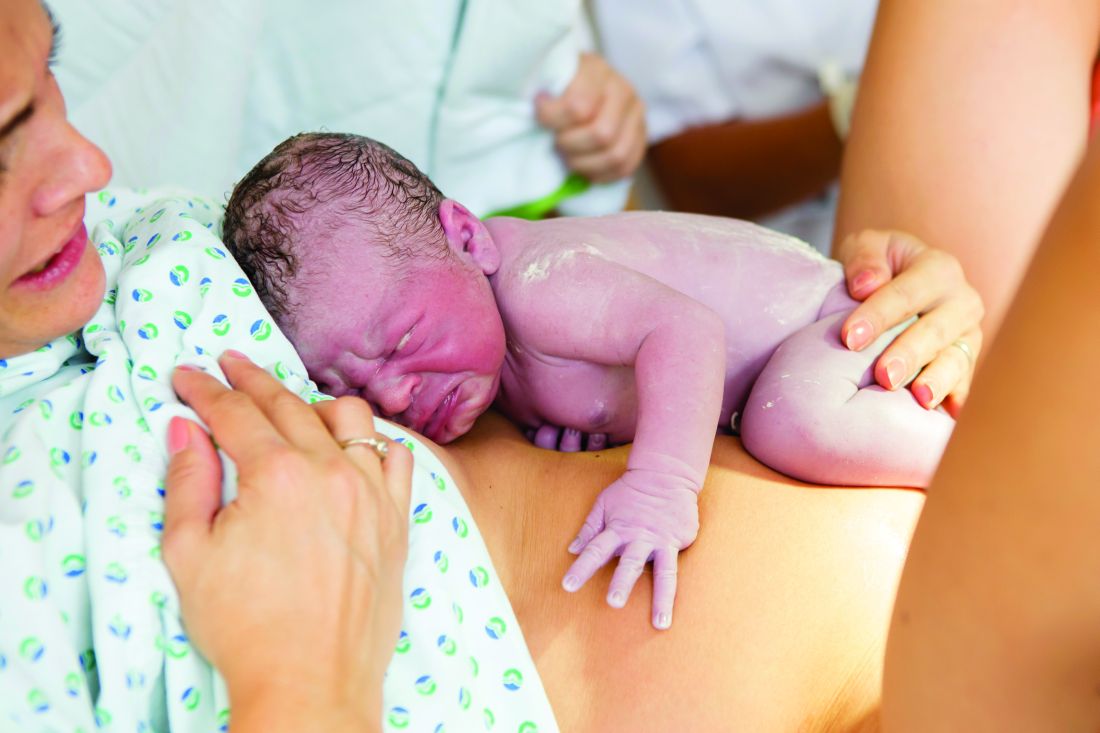
At Lucile Packard Children’s Hospital Stanford, about half of all antibiotic use for late-preterm or term infants went to newborns exposed to chorioamnionitis. The hospital developed a quality improvement initiative to safely reduce unnecessary antibiotic use in these patients and to decrease unnecessary lab testing given the weak clinical relevance of CBC counts and C-reactive protein labs for determining whether to give a well-appearing child antibiotics, the study authors explained.
Before the initiative began, standard practice included admitting all infants to the neonatal ICU who were at least 34 weeks’ gestation and exposed to chorioamnionitis. They were treated with ampicillin and gentamicin until early-onset sepsis was excluded. Lab evaluations included a CBC count, blood culture, and multiple C-reactive protein labs.
Under the new protocol, symptomatic newborns still had the same labs and received empirical antibiotics. Well-appearing, late-preterm or term infants exposed to chorioamnionitis first spent 2 hours of skin-to-skin contact with their mothers and then were monitored clinically in a level II nursery for at least 24 hours. Unless clinical symptoms developed in that time, the infants then were returned to their mothers until discharge without labs or antibiotics. Those who did develop potentially septic signs/symptoms, as determined by the treating physician, were evaluated and then received antibiotics if deemed appropriate.
During the first 15 months of the quality improvement initiative, 310 infants (5.7% of the 5,425 total births with at least 34 weeks’ gestation) were exposed to chorioamnionitis. Of these, 23 (7.4%) were symptomatic and began antibiotics; another 10 (3.2%) were admitted to the neonatal ICU for a congenital anomaly.
The researchers collected data on antibiotic use, lab tests, cultures, and clinical outcomes from the remaining 277 well-appearing newborns; 88% did not receive antibiotics during their hospital stay, and 83% underwent no laboratory testing. Only 17% of infants had lab testing for sepsis; none had culture result–positive, early-onset sepsis.
Only 12% of infants who initially appeared well developed signs/symptoms of sepsis, underwent laboratory testing, and received antibiotics. Nearly half of these (5% of all infants) received antibiotic treatment for at least 5 days despite negative cultures, while the other 7% received antibiotics for less than 48 hours, Dr. Joshi and her colleagues reported.
Infants with at least 34 weeks’ gestation receiving antibiotics at the hospital dropped from 12.3% before the initiative to 5.5% afterward, a 55% decrease (95% confidence interval, 40%-60%), the researchers said. Study limitations included a lack of postdischarge follow-up, the variability in physician decisions about which infants were symptomatic and which ones needed antibiotics, and an inability to generalize findings to institutions without 24/7 availability of neonatal hospitalists.
Past studies have found that all newborns with positive cultures showed symptoms at birth and needed resuscitation, continuous positive airway pressure, or intubation.
“An infant who is well-appearing at birth likely has an even lower risk of early-onset sepsis even in the setting of chorioamnionitis, and an empirical antibiotic treatment strategy for chorioamnionitis-exposed infants will result in a large number of uninfected infants being treated,” Dr. Joshi and her associates said. “Updated treatment approaches are needed to reduce unnecessary antibiotic exposure and provide higher-value care in this population.”
The study did not use external funding. The authors had no disclosures.
SOURCE: Joshi NS et al. Pediatrics. 2018;141(4):e20172056.
A hospital quality improvement initiative reduced antibiotic use by more than half when well-appearing newborns exposed to chorioamnionitis were initially monitored for symptoms instead of routinely given antibiotics, found a study in Pediatrics.
“The reduction in both antibiotic use and laboratory testing occurred without clinically relevant delays in care or poor outcomes,” wrote Neha S. Joshi, MD, of Stanford (Calif.) University and her associates.
At Lucile Packard Children’s Hospital Stanford, about half of all antibiotic use for late-preterm or term infants went to newborns exposed to chorioamnionitis. The hospital developed a quality improvement initiative to safely reduce unnecessary antibiotic use in these patients and to decrease unnecessary lab testing given the weak clinical relevance of CBC counts and C-reactive protein labs for determining whether to give a well-appearing child antibiotics, the study authors explained.
Before the initiative began, standard practice included admitting all infants to the neonatal ICU who were at least 34 weeks’ gestation and exposed to chorioamnionitis. They were treated with ampicillin and gentamicin until early-onset sepsis was excluded. Lab evaluations included a CBC count, blood culture, and multiple C-reactive protein labs.
Under the new protocol, symptomatic newborns still had the same labs and received empirical antibiotics. Well-appearing, late-preterm or term infants exposed to chorioamnionitis first spent 2 hours of skin-to-skin contact with their mothers and then were monitored clinically in a level II nursery for at least 24 hours. Unless clinical symptoms developed in that time, the infants then were returned to their mothers until discharge without labs or antibiotics. Those who did develop potentially septic signs/symptoms, as determined by the treating physician, were evaluated and then received antibiotics if deemed appropriate.
During the first 15 months of the quality improvement initiative, 310 infants (5.7% of the 5,425 total births with at least 34 weeks’ gestation) were exposed to chorioamnionitis. Of these, 23 (7.4%) were symptomatic and began antibiotics; another 10 (3.2%) were admitted to the neonatal ICU for a congenital anomaly.
The researchers collected data on antibiotic use, lab tests, cultures, and clinical outcomes from the remaining 277 well-appearing newborns; 88% did not receive antibiotics during their hospital stay, and 83% underwent no laboratory testing. Only 17% of infants had lab testing for sepsis; none had culture result–positive, early-onset sepsis.
Only 12% of infants who initially appeared well developed signs/symptoms of sepsis, underwent laboratory testing, and received antibiotics. Nearly half of these (5% of all infants) received antibiotic treatment for at least 5 days despite negative cultures, while the other 7% received antibiotics for less than 48 hours, Dr. Joshi and her colleagues reported.
Infants with at least 34 weeks’ gestation receiving antibiotics at the hospital dropped from 12.3% before the initiative to 5.5% afterward, a 55% decrease (95% confidence interval, 40%-60%), the researchers said. Study limitations included a lack of postdischarge follow-up, the variability in physician decisions about which infants were symptomatic and which ones needed antibiotics, and an inability to generalize findings to institutions without 24/7 availability of neonatal hospitalists.
Past studies have found that all newborns with positive cultures showed symptoms at birth and needed resuscitation, continuous positive airway pressure, or intubation.
“An infant who is well-appearing at birth likely has an even lower risk of early-onset sepsis even in the setting of chorioamnionitis, and an empirical antibiotic treatment strategy for chorioamnionitis-exposed infants will result in a large number of uninfected infants being treated,” Dr. Joshi and her associates said. “Updated treatment approaches are needed to reduce unnecessary antibiotic exposure and provide higher-value care in this population.”
The study did not use external funding. The authors had no disclosures.
SOURCE: Joshi NS et al. Pediatrics. 2018;141(4):e20172056.
A hospital quality improvement initiative reduced antibiotic use by more than half when well-appearing newborns exposed to chorioamnionitis were initially monitored for symptoms instead of routinely given antibiotics, found a study in Pediatrics.
“The reduction in both antibiotic use and laboratory testing occurred without clinically relevant delays in care or poor outcomes,” wrote Neha S. Joshi, MD, of Stanford (Calif.) University and her associates.
At Lucile Packard Children’s Hospital Stanford, about half of all antibiotic use for late-preterm or term infants went to newborns exposed to chorioamnionitis. The hospital developed a quality improvement initiative to safely reduce unnecessary antibiotic use in these patients and to decrease unnecessary lab testing given the weak clinical relevance of CBC counts and C-reactive protein labs for determining whether to give a well-appearing child antibiotics, the study authors explained.
Before the initiative began, standard practice included admitting all infants to the neonatal ICU who were at least 34 weeks’ gestation and exposed to chorioamnionitis. They were treated with ampicillin and gentamicin until early-onset sepsis was excluded. Lab evaluations included a CBC count, blood culture, and multiple C-reactive protein labs.
Under the new protocol, symptomatic newborns still had the same labs and received empirical antibiotics. Well-appearing, late-preterm or term infants exposed to chorioamnionitis first spent 2 hours of skin-to-skin contact with their mothers and then were monitored clinically in a level II nursery for at least 24 hours. Unless clinical symptoms developed in that time, the infants then were returned to their mothers until discharge without labs or antibiotics. Those who did develop potentially septic signs/symptoms, as determined by the treating physician, were evaluated and then received antibiotics if deemed appropriate.
During the first 15 months of the quality improvement initiative, 310 infants (5.7% of the 5,425 total births with at least 34 weeks’ gestation) were exposed to chorioamnionitis. Of these, 23 (7.4%) were symptomatic and began antibiotics; another 10 (3.2%) were admitted to the neonatal ICU for a congenital anomaly.
The researchers collected data on antibiotic use, lab tests, cultures, and clinical outcomes from the remaining 277 well-appearing newborns; 88% did not receive antibiotics during their hospital stay, and 83% underwent no laboratory testing. Only 17% of infants had lab testing for sepsis; none had culture result–positive, early-onset sepsis.
Only 12% of infants who initially appeared well developed signs/symptoms of sepsis, underwent laboratory testing, and received antibiotics. Nearly half of these (5% of all infants) received antibiotic treatment for at least 5 days despite negative cultures, while the other 7% received antibiotics for less than 48 hours, Dr. Joshi and her colleagues reported.
Infants with at least 34 weeks’ gestation receiving antibiotics at the hospital dropped from 12.3% before the initiative to 5.5% afterward, a 55% decrease (95% confidence interval, 40%-60%), the researchers said. Study limitations included a lack of postdischarge follow-up, the variability in physician decisions about which infants were symptomatic and which ones needed antibiotics, and an inability to generalize findings to institutions without 24/7 availability of neonatal hospitalists.
Past studies have found that all newborns with positive cultures showed symptoms at birth and needed resuscitation, continuous positive airway pressure, or intubation.
“An infant who is well-appearing at birth likely has an even lower risk of early-onset sepsis even in the setting of chorioamnionitis, and an empirical antibiotic treatment strategy for chorioamnionitis-exposed infants will result in a large number of uninfected infants being treated,” Dr. Joshi and her associates said. “Updated treatment approaches are needed to reduce unnecessary antibiotic exposure and provide higher-value care in this population.”
The study did not use external funding. The authors had no disclosures.
SOURCE: Joshi NS et al. Pediatrics. 2018;141(4):e20172056.
FROM PEDIATRICS
Key clinical point:
Major finding: After a quality improvement initiative was implemented, 55% fewer late-preterm and term, chorioamnionitis-exposed infants received antibiotics without an increase in negative outcomes.
Data source: A study of 310 chorioamnionitis-exposed newborns who were late preterm or term at a California hospital.
Disclosures: The study did not use external funding. The authors had no relevant financial disclosures.
Source: Joshi NS et al. Pediatrics. 2018;141(4):e20172056.
Almost 40% of pediatric residents experience burnout, study finds
, according to two Pediatrics articles highlighted by editor in chief Lewis R. First, MD, MS.
The studies investigated the prevalence and effects of burnout among pediatric residents, and all health care providers, working in intensive care units. They were among those published in 2017 that Dr. First deemed potentially practice changing – ones whose clinical implications may have immediate relevance in your daily work.
“There are a variety of ways to overcome burnout and promote our resiliency that starts with our ability to find joy in caring for children and our lifelong learning” through professional development sessions and academic journals, according to Dr. First, professor and chair of pediatrics at the University of Vermont in Burlington. He also serves as chief of pediatrics at the University of Vermont Children’s Hospital. He spoke at the 2017 annual meeting of the American Academy of Pediatrics and in later interviews.
High prevalence of burnout
The study by Baer et al. found that almost two in five pediatric residents experience burnout, often accompanied by poorer care of patients (Pediatrics. 2017. doi: 10.1542/peds.2016-2163). Using a 7-point Likert scale ranging from “never” to “every day,” 258 residents from 11 different residency programs filled out an anonymous Web-based survey on how often they felt emotional exhaustion (“I feel burnout from my work”) and depersonalization (“I’ve become more callous toward people since I took this job”).

Of the 258 respondents, 39% had burnout, defined as answering affirmatively to either of the above questions with at least “weekly.” Most of the respondents were female, white, and married or in a long-term relationship without children, but the burnout rates did not vary across gender, race/ethnicity, relationship or parental status, or among different characteristics of the residency program and schedule. Higher burnout rates did occur among those feeling sleep deprived.
Those with burnout also had substantially higher odds of providing lower-quality care. Residents with burnout were seven times more likely to make treatment or medication errors not related to inadequate knowledge or experience, six times more likely to feel guilty about how they had treated a patient, more than four times more likely to report having little emotional reaction to a patient’s death, and four times more likely to discharge a patient earlier to make service more manageable. Burned-out residents had more than nine times greater odds of paying “little attention to the social or personal impact of an illness on a patient,” the study showed.
Burnout symptoms and solutions
Symptoms of potential burnout, Dr. First said in an interview, include emotional exhaustion, feeling a loss of meaning in work, feelings of ineffectiveness, a tendency to view people as objects instead of human beings, increasingly poor communication, and poor interpersonal and clinical skills and behaviors.

Other research also has found burnout linked to doctors’ errors, self-reported negative attitudes toward patients, and less time spent with patients, she said. “Thus physicians should be on the lookout for burnout within themselves as well as in their colleagues and medical trainees.”
Both Dr. Baer and Dr. First noted the importance of organizational leadership in preventing burnout.
The Association of Medical School Pediatric Department Chairs is sharing a toolbox of strategies that they have found effective for reducing burnout and developing wellness among physicians, Dr. First said in the interview.
“Some of those suggestions include personal attention to wellness via good nutrition, exercise, mindfulness for emotional self-regulation, and developing supportive relationships,” he noted. In addition to organizational mindfulness programs and ones that foster work-life integration and social activities, prevention programs should “create wellness and resilience, and a sense of pride and meaning in the work that is being done.”
Drs. First also pointed to ways of addressing triggers of burnout:
- Reduce the burden of bureaucratic tasks.
- Examine how many hours physicians spend at home or work at home.
- Improve efficiency, such as in EHR use.
- Provide individuals time to discuss stressors and ways to resolve them collaboratively with peers and leadership.
Burnout risk in the NICU
Similar interventions may help with burnout in neonatal ICUs (NICUs), the focus of the second study Dr. First discussed. Tawfik et al. surveyed 2,760 personnel from 41 NICUs in the United States to learn the prevalence of burnout and how it was associated with NICU organization (Pediatrics. 2017. doi: 10.1542/peds.2016-4134).
Among the 1,934 providers who replied (a response rate of 70%), 27% had burnout; at individual NICUs, burnout prevalence varied from 8% to 43%. The majority of respondents (72%) were registered nurses, followed by respiratory therapists, physicians, neonatal nurse practitioners, and others. The highest burnout rates occurred in NICUs with higher average daily admissions and higher average occupancy – and those using EHRs.
“Don’t assume that just because you use the EHR every day means you know how best to use this tool to improve your efficiency and effectiveness in generating and deriving information on your patients,” Dr. First said in the interview. He encouraged physicians to find out what resources their institutions might offer to help, such as EHR hospital teams or office support who can look at providers’ EHR usage, and show them shortcuts and time-savers to improve efficiency based on their usage patterns.
“Nursing burnout was more sensitive to the setting than physician burnout, especially in regard to average daily admissions, late transfer numbers, nursing hours per patient day, and mortality per 1,000 infants,” Dr. First noted.
Interestingly, burnout prevalence was not associated with the proportion of high-risk patients seen in the NICUs, the number of attending physicians in the unit, or whether the institution was a teaching hospital or not, he said.
Dr. First listed strategies to reduce burnout risk in NICUs that the study authors also described: expressing thankfulness each day, focusing on positive events at the start or end of each day, performing random acts of kindness for colleagues and staff, and encouraging providers to identify the strengths in one another.
Addressing burnout requires efforts from everyone
“Given the potential effects of burnout on patient care and professionalism and physician wellness, it is important for physicians to speak up if they have concerns about burnout in their colleagues,” Dr. Baer said in the interview.
Burnout is common, she said, occurring in more than half of physicians at some point in time, so a doctor experiencing it is almost certainly not alone among colleagues.
“Physicians can work together and with their leadership to prevent and mitigate the effects of burnout by promoting personal and professional wellness, effective teamwork, and reducing the administrative burdens that impact time spent directly with patients and have been demonstrated to contribute to physician burnout,” Dr. Baer noted.
She also pointed to the need to address it in medical education, given the downstream risks of burnout on the next generation of physicians.
“Medical schools and residency and fellowship programs should address the risks and signs of burnout, as medical students and trainees are likely seeing signs of burnout in some of their physician teachers and mentors,” Dr. Baer said in the interview.
Some burnout among providers may be inevitable at times, but it’s important to continue looking for ways to combat it.
“We need to do more to remind each other of why we chose our profession, and how good it makes us feel to strive to make a difference in our patients and families each and every day,” Dr. First said in the interview.
Dr. First reported having no disclosures and no external funding. The residents’ study by Baer et al. was funded by the Boston Children’s Hospital’s Fred Lovejoy Resident Research Award and a grant from the Health Resources and Services Administration. The NICU study by Tamfik et al. was funded by the National Institutes of Health, grants from the National Institute of Child Health and Human Development, and the Jackson Vaughan Critical Care Research Fund. The authors of both studies had no relevant financial disclosures.
, according to two Pediatrics articles highlighted by editor in chief Lewis R. First, MD, MS.
The studies investigated the prevalence and effects of burnout among pediatric residents, and all health care providers, working in intensive care units. They were among those published in 2017 that Dr. First deemed potentially practice changing – ones whose clinical implications may have immediate relevance in your daily work.
“There are a variety of ways to overcome burnout and promote our resiliency that starts with our ability to find joy in caring for children and our lifelong learning” through professional development sessions and academic journals, according to Dr. First, professor and chair of pediatrics at the University of Vermont in Burlington. He also serves as chief of pediatrics at the University of Vermont Children’s Hospital. He spoke at the 2017 annual meeting of the American Academy of Pediatrics and in later interviews.
High prevalence of burnout
The study by Baer et al. found that almost two in five pediatric residents experience burnout, often accompanied by poorer care of patients (Pediatrics. 2017. doi: 10.1542/peds.2016-2163). Using a 7-point Likert scale ranging from “never” to “every day,” 258 residents from 11 different residency programs filled out an anonymous Web-based survey on how often they felt emotional exhaustion (“I feel burnout from my work”) and depersonalization (“I’ve become more callous toward people since I took this job”).
Of the 258 respondents, 39% had burnout, defined as answering affirmatively to either of the above questions with at least “weekly.” Most of the respondents were female, white, and married or in a long-term relationship without children, but the burnout rates did not vary across gender, race/ethnicity, relationship or parental status, or among different characteristics of the residency program and schedule. Higher burnout rates did occur among those feeling sleep deprived.
Those with burnout also had substantially higher odds of providing lower-quality care. Residents with burnout were seven times more likely to make treatment or medication errors not related to inadequate knowledge or experience, six times more likely to feel guilty about how they had treated a patient, more than four times more likely to report having little emotional reaction to a patient’s death, and four times more likely to discharge a patient earlier to make service more manageable. Burned-out residents had more than nine times greater odds of paying “little attention to the social or personal impact of an illness on a patient,” the study showed.
Burnout symptoms and solutions
Symptoms of potential burnout, Dr. First said in an interview, include emotional exhaustion, feeling a loss of meaning in work, feelings of ineffectiveness, a tendency to view people as objects instead of human beings, increasingly poor communication, and poor interpersonal and clinical skills and behaviors.
Other research also has found burnout linked to doctors’ errors, self-reported negative attitudes toward patients, and less time spent with patients, she said. “Thus physicians should be on the lookout for burnout within themselves as well as in their colleagues and medical trainees.”
Both Dr. Baer and Dr. First noted the importance of organizational leadership in preventing burnout.
The Association of Medical School Pediatric Department Chairs is sharing a toolbox of strategies that they have found effective for reducing burnout and developing wellness among physicians, Dr. First said in the interview.
“Some of those suggestions include personal attention to wellness via good nutrition, exercise, mindfulness for emotional self-regulation, and developing supportive relationships,” he noted. In addition to organizational mindfulness programs and ones that foster work-life integration and social activities, prevention programs should “create wellness and resilience, and a sense of pride and meaning in the work that is being done.”
Drs. First also pointed to ways of addressing triggers of burnout:
- Reduce the burden of bureaucratic tasks.
- Examine how many hours physicians spend at home or work at home.
- Improve efficiency, such as in EHR use.
- Provide individuals time to discuss stressors and ways to resolve them collaboratively with peers and leadership.
Burnout risk in the NICU
Similar interventions may help with burnout in neonatal ICUs (NICUs), the focus of the second study Dr. First discussed. Tawfik et al. surveyed 2,760 personnel from 41 NICUs in the United States to learn the prevalence of burnout and how it was associated with NICU organization (Pediatrics. 2017. doi: 10.1542/peds.2016-4134).
Among the 1,934 providers who replied (a response rate of 70%), 27% had burnout; at individual NICUs, burnout prevalence varied from 8% to 43%. The majority of respondents (72%) were registered nurses, followed by respiratory therapists, physicians, neonatal nurse practitioners, and others. The highest burnout rates occurred in NICUs with higher average daily admissions and higher average occupancy – and those using EHRs.
“Don’t assume that just because you use the EHR every day means you know how best to use this tool to improve your efficiency and effectiveness in generating and deriving information on your patients,” Dr. First said in the interview. He encouraged physicians to find out what resources their institutions might offer to help, such as EHR hospital teams or office support who can look at providers’ EHR usage, and show them shortcuts and time-savers to improve efficiency based on their usage patterns.
“Nursing burnout was more sensitive to the setting than physician burnout, especially in regard to average daily admissions, late transfer numbers, nursing hours per patient day, and mortality per 1,000 infants,” Dr. First noted.
Interestingly, burnout prevalence was not associated with the proportion of high-risk patients seen in the NICUs, the number of attending physicians in the unit, or whether the institution was a teaching hospital or not, he said.
Dr. First listed strategies to reduce burnout risk in NICUs that the study authors also described: expressing thankfulness each day, focusing on positive events at the start or end of each day, performing random acts of kindness for colleagues and staff, and encouraging providers to identify the strengths in one another.
Addressing burnout requires efforts from everyone
“Given the potential effects of burnout on patient care and professionalism and physician wellness, it is important for physicians to speak up if they have concerns about burnout in their colleagues,” Dr. Baer said in the interview.
Burnout is common, she said, occurring in more than half of physicians at some point in time, so a doctor experiencing it is almost certainly not alone among colleagues.
“Physicians can work together and with their leadership to prevent and mitigate the effects of burnout by promoting personal and professional wellness, effective teamwork, and reducing the administrative burdens that impact time spent directly with patients and have been demonstrated to contribute to physician burnout,” Dr. Baer noted.
She also pointed to the need to address it in medical education, given the downstream risks of burnout on the next generation of physicians.
“Medical schools and residency and fellowship programs should address the risks and signs of burnout, as medical students and trainees are likely seeing signs of burnout in some of their physician teachers and mentors,” Dr. Baer said in the interview.
Some burnout among providers may be inevitable at times, but it’s important to continue looking for ways to combat it.
“We need to do more to remind each other of why we chose our profession, and how good it makes us feel to strive to make a difference in our patients and families each and every day,” Dr. First said in the interview.
Dr. First reported having no disclosures and no external funding. The residents’ study by Baer et al. was funded by the Boston Children’s Hospital’s Fred Lovejoy Resident Research Award and a grant from the Health Resources and Services Administration. The NICU study by Tamfik et al. was funded by the National Institutes of Health, grants from the National Institute of Child Health and Human Development, and the Jackson Vaughan Critical Care Research Fund. The authors of both studies had no relevant financial disclosures.
, according to two Pediatrics articles highlighted by editor in chief Lewis R. First, MD, MS.
The studies investigated the prevalence and effects of burnout among pediatric residents, and all health care providers, working in intensive care units. They were among those published in 2017 that Dr. First deemed potentially practice changing – ones whose clinical implications may have immediate relevance in your daily work.
“There are a variety of ways to overcome burnout and promote our resiliency that starts with our ability to find joy in caring for children and our lifelong learning” through professional development sessions and academic journals, according to Dr. First, professor and chair of pediatrics at the University of Vermont in Burlington. He also serves as chief of pediatrics at the University of Vermont Children’s Hospital. He spoke at the 2017 annual meeting of the American Academy of Pediatrics and in later interviews.
High prevalence of burnout
The study by Baer et al. found that almost two in five pediatric residents experience burnout, often accompanied by poorer care of patients (Pediatrics. 2017. doi: 10.1542/peds.2016-2163). Using a 7-point Likert scale ranging from “never” to “every day,” 258 residents from 11 different residency programs filled out an anonymous Web-based survey on how often they felt emotional exhaustion (“I feel burnout from my work”) and depersonalization (“I’ve become more callous toward people since I took this job”).
Of the 258 respondents, 39% had burnout, defined as answering affirmatively to either of the above questions with at least “weekly.” Most of the respondents were female, white, and married or in a long-term relationship without children, but the burnout rates did not vary across gender, race/ethnicity, relationship or parental status, or among different characteristics of the residency program and schedule. Higher burnout rates did occur among those feeling sleep deprived.
Those with burnout also had substantially higher odds of providing lower-quality care. Residents with burnout were seven times more likely to make treatment or medication errors not related to inadequate knowledge or experience, six times more likely to feel guilty about how they had treated a patient, more than four times more likely to report having little emotional reaction to a patient’s death, and four times more likely to discharge a patient earlier to make service more manageable. Burned-out residents had more than nine times greater odds of paying “little attention to the social or personal impact of an illness on a patient,” the study showed.
Burnout symptoms and solutions
Symptoms of potential burnout, Dr. First said in an interview, include emotional exhaustion, feeling a loss of meaning in work, feelings of ineffectiveness, a tendency to view people as objects instead of human beings, increasingly poor communication, and poor interpersonal and clinical skills and behaviors.
Other research also has found burnout linked to doctors’ errors, self-reported negative attitudes toward patients, and less time spent with patients, she said. “Thus physicians should be on the lookout for burnout within themselves as well as in their colleagues and medical trainees.”
Both Dr. Baer and Dr. First noted the importance of organizational leadership in preventing burnout.
The Association of Medical School Pediatric Department Chairs is sharing a toolbox of strategies that they have found effective for reducing burnout and developing wellness among physicians, Dr. First said in the interview.
“Some of those suggestions include personal attention to wellness via good nutrition, exercise, mindfulness for emotional self-regulation, and developing supportive relationships,” he noted. In addition to organizational mindfulness programs and ones that foster work-life integration and social activities, prevention programs should “create wellness and resilience, and a sense of pride and meaning in the work that is being done.”
Drs. First also pointed to ways of addressing triggers of burnout:
- Reduce the burden of bureaucratic tasks.
- Examine how many hours physicians spend at home or work at home.
- Improve efficiency, such as in EHR use.
- Provide individuals time to discuss stressors and ways to resolve them collaboratively with peers and leadership.
Burnout risk in the NICU
Similar interventions may help with burnout in neonatal ICUs (NICUs), the focus of the second study Dr. First discussed. Tawfik et al. surveyed 2,760 personnel from 41 NICUs in the United States to learn the prevalence of burnout and how it was associated with NICU organization (Pediatrics. 2017. doi: 10.1542/peds.2016-4134).
Among the 1,934 providers who replied (a response rate of 70%), 27% had burnout; at individual NICUs, burnout prevalence varied from 8% to 43%. The majority of respondents (72%) were registered nurses, followed by respiratory therapists, physicians, neonatal nurse practitioners, and others. The highest burnout rates occurred in NICUs with higher average daily admissions and higher average occupancy – and those using EHRs.
“Don’t assume that just because you use the EHR every day means you know how best to use this tool to improve your efficiency and effectiveness in generating and deriving information on your patients,” Dr. First said in the interview. He encouraged physicians to find out what resources their institutions might offer to help, such as EHR hospital teams or office support who can look at providers’ EHR usage, and show them shortcuts and time-savers to improve efficiency based on their usage patterns.
“Nursing burnout was more sensitive to the setting than physician burnout, especially in regard to average daily admissions, late transfer numbers, nursing hours per patient day, and mortality per 1,000 infants,” Dr. First noted.
Interestingly, burnout prevalence was not associated with the proportion of high-risk patients seen in the NICUs, the number of attending physicians in the unit, or whether the institution was a teaching hospital or not, he said.
Dr. First listed strategies to reduce burnout risk in NICUs that the study authors also described: expressing thankfulness each day, focusing on positive events at the start or end of each day, performing random acts of kindness for colleagues and staff, and encouraging providers to identify the strengths in one another.
Addressing burnout requires efforts from everyone
“Given the potential effects of burnout on patient care and professionalism and physician wellness, it is important for physicians to speak up if they have concerns about burnout in their colleagues,” Dr. Baer said in the interview.
Burnout is common, she said, occurring in more than half of physicians at some point in time, so a doctor experiencing it is almost certainly not alone among colleagues.
“Physicians can work together and with their leadership to prevent and mitigate the effects of burnout by promoting personal and professional wellness, effective teamwork, and reducing the administrative burdens that impact time spent directly with patients and have been demonstrated to contribute to physician burnout,” Dr. Baer noted.
She also pointed to the need to address it in medical education, given the downstream risks of burnout on the next generation of physicians.
“Medical schools and residency and fellowship programs should address the risks and signs of burnout, as medical students and trainees are likely seeing signs of burnout in some of their physician teachers and mentors,” Dr. Baer said in the interview.
Some burnout among providers may be inevitable at times, but it’s important to continue looking for ways to combat it.
“We need to do more to remind each other of why we chose our profession, and how good it makes us feel to strive to make a difference in our patients and families each and every day,” Dr. First said in the interview.
Dr. First reported having no disclosures and no external funding. The residents’ study by Baer et al. was funded by the Boston Children’s Hospital’s Fred Lovejoy Resident Research Award and a grant from the Health Resources and Services Administration. The NICU study by Tamfik et al. was funded by the National Institutes of Health, grants from the National Institute of Child Health and Human Development, and the Jackson Vaughan Critical Care Research Fund. The authors of both studies had no relevant financial disclosures.

You are an integral part of the epilepsy care team
CHICAGO – While neurologists treat children’s seizure conditions, you or an emergency physician usually sees the child first and must determine whether a seizure has occurred and how to proceed.
Knowing the characteristics of seizures – and their imitators – helps you appropriately evaluate and treat these children, said Sucheta Joshi, MD, of the University of Michigan, Ann Arbor, and Linda C. Laux, MD, the medical director of the Comprehensive Epilepsy Center at the Ann & Robert H. Lurie Children’s Hospital of Chicago. You also must consider the long-term management and well-being of a child with epilepsy.

A primer on seizures
Abnormal electrical discharges in the brain cause seizures, and various acute conditions can cause them, including fevers, infections, trauma, and metabolic abnormalities. But an epilepsy diagnosis requires at least two unprovoked seizures occurring more than 1 day apart. More than two dozen different epilepsy syndromes exist, determined based on age of onset, seizure type, the child’s development, and EEG patterns.
You also should be aware of what seizure imitators to rule out: movement disorders such as tics and Sandifer’s syndrome, daydreaming and inattention, fainting, migraines, panic attacks, psychogenic nonepileptic seizures (PNES), self-stimulatory behaviors, periods of the child holding her breath, and sleep parasomnias, such as night terrors, sleepwalking, and sleep myoclonus.
“It’s often difficult to tell if it’s a seizure or a nonepileptic paroxysmal event,” said Dr. Joshi. An interictal EEG can be helpful, but “there’s no reliable test to differentiate the two.”
Knowing the environment where the incident occurred, what provoking factors might have been present, what the seizure looked like, how long it lasted, and what happened afterward can help you differentiate paroxysmal spells from seizures.
Febrile seizures
About 4% of all children experience febrile seizures, particularly between 6 months and 6 years of age, Dr. Joshi said. The two types are simple and complex. A simple febrile seizure is generalized and brief, lasting less than 15 minutes, and is not followed by another within 24 hours. The child may have a family history of epilepsy but appear normal. Complex febrile seizures are focal, last more than 15 minutes, and occur more than once within 24 hours.

Although antipyretics may help the child feel better, fever control won’t always prevent seizures. Rectal or sometimes oral diazepam can prevent recurrent prolonged febrile seizures if necessary. You also may consider oral clonazepam as a rescue medication.
However, children with only simple febrile seizures are at no greater risk of developing epilepsy by age 7 years than are children in the general population, about 1%, according to the AAP’s clinical practice guideline for long-term management of children with simple febrile seizures (Pediatrics. 2008 Jun;121(6):1281-6.)
If a child has a family history of epilepsy, has their first febrile before 12 months of age, and has multiple simple febrile seizures, however, their risk of epilepsy more than doubles. An estimated 2.4% of these children will develop epilepsy by age 25 years.
“No study has demonstrated that successful treatment of simple febrile seizures can prevent this later development of epilepsy, and there currently is no evidence that simple febrile seizures cause structural damage to the brain,” the practice guideline states. “Indeed, it is most likely that the increased risk of epilepsy in this population is the result of genetic predisposition.”
Determining seizure causes
If the child’s seizure is not clearly febrile with a known cause, you should run through other possibilities. Did the child have head trauma? A central nervous system infection? Are metabolic abnormalities present, such as renal or hepatic disease or an electrolyte abnormality? Has the patient ingested something, such as a recreational drug or other toxic substance?
Lab work is unlikely to offer much information without clinical signs or symptoms present, but you may consider glucose, electrolytes, serum alcohol level, and a toxicology drug screen on a case-by-case basis: A child’s first unprovoked seizure should not lead to a lumbar puncture, Dr. Laux said. But if you suspect a CNS infection or the child is under 6 months old and does not return to baseline, you should consider a lumbar puncture. Modest increases in cerebrospinal fluid cell count (pleocytosis) occur after a seizure, but a “CSF above 20 WBC/mm3 or above 10 PMN/mm3 should not be attributed to a seizure,” she said.
An outpatient EEG, preferably performed within 24-48 hours, shows abnormalities 70% of the time after a seizure, but a normal EEG cannot rule out a seizure. EEG data also may suggest recurrence risk or a specific epilepsy syndrome and long-term prognosis.
Epilepsy management
After a second unprovoked seizure occurrs more than 24 hours after the first, you should diagnose new onset epilepsy, order an EEG and head MRI, and refer the child to a neurologist. Metabolic or genetic tests may be indicated depending on signs and symptoms.
Managing epilepsy requires much more than just treating seizures, Dr. Laux emphasized, so you play an important role in educating the family, considering safety issues, monitoring bone and reproductive health, and considering the condition’s effect on learning and mental, behavioral, and physical health.
Children with epilepsy and normal cognitive development have no greater rate of injuries than children without epilepsy, but risk increases as seizures increase, and if the child has ADHD, intellectual disability, or generalized-onset seizures, that can lead to falls.
Still, children with epilepsy can play contact sports such as soccer or volleyball without worrying it will cause a seizure. They also should always wear a helmet while bicycling, rollerblading, skating, and using scooters or anything else with wheels.
Swimming, water sports, harnessed rock climbing, horseback riding, and gymnastics also are fine with appropriate supervision. Showers are preferred to baths because of the risk of drowning should a seizure occur in the bathtub. Bathing and swimming require a specified supervisor.
Unsafe activities include free climbing, sky-diving, hang-gliding, and scuba diving. Parents should supervise their children around irons, hairdryers, curling irons, stove tops, camp fires, BBQs, and playground equipment. TV and video games are fine if children do not sit close to the screen and have ambient light in the room.
A teen with uncontrolled seizures should not drive, and pediatricians should be aware of their state’s laws related to epilepsy and driving (www.epilepsy.com/driving-laws). Pennsylvania, California, Delaware, Nevada, New Jersey, and Oregon, for example, have physician reporting laws.
Physical health and learning differences
Epilepsy increases risk of poor bone mineralization, and seizures can lead to falls and fractures. You therefore should keep tabs on the child’s vitamin D intake, physical activity levels, neuromotor dysfunction, and overall nutrition. Vitamin D insufficiency is more common in those with epilepsy than in the general population, particularly females and those with obesity. Evidence suggests both anticonvulsants and epilepsy syndromes contribute to low vitamin D levels, so daily supplements may be wise.
Antiepileptic drugs also reduce the effectiveness of hormonal contraception, and teens with epilepsy already have a higher risk for unplanned pregnancy. You should ensure that sexually active female teens get folic acid daily and educate them on valproate’s increased risk of causing birth defects. For pregnant teens, levetiracetam and lamotrigine present less risk to a fetus.
You should ask about the patient’s school performance and consider requesting an Individualized Education Plan or a 504 plan at school if it seems needed. Even in youths with a normal IQ and well-managed seizures, lower academic achievement and difficulties with memory and behavior are more likely. Risk increases in disorganized or unsupportive homes and with comorbidities. ADHD occurs in 38% of children with epilepsy, but stimulants such as methylphenidate are not contraindicated with epilepsy medications.
Epilepsy affects the whole family: About half of all mothers of children with epilepsy have depression – which can adversely affect her children – and risk increases for younger moms with lower education and income. Siblings have added burdens, too: In one study, 95% of siblings had witnessed a seizure, and 79% believed their siblings suffered during seizures. More than two-thirds (68%) say their sibling with epilepsy gets more attention, and 42% feel responsible for their sibling, often restricting their own activities. You should be considering all these factors in managing the well-being of a child with epilepsy.
Dr. Joshi summed up the complex management of epilepsy with an acrostic that may be helpful to share with parents:
• Education
• Parenting
• Independence (including driving)
• Learning
• Eating (nutrition and bone health)
• Pharmacotherapy (anticonvulsants)
• School
• You (the child’s caretakers).
Dr. Joshi and Dr. Laux reported having no relevant financial disclosures and no external funding.
CHICAGO – While neurologists treat children’s seizure conditions, you or an emergency physician usually sees the child first and must determine whether a seizure has occurred and how to proceed.
Knowing the characteristics of seizures – and their imitators – helps you appropriately evaluate and treat these children, said Sucheta Joshi, MD, of the University of Michigan, Ann Arbor, and Linda C. Laux, MD, the medical director of the Comprehensive Epilepsy Center at the Ann & Robert H. Lurie Children’s Hospital of Chicago. You also must consider the long-term management and well-being of a child with epilepsy.
A primer on seizures
Abnormal electrical discharges in the brain cause seizures, and various acute conditions can cause them, including fevers, infections, trauma, and metabolic abnormalities. But an epilepsy diagnosis requires at least two unprovoked seizures occurring more than 1 day apart. More than two dozen different epilepsy syndromes exist, determined based on age of onset, seizure type, the child’s development, and EEG patterns.
You also should be aware of what seizure imitators to rule out: movement disorders such as tics and Sandifer’s syndrome, daydreaming and inattention, fainting, migraines, panic attacks, psychogenic nonepileptic seizures (PNES), self-stimulatory behaviors, periods of the child holding her breath, and sleep parasomnias, such as night terrors, sleepwalking, and sleep myoclonus.
“It’s often difficult to tell if it’s a seizure or a nonepileptic paroxysmal event,” said Dr. Joshi. An interictal EEG can be helpful, but “there’s no reliable test to differentiate the two.”
Knowing the environment where the incident occurred, what provoking factors might have been present, what the seizure looked like, how long it lasted, and what happened afterward can help you differentiate paroxysmal spells from seizures.
Febrile seizures
About 4% of all children experience febrile seizures, particularly between 6 months and 6 years of age, Dr. Joshi said. The two types are simple and complex. A simple febrile seizure is generalized and brief, lasting less than 15 minutes, and is not followed by another within 24 hours. The child may have a family history of epilepsy but appear normal. Complex febrile seizures are focal, last more than 15 minutes, and occur more than once within 24 hours.
Although antipyretics may help the child feel better, fever control won’t always prevent seizures. Rectal or sometimes oral diazepam can prevent recurrent prolonged febrile seizures if necessary. You also may consider oral clonazepam as a rescue medication.
However, children with only simple febrile seizures are at no greater risk of developing epilepsy by age 7 years than are children in the general population, about 1%, according to the AAP’s clinical practice guideline for long-term management of children with simple febrile seizures (Pediatrics. 2008 Jun;121(6):1281-6.)
If a child has a family history of epilepsy, has their first febrile before 12 months of age, and has multiple simple febrile seizures, however, their risk of epilepsy more than doubles. An estimated 2.4% of these children will develop epilepsy by age 25 years.
“No study has demonstrated that successful treatment of simple febrile seizures can prevent this later development of epilepsy, and there currently is no evidence that simple febrile seizures cause structural damage to the brain,” the practice guideline states. “Indeed, it is most likely that the increased risk of epilepsy in this population is the result of genetic predisposition.”
Determining seizure causes
If the child’s seizure is not clearly febrile with a known cause, you should run through other possibilities. Did the child have head trauma? A central nervous system infection? Are metabolic abnormalities present, such as renal or hepatic disease or an electrolyte abnormality? Has the patient ingested something, such as a recreational drug or other toxic substance?
Lab work is unlikely to offer much information without clinical signs or symptoms present, but you may consider glucose, electrolytes, serum alcohol level, and a toxicology drug screen on a case-by-case basis: A child’s first unprovoked seizure should not lead to a lumbar puncture, Dr. Laux said. But if you suspect a CNS infection or the child is under 6 months old and does not return to baseline, you should consider a lumbar puncture. Modest increases in cerebrospinal fluid cell count (pleocytosis) occur after a seizure, but a “CSF above 20 WBC/mm3 or above 10 PMN/mm3 should not be attributed to a seizure,” she said.
An outpatient EEG, preferably performed within 24-48 hours, shows abnormalities 70% of the time after a seizure, but a normal EEG cannot rule out a seizure. EEG data also may suggest recurrence risk or a specific epilepsy syndrome and long-term prognosis.
Epilepsy management
After a second unprovoked seizure occurrs more than 24 hours after the first, you should diagnose new onset epilepsy, order an EEG and head MRI, and refer the child to a neurologist. Metabolic or genetic tests may be indicated depending on signs and symptoms.
Managing epilepsy requires much more than just treating seizures, Dr. Laux emphasized, so you play an important role in educating the family, considering safety issues, monitoring bone and reproductive health, and considering the condition’s effect on learning and mental, behavioral, and physical health.
Children with epilepsy and normal cognitive development have no greater rate of injuries than children without epilepsy, but risk increases as seizures increase, and if the child has ADHD, intellectual disability, or generalized-onset seizures, that can lead to falls.
Still, children with epilepsy can play contact sports such as soccer or volleyball without worrying it will cause a seizure. They also should always wear a helmet while bicycling, rollerblading, skating, and using scooters or anything else with wheels.
Swimming, water sports, harnessed rock climbing, horseback riding, and gymnastics also are fine with appropriate supervision. Showers are preferred to baths because of the risk of drowning should a seizure occur in the bathtub. Bathing and swimming require a specified supervisor.
Unsafe activities include free climbing, sky-diving, hang-gliding, and scuba diving. Parents should supervise their children around irons, hairdryers, curling irons, stove tops, camp fires, BBQs, and playground equipment. TV and video games are fine if children do not sit close to the screen and have ambient light in the room.
A teen with uncontrolled seizures should not drive, and pediatricians should be aware of their state’s laws related to epilepsy and driving (www.epilepsy.com/driving-laws). Pennsylvania, California, Delaware, Nevada, New Jersey, and Oregon, for example, have physician reporting laws.
Physical health and learning differences
Epilepsy increases risk of poor bone mineralization, and seizures can lead to falls and fractures. You therefore should keep tabs on the child’s vitamin D intake, physical activity levels, neuromotor dysfunction, and overall nutrition. Vitamin D insufficiency is more common in those with epilepsy than in the general population, particularly females and those with obesity. Evidence suggests both anticonvulsants and epilepsy syndromes contribute to low vitamin D levels, so daily supplements may be wise.
Antiepileptic drugs also reduce the effectiveness of hormonal contraception, and teens with epilepsy already have a higher risk for unplanned pregnancy. You should ensure that sexually active female teens get folic acid daily and educate them on valproate’s increased risk of causing birth defects. For pregnant teens, levetiracetam and lamotrigine present less risk to a fetus.
You should ask about the patient’s school performance and consider requesting an Individualized Education Plan or a 504 plan at school if it seems needed. Even in youths with a normal IQ and well-managed seizures, lower academic achievement and difficulties with memory and behavior are more likely. Risk increases in disorganized or unsupportive homes and with comorbidities. ADHD occurs in 38% of children with epilepsy, but stimulants such as methylphenidate are not contraindicated with epilepsy medications.
Epilepsy affects the whole family: About half of all mothers of children with epilepsy have depression – which can adversely affect her children – and risk increases for younger moms with lower education and income. Siblings have added burdens, too: In one study, 95% of siblings had witnessed a seizure, and 79% believed their siblings suffered during seizures. More than two-thirds (68%) say their sibling with epilepsy gets more attention, and 42% feel responsible for their sibling, often restricting their own activities. You should be considering all these factors in managing the well-being of a child with epilepsy.
Dr. Joshi summed up the complex management of epilepsy with an acrostic that may be helpful to share with parents:
• Education
• Parenting
• Independence (including driving)
• Learning
• Eating (nutrition and bone health)
• Pharmacotherapy (anticonvulsants)
• School
• You (the child’s caretakers).
Dr. Joshi and Dr. Laux reported having no relevant financial disclosures and no external funding.
CHICAGO – While neurologists treat children’s seizure conditions, you or an emergency physician usually sees the child first and must determine whether a seizure has occurred and how to proceed.
Knowing the characteristics of seizures – and their imitators – helps you appropriately evaluate and treat these children, said Sucheta Joshi, MD, of the University of Michigan, Ann Arbor, and Linda C. Laux, MD, the medical director of the Comprehensive Epilepsy Center at the Ann & Robert H. Lurie Children’s Hospital of Chicago. You also must consider the long-term management and well-being of a child with epilepsy.
A primer on seizures
Abnormal electrical discharges in the brain cause seizures, and various acute conditions can cause them, including fevers, infections, trauma, and metabolic abnormalities. But an epilepsy diagnosis requires at least two unprovoked seizures occurring more than 1 day apart. More than two dozen different epilepsy syndromes exist, determined based on age of onset, seizure type, the child’s development, and EEG patterns.
You also should be aware of what seizure imitators to rule out: movement disorders such as tics and Sandifer’s syndrome, daydreaming and inattention, fainting, migraines, panic attacks, psychogenic nonepileptic seizures (PNES), self-stimulatory behaviors, periods of the child holding her breath, and sleep parasomnias, such as night terrors, sleepwalking, and sleep myoclonus.
“It’s often difficult to tell if it’s a seizure or a nonepileptic paroxysmal event,” said Dr. Joshi. An interictal EEG can be helpful, but “there’s no reliable test to differentiate the two.”
Knowing the environment where the incident occurred, what provoking factors might have been present, what the seizure looked like, how long it lasted, and what happened afterward can help you differentiate paroxysmal spells from seizures.
Febrile seizures
About 4% of all children experience febrile seizures, particularly between 6 months and 6 years of age, Dr. Joshi said. The two types are simple and complex. A simple febrile seizure is generalized and brief, lasting less than 15 minutes, and is not followed by another within 24 hours. The child may have a family history of epilepsy but appear normal. Complex febrile seizures are focal, last more than 15 minutes, and occur more than once within 24 hours.
Although antipyretics may help the child feel better, fever control won’t always prevent seizures. Rectal or sometimes oral diazepam can prevent recurrent prolonged febrile seizures if necessary. You also may consider oral clonazepam as a rescue medication.
However, children with only simple febrile seizures are at no greater risk of developing epilepsy by age 7 years than are children in the general population, about 1%, according to the AAP’s clinical practice guideline for long-term management of children with simple febrile seizures (Pediatrics. 2008 Jun;121(6):1281-6.)
If a child has a family history of epilepsy, has their first febrile before 12 months of age, and has multiple simple febrile seizures, however, their risk of epilepsy more than doubles. An estimated 2.4% of these children will develop epilepsy by age 25 years.
“No study has demonstrated that successful treatment of simple febrile seizures can prevent this later development of epilepsy, and there currently is no evidence that simple febrile seizures cause structural damage to the brain,” the practice guideline states. “Indeed, it is most likely that the increased risk of epilepsy in this population is the result of genetic predisposition.”
Determining seizure causes
If the child’s seizure is not clearly febrile with a known cause, you should run through other possibilities. Did the child have head trauma? A central nervous system infection? Are metabolic abnormalities present, such as renal or hepatic disease or an electrolyte abnormality? Has the patient ingested something, such as a recreational drug or other toxic substance?
Lab work is unlikely to offer much information without clinical signs or symptoms present, but you may consider glucose, electrolytes, serum alcohol level, and a toxicology drug screen on a case-by-case basis: A child’s first unprovoked seizure should not lead to a lumbar puncture, Dr. Laux said. But if you suspect a CNS infection or the child is under 6 months old and does not return to baseline, you should consider a lumbar puncture. Modest increases in cerebrospinal fluid cell count (pleocytosis) occur after a seizure, but a “CSF above 20 WBC/mm3 or above 10 PMN/mm3 should not be attributed to a seizure,” she said.
An outpatient EEG, preferably performed within 24-48 hours, shows abnormalities 70% of the time after a seizure, but a normal EEG cannot rule out a seizure. EEG data also may suggest recurrence risk or a specific epilepsy syndrome and long-term prognosis.
Epilepsy management
After a second unprovoked seizure occurrs more than 24 hours after the first, you should diagnose new onset epilepsy, order an EEG and head MRI, and refer the child to a neurologist. Metabolic or genetic tests may be indicated depending on signs and symptoms.
Managing epilepsy requires much more than just treating seizures, Dr. Laux emphasized, so you play an important role in educating the family, considering safety issues, monitoring bone and reproductive health, and considering the condition’s effect on learning and mental, behavioral, and physical health.
Children with epilepsy and normal cognitive development have no greater rate of injuries than children without epilepsy, but risk increases as seizures increase, and if the child has ADHD, intellectual disability, or generalized-onset seizures, that can lead to falls.
Still, children with epilepsy can play contact sports such as soccer or volleyball without worrying it will cause a seizure. They also should always wear a helmet while bicycling, rollerblading, skating, and using scooters or anything else with wheels.
Swimming, water sports, harnessed rock climbing, horseback riding, and gymnastics also are fine with appropriate supervision. Showers are preferred to baths because of the risk of drowning should a seizure occur in the bathtub. Bathing and swimming require a specified supervisor.
Unsafe activities include free climbing, sky-diving, hang-gliding, and scuba diving. Parents should supervise their children around irons, hairdryers, curling irons, stove tops, camp fires, BBQs, and playground equipment. TV and video games are fine if children do not sit close to the screen and have ambient light in the room.
A teen with uncontrolled seizures should not drive, and pediatricians should be aware of their state’s laws related to epilepsy and driving (www.epilepsy.com/driving-laws). Pennsylvania, California, Delaware, Nevada, New Jersey, and Oregon, for example, have physician reporting laws.
Physical health and learning differences
Epilepsy increases risk of poor bone mineralization, and seizures can lead to falls and fractures. You therefore should keep tabs on the child’s vitamin D intake, physical activity levels, neuromotor dysfunction, and overall nutrition. Vitamin D insufficiency is more common in those with epilepsy than in the general population, particularly females and those with obesity. Evidence suggests both anticonvulsants and epilepsy syndromes contribute to low vitamin D levels, so daily supplements may be wise.
Antiepileptic drugs also reduce the effectiveness of hormonal contraception, and teens with epilepsy already have a higher risk for unplanned pregnancy. You should ensure that sexually active female teens get folic acid daily and educate them on valproate’s increased risk of causing birth defects. For pregnant teens, levetiracetam and lamotrigine present less risk to a fetus.
You should ask about the patient’s school performance and consider requesting an Individualized Education Plan or a 504 plan at school if it seems needed. Even in youths with a normal IQ and well-managed seizures, lower academic achievement and difficulties with memory and behavior are more likely. Risk increases in disorganized or unsupportive homes and with comorbidities. ADHD occurs in 38% of children with epilepsy, but stimulants such as methylphenidate are not contraindicated with epilepsy medications.
Epilepsy affects the whole family: About half of all mothers of children with epilepsy have depression – which can adversely affect her children – and risk increases for younger moms with lower education and income. Siblings have added burdens, too: In one study, 95% of siblings had witnessed a seizure, and 79% believed their siblings suffered during seizures. More than two-thirds (68%) say their sibling with epilepsy gets more attention, and 42% feel responsible for their sibling, often restricting their own activities. You should be considering all these factors in managing the well-being of a child with epilepsy.
Dr. Joshi summed up the complex management of epilepsy with an acrostic that may be helpful to share with parents:
• Education
• Parenting
• Independence (including driving)
• Learning
• Eating (nutrition and bone health)
• Pharmacotherapy (anticonvulsants)
• School
• You (the child’s caretakers).
Dr. Joshi and Dr. Laux reported having no relevant financial disclosures and no external funding.
EXPERT ANALYSIS FROM AAP 2017
Behavioral issues, anorexia may presage celiac disease
The clinical challenges of celiac disease go beyond identifying the condition and helping families adjust to a child’s gluten-free diet. Behavioral problems and/or an eating disorder may predate celiac disease, according to Alex R. Kemper, MD, MPH, division chief of ambulatory pediatrics at Nationwide Children’s Hospital, Columbus, Ohio, and deputy editor of Pediatrics.

“We are learning more and more about celiac disease. The presentation and implication of celiac disease can involve more than the gastrointestinal tract,” Dr. Kemper noted. “Figuring out who to screen for celiac disease and how best to do so is complex, and we are always learning more about the best way to provide care after celiac disease is diagnosed.”
Impact of undiagnosed celiac disease on behavior
At the 2017 annual meeting of the American Academy of Pediatrics and, in a later interview, Dr. Kemper discussed a study that explored how behavior and celiac disease might be interrelated, particularly among children whose families don’t yet know their child has the condition.
“It’s challenging to assess the psychological impact of celiac disease autoimmunity when families aren’t aware a child has it, because prospective studies are difficult to do and recall bias can distort findings,” he noted.

Smith et al. used data from a prospective international study, The Environment Determinants of Diabetes in the Young (TEDDY), designed to learn about factors associated with type 1 diabetes and celiac disease over a 15-year follow-up period (Pediatrics. 2017 Mar. doi: 10.1542/peds.2016-2848).
TEDDY tracked 8,676 infants deemed at high risk for celiac autoimmunity based on their human leukocyte antigen (HLA) antigen status at birth. The investigators regularly measured celiac disease autoimmunity based on tissue transglutaminase antibodies (tTGA), beginning at age 2 years. They assessed the children’s behavior at ages 3.5 years and 4.5 years using the Achenbach System of Empirically Based Assessment. If a child was found to have celiac disease, the researchers revisited the earlier behavior scores reported by their mothers before their children’s status were known.
When the children were 3.5 years old, 66 had celiac disease that their mothers were not yet aware of and 440 children had diagnosed celiac disease. The 66 mothers unaware of their child’s condition reported more anxiety, depression, aggression, and sleep problems in their children than did the 440 mothers who knew their child’s diagnosis or the 3,651 mothers of children without celiac disease. The differences were subclinical but statistically significant.
“It is important to recognize that the magnitude of the psychological problems in the 3.5 year olds was small,” Dr. Kemper said in an interview. “Parents might not recognize these symptoms.”
When the researchers looked at child behavior reports only among the mothers who knew their children had celiac disease, no differences existed regardless of the children’s tTGA levels or whether they were following a gluten-free diet. Then, when the children were 4.5 years old and all mothers were aware of their child’s status, no significant differences in mothers’ reporting of child behavior existed across any of the groups.
“Perhaps the knowledge of the child’s celiac disease autoimmunity increases a parent’s sensitivity to physical discomforts of their child while providing an alternative explanation for any psychological symptoms the child exhibits,” the researchers offered.
“Pediatricians should be aware of this association and consider testing young children with a family history of celiac disease if there are concerns,” Dr. Kemper said in an interview. “Because the magnitude of change was subclinical, this study does not suggest the need for more extensive screening of all children.”
Link between celiac disease and anorexia nervosa
The eating disorders study Dr. Kemper discussed examined possible associations between celiac disease and anorexia nervosa (Pediatrics. 2017. doi: 10.1542/peds.2016-4367). Researchers compared 17,959 Swedish females diagnosed with celiac disease between 1969 and 2008, at a median 28 years old, to 89,379 controls matched by sex and age.
Anorexia occurred more often among those with celiac disease than those without: a rate of 27 girls per 100,000 with celiac disease developed anorexia per year, compared with 18 of 100,000 without celiac disease, for a hazard ratio for an anorexia nervosa diagnosis of 1.46 (95% confidence interval, 1.08-1.98). In addition, girls whose celiac disease had not yet been identified had more than double the odds of developing anorexia before diagnosis than did those without celiac disease (odds ratio, 2.13).
Females with celiac disease therefore were more likely to have anorexia both before and after their celiac diagnosis, although the authors noted that surveillance bias may have made it more likely for either of the patients’ conditions to be identified after the first was. Another possible explanation is shared genetic risk factors, the authors wrote.
Dr. Kemper also offered possible reasons, including one related to the child behavior study.
“It could be that girls with celiac disease might develop anorexia because of the need to focus on their diet,” he said in an interview. “Celiac disease has been associated with psychological problems, and so that could contribute.”
Until further research can shed light on the reasons for the associations, physicians simply should be aware of the study’s clinical implications.
“Pediatricians should be aware of the bidirectional association between celiac disease and anorexia nervosa in teens and young adult women, and be prepared to evaluate for celiac disease or treat anorexia,” Dr. Kemper said.
He noted the need for more research to learn “what pediatricians can do to help to either prevent these problems from developing in the first place, or identify and treat celiac disease or anorexia nervosa early to prevent long-term complications.”
Dr. Kemper reported having no relevant financial disclosures and no external funding. Ketil Stordal, MD, PhD, of the anorexia study received funding from the OAK foundation in Switzerland, and Cynthia M. Bulik, PhD, from the same study received funding from the Swedish Research Council, and has consulted for and received a grant from Shire. The remaining authors of the anorexia study had no relevant financial disclosures. The behavioral study was funded by the National Institutes of Health, the Juvenile Diabetes Research Foundation and the Centers for Disease Control and Prevention. The authors from the behavioral study had no relevant financial disclosures.
The clinical challenges of celiac disease go beyond identifying the condition and helping families adjust to a child’s gluten-free diet. Behavioral problems and/or an eating disorder may predate celiac disease, according to Alex R. Kemper, MD, MPH, division chief of ambulatory pediatrics at Nationwide Children’s Hospital, Columbus, Ohio, and deputy editor of Pediatrics.
“We are learning more and more about celiac disease. The presentation and implication of celiac disease can involve more than the gastrointestinal tract,” Dr. Kemper noted. “Figuring out who to screen for celiac disease and how best to do so is complex, and we are always learning more about the best way to provide care after celiac disease is diagnosed.”
Impact of undiagnosed celiac disease on behavior
At the 2017 annual meeting of the American Academy of Pediatrics and, in a later interview, Dr. Kemper discussed a study that explored how behavior and celiac disease might be interrelated, particularly among children whose families don’t yet know their child has the condition.
“It’s challenging to assess the psychological impact of celiac disease autoimmunity when families aren’t aware a child has it, because prospective studies are difficult to do and recall bias can distort findings,” he noted.
Smith et al. used data from a prospective international study, The Environment Determinants of Diabetes in the Young (TEDDY), designed to learn about factors associated with type 1 diabetes and celiac disease over a 15-year follow-up period (Pediatrics. 2017 Mar. doi: 10.1542/peds.2016-2848).
TEDDY tracked 8,676 infants deemed at high risk for celiac autoimmunity based on their human leukocyte antigen (HLA) antigen status at birth. The investigators regularly measured celiac disease autoimmunity based on tissue transglutaminase antibodies (tTGA), beginning at age 2 years. They assessed the children’s behavior at ages 3.5 years and 4.5 years using the Achenbach System of Empirically Based Assessment. If a child was found to have celiac disease, the researchers revisited the earlier behavior scores reported by their mothers before their children’s status were known.
When the children were 3.5 years old, 66 had celiac disease that their mothers were not yet aware of and 440 children had diagnosed celiac disease. The 66 mothers unaware of their child’s condition reported more anxiety, depression, aggression, and sleep problems in their children than did the 440 mothers who knew their child’s diagnosis or the 3,651 mothers of children without celiac disease. The differences were subclinical but statistically significant.
“It is important to recognize that the magnitude of the psychological problems in the 3.5 year olds was small,” Dr. Kemper said in an interview. “Parents might not recognize these symptoms.”
When the researchers looked at child behavior reports only among the mothers who knew their children had celiac disease, no differences existed regardless of the children’s tTGA levels or whether they were following a gluten-free diet. Then, when the children were 4.5 years old and all mothers were aware of their child’s status, no significant differences in mothers’ reporting of child behavior existed across any of the groups.
“Perhaps the knowledge of the child’s celiac disease autoimmunity increases a parent’s sensitivity to physical discomforts of their child while providing an alternative explanation for any psychological symptoms the child exhibits,” the researchers offered.
“Pediatricians should be aware of this association and consider testing young children with a family history of celiac disease if there are concerns,” Dr. Kemper said in an interview. “Because the magnitude of change was subclinical, this study does not suggest the need for more extensive screening of all children.”
Link between celiac disease and anorexia nervosa
The eating disorders study Dr. Kemper discussed examined possible associations between celiac disease and anorexia nervosa (Pediatrics. 2017. doi: 10.1542/peds.2016-4367). Researchers compared 17,959 Swedish females diagnosed with celiac disease between 1969 and 2008, at a median 28 years old, to 89,379 controls matched by sex and age.
Anorexia occurred more often among those with celiac disease than those without: a rate of 27 girls per 100,000 with celiac disease developed anorexia per year, compared with 18 of 100,000 without celiac disease, for a hazard ratio for an anorexia nervosa diagnosis of 1.46 (95% confidence interval, 1.08-1.98). In addition, girls whose celiac disease had not yet been identified had more than double the odds of developing anorexia before diagnosis than did those without celiac disease (odds ratio, 2.13).
Females with celiac disease therefore were more likely to have anorexia both before and after their celiac diagnosis, although the authors noted that surveillance bias may have made it more likely for either of the patients’ conditions to be identified after the first was. Another possible explanation is shared genetic risk factors, the authors wrote.
Dr. Kemper also offered possible reasons, including one related to the child behavior study.
“It could be that girls with celiac disease might develop anorexia because of the need to focus on their diet,” he said in an interview. “Celiac disease has been associated with psychological problems, and so that could contribute.”
Until further research can shed light on the reasons for the associations, physicians simply should be aware of the study’s clinical implications.
“Pediatricians should be aware of the bidirectional association between celiac disease and anorexia nervosa in teens and young adult women, and be prepared to evaluate for celiac disease or treat anorexia,” Dr. Kemper said.
He noted the need for more research to learn “what pediatricians can do to help to either prevent these problems from developing in the first place, or identify and treat celiac disease or anorexia nervosa early to prevent long-term complications.”
Dr. Kemper reported having no relevant financial disclosures and no external funding. Ketil Stordal, MD, PhD, of the anorexia study received funding from the OAK foundation in Switzerland, and Cynthia M. Bulik, PhD, from the same study received funding from the Swedish Research Council, and has consulted for and received a grant from Shire. The remaining authors of the anorexia study had no relevant financial disclosures. The behavioral study was funded by the National Institutes of Health, the Juvenile Diabetes Research Foundation and the Centers for Disease Control and Prevention. The authors from the behavioral study had no relevant financial disclosures.
The clinical challenges of celiac disease go beyond identifying the condition and helping families adjust to a child’s gluten-free diet. Behavioral problems and/or an eating disorder may predate celiac disease, according to Alex R. Kemper, MD, MPH, division chief of ambulatory pediatrics at Nationwide Children’s Hospital, Columbus, Ohio, and deputy editor of Pediatrics.
“We are learning more and more about celiac disease. The presentation and implication of celiac disease can involve more than the gastrointestinal tract,” Dr. Kemper noted. “Figuring out who to screen for celiac disease and how best to do so is complex, and we are always learning more about the best way to provide care after celiac disease is diagnosed.”
Impact of undiagnosed celiac disease on behavior
At the 2017 annual meeting of the American Academy of Pediatrics and, in a later interview, Dr. Kemper discussed a study that explored how behavior and celiac disease might be interrelated, particularly among children whose families don’t yet know their child has the condition.
“It’s challenging to assess the psychological impact of celiac disease autoimmunity when families aren’t aware a child has it, because prospective studies are difficult to do and recall bias can distort findings,” he noted.
Smith et al. used data from a prospective international study, The Environment Determinants of Diabetes in the Young (TEDDY), designed to learn about factors associated with type 1 diabetes and celiac disease over a 15-year follow-up period (Pediatrics. 2017 Mar. doi: 10.1542/peds.2016-2848).
TEDDY tracked 8,676 infants deemed at high risk for celiac autoimmunity based on their human leukocyte antigen (HLA) antigen status at birth. The investigators regularly measured celiac disease autoimmunity based on tissue transglutaminase antibodies (tTGA), beginning at age 2 years. They assessed the children’s behavior at ages 3.5 years and 4.5 years using the Achenbach System of Empirically Based Assessment. If a child was found to have celiac disease, the researchers revisited the earlier behavior scores reported by their mothers before their children’s status were known.
When the children were 3.5 years old, 66 had celiac disease that their mothers were not yet aware of and 440 children had diagnosed celiac disease. The 66 mothers unaware of their child’s condition reported more anxiety, depression, aggression, and sleep problems in their children than did the 440 mothers who knew their child’s diagnosis or the 3,651 mothers of children without celiac disease. The differences were subclinical but statistically significant.
“It is important to recognize that the magnitude of the psychological problems in the 3.5 year olds was small,” Dr. Kemper said in an interview. “Parents might not recognize these symptoms.”
When the researchers looked at child behavior reports only among the mothers who knew their children had celiac disease, no differences existed regardless of the children’s tTGA levels or whether they were following a gluten-free diet. Then, when the children were 4.5 years old and all mothers were aware of their child’s status, no significant differences in mothers’ reporting of child behavior existed across any of the groups.
“Perhaps the knowledge of the child’s celiac disease autoimmunity increases a parent’s sensitivity to physical discomforts of their child while providing an alternative explanation for any psychological symptoms the child exhibits,” the researchers offered.
“Pediatricians should be aware of this association and consider testing young children with a family history of celiac disease if there are concerns,” Dr. Kemper said in an interview. “Because the magnitude of change was subclinical, this study does not suggest the need for more extensive screening of all children.”
Link between celiac disease and anorexia nervosa
The eating disorders study Dr. Kemper discussed examined possible associations between celiac disease and anorexia nervosa (Pediatrics. 2017. doi: 10.1542/peds.2016-4367). Researchers compared 17,959 Swedish females diagnosed with celiac disease between 1969 and 2008, at a median 28 years old, to 89,379 controls matched by sex and age.
Anorexia occurred more often among those with celiac disease than those without: a rate of 27 girls per 100,000 with celiac disease developed anorexia per year, compared with 18 of 100,000 without celiac disease, for a hazard ratio for an anorexia nervosa diagnosis of 1.46 (95% confidence interval, 1.08-1.98). In addition, girls whose celiac disease had not yet been identified had more than double the odds of developing anorexia before diagnosis than did those without celiac disease (odds ratio, 2.13).
Females with celiac disease therefore were more likely to have anorexia both before and after their celiac diagnosis, although the authors noted that surveillance bias may have made it more likely for either of the patients’ conditions to be identified after the first was. Another possible explanation is shared genetic risk factors, the authors wrote.
Dr. Kemper also offered possible reasons, including one related to the child behavior study.
“It could be that girls with celiac disease might develop anorexia because of the need to focus on their diet,” he said in an interview. “Celiac disease has been associated with psychological problems, and so that could contribute.”
Until further research can shed light on the reasons for the associations, physicians simply should be aware of the study’s clinical implications.
“Pediatricians should be aware of the bidirectional association between celiac disease and anorexia nervosa in teens and young adult women, and be prepared to evaluate for celiac disease or treat anorexia,” Dr. Kemper said.
He noted the need for more research to learn “what pediatricians can do to help to either prevent these problems from developing in the first place, or identify and treat celiac disease or anorexia nervosa early to prevent long-term complications.”
Dr. Kemper reported having no relevant financial disclosures and no external funding. Ketil Stordal, MD, PhD, of the anorexia study received funding from the OAK foundation in Switzerland, and Cynthia M. Bulik, PhD, from the same study received funding from the Swedish Research Council, and has consulted for and received a grant from Shire. The remaining authors of the anorexia study had no relevant financial disclosures. The behavioral study was funded by the National Institutes of Health, the Juvenile Diabetes Research Foundation and the Centers for Disease Control and Prevention. The authors from the behavioral study had no relevant financial disclosures.
Screening for postpartum depression is essential
CHICAGO – according to Nerissa S. Bauer, MD, MPH.
Postpartum depression is the best known mood disorder related to pregnancy, but it’s not the only one. Perinatal mood and anxiety disorders exist along a spectrum, she told attendees at the American Academy of Pediatrics annual meeting. That spectrum includes prenatal depression, prenatal anxiety, “baby blues,” postpartum depression, posttraumatic stress disorder (PSTD), and postpartum anxiety with panic attacks and/or obsessive-compulsive disorder (OCD).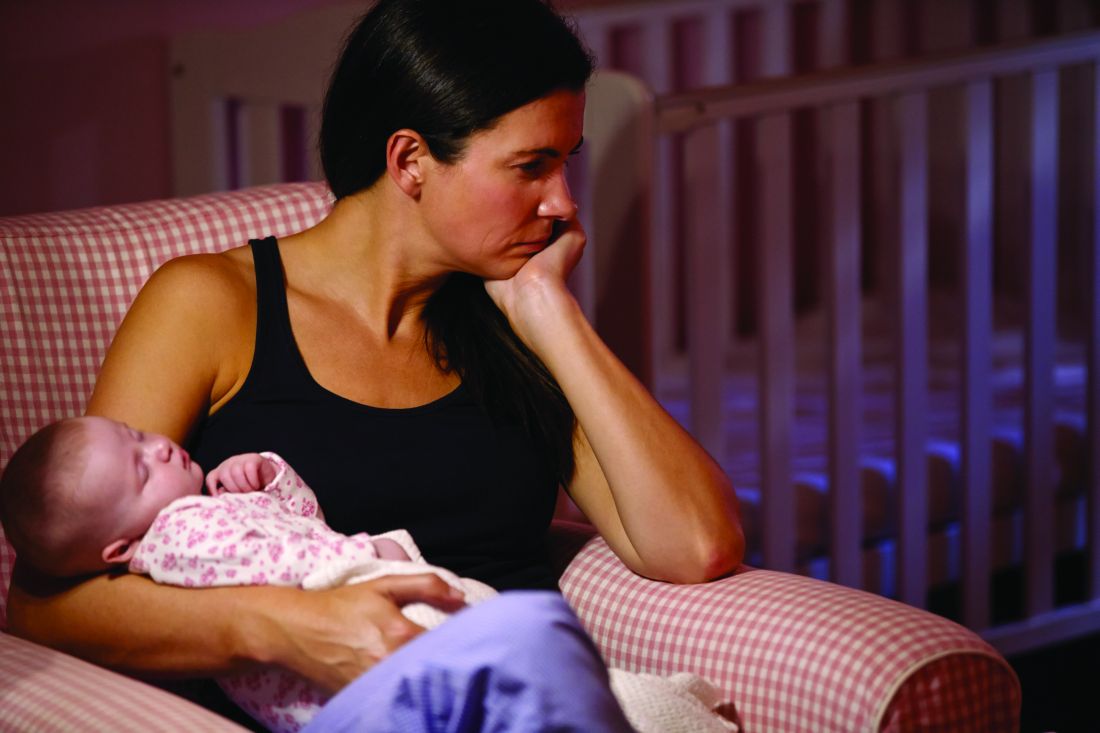
Postpartum mood disorders
Postpartum depression (PPD), however, is serious and requires intervention. An estimated 10%-20% of new mothers experience PPD, but the numbers are much higher in at-risk communities. Up to 48% of mothers in low-income households and 40%-60% of adolescent mothers in low-income households experience it. Yet only about 15% of these higher-risk women seek treatment for PPD (Pediatrics. 2010 Nov;126[5]:1032-9).
PPD symptoms are similar to the usual symptoms of a depressive disorder: depressed mood, irritability, changes in sleep and/or appetite, fatigue, sleepiness, loss of interest in activities, inability to feel pleasure in everyday life, guilt, difficulty concentrating, indecisiveness, low energy, despair, and feelings of worthlessness. The biggest difference – and most important symptom – is that women with PPD may have thoughts about harming not only themselves but also their child. This symptom calls for immediate intervention and sometimes can be a sign of postpartum psychosis.
Postpartum psychosis is rare, occurring in about 1-3 out of 1,000 women, but its seriousness requires immediate medical attention, including hospitalization in most cases. The best established risk factor is preexisting bipolar disorder. Postpartum psychosis usually occurs in the first 4 weeks after delivery, with symptoms that include paranoia, severe mood shifts, hallucinations, delusions, and suicidal and/or homicidal thoughts.
Fathers also can experience depression after a baby’s birth: An estimated 6% of fathers develop paternal depression, but the numbers are triple that among fathers whose children are enrolled in Early Head Start programs, Dr. Bauer said. Paternal depression often co-occurs with postpartum maternal depression, particularly when poverty and substance abuse are contributing factors.
Fewer practitioners may be aware of postpartum anxiety disorders, even though they affect 9%-30% of women. These disorders include generalized anxiety disorder, OCD, and PTSD, either as a preexisting diagnosis or occurring after delivery. Women develop an intensive fear about their child’s well-being and worry that they aren’t able to parent adequately or effectively (Zero to Three. 2009 May:1-6).
Your role in screening mothers
It’s essential that you screen parents for depression, particularly mothers for PPD, because of the potential negative consequences for the child. Research has shown that children of mothers with PPD are at risk for failure to thrive, and have a greater likelihood of mental health conditions, developmental delays, lower IQ scores, sleep problems, and difficulties at school (Infant Behav Dev. 2011 Feb;34[1]:1-14). Further, mothers with PPD are less likely to breastfeed and more likely to stop breastfeeding early, studies have shown (Arch Pediatr Adolesc Med. 2006 Mar;160[3]:279-84).
The risk factors for PPD often occur together, with each additional one adding to the overall risk. As incidence estimates show, teens and those with low income are at higher risk, as are those with less education and any type of additional financial hardship. Other factors that increase women’s risk include interpersonal violence, a lack of social support, a history or family history of anxiety or depression, poor physical or mental health in general, and substance abuse (Depress Anxiety. 2017 Feb;34[2]:178-87).

“Early treatment shows best results,” Dr. Bauer said. Yet less than half of mothers experiencing PPD seek treatment for it.
“Mothers may feel they ‘are strong enough’ and do not need help,” Dr. Bauer said. Or they feel they have to use what limited energy they have on their baby, or they worry about being “labeled as crazy or unable to care for their baby,” she said. Cultural factors also can play a role in this reticence to seek help (Qual Health Res. 2008 Sep;18[9]:1161-73).
“However, mothers are receptive to communication with their child’s pediatrician,” Dr. Bauer said, creating an opportunity for screening that mothers may not otherwise get.
Screening tools and procedures
Despite the risks to infants from maternal depression, less than half of pediatricians screen mothers for PPD, Dr. Bauer said. American Academy of Pediatrics surveys of 778 pediatricians in 2004 and 2013 found that the proportion of pediatricians screening or asking mothers about depression increased from 33% to 44% during that decade, driven partly by the “belief that family screening is in the scope of practice,” she explained. Physicians who asked about the child’s mood were more likely to ask mothers about their mood too, the surveys found (J Dev Behav Pediatr. 2016 Feb-Mar;37[2]:113-20).
Medical organizations differ in their screening recommendations, although all agree screening is important. The American College of Obstetricians and Gynecologists and the U.S. Preventive Services Task Force recommend screening mothers at least once in the perinatal period (Obstet Gynecol. 2015;125:1268–71; JAMA. 2016;315[4]:388-406). The AAP advocates a more aggressive approach, recommending screening at each of the 1, 2, 4, and 6-month child well-visits (“Bright Futures: Guidelines for Health Supervision of Infants, Children, and Adolescents,” 4th Edition [Elk Grove Village, Ill.: American Academy of Pediatrics Publishing, 2017]).
The two preferred screening tools for PPD are the Edinburgh Postpartum Depression Scale (EPDS) and the Patient Health Questionnaire (PHQ).
The former is fast and simple, requiring less than 5 minutes for mothers to answer 10 items about their symptoms in the previous 7 days. The EPDS has a maximum score of 30; anything above 12-13 should prompt further examination or referral. Women scoring a 10 should be reassessed 2 weeks later, unless they answer affirmatively to item 10 on suicidal ideation, in which case they should be referred immediately.
You also can use a shortened form of the EPDS as a first step, asking about the three EPDS items related to anxiety: “self-blame, feeling panicky, and [feeling] anxious or worried for no good reason,” Dr. Bauer said, explaining “the score should be multiplied by 10 and divided by 3, so the cutoff is greater than or equal to 10.”
The PHQ-9 asks about symptoms in the previous 2 weeks. Scores of 10-14 indicate minor depression or mild major depression, and scores of 15-19 indicate moderate depression. Mothers require intervention if they score at least 20, or in the case of teenage mothers, if they score at least 11 or have suicidal thoughts. Like the shortened EPDS-3, the PHQ has a shortened two-question option you can use as surveillance before fully screening mothers: 1. Have you felt down, depressed, or hopeless in the past 2 weeks? 2. Have you felt little interest or pleasure in doing things in the past 2 weeks?
If mothers have a positive screen, Dr. Bauer recommended that practices document it, according to protocols they’ve already set up.
“It’s not unlike domestic violence, maternal substance abuse, or parental smoking habits,” she said. “The score need not be noted, but [should] include details such as the name of the screener used, interpretation of the results, and when a referral was made.”
After making a referral to her ob.gyn. or a mental health professional, you can continue to help mothers by offering support and reassurance, reminding them that they are not alone and not to blame for depression, and that treatment can help them. Encourage parents to seek your advice and support as a pediatrician and use you as a resource to refer them to services that can help, such as lactation consultants and home-visiting programs.
Dr. Bauer offerred the following recommendations for clinical practice:
- Choose a validated screener for postpartum depression.
- Share the tool with everyone in your practice.
- Identify ways to integrate the screening tool into daily work flow.
- Collect data.
- Implement and assess how it went after a short time, using plan-do-study-act cycles.
Dr. Bauer advised consulting the following websites for information regarding postpartum depression:
- AAP Screening and Technical Assistance and Resource (STAR) Center. This AAP website recommends validated screening tools for maternal depression and has them available on the site ().
- Postpartum Support International (PSI). This website offers information and resources for women, family, and professionals (). PSI can also be reached by calling 800-944-4773.
- PSI Support Coordinator Network. This network can provide referrals for specialized support, such as for members of the military, for fathers, when there are legal concerns, or when psychosis is present, and serves all 50 states and 40 countries ().
- PostpartumDads. This website has recommendations for partners of women with postpartum depression, offering recommendations on how dads can help themselves and the mothers ().
Dr. Bauer said she had no relevant financial disclosures. She reported that her spouse is an employee of Anthem and holds Anthem stocks/bonds. No external funding was used for the presentation.
CHICAGO – according to Nerissa S. Bauer, MD, MPH.
Postpartum depression is the best known mood disorder related to pregnancy, but it’s not the only one. Perinatal mood and anxiety disorders exist along a spectrum, she told attendees at the American Academy of Pediatrics annual meeting. That spectrum includes prenatal depression, prenatal anxiety, “baby blues,” postpartum depression, posttraumatic stress disorder (PSTD), and postpartum anxiety with panic attacks and/or obsessive-compulsive disorder (OCD).
Postpartum mood disorders
Postpartum depression (PPD), however, is serious and requires intervention. An estimated 10%-20% of new mothers experience PPD, but the numbers are much higher in at-risk communities. Up to 48% of mothers in low-income households and 40%-60% of adolescent mothers in low-income households experience it. Yet only about 15% of these higher-risk women seek treatment for PPD (Pediatrics. 2010 Nov;126[5]:1032-9).
PPD symptoms are similar to the usual symptoms of a depressive disorder: depressed mood, irritability, changes in sleep and/or appetite, fatigue, sleepiness, loss of interest in activities, inability to feel pleasure in everyday life, guilt, difficulty concentrating, indecisiveness, low energy, despair, and feelings of worthlessness. The biggest difference – and most important symptom – is that women with PPD may have thoughts about harming not only themselves but also their child. This symptom calls for immediate intervention and sometimes can be a sign of postpartum psychosis.
Postpartum psychosis is rare, occurring in about 1-3 out of 1,000 women, but its seriousness requires immediate medical attention, including hospitalization in most cases. The best established risk factor is preexisting bipolar disorder. Postpartum psychosis usually occurs in the first 4 weeks after delivery, with symptoms that include paranoia, severe mood shifts, hallucinations, delusions, and suicidal and/or homicidal thoughts.
Fathers also can experience depression after a baby’s birth: An estimated 6% of fathers develop paternal depression, but the numbers are triple that among fathers whose children are enrolled in Early Head Start programs, Dr. Bauer said. Paternal depression often co-occurs with postpartum maternal depression, particularly when poverty and substance abuse are contributing factors.
Fewer practitioners may be aware of postpartum anxiety disorders, even though they affect 9%-30% of women. These disorders include generalized anxiety disorder, OCD, and PTSD, either as a preexisting diagnosis or occurring after delivery. Women develop an intensive fear about their child’s well-being and worry that they aren’t able to parent adequately or effectively (Zero to Three. 2009 May:1-6).
Your role in screening mothers
It’s essential that you screen parents for depression, particularly mothers for PPD, because of the potential negative consequences for the child. Research has shown that children of mothers with PPD are at risk for failure to thrive, and have a greater likelihood of mental health conditions, developmental delays, lower IQ scores, sleep problems, and difficulties at school (Infant Behav Dev. 2011 Feb;34[1]:1-14). Further, mothers with PPD are less likely to breastfeed and more likely to stop breastfeeding early, studies have shown (Arch Pediatr Adolesc Med. 2006 Mar;160[3]:279-84).
The risk factors for PPD often occur together, with each additional one adding to the overall risk. As incidence estimates show, teens and those with low income are at higher risk, as are those with less education and any type of additional financial hardship. Other factors that increase women’s risk include interpersonal violence, a lack of social support, a history or family history of anxiety or depression, poor physical or mental health in general, and substance abuse (Depress Anxiety. 2017 Feb;34[2]:178-87).
“Early treatment shows best results,” Dr. Bauer said. Yet less than half of mothers experiencing PPD seek treatment for it.
“Mothers may feel they ‘are strong enough’ and do not need help,” Dr. Bauer said. Or they feel they have to use what limited energy they have on their baby, or they worry about being “labeled as crazy or unable to care for their baby,” she said. Cultural factors also can play a role in this reticence to seek help (Qual Health Res. 2008 Sep;18[9]:1161-73).
“However, mothers are receptive to communication with their child’s pediatrician,” Dr. Bauer said, creating an opportunity for screening that mothers may not otherwise get.
Screening tools and procedures
Despite the risks to infants from maternal depression, less than half of pediatricians screen mothers for PPD, Dr. Bauer said. American Academy of Pediatrics surveys of 778 pediatricians in 2004 and 2013 found that the proportion of pediatricians screening or asking mothers about depression increased from 33% to 44% during that decade, driven partly by the “belief that family screening is in the scope of practice,” she explained. Physicians who asked about the child’s mood were more likely to ask mothers about their mood too, the surveys found (J Dev Behav Pediatr. 2016 Feb-Mar;37[2]:113-20).
Medical organizations differ in their screening recommendations, although all agree screening is important. The American College of Obstetricians and Gynecologists and the U.S. Preventive Services Task Force recommend screening mothers at least once in the perinatal period (Obstet Gynecol. 2015;125:1268–71; JAMA. 2016;315[4]:388-406). The AAP advocates a more aggressive approach, recommending screening at each of the 1, 2, 4, and 6-month child well-visits (“Bright Futures: Guidelines for Health Supervision of Infants, Children, and Adolescents,” 4th Edition [Elk Grove Village, Ill.: American Academy of Pediatrics Publishing, 2017]).
The two preferred screening tools for PPD are the Edinburgh Postpartum Depression Scale (EPDS) and the Patient Health Questionnaire (PHQ).
The former is fast and simple, requiring less than 5 minutes for mothers to answer 10 items about their symptoms in the previous 7 days. The EPDS has a maximum score of 30; anything above 12-13 should prompt further examination or referral. Women scoring a 10 should be reassessed 2 weeks later, unless they answer affirmatively to item 10 on suicidal ideation, in which case they should be referred immediately.
You also can use a shortened form of the EPDS as a first step, asking about the three EPDS items related to anxiety: “self-blame, feeling panicky, and [feeling] anxious or worried for no good reason,” Dr. Bauer said, explaining “the score should be multiplied by 10 and divided by 3, so the cutoff is greater than or equal to 10.”
The PHQ-9 asks about symptoms in the previous 2 weeks. Scores of 10-14 indicate minor depression or mild major depression, and scores of 15-19 indicate moderate depression. Mothers require intervention if they score at least 20, or in the case of teenage mothers, if they score at least 11 or have suicidal thoughts. Like the shortened EPDS-3, the PHQ has a shortened two-question option you can use as surveillance before fully screening mothers: 1. Have you felt down, depressed, or hopeless in the past 2 weeks? 2. Have you felt little interest or pleasure in doing things in the past 2 weeks?
If mothers have a positive screen, Dr. Bauer recommended that practices document it, according to protocols they’ve already set up.
“It’s not unlike domestic violence, maternal substance abuse, or parental smoking habits,” she said. “The score need not be noted, but [should] include details such as the name of the screener used, interpretation of the results, and when a referral was made.”
After making a referral to her ob.gyn. or a mental health professional, you can continue to help mothers by offering support and reassurance, reminding them that they are not alone and not to blame for depression, and that treatment can help them. Encourage parents to seek your advice and support as a pediatrician and use you as a resource to refer them to services that can help, such as lactation consultants and home-visiting programs.
Dr. Bauer offerred the following recommendations for clinical practice:
- Choose a validated screener for postpartum depression.
- Share the tool with everyone in your practice.
- Identify ways to integrate the screening tool into daily work flow.
- Collect data.
- Implement and assess how it went after a short time, using plan-do-study-act cycles.
Dr. Bauer advised consulting the following websites for information regarding postpartum depression:
- AAP Screening and Technical Assistance and Resource (STAR) Center. This AAP website recommends validated screening tools for maternal depression and has them available on the site ().
- Postpartum Support International (PSI). This website offers information and resources for women, family, and professionals (). PSI can also be reached by calling 800-944-4773.
- PSI Support Coordinator Network. This network can provide referrals for specialized support, such as for members of the military, for fathers, when there are legal concerns, or when psychosis is present, and serves all 50 states and 40 countries ().
- PostpartumDads. This website has recommendations for partners of women with postpartum depression, offering recommendations on how dads can help themselves and the mothers ().
Dr. Bauer said she had no relevant financial disclosures. She reported that her spouse is an employee of Anthem and holds Anthem stocks/bonds. No external funding was used for the presentation.
CHICAGO – according to Nerissa S. Bauer, MD, MPH.
Postpartum depression is the best known mood disorder related to pregnancy, but it’s not the only one. Perinatal mood and anxiety disorders exist along a spectrum, she told attendees at the American Academy of Pediatrics annual meeting. That spectrum includes prenatal depression, prenatal anxiety, “baby blues,” postpartum depression, posttraumatic stress disorder (PSTD), and postpartum anxiety with panic attacks and/or obsessive-compulsive disorder (OCD).
Postpartum mood disorders
Postpartum depression (PPD), however, is serious and requires intervention. An estimated 10%-20% of new mothers experience PPD, but the numbers are much higher in at-risk communities. Up to 48% of mothers in low-income households and 40%-60% of adolescent mothers in low-income households experience it. Yet only about 15% of these higher-risk women seek treatment for PPD (Pediatrics. 2010 Nov;126[5]:1032-9).
PPD symptoms are similar to the usual symptoms of a depressive disorder: depressed mood, irritability, changes in sleep and/or appetite, fatigue, sleepiness, loss of interest in activities, inability to feel pleasure in everyday life, guilt, difficulty concentrating, indecisiveness, low energy, despair, and feelings of worthlessness. The biggest difference – and most important symptom – is that women with PPD may have thoughts about harming not only themselves but also their child. This symptom calls for immediate intervention and sometimes can be a sign of postpartum psychosis.
Postpartum psychosis is rare, occurring in about 1-3 out of 1,000 women, but its seriousness requires immediate medical attention, including hospitalization in most cases. The best established risk factor is preexisting bipolar disorder. Postpartum psychosis usually occurs in the first 4 weeks after delivery, with symptoms that include paranoia, severe mood shifts, hallucinations, delusions, and suicidal and/or homicidal thoughts.
Fathers also can experience depression after a baby’s birth: An estimated 6% of fathers develop paternal depression, but the numbers are triple that among fathers whose children are enrolled in Early Head Start programs, Dr. Bauer said. Paternal depression often co-occurs with postpartum maternal depression, particularly when poverty and substance abuse are contributing factors.
Fewer practitioners may be aware of postpartum anxiety disorders, even though they affect 9%-30% of women. These disorders include generalized anxiety disorder, OCD, and PTSD, either as a preexisting diagnosis or occurring after delivery. Women develop an intensive fear about their child’s well-being and worry that they aren’t able to parent adequately or effectively (Zero to Three. 2009 May:1-6).
Your role in screening mothers
It’s essential that you screen parents for depression, particularly mothers for PPD, because of the potential negative consequences for the child. Research has shown that children of mothers with PPD are at risk for failure to thrive, and have a greater likelihood of mental health conditions, developmental delays, lower IQ scores, sleep problems, and difficulties at school (Infant Behav Dev. 2011 Feb;34[1]:1-14). Further, mothers with PPD are less likely to breastfeed and more likely to stop breastfeeding early, studies have shown (Arch Pediatr Adolesc Med. 2006 Mar;160[3]:279-84).
The risk factors for PPD often occur together, with each additional one adding to the overall risk. As incidence estimates show, teens and those with low income are at higher risk, as are those with less education and any type of additional financial hardship. Other factors that increase women’s risk include interpersonal violence, a lack of social support, a history or family history of anxiety or depression, poor physical or mental health in general, and substance abuse (Depress Anxiety. 2017 Feb;34[2]:178-87).
“Early treatment shows best results,” Dr. Bauer said. Yet less than half of mothers experiencing PPD seek treatment for it.
“Mothers may feel they ‘are strong enough’ and do not need help,” Dr. Bauer said. Or they feel they have to use what limited energy they have on their baby, or they worry about being “labeled as crazy or unable to care for their baby,” she said. Cultural factors also can play a role in this reticence to seek help (Qual Health Res. 2008 Sep;18[9]:1161-73).
“However, mothers are receptive to communication with their child’s pediatrician,” Dr. Bauer said, creating an opportunity for screening that mothers may not otherwise get.
Screening tools and procedures
Despite the risks to infants from maternal depression, less than half of pediatricians screen mothers for PPD, Dr. Bauer said. American Academy of Pediatrics surveys of 778 pediatricians in 2004 and 2013 found that the proportion of pediatricians screening or asking mothers about depression increased from 33% to 44% during that decade, driven partly by the “belief that family screening is in the scope of practice,” she explained. Physicians who asked about the child’s mood were more likely to ask mothers about their mood too, the surveys found (J Dev Behav Pediatr. 2016 Feb-Mar;37[2]:113-20).
Medical organizations differ in their screening recommendations, although all agree screening is important. The American College of Obstetricians and Gynecologists and the U.S. Preventive Services Task Force recommend screening mothers at least once in the perinatal period (Obstet Gynecol. 2015;125:1268–71; JAMA. 2016;315[4]:388-406). The AAP advocates a more aggressive approach, recommending screening at each of the 1, 2, 4, and 6-month child well-visits (“Bright Futures: Guidelines for Health Supervision of Infants, Children, and Adolescents,” 4th Edition [Elk Grove Village, Ill.: American Academy of Pediatrics Publishing, 2017]).
The two preferred screening tools for PPD are the Edinburgh Postpartum Depression Scale (EPDS) and the Patient Health Questionnaire (PHQ).
The former is fast and simple, requiring less than 5 minutes for mothers to answer 10 items about their symptoms in the previous 7 days. The EPDS has a maximum score of 30; anything above 12-13 should prompt further examination or referral. Women scoring a 10 should be reassessed 2 weeks later, unless they answer affirmatively to item 10 on suicidal ideation, in which case they should be referred immediately.
You also can use a shortened form of the EPDS as a first step, asking about the three EPDS items related to anxiety: “self-blame, feeling panicky, and [feeling] anxious or worried for no good reason,” Dr. Bauer said, explaining “the score should be multiplied by 10 and divided by 3, so the cutoff is greater than or equal to 10.”
The PHQ-9 asks about symptoms in the previous 2 weeks. Scores of 10-14 indicate minor depression or mild major depression, and scores of 15-19 indicate moderate depression. Mothers require intervention if they score at least 20, or in the case of teenage mothers, if they score at least 11 or have suicidal thoughts. Like the shortened EPDS-3, the PHQ has a shortened two-question option you can use as surveillance before fully screening mothers: 1. Have you felt down, depressed, or hopeless in the past 2 weeks? 2. Have you felt little interest or pleasure in doing things in the past 2 weeks?
If mothers have a positive screen, Dr. Bauer recommended that practices document it, according to protocols they’ve already set up.
“It’s not unlike domestic violence, maternal substance abuse, or parental smoking habits,” she said. “The score need not be noted, but [should] include details such as the name of the screener used, interpretation of the results, and when a referral was made.”
After making a referral to her ob.gyn. or a mental health professional, you can continue to help mothers by offering support and reassurance, reminding them that they are not alone and not to blame for depression, and that treatment can help them. Encourage parents to seek your advice and support as a pediatrician and use you as a resource to refer them to services that can help, such as lactation consultants and home-visiting programs.
Dr. Bauer offerred the following recommendations for clinical practice:
- Choose a validated screener for postpartum depression.
- Share the tool with everyone in your practice.
- Identify ways to integrate the screening tool into daily work flow.
- Collect data.
- Implement and assess how it went after a short time, using plan-do-study-act cycles.
Dr. Bauer advised consulting the following websites for information regarding postpartum depression:
- AAP Screening and Technical Assistance and Resource (STAR) Center. This AAP website recommends validated screening tools for maternal depression and has them available on the site ().
- Postpartum Support International (PSI). This website offers information and resources for women, family, and professionals (). PSI can also be reached by calling 800-944-4773.
- PSI Support Coordinator Network. This network can provide referrals for specialized support, such as for members of the military, for fathers, when there are legal concerns, or when psychosis is present, and serves all 50 states and 40 countries ().
- PostpartumDads. This website has recommendations for partners of women with postpartum depression, offering recommendations on how dads can help themselves and the mothers ().
Dr. Bauer said she had no relevant financial disclosures. She reported that her spouse is an employee of Anthem and holds Anthem stocks/bonds. No external funding was used for the presentation.
EXPERT ANALYSIS FROM AAP 2017