User login
GLP-1 Receptor Agonists: Which Drug for Which Patient?
With all the excitement about GLP-1 agonists,
Of course, we want to make sure that we’re treating the right condition. If the patient has type 2 diabetes, we tend to give them medication that is indicated for type 2 diabetes. Many GLP-1 agonists are available in a diabetes version and a chronic weight management or obesity version. If a patient has diabetes and obesity, they can receive either one. If a patient has only diabetes but not obesity, they should be prescribed the diabetes version. For obesity without diabetes, we tend to stick with the drugs that are indicated for chronic weight management.
Let’s go through them.
Exenatide. In chronological order of approval, the first GLP-1 drug that was used for diabetes dates back to exenatide (Bydureon). Bydureon had a partner called Byetta (also exenatide), both of which are still on the market but infrequently used. Some patients reported that these medications were inconvenient because they required twice-daily injections and caused painful injection-site nodules.
Diabetes drugs in more common use include liraglutide (Victoza) for type 2 diabetes. It is a daily injection and has various doses. We always start low and increase with tolerance and desired effect for A1c.
Liraglutide. Victoza has an antiobesity counterpart called Saxenda. The Saxenda pen looks very similar to the Victoza pen. It is a daily GLP-1 agonist for chronic weight management. The SCALE trial demonstrated 8%-12% weight loss with Saxenda.
Those are the daily injections: Victoza for diabetes and Saxenda for weight loss.
Our patients are very excited about the advent of weekly injections for diabetes and weight management. Ozempic is very popular. It is a weekly GLP-1 agonist for type 2 diabetes. Many patients come in asking for Ozempic, and we must make sure that we’re moving them in the right direction depending on their condition.
Semaglutide. Ozempic has a few different doses. It is a weekly injection and has been found to be quite efficacious for treating diabetes. The drug’s weight loss counterpart is called Wegovy, which comes in a different pen. Both forms contain the compound semaglutide. While all of these GLP-1 agonists are indicated to treat type 2 diabetes or for weight management, Wegovy has a special indication that none of the others have. In March 2024, Wegovy acquired an indication to decrease cardiac risk in those with a BMI ≥ 27 and a previous cardiac history. This will really change the accessibility of this medication because patients with heart conditions who are on Medicare are expected to have access to Wegovy.
Tirzepatide. Another weekly injection for treatment of type 2 diabetes is called Mounjaro. Its counterpart for weight management is called Zepbound, which was found to have about 20.9% weight loss over 72 weeks. These medications have similar side effects in differing degrees, but the most-often reported are nausea, stool changes, abdominal pain, and reflux. There are some other potential side effects; I recommend that you read the individual prescribing information available for each drug to have more clarity about that.
It is important that we stay on label for using the GLP-1 receptor agonists, for many reasons. One, it increases our patients’ accessibility to the right medication for them, and we can also make sure that we’re treating the patient with the right drug according to the clinical trials. When the clinical trials are done, the study populations demonstrate safety and efficacy for that population. But if we’re prescribing a GLP-1 for a different population, it is considered off-label use.
Dr. Lofton, an obesity medicine specialist, is clinical associate professor of surgery and medicine at NYU Grossman School of Medicine, and director of the medical weight management program at NYU Langone Weight Management Center, New York. She disclosed ties to Novo Nordisk and Eli Lilly. This transcript has been edited for clarity.
A version of this article appeared on Medscape.com.
With all the excitement about GLP-1 agonists,
Of course, we want to make sure that we’re treating the right condition. If the patient has type 2 diabetes, we tend to give them medication that is indicated for type 2 diabetes. Many GLP-1 agonists are available in a diabetes version and a chronic weight management or obesity version. If a patient has diabetes and obesity, they can receive either one. If a patient has only diabetes but not obesity, they should be prescribed the diabetes version. For obesity without diabetes, we tend to stick with the drugs that are indicated for chronic weight management.
Let’s go through them.
Exenatide. In chronological order of approval, the first GLP-1 drug that was used for diabetes dates back to exenatide (Bydureon). Bydureon had a partner called Byetta (also exenatide), both of which are still on the market but infrequently used. Some patients reported that these medications were inconvenient because they required twice-daily injections and caused painful injection-site nodules.
Diabetes drugs in more common use include liraglutide (Victoza) for type 2 diabetes. It is a daily injection and has various doses. We always start low and increase with tolerance and desired effect for A1c.
Liraglutide. Victoza has an antiobesity counterpart called Saxenda. The Saxenda pen looks very similar to the Victoza pen. It is a daily GLP-1 agonist for chronic weight management. The SCALE trial demonstrated 8%-12% weight loss with Saxenda.
Those are the daily injections: Victoza for diabetes and Saxenda for weight loss.
Our patients are very excited about the advent of weekly injections for diabetes and weight management. Ozempic is very popular. It is a weekly GLP-1 agonist for type 2 diabetes. Many patients come in asking for Ozempic, and we must make sure that we’re moving them in the right direction depending on their condition.
Semaglutide. Ozempic has a few different doses. It is a weekly injection and has been found to be quite efficacious for treating diabetes. The drug’s weight loss counterpart is called Wegovy, which comes in a different pen. Both forms contain the compound semaglutide. While all of these GLP-1 agonists are indicated to treat type 2 diabetes or for weight management, Wegovy has a special indication that none of the others have. In March 2024, Wegovy acquired an indication to decrease cardiac risk in those with a BMI ≥ 27 and a previous cardiac history. This will really change the accessibility of this medication because patients with heart conditions who are on Medicare are expected to have access to Wegovy.
Tirzepatide. Another weekly injection for treatment of type 2 diabetes is called Mounjaro. Its counterpart for weight management is called Zepbound, which was found to have about 20.9% weight loss over 72 weeks. These medications have similar side effects in differing degrees, but the most-often reported are nausea, stool changes, abdominal pain, and reflux. There are some other potential side effects; I recommend that you read the individual prescribing information available for each drug to have more clarity about that.
It is important that we stay on label for using the GLP-1 receptor agonists, for many reasons. One, it increases our patients’ accessibility to the right medication for them, and we can also make sure that we’re treating the patient with the right drug according to the clinical trials. When the clinical trials are done, the study populations demonstrate safety and efficacy for that population. But if we’re prescribing a GLP-1 for a different population, it is considered off-label use.
Dr. Lofton, an obesity medicine specialist, is clinical associate professor of surgery and medicine at NYU Grossman School of Medicine, and director of the medical weight management program at NYU Langone Weight Management Center, New York. She disclosed ties to Novo Nordisk and Eli Lilly. This transcript has been edited for clarity.
A version of this article appeared on Medscape.com.
With all the excitement about GLP-1 agonists,
Of course, we want to make sure that we’re treating the right condition. If the patient has type 2 diabetes, we tend to give them medication that is indicated for type 2 diabetes. Many GLP-1 agonists are available in a diabetes version and a chronic weight management or obesity version. If a patient has diabetes and obesity, they can receive either one. If a patient has only diabetes but not obesity, they should be prescribed the diabetes version. For obesity without diabetes, we tend to stick with the drugs that are indicated for chronic weight management.
Let’s go through them.
Exenatide. In chronological order of approval, the first GLP-1 drug that was used for diabetes dates back to exenatide (Bydureon). Bydureon had a partner called Byetta (also exenatide), both of which are still on the market but infrequently used. Some patients reported that these medications were inconvenient because they required twice-daily injections and caused painful injection-site nodules.
Diabetes drugs in more common use include liraglutide (Victoza) for type 2 diabetes. It is a daily injection and has various doses. We always start low and increase with tolerance and desired effect for A1c.
Liraglutide. Victoza has an antiobesity counterpart called Saxenda. The Saxenda pen looks very similar to the Victoza pen. It is a daily GLP-1 agonist for chronic weight management. The SCALE trial demonstrated 8%-12% weight loss with Saxenda.
Those are the daily injections: Victoza for diabetes and Saxenda for weight loss.
Our patients are very excited about the advent of weekly injections for diabetes and weight management. Ozempic is very popular. It is a weekly GLP-1 agonist for type 2 diabetes. Many patients come in asking for Ozempic, and we must make sure that we’re moving them in the right direction depending on their condition.
Semaglutide. Ozempic has a few different doses. It is a weekly injection and has been found to be quite efficacious for treating diabetes. The drug’s weight loss counterpart is called Wegovy, which comes in a different pen. Both forms contain the compound semaglutide. While all of these GLP-1 agonists are indicated to treat type 2 diabetes or for weight management, Wegovy has a special indication that none of the others have. In March 2024, Wegovy acquired an indication to decrease cardiac risk in those with a BMI ≥ 27 and a previous cardiac history. This will really change the accessibility of this medication because patients with heart conditions who are on Medicare are expected to have access to Wegovy.
Tirzepatide. Another weekly injection for treatment of type 2 diabetes is called Mounjaro. Its counterpart for weight management is called Zepbound, which was found to have about 20.9% weight loss over 72 weeks. These medications have similar side effects in differing degrees, but the most-often reported are nausea, stool changes, abdominal pain, and reflux. There are some other potential side effects; I recommend that you read the individual prescribing information available for each drug to have more clarity about that.
It is important that we stay on label for using the GLP-1 receptor agonists, for many reasons. One, it increases our patients’ accessibility to the right medication for them, and we can also make sure that we’re treating the patient with the right drug according to the clinical trials. When the clinical trials are done, the study populations demonstrate safety and efficacy for that population. But if we’re prescribing a GLP-1 for a different population, it is considered off-label use.
Dr. Lofton, an obesity medicine specialist, is clinical associate professor of surgery and medicine at NYU Grossman School of Medicine, and director of the medical weight management program at NYU Langone Weight Management Center, New York. She disclosed ties to Novo Nordisk and Eli Lilly. This transcript has been edited for clarity.
A version of this article appeared on Medscape.com.
Is Osimertinib Better Alone or With Chemotherapy in Non–Small Cell Lung Cancer?
SAN DIEGO —
That is a question brewing among some oncologists now that the US Food and Drug Administration (FDA) has approved osimertinib (Tagrisso, AstraZeneca) for both indications in patients with epidermal growth factor receptor (EGFR) mutations.
An answer began to emerge in research presented at the American Association for Cancer Research annual meeting.
An exploratory analysis of the FLAURA2 trial found that, when patients have EGFR mutations on baseline circulating tumor DNA (ctDNA) testing, the combination treatment can extend progression-free survival (PFS). In this patient group, those receiving osimertinib alongside pemetrexed plus cisplatin or carboplatin had a 9-month PFS advantage compared with those who received osimertinib alone.
Conversely, when patients do not have EGFR mutations following baseline ctDNA testing, osimertinib alone appears to offer similar PFS outcomes to the combination therapy, but with less toxicity.
“Baseline detection of plasma EGFR mutations may identify a subgroup of patients who derive most benefit from the addition of platinum-pemetrexed to osimertinib as first-line treatment of EGFR-mutated advance non–small cell lung cancer,” investigator Pasi A. Jänne, MD, PhD, a lung cancer oncologist at the Dana-Farber Cancer Institute, Boston, said during his presentation.
The FLAURA2 trial randomized 557 patients equally to daily osimertinib either alone or with pemetrexed plus cisplatin or carboplatin every 3 weeks for four cycles followed by pemetrexed every 3 weeks until disease progression or unacceptable toxicity.
Patients were tested for Ex19del or L858R EGFR mutations at baseline and at 3 and 6 weeks; baseline mutations were found in 73% of evaluable patients.
In patients with baseline mutations, the median PFS was 24.8 months with the combination therapy vs 13.9 months with osimertinib alone (hazard ratio [HR], 0.60).
In patients without baseline mutations, the median PFS was similar in both groups — 33.3 months with the combination vs 30.3 months with monotherapy (HR, 0.93; 95% CI, 0.51-1.72).
The investigators also found that having baseline mutations was associated with worse outcomes regardless of study arm, and mutation clearance was associated with improved outcomes. Clearance occurred more quickly among patients receiving the combination treatment, but almost 90% of patients in both arms cleared their mutations by week 6.
“As we move forward and think about which of our patients we would treat with the combination ... the presence of baseline EGFR mutations in ctDNA may be one of the features that goes into the conversation,” Dr. Jänne said.
Study discussant Marina Chiara Garassino, MD, a thoracic oncologist at the University of Chicago, agreed that this trial can help oncologists make this kind of treatment decision.
Patients with baseline EGFR mutations also tended to have larger tumors, more brain metastases, and worse performance scores; the combination therapy makes sense when such factors are present in patients with baseline EGFR mutations, Dr. Garassino said.
The wrinkle in the findings is that the study used digital droplet polymerase chain reaction (Biodesix) to test for EGFR mutations, which is not commonly used. Clinicians often use next-generation sequencing, which is less sensitive and can lead to false negatives.
It makes it difficult to know how to apply the findings to everyday practice, but Janne hopes a study will be done to correlate next-generation sequencing detection with outcomes.
The study was funded by AstraZeneca, maker of osimertinib, and researchers included AstraZeneca employees. Dr. Jänne is a consultant for and reported research funding from the company. He is a co-inventor on an EGFR mutations patent. Dr. Garassino is also an AstraZeneca consultant and reported institutional financial interests in the company.
A version of this article appeared on Medscape.com.
SAN DIEGO —
That is a question brewing among some oncologists now that the US Food and Drug Administration (FDA) has approved osimertinib (Tagrisso, AstraZeneca) for both indications in patients with epidermal growth factor receptor (EGFR) mutations.
An answer began to emerge in research presented at the American Association for Cancer Research annual meeting.
An exploratory analysis of the FLAURA2 trial found that, when patients have EGFR mutations on baseline circulating tumor DNA (ctDNA) testing, the combination treatment can extend progression-free survival (PFS). In this patient group, those receiving osimertinib alongside pemetrexed plus cisplatin or carboplatin had a 9-month PFS advantage compared with those who received osimertinib alone.
Conversely, when patients do not have EGFR mutations following baseline ctDNA testing, osimertinib alone appears to offer similar PFS outcomes to the combination therapy, but with less toxicity.
“Baseline detection of plasma EGFR mutations may identify a subgroup of patients who derive most benefit from the addition of platinum-pemetrexed to osimertinib as first-line treatment of EGFR-mutated advance non–small cell lung cancer,” investigator Pasi A. Jänne, MD, PhD, a lung cancer oncologist at the Dana-Farber Cancer Institute, Boston, said during his presentation.
The FLAURA2 trial randomized 557 patients equally to daily osimertinib either alone or with pemetrexed plus cisplatin or carboplatin every 3 weeks for four cycles followed by pemetrexed every 3 weeks until disease progression or unacceptable toxicity.
Patients were tested for Ex19del or L858R EGFR mutations at baseline and at 3 and 6 weeks; baseline mutations were found in 73% of evaluable patients.
In patients with baseline mutations, the median PFS was 24.8 months with the combination therapy vs 13.9 months with osimertinib alone (hazard ratio [HR], 0.60).
In patients without baseline mutations, the median PFS was similar in both groups — 33.3 months with the combination vs 30.3 months with monotherapy (HR, 0.93; 95% CI, 0.51-1.72).
The investigators also found that having baseline mutations was associated with worse outcomes regardless of study arm, and mutation clearance was associated with improved outcomes. Clearance occurred more quickly among patients receiving the combination treatment, but almost 90% of patients in both arms cleared their mutations by week 6.
“As we move forward and think about which of our patients we would treat with the combination ... the presence of baseline EGFR mutations in ctDNA may be one of the features that goes into the conversation,” Dr. Jänne said.
Study discussant Marina Chiara Garassino, MD, a thoracic oncologist at the University of Chicago, agreed that this trial can help oncologists make this kind of treatment decision.
Patients with baseline EGFR mutations also tended to have larger tumors, more brain metastases, and worse performance scores; the combination therapy makes sense when such factors are present in patients with baseline EGFR mutations, Dr. Garassino said.
The wrinkle in the findings is that the study used digital droplet polymerase chain reaction (Biodesix) to test for EGFR mutations, which is not commonly used. Clinicians often use next-generation sequencing, which is less sensitive and can lead to false negatives.
It makes it difficult to know how to apply the findings to everyday practice, but Janne hopes a study will be done to correlate next-generation sequencing detection with outcomes.
The study was funded by AstraZeneca, maker of osimertinib, and researchers included AstraZeneca employees. Dr. Jänne is a consultant for and reported research funding from the company. He is a co-inventor on an EGFR mutations patent. Dr. Garassino is also an AstraZeneca consultant and reported institutional financial interests in the company.
A version of this article appeared on Medscape.com.
SAN DIEGO —
That is a question brewing among some oncologists now that the US Food and Drug Administration (FDA) has approved osimertinib (Tagrisso, AstraZeneca) for both indications in patients with epidermal growth factor receptor (EGFR) mutations.
An answer began to emerge in research presented at the American Association for Cancer Research annual meeting.
An exploratory analysis of the FLAURA2 trial found that, when patients have EGFR mutations on baseline circulating tumor DNA (ctDNA) testing, the combination treatment can extend progression-free survival (PFS). In this patient group, those receiving osimertinib alongside pemetrexed plus cisplatin or carboplatin had a 9-month PFS advantage compared with those who received osimertinib alone.
Conversely, when patients do not have EGFR mutations following baseline ctDNA testing, osimertinib alone appears to offer similar PFS outcomes to the combination therapy, but with less toxicity.
“Baseline detection of plasma EGFR mutations may identify a subgroup of patients who derive most benefit from the addition of platinum-pemetrexed to osimertinib as first-line treatment of EGFR-mutated advance non–small cell lung cancer,” investigator Pasi A. Jänne, MD, PhD, a lung cancer oncologist at the Dana-Farber Cancer Institute, Boston, said during his presentation.
The FLAURA2 trial randomized 557 patients equally to daily osimertinib either alone or with pemetrexed plus cisplatin or carboplatin every 3 weeks for four cycles followed by pemetrexed every 3 weeks until disease progression or unacceptable toxicity.
Patients were tested for Ex19del or L858R EGFR mutations at baseline and at 3 and 6 weeks; baseline mutations were found in 73% of evaluable patients.
In patients with baseline mutations, the median PFS was 24.8 months with the combination therapy vs 13.9 months with osimertinib alone (hazard ratio [HR], 0.60).
In patients without baseline mutations, the median PFS was similar in both groups — 33.3 months with the combination vs 30.3 months with monotherapy (HR, 0.93; 95% CI, 0.51-1.72).
The investigators also found that having baseline mutations was associated with worse outcomes regardless of study arm, and mutation clearance was associated with improved outcomes. Clearance occurred more quickly among patients receiving the combination treatment, but almost 90% of patients in both arms cleared their mutations by week 6.
“As we move forward and think about which of our patients we would treat with the combination ... the presence of baseline EGFR mutations in ctDNA may be one of the features that goes into the conversation,” Dr. Jänne said.
Study discussant Marina Chiara Garassino, MD, a thoracic oncologist at the University of Chicago, agreed that this trial can help oncologists make this kind of treatment decision.
Patients with baseline EGFR mutations also tended to have larger tumors, more brain metastases, and worse performance scores; the combination therapy makes sense when such factors are present in patients with baseline EGFR mutations, Dr. Garassino said.
The wrinkle in the findings is that the study used digital droplet polymerase chain reaction (Biodesix) to test for EGFR mutations, which is not commonly used. Clinicians often use next-generation sequencing, which is less sensitive and can lead to false negatives.
It makes it difficult to know how to apply the findings to everyday practice, but Janne hopes a study will be done to correlate next-generation sequencing detection with outcomes.
The study was funded by AstraZeneca, maker of osimertinib, and researchers included AstraZeneca employees. Dr. Jänne is a consultant for and reported research funding from the company. He is a co-inventor on an EGFR mutations patent. Dr. Garassino is also an AstraZeneca consultant and reported institutional financial interests in the company.
A version of this article appeared on Medscape.com.
FROM AACR
FDA Approves New Bladder Cancer Drug
Specifically, the agent is approved to treat patients with BCG-unresponsive non–muscle-invasive bladder cancer carcinoma in situ with or without Ta or T1 papillary disease.
The FDA declined an initial approval for the combination in May 2023 because of deficiencies the agency observed during its prelicense inspection of third-party manufacturing organizations. In October 2023, ImmunityBio resubmitted the Biologics License Application, which was accepted.
The new therapy represents addresses “an unmet need” in this high-risk bladder cancer population, the company stated in a press release announcing the initial study findings. Typically, patients with intermediate or high-risk disease undergo bladder tumor resection followed by treatment with BCG, but the cancer recurs in up to 50% of patients, including those who experience a complete response, explained ImmunityBio, which acquired Altor BioScience.
Approval was based on findings from the single arm, phase 2/3 open-label QUILT-3.032 study, which included 77 patients with BCG-unresponsive, high-risk disease following transurethral resection. All had Eastern Cooperative Oncology Group performance status of 0-2.
Patients received nogapendekin alfa inbakicept-pmln induction via intravesical instillation with BCG followed by maintenance therapy for up to 37 months.
According to the FDA’s press release, 62% of patients had a complete response, defined as a negative cystoscopy and urine cytology; 58% of those with a complete response had a duration of response lasting at least 12 months and 40% had a duration of response lasting 24 months or longer.
The safety of the combination was evaluated in a cohort of 88 patients. Serious adverse reactions occurred in 16% of patients. The most common treatment-emergent adverse effects included dysuria, pollakiuria, and hematuria, which are associated with intravesical BCG; 86% of these events were grade 1 or 2. Overall, 7% of patients discontinued the combination owing to adverse reactions.
The recommended dose is 400 mcg administered intravesically with BCG once a week for 6 weeks as induction therapy, with an option for a second induction course if patients don’t achieve a complete response at 3 months. The recommended maintenance therapy dose is 400 mcg with BCG once a week for 3 weeks at months 4, 7, 10, 13, and 19. Patients who achieve a complete response at 25 months and beyond may receive maintenance instillations with BCG once a week for 3 weeks at months 25, 31, and 37. The maximum treatment duration is 37 months.
The FDA recommends discontinuing treatment if disease persists after second induction or owing to disease recurrence, progression, or unacceptable toxicity.
A version of this article appeared on Medscape.com.
Specifically, the agent is approved to treat patients with BCG-unresponsive non–muscle-invasive bladder cancer carcinoma in situ with or without Ta or T1 papillary disease.
The FDA declined an initial approval for the combination in May 2023 because of deficiencies the agency observed during its prelicense inspection of third-party manufacturing organizations. In October 2023, ImmunityBio resubmitted the Biologics License Application, which was accepted.
The new therapy represents addresses “an unmet need” in this high-risk bladder cancer population, the company stated in a press release announcing the initial study findings. Typically, patients with intermediate or high-risk disease undergo bladder tumor resection followed by treatment with BCG, but the cancer recurs in up to 50% of patients, including those who experience a complete response, explained ImmunityBio, which acquired Altor BioScience.
Approval was based on findings from the single arm, phase 2/3 open-label QUILT-3.032 study, which included 77 patients with BCG-unresponsive, high-risk disease following transurethral resection. All had Eastern Cooperative Oncology Group performance status of 0-2.
Patients received nogapendekin alfa inbakicept-pmln induction via intravesical instillation with BCG followed by maintenance therapy for up to 37 months.
According to the FDA’s press release, 62% of patients had a complete response, defined as a negative cystoscopy and urine cytology; 58% of those with a complete response had a duration of response lasting at least 12 months and 40% had a duration of response lasting 24 months or longer.
The safety of the combination was evaluated in a cohort of 88 patients. Serious adverse reactions occurred in 16% of patients. The most common treatment-emergent adverse effects included dysuria, pollakiuria, and hematuria, which are associated with intravesical BCG; 86% of these events were grade 1 or 2. Overall, 7% of patients discontinued the combination owing to adverse reactions.
The recommended dose is 400 mcg administered intravesically with BCG once a week for 6 weeks as induction therapy, with an option for a second induction course if patients don’t achieve a complete response at 3 months. The recommended maintenance therapy dose is 400 mcg with BCG once a week for 3 weeks at months 4, 7, 10, 13, and 19. Patients who achieve a complete response at 25 months and beyond may receive maintenance instillations with BCG once a week for 3 weeks at months 25, 31, and 37. The maximum treatment duration is 37 months.
The FDA recommends discontinuing treatment if disease persists after second induction or owing to disease recurrence, progression, or unacceptable toxicity.
A version of this article appeared on Medscape.com.
Specifically, the agent is approved to treat patients with BCG-unresponsive non–muscle-invasive bladder cancer carcinoma in situ with or without Ta or T1 papillary disease.
The FDA declined an initial approval for the combination in May 2023 because of deficiencies the agency observed during its prelicense inspection of third-party manufacturing organizations. In October 2023, ImmunityBio resubmitted the Biologics License Application, which was accepted.
The new therapy represents addresses “an unmet need” in this high-risk bladder cancer population, the company stated in a press release announcing the initial study findings. Typically, patients with intermediate or high-risk disease undergo bladder tumor resection followed by treatment with BCG, but the cancer recurs in up to 50% of patients, including those who experience a complete response, explained ImmunityBio, which acquired Altor BioScience.
Approval was based on findings from the single arm, phase 2/3 open-label QUILT-3.032 study, which included 77 patients with BCG-unresponsive, high-risk disease following transurethral resection. All had Eastern Cooperative Oncology Group performance status of 0-2.
Patients received nogapendekin alfa inbakicept-pmln induction via intravesical instillation with BCG followed by maintenance therapy for up to 37 months.
According to the FDA’s press release, 62% of patients had a complete response, defined as a negative cystoscopy and urine cytology; 58% of those with a complete response had a duration of response lasting at least 12 months and 40% had a duration of response lasting 24 months or longer.
The safety of the combination was evaluated in a cohort of 88 patients. Serious adverse reactions occurred in 16% of patients. The most common treatment-emergent adverse effects included dysuria, pollakiuria, and hematuria, which are associated with intravesical BCG; 86% of these events were grade 1 or 2. Overall, 7% of patients discontinued the combination owing to adverse reactions.
The recommended dose is 400 mcg administered intravesically with BCG once a week for 6 weeks as induction therapy, with an option for a second induction course if patients don’t achieve a complete response at 3 months. The recommended maintenance therapy dose is 400 mcg with BCG once a week for 3 weeks at months 4, 7, 10, 13, and 19. Patients who achieve a complete response at 25 months and beyond may receive maintenance instillations with BCG once a week for 3 weeks at months 25, 31, and 37. The maximum treatment duration is 37 months.
The FDA recommends discontinuing treatment if disease persists after second induction or owing to disease recurrence, progression, or unacceptable toxicity.
A version of this article appeared on Medscape.com.
Inflammation Affects Association Between Furan Exposure and Chronic Obstructive Pulmonary Disease
TOPLINE:
Exposure to furan, a chemical present in agricultural products, stabilizers, pharmaceuticals, and heat-processed foods, shows a significant positive correlation with the prevalence and respiratory mortality of chronic obstructive pulmonary disease (COPD).
METHODOLOGY:
- The researchers reviewed data from the National Health and Nutrition Examination Survey database from 2013 to 2018 and identified 270 adults with a diagnosis of COPD and 7212 without.
- The researchers used a restricted cubic spline analysis to examine the association between COPD risk and blood furan levels and mediating analysis to explore the impact of inflammation.
- The primary outcome of the study was respiratory mortality.
TAKEAWAY:
- Ten COPD patients died of respiratory diseases; adjusted analysis showed a positive correlation between log10-transformed blood furan levels and respiratory mortality in COPD patients (hazard ratio, 41.00, P = .003).
- In a logistic regression analysis, log10-transformed blood furan levels were significantly associated with increased risk for COPD; individuals in the fifth quartile had significantly increased risk compared with the first quartile (odds ratio, 4.47; P = .006).
- COPD demonstrated a significant positive association with monocytes, neutrophils, and basophils, which showed mediated proportions of 8.73%, 20.90%, and 10.94%, respectively, in the relationship between furan exposure and prevalence of COPD (P < .05 for all).
IN PRACTICE:
“The implication [of the findings] is that reducing exposure to furan in the environment could potentially lower the incidence of COPD and improve the prognosis for COPD patients,” but large-scale prospective cohort studies are needed, the researchers wrote in their conclusion.
SOURCE:
The lead author of the study was Di Sun, MD, of Capital Medical University, Beijing, China. The study was published online in BMC Public Health.
LIMITATIONS:
The cross-sectional design prevented establishment of a causal relationship between furan exposure and COPD; lack of data on the conditions of furan exposure and the reliance on self-reports for COPD diagnosis were among the factors that limited the study findings.
DISCLOSURES:
The study was supported by the High Level Public Health Technology Talent Construction Project and Reform and Development Program of Beijing Institute of Respiratory Medicine. The researchers had no financial conflicts to disclose.
A version of this article appeared on Medscape.com.
TOPLINE:
Exposure to furan, a chemical present in agricultural products, stabilizers, pharmaceuticals, and heat-processed foods, shows a significant positive correlation with the prevalence and respiratory mortality of chronic obstructive pulmonary disease (COPD).
METHODOLOGY:
- The researchers reviewed data from the National Health and Nutrition Examination Survey database from 2013 to 2018 and identified 270 adults with a diagnosis of COPD and 7212 without.
- The researchers used a restricted cubic spline analysis to examine the association between COPD risk and blood furan levels and mediating analysis to explore the impact of inflammation.
- The primary outcome of the study was respiratory mortality.
TAKEAWAY:
- Ten COPD patients died of respiratory diseases; adjusted analysis showed a positive correlation between log10-transformed blood furan levels and respiratory mortality in COPD patients (hazard ratio, 41.00, P = .003).
- In a logistic regression analysis, log10-transformed blood furan levels were significantly associated with increased risk for COPD; individuals in the fifth quartile had significantly increased risk compared with the first quartile (odds ratio, 4.47; P = .006).
- COPD demonstrated a significant positive association with monocytes, neutrophils, and basophils, which showed mediated proportions of 8.73%, 20.90%, and 10.94%, respectively, in the relationship between furan exposure and prevalence of COPD (P < .05 for all).
IN PRACTICE:
“The implication [of the findings] is that reducing exposure to furan in the environment could potentially lower the incidence of COPD and improve the prognosis for COPD patients,” but large-scale prospective cohort studies are needed, the researchers wrote in their conclusion.
SOURCE:
The lead author of the study was Di Sun, MD, of Capital Medical University, Beijing, China. The study was published online in BMC Public Health.
LIMITATIONS:
The cross-sectional design prevented establishment of a causal relationship between furan exposure and COPD; lack of data on the conditions of furan exposure and the reliance on self-reports for COPD diagnosis were among the factors that limited the study findings.
DISCLOSURES:
The study was supported by the High Level Public Health Technology Talent Construction Project and Reform and Development Program of Beijing Institute of Respiratory Medicine. The researchers had no financial conflicts to disclose.
A version of this article appeared on Medscape.com.
TOPLINE:
Exposure to furan, a chemical present in agricultural products, stabilizers, pharmaceuticals, and heat-processed foods, shows a significant positive correlation with the prevalence and respiratory mortality of chronic obstructive pulmonary disease (COPD).
METHODOLOGY:
- The researchers reviewed data from the National Health and Nutrition Examination Survey database from 2013 to 2018 and identified 270 adults with a diagnosis of COPD and 7212 without.
- The researchers used a restricted cubic spline analysis to examine the association between COPD risk and blood furan levels and mediating analysis to explore the impact of inflammation.
- The primary outcome of the study was respiratory mortality.
TAKEAWAY:
- Ten COPD patients died of respiratory diseases; adjusted analysis showed a positive correlation between log10-transformed blood furan levels and respiratory mortality in COPD patients (hazard ratio, 41.00, P = .003).
- In a logistic regression analysis, log10-transformed blood furan levels were significantly associated with increased risk for COPD; individuals in the fifth quartile had significantly increased risk compared with the first quartile (odds ratio, 4.47; P = .006).
- COPD demonstrated a significant positive association with monocytes, neutrophils, and basophils, which showed mediated proportions of 8.73%, 20.90%, and 10.94%, respectively, in the relationship between furan exposure and prevalence of COPD (P < .05 for all).
IN PRACTICE:
“The implication [of the findings] is that reducing exposure to furan in the environment could potentially lower the incidence of COPD and improve the prognosis for COPD patients,” but large-scale prospective cohort studies are needed, the researchers wrote in their conclusion.
SOURCE:
The lead author of the study was Di Sun, MD, of Capital Medical University, Beijing, China. The study was published online in BMC Public Health.
LIMITATIONS:
The cross-sectional design prevented establishment of a causal relationship between furan exposure and COPD; lack of data on the conditions of furan exposure and the reliance on self-reports for COPD diagnosis were among the factors that limited the study findings.
DISCLOSURES:
The study was supported by the High Level Public Health Technology Talent Construction Project and Reform and Development Program of Beijing Institute of Respiratory Medicine. The researchers had no financial conflicts to disclose.
A version of this article appeared on Medscape.com.
Occipital Scalp Nodule in a Newborn
The Diagnosis: Subcutaneous Fat Necrosis
Histopathology revealed lobular panniculitis with lymphohistiocytic inflammation, lipid crystals, and calcifications in our patient (Figure). Subcutaneous fat necrosis (SCFN) was diagnosed based on these characteristic histopathologic findings. No further treatment was pursued.
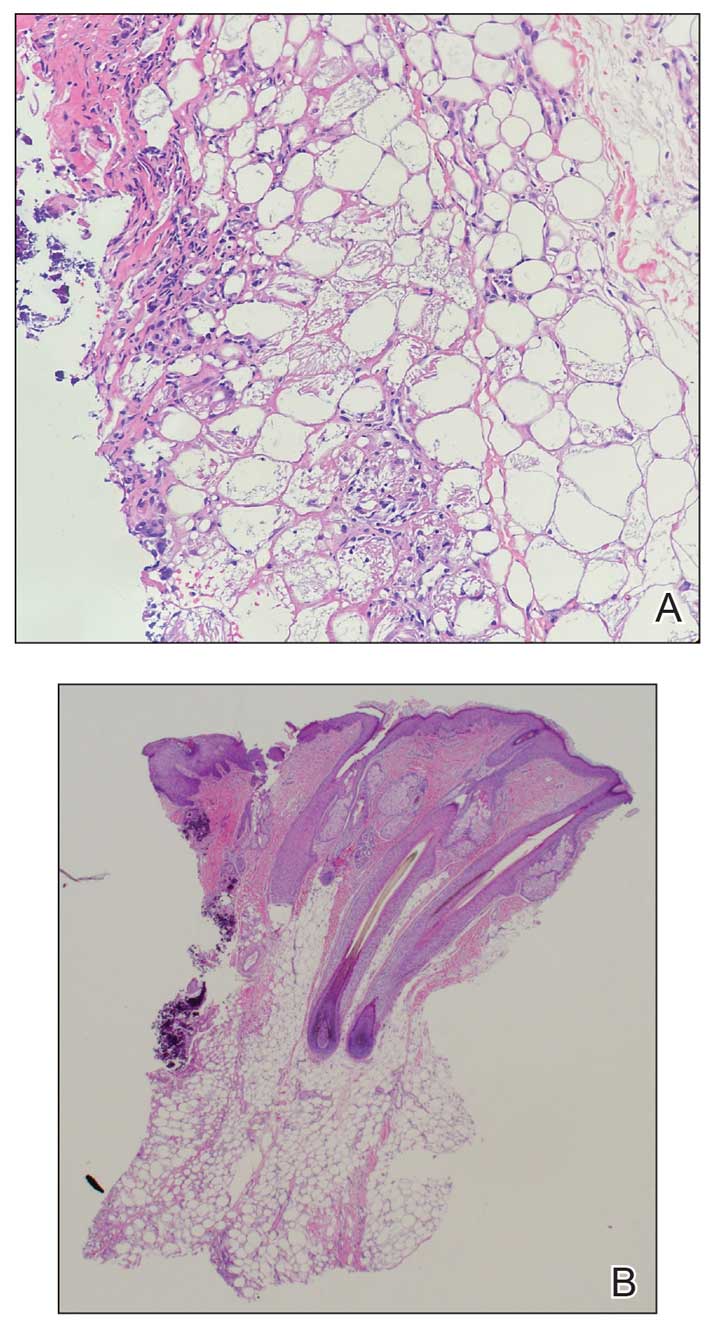
Subcutaneous fat necrosis is a rare, self-limiting panniculitis that typically resolves within several weeks to months without scarring. It manifests as red or violaceous subcutaneous nodules or plaques most commonly on the buttocks, trunk, proximal arms and legs, and cheeks.1 Histopathology reveals lobular panniculitis with dense granulomatous infiltrates of histiocytes, eosinophils, and multinucleated giant cells with needle-shaped crystals. Focal areas of fat necrosis with calcification also can be seen.2
The epidemiology of SCFN is unknown. Most cases occur in healthy full-term to postterm neonates who experience hypoxia, other prenatal stressors, or therapeutic hypothermia for the treatment of hypoxic-ischemic encephalopathy.3 Although the etiology is unclear, certain inciting factors such as local tissue hypoxia, cold exposure, meconium aspiration, maternal diabetes, preeclampsia, and mechanical pressure have been proposed. Our patient underwent hypothermic cooling protocol, and it has been suggested that the increased saturated to unsaturated fat concentration in the skin of newborns increases the melting point, thus predisposing them to fat crystalization.4 Cases of SCFN involving the scalp are rare; therefore, any newborns receiving hypothermic therapy for hypoxic-ischemic encephalopathy should have a thorough skin examination with possible biopsy of lesions that are characteristic of SCFN, such as red or violaceous subcutaneous nodules or plaques, for specific disease identification.
The main complication of SCFN is hypercalcemia, which occurs in approximately 50% of cases. Other serum abnormalities include hyperglycemia, hypertriglyceridemia, and thrombocytopenia, though these findings are not as well associated.4 Patients with associated hypercalcemia may be asymptomatic, as in our patient, but other presentations include irritability, weakness, anorexia, vomiting, renal failure, failure to thrive, and encephalopathy. Nephrocalcinosis is a common complication of severe hypercalcemia; however, there is little evidence of associated major renal dysfunction.5 The exact mechanism of hypercalcemia is poorly understood. A widely accepted theory postulates that a granulomatous inflammatory infiltrate upregulates 1-α-hydroxylase activity, which enzymatically converts 25-hydroxyvitamin D to its active form, 1,25-dihydroxycholecalciferol, which increases bone resorption and calcium absorption through the gastrointestinal tract and renal systems. Treatments for hypercalcemia include hyperhydration, calcium-wasting diuretics, and low calcium intake.6 Furthermore, calcium levels should be obtained at the time of diagnosis and 30, 45, and 60 days after the lesions resolve.4
Subcutaneous fat necrosis needs to be differentiated from the more severe panniculitis, sclerema neonatorum (SN), which typically affects critically ill, preterm, and small-for-gestational-age newborns. It is associated with a high mortality rate and is characterized by skin and subadjacent tissue structures. The process typically begins in the thighs, buttocks, or trunk and spreads diffusely, sparing the fat-free palms, soles, and genitalia.7 Although our patient was born preterm, the physical characteristics of the nodule and the lack of severe illness placed SN lower on our differential. Histopathologic differences between SCFN and SN involve the extent of tissue fibrosis and presence of inflammatory cells. Sclerema neonatorum typically manifests with thickened connective tissue with a sparse inflammatory infiltrate, including lymphocytes, histiocytes, and multinucleated giant cells.7 Conversely, SCFN manifests with fat necrosis with an extensive inflammatory infiltrate. It is important to be able to distinguish between these 2 conditions, as both have vastly different prognoses.
Cold panniculitis, sometimes called “popsicle panniculitis,” is a phenomenon in which cold contact with the skin causes eruption of firm, erythematous, indurated plaques at the site of exposure. This self-limiting condition typically appears hours to days after cold exposure and spontaneously resolves in a few weeks.8 Therapeutic hypothermic protocol treatment involves using cooling devices to lower the body temperature for a short duration. The temperature typically is lowered to approximately 32 °C to 36 °C. These temperatures are not low enough to induce cold panniculitis, which is more commonly seen in facial ice applications when managing supraventricular tachycardia in neonates.
Cephalohematoma is a birthing injury that causes blood accumulation within the subperiosteal space. During parturition, the compressive and sheering forces on the calvarium rupture the vessels passing through the periosteum, causing blood to pool slowly into the subperiostium; thus, a cephalohematoma usually manifests later at 1 to 3 days of life as localized head swelling.9 The bleeding typically does not cross suture lines and is primarily found in the occipital or parietal regions. The incidence has been reported to be 0.4% to 2.5% of all live births.10 Although the location of the nodule in our patient was in the occipital region, imaging and biopsy results did not show hemorrhagic findings consistent with cephalohematoma. Management of cephalohematoma mainly is observational, as the mass slowly regresses and the accumulated blood gradually is reabsorbed.
Fungal scalp infections (tinea capitis) are common in the pediatric population. The peak incidence of this infection has been reported in children aged 3 to 7 years, with Trichophyton tonsurans and Microsporum canis as the usual causative organisms.11 Clinical features of tinea capitis include scaly patches with hair loss, hair loss with black pigmented dots at the follicular openings, diffuse scalp scaling with subtle hair loss, and cervical lymphadenopathy.12 Although less common, tinea capitis can progress to a more severe form known as a kerion, which is characterized by a tender plaque with pustules and crusting. A kerion can result in permanent scarring and alopecia if left untreated.12 In our patient, a nodule with scaling and faint erythema was observed, but no black pigmented dots at the follicular orifices were present. Therefore, a potassium hydroxide wet mount preparation used to diagnose tinea capitis was unnecessary. Systemic oral antifungal therapy such as fluconazole or terbinafine is the standard treatment for tinea capitis.
- Coondoo A, Lahiry R, Choudhury A, et al. Tender skin nodules in a newborn. Indian J Dermatol. 2013;58:328. doi:10.4103/0019-5154.113983
- Mitra S, Dove J, Somisetty SK. Subcutaneous fat necrosis in newbornan unusual case and review of literature. Eur J Pediatr. 2011;170:1107- 1110. doi:10.1007/s00431-011-1405-x
- Velasquez JH, Mendez MD. Newborn subcutaneous fat necrosis. In: StatPearls. StatPearls Publishing; 2022.
- Stefanko NS, Drolet BA. Subcutaneous fat necrosis of the newborn and associated hypercalcemia: a systematic review of the literature. Pediatr Dermatol. 2019;36:24-30. doi:10.1111/pde.13640
- Shumer DE, Thaker V, Taylor GA, et al. Severe hypercalcaemia due to subcutaneous fat necrosis: presentation, management and complications. Arch Dis Child Fetal Neonatal Ed. 2014;99:F419-F421. doi:10.1136/ archdischild-2014-306069
- Farooque A, Moss C, Zehnder D, et al. Expression of 25-hydroxyvitamin D3-1alpha-hydroxylase in subcutaneous fat necrosis. Br J Dermatol. 2009;160:423-425. doi:10.1111/j.1365-2133.2008.08844.x
- Zeb A, Darmstadt GL. Sclerema neonatorum: a review of nomenclature, clinical presentation, histological features, differential diagnoses and management. J Perinatol. 2008;28:453-460. doi:10.1038/jp.2008.33
- Quesada-Cortés A, Campos-Muñoz L, Díaz-Díaz RM, et al. Cold panniculitis. Dermatol Clin. 2008;26:485-489, vii. doi:10.1016 /j.det.2008.05.015
- Raines DA, Krawiec C, Jain S. Cephalohematoma. In: StatPearls. StatPearls Publishing; 2023.
- Chung HY, Chung JY, Lee DG, et al. Surgical treatment of ossified cephalhematoma. J Craniofac Surg. 2004;15:774-779. doi:10.1097/00001665- 200409000-00015
- Leung AKC, Hon KL, Leong KF, et al. Tinea capitis: an updated review. Recent Pat Inflamm Allergy Drug Discov. 2020;14:58-68. doi:10.2174/1872 213x14666200106145624
- Kovitwanichkanont T, Chong A. Superficial fungal infections. Aust J Gen Pract. 2019;48:706-711. doi:10.31128/ajgp-05-19-4930
The Diagnosis: Subcutaneous Fat Necrosis
Histopathology revealed lobular panniculitis with lymphohistiocytic inflammation, lipid crystals, and calcifications in our patient (Figure). Subcutaneous fat necrosis (SCFN) was diagnosed based on these characteristic histopathologic findings. No further treatment was pursued.
Subcutaneous fat necrosis is a rare, self-limiting panniculitis that typically resolves within several weeks to months without scarring. It manifests as red or violaceous subcutaneous nodules or plaques most commonly on the buttocks, trunk, proximal arms and legs, and cheeks.1 Histopathology reveals lobular panniculitis with dense granulomatous infiltrates of histiocytes, eosinophils, and multinucleated giant cells with needle-shaped crystals. Focal areas of fat necrosis with calcification also can be seen.2
The epidemiology of SCFN is unknown. Most cases occur in healthy full-term to postterm neonates who experience hypoxia, other prenatal stressors, or therapeutic hypothermia for the treatment of hypoxic-ischemic encephalopathy.3 Although the etiology is unclear, certain inciting factors such as local tissue hypoxia, cold exposure, meconium aspiration, maternal diabetes, preeclampsia, and mechanical pressure have been proposed. Our patient underwent hypothermic cooling protocol, and it has been suggested that the increased saturated to unsaturated fat concentration in the skin of newborns increases the melting point, thus predisposing them to fat crystalization.4 Cases of SCFN involving the scalp are rare; therefore, any newborns receiving hypothermic therapy for hypoxic-ischemic encephalopathy should have a thorough skin examination with possible biopsy of lesions that are characteristic of SCFN, such as red or violaceous subcutaneous nodules or plaques, for specific disease identification.
The main complication of SCFN is hypercalcemia, which occurs in approximately 50% of cases. Other serum abnormalities include hyperglycemia, hypertriglyceridemia, and thrombocytopenia, though these findings are not as well associated.4 Patients with associated hypercalcemia may be asymptomatic, as in our patient, but other presentations include irritability, weakness, anorexia, vomiting, renal failure, failure to thrive, and encephalopathy. Nephrocalcinosis is a common complication of severe hypercalcemia; however, there is little evidence of associated major renal dysfunction.5 The exact mechanism of hypercalcemia is poorly understood. A widely accepted theory postulates that a granulomatous inflammatory infiltrate upregulates 1-α-hydroxylase activity, which enzymatically converts 25-hydroxyvitamin D to its active form, 1,25-dihydroxycholecalciferol, which increases bone resorption and calcium absorption through the gastrointestinal tract and renal systems. Treatments for hypercalcemia include hyperhydration, calcium-wasting diuretics, and low calcium intake.6 Furthermore, calcium levels should be obtained at the time of diagnosis and 30, 45, and 60 days after the lesions resolve.4
Subcutaneous fat necrosis needs to be differentiated from the more severe panniculitis, sclerema neonatorum (SN), which typically affects critically ill, preterm, and small-for-gestational-age newborns. It is associated with a high mortality rate and is characterized by skin and subadjacent tissue structures. The process typically begins in the thighs, buttocks, or trunk and spreads diffusely, sparing the fat-free palms, soles, and genitalia.7 Although our patient was born preterm, the physical characteristics of the nodule and the lack of severe illness placed SN lower on our differential. Histopathologic differences between SCFN and SN involve the extent of tissue fibrosis and presence of inflammatory cells. Sclerema neonatorum typically manifests with thickened connective tissue with a sparse inflammatory infiltrate, including lymphocytes, histiocytes, and multinucleated giant cells.7 Conversely, SCFN manifests with fat necrosis with an extensive inflammatory infiltrate. It is important to be able to distinguish between these 2 conditions, as both have vastly different prognoses.
Cold panniculitis, sometimes called “popsicle panniculitis,” is a phenomenon in which cold contact with the skin causes eruption of firm, erythematous, indurated plaques at the site of exposure. This self-limiting condition typically appears hours to days after cold exposure and spontaneously resolves in a few weeks.8 Therapeutic hypothermic protocol treatment involves using cooling devices to lower the body temperature for a short duration. The temperature typically is lowered to approximately 32 °C to 36 °C. These temperatures are not low enough to induce cold panniculitis, which is more commonly seen in facial ice applications when managing supraventricular tachycardia in neonates.
Cephalohematoma is a birthing injury that causes blood accumulation within the subperiosteal space. During parturition, the compressive and sheering forces on the calvarium rupture the vessels passing through the periosteum, causing blood to pool slowly into the subperiostium; thus, a cephalohematoma usually manifests later at 1 to 3 days of life as localized head swelling.9 The bleeding typically does not cross suture lines and is primarily found in the occipital or parietal regions. The incidence has been reported to be 0.4% to 2.5% of all live births.10 Although the location of the nodule in our patient was in the occipital region, imaging and biopsy results did not show hemorrhagic findings consistent with cephalohematoma. Management of cephalohematoma mainly is observational, as the mass slowly regresses and the accumulated blood gradually is reabsorbed.
Fungal scalp infections (tinea capitis) are common in the pediatric population. The peak incidence of this infection has been reported in children aged 3 to 7 years, with Trichophyton tonsurans and Microsporum canis as the usual causative organisms.11 Clinical features of tinea capitis include scaly patches with hair loss, hair loss with black pigmented dots at the follicular openings, diffuse scalp scaling with subtle hair loss, and cervical lymphadenopathy.12 Although less common, tinea capitis can progress to a more severe form known as a kerion, which is characterized by a tender plaque with pustules and crusting. A kerion can result in permanent scarring and alopecia if left untreated.12 In our patient, a nodule with scaling and faint erythema was observed, but no black pigmented dots at the follicular orifices were present. Therefore, a potassium hydroxide wet mount preparation used to diagnose tinea capitis was unnecessary. Systemic oral antifungal therapy such as fluconazole or terbinafine is the standard treatment for tinea capitis.
The Diagnosis: Subcutaneous Fat Necrosis
Histopathology revealed lobular panniculitis with lymphohistiocytic inflammation, lipid crystals, and calcifications in our patient (Figure). Subcutaneous fat necrosis (SCFN) was diagnosed based on these characteristic histopathologic findings. No further treatment was pursued.
Subcutaneous fat necrosis is a rare, self-limiting panniculitis that typically resolves within several weeks to months without scarring. It manifests as red or violaceous subcutaneous nodules or plaques most commonly on the buttocks, trunk, proximal arms and legs, and cheeks.1 Histopathology reveals lobular panniculitis with dense granulomatous infiltrates of histiocytes, eosinophils, and multinucleated giant cells with needle-shaped crystals. Focal areas of fat necrosis with calcification also can be seen.2
The epidemiology of SCFN is unknown. Most cases occur in healthy full-term to postterm neonates who experience hypoxia, other prenatal stressors, or therapeutic hypothermia for the treatment of hypoxic-ischemic encephalopathy.3 Although the etiology is unclear, certain inciting factors such as local tissue hypoxia, cold exposure, meconium aspiration, maternal diabetes, preeclampsia, and mechanical pressure have been proposed. Our patient underwent hypothermic cooling protocol, and it has been suggested that the increased saturated to unsaturated fat concentration in the skin of newborns increases the melting point, thus predisposing them to fat crystalization.4 Cases of SCFN involving the scalp are rare; therefore, any newborns receiving hypothermic therapy for hypoxic-ischemic encephalopathy should have a thorough skin examination with possible biopsy of lesions that are characteristic of SCFN, such as red or violaceous subcutaneous nodules or plaques, for specific disease identification.
The main complication of SCFN is hypercalcemia, which occurs in approximately 50% of cases. Other serum abnormalities include hyperglycemia, hypertriglyceridemia, and thrombocytopenia, though these findings are not as well associated.4 Patients with associated hypercalcemia may be asymptomatic, as in our patient, but other presentations include irritability, weakness, anorexia, vomiting, renal failure, failure to thrive, and encephalopathy. Nephrocalcinosis is a common complication of severe hypercalcemia; however, there is little evidence of associated major renal dysfunction.5 The exact mechanism of hypercalcemia is poorly understood. A widely accepted theory postulates that a granulomatous inflammatory infiltrate upregulates 1-α-hydroxylase activity, which enzymatically converts 25-hydroxyvitamin D to its active form, 1,25-dihydroxycholecalciferol, which increases bone resorption and calcium absorption through the gastrointestinal tract and renal systems. Treatments for hypercalcemia include hyperhydration, calcium-wasting diuretics, and low calcium intake.6 Furthermore, calcium levels should be obtained at the time of diagnosis and 30, 45, and 60 days after the lesions resolve.4
Subcutaneous fat necrosis needs to be differentiated from the more severe panniculitis, sclerema neonatorum (SN), which typically affects critically ill, preterm, and small-for-gestational-age newborns. It is associated with a high mortality rate and is characterized by skin and subadjacent tissue structures. The process typically begins in the thighs, buttocks, or trunk and spreads diffusely, sparing the fat-free palms, soles, and genitalia.7 Although our patient was born preterm, the physical characteristics of the nodule and the lack of severe illness placed SN lower on our differential. Histopathologic differences between SCFN and SN involve the extent of tissue fibrosis and presence of inflammatory cells. Sclerema neonatorum typically manifests with thickened connective tissue with a sparse inflammatory infiltrate, including lymphocytes, histiocytes, and multinucleated giant cells.7 Conversely, SCFN manifests with fat necrosis with an extensive inflammatory infiltrate. It is important to be able to distinguish between these 2 conditions, as both have vastly different prognoses.
Cold panniculitis, sometimes called “popsicle panniculitis,” is a phenomenon in which cold contact with the skin causes eruption of firm, erythematous, indurated plaques at the site of exposure. This self-limiting condition typically appears hours to days after cold exposure and spontaneously resolves in a few weeks.8 Therapeutic hypothermic protocol treatment involves using cooling devices to lower the body temperature for a short duration. The temperature typically is lowered to approximately 32 °C to 36 °C. These temperatures are not low enough to induce cold panniculitis, which is more commonly seen in facial ice applications when managing supraventricular tachycardia in neonates.
Cephalohematoma is a birthing injury that causes blood accumulation within the subperiosteal space. During parturition, the compressive and sheering forces on the calvarium rupture the vessels passing through the periosteum, causing blood to pool slowly into the subperiostium; thus, a cephalohematoma usually manifests later at 1 to 3 days of life as localized head swelling.9 The bleeding typically does not cross suture lines and is primarily found in the occipital or parietal regions. The incidence has been reported to be 0.4% to 2.5% of all live births.10 Although the location of the nodule in our patient was in the occipital region, imaging and biopsy results did not show hemorrhagic findings consistent with cephalohematoma. Management of cephalohematoma mainly is observational, as the mass slowly regresses and the accumulated blood gradually is reabsorbed.
Fungal scalp infections (tinea capitis) are common in the pediatric population. The peak incidence of this infection has been reported in children aged 3 to 7 years, with Trichophyton tonsurans and Microsporum canis as the usual causative organisms.11 Clinical features of tinea capitis include scaly patches with hair loss, hair loss with black pigmented dots at the follicular openings, diffuse scalp scaling with subtle hair loss, and cervical lymphadenopathy.12 Although less common, tinea capitis can progress to a more severe form known as a kerion, which is characterized by a tender plaque with pustules and crusting. A kerion can result in permanent scarring and alopecia if left untreated.12 In our patient, a nodule with scaling and faint erythema was observed, but no black pigmented dots at the follicular orifices were present. Therefore, a potassium hydroxide wet mount preparation used to diagnose tinea capitis was unnecessary. Systemic oral antifungal therapy such as fluconazole or terbinafine is the standard treatment for tinea capitis.
- Coondoo A, Lahiry R, Choudhury A, et al. Tender skin nodules in a newborn. Indian J Dermatol. 2013;58:328. doi:10.4103/0019-5154.113983
- Mitra S, Dove J, Somisetty SK. Subcutaneous fat necrosis in newbornan unusual case and review of literature. Eur J Pediatr. 2011;170:1107- 1110. doi:10.1007/s00431-011-1405-x
- Velasquez JH, Mendez MD. Newborn subcutaneous fat necrosis. In: StatPearls. StatPearls Publishing; 2022.
- Stefanko NS, Drolet BA. Subcutaneous fat necrosis of the newborn and associated hypercalcemia: a systematic review of the literature. Pediatr Dermatol. 2019;36:24-30. doi:10.1111/pde.13640
- Shumer DE, Thaker V, Taylor GA, et al. Severe hypercalcaemia due to subcutaneous fat necrosis: presentation, management and complications. Arch Dis Child Fetal Neonatal Ed. 2014;99:F419-F421. doi:10.1136/ archdischild-2014-306069
- Farooque A, Moss C, Zehnder D, et al. Expression of 25-hydroxyvitamin D3-1alpha-hydroxylase in subcutaneous fat necrosis. Br J Dermatol. 2009;160:423-425. doi:10.1111/j.1365-2133.2008.08844.x
- Zeb A, Darmstadt GL. Sclerema neonatorum: a review of nomenclature, clinical presentation, histological features, differential diagnoses and management. J Perinatol. 2008;28:453-460. doi:10.1038/jp.2008.33
- Quesada-Cortés A, Campos-Muñoz L, Díaz-Díaz RM, et al. Cold panniculitis. Dermatol Clin. 2008;26:485-489, vii. doi:10.1016 /j.det.2008.05.015
- Raines DA, Krawiec C, Jain S. Cephalohematoma. In: StatPearls. StatPearls Publishing; 2023.
- Chung HY, Chung JY, Lee DG, et al. Surgical treatment of ossified cephalhematoma. J Craniofac Surg. 2004;15:774-779. doi:10.1097/00001665- 200409000-00015
- Leung AKC, Hon KL, Leong KF, et al. Tinea capitis: an updated review. Recent Pat Inflamm Allergy Drug Discov. 2020;14:58-68. doi:10.2174/1872 213x14666200106145624
- Kovitwanichkanont T, Chong A. Superficial fungal infections. Aust J Gen Pract. 2019;48:706-711. doi:10.31128/ajgp-05-19-4930
- Coondoo A, Lahiry R, Choudhury A, et al. Tender skin nodules in a newborn. Indian J Dermatol. 2013;58:328. doi:10.4103/0019-5154.113983
- Mitra S, Dove J, Somisetty SK. Subcutaneous fat necrosis in newbornan unusual case and review of literature. Eur J Pediatr. 2011;170:1107- 1110. doi:10.1007/s00431-011-1405-x
- Velasquez JH, Mendez MD. Newborn subcutaneous fat necrosis. In: StatPearls. StatPearls Publishing; 2022.
- Stefanko NS, Drolet BA. Subcutaneous fat necrosis of the newborn and associated hypercalcemia: a systematic review of the literature. Pediatr Dermatol. 2019;36:24-30. doi:10.1111/pde.13640
- Shumer DE, Thaker V, Taylor GA, et al. Severe hypercalcaemia due to subcutaneous fat necrosis: presentation, management and complications. Arch Dis Child Fetal Neonatal Ed. 2014;99:F419-F421. doi:10.1136/ archdischild-2014-306069
- Farooque A, Moss C, Zehnder D, et al. Expression of 25-hydroxyvitamin D3-1alpha-hydroxylase in subcutaneous fat necrosis. Br J Dermatol. 2009;160:423-425. doi:10.1111/j.1365-2133.2008.08844.x
- Zeb A, Darmstadt GL. Sclerema neonatorum: a review of nomenclature, clinical presentation, histological features, differential diagnoses and management. J Perinatol. 2008;28:453-460. doi:10.1038/jp.2008.33
- Quesada-Cortés A, Campos-Muñoz L, Díaz-Díaz RM, et al. Cold panniculitis. Dermatol Clin. 2008;26:485-489, vii. doi:10.1016 /j.det.2008.05.015
- Raines DA, Krawiec C, Jain S. Cephalohematoma. In: StatPearls. StatPearls Publishing; 2023.
- Chung HY, Chung JY, Lee DG, et al. Surgical treatment of ossified cephalhematoma. J Craniofac Surg. 2004;15:774-779. doi:10.1097/00001665- 200409000-00015
- Leung AKC, Hon KL, Leong KF, et al. Tinea capitis: an updated review. Recent Pat Inflamm Allergy Drug Discov. 2020;14:58-68. doi:10.2174/1872 213x14666200106145624
- Kovitwanichkanont T, Chong A. Superficial fungal infections. Aust J Gen Pract. 2019;48:706-711. doi:10.31128/ajgp-05-19-4930
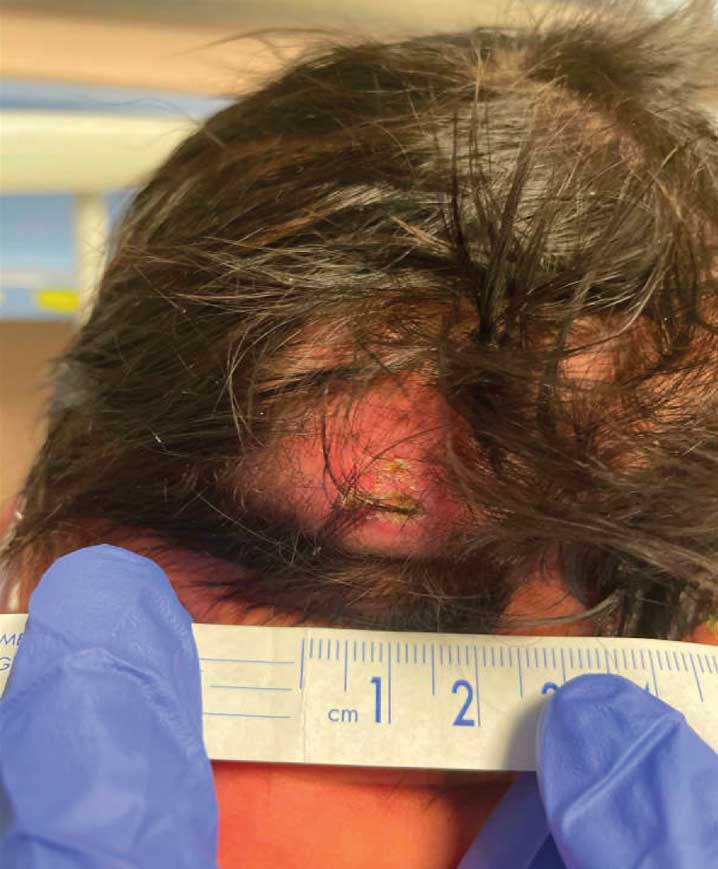
A 4-week-old male infant was referred to dermatology for evaluation of a nodule on the occipital protuberance of 2 weeks’ duration. The patient was born at 36 weeks and 6 days’ gestation via an emergency cesarean delivery due to fetal distress. He later was found to have hypoxic-ischemic encephalopathy, pulmonary hypertension, and hypertrophic cardiomyopathy. He underwent therapeutic hypothermia protocol treatment starting at less than 6 hours after birth. At the current presentation, physical examination showed a 2.5-cm, erythematous, firm, mobile nodule on the occipital scalp with some overlying crusting and minimal surrounding erythema. No other cutaneous features or lesions were present. Initial laboratory findings were remarkable for hypercalcemia at 11 mg/dL (reference range, 8.5-10.5 mg/dL). Magnetic resonance imaging showed a faint abnormality in the subcutaneous tissue in this region without a noted connection to the underlying brain/meningeal matter. A punch biopsy was performed.
FDA OKs Subcutaneous Vedolizumab for Crohn’s Maintenance Therapy
The move follows the FDA’s approval last year of subcutaneous vedolizumab for maintenance treatment of adults with moderately to severely active ulcerative colitis (UC).
The humanized immunoglobulin G1 monoclonal antibody is available as a single-dose prefilled pen (Entyvio Pen).
The FDA first approved the IV formulation of the biologic in 2014 for patients with moderate to severe UC and CD who cannot tolerate other therapies or in whom such therapies have failed.
The approval of subcutaneous vedolizumab for maintenance treatment of CD is based on the phase 3, randomized, double-blind, placebo-controlled VISIBLE 2 trial.
The trial enrolled 409 adult patients with moderately to severely active CD who had clinical response at week 6 following two doses of open-label IV vedolizumab at weeks 0 and 2.
At week 6, they were randomly allocated in a 2:1 ratio to receive vedolizumab 108 mg administered by subcutaneous injection or placebo every 2 weeks. The primary endpoint was clinical remission at week 52, which was defined as a total Crohn’s Disease Activity Index score ≤ 150.
The results showed that significantly more patients receiving subcutaneous vedolizumab than placebo achieved long-term clinical remission (48% vs 34%; P < .01), the company said in a news release.
The safety profile of subcutaneous vedolizumab is generally consistent with the known safety profile of IV vedolizumab, with the addition of injection-site reactions (including injection-site erythema, rash, pruritus, swelling, bruising, hematoma, pain, urticaria, and edema).
“Crohn’s disease is a complex and usually progressive disease for which an appropriate management plan is critical. My primary goal as a clinician is always to get patients to achieve remission,” Timothy Ritter, MD, senior medical director, GI Alliance Research, and assistant professor of medicine, Burnett School of Medicine at TCU, Fort Worth, Texas, said in the news release.

“In VISIBLE 2, about half of patients treated with Entyvio SC achieved long-term clinical remission. The data from VISIBLE 2 reaffirm the well-established efficacy profile of Entyvio, regardless of route of administration,” Dr. Ritter added.
A version of this article appeared on Medscape.com.
The move follows the FDA’s approval last year of subcutaneous vedolizumab for maintenance treatment of adults with moderately to severely active ulcerative colitis (UC).
The humanized immunoglobulin G1 monoclonal antibody is available as a single-dose prefilled pen (Entyvio Pen).
The FDA first approved the IV formulation of the biologic in 2014 for patients with moderate to severe UC and CD who cannot tolerate other therapies or in whom such therapies have failed.
The approval of subcutaneous vedolizumab for maintenance treatment of CD is based on the phase 3, randomized, double-blind, placebo-controlled VISIBLE 2 trial.
The trial enrolled 409 adult patients with moderately to severely active CD who had clinical response at week 6 following two doses of open-label IV vedolizumab at weeks 0 and 2.
At week 6, they were randomly allocated in a 2:1 ratio to receive vedolizumab 108 mg administered by subcutaneous injection or placebo every 2 weeks. The primary endpoint was clinical remission at week 52, which was defined as a total Crohn’s Disease Activity Index score ≤ 150.
The results showed that significantly more patients receiving subcutaneous vedolizumab than placebo achieved long-term clinical remission (48% vs 34%; P < .01), the company said in a news release.
The safety profile of subcutaneous vedolizumab is generally consistent with the known safety profile of IV vedolizumab, with the addition of injection-site reactions (including injection-site erythema, rash, pruritus, swelling, bruising, hematoma, pain, urticaria, and edema).
“Crohn’s disease is a complex and usually progressive disease for which an appropriate management plan is critical. My primary goal as a clinician is always to get patients to achieve remission,” Timothy Ritter, MD, senior medical director, GI Alliance Research, and assistant professor of medicine, Burnett School of Medicine at TCU, Fort Worth, Texas, said in the news release.
“In VISIBLE 2, about half of patients treated with Entyvio SC achieved long-term clinical remission. The data from VISIBLE 2 reaffirm the well-established efficacy profile of Entyvio, regardless of route of administration,” Dr. Ritter added.
A version of this article appeared on Medscape.com.
The move follows the FDA’s approval last year of subcutaneous vedolizumab for maintenance treatment of adults with moderately to severely active ulcerative colitis (UC).
The humanized immunoglobulin G1 monoclonal antibody is available as a single-dose prefilled pen (Entyvio Pen).
The FDA first approved the IV formulation of the biologic in 2014 for patients with moderate to severe UC and CD who cannot tolerate other therapies or in whom such therapies have failed.
The approval of subcutaneous vedolizumab for maintenance treatment of CD is based on the phase 3, randomized, double-blind, placebo-controlled VISIBLE 2 trial.
The trial enrolled 409 adult patients with moderately to severely active CD who had clinical response at week 6 following two doses of open-label IV vedolizumab at weeks 0 and 2.
At week 6, they were randomly allocated in a 2:1 ratio to receive vedolizumab 108 mg administered by subcutaneous injection or placebo every 2 weeks. The primary endpoint was clinical remission at week 52, which was defined as a total Crohn’s Disease Activity Index score ≤ 150.
The results showed that significantly more patients receiving subcutaneous vedolizumab than placebo achieved long-term clinical remission (48% vs 34%; P < .01), the company said in a news release.
The safety profile of subcutaneous vedolizumab is generally consistent with the known safety profile of IV vedolizumab, with the addition of injection-site reactions (including injection-site erythema, rash, pruritus, swelling, bruising, hematoma, pain, urticaria, and edema).
“Crohn’s disease is a complex and usually progressive disease for which an appropriate management plan is critical. My primary goal as a clinician is always to get patients to achieve remission,” Timothy Ritter, MD, senior medical director, GI Alliance Research, and assistant professor of medicine, Burnett School of Medicine at TCU, Fort Worth, Texas, said in the news release.
“In VISIBLE 2, about half of patients treated with Entyvio SC achieved long-term clinical remission. The data from VISIBLE 2 reaffirm the well-established efficacy profile of Entyvio, regardless of route of administration,” Dr. Ritter added.
A version of this article appeared on Medscape.com.

Approved Therapy for ALS Is Withdrawn When New Study Shows No Benefit
DENVER —
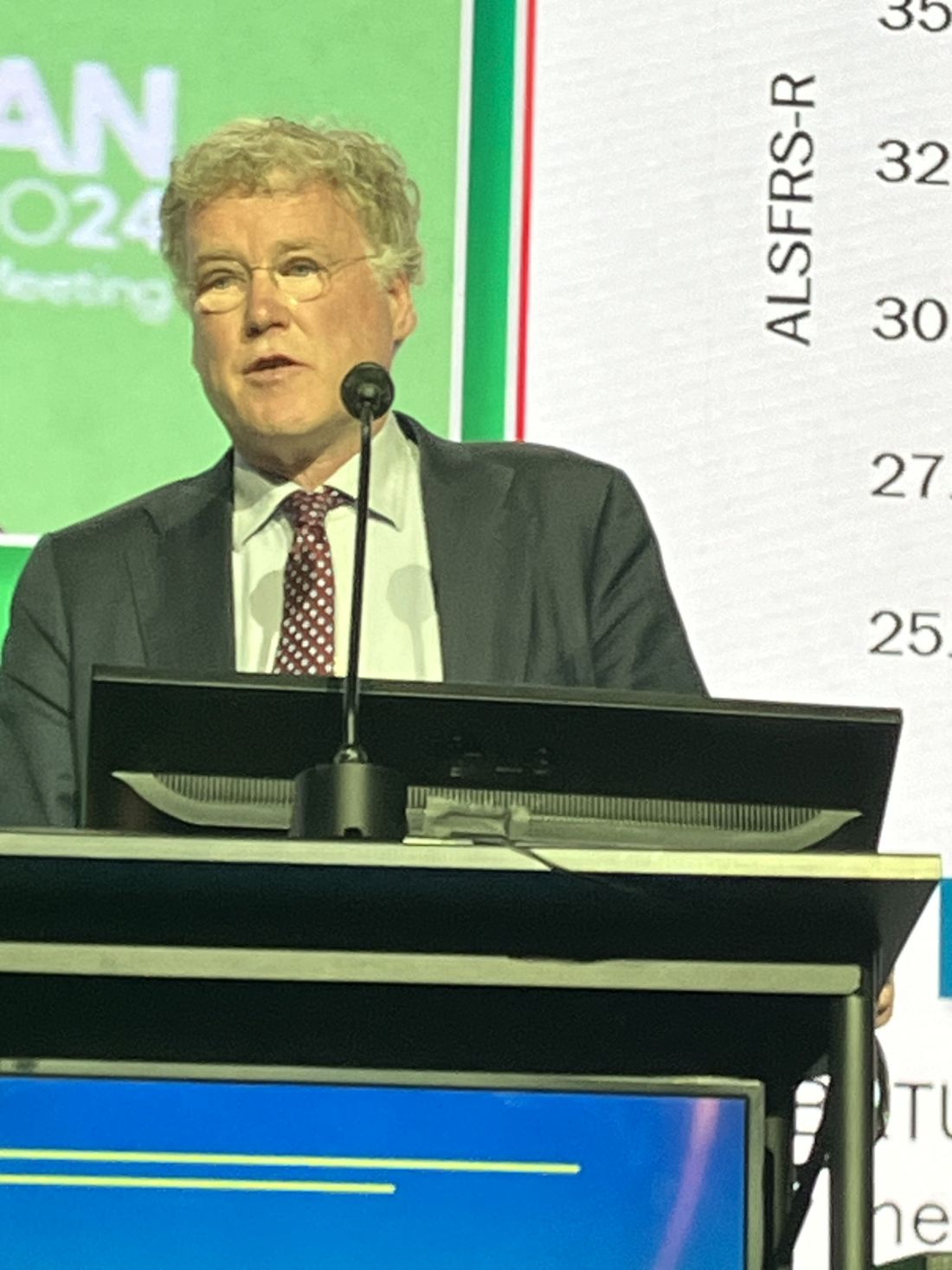
As a result, “PB&TURSO is no longer available for new patients in the United States of Canada,” reported Leonard H. van den Berg, MD, PhD, Direction of the Netherlands ALS Center, UMC Utrecht Brain Center, Utrecht, the Netherlands.
Although the drug is now being withdrawn, patients on therapy as of April 4 who wish to stay on treatment “can be transitioned to a free drug program,” added Dr. van den Berg, who presented the results of this new trial, called PHOENIX, at the 2024 annual meeting of the American Academy of Neurology.
PB&TURSO, marketed as Relyvrio (Amylyx), is a combination of sodium phenylbutyrate (PB) and taurursodiol (TAURO). Having shown promise for preventing neuronal death in experimental and early human studies, it was approved on the basis of the of the double-blind multicenter CENTAUR trial published in The New England Journal of Medicine in 2022.
ALSFRS-R Served as Primary Endpoint in Both Trials
In CENTAUR, like the newly completed PHOENIX, the primary outcome was rate of decline in the Amyotrophic Lateral Sclerosis Functional Rating Scale–Revised (ALSFRS-R) over 24 weeks. On this endpoint, the rate of change for those randomized to PB&TAURO was –1.24 points per month versus –1.66 points per month on placebo, a difference of 0.42 points that met statistical significance (P = .02).
The CENTAUR trial, which enrolled 177 patients, also showed no differences between those in the experimental and placebo arms for any of the secondary endpoints, including time to tracheostomy, permanent ventilation, or death.
In the much larger and longer PHOENIX trial, 664 ALS patients were randomized in a 3:2 ratio to PB&TURSO or placebo. Fifty-seven percent in each group completed 48 weeks of follow-up. The proportions of patients who withdrew from the study were similar across the reasons, such as adverse events and disease progression.
For the ALSFRS-R primary endpoint at 48 weeks, the decline in both groups was essentially linear and almost completely overlapped with a final change from baseline of –14.98 points in the PB&TURSO group that was statistically indistinguishable from the –15.32 point-change (P = .667) in the placebo group, Dr. van den Berg reported.
Similarly, there were no clinically meaningful or statistically significant differences in the secondary endpoints of mean change in Amyotrophic Lateral Sclerosis Assessment Questionnaire (ALSAQ-40) scores or mean change in slow vital capacity (SVC) when compared to baseline or between arms.
As in CENTAUR, the most common side effects associated with PB&TURSO were gastrointestinal, particularly diarrhea (31% vs 10%), but serious adverse events were slightly less common on PT&TURSO (26% vs 28%), and Dr. van der Berg characterized the drug as “generally well tolerated.”
Differences Between Two Trials Were Evaluated
The entry criteria for PHOENIX trial differed modestly from those of the CENTAUR trial. Clinically definite or probable ALS was required in only two or more body regions versus three or more in the earlier trial. Patients were also allowed entry with SVC greater than 60% versus greater than 55% for CENTAUR and have had a longer period since symptom onset (< 24 vs < 18 months). Both studies permitted use of edaravone.
When stratified, patients who entered PHOENIX with CENTAUR-like entry criteria had a similar response to PB&TURSO relative to those who did not. Similarly, there were no meaningful differences between those enrolled in European study sites versus elsewhere. Background edaravone versus no edaravone also had no apparent effect on outcomes.
An ongoing open-label extension of the PHOENIX trial is still collecting data on survival, which was a prespecified endpoint. This endpoint, which requires 70% or more of patients to have died or have been followed for 3 or more years since the last patient was randomized, is not expected until February 2026.
Although “there are further biomarker and subgroup analyses planned,” Dr. van den Berg said that the neutral results of the PHOENIX trial, which he characterized as the largest controlled trial in ALS ever conducted, do not encourage further studies with this agent.
‘Unfortunate’ Results
Robert Bowser, PhD, chief scientific officer and chair of the department of translational neuroscience, Barrow Neurological Institute, Phoenix, called the results “unfortunate.” Just last year, Dr. Bowser published a study showing a reduction in the concentration of biomarkers associated with ALS among patients in the CENTAUR study who were treated with PB&TURSO.
Moreover, the reduction in the serum concentrations of the biomarkers he studied, which included C-reactive protein and YKL-40, correlated with ALSFRS-R total score.
In that paper, he speculated that CRP and YKL-40 might emerge as treatment-sensitive biomarkers in ALS “pending further confirmatory studies, but Dr. Bowser indicated that the PHOENIX study has prompted the correct response from the manufacturers.
“Credit should be given to the leaders at Amylyx for following through with their promise to remove the drug from the market if the PHOENIX study did not confirm the results from the CENTAUR study,” he said.
However, he believes that the study will still have value for better understanding ALS.
“As we move forward, it will be interesting to see biomarker data generated from the biosamples collected during the PHOENIX trial to learn more about treatment impact on biomarkers within those that received the drug,” he said. “I am sure we will continue to learn more from the PHOENIX trial.”
Dr. van den Berg has financial relationships with approximately 10 pharmaceutical companies, including Amylyx, which provided funding for the PHOENIX trial. Dr. Bowser reported no potential conflicts of interest.
DENVER —
As a result, “PB&TURSO is no longer available for new patients in the United States of Canada,” reported Leonard H. van den Berg, MD, PhD, Direction of the Netherlands ALS Center, UMC Utrecht Brain Center, Utrecht, the Netherlands.
Although the drug is now being withdrawn, patients on therapy as of April 4 who wish to stay on treatment “can be transitioned to a free drug program,” added Dr. van den Berg, who presented the results of this new trial, called PHOENIX, at the 2024 annual meeting of the American Academy of Neurology.
PB&TURSO, marketed as Relyvrio (Amylyx), is a combination of sodium phenylbutyrate (PB) and taurursodiol (TAURO). Having shown promise for preventing neuronal death in experimental and early human studies, it was approved on the basis of the of the double-blind multicenter CENTAUR trial published in The New England Journal of Medicine in 2022.
ALSFRS-R Served as Primary Endpoint in Both Trials
In CENTAUR, like the newly completed PHOENIX, the primary outcome was rate of decline in the Amyotrophic Lateral Sclerosis Functional Rating Scale–Revised (ALSFRS-R) over 24 weeks. On this endpoint, the rate of change for those randomized to PB&TAURO was –1.24 points per month versus –1.66 points per month on placebo, a difference of 0.42 points that met statistical significance (P = .02).
The CENTAUR trial, which enrolled 177 patients, also showed no differences between those in the experimental and placebo arms for any of the secondary endpoints, including time to tracheostomy, permanent ventilation, or death.
In the much larger and longer PHOENIX trial, 664 ALS patients were randomized in a 3:2 ratio to PB&TURSO or placebo. Fifty-seven percent in each group completed 48 weeks of follow-up. The proportions of patients who withdrew from the study were similar across the reasons, such as adverse events and disease progression.
For the ALSFRS-R primary endpoint at 48 weeks, the decline in both groups was essentially linear and almost completely overlapped with a final change from baseline of –14.98 points in the PB&TURSO group that was statistically indistinguishable from the –15.32 point-change (P = .667) in the placebo group, Dr. van den Berg reported.
Similarly, there were no clinically meaningful or statistically significant differences in the secondary endpoints of mean change in Amyotrophic Lateral Sclerosis Assessment Questionnaire (ALSAQ-40) scores or mean change in slow vital capacity (SVC) when compared to baseline or between arms.
As in CENTAUR, the most common side effects associated with PB&TURSO were gastrointestinal, particularly diarrhea (31% vs 10%), but serious adverse events were slightly less common on PT&TURSO (26% vs 28%), and Dr. van der Berg characterized the drug as “generally well tolerated.”
Differences Between Two Trials Were Evaluated
The entry criteria for PHOENIX trial differed modestly from those of the CENTAUR trial. Clinically definite or probable ALS was required in only two or more body regions versus three or more in the earlier trial. Patients were also allowed entry with SVC greater than 60% versus greater than 55% for CENTAUR and have had a longer period since symptom onset (< 24 vs < 18 months). Both studies permitted use of edaravone.
When stratified, patients who entered PHOENIX with CENTAUR-like entry criteria had a similar response to PB&TURSO relative to those who did not. Similarly, there were no meaningful differences between those enrolled in European study sites versus elsewhere. Background edaravone versus no edaravone also had no apparent effect on outcomes.
An ongoing open-label extension of the PHOENIX trial is still collecting data on survival, which was a prespecified endpoint. This endpoint, which requires 70% or more of patients to have died or have been followed for 3 or more years since the last patient was randomized, is not expected until February 2026.
Although “there are further biomarker and subgroup analyses planned,” Dr. van den Berg said that the neutral results of the PHOENIX trial, which he characterized as the largest controlled trial in ALS ever conducted, do not encourage further studies with this agent.
‘Unfortunate’ Results
Robert Bowser, PhD, chief scientific officer and chair of the department of translational neuroscience, Barrow Neurological Institute, Phoenix, called the results “unfortunate.” Just last year, Dr. Bowser published a study showing a reduction in the concentration of biomarkers associated with ALS among patients in the CENTAUR study who were treated with PB&TURSO.
Moreover, the reduction in the serum concentrations of the biomarkers he studied, which included C-reactive protein and YKL-40, correlated with ALSFRS-R total score.
In that paper, he speculated that CRP and YKL-40 might emerge as treatment-sensitive biomarkers in ALS “pending further confirmatory studies, but Dr. Bowser indicated that the PHOENIX study has prompted the correct response from the manufacturers.
“Credit should be given to the leaders at Amylyx for following through with their promise to remove the drug from the market if the PHOENIX study did not confirm the results from the CENTAUR study,” he said.
However, he believes that the study will still have value for better understanding ALS.
“As we move forward, it will be interesting to see biomarker data generated from the biosamples collected during the PHOENIX trial to learn more about treatment impact on biomarkers within those that received the drug,” he said. “I am sure we will continue to learn more from the PHOENIX trial.”
Dr. van den Berg has financial relationships with approximately 10 pharmaceutical companies, including Amylyx, which provided funding for the PHOENIX trial. Dr. Bowser reported no potential conflicts of interest.
DENVER —
As a result, “PB&TURSO is no longer available for new patients in the United States of Canada,” reported Leonard H. van den Berg, MD, PhD, Direction of the Netherlands ALS Center, UMC Utrecht Brain Center, Utrecht, the Netherlands.
Although the drug is now being withdrawn, patients on therapy as of April 4 who wish to stay on treatment “can be transitioned to a free drug program,” added Dr. van den Berg, who presented the results of this new trial, called PHOENIX, at the 2024 annual meeting of the American Academy of Neurology.
PB&TURSO, marketed as Relyvrio (Amylyx), is a combination of sodium phenylbutyrate (PB) and taurursodiol (TAURO). Having shown promise for preventing neuronal death in experimental and early human studies, it was approved on the basis of the of the double-blind multicenter CENTAUR trial published in The New England Journal of Medicine in 2022.
ALSFRS-R Served as Primary Endpoint in Both Trials
In CENTAUR, like the newly completed PHOENIX, the primary outcome was rate of decline in the Amyotrophic Lateral Sclerosis Functional Rating Scale–Revised (ALSFRS-R) over 24 weeks. On this endpoint, the rate of change for those randomized to PB&TAURO was –1.24 points per month versus –1.66 points per month on placebo, a difference of 0.42 points that met statistical significance (P = .02).
The CENTAUR trial, which enrolled 177 patients, also showed no differences between those in the experimental and placebo arms for any of the secondary endpoints, including time to tracheostomy, permanent ventilation, or death.
In the much larger and longer PHOENIX trial, 664 ALS patients were randomized in a 3:2 ratio to PB&TURSO or placebo. Fifty-seven percent in each group completed 48 weeks of follow-up. The proportions of patients who withdrew from the study were similar across the reasons, such as adverse events and disease progression.
For the ALSFRS-R primary endpoint at 48 weeks, the decline in both groups was essentially linear and almost completely overlapped with a final change from baseline of –14.98 points in the PB&TURSO group that was statistically indistinguishable from the –15.32 point-change (P = .667) in the placebo group, Dr. van den Berg reported.
Similarly, there were no clinically meaningful or statistically significant differences in the secondary endpoints of mean change in Amyotrophic Lateral Sclerosis Assessment Questionnaire (ALSAQ-40) scores or mean change in slow vital capacity (SVC) when compared to baseline or between arms.
As in CENTAUR, the most common side effects associated with PB&TURSO were gastrointestinal, particularly diarrhea (31% vs 10%), but serious adverse events were slightly less common on PT&TURSO (26% vs 28%), and Dr. van der Berg characterized the drug as “generally well tolerated.”
Differences Between Two Trials Were Evaluated
The entry criteria for PHOENIX trial differed modestly from those of the CENTAUR trial. Clinically definite or probable ALS was required in only two or more body regions versus three or more in the earlier trial. Patients were also allowed entry with SVC greater than 60% versus greater than 55% for CENTAUR and have had a longer period since symptom onset (< 24 vs < 18 months). Both studies permitted use of edaravone.
When stratified, patients who entered PHOENIX with CENTAUR-like entry criteria had a similar response to PB&TURSO relative to those who did not. Similarly, there were no meaningful differences between those enrolled in European study sites versus elsewhere. Background edaravone versus no edaravone also had no apparent effect on outcomes.
An ongoing open-label extension of the PHOENIX trial is still collecting data on survival, which was a prespecified endpoint. This endpoint, which requires 70% or more of patients to have died or have been followed for 3 or more years since the last patient was randomized, is not expected until February 2026.
Although “there are further biomarker and subgroup analyses planned,” Dr. van den Berg said that the neutral results of the PHOENIX trial, which he characterized as the largest controlled trial in ALS ever conducted, do not encourage further studies with this agent.
‘Unfortunate’ Results
Robert Bowser, PhD, chief scientific officer and chair of the department of translational neuroscience, Barrow Neurological Institute, Phoenix, called the results “unfortunate.” Just last year, Dr. Bowser published a study showing a reduction in the concentration of biomarkers associated with ALS among patients in the CENTAUR study who were treated with PB&TURSO.
Moreover, the reduction in the serum concentrations of the biomarkers he studied, which included C-reactive protein and YKL-40, correlated with ALSFRS-R total score.
In that paper, he speculated that CRP and YKL-40 might emerge as treatment-sensitive biomarkers in ALS “pending further confirmatory studies, but Dr. Bowser indicated that the PHOENIX study has prompted the correct response from the manufacturers.
“Credit should be given to the leaders at Amylyx for following through with their promise to remove the drug from the market if the PHOENIX study did not confirm the results from the CENTAUR study,” he said.
However, he believes that the study will still have value for better understanding ALS.
“As we move forward, it will be interesting to see biomarker data generated from the biosamples collected during the PHOENIX trial to learn more about treatment impact on biomarkers within those that received the drug,” he said. “I am sure we will continue to learn more from the PHOENIX trial.”
Dr. van den Berg has financial relationships with approximately 10 pharmaceutical companies, including Amylyx, which provided funding for the PHOENIX trial. Dr. Bowser reported no potential conflicts of interest.
FROM AAN 2024

Positive Results From Phase 2 Trial Support Potential New Option for Control of CIDP
DENVER — , according to the results of a phase 2 multinational trial, which were reported at the 2024 annual meeting of the American Academy of Neurology.
“Regardless of prior therapy for CIDP, efgartigimod PH20 was associated with a rapid clinical improvement, and clinical responses have been maintained out to 48 weeks,” said Jeffrey A. Allen, MD, an associate professor of neurology, University of Minnesota, Minneapolis.
Efgartigimod, which reduces circulating IgG immunoglobulin, has been available for the treatment of myasthenia gravis since 2021. In a new trial, called ADHERE, the combination of efgartigimod and rHuPH20 (E-PH20) was tested for CIDP, the most common of the chronic immune-mediated inflammatory polyneuropathies.
ADHERE Called Largest CIDP Trial to Date
In this study, which Dr. Allen called the largest randomized controlled trial ever performed with a CIDP treatment, a run-in stage was required for those candidates who were already on treatment. When these patients went off treatment during this 12-week run-in, clinical deterioration was required to advance to the first of two stages of the trial. Patients with symptomatic CIDP but off treatment at the time of enrollment did not participate in the run-in.
After the run-in, patients who advanced to stage A received 1000 mg of E-PH20 open label for 12 weeks. Of those on treatment prior to the run-in, about half were receiving intravenous immunoglobulins (IVIg). Almost all the remainder had been receiving corticosteroids. About 30% had been off treatment and entered stage A without participating in the run in.
The primary endpoint of stage A was the percentage of patients with evidence of clinical improvement (ECI). Patients who participated in the run-in were allowed to resume their prior treatment for stage A and the subsequent blinded stage B. Stage A was event driven so that it was closed once 88 events were reached,
The ECI endpoint was met by 66.5% of the patients, who thereby met eligibility for the randomized stage B. As the study design excluded those who achieved clinical improvement after the 88-event limit was reached, they were not included among responders. Had they been included, Dr. Allen said that the primary endpoint of stage A would have been reached by 70.4%.
The patterns of improvement in stage A were similar across type of prior CIDP treatment, including no treatment, according to Dr. Allen, who noted that 39.8% of those enrolled in stage A met the primary endpoint within 4 weeks.
There were 322 patients in stage A. Of these, 211 enrolled in stage B. They were randomized in a 1:1 ratio to 1000 mg of E-PH20 or placebo administered weekly by subcutaneous injection. Of those eligible for stage B, 40% had not participated in the run-in.
aINCAT Provided Primary Endpoint for CIDP Trial
For stage B, the primary endpoint was time from baseline to a clinically meaningful limitation of activity. This was evaluated with the adjusted inflammatory neuropathy cause and treatment (aINCAT) disability score.
By the end of 48 weeks of treatment, 27.9% had relapsed on E-PH20 according to the aiNCAT disability score versus 53.6% on those on placebo. By hazard ratio (HR 0.39), the active treatment arm was associated with a highly significant 61% (P = .000039) greater likelihood of avoiding relapse.
When stratified by a background of no therapy, IVIg, subcutaneous immunoglobulins (SCIg), or corticosteroids, all groups in the active treatment arm did better in stage B than any group in the placebo arm, according to Dr. Allen.
In the 48-week deterioration curves, sustained control was observed among responders out to the end of controlled study. Although there appeared to be numerical advantage for those on both E-PH20 and corticosteroids, E-PH20 arms with concomitant IVIg, SCIg, or no treatment also showed sustained control without significant differences between them.
On functional aINCAT scores, 80.9% achieved at least a 1-point improvement. The improvement was at least 2 points in 42.7%, at least 3 points in 28.2%, and at least 4 points in 11.8%.
E-PH20 Is Characterized as Well Tolerated
Injection site erythema (5.4% vs 0%) and injection site bruising (5.4% vs 0.9%) were more common on E-PH20 than placebo, but there was no difference in serious adverse events, and events possibly related to active treatment, such as headache (3.6% vs. 1.8%) were considered to be of mild to moderate severity.
“The safety profile of efgartigimod plus PH20 was consistent with the safety profile of efgartigimod in other autoimmune diseases,” Dr. Allen said.
The weekly subcutaneous injection can be administered within 90 seconds or less, Dr. Allen said. He called this drug a potential “new therapeutic option to reduce treatment burden in patients with CIDP” if it is approved.
There is a need for new options, according to Brett M. Morrison, MD, PhD, associate professor of neurology at the Johns Hopkins School of Medicine, Baltimore, and an expert in neuromuscular disorders. Dr. Morrison was not involved in the study.
“Although there are three currently approved treatments — steroids, IVIg, and plasmapheresis, at least 20% of CIDP patients have minimal or no response” to any of these, Dr. Morrison said. He added that many of those who do respond to standard therapies have a substantial side effect burden that has created a need for alternatives.
Based on the data presented so far, which suggest substantial efficacy and a favorable safety profile, efgartigimod, if and when it becomes available, “would be an important new treatment for CIDP,” according to Dr. Morrison.
Dr. Allen has financial relationships with more than 10 pharmaceutical companies, including Argenx, which provided funding for the ACHIEVE trial. Dr. Morrison reported no potential conflicts of interest.
DENVER — , according to the results of a phase 2 multinational trial, which were reported at the 2024 annual meeting of the American Academy of Neurology.
“Regardless of prior therapy for CIDP, efgartigimod PH20 was associated with a rapid clinical improvement, and clinical responses have been maintained out to 48 weeks,” said Jeffrey A. Allen, MD, an associate professor of neurology, University of Minnesota, Minneapolis.
Efgartigimod, which reduces circulating IgG immunoglobulin, has been available for the treatment of myasthenia gravis since 2021. In a new trial, called ADHERE, the combination of efgartigimod and rHuPH20 (E-PH20) was tested for CIDP, the most common of the chronic immune-mediated inflammatory polyneuropathies.
ADHERE Called Largest CIDP Trial to Date
In this study, which Dr. Allen called the largest randomized controlled trial ever performed with a CIDP treatment, a run-in stage was required for those candidates who were already on treatment. When these patients went off treatment during this 12-week run-in, clinical deterioration was required to advance to the first of two stages of the trial. Patients with symptomatic CIDP but off treatment at the time of enrollment did not participate in the run-in.
After the run-in, patients who advanced to stage A received 1000 mg of E-PH20 open label for 12 weeks. Of those on treatment prior to the run-in, about half were receiving intravenous immunoglobulins (IVIg). Almost all the remainder had been receiving corticosteroids. About 30% had been off treatment and entered stage A without participating in the run in.
The primary endpoint of stage A was the percentage of patients with evidence of clinical improvement (ECI). Patients who participated in the run-in were allowed to resume their prior treatment for stage A and the subsequent blinded stage B. Stage A was event driven so that it was closed once 88 events were reached,
The ECI endpoint was met by 66.5% of the patients, who thereby met eligibility for the randomized stage B. As the study design excluded those who achieved clinical improvement after the 88-event limit was reached, they were not included among responders. Had they been included, Dr. Allen said that the primary endpoint of stage A would have been reached by 70.4%.
The patterns of improvement in stage A were similar across type of prior CIDP treatment, including no treatment, according to Dr. Allen, who noted that 39.8% of those enrolled in stage A met the primary endpoint within 4 weeks.
There were 322 patients in stage A. Of these, 211 enrolled in stage B. They were randomized in a 1:1 ratio to 1000 mg of E-PH20 or placebo administered weekly by subcutaneous injection. Of those eligible for stage B, 40% had not participated in the run-in.
aINCAT Provided Primary Endpoint for CIDP Trial
For stage B, the primary endpoint was time from baseline to a clinically meaningful limitation of activity. This was evaluated with the adjusted inflammatory neuropathy cause and treatment (aINCAT) disability score.
By the end of 48 weeks of treatment, 27.9% had relapsed on E-PH20 according to the aiNCAT disability score versus 53.6% on those on placebo. By hazard ratio (HR 0.39), the active treatment arm was associated with a highly significant 61% (P = .000039) greater likelihood of avoiding relapse.
When stratified by a background of no therapy, IVIg, subcutaneous immunoglobulins (SCIg), or corticosteroids, all groups in the active treatment arm did better in stage B than any group in the placebo arm, according to Dr. Allen.
In the 48-week deterioration curves, sustained control was observed among responders out to the end of controlled study. Although there appeared to be numerical advantage for those on both E-PH20 and corticosteroids, E-PH20 arms with concomitant IVIg, SCIg, or no treatment also showed sustained control without significant differences between them.
On functional aINCAT scores, 80.9% achieved at least a 1-point improvement. The improvement was at least 2 points in 42.7%, at least 3 points in 28.2%, and at least 4 points in 11.8%.
E-PH20 Is Characterized as Well Tolerated
Injection site erythema (5.4% vs 0%) and injection site bruising (5.4% vs 0.9%) were more common on E-PH20 than placebo, but there was no difference in serious adverse events, and events possibly related to active treatment, such as headache (3.6% vs. 1.8%) were considered to be of mild to moderate severity.
“The safety profile of efgartigimod plus PH20 was consistent with the safety profile of efgartigimod in other autoimmune diseases,” Dr. Allen said.
The weekly subcutaneous injection can be administered within 90 seconds or less, Dr. Allen said. He called this drug a potential “new therapeutic option to reduce treatment burden in patients with CIDP” if it is approved.
There is a need for new options, according to Brett M. Morrison, MD, PhD, associate professor of neurology at the Johns Hopkins School of Medicine, Baltimore, and an expert in neuromuscular disorders. Dr. Morrison was not involved in the study.
“Although there are three currently approved treatments — steroids, IVIg, and plasmapheresis, at least 20% of CIDP patients have minimal or no response” to any of these, Dr. Morrison said. He added that many of those who do respond to standard therapies have a substantial side effect burden that has created a need for alternatives.
Based on the data presented so far, which suggest substantial efficacy and a favorable safety profile, efgartigimod, if and when it becomes available, “would be an important new treatment for CIDP,” according to Dr. Morrison.
Dr. Allen has financial relationships with more than 10 pharmaceutical companies, including Argenx, which provided funding for the ACHIEVE trial. Dr. Morrison reported no potential conflicts of interest.
DENVER — , according to the results of a phase 2 multinational trial, which were reported at the 2024 annual meeting of the American Academy of Neurology.
“Regardless of prior therapy for CIDP, efgartigimod PH20 was associated with a rapid clinical improvement, and clinical responses have been maintained out to 48 weeks,” said Jeffrey A. Allen, MD, an associate professor of neurology, University of Minnesota, Minneapolis.
Efgartigimod, which reduces circulating IgG immunoglobulin, has been available for the treatment of myasthenia gravis since 2021. In a new trial, called ADHERE, the combination of efgartigimod and rHuPH20 (E-PH20) was tested for CIDP, the most common of the chronic immune-mediated inflammatory polyneuropathies.
ADHERE Called Largest CIDP Trial to Date
In this study, which Dr. Allen called the largest randomized controlled trial ever performed with a CIDP treatment, a run-in stage was required for those candidates who were already on treatment. When these patients went off treatment during this 12-week run-in, clinical deterioration was required to advance to the first of two stages of the trial. Patients with symptomatic CIDP but off treatment at the time of enrollment did not participate in the run-in.
After the run-in, patients who advanced to stage A received 1000 mg of E-PH20 open label for 12 weeks. Of those on treatment prior to the run-in, about half were receiving intravenous immunoglobulins (IVIg). Almost all the remainder had been receiving corticosteroids. About 30% had been off treatment and entered stage A without participating in the run in.
The primary endpoint of stage A was the percentage of patients with evidence of clinical improvement (ECI). Patients who participated in the run-in were allowed to resume their prior treatment for stage A and the subsequent blinded stage B. Stage A was event driven so that it was closed once 88 events were reached,
The ECI endpoint was met by 66.5% of the patients, who thereby met eligibility for the randomized stage B. As the study design excluded those who achieved clinical improvement after the 88-event limit was reached, they were not included among responders. Had they been included, Dr. Allen said that the primary endpoint of stage A would have been reached by 70.4%.
The patterns of improvement in stage A were similar across type of prior CIDP treatment, including no treatment, according to Dr. Allen, who noted that 39.8% of those enrolled in stage A met the primary endpoint within 4 weeks.
There were 322 patients in stage A. Of these, 211 enrolled in stage B. They were randomized in a 1:1 ratio to 1000 mg of E-PH20 or placebo administered weekly by subcutaneous injection. Of those eligible for stage B, 40% had not participated in the run-in.
aINCAT Provided Primary Endpoint for CIDP Trial
For stage B, the primary endpoint was time from baseline to a clinically meaningful limitation of activity. This was evaluated with the adjusted inflammatory neuropathy cause and treatment (aINCAT) disability score.
By the end of 48 weeks of treatment, 27.9% had relapsed on E-PH20 according to the aiNCAT disability score versus 53.6% on those on placebo. By hazard ratio (HR 0.39), the active treatment arm was associated with a highly significant 61% (P = .000039) greater likelihood of avoiding relapse.
When stratified by a background of no therapy, IVIg, subcutaneous immunoglobulins (SCIg), or corticosteroids, all groups in the active treatment arm did better in stage B than any group in the placebo arm, according to Dr. Allen.
In the 48-week deterioration curves, sustained control was observed among responders out to the end of controlled study. Although there appeared to be numerical advantage for those on both E-PH20 and corticosteroids, E-PH20 arms with concomitant IVIg, SCIg, or no treatment also showed sustained control without significant differences between them.
On functional aINCAT scores, 80.9% achieved at least a 1-point improvement. The improvement was at least 2 points in 42.7%, at least 3 points in 28.2%, and at least 4 points in 11.8%.
E-PH20 Is Characterized as Well Tolerated
Injection site erythema (5.4% vs 0%) and injection site bruising (5.4% vs 0.9%) were more common on E-PH20 than placebo, but there was no difference in serious adverse events, and events possibly related to active treatment, such as headache (3.6% vs. 1.8%) were considered to be of mild to moderate severity.
“The safety profile of efgartigimod plus PH20 was consistent with the safety profile of efgartigimod in other autoimmune diseases,” Dr. Allen said.
The weekly subcutaneous injection can be administered within 90 seconds or less, Dr. Allen said. He called this drug a potential “new therapeutic option to reduce treatment burden in patients with CIDP” if it is approved.
There is a need for new options, according to Brett M. Morrison, MD, PhD, associate professor of neurology at the Johns Hopkins School of Medicine, Baltimore, and an expert in neuromuscular disorders. Dr. Morrison was not involved in the study.
“Although there are three currently approved treatments — steroids, IVIg, and plasmapheresis, at least 20% of CIDP patients have minimal or no response” to any of these, Dr. Morrison said. He added that many of those who do respond to standard therapies have a substantial side effect burden that has created a need for alternatives.
Based on the data presented so far, which suggest substantial efficacy and a favorable safety profile, efgartigimod, if and when it becomes available, “would be an important new treatment for CIDP,” according to Dr. Morrison.
Dr. Allen has financial relationships with more than 10 pharmaceutical companies, including Argenx, which provided funding for the ACHIEVE trial. Dr. Morrison reported no potential conflicts of interest.
FROM AAN 2024
The Obesogenic Environment of Preschool and Day Care
Thirty years ago I had an experience in the office that influenced my approach to obesity for the rest of my career. The patient was a 4-year-old whom I had been seeing since her birth. At her annual well-child visit her weight had jumped up significantly from the previous year’s visit. She appeared well, but the change in her growth trajectory prompted a bit more in-depth history taking.
It turned out that finances had forced the family to employ one of the child’s grandmothers as the day care provider. Unfortunately, this grandmother’s passion was cooking and she was particularly adept at baking. She had no other hobbies and a sore hip limited her mobility, so she seldom went outside. When I eventually met her she was a cheerful, overweight, and delightful woman.

Deconstructing this obesogenic environment without disrupting this otherwise healthy family was an exercise that required tact, patience, and creativity. Fortunately, the young girl’s mother had already harbored some concerns about her child’s weight and was more than willing to participate in this environmental re-engineering project. It’s a long story, but she and I achieved our goals and the child eventually coasted back toward her previous growth curve.
I have always suspected that this scenario is being replayed hundreds of thousands of time across this country. But, sadly most don’t share this one’s happy ending. Parents don’t alway perceive the seriousness of the problem. The economic hurdles are often too steep to overcome, even when the most creative minds are involved.
How prevalent are obesogenic day care environments? We certainly know childhood obesity is a problem and the statistics in the preschool age group are particularly concerning. More than 14 million children are in non-parental early care and education programs; these environments would seem to be a logical place to target our prevention strategies. Understandably, there seems to be a hesitancy to point fingers, but how many day care providers are similar to the well-intentioned grandmother in the scenario I described? We must at least suspect that the example set by the adults in the preschool and day care environment might be having some influence on the children under their care.
There has been some research that sheds some light on this question. A paper from the University of Oklahoma has looked at the predictors of overweight and obesity in early care and education (ECE) teachers in hopes of “finding modifiable opportunities to enhance the health of this critical workforce.” In their paper, the investigators refer to other research that has found the prevalence of overweight and obesity among ECE teachers is higher than our national average and their waist circumference is significantly greater than the standard recommendation for women.
A study from Norway has looked at the association between preschool staff’s activity level and that of the children under their care using accelerometers. This particular investigation couldn’t determine whether it was the staff’s activity level that influenced the children or vice versa because it wasn’t an observational study. Common sense would lead one to believe it was the staff’s relative inactivity that was being reflected in the children’s.
It is interesting that in this Norwegian study when the teachers were asked about their attitudes toward activity and their self-perception of their own activity, there was no relationship between the staff’s and the children’s level of activity. In other words, the educators and caregivers bought into the importance of activity but had difficulty translating this philosophy into own behavior.
So where does this leave us? It turns out my experience decades ago was not a one-off event, but instead represents the tip of very large iceberg. Should we immediately create a system of day care provider boot camps? Let’s remember that each educator and caregiver is one of us. They may be slight outliers but not a group of individuals deserving of forced marches and half-rations to get them in shape.
ECEs have listened to the same message we have all heard about diet and activity and their importance for a child’s health. It’s for their own health and that of their charges. This could be as simple as providing accelerometers or step-counting smartwatches. Or, by having physical educators perform on-site audits that could then be used to create site-specific plans for increasing both teacher and student activity.
Modifying the educators’ diet is a more complex procedure and can quickly become entangled in the socio-economic background of each individual teacher. A healthy diet is not always equally available to everyone. The solution may involve providing the teachers with food to be eaten at work and to be prepared at home. But, creative answers can be found if we look for them.
Before we get too far down the obesity-is-a-disease pathway, we must take a closer look at the role the early care and early school milieu are playing in the obesity problem. A little common sense behavior modification when children are in the controlled environment of school/day care may allow us to be less reliant on the those new wonder drugs in the long run.
Dr. Wilkoff practiced primary care pediatrics in Brunswick, Maine, for nearly 40 years. He has authored several books on behavioral pediatrics, including “How to Say No to Your Toddler.” Other than a Littman stethoscope he accepted as a first-year medical student in 1966, Dr. Wilkoff reports having nothing to disclose. Email him at [email protected].
Thirty years ago I had an experience in the office that influenced my approach to obesity for the rest of my career. The patient was a 4-year-old whom I had been seeing since her birth. At her annual well-child visit her weight had jumped up significantly from the previous year’s visit. She appeared well, but the change in her growth trajectory prompted a bit more in-depth history taking.
It turned out that finances had forced the family to employ one of the child’s grandmothers as the day care provider. Unfortunately, this grandmother’s passion was cooking and she was particularly adept at baking. She had no other hobbies and a sore hip limited her mobility, so she seldom went outside. When I eventually met her she was a cheerful, overweight, and delightful woman.
Deconstructing this obesogenic environment without disrupting this otherwise healthy family was an exercise that required tact, patience, and creativity. Fortunately, the young girl’s mother had already harbored some concerns about her child’s weight and was more than willing to participate in this environmental re-engineering project. It’s a long story, but she and I achieved our goals and the child eventually coasted back toward her previous growth curve.
I have always suspected that this scenario is being replayed hundreds of thousands of time across this country. But, sadly most don’t share this one’s happy ending. Parents don’t alway perceive the seriousness of the problem. The economic hurdles are often too steep to overcome, even when the most creative minds are involved.
How prevalent are obesogenic day care environments? We certainly know childhood obesity is a problem and the statistics in the preschool age group are particularly concerning. More than 14 million children are in non-parental early care and education programs; these environments would seem to be a logical place to target our prevention strategies. Understandably, there seems to be a hesitancy to point fingers, but how many day care providers are similar to the well-intentioned grandmother in the scenario I described? We must at least suspect that the example set by the adults in the preschool and day care environment might be having some influence on the children under their care.
There has been some research that sheds some light on this question. A paper from the University of Oklahoma has looked at the predictors of overweight and obesity in early care and education (ECE) teachers in hopes of “finding modifiable opportunities to enhance the health of this critical workforce.” In their paper, the investigators refer to other research that has found the prevalence of overweight and obesity among ECE teachers is higher than our national average and their waist circumference is significantly greater than the standard recommendation for women.
A study from Norway has looked at the association between preschool staff’s activity level and that of the children under their care using accelerometers. This particular investigation couldn’t determine whether it was the staff’s activity level that influenced the children or vice versa because it wasn’t an observational study. Common sense would lead one to believe it was the staff’s relative inactivity that was being reflected in the children’s.
It is interesting that in this Norwegian study when the teachers were asked about their attitudes toward activity and their self-perception of their own activity, there was no relationship between the staff’s and the children’s level of activity. In other words, the educators and caregivers bought into the importance of activity but had difficulty translating this philosophy into own behavior.
So where does this leave us? It turns out my experience decades ago was not a one-off event, but instead represents the tip of very large iceberg. Should we immediately create a system of day care provider boot camps? Let’s remember that each educator and caregiver is one of us. They may be slight outliers but not a group of individuals deserving of forced marches and half-rations to get them in shape.
ECEs have listened to the same message we have all heard about diet and activity and their importance for a child’s health. It’s for their own health and that of their charges. This could be as simple as providing accelerometers or step-counting smartwatches. Or, by having physical educators perform on-site audits that could then be used to create site-specific plans for increasing both teacher and student activity.
Modifying the educators’ diet is a more complex procedure and can quickly become entangled in the socio-economic background of each individual teacher. A healthy diet is not always equally available to everyone. The solution may involve providing the teachers with food to be eaten at work and to be prepared at home. But, creative answers can be found if we look for them.
Before we get too far down the obesity-is-a-disease pathway, we must take a closer look at the role the early care and early school milieu are playing in the obesity problem. A little common sense behavior modification when children are in the controlled environment of school/day care may allow us to be less reliant on the those new wonder drugs in the long run.
Dr. Wilkoff practiced primary care pediatrics in Brunswick, Maine, for nearly 40 years. He has authored several books on behavioral pediatrics, including “How to Say No to Your Toddler.” Other than a Littman stethoscope he accepted as a first-year medical student in 1966, Dr. Wilkoff reports having nothing to disclose. Email him at [email protected].
Thirty years ago I had an experience in the office that influenced my approach to obesity for the rest of my career. The patient was a 4-year-old whom I had been seeing since her birth. At her annual well-child visit her weight had jumped up significantly from the previous year’s visit. She appeared well, but the change in her growth trajectory prompted a bit more in-depth history taking.
It turned out that finances had forced the family to employ one of the child’s grandmothers as the day care provider. Unfortunately, this grandmother’s passion was cooking and she was particularly adept at baking. She had no other hobbies and a sore hip limited her mobility, so she seldom went outside. When I eventually met her she was a cheerful, overweight, and delightful woman.
Deconstructing this obesogenic environment without disrupting this otherwise healthy family was an exercise that required tact, patience, and creativity. Fortunately, the young girl’s mother had already harbored some concerns about her child’s weight and was more than willing to participate in this environmental re-engineering project. It’s a long story, but she and I achieved our goals and the child eventually coasted back toward her previous growth curve.
I have always suspected that this scenario is being replayed hundreds of thousands of time across this country. But, sadly most don’t share this one’s happy ending. Parents don’t alway perceive the seriousness of the problem. The economic hurdles are often too steep to overcome, even when the most creative minds are involved.
How prevalent are obesogenic day care environments? We certainly know childhood obesity is a problem and the statistics in the preschool age group are particularly concerning. More than 14 million children are in non-parental early care and education programs; these environments would seem to be a logical place to target our prevention strategies. Understandably, there seems to be a hesitancy to point fingers, but how many day care providers are similar to the well-intentioned grandmother in the scenario I described? We must at least suspect that the example set by the adults in the preschool and day care environment might be having some influence on the children under their care.
There has been some research that sheds some light on this question. A paper from the University of Oklahoma has looked at the predictors of overweight and obesity in early care and education (ECE) teachers in hopes of “finding modifiable opportunities to enhance the health of this critical workforce.” In their paper, the investigators refer to other research that has found the prevalence of overweight and obesity among ECE teachers is higher than our national average and their waist circumference is significantly greater than the standard recommendation for women.
A study from Norway has looked at the association between preschool staff’s activity level and that of the children under their care using accelerometers. This particular investigation couldn’t determine whether it was the staff’s activity level that influenced the children or vice versa because it wasn’t an observational study. Common sense would lead one to believe it was the staff’s relative inactivity that was being reflected in the children’s.
It is interesting that in this Norwegian study when the teachers were asked about their attitudes toward activity and their self-perception of their own activity, there was no relationship between the staff’s and the children’s level of activity. In other words, the educators and caregivers bought into the importance of activity but had difficulty translating this philosophy into own behavior.
So where does this leave us? It turns out my experience decades ago was not a one-off event, but instead represents the tip of very large iceberg. Should we immediately create a system of day care provider boot camps? Let’s remember that each educator and caregiver is one of us. They may be slight outliers but not a group of individuals deserving of forced marches and half-rations to get them in shape.
ECEs have listened to the same message we have all heard about diet and activity and their importance for a child’s health. It’s for their own health and that of their charges. This could be as simple as providing accelerometers or step-counting smartwatches. Or, by having physical educators perform on-site audits that could then be used to create site-specific plans for increasing both teacher and student activity.
Modifying the educators’ diet is a more complex procedure and can quickly become entangled in the socio-economic background of each individual teacher. A healthy diet is not always equally available to everyone. The solution may involve providing the teachers with food to be eaten at work and to be prepared at home. But, creative answers can be found if we look for them.
Before we get too far down the obesity-is-a-disease pathway, we must take a closer look at the role the early care and early school milieu are playing in the obesity problem. A little common sense behavior modification when children are in the controlled environment of school/day care may allow us to be less reliant on the those new wonder drugs in the long run.
Dr. Wilkoff practiced primary care pediatrics in Brunswick, Maine, for nearly 40 years. He has authored several books on behavioral pediatrics, including “How to Say No to Your Toddler.” Other than a Littman stethoscope he accepted as a first-year medical student in 1966, Dr. Wilkoff reports having nothing to disclose. Email him at [email protected].

Drug Prototype Shows Promise for Stem Cell Treatment of Pulmonary Disease
A drug prototype known as NZ-97 showed promise for treating pulmonary disease by stimulating growth of new stem cells to repair damaged tissue, based on data from a new proof-of-concept study.
In many pulmonary diseases, insufficient stem cells allow damage to progress, but researchers have developed a lung-targeted, drug-like small molecule to stimulate the growth of lung stem cells, according to data published in Proceedings of the National Academy of Sciences.
Michael J. Bollong, PhD, associate professor in the department of chemistry at Scripps Research, San Diego, and colleagues used ReFRAME, a drug repurposing library and database created by the Calibr-Skaggs Institute for Innovative Medicines (the drug discovery arm of Scripps Research) to test existing drugs as foundations to promote stem cell growth and repair in the lungs.
“At present, there are no drugs which promote regenerative repair of the lung,” Dr. Bollong said in an interview. “This is especially important in idiopathic pulmonary fibrosis, as this disease is driven by an insufficiency of the stem cell population of the lower airway, alveolar type 2 cells (AEC2s), to proliferate and to regenerate the gas exchange epithelium,” he said.
The researchers identified dipeptidyl peptidase 4 (DPP4) inhibitors as potential tools to help promote production of stem cells in the lower airway called AEC2s. Dysfunction of AEC2 is thought to play a key role in the pathogenesis of idiopathic pulmonary fibrosis, the researchers noted in the study. They created a new and highly soluble DPP4 inhibitor known as NZ-97 that could be administered via intratracheal injection.
In addition, 1 month of treatment with 0.5 mg/kg of NZ-97 every fourth day showed no detectable changes in alveolar structure, increased inflammation, or cellular hyperplasia.
The current research “identifies a novel mechanism for promoting alveolar repair” and treating not only idiopathic pulmonary fibrosis (IPF) but potentially other pulmonary diseases, such as chronic obstructive pulmonary disease, Dr. Bollong said.
“Here we reported a drug prototype, NZ-97, a locally delivered and lung-retained molecule that inhibits DPP4 in the lumen of the lung,” Bollong explained. The NZ-97 prototype drug is chemically similar to CMR316, a new clinical drug candidate from researchers at Calibr-Skaggs that is scheduled to start a phase 1 clinical trial later in the summer of 2024, according to Dr. Bollong.
CMR316 is designed to be delivered once a week in mist form via a nebulizer. “If CMR316 demonstrates ameliorative efficacy in IPF, it could provide a novel avenue for regenerating the lung and could be added on top of standard-of-care anti-fibrotic drugs to delay or potentially even reverse disease progression,” Dr. Bollong told this news organization.
“The key challenge will be understanding if the identified regenerative mechanism will show ameliorative efficacy in a clinical trial,” Dr. Bollong said. “While we have shown effects in animal models and patient-derived cells, the degree and duration of the ameliorative effect in patients will ultimately be determined in the clinic.”
Looking ahead, the CMR316 phase 1 clinical trial is designed to evaluate safety and target engagement, Dr. Bollong said. Dr. Bollong’s lab continues to collaborate with Calibr to develop other regenerative approaches to the treatment of disease in other organs, he said.
Meeting the Need for Regenerative Treatment
The current study and the ongoing research into NZ-97 address the need for regenerative therapies in pulmonary disease, Dharani K. Narendra, MD, of Baylor College of Medicine, Houston, Texas, said in an interview.
“Identifying DPP4 inhibitors, particularly NZ-97, as potential agents for expanding type 2 alveolar epithelial cells (AEC2s) represents a promising therapeutic strategy to stimulate the regeneration of damaged alveolar epithelium,” she said. “The AEC2s play a crucial role in lung repair, and targeting these could potentially ameliorate various lung diseases that currently lack effective treatments,” she explained.
“DPP4 inhibitors are well-established in diabetes management and have known biological actions; however, the successful repurposing and effectiveness of NZ-97 in promoting lung repair are surprising to some extent,” said Dr. Narendra. “This surprise stems from this medication’s novel application and efficacy in a pulmonary context, showing significant potential where traditional DPP4 inhibitors required higher, potentially unsafe doses to achieve similar effects,” she said.
Should research prove successful, NZ-97 could offer substantial clinical benefits for treating pulmonary diseases such as IPF and other conditions involving alveolar damage. By enhancing AEC2 proliferation, NZ-97 may improve patient outcomes by mitigating lung damage and promoting regenerative repair, possibly reducing the dependency on more invasive treatments like lung transplantation.
More research on NZ-97 is needed in order to identify potential barriers to its use, Dr. Narendra said. “Further studies are needed to evaluate the long-term effects of NZ-97, understand its mechanisms in human lung tissue, and determine its safety and efficacy in clinical settings.”
Dr. Narendra had no financial conflicts to disclose but served on the Editorial Board of Chest Physician.
A version of this article appeared on Medscape.com.
A drug prototype known as NZ-97 showed promise for treating pulmonary disease by stimulating growth of new stem cells to repair damaged tissue, based on data from a new proof-of-concept study.
In many pulmonary diseases, insufficient stem cells allow damage to progress, but researchers have developed a lung-targeted, drug-like small molecule to stimulate the growth of lung stem cells, according to data published in Proceedings of the National Academy of Sciences.
Michael J. Bollong, PhD, associate professor in the department of chemistry at Scripps Research, San Diego, and colleagues used ReFRAME, a drug repurposing library and database created by the Calibr-Skaggs Institute for Innovative Medicines (the drug discovery arm of Scripps Research) to test existing drugs as foundations to promote stem cell growth and repair in the lungs.
“At present, there are no drugs which promote regenerative repair of the lung,” Dr. Bollong said in an interview. “This is especially important in idiopathic pulmonary fibrosis, as this disease is driven by an insufficiency of the stem cell population of the lower airway, alveolar type 2 cells (AEC2s), to proliferate and to regenerate the gas exchange epithelium,” he said.
The researchers identified dipeptidyl peptidase 4 (DPP4) inhibitors as potential tools to help promote production of stem cells in the lower airway called AEC2s. Dysfunction of AEC2 is thought to play a key role in the pathogenesis of idiopathic pulmonary fibrosis, the researchers noted in the study. They created a new and highly soluble DPP4 inhibitor known as NZ-97 that could be administered via intratracheal injection.
In addition, 1 month of treatment with 0.5 mg/kg of NZ-97 every fourth day showed no detectable changes in alveolar structure, increased inflammation, or cellular hyperplasia.
The current research “identifies a novel mechanism for promoting alveolar repair” and treating not only idiopathic pulmonary fibrosis (IPF) but potentially other pulmonary diseases, such as chronic obstructive pulmonary disease, Dr. Bollong said.
“Here we reported a drug prototype, NZ-97, a locally delivered and lung-retained molecule that inhibits DPP4 in the lumen of the lung,” Bollong explained. The NZ-97 prototype drug is chemically similar to CMR316, a new clinical drug candidate from researchers at Calibr-Skaggs that is scheduled to start a phase 1 clinical trial later in the summer of 2024, according to Dr. Bollong.
CMR316 is designed to be delivered once a week in mist form via a nebulizer. “If CMR316 demonstrates ameliorative efficacy in IPF, it could provide a novel avenue for regenerating the lung and could be added on top of standard-of-care anti-fibrotic drugs to delay or potentially even reverse disease progression,” Dr. Bollong told this news organization.
“The key challenge will be understanding if the identified regenerative mechanism will show ameliorative efficacy in a clinical trial,” Dr. Bollong said. “While we have shown effects in animal models and patient-derived cells, the degree and duration of the ameliorative effect in patients will ultimately be determined in the clinic.”
Looking ahead, the CMR316 phase 1 clinical trial is designed to evaluate safety and target engagement, Dr. Bollong said. Dr. Bollong’s lab continues to collaborate with Calibr to develop other regenerative approaches to the treatment of disease in other organs, he said.
Meeting the Need for Regenerative Treatment
The current study and the ongoing research into NZ-97 address the need for regenerative therapies in pulmonary disease, Dharani K. Narendra, MD, of Baylor College of Medicine, Houston, Texas, said in an interview.
“Identifying DPP4 inhibitors, particularly NZ-97, as potential agents for expanding type 2 alveolar epithelial cells (AEC2s) represents a promising therapeutic strategy to stimulate the regeneration of damaged alveolar epithelium,” she said. “The AEC2s play a crucial role in lung repair, and targeting these could potentially ameliorate various lung diseases that currently lack effective treatments,” she explained.
“DPP4 inhibitors are well-established in diabetes management and have known biological actions; however, the successful repurposing and effectiveness of NZ-97 in promoting lung repair are surprising to some extent,” said Dr. Narendra. “This surprise stems from this medication’s novel application and efficacy in a pulmonary context, showing significant potential where traditional DPP4 inhibitors required higher, potentially unsafe doses to achieve similar effects,” she said.
Should research prove successful, NZ-97 could offer substantial clinical benefits for treating pulmonary diseases such as IPF and other conditions involving alveolar damage. By enhancing AEC2 proliferation, NZ-97 may improve patient outcomes by mitigating lung damage and promoting regenerative repair, possibly reducing the dependency on more invasive treatments like lung transplantation.
More research on NZ-97 is needed in order to identify potential barriers to its use, Dr. Narendra said. “Further studies are needed to evaluate the long-term effects of NZ-97, understand its mechanisms in human lung tissue, and determine its safety and efficacy in clinical settings.”
Dr. Narendra had no financial conflicts to disclose but served on the Editorial Board of Chest Physician.
A version of this article appeared on Medscape.com.
A drug prototype known as NZ-97 showed promise for treating pulmonary disease by stimulating growth of new stem cells to repair damaged tissue, based on data from a new proof-of-concept study.
In many pulmonary diseases, insufficient stem cells allow damage to progress, but researchers have developed a lung-targeted, drug-like small molecule to stimulate the growth of lung stem cells, according to data published in Proceedings of the National Academy of Sciences.
Michael J. Bollong, PhD, associate professor in the department of chemistry at Scripps Research, San Diego, and colleagues used ReFRAME, a drug repurposing library and database created by the Calibr-Skaggs Institute for Innovative Medicines (the drug discovery arm of Scripps Research) to test existing drugs as foundations to promote stem cell growth and repair in the lungs.
“At present, there are no drugs which promote regenerative repair of the lung,” Dr. Bollong said in an interview. “This is especially important in idiopathic pulmonary fibrosis, as this disease is driven by an insufficiency of the stem cell population of the lower airway, alveolar type 2 cells (AEC2s), to proliferate and to regenerate the gas exchange epithelium,” he said.
The researchers identified dipeptidyl peptidase 4 (DPP4) inhibitors as potential tools to help promote production of stem cells in the lower airway called AEC2s. Dysfunction of AEC2 is thought to play a key role in the pathogenesis of idiopathic pulmonary fibrosis, the researchers noted in the study. They created a new and highly soluble DPP4 inhibitor known as NZ-97 that could be administered via intratracheal injection.
In addition, 1 month of treatment with 0.5 mg/kg of NZ-97 every fourth day showed no detectable changes in alveolar structure, increased inflammation, or cellular hyperplasia.
The current research “identifies a novel mechanism for promoting alveolar repair” and treating not only idiopathic pulmonary fibrosis (IPF) but potentially other pulmonary diseases, such as chronic obstructive pulmonary disease, Dr. Bollong said.
“Here we reported a drug prototype, NZ-97, a locally delivered and lung-retained molecule that inhibits DPP4 in the lumen of the lung,” Bollong explained. The NZ-97 prototype drug is chemically similar to CMR316, a new clinical drug candidate from researchers at Calibr-Skaggs that is scheduled to start a phase 1 clinical trial later in the summer of 2024, according to Dr. Bollong.
CMR316 is designed to be delivered once a week in mist form via a nebulizer. “If CMR316 demonstrates ameliorative efficacy in IPF, it could provide a novel avenue for regenerating the lung and could be added on top of standard-of-care anti-fibrotic drugs to delay or potentially even reverse disease progression,” Dr. Bollong told this news organization.
“The key challenge will be understanding if the identified regenerative mechanism will show ameliorative efficacy in a clinical trial,” Dr. Bollong said. “While we have shown effects in animal models and patient-derived cells, the degree and duration of the ameliorative effect in patients will ultimately be determined in the clinic.”
Looking ahead, the CMR316 phase 1 clinical trial is designed to evaluate safety and target engagement, Dr. Bollong said. Dr. Bollong’s lab continues to collaborate with Calibr to develop other regenerative approaches to the treatment of disease in other organs, he said.
Meeting the Need for Regenerative Treatment
The current study and the ongoing research into NZ-97 address the need for regenerative therapies in pulmonary disease, Dharani K. Narendra, MD, of Baylor College of Medicine, Houston, Texas, said in an interview.
“Identifying DPP4 inhibitors, particularly NZ-97, as potential agents for expanding type 2 alveolar epithelial cells (AEC2s) represents a promising therapeutic strategy to stimulate the regeneration of damaged alveolar epithelium,” she said. “The AEC2s play a crucial role in lung repair, and targeting these could potentially ameliorate various lung diseases that currently lack effective treatments,” she explained.
“DPP4 inhibitors are well-established in diabetes management and have known biological actions; however, the successful repurposing and effectiveness of NZ-97 in promoting lung repair are surprising to some extent,” said Dr. Narendra. “This surprise stems from this medication’s novel application and efficacy in a pulmonary context, showing significant potential where traditional DPP4 inhibitors required higher, potentially unsafe doses to achieve similar effects,” she said.
Should research prove successful, NZ-97 could offer substantial clinical benefits for treating pulmonary diseases such as IPF and other conditions involving alveolar damage. By enhancing AEC2 proliferation, NZ-97 may improve patient outcomes by mitigating lung damage and promoting regenerative repair, possibly reducing the dependency on more invasive treatments like lung transplantation.
More research on NZ-97 is needed in order to identify potential barriers to its use, Dr. Narendra said. “Further studies are needed to evaluate the long-term effects of NZ-97, understand its mechanisms in human lung tissue, and determine its safety and efficacy in clinical settings.”
Dr. Narendra had no financial conflicts to disclose but served on the Editorial Board of Chest Physician.
A version of this article appeared on Medscape.com.