User login
Topical resiquimod effective for early-stage cutaneous T-cell lymphoma
Topical resiquimod was effective and well tolerated in patients with early-stage cutaneous T-cell lymphoma (CTCL), in some cases inducing regression in both treated and untreated lesions, according to researchers.
The mean number of prior unsuccessful therapies among the patients was 6, yet the majority of patients (11 of 12) experienced significant improvement, and 2 patients had complete clinical responses with no evidence of disease after treatment. One patient, despite a 15-year history of disease and 11 unsuccessful treatments, experienced a complete resolution of both treated and untreated skin lesions.

The open-label, phase I trial evaluated 12 patients with early-stage CTCL. Patients experienced minor adverse effects (all grade 1), which were primarily skin irritation. The trial evaluated 0.03% and 0.06% resiquimod, with complete and more rapid responses occurring at the higher dose. Both doses were equally well tolerated.
“These studies support further trials of this medication in early-stage, skin-limited CTCL and suggest resiquimod might also be useful as an adjuvant therapy in the treatment of more advanced CTCL,” wrote Dr. Alain Rook of the Department of Dermatology and the Center for Clinical Biostatistics and Epidemiology, Perelman School of Medicine, Philadelphia, and colleagues.
Arising from T cells that traffic to the skin, CTCLs are non-Hodgkin lymphomas whose only potential cure is stem cell transplantation. Studies suggest that host antitumor immunity plays an important role in the disease, and in this study, high responders showed recruitment and expansion of benign T-cell clones and activation of T cells and natural killer cells in the skin.
In the absence of cell-surface markers to distinguish malignant from benign T cells in the lesion, the team used high throughput screening of the T-cell receptor–beta gene to quantify malignant cells and monitor response to therapy. Of the 10 patients with identified malignant cells, biopsied lesions showed that most had reduction of malignant T-cell clones and 3 had complete eradication. The results may not reflect responses in nonbiopsied lesions.
Resiquimod recruits T cells and other immune cells to the skin, causing inflammation that the researchers observed persisted after complete or nearly complete malignant T-cell eradication. Study results suggested that activation of CD4+ cells and expansion of tumor-specific T cells is critical for effectiveness of resiquimod.
Topical resiquimod was effective and well tolerated in patients with early-stage cutaneous T-cell lymphoma (CTCL), in some cases inducing regression in both treated and untreated lesions, according to researchers.
The mean number of prior unsuccessful therapies among the patients was 6, yet the majority of patients (11 of 12) experienced significant improvement, and 2 patients had complete clinical responses with no evidence of disease after treatment. One patient, despite a 15-year history of disease and 11 unsuccessful treatments, experienced a complete resolution of both treated and untreated skin lesions.
The open-label, phase I trial evaluated 12 patients with early-stage CTCL. Patients experienced minor adverse effects (all grade 1), which were primarily skin irritation. The trial evaluated 0.03% and 0.06% resiquimod, with complete and more rapid responses occurring at the higher dose. Both doses were equally well tolerated.
“These studies support further trials of this medication in early-stage, skin-limited CTCL and suggest resiquimod might also be useful as an adjuvant therapy in the treatment of more advanced CTCL,” wrote Dr. Alain Rook of the Department of Dermatology and the Center for Clinical Biostatistics and Epidemiology, Perelman School of Medicine, Philadelphia, and colleagues.
Arising from T cells that traffic to the skin, CTCLs are non-Hodgkin lymphomas whose only potential cure is stem cell transplantation. Studies suggest that host antitumor immunity plays an important role in the disease, and in this study, high responders showed recruitment and expansion of benign T-cell clones and activation of T cells and natural killer cells in the skin.
In the absence of cell-surface markers to distinguish malignant from benign T cells in the lesion, the team used high throughput screening of the T-cell receptor–beta gene to quantify malignant cells and monitor response to therapy. Of the 10 patients with identified malignant cells, biopsied lesions showed that most had reduction of malignant T-cell clones and 3 had complete eradication. The results may not reflect responses in nonbiopsied lesions.
Resiquimod recruits T cells and other immune cells to the skin, causing inflammation that the researchers observed persisted after complete or nearly complete malignant T-cell eradication. Study results suggested that activation of CD4+ cells and expansion of tumor-specific T cells is critical for effectiveness of resiquimod.
Topical resiquimod was effective and well tolerated in patients with early-stage cutaneous T-cell lymphoma (CTCL), in some cases inducing regression in both treated and untreated lesions, according to researchers.
The mean number of prior unsuccessful therapies among the patients was 6, yet the majority of patients (11 of 12) experienced significant improvement, and 2 patients had complete clinical responses with no evidence of disease after treatment. One patient, despite a 15-year history of disease and 11 unsuccessful treatments, experienced a complete resolution of both treated and untreated skin lesions.
The open-label, phase I trial evaluated 12 patients with early-stage CTCL. Patients experienced minor adverse effects (all grade 1), which were primarily skin irritation. The trial evaluated 0.03% and 0.06% resiquimod, with complete and more rapid responses occurring at the higher dose. Both doses were equally well tolerated.
“These studies support further trials of this medication in early-stage, skin-limited CTCL and suggest resiquimod might also be useful as an adjuvant therapy in the treatment of more advanced CTCL,” wrote Dr. Alain Rook of the Department of Dermatology and the Center for Clinical Biostatistics and Epidemiology, Perelman School of Medicine, Philadelphia, and colleagues.
Arising from T cells that traffic to the skin, CTCLs are non-Hodgkin lymphomas whose only potential cure is stem cell transplantation. Studies suggest that host antitumor immunity plays an important role in the disease, and in this study, high responders showed recruitment and expansion of benign T-cell clones and activation of T cells and natural killer cells in the skin.
In the absence of cell-surface markers to distinguish malignant from benign T cells in the lesion, the team used high throughput screening of the T-cell receptor–beta gene to quantify malignant cells and monitor response to therapy. Of the 10 patients with identified malignant cells, biopsied lesions showed that most had reduction of malignant T-cell clones and 3 had complete eradication. The results may not reflect responses in nonbiopsied lesions.
Resiquimod recruits T cells and other immune cells to the skin, causing inflammation that the researchers observed persisted after complete or nearly complete malignant T-cell eradication. Study results suggested that activation of CD4+ cells and expansion of tumor-specific T cells is critical for effectiveness of resiquimod.
FROM BLOOD
Key clinical point: Topical resiquimod was effective and well tolerated in patients with early-stage cutaneous T-cell lymphoma (CTCL).
Major finding: In total, 11 of 12 patients had significant improvement: 2 had resolution of all evidence of disease, and 9 experienced improvement greater than or equal to 50%.
Data source: The open-label, phase I trial evaluated 12 patients with early stage CTCL.
Disclosures: Dr. Rook and one coauthor have patents pending on HTS in cutaneous lymphoma. His coauthor is employed by Adaptive Biotechnologies.

Abs from transplanted AML patients enhance GvL effect in vitro
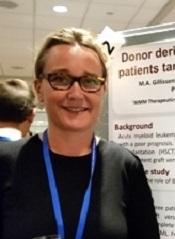
NEW YORK—Investigators have found that B cells may play a role in stimulating graft-versus-leukemia (GvL) responses in patients with acute myeloid leukemia (AML) who have undergone allogeneic hematopoietic stem cell transplant (HSCT).
The team created B cell lines from these patients, isolated AML-specific antibodies, and found that these antibodies can induce the death of AML cells through oncosis.
Oncosis is a non-apoptotic type of cell death that involves swelling and coagulation of the cytoplasm.
Mette Hazenberg, MD, PhD, from the Academic Medical Center in Amsterdam, The Netherlands, reported these findings at the inaugural CRI-CIMT-EATI-AACR International Cancer Immunotherapy Conference as poster B052.
The investigators cloned B cells from 3 high-risk AML patients who had a strong GvL response after HSCT.
The team transduced memory B cells from the patients’ peripheral blood using BCL-6 and BCL-xL. They then screened the B cells for those that produced antibodies that bound specifically to surface antigens on AML cell lines and blasts.
Six of the 15 AML antibodies retrieved from the patients bound specifically to snRNp200. In normal cells, snRNp200 is in the nucleus, but, in AML, it is exposed on the cell membrane.
The investigators then confirmed this by ELISA.
They found 7 of the 15 AML antibodies directly lysed AML blasts without the addition of effector cells or complement. Time-lapse images showed that cell death by the AML antibodies occurred rapidly, within minutes after incubation.
“The leukemia blasts popped like balloons,” Dr Hazenberg said.
The investigators confirmed that the antibodies induced cell death by oncosis and that oncosis occurred independently of temperature. The antibodies were cytotoxic at 4°C and 37°C.
Cytotoxicity of the antibodies could be blocked by the membrane stabilizer cytochalasin D but not by apoptosis inhibitors.
The team concluded that a potent GvL response could be mediated by these antibodies against tumor-associated antigens on AML cells.
Dr Hazenberg’s hope is that, at some point, these antibodies can be combined with chemotherapy—as is rituximab—so patients won’t need to undergo transplant. 
NEW YORK—Investigators have found that B cells may play a role in stimulating graft-versus-leukemia (GvL) responses in patients with acute myeloid leukemia (AML) who have undergone allogeneic hematopoietic stem cell transplant (HSCT).
The team created B cell lines from these patients, isolated AML-specific antibodies, and found that these antibodies can induce the death of AML cells through oncosis.
Oncosis is a non-apoptotic type of cell death that involves swelling and coagulation of the cytoplasm.
Mette Hazenberg, MD, PhD, from the Academic Medical Center in Amsterdam, The Netherlands, reported these findings at the inaugural CRI-CIMT-EATI-AACR International Cancer Immunotherapy Conference as poster B052.
The investigators cloned B cells from 3 high-risk AML patients who had a strong GvL response after HSCT.
The team transduced memory B cells from the patients’ peripheral blood using BCL-6 and BCL-xL. They then screened the B cells for those that produced antibodies that bound specifically to surface antigens on AML cell lines and blasts.
Six of the 15 AML antibodies retrieved from the patients bound specifically to snRNp200. In normal cells, snRNp200 is in the nucleus, but, in AML, it is exposed on the cell membrane.
The investigators then confirmed this by ELISA.
They found 7 of the 15 AML antibodies directly lysed AML blasts without the addition of effector cells or complement. Time-lapse images showed that cell death by the AML antibodies occurred rapidly, within minutes after incubation.
“The leukemia blasts popped like balloons,” Dr Hazenberg said.
The investigators confirmed that the antibodies induced cell death by oncosis and that oncosis occurred independently of temperature. The antibodies were cytotoxic at 4°C and 37°C.
Cytotoxicity of the antibodies could be blocked by the membrane stabilizer cytochalasin D but not by apoptosis inhibitors.
The team concluded that a potent GvL response could be mediated by these antibodies against tumor-associated antigens on AML cells.
Dr Hazenberg’s hope is that, at some point, these antibodies can be combined with chemotherapy—as is rituximab—so patients won’t need to undergo transplant.
NEW YORK—Investigators have found that B cells may play a role in stimulating graft-versus-leukemia (GvL) responses in patients with acute myeloid leukemia (AML) who have undergone allogeneic hematopoietic stem cell transplant (HSCT).
The team created B cell lines from these patients, isolated AML-specific antibodies, and found that these antibodies can induce the death of AML cells through oncosis.
Oncosis is a non-apoptotic type of cell death that involves swelling and coagulation of the cytoplasm.
Mette Hazenberg, MD, PhD, from the Academic Medical Center in Amsterdam, The Netherlands, reported these findings at the inaugural CRI-CIMT-EATI-AACR International Cancer Immunotherapy Conference as poster B052.
The investigators cloned B cells from 3 high-risk AML patients who had a strong GvL response after HSCT.
The team transduced memory B cells from the patients’ peripheral blood using BCL-6 and BCL-xL. They then screened the B cells for those that produced antibodies that bound specifically to surface antigens on AML cell lines and blasts.
Six of the 15 AML antibodies retrieved from the patients bound specifically to snRNp200. In normal cells, snRNp200 is in the nucleus, but, in AML, it is exposed on the cell membrane.
The investigators then confirmed this by ELISA.
They found 7 of the 15 AML antibodies directly lysed AML blasts without the addition of effector cells or complement. Time-lapse images showed that cell death by the AML antibodies occurred rapidly, within minutes after incubation.
“The leukemia blasts popped like balloons,” Dr Hazenberg said.
The investigators confirmed that the antibodies induced cell death by oncosis and that oncosis occurred independently of temperature. The antibodies were cytotoxic at 4°C and 37°C.
Cytotoxicity of the antibodies could be blocked by the membrane stabilizer cytochalasin D but not by apoptosis inhibitors.
The team concluded that a potent GvL response could be mediated by these antibodies against tumor-associated antigens on AML cells.
Dr Hazenberg’s hope is that, at some point, these antibodies can be combined with chemotherapy—as is rituximab—so patients won’t need to undergo transplant.
Team identifies new virus in blood supply

Photo courtesy of UAB Hospital
Scientists say they have discovered a new virus that can be transmitted through the blood supply.
It is currently unclear whether the virus is harmful or not, but researchers found that it shares genetic features with hepatitis C virus (HCV) and human
pegivirus (HPgV), which was formerly known as hepatitis G virus.
The new virus, which the researchers have named human hepegivirus-1 (HHpgV-1), is described in the journal mBio.
“HHpgV-1 is unique because it shares genetic similarity with both highly pathogenic HCV and the apparently non-pathogenic HPgV,” said study author Amit Kapoor, PhD, of Columbia University in New York, New York. “People need to be aware of this new infection in humans.”
To identify HHpgV-1, Dr Kapoor and his colleagues performed high-throughput sequencing on blood samples from 46 individuals in the Transfusion-Transmitted Viruses Study. The samples were collected between July 1974 and June 1980.
The researchers analyzed samples both pre- and post-transfusion and, along with a variety of known viruses, they identified HHpgV-1 in 2 individuals.
The virus was only present in post-transfusion samples, and additional tests showed that both patients were able to clear HHpgV-1.
Genetic analysis revealed that the virus was related to HCV and HPgV. Genomic testing of 70 additional individuals in the Transfusion-Transmitted Viruses Study did not detect further cases of HHpgV-1.
The researchers also performed high-throughput sequencing on samples from 106 individuals in the Multicenter Hemophilia Cohort Study who received plasma-derived clotting factor concentrates.
The team identified HHpgV-1 in 2 individuals, one of whom had persistent long-term infection (5.4 years).
“We just don’t know how many viruses are transmitted through the blood supply,” Dr Kapoor said. “There are so many viruses out there, and they need to be characterized in order to ensure that transfusions are safe.”
He said the next steps are to determine the prevalence of HHpgV-1 and whether it causes disease. If it causes disease, screening the blood supply for the virus will be appropriate.
“Ultimately, once we know more about this, we will look for the presence of this virus in people with certain diseases,” Dr Kapoor said.
“The unusually high infection prevalence of HCV, HBV, and HIV in hemophilia patients and other transfusion recipients could have been prevented by earlier identification of these viruses and development of accurate diagnostic assays.”
Photo courtesy of UAB Hospital
Scientists say they have discovered a new virus that can be transmitted through the blood supply.
It is currently unclear whether the virus is harmful or not, but researchers found that it shares genetic features with hepatitis C virus (HCV) and human
pegivirus (HPgV), which was formerly known as hepatitis G virus.
The new virus, which the researchers have named human hepegivirus-1 (HHpgV-1), is described in the journal mBio.
“HHpgV-1 is unique because it shares genetic similarity with both highly pathogenic HCV and the apparently non-pathogenic HPgV,” said study author Amit Kapoor, PhD, of Columbia University in New York, New York. “People need to be aware of this new infection in humans.”
To identify HHpgV-1, Dr Kapoor and his colleagues performed high-throughput sequencing on blood samples from 46 individuals in the Transfusion-Transmitted Viruses Study. The samples were collected between July 1974 and June 1980.
The researchers analyzed samples both pre- and post-transfusion and, along with a variety of known viruses, they identified HHpgV-1 in 2 individuals.
The virus was only present in post-transfusion samples, and additional tests showed that both patients were able to clear HHpgV-1.
Genetic analysis revealed that the virus was related to HCV and HPgV. Genomic testing of 70 additional individuals in the Transfusion-Transmitted Viruses Study did not detect further cases of HHpgV-1.
The researchers also performed high-throughput sequencing on samples from 106 individuals in the Multicenter Hemophilia Cohort Study who received plasma-derived clotting factor concentrates.
The team identified HHpgV-1 in 2 individuals, one of whom had persistent long-term infection (5.4 years).
“We just don’t know how many viruses are transmitted through the blood supply,” Dr Kapoor said. “There are so many viruses out there, and they need to be characterized in order to ensure that transfusions are safe.”
He said the next steps are to determine the prevalence of HHpgV-1 and whether it causes disease. If it causes disease, screening the blood supply for the virus will be appropriate.
“Ultimately, once we know more about this, we will look for the presence of this virus in people with certain diseases,” Dr Kapoor said.
“The unusually high infection prevalence of HCV, HBV, and HIV in hemophilia patients and other transfusion recipients could have been prevented by earlier identification of these viruses and development of accurate diagnostic assays.”
Photo courtesy of UAB Hospital
Scientists say they have discovered a new virus that can be transmitted through the blood supply.
It is currently unclear whether the virus is harmful or not, but researchers found that it shares genetic features with hepatitis C virus (HCV) and human
pegivirus (HPgV), which was formerly known as hepatitis G virus.
The new virus, which the researchers have named human hepegivirus-1 (HHpgV-1), is described in the journal mBio.
“HHpgV-1 is unique because it shares genetic similarity with both highly pathogenic HCV and the apparently non-pathogenic HPgV,” said study author Amit Kapoor, PhD, of Columbia University in New York, New York. “People need to be aware of this new infection in humans.”
To identify HHpgV-1, Dr Kapoor and his colleagues performed high-throughput sequencing on blood samples from 46 individuals in the Transfusion-Transmitted Viruses Study. The samples were collected between July 1974 and June 1980.
The researchers analyzed samples both pre- and post-transfusion and, along with a variety of known viruses, they identified HHpgV-1 in 2 individuals.
The virus was only present in post-transfusion samples, and additional tests showed that both patients were able to clear HHpgV-1.
Genetic analysis revealed that the virus was related to HCV and HPgV. Genomic testing of 70 additional individuals in the Transfusion-Transmitted Viruses Study did not detect further cases of HHpgV-1.
The researchers also performed high-throughput sequencing on samples from 106 individuals in the Multicenter Hemophilia Cohort Study who received plasma-derived clotting factor concentrates.
The team identified HHpgV-1 in 2 individuals, one of whom had persistent long-term infection (5.4 years).
“We just don’t know how many viruses are transmitted through the blood supply,” Dr Kapoor said. “There are so many viruses out there, and they need to be characterized in order to ensure that transfusions are safe.”
He said the next steps are to determine the prevalence of HHpgV-1 and whether it causes disease. If it causes disease, screening the blood supply for the virus will be appropriate.
“Ultimately, once we know more about this, we will look for the presence of this virus in people with certain diseases,” Dr Kapoor said.
“The unusually high infection prevalence of HCV, HBV, and HIV in hemophilia patients and other transfusion recipients could have been prevented by earlier identification of these viruses and development of accurate diagnostic assays.”
Imaging provides clearer picture of HSCs
in the bone marrow
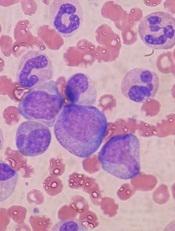
By imaging the bone marrow of mice, researchers have uncovered new details about hematopoietic stem cells (HSCs).
The team’s deep imaging technique confirmed some previous findings and unearthed new information about where HSCs are located and how they are maintained.
The researchers said these findings, published in Nature, provide a significant advance toward understanding the microenvironment in which HSCs reside.
“The bone marrow and [HSCs] are like a haystack with needles inside,” said study author Sean Morrison, PhD, of the University of Texas Southwestern Medical Center in Dallas.
“Researchers in the past have been able to find a few stem cells, but they’ve only seen a small percentage of the stem cells that are there, so there has been some controversy about where exactly they’re located.”
“We developed a technique that allows us to digitally reconstruct the entire haystack and see all the needles—all the [HSCs] that are present in the bone marrow—and to know exactly where they are and how far they are from every other cell type.”
The team began by identifying a genetic marker that is almost exclusively expressed in HSCs. They then took green fluorescent protein from jellyfish and inserted it into the genetic marker, Ctnnal1, so they could identify the HSCs.
“Using a tissue-clearing technique that makes the bone and bone marrow see-through, and employing a high-resolution, confocal microscope to scan the entire bone marrow compartment, we were able to image large segments of bone marrow to locate every [HSC] and its relation to other cells,” said Melih Acar, PhD, also of the University of Texas Southwestern Medical Center.
The team’s work yielded new findings and confirmed others. They found that HSCs tend to be clustered in the center of the bone marrow, not closer to bone surfaces as some researchers previously thought.
They also found that HSCs are indeed associated with sinusoidal blood vessels, and there are no spatially distinct niches for dividing and non-dividing HSCs.
“With this improved understanding of the microenvironment and mechanisms that maintain [HSCs], we are closer to being able to replicate the environment for [HSCs] in culture,” Dr Morrison said.
“That achievement would significantly improve the safety and effectiveness of bone marrow transplants and potentially save thousands of additional lives each year.”
in the bone marrow
By imaging the bone marrow of mice, researchers have uncovered new details about hematopoietic stem cells (HSCs).
The team’s deep imaging technique confirmed some previous findings and unearthed new information about where HSCs are located and how they are maintained.
The researchers said these findings, published in Nature, provide a significant advance toward understanding the microenvironment in which HSCs reside.
“The bone marrow and [HSCs] are like a haystack with needles inside,” said study author Sean Morrison, PhD, of the University of Texas Southwestern Medical Center in Dallas.
“Researchers in the past have been able to find a few stem cells, but they’ve only seen a small percentage of the stem cells that are there, so there has been some controversy about where exactly they’re located.”
“We developed a technique that allows us to digitally reconstruct the entire haystack and see all the needles—all the [HSCs] that are present in the bone marrow—and to know exactly where they are and how far they are from every other cell type.”
The team began by identifying a genetic marker that is almost exclusively expressed in HSCs. They then took green fluorescent protein from jellyfish and inserted it into the genetic marker, Ctnnal1, so they could identify the HSCs.
“Using a tissue-clearing technique that makes the bone and bone marrow see-through, and employing a high-resolution, confocal microscope to scan the entire bone marrow compartment, we were able to image large segments of bone marrow to locate every [HSC] and its relation to other cells,” said Melih Acar, PhD, also of the University of Texas Southwestern Medical Center.
The team’s work yielded new findings and confirmed others. They found that HSCs tend to be clustered in the center of the bone marrow, not closer to bone surfaces as some researchers previously thought.
They also found that HSCs are indeed associated with sinusoidal blood vessels, and there are no spatially distinct niches for dividing and non-dividing HSCs.
“With this improved understanding of the microenvironment and mechanisms that maintain [HSCs], we are closer to being able to replicate the environment for [HSCs] in culture,” Dr Morrison said.
“That achievement would significantly improve the safety and effectiveness of bone marrow transplants and potentially save thousands of additional lives each year.”
in the bone marrow
By imaging the bone marrow of mice, researchers have uncovered new details about hematopoietic stem cells (HSCs).
The team’s deep imaging technique confirmed some previous findings and unearthed new information about where HSCs are located and how they are maintained.
The researchers said these findings, published in Nature, provide a significant advance toward understanding the microenvironment in which HSCs reside.
“The bone marrow and [HSCs] are like a haystack with needles inside,” said study author Sean Morrison, PhD, of the University of Texas Southwestern Medical Center in Dallas.
“Researchers in the past have been able to find a few stem cells, but they’ve only seen a small percentage of the stem cells that are there, so there has been some controversy about where exactly they’re located.”
“We developed a technique that allows us to digitally reconstruct the entire haystack and see all the needles—all the [HSCs] that are present in the bone marrow—and to know exactly where they are and how far they are from every other cell type.”
The team began by identifying a genetic marker that is almost exclusively expressed in HSCs. They then took green fluorescent protein from jellyfish and inserted it into the genetic marker, Ctnnal1, so they could identify the HSCs.
“Using a tissue-clearing technique that makes the bone and bone marrow see-through, and employing a high-resolution, confocal microscope to scan the entire bone marrow compartment, we were able to image large segments of bone marrow to locate every [HSC] and its relation to other cells,” said Melih Acar, PhD, also of the University of Texas Southwestern Medical Center.
The team’s work yielded new findings and confirmed others. They found that HSCs tend to be clustered in the center of the bone marrow, not closer to bone surfaces as some researchers previously thought.
They also found that HSCs are indeed associated with sinusoidal blood vessels, and there are no spatially distinct niches for dividing and non-dividing HSCs.
“With this improved understanding of the microenvironment and mechanisms that maintain [HSCs], we are closer to being able to replicate the environment for [HSCs] in culture,” Dr Morrison said.
“That achievement would significantly improve the safety and effectiveness of bone marrow transplants and potentially save thousands of additional lives each year.”
Inflammation, coagulation may contribute to CM pathogenesis
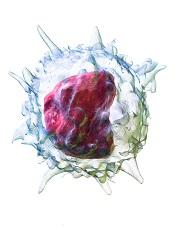
Image by Bruce Blaus
Cells associated with inflammation and coagulation accumulate in the brains of children with cerebral malaria (CM), according to research published in mBio.
The researchers studied autopsied brain tissue from more than 100 African children and found that children with CM had a more than 9-fold greater number of intravascular monocytes and platelets than children who did not have malaria.
In addition, HIV-positive children had more than twice the amount of intravascular monocytes and platelets than was observed in children who were not HIV-positive.
“Our study clearly shows that HIV exacerbates the disease process in cerebral malaria and also leads to some really interesting insights into what may be going on with children who are dying of cerebral malaria, which has been very controversial,” said study author Kami Kim, MD, of the Albert Einstein College of Medicine in the Bronx, New York.
“Children who are HIV-positive and at risk for malaria may benefit from targeted antimalaria drugs, and adjunctive therapies that target inflammation or blood clotting may improve outcomes from CM.”
CM is one of the most severe complications of malaria and can lead to behavioral problems, seizures, coma, or death. It is mainly seen in children younger than 5 living in sub-Saharan Africa.
CM is fairly rare, affecting about 2% of children with malaria, but CM is also thought to be responsible for half of malaria deaths.
“So it’s a big deal,” Dr Kim said. “The more we know about CM, the more that we can theoretically do something either to better treat or prevent it.”
With this goal in mind, Dr Kim and her colleagues analyzed children in an ongoing study of pediatric CM in Blantyre, Malawi. The researchers enrolled more than 3000 participants and completed 103 autopsies in those who died from either CM or other causes of coma.
HIV prevalence was higher than expected and led to higher mortality in CM patients. The prevalence of HIV was 14.5% in children enrolled in the study, compared to 2% in the general Malawi pediatric population.
Twenty-three percent of HIV-positive children died, while 17% of those without HIV died. Twenty percent of autopsy cases were HIV-positive.
The researchers noted that HIV-infected children with CM were older than children without HIV (an average of 99 months vs 32 months) and were not severely immunocompromised.
In addition, monocytes and platelets were significantly more prevalent in HIV-positive children with CM than neutrophils.
“We identified a unique and pervasive pathology pattern in pediatric CM, marked by monocytes and platelets, which is more severe in HIV-positive children,” Dr Kim said.
“It doesn’t prove that these cells cause clinical disease, but the fact that they’re there in huge abundance when there’s a lot of parasites is pretty strongly suggestive evidence that they’re doing something. We never see that in healthy brain tissue.”
Additional studies of children with varying severities of malaria are necessary in order to design better treatment algorithms, Dr Kim added.
Image by Bruce Blaus
Cells associated with inflammation and coagulation accumulate in the brains of children with cerebral malaria (CM), according to research published in mBio.
The researchers studied autopsied brain tissue from more than 100 African children and found that children with CM had a more than 9-fold greater number of intravascular monocytes and platelets than children who did not have malaria.
In addition, HIV-positive children had more than twice the amount of intravascular monocytes and platelets than was observed in children who were not HIV-positive.
“Our study clearly shows that HIV exacerbates the disease process in cerebral malaria and also leads to some really interesting insights into what may be going on with children who are dying of cerebral malaria, which has been very controversial,” said study author Kami Kim, MD, of the Albert Einstein College of Medicine in the Bronx, New York.
“Children who are HIV-positive and at risk for malaria may benefit from targeted antimalaria drugs, and adjunctive therapies that target inflammation or blood clotting may improve outcomes from CM.”
CM is one of the most severe complications of malaria and can lead to behavioral problems, seizures, coma, or death. It is mainly seen in children younger than 5 living in sub-Saharan Africa.
CM is fairly rare, affecting about 2% of children with malaria, but CM is also thought to be responsible for half of malaria deaths.
“So it’s a big deal,” Dr Kim said. “The more we know about CM, the more that we can theoretically do something either to better treat or prevent it.”
With this goal in mind, Dr Kim and her colleagues analyzed children in an ongoing study of pediatric CM in Blantyre, Malawi. The researchers enrolled more than 3000 participants and completed 103 autopsies in those who died from either CM or other causes of coma.
HIV prevalence was higher than expected and led to higher mortality in CM patients. The prevalence of HIV was 14.5% in children enrolled in the study, compared to 2% in the general Malawi pediatric population.
Twenty-three percent of HIV-positive children died, while 17% of those without HIV died. Twenty percent of autopsy cases were HIV-positive.
The researchers noted that HIV-infected children with CM were older than children without HIV (an average of 99 months vs 32 months) and were not severely immunocompromised.
In addition, monocytes and platelets were significantly more prevalent in HIV-positive children with CM than neutrophils.
“We identified a unique and pervasive pathology pattern in pediatric CM, marked by monocytes and platelets, which is more severe in HIV-positive children,” Dr Kim said.
“It doesn’t prove that these cells cause clinical disease, but the fact that they’re there in huge abundance when there’s a lot of parasites is pretty strongly suggestive evidence that they’re doing something. We never see that in healthy brain tissue.”
Additional studies of children with varying severities of malaria are necessary in order to design better treatment algorithms, Dr Kim added.
Image by Bruce Blaus
Cells associated with inflammation and coagulation accumulate in the brains of children with cerebral malaria (CM), according to research published in mBio.
The researchers studied autopsied brain tissue from more than 100 African children and found that children with CM had a more than 9-fold greater number of intravascular monocytes and platelets than children who did not have malaria.
In addition, HIV-positive children had more than twice the amount of intravascular monocytes and platelets than was observed in children who were not HIV-positive.
“Our study clearly shows that HIV exacerbates the disease process in cerebral malaria and also leads to some really interesting insights into what may be going on with children who are dying of cerebral malaria, which has been very controversial,” said study author Kami Kim, MD, of the Albert Einstein College of Medicine in the Bronx, New York.
“Children who are HIV-positive and at risk for malaria may benefit from targeted antimalaria drugs, and adjunctive therapies that target inflammation or blood clotting may improve outcomes from CM.”
CM is one of the most severe complications of malaria and can lead to behavioral problems, seizures, coma, or death. It is mainly seen in children younger than 5 living in sub-Saharan Africa.
CM is fairly rare, affecting about 2% of children with malaria, but CM is also thought to be responsible for half of malaria deaths.
“So it’s a big deal,” Dr Kim said. “The more we know about CM, the more that we can theoretically do something either to better treat or prevent it.”
With this goal in mind, Dr Kim and her colleagues analyzed children in an ongoing study of pediatric CM in Blantyre, Malawi. The researchers enrolled more than 3000 participants and completed 103 autopsies in those who died from either CM or other causes of coma.
HIV prevalence was higher than expected and led to higher mortality in CM patients. The prevalence of HIV was 14.5% in children enrolled in the study, compared to 2% in the general Malawi pediatric population.
Twenty-three percent of HIV-positive children died, while 17% of those without HIV died. Twenty percent of autopsy cases were HIV-positive.
The researchers noted that HIV-infected children with CM were older than children without HIV (an average of 99 months vs 32 months) and were not severely immunocompromised.
In addition, monocytes and platelets were significantly more prevalent in HIV-positive children with CM than neutrophils.
“We identified a unique and pervasive pathology pattern in pediatric CM, marked by monocytes and platelets, which is more severe in HIV-positive children,” Dr Kim said.
“It doesn’t prove that these cells cause clinical disease, but the fact that they’re there in huge abundance when there’s a lot of parasites is pretty strongly suggestive evidence that they’re doing something. We never see that in healthy brain tissue.”
Additional studies of children with varying severities of malaria are necessary in order to design better treatment algorithms, Dr Kim added.
Generalizations of a generalist — common themes among systemic therapies for common cancers
Click on the PDF icon at the top of this introduction to read the full article.
Click on the PDF icon at the top of this introduction to read the full article.
Click on the PDF icon at the top of this introduction to read the full article.
Effects of a self-care education program on quality of life of patients with gastric cancer after gastrectomy
Click on the PDF icon at the top of this introduction to read the full article.
Click on the PDF icon at the top of this introduction to read the full article.
Click on the PDF icon at the top of this introduction to read the full article.
A qualitative exploration of supports and unmet needs of diverse young women with breast cancer
Click on the PDF icon at the top of this introduction to read the full article.
Click on the PDF icon at the top of this introduction to read the full article.
Click on the PDF icon at the top of this introduction to read the full article.
Medicolegal aspects of sleep apnea
Question: A patient who is a commercial truck driver has a long history of snoring and daytime sleepiness. His physical exam was remarkable for obesity, prominent extremities, a large tongue, and a prominent jaw. The treating doctor did not pursue additional work-up or treatment.
One day, the patient fell asleep while driving his truck and hit an oncoming vehicle, resulting in injuries to both patient and the other driver.
In this hypothetical scenario, which of the following statements is best?
A. The doctor may be found negligent for missing the diagnosis of acromegaly and accompanying sleep apnea, and for failing to treat and warn about driving risks.
B. The doctor may be liable to both his patient and the other injured driver.
C. The patient may be terminated from his job as a commercial truck driver, because he poses a danger to himself and the public.
D. Both A and B are correct.
E. All are correct.
Answer: D. Sleep apnea, an underdiagnosed and undertreated disabling condition, places the patient at substantial risk for injuries, chronic hypoxemia, and respiratory arrest. Excessive daytime sleepiness and fatigue may prove hazardous, particularly in those whose undivided attention is a requirement of their jobs, such as with truck drivers.
Diagnosis is established with a formal sleep study (polysomnography), and treatment with a continuous positive airway pressure (CPAP) device is usually effective. In severe or recalcitrant cases, surgical intervention (that is, uvulopalatopharyngoplasty) may be necessary.
In a recent study, Dr. Peter F. Svider of Rutgers New Jersey Medical School, Newark, and his colleagues analyzed 54 litigated sleep apnea cases, of which 33 (61%) were resolved in favor of the defendants (Otolaryngol Head Neck Surg. 2013 Dec;149[6]:947-53). Most of the cases (47) stemmed from patients who underwent surgery with perioperative complications, including death. Inadequate informed consent and monitoring, as well as inappropriate medications, were other findings.
Obstructive sleep apnea is a well-recognized complication of acromegaly with its bony and soft-tissue hypertrophy. The hypothetical situation described above is substantially modified from an actual case in which a 39-year-old man with acromegaly and sleep apnea died from cardiorespiratory arrest (Cornett v. W.O. Moss Regional Hospital, 614 So.2d 189 [La. 1993]). He had presented over the course of several years with repeated complaints of daytime sleepiness and sleeping while driving. Falling asleep in the examination room and abnormal blood gases were giveaway signs. Unfortunately, sleep apnea was left untreated.
Other litigated cases have included anoxic encephalopathy from a lost airway and inappropriate fentanyl dosing during and following aggressive surgery for mild/moderate obstructive sleep apnea, as well as cardiac arrest in a retired sailor during a routine endoscopic procedure. In the latter instance, the plaintiff alleged that there was a failure to take proper precautions in protecting the airway, given that the patient had a known case of obstructive sleep apnea.
What about other liabilities for injuries that are proximately caused by a failure to diagnose and treat?
A doctor is usually liable for negligent care only to his or her own patient, because the duty of care grows out of the doctor-patient relationship and is normally owed to the patient and no one else. However, in very limited circumstances, the duty may extend to other individuals who are family members or even total strangers.
Sleep apnea, by virtue of its sleep disturbances and resulting daytime sleepiness, poses a foreseeable risk of harm. Nonpatient third parties have successfully sued doctors for driving injuries arising out of the failure to diagnose, treat, or warn in a variety of medical conditions.
For example, the Iowa Supreme Court has held that a physician must warn a patient with newly diagnosed seizure disorder about the risks of driving (Freese v. Lemmon, 210 N.W.2d 576 [Iowa 1973]). In that case, a patient with a history of a single seizure injured a woman when he suffered a second seizure while driving.
By analogy, it seems reasonable to assume that the facts given in our hypothetical scenario may give rise to an action against the doctor not only by the patient, but by the injured nonpatient third party as well.
In many jurisdictions, sleep apnea has been accepted as a disability for purposes of the Americans with Disabilities Act (ADA). A disability is defined as a condition evincing substantial interference with a major life activity. Under the ADA, employers are required to make “reasonable accommodation” for disabled employees and cannot simply dismiss them by sole virtue of that disability.
However, qualification for the job must still be shown. One court ruled that a plaintiff with sleep apnea had failed to show that he was a qualified employee even if given his proposed “two-nap-a-day” accommodation (Jackson v. Boise Cascade Corp., 941 F. Supp. 1122 [Ala. 1996]).
Another interesting case involved an anesthesiologist who suffered from sleep apnea and who was snoring and sleeping during surgery. The hospital terminated his contract, and the anesthesiologist filed suit claiming disability discrimination. The 6th U.S. Circuit Court of Appeals affirmed the lower court’s decision in favor of the hospital, finding that the anesthesiologist was fired not because he had a disability, but because he had slept during surgical procedures (Brohm v. JH Properties, 149 F.3d 517 [6th Cir. 1998]).
Distinguishing between discharging someone for unacceptable conduct and discharging someone because of the disability, the court reasoned: “One suffering from chronic sleep deprivation may well be so tired that he cannot stay awake. But such sleep deprivation did not compel Brohm [the anesthesiologist defendant] to administer anesthetics during surgical procedures when he knew he was tired.”
On the other hand, a federal court in 2014 ordered the city of McPherson, Kan., to pay $920,000 in damages to a dismissed police officer suffering from sleep apnea. Although the city cited other factors for the termination, such as insubordination and conduct unbecoming an officer, it had focused on “sleeping on the job” as the basis for the termination. The officer reportedly experienced no further difficulties after he received medical treatment, and the city did not offer the officer an alternative to his graveyard shift or an opportunity to explain his medical condition.
Finally, a discussion of the legal aspects of sleep apnea is incomplete without noting that conducting and billing for sleep studies may occasionally be subject to abuse and/or fraud. The U.S. Department of Health & Human Services Office of Inspector General (OIG) has underscored the high utilization of sleep testing by sleep disorder clinics; in 2010 alone, Medicare reimbursement totaled some $410 million.
The OIG is targeting questionable billing practices under the False Claims Act (31 U.S.C. §§3729-3733) and for self-referrals (Stark Law). Medicare and Medicaid will only reimburse sleep studies that are reasonable and necessary. In addition, there are strict rules such as the mandatory use of properly trained and credentialed sleep technicians, and appropriate level of general physician supervision.
In its most recent prosecution, the federal government is going after the owners of a chain of sleep clinics in the San Francisco Bay area for sleep tests that were conducted in unapproved locations and/or by unlicensed technicians. In addition, the lawsuit alleges a Stark Law violation for self-referrals. The action is being taken in conjunction with a lawsuit filed by a former employee in a whistle-blower action. Under the False Claims Act, whistle-blowers who are private citizens, such as former employees, can file a qui tam action alone or in concert with the government, and they stand to collect a significant (e.g., 25%) portion of any recovery.
Dr. Tan is emeritus professor of medicine and former adjunct professor of law at the University of Hawaii, and currently directs the St. Francis International Center for Healthcare Ethics in Honolulu. This article is meant to be educational and does not constitute medical, ethical, or legal advice. Some of the articles in this series are adapted from the author’s 2006 book, “Medical Malpractice: Understanding the Law, Managing the Risk,” and his 2012 Halsbury treatise, “Medical Negligence and Professional Misconduct.” For additional information, readers may contact the author at [email protected].
Question: A patient who is a commercial truck driver has a long history of snoring and daytime sleepiness. His physical exam was remarkable for obesity, prominent extremities, a large tongue, and a prominent jaw. The treating doctor did not pursue additional work-up or treatment.
One day, the patient fell asleep while driving his truck and hit an oncoming vehicle, resulting in injuries to both patient and the other driver.
In this hypothetical scenario, which of the following statements is best?
A. The doctor may be found negligent for missing the diagnosis of acromegaly and accompanying sleep apnea, and for failing to treat and warn about driving risks.
B. The doctor may be liable to both his patient and the other injured driver.
C. The patient may be terminated from his job as a commercial truck driver, because he poses a danger to himself and the public.
D. Both A and B are correct.
E. All are correct.
Answer: D. Sleep apnea, an underdiagnosed and undertreated disabling condition, places the patient at substantial risk for injuries, chronic hypoxemia, and respiratory arrest. Excessive daytime sleepiness and fatigue may prove hazardous, particularly in those whose undivided attention is a requirement of their jobs, such as with truck drivers.
Diagnosis is established with a formal sleep study (polysomnography), and treatment with a continuous positive airway pressure (CPAP) device is usually effective. In severe or recalcitrant cases, surgical intervention (that is, uvulopalatopharyngoplasty) may be necessary.
In a recent study, Dr. Peter F. Svider of Rutgers New Jersey Medical School, Newark, and his colleagues analyzed 54 litigated sleep apnea cases, of which 33 (61%) were resolved in favor of the defendants (Otolaryngol Head Neck Surg. 2013 Dec;149[6]:947-53). Most of the cases (47) stemmed from patients who underwent surgery with perioperative complications, including death. Inadequate informed consent and monitoring, as well as inappropriate medications, were other findings.
Obstructive sleep apnea is a well-recognized complication of acromegaly with its bony and soft-tissue hypertrophy. The hypothetical situation described above is substantially modified from an actual case in which a 39-year-old man with acromegaly and sleep apnea died from cardiorespiratory arrest (Cornett v. W.O. Moss Regional Hospital, 614 So.2d 189 [La. 1993]). He had presented over the course of several years with repeated complaints of daytime sleepiness and sleeping while driving. Falling asleep in the examination room and abnormal blood gases were giveaway signs. Unfortunately, sleep apnea was left untreated.
Other litigated cases have included anoxic encephalopathy from a lost airway and inappropriate fentanyl dosing during and following aggressive surgery for mild/moderate obstructive sleep apnea, as well as cardiac arrest in a retired sailor during a routine endoscopic procedure. In the latter instance, the plaintiff alleged that there was a failure to take proper precautions in protecting the airway, given that the patient had a known case of obstructive sleep apnea.
What about other liabilities for injuries that are proximately caused by a failure to diagnose and treat?
A doctor is usually liable for negligent care only to his or her own patient, because the duty of care grows out of the doctor-patient relationship and is normally owed to the patient and no one else. However, in very limited circumstances, the duty may extend to other individuals who are family members or even total strangers.
Sleep apnea, by virtue of its sleep disturbances and resulting daytime sleepiness, poses a foreseeable risk of harm. Nonpatient third parties have successfully sued doctors for driving injuries arising out of the failure to diagnose, treat, or warn in a variety of medical conditions.
For example, the Iowa Supreme Court has held that a physician must warn a patient with newly diagnosed seizure disorder about the risks of driving (Freese v. Lemmon, 210 N.W.2d 576 [Iowa 1973]). In that case, a patient with a history of a single seizure injured a woman when he suffered a second seizure while driving.
By analogy, it seems reasonable to assume that the facts given in our hypothetical scenario may give rise to an action against the doctor not only by the patient, but by the injured nonpatient third party as well.
In many jurisdictions, sleep apnea has been accepted as a disability for purposes of the Americans with Disabilities Act (ADA). A disability is defined as a condition evincing substantial interference with a major life activity. Under the ADA, employers are required to make “reasonable accommodation” for disabled employees and cannot simply dismiss them by sole virtue of that disability.
However, qualification for the job must still be shown. One court ruled that a plaintiff with sleep apnea had failed to show that he was a qualified employee even if given his proposed “two-nap-a-day” accommodation (Jackson v. Boise Cascade Corp., 941 F. Supp. 1122 [Ala. 1996]).
Another interesting case involved an anesthesiologist who suffered from sleep apnea and who was snoring and sleeping during surgery. The hospital terminated his contract, and the anesthesiologist filed suit claiming disability discrimination. The 6th U.S. Circuit Court of Appeals affirmed the lower court’s decision in favor of the hospital, finding that the anesthesiologist was fired not because he had a disability, but because he had slept during surgical procedures (Brohm v. JH Properties, 149 F.3d 517 [6th Cir. 1998]).
Distinguishing between discharging someone for unacceptable conduct and discharging someone because of the disability, the court reasoned: “One suffering from chronic sleep deprivation may well be so tired that he cannot stay awake. But such sleep deprivation did not compel Brohm [the anesthesiologist defendant] to administer anesthetics during surgical procedures when he knew he was tired.”
On the other hand, a federal court in 2014 ordered the city of McPherson, Kan., to pay $920,000 in damages to a dismissed police officer suffering from sleep apnea. Although the city cited other factors for the termination, such as insubordination and conduct unbecoming an officer, it had focused on “sleeping on the job” as the basis for the termination. The officer reportedly experienced no further difficulties after he received medical treatment, and the city did not offer the officer an alternative to his graveyard shift or an opportunity to explain his medical condition.
Finally, a discussion of the legal aspects of sleep apnea is incomplete without noting that conducting and billing for sleep studies may occasionally be subject to abuse and/or fraud. The U.S. Department of Health & Human Services Office of Inspector General (OIG) has underscored the high utilization of sleep testing by sleep disorder clinics; in 2010 alone, Medicare reimbursement totaled some $410 million.
The OIG is targeting questionable billing practices under the False Claims Act (31 U.S.C. §§3729-3733) and for self-referrals (Stark Law). Medicare and Medicaid will only reimburse sleep studies that are reasonable and necessary. In addition, there are strict rules such as the mandatory use of properly trained and credentialed sleep technicians, and appropriate level of general physician supervision.
In its most recent prosecution, the federal government is going after the owners of a chain of sleep clinics in the San Francisco Bay area for sleep tests that were conducted in unapproved locations and/or by unlicensed technicians. In addition, the lawsuit alleges a Stark Law violation for self-referrals. The action is being taken in conjunction with a lawsuit filed by a former employee in a whistle-blower action. Under the False Claims Act, whistle-blowers who are private citizens, such as former employees, can file a qui tam action alone or in concert with the government, and they stand to collect a significant (e.g., 25%) portion of any recovery.
Dr. Tan is emeritus professor of medicine and former adjunct professor of law at the University of Hawaii, and currently directs the St. Francis International Center for Healthcare Ethics in Honolulu. This article is meant to be educational and does not constitute medical, ethical, or legal advice. Some of the articles in this series are adapted from the author’s 2006 book, “Medical Malpractice: Understanding the Law, Managing the Risk,” and his 2012 Halsbury treatise, “Medical Negligence and Professional Misconduct.” For additional information, readers may contact the author at [email protected].
Question: A patient who is a commercial truck driver has a long history of snoring and daytime sleepiness. His physical exam was remarkable for obesity, prominent extremities, a large tongue, and a prominent jaw. The treating doctor did not pursue additional work-up or treatment.
One day, the patient fell asleep while driving his truck and hit an oncoming vehicle, resulting in injuries to both patient and the other driver.
In this hypothetical scenario, which of the following statements is best?
A. The doctor may be found negligent for missing the diagnosis of acromegaly and accompanying sleep apnea, and for failing to treat and warn about driving risks.
B. The doctor may be liable to both his patient and the other injured driver.
C. The patient may be terminated from his job as a commercial truck driver, because he poses a danger to himself and the public.
D. Both A and B are correct.
E. All are correct.
Answer: D. Sleep apnea, an underdiagnosed and undertreated disabling condition, places the patient at substantial risk for injuries, chronic hypoxemia, and respiratory arrest. Excessive daytime sleepiness and fatigue may prove hazardous, particularly in those whose undivided attention is a requirement of their jobs, such as with truck drivers.
Diagnosis is established with a formal sleep study (polysomnography), and treatment with a continuous positive airway pressure (CPAP) device is usually effective. In severe or recalcitrant cases, surgical intervention (that is, uvulopalatopharyngoplasty) may be necessary.
In a recent study, Dr. Peter F. Svider of Rutgers New Jersey Medical School, Newark, and his colleagues analyzed 54 litigated sleep apnea cases, of which 33 (61%) were resolved in favor of the defendants (Otolaryngol Head Neck Surg. 2013 Dec;149[6]:947-53). Most of the cases (47) stemmed from patients who underwent surgery with perioperative complications, including death. Inadequate informed consent and monitoring, as well as inappropriate medications, were other findings.
Obstructive sleep apnea is a well-recognized complication of acromegaly with its bony and soft-tissue hypertrophy. The hypothetical situation described above is substantially modified from an actual case in which a 39-year-old man with acromegaly and sleep apnea died from cardiorespiratory arrest (Cornett v. W.O. Moss Regional Hospital, 614 So.2d 189 [La. 1993]). He had presented over the course of several years with repeated complaints of daytime sleepiness and sleeping while driving. Falling asleep in the examination room and abnormal blood gases were giveaway signs. Unfortunately, sleep apnea was left untreated.
Other litigated cases have included anoxic encephalopathy from a lost airway and inappropriate fentanyl dosing during and following aggressive surgery for mild/moderate obstructive sleep apnea, as well as cardiac arrest in a retired sailor during a routine endoscopic procedure. In the latter instance, the plaintiff alleged that there was a failure to take proper precautions in protecting the airway, given that the patient had a known case of obstructive sleep apnea.
What about other liabilities for injuries that are proximately caused by a failure to diagnose and treat?
A doctor is usually liable for negligent care only to his or her own patient, because the duty of care grows out of the doctor-patient relationship and is normally owed to the patient and no one else. However, in very limited circumstances, the duty may extend to other individuals who are family members or even total strangers.
Sleep apnea, by virtue of its sleep disturbances and resulting daytime sleepiness, poses a foreseeable risk of harm. Nonpatient third parties have successfully sued doctors for driving injuries arising out of the failure to diagnose, treat, or warn in a variety of medical conditions.
For example, the Iowa Supreme Court has held that a physician must warn a patient with newly diagnosed seizure disorder about the risks of driving (Freese v. Lemmon, 210 N.W.2d 576 [Iowa 1973]). In that case, a patient with a history of a single seizure injured a woman when he suffered a second seizure while driving.
By analogy, it seems reasonable to assume that the facts given in our hypothetical scenario may give rise to an action against the doctor not only by the patient, but by the injured nonpatient third party as well.
In many jurisdictions, sleep apnea has been accepted as a disability for purposes of the Americans with Disabilities Act (ADA). A disability is defined as a condition evincing substantial interference with a major life activity. Under the ADA, employers are required to make “reasonable accommodation” for disabled employees and cannot simply dismiss them by sole virtue of that disability.
However, qualification for the job must still be shown. One court ruled that a plaintiff with sleep apnea had failed to show that he was a qualified employee even if given his proposed “two-nap-a-day” accommodation (Jackson v. Boise Cascade Corp., 941 F. Supp. 1122 [Ala. 1996]).
Another interesting case involved an anesthesiologist who suffered from sleep apnea and who was snoring and sleeping during surgery. The hospital terminated his contract, and the anesthesiologist filed suit claiming disability discrimination. The 6th U.S. Circuit Court of Appeals affirmed the lower court’s decision in favor of the hospital, finding that the anesthesiologist was fired not because he had a disability, but because he had slept during surgical procedures (Brohm v. JH Properties, 149 F.3d 517 [6th Cir. 1998]).
Distinguishing between discharging someone for unacceptable conduct and discharging someone because of the disability, the court reasoned: “One suffering from chronic sleep deprivation may well be so tired that he cannot stay awake. But such sleep deprivation did not compel Brohm [the anesthesiologist defendant] to administer anesthetics during surgical procedures when he knew he was tired.”
On the other hand, a federal court in 2014 ordered the city of McPherson, Kan., to pay $920,000 in damages to a dismissed police officer suffering from sleep apnea. Although the city cited other factors for the termination, such as insubordination and conduct unbecoming an officer, it had focused on “sleeping on the job” as the basis for the termination. The officer reportedly experienced no further difficulties after he received medical treatment, and the city did not offer the officer an alternative to his graveyard shift or an opportunity to explain his medical condition.
Finally, a discussion of the legal aspects of sleep apnea is incomplete without noting that conducting and billing for sleep studies may occasionally be subject to abuse and/or fraud. The U.S. Department of Health & Human Services Office of Inspector General (OIG) has underscored the high utilization of sleep testing by sleep disorder clinics; in 2010 alone, Medicare reimbursement totaled some $410 million.
The OIG is targeting questionable billing practices under the False Claims Act (31 U.S.C. §§3729-3733) and for self-referrals (Stark Law). Medicare and Medicaid will only reimburse sleep studies that are reasonable and necessary. In addition, there are strict rules such as the mandatory use of properly trained and credentialed sleep technicians, and appropriate level of general physician supervision.
In its most recent prosecution, the federal government is going after the owners of a chain of sleep clinics in the San Francisco Bay area for sleep tests that were conducted in unapproved locations and/or by unlicensed technicians. In addition, the lawsuit alleges a Stark Law violation for self-referrals. The action is being taken in conjunction with a lawsuit filed by a former employee in a whistle-blower action. Under the False Claims Act, whistle-blowers who are private citizens, such as former employees, can file a qui tam action alone or in concert with the government, and they stand to collect a significant (e.g., 25%) portion of any recovery.
Dr. Tan is emeritus professor of medicine and former adjunct professor of law at the University of Hawaii, and currently directs the St. Francis International Center for Healthcare Ethics in Honolulu. This article is meant to be educational and does not constitute medical, ethical, or legal advice. Some of the articles in this series are adapted from the author’s 2006 book, “Medical Malpractice: Understanding the Law, Managing the Risk,” and his 2012 Halsbury treatise, “Medical Negligence and Professional Misconduct.” For additional information, readers may contact the author at [email protected].

Ambition linked to increased creativity in bipolar patients
Heightened ambition seems to be an important aspect of increased creativity in people with bipolar disorder, according to results of two studies by Sheri L. Johnson, Ph.D., and her associates.
In Study One, 22 bipolar patients who identified as highly creative took the WASSUP (Willingly Approached Set of Statistically Unlikely Pursuits) test, an assessment to determine ambition. WASSUP scores were elevated in the group, and a higher score was related to lifetime creative accomplishment in artistic bipolar patients.
In Study Two, 221 undergraduates completed the WASSUP, the Hypomanic Personality Scale (to measure mania risk), and a measure to assess creativity in business projects. Both increased ambition and creativity were linked to increased mania risk, and ambition was related to creativity outside of a bipolar setting as well.
Find the study in the Journal of Affective Disorders (doi: 10.1016/j.jad.2015.02.021).
Heightened ambition seems to be an important aspect of increased creativity in people with bipolar disorder, according to results of two studies by Sheri L. Johnson, Ph.D., and her associates.
In Study One, 22 bipolar patients who identified as highly creative took the WASSUP (Willingly Approached Set of Statistically Unlikely Pursuits) test, an assessment to determine ambition. WASSUP scores were elevated in the group, and a higher score was related to lifetime creative accomplishment in artistic bipolar patients.
In Study Two, 221 undergraduates completed the WASSUP, the Hypomanic Personality Scale (to measure mania risk), and a measure to assess creativity in business projects. Both increased ambition and creativity were linked to increased mania risk, and ambition was related to creativity outside of a bipolar setting as well.
Find the study in the Journal of Affective Disorders (doi: 10.1016/j.jad.2015.02.021).
Heightened ambition seems to be an important aspect of increased creativity in people with bipolar disorder, according to results of two studies by Sheri L. Johnson, Ph.D., and her associates.
In Study One, 22 bipolar patients who identified as highly creative took the WASSUP (Willingly Approached Set of Statistically Unlikely Pursuits) test, an assessment to determine ambition. WASSUP scores were elevated in the group, and a higher score was related to lifetime creative accomplishment in artistic bipolar patients.
In Study Two, 221 undergraduates completed the WASSUP, the Hypomanic Personality Scale (to measure mania risk), and a measure to assess creativity in business projects. Both increased ambition and creativity were linked to increased mania risk, and ambition was related to creativity outside of a bipolar setting as well.
Find the study in the Journal of Affective Disorders (doi: 10.1016/j.jad.2015.02.021).