User login
FDA panel cautiously backs approval of short-acting IV antiplatelet drug
SILVER SPRING, MD. – The majority of a Food and Drug Administration advisory panel supported approval of cangrelor, a short-acting, intravenous antiplatelet drug, for use in patients undergoing percutaneous coronary intervention, with precautions that it not be used widely or indiscriminately.
At a meeting on April 15, the FDA’s Cardiovascular and Renal Drugs Advisory Committee voted 9-2, with one abstention, that cangrelor should be approved as an adjunct to PCI “for reducing the periprocedural thrombotic events, such as MI, stent thrombosis, and ischemia-driven revascularization.” The proposed indication includes the statement that use is for patients undergoing PCI “who have not received an oral P2Y12 inhibitor prior to the PCI procedure and in whom oral therapy with P2Y12 inhibitors is not feasible or desirable.”

Cangrelor, a P2Y12 receptor inhibitor, has a half-life of 3-6 minutes, and platelet function completely returns to normal within 1 hour of stopping the infusion, according to the product’s sponsor, the Medicines Company.
The vote was based on analyses of revised endpoints of the data from the CHAMPION PHOENIX study, which compared cangrelor to clopidogrel in more than 11,000 patients undergoing PCI. The same panel voted 7-2 against approval in February 2014, for reasons that included doubts about the clinical consequences of some of the endpoints of the trial.
At the request of the FDA, the company reanalyzed the data, dropping intraprocedural stent thrombosis and MIs that did not meet the SCAI (Society for Cardiovascular Angiography Interventions) criteria for a clinically relevant MI from the primary endpoint. At 48 hours, 1.4% of those in the cangrelor arm met this revised endpoint, vs. 2.1% of those in the clopidogrel arm, for an odds ratio of 0.69 (P = .011). Most of the panel agreed that these analyses showed the drug had a beneficial effect.
Deaths and serious adverse events were similar between cangrelor and clopidogrel, but bleeding events were more common among patients treated with cangrelor, according to the company. A risk-benefit analysis, which took into account bleeding events, provided by the FDA concluded that the “benefit of cangrelor is small, but the risk is smaller.”
“There’s a great responsibility that this gets used appropriately and [is] not overused,” said Dr. James de Lemos, who voted against approval at the last meeting but voted for approval at this meeting. Dr. de Lemos, distinguished chair in cardiology and professor of medicine at the University of Texas Southwestern Medical Center, Dallas, said that his concerns about the robustness of the primary endpoint that had been “mostly addressed” by the FDA’s and company’s analyses.
However, he added that he remained concerned by the very narrow clinical benefit of the drug "relative to the risks and relative to what I worry will be the potential use of the drug.”
”What I would hope is that this drug is used very selectively and very narrowly in circumstances where P2Y12 inhibitors cannot be used appropriately,” he commented. “If it is used broadly and indiscriminately, it will not only be expensive but it [also] will expose low-risk patients to unnecessary bleeding, some of which can be quite substantial.”
The FDA usually follows the recommendations of its advisory panels. The members of the panel had no relevant disclosures.
SILVER SPRING, MD. – The majority of a Food and Drug Administration advisory panel supported approval of cangrelor, a short-acting, intravenous antiplatelet drug, for use in patients undergoing percutaneous coronary intervention, with precautions that it not be used widely or indiscriminately.
At a meeting on April 15, the FDA’s Cardiovascular and Renal Drugs Advisory Committee voted 9-2, with one abstention, that cangrelor should be approved as an adjunct to PCI “for reducing the periprocedural thrombotic events, such as MI, stent thrombosis, and ischemia-driven revascularization.” The proposed indication includes the statement that use is for patients undergoing PCI “who have not received an oral P2Y12 inhibitor prior to the PCI procedure and in whom oral therapy with P2Y12 inhibitors is not feasible or desirable.”
Cangrelor, a P2Y12 receptor inhibitor, has a half-life of 3-6 minutes, and platelet function completely returns to normal within 1 hour of stopping the infusion, according to the product’s sponsor, the Medicines Company.
The vote was based on analyses of revised endpoints of the data from the CHAMPION PHOENIX study, which compared cangrelor to clopidogrel in more than 11,000 patients undergoing PCI. The same panel voted 7-2 against approval in February 2014, for reasons that included doubts about the clinical consequences of some of the endpoints of the trial.
At the request of the FDA, the company reanalyzed the data, dropping intraprocedural stent thrombosis and MIs that did not meet the SCAI (Society for Cardiovascular Angiography Interventions) criteria for a clinically relevant MI from the primary endpoint. At 48 hours, 1.4% of those in the cangrelor arm met this revised endpoint, vs. 2.1% of those in the clopidogrel arm, for an odds ratio of 0.69 (P = .011). Most of the panel agreed that these analyses showed the drug had a beneficial effect.
Deaths and serious adverse events were similar between cangrelor and clopidogrel, but bleeding events were more common among patients treated with cangrelor, according to the company. A risk-benefit analysis, which took into account bleeding events, provided by the FDA concluded that the “benefit of cangrelor is small, but the risk is smaller.”
“There’s a great responsibility that this gets used appropriately and [is] not overused,” said Dr. James de Lemos, who voted against approval at the last meeting but voted for approval at this meeting. Dr. de Lemos, distinguished chair in cardiology and professor of medicine at the University of Texas Southwestern Medical Center, Dallas, said that his concerns about the robustness of the primary endpoint that had been “mostly addressed” by the FDA’s and company’s analyses.
However, he added that he remained concerned by the very narrow clinical benefit of the drug "relative to the risks and relative to what I worry will be the potential use of the drug.”
”What I would hope is that this drug is used very selectively and very narrowly in circumstances where P2Y12 inhibitors cannot be used appropriately,” he commented. “If it is used broadly and indiscriminately, it will not only be expensive but it [also] will expose low-risk patients to unnecessary bleeding, some of which can be quite substantial.”
The FDA usually follows the recommendations of its advisory panels. The members of the panel had no relevant disclosures.
SILVER SPRING, MD. – The majority of a Food and Drug Administration advisory panel supported approval of cangrelor, a short-acting, intravenous antiplatelet drug, for use in patients undergoing percutaneous coronary intervention, with precautions that it not be used widely or indiscriminately.
At a meeting on April 15, the FDA’s Cardiovascular and Renal Drugs Advisory Committee voted 9-2, with one abstention, that cangrelor should be approved as an adjunct to PCI “for reducing the periprocedural thrombotic events, such as MI, stent thrombosis, and ischemia-driven revascularization.” The proposed indication includes the statement that use is for patients undergoing PCI “who have not received an oral P2Y12 inhibitor prior to the PCI procedure and in whom oral therapy with P2Y12 inhibitors is not feasible or desirable.”
Cangrelor, a P2Y12 receptor inhibitor, has a half-life of 3-6 minutes, and platelet function completely returns to normal within 1 hour of stopping the infusion, according to the product’s sponsor, the Medicines Company.
The vote was based on analyses of revised endpoints of the data from the CHAMPION PHOENIX study, which compared cangrelor to clopidogrel in more than 11,000 patients undergoing PCI. The same panel voted 7-2 against approval in February 2014, for reasons that included doubts about the clinical consequences of some of the endpoints of the trial.
At the request of the FDA, the company reanalyzed the data, dropping intraprocedural stent thrombosis and MIs that did not meet the SCAI (Society for Cardiovascular Angiography Interventions) criteria for a clinically relevant MI from the primary endpoint. At 48 hours, 1.4% of those in the cangrelor arm met this revised endpoint, vs. 2.1% of those in the clopidogrel arm, for an odds ratio of 0.69 (P = .011). Most of the panel agreed that these analyses showed the drug had a beneficial effect.
Deaths and serious adverse events were similar between cangrelor and clopidogrel, but bleeding events were more common among patients treated with cangrelor, according to the company. A risk-benefit analysis, which took into account bleeding events, provided by the FDA concluded that the “benefit of cangrelor is small, but the risk is smaller.”
“There’s a great responsibility that this gets used appropriately and [is] not overused,” said Dr. James de Lemos, who voted against approval at the last meeting but voted for approval at this meeting. Dr. de Lemos, distinguished chair in cardiology and professor of medicine at the University of Texas Southwestern Medical Center, Dallas, said that his concerns about the robustness of the primary endpoint that had been “mostly addressed” by the FDA’s and company’s analyses.
However, he added that he remained concerned by the very narrow clinical benefit of the drug "relative to the risks and relative to what I worry will be the potential use of the drug.”
”What I would hope is that this drug is used very selectively and very narrowly in circumstances where P2Y12 inhibitors cannot be used appropriately,” he commented. “If it is used broadly and indiscriminately, it will not only be expensive but it [also] will expose low-risk patients to unnecessary bleeding, some of which can be quite substantial.”
The FDA usually follows the recommendations of its advisory panels. The members of the panel had no relevant disclosures.
AT AN FDA ADVISORY COMMITTEE MEETING

Cyber thieves exploiting health care security gaps
CHICAGO – Health care data theft represents a far greater threat than theft of credit card, financial, and banking information.
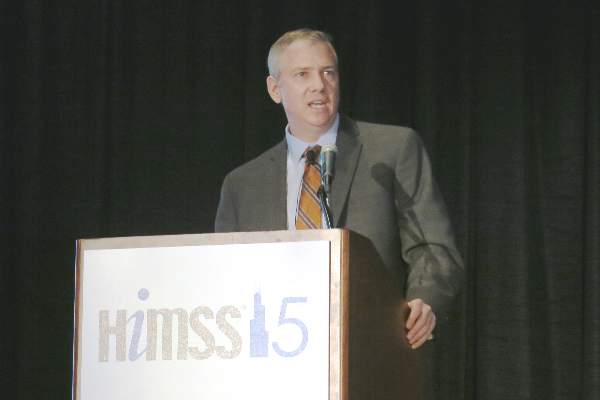
The reasons are simple: stolen health care records have a longer shelf life and offer a higher payout on the black market, James Trainor, deputy assistant director of the Federal Bureau of Investigation’s Cyber Division, said at the annual meeting of the Healthcare Information Management Systems Society.
When credit cards are stolen it’s pretty easy to identify the information on cyber crime forums and compensate for loss, so the value of that stolen credit card or bank record has a certain shelf life. For health care records, it’s harder to identify where those stolen records may end up and as such it creates a greater challenge for law enforcement.
The opportunity to exploit and monetize stolen health care data for various forms of fraud such as identity, Medicaid, tax, medical device, and pharmaceutical fraud increases the value at which they can be sold online.
“Actually, it’s one of the primary reasons why criminal organizations go after health care records,” Mr. Trainor said.
Not surprisingly, the FBI rates health care data theft as a Tier 1 priority, capable of causing “catastrophic or severe harm.”
And the problem is growing. Two years ago, a significant cyber intrusion occurred every 2 weeks; now it happens every 2-3 days.
“The pace is growing rapidly, the volume of data that’s being [stolen] is substantially increasing, and it just requires a much more robust response across the U.S. government and private sector,” said Mr. Trainor, who helped investigate the December 2014 Sony cyber attack.
Some of the unique challenges to the health care sector are the use of legacy computer systems, “bring your own device” policies, and increased volume of data following the transition to electronic health records, and stolen protected health information isn’t readily discovered, he said. The range, size, and capability of IT infrastructure varies dramatically as do the funding and resources needed to keep up with the rapidly changing IT field.
Other challenges include video conferencing systems, digital video systems used for consultations and remote procedures, and Internet-connected medical devices such as insulin pumps, pacemakers, and MRI machines, said Kevin Hemsley, a project manager at the Idaho National Laboratory supporting the Department of Homeland Security’s Industrial Control Systems Computer Emergency Response Team.

While providers love the ability to use the Internet to control and monitor devices, ingrained security mechanisms can be minimal. This makes for low-hanging fruit for thieves who can enter the system and even lock up an otherwise safe device.
Mr. Hemsley noted that a 2014 report by the Internet security and training firm SANS found that 33% of malicious traffic passed through or was transmitted from VPN applications and devices versus 16% from firewalls, 7% from routers, and 3% from enterprise network controllers.
“One of the messages here is to look at cyber security as being more than HIPPA, it’s patient safety,” he said.
Both experts advised physicians and other health care providers to update their privacy and security software frequently. Available resources include the FBI’s 24-hour CyWatch (855-292-3937/[email protected]), Cyber Task Force (with 56 local field offices), and for individuals, the Internet Crime Complaint Center (www.ic3.gov).
Speedy communication with officials following a data breech is important not just to get the institution’s system back up and running, but it allows officials to identify data footprints left by hackers before they are destroyed, Mr. Trainor said.
In two of the three recent high profile health care cyber attacks involving Community Health Systems (4.5 million accounts), Anthem Blue Cross Blue Shield (78 million records), and Premera Blue Cross (11 million consumers), the institutions contacted the FBI, but in one unnamed case, the FBI had to make the call, he pointed out.
CHICAGO – Health care data theft represents a far greater threat than theft of credit card, financial, and banking information.
The reasons are simple: stolen health care records have a longer shelf life and offer a higher payout on the black market, James Trainor, deputy assistant director of the Federal Bureau of Investigation’s Cyber Division, said at the annual meeting of the Healthcare Information Management Systems Society.
When credit cards are stolen it’s pretty easy to identify the information on cyber crime forums and compensate for loss, so the value of that stolen credit card or bank record has a certain shelf life. For health care records, it’s harder to identify where those stolen records may end up and as such it creates a greater challenge for law enforcement.
The opportunity to exploit and monetize stolen health care data for various forms of fraud such as identity, Medicaid, tax, medical device, and pharmaceutical fraud increases the value at which they can be sold online.
“Actually, it’s one of the primary reasons why criminal organizations go after health care records,” Mr. Trainor said.
Not surprisingly, the FBI rates health care data theft as a Tier 1 priority, capable of causing “catastrophic or severe harm.”
And the problem is growing. Two years ago, a significant cyber intrusion occurred every 2 weeks; now it happens every 2-3 days.
“The pace is growing rapidly, the volume of data that’s being [stolen] is substantially increasing, and it just requires a much more robust response across the U.S. government and private sector,” said Mr. Trainor, who helped investigate the December 2014 Sony cyber attack.
Some of the unique challenges to the health care sector are the use of legacy computer systems, “bring your own device” policies, and increased volume of data following the transition to electronic health records, and stolen protected health information isn’t readily discovered, he said. The range, size, and capability of IT infrastructure varies dramatically as do the funding and resources needed to keep up with the rapidly changing IT field.
Other challenges include video conferencing systems, digital video systems used for consultations and remote procedures, and Internet-connected medical devices such as insulin pumps, pacemakers, and MRI machines, said Kevin Hemsley, a project manager at the Idaho National Laboratory supporting the Department of Homeland Security’s Industrial Control Systems Computer Emergency Response Team.
While providers love the ability to use the Internet to control and monitor devices, ingrained security mechanisms can be minimal. This makes for low-hanging fruit for thieves who can enter the system and even lock up an otherwise safe device.
Mr. Hemsley noted that a 2014 report by the Internet security and training firm SANS found that 33% of malicious traffic passed through or was transmitted from VPN applications and devices versus 16% from firewalls, 7% from routers, and 3% from enterprise network controllers.
“One of the messages here is to look at cyber security as being more than HIPPA, it’s patient safety,” he said.
Both experts advised physicians and other health care providers to update their privacy and security software frequently. Available resources include the FBI’s 24-hour CyWatch (855-292-3937/[email protected]), Cyber Task Force (with 56 local field offices), and for individuals, the Internet Crime Complaint Center (www.ic3.gov).
Speedy communication with officials following a data breech is important not just to get the institution’s system back up and running, but it allows officials to identify data footprints left by hackers before they are destroyed, Mr. Trainor said.
In two of the three recent high profile health care cyber attacks involving Community Health Systems (4.5 million accounts), Anthem Blue Cross Blue Shield (78 million records), and Premera Blue Cross (11 million consumers), the institutions contacted the FBI, but in one unnamed case, the FBI had to make the call, he pointed out.
CHICAGO – Health care data theft represents a far greater threat than theft of credit card, financial, and banking information.
The reasons are simple: stolen health care records have a longer shelf life and offer a higher payout on the black market, James Trainor, deputy assistant director of the Federal Bureau of Investigation’s Cyber Division, said at the annual meeting of the Healthcare Information Management Systems Society.
When credit cards are stolen it’s pretty easy to identify the information on cyber crime forums and compensate for loss, so the value of that stolen credit card or bank record has a certain shelf life. For health care records, it’s harder to identify where those stolen records may end up and as such it creates a greater challenge for law enforcement.
The opportunity to exploit and monetize stolen health care data for various forms of fraud such as identity, Medicaid, tax, medical device, and pharmaceutical fraud increases the value at which they can be sold online.
“Actually, it’s one of the primary reasons why criminal organizations go after health care records,” Mr. Trainor said.
Not surprisingly, the FBI rates health care data theft as a Tier 1 priority, capable of causing “catastrophic or severe harm.”
And the problem is growing. Two years ago, a significant cyber intrusion occurred every 2 weeks; now it happens every 2-3 days.
“The pace is growing rapidly, the volume of data that’s being [stolen] is substantially increasing, and it just requires a much more robust response across the U.S. government and private sector,” said Mr. Trainor, who helped investigate the December 2014 Sony cyber attack.
Some of the unique challenges to the health care sector are the use of legacy computer systems, “bring your own device” policies, and increased volume of data following the transition to electronic health records, and stolen protected health information isn’t readily discovered, he said. The range, size, and capability of IT infrastructure varies dramatically as do the funding and resources needed to keep up with the rapidly changing IT field.
Other challenges include video conferencing systems, digital video systems used for consultations and remote procedures, and Internet-connected medical devices such as insulin pumps, pacemakers, and MRI machines, said Kevin Hemsley, a project manager at the Idaho National Laboratory supporting the Department of Homeland Security’s Industrial Control Systems Computer Emergency Response Team.
While providers love the ability to use the Internet to control and monitor devices, ingrained security mechanisms can be minimal. This makes for low-hanging fruit for thieves who can enter the system and even lock up an otherwise safe device.
Mr. Hemsley noted that a 2014 report by the Internet security and training firm SANS found that 33% of malicious traffic passed through or was transmitted from VPN applications and devices versus 16% from firewalls, 7% from routers, and 3% from enterprise network controllers.
“One of the messages here is to look at cyber security as being more than HIPPA, it’s patient safety,” he said.
Both experts advised physicians and other health care providers to update their privacy and security software frequently. Available resources include the FBI’s 24-hour CyWatch (855-292-3937/[email protected]), Cyber Task Force (with 56 local field offices), and for individuals, the Internet Crime Complaint Center (www.ic3.gov).
Speedy communication with officials following a data breech is important not just to get the institution’s system back up and running, but it allows officials to identify data footprints left by hackers before they are destroyed, Mr. Trainor said.
In two of the three recent high profile health care cyber attacks involving Community Health Systems (4.5 million accounts), Anthem Blue Cross Blue Shield (78 million records), and Premera Blue Cross (11 million consumers), the institutions contacted the FBI, but in one unnamed case, the FBI had to make the call, he pointed out.
EXPERT ANALYSIS FROM HIMSS15
Dangerous Staff Shortages in the IHS
The IHS denied funding for outsourced care 82% of the time last fiscal year, an investigation by KJRH, the NBC-affiliated news station in Tulsa, Oklahoma, revealed. The news team traced the problem to lack of staff. Claremore Hospital in Oklahoma, for instance, had 3 vacant full-time surgeon positions and at the time of the story, just 1 full-time surgeon and 1 temporary surgeon. Fewer surgeons lead to more outsourcing, but outsourced care is more expensive and may often be denied, the news team found.
Related: New Leadership at IHS as McSwain Replaces Roubideaux
When the news team reported the staffing shortage to Rep. Tom Cole (R-OK), he said he would look further into the “penny-wise, pound-foolish” decisions. He added that filling the positions would be more cost effective. According to Rep. Cole, the IHS has had a serious funding shortage for decades, though he has been able to increase funding by 39%. More needs to be done, he admits, saying he was currently working on legislation that would further increase funding.
Related: IHS Hiring More Veterans
Rep. Cole is a member of the Chickasaw Nation and one of only two Native Americans serving in the U.S. House of Representatives.
The IHS denied funding for outsourced care 82% of the time last fiscal year, an investigation by KJRH, the NBC-affiliated news station in Tulsa, Oklahoma, revealed. The news team traced the problem to lack of staff. Claremore Hospital in Oklahoma, for instance, had 3 vacant full-time surgeon positions and at the time of the story, just 1 full-time surgeon and 1 temporary surgeon. Fewer surgeons lead to more outsourcing, but outsourced care is more expensive and may often be denied, the news team found.
Related: New Leadership at IHS as McSwain Replaces Roubideaux
When the news team reported the staffing shortage to Rep. Tom Cole (R-OK), he said he would look further into the “penny-wise, pound-foolish” decisions. He added that filling the positions would be more cost effective. According to Rep. Cole, the IHS has had a serious funding shortage for decades, though he has been able to increase funding by 39%. More needs to be done, he admits, saying he was currently working on legislation that would further increase funding.
Related: IHS Hiring More Veterans
Rep. Cole is a member of the Chickasaw Nation and one of only two Native Americans serving in the U.S. House of Representatives.
The IHS denied funding for outsourced care 82% of the time last fiscal year, an investigation by KJRH, the NBC-affiliated news station in Tulsa, Oklahoma, revealed. The news team traced the problem to lack of staff. Claremore Hospital in Oklahoma, for instance, had 3 vacant full-time surgeon positions and at the time of the story, just 1 full-time surgeon and 1 temporary surgeon. Fewer surgeons lead to more outsourcing, but outsourced care is more expensive and may often be denied, the news team found.
Related: New Leadership at IHS as McSwain Replaces Roubideaux
When the news team reported the staffing shortage to Rep. Tom Cole (R-OK), he said he would look further into the “penny-wise, pound-foolish” decisions. He added that filling the positions would be more cost effective. According to Rep. Cole, the IHS has had a serious funding shortage for decades, though he has been able to increase funding by 39%. More needs to be done, he admits, saying he was currently working on legislation that would further increase funding.
Related: IHS Hiring More Veterans
Rep. Cole is a member of the Chickasaw Nation and one of only two Native Americans serving in the U.S. House of Representatives.
Senate passes SGR repeal
The Senate passed H.R. 2, the Medicare Access and CHIP Reauthorization Act, April 14 by a vote of 92-8.
The bill matches the language that the House passed by an overwhelming majority on March 26 and clears the way for the White House to permanently end the practice of temporary “doc fix” patches necessitated by the Medicare Sustainable Growth Rate formula.
President Obama signed the bill into law April 16.
The bill also extends funding for the Children’s Health Insurance Program for 2 years.
A number of amendments, including attempts to reauthorize CHIP for 4 years and to enforce pay-as-you-go rules that require the bill be fully offset, did not gain the necessary 60 votes for adoption.
The latest cut, a 21% reduction to Medicare physician payments went into effect on April 1, but the Centers for Medicare & Medicaid Services has been holding off on paying claims in anticipation of the bill’s passage. The agency had planned to pay the difference of the claims retroactively if there was a further delay in the passage.
*This article was updated April 17, 2015.
The Senate passed H.R. 2, the Medicare Access and CHIP Reauthorization Act, April 14 by a vote of 92-8.
The bill matches the language that the House passed by an overwhelming majority on March 26 and clears the way for the White House to permanently end the practice of temporary “doc fix” patches necessitated by the Medicare Sustainable Growth Rate formula.
President Obama signed the bill into law April 16.
The bill also extends funding for the Children’s Health Insurance Program for 2 years.
A number of amendments, including attempts to reauthorize CHIP for 4 years and to enforce pay-as-you-go rules that require the bill be fully offset, did not gain the necessary 60 votes for adoption.
The latest cut, a 21% reduction to Medicare physician payments went into effect on April 1, but the Centers for Medicare & Medicaid Services has been holding off on paying claims in anticipation of the bill’s passage. The agency had planned to pay the difference of the claims retroactively if there was a further delay in the passage.
*This article was updated April 17, 2015.
The Senate passed H.R. 2, the Medicare Access and CHIP Reauthorization Act, April 14 by a vote of 92-8.
The bill matches the language that the House passed by an overwhelming majority on March 26 and clears the way for the White House to permanently end the practice of temporary “doc fix” patches necessitated by the Medicare Sustainable Growth Rate formula.
President Obama signed the bill into law April 16.
The bill also extends funding for the Children’s Health Insurance Program for 2 years.
A number of amendments, including attempts to reauthorize CHIP for 4 years and to enforce pay-as-you-go rules that require the bill be fully offset, did not gain the necessary 60 votes for adoption.
The latest cut, a 21% reduction to Medicare physician payments went into effect on April 1, but the Centers for Medicare & Medicaid Services has been holding off on paying claims in anticipation of the bill’s passage. The agency had planned to pay the difference of the claims retroactively if there was a further delay in the passage.
*This article was updated April 17, 2015.
CMS formally proposes changes to EHR reporting period for 2015
Physicians and other health care professionals would need to attest to meeting criteria for the meaningful use of electronic health records for 90 days in 2015, under a proposed change announced by the Centers for Medicare & Medicaid Services April 10.
The agency included a number of other changes in the proposed rule, including reducing the attestation period for those new to the meaningful use program in 2015 and 2016 to 90 days. The proposed rule is scheduled to be published April 15 in the Federal Register.

The proposed rule is designed to align the stage 1 and stage 2 meaningful use criteria with the proposed stage 3 criteria issued earlier this year.
Other changes include moving the hospital meaningful use attestation period to a calendar year for 2015, away from the current fiscal year period. This would give hospitals an additional 3 months to attest to meeting the meaningful use criteria in 2015.
The proposed rule also would reduce the number of patients who must access their patient portal from 5% of patients to “equal to or greater than 1.” The measure tracking secure messaging would be changed from a percentage-based measure to attesting that the secure messaging function is “fully enabled.”
Comments on the proposed rule can be made at www.regulations.gov are due June 15.
Physicians and other health care professionals would need to attest to meeting criteria for the meaningful use of electronic health records for 90 days in 2015, under a proposed change announced by the Centers for Medicare & Medicaid Services April 10.
The agency included a number of other changes in the proposed rule, including reducing the attestation period for those new to the meaningful use program in 2015 and 2016 to 90 days. The proposed rule is scheduled to be published April 15 in the Federal Register.
The proposed rule is designed to align the stage 1 and stage 2 meaningful use criteria with the proposed stage 3 criteria issued earlier this year.
Other changes include moving the hospital meaningful use attestation period to a calendar year for 2015, away from the current fiscal year period. This would give hospitals an additional 3 months to attest to meeting the meaningful use criteria in 2015.
The proposed rule also would reduce the number of patients who must access their patient portal from 5% of patients to “equal to or greater than 1.” The measure tracking secure messaging would be changed from a percentage-based measure to attesting that the secure messaging function is “fully enabled.”
Comments on the proposed rule can be made at www.regulations.gov are due June 15.
Physicians and other health care professionals would need to attest to meeting criteria for the meaningful use of electronic health records for 90 days in 2015, under a proposed change announced by the Centers for Medicare & Medicaid Services April 10.
The agency included a number of other changes in the proposed rule, including reducing the attestation period for those new to the meaningful use program in 2015 and 2016 to 90 days. The proposed rule is scheduled to be published April 15 in the Federal Register.
The proposed rule is designed to align the stage 1 and stage 2 meaningful use criteria with the proposed stage 3 criteria issued earlier this year.
Other changes include moving the hospital meaningful use attestation period to a calendar year for 2015, away from the current fiscal year period. This would give hospitals an additional 3 months to attest to meeting the meaningful use criteria in 2015.
The proposed rule also would reduce the number of patients who must access their patient portal from 5% of patients to “equal to or greater than 1.” The measure tracking secure messaging would be changed from a percentage-based measure to attesting that the secure messaging function is “fully enabled.”
Comments on the proposed rule can be made at www.regulations.gov are due June 15.

CMS: SGR repeal equals less pay in long-term
Despite being billed as a permanent solution to the annual threat of Medicare payment cuts to physicians, a bill repealing the Sustainable Growth Rate formula will not ensure adequate physician payments in the long term, according to actuaries at the Centers for Medicare & Medicaid Services.
In an April 9 report outlining the effect of the Medicare Access and CHIP Reauthorization Act (H.R. 2), the CMS Office of the Actuary said it anticipates “that physician payment rates under H.R. 2 would be lower than scheduled under the current SGR formula by 2048 and would continue to worsen thereafter.

“Absent a change in the method or level of update by subsequent legislation, we expect access to Medicare-participating physicians to become a significant issue in the long term under H.R. 2,” the report’s authors noted.
The actuarial report attributes the long-term issues to a number of the bill’s provisions. First, it notes the expiration in 2025 of updates totaling $500 million per year and a 5% annual bonus, which will result in a payment reduction for most physicians.
Second, “this bill specifies the physician payment update amounts for all years in the future, and these amounts do not vary based on underlying economic conditions, nor are they expected to keep pace with the average rate of physician cost increases,” the report warned. That will result in payments that will be inadequate when rates of inflation are higher or when price updates are not enough to cover cost increases.
Compared with costs under current law, the CMS actuaries estimated the legislation’s net cost to the federal government from 2015 through 2025 would be $102.8 billion.
The SGR repeal bill, which also reauthorizes the Children’s Health Insurance Program for 2 more years, passed in the House March 26 with overwhelming bipartisan support. The bill is expected to pass the Senate after members return April 13 from their spring recess.
Despite being billed as a permanent solution to the annual threat of Medicare payment cuts to physicians, a bill repealing the Sustainable Growth Rate formula will not ensure adequate physician payments in the long term, according to actuaries at the Centers for Medicare & Medicaid Services.
In an April 9 report outlining the effect of the Medicare Access and CHIP Reauthorization Act (H.R. 2), the CMS Office of the Actuary said it anticipates “that physician payment rates under H.R. 2 would be lower than scheduled under the current SGR formula by 2048 and would continue to worsen thereafter.
“Absent a change in the method or level of update by subsequent legislation, we expect access to Medicare-participating physicians to become a significant issue in the long term under H.R. 2,” the report’s authors noted.
The actuarial report attributes the long-term issues to a number of the bill’s provisions. First, it notes the expiration in 2025 of updates totaling $500 million per year and a 5% annual bonus, which will result in a payment reduction for most physicians.
Second, “this bill specifies the physician payment update amounts for all years in the future, and these amounts do not vary based on underlying economic conditions, nor are they expected to keep pace with the average rate of physician cost increases,” the report warned. That will result in payments that will be inadequate when rates of inflation are higher or when price updates are not enough to cover cost increases.
Compared with costs under current law, the CMS actuaries estimated the legislation’s net cost to the federal government from 2015 through 2025 would be $102.8 billion.
The SGR repeal bill, which also reauthorizes the Children’s Health Insurance Program for 2 more years, passed in the House March 26 with overwhelming bipartisan support. The bill is expected to pass the Senate after members return April 13 from their spring recess.
Despite being billed as a permanent solution to the annual threat of Medicare payment cuts to physicians, a bill repealing the Sustainable Growth Rate formula will not ensure adequate physician payments in the long term, according to actuaries at the Centers for Medicare & Medicaid Services.
In an April 9 report outlining the effect of the Medicare Access and CHIP Reauthorization Act (H.R. 2), the CMS Office of the Actuary said it anticipates “that physician payment rates under H.R. 2 would be lower than scheduled under the current SGR formula by 2048 and would continue to worsen thereafter.
“Absent a change in the method or level of update by subsequent legislation, we expect access to Medicare-participating physicians to become a significant issue in the long term under H.R. 2,” the report’s authors noted.
The actuarial report attributes the long-term issues to a number of the bill’s provisions. First, it notes the expiration in 2025 of updates totaling $500 million per year and a 5% annual bonus, which will result in a payment reduction for most physicians.
Second, “this bill specifies the physician payment update amounts for all years in the future, and these amounts do not vary based on underlying economic conditions, nor are they expected to keep pace with the average rate of physician cost increases,” the report warned. That will result in payments that will be inadequate when rates of inflation are higher or when price updates are not enough to cover cost increases.
Compared with costs under current law, the CMS actuaries estimated the legislation’s net cost to the federal government from 2015 through 2025 would be $102.8 billion.
The SGR repeal bill, which also reauthorizes the Children’s Health Insurance Program for 2 more years, passed in the House March 26 with overwhelming bipartisan support. The bill is expected to pass the Senate after members return April 13 from their spring recess.

Congressional Act Could Boost Maternity Resources
In 2011, Eugene Declercq, PhD, of Boston University School of Public Health, found that 56% of U.S. counties had no certified nurse midwives; 46% had no obstetricians/gynecologists (OB/GYNs); and 40% had neither providing direct patient care. But a bill introduced in Congress on March 3, 2015, could help rectify that.
Related: Maternal Morbidity: Higher Risk for Minorities
The bill, Improving Access to Maternity Care Act of 2015 (S. 628, H.R. 1209), was introduced by Sen. Mark Kirk (R-IL), Sen. Tammy Baldwin (D-WI), Rep. Michael Burgess (R-TX), and Rep. Lois Capps (D-CA) and would establish a health professional shortage area designation for maternity care services, similar to designations that exist for primary care, dental, and mental health services. Currently, OB/GYNs are recognized under the primary care shortage designation, which fails to adequately address shortages in maternity care, according to Sen. Baldwin’s March 3, 2015, statement.
Related: Acute Upper Abdominal Pain in Early Pregnancy
The new designation would allow the Health Resources and Services Administration to deploy the National Health Service Corps to fill critical shortages, allowing valuable resources to be directed to areas of greatest need, according to Ginger Breedlove, PhD, CNM, APRN, FACNM, president of the American College of Nurse-Midwives.
Related: Overprescription of Opioids in Women of Childbearing Age
“By expanding access to maternity care professionals,” Dr. Breedlove said, “we can reduce extremely high maternity care costs in the U.S. by ensuring that all women can receive supportive prenatal and delivery services.”
In 2011, Eugene Declercq, PhD, of Boston University School of Public Health, found that 56% of U.S. counties had no certified nurse midwives; 46% had no obstetricians/gynecologists (OB/GYNs); and 40% had neither providing direct patient care. But a bill introduced in Congress on March 3, 2015, could help rectify that.
Related: Maternal Morbidity: Higher Risk for Minorities
The bill, Improving Access to Maternity Care Act of 2015 (S. 628, H.R. 1209), was introduced by Sen. Mark Kirk (R-IL), Sen. Tammy Baldwin (D-WI), Rep. Michael Burgess (R-TX), and Rep. Lois Capps (D-CA) and would establish a health professional shortage area designation for maternity care services, similar to designations that exist for primary care, dental, and mental health services. Currently, OB/GYNs are recognized under the primary care shortage designation, which fails to adequately address shortages in maternity care, according to Sen. Baldwin’s March 3, 2015, statement.
Related: Acute Upper Abdominal Pain in Early Pregnancy
The new designation would allow the Health Resources and Services Administration to deploy the National Health Service Corps to fill critical shortages, allowing valuable resources to be directed to areas of greatest need, according to Ginger Breedlove, PhD, CNM, APRN, FACNM, president of the American College of Nurse-Midwives.
Related: Overprescription of Opioids in Women of Childbearing Age
“By expanding access to maternity care professionals,” Dr. Breedlove said, “we can reduce extremely high maternity care costs in the U.S. by ensuring that all women can receive supportive prenatal and delivery services.”
In 2011, Eugene Declercq, PhD, of Boston University School of Public Health, found that 56% of U.S. counties had no certified nurse midwives; 46% had no obstetricians/gynecologists (OB/GYNs); and 40% had neither providing direct patient care. But a bill introduced in Congress on March 3, 2015, could help rectify that.
Related: Maternal Morbidity: Higher Risk for Minorities
The bill, Improving Access to Maternity Care Act of 2015 (S. 628, H.R. 1209), was introduced by Sen. Mark Kirk (R-IL), Sen. Tammy Baldwin (D-WI), Rep. Michael Burgess (R-TX), and Rep. Lois Capps (D-CA) and would establish a health professional shortage area designation for maternity care services, similar to designations that exist for primary care, dental, and mental health services. Currently, OB/GYNs are recognized under the primary care shortage designation, which fails to adequately address shortages in maternity care, according to Sen. Baldwin’s March 3, 2015, statement.
Related: Acute Upper Abdominal Pain in Early Pregnancy
The new designation would allow the Health Resources and Services Administration to deploy the National Health Service Corps to fill critical shortages, allowing valuable resources to be directed to areas of greatest need, according to Ginger Breedlove, PhD, CNM, APRN, FACNM, president of the American College of Nurse-Midwives.
Related: Overprescription of Opioids in Women of Childbearing Age
“By expanding access to maternity care professionals,” Dr. Breedlove said, “we can reduce extremely high maternity care costs in the U.S. by ensuring that all women can receive supportive prenatal and delivery services.”
Implementing Physician Value-Based Purchasing in Your Practice: HM15 Session Analysis
HM15 Session: Putting Your Nickel Down: The What, Why, and How of Implementing Physician Value-Based Purchasing in Your Practice
Presenters: Stephen Besch, Simone Karp RPh, Patrick Torcson MD MMM SFHM, Gregory Seymann MD SFHM

Medicare is transforming itself from a “passive payer” to an “active purchaser” of high quality, efficient healthcare. As such- active participation by physicians, physician groups, and hospitals is required for payment eligibility.
At the physician/group level, hospitalists should be reporting PQRS measures. Incentive payments for PQRS ended in 2014, Medicare is now making “negative payment adjustments.” Penalties are equal to a percentage of all Medicare Part B FFS (Fee-for-Service) charges and there is a 2-year delay between reporting or performance failure and penalization.
Physician Value-Based Purchasing (P-VBP) affects all Eligible Providers (EPs) in 2015. P4P (Pay for Performance) assesses both quality and cost. Aim is for budget neutrality via “quality tiering” which rewards “high quality/low cost” practices with penalties from “low quality/high cost” practices. As of now (2015) ACPs and therapists can be penalized under P-VBP.
Key Points/HM Takeaways:
- Hospitalists should be reporting PQRS measures- penalty phase has begun
- Key PQRS Changes for 2015:
- 6 measures applicable to inpatient billing removed
- no useful inpatient measures added
- penalty avoidance requires 9 measures at 50% or higher rates, covering at least 3 of the 6 NQS (National Quality Strategy) domains- including 1 cross-cutting measure
- all 2015 PQRS data will be posted to Physician Compare website in 2016
- 3 Examples of hospitalist applicable “cross-cutting measures” are
- 47-advance care plan
- 130-documentation of current medications
- 317-preventative care: bp screening
- PQRS data must be reported with respect to MAV clusters (Measure Applicability Validation)- reporting only measure that have no MAV cluster is a safe strategy so long as one of the measures is “cross-cutting”
- Maximum P-VBP penalties automatically apply if group does not report enough PQRS data
- visit CMS website for more information
HM15 Session: Putting Your Nickel Down: The What, Why, and How of Implementing Physician Value-Based Purchasing in Your Practice
Presenters: Stephen Besch, Simone Karp RPh, Patrick Torcson MD MMM SFHM, Gregory Seymann MD SFHM
Medicare is transforming itself from a “passive payer” to an “active purchaser” of high quality, efficient healthcare. As such- active participation by physicians, physician groups, and hospitals is required for payment eligibility.
At the physician/group level, hospitalists should be reporting PQRS measures. Incentive payments for PQRS ended in 2014, Medicare is now making “negative payment adjustments.” Penalties are equal to a percentage of all Medicare Part B FFS (Fee-for-Service) charges and there is a 2-year delay between reporting or performance failure and penalization.
Physician Value-Based Purchasing (P-VBP) affects all Eligible Providers (EPs) in 2015. P4P (Pay for Performance) assesses both quality and cost. Aim is for budget neutrality via “quality tiering” which rewards “high quality/low cost” practices with penalties from “low quality/high cost” practices. As of now (2015) ACPs and therapists can be penalized under P-VBP.
Key Points/HM Takeaways:
- Hospitalists should be reporting PQRS measures- penalty phase has begun
- Key PQRS Changes for 2015:
- 6 measures applicable to inpatient billing removed
- no useful inpatient measures added
- penalty avoidance requires 9 measures at 50% or higher rates, covering at least 3 of the 6 NQS (National Quality Strategy) domains- including 1 cross-cutting measure
- all 2015 PQRS data will be posted to Physician Compare website in 2016
- 3 Examples of hospitalist applicable “cross-cutting measures” are
- 47-advance care plan
- 130-documentation of current medications
- 317-preventative care: bp screening
- PQRS data must be reported with respect to MAV clusters (Measure Applicability Validation)- reporting only measure that have no MAV cluster is a safe strategy so long as one of the measures is “cross-cutting”
- Maximum P-VBP penalties automatically apply if group does not report enough PQRS data
- visit CMS website for more information
HM15 Session: Putting Your Nickel Down: The What, Why, and How of Implementing Physician Value-Based Purchasing in Your Practice
Presenters: Stephen Besch, Simone Karp RPh, Patrick Torcson MD MMM SFHM, Gregory Seymann MD SFHM
Medicare is transforming itself from a “passive payer” to an “active purchaser” of high quality, efficient healthcare. As such- active participation by physicians, physician groups, and hospitals is required for payment eligibility.
At the physician/group level, hospitalists should be reporting PQRS measures. Incentive payments for PQRS ended in 2014, Medicare is now making “negative payment adjustments.” Penalties are equal to a percentage of all Medicare Part B FFS (Fee-for-Service) charges and there is a 2-year delay between reporting or performance failure and penalization.
Physician Value-Based Purchasing (P-VBP) affects all Eligible Providers (EPs) in 2015. P4P (Pay for Performance) assesses both quality and cost. Aim is for budget neutrality via “quality tiering” which rewards “high quality/low cost” practices with penalties from “low quality/high cost” practices. As of now (2015) ACPs and therapists can be penalized under P-VBP.
Key Points/HM Takeaways:
- Hospitalists should be reporting PQRS measures- penalty phase has begun
- Key PQRS Changes for 2015:
- 6 measures applicable to inpatient billing removed
- no useful inpatient measures added
- penalty avoidance requires 9 measures at 50% or higher rates, covering at least 3 of the 6 NQS (National Quality Strategy) domains- including 1 cross-cutting measure
- all 2015 PQRS data will be posted to Physician Compare website in 2016
- 3 Examples of hospitalist applicable “cross-cutting measures” are
- 47-advance care plan
- 130-documentation of current medications
- 317-preventative care: bp screening
- PQRS data must be reported with respect to MAV clusters (Measure Applicability Validation)- reporting only measure that have no MAV cluster is a safe strategy so long as one of the measures is “cross-cutting”
- Maximum P-VBP penalties automatically apply if group does not report enough PQRS data
- visit CMS website for more information
Hot Topics in Practice Management; HM15 Session Analysis

HM15 Presenters: Roy Sittig MD SFHM, Jeffrey Frank MD MBA, Jodi Braun
Summation: Speakers covered timely topics regarding the Accountable Care Act, namely Medicaid Expansion and Bundled Payment arrangements; and reviewed the seminal paper on “Key Principals and Characteristics of an Effective Hospitalist Medicine Group” and lessons learned in implementing those 10 Key Principles.
Medicaid Expansion: EDs serving the 29 Medicaid expansion states are reporting higher volumes, likely due to 11.4million new lives now insured under the ACA. While the ACA does provide for higher Medicaid payment rates thus far, only 34% of providers accept Medicaid, a 21% drop since the ACA went into effect.
Bundled Payment Arrangements:
- Bundled Payment Care Initiative (BPCI) lexicon:
- Model 2-Episode Anchor (anchor admission) AND 90days post d/c; Medicare pays 98% of usual cost
- Model 3-90days post d/c AFTER anchor admission; Medicare pays 97% of usual cost
- Convener-entity that brings providers together and enters into CMS agreement to bear risk for bundles
- Awardee (entity having agreement with Medicare to assume risk and receive payment via BPCI) and Convener own the Bundle
- Episode initiator (EI) triggers “bundle period”
- Bundles based on DRG
10-Key Principles of an Effective Hospitalist Medicine Group:
- Effective Leadership
- Engaged Hospitalists
- Adequate Resources
- Planning and Management Infrastructure
- Alignment with Hospital/Health System
- Care Coordination Across Settings
- Leadership in Key Clinical Issues in the Hospital/Health System
- Thoughtful Approach to Scope of Activity
- Patient/Family-Centered, Team-Based Care; Effective Communication
- Recruiting/Retaining Qualified Clinicians
Key Points/HM Takeaways:
Medicaid Expansion- many of the 11.4M newly insured lives under the ACA have moved into Medicaid. Only about 1/3 of providers now accept Medicaid- 1 in 5 covered persons now have Medicaid, nearly 20% increase since 2013.
Bundled Payments- Majority of savings opportunity lies in Post-Acute Care. Awardee and Convener make profit is total cost is less than 98% of Target Price. In gainsharing agreements individuals can be reimbursed up to 150% usual Medicare rate. Pay occurs in usual Medicare fashion but is reconciled 60-90 days after end of bundle. For more information: http://innovation.cms.gov/initiatives/bundled-payments/
Effective HM Groups- Three important areas for focus when beginning to address group performance are: engaged hospitalists, planning and management infrastructure, care coordination across settings. These three topics have broad reaching implications into the hospitalist practice and patient care. [Cawley P, et al. Journal of Hospital Medicine 2014; 9(2):123-128]
HM15 Presenters: Roy Sittig MD SFHM, Jeffrey Frank MD MBA, Jodi Braun
Summation: Speakers covered timely topics regarding the Accountable Care Act, namely Medicaid Expansion and Bundled Payment arrangements; and reviewed the seminal paper on “Key Principals and Characteristics of an Effective Hospitalist Medicine Group” and lessons learned in implementing those 10 Key Principles.
Medicaid Expansion: EDs serving the 29 Medicaid expansion states are reporting higher volumes, likely due to 11.4million new lives now insured under the ACA. While the ACA does provide for higher Medicaid payment rates thus far, only 34% of providers accept Medicaid, a 21% drop since the ACA went into effect.
Bundled Payment Arrangements:
- Bundled Payment Care Initiative (BPCI) lexicon:
- Model 2-Episode Anchor (anchor admission) AND 90days post d/c; Medicare pays 98% of usual cost
- Model 3-90days post d/c AFTER anchor admission; Medicare pays 97% of usual cost
- Convener-entity that brings providers together and enters into CMS agreement to bear risk for bundles
- Awardee (entity having agreement with Medicare to assume risk and receive payment via BPCI) and Convener own the Bundle
- Episode initiator (EI) triggers “bundle period”
- Bundles based on DRG
10-Key Principles of an Effective Hospitalist Medicine Group:
- Effective Leadership
- Engaged Hospitalists
- Adequate Resources
- Planning and Management Infrastructure
- Alignment with Hospital/Health System
- Care Coordination Across Settings
- Leadership in Key Clinical Issues in the Hospital/Health System
- Thoughtful Approach to Scope of Activity
- Patient/Family-Centered, Team-Based Care; Effective Communication
- Recruiting/Retaining Qualified Clinicians
Key Points/HM Takeaways:
Medicaid Expansion- many of the 11.4M newly insured lives under the ACA have moved into Medicaid. Only about 1/3 of providers now accept Medicaid- 1 in 5 covered persons now have Medicaid, nearly 20% increase since 2013.
Bundled Payments- Majority of savings opportunity lies in Post-Acute Care. Awardee and Convener make profit is total cost is less than 98% of Target Price. In gainsharing agreements individuals can be reimbursed up to 150% usual Medicare rate. Pay occurs in usual Medicare fashion but is reconciled 60-90 days after end of bundle. For more information: http://innovation.cms.gov/initiatives/bundled-payments/
Effective HM Groups- Three important areas for focus when beginning to address group performance are: engaged hospitalists, planning and management infrastructure, care coordination across settings. These three topics have broad reaching implications into the hospitalist practice and patient care. [Cawley P, et al. Journal of Hospital Medicine 2014; 9(2):123-128]
HM15 Presenters: Roy Sittig MD SFHM, Jeffrey Frank MD MBA, Jodi Braun
Summation: Speakers covered timely topics regarding the Accountable Care Act, namely Medicaid Expansion and Bundled Payment arrangements; and reviewed the seminal paper on “Key Principals and Characteristics of an Effective Hospitalist Medicine Group” and lessons learned in implementing those 10 Key Principles.
Medicaid Expansion: EDs serving the 29 Medicaid expansion states are reporting higher volumes, likely due to 11.4million new lives now insured under the ACA. While the ACA does provide for higher Medicaid payment rates thus far, only 34% of providers accept Medicaid, a 21% drop since the ACA went into effect.
Bundled Payment Arrangements:
- Bundled Payment Care Initiative (BPCI) lexicon:
- Model 2-Episode Anchor (anchor admission) AND 90days post d/c; Medicare pays 98% of usual cost
- Model 3-90days post d/c AFTER anchor admission; Medicare pays 97% of usual cost
- Convener-entity that brings providers together and enters into CMS agreement to bear risk for bundles
- Awardee (entity having agreement with Medicare to assume risk and receive payment via BPCI) and Convener own the Bundle
- Episode initiator (EI) triggers “bundle period”
- Bundles based on DRG
10-Key Principles of an Effective Hospitalist Medicine Group:
- Effective Leadership
- Engaged Hospitalists
- Adequate Resources
- Planning and Management Infrastructure
- Alignment with Hospital/Health System
- Care Coordination Across Settings
- Leadership in Key Clinical Issues in the Hospital/Health System
- Thoughtful Approach to Scope of Activity
- Patient/Family-Centered, Team-Based Care; Effective Communication
- Recruiting/Retaining Qualified Clinicians
Key Points/HM Takeaways:
Medicaid Expansion- many of the 11.4M newly insured lives under the ACA have moved into Medicaid. Only about 1/3 of providers now accept Medicaid- 1 in 5 covered persons now have Medicaid, nearly 20% increase since 2013.
Bundled Payments- Majority of savings opportunity lies in Post-Acute Care. Awardee and Convener make profit is total cost is less than 98% of Target Price. In gainsharing agreements individuals can be reimbursed up to 150% usual Medicare rate. Pay occurs in usual Medicare fashion but is reconciled 60-90 days after end of bundle. For more information: http://innovation.cms.gov/initiatives/bundled-payments/
Effective HM Groups- Three important areas for focus when beginning to address group performance are: engaged hospitalists, planning and management infrastructure, care coordination across settings. These three topics have broad reaching implications into the hospitalist practice and patient care. [Cawley P, et al. Journal of Hospital Medicine 2014; 9(2):123-128]

Medicare at 50: High-price therapeutics put Medicare at a crossroad
High-cost advances in diagnosis and treatment are entering medicine each and every month. As Medicare turns 50 this year, how can the program – with its growing number of beneficiaries and their advancing age – cope with the onslaught?

“When we look at the price of something in health care, very often we just look at one bucket,” Amy Miller, Ph.D., executive vice president at the Personalized Medicine Coalition, said in an interview. “We look at the drug bucket or we look at the diagnostic bucket or we look at the hospital bucket or the doctor visit bucket, but when we are talking about the targeted therapy that is more or less known to work for a particular patient with a particular condition, we need to think about the price more broadly. We need to think about the systemic cost savings of getting that drug to the right patient the first time, without failing first on other drugs.”
For some high-priced drugs, that appears to be the case. Take for example the direct-acting antiviral agents (DAA) recently approved to treat hepatitis C (HCV) infection.
“If you have a drug like [sofosbuvir], which is extremely expensive at face value, it may not have such a big long-term effect because [sofosbuvir] is a cure,” said Dr. Soeren Mattke, senior scientist in RAND Corp. in Boston. “So if you take patients with hepatitis C that have a certain trajectory of spending over the next decade or so – treatment, liver transplantation, and the like – it basically wipes out the infection. In the long run, even though the drug is very, very expensive, it may not be such a bad deal for Medicare.”

And while some physicians would like to see these new DAAs prescribed to all appropriate patients with HCV, even they acknowledge that the high price tag can be fiscally constraining in the long run and can handle some restrictions to ease the financial burden.
“If you have a 70-year-old patient who has no evidence of any liver fibrosis and they have lived with hepatitis C for 30 or 40 years, I don’t think it’s unreasonable to suggest that maybe they wait for their therapy until an even less expensive option comes along,” said Dr. Sean Koppe, director of hepatology at University of Illinois at Chicago. “I think if the payer is going to be a little bit restrictive but still allow us to treat the majority of our patients who are showing some signs of fibrosis, I wouldn’t be too bothered by that approach.”
Oncology, another area where high-priced treatments are prevalent, is not as cut and dried in terms of medical outcomes as HCV.

“Some of the oncology drugs [have a cost of] $50,000-$60,000 per treatment course, but you extend life expectancy of a terminal cancer patient by weeks,” Dr. Mattke said. “So while you are looking at this drug, and they cost practically the same [as some DAAs], the impact is quite different.”
But one bright spot that can potentially help alleviate pricing pressures is the growing emphasis on personalized or precision medicine.
“When we talk about a high-priced therapeutic, we have to remember that not too long ago, when a drug came to market, it was marketed to everyone with a particular condition,” Dr. Miller said. “But when [crizotinib] hit the market, it only treated 4% of those with non–small-cell lung cancer initially based on its approved label.”
Identifying the right users will be key to moderating the impact of high-priced therapeutics.
“But if diagnostics aren’t adequately covered or reimbursed or if a particular therapy is on a higher tier or there’s more risk for the physician, giving that drug to a patient, even if diagnostics indicate it’s the right one, then the models might not work,” Dr. Miller said, adding that she is “encouraged” that the federal government is talking about more active use of precision medicine.
But, according to Dr. Mattke, there are pitfalls to precision medicine, too.
“If personalized medicine means that you are able to design a drug that targets the very specific molecular [structure] of a particular cancer and reverses it, this could be a very, very expensive drug, but it could be totally worth it,” he said. “If personalized medicine means there’s a highly differentiated range of drugs out there that all are so-so effective, you may end up with some marginally valuable drugs at extremely high prices, and yet force Medicare to pay for it because they cannot take cost into consideration.”
When it comes to costly medications and treatments, Medicare’s fee-for-service design isn’t helping either.

“We have a payment system that works through a third party payer, so the person who needs the care is not usually the person who is paying for the care,” said Dr. Jeffery Ward, an oncologist who serves on the clinical practice committee of the American Society of Clinical Oncology. “Prices and the fees are set based on what you do. I don’t get paid better for doing a good job than I would get for doing a cruddy job. [Once,] that served medicine and Medicare well, but now we have a health care crisis.”
Dr. Ward added that incentives are misaligned in a manner that rewards doctors for choosing more expensive drugs and procedures for their patients.
As oncologists, “we are going to have get over our addiction to [being compensated on the] margin on drugs,” Dr. Ward said. “We’re going to have to be able to develop a system and have faith in a system that will pay us fairly for what we do instead of paying us based on what drugs we choose.”

However, Dr. Steven Allen, who chairs the American Society of Hematology committee on practice, said that he doesn’t believe that is a key issue.
“I think you are really only referring to a very small percentage of physicians,” Dr. Allen said. “I think the vast majority of physicians do what’s right for their patients. ... They will choose the best drug for their patients regardless of the reimbursement the physician may receive given that drug.”
Dr. Ward said that to address the need to cover these potent, high-cost treatments, “I think what Medicare is going to have to do at its 50th birthday is figure out how to begin to reward physicians for doing the right thing and for providing quality care instead of simply paying for quantity.”
The federal government is moving in that direction. In January, Health and Human Services Secretary Sylvia Burwell announced a new goal for Medicare: Fifty percent of all payments should be value based by 2018 (N. Engl. J. Med. 2015;372:897-9 [doi 10.1056.NEJMp1500445]). But what exactly does value mean? While that point is debated on a broad scale, one thing that is obvious is that it will require a culture shift on a many levels.
High-cost advances in diagnosis and treatment are entering medicine each and every month. As Medicare turns 50 this year, how can the program – with its growing number of beneficiaries and their advancing age – cope with the onslaught?
“When we look at the price of something in health care, very often we just look at one bucket,” Amy Miller, Ph.D., executive vice president at the Personalized Medicine Coalition, said in an interview. “We look at the drug bucket or we look at the diagnostic bucket or we look at the hospital bucket or the doctor visit bucket, but when we are talking about the targeted therapy that is more or less known to work for a particular patient with a particular condition, we need to think about the price more broadly. We need to think about the systemic cost savings of getting that drug to the right patient the first time, without failing first on other drugs.”
For some high-priced drugs, that appears to be the case. Take for example the direct-acting antiviral agents (DAA) recently approved to treat hepatitis C (HCV) infection.
“If you have a drug like [sofosbuvir], which is extremely expensive at face value, it may not have such a big long-term effect because [sofosbuvir] is a cure,” said Dr. Soeren Mattke, senior scientist in RAND Corp. in Boston. “So if you take patients with hepatitis C that have a certain trajectory of spending over the next decade or so – treatment, liver transplantation, and the like – it basically wipes out the infection. In the long run, even though the drug is very, very expensive, it may not be such a bad deal for Medicare.”
And while some physicians would like to see these new DAAs prescribed to all appropriate patients with HCV, even they acknowledge that the high price tag can be fiscally constraining in the long run and can handle some restrictions to ease the financial burden.
“If you have a 70-year-old patient who has no evidence of any liver fibrosis and they have lived with hepatitis C for 30 or 40 years, I don’t think it’s unreasonable to suggest that maybe they wait for their therapy until an even less expensive option comes along,” said Dr. Sean Koppe, director of hepatology at University of Illinois at Chicago. “I think if the payer is going to be a little bit restrictive but still allow us to treat the majority of our patients who are showing some signs of fibrosis, I wouldn’t be too bothered by that approach.”
Oncology, another area where high-priced treatments are prevalent, is not as cut and dried in terms of medical outcomes as HCV.
“Some of the oncology drugs [have a cost of] $50,000-$60,000 per treatment course, but you extend life expectancy of a terminal cancer patient by weeks,” Dr. Mattke said. “So while you are looking at this drug, and they cost practically the same [as some DAAs], the impact is quite different.”
But one bright spot that can potentially help alleviate pricing pressures is the growing emphasis on personalized or precision medicine.
“When we talk about a high-priced therapeutic, we have to remember that not too long ago, when a drug came to market, it was marketed to everyone with a particular condition,” Dr. Miller said. “But when [crizotinib] hit the market, it only treated 4% of those with non–small-cell lung cancer initially based on its approved label.”
Identifying the right users will be key to moderating the impact of high-priced therapeutics.
“But if diagnostics aren’t adequately covered or reimbursed or if a particular therapy is on a higher tier or there’s more risk for the physician, giving that drug to a patient, even if diagnostics indicate it’s the right one, then the models might not work,” Dr. Miller said, adding that she is “encouraged” that the federal government is talking about more active use of precision medicine.
But, according to Dr. Mattke, there are pitfalls to precision medicine, too.
“If personalized medicine means that you are able to design a drug that targets the very specific molecular [structure] of a particular cancer and reverses it, this could be a very, very expensive drug, but it could be totally worth it,” he said. “If personalized medicine means there’s a highly differentiated range of drugs out there that all are so-so effective, you may end up with some marginally valuable drugs at extremely high prices, and yet force Medicare to pay for it because they cannot take cost into consideration.”
When it comes to costly medications and treatments, Medicare’s fee-for-service design isn’t helping either.
“We have a payment system that works through a third party payer, so the person who needs the care is not usually the person who is paying for the care,” said Dr. Jeffery Ward, an oncologist who serves on the clinical practice committee of the American Society of Clinical Oncology. “Prices and the fees are set based on what you do. I don’t get paid better for doing a good job than I would get for doing a cruddy job. [Once,] that served medicine and Medicare well, but now we have a health care crisis.”
Dr. Ward added that incentives are misaligned in a manner that rewards doctors for choosing more expensive drugs and procedures for their patients.
As oncologists, “we are going to have get over our addiction to [being compensated on the] margin on drugs,” Dr. Ward said. “We’re going to have to be able to develop a system and have faith in a system that will pay us fairly for what we do instead of paying us based on what drugs we choose.”
However, Dr. Steven Allen, who chairs the American Society of Hematology committee on practice, said that he doesn’t believe that is a key issue.
“I think you are really only referring to a very small percentage of physicians,” Dr. Allen said. “I think the vast majority of physicians do what’s right for their patients. ... They will choose the best drug for their patients regardless of the reimbursement the physician may receive given that drug.”
Dr. Ward said that to address the need to cover these potent, high-cost treatments, “I think what Medicare is going to have to do at its 50th birthday is figure out how to begin to reward physicians for doing the right thing and for providing quality care instead of simply paying for quantity.”
The federal government is moving in that direction. In January, Health and Human Services Secretary Sylvia Burwell announced a new goal for Medicare: Fifty percent of all payments should be value based by 2018 (N. Engl. J. Med. 2015;372:897-9 [doi 10.1056.NEJMp1500445]). But what exactly does value mean? While that point is debated on a broad scale, one thing that is obvious is that it will require a culture shift on a many levels.
High-cost advances in diagnosis and treatment are entering medicine each and every month. As Medicare turns 50 this year, how can the program – with its growing number of beneficiaries and their advancing age – cope with the onslaught?
“When we look at the price of something in health care, very often we just look at one bucket,” Amy Miller, Ph.D., executive vice president at the Personalized Medicine Coalition, said in an interview. “We look at the drug bucket or we look at the diagnostic bucket or we look at the hospital bucket or the doctor visit bucket, but when we are talking about the targeted therapy that is more or less known to work for a particular patient with a particular condition, we need to think about the price more broadly. We need to think about the systemic cost savings of getting that drug to the right patient the first time, without failing first on other drugs.”
For some high-priced drugs, that appears to be the case. Take for example the direct-acting antiviral agents (DAA) recently approved to treat hepatitis C (HCV) infection.
“If you have a drug like [sofosbuvir], which is extremely expensive at face value, it may not have such a big long-term effect because [sofosbuvir] is a cure,” said Dr. Soeren Mattke, senior scientist in RAND Corp. in Boston. “So if you take patients with hepatitis C that have a certain trajectory of spending over the next decade or so – treatment, liver transplantation, and the like – it basically wipes out the infection. In the long run, even though the drug is very, very expensive, it may not be such a bad deal for Medicare.”
And while some physicians would like to see these new DAAs prescribed to all appropriate patients with HCV, even they acknowledge that the high price tag can be fiscally constraining in the long run and can handle some restrictions to ease the financial burden.
“If you have a 70-year-old patient who has no evidence of any liver fibrosis and they have lived with hepatitis C for 30 or 40 years, I don’t think it’s unreasonable to suggest that maybe they wait for their therapy until an even less expensive option comes along,” said Dr. Sean Koppe, director of hepatology at University of Illinois at Chicago. “I think if the payer is going to be a little bit restrictive but still allow us to treat the majority of our patients who are showing some signs of fibrosis, I wouldn’t be too bothered by that approach.”
Oncology, another area where high-priced treatments are prevalent, is not as cut and dried in terms of medical outcomes as HCV.
“Some of the oncology drugs [have a cost of] $50,000-$60,000 per treatment course, but you extend life expectancy of a terminal cancer patient by weeks,” Dr. Mattke said. “So while you are looking at this drug, and they cost practically the same [as some DAAs], the impact is quite different.”
But one bright spot that can potentially help alleviate pricing pressures is the growing emphasis on personalized or precision medicine.
“When we talk about a high-priced therapeutic, we have to remember that not too long ago, when a drug came to market, it was marketed to everyone with a particular condition,” Dr. Miller said. “But when [crizotinib] hit the market, it only treated 4% of those with non–small-cell lung cancer initially based on its approved label.”
Identifying the right users will be key to moderating the impact of high-priced therapeutics.
“But if diagnostics aren’t adequately covered or reimbursed or if a particular therapy is on a higher tier or there’s more risk for the physician, giving that drug to a patient, even if diagnostics indicate it’s the right one, then the models might not work,” Dr. Miller said, adding that she is “encouraged” that the federal government is talking about more active use of precision medicine.
But, according to Dr. Mattke, there are pitfalls to precision medicine, too.
“If personalized medicine means that you are able to design a drug that targets the very specific molecular [structure] of a particular cancer and reverses it, this could be a very, very expensive drug, but it could be totally worth it,” he said. “If personalized medicine means there’s a highly differentiated range of drugs out there that all are so-so effective, you may end up with some marginally valuable drugs at extremely high prices, and yet force Medicare to pay for it because they cannot take cost into consideration.”
When it comes to costly medications and treatments, Medicare’s fee-for-service design isn’t helping either.
“We have a payment system that works through a third party payer, so the person who needs the care is not usually the person who is paying for the care,” said Dr. Jeffery Ward, an oncologist who serves on the clinical practice committee of the American Society of Clinical Oncology. “Prices and the fees are set based on what you do. I don’t get paid better for doing a good job than I would get for doing a cruddy job. [Once,] that served medicine and Medicare well, but now we have a health care crisis.”
Dr. Ward added that incentives are misaligned in a manner that rewards doctors for choosing more expensive drugs and procedures for their patients.
As oncologists, “we are going to have get over our addiction to [being compensated on the] margin on drugs,” Dr. Ward said. “We’re going to have to be able to develop a system and have faith in a system that will pay us fairly for what we do instead of paying us based on what drugs we choose.”
However, Dr. Steven Allen, who chairs the American Society of Hematology committee on practice, said that he doesn’t believe that is a key issue.
“I think you are really only referring to a very small percentage of physicians,” Dr. Allen said. “I think the vast majority of physicians do what’s right for their patients. ... They will choose the best drug for their patients regardless of the reimbursement the physician may receive given that drug.”
Dr. Ward said that to address the need to cover these potent, high-cost treatments, “I think what Medicare is going to have to do at its 50th birthday is figure out how to begin to reward physicians for doing the right thing and for providing quality care instead of simply paying for quantity.”
The federal government is moving in that direction. In January, Health and Human Services Secretary Sylvia Burwell announced a new goal for Medicare: Fifty percent of all payments should be value based by 2018 (N. Engl. J. Med. 2015;372:897-9 [doi 10.1056.NEJMp1500445]). But what exactly does value mean? While that point is debated on a broad scale, one thing that is obvious is that it will require a culture shift on a many levels.