User login
Liraglutide indication expanded to include children
according to a news release from the agency. The approval comes after granting the application Priority Review, which means the FDA aimed to take action on it within 6 months instead of the usual 10 months seen with a Standard Review.

Liraglutide injection has been approved for treatment of adults with type 2 diabetes since 2010, but this is the first noninsulin treatment for pediatric patients since metformin received approval for this population in 2000.
“The expanded indication provides an additional treatment option at a time when an increasing number of children are being diagnosed with [type 2 diabetes],” said Lisa Yanoff, MD, acting director of the division of metabolism and endocrinology products in the agency’s Center for Drug Evaluation and Research.
The approval is based on efficacy and safety results from several placebo-controlled trials in adults, and one trial in 134 pediatric patients aged 10 years or older. In the latter trial, which ran for more than 26 weeks, hemoglobin A1c levels fell below 7% in approximately 64% of patients treated with liraglutide injection, compared with 37% of those who received placebo. Those results were seen regardless of whether patients concomitantly used insulin.
Although an increase in hypoglycemia risk has sometimes been seen in adult patients taking liraglutide injection with insulin or other drugs that raise insulin production, this heightened risk was seen in the pediatric patients regardless of whether they took other therapies for diabetes.
Liraglutide injection carries a Boxed Warning, the FDA’s strongest warning, for heightened risk of thyroid C-cell tumors. Therefore, the agency recommends against patients with history or family members with history of medullary thyroid carcinoma or multiple endocrine neoplasia syndrome type 2 using this treatment. Among its other warnings are those pertaining to patients with renal impairment or kidney failure, pancreatitis, and/or acute gallbladder disease.
The most common side effects are nausea, diarrhea, vomiting, decreased appetite, indigestion, and constipation. The full prescribing information can be found on the FDA website.
according to a news release from the agency. The approval comes after granting the application Priority Review, which means the FDA aimed to take action on it within 6 months instead of the usual 10 months seen with a Standard Review.
Liraglutide injection has been approved for treatment of adults with type 2 diabetes since 2010, but this is the first noninsulin treatment for pediatric patients since metformin received approval for this population in 2000.
“The expanded indication provides an additional treatment option at a time when an increasing number of children are being diagnosed with [type 2 diabetes],” said Lisa Yanoff, MD, acting director of the division of metabolism and endocrinology products in the agency’s Center for Drug Evaluation and Research.
The approval is based on efficacy and safety results from several placebo-controlled trials in adults, and one trial in 134 pediatric patients aged 10 years or older. In the latter trial, which ran for more than 26 weeks, hemoglobin A1c levels fell below 7% in approximately 64% of patients treated with liraglutide injection, compared with 37% of those who received placebo. Those results were seen regardless of whether patients concomitantly used insulin.
Although an increase in hypoglycemia risk has sometimes been seen in adult patients taking liraglutide injection with insulin or other drugs that raise insulin production, this heightened risk was seen in the pediatric patients regardless of whether they took other therapies for diabetes.
Liraglutide injection carries a Boxed Warning, the FDA’s strongest warning, for heightened risk of thyroid C-cell tumors. Therefore, the agency recommends against patients with history or family members with history of medullary thyroid carcinoma or multiple endocrine neoplasia syndrome type 2 using this treatment. Among its other warnings are those pertaining to patients with renal impairment or kidney failure, pancreatitis, and/or acute gallbladder disease.
The most common side effects are nausea, diarrhea, vomiting, decreased appetite, indigestion, and constipation. The full prescribing information can be found on the FDA website.
according to a news release from the agency. The approval comes after granting the application Priority Review, which means the FDA aimed to take action on it within 6 months instead of the usual 10 months seen with a Standard Review.
Liraglutide injection has been approved for treatment of adults with type 2 diabetes since 2010, but this is the first noninsulin treatment for pediatric patients since metformin received approval for this population in 2000.
“The expanded indication provides an additional treatment option at a time when an increasing number of children are being diagnosed with [type 2 diabetes],” said Lisa Yanoff, MD, acting director of the division of metabolism and endocrinology products in the agency’s Center for Drug Evaluation and Research.
The approval is based on efficacy and safety results from several placebo-controlled trials in adults, and one trial in 134 pediatric patients aged 10 years or older. In the latter trial, which ran for more than 26 weeks, hemoglobin A1c levels fell below 7% in approximately 64% of patients treated with liraglutide injection, compared with 37% of those who received placebo. Those results were seen regardless of whether patients concomitantly used insulin.
Although an increase in hypoglycemia risk has sometimes been seen in adult patients taking liraglutide injection with insulin or other drugs that raise insulin production, this heightened risk was seen in the pediatric patients regardless of whether they took other therapies for diabetes.
Liraglutide injection carries a Boxed Warning, the FDA’s strongest warning, for heightened risk of thyroid C-cell tumors. Therefore, the agency recommends against patients with history or family members with history of medullary thyroid carcinoma or multiple endocrine neoplasia syndrome type 2 using this treatment. Among its other warnings are those pertaining to patients with renal impairment or kidney failure, pancreatitis, and/or acute gallbladder disease.
The most common side effects are nausea, diarrhea, vomiting, decreased appetite, indigestion, and constipation. The full prescribing information can be found on the FDA website.
Metabolic and work productivity gains follow telemonitored exercise
while also improving productivity and mental health, research suggests.

In the June 13 online edition of Lancet Public Health, Dr. Sven Haufe of the Institute of Sports Medicine at Hannover Medical School in Germany and coauthors report the outcomes of a prospective, parallel-group, assessor-blind study of a telemonitoring-supported exercise intervention in 314 workers at a car factory. Of the participants, 162 did office work, 114 did manual work, and 30 did work that was not classified as falling under the office or manual work categories.
The participants, who had all been diagnosed with metabolic syndrome, were randomized to a 6-month exercise program involving personal counseling, use of a telemonitored activity monitor and regular feedback and consultation with an exercise scientist, or to continue their current lifestyle.
The participants were told to aim to complete 150 minutes of moderately intense physical activity per week for 6 months and to maintain a high level of daily activity. They were asked to maintain an individual heart rate range of 65%-75% relative to measured maximum heart rate when performing activities, such as walking, running, cycling, and using an elliptical trainer.
Participants wore their activity monitor, the Forerunner 35 (Garmin, Germany), on the wrist of their nondominant hand throughout the intervention period and were trained on how to use the device. Wearing time and steps were continuously recorded and recording of time, distance, and heart rate while performing cardiovascular exercise like riding a bicycle could be stopped and started by the participant. “Both continuous and self-started activity data were saved and directly forwarded via an interface from the Garmin server to a server at Hanover Medical school.” Participants also downloaded an application on their smartphones called Rebirth Active, which was specially designed for the study. The purposes of this app were to facilitate a close relationship between the participant and that participant’s supervising exercise scientist and to provide general information on the study, individual training goals, recommended heart rates during activities, tips for increasing physical activity, and the supervisor’s contact information.
Nearly half of the participants in the exercise program achieved at least the scheduled activity target of 150 minutes of physical activity per week, while the mean overall was 147 minutes per week. The researchers observed a significant reduction in mean metabolic syndrome z score in the intervention group – from 0.93 before the start of the study to 0.63 at the end of the program (P less than .0001). The control group’s mean z score level of improvement did not reach statistical significance (P = .167). The intervention was also associated with significant improvements in the metabolic syndrome components waist circumference, fasting glucose concentration, systolic blood pressure, and triglycerides, but not in HDL cholesterol levels. Additionally, the exercise group experienced greater reductions in mean body weight and mean percentage of body fat than the control group.
Workers who took part in the exercise program showed significant improvements in their performance on three subscales of the work ability index, including their current work ability, work ability in relation to demands, and mental resources. The control group showed no significant gains in these areas.
The intervention group also achieved gains in the physical and mental component scores of the quality of life questionnaires, which were significantly greater than those of the control group. Both the intervention and control groups had decreases in severity scores for anxiety and depression, but participants in the exercise program showed greater improvements.
“The observation that improvements in exercise capacity and mental health are associated with changes in work ability shows the need to offer similar interventions broadly across the working population,” the authors wrote, “not only to reduce individual risk of disease, but also to possibly ease the health care burden and economic costs arising from metabolic syndrome conditions in an aging population, an issue that should be addressed in further studies.”
The study was supported by Audi BKK health insurance and the German Research Foundation. No conflicts of interest were declared.
SOURCE: Haufe S et al. Lancet Public Health 2019. Jun 13. doi.: 10.1016/2468-2667(19)30075-1.
while also improving productivity and mental health, research suggests.
In the June 13 online edition of Lancet Public Health, Dr. Sven Haufe of the Institute of Sports Medicine at Hannover Medical School in Germany and coauthors report the outcomes of a prospective, parallel-group, assessor-blind study of a telemonitoring-supported exercise intervention in 314 workers at a car factory. Of the participants, 162 did office work, 114 did manual work, and 30 did work that was not classified as falling under the office or manual work categories.
The participants, who had all been diagnosed with metabolic syndrome, were randomized to a 6-month exercise program involving personal counseling, use of a telemonitored activity monitor and regular feedback and consultation with an exercise scientist, or to continue their current lifestyle.
The participants were told to aim to complete 150 minutes of moderately intense physical activity per week for 6 months and to maintain a high level of daily activity. They were asked to maintain an individual heart rate range of 65%-75% relative to measured maximum heart rate when performing activities, such as walking, running, cycling, and using an elliptical trainer.
Participants wore their activity monitor, the Forerunner 35 (Garmin, Germany), on the wrist of their nondominant hand throughout the intervention period and were trained on how to use the device. Wearing time and steps were continuously recorded and recording of time, distance, and heart rate while performing cardiovascular exercise like riding a bicycle could be stopped and started by the participant. “Both continuous and self-started activity data were saved and directly forwarded via an interface from the Garmin server to a server at Hanover Medical school.” Participants also downloaded an application on their smartphones called Rebirth Active, which was specially designed for the study. The purposes of this app were to facilitate a close relationship between the participant and that participant’s supervising exercise scientist and to provide general information on the study, individual training goals, recommended heart rates during activities, tips for increasing physical activity, and the supervisor’s contact information.
Nearly half of the participants in the exercise program achieved at least the scheduled activity target of 150 minutes of physical activity per week, while the mean overall was 147 minutes per week. The researchers observed a significant reduction in mean metabolic syndrome z score in the intervention group – from 0.93 before the start of the study to 0.63 at the end of the program (P less than .0001). The control group’s mean z score level of improvement did not reach statistical significance (P = .167). The intervention was also associated with significant improvements in the metabolic syndrome components waist circumference, fasting glucose concentration, systolic blood pressure, and triglycerides, but not in HDL cholesterol levels. Additionally, the exercise group experienced greater reductions in mean body weight and mean percentage of body fat than the control group.
Workers who took part in the exercise program showed significant improvements in their performance on three subscales of the work ability index, including their current work ability, work ability in relation to demands, and mental resources. The control group showed no significant gains in these areas.
The intervention group also achieved gains in the physical and mental component scores of the quality of life questionnaires, which were significantly greater than those of the control group. Both the intervention and control groups had decreases in severity scores for anxiety and depression, but participants in the exercise program showed greater improvements.
“The observation that improvements in exercise capacity and mental health are associated with changes in work ability shows the need to offer similar interventions broadly across the working population,” the authors wrote, “not only to reduce individual risk of disease, but also to possibly ease the health care burden and economic costs arising from metabolic syndrome conditions in an aging population, an issue that should be addressed in further studies.”
The study was supported by Audi BKK health insurance and the German Research Foundation. No conflicts of interest were declared.
SOURCE: Haufe S et al. Lancet Public Health 2019. Jun 13. doi.: 10.1016/2468-2667(19)30075-1.
while also improving productivity and mental health, research suggests.
In the June 13 online edition of Lancet Public Health, Dr. Sven Haufe of the Institute of Sports Medicine at Hannover Medical School in Germany and coauthors report the outcomes of a prospective, parallel-group, assessor-blind study of a telemonitoring-supported exercise intervention in 314 workers at a car factory. Of the participants, 162 did office work, 114 did manual work, and 30 did work that was not classified as falling under the office or manual work categories.
The participants, who had all been diagnosed with metabolic syndrome, were randomized to a 6-month exercise program involving personal counseling, use of a telemonitored activity monitor and regular feedback and consultation with an exercise scientist, or to continue their current lifestyle.
The participants were told to aim to complete 150 minutes of moderately intense physical activity per week for 6 months and to maintain a high level of daily activity. They were asked to maintain an individual heart rate range of 65%-75% relative to measured maximum heart rate when performing activities, such as walking, running, cycling, and using an elliptical trainer.
Participants wore their activity monitor, the Forerunner 35 (Garmin, Germany), on the wrist of their nondominant hand throughout the intervention period and were trained on how to use the device. Wearing time and steps were continuously recorded and recording of time, distance, and heart rate while performing cardiovascular exercise like riding a bicycle could be stopped and started by the participant. “Both continuous and self-started activity data were saved and directly forwarded via an interface from the Garmin server to a server at Hanover Medical school.” Participants also downloaded an application on their smartphones called Rebirth Active, which was specially designed for the study. The purposes of this app were to facilitate a close relationship between the participant and that participant’s supervising exercise scientist and to provide general information on the study, individual training goals, recommended heart rates during activities, tips for increasing physical activity, and the supervisor’s contact information.
Nearly half of the participants in the exercise program achieved at least the scheduled activity target of 150 minutes of physical activity per week, while the mean overall was 147 minutes per week. The researchers observed a significant reduction in mean metabolic syndrome z score in the intervention group – from 0.93 before the start of the study to 0.63 at the end of the program (P less than .0001). The control group’s mean z score level of improvement did not reach statistical significance (P = .167). The intervention was also associated with significant improvements in the metabolic syndrome components waist circumference, fasting glucose concentration, systolic blood pressure, and triglycerides, but not in HDL cholesterol levels. Additionally, the exercise group experienced greater reductions in mean body weight and mean percentage of body fat than the control group.
Workers who took part in the exercise program showed significant improvements in their performance on three subscales of the work ability index, including their current work ability, work ability in relation to demands, and mental resources. The control group showed no significant gains in these areas.
The intervention group also achieved gains in the physical and mental component scores of the quality of life questionnaires, which were significantly greater than those of the control group. Both the intervention and control groups had decreases in severity scores for anxiety and depression, but participants in the exercise program showed greater improvements.
“The observation that improvements in exercise capacity and mental health are associated with changes in work ability shows the need to offer similar interventions broadly across the working population,” the authors wrote, “not only to reduce individual risk of disease, but also to possibly ease the health care burden and economic costs arising from metabolic syndrome conditions in an aging population, an issue that should be addressed in further studies.”
The study was supported by Audi BKK health insurance and the German Research Foundation. No conflicts of interest were declared.
SOURCE: Haufe S et al. Lancet Public Health 2019. Jun 13. doi.: 10.1016/2468-2667(19)30075-1.
FROM LANCET PUBLIC HEALTH
Three out of five ain’t bad? Some diabetes measures improved over 17 years
SAN FRANCISCO – New research suggests that.
As the age of statins dawned, cholesterol levels dipped dramatically, while blood pressure levels and smoking prevalence also fell. But hemoglobin A1c levels stubbornly stayed steady, and obesity rates ballooned.
In light of the not entirely impressive numbers, “maybe we need to follow the model of team collaboration we see in the heart care setting,” said study lead author Carla I. Mercado, PhD, an epidemiologist with the Centers for Disease Control & Prevention. She spoke in an interview at the annual scientific sessions of the American Diabetes Association, where she presented the study findings.
For the new study, Dr. Mercado and colleagues used data from the National Health and Nutrition Examination Survey (NHANES) to track the health of adults with diabetes in the United States during 1999-2016. “With all the efforts on diabetes care management, we wanted to see if our efforts are making a difference in the population,” Dr. Mercado said.
The 5,534 participants had self-reported diabetes, were not pregnant, and underwent a physical examination. Throughout the periods examined (1999-2004, 2005-2010, and 2011-2016), the proportion of women remained steady at about one-half. So did the racial makeup, which ranged from 59% to 63% non-Hispanic white, 15% to 18% black, 7% to 10% Mexican-American, and 12% to 15% “other.”
Nearly half were aged 45-64, and 89%-90% had health insurance. There was a significant change in the education levels among those aged 25 and older: The percentage with at least a college degree grew from 14% in 1999-2004 to 21% in 2011-2016, while those with less than a high-school diploma fell from 34% to 23% over that period.
From 1999-2004 to 2011-2016
- Cholesterol: Most notably, the percentage of participants with non-HDL cholesterol levels below 130 mg/dL soared, from 30% to 54%. The CDC considers levels less than 100 mg/dL to be ideal. “I’m sure this is driven by medication use,” Dr. Mercado said.
- Smoking: The percentage of never smokers rose, from 44% to 47% of the subjects, while that of current smokers dropped, from 26% to 21%, a significant difference.
- Hypertension: The percentages with blood pressure levels less than 120/80 mm Hg – considered normal levels by the CDC – rose significantly, from 26% to 30%. “People are a lot more aware of blood pressure,” Dr. Mercado said.
- Glycemic control: HbA1c levels stayed roughly steady. About 10% had levels at or above 10% in both 1999-2004 and 2011-2016, and the number with A1c levels below 6% dipped slightly from 19% to 17%.
- Obesity: The proportion of participants with body mass index levels at or above 30 kg/m2, the line between overweight and obese, rose from 54% to 61%. The percentage of those with BMIs below 25 kg/m2 – considered to have normal weights – fell significantly, from 17% to 12%.
The researchers also looked at the percentage who reached ABCS goals (A1c at or below 9%, blood pressure below 140/90 mm Hg, non-HDL cholesterol under 160 mg/dL, and current nonsmoking status). The percentage who met all of these criteria grew from 26% to 40%, while those who met three of them stayed steady (40%-39%).
The study was funded by the CDC. The study authors report no relevant disclosures.
SAN FRANCISCO – New research suggests that.
As the age of statins dawned, cholesterol levels dipped dramatically, while blood pressure levels and smoking prevalence also fell. But hemoglobin A1c levels stubbornly stayed steady, and obesity rates ballooned.
In light of the not entirely impressive numbers, “maybe we need to follow the model of team collaboration we see in the heart care setting,” said study lead author Carla I. Mercado, PhD, an epidemiologist with the Centers for Disease Control & Prevention. She spoke in an interview at the annual scientific sessions of the American Diabetes Association, where she presented the study findings.
For the new study, Dr. Mercado and colleagues used data from the National Health and Nutrition Examination Survey (NHANES) to track the health of adults with diabetes in the United States during 1999-2016. “With all the efforts on diabetes care management, we wanted to see if our efforts are making a difference in the population,” Dr. Mercado said.
The 5,534 participants had self-reported diabetes, were not pregnant, and underwent a physical examination. Throughout the periods examined (1999-2004, 2005-2010, and 2011-2016), the proportion of women remained steady at about one-half. So did the racial makeup, which ranged from 59% to 63% non-Hispanic white, 15% to 18% black, 7% to 10% Mexican-American, and 12% to 15% “other.”
Nearly half were aged 45-64, and 89%-90% had health insurance. There was a significant change in the education levels among those aged 25 and older: The percentage with at least a college degree grew from 14% in 1999-2004 to 21% in 2011-2016, while those with less than a high-school diploma fell from 34% to 23% over that period.
From 1999-2004 to 2011-2016
- Cholesterol: Most notably, the percentage of participants with non-HDL cholesterol levels below 130 mg/dL soared, from 30% to 54%. The CDC considers levels less than 100 mg/dL to be ideal. “I’m sure this is driven by medication use,” Dr. Mercado said.
- Smoking: The percentage of never smokers rose, from 44% to 47% of the subjects, while that of current smokers dropped, from 26% to 21%, a significant difference.
- Hypertension: The percentages with blood pressure levels less than 120/80 mm Hg – considered normal levels by the CDC – rose significantly, from 26% to 30%. “People are a lot more aware of blood pressure,” Dr. Mercado said.
- Glycemic control: HbA1c levels stayed roughly steady. About 10% had levels at or above 10% in both 1999-2004 and 2011-2016, and the number with A1c levels below 6% dipped slightly from 19% to 17%.
- Obesity: The proportion of participants with body mass index levels at or above 30 kg/m2, the line between overweight and obese, rose from 54% to 61%. The percentage of those with BMIs below 25 kg/m2 – considered to have normal weights – fell significantly, from 17% to 12%.
The researchers also looked at the percentage who reached ABCS goals (A1c at or below 9%, blood pressure below 140/90 mm Hg, non-HDL cholesterol under 160 mg/dL, and current nonsmoking status). The percentage who met all of these criteria grew from 26% to 40%, while those who met three of them stayed steady (40%-39%).
The study was funded by the CDC. The study authors report no relevant disclosures.
SAN FRANCISCO – New research suggests that.
As the age of statins dawned, cholesterol levels dipped dramatically, while blood pressure levels and smoking prevalence also fell. But hemoglobin A1c levels stubbornly stayed steady, and obesity rates ballooned.
In light of the not entirely impressive numbers, “maybe we need to follow the model of team collaboration we see in the heart care setting,” said study lead author Carla I. Mercado, PhD, an epidemiologist with the Centers for Disease Control & Prevention. She spoke in an interview at the annual scientific sessions of the American Diabetes Association, where she presented the study findings.
For the new study, Dr. Mercado and colleagues used data from the National Health and Nutrition Examination Survey (NHANES) to track the health of adults with diabetes in the United States during 1999-2016. “With all the efforts on diabetes care management, we wanted to see if our efforts are making a difference in the population,” Dr. Mercado said.
The 5,534 participants had self-reported diabetes, were not pregnant, and underwent a physical examination. Throughout the periods examined (1999-2004, 2005-2010, and 2011-2016), the proportion of women remained steady at about one-half. So did the racial makeup, which ranged from 59% to 63% non-Hispanic white, 15% to 18% black, 7% to 10% Mexican-American, and 12% to 15% “other.”
Nearly half were aged 45-64, and 89%-90% had health insurance. There was a significant change in the education levels among those aged 25 and older: The percentage with at least a college degree grew from 14% in 1999-2004 to 21% in 2011-2016, while those with less than a high-school diploma fell from 34% to 23% over that period.
From 1999-2004 to 2011-2016
- Cholesterol: Most notably, the percentage of participants with non-HDL cholesterol levels below 130 mg/dL soared, from 30% to 54%. The CDC considers levels less than 100 mg/dL to be ideal. “I’m sure this is driven by medication use,” Dr. Mercado said.
- Smoking: The percentage of never smokers rose, from 44% to 47% of the subjects, while that of current smokers dropped, from 26% to 21%, a significant difference.
- Hypertension: The percentages with blood pressure levels less than 120/80 mm Hg – considered normal levels by the CDC – rose significantly, from 26% to 30%. “People are a lot more aware of blood pressure,” Dr. Mercado said.
- Glycemic control: HbA1c levels stayed roughly steady. About 10% had levels at or above 10% in both 1999-2004 and 2011-2016, and the number with A1c levels below 6% dipped slightly from 19% to 17%.
- Obesity: The proportion of participants with body mass index levels at or above 30 kg/m2, the line between overweight and obese, rose from 54% to 61%. The percentage of those with BMIs below 25 kg/m2 – considered to have normal weights – fell significantly, from 17% to 12%.
The researchers also looked at the percentage who reached ABCS goals (A1c at or below 9%, blood pressure below 140/90 mm Hg, non-HDL cholesterol under 160 mg/dL, and current nonsmoking status). The percentage who met all of these criteria grew from 26% to 40%, while those who met three of them stayed steady (40%-39%).
The study was funded by the CDC. The study authors report no relevant disclosures.
REPORTING FROM ADA 2019
Which antidiabetic for elderly patients? It depends on their CV risk
SAN FRANCISCO – SGLT2 inhibitors did a better job than GLP-1 receptor agonists at preventing heart failure hospitalizations in elderly patients with type 2 diabetes, but at the cost of more strokes, myocardial infarctions, and deaths among those without preexisting cardiovascular disease, according to Harvard University investigators.
Using Medicare claims data and propensity scoring, they matched 43,609 elderly patients who started a sodium-glucose cotransporter 2 (SGLT2) inhibitor for type 2 diabetes, 77% of whom were taking canagliflozin (Invokana), to 43,609 who started a glucagonlike peptide–1 (GLP-1)–receptor agonist, 60% of whom were taking liraglutide (Victoza).
Patients were paired by age, comorbidities, diabetes severity, and dozens of other variables, more than 120 in all. The data window ran from April 2013 through December 2016.
The idea was to compare the drugs directly in order to help clinicians decide which class to choose for older patients as second-line therapy, an important consideration at a time when there’s not much guidance specifically for the elderly, and manufacturers are issuing dueling placebo-controlled trials.
Both classes have shown cardiovascular benefits, but studies were mostly in younger people with preexisting cardiovascular disease (CVD). “The comparative impact of these agents in the older population has not yet been established,” lead investigator Elisabetta Patorno, MD, DrPH, of Harvard University, Boston, said at the annual scientific sessions of the American Diabetes Association.
General themes are emerging from Dr. Patorno’s work; it seems that deciding between the two classes has a lot to do with whether the main concern is heart failure or cardiovascular events. Even so, she said, it’s too early to incorporate the observations into guidelines. The analysis is ongoing, and there are plans to compare impacts on renal disease and other problems.
In the meantime, she and her colleagues found that initiating an SGLT2 inhibitor versus a GLP-1 receptor agonist in the elderly was associated with a 34% decreased risk of heart failure hospitalization (2.5 fewer hospitalizations per 1,000 patient years), with an even larger drop among people who had preexisting CVD.
There was, however, a 41% increased risk of lower limb amputations (0.8 more events per 1,000 patient years) and a 62% increase in diabetic ketoacidosis (DKA, 1 more event), problems previously associated with the class.
Results were comparable – fewer heart failure hospitalizations but more amputations and DKA – when SGLT2 initiation was compared to initiation with dipeptidyl peptidase-4 (DPP-4) inhibitors, another second-line option for type 2 diabetes that includes sitagliptin (Januvia), among others.
There was a 25% increased relative risk of the composite primary outcome of myocardial infarction, stroke, and all-cause mortality when patients without baseline CVD were started on an SGLT2 inhibitor instead of a GLP-1 receptor agonist (3.7 more events per 1,000 patient years). There was no increased risk among patients who already had CVD.
SGLT2 initiation actually had a protective effect, compared with dipeptidyl peptidase-4 inhibitors, with a 23% decreased risk of the composite outcome (6.5 fewer events) among patients both with and without baseline CVD. The findings were all statistically significant.
The average age in the study was 71.5 years; 45% of the subjects were men; 40% had a history of cardiovascular disease; and 60% were on metformin and 24% on insulin at study entry.
The work was funded by the National Institutes of Health. Dr. Patorno disclosed research grants form Boehringer Ingelheim and GlaxoSmithKline. Other investigators reported relationships with numerous pharmaceutical companies.
SAN FRANCISCO – SGLT2 inhibitors did a better job than GLP-1 receptor agonists at preventing heart failure hospitalizations in elderly patients with type 2 diabetes, but at the cost of more strokes, myocardial infarctions, and deaths among those without preexisting cardiovascular disease, according to Harvard University investigators.
Using Medicare claims data and propensity scoring, they matched 43,609 elderly patients who started a sodium-glucose cotransporter 2 (SGLT2) inhibitor for type 2 diabetes, 77% of whom were taking canagliflozin (Invokana), to 43,609 who started a glucagonlike peptide–1 (GLP-1)–receptor agonist, 60% of whom were taking liraglutide (Victoza).
Patients were paired by age, comorbidities, diabetes severity, and dozens of other variables, more than 120 in all. The data window ran from April 2013 through December 2016.
The idea was to compare the drugs directly in order to help clinicians decide which class to choose for older patients as second-line therapy, an important consideration at a time when there’s not much guidance specifically for the elderly, and manufacturers are issuing dueling placebo-controlled trials.
Both classes have shown cardiovascular benefits, but studies were mostly in younger people with preexisting cardiovascular disease (CVD). “The comparative impact of these agents in the older population has not yet been established,” lead investigator Elisabetta Patorno, MD, DrPH, of Harvard University, Boston, said at the annual scientific sessions of the American Diabetes Association.
General themes are emerging from Dr. Patorno’s work; it seems that deciding between the two classes has a lot to do with whether the main concern is heart failure or cardiovascular events. Even so, she said, it’s too early to incorporate the observations into guidelines. The analysis is ongoing, and there are plans to compare impacts on renal disease and other problems.
In the meantime, she and her colleagues found that initiating an SGLT2 inhibitor versus a GLP-1 receptor agonist in the elderly was associated with a 34% decreased risk of heart failure hospitalization (2.5 fewer hospitalizations per 1,000 patient years), with an even larger drop among people who had preexisting CVD.
There was, however, a 41% increased risk of lower limb amputations (0.8 more events per 1,000 patient years) and a 62% increase in diabetic ketoacidosis (DKA, 1 more event), problems previously associated with the class.
Results were comparable – fewer heart failure hospitalizations but more amputations and DKA – when SGLT2 initiation was compared to initiation with dipeptidyl peptidase-4 (DPP-4) inhibitors, another second-line option for type 2 diabetes that includes sitagliptin (Januvia), among others.
There was a 25% increased relative risk of the composite primary outcome of myocardial infarction, stroke, and all-cause mortality when patients without baseline CVD were started on an SGLT2 inhibitor instead of a GLP-1 receptor agonist (3.7 more events per 1,000 patient years). There was no increased risk among patients who already had CVD.
SGLT2 initiation actually had a protective effect, compared with dipeptidyl peptidase-4 inhibitors, with a 23% decreased risk of the composite outcome (6.5 fewer events) among patients both with and without baseline CVD. The findings were all statistically significant.
The average age in the study was 71.5 years; 45% of the subjects were men; 40% had a history of cardiovascular disease; and 60% were on metformin and 24% on insulin at study entry.
The work was funded by the National Institutes of Health. Dr. Patorno disclosed research grants form Boehringer Ingelheim and GlaxoSmithKline. Other investigators reported relationships with numerous pharmaceutical companies.
SAN FRANCISCO – SGLT2 inhibitors did a better job than GLP-1 receptor agonists at preventing heart failure hospitalizations in elderly patients with type 2 diabetes, but at the cost of more strokes, myocardial infarctions, and deaths among those without preexisting cardiovascular disease, according to Harvard University investigators.
Using Medicare claims data and propensity scoring, they matched 43,609 elderly patients who started a sodium-glucose cotransporter 2 (SGLT2) inhibitor for type 2 diabetes, 77% of whom were taking canagliflozin (Invokana), to 43,609 who started a glucagonlike peptide–1 (GLP-1)–receptor agonist, 60% of whom were taking liraglutide (Victoza).
Patients were paired by age, comorbidities, diabetes severity, and dozens of other variables, more than 120 in all. The data window ran from April 2013 through December 2016.
The idea was to compare the drugs directly in order to help clinicians decide which class to choose for older patients as second-line therapy, an important consideration at a time when there’s not much guidance specifically for the elderly, and manufacturers are issuing dueling placebo-controlled trials.
Both classes have shown cardiovascular benefits, but studies were mostly in younger people with preexisting cardiovascular disease (CVD). “The comparative impact of these agents in the older population has not yet been established,” lead investigator Elisabetta Patorno, MD, DrPH, of Harvard University, Boston, said at the annual scientific sessions of the American Diabetes Association.
General themes are emerging from Dr. Patorno’s work; it seems that deciding between the two classes has a lot to do with whether the main concern is heart failure or cardiovascular events. Even so, she said, it’s too early to incorporate the observations into guidelines. The analysis is ongoing, and there are plans to compare impacts on renal disease and other problems.
In the meantime, she and her colleagues found that initiating an SGLT2 inhibitor versus a GLP-1 receptor agonist in the elderly was associated with a 34% decreased risk of heart failure hospitalization (2.5 fewer hospitalizations per 1,000 patient years), with an even larger drop among people who had preexisting CVD.
There was, however, a 41% increased risk of lower limb amputations (0.8 more events per 1,000 patient years) and a 62% increase in diabetic ketoacidosis (DKA, 1 more event), problems previously associated with the class.
Results were comparable – fewer heart failure hospitalizations but more amputations and DKA – when SGLT2 initiation was compared to initiation with dipeptidyl peptidase-4 (DPP-4) inhibitors, another second-line option for type 2 diabetes that includes sitagliptin (Januvia), among others.
There was a 25% increased relative risk of the composite primary outcome of myocardial infarction, stroke, and all-cause mortality when patients without baseline CVD were started on an SGLT2 inhibitor instead of a GLP-1 receptor agonist (3.7 more events per 1,000 patient years). There was no increased risk among patients who already had CVD.
SGLT2 initiation actually had a protective effect, compared with dipeptidyl peptidase-4 inhibitors, with a 23% decreased risk of the composite outcome (6.5 fewer events) among patients both with and without baseline CVD. The findings were all statistically significant.
The average age in the study was 71.5 years; 45% of the subjects were men; 40% had a history of cardiovascular disease; and 60% were on metformin and 24% on insulin at study entry.
The work was funded by the National Institutes of Health. Dr. Patorno disclosed research grants form Boehringer Ingelheim and GlaxoSmithKline. Other investigators reported relationships with numerous pharmaceutical companies.
REPORTING FROM ADA 2019
CGMs on the rise: New goals set time in range
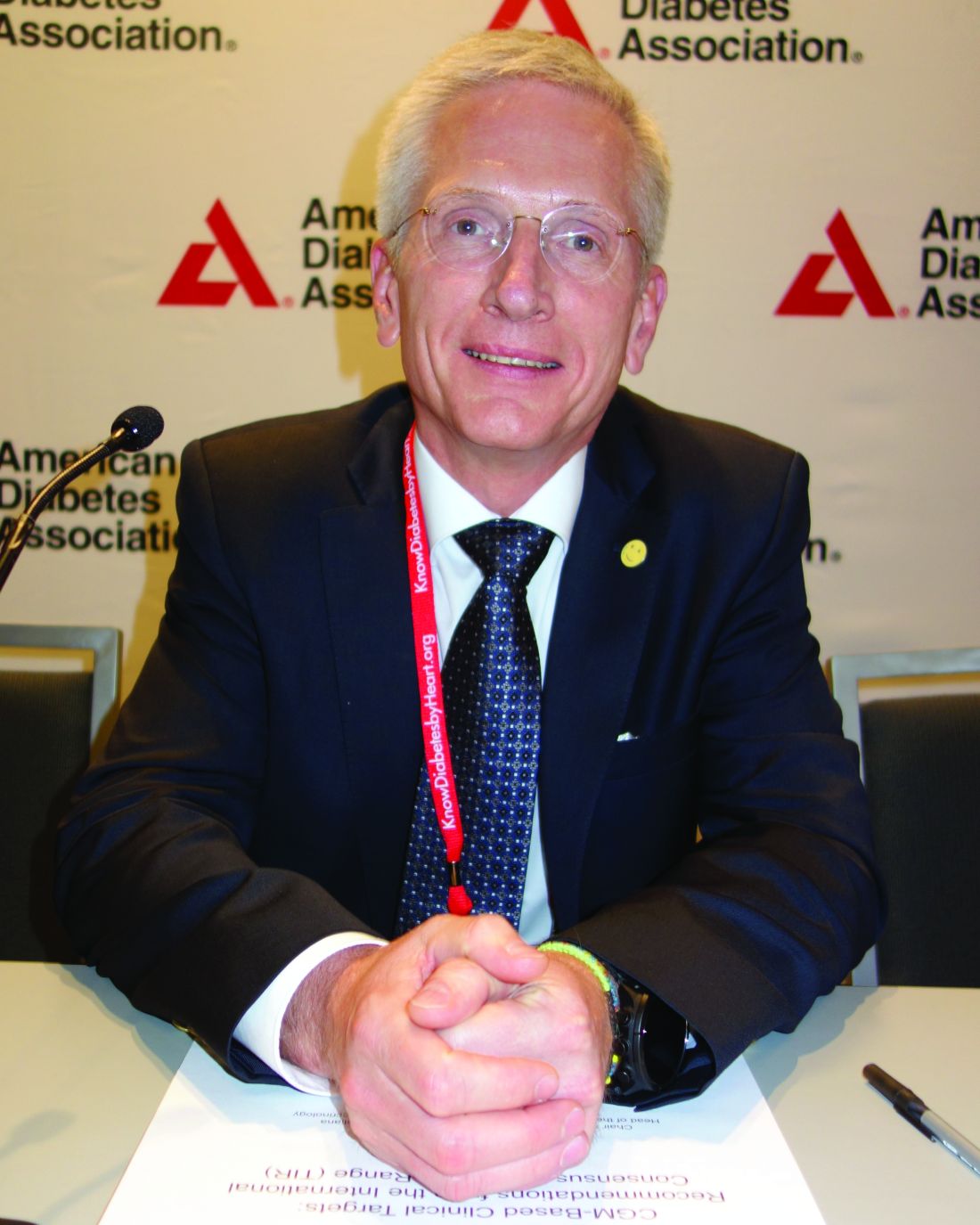
SAN FRANCISCO – Most patients with diabetes should aim to spend at least 17 hours a day – more than 70% of their time – in a blood glucose range of 70-180 mg/dL, according to
Time spent below 70 mg/dL should be less than 1 hour a day, under 4% of the time in other words, and time spent below 54 mg/dL – the cut point for potentially serious hypoglycemia – less than 15 minutes (1%). Time spent at or above 180 mg/dL should be less than 6 hours (25%) a day, and above 250 mg/dL – the cut point for potentially serious hyperglycemia – less than 1 hour and 15 minutes (5%).
The advice comes from an international panel of diabetologists, researchers, and patients convened at the Advanced Technologies and Treatments for Diabetes Congress in Berlin earlier this year.
The goal was to give clinicians and patients handy treatment targets for continuous glucose monitors (CGMs), something that has been missing until now. The targets “should be considered an integral component of CGM data analysis and day-to-day treatment decision making,” said lead author Tadej Battelino, MD, PhD, head of the department of pediatric and adolescent endocrinology at Ljubljana (Slovenia) University, who presented the guidelines at the meeting.
The ADA, the European Association for the Study of Diabetes, and other leading diabetes groups have endorsed them.
CGMs have always offered the promise of tighter glycemic control, and their use is expanding, but they still have not led to a robust improvement in diabetes management, and in at least one study, they actually deteriorated control. There has been doubt about how to use them.
Dr. Battelino and associates thought that the main problem was a lack of clear, easy-to-understand treatment goals. The ADA and others previously recommended a CGM target of 70-180 mg/dL, but stopped short of saying how long people should be in that and other ranges. The new guidelines close the gap by adding the key element of duration.
“We ... pretty much defined what we believe is a safe way to live with diabetes,” Dr. Battelino said at the meeting. The work was based on literature review and expert opinion.
He and his colleagues noted in their journal write-up that for many the goals will be aspirational, but patients and doctors should not give up. The important thing is incremental change, with the hope of eventually meeting the targets. Even a small time-in-range increase reduces the risk of retinopathy and nephropathy, and improves hemoglobin A1c levels.

“You don’t have to get there all at once. Everyone needs to know that, whether they’re 14 or 44,” said coauthor Irl B. Hirsch, MD, chair of diabetes treatment and teaching at the University of Washington, Seattle, who moderated Dr. Battelino’s presentation.
To make the guidelines operational, the team created a simple, intuitive version of the ambulatory glucose profile they hope will be accepted as the new standard by CGM makers and included in device software. It reports the percentage of time in the 70-180 mg/dL range in green, the percentage below range in red, and the percentage above range in yellow. With a glance, both patients and doctors will know what is going on day by day, and what, if anything, needs to change.
The time-in-range bar was set at 50% for older and sicker patients, but their time-below-range goal was reduced from 4% to 1%, to emphasize the need to prevent hypoglycemia.
The target range was lowered for pregnant women to 63-140 mg/dL at least 70% of the time, because blood glucose levels are lower in pregnancy. However, “greater emphasis should be placed on getting to goal as soon as possible” with pregnant women and those planning to get pregnant, the panel said.
The work was funded by a number of companies, including Abbott, AstraZeneca, Dexcom, Eli Lilly, Medtronic, and Novo Nordisk. Dr. Battelino, Dr. Hirsch, and their coauthors reported various ties to those and other companies.
SOURCE: Battelino T et al. Diabetes Care. 2019 Jun 8. doi: 10.2337/dci19-0028.
SAN FRANCISCO – Most patients with diabetes should aim to spend at least 17 hours a day – more than 70% of their time – in a blood glucose range of 70-180 mg/dL, according to
Time spent below 70 mg/dL should be less than 1 hour a day, under 4% of the time in other words, and time spent below 54 mg/dL – the cut point for potentially serious hypoglycemia – less than 15 minutes (1%). Time spent at or above 180 mg/dL should be less than 6 hours (25%) a day, and above 250 mg/dL – the cut point for potentially serious hyperglycemia – less than 1 hour and 15 minutes (5%).
The advice comes from an international panel of diabetologists, researchers, and patients convened at the Advanced Technologies and Treatments for Diabetes Congress in Berlin earlier this year.
The goal was to give clinicians and patients handy treatment targets for continuous glucose monitors (CGMs), something that has been missing until now. The targets “should be considered an integral component of CGM data analysis and day-to-day treatment decision making,” said lead author Tadej Battelino, MD, PhD, head of the department of pediatric and adolescent endocrinology at Ljubljana (Slovenia) University, who presented the guidelines at the meeting.
The ADA, the European Association for the Study of Diabetes, and other leading diabetes groups have endorsed them.
CGMs have always offered the promise of tighter glycemic control, and their use is expanding, but they still have not led to a robust improvement in diabetes management, and in at least one study, they actually deteriorated control. There has been doubt about how to use them.
Dr. Battelino and associates thought that the main problem was a lack of clear, easy-to-understand treatment goals. The ADA and others previously recommended a CGM target of 70-180 mg/dL, but stopped short of saying how long people should be in that and other ranges. The new guidelines close the gap by adding the key element of duration.
“We ... pretty much defined what we believe is a safe way to live with diabetes,” Dr. Battelino said at the meeting. The work was based on literature review and expert opinion.
He and his colleagues noted in their journal write-up that for many the goals will be aspirational, but patients and doctors should not give up. The important thing is incremental change, with the hope of eventually meeting the targets. Even a small time-in-range increase reduces the risk of retinopathy and nephropathy, and improves hemoglobin A1c levels.
“You don’t have to get there all at once. Everyone needs to know that, whether they’re 14 or 44,” said coauthor Irl B. Hirsch, MD, chair of diabetes treatment and teaching at the University of Washington, Seattle, who moderated Dr. Battelino’s presentation.
To make the guidelines operational, the team created a simple, intuitive version of the ambulatory glucose profile they hope will be accepted as the new standard by CGM makers and included in device software. It reports the percentage of time in the 70-180 mg/dL range in green, the percentage below range in red, and the percentage above range in yellow. With a glance, both patients and doctors will know what is going on day by day, and what, if anything, needs to change.
The time-in-range bar was set at 50% for older and sicker patients, but their time-below-range goal was reduced from 4% to 1%, to emphasize the need to prevent hypoglycemia.
The target range was lowered for pregnant women to 63-140 mg/dL at least 70% of the time, because blood glucose levels are lower in pregnancy. However, “greater emphasis should be placed on getting to goal as soon as possible” with pregnant women and those planning to get pregnant, the panel said.
The work was funded by a number of companies, including Abbott, AstraZeneca, Dexcom, Eli Lilly, Medtronic, and Novo Nordisk. Dr. Battelino, Dr. Hirsch, and their coauthors reported various ties to those and other companies.
SOURCE: Battelino T et al. Diabetes Care. 2019 Jun 8. doi: 10.2337/dci19-0028.
SAN FRANCISCO – Most patients with diabetes should aim to spend at least 17 hours a day – more than 70% of their time – in a blood glucose range of 70-180 mg/dL, according to
Time spent below 70 mg/dL should be less than 1 hour a day, under 4% of the time in other words, and time spent below 54 mg/dL – the cut point for potentially serious hypoglycemia – less than 15 minutes (1%). Time spent at or above 180 mg/dL should be less than 6 hours (25%) a day, and above 250 mg/dL – the cut point for potentially serious hyperglycemia – less than 1 hour and 15 minutes (5%).
The advice comes from an international panel of diabetologists, researchers, and patients convened at the Advanced Technologies and Treatments for Diabetes Congress in Berlin earlier this year.
The goal was to give clinicians and patients handy treatment targets for continuous glucose monitors (CGMs), something that has been missing until now. The targets “should be considered an integral component of CGM data analysis and day-to-day treatment decision making,” said lead author Tadej Battelino, MD, PhD, head of the department of pediatric and adolescent endocrinology at Ljubljana (Slovenia) University, who presented the guidelines at the meeting.
The ADA, the European Association for the Study of Diabetes, and other leading diabetes groups have endorsed them.
CGMs have always offered the promise of tighter glycemic control, and their use is expanding, but they still have not led to a robust improvement in diabetes management, and in at least one study, they actually deteriorated control. There has been doubt about how to use them.
Dr. Battelino and associates thought that the main problem was a lack of clear, easy-to-understand treatment goals. The ADA and others previously recommended a CGM target of 70-180 mg/dL, but stopped short of saying how long people should be in that and other ranges. The new guidelines close the gap by adding the key element of duration.
“We ... pretty much defined what we believe is a safe way to live with diabetes,” Dr. Battelino said at the meeting. The work was based on literature review and expert opinion.
He and his colleagues noted in their journal write-up that for many the goals will be aspirational, but patients and doctors should not give up. The important thing is incremental change, with the hope of eventually meeting the targets. Even a small time-in-range increase reduces the risk of retinopathy and nephropathy, and improves hemoglobin A1c levels.
“You don’t have to get there all at once. Everyone needs to know that, whether they’re 14 or 44,” said coauthor Irl B. Hirsch, MD, chair of diabetes treatment and teaching at the University of Washington, Seattle, who moderated Dr. Battelino’s presentation.
To make the guidelines operational, the team created a simple, intuitive version of the ambulatory glucose profile they hope will be accepted as the new standard by CGM makers and included in device software. It reports the percentage of time in the 70-180 mg/dL range in green, the percentage below range in red, and the percentage above range in yellow. With a glance, both patients and doctors will know what is going on day by day, and what, if anything, needs to change.
The time-in-range bar was set at 50% for older and sicker patients, but their time-below-range goal was reduced from 4% to 1%, to emphasize the need to prevent hypoglycemia.
The target range was lowered for pregnant women to 63-140 mg/dL at least 70% of the time, because blood glucose levels are lower in pregnancy. However, “greater emphasis should be placed on getting to goal as soon as possible” with pregnant women and those planning to get pregnant, the panel said.
The work was funded by a number of companies, including Abbott, AstraZeneca, Dexcom, Eli Lilly, Medtronic, and Novo Nordisk. Dr. Battelino, Dr. Hirsch, and their coauthors reported various ties to those and other companies.
SOURCE: Battelino T et al. Diabetes Care. 2019 Jun 8. doi: 10.2337/dci19-0028.
REPORTING FROM ADA 2019
Breast cancer linked to 23% higher risk for new diabetes
SAN FRANCISCO – a new Danish study finds.
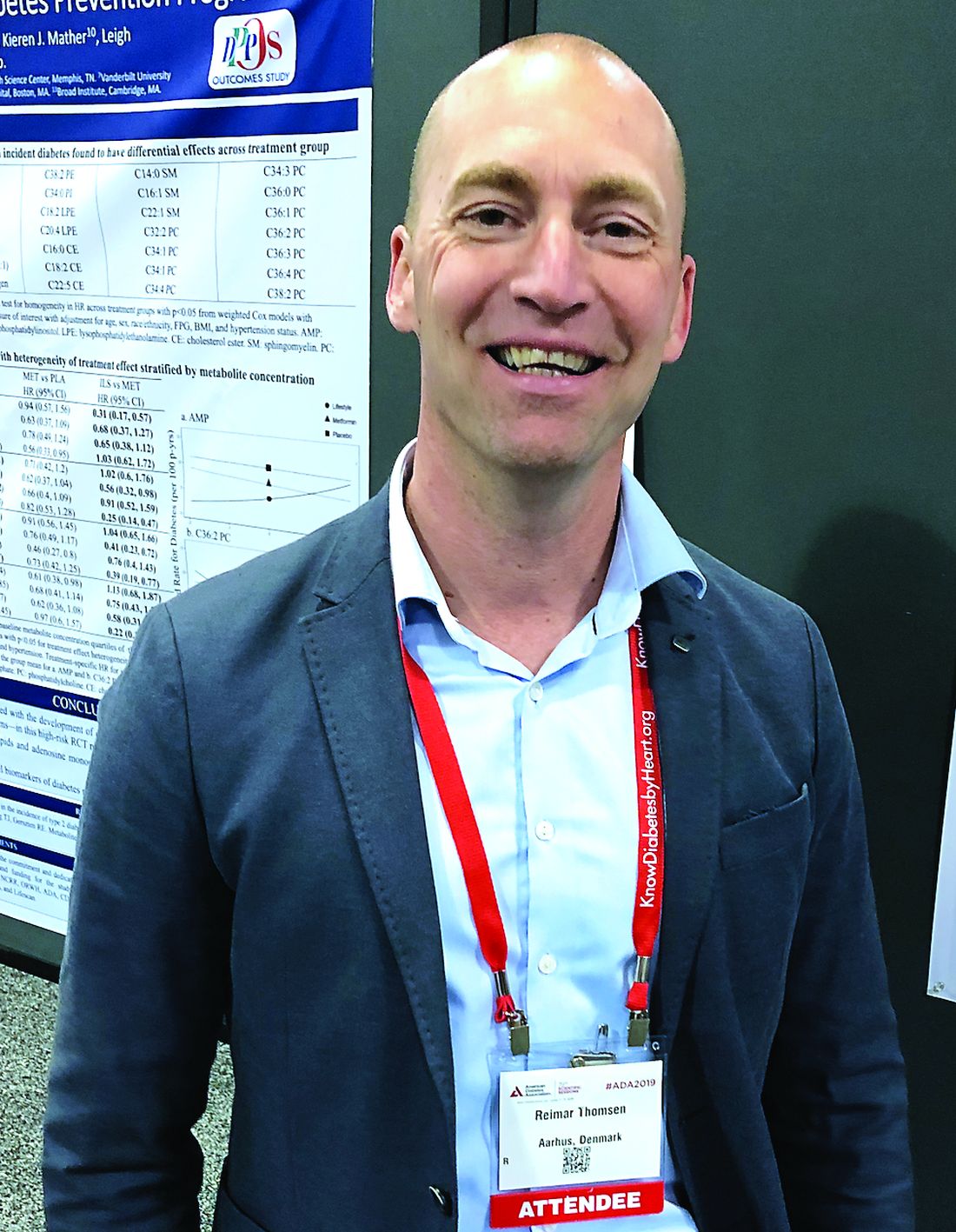
The findings are “quite a clear signal of increased diabetes following breast cancer,” said epidemiologist and study coauthor Reimar W. Thomsen, MD, PhD, of Aarhus (Denmark) University Hospital, in an interview. “It’s very important to tell [patients with breast cancer] what they may expect in the long term.”
He spoke at the annual scientific sessions of the American Diabetes Association, where he presented the study findings.
Much of the research into links between breast cancer and diabetes has focused on whether diabetes is a risk factor for breast cancer, and not the other way around. A 2018 meta-analysis of 18 studies found a slightly higher risk of breast cancer in women with diabetes (summary relative risk, 1.13; 95% confidence interval, 1.04-1.24). However, the researchers found evidence that the risk factor might be adiposity, and not diabetes itself (Diabetes. 2018 Jul;67[Supplement 1]. doi: 10.2337/db18-180-OR).
For the new study, researchers used health registries to track women in Denmark for up to 12 years, during 2005-2016. They compared 33,909 women who were older than 50 years and who had new-onset breast cancer with 313,998 women without breast cancer in a matched comparison cohort. The average age in both groups was 66 years; obesity was rare (4% vs. 3%, respectively), but statin therapy (21% in both groups) and hormone replacement therapy (36% vs. 32%) were more prevalent.
In the first year after a breast cancer diagnosis, the women in the breast cancer group were 15% more likely to develop diabetes (per use of diabetes medication or hospital-diagnosed diabetes) than those in the comparison group (adjusted hazard ratio, 1.15; 95% CI, 1.01-1.30) with adjustments for factors such as age, marital status, residence, medical history, medications, and comorbidity.
Over a median follow-up period of 5.2 years, the risk of diabetes was 23% higher in the breast cancer group, at 8.4 new cases per 1,000 women, compared with 6.8 new cases per 1,000 women in the comparison group (aHR, 1.23; 95% CI, 1.16-1.30). Unadjusted hazard ratios were similar.
Women in the breast cancer group who developed diabetes were more likely to use insulin-based therapy, suggesting they had more severe diabetes, compared with those in the control group (5% vs. 2%, respectively; P less than .00001). They were also more likely to be treated with insulin only (4% vs. 1%, P less than .00001).
It is not clear why patients with breast cancer face a higher risk of diabetes. Dr. Thomsen speculated that cancer drugs might play a role and he noted that cancer itself can cause inflammation and “lead to consequences.”
A 2018 study linked usage of hormone therapies, including tamoxifen (HR, 2.25; 95% CI, 1.19-4.26; P = .013) and aromatase inhibitors (HR, 4.27;95% CI, 1.42-12.84), in patients with breast cancer to higher levels of diabetes, compared with patients who did not use hormone therapy (J Clin Oncol. 2018;36[20]:2061-9).
Dr. Thomsen emphasized that physicians should monitor patients with breast cancer for diabetes. “It develops over time, and the risk is increasing, so you need to be aware of that.”
No study funding was reported. One of the researchers reported numerous ties to a range of drug companies. Dr. Thomsen and the other researchers reported no relevant disclosures.
SAN FRANCISCO – a new Danish study finds.
The findings are “quite a clear signal of increased diabetes following breast cancer,” said epidemiologist and study coauthor Reimar W. Thomsen, MD, PhD, of Aarhus (Denmark) University Hospital, in an interview. “It’s very important to tell [patients with breast cancer] what they may expect in the long term.”
He spoke at the annual scientific sessions of the American Diabetes Association, where he presented the study findings.
Much of the research into links between breast cancer and diabetes has focused on whether diabetes is a risk factor for breast cancer, and not the other way around. A 2018 meta-analysis of 18 studies found a slightly higher risk of breast cancer in women with diabetes (summary relative risk, 1.13; 95% confidence interval, 1.04-1.24). However, the researchers found evidence that the risk factor might be adiposity, and not diabetes itself (Diabetes. 2018 Jul;67[Supplement 1]. doi: 10.2337/db18-180-OR).
For the new study, researchers used health registries to track women in Denmark for up to 12 years, during 2005-2016. They compared 33,909 women who were older than 50 years and who had new-onset breast cancer with 313,998 women without breast cancer in a matched comparison cohort. The average age in both groups was 66 years; obesity was rare (4% vs. 3%, respectively), but statin therapy (21% in both groups) and hormone replacement therapy (36% vs. 32%) were more prevalent.
In the first year after a breast cancer diagnosis, the women in the breast cancer group were 15% more likely to develop diabetes (per use of diabetes medication or hospital-diagnosed diabetes) than those in the comparison group (adjusted hazard ratio, 1.15; 95% CI, 1.01-1.30) with adjustments for factors such as age, marital status, residence, medical history, medications, and comorbidity.
Over a median follow-up period of 5.2 years, the risk of diabetes was 23% higher in the breast cancer group, at 8.4 new cases per 1,000 women, compared with 6.8 new cases per 1,000 women in the comparison group (aHR, 1.23; 95% CI, 1.16-1.30). Unadjusted hazard ratios were similar.
Women in the breast cancer group who developed diabetes were more likely to use insulin-based therapy, suggesting they had more severe diabetes, compared with those in the control group (5% vs. 2%, respectively; P less than .00001). They were also more likely to be treated with insulin only (4% vs. 1%, P less than .00001).
It is not clear why patients with breast cancer face a higher risk of diabetes. Dr. Thomsen speculated that cancer drugs might play a role and he noted that cancer itself can cause inflammation and “lead to consequences.”
A 2018 study linked usage of hormone therapies, including tamoxifen (HR, 2.25; 95% CI, 1.19-4.26; P = .013) and aromatase inhibitors (HR, 4.27;95% CI, 1.42-12.84), in patients with breast cancer to higher levels of diabetes, compared with patients who did not use hormone therapy (J Clin Oncol. 2018;36[20]:2061-9).
Dr. Thomsen emphasized that physicians should monitor patients with breast cancer for diabetes. “It develops over time, and the risk is increasing, so you need to be aware of that.”
No study funding was reported. One of the researchers reported numerous ties to a range of drug companies. Dr. Thomsen and the other researchers reported no relevant disclosures.
SAN FRANCISCO – a new Danish study finds.
The findings are “quite a clear signal of increased diabetes following breast cancer,” said epidemiologist and study coauthor Reimar W. Thomsen, MD, PhD, of Aarhus (Denmark) University Hospital, in an interview. “It’s very important to tell [patients with breast cancer] what they may expect in the long term.”
He spoke at the annual scientific sessions of the American Diabetes Association, where he presented the study findings.
Much of the research into links between breast cancer and diabetes has focused on whether diabetes is a risk factor for breast cancer, and not the other way around. A 2018 meta-analysis of 18 studies found a slightly higher risk of breast cancer in women with diabetes (summary relative risk, 1.13; 95% confidence interval, 1.04-1.24). However, the researchers found evidence that the risk factor might be adiposity, and not diabetes itself (Diabetes. 2018 Jul;67[Supplement 1]. doi: 10.2337/db18-180-OR).
For the new study, researchers used health registries to track women in Denmark for up to 12 years, during 2005-2016. They compared 33,909 women who were older than 50 years and who had new-onset breast cancer with 313,998 women without breast cancer in a matched comparison cohort. The average age in both groups was 66 years; obesity was rare (4% vs. 3%, respectively), but statin therapy (21% in both groups) and hormone replacement therapy (36% vs. 32%) were more prevalent.
In the first year after a breast cancer diagnosis, the women in the breast cancer group were 15% more likely to develop diabetes (per use of diabetes medication or hospital-diagnosed diabetes) than those in the comparison group (adjusted hazard ratio, 1.15; 95% CI, 1.01-1.30) with adjustments for factors such as age, marital status, residence, medical history, medications, and comorbidity.
Over a median follow-up period of 5.2 years, the risk of diabetes was 23% higher in the breast cancer group, at 8.4 new cases per 1,000 women, compared with 6.8 new cases per 1,000 women in the comparison group (aHR, 1.23; 95% CI, 1.16-1.30). Unadjusted hazard ratios were similar.
Women in the breast cancer group who developed diabetes were more likely to use insulin-based therapy, suggesting they had more severe diabetes, compared with those in the control group (5% vs. 2%, respectively; P less than .00001). They were also more likely to be treated with insulin only (4% vs. 1%, P less than .00001).
It is not clear why patients with breast cancer face a higher risk of diabetes. Dr. Thomsen speculated that cancer drugs might play a role and he noted that cancer itself can cause inflammation and “lead to consequences.”
A 2018 study linked usage of hormone therapies, including tamoxifen (HR, 2.25; 95% CI, 1.19-4.26; P = .013) and aromatase inhibitors (HR, 4.27;95% CI, 1.42-12.84), in patients with breast cancer to higher levels of diabetes, compared with patients who did not use hormone therapy (J Clin Oncol. 2018;36[20]:2061-9).
Dr. Thomsen emphasized that physicians should monitor patients with breast cancer for diabetes. “It develops over time, and the risk is increasing, so you need to be aware of that.”
No study funding was reported. One of the researchers reported numerous ties to a range of drug companies. Dr. Thomsen and the other researchers reported no relevant disclosures.
REPORTING FROM ADA 2019
Drastic weight loss prevents progression to type 2 diabetes, PREVIEW data suggest
SAN FRANCISCO – And to the surprise of researchers, the results were the same regardless of dietary and exercise interventions more than 3 years after the initial weight loss.

There’s a big limitation, though: About half of the participants who initially lost weight dropped out during the 3-year study, and data about them are not yet available. Still, only 4% of those who completed the study converted to diabetes, compared with expected rates of as much as 16%.
This is a “fantastic success,” co-lead investigator and physiologist, Ian Macdonald, PhD, of the University of Nottingham (England), said in a presentation of the PREVIEW study at the annual scientific sessions of the American Diabetes Association.
The randomized, controlled, multicenter trial recruited 2,223 participants with prediabetes in several European countries and Australia and New Zealand. The participants, of whom about two-thirds were women, were aged 25-70 years (average, 52 years) and had an average body mass index of 35 kg/m2.
They were assigned to a 2-month, rapid weight-loss program in which they were limited to no more than 800 calories per day. “The participants were fully briefed on the risks to health associated with prediabetes and on the problems of diabetes itself, and they were highly motivated to take part in the study,” Dr. Macdonald said in an interview after the presentation.
A total of 1,857 participants achieved the required weight loss of at least 8% and were then assigned to one of four interventions: a high-protein, low-glycemic diet (either with moderate- or high-intensity physical activity) or a moderate-protein, moderate-glycemic diet (either with moderate- or high-intensity physical activity).
A total of 962 participants remained in the study for another 34 months until completion, with roughly the same number (235-244) in each of the four intervention groups.
The researchers expected that 16% of those in the moderate-diet group would convert to type 2 diabetes, as would 11% of those in the high-protein, low-glycemic group, Dr. Macdonald said in the presentation.
The researchers, who offered limited statistical detail about the study, did not disclose how many participants in each group actually developed diabetes by 36 months (January 2019). Dr. Macdonald said in the interview that those numbers would not be available until the study has been accepted for publication. He noted, however, that the numbers in the two groups were nearly identical, and the researchers disclosed that the overall number was just 4% (n = 62).
That number is “substantially less than would be predicted,” Dr. Macdonald noted in the presentation, adding that “there is no difference” between the interventions.
He said protein consumption in the high-protein diet was not sustained, probably because of lack of adherence. In contrast, the physical activity in the groups increased significantly at the beginning of the study, he said, and “it did not fall off too badly.”
According to Dr. Macdonald, the prevention of progression to diabetes “was almost certainly because of this large, initial weight loss, which was at least partially and impressively sustained. A high-protein, low-glycemic diet was not superior to a moderate-protein, moderate-glycemic diet in relation to prevention of type 2 diabetes.”
The study was funded by the European Union and various other sources, including national funds, in the participating countries. Dr. Macdonald reported advisory board service with Nestlé Research, European Juice Manufacturers, and Mars.
SAN FRANCISCO – And to the surprise of researchers, the results were the same regardless of dietary and exercise interventions more than 3 years after the initial weight loss.
There’s a big limitation, though: About half of the participants who initially lost weight dropped out during the 3-year study, and data about them are not yet available. Still, only 4% of those who completed the study converted to diabetes, compared with expected rates of as much as 16%.
This is a “fantastic success,” co-lead investigator and physiologist, Ian Macdonald, PhD, of the University of Nottingham (England), said in a presentation of the PREVIEW study at the annual scientific sessions of the American Diabetes Association.
The randomized, controlled, multicenter trial recruited 2,223 participants with prediabetes in several European countries and Australia and New Zealand. The participants, of whom about two-thirds were women, were aged 25-70 years (average, 52 years) and had an average body mass index of 35 kg/m2.
They were assigned to a 2-month, rapid weight-loss program in which they were limited to no more than 800 calories per day. “The participants were fully briefed on the risks to health associated with prediabetes and on the problems of diabetes itself, and they were highly motivated to take part in the study,” Dr. Macdonald said in an interview after the presentation.
A total of 1,857 participants achieved the required weight loss of at least 8% and were then assigned to one of four interventions: a high-protein, low-glycemic diet (either with moderate- or high-intensity physical activity) or a moderate-protein, moderate-glycemic diet (either with moderate- or high-intensity physical activity).
A total of 962 participants remained in the study for another 34 months until completion, with roughly the same number (235-244) in each of the four intervention groups.
The researchers expected that 16% of those in the moderate-diet group would convert to type 2 diabetes, as would 11% of those in the high-protein, low-glycemic group, Dr. Macdonald said in the presentation.
The researchers, who offered limited statistical detail about the study, did not disclose how many participants in each group actually developed diabetes by 36 months (January 2019). Dr. Macdonald said in the interview that those numbers would not be available until the study has been accepted for publication. He noted, however, that the numbers in the two groups were nearly identical, and the researchers disclosed that the overall number was just 4% (n = 62).
That number is “substantially less than would be predicted,” Dr. Macdonald noted in the presentation, adding that “there is no difference” between the interventions.
He said protein consumption in the high-protein diet was not sustained, probably because of lack of adherence. In contrast, the physical activity in the groups increased significantly at the beginning of the study, he said, and “it did not fall off too badly.”
According to Dr. Macdonald, the prevention of progression to diabetes “was almost certainly because of this large, initial weight loss, which was at least partially and impressively sustained. A high-protein, low-glycemic diet was not superior to a moderate-protein, moderate-glycemic diet in relation to prevention of type 2 diabetes.”
The study was funded by the European Union and various other sources, including national funds, in the participating countries. Dr. Macdonald reported advisory board service with Nestlé Research, European Juice Manufacturers, and Mars.
SAN FRANCISCO – And to the surprise of researchers, the results were the same regardless of dietary and exercise interventions more than 3 years after the initial weight loss.
There’s a big limitation, though: About half of the participants who initially lost weight dropped out during the 3-year study, and data about them are not yet available. Still, only 4% of those who completed the study converted to diabetes, compared with expected rates of as much as 16%.
This is a “fantastic success,” co-lead investigator and physiologist, Ian Macdonald, PhD, of the University of Nottingham (England), said in a presentation of the PREVIEW study at the annual scientific sessions of the American Diabetes Association.
The randomized, controlled, multicenter trial recruited 2,223 participants with prediabetes in several European countries and Australia and New Zealand. The participants, of whom about two-thirds were women, were aged 25-70 years (average, 52 years) and had an average body mass index of 35 kg/m2.
They were assigned to a 2-month, rapid weight-loss program in which they were limited to no more than 800 calories per day. “The participants were fully briefed on the risks to health associated with prediabetes and on the problems of diabetes itself, and they were highly motivated to take part in the study,” Dr. Macdonald said in an interview after the presentation.
A total of 1,857 participants achieved the required weight loss of at least 8% and were then assigned to one of four interventions: a high-protein, low-glycemic diet (either with moderate- or high-intensity physical activity) or a moderate-protein, moderate-glycemic diet (either with moderate- or high-intensity physical activity).
A total of 962 participants remained in the study for another 34 months until completion, with roughly the same number (235-244) in each of the four intervention groups.
The researchers expected that 16% of those in the moderate-diet group would convert to type 2 diabetes, as would 11% of those in the high-protein, low-glycemic group, Dr. Macdonald said in the presentation.
The researchers, who offered limited statistical detail about the study, did not disclose how many participants in each group actually developed diabetes by 36 months (January 2019). Dr. Macdonald said in the interview that those numbers would not be available until the study has been accepted for publication. He noted, however, that the numbers in the two groups were nearly identical, and the researchers disclosed that the overall number was just 4% (n = 62).
That number is “substantially less than would be predicted,” Dr. Macdonald noted in the presentation, adding that “there is no difference” between the interventions.
He said protein consumption in the high-protein diet was not sustained, probably because of lack of adherence. In contrast, the physical activity in the groups increased significantly at the beginning of the study, he said, and “it did not fall off too badly.”
According to Dr. Macdonald, the prevention of progression to diabetes “was almost certainly because of this large, initial weight loss, which was at least partially and impressively sustained. A high-protein, low-glycemic diet was not superior to a moderate-protein, moderate-glycemic diet in relation to prevention of type 2 diabetes.”
The study was funded by the European Union and various other sources, including national funds, in the participating countries. Dr. Macdonald reported advisory board service with Nestlé Research, European Juice Manufacturers, and Mars.
REPORTING FROM ADA 2019
GLP-1 RA dulaglutide yields cardiac gains, even in non–at-risk patients
SAN FRANCISCO – A large, long-term study is linking yet another glucagon-like peptide–1 receptor agonist diabetes drug to positive cardiovascular outcomes: Patients with type 2 diabetes and heart disease risk factors who took dulaglutide for about 5 years during the REWIND study had a 12% lower risk of major adverse cardiovascular events, compared with those who took placebo.
These new findings on cardiac risk are unusual compared with other newer-generation diabetes drugs, because a high percentage of the participants did not have existing cardiovascular disease. In addition, the study population had a higher percentage of women, compared with previous studies.
“We feel very strongly that the participants were similar to the ... ambulatory patients with type 2 diabetes with cardiovascular risk who are routinely seen in clinical practice,” study coauthor Jeffrey L. Probstfield, MD, of the University of Washington, Seattle, saidin a presentation at the annual scientific sessions of the American Diabetes Association. The findings were published simultaneously in The Lancet (2019 Jun 10. doi: 10.1016/S0140-6736(19)31149-3.
Dulaglutide’s serious adverse-effect profile was similar to that of placebo, the study authors noted, and the drug also showed benefits in renal outcomes, as reported in a separate study (Gerstein HC et al. Lancet. 2019 Jun 10. doi: 10.1016/S0140-6736(19)31150-3.
The Food and Drug Administration has mandated that six glucagon-like peptide–1 receptor agonists (GLP-1 RAs) – albiglutide (Tanzeum), exenatide (Byetta), liraglutide (Victoza), lixisenatide (Adlyxin), semaglutide (Ozempic) and dulaglutide (Trulicity) – undergo testing of cardiovascular outcomes. Dulaglutide is the fourth, following albiglutide, liraglutide, and semaglutide, to show consistent, statistically significant reduction in major adverse cardiovascular events (MACE).
For the double-blind, randomized, placebo-controlled REWIND study, researchers recruited 9,901 participants who were at least 50 years old with type 2 diabetes, a hemoglobin A1c (HbA1c) level of 9.5% or less, and a body mass index of more than 23 kg/m2. The participants came from 371 sites in 24 countries, including the United States and Canada. More than 80% were taking an angiotensin-converting enzyme inhibitor or angiotensin II receptor blocker, and other blood pressure drugs were also common.
The average mean age was 66 years; 46% of the participants were women, three-quarters were white, and 31% had previous cardiovascular disease. Previous GLP-1 RA studies of this type had markedly lower percentages of women – the other studies comprised 30%-39% women – and included higher percentages of participants with previous cardiovascular disease (73%-100%).
Of the participants in the current study, 4,949 were assigned to receive dulaglutide and 4,952 to receive placebo. They were followed for a median 5.4 years. About 57% never stopped using the drug, and 11% of those in the drug group and 7.5% in the placebo group stopped use because of adverse effects.
In regard to diabetes outcomes, HbA1c levels fell in the drug group by a mean –0.61% (95% confidence interval, –0.65 to –0.58; P less than .0001), compared with placebo. Their weight decreased by a mean –1.5 kg (95% CI, -1.7 to -1.3; P less than .0001) Systolic blood pressure and LDL cholesterol levels were slightly lower in the drug group, but heart rate was higher.
On the heart front, MACE fell by 12% in the drug group, compared with placebo (hazard ratio, 0.88; 95% CI, 0.79-0.99; P = .026). “The effect of the intervention begins [within] the first year and continued in a progressive, proportional fashion throughout the follow-up period,” said study lead author Hertzel C. Gerstein, MD, of McMaster University and Hamilton Health Sciences, Hamilton, Ont.

There was an especially large decline in the number of nonfatal stroke cases in the drug group, compared with placebo (135 vs. 175, respectively; HR, 0.76; 95% CI, 0.61-0.95; P = .017). The drug did not have a statistically significant effect on cardiovascular death.
The researchers found no difference in the drug’s effects on MACE in subgroups including age, gender, ethnicity, duration of diabetes, and history of cardiovascular disease.
They also reported a decline in a renal composite outcome (first macroalbuminuria, sustained decline in estimated glomerular filtration rate of 30% or more, chronic renal replacement) in the drug group (HR, 0.85; 95% CI, 0.77-0.93; P = .0004).
Rates of serious adverse effects were similar in the drug and placebo groups. Gastrointestinal adverse effects – including nausea, constipation, and diarrhea – were as expected, Dr. Gerstein said.
“The addition of dulaglutide could be considered for both primary and secondary cardiovascular prevention in middle-aged patients with type 2 diabetes and cardiovascular risk factors,” Dr. Gerstein said.
In an independent commentary at the meeting presentation, Sophia Zoungas, MBBS (Hons), FRCP, PhD, of Monash University, Melbourne, praised the study and applauded the findings.
However, she called attention to the results that pinpointed higher levels of microvascular-related eye outcomes (HR, 1.24; 95% CI, 0.92-1.68) and fatal myocardial infarction (HR, 1.29; 95% CI, 0.72-2.30) in the dulaglutide group. Both of those outcomes were rare – 171 eye outcomes and 46 fatal myocardial infarctions overall. She also questioned whether the adherence rates would be as high in a real-world setting.
Eli Lilly funded the study. Three of the authors were employees of Eli Lilly, eight reported financial relationships with the company, five reported financial relationships with other firms, and the remaining authors reported no competing interests.
SOURCE: Gerstein HC et al. Lancet. 2019 Jun 10. doi: 10.1016/S0140-6736(19)31149-3.
SAN FRANCISCO – A large, long-term study is linking yet another glucagon-like peptide–1 receptor agonist diabetes drug to positive cardiovascular outcomes: Patients with type 2 diabetes and heart disease risk factors who took dulaglutide for about 5 years during the REWIND study had a 12% lower risk of major adverse cardiovascular events, compared with those who took placebo.
These new findings on cardiac risk are unusual compared with other newer-generation diabetes drugs, because a high percentage of the participants did not have existing cardiovascular disease. In addition, the study population had a higher percentage of women, compared with previous studies.
“We feel very strongly that the participants were similar to the ... ambulatory patients with type 2 diabetes with cardiovascular risk who are routinely seen in clinical practice,” study coauthor Jeffrey L. Probstfield, MD, of the University of Washington, Seattle, saidin a presentation at the annual scientific sessions of the American Diabetes Association. The findings were published simultaneously in The Lancet (2019 Jun 10. doi: 10.1016/S0140-6736(19)31149-3.
Dulaglutide’s serious adverse-effect profile was similar to that of placebo, the study authors noted, and the drug also showed benefits in renal outcomes, as reported in a separate study (Gerstein HC et al. Lancet. 2019 Jun 10. doi: 10.1016/S0140-6736(19)31150-3.
The Food and Drug Administration has mandated that six glucagon-like peptide–1 receptor agonists (GLP-1 RAs) – albiglutide (Tanzeum), exenatide (Byetta), liraglutide (Victoza), lixisenatide (Adlyxin), semaglutide (Ozempic) and dulaglutide (Trulicity) – undergo testing of cardiovascular outcomes. Dulaglutide is the fourth, following albiglutide, liraglutide, and semaglutide, to show consistent, statistically significant reduction in major adverse cardiovascular events (MACE).
For the double-blind, randomized, placebo-controlled REWIND study, researchers recruited 9,901 participants who were at least 50 years old with type 2 diabetes, a hemoglobin A1c (HbA1c) level of 9.5% or less, and a body mass index of more than 23 kg/m2. The participants came from 371 sites in 24 countries, including the United States and Canada. More than 80% were taking an angiotensin-converting enzyme inhibitor or angiotensin II receptor blocker, and other blood pressure drugs were also common.
The average mean age was 66 years; 46% of the participants were women, three-quarters were white, and 31% had previous cardiovascular disease. Previous GLP-1 RA studies of this type had markedly lower percentages of women – the other studies comprised 30%-39% women – and included higher percentages of participants with previous cardiovascular disease (73%-100%).
Of the participants in the current study, 4,949 were assigned to receive dulaglutide and 4,952 to receive placebo. They were followed for a median 5.4 years. About 57% never stopped using the drug, and 11% of those in the drug group and 7.5% in the placebo group stopped use because of adverse effects.
In regard to diabetes outcomes, HbA1c levels fell in the drug group by a mean –0.61% (95% confidence interval, –0.65 to –0.58; P less than .0001), compared with placebo. Their weight decreased by a mean –1.5 kg (95% CI, -1.7 to -1.3; P less than .0001) Systolic blood pressure and LDL cholesterol levels were slightly lower in the drug group, but heart rate was higher.
On the heart front, MACE fell by 12% in the drug group, compared with placebo (hazard ratio, 0.88; 95% CI, 0.79-0.99; P = .026). “The effect of the intervention begins [within] the first year and continued in a progressive, proportional fashion throughout the follow-up period,” said study lead author Hertzel C. Gerstein, MD, of McMaster University and Hamilton Health Sciences, Hamilton, Ont.
There was an especially large decline in the number of nonfatal stroke cases in the drug group, compared with placebo (135 vs. 175, respectively; HR, 0.76; 95% CI, 0.61-0.95; P = .017). The drug did not have a statistically significant effect on cardiovascular death.
The researchers found no difference in the drug’s effects on MACE in subgroups including age, gender, ethnicity, duration of diabetes, and history of cardiovascular disease.
They also reported a decline in a renal composite outcome (first macroalbuminuria, sustained decline in estimated glomerular filtration rate of 30% or more, chronic renal replacement) in the drug group (HR, 0.85; 95% CI, 0.77-0.93; P = .0004).
Rates of serious adverse effects were similar in the drug and placebo groups. Gastrointestinal adverse effects – including nausea, constipation, and diarrhea – were as expected, Dr. Gerstein said.
“The addition of dulaglutide could be considered for both primary and secondary cardiovascular prevention in middle-aged patients with type 2 diabetes and cardiovascular risk factors,” Dr. Gerstein said.
In an independent commentary at the meeting presentation, Sophia Zoungas, MBBS (Hons), FRCP, PhD, of Monash University, Melbourne, praised the study and applauded the findings.
However, she called attention to the results that pinpointed higher levels of microvascular-related eye outcomes (HR, 1.24; 95% CI, 0.92-1.68) and fatal myocardial infarction (HR, 1.29; 95% CI, 0.72-2.30) in the dulaglutide group. Both of those outcomes were rare – 171 eye outcomes and 46 fatal myocardial infarctions overall. She also questioned whether the adherence rates would be as high in a real-world setting.
Eli Lilly funded the study. Three of the authors were employees of Eli Lilly, eight reported financial relationships with the company, five reported financial relationships with other firms, and the remaining authors reported no competing interests.
SOURCE: Gerstein HC et al. Lancet. 2019 Jun 10. doi: 10.1016/S0140-6736(19)31149-3.
SAN FRANCISCO – A large, long-term study is linking yet another glucagon-like peptide–1 receptor agonist diabetes drug to positive cardiovascular outcomes: Patients with type 2 diabetes and heart disease risk factors who took dulaglutide for about 5 years during the REWIND study had a 12% lower risk of major adverse cardiovascular events, compared with those who took placebo.
These new findings on cardiac risk are unusual compared with other newer-generation diabetes drugs, because a high percentage of the participants did not have existing cardiovascular disease. In addition, the study population had a higher percentage of women, compared with previous studies.
“We feel very strongly that the participants were similar to the ... ambulatory patients with type 2 diabetes with cardiovascular risk who are routinely seen in clinical practice,” study coauthor Jeffrey L. Probstfield, MD, of the University of Washington, Seattle, saidin a presentation at the annual scientific sessions of the American Diabetes Association. The findings were published simultaneously in The Lancet (2019 Jun 10. doi: 10.1016/S0140-6736(19)31149-3.
Dulaglutide’s serious adverse-effect profile was similar to that of placebo, the study authors noted, and the drug also showed benefits in renal outcomes, as reported in a separate study (Gerstein HC et al. Lancet. 2019 Jun 10. doi: 10.1016/S0140-6736(19)31150-3.
The Food and Drug Administration has mandated that six glucagon-like peptide–1 receptor agonists (GLP-1 RAs) – albiglutide (Tanzeum), exenatide (Byetta), liraglutide (Victoza), lixisenatide (Adlyxin), semaglutide (Ozempic) and dulaglutide (Trulicity) – undergo testing of cardiovascular outcomes. Dulaglutide is the fourth, following albiglutide, liraglutide, and semaglutide, to show consistent, statistically significant reduction in major adverse cardiovascular events (MACE).
For the double-blind, randomized, placebo-controlled REWIND study, researchers recruited 9,901 participants who were at least 50 years old with type 2 diabetes, a hemoglobin A1c (HbA1c) level of 9.5% or less, and a body mass index of more than 23 kg/m2. The participants came from 371 sites in 24 countries, including the United States and Canada. More than 80% were taking an angiotensin-converting enzyme inhibitor or angiotensin II receptor blocker, and other blood pressure drugs were also common.
The average mean age was 66 years; 46% of the participants were women, three-quarters were white, and 31% had previous cardiovascular disease. Previous GLP-1 RA studies of this type had markedly lower percentages of women – the other studies comprised 30%-39% women – and included higher percentages of participants with previous cardiovascular disease (73%-100%).
Of the participants in the current study, 4,949 were assigned to receive dulaglutide and 4,952 to receive placebo. They were followed for a median 5.4 years. About 57% never stopped using the drug, and 11% of those in the drug group and 7.5% in the placebo group stopped use because of adverse effects.
In regard to diabetes outcomes, HbA1c levels fell in the drug group by a mean –0.61% (95% confidence interval, –0.65 to –0.58; P less than .0001), compared with placebo. Their weight decreased by a mean –1.5 kg (95% CI, -1.7 to -1.3; P less than .0001) Systolic blood pressure and LDL cholesterol levels were slightly lower in the drug group, but heart rate was higher.
On the heart front, MACE fell by 12% in the drug group, compared with placebo (hazard ratio, 0.88; 95% CI, 0.79-0.99; P = .026). “The effect of the intervention begins [within] the first year and continued in a progressive, proportional fashion throughout the follow-up period,” said study lead author Hertzel C. Gerstein, MD, of McMaster University and Hamilton Health Sciences, Hamilton, Ont.
There was an especially large decline in the number of nonfatal stroke cases in the drug group, compared with placebo (135 vs. 175, respectively; HR, 0.76; 95% CI, 0.61-0.95; P = .017). The drug did not have a statistically significant effect on cardiovascular death.
The researchers found no difference in the drug’s effects on MACE in subgroups including age, gender, ethnicity, duration of diabetes, and history of cardiovascular disease.
They also reported a decline in a renal composite outcome (first macroalbuminuria, sustained decline in estimated glomerular filtration rate of 30% or more, chronic renal replacement) in the drug group (HR, 0.85; 95% CI, 0.77-0.93; P = .0004).
Rates of serious adverse effects were similar in the drug and placebo groups. Gastrointestinal adverse effects – including nausea, constipation, and diarrhea – were as expected, Dr. Gerstein said.
“The addition of dulaglutide could be considered for both primary and secondary cardiovascular prevention in middle-aged patients with type 2 diabetes and cardiovascular risk factors,” Dr. Gerstein said.
In an independent commentary at the meeting presentation, Sophia Zoungas, MBBS (Hons), FRCP, PhD, of Monash University, Melbourne, praised the study and applauded the findings.
However, she called attention to the results that pinpointed higher levels of microvascular-related eye outcomes (HR, 1.24; 95% CI, 0.92-1.68) and fatal myocardial infarction (HR, 1.29; 95% CI, 0.72-2.30) in the dulaglutide group. Both of those outcomes were rare – 171 eye outcomes and 46 fatal myocardial infarctions overall. She also questioned whether the adherence rates would be as high in a real-world setting.
Eli Lilly funded the study. Three of the authors were employees of Eli Lilly, eight reported financial relationships with the company, five reported financial relationships with other firms, and the remaining authors reported no competing interests.
SOURCE: Gerstein HC et al. Lancet. 2019 Jun 10. doi: 10.1016/S0140-6736(19)31149-3.
REPORTING FROM ADA 2019
Immunotherapy drug teplizumab may stall onset of type 1 diabetes
, according to research presented at the annual scientific sessions of the American Diabetes Association.
In this study, 76 first-degree relatives of individuals with type 1 diabetes – who did not themselves have the disease but were considered at high risk because of antibodies and abnormal glucose tolerance tests – were randomized to a single two-week outpatient course of intravenous teplizumab or saline placebo. The patients, of whom 72% were 18 years of age or younger, were followed for a median of 745 days and had twice-yearly oral glucose tolerance testing.
Overall, 43% of the 44 patients who received teplizumab were diagnosed with type 1 diabetes during the course of the study, compared with 72% of the 32 who received the placebo. The treatment was associated with a 59% reduction in the hazard ratio for type 1 diabetes, even after adjusting for age, the results of a second oral glucose-tolerance testing before randomization, or the presence of anti-GAD65 antibodies.
The median time to diagnosis was 48.4 months in the teplizumab group and 24.4 months in the placebo group. The greatest effect was seen in the first year after randomization, during which only 7% of the teplizumab group were diagnosed with type 1 diabetes, compared with 44% of the placebo group. The findings were published simultaneously in the New England Journal of Medicine.
“The delay of progression to type 1 diabetes is of clinical importance, particularly for children, in whom the diagnosis is associated with adverse outcomes, and given the challenges of daily management of the condition,” said Dr. Kevan C. Herold, professor of immunobiology and medicine at Yale University, New Haven, Conn., and coauthors.
There were significantly more adverse events in the teplizumab group, compared with placebo, with three-quarters of the 20 grade 3 adverse events being lymphopenia during the first 30 days. In all but one participant, however, the lymphopenia resolved by day 45. Participants receiving teplizumab also reported a higher incidence of dermatologic adverse events, such as a spontaneously-resolving rash that was experienced by just over one-third of the group.
The researchers also looked for evidence of T-cell unresponsiveness, which has been previously seen in patients with new-onset type 1 diabetes who received treatment with teplizumab. They noted an increase in a particular type of CD8+ T cell associated with T-cell unresponsiveness at months 3 and 6 in participants treated with teplizumab.
Teplizumab is an Fc receptor-nonbinding monoclonal antibody that has been shown to reduce the loss of beta-cell function in patients with type 1 diabetes (Diabetes. 2013 Nov;62(11):3766-74).
The study was supported by the National Institutes of Health, the Juvenile Diabetes Research Foundation, and the American Diabetes Association, with the study drug and additional site monitoring provided by MacroGenics. Eight authors declared grants, personal fees, and other support from private industry, with one also declaring income and stock options from MacroGenics.
SOURCE: Herold K et al. NEJM. 2019 Jun 9. doi: 10.1056/NEJMoa1902226*
*Correction, 6/9/2019: An earlier version of this story misstated the doi number for the journal article. The number is 10.1056/NEJMoa1902226.
While the results of this trial are striking, there are several caveats that are important to note. The trial did show a significant delay in the onset of type 1 diabetes – with the greatest preventive benefit in the first year of the trial – but these results do not necessarily mean that immune modulation represents a potential cure.
They do, however, provide indirect evidence of the pathogenesis of beta-cell destruction and the potential for newer biologic agents to alter the course of this.
The study also was small and involved only a 2-week course of the treatment. As such, there are still questions to be answered about the duration of treatment, longer-term side effects, sub-groups of patients who may respond differently to treatment, and the longer clinical course of those who do respond to treatment.
Julie R. Ingelfinger, MD, is deputy editor of the New England Journal of Medicine, and Clifford J. Rosen, MD, is from the Maine Medical Center Research Institute and is associate editor of the journal. Their comments are adapted from an accompanying editorial (NEJM 2019, Jun 9. doi: 10.1056/NEJMe1907458). No conflicts of interest were declared.
While the results of this trial are striking, there are several caveats that are important to note. The trial did show a significant delay in the onset of type 1 diabetes – with the greatest preventive benefit in the first year of the trial – but these results do not necessarily mean that immune modulation represents a potential cure.
They do, however, provide indirect evidence of the pathogenesis of beta-cell destruction and the potential for newer biologic agents to alter the course of this.
The study also was small and involved only a 2-week course of the treatment. As such, there are still questions to be answered about the duration of treatment, longer-term side effects, sub-groups of patients who may respond differently to treatment, and the longer clinical course of those who do respond to treatment.
Julie R. Ingelfinger, MD, is deputy editor of the New England Journal of Medicine, and Clifford J. Rosen, MD, is from the Maine Medical Center Research Institute and is associate editor of the journal. Their comments are adapted from an accompanying editorial (NEJM 2019, Jun 9. doi: 10.1056/NEJMe1907458). No conflicts of interest were declared.
While the results of this trial are striking, there are several caveats that are important to note. The trial did show a significant delay in the onset of type 1 diabetes – with the greatest preventive benefit in the first year of the trial – but these results do not necessarily mean that immune modulation represents a potential cure.
They do, however, provide indirect evidence of the pathogenesis of beta-cell destruction and the potential for newer biologic agents to alter the course of this.
The study also was small and involved only a 2-week course of the treatment. As such, there are still questions to be answered about the duration of treatment, longer-term side effects, sub-groups of patients who may respond differently to treatment, and the longer clinical course of those who do respond to treatment.
Julie R. Ingelfinger, MD, is deputy editor of the New England Journal of Medicine, and Clifford J. Rosen, MD, is from the Maine Medical Center Research Institute and is associate editor of the journal. Their comments are adapted from an accompanying editorial (NEJM 2019, Jun 9. doi: 10.1056/NEJMe1907458). No conflicts of interest were declared.
, according to research presented at the annual scientific sessions of the American Diabetes Association.
In this study, 76 first-degree relatives of individuals with type 1 diabetes – who did not themselves have the disease but were considered at high risk because of antibodies and abnormal glucose tolerance tests – were randomized to a single two-week outpatient course of intravenous teplizumab or saline placebo. The patients, of whom 72% were 18 years of age or younger, were followed for a median of 745 days and had twice-yearly oral glucose tolerance testing.
Overall, 43% of the 44 patients who received teplizumab were diagnosed with type 1 diabetes during the course of the study, compared with 72% of the 32 who received the placebo. The treatment was associated with a 59% reduction in the hazard ratio for type 1 diabetes, even after adjusting for age, the results of a second oral glucose-tolerance testing before randomization, or the presence of anti-GAD65 antibodies.
The median time to diagnosis was 48.4 months in the teplizumab group and 24.4 months in the placebo group. The greatest effect was seen in the first year after randomization, during which only 7% of the teplizumab group were diagnosed with type 1 diabetes, compared with 44% of the placebo group. The findings were published simultaneously in the New England Journal of Medicine.
“The delay of progression to type 1 diabetes is of clinical importance, particularly for children, in whom the diagnosis is associated with adverse outcomes, and given the challenges of daily management of the condition,” said Dr. Kevan C. Herold, professor of immunobiology and medicine at Yale University, New Haven, Conn., and coauthors.
There were significantly more adverse events in the teplizumab group, compared with placebo, with three-quarters of the 20 grade 3 adverse events being lymphopenia during the first 30 days. In all but one participant, however, the lymphopenia resolved by day 45. Participants receiving teplizumab also reported a higher incidence of dermatologic adverse events, such as a spontaneously-resolving rash that was experienced by just over one-third of the group.
The researchers also looked for evidence of T-cell unresponsiveness, which has been previously seen in patients with new-onset type 1 diabetes who received treatment with teplizumab. They noted an increase in a particular type of CD8+ T cell associated with T-cell unresponsiveness at months 3 and 6 in participants treated with teplizumab.
Teplizumab is an Fc receptor-nonbinding monoclonal antibody that has been shown to reduce the loss of beta-cell function in patients with type 1 diabetes (Diabetes. 2013 Nov;62(11):3766-74).
The study was supported by the National Institutes of Health, the Juvenile Diabetes Research Foundation, and the American Diabetes Association, with the study drug and additional site monitoring provided by MacroGenics. Eight authors declared grants, personal fees, and other support from private industry, with one also declaring income and stock options from MacroGenics.
SOURCE: Herold K et al. NEJM. 2019 Jun 9. doi: 10.1056/NEJMoa1902226*
*Correction, 6/9/2019: An earlier version of this story misstated the doi number for the journal article. The number is 10.1056/NEJMoa1902226.
, according to research presented at the annual scientific sessions of the American Diabetes Association.
In this study, 76 first-degree relatives of individuals with type 1 diabetes – who did not themselves have the disease but were considered at high risk because of antibodies and abnormal glucose tolerance tests – were randomized to a single two-week outpatient course of intravenous teplizumab or saline placebo. The patients, of whom 72% were 18 years of age or younger, were followed for a median of 745 days and had twice-yearly oral glucose tolerance testing.
Overall, 43% of the 44 patients who received teplizumab were diagnosed with type 1 diabetes during the course of the study, compared with 72% of the 32 who received the placebo. The treatment was associated with a 59% reduction in the hazard ratio for type 1 diabetes, even after adjusting for age, the results of a second oral glucose-tolerance testing before randomization, or the presence of anti-GAD65 antibodies.
The median time to diagnosis was 48.4 months in the teplizumab group and 24.4 months in the placebo group. The greatest effect was seen in the first year after randomization, during which only 7% of the teplizumab group were diagnosed with type 1 diabetes, compared with 44% of the placebo group. The findings were published simultaneously in the New England Journal of Medicine.
“The delay of progression to type 1 diabetes is of clinical importance, particularly for children, in whom the diagnosis is associated with adverse outcomes, and given the challenges of daily management of the condition,” said Dr. Kevan C. Herold, professor of immunobiology and medicine at Yale University, New Haven, Conn., and coauthors.
There were significantly more adverse events in the teplizumab group, compared with placebo, with three-quarters of the 20 grade 3 adverse events being lymphopenia during the first 30 days. In all but one participant, however, the lymphopenia resolved by day 45. Participants receiving teplizumab also reported a higher incidence of dermatologic adverse events, such as a spontaneously-resolving rash that was experienced by just over one-third of the group.
The researchers also looked for evidence of T-cell unresponsiveness, which has been previously seen in patients with new-onset type 1 diabetes who received treatment with teplizumab. They noted an increase in a particular type of CD8+ T cell associated with T-cell unresponsiveness at months 3 and 6 in participants treated with teplizumab.
Teplizumab is an Fc receptor-nonbinding monoclonal antibody that has been shown to reduce the loss of beta-cell function in patients with type 1 diabetes (Diabetes. 2013 Nov;62(11):3766-74).
The study was supported by the National Institutes of Health, the Juvenile Diabetes Research Foundation, and the American Diabetes Association, with the study drug and additional site monitoring provided by MacroGenics. Eight authors declared grants, personal fees, and other support from private industry, with one also declaring income and stock options from MacroGenics.
SOURCE: Herold K et al. NEJM. 2019 Jun 9. doi: 10.1056/NEJMoa1902226*
*Correction, 6/9/2019: An earlier version of this story misstated the doi number for the journal article. The number is 10.1056/NEJMoa1902226.
REPORTING FROM ADA 2019
Key clinical point: Teplizumab may delay the onset of type 1 diabetes in individuals at risk.
Major finding: Templizumab treatment was associated with a 59% lower hazard ratio for the diagnosis of type 1 diabetes.
Study details: Phase 2, randomized, double-blind, placebo-controlled trial in 76 participants.
Disclosures: The study was supported by the National Institutes of Health, the Juvenile Diabetes Research Foundation, and the American Diabetes Association, with the study drug and additional site monitoring provided by MacroGenics. Eight authors declared grants, personal fees, and other support from private industry, with one also declaring income and stock options from MacroGenics.
Source: Herold K et al. NEJM 2019, June 9. DOI: 10.1065/NEJMoa1902226.
How to reverse type 2 diabetes with a crash diet: the DiRECT approach
SAN FRANCISCO – , according to United Kingdom investigators.

The odds of remission – meaning a hemoglobin A1c below 6.5% on repeat testing, off all medications – were directly related to the amount of weight patients lost; 60% of subjects who lost 22-33 pounds were free of type 2 disease at 2 years, versus 29% who lost 11-21 pounds, and 5% who lost less than 11 pounds.
“If people lose” around 30 pounds “and keep it off for 2 years, there’s a two-thirds chance of them escaping type 2 [diabetes]. People want to understand their options, and this is an option. This is very good news for people with diabetes,” said senior investigator Roy Taylor, MD, a professor of medicine and metabolism at the University of Newcastle, Newcastle upon Tyne, England, who presented the findings of the Diabetes Remission Clinical Trial (DiRECT) at the annual scientific sessions of the American Diabetes Association (Lancet Diabetes Endocrinol. 2019 May;7(5):344-355).
A subgroup analysis he also presented found that beta cell function rebounds rapidly after weight loss and is pretty much normal at 2 years, so long as people keep the weight off.
The study is rooted in previous work by Dr. Taylor and his colleagues that found that very low-calorie diets normalized fasting plasma glucose in just 7 days in patients with type 2 diabetes due to a rapid fall in liver fat content and subsequent restoration of insulin sensitivity. That and other findings suggested that fast weight loss – instead of the traditional gradual approach – might help.
He and his team randomized 149 volunteers from primary care practices in the United Kingdom to standard care, and 149 others to rapid weight loss; more than a quarter of the patients who were asked agreed to participate.
Patients had diabetes for less than 6 years and were not insulin dependent. The baseline mean body mass index was 35 kg/m2, mean age 54 years, mean hemoglobin A1c 7.6%, and mean duration of disease 3 years; 176 subjects were men.
Diabetes drugs, anti-hypertensives, and diuretics were stopped in the weight loss group; the program consisted of three Optifast meal replacement shakes or soups per day – Optifast is one of many commercially available options – for a daily intake of 825-853 kcal. There was no other food, and alcohol was not permitted. The weight loss goal was 33 pounds or more over 3-5 months; almost 90% of the intervention group made it. The protocol did not include exercise.
Next came a 2-8 week stepped reintroduction to normal food, followed by counseling and other supportive care out to 2 years, plus some extra packets of Optifast, just in case.
“People [had] panic attacks when they [went] back into the kitchen, but that’s marvelous: we [had] a blank slate on which to write new dietary habits, building up knowledge of portion size and what to eat.” Dr. Taylor said.
At 1 year, 68 (46%) of the intervention participants were in remission off all drugs, and 36 (24%) had maintained at least a 33-pound weight loss. At 2 years, 53 (36%) were in remission, and 17 (11%) had maintained. Percent remission was linked to the extent of sustained weight loss.
Strokes, heart attacks, and other serious adverse outcomes were less common in the diet group, versus standard care, at both 1 and 2 years.
Among those who went into remission, the rapid initial response to a glucose bolus came back to near normal soon after food reintroduction, and “was sufficient to get nondiabetic blood glucose control,” with a mean hemoglobin A1c of 6% at 2 years. “We [also] saw, quite remarkably, was a slow steady return to almost completely normal” maximum beta cell capacity over the first 12 months, Dr. Taylor said.
The most likely explanation is that beta cells are overwhelmed and shut down in a milieu of too much fat and glucose, but are able to reconstitute their specialist function and come back online once it’s addressed, he added.
The study was funded by Diabetes UK. Dr. Taylor reported financial relationships with Self, Wilmington Healthcare, Lilly Diabetes, and Novartis AG.
SOURCE: Zhyzhneuskaya SV et al., ADA 2019 abstract 66-OR

Alvin Powers, MD, is director of the diabetes center and a professor of medicine at Vanderbilt University, Nashville. He moderated the presentation and had no relevant disclosures.
Alvin Powers, MD, is director of the diabetes center and a professor of medicine at Vanderbilt University, Nashville. He moderated the presentation and had no relevant disclosures.
Alvin Powers, MD, is director of the diabetes center and a professor of medicine at Vanderbilt University, Nashville. He moderated the presentation and had no relevant disclosures.
SAN FRANCISCO – , according to United Kingdom investigators.
The odds of remission – meaning a hemoglobin A1c below 6.5% on repeat testing, off all medications – were directly related to the amount of weight patients lost; 60% of subjects who lost 22-33 pounds were free of type 2 disease at 2 years, versus 29% who lost 11-21 pounds, and 5% who lost less than 11 pounds.
“If people lose” around 30 pounds “and keep it off for 2 years, there’s a two-thirds chance of them escaping type 2 [diabetes]. People want to understand their options, and this is an option. This is very good news for people with diabetes,” said senior investigator Roy Taylor, MD, a professor of medicine and metabolism at the University of Newcastle, Newcastle upon Tyne, England, who presented the findings of the Diabetes Remission Clinical Trial (DiRECT) at the annual scientific sessions of the American Diabetes Association (Lancet Diabetes Endocrinol. 2019 May;7(5):344-355).
A subgroup analysis he also presented found that beta cell function rebounds rapidly after weight loss and is pretty much normal at 2 years, so long as people keep the weight off.
The study is rooted in previous work by Dr. Taylor and his colleagues that found that very low-calorie diets normalized fasting plasma glucose in just 7 days in patients with type 2 diabetes due to a rapid fall in liver fat content and subsequent restoration of insulin sensitivity. That and other findings suggested that fast weight loss – instead of the traditional gradual approach – might help.
He and his team randomized 149 volunteers from primary care practices in the United Kingdom to standard care, and 149 others to rapid weight loss; more than a quarter of the patients who were asked agreed to participate.
Patients had diabetes for less than 6 years and were not insulin dependent. The baseline mean body mass index was 35 kg/m2, mean age 54 years, mean hemoglobin A1c 7.6%, and mean duration of disease 3 years; 176 subjects were men.
Diabetes drugs, anti-hypertensives, and diuretics were stopped in the weight loss group; the program consisted of three Optifast meal replacement shakes or soups per day – Optifast is one of many commercially available options – for a daily intake of 825-853 kcal. There was no other food, and alcohol was not permitted. The weight loss goal was 33 pounds or more over 3-5 months; almost 90% of the intervention group made it. The protocol did not include exercise.
Next came a 2-8 week stepped reintroduction to normal food, followed by counseling and other supportive care out to 2 years, plus some extra packets of Optifast, just in case.
“People [had] panic attacks when they [went] back into the kitchen, but that’s marvelous: we [had] a blank slate on which to write new dietary habits, building up knowledge of portion size and what to eat.” Dr. Taylor said.
At 1 year, 68 (46%) of the intervention participants were in remission off all drugs, and 36 (24%) had maintained at least a 33-pound weight loss. At 2 years, 53 (36%) were in remission, and 17 (11%) had maintained. Percent remission was linked to the extent of sustained weight loss.
Strokes, heart attacks, and other serious adverse outcomes were less common in the diet group, versus standard care, at both 1 and 2 years.
Among those who went into remission, the rapid initial response to a glucose bolus came back to near normal soon after food reintroduction, and “was sufficient to get nondiabetic blood glucose control,” with a mean hemoglobin A1c of 6% at 2 years. “We [also] saw, quite remarkably, was a slow steady return to almost completely normal” maximum beta cell capacity over the first 12 months, Dr. Taylor said.
The most likely explanation is that beta cells are overwhelmed and shut down in a milieu of too much fat and glucose, but are able to reconstitute their specialist function and come back online once it’s addressed, he added.
The study was funded by Diabetes UK. Dr. Taylor reported financial relationships with Self, Wilmington Healthcare, Lilly Diabetes, and Novartis AG.
SOURCE: Zhyzhneuskaya SV et al., ADA 2019 abstract 66-OR
SAN FRANCISCO – , according to United Kingdom investigators.
The odds of remission – meaning a hemoglobin A1c below 6.5% on repeat testing, off all medications – were directly related to the amount of weight patients lost; 60% of subjects who lost 22-33 pounds were free of type 2 disease at 2 years, versus 29% who lost 11-21 pounds, and 5% who lost less than 11 pounds.
“If people lose” around 30 pounds “and keep it off for 2 years, there’s a two-thirds chance of them escaping type 2 [diabetes]. People want to understand their options, and this is an option. This is very good news for people with diabetes,” said senior investigator Roy Taylor, MD, a professor of medicine and metabolism at the University of Newcastle, Newcastle upon Tyne, England, who presented the findings of the Diabetes Remission Clinical Trial (DiRECT) at the annual scientific sessions of the American Diabetes Association (Lancet Diabetes Endocrinol. 2019 May;7(5):344-355).
A subgroup analysis he also presented found that beta cell function rebounds rapidly after weight loss and is pretty much normal at 2 years, so long as people keep the weight off.
The study is rooted in previous work by Dr. Taylor and his colleagues that found that very low-calorie diets normalized fasting plasma glucose in just 7 days in patients with type 2 diabetes due to a rapid fall in liver fat content and subsequent restoration of insulin sensitivity. That and other findings suggested that fast weight loss – instead of the traditional gradual approach – might help.
He and his team randomized 149 volunteers from primary care practices in the United Kingdom to standard care, and 149 others to rapid weight loss; more than a quarter of the patients who were asked agreed to participate.
Patients had diabetes for less than 6 years and were not insulin dependent. The baseline mean body mass index was 35 kg/m2, mean age 54 years, mean hemoglobin A1c 7.6%, and mean duration of disease 3 years; 176 subjects were men.
Diabetes drugs, anti-hypertensives, and diuretics were stopped in the weight loss group; the program consisted of three Optifast meal replacement shakes or soups per day – Optifast is one of many commercially available options – for a daily intake of 825-853 kcal. There was no other food, and alcohol was not permitted. The weight loss goal was 33 pounds or more over 3-5 months; almost 90% of the intervention group made it. The protocol did not include exercise.
Next came a 2-8 week stepped reintroduction to normal food, followed by counseling and other supportive care out to 2 years, plus some extra packets of Optifast, just in case.
“People [had] panic attacks when they [went] back into the kitchen, but that’s marvelous: we [had] a blank slate on which to write new dietary habits, building up knowledge of portion size and what to eat.” Dr. Taylor said.
At 1 year, 68 (46%) of the intervention participants were in remission off all drugs, and 36 (24%) had maintained at least a 33-pound weight loss. At 2 years, 53 (36%) were in remission, and 17 (11%) had maintained. Percent remission was linked to the extent of sustained weight loss.
Strokes, heart attacks, and other serious adverse outcomes were less common in the diet group, versus standard care, at both 1 and 2 years.
Among those who went into remission, the rapid initial response to a glucose bolus came back to near normal soon after food reintroduction, and “was sufficient to get nondiabetic blood glucose control,” with a mean hemoglobin A1c of 6% at 2 years. “We [also] saw, quite remarkably, was a slow steady return to almost completely normal” maximum beta cell capacity over the first 12 months, Dr. Taylor said.
The most likely explanation is that beta cells are overwhelmed and shut down in a milieu of too much fat and glucose, but are able to reconstitute their specialist function and come back online once it’s addressed, he added.
The study was funded by Diabetes UK. Dr. Taylor reported financial relationships with Self, Wilmington Healthcare, Lilly Diabetes, and Novartis AG.
SOURCE: Zhyzhneuskaya SV et al., ADA 2019 abstract 66-OR
REPORTING FROM ADA 2019
Key clinical point: Type 2 diabetes patients can shed significant weight quickly and eliminate the disease.
Major finding: Seventy-percent of patients with type 2 diabetes who lost more than 33 pounds on a liquid diet over a few months, and kept it off, were free of the disease at 2 years.
Study details: Open-label, randomized trial with 298 patients
Disclosures: The study was funded by Diabetes UK. Dr. Taylor reported financial relationships with Self, Wilmington Healthcare, Lilly Diabetes, and Novartis AG.
Source: Zhyzhneuskaya SV et al., ADA 2019 abstract 66-OR