User login
RSV peaks linked to increased pneumococcal pneumonia
The incidence of pneumococcal pneumonia in young children is significantly associated with seasonal peaks of respiratory syncytial and influenza viruses, although this relationship has been attenuated by introduction of the 7-valent pneumococcal conjugate vaccine, new data suggest.
Analysis of data from the State Inpatient Databases from 1992 to 2009 showed a distinct spatiotemporal association between respiratory syncytial virus (RSV) and pneumococcal pneumonia peaks; RSV peaks were linked to a significant 20.3% increase in pneumococcal pneumonia incidence in children aged under 1 year, and a 10.1% increase in children aged 1-2 years.
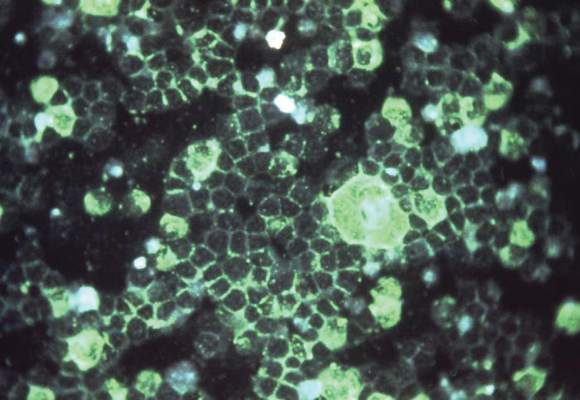
Influenza peaks were associated with a smaller effect, with a 3.2% overall increase in pneumococcal pneumonia in children aged 1-2 years.
The introduction of the 7-valent pneumococcal conjugate vaccine was accompanied by an 18% drop in RSV-coded hospitalizations in children aged less than 1 year when the 3 years after introduction of the vaccine were compared with the 3 years prior to its introduction, according to a study published online Jan. 6 inPLOS Medicine(2014 [doi:10.1371/journal.pmed.1001776]).
“These results, obtained from population-based epidemiological data, suggest that RSV might increase the risk for pneumococcal infections and that a subset of hospitalized RSV cases might have a mixed viral-bacterial etiology,” wrote Dr. Daniel M. Weinberger of the Yale School of Public Health, New Haven, Conn., and his colleagues.
The study was partly supported by the U.S. National Institutes of Health, the Yale University School of Medicine, the Yale Center for Clinical Investigation, the Bill & Melinda Gates Foundation, RAPIDD (Research and Policy for Infectious Disease Dynamic), and the Fogarty International Center. Three authors declared unrelated research support from Pfizer and Merck, and one author is a member of the PLOS Medicine editorial board.
The incidence of pneumococcal pneumonia in young children is significantly associated with seasonal peaks of respiratory syncytial and influenza viruses, although this relationship has been attenuated by introduction of the 7-valent pneumococcal conjugate vaccine, new data suggest.
Analysis of data from the State Inpatient Databases from 1992 to 2009 showed a distinct spatiotemporal association between respiratory syncytial virus (RSV) and pneumococcal pneumonia peaks; RSV peaks were linked to a significant 20.3% increase in pneumococcal pneumonia incidence in children aged under 1 year, and a 10.1% increase in children aged 1-2 years.
Influenza peaks were associated with a smaller effect, with a 3.2% overall increase in pneumococcal pneumonia in children aged 1-2 years.
The introduction of the 7-valent pneumococcal conjugate vaccine was accompanied by an 18% drop in RSV-coded hospitalizations in children aged less than 1 year when the 3 years after introduction of the vaccine were compared with the 3 years prior to its introduction, according to a study published online Jan. 6 inPLOS Medicine(2014 [doi:10.1371/journal.pmed.1001776]).
“These results, obtained from population-based epidemiological data, suggest that RSV might increase the risk for pneumococcal infections and that a subset of hospitalized RSV cases might have a mixed viral-bacterial etiology,” wrote Dr. Daniel M. Weinberger of the Yale School of Public Health, New Haven, Conn., and his colleagues.
The study was partly supported by the U.S. National Institutes of Health, the Yale University School of Medicine, the Yale Center for Clinical Investigation, the Bill & Melinda Gates Foundation, RAPIDD (Research and Policy for Infectious Disease Dynamic), and the Fogarty International Center. Three authors declared unrelated research support from Pfizer and Merck, and one author is a member of the PLOS Medicine editorial board.
The incidence of pneumococcal pneumonia in young children is significantly associated with seasonal peaks of respiratory syncytial and influenza viruses, although this relationship has been attenuated by introduction of the 7-valent pneumococcal conjugate vaccine, new data suggest.
Analysis of data from the State Inpatient Databases from 1992 to 2009 showed a distinct spatiotemporal association between respiratory syncytial virus (RSV) and pneumococcal pneumonia peaks; RSV peaks were linked to a significant 20.3% increase in pneumococcal pneumonia incidence in children aged under 1 year, and a 10.1% increase in children aged 1-2 years.
Influenza peaks were associated with a smaller effect, with a 3.2% overall increase in pneumococcal pneumonia in children aged 1-2 years.
The introduction of the 7-valent pneumococcal conjugate vaccine was accompanied by an 18% drop in RSV-coded hospitalizations in children aged less than 1 year when the 3 years after introduction of the vaccine were compared with the 3 years prior to its introduction, according to a study published online Jan. 6 inPLOS Medicine(2014 [doi:10.1371/journal.pmed.1001776]).
“These results, obtained from population-based epidemiological data, suggest that RSV might increase the risk for pneumococcal infections and that a subset of hospitalized RSV cases might have a mixed viral-bacterial etiology,” wrote Dr. Daniel M. Weinberger of the Yale School of Public Health, New Haven, Conn., and his colleagues.
The study was partly supported by the U.S. National Institutes of Health, the Yale University School of Medicine, the Yale Center for Clinical Investigation, the Bill & Melinda Gates Foundation, RAPIDD (Research and Policy for Infectious Disease Dynamic), and the Fogarty International Center. Three authors declared unrelated research support from Pfizer and Merck, and one author is a member of the PLOS Medicine editorial board.
FROM PLOS MEDICINE
Key clinical point: The incidence of pneumococcal pneumonia in young children is associated with seasonal peaks of respiratory syncytial and influenza viruses.
Major finding: RSV peaks were linked to a significant 20.3% increase in pneumococcal pneumonia incidence in children aged under 1 year, and 10.1% increase in children aged 1-2 years.
Data source: Analysis of data from the State Inpatient Databases from 1992-2009.
Disclosures: The study was partly supported by the U.S. National Institutes of Health, the Yale University School of Medicine, the Yale Center for Clinical Investigation, the Bill & Melinda Gates Foundation, RAPIDD (Research and Policy for Infectious Disease Dynamic), and the Fogarty International Center. Three authors declared unrelated research support from Pfizer and Merck, and one author is a member of the PLOS Medicine editorial board.
Hot Flashes Linked to Increased Hip Fracture Risk
Hot flashes are associated with a significant increase in the risk of hip fracture, regardless of age, body mass index, and other confounders such as smoking, according to analysis of data from the Women’s Health Study.
The prospective, observational study among 4,867 women aged 50-79 years found a 78% increase in the risk of hip fracture among women with moderate to severe menopausal vasomotor symptoms at baseline, compared with women with no symptoms.
Vasomotor symptom severity was also inversely associated with bone mineral density (BMD) at both the femoral neck and the spine. Compared with women who had no vasomotor symptoms, those with moderate or severe symptoms had 0.015 g/cm2 lower femoral neck BMD and 0.016 g/cm2 lower lumbar spine BMD, according to an analysis published on Dec. 18 in the Journal of Clinical Endocrinology and Metabolism (2014 [doi:10.1210/jc.2014-3062]).
“Despite being younger and heavier than asymptomatic women, characteristics associated with higher BMD, women with moderate/severe [vasomotor symptoms] had a higher risk of hip fractures that was also independent of other established risk factors for fractures,” wrote Dr. Carolyn J. Crandall of the University of California, Los Angeles, and her colleagues.
The study was funded by the National Institutes of Health. Two of the study authors reported consulting and other financial relationships with drug and device companies.
Hot flashes are associated with a significant increase in the risk of hip fracture, regardless of age, body mass index, and other confounders such as smoking, according to analysis of data from the Women’s Health Study.
The prospective, observational study among 4,867 women aged 50-79 years found a 78% increase in the risk of hip fracture among women with moderate to severe menopausal vasomotor symptoms at baseline, compared with women with no symptoms.
Vasomotor symptom severity was also inversely associated with bone mineral density (BMD) at both the femoral neck and the spine. Compared with women who had no vasomotor symptoms, those with moderate or severe symptoms had 0.015 g/cm2 lower femoral neck BMD and 0.016 g/cm2 lower lumbar spine BMD, according to an analysis published on Dec. 18 in the Journal of Clinical Endocrinology and Metabolism (2014 [doi:10.1210/jc.2014-3062]).
“Despite being younger and heavier than asymptomatic women, characteristics associated with higher BMD, women with moderate/severe [vasomotor symptoms] had a higher risk of hip fractures that was also independent of other established risk factors for fractures,” wrote Dr. Carolyn J. Crandall of the University of California, Los Angeles, and her colleagues.
The study was funded by the National Institutes of Health. Two of the study authors reported consulting and other financial relationships with drug and device companies.
Hot flashes are associated with a significant increase in the risk of hip fracture, regardless of age, body mass index, and other confounders such as smoking, according to analysis of data from the Women’s Health Study.
The prospective, observational study among 4,867 women aged 50-79 years found a 78% increase in the risk of hip fracture among women with moderate to severe menopausal vasomotor symptoms at baseline, compared with women with no symptoms.
Vasomotor symptom severity was also inversely associated with bone mineral density (BMD) at both the femoral neck and the spine. Compared with women who had no vasomotor symptoms, those with moderate or severe symptoms had 0.015 g/cm2 lower femoral neck BMD and 0.016 g/cm2 lower lumbar spine BMD, according to an analysis published on Dec. 18 in the Journal of Clinical Endocrinology and Metabolism (2014 [doi:10.1210/jc.2014-3062]).
“Despite being younger and heavier than asymptomatic women, characteristics associated with higher BMD, women with moderate/severe [vasomotor symptoms] had a higher risk of hip fractures that was also independent of other established risk factors for fractures,” wrote Dr. Carolyn J. Crandall of the University of California, Los Angeles, and her colleagues.
The study was funded by the National Institutes of Health. Two of the study authors reported consulting and other financial relationships with drug and device companies.
FROM THE JOURNAL OF CLINICAL ENDOCRINOLOGY AND METABOLISM

Hot flashes linked to increased hip fracture risk
Hot flashes are associated with a significant increase in the risk of hip fracture, regardless of age, body mass index, and other confounders such as smoking, according to analysis of data from the Women’s Health Study.
The prospective, observational study among 4,867 women aged 50-79 years found a 78% increase in the risk of hip fracture among women with moderate to severe menopausal vasomotor symptoms at baseline, compared with women with no symptoms.

Vasomotor symptom severity was also inversely associated with bone mineral density (BMD) at both the femoral neck and the spine. Compared with women who had no vasomotor symptoms, those with moderate or severe symptoms had 0.015 g/cm2 lower femoral neck BMD and 0.016 g/cm2 lower lumbar spine BMD, according to an analysis published on Dec. 18 in the Journal of Clinical Endocrinology and Metabolism (2014 [doi:10.1210/jc.2014-3062]).
“Despite being younger and heavier than asymptomatic women, characteristics associated with higher BMD, women with moderate/severe [vasomotor symptoms] had a higher risk of hip fractures that was also independent of other established risk factors for fractures,” wrote Dr. Carolyn J. Crandall of the University of California, Los Angeles, and her colleagues.
The study was funded by the National Institutes of Health. Two of the study authors reported consulting and other financial relationships with drug and device companies.
Hot flashes are associated with a significant increase in the risk of hip fracture, regardless of age, body mass index, and other confounders such as smoking, according to analysis of data from the Women’s Health Study.
The prospective, observational study among 4,867 women aged 50-79 years found a 78% increase in the risk of hip fracture among women with moderate to severe menopausal vasomotor symptoms at baseline, compared with women with no symptoms.
Vasomotor symptom severity was also inversely associated with bone mineral density (BMD) at both the femoral neck and the spine. Compared with women who had no vasomotor symptoms, those with moderate or severe symptoms had 0.015 g/cm2 lower femoral neck BMD and 0.016 g/cm2 lower lumbar spine BMD, according to an analysis published on Dec. 18 in the Journal of Clinical Endocrinology and Metabolism (2014 [doi:10.1210/jc.2014-3062]).
“Despite being younger and heavier than asymptomatic women, characteristics associated with higher BMD, women with moderate/severe [vasomotor symptoms] had a higher risk of hip fractures that was also independent of other established risk factors for fractures,” wrote Dr. Carolyn J. Crandall of the University of California, Los Angeles, and her colleagues.
The study was funded by the National Institutes of Health. Two of the study authors reported consulting and other financial relationships with drug and device companies.
Hot flashes are associated with a significant increase in the risk of hip fracture, regardless of age, body mass index, and other confounders such as smoking, according to analysis of data from the Women’s Health Study.
The prospective, observational study among 4,867 women aged 50-79 years found a 78% increase in the risk of hip fracture among women with moderate to severe menopausal vasomotor symptoms at baseline, compared with women with no symptoms.
Vasomotor symptom severity was also inversely associated with bone mineral density (BMD) at both the femoral neck and the spine. Compared with women who had no vasomotor symptoms, those with moderate or severe symptoms had 0.015 g/cm2 lower femoral neck BMD and 0.016 g/cm2 lower lumbar spine BMD, according to an analysis published on Dec. 18 in the Journal of Clinical Endocrinology and Metabolism (2014 [doi:10.1210/jc.2014-3062]).
“Despite being younger and heavier than asymptomatic women, characteristics associated with higher BMD, women with moderate/severe [vasomotor symptoms] had a higher risk of hip fractures that was also independent of other established risk factors for fractures,” wrote Dr. Carolyn J. Crandall of the University of California, Los Angeles, and her colleagues.
The study was funded by the National Institutes of Health. Two of the study authors reported consulting and other financial relationships with drug and device companies.
FROM THE JOURNAL OF CLINICAL ENDOCRINOLOGY AND METABOLISM
Key clinical point: The severity of vasomotor menopause symptoms is associated with risk of hip fracture.
Major finding: Women with moderate to severe vasomotor symptoms have a 78% increase in their risk of hip fracture.
Data source: A prospective, observational study among 4,867 women aged 50-79 years.
Disclosures: The study was funded by the National Institutes of Health. Two of the study authors reported consulting and other financial relationships with drug and device companies.

State Concussion Laws Boost Health Care Use in Children
Health care utilization for concussion among children has increased significantly, partly because of increased awareness but also because of the introduction of health care legislation mandating medical intervention before return to play, new data suggest.
Analysis of health insurance claims for insured children aged 12-18 years from the MarketScan database showed a 92% increase in concussion-related health care utilization between 2008-2009 and 2011-2012 in states with concussion legislation, compared with a 75% overall increase in states without the legislation, according Teresa B. Gibson, Ph.D., of the department of health care policy at Harvard Medical School, Boston, and her colleagues (JAMA Pediatrics 2014 Dec. 22 [doi:10.1001/jamapediatrics.2014.2320]).
After 2009, when the first state concussion laws were passed, states without those laws still demonstrated a 20.9% annual increase in health care utilization for concussion, while states with those laws showed, on average, an additional 13.1% increase, they noted.
At the end of the 2011-2012 school year, 35 states (70%) plus the District of Columbia had laws about sports-related concussion in children.
“We estimate that slightly more than half (60%) the increase in states without laws in effect resulted from the continued trend of increasing health care utilization established before the first law was passed,” the investigators wrote. Although the sources leading to the remaining 40% increase in utilization were not studied, it is likely that increased awareness of concussion brought by local and national media attention played a role.
The study was partly supported by Truven Health from the National Institute of Child Health and Human Development. No other conflicts of interest were declared.
Health care utilization for concussion among children has increased significantly, partly because of increased awareness but also because of the introduction of health care legislation mandating medical intervention before return to play, new data suggest.
Analysis of health insurance claims for insured children aged 12-18 years from the MarketScan database showed a 92% increase in concussion-related health care utilization between 2008-2009 and 2011-2012 in states with concussion legislation, compared with a 75% overall increase in states without the legislation, according Teresa B. Gibson, Ph.D., of the department of health care policy at Harvard Medical School, Boston, and her colleagues (JAMA Pediatrics 2014 Dec. 22 [doi:10.1001/jamapediatrics.2014.2320]).
After 2009, when the first state concussion laws were passed, states without those laws still demonstrated a 20.9% annual increase in health care utilization for concussion, while states with those laws showed, on average, an additional 13.1% increase, they noted.
At the end of the 2011-2012 school year, 35 states (70%) plus the District of Columbia had laws about sports-related concussion in children.
“We estimate that slightly more than half (60%) the increase in states without laws in effect resulted from the continued trend of increasing health care utilization established before the first law was passed,” the investigators wrote. Although the sources leading to the remaining 40% increase in utilization were not studied, it is likely that increased awareness of concussion brought by local and national media attention played a role.
The study was partly supported by Truven Health from the National Institute of Child Health and Human Development. No other conflicts of interest were declared.
Health care utilization for concussion among children has increased significantly, partly because of increased awareness but also because of the introduction of health care legislation mandating medical intervention before return to play, new data suggest.
Analysis of health insurance claims for insured children aged 12-18 years from the MarketScan database showed a 92% increase in concussion-related health care utilization between 2008-2009 and 2011-2012 in states with concussion legislation, compared with a 75% overall increase in states without the legislation, according Teresa B. Gibson, Ph.D., of the department of health care policy at Harvard Medical School, Boston, and her colleagues (JAMA Pediatrics 2014 Dec. 22 [doi:10.1001/jamapediatrics.2014.2320]).
After 2009, when the first state concussion laws were passed, states without those laws still demonstrated a 20.9% annual increase in health care utilization for concussion, while states with those laws showed, on average, an additional 13.1% increase, they noted.
At the end of the 2011-2012 school year, 35 states (70%) plus the District of Columbia had laws about sports-related concussion in children.
“We estimate that slightly more than half (60%) the increase in states without laws in effect resulted from the continued trend of increasing health care utilization established before the first law was passed,” the investigators wrote. Although the sources leading to the remaining 40% increase in utilization were not studied, it is likely that increased awareness of concussion brought by local and national media attention played a role.
The study was partly supported by Truven Health from the National Institute of Child Health and Human Development. No other conflicts of interest were declared.
FROM JAMA PEDIATRICS
State concussion laws boost health care use in children
Health care utilization for concussion among children has increased significantly, partly because of increased awareness but also because of the introduction of health care legislation mandating medical intervention before return to play, new data suggest.
Analysis of health insurance claims for insured children aged 12-18 years from the MarketScan database showed a 92% increase in concussion-related health care utilization between 2008-2009 and 2011-2012 in states with concussion legislation, compared with a 75% overall increase in states without the legislation, according Teresa B. Gibson, Ph.D., of the department of health care policy at Harvard Medical School, Boston, and her colleagues (JAMA Pediatrics 2014 Dec. 22 [doi:10.1001/jamapediatrics.2014.2320]).
After 2009, when the first state concussion laws were passed, states without those laws still demonstrated a 20.9% annual increase in health care utilization for concussion, while states with those laws showed, on average, an additional 13.1% increase, they noted.
At the end of the 2011-2012 school year, 35 states (70%) plus the District of Columbia had laws about sports-related concussion in children.
“We estimate that slightly more than half (60%) the increase in states without laws in effect resulted from the continued trend of increasing health care utilization established before the first law was passed,” the investigators wrote. Although the sources leading to the remaining 40% increase in utilization were not studied, it is likely that increased awareness of concussion brought by local and national media attention played a role.
The study was partly supported by Truven Health from the National Institute of Child Health and Human Development. No other conflicts of interest were declared.
Health care utilization for concussion among children has increased significantly, partly because of increased awareness but also because of the introduction of health care legislation mandating medical intervention before return to play, new data suggest.
Analysis of health insurance claims for insured children aged 12-18 years from the MarketScan database showed a 92% increase in concussion-related health care utilization between 2008-2009 and 2011-2012 in states with concussion legislation, compared with a 75% overall increase in states without the legislation, according Teresa B. Gibson, Ph.D., of the department of health care policy at Harvard Medical School, Boston, and her colleagues (JAMA Pediatrics 2014 Dec. 22 [doi:10.1001/jamapediatrics.2014.2320]).
After 2009, when the first state concussion laws were passed, states without those laws still demonstrated a 20.9% annual increase in health care utilization for concussion, while states with those laws showed, on average, an additional 13.1% increase, they noted.
At the end of the 2011-2012 school year, 35 states (70%) plus the District of Columbia had laws about sports-related concussion in children.
“We estimate that slightly more than half (60%) the increase in states without laws in effect resulted from the continued trend of increasing health care utilization established before the first law was passed,” the investigators wrote. Although the sources leading to the remaining 40% increase in utilization were not studied, it is likely that increased awareness of concussion brought by local and national media attention played a role.
The study was partly supported by Truven Health from the National Institute of Child Health and Human Development. No other conflicts of interest were declared.
Health care utilization for concussion among children has increased significantly, partly because of increased awareness but also because of the introduction of health care legislation mandating medical intervention before return to play, new data suggest.
Analysis of health insurance claims for insured children aged 12-18 years from the MarketScan database showed a 92% increase in concussion-related health care utilization between 2008-2009 and 2011-2012 in states with concussion legislation, compared with a 75% overall increase in states without the legislation, according Teresa B. Gibson, Ph.D., of the department of health care policy at Harvard Medical School, Boston, and her colleagues (JAMA Pediatrics 2014 Dec. 22 [doi:10.1001/jamapediatrics.2014.2320]).
After 2009, when the first state concussion laws were passed, states without those laws still demonstrated a 20.9% annual increase in health care utilization for concussion, while states with those laws showed, on average, an additional 13.1% increase, they noted.
At the end of the 2011-2012 school year, 35 states (70%) plus the District of Columbia had laws about sports-related concussion in children.
“We estimate that slightly more than half (60%) the increase in states without laws in effect resulted from the continued trend of increasing health care utilization established before the first law was passed,” the investigators wrote. Although the sources leading to the remaining 40% increase in utilization were not studied, it is likely that increased awareness of concussion brought by local and national media attention played a role.
The study was partly supported by Truven Health from the National Institute of Child Health and Human Development. No other conflicts of interest were declared.
FROM JAMA PEDIATRICS
Key clinical point: The introduction of state-based health care legislation mandating medical intervention for concussion has contributed to an increase in health care use.
Major finding: Health care utilization for concussion increased 92% between 2008-2009 and 2011-2012 in states with concussion legislation, compared with a 75% overall increase in states without the legislation
Data source: Analysis of health care utilization data for insured children from the MarketScan database.
Disclosures: The study was partly supported by Truven Health from the National Institute of Child Health and Human Development. There were no other conflicts of interest declared.
ADHD and Conduct Disorder Boost Youth Alcohol, Tobacco Use
Adolescents diagnosed with both attention-deficit/hyperactivity disorder and conduct disorder are three to five times more likely to smoke tobacco and drink alcohol, and to have begun doing so at an earlier age, than those with neither disorder, an analysis of data from the National Health and Nutrition Examination Survey shows.
The study of 2,517 participants aged 12-15 years found that those with ADHD alone were twice as likely to use tobacco than were controls but were not more likely to consume alcohol. Participants with a conduct disorder diagnosis alone did not have an increased likelihood of either behavior, wrote Dr. William B. Brinkman of the Cincinnati Children’s Hospital Medical Center and his colleagues (Drug Alcohol Depend. 2014 Dec. 16 [doi:10.1016/j.drugalcdep.2014.11.018]).
Inattentive “symptoms were significantly associated with use of both tobacco and alcohol: for every one symptom increase, the likelihood of tobacco and alcohol use increased by 10% and 8%, respectively, and the likelihood of initiating tobacco or alcohol use at a younger age increased by 8% for each,” Dr. Brinkman and his colleagues wrote.
They cited several limitations. For example, the National Health and Nutrition Examination Survey data were collected 10 years ago. Also, adolescents were asked about “ever” trying tobacco and alcohol, and that definition of use was quite broad. “Using narrower definitions (e.g., requiring frequent or daily use) might lead to different results, but we were unable to examine this due to small numbers of participants who met more stringent requirements,” they said. “Similarly, we were unable to assess the effects of other comorbidities (e.g., anxiety and depressive disorders) because there were not enough young adolescents with both the exposure and the outcome.”
Still, in light of these findings, prevention efforts aimed at promoting the reduction of ADHD and conduct disorder symptoms in the general population might ultimately help “reduce or delay onset of tobacco and alcohol use,” Dr. Brinkman and his associates suggested.
The study and some authors were supported by the National Institute of Mental Health. No conflicts of interest were declared.
Adolescents diagnosed with both attention-deficit/hyperactivity disorder and conduct disorder are three to five times more likely to smoke tobacco and drink alcohol, and to have begun doing so at an earlier age, than those with neither disorder, an analysis of data from the National Health and Nutrition Examination Survey shows.
The study of 2,517 participants aged 12-15 years found that those with ADHD alone were twice as likely to use tobacco than were controls but were not more likely to consume alcohol. Participants with a conduct disorder diagnosis alone did not have an increased likelihood of either behavior, wrote Dr. William B. Brinkman of the Cincinnati Children’s Hospital Medical Center and his colleagues (Drug Alcohol Depend. 2014 Dec. 16 [doi:10.1016/j.drugalcdep.2014.11.018]).
Inattentive “symptoms were significantly associated with use of both tobacco and alcohol: for every one symptom increase, the likelihood of tobacco and alcohol use increased by 10% and 8%, respectively, and the likelihood of initiating tobacco or alcohol use at a younger age increased by 8% for each,” Dr. Brinkman and his colleagues wrote.
They cited several limitations. For example, the National Health and Nutrition Examination Survey data were collected 10 years ago. Also, adolescents were asked about “ever” trying tobacco and alcohol, and that definition of use was quite broad. “Using narrower definitions (e.g., requiring frequent or daily use) might lead to different results, but we were unable to examine this due to small numbers of participants who met more stringent requirements,” they said. “Similarly, we were unable to assess the effects of other comorbidities (e.g., anxiety and depressive disorders) because there were not enough young adolescents with both the exposure and the outcome.”
Still, in light of these findings, prevention efforts aimed at promoting the reduction of ADHD and conduct disorder symptoms in the general population might ultimately help “reduce or delay onset of tobacco and alcohol use,” Dr. Brinkman and his associates suggested.
The study and some authors were supported by the National Institute of Mental Health. No conflicts of interest were declared.
Adolescents diagnosed with both attention-deficit/hyperactivity disorder and conduct disorder are three to five times more likely to smoke tobacco and drink alcohol, and to have begun doing so at an earlier age, than those with neither disorder, an analysis of data from the National Health and Nutrition Examination Survey shows.
The study of 2,517 participants aged 12-15 years found that those with ADHD alone were twice as likely to use tobacco than were controls but were not more likely to consume alcohol. Participants with a conduct disorder diagnosis alone did not have an increased likelihood of either behavior, wrote Dr. William B. Brinkman of the Cincinnati Children’s Hospital Medical Center and his colleagues (Drug Alcohol Depend. 2014 Dec. 16 [doi:10.1016/j.drugalcdep.2014.11.018]).
Inattentive “symptoms were significantly associated with use of both tobacco and alcohol: for every one symptom increase, the likelihood of tobacco and alcohol use increased by 10% and 8%, respectively, and the likelihood of initiating tobacco or alcohol use at a younger age increased by 8% for each,” Dr. Brinkman and his colleagues wrote.
They cited several limitations. For example, the National Health and Nutrition Examination Survey data were collected 10 years ago. Also, adolescents were asked about “ever” trying tobacco and alcohol, and that definition of use was quite broad. “Using narrower definitions (e.g., requiring frequent or daily use) might lead to different results, but we were unable to examine this due to small numbers of participants who met more stringent requirements,” they said. “Similarly, we were unable to assess the effects of other comorbidities (e.g., anxiety and depressive disorders) because there were not enough young adolescents with both the exposure and the outcome.”
Still, in light of these findings, prevention efforts aimed at promoting the reduction of ADHD and conduct disorder symptoms in the general population might ultimately help “reduce or delay onset of tobacco and alcohol use,” Dr. Brinkman and his associates suggested.
The study and some authors were supported by the National Institute of Mental Health. No conflicts of interest were declared.
FROM DRUG AND ALCOHOL DEPENDENCE

ADHD and conduct disorder boost youth alcohol, tobacco use
Adolescents diagnosed with both attention-deficit/hyperactivity disorder and conduct disorder are three to five times more likely to smoke tobacco and drink alcohol, and to have begun doing so at an earlier age, than those with neither disorder, an analysis of data from the National Health and Nutrition Examination Survey shows.
The study of 2,517 participants aged 12-15 years found that those with ADHD alone were twice as likely to use tobacco than were controls but were not more likely to consume alcohol. Participants with a conduct disorder diagnosis alone did not have an increased likelihood of either behavior, wrote Dr. William B. Brinkman of the Cincinnati Children’s Hospital Medical Center and his colleagues (Drug Alcohol Depend. 2014 Dec. 16 [doi:10.1016/j.drugalcdep.2014.11.018]).

Inattentive “symptoms were significantly associated with use of both tobacco and alcohol: for every one symptom increase, the likelihood of tobacco and alcohol use increased by 10% and 8%, respectively, and the likelihood of initiating tobacco or alcohol use at a younger age increased by 8% for each,” Dr. Brinkman and his colleagues wrote.
They cited several limitations. For example, the National Health and Nutrition Examination Survey data were collected 10 years ago. Also, adolescents were asked about “ever” trying tobacco and alcohol, and that definition of use was quite broad. “Using narrower definitions (e.g., requiring frequent or daily use) might lead to different results, but we were unable to examine this due to small numbers of participants who met more stringent requirements,” they said. “Similarly, we were unable to assess the effects of other comorbidities (e.g., anxiety and depressive disorders) because there were not enough young adolescents with both the exposure and the outcome.”
Still, in light of these findings, prevention efforts aimed at promoting the reduction of ADHD and conduct disorder symptoms in the general population might ultimately help “reduce or delay onset of tobacco and alcohol use,” Dr. Brinkman and his associates suggested.
The study and some authors were supported by the National Institute of Mental Health. No conflicts of interest were declared.
Adolescents diagnosed with both attention-deficit/hyperactivity disorder and conduct disorder are three to five times more likely to smoke tobacco and drink alcohol, and to have begun doing so at an earlier age, than those with neither disorder, an analysis of data from the National Health and Nutrition Examination Survey shows.
The study of 2,517 participants aged 12-15 years found that those with ADHD alone were twice as likely to use tobacco than were controls but were not more likely to consume alcohol. Participants with a conduct disorder diagnosis alone did not have an increased likelihood of either behavior, wrote Dr. William B. Brinkman of the Cincinnati Children’s Hospital Medical Center and his colleagues (Drug Alcohol Depend. 2014 Dec. 16 [doi:10.1016/j.drugalcdep.2014.11.018]).
Inattentive “symptoms were significantly associated with use of both tobacco and alcohol: for every one symptom increase, the likelihood of tobacco and alcohol use increased by 10% and 8%, respectively, and the likelihood of initiating tobacco or alcohol use at a younger age increased by 8% for each,” Dr. Brinkman and his colleagues wrote.
They cited several limitations. For example, the National Health and Nutrition Examination Survey data were collected 10 years ago. Also, adolescents were asked about “ever” trying tobacco and alcohol, and that definition of use was quite broad. “Using narrower definitions (e.g., requiring frequent or daily use) might lead to different results, but we were unable to examine this due to small numbers of participants who met more stringent requirements,” they said. “Similarly, we were unable to assess the effects of other comorbidities (e.g., anxiety and depressive disorders) because there were not enough young adolescents with both the exposure and the outcome.”
Still, in light of these findings, prevention efforts aimed at promoting the reduction of ADHD and conduct disorder symptoms in the general population might ultimately help “reduce or delay onset of tobacco and alcohol use,” Dr. Brinkman and his associates suggested.
The study and some authors were supported by the National Institute of Mental Health. No conflicts of interest were declared.
Adolescents diagnosed with both attention-deficit/hyperactivity disorder and conduct disorder are three to five times more likely to smoke tobacco and drink alcohol, and to have begun doing so at an earlier age, than those with neither disorder, an analysis of data from the National Health and Nutrition Examination Survey shows.
The study of 2,517 participants aged 12-15 years found that those with ADHD alone were twice as likely to use tobacco than were controls but were not more likely to consume alcohol. Participants with a conduct disorder diagnosis alone did not have an increased likelihood of either behavior, wrote Dr. William B. Brinkman of the Cincinnati Children’s Hospital Medical Center and his colleagues (Drug Alcohol Depend. 2014 Dec. 16 [doi:10.1016/j.drugalcdep.2014.11.018]).
Inattentive “symptoms were significantly associated with use of both tobacco and alcohol: for every one symptom increase, the likelihood of tobacco and alcohol use increased by 10% and 8%, respectively, and the likelihood of initiating tobacco or alcohol use at a younger age increased by 8% for each,” Dr. Brinkman and his colleagues wrote.
They cited several limitations. For example, the National Health and Nutrition Examination Survey data were collected 10 years ago. Also, adolescents were asked about “ever” trying tobacco and alcohol, and that definition of use was quite broad. “Using narrower definitions (e.g., requiring frequent or daily use) might lead to different results, but we were unable to examine this due to small numbers of participants who met more stringent requirements,” they said. “Similarly, we were unable to assess the effects of other comorbidities (e.g., anxiety and depressive disorders) because there were not enough young adolescents with both the exposure and the outcome.”
Still, in light of these findings, prevention efforts aimed at promoting the reduction of ADHD and conduct disorder symptoms in the general population might ultimately help “reduce or delay onset of tobacco and alcohol use,” Dr. Brinkman and his associates suggested.
The study and some authors were supported by the National Institute of Mental Health. No conflicts of interest were declared.
FROM DRUG AND ALCOHOL DEPENDENCE
Key clinical point: Increasing inattentive symptoms are associated with a higher risk of tobacco and alcohol use, which could have “significant implications for prevention efforts.”
Major finding: Adolescents diagnosed with both attention-deficit/hyperactivity disorder and conduct disorder are three to five times more likely to smoke tobacco and drink alcohol than those with neither disorder.
Data source: A cross-sectional study of data from 2,517 adolescents in the National Health and Nutrition Examination Survey.
Disclosures: The study and some authors were supported by the National Institute of Mental Health. No conflicts of interest were declared.

Too many elderly with breast cancer still receive radiotherapy
The use of adjuvant radiotherapy in elderly women with early-stage breast cancer has declined since the publication of study results showing that lumpectomy and tamoxifen therapy were preferable to radiotherapy in this patient group, but nearly two-thirds of these women continue to receive adjuvant radiotherapy, according to analysis of data from the Surveillance, Epidemiology, and End Results registry.
SEER data from 40,583 women showed that, between 2000 and 2004, 68.6% of eligible patients –women aged over 70 years with stage 1, estrogen receptor–positive breast cancer – received adjuvant radiotherapy, but this declined to 61.7% of patients between 2005 and 2009, representing a small but statistically significant decline.

Radiotherapy use declined significantly across all age groups, tumor sizes, and grades, regardless of laterality, although it was used slightly less frequently in patients aged over 85, compared with those aged 70-74 years, according to a study published online Dec. 8 (Cancer 2014 [doi:10.1002/cncr.28937].
“Data supporting the omission of radiotherapy in elderly patients has emerged simultaneously with promising long-term results from partial breast irradiation trials and data demonstrating the equal efficacy of conventionally fractionated whole-breast radiotherapy compared with more hypofractionated whole-breast regimens,” wrote Dr. Manisha Palta of Duke University, Durham, N.C., and her colleagues.
“These data may partially explain why older women continue to be offered and receive adjuvant radiotherapy,” they said.
Additional reasons why data from randomized trials may not be incorporated into clinical practice could include financial incentives and the fact that “the medical community may react differently to withholding treatment compared with adding a new treatment,” Dr. Palta and her colleagues said.
There were no conflicts of interest declared.
The use of adjuvant radiotherapy in elderly women with early-stage breast cancer has declined since the publication of study results showing that lumpectomy and tamoxifen therapy were preferable to radiotherapy in this patient group, but nearly two-thirds of these women continue to receive adjuvant radiotherapy, according to analysis of data from the Surveillance, Epidemiology, and End Results registry.
SEER data from 40,583 women showed that, between 2000 and 2004, 68.6% of eligible patients –women aged over 70 years with stage 1, estrogen receptor–positive breast cancer – received adjuvant radiotherapy, but this declined to 61.7% of patients between 2005 and 2009, representing a small but statistically significant decline.
Radiotherapy use declined significantly across all age groups, tumor sizes, and grades, regardless of laterality, although it was used slightly less frequently in patients aged over 85, compared with those aged 70-74 years, according to a study published online Dec. 8 (Cancer 2014 [doi:10.1002/cncr.28937].
“Data supporting the omission of radiotherapy in elderly patients has emerged simultaneously with promising long-term results from partial breast irradiation trials and data demonstrating the equal efficacy of conventionally fractionated whole-breast radiotherapy compared with more hypofractionated whole-breast regimens,” wrote Dr. Manisha Palta of Duke University, Durham, N.C., and her colleagues.
“These data may partially explain why older women continue to be offered and receive adjuvant radiotherapy,” they said.
Additional reasons why data from randomized trials may not be incorporated into clinical practice could include financial incentives and the fact that “the medical community may react differently to withholding treatment compared with adding a new treatment,” Dr. Palta and her colleagues said.
There were no conflicts of interest declared.
The use of adjuvant radiotherapy in elderly women with early-stage breast cancer has declined since the publication of study results showing that lumpectomy and tamoxifen therapy were preferable to radiotherapy in this patient group, but nearly two-thirds of these women continue to receive adjuvant radiotherapy, according to analysis of data from the Surveillance, Epidemiology, and End Results registry.
SEER data from 40,583 women showed that, between 2000 and 2004, 68.6% of eligible patients –women aged over 70 years with stage 1, estrogen receptor–positive breast cancer – received adjuvant radiotherapy, but this declined to 61.7% of patients between 2005 and 2009, representing a small but statistically significant decline.
Radiotherapy use declined significantly across all age groups, tumor sizes, and grades, regardless of laterality, although it was used slightly less frequently in patients aged over 85, compared with those aged 70-74 years, according to a study published online Dec. 8 (Cancer 2014 [doi:10.1002/cncr.28937].
“Data supporting the omission of radiotherapy in elderly patients has emerged simultaneously with promising long-term results from partial breast irradiation trials and data demonstrating the equal efficacy of conventionally fractionated whole-breast radiotherapy compared with more hypofractionated whole-breast regimens,” wrote Dr. Manisha Palta of Duke University, Durham, N.C., and her colleagues.
“These data may partially explain why older women continue to be offered and receive adjuvant radiotherapy,” they said.
Additional reasons why data from randomized trials may not be incorporated into clinical practice could include financial incentives and the fact that “the medical community may react differently to withholding treatment compared with adding a new treatment,” Dr. Palta and her colleagues said.
There were no conflicts of interest declared.
FROM CANCER
Key clinical point: The use of adjuvant radiotherapy has declined over the past decade in elderly patients with early-stage breast cancer, but the rate is still high.
Major finding: Use of adjuvant radiotherapy has declined from 68.6% of eligible patients in 2000-2004 to 61.7% in 2005-2009.
Data source: Retrospective analysis of data from 40,583 women in the SEER registry.
Disclosures: No conflicts of interested were declared.

No increase in prostate cancer with testosterone therapy
A study of hypogonadal men undergoing testosterone therapy has found a lower rate of prostate cancer than previously recorded in screening studies, suggesting the therapy does not increase prostate cancer risk.
Analysis of data from 1,023 hypogonadal men enrolled in three prospective registry studies, who were all being treated with testosterone therapy, found 11 cases of prostate cancer (1.08%), which was significantly lower than the incidence reported in the Prostate, Lung, Colorectal, and Ovarian Cancer Screening Trial (7.35%) and the European Randomized Study of Screening for Prostate Cancer (9.6%).
The mean baseline patient age was 58 years in the urology setting, and 41 years in the andrology setting, with patients receiving testosterone undecanoate injections at 12-week intervals and followed up for a median of 5 years.
“Despite the widespread belief regarding the contraindication of T [testosterone] therapy in hypogonadal men with known or suspected PCa [prostate cancer], there is no convincing evidence that the normalization of T levels presents a greater risk for the progression of PCa,” wrote Dr. Ahmad Haider, a urologist in Bremerhaven, Germany, and colleagues (J. Urol. 2014 [doi:10.1016/j.juro.2014.06.071]).
Some authors declared financial interests or relationships with a range of pharmaceutical companies.
A study of hypogonadal men undergoing testosterone therapy has found a lower rate of prostate cancer than previously recorded in screening studies, suggesting the therapy does not increase prostate cancer risk.
Analysis of data from 1,023 hypogonadal men enrolled in three prospective registry studies, who were all being treated with testosterone therapy, found 11 cases of prostate cancer (1.08%), which was significantly lower than the incidence reported in the Prostate, Lung, Colorectal, and Ovarian Cancer Screening Trial (7.35%) and the European Randomized Study of Screening for Prostate Cancer (9.6%).
The mean baseline patient age was 58 years in the urology setting, and 41 years in the andrology setting, with patients receiving testosterone undecanoate injections at 12-week intervals and followed up for a median of 5 years.
“Despite the widespread belief regarding the contraindication of T [testosterone] therapy in hypogonadal men with known or suspected PCa [prostate cancer], there is no convincing evidence that the normalization of T levels presents a greater risk for the progression of PCa,” wrote Dr. Ahmad Haider, a urologist in Bremerhaven, Germany, and colleagues (J. Urol. 2014 [doi:10.1016/j.juro.2014.06.071]).
Some authors declared financial interests or relationships with a range of pharmaceutical companies.
A study of hypogonadal men undergoing testosterone therapy has found a lower rate of prostate cancer than previously recorded in screening studies, suggesting the therapy does not increase prostate cancer risk.
Analysis of data from 1,023 hypogonadal men enrolled in three prospective registry studies, who were all being treated with testosterone therapy, found 11 cases of prostate cancer (1.08%), which was significantly lower than the incidence reported in the Prostate, Lung, Colorectal, and Ovarian Cancer Screening Trial (7.35%) and the European Randomized Study of Screening for Prostate Cancer (9.6%).
The mean baseline patient age was 58 years in the urology setting, and 41 years in the andrology setting, with patients receiving testosterone undecanoate injections at 12-week intervals and followed up for a median of 5 years.
“Despite the widespread belief regarding the contraindication of T [testosterone] therapy in hypogonadal men with known or suspected PCa [prostate cancer], there is no convincing evidence that the normalization of T levels presents a greater risk for the progression of PCa,” wrote Dr. Ahmad Haider, a urologist in Bremerhaven, Germany, and colleagues (J. Urol. 2014 [doi:10.1016/j.juro.2014.06.071]).
Some authors declared financial interests or relationships with a range of pharmaceutical companies.
FROM THE JOURNAL OF UROLOGY
Key clinical point: Testosterone therapy in hypogonadal men is not associated with an increased risk of prostate cancer.
Major finding: The incidence of prostate cancer in hypogonadal men undergoing testosterone therapy is 1.08%.
Data source: Analysis of data from three prospective, ongoing registries of hypogonadal men treated with testosterone therapy.
Disclosures: Some authors declared financial interests or relationships with a range of pharmaceutical companies.
Sentinel lymph node mapping effective for staging early endometrial cancer
MELBOURNE – Staging endometrial cancer using sentinel lymph node mapping reduces side effects for patients, and enables selection of lymph nodes for pathology that are more likely to have disease in them, an investigator reported at the biennial meeting of the International Gynecologic Cancer Society.
The procedure results in fewer lymph nodes being removed – usually two to three on each side, and no more than ten – which meant less side effects such as lymphedema, and potentially avoided the need for pelvic lymphadenectomy said Dr. Nadeem Abu-Rustum, chief of the gynecology service at Memorial Sloan Kettering Cancer Center, New York.
“One, you are removing fewer lymph nodes so there’s less radicality in surgery and less side effects; two, it makes the operating time faster, and three, you give the pathologist fewer lymph nodes but they can work on them in more depth to try to find low-volume metastases,” Dr. Abu-Rustum said in an interview.

“It’s a win-win situation for the patient.”
Dr. Abu-Rustum and colleagues at Memorial Sloan-Kettering have developed a sentinel lymph node mapping algorithm for stage I cervical or endometrial cancers.
“It is applicable for any women who has endometrial cancer where the surgeon feels that the cancer is contained, and you need staging information,” he said.
However he stressed it was not applicable in patients with obvious metastases or with abnormal lymph nodes.
“This is for normal-appearing lymph nodes, clinical stage I, and the algorithm checklist really protects you because it will exclude those patients [with abnormal lymph nodes].”
While there was ongoing debate about where to inject the dye to best identify the sentinel node, Dr. Abu-Rustum told the conference that he and his colleagues believed injecting into the cervix at the three o’clock and nine o’clock positions was the most reasonable option.
He also commented on the different dyes used, saying that while methylene blue or lymphazurin had been the traditional choice – with or without technetium-99 – the near-infrared fluorescing indocyanine green and use of a laser significantly improved accuracy of the procedure.
“Now you’re able to increase the chance of finding the lymph node from 80% to almost 100%, and finding it on the right and the left was 60%, now it’s 80%,” he said.
In another presentation, a speaker reported an overall sentinel lymph node detection rate of 92%, and a 74% rate of bilateral detection, using a combination of methylene blue, technetium-99, and indocyanine green, in 100 patients who underwent sentinel lymph node mapping for endometrial cancer.
Among the 10 patients in the prospective study who had metastatic disease, 9 had a positive sentinel lymph node. The sentinel node was found to be the only positive node in 66% of these patients, suggesting that this was the most clinically relevant node. There was one case of a false negative for a sentinel lymph node, reported Dr. Jeffrey How, obstetrics and gynecology resident at the McGill University Health Centre, Montreal.
The addition of indocyanine green increased the precision of in vivo detection of sentinel lymph nodes, aiding detection of the highest-yield lymph nodes for pathology, he said.
No conflicts of interest were declared.
MELBOURNE – Staging endometrial cancer using sentinel lymph node mapping reduces side effects for patients, and enables selection of lymph nodes for pathology that are more likely to have disease in them, an investigator reported at the biennial meeting of the International Gynecologic Cancer Society.
The procedure results in fewer lymph nodes being removed – usually two to three on each side, and no more than ten – which meant less side effects such as lymphedema, and potentially avoided the need for pelvic lymphadenectomy said Dr. Nadeem Abu-Rustum, chief of the gynecology service at Memorial Sloan Kettering Cancer Center, New York.
“One, you are removing fewer lymph nodes so there’s less radicality in surgery and less side effects; two, it makes the operating time faster, and three, you give the pathologist fewer lymph nodes but they can work on them in more depth to try to find low-volume metastases,” Dr. Abu-Rustum said in an interview.
“It’s a win-win situation for the patient.”
Dr. Abu-Rustum and colleagues at Memorial Sloan-Kettering have developed a sentinel lymph node mapping algorithm for stage I cervical or endometrial cancers.
“It is applicable for any women who has endometrial cancer where the surgeon feels that the cancer is contained, and you need staging information,” he said.
However he stressed it was not applicable in patients with obvious metastases or with abnormal lymph nodes.
“This is for normal-appearing lymph nodes, clinical stage I, and the algorithm checklist really protects you because it will exclude those patients [with abnormal lymph nodes].”
While there was ongoing debate about where to inject the dye to best identify the sentinel node, Dr. Abu-Rustum told the conference that he and his colleagues believed injecting into the cervix at the three o’clock and nine o’clock positions was the most reasonable option.
He also commented on the different dyes used, saying that while methylene blue or lymphazurin had been the traditional choice – with or without technetium-99 – the near-infrared fluorescing indocyanine green and use of a laser significantly improved accuracy of the procedure.
“Now you’re able to increase the chance of finding the lymph node from 80% to almost 100%, and finding it on the right and the left was 60%, now it’s 80%,” he said.
In another presentation, a speaker reported an overall sentinel lymph node detection rate of 92%, and a 74% rate of bilateral detection, using a combination of methylene blue, technetium-99, and indocyanine green, in 100 patients who underwent sentinel lymph node mapping for endometrial cancer.
Among the 10 patients in the prospective study who had metastatic disease, 9 had a positive sentinel lymph node. The sentinel node was found to be the only positive node in 66% of these patients, suggesting that this was the most clinically relevant node. There was one case of a false negative for a sentinel lymph node, reported Dr. Jeffrey How, obstetrics and gynecology resident at the McGill University Health Centre, Montreal.
The addition of indocyanine green increased the precision of in vivo detection of sentinel lymph nodes, aiding detection of the highest-yield lymph nodes for pathology, he said.
No conflicts of interest were declared.
MELBOURNE – Staging endometrial cancer using sentinel lymph node mapping reduces side effects for patients, and enables selection of lymph nodes for pathology that are more likely to have disease in them, an investigator reported at the biennial meeting of the International Gynecologic Cancer Society.
The procedure results in fewer lymph nodes being removed – usually two to three on each side, and no more than ten – which meant less side effects such as lymphedema, and potentially avoided the need for pelvic lymphadenectomy said Dr. Nadeem Abu-Rustum, chief of the gynecology service at Memorial Sloan Kettering Cancer Center, New York.
“One, you are removing fewer lymph nodes so there’s less radicality in surgery and less side effects; two, it makes the operating time faster, and three, you give the pathologist fewer lymph nodes but they can work on them in more depth to try to find low-volume metastases,” Dr. Abu-Rustum said in an interview.
“It’s a win-win situation for the patient.”
Dr. Abu-Rustum and colleagues at Memorial Sloan-Kettering have developed a sentinel lymph node mapping algorithm for stage I cervical or endometrial cancers.
“It is applicable for any women who has endometrial cancer where the surgeon feels that the cancer is contained, and you need staging information,” he said.
However he stressed it was not applicable in patients with obvious metastases or with abnormal lymph nodes.
“This is for normal-appearing lymph nodes, clinical stage I, and the algorithm checklist really protects you because it will exclude those patients [with abnormal lymph nodes].”
While there was ongoing debate about where to inject the dye to best identify the sentinel node, Dr. Abu-Rustum told the conference that he and his colleagues believed injecting into the cervix at the three o’clock and nine o’clock positions was the most reasonable option.
He also commented on the different dyes used, saying that while methylene blue or lymphazurin had been the traditional choice – with or without technetium-99 – the near-infrared fluorescing indocyanine green and use of a laser significantly improved accuracy of the procedure.
“Now you’re able to increase the chance of finding the lymph node from 80% to almost 100%, and finding it on the right and the left was 60%, now it’s 80%,” he said.
In another presentation, a speaker reported an overall sentinel lymph node detection rate of 92%, and a 74% rate of bilateral detection, using a combination of methylene blue, technetium-99, and indocyanine green, in 100 patients who underwent sentinel lymph node mapping for endometrial cancer.
Among the 10 patients in the prospective study who had metastatic disease, 9 had a positive sentinel lymph node. The sentinel node was found to be the only positive node in 66% of these patients, suggesting that this was the most clinically relevant node. There was one case of a false negative for a sentinel lymph node, reported Dr. Jeffrey How, obstetrics and gynecology resident at the McGill University Health Centre, Montreal.
The addition of indocyanine green increased the precision of in vivo detection of sentinel lymph nodes, aiding detection of the highest-yield lymph nodes for pathology, he said.
No conflicts of interest were declared.
AT IGCS 2014