User login
Will AD8 Answer the New Requirement for Annual Cognitive Screening?
The Affordable Care Act, which becomes law this January, stipulates that clinicians must assess patients aged 65 years or older for cognitive impairment as part of their annual wellness visit.
But the U.S. Preventive Services Task Force has never endorsed a screening tool for cognitive decline, noting that no data consistently support one of the many existing tools over another.
So, when January 1 rolls around, what’s a busy primary care doc to do?
Some researchers – including Dr. James Galvin of Washington University, St. Louis – think a screening tool called the AD8 could be one answer. Dr. Galvin created the screening tool along with his colleagues at the university’s Alzheimer’s Disease Research Center. During a Nov. 30 webinar sponsored by the Alzheimer Research Forum, he presented data showing that AD8 is fast, easy, inexpensive, and very accurate in identifying patients who are beginning to show early signs of cognitive decline.
In an unselected population, the tool has a sensitivity of more than 84% and specificity of more than 80%, although both measures were much higher in the dementia clinic where it was piloted. Overall, the AD8 has proved more useful than the Mini Mental State Examination in picking out patients with the very earliest signs of cognitive impairment, Dr. Galvin said during the webinar (Arch. Neurol. 2007;64:718-24).
The eight-question survey asks an informant whether the patient has experienced any changes in executive function or memory over the past few years.
"It’s brief, inexpensive, easy to give and score, reliable, socially acceptable, and culturally sensitive," Dr. Galvin said.
Because it provides a picture of change related to baseline, the AD8 avoids the problem of a "snapshot" test, which could, for example, falsely identify cognitive problems in someone who has never had a good memory. Because the AD8 does not test patients on acquired learning, it is not educationally biased. The test also is culturally neutral because it focuses on changes in basic activities in which everyone engages.
"Most of the screening tests out there share performance-based problems," he said. "They might be insensitive to very early dementia, have a cultural or educational bias, or be heavily weighted toward memory impairment or another single cognitive domain. And unless they are done serially, you really have no idea where the patient was before [the test], and no sense of whether the findings interfere with their occupation or social function."
The AD8 asks informants to answer yes, no, or don’t know to whether the patient has changed in eight areas: problems with daily judgment and decision making; decreased interest in hobbies or activities; repeating things over and over; trouble learning how to use a new tool or appliance; forgetting the month or year; trouble with financial affairs; trouble recalling appointments; and daily problems with thinking and memory.
A score of two or more "yes" answers is a positive screen, indicating that cognitive impairment is likely. Positive screening results also strongly correlate with the new Alzheimer’s disease biomarker diagnostic standards. Patients with a positive AD8 are significantly more likely to have brain atrophy in the temporal lobe, hippocampus, and parahippocampal gyrus than are those with a negative screen. Patients with a positive screen also are more likely to have beta amyloid42 brain plaques, to have decreased beta amyloid42, increased tau, and abnormal beta amyloid/tau ratios in cerebrospinal fluid (Brain 2010;133:3290-3300).
However, the test is not a method of diagnosing any particular cognitive disorder – even mild cognitive impairment, Dr. Galvin said. A positive AD8 will most likely mean additional tests for the patient, including brain imaging, biomarkers, neuropsychological testing, and other diagnostic activities.
Validation studies of the AD8 have confirmed that it can identify early changes in a plethora of dementias, including Alzheimer’s disease and progressive aphasias, as well as Lewy body, frontotemporal, and vascular dementias. Therefore, early identification is its biggest advantage, he said.
"As new disease-modifying medications are developed, those at the earliest stages of their disease will probably get the biggest benefit," Dr. Galvin said. An earlier diagnosis not only affords the opportunity to benefit from new drugs, when they become available, but also allows families and patients to work together to plan the future, while the patient is still able to make meaningful contributions.
AD8’s future is by no means assured. The tool is available online, free to any clinician who wants to download it. But whether primary care doctors will use it – and whether patients will want it – is another matter, said Dr. Galvin and Dr. Tracey Holsinger of Duke University and the Durham (N.C.) Veterans Affairs Medical Center.
Conflicting directives from the federal government and the USPSTF might make clinicians cringe when faced with the cognitive-screening mandate, Dr. Galvin said. "There is just no clear plan about how best to screen and what instrument to use. ... Dementia screening simply has not been a routine part of primary care practice," and certainly not for a nontargeted population that begins at a relatively low-risk age for age-related dementias. "Targeted screening makes a lot more sense, and it’s my belief that large population screening will yield very few cases." However, he said, this is the hand that politicians have dealt primary care, "unless the Task Force can be persuaded to review its recommendations and make new ones based on the current data."
Even if physicians quail at the thought of having one more box to tick off in an annual exam, patients will probably like the security an annual cognitive screen can provide, Dr. Holsinger said. She and her colleagues recently conducted a survey of 345 primary care patients at the Durham VA Medical Center. After discussing the risks and benefits of a cognitive screen that could identify early dementia, the subjects were asked whether they would want to know of their probable diagnosis. "Eighty-one percent said they would want to know," she said.
Factors associated with the desire for screening were acceptance of other screening tests (depression, breast, and prostate cancer; odds ratio 3.7), male gender (OR 3.2), and the belief that effective dementia treatment exists (OR 2) (Int. J. Geriatr. Psych. 2010 [doi:10.1002/gps.2536])

The AD8 sounds good on the surface, but how it will fit into a busy primary care day is still unclear, said Dr. Eric Tangalos, an internist at the Mayo Clinic, Rochester, Minn. Having an informant fill out the paper might throw some bias into the pot at the very beginning of the process, he said during the webinar. "In my practice, if a 65-year-old shows up for an annual wellness exam with a spouse, that sends my red flags flying. We need to be very cautious about applying an instrument [that was tested in dementia clinics] to a broad population that is not at a high-risk age."
Primary care physicians already are ultracautious about entering the dementia arena, he said. "We already know primary care docs do not want to open Pandora’s box, even when the disease is confronting them. We’re saying ‘Run toward that diagnosis, rather than run away from it.’ It’s going to require much more effort on the part of the primary care doc to get this set up and moving."
Dr. Galvin agreed, but reminded the panel that the die has been cast. "There is not a lot of evidence that anyone needs to be seen annually for something like this – this is really a political approach to health care that is quite a bit different from anything the USPSTF policy has recommended. But even though we’re not exactly sure how it will all play out, it’s going to be up to the practices to get it done."
None of the panel members expressed any financial conflicts related to the screening tool.
The Affordable Care Act, which becomes law this January, stipulates that clinicians must assess patients aged 65 years or older for cognitive impairment as part of their annual wellness visit.
But the U.S. Preventive Services Task Force has never endorsed a screening tool for cognitive decline, noting that no data consistently support one of the many existing tools over another.
So, when January 1 rolls around, what’s a busy primary care doc to do?
Some researchers – including Dr. James Galvin of Washington University, St. Louis – think a screening tool called the AD8 could be one answer. Dr. Galvin created the screening tool along with his colleagues at the university’s Alzheimer’s Disease Research Center. During a Nov. 30 webinar sponsored by the Alzheimer Research Forum, he presented data showing that AD8 is fast, easy, inexpensive, and very accurate in identifying patients who are beginning to show early signs of cognitive decline.
In an unselected population, the tool has a sensitivity of more than 84% and specificity of more than 80%, although both measures were much higher in the dementia clinic where it was piloted. Overall, the AD8 has proved more useful than the Mini Mental State Examination in picking out patients with the very earliest signs of cognitive impairment, Dr. Galvin said during the webinar (Arch. Neurol. 2007;64:718-24).
The eight-question survey asks an informant whether the patient has experienced any changes in executive function or memory over the past few years.
"It’s brief, inexpensive, easy to give and score, reliable, socially acceptable, and culturally sensitive," Dr. Galvin said.
Because it provides a picture of change related to baseline, the AD8 avoids the problem of a "snapshot" test, which could, for example, falsely identify cognitive problems in someone who has never had a good memory. Because the AD8 does not test patients on acquired learning, it is not educationally biased. The test also is culturally neutral because it focuses on changes in basic activities in which everyone engages.
"Most of the screening tests out there share performance-based problems," he said. "They might be insensitive to very early dementia, have a cultural or educational bias, or be heavily weighted toward memory impairment or another single cognitive domain. And unless they are done serially, you really have no idea where the patient was before [the test], and no sense of whether the findings interfere with their occupation or social function."
The AD8 asks informants to answer yes, no, or don’t know to whether the patient has changed in eight areas: problems with daily judgment and decision making; decreased interest in hobbies or activities; repeating things over and over; trouble learning how to use a new tool or appliance; forgetting the month or year; trouble with financial affairs; trouble recalling appointments; and daily problems with thinking and memory.
A score of two or more "yes" answers is a positive screen, indicating that cognitive impairment is likely. Positive screening results also strongly correlate with the new Alzheimer’s disease biomarker diagnostic standards. Patients with a positive AD8 are significantly more likely to have brain atrophy in the temporal lobe, hippocampus, and parahippocampal gyrus than are those with a negative screen. Patients with a positive screen also are more likely to have beta amyloid42 brain plaques, to have decreased beta amyloid42, increased tau, and abnormal beta amyloid/tau ratios in cerebrospinal fluid (Brain 2010;133:3290-3300).
However, the test is not a method of diagnosing any particular cognitive disorder – even mild cognitive impairment, Dr. Galvin said. A positive AD8 will most likely mean additional tests for the patient, including brain imaging, biomarkers, neuropsychological testing, and other diagnostic activities.
Validation studies of the AD8 have confirmed that it can identify early changes in a plethora of dementias, including Alzheimer’s disease and progressive aphasias, as well as Lewy body, frontotemporal, and vascular dementias. Therefore, early identification is its biggest advantage, he said.
"As new disease-modifying medications are developed, those at the earliest stages of their disease will probably get the biggest benefit," Dr. Galvin said. An earlier diagnosis not only affords the opportunity to benefit from new drugs, when they become available, but also allows families and patients to work together to plan the future, while the patient is still able to make meaningful contributions.
AD8’s future is by no means assured. The tool is available online, free to any clinician who wants to download it. But whether primary care doctors will use it – and whether patients will want it – is another matter, said Dr. Galvin and Dr. Tracey Holsinger of Duke University and the Durham (N.C.) Veterans Affairs Medical Center.
Conflicting directives from the federal government and the USPSTF might make clinicians cringe when faced with the cognitive-screening mandate, Dr. Galvin said. "There is just no clear plan about how best to screen and what instrument to use. ... Dementia screening simply has not been a routine part of primary care practice," and certainly not for a nontargeted population that begins at a relatively low-risk age for age-related dementias. "Targeted screening makes a lot more sense, and it’s my belief that large population screening will yield very few cases." However, he said, this is the hand that politicians have dealt primary care, "unless the Task Force can be persuaded to review its recommendations and make new ones based on the current data."
Even if physicians quail at the thought of having one more box to tick off in an annual exam, patients will probably like the security an annual cognitive screen can provide, Dr. Holsinger said. She and her colleagues recently conducted a survey of 345 primary care patients at the Durham VA Medical Center. After discussing the risks and benefits of a cognitive screen that could identify early dementia, the subjects were asked whether they would want to know of their probable diagnosis. "Eighty-one percent said they would want to know," she said.
Factors associated with the desire for screening were acceptance of other screening tests (depression, breast, and prostate cancer; odds ratio 3.7), male gender (OR 3.2), and the belief that effective dementia treatment exists (OR 2) (Int. J. Geriatr. Psych. 2010 [doi:10.1002/gps.2536])
The AD8 sounds good on the surface, but how it will fit into a busy primary care day is still unclear, said Dr. Eric Tangalos, an internist at the Mayo Clinic, Rochester, Minn. Having an informant fill out the paper might throw some bias into the pot at the very beginning of the process, he said during the webinar. "In my practice, if a 65-year-old shows up for an annual wellness exam with a spouse, that sends my red flags flying. We need to be very cautious about applying an instrument [that was tested in dementia clinics] to a broad population that is not at a high-risk age."
Primary care physicians already are ultracautious about entering the dementia arena, he said. "We already know primary care docs do not want to open Pandora’s box, even when the disease is confronting them. We’re saying ‘Run toward that diagnosis, rather than run away from it.’ It’s going to require much more effort on the part of the primary care doc to get this set up and moving."
Dr. Galvin agreed, but reminded the panel that the die has been cast. "There is not a lot of evidence that anyone needs to be seen annually for something like this – this is really a political approach to health care that is quite a bit different from anything the USPSTF policy has recommended. But even though we’re not exactly sure how it will all play out, it’s going to be up to the practices to get it done."
None of the panel members expressed any financial conflicts related to the screening tool.
The Affordable Care Act, which becomes law this January, stipulates that clinicians must assess patients aged 65 years or older for cognitive impairment as part of their annual wellness visit.
But the U.S. Preventive Services Task Force has never endorsed a screening tool for cognitive decline, noting that no data consistently support one of the many existing tools over another.
So, when January 1 rolls around, what’s a busy primary care doc to do?
Some researchers – including Dr. James Galvin of Washington University, St. Louis – think a screening tool called the AD8 could be one answer. Dr. Galvin created the screening tool along with his colleagues at the university’s Alzheimer’s Disease Research Center. During a Nov. 30 webinar sponsored by the Alzheimer Research Forum, he presented data showing that AD8 is fast, easy, inexpensive, and very accurate in identifying patients who are beginning to show early signs of cognitive decline.
In an unselected population, the tool has a sensitivity of more than 84% and specificity of more than 80%, although both measures were much higher in the dementia clinic where it was piloted. Overall, the AD8 has proved more useful than the Mini Mental State Examination in picking out patients with the very earliest signs of cognitive impairment, Dr. Galvin said during the webinar (Arch. Neurol. 2007;64:718-24).
The eight-question survey asks an informant whether the patient has experienced any changes in executive function or memory over the past few years.
"It’s brief, inexpensive, easy to give and score, reliable, socially acceptable, and culturally sensitive," Dr. Galvin said.
Because it provides a picture of change related to baseline, the AD8 avoids the problem of a "snapshot" test, which could, for example, falsely identify cognitive problems in someone who has never had a good memory. Because the AD8 does not test patients on acquired learning, it is not educationally biased. The test also is culturally neutral because it focuses on changes in basic activities in which everyone engages.
"Most of the screening tests out there share performance-based problems," he said. "They might be insensitive to very early dementia, have a cultural or educational bias, or be heavily weighted toward memory impairment or another single cognitive domain. And unless they are done serially, you really have no idea where the patient was before [the test], and no sense of whether the findings interfere with their occupation or social function."
The AD8 asks informants to answer yes, no, or don’t know to whether the patient has changed in eight areas: problems with daily judgment and decision making; decreased interest in hobbies or activities; repeating things over and over; trouble learning how to use a new tool or appliance; forgetting the month or year; trouble with financial affairs; trouble recalling appointments; and daily problems with thinking and memory.
A score of two or more "yes" answers is a positive screen, indicating that cognitive impairment is likely. Positive screening results also strongly correlate with the new Alzheimer’s disease biomarker diagnostic standards. Patients with a positive AD8 are significantly more likely to have brain atrophy in the temporal lobe, hippocampus, and parahippocampal gyrus than are those with a negative screen. Patients with a positive screen also are more likely to have beta amyloid42 brain plaques, to have decreased beta amyloid42, increased tau, and abnormal beta amyloid/tau ratios in cerebrospinal fluid (Brain 2010;133:3290-3300).
However, the test is not a method of diagnosing any particular cognitive disorder – even mild cognitive impairment, Dr. Galvin said. A positive AD8 will most likely mean additional tests for the patient, including brain imaging, biomarkers, neuropsychological testing, and other diagnostic activities.
Validation studies of the AD8 have confirmed that it can identify early changes in a plethora of dementias, including Alzheimer’s disease and progressive aphasias, as well as Lewy body, frontotemporal, and vascular dementias. Therefore, early identification is its biggest advantage, he said.
"As new disease-modifying medications are developed, those at the earliest stages of their disease will probably get the biggest benefit," Dr. Galvin said. An earlier diagnosis not only affords the opportunity to benefit from new drugs, when they become available, but also allows families and patients to work together to plan the future, while the patient is still able to make meaningful contributions.
AD8’s future is by no means assured. The tool is available online, free to any clinician who wants to download it. But whether primary care doctors will use it – and whether patients will want it – is another matter, said Dr. Galvin and Dr. Tracey Holsinger of Duke University and the Durham (N.C.) Veterans Affairs Medical Center.
Conflicting directives from the federal government and the USPSTF might make clinicians cringe when faced with the cognitive-screening mandate, Dr. Galvin said. "There is just no clear plan about how best to screen and what instrument to use. ... Dementia screening simply has not been a routine part of primary care practice," and certainly not for a nontargeted population that begins at a relatively low-risk age for age-related dementias. "Targeted screening makes a lot more sense, and it’s my belief that large population screening will yield very few cases." However, he said, this is the hand that politicians have dealt primary care, "unless the Task Force can be persuaded to review its recommendations and make new ones based on the current data."
Even if physicians quail at the thought of having one more box to tick off in an annual exam, patients will probably like the security an annual cognitive screen can provide, Dr. Holsinger said. She and her colleagues recently conducted a survey of 345 primary care patients at the Durham VA Medical Center. After discussing the risks and benefits of a cognitive screen that could identify early dementia, the subjects were asked whether they would want to know of their probable diagnosis. "Eighty-one percent said they would want to know," she said.
Factors associated with the desire for screening were acceptance of other screening tests (depression, breast, and prostate cancer; odds ratio 3.7), male gender (OR 3.2), and the belief that effective dementia treatment exists (OR 2) (Int. J. Geriatr. Psych. 2010 [doi:10.1002/gps.2536])
The AD8 sounds good on the surface, but how it will fit into a busy primary care day is still unclear, said Dr. Eric Tangalos, an internist at the Mayo Clinic, Rochester, Minn. Having an informant fill out the paper might throw some bias into the pot at the very beginning of the process, he said during the webinar. "In my practice, if a 65-year-old shows up for an annual wellness exam with a spouse, that sends my red flags flying. We need to be very cautious about applying an instrument [that was tested in dementia clinics] to a broad population that is not at a high-risk age."
Primary care physicians already are ultracautious about entering the dementia arena, he said. "We already know primary care docs do not want to open Pandora’s box, even when the disease is confronting them. We’re saying ‘Run toward that diagnosis, rather than run away from it.’ It’s going to require much more effort on the part of the primary care doc to get this set up and moving."
Dr. Galvin agreed, but reminded the panel that the die has been cast. "There is not a lot of evidence that anyone needs to be seen annually for something like this – this is really a political approach to health care that is quite a bit different from anything the USPSTF policy has recommended. But even though we’re not exactly sure how it will all play out, it’s going to be up to the practices to get it done."
None of the panel members expressed any financial conflicts related to the screening tool.
Will AD8 Answer the New Requirement for Annual Cognitive Screening?
The Affordable Care Act, which becomes law this January, stipulates that clinicians must assess patients aged 65 years or older for cognitive impairment as part of their annual wellness visit.
But the U.S. Preventive Services Task Force has never endorsed a screening tool for cognitive decline, noting that no data consistently support one of the many existing tools over another.
So, when January 1 rolls around, what’s a busy primary care doc to do?
Some researchers – including Dr. James Galvin of Washington University, St. Louis – think a screening tool called the AD8 could be one answer. Dr. Galvin created the screening tool along with his colleagues at the university’s Alzheimer’s Disease Research Center. During a Nov. 30 webinar sponsored by the Alzheimer Research Forum, he presented data showing that AD8 is fast, easy, inexpensive, and very accurate in identifying patients who are beginning to show early signs of cognitive decline.
In an unselected population, the tool has a sensitivity of more than 84% and specificity of more than 80%, although both measures were much higher in the dementia clinic where it was piloted. Overall, the AD8 has proved more useful than the Mini Mental State Examination in picking out patients with the very earliest signs of cognitive impairment, Dr. Galvin said during the webinar (Arch. Neurol. 2007;64:718-24).
The eight-question survey asks an informant whether the patient has experienced any changes in executive function or memory over the past few years.
"It’s brief, inexpensive, easy to give and score, reliable, socially acceptable, and culturally sensitive," Dr. Galvin said.
Because it provides a picture of change related to baseline, the AD8 avoids the problem of a "snapshot" test, which could, for example, falsely identify cognitive problems in someone who has never had a good memory. Because the AD8 does not test patients on acquired learning, it is not educationally biased. The test also is culturally neutral because it focuses on changes in basic activities in which everyone engages.
"Most of the screening tests out there share performance-based problems," he said. "They might be insensitive to very early dementia, have a cultural or educational bias, or be heavily weighted toward memory impairment or another single cognitive domain. And unless they are done serially, you really have no idea where the patient was before [the test], and no sense of whether the findings interfere with their occupation or social function."
The AD8 asks informants to answer yes, no, or don’t know to whether the patient has changed in eight areas: problems with daily judgment and decision making; decreased interest in hobbies or activities; repeating things over and over; trouble learning how to use a new tool or appliance; forgetting the month or year; trouble with financial affairs; trouble recalling appointments; and daily problems with thinking and memory.
A score of two or more "yes" answers is a positive screen, indicating that cognitive impairment is likely. Positive screening results also strongly correlate with the new Alzheimer’s disease biomarker diagnostic standards. Patients with a positive AD8 are significantly more likely to have brain atrophy in the temporal lobe, hippocampus, and parahippocampal gyrus than are those with a negative screen. Patients with a positive screen also are more likely to have beta amyloid42 brain plaques, to have decreased beta amyloid42, increased tau, and abnormal beta amyloid/tau ratios in cerebrospinal fluid (Brain 2010;133:3290-3300).
However, the test is not a method of diagnosing any particular cognitive disorder – even mild cognitive impairment, Dr. Galvin said. A positive AD8 will most likely mean additional tests for the patient, including brain imaging, biomarkers, neuropsychological testing, and other diagnostic activities.
Validation studies of the AD8 have confirmed that it can identify early changes in a plethora of dementias, including Alzheimer’s disease and progressive aphasias, as well as Lewy body, frontotemporal, and vascular dementias. Therefore, early identification is its biggest advantage, he said.
"As new disease-modifying medications are developed, those at the earliest stages of their disease will probably get the biggest benefit," Dr. Galvin said. An earlier diagnosis not only affords the opportunity to benefit from new drugs, when they become available, but also allows families and patients to work together to plan the future, while the patient is still able to make meaningful contributions.
AD8’s future is by no means assured. The tool is available online, free to any clinician who wants to download it. But whether primary care doctors will use it – and whether patients will want it – is another matter, said Dr. Galvin and Dr. Tracey Holsinger of Duke University and the Durham (N.C.) Veterans Affairs Medical Center.
Conflicting directives from the federal government and the USPSTF might make clinicians cringe when faced with the cognitive-screening mandate, Dr. Galvin said. "There is just no clear plan about how best to screen and what instrument to use. ... Dementia screening simply has not been a routine part of primary care practice," and certainly not for a nontargeted population that begins at a relatively low-risk age for age-related dementias. "Targeted screening makes a lot more sense, and it’s my belief that large population screening will yield very few cases." However, he said, this is the hand that politicians have dealt primary care, "unless the Task Force can be persuaded to review its recommendations and make new ones based on the current data."
Even if physicians quail at the thought of having one more box to tick off in an annual exam, patients will probably like the security an annual cognitive screen can provide, Dr. Holsinger said. She and her colleagues recently conducted a survey of 345 primary care patients at the Durham VA Medical Center. After discussing the risks and benefits of a cognitive screen that could identify early dementia, the subjects were asked whether they would want to know of their probable diagnosis. "Eighty-one percent said they would want to know," she said.
Factors associated with the desire for screening were acceptance of other screening tests (depression, breast, and prostate cancer; odds ratio 3.7), male gender (OR 3.2), and the belief that effective dementia treatment exists (OR 2) (Int. J. Geriatr. Psych. 2010 [doi:10.1002/gps.2536])
The AD8 sounds good on the surface, but how it will fit into a busy primary care day is still unclear, said Dr. Eric Tangalos, an internist at the Mayo Clinic, Rochester, Minn. Having an informant fill out the paper might throw some bias into the pot at the very beginning of the process, he said during the webinar. "In my practice, if a 65-year-old shows up for an annual wellness exam with a spouse, that sends my red flags flying. We need to be very cautious about applying an instrument [that was tested in dementia clinics] to a broad population that is not at a high-risk age."
Primary care physicians already are ultracautious about entering the dementia arena, he said. "We already know primary care docs do not want to open Pandora’s box, even when the disease is confronting them. We’re saying ‘Run toward that diagnosis, rather than run away from it.’ It’s going to require much more effort on the part of the primary care doc to get this set up and moving."
Dr. Galvin agreed, but reminded the panel that the die has been cast. "There is not a lot of evidence that anyone needs to be seen annually for something like this – this is really a political approach to health care that is quite a bit different from anything the USPSTF policy has recommended. But even though we’re not exactly sure how it will all play out, it’s going to be up to the practices to get it done."
None of the panel members expressed any financial conflicts related to the screening tool.
The Affordable Care Act, which becomes law this January, stipulates that clinicians must assess patients aged 65 years or older for cognitive impairment as part of their annual wellness visit.
But the U.S. Preventive Services Task Force has never endorsed a screening tool for cognitive decline, noting that no data consistently support one of the many existing tools over another.
So, when January 1 rolls around, what’s a busy primary care doc to do?
Some researchers – including Dr. James Galvin of Washington University, St. Louis – think a screening tool called the AD8 could be one answer. Dr. Galvin created the screening tool along with his colleagues at the university’s Alzheimer’s Disease Research Center. During a Nov. 30 webinar sponsored by the Alzheimer Research Forum, he presented data showing that AD8 is fast, easy, inexpensive, and very accurate in identifying patients who are beginning to show early signs of cognitive decline.
In an unselected population, the tool has a sensitivity of more than 84% and specificity of more than 80%, although both measures were much higher in the dementia clinic where it was piloted. Overall, the AD8 has proved more useful than the Mini Mental State Examination in picking out patients with the very earliest signs of cognitive impairment, Dr. Galvin said during the webinar (Arch. Neurol. 2007;64:718-24).
The eight-question survey asks an informant whether the patient has experienced any changes in executive function or memory over the past few years.
"It’s brief, inexpensive, easy to give and score, reliable, socially acceptable, and culturally sensitive," Dr. Galvin said.
Because it provides a picture of change related to baseline, the AD8 avoids the problem of a "snapshot" test, which could, for example, falsely identify cognitive problems in someone who has never had a good memory. Because the AD8 does not test patients on acquired learning, it is not educationally biased. The test also is culturally neutral because it focuses on changes in basic activities in which everyone engages.
"Most of the screening tests out there share performance-based problems," he said. "They might be insensitive to very early dementia, have a cultural or educational bias, or be heavily weighted toward memory impairment or another single cognitive domain. And unless they are done serially, you really have no idea where the patient was before [the test], and no sense of whether the findings interfere with their occupation or social function."
The AD8 asks informants to answer yes, no, or don’t know to whether the patient has changed in eight areas: problems with daily judgment and decision making; decreased interest in hobbies or activities; repeating things over and over; trouble learning how to use a new tool or appliance; forgetting the month or year; trouble with financial affairs; trouble recalling appointments; and daily problems with thinking and memory.
A score of two or more "yes" answers is a positive screen, indicating that cognitive impairment is likely. Positive screening results also strongly correlate with the new Alzheimer’s disease biomarker diagnostic standards. Patients with a positive AD8 are significantly more likely to have brain atrophy in the temporal lobe, hippocampus, and parahippocampal gyrus than are those with a negative screen. Patients with a positive screen also are more likely to have beta amyloid42 brain plaques, to have decreased beta amyloid42, increased tau, and abnormal beta amyloid/tau ratios in cerebrospinal fluid (Brain 2010;133:3290-3300).
However, the test is not a method of diagnosing any particular cognitive disorder – even mild cognitive impairment, Dr. Galvin said. A positive AD8 will most likely mean additional tests for the patient, including brain imaging, biomarkers, neuropsychological testing, and other diagnostic activities.
Validation studies of the AD8 have confirmed that it can identify early changes in a plethora of dementias, including Alzheimer’s disease and progressive aphasias, as well as Lewy body, frontotemporal, and vascular dementias. Therefore, early identification is its biggest advantage, he said.
"As new disease-modifying medications are developed, those at the earliest stages of their disease will probably get the biggest benefit," Dr. Galvin said. An earlier diagnosis not only affords the opportunity to benefit from new drugs, when they become available, but also allows families and patients to work together to plan the future, while the patient is still able to make meaningful contributions.
AD8’s future is by no means assured. The tool is available online, free to any clinician who wants to download it. But whether primary care doctors will use it – and whether patients will want it – is another matter, said Dr. Galvin and Dr. Tracey Holsinger of Duke University and the Durham (N.C.) Veterans Affairs Medical Center.
Conflicting directives from the federal government and the USPSTF might make clinicians cringe when faced with the cognitive-screening mandate, Dr. Galvin said. "There is just no clear plan about how best to screen and what instrument to use. ... Dementia screening simply has not been a routine part of primary care practice," and certainly not for a nontargeted population that begins at a relatively low-risk age for age-related dementias. "Targeted screening makes a lot more sense, and it’s my belief that large population screening will yield very few cases." However, he said, this is the hand that politicians have dealt primary care, "unless the Task Force can be persuaded to review its recommendations and make new ones based on the current data."
Even if physicians quail at the thought of having one more box to tick off in an annual exam, patients will probably like the security an annual cognitive screen can provide, Dr. Holsinger said. She and her colleagues recently conducted a survey of 345 primary care patients at the Durham VA Medical Center. After discussing the risks and benefits of a cognitive screen that could identify early dementia, the subjects were asked whether they would want to know of their probable diagnosis. "Eighty-one percent said they would want to know," she said.
Factors associated with the desire for screening were acceptance of other screening tests (depression, breast, and prostate cancer; odds ratio 3.7), male gender (OR 3.2), and the belief that effective dementia treatment exists (OR 2) (Int. J. Geriatr. Psych. 2010 [doi:10.1002/gps.2536])
The AD8 sounds good on the surface, but how it will fit into a busy primary care day is still unclear, said Dr. Eric Tangalos, an internist at the Mayo Clinic, Rochester, Minn. Having an informant fill out the paper might throw some bias into the pot at the very beginning of the process, he said during the webinar. "In my practice, if a 65-year-old shows up for an annual wellness exam with a spouse, that sends my red flags flying. We need to be very cautious about applying an instrument [that was tested in dementia clinics] to a broad population that is not at a high-risk age."
Primary care physicians already are ultracautious about entering the dementia arena, he said. "We already know primary care docs do not want to open Pandora’s box, even when the disease is confronting them. We’re saying ‘Run toward that diagnosis, rather than run away from it.’ It’s going to require much more effort on the part of the primary care doc to get this set up and moving."
Dr. Galvin agreed, but reminded the panel that the die has been cast. "There is not a lot of evidence that anyone needs to be seen annually for something like this – this is really a political approach to health care that is quite a bit different from anything the USPSTF policy has recommended. But even though we’re not exactly sure how it will all play out, it’s going to be up to the practices to get it done."
None of the panel members expressed any financial conflicts related to the screening tool.
The Affordable Care Act, which becomes law this January, stipulates that clinicians must assess patients aged 65 years or older for cognitive impairment as part of their annual wellness visit.
But the U.S. Preventive Services Task Force has never endorsed a screening tool for cognitive decline, noting that no data consistently support one of the many existing tools over another.
So, when January 1 rolls around, what’s a busy primary care doc to do?
Some researchers – including Dr. James Galvin of Washington University, St. Louis – think a screening tool called the AD8 could be one answer. Dr. Galvin created the screening tool along with his colleagues at the university’s Alzheimer’s Disease Research Center. During a Nov. 30 webinar sponsored by the Alzheimer Research Forum, he presented data showing that AD8 is fast, easy, inexpensive, and very accurate in identifying patients who are beginning to show early signs of cognitive decline.
In an unselected population, the tool has a sensitivity of more than 84% and specificity of more than 80%, although both measures were much higher in the dementia clinic where it was piloted. Overall, the AD8 has proved more useful than the Mini Mental State Examination in picking out patients with the very earliest signs of cognitive impairment, Dr. Galvin said during the webinar (Arch. Neurol. 2007;64:718-24).
The eight-question survey asks an informant whether the patient has experienced any changes in executive function or memory over the past few years.
"It’s brief, inexpensive, easy to give and score, reliable, socially acceptable, and culturally sensitive," Dr. Galvin said.
Because it provides a picture of change related to baseline, the AD8 avoids the problem of a "snapshot" test, which could, for example, falsely identify cognitive problems in someone who has never had a good memory. Because the AD8 does not test patients on acquired learning, it is not educationally biased. The test also is culturally neutral because it focuses on changes in basic activities in which everyone engages.
"Most of the screening tests out there share performance-based problems," he said. "They might be insensitive to very early dementia, have a cultural or educational bias, or be heavily weighted toward memory impairment or another single cognitive domain. And unless they are done serially, you really have no idea where the patient was before [the test], and no sense of whether the findings interfere with their occupation or social function."
The AD8 asks informants to answer yes, no, or don’t know to whether the patient has changed in eight areas: problems with daily judgment and decision making; decreased interest in hobbies or activities; repeating things over and over; trouble learning how to use a new tool or appliance; forgetting the month or year; trouble with financial affairs; trouble recalling appointments; and daily problems with thinking and memory.
A score of two or more "yes" answers is a positive screen, indicating that cognitive impairment is likely. Positive screening results also strongly correlate with the new Alzheimer’s disease biomarker diagnostic standards. Patients with a positive AD8 are significantly more likely to have brain atrophy in the temporal lobe, hippocampus, and parahippocampal gyrus than are those with a negative screen. Patients with a positive screen also are more likely to have beta amyloid42 brain plaques, to have decreased beta amyloid42, increased tau, and abnormal beta amyloid/tau ratios in cerebrospinal fluid (Brain 2010;133:3290-3300).
However, the test is not a method of diagnosing any particular cognitive disorder – even mild cognitive impairment, Dr. Galvin said. A positive AD8 will most likely mean additional tests for the patient, including brain imaging, biomarkers, neuropsychological testing, and other diagnostic activities.
Validation studies of the AD8 have confirmed that it can identify early changes in a plethora of dementias, including Alzheimer’s disease and progressive aphasias, as well as Lewy body, frontotemporal, and vascular dementias. Therefore, early identification is its biggest advantage, he said.
"As new disease-modifying medications are developed, those at the earliest stages of their disease will probably get the biggest benefit," Dr. Galvin said. An earlier diagnosis not only affords the opportunity to benefit from new drugs, when they become available, but also allows families and patients to work together to plan the future, while the patient is still able to make meaningful contributions.
AD8’s future is by no means assured. The tool is available online, free to any clinician who wants to download it. But whether primary care doctors will use it – and whether patients will want it – is another matter, said Dr. Galvin and Dr. Tracey Holsinger of Duke University and the Durham (N.C.) Veterans Affairs Medical Center.
Conflicting directives from the federal government and the USPSTF might make clinicians cringe when faced with the cognitive-screening mandate, Dr. Galvin said. "There is just no clear plan about how best to screen and what instrument to use. ... Dementia screening simply has not been a routine part of primary care practice," and certainly not for a nontargeted population that begins at a relatively low-risk age for age-related dementias. "Targeted screening makes a lot more sense, and it’s my belief that large population screening will yield very few cases." However, he said, this is the hand that politicians have dealt primary care, "unless the Task Force can be persuaded to review its recommendations and make new ones based on the current data."
Even if physicians quail at the thought of having one more box to tick off in an annual exam, patients will probably like the security an annual cognitive screen can provide, Dr. Holsinger said. She and her colleagues recently conducted a survey of 345 primary care patients at the Durham VA Medical Center. After discussing the risks and benefits of a cognitive screen that could identify early dementia, the subjects were asked whether they would want to know of their probable diagnosis. "Eighty-one percent said they would want to know," she said.
Factors associated with the desire for screening were acceptance of other screening tests (depression, breast, and prostate cancer; odds ratio 3.7), male gender (OR 3.2), and the belief that effective dementia treatment exists (OR 2) (Int. J. Geriatr. Psych. 2010 [doi:10.1002/gps.2536])
The AD8 sounds good on the surface, but how it will fit into a busy primary care day is still unclear, said Dr. Eric Tangalos, an internist at the Mayo Clinic, Rochester, Minn. Having an informant fill out the paper might throw some bias into the pot at the very beginning of the process, he said during the webinar. "In my practice, if a 65-year-old shows up for an annual wellness exam with a spouse, that sends my red flags flying. We need to be very cautious about applying an instrument [that was tested in dementia clinics] to a broad population that is not at a high-risk age."
Primary care physicians already are ultracautious about entering the dementia arena, he said. "We already know primary care docs do not want to open Pandora’s box, even when the disease is confronting them. We’re saying ‘Run toward that diagnosis, rather than run away from it.’ It’s going to require much more effort on the part of the primary care doc to get this set up and moving."
Dr. Galvin agreed, but reminded the panel that the die has been cast. "There is not a lot of evidence that anyone needs to be seen annually for something like this – this is really a political approach to health care that is quite a bit different from anything the USPSTF policy has recommended. But even though we’re not exactly sure how it will all play out, it’s going to be up to the practices to get it done."
None of the panel members expressed any financial conflicts related to the screening tool.
Combination Tx Slashes Prostate Cancer Deaths : Interim analysis shows adding radiation to hormone therapy cuts overall risk of death 33%.
Major Finding: Compared with hormone therapy alone, a combination of androgen deprivation and pelvic radiation significantly reduced the chance of prostate cancer death by 43% in men with locally advanced disease.
Data Source: A randomized phase III trial in 1,205 patients, 6 years after treatment,
Disclosures: The trial was sponsored by the National Cancer Institute of Canada's Clinical Trials Group, the U.K. Medical Research Council, and the Southwest Oncology Group in the United States. Dr. Mason reported no financial disclosures with regard to the trial. One of the coauthors (Matthew Sydes) is an employee of the U.K. Medical Research Council.
SAN DIEGO — A combination of external-beam radiation and hormone therapy should become the gold-standard treatment for men with locally advanced prostate cancer, if the interim analysis of a large randomized study holds up during its follow-up period.
The study's data safety and monitoring committee recommended releasing the results after an interim analysis found a 43% decrease in the risk of prostate cancer death among the combination group compared with those who received only androgen deprivation, Dr. Malcolm Mason said during a press briefing.
“If the figures from the interim analysis are similar to the final analysis, we would expect a 43% reduction in the chance of death from prostate cancer in men with this [combination regimen],” said Dr. Mason, head of oncology and palliative medicine at Cardiff University, Wales, and the study's primary author.
“This would translate into a reduction in the chances of death from prostate cancers in many thousands of men worldwide,” Dr. Mason said.
The study comprised a total of 1,205 men who were treated from 1995 to 2005.
The preplanned interim analysis included data that were collected up through the end of 2008. The median follow-up at that point was 6 years. Final results are expected in either 2011 or 2012, according to Dr. Mason.
The groups were evenly split between the two treatment regimens: 602 men received androgen deprivation therapy only, which consisted of bilateral orchidectomy or lifelong luteinizing hormone–releasing hormone (LHRH) agonist. The remainder of the patients (603 men) had a combination of androgen deprivation therapy and external-beam radiation (65-69 Gy to the prostate and/or seminal vesicles, with or without pelvic nodes).
The majority of the participants had T3 or T4 cancer (1,057); 119 had T2 cancer with a prostate-specific antigen level of more than 40 mcg/L; and the rest had T2 cancer with a lower PSA level (more than 20 mcg/L) and a Gleason score of 8 or higher.
None of the patients in the study had metastatic disease.
The primary end point was overall survival. Secondary end points were disease-specific survival, time to progression, and quality of life.
At the time of the interim data analysis, full follow-up information was available on 90% of the patients. At that time, 320 (26.5%) had died from any cause: 175 in the hormone therapy–only group (55%) and 145 in the combination therapy group (45%). The addition of radiation therapy to hormone therapy resulted in a significant 33% decrease in the overall risk of death (hazard ratio 0.77, P = .033).
Deaths from prostate cancer and/or treatment numbered 140: 89 (63.5%) in the hormone therapy–only group and 51 (36%) in the combination therapy group.
This translated to a significant 43% reduction in the risk of dying from prostate cancer (HR 0.57, P = .001).
Extrapolating these data out to the final 10-year follow-up point, the researchers predicted that the rate of disease-specific death would be 15% with a combination of hormone therapy and radiation therapy and 23% with hormone therapy alone – again a statistically significant difference.
Toxicity rates of grade 2 or higher and gastrointestinal toxicity were similar in both arms of the study, with proctitis occurring in 1% of the hormone therapy group and 2% of the combination therapy group.
“In addition to the significantly decreased risk of dying from prostate cancer, the toxicity was not a major issue,” Dr. Mason observed during the press briefing.
“For both of these reasons, we feel that these results are practice changing, and that the treatment standard for men with high-risk prostate cancer who are fit to undergo radiation therapy should be a combination of hormone therapy and radiation therapy,” according to Dr. Mason.
Major Finding: Compared with hormone therapy alone, a combination of androgen deprivation and pelvic radiation significantly reduced the chance of prostate cancer death by 43% in men with locally advanced disease.
Data Source: A randomized phase III trial in 1,205 patients, 6 years after treatment,
Disclosures: The trial was sponsored by the National Cancer Institute of Canada's Clinical Trials Group, the U.K. Medical Research Council, and the Southwest Oncology Group in the United States. Dr. Mason reported no financial disclosures with regard to the trial. One of the coauthors (Matthew Sydes) is an employee of the U.K. Medical Research Council.
SAN DIEGO — A combination of external-beam radiation and hormone therapy should become the gold-standard treatment for men with locally advanced prostate cancer, if the interim analysis of a large randomized study holds up during its follow-up period.
The study's data safety and monitoring committee recommended releasing the results after an interim analysis found a 43% decrease in the risk of prostate cancer death among the combination group compared with those who received only androgen deprivation, Dr. Malcolm Mason said during a press briefing.
“If the figures from the interim analysis are similar to the final analysis, we would expect a 43% reduction in the chance of death from prostate cancer in men with this [combination regimen],” said Dr. Mason, head of oncology and palliative medicine at Cardiff University, Wales, and the study's primary author.
“This would translate into a reduction in the chances of death from prostate cancers in many thousands of men worldwide,” Dr. Mason said.
The study comprised a total of 1,205 men who were treated from 1995 to 2005.
The preplanned interim analysis included data that were collected up through the end of 2008. The median follow-up at that point was 6 years. Final results are expected in either 2011 or 2012, according to Dr. Mason.
The groups were evenly split between the two treatment regimens: 602 men received androgen deprivation therapy only, which consisted of bilateral orchidectomy or lifelong luteinizing hormone–releasing hormone (LHRH) agonist. The remainder of the patients (603 men) had a combination of androgen deprivation therapy and external-beam radiation (65-69 Gy to the prostate and/or seminal vesicles, with or without pelvic nodes).
The majority of the participants had T3 or T4 cancer (1,057); 119 had T2 cancer with a prostate-specific antigen level of more than 40 mcg/L; and the rest had T2 cancer with a lower PSA level (more than 20 mcg/L) and a Gleason score of 8 or higher.
None of the patients in the study had metastatic disease.
The primary end point was overall survival. Secondary end points were disease-specific survival, time to progression, and quality of life.
At the time of the interim data analysis, full follow-up information was available on 90% of the patients. At that time, 320 (26.5%) had died from any cause: 175 in the hormone therapy–only group (55%) and 145 in the combination therapy group (45%). The addition of radiation therapy to hormone therapy resulted in a significant 33% decrease in the overall risk of death (hazard ratio 0.77, P = .033).
Deaths from prostate cancer and/or treatment numbered 140: 89 (63.5%) in the hormone therapy–only group and 51 (36%) in the combination therapy group.
This translated to a significant 43% reduction in the risk of dying from prostate cancer (HR 0.57, P = .001).
Extrapolating these data out to the final 10-year follow-up point, the researchers predicted that the rate of disease-specific death would be 15% with a combination of hormone therapy and radiation therapy and 23% with hormone therapy alone – again a statistically significant difference.
Toxicity rates of grade 2 or higher and gastrointestinal toxicity were similar in both arms of the study, with proctitis occurring in 1% of the hormone therapy group and 2% of the combination therapy group.
“In addition to the significantly decreased risk of dying from prostate cancer, the toxicity was not a major issue,” Dr. Mason observed during the press briefing.
“For both of these reasons, we feel that these results are practice changing, and that the treatment standard for men with high-risk prostate cancer who are fit to undergo radiation therapy should be a combination of hormone therapy and radiation therapy,” according to Dr. Mason.
Major Finding: Compared with hormone therapy alone, a combination of androgen deprivation and pelvic radiation significantly reduced the chance of prostate cancer death by 43% in men with locally advanced disease.
Data Source: A randomized phase III trial in 1,205 patients, 6 years after treatment,
Disclosures: The trial was sponsored by the National Cancer Institute of Canada's Clinical Trials Group, the U.K. Medical Research Council, and the Southwest Oncology Group in the United States. Dr. Mason reported no financial disclosures with regard to the trial. One of the coauthors (Matthew Sydes) is an employee of the U.K. Medical Research Council.
SAN DIEGO — A combination of external-beam radiation and hormone therapy should become the gold-standard treatment for men with locally advanced prostate cancer, if the interim analysis of a large randomized study holds up during its follow-up period.
The study's data safety and monitoring committee recommended releasing the results after an interim analysis found a 43% decrease in the risk of prostate cancer death among the combination group compared with those who received only androgen deprivation, Dr. Malcolm Mason said during a press briefing.
“If the figures from the interim analysis are similar to the final analysis, we would expect a 43% reduction in the chance of death from prostate cancer in men with this [combination regimen],” said Dr. Mason, head of oncology and palliative medicine at Cardiff University, Wales, and the study's primary author.
“This would translate into a reduction in the chances of death from prostate cancers in many thousands of men worldwide,” Dr. Mason said.
The study comprised a total of 1,205 men who were treated from 1995 to 2005.
The preplanned interim analysis included data that were collected up through the end of 2008. The median follow-up at that point was 6 years. Final results are expected in either 2011 or 2012, according to Dr. Mason.
The groups were evenly split between the two treatment regimens: 602 men received androgen deprivation therapy only, which consisted of bilateral orchidectomy or lifelong luteinizing hormone–releasing hormone (LHRH) agonist. The remainder of the patients (603 men) had a combination of androgen deprivation therapy and external-beam radiation (65-69 Gy to the prostate and/or seminal vesicles, with or without pelvic nodes).
The majority of the participants had T3 or T4 cancer (1,057); 119 had T2 cancer with a prostate-specific antigen level of more than 40 mcg/L; and the rest had T2 cancer with a lower PSA level (more than 20 mcg/L) and a Gleason score of 8 or higher.
None of the patients in the study had metastatic disease.
The primary end point was overall survival. Secondary end points were disease-specific survival, time to progression, and quality of life.
At the time of the interim data analysis, full follow-up information was available on 90% of the patients. At that time, 320 (26.5%) had died from any cause: 175 in the hormone therapy–only group (55%) and 145 in the combination therapy group (45%). The addition of radiation therapy to hormone therapy resulted in a significant 33% decrease in the overall risk of death (hazard ratio 0.77, P = .033).
Deaths from prostate cancer and/or treatment numbered 140: 89 (63.5%) in the hormone therapy–only group and 51 (36%) in the combination therapy group.
This translated to a significant 43% reduction in the risk of dying from prostate cancer (HR 0.57, P = .001).
Extrapolating these data out to the final 10-year follow-up point, the researchers predicted that the rate of disease-specific death would be 15% with a combination of hormone therapy and radiation therapy and 23% with hormone therapy alone – again a statistically significant difference.
Toxicity rates of grade 2 or higher and gastrointestinal toxicity were similar in both arms of the study, with proctitis occurring in 1% of the hormone therapy group and 2% of the combination therapy group.
“In addition to the significantly decreased risk of dying from prostate cancer, the toxicity was not a major issue,” Dr. Mason observed during the press briefing.
“For both of these reasons, we feel that these results are practice changing, and that the treatment standard for men with high-risk prostate cancer who are fit to undergo radiation therapy should be a combination of hormone therapy and radiation therapy,” according to Dr. Mason.
From the American Society for Radiation Oncology Annual Meeting
Healthy People 2020 Launched
Healthy People 2010 is growing up.
On Dec. 2, the Department of Health and Human Services announced the birth of Healthy People 2020, a new generation of the nation's 10-year plan for health promotion and disease prevention.
“The launch of Healthy People 2020 comes at a critical time,” HHS Secretary Kathleen Sebelius said in a press statement. “Our challenge and opportunity is to avoid preventable disease from occurring in the first place.”
Because chronic diseases – such as diabetes, heart disease, and cancer – account for 70% of deaths and consume 75% of national health spending, Healthy People 2020 stresses incorporating lifestyle changes that have repeatedly been proved to protect against those disorders. “Many of the risk factors that contribute to the development of these diseases are preventable,” said Dr. Howard Koh, assistant secretary for health.
“Healthy People is the nation's road map and compass for better health, providing our society a vision for improving both the quantity and quality of life for all Americans.”
Healthy People 2020 isn't just intended for individuals, though, Dr. Jonathan Fielding said during a press briefing on the program's launch. Researchers, clinicians, educators, and members of both public and private health care agencies need to band together to make the program a success, said Dr. Fielding, chairman of the Secretary's Advisory Committee on Health Promotion and Disease Prevention Objectives for 2020.
In response to the growing elderly segment of the U.S. population, the new program includes a topic area for dementias that includes Alzheimer's disease. Other new areas in the initiative are early and middle childhood and adolescent health; blood disorders and blood safety; genomics; global health; and health-related quality of life and well-being.
Like all children growing up in a technology-based society, Healthy People 2020 will incorporate the Internet and other technology media in both its message and its method. The newly designed Web site allows users to tailor information to their individual needs and look for evidence-based ways to put the program's recommendations to work in their lives.
Developers are also issuing a challenge to encourage the tech-savvy to create easy-to-use applications for those who are working with Healthy People 2020 objectives and community health data. Winning ideas will reap financial rewards – $4,000 in prize money is available.

Healthy People 2010 is growing up.
On Dec. 2, the Department of Health and Human Services announced the birth of Healthy People 2020, a new generation of the nation's 10-year plan for health promotion and disease prevention.
“The launch of Healthy People 2020 comes at a critical time,” HHS Secretary Kathleen Sebelius said in a press statement. “Our challenge and opportunity is to avoid preventable disease from occurring in the first place.”
Because chronic diseases – such as diabetes, heart disease, and cancer – account for 70% of deaths and consume 75% of national health spending, Healthy People 2020 stresses incorporating lifestyle changes that have repeatedly been proved to protect against those disorders. “Many of the risk factors that contribute to the development of these diseases are preventable,” said Dr. Howard Koh, assistant secretary for health.
“Healthy People is the nation's road map and compass for better health, providing our society a vision for improving both the quantity and quality of life for all Americans.”
Healthy People 2020 isn't just intended for individuals, though, Dr. Jonathan Fielding said during a press briefing on the program's launch. Researchers, clinicians, educators, and members of both public and private health care agencies need to band together to make the program a success, said Dr. Fielding, chairman of the Secretary's Advisory Committee on Health Promotion and Disease Prevention Objectives for 2020.
In response to the growing elderly segment of the U.S. population, the new program includes a topic area for dementias that includes Alzheimer's disease. Other new areas in the initiative are early and middle childhood and adolescent health; blood disorders and blood safety; genomics; global health; and health-related quality of life and well-being.
Like all children growing up in a technology-based society, Healthy People 2020 will incorporate the Internet and other technology media in both its message and its method. The newly designed Web site allows users to tailor information to their individual needs and look for evidence-based ways to put the program's recommendations to work in their lives.
Developers are also issuing a challenge to encourage the tech-savvy to create easy-to-use applications for those who are working with Healthy People 2020 objectives and community health data. Winning ideas will reap financial rewards – $4,000 in prize money is available.
Healthy People 2010 is growing up.
On Dec. 2, the Department of Health and Human Services announced the birth of Healthy People 2020, a new generation of the nation's 10-year plan for health promotion and disease prevention.
“The launch of Healthy People 2020 comes at a critical time,” HHS Secretary Kathleen Sebelius said in a press statement. “Our challenge and opportunity is to avoid preventable disease from occurring in the first place.”
Because chronic diseases – such as diabetes, heart disease, and cancer – account for 70% of deaths and consume 75% of national health spending, Healthy People 2020 stresses incorporating lifestyle changes that have repeatedly been proved to protect against those disorders. “Many of the risk factors that contribute to the development of these diseases are preventable,” said Dr. Howard Koh, assistant secretary for health.
“Healthy People is the nation's road map and compass for better health, providing our society a vision for improving both the quantity and quality of life for all Americans.”
Healthy People 2020 isn't just intended for individuals, though, Dr. Jonathan Fielding said during a press briefing on the program's launch. Researchers, clinicians, educators, and members of both public and private health care agencies need to band together to make the program a success, said Dr. Fielding, chairman of the Secretary's Advisory Committee on Health Promotion and Disease Prevention Objectives for 2020.
In response to the growing elderly segment of the U.S. population, the new program includes a topic area for dementias that includes Alzheimer's disease. Other new areas in the initiative are early and middle childhood and adolescent health; blood disorders and blood safety; genomics; global health; and health-related quality of life and well-being.
Like all children growing up in a technology-based society, Healthy People 2020 will incorporate the Internet and other technology media in both its message and its method. The newly designed Web site allows users to tailor information to their individual needs and look for evidence-based ways to put the program's recommendations to work in their lives.
Developers are also issuing a challenge to encourage the tech-savvy to create easy-to-use applications for those who are working with Healthy People 2020 objectives and community health data. Winning ideas will reap financial rewards – $4,000 in prize money is available.
Smoking Cessation Ups Hypothyroidism Risk
Major Finding: Smokers may face an elevated risk of hypothyroidism in the first 2 years after they quit using tobacco.
Data Source: In a case-control study of 140 patients with new-onset autoimmune hypothyroidism and 560 controls, patients who had recently stopped smoking were more than 5 times as likely to have the disorder as never-smokers, or those who had stopped smoking more than 2 years before.
Disclosures: Dr. Carle said he had no potential financial conflicts.
PARIS – Smokers who have recently kicked the habit could face a significant increase in the risk of developing new-onset hypothyroidism.
The risk is greatest within the first 2 years of quitting, when it can run as high as 5 times the risk of someone who has never smoked, or who has been tobacco-free for more than 2 years.
There's no obvious explanation for the phenomenon, Dr. Allan Carle said. However, he noted, a 2007 study suggests that current smokers actually have a significantly lower risk of developing hypothyroidism but an increased risk of hyperthyroidism (Arch. Intern. Med. 2007;167:1428-32).
“Perhaps quitting causes come kind of rebound effect, with changes in antithyroid antibodies,” said Dr. Carle of the Aalborg Hospital, Denmark.
But in his case-control study, he and his associates could only observe the phenomenon – not uncover its possible cause.
Dr. Carle and his colleagues compared 140 patients with incident autoimmune overt hypothyroidism, extracted from a population-based study, to 560 age- and sex-matched controls from the same population.
All the subjects provided information on their smoking status, including daily and overall tobacco intake, years of smoking, pack/years of smoking, and – if they were past smokers – the time since quitting.
Clinical measurements included autoantibodies to thyroid peroxidase (TPOAb) and thyroglobulin (TgAb); thyroid function; and a thyroid ultrasound exam. Possible relationships were examined in both univariate and multivariate models that controlled for confounding.
The investigators used the group of never-smokers as the reference group.
The risk of hypothyroidism among current smokers and those who had quit more than 2 years before the study was not significantly different from the risk among never-smokers.
There were also no significant relationships between new hypothyroidism and the duration or magnitude of smoking.
However, among subjects who had quit within the past 2 years, the risk of new hypothyroidism was significantly increased. Those who had quit within the past 1 year were 5.6 times as likely as never-smokers to develop the disorder; those who had quit 1-2 years before were 5 times as likely to develop it.
The risk of new-onset hypothyroidism dropped back to the reference range for those who had quit smoking 3-10 years before the study (odds ratio 0.85).
“Recent quitters were also more hypothyroid than other study subjects who had hypothyroidism,” Dr. Carle said. Those who had quit within the past 2 years had a median total T4 level of 20 nmol/L, compared with 40 nmol/L in never-smokers with the disorder, and a median thyroid-stimulating hormone level of 82 mU/L compared with 49 mU/L.
“Looking at these data, we can say that in this series, 13% of new-onset hypothyroidism was associated with smoking withdrawal,” Dr. Carle said. Because of this association, he recommended thyroid testing for all patients who report recent smoking cessation, “especially in those who have any complaints of symptoms.”
Major Finding: Smokers may face an elevated risk of hypothyroidism in the first 2 years after they quit using tobacco.
Data Source: In a case-control study of 140 patients with new-onset autoimmune hypothyroidism and 560 controls, patients who had recently stopped smoking were more than 5 times as likely to have the disorder as never-smokers, or those who had stopped smoking more than 2 years before.
Disclosures: Dr. Carle said he had no potential financial conflicts.
PARIS – Smokers who have recently kicked the habit could face a significant increase in the risk of developing new-onset hypothyroidism.
The risk is greatest within the first 2 years of quitting, when it can run as high as 5 times the risk of someone who has never smoked, or who has been tobacco-free for more than 2 years.
There's no obvious explanation for the phenomenon, Dr. Allan Carle said. However, he noted, a 2007 study suggests that current smokers actually have a significantly lower risk of developing hypothyroidism but an increased risk of hyperthyroidism (Arch. Intern. Med. 2007;167:1428-32).
“Perhaps quitting causes come kind of rebound effect, with changes in antithyroid antibodies,” said Dr. Carle of the Aalborg Hospital, Denmark.
But in his case-control study, he and his associates could only observe the phenomenon – not uncover its possible cause.
Dr. Carle and his colleagues compared 140 patients with incident autoimmune overt hypothyroidism, extracted from a population-based study, to 560 age- and sex-matched controls from the same population.
All the subjects provided information on their smoking status, including daily and overall tobacco intake, years of smoking, pack/years of smoking, and – if they were past smokers – the time since quitting.
Clinical measurements included autoantibodies to thyroid peroxidase (TPOAb) and thyroglobulin (TgAb); thyroid function; and a thyroid ultrasound exam. Possible relationships were examined in both univariate and multivariate models that controlled for confounding.
The investigators used the group of never-smokers as the reference group.
The risk of hypothyroidism among current smokers and those who had quit more than 2 years before the study was not significantly different from the risk among never-smokers.
There were also no significant relationships between new hypothyroidism and the duration or magnitude of smoking.
However, among subjects who had quit within the past 2 years, the risk of new hypothyroidism was significantly increased. Those who had quit within the past 1 year were 5.6 times as likely as never-smokers to develop the disorder; those who had quit 1-2 years before were 5 times as likely to develop it.
The risk of new-onset hypothyroidism dropped back to the reference range for those who had quit smoking 3-10 years before the study (odds ratio 0.85).
“Recent quitters were also more hypothyroid than other study subjects who had hypothyroidism,” Dr. Carle said. Those who had quit within the past 2 years had a median total T4 level of 20 nmol/L, compared with 40 nmol/L in never-smokers with the disorder, and a median thyroid-stimulating hormone level of 82 mU/L compared with 49 mU/L.
“Looking at these data, we can say that in this series, 13% of new-onset hypothyroidism was associated with smoking withdrawal,” Dr. Carle said. Because of this association, he recommended thyroid testing for all patients who report recent smoking cessation, “especially in those who have any complaints of symptoms.”
Major Finding: Smokers may face an elevated risk of hypothyroidism in the first 2 years after they quit using tobacco.
Data Source: In a case-control study of 140 patients with new-onset autoimmune hypothyroidism and 560 controls, patients who had recently stopped smoking were more than 5 times as likely to have the disorder as never-smokers, or those who had stopped smoking more than 2 years before.
Disclosures: Dr. Carle said he had no potential financial conflicts.
PARIS – Smokers who have recently kicked the habit could face a significant increase in the risk of developing new-onset hypothyroidism.
The risk is greatest within the first 2 years of quitting, when it can run as high as 5 times the risk of someone who has never smoked, or who has been tobacco-free for more than 2 years.
There's no obvious explanation for the phenomenon, Dr. Allan Carle said. However, he noted, a 2007 study suggests that current smokers actually have a significantly lower risk of developing hypothyroidism but an increased risk of hyperthyroidism (Arch. Intern. Med. 2007;167:1428-32).
“Perhaps quitting causes come kind of rebound effect, with changes in antithyroid antibodies,” said Dr. Carle of the Aalborg Hospital, Denmark.
But in his case-control study, he and his associates could only observe the phenomenon – not uncover its possible cause.
Dr. Carle and his colleagues compared 140 patients with incident autoimmune overt hypothyroidism, extracted from a population-based study, to 560 age- and sex-matched controls from the same population.
All the subjects provided information on their smoking status, including daily and overall tobacco intake, years of smoking, pack/years of smoking, and – if they were past smokers – the time since quitting.
Clinical measurements included autoantibodies to thyroid peroxidase (TPOAb) and thyroglobulin (TgAb); thyroid function; and a thyroid ultrasound exam. Possible relationships were examined in both univariate and multivariate models that controlled for confounding.
The investigators used the group of never-smokers as the reference group.
The risk of hypothyroidism among current smokers and those who had quit more than 2 years before the study was not significantly different from the risk among never-smokers.
There were also no significant relationships between new hypothyroidism and the duration or magnitude of smoking.
However, among subjects who had quit within the past 2 years, the risk of new hypothyroidism was significantly increased. Those who had quit within the past 1 year were 5.6 times as likely as never-smokers to develop the disorder; those who had quit 1-2 years before were 5 times as likely to develop it.
The risk of new-onset hypothyroidism dropped back to the reference range for those who had quit smoking 3-10 years before the study (odds ratio 0.85).
“Recent quitters were also more hypothyroid than other study subjects who had hypothyroidism,” Dr. Carle said. Those who had quit within the past 2 years had a median total T4 level of 20 nmol/L, compared with 40 nmol/L in never-smokers with the disorder, and a median thyroid-stimulating hormone level of 82 mU/L compared with 49 mU/L.
“Looking at these data, we can say that in this series, 13% of new-onset hypothyroidism was associated with smoking withdrawal,” Dr. Carle said. Because of this association, he recommended thyroid testing for all patients who report recent smoking cessation, “especially in those who have any complaints of symptoms.”
Web Program Connects Players in AD Trials
An interactive telephone- and Web-based service now lets Alzheimer's patients, caregivers, and their physicians connect more easily with ongoing clinical trials.
The service – Alzheimer's Association TrialMatch – has the potential to greatly enrich the research into more effective treatment options and the ultimate goal of an Alzheimer's cure, William Thies, Ph.D., chief medical officer of the Alzheimer's Association, said at a press briefing.
“Alzheimer's disease is clearly the No. 1 health challenge of the 21st century, and research is the only way to solve this problem,” Dr. Thies said at the meeting in Honolulu. “If patients are not enrolling in trials, there can be no advances in diagnosis, treatment, and prevention, making the lack of study participants a significant health issue. TrialMatch provides a first-of-its-kind service in Alzheimer's by delivering a user-friendly and individualized guide to clinical trials for people with Alzheimer's, their health care professionals, caregivers, and healthy volunteers.”
There are about 150 clinical studies for Alzheimer's and dementia ongoing. Unfortunately, not enough patients volunteer for them – a problem that slows recruiting and drags out the overall length of the trial, Dr. Reisa Sperling said in an interview.
“At the rate we have people signing up now, it takes 12–18 months just to complete enrollment for a study,” said Dr. Sperling, director of clinical research at the Memory Disorders Unit, Brigham and Women's Hospital, Boston. “Since each one of these trials lasts for 18–24 months, that means each one takes 3–4 years to get an answer. This is not doable with the current scale of research.” Currently, there are 10 drugs in large-scale clinical trials and another 20 in preclinical studies.
Even when patients do volunteer for trials, screening eliminates many possible candidates, she said. “For every patient we enroll, we typically need to screen three or four. TrialMatch will collect detailed information in a confidential way, online, and that will speed up the matching process considerably.”
Interested parties visit the TrialMatch Web site (www.alz.org/TrialMatch
At any time in the process, users can also call a toll-free number (800-272-3900) to speak with a volunteer who will walk them through the process. Specialists who are available 24 hours a day help to match individuals to clinical trials for which they are eligible, based on study inclusion/exclusion criteria, diagnosis, treatment history, and location. While they won't be able to recommend particular trials, they will be able to describe all the studies for which a user may be eligible.
One of TrialMatch's biggest benefits is education, Dr. Sperling said. “Patients need more information about what being in clinical trial requires, and physicians need to understand why it's important to take the time to direct patients into studies.”
The studies included on TrialMatch include large, industry-sponsored drug trials, natural history and imaging studies, federally funded trials, and smaller, investigator-initiated studies. All of them are important, Dr. Sperling noted. “We need to rapidly enroll for all these studies, even the smaller ones, which often form the basis for larger studies.”
She expressed the hope that accelerating recruitment will also speed up answers to the problem of Alzheimer's disease – a condition that threatens to overwhelm the national health care scene in the next 50 years. By the middle of this century, there could be 1 million new cases diagnosed each year in the United States alone.
“I'd like to take a page from the success some of my oncology colleagues have seen,” Dr. Sperling said. “For example, as soon as 80% of children with certain pediatric tumors began enrolling in research, there were huge leaps forward in finding treatment. Finding answers is directly proportional to research.”
Entering a clinical trial also is an important way for both physicians and patients to claim some power in a situation that can make them feel quite helpless, she added. “I hope this can change the landscape of thinking about what patients and doctors can do to be proactive about this disease. Instead of hiding from it, let's agree to fight it tooth and nail.”
Dr. Eric Tangalos, codirector of education for the Mayo Clinic Alzheimer's Disease Research Center in Rochester, Minn., agreed. “TrialMatch is a wonderful innovation and excellent opportunity for more patients and families to get involved with Alzheimer's research,” he said in an interview. “I want my patients and families to run toward a diagnosis rather than away from it. Moreover, people who volunteer for research studies tend to do better than people who do not volunteer.
“There is not only the direct benefit of being engaged but [also] a social and societal advantage that plays out positively for the volunteer.”
TrialMatch is funded by the Alzheimer's Association. Neither Dr. Sperling nor Dr. Tangalos had relevant disclosures.
An interactive telephone- and Web-based service now lets Alzheimer's patients, caregivers, and their physicians connect more easily with ongoing clinical trials.
The service – Alzheimer's Association TrialMatch – has the potential to greatly enrich the research into more effective treatment options and the ultimate goal of an Alzheimer's cure, William Thies, Ph.D., chief medical officer of the Alzheimer's Association, said at a press briefing.
“Alzheimer's disease is clearly the No. 1 health challenge of the 21st century, and research is the only way to solve this problem,” Dr. Thies said at the meeting in Honolulu. “If patients are not enrolling in trials, there can be no advances in diagnosis, treatment, and prevention, making the lack of study participants a significant health issue. TrialMatch provides a first-of-its-kind service in Alzheimer's by delivering a user-friendly and individualized guide to clinical trials for people with Alzheimer's, their health care professionals, caregivers, and healthy volunteers.”
There are about 150 clinical studies for Alzheimer's and dementia ongoing. Unfortunately, not enough patients volunteer for them – a problem that slows recruiting and drags out the overall length of the trial, Dr. Reisa Sperling said in an interview.
“At the rate we have people signing up now, it takes 12–18 months just to complete enrollment for a study,” said Dr. Sperling, director of clinical research at the Memory Disorders Unit, Brigham and Women's Hospital, Boston. “Since each one of these trials lasts for 18–24 months, that means each one takes 3–4 years to get an answer. This is not doable with the current scale of research.” Currently, there are 10 drugs in large-scale clinical trials and another 20 in preclinical studies.
Even when patients do volunteer for trials, screening eliminates many possible candidates, she said. “For every patient we enroll, we typically need to screen three or four. TrialMatch will collect detailed information in a confidential way, online, and that will speed up the matching process considerably.”
Interested parties visit the TrialMatch Web site (www.alz.org/TrialMatch
At any time in the process, users can also call a toll-free number (800-272-3900) to speak with a volunteer who will walk them through the process. Specialists who are available 24 hours a day help to match individuals to clinical trials for which they are eligible, based on study inclusion/exclusion criteria, diagnosis, treatment history, and location. While they won't be able to recommend particular trials, they will be able to describe all the studies for which a user may be eligible.
One of TrialMatch's biggest benefits is education, Dr. Sperling said. “Patients need more information about what being in clinical trial requires, and physicians need to understand why it's important to take the time to direct patients into studies.”
The studies included on TrialMatch include large, industry-sponsored drug trials, natural history and imaging studies, federally funded trials, and smaller, investigator-initiated studies. All of them are important, Dr. Sperling noted. “We need to rapidly enroll for all these studies, even the smaller ones, which often form the basis for larger studies.”
She expressed the hope that accelerating recruitment will also speed up answers to the problem of Alzheimer's disease – a condition that threatens to overwhelm the national health care scene in the next 50 years. By the middle of this century, there could be 1 million new cases diagnosed each year in the United States alone.
“I'd like to take a page from the success some of my oncology colleagues have seen,” Dr. Sperling said. “For example, as soon as 80% of children with certain pediatric tumors began enrolling in research, there were huge leaps forward in finding treatment. Finding answers is directly proportional to research.”
Entering a clinical trial also is an important way for both physicians and patients to claim some power in a situation that can make them feel quite helpless, she added. “I hope this can change the landscape of thinking about what patients and doctors can do to be proactive about this disease. Instead of hiding from it, let's agree to fight it tooth and nail.”
Dr. Eric Tangalos, codirector of education for the Mayo Clinic Alzheimer's Disease Research Center in Rochester, Minn., agreed. “TrialMatch is a wonderful innovation and excellent opportunity for more patients and families to get involved with Alzheimer's research,” he said in an interview. “I want my patients and families to run toward a diagnosis rather than away from it. Moreover, people who volunteer for research studies tend to do better than people who do not volunteer.
“There is not only the direct benefit of being engaged but [also] a social and societal advantage that plays out positively for the volunteer.”
TrialMatch is funded by the Alzheimer's Association. Neither Dr. Sperling nor Dr. Tangalos had relevant disclosures.
An interactive telephone- and Web-based service now lets Alzheimer's patients, caregivers, and their physicians connect more easily with ongoing clinical trials.
The service – Alzheimer's Association TrialMatch – has the potential to greatly enrich the research into more effective treatment options and the ultimate goal of an Alzheimer's cure, William Thies, Ph.D., chief medical officer of the Alzheimer's Association, said at a press briefing.
“Alzheimer's disease is clearly the No. 1 health challenge of the 21st century, and research is the only way to solve this problem,” Dr. Thies said at the meeting in Honolulu. “If patients are not enrolling in trials, there can be no advances in diagnosis, treatment, and prevention, making the lack of study participants a significant health issue. TrialMatch provides a first-of-its-kind service in Alzheimer's by delivering a user-friendly and individualized guide to clinical trials for people with Alzheimer's, their health care professionals, caregivers, and healthy volunteers.”
There are about 150 clinical studies for Alzheimer's and dementia ongoing. Unfortunately, not enough patients volunteer for them – a problem that slows recruiting and drags out the overall length of the trial, Dr. Reisa Sperling said in an interview.
“At the rate we have people signing up now, it takes 12–18 months just to complete enrollment for a study,” said Dr. Sperling, director of clinical research at the Memory Disorders Unit, Brigham and Women's Hospital, Boston. “Since each one of these trials lasts for 18–24 months, that means each one takes 3–4 years to get an answer. This is not doable with the current scale of research.” Currently, there are 10 drugs in large-scale clinical trials and another 20 in preclinical studies.
Even when patients do volunteer for trials, screening eliminates many possible candidates, she said. “For every patient we enroll, we typically need to screen three or four. TrialMatch will collect detailed information in a confidential way, online, and that will speed up the matching process considerably.”
Interested parties visit the TrialMatch Web site (www.alz.org/TrialMatch
At any time in the process, users can also call a toll-free number (800-272-3900) to speak with a volunteer who will walk them through the process. Specialists who are available 24 hours a day help to match individuals to clinical trials for which they are eligible, based on study inclusion/exclusion criteria, diagnosis, treatment history, and location. While they won't be able to recommend particular trials, they will be able to describe all the studies for which a user may be eligible.
One of TrialMatch's biggest benefits is education, Dr. Sperling said. “Patients need more information about what being in clinical trial requires, and physicians need to understand why it's important to take the time to direct patients into studies.”
The studies included on TrialMatch include large, industry-sponsored drug trials, natural history and imaging studies, federally funded trials, and smaller, investigator-initiated studies. All of them are important, Dr. Sperling noted. “We need to rapidly enroll for all these studies, even the smaller ones, which often form the basis for larger studies.”
She expressed the hope that accelerating recruitment will also speed up answers to the problem of Alzheimer's disease – a condition that threatens to overwhelm the national health care scene in the next 50 years. By the middle of this century, there could be 1 million new cases diagnosed each year in the United States alone.
“I'd like to take a page from the success some of my oncology colleagues have seen,” Dr. Sperling said. “For example, as soon as 80% of children with certain pediatric tumors began enrolling in research, there were huge leaps forward in finding treatment. Finding answers is directly proportional to research.”
Entering a clinical trial also is an important way for both physicians and patients to claim some power in a situation that can make them feel quite helpless, she added. “I hope this can change the landscape of thinking about what patients and doctors can do to be proactive about this disease. Instead of hiding from it, let's agree to fight it tooth and nail.”
Dr. Eric Tangalos, codirector of education for the Mayo Clinic Alzheimer's Disease Research Center in Rochester, Minn., agreed. “TrialMatch is a wonderful innovation and excellent opportunity for more patients and families to get involved with Alzheimer's research,” he said in an interview. “I want my patients and families to run toward a diagnosis rather than away from it. Moreover, people who volunteer for research studies tend to do better than people who do not volunteer.
“There is not only the direct benefit of being engaged but [also] a social and societal advantage that plays out positively for the volunteer.”
TrialMatch is funded by the Alzheimer's Association. Neither Dr. Sperling nor Dr. Tangalos had relevant disclosures.
Mohs Paste for Treating Melanoma: A Revival
SAN DIEGO - A remedy that has been used for nearly 2 centuries is still a valuable adjuvant therapy for melanoma, according to Dr. Norman Brooks.
Zinc chloride paste not only penetrates and kills even thick melanomas, it appears to stimulate a strong immune reaction that decreases the likelihood of metastasis and recurrence, Dr. Brooks said at the meeting sponsored by the American Society for Mohs Surgery.

"I believe chemosurgery with zinc chloride paste, followed by wide excision, is a better way to remove a melanoma than fresh tissue surgery," said Dr. Brooks, a dermatologist in Encino, Calif., who specializes in skin cancers. "It not only kills the tumor locally but stimulates total body resistance and immunity, supporting the idea that surgery actually enhances melanoma tumor growth and metastatic spread. That’s why I believe it's so important to use zinc chloride when treating melanoma."
History of Zinc Chloride
Zinc chloride was first used as a cancer treatment in 1815. In 1858, a U.S. physician added a powdered form of the bloodroot plant (Sanguinaria canadensis), which contains the anticancer alkaloid sanguinarine; the compound was used to treat breast cancer. The current paste, formulated by Dr. Frederic E. Mohs, is a compound of naturally occurring ingredients: the mineral stibnite, which forms the inert paste-like vehicle; powered root of the bloodroot plant, which has been shown to induce apoptosis in several types of cancer; and a saturated zinc chloride solution, which destructively penetrates tissue.
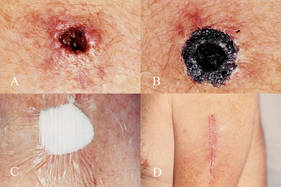
A 1997 study explored the idea that surgery can liberate atypical melanocytes and predispose a patient to metastatic disease, Dr. Brooks said (Dermatol. Surg. 1997;23:1043-6). The epidemiologic study of 1,224 primary melanomas concluded that surgery of primary melanoma may enhance tumor growth at metastatic sites.
Chemosurgery with zinc chloride paste, therefore, helps avoid this phenomenon, Dr. Brooks said. The paste not only destroys tissue where it is applied, it also fixes the tissue into a firm mass. A delayed excision allows the specimen to be removed en bloc and examined histopathologically to determine margins. However, leaving a portion of the fixed tissue in place for several more days causes a strong vaccine-like reaction on the skin surface, indicating, according to Dr. Brooks, the beginning of a systemic immunologic response.
The Evidence
According to Dr. Brooks, he and his colleagues published the only piece of objective evidence on this phenomenon in 1998 (Dermatol. Surg. 1998;24:1021-5).
The study involved mice that were injected with two different melanoma types: a poorly immunogenic (B16) type and a more immunogenic type (K1735p). The resultant tumors were freshly excised in some mice, or excised 24 hours after the application of zinc chloride paste. A week later, all the mice received a second injection of melanoma cells at a different site. K1735p tumors developed at the challenge sites in significantly fewer of the mice pretreated with zinc chloride (32% vs. 69%, respectively). The paste did not alter the development of B16 melanomas. The authors concluded: "Zinc chloride fixation of the more immunogenic K1735p melanoma increased resistance to subsequent tumor challenge, suggesting that zinc chloride fixative paste acts as an immune adjuvant."
Treatment Application
At the meeting, Dr. Brooks presented his most recent article describing a simplified method for using the paste (Dermatol. Surg. 2010;36:237-40).
His process begins with a fresh tissue biopsy to confirm melanoma. He recommended a shaved saucerized excision with a margin of 1-2 mm beyond the suspected tumor edge carried at least through the mid-dermis, or below the suspected thickness of the lesion.
After melanoma is histopathologically confirmed, he applies the Mohs paste. Since the compound will not penetrate an intact keratin layer, it must only be applied to the excised area. "If the biopsied area has developed a crust or eschar, this must also be removed," Dr. Brooks said.
He applies a 1-mm thick layer of paste with a cotton-tipped swab. More can be applied for thicker lesions, but less if the lesion overlies an important anatomic structure. If the biopsy is a small excisional one, a swab of 50% bi- or trichloracetic acid can remove the outer keratin layer and allow the paste to penetrate.
The next step is to apply a sterile cotton ball and cover the dressing with bio-occlusive tape for 24 hours – the time it takes the paste to achieve full penetration. After 24 hours, the patient can return for a conventional, wide excision with standard vertical or bevelled Mohs margins, followed by closure.
However, to take advantage of the paste's immunologic properties, the block of tissue should be left in place for a week or longer, or the main block can be removed, leaving a rim of the fixed tissue in place to stimulate the immune response. Dr. Brooks said the fixed tissue can then be histologically examined to confirm negative margins. For patients with raised lesions, he recommended debulking to create a flat tissue plane and they applying the paste as described.
He also stressed that the Mohs paste does not interfere in any way with conventional melanoma treatment. "About half of my patients end up going to [a cancer center] for excision, sentinel nodes, or other treatment," including interferon, he said. But some patients, after reviewing the comparatively small survival benefit interferon offers and its significant side effects, elect to have the fixed tissue excised and then continue with the practice of node palpation and regular ultrasounds to identify any early disease spread.
Dr. Brooks reported having no relevant financial disclosures.
"Mohs paste is a tried and true compound that does what it's purported to do," said Dr. Kenneth Gross.
"The first patient I [used the paste on] developed a sentinel node that was swollen and large, and I thought it was a metastatic, but it turned out to be clearly an immune response. On the flip side – I don't paste everyone. But if I have a high-risk patient who is well balanced and capable of understanding the implications, I do offer to paste them."
It is important to get informed consent and explain that zinc chloride is not an approved therapy; however, assure the patient it will not interfere with any other therapy they might want to pursue. Consider reserving it for high-risk patients, many of whom have melanoma that extends to the bone. "If you do your Mohs down to the periosteum and want to know if the bone is clear, you can paste it and a day or so later the bone will decalcify and a little chip will come out and you can examine that."
Mohs paste has fallen out of use over the years as fresh-tissue surgery has gained popularity. "Fresh-tissue replaced it because it allows immediate closure, while the paste causes a lot of inflammation and, the way Dr. Mohs did it, it left a wound that healed by secondary intention. It heals well but people won’t stand for that these days." Younger physicians, he said, "want to use what’s new, and what they were taught to use."
For many years, Dr. Mohs got the paste from just one pharmacist, who retired long ago. "Then there was just no reliable place to get the stuff. But recently we've been able to work with Delasco, [a medical supply company] that can compound it very reliably. It's cheap and a small amount will last virtually forever at room temperature."
Because Mohs paste is composed of natural ingredients and has been in use for so long, it is an unpatentable therapy. Therefore, it will probably always remain on the fringes of medicine.
"You will never find any large head-to-head studies with other therapies, and no pharmaceutical company is ever going to research it. It would cost millions of dollars to do the kind of studies you’d need to get approval and then what would you have at the end? Nothing you could make money off of. So it won't happen."
Aside from some slight discomfort and the inflammatory reaction, however, there are few down sides to using the paste. "If you look at it from a perspective of what can I do that won't hurt my patients, probably helps them, and won’t interfere with definitive, modern therapy, I would say Mohs paste is a shining example."
Kenneth Gross, M.D., was a course
director at the meeting, and is a surgical dermatologist in San Diego.
He reported having no relevant conflicts of interest.
"Mohs paste is a tried and true compound that does what it's purported to do," said Dr. Kenneth Gross.
"The first patient I [used the paste on] developed a sentinel node that was swollen and large, and I thought it was a metastatic, but it turned out to be clearly an immune response. On the flip side – I don't paste everyone. But if I have a high-risk patient who is well balanced and capable of understanding the implications, I do offer to paste them."
It is important to get informed consent and explain that zinc chloride is not an approved therapy; however, assure the patient it will not interfere with any other therapy they might want to pursue. Consider reserving it for high-risk patients, many of whom have melanoma that extends to the bone. "If you do your Mohs down to the periosteum and want to know if the bone is clear, you can paste it and a day or so later the bone will decalcify and a little chip will come out and you can examine that."
Mohs paste has fallen out of use over the years as fresh-tissue surgery has gained popularity. "Fresh-tissue replaced it because it allows immediate closure, while the paste causes a lot of inflammation and, the way Dr. Mohs did it, it left a wound that healed by secondary intention. It heals well but people won’t stand for that these days." Younger physicians, he said, "want to use what’s new, and what they were taught to use."
For many years, Dr. Mohs got the paste from just one pharmacist, who retired long ago. "Then there was just no reliable place to get the stuff. But recently we've been able to work with Delasco, [a medical supply company] that can compound it very reliably. It's cheap and a small amount will last virtually forever at room temperature."
Because Mohs paste is composed of natural ingredients and has been in use for so long, it is an unpatentable therapy. Therefore, it will probably always remain on the fringes of medicine.
"You will never find any large head-to-head studies with other therapies, and no pharmaceutical company is ever going to research it. It would cost millions of dollars to do the kind of studies you’d need to get approval and then what would you have at the end? Nothing you could make money off of. So it won't happen."
Aside from some slight discomfort and the inflammatory reaction, however, there are few down sides to using the paste. "If you look at it from a perspective of what can I do that won't hurt my patients, probably helps them, and won’t interfere with definitive, modern therapy, I would say Mohs paste is a shining example."
Kenneth Gross, M.D., was a course
director at the meeting, and is a surgical dermatologist in San Diego.
He reported having no relevant conflicts of interest.
"Mohs paste is a tried and true compound that does what it's purported to do," said Dr. Kenneth Gross.
"The first patient I [used the paste on] developed a sentinel node that was swollen and large, and I thought it was a metastatic, but it turned out to be clearly an immune response. On the flip side – I don't paste everyone. But if I have a high-risk patient who is well balanced and capable of understanding the implications, I do offer to paste them."
It is important to get informed consent and explain that zinc chloride is not an approved therapy; however, assure the patient it will not interfere with any other therapy they might want to pursue. Consider reserving it for high-risk patients, many of whom have melanoma that extends to the bone. "If you do your Mohs down to the periosteum and want to know if the bone is clear, you can paste it and a day or so later the bone will decalcify and a little chip will come out and you can examine that."
Mohs paste has fallen out of use over the years as fresh-tissue surgery has gained popularity. "Fresh-tissue replaced it because it allows immediate closure, while the paste causes a lot of inflammation and, the way Dr. Mohs did it, it left a wound that healed by secondary intention. It heals well but people won’t stand for that these days." Younger physicians, he said, "want to use what’s new, and what they were taught to use."
For many years, Dr. Mohs got the paste from just one pharmacist, who retired long ago. "Then there was just no reliable place to get the stuff. But recently we've been able to work with Delasco, [a medical supply company] that can compound it very reliably. It's cheap and a small amount will last virtually forever at room temperature."
Because Mohs paste is composed of natural ingredients and has been in use for so long, it is an unpatentable therapy. Therefore, it will probably always remain on the fringes of medicine.
"You will never find any large head-to-head studies with other therapies, and no pharmaceutical company is ever going to research it. It would cost millions of dollars to do the kind of studies you’d need to get approval and then what would you have at the end? Nothing you could make money off of. So it won't happen."
Aside from some slight discomfort and the inflammatory reaction, however, there are few down sides to using the paste. "If you look at it from a perspective of what can I do that won't hurt my patients, probably helps them, and won’t interfere with definitive, modern therapy, I would say Mohs paste is a shining example."
Kenneth Gross, M.D., was a course
director at the meeting, and is a surgical dermatologist in San Diego.
He reported having no relevant conflicts of interest.
SAN DIEGO - A remedy that has been used for nearly 2 centuries is still a valuable adjuvant therapy for melanoma, according to Dr. Norman Brooks.
Zinc chloride paste not only penetrates and kills even thick melanomas, it appears to stimulate a strong immune reaction that decreases the likelihood of metastasis and recurrence, Dr. Brooks said at the meeting sponsored by the American Society for Mohs Surgery.
"I believe chemosurgery with zinc chloride paste, followed by wide excision, is a better way to remove a melanoma than fresh tissue surgery," said Dr. Brooks, a dermatologist in Encino, Calif., who specializes in skin cancers. "It not only kills the tumor locally but stimulates total body resistance and immunity, supporting the idea that surgery actually enhances melanoma tumor growth and metastatic spread. That’s why I believe it's so important to use zinc chloride when treating melanoma."
History of Zinc Chloride
Zinc chloride was first used as a cancer treatment in 1815. In 1858, a U.S. physician added a powdered form of the bloodroot plant (Sanguinaria canadensis), which contains the anticancer alkaloid sanguinarine; the compound was used to treat breast cancer. The current paste, formulated by Dr. Frederic E. Mohs, is a compound of naturally occurring ingredients: the mineral stibnite, which forms the inert paste-like vehicle; powered root of the bloodroot plant, which has been shown to induce apoptosis in several types of cancer; and a saturated zinc chloride solution, which destructively penetrates tissue.
A 1997 study explored the idea that surgery can liberate atypical melanocytes and predispose a patient to metastatic disease, Dr. Brooks said (Dermatol. Surg. 1997;23:1043-6). The epidemiologic study of 1,224 primary melanomas concluded that surgery of primary melanoma may enhance tumor growth at metastatic sites.
Chemosurgery with zinc chloride paste, therefore, helps avoid this phenomenon, Dr. Brooks said. The paste not only destroys tissue where it is applied, it also fixes the tissue into a firm mass. A delayed excision allows the specimen to be removed en bloc and examined histopathologically to determine margins. However, leaving a portion of the fixed tissue in place for several more days causes a strong vaccine-like reaction on the skin surface, indicating, according to Dr. Brooks, the beginning of a systemic immunologic response.
The Evidence
According to Dr. Brooks, he and his colleagues published the only piece of objective evidence on this phenomenon in 1998 (Dermatol. Surg. 1998;24:1021-5).
The study involved mice that were injected with two different melanoma types: a poorly immunogenic (B16) type and a more immunogenic type (K1735p). The resultant tumors were freshly excised in some mice, or excised 24 hours after the application of zinc chloride paste. A week later, all the mice received a second injection of melanoma cells at a different site. K1735p tumors developed at the challenge sites in significantly fewer of the mice pretreated with zinc chloride (32% vs. 69%, respectively). The paste did not alter the development of B16 melanomas. The authors concluded: "Zinc chloride fixation of the more immunogenic K1735p melanoma increased resistance to subsequent tumor challenge, suggesting that zinc chloride fixative paste acts as an immune adjuvant."
Treatment Application
At the meeting, Dr. Brooks presented his most recent article describing a simplified method for using the paste (Dermatol. Surg. 2010;36:237-40).
His process begins with a fresh tissue biopsy to confirm melanoma. He recommended a shaved saucerized excision with a margin of 1-2 mm beyond the suspected tumor edge carried at least through the mid-dermis, or below the suspected thickness of the lesion.
After melanoma is histopathologically confirmed, he applies the Mohs paste. Since the compound will not penetrate an intact keratin layer, it must only be applied to the excised area. "If the biopsied area has developed a crust or eschar, this must also be removed," Dr. Brooks said.
He applies a 1-mm thick layer of paste with a cotton-tipped swab. More can be applied for thicker lesions, but less if the lesion overlies an important anatomic structure. If the biopsy is a small excisional one, a swab of 50% bi- or trichloracetic acid can remove the outer keratin layer and allow the paste to penetrate.
The next step is to apply a sterile cotton ball and cover the dressing with bio-occlusive tape for 24 hours – the time it takes the paste to achieve full penetration. After 24 hours, the patient can return for a conventional, wide excision with standard vertical or bevelled Mohs margins, followed by closure.
However, to take advantage of the paste's immunologic properties, the block of tissue should be left in place for a week or longer, or the main block can be removed, leaving a rim of the fixed tissue in place to stimulate the immune response. Dr. Brooks said the fixed tissue can then be histologically examined to confirm negative margins. For patients with raised lesions, he recommended debulking to create a flat tissue plane and they applying the paste as described.
He also stressed that the Mohs paste does not interfere in any way with conventional melanoma treatment. "About half of my patients end up going to [a cancer center] for excision, sentinel nodes, or other treatment," including interferon, he said. But some patients, after reviewing the comparatively small survival benefit interferon offers and its significant side effects, elect to have the fixed tissue excised and then continue with the practice of node palpation and regular ultrasounds to identify any early disease spread.
Dr. Brooks reported having no relevant financial disclosures.
SAN DIEGO - A remedy that has been used for nearly 2 centuries is still a valuable adjuvant therapy for melanoma, according to Dr. Norman Brooks.
Zinc chloride paste not only penetrates and kills even thick melanomas, it appears to stimulate a strong immune reaction that decreases the likelihood of metastasis and recurrence, Dr. Brooks said at the meeting sponsored by the American Society for Mohs Surgery.
"I believe chemosurgery with zinc chloride paste, followed by wide excision, is a better way to remove a melanoma than fresh tissue surgery," said Dr. Brooks, a dermatologist in Encino, Calif., who specializes in skin cancers. "It not only kills the tumor locally but stimulates total body resistance and immunity, supporting the idea that surgery actually enhances melanoma tumor growth and metastatic spread. That’s why I believe it's so important to use zinc chloride when treating melanoma."
History of Zinc Chloride
Zinc chloride was first used as a cancer treatment in 1815. In 1858, a U.S. physician added a powdered form of the bloodroot plant (Sanguinaria canadensis), which contains the anticancer alkaloid sanguinarine; the compound was used to treat breast cancer. The current paste, formulated by Dr. Frederic E. Mohs, is a compound of naturally occurring ingredients: the mineral stibnite, which forms the inert paste-like vehicle; powered root of the bloodroot plant, which has been shown to induce apoptosis in several types of cancer; and a saturated zinc chloride solution, which destructively penetrates tissue.
A 1997 study explored the idea that surgery can liberate atypical melanocytes and predispose a patient to metastatic disease, Dr. Brooks said (Dermatol. Surg. 1997;23:1043-6). The epidemiologic study of 1,224 primary melanomas concluded that surgery of primary melanoma may enhance tumor growth at metastatic sites.
Chemosurgery with zinc chloride paste, therefore, helps avoid this phenomenon, Dr. Brooks said. The paste not only destroys tissue where it is applied, it also fixes the tissue into a firm mass. A delayed excision allows the specimen to be removed en bloc and examined histopathologically to determine margins. However, leaving a portion of the fixed tissue in place for several more days causes a strong vaccine-like reaction on the skin surface, indicating, according to Dr. Brooks, the beginning of a systemic immunologic response.
The Evidence
According to Dr. Brooks, he and his colleagues published the only piece of objective evidence on this phenomenon in 1998 (Dermatol. Surg. 1998;24:1021-5).
The study involved mice that were injected with two different melanoma types: a poorly immunogenic (B16) type and a more immunogenic type (K1735p). The resultant tumors were freshly excised in some mice, or excised 24 hours after the application of zinc chloride paste. A week later, all the mice received a second injection of melanoma cells at a different site. K1735p tumors developed at the challenge sites in significantly fewer of the mice pretreated with zinc chloride (32% vs. 69%, respectively). The paste did not alter the development of B16 melanomas. The authors concluded: "Zinc chloride fixation of the more immunogenic K1735p melanoma increased resistance to subsequent tumor challenge, suggesting that zinc chloride fixative paste acts as an immune adjuvant."
Treatment Application
At the meeting, Dr. Brooks presented his most recent article describing a simplified method for using the paste (Dermatol. Surg. 2010;36:237-40).
His process begins with a fresh tissue biopsy to confirm melanoma. He recommended a shaved saucerized excision with a margin of 1-2 mm beyond the suspected tumor edge carried at least through the mid-dermis, or below the suspected thickness of the lesion.
After melanoma is histopathologically confirmed, he applies the Mohs paste. Since the compound will not penetrate an intact keratin layer, it must only be applied to the excised area. "If the biopsied area has developed a crust or eschar, this must also be removed," Dr. Brooks said.
He applies a 1-mm thick layer of paste with a cotton-tipped swab. More can be applied for thicker lesions, but less if the lesion overlies an important anatomic structure. If the biopsy is a small excisional one, a swab of 50% bi- or trichloracetic acid can remove the outer keratin layer and allow the paste to penetrate.
The next step is to apply a sterile cotton ball and cover the dressing with bio-occlusive tape for 24 hours – the time it takes the paste to achieve full penetration. After 24 hours, the patient can return for a conventional, wide excision with standard vertical or bevelled Mohs margins, followed by closure.
However, to take advantage of the paste's immunologic properties, the block of tissue should be left in place for a week or longer, or the main block can be removed, leaving a rim of the fixed tissue in place to stimulate the immune response. Dr. Brooks said the fixed tissue can then be histologically examined to confirm negative margins. For patients with raised lesions, he recommended debulking to create a flat tissue plane and they applying the paste as described.
He also stressed that the Mohs paste does not interfere in any way with conventional melanoma treatment. "About half of my patients end up going to [a cancer center] for excision, sentinel nodes, or other treatment," including interferon, he said. But some patients, after reviewing the comparatively small survival benefit interferon offers and its significant side effects, elect to have the fixed tissue excised and then continue with the practice of node palpation and regular ultrasounds to identify any early disease spread.
Dr. Brooks reported having no relevant financial disclosures.
EXPERT ANALYSIS FROM A MEETING SPONSORED BY THE AMERICAN SOCIETY FOR MOHS SURGERY
Mohs Paste Should Not Be Discounted for Treating Melanoma
SAN DIEGO – A remedy that has been used for nearly 2 centuries is still a valuable adjuvant therapy for melanoma, according to Dr. Norman Brooks.
Zinc chloride paste not only penetrates and kills even thick melanomas, it appears to stimulate a strong immune reaction that decreases the likelihood of metastasis and recurrence, Dr. Brooks said at the meeting sponsored by the American Society for Mohs Surgery.
"I believe chemosurgery with zinc chloride paste, followed by wide excision, is a better way to remove a melanoma than fresh tissue surgery," said Dr. Brooks, a dermatologist in Encino, Calif., who specializes in skin cancers. "It not only kills the tumor locally but stimulates total body resistance and immunity, supporting the idea that surgery actually enhances melanoma tumor growth and metastatic spread. That’s why I believe it’s so important to use zinc chloride when treating melanoma."

History of Zinc Chloride
Zinc chloride was first used as a cancer treatment in 1815. In 1858, a U.S. physician added a powdered form of the bloodroot plant (Sanguinaria canadensis), which contains the anticancer alkaloid sanguinarine; the compound was used to treat breast cancer. The current paste, formulated by Dr. Frederic E. Mohs, is a compound of naturally occurring ingredients: the mineral stibnite, which forms the inert paste-like vehicle; powered root of the bloodroot plant, which has been shown to induce apoptosis in several types of cancer; and a saturated zinc chloride solution, which destructively penetrates tissue.
A 1997 study explored the idea that surgery can liberate atypical melanocytes and predispose a patient to metastatic disease, Dr. Brooks said (Dermatol. Surg. 1997;23:1043-6). The epidemiologic study of 1,224 primary melanomas concluded that surgery of primary melanoma may enhance tumor growth at metastatic sites.
Chemosurgery with zinc chloride paste, therefore, helps avoid this phenomenon, Dr. Brooks said. The paste not only destroys tissue where it is applied, it also fixes the tissue into a firm mass. A delayed excision allows the specimen to be removed en bloc and examined histopathologically to determine margins. However, leaving a portion of the fixed tissue in place for several more days causes a strong vaccine-like reaction on the skin surface, indicating, according to Dr. Brooks, the beginning of a systemic immunologic response.
The Evidence
Dr. Brooks said that he and his colleagues published the only piece of objective evidence on this phenomenon in 1998 (Dermatol. Surg. 1998;24:1021-5).
The study involved mice that were injected with two different melanoma types: a poorly immunogenic (B16) type and a more immunogenic type (K1735p). The resultant tumors were freshly excised in some mice, or excised 24 hours after the application of zinc chloride paste. A week later, all the mice received a second injection of melanoma cells at a different site. K1735p tumors developed at the challenge sites in significantly fewer of the mice pretreated with zinc chloride (32% vs. 69%, respectively). The paste did not alter the development of B16 melanomas. The authors concluded: "Zinc chloride fixation of the more immunogenic K1735p melanoma increased resistance to subsequent tumor challenge, suggesting that zinc chloride fixative paste acts as an immune adjuvant."
Treatment Application
At the meeting, Dr. Brooks presented his most recent article describing a simplified method for using the paste (Dermatol. Surg. 2010;36:237-40).
His process begins with a fresh tissue biopsy to confirm melanoma. He recommended a shaved saucerized excision with a margin of 1-2 mm beyond the suspected tumor edge carried at least through the mid-dermis, or below the suspected thickness of the lesion.
After melanoma is histopathologically confirmed, he applies the Mohs paste. Since the compound will not penetrate an intact keratin layer, it must only be applied to the excised area. "If the biopsied area has developed a crust or eschar, this must also be removed," Dr. Brooks said.
He applies a 1-mm thick layer of paste with a cotton-tipped swab. More can be applied for thicker lesions, but less if the lesion overlies an important anatomic structure. If the biopsy is a small excisional one, a swab of 50% bi- or trichloracetic acid can remove the outer keratin layer and allow the paste to penetrate.
The next step is to apply a sterile cotton ball and cover the dressing with bio-occlusive tape for 24 hours – the time it takes the paste to achieve full penetration. After 24 hours, the patient can return for a conventional, wide excision with standard vertical or bevelled Mohs margins, followed by closure.
However, to take advantage of the paste’s immunologic properties, the block of tissue should be left in place for a week or longer, or the main block can be removed, leaving a rim of the fixed tissue in place to stimulate the immune response. Dr. Brooks said the fixed tissue can then be histologically examined to confirm negative margins. For patients with raised lesions, he recommended debulking to create a flat tissue plane and they applying the paste as described.
He also stressed that the Mohs paste does not interfere in any way with conventional melanoma treatment. "About half of my patients end up going to [a cancer center] for excision, sentinel nodes, or other treatment," including interferon, he said. But some patients, after reviewing the comparatively small survival benefit interferon offers and its significant side effects, elect to have the fixed tissue excised and then continue with the practice of node palpation and regular ultrasounds to identify any early disease spread.
Dr. Brooks fielded several questions from the audience, most of which concerned seemingly similar compounds that patients buy over the internet and apply injudiciously. Among those are a compound called Yellow Salve and one called Compound X, which the questioner said has caused bone-deep ulcerations on some of her cattle-rancher patients.
Compound X is marketed as a cure for eye cancer and early viral diseases in cattle, sarcomatoid on horses, and abnormal tissue growths in other animals. Similar compounds for humans go by the names Black Salve, Balm of Gilead, and Bloodroot Salve. Some are even formulated for oral use. "These are very hazardous substances that people can get hold of easily over the internet," Dr. Brooks said. "Zinc chloride paste is a very powerful compound."
Dr. Brooks reported no relevant financial disclosures.
"Mohs paste is a tried and true compound that does what it’s purported to do."
"The first patient I [used the paste on] developed a sentinel node that was swollen and large, and I thought it was a metastatic, but it turned out to be clearly an immune response. On the flip side – I don’t paste everyone. But if I have a high-risk patient who is well balanced and capable of understanding the implications, I do offer to paste them."
It is important to get informed consent and explain that zinc chloride is not an approved therapy; however, assure the patient it will not interfere with any other therapy they might want to pursue. Consider reserving it for high-risk patients, many of whom have melanoma that extends to the bone. "If you do your Mohs down to the periosteum and want to know if the bone is clear, you can paste it and a day or so later the bone will decalcify and a little chip will come out and you can examine that."
Mohs paste has fallen out of use over the years as fresh-tissue surgery has gained popularity. "Fresh-tissue replaced it because it allows immediate closure, while the paste causes a lot of inflammation and, the way Dr. Mohs did it, it left a wound that healed by secondary intention. It heals well but people won’t stand for that these days." Younger physicians, he said, "want to use what’s new, and what they were taught to use."
For many years, Dr. Mohs got the paste from just one pharmacist, who retired long ago. "Then there was just no reliable place to get the stuff. But recently we’ve been able to work with Delasco, [a medical supply company] that can compound it very reliably. It’s cheap and a small amount will last virtually forever at room temperature."
Because Mohs paste is composed of natural ingredients and has been in use for so long, it is an unpatentable therapy. Therefore, it will probably always remain on the fringes of medicine.
"You will never find any large head-to-head studies with other therapies, and no pharmaceutical company is ever going to research it. It would cost millions of dollars to do the kind of studies you’d need to get approval and then what would you have at the end? Nothing you could make money off of. So it won’t happen."
Aside from some slight discomfort and the inflammatory reaction, however, there are few down sides to using the paste. "If you look at it from a perspective of what can I do that won’t hurt my patients, probably helps them, and won’t interfere with definitive, modern therapy, I would say Mohs paste is a shining example."
Kenneth Gross, M.D., was a course director at the meeting, and is a surgical dermatologist in San Diego. He reported having no relevant conflicts of interest.
"Mohs paste is a tried and true compound that does what it’s purported to do."
"The first patient I [used the paste on] developed a sentinel node that was swollen and large, and I thought it was a metastatic, but it turned out to be clearly an immune response. On the flip side – I don’t paste everyone. But if I have a high-risk patient who is well balanced and capable of understanding the implications, I do offer to paste them."
It is important to get informed consent and explain that zinc chloride is not an approved therapy; however, assure the patient it will not interfere with any other therapy they might want to pursue. Consider reserving it for high-risk patients, many of whom have melanoma that extends to the bone. "If you do your Mohs down to the periosteum and want to know if the bone is clear, you can paste it and a day or so later the bone will decalcify and a little chip will come out and you can examine that."
Mohs paste has fallen out of use over the years as fresh-tissue surgery has gained popularity. "Fresh-tissue replaced it because it allows immediate closure, while the paste causes a lot of inflammation and, the way Dr. Mohs did it, it left a wound that healed by secondary intention. It heals well but people won’t stand for that these days." Younger physicians, he said, "want to use what’s new, and what they were taught to use."
For many years, Dr. Mohs got the paste from just one pharmacist, who retired long ago. "Then there was just no reliable place to get the stuff. But recently we’ve been able to work with Delasco, [a medical supply company] that can compound it very reliably. It’s cheap and a small amount will last virtually forever at room temperature."
Because Mohs paste is composed of natural ingredients and has been in use for so long, it is an unpatentable therapy. Therefore, it will probably always remain on the fringes of medicine.
"You will never find any large head-to-head studies with other therapies, and no pharmaceutical company is ever going to research it. It would cost millions of dollars to do the kind of studies you’d need to get approval and then what would you have at the end? Nothing you could make money off of. So it won’t happen."
Aside from some slight discomfort and the inflammatory reaction, however, there are few down sides to using the paste. "If you look at it from a perspective of what can I do that won’t hurt my patients, probably helps them, and won’t interfere with definitive, modern therapy, I would say Mohs paste is a shining example."
Kenneth Gross, M.D., was a course director at the meeting, and is a surgical dermatologist in San Diego. He reported having no relevant conflicts of interest.
"Mohs paste is a tried and true compound that does what it’s purported to do."
"The first patient I [used the paste on] developed a sentinel node that was swollen and large, and I thought it was a metastatic, but it turned out to be clearly an immune response. On the flip side – I don’t paste everyone. But if I have a high-risk patient who is well balanced and capable of understanding the implications, I do offer to paste them."
It is important to get informed consent and explain that zinc chloride is not an approved therapy; however, assure the patient it will not interfere with any other therapy they might want to pursue. Consider reserving it for high-risk patients, many of whom have melanoma that extends to the bone. "If you do your Mohs down to the periosteum and want to know if the bone is clear, you can paste it and a day or so later the bone will decalcify and a little chip will come out and you can examine that."
Mohs paste has fallen out of use over the years as fresh-tissue surgery has gained popularity. "Fresh-tissue replaced it because it allows immediate closure, while the paste causes a lot of inflammation and, the way Dr. Mohs did it, it left a wound that healed by secondary intention. It heals well but people won’t stand for that these days." Younger physicians, he said, "want to use what’s new, and what they were taught to use."
For many years, Dr. Mohs got the paste from just one pharmacist, who retired long ago. "Then there was just no reliable place to get the stuff. But recently we’ve been able to work with Delasco, [a medical supply company] that can compound it very reliably. It’s cheap and a small amount will last virtually forever at room temperature."
Because Mohs paste is composed of natural ingredients and has been in use for so long, it is an unpatentable therapy. Therefore, it will probably always remain on the fringes of medicine.
"You will never find any large head-to-head studies with other therapies, and no pharmaceutical company is ever going to research it. It would cost millions of dollars to do the kind of studies you’d need to get approval and then what would you have at the end? Nothing you could make money off of. So it won’t happen."
Aside from some slight discomfort and the inflammatory reaction, however, there are few down sides to using the paste. "If you look at it from a perspective of what can I do that won’t hurt my patients, probably helps them, and won’t interfere with definitive, modern therapy, I would say Mohs paste is a shining example."
Kenneth Gross, M.D., was a course director at the meeting, and is a surgical dermatologist in San Diego. He reported having no relevant conflicts of interest.
SAN DIEGO – A remedy that has been used for nearly 2 centuries is still a valuable adjuvant therapy for melanoma, according to Dr. Norman Brooks.
Zinc chloride paste not only penetrates and kills even thick melanomas, it appears to stimulate a strong immune reaction that decreases the likelihood of metastasis and recurrence, Dr. Brooks said at the meeting sponsored by the American Society for Mohs Surgery.
"I believe chemosurgery with zinc chloride paste, followed by wide excision, is a better way to remove a melanoma than fresh tissue surgery," said Dr. Brooks, a dermatologist in Encino, Calif., who specializes in skin cancers. "It not only kills the tumor locally but stimulates total body resistance and immunity, supporting the idea that surgery actually enhances melanoma tumor growth and metastatic spread. That’s why I believe it’s so important to use zinc chloride when treating melanoma."
History of Zinc Chloride
Zinc chloride was first used as a cancer treatment in 1815. In 1858, a U.S. physician added a powdered form of the bloodroot plant (Sanguinaria canadensis), which contains the anticancer alkaloid sanguinarine; the compound was used to treat breast cancer. The current paste, formulated by Dr. Frederic E. Mohs, is a compound of naturally occurring ingredients: the mineral stibnite, which forms the inert paste-like vehicle; powered root of the bloodroot plant, which has been shown to induce apoptosis in several types of cancer; and a saturated zinc chloride solution, which destructively penetrates tissue.
A 1997 study explored the idea that surgery can liberate atypical melanocytes and predispose a patient to metastatic disease, Dr. Brooks said (Dermatol. Surg. 1997;23:1043-6). The epidemiologic study of 1,224 primary melanomas concluded that surgery of primary melanoma may enhance tumor growth at metastatic sites.
Chemosurgery with zinc chloride paste, therefore, helps avoid this phenomenon, Dr. Brooks said. The paste not only destroys tissue where it is applied, it also fixes the tissue into a firm mass. A delayed excision allows the specimen to be removed en bloc and examined histopathologically to determine margins. However, leaving a portion of the fixed tissue in place for several more days causes a strong vaccine-like reaction on the skin surface, indicating, according to Dr. Brooks, the beginning of a systemic immunologic response.
The Evidence
Dr. Brooks said that he and his colleagues published the only piece of objective evidence on this phenomenon in 1998 (Dermatol. Surg. 1998;24:1021-5).
The study involved mice that were injected with two different melanoma types: a poorly immunogenic (B16) type and a more immunogenic type (K1735p). The resultant tumors were freshly excised in some mice, or excised 24 hours after the application of zinc chloride paste. A week later, all the mice received a second injection of melanoma cells at a different site. K1735p tumors developed at the challenge sites in significantly fewer of the mice pretreated with zinc chloride (32% vs. 69%, respectively). The paste did not alter the development of B16 melanomas. The authors concluded: "Zinc chloride fixation of the more immunogenic K1735p melanoma increased resistance to subsequent tumor challenge, suggesting that zinc chloride fixative paste acts as an immune adjuvant."
Treatment Application
At the meeting, Dr. Brooks presented his most recent article describing a simplified method for using the paste (Dermatol. Surg. 2010;36:237-40).
His process begins with a fresh tissue biopsy to confirm melanoma. He recommended a shaved saucerized excision with a margin of 1-2 mm beyond the suspected tumor edge carried at least through the mid-dermis, or below the suspected thickness of the lesion.
After melanoma is histopathologically confirmed, he applies the Mohs paste. Since the compound will not penetrate an intact keratin layer, it must only be applied to the excised area. "If the biopsied area has developed a crust or eschar, this must also be removed," Dr. Brooks said.
He applies a 1-mm thick layer of paste with a cotton-tipped swab. More can be applied for thicker lesions, but less if the lesion overlies an important anatomic structure. If the biopsy is a small excisional one, a swab of 50% bi- or trichloracetic acid can remove the outer keratin layer and allow the paste to penetrate.
The next step is to apply a sterile cotton ball and cover the dressing with bio-occlusive tape for 24 hours – the time it takes the paste to achieve full penetration. After 24 hours, the patient can return for a conventional, wide excision with standard vertical or bevelled Mohs margins, followed by closure.
However, to take advantage of the paste’s immunologic properties, the block of tissue should be left in place for a week or longer, or the main block can be removed, leaving a rim of the fixed tissue in place to stimulate the immune response. Dr. Brooks said the fixed tissue can then be histologically examined to confirm negative margins. For patients with raised lesions, he recommended debulking to create a flat tissue plane and they applying the paste as described.
He also stressed that the Mohs paste does not interfere in any way with conventional melanoma treatment. "About half of my patients end up going to [a cancer center] for excision, sentinel nodes, or other treatment," including interferon, he said. But some patients, after reviewing the comparatively small survival benefit interferon offers and its significant side effects, elect to have the fixed tissue excised and then continue with the practice of node palpation and regular ultrasounds to identify any early disease spread.
Dr. Brooks fielded several questions from the audience, most of which concerned seemingly similar compounds that patients buy over the internet and apply injudiciously. Among those are a compound called Yellow Salve and one called Compound X, which the questioner said has caused bone-deep ulcerations on some of her cattle-rancher patients.
Compound X is marketed as a cure for eye cancer and early viral diseases in cattle, sarcomatoid on horses, and abnormal tissue growths in other animals. Similar compounds for humans go by the names Black Salve, Balm of Gilead, and Bloodroot Salve. Some are even formulated for oral use. "These are very hazardous substances that people can get hold of easily over the internet," Dr. Brooks said. "Zinc chloride paste is a very powerful compound."
Dr. Brooks reported no relevant financial disclosures.
SAN DIEGO – A remedy that has been used for nearly 2 centuries is still a valuable adjuvant therapy for melanoma, according to Dr. Norman Brooks.
Zinc chloride paste not only penetrates and kills even thick melanomas, it appears to stimulate a strong immune reaction that decreases the likelihood of metastasis and recurrence, Dr. Brooks said at the meeting sponsored by the American Society for Mohs Surgery.
"I believe chemosurgery with zinc chloride paste, followed by wide excision, is a better way to remove a melanoma than fresh tissue surgery," said Dr. Brooks, a dermatologist in Encino, Calif., who specializes in skin cancers. "It not only kills the tumor locally but stimulates total body resistance and immunity, supporting the idea that surgery actually enhances melanoma tumor growth and metastatic spread. That’s why I believe it’s so important to use zinc chloride when treating melanoma."
History of Zinc Chloride
Zinc chloride was first used as a cancer treatment in 1815. In 1858, a U.S. physician added a powdered form of the bloodroot plant (Sanguinaria canadensis), which contains the anticancer alkaloid sanguinarine; the compound was used to treat breast cancer. The current paste, formulated by Dr. Frederic E. Mohs, is a compound of naturally occurring ingredients: the mineral stibnite, which forms the inert paste-like vehicle; powered root of the bloodroot plant, which has been shown to induce apoptosis in several types of cancer; and a saturated zinc chloride solution, which destructively penetrates tissue.
A 1997 study explored the idea that surgery can liberate atypical melanocytes and predispose a patient to metastatic disease, Dr. Brooks said (Dermatol. Surg. 1997;23:1043-6). The epidemiologic study of 1,224 primary melanomas concluded that surgery of primary melanoma may enhance tumor growth at metastatic sites.
Chemosurgery with zinc chloride paste, therefore, helps avoid this phenomenon, Dr. Brooks said. The paste not only destroys tissue where it is applied, it also fixes the tissue into a firm mass. A delayed excision allows the specimen to be removed en bloc and examined histopathologically to determine margins. However, leaving a portion of the fixed tissue in place for several more days causes a strong vaccine-like reaction on the skin surface, indicating, according to Dr. Brooks, the beginning of a systemic immunologic response.
The Evidence
Dr. Brooks said that he and his colleagues published the only piece of objective evidence on this phenomenon in 1998 (Dermatol. Surg. 1998;24:1021-5).
The study involved mice that were injected with two different melanoma types: a poorly immunogenic (B16) type and a more immunogenic type (K1735p). The resultant tumors were freshly excised in some mice, or excised 24 hours after the application of zinc chloride paste. A week later, all the mice received a second injection of melanoma cells at a different site. K1735p tumors developed at the challenge sites in significantly fewer of the mice pretreated with zinc chloride (32% vs. 69%, respectively). The paste did not alter the development of B16 melanomas. The authors concluded: "Zinc chloride fixation of the more immunogenic K1735p melanoma increased resistance to subsequent tumor challenge, suggesting that zinc chloride fixative paste acts as an immune adjuvant."
Treatment Application
At the meeting, Dr. Brooks presented his most recent article describing a simplified method for using the paste (Dermatol. Surg. 2010;36:237-40).
His process begins with a fresh tissue biopsy to confirm melanoma. He recommended a shaved saucerized excision with a margin of 1-2 mm beyond the suspected tumor edge carried at least through the mid-dermis, or below the suspected thickness of the lesion.
After melanoma is histopathologically confirmed, he applies the Mohs paste. Since the compound will not penetrate an intact keratin layer, it must only be applied to the excised area. "If the biopsied area has developed a crust or eschar, this must also be removed," Dr. Brooks said.
He applies a 1-mm thick layer of paste with a cotton-tipped swab. More can be applied for thicker lesions, but less if the lesion overlies an important anatomic structure. If the biopsy is a small excisional one, a swab of 50% bi- or trichloracetic acid can remove the outer keratin layer and allow the paste to penetrate.
The next step is to apply a sterile cotton ball and cover the dressing with bio-occlusive tape for 24 hours – the time it takes the paste to achieve full penetration. After 24 hours, the patient can return for a conventional, wide excision with standard vertical or bevelled Mohs margins, followed by closure.
However, to take advantage of the paste’s immunologic properties, the block of tissue should be left in place for a week or longer, or the main block can be removed, leaving a rim of the fixed tissue in place to stimulate the immune response. Dr. Brooks said the fixed tissue can then be histologically examined to confirm negative margins. For patients with raised lesions, he recommended debulking to create a flat tissue plane and they applying the paste as described.
He also stressed that the Mohs paste does not interfere in any way with conventional melanoma treatment. "About half of my patients end up going to [a cancer center] for excision, sentinel nodes, or other treatment," including interferon, he said. But some patients, after reviewing the comparatively small survival benefit interferon offers and its significant side effects, elect to have the fixed tissue excised and then continue with the practice of node palpation and regular ultrasounds to identify any early disease spread.
Dr. Brooks fielded several questions from the audience, most of which concerned seemingly similar compounds that patients buy over the internet and apply injudiciously. Among those are a compound called Yellow Salve and one called Compound X, which the questioner said has caused bone-deep ulcerations on some of her cattle-rancher patients.
Compound X is marketed as a cure for eye cancer and early viral diseases in cattle, sarcomatoid on horses, and abnormal tissue growths in other animals. Similar compounds for humans go by the names Black Salve, Balm of Gilead, and Bloodroot Salve. Some are even formulated for oral use. "These are very hazardous substances that people can get hold of easily over the internet," Dr. Brooks said. "Zinc chloride paste is a very powerful compound."
Dr. Brooks reported no relevant financial disclosures.
EXPERT ANALYSIS FROM A MEETING SPONSORED BY THE AMERICAN SOCIETY FOR MOHS SURGERY
PSA Screening Tied to Lower Metastatic Prostate Cancer Rate
Routine screening for prostate cancer resulted in fewer cases of metastatic disease over the past 10 years even after controlling for disease severity, a new retrospective study suggests.
Men who developed prostate cancer before prostate specific antigen (PSA) testing became routine were 3.5 times more likely to progress to metastatic disease than were men diagnosed after PSA testing became the standard of care, Chandana Reddy, M.S., reported at the press briefing.
“Our study showed that routine screening not only improves the patient's quality of life by stopping metastatic disease but also decreases the burden of care for this advanced disease that must be provided by the health care system,” Ms. Reddy said.
“This demonstrates that the prostate specific antigen [PSA] test is extremely valuable in catching the disease earlier and allowing men to live more productive lives after treatment,” she added.
The impact of routine prostate cancer screening has been widely debated for years, Ms. Reddy said.
“Because prostate cancer is generally a slow-growing disease, often diagnosed in older men with other medical conditions, the question has been [whether] they [should] be treated, since the treatment itself can have complications,” she said.
Routine screening using the PSA was first implemented in 1992, and, she said, “Skeptics have argued that it has not resulted in any meaningful increase in survival. In fact, two recent trials showed no benefit.”
She cautioned that trial design could have skewed those results. “Those trials looked at overall survival as the primary end point, and since many of these men had other medical conditions, any prostate cancer–specific survival could have been masked by the likelihood of death from other illness.”
Ms. Reddy, a senior biostatistician at the Cleveland Clinic, Ohio, and her colleagues reported a retrospective study of 1,721 men with prostate cancer who were treated at the facility from 1986-1996. All men underwent radical prostatectomy or radiotherapy.
The investigators divided the group into two eras: a prescreening era (1986-1992; 575 patients) and a post-screening era (1993-1996; 1,146 patients). The median follow-up time for both groups was 10 years.
At baseline, according to the National Comprehensive Cancer Network risk classification, 44% of the prescreening era group were high risk, 21% were intermediate risk, and 28% low risk; no classification data were available for the remaining patients. For the postscreening era group, 36% were considered high risk, 27% intermediate risk, and 37% low risk. These differences between screening groups were statistically significant.
Within the 10-year post-treatment follow-up period, 13% (224) of all study patients developed metastatic disease. Significant differences (P less than .0001) in the rate of metastasis-free survival emerged when each risk level was compared between the prescreening and post-screening era groups: high risk (58% vs. 82%), intermediate risk (79% vs. 93%), and low risk (90% vs. 98%).
In a univariate analysis, screening era, age, T stage, pretreatment PSA value, and Gleason score on biopsy were significantly associated with the development of metastatic disease (P less than .05).
In the multivariate analysis, screening era, T stage, and biopsy Gleason score remained statistically significant predictors of metastatic disease.
Routine screening for prostate cancer resulted in fewer cases of metastatic disease over the past 10 years even after controlling for disease severity, a new retrospective study suggests.
Men who developed prostate cancer before prostate specific antigen (PSA) testing became routine were 3.5 times more likely to progress to metastatic disease than were men diagnosed after PSA testing became the standard of care, Chandana Reddy, M.S., reported at the press briefing.
“Our study showed that routine screening not only improves the patient's quality of life by stopping metastatic disease but also decreases the burden of care for this advanced disease that must be provided by the health care system,” Ms. Reddy said.
“This demonstrates that the prostate specific antigen [PSA] test is extremely valuable in catching the disease earlier and allowing men to live more productive lives after treatment,” she added.
The impact of routine prostate cancer screening has been widely debated for years, Ms. Reddy said.
“Because prostate cancer is generally a slow-growing disease, often diagnosed in older men with other medical conditions, the question has been [whether] they [should] be treated, since the treatment itself can have complications,” she said.
Routine screening using the PSA was first implemented in 1992, and, she said, “Skeptics have argued that it has not resulted in any meaningful increase in survival. In fact, two recent trials showed no benefit.”
She cautioned that trial design could have skewed those results. “Those trials looked at overall survival as the primary end point, and since many of these men had other medical conditions, any prostate cancer–specific survival could have been masked by the likelihood of death from other illness.”
Ms. Reddy, a senior biostatistician at the Cleveland Clinic, Ohio, and her colleagues reported a retrospective study of 1,721 men with prostate cancer who were treated at the facility from 1986-1996. All men underwent radical prostatectomy or radiotherapy.
The investigators divided the group into two eras: a prescreening era (1986-1992; 575 patients) and a post-screening era (1993-1996; 1,146 patients). The median follow-up time for both groups was 10 years.
At baseline, according to the National Comprehensive Cancer Network risk classification, 44% of the prescreening era group were high risk, 21% were intermediate risk, and 28% low risk; no classification data were available for the remaining patients. For the postscreening era group, 36% were considered high risk, 27% intermediate risk, and 37% low risk. These differences between screening groups were statistically significant.
Within the 10-year post-treatment follow-up period, 13% (224) of all study patients developed metastatic disease. Significant differences (P less than .0001) in the rate of metastasis-free survival emerged when each risk level was compared between the prescreening and post-screening era groups: high risk (58% vs. 82%), intermediate risk (79% vs. 93%), and low risk (90% vs. 98%).
In a univariate analysis, screening era, age, T stage, pretreatment PSA value, and Gleason score on biopsy were significantly associated with the development of metastatic disease (P less than .05).
In the multivariate analysis, screening era, T stage, and biopsy Gleason score remained statistically significant predictors of metastatic disease.
Routine screening for prostate cancer resulted in fewer cases of metastatic disease over the past 10 years even after controlling for disease severity, a new retrospective study suggests.
Men who developed prostate cancer before prostate specific antigen (PSA) testing became routine were 3.5 times more likely to progress to metastatic disease than were men diagnosed after PSA testing became the standard of care, Chandana Reddy, M.S., reported at the press briefing.
“Our study showed that routine screening not only improves the patient's quality of life by stopping metastatic disease but also decreases the burden of care for this advanced disease that must be provided by the health care system,” Ms. Reddy said.
“This demonstrates that the prostate specific antigen [PSA] test is extremely valuable in catching the disease earlier and allowing men to live more productive lives after treatment,” she added.
The impact of routine prostate cancer screening has been widely debated for years, Ms. Reddy said.
“Because prostate cancer is generally a slow-growing disease, often diagnosed in older men with other medical conditions, the question has been [whether] they [should] be treated, since the treatment itself can have complications,” she said.
Routine screening using the PSA was first implemented in 1992, and, she said, “Skeptics have argued that it has not resulted in any meaningful increase in survival. In fact, two recent trials showed no benefit.”
She cautioned that trial design could have skewed those results. “Those trials looked at overall survival as the primary end point, and since many of these men had other medical conditions, any prostate cancer–specific survival could have been masked by the likelihood of death from other illness.”
Ms. Reddy, a senior biostatistician at the Cleveland Clinic, Ohio, and her colleagues reported a retrospective study of 1,721 men with prostate cancer who were treated at the facility from 1986-1996. All men underwent radical prostatectomy or radiotherapy.
The investigators divided the group into two eras: a prescreening era (1986-1992; 575 patients) and a post-screening era (1993-1996; 1,146 patients). The median follow-up time for both groups was 10 years.
At baseline, according to the National Comprehensive Cancer Network risk classification, 44% of the prescreening era group were high risk, 21% were intermediate risk, and 28% low risk; no classification data were available for the remaining patients. For the postscreening era group, 36% were considered high risk, 27% intermediate risk, and 37% low risk. These differences between screening groups were statistically significant.
Within the 10-year post-treatment follow-up period, 13% (224) of all study patients developed metastatic disease. Significant differences (P less than .0001) in the rate of metastasis-free survival emerged when each risk level was compared between the prescreening and post-screening era groups: high risk (58% vs. 82%), intermediate risk (79% vs. 93%), and low risk (90% vs. 98%).
In a univariate analysis, screening era, age, T stage, pretreatment PSA value, and Gleason score on biopsy were significantly associated with the development of metastatic disease (P less than .05).
In the multivariate analysis, screening era, T stage, and biopsy Gleason score remained statistically significant predictors of metastatic disease.
Major Finding: Routine PSA screening was linked to significantly
lower rates of metastatic prostate cancer progression regardless of
disease severity.
Data Source: A retrospective study of 1,721 men who were treated before and after the introduction of routine PSA screening.
Disclosures: Neither Ms. Reddy nor any of her coauthors had any relevant financial disclosures.
AAN Calls for Concussion Experts in Youth Sports
Athletes who might have sustained a concussion during a sporting event should be immediately pulled from play and not return until they have been properly evaluated by a trained health care provider – preferably a neurologist, according to a position statement by the American Academy of Neurology.
The academy issued the new set of recommendations in light of the still-unknown long-term effects of concussion on a young person's developing brain, and because of the risk of sometimes-fatal second-impact syndrome, Dr. Jeffrey Kutcher said in an interview.
The recommendations ideally apply to athletes in any age group but may be of greatest benefit to athletes aged 15-24 years. In this age group, sports are now second only to motor vehicle accidents as the leading cause of traumatic brain injury, according to the statement.
“We need a more individualized, hands-on approach to return-to-play decisions, so we can prevent longer symptoms, and more common symptoms,” said Dr. Kutcher, lead author of the paper and director and chief of inpatient neurologic services at the University of Michigan's NeuroSport Program in Ann Arbor. “If you get hit and stay in the game, and get another hit, you'll have more symptoms, longer symptoms, be out of school longer, and have more interruption of your daily life.”
Although football is the sport that springs to mind as potentially the most dangerous, Dr. Kutcher said others hold risk as well, including ice hockey, water polo, field hockey, and diving.
The position paper also calls for a certified athletic trainer to be present at all events that pose a risk for concussion, including practices. The idea that certified trainers and physicians should be more consistently involved in contact sports might be a difficult one for some programs to swallow, Dr. Kutcher admitted – especially small, rural areas that may already be short on money and resources.
However, he said, “if we are going to allow our children to be exposed to this kind of risk, shouldn't we at least require a certified athletic trainer who is able to identify possible concussions [to be] at each practice and game? If not, then maybe we should be readjusting our thinking about having contact sports until the right people are around to protect our children.”
The paper represents an interim update of the academy's 1997 guideline “The Management of Concussion in Sports.” including how repeat concussion plays into second-impact syndrome, cognitive impairment, and even the possibility of a concussion-related dementia, which may develop years after the traumatic brain injury of repeat concussions. Recent long-term studies have found an association between repeat concussions and the onset of “chronic traumatic encephalopathy,” Dr. Kutcher said. “This term has been used to describe pathologic changes seen in the brain at autopsy,” which include tau deposition similar to that of Alzheimer's disease although not in the typical Alzheimer's brain regions. The pathologic changes are visible on microscopy, but we really don't know what these changes might mean clinically,” he said. “That is still under investigation.”
Recently Dr. Kutcher and other members of the practice update committee held conference calls with several national organizations that oversee youth sports, including the American Association of Health Educators.
“We need these groups to partner with the American Academy of Neurology to get this message out – as well as other messages that convey the benefits of fitness [to] brain development and health,” he said. “We hope these are some very positive steps in increasing education about this important issue on a larger scale.”
Dr. Kutcher testified about the issue earlier this year before a congressional Judiciary Committee hearing in Detroit. During that hearing, he made the case for an individualized approach to managing concussion during contact sports.
“Because the brain is a highly complex, individualized, and dynamic organ, concussion management does not lend itself well to the use of protocols. It is, rather, an injury that is best managed by people with neurological expertise and experience treating athletes,” he indicated in his written testimony.
“Unfortunately, the vast majority of athletes who sustain a concussion do not have access to concussion experts. Add to this the fact that approximately half of all high school athletes in this country do not have access to certified athletic trainers or any other medical specialist on site, and the problem deepens. Because of these shortages, sports concussion is a public health issue that could use protocols that can be followed by our country's network of primary care providers, as well as more simple guidelines that can be followed by parents, coaches, friends, and teammates.”
Athletes who might have sustained a concussion during a sporting event should be immediately pulled from play and not return until they have been properly evaluated by a trained health care provider – preferably a neurologist, according to a position statement by the American Academy of Neurology.
The academy issued the new set of recommendations in light of the still-unknown long-term effects of concussion on a young person's developing brain, and because of the risk of sometimes-fatal second-impact syndrome, Dr. Jeffrey Kutcher said in an interview.
The recommendations ideally apply to athletes in any age group but may be of greatest benefit to athletes aged 15-24 years. In this age group, sports are now second only to motor vehicle accidents as the leading cause of traumatic brain injury, according to the statement.
“We need a more individualized, hands-on approach to return-to-play decisions, so we can prevent longer symptoms, and more common symptoms,” said Dr. Kutcher, lead author of the paper and director and chief of inpatient neurologic services at the University of Michigan's NeuroSport Program in Ann Arbor. “If you get hit and stay in the game, and get another hit, you'll have more symptoms, longer symptoms, be out of school longer, and have more interruption of your daily life.”
Although football is the sport that springs to mind as potentially the most dangerous, Dr. Kutcher said others hold risk as well, including ice hockey, water polo, field hockey, and diving.
The position paper also calls for a certified athletic trainer to be present at all events that pose a risk for concussion, including practices. The idea that certified trainers and physicians should be more consistently involved in contact sports might be a difficult one for some programs to swallow, Dr. Kutcher admitted – especially small, rural areas that may already be short on money and resources.
However, he said, “if we are going to allow our children to be exposed to this kind of risk, shouldn't we at least require a certified athletic trainer who is able to identify possible concussions [to be] at each practice and game? If not, then maybe we should be readjusting our thinking about having contact sports until the right people are around to protect our children.”
The paper represents an interim update of the academy's 1997 guideline “The Management of Concussion in Sports.” including how repeat concussion plays into second-impact syndrome, cognitive impairment, and even the possibility of a concussion-related dementia, which may develop years after the traumatic brain injury of repeat concussions. Recent long-term studies have found an association between repeat concussions and the onset of “chronic traumatic encephalopathy,” Dr. Kutcher said. “This term has been used to describe pathologic changes seen in the brain at autopsy,” which include tau deposition similar to that of Alzheimer's disease although not in the typical Alzheimer's brain regions. The pathologic changes are visible on microscopy, but we really don't know what these changes might mean clinically,” he said. “That is still under investigation.”
Recently Dr. Kutcher and other members of the practice update committee held conference calls with several national organizations that oversee youth sports, including the American Association of Health Educators.
“We need these groups to partner with the American Academy of Neurology to get this message out – as well as other messages that convey the benefits of fitness [to] brain development and health,” he said. “We hope these are some very positive steps in increasing education about this important issue on a larger scale.”
Dr. Kutcher testified about the issue earlier this year before a congressional Judiciary Committee hearing in Detroit. During that hearing, he made the case for an individualized approach to managing concussion during contact sports.
“Because the brain is a highly complex, individualized, and dynamic organ, concussion management does not lend itself well to the use of protocols. It is, rather, an injury that is best managed by people with neurological expertise and experience treating athletes,” he indicated in his written testimony.
“Unfortunately, the vast majority of athletes who sustain a concussion do not have access to concussion experts. Add to this the fact that approximately half of all high school athletes in this country do not have access to certified athletic trainers or any other medical specialist on site, and the problem deepens. Because of these shortages, sports concussion is a public health issue that could use protocols that can be followed by our country's network of primary care providers, as well as more simple guidelines that can be followed by parents, coaches, friends, and teammates.”
Athletes who might have sustained a concussion during a sporting event should be immediately pulled from play and not return until they have been properly evaluated by a trained health care provider – preferably a neurologist, according to a position statement by the American Academy of Neurology.
The academy issued the new set of recommendations in light of the still-unknown long-term effects of concussion on a young person's developing brain, and because of the risk of sometimes-fatal second-impact syndrome, Dr. Jeffrey Kutcher said in an interview.
The recommendations ideally apply to athletes in any age group but may be of greatest benefit to athletes aged 15-24 years. In this age group, sports are now second only to motor vehicle accidents as the leading cause of traumatic brain injury, according to the statement.
“We need a more individualized, hands-on approach to return-to-play decisions, so we can prevent longer symptoms, and more common symptoms,” said Dr. Kutcher, lead author of the paper and director and chief of inpatient neurologic services at the University of Michigan's NeuroSport Program in Ann Arbor. “If you get hit and stay in the game, and get another hit, you'll have more symptoms, longer symptoms, be out of school longer, and have more interruption of your daily life.”
Although football is the sport that springs to mind as potentially the most dangerous, Dr. Kutcher said others hold risk as well, including ice hockey, water polo, field hockey, and diving.
The position paper also calls for a certified athletic trainer to be present at all events that pose a risk for concussion, including practices. The idea that certified trainers and physicians should be more consistently involved in contact sports might be a difficult one for some programs to swallow, Dr. Kutcher admitted – especially small, rural areas that may already be short on money and resources.
However, he said, “if we are going to allow our children to be exposed to this kind of risk, shouldn't we at least require a certified athletic trainer who is able to identify possible concussions [to be] at each practice and game? If not, then maybe we should be readjusting our thinking about having contact sports until the right people are around to protect our children.”
The paper represents an interim update of the academy's 1997 guideline “The Management of Concussion in Sports.” including how repeat concussion plays into second-impact syndrome, cognitive impairment, and even the possibility of a concussion-related dementia, which may develop years after the traumatic brain injury of repeat concussions. Recent long-term studies have found an association between repeat concussions and the onset of “chronic traumatic encephalopathy,” Dr. Kutcher said. “This term has been used to describe pathologic changes seen in the brain at autopsy,” which include tau deposition similar to that of Alzheimer's disease although not in the typical Alzheimer's brain regions. The pathologic changes are visible on microscopy, but we really don't know what these changes might mean clinically,” he said. “That is still under investigation.”
Recently Dr. Kutcher and other members of the practice update committee held conference calls with several national organizations that oversee youth sports, including the American Association of Health Educators.
“We need these groups to partner with the American Academy of Neurology to get this message out – as well as other messages that convey the benefits of fitness [to] brain development and health,” he said. “We hope these are some very positive steps in increasing education about this important issue on a larger scale.”
Dr. Kutcher testified about the issue earlier this year before a congressional Judiciary Committee hearing in Detroit. During that hearing, he made the case for an individualized approach to managing concussion during contact sports.
“Because the brain is a highly complex, individualized, and dynamic organ, concussion management does not lend itself well to the use of protocols. It is, rather, an injury that is best managed by people with neurological expertise and experience treating athletes,” he indicated in his written testimony.
“Unfortunately, the vast majority of athletes who sustain a concussion do not have access to concussion experts. Add to this the fact that approximately half of all high school athletes in this country do not have access to certified athletic trainers or any other medical specialist on site, and the problem deepens. Because of these shortages, sports concussion is a public health issue that could use protocols that can be followed by our country's network of primary care providers, as well as more simple guidelines that can be followed by parents, coaches, friends, and teammates.”