User login
Richard Franki is the associate editor who writes and creates graphs. He started with the company in 1987, when it was known as the International Medical News Group. In his years as a journalist, Richard has worked for Cap Cities/ABC, Disney, Harcourt, Elsevier, Quadrant, Frontline, and Internet Brands. In the 1990s, he was a contributor to the ill-fated Indications column, predecessor of Livin' on the MDedge.
The dangers of dog walking

The estimated number of fractures associated with walking a leashed dog was 4,396 in 2017 among those aged 65 years and older, compared with 1,671 in 2004, which is a significant increase, Kevin Pirruccio of the University of Pennsylvania, Philadelphia, and his associates wrote in JAMA Surgery.
Over the entire study period, 2004-2017, almost 79% of all fractures occurred in women and 67% of all patients were treated in the emergency department and released. The most common injury was hip fracture (17.3%), although upper-extremity fractures were more common (52.1%) than those of the lower extremities (29.4%), trunk (10.1%), or head and neck (7.3%), the investigators reported.
“For older adults – especially those living alone and with decreased bone mineral density – the risks associated with walking leashed dogs merit consideration. Even one such injury could result in a potentially lethal hip fracture, lifelong complications, or loss of independence,” they wrote.
The retrospective, cross-sectional analysis involved the Consumer Product Safety Commission’s National Electronic Injury Surveillance System database, which includes approximately 100 hospital emergency departments. The investigators did not report any conflicts of interest.
SOURCE: Pirruccio K et al. JAMA Surg. 2019 Mar 6. doi: 10.1001/jamasurg.2019.0061.
The estimated number of fractures associated with walking a leashed dog was 4,396 in 2017 among those aged 65 years and older, compared with 1,671 in 2004, which is a significant increase, Kevin Pirruccio of the University of Pennsylvania, Philadelphia, and his associates wrote in JAMA Surgery.
Over the entire study period, 2004-2017, almost 79% of all fractures occurred in women and 67% of all patients were treated in the emergency department and released. The most common injury was hip fracture (17.3%), although upper-extremity fractures were more common (52.1%) than those of the lower extremities (29.4%), trunk (10.1%), or head and neck (7.3%), the investigators reported.
“For older adults – especially those living alone and with decreased bone mineral density – the risks associated with walking leashed dogs merit consideration. Even one such injury could result in a potentially lethal hip fracture, lifelong complications, or loss of independence,” they wrote.
The retrospective, cross-sectional analysis involved the Consumer Product Safety Commission’s National Electronic Injury Surveillance System database, which includes approximately 100 hospital emergency departments. The investigators did not report any conflicts of interest.
SOURCE: Pirruccio K et al. JAMA Surg. 2019 Mar 6. doi: 10.1001/jamasurg.2019.0061.
The estimated number of fractures associated with walking a leashed dog was 4,396 in 2017 among those aged 65 years and older, compared with 1,671 in 2004, which is a significant increase, Kevin Pirruccio of the University of Pennsylvania, Philadelphia, and his associates wrote in JAMA Surgery.
Over the entire study period, 2004-2017, almost 79% of all fractures occurred in women and 67% of all patients were treated in the emergency department and released. The most common injury was hip fracture (17.3%), although upper-extremity fractures were more common (52.1%) than those of the lower extremities (29.4%), trunk (10.1%), or head and neck (7.3%), the investigators reported.
“For older adults – especially those living alone and with decreased bone mineral density – the risks associated with walking leashed dogs merit consideration. Even one such injury could result in a potentially lethal hip fracture, lifelong complications, or loss of independence,” they wrote.
The retrospective, cross-sectional analysis involved the Consumer Product Safety Commission’s National Electronic Injury Surveillance System database, which includes approximately 100 hospital emergency departments. The investigators did not report any conflicts of interest.
SOURCE: Pirruccio K et al. JAMA Surg. 2019 Mar 6. doi: 10.1001/jamasurg.2019.0061.
FROM JAMA SURGERY
Drug pricing does not inspire Americans’ trust
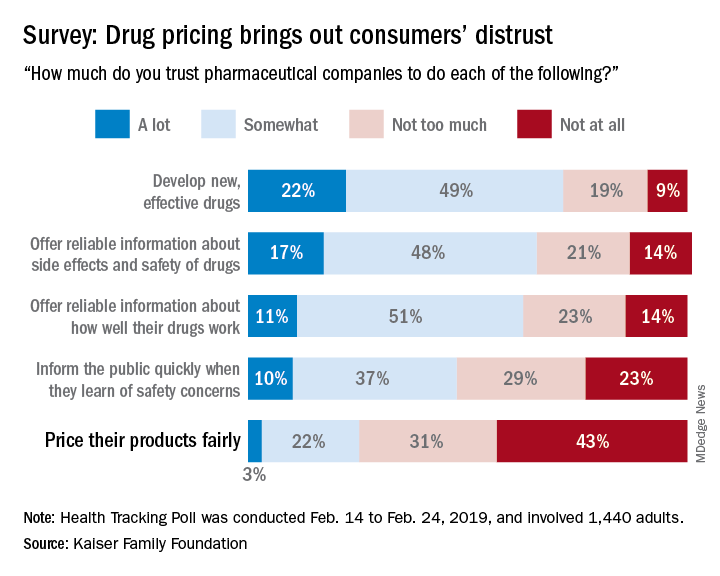
Only 25% of the respondents said that they currently trust drug companies “a lot” (3%) or “somewhat” (22%) when it comes to pricing their products fairly, which “is a significant decrease from 41% who said they trusted pharmaceutical companies to price their products fairly back in 2008,” Kaiser said in a recent Health Tracking Poll.
Safety issues were also a bit of a sore point in the current survey: Less than half of the 1,440 adults responding said that they trusted pharmaceutical companies a lot (10%) or somewhat (37%) regarding informing the public quickly when a safety concern is discovered.
Trust was more forthcoming when people were asked about the development of new, effective drugs – 71% expressed a favorable opinion – and companies’ offering “reliable information about side effects and safety of drugs,” which received a favorable response from 65% of those surveyed during Feb. 14 to Feb. 24, 2019.
A majority of respondents (61%) also thought that pharmaceutical companies could be trusted to “offer reliable information about how well their drugs work,” the report’s authors noted.
The lack of trust expressed regarding drug pricing also may explain why most consumers (80%) said that drug company profits were a major contributor to the cost of prescription drugs. The cost of research and development, at 69%, was the next most commonly mentioned factor, followed by profits made by pharmacy benefit managers at 63%, according to the report.
Only 25% of the respondents said that they currently trust drug companies “a lot” (3%) or “somewhat” (22%) when it comes to pricing their products fairly, which “is a significant decrease from 41% who said they trusted pharmaceutical companies to price their products fairly back in 2008,” Kaiser said in a recent Health Tracking Poll.
Safety issues were also a bit of a sore point in the current survey: Less than half of the 1,440 adults responding said that they trusted pharmaceutical companies a lot (10%) or somewhat (37%) regarding informing the public quickly when a safety concern is discovered.
Trust was more forthcoming when people were asked about the development of new, effective drugs – 71% expressed a favorable opinion – and companies’ offering “reliable information about side effects and safety of drugs,” which received a favorable response from 65% of those surveyed during Feb. 14 to Feb. 24, 2019.
A majority of respondents (61%) also thought that pharmaceutical companies could be trusted to “offer reliable information about how well their drugs work,” the report’s authors noted.
The lack of trust expressed regarding drug pricing also may explain why most consumers (80%) said that drug company profits were a major contributor to the cost of prescription drugs. The cost of research and development, at 69%, was the next most commonly mentioned factor, followed by profits made by pharmacy benefit managers at 63%, according to the report.
Only 25% of the respondents said that they currently trust drug companies “a lot” (3%) or “somewhat” (22%) when it comes to pricing their products fairly, which “is a significant decrease from 41% who said they trusted pharmaceutical companies to price their products fairly back in 2008,” Kaiser said in a recent Health Tracking Poll.
Safety issues were also a bit of a sore point in the current survey: Less than half of the 1,440 adults responding said that they trusted pharmaceutical companies a lot (10%) or somewhat (37%) regarding informing the public quickly when a safety concern is discovered.
Trust was more forthcoming when people were asked about the development of new, effective drugs – 71% expressed a favorable opinion – and companies’ offering “reliable information about side effects and safety of drugs,” which received a favorable response from 65% of those surveyed during Feb. 14 to Feb. 24, 2019.
A majority of respondents (61%) also thought that pharmaceutical companies could be trusted to “offer reliable information about how well their drugs work,” the report’s authors noted.
The lack of trust expressed regarding drug pricing also may explain why most consumers (80%) said that drug company profits were a major contributor to the cost of prescription drugs. The cost of research and development, at 69%, was the next most commonly mentioned factor, followed by profits made by pharmacy benefit managers at 63%, according to the report.
Measles cases jumped 30% last week
according to the Centers for Disease Control and Prevention.

Those new cases represent a 30% increase in measles cases for the year, bringing the total to 206 reported to the CDC through Feb. 28. After just 2 months, 2019 has had more cases than all but 3 other years over the last decade, CDC data show.
The 11th state to report a case of measles this year is New Jersey, which joins California, Colorado, Connecticut, Georgia, Illinois (one outbreak), Kentucky, New York (three outbreaks), Oregon, Texas (one outbreak), and Washington (one outbreak), the CDC said.
The outbreak in Washington (4 new cases/70 for the year) had been the largest, but the majority of the new cases over the last 2 weeks have occurred in New York City, specifically Brooklyn, which reported 30 cases last week and 17 of the 32 new U.S. cases the week before.
Most of the 120 cases reported in the borough since the beginning of its outbreak in October of 2018 “have involved members of the Jewish Orthodox community. The initial child with measles was unvaccinated and acquired measles on a visit to Israel, where a large outbreak of the disease is occurring. Since then, there have been additional people from Brooklyn and Queens who were unvaccinated and acquired measles while in Israel. People who did not travel were also infected in Brooklyn or Rockland County,” the CDC said.
according to the Centers for Disease Control and Prevention.
Those new cases represent a 30% increase in measles cases for the year, bringing the total to 206 reported to the CDC through Feb. 28. After just 2 months, 2019 has had more cases than all but 3 other years over the last decade, CDC data show.
The 11th state to report a case of measles this year is New Jersey, which joins California, Colorado, Connecticut, Georgia, Illinois (one outbreak), Kentucky, New York (three outbreaks), Oregon, Texas (one outbreak), and Washington (one outbreak), the CDC said.
The outbreak in Washington (4 new cases/70 for the year) had been the largest, but the majority of the new cases over the last 2 weeks have occurred in New York City, specifically Brooklyn, which reported 30 cases last week and 17 of the 32 new U.S. cases the week before.
Most of the 120 cases reported in the borough since the beginning of its outbreak in October of 2018 “have involved members of the Jewish Orthodox community. The initial child with measles was unvaccinated and acquired measles on a visit to Israel, where a large outbreak of the disease is occurring. Since then, there have been additional people from Brooklyn and Queens who were unvaccinated and acquired measles while in Israel. People who did not travel were also infected in Brooklyn or Rockland County,” the CDC said.
according to the Centers for Disease Control and Prevention.
Those new cases represent a 30% increase in measles cases for the year, bringing the total to 206 reported to the CDC through Feb. 28. After just 2 months, 2019 has had more cases than all but 3 other years over the last decade, CDC data show.
The 11th state to report a case of measles this year is New Jersey, which joins California, Colorado, Connecticut, Georgia, Illinois (one outbreak), Kentucky, New York (three outbreaks), Oregon, Texas (one outbreak), and Washington (one outbreak), the CDC said.
The outbreak in Washington (4 new cases/70 for the year) had been the largest, but the majority of the new cases over the last 2 weeks have occurred in New York City, specifically Brooklyn, which reported 30 cases last week and 17 of the 32 new U.S. cases the week before.
Most of the 120 cases reported in the borough since the beginning of its outbreak in October of 2018 “have involved members of the Jewish Orthodox community. The initial child with measles was unvaccinated and acquired measles on a visit to Israel, where a large outbreak of the disease is occurring. Since then, there have been additional people from Brooklyn and Queens who were unvaccinated and acquired measles while in Israel. People who did not travel were also infected in Brooklyn or Rockland County,” the CDC said.
Flu season shows signs of peaking
The 2018-2019 flu season may have peaked as the major nationwide measure of influenza activity held steady for the week ending Feb. 23, according to the Centers for Disease Control and Prevention. The proportion of outpatient visits for influenza-like illness (ILI) was 5.0% for the most recent reporting week, the CDC’s influenza division said in its March 1 report. The previous week’s outpatient visit rate, originally reported as 5.1%, was revised this week to 5.0% as well, suggesting that flu activity is no longer increasing.
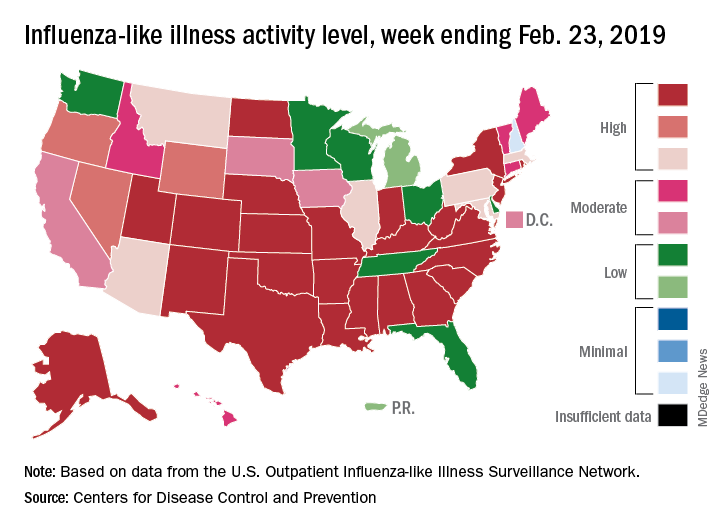
Activity at the state level was more mixed. The number of states at level 10 on the CDC’s 1-10 scale of ILI activity stayed at 24 as Indiana and North Dakota replaced Tennessee and Wyoming, but the number of states in the high range (8-10) of the activity scale increased from 30 to 33, CDC data show.
The signs of plateauing ILI activity did not, however, extend to flu-related deaths, with 15 reported among children – the highest weekly number for the 2018-2019 season, although 11 actually occurred in previous weeks – during the week ending Feb. 23 and 289 deaths among all ages for the week ending Feb. 16, which is already more than the 268 listed the week before despite less complete reporting (82% vs. 97%), the CDC reported. Total flu-related deaths in children are now up to 56, compared with 138 at the corresponding point in the 2017-2018 season.
The 2018-2019 flu season may have peaked as the major nationwide measure of influenza activity held steady for the week ending Feb. 23, according to the Centers for Disease Control and Prevention. The proportion of outpatient visits for influenza-like illness (ILI) was 5.0% for the most recent reporting week, the CDC’s influenza division said in its March 1 report. The previous week’s outpatient visit rate, originally reported as 5.1%, was revised this week to 5.0% as well, suggesting that flu activity is no longer increasing.
Activity at the state level was more mixed. The number of states at level 10 on the CDC’s 1-10 scale of ILI activity stayed at 24 as Indiana and North Dakota replaced Tennessee and Wyoming, but the number of states in the high range (8-10) of the activity scale increased from 30 to 33, CDC data show.
The signs of plateauing ILI activity did not, however, extend to flu-related deaths, with 15 reported among children – the highest weekly number for the 2018-2019 season, although 11 actually occurred in previous weeks – during the week ending Feb. 23 and 289 deaths among all ages for the week ending Feb. 16, which is already more than the 268 listed the week before despite less complete reporting (82% vs. 97%), the CDC reported. Total flu-related deaths in children are now up to 56, compared with 138 at the corresponding point in the 2017-2018 season.
The 2018-2019 flu season may have peaked as the major nationwide measure of influenza activity held steady for the week ending Feb. 23, according to the Centers for Disease Control and Prevention. The proportion of outpatient visits for influenza-like illness (ILI) was 5.0% for the most recent reporting week, the CDC’s influenza division said in its March 1 report. The previous week’s outpatient visit rate, originally reported as 5.1%, was revised this week to 5.0% as well, suggesting that flu activity is no longer increasing.
Activity at the state level was more mixed. The number of states at level 10 on the CDC’s 1-10 scale of ILI activity stayed at 24 as Indiana and North Dakota replaced Tennessee and Wyoming, but the number of states in the high range (8-10) of the activity scale increased from 30 to 33, CDC data show.
The signs of plateauing ILI activity did not, however, extend to flu-related deaths, with 15 reported among children – the highest weekly number for the 2018-2019 season, although 11 actually occurred in previous weeks – during the week ending Feb. 23 and 289 deaths among all ages for the week ending Feb. 16, which is already more than the 268 listed the week before despite less complete reporting (82% vs. 97%), the CDC reported. Total flu-related deaths in children are now up to 56, compared with 138 at the corresponding point in the 2017-2018 season.
Cancer-battling breath, Zombie Bambi, and hops as health food
Does my breath smell like reduced cancer risk?
Cancer prevention just got a whole lot more ... fragrant. Allium vegetables – garlic, onions, leeks, chives, and shallots – have been found to decrease the risk of colorectal cancer (CRC), according to a Chinese study published last year. Very good news for Italians, but it looks like the risk of CRC in the vampire population might continue to rise.

The study authors reported that high allium intake correlated with lower CRC risk in both men and women, in the northeast Chinese population sampled. Bioactive compounds in these vegetables have anticarcinogenic properties, and researchers found that eating at least 35 pounds of allium vegetables per year could reduce cancer risk.
Unclear if this study was secretly funded by Big Onion, but as fans of delicious and anticancer flavor, we here at LOTME support these findings. However, we strongly advise against going the Tony Abbott route of chomping into whole onions.
An IPA a day keeps the doctor away
After you’re finished eating your annual 35 pounds of garlic and onions (sure, do it all in 1 day if you want), you might be a little thirsty. And we’ve got good news for you – have a brewski, it’s good for ya! Turns out, hops might have some health benefits, so drink up.

Hops contain a class of compound called isohumulones, which gives them that bitter taste. There have been multiple studies showing the metabolic effects of isohumulones, including cell inflammation suppression, reduced weight gain, reduced hyperglycemia, and increased glucose tolerance.
These isohumulones (try typing that 10 times in a row) interact with the bitter taste receptors in the gut, and researchers are hopeful that this could lead to isohumulone-esque drugs to treat metabolic disorders. In the meantime, maybe just chug a few IPAs a day.
My kingdom for a helmet
Most people like to root for the underdog. You know, the whole David vs. Goliath thing, the little guy who goes against overwhelming odds to take on some form of the Big Establishment.

But what if the little guy happens to be a fairly normal-sized lacrosse player with a very large head?
Alex Chu, a freshman at Division III Wheaton College in Norton, Mass., is just such a guy. “My head is wide,” he told WJAR TV. He wants to play goalie for the school’s lacrosse team, but he can’t because no current helmet will fit on the 25-inch-circumference head that sits atop his 6-foot-tall, 265-pound body.
He’s up against Big Sports Equipment in the form of Cascade-Maverik and Warrior, the two major manufacturers of lacrosse helmets, which won’t build him a custom helmet. It would be too expensive, they say – but the Boston Globe reported that there is a lacrosse player at a Division I school who wears a very large helmet “that was produced after [his] coaches and Cascade ‘huddled up.’ ”
We wish Mr. Chu well, and perhaps one day he will be mentioned with such large-skulled high achievers as Jay Leno, LeBron James, Jennifer Garner, Tyrannosaurus rex, Rihanna, Napoleon Bonaparte, SpongeBob SquarePants, and Simon Cowell.
We’ll just have the salad
Zombies, beware: You might want to eat us, but now, we can eat you.

Okay, “zombie” deer aren’t actually zombies, but they are infected with something almost as terrifying. Chronic wasting disease is a prion disorder similar to bovine spongiform encephalopathy, or mad cow disease, and has been found in deer across 24 U.S. states as of January 2019.
While venison is less commonly eaten than beef, if mad cow disease can make the jump to humans, can people who eat meat infected with chronic wasting disease also become infected?
Thanks to an Oneida County, N.Y., fire company and a 2005 Sportsmen’s feast we’re sure someone’s never heard the end of, we know the answer to be “no.”
The fire company accidentally served meat from a deer that was infected with chronic wasting disease, and more than 200 people were exposed. A group of about 80 of these individuals have been monitored since then by a research team from the Oneida County Health Department and the State University of New York at Binghamton. At the most recent follow-up, no individual had developed the disease.
Experts do caution that it’s entirely possible chronic wasting disease will make the jump to humans eventually, despite the species gap. But for now, you can enjoy without fear your sweet ironic revenge on those zombies.

Does my breath smell like reduced cancer risk?
Cancer prevention just got a whole lot more ... fragrant. Allium vegetables – garlic, onions, leeks, chives, and shallots – have been found to decrease the risk of colorectal cancer (CRC), according to a Chinese study published last year. Very good news for Italians, but it looks like the risk of CRC in the vampire population might continue to rise.
The study authors reported that high allium intake correlated with lower CRC risk in both men and women, in the northeast Chinese population sampled. Bioactive compounds in these vegetables have anticarcinogenic properties, and researchers found that eating at least 35 pounds of allium vegetables per year could reduce cancer risk.
Unclear if this study was secretly funded by Big Onion, but as fans of delicious and anticancer flavor, we here at LOTME support these findings. However, we strongly advise against going the Tony Abbott route of chomping into whole onions.
An IPA a day keeps the doctor away
After you’re finished eating your annual 35 pounds of garlic and onions (sure, do it all in 1 day if you want), you might be a little thirsty. And we’ve got good news for you – have a brewski, it’s good for ya! Turns out, hops might have some health benefits, so drink up.
Hops contain a class of compound called isohumulones, which gives them that bitter taste. There have been multiple studies showing the metabolic effects of isohumulones, including cell inflammation suppression, reduced weight gain, reduced hyperglycemia, and increased glucose tolerance.
These isohumulones (try typing that 10 times in a row) interact with the bitter taste receptors in the gut, and researchers are hopeful that this could lead to isohumulone-esque drugs to treat metabolic disorders. In the meantime, maybe just chug a few IPAs a day.
My kingdom for a helmet
Most people like to root for the underdog. You know, the whole David vs. Goliath thing, the little guy who goes against overwhelming odds to take on some form of the Big Establishment.
But what if the little guy happens to be a fairly normal-sized lacrosse player with a very large head?
Alex Chu, a freshman at Division III Wheaton College in Norton, Mass., is just such a guy. “My head is wide,” he told WJAR TV. He wants to play goalie for the school’s lacrosse team, but he can’t because no current helmet will fit on the 25-inch-circumference head that sits atop his 6-foot-tall, 265-pound body.
He’s up against Big Sports Equipment in the form of Cascade-Maverik and Warrior, the two major manufacturers of lacrosse helmets, which won’t build him a custom helmet. It would be too expensive, they say – but the Boston Globe reported that there is a lacrosse player at a Division I school who wears a very large helmet “that was produced after [his] coaches and Cascade ‘huddled up.’ ”
We wish Mr. Chu well, and perhaps one day he will be mentioned with such large-skulled high achievers as Jay Leno, LeBron James, Jennifer Garner, Tyrannosaurus rex, Rihanna, Napoleon Bonaparte, SpongeBob SquarePants, and Simon Cowell.
We’ll just have the salad
Zombies, beware: You might want to eat us, but now, we can eat you.
Okay, “zombie” deer aren’t actually zombies, but they are infected with something almost as terrifying. Chronic wasting disease is a prion disorder similar to bovine spongiform encephalopathy, or mad cow disease, and has been found in deer across 24 U.S. states as of January 2019.
While venison is less commonly eaten than beef, if mad cow disease can make the jump to humans, can people who eat meat infected with chronic wasting disease also become infected?
Thanks to an Oneida County, N.Y., fire company and a 2005 Sportsmen’s feast we’re sure someone’s never heard the end of, we know the answer to be “no.”
The fire company accidentally served meat from a deer that was infected with chronic wasting disease, and more than 200 people were exposed. A group of about 80 of these individuals have been monitored since then by a research team from the Oneida County Health Department and the State University of New York at Binghamton. At the most recent follow-up, no individual had developed the disease.
Experts do caution that it’s entirely possible chronic wasting disease will make the jump to humans eventually, despite the species gap. But for now, you can enjoy without fear your sweet ironic revenge on those zombies.
Does my breath smell like reduced cancer risk?
Cancer prevention just got a whole lot more ... fragrant. Allium vegetables – garlic, onions, leeks, chives, and shallots – have been found to decrease the risk of colorectal cancer (CRC), according to a Chinese study published last year. Very good news for Italians, but it looks like the risk of CRC in the vampire population might continue to rise.
The study authors reported that high allium intake correlated with lower CRC risk in both men and women, in the northeast Chinese population sampled. Bioactive compounds in these vegetables have anticarcinogenic properties, and researchers found that eating at least 35 pounds of allium vegetables per year could reduce cancer risk.
Unclear if this study was secretly funded by Big Onion, but as fans of delicious and anticancer flavor, we here at LOTME support these findings. However, we strongly advise against going the Tony Abbott route of chomping into whole onions.
An IPA a day keeps the doctor away
After you’re finished eating your annual 35 pounds of garlic and onions (sure, do it all in 1 day if you want), you might be a little thirsty. And we’ve got good news for you – have a brewski, it’s good for ya! Turns out, hops might have some health benefits, so drink up.
Hops contain a class of compound called isohumulones, which gives them that bitter taste. There have been multiple studies showing the metabolic effects of isohumulones, including cell inflammation suppression, reduced weight gain, reduced hyperglycemia, and increased glucose tolerance.
These isohumulones (try typing that 10 times in a row) interact with the bitter taste receptors in the gut, and researchers are hopeful that this could lead to isohumulone-esque drugs to treat metabolic disorders. In the meantime, maybe just chug a few IPAs a day.
My kingdom for a helmet
Most people like to root for the underdog. You know, the whole David vs. Goliath thing, the little guy who goes against overwhelming odds to take on some form of the Big Establishment.
But what if the little guy happens to be a fairly normal-sized lacrosse player with a very large head?
Alex Chu, a freshman at Division III Wheaton College in Norton, Mass., is just such a guy. “My head is wide,” he told WJAR TV. He wants to play goalie for the school’s lacrosse team, but he can’t because no current helmet will fit on the 25-inch-circumference head that sits atop his 6-foot-tall, 265-pound body.
He’s up against Big Sports Equipment in the form of Cascade-Maverik and Warrior, the two major manufacturers of lacrosse helmets, which won’t build him a custom helmet. It would be too expensive, they say – but the Boston Globe reported that there is a lacrosse player at a Division I school who wears a very large helmet “that was produced after [his] coaches and Cascade ‘huddled up.’ ”
We wish Mr. Chu well, and perhaps one day he will be mentioned with such large-skulled high achievers as Jay Leno, LeBron James, Jennifer Garner, Tyrannosaurus rex, Rihanna, Napoleon Bonaparte, SpongeBob SquarePants, and Simon Cowell.
We’ll just have the salad
Zombies, beware: You might want to eat us, but now, we can eat you.
Okay, “zombie” deer aren’t actually zombies, but they are infected with something almost as terrifying. Chronic wasting disease is a prion disorder similar to bovine spongiform encephalopathy, or mad cow disease, and has been found in deer across 24 U.S. states as of January 2019.
While venison is less commonly eaten than beef, if mad cow disease can make the jump to humans, can people who eat meat infected with chronic wasting disease also become infected?
Thanks to an Oneida County, N.Y., fire company and a 2005 Sportsmen’s feast we’re sure someone’s never heard the end of, we know the answer to be “no.”
The fire company accidentally served meat from a deer that was infected with chronic wasting disease, and more than 200 people were exposed. A group of about 80 of these individuals have been monitored since then by a research team from the Oneida County Health Department and the State University of New York at Binghamton. At the most recent follow-up, no individual had developed the disease.
Experts do caution that it’s entirely possible chronic wasting disease will make the jump to humans eventually, despite the species gap. But for now, you can enjoy without fear your sweet ironic revenge on those zombies.
What does 'Medicare for all' mean?
Only about a fifth of Americans correctly identified the description of a Medicare-for-all system in a recent national tracking poll.
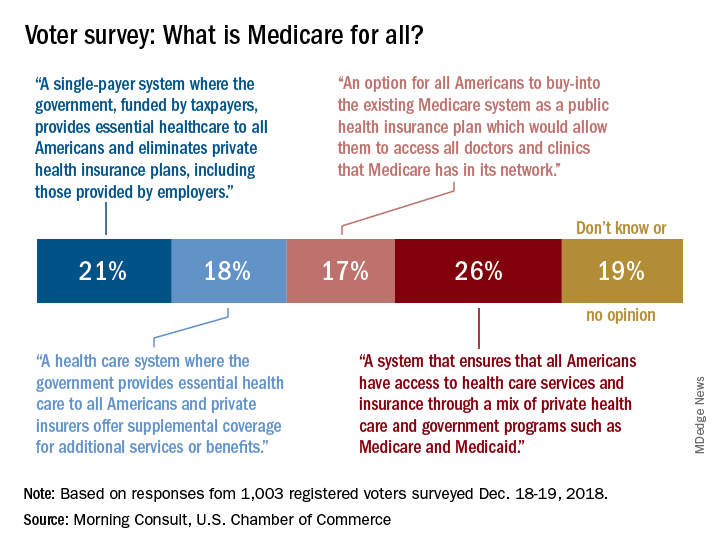
Four descriptions of a Medicare-for-all health care system were provided, and only 21% of respondents correctly selected “a single-payer system where the government, funded by taxpayers, provides essential health care to all Americans and eliminates private health insurance plans, including those provided by employers,” according to the tracking poll from the U.S. Chamber of Commerce and digital media company Morning Consult.
The most common selection – chosen by 26% of the 1,003 registered voters who answered the question (about half of all the respondents) – involved “a system that ensures that all Americans have access to health care services and insurance through a mix of private health care and government programs such as Medicare and Medicaid.”
The other choices covered a federal system with available private supplemental coverage and another with the option of buying in to the existing Medicare system, the report said. Another 19% of respondents to the survey, which was conducted Dec. 18-19, said that they didn’t know or had no opinion.
Questions covering other areas of possible future legislation, which were answered by all of the 2,000 respondents, showed strong support for protection against surprise hospital bills (90%), reforming the Affordable Care Act (73%), and protecting the Affordable Care Act (63%), the U.S. Chamber and Morning Consult reported. The survey’s margin of error was plus or minus two percentage points.
Only about a fifth of Americans correctly identified the description of a Medicare-for-all system in a recent national tracking poll.
Four descriptions of a Medicare-for-all health care system were provided, and only 21% of respondents correctly selected “a single-payer system where the government, funded by taxpayers, provides essential health care to all Americans and eliminates private health insurance plans, including those provided by employers,” according to the tracking poll from the U.S. Chamber of Commerce and digital media company Morning Consult.
The most common selection – chosen by 26% of the 1,003 registered voters who answered the question (about half of all the respondents) – involved “a system that ensures that all Americans have access to health care services and insurance through a mix of private health care and government programs such as Medicare and Medicaid.”
The other choices covered a federal system with available private supplemental coverage and another with the option of buying in to the existing Medicare system, the report said. Another 19% of respondents to the survey, which was conducted Dec. 18-19, said that they didn’t know or had no opinion.
Questions covering other areas of possible future legislation, which were answered by all of the 2,000 respondents, showed strong support for protection against surprise hospital bills (90%), reforming the Affordable Care Act (73%), and protecting the Affordable Care Act (63%), the U.S. Chamber and Morning Consult reported. The survey’s margin of error was plus or minus two percentage points.
Only about a fifth of Americans correctly identified the description of a Medicare-for-all system in a recent national tracking poll.
Four descriptions of a Medicare-for-all health care system were provided, and only 21% of respondents correctly selected “a single-payer system where the government, funded by taxpayers, provides essential health care to all Americans and eliminates private health insurance plans, including those provided by employers,” according to the tracking poll from the U.S. Chamber of Commerce and digital media company Morning Consult.
The most common selection – chosen by 26% of the 1,003 registered voters who answered the question (about half of all the respondents) – involved “a system that ensures that all Americans have access to health care services and insurance through a mix of private health care and government programs such as Medicare and Medicaid.”
The other choices covered a federal system with available private supplemental coverage and another with the option of buying in to the existing Medicare system, the report said. Another 19% of respondents to the survey, which was conducted Dec. 18-19, said that they didn’t know or had no opinion.
Questions covering other areas of possible future legislation, which were answered by all of the 2,000 respondents, showed strong support for protection against surprise hospital bills (90%), reforming the Affordable Care Act (73%), and protecting the Affordable Care Act (63%), the U.S. Chamber and Morning Consult reported. The survey’s margin of error was plus or minus two percentage points.
U.S. measles cases up to 159 for the year
Reported measles cases are now up to 159 for the year in the United States, according to the Centers for Disease Control and Prevention.

The most recent reporting week, which ended Feb. 21, brought another 32 cases of measles and one new outbreak of 4 cases in Illinois. The total number of outbreaks – an outbreak is defined as three or more cases – is now six, and cases have been reported in 10 states, the CDC said Feb. 25.
The majority (17) of those 32 new cases occurred in Brooklyn, one of New York state’s three outbreaks this year. The largest of the 2019 outbreaks is in Washington state, primarily in Clark County, and is up to 66 cases after 4 more were reported in the last week by the state’s department of health. The outbreaks are linked to travelers who brought the disease to the United States.
There are now two measures “advancing through the [Washington] state legislature that would bar parents from using personal or philosophical exemptions to avoid immunizing their school-age children. Both have bipartisan support despite strong antivaccination sentiment in parts of the state,” the Washington Post said on Feb. 25.
Reported measles cases are now up to 159 for the year in the United States, according to the Centers for Disease Control and Prevention.
The most recent reporting week, which ended Feb. 21, brought another 32 cases of measles and one new outbreak of 4 cases in Illinois. The total number of outbreaks – an outbreak is defined as three or more cases – is now six, and cases have been reported in 10 states, the CDC said Feb. 25.
The majority (17) of those 32 new cases occurred in Brooklyn, one of New York state’s three outbreaks this year. The largest of the 2019 outbreaks is in Washington state, primarily in Clark County, and is up to 66 cases after 4 more were reported in the last week by the state’s department of health. The outbreaks are linked to travelers who brought the disease to the United States.
There are now two measures “advancing through the [Washington] state legislature that would bar parents from using personal or philosophical exemptions to avoid immunizing their school-age children. Both have bipartisan support despite strong antivaccination sentiment in parts of the state,” the Washington Post said on Feb. 25.
Reported measles cases are now up to 159 for the year in the United States, according to the Centers for Disease Control and Prevention.
The most recent reporting week, which ended Feb. 21, brought another 32 cases of measles and one new outbreak of 4 cases in Illinois. The total number of outbreaks – an outbreak is defined as three or more cases – is now six, and cases have been reported in 10 states, the CDC said Feb. 25.
The majority (17) of those 32 new cases occurred in Brooklyn, one of New York state’s three outbreaks this year. The largest of the 2019 outbreaks is in Washington state, primarily in Clark County, and is up to 66 cases after 4 more were reported in the last week by the state’s department of health. The outbreaks are linked to travelers who brought the disease to the United States.
There are now two measures “advancing through the [Washington] state legislature that would bar parents from using personal or philosophical exemptions to avoid immunizing their school-age children. Both have bipartisan support despite strong antivaccination sentiment in parts of the state,” the Washington Post said on Feb. 25.
Influenza activity continues to increase
The 2018-2019 flu season is showing no signs of decline as activity measures continued to increase into mid-February, according to the Centers for Disease Control and Prevention.
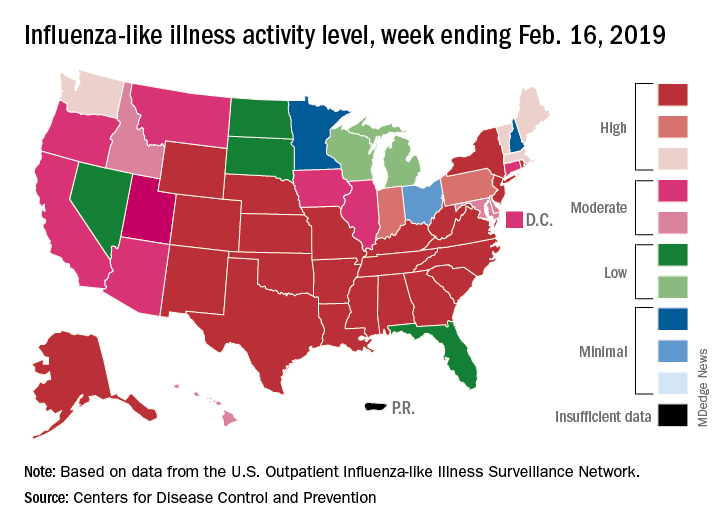
Eight of the last 10 flu seasons had already reached their peak before mid-February, but another rise brought the proportion of outpatient visits for influenza-like illness (ILI) to 5.1% for the week ending Feb. 16, compared with 4.8% the week before, the CDC’s influenza division reported Feb. 22. ILI is defined as fever (temperature of 100°F [37.8°C] or greater) and cough and/or sore throat.
The week also brought more ILI to more states, as the number reporting an activity level of 10 on the CDC’s 1-10 scale rose from 21 to 24 and the number in the high range of 8-10 increased from 26 to 30. Another seven states – including California, which was at level 5 the previous week – and the District of Columbia were at level 7 for the current reporting week, the CDC said.
Two flu-related pediatric deaths occurred during the week ending Feb. 16 and another five were reported from previous weeks, which brings the total to 41 for the 2018-2019 season. Data for influenza deaths at all ages, which are reported a week later, show that 205 occurred in the week ending Feb. 9, with reporting 75% complete. There were 236 total deaths for the week ending Feb. 2 (94% reporting) and 218 deaths during the week ending Jan. 26 (99% reporting), the CDC said.
The 2018-2019 flu season is showing no signs of decline as activity measures continued to increase into mid-February, according to the Centers for Disease Control and Prevention.
Eight of the last 10 flu seasons had already reached their peak before mid-February, but another rise brought the proportion of outpatient visits for influenza-like illness (ILI) to 5.1% for the week ending Feb. 16, compared with 4.8% the week before, the CDC’s influenza division reported Feb. 22. ILI is defined as fever (temperature of 100°F [37.8°C] or greater) and cough and/or sore throat.
The week also brought more ILI to more states, as the number reporting an activity level of 10 on the CDC’s 1-10 scale rose from 21 to 24 and the number in the high range of 8-10 increased from 26 to 30. Another seven states – including California, which was at level 5 the previous week – and the District of Columbia were at level 7 for the current reporting week, the CDC said.
Two flu-related pediatric deaths occurred during the week ending Feb. 16 and another five were reported from previous weeks, which brings the total to 41 for the 2018-2019 season. Data for influenza deaths at all ages, which are reported a week later, show that 205 occurred in the week ending Feb. 9, with reporting 75% complete. There were 236 total deaths for the week ending Feb. 2 (94% reporting) and 218 deaths during the week ending Jan. 26 (99% reporting), the CDC said.
The 2018-2019 flu season is showing no signs of decline as activity measures continued to increase into mid-February, according to the Centers for Disease Control and Prevention.
Eight of the last 10 flu seasons had already reached their peak before mid-February, but another rise brought the proportion of outpatient visits for influenza-like illness (ILI) to 5.1% for the week ending Feb. 16, compared with 4.8% the week before, the CDC’s influenza division reported Feb. 22. ILI is defined as fever (temperature of 100°F [37.8°C] or greater) and cough and/or sore throat.
The week also brought more ILI to more states, as the number reporting an activity level of 10 on the CDC’s 1-10 scale rose from 21 to 24 and the number in the high range of 8-10 increased from 26 to 30. Another seven states – including California, which was at level 5 the previous week – and the District of Columbia were at level 7 for the current reporting week, the CDC said.
Two flu-related pediatric deaths occurred during the week ending Feb. 16 and another five were reported from previous weeks, which brings the total to 41 for the 2018-2019 season. Data for influenza deaths at all ages, which are reported a week later, show that 205 occurred in the week ending Feb. 9, with reporting 75% complete. There were 236 total deaths for the week ending Feb. 2 (94% reporting) and 218 deaths during the week ending Jan. 26 (99% reporting), the CDC said.
Diagnostic metal rod, eyeball extramission, fungal foot fetish
Doctor, (fake) doctor, gimme the news
Florida Man strikes again, and this time he’s a faux MD.

Onelio Hipolit-Gonzalez was charged with a felony for impersonating a doctor who promised patients he could easily diagnose their diabetes, cancer, multiple sclerosis, Parkinson’s, and pretty much any other malady … with a metal rod. The “doctor” would have patients hold on to a metal rod connected to a beeping machine (these are the scientific terms, of course), and then he would gravely diagnose them with a variety of ailments that he could cure for the low, low price of $2,000.
If you’re curious how he treated patients, fear not. This intrepid medical professional took the ingenious measure of drawing a patient’s blood and simply injecting it back inside them. Bada-bing, instant cure! Honestly, medical school these days is really overrated. Just learn to properly use a syringe, and you should be good to go. Just make sure not to attempt to treat/con any undercover cops.
Step away from the stinky socks
In another edition of “Humans: What Won’t They Do?” a Chinese man has developed a severe lung infection from prolonged, voluntary inhalation of his sweaty socks.

Take a moment to gag if you need it.
The man reportedly would finish his daily walk home from work with a deep, relaxing session of smelling his socks. Somewhat unsurprisingly, he developed a fungal infection and had to be hospitalized.
His doctor, perhaps in an effort to spare his feelings, conceded that the infection could be attributed to his weakened immune system from looking after his child. Sock-smelling weirdo, or just a good dad? Let’s just hope he doesn’t pass on this … unorthodox hobby to his offspring.
Turn down your eye beams
Do you remember the recent LOTME about a company selling tissues that have already been used by a sick person? Good news! This next item has nothing to do with that.

More good news! Belief in extramission – the ability to emit an invisible energy from the eyes – is down to about 5% among Americans after being greater than 50% at the turn of the century. The bad news? Belief in extramission is about 5% among Americans, according to investigators at Princeton (N.J.) University.
It’s not really a superhero thing, though. The researchers shared an explanation common among the extramission believers: “Light enters the eye, and there is a reflector piece inside the eye. The reflector reflects the light back out and hits the object, allowing the eye to see it.”
Now, we’d like to discount this whole eye-beam business, we really would, but there may be an exception that proves the rule. Ever had a staring contest with a cat? There’s got to be some sort of freaky power going on there.
The world’s worst superpower
Have you ever wondered what it would be like to live in the beginning of a science fiction novel? Well, worry no more – a group of researchers at the Georgia Institute of Technology and Emory University has you covered!

Okay, we’re pretty sure that the nanoparticles they’ve come up with won’t turn you into the Borg, but they will make your urine glow. Specifically, when injected into the bodies of people who’ve recently undergone transplants, they can help identify when an organ is failing.
The particles are tiny (duh), but they’re big enough that they won’t accumulate in normal, native tissue. However, they are small enough that, when a transplanted organ is being attacked by the body, the nanoparticles will end up getting through the kidneys and into urine. The particles are fluorescent and glow under near-infrared light.
The nanoparticles are aimed at replacing biopsies, as they are more predictive and less invasive. Also, who wouldn’t want to claim they’ve been enhanced by nanotechnology? Resistance is futile, after all.
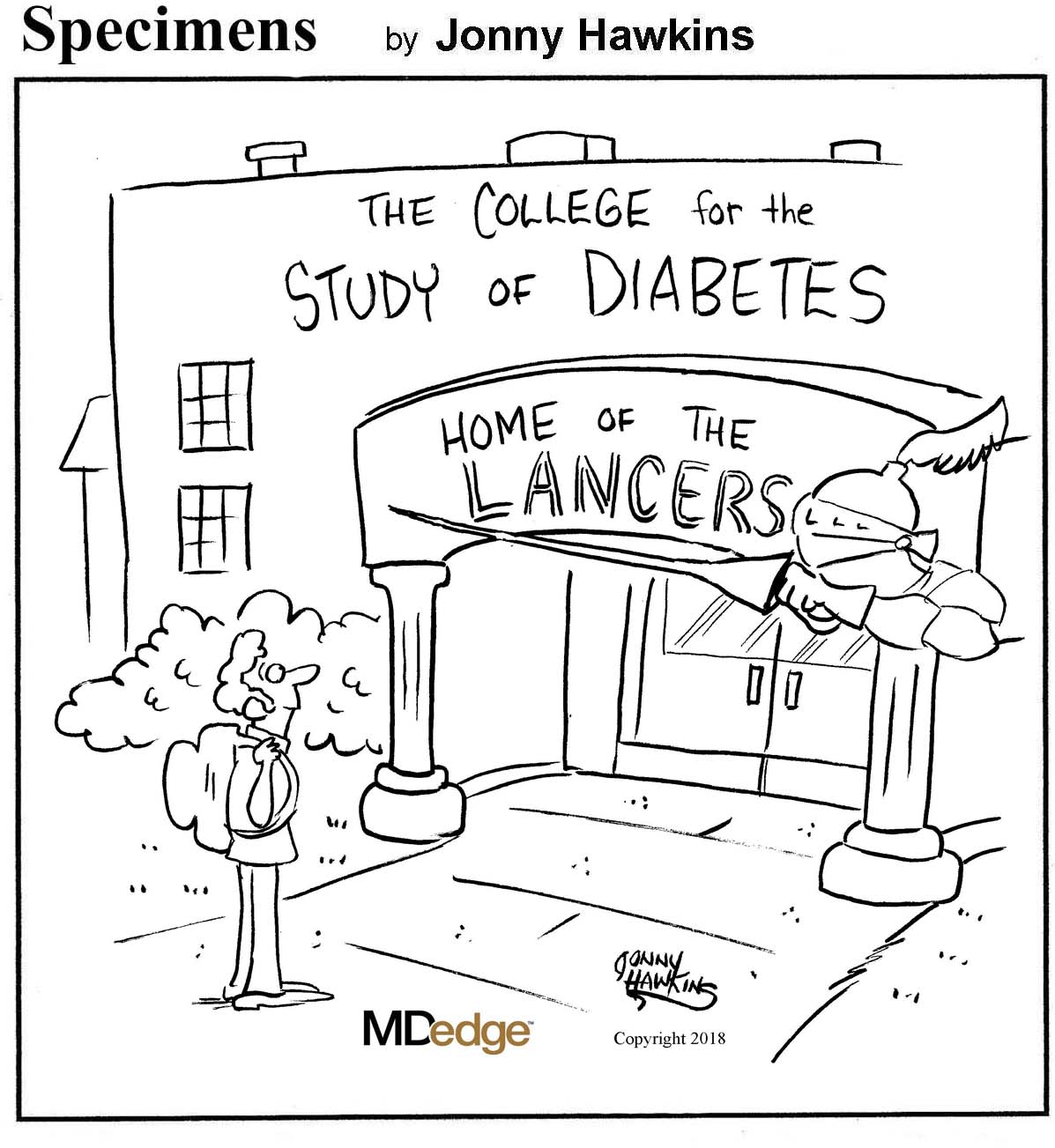
Doctor, (fake) doctor, gimme the news
Florida Man strikes again, and this time he’s a faux MD.
Onelio Hipolit-Gonzalez was charged with a felony for impersonating a doctor who promised patients he could easily diagnose their diabetes, cancer, multiple sclerosis, Parkinson’s, and pretty much any other malady … with a metal rod. The “doctor” would have patients hold on to a metal rod connected to a beeping machine (these are the scientific terms, of course), and then he would gravely diagnose them with a variety of ailments that he could cure for the low, low price of $2,000.
If you’re curious how he treated patients, fear not. This intrepid medical professional took the ingenious measure of drawing a patient’s blood and simply injecting it back inside them. Bada-bing, instant cure! Honestly, medical school these days is really overrated. Just learn to properly use a syringe, and you should be good to go. Just make sure not to attempt to treat/con any undercover cops.
Step away from the stinky socks
In another edition of “Humans: What Won’t They Do?” a Chinese man has developed a severe lung infection from prolonged, voluntary inhalation of his sweaty socks.
Take a moment to gag if you need it.
The man reportedly would finish his daily walk home from work with a deep, relaxing session of smelling his socks. Somewhat unsurprisingly, he developed a fungal infection and had to be hospitalized.
His doctor, perhaps in an effort to spare his feelings, conceded that the infection could be attributed to his weakened immune system from looking after his child. Sock-smelling weirdo, or just a good dad? Let’s just hope he doesn’t pass on this … unorthodox hobby to his offspring.
Turn down your eye beams
Do you remember the recent LOTME about a company selling tissues that have already been used by a sick person? Good news! This next item has nothing to do with that.
More good news! Belief in extramission – the ability to emit an invisible energy from the eyes – is down to about 5% among Americans after being greater than 50% at the turn of the century. The bad news? Belief in extramission is about 5% among Americans, according to investigators at Princeton (N.J.) University.
It’s not really a superhero thing, though. The researchers shared an explanation common among the extramission believers: “Light enters the eye, and there is a reflector piece inside the eye. The reflector reflects the light back out and hits the object, allowing the eye to see it.”
Now, we’d like to discount this whole eye-beam business, we really would, but there may be an exception that proves the rule. Ever had a staring contest with a cat? There’s got to be some sort of freaky power going on there.
The world’s worst superpower
Have you ever wondered what it would be like to live in the beginning of a science fiction novel? Well, worry no more – a group of researchers at the Georgia Institute of Technology and Emory University has you covered!
Okay, we’re pretty sure that the nanoparticles they’ve come up with won’t turn you into the Borg, but they will make your urine glow. Specifically, when injected into the bodies of people who’ve recently undergone transplants, they can help identify when an organ is failing.
The particles are tiny (duh), but they’re big enough that they won’t accumulate in normal, native tissue. However, they are small enough that, when a transplanted organ is being attacked by the body, the nanoparticles will end up getting through the kidneys and into urine. The particles are fluorescent and glow under near-infrared light.
The nanoparticles are aimed at replacing biopsies, as they are more predictive and less invasive. Also, who wouldn’t want to claim they’ve been enhanced by nanotechnology? Resistance is futile, after all.
Doctor, (fake) doctor, gimme the news
Florida Man strikes again, and this time he’s a faux MD.
Onelio Hipolit-Gonzalez was charged with a felony for impersonating a doctor who promised patients he could easily diagnose their diabetes, cancer, multiple sclerosis, Parkinson’s, and pretty much any other malady … with a metal rod. The “doctor” would have patients hold on to a metal rod connected to a beeping machine (these are the scientific terms, of course), and then he would gravely diagnose them with a variety of ailments that he could cure for the low, low price of $2,000.
If you’re curious how he treated patients, fear not. This intrepid medical professional took the ingenious measure of drawing a patient’s blood and simply injecting it back inside them. Bada-bing, instant cure! Honestly, medical school these days is really overrated. Just learn to properly use a syringe, and you should be good to go. Just make sure not to attempt to treat/con any undercover cops.
Step away from the stinky socks
In another edition of “Humans: What Won’t They Do?” a Chinese man has developed a severe lung infection from prolonged, voluntary inhalation of his sweaty socks.
Take a moment to gag if you need it.
The man reportedly would finish his daily walk home from work with a deep, relaxing session of smelling his socks. Somewhat unsurprisingly, he developed a fungal infection and had to be hospitalized.
His doctor, perhaps in an effort to spare his feelings, conceded that the infection could be attributed to his weakened immune system from looking after his child. Sock-smelling weirdo, or just a good dad? Let’s just hope he doesn’t pass on this … unorthodox hobby to his offspring.
Turn down your eye beams
Do you remember the recent LOTME about a company selling tissues that have already been used by a sick person? Good news! This next item has nothing to do with that.
More good news! Belief in extramission – the ability to emit an invisible energy from the eyes – is down to about 5% among Americans after being greater than 50% at the turn of the century. The bad news? Belief in extramission is about 5% among Americans, according to investigators at Princeton (N.J.) University.
It’s not really a superhero thing, though. The researchers shared an explanation common among the extramission believers: “Light enters the eye, and there is a reflector piece inside the eye. The reflector reflects the light back out and hits the object, allowing the eye to see it.”
Now, we’d like to discount this whole eye-beam business, we really would, but there may be an exception that proves the rule. Ever had a staring contest with a cat? There’s got to be some sort of freaky power going on there.
The world’s worst superpower
Have you ever wondered what it would be like to live in the beginning of a science fiction novel? Well, worry no more – a group of researchers at the Georgia Institute of Technology and Emory University has you covered!
Okay, we’re pretty sure that the nanoparticles they’ve come up with won’t turn you into the Borg, but they will make your urine glow. Specifically, when injected into the bodies of people who’ve recently undergone transplants, they can help identify when an organ is failing.
The particles are tiny (duh), but they’re big enough that they won’t accumulate in normal, native tissue. However, they are small enough that, when a transplanted organ is being attacked by the body, the nanoparticles will end up getting through the kidneys and into urine. The particles are fluorescent and glow under near-infrared light.
The nanoparticles are aimed at replacing biopsies, as they are more predictive and less invasive. Also, who wouldn’t want to claim they’ve been enhanced by nanotechnology? Resistance is futile, after all.
Measles: 26 new cases reported last week
according to the Centers for Disease Control and Prevention.
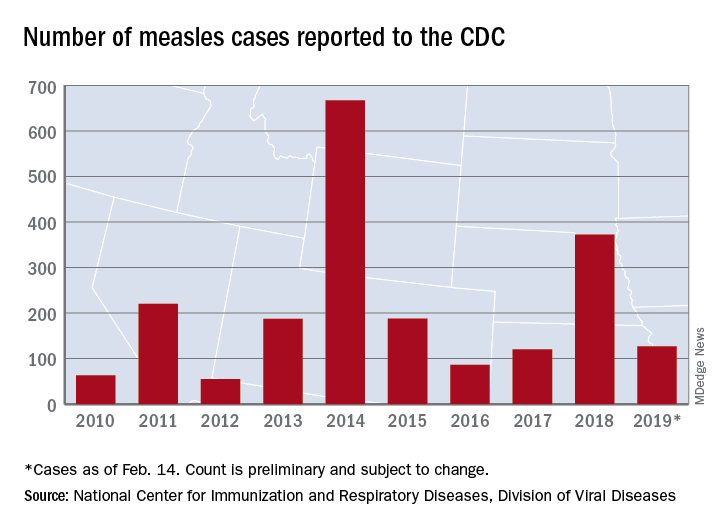
On Jan. 31, total measles cases stood at 79, which means that the number of individuals with measles has risen by 61% in just the last 2 weeks. Of the five outbreaks (defined as three or more cases) so far in 2019, three have occurred in New York (57 cases in three counties), one in Texas (8 cases in five counties), and one in Washington (62 cases in two counties), the CDC reported Feb. 18.
The majority of the Washington cases (61 of the 62) have occurred in Clark County, which is located just across the Columbia River from Portland, Ore. Oregon, in turn, has a higher percentage of kindergartners with nonmedical exemptions from vaccination (7.5%) than any other state, the CDC reported in October 2018. Washington’s rate of 3.9% was nearly double the national median of 2.0% for the 2017-2018 school year, while Texas (1.8%) and New York (1.0%) were below it, the CDC said.
In the Pacific Northwest, however, some parents may be changing their minds about vaccinations, according to the New York Times, which reported that “about triple the number of children have been vaccinated this year, compared with the same period in 2018,” in Oregon and southwest Washington.
Individual cases of measles have been reported to the CDC by seven other states: California, Colorado, Connecticut, Georgia, Illinois, Kentucky, and Oregon.
according to the Centers for Disease Control and Prevention.
On Jan. 31, total measles cases stood at 79, which means that the number of individuals with measles has risen by 61% in just the last 2 weeks. Of the five outbreaks (defined as three or more cases) so far in 2019, three have occurred in New York (57 cases in three counties), one in Texas (8 cases in five counties), and one in Washington (62 cases in two counties), the CDC reported Feb. 18.
The majority of the Washington cases (61 of the 62) have occurred in Clark County, which is located just across the Columbia River from Portland, Ore. Oregon, in turn, has a higher percentage of kindergartners with nonmedical exemptions from vaccination (7.5%) than any other state, the CDC reported in October 2018. Washington’s rate of 3.9% was nearly double the national median of 2.0% for the 2017-2018 school year, while Texas (1.8%) and New York (1.0%) were below it, the CDC said.
In the Pacific Northwest, however, some parents may be changing their minds about vaccinations, according to the New York Times, which reported that “about triple the number of children have been vaccinated this year, compared with the same period in 2018,” in Oregon and southwest Washington.
Individual cases of measles have been reported to the CDC by seven other states: California, Colorado, Connecticut, Georgia, Illinois, Kentucky, and Oregon.
according to the Centers for Disease Control and Prevention.
On Jan. 31, total measles cases stood at 79, which means that the number of individuals with measles has risen by 61% in just the last 2 weeks. Of the five outbreaks (defined as three or more cases) so far in 2019, three have occurred in New York (57 cases in three counties), one in Texas (8 cases in five counties), and one in Washington (62 cases in two counties), the CDC reported Feb. 18.
The majority of the Washington cases (61 of the 62) have occurred in Clark County, which is located just across the Columbia River from Portland, Ore. Oregon, in turn, has a higher percentage of kindergartners with nonmedical exemptions from vaccination (7.5%) than any other state, the CDC reported in October 2018. Washington’s rate of 3.9% was nearly double the national median of 2.0% for the 2017-2018 school year, while Texas (1.8%) and New York (1.0%) were below it, the CDC said.
In the Pacific Northwest, however, some parents may be changing their minds about vaccinations, according to the New York Times, which reported that “about triple the number of children have been vaccinated this year, compared with the same period in 2018,” in Oregon and southwest Washington.
Individual cases of measles have been reported to the CDC by seven other states: California, Colorado, Connecticut, Georgia, Illinois, Kentucky, and Oregon.