User login
Large-scale psoriasis study links trauma to arthritis
ROME – Patients with psoriasis were more likely to develop psoriatic arthritis if they had experienced physical trauma, based on data from a large, population-based study.
The crude incidence of psoriatic arthritis was 30 per 10,000 person-years in psoriasis patients exposed to trauma, compared with 22 per 10,000 person years in those who were not.

The hazard ratio (HR) for increased psoriatic arthritis risk with any trauma was 1.32 after adjusting for multiple factors, including patient age, gender, and the duration of psoriasis, senior study author Dr. Thorvardur Love said during a press briefing at the European Congress of Rheumatology.
“Patients with psoriasis are an easily identifiable group [to study] as they have skin disease on their body,” he noted. They also have a high risk of developing arthritis, at around 10%-30% of patients. This makes them an ideal population to study to try to find factors that might mitigate the risk and potentially have a large impact in clinical practice.
“The idea that trauma precipitates psoriatic arthritis is not new,” observed Dr. Love of Landspitali University Hospital in Reykjavik, Iceland. “It comes a little bit from the Koebner phenomenon, which is when psoriasis patients develop a new lesion in the skin where an injury has been.”
A few small studies had given rise to the idea that trauma could perhaps trigger a deep Koebner phenomenon in patients with psoriasis, and so the aim of the present analysis was to look at this idea in a larger population. Electronic health records of more than 10 million individuals living in the United Kingdom between 1995 and 2013 were analyzed from the Health Improvement Network (THIN) database. Of 70,646 patients with psoriasis who were identified, 15,416 had been exposed to some form of trauma, which was stratified as trauma involving the joints, bones, nerves, or skin.
After 425,120 person-years of follow-up, 1,010 incident cases of psoriatic arthritis had been recorded.
Having bone or joint trauma was found to increase the risk for psoriatic arthritis by 46% (HR, 1.46; 95% confidence interval, 1.13-1.54) and 50% (HR, 1.50; 95% CI. 1.19-1.90), respectively. This was after adjusting for age, gender, date of entry into the THIN database, duration of psoriasis, body mass index, smoking, alcohol consumption, and the number of visits to the general practitioner.
Neither nerve nor skin trauma were associated with an increased risk for psoriatic arthritis. Dr. Love and his fellow researchers also looked to see if patients with psoriasis had an increased risk of rheumatoid arthritis but found no significant association (HR, 1.04; 95% 0.99-1.10).
“The conclusion is that physical trauma is a risk factor for psoriatic arthritis among patients with psoriasis,” Dr. Love said. “We believe this is very important as the baseline risk is so high.”The effect is specific to psoriatic arthritis, as it is not seen in rheumatoid arthritis, which might provide clues for further research, he added. Why trauma might up the risk for developing psoriatic but not other types of inflammatory arthritis remains unclear, but the hypothesis is that patients would need to have a genetic predisposition and the “right types” of T cells in and around the joint that get disturbed in some way, perhaps by infection or by trauma. “I think it’s important to note that at this point we are not making any recommendations to the psoriasis community,” Dr. Love said. He suggested that, before any recommendations could be made, there needed to be a “really robust” conversation between patients, researchers, and physicians to determine exactly what these findings might mean. Certainly more research is needed before suggesting any lifestyle modifications that might help avoid situations associated with certain types of trauma, he said.
A literature review in the journal Clinical Rheumatology provided additional explanation of the deep Koebner effect. The investigators noted in their abstract that “the role of neuropeptides such as substance P and vasoactive intestinal peptide has been highlighted in the synovium after trauma.”
An editorial in the Journal of Rheumatology also suggested areas for additional research. Dr. Ignazio Olivieri of San Carlo Hospital in Potenza, Italy, wrote that “criteria of imputability” that should be met include “single and significant trauma; absence of joint lesion before trauma; localization of arthritis in the area of trauma; and absence or short delay between trauma and onset of arthritis.”
“You might envision treating [psoriasis] patients early [for psoriatic arthritis] if they break a leg or get a joint dislocation, but we are not there yet,” Dr. Love stressed. “This is an idea of where we could take this and where we might actually be able to have an effect.”
The research was performed by researchers at the University of Iceland (Reykjavik) in collaboration with researchers at Harvard Medical School in Boston and the University of Pennsylvania in Philadelphia. It was partially funded by the Icelandic Centre for Research (RANNIS) and the National Institutes of Health. Dr. Love’s associate, Dr. Stefan Thorarensen of the division of public health at the University of Iceland, presented the findings during the clinical science session at the congress.
Dr. Love and his coauthors reported having no financial disclosures.
ROME – Patients with psoriasis were more likely to develop psoriatic arthritis if they had experienced physical trauma, based on data from a large, population-based study.
The crude incidence of psoriatic arthritis was 30 per 10,000 person-years in psoriasis patients exposed to trauma, compared with 22 per 10,000 person years in those who were not.
The hazard ratio (HR) for increased psoriatic arthritis risk with any trauma was 1.32 after adjusting for multiple factors, including patient age, gender, and the duration of psoriasis, senior study author Dr. Thorvardur Love said during a press briefing at the European Congress of Rheumatology.
“Patients with psoriasis are an easily identifiable group [to study] as they have skin disease on their body,” he noted. They also have a high risk of developing arthritis, at around 10%-30% of patients. This makes them an ideal population to study to try to find factors that might mitigate the risk and potentially have a large impact in clinical practice.
“The idea that trauma precipitates psoriatic arthritis is not new,” observed Dr. Love of Landspitali University Hospital in Reykjavik, Iceland. “It comes a little bit from the Koebner phenomenon, which is when psoriasis patients develop a new lesion in the skin where an injury has been.”
A few small studies had given rise to the idea that trauma could perhaps trigger a deep Koebner phenomenon in patients with psoriasis, and so the aim of the present analysis was to look at this idea in a larger population. Electronic health records of more than 10 million individuals living in the United Kingdom between 1995 and 2013 were analyzed from the Health Improvement Network (THIN) database. Of 70,646 patients with psoriasis who were identified, 15,416 had been exposed to some form of trauma, which was stratified as trauma involving the joints, bones, nerves, or skin.
After 425,120 person-years of follow-up, 1,010 incident cases of psoriatic arthritis had been recorded.
Having bone or joint trauma was found to increase the risk for psoriatic arthritis by 46% (HR, 1.46; 95% confidence interval, 1.13-1.54) and 50% (HR, 1.50; 95% CI. 1.19-1.90), respectively. This was after adjusting for age, gender, date of entry into the THIN database, duration of psoriasis, body mass index, smoking, alcohol consumption, and the number of visits to the general practitioner.
Neither nerve nor skin trauma were associated with an increased risk for psoriatic arthritis. Dr. Love and his fellow researchers also looked to see if patients with psoriasis had an increased risk of rheumatoid arthritis but found no significant association (HR, 1.04; 95% 0.99-1.10).
“The conclusion is that physical trauma is a risk factor for psoriatic arthritis among patients with psoriasis,” Dr. Love said. “We believe this is very important as the baseline risk is so high.”The effect is specific to psoriatic arthritis, as it is not seen in rheumatoid arthritis, which might provide clues for further research, he added. Why trauma might up the risk for developing psoriatic but not other types of inflammatory arthritis remains unclear, but the hypothesis is that patients would need to have a genetic predisposition and the “right types” of T cells in and around the joint that get disturbed in some way, perhaps by infection or by trauma. “I think it’s important to note that at this point we are not making any recommendations to the psoriasis community,” Dr. Love said. He suggested that, before any recommendations could be made, there needed to be a “really robust” conversation between patients, researchers, and physicians to determine exactly what these findings might mean. Certainly more research is needed before suggesting any lifestyle modifications that might help avoid situations associated with certain types of trauma, he said.
A literature review in the journal Clinical Rheumatology provided additional explanation of the deep Koebner effect. The investigators noted in their abstract that “the role of neuropeptides such as substance P and vasoactive intestinal peptide has been highlighted in the synovium after trauma.”
An editorial in the Journal of Rheumatology also suggested areas for additional research. Dr. Ignazio Olivieri of San Carlo Hospital in Potenza, Italy, wrote that “criteria of imputability” that should be met include “single and significant trauma; absence of joint lesion before trauma; localization of arthritis in the area of trauma; and absence or short delay between trauma and onset of arthritis.”
“You might envision treating [psoriasis] patients early [for psoriatic arthritis] if they break a leg or get a joint dislocation, but we are not there yet,” Dr. Love stressed. “This is an idea of where we could take this and where we might actually be able to have an effect.”
The research was performed by researchers at the University of Iceland (Reykjavik) in collaboration with researchers at Harvard Medical School in Boston and the University of Pennsylvania in Philadelphia. It was partially funded by the Icelandic Centre for Research (RANNIS) and the National Institutes of Health. Dr. Love’s associate, Dr. Stefan Thorarensen of the division of public health at the University of Iceland, presented the findings during the clinical science session at the congress.
Dr. Love and his coauthors reported having no financial disclosures.
ROME – Patients with psoriasis were more likely to develop psoriatic arthritis if they had experienced physical trauma, based on data from a large, population-based study.
The crude incidence of psoriatic arthritis was 30 per 10,000 person-years in psoriasis patients exposed to trauma, compared with 22 per 10,000 person years in those who were not.
The hazard ratio (HR) for increased psoriatic arthritis risk with any trauma was 1.32 after adjusting for multiple factors, including patient age, gender, and the duration of psoriasis, senior study author Dr. Thorvardur Love said during a press briefing at the European Congress of Rheumatology.
“Patients with psoriasis are an easily identifiable group [to study] as they have skin disease on their body,” he noted. They also have a high risk of developing arthritis, at around 10%-30% of patients. This makes them an ideal population to study to try to find factors that might mitigate the risk and potentially have a large impact in clinical practice.
“The idea that trauma precipitates psoriatic arthritis is not new,” observed Dr. Love of Landspitali University Hospital in Reykjavik, Iceland. “It comes a little bit from the Koebner phenomenon, which is when psoriasis patients develop a new lesion in the skin where an injury has been.”
A few small studies had given rise to the idea that trauma could perhaps trigger a deep Koebner phenomenon in patients with psoriasis, and so the aim of the present analysis was to look at this idea in a larger population. Electronic health records of more than 10 million individuals living in the United Kingdom between 1995 and 2013 were analyzed from the Health Improvement Network (THIN) database. Of 70,646 patients with psoriasis who were identified, 15,416 had been exposed to some form of trauma, which was stratified as trauma involving the joints, bones, nerves, or skin.
After 425,120 person-years of follow-up, 1,010 incident cases of psoriatic arthritis had been recorded.
Having bone or joint trauma was found to increase the risk for psoriatic arthritis by 46% (HR, 1.46; 95% confidence interval, 1.13-1.54) and 50% (HR, 1.50; 95% CI. 1.19-1.90), respectively. This was after adjusting for age, gender, date of entry into the THIN database, duration of psoriasis, body mass index, smoking, alcohol consumption, and the number of visits to the general practitioner.
Neither nerve nor skin trauma were associated with an increased risk for psoriatic arthritis. Dr. Love and his fellow researchers also looked to see if patients with psoriasis had an increased risk of rheumatoid arthritis but found no significant association (HR, 1.04; 95% 0.99-1.10).
“The conclusion is that physical trauma is a risk factor for psoriatic arthritis among patients with psoriasis,” Dr. Love said. “We believe this is very important as the baseline risk is so high.”The effect is specific to psoriatic arthritis, as it is not seen in rheumatoid arthritis, which might provide clues for further research, he added. Why trauma might up the risk for developing psoriatic but not other types of inflammatory arthritis remains unclear, but the hypothesis is that patients would need to have a genetic predisposition and the “right types” of T cells in and around the joint that get disturbed in some way, perhaps by infection or by trauma. “I think it’s important to note that at this point we are not making any recommendations to the psoriasis community,” Dr. Love said. He suggested that, before any recommendations could be made, there needed to be a “really robust” conversation between patients, researchers, and physicians to determine exactly what these findings might mean. Certainly more research is needed before suggesting any lifestyle modifications that might help avoid situations associated with certain types of trauma, he said.
A literature review in the journal Clinical Rheumatology provided additional explanation of the deep Koebner effect. The investigators noted in their abstract that “the role of neuropeptides such as substance P and vasoactive intestinal peptide has been highlighted in the synovium after trauma.”
An editorial in the Journal of Rheumatology also suggested areas for additional research. Dr. Ignazio Olivieri of San Carlo Hospital in Potenza, Italy, wrote that “criteria of imputability” that should be met include “single and significant trauma; absence of joint lesion before trauma; localization of arthritis in the area of trauma; and absence or short delay between trauma and onset of arthritis.”
“You might envision treating [psoriasis] patients early [for psoriatic arthritis] if they break a leg or get a joint dislocation, but we are not there yet,” Dr. Love stressed. “This is an idea of where we could take this and where we might actually be able to have an effect.”
The research was performed by researchers at the University of Iceland (Reykjavik) in collaboration with researchers at Harvard Medical School in Boston and the University of Pennsylvania in Philadelphia. It was partially funded by the Icelandic Centre for Research (RANNIS) and the National Institutes of Health. Dr. Love’s associate, Dr. Stefan Thorarensen of the division of public health at the University of Iceland, presented the findings during the clinical science session at the congress.
Dr. Love and his coauthors reported having no financial disclosures.
Key clinical point: Further research is needed before any clinical recommendations can be made based on these findings.
Major finding: Trauma, especially that involving the bone or joints, was associated with a higher risk for developing psoriatic arthritis (HR, 1.32).
Data source: A retrospective, population-based cohort study of 70,646 patients with psoriasis.
Disclosures: Dr. Love and coauthors reported having no financial disclosures.
EULAR: Hydroxychloroquine shows no benefit in hand osteoarthritis
ROME – Hydroxychloroquine should not be prescribed for patients with mild to moderate hand osteoarthritis (OA) according to data from a 24-week, randomized, multicenter, placebo-controlled trial.
The results of the Dutch study, presented at the European Congress of Rheumatology by Dr. Natalja M. Basoski of Maasstad Hospital, Rotterdam, the Netherlands, showed that hydroxychloroquine was no better than placebo at reducing patients’ pain and disability, or for improving their physical, social, or emotional well-being.

The primary outcome measure used was reduction in OA hand pain in the preceding 24 hours measured using a 100-mm visual analog scale (VAS) at the end of the study. The mean change in pain using the VAS over 24 weeks was a reduction of 1.3 mm in the hydroxychloroquine-treated patients versus a 0.10-mm rise in the patients who received placebo (P = .82).
There also was no change in the two secondary endpoints of change in total score of the Australian/Canadian Hand Osteoarthritis Index (AUSCAN) and the Arthritis Impact Measurement Scale 2 SF (AIMS2-SF) by the end of the treatment period. Mean changes in AUSCAN total scores were –0.42 and –0.25 (P = .49) and mean reductions in total AIMS2-SF scores were –0.17 and –0.076 (P = .68), comparing hydroxychloroquine with placebo, respectively.
“Osteoarthritis of the hand is one of the most common types of osteoarthritis, leading to pain, stiffness, and loss of function,” Dr. Basoski explained during a clinical science session looking at manifestations of the disease beyond the knee. “Unfortunately, current pharmacological treatment options are limited,” she added.
The underlying pathophysiological mechanisms of OA that primarily affect the hand are not clear, although inflammation is known to have a role, as in knee OA. Hydroxychloroquine is an established disease-modifying antirheumatoid drug that has shown benefit in patients with mild rheumatoid arthritis, which has led many rheumatologists to prescribe off label for the treatment of hand OA as well, Dr. Basoski observed in an interview. Data to support this are lacking, however, so this trial aimed to look at the potential symptom-modifying effects of the drug specifically in OA.
Over a 3-year period starting in July 2010, 202 patients with symptoms of primary mild to moderate hand OA of at least 1 years’ duration were recruited at six hospitals in the Netherlands and randomized to hydroxychloroquine 400 mg/day or matching placebo for 24 weeks. Six patients were lost to follow-up early on in the study, leaving 98 patients in each study arm who could be included in the intent-to-treat analysis. Of these, 22 hydroxychloroquine-treated and nine placebo-treated patients discontinued treatment, 10 and 5 in each group, respectively, because of adverse effects.
Dr. Basoski noted that patient characteristics were similar at baseline. Mean age was 57 years, and about 86% of participants were women. Hand OA was defined via American College of Rheumatology criteria and 86% and 91% of hydroxychloroquine- and placebo-treated patients had at least one joint with radiographic evidence of joint disease defined as a Kellgren-Lawrence score of ≥2.
“This is one of the studies that does not support the use of hydroxychloroquine in patients with OA of the hands and mild complaints,” she said in an interview. “It means that you should not prescribe it anymore, at least based on the results of this study.”
Further research is needed to see if there are some patients who might benefit or if it applies to other OA phenotypes, such as erosive hand OA. “More studies should be done, although in our second analysis after the study we tried to differentiate between very low pain and high pain and we still didn’t really see a difference,” she observed.
Erosive hand OA could be a different case, and results of an ongoing UK study should provide insight on whether hydroxychloroquine could be beneficial in these patients.
Although a similar number of patients treated with hydroxychloroquine or placebo in the trial experienced adverse events (21 vs. 24, respectively), there was an increase in allergic reactions (3 vs. 0) and rash or itching (8 vs. 3) with the active treatment.
With hydroxychloroquine seemingly out of the picture, at least in mild to moderate cases, Dr. Basoski advised on how she might treat a patient with primary hand OA. “I would try to start with paracetamol [acetaminophen] at the dose that is currently recommended, like 4 g/day, then eventually try to use opioids, as NSAIDs are not such a good thing to use in the long term.”
Dr. Basoski did not have any conflicts of interest to disclose.
ROME – Hydroxychloroquine should not be prescribed for patients with mild to moderate hand osteoarthritis (OA) according to data from a 24-week, randomized, multicenter, placebo-controlled trial.
The results of the Dutch study, presented at the European Congress of Rheumatology by Dr. Natalja M. Basoski of Maasstad Hospital, Rotterdam, the Netherlands, showed that hydroxychloroquine was no better than placebo at reducing patients’ pain and disability, or for improving their physical, social, or emotional well-being.
The primary outcome measure used was reduction in OA hand pain in the preceding 24 hours measured using a 100-mm visual analog scale (VAS) at the end of the study. The mean change in pain using the VAS over 24 weeks was a reduction of 1.3 mm in the hydroxychloroquine-treated patients versus a 0.10-mm rise in the patients who received placebo (P = .82).
There also was no change in the two secondary endpoints of change in total score of the Australian/Canadian Hand Osteoarthritis Index (AUSCAN) and the Arthritis Impact Measurement Scale 2 SF (AIMS2-SF) by the end of the treatment period. Mean changes in AUSCAN total scores were –0.42 and –0.25 (P = .49) and mean reductions in total AIMS2-SF scores were –0.17 and –0.076 (P = .68), comparing hydroxychloroquine with placebo, respectively.
“Osteoarthritis of the hand is one of the most common types of osteoarthritis, leading to pain, stiffness, and loss of function,” Dr. Basoski explained during a clinical science session looking at manifestations of the disease beyond the knee. “Unfortunately, current pharmacological treatment options are limited,” she added.
The underlying pathophysiological mechanisms of OA that primarily affect the hand are not clear, although inflammation is known to have a role, as in knee OA. Hydroxychloroquine is an established disease-modifying antirheumatoid drug that has shown benefit in patients with mild rheumatoid arthritis, which has led many rheumatologists to prescribe off label for the treatment of hand OA as well, Dr. Basoski observed in an interview. Data to support this are lacking, however, so this trial aimed to look at the potential symptom-modifying effects of the drug specifically in OA.
Over a 3-year period starting in July 2010, 202 patients with symptoms of primary mild to moderate hand OA of at least 1 years’ duration were recruited at six hospitals in the Netherlands and randomized to hydroxychloroquine 400 mg/day or matching placebo for 24 weeks. Six patients were lost to follow-up early on in the study, leaving 98 patients in each study arm who could be included in the intent-to-treat analysis. Of these, 22 hydroxychloroquine-treated and nine placebo-treated patients discontinued treatment, 10 and 5 in each group, respectively, because of adverse effects.
Dr. Basoski noted that patient characteristics were similar at baseline. Mean age was 57 years, and about 86% of participants were women. Hand OA was defined via American College of Rheumatology criteria and 86% and 91% of hydroxychloroquine- and placebo-treated patients had at least one joint with radiographic evidence of joint disease defined as a Kellgren-Lawrence score of ≥2.
“This is one of the studies that does not support the use of hydroxychloroquine in patients with OA of the hands and mild complaints,” she said in an interview. “It means that you should not prescribe it anymore, at least based on the results of this study.”
Further research is needed to see if there are some patients who might benefit or if it applies to other OA phenotypes, such as erosive hand OA. “More studies should be done, although in our second analysis after the study we tried to differentiate between very low pain and high pain and we still didn’t really see a difference,” she observed.
Erosive hand OA could be a different case, and results of an ongoing UK study should provide insight on whether hydroxychloroquine could be beneficial in these patients.
Although a similar number of patients treated with hydroxychloroquine or placebo in the trial experienced adverse events (21 vs. 24, respectively), there was an increase in allergic reactions (3 vs. 0) and rash or itching (8 vs. 3) with the active treatment.
With hydroxychloroquine seemingly out of the picture, at least in mild to moderate cases, Dr. Basoski advised on how she might treat a patient with primary hand OA. “I would try to start with paracetamol [acetaminophen] at the dose that is currently recommended, like 4 g/day, then eventually try to use opioids, as NSAIDs are not such a good thing to use in the long term.”
Dr. Basoski did not have any conflicts of interest to disclose.
ROME – Hydroxychloroquine should not be prescribed for patients with mild to moderate hand osteoarthritis (OA) according to data from a 24-week, randomized, multicenter, placebo-controlled trial.
The results of the Dutch study, presented at the European Congress of Rheumatology by Dr. Natalja M. Basoski of Maasstad Hospital, Rotterdam, the Netherlands, showed that hydroxychloroquine was no better than placebo at reducing patients’ pain and disability, or for improving their physical, social, or emotional well-being.
The primary outcome measure used was reduction in OA hand pain in the preceding 24 hours measured using a 100-mm visual analog scale (VAS) at the end of the study. The mean change in pain using the VAS over 24 weeks was a reduction of 1.3 mm in the hydroxychloroquine-treated patients versus a 0.10-mm rise in the patients who received placebo (P = .82).
There also was no change in the two secondary endpoints of change in total score of the Australian/Canadian Hand Osteoarthritis Index (AUSCAN) and the Arthritis Impact Measurement Scale 2 SF (AIMS2-SF) by the end of the treatment period. Mean changes in AUSCAN total scores were –0.42 and –0.25 (P = .49) and mean reductions in total AIMS2-SF scores were –0.17 and –0.076 (P = .68), comparing hydroxychloroquine with placebo, respectively.
“Osteoarthritis of the hand is one of the most common types of osteoarthritis, leading to pain, stiffness, and loss of function,” Dr. Basoski explained during a clinical science session looking at manifestations of the disease beyond the knee. “Unfortunately, current pharmacological treatment options are limited,” she added.
The underlying pathophysiological mechanisms of OA that primarily affect the hand are not clear, although inflammation is known to have a role, as in knee OA. Hydroxychloroquine is an established disease-modifying antirheumatoid drug that has shown benefit in patients with mild rheumatoid arthritis, which has led many rheumatologists to prescribe off label for the treatment of hand OA as well, Dr. Basoski observed in an interview. Data to support this are lacking, however, so this trial aimed to look at the potential symptom-modifying effects of the drug specifically in OA.
Over a 3-year period starting in July 2010, 202 patients with symptoms of primary mild to moderate hand OA of at least 1 years’ duration were recruited at six hospitals in the Netherlands and randomized to hydroxychloroquine 400 mg/day or matching placebo for 24 weeks. Six patients were lost to follow-up early on in the study, leaving 98 patients in each study arm who could be included in the intent-to-treat analysis. Of these, 22 hydroxychloroquine-treated and nine placebo-treated patients discontinued treatment, 10 and 5 in each group, respectively, because of adverse effects.
Dr. Basoski noted that patient characteristics were similar at baseline. Mean age was 57 years, and about 86% of participants were women. Hand OA was defined via American College of Rheumatology criteria and 86% and 91% of hydroxychloroquine- and placebo-treated patients had at least one joint with radiographic evidence of joint disease defined as a Kellgren-Lawrence score of ≥2.
“This is one of the studies that does not support the use of hydroxychloroquine in patients with OA of the hands and mild complaints,” she said in an interview. “It means that you should not prescribe it anymore, at least based on the results of this study.”
Further research is needed to see if there are some patients who might benefit or if it applies to other OA phenotypes, such as erosive hand OA. “More studies should be done, although in our second analysis after the study we tried to differentiate between very low pain and high pain and we still didn’t really see a difference,” she observed.
Erosive hand OA could be a different case, and results of an ongoing UK study should provide insight on whether hydroxychloroquine could be beneficial in these patients.
Although a similar number of patients treated with hydroxychloroquine or placebo in the trial experienced adverse events (21 vs. 24, respectively), there was an increase in allergic reactions (3 vs. 0) and rash or itching (8 vs. 3) with the active treatment.
With hydroxychloroquine seemingly out of the picture, at least in mild to moderate cases, Dr. Basoski advised on how she might treat a patient with primary hand OA. “I would try to start with paracetamol [acetaminophen] at the dose that is currently recommended, like 4 g/day, then eventually try to use opioids, as NSAIDs are not such a good thing to use in the long term.”
Dr. Basoski did not have any conflicts of interest to disclose.
AT THE EULAR 2015 CONGRESS
Key clinical point: Hydroxychloroquine should not be prescribed for mild to moderate primary hand osteoarthritis (OA).
Major finding: There was no significant change in pain (P = .82); disability (P = .49); or patient physical, social, and emotional well-being (P = .68) when comparing hydroxychloroquine with placebo.
Data source: A 24-week, randomized, multicenter, double-blind, placebo-controlled trial of 202 patients aged 40 years or older with mild to moderate primary hand OA.
Disclosures: Dr. Basoski had no conflicts of interest to disclose.

Decompressive brain surgery carries high complication risk
VIENNA – Decompressive hemicraniectomy for malignant middle cerebral artery infarction was associated with high rates of in-hospital and late complications in a clinical practice setting, according to research reported at the annual European Stroke Conference.
The retrospective findings showed that 88.1% of the 48 patients who underwent the surgery experienced complications such as intracranial hemorrhage (ICH) or symptomatic epilepsy while hospitalized, and 89.5% experienced complications in the later months of their recovery.
While these complication rates are higher than those seen in the randomized controlled clinical studies, the operation still proved life saving for many, with in-hospital and overall mortality rates of 12.5% and 14.6%, respectively, which is similar to the mortality rate seen in the DESTINY trial (Stroke 2007;38:2518-25) after 6 months.

“Patients who underwent [decompressive hemicraniectomy] are a complication-prone collective”, said Dr. Hans-Werner Pledl, resident physician at the department of neurology, UniversitätsMedizin Mannheim, University of Heidelberg (Germany). “Especially in the elderly, recovery stays limited in relevant factors such as ambulation and conversation for self-sufficiency,” he added.
To date, four clinical trials – DECIMAL (Stroke 2007;38:2506-17), HAMLET (Lancet Neurol 2009;8:326-33) and DESTINY and DESTINY II (Int J Stroke 2011;6:79-86) – have looked at the efficacy and safety of DHC in small numbers of patients with life-threatening middle cerebral artery (MCA) infarction. Of these, only DESTINY II included patients over 60 years of age so while there was evidence that the pressure-relieving surgery reduced mortality if performed early, albeit with an increase in functional disability, experience in older patients was less clear. To look at the complication rates in a real-world practice setting, Dr. Pledl of University Hospital Mannheim’s stroke unit, examined the medical records of 48 patients with MCA infarction who underwent DHC between 2008 and 2014. At the time of admission, the 21 male and 27 female patients were aged 28 to 70 years, with the mean age being 57 years. Dr. Pledl noted that two out of every five (41.7%) patients was over the age of 60 years.
On average, patients were referred to the stroke unit within 3 hours and 44 minutes of the incident event, but some were seen within 30 minutes and others within 5 days. A total of 43.8% of patients had an MCA infarction involving the dominant hemisphere and just under 60% received thrombolytic therapy with rtPA. The median time to surgery was 1.3 days, with just over one-fifth (21.7%) of patients undergoing DHC more than 48 hours after their stroke.
The median National Institutes of Health Stroke Scale scores at admission and discharge were 19 and 18, respectively, while the modified Rankin Scale (mRS) score was 5 at both time points. The Barthel Index was 0 at admission, signifying that the patient was heavily dependent on a carer to perform basic living activities, and 7.5 at discharge, indicating some only marginal improvement in patients’ independence.
The majority (75%) of patients achieved reasonable recovery with early (phase B) rehabilitation, 44% with continued poststroke (phase C) rehabilitation, and 6% were able to become self-sufficient and some even returning to work (phase D). “Remarkably, nearly half (48.9%) of patients return home after rehabilitation and do not stay in a clinical or institutional care facility,” Dr. Pledl said.
In-hospital neurological or psychiatric complications included ICH (seven patients), symptomatic epilepsy (six patients), and delirium (five patients). Perioperative complications included meningitis (three patients), wound healing disorders (three patients), and two patients had epidural hemorrhage (EDH). Common infections included pneumonia (13 patients) and urinary tract infections (UTI, eight patients), and other complications included anemia (14 patients) and cardiac complications (nine patients).
During the recovery phase, the most common neurological or psychiatric complications were central pain syndrome and symptomatic epilepsy, affecting nine patients each. Patients again experienced EDH (five patients), with some cases of hydrocephalus (four patients) and wound-healing problems (three patients). UTIs were the most common type of infection, seen in 14 patients. Other late complications included dysphagia (41.7%) and tracheostomy (35.4%), and post-rehab depression (54.2%).
Dr. Pledl suggested that the findings could be used to help better inform patients and their carers so they can have “realistic expectations” of the procedure’s likely outcomes and decide whether or not to have the surgery performed. These “real world” data could also help physicians to be more aware of the likely complications and perhaps address them in some way so that they have minimal impact on patients’ quality of life.
Although patients who experienced complications in this study were not asked if they regretted the decision to undergo the surgery, there is evidence to show that patients and carers can accept a significant level of disability without having significantly impaired quality of life. Nevertheless, the decision on whether DHC should be performed should be made on an individual case basis, especially in older patients, Dr. Pledl concluded.
The next step is to see if there are any subgroups of patients who might fare better or worse after DHC and hopefully identify some predictive imaging markers that could help the decision-making process.
Dr. Pledl reported no conflicts.
VIENNA – Decompressive hemicraniectomy for malignant middle cerebral artery infarction was associated with high rates of in-hospital and late complications in a clinical practice setting, according to research reported at the annual European Stroke Conference.
The retrospective findings showed that 88.1% of the 48 patients who underwent the surgery experienced complications such as intracranial hemorrhage (ICH) or symptomatic epilepsy while hospitalized, and 89.5% experienced complications in the later months of their recovery.
While these complication rates are higher than those seen in the randomized controlled clinical studies, the operation still proved life saving for many, with in-hospital and overall mortality rates of 12.5% and 14.6%, respectively, which is similar to the mortality rate seen in the DESTINY trial (Stroke 2007;38:2518-25) after 6 months.
“Patients who underwent [decompressive hemicraniectomy] are a complication-prone collective”, said Dr. Hans-Werner Pledl, resident physician at the department of neurology, UniversitätsMedizin Mannheim, University of Heidelberg (Germany). “Especially in the elderly, recovery stays limited in relevant factors such as ambulation and conversation for self-sufficiency,” he added.
To date, four clinical trials – DECIMAL (Stroke 2007;38:2506-17), HAMLET (Lancet Neurol 2009;8:326-33) and DESTINY and DESTINY II (Int J Stroke 2011;6:79-86) – have looked at the efficacy and safety of DHC in small numbers of patients with life-threatening middle cerebral artery (MCA) infarction. Of these, only DESTINY II included patients over 60 years of age so while there was evidence that the pressure-relieving surgery reduced mortality if performed early, albeit with an increase in functional disability, experience in older patients was less clear. To look at the complication rates in a real-world practice setting, Dr. Pledl of University Hospital Mannheim’s stroke unit, examined the medical records of 48 patients with MCA infarction who underwent DHC between 2008 and 2014. At the time of admission, the 21 male and 27 female patients were aged 28 to 70 years, with the mean age being 57 years. Dr. Pledl noted that two out of every five (41.7%) patients was over the age of 60 years.
On average, patients were referred to the stroke unit within 3 hours and 44 minutes of the incident event, but some were seen within 30 minutes and others within 5 days. A total of 43.8% of patients had an MCA infarction involving the dominant hemisphere and just under 60% received thrombolytic therapy with rtPA. The median time to surgery was 1.3 days, with just over one-fifth (21.7%) of patients undergoing DHC more than 48 hours after their stroke.
The median National Institutes of Health Stroke Scale scores at admission and discharge were 19 and 18, respectively, while the modified Rankin Scale (mRS) score was 5 at both time points. The Barthel Index was 0 at admission, signifying that the patient was heavily dependent on a carer to perform basic living activities, and 7.5 at discharge, indicating some only marginal improvement in patients’ independence.
The majority (75%) of patients achieved reasonable recovery with early (phase B) rehabilitation, 44% with continued poststroke (phase C) rehabilitation, and 6% were able to become self-sufficient and some even returning to work (phase D). “Remarkably, nearly half (48.9%) of patients return home after rehabilitation and do not stay in a clinical or institutional care facility,” Dr. Pledl said.
In-hospital neurological or psychiatric complications included ICH (seven patients), symptomatic epilepsy (six patients), and delirium (five patients). Perioperative complications included meningitis (three patients), wound healing disorders (three patients), and two patients had epidural hemorrhage (EDH). Common infections included pneumonia (13 patients) and urinary tract infections (UTI, eight patients), and other complications included anemia (14 patients) and cardiac complications (nine patients).
During the recovery phase, the most common neurological or psychiatric complications were central pain syndrome and symptomatic epilepsy, affecting nine patients each. Patients again experienced EDH (five patients), with some cases of hydrocephalus (four patients) and wound-healing problems (three patients). UTIs were the most common type of infection, seen in 14 patients. Other late complications included dysphagia (41.7%) and tracheostomy (35.4%), and post-rehab depression (54.2%).
Dr. Pledl suggested that the findings could be used to help better inform patients and their carers so they can have “realistic expectations” of the procedure’s likely outcomes and decide whether or not to have the surgery performed. These “real world” data could also help physicians to be more aware of the likely complications and perhaps address them in some way so that they have minimal impact on patients’ quality of life.
Although patients who experienced complications in this study were not asked if they regretted the decision to undergo the surgery, there is evidence to show that patients and carers can accept a significant level of disability without having significantly impaired quality of life. Nevertheless, the decision on whether DHC should be performed should be made on an individual case basis, especially in older patients, Dr. Pledl concluded.
The next step is to see if there are any subgroups of patients who might fare better or worse after DHC and hopefully identify some predictive imaging markers that could help the decision-making process.
Dr. Pledl reported no conflicts.
VIENNA – Decompressive hemicraniectomy for malignant middle cerebral artery infarction was associated with high rates of in-hospital and late complications in a clinical practice setting, according to research reported at the annual European Stroke Conference.
The retrospective findings showed that 88.1% of the 48 patients who underwent the surgery experienced complications such as intracranial hemorrhage (ICH) or symptomatic epilepsy while hospitalized, and 89.5% experienced complications in the later months of their recovery.
While these complication rates are higher than those seen in the randomized controlled clinical studies, the operation still proved life saving for many, with in-hospital and overall mortality rates of 12.5% and 14.6%, respectively, which is similar to the mortality rate seen in the DESTINY trial (Stroke 2007;38:2518-25) after 6 months.
“Patients who underwent [decompressive hemicraniectomy] are a complication-prone collective”, said Dr. Hans-Werner Pledl, resident physician at the department of neurology, UniversitätsMedizin Mannheim, University of Heidelberg (Germany). “Especially in the elderly, recovery stays limited in relevant factors such as ambulation and conversation for self-sufficiency,” he added.
To date, four clinical trials – DECIMAL (Stroke 2007;38:2506-17), HAMLET (Lancet Neurol 2009;8:326-33) and DESTINY and DESTINY II (Int J Stroke 2011;6:79-86) – have looked at the efficacy and safety of DHC in small numbers of patients with life-threatening middle cerebral artery (MCA) infarction. Of these, only DESTINY II included patients over 60 years of age so while there was evidence that the pressure-relieving surgery reduced mortality if performed early, albeit with an increase in functional disability, experience in older patients was less clear. To look at the complication rates in a real-world practice setting, Dr. Pledl of University Hospital Mannheim’s stroke unit, examined the medical records of 48 patients with MCA infarction who underwent DHC between 2008 and 2014. At the time of admission, the 21 male and 27 female patients were aged 28 to 70 years, with the mean age being 57 years. Dr. Pledl noted that two out of every five (41.7%) patients was over the age of 60 years.
On average, patients were referred to the stroke unit within 3 hours and 44 minutes of the incident event, but some were seen within 30 minutes and others within 5 days. A total of 43.8% of patients had an MCA infarction involving the dominant hemisphere and just under 60% received thrombolytic therapy with rtPA. The median time to surgery was 1.3 days, with just over one-fifth (21.7%) of patients undergoing DHC more than 48 hours after their stroke.
The median National Institutes of Health Stroke Scale scores at admission and discharge were 19 and 18, respectively, while the modified Rankin Scale (mRS) score was 5 at both time points. The Barthel Index was 0 at admission, signifying that the patient was heavily dependent on a carer to perform basic living activities, and 7.5 at discharge, indicating some only marginal improvement in patients’ independence.
The majority (75%) of patients achieved reasonable recovery with early (phase B) rehabilitation, 44% with continued poststroke (phase C) rehabilitation, and 6% were able to become self-sufficient and some even returning to work (phase D). “Remarkably, nearly half (48.9%) of patients return home after rehabilitation and do not stay in a clinical or institutional care facility,” Dr. Pledl said.
In-hospital neurological or psychiatric complications included ICH (seven patients), symptomatic epilepsy (six patients), and delirium (five patients). Perioperative complications included meningitis (three patients), wound healing disorders (three patients), and two patients had epidural hemorrhage (EDH). Common infections included pneumonia (13 patients) and urinary tract infections (UTI, eight patients), and other complications included anemia (14 patients) and cardiac complications (nine patients).
During the recovery phase, the most common neurological or psychiatric complications were central pain syndrome and symptomatic epilepsy, affecting nine patients each. Patients again experienced EDH (five patients), with some cases of hydrocephalus (four patients) and wound-healing problems (three patients). UTIs were the most common type of infection, seen in 14 patients. Other late complications included dysphagia (41.7%) and tracheostomy (35.4%), and post-rehab depression (54.2%).
Dr. Pledl suggested that the findings could be used to help better inform patients and their carers so they can have “realistic expectations” of the procedure’s likely outcomes and decide whether or not to have the surgery performed. These “real world” data could also help physicians to be more aware of the likely complications and perhaps address them in some way so that they have minimal impact on patients’ quality of life.
Although patients who experienced complications in this study were not asked if they regretted the decision to undergo the surgery, there is evidence to show that patients and carers can accept a significant level of disability without having significantly impaired quality of life. Nevertheless, the decision on whether DHC should be performed should be made on an individual case basis, especially in older patients, Dr. Pledl concluded.
The next step is to see if there are any subgroups of patients who might fare better or worse after DHC and hopefully identify some predictive imaging markers that could help the decision-making process.
Dr. Pledl reported no conflicts.
AT THE EUROPEAN STROKE CONFERENCE
Key clinical point: The high risk of complications associated with decompressive hemicraniectomy for malignant middle cerebral artery infarction warrants appropriate counseling and individualized therapeutic decision-making.
Major finding: The in-hospital and late complication rates associated with decompressive hemicraniectomy for malignant middle cerebral artery infarction were 88.1% and 89.5%, respectively.
Data source: Retrospective, observational, single-center study of 48 patients who underwent decompressive hemicrainiectomy between 2008 and 2014.
Disclosures: Dr. Pledl reported no conflicts.

Cognitive impairment signals subclinical vascular disease
VIENNA – Measuring cognitive function might help determine if an elderly patient is at risk for developing a host of vascular diseases, including stroke and transient ischemic attack, research presented at the annual European Stroke Conference suggested.
The research, which has been accepted for publication in the Journal of Neurology, showed that lower performance in a measure of global cognitive function was associated with a 57% increase in the risk of stroke and a 69% increase in the risk of coronary heart disease (CHD).
“If a person has a poor performance or clinical impairment in cognitive function, it means that the clinician should perhaps be careful because the patient might be at risk of developing diseases such as stroke, [transient ischemic attack], myocardial infarction, and so on,” Somayeh Rostamian, a nurse scientist at Leiden (the Netherlands) University Medical Center, said in an interview.
During her presentation, she explained that it was well known that cardiovascular risk factors and diseases were associated with mild cognitive impairment. Data also have shown that mild cognitive impairment might signal the onset of common age-related neurologic diseases such as dementia.
“We hypothesized that mild cognitive impairment might be an early manifestation of vascular diseases in subjects without clinically recognized disease,” Ms. Rostamian explained, suggesting it could be “the tip of the iceberg.”
To test their hypothesis, the research team first performed a systematic review and meta-analysis (Stroke 2014;45:1342-8) to look at the available evidence on the association between cognitive impairment and stroke risk. The results showed that stroke risk was increased by 15% overall, although individual study estimates ranged from 1% up to 49%.
“We then decided to look at the association between cognitive function, stroke, and coronary heart disease, and to evaluate the association between cognitive function domains and the risk of such diseases,” Ms. Rostamian said.
Data on the cognitive function of 3,926 men and women aged 70-82 years were obtained from the randomized controlled Prospective Study of Pravastatin in the Elderly at Risk (PROSPER). This trial looked at the role of statin therapy in an elderly cohort that had or were at high risk of developing cardiovascular disease and stroke (Lancet 2002;360:1623-30). Results of the trial suggested that statin therapy might reduce the incidence of transient ischemic attacks by up to 25% (P = .051), but it did not reduce the risk for stroke or have an effect on cognitive function.
Nevertheless, the trial provided information on cognitive function that was assessed at enrollment and then annually, which could be used for the current study. Ms. Rostamian noted that the team used data from the Stroop Color and Word test, the Letter Digit Substitution Test, and the picture-word learning test, which evaluate selective attention, processing speed, and immediate and delayed memory, respectively. A composite score for executive function was obtained by combining the results of the Stroop and the Letter Digit Substitution tests, and a composite score for memory was obtained from the picture-word learning test results.
Over a follow-up period of just over 3 years, there were 155 stroke and 375 coronary events, giving incidences of 12.4 and 30.5 per 1,000 person-years, respectively.
After adjusting for multiple confounding factors, patients in the low tertile of cognitive function had the higher risk of both stroke (relative risk, 1.57; P = .010) and CHD (RR, 1.69; P < .001), compared with those in the high-cognitive function tertile who were used as a reference (RR, 1). Patients in the middle tertile also had an increased risk for both diseases (RR, 1.25 and 1.21, respectively).
The results also suggested that deficits in executive function, rather than memory, were predictive of stroke and CHD. So, it might be more important to assess patients’ ability to perform tasks that involve their ability to pay attention or process information.
Indeed, comparing patients in the low-cognitive and high-cognitive tertiles, the risk for stroke was 51% higher (RR, 1.51; P = .042) and the risk for CHD was 85% higher (RR, 1.85; P < .001). In contrast, there was no increased risk linked to memory deficits, with a RR of 0.87 for stroke and 0.99 when comparing patients in the low- and high-cognitive tertiles.
“Impaired executive function, but not memory, was associated with increased risk of cardiovascular diseases and can be considered as an indicator of cardiovascular events. Lower performance in global cognitive function was associated with a higher risk of stroke and coronary heart disease,” Ms. Rostamian summarized.
“Cognitive assessment might provide a tool for clinicians to identify older subjects at an extra risk for future cardiovascular events,” she concluded.
The original trial was supported by an investigator-initiated grant from Bristol-Myers Squibb, USA. Ms. Rostamian had no conflicts.
VIENNA – Measuring cognitive function might help determine if an elderly patient is at risk for developing a host of vascular diseases, including stroke and transient ischemic attack, research presented at the annual European Stroke Conference suggested.
The research, which has been accepted for publication in the Journal of Neurology, showed that lower performance in a measure of global cognitive function was associated with a 57% increase in the risk of stroke and a 69% increase in the risk of coronary heart disease (CHD).
“If a person has a poor performance or clinical impairment in cognitive function, it means that the clinician should perhaps be careful because the patient might be at risk of developing diseases such as stroke, [transient ischemic attack], myocardial infarction, and so on,” Somayeh Rostamian, a nurse scientist at Leiden (the Netherlands) University Medical Center, said in an interview.
During her presentation, she explained that it was well known that cardiovascular risk factors and diseases were associated with mild cognitive impairment. Data also have shown that mild cognitive impairment might signal the onset of common age-related neurologic diseases such as dementia.
“We hypothesized that mild cognitive impairment might be an early manifestation of vascular diseases in subjects without clinically recognized disease,” Ms. Rostamian explained, suggesting it could be “the tip of the iceberg.”
To test their hypothesis, the research team first performed a systematic review and meta-analysis (Stroke 2014;45:1342-8) to look at the available evidence on the association between cognitive impairment and stroke risk. The results showed that stroke risk was increased by 15% overall, although individual study estimates ranged from 1% up to 49%.
“We then decided to look at the association between cognitive function, stroke, and coronary heart disease, and to evaluate the association between cognitive function domains and the risk of such diseases,” Ms. Rostamian said.
Data on the cognitive function of 3,926 men and women aged 70-82 years were obtained from the randomized controlled Prospective Study of Pravastatin in the Elderly at Risk (PROSPER). This trial looked at the role of statin therapy in an elderly cohort that had or were at high risk of developing cardiovascular disease and stroke (Lancet 2002;360:1623-30). Results of the trial suggested that statin therapy might reduce the incidence of transient ischemic attacks by up to 25% (P = .051), but it did not reduce the risk for stroke or have an effect on cognitive function.
Nevertheless, the trial provided information on cognitive function that was assessed at enrollment and then annually, which could be used for the current study. Ms. Rostamian noted that the team used data from the Stroop Color and Word test, the Letter Digit Substitution Test, and the picture-word learning test, which evaluate selective attention, processing speed, and immediate and delayed memory, respectively. A composite score for executive function was obtained by combining the results of the Stroop and the Letter Digit Substitution tests, and a composite score for memory was obtained from the picture-word learning test results.
Over a follow-up period of just over 3 years, there were 155 stroke and 375 coronary events, giving incidences of 12.4 and 30.5 per 1,000 person-years, respectively.
After adjusting for multiple confounding factors, patients in the low tertile of cognitive function had the higher risk of both stroke (relative risk, 1.57; P = .010) and CHD (RR, 1.69; P < .001), compared with those in the high-cognitive function tertile who were used as a reference (RR, 1). Patients in the middle tertile also had an increased risk for both diseases (RR, 1.25 and 1.21, respectively).
The results also suggested that deficits in executive function, rather than memory, were predictive of stroke and CHD. So, it might be more important to assess patients’ ability to perform tasks that involve their ability to pay attention or process information.
Indeed, comparing patients in the low-cognitive and high-cognitive tertiles, the risk for stroke was 51% higher (RR, 1.51; P = .042) and the risk for CHD was 85% higher (RR, 1.85; P < .001). In contrast, there was no increased risk linked to memory deficits, with a RR of 0.87 for stroke and 0.99 when comparing patients in the low- and high-cognitive tertiles.
“Impaired executive function, but not memory, was associated with increased risk of cardiovascular diseases and can be considered as an indicator of cardiovascular events. Lower performance in global cognitive function was associated with a higher risk of stroke and coronary heart disease,” Ms. Rostamian summarized.
“Cognitive assessment might provide a tool for clinicians to identify older subjects at an extra risk for future cardiovascular events,” she concluded.
The original trial was supported by an investigator-initiated grant from Bristol-Myers Squibb, USA. Ms. Rostamian had no conflicts.
VIENNA – Measuring cognitive function might help determine if an elderly patient is at risk for developing a host of vascular diseases, including stroke and transient ischemic attack, research presented at the annual European Stroke Conference suggested.
The research, which has been accepted for publication in the Journal of Neurology, showed that lower performance in a measure of global cognitive function was associated with a 57% increase in the risk of stroke and a 69% increase in the risk of coronary heart disease (CHD).
“If a person has a poor performance or clinical impairment in cognitive function, it means that the clinician should perhaps be careful because the patient might be at risk of developing diseases such as stroke, [transient ischemic attack], myocardial infarction, and so on,” Somayeh Rostamian, a nurse scientist at Leiden (the Netherlands) University Medical Center, said in an interview.
During her presentation, she explained that it was well known that cardiovascular risk factors and diseases were associated with mild cognitive impairment. Data also have shown that mild cognitive impairment might signal the onset of common age-related neurologic diseases such as dementia.
“We hypothesized that mild cognitive impairment might be an early manifestation of vascular diseases in subjects without clinically recognized disease,” Ms. Rostamian explained, suggesting it could be “the tip of the iceberg.”
To test their hypothesis, the research team first performed a systematic review and meta-analysis (Stroke 2014;45:1342-8) to look at the available evidence on the association between cognitive impairment and stroke risk. The results showed that stroke risk was increased by 15% overall, although individual study estimates ranged from 1% up to 49%.
“We then decided to look at the association between cognitive function, stroke, and coronary heart disease, and to evaluate the association between cognitive function domains and the risk of such diseases,” Ms. Rostamian said.
Data on the cognitive function of 3,926 men and women aged 70-82 years were obtained from the randomized controlled Prospective Study of Pravastatin in the Elderly at Risk (PROSPER). This trial looked at the role of statin therapy in an elderly cohort that had or were at high risk of developing cardiovascular disease and stroke (Lancet 2002;360:1623-30). Results of the trial suggested that statin therapy might reduce the incidence of transient ischemic attacks by up to 25% (P = .051), but it did not reduce the risk for stroke or have an effect on cognitive function.
Nevertheless, the trial provided information on cognitive function that was assessed at enrollment and then annually, which could be used for the current study. Ms. Rostamian noted that the team used data from the Stroop Color and Word test, the Letter Digit Substitution Test, and the picture-word learning test, which evaluate selective attention, processing speed, and immediate and delayed memory, respectively. A composite score for executive function was obtained by combining the results of the Stroop and the Letter Digit Substitution tests, and a composite score for memory was obtained from the picture-word learning test results.
Over a follow-up period of just over 3 years, there were 155 stroke and 375 coronary events, giving incidences of 12.4 and 30.5 per 1,000 person-years, respectively.
After adjusting for multiple confounding factors, patients in the low tertile of cognitive function had the higher risk of both stroke (relative risk, 1.57; P = .010) and CHD (RR, 1.69; P < .001), compared with those in the high-cognitive function tertile who were used as a reference (RR, 1). Patients in the middle tertile also had an increased risk for both diseases (RR, 1.25 and 1.21, respectively).
The results also suggested that deficits in executive function, rather than memory, were predictive of stroke and CHD. So, it might be more important to assess patients’ ability to perform tasks that involve their ability to pay attention or process information.
Indeed, comparing patients in the low-cognitive and high-cognitive tertiles, the risk for stroke was 51% higher (RR, 1.51; P = .042) and the risk for CHD was 85% higher (RR, 1.85; P < .001). In contrast, there was no increased risk linked to memory deficits, with a RR of 0.87 for stroke and 0.99 when comparing patients in the low- and high-cognitive tertiles.
“Impaired executive function, but not memory, was associated with increased risk of cardiovascular diseases and can be considered as an indicator of cardiovascular events. Lower performance in global cognitive function was associated with a higher risk of stroke and coronary heart disease,” Ms. Rostamian summarized.
“Cognitive assessment might provide a tool for clinicians to identify older subjects at an extra risk for future cardiovascular events,” she concluded.
The original trial was supported by an investigator-initiated grant from Bristol-Myers Squibb, USA. Ms. Rostamian had no conflicts.
AT THE EUROPEAN STROKE CONFERENCE
Key clinical point: Assessing cognitive function could help identify subclinical vascular disease.
Major finding: Stroke (RR, 1.57; P = .010) and CHD (RR, 1.69; P < .001) risk was higher in patients with low vs. high cognitive function.
Data source: 3,926 elderly (aged 70-82 years) patients at risk for cardiovascular disease from a multicenter, randomized, placebo-controlled statin trial.
Disclosures: The original trial was supported by an investigator-initiated grant from Bristol-Myers Squibb, USA. Ms. Rostamian had no conflicts.
Reperfusion best predicts post-stroke outcomes
VIENNA – Reperfusion within 6 hours of a stroke proved to be a better predictor of both imaging and clinical outcomes than recanalization in an analysis of patients included in a multicenter, prospective, longitudinal study.
Indeed, when reperfusion was achieved, penumbra salvage was more likely (P < .0001), there was less lesion growth (P = .0002), and a smaller overall infarct size (P < .0001).
“Early revascularization is the main therapeutic goal in ischemic stroke as it can reduce infarct growth and improve clinical recovery,” said Tae-Hee Cho, Ph.D., who presented the research at the annual European Stroke Conference.
Dr. Cho of Hôpital Neurologique Pierre Wertheimer in Lyon, France, noted that reperfusion and recanalization are often closely related but can be disassociated with one occurring without the other. Although prior studies have looked at which might be a better marker for poststroke outcomes, later time windows were involved, so the aim of the present research was to look at an earlier point in time.
The I-KNOW European consortium database was used to identify patients with acute ischemia in the anterior circulation who had a confirmed occlusion on magnetic resonance angiography (MRA) and in whom reperfusion and recanalization had been assessed on a repeat scan, either within 6 hours of symptom onset if intravenous tissue plasminogen activator (tPA) was used or within 12 hours if no tPA was given.
Of 168 patients included in the database, 46 had the necessary data and were analyzed. The median age of the included patients was 69 years (range, 64-74). The majority was male (61%), with a median lesion size of 18.9 mL measured using diffusion-weighted magnetic resonance imaging.
At admission, the middle cerebral artery was occluded at M1 in 15 patients, 22 had M2 occlusion, 9 had M3 occlusion, and 1 patient had A1 occlusion. The median penumbra volume was 13.3 mL.
“Reperfusion and recanalization were assessed within 6 hours in all patients,” Dr. Cho observed. The median delay was 302 minutes, he added.
Results showed that reperfusion occurred in 27 (59%) patients and recanalization in 19 (41%) patients. Around 30% achieved reperfusion without recanalization, but the latter didn’t occur if reperfusion was not present.
“All imaging events were significantly improved by reperfusion,” Dr. Cho reported. This was not seen with recanalization, he observed. A similar pattern was seen for favorable clinical responses, which was defined as a fall of 8 points or a score of 0-1 on the National Institutes of Health Stroke Scale.
Dr. Cho noted that the research, which was published in Stroke just before the conference, showed that reperfusion within 6 hours of symptom onset was better than recanalization at predicting imaging outcomes and that it might be a reliable surrogate for clinical outcome.
Dr. Jenny Tsai and Dr. Gregory Albers of the Stanford Stroke Center in Palo Alto, Calif., commented on the data independently in an editorial accompanying the published paper, noting, “Optimal stroke therapy should result in both recanalization and reperfusion.”
They suggested that the higher rate of reperfusion than recanalization in the study is perhaps not unexpected “because recruitment of collateral circulation can occur rapidly in the setting of an acute vessel obstruction.”
They also observed that, while the findings suggest that reperfusion is of greater physiologic importance, these are not discrete or static entities. Imaging provides “a snapshot of an evolving process” and “an occluded vessel at a moment in time does not imply that beneficial recanalization did not occur subsequently.”
However, the editorialists concluded that, “if you must choose one, we agree with Cho et al.: the Oscar goes to reperfusion.”
Dr. Cho and Dr. Tsai had no disclosures. Dr. Albers is an equity shareholder in iSchemaView.
VIENNA – Reperfusion within 6 hours of a stroke proved to be a better predictor of both imaging and clinical outcomes than recanalization in an analysis of patients included in a multicenter, prospective, longitudinal study.
Indeed, when reperfusion was achieved, penumbra salvage was more likely (P < .0001), there was less lesion growth (P = .0002), and a smaller overall infarct size (P < .0001).
“Early revascularization is the main therapeutic goal in ischemic stroke as it can reduce infarct growth and improve clinical recovery,” said Tae-Hee Cho, Ph.D., who presented the research at the annual European Stroke Conference.
Dr. Cho of Hôpital Neurologique Pierre Wertheimer in Lyon, France, noted that reperfusion and recanalization are often closely related but can be disassociated with one occurring without the other. Although prior studies have looked at which might be a better marker for poststroke outcomes, later time windows were involved, so the aim of the present research was to look at an earlier point in time.
The I-KNOW European consortium database was used to identify patients with acute ischemia in the anterior circulation who had a confirmed occlusion on magnetic resonance angiography (MRA) and in whom reperfusion and recanalization had been assessed on a repeat scan, either within 6 hours of symptom onset if intravenous tissue plasminogen activator (tPA) was used or within 12 hours if no tPA was given.
Of 168 patients included in the database, 46 had the necessary data and were analyzed. The median age of the included patients was 69 years (range, 64-74). The majority was male (61%), with a median lesion size of 18.9 mL measured using diffusion-weighted magnetic resonance imaging.
At admission, the middle cerebral artery was occluded at M1 in 15 patients, 22 had M2 occlusion, 9 had M3 occlusion, and 1 patient had A1 occlusion. The median penumbra volume was 13.3 mL.
“Reperfusion and recanalization were assessed within 6 hours in all patients,” Dr. Cho observed. The median delay was 302 minutes, he added.
Results showed that reperfusion occurred in 27 (59%) patients and recanalization in 19 (41%) patients. Around 30% achieved reperfusion without recanalization, but the latter didn’t occur if reperfusion was not present.
“All imaging events were significantly improved by reperfusion,” Dr. Cho reported. This was not seen with recanalization, he observed. A similar pattern was seen for favorable clinical responses, which was defined as a fall of 8 points or a score of 0-1 on the National Institutes of Health Stroke Scale.
Dr. Cho noted that the research, which was published in Stroke just before the conference, showed that reperfusion within 6 hours of symptom onset was better than recanalization at predicting imaging outcomes and that it might be a reliable surrogate for clinical outcome.
Dr. Jenny Tsai and Dr. Gregory Albers of the Stanford Stroke Center in Palo Alto, Calif., commented on the data independently in an editorial accompanying the published paper, noting, “Optimal stroke therapy should result in both recanalization and reperfusion.”
They suggested that the higher rate of reperfusion than recanalization in the study is perhaps not unexpected “because recruitment of collateral circulation can occur rapidly in the setting of an acute vessel obstruction.”
They also observed that, while the findings suggest that reperfusion is of greater physiologic importance, these are not discrete or static entities. Imaging provides “a snapshot of an evolving process” and “an occluded vessel at a moment in time does not imply that beneficial recanalization did not occur subsequently.”
However, the editorialists concluded that, “if you must choose one, we agree with Cho et al.: the Oscar goes to reperfusion.”
Dr. Cho and Dr. Tsai had no disclosures. Dr. Albers is an equity shareholder in iSchemaView.
VIENNA – Reperfusion within 6 hours of a stroke proved to be a better predictor of both imaging and clinical outcomes than recanalization in an analysis of patients included in a multicenter, prospective, longitudinal study.
Indeed, when reperfusion was achieved, penumbra salvage was more likely (P < .0001), there was less lesion growth (P = .0002), and a smaller overall infarct size (P < .0001).
“Early revascularization is the main therapeutic goal in ischemic stroke as it can reduce infarct growth and improve clinical recovery,” said Tae-Hee Cho, Ph.D., who presented the research at the annual European Stroke Conference.
Dr. Cho of Hôpital Neurologique Pierre Wertheimer in Lyon, France, noted that reperfusion and recanalization are often closely related but can be disassociated with one occurring without the other. Although prior studies have looked at which might be a better marker for poststroke outcomes, later time windows were involved, so the aim of the present research was to look at an earlier point in time.
The I-KNOW European consortium database was used to identify patients with acute ischemia in the anterior circulation who had a confirmed occlusion on magnetic resonance angiography (MRA) and in whom reperfusion and recanalization had been assessed on a repeat scan, either within 6 hours of symptom onset if intravenous tissue plasminogen activator (tPA) was used or within 12 hours if no tPA was given.
Of 168 patients included in the database, 46 had the necessary data and were analyzed. The median age of the included patients was 69 years (range, 64-74). The majority was male (61%), with a median lesion size of 18.9 mL measured using diffusion-weighted magnetic resonance imaging.
At admission, the middle cerebral artery was occluded at M1 in 15 patients, 22 had M2 occlusion, 9 had M3 occlusion, and 1 patient had A1 occlusion. The median penumbra volume was 13.3 mL.
“Reperfusion and recanalization were assessed within 6 hours in all patients,” Dr. Cho observed. The median delay was 302 minutes, he added.
Results showed that reperfusion occurred in 27 (59%) patients and recanalization in 19 (41%) patients. Around 30% achieved reperfusion without recanalization, but the latter didn’t occur if reperfusion was not present.
“All imaging events were significantly improved by reperfusion,” Dr. Cho reported. This was not seen with recanalization, he observed. A similar pattern was seen for favorable clinical responses, which was defined as a fall of 8 points or a score of 0-1 on the National Institutes of Health Stroke Scale.
Dr. Cho noted that the research, which was published in Stroke just before the conference, showed that reperfusion within 6 hours of symptom onset was better than recanalization at predicting imaging outcomes and that it might be a reliable surrogate for clinical outcome.
Dr. Jenny Tsai and Dr. Gregory Albers of the Stanford Stroke Center in Palo Alto, Calif., commented on the data independently in an editorial accompanying the published paper, noting, “Optimal stroke therapy should result in both recanalization and reperfusion.”
They suggested that the higher rate of reperfusion than recanalization in the study is perhaps not unexpected “because recruitment of collateral circulation can occur rapidly in the setting of an acute vessel obstruction.”
They also observed that, while the findings suggest that reperfusion is of greater physiologic importance, these are not discrete or static entities. Imaging provides “a snapshot of an evolving process” and “an occluded vessel at a moment in time does not imply that beneficial recanalization did not occur subsequently.”
However, the editorialists concluded that, “if you must choose one, we agree with Cho et al.: the Oscar goes to reperfusion.”
Dr. Cho and Dr. Tsai had no disclosures. Dr. Albers is an equity shareholder in iSchemaView.
AT THE EUROPEAN STROKE CONFERENCE
Key clinical point: Early reperfusion may be a better marker of poststroke outcomes than recanalization.
Major finding: Reperfusion was associated with better penumbra salvage (P < .0001), reduced lesion growth (P = .0002), and smaller final infarct size (P < .0001).
Data source: 46 patients with acute stroke in whom reperfusion and recanalization were assessed within 6 hours of symptom onset.
Disclosures: Dr. Cho and Dr. Tsai had no disclosures. Dr. Albers is an equity shareholder in iSchemaView.
Ultrasound-detected tenosynovitis signals early RA
ROME – A quick ultrasound scan of the hand may be all that is needed to help determine if a patient with early inflammatory arthritis will go on to develop rheumatoid arthritis (RA).
Adjusted odds ratios (OR) for making a diagnosis of RA were 7.1 for having cyclic citrullinated peptide or rheumatoid factor antibodies (P < .0001), 7.9 for having 10 or more joints involved (P < .0001), and 6.6 for having tenosynovitis in the hand or wrist (P < .0001). The association held in patients with seronegative disease, with an OR of 7.6 for having 10 or more involved joints (P < .0001) and 4.8 for hand/wrist tenosynovitis (P = .003).
Rheumatologists are challenged to diagnose rheumatoid arthritis early, particularly in patients who may have had symptoms for only a few weeks, said Dr. Andrew Filer, senior lecturer at the University of Birmingham (England).
“One of the problems is that, in the first 3 months of the disease, it really is undifferentiated in a lot of patients, even using the 2010 [American College of Rheumatology/European League Against Rheumatism response] criteria for rheumatoid arthritis,” he said. While about a third of patients with inflammatory arthritis will go on to develop RA, the net has been cast so wide that there are patients whose inflammatory arthritis will resolve without treatment, he added.
Dr. Filer and his associates have been working for the past 15 years to find ways to help clinicians identify RA as early as possible. Some of their most recent research has focused on using musculoskeletal ultrasound to examine the small joints (Ann. Rheum. Dis. 2011;70:500-7) and has already shown that it is more accurate than traditional clinical assessment at predicting patient outcomes in very early arthritis.
Results from the Birmingham Early Arthritis Cohort (BEACON) presented at the European Congress of Rheumatology show that ultrasound-detected tenosynovitis can independently identify patients who will go on to develop RA.
The study involved 107 patients with at least one swollen joint and whose symptoms had started in the last 3 months. Of these, 43 developed very early RA, 20 had non-RA persistent disease, and the remaining 44 had resolving disease at 18-month follow-up.
Although a wide variety of tendons throughout the body was examined, including those in the shoulders, ankles, hands, and wrists, it was the extensor carpi ulnaris (ECU) tendon in the wrists and flexor tendons in the fingers that were found to be the most important to examine. The ECU tendon is responsible for straightening and rotating the wrist, as well as integral for gripping and pulling.
“Looking at the tendons was a new area for us, and it’s taken a while for organizations like OMERACT [Outcome Measures in Rheumatology] to come up with some usable criteria and grading,” Dr. Filer observed. Now that these exist and show that ultrasound is a reproducible tool for evaluating tenosynovitis in RA (Ann. Rheum. Dis. 2013;72:1328-34), it was possible to conduct the current prospective study.
Dr. Filer discussed the findings in a press briefing ahead of their scientific presentation by clinical research fellow Dr. Ilfita Sahbudin and noted that tenosynovitis was more difficult to assess clinically than joint inflammation as it was more “hidden.”“Even if it’s really established rheumatoid disease it’s quite difficult for even experienced rheumatologists to detect swelling of tendons; [we] really have to use imaging like ultrasound or MRI to detect this reliably,” he said at the briefing. “Scanning of wrist ECU and finger flexor tendons adds robust diagnostic data for RA in that first window of very early disease.”
Dr. Filer suggested that early arthritis clinics should start to integrate these scans into their protocols to validate the findings.
He reported having no financial disclosures.
ROME – A quick ultrasound scan of the hand may be all that is needed to help determine if a patient with early inflammatory arthritis will go on to develop rheumatoid arthritis (RA).
Adjusted odds ratios (OR) for making a diagnosis of RA were 7.1 for having cyclic citrullinated peptide or rheumatoid factor antibodies (P < .0001), 7.9 for having 10 or more joints involved (P < .0001), and 6.6 for having tenosynovitis in the hand or wrist (P < .0001). The association held in patients with seronegative disease, with an OR of 7.6 for having 10 or more involved joints (P < .0001) and 4.8 for hand/wrist tenosynovitis (P = .003).
Rheumatologists are challenged to diagnose rheumatoid arthritis early, particularly in patients who may have had symptoms for only a few weeks, said Dr. Andrew Filer, senior lecturer at the University of Birmingham (England).
“One of the problems is that, in the first 3 months of the disease, it really is undifferentiated in a lot of patients, even using the 2010 [American College of Rheumatology/European League Against Rheumatism response] criteria for rheumatoid arthritis,” he said. While about a third of patients with inflammatory arthritis will go on to develop RA, the net has been cast so wide that there are patients whose inflammatory arthritis will resolve without treatment, he added.
Dr. Filer and his associates have been working for the past 15 years to find ways to help clinicians identify RA as early as possible. Some of their most recent research has focused on using musculoskeletal ultrasound to examine the small joints (Ann. Rheum. Dis. 2011;70:500-7) and has already shown that it is more accurate than traditional clinical assessment at predicting patient outcomes in very early arthritis.
Results from the Birmingham Early Arthritis Cohort (BEACON) presented at the European Congress of Rheumatology show that ultrasound-detected tenosynovitis can independently identify patients who will go on to develop RA.
The study involved 107 patients with at least one swollen joint and whose symptoms had started in the last 3 months. Of these, 43 developed very early RA, 20 had non-RA persistent disease, and the remaining 44 had resolving disease at 18-month follow-up.
Although a wide variety of tendons throughout the body was examined, including those in the shoulders, ankles, hands, and wrists, it was the extensor carpi ulnaris (ECU) tendon in the wrists and flexor tendons in the fingers that were found to be the most important to examine. The ECU tendon is responsible for straightening and rotating the wrist, as well as integral for gripping and pulling.
“Looking at the tendons was a new area for us, and it’s taken a while for organizations like OMERACT [Outcome Measures in Rheumatology] to come up with some usable criteria and grading,” Dr. Filer observed. Now that these exist and show that ultrasound is a reproducible tool for evaluating tenosynovitis in RA (Ann. Rheum. Dis. 2013;72:1328-34), it was possible to conduct the current prospective study.
Dr. Filer discussed the findings in a press briefing ahead of their scientific presentation by clinical research fellow Dr. Ilfita Sahbudin and noted that tenosynovitis was more difficult to assess clinically than joint inflammation as it was more “hidden.”“Even if it’s really established rheumatoid disease it’s quite difficult for even experienced rheumatologists to detect swelling of tendons; [we] really have to use imaging like ultrasound or MRI to detect this reliably,” he said at the briefing. “Scanning of wrist ECU and finger flexor tendons adds robust diagnostic data for RA in that first window of very early disease.”
Dr. Filer suggested that early arthritis clinics should start to integrate these scans into their protocols to validate the findings.
He reported having no financial disclosures.
ROME – A quick ultrasound scan of the hand may be all that is needed to help determine if a patient with early inflammatory arthritis will go on to develop rheumatoid arthritis (RA).
Adjusted odds ratios (OR) for making a diagnosis of RA were 7.1 for having cyclic citrullinated peptide or rheumatoid factor antibodies (P < .0001), 7.9 for having 10 or more joints involved (P < .0001), and 6.6 for having tenosynovitis in the hand or wrist (P < .0001). The association held in patients with seronegative disease, with an OR of 7.6 for having 10 or more involved joints (P < .0001) and 4.8 for hand/wrist tenosynovitis (P = .003).
Rheumatologists are challenged to diagnose rheumatoid arthritis early, particularly in patients who may have had symptoms for only a few weeks, said Dr. Andrew Filer, senior lecturer at the University of Birmingham (England).
“One of the problems is that, in the first 3 months of the disease, it really is undifferentiated in a lot of patients, even using the 2010 [American College of Rheumatology/European League Against Rheumatism response] criteria for rheumatoid arthritis,” he said. While about a third of patients with inflammatory arthritis will go on to develop RA, the net has been cast so wide that there are patients whose inflammatory arthritis will resolve without treatment, he added.
Dr. Filer and his associates have been working for the past 15 years to find ways to help clinicians identify RA as early as possible. Some of their most recent research has focused on using musculoskeletal ultrasound to examine the small joints (Ann. Rheum. Dis. 2011;70:500-7) and has already shown that it is more accurate than traditional clinical assessment at predicting patient outcomes in very early arthritis.
Results from the Birmingham Early Arthritis Cohort (BEACON) presented at the European Congress of Rheumatology show that ultrasound-detected tenosynovitis can independently identify patients who will go on to develop RA.
The study involved 107 patients with at least one swollen joint and whose symptoms had started in the last 3 months. Of these, 43 developed very early RA, 20 had non-RA persistent disease, and the remaining 44 had resolving disease at 18-month follow-up.
Although a wide variety of tendons throughout the body was examined, including those in the shoulders, ankles, hands, and wrists, it was the extensor carpi ulnaris (ECU) tendon in the wrists and flexor tendons in the fingers that were found to be the most important to examine. The ECU tendon is responsible for straightening and rotating the wrist, as well as integral for gripping and pulling.
“Looking at the tendons was a new area for us, and it’s taken a while for organizations like OMERACT [Outcome Measures in Rheumatology] to come up with some usable criteria and grading,” Dr. Filer observed. Now that these exist and show that ultrasound is a reproducible tool for evaluating tenosynovitis in RA (Ann. Rheum. Dis. 2013;72:1328-34), it was possible to conduct the current prospective study.
Dr. Filer discussed the findings in a press briefing ahead of their scientific presentation by clinical research fellow Dr. Ilfita Sahbudin and noted that tenosynovitis was more difficult to assess clinically than joint inflammation as it was more “hidden.”“Even if it’s really established rheumatoid disease it’s quite difficult for even experienced rheumatologists to detect swelling of tendons; [we] really have to use imaging like ultrasound or MRI to detect this reliably,” he said at the briefing. “Scanning of wrist ECU and finger flexor tendons adds robust diagnostic data for RA in that first window of very early disease.”
Dr. Filer suggested that early arthritis clinics should start to integrate these scans into their protocols to validate the findings.
He reported having no financial disclosures.
AT THE EULAR 2015 CONGRESS
Key clinical point: Ultrasound scanning of the hand and wrist can detect tenosynovitis, which is a strong predictor of early rheumatoid arthritis.
Major finding: The adjusted odds ratio for making a diagnosis of RA was 6.6 for having tenosynovitis in the hand or wrist (P < .0001), which compared favorably to having seropositive disease (OR, 7.1) and more than 10 hand joints involved (OR, 7.9).
Data source: 107 patients from the Birmingham Early Arthritis Cohort who had one or more swollen joints and symptom onset within the preceding 3 months.
Disclosures: Dr. Filer reported having no financial disclosures.
Handheld ECG Helps Spot Atrial Fibrillation After Stroke
VIENNA – Handheld ECG monitors offered a practical, noninvasive solution to detecting atrial fibrillation in patients who had been diagnosed with ischemic stroke or transient ischemic attack in a retrospective hospital-based study.
The results presented at the annual European Stroke Conference showed an overall detection rate of 7.6%, which is in the same range seen in previous studies of handheld ECG monitors but was higher than in most studies that used 24-hour Holter monitoring, said study investigator Dr. Ann-Sofie Olsson of Hallands Hospital Halmstead (Sweden).
The retrospective study included data on 356 patients who had been seen at the hospital for ischemic stroke or transient ischemic attack (TIA) and who had undergone intermittent handheld ECG testing to monitor for atrial fibrillation (AF). The mean age of patients was 66 years, 53% were male, and 46% were diagnosed with ischemic stroke and 56% with TIA. The mean baseline CHA2DS2-VASc score was 4.2, suggesting patients were at reasonably moderate risk of subsequent AF-related stroke.
The ECG monitor used consisted of a small, lightweight plastic box that patients held by two thumb sensors for 10, 20, or 30 seconds, with measurements taken twice a day (morning and evening) for 14 days. The sensors, which provided lead I of a standard ECG, provided information on atrial movement that was transmitted to a data server and was viewed via a web browser.
“We defined a positive investigation as either atrial fibrillation for a minimum of 10 seconds or a short, irregular supraventricular arrhythmia, Dr. Olsson explained.
Overall, 27 (7.6%) of the 356 patients evaluated had a positive result, with a 95% confidence interval ranging from 5.1% to 10.1%. While there was no statistically significant difference in AF detection rates between men (8.5%) and women (6.5%), detection rates were higher if patients had had an ischemic stroke rather than a TIA (11% vs. 5%, P = .032). There was also a trend (P = .051) for better detection rates in older (≥65 years) than younger (<65 years) patients, at 8.8% vs. 4.2%, respectively.
“It is natural to ask ourselves whether we can improve the detection rates by selecting higher-risk patients,” Dr. Olsson said, commenting on the lower detection rate seen in TIA patients despite there being more TIA cases in the study cohort.
“We saw high adherence to the monitoring; only six (1.5%) patients did not complete the investigation,” said Dr. Olsson, noting that older age did not seem to be an obstacle to performing the ECG with the handheld monitor as the oldest patient in the study was 90 years.
Dr. Olsson noted that the monitor used in the study had a sensitivity of 96% and a specificity of 92%.
Dr. Olsson reported having no relevant financial disclosures.
VIENNA – Handheld ECG monitors offered a practical, noninvasive solution to detecting atrial fibrillation in patients who had been diagnosed with ischemic stroke or transient ischemic attack in a retrospective hospital-based study.
The results presented at the annual European Stroke Conference showed an overall detection rate of 7.6%, which is in the same range seen in previous studies of handheld ECG monitors but was higher than in most studies that used 24-hour Holter monitoring, said study investigator Dr. Ann-Sofie Olsson of Hallands Hospital Halmstead (Sweden).
The retrospective study included data on 356 patients who had been seen at the hospital for ischemic stroke or transient ischemic attack (TIA) and who had undergone intermittent handheld ECG testing to monitor for atrial fibrillation (AF). The mean age of patients was 66 years, 53% were male, and 46% were diagnosed with ischemic stroke and 56% with TIA. The mean baseline CHA2DS2-VASc score was 4.2, suggesting patients were at reasonably moderate risk of subsequent AF-related stroke.
The ECG monitor used consisted of a small, lightweight plastic box that patients held by two thumb sensors for 10, 20, or 30 seconds, with measurements taken twice a day (morning and evening) for 14 days. The sensors, which provided lead I of a standard ECG, provided information on atrial movement that was transmitted to a data server and was viewed via a web browser.
“We defined a positive investigation as either atrial fibrillation for a minimum of 10 seconds or a short, irregular supraventricular arrhythmia, Dr. Olsson explained.
Overall, 27 (7.6%) of the 356 patients evaluated had a positive result, with a 95% confidence interval ranging from 5.1% to 10.1%. While there was no statistically significant difference in AF detection rates between men (8.5%) and women (6.5%), detection rates were higher if patients had had an ischemic stroke rather than a TIA (11% vs. 5%, P = .032). There was also a trend (P = .051) for better detection rates in older (≥65 years) than younger (<65 years) patients, at 8.8% vs. 4.2%, respectively.
“It is natural to ask ourselves whether we can improve the detection rates by selecting higher-risk patients,” Dr. Olsson said, commenting on the lower detection rate seen in TIA patients despite there being more TIA cases in the study cohort.
“We saw high adherence to the monitoring; only six (1.5%) patients did not complete the investigation,” said Dr. Olsson, noting that older age did not seem to be an obstacle to performing the ECG with the handheld monitor as the oldest patient in the study was 90 years.
Dr. Olsson noted that the monitor used in the study had a sensitivity of 96% and a specificity of 92%.
Dr. Olsson reported having no relevant financial disclosures.
VIENNA – Handheld ECG monitors offered a practical, noninvasive solution to detecting atrial fibrillation in patients who had been diagnosed with ischemic stroke or transient ischemic attack in a retrospective hospital-based study.
The results presented at the annual European Stroke Conference showed an overall detection rate of 7.6%, which is in the same range seen in previous studies of handheld ECG monitors but was higher than in most studies that used 24-hour Holter monitoring, said study investigator Dr. Ann-Sofie Olsson of Hallands Hospital Halmstead (Sweden).
The retrospective study included data on 356 patients who had been seen at the hospital for ischemic stroke or transient ischemic attack (TIA) and who had undergone intermittent handheld ECG testing to monitor for atrial fibrillation (AF). The mean age of patients was 66 years, 53% were male, and 46% were diagnosed with ischemic stroke and 56% with TIA. The mean baseline CHA2DS2-VASc score was 4.2, suggesting patients were at reasonably moderate risk of subsequent AF-related stroke.
The ECG monitor used consisted of a small, lightweight plastic box that patients held by two thumb sensors for 10, 20, or 30 seconds, with measurements taken twice a day (morning and evening) for 14 days. The sensors, which provided lead I of a standard ECG, provided information on atrial movement that was transmitted to a data server and was viewed via a web browser.
“We defined a positive investigation as either atrial fibrillation for a minimum of 10 seconds or a short, irregular supraventricular arrhythmia, Dr. Olsson explained.
Overall, 27 (7.6%) of the 356 patients evaluated had a positive result, with a 95% confidence interval ranging from 5.1% to 10.1%. While there was no statistically significant difference in AF detection rates between men (8.5%) and women (6.5%), detection rates were higher if patients had had an ischemic stroke rather than a TIA (11% vs. 5%, P = .032). There was also a trend (P = .051) for better detection rates in older (≥65 years) than younger (<65 years) patients, at 8.8% vs. 4.2%, respectively.
“It is natural to ask ourselves whether we can improve the detection rates by selecting higher-risk patients,” Dr. Olsson said, commenting on the lower detection rate seen in TIA patients despite there being more TIA cases in the study cohort.
“We saw high adherence to the monitoring; only six (1.5%) patients did not complete the investigation,” said Dr. Olsson, noting that older age did not seem to be an obstacle to performing the ECG with the handheld monitor as the oldest patient in the study was 90 years.
Dr. Olsson noted that the monitor used in the study had a sensitivity of 96% and a specificity of 92%.
Dr. Olsson reported having no relevant financial disclosures.
AT THE EUROPEAN STROKE CONFERENCE
Handheld ECG helps spot atrial fibrillation after stroke
VIENNA – Handheld ECG monitors offered a practical, noninvasive solution to detecting atrial fibrillation in patients who had been diagnosed with ischemic stroke or transient ischemic attack in a retrospective hospital-based study.
The results presented at the annual European Stroke Conference showed an overall detection rate of 7.6%, which is in the same range seen in previous studies of handheld ECG monitors but was higher than in most studies that used 24-hour Holter monitoring, said study investigator Dr. Ann-Sofie Olsson of Hallands Hospital Halmstead (Sweden).
The retrospective study included data on 356 patients who had been seen at the hospital for ischemic stroke or transient ischemic attack (TIA) and who had undergone intermittent handheld ECG testing to monitor for atrial fibrillation (AF). The mean age of patients was 66 years, 53% were male, and 46% were diagnosed with ischemic stroke and 56% with TIA. The mean baseline CHA2DS2-VASc score was 4.2, suggesting patients were at reasonably moderate risk of subsequent AF-related stroke.
The ECG monitor used consisted of a small, lightweight plastic box that patients held by two thumb sensors for 10, 20, or 30 seconds, with measurements taken twice a day (morning and evening) for 14 days. The sensors, which provided lead I of a standard ECG, provided information on atrial movement that was transmitted to a data server and was viewed via a web browser.
“We defined a positive investigation as either atrial fibrillation for a minimum of 10 seconds or a short, irregular supraventricular arrhythmia, Dr. Olsson explained.
Overall, 27 (7.6%) of the 356 patients evaluated had a positive result, with a 95% confidence interval ranging from 5.1% to 10.1%. While there was no statistically significant difference in AF detection rates between men (8.5%) and women (6.5%), detection rates were higher if patients had had an ischemic stroke rather than a TIA (11% vs. 5%, P = .032). There was also a trend (P = .051) for better detection rates in older (≥65 years) than younger (<65 years) patients, at 8.8% vs. 4.2%, respectively.
“It is natural to ask ourselves whether we can improve the detection rates by selecting higher-risk patients,” Dr. Olsson said, commenting on the lower detection rate seen in TIA patients despite there being more TIA cases in the study cohort.
“We saw high adherence to the monitoring; only six (1.5%) patients did not complete the investigation,” said Dr. Olsson, noting that older age did not seem to be an obstacle to performing the ECG with the handheld monitor as the oldest patient in the study was 90 years.
Dr. Olsson noted that the monitor used in the study had a sensitivity of 96% and a specificity of 92%.
Dr. Olsson reported having no relevant financial disclosures.
VIENNA – Handheld ECG monitors offered a practical, noninvasive solution to detecting atrial fibrillation in patients who had been diagnosed with ischemic stroke or transient ischemic attack in a retrospective hospital-based study.
The results presented at the annual European Stroke Conference showed an overall detection rate of 7.6%, which is in the same range seen in previous studies of handheld ECG monitors but was higher than in most studies that used 24-hour Holter monitoring, said study investigator Dr. Ann-Sofie Olsson of Hallands Hospital Halmstead (Sweden).
The retrospective study included data on 356 patients who had been seen at the hospital for ischemic stroke or transient ischemic attack (TIA) and who had undergone intermittent handheld ECG testing to monitor for atrial fibrillation (AF). The mean age of patients was 66 years, 53% were male, and 46% were diagnosed with ischemic stroke and 56% with TIA. The mean baseline CHA2DS2-VASc score was 4.2, suggesting patients were at reasonably moderate risk of subsequent AF-related stroke.
The ECG monitor used consisted of a small, lightweight plastic box that patients held by two thumb sensors for 10, 20, or 30 seconds, with measurements taken twice a day (morning and evening) for 14 days. The sensors, which provided lead I of a standard ECG, provided information on atrial movement that was transmitted to a data server and was viewed via a web browser.
“We defined a positive investigation as either atrial fibrillation for a minimum of 10 seconds or a short, irregular supraventricular arrhythmia, Dr. Olsson explained.
Overall, 27 (7.6%) of the 356 patients evaluated had a positive result, with a 95% confidence interval ranging from 5.1% to 10.1%. While there was no statistically significant difference in AF detection rates between men (8.5%) and women (6.5%), detection rates were higher if patients had had an ischemic stroke rather than a TIA (11% vs. 5%, P = .032). There was also a trend (P = .051) for better detection rates in older (≥65 years) than younger (<65 years) patients, at 8.8% vs. 4.2%, respectively.
“It is natural to ask ourselves whether we can improve the detection rates by selecting higher-risk patients,” Dr. Olsson said, commenting on the lower detection rate seen in TIA patients despite there being more TIA cases in the study cohort.
“We saw high adherence to the monitoring; only six (1.5%) patients did not complete the investigation,” said Dr. Olsson, noting that older age did not seem to be an obstacle to performing the ECG with the handheld monitor as the oldest patient in the study was 90 years.
Dr. Olsson noted that the monitor used in the study had a sensitivity of 96% and a specificity of 92%.
Dr. Olsson reported having no relevant financial disclosures.
VIENNA – Handheld ECG monitors offered a practical, noninvasive solution to detecting atrial fibrillation in patients who had been diagnosed with ischemic stroke or transient ischemic attack in a retrospective hospital-based study.
The results presented at the annual European Stroke Conference showed an overall detection rate of 7.6%, which is in the same range seen in previous studies of handheld ECG monitors but was higher than in most studies that used 24-hour Holter monitoring, said study investigator Dr. Ann-Sofie Olsson of Hallands Hospital Halmstead (Sweden).
The retrospective study included data on 356 patients who had been seen at the hospital for ischemic stroke or transient ischemic attack (TIA) and who had undergone intermittent handheld ECG testing to monitor for atrial fibrillation (AF). The mean age of patients was 66 years, 53% were male, and 46% were diagnosed with ischemic stroke and 56% with TIA. The mean baseline CHA2DS2-VASc score was 4.2, suggesting patients were at reasonably moderate risk of subsequent AF-related stroke.
The ECG monitor used consisted of a small, lightweight plastic box that patients held by two thumb sensors for 10, 20, or 30 seconds, with measurements taken twice a day (morning and evening) for 14 days. The sensors, which provided lead I of a standard ECG, provided information on atrial movement that was transmitted to a data server and was viewed via a web browser.
“We defined a positive investigation as either atrial fibrillation for a minimum of 10 seconds or a short, irregular supraventricular arrhythmia, Dr. Olsson explained.
Overall, 27 (7.6%) of the 356 patients evaluated had a positive result, with a 95% confidence interval ranging from 5.1% to 10.1%. While there was no statistically significant difference in AF detection rates between men (8.5%) and women (6.5%), detection rates were higher if patients had had an ischemic stroke rather than a TIA (11% vs. 5%, P = .032). There was also a trend (P = .051) for better detection rates in older (≥65 years) than younger (<65 years) patients, at 8.8% vs. 4.2%, respectively.
“It is natural to ask ourselves whether we can improve the detection rates by selecting higher-risk patients,” Dr. Olsson said, commenting on the lower detection rate seen in TIA patients despite there being more TIA cases in the study cohort.
“We saw high adherence to the monitoring; only six (1.5%) patients did not complete the investigation,” said Dr. Olsson, noting that older age did not seem to be an obstacle to performing the ECG with the handheld monitor as the oldest patient in the study was 90 years.
Dr. Olsson noted that the monitor used in the study had a sensitivity of 96% and a specificity of 92%.
Dr. Olsson reported having no relevant financial disclosures.
AT THE EUROPEAN STROKE CONFERENCE
Key clinical point: Handheld ECG monitoring may be a practical way to monitor AF risk following a stroke/TIA.
Major finding: AF was detected in 7.6% of patients (95% confidence interval, 5.1%-10.1%).
Data source: A retrospective study of 356 patients seen at a Swedish Hospital for stroke/TIA over a 4-year period.
Disclosures: Dr. Olsson had no relevant financial conflicts.
Anti-TNFs help psoriatic arthritis patients get back to work
ROME – Anti–tumor necrosis factor agents have a slight edge over conventional disease-modifying antirheumatic drugs when it comes to helping psoriatic arthritis patients who are having work issues, according to a large British observational study presented at the European Congress of Rheumatology.
Among 236 of 400 subjects working at baseline, presenteeism improved from 30% to 10% and productivity loss improved from 45% to 10% among patients who started taking anti-TNF (anti-tumor necrosis factor) agents. Gains were more modest when patients were started on DMARDs, with presenteeism improving from 30% to 20% and productivity loss from 40% to 25%. The difference in change of presenteeism between the two treatment groups became statistically significant at 2 weeks and remained so at 24 weeks.

“Work disability is a continuum,” said the presenting author, Dr. William Tillett of the Royal National Hospital for Rheumatic Diseases in Bath (England). It starts with the normal situation then graduates from presenteeism, where the individual is sick but still attends the workplace, to absenteeism, where the individual is sick and no longer attends the place of work, and eventual unemployment, he explained. “This study suggests that work disability is reversible in the real-world setting,” he added.
The study is from the Long-term Outcomes in Psoriatic ArthritiS (LOPAS II) working group, a 2-year, multicenter, prospective, observational cohort study of work disability in psoriatic arthritis. The group has previously reported that unemployment in psoriatic arthritis is associated with older age, disease duration of 2-5 years, and worse physical function, but that employer awareness and helpfulness enabled patients to stay on the job. Higher levels of global and joint-specific disease activity and worse physical function were associated with greater levels of reporting to work sick (presenteeism) and productivity loss (Rheumatology 2015;54:157-62).
The latest study by Dr. Tillett and his team is a follow-up to see how treatment affects work performance. At baseline, before treatment with anti-TNF or DMARDs, the LOPAS II team of investigators found that 164 (41%) of their 400 subjects were unemployed. Unemployed patients tended to be older (median of 59 years vs. 49 years) and to have worse physical function (a median score of 1.4 on the Health Assessment Questionnaire vs. 1.0). Subsequent treatment with anti-TNFs or DMARDs didn’t change overall employment levels.
Patients who started on anti-TNFs tended to have longer disease duration (median of 11 vs. 5 years) and a greater median number of tender (16 vs. 11) and swollen (7 vs. 5) joints, but otherwise there were no significant differences in demographic or clinical measures between the two treatment groups.
Median scores on the Disease Activity Index for Psoriatic Arthritis (DAPSA) improved over 24 weeks from 53 to 14 among anti-TNF patients, which is considered a good response, but only improved from 39 to 30 in the DMARD group, which is considered a poor response. All of the findings were statistically significant.
The results revealed a “surprisingly poor clinical response to synthetic DMARDs on clinical outcomes … as opposed to good response amongst patients commenced on TNF inhibitors,” Dr. Tillett said in an interview. The improvement in work disability and disease activity seen also was greater and more rapid among those who started on anti-TNF rather than synthetic DMARD.
Dr. Tillett reported receiving grant/research support from AbbVie and speaker or advisory board fees from UCB, Pfizer, and AbbVie. The other authors said they have no disclosures.
ROME – Anti–tumor necrosis factor agents have a slight edge over conventional disease-modifying antirheumatic drugs when it comes to helping psoriatic arthritis patients who are having work issues, according to a large British observational study presented at the European Congress of Rheumatology.
Among 236 of 400 subjects working at baseline, presenteeism improved from 30% to 10% and productivity loss improved from 45% to 10% among patients who started taking anti-TNF (anti-tumor necrosis factor) agents. Gains were more modest when patients were started on DMARDs, with presenteeism improving from 30% to 20% and productivity loss from 40% to 25%. The difference in change of presenteeism between the two treatment groups became statistically significant at 2 weeks and remained so at 24 weeks.
“Work disability is a continuum,” said the presenting author, Dr. William Tillett of the Royal National Hospital for Rheumatic Diseases in Bath (England). It starts with the normal situation then graduates from presenteeism, where the individual is sick but still attends the workplace, to absenteeism, where the individual is sick and no longer attends the place of work, and eventual unemployment, he explained. “This study suggests that work disability is reversible in the real-world setting,” he added.
The study is from the Long-term Outcomes in Psoriatic ArthritiS (LOPAS II) working group, a 2-year, multicenter, prospective, observational cohort study of work disability in psoriatic arthritis. The group has previously reported that unemployment in psoriatic arthritis is associated with older age, disease duration of 2-5 years, and worse physical function, but that employer awareness and helpfulness enabled patients to stay on the job. Higher levels of global and joint-specific disease activity and worse physical function were associated with greater levels of reporting to work sick (presenteeism) and productivity loss (Rheumatology 2015;54:157-62).
The latest study by Dr. Tillett and his team is a follow-up to see how treatment affects work performance. At baseline, before treatment with anti-TNF or DMARDs, the LOPAS II team of investigators found that 164 (41%) of their 400 subjects were unemployed. Unemployed patients tended to be older (median of 59 years vs. 49 years) and to have worse physical function (a median score of 1.4 on the Health Assessment Questionnaire vs. 1.0). Subsequent treatment with anti-TNFs or DMARDs didn’t change overall employment levels.
Patients who started on anti-TNFs tended to have longer disease duration (median of 11 vs. 5 years) and a greater median number of tender (16 vs. 11) and swollen (7 vs. 5) joints, but otherwise there were no significant differences in demographic or clinical measures between the two treatment groups.
Median scores on the Disease Activity Index for Psoriatic Arthritis (DAPSA) improved over 24 weeks from 53 to 14 among anti-TNF patients, which is considered a good response, but only improved from 39 to 30 in the DMARD group, which is considered a poor response. All of the findings were statistically significant.
The results revealed a “surprisingly poor clinical response to synthetic DMARDs on clinical outcomes … as opposed to good response amongst patients commenced on TNF inhibitors,” Dr. Tillett said in an interview. The improvement in work disability and disease activity seen also was greater and more rapid among those who started on anti-TNF rather than synthetic DMARD.
Dr. Tillett reported receiving grant/research support from AbbVie and speaker or advisory board fees from UCB, Pfizer, and AbbVie. The other authors said they have no disclosures.
ROME – Anti–tumor necrosis factor agents have a slight edge over conventional disease-modifying antirheumatic drugs when it comes to helping psoriatic arthritis patients who are having work issues, according to a large British observational study presented at the European Congress of Rheumatology.
Among 236 of 400 subjects working at baseline, presenteeism improved from 30% to 10% and productivity loss improved from 45% to 10% among patients who started taking anti-TNF (anti-tumor necrosis factor) agents. Gains were more modest when patients were started on DMARDs, with presenteeism improving from 30% to 20% and productivity loss from 40% to 25%. The difference in change of presenteeism between the two treatment groups became statistically significant at 2 weeks and remained so at 24 weeks.
“Work disability is a continuum,” said the presenting author, Dr. William Tillett of the Royal National Hospital for Rheumatic Diseases in Bath (England). It starts with the normal situation then graduates from presenteeism, where the individual is sick but still attends the workplace, to absenteeism, where the individual is sick and no longer attends the place of work, and eventual unemployment, he explained. “This study suggests that work disability is reversible in the real-world setting,” he added.
The study is from the Long-term Outcomes in Psoriatic ArthritiS (LOPAS II) working group, a 2-year, multicenter, prospective, observational cohort study of work disability in psoriatic arthritis. The group has previously reported that unemployment in psoriatic arthritis is associated with older age, disease duration of 2-5 years, and worse physical function, but that employer awareness and helpfulness enabled patients to stay on the job. Higher levels of global and joint-specific disease activity and worse physical function were associated with greater levels of reporting to work sick (presenteeism) and productivity loss (Rheumatology 2015;54:157-62).
The latest study by Dr. Tillett and his team is a follow-up to see how treatment affects work performance. At baseline, before treatment with anti-TNF or DMARDs, the LOPAS II team of investigators found that 164 (41%) of their 400 subjects were unemployed. Unemployed patients tended to be older (median of 59 years vs. 49 years) and to have worse physical function (a median score of 1.4 on the Health Assessment Questionnaire vs. 1.0). Subsequent treatment with anti-TNFs or DMARDs didn’t change overall employment levels.
Patients who started on anti-TNFs tended to have longer disease duration (median of 11 vs. 5 years) and a greater median number of tender (16 vs. 11) and swollen (7 vs. 5) joints, but otherwise there were no significant differences in demographic or clinical measures between the two treatment groups.
Median scores on the Disease Activity Index for Psoriatic Arthritis (DAPSA) improved over 24 weeks from 53 to 14 among anti-TNF patients, which is considered a good response, but only improved from 39 to 30 in the DMARD group, which is considered a poor response. All of the findings were statistically significant.
The results revealed a “surprisingly poor clinical response to synthetic DMARDs on clinical outcomes … as opposed to good response amongst patients commenced on TNF inhibitors,” Dr. Tillett said in an interview. The improvement in work disability and disease activity seen also was greater and more rapid among those who started on anti-TNF rather than synthetic DMARD.
Dr. Tillett reported receiving grant/research support from AbbVie and speaker or advisory board fees from UCB, Pfizer, and AbbVie. The other authors said they have no disclosures.
AT THE EULAR 2015 CONGRESS
Key clinical point: Work disability is a reversible outcome in psoriatic arthritis and improves significantly more with use of anti-TNF drugs than with synthetic DMARDs.
Major finding: Presenteeism improved from 30% to 10% and productivity loss improved from 45% to 10% among patients who started taking anti-TNF agents.
Data source: A 2-year, multicenter, prospective, observational cohort study of work disability in 400 patients with psoriatic arthritis.
Disclosures: Dr. Tillett reported receiving research support from AbbVie and speaker or advisory board fees from UCB, Pfizer, and Abbvie.

Hyperglycemia may predict prognosis after ischemic stroke
VIENNA – Patients who have had an ischemic stroke and have high blood sugar levels without being diabetic may be more likely to experience functional impairments than those already diagnosed with diabetes, according to results from a large secondary stroke prevention trial performed in China.
In the trial, conducted at 47 hospitals, high levels of fasting blood glucose (FBG) were associated with worse disability at 6 months in the study, but the association only held in patients who did not have a diagnosis of diabetes at the time of their stroke. The odds ratios for poor functional outcome assessed using the modified Rankin scale (mRS) as a score of greater than 2 versus up to 2 were 1.09 (P = .031) in nondiabetics and 0.98 (P = 0.65) in those previously known to have diabetes.
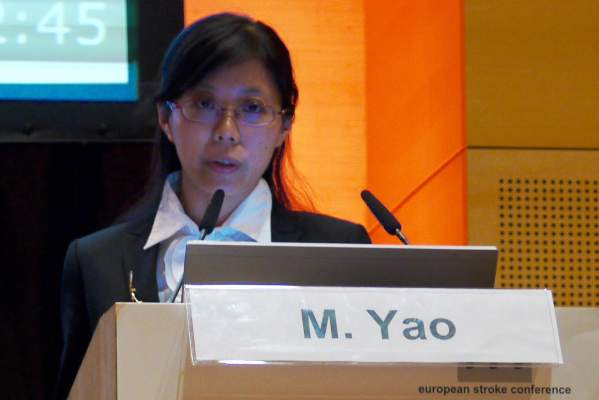
“We think that a high FBG level after stroke might be better for predicting prognosis in patients without prediagnosed diabetes than in those with diabetes and confirms the importance of glycemic control during the acute phase of ischemic stroke,” said study researcher Dr. Ming Yao of Peking Union Medical College Hospital at the annual European Stroke Conference.Dr. Yao noted that hyperglycemia after an acute stroke had already been linked to poorer clinical outcomes, with reports of larger infarct volumes, an increased risk for secondary hemorrhagic transformation, and lower recanalization rates after thrombolysis. However, it was not clear how functional outcomes were affected or if there was much of difference based on whether or not a patient had diabetes. Data from the Standard Medical Management in Secondary Prevention of Ischemic Stroke in China (SMART) study were therefore used to see what effect high FBG had on functional outcomes in diabetic versus nondiabetic subjects. SMART was a multicenter, cluster-randomized, controlled trial designed to assess the effectiveness of a guideline-based structured care program versus usual care for the secondary prevention of ischemic stroke (Stroke. 2014;45:515-9) and offered a large population of patients for the subgroup analysis. Of the 3,821 patients enrolled in the study, 2,862 had FBG data available and had complete follow-up data at 6 months.
Potential factors related to functional outcome 6 months after a stroke were first identified in the whole cohort using a binary logistic regression model, which categorized outcome as favorable (mRS ≤2) or poor (mRS >2). Univariate and multivariate analyses were then performed to narrow down the variables that might be the most influential.
For the whole cohort, older age (OR = 1.04, P < .001), hypertension (OR = 1.45, P = .028), baseline National Institutes of Health Stroke Scale (NIHSS) score (OR = 1.28, P < .001), and FBG (OR = 1.07, P = .004) were indicative of a poor functional outcome.
Looking at patients with and without diabetes, older age remained predictive of a poorer functional outcome, with respective odds ratios of 1.04 (P = .011) and 1.04 (P < .001). Baseline NIHSS score was also predictive in both patients with diabetes (OR = 1.33, P < .001) and those without (OR = 1.27, P < .001).
“Our present results demonstrate that a higher FBG following stroke is strongly and independently associated with a poor functional outcome,” Dr. Yao observed, “but this association was found only in patients without prediagnosed diabetes.”
The study was study was sponsored by Peking Union Medical College Hospital. Dr. Yao had no conflicts of interest.
VIENNA – Patients who have had an ischemic stroke and have high blood sugar levels without being diabetic may be more likely to experience functional impairments than those already diagnosed with diabetes, according to results from a large secondary stroke prevention trial performed in China.
In the trial, conducted at 47 hospitals, high levels of fasting blood glucose (FBG) were associated with worse disability at 6 months in the study, but the association only held in patients who did not have a diagnosis of diabetes at the time of their stroke. The odds ratios for poor functional outcome assessed using the modified Rankin scale (mRS) as a score of greater than 2 versus up to 2 were 1.09 (P = .031) in nondiabetics and 0.98 (P = 0.65) in those previously known to have diabetes.
“We think that a high FBG level after stroke might be better for predicting prognosis in patients without prediagnosed diabetes than in those with diabetes and confirms the importance of glycemic control during the acute phase of ischemic stroke,” said study researcher Dr. Ming Yao of Peking Union Medical College Hospital at the annual European Stroke Conference.Dr. Yao noted that hyperglycemia after an acute stroke had already been linked to poorer clinical outcomes, with reports of larger infarct volumes, an increased risk for secondary hemorrhagic transformation, and lower recanalization rates after thrombolysis. However, it was not clear how functional outcomes were affected or if there was much of difference based on whether or not a patient had diabetes. Data from the Standard Medical Management in Secondary Prevention of Ischemic Stroke in China (SMART) study were therefore used to see what effect high FBG had on functional outcomes in diabetic versus nondiabetic subjects. SMART was a multicenter, cluster-randomized, controlled trial designed to assess the effectiveness of a guideline-based structured care program versus usual care for the secondary prevention of ischemic stroke (Stroke. 2014;45:515-9) and offered a large population of patients for the subgroup analysis. Of the 3,821 patients enrolled in the study, 2,862 had FBG data available and had complete follow-up data at 6 months.
Potential factors related to functional outcome 6 months after a stroke were first identified in the whole cohort using a binary logistic regression model, which categorized outcome as favorable (mRS ≤2) or poor (mRS >2). Univariate and multivariate analyses were then performed to narrow down the variables that might be the most influential.
For the whole cohort, older age (OR = 1.04, P < .001), hypertension (OR = 1.45, P = .028), baseline National Institutes of Health Stroke Scale (NIHSS) score (OR = 1.28, P < .001), and FBG (OR = 1.07, P = .004) were indicative of a poor functional outcome.
Looking at patients with and without diabetes, older age remained predictive of a poorer functional outcome, with respective odds ratios of 1.04 (P = .011) and 1.04 (P < .001). Baseline NIHSS score was also predictive in both patients with diabetes (OR = 1.33, P < .001) and those without (OR = 1.27, P < .001).
“Our present results demonstrate that a higher FBG following stroke is strongly and independently associated with a poor functional outcome,” Dr. Yao observed, “but this association was found only in patients without prediagnosed diabetes.”
The study was study was sponsored by Peking Union Medical College Hospital. Dr. Yao had no conflicts of interest.
VIENNA – Patients who have had an ischemic stroke and have high blood sugar levels without being diabetic may be more likely to experience functional impairments than those already diagnosed with diabetes, according to results from a large secondary stroke prevention trial performed in China.
In the trial, conducted at 47 hospitals, high levels of fasting blood glucose (FBG) were associated with worse disability at 6 months in the study, but the association only held in patients who did not have a diagnosis of diabetes at the time of their stroke. The odds ratios for poor functional outcome assessed using the modified Rankin scale (mRS) as a score of greater than 2 versus up to 2 were 1.09 (P = .031) in nondiabetics and 0.98 (P = 0.65) in those previously known to have diabetes.
“We think that a high FBG level after stroke might be better for predicting prognosis in patients without prediagnosed diabetes than in those with diabetes and confirms the importance of glycemic control during the acute phase of ischemic stroke,” said study researcher Dr. Ming Yao of Peking Union Medical College Hospital at the annual European Stroke Conference.Dr. Yao noted that hyperglycemia after an acute stroke had already been linked to poorer clinical outcomes, with reports of larger infarct volumes, an increased risk for secondary hemorrhagic transformation, and lower recanalization rates after thrombolysis. However, it was not clear how functional outcomes were affected or if there was much of difference based on whether or not a patient had diabetes. Data from the Standard Medical Management in Secondary Prevention of Ischemic Stroke in China (SMART) study were therefore used to see what effect high FBG had on functional outcomes in diabetic versus nondiabetic subjects. SMART was a multicenter, cluster-randomized, controlled trial designed to assess the effectiveness of a guideline-based structured care program versus usual care for the secondary prevention of ischemic stroke (Stroke. 2014;45:515-9) and offered a large population of patients for the subgroup analysis. Of the 3,821 patients enrolled in the study, 2,862 had FBG data available and had complete follow-up data at 6 months.
Potential factors related to functional outcome 6 months after a stroke were first identified in the whole cohort using a binary logistic regression model, which categorized outcome as favorable (mRS ≤2) or poor (mRS >2). Univariate and multivariate analyses were then performed to narrow down the variables that might be the most influential.
For the whole cohort, older age (OR = 1.04, P < .001), hypertension (OR = 1.45, P = .028), baseline National Institutes of Health Stroke Scale (NIHSS) score (OR = 1.28, P < .001), and FBG (OR = 1.07, P = .004) were indicative of a poor functional outcome.
Looking at patients with and without diabetes, older age remained predictive of a poorer functional outcome, with respective odds ratios of 1.04 (P = .011) and 1.04 (P < .001). Baseline NIHSS score was also predictive in both patients with diabetes (OR = 1.33, P < .001) and those without (OR = 1.27, P < .001).
“Our present results demonstrate that a higher FBG following stroke is strongly and independently associated with a poor functional outcome,” Dr. Yao observed, “but this association was found only in patients without prediagnosed diabetes.”
The study was study was sponsored by Peking Union Medical College Hospital. Dr. Yao had no conflicts of interest.
AT THE EUROPEAN STROKE CONFERENCE
Key clinical point: Glycemic control during acute stroke is important, particularly in nondiabetic patients.
Major finding: High fasting plasma glucose was associated with poor functional outcome at 6 months in nondiabetic patients (OR = 1.09, P = .031).
Data source: 2,862 patients from the SMART study, a multicenter, cluster-randomized, controlled, secondary stroke prevention trial conducted in China.
Disclosures: The study was sponsored by Peking Union Medical College Hospital. Dr. Yao had no disclosures.