User login
MDedge conference coverage features onsite reporting of the latest study results and expert perspectives from leading researchers.
Offering HPV vaccine at age 9 linked to greater series completion
BALTIMORE – , according to a retrospective cohort study of commercially insured youth presented at the annual clinical and scientific meeting of the American College of Obstetricians and Gynecologists. The research was published ahead of print in Human Vaccines and Immunotherapeutics.
Changing attitudes
“These findings are novel because they emphasize starting at age 9, and that is different than prior studies that emphasize bundling of these vaccines,” Kevin Ault, MD, professor and chair of the department of obstetrics and gynecology at Western Michigan University Homer Stryker MD School of Medicine and a former member of the CDC’s Advisory Committee on Immunization Practices, said in an interview.
Dr. Ault was not involved in the study but noted that these findings support the AAP’s recommendation to start the HPV vaccine series at age 9. The Centers for Disease Control and Prevention currently recommends giving the first dose of the HPV vaccine at ages 11-12, at the same time as the Tdap and meningitis vaccines. This recommendation to “bundle” the HPV vaccine with the Tdap and meningitis vaccines aims to facilitate provider-family discussion about the HPV vaccine, ideally reducing parent hesitancy and concerns about the vaccines. Multiple studies have shown improved HPV vaccine uptake when providers offer the HPV vaccine at the same time as the Tdap and meningococcal vaccines.
However, shifts in parents’ attitudes have occurred toward the HPV vaccine since those studies on bundling: Concerns about sexual activity have receded while concerns about safety remain high. The American Academy of Pediatrics and the American Cancer Society both advise starting the HPV vaccine series at age 9, based on evidence showing that more children complete the series when they get the first shot before age 11 compared to getting it at 11 or 12.
“The bundling was really to vaccinate people by the age of 13, thinking that onset of sexual activity was after that,” study author Sidika Kajtezovic, MD, a resident at Boston Medical Center and Boston University Obstetrics and Gynecology, said in an interview. But Dr. Kajtezovic said she delivers babies for 13-year-old patients. “Kids are having sex sooner or sooner.” It’s also clear that using the bundling strategy is not making up the entire gap right now: Ninety percent of children are getting the meningococcal vaccine while only 49% are getting the HPV vaccine, Dr. Kajtezovic pointed out. “There’s a disconnect happening there, even with the bundling,” she said.
Debundling vaccines
Dr. Kajtezovic and her colleagues used a national database of employee-sponsored health insurance to analyze the records of 100,857 children who were continuously enrolled in a plan from age 9 in 2015 to age 13 in 2019. They calculated the odds of children completing the HPV vaccine series based on whether they started the series before, at the same time as, or after the Tdap vaccination.
Youth who received the HPV vaccine before their Tdap vaccine had 38% greater odds of completing the series – getting both doses – than did those who received the HPV vaccine at the same time as the Tdap vaccine. Meanwhile, in line with prior evidence, those who got the first HPV dose after their Tdap were less likely – 68% lower odds – to complete the two- or three-dose (if starting above age 14) series.
The researchers identified several other factors that were linked to completing the HPV vaccine series. Females had greater odds than did males of completing the series, as did those living in urban, rather than rural, areas. Other factors associated with completing the series included living in the Northeast United States and receiving primary care from a pediatrician rather than a family medicine physician.
Timing is important
“I am encouraged by the findings of this study,” Dr. Ault said in an interview. “However, I would have liked the authors to expand the age range a bit higher. There are data that continuing to discuss the HPV vaccine with parents and teens will increase uptake into the later teen years.”
One challenge is that research shows attendance at primary care visits declines in older adolescence. Since there is no second Tdap or meningitis shot, families need to return for the second HPV vaccine dose after those shots, though they could get the second dose at the same time as other two vaccines if they receive the first dose before age 11. There’s also evidence suggesting that providers find conversations about the HPV vaccine easier when sexual activity is not the focus.
“I often feel that, before a child reaches adolescence, they’re almost, in a way, not sexualized yet, so talking about cancer prevention for an 8- or 9-year-old sometimes sounds a little different to patients versus protecting your 12-year-old, who’s starting to go through adolescence and developing breasts” and other signs of puberty, Dr. Kajtezovic said. Keeping the focus of HPV vaccine discussions on cancer prevention also allows providers to point out the protection against anal cancer, vulvar cancer, vaginal cancer, and head and neck cancer. “They are horrible, and even if they’re treatable, they’re often very hard to treat at an advanced stage,” Dr. Kajtezovic said. “The surgery required is so life disabling and disfiguring.”
The HPV Roundtable advises continuing bundling at practices having success with it but encourages practices to consider earlier vaccination if their uptake is lagging. Quality improvement initiatives, such as earlier electronic medical record prompts and multi-level interventions in pediatric practices, have shown substantial increases in HPV vaccine uptake at 9 and 10 years old. One survey in 2021 found that one in five primary care providers already routinely recommend the HPV vaccine at ages 9-10, and nearly half of others would consider doing so.
“My hope is in the next few years, when [the CDC] refreshes their vaccine recommendations, that they will either unbundle it or move the bar a few years earlier so that you can initiate it to encourage earlier initiation,” Dr. Kajtezovic said.
Dr. Ault had no other disclosures besides prior service on ACIP. Dr. Kajtezovic had no disclosures.
BALTIMORE – , according to a retrospective cohort study of commercially insured youth presented at the annual clinical and scientific meeting of the American College of Obstetricians and Gynecologists. The research was published ahead of print in Human Vaccines and Immunotherapeutics.
Changing attitudes
“These findings are novel because they emphasize starting at age 9, and that is different than prior studies that emphasize bundling of these vaccines,” Kevin Ault, MD, professor and chair of the department of obstetrics and gynecology at Western Michigan University Homer Stryker MD School of Medicine and a former member of the CDC’s Advisory Committee on Immunization Practices, said in an interview.
Dr. Ault was not involved in the study but noted that these findings support the AAP’s recommendation to start the HPV vaccine series at age 9. The Centers for Disease Control and Prevention currently recommends giving the first dose of the HPV vaccine at ages 11-12, at the same time as the Tdap and meningitis vaccines. This recommendation to “bundle” the HPV vaccine with the Tdap and meningitis vaccines aims to facilitate provider-family discussion about the HPV vaccine, ideally reducing parent hesitancy and concerns about the vaccines. Multiple studies have shown improved HPV vaccine uptake when providers offer the HPV vaccine at the same time as the Tdap and meningococcal vaccines.
However, shifts in parents’ attitudes have occurred toward the HPV vaccine since those studies on bundling: Concerns about sexual activity have receded while concerns about safety remain high. The American Academy of Pediatrics and the American Cancer Society both advise starting the HPV vaccine series at age 9, based on evidence showing that more children complete the series when they get the first shot before age 11 compared to getting it at 11 or 12.
“The bundling was really to vaccinate people by the age of 13, thinking that onset of sexual activity was after that,” study author Sidika Kajtezovic, MD, a resident at Boston Medical Center and Boston University Obstetrics and Gynecology, said in an interview. But Dr. Kajtezovic said she delivers babies for 13-year-old patients. “Kids are having sex sooner or sooner.” It’s also clear that using the bundling strategy is not making up the entire gap right now: Ninety percent of children are getting the meningococcal vaccine while only 49% are getting the HPV vaccine, Dr. Kajtezovic pointed out. “There’s a disconnect happening there, even with the bundling,” she said.
Debundling vaccines
Dr. Kajtezovic and her colleagues used a national database of employee-sponsored health insurance to analyze the records of 100,857 children who were continuously enrolled in a plan from age 9 in 2015 to age 13 in 2019. They calculated the odds of children completing the HPV vaccine series based on whether they started the series before, at the same time as, or after the Tdap vaccination.
Youth who received the HPV vaccine before their Tdap vaccine had 38% greater odds of completing the series – getting both doses – than did those who received the HPV vaccine at the same time as the Tdap vaccine. Meanwhile, in line with prior evidence, those who got the first HPV dose after their Tdap were less likely – 68% lower odds – to complete the two- or three-dose (if starting above age 14) series.
The researchers identified several other factors that were linked to completing the HPV vaccine series. Females had greater odds than did males of completing the series, as did those living in urban, rather than rural, areas. Other factors associated with completing the series included living in the Northeast United States and receiving primary care from a pediatrician rather than a family medicine physician.
Timing is important
“I am encouraged by the findings of this study,” Dr. Ault said in an interview. “However, I would have liked the authors to expand the age range a bit higher. There are data that continuing to discuss the HPV vaccine with parents and teens will increase uptake into the later teen years.”
One challenge is that research shows attendance at primary care visits declines in older adolescence. Since there is no second Tdap or meningitis shot, families need to return for the second HPV vaccine dose after those shots, though they could get the second dose at the same time as other two vaccines if they receive the first dose before age 11. There’s also evidence suggesting that providers find conversations about the HPV vaccine easier when sexual activity is not the focus.
“I often feel that, before a child reaches adolescence, they’re almost, in a way, not sexualized yet, so talking about cancer prevention for an 8- or 9-year-old sometimes sounds a little different to patients versus protecting your 12-year-old, who’s starting to go through adolescence and developing breasts” and other signs of puberty, Dr. Kajtezovic said. Keeping the focus of HPV vaccine discussions on cancer prevention also allows providers to point out the protection against anal cancer, vulvar cancer, vaginal cancer, and head and neck cancer. “They are horrible, and even if they’re treatable, they’re often very hard to treat at an advanced stage,” Dr. Kajtezovic said. “The surgery required is so life disabling and disfiguring.”
The HPV Roundtable advises continuing bundling at practices having success with it but encourages practices to consider earlier vaccination if their uptake is lagging. Quality improvement initiatives, such as earlier electronic medical record prompts and multi-level interventions in pediatric practices, have shown substantial increases in HPV vaccine uptake at 9 and 10 years old. One survey in 2021 found that one in five primary care providers already routinely recommend the HPV vaccine at ages 9-10, and nearly half of others would consider doing so.
“My hope is in the next few years, when [the CDC] refreshes their vaccine recommendations, that they will either unbundle it or move the bar a few years earlier so that you can initiate it to encourage earlier initiation,” Dr. Kajtezovic said.
Dr. Ault had no other disclosures besides prior service on ACIP. Dr. Kajtezovic had no disclosures.
BALTIMORE – , according to a retrospective cohort study of commercially insured youth presented at the annual clinical and scientific meeting of the American College of Obstetricians and Gynecologists. The research was published ahead of print in Human Vaccines and Immunotherapeutics.
Changing attitudes
“These findings are novel because they emphasize starting at age 9, and that is different than prior studies that emphasize bundling of these vaccines,” Kevin Ault, MD, professor and chair of the department of obstetrics and gynecology at Western Michigan University Homer Stryker MD School of Medicine and a former member of the CDC’s Advisory Committee on Immunization Practices, said in an interview.
Dr. Ault was not involved in the study but noted that these findings support the AAP’s recommendation to start the HPV vaccine series at age 9. The Centers for Disease Control and Prevention currently recommends giving the first dose of the HPV vaccine at ages 11-12, at the same time as the Tdap and meningitis vaccines. This recommendation to “bundle” the HPV vaccine with the Tdap and meningitis vaccines aims to facilitate provider-family discussion about the HPV vaccine, ideally reducing parent hesitancy and concerns about the vaccines. Multiple studies have shown improved HPV vaccine uptake when providers offer the HPV vaccine at the same time as the Tdap and meningococcal vaccines.
However, shifts in parents’ attitudes have occurred toward the HPV vaccine since those studies on bundling: Concerns about sexual activity have receded while concerns about safety remain high. The American Academy of Pediatrics and the American Cancer Society both advise starting the HPV vaccine series at age 9, based on evidence showing that more children complete the series when they get the first shot before age 11 compared to getting it at 11 or 12.
“The bundling was really to vaccinate people by the age of 13, thinking that onset of sexual activity was after that,” study author Sidika Kajtezovic, MD, a resident at Boston Medical Center and Boston University Obstetrics and Gynecology, said in an interview. But Dr. Kajtezovic said she delivers babies for 13-year-old patients. “Kids are having sex sooner or sooner.” It’s also clear that using the bundling strategy is not making up the entire gap right now: Ninety percent of children are getting the meningococcal vaccine while only 49% are getting the HPV vaccine, Dr. Kajtezovic pointed out. “There’s a disconnect happening there, even with the bundling,” she said.
Debundling vaccines
Dr. Kajtezovic and her colleagues used a national database of employee-sponsored health insurance to analyze the records of 100,857 children who were continuously enrolled in a plan from age 9 in 2015 to age 13 in 2019. They calculated the odds of children completing the HPV vaccine series based on whether they started the series before, at the same time as, or after the Tdap vaccination.
Youth who received the HPV vaccine before their Tdap vaccine had 38% greater odds of completing the series – getting both doses – than did those who received the HPV vaccine at the same time as the Tdap vaccine. Meanwhile, in line with prior evidence, those who got the first HPV dose after their Tdap were less likely – 68% lower odds – to complete the two- or three-dose (if starting above age 14) series.
The researchers identified several other factors that were linked to completing the HPV vaccine series. Females had greater odds than did males of completing the series, as did those living in urban, rather than rural, areas. Other factors associated with completing the series included living in the Northeast United States and receiving primary care from a pediatrician rather than a family medicine physician.
Timing is important
“I am encouraged by the findings of this study,” Dr. Ault said in an interview. “However, I would have liked the authors to expand the age range a bit higher. There are data that continuing to discuss the HPV vaccine with parents and teens will increase uptake into the later teen years.”
One challenge is that research shows attendance at primary care visits declines in older adolescence. Since there is no second Tdap or meningitis shot, families need to return for the second HPV vaccine dose after those shots, though they could get the second dose at the same time as other two vaccines if they receive the first dose before age 11. There’s also evidence suggesting that providers find conversations about the HPV vaccine easier when sexual activity is not the focus.
“I often feel that, before a child reaches adolescence, they’re almost, in a way, not sexualized yet, so talking about cancer prevention for an 8- or 9-year-old sometimes sounds a little different to patients versus protecting your 12-year-old, who’s starting to go through adolescence and developing breasts” and other signs of puberty, Dr. Kajtezovic said. Keeping the focus of HPV vaccine discussions on cancer prevention also allows providers to point out the protection against anal cancer, vulvar cancer, vaginal cancer, and head and neck cancer. “They are horrible, and even if they’re treatable, they’re often very hard to treat at an advanced stage,” Dr. Kajtezovic said. “The surgery required is so life disabling and disfiguring.”
The HPV Roundtable advises continuing bundling at practices having success with it but encourages practices to consider earlier vaccination if their uptake is lagging. Quality improvement initiatives, such as earlier electronic medical record prompts and multi-level interventions in pediatric practices, have shown substantial increases in HPV vaccine uptake at 9 and 10 years old. One survey in 2021 found that one in five primary care providers already routinely recommend the HPV vaccine at ages 9-10, and nearly half of others would consider doing so.
“My hope is in the next few years, when [the CDC] refreshes their vaccine recommendations, that they will either unbundle it or move the bar a few years earlier so that you can initiate it to encourage earlier initiation,” Dr. Kajtezovic said.
Dr. Ault had no other disclosures besides prior service on ACIP. Dr. Kajtezovic had no disclosures.
AT ACOG 2023
Roflumilast cream appears safe, effective for children with psoriasis, researchers report
In patients aged 2-11 years, roflumilast cream was well tolerated and improved signs and symptoms of psoriasis over 4 weeks, according to results from a pair of phase two studies.
“Limited topical treatments are approved for children younger than 12 years old with psoriasis,” researchers led by Adelaide A. Hebert, MD, wrote in their abstract. The results were presented during a poster session at the annual meeting of the Society for Pediatric Dermatology.
Roflumilast cream 0.3% (Zoryve) is a once-daily, topical nonsteroidal treatment from Arcutis Biotherapeutics. A phosphodiesterase-4 inhibitor, it was approved by the Food and Drug Administration in 2022 for mild, moderate and severe psoriasis in individuals aged 12 and older, including intertriginous psoriasis.
For the analysis, Dr. Hebert, chief of pediatric dermatology at the University of Texas, Houston, and colleagues conducted two 4-week, phase 2, open-label safety studies of roflumilast cream 0.3%.
One, study 216, enrolled 10 children aged 2-5, and all but one were Black. The other, study 215, enrolled 20 children aged 6-11, and half were Black and nearly half were White. At baseline, patients had 2% or greater body surface area (BSA) involvement and an Investigator Global Assessment (IGA) score of at least mild.
Caregivers applied roflumilast cream to all affected areas once daily for 28 days. The researchers collected pharmacokinetic samples at week 2 and week 4. The primary endpoints were pharmacokinetic, safety, and tolerability.
Efficacy was evaluated as exploratory endpoints: An IGA of clear or almost clear plus a 2-grade or more improvement from baseline, a 50% or greater improvement and a 75% or greater improvement on the Psoriasis Area and Severity Index (PASI-50 and PASI-75), a 4-point or greater reduction in the Worst Itch–Numeric Rating Scale (WI-NRS) in patients with a baseline score of 4 or greater, a mean change from baseline in BSA, and improvement in the Children’s Dermatology Life Quality Index (CDLQI).
At baseline, the mean BSA was similar for patients enrolled in studies 216 and 215 (9.6% and 8.8%, respectively), and 80% of all patients had baseline IGA of moderate. By week 2, the mean roflumilast and N-oxide predose plasma concentrations among patients in the younger group were 2.15 and 22.4 ng/mL, compared with 3.15 and 28.9 ng/mL among those in the older group. At week 4, the mean roflumilast and N-oxide predose concentrations were 2.04 and 15.8 ng/mL in the younger group (study 216), compared with 1.68 and 15.7 ng/mL in the older group (study 215).
As for efficacy, 90% and 40% of patients in studies 216 and 215 achieved IGA success at week 4, respectively, while 90% and 50% achieved PASI-75, 90% and 40% achieved WI-NRS success, and the mean BSA reductions at week 4 were 79.1% and 44.4%. Meanwhile, one younger patient in study 216 reported a treatment-emergent adverse event (TEAE) of headache, which was considered mild, while four older patients in study 215 reported 8 TEAEs, which were considered mild and ranged from back pain to nasal congestion.
“The rapid onset of action was surprising but exceedingly rewarding for the subjects enrolled in the study,” Dr. Hebert told this news organization after the meeting. “The PASI scores and itch scores were markedly improved at the end of the 4-week clinical trial. Patient and parents alike were pleased to use a steroid-free option with once-daily application and rapid onset of action to help control plaque psoriasis.”
In the poster abstract, she and her coauthors concluded that “under maximal use conditions in children aged 2-11 years, roflumilast cream 0.3% was well tolerated and improved signs and symptoms of psoriasis with measured improvements in IGA score, PASI score, BSA involvement, CDLQI, and WI-NRS. Overall, pharmacokinetics, safety, tolerability, and efficacy in patients aged 2-11 years were consistent with prior results in adults and adolescents.”
The study was funded by Arcutis Biotherapeutics. Dr. Hebert reported that she is an investigator for Arcutis. About half the coauthors are employees of Arcutis, and the other half disclosed grants, research funding and/or honoraria from the company. Research grants from the company for this study were paid to the McGovern Medical School at the University of Texas.
In patients aged 2-11 years, roflumilast cream was well tolerated and improved signs and symptoms of psoriasis over 4 weeks, according to results from a pair of phase two studies.
“Limited topical treatments are approved for children younger than 12 years old with psoriasis,” researchers led by Adelaide A. Hebert, MD, wrote in their abstract. The results were presented during a poster session at the annual meeting of the Society for Pediatric Dermatology.
Roflumilast cream 0.3% (Zoryve) is a once-daily, topical nonsteroidal treatment from Arcutis Biotherapeutics. A phosphodiesterase-4 inhibitor, it was approved by the Food and Drug Administration in 2022 for mild, moderate and severe psoriasis in individuals aged 12 and older, including intertriginous psoriasis.
For the analysis, Dr. Hebert, chief of pediatric dermatology at the University of Texas, Houston, and colleagues conducted two 4-week, phase 2, open-label safety studies of roflumilast cream 0.3%.
One, study 216, enrolled 10 children aged 2-5, and all but one were Black. The other, study 215, enrolled 20 children aged 6-11, and half were Black and nearly half were White. At baseline, patients had 2% or greater body surface area (BSA) involvement and an Investigator Global Assessment (IGA) score of at least mild.
Caregivers applied roflumilast cream to all affected areas once daily for 28 days. The researchers collected pharmacokinetic samples at week 2 and week 4. The primary endpoints were pharmacokinetic, safety, and tolerability.
Efficacy was evaluated as exploratory endpoints: An IGA of clear or almost clear plus a 2-grade or more improvement from baseline, a 50% or greater improvement and a 75% or greater improvement on the Psoriasis Area and Severity Index (PASI-50 and PASI-75), a 4-point or greater reduction in the Worst Itch–Numeric Rating Scale (WI-NRS) in patients with a baseline score of 4 or greater, a mean change from baseline in BSA, and improvement in the Children’s Dermatology Life Quality Index (CDLQI).
At baseline, the mean BSA was similar for patients enrolled in studies 216 and 215 (9.6% and 8.8%, respectively), and 80% of all patients had baseline IGA of moderate. By week 2, the mean roflumilast and N-oxide predose plasma concentrations among patients in the younger group were 2.15 and 22.4 ng/mL, compared with 3.15 and 28.9 ng/mL among those in the older group. At week 4, the mean roflumilast and N-oxide predose concentrations were 2.04 and 15.8 ng/mL in the younger group (study 216), compared with 1.68 and 15.7 ng/mL in the older group (study 215).
As for efficacy, 90% and 40% of patients in studies 216 and 215 achieved IGA success at week 4, respectively, while 90% and 50% achieved PASI-75, 90% and 40% achieved WI-NRS success, and the mean BSA reductions at week 4 were 79.1% and 44.4%. Meanwhile, one younger patient in study 216 reported a treatment-emergent adverse event (TEAE) of headache, which was considered mild, while four older patients in study 215 reported 8 TEAEs, which were considered mild and ranged from back pain to nasal congestion.
“The rapid onset of action was surprising but exceedingly rewarding for the subjects enrolled in the study,” Dr. Hebert told this news organization after the meeting. “The PASI scores and itch scores were markedly improved at the end of the 4-week clinical trial. Patient and parents alike were pleased to use a steroid-free option with once-daily application and rapid onset of action to help control plaque psoriasis.”
In the poster abstract, she and her coauthors concluded that “under maximal use conditions in children aged 2-11 years, roflumilast cream 0.3% was well tolerated and improved signs and symptoms of psoriasis with measured improvements in IGA score, PASI score, BSA involvement, CDLQI, and WI-NRS. Overall, pharmacokinetics, safety, tolerability, and efficacy in patients aged 2-11 years were consistent with prior results in adults and adolescents.”
The study was funded by Arcutis Biotherapeutics. Dr. Hebert reported that she is an investigator for Arcutis. About half the coauthors are employees of Arcutis, and the other half disclosed grants, research funding and/or honoraria from the company. Research grants from the company for this study were paid to the McGovern Medical School at the University of Texas.
In patients aged 2-11 years, roflumilast cream was well tolerated and improved signs and symptoms of psoriasis over 4 weeks, according to results from a pair of phase two studies.
“Limited topical treatments are approved for children younger than 12 years old with psoriasis,” researchers led by Adelaide A. Hebert, MD, wrote in their abstract. The results were presented during a poster session at the annual meeting of the Society for Pediatric Dermatology.
Roflumilast cream 0.3% (Zoryve) is a once-daily, topical nonsteroidal treatment from Arcutis Biotherapeutics. A phosphodiesterase-4 inhibitor, it was approved by the Food and Drug Administration in 2022 for mild, moderate and severe psoriasis in individuals aged 12 and older, including intertriginous psoriasis.
For the analysis, Dr. Hebert, chief of pediatric dermatology at the University of Texas, Houston, and colleagues conducted two 4-week, phase 2, open-label safety studies of roflumilast cream 0.3%.
One, study 216, enrolled 10 children aged 2-5, and all but one were Black. The other, study 215, enrolled 20 children aged 6-11, and half were Black and nearly half were White. At baseline, patients had 2% or greater body surface area (BSA) involvement and an Investigator Global Assessment (IGA) score of at least mild.
Caregivers applied roflumilast cream to all affected areas once daily for 28 days. The researchers collected pharmacokinetic samples at week 2 and week 4. The primary endpoints were pharmacokinetic, safety, and tolerability.
Efficacy was evaluated as exploratory endpoints: An IGA of clear or almost clear plus a 2-grade or more improvement from baseline, a 50% or greater improvement and a 75% or greater improvement on the Psoriasis Area and Severity Index (PASI-50 and PASI-75), a 4-point or greater reduction in the Worst Itch–Numeric Rating Scale (WI-NRS) in patients with a baseline score of 4 or greater, a mean change from baseline in BSA, and improvement in the Children’s Dermatology Life Quality Index (CDLQI).
At baseline, the mean BSA was similar for patients enrolled in studies 216 and 215 (9.6% and 8.8%, respectively), and 80% of all patients had baseline IGA of moderate. By week 2, the mean roflumilast and N-oxide predose plasma concentrations among patients in the younger group were 2.15 and 22.4 ng/mL, compared with 3.15 and 28.9 ng/mL among those in the older group. At week 4, the mean roflumilast and N-oxide predose concentrations were 2.04 and 15.8 ng/mL in the younger group (study 216), compared with 1.68 and 15.7 ng/mL in the older group (study 215).
As for efficacy, 90% and 40% of patients in studies 216 and 215 achieved IGA success at week 4, respectively, while 90% and 50% achieved PASI-75, 90% and 40% achieved WI-NRS success, and the mean BSA reductions at week 4 were 79.1% and 44.4%. Meanwhile, one younger patient in study 216 reported a treatment-emergent adverse event (TEAE) of headache, which was considered mild, while four older patients in study 215 reported 8 TEAEs, which were considered mild and ranged from back pain to nasal congestion.
“The rapid onset of action was surprising but exceedingly rewarding for the subjects enrolled in the study,” Dr. Hebert told this news organization after the meeting. “The PASI scores and itch scores were markedly improved at the end of the 4-week clinical trial. Patient and parents alike were pleased to use a steroid-free option with once-daily application and rapid onset of action to help control plaque psoriasis.”
In the poster abstract, she and her coauthors concluded that “under maximal use conditions in children aged 2-11 years, roflumilast cream 0.3% was well tolerated and improved signs and symptoms of psoriasis with measured improvements in IGA score, PASI score, BSA involvement, CDLQI, and WI-NRS. Overall, pharmacokinetics, safety, tolerability, and efficacy in patients aged 2-11 years were consistent with prior results in adults and adolescents.”
The study was funded by Arcutis Biotherapeutics. Dr. Hebert reported that she is an investigator for Arcutis. About half the coauthors are employees of Arcutis, and the other half disclosed grants, research funding and/or honoraria from the company. Research grants from the company for this study were paid to the McGovern Medical School at the University of Texas.
FROM SPD 2023
Free teledermatology clinic helps underserved patients initiate AD care
A in other underserved areas in the United States.
Washington, D.C., has “staggering health disparities that are among the largest in the country,” and Ward 8 and surrounding areas in the southeastern part of the city are “dermatology deserts,” said Adam Friedman, MD, professor and chair of dermatology at George Washington University, Washington, who started the program in 2021 with a pilot project. Dr. Friedman spoke about the project, which has since been expanded to include alopecia areata, at the Revolutionizing Atopic Dermatitis conference in April and in an interview after the meeting.
Patients who attend the clinics – held at the Temple of Praise Church in a residential area of Ward 8, a predominantly Black community with a 30% poverty rate – are entered into the GW Medical Faculty Associates medical records system and educated on telemedicine best practices (such as not having light behind them during a session) and how to use telemedicine with their own device.
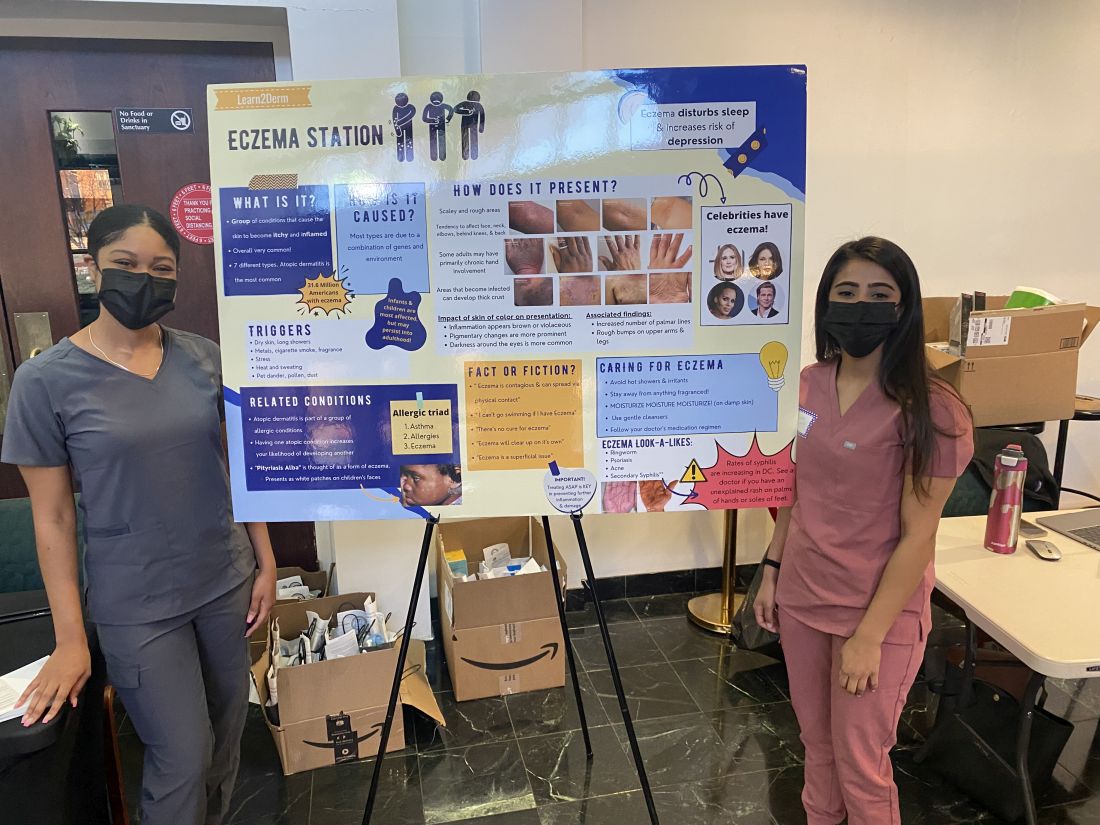
Those with AD who participate learn about the condition through an image-rich poster showing how it appears in various skin tones, handouts, National Eczema Association films, and discussion with medical students who staff the clinics under Dr. Friedman’s on-site supervision. Participants with alopecia areata similarly can view a poster and converse about the condition.
Patients then have a free 20-minute telehealth visit with a GWU dermatology resident in a private room, and a medical student volunteer nearby to assist with the technology if needed. They leave with a treatment plan, which often includes prescriptions, and a follow-up telemedicine appointment.
The program “is meant to be a stepping point for initiating care ... to set someone up for success for recurrent telehealth visits in the future” and for treatment before symptoms become too severe, Dr. Friedman said in an interview. “We want to demystify telemedicine and educate on the disease state and dispel myths ... so the patient understands why it’s happening” and how it can be treated.
The pilot project, funded with a grant from Pfizer, involved five 2-hour clinics held on Mondays from 4 p.m. to 6 p.m., that together served almost 50 adult and pediatric patients. Grants from Pfizer and Eli Lilly enabled additional clinics in the spring of 2023 and into the summer. And in June, GWU and Pfizer announced a $1 million national grant program focused on broad implementation of what they’ve coined the “Teledermatology Help Desk Clinic” model.
Practices or organizations that secure grants will utilize GWU’s experience and meet with an advisory council of experts in dermatology telemedicine and community advocacy. Having a “long-term plan” and commitment to sustainability is an important element of the model, said Dr. Friedman, who is chairing the grant program.
Patients deem clinic ‘extremely’ helpful
As one of the most prevalent skin disorders – and one with a documented history of elevated risk for specific populations – AD was a good starting point for the teledermatology clinic program. Patients who identify as Black have a higher incidence and prevalence of AD than those who identify as White and Hispanic, and they tend to have more severe disease. Yet they account for fewer visits to dermatologists for AD.
One cross-sectional study of about 3,500 adults in the United States with AD documented that racial/ethnic and socioeconomic disparities reduce outpatient utilization of AD care and increase urgent care and hospital utilization. And in a longitudinal cohort study of children in the United States with AD, Black children with poorly controlled AD were significantly less likely than White children to see a dermatologist.
Like other programs, the GWU department of dermatology had pivoted to telehealth in 2020, and a published survey of patients who attended telehealth appointments during the early part of the pandemic showed that it was generally well liked – and not only for social distancing, but for time efficiency and because transportation was not needed. Only 10% of the 168 patients who completed the survey (out of 894 asked) reported they were unlikely to undertake another telehealth visit. For 10%, eczema was the reason for the visit.
However, only 1% of the survey respondents were from Ward 8, which “begged the question, did those who really need access know this was an option?” Dr. Friedman said at the RAD meeting. He wondered whether there was not only a dermatology desert in Ward 8, but a “technology desert” as well.
Findings from a patient satisfaction survey taken at the end of the pilot program are encouraging, Dr. Friedman said. While data on follow-up visits has not been collected yet, “what I do now have a sense of” is that “the entry point [afforded by the clinics] changed the course in terms of patients’ understanding of the disease and how they feel about its management.”
About 94% of survey respondents indicated the clinic was “extremely” helpful and the remainder said it was “very” helpful; 90% said telehealth significantly changed how they will manage their condition; and 97% said it is “extremely” important to continue the clinics. The majority of patients – 70% – indicated they did not have a dermatologist.
Education about AD at the clinics covers moisturizers/emollients, bathing habits, soaps and detergents, trigger avoidance, and the role of stress and environmental factors in disease exacerbation. Trade samples of moisturizers, mild cleansers, and other products have increasingly been available.
For prescriptions of topical steroids and other commonly prescribed medications, Dr. Friedman and associates combed GoodRx for coupons and surveyed local pharmacies for self-pay pricing to identify least expensive options. Patients with AD who were deemed likely candidates for more advanced therapies in the future were educated about these possibilities.
Alopecia areata
The addition of alopecia areata drew patients with other forms of hair loss as well, but “we weren’t going to turn anyone away who did not have that specific autoimmune form of hair loss,” Dr. Friedman said. Depending on the diagnosis, prescriptions were written for minoxidil and 5-alpha reductase inhibitors.
Important for follow-up is GWU’s acceptance of Medicaid and the availability of both a sliding scale for self-pay and services that assist patients in registering for Medicaid and, if eligible, other insurance plans.
Building partnerships, earning trust
Establishment of the teledermatology clinic program took legwork and relationship building. “You can’t just show up. That’s not enough,” said Dr. Friedman, who also directs the dermatology residency program at GWU. “You have to show through action and through investment of time and energy that you are legitimate, that you’re really there for the long haul.”

Dr. Friedman had assistance from the Rodham Institute, which was established at GWU (and until recently was housed there) and has a history of engagement with local stakeholders such as community centers, church leadership, politicians, and others in the Washington area. He was put in touch with Bishop Deborah Webb at the Temple of Praise Church, a community pillar in Ward 8, and from there “it was a courtship,” he said, with trust to be built and logistics to be worked out. (Budgets for the clinics, he noted, have included compensation to the church and gift cards for church volunteers who are present at the clinics.)
In the meantime, medical student volunteers from GWU, Howard University, and Georgetown University were trained in telemedicine and attended a “boot camp” on AD “so they’d be able to talk with anyone about it,” Dr. Friedman said.
Advertising “was a learning experience,” he said, and was ultimately multipronged, involving church service announcements, flyers, and, most importantly, Facebook and Instagram advertisements. (People were asked to call a dedicated phone line to schedule an appointment and were invited to register in the GW Medical Faculty Associates records system, though walk-ins to the clinics were still welcomed.)
In a comment, Misty Eleryan, MD, MS, a Mohs micrographic surgeon and dermatologist in Santa Monica, Calif., said dermatology deserts are often found in rural areas and/or areas “with a higher population of marginalized communities, such as Black, Brown, or poorer individuals” – communities that tend to rely on care from urgent care or ED physicians who are unaware of how skin conditions present on darker skin tones.
Programs that educate patients about various presentations of skin conditions are helpful not only for the patients themselves, but could also enable them to help friends, family members, and colleagues, said Dr. Eleryan, who did her residency training at GWU.
“Access,” she noted, is more than just physical access to a person, place, or thing. Referring to a “five A’s” framework described several decades ago, Dr. Eleryan said access to care is characterized by affordability, availability (extent to which the physician has the requisite resources, such as personnel and technology, to meet the patient’s needs), accessibility (geographic), accommodation (extent to which the physician can meet the patient’s constraints and preferences – such as hours of operation, how communications are handled, ability to receive care without prior appointments), and acceptability (extent to which the patient is comfortable with the “more immutable characteristics” of the physician and vice versa).
The GWU program, she said, “is a great start.”
Dr. Friedman said he’s fully invested. There has long been a perception, “rightfully so, that underserved communities are overlooked especially by large institutions. One attendee told me she never expected in her lifetime to see something like this clinic and someone who looked like me caring about her community. ... It certainly says a great deal about the work we need to put in to repair longstanding injury.”
Dr. Friedman disclosed that, in addition to being a recipient of grants from Pfizer and Lilly, he is a speaker for Lilly. Dr. Eleryan said she has no relevant disclosures.
A in other underserved areas in the United States.
Washington, D.C., has “staggering health disparities that are among the largest in the country,” and Ward 8 and surrounding areas in the southeastern part of the city are “dermatology deserts,” said Adam Friedman, MD, professor and chair of dermatology at George Washington University, Washington, who started the program in 2021 with a pilot project. Dr. Friedman spoke about the project, which has since been expanded to include alopecia areata, at the Revolutionizing Atopic Dermatitis conference in April and in an interview after the meeting.
Patients who attend the clinics – held at the Temple of Praise Church in a residential area of Ward 8, a predominantly Black community with a 30% poverty rate – are entered into the GW Medical Faculty Associates medical records system and educated on telemedicine best practices (such as not having light behind them during a session) and how to use telemedicine with their own device.
Those with AD who participate learn about the condition through an image-rich poster showing how it appears in various skin tones, handouts, National Eczema Association films, and discussion with medical students who staff the clinics under Dr. Friedman’s on-site supervision. Participants with alopecia areata similarly can view a poster and converse about the condition.
Patients then have a free 20-minute telehealth visit with a GWU dermatology resident in a private room, and a medical student volunteer nearby to assist with the technology if needed. They leave with a treatment plan, which often includes prescriptions, and a follow-up telemedicine appointment.
The program “is meant to be a stepping point for initiating care ... to set someone up for success for recurrent telehealth visits in the future” and for treatment before symptoms become too severe, Dr. Friedman said in an interview. “We want to demystify telemedicine and educate on the disease state and dispel myths ... so the patient understands why it’s happening” and how it can be treated.
The pilot project, funded with a grant from Pfizer, involved five 2-hour clinics held on Mondays from 4 p.m. to 6 p.m., that together served almost 50 adult and pediatric patients. Grants from Pfizer and Eli Lilly enabled additional clinics in the spring of 2023 and into the summer. And in June, GWU and Pfizer announced a $1 million national grant program focused on broad implementation of what they’ve coined the “Teledermatology Help Desk Clinic” model.
Practices or organizations that secure grants will utilize GWU’s experience and meet with an advisory council of experts in dermatology telemedicine and community advocacy. Having a “long-term plan” and commitment to sustainability is an important element of the model, said Dr. Friedman, who is chairing the grant program.
Patients deem clinic ‘extremely’ helpful
As one of the most prevalent skin disorders – and one with a documented history of elevated risk for specific populations – AD was a good starting point for the teledermatology clinic program. Patients who identify as Black have a higher incidence and prevalence of AD than those who identify as White and Hispanic, and they tend to have more severe disease. Yet they account for fewer visits to dermatologists for AD.
One cross-sectional study of about 3,500 adults in the United States with AD documented that racial/ethnic and socioeconomic disparities reduce outpatient utilization of AD care and increase urgent care and hospital utilization. And in a longitudinal cohort study of children in the United States with AD, Black children with poorly controlled AD were significantly less likely than White children to see a dermatologist.
Like other programs, the GWU department of dermatology had pivoted to telehealth in 2020, and a published survey of patients who attended telehealth appointments during the early part of the pandemic showed that it was generally well liked – and not only for social distancing, but for time efficiency and because transportation was not needed. Only 10% of the 168 patients who completed the survey (out of 894 asked) reported they were unlikely to undertake another telehealth visit. For 10%, eczema was the reason for the visit.
However, only 1% of the survey respondents were from Ward 8, which “begged the question, did those who really need access know this was an option?” Dr. Friedman said at the RAD meeting. He wondered whether there was not only a dermatology desert in Ward 8, but a “technology desert” as well.
Findings from a patient satisfaction survey taken at the end of the pilot program are encouraging, Dr. Friedman said. While data on follow-up visits has not been collected yet, “what I do now have a sense of” is that “the entry point [afforded by the clinics] changed the course in terms of patients’ understanding of the disease and how they feel about its management.”
About 94% of survey respondents indicated the clinic was “extremely” helpful and the remainder said it was “very” helpful; 90% said telehealth significantly changed how they will manage their condition; and 97% said it is “extremely” important to continue the clinics. The majority of patients – 70% – indicated they did not have a dermatologist.
Education about AD at the clinics covers moisturizers/emollients, bathing habits, soaps and detergents, trigger avoidance, and the role of stress and environmental factors in disease exacerbation. Trade samples of moisturizers, mild cleansers, and other products have increasingly been available.
For prescriptions of topical steroids and other commonly prescribed medications, Dr. Friedman and associates combed GoodRx for coupons and surveyed local pharmacies for self-pay pricing to identify least expensive options. Patients with AD who were deemed likely candidates for more advanced therapies in the future were educated about these possibilities.
Alopecia areata
The addition of alopecia areata drew patients with other forms of hair loss as well, but “we weren’t going to turn anyone away who did not have that specific autoimmune form of hair loss,” Dr. Friedman said. Depending on the diagnosis, prescriptions were written for minoxidil and 5-alpha reductase inhibitors.
Important for follow-up is GWU’s acceptance of Medicaid and the availability of both a sliding scale for self-pay and services that assist patients in registering for Medicaid and, if eligible, other insurance plans.
Building partnerships, earning trust
Establishment of the teledermatology clinic program took legwork and relationship building. “You can’t just show up. That’s not enough,” said Dr. Friedman, who also directs the dermatology residency program at GWU. “You have to show through action and through investment of time and energy that you are legitimate, that you’re really there for the long haul.”
Dr. Friedman had assistance from the Rodham Institute, which was established at GWU (and until recently was housed there) and has a history of engagement with local stakeholders such as community centers, church leadership, politicians, and others in the Washington area. He was put in touch with Bishop Deborah Webb at the Temple of Praise Church, a community pillar in Ward 8, and from there “it was a courtship,” he said, with trust to be built and logistics to be worked out. (Budgets for the clinics, he noted, have included compensation to the church and gift cards for church volunteers who are present at the clinics.)
In the meantime, medical student volunteers from GWU, Howard University, and Georgetown University were trained in telemedicine and attended a “boot camp” on AD “so they’d be able to talk with anyone about it,” Dr. Friedman said.
Advertising “was a learning experience,” he said, and was ultimately multipronged, involving church service announcements, flyers, and, most importantly, Facebook and Instagram advertisements. (People were asked to call a dedicated phone line to schedule an appointment and were invited to register in the GW Medical Faculty Associates records system, though walk-ins to the clinics were still welcomed.)
In a comment, Misty Eleryan, MD, MS, a Mohs micrographic surgeon and dermatologist in Santa Monica, Calif., said dermatology deserts are often found in rural areas and/or areas “with a higher population of marginalized communities, such as Black, Brown, or poorer individuals” – communities that tend to rely on care from urgent care or ED physicians who are unaware of how skin conditions present on darker skin tones.
Programs that educate patients about various presentations of skin conditions are helpful not only for the patients themselves, but could also enable them to help friends, family members, and colleagues, said Dr. Eleryan, who did her residency training at GWU.
“Access,” she noted, is more than just physical access to a person, place, or thing. Referring to a “five A’s” framework described several decades ago, Dr. Eleryan said access to care is characterized by affordability, availability (extent to which the physician has the requisite resources, such as personnel and technology, to meet the patient’s needs), accessibility (geographic), accommodation (extent to which the physician can meet the patient’s constraints and preferences – such as hours of operation, how communications are handled, ability to receive care without prior appointments), and acceptability (extent to which the patient is comfortable with the “more immutable characteristics” of the physician and vice versa).
The GWU program, she said, “is a great start.”
Dr. Friedman said he’s fully invested. There has long been a perception, “rightfully so, that underserved communities are overlooked especially by large institutions. One attendee told me she never expected in her lifetime to see something like this clinic and someone who looked like me caring about her community. ... It certainly says a great deal about the work we need to put in to repair longstanding injury.”
Dr. Friedman disclosed that, in addition to being a recipient of grants from Pfizer and Lilly, he is a speaker for Lilly. Dr. Eleryan said she has no relevant disclosures.
A in other underserved areas in the United States.
Washington, D.C., has “staggering health disparities that are among the largest in the country,” and Ward 8 and surrounding areas in the southeastern part of the city are “dermatology deserts,” said Adam Friedman, MD, professor and chair of dermatology at George Washington University, Washington, who started the program in 2021 with a pilot project. Dr. Friedman spoke about the project, which has since been expanded to include alopecia areata, at the Revolutionizing Atopic Dermatitis conference in April and in an interview after the meeting.
Patients who attend the clinics – held at the Temple of Praise Church in a residential area of Ward 8, a predominantly Black community with a 30% poverty rate – are entered into the GW Medical Faculty Associates medical records system and educated on telemedicine best practices (such as not having light behind them during a session) and how to use telemedicine with their own device.
Those with AD who participate learn about the condition through an image-rich poster showing how it appears in various skin tones, handouts, National Eczema Association films, and discussion with medical students who staff the clinics under Dr. Friedman’s on-site supervision. Participants with alopecia areata similarly can view a poster and converse about the condition.
Patients then have a free 20-minute telehealth visit with a GWU dermatology resident in a private room, and a medical student volunteer nearby to assist with the technology if needed. They leave with a treatment plan, which often includes prescriptions, and a follow-up telemedicine appointment.
The program “is meant to be a stepping point for initiating care ... to set someone up for success for recurrent telehealth visits in the future” and for treatment before symptoms become too severe, Dr. Friedman said in an interview. “We want to demystify telemedicine and educate on the disease state and dispel myths ... so the patient understands why it’s happening” and how it can be treated.
The pilot project, funded with a grant from Pfizer, involved five 2-hour clinics held on Mondays from 4 p.m. to 6 p.m., that together served almost 50 adult and pediatric patients. Grants from Pfizer and Eli Lilly enabled additional clinics in the spring of 2023 and into the summer. And in June, GWU and Pfizer announced a $1 million national grant program focused on broad implementation of what they’ve coined the “Teledermatology Help Desk Clinic” model.
Practices or organizations that secure grants will utilize GWU’s experience and meet with an advisory council of experts in dermatology telemedicine and community advocacy. Having a “long-term plan” and commitment to sustainability is an important element of the model, said Dr. Friedman, who is chairing the grant program.
Patients deem clinic ‘extremely’ helpful
As one of the most prevalent skin disorders – and one with a documented history of elevated risk for specific populations – AD was a good starting point for the teledermatology clinic program. Patients who identify as Black have a higher incidence and prevalence of AD than those who identify as White and Hispanic, and they tend to have more severe disease. Yet they account for fewer visits to dermatologists for AD.
One cross-sectional study of about 3,500 adults in the United States with AD documented that racial/ethnic and socioeconomic disparities reduce outpatient utilization of AD care and increase urgent care and hospital utilization. And in a longitudinal cohort study of children in the United States with AD, Black children with poorly controlled AD were significantly less likely than White children to see a dermatologist.
Like other programs, the GWU department of dermatology had pivoted to telehealth in 2020, and a published survey of patients who attended telehealth appointments during the early part of the pandemic showed that it was generally well liked – and not only for social distancing, but for time efficiency and because transportation was not needed. Only 10% of the 168 patients who completed the survey (out of 894 asked) reported they were unlikely to undertake another telehealth visit. For 10%, eczema was the reason for the visit.
However, only 1% of the survey respondents were from Ward 8, which “begged the question, did those who really need access know this was an option?” Dr. Friedman said at the RAD meeting. He wondered whether there was not only a dermatology desert in Ward 8, but a “technology desert” as well.
Findings from a patient satisfaction survey taken at the end of the pilot program are encouraging, Dr. Friedman said. While data on follow-up visits has not been collected yet, “what I do now have a sense of” is that “the entry point [afforded by the clinics] changed the course in terms of patients’ understanding of the disease and how they feel about its management.”
About 94% of survey respondents indicated the clinic was “extremely” helpful and the remainder said it was “very” helpful; 90% said telehealth significantly changed how they will manage their condition; and 97% said it is “extremely” important to continue the clinics. The majority of patients – 70% – indicated they did not have a dermatologist.
Education about AD at the clinics covers moisturizers/emollients, bathing habits, soaps and detergents, trigger avoidance, and the role of stress and environmental factors in disease exacerbation. Trade samples of moisturizers, mild cleansers, and other products have increasingly been available.
For prescriptions of topical steroids and other commonly prescribed medications, Dr. Friedman and associates combed GoodRx for coupons and surveyed local pharmacies for self-pay pricing to identify least expensive options. Patients with AD who were deemed likely candidates for more advanced therapies in the future were educated about these possibilities.
Alopecia areata
The addition of alopecia areata drew patients with other forms of hair loss as well, but “we weren’t going to turn anyone away who did not have that specific autoimmune form of hair loss,” Dr. Friedman said. Depending on the diagnosis, prescriptions were written for minoxidil and 5-alpha reductase inhibitors.
Important for follow-up is GWU’s acceptance of Medicaid and the availability of both a sliding scale for self-pay and services that assist patients in registering for Medicaid and, if eligible, other insurance plans.
Building partnerships, earning trust
Establishment of the teledermatology clinic program took legwork and relationship building. “You can’t just show up. That’s not enough,” said Dr. Friedman, who also directs the dermatology residency program at GWU. “You have to show through action and through investment of time and energy that you are legitimate, that you’re really there for the long haul.”
Dr. Friedman had assistance from the Rodham Institute, which was established at GWU (and until recently was housed there) and has a history of engagement with local stakeholders such as community centers, church leadership, politicians, and others in the Washington area. He was put in touch with Bishop Deborah Webb at the Temple of Praise Church, a community pillar in Ward 8, and from there “it was a courtship,” he said, with trust to be built and logistics to be worked out. (Budgets for the clinics, he noted, have included compensation to the church and gift cards for church volunteers who are present at the clinics.)
In the meantime, medical student volunteers from GWU, Howard University, and Georgetown University were trained in telemedicine and attended a “boot camp” on AD “so they’d be able to talk with anyone about it,” Dr. Friedman said.
Advertising “was a learning experience,” he said, and was ultimately multipronged, involving church service announcements, flyers, and, most importantly, Facebook and Instagram advertisements. (People were asked to call a dedicated phone line to schedule an appointment and were invited to register in the GW Medical Faculty Associates records system, though walk-ins to the clinics were still welcomed.)
In a comment, Misty Eleryan, MD, MS, a Mohs micrographic surgeon and dermatologist in Santa Monica, Calif., said dermatology deserts are often found in rural areas and/or areas “with a higher population of marginalized communities, such as Black, Brown, or poorer individuals” – communities that tend to rely on care from urgent care or ED physicians who are unaware of how skin conditions present on darker skin tones.
Programs that educate patients about various presentations of skin conditions are helpful not only for the patients themselves, but could also enable them to help friends, family members, and colleagues, said Dr. Eleryan, who did her residency training at GWU.
“Access,” she noted, is more than just physical access to a person, place, or thing. Referring to a “five A’s” framework described several decades ago, Dr. Eleryan said access to care is characterized by affordability, availability (extent to which the physician has the requisite resources, such as personnel and technology, to meet the patient’s needs), accessibility (geographic), accommodation (extent to which the physician can meet the patient’s constraints and preferences – such as hours of operation, how communications are handled, ability to receive care without prior appointments), and acceptability (extent to which the patient is comfortable with the “more immutable characteristics” of the physician and vice versa).
The GWU program, she said, “is a great start.”
Dr. Friedman said he’s fully invested. There has long been a perception, “rightfully so, that underserved communities are overlooked especially by large institutions. One attendee told me she never expected in her lifetime to see something like this clinic and someone who looked like me caring about her community. ... It certainly says a great deal about the work we need to put in to repair longstanding injury.”
Dr. Friedman disclosed that, in addition to being a recipient of grants from Pfizer and Lilly, he is a speaker for Lilly. Dr. Eleryan said she has no relevant disclosures.
Injecting long-acting antiretrovirals into clinic care
At the Whitman-Walker Health Center, Washington, community health workers see about 3,200 antiretroviral users a year. With long-acting injections now available, the clinic opted to integrate the new medications into its peer staff program.
“Our peer workers are very competent,” said Rupa Patel, MD, MPH, medical liason of the pre-exposure prophylaxis for HIV prevention program at Washington University at St. Louis.* “They do phlebotomy, they give you your meds. They’re your main doctor until you really need to see the doctor.”
In the peer staff program, workers are trained in a 4-month medical residency–style program that shows them how to test for HIV, inject long-acting formulations of new drugs, and conduct follow-up visits.
Presenting the new approach at the International AIDS Society Conference on HIV Science, Dr. Patel reported that 139 people have received long-acting injections at the clinic since the program launched with a total of 314 injections administered.
The training program includes lectures, mock injection, and client care sessions, observation and supervised administration, a written exam, and case review sessions.
Retention for the second injection was 95%, with 91% of injections given within the 14-day window. For the third injection, retention was 91%, with 63% given within the window.
The program reports a high level of client satisfaction with the peer-administered injections, which are also given in a room decorated with a beach theme and music to help calm people who might be nervous of receiving shots.
“Our retention is going to be the highest compared to other clinics because your peer, your friend, is reminding you and comforting you and telling you: ‘Don’t worry, I’m on the injection too,’ ” Dr. Patel said.
Andrew Grulich, MD, PhD, head of the HIV epidemiology and prevention program at the Kirby Institute, Sydney, pointed out there is tension between wanting to use long-acting injectables for people who are struggling with taking oral therapies daily and the need to ensure that they come back for their injections on time.
“I think it’s a potential way forward – we’re learning as we’re going with these new forms of therapy,” he said in an interview. “It is absolutely critical that people turn up on time for those injections, and if they don’t, resistance can be an issue.”
Presenting new data from another project at the HIV Clinic at San Francisco General Hospital, Monica Gandhi, MD, MPH, told the conference: “There are multiple reasons why it’s hard to take oral antiretrovirals every day.”
At the HIV Clinic in San Francisco General, people without homes, those with mental illness, and those using stimulants receive care.
The clinical trials for long-acting injectable antiretrovirals included only people who were virologically suppressed, which is also the Food and Drug Administration criteria for use. However, this clinic offered long-acting injections to patients with viremia because it was too difficult for them to take a daily pill.
In a comment, Dr. Gandhi, director of the University of California, San Francisco’s Center for AIDS Research, said: “We don’t call people hard to reach, we call them hardly reached because it’s not their fault.” There are just all of these issues that have made it harder for them to take medication consistently.
Dr. Gandhi reported that, of the 133 people being treated with long-acting injectable cabotegravir and rilpivirine at the clinic through this program, 57 had viremia at baseline.
However, only two of these patients experienced virologic failure while on the injectable antiretroviral program. The overall virologic failure rate was 1.5%, which was equivalent to that seen in clinical trials in virologically suppressed individuals.
The results presented at the conference and were also published in Annals of Internal Medicine.
The clinic found that 73% of people attended their injection appointments on time, and those who did not were followed up with telephone calls to ensure they received their injection within the 14-day window.
Dr. Gandhi said people were highly motivated to turn up for their injection appointments. “They are virologically suppressed, so it feels so amazing. They’re self-motivated for the first time to want to get an injection.”
A version of this article first appeared on Medscape.com.
*Correction, 8/4/23: An earlier version of this article misstated Dr. Patel's university affiliation.
At the Whitman-Walker Health Center, Washington, community health workers see about 3,200 antiretroviral users a year. With long-acting injections now available, the clinic opted to integrate the new medications into its peer staff program.
“Our peer workers are very competent,” said Rupa Patel, MD, MPH, medical liason of the pre-exposure prophylaxis for HIV prevention program at Washington University at St. Louis.* “They do phlebotomy, they give you your meds. They’re your main doctor until you really need to see the doctor.”
In the peer staff program, workers are trained in a 4-month medical residency–style program that shows them how to test for HIV, inject long-acting formulations of new drugs, and conduct follow-up visits.
Presenting the new approach at the International AIDS Society Conference on HIV Science, Dr. Patel reported that 139 people have received long-acting injections at the clinic since the program launched with a total of 314 injections administered.
The training program includes lectures, mock injection, and client care sessions, observation and supervised administration, a written exam, and case review sessions.
Retention for the second injection was 95%, with 91% of injections given within the 14-day window. For the third injection, retention was 91%, with 63% given within the window.
The program reports a high level of client satisfaction with the peer-administered injections, which are also given in a room decorated with a beach theme and music to help calm people who might be nervous of receiving shots.
“Our retention is going to be the highest compared to other clinics because your peer, your friend, is reminding you and comforting you and telling you: ‘Don’t worry, I’m on the injection too,’ ” Dr. Patel said.
Andrew Grulich, MD, PhD, head of the HIV epidemiology and prevention program at the Kirby Institute, Sydney, pointed out there is tension between wanting to use long-acting injectables for people who are struggling with taking oral therapies daily and the need to ensure that they come back for their injections on time.
“I think it’s a potential way forward – we’re learning as we’re going with these new forms of therapy,” he said in an interview. “It is absolutely critical that people turn up on time for those injections, and if they don’t, resistance can be an issue.”
Presenting new data from another project at the HIV Clinic at San Francisco General Hospital, Monica Gandhi, MD, MPH, told the conference: “There are multiple reasons why it’s hard to take oral antiretrovirals every day.”
At the HIV Clinic in San Francisco General, people without homes, those with mental illness, and those using stimulants receive care.
The clinical trials for long-acting injectable antiretrovirals included only people who were virologically suppressed, which is also the Food and Drug Administration criteria for use. However, this clinic offered long-acting injections to patients with viremia because it was too difficult for them to take a daily pill.
In a comment, Dr. Gandhi, director of the University of California, San Francisco’s Center for AIDS Research, said: “We don’t call people hard to reach, we call them hardly reached because it’s not their fault.” There are just all of these issues that have made it harder for them to take medication consistently.
Dr. Gandhi reported that, of the 133 people being treated with long-acting injectable cabotegravir and rilpivirine at the clinic through this program, 57 had viremia at baseline.
However, only two of these patients experienced virologic failure while on the injectable antiretroviral program. The overall virologic failure rate was 1.5%, which was equivalent to that seen in clinical trials in virologically suppressed individuals.
The results presented at the conference and were also published in Annals of Internal Medicine.
The clinic found that 73% of people attended their injection appointments on time, and those who did not were followed up with telephone calls to ensure they received their injection within the 14-day window.
Dr. Gandhi said people were highly motivated to turn up for their injection appointments. “They are virologically suppressed, so it feels so amazing. They’re self-motivated for the first time to want to get an injection.”
A version of this article first appeared on Medscape.com.
*Correction, 8/4/23: An earlier version of this article misstated Dr. Patel's university affiliation.
At the Whitman-Walker Health Center, Washington, community health workers see about 3,200 antiretroviral users a year. With long-acting injections now available, the clinic opted to integrate the new medications into its peer staff program.
“Our peer workers are very competent,” said Rupa Patel, MD, MPH, medical liason of the pre-exposure prophylaxis for HIV prevention program at Washington University at St. Louis.* “They do phlebotomy, they give you your meds. They’re your main doctor until you really need to see the doctor.”
In the peer staff program, workers are trained in a 4-month medical residency–style program that shows them how to test for HIV, inject long-acting formulations of new drugs, and conduct follow-up visits.
Presenting the new approach at the International AIDS Society Conference on HIV Science, Dr. Patel reported that 139 people have received long-acting injections at the clinic since the program launched with a total of 314 injections administered.
The training program includes lectures, mock injection, and client care sessions, observation and supervised administration, a written exam, and case review sessions.
Retention for the second injection was 95%, with 91% of injections given within the 14-day window. For the third injection, retention was 91%, with 63% given within the window.
The program reports a high level of client satisfaction with the peer-administered injections, which are also given in a room decorated with a beach theme and music to help calm people who might be nervous of receiving shots.
“Our retention is going to be the highest compared to other clinics because your peer, your friend, is reminding you and comforting you and telling you: ‘Don’t worry, I’m on the injection too,’ ” Dr. Patel said.
Andrew Grulich, MD, PhD, head of the HIV epidemiology and prevention program at the Kirby Institute, Sydney, pointed out there is tension between wanting to use long-acting injectables for people who are struggling with taking oral therapies daily and the need to ensure that they come back for their injections on time.
“I think it’s a potential way forward – we’re learning as we’re going with these new forms of therapy,” he said in an interview. “It is absolutely critical that people turn up on time for those injections, and if they don’t, resistance can be an issue.”
Presenting new data from another project at the HIV Clinic at San Francisco General Hospital, Monica Gandhi, MD, MPH, told the conference: “There are multiple reasons why it’s hard to take oral antiretrovirals every day.”
At the HIV Clinic in San Francisco General, people without homes, those with mental illness, and those using stimulants receive care.
The clinical trials for long-acting injectable antiretrovirals included only people who were virologically suppressed, which is also the Food and Drug Administration criteria for use. However, this clinic offered long-acting injections to patients with viremia because it was too difficult for them to take a daily pill.
In a comment, Dr. Gandhi, director of the University of California, San Francisco’s Center for AIDS Research, said: “We don’t call people hard to reach, we call them hardly reached because it’s not their fault.” There are just all of these issues that have made it harder for them to take medication consistently.
Dr. Gandhi reported that, of the 133 people being treated with long-acting injectable cabotegravir and rilpivirine at the clinic through this program, 57 had viremia at baseline.
However, only two of these patients experienced virologic failure while on the injectable antiretroviral program. The overall virologic failure rate was 1.5%, which was equivalent to that seen in clinical trials in virologically suppressed individuals.
The results presented at the conference and were also published in Annals of Internal Medicine.
The clinic found that 73% of people attended their injection appointments on time, and those who did not were followed up with telephone calls to ensure they received their injection within the 14-day window.
Dr. Gandhi said people were highly motivated to turn up for their injection appointments. “They are virologically suppressed, so it feels so amazing. They’re self-motivated for the first time to want to get an injection.”
A version of this article first appeared on Medscape.com.
*Correction, 8/4/23: An earlier version of this article misstated Dr. Patel's university affiliation.
FROM IAS 2023
UNAIDS targets: Progress reported, but ‘HIV is far from over’
BRISBANE, AUSTRALIA – The year was 1987 and the Grim Reaper (a personification of death), holding a large scythe, rolled a 10-pin bowling ball through a dark, foggy place. In the advertisement on television, the cloaked skeleton aimed the bowling ball at the other end of a lane where a group of people stood in place of pins.
Who would fall next?
In the 1980s, cases of HIV were rising in the community and people in Australia and elsewhere were dying of AIDS. The Australian government opted to use mainstream media to deliver a blunt message through advertising to raise awareness about the health risk and how to manage HIV in the community.
But the campaign also contributed to stigma for those living with the disease and especially those in the gay community who felt ostracized by rising public concern.
In the inner city of Sydney, a few thousand people died of AIDS, Andrew Grulich, MD, PhD, from the Kirby Institute at the University of New South Wales, Sydney, and involved in tracking cases, said in an interview. “Sydney was devastated by AIDS, it was truly devastated.”
HIV and AIDS quickly became an even more severe problem for several countries around Australia in Thailand, Papua New Guinea, and beyond. After HIV was first reported in Thailand in 1984, the region had the highest prevalence of HIV in Southeast Asia. Through the 1990s in Papua New Guinea, HIV prevalence rose steeply as well.
By 2010, the Joint United Nations Programme on HIV/AIDS (UNAIDS) set a target of a 90% reduction in HIV incidence, a 90% reduction in AIDS deaths by 2030, and 95% of people living with HIV and AIDS being aware of their status, on treatment, and having an undetectable viral load.
Since then, significant progress has been made globally with 86% of people knowing their HIV status. However, new infections persist at a rate that has not dropped as fast as possible.
New infections
According to the latest UNAIDS report, regions of North America and western and central Europe showed a 23% decline in new infections from 2010 to 2022, below the target 90% reduction.
Some regions of the United States have seen significant declines in new HIV infections. San Francisco has a 67% drop in new diagnoses. And now, along with the District of Columbia, the four states with the highest HIV rates are New York, Maryland, Georgia, and Florida.
Several countries in eastern and southern Africa are close to achieving their target HIV reduction of 90%.
Mitchell Warren, executive director of AVAC for global health advocacy, access, and equity, said that many of the low- and middle-income countries that are on track to achieve targets are able to do so because of support from the U.S. President’s Emergency Plan for AIDS Relief (PEPFAR) and the Global Fund to Fight AIDS, Tuberculosis, and Malaria.
“That foreign development assistance is transforming the AIDS response in a number of African countries, and yet at home, in various states and municipalities, not only are we not reaching that effort, we don’t even use those targets,” Mr. Warren pointed out.
“We might see municipalities that are performing well, but at a national level it’s frankly a disgrace by comparison, because we know what’s possible,” Mr. Warren said.
Lowering cases
Today, in the inner city of Sydney, new HIV diagnoses have plummeted by 88%, which puts the area on track to achieve the 90% UNAIDS target ahead of schedule.
Dr. Grulich and his team at the Kirby Institute are tracking new diagnoses by postal code and reported their encouraging findings here this week at the International AIDS Society Conference on HIV Science.
“This 88% decline is happening in an area where, in the ’80s and ’90s, a few thousand people died of AIDS,” Dr. Grulich told this news organization. “It feels close to miraculous.”
Dr. Grulich attributes some of the success to long-term government leadership that for the most part has been apolitical. HIV has been perceived by the public as an important health issue to be addressed. “We’ve never had a political contest over it,” he added. “We have politicians who are committed to evidence-based policy.”
In inner city Sydney, HIV prevention campaigns are a visible part of community life, Dr. Grulich explained. At public events, it is discussed; at bus stops, posters are on display; and passing trains have messages plastered to the side of them.
That community effort has consistently received government funding for years – albeit linked to key performance indicators – but it has enabled a high level of communication among government, community, clinicians, and researchers.
Another advantage is Australia’s universal health coverage, said Sharon Lewin, PhD, president of the International AIDS Society and director of the Peter Doherty Institute for Infection and Immunity at the University of Melbourne. “One very clear difference for Australia is a health system that provides free medication and free prevention,” she said. “You can’t underestimate the impact that has on public health.”
Globally, significant progress has been made toward the UN’s 95-95-95 targets, with 86% of people with HIV now knowing their status, 88% of those being on treatment, and 93% of those having an undetectable viral load, “for a total of 75% of all people living with HIV worldwide with undetectable viral load,” Dr. Grulich pointed out.
But Dr. Lewin cautioned that now is not the time to take our eye off the ball, especially with respect to the 39 million or so people living with HIV globally, all of whom need lifelong treatment and care to manage their disease. “We also need to be aware that if we relax the investment, and people stop their treatment, transmission occurs again,” Dr. Lewin warned. “Despite the great news of potentially getting close to eliminating HIV transmission in Australia, HIV is far from over.”
A version of this article first appeared on Medscape.com.
BRISBANE, AUSTRALIA – The year was 1987 and the Grim Reaper (a personification of death), holding a large scythe, rolled a 10-pin bowling ball through a dark, foggy place. In the advertisement on television, the cloaked skeleton aimed the bowling ball at the other end of a lane where a group of people stood in place of pins.
Who would fall next?
In the 1980s, cases of HIV were rising in the community and people in Australia and elsewhere were dying of AIDS. The Australian government opted to use mainstream media to deliver a blunt message through advertising to raise awareness about the health risk and how to manage HIV in the community.
But the campaign also contributed to stigma for those living with the disease and especially those in the gay community who felt ostracized by rising public concern.
In the inner city of Sydney, a few thousand people died of AIDS, Andrew Grulich, MD, PhD, from the Kirby Institute at the University of New South Wales, Sydney, and involved in tracking cases, said in an interview. “Sydney was devastated by AIDS, it was truly devastated.”
HIV and AIDS quickly became an even more severe problem for several countries around Australia in Thailand, Papua New Guinea, and beyond. After HIV was first reported in Thailand in 1984, the region had the highest prevalence of HIV in Southeast Asia. Through the 1990s in Papua New Guinea, HIV prevalence rose steeply as well.
By 2010, the Joint United Nations Programme on HIV/AIDS (UNAIDS) set a target of a 90% reduction in HIV incidence, a 90% reduction in AIDS deaths by 2030, and 95% of people living with HIV and AIDS being aware of their status, on treatment, and having an undetectable viral load.
Since then, significant progress has been made globally with 86% of people knowing their HIV status. However, new infections persist at a rate that has not dropped as fast as possible.
New infections
According to the latest UNAIDS report, regions of North America and western and central Europe showed a 23% decline in new infections from 2010 to 2022, below the target 90% reduction.
Some regions of the United States have seen significant declines in new HIV infections. San Francisco has a 67% drop in new diagnoses. And now, along with the District of Columbia, the four states with the highest HIV rates are New York, Maryland, Georgia, and Florida.
Several countries in eastern and southern Africa are close to achieving their target HIV reduction of 90%.
Mitchell Warren, executive director of AVAC for global health advocacy, access, and equity, said that many of the low- and middle-income countries that are on track to achieve targets are able to do so because of support from the U.S. President’s Emergency Plan for AIDS Relief (PEPFAR) and the Global Fund to Fight AIDS, Tuberculosis, and Malaria.
“That foreign development assistance is transforming the AIDS response in a number of African countries, and yet at home, in various states and municipalities, not only are we not reaching that effort, we don’t even use those targets,” Mr. Warren pointed out.
“We might see municipalities that are performing well, but at a national level it’s frankly a disgrace by comparison, because we know what’s possible,” Mr. Warren said.
Lowering cases
Today, in the inner city of Sydney, new HIV diagnoses have plummeted by 88%, which puts the area on track to achieve the 90% UNAIDS target ahead of schedule.
Dr. Grulich and his team at the Kirby Institute are tracking new diagnoses by postal code and reported their encouraging findings here this week at the International AIDS Society Conference on HIV Science.
“This 88% decline is happening in an area where, in the ’80s and ’90s, a few thousand people died of AIDS,” Dr. Grulich told this news organization. “It feels close to miraculous.”
Dr. Grulich attributes some of the success to long-term government leadership that for the most part has been apolitical. HIV has been perceived by the public as an important health issue to be addressed. “We’ve never had a political contest over it,” he added. “We have politicians who are committed to evidence-based policy.”
In inner city Sydney, HIV prevention campaigns are a visible part of community life, Dr. Grulich explained. At public events, it is discussed; at bus stops, posters are on display; and passing trains have messages plastered to the side of them.
That community effort has consistently received government funding for years – albeit linked to key performance indicators – but it has enabled a high level of communication among government, community, clinicians, and researchers.
Another advantage is Australia’s universal health coverage, said Sharon Lewin, PhD, president of the International AIDS Society and director of the Peter Doherty Institute for Infection and Immunity at the University of Melbourne. “One very clear difference for Australia is a health system that provides free medication and free prevention,” she said. “You can’t underestimate the impact that has on public health.”
Globally, significant progress has been made toward the UN’s 95-95-95 targets, with 86% of people with HIV now knowing their status, 88% of those being on treatment, and 93% of those having an undetectable viral load, “for a total of 75% of all people living with HIV worldwide with undetectable viral load,” Dr. Grulich pointed out.
But Dr. Lewin cautioned that now is not the time to take our eye off the ball, especially with respect to the 39 million or so people living with HIV globally, all of whom need lifelong treatment and care to manage their disease. “We also need to be aware that if we relax the investment, and people stop their treatment, transmission occurs again,” Dr. Lewin warned. “Despite the great news of potentially getting close to eliminating HIV transmission in Australia, HIV is far from over.”
A version of this article first appeared on Medscape.com.
BRISBANE, AUSTRALIA – The year was 1987 and the Grim Reaper (a personification of death), holding a large scythe, rolled a 10-pin bowling ball through a dark, foggy place. In the advertisement on television, the cloaked skeleton aimed the bowling ball at the other end of a lane where a group of people stood in place of pins.
Who would fall next?
In the 1980s, cases of HIV were rising in the community and people in Australia and elsewhere were dying of AIDS. The Australian government opted to use mainstream media to deliver a blunt message through advertising to raise awareness about the health risk and how to manage HIV in the community.
But the campaign also contributed to stigma for those living with the disease and especially those in the gay community who felt ostracized by rising public concern.
In the inner city of Sydney, a few thousand people died of AIDS, Andrew Grulich, MD, PhD, from the Kirby Institute at the University of New South Wales, Sydney, and involved in tracking cases, said in an interview. “Sydney was devastated by AIDS, it was truly devastated.”
HIV and AIDS quickly became an even more severe problem for several countries around Australia in Thailand, Papua New Guinea, and beyond. After HIV was first reported in Thailand in 1984, the region had the highest prevalence of HIV in Southeast Asia. Through the 1990s in Papua New Guinea, HIV prevalence rose steeply as well.
By 2010, the Joint United Nations Programme on HIV/AIDS (UNAIDS) set a target of a 90% reduction in HIV incidence, a 90% reduction in AIDS deaths by 2030, and 95% of people living with HIV and AIDS being aware of their status, on treatment, and having an undetectable viral load.
Since then, significant progress has been made globally with 86% of people knowing their HIV status. However, new infections persist at a rate that has not dropped as fast as possible.
New infections
According to the latest UNAIDS report, regions of North America and western and central Europe showed a 23% decline in new infections from 2010 to 2022, below the target 90% reduction.
Some regions of the United States have seen significant declines in new HIV infections. San Francisco has a 67% drop in new diagnoses. And now, along with the District of Columbia, the four states with the highest HIV rates are New York, Maryland, Georgia, and Florida.
Several countries in eastern and southern Africa are close to achieving their target HIV reduction of 90%.
Mitchell Warren, executive director of AVAC for global health advocacy, access, and equity, said that many of the low- and middle-income countries that are on track to achieve targets are able to do so because of support from the U.S. President’s Emergency Plan for AIDS Relief (PEPFAR) and the Global Fund to Fight AIDS, Tuberculosis, and Malaria.
“That foreign development assistance is transforming the AIDS response in a number of African countries, and yet at home, in various states and municipalities, not only are we not reaching that effort, we don’t even use those targets,” Mr. Warren pointed out.
“We might see municipalities that are performing well, but at a national level it’s frankly a disgrace by comparison, because we know what’s possible,” Mr. Warren said.
Lowering cases
Today, in the inner city of Sydney, new HIV diagnoses have plummeted by 88%, which puts the area on track to achieve the 90% UNAIDS target ahead of schedule.
Dr. Grulich and his team at the Kirby Institute are tracking new diagnoses by postal code and reported their encouraging findings here this week at the International AIDS Society Conference on HIV Science.
“This 88% decline is happening in an area where, in the ’80s and ’90s, a few thousand people died of AIDS,” Dr. Grulich told this news organization. “It feels close to miraculous.”
Dr. Grulich attributes some of the success to long-term government leadership that for the most part has been apolitical. HIV has been perceived by the public as an important health issue to be addressed. “We’ve never had a political contest over it,” he added. “We have politicians who are committed to evidence-based policy.”
In inner city Sydney, HIV prevention campaigns are a visible part of community life, Dr. Grulich explained. At public events, it is discussed; at bus stops, posters are on display; and passing trains have messages plastered to the side of them.
That community effort has consistently received government funding for years – albeit linked to key performance indicators – but it has enabled a high level of communication among government, community, clinicians, and researchers.
Another advantage is Australia’s universal health coverage, said Sharon Lewin, PhD, president of the International AIDS Society and director of the Peter Doherty Institute for Infection and Immunity at the University of Melbourne. “One very clear difference for Australia is a health system that provides free medication and free prevention,” she said. “You can’t underestimate the impact that has on public health.”
Globally, significant progress has been made toward the UN’s 95-95-95 targets, with 86% of people with HIV now knowing their status, 88% of those being on treatment, and 93% of those having an undetectable viral load, “for a total of 75% of all people living with HIV worldwide with undetectable viral load,” Dr. Grulich pointed out.
But Dr. Lewin cautioned that now is not the time to take our eye off the ball, especially with respect to the 39 million or so people living with HIV globally, all of whom need lifelong treatment and care to manage their disease. “We also need to be aware that if we relax the investment, and people stop their treatment, transmission occurs again,” Dr. Lewin warned. “Despite the great news of potentially getting close to eliminating HIV transmission in Australia, HIV is far from over.”
A version of this article first appeared on Medscape.com.
Plant-based milks lack naturally occurring nutrients
, according to research from the University of Minnesota, Minneapolis.
To make up for it, many plant-based milks are fortified with calcium and vitamin D, but most still lack the same level of protein found in cow’s milk, researchers found. The analysis included more than 200 plant-based milk alternatives, including those made from almonds, cashews, coconuts, flax, hazelnuts, hemp, oats, pistachios, rice, soy, and walnuts. The findings, which have not been published, were presented at the American Society for Nutrition’s annual conference in Boston.
“About half were fortified with vitamin D, two-thirds were fortified with calcium, and nearly 20% had protein levels similar to cow’s milk,” said lead study author Abigail Johnson, PhD, RD.
Dr. Johnson is the director of the University of Minnesota Nutrition Coordinating Center, which maintains a database of 19,000 foods for dietary research.
“I’m not seriously concerned about this, as it’s easy to get these nutrients from other sources, and cow’s milk certainly isn’t perfect and infallible,” Dr. Johnson said. “But if a consumer thinks plant-based milks are a one-to-one substitution for dairy, many of them are not.”
Consumers should read product labels and choose those that list calcium and vitamin D as ingredients, as well as consider adding other sources of calcium and vitamin D to their diets, Dr. Johnson said in a statement.
The research team plans to study plant-based milk alternatives further, such as how the products contain fiber, which cow’s milk does not. Nutrition experts explained that plant-based products have attractive features such as less fat, lower cholesterol, and higher fiber, in addition to being produced using more environmentally friendly methods, compared with cow’s milk.
Current U.S. dietary guidelines state that most plant-based milks don’t contribute to meeting recommended amounts of dairy nutrients, because their nutritional content is not similar to dairy milk or to fortified soy beverages. As many as 9 in 10 people in the U.S. don’t meet the current recommendations for dairy intake, the USDA says. An estimated 65% of U.S. children drink milk daily, and just 20% of adults drink dairy milk. Many dairy products contain high levels of added sugar, saturated fat, and sodium, the guidelines warn.
“Most individuals would benefit by increasing intake of dairy in fat-free or low-fat forms, whether from milk (including lactose-free milk), yogurt, and cheese, or from fortified soy beverages or soy yogurt,” the guidelines state. “Strategies to increase dairy intake include drinking fat-free or low-fat milk or a fortified soy beverage with meals or incorporating unsweetened fat-free or low-fat yogurt into breakfast or snacks.”
A version of this article first appeared on WebMD.com.
, according to research from the University of Minnesota, Minneapolis.
To make up for it, many plant-based milks are fortified with calcium and vitamin D, but most still lack the same level of protein found in cow’s milk, researchers found. The analysis included more than 200 plant-based milk alternatives, including those made from almonds, cashews, coconuts, flax, hazelnuts, hemp, oats, pistachios, rice, soy, and walnuts. The findings, which have not been published, were presented at the American Society for Nutrition’s annual conference in Boston.
“About half were fortified with vitamin D, two-thirds were fortified with calcium, and nearly 20% had protein levels similar to cow’s milk,” said lead study author Abigail Johnson, PhD, RD.
Dr. Johnson is the director of the University of Minnesota Nutrition Coordinating Center, which maintains a database of 19,000 foods for dietary research.
“I’m not seriously concerned about this, as it’s easy to get these nutrients from other sources, and cow’s milk certainly isn’t perfect and infallible,” Dr. Johnson said. “But if a consumer thinks plant-based milks are a one-to-one substitution for dairy, many of them are not.”
Consumers should read product labels and choose those that list calcium and vitamin D as ingredients, as well as consider adding other sources of calcium and vitamin D to their diets, Dr. Johnson said in a statement.
The research team plans to study plant-based milk alternatives further, such as how the products contain fiber, which cow’s milk does not. Nutrition experts explained that plant-based products have attractive features such as less fat, lower cholesterol, and higher fiber, in addition to being produced using more environmentally friendly methods, compared with cow’s milk.
Current U.S. dietary guidelines state that most plant-based milks don’t contribute to meeting recommended amounts of dairy nutrients, because their nutritional content is not similar to dairy milk or to fortified soy beverages. As many as 9 in 10 people in the U.S. don’t meet the current recommendations for dairy intake, the USDA says. An estimated 65% of U.S. children drink milk daily, and just 20% of adults drink dairy milk. Many dairy products contain high levels of added sugar, saturated fat, and sodium, the guidelines warn.
“Most individuals would benefit by increasing intake of dairy in fat-free or low-fat forms, whether from milk (including lactose-free milk), yogurt, and cheese, or from fortified soy beverages or soy yogurt,” the guidelines state. “Strategies to increase dairy intake include drinking fat-free or low-fat milk or a fortified soy beverage with meals or incorporating unsweetened fat-free or low-fat yogurt into breakfast or snacks.”
A version of this article first appeared on WebMD.com.
, according to research from the University of Minnesota, Minneapolis.
To make up for it, many plant-based milks are fortified with calcium and vitamin D, but most still lack the same level of protein found in cow’s milk, researchers found. The analysis included more than 200 plant-based milk alternatives, including those made from almonds, cashews, coconuts, flax, hazelnuts, hemp, oats, pistachios, rice, soy, and walnuts. The findings, which have not been published, were presented at the American Society for Nutrition’s annual conference in Boston.
“About half were fortified with vitamin D, two-thirds were fortified with calcium, and nearly 20% had protein levels similar to cow’s milk,” said lead study author Abigail Johnson, PhD, RD.
Dr. Johnson is the director of the University of Minnesota Nutrition Coordinating Center, which maintains a database of 19,000 foods for dietary research.
“I’m not seriously concerned about this, as it’s easy to get these nutrients from other sources, and cow’s milk certainly isn’t perfect and infallible,” Dr. Johnson said. “But if a consumer thinks plant-based milks are a one-to-one substitution for dairy, many of them are not.”
Consumers should read product labels and choose those that list calcium and vitamin D as ingredients, as well as consider adding other sources of calcium and vitamin D to their diets, Dr. Johnson said in a statement.
The research team plans to study plant-based milk alternatives further, such as how the products contain fiber, which cow’s milk does not. Nutrition experts explained that plant-based products have attractive features such as less fat, lower cholesterol, and higher fiber, in addition to being produced using more environmentally friendly methods, compared with cow’s milk.
Current U.S. dietary guidelines state that most plant-based milks don’t contribute to meeting recommended amounts of dairy nutrients, because their nutritional content is not similar to dairy milk or to fortified soy beverages. As many as 9 in 10 people in the U.S. don’t meet the current recommendations for dairy intake, the USDA says. An estimated 65% of U.S. children drink milk daily, and just 20% of adults drink dairy milk. Many dairy products contain high levels of added sugar, saturated fat, and sodium, the guidelines warn.
“Most individuals would benefit by increasing intake of dairy in fat-free or low-fat forms, whether from milk (including lactose-free milk), yogurt, and cheese, or from fortified soy beverages or soy yogurt,” the guidelines state. “Strategies to increase dairy intake include drinking fat-free or low-fat milk or a fortified soy beverage with meals or incorporating unsweetened fat-free or low-fat yogurt into breakfast or snacks.”
A version of this article first appeared on WebMD.com.
From American Society for Nutrition 2023
Benefits of bariatric surgery persist for 12 years
SAN DIEGO – and a baseline body mass index (BMI) of at least 27 kg/m2, according to new study results.
The findings are from ARMMS-T2D, a prospective, controlled trial with the largest cohort and longest follow-up of bariatric surgery reported to date. The results reinforce the potential role of surgery “as an option to improve diabetes-related outcomes, including people with a BMI of less than 35 kg/m2,” said Anita P. Courcoulas, MD, at the recent annual scientific sessions of the American Diabetes Association.
People who underwent bariatric surgery (gastric band, sleeve gastrectomy, or Roux-en-Y gastric bypass) had an average 1.6–percentage point drop in hemoglobin A1c from baseline 7 years after surgery and an average 1.4–percentage point reduction from baseline after 12 years. Average decreases from baseline were 0.2 and 0.3 percentage points at these time points, respectively, among controls who underwent lifestyle and medical interventions only. Between-group differences were significant at both the 7-year (primary endpoint) and 12-year time points in the intention-to-treat analysis, reported Dr. Courcoulas, a professor of surgery at the University of Pittsburgh.
Average weight loss from baseline to 7 and 12 years was 19.9% and 19.3%, respectively, in the surgery group and 8.3% and 10.8%, respectively, among controls, which was significantly different between groups at both time points (a secondary endpoint).
Dr. Courcoulas highlighted that the 10.8% average weight loss after 12 years among controls included crossovers, with 25% of patients progressing from their initial intervention of lifestyle and medical management to undergoing bariatric surgery during follow-up. Among the controls who never underwent surgery (per-protocol analysis), the 12-year average weight loss from baseline was 7.3%.
High-dose incretin-hormone therapy missing
A major limitation of ARMMS-T2D (Alliance of Randomized Trials of Medicine vs. Metabolic Surgery in Type 2 Diabetes) is that it prospectively followed a combined cohort from four independently run controlled U.S. trials that all began more than a decade ago, before the contemporary era of medical weight loss management that’s been revolutionized by incretin-hormone receptor agonists such as semaglutide (Ozempic/Wegovy, Novo Nordisk) and tirzepatide (Mounjaro, Lilly).
New randomized, controlled trials “are needed” that compare metabolic bariatric surgery with medical and lifestyle management that includes “high-dose incretin-hormone therapy,” commented Robert H. Eckel, MD, designated discussant for ARMMS-T2D at the session.
The results also showed notable rates of two adverse events associated with bariatric surgery: a 14% incidence of bone fractures, compared with a rate of 5% among controls, and a 12% incidence of anemia after surgery, compared with a rate of 3% among controls.
The control group also had a significantly higher 3% incidence of new need for hemodialysis, compared with no incident dialysis cases among the surgery patients.
“The fracture difference [after bariatric surgery] needs more careful follow-up,” commented Dr. Eckel, an endocrinologist and emeritus professor at the University of Colorado at Denver, Aurora.
ARMMS-T2D included data from 262 people with overweight or obesity and type 2 diabetes randomized in any of four U.S. studies that compared the outcomes of 166 patients who underwent bariatric surgery with 96 patients who served as controls and had lifestyle and medical interventions for weight loss and glycemic control. Seven-year follow-up included 82 (85%) of the initial 96 control patients and 136 (82%) of the initial 166 surgery patients. After 12 years, 31 of the controls (32%) and 83 surgery patients (50%) remained for the A1c analysis.
A quartet of studies joined together
The ARMMS-T2D prospective analysis resulted from an early partnership by the organizers of the four independent randomized studies that compared bariatric surgery with lifestyle and medical intervention in people with type 2 diabetes and overweight or obesity: STAMPEDE, which included 150 people at the Cleveland Clinic starting in 2007; SLIMM-T2D, which included 88 people at Brigham and Women’s Hospital and the Joslin Diabetes Center in Boston starting in 2010; TRIABETES, which included 69 people at the University of Pittsburgh starting in 2009; and CROSSROADS, which included 43 people at the University of Washington, Seattle, starting in 2011.
Further secondary findings from the ARMMS-T2D analyses showed that 38% of the surgery patients and 17% of controls had an A1c < 6.5% after 7 years.
At 7 years, type 2 diabetes remission, defined as those with an A1c < 6.5% who were not taking any antidiabetes medications, was reached in 18% of surgery patients and 6% of controls. At 12 years, 13% of the surgery patients and none of the controls met this metric, Dr. Courcoulas said.
The duration of diabetes a person had before undergoing bariatric surgery “may be an important factor” as to whether patients undergo remission, suggested Dr. Eckel. He noted that longer duration type 2 diabetes usually results in increased glucose intolerance and makes remission less likely
Roux-en-Y gastric bypass appeared to have the best rates of patients achieving both lower A1c levels and more weight loss, followed by sleeve gastrectomy and gastric banding, which had the worst performance. But Dr. Courcoulas cautioned that the study was underpowered to reliably compare individual surgical procedures.
In terms of those with an A1c < 7.0%, surgery patients maintained a steady prevalence rate of about 55% during the first 5 years of follow-up, roughly twice the rate of controls, at 28% during all years of follow-up starting at year 5.
About 37% of enrolled patients had a BMI < 35 kg/m2, and the A1c-lowering benefit and weight loss in this subgroup were consistent with the overall findings, which supports consideration of bariatric surgery for people with type 2 diabetes and a BMI < 35 kg/m2, Dr. Courcoulas said.
She also highlighted that bariatric surgery was linked with significant reductions in triglyceride levels and increased high-density lipoprotein cholesterol levels, compared with controls. However, 22% of surgery patients experienced abdominal pain, compared with 10% of controls, and 7% experienced dysphagia, compared with no cases among the controls.
ARMMS-T2D received no commercial funding. Dr. Courcoulas had no disclosures. Dr. Eckel has been a consultant to numerous companies but said he had no relevant disclosures.
A version of this article first appeared on Medscape.com.
SAN DIEGO – and a baseline body mass index (BMI) of at least 27 kg/m2, according to new study results.
The findings are from ARMMS-T2D, a prospective, controlled trial with the largest cohort and longest follow-up of bariatric surgery reported to date. The results reinforce the potential role of surgery “as an option to improve diabetes-related outcomes, including people with a BMI of less than 35 kg/m2,” said Anita P. Courcoulas, MD, at the recent annual scientific sessions of the American Diabetes Association.
People who underwent bariatric surgery (gastric band, sleeve gastrectomy, or Roux-en-Y gastric bypass) had an average 1.6–percentage point drop in hemoglobin A1c from baseline 7 years after surgery and an average 1.4–percentage point reduction from baseline after 12 years. Average decreases from baseline were 0.2 and 0.3 percentage points at these time points, respectively, among controls who underwent lifestyle and medical interventions only. Between-group differences were significant at both the 7-year (primary endpoint) and 12-year time points in the intention-to-treat analysis, reported Dr. Courcoulas, a professor of surgery at the University of Pittsburgh.
Average weight loss from baseline to 7 and 12 years was 19.9% and 19.3%, respectively, in the surgery group and 8.3% and 10.8%, respectively, among controls, which was significantly different between groups at both time points (a secondary endpoint).
Dr. Courcoulas highlighted that the 10.8% average weight loss after 12 years among controls included crossovers, with 25% of patients progressing from their initial intervention of lifestyle and medical management to undergoing bariatric surgery during follow-up. Among the controls who never underwent surgery (per-protocol analysis), the 12-year average weight loss from baseline was 7.3%.
High-dose incretin-hormone therapy missing
A major limitation of ARMMS-T2D (Alliance of Randomized Trials of Medicine vs. Metabolic Surgery in Type 2 Diabetes) is that it prospectively followed a combined cohort from four independently run controlled U.S. trials that all began more than a decade ago, before the contemporary era of medical weight loss management that’s been revolutionized by incretin-hormone receptor agonists such as semaglutide (Ozempic/Wegovy, Novo Nordisk) and tirzepatide (Mounjaro, Lilly).
New randomized, controlled trials “are needed” that compare metabolic bariatric surgery with medical and lifestyle management that includes “high-dose incretin-hormone therapy,” commented Robert H. Eckel, MD, designated discussant for ARMMS-T2D at the session.
The results also showed notable rates of two adverse events associated with bariatric surgery: a 14% incidence of bone fractures, compared with a rate of 5% among controls, and a 12% incidence of anemia after surgery, compared with a rate of 3% among controls.
The control group also had a significantly higher 3% incidence of new need for hemodialysis, compared with no incident dialysis cases among the surgery patients.
“The fracture difference [after bariatric surgery] needs more careful follow-up,” commented Dr. Eckel, an endocrinologist and emeritus professor at the University of Colorado at Denver, Aurora.
ARMMS-T2D included data from 262 people with overweight or obesity and type 2 diabetes randomized in any of four U.S. studies that compared the outcomes of 166 patients who underwent bariatric surgery with 96 patients who served as controls and had lifestyle and medical interventions for weight loss and glycemic control. Seven-year follow-up included 82 (85%) of the initial 96 control patients and 136 (82%) of the initial 166 surgery patients. After 12 years, 31 of the controls (32%) and 83 surgery patients (50%) remained for the A1c analysis.
A quartet of studies joined together
The ARMMS-T2D prospective analysis resulted from an early partnership by the organizers of the four independent randomized studies that compared bariatric surgery with lifestyle and medical intervention in people with type 2 diabetes and overweight or obesity: STAMPEDE, which included 150 people at the Cleveland Clinic starting in 2007; SLIMM-T2D, which included 88 people at Brigham and Women’s Hospital and the Joslin Diabetes Center in Boston starting in 2010; TRIABETES, which included 69 people at the University of Pittsburgh starting in 2009; and CROSSROADS, which included 43 people at the University of Washington, Seattle, starting in 2011.
Further secondary findings from the ARMMS-T2D analyses showed that 38% of the surgery patients and 17% of controls had an A1c < 6.5% after 7 years.
At 7 years, type 2 diabetes remission, defined as those with an A1c < 6.5% who were not taking any antidiabetes medications, was reached in 18% of surgery patients and 6% of controls. At 12 years, 13% of the surgery patients and none of the controls met this metric, Dr. Courcoulas said.
The duration of diabetes a person had before undergoing bariatric surgery “may be an important factor” as to whether patients undergo remission, suggested Dr. Eckel. He noted that longer duration type 2 diabetes usually results in increased glucose intolerance and makes remission less likely
Roux-en-Y gastric bypass appeared to have the best rates of patients achieving both lower A1c levels and more weight loss, followed by sleeve gastrectomy and gastric banding, which had the worst performance. But Dr. Courcoulas cautioned that the study was underpowered to reliably compare individual surgical procedures.
In terms of those with an A1c < 7.0%, surgery patients maintained a steady prevalence rate of about 55% during the first 5 years of follow-up, roughly twice the rate of controls, at 28% during all years of follow-up starting at year 5.
About 37% of enrolled patients had a BMI < 35 kg/m2, and the A1c-lowering benefit and weight loss in this subgroup were consistent with the overall findings, which supports consideration of bariatric surgery for people with type 2 diabetes and a BMI < 35 kg/m2, Dr. Courcoulas said.
She also highlighted that bariatric surgery was linked with significant reductions in triglyceride levels and increased high-density lipoprotein cholesterol levels, compared with controls. However, 22% of surgery patients experienced abdominal pain, compared with 10% of controls, and 7% experienced dysphagia, compared with no cases among the controls.
ARMMS-T2D received no commercial funding. Dr. Courcoulas had no disclosures. Dr. Eckel has been a consultant to numerous companies but said he had no relevant disclosures.
A version of this article first appeared on Medscape.com.
SAN DIEGO – and a baseline body mass index (BMI) of at least 27 kg/m2, according to new study results.
The findings are from ARMMS-T2D, a prospective, controlled trial with the largest cohort and longest follow-up of bariatric surgery reported to date. The results reinforce the potential role of surgery “as an option to improve diabetes-related outcomes, including people with a BMI of less than 35 kg/m2,” said Anita P. Courcoulas, MD, at the recent annual scientific sessions of the American Diabetes Association.
People who underwent bariatric surgery (gastric band, sleeve gastrectomy, or Roux-en-Y gastric bypass) had an average 1.6–percentage point drop in hemoglobin A1c from baseline 7 years after surgery and an average 1.4–percentage point reduction from baseline after 12 years. Average decreases from baseline were 0.2 and 0.3 percentage points at these time points, respectively, among controls who underwent lifestyle and medical interventions only. Between-group differences were significant at both the 7-year (primary endpoint) and 12-year time points in the intention-to-treat analysis, reported Dr. Courcoulas, a professor of surgery at the University of Pittsburgh.
Average weight loss from baseline to 7 and 12 years was 19.9% and 19.3%, respectively, in the surgery group and 8.3% and 10.8%, respectively, among controls, which was significantly different between groups at both time points (a secondary endpoint).
Dr. Courcoulas highlighted that the 10.8% average weight loss after 12 years among controls included crossovers, with 25% of patients progressing from their initial intervention of lifestyle and medical management to undergoing bariatric surgery during follow-up. Among the controls who never underwent surgery (per-protocol analysis), the 12-year average weight loss from baseline was 7.3%.
High-dose incretin-hormone therapy missing
A major limitation of ARMMS-T2D (Alliance of Randomized Trials of Medicine vs. Metabolic Surgery in Type 2 Diabetes) is that it prospectively followed a combined cohort from four independently run controlled U.S. trials that all began more than a decade ago, before the contemporary era of medical weight loss management that’s been revolutionized by incretin-hormone receptor agonists such as semaglutide (Ozempic/Wegovy, Novo Nordisk) and tirzepatide (Mounjaro, Lilly).
New randomized, controlled trials “are needed” that compare metabolic bariatric surgery with medical and lifestyle management that includes “high-dose incretin-hormone therapy,” commented Robert H. Eckel, MD, designated discussant for ARMMS-T2D at the session.
The results also showed notable rates of two adverse events associated with bariatric surgery: a 14% incidence of bone fractures, compared with a rate of 5% among controls, and a 12% incidence of anemia after surgery, compared with a rate of 3% among controls.
The control group also had a significantly higher 3% incidence of new need for hemodialysis, compared with no incident dialysis cases among the surgery patients.
“The fracture difference [after bariatric surgery] needs more careful follow-up,” commented Dr. Eckel, an endocrinologist and emeritus professor at the University of Colorado at Denver, Aurora.
ARMMS-T2D included data from 262 people with overweight or obesity and type 2 diabetes randomized in any of four U.S. studies that compared the outcomes of 166 patients who underwent bariatric surgery with 96 patients who served as controls and had lifestyle and medical interventions for weight loss and glycemic control. Seven-year follow-up included 82 (85%) of the initial 96 control patients and 136 (82%) of the initial 166 surgery patients. After 12 years, 31 of the controls (32%) and 83 surgery patients (50%) remained for the A1c analysis.
A quartet of studies joined together
The ARMMS-T2D prospective analysis resulted from an early partnership by the organizers of the four independent randomized studies that compared bariatric surgery with lifestyle and medical intervention in people with type 2 diabetes and overweight or obesity: STAMPEDE, which included 150 people at the Cleveland Clinic starting in 2007; SLIMM-T2D, which included 88 people at Brigham and Women’s Hospital and the Joslin Diabetes Center in Boston starting in 2010; TRIABETES, which included 69 people at the University of Pittsburgh starting in 2009; and CROSSROADS, which included 43 people at the University of Washington, Seattle, starting in 2011.
Further secondary findings from the ARMMS-T2D analyses showed that 38% of the surgery patients and 17% of controls had an A1c < 6.5% after 7 years.
At 7 years, type 2 diabetes remission, defined as those with an A1c < 6.5% who were not taking any antidiabetes medications, was reached in 18% of surgery patients and 6% of controls. At 12 years, 13% of the surgery patients and none of the controls met this metric, Dr. Courcoulas said.
The duration of diabetes a person had before undergoing bariatric surgery “may be an important factor” as to whether patients undergo remission, suggested Dr. Eckel. He noted that longer duration type 2 diabetes usually results in increased glucose intolerance and makes remission less likely
Roux-en-Y gastric bypass appeared to have the best rates of patients achieving both lower A1c levels and more weight loss, followed by sleeve gastrectomy and gastric banding, which had the worst performance. But Dr. Courcoulas cautioned that the study was underpowered to reliably compare individual surgical procedures.
In terms of those with an A1c < 7.0%, surgery patients maintained a steady prevalence rate of about 55% during the first 5 years of follow-up, roughly twice the rate of controls, at 28% during all years of follow-up starting at year 5.
About 37% of enrolled patients had a BMI < 35 kg/m2, and the A1c-lowering benefit and weight loss in this subgroup were consistent with the overall findings, which supports consideration of bariatric surgery for people with type 2 diabetes and a BMI < 35 kg/m2, Dr. Courcoulas said.
She also highlighted that bariatric surgery was linked with significant reductions in triglyceride levels and increased high-density lipoprotein cholesterol levels, compared with controls. However, 22% of surgery patients experienced abdominal pain, compared with 10% of controls, and 7% experienced dysphagia, compared with no cases among the controls.
ARMMS-T2D received no commercial funding. Dr. Courcoulas had no disclosures. Dr. Eckel has been a consultant to numerous companies but said he had no relevant disclosures.
A version of this article first appeared on Medscape.com.
AT ADA 2023
Semaglutide use surges in U.S. adults with type 2 diabetes
according to a retrospective analysis of insurance claims data from more than 1 million individuals.
By January–March 2022, 56.6% of U.S. adults with type 2 diabetes prescribed an incretin-based treatment were taking a GLP-1 agonist and 38.7% were taking a DPP-4 inhibitor, Elisabetta Patorno, MD, and colleagues reported in an abstract released in advance of the annual meeting of the European Association for the Study of Diabetes.
These usage rates sharply diverged from the earliest period the researchers examined – 4 years earlier in January–March 2018 – when DPP-4 inhibitors were used by 62.4% of adults with type 2 diabetes on any incretin-based regimen and 37.6% were taking a GLP-1 agonist.
This shift was largely driven by accumulating evidence for clinically meaningful weight loss with GLP-1 agonists, especially semaglutide when used for people with type 2 diabetes as Ozempic (Novo Nordisk) or for treating people with obesity as Wegovy (Novo Nordisk).
Market share of GLP-1 agonists ‘likely to expand’ further
“The importance of the DPP-4 inhibitor class will further decrease when effective alternatives such as GLP-1 agonists and sodium-glucose cotransporter 2 inhibitors can be used,” said Alexander Kutz, MD, a coauthor of the report, in a statement released by EASD.
“The market share of GLP-1 agonists is likely to expand in patients with type 2 diabetes,” especially those who also have obesity, said Dr. Kutz, who like Dr. Patorno is a pharmacoepidemiologist at Brigham and Women’s Hospital in Boston.
Incretin-based agents currently account for roughly a third of all medications prescribed to people with type 2 diabetes, the authors said. GLP-1 is an incretin hormone, and receptor agonists mimic its action. The DPP-4 enzyme inactivates incretin hormones, and so inhibiting the enzyme boosts incretin activity.
The obesity-driven shift in positioning of agents for people with type 2 diabetes will likely extend to tirzepatide (Mounjaro), which acts as both a GLP-1 agonist and has agonist activity on the receptor for another incretin, glucose-dependent insulinotropic polypeptide. The Food and Drug Administration approved tirzepatide for type 2 diabetes in May 2022, too late for inclusion in the data the researchers reviewed. Plus, tirzepatide prescribing may lag for a few years as clinicians gain experience, and some might await results from the cardiovascular outcomes trial SURPASS-CVOT , said Dr. Kutz. SURPASS-CVOT has enrolled more than 13,000 adults with type 2 diabetes and is currently scheduled to finish by October 2024.
Injected semaglutide had the biggest gain
The study by Dr. Patorno and colleagues included 1,065,592 U.S. adults with type 2 diabetes taking an incretin-based medication in the Clinformatics Data Mart database maintained by Optum on claims it processed on behalf of various U.S. commercial insurers, including insurers that service certain Medicare beneficiaries.
The claims data had granularity for specific agents in the GLP-1 agonist class. Injected semaglutide, given once weekly, spiked from no use early in 2018 to a third of GLP-1 agonist use by the start of 2022.
However, use of liraglutide (Victoza, Novo Nordisk), a daily subcutaneous injection, dropped from a 44.2% share in early 2018 to 10.0% in early 2022. Dulaglutide (Trulicity, Lilly), a weekly injection, showed a small increase, from a 35.2% share in 2018 to 42.1% in 2022, and oral semaglutide (Rybelsus, Novo Nordisk) jumped from no use in 2018 to a 7.7% share in 2022. Among the DPP-4 inhibitors, sitagliptin (Januvia, Merck) was most commonly used, followed by linagliptin (Tradjenta, Boehringer Ingelheim) and saxagliptin (Onglyza, AstraZeneca). Use of all three DPP-4 inhibitors fell from 2018 to 2022.
Additional analyses showed that, compared with people starting a DPP-4 inhibitor during the period examined, those who started a GLP-1 agonist were 54%-64% more likely to have obesity and 18%-46% more likely to receive care from an endocrinologist. Those starting a GLP-1 agonist were also significantly less likely to have chronic kidney disease or dementia.
Although Dr. Kutz and Dr. Patorno foresee continued increases in the use of agents that act as GLP-1 agonists in U.S. adults with type 2 diabetes, they also stressed the ongoing role for sitagliptin and other DPP-4 inhibitors.
This class “may still be preferred in older and multimorbid patients at higher risk for frailty,” such as patients who live in nursing homes, they said in the EASD statement.
The study received no commercial funding. Dr. Patorno reported no relevant financial relationships. Dr. Kutz reported receiving an educational grant from Novo Nordisk, the company that markets semaglutide and liraglutide.
A version of this article appeared on Medscape.com.
according to a retrospective analysis of insurance claims data from more than 1 million individuals.
By January–March 2022, 56.6% of U.S. adults with type 2 diabetes prescribed an incretin-based treatment were taking a GLP-1 agonist and 38.7% were taking a DPP-4 inhibitor, Elisabetta Patorno, MD, and colleagues reported in an abstract released in advance of the annual meeting of the European Association for the Study of Diabetes.
These usage rates sharply diverged from the earliest period the researchers examined – 4 years earlier in January–March 2018 – when DPP-4 inhibitors were used by 62.4% of adults with type 2 diabetes on any incretin-based regimen and 37.6% were taking a GLP-1 agonist.
This shift was largely driven by accumulating evidence for clinically meaningful weight loss with GLP-1 agonists, especially semaglutide when used for people with type 2 diabetes as Ozempic (Novo Nordisk) or for treating people with obesity as Wegovy (Novo Nordisk).
Market share of GLP-1 agonists ‘likely to expand’ further
“The importance of the DPP-4 inhibitor class will further decrease when effective alternatives such as GLP-1 agonists and sodium-glucose cotransporter 2 inhibitors can be used,” said Alexander Kutz, MD, a coauthor of the report, in a statement released by EASD.
“The market share of GLP-1 agonists is likely to expand in patients with type 2 diabetes,” especially those who also have obesity, said Dr. Kutz, who like Dr. Patorno is a pharmacoepidemiologist at Brigham and Women’s Hospital in Boston.
Incretin-based agents currently account for roughly a third of all medications prescribed to people with type 2 diabetes, the authors said. GLP-1 is an incretin hormone, and receptor agonists mimic its action. The DPP-4 enzyme inactivates incretin hormones, and so inhibiting the enzyme boosts incretin activity.
The obesity-driven shift in positioning of agents for people with type 2 diabetes will likely extend to tirzepatide (Mounjaro), which acts as both a GLP-1 agonist and has agonist activity on the receptor for another incretin, glucose-dependent insulinotropic polypeptide. The Food and Drug Administration approved tirzepatide for type 2 diabetes in May 2022, too late for inclusion in the data the researchers reviewed. Plus, tirzepatide prescribing may lag for a few years as clinicians gain experience, and some might await results from the cardiovascular outcomes trial SURPASS-CVOT , said Dr. Kutz. SURPASS-CVOT has enrolled more than 13,000 adults with type 2 diabetes and is currently scheduled to finish by October 2024.
Injected semaglutide had the biggest gain
The study by Dr. Patorno and colleagues included 1,065,592 U.S. adults with type 2 diabetes taking an incretin-based medication in the Clinformatics Data Mart database maintained by Optum on claims it processed on behalf of various U.S. commercial insurers, including insurers that service certain Medicare beneficiaries.
The claims data had granularity for specific agents in the GLP-1 agonist class. Injected semaglutide, given once weekly, spiked from no use early in 2018 to a third of GLP-1 agonist use by the start of 2022.
However, use of liraglutide (Victoza, Novo Nordisk), a daily subcutaneous injection, dropped from a 44.2% share in early 2018 to 10.0% in early 2022. Dulaglutide (Trulicity, Lilly), a weekly injection, showed a small increase, from a 35.2% share in 2018 to 42.1% in 2022, and oral semaglutide (Rybelsus, Novo Nordisk) jumped from no use in 2018 to a 7.7% share in 2022. Among the DPP-4 inhibitors, sitagliptin (Januvia, Merck) was most commonly used, followed by linagliptin (Tradjenta, Boehringer Ingelheim) and saxagliptin (Onglyza, AstraZeneca). Use of all three DPP-4 inhibitors fell from 2018 to 2022.
Additional analyses showed that, compared with people starting a DPP-4 inhibitor during the period examined, those who started a GLP-1 agonist were 54%-64% more likely to have obesity and 18%-46% more likely to receive care from an endocrinologist. Those starting a GLP-1 agonist were also significantly less likely to have chronic kidney disease or dementia.
Although Dr. Kutz and Dr. Patorno foresee continued increases in the use of agents that act as GLP-1 agonists in U.S. adults with type 2 diabetes, they also stressed the ongoing role for sitagliptin and other DPP-4 inhibitors.
This class “may still be preferred in older and multimorbid patients at higher risk for frailty,” such as patients who live in nursing homes, they said in the EASD statement.
The study received no commercial funding. Dr. Patorno reported no relevant financial relationships. Dr. Kutz reported receiving an educational grant from Novo Nordisk, the company that markets semaglutide and liraglutide.
A version of this article appeared on Medscape.com.
according to a retrospective analysis of insurance claims data from more than 1 million individuals.
By January–March 2022, 56.6% of U.S. adults with type 2 diabetes prescribed an incretin-based treatment were taking a GLP-1 agonist and 38.7% were taking a DPP-4 inhibitor, Elisabetta Patorno, MD, and colleagues reported in an abstract released in advance of the annual meeting of the European Association for the Study of Diabetes.
These usage rates sharply diverged from the earliest period the researchers examined – 4 years earlier in January–March 2018 – when DPP-4 inhibitors were used by 62.4% of adults with type 2 diabetes on any incretin-based regimen and 37.6% were taking a GLP-1 agonist.
This shift was largely driven by accumulating evidence for clinically meaningful weight loss with GLP-1 agonists, especially semaglutide when used for people with type 2 diabetes as Ozempic (Novo Nordisk) or for treating people with obesity as Wegovy (Novo Nordisk).
Market share of GLP-1 agonists ‘likely to expand’ further
“The importance of the DPP-4 inhibitor class will further decrease when effective alternatives such as GLP-1 agonists and sodium-glucose cotransporter 2 inhibitors can be used,” said Alexander Kutz, MD, a coauthor of the report, in a statement released by EASD.
“The market share of GLP-1 agonists is likely to expand in patients with type 2 diabetes,” especially those who also have obesity, said Dr. Kutz, who like Dr. Patorno is a pharmacoepidemiologist at Brigham and Women’s Hospital in Boston.
Incretin-based agents currently account for roughly a third of all medications prescribed to people with type 2 diabetes, the authors said. GLP-1 is an incretin hormone, and receptor agonists mimic its action. The DPP-4 enzyme inactivates incretin hormones, and so inhibiting the enzyme boosts incretin activity.
The obesity-driven shift in positioning of agents for people with type 2 diabetes will likely extend to tirzepatide (Mounjaro), which acts as both a GLP-1 agonist and has agonist activity on the receptor for another incretin, glucose-dependent insulinotropic polypeptide. The Food and Drug Administration approved tirzepatide for type 2 diabetes in May 2022, too late for inclusion in the data the researchers reviewed. Plus, tirzepatide prescribing may lag for a few years as clinicians gain experience, and some might await results from the cardiovascular outcomes trial SURPASS-CVOT , said Dr. Kutz. SURPASS-CVOT has enrolled more than 13,000 adults with type 2 diabetes and is currently scheduled to finish by October 2024.
Injected semaglutide had the biggest gain
The study by Dr. Patorno and colleagues included 1,065,592 U.S. adults with type 2 diabetes taking an incretin-based medication in the Clinformatics Data Mart database maintained by Optum on claims it processed on behalf of various U.S. commercial insurers, including insurers that service certain Medicare beneficiaries.
The claims data had granularity for specific agents in the GLP-1 agonist class. Injected semaglutide, given once weekly, spiked from no use early in 2018 to a third of GLP-1 agonist use by the start of 2022.
However, use of liraglutide (Victoza, Novo Nordisk), a daily subcutaneous injection, dropped from a 44.2% share in early 2018 to 10.0% in early 2022. Dulaglutide (Trulicity, Lilly), a weekly injection, showed a small increase, from a 35.2% share in 2018 to 42.1% in 2022, and oral semaglutide (Rybelsus, Novo Nordisk) jumped from no use in 2018 to a 7.7% share in 2022. Among the DPP-4 inhibitors, sitagliptin (Januvia, Merck) was most commonly used, followed by linagliptin (Tradjenta, Boehringer Ingelheim) and saxagliptin (Onglyza, AstraZeneca). Use of all three DPP-4 inhibitors fell from 2018 to 2022.
Additional analyses showed that, compared with people starting a DPP-4 inhibitor during the period examined, those who started a GLP-1 agonist were 54%-64% more likely to have obesity and 18%-46% more likely to receive care from an endocrinologist. Those starting a GLP-1 agonist were also significantly less likely to have chronic kidney disease or dementia.
Although Dr. Kutz and Dr. Patorno foresee continued increases in the use of agents that act as GLP-1 agonists in U.S. adults with type 2 diabetes, they also stressed the ongoing role for sitagliptin and other DPP-4 inhibitors.
This class “may still be preferred in older and multimorbid patients at higher risk for frailty,” such as patients who live in nursing homes, they said in the EASD statement.
The study received no commercial funding. Dr. Patorno reported no relevant financial relationships. Dr. Kutz reported receiving an educational grant from Novo Nordisk, the company that markets semaglutide and liraglutide.
A version of this article appeared on Medscape.com.
FROM EASD 2023
Do some randomized controlled trials stack the deck?
Randomized controlled trials in oncology can make or break an investigational drug, with both patient lives and pharmaceutical company profits at stake.
These trials typically pit two options against each other, an investigational therapy and a control therapy – often a standard of care – to see which has greater benefit.
But These biases may result in substandard care for trial participants, even harm, and can invalidate or dilute scientific findings.
One major issue is whether participants in the control arm of a trial receive the standard of care or active therapy after disease progression. In clinical trial parlance, this practice is called crossover.
Patients who do not receive standard-of-care therapy after disease progression may be “unfairly disadvantaged,” experts wrote in a commentary published in late June.What’s worse, optimal crossover does not always happen, commentary author Edward R. Scheffer Cliff, MBBS, MPH, from Brigham and Women’s Hospital in Boston said in an interview.
A recent example comes from the ADAURA trial comparing adjuvant therapy with osimertinib (Tagrisso) to placebo following complete resection of localized or locally advanced stage IB-IIIA non–small cell lung cancer (NSCLC) harboring EGFR mutations.
The trial, which began in November 2015, was unblinded early and halted on the recommendation of the independent data-monitoring committee because osimertinib was associated with a nearly 80% reduction in the risk of disease recurrence or death. These data led to the Food and Drug Administration’s 2018 approval of osimertinib as first-line treatment in this setting.
The recent overall survival data from ADAURA, presented at the 2023 American Society of Clinical Oncology annual meeting, helped confirm the drug’s benefit: Osimertinib was associated with a 51% reduced risk for death, compared with placebo.
But critics of this report were troubled by the fact that, despite the reported benefits of osimertinib, only 79 of 205 patients (38.5%) in the control arm who relapsed received the drug – now considered standard of care in this setting.
The low rate of osimertinib crossover represents a serious flaw in the trial design and potentially an ethical problem.
In the commentary, Dr. Cliff, alongside colleagues Aaron S. Kesselheim, MD, JD, MPH, and William B. Feldman, MD, DPhil, MPH, detailed the ethical issues associated with substandard crossover in clinical trials.
“In the ethical design of clinical trials, patients make important sacrifices to participate, and in exchange, the academic and clinical communities owe them optimal treatment both during the intervention part of the trial and, if they progress, after progression, especially when it is directly in the control of the trial sponsor as to whether a drug that they produce is made available to a clinical trial participant,” Dr. Cliff and colleagues wrote.
The authors highlighted 10 clinical trials – including SHINE, ZUMA-7, CLL14, ALCYONE, and JAVELIN 100 – that had problematic crossover. In the SHINE trial, for instance, 39% of control arm patients with mantle cell lymphoma received BTKi therapy post progression, while in the ALCYONE trial of multiple myeloma, only 10% of control patients received daratumumab at first progression. The VISION trial had the lowest crossover rate, with only one control arm patient (0.5%) with metastatic castration-resistant prostate cancer receiving lutetium-PSMA-617 after progression.
“Depriving control arm patients access to standard-of-care post-RCT therapy also has important scientific implications,” Dr. Cliff and colleagues wrote. In oncology, “if patients in the control arm do not receive standard-of-care therapy after disease progression, then they are unfairly disadvantaged, and it becomes difficult to assess whether the intervention has indeed improved quality of life or survival.”
Clinical trials should be designed with both ethical behavior and scientific integrity in mind, Dr. Cliff told this news organization. It’s incumbent on everyone directly or peripherally involved in randomized trials to ensure that they are designed with mandatory unblinding at the time of disease progression, and that crossover is both allowed and funded by the trial sponsor and mandated by the trial investigators and FDA.
When it comes to clinical trials and the sacrifices patients make to participate, “I think everyone needs to lift their game,” Dr. Cliff said.
The commentary by Dr. Cliff and colleagues was supported by Arnold Ventures. Dr. Cliff disclosed institutional funding from the firm. Dr. Kesselheim reported reimbursement for expert testimony. Dr. Feldman reported consulting for Alosa Health and Aetion, and expert testimony on litigation.
A version of this article appeared on Medscape.com.
Randomized controlled trials in oncology can make or break an investigational drug, with both patient lives and pharmaceutical company profits at stake.
These trials typically pit two options against each other, an investigational therapy and a control therapy – often a standard of care – to see which has greater benefit.
But These biases may result in substandard care for trial participants, even harm, and can invalidate or dilute scientific findings.
One major issue is whether participants in the control arm of a trial receive the standard of care or active therapy after disease progression. In clinical trial parlance, this practice is called crossover.
Patients who do not receive standard-of-care therapy after disease progression may be “unfairly disadvantaged,” experts wrote in a commentary published in late June.What’s worse, optimal crossover does not always happen, commentary author Edward R. Scheffer Cliff, MBBS, MPH, from Brigham and Women’s Hospital in Boston said in an interview.
A recent example comes from the ADAURA trial comparing adjuvant therapy with osimertinib (Tagrisso) to placebo following complete resection of localized or locally advanced stage IB-IIIA non–small cell lung cancer (NSCLC) harboring EGFR mutations.
The trial, which began in November 2015, was unblinded early and halted on the recommendation of the independent data-monitoring committee because osimertinib was associated with a nearly 80% reduction in the risk of disease recurrence or death. These data led to the Food and Drug Administration’s 2018 approval of osimertinib as first-line treatment in this setting.
The recent overall survival data from ADAURA, presented at the 2023 American Society of Clinical Oncology annual meeting, helped confirm the drug’s benefit: Osimertinib was associated with a 51% reduced risk for death, compared with placebo.
But critics of this report were troubled by the fact that, despite the reported benefits of osimertinib, only 79 of 205 patients (38.5%) in the control arm who relapsed received the drug – now considered standard of care in this setting.
The low rate of osimertinib crossover represents a serious flaw in the trial design and potentially an ethical problem.
In the commentary, Dr. Cliff, alongside colleagues Aaron S. Kesselheim, MD, JD, MPH, and William B. Feldman, MD, DPhil, MPH, detailed the ethical issues associated with substandard crossover in clinical trials.
“In the ethical design of clinical trials, patients make important sacrifices to participate, and in exchange, the academic and clinical communities owe them optimal treatment both during the intervention part of the trial and, if they progress, after progression, especially when it is directly in the control of the trial sponsor as to whether a drug that they produce is made available to a clinical trial participant,” Dr. Cliff and colleagues wrote.
The authors highlighted 10 clinical trials – including SHINE, ZUMA-7, CLL14, ALCYONE, and JAVELIN 100 – that had problematic crossover. In the SHINE trial, for instance, 39% of control arm patients with mantle cell lymphoma received BTKi therapy post progression, while in the ALCYONE trial of multiple myeloma, only 10% of control patients received daratumumab at first progression. The VISION trial had the lowest crossover rate, with only one control arm patient (0.5%) with metastatic castration-resistant prostate cancer receiving lutetium-PSMA-617 after progression.
“Depriving control arm patients access to standard-of-care post-RCT therapy also has important scientific implications,” Dr. Cliff and colleagues wrote. In oncology, “if patients in the control arm do not receive standard-of-care therapy after disease progression, then they are unfairly disadvantaged, and it becomes difficult to assess whether the intervention has indeed improved quality of life or survival.”
Clinical trials should be designed with both ethical behavior and scientific integrity in mind, Dr. Cliff told this news organization. It’s incumbent on everyone directly or peripherally involved in randomized trials to ensure that they are designed with mandatory unblinding at the time of disease progression, and that crossover is both allowed and funded by the trial sponsor and mandated by the trial investigators and FDA.
When it comes to clinical trials and the sacrifices patients make to participate, “I think everyone needs to lift their game,” Dr. Cliff said.
The commentary by Dr. Cliff and colleagues was supported by Arnold Ventures. Dr. Cliff disclosed institutional funding from the firm. Dr. Kesselheim reported reimbursement for expert testimony. Dr. Feldman reported consulting for Alosa Health and Aetion, and expert testimony on litigation.
A version of this article appeared on Medscape.com.
Randomized controlled trials in oncology can make or break an investigational drug, with both patient lives and pharmaceutical company profits at stake.
These trials typically pit two options against each other, an investigational therapy and a control therapy – often a standard of care – to see which has greater benefit.
But These biases may result in substandard care for trial participants, even harm, and can invalidate or dilute scientific findings.
One major issue is whether participants in the control arm of a trial receive the standard of care or active therapy after disease progression. In clinical trial parlance, this practice is called crossover.
Patients who do not receive standard-of-care therapy after disease progression may be “unfairly disadvantaged,” experts wrote in a commentary published in late June.What’s worse, optimal crossover does not always happen, commentary author Edward R. Scheffer Cliff, MBBS, MPH, from Brigham and Women’s Hospital in Boston said in an interview.
A recent example comes from the ADAURA trial comparing adjuvant therapy with osimertinib (Tagrisso) to placebo following complete resection of localized or locally advanced stage IB-IIIA non–small cell lung cancer (NSCLC) harboring EGFR mutations.
The trial, which began in November 2015, was unblinded early and halted on the recommendation of the independent data-monitoring committee because osimertinib was associated with a nearly 80% reduction in the risk of disease recurrence or death. These data led to the Food and Drug Administration’s 2018 approval of osimertinib as first-line treatment in this setting.
The recent overall survival data from ADAURA, presented at the 2023 American Society of Clinical Oncology annual meeting, helped confirm the drug’s benefit: Osimertinib was associated with a 51% reduced risk for death, compared with placebo.
But critics of this report were troubled by the fact that, despite the reported benefits of osimertinib, only 79 of 205 patients (38.5%) in the control arm who relapsed received the drug – now considered standard of care in this setting.
The low rate of osimertinib crossover represents a serious flaw in the trial design and potentially an ethical problem.
In the commentary, Dr. Cliff, alongside colleagues Aaron S. Kesselheim, MD, JD, MPH, and William B. Feldman, MD, DPhil, MPH, detailed the ethical issues associated with substandard crossover in clinical trials.
“In the ethical design of clinical trials, patients make important sacrifices to participate, and in exchange, the academic and clinical communities owe them optimal treatment both during the intervention part of the trial and, if they progress, after progression, especially when it is directly in the control of the trial sponsor as to whether a drug that they produce is made available to a clinical trial participant,” Dr. Cliff and colleagues wrote.
The authors highlighted 10 clinical trials – including SHINE, ZUMA-7, CLL14, ALCYONE, and JAVELIN 100 – that had problematic crossover. In the SHINE trial, for instance, 39% of control arm patients with mantle cell lymphoma received BTKi therapy post progression, while in the ALCYONE trial of multiple myeloma, only 10% of control patients received daratumumab at first progression. The VISION trial had the lowest crossover rate, with only one control arm patient (0.5%) with metastatic castration-resistant prostate cancer receiving lutetium-PSMA-617 after progression.
“Depriving control arm patients access to standard-of-care post-RCT therapy also has important scientific implications,” Dr. Cliff and colleagues wrote. In oncology, “if patients in the control arm do not receive standard-of-care therapy after disease progression, then they are unfairly disadvantaged, and it becomes difficult to assess whether the intervention has indeed improved quality of life or survival.”
Clinical trials should be designed with both ethical behavior and scientific integrity in mind, Dr. Cliff told this news organization. It’s incumbent on everyone directly or peripherally involved in randomized trials to ensure that they are designed with mandatory unblinding at the time of disease progression, and that crossover is both allowed and funded by the trial sponsor and mandated by the trial investigators and FDA.
When it comes to clinical trials and the sacrifices patients make to participate, “I think everyone needs to lift their game,” Dr. Cliff said.
The commentary by Dr. Cliff and colleagues was supported by Arnold Ventures. Dr. Cliff disclosed institutional funding from the firm. Dr. Kesselheim reported reimbursement for expert testimony. Dr. Feldman reported consulting for Alosa Health and Aetion, and expert testimony on litigation.
A version of this article appeared on Medscape.com.
FROM ASCO 2023
Progress seen on five fronts for substantially improving treatment of epidermolysis bullosa
ASHEVILLE, N.C. – , according to a prominent EB researcher.
Not only are recent developments in EB “exciting,” the progress on multiple fronts for control of disease or its symptoms suggests “we are on the cusp of a new era,” Jemima Mellerio, BSc, MD, a consultant dermatologist, St. John’s Institute of Dermatology, London, said at the annual meeting of the Society for Pediatric Dermatology.
Published clinical studies of cell therapies and gene therapies date back at least 15 years, according to a review by Dr. Mellerio on why developments are starting to move so quickly. The difference now is that many obstacles to routine use of these options are being resolved so that viable strategies have reached or are reaching phase 3 trials.
In addition to cell therapies and gene therapies, Dr. Mellerio discussed progress in three additional areas: gene editing, protein therapy, and drug repurposing.
Summarizing progress in each, she described improvement in levels of collagen VII, an important deficit in most types of EB, that were achieved with fibroblast injections that improved levels of collagen VII and anchoring fibrils in a study published in the Journal of Investigative Dermatology. Injection of mesenchymal stromal cells (MSC) have been associated with reduced pain and itch in a series of studies, one of the earliest of which was published in the New England Journal of Medicine.
Since that time, there have been several approaches using MSC.
Of these approaches, intravenous injection of ABCB5+ MSCs might be the first to gain regulatory approval. According to Dr. Mellerio, there is an ongoing phase 3 crossover trial evaluating this approach, which followed several earlier phase studies that demonstrated adequate safety and tolerability while reducing severity scores, relieving pain and itch, and improving wound closure in patients with EB.
In 2006, correction of junctional EB (JEB) was achieved by transplantation of genetically modified epidermal cells to replace the LAMB3 gene, thereby restoring production of laminin 332, which is an essential component of the dermal-epidermal junction, according to Dr. Mellerio, citing a study in Nature Medicine.
The next attempt with this approach did not take place until 2015, resurrected to save the life of a 7-year-old Syrian boy – to generate epidermal sheets that eventually covered 80% of his body. The success is supporting further work on this approach but has also been an inspiration to other gene therapies, including a topical gene therapy recently approved in the United States.
Topically applied beremagene geperpavec (Vyjuvek, formerly known as B-VEC) was approved by the FDA in May for treating wounds in patients 6 months of age and older, with recessive or dominant dystrophic EB, on the basis of a phase 3 trial published in the New England Journal of Medicine, but others are coming. Dr. Mellerio also described a recently completed phase 3 trial with introduction of ex vivo gene-corrected keratinocytes, which has been associated with long-term improvements among patients with recessive dystrophic EB (RDEB). The responses in early phase studies included wound healing and reduction in pain and itch.
Perhaps less advanced but still promising, protein therapy, gene editing, and repurposing of existing therapies are all approaches that are moving forward. Many are supported by at least some clinical data, according to Dr. Mellerio.
As an example of protein therapy, a completed phase I/II trial associated recombinant human collagen with wound healing and pain reduction in RDEB. This study provided proof of principle for a therapy that could be applied topically or intravenously. Further development is anticipated.
Multiple platforms for gene editing have been described with the goal of simply excising pathogenic mutations or antisense oligonucleotides for sustained or permanent control of EB expression. Clinical evidence is limited, but Dr. Mellerio suggested that the theoretical potential for eliminating the source of abnormal transcription is the restoration of functional proteins essential for reversing skin fragility.
In some cases, existing drugs have the same potential. Dr. Mellerio described efforts to use an aminoglycoside to circumvent nonsense mutations that produce messenger RNA decay and impaired production of the proteins that prevent EB. In a pilot study evaluating topical gentamicin in RDEB, there were substantial improvements at 1 month and 3 months in several measures of skin fragility and encouraged studies that are now ongoing in both RDEB and JEB.
More than promising, a multinational randomized phase 3 study with birch bark extract recently published in the British Journal of Dermatology, associated treatment with this topical gel, known as Oleogel-S10, with higher rates of complete wound closure at 45 days (41.3% vs. 28.9% in the control vehicle arm) and a low risk of adverse events.
“This therapy is now approved in Europe and the United Kingdom, although, unfortunately, it is not yet available in the United States,” Dr. Mellerio noted.
Importantly, none of these therapies are necessarily effective across subtypes of EB, which often have different underlying pathogenic mechanisms, she said. However, the growing sophistication with which the pathophysiology of these subtypes is understood makes the numerous treatments in the pipeline “exciting.”
“We are at a point where we can really start to think of personalized medicine in EB,” Dr. Mellerio said. With the clinical advances already available and those expected, she suggested the recently approved treatment options are just the beginning. She expects the treatment landscape to evolve quickly over the next few years.
This does not appear to be a personal opinion. Another prominent researcher in EB, M. Peter Marinkovich, MD, director of the Stanford Bullous Disease and Psoriasis Clinics at Stanford (Calif.) University, is seeing the same real-world promise of therapies that have been in gestation for a decade or more.
“Dr. Mellerio is right. This is an exciting time for EB patients,” Dr. Marinkovich said in an interview. While the approval of B-VEC, the first gene therapy for EB, is the proof, Dr. Marinkovich, the lead author of the NEJM paper on B-VEC, noted that “many other potential EB therapies are being studied right now.” Based on promise in earlier clinical studies with many of these agents, he, like Dr. Mellerio, expects progress in real-world treatments for EB to accelerate.
Dr. Mellerio reported financial relationships with Amryt Pharma and Krystal Biotech. Dr. Marinkovich receives research support from Abeona Therapeutics, Castle Creek Pharmaceuticals, Krystal Biotech, Phoenix Tissue Repair, and WINGS Therapeutics.
A version of this article first appeared on Medscape.com.
ASHEVILLE, N.C. – , according to a prominent EB researcher.
Not only are recent developments in EB “exciting,” the progress on multiple fronts for control of disease or its symptoms suggests “we are on the cusp of a new era,” Jemima Mellerio, BSc, MD, a consultant dermatologist, St. John’s Institute of Dermatology, London, said at the annual meeting of the Society for Pediatric Dermatology.
Published clinical studies of cell therapies and gene therapies date back at least 15 years, according to a review by Dr. Mellerio on why developments are starting to move so quickly. The difference now is that many obstacles to routine use of these options are being resolved so that viable strategies have reached or are reaching phase 3 trials.
In addition to cell therapies and gene therapies, Dr. Mellerio discussed progress in three additional areas: gene editing, protein therapy, and drug repurposing.
Summarizing progress in each, she described improvement in levels of collagen VII, an important deficit in most types of EB, that were achieved with fibroblast injections that improved levels of collagen VII and anchoring fibrils in a study published in the Journal of Investigative Dermatology. Injection of mesenchymal stromal cells (MSC) have been associated with reduced pain and itch in a series of studies, one of the earliest of which was published in the New England Journal of Medicine.
Since that time, there have been several approaches using MSC.
Of these approaches, intravenous injection of ABCB5+ MSCs might be the first to gain regulatory approval. According to Dr. Mellerio, there is an ongoing phase 3 crossover trial evaluating this approach, which followed several earlier phase studies that demonstrated adequate safety and tolerability while reducing severity scores, relieving pain and itch, and improving wound closure in patients with EB.
In 2006, correction of junctional EB (JEB) was achieved by transplantation of genetically modified epidermal cells to replace the LAMB3 gene, thereby restoring production of laminin 332, which is an essential component of the dermal-epidermal junction, according to Dr. Mellerio, citing a study in Nature Medicine.
The next attempt with this approach did not take place until 2015, resurrected to save the life of a 7-year-old Syrian boy – to generate epidermal sheets that eventually covered 80% of his body. The success is supporting further work on this approach but has also been an inspiration to other gene therapies, including a topical gene therapy recently approved in the United States.
Topically applied beremagene geperpavec (Vyjuvek, formerly known as B-VEC) was approved by the FDA in May for treating wounds in patients 6 months of age and older, with recessive or dominant dystrophic EB, on the basis of a phase 3 trial published in the New England Journal of Medicine, but others are coming. Dr. Mellerio also described a recently completed phase 3 trial with introduction of ex vivo gene-corrected keratinocytes, which has been associated with long-term improvements among patients with recessive dystrophic EB (RDEB). The responses in early phase studies included wound healing and reduction in pain and itch.
Perhaps less advanced but still promising, protein therapy, gene editing, and repurposing of existing therapies are all approaches that are moving forward. Many are supported by at least some clinical data, according to Dr. Mellerio.
As an example of protein therapy, a completed phase I/II trial associated recombinant human collagen with wound healing and pain reduction in RDEB. This study provided proof of principle for a therapy that could be applied topically or intravenously. Further development is anticipated.
Multiple platforms for gene editing have been described with the goal of simply excising pathogenic mutations or antisense oligonucleotides for sustained or permanent control of EB expression. Clinical evidence is limited, but Dr. Mellerio suggested that the theoretical potential for eliminating the source of abnormal transcription is the restoration of functional proteins essential for reversing skin fragility.
In some cases, existing drugs have the same potential. Dr. Mellerio described efforts to use an aminoglycoside to circumvent nonsense mutations that produce messenger RNA decay and impaired production of the proteins that prevent EB. In a pilot study evaluating topical gentamicin in RDEB, there were substantial improvements at 1 month and 3 months in several measures of skin fragility and encouraged studies that are now ongoing in both RDEB and JEB.
More than promising, a multinational randomized phase 3 study with birch bark extract recently published in the British Journal of Dermatology, associated treatment with this topical gel, known as Oleogel-S10, with higher rates of complete wound closure at 45 days (41.3% vs. 28.9% in the control vehicle arm) and a low risk of adverse events.
“This therapy is now approved in Europe and the United Kingdom, although, unfortunately, it is not yet available in the United States,” Dr. Mellerio noted.
Importantly, none of these therapies are necessarily effective across subtypes of EB, which often have different underlying pathogenic mechanisms, she said. However, the growing sophistication with which the pathophysiology of these subtypes is understood makes the numerous treatments in the pipeline “exciting.”
“We are at a point where we can really start to think of personalized medicine in EB,” Dr. Mellerio said. With the clinical advances already available and those expected, she suggested the recently approved treatment options are just the beginning. She expects the treatment landscape to evolve quickly over the next few years.
This does not appear to be a personal opinion. Another prominent researcher in EB, M. Peter Marinkovich, MD, director of the Stanford Bullous Disease and Psoriasis Clinics at Stanford (Calif.) University, is seeing the same real-world promise of therapies that have been in gestation for a decade or more.
“Dr. Mellerio is right. This is an exciting time for EB patients,” Dr. Marinkovich said in an interview. While the approval of B-VEC, the first gene therapy for EB, is the proof, Dr. Marinkovich, the lead author of the NEJM paper on B-VEC, noted that “many other potential EB therapies are being studied right now.” Based on promise in earlier clinical studies with many of these agents, he, like Dr. Mellerio, expects progress in real-world treatments for EB to accelerate.
Dr. Mellerio reported financial relationships with Amryt Pharma and Krystal Biotech. Dr. Marinkovich receives research support from Abeona Therapeutics, Castle Creek Pharmaceuticals, Krystal Biotech, Phoenix Tissue Repair, and WINGS Therapeutics.
A version of this article first appeared on Medscape.com.
ASHEVILLE, N.C. – , according to a prominent EB researcher.
Not only are recent developments in EB “exciting,” the progress on multiple fronts for control of disease or its symptoms suggests “we are on the cusp of a new era,” Jemima Mellerio, BSc, MD, a consultant dermatologist, St. John’s Institute of Dermatology, London, said at the annual meeting of the Society for Pediatric Dermatology.
Published clinical studies of cell therapies and gene therapies date back at least 15 years, according to a review by Dr. Mellerio on why developments are starting to move so quickly. The difference now is that many obstacles to routine use of these options are being resolved so that viable strategies have reached or are reaching phase 3 trials.
In addition to cell therapies and gene therapies, Dr. Mellerio discussed progress in three additional areas: gene editing, protein therapy, and drug repurposing.
Summarizing progress in each, she described improvement in levels of collagen VII, an important deficit in most types of EB, that were achieved with fibroblast injections that improved levels of collagen VII and anchoring fibrils in a study published in the Journal of Investigative Dermatology. Injection of mesenchymal stromal cells (MSC) have been associated with reduced pain and itch in a series of studies, one of the earliest of which was published in the New England Journal of Medicine.
Since that time, there have been several approaches using MSC.
Of these approaches, intravenous injection of ABCB5+ MSCs might be the first to gain regulatory approval. According to Dr. Mellerio, there is an ongoing phase 3 crossover trial evaluating this approach, which followed several earlier phase studies that demonstrated adequate safety and tolerability while reducing severity scores, relieving pain and itch, and improving wound closure in patients with EB.
In 2006, correction of junctional EB (JEB) was achieved by transplantation of genetically modified epidermal cells to replace the LAMB3 gene, thereby restoring production of laminin 332, which is an essential component of the dermal-epidermal junction, according to Dr. Mellerio, citing a study in Nature Medicine.
The next attempt with this approach did not take place until 2015, resurrected to save the life of a 7-year-old Syrian boy – to generate epidermal sheets that eventually covered 80% of his body. The success is supporting further work on this approach but has also been an inspiration to other gene therapies, including a topical gene therapy recently approved in the United States.
Topically applied beremagene geperpavec (Vyjuvek, formerly known as B-VEC) was approved by the FDA in May for treating wounds in patients 6 months of age and older, with recessive or dominant dystrophic EB, on the basis of a phase 3 trial published in the New England Journal of Medicine, but others are coming. Dr. Mellerio also described a recently completed phase 3 trial with introduction of ex vivo gene-corrected keratinocytes, which has been associated with long-term improvements among patients with recessive dystrophic EB (RDEB). The responses in early phase studies included wound healing and reduction in pain and itch.
Perhaps less advanced but still promising, protein therapy, gene editing, and repurposing of existing therapies are all approaches that are moving forward. Many are supported by at least some clinical data, according to Dr. Mellerio.
As an example of protein therapy, a completed phase I/II trial associated recombinant human collagen with wound healing and pain reduction in RDEB. This study provided proof of principle for a therapy that could be applied topically or intravenously. Further development is anticipated.
Multiple platforms for gene editing have been described with the goal of simply excising pathogenic mutations or antisense oligonucleotides for sustained or permanent control of EB expression. Clinical evidence is limited, but Dr. Mellerio suggested that the theoretical potential for eliminating the source of abnormal transcription is the restoration of functional proteins essential for reversing skin fragility.
In some cases, existing drugs have the same potential. Dr. Mellerio described efforts to use an aminoglycoside to circumvent nonsense mutations that produce messenger RNA decay and impaired production of the proteins that prevent EB. In a pilot study evaluating topical gentamicin in RDEB, there were substantial improvements at 1 month and 3 months in several measures of skin fragility and encouraged studies that are now ongoing in both RDEB and JEB.
More than promising, a multinational randomized phase 3 study with birch bark extract recently published in the British Journal of Dermatology, associated treatment with this topical gel, known as Oleogel-S10, with higher rates of complete wound closure at 45 days (41.3% vs. 28.9% in the control vehicle arm) and a low risk of adverse events.
“This therapy is now approved in Europe and the United Kingdom, although, unfortunately, it is not yet available in the United States,” Dr. Mellerio noted.
Importantly, none of these therapies are necessarily effective across subtypes of EB, which often have different underlying pathogenic mechanisms, she said. However, the growing sophistication with which the pathophysiology of these subtypes is understood makes the numerous treatments in the pipeline “exciting.”
“We are at a point where we can really start to think of personalized medicine in EB,” Dr. Mellerio said. With the clinical advances already available and those expected, she suggested the recently approved treatment options are just the beginning. She expects the treatment landscape to evolve quickly over the next few years.
This does not appear to be a personal opinion. Another prominent researcher in EB, M. Peter Marinkovich, MD, director of the Stanford Bullous Disease and Psoriasis Clinics at Stanford (Calif.) University, is seeing the same real-world promise of therapies that have been in gestation for a decade or more.
“Dr. Mellerio is right. This is an exciting time for EB patients,” Dr. Marinkovich said in an interview. While the approval of B-VEC, the first gene therapy for EB, is the proof, Dr. Marinkovich, the lead author of the NEJM paper on B-VEC, noted that “many other potential EB therapies are being studied right now.” Based on promise in earlier clinical studies with many of these agents, he, like Dr. Mellerio, expects progress in real-world treatments for EB to accelerate.
Dr. Mellerio reported financial relationships with Amryt Pharma and Krystal Biotech. Dr. Marinkovich receives research support from Abeona Therapeutics, Castle Creek Pharmaceuticals, Krystal Biotech, Phoenix Tissue Repair, and WINGS Therapeutics.
A version of this article first appeared on Medscape.com.
AT SPD 2023