User login
Atopic Dermatitis: Phenotypes
Sorting out sleep complaints in children with AD can be complex
according to Stephen H. Sheldon, DO.
“They wake up frequently,” Dr. Sheldon, professor of pediatrics and neurology at Northwestern University, Chicago, said during the Revolutionizing Atopic Dermatitis symposium. “They may not stay up for long periods of time, but they move about often. There’s a loss of about 50 minutes of sleep per night in children with AD. This loss can result in significant sleep debt the following day. They have difficulty settling at night. Once they get into bed, they have difficulty falling asleep, and many of them have difficulty staying asleep.”

At the sleep medicine center at Lurie Children’s Hospital of Chicago, he and his colleagues have observed that some children with AD complain of difficulty with limb movements. “Part of the issue has been that they have been diagnosed with different sleep-related disorders, such as period limb movement disorder, restless leg syndrome, and growing pain,” Dr. Sheldon said. “Often, they do not know how to describe the manifestations of their leg discomfort in restless leg syndrome and period limb movement disorder and limb movements of sleep.”
Children who complain of growing pains say that their legs hurt, he continued. Sometimes they’ll say that they feel like spiders are crawling on their legs, or that their legs itch, but they often say they have pain in their legs that wakes them up and keeps them from keeping their legs still.
According to the American Academy of Sleep Medicine, periodic limb movement disorder of sleep is characterized by frequent limb movements that last at least 0.5 seconds and are separated by no more than 90 seconds. “They’re four movements in a row that are at least 5 seconds apart,” Dr. Sheldon said.
Interestingly, he added, children who have limb movement disorder have symptoms during the day, similar to adults. “But we see many children with periodic limb movements of sleep whose arms and legs are moving all night, and they don’t have many symptoms during the day.” These children may have difficulty falling or staying asleep, but do not fulfill all of the American Academy of Sleep Medicine criteria for diagnosis of periodic limb movement disorder, he added.
In 2018, Lourdes M. DelRosso, MD, EdD, of Seattle Children’s Hospital, and colleagues described a new sleep problem they termed restless sleep disorder: those who do not fit the criteria for any other sleep disorder but have daytime impairment.
“On video they have very frequent movements – more than five movements an hour of major body activity,” Dr. Sheldon explained. “They’ll move their trunk, their legs, and reposition themselves. We have found that there are many children who presented to the sleep disorder center with restless sleep, limb movement disorder, periodic limb movements of sleep, and daytime symptoms that would fulfill the criteria of periodic limb movement disorder but also have atopic dermatitis.”
Recently, Dr. Sheldon and his colleagues used polysomnographic variables to study children who presented to Lurie Children’s Hospital with AD and symptoms such as difficulty maintaining sleep and snoring with allergic rhinitis. They found that there were increased periods of being awake after the onset of sleep, “meaning the children fell asleep fairly easily in the beginning of the night but they had significant wake after they fell asleep,” he said. “They would wake up in the middle of the night and stay awake for long periods of time – either one long session or multiple shorter sessions throughout the night. They had increased total limb movements per hour of sleep. This means that their limb movements were greater than five events per hour of sleep and it resulted in restless sleep and limb movements that would fulfill the criteria of periodic limb movement disorder.”
Most of these children had mild to moderate AD, he continued. “We feel that the sensory afferent loop in these youngsters doesn’t really turn off completely when they’re asleep. This is ripe for further study, but it makes intuitive sense that if the sensory afferent loop continues during sleep, it may affect the arousal system significantly.”
Dr. Sheldon recommended that any child who presents with a diagnosis of periodic limb movement disorder, periodic limb movements of sleep, or restless sleep disorder should be evaluated for AD. “The treatment then, would first require differentiation between periodic limb movement disorder of sleep and AD. Both should be addressed at the same time in order to solve the child’s daytime AD problem as well as the sleep-related issues that occur with an AD diagnosis.”
He reported having no financial disclosures.
according to Stephen H. Sheldon, DO.
“They wake up frequently,” Dr. Sheldon, professor of pediatrics and neurology at Northwestern University, Chicago, said during the Revolutionizing Atopic Dermatitis symposium. “They may not stay up for long periods of time, but they move about often. There’s a loss of about 50 minutes of sleep per night in children with AD. This loss can result in significant sleep debt the following day. They have difficulty settling at night. Once they get into bed, they have difficulty falling asleep, and many of them have difficulty staying asleep.”
At the sleep medicine center at Lurie Children’s Hospital of Chicago, he and his colleagues have observed that some children with AD complain of difficulty with limb movements. “Part of the issue has been that they have been diagnosed with different sleep-related disorders, such as period limb movement disorder, restless leg syndrome, and growing pain,” Dr. Sheldon said. “Often, they do not know how to describe the manifestations of their leg discomfort in restless leg syndrome and period limb movement disorder and limb movements of sleep.”
Children who complain of growing pains say that their legs hurt, he continued. Sometimes they’ll say that they feel like spiders are crawling on their legs, or that their legs itch, but they often say they have pain in their legs that wakes them up and keeps them from keeping their legs still.
According to the American Academy of Sleep Medicine, periodic limb movement disorder of sleep is characterized by frequent limb movements that last at least 0.5 seconds and are separated by no more than 90 seconds. “They’re four movements in a row that are at least 5 seconds apart,” Dr. Sheldon said.
Interestingly, he added, children who have limb movement disorder have symptoms during the day, similar to adults. “But we see many children with periodic limb movements of sleep whose arms and legs are moving all night, and they don’t have many symptoms during the day.” These children may have difficulty falling or staying asleep, but do not fulfill all of the American Academy of Sleep Medicine criteria for diagnosis of periodic limb movement disorder, he added.
In 2018, Lourdes M. DelRosso, MD, EdD, of Seattle Children’s Hospital, and colleagues described a new sleep problem they termed restless sleep disorder: those who do not fit the criteria for any other sleep disorder but have daytime impairment.
“On video they have very frequent movements – more than five movements an hour of major body activity,” Dr. Sheldon explained. “They’ll move their trunk, their legs, and reposition themselves. We have found that there are many children who presented to the sleep disorder center with restless sleep, limb movement disorder, periodic limb movements of sleep, and daytime symptoms that would fulfill the criteria of periodic limb movement disorder but also have atopic dermatitis.”
Recently, Dr. Sheldon and his colleagues used polysomnographic variables to study children who presented to Lurie Children’s Hospital with AD and symptoms such as difficulty maintaining sleep and snoring with allergic rhinitis. They found that there were increased periods of being awake after the onset of sleep, “meaning the children fell asleep fairly easily in the beginning of the night but they had significant wake after they fell asleep,” he said. “They would wake up in the middle of the night and stay awake for long periods of time – either one long session or multiple shorter sessions throughout the night. They had increased total limb movements per hour of sleep. This means that their limb movements were greater than five events per hour of sleep and it resulted in restless sleep and limb movements that would fulfill the criteria of periodic limb movement disorder.”
Most of these children had mild to moderate AD, he continued. “We feel that the sensory afferent loop in these youngsters doesn’t really turn off completely when they’re asleep. This is ripe for further study, but it makes intuitive sense that if the sensory afferent loop continues during sleep, it may affect the arousal system significantly.”
Dr. Sheldon recommended that any child who presents with a diagnosis of periodic limb movement disorder, periodic limb movements of sleep, or restless sleep disorder should be evaluated for AD. “The treatment then, would first require differentiation between periodic limb movement disorder of sleep and AD. Both should be addressed at the same time in order to solve the child’s daytime AD problem as well as the sleep-related issues that occur with an AD diagnosis.”
He reported having no financial disclosures.
according to Stephen H. Sheldon, DO.
“They wake up frequently,” Dr. Sheldon, professor of pediatrics and neurology at Northwestern University, Chicago, said during the Revolutionizing Atopic Dermatitis symposium. “They may not stay up for long periods of time, but they move about often. There’s a loss of about 50 minutes of sleep per night in children with AD. This loss can result in significant sleep debt the following day. They have difficulty settling at night. Once they get into bed, they have difficulty falling asleep, and many of them have difficulty staying asleep.”
At the sleep medicine center at Lurie Children’s Hospital of Chicago, he and his colleagues have observed that some children with AD complain of difficulty with limb movements. “Part of the issue has been that they have been diagnosed with different sleep-related disorders, such as period limb movement disorder, restless leg syndrome, and growing pain,” Dr. Sheldon said. “Often, they do not know how to describe the manifestations of their leg discomfort in restless leg syndrome and period limb movement disorder and limb movements of sleep.”
Children who complain of growing pains say that their legs hurt, he continued. Sometimes they’ll say that they feel like spiders are crawling on their legs, or that their legs itch, but they often say they have pain in their legs that wakes them up and keeps them from keeping their legs still.
According to the American Academy of Sleep Medicine, periodic limb movement disorder of sleep is characterized by frequent limb movements that last at least 0.5 seconds and are separated by no more than 90 seconds. “They’re four movements in a row that are at least 5 seconds apart,” Dr. Sheldon said.
Interestingly, he added, children who have limb movement disorder have symptoms during the day, similar to adults. “But we see many children with periodic limb movements of sleep whose arms and legs are moving all night, and they don’t have many symptoms during the day.” These children may have difficulty falling or staying asleep, but do not fulfill all of the American Academy of Sleep Medicine criteria for diagnosis of periodic limb movement disorder, he added.
In 2018, Lourdes M. DelRosso, MD, EdD, of Seattle Children’s Hospital, and colleagues described a new sleep problem they termed restless sleep disorder: those who do not fit the criteria for any other sleep disorder but have daytime impairment.
“On video they have very frequent movements – more than five movements an hour of major body activity,” Dr. Sheldon explained. “They’ll move their trunk, their legs, and reposition themselves. We have found that there are many children who presented to the sleep disorder center with restless sleep, limb movement disorder, periodic limb movements of sleep, and daytime symptoms that would fulfill the criteria of periodic limb movement disorder but also have atopic dermatitis.”
Recently, Dr. Sheldon and his colleagues used polysomnographic variables to study children who presented to Lurie Children’s Hospital with AD and symptoms such as difficulty maintaining sleep and snoring with allergic rhinitis. They found that there were increased periods of being awake after the onset of sleep, “meaning the children fell asleep fairly easily in the beginning of the night but they had significant wake after they fell asleep,” he said. “They would wake up in the middle of the night and stay awake for long periods of time – either one long session or multiple shorter sessions throughout the night. They had increased total limb movements per hour of sleep. This means that their limb movements were greater than five events per hour of sleep and it resulted in restless sleep and limb movements that would fulfill the criteria of periodic limb movement disorder.”
Most of these children had mild to moderate AD, he continued. “We feel that the sensory afferent loop in these youngsters doesn’t really turn off completely when they’re asleep. This is ripe for further study, but it makes intuitive sense that if the sensory afferent loop continues during sleep, it may affect the arousal system significantly.”
Dr. Sheldon recommended that any child who presents with a diagnosis of periodic limb movement disorder, periodic limb movements of sleep, or restless sleep disorder should be evaluated for AD. “The treatment then, would first require differentiation between periodic limb movement disorder of sleep and AD. Both should be addressed at the same time in order to solve the child’s daytime AD problem as well as the sleep-related issues that occur with an AD diagnosis.”
He reported having no financial disclosures.
FROM RAD 2021
History of AD with progressing flare
The patient is empirically diagnosed with AD complicated by bacterial infection. A skin swab culture is positive for Staphylococcus aureus and Streptococcus pyogenes.
AD is a common chronic inflammatory skin disease characterized by pruritus, eczematous lesions, xerosis, and lichenification. Individuals of all ages may be affected by AD, although it normally begins in infancy. Studies suggest that as many as 17.1% of adults and 22.6% of children are affected by AD. The disease is associated with diminished quality of life, sleep disturbance, depression, and anxiety. To further complicate matters, patients with AD have a significantly increased risk for recurrent skin infections, including bacterial, viral, and fungal infections.
The underlying mechanisms of bacterial infection in AD are multifactorial and involve both host and bacterial factors. Factors implicated in the increased risk for infection in patients with AD include skin barrier defects, suppression of cutaneous innate immunity by type 2 inflammation, S aureus colonization, and cutaneous dysbiosis. Up to 90% of patients with AD are colonized with S aureus. It has been theorized that the host skin microbiota may play a role in protecting against S aureus colonization and infection in patients with AD. Additionally, bacterial virulence factors, such as the superantigens, proteases, and cytolytic phenol‐soluble modulins secreted by S aureus, trigger skin inflammation and may also contribute to bacterial persistence and/or epithelial penetration and infection.
Overt bacterial infection in patients with AD can be recognized by the presence of weeping lesions, honey‐colored crusts, and pustules. However, cutaneous erythema and warmth, oozing associated with edema, and regional lymphadenopathy are seen in both AD exacerbations and in patients with infection, making clinical diagnosis challenging. In addition, anatomical site‐ and skin type-specific features may disguise signs of infection, and the high frequency of S aureus colonization in AD makes positive skin swab culture of suspected infection an unreliable diagnostic tool.
S pyogenes is the second most common cause of skin and soft tissue infections in AD (S aureus is the leading cause, although data suggest that pediatric patients are not likely to be affected by superinfections caused by methicillin-resistant S aureus [MRSA]). S pyogenes may cause infections in patients with AD alone or in combination with S aureus. Patients with these skin infections usually present with pustules or impetigo. The lesions may appear as punched-out erosions with scalloped borders that mimic eczema herpeticum or eczema coxsackium. According to guidelines from the American Academy of Dermatology, the presence of purulent exudate and pustules on skin examination may suggest a diagnosis of secondary bacterial infection over inflammation from dermatitis.
The use of systemic antibiotics in the treatment of noninfected AD is not recommended; however, systemic antibiotics can be recommended for patients with clinical evidence of bacterial infection, in addition to standard treatment for AD, including the concurrent application of topical steroids. For patients with AD who have signs and symptoms of systemic illness, hospitalization and empirical intravenous antibiotics are recommended. The antibiotic regimen should provide coverage against S aureus because this is the most frequently identified bacterial pathogen in AD.
When treating critically ill patients, treatment that provides coverage for both MRSA and methicillin-susceptible S aureus (MSSA) with vancomycin and an antistaphylococcal beta-lactam is appropriate. In patients with severe but non–life-threatening infections, vancomycin may be used alone as empirical therapy, pending culture results. Clindamycin can also be considered, particularly if there is no concern for an endovascular infection and the local incidence of clindamycin resistance is less than 15%.
Bacteremia triggered by S aureus initially requires the use of a bactericidal intravenous agent. For MRSA, vancomycin is the first-line agent. Cefazolin and nafcillin are both acceptable first-line agents for MSSA, although nafcillin can cause venous irritation and phlebitis when administered peripherally. Among children with S aureus bacteremia, an oral agent to which the isolate is susceptible is appropriate, as long as there are no concerns for ongoing bacteremia or endovascular complications. Duration of therapy should be determined by the clinical response; 7-14 days is usually recommended.
For patients with AD with uncomplicated, nonpurulent skin infection, a beta-lactam antibiotic that covers both S aureus and beta-hemolytic streptococci (eg, cefazolin or cephalexin) may be appropriate pending clinical response or culture and considering local epidemiology and resistance patterns. In patients who present with a skin abscess, history of MRSA colonization, close contacts with a history of skin infections, or recent hospitalization, consideration of coverage for MRSA is recommended. Acceptable oral options for MRSA skin infections in both children and adults include clindamycin, doxycycline, trimethoprim-sulfamethoxazole, and linezolid, assuming that the isolate is susceptible in vitro. Finally, topical mupirocin ointment for 5-10 days is an appropriate treatment for patients with AD with minor, localized skin infections such as impetigo.
William D. James, MD, Professor, Department of Dermatology, University of Pennsylvania, Philadelphia
Disclosure: William D. James, MD, has disclosed the following relevant financial relationships:
Received income in an amount equal to or greater than $250 from: Elsevier
The patient is empirically diagnosed with AD complicated by bacterial infection. A skin swab culture is positive for Staphylococcus aureus and Streptococcus pyogenes.
AD is a common chronic inflammatory skin disease characterized by pruritus, eczematous lesions, xerosis, and lichenification. Individuals of all ages may be affected by AD, although it normally begins in infancy. Studies suggest that as many as 17.1% of adults and 22.6% of children are affected by AD. The disease is associated with diminished quality of life, sleep disturbance, depression, and anxiety. To further complicate matters, patients with AD have a significantly increased risk for recurrent skin infections, including bacterial, viral, and fungal infections.
The underlying mechanisms of bacterial infection in AD are multifactorial and involve both host and bacterial factors. Factors implicated in the increased risk for infection in patients with AD include skin barrier defects, suppression of cutaneous innate immunity by type 2 inflammation, S aureus colonization, and cutaneous dysbiosis. Up to 90% of patients with AD are colonized with S aureus. It has been theorized that the host skin microbiota may play a role in protecting against S aureus colonization and infection in patients with AD. Additionally, bacterial virulence factors, such as the superantigens, proteases, and cytolytic phenol‐soluble modulins secreted by S aureus, trigger skin inflammation and may also contribute to bacterial persistence and/or epithelial penetration and infection.
Overt bacterial infection in patients with AD can be recognized by the presence of weeping lesions, honey‐colored crusts, and pustules. However, cutaneous erythema and warmth, oozing associated with edema, and regional lymphadenopathy are seen in both AD exacerbations and in patients with infection, making clinical diagnosis challenging. In addition, anatomical site‐ and skin type-specific features may disguise signs of infection, and the high frequency of S aureus colonization in AD makes positive skin swab culture of suspected infection an unreliable diagnostic tool.
S pyogenes is the second most common cause of skin and soft tissue infections in AD (S aureus is the leading cause, although data suggest that pediatric patients are not likely to be affected by superinfections caused by methicillin-resistant S aureus [MRSA]). S pyogenes may cause infections in patients with AD alone or in combination with S aureus. Patients with these skin infections usually present with pustules or impetigo. The lesions may appear as punched-out erosions with scalloped borders that mimic eczema herpeticum or eczema coxsackium. According to guidelines from the American Academy of Dermatology, the presence of purulent exudate and pustules on skin examination may suggest a diagnosis of secondary bacterial infection over inflammation from dermatitis.
The use of systemic antibiotics in the treatment of noninfected AD is not recommended; however, systemic antibiotics can be recommended for patients with clinical evidence of bacterial infection, in addition to standard treatment for AD, including the concurrent application of topical steroids. For patients with AD who have signs and symptoms of systemic illness, hospitalization and empirical intravenous antibiotics are recommended. The antibiotic regimen should provide coverage against S aureus because this is the most frequently identified bacterial pathogen in AD.
When treating critically ill patients, treatment that provides coverage for both MRSA and methicillin-susceptible S aureus (MSSA) with vancomycin and an antistaphylococcal beta-lactam is appropriate. In patients with severe but non–life-threatening infections, vancomycin may be used alone as empirical therapy, pending culture results. Clindamycin can also be considered, particularly if there is no concern for an endovascular infection and the local incidence of clindamycin resistance is less than 15%.
Bacteremia triggered by S aureus initially requires the use of a bactericidal intravenous agent. For MRSA, vancomycin is the first-line agent. Cefazolin and nafcillin are both acceptable first-line agents for MSSA, although nafcillin can cause venous irritation and phlebitis when administered peripherally. Among children with S aureus bacteremia, an oral agent to which the isolate is susceptible is appropriate, as long as there are no concerns for ongoing bacteremia or endovascular complications. Duration of therapy should be determined by the clinical response; 7-14 days is usually recommended.
For patients with AD with uncomplicated, nonpurulent skin infection, a beta-lactam antibiotic that covers both S aureus and beta-hemolytic streptococci (eg, cefazolin or cephalexin) may be appropriate pending clinical response or culture and considering local epidemiology and resistance patterns. In patients who present with a skin abscess, history of MRSA colonization, close contacts with a history of skin infections, or recent hospitalization, consideration of coverage for MRSA is recommended. Acceptable oral options for MRSA skin infections in both children and adults include clindamycin, doxycycline, trimethoprim-sulfamethoxazole, and linezolid, assuming that the isolate is susceptible in vitro. Finally, topical mupirocin ointment for 5-10 days is an appropriate treatment for patients with AD with minor, localized skin infections such as impetigo.
William D. James, MD, Professor, Department of Dermatology, University of Pennsylvania, Philadelphia
Disclosure: William D. James, MD, has disclosed the following relevant financial relationships:
Received income in an amount equal to or greater than $250 from: Elsevier
The patient is empirically diagnosed with AD complicated by bacterial infection. A skin swab culture is positive for Staphylococcus aureus and Streptococcus pyogenes.
AD is a common chronic inflammatory skin disease characterized by pruritus, eczematous lesions, xerosis, and lichenification. Individuals of all ages may be affected by AD, although it normally begins in infancy. Studies suggest that as many as 17.1% of adults and 22.6% of children are affected by AD. The disease is associated with diminished quality of life, sleep disturbance, depression, and anxiety. To further complicate matters, patients with AD have a significantly increased risk for recurrent skin infections, including bacterial, viral, and fungal infections.
The underlying mechanisms of bacterial infection in AD are multifactorial and involve both host and bacterial factors. Factors implicated in the increased risk for infection in patients with AD include skin barrier defects, suppression of cutaneous innate immunity by type 2 inflammation, S aureus colonization, and cutaneous dysbiosis. Up to 90% of patients with AD are colonized with S aureus. It has been theorized that the host skin microbiota may play a role in protecting against S aureus colonization and infection in patients with AD. Additionally, bacterial virulence factors, such as the superantigens, proteases, and cytolytic phenol‐soluble modulins secreted by S aureus, trigger skin inflammation and may also contribute to bacterial persistence and/or epithelial penetration and infection.
Overt bacterial infection in patients with AD can be recognized by the presence of weeping lesions, honey‐colored crusts, and pustules. However, cutaneous erythema and warmth, oozing associated with edema, and regional lymphadenopathy are seen in both AD exacerbations and in patients with infection, making clinical diagnosis challenging. In addition, anatomical site‐ and skin type-specific features may disguise signs of infection, and the high frequency of S aureus colonization in AD makes positive skin swab culture of suspected infection an unreliable diagnostic tool.
S pyogenes is the second most common cause of skin and soft tissue infections in AD (S aureus is the leading cause, although data suggest that pediatric patients are not likely to be affected by superinfections caused by methicillin-resistant S aureus [MRSA]). S pyogenes may cause infections in patients with AD alone or in combination with S aureus. Patients with these skin infections usually present with pustules or impetigo. The lesions may appear as punched-out erosions with scalloped borders that mimic eczema herpeticum or eczema coxsackium. According to guidelines from the American Academy of Dermatology, the presence of purulent exudate and pustules on skin examination may suggest a diagnosis of secondary bacterial infection over inflammation from dermatitis.
The use of systemic antibiotics in the treatment of noninfected AD is not recommended; however, systemic antibiotics can be recommended for patients with clinical evidence of bacterial infection, in addition to standard treatment for AD, including the concurrent application of topical steroids. For patients with AD who have signs and symptoms of systemic illness, hospitalization and empirical intravenous antibiotics are recommended. The antibiotic regimen should provide coverage against S aureus because this is the most frequently identified bacterial pathogen in AD.
When treating critically ill patients, treatment that provides coverage for both MRSA and methicillin-susceptible S aureus (MSSA) with vancomycin and an antistaphylococcal beta-lactam is appropriate. In patients with severe but non–life-threatening infections, vancomycin may be used alone as empirical therapy, pending culture results. Clindamycin can also be considered, particularly if there is no concern for an endovascular infection and the local incidence of clindamycin resistance is less than 15%.
Bacteremia triggered by S aureus initially requires the use of a bactericidal intravenous agent. For MRSA, vancomycin is the first-line agent. Cefazolin and nafcillin are both acceptable first-line agents for MSSA, although nafcillin can cause venous irritation and phlebitis when administered peripherally. Among children with S aureus bacteremia, an oral agent to which the isolate is susceptible is appropriate, as long as there are no concerns for ongoing bacteremia or endovascular complications. Duration of therapy should be determined by the clinical response; 7-14 days is usually recommended.
For patients with AD with uncomplicated, nonpurulent skin infection, a beta-lactam antibiotic that covers both S aureus and beta-hemolytic streptococci (eg, cefazolin or cephalexin) may be appropriate pending clinical response or culture and considering local epidemiology and resistance patterns. In patients who present with a skin abscess, history of MRSA colonization, close contacts with a history of skin infections, or recent hospitalization, consideration of coverage for MRSA is recommended. Acceptable oral options for MRSA skin infections in both children and adults include clindamycin, doxycycline, trimethoprim-sulfamethoxazole, and linezolid, assuming that the isolate is susceptible in vitro. Finally, topical mupirocin ointment for 5-10 days is an appropriate treatment for patients with AD with minor, localized skin infections such as impetigo.
William D. James, MD, Professor, Department of Dermatology, University of Pennsylvania, Philadelphia
Disclosure: William D. James, MD, has disclosed the following relevant financial relationships:
Received income in an amount equal to or greater than $250 from: Elsevier
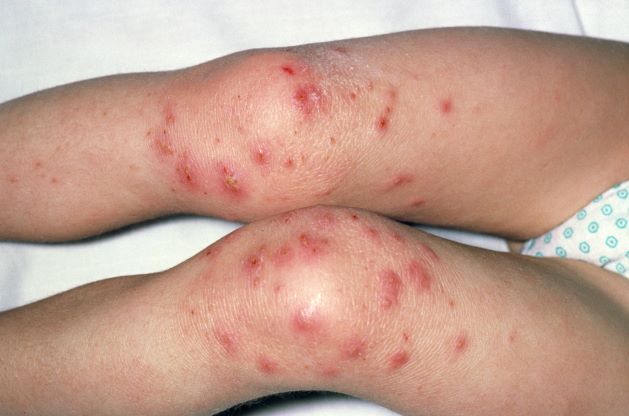
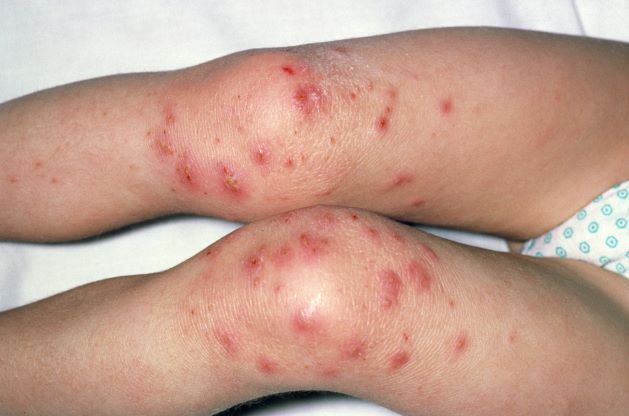
A 9-year-old girl with a history of moderate atopic dermatitis (AD) presents with a rapidly progressing AD flare. The patient had been stable over the past 6 months with the use of daily emollients. Over the past 36-48 hours, the patient developed pruritic lesions and pustules on her knees and elbows, and erythema and scaling around the eyes. Physical examination reveals a temperature of 101.5°F (38.6°C), a heart rate of 112 beats/min, a respiratory rate of 32 breaths/min, and a blood pressure of 100/95 mm Hg. Physical findings include cutaneous erythema and warmth surrounding the affected areas, pustules with yellow fluid, and regional lymphadenopathy.
Key questions to ask atopic dermatitis patients with sleep complaints
If you don’t think it’s important to assess for sleep disorders in your patients with atopic dermatitis (AD), think again.
According to Sabra M. Abbott, MD, PhD, professor of neurology at Northwestern University, Chicago, as well as increased night kicks and nocturnal leg cramps, and a more than twofold increased risk for insomnia.
During the Revolutionizing Atopic Dermatitis symposium, she offered key questions to ask AD patients who present with sleep complaints:
When do you go to bed? “This does not refer to when you get into bed, but when do you actually go to bed with an intention to go to sleep, outside of watching television or answering emails?” Dr. Abbott said.
How long does it take for you to fall asleep?
Do you wake up in the middle of the night, and for how long? What do you do if you wake up?
When do you wake up in the morning? Is it on your own, or with an alarm clock?
Does this schedule change on nonworkdays?
Do you have daytime impairment? Meaning, do your sleep complaints impact how you function during the daytime?
Do you snore? Meaning, is there concern for sleep apnea?
Do you have uncomfortable sensations in your legs? Are they worse in the evening and improve with movement? These are signs of possible restless legs syndrome.
The Epworth Sleepiness Scale is one self-administered questionnaire to consider using for AD patients with sleep complaints. “This provides patients with several examples of typical scenarios they might encounter during the day and queries whether or not they feel that they could deal with any of those scenarios,” Dr. Abbott said. “A score of greater than 10 indicates that they are sleepy; it’s not just an overall sense of fatigue and decreased energy.”
Other brief self-assessment tools she recommended are the Insomnia Severity Index and the STOP-Bang questionnaire.
Dr. Abbott reported having no financial disclosures.
If you don’t think it’s important to assess for sleep disorders in your patients with atopic dermatitis (AD), think again.
According to Sabra M. Abbott, MD, PhD, professor of neurology at Northwestern University, Chicago, as well as increased night kicks and nocturnal leg cramps, and a more than twofold increased risk for insomnia.
During the Revolutionizing Atopic Dermatitis symposium, she offered key questions to ask AD patients who present with sleep complaints:
When do you go to bed? “This does not refer to when you get into bed, but when do you actually go to bed with an intention to go to sleep, outside of watching television or answering emails?” Dr. Abbott said.
How long does it take for you to fall asleep?
Do you wake up in the middle of the night, and for how long? What do you do if you wake up?
When do you wake up in the morning? Is it on your own, or with an alarm clock?
Does this schedule change on nonworkdays?
Do you have daytime impairment? Meaning, do your sleep complaints impact how you function during the daytime?
Do you snore? Meaning, is there concern for sleep apnea?
Do you have uncomfortable sensations in your legs? Are they worse in the evening and improve with movement? These are signs of possible restless legs syndrome.
The Epworth Sleepiness Scale is one self-administered questionnaire to consider using for AD patients with sleep complaints. “This provides patients with several examples of typical scenarios they might encounter during the day and queries whether or not they feel that they could deal with any of those scenarios,” Dr. Abbott said. “A score of greater than 10 indicates that they are sleepy; it’s not just an overall sense of fatigue and decreased energy.”
Other brief self-assessment tools she recommended are the Insomnia Severity Index and the STOP-Bang questionnaire.
Dr. Abbott reported having no financial disclosures.
If you don’t think it’s important to assess for sleep disorders in your patients with atopic dermatitis (AD), think again.
According to Sabra M. Abbott, MD, PhD, professor of neurology at Northwestern University, Chicago, as well as increased night kicks and nocturnal leg cramps, and a more than twofold increased risk for insomnia.
During the Revolutionizing Atopic Dermatitis symposium, she offered key questions to ask AD patients who present with sleep complaints:
When do you go to bed? “This does not refer to when you get into bed, but when do you actually go to bed with an intention to go to sleep, outside of watching television or answering emails?” Dr. Abbott said.
How long does it take for you to fall asleep?
Do you wake up in the middle of the night, and for how long? What do you do if you wake up?
When do you wake up in the morning? Is it on your own, or with an alarm clock?
Does this schedule change on nonworkdays?
Do you have daytime impairment? Meaning, do your sleep complaints impact how you function during the daytime?
Do you snore? Meaning, is there concern for sleep apnea?
Do you have uncomfortable sensations in your legs? Are they worse in the evening and improve with movement? These are signs of possible restless legs syndrome.
The Epworth Sleepiness Scale is one self-administered questionnaire to consider using for AD patients with sleep complaints. “This provides patients with several examples of typical scenarios they might encounter during the day and queries whether or not they feel that they could deal with any of those scenarios,” Dr. Abbott said. “A score of greater than 10 indicates that they are sleepy; it’s not just an overall sense of fatigue and decreased energy.”
Other brief self-assessment tools she recommended are the Insomnia Severity Index and the STOP-Bang questionnaire.
Dr. Abbott reported having no financial disclosures.
FROM REVOLUTIONIZING AD 2021
Longitudinal course of atopic dermatitis often overlooked, expert says
In the opinion of Raj Chovatiya, MD, PhD, the longitudinal course of atopic dermatitis (AD) is an important yet overlooked clinical domain of the disease.
“We know that AD is associated with fluctuating severity, disease flares, long-term persistence, and periods of quiescence, but its longitudinal course is not routinely incorporated into guidelines or clinical trials,” Dr. Chovatiya, assistant professor in the department of dermatology at Northwestern University, Chicago, said during the Revolutionizing Atopic Dermatitis virtual symposium. “Understanding the long-term course may improve our ability to phenotype, prognosticate, and personalize our care.”

The classic view of AD is that it starts in early childhood, follows a waxing and waning course for a few years, and burns out by adulthood. “I think we all know that this is generally false,” he said. “This was largely based on anecdotal clinical experience and large cross-sectional studies, not ones that consider the heterogeneity of AD.”
Results from a large-scale, prospective study of 7,157 children enrolled in the Pediatric Eczema Elective Registry (PEER), suggests that AD commonly persists beyond adulthood. PEER was a phase IV postmarketing safety study of children aged 12-17 with moderate to severe AD who were exposed to topical pimecrolimus and who were surveyed every 6 months (JAMA Dermatol. 2014;150[6]:593-600). The researchers found that more persistent disease was associated with self-reported disease activity, many environmental exposures, White race, history of AD, and an annual household income of less than $50,000. By age 20, 50% reported at least one 6-month symptom- and medication-free period. “The important takeaway was that at every age, greater than 80% reported active AD as defined by symptoms or medication use, meaning that persistence was extremely high – much higher than what was originally thought,” Dr. Chovatiya said. “If you take a look at the literature before this study, many were retrospective analyses, and persistence was estimated to be in the 40%-60% range.”
International prospective studies have provided a more conservative estimate of persistence. For example, the German Multicenter Allergy Study followed 1,314 from birth through age 7 (J Allergy Clin Immunol. 2004;113[5]:925-31). Of these, 22% had AD within the first 2 years of life. Of these, 43% were in remission by age 3, while 38% had intermittent AD, and 19% had symptoms every year of the study. “Studies of other birth cohorts in the world came out suggesting that the rates of AD persistence ranges in the single digits to the teens,” Dr. Chovatiya said.
To reconcile these heterogeneous estimates of AD persistence, researchers conducted a systematic review and meta-analysis of 45 studies that included 110,651 subjects from 15 countries and spanned 434,992 patient-years (J Am Acad Dermatol. 2016;75:681-7.e11). They found that 80% of childhood AD had at least one observed period of disease clearance by 8 years of age. “Most importantly, less than 5% of childhood AD was persistent 20 years after diagnosis,” Dr. Chovatiya said. “However, interestingly, increased persistence was associated with later onset AD, more years of persistence, and more patient/caregiver-assessed disease.” He pointed out inherent limitations to all studies of AD persistence, including nonuniform methods of data collection, differing cohorts, different ways of diagnosing AD, different disease severity scales, and the fact that most don’t assess flares or recurrence beyond the initial period of disease clearance. “This can lead to a potential underestimation of longer-term persistence,” he said.
Childhood AD features unique predictors of persistence that may define AD trajectories. For example, in several existing studies, more persistent disease was associated with higher baseline severity, earlier-onset AD, personal history of atopy, family history of AD, AD genetic risk score (heritability, including common Filaggrin mutations), urban environment, non-White race, Hispanic ethnicity, female sex, lower household income, and overall poorer health status.
Dr. Chovatiya said. “I think that AD classification can take a lesson from asthma. When we think about how our allergy colleagues think about asthma, it is commonly classified as intermittent, mild persistent, moderate persistent, and severe persistent. Those that have intermittent disease get reactive treatment, while those with persistent disease get proactive treatment. Similarly, AD could be classified as mild intermittent, mild persistent, moderate to severe intermittent and moderate to severe persistent.”
He concluded his presentation by recommending that the fluctuating course of AD be better captured in clinical trials. “Current randomized, controlled trials use validated measures of AD signs and symptoms as inclusion criteria and measures of efficacy,” he said. “Static assessments may confound treatment effects, and assessment of prespecified time points are somewhat arbitrary in the context of disease subsets.” He proposes studies that examine aggregate measures of long-term disease control, such as number of itch-free days, weeks with clear skin, and flares experienced. “Long-term control assessment in RCTs should include signs, symptoms, health-related quality of life, and a patient global domain over time to better understand how AD is doing in the long run,” he said.
Dr. Chovatiya disclosed that he is a consultant to, a speaker for, and/or a member of the advisory board for AbbVie, Arcutis, Arena, Incyte, Pfizer, Regeneron, and Sanofi Genzyme.
In the opinion of Raj Chovatiya, MD, PhD, the longitudinal course of atopic dermatitis (AD) is an important yet overlooked clinical domain of the disease.
“We know that AD is associated with fluctuating severity, disease flares, long-term persistence, and periods of quiescence, but its longitudinal course is not routinely incorporated into guidelines or clinical trials,” Dr. Chovatiya, assistant professor in the department of dermatology at Northwestern University, Chicago, said during the Revolutionizing Atopic Dermatitis virtual symposium. “Understanding the long-term course may improve our ability to phenotype, prognosticate, and personalize our care.”
The classic view of AD is that it starts in early childhood, follows a waxing and waning course for a few years, and burns out by adulthood. “I think we all know that this is generally false,” he said. “This was largely based on anecdotal clinical experience and large cross-sectional studies, not ones that consider the heterogeneity of AD.”
Results from a large-scale, prospective study of 7,157 children enrolled in the Pediatric Eczema Elective Registry (PEER), suggests that AD commonly persists beyond adulthood. PEER was a phase IV postmarketing safety study of children aged 12-17 with moderate to severe AD who were exposed to topical pimecrolimus and who were surveyed every 6 months (JAMA Dermatol. 2014;150[6]:593-600). The researchers found that more persistent disease was associated with self-reported disease activity, many environmental exposures, White race, history of AD, and an annual household income of less than $50,000. By age 20, 50% reported at least one 6-month symptom- and medication-free period. “The important takeaway was that at every age, greater than 80% reported active AD as defined by symptoms or medication use, meaning that persistence was extremely high – much higher than what was originally thought,” Dr. Chovatiya said. “If you take a look at the literature before this study, many were retrospective analyses, and persistence was estimated to be in the 40%-60% range.”
International prospective studies have provided a more conservative estimate of persistence. For example, the German Multicenter Allergy Study followed 1,314 from birth through age 7 (J Allergy Clin Immunol. 2004;113[5]:925-31). Of these, 22% had AD within the first 2 years of life. Of these, 43% were in remission by age 3, while 38% had intermittent AD, and 19% had symptoms every year of the study. “Studies of other birth cohorts in the world came out suggesting that the rates of AD persistence ranges in the single digits to the teens,” Dr. Chovatiya said.
To reconcile these heterogeneous estimates of AD persistence, researchers conducted a systematic review and meta-analysis of 45 studies that included 110,651 subjects from 15 countries and spanned 434,992 patient-years (J Am Acad Dermatol. 2016;75:681-7.e11). They found that 80% of childhood AD had at least one observed period of disease clearance by 8 years of age. “Most importantly, less than 5% of childhood AD was persistent 20 years after diagnosis,” Dr. Chovatiya said. “However, interestingly, increased persistence was associated with later onset AD, more years of persistence, and more patient/caregiver-assessed disease.” He pointed out inherent limitations to all studies of AD persistence, including nonuniform methods of data collection, differing cohorts, different ways of diagnosing AD, different disease severity scales, and the fact that most don’t assess flares or recurrence beyond the initial period of disease clearance. “This can lead to a potential underestimation of longer-term persistence,” he said.
Childhood AD features unique predictors of persistence that may define AD trajectories. For example, in several existing studies, more persistent disease was associated with higher baseline severity, earlier-onset AD, personal history of atopy, family history of AD, AD genetic risk score (heritability, including common Filaggrin mutations), urban environment, non-White race, Hispanic ethnicity, female sex, lower household income, and overall poorer health status.
Dr. Chovatiya said. “I think that AD classification can take a lesson from asthma. When we think about how our allergy colleagues think about asthma, it is commonly classified as intermittent, mild persistent, moderate persistent, and severe persistent. Those that have intermittent disease get reactive treatment, while those with persistent disease get proactive treatment. Similarly, AD could be classified as mild intermittent, mild persistent, moderate to severe intermittent and moderate to severe persistent.”
He concluded his presentation by recommending that the fluctuating course of AD be better captured in clinical trials. “Current randomized, controlled trials use validated measures of AD signs and symptoms as inclusion criteria and measures of efficacy,” he said. “Static assessments may confound treatment effects, and assessment of prespecified time points are somewhat arbitrary in the context of disease subsets.” He proposes studies that examine aggregate measures of long-term disease control, such as number of itch-free days, weeks with clear skin, and flares experienced. “Long-term control assessment in RCTs should include signs, symptoms, health-related quality of life, and a patient global domain over time to better understand how AD is doing in the long run,” he said.
Dr. Chovatiya disclosed that he is a consultant to, a speaker for, and/or a member of the advisory board for AbbVie, Arcutis, Arena, Incyte, Pfizer, Regeneron, and Sanofi Genzyme.
In the opinion of Raj Chovatiya, MD, PhD, the longitudinal course of atopic dermatitis (AD) is an important yet overlooked clinical domain of the disease.
“We know that AD is associated with fluctuating severity, disease flares, long-term persistence, and periods of quiescence, but its longitudinal course is not routinely incorporated into guidelines or clinical trials,” Dr. Chovatiya, assistant professor in the department of dermatology at Northwestern University, Chicago, said during the Revolutionizing Atopic Dermatitis virtual symposium. “Understanding the long-term course may improve our ability to phenotype, prognosticate, and personalize our care.”
The classic view of AD is that it starts in early childhood, follows a waxing and waning course for a few years, and burns out by adulthood. “I think we all know that this is generally false,” he said. “This was largely based on anecdotal clinical experience and large cross-sectional studies, not ones that consider the heterogeneity of AD.”
Results from a large-scale, prospective study of 7,157 children enrolled in the Pediatric Eczema Elective Registry (PEER), suggests that AD commonly persists beyond adulthood. PEER was a phase IV postmarketing safety study of children aged 12-17 with moderate to severe AD who were exposed to topical pimecrolimus and who were surveyed every 6 months (JAMA Dermatol. 2014;150[6]:593-600). The researchers found that more persistent disease was associated with self-reported disease activity, many environmental exposures, White race, history of AD, and an annual household income of less than $50,000. By age 20, 50% reported at least one 6-month symptom- and medication-free period. “The important takeaway was that at every age, greater than 80% reported active AD as defined by symptoms or medication use, meaning that persistence was extremely high – much higher than what was originally thought,” Dr. Chovatiya said. “If you take a look at the literature before this study, many were retrospective analyses, and persistence was estimated to be in the 40%-60% range.”
International prospective studies have provided a more conservative estimate of persistence. For example, the German Multicenter Allergy Study followed 1,314 from birth through age 7 (J Allergy Clin Immunol. 2004;113[5]:925-31). Of these, 22% had AD within the first 2 years of life. Of these, 43% were in remission by age 3, while 38% had intermittent AD, and 19% had symptoms every year of the study. “Studies of other birth cohorts in the world came out suggesting that the rates of AD persistence ranges in the single digits to the teens,” Dr. Chovatiya said.
To reconcile these heterogeneous estimates of AD persistence, researchers conducted a systematic review and meta-analysis of 45 studies that included 110,651 subjects from 15 countries and spanned 434,992 patient-years (J Am Acad Dermatol. 2016;75:681-7.e11). They found that 80% of childhood AD had at least one observed period of disease clearance by 8 years of age. “Most importantly, less than 5% of childhood AD was persistent 20 years after diagnosis,” Dr. Chovatiya said. “However, interestingly, increased persistence was associated with later onset AD, more years of persistence, and more patient/caregiver-assessed disease.” He pointed out inherent limitations to all studies of AD persistence, including nonuniform methods of data collection, differing cohorts, different ways of diagnosing AD, different disease severity scales, and the fact that most don’t assess flares or recurrence beyond the initial period of disease clearance. “This can lead to a potential underestimation of longer-term persistence,” he said.
Childhood AD features unique predictors of persistence that may define AD trajectories. For example, in several existing studies, more persistent disease was associated with higher baseline severity, earlier-onset AD, personal history of atopy, family history of AD, AD genetic risk score (heritability, including common Filaggrin mutations), urban environment, non-White race, Hispanic ethnicity, female sex, lower household income, and overall poorer health status.
Dr. Chovatiya said. “I think that AD classification can take a lesson from asthma. When we think about how our allergy colleagues think about asthma, it is commonly classified as intermittent, mild persistent, moderate persistent, and severe persistent. Those that have intermittent disease get reactive treatment, while those with persistent disease get proactive treatment. Similarly, AD could be classified as mild intermittent, mild persistent, moderate to severe intermittent and moderate to severe persistent.”
He concluded his presentation by recommending that the fluctuating course of AD be better captured in clinical trials. “Current randomized, controlled trials use validated measures of AD signs and symptoms as inclusion criteria and measures of efficacy,” he said. “Static assessments may confound treatment effects, and assessment of prespecified time points are somewhat arbitrary in the context of disease subsets.” He proposes studies that examine aggregate measures of long-term disease control, such as number of itch-free days, weeks with clear skin, and flares experienced. “Long-term control assessment in RCTs should include signs, symptoms, health-related quality of life, and a patient global domain over time to better understand how AD is doing in the long run,” he said.
Dr. Chovatiya disclosed that he is a consultant to, a speaker for, and/or a member of the advisory board for AbbVie, Arcutis, Arena, Incyte, Pfizer, Regeneron, and Sanofi Genzyme.
FROM REVOLUTIONIZING AD 2021
Itch-dominant atopic dermatitis often flies under the radar
In the clinical experience of Jonathan I. Silverberg, MD, PhD, MPH,
That’s because a disconnect often exists between clinician-reported and patient-reported outcome measures, Dr. Silverberg, director of clinical research in the division of dermatology at George Washington University School of Medicine and Health Sciences, said during the Revolutionizing Atopic Dermatitis virtual symposium. For example, multiple studies showed only weak to moderate correlations between the patient-focused Worst Itch Numeric Rating Scale (NRS) and Average Pruritus NRS compared with clinician-reported outcomes such as the Eczema Area and Severity Index (EASI), the objective SCORAD, body surface area (BSA), and the Validated Investigator Global Assessment for Atopic Dermatitis (vIGA-AD), with only moderate correlation coefficients ranging from 0.3 to 0.6.

“These findings suggest that clinician-reported outcome measures are poor indicators of the patient experience,” he said. “We need to do a better job capturing patient-reported outcomes to understand how patients are impacted. But there’s something more novel to this because the weak correlations may also suggest that itch and other symptoms follow a different course than the signs of the disease. Just because the lesions flare up doesn’t mean the itch does, and vice versa. Anecdotally, this came up at many patient encounters where the skin looked good, but the patient was miserable with itch.”
To understand how the combination of itch and lesion severity predicts the severity assessment, longitudinal course, burden, and treatment of AD, Dr. Silverberg and colleagues prospectively evaluated 592 adults with AD . They defined four different AD subsets using the verbal rating scale for NRS average itch combined with either the EASI, objective-SCORAD, or vIGA-AD as follows: mild-moderate itch and lesions (MI/ML), mild-moderate itch and severe lesions (MI/SL), severe itch and mild-moderate lesions (SI/ML; the itch dominant subset), and severe itch and lesions (SI/SL). They found that most patients had MI/ML (59.4%-62.3%), followed by SI/ML (21.3%-29.1%), SI/SL (6%-12.9%), and MI/SL (3.8%-6.4%). SI/ML was more common in female and Black patients.
In addition, patients with MI/SL or SI/ML described their AD as being more severe on patient global assessment and had poor quality of life (QOL) scores, while patients with SI/SL were most likely to describe their disease as severe and have poor QOL scores. Patients with SI/ML described their disease as being more severe overall, yet patients with MI/SL or SI/SL were far more likely to be assigned severe PGA scores by clinicians. “The patients who have severe itch and mild lesions consider their disease severe, but the clinician is missing it,” Dr. Silverberg said. “Occasionally they’re picking it up but they’re missing a lot of these severe itch cases when there are milder lesions.”
In other findings, patients who had baseline MI/SL, SI/ML, and SI/SL were associated with similar frequency of AD flares, periods of AD clearance/remission, more itch triggers, and longitudinal courses over time, “which is remarkable,” he said. “It means those that have severe itch, even when they have milder lesions, are going to have unstable, more persistent disease, and have a harder time keeping control of it, and are ultimately going to require systemic therapies.” In fact, most patients with SI/SL (57.8%-66.7%) and MI/SL (53.9%-57.7%) but fewer patients with MI/ML (36.7%-38.4%) and SI/ML (30.8%-32%) initiated systemic, biologic, or phototherapy for their AD during follow-up. “There is a real upshot here clinically, in that patients are just not getting stepped up appropriately to achieve better control of their disease when they have itch-dominant AD,” Dr. Silverberg said.
He described itch-dominant AD as a novel disease phenotype that requires further investigation. “Why is it that some patients are getting such severe itch and milder looking lesions?” he asked. “I don’t think it’s just a matter of poor outcome measures that we have. So, what is it? It’s not entirely clear. Clinically, itch-dominant AD is important as it relates to the issues of diversity and skin of color because in darker skin tones, we cannot easily appreciate erythema. We may totally miss the active lesions. I think that’s a big part of why we see this itch-dominant AD more commonly in Black patients. Therefore, it is so important to ask our patients about their symptoms and to assess the severity of itch. But, even if they have what we think are milder lesions and severe itch, we must recognize they may not be well controlled. They may not be happy. They may have poor quality of life, and they may need to be stepped up appropriately. We need a lot more information to guide the assessment and management of this important subset of patients.”
Dr. Silverberg disclosed that he is a consultant to numerous pharmaceutical companies, receives fees for non-CME/CE services from Eli Lilly, Leo Pharma, Pfizer, Regeneron, and Sanofi Genzyme, as well as contracted research fees from Galderma.
In the clinical experience of Jonathan I. Silverberg, MD, PhD, MPH,
That’s because a disconnect often exists between clinician-reported and patient-reported outcome measures, Dr. Silverberg, director of clinical research in the division of dermatology at George Washington University School of Medicine and Health Sciences, said during the Revolutionizing Atopic Dermatitis virtual symposium. For example, multiple studies showed only weak to moderate correlations between the patient-focused Worst Itch Numeric Rating Scale (NRS) and Average Pruritus NRS compared with clinician-reported outcomes such as the Eczema Area and Severity Index (EASI), the objective SCORAD, body surface area (BSA), and the Validated Investigator Global Assessment for Atopic Dermatitis (vIGA-AD), with only moderate correlation coefficients ranging from 0.3 to 0.6.
“These findings suggest that clinician-reported outcome measures are poor indicators of the patient experience,” he said. “We need to do a better job capturing patient-reported outcomes to understand how patients are impacted. But there’s something more novel to this because the weak correlations may also suggest that itch and other symptoms follow a different course than the signs of the disease. Just because the lesions flare up doesn’t mean the itch does, and vice versa. Anecdotally, this came up at many patient encounters where the skin looked good, but the patient was miserable with itch.”
To understand how the combination of itch and lesion severity predicts the severity assessment, longitudinal course, burden, and treatment of AD, Dr. Silverberg and colleagues prospectively evaluated 592 adults with AD . They defined four different AD subsets using the verbal rating scale for NRS average itch combined with either the EASI, objective-SCORAD, or vIGA-AD as follows: mild-moderate itch and lesions (MI/ML), mild-moderate itch and severe lesions (MI/SL), severe itch and mild-moderate lesions (SI/ML; the itch dominant subset), and severe itch and lesions (SI/SL). They found that most patients had MI/ML (59.4%-62.3%), followed by SI/ML (21.3%-29.1%), SI/SL (6%-12.9%), and MI/SL (3.8%-6.4%). SI/ML was more common in female and Black patients.
In addition, patients with MI/SL or SI/ML described their AD as being more severe on patient global assessment and had poor quality of life (QOL) scores, while patients with SI/SL were most likely to describe their disease as severe and have poor QOL scores. Patients with SI/ML described their disease as being more severe overall, yet patients with MI/SL or SI/SL were far more likely to be assigned severe PGA scores by clinicians. “The patients who have severe itch and mild lesions consider their disease severe, but the clinician is missing it,” Dr. Silverberg said. “Occasionally they’re picking it up but they’re missing a lot of these severe itch cases when there are milder lesions.”
In other findings, patients who had baseline MI/SL, SI/ML, and SI/SL were associated with similar frequency of AD flares, periods of AD clearance/remission, more itch triggers, and longitudinal courses over time, “which is remarkable,” he said. “It means those that have severe itch, even when they have milder lesions, are going to have unstable, more persistent disease, and have a harder time keeping control of it, and are ultimately going to require systemic therapies.” In fact, most patients with SI/SL (57.8%-66.7%) and MI/SL (53.9%-57.7%) but fewer patients with MI/ML (36.7%-38.4%) and SI/ML (30.8%-32%) initiated systemic, biologic, or phototherapy for their AD during follow-up. “There is a real upshot here clinically, in that patients are just not getting stepped up appropriately to achieve better control of their disease when they have itch-dominant AD,” Dr. Silverberg said.
He described itch-dominant AD as a novel disease phenotype that requires further investigation. “Why is it that some patients are getting such severe itch and milder looking lesions?” he asked. “I don’t think it’s just a matter of poor outcome measures that we have. So, what is it? It’s not entirely clear. Clinically, itch-dominant AD is important as it relates to the issues of diversity and skin of color because in darker skin tones, we cannot easily appreciate erythema. We may totally miss the active lesions. I think that’s a big part of why we see this itch-dominant AD more commonly in Black patients. Therefore, it is so important to ask our patients about their symptoms and to assess the severity of itch. But, even if they have what we think are milder lesions and severe itch, we must recognize they may not be well controlled. They may not be happy. They may have poor quality of life, and they may need to be stepped up appropriately. We need a lot more information to guide the assessment and management of this important subset of patients.”
Dr. Silverberg disclosed that he is a consultant to numerous pharmaceutical companies, receives fees for non-CME/CE services from Eli Lilly, Leo Pharma, Pfizer, Regeneron, and Sanofi Genzyme, as well as contracted research fees from Galderma.
In the clinical experience of Jonathan I. Silverberg, MD, PhD, MPH,
That’s because a disconnect often exists between clinician-reported and patient-reported outcome measures, Dr. Silverberg, director of clinical research in the division of dermatology at George Washington University School of Medicine and Health Sciences, said during the Revolutionizing Atopic Dermatitis virtual symposium. For example, multiple studies showed only weak to moderate correlations between the patient-focused Worst Itch Numeric Rating Scale (NRS) and Average Pruritus NRS compared with clinician-reported outcomes such as the Eczema Area and Severity Index (EASI), the objective SCORAD, body surface area (BSA), and the Validated Investigator Global Assessment for Atopic Dermatitis (vIGA-AD), with only moderate correlation coefficients ranging from 0.3 to 0.6.
“These findings suggest that clinician-reported outcome measures are poor indicators of the patient experience,” he said. “We need to do a better job capturing patient-reported outcomes to understand how patients are impacted. But there’s something more novel to this because the weak correlations may also suggest that itch and other symptoms follow a different course than the signs of the disease. Just because the lesions flare up doesn’t mean the itch does, and vice versa. Anecdotally, this came up at many patient encounters where the skin looked good, but the patient was miserable with itch.”
To understand how the combination of itch and lesion severity predicts the severity assessment, longitudinal course, burden, and treatment of AD, Dr. Silverberg and colleagues prospectively evaluated 592 adults with AD . They defined four different AD subsets using the verbal rating scale for NRS average itch combined with either the EASI, objective-SCORAD, or vIGA-AD as follows: mild-moderate itch and lesions (MI/ML), mild-moderate itch and severe lesions (MI/SL), severe itch and mild-moderate lesions (SI/ML; the itch dominant subset), and severe itch and lesions (SI/SL). They found that most patients had MI/ML (59.4%-62.3%), followed by SI/ML (21.3%-29.1%), SI/SL (6%-12.9%), and MI/SL (3.8%-6.4%). SI/ML was more common in female and Black patients.
In addition, patients with MI/SL or SI/ML described their AD as being more severe on patient global assessment and had poor quality of life (QOL) scores, while patients with SI/SL were most likely to describe their disease as severe and have poor QOL scores. Patients with SI/ML described their disease as being more severe overall, yet patients with MI/SL or SI/SL were far more likely to be assigned severe PGA scores by clinicians. “The patients who have severe itch and mild lesions consider their disease severe, but the clinician is missing it,” Dr. Silverberg said. “Occasionally they’re picking it up but they’re missing a lot of these severe itch cases when there are milder lesions.”
In other findings, patients who had baseline MI/SL, SI/ML, and SI/SL were associated with similar frequency of AD flares, periods of AD clearance/remission, more itch triggers, and longitudinal courses over time, “which is remarkable,” he said. “It means those that have severe itch, even when they have milder lesions, are going to have unstable, more persistent disease, and have a harder time keeping control of it, and are ultimately going to require systemic therapies.” In fact, most patients with SI/SL (57.8%-66.7%) and MI/SL (53.9%-57.7%) but fewer patients with MI/ML (36.7%-38.4%) and SI/ML (30.8%-32%) initiated systemic, biologic, or phototherapy for their AD during follow-up. “There is a real upshot here clinically, in that patients are just not getting stepped up appropriately to achieve better control of their disease when they have itch-dominant AD,” Dr. Silverberg said.
He described itch-dominant AD as a novel disease phenotype that requires further investigation. “Why is it that some patients are getting such severe itch and milder looking lesions?” he asked. “I don’t think it’s just a matter of poor outcome measures that we have. So, what is it? It’s not entirely clear. Clinically, itch-dominant AD is important as it relates to the issues of diversity and skin of color because in darker skin tones, we cannot easily appreciate erythema. We may totally miss the active lesions. I think that’s a big part of why we see this itch-dominant AD more commonly in Black patients. Therefore, it is so important to ask our patients about their symptoms and to assess the severity of itch. But, even if they have what we think are milder lesions and severe itch, we must recognize they may not be well controlled. They may not be happy. They may have poor quality of life, and they may need to be stepped up appropriately. We need a lot more information to guide the assessment and management of this important subset of patients.”
Dr. Silverberg disclosed that he is a consultant to numerous pharmaceutical companies, receives fees for non-CME/CE services from Eli Lilly, Leo Pharma, Pfizer, Regeneron, and Sanofi Genzyme, as well as contracted research fees from Galderma.
FROM REVOLUTIONIZING AD 2021
Atopic dermatitis can be especially burdensome in the elderly
During the Revolutionizing Atopic Dermatitis virtual symposium, Katrina Abuabara, MD, highlighted the epidemiology and burden of AD among older adults. She began by noting that the disease peaks in infancy and older adulthood. In an analysis that she and her colleagues made of physician-diagnosed AD among more than 8.6 million patients in the United Kingdom between 1994 and 2013, the mean prevalence in a given year was 12.3% among those aged 0-17 years, 5.1% among those age 18-74 years, and 8.7% among those age 75 and older.

“We saw what we expected in early infancy with very high rates of active disease,” said Dr. Abuabara, associate professor of dermatology and epidemiology at the University of California, San Francisco. “We also saw a second peak in older adulthood. This was more surprising to us because the disease hadn’t been as well studied in this population.” Researchers who analyzed data from the Global Burden of Disease Study, which evaluates disease-related morbidity and mortality worldwide, found a somewhat attenuated peak but a similar trend around the world. Its authors ranked AD as 15th among all nonfatal diseases.
In a separate analysis, Dr. Abuabara and colleagues evaluated records of more than 9.1 million primary care patients in the United Kingdom between 1994 and 2013, and who were followed for an average of 6 years. They examined AD activity and found that, based on doctor visits and prescriptions, AD appeared to be active in 48% of those aged 0-17 years, compared with 42% of those aged 18-74 years, and 60% of those aged 75 years and older. “Also, when we looked at the distribution of active disease in older adults, we saw that those who were older had more severe disease,” she said. When they evaluated the prevalence of AD by sociodemographic factors, AD increased with age among older adults (adjusted odd ratio, 1.06), while it decreased by 14% annually among children. In addition, female older adults had about three-fourths the odds of prevalent disease as their male counterparts (aOR, 0.73).
“We also looked at rural and urban differences and found that across ages it was more common in urban as compared to rural populations,” she said. “As for socioeconomic status, it tends to be more common among those of higher socioeconomic status in children and in the older adult group.”
In a study that drew from medical records of 3.85 million primary care patients in the United Kingdom, AD was more common in Asian and Black ethnic groups than in people of White ethnicity. In addition, higher socioeconomic status was associated with a greater incidence of eczema in infants aged younger than 2 years, but the reverse was seen for all other age groups.
To identify subtypes of atopic eczema based on patterns of disease activity through mid-adulthood, Dr. Abuabara and colleagues evaluated members of two population-based birth cohorts: the 1958 National Childhood Development Study and the 1970 British Cohort Study. The patients were classified into one of four patters of disease activity followed to age 50: rare/none, increasing, decreasing, and high. “We found that there was the early-onset decreasing subgroup, which tend to have a lower probability of AD over time,” Dr. Abuabara said. “We also found that there was a small subgroup that had a constant high probability of AD over time. But we were surprised to find a subgroup with increasing probability over time. This was a fairly sizable subgroup.”
In an earlier study, she and her colleagues examined whether there were differences based on whether people had adult-onset or childhood-onset disease in the same two cohorts of U.K. patients. Those with childhood-onset disease had stronger associations with known genetic risk factors and they tended to be of higher socioeconomic status. “They also tended to have more asthma and other allergic comorbidities,” Dr. Abuabara said. “On the other hand, the adult-onset group [after age 23] were more likely to be female, more likely to be smokers, and tended to have lower childhood socioeconomic status.”
According to the best available evidence, she continued, there is good data on higher relative risk of osteoporosis/fractures and dementia specifically among older adults with AD, and good data on associations with cardiometabolic disease and atopic disease among adults overall, as well as data showing that AD does not seem to be associated with cancer overall. In a study conducted by Jonathan I. Silverberg, MD, PhD, MPH, and Mohammed S. Shaheen, JD, the researchers used physician-diagnosed AD to investigate the associations of osteopenia and osteoporosis in two large U.S. databases: the 2006-2012 Nationwide Emergency Department Sample (NEDS) database and 2002-2012 National Inpatient Sample (NIS). Among patients aged 50 years and older, AD was associated with a higher odds of osteoporosis in NEDS (aOR, 1.31) and NIS (aOR, 1.25) and osteopenia in NEDS (aOR, 1.86).
In a separate matched cohort study, Dr. Abuabara and colleagues used U.K. primary care patient data to evaluate the association between AD and fracture and whether fracture risk varies with AD severity. Overall, they observed a 10% increase in fracture risk among people with AD, compared with those without, especially those of the hip, spine, pelvis, and wrist. “We found that there was a dose-response effect,” she said. “Those with more severe eczema had a much higher risk of fractures. When we looked at different age groups, we found a similar increased risk in the oldest adults as in younger adults.”
In a longitudinal cohort study of primary care medical records from more than 1.1 million individuals in the United Kingdom, AD was associated with an increased risk of vascular dementia (hazard ratio, 1.88), Alzheimer’s disease (HR, 1.69, and other/unspecified dementia (HR, 1.48; .269). “We found a nice dose response, where people with more severe AD had higher rates of dementia,” Dr. Abuabara said. Results from a more recent, smaller study of patients in Taiwan also found an increased risk between AD and the risk of dementia, but not a dose-response effect, likely because of a much smaller sample size.
Mounting research suggests that the risk for cardiovascular disease is also elevated in patients with AD. “There is some variability in the literature, but I think it’s important that when we’re talking about atopic dermatitis to think about the heterogeneity of the disease,” Dr. Abuabara said. In a meta-analysis and systematic review of 19 studies on the topic, she and her colleagues found that AD was associated with an increased risk of myocardial infarction (relative risk, 1.12), stroke (RR, 1.10), ischemic stroke (RR, 1.17), angina (RR, 1.18), and heart failure (RR, 1.26). “For all the different [cardiovascular disease] outcomes there was increasing risk with increasing disease severity,” she said.
She reported that UCSF receives research funding from Pfizer and Cosmetique Active International. She also receives consulting fees from Target RWE.
During the Revolutionizing Atopic Dermatitis virtual symposium, Katrina Abuabara, MD, highlighted the epidemiology and burden of AD among older adults. She began by noting that the disease peaks in infancy and older adulthood. In an analysis that she and her colleagues made of physician-diagnosed AD among more than 8.6 million patients in the United Kingdom between 1994 and 2013, the mean prevalence in a given year was 12.3% among those aged 0-17 years, 5.1% among those age 18-74 years, and 8.7% among those age 75 and older.
“We saw what we expected in early infancy with very high rates of active disease,” said Dr. Abuabara, associate professor of dermatology and epidemiology at the University of California, San Francisco. “We also saw a second peak in older adulthood. This was more surprising to us because the disease hadn’t been as well studied in this population.” Researchers who analyzed data from the Global Burden of Disease Study, which evaluates disease-related morbidity and mortality worldwide, found a somewhat attenuated peak but a similar trend around the world. Its authors ranked AD as 15th among all nonfatal diseases.
In a separate analysis, Dr. Abuabara and colleagues evaluated records of more than 9.1 million primary care patients in the United Kingdom between 1994 and 2013, and who were followed for an average of 6 years. They examined AD activity and found that, based on doctor visits and prescriptions, AD appeared to be active in 48% of those aged 0-17 years, compared with 42% of those aged 18-74 years, and 60% of those aged 75 years and older. “Also, when we looked at the distribution of active disease in older adults, we saw that those who were older had more severe disease,” she said. When they evaluated the prevalence of AD by sociodemographic factors, AD increased with age among older adults (adjusted odd ratio, 1.06), while it decreased by 14% annually among children. In addition, female older adults had about three-fourths the odds of prevalent disease as their male counterparts (aOR, 0.73).
“We also looked at rural and urban differences and found that across ages it was more common in urban as compared to rural populations,” she said. “As for socioeconomic status, it tends to be more common among those of higher socioeconomic status in children and in the older adult group.”
In a study that drew from medical records of 3.85 million primary care patients in the United Kingdom, AD was more common in Asian and Black ethnic groups than in people of White ethnicity. In addition, higher socioeconomic status was associated with a greater incidence of eczema in infants aged younger than 2 years, but the reverse was seen for all other age groups.
To identify subtypes of atopic eczema based on patterns of disease activity through mid-adulthood, Dr. Abuabara and colleagues evaluated members of two population-based birth cohorts: the 1958 National Childhood Development Study and the 1970 British Cohort Study. The patients were classified into one of four patters of disease activity followed to age 50: rare/none, increasing, decreasing, and high. “We found that there was the early-onset decreasing subgroup, which tend to have a lower probability of AD over time,” Dr. Abuabara said. “We also found that there was a small subgroup that had a constant high probability of AD over time. But we were surprised to find a subgroup with increasing probability over time. This was a fairly sizable subgroup.”
In an earlier study, she and her colleagues examined whether there were differences based on whether people had adult-onset or childhood-onset disease in the same two cohorts of U.K. patients. Those with childhood-onset disease had stronger associations with known genetic risk factors and they tended to be of higher socioeconomic status. “They also tended to have more asthma and other allergic comorbidities,” Dr. Abuabara said. “On the other hand, the adult-onset group [after age 23] were more likely to be female, more likely to be smokers, and tended to have lower childhood socioeconomic status.”
According to the best available evidence, she continued, there is good data on higher relative risk of osteoporosis/fractures and dementia specifically among older adults with AD, and good data on associations with cardiometabolic disease and atopic disease among adults overall, as well as data showing that AD does not seem to be associated with cancer overall. In a study conducted by Jonathan I. Silverberg, MD, PhD, MPH, and Mohammed S. Shaheen, JD, the researchers used physician-diagnosed AD to investigate the associations of osteopenia and osteoporosis in two large U.S. databases: the 2006-2012 Nationwide Emergency Department Sample (NEDS) database and 2002-2012 National Inpatient Sample (NIS). Among patients aged 50 years and older, AD was associated with a higher odds of osteoporosis in NEDS (aOR, 1.31) and NIS (aOR, 1.25) and osteopenia in NEDS (aOR, 1.86).
In a separate matched cohort study, Dr. Abuabara and colleagues used U.K. primary care patient data to evaluate the association between AD and fracture and whether fracture risk varies with AD severity. Overall, they observed a 10% increase in fracture risk among people with AD, compared with those without, especially those of the hip, spine, pelvis, and wrist. “We found that there was a dose-response effect,” she said. “Those with more severe eczema had a much higher risk of fractures. When we looked at different age groups, we found a similar increased risk in the oldest adults as in younger adults.”
In a longitudinal cohort study of primary care medical records from more than 1.1 million individuals in the United Kingdom, AD was associated with an increased risk of vascular dementia (hazard ratio, 1.88), Alzheimer’s disease (HR, 1.69, and other/unspecified dementia (HR, 1.48; .269). “We found a nice dose response, where people with more severe AD had higher rates of dementia,” Dr. Abuabara said. Results from a more recent, smaller study of patients in Taiwan also found an increased risk between AD and the risk of dementia, but not a dose-response effect, likely because of a much smaller sample size.
Mounting research suggests that the risk for cardiovascular disease is also elevated in patients with AD. “There is some variability in the literature, but I think it’s important that when we’re talking about atopic dermatitis to think about the heterogeneity of the disease,” Dr. Abuabara said. In a meta-analysis and systematic review of 19 studies on the topic, she and her colleagues found that AD was associated with an increased risk of myocardial infarction (relative risk, 1.12), stroke (RR, 1.10), ischemic stroke (RR, 1.17), angina (RR, 1.18), and heart failure (RR, 1.26). “For all the different [cardiovascular disease] outcomes there was increasing risk with increasing disease severity,” she said.
She reported that UCSF receives research funding from Pfizer and Cosmetique Active International. She also receives consulting fees from Target RWE.
During the Revolutionizing Atopic Dermatitis virtual symposium, Katrina Abuabara, MD, highlighted the epidemiology and burden of AD among older adults. She began by noting that the disease peaks in infancy and older adulthood. In an analysis that she and her colleagues made of physician-diagnosed AD among more than 8.6 million patients in the United Kingdom between 1994 and 2013, the mean prevalence in a given year was 12.3% among those aged 0-17 years, 5.1% among those age 18-74 years, and 8.7% among those age 75 and older.
“We saw what we expected in early infancy with very high rates of active disease,” said Dr. Abuabara, associate professor of dermatology and epidemiology at the University of California, San Francisco. “We also saw a second peak in older adulthood. This was more surprising to us because the disease hadn’t been as well studied in this population.” Researchers who analyzed data from the Global Burden of Disease Study, which evaluates disease-related morbidity and mortality worldwide, found a somewhat attenuated peak but a similar trend around the world. Its authors ranked AD as 15th among all nonfatal diseases.
In a separate analysis, Dr. Abuabara and colleagues evaluated records of more than 9.1 million primary care patients in the United Kingdom between 1994 and 2013, and who were followed for an average of 6 years. They examined AD activity and found that, based on doctor visits and prescriptions, AD appeared to be active in 48% of those aged 0-17 years, compared with 42% of those aged 18-74 years, and 60% of those aged 75 years and older. “Also, when we looked at the distribution of active disease in older adults, we saw that those who were older had more severe disease,” she said. When they evaluated the prevalence of AD by sociodemographic factors, AD increased with age among older adults (adjusted odd ratio, 1.06), while it decreased by 14% annually among children. In addition, female older adults had about three-fourths the odds of prevalent disease as their male counterparts (aOR, 0.73).
“We also looked at rural and urban differences and found that across ages it was more common in urban as compared to rural populations,” she said. “As for socioeconomic status, it tends to be more common among those of higher socioeconomic status in children and in the older adult group.”
In a study that drew from medical records of 3.85 million primary care patients in the United Kingdom, AD was more common in Asian and Black ethnic groups than in people of White ethnicity. In addition, higher socioeconomic status was associated with a greater incidence of eczema in infants aged younger than 2 years, but the reverse was seen for all other age groups.
To identify subtypes of atopic eczema based on patterns of disease activity through mid-adulthood, Dr. Abuabara and colleagues evaluated members of two population-based birth cohorts: the 1958 National Childhood Development Study and the 1970 British Cohort Study. The patients were classified into one of four patters of disease activity followed to age 50: rare/none, increasing, decreasing, and high. “We found that there was the early-onset decreasing subgroup, which tend to have a lower probability of AD over time,” Dr. Abuabara said. “We also found that there was a small subgroup that had a constant high probability of AD over time. But we were surprised to find a subgroup with increasing probability over time. This was a fairly sizable subgroup.”
In an earlier study, she and her colleagues examined whether there were differences based on whether people had adult-onset or childhood-onset disease in the same two cohorts of U.K. patients. Those with childhood-onset disease had stronger associations with known genetic risk factors and they tended to be of higher socioeconomic status. “They also tended to have more asthma and other allergic comorbidities,” Dr. Abuabara said. “On the other hand, the adult-onset group [after age 23] were more likely to be female, more likely to be smokers, and tended to have lower childhood socioeconomic status.”
According to the best available evidence, she continued, there is good data on higher relative risk of osteoporosis/fractures and dementia specifically among older adults with AD, and good data on associations with cardiometabolic disease and atopic disease among adults overall, as well as data showing that AD does not seem to be associated with cancer overall. In a study conducted by Jonathan I. Silverberg, MD, PhD, MPH, and Mohammed S. Shaheen, JD, the researchers used physician-diagnosed AD to investigate the associations of osteopenia and osteoporosis in two large U.S. databases: the 2006-2012 Nationwide Emergency Department Sample (NEDS) database and 2002-2012 National Inpatient Sample (NIS). Among patients aged 50 years and older, AD was associated with a higher odds of osteoporosis in NEDS (aOR, 1.31) and NIS (aOR, 1.25) and osteopenia in NEDS (aOR, 1.86).
In a separate matched cohort study, Dr. Abuabara and colleagues used U.K. primary care patient data to evaluate the association between AD and fracture and whether fracture risk varies with AD severity. Overall, they observed a 10% increase in fracture risk among people with AD, compared with those without, especially those of the hip, spine, pelvis, and wrist. “We found that there was a dose-response effect,” she said. “Those with more severe eczema had a much higher risk of fractures. When we looked at different age groups, we found a similar increased risk in the oldest adults as in younger adults.”
In a longitudinal cohort study of primary care medical records from more than 1.1 million individuals in the United Kingdom, AD was associated with an increased risk of vascular dementia (hazard ratio, 1.88), Alzheimer’s disease (HR, 1.69, and other/unspecified dementia (HR, 1.48; .269). “We found a nice dose response, where people with more severe AD had higher rates of dementia,” Dr. Abuabara said. Results from a more recent, smaller study of patients in Taiwan also found an increased risk between AD and the risk of dementia, but not a dose-response effect, likely because of a much smaller sample size.
Mounting research suggests that the risk for cardiovascular disease is also elevated in patients with AD. “There is some variability in the literature, but I think it’s important that when we’re talking about atopic dermatitis to think about the heterogeneity of the disease,” Dr. Abuabara said. In a meta-analysis and systematic review of 19 studies on the topic, she and her colleagues found that AD was associated with an increased risk of myocardial infarction (relative risk, 1.12), stroke (RR, 1.10), ischemic stroke (RR, 1.17), angina (RR, 1.18), and heart failure (RR, 1.26). “For all the different [cardiovascular disease] outcomes there was increasing risk with increasing disease severity,” she said.
She reported that UCSF receives research funding from Pfizer and Cosmetique Active International. She also receives consulting fees from Target RWE.
FROM REVOLUTIONIZING AD 2021
Clinical Edge Journal Scan Commentary: Atopic Dermatitis January 2022

George Washington University School of Medicine and Health Sciences
Washington, DC
A new era of evidence-based practice for atopic dermatitis
Atopic dermatitis (AD) is one of the most common diseases of childhood and still very common in adults worldwide. AD is also a very burdensome disease with considerable patient-burden. Despite the enormous population- and patient- burden, there remain many unmet needs in the management of AD. In addition, many treatments commonly used in AD had scant or mixed evidence regarding their efficacy and safety. For example, topical corticosteroids (TCS) are the workhorse for treatment in AD and most other inflammatory skin diseases. Yet, virtually everything we know about the efficacy of TCS comes from vasoconstriction proxy assays with almost no studies formally studying the efficacy of TCS in AD. Similarly, many therapies used off-label to treat more severe AD, such as phototherapy or allergen immunotherapy have inconsistent evidence to guide their use. Well, things are finally changing and the evidence is coming in at a frenzied pace. Development of multiple novel therapeutics in AD led to renewed interest in studying the efficacy and safety of older therapies as well.
- Phototherapy is an important treatment modality in AD patients who have an inadequate response to topical therapy. Many different modalities and devices were used to treat AD over the years, including narrowband ultraviolet B (NBUVB) and ultraviolet A (UVA)-1. NBUVB is the most commonly used approach in the United States and some other regions of the world. Ben Mordehai et al. published the results of a retrospective cohort study of 390 Israeli patients with moderate-severe AD treated with NBUVB therapy between 2000-2017 with ≥3 years of follow-up. Overall, 55.4% achieved an Investigator’s Global Assessment score of clear or almost clear. Facial involvement, occurrence of adverse effects, fewer treatments, and pretreatment immunoglobulin E levels >4000 IU/ml were associated with poorer clinical response to NBUVB. Median duration of response was 12 months with more relapses in children (<18 years).
- House dust mites (HDM) were previously shown to be triggers of AD via Immunoglobulin E dependent and independent mechanisms. Unfortunately, HDM avoidance is challenging for patients and has not proven to be reliably effective in clinical trials. Previous studies examined different approaches for immunotherapy to HDM with mixed results. Langer et al. published the results of a randomized, double-blind, placebo-controlled trial of HDM sublingual immunotherapy (SLIT) or placebo for 18 months in 91 children and adults with AD and positive skin test result and/or Immunoglobulin E to Dermatophagoides pteronyssinus. After 18 months, patients treated with HDM SLIT achieved greater reductions in the SCOring AD (SCORAD) index and were more likely to achieve an Investigator’s Global Assessment score of clear or almost clear compared to placebo. Headache and abdominal pain were the most common adverse events reported by both groups. Efficacy of HDM SLIT in this study was relatively modest. Nevertheless, it appears to be a safe therapy and a reasonable adjunctive therapy in patients with AD whose disease is believed to be triggered by HDM.
- We are fortunate to have multiple non-steroidal topical therapies for atopic dermatitis, including crisaborole ointment, pimecrolimus cream and tacrolimus ointment. A number of questions remain about how these therapies compare with each other and with topical corticosteroids. Some of these questions were answered in two recent studies.
- Thom et al. compared individual data from two phase 3 studies of crisaborole ointment with previously published data for topical pimecrolimus and tacrolimus in patients ≥2 years with mild-to-moderate AD using an approach referred to as unanchored matching-adjusted indirect comparison. By week 6, the odds of achieving Investigator’s Static Global Assessment score of 0/1 was higher for crisaborole ointment vs. pimecrolimus cream and tacrolimus 0.03% ointment.
- Salava et al. followed 152 children age 1-3 years with moderate-severe AD for 36 months. They found no significant differences of topical tacrolimus 0.03% or 0.1% ointment vs. low or mid potency topical corticosteroids on AD severity (as judged by the eczema area and severity index), skin or other infections, and various cytokine levels.
While these data do not replace the need for head-to-head studies, they do provide important context about comparative efficacy and safety of the various topical agents in our toolbox.
References
- Ben Mordehai Y et al. Long-Term Narrowband UV-B Efficacy in Moderate to Severe Atopic Dermatitis. Dermatitis. 2021 (Nov 27).
- Langer SS et al. Efficacy of house dust mite sublingual immunotherapy in patients with atopic dermatitis: a randomized, double-blind, placebo-controlled trial. J Allergy Clin Immunol Pract. 2021 (Nov 9).
- Thom H et al. Matching-Adjusted Indirect Comparison of Crisaborole Ointment 2% vs. Topical Calcineurin Inhibitors in the Treatment of Patients with Mild-to-Moderate Atopic Dermatitis Dermatol Ther (Heidelb). 2021 (Dec 8).
- Salava A et al. Safety of tacrolimus 0.03% and 0.1% ointments in young children with atopic dermatitis - a 36-month follow-up study. Clin Exp Dermatol. 2021 (Nov 19).
George Washington University School of Medicine and Health Sciences
Washington, DC
A new era of evidence-based practice for atopic dermatitis
Atopic dermatitis (AD) is one of the most common diseases of childhood and still very common in adults worldwide. AD is also a very burdensome disease with considerable patient-burden. Despite the enormous population- and patient- burden, there remain many unmet needs in the management of AD. In addition, many treatments commonly used in AD had scant or mixed evidence regarding their efficacy and safety. For example, topical corticosteroids (TCS) are the workhorse for treatment in AD and most other inflammatory skin diseases. Yet, virtually everything we know about the efficacy of TCS comes from vasoconstriction proxy assays with almost no studies formally studying the efficacy of TCS in AD. Similarly, many therapies used off-label to treat more severe AD, such as phototherapy or allergen immunotherapy have inconsistent evidence to guide their use. Well, things are finally changing and the evidence is coming in at a frenzied pace. Development of multiple novel therapeutics in AD led to renewed interest in studying the efficacy and safety of older therapies as well.
- Phototherapy is an important treatment modality in AD patients who have an inadequate response to topical therapy. Many different modalities and devices were used to treat AD over the years, including narrowband ultraviolet B (NBUVB) and ultraviolet A (UVA)-1. NBUVB is the most commonly used approach in the United States and some other regions of the world. Ben Mordehai et al. published the results of a retrospective cohort study of 390 Israeli patients with moderate-severe AD treated with NBUVB therapy between 2000-2017 with ≥3 years of follow-up. Overall, 55.4% achieved an Investigator’s Global Assessment score of clear or almost clear. Facial involvement, occurrence of adverse effects, fewer treatments, and pretreatment immunoglobulin E levels >4000 IU/ml were associated with poorer clinical response to NBUVB. Median duration of response was 12 months with more relapses in children (<18 years).
- House dust mites (HDM) were previously shown to be triggers of AD via Immunoglobulin E dependent and independent mechanisms. Unfortunately, HDM avoidance is challenging for patients and has not proven to be reliably effective in clinical trials. Previous studies examined different approaches for immunotherapy to HDM with mixed results. Langer et al. published the results of a randomized, double-blind, placebo-controlled trial of HDM sublingual immunotherapy (SLIT) or placebo for 18 months in 91 children and adults with AD and positive skin test result and/or Immunoglobulin E to Dermatophagoides pteronyssinus. After 18 months, patients treated with HDM SLIT achieved greater reductions in the SCOring AD (SCORAD) index and were more likely to achieve an Investigator’s Global Assessment score of clear or almost clear compared to placebo. Headache and abdominal pain were the most common adverse events reported by both groups. Efficacy of HDM SLIT in this study was relatively modest. Nevertheless, it appears to be a safe therapy and a reasonable adjunctive therapy in patients with AD whose disease is believed to be triggered by HDM.
- We are fortunate to have multiple non-steroidal topical therapies for atopic dermatitis, including crisaborole ointment, pimecrolimus cream and tacrolimus ointment. A number of questions remain about how these therapies compare with each other and with topical corticosteroids. Some of these questions were answered in two recent studies.
- Thom et al. compared individual data from two phase 3 studies of crisaborole ointment with previously published data for topical pimecrolimus and tacrolimus in patients ≥2 years with mild-to-moderate AD using an approach referred to as unanchored matching-adjusted indirect comparison. By week 6, the odds of achieving Investigator’s Static Global Assessment score of 0/1 was higher for crisaborole ointment vs. pimecrolimus cream and tacrolimus 0.03% ointment.
- Salava et al. followed 152 children age 1-3 years with moderate-severe AD for 36 months. They found no significant differences of topical tacrolimus 0.03% or 0.1% ointment vs. low or mid potency topical corticosteroids on AD severity (as judged by the eczema area and severity index), skin or other infections, and various cytokine levels.
While these data do not replace the need for head-to-head studies, they do provide important context about comparative efficacy and safety of the various topical agents in our toolbox.
References
- Ben Mordehai Y et al. Long-Term Narrowband UV-B Efficacy in Moderate to Severe Atopic Dermatitis. Dermatitis. 2021 (Nov 27).
- Langer SS et al. Efficacy of house dust mite sublingual immunotherapy in patients with atopic dermatitis: a randomized, double-blind, placebo-controlled trial. J Allergy Clin Immunol Pract. 2021 (Nov 9).
- Thom H et al. Matching-Adjusted Indirect Comparison of Crisaborole Ointment 2% vs. Topical Calcineurin Inhibitors in the Treatment of Patients with Mild-to-Moderate Atopic Dermatitis Dermatol Ther (Heidelb). 2021 (Dec 8).
- Salava A et al. Safety of tacrolimus 0.03% and 0.1% ointments in young children with atopic dermatitis - a 36-month follow-up study. Clin Exp Dermatol. 2021 (Nov 19).
George Washington University School of Medicine and Health Sciences
Washington, DC
A new era of evidence-based practice for atopic dermatitis
Atopic dermatitis (AD) is one of the most common diseases of childhood and still very common in adults worldwide. AD is also a very burdensome disease with considerable patient-burden. Despite the enormous population- and patient- burden, there remain many unmet needs in the management of AD. In addition, many treatments commonly used in AD had scant or mixed evidence regarding their efficacy and safety. For example, topical corticosteroids (TCS) are the workhorse for treatment in AD and most other inflammatory skin diseases. Yet, virtually everything we know about the efficacy of TCS comes from vasoconstriction proxy assays with almost no studies formally studying the efficacy of TCS in AD. Similarly, many therapies used off-label to treat more severe AD, such as phototherapy or allergen immunotherapy have inconsistent evidence to guide their use. Well, things are finally changing and the evidence is coming in at a frenzied pace. Development of multiple novel therapeutics in AD led to renewed interest in studying the efficacy and safety of older therapies as well.
- Phototherapy is an important treatment modality in AD patients who have an inadequate response to topical therapy. Many different modalities and devices were used to treat AD over the years, including narrowband ultraviolet B (NBUVB) and ultraviolet A (UVA)-1. NBUVB is the most commonly used approach in the United States and some other regions of the world. Ben Mordehai et al. published the results of a retrospective cohort study of 390 Israeli patients with moderate-severe AD treated with NBUVB therapy between 2000-2017 with ≥3 years of follow-up. Overall, 55.4% achieved an Investigator’s Global Assessment score of clear or almost clear. Facial involvement, occurrence of adverse effects, fewer treatments, and pretreatment immunoglobulin E levels >4000 IU/ml were associated with poorer clinical response to NBUVB. Median duration of response was 12 months with more relapses in children (<18 years).
- House dust mites (HDM) were previously shown to be triggers of AD via Immunoglobulin E dependent and independent mechanisms. Unfortunately, HDM avoidance is challenging for patients and has not proven to be reliably effective in clinical trials. Previous studies examined different approaches for immunotherapy to HDM with mixed results. Langer et al. published the results of a randomized, double-blind, placebo-controlled trial of HDM sublingual immunotherapy (SLIT) or placebo for 18 months in 91 children and adults with AD and positive skin test result and/or Immunoglobulin E to Dermatophagoides pteronyssinus. After 18 months, patients treated with HDM SLIT achieved greater reductions in the SCOring AD (SCORAD) index and were more likely to achieve an Investigator’s Global Assessment score of clear or almost clear compared to placebo. Headache and abdominal pain were the most common adverse events reported by both groups. Efficacy of HDM SLIT in this study was relatively modest. Nevertheless, it appears to be a safe therapy and a reasonable adjunctive therapy in patients with AD whose disease is believed to be triggered by HDM.
- We are fortunate to have multiple non-steroidal topical therapies for atopic dermatitis, including crisaborole ointment, pimecrolimus cream and tacrolimus ointment. A number of questions remain about how these therapies compare with each other and with topical corticosteroids. Some of these questions were answered in two recent studies.
- Thom et al. compared individual data from two phase 3 studies of crisaborole ointment with previously published data for topical pimecrolimus and tacrolimus in patients ≥2 years with mild-to-moderate AD using an approach referred to as unanchored matching-adjusted indirect comparison. By week 6, the odds of achieving Investigator’s Static Global Assessment score of 0/1 was higher for crisaborole ointment vs. pimecrolimus cream and tacrolimus 0.03% ointment.
- Salava et al. followed 152 children age 1-3 years with moderate-severe AD for 36 months. They found no significant differences of topical tacrolimus 0.03% or 0.1% ointment vs. low or mid potency topical corticosteroids on AD severity (as judged by the eczema area and severity index), skin or other infections, and various cytokine levels.
While these data do not replace the need for head-to-head studies, they do provide important context about comparative efficacy and safety of the various topical agents in our toolbox.
References
- Ben Mordehai Y et al. Long-Term Narrowband UV-B Efficacy in Moderate to Severe Atopic Dermatitis. Dermatitis. 2021 (Nov 27).
- Langer SS et al. Efficacy of house dust mite sublingual immunotherapy in patients with atopic dermatitis: a randomized, double-blind, placebo-controlled trial. J Allergy Clin Immunol Pract. 2021 (Nov 9).
- Thom H et al. Matching-Adjusted Indirect Comparison of Crisaborole Ointment 2% vs. Topical Calcineurin Inhibitors in the Treatment of Patients with Mild-to-Moderate Atopic Dermatitis Dermatol Ther (Heidelb). 2021 (Dec 8).
- Salava A et al. Safety of tacrolimus 0.03% and 0.1% ointments in young children with atopic dermatitis - a 36-month follow-up study. Clin Exp Dermatol. 2021 (Nov 19).
FDA gives nod to tralokinumab for adults with moderate to severe AD
whose disease is not well controlled with topical prescription therapies or when those therapies are not advisable.

Administered subcutaneously, tralokinumab is a fully human IgG4 monoclonal antibody that specifically binds to interleukin-13, a key driver of underlying inflammation in AD. The drug, which has been developed by LEO Pharma, comes as a single-dose (150 mg) prefilled syringe with needle guard.
In two pivotal phase 3 trials, ECZTRA 1 and ECZTRA 2, tralokinumab monotherapy was superior to placebo at week 16 for all primary and secondary endpoints. For example, at week 16, for the ECZTRA 1 and 2 monotherapy trials, respectively, 16% and 21% of patients treated with tralokinumab 300 mg every other week achieved clear or almost clear skin (IGA 0/1) versus 7% and 9% with placebo.
In addition, 25% and 33% of patients treated with tralokinumab 300 mg every other week achieved an improvement of 75% or more in the Eczema Area and Severity Index score (EASI-75) versus 13% and 10% with placebo. At 52 weeks, 51% and 60% of patients who responded at week 16 maintained IGA 0/1 response with tralokinumab 300 mg every other week in ECZTRA 1 and 2, respectively.
Finally, 60% and 57% of patients who responded at week 16 maintained EASI-75 response with tralokinumab 300 mg every other week.
In the drug’s third pivotal trial, ECZTRA 3, researchers evaluated the efficacy and safety of tralokinumab 300 mg in combination with topical corticosteroids (TCS) as needed in adults with moderate to severe atopic dermatitis who are candidates for systemic therapy. At week 16, 38% of patients treated with tralokinumab 300 mg every other week plus TCS achieved clear or almost clear skin (IGA 0/1) versus 27% with placebo plus TCS. In addition, 56% of patients treated with tralokinumab 300 mg every other week plus TCS achieved an improvement of 75% or more in the EASI-75 versus 37% with placebo plus TCS. At 32 weeks, 89% and 92% of patients who responded at week 16 maintained response (IGA 0/1 and EASI-75, respectively) with tralokinumab 300 mg every other week.
A link to prescribing information can be found here. Tralokinumab is expected to be available by February 2022.
whose disease is not well controlled with topical prescription therapies or when those therapies are not advisable.
Administered subcutaneously, tralokinumab is a fully human IgG4 monoclonal antibody that specifically binds to interleukin-13, a key driver of underlying inflammation in AD. The drug, which has been developed by LEO Pharma, comes as a single-dose (150 mg) prefilled syringe with needle guard.
In two pivotal phase 3 trials, ECZTRA 1 and ECZTRA 2, tralokinumab monotherapy was superior to placebo at week 16 for all primary and secondary endpoints. For example, at week 16, for the ECZTRA 1 and 2 monotherapy trials, respectively, 16% and 21% of patients treated with tralokinumab 300 mg every other week achieved clear or almost clear skin (IGA 0/1) versus 7% and 9% with placebo.
In addition, 25% and 33% of patients treated with tralokinumab 300 mg every other week achieved an improvement of 75% or more in the Eczema Area and Severity Index score (EASI-75) versus 13% and 10% with placebo. At 52 weeks, 51% and 60% of patients who responded at week 16 maintained IGA 0/1 response with tralokinumab 300 mg every other week in ECZTRA 1 and 2, respectively.
Finally, 60% and 57% of patients who responded at week 16 maintained EASI-75 response with tralokinumab 300 mg every other week.
In the drug’s third pivotal trial, ECZTRA 3, researchers evaluated the efficacy and safety of tralokinumab 300 mg in combination with topical corticosteroids (TCS) as needed in adults with moderate to severe atopic dermatitis who are candidates for systemic therapy. At week 16, 38% of patients treated with tralokinumab 300 mg every other week plus TCS achieved clear or almost clear skin (IGA 0/1) versus 27% with placebo plus TCS. In addition, 56% of patients treated with tralokinumab 300 mg every other week plus TCS achieved an improvement of 75% or more in the EASI-75 versus 37% with placebo plus TCS. At 32 weeks, 89% and 92% of patients who responded at week 16 maintained response (IGA 0/1 and EASI-75, respectively) with tralokinumab 300 mg every other week.
A link to prescribing information can be found here. Tralokinumab is expected to be available by February 2022.
whose disease is not well controlled with topical prescription therapies or when those therapies are not advisable.
Administered subcutaneously, tralokinumab is a fully human IgG4 monoclonal antibody that specifically binds to interleukin-13, a key driver of underlying inflammation in AD. The drug, which has been developed by LEO Pharma, comes as a single-dose (150 mg) prefilled syringe with needle guard.
In two pivotal phase 3 trials, ECZTRA 1 and ECZTRA 2, tralokinumab monotherapy was superior to placebo at week 16 for all primary and secondary endpoints. For example, at week 16, for the ECZTRA 1 and 2 monotherapy trials, respectively, 16% and 21% of patients treated with tralokinumab 300 mg every other week achieved clear or almost clear skin (IGA 0/1) versus 7% and 9% with placebo.
In addition, 25% and 33% of patients treated with tralokinumab 300 mg every other week achieved an improvement of 75% or more in the Eczema Area and Severity Index score (EASI-75) versus 13% and 10% with placebo. At 52 weeks, 51% and 60% of patients who responded at week 16 maintained IGA 0/1 response with tralokinumab 300 mg every other week in ECZTRA 1 and 2, respectively.
Finally, 60% and 57% of patients who responded at week 16 maintained EASI-75 response with tralokinumab 300 mg every other week.
In the drug’s third pivotal trial, ECZTRA 3, researchers evaluated the efficacy and safety of tralokinumab 300 mg in combination with topical corticosteroids (TCS) as needed in adults with moderate to severe atopic dermatitis who are candidates for systemic therapy. At week 16, 38% of patients treated with tralokinumab 300 mg every other week plus TCS achieved clear or almost clear skin (IGA 0/1) versus 27% with placebo plus TCS. In addition, 56% of patients treated with tralokinumab 300 mg every other week plus TCS achieved an improvement of 75% or more in the EASI-75 versus 37% with placebo plus TCS. At 32 weeks, 89% and 92% of patients who responded at week 16 maintained response (IGA 0/1 and EASI-75, respectively) with tralokinumab 300 mg every other week.
A link to prescribing information can be found here. Tralokinumab is expected to be available by February 2022.
Does atopic dermatitis pose an increased risk of acquiring COVID-19?
According to the best available evidence, patients with atopic dermatitis (AD) do not appear to face an increased risk of acquiring COVID-19 or becoming hospitalized because of the virus.
“This is an area that will continue to evolve, and further understanding will improve the health care advice that we provide to our patients,” Jacob P. Thyssen, MD, PhD, DmSci, said at the Revolutionizing Atopic Dermatitis virtual symposium. “The general recommendation for now is to continue systemic AD treatments during the pandemic, but the risk of acquiring COVID-19 is different for different drugs.”
According to Thyssen, professor of dermatology at the University of Copenhagen, early management guidance from the European Task Force on Atopic Dermatitis (ETFAD), the European Academy of Allergy and Clinical Immunology (EAACI), and the International Eczema Council (IEC) state that patients with AD who are on biologics or immunosuppressants should continue treatment if they are not infected with COVID-19. For example, the EIC statement says that the IEC “does not recommend temporary interruption of systemic AD treatments affecting the immune system in patients without COVID-19 infection or in those who have COVID-19 but are asymptomatic or have only mild symptoms.”
Guidelines from the EAACI recommend that patients with AD who become infected with COVID-19 withhold biologic treatment for a minimum of 2 weeks until they have recovered and/or have a negative SARS-CoV-2 test.
“However, if you have more severe respiratory disease, the advice to dermatologists is to consult with an infectious medicine specialist or a pulmonologist,” Dr. Thyssen said. “That’s out of our specialty realm. But in terms of AD, there’s no reason to stop treatment as long as the patient has mild symptoms or is asymptomatic. AD patients treated with immunosuppressive agents may have a higher risk of COVID-19 complications. Treatment with traditional immunosuppressant medications does increase the risk of infections. But what about COVID-19?”
Traditional systemic immunosuppressive therapies in AD with azathioprine, cyclosporine, and methotrexate suppress the immune system for 1-3 months, Dr. Thyssen continued. “We do know that vaccination response is reduced when using these agents,” he said. “The half-life of dupilumab [Dupixent] is 12-21 days. It takes about 13 weeks before dupilumab is completely out of the system, but it’s such a targeted therapy that it doesn’t lead to any broad immunosuppression.”
Meanwhile, the half-life of JAK inhibitors such as baricitinib (Olumiant) is about 13 hours. “It’s a broader immune suppressant because there will be off-target effects if you have a high dose, but it’s much more specific than the traditional immunosuppressants,” he said. “We now have JAK1 and JAK2 inhibitors in AD, which do not interfere with vaccine responses to the same degree as traditional immunosuppressants.”
To evaluate the risk for COVID-19 in patients with AD, researchers from the Center for Dermatology Research at the University of Manchester, United Kingdom, performed a cross-sectional study of 13,162 dermatology patients seen in the U.K. between June 2018 and Feb. 2021. Of the 13,162 patients, 624 (4.7%) had AD. They found that 4.8% of patients without a history of COVID-19 infection had AD, compared with 3.4% with a history of COVID-19. The risk for COVID-19 in patients with AD was similar to that of controls (adjusted odds ratio, 0.67).
Authors of a separate cross-sectional study published in May evaluated the health insurance medical records of 269,299 patients who were tested for SARS-CoV-2 across University of California Medical Centers. Of these, 3.6% had a positive test for SARS-CoV-2. Of 5,387 patients with AD, the infection rate was 2.9%, which was lower than in those without AD (3.7%; P = .0063). Hospitalization and mortality were not increased in patients with AD.
Another study, a case-control of more than 4.6 million HMO patients in Israel, found that the intake of systemic corticosteroids, older age, comorbid cardiovascular diseases, metabolic syndrome, and COPD were independent predictors of COVID-19–associated hospitalization. Mortality as a result of COVID-19 was independently predicted by metabolic syndrome and COPD but not by any AD-related variables.
“So, for our AD patients out there, there is no need to fear that they develop a COVID-19 infection or have a severe course, but we do have a few medications that would slightly increase the risk,” Dr. Thyssen said.
In another analysis, researchers evaluated Symphony Health–derived data from the COVID-19 Research Database to evaluate the risk for COVID-19 infection in adults with AD. The AD cohort included 39,417 patients, and the cohort without AD included 397,293 patients. Among AD patients, 8,180 were prescribed prednisone, 2,793 were prescribed dupilumab, 714 were prescribed methotrexate, and 512 were prescribed cyclosporine. The risk for COVID-19 was slightly increased in the AD cohort compared with the non-AD cohort (adjusted incidence rate ratio [IRR], 1.18; P < .0001).
“There can be various explanations for this,” Dr. Thyssen said. “I still think we should maintain that AD itself is not a risk factor for COVID-19, but some of the medications may slightly increase the risk.”
In other findings, the investigators observed that treatment with dupilumab versus no systemic medication decreased the risk for COVID-19 by 34% (adjusted IRR, 0.66; P < .0001), as did methotrexate by 18% (adjusted IRR 0.82; P = .32). However, compared with no systemic medication, the use of prednisone slightly increased the risk of COVID-19 (adjusted IRR, 1.13; P = .03), as did the use of cyclosporine (adjusted IRR, 1.20; P = .32) and azathioprine (adjusted IRR, 1.61; P = .16).
More recently, researchers evaluated the records of 1,237 patients with moderate-to-severe AD (aged 9-95 years) to assess the self-reported severity of COVID-19 symptoms among those who received dupilumab versus other treatments.
Of the 1,237 patients with AD, 632 were on dupilumab, 107 were on other systemic treatments, and 498 were on limited or no treatment. Patients treated with dupilumab were less likely to report moderate-to-severe COVID-19 symptoms compared with patients who were on other systemic treatments, or limited/no treatments.
Vaccines and AD
Dr. Thyssen pointed out that the risk-benefit ratio of currently approved COVID-19 vaccines is better than the risk for an infection with SARS-CoV-2. “AD is not a contraindication to vaccination,” he said. “COVID-19 vaccine does not cause AD worsening since the vaccination response is mainly Th1 skewed.” He added that systemic immunosuppressants and JAK inhibitors used to treat AD may attenuate the vaccination response, but no attenuation is expected with dupilumab. “The half-life of JAK inhibitors is so short that vaccination followed by 1 week of pause treatment is a good strategy for patients.”
Dr. Thyssen disclosed that he is a speaker, advisory board member, and/or investigator for Asian, Arena, Almirall, AbbVie, Eli Lilly, LEO Pharma, Pfizer, Regeneron, and Sanofi-Genzyme.
A version of this article first appeared on Medscape.com.
According to the best available evidence, patients with atopic dermatitis (AD) do not appear to face an increased risk of acquiring COVID-19 or becoming hospitalized because of the virus.
“This is an area that will continue to evolve, and further understanding will improve the health care advice that we provide to our patients,” Jacob P. Thyssen, MD, PhD, DmSci, said at the Revolutionizing Atopic Dermatitis virtual symposium. “The general recommendation for now is to continue systemic AD treatments during the pandemic, but the risk of acquiring COVID-19 is different for different drugs.”
According to Thyssen, professor of dermatology at the University of Copenhagen, early management guidance from the European Task Force on Atopic Dermatitis (ETFAD), the European Academy of Allergy and Clinical Immunology (EAACI), and the International Eczema Council (IEC) state that patients with AD who are on biologics or immunosuppressants should continue treatment if they are not infected with COVID-19. For example, the EIC statement says that the IEC “does not recommend temporary interruption of systemic AD treatments affecting the immune system in patients without COVID-19 infection or in those who have COVID-19 but are asymptomatic or have only mild symptoms.”
Guidelines from the EAACI recommend that patients with AD who become infected with COVID-19 withhold biologic treatment for a minimum of 2 weeks until they have recovered and/or have a negative SARS-CoV-2 test.
“However, if you have more severe respiratory disease, the advice to dermatologists is to consult with an infectious medicine specialist or a pulmonologist,” Dr. Thyssen said. “That’s out of our specialty realm. But in terms of AD, there’s no reason to stop treatment as long as the patient has mild symptoms or is asymptomatic. AD patients treated with immunosuppressive agents may have a higher risk of COVID-19 complications. Treatment with traditional immunosuppressant medications does increase the risk of infections. But what about COVID-19?”
Traditional systemic immunosuppressive therapies in AD with azathioprine, cyclosporine, and methotrexate suppress the immune system for 1-3 months, Dr. Thyssen continued. “We do know that vaccination response is reduced when using these agents,” he said. “The half-life of dupilumab [Dupixent] is 12-21 days. It takes about 13 weeks before dupilumab is completely out of the system, but it’s such a targeted therapy that it doesn’t lead to any broad immunosuppression.”
Meanwhile, the half-life of JAK inhibitors such as baricitinib (Olumiant) is about 13 hours. “It’s a broader immune suppressant because there will be off-target effects if you have a high dose, but it’s much more specific than the traditional immunosuppressants,” he said. “We now have JAK1 and JAK2 inhibitors in AD, which do not interfere with vaccine responses to the same degree as traditional immunosuppressants.”
To evaluate the risk for COVID-19 in patients with AD, researchers from the Center for Dermatology Research at the University of Manchester, United Kingdom, performed a cross-sectional study of 13,162 dermatology patients seen in the U.K. between June 2018 and Feb. 2021. Of the 13,162 patients, 624 (4.7%) had AD. They found that 4.8% of patients without a history of COVID-19 infection had AD, compared with 3.4% with a history of COVID-19. The risk for COVID-19 in patients with AD was similar to that of controls (adjusted odds ratio, 0.67).
Authors of a separate cross-sectional study published in May evaluated the health insurance medical records of 269,299 patients who were tested for SARS-CoV-2 across University of California Medical Centers. Of these, 3.6% had a positive test for SARS-CoV-2. Of 5,387 patients with AD, the infection rate was 2.9%, which was lower than in those without AD (3.7%; P = .0063). Hospitalization and mortality were not increased in patients with AD.
Another study, a case-control of more than 4.6 million HMO patients in Israel, found that the intake of systemic corticosteroids, older age, comorbid cardiovascular diseases, metabolic syndrome, and COPD were independent predictors of COVID-19–associated hospitalization. Mortality as a result of COVID-19 was independently predicted by metabolic syndrome and COPD but not by any AD-related variables.
“So, for our AD patients out there, there is no need to fear that they develop a COVID-19 infection or have a severe course, but we do have a few medications that would slightly increase the risk,” Dr. Thyssen said.
In another analysis, researchers evaluated Symphony Health–derived data from the COVID-19 Research Database to evaluate the risk for COVID-19 infection in adults with AD. The AD cohort included 39,417 patients, and the cohort without AD included 397,293 patients. Among AD patients, 8,180 were prescribed prednisone, 2,793 were prescribed dupilumab, 714 were prescribed methotrexate, and 512 were prescribed cyclosporine. The risk for COVID-19 was slightly increased in the AD cohort compared with the non-AD cohort (adjusted incidence rate ratio [IRR], 1.18; P < .0001).
“There can be various explanations for this,” Dr. Thyssen said. “I still think we should maintain that AD itself is not a risk factor for COVID-19, but some of the medications may slightly increase the risk.”
In other findings, the investigators observed that treatment with dupilumab versus no systemic medication decreased the risk for COVID-19 by 34% (adjusted IRR, 0.66; P < .0001), as did methotrexate by 18% (adjusted IRR 0.82; P = .32). However, compared with no systemic medication, the use of prednisone slightly increased the risk of COVID-19 (adjusted IRR, 1.13; P = .03), as did the use of cyclosporine (adjusted IRR, 1.20; P = .32) and azathioprine (adjusted IRR, 1.61; P = .16).
More recently, researchers evaluated the records of 1,237 patients with moderate-to-severe AD (aged 9-95 years) to assess the self-reported severity of COVID-19 symptoms among those who received dupilumab versus other treatments.
Of the 1,237 patients with AD, 632 were on dupilumab, 107 were on other systemic treatments, and 498 were on limited or no treatment. Patients treated with dupilumab were less likely to report moderate-to-severe COVID-19 symptoms compared with patients who were on other systemic treatments, or limited/no treatments.
Vaccines and AD
Dr. Thyssen pointed out that the risk-benefit ratio of currently approved COVID-19 vaccines is better than the risk for an infection with SARS-CoV-2. “AD is not a contraindication to vaccination,” he said. “COVID-19 vaccine does not cause AD worsening since the vaccination response is mainly Th1 skewed.” He added that systemic immunosuppressants and JAK inhibitors used to treat AD may attenuate the vaccination response, but no attenuation is expected with dupilumab. “The half-life of JAK inhibitors is so short that vaccination followed by 1 week of pause treatment is a good strategy for patients.”
Dr. Thyssen disclosed that he is a speaker, advisory board member, and/or investigator for Asian, Arena, Almirall, AbbVie, Eli Lilly, LEO Pharma, Pfizer, Regeneron, and Sanofi-Genzyme.
A version of this article first appeared on Medscape.com.
According to the best available evidence, patients with atopic dermatitis (AD) do not appear to face an increased risk of acquiring COVID-19 or becoming hospitalized because of the virus.
“This is an area that will continue to evolve, and further understanding will improve the health care advice that we provide to our patients,” Jacob P. Thyssen, MD, PhD, DmSci, said at the Revolutionizing Atopic Dermatitis virtual symposium. “The general recommendation for now is to continue systemic AD treatments during the pandemic, but the risk of acquiring COVID-19 is different for different drugs.”
According to Thyssen, professor of dermatology at the University of Copenhagen, early management guidance from the European Task Force on Atopic Dermatitis (ETFAD), the European Academy of Allergy and Clinical Immunology (EAACI), and the International Eczema Council (IEC) state that patients with AD who are on biologics or immunosuppressants should continue treatment if they are not infected with COVID-19. For example, the EIC statement says that the IEC “does not recommend temporary interruption of systemic AD treatments affecting the immune system in patients without COVID-19 infection or in those who have COVID-19 but are asymptomatic or have only mild symptoms.”
Guidelines from the EAACI recommend that patients with AD who become infected with COVID-19 withhold biologic treatment for a minimum of 2 weeks until they have recovered and/or have a negative SARS-CoV-2 test.
“However, if you have more severe respiratory disease, the advice to dermatologists is to consult with an infectious medicine specialist or a pulmonologist,” Dr. Thyssen said. “That’s out of our specialty realm. But in terms of AD, there’s no reason to stop treatment as long as the patient has mild symptoms or is asymptomatic. AD patients treated with immunosuppressive agents may have a higher risk of COVID-19 complications. Treatment with traditional immunosuppressant medications does increase the risk of infections. But what about COVID-19?”
Traditional systemic immunosuppressive therapies in AD with azathioprine, cyclosporine, and methotrexate suppress the immune system for 1-3 months, Dr. Thyssen continued. “We do know that vaccination response is reduced when using these agents,” he said. “The half-life of dupilumab [Dupixent] is 12-21 days. It takes about 13 weeks before dupilumab is completely out of the system, but it’s such a targeted therapy that it doesn’t lead to any broad immunosuppression.”
Meanwhile, the half-life of JAK inhibitors such as baricitinib (Olumiant) is about 13 hours. “It’s a broader immune suppressant because there will be off-target effects if you have a high dose, but it’s much more specific than the traditional immunosuppressants,” he said. “We now have JAK1 and JAK2 inhibitors in AD, which do not interfere with vaccine responses to the same degree as traditional immunosuppressants.”
To evaluate the risk for COVID-19 in patients with AD, researchers from the Center for Dermatology Research at the University of Manchester, United Kingdom, performed a cross-sectional study of 13,162 dermatology patients seen in the U.K. between June 2018 and Feb. 2021. Of the 13,162 patients, 624 (4.7%) had AD. They found that 4.8% of patients without a history of COVID-19 infection had AD, compared with 3.4% with a history of COVID-19. The risk for COVID-19 in patients with AD was similar to that of controls (adjusted odds ratio, 0.67).
Authors of a separate cross-sectional study published in May evaluated the health insurance medical records of 269,299 patients who were tested for SARS-CoV-2 across University of California Medical Centers. Of these, 3.6% had a positive test for SARS-CoV-2. Of 5,387 patients with AD, the infection rate was 2.9%, which was lower than in those without AD (3.7%; P = .0063). Hospitalization and mortality were not increased in patients with AD.
Another study, a case-control of more than 4.6 million HMO patients in Israel, found that the intake of systemic corticosteroids, older age, comorbid cardiovascular diseases, metabolic syndrome, and COPD were independent predictors of COVID-19–associated hospitalization. Mortality as a result of COVID-19 was independently predicted by metabolic syndrome and COPD but not by any AD-related variables.
“So, for our AD patients out there, there is no need to fear that they develop a COVID-19 infection or have a severe course, but we do have a few medications that would slightly increase the risk,” Dr. Thyssen said.
In another analysis, researchers evaluated Symphony Health–derived data from the COVID-19 Research Database to evaluate the risk for COVID-19 infection in adults with AD. The AD cohort included 39,417 patients, and the cohort without AD included 397,293 patients. Among AD patients, 8,180 were prescribed prednisone, 2,793 were prescribed dupilumab, 714 were prescribed methotrexate, and 512 were prescribed cyclosporine. The risk for COVID-19 was slightly increased in the AD cohort compared with the non-AD cohort (adjusted incidence rate ratio [IRR], 1.18; P < .0001).
“There can be various explanations for this,” Dr. Thyssen said. “I still think we should maintain that AD itself is not a risk factor for COVID-19, but some of the medications may slightly increase the risk.”
In other findings, the investigators observed that treatment with dupilumab versus no systemic medication decreased the risk for COVID-19 by 34% (adjusted IRR, 0.66; P < .0001), as did methotrexate by 18% (adjusted IRR 0.82; P = .32). However, compared with no systemic medication, the use of prednisone slightly increased the risk of COVID-19 (adjusted IRR, 1.13; P = .03), as did the use of cyclosporine (adjusted IRR, 1.20; P = .32) and azathioprine (adjusted IRR, 1.61; P = .16).
More recently, researchers evaluated the records of 1,237 patients with moderate-to-severe AD (aged 9-95 years) to assess the self-reported severity of COVID-19 symptoms among those who received dupilumab versus other treatments.
Of the 1,237 patients with AD, 632 were on dupilumab, 107 were on other systemic treatments, and 498 were on limited or no treatment. Patients treated with dupilumab were less likely to report moderate-to-severe COVID-19 symptoms compared with patients who were on other systemic treatments, or limited/no treatments.
Vaccines and AD
Dr. Thyssen pointed out that the risk-benefit ratio of currently approved COVID-19 vaccines is better than the risk for an infection with SARS-CoV-2. “AD is not a contraindication to vaccination,” he said. “COVID-19 vaccine does not cause AD worsening since the vaccination response is mainly Th1 skewed.” He added that systemic immunosuppressants and JAK inhibitors used to treat AD may attenuate the vaccination response, but no attenuation is expected with dupilumab. “The half-life of JAK inhibitors is so short that vaccination followed by 1 week of pause treatment is a good strategy for patients.”
Dr. Thyssen disclosed that he is a speaker, advisory board member, and/or investigator for Asian, Arena, Almirall, AbbVie, Eli Lilly, LEO Pharma, Pfizer, Regeneron, and Sanofi-Genzyme.
A version of this article first appeared on Medscape.com.
FROM REVOLUTIONIZING AD 2021