User login
Omission of dexamethasone from antiemetic treatment for highly emetogenic chemotherapy in breast cancer patients with hepatitis B infection or diabetes mellitus
Patients and methods During August 2009 and September 2007, we reviewed the medical records of patients with breast cancer who were HBV carriers or had been diagnosed with DM. 97 patients were treated with anthracycline- and cyclophosphamide- containing regimens with omission of dexamethasone in antiemetic treatment because of their HBV or DM status.
Results The number of patients treated with Gra only, Apr and Gra, Apr and Pal, were 29, 29, and 39, respectively. Complete response (CR) in the acute phase (0-<24 hours after chemotherapy) or delayed phase (24-120 hours after chemotherapy) for Gra only, Apr-Gra, and Apr-Pal was 44.8% and 44.8%, 72.4% and 72.4%, and 76.9% and 74.4%, respectively. Complete control (CC) in the acute or delayed phase in each regimen for Gra only, Apr-Gra, and Apr-Pal was 31.0% and 27.6%, 48.2% and 51.7%, and 46.2% and 46.2%, respectively. Apr-Gra or Apr-Pal tended to be superior to Gra only in CR and CC in both the acute and delayed phases. HBV reactivation or aggravation of DM control was not observed in any of the 3 therapy options. CR and CC were about 20% higher for the dexamethasone-containing regimen than for the non-dexamethasone regimen in both the acute and delayed phases.
Conclusion Omission of dexamethasone in antiemetic treatment is tolerable when anthracycline- and cyclophosphamide-containing chemotherapy is administered to patients with breast cancer who have comorbidities of being HBV carriers or of DM.
Click on the PDF icon at the top of this introduction to read the full article.
Patients and methods During August 2009 and September 2007, we reviewed the medical records of patients with breast cancer who were HBV carriers or had been diagnosed with DM. 97 patients were treated with anthracycline- and cyclophosphamide- containing regimens with omission of dexamethasone in antiemetic treatment because of their HBV or DM status.
Results The number of patients treated with Gra only, Apr and Gra, Apr and Pal, were 29, 29, and 39, respectively. Complete response (CR) in the acute phase (0-<24 hours after chemotherapy) or delayed phase (24-120 hours after chemotherapy) for Gra only, Apr-Gra, and Apr-Pal was 44.8% and 44.8%, 72.4% and 72.4%, and 76.9% and 74.4%, respectively. Complete control (CC) in the acute or delayed phase in each regimen for Gra only, Apr-Gra, and Apr-Pal was 31.0% and 27.6%, 48.2% and 51.7%, and 46.2% and 46.2%, respectively. Apr-Gra or Apr-Pal tended to be superior to Gra only in CR and CC in both the acute and delayed phases. HBV reactivation or aggravation of DM control was not observed in any of the 3 therapy options. CR and CC were about 20% higher for the dexamethasone-containing regimen than for the non-dexamethasone regimen in both the acute and delayed phases.
Conclusion Omission of dexamethasone in antiemetic treatment is tolerable when anthracycline- and cyclophosphamide-containing chemotherapy is administered to patients with breast cancer who have comorbidities of being HBV carriers or of DM.
Click on the PDF icon at the top of this introduction to read the full article.
Patients and methods During August 2009 and September 2007, we reviewed the medical records of patients with breast cancer who were HBV carriers or had been diagnosed with DM. 97 patients were treated with anthracycline- and cyclophosphamide- containing regimens with omission of dexamethasone in antiemetic treatment because of their HBV or DM status.
Results The number of patients treated with Gra only, Apr and Gra, Apr and Pal, were 29, 29, and 39, respectively. Complete response (CR) in the acute phase (0-<24 hours after chemotherapy) or delayed phase (24-120 hours after chemotherapy) for Gra only, Apr-Gra, and Apr-Pal was 44.8% and 44.8%, 72.4% and 72.4%, and 76.9% and 74.4%, respectively. Complete control (CC) in the acute or delayed phase in each regimen for Gra only, Apr-Gra, and Apr-Pal was 31.0% and 27.6%, 48.2% and 51.7%, and 46.2% and 46.2%, respectively. Apr-Gra or Apr-Pal tended to be superior to Gra only in CR and CC in both the acute and delayed phases. HBV reactivation or aggravation of DM control was not observed in any of the 3 therapy options. CR and CC were about 20% higher for the dexamethasone-containing regimen than for the non-dexamethasone regimen in both the acute and delayed phases.
Conclusion Omission of dexamethasone in antiemetic treatment is tolerable when anthracycline- and cyclophosphamide-containing chemotherapy is administered to patients with breast cancer who have comorbidities of being HBV carriers or of DM.
Click on the PDF icon at the top of this introduction to read the full article.
Effects of exercise interventions during different treatments in breast cancer
Previous findings suggest that exercise is a safe and efficacious means of improving physiological and psychosocial outcomes in female breast cancer survivors. To date, most research has focused on post-treatment interventions. However, given that the type and severity of treatment-related adverse effects may be dependent on the type of treatment, and that the effects are substantially more pronounced during treatment, an assessment of the safety and efficacy of exercise during treatment is warranted. In this review, we present and evaluate the results of randomized controlled trials (RCTs) conducted during breast cancer treatment. We conducted literature searches to identify studies examining exercise interventions in breast cancer patients who were undergoing chemotherapy or radiation. Data were extracted on physiological and psychosocial outcomes.
Click on the PDF icon at the top of this introduction to read the full article.
Previous findings suggest that exercise is a safe and efficacious means of improving physiological and psychosocial outcomes in female breast cancer survivors. To date, most research has focused on post-treatment interventions. However, given that the type and severity of treatment-related adverse effects may be dependent on the type of treatment, and that the effects are substantially more pronounced during treatment, an assessment of the safety and efficacy of exercise during treatment is warranted. In this review, we present and evaluate the results of randomized controlled trials (RCTs) conducted during breast cancer treatment. We conducted literature searches to identify studies examining exercise interventions in breast cancer patients who were undergoing chemotherapy or radiation. Data were extracted on physiological and psychosocial outcomes.
Click on the PDF icon at the top of this introduction to read the full article.
Previous findings suggest that exercise is a safe and efficacious means of improving physiological and psychosocial outcomes in female breast cancer survivors. To date, most research has focused on post-treatment interventions. However, given that the type and severity of treatment-related adverse effects may be dependent on the type of treatment, and that the effects are substantially more pronounced during treatment, an assessment of the safety and efficacy of exercise during treatment is warranted. In this review, we present and evaluate the results of randomized controlled trials (RCTs) conducted during breast cancer treatment. We conducted literature searches to identify studies examining exercise interventions in breast cancer patients who were undergoing chemotherapy or radiation. Data were extracted on physiological and psychosocial outcomes.
Click on the PDF icon at the top of this introduction to read the full article.
Exercise linked to fewer cardiovascular events in nonmetastatic breast cancer patients
More rigorous and/or more frequent exercise was associated with a significantly reduced risk of cardiovascular events in women with nonmetastatic breast cancer, regardless of age and type of anticancer therapy received, investigators reported.
“CVD [Cardiovascular disease] is now the leading cause of death among women with nonmetastatic breast cancer, especially for those older than 65 years of age and with preexisting CVD risk factors (eg., hypertension, obesity, history of cardiovascular disease) at diagnosis. Moreover, patients with nonmetastatic breast cancer may be at increased risk of CVD, compared with age-matched women without a history of breast cancer because of the direct toxic effects of anticancer therapy,” wrote Dr. Lee Jones of the Memorial Sloan Kettering Cancer Center, New York, and associates (J Clin Oncol. 2016 May 23. doi: 10.1200/JCO.2015.65.6603).

To see whether exercise reduces risk, investigators gave the Arizona Activity Frequency Questionnaire to 2,973 women diagnosed with nonmetastatic breast cancer who were participating in two cohort studies. Frequency, duration, and type of exercise were standardized into metabolic equivalent tasks (MET), which were quartiled into the following categories: less than or equal to 2 h/wk, 2.1-10.3 h/wk, 10.4-24.5 h/wk, and greater than 24.6 h/wk. Cardiovascular events, defined as coronary artery disease, nonfatal myocardial infarction, heart failure, valve abnormality, arrhythmia, stroke or cardiovascular disease–related death, were monitored via electronic medical records.
Median follow-up time was 8.6 years. In age-adjusted analysis, the risk of cardiovascular events declined across increasing quartiles of total MET h/wk (1.00, 0.83, 0.72, 0.57, respectively, P less than .001).
Adherence to national exercise guidelines for adult patients (MET score equal to or greater than 9) was associated with a significant 23% reduction in cardiovascular events. Patients who met the national exercise guidelines had a significant reduction in cardiovascular events regardless of age, menopausal status, type of anticancer therapy, or cardiovascular risk factors at cancer diagnosis when compared with patients who not did meet the national exercise guidelines.
“Irrespective of therapy-induced risk, CVD will remain a leading cause of mortality in early-stage breast cancer given continual improvements in cancer-specific mortality together with the rapidly aging population. Thus, our finding that the cardioprotective effects of exercise are comparable in middle-aged women irrespective of exposure to anticancer therapies is novel and important. … Nevertheless, at present, at least in the United States, exercise treatment is not considered an aspect of first-line therapy for the adverse CV consequences of breast cancer adjuvant therapy, similar to that for the primary or secondary prevention of CVD. As such, confirmatory data from randomized trials are urgently required,” the investigators wrote.
This study was supported by a National Institute of Health Award and research grants from the National Cancer Institute and the Memorial Sloan Kettering Cancer Center. One investigator reported having stock or ownership interests in Exercise by Science. Two investigators reported serving in advisory roles or receiving financial compensation from various companies. The other investigators reported having no disclosures.
On Twitter @JessCraig_OP
More rigorous and/or more frequent exercise was associated with a significantly reduced risk of cardiovascular events in women with nonmetastatic breast cancer, regardless of age and type of anticancer therapy received, investigators reported.
“CVD [Cardiovascular disease] is now the leading cause of death among women with nonmetastatic breast cancer, especially for those older than 65 years of age and with preexisting CVD risk factors (eg., hypertension, obesity, history of cardiovascular disease) at diagnosis. Moreover, patients with nonmetastatic breast cancer may be at increased risk of CVD, compared with age-matched women without a history of breast cancer because of the direct toxic effects of anticancer therapy,” wrote Dr. Lee Jones of the Memorial Sloan Kettering Cancer Center, New York, and associates (J Clin Oncol. 2016 May 23. doi: 10.1200/JCO.2015.65.6603).
To see whether exercise reduces risk, investigators gave the Arizona Activity Frequency Questionnaire to 2,973 women diagnosed with nonmetastatic breast cancer who were participating in two cohort studies. Frequency, duration, and type of exercise were standardized into metabolic equivalent tasks (MET), which were quartiled into the following categories: less than or equal to 2 h/wk, 2.1-10.3 h/wk, 10.4-24.5 h/wk, and greater than 24.6 h/wk. Cardiovascular events, defined as coronary artery disease, nonfatal myocardial infarction, heart failure, valve abnormality, arrhythmia, stroke or cardiovascular disease–related death, were monitored via electronic medical records.
Median follow-up time was 8.6 years. In age-adjusted analysis, the risk of cardiovascular events declined across increasing quartiles of total MET h/wk (1.00, 0.83, 0.72, 0.57, respectively, P less than .001).
Adherence to national exercise guidelines for adult patients (MET score equal to or greater than 9) was associated with a significant 23% reduction in cardiovascular events. Patients who met the national exercise guidelines had a significant reduction in cardiovascular events regardless of age, menopausal status, type of anticancer therapy, or cardiovascular risk factors at cancer diagnosis when compared with patients who not did meet the national exercise guidelines.
“Irrespective of therapy-induced risk, CVD will remain a leading cause of mortality in early-stage breast cancer given continual improvements in cancer-specific mortality together with the rapidly aging population. Thus, our finding that the cardioprotective effects of exercise are comparable in middle-aged women irrespective of exposure to anticancer therapies is novel and important. … Nevertheless, at present, at least in the United States, exercise treatment is not considered an aspect of first-line therapy for the adverse CV consequences of breast cancer adjuvant therapy, similar to that for the primary or secondary prevention of CVD. As such, confirmatory data from randomized trials are urgently required,” the investigators wrote.
This study was supported by a National Institute of Health Award and research grants from the National Cancer Institute and the Memorial Sloan Kettering Cancer Center. One investigator reported having stock or ownership interests in Exercise by Science. Two investigators reported serving in advisory roles or receiving financial compensation from various companies. The other investigators reported having no disclosures.
On Twitter @JessCraig_OP
More rigorous and/or more frequent exercise was associated with a significantly reduced risk of cardiovascular events in women with nonmetastatic breast cancer, regardless of age and type of anticancer therapy received, investigators reported.
“CVD [Cardiovascular disease] is now the leading cause of death among women with nonmetastatic breast cancer, especially for those older than 65 years of age and with preexisting CVD risk factors (eg., hypertension, obesity, history of cardiovascular disease) at diagnosis. Moreover, patients with nonmetastatic breast cancer may be at increased risk of CVD, compared with age-matched women without a history of breast cancer because of the direct toxic effects of anticancer therapy,” wrote Dr. Lee Jones of the Memorial Sloan Kettering Cancer Center, New York, and associates (J Clin Oncol. 2016 May 23. doi: 10.1200/JCO.2015.65.6603).
To see whether exercise reduces risk, investigators gave the Arizona Activity Frequency Questionnaire to 2,973 women diagnosed with nonmetastatic breast cancer who were participating in two cohort studies. Frequency, duration, and type of exercise were standardized into metabolic equivalent tasks (MET), which were quartiled into the following categories: less than or equal to 2 h/wk, 2.1-10.3 h/wk, 10.4-24.5 h/wk, and greater than 24.6 h/wk. Cardiovascular events, defined as coronary artery disease, nonfatal myocardial infarction, heart failure, valve abnormality, arrhythmia, stroke or cardiovascular disease–related death, were monitored via electronic medical records.
Median follow-up time was 8.6 years. In age-adjusted analysis, the risk of cardiovascular events declined across increasing quartiles of total MET h/wk (1.00, 0.83, 0.72, 0.57, respectively, P less than .001).
Adherence to national exercise guidelines for adult patients (MET score equal to or greater than 9) was associated with a significant 23% reduction in cardiovascular events. Patients who met the national exercise guidelines had a significant reduction in cardiovascular events regardless of age, menopausal status, type of anticancer therapy, or cardiovascular risk factors at cancer diagnosis when compared with patients who not did meet the national exercise guidelines.
“Irrespective of therapy-induced risk, CVD will remain a leading cause of mortality in early-stage breast cancer given continual improvements in cancer-specific mortality together with the rapidly aging population. Thus, our finding that the cardioprotective effects of exercise are comparable in middle-aged women irrespective of exposure to anticancer therapies is novel and important. … Nevertheless, at present, at least in the United States, exercise treatment is not considered an aspect of first-line therapy for the adverse CV consequences of breast cancer adjuvant therapy, similar to that for the primary or secondary prevention of CVD. As such, confirmatory data from randomized trials are urgently required,” the investigators wrote.
This study was supported by a National Institute of Health Award and research grants from the National Cancer Institute and the Memorial Sloan Kettering Cancer Center. One investigator reported having stock or ownership interests in Exercise by Science. Two investigators reported serving in advisory roles or receiving financial compensation from various companies. The other investigators reported having no disclosures.
On Twitter @JessCraig_OP
FROM THE JOURNAL OF CLINICAL ONCOLOGY
Key clinical point: Exercise was linked to significantly reduced risk of cardiovascular events in women with nonmetastatic breast cancer, regardless of age and type of anticancer therapy received.
Major finding: Adherence to national exercise guidelines for adult patients (MET score equal to or greater than 9) was associated with a significant 23% reduction in cardiovascular events.
Data source: Retrospective survey of exercise and prospective monitoring of cardiovascular events in 2,973 women with nonmetastatic breast cancer.
Disclosures: This study was supported by a National Institute of Health Award and research grants from the National Cancer Institute and the Memorial Sloan Kettering Cancer Center. One investigator reported having stock or ownership interests in Exercise by Science. Two investigators reported serving in advisory roles or receiving financial compensation from various companies. The other investigators reported having no disclosures.

ASCO issues guidelines for HR+ metastatic breast cancer
The American Society of Clinical Oncology has issued new guidelines for endocrine therapy for women with hormone receptor–positive metastatic breast cancer.
The consensus recommendations note that hormonal therapy should be offered to patients whose tumors express any level of estrogen and/or progesterone receptors, and that endocrine therapy should be recommended as initial treatment for all patients with hormone receptor–positive (HR+) metastatic breast cancer (MBC), with treatment continued until unequivocal evidence of disease progression, except for those patients who have immediately life-threatening disease or who develop rapid recurrence of the disease in the viscera during adjuvant endocrine therapy.

The use of combined endocrine therapy and chemotherapy is not recommended.
The guidelines also state that first-line therapy for postmenopausal women should include aromatase inhibitors (AIs), and that, for patients with metastatic breast cancer with no prior exposure to adjuvant endocrine therapy, combination hormone therapy with a nonsteroidal AI and fulvestrant 500 mg with a loading schedule may be offered.
“Premenopausal women with HR-positive MBC should be offered ovarian suppression or ablation and hormone therapy, because contemporary hormonal agents have only been studied among postmenopausal women,” Dr. Hope S. Rugo of the University of California, San Francisco, and other members of the expert panel caution (J Clin Oncol. 2016 May 23. doi: 10.1200/JCO.2016.67.1487).
For second-line therapy, the guidelines recommend sequential hormone therapy for patients with endocrine responsive disease, except in women for whom there is rapid progression with organ dysfunction.
Fulvestrant, when administered, should be given with the 500-mg dose and with a loading schedule at treatment start, days 15 and 28, and then once monthly.
The guidelines, developed after the ASCO expert panel conducted a systematic review of evidence from 2008 through 2015, also mention targeted therapy combinations for specific circumstances:
• A nonsteroidal AI and palbociclib (Ibrance) for postmenopausal women with treatment-naive HR-positive MBC, because of an advantage in progression-free survival (PFS) but not overall survival, compared with letrozole (Femara) alone.
• Exemestane (Aromasin) and everolimus (Afinitor) for postmenopausal women with HR-positive MBC who experienced progression during prior treatment with nonsteroidal AIs with or without one line of prior chemotherapy, either before or after treatment with fulvestrant. This combination showed a PFS but not an overall survival advantage, compared with exemestane alone.
• Fulvestrant and palbociclib for patients who experienced progression during prior treatment with AIs with or without one line of prior chemotherapy (PFS improved, compared with fulvestrant alone). The guidelines caution that treatment should be limited to those without prior exposure to cyclin-dependent kinase 4/6 inhibitors.
• Human epidermal growth factor receptor–targeted therapy should be added to a first-line AI in patients with HR- and HER2-positive metastatic disease for whom chemotherapy is not immediately indicated.
“Genomic or expression profiling should not be used at this time to select treatment for HR-positive MBC,” the authors state.
The guidelines also emphasize that it is “mandatory for all patients to have ER and HER2 status determined in their cancers. Often a biopsy is recommended to determine or confirm whether a suspicious lesion represents MBC; in this case, markers should be obtained.”
The American Society of Clinical Oncology has issued new guidelines for endocrine therapy for women with hormone receptor–positive metastatic breast cancer.
The consensus recommendations note that hormonal therapy should be offered to patients whose tumors express any level of estrogen and/or progesterone receptors, and that endocrine therapy should be recommended as initial treatment for all patients with hormone receptor–positive (HR+) metastatic breast cancer (MBC), with treatment continued until unequivocal evidence of disease progression, except for those patients who have immediately life-threatening disease or who develop rapid recurrence of the disease in the viscera during adjuvant endocrine therapy.
The use of combined endocrine therapy and chemotherapy is not recommended.
The guidelines also state that first-line therapy for postmenopausal women should include aromatase inhibitors (AIs), and that, for patients with metastatic breast cancer with no prior exposure to adjuvant endocrine therapy, combination hormone therapy with a nonsteroidal AI and fulvestrant 500 mg with a loading schedule may be offered.
“Premenopausal women with HR-positive MBC should be offered ovarian suppression or ablation and hormone therapy, because contemporary hormonal agents have only been studied among postmenopausal women,” Dr. Hope S. Rugo of the University of California, San Francisco, and other members of the expert panel caution (J Clin Oncol. 2016 May 23. doi: 10.1200/JCO.2016.67.1487).
For second-line therapy, the guidelines recommend sequential hormone therapy for patients with endocrine responsive disease, except in women for whom there is rapid progression with organ dysfunction.
Fulvestrant, when administered, should be given with the 500-mg dose and with a loading schedule at treatment start, days 15 and 28, and then once monthly.
The guidelines, developed after the ASCO expert panel conducted a systematic review of evidence from 2008 through 2015, also mention targeted therapy combinations for specific circumstances:
• A nonsteroidal AI and palbociclib (Ibrance) for postmenopausal women with treatment-naive HR-positive MBC, because of an advantage in progression-free survival (PFS) but not overall survival, compared with letrozole (Femara) alone.
• Exemestane (Aromasin) and everolimus (Afinitor) for postmenopausal women with HR-positive MBC who experienced progression during prior treatment with nonsteroidal AIs with or without one line of prior chemotherapy, either before or after treatment with fulvestrant. This combination showed a PFS but not an overall survival advantage, compared with exemestane alone.
• Fulvestrant and palbociclib for patients who experienced progression during prior treatment with AIs with or without one line of prior chemotherapy (PFS improved, compared with fulvestrant alone). The guidelines caution that treatment should be limited to those without prior exposure to cyclin-dependent kinase 4/6 inhibitors.
• Human epidermal growth factor receptor–targeted therapy should be added to a first-line AI in patients with HR- and HER2-positive metastatic disease for whom chemotherapy is not immediately indicated.
“Genomic or expression profiling should not be used at this time to select treatment for HR-positive MBC,” the authors state.
The guidelines also emphasize that it is “mandatory for all patients to have ER and HER2 status determined in their cancers. Often a biopsy is recommended to determine or confirm whether a suspicious lesion represents MBC; in this case, markers should be obtained.”
The American Society of Clinical Oncology has issued new guidelines for endocrine therapy for women with hormone receptor–positive metastatic breast cancer.
The consensus recommendations note that hormonal therapy should be offered to patients whose tumors express any level of estrogen and/or progesterone receptors, and that endocrine therapy should be recommended as initial treatment for all patients with hormone receptor–positive (HR+) metastatic breast cancer (MBC), with treatment continued until unequivocal evidence of disease progression, except for those patients who have immediately life-threatening disease or who develop rapid recurrence of the disease in the viscera during adjuvant endocrine therapy.
The use of combined endocrine therapy and chemotherapy is not recommended.
The guidelines also state that first-line therapy for postmenopausal women should include aromatase inhibitors (AIs), and that, for patients with metastatic breast cancer with no prior exposure to adjuvant endocrine therapy, combination hormone therapy with a nonsteroidal AI and fulvestrant 500 mg with a loading schedule may be offered.
“Premenopausal women with HR-positive MBC should be offered ovarian suppression or ablation and hormone therapy, because contemporary hormonal agents have only been studied among postmenopausal women,” Dr. Hope S. Rugo of the University of California, San Francisco, and other members of the expert panel caution (J Clin Oncol. 2016 May 23. doi: 10.1200/JCO.2016.67.1487).
For second-line therapy, the guidelines recommend sequential hormone therapy for patients with endocrine responsive disease, except in women for whom there is rapid progression with organ dysfunction.
Fulvestrant, when administered, should be given with the 500-mg dose and with a loading schedule at treatment start, days 15 and 28, and then once monthly.
The guidelines, developed after the ASCO expert panel conducted a systematic review of evidence from 2008 through 2015, also mention targeted therapy combinations for specific circumstances:
• A nonsteroidal AI and palbociclib (Ibrance) for postmenopausal women with treatment-naive HR-positive MBC, because of an advantage in progression-free survival (PFS) but not overall survival, compared with letrozole (Femara) alone.
• Exemestane (Aromasin) and everolimus (Afinitor) for postmenopausal women with HR-positive MBC who experienced progression during prior treatment with nonsteroidal AIs with or without one line of prior chemotherapy, either before or after treatment with fulvestrant. This combination showed a PFS but not an overall survival advantage, compared with exemestane alone.
• Fulvestrant and palbociclib for patients who experienced progression during prior treatment with AIs with or without one line of prior chemotherapy (PFS improved, compared with fulvestrant alone). The guidelines caution that treatment should be limited to those without prior exposure to cyclin-dependent kinase 4/6 inhibitors.
• Human epidermal growth factor receptor–targeted therapy should be added to a first-line AI in patients with HR- and HER2-positive metastatic disease for whom chemotherapy is not immediately indicated.
“Genomic or expression profiling should not be used at this time to select treatment for HR-positive MBC,” the authors state.
The guidelines also emphasize that it is “mandatory for all patients to have ER and HER2 status determined in their cancers. Often a biopsy is recommended to determine or confirm whether a suspicious lesion represents MBC; in this case, markers should be obtained.”
FROM THE JOURNAL OF CLINICAL ONCOLOGY
Key clinical point: Hormonal therapy should be offered to patients whose tumors express any level of estrogen and/or progesterone receptors, according to new ASCO guidelines.
Major finding: Endocrine therapy should be recommended as initial treatment for all patients with hormone receptor–positive (HR+) metastatic breast cancer (MBC), except in special circumstances.
Data source: Expert panel convened by ASCO.
Disclosures: The majority of consensus panel members disclosed consulting or advisory roles, speakers’ bureau participation, honoraria, or other relationships with several pharmaceutical companies.

High ER expression + high RS spells high risk for late distant recurrence
The combination of a 21-gene recurrence score and quantitative estrogen receptor expression may help clinicians identify patients with estrogen receptor–positive breast cancer who are most likely to benefit from hormonal therapy extended beyond the customary 5 years, according to researchers.
Long-term follow-up of patients with recurrence score information from two National Surgical Adjuvant Breast and Bowel Project (NSABP) studies showed that recurrence score is strongly prognostic for late distant recurrences among patients with higher quantitative estrogen receptor expression (ESR1) levels, reported Dr. Norman Wolmark and colleagues from the NSABP Operations Centers and other institutions.
“These results suggest the value of extended tamoxifen therapy merits evaluation in patients with intermediate and high [recurrence score] with higher ESR1 expression at initial diagnosis,” they wrote (J Clin Oncol. 2016 May 23. doi: 10.1200/JCO.2015.62.6630).

The authors looked at data on patients with recurrence score information who were enrolled in the tamoxifen-only arm of the NSABP B-14 trial and in the B-28 trial, which compared four cycles of doxorubicin plus cyclophosphamide (AC) with four cycles of AC followed by four cycles of paclitaxel plus 5 years of tamoxifen for hormone receptor–positive patients. The recurrence score cohorts for the studies included 668 and 1,065 patients, respectively.
After a median follow-up of 11.2 years in B-28, recurrence score was associated with both early (0 to 5 years) and distant recurrence (P less than .001 and P = .02, respectively), regardless of ESR1 expression.
The investigators then used B-28 to establish a quantitative ESR1 cut-point to identify patients for whom recurrence scores predicted late distant recurrences. They determined it to be 9.1 normalized expression cycle threshold units (CT), and then validated this cutoff in B-14.
In the B-14 cohort, a recurrence score of less than 18 CT was associated with a distant recurrence rate in years 5 through 15 of 6.8%, a score from 18 to 30 was associated with a 11.2% rate, and a score of 31 or greater was associated with a 16.4% rate (P less than .01).
The results “confirm studies of other molecular assays in postmenopausal patients and extend these findings to premenopausal women: at-risk patients have varying rates of [late distant recurrence], and a low-risk group with less than a 5% risk of recurrence in the second [5 years] can be identified,” the researchers wrote.
The data also confirm and extend results of foundational gene expression studies showing that highly proliferative, high-ER-gene–expressing tumors are at the greatest risk of late relapse, they said.
However, additional studies are needed before clinicians can rely on genomic factors to predict which patients require only 5 years of hormonal therapy, they cautioned.
The study was supported by National Cancer Institute grants, Susan G. Komen for the Cure grants, Bristol-Myers Squibb, Pharmaceutical Research Institute, AstraZeneca, and Genomic Health. Several authors disclosed relationships with various pharmaceutical companies, and five are employed by Genomic Health.
The combination of a 21-gene recurrence score and quantitative estrogen receptor expression may help clinicians identify patients with estrogen receptor–positive breast cancer who are most likely to benefit from hormonal therapy extended beyond the customary 5 years, according to researchers.
Long-term follow-up of patients with recurrence score information from two National Surgical Adjuvant Breast and Bowel Project (NSABP) studies showed that recurrence score is strongly prognostic for late distant recurrences among patients with higher quantitative estrogen receptor expression (ESR1) levels, reported Dr. Norman Wolmark and colleagues from the NSABP Operations Centers and other institutions.
“These results suggest the value of extended tamoxifen therapy merits evaluation in patients with intermediate and high [recurrence score] with higher ESR1 expression at initial diagnosis,” they wrote (J Clin Oncol. 2016 May 23. doi: 10.1200/JCO.2015.62.6630).
The authors looked at data on patients with recurrence score information who were enrolled in the tamoxifen-only arm of the NSABP B-14 trial and in the B-28 trial, which compared four cycles of doxorubicin plus cyclophosphamide (AC) with four cycles of AC followed by four cycles of paclitaxel plus 5 years of tamoxifen for hormone receptor–positive patients. The recurrence score cohorts for the studies included 668 and 1,065 patients, respectively.
After a median follow-up of 11.2 years in B-28, recurrence score was associated with both early (0 to 5 years) and distant recurrence (P less than .001 and P = .02, respectively), regardless of ESR1 expression.
The investigators then used B-28 to establish a quantitative ESR1 cut-point to identify patients for whom recurrence scores predicted late distant recurrences. They determined it to be 9.1 normalized expression cycle threshold units (CT), and then validated this cutoff in B-14.
In the B-14 cohort, a recurrence score of less than 18 CT was associated with a distant recurrence rate in years 5 through 15 of 6.8%, a score from 18 to 30 was associated with a 11.2% rate, and a score of 31 or greater was associated with a 16.4% rate (P less than .01).
The results “confirm studies of other molecular assays in postmenopausal patients and extend these findings to premenopausal women: at-risk patients have varying rates of [late distant recurrence], and a low-risk group with less than a 5% risk of recurrence in the second [5 years] can be identified,” the researchers wrote.
The data also confirm and extend results of foundational gene expression studies showing that highly proliferative, high-ER-gene–expressing tumors are at the greatest risk of late relapse, they said.
However, additional studies are needed before clinicians can rely on genomic factors to predict which patients require only 5 years of hormonal therapy, they cautioned.
The study was supported by National Cancer Institute grants, Susan G. Komen for the Cure grants, Bristol-Myers Squibb, Pharmaceutical Research Institute, AstraZeneca, and Genomic Health. Several authors disclosed relationships with various pharmaceutical companies, and five are employed by Genomic Health.
The combination of a 21-gene recurrence score and quantitative estrogen receptor expression may help clinicians identify patients with estrogen receptor–positive breast cancer who are most likely to benefit from hormonal therapy extended beyond the customary 5 years, according to researchers.
Long-term follow-up of patients with recurrence score information from two National Surgical Adjuvant Breast and Bowel Project (NSABP) studies showed that recurrence score is strongly prognostic for late distant recurrences among patients with higher quantitative estrogen receptor expression (ESR1) levels, reported Dr. Norman Wolmark and colleagues from the NSABP Operations Centers and other institutions.
“These results suggest the value of extended tamoxifen therapy merits evaluation in patients with intermediate and high [recurrence score] with higher ESR1 expression at initial diagnosis,” they wrote (J Clin Oncol. 2016 May 23. doi: 10.1200/JCO.2015.62.6630).
The authors looked at data on patients with recurrence score information who were enrolled in the tamoxifen-only arm of the NSABP B-14 trial and in the B-28 trial, which compared four cycles of doxorubicin plus cyclophosphamide (AC) with four cycles of AC followed by four cycles of paclitaxel plus 5 years of tamoxifen for hormone receptor–positive patients. The recurrence score cohorts for the studies included 668 and 1,065 patients, respectively.
After a median follow-up of 11.2 years in B-28, recurrence score was associated with both early (0 to 5 years) and distant recurrence (P less than .001 and P = .02, respectively), regardless of ESR1 expression.
The investigators then used B-28 to establish a quantitative ESR1 cut-point to identify patients for whom recurrence scores predicted late distant recurrences. They determined it to be 9.1 normalized expression cycle threshold units (CT), and then validated this cutoff in B-14.
In the B-14 cohort, a recurrence score of less than 18 CT was associated with a distant recurrence rate in years 5 through 15 of 6.8%, a score from 18 to 30 was associated with a 11.2% rate, and a score of 31 or greater was associated with a 16.4% rate (P less than .01).
The results “confirm studies of other molecular assays in postmenopausal patients and extend these findings to premenopausal women: at-risk patients have varying rates of [late distant recurrence], and a low-risk group with less than a 5% risk of recurrence in the second [5 years] can be identified,” the researchers wrote.
The data also confirm and extend results of foundational gene expression studies showing that highly proliferative, high-ER-gene–expressing tumors are at the greatest risk of late relapse, they said.
However, additional studies are needed before clinicians can rely on genomic factors to predict which patients require only 5 years of hormonal therapy, they cautioned.
The study was supported by National Cancer Institute grants, Susan G. Komen for the Cure grants, Bristol-Myers Squibb, Pharmaceutical Research Institute, AstraZeneca, and Genomic Health. Several authors disclosed relationships with various pharmaceutical companies, and five are employed by Genomic Health.
FROM JOURNAL OF CLINICAL ONCOLOGY
Key clinical point: A 21-gene recurrence score is strongly prognostic for late distant recurrence of breast cancer in patients with higher quantitative estrogen receptor expression (ESR1).
Major finding: Above an ESR1 expression cut point of 9.1 CT, a recurrence score of less than 18 CT was associated with a distant recurrence rate in years 5 through 15 of 6.8%, a score from 18 to 30 was associated with a 11.2% rate, and a score of 31 or greater was associated with a 16.4% rate (P less than .01).
Data source: Analyses of 668 patients in NSABP B-14, and 1065 in NSABP B-28.
Disclosures: The study was supported by National Cancer Institute grants, Susan G. Komen for the Cure grants, Bristol-Myers Squibb, Pharmaceutical Research Institute, AstraZeneca, and Genomic Health. Several authors disclosed relationships with various pharmaceutical companies, and five are employed by Genomic Health.

Full course of AI keeps disease at bay longer
It’s common sense that adherence to a therapy with proven efficacy can result in better outcomes, and now there’s good scientific evidence to back it up.
A retrospective study of patients enrolled in a seminal clinical trial shows that postmenopausal women with early hormone receptor–positive breast cancer who stopped taking the aromatase inhibitor letrozole (Femara) before 5 years were up had an approximately 50% reduction in disease-free survival (DFS) compared with women who took the drug as prescribed, reported Dr. Jacquie H. Chirgwin of the Maroondah Breast Clinic in Ringwood East, Victoria, Australia, and colleagues (J Clin Oncol. 2016 May 23 doi: 10.1200/JCO.2015.63.8619).
“These results reinforce the importance of optimizing adherence by educating and supporting patients about the prognostic importance of adherence, the possible [adverse events] associated with switching treatment, and effective toxicity management,” they said.
The authors looked at data on 6,144 women who took part in the Breast International Group 1-98 (BIG 1-98) trial, which showed that 5 years of letrozole was associated with better overall survival (OS) than 5 years of tamoxifen, that sequential tamoxifen and letrozole were adequate for intermediate-risk patients, and that 5 years of either drug or a sequence were equally effective for low-risk patients.
To see whether shorter duration of therapy or less-than-ideal adherence to dosing had an adverse effect on outcomes, the investigators conducted regression analyses examining the relationship between DFS and both persistence (duration) of therapy, and compliance (adherence to dose and regularity of dosing).
They found that early cessation of letrozole was associated with a multivariable model hazard ratio (HR) for DFS of 1.45 (P = .01) and that a compliance score of less than 90% was associated with an HR of 1.61 (P = .02).
About 20% of women who took sequential therapy were nonpersistent, compared with 16.9% of women who took tamoxifen, and 17.6% of those who took letrozole.
In the large majority of cases (82.7%) adverse events were the primary reason for early discontinuation of therapy.
Patients who were older, smoked, had node-negative disease or had a prior thromboembolic event were less likely to be adherent, the investigators found.
It should be noted that all of the patients in this clinical trial had the medications provided to them and agreed to be participants in a randomized clinical treatment trial. Therefore, the rate of nonpersistence and noncompliance may underestimate the rates in the general population, where behavior, access, and financial factors may have a larger effect. In a prior study by our group, we found that higher copayment amounts were inversely associated with adherence to adjuvant AI therapy. Others have found a similar association with imatinib in patients with chronic myeloid leukemia. The introduction of generic aromatase inhibitors has also resulted in decreased discontinuation and increased adherence to hormonal therapy. These studies and others suggest that medication compliance may be improved if financial barriers are removed. Therefore, public policy efforts are needed to assure access to curative therapies.
Dr. Dawn L. Hershman of Herbert Irving Comprehensive Cancer Center and Columbia University Medical Center, New York, made this comments in an editorial accompanying the study by Chirgwin et al. (J Clin Oncol. 2016 May 23. doi: 10.1200/JCO.2016.67.7336).
It should be noted that all of the patients in this clinical trial had the medications provided to them and agreed to be participants in a randomized clinical treatment trial. Therefore, the rate of nonpersistence and noncompliance may underestimate the rates in the general population, where behavior, access, and financial factors may have a larger effect. In a prior study by our group, we found that higher copayment amounts were inversely associated with adherence to adjuvant AI therapy. Others have found a similar association with imatinib in patients with chronic myeloid leukemia. The introduction of generic aromatase inhibitors has also resulted in decreased discontinuation and increased adherence to hormonal therapy. These studies and others suggest that medication compliance may be improved if financial barriers are removed. Therefore, public policy efforts are needed to assure access to curative therapies.
Dr. Dawn L. Hershman of Herbert Irving Comprehensive Cancer Center and Columbia University Medical Center, New York, made this comments in an editorial accompanying the study by Chirgwin et al. (J Clin Oncol. 2016 May 23. doi: 10.1200/JCO.2016.67.7336).
It should be noted that all of the patients in this clinical trial had the medications provided to them and agreed to be participants in a randomized clinical treatment trial. Therefore, the rate of nonpersistence and noncompliance may underestimate the rates in the general population, where behavior, access, and financial factors may have a larger effect. In a prior study by our group, we found that higher copayment amounts were inversely associated with adherence to adjuvant AI therapy. Others have found a similar association with imatinib in patients with chronic myeloid leukemia. The introduction of generic aromatase inhibitors has also resulted in decreased discontinuation and increased adherence to hormonal therapy. These studies and others suggest that medication compliance may be improved if financial barriers are removed. Therefore, public policy efforts are needed to assure access to curative therapies.
Dr. Dawn L. Hershman of Herbert Irving Comprehensive Cancer Center and Columbia University Medical Center, New York, made this comments in an editorial accompanying the study by Chirgwin et al. (J Clin Oncol. 2016 May 23. doi: 10.1200/JCO.2016.67.7336).
It’s common sense that adherence to a therapy with proven efficacy can result in better outcomes, and now there’s good scientific evidence to back it up.
A retrospective study of patients enrolled in a seminal clinical trial shows that postmenopausal women with early hormone receptor–positive breast cancer who stopped taking the aromatase inhibitor letrozole (Femara) before 5 years were up had an approximately 50% reduction in disease-free survival (DFS) compared with women who took the drug as prescribed, reported Dr. Jacquie H. Chirgwin of the Maroondah Breast Clinic in Ringwood East, Victoria, Australia, and colleagues (J Clin Oncol. 2016 May 23 doi: 10.1200/JCO.2015.63.8619).
“These results reinforce the importance of optimizing adherence by educating and supporting patients about the prognostic importance of adherence, the possible [adverse events] associated with switching treatment, and effective toxicity management,” they said.
The authors looked at data on 6,144 women who took part in the Breast International Group 1-98 (BIG 1-98) trial, which showed that 5 years of letrozole was associated with better overall survival (OS) than 5 years of tamoxifen, that sequential tamoxifen and letrozole were adequate for intermediate-risk patients, and that 5 years of either drug or a sequence were equally effective for low-risk patients.
To see whether shorter duration of therapy or less-than-ideal adherence to dosing had an adverse effect on outcomes, the investigators conducted regression analyses examining the relationship between DFS and both persistence (duration) of therapy, and compliance (adherence to dose and regularity of dosing).
They found that early cessation of letrozole was associated with a multivariable model hazard ratio (HR) for DFS of 1.45 (P = .01) and that a compliance score of less than 90% was associated with an HR of 1.61 (P = .02).
About 20% of women who took sequential therapy were nonpersistent, compared with 16.9% of women who took tamoxifen, and 17.6% of those who took letrozole.
In the large majority of cases (82.7%) adverse events were the primary reason for early discontinuation of therapy.
Patients who were older, smoked, had node-negative disease or had a prior thromboembolic event were less likely to be adherent, the investigators found.
It’s common sense that adherence to a therapy with proven efficacy can result in better outcomes, and now there’s good scientific evidence to back it up.
A retrospective study of patients enrolled in a seminal clinical trial shows that postmenopausal women with early hormone receptor–positive breast cancer who stopped taking the aromatase inhibitor letrozole (Femara) before 5 years were up had an approximately 50% reduction in disease-free survival (DFS) compared with women who took the drug as prescribed, reported Dr. Jacquie H. Chirgwin of the Maroondah Breast Clinic in Ringwood East, Victoria, Australia, and colleagues (J Clin Oncol. 2016 May 23 doi: 10.1200/JCO.2015.63.8619).
“These results reinforce the importance of optimizing adherence by educating and supporting patients about the prognostic importance of adherence, the possible [adverse events] associated with switching treatment, and effective toxicity management,” they said.
The authors looked at data on 6,144 women who took part in the Breast International Group 1-98 (BIG 1-98) trial, which showed that 5 years of letrozole was associated with better overall survival (OS) than 5 years of tamoxifen, that sequential tamoxifen and letrozole were adequate for intermediate-risk patients, and that 5 years of either drug or a sequence were equally effective for low-risk patients.
To see whether shorter duration of therapy or less-than-ideal adherence to dosing had an adverse effect on outcomes, the investigators conducted regression analyses examining the relationship between DFS and both persistence (duration) of therapy, and compliance (adherence to dose and regularity of dosing).
They found that early cessation of letrozole was associated with a multivariable model hazard ratio (HR) for DFS of 1.45 (P = .01) and that a compliance score of less than 90% was associated with an HR of 1.61 (P = .02).
About 20% of women who took sequential therapy were nonpersistent, compared with 16.9% of women who took tamoxifen, and 17.6% of those who took letrozole.
In the large majority of cases (82.7%) adverse events were the primary reason for early discontinuation of therapy.
Patients who were older, smoked, had node-negative disease or had a prior thromboembolic event were less likely to be adherent, the investigators found.
FROM JOURNAL OF CLINICAL ONCOLOGY
Key clinical point: Early cessation of aromatase inhibitor therapy is associated with reduced disease-free survival in postmenopausal women with early hormone receptor–positive breast cancer.
Major finding: Hazard ratios for worse disease-free survival with shorter duration therapy and poor compliance were 1.45 and 1.61, respectively.
Data source: Retrospective regression analysis of data on 6,144 women in the BIG 1-98 trial.
Disclosures: BIG 1-98 was supported by Novartis. Four coauthors disclosed receiving research funding or honoraria from the company. Dr. Hershman reported no relevant disclosures.
Mining for information, participation in clinical trials
Click on the PDF icon at the top of this introduction to read the full article.
Click on the PDF icon at the top of this introduction to read the full article.
Click on the PDF icon at the top of this introduction to read the full article.
‘Extreme’ monitoring fails to boost survival in breast cancer patients
Extreme users of disease-monitoring tests do not have significantly improved overall survival, investigators reported.
A review of Surveillance, Epidemiology, and End Results (SEER) Medicare data on 2,460 women older than 65 years of age with advanced breast cancer revealed that 924 patients (37.6%) were extreme users of disease-monitoring tests, defined as having had more than 12 serum-tumor marker (STM) tests and/or more than four radiographic imaging tests in a 1-year time period.

“The objectives of this study were to identify patterns and predictors of use and extreme use of disease-monitoring tests among women with [metastatic breast cancer],” reported Dr. Melissa Accordino of Columbia University, New York, and her colleagues (JCO. 2016 May 9. [doi: 10.1200/JCO.2016.66.6313]).
The investigators reviewed SEER Medicare data on women with pathologically confirmed metastatic breast cancer diagnosed from 2002 to 2011. Costs of care were calculated from Medicare reimbursement claims from physician, hospital, outpatient, durable medical equipment, and hospice filings from the date of diagnosis through the date of death or the end of the study period. Per-patient-per-year serum tumor marker testing rate and per-patient-per-year radiographic imaging rates were calculated.
Of the 2,460-person cohort, 37.6% were classified as extreme users (9% were extreme users of STM and 32.8% were extreme users of radiographic imaging tests), Dr. Accordino and her associates reported.
There was no difference in overall survival between extreme users and the rest of the cohort (HR, 0.93; 95% CI, 0.86-1.02).
A multivariate model showed that women who were older than 80 years (OR, 0.58; 95% CI, 0.45-0.75) and patients who were single (OR, 0.77; 95% CI, 0.63-0.93) were less likely to be extreme users while patients who had more frequent oncology-related doctor’s visits were more likely to be extreme users (OR, 3.14; 95% CI, 2.49-3.96).
A linear regression model revealed that costs of care were significantly higher for patients categorized as extreme users whose mean annual cost of care was 50.6% (95% CI, 40.7-61.1) higher than the mean cost of care for those who weren’t extreme users (P less than .001).
“In addition to cost, frequent disease monitoring can be associated with emotional harm. The prevalence of anxiety and depression among patients with advanced cancers is estimated to be 25%-65%. Previous work has shown that depression and anxiety can increase over time in patients with metastatic solid tumors and has been attributed to multiple factors, including fear of death and fear of disease progression. … In a study that assessed distress in women during the surveillance period, women with more frequent testing had higher levels of anxiety without survival benefit,” the investigators wrote.
The investigators also discussed the potential conflict of interest for physicians who benefit financially from disease-monitoring tests. “A successful strategy may be to change policy for reimbursement,” they wrote.
“In addition, better evidence is needed with regard to the benefits and harms of frequent disease-monitoring testing to inform guidelines,” the investigators wrote. “Future research should determine the most cost-effective strategy to monitor patients with [metastatic breast cancer].”
This study was supported by fellowships and grants from the National Cancer Institute, the ASCO/Breast Cancer Research Foundation, and the Conquer Cancer Foundation. Dr. Accordino reported having no disclosures. One investigator reported having a consulting/advisory role with Pfizer, TEVA Pharmaceutical Industries, Otsuka, United Biosource, and EHE International.
On Twitter@JessCraig_OP
“I agree in general with the results and conclusions from this manuscript. It makes sense,” said Dr. Charles Loprinzi, Regis Professor of Breast Cancer Research at the Mayo Clinic, in an interview. “More tests do not necessarily mean more benefit. More frequent testing may help to determine early progression of disease, and then this may lead to earlier treatment changes.”
“There is a spectrum of clinicians who are more frequent testers versus infrequent testers,” Dr. Loprinzi explained. “I am on the side of not getting a lot of tests, as sometimes they provide too much information. For example, if I have a patient with metastatic breast cancer and a lump that I can feel on her chest wall or a pathologically palpable lymph node and also had a couple lung nodules, I would tend to follow this patient primarily by history and physical examination. Other physicians might order imaging tests every 3 months. I am less likely to order frequent imaging tests as long as the patient is feeling well and has responded to their anticancer therapy as per repeat physical examinations,” he said.
Shirley Mertz, president of the Metastatic Breast Cancer Network, a national, independent, nonprofit all-volunteer patient advocacy group, took issue with the generalized conclusions investigators drew. “The title of the article and the paragraph describing [the] purpose of the article infer that the authors studied the community of women living with metastatic breast cancer,” Ms. Mertz said in an interview.
“In reality, the authors looked at data from a very small proportion of women living with metastatic breast cancer – those who received a de novo diagnosis and were 65 and older. The authors then drew a broad conclusion about all elderly women based on their selected small proportion of patients. … How can the authors accurately state, ‘One-third of all elderly patients are extreme users of disease-monitoring tests?’ ”
“The selection by the authors of the word ‘extreme users’ is curious,” Ms. Mertz continued. “ ‘Extreme’ has a negative connotation and implies someone is doing something to excess. So, are readers expected to draw the conclusions of the authors? Did the authors consider a less emotional term such as ‘frequent’ or ‘heavy?’ Or does their choice of extreme help support the conclusions that ‘women with metastatic breast cancer are driving up health care costs?’ ”
When asked about the definition of extreme users, Dr. Loprinzi said, “I don’t think that there is a clinical definition of an extreme user. The authors came up with an innovative study idea and thus had to define an endpoint, which I think it is quite reasonable.”
Ms. Mertz also pointed out that while the investigators reported demographics of the study population, there was no analysis of the demographic of the medical oncologists who wrote the orders for disease-monitoring tests. “Such information is important and could be informative of issues underlying heavy use of diagnostic tests,” Ms. Mertz suggested.
Dr. Loprinzi agreed. “Is the frequent testing doctor driven or patient driven, or are they both? I suspect they are both,” he said. “That would be an interesting topic for an investigator to explore. Potentially, records could demonstrate a pattern for individual practitioners.”
What about the authors’ assertion that frequent testing is associated with emotional harm? “For some patients for whom STMs [serum tumor markers] do reflect their relative burden of metastasis, the STMs in conjunction with imaging can offer some measure of reassurance that a particular treatment is working,” Ms. Mertz said.
“What is needed is more research to develop blood markers that can be used with imaging with confidence in the clinic to monitor metastatic disease and response to treatment. We need to add to or improve upon the oncologists’ diagnostic tools, not curb their use as the authors suggest,” she added.
Dr. Loprinzi and Ms. Mertz made these comments during interviews.
“I agree in general with the results and conclusions from this manuscript. It makes sense,” said Dr. Charles Loprinzi, Regis Professor of Breast Cancer Research at the Mayo Clinic, in an interview. “More tests do not necessarily mean more benefit. More frequent testing may help to determine early progression of disease, and then this may lead to earlier treatment changes.”
“There is a spectrum of clinicians who are more frequent testers versus infrequent testers,” Dr. Loprinzi explained. “I am on the side of not getting a lot of tests, as sometimes they provide too much information. For example, if I have a patient with metastatic breast cancer and a lump that I can feel on her chest wall or a pathologically palpable lymph node and also had a couple lung nodules, I would tend to follow this patient primarily by history and physical examination. Other physicians might order imaging tests every 3 months. I am less likely to order frequent imaging tests as long as the patient is feeling well and has responded to their anticancer therapy as per repeat physical examinations,” he said.
Shirley Mertz, president of the Metastatic Breast Cancer Network, a national, independent, nonprofit all-volunteer patient advocacy group, took issue with the generalized conclusions investigators drew. “The title of the article and the paragraph describing [the] purpose of the article infer that the authors studied the community of women living with metastatic breast cancer,” Ms. Mertz said in an interview.
“In reality, the authors looked at data from a very small proportion of women living with metastatic breast cancer – those who received a de novo diagnosis and were 65 and older. The authors then drew a broad conclusion about all elderly women based on their selected small proportion of patients. … How can the authors accurately state, ‘One-third of all elderly patients are extreme users of disease-monitoring tests?’ ”
“The selection by the authors of the word ‘extreme users’ is curious,” Ms. Mertz continued. “ ‘Extreme’ has a negative connotation and implies someone is doing something to excess. So, are readers expected to draw the conclusions of the authors? Did the authors consider a less emotional term such as ‘frequent’ or ‘heavy?’ Or does their choice of extreme help support the conclusions that ‘women with metastatic breast cancer are driving up health care costs?’ ”
When asked about the definition of extreme users, Dr. Loprinzi said, “I don’t think that there is a clinical definition of an extreme user. The authors came up with an innovative study idea and thus had to define an endpoint, which I think it is quite reasonable.”
Ms. Mertz also pointed out that while the investigators reported demographics of the study population, there was no analysis of the demographic of the medical oncologists who wrote the orders for disease-monitoring tests. “Such information is important and could be informative of issues underlying heavy use of diagnostic tests,” Ms. Mertz suggested.
Dr. Loprinzi agreed. “Is the frequent testing doctor driven or patient driven, or are they both? I suspect they are both,” he said. “That would be an interesting topic for an investigator to explore. Potentially, records could demonstrate a pattern for individual practitioners.”
What about the authors’ assertion that frequent testing is associated with emotional harm? “For some patients for whom STMs [serum tumor markers] do reflect their relative burden of metastasis, the STMs in conjunction with imaging can offer some measure of reassurance that a particular treatment is working,” Ms. Mertz said.
“What is needed is more research to develop blood markers that can be used with imaging with confidence in the clinic to monitor metastatic disease and response to treatment. We need to add to or improve upon the oncologists’ diagnostic tools, not curb their use as the authors suggest,” she added.
Dr. Loprinzi and Ms. Mertz made these comments during interviews.
“I agree in general with the results and conclusions from this manuscript. It makes sense,” said Dr. Charles Loprinzi, Regis Professor of Breast Cancer Research at the Mayo Clinic, in an interview. “More tests do not necessarily mean more benefit. More frequent testing may help to determine early progression of disease, and then this may lead to earlier treatment changes.”
“There is a spectrum of clinicians who are more frequent testers versus infrequent testers,” Dr. Loprinzi explained. “I am on the side of not getting a lot of tests, as sometimes they provide too much information. For example, if I have a patient with metastatic breast cancer and a lump that I can feel on her chest wall or a pathologically palpable lymph node and also had a couple lung nodules, I would tend to follow this patient primarily by history and physical examination. Other physicians might order imaging tests every 3 months. I am less likely to order frequent imaging tests as long as the patient is feeling well and has responded to their anticancer therapy as per repeat physical examinations,” he said.
Shirley Mertz, president of the Metastatic Breast Cancer Network, a national, independent, nonprofit all-volunteer patient advocacy group, took issue with the generalized conclusions investigators drew. “The title of the article and the paragraph describing [the] purpose of the article infer that the authors studied the community of women living with metastatic breast cancer,” Ms. Mertz said in an interview.
“In reality, the authors looked at data from a very small proportion of women living with metastatic breast cancer – those who received a de novo diagnosis and were 65 and older. The authors then drew a broad conclusion about all elderly women based on their selected small proportion of patients. … How can the authors accurately state, ‘One-third of all elderly patients are extreme users of disease-monitoring tests?’ ”
“The selection by the authors of the word ‘extreme users’ is curious,” Ms. Mertz continued. “ ‘Extreme’ has a negative connotation and implies someone is doing something to excess. So, are readers expected to draw the conclusions of the authors? Did the authors consider a less emotional term such as ‘frequent’ or ‘heavy?’ Or does their choice of extreme help support the conclusions that ‘women with metastatic breast cancer are driving up health care costs?’ ”
When asked about the definition of extreme users, Dr. Loprinzi said, “I don’t think that there is a clinical definition of an extreme user. The authors came up with an innovative study idea and thus had to define an endpoint, which I think it is quite reasonable.”
Ms. Mertz also pointed out that while the investigators reported demographics of the study population, there was no analysis of the demographic of the medical oncologists who wrote the orders for disease-monitoring tests. “Such information is important and could be informative of issues underlying heavy use of diagnostic tests,” Ms. Mertz suggested.
Dr. Loprinzi agreed. “Is the frequent testing doctor driven or patient driven, or are they both? I suspect they are both,” he said. “That would be an interesting topic for an investigator to explore. Potentially, records could demonstrate a pattern for individual practitioners.”
What about the authors’ assertion that frequent testing is associated with emotional harm? “For some patients for whom STMs [serum tumor markers] do reflect their relative burden of metastasis, the STMs in conjunction with imaging can offer some measure of reassurance that a particular treatment is working,” Ms. Mertz said.
“What is needed is more research to develop blood markers that can be used with imaging with confidence in the clinic to monitor metastatic disease and response to treatment. We need to add to or improve upon the oncologists’ diagnostic tools, not curb their use as the authors suggest,” she added.
Dr. Loprinzi and Ms. Mertz made these comments during interviews.
Extreme users of disease-monitoring tests do not have significantly improved overall survival, investigators reported.
A review of Surveillance, Epidemiology, and End Results (SEER) Medicare data on 2,460 women older than 65 years of age with advanced breast cancer revealed that 924 patients (37.6%) were extreme users of disease-monitoring tests, defined as having had more than 12 serum-tumor marker (STM) tests and/or more than four radiographic imaging tests in a 1-year time period.
“The objectives of this study were to identify patterns and predictors of use and extreme use of disease-monitoring tests among women with [metastatic breast cancer],” reported Dr. Melissa Accordino of Columbia University, New York, and her colleagues (JCO. 2016 May 9. [doi: 10.1200/JCO.2016.66.6313]).
The investigators reviewed SEER Medicare data on women with pathologically confirmed metastatic breast cancer diagnosed from 2002 to 2011. Costs of care were calculated from Medicare reimbursement claims from physician, hospital, outpatient, durable medical equipment, and hospice filings from the date of diagnosis through the date of death or the end of the study period. Per-patient-per-year serum tumor marker testing rate and per-patient-per-year radiographic imaging rates were calculated.
Of the 2,460-person cohort, 37.6% were classified as extreme users (9% were extreme users of STM and 32.8% were extreme users of radiographic imaging tests), Dr. Accordino and her associates reported.
There was no difference in overall survival between extreme users and the rest of the cohort (HR, 0.93; 95% CI, 0.86-1.02).
A multivariate model showed that women who were older than 80 years (OR, 0.58; 95% CI, 0.45-0.75) and patients who were single (OR, 0.77; 95% CI, 0.63-0.93) were less likely to be extreme users while patients who had more frequent oncology-related doctor’s visits were more likely to be extreme users (OR, 3.14; 95% CI, 2.49-3.96).
A linear regression model revealed that costs of care were significantly higher for patients categorized as extreme users whose mean annual cost of care was 50.6% (95% CI, 40.7-61.1) higher than the mean cost of care for those who weren’t extreme users (P less than .001).
“In addition to cost, frequent disease monitoring can be associated with emotional harm. The prevalence of anxiety and depression among patients with advanced cancers is estimated to be 25%-65%. Previous work has shown that depression and anxiety can increase over time in patients with metastatic solid tumors and has been attributed to multiple factors, including fear of death and fear of disease progression. … In a study that assessed distress in women during the surveillance period, women with more frequent testing had higher levels of anxiety without survival benefit,” the investigators wrote.
The investigators also discussed the potential conflict of interest for physicians who benefit financially from disease-monitoring tests. “A successful strategy may be to change policy for reimbursement,” they wrote.
“In addition, better evidence is needed with regard to the benefits and harms of frequent disease-monitoring testing to inform guidelines,” the investigators wrote. “Future research should determine the most cost-effective strategy to monitor patients with [metastatic breast cancer].”
This study was supported by fellowships and grants from the National Cancer Institute, the ASCO/Breast Cancer Research Foundation, and the Conquer Cancer Foundation. Dr. Accordino reported having no disclosures. One investigator reported having a consulting/advisory role with Pfizer, TEVA Pharmaceutical Industries, Otsuka, United Biosource, and EHE International.
On Twitter@JessCraig_OP
Extreme users of disease-monitoring tests do not have significantly improved overall survival, investigators reported.
A review of Surveillance, Epidemiology, and End Results (SEER) Medicare data on 2,460 women older than 65 years of age with advanced breast cancer revealed that 924 patients (37.6%) were extreme users of disease-monitoring tests, defined as having had more than 12 serum-tumor marker (STM) tests and/or more than four radiographic imaging tests in a 1-year time period.
“The objectives of this study were to identify patterns and predictors of use and extreme use of disease-monitoring tests among women with [metastatic breast cancer],” reported Dr. Melissa Accordino of Columbia University, New York, and her colleagues (JCO. 2016 May 9. [doi: 10.1200/JCO.2016.66.6313]).
The investigators reviewed SEER Medicare data on women with pathologically confirmed metastatic breast cancer diagnosed from 2002 to 2011. Costs of care were calculated from Medicare reimbursement claims from physician, hospital, outpatient, durable medical equipment, and hospice filings from the date of diagnosis through the date of death or the end of the study period. Per-patient-per-year serum tumor marker testing rate and per-patient-per-year radiographic imaging rates were calculated.
Of the 2,460-person cohort, 37.6% were classified as extreme users (9% were extreme users of STM and 32.8% were extreme users of radiographic imaging tests), Dr. Accordino and her associates reported.
There was no difference in overall survival between extreme users and the rest of the cohort (HR, 0.93; 95% CI, 0.86-1.02).
A multivariate model showed that women who were older than 80 years (OR, 0.58; 95% CI, 0.45-0.75) and patients who were single (OR, 0.77; 95% CI, 0.63-0.93) were less likely to be extreme users while patients who had more frequent oncology-related doctor’s visits were more likely to be extreme users (OR, 3.14; 95% CI, 2.49-3.96).
A linear regression model revealed that costs of care were significantly higher for patients categorized as extreme users whose mean annual cost of care was 50.6% (95% CI, 40.7-61.1) higher than the mean cost of care for those who weren’t extreme users (P less than .001).
“In addition to cost, frequent disease monitoring can be associated with emotional harm. The prevalence of anxiety and depression among patients with advanced cancers is estimated to be 25%-65%. Previous work has shown that depression and anxiety can increase over time in patients with metastatic solid tumors and has been attributed to multiple factors, including fear of death and fear of disease progression. … In a study that assessed distress in women during the surveillance period, women with more frequent testing had higher levels of anxiety without survival benefit,” the investigators wrote.
The investigators also discussed the potential conflict of interest for physicians who benefit financially from disease-monitoring tests. “A successful strategy may be to change policy for reimbursement,” they wrote.
“In addition, better evidence is needed with regard to the benefits and harms of frequent disease-monitoring testing to inform guidelines,” the investigators wrote. “Future research should determine the most cost-effective strategy to monitor patients with [metastatic breast cancer].”
This study was supported by fellowships and grants from the National Cancer Institute, the ASCO/Breast Cancer Research Foundation, and the Conquer Cancer Foundation. Dr. Accordino reported having no disclosures. One investigator reported having a consulting/advisory role with Pfizer, TEVA Pharmaceutical Industries, Otsuka, United Biosource, and EHE International.
On Twitter@JessCraig_OP
FROM THE JOURNAL OF CLINICAL ONCOLOGY
Key clinical point: Extreme use of disease-monitoring tests significantly elevates health care costs and provides no survival benefit.
Major finding: Costs of care were significantly higher for patients categorized as extreme users whose mean annual cost of care was 50.6% (95% CI, 40.7-61.1) higher than the mean cost of care for those who weren’t extreme users (P less than .001). There was also no difference in overall survival between extreme users and the rest of the cohort (HR, 0.93; 95% CI, 0.86-1.02).
Data source: A retrospective study of SEER Medicare data on 2,460 women with breast cancer.
Disclosures: This study was supported by fellowships and grants from the National Cancer Institute, the ASCO/Breast Cancer Research Foundation, and the Conquer Cancer Foundation. Dr. Accordino reported having no disclosures. One investigator reported having a consulting/advisory role with Pfizer, TEVA Pharmeceutical Industries, Otsuka, United Biosource, and EHE International.

Tamoxifen benefits premenopausal breast cancer patients
In premenopausal women with estrogen receptor–positive primary breast cancer, 2 years of adjuvant tamoxifen resulted in the long-term reduction of breast cancer–related mortality, compared with patients who received no systemic treatment, a phase III randomized trial showed.
Tamoxifen is the endocrine therapy of choice for most premenopausal patients with ER-positive disease, wrote Dr. Maria Ekholm and her colleagues. “The long-term effect reported in this study is particularly important for young patients with a potentially long life expectancy who are at risk for late relapse, as is commonly seen in [estrogen receptor]-positive breast cancer.”
In the phase III trial, the investigators randomized 564 (362 ER-positive) premenopausal women with stage II breast cancer: 276 received tamoxifen and 288 received no adjuvant treatment, reported Dr. Ekholm, an oncologist at Lund (Sweden) University and her colleagues (J Clin Oncol. 2016 May 9. doi: 10.1200/JCO.2015.65.6272).
Among the group with ER-positive tumors, patients younger than 40 years had the greatest mortality reduction (less than 40 years: hazard ratio, 0.37; 95% confidence interval, 0.17-0.82; greater than 40 years: HR, 0.87; 95% CI, 0.61-1.22; interaction P = .044). Of the 314 deaths, 262 were breast cancer related. Also, tamoxifen had a greater effect in the patient subgroup with grade 3 tumors, compared with subgroups with grade 1 or 2 tumors, Dr. Ekholm and her colleagues found.
ER-positive patients had a high fatality rate during the first few years of follow-up, and tamoxifen had no effect during this time. Tamoxifen’s beneficial effect on cumulative mortality and cumulative breast cancer–related mortality was highest during years 5-15 of follow-up, with relative mortality reductions of nearly 50%, compared with the control group.
“The positive effect of tamoxifen was weaker for the last follow-up period (greater than 15 years), including fewer events and hence lower power, but the [hazard ratios] and estimates of [cumulative mortality] and [cumulative breast cancer–related mortality] indicate a possible carryover effect beyond 15 years,” the investigators wrote.
Dr. Ekholm reported financial ties to Amgen. Two coauthors also reported ties to industry sources.
In premenopausal women with estrogen receptor–positive primary breast cancer, 2 years of adjuvant tamoxifen resulted in the long-term reduction of breast cancer–related mortality, compared with patients who received no systemic treatment, a phase III randomized trial showed.
Tamoxifen is the endocrine therapy of choice for most premenopausal patients with ER-positive disease, wrote Dr. Maria Ekholm and her colleagues. “The long-term effect reported in this study is particularly important for young patients with a potentially long life expectancy who are at risk for late relapse, as is commonly seen in [estrogen receptor]-positive breast cancer.”
In the phase III trial, the investigators randomized 564 (362 ER-positive) premenopausal women with stage II breast cancer: 276 received tamoxifen and 288 received no adjuvant treatment, reported Dr. Ekholm, an oncologist at Lund (Sweden) University and her colleagues (J Clin Oncol. 2016 May 9. doi: 10.1200/JCO.2015.65.6272).
Among the group with ER-positive tumors, patients younger than 40 years had the greatest mortality reduction (less than 40 years: hazard ratio, 0.37; 95% confidence interval, 0.17-0.82; greater than 40 years: HR, 0.87; 95% CI, 0.61-1.22; interaction P = .044). Of the 314 deaths, 262 were breast cancer related. Also, tamoxifen had a greater effect in the patient subgroup with grade 3 tumors, compared with subgroups with grade 1 or 2 tumors, Dr. Ekholm and her colleagues found.
ER-positive patients had a high fatality rate during the first few years of follow-up, and tamoxifen had no effect during this time. Tamoxifen’s beneficial effect on cumulative mortality and cumulative breast cancer–related mortality was highest during years 5-15 of follow-up, with relative mortality reductions of nearly 50%, compared with the control group.
“The positive effect of tamoxifen was weaker for the last follow-up period (greater than 15 years), including fewer events and hence lower power, but the [hazard ratios] and estimates of [cumulative mortality] and [cumulative breast cancer–related mortality] indicate a possible carryover effect beyond 15 years,” the investigators wrote.
Dr. Ekholm reported financial ties to Amgen. Two coauthors also reported ties to industry sources.
In premenopausal women with estrogen receptor–positive primary breast cancer, 2 years of adjuvant tamoxifen resulted in the long-term reduction of breast cancer–related mortality, compared with patients who received no systemic treatment, a phase III randomized trial showed.
Tamoxifen is the endocrine therapy of choice for most premenopausal patients with ER-positive disease, wrote Dr. Maria Ekholm and her colleagues. “The long-term effect reported in this study is particularly important for young patients with a potentially long life expectancy who are at risk for late relapse, as is commonly seen in [estrogen receptor]-positive breast cancer.”
In the phase III trial, the investigators randomized 564 (362 ER-positive) premenopausal women with stage II breast cancer: 276 received tamoxifen and 288 received no adjuvant treatment, reported Dr. Ekholm, an oncologist at Lund (Sweden) University and her colleagues (J Clin Oncol. 2016 May 9. doi: 10.1200/JCO.2015.65.6272).
Among the group with ER-positive tumors, patients younger than 40 years had the greatest mortality reduction (less than 40 years: hazard ratio, 0.37; 95% confidence interval, 0.17-0.82; greater than 40 years: HR, 0.87; 95% CI, 0.61-1.22; interaction P = .044). Of the 314 deaths, 262 were breast cancer related. Also, tamoxifen had a greater effect in the patient subgroup with grade 3 tumors, compared with subgroups with grade 1 or 2 tumors, Dr. Ekholm and her colleagues found.
ER-positive patients had a high fatality rate during the first few years of follow-up, and tamoxifen had no effect during this time. Tamoxifen’s beneficial effect on cumulative mortality and cumulative breast cancer–related mortality was highest during years 5-15 of follow-up, with relative mortality reductions of nearly 50%, compared with the control group.
“The positive effect of tamoxifen was weaker for the last follow-up period (greater than 15 years), including fewer events and hence lower power, but the [hazard ratios] and estimates of [cumulative mortality] and [cumulative breast cancer–related mortality] indicate a possible carryover effect beyond 15 years,” the investigators wrote.
Dr. Ekholm reported financial ties to Amgen. Two coauthors also reported ties to industry sources.
FROM THE JOURNAL OF CLINICAL ONCOLOGY
Key clinical point: Premenopausal women with ER-positive breast cancer had significantly longer survival with 2 years of adjuvant tamoxifen, compared with those who had no adjuvant treatment.
Major finding: At a median follow-up of 26 years, adjuvant tamoxifen was associated with decreased breast cancer–related mortality in patients with ER-positive tumors (hazard ratio, 0.73; 95% confidence interval, 0.53-0.99; P = .046).
Data source: The randomized, phase III trial included 564 (362 ER-positive) premenopausal women with stage II breast cancer; 276 received tamoxifen and 288 received no adjuvant treatment.
Disclosures: Dr. Ekholm reported financial ties to Amgen. Two coauthors also reported ties to industry sources.
The Perfect Storm: Delivery system reform and precision medicine for all
Editor’s Note: This is the fifth and final installment of a five-part monthly series that will discuss the biologic, genomic, and health system factors that contribute to the racial survival disparity in breast cancer. The series was adapted from an article that originally appeared in CA: A Cancer Journal for Clinicians,1 a journal of the American Cancer Society.
As discussed in the last installment of this series, multifaceted interventions that address all stakeholders are needed to close the racial disparity gap in breast cancer. The Patient Protection and Affordable Care Act (PPACA) emphasizes delivery system reform with a focus on the triple aim of better health, better health care, and lower costs.2 One component of this reform will be accountable care organizations (ACOs). ACOs potentially could assist in closing the racial mortality gap, because provider groups will take responsibility for improving the health of a defined population and will be held accountable for the quality of care delivered.
In the ACO model, an integrated network of providers, led by primary care practitioners, will evaluate the necessity, quality, value, and accountable delivery of specialty diagnostic and therapeutic procedures, including cancer care.3 ACOs will also collect extensive patient data through the meaningful use of medical records.3 These detailed data can then be used to shape locoregional protocols for clinical decision making in oncology and evaluate physician performance. Intermountain Healthcare is an example of an organization that has had success with instituting these clinical protocols to highlight best practices and improve the quality of care.4 In breast cancer, oncologists will need to be prepared to develop and follow protocols tailored for their communities, which will lead to standardized, improved care for minority populations.
The oncology medical home is one example of an ACO delivery system reform that has the potential to reduce the racial mortality gap. The oncology medical home replaces episodic care with long-term coordinated care and replaces the fee-for-service model with a performance and outcomes-based system. A key trait of the oncology medical home is care that is continuously improved by measurement against quality standards.5 The model oncology home accomplishes this by incorporating software to extract clinical data as well as provider compliance with locoregional guidelines to give oncologists feedback regarding the quality of care that they are providing.6 Through this system reform, oncologists will be held accountable for the care they deliver, and it is hoped that this will eliminate the delays, misuse, and underuse of treatment. This could be especially important for optimizing use of hormone therapy for estrogen receptor-positive breast cancer. Trial oncology medical homes in North Carolina and Michigan have yielded promising results regarding improved care (fewer emergency department visits and inpatient admissions) and high adherence to national and practice-selected guidelines.7,8
PPACA also increases funding for community health centers and provides grants to support community health workers; this highlights again the importance of place in racial health care disparities.9 Encouraging collaboration between community health centers and academic institutions, this funding could build bridges between minority communities and high-quality health care institutions while also improving patient communication and education.9 As this series has discussed, a failure to provide culturally appropriate clinical information can lead to issues with follow-up and adjuvant treatment compliance and further widen the breast cancer racial mortality gap.
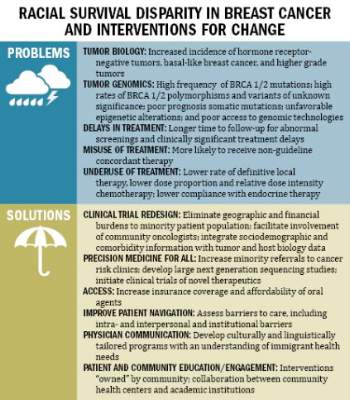
Delivery system reform has the potential to help close the disparity gap by improving the quality of care delivered to minority breast cancer patients. As Chin et al10 describe in their analysis of effective strategies for reducing health disparities, successful interventions are “culturally tailored to meet patients’ needs, employ multidisciplinary teams of care providers, and target multiple leverage points along a patient’s pathway of care.” ACOs have the financial incentive to meet these features of a successful intervention and improve quality across the continuum of breast cancer care. In addition, the PPACA “incentivized experimentation” with health care delivery, such as the oncology medical home and novel telemedicine interventions, to provide higher quality care outside of hospital settings, which could impact the disparity gap.11
In the face of this new era of organizational structures focused on coordinated, population-based care, oncology providers put themselves at financial risk if they do not position themselves for policy and reimbursement changes that reduce disparities.10 However, ongoing research will be needed to ensure that as these changes are implemented, the racial mortality gap in breast cancer decreases, and that no vulnerable patient populations are left out.
Precision medicine for all
In addition, as discussed earlier in this series, there are differences in the tumor biology and genomics of breast cancer in African American patients. Beyond quality interventions, initiatives to reduce the mortality gap should focus on precision medicine for all. These initiatives should allow researchers to better understand biologic and genomic differences among breast cancer patients and tailor treatments accordingly. The PPACA has taken steps in this direction and is the first federal law to require group health plans and state-licensed health insurance companies to cover standard-of-care costs associated with participation in clinical trials as well as genetic testing for prevention.12
The clinical trial regulations also expressly require plans to show that administrative burdens are not used to create barriers to cancer care for anyone who might benefit from participation in a clinical trial.9 The overarching goal of this push to eliminate financial and administrative barriers is to increase the enrollment of minority patients, especially those who do not live close to academic medical centers. In his April 2016 address at the annual meeting of the American Association for Cancer Research, Vice President Joseph Biden identified increased clinical trial participation as a key component of the administration’s cancer “moonshot” as well. Community medical oncologists will be called upon to facilitate and encourage clinical trial participation by their minority patients and should be supported in this endeavor by academic medical centers. With greater minority patient involvement, however, there also should be further research on how trial designs can better lead to clinically significant findings for minority patients. As Polite et al13 argue, at a bare minimum, basic sociodemographic and detailed comorbidity information should be prospectively collected and integrated with tumor and host biology data to better examine racial differences in cancer outcomes.
Initiatives also are needed to address the gap in referrals to cancer risk clinics so that more data are available on African American genetic variants, allowing the creation of more robust risk assessment models. Risk assessment relies on predictive statistical models to estimate an individual’s risk of developing cancer, and without accurate estimates of mutation prevalence in minority subgroups, these models’ reliability is compromised.14 As shown in a recent study at the University of Chicago’s Comprehensive Cancer Risk and Prevention Clinic using targeted genomic capture and next-generation sequencing, nearly one in four African American breast cancer patients referred to the clinic had inherited at least one damaging mutation that increased their risk for the most aggressive type of breast cancer.15

To identify damaging mutations only after a diagnosis of incurable breast cancer is a failure of prevention. As has been documented in Ashkenazi Jewish populations, there is evidence of high rates of inherited mutations in genes that increase the risk for aggressive breast cancers in populations of African ancestry. This is a fertile area for further research to better understand how these mutations affect the clinical course of breast cancer, what targeted interventions will increase the proportion of breast cancer diagnosed at stage 1, and what molecularly targeted treatments will produce a response in these tumors. Churpek et al15 also demonstrated the need for continued technological innovation to reduce the disparity gap, because next-generation sequencing is a faster and more cost-efficient way to evaluate multiple variants in many genes. This approach is particularly valuable for African Americans, who tend to have greater genetic diversity.16 The current administration is also heralding this approach to cancer care. In his 2015 State of the Union address, President Obama announced a precision medicine initiative, including a request for $70 million for the National Cancer Institute to investigate genes that may contribute to the risk of developing cancer.17 African American women should no longer be left behind in the push for personalized medicine that caters to a patient’s tumor biology and genetic profile. As Subbiah and Kurzrock state, universal genomic testing is not necessarily cost prohibitive, as the cost to obtain a “complete diagnosis and to select appropriate therapy may be miniscule compared with the money wasted on ill-chosen therapies.”18
In conclusion, there is an opportunity in the current climate of health care reform ushered in by the Affordable Care Act to address many of the discussed elements leading to the persistent racial mortality gap in breast cancer. We have argued that two substantial factors lead to this eroding gap. One is differences in tumor biology and genomics, and the second is a quality difference in patterns of care. In describing the perfect storm, Sebastian Junger19 wrote of the collision of two forces – a hurricane’s warm-air, low-pressure system and an anticyclone’s cool-air, high-pressure system – that combined to create a more powerful and devastating meteorological force. Similarly, we argue that it is the collision of these two factors – tumor biology and genomics with patterns of care – that leads to the breast cancer mortality gap. The delays, misuse, and underuse of treatment that we have underscored are of increased significance when patients present with more aggressive forms of breast cancer. Interventions to close this gap will take leaders at the patient, provider, payer, and community levels to drive system change.
1. Daly B, Olopade OI: A perfect storm: How tumor biology, genomics, and health care delivery patterns collide to create a racial survival disparity in breast cancer and proposed interventions for change. CA Cancer J Clin. 2015 Apr;65:221-38.
2. Fox J: Lessons from an oncology medical home collaborative. Am J Manag Care. 2013; 19:SP5-9.
3. Mehta AJ, Macklis RM: Overview of accountable care organizations for oncology specialists. J Oncol Pract. 2013 Jul; 9(4):216-21.
4. Daly B, Mort EA: A decade after to Err is Human: what should health care leaders be doing? Physician Exec. 2014 May-Jun; 40(3):50-2, 54.
5. Dangi-Garimella S: Oncology medical home: improved quality and cost of care. Am J Manag Care. 2014 Sep.
6. McAneny BL: The future of oncology? COME HOME, the oncology medical home. Am J Manag Care. 2013 Feb.
7. Goyal RK, Wheeler SB, Kohler RE, et al: Health care utilization from chemotherapy-related adverse events among low-income breast cancer patients: effect of enrollment in a medical home program. N C Med J. 2014 Jul-Aug;75(4):231-8.
8. Kuntz G, Tozer JM, Snegosky J, et al: Michigan Oncology Medical Home Demonstration Project: first-year results. J Oncol Pract. 2014 Sep. 10:294-7.
9. Moy B, Polite BN, Halpern MT, et al: American Society of Clinical Oncology policy statement: opportunities in the patient protection and affordable care act to reduce cancer care disparities. J Clin Oncol. 2011 Oct;29(28):3816-24.
10. Chin MH, Clarke AR, Nocon RS, et al: A roadmap and best practices for organizations to reduce racial and ethnic disparities in health care. J Gen Intern Med. 2012 Aug; 27(8):992-1000.
11. Emanuel EJ: How Well Is the Affordable Care Act Doing?: Reasons for Optimism. JAMA 315:1331-2, 2016.
12. Zhang SQ, Polite BN: Achieving a deeper understanding of the implemented provisions of the Affordable Care Act. Am Soc Clin Oncol Educ Book. 2014:e472-7.
13. Polite BN, Sylvester BE, Olopade OI: Race and subset analyses in clinical trials: time to get serious about data integration. J Natl Cancer Inst. 2011 Oct. 103(20):1486-8.
14. Hall MJ, Olopade OI: Disparities in genetic testing: thinking outside the BRCA box. J Clin Oncol. 2006 May; 24(14):2197-203.
15. Churpek JE, Walsh T, Zheng Y, et al: Inherited predisposition to breast cancer among African American women. Breast Cancer Res Treat. 2015 Jan;149(1):31-9.
16. Easton J: Genetic mutations more common among African American women with breast cancer: early testing could protect patients and their relatives. news.uchicago.edu/article/2013/06/03/genetic-mutations-more-common-among-african-american-women-breast-cancer. Published June 3, 2013. Accessed April 20, 2016.
17. Pear R: U.S. to collect genetic data to hone care. New York Times. January 30, 2015.
18. Subbiah V, Kurzrock R: Universal Genomic Testing Needed to Win the War Against Cancer: Genomics IS the Diagnosis. JAMA Oncol, 2016.
19. Junger S: The Perfect Storm. New York, NY: WW Norton and Co; 2009.

Bobby Daly, MD, MBA, is the chief fellow in the section of hematology/oncology at the University of Chicago Medicine. His clinical focus is breast and thoracic oncology, and his research focus is health services. Specifically, Dr. Daly researches disparities in oncology care delivery, oncology health care utilization, aggressive end-of-life oncology care, and oncology payment models. He received his MD and MBA from Harvard Medical School and Harvard Business School, both in Boston, and a BA in Economics and History from Stanford (Calif.) University. He was the recipient of the Dean’s Award at Harvard Medical and Business Schools.

Olufunmilayo Olopade, MD, FACP, OON, is the Walter L. Palmer Distinguished Service Professor of Medicine and Human Genetics, and director, Center for Global Health at the University of Chicago. She is adopting emerging high throughput genomic and informatics strategies to identify genetic and nongenetic risk factors for breast cancer in order to implement precision health care in diverse populations. This innovative approach has the potential to improve the quality of care and reduce costs while saving more lives.
Disclosures: Dr. Olopade serves on the Medical Advisory Board for CancerIQ. Dr. Daly serves as a director of Quadrant Holdings Corporation and receives compensation from this entity. Frontline Medical Communications is a subsidiary of Quadrant Holdings Corporation.
Published in conjunction with Susan G. Komen®.
Editor’s Note: This is the fifth and final installment of a five-part monthly series that will discuss the biologic, genomic, and health system factors that contribute to the racial survival disparity in breast cancer. The series was adapted from an article that originally appeared in CA: A Cancer Journal for Clinicians,1 a journal of the American Cancer Society.
As discussed in the last installment of this series, multifaceted interventions that address all stakeholders are needed to close the racial disparity gap in breast cancer. The Patient Protection and Affordable Care Act (PPACA) emphasizes delivery system reform with a focus on the triple aim of better health, better health care, and lower costs.2 One component of this reform will be accountable care organizations (ACOs). ACOs potentially could assist in closing the racial mortality gap, because provider groups will take responsibility for improving the health of a defined population and will be held accountable for the quality of care delivered.
In the ACO model, an integrated network of providers, led by primary care practitioners, will evaluate the necessity, quality, value, and accountable delivery of specialty diagnostic and therapeutic procedures, including cancer care.3 ACOs will also collect extensive patient data through the meaningful use of medical records.3 These detailed data can then be used to shape locoregional protocols for clinical decision making in oncology and evaluate physician performance. Intermountain Healthcare is an example of an organization that has had success with instituting these clinical protocols to highlight best practices and improve the quality of care.4 In breast cancer, oncologists will need to be prepared to develop and follow protocols tailored for their communities, which will lead to standardized, improved care for minority populations.
The oncology medical home is one example of an ACO delivery system reform that has the potential to reduce the racial mortality gap. The oncology medical home replaces episodic care with long-term coordinated care and replaces the fee-for-service model with a performance and outcomes-based system. A key trait of the oncology medical home is care that is continuously improved by measurement against quality standards.5 The model oncology home accomplishes this by incorporating software to extract clinical data as well as provider compliance with locoregional guidelines to give oncologists feedback regarding the quality of care that they are providing.6 Through this system reform, oncologists will be held accountable for the care they deliver, and it is hoped that this will eliminate the delays, misuse, and underuse of treatment. This could be especially important for optimizing use of hormone therapy for estrogen receptor-positive breast cancer. Trial oncology medical homes in North Carolina and Michigan have yielded promising results regarding improved care (fewer emergency department visits and inpatient admissions) and high adherence to national and practice-selected guidelines.7,8
PPACA also increases funding for community health centers and provides grants to support community health workers; this highlights again the importance of place in racial health care disparities.9 Encouraging collaboration between community health centers and academic institutions, this funding could build bridges between minority communities and high-quality health care institutions while also improving patient communication and education.9 As this series has discussed, a failure to provide culturally appropriate clinical information can lead to issues with follow-up and adjuvant treatment compliance and further widen the breast cancer racial mortality gap.
Delivery system reform has the potential to help close the disparity gap by improving the quality of care delivered to minority breast cancer patients. As Chin et al10 describe in their analysis of effective strategies for reducing health disparities, successful interventions are “culturally tailored to meet patients’ needs, employ multidisciplinary teams of care providers, and target multiple leverage points along a patient’s pathway of care.” ACOs have the financial incentive to meet these features of a successful intervention and improve quality across the continuum of breast cancer care. In addition, the PPACA “incentivized experimentation” with health care delivery, such as the oncology medical home and novel telemedicine interventions, to provide higher quality care outside of hospital settings, which could impact the disparity gap.11
In the face of this new era of organizational structures focused on coordinated, population-based care, oncology providers put themselves at financial risk if they do not position themselves for policy and reimbursement changes that reduce disparities.10 However, ongoing research will be needed to ensure that as these changes are implemented, the racial mortality gap in breast cancer decreases, and that no vulnerable patient populations are left out.
Precision medicine for all
In addition, as discussed earlier in this series, there are differences in the tumor biology and genomics of breast cancer in African American patients. Beyond quality interventions, initiatives to reduce the mortality gap should focus on precision medicine for all. These initiatives should allow researchers to better understand biologic and genomic differences among breast cancer patients and tailor treatments accordingly. The PPACA has taken steps in this direction and is the first federal law to require group health plans and state-licensed health insurance companies to cover standard-of-care costs associated with participation in clinical trials as well as genetic testing for prevention.12
The clinical trial regulations also expressly require plans to show that administrative burdens are not used to create barriers to cancer care for anyone who might benefit from participation in a clinical trial.9 The overarching goal of this push to eliminate financial and administrative barriers is to increase the enrollment of minority patients, especially those who do not live close to academic medical centers. In his April 2016 address at the annual meeting of the American Association for Cancer Research, Vice President Joseph Biden identified increased clinical trial participation as a key component of the administration’s cancer “moonshot” as well. Community medical oncologists will be called upon to facilitate and encourage clinical trial participation by their minority patients and should be supported in this endeavor by academic medical centers. With greater minority patient involvement, however, there also should be further research on how trial designs can better lead to clinically significant findings for minority patients. As Polite et al13 argue, at a bare minimum, basic sociodemographic and detailed comorbidity information should be prospectively collected and integrated with tumor and host biology data to better examine racial differences in cancer outcomes.
Initiatives also are needed to address the gap in referrals to cancer risk clinics so that more data are available on African American genetic variants, allowing the creation of more robust risk assessment models. Risk assessment relies on predictive statistical models to estimate an individual’s risk of developing cancer, and without accurate estimates of mutation prevalence in minority subgroups, these models’ reliability is compromised.14 As shown in a recent study at the University of Chicago’s Comprehensive Cancer Risk and Prevention Clinic using targeted genomic capture and next-generation sequencing, nearly one in four African American breast cancer patients referred to the clinic had inherited at least one damaging mutation that increased their risk for the most aggressive type of breast cancer.15
To identify damaging mutations only after a diagnosis of incurable breast cancer is a failure of prevention. As has been documented in Ashkenazi Jewish populations, there is evidence of high rates of inherited mutations in genes that increase the risk for aggressive breast cancers in populations of African ancestry. This is a fertile area for further research to better understand how these mutations affect the clinical course of breast cancer, what targeted interventions will increase the proportion of breast cancer diagnosed at stage 1, and what molecularly targeted treatments will produce a response in these tumors. Churpek et al15 also demonstrated the need for continued technological innovation to reduce the disparity gap, because next-generation sequencing is a faster and more cost-efficient way to evaluate multiple variants in many genes. This approach is particularly valuable for African Americans, who tend to have greater genetic diversity.16 The current administration is also heralding this approach to cancer care. In his 2015 State of the Union address, President Obama announced a precision medicine initiative, including a request for $70 million for the National Cancer Institute to investigate genes that may contribute to the risk of developing cancer.17 African American women should no longer be left behind in the push for personalized medicine that caters to a patient’s tumor biology and genetic profile. As Subbiah and Kurzrock state, universal genomic testing is not necessarily cost prohibitive, as the cost to obtain a “complete diagnosis and to select appropriate therapy may be miniscule compared with the money wasted on ill-chosen therapies.”18
In conclusion, there is an opportunity in the current climate of health care reform ushered in by the Affordable Care Act to address many of the discussed elements leading to the persistent racial mortality gap in breast cancer. We have argued that two substantial factors lead to this eroding gap. One is differences in tumor biology and genomics, and the second is a quality difference in patterns of care. In describing the perfect storm, Sebastian Junger19 wrote of the collision of two forces – a hurricane’s warm-air, low-pressure system and an anticyclone’s cool-air, high-pressure system – that combined to create a more powerful and devastating meteorological force. Similarly, we argue that it is the collision of these two factors – tumor biology and genomics with patterns of care – that leads to the breast cancer mortality gap. The delays, misuse, and underuse of treatment that we have underscored are of increased significance when patients present with more aggressive forms of breast cancer. Interventions to close this gap will take leaders at the patient, provider, payer, and community levels to drive system change.
1. Daly B, Olopade OI: A perfect storm: How tumor biology, genomics, and health care delivery patterns collide to create a racial survival disparity in breast cancer and proposed interventions for change. CA Cancer J Clin. 2015 Apr;65:221-38.
2. Fox J: Lessons from an oncology medical home collaborative. Am J Manag Care. 2013; 19:SP5-9.
3. Mehta AJ, Macklis RM: Overview of accountable care organizations for oncology specialists. J Oncol Pract. 2013 Jul; 9(4):216-21.
4. Daly B, Mort EA: A decade after to Err is Human: what should health care leaders be doing? Physician Exec. 2014 May-Jun; 40(3):50-2, 54.
5. Dangi-Garimella S: Oncology medical home: improved quality and cost of care. Am J Manag Care. 2014 Sep.
6. McAneny BL: The future of oncology? COME HOME, the oncology medical home. Am J Manag Care. 2013 Feb.
7. Goyal RK, Wheeler SB, Kohler RE, et al: Health care utilization from chemotherapy-related adverse events among low-income breast cancer patients: effect of enrollment in a medical home program. N C Med J. 2014 Jul-Aug;75(4):231-8.
8. Kuntz G, Tozer JM, Snegosky J, et al: Michigan Oncology Medical Home Demonstration Project: first-year results. J Oncol Pract. 2014 Sep. 10:294-7.
9. Moy B, Polite BN, Halpern MT, et al: American Society of Clinical Oncology policy statement: opportunities in the patient protection and affordable care act to reduce cancer care disparities. J Clin Oncol. 2011 Oct;29(28):3816-24.
10. Chin MH, Clarke AR, Nocon RS, et al: A roadmap and best practices for organizations to reduce racial and ethnic disparities in health care. J Gen Intern Med. 2012 Aug; 27(8):992-1000.
11. Emanuel EJ: How Well Is the Affordable Care Act Doing?: Reasons for Optimism. JAMA 315:1331-2, 2016.
12. Zhang SQ, Polite BN: Achieving a deeper understanding of the implemented provisions of the Affordable Care Act. Am Soc Clin Oncol Educ Book. 2014:e472-7.
13. Polite BN, Sylvester BE, Olopade OI: Race and subset analyses in clinical trials: time to get serious about data integration. J Natl Cancer Inst. 2011 Oct. 103(20):1486-8.
14. Hall MJ, Olopade OI: Disparities in genetic testing: thinking outside the BRCA box. J Clin Oncol. 2006 May; 24(14):2197-203.
15. Churpek JE, Walsh T, Zheng Y, et al: Inherited predisposition to breast cancer among African American women. Breast Cancer Res Treat. 2015 Jan;149(1):31-9.
16. Easton J: Genetic mutations more common among African American women with breast cancer: early testing could protect patients and their relatives. news.uchicago.edu/article/2013/06/03/genetic-mutations-more-common-among-african-american-women-breast-cancer. Published June 3, 2013. Accessed April 20, 2016.
17. Pear R: U.S. to collect genetic data to hone care. New York Times. January 30, 2015.
18. Subbiah V, Kurzrock R: Universal Genomic Testing Needed to Win the War Against Cancer: Genomics IS the Diagnosis. JAMA Oncol, 2016.
19. Junger S: The Perfect Storm. New York, NY: WW Norton and Co; 2009.
Bobby Daly, MD, MBA, is the chief fellow in the section of hematology/oncology at the University of Chicago Medicine. His clinical focus is breast and thoracic oncology, and his research focus is health services. Specifically, Dr. Daly researches disparities in oncology care delivery, oncology health care utilization, aggressive end-of-life oncology care, and oncology payment models. He received his MD and MBA from Harvard Medical School and Harvard Business School, both in Boston, and a BA in Economics and History from Stanford (Calif.) University. He was the recipient of the Dean’s Award at Harvard Medical and Business Schools.
Olufunmilayo Olopade, MD, FACP, OON, is the Walter L. Palmer Distinguished Service Professor of Medicine and Human Genetics, and director, Center for Global Health at the University of Chicago. She is adopting emerging high throughput genomic and informatics strategies to identify genetic and nongenetic risk factors for breast cancer in order to implement precision health care in diverse populations. This innovative approach has the potential to improve the quality of care and reduce costs while saving more lives.
Disclosures: Dr. Olopade serves on the Medical Advisory Board for CancerIQ. Dr. Daly serves as a director of Quadrant Holdings Corporation and receives compensation from this entity. Frontline Medical Communications is a subsidiary of Quadrant Holdings Corporation.
Published in conjunction with Susan G. Komen®.
Editor’s Note: This is the fifth and final installment of a five-part monthly series that will discuss the biologic, genomic, and health system factors that contribute to the racial survival disparity in breast cancer. The series was adapted from an article that originally appeared in CA: A Cancer Journal for Clinicians,1 a journal of the American Cancer Society.
As discussed in the last installment of this series, multifaceted interventions that address all stakeholders are needed to close the racial disparity gap in breast cancer. The Patient Protection and Affordable Care Act (PPACA) emphasizes delivery system reform with a focus on the triple aim of better health, better health care, and lower costs.2 One component of this reform will be accountable care organizations (ACOs). ACOs potentially could assist in closing the racial mortality gap, because provider groups will take responsibility for improving the health of a defined population and will be held accountable for the quality of care delivered.
In the ACO model, an integrated network of providers, led by primary care practitioners, will evaluate the necessity, quality, value, and accountable delivery of specialty diagnostic and therapeutic procedures, including cancer care.3 ACOs will also collect extensive patient data through the meaningful use of medical records.3 These detailed data can then be used to shape locoregional protocols for clinical decision making in oncology and evaluate physician performance. Intermountain Healthcare is an example of an organization that has had success with instituting these clinical protocols to highlight best practices and improve the quality of care.4 In breast cancer, oncologists will need to be prepared to develop and follow protocols tailored for their communities, which will lead to standardized, improved care for minority populations.
The oncology medical home is one example of an ACO delivery system reform that has the potential to reduce the racial mortality gap. The oncology medical home replaces episodic care with long-term coordinated care and replaces the fee-for-service model with a performance and outcomes-based system. A key trait of the oncology medical home is care that is continuously improved by measurement against quality standards.5 The model oncology home accomplishes this by incorporating software to extract clinical data as well as provider compliance with locoregional guidelines to give oncologists feedback regarding the quality of care that they are providing.6 Through this system reform, oncologists will be held accountable for the care they deliver, and it is hoped that this will eliminate the delays, misuse, and underuse of treatment. This could be especially important for optimizing use of hormone therapy for estrogen receptor-positive breast cancer. Trial oncology medical homes in North Carolina and Michigan have yielded promising results regarding improved care (fewer emergency department visits and inpatient admissions) and high adherence to national and practice-selected guidelines.7,8
PPACA also increases funding for community health centers and provides grants to support community health workers; this highlights again the importance of place in racial health care disparities.9 Encouraging collaboration between community health centers and academic institutions, this funding could build bridges between minority communities and high-quality health care institutions while also improving patient communication and education.9 As this series has discussed, a failure to provide culturally appropriate clinical information can lead to issues with follow-up and adjuvant treatment compliance and further widen the breast cancer racial mortality gap.
Delivery system reform has the potential to help close the disparity gap by improving the quality of care delivered to minority breast cancer patients. As Chin et al10 describe in their analysis of effective strategies for reducing health disparities, successful interventions are “culturally tailored to meet patients’ needs, employ multidisciplinary teams of care providers, and target multiple leverage points along a patient’s pathway of care.” ACOs have the financial incentive to meet these features of a successful intervention and improve quality across the continuum of breast cancer care. In addition, the PPACA “incentivized experimentation” with health care delivery, such as the oncology medical home and novel telemedicine interventions, to provide higher quality care outside of hospital settings, which could impact the disparity gap.11
In the face of this new era of organizational structures focused on coordinated, population-based care, oncology providers put themselves at financial risk if they do not position themselves for policy and reimbursement changes that reduce disparities.10 However, ongoing research will be needed to ensure that as these changes are implemented, the racial mortality gap in breast cancer decreases, and that no vulnerable patient populations are left out.
Precision medicine for all
In addition, as discussed earlier in this series, there are differences in the tumor biology and genomics of breast cancer in African American patients. Beyond quality interventions, initiatives to reduce the mortality gap should focus on precision medicine for all. These initiatives should allow researchers to better understand biologic and genomic differences among breast cancer patients and tailor treatments accordingly. The PPACA has taken steps in this direction and is the first federal law to require group health plans and state-licensed health insurance companies to cover standard-of-care costs associated with participation in clinical trials as well as genetic testing for prevention.12
The clinical trial regulations also expressly require plans to show that administrative burdens are not used to create barriers to cancer care for anyone who might benefit from participation in a clinical trial.9 The overarching goal of this push to eliminate financial and administrative barriers is to increase the enrollment of minority patients, especially those who do not live close to academic medical centers. In his April 2016 address at the annual meeting of the American Association for Cancer Research, Vice President Joseph Biden identified increased clinical trial participation as a key component of the administration’s cancer “moonshot” as well. Community medical oncologists will be called upon to facilitate and encourage clinical trial participation by their minority patients and should be supported in this endeavor by academic medical centers. With greater minority patient involvement, however, there also should be further research on how trial designs can better lead to clinically significant findings for minority patients. As Polite et al13 argue, at a bare minimum, basic sociodemographic and detailed comorbidity information should be prospectively collected and integrated with tumor and host biology data to better examine racial differences in cancer outcomes.
Initiatives also are needed to address the gap in referrals to cancer risk clinics so that more data are available on African American genetic variants, allowing the creation of more robust risk assessment models. Risk assessment relies on predictive statistical models to estimate an individual’s risk of developing cancer, and without accurate estimates of mutation prevalence in minority subgroups, these models’ reliability is compromised.14 As shown in a recent study at the University of Chicago’s Comprehensive Cancer Risk and Prevention Clinic using targeted genomic capture and next-generation sequencing, nearly one in four African American breast cancer patients referred to the clinic had inherited at least one damaging mutation that increased their risk for the most aggressive type of breast cancer.15
To identify damaging mutations only after a diagnosis of incurable breast cancer is a failure of prevention. As has been documented in Ashkenazi Jewish populations, there is evidence of high rates of inherited mutations in genes that increase the risk for aggressive breast cancers in populations of African ancestry. This is a fertile area for further research to better understand how these mutations affect the clinical course of breast cancer, what targeted interventions will increase the proportion of breast cancer diagnosed at stage 1, and what molecularly targeted treatments will produce a response in these tumors. Churpek et al15 also demonstrated the need for continued technological innovation to reduce the disparity gap, because next-generation sequencing is a faster and more cost-efficient way to evaluate multiple variants in many genes. This approach is particularly valuable for African Americans, who tend to have greater genetic diversity.16 The current administration is also heralding this approach to cancer care. In his 2015 State of the Union address, President Obama announced a precision medicine initiative, including a request for $70 million for the National Cancer Institute to investigate genes that may contribute to the risk of developing cancer.17 African American women should no longer be left behind in the push for personalized medicine that caters to a patient’s tumor biology and genetic profile. As Subbiah and Kurzrock state, universal genomic testing is not necessarily cost prohibitive, as the cost to obtain a “complete diagnosis and to select appropriate therapy may be miniscule compared with the money wasted on ill-chosen therapies.”18
In conclusion, there is an opportunity in the current climate of health care reform ushered in by the Affordable Care Act to address many of the discussed elements leading to the persistent racial mortality gap in breast cancer. We have argued that two substantial factors lead to this eroding gap. One is differences in tumor biology and genomics, and the second is a quality difference in patterns of care. In describing the perfect storm, Sebastian Junger19 wrote of the collision of two forces – a hurricane’s warm-air, low-pressure system and an anticyclone’s cool-air, high-pressure system – that combined to create a more powerful and devastating meteorological force. Similarly, we argue that it is the collision of these two factors – tumor biology and genomics with patterns of care – that leads to the breast cancer mortality gap. The delays, misuse, and underuse of treatment that we have underscored are of increased significance when patients present with more aggressive forms of breast cancer. Interventions to close this gap will take leaders at the patient, provider, payer, and community levels to drive system change.
1. Daly B, Olopade OI: A perfect storm: How tumor biology, genomics, and health care delivery patterns collide to create a racial survival disparity in breast cancer and proposed interventions for change. CA Cancer J Clin. 2015 Apr;65:221-38.
2. Fox J: Lessons from an oncology medical home collaborative. Am J Manag Care. 2013; 19:SP5-9.
3. Mehta AJ, Macklis RM: Overview of accountable care organizations for oncology specialists. J Oncol Pract. 2013 Jul; 9(4):216-21.
4. Daly B, Mort EA: A decade after to Err is Human: what should health care leaders be doing? Physician Exec. 2014 May-Jun; 40(3):50-2, 54.
5. Dangi-Garimella S: Oncology medical home: improved quality and cost of care. Am J Manag Care. 2014 Sep.
6. McAneny BL: The future of oncology? COME HOME, the oncology medical home. Am J Manag Care. 2013 Feb.
7. Goyal RK, Wheeler SB, Kohler RE, et al: Health care utilization from chemotherapy-related adverse events among low-income breast cancer patients: effect of enrollment in a medical home program. N C Med J. 2014 Jul-Aug;75(4):231-8.
8. Kuntz G, Tozer JM, Snegosky J, et al: Michigan Oncology Medical Home Demonstration Project: first-year results. J Oncol Pract. 2014 Sep. 10:294-7.
9. Moy B, Polite BN, Halpern MT, et al: American Society of Clinical Oncology policy statement: opportunities in the patient protection and affordable care act to reduce cancer care disparities. J Clin Oncol. 2011 Oct;29(28):3816-24.
10. Chin MH, Clarke AR, Nocon RS, et al: A roadmap and best practices for organizations to reduce racial and ethnic disparities in health care. J Gen Intern Med. 2012 Aug; 27(8):992-1000.
11. Emanuel EJ: How Well Is the Affordable Care Act Doing?: Reasons for Optimism. JAMA 315:1331-2, 2016.
12. Zhang SQ, Polite BN: Achieving a deeper understanding of the implemented provisions of the Affordable Care Act. Am Soc Clin Oncol Educ Book. 2014:e472-7.
13. Polite BN, Sylvester BE, Olopade OI: Race and subset analyses in clinical trials: time to get serious about data integration. J Natl Cancer Inst. 2011 Oct. 103(20):1486-8.
14. Hall MJ, Olopade OI: Disparities in genetic testing: thinking outside the BRCA box. J Clin Oncol. 2006 May; 24(14):2197-203.
15. Churpek JE, Walsh T, Zheng Y, et al: Inherited predisposition to breast cancer among African American women. Breast Cancer Res Treat. 2015 Jan;149(1):31-9.
16. Easton J: Genetic mutations more common among African American women with breast cancer: early testing could protect patients and their relatives. news.uchicago.edu/article/2013/06/03/genetic-mutations-more-common-among-african-american-women-breast-cancer. Published June 3, 2013. Accessed April 20, 2016.
17. Pear R: U.S. to collect genetic data to hone care. New York Times. January 30, 2015.
18. Subbiah V, Kurzrock R: Universal Genomic Testing Needed to Win the War Against Cancer: Genomics IS the Diagnosis. JAMA Oncol, 2016.
19. Junger S: The Perfect Storm. New York, NY: WW Norton and Co; 2009.
Bobby Daly, MD, MBA, is the chief fellow in the section of hematology/oncology at the University of Chicago Medicine. His clinical focus is breast and thoracic oncology, and his research focus is health services. Specifically, Dr. Daly researches disparities in oncology care delivery, oncology health care utilization, aggressive end-of-life oncology care, and oncology payment models. He received his MD and MBA from Harvard Medical School and Harvard Business School, both in Boston, and a BA in Economics and History from Stanford (Calif.) University. He was the recipient of the Dean’s Award at Harvard Medical and Business Schools.
Olufunmilayo Olopade, MD, FACP, OON, is the Walter L. Palmer Distinguished Service Professor of Medicine and Human Genetics, and director, Center for Global Health at the University of Chicago. She is adopting emerging high throughput genomic and informatics strategies to identify genetic and nongenetic risk factors for breast cancer in order to implement precision health care in diverse populations. This innovative approach has the potential to improve the quality of care and reduce costs while saving more lives.
Disclosures: Dr. Olopade serves on the Medical Advisory Board for CancerIQ. Dr. Daly serves as a director of Quadrant Holdings Corporation and receives compensation from this entity. Frontline Medical Communications is a subsidiary of Quadrant Holdings Corporation.
Published in conjunction with Susan G. Komen®.
