User login
PLX4032 Takes Aim at BRAF-Mutated Metastatic Melanoma
CHICAGO — A drug that targets metastatic melanoma with mutations in the BRAF oncogene may be the first step on a path to individualized chemotherapy for patients with these formerly untreatable cancers.
“We are rapidly unraveling the molecular underpinnings of these tumors, and discovering the mechanisms by which they drive melanoma growth. These insights allow us to develop and select drugs on the basis of every patient’s individual genome,” Dr. Hensin Tsao said at the American Academy of Dermatology’s 2010 meeting.

PLX4032 is the first drug to successfully shrink both cutaneous and internal metastases of BRAF-mutated melanomas, said Dr. Tsao, a dermatologist who is director of the Massachusetts General Hospital Melanoma Genetics Program in Boston.
His colleague, Dr. Keith Flaherty, is about to publish data from the drug’s phase II trial of 87 patients; 81% of those with the BRAF-mutated melanoma responded with a 30% or more shrinkage of the targeted lesions.
After a phase I safety and dose-finding trial, investigators settled on an oral dose of 960 mg twice daily for the phase II study. The effect was little short of remarkable, Dr. Flaherty, director of developmental therapeutics at the Massachusetts General Hospital Cancer Center, said in an interview.
“My first responding patient had cutaneous and internal metastases, and the cutaneous metastases were clearly getting better right in front of our eyes,” he said. “We have seen this in some other areas of cancer, but never in melanoma, which before this was a clinical scenario with an unmet need for therapy.”
PLX4032, first engineered by the Berkeley, Calif., company Plexxikon Inc. and being developed in partnership with Roche, is not a foolproof cure, Dr. Tsao said in an interview. “It’s clearly a huge leap forward for the patients who responded so rapidly, yet most are still progressing despite being on the drug. It’s the best stun we’ve ever seen for melanoma, but it’s not a permanent kill.”
Sustained response in the phase I and II trials has varied from only 2 months to up to 2 years, Dr. Flaherty said. He could find no significant predictors of progression or response among the group except for initial tumor number and size. Typically, he said, the patients with the greatest mass of metastatic disease had the shortest duration of response, while those with a smaller tumor burden had a longer duration of response.
“When you have metastatic melanoma, your days are numbered—and numbered in a way we can’t predict when metastatic disease is diagnosed,” Dr. Flaherty said. “What this therapy does is push out the time until the disease worsens. We are not yet smart enough to understand what it is that allows a tumor to work its way around the drug’s activity.”
Chemotherapy-resistant cancers are nothing new, Dr. Tsao noted. What will be new is the full investigation of melanoma’s genetic pathways, and the development of drugs to block them in multiple ways. “The next frontier will be to understand all the ways that melanoma can outsmart treatment. We may have to use multiple therapies to corner it. So a full discovery of all melanoma’s potential vulnerabilities is very important.”
There is already at least a hint that PLX4032 has a very narrow target—only BRAF tumors with the V600E subtype. “There is some laboratory evidence that if you give this drug to a tumor that may be mutated at another gene you may be worsening things,” Dr. Tsao said. “This has yet to be borne out in clinical studies, but bench-side data suggest that you have to be very precise with this drug, because the wrong choice could be potentially deleterious.”
In vitro and in vivo experiments did suggest that PLX4032 was ineffective against non-BRAF melanomas, Dr. Flaherty said. “In a lab, the drug will kill a cancer cell with a BRAF mutation but not with another mutation. Whether it can facilitate the growth of others is an interesting concept supported by some laboratory data, with the observation that this and drugs like it can transiently stimulate other cancer cells with RAS mutations. In these, the drug basically activates the BRAF pathway instead of blocking it. We don’t know the relevance of this finding to humans. It is interesting, but it may have no real clinical impact.”
Discovering the best targets for molecular therapies is typically a long process, Dr. Tsao said, but the race to treat BRAF metastatic melanoma has so far been a fast one. “In 2002, the first BRAF mutation in melanoma was published, and the first drug is already coming to clinical fruition. This is pretty fast for something we’ve been fooling around with ineffectively for 20 years.”
During the 8 years between the mutation’s discovery and Dr. Flaherty’s trial, drug companies have not been idle. “There is now a pipeline of drugs against BRAF. PLX4032 might not be the best or the least toxic, but it’s the first of a host coming down the pike. This is very significant, because now we have a brand-new way of looking at a previously untreatable cancer.”
Roche Pharmaceuticals and Plexxikon sponsored the PLX4032 studies. Dr. Tsao said he had no financial declarations with regard to the drug. Dr. Flaherty has served as a consultant to Roche regarding further development of PLX4032 in melanoma.
CHICAGO — A drug that targets metastatic melanoma with mutations in the BRAF oncogene may be the first step on a path to individualized chemotherapy for patients with these formerly untreatable cancers.
“We are rapidly unraveling the molecular underpinnings of these tumors, and discovering the mechanisms by which they drive melanoma growth. These insights allow us to develop and select drugs on the basis of every patient’s individual genome,” Dr. Hensin Tsao said at the American Academy of Dermatology’s 2010 meeting.
PLX4032 is the first drug to successfully shrink both cutaneous and internal metastases of BRAF-mutated melanomas, said Dr. Tsao, a dermatologist who is director of the Massachusetts General Hospital Melanoma Genetics Program in Boston.
His colleague, Dr. Keith Flaherty, is about to publish data from the drug’s phase II trial of 87 patients; 81% of those with the BRAF-mutated melanoma responded with a 30% or more shrinkage of the targeted lesions.
After a phase I safety and dose-finding trial, investigators settled on an oral dose of 960 mg twice daily for the phase II study. The effect was little short of remarkable, Dr. Flaherty, director of developmental therapeutics at the Massachusetts General Hospital Cancer Center, said in an interview.
“My first responding patient had cutaneous and internal metastases, and the cutaneous metastases were clearly getting better right in front of our eyes,” he said. “We have seen this in some other areas of cancer, but never in melanoma, which before this was a clinical scenario with an unmet need for therapy.”
PLX4032, first engineered by the Berkeley, Calif., company Plexxikon Inc. and being developed in partnership with Roche, is not a foolproof cure, Dr. Tsao said in an interview. “It’s clearly a huge leap forward for the patients who responded so rapidly, yet most are still progressing despite being on the drug. It’s the best stun we’ve ever seen for melanoma, but it’s not a permanent kill.”
Sustained response in the phase I and II trials has varied from only 2 months to up to 2 years, Dr. Flaherty said. He could find no significant predictors of progression or response among the group except for initial tumor number and size. Typically, he said, the patients with the greatest mass of metastatic disease had the shortest duration of response, while those with a smaller tumor burden had a longer duration of response.
“When you have metastatic melanoma, your days are numbered—and numbered in a way we can’t predict when metastatic disease is diagnosed,” Dr. Flaherty said. “What this therapy does is push out the time until the disease worsens. We are not yet smart enough to understand what it is that allows a tumor to work its way around the drug’s activity.”
Chemotherapy-resistant cancers are nothing new, Dr. Tsao noted. What will be new is the full investigation of melanoma’s genetic pathways, and the development of drugs to block them in multiple ways. “The next frontier will be to understand all the ways that melanoma can outsmart treatment. We may have to use multiple therapies to corner it. So a full discovery of all melanoma’s potential vulnerabilities is very important.”
There is already at least a hint that PLX4032 has a very narrow target—only BRAF tumors with the V600E subtype. “There is some laboratory evidence that if you give this drug to a tumor that may be mutated at another gene you may be worsening things,” Dr. Tsao said. “This has yet to be borne out in clinical studies, but bench-side data suggest that you have to be very precise with this drug, because the wrong choice could be potentially deleterious.”
In vitro and in vivo experiments did suggest that PLX4032 was ineffective against non-BRAF melanomas, Dr. Flaherty said. “In a lab, the drug will kill a cancer cell with a BRAF mutation but not with another mutation. Whether it can facilitate the growth of others is an interesting concept supported by some laboratory data, with the observation that this and drugs like it can transiently stimulate other cancer cells with RAS mutations. In these, the drug basically activates the BRAF pathway instead of blocking it. We don’t know the relevance of this finding to humans. It is interesting, but it may have no real clinical impact.”
Discovering the best targets for molecular therapies is typically a long process, Dr. Tsao said, but the race to treat BRAF metastatic melanoma has so far been a fast one. “In 2002, the first BRAF mutation in melanoma was published, and the first drug is already coming to clinical fruition. This is pretty fast for something we’ve been fooling around with ineffectively for 20 years.”
During the 8 years between the mutation’s discovery and Dr. Flaherty’s trial, drug companies have not been idle. “There is now a pipeline of drugs against BRAF. PLX4032 might not be the best or the least toxic, but it’s the first of a host coming down the pike. This is very significant, because now we have a brand-new way of looking at a previously untreatable cancer.”
Roche Pharmaceuticals and Plexxikon sponsored the PLX4032 studies. Dr. Tsao said he had no financial declarations with regard to the drug. Dr. Flaherty has served as a consultant to Roche regarding further development of PLX4032 in melanoma.
CHICAGO — A drug that targets metastatic melanoma with mutations in the BRAF oncogene may be the first step on a path to individualized chemotherapy for patients with these formerly untreatable cancers.
“We are rapidly unraveling the molecular underpinnings of these tumors, and discovering the mechanisms by which they drive melanoma growth. These insights allow us to develop and select drugs on the basis of every patient’s individual genome,” Dr. Hensin Tsao said at the American Academy of Dermatology’s 2010 meeting.
PLX4032 is the first drug to successfully shrink both cutaneous and internal metastases of BRAF-mutated melanomas, said Dr. Tsao, a dermatologist who is director of the Massachusetts General Hospital Melanoma Genetics Program in Boston.
His colleague, Dr. Keith Flaherty, is about to publish data from the drug’s phase II trial of 87 patients; 81% of those with the BRAF-mutated melanoma responded with a 30% or more shrinkage of the targeted lesions.
After a phase I safety and dose-finding trial, investigators settled on an oral dose of 960 mg twice daily for the phase II study. The effect was little short of remarkable, Dr. Flaherty, director of developmental therapeutics at the Massachusetts General Hospital Cancer Center, said in an interview.
“My first responding patient had cutaneous and internal metastases, and the cutaneous metastases were clearly getting better right in front of our eyes,” he said. “We have seen this in some other areas of cancer, but never in melanoma, which before this was a clinical scenario with an unmet need for therapy.”
PLX4032, first engineered by the Berkeley, Calif., company Plexxikon Inc. and being developed in partnership with Roche, is not a foolproof cure, Dr. Tsao said in an interview. “It’s clearly a huge leap forward for the patients who responded so rapidly, yet most are still progressing despite being on the drug. It’s the best stun we’ve ever seen for melanoma, but it’s not a permanent kill.”
Sustained response in the phase I and II trials has varied from only 2 months to up to 2 years, Dr. Flaherty said. He could find no significant predictors of progression or response among the group except for initial tumor number and size. Typically, he said, the patients with the greatest mass of metastatic disease had the shortest duration of response, while those with a smaller tumor burden had a longer duration of response.
“When you have metastatic melanoma, your days are numbered—and numbered in a way we can’t predict when metastatic disease is diagnosed,” Dr. Flaherty said. “What this therapy does is push out the time until the disease worsens. We are not yet smart enough to understand what it is that allows a tumor to work its way around the drug’s activity.”
Chemotherapy-resistant cancers are nothing new, Dr. Tsao noted. What will be new is the full investigation of melanoma’s genetic pathways, and the development of drugs to block them in multiple ways. “The next frontier will be to understand all the ways that melanoma can outsmart treatment. We may have to use multiple therapies to corner it. So a full discovery of all melanoma’s potential vulnerabilities is very important.”
There is already at least a hint that PLX4032 has a very narrow target—only BRAF tumors with the V600E subtype. “There is some laboratory evidence that if you give this drug to a tumor that may be mutated at another gene you may be worsening things,” Dr. Tsao said. “This has yet to be borne out in clinical studies, but bench-side data suggest that you have to be very precise with this drug, because the wrong choice could be potentially deleterious.”
In vitro and in vivo experiments did suggest that PLX4032 was ineffective against non-BRAF melanomas, Dr. Flaherty said. “In a lab, the drug will kill a cancer cell with a BRAF mutation but not with another mutation. Whether it can facilitate the growth of others is an interesting concept supported by some laboratory data, with the observation that this and drugs like it can transiently stimulate other cancer cells with RAS mutations. In these, the drug basically activates the BRAF pathway instead of blocking it. We don’t know the relevance of this finding to humans. It is interesting, but it may have no real clinical impact.”
Discovering the best targets for molecular therapies is typically a long process, Dr. Tsao said, but the race to treat BRAF metastatic melanoma has so far been a fast one. “In 2002, the first BRAF mutation in melanoma was published, and the first drug is already coming to clinical fruition. This is pretty fast for something we’ve been fooling around with ineffectively for 20 years.”
During the 8 years between the mutation’s discovery and Dr. Flaherty’s trial, drug companies have not been idle. “There is now a pipeline of drugs against BRAF. PLX4032 might not be the best or the least toxic, but it’s the first of a host coming down the pike. This is very significant, because now we have a brand-new way of looking at a previously untreatable cancer.”
Roche Pharmaceuticals and Plexxikon sponsored the PLX4032 studies. Dr. Tsao said he had no financial declarations with regard to the drug. Dr. Flaherty has served as a consultant to Roche regarding further development of PLX4032 in melanoma.
Risk Factor Profiles Differ for Single vs. Multiple Basal Cell Carcinomas
The risk profiles for individuals who develop single vs. multiple basal cell carcinoma lesions differ, according to findings from the Rotterdam Study.
Of the 10,820 eligible members of the two cohorts used for the large, Dutch, population-based study, 361 (3%) were diagnosed with a single initial basal cell carcinoma (BCC) lesion, and 163 (1.5%) were diagnosed with subsequent BCC lesions during the study period.
After adjusting for numerous factors such as sex, age, hair and eye color, tendency to develop sunburn, smoking history, body mass index, and educational level, factors found to be significantly associated with developing a first BCC lesion were age (odds ratios of 1.39 and 1.01 for those aged 65-74 years and for those aged 75 years and older, respectively, vs. those younger than age 65 years), and red hair color (OR of 1.98 for red vs. brown or black hair), Dr. Ville Kiiski and colleagues at Erasmus Medical Center, Rotterdam, the Netherlands, reported in the August issue of Archives of Dermatology.
After adjusting for age at index lesion, sex, hair color, eye color, all ultraviolet-related factors, smoking history, and alcohol consumption, the factors found to be associated with a significantly increased risk of developing multiple lesions were lesion location on an upper extremity (hazard ratio 1.49), age younger than 65 years (HRs of 0.58 and 0.65 for those aged 75 years and older and for those aged 65 to 74 years, respectively, vs. those younger than age 65 years), hair color (HR of 1.43 for red vs. brown/black hair), and education level (HR of 1.42 for high vs. low education level), the investigators found (Arch. Dermatol. 2010;146:848-55).
This last finding “may be explained by the probability that people with higher levels of education (which correlates strongly with socioeconomic status) have different lifestyles,” such as more frequent exposure to ultraviolet rays for intermittent periods, they said. Also, people of higher socioeconomic status generally may be expected to live longer and, thus have more time to acquire lesions.
Patients were adults aged 55 years or older from the two Rotterdam Study cohorts, including one studied in 1990, and one studied in 1999. Participants were followed for a mean of 9.5 years.
The findings – particularly regarding increased risk among younger patients and red-heads – largely support those of previous studies, although in the current study men were not shown to be at significantly increased risk of developing a first lesion, which contrasts with findings from some prior studies, the investigators noted.
The differences in risk factor profiles for those who develop single vs. multiple BCC lesions, as seen in the current study, may suggest that phenotypic characteristics of patients are less important for determining risk once “cumulative environmental-genetic interaction has surpassed a certain threshold and resulted in a lesion,” Dr. Ville Kiiski and colleagues wrote.
“The clinical relevance of this finding is that physicians’ risk assessment efforts should differentiate between patients at risk for a first lesion and those who have a history of BCC,” they said, noting that those with the identified risk factors for multiple lesions may require a more stringent follow-up regimen.
That’s not to say, however, that other BCC patients do not require follow-up. In this sample of the general population, more than 30% of the patients with BCC developed subsequent skin cancer, emphasizing the need for annual follow-up for several years,” Dr. Ville Kiiski and colleagues stressed.
Given that more than 1 million people are diagnosed with BCC in the United States each year, and given the strain that is put on limited specialized care by the need for follow-up of the large group of patients with BCCs, additional research is needed to better identify those at risk of developing multiple lesions, they concluded.
The investigators reported no financial disclosures relevant to their study.
The risk profiles for individuals who develop single vs. multiple basal cell carcinoma lesions differ, according to findings from the Rotterdam Study.
Of the 10,820 eligible members of the two cohorts used for the large, Dutch, population-based study, 361 (3%) were diagnosed with a single initial basal cell carcinoma (BCC) lesion, and 163 (1.5%) were diagnosed with subsequent BCC lesions during the study period.
After adjusting for numerous factors such as sex, age, hair and eye color, tendency to develop sunburn, smoking history, body mass index, and educational level, factors found to be significantly associated with developing a first BCC lesion were age (odds ratios of 1.39 and 1.01 for those aged 65-74 years and for those aged 75 years and older, respectively, vs. those younger than age 65 years), and red hair color (OR of 1.98 for red vs. brown or black hair), Dr. Ville Kiiski and colleagues at Erasmus Medical Center, Rotterdam, the Netherlands, reported in the August issue of Archives of Dermatology.
After adjusting for age at index lesion, sex, hair color, eye color, all ultraviolet-related factors, smoking history, and alcohol consumption, the factors found to be associated with a significantly increased risk of developing multiple lesions were lesion location on an upper extremity (hazard ratio 1.49), age younger than 65 years (HRs of 0.58 and 0.65 for those aged 75 years and older and for those aged 65 to 74 years, respectively, vs. those younger than age 65 years), hair color (HR of 1.43 for red vs. brown/black hair), and education level (HR of 1.42 for high vs. low education level), the investigators found (Arch. Dermatol. 2010;146:848-55).
This last finding “may be explained by the probability that people with higher levels of education (which correlates strongly with socioeconomic status) have different lifestyles,” such as more frequent exposure to ultraviolet rays for intermittent periods, they said. Also, people of higher socioeconomic status generally may be expected to live longer and, thus have more time to acquire lesions.
Patients were adults aged 55 years or older from the two Rotterdam Study cohorts, including one studied in 1990, and one studied in 1999. Participants were followed for a mean of 9.5 years.
The findings – particularly regarding increased risk among younger patients and red-heads – largely support those of previous studies, although in the current study men were not shown to be at significantly increased risk of developing a first lesion, which contrasts with findings from some prior studies, the investigators noted.
The differences in risk factor profiles for those who develop single vs. multiple BCC lesions, as seen in the current study, may suggest that phenotypic characteristics of patients are less important for determining risk once “cumulative environmental-genetic interaction has surpassed a certain threshold and resulted in a lesion,” Dr. Ville Kiiski and colleagues wrote.
“The clinical relevance of this finding is that physicians’ risk assessment efforts should differentiate between patients at risk for a first lesion and those who have a history of BCC,” they said, noting that those with the identified risk factors for multiple lesions may require a more stringent follow-up regimen.
That’s not to say, however, that other BCC patients do not require follow-up. In this sample of the general population, more than 30% of the patients with BCC developed subsequent skin cancer, emphasizing the need for annual follow-up for several years,” Dr. Ville Kiiski and colleagues stressed.
Given that more than 1 million people are diagnosed with BCC in the United States each year, and given the strain that is put on limited specialized care by the need for follow-up of the large group of patients with BCCs, additional research is needed to better identify those at risk of developing multiple lesions, they concluded.
The investigators reported no financial disclosures relevant to their study.
The risk profiles for individuals who develop single vs. multiple basal cell carcinoma lesions differ, according to findings from the Rotterdam Study.
Of the 10,820 eligible members of the two cohorts used for the large, Dutch, population-based study, 361 (3%) were diagnosed with a single initial basal cell carcinoma (BCC) lesion, and 163 (1.5%) were diagnosed with subsequent BCC lesions during the study period.
After adjusting for numerous factors such as sex, age, hair and eye color, tendency to develop sunburn, smoking history, body mass index, and educational level, factors found to be significantly associated with developing a first BCC lesion were age (odds ratios of 1.39 and 1.01 for those aged 65-74 years and for those aged 75 years and older, respectively, vs. those younger than age 65 years), and red hair color (OR of 1.98 for red vs. brown or black hair), Dr. Ville Kiiski and colleagues at Erasmus Medical Center, Rotterdam, the Netherlands, reported in the August issue of Archives of Dermatology.
After adjusting for age at index lesion, sex, hair color, eye color, all ultraviolet-related factors, smoking history, and alcohol consumption, the factors found to be associated with a significantly increased risk of developing multiple lesions were lesion location on an upper extremity (hazard ratio 1.49), age younger than 65 years (HRs of 0.58 and 0.65 for those aged 75 years and older and for those aged 65 to 74 years, respectively, vs. those younger than age 65 years), hair color (HR of 1.43 for red vs. brown/black hair), and education level (HR of 1.42 for high vs. low education level), the investigators found (Arch. Dermatol. 2010;146:848-55).
This last finding “may be explained by the probability that people with higher levels of education (which correlates strongly with socioeconomic status) have different lifestyles,” such as more frequent exposure to ultraviolet rays for intermittent periods, they said. Also, people of higher socioeconomic status generally may be expected to live longer and, thus have more time to acquire lesions.
Patients were adults aged 55 years or older from the two Rotterdam Study cohorts, including one studied in 1990, and one studied in 1999. Participants were followed for a mean of 9.5 years.
The findings – particularly regarding increased risk among younger patients and red-heads – largely support those of previous studies, although in the current study men were not shown to be at significantly increased risk of developing a first lesion, which contrasts with findings from some prior studies, the investigators noted.
The differences in risk factor profiles for those who develop single vs. multiple BCC lesions, as seen in the current study, may suggest that phenotypic characteristics of patients are less important for determining risk once “cumulative environmental-genetic interaction has surpassed a certain threshold and resulted in a lesion,” Dr. Ville Kiiski and colleagues wrote.
“The clinical relevance of this finding is that physicians’ risk assessment efforts should differentiate between patients at risk for a first lesion and those who have a history of BCC,” they said, noting that those with the identified risk factors for multiple lesions may require a more stringent follow-up regimen.
That’s not to say, however, that other BCC patients do not require follow-up. In this sample of the general population, more than 30% of the patients with BCC developed subsequent skin cancer, emphasizing the need for annual follow-up for several years,” Dr. Ville Kiiski and colleagues stressed.
Given that more than 1 million people are diagnosed with BCC in the United States each year, and given the strain that is put on limited specialized care by the need for follow-up of the large group of patients with BCCs, additional research is needed to better identify those at risk of developing multiple lesions, they concluded.
The investigators reported no financial disclosures relevant to their study.
Editorial Refutes EWG's Sunscreen Finding
In spite of an alarming report earlier this year by the Environmental Working Group, an analysis of human and animal studies found little support for the assertion that sunscreens containing retinyl palmitate cause skin cancer.
In a commentary published online in the Journal of the American Academy of Dermatology, Dr. Steven Q. Wang of Memorial Sloan-Kettering Cancer Center, New York, and his colleagues evaluated the compound from several points of view, and concluded that "there is no convincing evidence" that retinyl palmitate, a form of vitamin A, is carcinogenic in sunscreens (J. Amer. Acad. Dermatol. 2010 [doi:10.1016/j.jaad.2010.07.015]).
In fact, clinical observations spanning over decades suggest that retinoids are helpful in skin cancer chemoprevention, the authors wrote. "Correcting this false impression is an important and necessary step to ensure that the public continues to use sunscreen as a component of photoprotective strategy."
The suggestion by the Environmental Working Group, a nonprofit public health research and advocacy organization, that retinyl palmitate in sunscreens may cause skin cancer garnered widespread media attention, because 41% of sunscreens on the market contain this compound. Retinyl palmitate, an antioxidant, does not directly provide sun protection, but instead is added as a cosmetic ingredient.
Dr. Wang and his colleagues noted that retinyl palmitate and other closely related compounds are natural components of human skin. In 2000, the compound was referred to the National Institutes of Health's National Toxicology Program (NTP) for phototoxicity and photocarcinogenicity testing, along with many other common ingredients such as alpha- and beta-hydroxy acids, aloe vera, and nanoscale titanium dioxide and zinc oxide.
Between 2002 and 2009, the Food and Drug Administration published eight in vitro studies and three animal studies of retinyl palmitate. Several of these studies showed that the combination of retinyl palmitate and UV light induced reactive oxygen species. In addition, an NTP study involving 430 SKH-1 hairless mice examined two concentrations of retinyl palmitate and placebo at three levels of solar radiation.
This study has not been subject to peer review, but some of the data are available online, and Dr. Wang and his colleagues analyzed them. The only statistically significant results were an apparent increase in neoplasms in animals given the higher concentrations (0.5%) of retinyl palmitate at an intermediate level of simulated solar radiation (6.75 mJ/cm2). Higher levels of solar radiation resulted in no significant increase in neoplasms, so the authors concluded that the study failed to provide conclusive evidence indicating that the combination of retinyl palmitate and UV radiation is carcinogenic.
In addition, that study had several limitations, including the fact that the SKH-1 strain of hairless mice is highly susceptible to the development of skin cancer after UV exposure. In fact, at the higher level of solar radiation, 82% of the mice developed malignant skin lesions when given the placebo.
Although no similar studies in humans have been published, Dr. Wang and his colleagues noted that dermatologists have been prescribing various forms of topical retinoids to manage a variety of skin conditions for more than 40 years. While millions of patients have received these compounds, dermatologists have published no evidence suggesting that topical retinoids increase cancer risk.
The authors declared having no conflicts of interest.
In spite of an alarming report earlier this year by the Environmental Working Group, an analysis of human and animal studies found little support for the assertion that sunscreens containing retinyl palmitate cause skin cancer.
In a commentary published online in the Journal of the American Academy of Dermatology, Dr. Steven Q. Wang of Memorial Sloan-Kettering Cancer Center, New York, and his colleagues evaluated the compound from several points of view, and concluded that "there is no convincing evidence" that retinyl palmitate, a form of vitamin A, is carcinogenic in sunscreens (J. Amer. Acad. Dermatol. 2010 [doi:10.1016/j.jaad.2010.07.015]).
In fact, clinical observations spanning over decades suggest that retinoids are helpful in skin cancer chemoprevention, the authors wrote. "Correcting this false impression is an important and necessary step to ensure that the public continues to use sunscreen as a component of photoprotective strategy."
The suggestion by the Environmental Working Group, a nonprofit public health research and advocacy organization, that retinyl palmitate in sunscreens may cause skin cancer garnered widespread media attention, because 41% of sunscreens on the market contain this compound. Retinyl palmitate, an antioxidant, does not directly provide sun protection, but instead is added as a cosmetic ingredient.
Dr. Wang and his colleagues noted that retinyl palmitate and other closely related compounds are natural components of human skin. In 2000, the compound was referred to the National Institutes of Health's National Toxicology Program (NTP) for phototoxicity and photocarcinogenicity testing, along with many other common ingredients such as alpha- and beta-hydroxy acids, aloe vera, and nanoscale titanium dioxide and zinc oxide.
Between 2002 and 2009, the Food and Drug Administration published eight in vitro studies and three animal studies of retinyl palmitate. Several of these studies showed that the combination of retinyl palmitate and UV light induced reactive oxygen species. In addition, an NTP study involving 430 SKH-1 hairless mice examined two concentrations of retinyl palmitate and placebo at three levels of solar radiation.
This study has not been subject to peer review, but some of the data are available online, and Dr. Wang and his colleagues analyzed them. The only statistically significant results were an apparent increase in neoplasms in animals given the higher concentrations (0.5%) of retinyl palmitate at an intermediate level of simulated solar radiation (6.75 mJ/cm2). Higher levels of solar radiation resulted in no significant increase in neoplasms, so the authors concluded that the study failed to provide conclusive evidence indicating that the combination of retinyl palmitate and UV radiation is carcinogenic.
In addition, that study had several limitations, including the fact that the SKH-1 strain of hairless mice is highly susceptible to the development of skin cancer after UV exposure. In fact, at the higher level of solar radiation, 82% of the mice developed malignant skin lesions when given the placebo.
Although no similar studies in humans have been published, Dr. Wang and his colleagues noted that dermatologists have been prescribing various forms of topical retinoids to manage a variety of skin conditions for more than 40 years. While millions of patients have received these compounds, dermatologists have published no evidence suggesting that topical retinoids increase cancer risk.
The authors declared having no conflicts of interest.
In spite of an alarming report earlier this year by the Environmental Working Group, an analysis of human and animal studies found little support for the assertion that sunscreens containing retinyl palmitate cause skin cancer.
In a commentary published online in the Journal of the American Academy of Dermatology, Dr. Steven Q. Wang of Memorial Sloan-Kettering Cancer Center, New York, and his colleagues evaluated the compound from several points of view, and concluded that "there is no convincing evidence" that retinyl palmitate, a form of vitamin A, is carcinogenic in sunscreens (J. Amer. Acad. Dermatol. 2010 [doi:10.1016/j.jaad.2010.07.015]).
In fact, clinical observations spanning over decades suggest that retinoids are helpful in skin cancer chemoprevention, the authors wrote. "Correcting this false impression is an important and necessary step to ensure that the public continues to use sunscreen as a component of photoprotective strategy."
The suggestion by the Environmental Working Group, a nonprofit public health research and advocacy organization, that retinyl palmitate in sunscreens may cause skin cancer garnered widespread media attention, because 41% of sunscreens on the market contain this compound. Retinyl palmitate, an antioxidant, does not directly provide sun protection, but instead is added as a cosmetic ingredient.
Dr. Wang and his colleagues noted that retinyl palmitate and other closely related compounds are natural components of human skin. In 2000, the compound was referred to the National Institutes of Health's National Toxicology Program (NTP) for phototoxicity and photocarcinogenicity testing, along with many other common ingredients such as alpha- and beta-hydroxy acids, aloe vera, and nanoscale titanium dioxide and zinc oxide.
Between 2002 and 2009, the Food and Drug Administration published eight in vitro studies and three animal studies of retinyl palmitate. Several of these studies showed that the combination of retinyl palmitate and UV light induced reactive oxygen species. In addition, an NTP study involving 430 SKH-1 hairless mice examined two concentrations of retinyl palmitate and placebo at three levels of solar radiation.
This study has not been subject to peer review, but some of the data are available online, and Dr. Wang and his colleagues analyzed them. The only statistically significant results were an apparent increase in neoplasms in animals given the higher concentrations (0.5%) of retinyl palmitate at an intermediate level of simulated solar radiation (6.75 mJ/cm2). Higher levels of solar radiation resulted in no significant increase in neoplasms, so the authors concluded that the study failed to provide conclusive evidence indicating that the combination of retinyl palmitate and UV radiation is carcinogenic.
In addition, that study had several limitations, including the fact that the SKH-1 strain of hairless mice is highly susceptible to the development of skin cancer after UV exposure. In fact, at the higher level of solar radiation, 82% of the mice developed malignant skin lesions when given the placebo.
Although no similar studies in humans have been published, Dr. Wang and his colleagues noted that dermatologists have been prescribing various forms of topical retinoids to manage a variety of skin conditions for more than 40 years. While millions of patients have received these compounds, dermatologists have published no evidence suggesting that topical retinoids increase cancer risk.
The authors declared having no conflicts of interest.
Frozen Sections for Mohs Surgery Can be Used to Treat Melanoma
DESTIN, Fla. - When it comes to melanoma treatment, one of the most effective strategies - excision - is what dermatologists do best, Dr. Christopher J. Miller said.
"Getting the tumor out is the one thing we are good at [with melanoma]. And we have tools to be better at it," he emphasized.

Histostains, including melanoma antigen recognized by T cells 1 (MART-1), are one such tool. "These stains have revolutionized our ability to treat melanoma using frozen sections," said Dr. Miller, director of dermatologic surgery at the University of Pennsylvania in Philadelphia.
Dr. Miller said he hopes MART-1 staining will change a belief in dermatology that detection of residual disease is less accurate with use of frozen sections after Mohs surgery, compared with use of permanent sections after staged excision, also known as "slow Mohs."
"That is a dogma that is holding back the transition to using frozen sections," Dr. Miller noted at the annual meeting of the Alabama Dermatology Society.
There are data to indicate this is a safe practice, Dr. Miller said, including a large study of 625 patients with melanoma in the head and neck area, "an anatomic location with historically high recurrence and metastasis rates and poor survival rates." Mohs surgery using frozen sections resulted in complete melanoma removal in 97%, with 5-year local recurrence and metastasis rates, and disease-specific survival rates comparable to or better than those for historical controls (J. Am. Acad. Dermatol. 2005;52:92-100).
"And the proof is in the high cure rates all of us are getting with Mohs surgery using frozen sections and immunostains," he said.
"If you compare the frozen sections with MART-1 to the permanent sections with MART-1, we’re making the same calls," emphasized Dr. Miller.
Several studies support a finding that MART-1 imparts equivalence in terms of residual disease detection between frozen sections and permanent sections (Dermatol. Surg. 2009;35:207-13; J. Am. Acad. Dermatol. 2002;46:78-84).
With frozen sections, the Mohs surgeon (not a pathologist) checks for evidence of residual disease, results are immediate, and multiple stages of surgery can be performed on the same day. In contrast, slow Mohs requires that permanent sections processed in formalin be sent to a pathologist for evaluation. "And you have to coordinate a lot of logistics because you have to make sure the pathologist is ready to read these slides when they are available, and the patient is ready to come back right when you know your answer," Dr. Miller said. Typical turnaround time for pathology results is 24-48 hours.
Both Mohs with frozen sections and slow Mohs with permanent sections demonstrate excellent cure rates in studies, Dr. Miller said. Recurrences were in the range of 0%-2.6% in a review study (Cancer Control 2008;15:216-24).
"So they are both reliable methods in experienced hands," he noted. Importantly, both Mohs techniques permit examination of 100% of the excised margin for residual disease, Dr. Miller said. "That is what determines how certain you will be that the cancer is removed."
There are dermatologists who remain unconvinced about the benefits of frozen sections, Dr. Miller said. "I’d invite anybody to spend time with me treating these melanomas in my clinic. I’m sure I can convince them that with high-quality sections and attentive [histotechnicians] who are true experts in these stains, we can have stains that are of excellent quality that can give our patients the highest cure rates," he said in a follow-up interview.
Recognition that melanoma is a microscopic disease is important, Dr. Miller noted. "Let's accept we cannot see subclinical spread in every case. Twenty percent of the time we don’t get it all with what we think is an appropriate margin. Surgeons are having to go back for a second stage to remove tumor that wasn’t visible to them."
Dr. Miller's surgical approach to melanoma is Mohs with frozen sections. He supplements a standard hematoxylin and eosin (H&E) stain with a MART-1 immunostain for each patient. This strategy "has allowed me in multiple cases to detect melanocytes I probably would have missed had I used hematoxylin and eosin alone."
Dr. Miller also recommended an online tool that calculates the likelihood for survival from localized melanoma or regional metastatic disease based on clinical and patient characteristics. A blog posting on this easy-to-use tool is available.
For advice from Dr. Miller on the management of patients with thin melanomas, including why sentinel lymph node biopsies remain controversial in this population, watch a video interview.
Dr. Miller said he had no relevant financial disclosures.
DESTIN, Fla. - When it comes to melanoma treatment, one of the most effective strategies - excision - is what dermatologists do best, Dr. Christopher J. Miller said.
"Getting the tumor out is the one thing we are good at [with melanoma]. And we have tools to be better at it," he emphasized.
Histostains, including melanoma antigen recognized by T cells 1 (MART-1), are one such tool. "These stains have revolutionized our ability to treat melanoma using frozen sections," said Dr. Miller, director of dermatologic surgery at the University of Pennsylvania in Philadelphia.
Dr. Miller said he hopes MART-1 staining will change a belief in dermatology that detection of residual disease is less accurate with use of frozen sections after Mohs surgery, compared with use of permanent sections after staged excision, also known as "slow Mohs."
"That is a dogma that is holding back the transition to using frozen sections," Dr. Miller noted at the annual meeting of the Alabama Dermatology Society.
There are data to indicate this is a safe practice, Dr. Miller said, including a large study of 625 patients with melanoma in the head and neck area, "an anatomic location with historically high recurrence and metastasis rates and poor survival rates." Mohs surgery using frozen sections resulted in complete melanoma removal in 97%, with 5-year local recurrence and metastasis rates, and disease-specific survival rates comparable to or better than those for historical controls (J. Am. Acad. Dermatol. 2005;52:92-100).
"And the proof is in the high cure rates all of us are getting with Mohs surgery using frozen sections and immunostains," he said.
"If you compare the frozen sections with MART-1 to the permanent sections with MART-1, we’re making the same calls," emphasized Dr. Miller.
Several studies support a finding that MART-1 imparts equivalence in terms of residual disease detection between frozen sections and permanent sections (Dermatol. Surg. 2009;35:207-13; J. Am. Acad. Dermatol. 2002;46:78-84).
With frozen sections, the Mohs surgeon (not a pathologist) checks for evidence of residual disease, results are immediate, and multiple stages of surgery can be performed on the same day. In contrast, slow Mohs requires that permanent sections processed in formalin be sent to a pathologist for evaluation. "And you have to coordinate a lot of logistics because you have to make sure the pathologist is ready to read these slides when they are available, and the patient is ready to come back right when you know your answer," Dr. Miller said. Typical turnaround time for pathology results is 24-48 hours.
Both Mohs with frozen sections and slow Mohs with permanent sections demonstrate excellent cure rates in studies, Dr. Miller said. Recurrences were in the range of 0%-2.6% in a review study (Cancer Control 2008;15:216-24).
"So they are both reliable methods in experienced hands," he noted. Importantly, both Mohs techniques permit examination of 100% of the excised margin for residual disease, Dr. Miller said. "That is what determines how certain you will be that the cancer is removed."
There are dermatologists who remain unconvinced about the benefits of frozen sections, Dr. Miller said. "I’d invite anybody to spend time with me treating these melanomas in my clinic. I’m sure I can convince them that with high-quality sections and attentive [histotechnicians] who are true experts in these stains, we can have stains that are of excellent quality that can give our patients the highest cure rates," he said in a follow-up interview.
Recognition that melanoma is a microscopic disease is important, Dr. Miller noted. "Let's accept we cannot see subclinical spread in every case. Twenty percent of the time we don’t get it all with what we think is an appropriate margin. Surgeons are having to go back for a second stage to remove tumor that wasn’t visible to them."
Dr. Miller's surgical approach to melanoma is Mohs with frozen sections. He supplements a standard hematoxylin and eosin (H&E) stain with a MART-1 immunostain for each patient. This strategy "has allowed me in multiple cases to detect melanocytes I probably would have missed had I used hematoxylin and eosin alone."
Dr. Miller also recommended an online tool that calculates the likelihood for survival from localized melanoma or regional metastatic disease based on clinical and patient characteristics. A blog posting on this easy-to-use tool is available.
For advice from Dr. Miller on the management of patients with thin melanomas, including why sentinel lymph node biopsies remain controversial in this population, watch a video interview.
Dr. Miller said he had no relevant financial disclosures.
DESTIN, Fla. - When it comes to melanoma treatment, one of the most effective strategies - excision - is what dermatologists do best, Dr. Christopher J. Miller said.
"Getting the tumor out is the one thing we are good at [with melanoma]. And we have tools to be better at it," he emphasized.
Histostains, including melanoma antigen recognized by T cells 1 (MART-1), are one such tool. "These stains have revolutionized our ability to treat melanoma using frozen sections," said Dr. Miller, director of dermatologic surgery at the University of Pennsylvania in Philadelphia.
Dr. Miller said he hopes MART-1 staining will change a belief in dermatology that detection of residual disease is less accurate with use of frozen sections after Mohs surgery, compared with use of permanent sections after staged excision, also known as "slow Mohs."
"That is a dogma that is holding back the transition to using frozen sections," Dr. Miller noted at the annual meeting of the Alabama Dermatology Society.
There are data to indicate this is a safe practice, Dr. Miller said, including a large study of 625 patients with melanoma in the head and neck area, "an anatomic location with historically high recurrence and metastasis rates and poor survival rates." Mohs surgery using frozen sections resulted in complete melanoma removal in 97%, with 5-year local recurrence and metastasis rates, and disease-specific survival rates comparable to or better than those for historical controls (J. Am. Acad. Dermatol. 2005;52:92-100).
"And the proof is in the high cure rates all of us are getting with Mohs surgery using frozen sections and immunostains," he said.
"If you compare the frozen sections with MART-1 to the permanent sections with MART-1, we’re making the same calls," emphasized Dr. Miller.
Several studies support a finding that MART-1 imparts equivalence in terms of residual disease detection between frozen sections and permanent sections (Dermatol. Surg. 2009;35:207-13; J. Am. Acad. Dermatol. 2002;46:78-84).
With frozen sections, the Mohs surgeon (not a pathologist) checks for evidence of residual disease, results are immediate, and multiple stages of surgery can be performed on the same day. In contrast, slow Mohs requires that permanent sections processed in formalin be sent to a pathologist for evaluation. "And you have to coordinate a lot of logistics because you have to make sure the pathologist is ready to read these slides when they are available, and the patient is ready to come back right when you know your answer," Dr. Miller said. Typical turnaround time for pathology results is 24-48 hours.
Both Mohs with frozen sections and slow Mohs with permanent sections demonstrate excellent cure rates in studies, Dr. Miller said. Recurrences were in the range of 0%-2.6% in a review study (Cancer Control 2008;15:216-24).
"So they are both reliable methods in experienced hands," he noted. Importantly, both Mohs techniques permit examination of 100% of the excised margin for residual disease, Dr. Miller said. "That is what determines how certain you will be that the cancer is removed."
There are dermatologists who remain unconvinced about the benefits of frozen sections, Dr. Miller said. "I’d invite anybody to spend time with me treating these melanomas in my clinic. I’m sure I can convince them that with high-quality sections and attentive [histotechnicians] who are true experts in these stains, we can have stains that are of excellent quality that can give our patients the highest cure rates," he said in a follow-up interview.
Recognition that melanoma is a microscopic disease is important, Dr. Miller noted. "Let's accept we cannot see subclinical spread in every case. Twenty percent of the time we don’t get it all with what we think is an appropriate margin. Surgeons are having to go back for a second stage to remove tumor that wasn’t visible to them."
Dr. Miller's surgical approach to melanoma is Mohs with frozen sections. He supplements a standard hematoxylin and eosin (H&E) stain with a MART-1 immunostain for each patient. This strategy "has allowed me in multiple cases to detect melanocytes I probably would have missed had I used hematoxylin and eosin alone."
Dr. Miller also recommended an online tool that calculates the likelihood for survival from localized melanoma or regional metastatic disease based on clinical and patient characteristics. A blog posting on this easy-to-use tool is available.
For advice from Dr. Miller on the management of patients with thin melanomas, including why sentinel lymph node biopsies remain controversial in this population, watch a video interview.
Dr. Miller said he had no relevant financial disclosures.
Underlying Amelanotic Lentigo Maligna Melanoma Uncovered After a Severe Blistering Sunburn [letter]
Oral Mucosal Melanoma of the Mandibular Gingiva: A Case Report
Mohs Infection Rates Equal With Sterile Versus Clean Gloves
NEW YORK - Clean, nonsterile gloves are just as effective in preventing infection in Mohs surgery as their more expensive sterile counterparts.
These findings from two studies add to a growing body of data that support the use of clean technique and could translate into significant cost savings for Mohs surgeons - up to several thousand dollars a year, by one estimate.
In the first study presented at the annual meeting of the American College of Mohs Surgery, researchers led by Dr. Heather D. Rogers of the University of Washington, Seattle, sought to evaluate the rate of surgical site infection (SSI) in Mohs surgery patients using clean surgical technique versus sterile technique for "all steps of MMS [Mohs micrographic surgery], including wound reconstruction, in the absence of prophylactic antibiotics."
The researchers evaluated 1,000 patients undergoing MMS using clean technique, which included the use of clean (vs. sterile) gloves, clean (vs. sterile) towels, and a "single pack" of sterile instruments for the entire wound reconstruction.
Infection was classified according to the Centers for Disease Control and Prevention parameters: A site was considered infected if it expressed purulent discharge, if it displayed edema or erythema, and if the patient complained of pain or tenderness at the site.
"There were 11 infections in 1,000 patients with 1,204 tumors," said Dr. Rogers, for an infection rate of 0.91%. Three of the infections were complications of hematomas.
"Our SSI rate of 0.91% is extremely low," she said, "underscoring the overall safety of MMS and its performance in the outpatient setting without the use of antibiotic prophylaxis or sterile technique."
The second study was presented by Dr. Yang Xia of the division of Mohs surgery at the Scripps Clinic, La Jolla, Calif. Dr. Xia conducted a prospective, subject-blinded pilot study of 60 patients at the clinic to assess the difference in infection rate between clean, nonsterile gloves and sterile gloves for the repair of surgical defects in MMS.
"Clean gloves were used for all patients in the tumor removal phase," said Dr. Xia.
After tumors were removed, patients were randomized to repair with either clean or sterile gloves. A total of 30 patients were enrolled in each arm. Sterile paper and trays were used during all repairs. The mean age of the clean group was 69 years (26 men); the mean age of the sterile group was 74 years (28 men). Patients were excluded from the study if they were taking antibiotics at the time of the procedure or if they had any serious comorbidities, such as HIV.
After surgery, patients were followed up for 5-21 days, and the wounds were assessed by a nurse or assistant who was not affiliated with the study.
In the clean group, there was one SSI, in a 67-year-old man who cultured positive for methicillin-susceptible Staphylococcus aureus (MSSA). He was prescribed cephalexin.
In the sterile group, there were two SSIs: one case of MSSA, which was treated with cephalexin and resolved, and one case of methicillin-resistant Staphylococcus aureus (MRSA), which resolved with administration of Septra (trimethoprim and sulfamethoxazole) twice a day for 14 days.
Given the equally low rates of infection in the two study arms, the potential cost-savings of switching from sterile to clean gloves for these procedures could be tremendous, Dr. Xia said. One online search put the cost of a box of 100 clean gloves at $4-$9, although Dr. Xia gave a figure of $4-$29 for a box of 150 gloves. In contrast, a box of 100 sterile surgical gloves costs $74-$250, according to Dr. Xia. (A separate online search found a box of 100 sterile gloves available for $45-$275.)
Depending on the annual volume of a surgeon's cases, switching from sterile to clean gloves could save $6,000 to $20,000 a year, Dr. Xia estimated.
Dr. Rogers and Dr. Xia said they had no disclosures to make in relation to their presentations.
NEW YORK - Clean, nonsterile gloves are just as effective in preventing infection in Mohs surgery as their more expensive sterile counterparts.
These findings from two studies add to a growing body of data that support the use of clean technique and could translate into significant cost savings for Mohs surgeons - up to several thousand dollars a year, by one estimate.
In the first study presented at the annual meeting of the American College of Mohs Surgery, researchers led by Dr. Heather D. Rogers of the University of Washington, Seattle, sought to evaluate the rate of surgical site infection (SSI) in Mohs surgery patients using clean surgical technique versus sterile technique for "all steps of MMS [Mohs micrographic surgery], including wound reconstruction, in the absence of prophylactic antibiotics."
The researchers evaluated 1,000 patients undergoing MMS using clean technique, which included the use of clean (vs. sterile) gloves, clean (vs. sterile) towels, and a "single pack" of sterile instruments for the entire wound reconstruction.
Infection was classified according to the Centers for Disease Control and Prevention parameters: A site was considered infected if it expressed purulent discharge, if it displayed edema or erythema, and if the patient complained of pain or tenderness at the site.
"There were 11 infections in 1,000 patients with 1,204 tumors," said Dr. Rogers, for an infection rate of 0.91%. Three of the infections were complications of hematomas.
"Our SSI rate of 0.91% is extremely low," she said, "underscoring the overall safety of MMS and its performance in the outpatient setting without the use of antibiotic prophylaxis or sterile technique."
The second study was presented by Dr. Yang Xia of the division of Mohs surgery at the Scripps Clinic, La Jolla, Calif. Dr. Xia conducted a prospective, subject-blinded pilot study of 60 patients at the clinic to assess the difference in infection rate between clean, nonsterile gloves and sterile gloves for the repair of surgical defects in MMS.
"Clean gloves were used for all patients in the tumor removal phase," said Dr. Xia.
After tumors were removed, patients were randomized to repair with either clean or sterile gloves. A total of 30 patients were enrolled in each arm. Sterile paper and trays were used during all repairs. The mean age of the clean group was 69 years (26 men); the mean age of the sterile group was 74 years (28 men). Patients were excluded from the study if they were taking antibiotics at the time of the procedure or if they had any serious comorbidities, such as HIV.
After surgery, patients were followed up for 5-21 days, and the wounds were assessed by a nurse or assistant who was not affiliated with the study.
In the clean group, there was one SSI, in a 67-year-old man who cultured positive for methicillin-susceptible Staphylococcus aureus (MSSA). He was prescribed cephalexin.
In the sterile group, there were two SSIs: one case of MSSA, which was treated with cephalexin and resolved, and one case of methicillin-resistant Staphylococcus aureus (MRSA), which resolved with administration of Septra (trimethoprim and sulfamethoxazole) twice a day for 14 days.
Given the equally low rates of infection in the two study arms, the potential cost-savings of switching from sterile to clean gloves for these procedures could be tremendous, Dr. Xia said. One online search put the cost of a box of 100 clean gloves at $4-$9, although Dr. Xia gave a figure of $4-$29 for a box of 150 gloves. In contrast, a box of 100 sterile surgical gloves costs $74-$250, according to Dr. Xia. (A separate online search found a box of 100 sterile gloves available for $45-$275.)
Depending on the annual volume of a surgeon's cases, switching from sterile to clean gloves could save $6,000 to $20,000 a year, Dr. Xia estimated.
Dr. Rogers and Dr. Xia said they had no disclosures to make in relation to their presentations.
NEW YORK - Clean, nonsterile gloves are just as effective in preventing infection in Mohs surgery as their more expensive sterile counterparts.
These findings from two studies add to a growing body of data that support the use of clean technique and could translate into significant cost savings for Mohs surgeons - up to several thousand dollars a year, by one estimate.
In the first study presented at the annual meeting of the American College of Mohs Surgery, researchers led by Dr. Heather D. Rogers of the University of Washington, Seattle, sought to evaluate the rate of surgical site infection (SSI) in Mohs surgery patients using clean surgical technique versus sterile technique for "all steps of MMS [Mohs micrographic surgery], including wound reconstruction, in the absence of prophylactic antibiotics."
The researchers evaluated 1,000 patients undergoing MMS using clean technique, which included the use of clean (vs. sterile) gloves, clean (vs. sterile) towels, and a "single pack" of sterile instruments for the entire wound reconstruction.
Infection was classified according to the Centers for Disease Control and Prevention parameters: A site was considered infected if it expressed purulent discharge, if it displayed edema or erythema, and if the patient complained of pain or tenderness at the site.
"There were 11 infections in 1,000 patients with 1,204 tumors," said Dr. Rogers, for an infection rate of 0.91%. Three of the infections were complications of hematomas.
"Our SSI rate of 0.91% is extremely low," she said, "underscoring the overall safety of MMS and its performance in the outpatient setting without the use of antibiotic prophylaxis or sterile technique."
The second study was presented by Dr. Yang Xia of the division of Mohs surgery at the Scripps Clinic, La Jolla, Calif. Dr. Xia conducted a prospective, subject-blinded pilot study of 60 patients at the clinic to assess the difference in infection rate between clean, nonsterile gloves and sterile gloves for the repair of surgical defects in MMS.
"Clean gloves were used for all patients in the tumor removal phase," said Dr. Xia.
After tumors were removed, patients were randomized to repair with either clean or sterile gloves. A total of 30 patients were enrolled in each arm. Sterile paper and trays were used during all repairs. The mean age of the clean group was 69 years (26 men); the mean age of the sterile group was 74 years (28 men). Patients were excluded from the study if they were taking antibiotics at the time of the procedure or if they had any serious comorbidities, such as HIV.
After surgery, patients were followed up for 5-21 days, and the wounds were assessed by a nurse or assistant who was not affiliated with the study.
In the clean group, there was one SSI, in a 67-year-old man who cultured positive for methicillin-susceptible Staphylococcus aureus (MSSA). He was prescribed cephalexin.
In the sterile group, there were two SSIs: one case of MSSA, which was treated with cephalexin and resolved, and one case of methicillin-resistant Staphylococcus aureus (MRSA), which resolved with administration of Septra (trimethoprim and sulfamethoxazole) twice a day for 14 days.
Given the equally low rates of infection in the two study arms, the potential cost-savings of switching from sterile to clean gloves for these procedures could be tremendous, Dr. Xia said. One online search put the cost of a box of 100 clean gloves at $4-$9, although Dr. Xia gave a figure of $4-$29 for a box of 150 gloves. In contrast, a box of 100 sterile surgical gloves costs $74-$250, according to Dr. Xia. (A separate online search found a box of 100 sterile gloves available for $45-$275.)
Depending on the annual volume of a surgeon's cases, switching from sterile to clean gloves could save $6,000 to $20,000 a year, Dr. Xia estimated.
Dr. Rogers and Dr. Xia said they had no disclosures to make in relation to their presentations.
HPV+ Oropharynx Cancer Raises Sexual Partner's HPV Risk
CHICAGO — A high degree of concordance of oral human papilloma virus infection between HPV-positive patients with oropharynx cancer and their sexual partners suggests that partners are at high risk for HPV-related disease, according to a study from the University of Texas M.D. Anderson Cancer Center in Houston.
Investigators reported that HPV was transmitted between HPV+ patients with oropharynx cancer and their sexual partners at a rate approaching 70%. Almost 60% of these cases involved HPV 16, a causative agent in head and neck squamous cell carcinoma, specifically tonsil cancer, as well as in most cervical malignant and premalignant conditions.
"There was a high rate of human papilloma virus transmission between oropharynx cancer (OPC) patients with HPV+ mouth swabs and their spouses or partners," commented first author Dr. Vassiliki Papadimitrakopoulou, a professor in the department of thoracic/head and neck medical oncology at M.D. Anderson. The study was presented as a poster at the annual meeting of the American Society of Clinical Oncology.
Human papilloma virus transmission between sexual partners is well documented in cervical cancer, but not in head and neck squamous cell carcinoma. Investigators thought that information on transmission could help define a population that would benefit from heightened cancer screening and vaccination.
"HPV-related OPC occurs in a younger group of patients than does the tobacco-related squamous cell cancer of the head and neck," noted Dr. Anne Tsao, the study's principal investigator from the same department at M.D. Anderson.
The authors used mouth swabs to gather DNA from 454 individuals, comprising 227 pairs of oropharynx cancer patients and their partners. Samples from 200 patient-partner pairs yielded adequate DNA for analysis, and this was the minimum required to meet the study’s planned accrual.
In situ hybridization and/or p16 immunohistochemistry detected HPV in 84 (86%) of 98 patients, for whom complete information on HPV status in tumor tissue was available at the time of the presentation. Not all of these cases resulted in positive mouth swabs, however.
Of the 200 patient-partner pairs, only 39 pairs (20%) had one or both members with a mouth swab testing positive for HPV. In 28 of these 39 pairs (72%), the mouth swab was positive in patients, and in 19 of these 28 (68%) the partners also had positive mouth swabs. The investigators reported 100% concordance for at least one human papilloma virus genotype in these 19 pairs, confirming that the virus had been exchanged between the partners; 58% of transmission cases involved HPV-16.
In 11 of the 39 pairs, the patient with oropharynx cancer tested negative for HPV, whereas the partner tested positive.
Regardless of HPV status as determined by mouth swabs, 30% of female partners but none of the men in the study reported a history of HPV-related disease. The investigators observed that this generates a hypothesis "that HPV affects the cervix at an earlier age than it does the oropharynx, and that gender may have a role in oncogenic susceptibility and/or chronic transmission of the virus." The data "encourage" screening of female partners and HPV+ female patients for cervical abnormalities, they advised.
"We recommend increased screening of partners of human papilloma virus positive patients in general," said Dr. Papadimitrakopoulou. She cautioned, however: "We don't know that the mouth swab is an adequate screening method."
In a discussion of the study, Anil Chaturvedi, D.V.M., Ph.D, an investigator at the National Cancer Institute, observed, "We know that oral HPV infection is a strong cause of a subset of head and neck cancers [but] very little is currently known about the molecular epidemiology of human papilloma virus infections ... [this study] showed that oral human papilloma virus infection was highly concordant among human papilloma virus-positive patients and their partners. The study underscores the partner population as an ideal high-risk population to perhaps investigate the presence of a premalignant lesion."
Dr. Chaturvedi also expressed concern about the low sensitivity of mouth swabs as a test for HPV, however. "I'd like to note a potential limitation of this particular study, which relates to the low sensitivity of mouth swabs in detecting oral HPV infection, as evidenced by the low percent positive agreement between tumor HPV status and the presence of HPV in oral swabs," he said.
The investigators and the discussant disclosed no relevant relationships. The National Cancer Institute funded the study.
CHICAGO — A high degree of concordance of oral human papilloma virus infection between HPV-positive patients with oropharynx cancer and their sexual partners suggests that partners are at high risk for HPV-related disease, according to a study from the University of Texas M.D. Anderson Cancer Center in Houston.
Investigators reported that HPV was transmitted between HPV+ patients with oropharynx cancer and their sexual partners at a rate approaching 70%. Almost 60% of these cases involved HPV 16, a causative agent in head and neck squamous cell carcinoma, specifically tonsil cancer, as well as in most cervical malignant and premalignant conditions.
"There was a high rate of human papilloma virus transmission between oropharynx cancer (OPC) patients with HPV+ mouth swabs and their spouses or partners," commented first author Dr. Vassiliki Papadimitrakopoulou, a professor in the department of thoracic/head and neck medical oncology at M.D. Anderson. The study was presented as a poster at the annual meeting of the American Society of Clinical Oncology.
Human papilloma virus transmission between sexual partners is well documented in cervical cancer, but not in head and neck squamous cell carcinoma. Investigators thought that information on transmission could help define a population that would benefit from heightened cancer screening and vaccination.
"HPV-related OPC occurs in a younger group of patients than does the tobacco-related squamous cell cancer of the head and neck," noted Dr. Anne Tsao, the study's principal investigator from the same department at M.D. Anderson.
The authors used mouth swabs to gather DNA from 454 individuals, comprising 227 pairs of oropharynx cancer patients and their partners. Samples from 200 patient-partner pairs yielded adequate DNA for analysis, and this was the minimum required to meet the study’s planned accrual.
In situ hybridization and/or p16 immunohistochemistry detected HPV in 84 (86%) of 98 patients, for whom complete information on HPV status in tumor tissue was available at the time of the presentation. Not all of these cases resulted in positive mouth swabs, however.
Of the 200 patient-partner pairs, only 39 pairs (20%) had one or both members with a mouth swab testing positive for HPV. In 28 of these 39 pairs (72%), the mouth swab was positive in patients, and in 19 of these 28 (68%) the partners also had positive mouth swabs. The investigators reported 100% concordance for at least one human papilloma virus genotype in these 19 pairs, confirming that the virus had been exchanged between the partners; 58% of transmission cases involved HPV-16.
In 11 of the 39 pairs, the patient with oropharynx cancer tested negative for HPV, whereas the partner tested positive.
Regardless of HPV status as determined by mouth swabs, 30% of female partners but none of the men in the study reported a history of HPV-related disease. The investigators observed that this generates a hypothesis "that HPV affects the cervix at an earlier age than it does the oropharynx, and that gender may have a role in oncogenic susceptibility and/or chronic transmission of the virus." The data "encourage" screening of female partners and HPV+ female patients for cervical abnormalities, they advised.
"We recommend increased screening of partners of human papilloma virus positive patients in general," said Dr. Papadimitrakopoulou. She cautioned, however: "We don't know that the mouth swab is an adequate screening method."
In a discussion of the study, Anil Chaturvedi, D.V.M., Ph.D, an investigator at the National Cancer Institute, observed, "We know that oral HPV infection is a strong cause of a subset of head and neck cancers [but] very little is currently known about the molecular epidemiology of human papilloma virus infections ... [this study] showed that oral human papilloma virus infection was highly concordant among human papilloma virus-positive patients and their partners. The study underscores the partner population as an ideal high-risk population to perhaps investigate the presence of a premalignant lesion."
Dr. Chaturvedi also expressed concern about the low sensitivity of mouth swabs as a test for HPV, however. "I'd like to note a potential limitation of this particular study, which relates to the low sensitivity of mouth swabs in detecting oral HPV infection, as evidenced by the low percent positive agreement between tumor HPV status and the presence of HPV in oral swabs," he said.
The investigators and the discussant disclosed no relevant relationships. The National Cancer Institute funded the study.
CHICAGO — A high degree of concordance of oral human papilloma virus infection between HPV-positive patients with oropharynx cancer and their sexual partners suggests that partners are at high risk for HPV-related disease, according to a study from the University of Texas M.D. Anderson Cancer Center in Houston.
Investigators reported that HPV was transmitted between HPV+ patients with oropharynx cancer and their sexual partners at a rate approaching 70%. Almost 60% of these cases involved HPV 16, a causative agent in head and neck squamous cell carcinoma, specifically tonsil cancer, as well as in most cervical malignant and premalignant conditions.
"There was a high rate of human papilloma virus transmission between oropharynx cancer (OPC) patients with HPV+ mouth swabs and their spouses or partners," commented first author Dr. Vassiliki Papadimitrakopoulou, a professor in the department of thoracic/head and neck medical oncology at M.D. Anderson. The study was presented as a poster at the annual meeting of the American Society of Clinical Oncology.
Human papilloma virus transmission between sexual partners is well documented in cervical cancer, but not in head and neck squamous cell carcinoma. Investigators thought that information on transmission could help define a population that would benefit from heightened cancer screening and vaccination.
"HPV-related OPC occurs in a younger group of patients than does the tobacco-related squamous cell cancer of the head and neck," noted Dr. Anne Tsao, the study's principal investigator from the same department at M.D. Anderson.
The authors used mouth swabs to gather DNA from 454 individuals, comprising 227 pairs of oropharynx cancer patients and their partners. Samples from 200 patient-partner pairs yielded adequate DNA for analysis, and this was the minimum required to meet the study’s planned accrual.
In situ hybridization and/or p16 immunohistochemistry detected HPV in 84 (86%) of 98 patients, for whom complete information on HPV status in tumor tissue was available at the time of the presentation. Not all of these cases resulted in positive mouth swabs, however.
Of the 200 patient-partner pairs, only 39 pairs (20%) had one or both members with a mouth swab testing positive for HPV. In 28 of these 39 pairs (72%), the mouth swab was positive in patients, and in 19 of these 28 (68%) the partners also had positive mouth swabs. The investigators reported 100% concordance for at least one human papilloma virus genotype in these 19 pairs, confirming that the virus had been exchanged between the partners; 58% of transmission cases involved HPV-16.
In 11 of the 39 pairs, the patient with oropharynx cancer tested negative for HPV, whereas the partner tested positive.
Regardless of HPV status as determined by mouth swabs, 30% of female partners but none of the men in the study reported a history of HPV-related disease. The investigators observed that this generates a hypothesis "that HPV affects the cervix at an earlier age than it does the oropharynx, and that gender may have a role in oncogenic susceptibility and/or chronic transmission of the virus." The data "encourage" screening of female partners and HPV+ female patients for cervical abnormalities, they advised.
"We recommend increased screening of partners of human papilloma virus positive patients in general," said Dr. Papadimitrakopoulou. She cautioned, however: "We don't know that the mouth swab is an adequate screening method."
In a discussion of the study, Anil Chaturvedi, D.V.M., Ph.D, an investigator at the National Cancer Institute, observed, "We know that oral HPV infection is a strong cause of a subset of head and neck cancers [but] very little is currently known about the molecular epidemiology of human papilloma virus infections ... [this study] showed that oral human papilloma virus infection was highly concordant among human papilloma virus-positive patients and their partners. The study underscores the partner population as an ideal high-risk population to perhaps investigate the presence of a premalignant lesion."
Dr. Chaturvedi also expressed concern about the low sensitivity of mouth swabs as a test for HPV, however. "I'd like to note a potential limitation of this particular study, which relates to the low sensitivity of mouth swabs in detecting oral HPV infection, as evidenced by the low percent positive agreement between tumor HPV status and the presence of HPV in oral swabs," he said.
The investigators and the discussant disclosed no relevant relationships. The National Cancer Institute funded the study.
Techniques Not Equal for Flattening Mohs Specimens
MONTEREY, Calif. — Stainless steel embedding wells may be the best of several mechanisms available to flatten or “conform” tissue specimens for sectioning in Mohs surgery, in one expert’s opinion.
Sectioning of the peripheral/epidermal margin of the lesion is essential for Mohs surgery to ensure complete margin assessment. Most Mohs surgeons require that 90% or more of the epidermis be present to feel that they’re assessing an adequate epidermal margin, Dr. David F. Butler explained at a meeting of the American Society for Mohs Surgery.
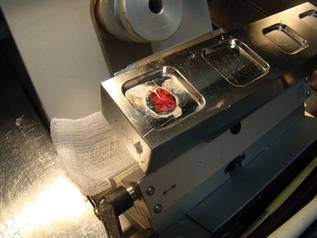
Only two mechanisms can flatten multiple tissue specimens at once: the $20,000 CryoHist machine, or the $529 stainless steel embedding wells, said Dr. Butler, chair of dermatology at the Scott and White Hospital and Clinic and professor of medicine at Texas A&M University, both in Temple, Tex.
Lower cost, convenience, and quality results make him a fan of the stainless steel embedding wells, which consist of 1-inch steel bars with wells cut out in different sizes and depths. The bars reside within a cryostat, which provides a heat sink for the rapid freezing of the specimen.
The surgeon or other operator places a specimen facedown on the smooth surface of a well and presses down on the peripheral edge of the specimen with a gloved finger. “Like putting your tongue to a cold flagpole in Wisconsin in winter, it sticks,” he said.
Optimal cutting temperature (OCT) compound—a cryopreservation medium—is then applied over the specimen, and a metal chuck with a cross-grid pattern to better hold onto frozen OCT is applied to the OCT. A freezing block that’s been kept cold within the cryostat can be placed over the stem of the chuck to freeze the specimen more quickly.
As Dr. Butler described it, one of the sets includes one freezing bar with a 24-mm well, a 36-mm chuck, and the overchuck freezing block. He described the complete set as three bars with different well sizes, six small chucks, four large chucks, four overchuck freezing blocks, a chuck bin, an elevated embedding block, and angled freezing forceps.
The stainless steel embedding wells are available from Dr. Stephen R. Peters, the pathologist who designed them, Dr. Butler said. Dr. Peters is at Hackensack (N.J.) University Medical Center and can be reached through his Web site or via e-mail.
In using the stainless steel embedding wells for seven consecutive specimens, Dr. Butler found that five of the seven specimens (71%) met the goal of having more than 90% of the epidermis present by the sixth retained section.
He compared the time needed to freeze a specimen and mount the block using several mechanisms. It took 105 seconds with the embedding wells, 56 seconds with the CryoHist, 68 seconds with the Miami Special, and 91 seconds with the Cryocup. Only the embedding wells and CryoHist could freeze and mount multiple specimens at the same time “so the overall process doesn’t take very long,” he said.
The CryoHist is a large machine, plumbed for liquid nitrogen that flattens specimens via a vacuum suction. Compared with embedding wells, its disadvantages include the high cost and the need for greater space, external power and liquid nitrogen, and consumables such as a plastic film that is used in the process, Dr. Butler said.
The Miami Special is a long-handled clamp with flat metal plates at the end on which partially frozen OCT and a chuck are placed. The specimen is placed on the OCT and the clamp is closed and dipped in liquid nitrogen to freeze. “The problem is that it’s very cumbersome and can only do one at a time,” he said.
The Davidson Cryocup is a metal device with a long handle and a cup at one end in which tissue is placed facedown and covered with OCT and a chuck. The cup is lowered into liquid nitrogen to freeze. “It has the same problem as the Miami Special: You can only process one specimen at a time,” he said.
Other mechanisms include the inexpensive cryomold, small plastic trays of different sizes and depths on which specimens are placed facedown and covered with OCT and a chuck before placement in a cryostat. The plastic cryomold is peeled back before sectioning, one specimen at a time.
An older technique employs a heat extractor that resides within some cryostats and remains cold. A chuck is placed on the rack within the cryostat, OCT is applied, and the specimen is placed “deep side up” on the OCT, he said. A cold round bar of the heat extractor is pressed down on the specimen and OCT until frozen.
Dr. Butler said he has no pertinent conflicts of interest.
MONTEREY, Calif. — Stainless steel embedding wells may be the best of several mechanisms available to flatten or “conform” tissue specimens for sectioning in Mohs surgery, in one expert’s opinion.
Sectioning of the peripheral/epidermal margin of the lesion is essential for Mohs surgery to ensure complete margin assessment. Most Mohs surgeons require that 90% or more of the epidermis be present to feel that they’re assessing an adequate epidermal margin, Dr. David F. Butler explained at a meeting of the American Society for Mohs Surgery.
Only two mechanisms can flatten multiple tissue specimens at once: the $20,000 CryoHist machine, or the $529 stainless steel embedding wells, said Dr. Butler, chair of dermatology at the Scott and White Hospital and Clinic and professor of medicine at Texas A&M University, both in Temple, Tex.
Lower cost, convenience, and quality results make him a fan of the stainless steel embedding wells, which consist of 1-inch steel bars with wells cut out in different sizes and depths. The bars reside within a cryostat, which provides a heat sink for the rapid freezing of the specimen.
The surgeon or other operator places a specimen facedown on the smooth surface of a well and presses down on the peripheral edge of the specimen with a gloved finger. “Like putting your tongue to a cold flagpole in Wisconsin in winter, it sticks,” he said.
Optimal cutting temperature (OCT) compound—a cryopreservation medium—is then applied over the specimen, and a metal chuck with a cross-grid pattern to better hold onto frozen OCT is applied to the OCT. A freezing block that’s been kept cold within the cryostat can be placed over the stem of the chuck to freeze the specimen more quickly.
As Dr. Butler described it, one of the sets includes one freezing bar with a 24-mm well, a 36-mm chuck, and the overchuck freezing block. He described the complete set as three bars with different well sizes, six small chucks, four large chucks, four overchuck freezing blocks, a chuck bin, an elevated embedding block, and angled freezing forceps.
The stainless steel embedding wells are available from Dr. Stephen R. Peters, the pathologist who designed them, Dr. Butler said. Dr. Peters is at Hackensack (N.J.) University Medical Center and can be reached through his Web site or via e-mail.
In using the stainless steel embedding wells for seven consecutive specimens, Dr. Butler found that five of the seven specimens (71%) met the goal of having more than 90% of the epidermis present by the sixth retained section.
He compared the time needed to freeze a specimen and mount the block using several mechanisms. It took 105 seconds with the embedding wells, 56 seconds with the CryoHist, 68 seconds with the Miami Special, and 91 seconds with the Cryocup. Only the embedding wells and CryoHist could freeze and mount multiple specimens at the same time “so the overall process doesn’t take very long,” he said.
The CryoHist is a large machine, plumbed for liquid nitrogen that flattens specimens via a vacuum suction. Compared with embedding wells, its disadvantages include the high cost and the need for greater space, external power and liquid nitrogen, and consumables such as a plastic film that is used in the process, Dr. Butler said.
The Miami Special is a long-handled clamp with flat metal plates at the end on which partially frozen OCT and a chuck are placed. The specimen is placed on the OCT and the clamp is closed and dipped in liquid nitrogen to freeze. “The problem is that it’s very cumbersome and can only do one at a time,” he said.
The Davidson Cryocup is a metal device with a long handle and a cup at one end in which tissue is placed facedown and covered with OCT and a chuck. The cup is lowered into liquid nitrogen to freeze. “It has the same problem as the Miami Special: You can only process one specimen at a time,” he said.
Other mechanisms include the inexpensive cryomold, small plastic trays of different sizes and depths on which specimens are placed facedown and covered with OCT and a chuck before placement in a cryostat. The plastic cryomold is peeled back before sectioning, one specimen at a time.
An older technique employs a heat extractor that resides within some cryostats and remains cold. A chuck is placed on the rack within the cryostat, OCT is applied, and the specimen is placed “deep side up” on the OCT, he said. A cold round bar of the heat extractor is pressed down on the specimen and OCT until frozen.
Dr. Butler said he has no pertinent conflicts of interest.
MONTEREY, Calif. — Stainless steel embedding wells may be the best of several mechanisms available to flatten or “conform” tissue specimens for sectioning in Mohs surgery, in one expert’s opinion.
Sectioning of the peripheral/epidermal margin of the lesion is essential for Mohs surgery to ensure complete margin assessment. Most Mohs surgeons require that 90% or more of the epidermis be present to feel that they’re assessing an adequate epidermal margin, Dr. David F. Butler explained at a meeting of the American Society for Mohs Surgery.
Only two mechanisms can flatten multiple tissue specimens at once: the $20,000 CryoHist machine, or the $529 stainless steel embedding wells, said Dr. Butler, chair of dermatology at the Scott and White Hospital and Clinic and professor of medicine at Texas A&M University, both in Temple, Tex.
Lower cost, convenience, and quality results make him a fan of the stainless steel embedding wells, which consist of 1-inch steel bars with wells cut out in different sizes and depths. The bars reside within a cryostat, which provides a heat sink for the rapid freezing of the specimen.
The surgeon or other operator places a specimen facedown on the smooth surface of a well and presses down on the peripheral edge of the specimen with a gloved finger. “Like putting your tongue to a cold flagpole in Wisconsin in winter, it sticks,” he said.
Optimal cutting temperature (OCT) compound—a cryopreservation medium—is then applied over the specimen, and a metal chuck with a cross-grid pattern to better hold onto frozen OCT is applied to the OCT. A freezing block that’s been kept cold within the cryostat can be placed over the stem of the chuck to freeze the specimen more quickly.
As Dr. Butler described it, one of the sets includes one freezing bar with a 24-mm well, a 36-mm chuck, and the overchuck freezing block. He described the complete set as three bars with different well sizes, six small chucks, four large chucks, four overchuck freezing blocks, a chuck bin, an elevated embedding block, and angled freezing forceps.
The stainless steel embedding wells are available from Dr. Stephen R. Peters, the pathologist who designed them, Dr. Butler said. Dr. Peters is at Hackensack (N.J.) University Medical Center and can be reached through his Web site or via e-mail.
In using the stainless steel embedding wells for seven consecutive specimens, Dr. Butler found that five of the seven specimens (71%) met the goal of having more than 90% of the epidermis present by the sixth retained section.
He compared the time needed to freeze a specimen and mount the block using several mechanisms. It took 105 seconds with the embedding wells, 56 seconds with the CryoHist, 68 seconds with the Miami Special, and 91 seconds with the Cryocup. Only the embedding wells and CryoHist could freeze and mount multiple specimens at the same time “so the overall process doesn’t take very long,” he said.
The CryoHist is a large machine, plumbed for liquid nitrogen that flattens specimens via a vacuum suction. Compared with embedding wells, its disadvantages include the high cost and the need for greater space, external power and liquid nitrogen, and consumables such as a plastic film that is used in the process, Dr. Butler said.
The Miami Special is a long-handled clamp with flat metal plates at the end on which partially frozen OCT and a chuck are placed. The specimen is placed on the OCT and the clamp is closed and dipped in liquid nitrogen to freeze. “The problem is that it’s very cumbersome and can only do one at a time,” he said.
The Davidson Cryocup is a metal device with a long handle and a cup at one end in which tissue is placed facedown and covered with OCT and a chuck. The cup is lowered into liquid nitrogen to freeze. “It has the same problem as the Miami Special: You can only process one specimen at a time,” he said.
Other mechanisms include the inexpensive cryomold, small plastic trays of different sizes and depths on which specimens are placed facedown and covered with OCT and a chuck before placement in a cryostat. The plastic cryomold is peeled back before sectioning, one specimen at a time.
An older technique employs a heat extractor that resides within some cryostats and remains cold. A chuck is placed on the rack within the cryostat, OCT is applied, and the specimen is placed “deep side up” on the OCT, he said. A cold round bar of the heat extractor is pressed down on the specimen and OCT until frozen.
Dr. Butler said he has no pertinent conflicts of interest.
ASCO: In the Pipeline: IL-21 Active in Metastatic Melanoma
CHICAGO – The novel cytokine interleukin-21 has shown itself to be biologically active with an overall response rate of 22% in first-line metastatic melanoma patients.
Median progression-free survival reached 4.32 months in the phase II, multicenter IND 189 trial involving 40 patients, Dr. Teresa Petrella reported on behalf of the National Cancer Institute of Canada Clinical Trials Group (NCIC CTG).
This finding held up well when it was benchmarked against the widely cited Korn meta-analysis of phase II cooperative group trials in metastatic stage IV melanoma (J. Clin. Oncol. 2008;26:527-34) and 68 historical NCIC CTG melanoma patients who matched the IND 189 study entry criteria. Median progression-free survival was 1.31 months in the Korn analysis and 1.58 months for the NCIC CTG patients, said Dr. Petrella of the Odette Cancer Centre in Toronto.
Age, performance status, and interleukin-21 (IL-21) treatment were significant predictors of progression-free survival in a multivariate analysis among IL-21–treated patients and historical controls that adjusted for prognostic factors.
Based on the findings, study sponsor ZymoGenetics Inc. is planning a phase IIB randomized trial with the NCIC CTG to validate the results, Dr. Petrella said.
Invited discussant Dr. Antoni Ribas of the University of California, Los Angeles, said the response rate was very respectable for a single-agent cytokine in previously untreated metastatic melanoma. The caveat is that the responses seem to be of limited duration.
Nine patients had a partial response by RECIST (Response Evaluation Criteria in Solid Tumors) and CT for the objective response rate of 22.5% and median duration of 5.0 months. In all, 16 patients (40%) had stable disease for a median duration of 5.3 months.
“Two patients had a tail of 1.5 years of progression-free survival, but there was no clear evidence that most of the responses were durable, which questions if this is a memory T-cell response or maybe more of an innate response,” said Dr. Ribas. “I hope that further clinical investigation will address this question.”
IL-21 is a novel cytokine that has multiple immunomodulatory effects including beneficial effects on B cells, natural killer cells, and T cells, in particular CD4 and CD8 T cells. In two phase I, dose-escalation studies of IL-21 in metastatic melanoma, there was evidence of tumor response and immune activation with an eightfold increase in soluble CD25, reflecting lymphocyte activation (J. Clin. Oncol. 2008;26:2034-9; Clin. Cancer Res. 2007;13:3630-6).
The majority of patients in the IND 189 trial received IL-21 30 mcg/kg per day for 5 days on the first, third, and fifth weeks of an 8-week schedule, after dose-limiting toxicities were observed at higher, more frequent dosing.
Overall, IL-21 was well tolerated, with most adverse events being grade 1/2, Dr. Petrella said. The most common of these were fatigue, rash, fever, myalgia, anorexia, chills, and nausea, which were very similar to what was seen in the phase I studies. Seven patients experienced grade 3 rash.
Nine serious adverse events were reported, of which four were possibly, probably, or definitely treatment related. They included one infection with grade 4 neutropenia, two grade 4 liver enzyme elevations, and one second malignancy (acute myeloid leukemia) that occurred 11 months after the patient received only 5 days of interleukin-21 and thus was most likely not related to the treatment, she said.
Most patients had an Eastern Cooperative Oncology Group performance status of 0, 17 had received prior adjuvant immunotherapy with interferon, and 32 had metastases to the lung. Their median age was 56 years. Responses were seen in all sites of disease, and patients continue to be followed.
ZymoGenetics Inc. provided research funds and employs one of the researchers. Dr. Ribas reports honoraria from Amgen Inc. and Roche.
CHICAGO – The novel cytokine interleukin-21 has shown itself to be biologically active with an overall response rate of 22% in first-line metastatic melanoma patients.
Median progression-free survival reached 4.32 months in the phase II, multicenter IND 189 trial involving 40 patients, Dr. Teresa Petrella reported on behalf of the National Cancer Institute of Canada Clinical Trials Group (NCIC CTG).
This finding held up well when it was benchmarked against the widely cited Korn meta-analysis of phase II cooperative group trials in metastatic stage IV melanoma (J. Clin. Oncol. 2008;26:527-34) and 68 historical NCIC CTG melanoma patients who matched the IND 189 study entry criteria. Median progression-free survival was 1.31 months in the Korn analysis and 1.58 months for the NCIC CTG patients, said Dr. Petrella of the Odette Cancer Centre in Toronto.
Age, performance status, and interleukin-21 (IL-21) treatment were significant predictors of progression-free survival in a multivariate analysis among IL-21–treated patients and historical controls that adjusted for prognostic factors.
Based on the findings, study sponsor ZymoGenetics Inc. is planning a phase IIB randomized trial with the NCIC CTG to validate the results, Dr. Petrella said.
Invited discussant Dr. Antoni Ribas of the University of California, Los Angeles, said the response rate was very respectable for a single-agent cytokine in previously untreated metastatic melanoma. The caveat is that the responses seem to be of limited duration.
Nine patients had a partial response by RECIST (Response Evaluation Criteria in Solid Tumors) and CT for the objective response rate of 22.5% and median duration of 5.0 months. In all, 16 patients (40%) had stable disease for a median duration of 5.3 months.
“Two patients had a tail of 1.5 years of progression-free survival, but there was no clear evidence that most of the responses were durable, which questions if this is a memory T-cell response or maybe more of an innate response,” said Dr. Ribas. “I hope that further clinical investigation will address this question.”
IL-21 is a novel cytokine that has multiple immunomodulatory effects including beneficial effects on B cells, natural killer cells, and T cells, in particular CD4 and CD8 T cells. In two phase I, dose-escalation studies of IL-21 in metastatic melanoma, there was evidence of tumor response and immune activation with an eightfold increase in soluble CD25, reflecting lymphocyte activation (J. Clin. Oncol. 2008;26:2034-9; Clin. Cancer Res. 2007;13:3630-6).
The majority of patients in the IND 189 trial received IL-21 30 mcg/kg per day for 5 days on the first, third, and fifth weeks of an 8-week schedule, after dose-limiting toxicities were observed at higher, more frequent dosing.
Overall, IL-21 was well tolerated, with most adverse events being grade 1/2, Dr. Petrella said. The most common of these were fatigue, rash, fever, myalgia, anorexia, chills, and nausea, which were very similar to what was seen in the phase I studies. Seven patients experienced grade 3 rash.
Nine serious adverse events were reported, of which four were possibly, probably, or definitely treatment related. They included one infection with grade 4 neutropenia, two grade 4 liver enzyme elevations, and one second malignancy (acute myeloid leukemia) that occurred 11 months after the patient received only 5 days of interleukin-21 and thus was most likely not related to the treatment, she said.
Most patients had an Eastern Cooperative Oncology Group performance status of 0, 17 had received prior adjuvant immunotherapy with interferon, and 32 had metastases to the lung. Their median age was 56 years. Responses were seen in all sites of disease, and patients continue to be followed.
ZymoGenetics Inc. provided research funds and employs one of the researchers. Dr. Ribas reports honoraria from Amgen Inc. and Roche.
CHICAGO – The novel cytokine interleukin-21 has shown itself to be biologically active with an overall response rate of 22% in first-line metastatic melanoma patients.
Median progression-free survival reached 4.32 months in the phase II, multicenter IND 189 trial involving 40 patients, Dr. Teresa Petrella reported on behalf of the National Cancer Institute of Canada Clinical Trials Group (NCIC CTG).
This finding held up well when it was benchmarked against the widely cited Korn meta-analysis of phase II cooperative group trials in metastatic stage IV melanoma (J. Clin. Oncol. 2008;26:527-34) and 68 historical NCIC CTG melanoma patients who matched the IND 189 study entry criteria. Median progression-free survival was 1.31 months in the Korn analysis and 1.58 months for the NCIC CTG patients, said Dr. Petrella of the Odette Cancer Centre in Toronto.
Age, performance status, and interleukin-21 (IL-21) treatment were significant predictors of progression-free survival in a multivariate analysis among IL-21–treated patients and historical controls that adjusted for prognostic factors.
Based on the findings, study sponsor ZymoGenetics Inc. is planning a phase IIB randomized trial with the NCIC CTG to validate the results, Dr. Petrella said.
Invited discussant Dr. Antoni Ribas of the University of California, Los Angeles, said the response rate was very respectable for a single-agent cytokine in previously untreated metastatic melanoma. The caveat is that the responses seem to be of limited duration.
Nine patients had a partial response by RECIST (Response Evaluation Criteria in Solid Tumors) and CT for the objective response rate of 22.5% and median duration of 5.0 months. In all, 16 patients (40%) had stable disease for a median duration of 5.3 months.
“Two patients had a tail of 1.5 years of progression-free survival, but there was no clear evidence that most of the responses were durable, which questions if this is a memory T-cell response or maybe more of an innate response,” said Dr. Ribas. “I hope that further clinical investigation will address this question.”
IL-21 is a novel cytokine that has multiple immunomodulatory effects including beneficial effects on B cells, natural killer cells, and T cells, in particular CD4 and CD8 T cells. In two phase I, dose-escalation studies of IL-21 in metastatic melanoma, there was evidence of tumor response and immune activation with an eightfold increase in soluble CD25, reflecting lymphocyte activation (J. Clin. Oncol. 2008;26:2034-9; Clin. Cancer Res. 2007;13:3630-6).
The majority of patients in the IND 189 trial received IL-21 30 mcg/kg per day for 5 days on the first, third, and fifth weeks of an 8-week schedule, after dose-limiting toxicities were observed at higher, more frequent dosing.
Overall, IL-21 was well tolerated, with most adverse events being grade 1/2, Dr. Petrella said. The most common of these were fatigue, rash, fever, myalgia, anorexia, chills, and nausea, which were very similar to what was seen in the phase I studies. Seven patients experienced grade 3 rash.
Nine serious adverse events were reported, of which four were possibly, probably, or definitely treatment related. They included one infection with grade 4 neutropenia, two grade 4 liver enzyme elevations, and one second malignancy (acute myeloid leukemia) that occurred 11 months after the patient received only 5 days of interleukin-21 and thus was most likely not related to the treatment, she said.
Most patients had an Eastern Cooperative Oncology Group performance status of 0, 17 had received prior adjuvant immunotherapy with interferon, and 32 had metastases to the lung. Their median age was 56 years. Responses were seen in all sites of disease, and patients continue to be followed.
ZymoGenetics Inc. provided research funds and employs one of the researchers. Dr. Ribas reports honoraria from Amgen Inc. and Roche.