User login
Some psoriasis patients benefit from switching anti-TNF agents
Psoriasis patients may have more success with a second tumor necrosis factor (TNF) antagonist after failure with a first, report Paul S. Yamauchi, MD, PhD, and coauthors.
Investigators analyzed 15 studies evaluating the efficacy of switching TNF antagonists after primary or secondary failure. Response rates at 24 weeks for a second antagonist were 30%-74% for a 75% improvement in Psoriasis Area and Severity Index score, and 20%-70% for achieving a Physician Global Assessment score of 0/1. Mean improvements in Dermatology Life Quality Index ranged from –3.5 to –13, Dr. Yamauchi and colleagues reported.

Patients who experienced secondary failure with initial treatment generally achieved better responses than those with primary failure, the authors said.
Though response rates to a second anti-TNF agent were lower than for a first, “a substantial proportion of patients in every study achieved treatment success,” they added.
Read the full article in the Journal of the American Academy of Dermatology.
Psoriasis patients may have more success with a second tumor necrosis factor (TNF) antagonist after failure with a first, report Paul S. Yamauchi, MD, PhD, and coauthors.
Investigators analyzed 15 studies evaluating the efficacy of switching TNF antagonists after primary or secondary failure. Response rates at 24 weeks for a second antagonist were 30%-74% for a 75% improvement in Psoriasis Area and Severity Index score, and 20%-70% for achieving a Physician Global Assessment score of 0/1. Mean improvements in Dermatology Life Quality Index ranged from –3.5 to –13, Dr. Yamauchi and colleagues reported.
Patients who experienced secondary failure with initial treatment generally achieved better responses than those with primary failure, the authors said.
Though response rates to a second anti-TNF agent were lower than for a first, “a substantial proportion of patients in every study achieved treatment success,” they added.
Read the full article in the Journal of the American Academy of Dermatology.
Psoriasis patients may have more success with a second tumor necrosis factor (TNF) antagonist after failure with a first, report Paul S. Yamauchi, MD, PhD, and coauthors.
Investigators analyzed 15 studies evaluating the efficacy of switching TNF antagonists after primary or secondary failure. Response rates at 24 weeks for a second antagonist were 30%-74% for a 75% improvement in Psoriasis Area and Severity Index score, and 20%-70% for achieving a Physician Global Assessment score of 0/1. Mean improvements in Dermatology Life Quality Index ranged from –3.5 to –13, Dr. Yamauchi and colleagues reported.
Patients who experienced secondary failure with initial treatment generally achieved better responses than those with primary failure, the authors said.
Though response rates to a second anti-TNF agent were lower than for a first, “a substantial proportion of patients in every study achieved treatment success,” they added.
Read the full article in the Journal of the American Academy of Dermatology.
FROM THE JOURNAL OF THE AMERICAN ACADEMY OF DERMATOLOGY

Biosimilar version of etanercept gains FDA approval
A biosimilar of etanercept received clearance for marketing from the Food and Drug Administration on Aug. 30 for all of the inflammatory disease indications held by the reference originator etanercept product, Enbrel, according to an announcement from the agency.
Approval for all of Enbrel’s indications – rheumatoid arthritis, plaque psoriasis, psoriatic arthritis, ankylosing spondylitis, and polyarticular juvenile idiopathic arthritis – was initially met with skepticism by members of the agency’s Arthritis Advisory Committee at a meeting in July because the biosimilar was compared against Enbrel in patients with plaque psoriasis only, but eventually all panel members voted to recommend approval.

The approval allows the biosimilar etanercept, called etanercept-szzs, to be marketed as a biosimilar only, not as an interchangeable product. The FDA has not yet developed guidance for manufacturers to follow to get approval for interchangeability, which means that a biosimilar “may be substituted for the reference product by a pharmacist without the intervention of the health care provider who prescribed the reference product,” according to the agency.
“We carefully evaluate the structural and functional characteristics of these complex molecules. Patients and providers can have confidence that there are no clinically meaningful differences in safety and efficacy from the reference product,” Janet Woodcock, MD, director of the FDA’s Center for Drug Evaluation and Research, said in the agency’s announcement.
Etanercept-szzs will be marketed by Sandoz as Erelzi. Erelzi’s prescribing information can be found here. The biosimilar is currently undergoing review with the European Medicines Agency.
A biosimilar of etanercept received clearance for marketing from the Food and Drug Administration on Aug. 30 for all of the inflammatory disease indications held by the reference originator etanercept product, Enbrel, according to an announcement from the agency.
Approval for all of Enbrel’s indications – rheumatoid arthritis, plaque psoriasis, psoriatic arthritis, ankylosing spondylitis, and polyarticular juvenile idiopathic arthritis – was initially met with skepticism by members of the agency’s Arthritis Advisory Committee at a meeting in July because the biosimilar was compared against Enbrel in patients with plaque psoriasis only, but eventually all panel members voted to recommend approval.
The approval allows the biosimilar etanercept, called etanercept-szzs, to be marketed as a biosimilar only, not as an interchangeable product. The FDA has not yet developed guidance for manufacturers to follow to get approval for interchangeability, which means that a biosimilar “may be substituted for the reference product by a pharmacist without the intervention of the health care provider who prescribed the reference product,” according to the agency.
“We carefully evaluate the structural and functional characteristics of these complex molecules. Patients and providers can have confidence that there are no clinically meaningful differences in safety and efficacy from the reference product,” Janet Woodcock, MD, director of the FDA’s Center for Drug Evaluation and Research, said in the agency’s announcement.
Etanercept-szzs will be marketed by Sandoz as Erelzi. Erelzi’s prescribing information can be found here. The biosimilar is currently undergoing review with the European Medicines Agency.
A biosimilar of etanercept received clearance for marketing from the Food and Drug Administration on Aug. 30 for all of the inflammatory disease indications held by the reference originator etanercept product, Enbrel, according to an announcement from the agency.
Approval for all of Enbrel’s indications – rheumatoid arthritis, plaque psoriasis, psoriatic arthritis, ankylosing spondylitis, and polyarticular juvenile idiopathic arthritis – was initially met with skepticism by members of the agency’s Arthritis Advisory Committee at a meeting in July because the biosimilar was compared against Enbrel in patients with plaque psoriasis only, but eventually all panel members voted to recommend approval.
The approval allows the biosimilar etanercept, called etanercept-szzs, to be marketed as a biosimilar only, not as an interchangeable product. The FDA has not yet developed guidance for manufacturers to follow to get approval for interchangeability, which means that a biosimilar “may be substituted for the reference product by a pharmacist without the intervention of the health care provider who prescribed the reference product,” according to the agency.
“We carefully evaluate the structural and functional characteristics of these complex molecules. Patients and providers can have confidence that there are no clinically meaningful differences in safety and efficacy from the reference product,” Janet Woodcock, MD, director of the FDA’s Center for Drug Evaluation and Research, said in the agency’s announcement.
Etanercept-szzs will be marketed by Sandoz as Erelzi. Erelzi’s prescribing information can be found here. The biosimilar is currently undergoing review with the European Medicines Agency.

Ixekizumab improved psoriatic arthritis in patients who had not taken biologics
Two different doses of the humanized monoclonal antibody ixekizumab improved signs and symptoms of active psoriatic arthritis in a phase III manufacturer-sponsored trial of patients who had not taken a biologic drug before.
The agent selectively binds and neutralizes interleukin (IL)-17A, which promotes joint inflammation and damage via several mechanisms. So the study findings support the view that IL-17A is a key cytokine in the pathogenesis of psoriatic arthritis and an appropriate therapeutic target, said Philip J. Mease, MD, of the department of rheumatology at Swedish Medical Center and the University of Washington, Seattle, and his associates.

They are performing the ongoing, 3-year, randomized, double-blind trial (SPIRIT-P1) comparing responses with an 80-mg dose of ixekizumab every 2 weeks (103 patients), an 80-mg dose every 4 weeks (107 patients), a 40-mg dose of adalimumab (Humira) every 2 weeks (101 patients, active control group), and matching placebo (106 patients, placebo-control group). Each of the two ixekizumab arms received a starting dose of 160 mg given as two injections at week 0. This report presented the findings after the initial 24-week, double-blind treatment period of the trial.
The study participants are adults with active psoriatic arthritis who had never been treated with biologic agents and who continued taking their usual doses of conventional disease-modifying antirheumatic drugs, oral corticosteroids, opiates, and/or nonsteroidal anti-inflammatory drugs/Cox-2 inhibitors during the study. The mean patient age was 49.5 years. Of the 382 who completed this portion of the study, 57 showed an inadequate response and required rescue medication, including 10 on the lower dose of ixekizumab, 11 on the higher dose of ixekizumab, 9 taking adalimumab, and 27 taking placebo.
The primary efficacy endpoint, ACR20 response at week 24, was met by 62.1% of the higher-dose ixekizumab group, 57.9% of the lower-dose ixekizumab group, and 57.4% of the adalimumab group, all of which were significantly greater than the 30.2% rate in the placebo group. Both doses of the study drug as well as the active control drug also improved secondary endpoints: reducing mean levels of disease activity as measured by the 28-joint Disease Activity Score using on C-reactive protein, improving patient-reported physical function on the Health Assessment Questionnaire–Disability Index, and improving disease-related physical health as measured by the SF-36, the investigators said (Ann Rheum Dis. 2016 Aug 23. doi: 10.1136/annrheumdis-2016-209709).
In addition, the progression of structural joint damage, as assessed on radiographs of bone erosions and joint-space narrowing in the hands and feet, was significantly less with the three active treatments than with placebo. Among patients with the most extensive disease, a significantly greater percentage achieved Psoriasis Area and Severity Index 75 level of improvement with the three active treatments than with placebo. And among patients with nail involvement, mean improvements in Nail Psoriasis Severity Index scores were significantly higher with the three active treatments than with placebo.
Adverse effects included grade 1 and 2 neutropenia, herpes zoster involving the eyelid, gastroenteritis, esophageal candidiasis, and depression-related symptoms. All infections resolved with treatment, and none required discontinuation of the study drug.
This study was funded and sponsored by Eli Lilly, maker of ixekizumab. Dr. Mease reported receiving grants, personal fees, and other support from Eli Lilly, AbbVie, Amgen, Bristol Myers Squibb, Celgene, Crescendo, Genentech, Janssen, Pfizer, UCB Pharma, Merck, Novartis, and Corrona. His associates reported ties to numerous industry sources.
Two different doses of the humanized monoclonal antibody ixekizumab improved signs and symptoms of active psoriatic arthritis in a phase III manufacturer-sponsored trial of patients who had not taken a biologic drug before.
The agent selectively binds and neutralizes interleukin (IL)-17A, which promotes joint inflammation and damage via several mechanisms. So the study findings support the view that IL-17A is a key cytokine in the pathogenesis of psoriatic arthritis and an appropriate therapeutic target, said Philip J. Mease, MD, of the department of rheumatology at Swedish Medical Center and the University of Washington, Seattle, and his associates.
They are performing the ongoing, 3-year, randomized, double-blind trial (SPIRIT-P1) comparing responses with an 80-mg dose of ixekizumab every 2 weeks (103 patients), an 80-mg dose every 4 weeks (107 patients), a 40-mg dose of adalimumab (Humira) every 2 weeks (101 patients, active control group), and matching placebo (106 patients, placebo-control group). Each of the two ixekizumab arms received a starting dose of 160 mg given as two injections at week 0. This report presented the findings after the initial 24-week, double-blind treatment period of the trial.
The study participants are adults with active psoriatic arthritis who had never been treated with biologic agents and who continued taking their usual doses of conventional disease-modifying antirheumatic drugs, oral corticosteroids, opiates, and/or nonsteroidal anti-inflammatory drugs/Cox-2 inhibitors during the study. The mean patient age was 49.5 years. Of the 382 who completed this portion of the study, 57 showed an inadequate response and required rescue medication, including 10 on the lower dose of ixekizumab, 11 on the higher dose of ixekizumab, 9 taking adalimumab, and 27 taking placebo.
The primary efficacy endpoint, ACR20 response at week 24, was met by 62.1% of the higher-dose ixekizumab group, 57.9% of the lower-dose ixekizumab group, and 57.4% of the adalimumab group, all of which were significantly greater than the 30.2% rate in the placebo group. Both doses of the study drug as well as the active control drug also improved secondary endpoints: reducing mean levels of disease activity as measured by the 28-joint Disease Activity Score using on C-reactive protein, improving patient-reported physical function on the Health Assessment Questionnaire–Disability Index, and improving disease-related physical health as measured by the SF-36, the investigators said (Ann Rheum Dis. 2016 Aug 23. doi: 10.1136/annrheumdis-2016-209709).
In addition, the progression of structural joint damage, as assessed on radiographs of bone erosions and joint-space narrowing in the hands and feet, was significantly less with the three active treatments than with placebo. Among patients with the most extensive disease, a significantly greater percentage achieved Psoriasis Area and Severity Index 75 level of improvement with the three active treatments than with placebo. And among patients with nail involvement, mean improvements in Nail Psoriasis Severity Index scores were significantly higher with the three active treatments than with placebo.
Adverse effects included grade 1 and 2 neutropenia, herpes zoster involving the eyelid, gastroenteritis, esophageal candidiasis, and depression-related symptoms. All infections resolved with treatment, and none required discontinuation of the study drug.
This study was funded and sponsored by Eli Lilly, maker of ixekizumab. Dr. Mease reported receiving grants, personal fees, and other support from Eli Lilly, AbbVie, Amgen, Bristol Myers Squibb, Celgene, Crescendo, Genentech, Janssen, Pfizer, UCB Pharma, Merck, Novartis, and Corrona. His associates reported ties to numerous industry sources.
Two different doses of the humanized monoclonal antibody ixekizumab improved signs and symptoms of active psoriatic arthritis in a phase III manufacturer-sponsored trial of patients who had not taken a biologic drug before.
The agent selectively binds and neutralizes interleukin (IL)-17A, which promotes joint inflammation and damage via several mechanisms. So the study findings support the view that IL-17A is a key cytokine in the pathogenesis of psoriatic arthritis and an appropriate therapeutic target, said Philip J. Mease, MD, of the department of rheumatology at Swedish Medical Center and the University of Washington, Seattle, and his associates.
They are performing the ongoing, 3-year, randomized, double-blind trial (SPIRIT-P1) comparing responses with an 80-mg dose of ixekizumab every 2 weeks (103 patients), an 80-mg dose every 4 weeks (107 patients), a 40-mg dose of adalimumab (Humira) every 2 weeks (101 patients, active control group), and matching placebo (106 patients, placebo-control group). Each of the two ixekizumab arms received a starting dose of 160 mg given as two injections at week 0. This report presented the findings after the initial 24-week, double-blind treatment period of the trial.
The study participants are adults with active psoriatic arthritis who had never been treated with biologic agents and who continued taking their usual doses of conventional disease-modifying antirheumatic drugs, oral corticosteroids, opiates, and/or nonsteroidal anti-inflammatory drugs/Cox-2 inhibitors during the study. The mean patient age was 49.5 years. Of the 382 who completed this portion of the study, 57 showed an inadequate response and required rescue medication, including 10 on the lower dose of ixekizumab, 11 on the higher dose of ixekizumab, 9 taking adalimumab, and 27 taking placebo.
The primary efficacy endpoint, ACR20 response at week 24, was met by 62.1% of the higher-dose ixekizumab group, 57.9% of the lower-dose ixekizumab group, and 57.4% of the adalimumab group, all of which were significantly greater than the 30.2% rate in the placebo group. Both doses of the study drug as well as the active control drug also improved secondary endpoints: reducing mean levels of disease activity as measured by the 28-joint Disease Activity Score using on C-reactive protein, improving patient-reported physical function on the Health Assessment Questionnaire–Disability Index, and improving disease-related physical health as measured by the SF-36, the investigators said (Ann Rheum Dis. 2016 Aug 23. doi: 10.1136/annrheumdis-2016-209709).
In addition, the progression of structural joint damage, as assessed on radiographs of bone erosions and joint-space narrowing in the hands and feet, was significantly less with the three active treatments than with placebo. Among patients with the most extensive disease, a significantly greater percentage achieved Psoriasis Area and Severity Index 75 level of improvement with the three active treatments than with placebo. And among patients with nail involvement, mean improvements in Nail Psoriasis Severity Index scores were significantly higher with the three active treatments than with placebo.
Adverse effects included grade 1 and 2 neutropenia, herpes zoster involving the eyelid, gastroenteritis, esophageal candidiasis, and depression-related symptoms. All infections resolved with treatment, and none required discontinuation of the study drug.
This study was funded and sponsored by Eli Lilly, maker of ixekizumab. Dr. Mease reported receiving grants, personal fees, and other support from Eli Lilly, AbbVie, Amgen, Bristol Myers Squibb, Celgene, Crescendo, Genentech, Janssen, Pfizer, UCB Pharma, Merck, Novartis, and Corrona. His associates reported ties to numerous industry sources.
FROM ANNALS OF THE RHEUMATIC DISEASES
Key clinical point: Ixekizumab improved signs and symptoms of active psoriatic arthritis in a phase III manufacturer-sponsored trial of patients who had not taken biologics before.
Major finding: The primary endpoint, ACR20 response at week 24, was met by 62.1% of the lower-dose ixekizumab group, 57.9% of the higher-dose ixekizumab group, and 57.4% of the adalimumab group, which was significantly greater than the 30.2% rate in the placebo group.
Data source: A randomized, double-blind, placebo- and active treatment-controlled clinical trial involving 417 adults naive to biologic therapy.
Disclosures: This study was funded and sponsored by Eli Lilly, maker of ixekizumab. Dr. Mease reported receiving grants, personal fees, and other support from Eli Lilly, AbbVie, Amgen, Bristol Myers Squibb, Celgene, Crescendo, Genentech, Janssen, Pfizer, UCB Pharma, Merck, Novartis, and Corrona. His associates reported ties to numerous industry sources.

Psoriasis cardiovascular risk parallels type 2 diabetes
Psoriasis increased the measures of coronary artery calcium at a level similar to that seen in type 2 diabetes mellitus, independent of cardiovascular disease risk factors, based on data from a trio of cross-sectional studies including 387 adults. .
“Psoriasis and type 2 diabetes share similar cardiovascular risk profiles, which may predispose patients to developing coronary atherosclerosis at a relatively young age,” wrote Bobbak Mansouri, MD, of Baylor University Medical Center in Dallas and his associates (JAMA Dermatol. 2016. [doi: 10.1001/jamadermatol.2016.2907]).

The researchers compared coronary artery calcium (CAC) levels in patients with psoriasis, patients with type 2 diabetes, and healthy controls. CAC has become an accepted measure of atherosclerosis and “the cornerstone for screening the risk of future cardiac events and improving cardiovascular risk stratification beyond traditional risk factors, especially in higher-risk groups,” according to the investigators. The average age of the patients was 52 years, 50% were female, and at least 92% were white.
The researchers used a hierarchical Tobit regression analysis to determine the association between disease and CAC level, as measured by the Agatston score. After controlling for confounding variables, including cardiovascular risk factors (low-density lipoprotein cholesterol, high-density lipoprotein cholesterol, triglycerides, fasting blood glucose, systolic blood pressure, and tobacco use), the association with CAC was similar in psoriasis patients and type 2 diabetes patients (Tobit regression ratio [TRR], 0.89 and 0.79, respectively).
In a logistic multivariate regression analysis, patients with either psoriasis or type 2 diabetes were approximately twice as likely to have evidence of CAC as were healthy controls (odds ratio, 2.35 and 2.18, respectively), and psoriasis remained independently associated with the presence of CAC.
“When we added use of systemic or biological therapy to the models, the TRR and OR increased; however, these analyses were exploratory,” wrote Dr. Mansouri and his associates.
The study was limited by factors including the cross-sectional design and lack of diversity in the patient population, the investigators noted. However, the results suggest that “CAC assessment may be considered in patients with psoriasis who have two or more traditional cardiovascular risk factors given the high prevalence of CAC observed in this study,” they said.
Dr. Mansouri disclosed serving on an advisory board and receiving an honorarium from Celgene, maker of the psoriasis drug apremilast (Otezl). Study coauthors disclosed financial relationships with multiple pharmaceutical companies.
Psoriasis increased the measures of coronary artery calcium at a level similar to that seen in type 2 diabetes mellitus, independent of cardiovascular disease risk factors, based on data from a trio of cross-sectional studies including 387 adults. .
“Psoriasis and type 2 diabetes share similar cardiovascular risk profiles, which may predispose patients to developing coronary atherosclerosis at a relatively young age,” wrote Bobbak Mansouri, MD, of Baylor University Medical Center in Dallas and his associates (JAMA Dermatol. 2016. [doi: 10.1001/jamadermatol.2016.2907]).
The researchers compared coronary artery calcium (CAC) levels in patients with psoriasis, patients with type 2 diabetes, and healthy controls. CAC has become an accepted measure of atherosclerosis and “the cornerstone for screening the risk of future cardiac events and improving cardiovascular risk stratification beyond traditional risk factors, especially in higher-risk groups,” according to the investigators. The average age of the patients was 52 years, 50% were female, and at least 92% were white.
The researchers used a hierarchical Tobit regression analysis to determine the association between disease and CAC level, as measured by the Agatston score. After controlling for confounding variables, including cardiovascular risk factors (low-density lipoprotein cholesterol, high-density lipoprotein cholesterol, triglycerides, fasting blood glucose, systolic blood pressure, and tobacco use), the association with CAC was similar in psoriasis patients and type 2 diabetes patients (Tobit regression ratio [TRR], 0.89 and 0.79, respectively).
In a logistic multivariate regression analysis, patients with either psoriasis or type 2 diabetes were approximately twice as likely to have evidence of CAC as were healthy controls (odds ratio, 2.35 and 2.18, respectively), and psoriasis remained independently associated with the presence of CAC.
“When we added use of systemic or biological therapy to the models, the TRR and OR increased; however, these analyses were exploratory,” wrote Dr. Mansouri and his associates.
The study was limited by factors including the cross-sectional design and lack of diversity in the patient population, the investigators noted. However, the results suggest that “CAC assessment may be considered in patients with psoriasis who have two or more traditional cardiovascular risk factors given the high prevalence of CAC observed in this study,” they said.
Dr. Mansouri disclosed serving on an advisory board and receiving an honorarium from Celgene, maker of the psoriasis drug apremilast (Otezl). Study coauthors disclosed financial relationships with multiple pharmaceutical companies.
Psoriasis increased the measures of coronary artery calcium at a level similar to that seen in type 2 diabetes mellitus, independent of cardiovascular disease risk factors, based on data from a trio of cross-sectional studies including 387 adults. .
“Psoriasis and type 2 diabetes share similar cardiovascular risk profiles, which may predispose patients to developing coronary atherosclerosis at a relatively young age,” wrote Bobbak Mansouri, MD, of Baylor University Medical Center in Dallas and his associates (JAMA Dermatol. 2016. [doi: 10.1001/jamadermatol.2016.2907]).
The researchers compared coronary artery calcium (CAC) levels in patients with psoriasis, patients with type 2 diabetes, and healthy controls. CAC has become an accepted measure of atherosclerosis and “the cornerstone for screening the risk of future cardiac events and improving cardiovascular risk stratification beyond traditional risk factors, especially in higher-risk groups,” according to the investigators. The average age of the patients was 52 years, 50% were female, and at least 92% were white.
The researchers used a hierarchical Tobit regression analysis to determine the association between disease and CAC level, as measured by the Agatston score. After controlling for confounding variables, including cardiovascular risk factors (low-density lipoprotein cholesterol, high-density lipoprotein cholesterol, triglycerides, fasting blood glucose, systolic blood pressure, and tobacco use), the association with CAC was similar in psoriasis patients and type 2 diabetes patients (Tobit regression ratio [TRR], 0.89 and 0.79, respectively).
In a logistic multivariate regression analysis, patients with either psoriasis or type 2 diabetes were approximately twice as likely to have evidence of CAC as were healthy controls (odds ratio, 2.35 and 2.18, respectively), and psoriasis remained independently associated with the presence of CAC.
“When we added use of systemic or biological therapy to the models, the TRR and OR increased; however, these analyses were exploratory,” wrote Dr. Mansouri and his associates.
The study was limited by factors including the cross-sectional design and lack of diversity in the patient population, the investigators noted. However, the results suggest that “CAC assessment may be considered in patients with psoriasis who have two or more traditional cardiovascular risk factors given the high prevalence of CAC observed in this study,” they said.
Dr. Mansouri disclosed serving on an advisory board and receiving an honorarium from Celgene, maker of the psoriasis drug apremilast (Otezl). Study coauthors disclosed financial relationships with multiple pharmaceutical companies.
FROM JAMA DERMATOLOGY
Key clinical point: Psoriasis patients have increased coronary artery calcium levels similar to those seen in type 2 diabetes patients, suggesting subclinical atherosclerosis.
Major finding: Psoriasis patients were more than twice as likely (odds ratio, 2.35) to have evidence of coronary artery calcium, compared with healthy controls.
Data source: A set of three single-center, cross-sectional studies totaling 387 adults and including individuals with psoriasis or type 2 diabetes, and healthy controls.
Disclosures: Dr. Mansouri disclosed serving on an advisory board and receiving an honorarium from Celgene, maker of the psoriasis drug apremilast (Otezl). Study coauthors disclosed financial relationships with multiple pharmaceutical companies.

Debunking Psoriasis Myths: Can Psoriasis Be Treated?
Myth: Psoriasis Cannot Be Treated
At the Summer Meeting of the American Academy of Dermatology in Boston, Massachusetts (July 28-31, 2016), Dr. Alexa Kimball presented on dermatology research advances at the plenary session and referenced the revolution in psoriasis treatment that has been experienced in the last several years, noting that dermatologists previously were relegated to treating patients with tar treatments. Today, many options for the treatment of psoriasis exist, though the disease is not curable.
According to the Mayo Clinic, psoriasis treatment is aimed at stopping the skin cells from growing so quickly, which reduces inflammation and plaque formation, and removing scales and smoothing skin. It is important for patients to understand the different treatment options so that they are aware that a variety of therapies may be tried until the right regimen with the fewest potential side effects is found. Options include:
- Biologics: given by injection or intravenous infusion for moderate to severe psoriasis that has not responded to other treatments
- Experimental medications: new medications undergoing clinical trials
- Oral treatments: inhibit specific molecules associated with inflammation and can be taken by mouth rather than injection or infusion (eg, retinoids, methotrexate, cyclosporine)
- Phototherapy or other light therapy: involves exposing the skin to UV light on a regular basis and under medical supervision (eg, UVB phototherapy, narrowband UVB therapy, psoralen plus UVA, excimer laser)
- Systemics: given orally or by injection and work throughout the body for moderate to severe psoriasis
- Topicals: applied to the skin and typically used for mild to moderate psoriasis (eg, topical corticosteroids, vitamin D analogues, anthralin, topical retinoids, calcineurin inhibitors, salicylic acid, coal tar, moisturizers)
In a 2014 analysis of data from the National Ambulatory Medical Care Survey and National Hospital Ambulatory Medical Care Survey of the National Center for Health Statistics, the frequency of phototherapy treatments for psoriasis significantly decreased from 1993 to 2010 (P<.001), while the frequency of biologics significantly increased, becoming the most frequently used treatment from 2008 to 2010 (P<.0001).
However, psoriasis has been noted to be undertreated. A 2007 survey of 1657 psoriasis patients (28% with severe disease and 41% with moderate disease) from the National Psoriasis Foundation contact database indicated that 39% of respondents with severe psoriasis and 37% with moderate psoriasis were not currently receiving any treatment. Among those receiving treatment, only 43% with severe psoriasis received either traditional systemic therapy, biologic therapy, or phototherapy.
Access to care and cost of treatment are some of the reasons why psoriasis may go untreated. In 2013 the National Psoriasis Foundation reported results of a survey of 5600 patients with psoriasis and psoriatic arthritis, which revealed that patients did not see a specialist (ie, dermatologist, rheumatologist) to treat their disease because they had given up on treatment (28%), it was too expensive (21%), or it was too much of a hassle (11%). Although approximately 91% of patients were covered by medical insurance, the majority spent more than $2500 per year in out-of-pocket costs for their disease.
Patient satisfaction with treatment also is a concern. A 2002 National Psoriasis Foundation survey reported that 33% of patients are unsatisfied with current treatments and 78% do not use more aggressive therapies to treat their disease because of their side effects and lack of effectiveness. The advent of biologic therapies and new oral treatments has afforded psoriasis patients the opportunity to have a frank discussion with their health care provider if they are not satisfied with treatment or are not seeing the type of improvement that would make a substantial impact on their quality of life. Additionally, over time skin may become resistant to various treatments. Therefore, open communication with psoriasis patients is key.
Expert Commentary
We are in the midst of a second revolution in the treatment of psoriasis. We have multiple new biologic and oral agents available for the treatment of this condition. In addition, there are a large number of treatments currently in development. Not only can psoriasis be treated, it can be treated highly effectively and safely.
—Jeffrey M. Weinberg, MD (New York, New York)
1. Horn EJ, Fox KM, Patel V, et al. Are patients with psoriasis undertreated? results of National Psoriasis Foundation survey. J Am Acad Dermatol. 2007;57:957-962.
2. Mayo Clinic. Psoriasis treatments and drugs. http://www.mayoclinic.org/diseases-conditions/psoriasis/basics/con-20030838. Updated June 17, 2015. Accessed August 12, 2016.
3. New National Psoriasis Foundation survey shows psoriasis diminishes quality of life for millions [news release]. Portland, OR: National Psoriasis Foundation; May 15, 2002. http://www.prnewswire.com/news-releases/new-national-psoriasis-foundation-survey-shows-psoriasis-diminishes-quality-of-life-for-millions-77445457.html. Accessed August 12, 2016.
4. Psoriasis treatments. National Psoriasis Foundation website.https://www.psoriasis.org/about-psoriasis/treatments. Accessed August 12, 2016.
5. Shaw MK, Davis SA, Feldman SR, et al. Trends in systemic psoriasis treatment therapies from 1993 through 2010.J Drugs Dermatol.2014;13:917-920.
6. Study: people with psoriasis and psoriatic arthritis spend thousands on health care [news release]. Portland, OR: National Psoriasis Foundation; January 14, 2013.https://www.psoriasis.org/media/press-releases/study-people-psoriasis-and-psoriatic-arthritis-spend-thousands-health-care. Accessed August 12, 2016.
Myth: Psoriasis Cannot Be Treated
At the Summer Meeting of the American Academy of Dermatology in Boston, Massachusetts (July 28-31, 2016), Dr. Alexa Kimball presented on dermatology research advances at the plenary session and referenced the revolution in psoriasis treatment that has been experienced in the last several years, noting that dermatologists previously were relegated to treating patients with tar treatments. Today, many options for the treatment of psoriasis exist, though the disease is not curable.
According to the Mayo Clinic, psoriasis treatment is aimed at stopping the skin cells from growing so quickly, which reduces inflammation and plaque formation, and removing scales and smoothing skin. It is important for patients to understand the different treatment options so that they are aware that a variety of therapies may be tried until the right regimen with the fewest potential side effects is found. Options include:
- Biologics: given by injection or intravenous infusion for moderate to severe psoriasis that has not responded to other treatments
- Experimental medications: new medications undergoing clinical trials
- Oral treatments: inhibit specific molecules associated with inflammation and can be taken by mouth rather than injection or infusion (eg, retinoids, methotrexate, cyclosporine)
- Phototherapy or other light therapy: involves exposing the skin to UV light on a regular basis and under medical supervision (eg, UVB phototherapy, narrowband UVB therapy, psoralen plus UVA, excimer laser)
- Systemics: given orally or by injection and work throughout the body for moderate to severe psoriasis
- Topicals: applied to the skin and typically used for mild to moderate psoriasis (eg, topical corticosteroids, vitamin D analogues, anthralin, topical retinoids, calcineurin inhibitors, salicylic acid, coal tar, moisturizers)
In a 2014 analysis of data from the National Ambulatory Medical Care Survey and National Hospital Ambulatory Medical Care Survey of the National Center for Health Statistics, the frequency of phototherapy treatments for psoriasis significantly decreased from 1993 to 2010 (P<.001), while the frequency of biologics significantly increased, becoming the most frequently used treatment from 2008 to 2010 (P<.0001).
However, psoriasis has been noted to be undertreated. A 2007 survey of 1657 psoriasis patients (28% with severe disease and 41% with moderate disease) from the National Psoriasis Foundation contact database indicated that 39% of respondents with severe psoriasis and 37% with moderate psoriasis were not currently receiving any treatment. Among those receiving treatment, only 43% with severe psoriasis received either traditional systemic therapy, biologic therapy, or phototherapy.
Access to care and cost of treatment are some of the reasons why psoriasis may go untreated. In 2013 the National Psoriasis Foundation reported results of a survey of 5600 patients with psoriasis and psoriatic arthritis, which revealed that patients did not see a specialist (ie, dermatologist, rheumatologist) to treat their disease because they had given up on treatment (28%), it was too expensive (21%), or it was too much of a hassle (11%). Although approximately 91% of patients were covered by medical insurance, the majority spent more than $2500 per year in out-of-pocket costs for their disease.
Patient satisfaction with treatment also is a concern. A 2002 National Psoriasis Foundation survey reported that 33% of patients are unsatisfied with current treatments and 78% do not use more aggressive therapies to treat their disease because of their side effects and lack of effectiveness. The advent of biologic therapies and new oral treatments has afforded psoriasis patients the opportunity to have a frank discussion with their health care provider if they are not satisfied with treatment or are not seeing the type of improvement that would make a substantial impact on their quality of life. Additionally, over time skin may become resistant to various treatments. Therefore, open communication with psoriasis patients is key.
Expert Commentary
We are in the midst of a second revolution in the treatment of psoriasis. We have multiple new biologic and oral agents available for the treatment of this condition. In addition, there are a large number of treatments currently in development. Not only can psoriasis be treated, it can be treated highly effectively and safely.
—Jeffrey M. Weinberg, MD (New York, New York)
Myth: Psoriasis Cannot Be Treated
At the Summer Meeting of the American Academy of Dermatology in Boston, Massachusetts (July 28-31, 2016), Dr. Alexa Kimball presented on dermatology research advances at the plenary session and referenced the revolution in psoriasis treatment that has been experienced in the last several years, noting that dermatologists previously were relegated to treating patients with tar treatments. Today, many options for the treatment of psoriasis exist, though the disease is not curable.
According to the Mayo Clinic, psoriasis treatment is aimed at stopping the skin cells from growing so quickly, which reduces inflammation and plaque formation, and removing scales and smoothing skin. It is important for patients to understand the different treatment options so that they are aware that a variety of therapies may be tried until the right regimen with the fewest potential side effects is found. Options include:
- Biologics: given by injection or intravenous infusion for moderate to severe psoriasis that has not responded to other treatments
- Experimental medications: new medications undergoing clinical trials
- Oral treatments: inhibit specific molecules associated with inflammation and can be taken by mouth rather than injection or infusion (eg, retinoids, methotrexate, cyclosporine)
- Phototherapy or other light therapy: involves exposing the skin to UV light on a regular basis and under medical supervision (eg, UVB phototherapy, narrowband UVB therapy, psoralen plus UVA, excimer laser)
- Systemics: given orally or by injection and work throughout the body for moderate to severe psoriasis
- Topicals: applied to the skin and typically used for mild to moderate psoriasis (eg, topical corticosteroids, vitamin D analogues, anthralin, topical retinoids, calcineurin inhibitors, salicylic acid, coal tar, moisturizers)
In a 2014 analysis of data from the National Ambulatory Medical Care Survey and National Hospital Ambulatory Medical Care Survey of the National Center for Health Statistics, the frequency of phototherapy treatments for psoriasis significantly decreased from 1993 to 2010 (P<.001), while the frequency of biologics significantly increased, becoming the most frequently used treatment from 2008 to 2010 (P<.0001).
However, psoriasis has been noted to be undertreated. A 2007 survey of 1657 psoriasis patients (28% with severe disease and 41% with moderate disease) from the National Psoriasis Foundation contact database indicated that 39% of respondents with severe psoriasis and 37% with moderate psoriasis were not currently receiving any treatment. Among those receiving treatment, only 43% with severe psoriasis received either traditional systemic therapy, biologic therapy, or phototherapy.
Access to care and cost of treatment are some of the reasons why psoriasis may go untreated. In 2013 the National Psoriasis Foundation reported results of a survey of 5600 patients with psoriasis and psoriatic arthritis, which revealed that patients did not see a specialist (ie, dermatologist, rheumatologist) to treat their disease because they had given up on treatment (28%), it was too expensive (21%), or it was too much of a hassle (11%). Although approximately 91% of patients were covered by medical insurance, the majority spent more than $2500 per year in out-of-pocket costs for their disease.
Patient satisfaction with treatment also is a concern. A 2002 National Psoriasis Foundation survey reported that 33% of patients are unsatisfied with current treatments and 78% do not use more aggressive therapies to treat their disease because of their side effects and lack of effectiveness. The advent of biologic therapies and new oral treatments has afforded psoriasis patients the opportunity to have a frank discussion with their health care provider if they are not satisfied with treatment or are not seeing the type of improvement that would make a substantial impact on their quality of life. Additionally, over time skin may become resistant to various treatments. Therefore, open communication with psoriasis patients is key.
Expert Commentary
We are in the midst of a second revolution in the treatment of psoriasis. We have multiple new biologic and oral agents available for the treatment of this condition. In addition, there are a large number of treatments currently in development. Not only can psoriasis be treated, it can be treated highly effectively and safely.
—Jeffrey M. Weinberg, MD (New York, New York)
1. Horn EJ, Fox KM, Patel V, et al. Are patients with psoriasis undertreated? results of National Psoriasis Foundation survey. J Am Acad Dermatol. 2007;57:957-962.
2. Mayo Clinic. Psoriasis treatments and drugs. http://www.mayoclinic.org/diseases-conditions/psoriasis/basics/con-20030838. Updated June 17, 2015. Accessed August 12, 2016.
3. New National Psoriasis Foundation survey shows psoriasis diminishes quality of life for millions [news release]. Portland, OR: National Psoriasis Foundation; May 15, 2002. http://www.prnewswire.com/news-releases/new-national-psoriasis-foundation-survey-shows-psoriasis-diminishes-quality-of-life-for-millions-77445457.html. Accessed August 12, 2016.
4. Psoriasis treatments. National Psoriasis Foundation website.https://www.psoriasis.org/about-psoriasis/treatments. Accessed August 12, 2016.
5. Shaw MK, Davis SA, Feldman SR, et al. Trends in systemic psoriasis treatment therapies from 1993 through 2010.J Drugs Dermatol.2014;13:917-920.
6. Study: people with psoriasis and psoriatic arthritis spend thousands on health care [news release]. Portland, OR: National Psoriasis Foundation; January 14, 2013.https://www.psoriasis.org/media/press-releases/study-people-psoriasis-and-psoriatic-arthritis-spend-thousands-health-care. Accessed August 12, 2016.
1. Horn EJ, Fox KM, Patel V, et al. Are patients with psoriasis undertreated? results of National Psoriasis Foundation survey. J Am Acad Dermatol. 2007;57:957-962.
2. Mayo Clinic. Psoriasis treatments and drugs. http://www.mayoclinic.org/diseases-conditions/psoriasis/basics/con-20030838. Updated June 17, 2015. Accessed August 12, 2016.
3. New National Psoriasis Foundation survey shows psoriasis diminishes quality of life for millions [news release]. Portland, OR: National Psoriasis Foundation; May 15, 2002. http://www.prnewswire.com/news-releases/new-national-psoriasis-foundation-survey-shows-psoriasis-diminishes-quality-of-life-for-millions-77445457.html. Accessed August 12, 2016.
4. Psoriasis treatments. National Psoriasis Foundation website.https://www.psoriasis.org/about-psoriasis/treatments. Accessed August 12, 2016.
5. Shaw MK, Davis SA, Feldman SR, et al. Trends in systemic psoriasis treatment therapies from 1993 through 2010.J Drugs Dermatol.2014;13:917-920.
6. Study: people with psoriasis and psoriatic arthritis spend thousands on health care [news release]. Portland, OR: National Psoriasis Foundation; January 14, 2013.https://www.psoriasis.org/media/press-releases/study-people-psoriasis-and-psoriatic-arthritis-spend-thousands-health-care. Accessed August 12, 2016.

Reducing Risk for Coronary Artery Disease
For the last decade, we have considered the cardioprotective benefit of biologics, especially in patients with chronic inflammatory diseases. Due to accelerated coronary artery disease, inflammatory pathways of psoriasis share connections with the mechanisms of atherosclerosis.
In a July 7 article published online in JAMA Dermatology, Hjuler et al investigated the association of biological therapy with changes in coronary artery disease progression, measured by serial coronary computed tomography (CT). Patients with severe psoriasis were enrolled in a single-center, prospective, controlled, observer-blinded clinical study. Between April 2011 and June 2014, biologic therapy (intervention group) and a matched control that did not receive the same therapy (control group) were initiated. Biological therapies included adalimumab, etanercept, infliximab, and ustekinumab, along with the possibility to switch between treatments to ensure inflammation control.
At baseline and 13-month follow-up, 28 treated patients (mean age [SD], 49.2 [10.2] years; 71% men; mean psoriasis area severity index [PASI][SD], 15.4 [4.3]) and 28 controls (mean age [SD], 52.8 [10.6] years; 71% men; mean PASI [SD], 12.4 [3.9]) underwent noncontrast coronary artery calcium (CAC) CT and contrast-enhanced coronary CT angiography. Changes in CAC score, number of coronary plaques, severity of luminal narrowing, composition, and vessel wall volume were measured.
In the intervention group, the CAC scores remained stable (mean yearly CAC change [SD], -16 [56]; P=.15) and progressed in the control group (14 [29]; P=.02). The severity of luminal narrowing in the diseased segments remained unchanged in the intervention group (Wilcoxon W=76; n=483; P=.39) but increased at follow-up in the control group (Wilcoxon W=281; n=414; P=.02). Luminal abnormalities remained unchanged in both groups.
The authors concluded that clinically effective treatment with biologic agents is associated with reduced coronary artery diseases in patients with severe psoriasis. These findings support a beneficial effect of biologic anti-inflammatory agents in preventing cardiovascular disease progression in addition to disease control in inflammatory diseases.
What’s the issue?
These findings give continued support to the cardioprotective effects of biologics in inflammatory diseases. How will these data change your prescribing habits?
For the last decade, we have considered the cardioprotective benefit of biologics, especially in patients with chronic inflammatory diseases. Due to accelerated coronary artery disease, inflammatory pathways of psoriasis share connections with the mechanisms of atherosclerosis.
In a July 7 article published online in JAMA Dermatology, Hjuler et al investigated the association of biological therapy with changes in coronary artery disease progression, measured by serial coronary computed tomography (CT). Patients with severe psoriasis were enrolled in a single-center, prospective, controlled, observer-blinded clinical study. Between April 2011 and June 2014, biologic therapy (intervention group) and a matched control that did not receive the same therapy (control group) were initiated. Biological therapies included adalimumab, etanercept, infliximab, and ustekinumab, along with the possibility to switch between treatments to ensure inflammation control.
At baseline and 13-month follow-up, 28 treated patients (mean age [SD], 49.2 [10.2] years; 71% men; mean psoriasis area severity index [PASI][SD], 15.4 [4.3]) and 28 controls (mean age [SD], 52.8 [10.6] years; 71% men; mean PASI [SD], 12.4 [3.9]) underwent noncontrast coronary artery calcium (CAC) CT and contrast-enhanced coronary CT angiography. Changes in CAC score, number of coronary plaques, severity of luminal narrowing, composition, and vessel wall volume were measured.
In the intervention group, the CAC scores remained stable (mean yearly CAC change [SD], -16 [56]; P=.15) and progressed in the control group (14 [29]; P=.02). The severity of luminal narrowing in the diseased segments remained unchanged in the intervention group (Wilcoxon W=76; n=483; P=.39) but increased at follow-up in the control group (Wilcoxon W=281; n=414; P=.02). Luminal abnormalities remained unchanged in both groups.
The authors concluded that clinically effective treatment with biologic agents is associated with reduced coronary artery diseases in patients with severe psoriasis. These findings support a beneficial effect of biologic anti-inflammatory agents in preventing cardiovascular disease progression in addition to disease control in inflammatory diseases.
What’s the issue?
These findings give continued support to the cardioprotective effects of biologics in inflammatory diseases. How will these data change your prescribing habits?
For the last decade, we have considered the cardioprotective benefit of biologics, especially in patients with chronic inflammatory diseases. Due to accelerated coronary artery disease, inflammatory pathways of psoriasis share connections with the mechanisms of atherosclerosis.
In a July 7 article published online in JAMA Dermatology, Hjuler et al investigated the association of biological therapy with changes in coronary artery disease progression, measured by serial coronary computed tomography (CT). Patients with severe psoriasis were enrolled in a single-center, prospective, controlled, observer-blinded clinical study. Between April 2011 and June 2014, biologic therapy (intervention group) and a matched control that did not receive the same therapy (control group) were initiated. Biological therapies included adalimumab, etanercept, infliximab, and ustekinumab, along with the possibility to switch between treatments to ensure inflammation control.
At baseline and 13-month follow-up, 28 treated patients (mean age [SD], 49.2 [10.2] years; 71% men; mean psoriasis area severity index [PASI][SD], 15.4 [4.3]) and 28 controls (mean age [SD], 52.8 [10.6] years; 71% men; mean PASI [SD], 12.4 [3.9]) underwent noncontrast coronary artery calcium (CAC) CT and contrast-enhanced coronary CT angiography. Changes in CAC score, number of coronary plaques, severity of luminal narrowing, composition, and vessel wall volume were measured.
In the intervention group, the CAC scores remained stable (mean yearly CAC change [SD], -16 [56]; P=.15) and progressed in the control group (14 [29]; P=.02). The severity of luminal narrowing in the diseased segments remained unchanged in the intervention group (Wilcoxon W=76; n=483; P=.39) but increased at follow-up in the control group (Wilcoxon W=281; n=414; P=.02). Luminal abnormalities remained unchanged in both groups.
The authors concluded that clinically effective treatment with biologic agents is associated with reduced coronary artery diseases in patients with severe psoriasis. These findings support a beneficial effect of biologic anti-inflammatory agents in preventing cardiovascular disease progression in addition to disease control in inflammatory diseases.
What’s the issue?
These findings give continued support to the cardioprotective effects of biologics in inflammatory diseases. How will these data change your prescribing habits?

Oral Therapies for Psoriasis: Report From the AAD Meeting
Patients with psoriasis now have several treatment options to help control their disease. Among them are oral therapies. Dr. Gary Goldenberg reviews clearance data on approved therapies and ones on the horizon.
The video associated with this article is no longer available on this site. Please view all of our videos on the MDedge YouTube channel
Patients with psoriasis now have several treatment options to help control their disease. Among them are oral therapies. Dr. Gary Goldenberg reviews clearance data on approved therapies and ones on the horizon.
The video associated with this article is no longer available on this site. Please view all of our videos on the MDedge YouTube channel
Patients with psoriasis now have several treatment options to help control their disease. Among them are oral therapies. Dr. Gary Goldenberg reviews clearance data on approved therapies and ones on the horizon.
The video associated with this article is no longer available on this site. Please view all of our videos on the MDedge YouTube channel

Shining a light on nonplaque psoriasis
MIAMI – People with nonplaque psoriasis could soon have their day. Some patients with nail, inverse, and genital psoriasis, for example, fail to meet traditional criteria for moderate to severe disease and therefore do not meet label indications for treatment.
That could soon change if dermatologist Abrar A. Qureshi, MD, and rheumatologist-dermatologist Joseph F. Merola, MD, have their way, according to their dual presentation at the annual meeting of the Group for Research and Assessment of Psoriasis and Psoriatic Arthritis.

“What we’re trying to do really is go into redefining moderate to severe psoriasis. The current definition is moderate to severe plaque psoriasis,” said Dr. Qureshi, chief of dermatology at Rhode Island Hospital in Providence. “If you look at all the labels out there, it’s plaque disease.”
However, “psoriasis is poly phenotype,” Dr. Qureshi said. “This paradigm needs to change in the next few years to redefine what moderate to severe psoriasis is.” A patient with limited, nonplaque psoriasis on their elbows, one knee, or who presents only with perianal disease, for example, might not meet the traditional definition of moderate to severe psoriasis. Another patient might just have scalp disease or inverse psoriasis on a limited body area.
Currently, the Psoriasis Area and Severity Index (PASI), Physician Global Assessment (PGA) and Body Surface Area (BSA) assessments classify mild, moderate, and severe psoriasis, “with the majority of people out there in the world with mild psoriasis,” Dr. Qureshi said. A new measure called the Comprehensive Assessment of the Psoriasis Patient (CAPP) “captures more people with moderate to severe disease.”
CAPP includes a measure of plaque disease, palmoplantar, nail, scale, inverse, and genital psoriasis. “Where PASI fails, we hope the CAPP meets this unmet need,” said Dr. Merola, codirector of the Center for Skin and Related Musculoskeletal Diseases, a combined clinic at Brigham and Women’s Hospital in Boston. The two highest phenotypic scores are added to the plaque score for a final CAPP score. “It’s easy to use.”
A newly announced genital psoriasis component of CAPP measures any suprapubic, perineal, and genital involvement. Thickness, scale, and severity are included in CAPP, as well as secondary skin changes like fissuring or erosion. Then the score is equally weighted with the patient reported outcomes of pain and effect on intimacy rated on a simple visual analog scale.
Dr. Merola, Dr. Qureshi, and their colleagues collaborated on a study looking at the prevalence of nonplaque psoriasis among almost 4,000 patients (Clin Exp Dermatol. 2016;41:486-9).
“It surprised us to see such a high prevalence of inverse disease, almost 24%,” Dr. Merola said. “Many of these patients have two nonplaque phenotypes. It’s also important because it seems like there is an increased psoriatic arthritis risk.”
“The nail story and the scalp story have been out there a while, but looking at inverse disease there was a fairly high hazard ratio [2.07] for development of psoriatic arthritis.”
Proposing a polyphenotype psoriasis clinical trial
“I will end with a recommendation for a polyphenotype psoriasis clinical trial, to be really controversial,” Dr. Qureshi said. “We want to capture only the people who qualify as moderate to severe with the new measure and look at them before and after therapy.” He added participants would be “people out there in clinic who are currently not receiving treatment.”
During the Q&A, a meeting attendee asked if the investigators could recruit enough patients with nonplaque psoriasis. “We think it’s about 15%-23%,” Dr. Qureshi said. “The only type we cannot capture well is the palmoplantar phenotype because of its really low prevalence.”
MIAMI – People with nonplaque psoriasis could soon have their day. Some patients with nail, inverse, and genital psoriasis, for example, fail to meet traditional criteria for moderate to severe disease and therefore do not meet label indications for treatment.
That could soon change if dermatologist Abrar A. Qureshi, MD, and rheumatologist-dermatologist Joseph F. Merola, MD, have their way, according to their dual presentation at the annual meeting of the Group for Research and Assessment of Psoriasis and Psoriatic Arthritis.
“What we’re trying to do really is go into redefining moderate to severe psoriasis. The current definition is moderate to severe plaque psoriasis,” said Dr. Qureshi, chief of dermatology at Rhode Island Hospital in Providence. “If you look at all the labels out there, it’s plaque disease.”
However, “psoriasis is poly phenotype,” Dr. Qureshi said. “This paradigm needs to change in the next few years to redefine what moderate to severe psoriasis is.” A patient with limited, nonplaque psoriasis on their elbows, one knee, or who presents only with perianal disease, for example, might not meet the traditional definition of moderate to severe psoriasis. Another patient might just have scalp disease or inverse psoriasis on a limited body area.
Currently, the Psoriasis Area and Severity Index (PASI), Physician Global Assessment (PGA) and Body Surface Area (BSA) assessments classify mild, moderate, and severe psoriasis, “with the majority of people out there in the world with mild psoriasis,” Dr. Qureshi said. A new measure called the Comprehensive Assessment of the Psoriasis Patient (CAPP) “captures more people with moderate to severe disease.”
CAPP includes a measure of plaque disease, palmoplantar, nail, scale, inverse, and genital psoriasis. “Where PASI fails, we hope the CAPP meets this unmet need,” said Dr. Merola, codirector of the Center for Skin and Related Musculoskeletal Diseases, a combined clinic at Brigham and Women’s Hospital in Boston. The two highest phenotypic scores are added to the plaque score for a final CAPP score. “It’s easy to use.”
A newly announced genital psoriasis component of CAPP measures any suprapubic, perineal, and genital involvement. Thickness, scale, and severity are included in CAPP, as well as secondary skin changes like fissuring or erosion. Then the score is equally weighted with the patient reported outcomes of pain and effect on intimacy rated on a simple visual analog scale.
Dr. Merola, Dr. Qureshi, and their colleagues collaborated on a study looking at the prevalence of nonplaque psoriasis among almost 4,000 patients (Clin Exp Dermatol. 2016;41:486-9).
“It surprised us to see such a high prevalence of inverse disease, almost 24%,” Dr. Merola said. “Many of these patients have two nonplaque phenotypes. It’s also important because it seems like there is an increased psoriatic arthritis risk.”
“The nail story and the scalp story have been out there a while, but looking at inverse disease there was a fairly high hazard ratio [2.07] for development of psoriatic arthritis.”
Proposing a polyphenotype psoriasis clinical trial
“I will end with a recommendation for a polyphenotype psoriasis clinical trial, to be really controversial,” Dr. Qureshi said. “We want to capture only the people who qualify as moderate to severe with the new measure and look at them before and after therapy.” He added participants would be “people out there in clinic who are currently not receiving treatment.”
During the Q&A, a meeting attendee asked if the investigators could recruit enough patients with nonplaque psoriasis. “We think it’s about 15%-23%,” Dr. Qureshi said. “The only type we cannot capture well is the palmoplantar phenotype because of its really low prevalence.”
MIAMI – People with nonplaque psoriasis could soon have their day. Some patients with nail, inverse, and genital psoriasis, for example, fail to meet traditional criteria for moderate to severe disease and therefore do not meet label indications for treatment.
That could soon change if dermatologist Abrar A. Qureshi, MD, and rheumatologist-dermatologist Joseph F. Merola, MD, have their way, according to their dual presentation at the annual meeting of the Group for Research and Assessment of Psoriasis and Psoriatic Arthritis.
“What we’re trying to do really is go into redefining moderate to severe psoriasis. The current definition is moderate to severe plaque psoriasis,” said Dr. Qureshi, chief of dermatology at Rhode Island Hospital in Providence. “If you look at all the labels out there, it’s plaque disease.”
However, “psoriasis is poly phenotype,” Dr. Qureshi said. “This paradigm needs to change in the next few years to redefine what moderate to severe psoriasis is.” A patient with limited, nonplaque psoriasis on their elbows, one knee, or who presents only with perianal disease, for example, might not meet the traditional definition of moderate to severe psoriasis. Another patient might just have scalp disease or inverse psoriasis on a limited body area.
Currently, the Psoriasis Area and Severity Index (PASI), Physician Global Assessment (PGA) and Body Surface Area (BSA) assessments classify mild, moderate, and severe psoriasis, “with the majority of people out there in the world with mild psoriasis,” Dr. Qureshi said. A new measure called the Comprehensive Assessment of the Psoriasis Patient (CAPP) “captures more people with moderate to severe disease.”
CAPP includes a measure of plaque disease, palmoplantar, nail, scale, inverse, and genital psoriasis. “Where PASI fails, we hope the CAPP meets this unmet need,” said Dr. Merola, codirector of the Center for Skin and Related Musculoskeletal Diseases, a combined clinic at Brigham and Women’s Hospital in Boston. The two highest phenotypic scores are added to the plaque score for a final CAPP score. “It’s easy to use.”
A newly announced genital psoriasis component of CAPP measures any suprapubic, perineal, and genital involvement. Thickness, scale, and severity are included in CAPP, as well as secondary skin changes like fissuring or erosion. Then the score is equally weighted with the patient reported outcomes of pain and effect on intimacy rated on a simple visual analog scale.
Dr. Merola, Dr. Qureshi, and their colleagues collaborated on a study looking at the prevalence of nonplaque psoriasis among almost 4,000 patients (Clin Exp Dermatol. 2016;41:486-9).
“It surprised us to see such a high prevalence of inverse disease, almost 24%,” Dr. Merola said. “Many of these patients have two nonplaque phenotypes. It’s also important because it seems like there is an increased psoriatic arthritis risk.”
“The nail story and the scalp story have been out there a while, but looking at inverse disease there was a fairly high hazard ratio [2.07] for development of psoriatic arthritis.”
Proposing a polyphenotype psoriasis clinical trial
“I will end with a recommendation for a polyphenotype psoriasis clinical trial, to be really controversial,” Dr. Qureshi said. “We want to capture only the people who qualify as moderate to severe with the new measure and look at them before and after therapy.” He added participants would be “people out there in clinic who are currently not receiving treatment.”
During the Q&A, a meeting attendee asked if the investigators could recruit enough patients with nonplaque psoriasis. “We think it’s about 15%-23%,” Dr. Qureshi said. “The only type we cannot capture well is the palmoplantar phenotype because of its really low prevalence.”
AT 2016 GRAPPA ANNUAL MEETING
Key clinical point: The Comprehensive Assessment of the Psoriasis Patient measure could expand the number of patients with moderate to severe disease.
Major finding: Up to 24% of psoriasis patients can present with nonplaque psoriasis.
Data source: A study looking at the prevalence of nonplaque psoriasis among almost 4,000 patients.
Disclosures: Dr. Qureshi and Dr. Merola had no relevant disclosures.

Skin microbiome may differ in unique ways in psoriatic arthritis, psoriasis patients
MIAMI – As patients with psoriasis develop psoriatic arthritis, the abundance of particular genera in the skin microbiome decreases, according to a preliminary study characterizing cutaneous microbiota in these populations.
“The big overall message is there might be a decrease in microbiota diversity as you progress through the disease spectrum,” Julia Manasson, MD, a fellow in the division of rheumatology at New York University said. “This is the first study characterizing the cutaneous microbial compositions of subjects with psoriasis and psoriatic arthritis in both psoriatic lesions and unaffected skin.”
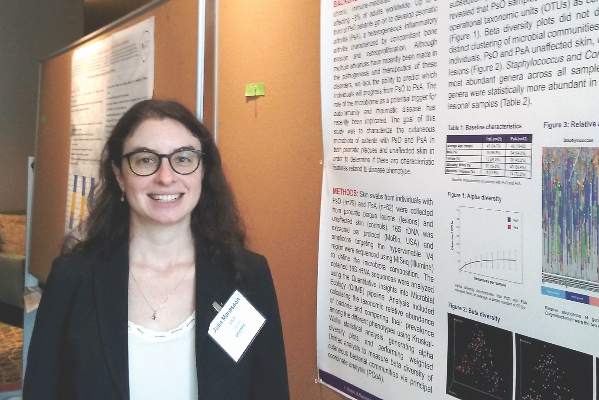
A previous study that revealed changes in gut microbiome between psoriasis and psoriatic arthritis patient stool samples (Arthritis Rheumatol. 2015;67:128-39) prompted the current research, which is “trying to see if the skin has a similar manifestation,” Dr. Manasson said during an oral presentation of her poster at the annual meeting of the Group for Research and Assessment of Psoriasis and Psoriatic Arthritis.
“The microbiome has been implicated as a potential trigger for inflammation and autoimmune disease,” Dr. Manasson noted.
To investigate a potential role of the skin microbiome, the investigators swabbed lesions and unaffected skin (on a contralateral site) in 29 people with psoriasis and 62 others with psoriatic arthritis. They extracted, amplified, and sequenced DNA from the samples. No participants in the study were on treatment with biologics, disease-modifying antirheumatic drugs, or steroids at the time of assessment. The psoriasis group was 66% men and had an average age of 45 years; the psoriatic arthritis group was 55% men and the average age was 42.
Dr. Manasson and her colleagues calculated the taxonomic relative abundance and contrasted their prevalence among the four skin phenotypes examined: lesions and unaffected skin of psoriasis patients and lesions and unaffected skin of psoriatic arthritis patients. Alpha diversity plots revealed a similar number of operational taxonomic units (OTUs) between psoriasis and psoriatic arthritis samples. Beta diversity analysis showed no distinct clustering or significant difference in microbiota communities among different phenotypes.
“We saw more of a decrease in nonlesional skin and across clinical severity, too,” Dr. Manasson said. “Globally, we didn’t see significant differences [in microbiota present].”
Staphylococcus and Corynebacterium were the predominant bacteria in all samples, but there were also specific genera that were less common in psoriatic arthritis patients and in lesional skin. These less abundant genera included unclassified Bradyrhizobiaceae, Rahnella, unclassified Prevotellaceae, and Parvibaculum.
“It looks like you had some differences between lesion and nonlesional skin,” Alice Gottlieb, MD, chair and dermatologist in chief at Tufts Medical Center in Boston. “In psoriasis, the barrier function is not normal. You may want to look at atopic dermatitis where you clearly have altered barrier function.”
Dr. Manasson said they used a skin swab, so they did not assess barrier function.
“The nonlesional skin may be more interesting to look at,” Dr. Gottlieb added. “If you see a difference in nonlesional skin, it could be more [conclusive].”
Microbiome stability often changes in individuals from week to week, commented Philip Helliwell, DM, PhD, a rheumatologist at the University of Leeds in England and president of GRAPPA. Dr. Manasson said she could assess variability over time in the future. She also would like to evaluate how therapies, including antibiotics, alter the skin microbiome.
Lack of a healthy control group is a potential limitation of the study. Some unanswered questions remain, Dr. Manasson said, such as what are the regional differences in skin microbiota, for example, between a patient’s scalp and forearm? She added, “The most interesting question is what does this actually mean? What are the downstream effects?”
If a decrease in skin microbiome flora diversity is verified in future research as a sign that a patient with psoriasis is at elevated risk for developing psoriatic arthritis, it could help physicians predict who will progress. Currently, about 30% of psoriatic patients go on to develop joint disease, but methods to identify this subpopulation remain elusive.
Dr. Manasson, Dr. Gottlieb, and Dr. Helliwell had no relevant financial disclosures.
MIAMI – As patients with psoriasis develop psoriatic arthritis, the abundance of particular genera in the skin microbiome decreases, according to a preliminary study characterizing cutaneous microbiota in these populations.
“The big overall message is there might be a decrease in microbiota diversity as you progress through the disease spectrum,” Julia Manasson, MD, a fellow in the division of rheumatology at New York University said. “This is the first study characterizing the cutaneous microbial compositions of subjects with psoriasis and psoriatic arthritis in both psoriatic lesions and unaffected skin.”
A previous study that revealed changes in gut microbiome between psoriasis and psoriatic arthritis patient stool samples (Arthritis Rheumatol. 2015;67:128-39) prompted the current research, which is “trying to see if the skin has a similar manifestation,” Dr. Manasson said during an oral presentation of her poster at the annual meeting of the Group for Research and Assessment of Psoriasis and Psoriatic Arthritis.
“The microbiome has been implicated as a potential trigger for inflammation and autoimmune disease,” Dr. Manasson noted.
To investigate a potential role of the skin microbiome, the investigators swabbed lesions and unaffected skin (on a contralateral site) in 29 people with psoriasis and 62 others with psoriatic arthritis. They extracted, amplified, and sequenced DNA from the samples. No participants in the study were on treatment with biologics, disease-modifying antirheumatic drugs, or steroids at the time of assessment. The psoriasis group was 66% men and had an average age of 45 years; the psoriatic arthritis group was 55% men and the average age was 42.
Dr. Manasson and her colleagues calculated the taxonomic relative abundance and contrasted their prevalence among the four skin phenotypes examined: lesions and unaffected skin of psoriasis patients and lesions and unaffected skin of psoriatic arthritis patients. Alpha diversity plots revealed a similar number of operational taxonomic units (OTUs) between psoriasis and psoriatic arthritis samples. Beta diversity analysis showed no distinct clustering or significant difference in microbiota communities among different phenotypes.
“We saw more of a decrease in nonlesional skin and across clinical severity, too,” Dr. Manasson said. “Globally, we didn’t see significant differences [in microbiota present].”
Staphylococcus and Corynebacterium were the predominant bacteria in all samples, but there were also specific genera that were less common in psoriatic arthritis patients and in lesional skin. These less abundant genera included unclassified Bradyrhizobiaceae, Rahnella, unclassified Prevotellaceae, and Parvibaculum.
“It looks like you had some differences between lesion and nonlesional skin,” Alice Gottlieb, MD, chair and dermatologist in chief at Tufts Medical Center in Boston. “In psoriasis, the barrier function is not normal. You may want to look at atopic dermatitis where you clearly have altered barrier function.”
Dr. Manasson said they used a skin swab, so they did not assess barrier function.
“The nonlesional skin may be more interesting to look at,” Dr. Gottlieb added. “If you see a difference in nonlesional skin, it could be more [conclusive].”
Microbiome stability often changes in individuals from week to week, commented Philip Helliwell, DM, PhD, a rheumatologist at the University of Leeds in England and president of GRAPPA. Dr. Manasson said she could assess variability over time in the future. She also would like to evaluate how therapies, including antibiotics, alter the skin microbiome.
Lack of a healthy control group is a potential limitation of the study. Some unanswered questions remain, Dr. Manasson said, such as what are the regional differences in skin microbiota, for example, between a patient’s scalp and forearm? She added, “The most interesting question is what does this actually mean? What are the downstream effects?”
If a decrease in skin microbiome flora diversity is verified in future research as a sign that a patient with psoriasis is at elevated risk for developing psoriatic arthritis, it could help physicians predict who will progress. Currently, about 30% of psoriatic patients go on to develop joint disease, but methods to identify this subpopulation remain elusive.
Dr. Manasson, Dr. Gottlieb, and Dr. Helliwell had no relevant financial disclosures.
MIAMI – As patients with psoriasis develop psoriatic arthritis, the abundance of particular genera in the skin microbiome decreases, according to a preliminary study characterizing cutaneous microbiota in these populations.
“The big overall message is there might be a decrease in microbiota diversity as you progress through the disease spectrum,” Julia Manasson, MD, a fellow in the division of rheumatology at New York University said. “This is the first study characterizing the cutaneous microbial compositions of subjects with psoriasis and psoriatic arthritis in both psoriatic lesions and unaffected skin.”
A previous study that revealed changes in gut microbiome between psoriasis and psoriatic arthritis patient stool samples (Arthritis Rheumatol. 2015;67:128-39) prompted the current research, which is “trying to see if the skin has a similar manifestation,” Dr. Manasson said during an oral presentation of her poster at the annual meeting of the Group for Research and Assessment of Psoriasis and Psoriatic Arthritis.
“The microbiome has been implicated as a potential trigger for inflammation and autoimmune disease,” Dr. Manasson noted.
To investigate a potential role of the skin microbiome, the investigators swabbed lesions and unaffected skin (on a contralateral site) in 29 people with psoriasis and 62 others with psoriatic arthritis. They extracted, amplified, and sequenced DNA from the samples. No participants in the study were on treatment with biologics, disease-modifying antirheumatic drugs, or steroids at the time of assessment. The psoriasis group was 66% men and had an average age of 45 years; the psoriatic arthritis group was 55% men and the average age was 42.
Dr. Manasson and her colleagues calculated the taxonomic relative abundance and contrasted their prevalence among the four skin phenotypes examined: lesions and unaffected skin of psoriasis patients and lesions and unaffected skin of psoriatic arthritis patients. Alpha diversity plots revealed a similar number of operational taxonomic units (OTUs) between psoriasis and psoriatic arthritis samples. Beta diversity analysis showed no distinct clustering or significant difference in microbiota communities among different phenotypes.
“We saw more of a decrease in nonlesional skin and across clinical severity, too,” Dr. Manasson said. “Globally, we didn’t see significant differences [in microbiota present].”
Staphylococcus and Corynebacterium were the predominant bacteria in all samples, but there were also specific genera that were less common in psoriatic arthritis patients and in lesional skin. These less abundant genera included unclassified Bradyrhizobiaceae, Rahnella, unclassified Prevotellaceae, and Parvibaculum.
“It looks like you had some differences between lesion and nonlesional skin,” Alice Gottlieb, MD, chair and dermatologist in chief at Tufts Medical Center in Boston. “In psoriasis, the barrier function is not normal. You may want to look at atopic dermatitis where you clearly have altered barrier function.”
Dr. Manasson said they used a skin swab, so they did not assess barrier function.
“The nonlesional skin may be more interesting to look at,” Dr. Gottlieb added. “If you see a difference in nonlesional skin, it could be more [conclusive].”
Microbiome stability often changes in individuals from week to week, commented Philip Helliwell, DM, PhD, a rheumatologist at the University of Leeds in England and president of GRAPPA. Dr. Manasson said she could assess variability over time in the future. She also would like to evaluate how therapies, including antibiotics, alter the skin microbiome.
Lack of a healthy control group is a potential limitation of the study. Some unanswered questions remain, Dr. Manasson said, such as what are the regional differences in skin microbiota, for example, between a patient’s scalp and forearm? She added, “The most interesting question is what does this actually mean? What are the downstream effects?”
If a decrease in skin microbiome flora diversity is verified in future research as a sign that a patient with psoriasis is at elevated risk for developing psoriatic arthritis, it could help physicians predict who will progress. Currently, about 30% of psoriatic patients go on to develop joint disease, but methods to identify this subpopulation remain elusive.
Dr. Manasson, Dr. Gottlieb, and Dr. Helliwell had no relevant financial disclosures.
AT 2016 GRAPPA ANNUAL MEETING
Key clinical point:Changes in skin microbiome diversity in patients with psoriasis might someday help to predict progression to psoriatic arthritis.
Major finding: The abundance of specific genera was decreased in psoriatic arthritis patients and in their lesional skin relative to patients with psoriasis only.
Data source: Comparison of 29 people with psoriasis versus 62 with psoriatic arthritis.
Disclosures: Dr. Manasson, Dr. Gottlieb, and Dr. Helliwell had no relevant disclosures.
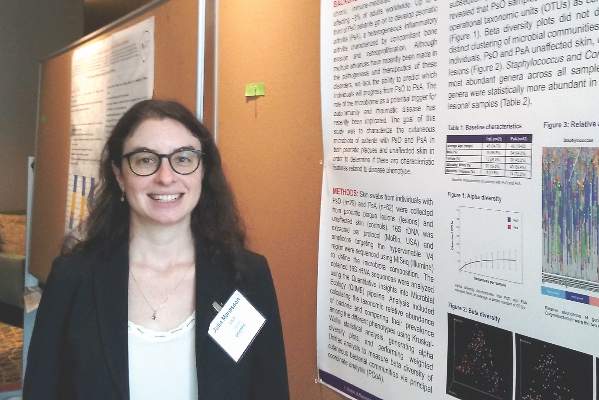
Ultrasound’s role in detecting enthesitis in psoriatic arthritis remains debatable
MIAMI – Ultrasound-detected enthesitis was associated with both destructive and bone formation lesions on radiography of peripheral and axial joints in a study of 222 patients with psoriatic arthritis. But its lack of correlation to clinically detected enthesitis in this study and in others has made its clinical usefulness somewhat controversial.
“This is not first time we see this result in the literature,” Ari Polachek, MD, said when presenting the research at the annual meeting of the Group for Research and Assessment of Psoriasis and Psoriatic Arthritis (GRAPPA). The findings suggest ultrasound reveals something different than a physical examination does, and because it’s more sensitive and specific, ultrasound is more accurate, he said.
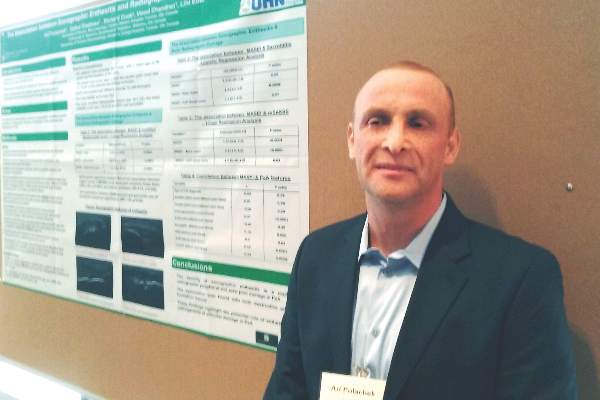
Diagnostic disagreement
Some differing opinions arose during a discussion after Dr. Polachek’s presentation. “When you look at the enthesitis measures [with ultrasound] ... you don’t necessarily measure the same enthesitis points you measure in clinical practice,” said Dafna D. Gladman, MD, a senior scientist at Toronto Western Hospital’s Krembil Research Institute and a rheumatologist at the University of Toronto. “We have to be careful. I don’t think we should immediately cancel the relationship between the ultrasound and clinical exam.”
“Well, I disagree entirely,” said Philip Helliwell, DM, PhD, senior lecturer in rheumatology at the University of Leeds, England, and president of GRAPPA. “We have looked at the Leeds [Enthesitis Index] with ultrasound and MRI and found no significant relationship at all.” Although Dr. Helliwell said there is a possible role for ultrasound to detect enthesitis in the Achilles, “We are fooling ourselves if we are measuring enthesitis as a pathologic entity. I don’t really know what we’re measuring when we do these scores.”
“My message is you do not need to scan every patient,” Dr. Polachek said in an interview. If a physician remains unsure about the physical exam results, it can be useful. Dr. Polachek, who completed his medical training in Israel, added: “In Israel, we say that ultrasound is ‘the final judge.’ ”

Association with radiographic joint findings
The investigators achieved their study aim: demonstrating that the severity of sonographic enthesitis is a marker of radiographic peripheral and axial joint damage in psoriatic arthritis. They found an association for both destructive and bone formation lesions.
“These findings highlight the potential role of enthesitis in the pathogenesis of articular damage in psoriatic arthritis,” said Dr. Polachek, clinical and research fellow at the University of Toronto.
The researchers assessed 12 entheseal sites with ultrasound. They used the Madrid Sonography Enthesitis Index scoring system (MASEI) to determine the global extent of enthesitis in each patient. In addition, they used the modified Steinbrocker score to assess peripheral joint damage, and the modified Stoke Ankylosing Spondylitis Spine Score (mSASSS) to assess spinal damage. Patients also underwent a clinical exam and were asked about their medical history.
Multivariate analysis revealed a significant association between higher MASEI score and joint ankylosis (odds ratio, 2.09; P = .0001) and arthritis mutilans (OR, 1.73; P = .005). The total MASEI score was associated with the modified Steinbrocker score (OR, 9.3; P less than .0001) in a logistic regression analysis; total MASEI also significantly correlated with the mSASSS measure of spinal damage (OR, 1.55; P less than .0001) in a linear regression analysis.

Participants had a mean age of 56 years and a 17-year mean duration of psoriatic arthritis. They presented with a mean of 2.4 tender joints and 1.1 swollen joints. At study entry, their mean scores were 15.6 on MASEI, 18.1 on modified Steinbrocker, and 1.72 on mSASSS.
The strengths of the study included a large number of participants and control of multiple possible confounders (age, sex, body mass index, duration of psoriatic arthritis, and use of disease-modifying antirheumatic drugs and biologics). It is limited by its cross-sectional design, which rules out inferences of causality.
Clinical confirmation
“Traditionally, patients came in with a tender joint, and we might not see anything. Now I can put the sensor down and say they have inflammation,” Dr. Polachek said. In such cases, he may suggest more aggressive treatment. However, if an asymptomatic patient has ultrasound findings, “right now the recommendation is not to do anything. Otherwise, it could be overtreatment.”
“This is the future,” Dr. Polachek said. “I started doing ultrasound myself – it’s a game changer.”
Dr. Polachek has received funding from Janssen and the Krembil Research Institute.
MIAMI – Ultrasound-detected enthesitis was associated with both destructive and bone formation lesions on radiography of peripheral and axial joints in a study of 222 patients with psoriatic arthritis. But its lack of correlation to clinically detected enthesitis in this study and in others has made its clinical usefulness somewhat controversial.
“This is not first time we see this result in the literature,” Ari Polachek, MD, said when presenting the research at the annual meeting of the Group for Research and Assessment of Psoriasis and Psoriatic Arthritis (GRAPPA). The findings suggest ultrasound reveals something different than a physical examination does, and because it’s more sensitive and specific, ultrasound is more accurate, he said.
Diagnostic disagreement
Some differing opinions arose during a discussion after Dr. Polachek’s presentation. “When you look at the enthesitis measures [with ultrasound] ... you don’t necessarily measure the same enthesitis points you measure in clinical practice,” said Dafna D. Gladman, MD, a senior scientist at Toronto Western Hospital’s Krembil Research Institute and a rheumatologist at the University of Toronto. “We have to be careful. I don’t think we should immediately cancel the relationship between the ultrasound and clinical exam.”
“Well, I disagree entirely,” said Philip Helliwell, DM, PhD, senior lecturer in rheumatology at the University of Leeds, England, and president of GRAPPA. “We have looked at the Leeds [Enthesitis Index] with ultrasound and MRI and found no significant relationship at all.” Although Dr. Helliwell said there is a possible role for ultrasound to detect enthesitis in the Achilles, “We are fooling ourselves if we are measuring enthesitis as a pathologic entity. I don’t really know what we’re measuring when we do these scores.”
“My message is you do not need to scan every patient,” Dr. Polachek said in an interview. If a physician remains unsure about the physical exam results, it can be useful. Dr. Polachek, who completed his medical training in Israel, added: “In Israel, we say that ultrasound is ‘the final judge.’ ”
Association with radiographic joint findings
The investigators achieved their study aim: demonstrating that the severity of sonographic enthesitis is a marker of radiographic peripheral and axial joint damage in psoriatic arthritis. They found an association for both destructive and bone formation lesions.
“These findings highlight the potential role of enthesitis in the pathogenesis of articular damage in psoriatic arthritis,” said Dr. Polachek, clinical and research fellow at the University of Toronto.
The researchers assessed 12 entheseal sites with ultrasound. They used the Madrid Sonography Enthesitis Index scoring system (MASEI) to determine the global extent of enthesitis in each patient. In addition, they used the modified Steinbrocker score to assess peripheral joint damage, and the modified Stoke Ankylosing Spondylitis Spine Score (mSASSS) to assess spinal damage. Patients also underwent a clinical exam and were asked about their medical history.
Multivariate analysis revealed a significant association between higher MASEI score and joint ankylosis (odds ratio, 2.09; P = .0001) and arthritis mutilans (OR, 1.73; P = .005). The total MASEI score was associated with the modified Steinbrocker score (OR, 9.3; P less than .0001) in a logistic regression analysis; total MASEI also significantly correlated with the mSASSS measure of spinal damage (OR, 1.55; P less than .0001) in a linear regression analysis.
Participants had a mean age of 56 years and a 17-year mean duration of psoriatic arthritis. They presented with a mean of 2.4 tender joints and 1.1 swollen joints. At study entry, their mean scores were 15.6 on MASEI, 18.1 on modified Steinbrocker, and 1.72 on mSASSS.
The strengths of the study included a large number of participants and control of multiple possible confounders (age, sex, body mass index, duration of psoriatic arthritis, and use of disease-modifying antirheumatic drugs and biologics). It is limited by its cross-sectional design, which rules out inferences of causality.
Clinical confirmation
“Traditionally, patients came in with a tender joint, and we might not see anything. Now I can put the sensor down and say they have inflammation,” Dr. Polachek said. In such cases, he may suggest more aggressive treatment. However, if an asymptomatic patient has ultrasound findings, “right now the recommendation is not to do anything. Otherwise, it could be overtreatment.”
“This is the future,” Dr. Polachek said. “I started doing ultrasound myself – it’s a game changer.”
Dr. Polachek has received funding from Janssen and the Krembil Research Institute.
MIAMI – Ultrasound-detected enthesitis was associated with both destructive and bone formation lesions on radiography of peripheral and axial joints in a study of 222 patients with psoriatic arthritis. But its lack of correlation to clinically detected enthesitis in this study and in others has made its clinical usefulness somewhat controversial.
“This is not first time we see this result in the literature,” Ari Polachek, MD, said when presenting the research at the annual meeting of the Group for Research and Assessment of Psoriasis and Psoriatic Arthritis (GRAPPA). The findings suggest ultrasound reveals something different than a physical examination does, and because it’s more sensitive and specific, ultrasound is more accurate, he said.
Diagnostic disagreement
Some differing opinions arose during a discussion after Dr. Polachek’s presentation. “When you look at the enthesitis measures [with ultrasound] ... you don’t necessarily measure the same enthesitis points you measure in clinical practice,” said Dafna D. Gladman, MD, a senior scientist at Toronto Western Hospital’s Krembil Research Institute and a rheumatologist at the University of Toronto. “We have to be careful. I don’t think we should immediately cancel the relationship between the ultrasound and clinical exam.”
“Well, I disagree entirely,” said Philip Helliwell, DM, PhD, senior lecturer in rheumatology at the University of Leeds, England, and president of GRAPPA. “We have looked at the Leeds [Enthesitis Index] with ultrasound and MRI and found no significant relationship at all.” Although Dr. Helliwell said there is a possible role for ultrasound to detect enthesitis in the Achilles, “We are fooling ourselves if we are measuring enthesitis as a pathologic entity. I don’t really know what we’re measuring when we do these scores.”
“My message is you do not need to scan every patient,” Dr. Polachek said in an interview. If a physician remains unsure about the physical exam results, it can be useful. Dr. Polachek, who completed his medical training in Israel, added: “In Israel, we say that ultrasound is ‘the final judge.’ ”
Association with radiographic joint findings
The investigators achieved their study aim: demonstrating that the severity of sonographic enthesitis is a marker of radiographic peripheral and axial joint damage in psoriatic arthritis. They found an association for both destructive and bone formation lesions.
“These findings highlight the potential role of enthesitis in the pathogenesis of articular damage in psoriatic arthritis,” said Dr. Polachek, clinical and research fellow at the University of Toronto.
The researchers assessed 12 entheseal sites with ultrasound. They used the Madrid Sonography Enthesitis Index scoring system (MASEI) to determine the global extent of enthesitis in each patient. In addition, they used the modified Steinbrocker score to assess peripheral joint damage, and the modified Stoke Ankylosing Spondylitis Spine Score (mSASSS) to assess spinal damage. Patients also underwent a clinical exam and were asked about their medical history.
Multivariate analysis revealed a significant association between higher MASEI score and joint ankylosis (odds ratio, 2.09; P = .0001) and arthritis mutilans (OR, 1.73; P = .005). The total MASEI score was associated with the modified Steinbrocker score (OR, 9.3; P less than .0001) in a logistic regression analysis; total MASEI also significantly correlated with the mSASSS measure of spinal damage (OR, 1.55; P less than .0001) in a linear regression analysis.
Participants had a mean age of 56 years and a 17-year mean duration of psoriatic arthritis. They presented with a mean of 2.4 tender joints and 1.1 swollen joints. At study entry, their mean scores were 15.6 on MASEI, 18.1 on modified Steinbrocker, and 1.72 on mSASSS.
The strengths of the study included a large number of participants and control of multiple possible confounders (age, sex, body mass index, duration of psoriatic arthritis, and use of disease-modifying antirheumatic drugs and biologics). It is limited by its cross-sectional design, which rules out inferences of causality.
Clinical confirmation
“Traditionally, patients came in with a tender joint, and we might not see anything. Now I can put the sensor down and say they have inflammation,” Dr. Polachek said. In such cases, he may suggest more aggressive treatment. However, if an asymptomatic patient has ultrasound findings, “right now the recommendation is not to do anything. Otherwise, it could be overtreatment.”
“This is the future,” Dr. Polachek said. “I started doing ultrasound myself – it’s a game changer.”
Dr. Polachek has received funding from Janssen and the Krembil Research Institute.
AT 2016 GRAPPA
Key clinical point: Ultrasound can diagnose enthesitis in psoriatic arthritis, but findings differ from physical exam.
Major finding: Multivariate analysis revealed a significant association between higher MASEI score and joint ankylosis (OR, 2.09; P = .0001) and arthritis mutilans (OR, 1.73; P = .005).
Data source: Cross-sectional study of 222 patients with psoriatic arthritis.
Disclosures: Dr. Polachek has received funding from Janssen and the Krembil Research Institute.