User login
Match Day 2019
For the seventh consecutive year overall match numbers are up, some specialties are concerned about post-residency workforce numbers, and social media offers congratulations and support.
Amazon Alexa
Apple Podcasts
Google Podcasts
Spotify
For the seventh consecutive year overall match numbers are up, some specialties are concerned about post-residency workforce numbers, and social media offers congratulations and support.
Amazon Alexa
Apple Podcasts
Google Podcasts
Spotify
For the seventh consecutive year overall match numbers are up, some specialties are concerned about post-residency workforce numbers, and social media offers congratulations and support.
Amazon Alexa
Apple Podcasts
Google Podcasts
Spotify
CREOLE: Amlodipine may be preferable for lowering blood pressure in black patients
Amlodipine plus either hydrochlorothiazide or perindopril effectively reduced blood pressure better than perindopril and hydrochlorothiazide in black African patients with hypertension, based on data presented at the annual meeting of the American College of Cardiology.
“(A) long-acting dihydropyridine calcium-channel blocker (in this case, amlodipine) may be critical to more efficacious blood-pressure lowering among black patients as part of the two-drug combinations used (in Africa),” wrote lead author Dike B. Ojji, PhD, of the University of Abuja in Gwagwalada, Abuja, Nigeria, and his coauthors. “These results contrast with recommendations for black patients in the most recent U.S. guidelines” which recommend either a calcium channel blocker or a diuretic in combination with a different drug class.
The study was published simultaneously in the New England Journal of Medicine.

In the CREOLE study, Dr. Ojji and his colleagues enrolled 728 black patients, mean age 51 years and 63% of them women, in a randomized, single-blind, three-group trial across six countries in sub-Saharan Africa. All patients had uncontrolled hypertension and were assigned to one of three treatment groups: amlodipine plus hydrochlorothiazide (n = 244), amlodipine plus perindopril (n = 243), and perindopril plus hydrochlorothiazide (n = 241). Patients underwent 24-hour ambulatory blood-pressure measuring at baseline and at 6 months.
Of the 621 patients who completed the trial, those in the two groups receiving amlodipine had a larger mean reduction in systolic blood pressure after 6 months than the group receiving perindopril plus hydrochlorothiazide. Compared with the perindopril plus hydrochlorothiazide group, the amlodipine plus hydrochlorothiazide group had an additional -3.14 mm Hg reduction in systolic blood pressure from baseline (95% confidence interval, -5.90 to -0.38, P = 0.03) while the amlodipine plus perindopril group had an additional -3.00 mm Hg reduction (95% CI, -5.81 to -0.20, P = 0.04). The difference between the amlodipine plus hydrochlorothiazide group and the amlodipine plus perindopril group was -0.14 mm Hg (95% CI, -2.90 to 2.61, P = 0.92).
The limitations of the study included using nonmatching trial drugs and not adjusting the P values for the three comparisons of the primary end point, the authors wrote. It’s uncertain whether the findings can be extrapolated to black patients with diabetes or to those living outside of sub-Saharan Africa.
The study was sponsored by a grant from the GlaxoSmithKline Africa Noncommunicable Disease Open Lab. Trial drugs were donated by Aspen Pharmacare. Two authors reported receiving grants and personal fees from numerous pharmaceutical companies.
SOURCE: Ojji DB et al. NEJM. 2019 Mar 18. doi: 10.1056/NEJMoa1901113.
Amlodipine plus either hydrochlorothiazide or perindopril effectively reduced blood pressure better than perindopril and hydrochlorothiazide in black African patients with hypertension, based on data presented at the annual meeting of the American College of Cardiology.
“(A) long-acting dihydropyridine calcium-channel blocker (in this case, amlodipine) may be critical to more efficacious blood-pressure lowering among black patients as part of the two-drug combinations used (in Africa),” wrote lead author Dike B. Ojji, PhD, of the University of Abuja in Gwagwalada, Abuja, Nigeria, and his coauthors. “These results contrast with recommendations for black patients in the most recent U.S. guidelines” which recommend either a calcium channel blocker or a diuretic in combination with a different drug class.
The study was published simultaneously in the New England Journal of Medicine.
In the CREOLE study, Dr. Ojji and his colleagues enrolled 728 black patients, mean age 51 years and 63% of them women, in a randomized, single-blind, three-group trial across six countries in sub-Saharan Africa. All patients had uncontrolled hypertension and were assigned to one of three treatment groups: amlodipine plus hydrochlorothiazide (n = 244), amlodipine plus perindopril (n = 243), and perindopril plus hydrochlorothiazide (n = 241). Patients underwent 24-hour ambulatory blood-pressure measuring at baseline and at 6 months.
Of the 621 patients who completed the trial, those in the two groups receiving amlodipine had a larger mean reduction in systolic blood pressure after 6 months than the group receiving perindopril plus hydrochlorothiazide. Compared with the perindopril plus hydrochlorothiazide group, the amlodipine plus hydrochlorothiazide group had an additional -3.14 mm Hg reduction in systolic blood pressure from baseline (95% confidence interval, -5.90 to -0.38, P = 0.03) while the amlodipine plus perindopril group had an additional -3.00 mm Hg reduction (95% CI, -5.81 to -0.20, P = 0.04). The difference between the amlodipine plus hydrochlorothiazide group and the amlodipine plus perindopril group was -0.14 mm Hg (95% CI, -2.90 to 2.61, P = 0.92).
The limitations of the study included using nonmatching trial drugs and not adjusting the P values for the three comparisons of the primary end point, the authors wrote. It’s uncertain whether the findings can be extrapolated to black patients with diabetes or to those living outside of sub-Saharan Africa.
The study was sponsored by a grant from the GlaxoSmithKline Africa Noncommunicable Disease Open Lab. Trial drugs were donated by Aspen Pharmacare. Two authors reported receiving grants and personal fees from numerous pharmaceutical companies.
SOURCE: Ojji DB et al. NEJM. 2019 Mar 18. doi: 10.1056/NEJMoa1901113.
Amlodipine plus either hydrochlorothiazide or perindopril effectively reduced blood pressure better than perindopril and hydrochlorothiazide in black African patients with hypertension, based on data presented at the annual meeting of the American College of Cardiology.
“(A) long-acting dihydropyridine calcium-channel blocker (in this case, amlodipine) may be critical to more efficacious blood-pressure lowering among black patients as part of the two-drug combinations used (in Africa),” wrote lead author Dike B. Ojji, PhD, of the University of Abuja in Gwagwalada, Abuja, Nigeria, and his coauthors. “These results contrast with recommendations for black patients in the most recent U.S. guidelines” which recommend either a calcium channel blocker or a diuretic in combination with a different drug class.
The study was published simultaneously in the New England Journal of Medicine.
In the CREOLE study, Dr. Ojji and his colleagues enrolled 728 black patients, mean age 51 years and 63% of them women, in a randomized, single-blind, three-group trial across six countries in sub-Saharan Africa. All patients had uncontrolled hypertension and were assigned to one of three treatment groups: amlodipine plus hydrochlorothiazide (n = 244), amlodipine plus perindopril (n = 243), and perindopril plus hydrochlorothiazide (n = 241). Patients underwent 24-hour ambulatory blood-pressure measuring at baseline and at 6 months.
Of the 621 patients who completed the trial, those in the two groups receiving amlodipine had a larger mean reduction in systolic blood pressure after 6 months than the group receiving perindopril plus hydrochlorothiazide. Compared with the perindopril plus hydrochlorothiazide group, the amlodipine plus hydrochlorothiazide group had an additional -3.14 mm Hg reduction in systolic blood pressure from baseline (95% confidence interval, -5.90 to -0.38, P = 0.03) while the amlodipine plus perindopril group had an additional -3.00 mm Hg reduction (95% CI, -5.81 to -0.20, P = 0.04). The difference between the amlodipine plus hydrochlorothiazide group and the amlodipine plus perindopril group was -0.14 mm Hg (95% CI, -2.90 to 2.61, P = 0.92).
The limitations of the study included using nonmatching trial drugs and not adjusting the P values for the three comparisons of the primary end point, the authors wrote. It’s uncertain whether the findings can be extrapolated to black patients with diabetes or to those living outside of sub-Saharan Africa.
The study was sponsored by a grant from the GlaxoSmithKline Africa Noncommunicable Disease Open Lab. Trial drugs were donated by Aspen Pharmacare. Two authors reported receiving grants and personal fees from numerous pharmaceutical companies.
SOURCE: Ojji DB et al. NEJM. 2019 Mar 18. doi: 10.1056/NEJMoa1901113.
FROM ACC 2019
VEText 1 Year Later—Still Growing
Nearly 6 million veterans get health care scheduling reminders via VEText, an interactive mobile program launched a year ago. More than 70 million text messages later, how is VEText doing? Apparently, well. The VA says an “overwhelming majority” of veterans like the enhanced access. Only 4% have opted out.
The VA has worked to improve the user experience along the way. The latest enhancement allows the VA to send facility and clinic location in the unsecured text message appointment reminders. One user, James Preston, interviewed for a VA article, says at the Loma Linda VA Medical Center veterans still had to use the information desk to find out exactly where they needed to go. “Now it’s almost perfect,” he says, “because it provides all the necessary information.” Deanna Callahan, innovation specialist and National Program Manager for VEText, says before VEText, the VA was relying on phone calls, robocalls, and mail. “We wanted to modernize our efforts to not only bring text message appointment reminders but go above and beyond and positively affect the No Show rate.” It worked—the No Show rate has dropped from 13.7% to 11.7% in the year the program has been active.
The system automatically enrolls veterans based on phone information already on file, but they can opt out by replying STOP to a reminder. Accidentally opting out is easily reversed by replying START to a previous reminder. Reminders are sent for clinical appointments at local medical centers and outpatient clinics, but not for Lab, Community Care, Research, Telephone Clinics, or Home-based Primary Care. (The reminders are additional—they do not replace letters, postcards, or automated phone call reminders.) VEText itself does not cost the veteran anything, but text messaging rates may apply, depending on individual cell phone plans. For more information, go to www.va.gov/HEALTH/vetext_faqs.asp.
Nearly 6 million veterans get health care scheduling reminders via VEText, an interactive mobile program launched a year ago. More than 70 million text messages later, how is VEText doing? Apparently, well. The VA says an “overwhelming majority” of veterans like the enhanced access. Only 4% have opted out.
The VA has worked to improve the user experience along the way. The latest enhancement allows the VA to send facility and clinic location in the unsecured text message appointment reminders. One user, James Preston, interviewed for a VA article, says at the Loma Linda VA Medical Center veterans still had to use the information desk to find out exactly where they needed to go. “Now it’s almost perfect,” he says, “because it provides all the necessary information.” Deanna Callahan, innovation specialist and National Program Manager for VEText, says before VEText, the VA was relying on phone calls, robocalls, and mail. “We wanted to modernize our efforts to not only bring text message appointment reminders but go above and beyond and positively affect the No Show rate.” It worked—the No Show rate has dropped from 13.7% to 11.7% in the year the program has been active.
The system automatically enrolls veterans based on phone information already on file, but they can opt out by replying STOP to a reminder. Accidentally opting out is easily reversed by replying START to a previous reminder. Reminders are sent for clinical appointments at local medical centers and outpatient clinics, but not for Lab, Community Care, Research, Telephone Clinics, or Home-based Primary Care. (The reminders are additional—they do not replace letters, postcards, or automated phone call reminders.) VEText itself does not cost the veteran anything, but text messaging rates may apply, depending on individual cell phone plans. For more information, go to www.va.gov/HEALTH/vetext_faqs.asp.
Nearly 6 million veterans get health care scheduling reminders via VEText, an interactive mobile program launched a year ago. More than 70 million text messages later, how is VEText doing? Apparently, well. The VA says an “overwhelming majority” of veterans like the enhanced access. Only 4% have opted out.
The VA has worked to improve the user experience along the way. The latest enhancement allows the VA to send facility and clinic location in the unsecured text message appointment reminders. One user, James Preston, interviewed for a VA article, says at the Loma Linda VA Medical Center veterans still had to use the information desk to find out exactly where they needed to go. “Now it’s almost perfect,” he says, “because it provides all the necessary information.” Deanna Callahan, innovation specialist and National Program Manager for VEText, says before VEText, the VA was relying on phone calls, robocalls, and mail. “We wanted to modernize our efforts to not only bring text message appointment reminders but go above and beyond and positively affect the No Show rate.” It worked—the No Show rate has dropped from 13.7% to 11.7% in the year the program has been active.
The system automatically enrolls veterans based on phone information already on file, but they can opt out by replying STOP to a reminder. Accidentally opting out is easily reversed by replying START to a previous reminder. Reminders are sent for clinical appointments at local medical centers and outpatient clinics, but not for Lab, Community Care, Research, Telephone Clinics, or Home-based Primary Care. (The reminders are additional—they do not replace letters, postcards, or automated phone call reminders.) VEText itself does not cost the veteran anything, but text messaging rates may apply, depending on individual cell phone plans. For more information, go to www.va.gov/HEALTH/vetext_faqs.asp.
DDNA19: Cardiac Complications in Liver Disease Patients

Dr. Marc Klapholz of Rutgers University, Newark, N.J., explains the latest developments in portopulmonary arterial hypertension, hepatopulmonary syndrome, and cirrhotic cardiomyopathy, as well as the emerging field and association between non-alcoholic fatty liver disease and cardiovascular disease.
Dr. Marc Klapholz of Rutgers University, Newark, N.J., explains the latest developments in portopulmonary arterial hypertension, hepatopulmonary syndrome, and cirrhotic cardiomyopathy, as well as the emerging field and association between non-alcoholic fatty liver disease and cardiovascular disease.
Dr. Marc Klapholz of Rutgers University, Newark, N.J., explains the latest developments in portopulmonary arterial hypertension, hepatopulmonary syndrome, and cirrhotic cardiomyopathy, as well as the emerging field and association between non-alcoholic fatty liver disease and cardiovascular disease.
AT DIGESTIVE DISEASES: NEW ADVANCES

ACC, AHA release first cardiovascular disease primary prevention guideline
that takes into account each person’s social determinants of health. The guideline substantially dialed down prior recommendations on aspirin for primary prevention by calling for no use in people older than 70 years and infrequent use in those 40-70 years old.

The American College of Cardiology and the American Heart Association released their 2019 guideline on the primary prevention of cardiovascular disease on March 17, during the annual meeting of the American College of Cardiology (J Amer Coll Cardiol. 2019 March 17;doi: 10.1016/j.jacc.2019.03.010.). The guideline is a “one-stop shop” that pulls together existing recommendations from the two organizations and combines it with some new recommendations that address issues such as aspirin prophylaxis, and the social setting of each person, said Donna K. Arnett, Ph.D., professor of epidemiology at the University of Kentucky, dean of the university’s College of Public Health, and co-chair of the guideline writing panel.
“We made the social determinants of health front and center. With many people, clinicians don’t ask whether they have access to healthy foods or a way to get to the pharmacy. Asking about these issues is step one,” toward helping people address their social situation, Dr. Arnett said while introducing the new guideline in a press briefing. The guideline recommends that clinicians assess the social determinants for each person treated for cardiovascular disease prevention using a screening tool developed by the U.S. Centers for Medicare & Medicaid Services and made available by the National Academy of Medicine (NAM Perspectives. 2017; doi:10.31478/201705b).
“No other guideline has highlighted the social determinants of health,” noted Erin D. Michos, MD, associate director of preventive cardiology at Johns Hopkins Medicine in Baltimore, and a member of the guideline-writing panel. Other overarching themes of the guideline are its emphasis on the need for a team of clinicians to deliver all the disparate and time-consuming facets of care needed for comprehensive primary prevention of cardiovascular disease, and its call for a healthy lifestyle throughout life as foundations for prevention, Dr. Michos said in an interview.
With 48 recommendations, the guideline also deals with prevention issues such as a healthy diet and body mass, appropriate control of diabetes, smoking cessation, and control of blood pressure and cholesterol (see chart). The writing committee took the cholesterol and blood pressure recommendations directly from recent guidelines from the ACC and AHA in 2017 (blood pressure:J Amer Coll Cardiol. 2018 May;71[19]:e177-e248) and 2018 (cholesterol:Circulation. 2018 Nov 10;doi: 10.1161/CIR.0000000000000625).
The other major, new recommendations in the guideline deal with aspirin use for primary prevention, which recently underwent a shake up with publication of results from several studies that showed less cardiovascular benefit and more potential bleeding harm from routine aspirin prophylaxis than previously appreciated. Among the most notable of these reports, which led to a class III recommendation – do not use – for aspirin in people more than 70 years old came from the ASPREE (Aspirin in Reducing Events in the Elderly) study (New Engl J Med. 2018 Oct 18;379[16]:1519-28). For those 40-70 years old, the recommendation is class IIb, worded as “might be considered for select adults.”
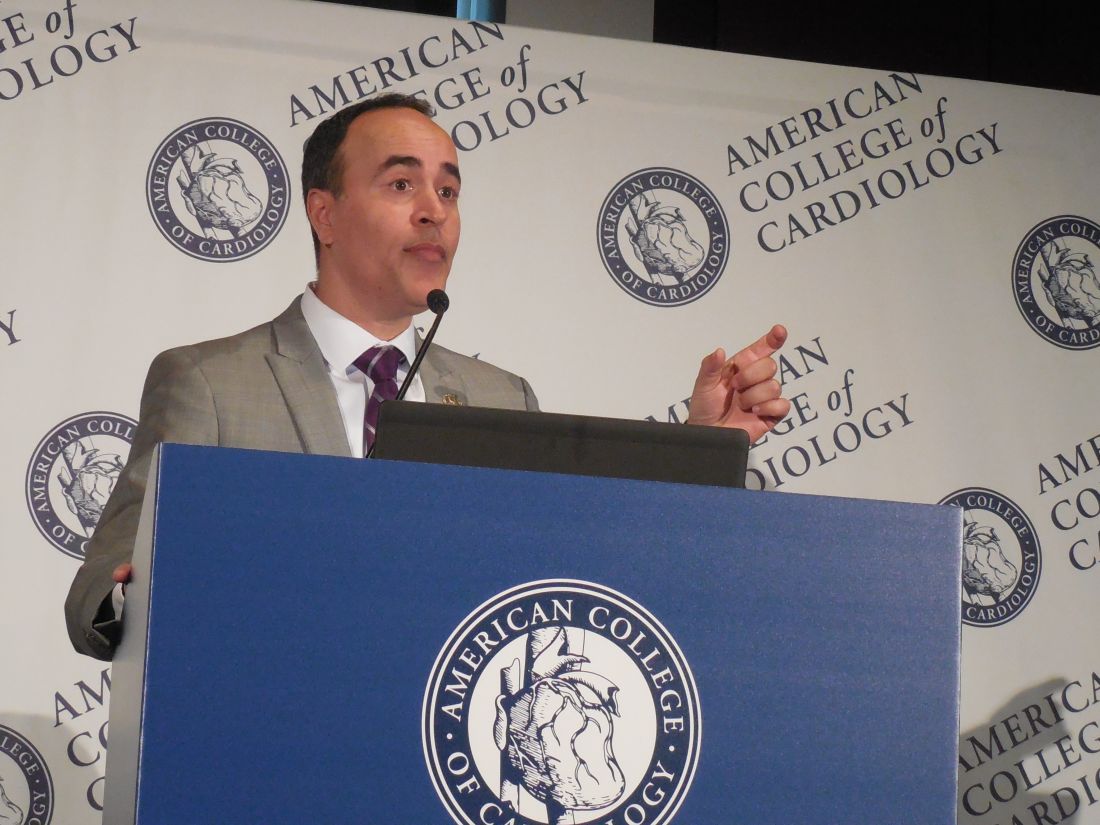
“Generally no, occasionally yes,” is aspirin appropriate for people in this age group, notably those at high risk for cardiovascular disease and also at low risk for bleeding, explained Amit Khera, MD, a guideline-panel member, and professor of medicine and director of preventive cardiology at the University of Texas Southwestern Medical Center in Dallas.
As a guideline for primary prevention, a prime target audience is primary care physicians, who would need to be instrumental in applying the guideline. But the guideline recommendations released by the ACC and AHA for blood pressure management in 2017 were not accepted by U.S. groups that represent primary care physicians, the American College of Physicians, and the American Academy of Family Physicians.
John J. Warner, MD, an interventional cardiologist, executive vice president for health system affairs at UT Southwestern, and president of the AHA when the blood pressure guideline came out said that the ACC and AHA “learned some lessons” from the blood pressure experience. The societies responded this time around by “trying to view the document through as many lenses as possible” during the peer review process, Dr. Warner said during the press conference.

“I don’t think the new guideline will be seen as anything except positive,” commented Martha Gulati, MD, professor of medicine and chief of cardiology at the University of Arizona in Phoenix. Collecting all the cardiovascular disease recommendations for primary prevention in one document “helps clinicians access the information easily and helps patients see the big picture,” said Dr. Gulati, who was not involved in the guideline’s writing or review.

She especially applauded the recommendations to assess each person’s social determinants of health, the team-care approach, and the recommendations dealing with diet and other aspects of a healthy lifestyle. “This was a perfect time” to bring together the existing blood pressure and cholesterol guidelines, the new guidance on aspirin use, and the other recommendation in a single document, she said in an interview.
Dr. Arnett, Dr. Michos, Dr. Khera, Dr. Warner, and Dr. Gulati had no disclosures.
[email protected]
On Twitter @mitchelzoler
SOURCE: Arnett DK et al. J Amer Coll Cardiol. 2019 March 17;doi: 10.1016/j.jacc.2019.03.010.
that takes into account each person’s social determinants of health. The guideline substantially dialed down prior recommendations on aspirin for primary prevention by calling for no use in people older than 70 years and infrequent use in those 40-70 years old.
The American College of Cardiology and the American Heart Association released their 2019 guideline on the primary prevention of cardiovascular disease on March 17, during the annual meeting of the American College of Cardiology (J Amer Coll Cardiol. 2019 March 17;doi: 10.1016/j.jacc.2019.03.010.). The guideline is a “one-stop shop” that pulls together existing recommendations from the two organizations and combines it with some new recommendations that address issues such as aspirin prophylaxis, and the social setting of each person, said Donna K. Arnett, Ph.D., professor of epidemiology at the University of Kentucky, dean of the university’s College of Public Health, and co-chair of the guideline writing panel.
“We made the social determinants of health front and center. With many people, clinicians don’t ask whether they have access to healthy foods or a way to get to the pharmacy. Asking about these issues is step one,” toward helping people address their social situation, Dr. Arnett said while introducing the new guideline in a press briefing. The guideline recommends that clinicians assess the social determinants for each person treated for cardiovascular disease prevention using a screening tool developed by the U.S. Centers for Medicare & Medicaid Services and made available by the National Academy of Medicine (NAM Perspectives. 2017; doi:10.31478/201705b).
“No other guideline has highlighted the social determinants of health,” noted Erin D. Michos, MD, associate director of preventive cardiology at Johns Hopkins Medicine in Baltimore, and a member of the guideline-writing panel. Other overarching themes of the guideline are its emphasis on the need for a team of clinicians to deliver all the disparate and time-consuming facets of care needed for comprehensive primary prevention of cardiovascular disease, and its call for a healthy lifestyle throughout life as foundations for prevention, Dr. Michos said in an interview.
With 48 recommendations, the guideline also deals with prevention issues such as a healthy diet and body mass, appropriate control of diabetes, smoking cessation, and control of blood pressure and cholesterol (see chart). The writing committee took the cholesterol and blood pressure recommendations directly from recent guidelines from the ACC and AHA in 2017 (blood pressure:J Amer Coll Cardiol. 2018 May;71[19]:e177-e248) and 2018 (cholesterol:Circulation. 2018 Nov 10;doi: 10.1161/CIR.0000000000000625).
The other major, new recommendations in the guideline deal with aspirin use for primary prevention, which recently underwent a shake up with publication of results from several studies that showed less cardiovascular benefit and more potential bleeding harm from routine aspirin prophylaxis than previously appreciated. Among the most notable of these reports, which led to a class III recommendation – do not use – for aspirin in people more than 70 years old came from the ASPREE (Aspirin in Reducing Events in the Elderly) study (New Engl J Med. 2018 Oct 18;379[16]:1519-28). For those 40-70 years old, the recommendation is class IIb, worded as “might be considered for select adults.”
“Generally no, occasionally yes,” is aspirin appropriate for people in this age group, notably those at high risk for cardiovascular disease and also at low risk for bleeding, explained Amit Khera, MD, a guideline-panel member, and professor of medicine and director of preventive cardiology at the University of Texas Southwestern Medical Center in Dallas.
As a guideline for primary prevention, a prime target audience is primary care physicians, who would need to be instrumental in applying the guideline. But the guideline recommendations released by the ACC and AHA for blood pressure management in 2017 were not accepted by U.S. groups that represent primary care physicians, the American College of Physicians, and the American Academy of Family Physicians.
John J. Warner, MD, an interventional cardiologist, executive vice president for health system affairs at UT Southwestern, and president of the AHA when the blood pressure guideline came out said that the ACC and AHA “learned some lessons” from the blood pressure experience. The societies responded this time around by “trying to view the document through as many lenses as possible” during the peer review process, Dr. Warner said during the press conference.
“I don’t think the new guideline will be seen as anything except positive,” commented Martha Gulati, MD, professor of medicine and chief of cardiology at the University of Arizona in Phoenix. Collecting all the cardiovascular disease recommendations for primary prevention in one document “helps clinicians access the information easily and helps patients see the big picture,” said Dr. Gulati, who was not involved in the guideline’s writing or review.
She especially applauded the recommendations to assess each person’s social determinants of health, the team-care approach, and the recommendations dealing with diet and other aspects of a healthy lifestyle. “This was a perfect time” to bring together the existing blood pressure and cholesterol guidelines, the new guidance on aspirin use, and the other recommendation in a single document, she said in an interview.
Dr. Arnett, Dr. Michos, Dr. Khera, Dr. Warner, and Dr. Gulati had no disclosures.
[email protected]
On Twitter @mitchelzoler
SOURCE: Arnett DK et al. J Amer Coll Cardiol. 2019 March 17;doi: 10.1016/j.jacc.2019.03.010.
that takes into account each person’s social determinants of health. The guideline substantially dialed down prior recommendations on aspirin for primary prevention by calling for no use in people older than 70 years and infrequent use in those 40-70 years old.
The American College of Cardiology and the American Heart Association released their 2019 guideline on the primary prevention of cardiovascular disease on March 17, during the annual meeting of the American College of Cardiology (J Amer Coll Cardiol. 2019 March 17;doi: 10.1016/j.jacc.2019.03.010.). The guideline is a “one-stop shop” that pulls together existing recommendations from the two organizations and combines it with some new recommendations that address issues such as aspirin prophylaxis, and the social setting of each person, said Donna K. Arnett, Ph.D., professor of epidemiology at the University of Kentucky, dean of the university’s College of Public Health, and co-chair of the guideline writing panel.
“We made the social determinants of health front and center. With many people, clinicians don’t ask whether they have access to healthy foods or a way to get to the pharmacy. Asking about these issues is step one,” toward helping people address their social situation, Dr. Arnett said while introducing the new guideline in a press briefing. The guideline recommends that clinicians assess the social determinants for each person treated for cardiovascular disease prevention using a screening tool developed by the U.S. Centers for Medicare & Medicaid Services and made available by the National Academy of Medicine (NAM Perspectives. 2017; doi:10.31478/201705b).
“No other guideline has highlighted the social determinants of health,” noted Erin D. Michos, MD, associate director of preventive cardiology at Johns Hopkins Medicine in Baltimore, and a member of the guideline-writing panel. Other overarching themes of the guideline are its emphasis on the need for a team of clinicians to deliver all the disparate and time-consuming facets of care needed for comprehensive primary prevention of cardiovascular disease, and its call for a healthy lifestyle throughout life as foundations for prevention, Dr. Michos said in an interview.
With 48 recommendations, the guideline also deals with prevention issues such as a healthy diet and body mass, appropriate control of diabetes, smoking cessation, and control of blood pressure and cholesterol (see chart). The writing committee took the cholesterol and blood pressure recommendations directly from recent guidelines from the ACC and AHA in 2017 (blood pressure:J Amer Coll Cardiol. 2018 May;71[19]:e177-e248) and 2018 (cholesterol:Circulation. 2018 Nov 10;doi: 10.1161/CIR.0000000000000625).
The other major, new recommendations in the guideline deal with aspirin use for primary prevention, which recently underwent a shake up with publication of results from several studies that showed less cardiovascular benefit and more potential bleeding harm from routine aspirin prophylaxis than previously appreciated. Among the most notable of these reports, which led to a class III recommendation – do not use – for aspirin in people more than 70 years old came from the ASPREE (Aspirin in Reducing Events in the Elderly) study (New Engl J Med. 2018 Oct 18;379[16]:1519-28). For those 40-70 years old, the recommendation is class IIb, worded as “might be considered for select adults.”
“Generally no, occasionally yes,” is aspirin appropriate for people in this age group, notably those at high risk for cardiovascular disease and also at low risk for bleeding, explained Amit Khera, MD, a guideline-panel member, and professor of medicine and director of preventive cardiology at the University of Texas Southwestern Medical Center in Dallas.
As a guideline for primary prevention, a prime target audience is primary care physicians, who would need to be instrumental in applying the guideline. But the guideline recommendations released by the ACC and AHA for blood pressure management in 2017 were not accepted by U.S. groups that represent primary care physicians, the American College of Physicians, and the American Academy of Family Physicians.
John J. Warner, MD, an interventional cardiologist, executive vice president for health system affairs at UT Southwestern, and president of the AHA when the blood pressure guideline came out said that the ACC and AHA “learned some lessons” from the blood pressure experience. The societies responded this time around by “trying to view the document through as many lenses as possible” during the peer review process, Dr. Warner said during the press conference.
“I don’t think the new guideline will be seen as anything except positive,” commented Martha Gulati, MD, professor of medicine and chief of cardiology at the University of Arizona in Phoenix. Collecting all the cardiovascular disease recommendations for primary prevention in one document “helps clinicians access the information easily and helps patients see the big picture,” said Dr. Gulati, who was not involved in the guideline’s writing or review.
She especially applauded the recommendations to assess each person’s social determinants of health, the team-care approach, and the recommendations dealing with diet and other aspects of a healthy lifestyle. “This was a perfect time” to bring together the existing blood pressure and cholesterol guidelines, the new guidance on aspirin use, and the other recommendation in a single document, she said in an interview.
Dr. Arnett, Dr. Michos, Dr. Khera, Dr. Warner, and Dr. Gulati had no disclosures.
[email protected]
On Twitter @mitchelzoler
SOURCE: Arnett DK et al. J Amer Coll Cardiol. 2019 March 17;doi: 10.1016/j.jacc.2019.03.010.
REPORTING FROM ACC 2019
Antibiotic-eluting envelope reduces CIED infections
An absorbable, antibiotic-eluting envelope around cardiac implantable electronic devices could significantly reduce the incidence of infection, according to a presentation at the annual meeting of the American College of Cardiology.
The WRAP-IT trial, which was simultaneously published online March 17 in the New England Journal of Medicine, involved 6,983 patients undergoing cardiac implantable electronic device (CIED) implantation, replacement, revision, or upgrade. Patients were randomized either to receive the TYRX Absorbable Antibacterial Envelope or not.
After a mean follow-up of 20.7 months, there was a significant 40% lower rate of major infections in the envelope group compared to the control group, which met the efficacy objective of the study. Researchers saw 30 major infections in 25 patients in the envelope group; in the control group, there were 45 major infections in 42 patients (P = 0.04). The trial excluded patients at high risk of systemic infection due to other sources and patients with existing infection.
“CIED infection is a rare but serious event, and its management requires prolonged hospitalization, which involves device and lead extraction with adjunctive antibiotic therapy,” wrote Dr. Khaldoun G. Tarakji, from The Cleveland Clinic, and co-authors. “Despite proper management of CIED infection, both short- and long-term mortality remains high.”
One previous randomized study had shown that intravenous administration of antibiotics during CIED procedures can reduce the risk of infection, while a different study failed to find a benefit. The vast majority of patients in this study (98.7%) received periprocedural antibiotics, 74.5% received pocket wash and 29.6% received post-procedural antibiotics. These strategies were not controlled, but there is no clear evidence that any particular strategy influenced the infection rate, the authors wrote.
Patients in the envelope group experienced numerically fewer pocket infections but more endocarditis or bacteremia compared to those in the control group, a finding that the authors could not explain.
The most common pathogen responsible was staphylococcus, but data on antibiotic susceptibility was not collected. The authors stressed that this limited their ability to assess the risk of antibiotic resistance developing.
In this study, the researchers noted that the reduction in the risk of infection was greater among individuals who were implanted with higher-power devices, compared to those implanted with low-power devices or an initial cardiac resynchronization therapy device.
However, they said, the rate of infections was generally lower among those receiving low-power devices.
There was no increase in complications related to use of the envelope. The rate of complications occurring within 12 months of the procedure and relating to the CIED procedure or envelope was 6% in the envelope group and 6.9% in the control group.
When major infections were excluded, the rate of complications in each group was 5.7% and 5/9% respectively. There was also no significant difference in mortality rates between the two groups (17.4% and 17.8% respectively).
The authors wrote that while use of the envelope can require a slightly larger CIED dissection pocket, this was not associated with increased procedural time or complications. The envelope was successfully implanted in 99.7% of procedure attempts.
“There were fewer system revisions in the envelope group than in the control group and no complications due to allergy to the envelope mesh, polymer, or antibiotics,” they wrote.
The study was supported by Medtronic, the maker of the TYRX Absorbable Antibacterial Envelope. Twenty-four authors declared institutional funding or research grants from Medtronic, thirteen declared fees, consultancies and other support from private industry outside the submitted work. Three authors were employees of Medtronic.
SOURCE: Tarakji K et al. NEJM, 2019, March 17. DOI: 10.1056/NEJMoa1901111
An absorbable, antibiotic-eluting envelope around cardiac implantable electronic devices could significantly reduce the incidence of infection, according to a presentation at the annual meeting of the American College of Cardiology.
The WRAP-IT trial, which was simultaneously published online March 17 in the New England Journal of Medicine, involved 6,983 patients undergoing cardiac implantable electronic device (CIED) implantation, replacement, revision, or upgrade. Patients were randomized either to receive the TYRX Absorbable Antibacterial Envelope or not.
After a mean follow-up of 20.7 months, there was a significant 40% lower rate of major infections in the envelope group compared to the control group, which met the efficacy objective of the study. Researchers saw 30 major infections in 25 patients in the envelope group; in the control group, there were 45 major infections in 42 patients (P = 0.04). The trial excluded patients at high risk of systemic infection due to other sources and patients with existing infection.
“CIED infection is a rare but serious event, and its management requires prolonged hospitalization, which involves device and lead extraction with adjunctive antibiotic therapy,” wrote Dr. Khaldoun G. Tarakji, from The Cleveland Clinic, and co-authors. “Despite proper management of CIED infection, both short- and long-term mortality remains high.”
One previous randomized study had shown that intravenous administration of antibiotics during CIED procedures can reduce the risk of infection, while a different study failed to find a benefit. The vast majority of patients in this study (98.7%) received periprocedural antibiotics, 74.5% received pocket wash and 29.6% received post-procedural antibiotics. These strategies were not controlled, but there is no clear evidence that any particular strategy influenced the infection rate, the authors wrote.
Patients in the envelope group experienced numerically fewer pocket infections but more endocarditis or bacteremia compared to those in the control group, a finding that the authors could not explain.
The most common pathogen responsible was staphylococcus, but data on antibiotic susceptibility was not collected. The authors stressed that this limited their ability to assess the risk of antibiotic resistance developing.
In this study, the researchers noted that the reduction in the risk of infection was greater among individuals who were implanted with higher-power devices, compared to those implanted with low-power devices or an initial cardiac resynchronization therapy device.
However, they said, the rate of infections was generally lower among those receiving low-power devices.
There was no increase in complications related to use of the envelope. The rate of complications occurring within 12 months of the procedure and relating to the CIED procedure or envelope was 6% in the envelope group and 6.9% in the control group.
When major infections were excluded, the rate of complications in each group was 5.7% and 5/9% respectively. There was also no significant difference in mortality rates between the two groups (17.4% and 17.8% respectively).
The authors wrote that while use of the envelope can require a slightly larger CIED dissection pocket, this was not associated with increased procedural time or complications. The envelope was successfully implanted in 99.7% of procedure attempts.
“There were fewer system revisions in the envelope group than in the control group and no complications due to allergy to the envelope mesh, polymer, or antibiotics,” they wrote.
The study was supported by Medtronic, the maker of the TYRX Absorbable Antibacterial Envelope. Twenty-four authors declared institutional funding or research grants from Medtronic, thirteen declared fees, consultancies and other support from private industry outside the submitted work. Three authors were employees of Medtronic.
SOURCE: Tarakji K et al. NEJM, 2019, March 17. DOI: 10.1056/NEJMoa1901111
An absorbable, antibiotic-eluting envelope around cardiac implantable electronic devices could significantly reduce the incidence of infection, according to a presentation at the annual meeting of the American College of Cardiology.
The WRAP-IT trial, which was simultaneously published online March 17 in the New England Journal of Medicine, involved 6,983 patients undergoing cardiac implantable electronic device (CIED) implantation, replacement, revision, or upgrade. Patients were randomized either to receive the TYRX Absorbable Antibacterial Envelope or not.
After a mean follow-up of 20.7 months, there was a significant 40% lower rate of major infections in the envelope group compared to the control group, which met the efficacy objective of the study. Researchers saw 30 major infections in 25 patients in the envelope group; in the control group, there were 45 major infections in 42 patients (P = 0.04). The trial excluded patients at high risk of systemic infection due to other sources and patients with existing infection.
“CIED infection is a rare but serious event, and its management requires prolonged hospitalization, which involves device and lead extraction with adjunctive antibiotic therapy,” wrote Dr. Khaldoun G. Tarakji, from The Cleveland Clinic, and co-authors. “Despite proper management of CIED infection, both short- and long-term mortality remains high.”
One previous randomized study had shown that intravenous administration of antibiotics during CIED procedures can reduce the risk of infection, while a different study failed to find a benefit. The vast majority of patients in this study (98.7%) received periprocedural antibiotics, 74.5% received pocket wash and 29.6% received post-procedural antibiotics. These strategies were not controlled, but there is no clear evidence that any particular strategy influenced the infection rate, the authors wrote.
Patients in the envelope group experienced numerically fewer pocket infections but more endocarditis or bacteremia compared to those in the control group, a finding that the authors could not explain.
The most common pathogen responsible was staphylococcus, but data on antibiotic susceptibility was not collected. The authors stressed that this limited their ability to assess the risk of antibiotic resistance developing.
In this study, the researchers noted that the reduction in the risk of infection was greater among individuals who were implanted with higher-power devices, compared to those implanted with low-power devices or an initial cardiac resynchronization therapy device.
However, they said, the rate of infections was generally lower among those receiving low-power devices.
There was no increase in complications related to use of the envelope. The rate of complications occurring within 12 months of the procedure and relating to the CIED procedure or envelope was 6% in the envelope group and 6.9% in the control group.
When major infections were excluded, the rate of complications in each group was 5.7% and 5/9% respectively. There was also no significant difference in mortality rates between the two groups (17.4% and 17.8% respectively).
The authors wrote that while use of the envelope can require a slightly larger CIED dissection pocket, this was not associated with increased procedural time or complications. The envelope was successfully implanted in 99.7% of procedure attempts.
“There were fewer system revisions in the envelope group than in the control group and no complications due to allergy to the envelope mesh, polymer, or antibiotics,” they wrote.
The study was supported by Medtronic, the maker of the TYRX Absorbable Antibacterial Envelope. Twenty-four authors declared institutional funding or research grants from Medtronic, thirteen declared fees, consultancies and other support from private industry outside the submitted work. Three authors were employees of Medtronic.
SOURCE: Tarakji K et al. NEJM, 2019, March 17. DOI: 10.1056/NEJMoa1901111
FROM ACC 19
Financial toxicity may be common in gynecologic cancer patients
HONOLULU – Financial toxicity may be common among gynecologic cancer patients starting a new line of treatment, based on the results of a survey presented at the Society of Gynecologic Oncology’s Annual Meeting on Women’s Cancer.
More than half of the 121 patients surveyed reported mild, moderate, or severe financial toxicity, Margaret Liang, MD, of University of Alabama at Birmingham, said in presenting the findings.
Younger age and lower income were both risk factors for financial toxicity, and having insurance did not protect patients from financial toxicity. Dr. Liang noted that insurance coverage “was not protective for financial toxicity, as the majority of those who screened positive for financial toxicity were insured.” Specifically, 89% of patients with financial toxicity and 98% of patients without it were insured (P = .07).

“This finding supports financial toxicity screening regardless of insurance status and may favor universal screening,” Dr. Liang said.
She and her colleagues conducted the survey of 121 gynecologic cancer patients who had started a new line of systemic therapy in the previous 8 weeks.
The patients’ mean age was 59 years (range, 33-80), and 58% were starting their first line of systemic therapy. Half of the patients had a household income below $40,000, and about one-third of the patients were employed. Most had private (74%) or public (20%) insurance, and 7% of patients were uninsured.
To assess financial toxicity, the researchers used the Comprehensive Score for Financial Toxicity (COST). A score of less than 26 was used as a threshold of financial toxicity. The severity of financial toxicity was graded on a scale of 1 to 4, with a lower score indicating worse toxicity.
Patients were most concerned about having enough money to cover the cost of treatment. Patients reported the lowest mean score—0.97—in response to the statement, “I know that I have enough money in savings, retirement, or assets to cover the costs of my treatment.”
Patients were least concerned about losing their job or income. They reported the highest mean score—3.29—in response to the statement, “I am concerned about keeping my job and income, including working at home.” However, as Dr. Liang pointed out, only one-third of patients were employed at baseline.
In all, 54% of patients reported financial toxicity—37% mild, 16% moderate, and 1% severe.
Dr. Liang and her colleagues found that younger age and lower income were associated with an increased risk for financial toxicity. The mean age was 57 years in patients with financial toxicity and 62 years in patients without it (P = .02). Household incomes were below $40,000 in 63% of patients with financial toxicity and 34% of those without it (P less than .01).
The researchers also found that patients with financial toxicity were significantly more likely to say their cancer diagnosis resulted in lost wages, borrowed money, altered spending habits, the need to sacrifice other things, and not paying bills on time (P less than .01 for all).
On the other hand, patients with financial toxicity were not significantly more likely to become unemployed, file for bankruptcy, sell their house, or get a second job due to their cancer diagnosis.
However, it’s important to note that these data were collected within 8 weeks of patients starting their new line of therapy. The final survey results will include follow-up at 3 months and 6 months.
Dr. Liang said the fact that more than half of patients reported financial toxicity within 8 weeks of starting a new line of therapy suggests early interventions are needed to prevent or reduce financial toxicity. This may include counseling patients on anticipated costs of care, screening for financial toxicity, and linking patients to available financial resources.
Dr. Liang had no financial disclosures.
SOURCE: Liang M et al. SGO 2019. Abstract 8.
HONOLULU – Financial toxicity may be common among gynecologic cancer patients starting a new line of treatment, based on the results of a survey presented at the Society of Gynecologic Oncology’s Annual Meeting on Women’s Cancer.
More than half of the 121 patients surveyed reported mild, moderate, or severe financial toxicity, Margaret Liang, MD, of University of Alabama at Birmingham, said in presenting the findings.
Younger age and lower income were both risk factors for financial toxicity, and having insurance did not protect patients from financial toxicity. Dr. Liang noted that insurance coverage “was not protective for financial toxicity, as the majority of those who screened positive for financial toxicity were insured.” Specifically, 89% of patients with financial toxicity and 98% of patients without it were insured (P = .07).
“This finding supports financial toxicity screening regardless of insurance status and may favor universal screening,” Dr. Liang said.
She and her colleagues conducted the survey of 121 gynecologic cancer patients who had started a new line of systemic therapy in the previous 8 weeks.
The patients’ mean age was 59 years (range, 33-80), and 58% were starting their first line of systemic therapy. Half of the patients had a household income below $40,000, and about one-third of the patients were employed. Most had private (74%) or public (20%) insurance, and 7% of patients were uninsured.
To assess financial toxicity, the researchers used the Comprehensive Score for Financial Toxicity (COST). A score of less than 26 was used as a threshold of financial toxicity. The severity of financial toxicity was graded on a scale of 1 to 4, with a lower score indicating worse toxicity.
Patients were most concerned about having enough money to cover the cost of treatment. Patients reported the lowest mean score—0.97—in response to the statement, “I know that I have enough money in savings, retirement, or assets to cover the costs of my treatment.”
Patients were least concerned about losing their job or income. They reported the highest mean score—3.29—in response to the statement, “I am concerned about keeping my job and income, including working at home.” However, as Dr. Liang pointed out, only one-third of patients were employed at baseline.
In all, 54% of patients reported financial toxicity—37% mild, 16% moderate, and 1% severe.
Dr. Liang and her colleagues found that younger age and lower income were associated with an increased risk for financial toxicity. The mean age was 57 years in patients with financial toxicity and 62 years in patients without it (P = .02). Household incomes were below $40,000 in 63% of patients with financial toxicity and 34% of those without it (P less than .01).
The researchers also found that patients with financial toxicity were significantly more likely to say their cancer diagnosis resulted in lost wages, borrowed money, altered spending habits, the need to sacrifice other things, and not paying bills on time (P less than .01 for all).
On the other hand, patients with financial toxicity were not significantly more likely to become unemployed, file for bankruptcy, sell their house, or get a second job due to their cancer diagnosis.
However, it’s important to note that these data were collected within 8 weeks of patients starting their new line of therapy. The final survey results will include follow-up at 3 months and 6 months.
Dr. Liang said the fact that more than half of patients reported financial toxicity within 8 weeks of starting a new line of therapy suggests early interventions are needed to prevent or reduce financial toxicity. This may include counseling patients on anticipated costs of care, screening for financial toxicity, and linking patients to available financial resources.
Dr. Liang had no financial disclosures.
SOURCE: Liang M et al. SGO 2019. Abstract 8.
HONOLULU – Financial toxicity may be common among gynecologic cancer patients starting a new line of treatment, based on the results of a survey presented at the Society of Gynecologic Oncology’s Annual Meeting on Women’s Cancer.
More than half of the 121 patients surveyed reported mild, moderate, or severe financial toxicity, Margaret Liang, MD, of University of Alabama at Birmingham, said in presenting the findings.
Younger age and lower income were both risk factors for financial toxicity, and having insurance did not protect patients from financial toxicity. Dr. Liang noted that insurance coverage “was not protective for financial toxicity, as the majority of those who screened positive for financial toxicity were insured.” Specifically, 89% of patients with financial toxicity and 98% of patients without it were insured (P = .07).
“This finding supports financial toxicity screening regardless of insurance status and may favor universal screening,” Dr. Liang said.
She and her colleagues conducted the survey of 121 gynecologic cancer patients who had started a new line of systemic therapy in the previous 8 weeks.
The patients’ mean age was 59 years (range, 33-80), and 58% were starting their first line of systemic therapy. Half of the patients had a household income below $40,000, and about one-third of the patients were employed. Most had private (74%) or public (20%) insurance, and 7% of patients were uninsured.
To assess financial toxicity, the researchers used the Comprehensive Score for Financial Toxicity (COST). A score of less than 26 was used as a threshold of financial toxicity. The severity of financial toxicity was graded on a scale of 1 to 4, with a lower score indicating worse toxicity.
Patients were most concerned about having enough money to cover the cost of treatment. Patients reported the lowest mean score—0.97—in response to the statement, “I know that I have enough money in savings, retirement, or assets to cover the costs of my treatment.”
Patients were least concerned about losing their job or income. They reported the highest mean score—3.29—in response to the statement, “I am concerned about keeping my job and income, including working at home.” However, as Dr. Liang pointed out, only one-third of patients were employed at baseline.
In all, 54% of patients reported financial toxicity—37% mild, 16% moderate, and 1% severe.
Dr. Liang and her colleagues found that younger age and lower income were associated with an increased risk for financial toxicity. The mean age was 57 years in patients with financial toxicity and 62 years in patients without it (P = .02). Household incomes were below $40,000 in 63% of patients with financial toxicity and 34% of those without it (P less than .01).
The researchers also found that patients with financial toxicity were significantly more likely to say their cancer diagnosis resulted in lost wages, borrowed money, altered spending habits, the need to sacrifice other things, and not paying bills on time (P less than .01 for all).
On the other hand, patients with financial toxicity were not significantly more likely to become unemployed, file for bankruptcy, sell their house, or get a second job due to their cancer diagnosis.
However, it’s important to note that these data were collected within 8 weeks of patients starting their new line of therapy. The final survey results will include follow-up at 3 months and 6 months.
Dr. Liang said the fact that more than half of patients reported financial toxicity within 8 weeks of starting a new line of therapy suggests early interventions are needed to prevent or reduce financial toxicity. This may include counseling patients on anticipated costs of care, screening for financial toxicity, and linking patients to available financial resources.
Dr. Liang had no financial disclosures.
SOURCE: Liang M et al. SGO 2019. Abstract 8.
REPORTING FROM SGO 2019

Tumor testing cost-effective for triage to germline testing in HGSOC patients
HONOLULU – Tumor testing for the triage of women with high-grade serous ovarian cancer to confirmatory genetic testing for BRCA mutations appears feasible, according to a cost-effectiveness analysis.
In fact, based on a Markov Monte Carlo simulation model developed to compare a tumor-testing approach with a universal germline testing approach, tumor testing yields an incremental cost-effectiveness ratio (ICER) of $127,000 per year of life gained, Janice S. Kwon, MD, reported at the Society of Gynecologic Oncology’s Annual Meeting on Women’s Cancer.

“This is well in excess of [the $50,000 to $100,000 that] would be considered an acceptable threshold in the United States,” said Dr. Kwon of the University of British Columbia, Vancouver, Canada.
“We predict that tumor testing will be a cost-effective method of triage in women with high-grade serous ovarian cancer for confirmatory genetic testing to identify BRCA mutation carriers, assuming high sensitivity and acceptable cost of tumor testing,” she said.
In many areas around the world, germline testing is recommended for all women with high-grade serous ovarian cancer (HGSOC) because they have a 20% chance of carrying a BRCA 1 or 2 mutation.
“However, we all know that the referral rate for genetic testing is far from optimal, and furthermore, there are costs incurred to the healthcare system for resources utilized for genetic counseling and testing,” she said.
Tumor testing for triage is an alternative approach.
“If you consider 100 women with high-grade serous ovarian cancer and follow them through the conventional pathway in which all of them are referred for germline testing, you would expect to find 20 mutation carriers. If you take those same 100 women and apply tumor testing first, then 25 are expected to have a mutation in the tumor, Dr. Kwon said.
“If [all 25] are referred for germline testing, you would expect to find the same number of BRCA mutation carriers but with far less resource utilization.”
The remaining 75 are not expected to have a mutation in the tumor, and they may not need to be referred for confirmatory genetic testing unless there is a compelling family history or panel testing reveals a concerning mutation, she explained.
Since a randomized trial to compare these two strategies is not feasible, Dr. Kwon and her colleagues performed the current cost-effectiveness analysis.
The Markov simulation model was used to estimate the number of BRCA mutation carriers from index cases and their first degree relatives, and the number of cancer cases averted among first degree relatives, assuming they would undergo risk-reducing surgery.
“We conducted extensive sensitivity analyses to account for uncertainly around various parameters and we modeled a time horizon of 50 years,” Dr. Kwon noted. “We know that there are approximately 10,000 new [HGSOC] cases diagnosed in the United States every year, and we assumed that for every woman with [HGSOC], there was at least 1 female first-degree relative who would benefit from genetic testing.”
The model showed that applying tumor testing first would lead to a substantial reduction in the number of women undergoing germline mutation testing, but the number of BRCA mutation carriers identified would be comparable with the two strategies – assuming that the sensitivity of tumor testing is less than 100%, she said.
“As expected, the average lifetime costs associated with germline testing would be less than that for tumor testing, and even though you would expect that more first-degree relatives would be identified as BRCA mutation carriers after universal germline testing for index cases, the life expectancy gain for those first-degree relatives is averaged over the entire cohort at risk, and therefore the average incremental gain or benefit was actually quite small,” she said, noting that this yielded the ICER of $127,000 per year of life gained.
Based on this finding, tumor testing would be the preferred strategy, she added.
Sensitivity analysis around the sensitivity and specificity of tumor testing showed that tumor testing would be cost effective if its sensitivity is above 97%, and that tumor testing is cost-effective as long as it costs less than a third of the cost of germline testing – including genetic counseling.
Dr. Kwon has received research funding from AstraZeneca.
SOURCE: Kwon J et al., SGO 2019: Abstract 5.
HONOLULU – Tumor testing for the triage of women with high-grade serous ovarian cancer to confirmatory genetic testing for BRCA mutations appears feasible, according to a cost-effectiveness analysis.
In fact, based on a Markov Monte Carlo simulation model developed to compare a tumor-testing approach with a universal germline testing approach, tumor testing yields an incremental cost-effectiveness ratio (ICER) of $127,000 per year of life gained, Janice S. Kwon, MD, reported at the Society of Gynecologic Oncology’s Annual Meeting on Women’s Cancer.
“This is well in excess of [the $50,000 to $100,000 that] would be considered an acceptable threshold in the United States,” said Dr. Kwon of the University of British Columbia, Vancouver, Canada.
“We predict that tumor testing will be a cost-effective method of triage in women with high-grade serous ovarian cancer for confirmatory genetic testing to identify BRCA mutation carriers, assuming high sensitivity and acceptable cost of tumor testing,” she said.
In many areas around the world, germline testing is recommended for all women with high-grade serous ovarian cancer (HGSOC) because they have a 20% chance of carrying a BRCA 1 or 2 mutation.
“However, we all know that the referral rate for genetic testing is far from optimal, and furthermore, there are costs incurred to the healthcare system for resources utilized for genetic counseling and testing,” she said.
Tumor testing for triage is an alternative approach.
“If you consider 100 women with high-grade serous ovarian cancer and follow them through the conventional pathway in which all of them are referred for germline testing, you would expect to find 20 mutation carriers. If you take those same 100 women and apply tumor testing first, then 25 are expected to have a mutation in the tumor, Dr. Kwon said.
“If [all 25] are referred for germline testing, you would expect to find the same number of BRCA mutation carriers but with far less resource utilization.”
The remaining 75 are not expected to have a mutation in the tumor, and they may not need to be referred for confirmatory genetic testing unless there is a compelling family history or panel testing reveals a concerning mutation, she explained.
Since a randomized trial to compare these two strategies is not feasible, Dr. Kwon and her colleagues performed the current cost-effectiveness analysis.
The Markov simulation model was used to estimate the number of BRCA mutation carriers from index cases and their first degree relatives, and the number of cancer cases averted among first degree relatives, assuming they would undergo risk-reducing surgery.
“We conducted extensive sensitivity analyses to account for uncertainly around various parameters and we modeled a time horizon of 50 years,” Dr. Kwon noted. “We know that there are approximately 10,000 new [HGSOC] cases diagnosed in the United States every year, and we assumed that for every woman with [HGSOC], there was at least 1 female first-degree relative who would benefit from genetic testing.”
The model showed that applying tumor testing first would lead to a substantial reduction in the number of women undergoing germline mutation testing, but the number of BRCA mutation carriers identified would be comparable with the two strategies – assuming that the sensitivity of tumor testing is less than 100%, she said.
“As expected, the average lifetime costs associated with germline testing would be less than that for tumor testing, and even though you would expect that more first-degree relatives would be identified as BRCA mutation carriers after universal germline testing for index cases, the life expectancy gain for those first-degree relatives is averaged over the entire cohort at risk, and therefore the average incremental gain or benefit was actually quite small,” she said, noting that this yielded the ICER of $127,000 per year of life gained.
Based on this finding, tumor testing would be the preferred strategy, she added.
Sensitivity analysis around the sensitivity and specificity of tumor testing showed that tumor testing would be cost effective if its sensitivity is above 97%, and that tumor testing is cost-effective as long as it costs less than a third of the cost of germline testing – including genetic counseling.
Dr. Kwon has received research funding from AstraZeneca.
SOURCE: Kwon J et al., SGO 2019: Abstract 5.
HONOLULU – Tumor testing for the triage of women with high-grade serous ovarian cancer to confirmatory genetic testing for BRCA mutations appears feasible, according to a cost-effectiveness analysis.
In fact, based on a Markov Monte Carlo simulation model developed to compare a tumor-testing approach with a universal germline testing approach, tumor testing yields an incremental cost-effectiveness ratio (ICER) of $127,000 per year of life gained, Janice S. Kwon, MD, reported at the Society of Gynecologic Oncology’s Annual Meeting on Women’s Cancer.
“This is well in excess of [the $50,000 to $100,000 that] would be considered an acceptable threshold in the United States,” said Dr. Kwon of the University of British Columbia, Vancouver, Canada.
“We predict that tumor testing will be a cost-effective method of triage in women with high-grade serous ovarian cancer for confirmatory genetic testing to identify BRCA mutation carriers, assuming high sensitivity and acceptable cost of tumor testing,” she said.
In many areas around the world, germline testing is recommended for all women with high-grade serous ovarian cancer (HGSOC) because they have a 20% chance of carrying a BRCA 1 or 2 mutation.
“However, we all know that the referral rate for genetic testing is far from optimal, and furthermore, there are costs incurred to the healthcare system for resources utilized for genetic counseling and testing,” she said.
Tumor testing for triage is an alternative approach.
“If you consider 100 women with high-grade serous ovarian cancer and follow them through the conventional pathway in which all of them are referred for germline testing, you would expect to find 20 mutation carriers. If you take those same 100 women and apply tumor testing first, then 25 are expected to have a mutation in the tumor, Dr. Kwon said.
“If [all 25] are referred for germline testing, you would expect to find the same number of BRCA mutation carriers but with far less resource utilization.”
The remaining 75 are not expected to have a mutation in the tumor, and they may not need to be referred for confirmatory genetic testing unless there is a compelling family history or panel testing reveals a concerning mutation, she explained.
Since a randomized trial to compare these two strategies is not feasible, Dr. Kwon and her colleagues performed the current cost-effectiveness analysis.
The Markov simulation model was used to estimate the number of BRCA mutation carriers from index cases and their first degree relatives, and the number of cancer cases averted among first degree relatives, assuming they would undergo risk-reducing surgery.
“We conducted extensive sensitivity analyses to account for uncertainly around various parameters and we modeled a time horizon of 50 years,” Dr. Kwon noted. “We know that there are approximately 10,000 new [HGSOC] cases diagnosed in the United States every year, and we assumed that for every woman with [HGSOC], there was at least 1 female first-degree relative who would benefit from genetic testing.”
The model showed that applying tumor testing first would lead to a substantial reduction in the number of women undergoing germline mutation testing, but the number of BRCA mutation carriers identified would be comparable with the two strategies – assuming that the sensitivity of tumor testing is less than 100%, she said.
“As expected, the average lifetime costs associated with germline testing would be less than that for tumor testing, and even though you would expect that more first-degree relatives would be identified as BRCA mutation carriers after universal germline testing for index cases, the life expectancy gain for those first-degree relatives is averaged over the entire cohort at risk, and therefore the average incremental gain or benefit was actually quite small,” she said, noting that this yielded the ICER of $127,000 per year of life gained.
Based on this finding, tumor testing would be the preferred strategy, she added.
Sensitivity analysis around the sensitivity and specificity of tumor testing showed that tumor testing would be cost effective if its sensitivity is above 97%, and that tumor testing is cost-effective as long as it costs less than a third of the cost of germline testing – including genetic counseling.
Dr. Kwon has received research funding from AstraZeneca.
SOURCE: Kwon J et al., SGO 2019: Abstract 5.
REPORTING FROM SGO 2019
MitraClip improves survival and health status for at least 2 years
, based on results from a substudy of the COAPT trial.
Significant improvements seen at 1 month in the TMVr group had waned only slightly by the 2-year time point, reported lead author Suzanne V. Arnold, MD, of Saint Luke’s Mid America Heart Institute and University of Missouri–Kansas City, who presented the findings at the annual meeting of the American College of Cardiology. The study was simultaneously published in the Journal of the American College of Cardiology.
“Considering the previously reported benefits of TMVr on survival and heart failure hospitalization, these health status findings further support the device as a valuable treatment option for heart failure patients with severe secondary mitral regurgitation who remain symptomatic despite maximally-tolerated guideline-directed medical therapy,” Dr. Arnold and her colleagues concluded.
Primary findings from the COAPT (Cardiovascular Outcomes Assessment of the MitraClip Percutaneous Therapy for Heart Failure Patients with Functional Mitral Regurgitation) trial showed that TMVr reduced hospitalizations due to heart failure and all-cause mortality over 2 years, leading the Food and Drug Administration to grant an extended indication to MitraClip. With the present substudy, the investigators sought to learn more about impacts of TMVr on overall health.
“Beyond prolonging survival and reducing hospitalizations, improving patients’ health status (i.e., symptoms, functional status, quality of life) is a key treatment goal of TMVr,” the investigators wrote. “In fact, among older patients with comorbidities and high symptom burden, health status improvement may be of greater importance to patients than improved survival.”
To measure these outcomes, the investigators employed the Kansas City Cardiomyopathy Questionnaire (KCCQ) and the SF-36 health status survey, which they administered to 302 patients in the TMVr group and 312 patients in the standard care group. The primary endpoint was the KCCQ overall summary score (KCCQ-OS), which ranges from 0 to 100, with higher scores indicating better health status.
Across all patients, the average baseline KCCQ-OS score was 52.4 ± 23.0. After 1 month, the average KCCQ-OS score rose 2.1 points in the standard care group, while the TMVr group saw a 16.9-point increase, most heavily through the questionnaire’s quality of life domain. These figures translate to a mean between-group difference of 15.9 points, a value that decreased only slightly after 2 years, to 12.8 points. Further suggesting that TMVr had beneficial and lasting effects, a significantly greater percentage of patients in the TMVr group than in the standard care group were alive with a moderately large health improvement after 2 years (36.4% vs 16.6%; P less than .001).
The study was funded by Abbott Vascular. Several of the investigators reported financial relationships with Abbott as well as Novartis, Bayer, V-wave, Corvia, and others.
SOURCE: Arnold et al. J Am Coll Cardiol. 2019 Mar 17.
, based on results from a substudy of the COAPT trial.
Significant improvements seen at 1 month in the TMVr group had waned only slightly by the 2-year time point, reported lead author Suzanne V. Arnold, MD, of Saint Luke’s Mid America Heart Institute and University of Missouri–Kansas City, who presented the findings at the annual meeting of the American College of Cardiology. The study was simultaneously published in the Journal of the American College of Cardiology.
“Considering the previously reported benefits of TMVr on survival and heart failure hospitalization, these health status findings further support the device as a valuable treatment option for heart failure patients with severe secondary mitral regurgitation who remain symptomatic despite maximally-tolerated guideline-directed medical therapy,” Dr. Arnold and her colleagues concluded.
Primary findings from the COAPT (Cardiovascular Outcomes Assessment of the MitraClip Percutaneous Therapy for Heart Failure Patients with Functional Mitral Regurgitation) trial showed that TMVr reduced hospitalizations due to heart failure and all-cause mortality over 2 years, leading the Food and Drug Administration to grant an extended indication to MitraClip. With the present substudy, the investigators sought to learn more about impacts of TMVr on overall health.
“Beyond prolonging survival and reducing hospitalizations, improving patients’ health status (i.e., symptoms, functional status, quality of life) is a key treatment goal of TMVr,” the investigators wrote. “In fact, among older patients with comorbidities and high symptom burden, health status improvement may be of greater importance to patients than improved survival.”
To measure these outcomes, the investigators employed the Kansas City Cardiomyopathy Questionnaire (KCCQ) and the SF-36 health status survey, which they administered to 302 patients in the TMVr group and 312 patients in the standard care group. The primary endpoint was the KCCQ overall summary score (KCCQ-OS), which ranges from 0 to 100, with higher scores indicating better health status.
Across all patients, the average baseline KCCQ-OS score was 52.4 ± 23.0. After 1 month, the average KCCQ-OS score rose 2.1 points in the standard care group, while the TMVr group saw a 16.9-point increase, most heavily through the questionnaire’s quality of life domain. These figures translate to a mean between-group difference of 15.9 points, a value that decreased only slightly after 2 years, to 12.8 points. Further suggesting that TMVr had beneficial and lasting effects, a significantly greater percentage of patients in the TMVr group than in the standard care group were alive with a moderately large health improvement after 2 years (36.4% vs 16.6%; P less than .001).
The study was funded by Abbott Vascular. Several of the investigators reported financial relationships with Abbott as well as Novartis, Bayer, V-wave, Corvia, and others.
SOURCE: Arnold et al. J Am Coll Cardiol. 2019 Mar 17.
, based on results from a substudy of the COAPT trial.
Significant improvements seen at 1 month in the TMVr group had waned only slightly by the 2-year time point, reported lead author Suzanne V. Arnold, MD, of Saint Luke’s Mid America Heart Institute and University of Missouri–Kansas City, who presented the findings at the annual meeting of the American College of Cardiology. The study was simultaneously published in the Journal of the American College of Cardiology.
“Considering the previously reported benefits of TMVr on survival and heart failure hospitalization, these health status findings further support the device as a valuable treatment option for heart failure patients with severe secondary mitral regurgitation who remain symptomatic despite maximally-tolerated guideline-directed medical therapy,” Dr. Arnold and her colleagues concluded.
Primary findings from the COAPT (Cardiovascular Outcomes Assessment of the MitraClip Percutaneous Therapy for Heart Failure Patients with Functional Mitral Regurgitation) trial showed that TMVr reduced hospitalizations due to heart failure and all-cause mortality over 2 years, leading the Food and Drug Administration to grant an extended indication to MitraClip. With the present substudy, the investigators sought to learn more about impacts of TMVr on overall health.
“Beyond prolonging survival and reducing hospitalizations, improving patients’ health status (i.e., symptoms, functional status, quality of life) is a key treatment goal of TMVr,” the investigators wrote. “In fact, among older patients with comorbidities and high symptom burden, health status improvement may be of greater importance to patients than improved survival.”
To measure these outcomes, the investigators employed the Kansas City Cardiomyopathy Questionnaire (KCCQ) and the SF-36 health status survey, which they administered to 302 patients in the TMVr group and 312 patients in the standard care group. The primary endpoint was the KCCQ overall summary score (KCCQ-OS), which ranges from 0 to 100, with higher scores indicating better health status.
Across all patients, the average baseline KCCQ-OS score was 52.4 ± 23.0. After 1 month, the average KCCQ-OS score rose 2.1 points in the standard care group, while the TMVr group saw a 16.9-point increase, most heavily through the questionnaire’s quality of life domain. These figures translate to a mean between-group difference of 15.9 points, a value that decreased only slightly after 2 years, to 12.8 points. Further suggesting that TMVr had beneficial and lasting effects, a significantly greater percentage of patients in the TMVr group than in the standard care group were alive with a moderately large health improvement after 2 years (36.4% vs 16.6%; P less than .001).
The study was funded by Abbott Vascular. Several of the investigators reported financial relationships with Abbott as well as Novartis, Bayer, V-wave, Corvia, and others.
SOURCE: Arnold et al. J Am Coll Cardiol. 2019 Mar 17.
FROM JOURNAL OF THE AMERICAN COLLEGE OF CARDIOLOGY
Apple Watch algorithm showed 84% positive predictive value for Afib
, investigators reported at the annual meeting of the American College of Cardiology.
This was a single-arm, prospective, open-label, observational study of unprecedented size and speediness of completion. It included nearly 420,000 self-enrolled adults living in the U.S., with 8 months of monitoring. But despite the study’s flashy size and trendy digital health theme, the researchers were careful not to oversell the findings.

“This study was just meant to be a very, very first step in trying to learn if this kind of technology can help us to prevent stroke. It was not a randomized trial of a public health intervention for screening. This is the first half of the first inning. Rigorous investigation of this technology and its potential use in clinical settings will need to happen. But we do think from a trial and operational standpoint the Apple Heart Study provides a solid foundation upon which further research in digital health can be conducted,” according to Mintu Turakhia, MD, co-principal investigator and an electrophysiologist as well as executive director of the Center for Digital Health at Stanford (Calif.) University, which conducted the study.
The study was conducted virtually. Screening, consent, and data gathering were performed electronically by smartphone. Participants had to have an Apple Watch Series 1, 2, or 3, and an Apple iPhone 5 or more recent model in order to join. The majority of subjects were under age 40, and just 6% were age 65 or older, when the risks of atrial fibrillation (AFib) and stroke are higher. All participants self-reported having no history of AFib nor currently being on anticoagulation.
The study algorithm utilized the Apple Watch’s built-in light sensor technology to opportunistically sample the time interval between pulses when the wearer was still. An irregular time interval triggered a cascade of more frequent sampling. If 5 of 6 samples were irregular within a 48-hour period, the wearer received an irregular rhythm notification along with a prompt to contact a participating physician via telemedicine. The physician could then arrange for an ECG patch to be mailed to the participant, who wore it for up to 7 days before mailing it back for analysis.
Among the key findings in the Apple Heart Study: the irregular pulse notification rate was low overall, at 0.5%, ranging from 0.16% in the under-40 group to 3.2% in subjects age 65 or older. As a result, the study population of particular interest nosedived from an initial 419,297 to the less than 2,100 who received an irregular pulse notification. Of the 658 participants who were subsequently sent an ECG patch, 450 returned it for analysis.
An average of 13 days went by between an irregular pulse notification and ECG patch receipt and activation, so it wasn’t particularly surprising that only 34% of the patches were positive for AFib, since early-stage paroxysmal AFib comes and goes. However, of the 86 subjects who received a new notification of an irregular rhythm while they were wearing a patch, 72 simultaneously showed AFib on their patch. That translates to an 84% positive predictive value for an irregular rhythm notification as an indicator of AFib.
Of the 153 subjects with evidence of AFib on their ECG patch, 20% proved to be in AFib for the full week they wore it. Of those with AFib, 89% had a longest episode of at least 1 hour in duration.
Several discussants expressed reservations about this approach to finding individuals with previously undetected AFib. Jeanne E. Poole, MD, an electrophysiologist and professor of medicine at the University of Washington in Seattle, observed that the question of whether patients with asymptomatic AFib should receive oral anticoagulation therapy is as-yet unanswered and is the focus of ongoing randomized trials. The Apple Heart Study approach, she said, “might lead a lot of patients into being treated unnecessarily or prematurely, or flooding doctors’ offices with a lot of young people.”
Co-principal investigator Marco Perez, MD, an electrophysiologist at Stanford, replied, “Stroke is important, and we all worry about it. But it’s also important that there are other things atrial fibrillation is associated with, like cardiomyopathy and heart failure. So finding atrial fibrillation in a young population might be important. Maybe they don’t need anticoagulation, but maybe there’s something else going on.”
Patrick T. O’Gara, MD, professor of medicine at Harvard University, Boston, was concerned about what he called “the signal-to-noise ratio – the noise that will come in when there is an irregularity detected on the watch that could range from anything from ventricular premature beats to atrial fibrillation.” He is also leery of what he considers to be at this point the excessive hype surrounding direct-to-consumer wearable digital health technology.
“I applaud your circumspection,” he told Dr. Turakhia and Dr. Perez. “I understand very directly from you that these are limited observations. But it’s a good step forward.”
Dr. Perez reported receiving research funding from and serving as a consultant to Apple. Dr. Turakhia reported serving as a consultant to AliveCor and Cardiva Medical.
Their presentation was immediately followed by a related panel discussion titled, “Digital Disruption at Our Doorstep – Implications for Clinicians and Patients.” Session moderator John Rumsfeld, MD, chief innovation officer at the ACC and professor of medicine at the University of Colorado, Denver, kicked things off by observing, “Digital health technology certainly exists. There’ve been billions of dollars invested in digital health. Outside of health care there’s been successful digital transformation of almost every other sector of the economy except for health care. But we deliver care pretty much the same as we have for the past 50 or more years.”
Paul Stoeffels, MD, chief scientific officer at Johnson & Johnson, said physicians and payers want to see evidence of benefit before adopting change. Towards that end, he announced that Johnson & Johnson and Apple are collaborating on a randomized controlled trial called the HEARTLINE study. The active intervention arm in the study involves utilization of the Apple Watch’s irregular pulse notification algorithm, with confirmation of AFib to be achieved using the ECG app incorporated in the latest version of the watch, coupled with a medication adherence app developed by Johnson & Johnson. Enrollment of 150,000 U.S. adults age 65 and older is planned to begin this summer. The study, conducted on a digital platform akin to the Apple Heart Study, will look at the intervention’s impact on rates of stroke, MI, and death as well as AF detection.
Maulik Majmudar, MD, a cardiologist and chief health officer for health and wellness at Amazon, declared, “There’s no doubt in my mind that digital solutions will become a mainstay in our care delivery going forward. The question is really not if, but when.”
He predicted that just as the past two decades have seen the birth of new medical specialties, including hospitalists and cardiovascular intensivists, the next 10 years or so will see the creation of a new field within cardiovascular medicine, whose skilled practitioners might be called ‘digitalists’ – experts in collecting, moving, and safeguarding massive quantities of digital health data.
Robert Califf, MD, vice chancellor for health data science at Duke Health in Durham, N.C., addressed the issue of how society is going to pay for a shift to digital health: “It’s very simple. I don’t see any way that fee-for-service medicine can deal with this. It’s just not possible. If you think we’re going to add on more cost to the system by doing virtual visits, I just do not see that happening. Our solution to the payment system is to get rid of fee-for-service medicine and go to pay-for-value. The minute you’re in pay-for-value, virtual visits and digital information will become the way to do it – to move the treatment and the interaction more to home and less of having people wait in doctors’ offices and spending time in hospitals.”
SOURCE: Turakhia M, ACC 19 NCT03335800
, investigators reported at the annual meeting of the American College of Cardiology.
This was a single-arm, prospective, open-label, observational study of unprecedented size and speediness of completion. It included nearly 420,000 self-enrolled adults living in the U.S., with 8 months of monitoring. But despite the study’s flashy size and trendy digital health theme, the researchers were careful not to oversell the findings.
“This study was just meant to be a very, very first step in trying to learn if this kind of technology can help us to prevent stroke. It was not a randomized trial of a public health intervention for screening. This is the first half of the first inning. Rigorous investigation of this technology and its potential use in clinical settings will need to happen. But we do think from a trial and operational standpoint the Apple Heart Study provides a solid foundation upon which further research in digital health can be conducted,” according to Mintu Turakhia, MD, co-principal investigator and an electrophysiologist as well as executive director of the Center for Digital Health at Stanford (Calif.) University, which conducted the study.
The study was conducted virtually. Screening, consent, and data gathering were performed electronically by smartphone. Participants had to have an Apple Watch Series 1, 2, or 3, and an Apple iPhone 5 or more recent model in order to join. The majority of subjects were under age 40, and just 6% were age 65 or older, when the risks of atrial fibrillation (AFib) and stroke are higher. All participants self-reported having no history of AFib nor currently being on anticoagulation.
The study algorithm utilized the Apple Watch’s built-in light sensor technology to opportunistically sample the time interval between pulses when the wearer was still. An irregular time interval triggered a cascade of more frequent sampling. If 5 of 6 samples were irregular within a 48-hour period, the wearer received an irregular rhythm notification along with a prompt to contact a participating physician via telemedicine. The physician could then arrange for an ECG patch to be mailed to the participant, who wore it for up to 7 days before mailing it back for analysis.
Among the key findings in the Apple Heart Study: the irregular pulse notification rate was low overall, at 0.5%, ranging from 0.16% in the under-40 group to 3.2% in subjects age 65 or older. As a result, the study population of particular interest nosedived from an initial 419,297 to the less than 2,100 who received an irregular pulse notification. Of the 658 participants who were subsequently sent an ECG patch, 450 returned it for analysis.
An average of 13 days went by between an irregular pulse notification and ECG patch receipt and activation, so it wasn’t particularly surprising that only 34% of the patches were positive for AFib, since early-stage paroxysmal AFib comes and goes. However, of the 86 subjects who received a new notification of an irregular rhythm while they were wearing a patch, 72 simultaneously showed AFib on their patch. That translates to an 84% positive predictive value for an irregular rhythm notification as an indicator of AFib.
Of the 153 subjects with evidence of AFib on their ECG patch, 20% proved to be in AFib for the full week they wore it. Of those with AFib, 89% had a longest episode of at least 1 hour in duration.
Several discussants expressed reservations about this approach to finding individuals with previously undetected AFib. Jeanne E. Poole, MD, an electrophysiologist and professor of medicine at the University of Washington in Seattle, observed that the question of whether patients with asymptomatic AFib should receive oral anticoagulation therapy is as-yet unanswered and is the focus of ongoing randomized trials. The Apple Heart Study approach, she said, “might lead a lot of patients into being treated unnecessarily or prematurely, or flooding doctors’ offices with a lot of young people.”
Co-principal investigator Marco Perez, MD, an electrophysiologist at Stanford, replied, “Stroke is important, and we all worry about it. But it’s also important that there are other things atrial fibrillation is associated with, like cardiomyopathy and heart failure. So finding atrial fibrillation in a young population might be important. Maybe they don’t need anticoagulation, but maybe there’s something else going on.”
Patrick T. O’Gara, MD, professor of medicine at Harvard University, Boston, was concerned about what he called “the signal-to-noise ratio – the noise that will come in when there is an irregularity detected on the watch that could range from anything from ventricular premature beats to atrial fibrillation.” He is also leery of what he considers to be at this point the excessive hype surrounding direct-to-consumer wearable digital health technology.
“I applaud your circumspection,” he told Dr. Turakhia and Dr. Perez. “I understand very directly from you that these are limited observations. But it’s a good step forward.”
Dr. Perez reported receiving research funding from and serving as a consultant to Apple. Dr. Turakhia reported serving as a consultant to AliveCor and Cardiva Medical.
Their presentation was immediately followed by a related panel discussion titled, “Digital Disruption at Our Doorstep – Implications for Clinicians and Patients.” Session moderator John Rumsfeld, MD, chief innovation officer at the ACC and professor of medicine at the University of Colorado, Denver, kicked things off by observing, “Digital health technology certainly exists. There’ve been billions of dollars invested in digital health. Outside of health care there’s been successful digital transformation of almost every other sector of the economy except for health care. But we deliver care pretty much the same as we have for the past 50 or more years.”
Paul Stoeffels, MD, chief scientific officer at Johnson & Johnson, said physicians and payers want to see evidence of benefit before adopting change. Towards that end, he announced that Johnson & Johnson and Apple are collaborating on a randomized controlled trial called the HEARTLINE study. The active intervention arm in the study involves utilization of the Apple Watch’s irregular pulse notification algorithm, with confirmation of AFib to be achieved using the ECG app incorporated in the latest version of the watch, coupled with a medication adherence app developed by Johnson & Johnson. Enrollment of 150,000 U.S. adults age 65 and older is planned to begin this summer. The study, conducted on a digital platform akin to the Apple Heart Study, will look at the intervention’s impact on rates of stroke, MI, and death as well as AF detection.
Maulik Majmudar, MD, a cardiologist and chief health officer for health and wellness at Amazon, declared, “There’s no doubt in my mind that digital solutions will become a mainstay in our care delivery going forward. The question is really not if, but when.”
He predicted that just as the past two decades have seen the birth of new medical specialties, including hospitalists and cardiovascular intensivists, the next 10 years or so will see the creation of a new field within cardiovascular medicine, whose skilled practitioners might be called ‘digitalists’ – experts in collecting, moving, and safeguarding massive quantities of digital health data.
Robert Califf, MD, vice chancellor for health data science at Duke Health in Durham, N.C., addressed the issue of how society is going to pay for a shift to digital health: “It’s very simple. I don’t see any way that fee-for-service medicine can deal with this. It’s just not possible. If you think we’re going to add on more cost to the system by doing virtual visits, I just do not see that happening. Our solution to the payment system is to get rid of fee-for-service medicine and go to pay-for-value. The minute you’re in pay-for-value, virtual visits and digital information will become the way to do it – to move the treatment and the interaction more to home and less of having people wait in doctors’ offices and spending time in hospitals.”
SOURCE: Turakhia M, ACC 19 NCT03335800
, investigators reported at the annual meeting of the American College of Cardiology.
This was a single-arm, prospective, open-label, observational study of unprecedented size and speediness of completion. It included nearly 420,000 self-enrolled adults living in the U.S., with 8 months of monitoring. But despite the study’s flashy size and trendy digital health theme, the researchers were careful not to oversell the findings.
“This study was just meant to be a very, very first step in trying to learn if this kind of technology can help us to prevent stroke. It was not a randomized trial of a public health intervention for screening. This is the first half of the first inning. Rigorous investigation of this technology and its potential use in clinical settings will need to happen. But we do think from a trial and operational standpoint the Apple Heart Study provides a solid foundation upon which further research in digital health can be conducted,” according to Mintu Turakhia, MD, co-principal investigator and an electrophysiologist as well as executive director of the Center for Digital Health at Stanford (Calif.) University, which conducted the study.
The study was conducted virtually. Screening, consent, and data gathering were performed electronically by smartphone. Participants had to have an Apple Watch Series 1, 2, or 3, and an Apple iPhone 5 or more recent model in order to join. The majority of subjects were under age 40, and just 6% were age 65 or older, when the risks of atrial fibrillation (AFib) and stroke are higher. All participants self-reported having no history of AFib nor currently being on anticoagulation.
The study algorithm utilized the Apple Watch’s built-in light sensor technology to opportunistically sample the time interval between pulses when the wearer was still. An irregular time interval triggered a cascade of more frequent sampling. If 5 of 6 samples were irregular within a 48-hour period, the wearer received an irregular rhythm notification along with a prompt to contact a participating physician via telemedicine. The physician could then arrange for an ECG patch to be mailed to the participant, who wore it for up to 7 days before mailing it back for analysis.
Among the key findings in the Apple Heart Study: the irregular pulse notification rate was low overall, at 0.5%, ranging from 0.16% in the under-40 group to 3.2% in subjects age 65 or older. As a result, the study population of particular interest nosedived from an initial 419,297 to the less than 2,100 who received an irregular pulse notification. Of the 658 participants who were subsequently sent an ECG patch, 450 returned it for analysis.
An average of 13 days went by between an irregular pulse notification and ECG patch receipt and activation, so it wasn’t particularly surprising that only 34% of the patches were positive for AFib, since early-stage paroxysmal AFib comes and goes. However, of the 86 subjects who received a new notification of an irregular rhythm while they were wearing a patch, 72 simultaneously showed AFib on their patch. That translates to an 84% positive predictive value for an irregular rhythm notification as an indicator of AFib.
Of the 153 subjects with evidence of AFib on their ECG patch, 20% proved to be in AFib for the full week they wore it. Of those with AFib, 89% had a longest episode of at least 1 hour in duration.
Several discussants expressed reservations about this approach to finding individuals with previously undetected AFib. Jeanne E. Poole, MD, an electrophysiologist and professor of medicine at the University of Washington in Seattle, observed that the question of whether patients with asymptomatic AFib should receive oral anticoagulation therapy is as-yet unanswered and is the focus of ongoing randomized trials. The Apple Heart Study approach, she said, “might lead a lot of patients into being treated unnecessarily or prematurely, or flooding doctors’ offices with a lot of young people.”
Co-principal investigator Marco Perez, MD, an electrophysiologist at Stanford, replied, “Stroke is important, and we all worry about it. But it’s also important that there are other things atrial fibrillation is associated with, like cardiomyopathy and heart failure. So finding atrial fibrillation in a young population might be important. Maybe they don’t need anticoagulation, but maybe there’s something else going on.”
Patrick T. O’Gara, MD, professor of medicine at Harvard University, Boston, was concerned about what he called “the signal-to-noise ratio – the noise that will come in when there is an irregularity detected on the watch that could range from anything from ventricular premature beats to atrial fibrillation.” He is also leery of what he considers to be at this point the excessive hype surrounding direct-to-consumer wearable digital health technology.
“I applaud your circumspection,” he told Dr. Turakhia and Dr. Perez. “I understand very directly from you that these are limited observations. But it’s a good step forward.”
Dr. Perez reported receiving research funding from and serving as a consultant to Apple. Dr. Turakhia reported serving as a consultant to AliveCor and Cardiva Medical.
Their presentation was immediately followed by a related panel discussion titled, “Digital Disruption at Our Doorstep – Implications for Clinicians and Patients.” Session moderator John Rumsfeld, MD, chief innovation officer at the ACC and professor of medicine at the University of Colorado, Denver, kicked things off by observing, “Digital health technology certainly exists. There’ve been billions of dollars invested in digital health. Outside of health care there’s been successful digital transformation of almost every other sector of the economy except for health care. But we deliver care pretty much the same as we have for the past 50 or more years.”
Paul Stoeffels, MD, chief scientific officer at Johnson & Johnson, said physicians and payers want to see evidence of benefit before adopting change. Towards that end, he announced that Johnson & Johnson and Apple are collaborating on a randomized controlled trial called the HEARTLINE study. The active intervention arm in the study involves utilization of the Apple Watch’s irregular pulse notification algorithm, with confirmation of AFib to be achieved using the ECG app incorporated in the latest version of the watch, coupled with a medication adherence app developed by Johnson & Johnson. Enrollment of 150,000 U.S. adults age 65 and older is planned to begin this summer. The study, conducted on a digital platform akin to the Apple Heart Study, will look at the intervention’s impact on rates of stroke, MI, and death as well as AF detection.
Maulik Majmudar, MD, a cardiologist and chief health officer for health and wellness at Amazon, declared, “There’s no doubt in my mind that digital solutions will become a mainstay in our care delivery going forward. The question is really not if, but when.”
He predicted that just as the past two decades have seen the birth of new medical specialties, including hospitalists and cardiovascular intensivists, the next 10 years or so will see the creation of a new field within cardiovascular medicine, whose skilled practitioners might be called ‘digitalists’ – experts in collecting, moving, and safeguarding massive quantities of digital health data.
Robert Califf, MD, vice chancellor for health data science at Duke Health in Durham, N.C., addressed the issue of how society is going to pay for a shift to digital health: “It’s very simple. I don’t see any way that fee-for-service medicine can deal with this. It’s just not possible. If you think we’re going to add on more cost to the system by doing virtual visits, I just do not see that happening. Our solution to the payment system is to get rid of fee-for-service medicine and go to pay-for-value. The minute you’re in pay-for-value, virtual visits and digital information will become the way to do it – to move the treatment and the interaction more to home and less of having people wait in doctors’ offices and spending time in hospitals.”
SOURCE: Turakhia M, ACC 19 NCT03335800
REPORTING FROM ACC 19