User login
Botox, PVCs, and statins
Transcatheter aortic valves outlast surgical valves in the NOTION study presented at EuroPCR. From Heart Rhythm 2018, a registry study suggests myocarditis is the culprit in many cases of frequent premature ventricular contractions, and one set of Botox shots into intracardiac fat pads cut atrial fibrillation for up to 3 years. Also this week, many patients with NAFLD and abnormal alanine aminotransferase should be taking a statin but aren’t, and why statins reduce the risk of lethal prostate cancer.
Listen to Cardiocast weekly for all the latest cardiology news.
Transcatheter aortic valves outlast surgical valves in the NOTION study presented at EuroPCR. From Heart Rhythm 2018, a registry study suggests myocarditis is the culprit in many cases of frequent premature ventricular contractions, and one set of Botox shots into intracardiac fat pads cut atrial fibrillation for up to 3 years. Also this week, many patients with NAFLD and abnormal alanine aminotransferase should be taking a statin but aren’t, and why statins reduce the risk of lethal prostate cancer.
Listen to Cardiocast weekly for all the latest cardiology news.
Transcatheter aortic valves outlast surgical valves in the NOTION study presented at EuroPCR. From Heart Rhythm 2018, a registry study suggests myocarditis is the culprit in many cases of frequent premature ventricular contractions, and one set of Botox shots into intracardiac fat pads cut atrial fibrillation for up to 3 years. Also this week, many patients with NAFLD and abnormal alanine aminotransferase should be taking a statin but aren’t, and why statins reduce the risk of lethal prostate cancer.
Listen to Cardiocast weekly for all the latest cardiology news.

Long-term follow-up most important for hydroxychloroquine retinal screening
LIVERPOOL, ENGLAND – , but long-term follow-up is much more important, according to data presented at the British Society for Rheumatology annual conference.
In just one specialist rheumatology center in England, which treats more than 8,000 patients annually, the cost of the first year’s optical coherence tomography (OCT) assessment would be more than $60,000. Additional costs would be incurred to screen those who had been on the drug for more than 5 years ,who were known to be at greater risk of hydroxychloroquine-induced retinopathy. This is within the National Health Service in England where the cost of a single OCT scan is around $70; in the private health sector, the cost of one test can be as high as $400.
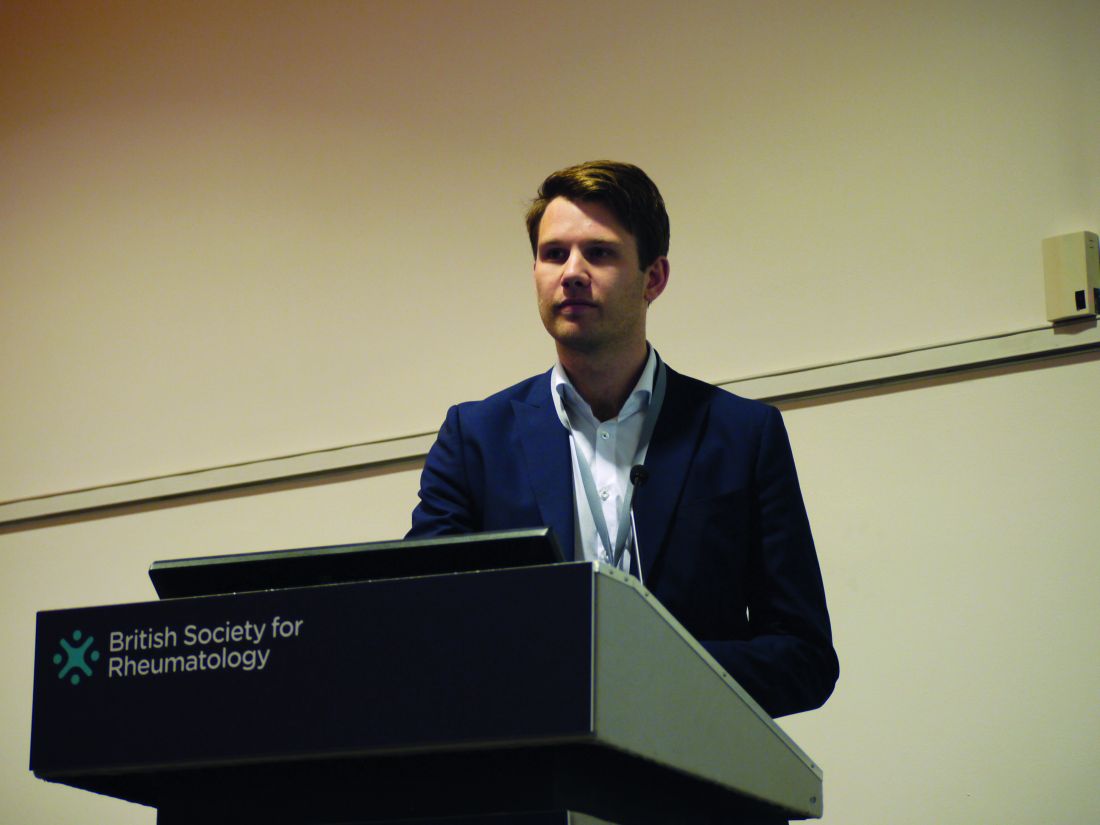
Indeed, of 887 hydroxychloroquine users identified, 44% had at least one risk factor for hydroxychloroquine-induced retinopathy. These included being older than 60 years of age (30% of all users), having renal (10%) or hepatic (2%) impairment, retinal disease at baseline (8%), or using high (more than 6.5 mg/kg) doses of the drug based on their actual (9%) or ideal (4%) body weight.
“The retinal toxicity of hydroxychloroquine is a bit of a hot topic at the moment,” Dr. Yates said at the conference. While the drug has been around for years and used successfully to treat many patients with rheumatoid arthritis and systemic lupus erythematosus (SLE), a known side effect is retinal toxicity.
Traditionally, retinopathy has been quoted as being a relatively rare side effect, affecting around 0.5%-2% of the treated population. Recent data (JAMA Ophthalmol. 2014;132[12]:1453-60) suggest, however, that is probably a vast underestimate, with 7.5% of patients taking hydroxychloroquine for more than 5 years likely to be affected, as are up to 20% of those taking the drug for up to 20 years of treatment.
Dr. Yates and associates wanted to assess the burden of hydroxychloroquine use at their center and look at the risk factors and impact of the recent screening guidelines issued by the British Society for Rheumatology (Rheumatology [Oxford]. 2017;56[6]:865-8) in 2017 and by the Royal College of Ophthalmologists in 2018. These state that patients should have a formal baseline ophthalmic examination, ideally including OCT, within 6-12 months of starting therapy and an annual eye assessment with repeat OCT thereafter for the following 5 years; the ophthalmology guidelines recommending annual screening for the duration of therapy.
One criticism of increased screening for retinal toxicity in routine practice is consultants saying that they see only a handful of cases during their career, Dr. Yates observed. However, if you consider that in an average rheumatology department there are five consultants and 900 patients on hydroxychloroquine, 500 patients take the drug for 5 years or longer, 2% are picked up with non-OCT screening, that amounts to around two cases per year over a 5- to 10-year period. “So that fits with the narrative of only having seen a handful of cases pre-OCT,” Dr. Yates reasoned.
“I believe that this is a real problem, but I’m afraid this is the tip of the iceberg,” commented Caroline Gordon, MD, after her presentation. “We’ve been screening our patients in Birmingham now for about 5 years and we are definitely finding a significant number of patients with hydroxychloroquine toxicity who can be picked up with OCT and visual fields screening.”
Dr. Gordon, professor of rheumatology at the University of Birmingham (England) and a consultant rheumatologist for the University Hospitals NHS Foundation Trust and the Sandwell & West Birmingham Hospitals NHS Trust, helps look after one of the largest cohorts of patients with SLE in the United Kingdom.
A baseline eye examination has always been recommended, Dr. Gordon said, but she suggested that this could remain in the realm of the opticians with further assessment and referral as needed.
“I’m not convinced, from the work we’ve done, that there is any value in the baseline OCT,” Dr. Gordon said, “because we never find anything on the baseline OCT that we didn’t already expect from the opticians’ assessment.”
It is the long-term (longer than10 years) follow-up that needs to be the focus, rather than the initial period, she stressed, as the highest risk appears to be in patients who have been taking the drug for 15 years or longer. Prior to this, different types of retinopathy can occur that are actually attributable to the underlying disease and are not related hydroxychloroquine. Of course, patients on higher doses of hydroxychloroquine may need closer monitoring early on, “as they are at risk,” she acknowledged.
Dr. Gordon suggested that the guidelines as they currently stand may not be that useful for real-life practice. Following them could result in a large amount of money being spent on early tests that are perhaps not necessary.
“What we do need to do is focus on the patients who’ve been on treatment long term,” she said.
SOURCE: Yates M et al. Rheumatology. 2018;57(Suppl. 3):key075.188.
LIVERPOOL, ENGLAND – , but long-term follow-up is much more important, according to data presented at the British Society for Rheumatology annual conference.
In just one specialist rheumatology center in England, which treats more than 8,000 patients annually, the cost of the first year’s optical coherence tomography (OCT) assessment would be more than $60,000. Additional costs would be incurred to screen those who had been on the drug for more than 5 years ,who were known to be at greater risk of hydroxychloroquine-induced retinopathy. This is within the National Health Service in England where the cost of a single OCT scan is around $70; in the private health sector, the cost of one test can be as high as $400.
Indeed, of 887 hydroxychloroquine users identified, 44% had at least one risk factor for hydroxychloroquine-induced retinopathy. These included being older than 60 years of age (30% of all users), having renal (10%) or hepatic (2%) impairment, retinal disease at baseline (8%), or using high (more than 6.5 mg/kg) doses of the drug based on their actual (9%) or ideal (4%) body weight.
“The retinal toxicity of hydroxychloroquine is a bit of a hot topic at the moment,” Dr. Yates said at the conference. While the drug has been around for years and used successfully to treat many patients with rheumatoid arthritis and systemic lupus erythematosus (SLE), a known side effect is retinal toxicity.
Traditionally, retinopathy has been quoted as being a relatively rare side effect, affecting around 0.5%-2% of the treated population. Recent data (JAMA Ophthalmol. 2014;132[12]:1453-60) suggest, however, that is probably a vast underestimate, with 7.5% of patients taking hydroxychloroquine for more than 5 years likely to be affected, as are up to 20% of those taking the drug for up to 20 years of treatment.
Dr. Yates and associates wanted to assess the burden of hydroxychloroquine use at their center and look at the risk factors and impact of the recent screening guidelines issued by the British Society for Rheumatology (Rheumatology [Oxford]. 2017;56[6]:865-8) in 2017 and by the Royal College of Ophthalmologists in 2018. These state that patients should have a formal baseline ophthalmic examination, ideally including OCT, within 6-12 months of starting therapy and an annual eye assessment with repeat OCT thereafter for the following 5 years; the ophthalmology guidelines recommending annual screening for the duration of therapy.
One criticism of increased screening for retinal toxicity in routine practice is consultants saying that they see only a handful of cases during their career, Dr. Yates observed. However, if you consider that in an average rheumatology department there are five consultants and 900 patients on hydroxychloroquine, 500 patients take the drug for 5 years or longer, 2% are picked up with non-OCT screening, that amounts to around two cases per year over a 5- to 10-year period. “So that fits with the narrative of only having seen a handful of cases pre-OCT,” Dr. Yates reasoned.
“I believe that this is a real problem, but I’m afraid this is the tip of the iceberg,” commented Caroline Gordon, MD, after her presentation. “We’ve been screening our patients in Birmingham now for about 5 years and we are definitely finding a significant number of patients with hydroxychloroquine toxicity who can be picked up with OCT and visual fields screening.”
Dr. Gordon, professor of rheumatology at the University of Birmingham (England) and a consultant rheumatologist for the University Hospitals NHS Foundation Trust and the Sandwell & West Birmingham Hospitals NHS Trust, helps look after one of the largest cohorts of patients with SLE in the United Kingdom.
A baseline eye examination has always been recommended, Dr. Gordon said, but she suggested that this could remain in the realm of the opticians with further assessment and referral as needed.
“I’m not convinced, from the work we’ve done, that there is any value in the baseline OCT,” Dr. Gordon said, “because we never find anything on the baseline OCT that we didn’t already expect from the opticians’ assessment.”
It is the long-term (longer than10 years) follow-up that needs to be the focus, rather than the initial period, she stressed, as the highest risk appears to be in patients who have been taking the drug for 15 years or longer. Prior to this, different types of retinopathy can occur that are actually attributable to the underlying disease and are not related hydroxychloroquine. Of course, patients on higher doses of hydroxychloroquine may need closer monitoring early on, “as they are at risk,” she acknowledged.
Dr. Gordon suggested that the guidelines as they currently stand may not be that useful for real-life practice. Following them could result in a large amount of money being spent on early tests that are perhaps not necessary.
“What we do need to do is focus on the patients who’ve been on treatment long term,” she said.
SOURCE: Yates M et al. Rheumatology. 2018;57(Suppl. 3):key075.188.
LIVERPOOL, ENGLAND – , but long-term follow-up is much more important, according to data presented at the British Society for Rheumatology annual conference.
In just one specialist rheumatology center in England, which treats more than 8,000 patients annually, the cost of the first year’s optical coherence tomography (OCT) assessment would be more than $60,000. Additional costs would be incurred to screen those who had been on the drug for more than 5 years ,who were known to be at greater risk of hydroxychloroquine-induced retinopathy. This is within the National Health Service in England where the cost of a single OCT scan is around $70; in the private health sector, the cost of one test can be as high as $400.
Indeed, of 887 hydroxychloroquine users identified, 44% had at least one risk factor for hydroxychloroquine-induced retinopathy. These included being older than 60 years of age (30% of all users), having renal (10%) or hepatic (2%) impairment, retinal disease at baseline (8%), or using high (more than 6.5 mg/kg) doses of the drug based on their actual (9%) or ideal (4%) body weight.
“The retinal toxicity of hydroxychloroquine is a bit of a hot topic at the moment,” Dr. Yates said at the conference. While the drug has been around for years and used successfully to treat many patients with rheumatoid arthritis and systemic lupus erythematosus (SLE), a known side effect is retinal toxicity.
Traditionally, retinopathy has been quoted as being a relatively rare side effect, affecting around 0.5%-2% of the treated population. Recent data (JAMA Ophthalmol. 2014;132[12]:1453-60) suggest, however, that is probably a vast underestimate, with 7.5% of patients taking hydroxychloroquine for more than 5 years likely to be affected, as are up to 20% of those taking the drug for up to 20 years of treatment.
Dr. Yates and associates wanted to assess the burden of hydroxychloroquine use at their center and look at the risk factors and impact of the recent screening guidelines issued by the British Society for Rheumatology (Rheumatology [Oxford]. 2017;56[6]:865-8) in 2017 and by the Royal College of Ophthalmologists in 2018. These state that patients should have a formal baseline ophthalmic examination, ideally including OCT, within 6-12 months of starting therapy and an annual eye assessment with repeat OCT thereafter for the following 5 years; the ophthalmology guidelines recommending annual screening for the duration of therapy.
One criticism of increased screening for retinal toxicity in routine practice is consultants saying that they see only a handful of cases during their career, Dr. Yates observed. However, if you consider that in an average rheumatology department there are five consultants and 900 patients on hydroxychloroquine, 500 patients take the drug for 5 years or longer, 2% are picked up with non-OCT screening, that amounts to around two cases per year over a 5- to 10-year period. “So that fits with the narrative of only having seen a handful of cases pre-OCT,” Dr. Yates reasoned.
“I believe that this is a real problem, but I’m afraid this is the tip of the iceberg,” commented Caroline Gordon, MD, after her presentation. “We’ve been screening our patients in Birmingham now for about 5 years and we are definitely finding a significant number of patients with hydroxychloroquine toxicity who can be picked up with OCT and visual fields screening.”
Dr. Gordon, professor of rheumatology at the University of Birmingham (England) and a consultant rheumatologist for the University Hospitals NHS Foundation Trust and the Sandwell & West Birmingham Hospitals NHS Trust, helps look after one of the largest cohorts of patients with SLE in the United Kingdom.
A baseline eye examination has always been recommended, Dr. Gordon said, but she suggested that this could remain in the realm of the opticians with further assessment and referral as needed.
“I’m not convinced, from the work we’ve done, that there is any value in the baseline OCT,” Dr. Gordon said, “because we never find anything on the baseline OCT that we didn’t already expect from the opticians’ assessment.”
It is the long-term (longer than10 years) follow-up that needs to be the focus, rather than the initial period, she stressed, as the highest risk appears to be in patients who have been taking the drug for 15 years or longer. Prior to this, different types of retinopathy can occur that are actually attributable to the underlying disease and are not related hydroxychloroquine. Of course, patients on higher doses of hydroxychloroquine may need closer monitoring early on, “as they are at risk,” she acknowledged.
Dr. Gordon suggested that the guidelines as they currently stand may not be that useful for real-life practice. Following them could result in a large amount of money being spent on early tests that are perhaps not necessary.
“What we do need to do is focus on the patients who’ve been on treatment long term,” she said.
SOURCE: Yates M et al. Rheumatology. 2018;57(Suppl. 3):key075.188.
REPORTING FROM BSR 2018
Key clinical point: Long-term follow up is important for assessing hydroxychloroquine toxicity.
Major finding: 44% of patients had at least one risk factor for hydroxychloroquine-induced retinopathy after more than 5 years of treatment.
Study details: Electronic record review of 887 patients treated with hydroxychloroquine for about 5 years in a large tertiary rheumatology service.
Disclosures: Dr. Yates had nothing to disclose.
Source: Yates M et al. Rheumatology. 2018;57(Suppl. 3):key075.312.
Raised LDL cholesterol, hsCRP tied to polymyalgia rheumatica, GCA
LIVERPOOL, ENGLAND – The presence of traditional cardiovascular risk factors may precede the development of polymyalgia rheumatica and giant cell arteritis.
Data from the EPIC-Norfolk study, reported at the British Society for Rheumatology annual conference, showed that raised LDL cholesterol was associated with the onset of polymyalgia rheumatica (PMR) and that high sensitivity C-reactive protein (hsCRP) was associated with giant cell arteritis (GCA).
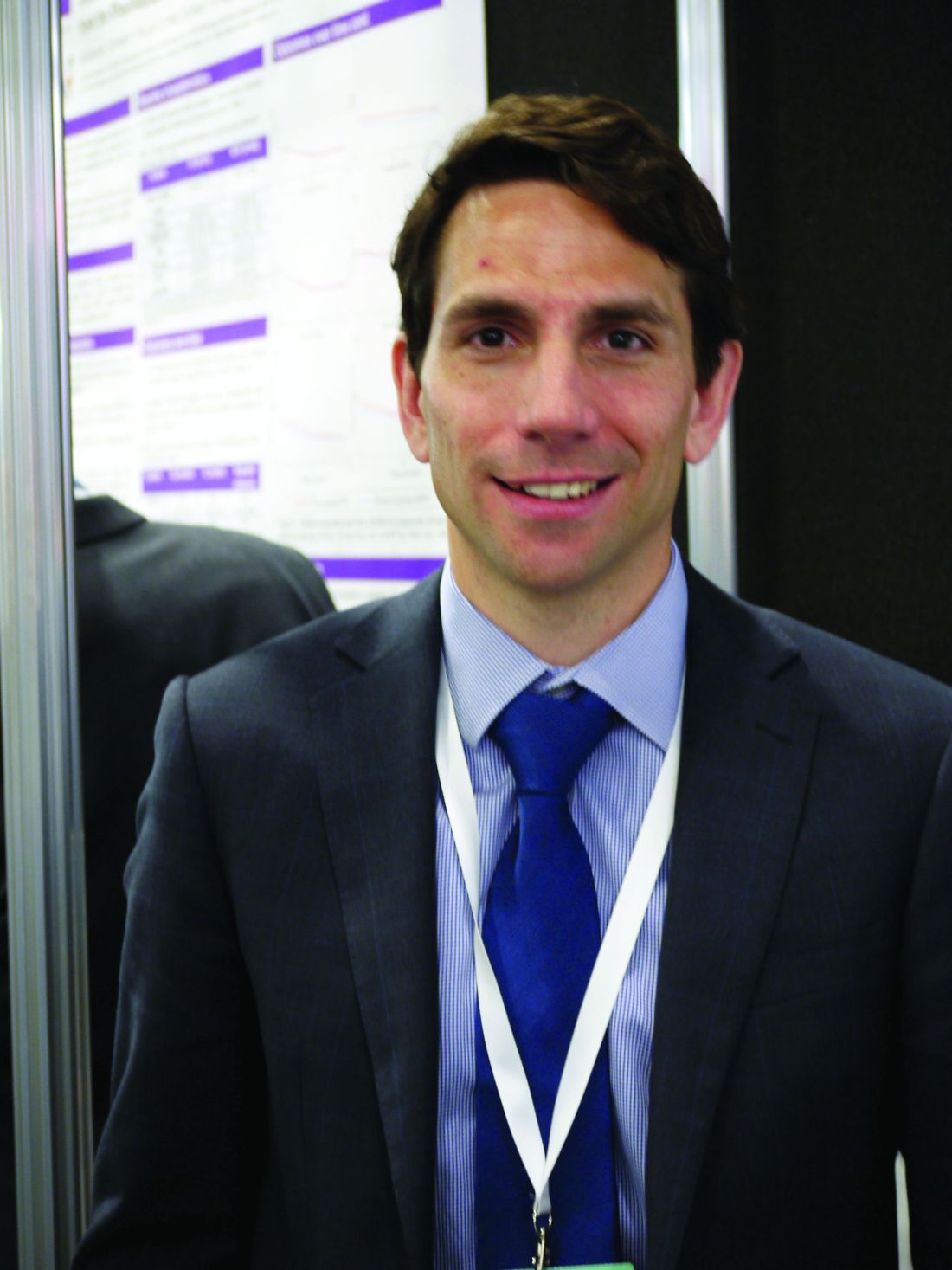
“There’s been an association between vascular disease and PMR and GCA reported, but the way cardiovascular disease has been defined has been based on rather late endpoints, such as angina, myocardial infarction, peripheral vascular disease, and ischemia,” said Max Yates, MBBS, MRCP, in an interview.
“So, what we wanted to do was look at underlying risk factors for those diseases and see how they play in, in terms of the timing of the diagnosis of PMR and GCA,” he explained. Dr. Yates, who is a National Institute for Health Research clinical lecturer in rheumatology at the University of East Anglia, Norwich, England, noted that this was probably the first prospective study to look at clinical and laboratory parameters for vascular disease prior to the onset of these diseases.
Previously, French researchers suggested that there might be a link between hypertension and subsequent PMR, but that was a descriptive study published over 30 years ago, Dr. Yates said. “There was another case-control study from the Mayo Clinic where they said that smoking was associated with incidence GCA,” he added. “So most of the work has been retrospective, case-control studies.”
The EPIC (European Prospective Investigation of Cancer)-Norfolk study is a large, prospective, community-based cohort study that, as its name might suggest, was originally set up to look at risk factors for cancer. Since then it has broadened to enable the study of risk factors for a whole host of other conditions.
More than 30,000 people aged 40-70 years were recruited into the study during 1993-1997, and 25,600 people (440,237 at-risk person-years) who had the necessary baseline and follow-up data were included in the current analysis performed by Dr. Yates and associates.
A total of 395 cases of PMR and 118 cases of GCA were identified using current classification criteria. Those with PMR were diagnosed at a mean age of 73.6 years and those with GCA at a mean age of 74.1 years. For both conditions, about three-quarters of patients were women.
The investigators then looked back at the patients’ original recruitment data in terms of their cardiovascular risk factors, which included their blood pressure readings; body mass index; smoking status; presence of diabetes; hsCRP; and LDL cholesterol, triglycerides, and HDL cholesterol levels.
“Ultimately, these traditional cardiovascular risk factors are present early on, prior to PMR and GCA,” Dr. Yates said.
What this means is that perhaps clinicians need to be more aware of managing these risk factors aggressively, he suggested, but therein lies a problem. “It’s obviously very difficult, early on, before anyone’s developed any disease, to target these risk factors, and you have to balance the risk and benefit for individuals.”
GCA is a “pretty rare” disease whereas PMR is “quite common,” Dr. Yates said, “but we probably need to target these risk factors as soon as people are diagnosed with these conditions, to try to prevent the cardiovascular morbidity that is seen.”
These data might also help explain the underlying etiology and why there is an increased risk of vascular disease seen in populations of patients with inflammatory arthritides.
Dr. Yates had no conflicts of interest to disclose.
SOURCE: Yates M et al. Rheumatology. 2018 Apr;57[Suppl. 3]:key075.312.
LIVERPOOL, ENGLAND – The presence of traditional cardiovascular risk factors may precede the development of polymyalgia rheumatica and giant cell arteritis.
Data from the EPIC-Norfolk study, reported at the British Society for Rheumatology annual conference, showed that raised LDL cholesterol was associated with the onset of polymyalgia rheumatica (PMR) and that high sensitivity C-reactive protein (hsCRP) was associated with giant cell arteritis (GCA).
“There’s been an association between vascular disease and PMR and GCA reported, but the way cardiovascular disease has been defined has been based on rather late endpoints, such as angina, myocardial infarction, peripheral vascular disease, and ischemia,” said Max Yates, MBBS, MRCP, in an interview.
“So, what we wanted to do was look at underlying risk factors for those diseases and see how they play in, in terms of the timing of the diagnosis of PMR and GCA,” he explained. Dr. Yates, who is a National Institute for Health Research clinical lecturer in rheumatology at the University of East Anglia, Norwich, England, noted that this was probably the first prospective study to look at clinical and laboratory parameters for vascular disease prior to the onset of these diseases.
Previously, French researchers suggested that there might be a link between hypertension and subsequent PMR, but that was a descriptive study published over 30 years ago, Dr. Yates said. “There was another case-control study from the Mayo Clinic where they said that smoking was associated with incidence GCA,” he added. “So most of the work has been retrospective, case-control studies.”
The EPIC (European Prospective Investigation of Cancer)-Norfolk study is a large, prospective, community-based cohort study that, as its name might suggest, was originally set up to look at risk factors for cancer. Since then it has broadened to enable the study of risk factors for a whole host of other conditions.
More than 30,000 people aged 40-70 years were recruited into the study during 1993-1997, and 25,600 people (440,237 at-risk person-years) who had the necessary baseline and follow-up data were included in the current analysis performed by Dr. Yates and associates.
A total of 395 cases of PMR and 118 cases of GCA were identified using current classification criteria. Those with PMR were diagnosed at a mean age of 73.6 years and those with GCA at a mean age of 74.1 years. For both conditions, about three-quarters of patients were women.
The investigators then looked back at the patients’ original recruitment data in terms of their cardiovascular risk factors, which included their blood pressure readings; body mass index; smoking status; presence of diabetes; hsCRP; and LDL cholesterol, triglycerides, and HDL cholesterol levels.
“Ultimately, these traditional cardiovascular risk factors are present early on, prior to PMR and GCA,” Dr. Yates said.
What this means is that perhaps clinicians need to be more aware of managing these risk factors aggressively, he suggested, but therein lies a problem. “It’s obviously very difficult, early on, before anyone’s developed any disease, to target these risk factors, and you have to balance the risk and benefit for individuals.”
GCA is a “pretty rare” disease whereas PMR is “quite common,” Dr. Yates said, “but we probably need to target these risk factors as soon as people are diagnosed with these conditions, to try to prevent the cardiovascular morbidity that is seen.”
These data might also help explain the underlying etiology and why there is an increased risk of vascular disease seen in populations of patients with inflammatory arthritides.
Dr. Yates had no conflicts of interest to disclose.
SOURCE: Yates M et al. Rheumatology. 2018 Apr;57[Suppl. 3]:key075.312.
LIVERPOOL, ENGLAND – The presence of traditional cardiovascular risk factors may precede the development of polymyalgia rheumatica and giant cell arteritis.
Data from the EPIC-Norfolk study, reported at the British Society for Rheumatology annual conference, showed that raised LDL cholesterol was associated with the onset of polymyalgia rheumatica (PMR) and that high sensitivity C-reactive protein (hsCRP) was associated with giant cell arteritis (GCA).
“There’s been an association between vascular disease and PMR and GCA reported, but the way cardiovascular disease has been defined has been based on rather late endpoints, such as angina, myocardial infarction, peripheral vascular disease, and ischemia,” said Max Yates, MBBS, MRCP, in an interview.
“So, what we wanted to do was look at underlying risk factors for those diseases and see how they play in, in terms of the timing of the diagnosis of PMR and GCA,” he explained. Dr. Yates, who is a National Institute for Health Research clinical lecturer in rheumatology at the University of East Anglia, Norwich, England, noted that this was probably the first prospective study to look at clinical and laboratory parameters for vascular disease prior to the onset of these diseases.
Previously, French researchers suggested that there might be a link between hypertension and subsequent PMR, but that was a descriptive study published over 30 years ago, Dr. Yates said. “There was another case-control study from the Mayo Clinic where they said that smoking was associated with incidence GCA,” he added. “So most of the work has been retrospective, case-control studies.”
The EPIC (European Prospective Investigation of Cancer)-Norfolk study is a large, prospective, community-based cohort study that, as its name might suggest, was originally set up to look at risk factors for cancer. Since then it has broadened to enable the study of risk factors for a whole host of other conditions.
More than 30,000 people aged 40-70 years were recruited into the study during 1993-1997, and 25,600 people (440,237 at-risk person-years) who had the necessary baseline and follow-up data were included in the current analysis performed by Dr. Yates and associates.
A total of 395 cases of PMR and 118 cases of GCA were identified using current classification criteria. Those with PMR were diagnosed at a mean age of 73.6 years and those with GCA at a mean age of 74.1 years. For both conditions, about three-quarters of patients were women.
The investigators then looked back at the patients’ original recruitment data in terms of their cardiovascular risk factors, which included their blood pressure readings; body mass index; smoking status; presence of diabetes; hsCRP; and LDL cholesterol, triglycerides, and HDL cholesterol levels.
“Ultimately, these traditional cardiovascular risk factors are present early on, prior to PMR and GCA,” Dr. Yates said.
What this means is that perhaps clinicians need to be more aware of managing these risk factors aggressively, he suggested, but therein lies a problem. “It’s obviously very difficult, early on, before anyone’s developed any disease, to target these risk factors, and you have to balance the risk and benefit for individuals.”
GCA is a “pretty rare” disease whereas PMR is “quite common,” Dr. Yates said, “but we probably need to target these risk factors as soon as people are diagnosed with these conditions, to try to prevent the cardiovascular morbidity that is seen.”
These data might also help explain the underlying etiology and why there is an increased risk of vascular disease seen in populations of patients with inflammatory arthritides.
Dr. Yates had no conflicts of interest to disclose.
SOURCE: Yates M et al. Rheumatology. 2018 Apr;57[Suppl. 3]:key075.312.
REPORTING FROM BSR 2018
Key clinical point: The presence of traditional cardiovascular risk factors may precede the development of polymyalgia rheumatica (PMR) and giant cell arteritis (GCA).
Major finding: Raised LDL cholesterol was linked with the onset of PMR (subhazard ratio, 1.29) and raised hsCRP was associated with GCA (SHR, 1.85).
Study details: Data from the EPIC-Norfolk study: 385 cases of PMR and 118 cases of GCA identified from a population of more than 25,000 subjects.
Disclosures: Dr. Yates had no conflicts of interest to disclose.
Source: Yates M et al. Rheumatology. 2018 Apr;57[Suppl. 3]:key075.312.
Semaglutide drops HbA1c, weight, across ethnicities
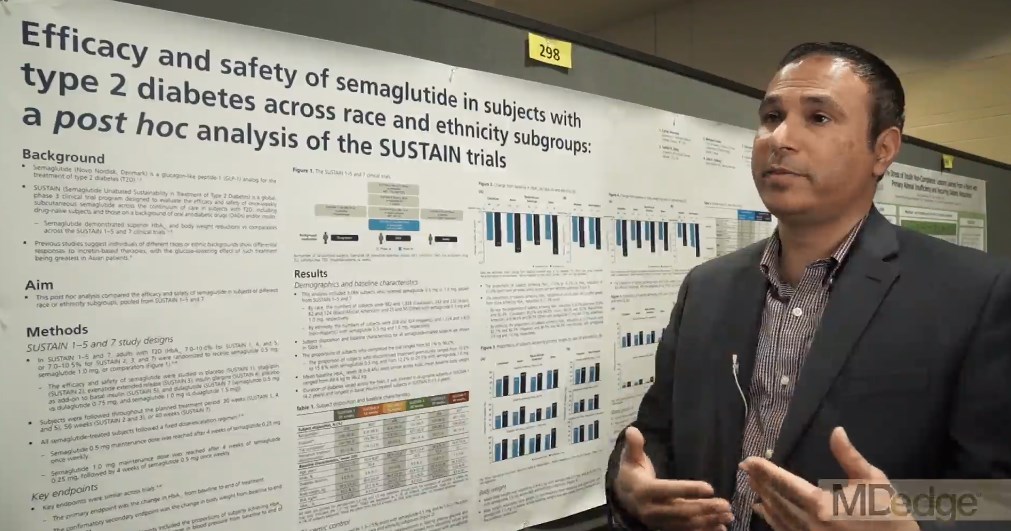
BOSTON – studied in a series of clinical trials; the efficacy did not come at the cost of frequent hypoglycemia or other serious adverse events, according to a pooled subgroup analysis of the SUSTAIN trials.
The video associated with this article is no longer available on this site. Please view all of our videos on the MDedge YouTube channel
The trials investigated the safety and efficacy of semaglutide, a glucagon-like peptide-1 (GLP-1) receptor agonist, in the treatment of T2DM. Cyrus V. Desouza, MBBS, presented results of a post hoc analysis of racial and ethnic subgroups, drawing on SUSTAIN trials 1-5 and 7 (SUSTAIN 6 had a different design, focusing on cardiovascular outcomes).
“The trials incorporated patients on the whole spectrum of diabetes, starting from people who are newly diagnosed ... all the way to patients who were on a combination of oral antidiabetic drugs plus insulin,” Dr. Desouza explained in an interview at the annual scientific & clinical congress of the American Association of Clinical Endocrinologists.
The mean time since diagnosis in the SUSTAIN trials varied from 4.2 years in SUSTAIN 1 to 13.3 years in SUSTAIN 5. Dr. Desouza and his colleagues pooled data from the six trials to conduct the subgroup analyses.
Patients in the intervention arms of all trials received once weekly subcutaneous semaglutide, at a dose of either 0.5 mg or 1.0 mg, according to Dr. Desouza, professor of diabetes, endocrinology, and metabolism and Schultz Professor of Diabetes Research, Diabetes, Endocrinology, and Metabolism at the University of Nebraska, Lincoln.
In all, data from 3,066 patients were available. In the racial analysis, 982 low- and 1,328 high-dose semaglutide recipients were white, 243 and 232 were Asian, 82 and 124 were African American, and 25 and 50 identified as “other,” respectively.
An analysis by ethnicity found that 208 low- and 324 high-dose recipients were Hispanic.
At baseline in all trials, mean hemoglobin A1c levels were similar, ranging from 8% to 8.4%; weights at baseline were a mean 89.6 kg to 96.2 kg across the trials.
The range of reductions in HbA1c was similar across racial and ethnic groups. “If you look at the proportion of patients who actually achieved an A1c below 7[%], it’s pretty impressive – it’s between 70% to 80%.” Between 50% and 60% of patients reached an HbA1c less than 6.5%, said Dr. Desouza.
Looking at the data another way, 62.2%-72.4% of patients saw an HbA1c reduction of at least 1% on low-dose semaglutide; the range across ethnicities was 74.2%-87.1% on high-dose semaglutide. Dr. Desouza said that the sample sizes weren’t large enough to calculate statistical significance for these subgroup differences.
“But I think what is impressive is that over 50% of patients in all the races and ethnicities were able to achieve a 5% body weight loss, which is metabolically significant in terms of improving outcomes,” he said. “I think that’s a really important fact.” A smaller proportion – around 20% – lost at least 10% of body weight, mostly on high-dose semaglutide.
Severe hypoglycemia, as defined by American Diabetes Association classification, was very rare across trials, except that 4.7% of African Americans saw this adverse event on high-dose semaglutide. Incidence in other subgroups, at either dose, ranged from 0% to 2.4%.
Otherwise, the medication was generally well tolerated, though gastrointestinal side effects were seen. “Asian people have a little higher GI side effects – up to 50% of Asians did develop GI side effects, and between 10% and 13% of Asians had to stop medication due to side effects,” said Dr. Desouza. “So I think that would be the one caveat in terms of tolerance that we did learn.”
The SUSTAIN trials were sponsored by Novo Nordisk. Dr. Desouza has received consulting fees for Novo Nordisk and has received grant support from several other pharmaceutical companies. Two coauthors are Novo Nordisk employees.
SOURCE: Desouza C et al. AACE 2018, Abstract 298
BOSTON – studied in a series of clinical trials; the efficacy did not come at the cost of frequent hypoglycemia or other serious adverse events, according to a pooled subgroup analysis of the SUSTAIN trials.
The video associated with this article is no longer available on this site. Please view all of our videos on the MDedge YouTube channel
The trials investigated the safety and efficacy of semaglutide, a glucagon-like peptide-1 (GLP-1) receptor agonist, in the treatment of T2DM. Cyrus V. Desouza, MBBS, presented results of a post hoc analysis of racial and ethnic subgroups, drawing on SUSTAIN trials 1-5 and 7 (SUSTAIN 6 had a different design, focusing on cardiovascular outcomes).
“The trials incorporated patients on the whole spectrum of diabetes, starting from people who are newly diagnosed ... all the way to patients who were on a combination of oral antidiabetic drugs plus insulin,” Dr. Desouza explained in an interview at the annual scientific & clinical congress of the American Association of Clinical Endocrinologists.
The mean time since diagnosis in the SUSTAIN trials varied from 4.2 years in SUSTAIN 1 to 13.3 years in SUSTAIN 5. Dr. Desouza and his colleagues pooled data from the six trials to conduct the subgroup analyses.
Patients in the intervention arms of all trials received once weekly subcutaneous semaglutide, at a dose of either 0.5 mg or 1.0 mg, according to Dr. Desouza, professor of diabetes, endocrinology, and metabolism and Schultz Professor of Diabetes Research, Diabetes, Endocrinology, and Metabolism at the University of Nebraska, Lincoln.
In all, data from 3,066 patients were available. In the racial analysis, 982 low- and 1,328 high-dose semaglutide recipients were white, 243 and 232 were Asian, 82 and 124 were African American, and 25 and 50 identified as “other,” respectively.
An analysis by ethnicity found that 208 low- and 324 high-dose recipients were Hispanic.
At baseline in all trials, mean hemoglobin A1c levels were similar, ranging from 8% to 8.4%; weights at baseline were a mean 89.6 kg to 96.2 kg across the trials.
The range of reductions in HbA1c was similar across racial and ethnic groups. “If you look at the proportion of patients who actually achieved an A1c below 7[%], it’s pretty impressive – it’s between 70% to 80%.” Between 50% and 60% of patients reached an HbA1c less than 6.5%, said Dr. Desouza.
Looking at the data another way, 62.2%-72.4% of patients saw an HbA1c reduction of at least 1% on low-dose semaglutide; the range across ethnicities was 74.2%-87.1% on high-dose semaglutide. Dr. Desouza said that the sample sizes weren’t large enough to calculate statistical significance for these subgroup differences.
“But I think what is impressive is that over 50% of patients in all the races and ethnicities were able to achieve a 5% body weight loss, which is metabolically significant in terms of improving outcomes,” he said. “I think that’s a really important fact.” A smaller proportion – around 20% – lost at least 10% of body weight, mostly on high-dose semaglutide.
Severe hypoglycemia, as defined by American Diabetes Association classification, was very rare across trials, except that 4.7% of African Americans saw this adverse event on high-dose semaglutide. Incidence in other subgroups, at either dose, ranged from 0% to 2.4%.
Otherwise, the medication was generally well tolerated, though gastrointestinal side effects were seen. “Asian people have a little higher GI side effects – up to 50% of Asians did develop GI side effects, and between 10% and 13% of Asians had to stop medication due to side effects,” said Dr. Desouza. “So I think that would be the one caveat in terms of tolerance that we did learn.”
The SUSTAIN trials were sponsored by Novo Nordisk. Dr. Desouza has received consulting fees for Novo Nordisk and has received grant support from several other pharmaceutical companies. Two coauthors are Novo Nordisk employees.
SOURCE: Desouza C et al. AACE 2018, Abstract 298
BOSTON – studied in a series of clinical trials; the efficacy did not come at the cost of frequent hypoglycemia or other serious adverse events, according to a pooled subgroup analysis of the SUSTAIN trials.
The video associated with this article is no longer available on this site. Please view all of our videos on the MDedge YouTube channel
The trials investigated the safety and efficacy of semaglutide, a glucagon-like peptide-1 (GLP-1) receptor agonist, in the treatment of T2DM. Cyrus V. Desouza, MBBS, presented results of a post hoc analysis of racial and ethnic subgroups, drawing on SUSTAIN trials 1-5 and 7 (SUSTAIN 6 had a different design, focusing on cardiovascular outcomes).
“The trials incorporated patients on the whole spectrum of diabetes, starting from people who are newly diagnosed ... all the way to patients who were on a combination of oral antidiabetic drugs plus insulin,” Dr. Desouza explained in an interview at the annual scientific & clinical congress of the American Association of Clinical Endocrinologists.
The mean time since diagnosis in the SUSTAIN trials varied from 4.2 years in SUSTAIN 1 to 13.3 years in SUSTAIN 5. Dr. Desouza and his colleagues pooled data from the six trials to conduct the subgroup analyses.
Patients in the intervention arms of all trials received once weekly subcutaneous semaglutide, at a dose of either 0.5 mg or 1.0 mg, according to Dr. Desouza, professor of diabetes, endocrinology, and metabolism and Schultz Professor of Diabetes Research, Diabetes, Endocrinology, and Metabolism at the University of Nebraska, Lincoln.
In all, data from 3,066 patients were available. In the racial analysis, 982 low- and 1,328 high-dose semaglutide recipients were white, 243 and 232 were Asian, 82 and 124 were African American, and 25 and 50 identified as “other,” respectively.
An analysis by ethnicity found that 208 low- and 324 high-dose recipients were Hispanic.
At baseline in all trials, mean hemoglobin A1c levels were similar, ranging from 8% to 8.4%; weights at baseline were a mean 89.6 kg to 96.2 kg across the trials.
The range of reductions in HbA1c was similar across racial and ethnic groups. “If you look at the proportion of patients who actually achieved an A1c below 7[%], it’s pretty impressive – it’s between 70% to 80%.” Between 50% and 60% of patients reached an HbA1c less than 6.5%, said Dr. Desouza.
Looking at the data another way, 62.2%-72.4% of patients saw an HbA1c reduction of at least 1% on low-dose semaglutide; the range across ethnicities was 74.2%-87.1% on high-dose semaglutide. Dr. Desouza said that the sample sizes weren’t large enough to calculate statistical significance for these subgroup differences.
“But I think what is impressive is that over 50% of patients in all the races and ethnicities were able to achieve a 5% body weight loss, which is metabolically significant in terms of improving outcomes,” he said. “I think that’s a really important fact.” A smaller proportion – around 20% – lost at least 10% of body weight, mostly on high-dose semaglutide.
Severe hypoglycemia, as defined by American Diabetes Association classification, was very rare across trials, except that 4.7% of African Americans saw this adverse event on high-dose semaglutide. Incidence in other subgroups, at either dose, ranged from 0% to 2.4%.
Otherwise, the medication was generally well tolerated, though gastrointestinal side effects were seen. “Asian people have a little higher GI side effects – up to 50% of Asians did develop GI side effects, and between 10% and 13% of Asians had to stop medication due to side effects,” said Dr. Desouza. “So I think that would be the one caveat in terms of tolerance that we did learn.”
The SUSTAIN trials were sponsored by Novo Nordisk. Dr. Desouza has received consulting fees for Novo Nordisk and has received grant support from several other pharmaceutical companies. Two coauthors are Novo Nordisk employees.
SOURCE: Desouza C et al. AACE 2018, Abstract 298
REPORTING FROM AACE 2018
Suicides up 30%; risk factors go beyond diagnosed disorders
About 45,000 individuals in the United States took their own lives in 2016, and about half of them had no known mental health diagnosis at the time of death, based on data from the Centers for Disease Control and Prevention. Suicide rates rose by approximately 30% across all age groups up to age 75 years.
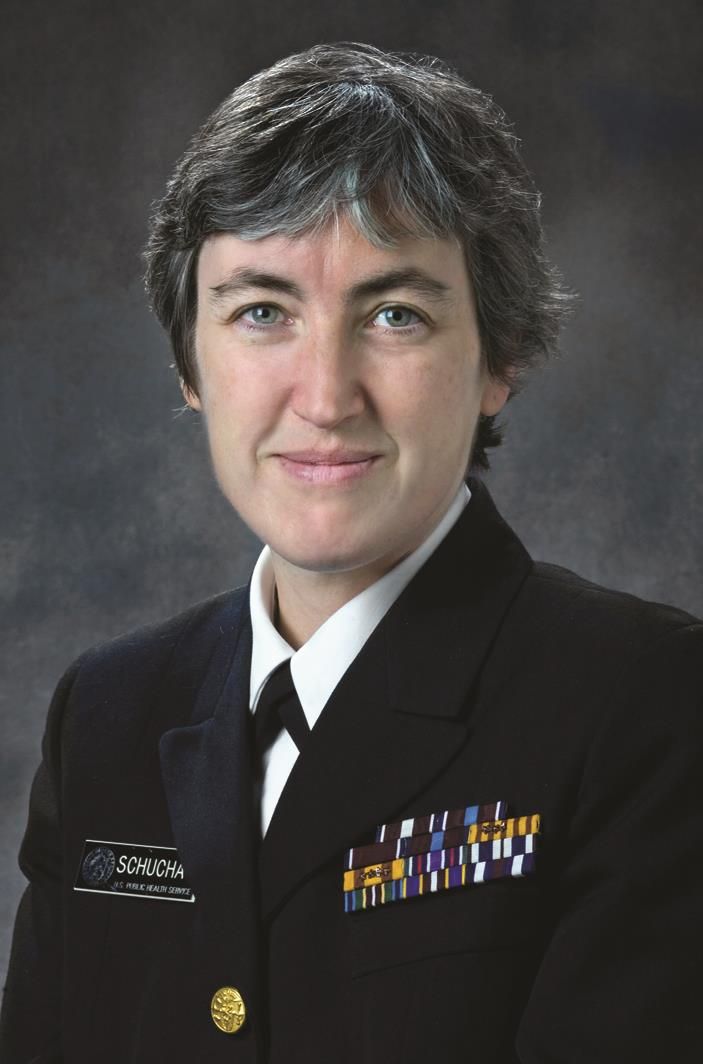
“Suicide is preventable; that’s why it is important to understand all the factors,” Anne Schuchat, MD, principal deputy director of the Centers for Disease Control and Prevention, said in a June 7 teleconference announcing the findings. Although mental health conditions often are seen as the cause of suicide, the results highlight the need to address other factors, including relationship problems, substance abuse, trouble with life transitions, and financial difficulties.
In a Vital Signs report published June 7, a team of CDC researchers led by Deborah M. Stone, ScD, reviewed data from suicide rates by state from 1999-2016. To examine the circumstances of suicide among individuals with and without mental health conditions, the researchers also reviewed data from the CDC’s National Violent Death Reporting System for 2015, which included 27 states.
Although rates increased among all age groups,.
Overall, 54% of the suicides in 2016 had no mental health diagnosis. Compared with those with a mental health diagnosis, those without a diagnosis were more likely to be male, part of an ethnic minority, and to have a history of homicide. In addition, those without known mental health conditions were more likely to have served in the military.
The most common causes of suicide were firearms, hanging/suffocation/strangulation, and poisoning.
Individuals without known mental health conditions were significantly more likely than those with mental health con-ditions to have used firearms (55% vs. 41%) and significantly less likely to die from hanging/suffocation/strangulation (27% vs. 31%) or poisoning (10% vs. 20%) in adjusted models, the researchers noted.
“If we only look at this as a mental health issue, we won’t make the progress that we need,” Dr. Schuchat said. She urged health professionals, community organizations, government organizations, and the public at large to learn to rec-ognize warning signs and factors that can lead to suicide.
To help achieve the national goal of a 20% reduction in the annual suicide rate by 2025, the CDC has developed a technical package of recommendations for policies, prevention strategies, and resources aimed at communities and states.
In addition, “Health care providers have an important role to play” to prevent those at risk for suicide from falling through the cracks, Dr. Schuchat said. She noted the importance of protocols for patient safety and support, and she stressed that health providers should be especially vigilant during times of life transition such as changes in relationship stages, leaving for college, retirement, financial insecurity, or the loss of a loved one.
“We don’t think we can just leave this to the mental health discipline,” Dr. Schuchat noted. “Preventing suicide takes everyone; everyone in the community can help by learning the warning signs,” she said.
[email protected]
SOURCE: Stone D et al. MMWR. 2018 Jun 7; 67(22):617-24
About 45,000 individuals in the United States took their own lives in 2016, and about half of them had no known mental health diagnosis at the time of death, based on data from the Centers for Disease Control and Prevention. Suicide rates rose by approximately 30% across all age groups up to age 75 years.
“Suicide is preventable; that’s why it is important to understand all the factors,” Anne Schuchat, MD, principal deputy director of the Centers for Disease Control and Prevention, said in a June 7 teleconference announcing the findings. Although mental health conditions often are seen as the cause of suicide, the results highlight the need to address other factors, including relationship problems, substance abuse, trouble with life transitions, and financial difficulties.
In a Vital Signs report published June 7, a team of CDC researchers led by Deborah M. Stone, ScD, reviewed data from suicide rates by state from 1999-2016. To examine the circumstances of suicide among individuals with and without mental health conditions, the researchers also reviewed data from the CDC’s National Violent Death Reporting System for 2015, which included 27 states.
Although rates increased among all age groups,.
Overall, 54% of the suicides in 2016 had no mental health diagnosis. Compared with those with a mental health diagnosis, those without a diagnosis were more likely to be male, part of an ethnic minority, and to have a history of homicide. In addition, those without known mental health conditions were more likely to have served in the military.
The most common causes of suicide were firearms, hanging/suffocation/strangulation, and poisoning.
Individuals without known mental health conditions were significantly more likely than those with mental health con-ditions to have used firearms (55% vs. 41%) and significantly less likely to die from hanging/suffocation/strangulation (27% vs. 31%) or poisoning (10% vs. 20%) in adjusted models, the researchers noted.
“If we only look at this as a mental health issue, we won’t make the progress that we need,” Dr. Schuchat said. She urged health professionals, community organizations, government organizations, and the public at large to learn to rec-ognize warning signs and factors that can lead to suicide.
To help achieve the national goal of a 20% reduction in the annual suicide rate by 2025, the CDC has developed a technical package of recommendations for policies, prevention strategies, and resources aimed at communities and states.
In addition, “Health care providers have an important role to play” to prevent those at risk for suicide from falling through the cracks, Dr. Schuchat said. She noted the importance of protocols for patient safety and support, and she stressed that health providers should be especially vigilant during times of life transition such as changes in relationship stages, leaving for college, retirement, financial insecurity, or the loss of a loved one.
“We don’t think we can just leave this to the mental health discipline,” Dr. Schuchat noted. “Preventing suicide takes everyone; everyone in the community can help by learning the warning signs,” she said.
[email protected]
SOURCE: Stone D et al. MMWR. 2018 Jun 7; 67(22):617-24
About 45,000 individuals in the United States took their own lives in 2016, and about half of them had no known mental health diagnosis at the time of death, based on data from the Centers for Disease Control and Prevention. Suicide rates rose by approximately 30% across all age groups up to age 75 years.
“Suicide is preventable; that’s why it is important to understand all the factors,” Anne Schuchat, MD, principal deputy director of the Centers for Disease Control and Prevention, said in a June 7 teleconference announcing the findings. Although mental health conditions often are seen as the cause of suicide, the results highlight the need to address other factors, including relationship problems, substance abuse, trouble with life transitions, and financial difficulties.
In a Vital Signs report published June 7, a team of CDC researchers led by Deborah M. Stone, ScD, reviewed data from suicide rates by state from 1999-2016. To examine the circumstances of suicide among individuals with and without mental health conditions, the researchers also reviewed data from the CDC’s National Violent Death Reporting System for 2015, which included 27 states.
Although rates increased among all age groups,.
Overall, 54% of the suicides in 2016 had no mental health diagnosis. Compared with those with a mental health diagnosis, those without a diagnosis were more likely to be male, part of an ethnic minority, and to have a history of homicide. In addition, those without known mental health conditions were more likely to have served in the military.
The most common causes of suicide were firearms, hanging/suffocation/strangulation, and poisoning.
Individuals without known mental health conditions were significantly more likely than those with mental health con-ditions to have used firearms (55% vs. 41%) and significantly less likely to die from hanging/suffocation/strangulation (27% vs. 31%) or poisoning (10% vs. 20%) in adjusted models, the researchers noted.
“If we only look at this as a mental health issue, we won’t make the progress that we need,” Dr. Schuchat said. She urged health professionals, community organizations, government organizations, and the public at large to learn to rec-ognize warning signs and factors that can lead to suicide.
To help achieve the national goal of a 20% reduction in the annual suicide rate by 2025, the CDC has developed a technical package of recommendations for policies, prevention strategies, and resources aimed at communities and states.
In addition, “Health care providers have an important role to play” to prevent those at risk for suicide from falling through the cracks, Dr. Schuchat said. She noted the importance of protocols for patient safety and support, and she stressed that health providers should be especially vigilant during times of life transition such as changes in relationship stages, leaving for college, retirement, financial insecurity, or the loss of a loved one.
“We don’t think we can just leave this to the mental health discipline,” Dr. Schuchat noted. “Preventing suicide takes everyone; everyone in the community can help by learning the warning signs,” she said.
[email protected]
SOURCE: Stone D et al. MMWR. 2018 Jun 7; 67(22):617-24
COA files lawsuit over budget sequestration
Part B drugs administered in the physician’s office are generally reimbursed at average sales price (ASP) plus 6%, a rate set in statute by the Medicare Modernization Act of 2003 (MMA). However, the Budget Control Act of 2011 put a 2% sequestration on the federal budget, effective April 1, 2013, and extended numerous times after, most recently in the Bipartisan Budget Act of 2018. This has the effect of lowering Part B drug reimbursement to ASP + 4.3%.
“We are filing to see an injunction against the United States Department of Health and Human Services and the Office of Management and Budget [OMB] because we have exhausted all possibilities in stopping what is an unconstitutional application of the 2% sequester cut to Part B drug reimbursement,” COA President Jeff Vacirca, MD, and Executive Director Ted Okon said in a May 30 letter to HHS Secretary Alex Azar alerting him to the legal action, which was filed on May 31.
Dr. Vacirca and Mr. Okon noted that they have met with “numerous HHS and OMB officials” to explain why they believe the sequestration is unconstitutional. In the court filing, they argue that the sequestration has “invaded the legislative sphere by effectively amending the MMA” and COA argues that the executive branch “cannot alter duly enacted legislation under the guise of executing the laws.
“Putting that aside, the Balanced Budget Act provides the ability for the Executive Branch to sequester up to 2% of funds for a [Budget Control Act] sequestration for Medicare Part B ‘services’ but it does not provide the same authority for Part B drugs and does not contain any express language indicating an intent that a sequestration can be applied to alter the MMA’s statutory formula.”
Despite raising this objection, “the response we have received at HHS and OMB reflects more on the current Administration’s views on the policy of Medicare Part B drug reimbursement and not on correcting the prior Administration’s unconstitutional application of the sequester,” the letter states. “As a result, we are left with no other option but to pursue legal action, something we have clearly communicated to both HHS and OMB on several occasions, as a last resort.”
COA notes in its 2018 Community Oncology Practice Report that since the sequester went into effect in 2013, around 135 independent community cancer clinics have closed and about 190 clinics have been acquired by hospitals.
“Shifting cancer care to the outpatient hospital setting costs all taxpayers, not just Medicare beneficiaries,” the letter states. “The actuarial firm Milliman estimated the shift from 2004 to 2014 to have cost Medicare $2 billion in just one year (2014) and, as a result, an estimated $500 million in the same year to senior beneficiaries responsible for the 20% coinsurance.”
Part B drugs administered in the physician’s office are generally reimbursed at average sales price (ASP) plus 6%, a rate set in statute by the Medicare Modernization Act of 2003 (MMA). However, the Budget Control Act of 2011 put a 2% sequestration on the federal budget, effective April 1, 2013, and extended numerous times after, most recently in the Bipartisan Budget Act of 2018. This has the effect of lowering Part B drug reimbursement to ASP + 4.3%.
“We are filing to see an injunction against the United States Department of Health and Human Services and the Office of Management and Budget [OMB] because we have exhausted all possibilities in stopping what is an unconstitutional application of the 2% sequester cut to Part B drug reimbursement,” COA President Jeff Vacirca, MD, and Executive Director Ted Okon said in a May 30 letter to HHS Secretary Alex Azar alerting him to the legal action, which was filed on May 31.
Dr. Vacirca and Mr. Okon noted that they have met with “numerous HHS and OMB officials” to explain why they believe the sequestration is unconstitutional. In the court filing, they argue that the sequestration has “invaded the legislative sphere by effectively amending the MMA” and COA argues that the executive branch “cannot alter duly enacted legislation under the guise of executing the laws.
“Putting that aside, the Balanced Budget Act provides the ability for the Executive Branch to sequester up to 2% of funds for a [Budget Control Act] sequestration for Medicare Part B ‘services’ but it does not provide the same authority for Part B drugs and does not contain any express language indicating an intent that a sequestration can be applied to alter the MMA’s statutory formula.”
Despite raising this objection, “the response we have received at HHS and OMB reflects more on the current Administration’s views on the policy of Medicare Part B drug reimbursement and not on correcting the prior Administration’s unconstitutional application of the sequester,” the letter states. “As a result, we are left with no other option but to pursue legal action, something we have clearly communicated to both HHS and OMB on several occasions, as a last resort.”
COA notes in its 2018 Community Oncology Practice Report that since the sequester went into effect in 2013, around 135 independent community cancer clinics have closed and about 190 clinics have been acquired by hospitals.
“Shifting cancer care to the outpatient hospital setting costs all taxpayers, not just Medicare beneficiaries,” the letter states. “The actuarial firm Milliman estimated the shift from 2004 to 2014 to have cost Medicare $2 billion in just one year (2014) and, as a result, an estimated $500 million in the same year to senior beneficiaries responsible for the 20% coinsurance.”
Part B drugs administered in the physician’s office are generally reimbursed at average sales price (ASP) plus 6%, a rate set in statute by the Medicare Modernization Act of 2003 (MMA). However, the Budget Control Act of 2011 put a 2% sequestration on the federal budget, effective April 1, 2013, and extended numerous times after, most recently in the Bipartisan Budget Act of 2018. This has the effect of lowering Part B drug reimbursement to ASP + 4.3%.
“We are filing to see an injunction against the United States Department of Health and Human Services and the Office of Management and Budget [OMB] because we have exhausted all possibilities in stopping what is an unconstitutional application of the 2% sequester cut to Part B drug reimbursement,” COA President Jeff Vacirca, MD, and Executive Director Ted Okon said in a May 30 letter to HHS Secretary Alex Azar alerting him to the legal action, which was filed on May 31.
Dr. Vacirca and Mr. Okon noted that they have met with “numerous HHS and OMB officials” to explain why they believe the sequestration is unconstitutional. In the court filing, they argue that the sequestration has “invaded the legislative sphere by effectively amending the MMA” and COA argues that the executive branch “cannot alter duly enacted legislation under the guise of executing the laws.
“Putting that aside, the Balanced Budget Act provides the ability for the Executive Branch to sequester up to 2% of funds for a [Budget Control Act] sequestration for Medicare Part B ‘services’ but it does not provide the same authority for Part B drugs and does not contain any express language indicating an intent that a sequestration can be applied to alter the MMA’s statutory formula.”
Despite raising this objection, “the response we have received at HHS and OMB reflects more on the current Administration’s views on the policy of Medicare Part B drug reimbursement and not on correcting the prior Administration’s unconstitutional application of the sequester,” the letter states. “As a result, we are left with no other option but to pursue legal action, something we have clearly communicated to both HHS and OMB on several occasions, as a last resort.”
COA notes in its 2018 Community Oncology Practice Report that since the sequester went into effect in 2013, around 135 independent community cancer clinics have closed and about 190 clinics have been acquired by hospitals.
“Shifting cancer care to the outpatient hospital setting costs all taxpayers, not just Medicare beneficiaries,” the letter states. “The actuarial firm Milliman estimated the shift from 2004 to 2014 to have cost Medicare $2 billion in just one year (2014) and, as a result, an estimated $500 million in the same year to senior beneficiaries responsible for the 20% coinsurance.”
FDA effort focuses on approving more generic drugs
Pharmaceutical companies may be in for a more difficult time hiding behind a Risk Evaluation and Mitigation Strategy (REMS) as a way to prevent generic competition from entering the market.
The Food and Drug Administration issued two draft guidance documents on May 31 aimed at spurring on generic competition, items that are part of a broader White House strategy targeting the high price of prescription drugs.
“We have seen REMS requirements exploited in two ways,” FDA Commissioner Scott Gottlieb, MD, said in a statement. “One occurs at the front end of the drug development process, when generic drugs are being developed. The other occurs at the back end of the process, after necessary testing has been completed, when a generic drug seeks approval and market entry.”
On the front end, manufacturers use REMS to restrict the sale of drugs to keep them out of the hands of generic firms, which typically need about 5,000 doses to conduct bioequivalence and bioavailability studies, Dr. Gottlieb noted. The back-end obstacle, which happens after a generic manufacturer files application for generic approval, is what the two guidance documents address.
The first draft guidance document, “Development of a Shared System REMS,” outlines principles and recommendations for brand and generic manufacturers to develop a single REMS program that covers both products, which Dr. Gottlieb said will “enable timelier market entry for products that are part of these REMS.”
The second draft guidance document, “Waivers of the Single Shared System REMS Requirement,” describes the two circumstances under which the generic manufacturer can waive the single, shared REMS requirements:
- If the burden of forming a single, shared systems outweighs the benefits.
- If an aspect of the REMS is covered by a patent or is a trade secret and the generic company was unable to obtain a license for use.
“We believe that by making the process for developing a shared system REMS more efficient, we’ll discourage brand drug makers from using REMS as a way to block generic entry and help end some of the tactics that can delay access,” Dr. Gottlieb said. “Our safety programs shouldn’t be leveraged as a way to forestall generic entry after lawful IP has lapsed on a brand drug.”

“Today’s FDA guidance is a step in the right direction toward our common goal of lowering out-of-control drug prices,” the Campaign for Sustainable Rx Pricing said in a statement “When generic and biosimilar competition is thwarted by these abusive tactics, brand-name manufacturers, who alone control the price of their drugs, keep those prices artificially high. The problem is the price, and more competition is a proven solution.”
Comments on each of the draft guidance documents are due July 31 at www.regulations.gov.
Pharmaceutical companies may be in for a more difficult time hiding behind a Risk Evaluation and Mitigation Strategy (REMS) as a way to prevent generic competition from entering the market.
The Food and Drug Administration issued two draft guidance documents on May 31 aimed at spurring on generic competition, items that are part of a broader White House strategy targeting the high price of prescription drugs.
“We have seen REMS requirements exploited in two ways,” FDA Commissioner Scott Gottlieb, MD, said in a statement. “One occurs at the front end of the drug development process, when generic drugs are being developed. The other occurs at the back end of the process, after necessary testing has been completed, when a generic drug seeks approval and market entry.”
On the front end, manufacturers use REMS to restrict the sale of drugs to keep them out of the hands of generic firms, which typically need about 5,000 doses to conduct bioequivalence and bioavailability studies, Dr. Gottlieb noted. The back-end obstacle, which happens after a generic manufacturer files application for generic approval, is what the two guidance documents address.
The first draft guidance document, “Development of a Shared System REMS,” outlines principles and recommendations for brand and generic manufacturers to develop a single REMS program that covers both products, which Dr. Gottlieb said will “enable timelier market entry for products that are part of these REMS.”
The second draft guidance document, “Waivers of the Single Shared System REMS Requirement,” describes the two circumstances under which the generic manufacturer can waive the single, shared REMS requirements:
- If the burden of forming a single, shared systems outweighs the benefits.
- If an aspect of the REMS is covered by a patent or is a trade secret and the generic company was unable to obtain a license for use.
“We believe that by making the process for developing a shared system REMS more efficient, we’ll discourage brand drug makers from using REMS as a way to block generic entry and help end some of the tactics that can delay access,” Dr. Gottlieb said. “Our safety programs shouldn’t be leveraged as a way to forestall generic entry after lawful IP has lapsed on a brand drug.”
“Today’s FDA guidance is a step in the right direction toward our common goal of lowering out-of-control drug prices,” the Campaign for Sustainable Rx Pricing said in a statement “When generic and biosimilar competition is thwarted by these abusive tactics, brand-name manufacturers, who alone control the price of their drugs, keep those prices artificially high. The problem is the price, and more competition is a proven solution.”
Comments on each of the draft guidance documents are due July 31 at www.regulations.gov.
Pharmaceutical companies may be in for a more difficult time hiding behind a Risk Evaluation and Mitigation Strategy (REMS) as a way to prevent generic competition from entering the market.
The Food and Drug Administration issued two draft guidance documents on May 31 aimed at spurring on generic competition, items that are part of a broader White House strategy targeting the high price of prescription drugs.
“We have seen REMS requirements exploited in two ways,” FDA Commissioner Scott Gottlieb, MD, said in a statement. “One occurs at the front end of the drug development process, when generic drugs are being developed. The other occurs at the back end of the process, after necessary testing has been completed, when a generic drug seeks approval and market entry.”
On the front end, manufacturers use REMS to restrict the sale of drugs to keep them out of the hands of generic firms, which typically need about 5,000 doses to conduct bioequivalence and bioavailability studies, Dr. Gottlieb noted. The back-end obstacle, which happens after a generic manufacturer files application for generic approval, is what the two guidance documents address.
The first draft guidance document, “Development of a Shared System REMS,” outlines principles and recommendations for brand and generic manufacturers to develop a single REMS program that covers both products, which Dr. Gottlieb said will “enable timelier market entry for products that are part of these REMS.”
The second draft guidance document, “Waivers of the Single Shared System REMS Requirement,” describes the two circumstances under which the generic manufacturer can waive the single, shared REMS requirements:
- If the burden of forming a single, shared systems outweighs the benefits.
- If an aspect of the REMS is covered by a patent or is a trade secret and the generic company was unable to obtain a license for use.
“We believe that by making the process for developing a shared system REMS more efficient, we’ll discourage brand drug makers from using REMS as a way to block generic entry and help end some of the tactics that can delay access,” Dr. Gottlieb said. “Our safety programs shouldn’t be leveraged as a way to forestall generic entry after lawful IP has lapsed on a brand drug.”
“Today’s FDA guidance is a step in the right direction toward our common goal of lowering out-of-control drug prices,” the Campaign for Sustainable Rx Pricing said in a statement “When generic and biosimilar competition is thwarted by these abusive tactics, brand-name manufacturers, who alone control the price of their drugs, keep those prices artificially high. The problem is the price, and more competition is a proven solution.”
Comments on each of the draft guidance documents are due July 31 at www.regulations.gov.
Chemo-free regimen appears viable in previously untreated FL
CHICAGO – Lenalidomide plus rituximab (R2) had comparable efficacy versus standard chemoimmunotherapy in patients with previously untreated follicular lymphoma, according to results from a phase 3 trial.
RELEVANCE is the first randomized, phase 3 trial to examine a chemotherapy-free regimen in this setting.
Response and progression-free survival (PFS) results were similar for patients who received R2 followed by rituximab maintenance and patients assigned to chemotherapy plus rituximab and rituximab maintenance, in study results presented at the annual meeting of the American Society of Clinical Oncology.
“These results show that lenalidomide plus rituximab, which is a novel immunomodulatory approach, is a potential first-line option for patients with follicular lymphoma that require treatment,” said investigator Nathan H. Fowler, MD, of the University of Texas MD Anderson Cancer Center, Houston.
But since the study was designed as a superiority trial, rather than a noninferiority trial, and it failed to meet its primary endpoint of superior complete remission (CR) or CR unconfirmed (CRu) at 120 weeks, said Bruce D. Cheson, MD, head of hematology at Georgetown University, Washington.
R2 had a similar PFS overall and in all major patient subgroups, similar overall survival, less nonhematologic toxicity aside from rash, less neutropenia, and fewer infections despite increased use of growth factors in the chemoimmunotherapy arm, Dr. Cheson said in a presentation commenting on the results. “Therefore, I agree with Dr. Fowler’s conclusion that R2 can be considered as an option for the front-line therapy of patients with follicular lymphoma,” Dr. Cheson said.
The RELEVANCE study included 1,030 patients (median age, 59 years) with previously untreated, advanced follicular lymphoma requiring treatment. They were randomized 1:1 to either lenalidomide plus rituximab followed by rituximab maintenance, or R-chemotherapy followed by rituximab maintenance.
For patients randomly assigned to R-chemotherapy, physicians could choose among three standard regimens: rituximab plus bendamustine (R-B), rituximab plus cyclophosphamide, doxorubicin, vincristine, and prednisone (R-CHOP), or rituximab plus cyclophosphamide, vincristine, and prednisone (R-CVP).
There was no statistical difference between treatment approaches in CR/CRu at 120 weeks, which was 48% in the R2 arm and 53% in the R-chemotherapy arm (P = 0.13). Best CR/CRu also was not statistically different between arms (59% and 67%, respectively), as was best overall response rate (84% and 89%). The 3-year duration of response was 77% in the R2 arm and 74% for R-chemotherapy.
With 37.9 months median follow-up, progression-free survival was “nearly identical” between the two groups, Dr. Fowler said, at 77% for R2 and 78% for R-chemotherapy (P = 0.48). The 3-year overall survival was 94% in both the R2 and R-chemotherapy arms, though survival data are still immature, Dr. Fowler noted.
Grade 3/4 neutropenia was more common in the R-chemotherapy arm, resulting in higher rates of febrile neutropenia, according to Dr. Fowler, who also noted that rash and cutaneous reactions were more common with R2. About 70% of patients in each arm were able to tolerate treatment, and reasons for discontinuation were “fairly similar” between arms, Dr. Fowler added.
Second primary malignancies occurred in 7% of patients in the R2 arm and 10% of the R-chemotherapy arm.
The study was sponsored was Celgene and the Lymphoma Academic Research Organisation. Dr. Fowler reported disclosures related to Abbvie, Celgene, Janssen, Merck, and Roche.
SOURCE: Fowler NH et al. ASCO 2018, Abstract 7500.
CHICAGO – Lenalidomide plus rituximab (R2) had comparable efficacy versus standard chemoimmunotherapy in patients with previously untreated follicular lymphoma, according to results from a phase 3 trial.
RELEVANCE is the first randomized, phase 3 trial to examine a chemotherapy-free regimen in this setting.
Response and progression-free survival (PFS) results were similar for patients who received R2 followed by rituximab maintenance and patients assigned to chemotherapy plus rituximab and rituximab maintenance, in study results presented at the annual meeting of the American Society of Clinical Oncology.
“These results show that lenalidomide plus rituximab, which is a novel immunomodulatory approach, is a potential first-line option for patients with follicular lymphoma that require treatment,” said investigator Nathan H. Fowler, MD, of the University of Texas MD Anderson Cancer Center, Houston.
But since the study was designed as a superiority trial, rather than a noninferiority trial, and it failed to meet its primary endpoint of superior complete remission (CR) or CR unconfirmed (CRu) at 120 weeks, said Bruce D. Cheson, MD, head of hematology at Georgetown University, Washington.
R2 had a similar PFS overall and in all major patient subgroups, similar overall survival, less nonhematologic toxicity aside from rash, less neutropenia, and fewer infections despite increased use of growth factors in the chemoimmunotherapy arm, Dr. Cheson said in a presentation commenting on the results. “Therefore, I agree with Dr. Fowler’s conclusion that R2 can be considered as an option for the front-line therapy of patients with follicular lymphoma,” Dr. Cheson said.
The RELEVANCE study included 1,030 patients (median age, 59 years) with previously untreated, advanced follicular lymphoma requiring treatment. They were randomized 1:1 to either lenalidomide plus rituximab followed by rituximab maintenance, or R-chemotherapy followed by rituximab maintenance.
For patients randomly assigned to R-chemotherapy, physicians could choose among three standard regimens: rituximab plus bendamustine (R-B), rituximab plus cyclophosphamide, doxorubicin, vincristine, and prednisone (R-CHOP), or rituximab plus cyclophosphamide, vincristine, and prednisone (R-CVP).
There was no statistical difference between treatment approaches in CR/CRu at 120 weeks, which was 48% in the R2 arm and 53% in the R-chemotherapy arm (P = 0.13). Best CR/CRu also was not statistically different between arms (59% and 67%, respectively), as was best overall response rate (84% and 89%). The 3-year duration of response was 77% in the R2 arm and 74% for R-chemotherapy.
With 37.9 months median follow-up, progression-free survival was “nearly identical” between the two groups, Dr. Fowler said, at 77% for R2 and 78% for R-chemotherapy (P = 0.48). The 3-year overall survival was 94% in both the R2 and R-chemotherapy arms, though survival data are still immature, Dr. Fowler noted.
Grade 3/4 neutropenia was more common in the R-chemotherapy arm, resulting in higher rates of febrile neutropenia, according to Dr. Fowler, who also noted that rash and cutaneous reactions were more common with R2. About 70% of patients in each arm were able to tolerate treatment, and reasons for discontinuation were “fairly similar” between arms, Dr. Fowler added.
Second primary malignancies occurred in 7% of patients in the R2 arm and 10% of the R-chemotherapy arm.
The study was sponsored was Celgene and the Lymphoma Academic Research Organisation. Dr. Fowler reported disclosures related to Abbvie, Celgene, Janssen, Merck, and Roche.
SOURCE: Fowler NH et al. ASCO 2018, Abstract 7500.
CHICAGO – Lenalidomide plus rituximab (R2) had comparable efficacy versus standard chemoimmunotherapy in patients with previously untreated follicular lymphoma, according to results from a phase 3 trial.
RELEVANCE is the first randomized, phase 3 trial to examine a chemotherapy-free regimen in this setting.
Response and progression-free survival (PFS) results were similar for patients who received R2 followed by rituximab maintenance and patients assigned to chemotherapy plus rituximab and rituximab maintenance, in study results presented at the annual meeting of the American Society of Clinical Oncology.
“These results show that lenalidomide plus rituximab, which is a novel immunomodulatory approach, is a potential first-line option for patients with follicular lymphoma that require treatment,” said investigator Nathan H. Fowler, MD, of the University of Texas MD Anderson Cancer Center, Houston.
But since the study was designed as a superiority trial, rather than a noninferiority trial, and it failed to meet its primary endpoint of superior complete remission (CR) or CR unconfirmed (CRu) at 120 weeks, said Bruce D. Cheson, MD, head of hematology at Georgetown University, Washington.
R2 had a similar PFS overall and in all major patient subgroups, similar overall survival, less nonhematologic toxicity aside from rash, less neutropenia, and fewer infections despite increased use of growth factors in the chemoimmunotherapy arm, Dr. Cheson said in a presentation commenting on the results. “Therefore, I agree with Dr. Fowler’s conclusion that R2 can be considered as an option for the front-line therapy of patients with follicular lymphoma,” Dr. Cheson said.
The RELEVANCE study included 1,030 patients (median age, 59 years) with previously untreated, advanced follicular lymphoma requiring treatment. They were randomized 1:1 to either lenalidomide plus rituximab followed by rituximab maintenance, or R-chemotherapy followed by rituximab maintenance.
For patients randomly assigned to R-chemotherapy, physicians could choose among three standard regimens: rituximab plus bendamustine (R-B), rituximab plus cyclophosphamide, doxorubicin, vincristine, and prednisone (R-CHOP), or rituximab plus cyclophosphamide, vincristine, and prednisone (R-CVP).
There was no statistical difference between treatment approaches in CR/CRu at 120 weeks, which was 48% in the R2 arm and 53% in the R-chemotherapy arm (P = 0.13). Best CR/CRu also was not statistically different between arms (59% and 67%, respectively), as was best overall response rate (84% and 89%). The 3-year duration of response was 77% in the R2 arm and 74% for R-chemotherapy.
With 37.9 months median follow-up, progression-free survival was “nearly identical” between the two groups, Dr. Fowler said, at 77% for R2 and 78% for R-chemotherapy (P = 0.48). The 3-year overall survival was 94% in both the R2 and R-chemotherapy arms, though survival data are still immature, Dr. Fowler noted.
Grade 3/4 neutropenia was more common in the R-chemotherapy arm, resulting in higher rates of febrile neutropenia, according to Dr. Fowler, who also noted that rash and cutaneous reactions were more common with R2. About 70% of patients in each arm were able to tolerate treatment, and reasons for discontinuation were “fairly similar” between arms, Dr. Fowler added.
Second primary malignancies occurred in 7% of patients in the R2 arm and 10% of the R-chemotherapy arm.
The study was sponsored was Celgene and the Lymphoma Academic Research Organisation. Dr. Fowler reported disclosures related to Abbvie, Celgene, Janssen, Merck, and Roche.
SOURCE: Fowler NH et al. ASCO 2018, Abstract 7500.
REPORTING FROM ASCO 2018
Key clinical point: in patients with previously untreated follicular lymphoma.
Major finding: With 37.9 months’ median follow-up, progression-free survival was “nearly identical” between the two groups, at 77% for R2 and 78% for rituximab chemotherapy (P = 0.48).
Study details: RELEVANCE, a phase 3, randomized clinical trial including 1,030 patients with previously untreated, advanced follicular lymphoma requiring treatment.
Disclosures: The study was sponsored was Celgene and the Lymphoma Academic Research Organisation. Dr. Fowler reported disclosures related to AbbVie, Celgene, Janssen, Merck, and Roche.
Source: Fowler NH et al. ASCO 2018, Abstract 7500.
Prodige 7: No survival benefit with HIPEC for advanced colorectal cancer
CHICAGO – , according to findings from the randomized phase 3 UNICANCER Prodige 7 trial.
At a median follow up of 63.8 months, median overall survival – the primary endpoint of the study – was “completely comparable” at 41.7 and 41.2 months, respectively, in 133 patients randomized to receive HIPEC with oxaliplatin after cytoreductive surgery and 132 randomized to the cytoreductive surgery–only arm, François Quenet, MD, reported during a press briefing at the annual meeting of the American Society of Clinical Oncology.

The postoperative mortality rate was 1.5% at 30 days in both groups, he said, noting that no difference was seen between the groups in the rate of side effects during the first 30 days after surgery.
“However, we did find a difference between the two arms concerning late, severe complications within 60 days,” said, explaining that the 60-day complication rate was nearly double in the HIPEC group vs. the no-HIPEC group (24.1% vs. 13.6%).
Patients in the trial had stage IV colorectal cancer with isolated peritoneal carcinomatosis and a median age of 60 years. They were enrolled and randomized at 17 centers in France between February 2008 and January 2014.
The survival rate of the surgery-alone group was unexpectedly high, Dr. Quenet said, adding that all colorectal cancer patients with an isolated peritoneal carcinomatosis should therefore be considered for surgery.
The use of HIPEC with cytoreductive surgery was introduced about 15 years ago and has become an accepted treatment option – and in some centers, a standard of care; the combination has been considered an effective treatment for peritoneal carcinomatosis, a metastatic tumor of the peritoneum that occurs in about 20% of colorectal cancer patients. The role of HIPEC in the success of the approach, however, has been unclear.
The current findings suggest that cytoreductive surgery alone is as effective as surgery with HIPEC, which “does not influence the survival result,” in most patients, Dr. Quenet said, noting that about 15% of patients were cured.
Additional study is needed to determine if there are certain subsets of patients who might benefit from HIPEC, he added, explaining that a subgroup analysis in the current study suggested that those with a midrange amount of disease in the abdominal cavity (peritoneal cancer index of 11-15) might experience some benefit with HIPEC, but the numbers were too small to be conclusive.
More research also is needed to determine if chemotherapy agents other than the oxaliplatin used with HIPEC in this study might be more effective, he said.
Prodige 7 was funded by UNICANCER. Dr. Quenet has received honoraria from Sanofi/Aventis, Ethicon, and Gamida Cell, as well as travel/accommodations/expenses from Sanofi, Novartis, and Ethicon.
SOURCE: Quenet F et al. ASCO 2018, Abstract LBA3503.
CHICAGO – , according to findings from the randomized phase 3 UNICANCER Prodige 7 trial.
At a median follow up of 63.8 months, median overall survival – the primary endpoint of the study – was “completely comparable” at 41.7 and 41.2 months, respectively, in 133 patients randomized to receive HIPEC with oxaliplatin after cytoreductive surgery and 132 randomized to the cytoreductive surgery–only arm, François Quenet, MD, reported during a press briefing at the annual meeting of the American Society of Clinical Oncology.
The postoperative mortality rate was 1.5% at 30 days in both groups, he said, noting that no difference was seen between the groups in the rate of side effects during the first 30 days after surgery.
“However, we did find a difference between the two arms concerning late, severe complications within 60 days,” said, explaining that the 60-day complication rate was nearly double in the HIPEC group vs. the no-HIPEC group (24.1% vs. 13.6%).
Patients in the trial had stage IV colorectal cancer with isolated peritoneal carcinomatosis and a median age of 60 years. They were enrolled and randomized at 17 centers in France between February 2008 and January 2014.
The survival rate of the surgery-alone group was unexpectedly high, Dr. Quenet said, adding that all colorectal cancer patients with an isolated peritoneal carcinomatosis should therefore be considered for surgery.
The use of HIPEC with cytoreductive surgery was introduced about 15 years ago and has become an accepted treatment option – and in some centers, a standard of care; the combination has been considered an effective treatment for peritoneal carcinomatosis, a metastatic tumor of the peritoneum that occurs in about 20% of colorectal cancer patients. The role of HIPEC in the success of the approach, however, has been unclear.
The current findings suggest that cytoreductive surgery alone is as effective as surgery with HIPEC, which “does not influence the survival result,” in most patients, Dr. Quenet said, noting that about 15% of patients were cured.
Additional study is needed to determine if there are certain subsets of patients who might benefit from HIPEC, he added, explaining that a subgroup analysis in the current study suggested that those with a midrange amount of disease in the abdominal cavity (peritoneal cancer index of 11-15) might experience some benefit with HIPEC, but the numbers were too small to be conclusive.
More research also is needed to determine if chemotherapy agents other than the oxaliplatin used with HIPEC in this study might be more effective, he said.
Prodige 7 was funded by UNICANCER. Dr. Quenet has received honoraria from Sanofi/Aventis, Ethicon, and Gamida Cell, as well as travel/accommodations/expenses from Sanofi, Novartis, and Ethicon.
SOURCE: Quenet F et al. ASCO 2018, Abstract LBA3503.
CHICAGO – , according to findings from the randomized phase 3 UNICANCER Prodige 7 trial.
At a median follow up of 63.8 months, median overall survival – the primary endpoint of the study – was “completely comparable” at 41.7 and 41.2 months, respectively, in 133 patients randomized to receive HIPEC with oxaliplatin after cytoreductive surgery and 132 randomized to the cytoreductive surgery–only arm, François Quenet, MD, reported during a press briefing at the annual meeting of the American Society of Clinical Oncology.
The postoperative mortality rate was 1.5% at 30 days in both groups, he said, noting that no difference was seen between the groups in the rate of side effects during the first 30 days after surgery.
“However, we did find a difference between the two arms concerning late, severe complications within 60 days,” said, explaining that the 60-day complication rate was nearly double in the HIPEC group vs. the no-HIPEC group (24.1% vs. 13.6%).
Patients in the trial had stage IV colorectal cancer with isolated peritoneal carcinomatosis and a median age of 60 years. They were enrolled and randomized at 17 centers in France between February 2008 and January 2014.
The survival rate of the surgery-alone group was unexpectedly high, Dr. Quenet said, adding that all colorectal cancer patients with an isolated peritoneal carcinomatosis should therefore be considered for surgery.
The use of HIPEC with cytoreductive surgery was introduced about 15 years ago and has become an accepted treatment option – and in some centers, a standard of care; the combination has been considered an effective treatment for peritoneal carcinomatosis, a metastatic tumor of the peritoneum that occurs in about 20% of colorectal cancer patients. The role of HIPEC in the success of the approach, however, has been unclear.
The current findings suggest that cytoreductive surgery alone is as effective as surgery with HIPEC, which “does not influence the survival result,” in most patients, Dr. Quenet said, noting that about 15% of patients were cured.
Additional study is needed to determine if there are certain subsets of patients who might benefit from HIPEC, he added, explaining that a subgroup analysis in the current study suggested that those with a midrange amount of disease in the abdominal cavity (peritoneal cancer index of 11-15) might experience some benefit with HIPEC, but the numbers were too small to be conclusive.
More research also is needed to determine if chemotherapy agents other than the oxaliplatin used with HIPEC in this study might be more effective, he said.
Prodige 7 was funded by UNICANCER. Dr. Quenet has received honoraria from Sanofi/Aventis, Ethicon, and Gamida Cell, as well as travel/accommodations/expenses from Sanofi, Novartis, and Ethicon.
SOURCE: Quenet F et al. ASCO 2018, Abstract LBA3503.
REPORTING FROM ASCO 2018
Key clinical point: HIPEC with oxaliplatin after surgery offers no survival benefit in patients with advanced colorectal cancer.
Major finding: Median overall survival was comparable at 41.7 and 41.2 months, respectively, in the HIPEC and no-HIPEC groups.
Study details: The randomized phase 3 Prodige 7 trial of 265 patients.
Disclosures: Prodige 7 was funded by UNICANCER. Dr. Quenet has received honoraria from Sanofi/Aventis, Ethicon, and Gamida Cell, as well as travel/accommodations/expenses from Sanofi, Novartis, and Ethicon.
Source: Quenet F et al. ASCO 2018, LBA3503.
Tiny Tot, Big Lesion
About six months ago, the parents of this 1-year-old boy first noticed the lesion on his shoulder. It started as a pinpoint papule but has grown to its current size—at which point, it caught their full attention. Although there are no associated symptoms, the parents request referral to dermatology to clear up the matter.
The child is reportedly healthy in all other respects, maintaining weight as expected, and normally active and reactive to verbal and visual stimuli.
EXAMINATION
A distinctive orangish brown, ovoid, 8 x 4–mm nodule is located on the child’s right superior shoulder. The lesion has a smooth, soft surface, and there is no tenderness on palpation. No additional lesions are seen elsewhere.
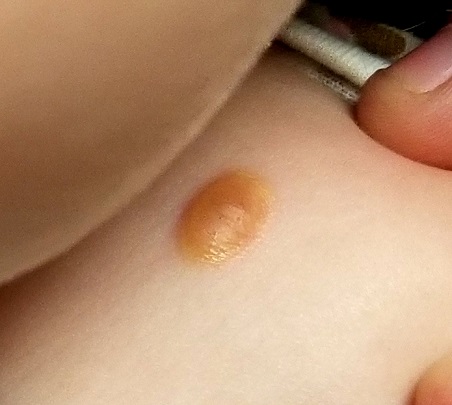
Eye examination reveals normal and symmetrical red reflexes.
What is the diagnosis?
DISCUSSION
Juvenile xanthogranuloma (JXG) is a rare, benign variant of non-Langerhans cell histiocytosis. This patient’s lesion is typical, but JXG can vary in appearance; some patients present with darker or larger lesions—or multiple lesions.
JXGs are essentially granulomatous tumors that, on histologic examination, display multinucleated giant cells called Touton giant cells. These macrophage-derived foam cells are seen in lesions with high lipid content.
JXG tends to favor the neck, face, and trunk but can appear around or (rarely) inside the eye, typically unilaterally in the iris. Benign in all other respects, ocular JXG lesions can cause spontaneous hyphema, glaucoma, or blindness; they must therefore be dealt with by a specialist. Fortunately, only about 10% of patients display ocular involvement.
JXGs can be confused with compound nevi, warts, or Spitz tumors. Therefore, biopsy is often necessary to establish the diagnosis.
TAKE-HOME LEARNING POINTS
- Juvenile xanthogranuloma (JXG) is a rare non-Langerhans cell tumor usually seen on the neck, face, or trunk of children younger than 2.
- The orangish brown, soft appearance of this patient’s papule was typical.
- Although atypical JXG lesions may require shave biopsy to confirm the diagnosis, they typically resolve on their own without treatment.
- When JXG lesions appear in the eye (most commonly in the iris), there is potential for serious complications, including heterochromia, glaucoma, spontaneous hyphema, or even blindness.
About six months ago, the parents of this 1-year-old boy first noticed the lesion on his shoulder. It started as a pinpoint papule but has grown to its current size—at which point, it caught their full attention. Although there are no associated symptoms, the parents request referral to dermatology to clear up the matter.
The child is reportedly healthy in all other respects, maintaining weight as expected, and normally active and reactive to verbal and visual stimuli.
EXAMINATION
A distinctive orangish brown, ovoid, 8 x 4–mm nodule is located on the child’s right superior shoulder. The lesion has a smooth, soft surface, and there is no tenderness on palpation. No additional lesions are seen elsewhere.
Eye examination reveals normal and symmetrical red reflexes.
What is the diagnosis?
DISCUSSION
Juvenile xanthogranuloma (JXG) is a rare, benign variant of non-Langerhans cell histiocytosis. This patient’s lesion is typical, but JXG can vary in appearance; some patients present with darker or larger lesions—or multiple lesions.
JXGs are essentially granulomatous tumors that, on histologic examination, display multinucleated giant cells called Touton giant cells. These macrophage-derived foam cells are seen in lesions with high lipid content.
JXG tends to favor the neck, face, and trunk but can appear around or (rarely) inside the eye, typically unilaterally in the iris. Benign in all other respects, ocular JXG lesions can cause spontaneous hyphema, glaucoma, or blindness; they must therefore be dealt with by a specialist. Fortunately, only about 10% of patients display ocular involvement.
JXGs can be confused with compound nevi, warts, or Spitz tumors. Therefore, biopsy is often necessary to establish the diagnosis.
TAKE-HOME LEARNING POINTS
- Juvenile xanthogranuloma (JXG) is a rare non-Langerhans cell tumor usually seen on the neck, face, or trunk of children younger than 2.
- The orangish brown, soft appearance of this patient’s papule was typical.
- Although atypical JXG lesions may require shave biopsy to confirm the diagnosis, they typically resolve on their own without treatment.
- When JXG lesions appear in the eye (most commonly in the iris), there is potential for serious complications, including heterochromia, glaucoma, spontaneous hyphema, or even blindness.
About six months ago, the parents of this 1-year-old boy first noticed the lesion on his shoulder. It started as a pinpoint papule but has grown to its current size—at which point, it caught their full attention. Although there are no associated symptoms, the parents request referral to dermatology to clear up the matter.
The child is reportedly healthy in all other respects, maintaining weight as expected, and normally active and reactive to verbal and visual stimuli.
EXAMINATION
A distinctive orangish brown, ovoid, 8 x 4–mm nodule is located on the child’s right superior shoulder. The lesion has a smooth, soft surface, and there is no tenderness on palpation. No additional lesions are seen elsewhere.
Eye examination reveals normal and symmetrical red reflexes.
What is the diagnosis?
DISCUSSION
Juvenile xanthogranuloma (JXG) is a rare, benign variant of non-Langerhans cell histiocytosis. This patient’s lesion is typical, but JXG can vary in appearance; some patients present with darker or larger lesions—or multiple lesions.
JXGs are essentially granulomatous tumors that, on histologic examination, display multinucleated giant cells called Touton giant cells. These macrophage-derived foam cells are seen in lesions with high lipid content.
JXG tends to favor the neck, face, and trunk but can appear around or (rarely) inside the eye, typically unilaterally in the iris. Benign in all other respects, ocular JXG lesions can cause spontaneous hyphema, glaucoma, or blindness; they must therefore be dealt with by a specialist. Fortunately, only about 10% of patients display ocular involvement.
JXGs can be confused with compound nevi, warts, or Spitz tumors. Therefore, biopsy is often necessary to establish the diagnosis.
TAKE-HOME LEARNING POINTS
- Juvenile xanthogranuloma (JXG) is a rare non-Langerhans cell tumor usually seen on the neck, face, or trunk of children younger than 2.
- The orangish brown, soft appearance of this patient’s papule was typical.
- Although atypical JXG lesions may require shave biopsy to confirm the diagnosis, they typically resolve on their own without treatment.
- When JXG lesions appear in the eye (most commonly in the iris), there is potential for serious complications, including heterochromia, glaucoma, spontaneous hyphema, or even blindness.