User login
Bringing you the latest news, research and reviews, exclusive interviews, podcasts, quizzes, and more.
div[contains(@class, 'header__large-screen')]
div[contains(@class, 'read-next-article')]
div[contains(@class, 'main-prefix')]
div[contains(@class, 'nav-primary')]
nav[contains(@class, 'nav-primary')]
section[contains(@class, 'footer-nav-section-wrapper')]
footer[@id='footer']
section[contains(@class, 'nav-hidden')]
div[contains(@class, 'ce-card-content')]
nav[contains(@class, 'nav-ce-stack')]
div[contains(@class, 'view-medstat-quiz-listing-panes')]
div[contains(@class, 'pane-article-sidebar-latest-news')]
div[contains(@class, 'medstat-accordion-set article-series')]
Tofacitinib withdrawal not a universal option for all patients with RA in remission
Key clinical point: Blanket withdrawal of tofacitinib may not be suitable for all patients with rheumatoid arthritis (RA) who have achieved clinical remission as more than half relapsed after tofacitinib discontinuation. However, the majority regained remission after tofacitinib resumption.
Major finding: At week 104, the tofacitinib vs methotrexate discontinuation group had a numerically lower Clinical Disease Activity Index-based sustained remission rate (29.2% vs 50.0%) and higher relapse rate (58.3% vs 35.0%). However, 71.4% vs 28.6% of patients regained remission on tofacitinib vs methotrexate resumption.
Study details: This prospective randomized controlled trial included 113 patients with RA and an inadequate response to methotrexate with or without biologic disease-modifying antirheumatic drugs who received 52 weeks of tofacitinib plus methotrexate treatment and thereafter, were randomly assigned to discontinue tofacitinib or methotrexate if experiencing clinical remission.
Disclosures: This study was supported by the Japan Society for the Promotion of Science, KAKENHI. Several authors declared receiving consulting fees, speaking fees, research grants, or honoraria from various sources.
Source: Kubo S et al. Sustained remission following the discontinuation of tofacitinib in patients with rheumatoid arthritis (XANADU study): An open-label randomised study. RMD Open. 2023;9(2):e003029 (Apr 25). Doi: 10.1136/rmdopen-2023-003029
Key clinical point: Blanket withdrawal of tofacitinib may not be suitable for all patients with rheumatoid arthritis (RA) who have achieved clinical remission as more than half relapsed after tofacitinib discontinuation. However, the majority regained remission after tofacitinib resumption.
Major finding: At week 104, the tofacitinib vs methotrexate discontinuation group had a numerically lower Clinical Disease Activity Index-based sustained remission rate (29.2% vs 50.0%) and higher relapse rate (58.3% vs 35.0%). However, 71.4% vs 28.6% of patients regained remission on tofacitinib vs methotrexate resumption.
Study details: This prospective randomized controlled trial included 113 patients with RA and an inadequate response to methotrexate with or without biologic disease-modifying antirheumatic drugs who received 52 weeks of tofacitinib plus methotrexate treatment and thereafter, were randomly assigned to discontinue tofacitinib or methotrexate if experiencing clinical remission.
Disclosures: This study was supported by the Japan Society for the Promotion of Science, KAKENHI. Several authors declared receiving consulting fees, speaking fees, research grants, or honoraria from various sources.
Source: Kubo S et al. Sustained remission following the discontinuation of tofacitinib in patients with rheumatoid arthritis (XANADU study): An open-label randomised study. RMD Open. 2023;9(2):e003029 (Apr 25). Doi: 10.1136/rmdopen-2023-003029
Key clinical point: Blanket withdrawal of tofacitinib may not be suitable for all patients with rheumatoid arthritis (RA) who have achieved clinical remission as more than half relapsed after tofacitinib discontinuation. However, the majority regained remission after tofacitinib resumption.
Major finding: At week 104, the tofacitinib vs methotrexate discontinuation group had a numerically lower Clinical Disease Activity Index-based sustained remission rate (29.2% vs 50.0%) and higher relapse rate (58.3% vs 35.0%). However, 71.4% vs 28.6% of patients regained remission on tofacitinib vs methotrexate resumption.
Study details: This prospective randomized controlled trial included 113 patients with RA and an inadequate response to methotrexate with or without biologic disease-modifying antirheumatic drugs who received 52 weeks of tofacitinib plus methotrexate treatment and thereafter, were randomly assigned to discontinue tofacitinib or methotrexate if experiencing clinical remission.
Disclosures: This study was supported by the Japan Society for the Promotion of Science, KAKENHI. Several authors declared receiving consulting fees, speaking fees, research grants, or honoraria from various sources.
Source: Kubo S et al. Sustained remission following the discontinuation of tofacitinib in patients with rheumatoid arthritis (XANADU study): An open-label randomised study. RMD Open. 2023;9(2):e003029 (Apr 25). Doi: 10.1136/rmdopen-2023-003029
Joint damage repair: A rare phenomenon in early RA
Key clinical point: Repair of joint space narrowing occurred but was rare in patients with early rheumatoid arthritis (RA) who underwent 8 years of treatment to a target disease activity score (DAS) ≤ 2.4. Therefore, suppression of damage progression should be the focus of clinical care.
Major finding: Only 5.3% of patients showed repair of joint space narrowing and bone erosions after 8 years of treatment to a target of DAS ≤ 2.4. No significant association was observed between achieving repair and suppression of disease activity, duration of previous remission, or other predictors of repair.
Study details: Findings are from a subanalysis of BeSt study including 508 patients with severe early RA who were treated to a target of DAS ≤ 2.4 and followed for 8 years.
Disclosures: The BeSt study was supported by grants from the Dutch College of Health Insurances, Schering-Plough B.V., and Janssen B.V. The authors did not declare any conflicts of interest.
Source: van der Pol JA et al. Repair of joint damage in patients with rheumatoid arthritis does not relate to previous suppression of inflammation: A subanalysis after 8 years treat-to-target in the BeSt-trial. RMD Open. 2023;9(2):e002995 (Apr 25). Doi: 10.1136/rmdopen-2023-002995
Key clinical point: Repair of joint space narrowing occurred but was rare in patients with early rheumatoid arthritis (RA) who underwent 8 years of treatment to a target disease activity score (DAS) ≤ 2.4. Therefore, suppression of damage progression should be the focus of clinical care.
Major finding: Only 5.3% of patients showed repair of joint space narrowing and bone erosions after 8 years of treatment to a target of DAS ≤ 2.4. No significant association was observed between achieving repair and suppression of disease activity, duration of previous remission, or other predictors of repair.
Study details: Findings are from a subanalysis of BeSt study including 508 patients with severe early RA who were treated to a target of DAS ≤ 2.4 and followed for 8 years.
Disclosures: The BeSt study was supported by grants from the Dutch College of Health Insurances, Schering-Plough B.V., and Janssen B.V. The authors did not declare any conflicts of interest.
Source: van der Pol JA et al. Repair of joint damage in patients with rheumatoid arthritis does not relate to previous suppression of inflammation: A subanalysis after 8 years treat-to-target in the BeSt-trial. RMD Open. 2023;9(2):e002995 (Apr 25). Doi: 10.1136/rmdopen-2023-002995
Key clinical point: Repair of joint space narrowing occurred but was rare in patients with early rheumatoid arthritis (RA) who underwent 8 years of treatment to a target disease activity score (DAS) ≤ 2.4. Therefore, suppression of damage progression should be the focus of clinical care.
Major finding: Only 5.3% of patients showed repair of joint space narrowing and bone erosions after 8 years of treatment to a target of DAS ≤ 2.4. No significant association was observed between achieving repair and suppression of disease activity, duration of previous remission, or other predictors of repair.
Study details: Findings are from a subanalysis of BeSt study including 508 patients with severe early RA who were treated to a target of DAS ≤ 2.4 and followed for 8 years.
Disclosures: The BeSt study was supported by grants from the Dutch College of Health Insurances, Schering-Plough B.V., and Janssen B.V. The authors did not declare any conflicts of interest.
Source: van der Pol JA et al. Repair of joint damage in patients with rheumatoid arthritis does not relate to previous suppression of inflammation: A subanalysis after 8 years treat-to-target in the BeSt-trial. RMD Open. 2023;9(2):e002995 (Apr 25). Doi: 10.1136/rmdopen-2023-002995
Strong link between polycyclic aromatic hydrocarbons and raised rheumatoid arthritis risk
Key clinical point: Exposure to environmental polycyclic aromatic hydrocarbons (PAH) was significantly associated with an increased prevalence of rheumatoid arthritis (RA) in the US population, and PAH mediated the majority of the effects of smoking in RA.
Major finding: Risk of developing RA was significantly higher in participants in the highest vs lowest quartile of 1-hydroxynaphthalene level (adjusted odds ratio [aOR] 1.8; P = .020) and PAH body burden scores (aOR 2.2; P = .028). PAH body burden accounted for ~90% of the total effect of smoking on RA.
Study details: Findings are from a cross-sectional study including adult participants with (n = 1418) or without (n = 20,569) RA who underwent assessments for PAH, phthalate and plasticizer metabolite, and volatile organic compound body burden.
Disclosures: This study did not declare any specific funding source. The lead author declared receiving personal fees from Cleveland HeartLab, unrelated to this study, and holding a patent.
Source: Beidelschies M et al. Polycyclic aromatic hydrocarbons and risk of rheumatoid arthritis: A cross-sectional analysis of the National Health and Nutrition Examination Survey, 2007–2016. BMJ Open. 2023;13(5):e071514 (May 9). Doi: 10.1136/bmjopen-2022-071514
Key clinical point: Exposure to environmental polycyclic aromatic hydrocarbons (PAH) was significantly associated with an increased prevalence of rheumatoid arthritis (RA) in the US population, and PAH mediated the majority of the effects of smoking in RA.
Major finding: Risk of developing RA was significantly higher in participants in the highest vs lowest quartile of 1-hydroxynaphthalene level (adjusted odds ratio [aOR] 1.8; P = .020) and PAH body burden scores (aOR 2.2; P = .028). PAH body burden accounted for ~90% of the total effect of smoking on RA.
Study details: Findings are from a cross-sectional study including adult participants with (n = 1418) or without (n = 20,569) RA who underwent assessments for PAH, phthalate and plasticizer metabolite, and volatile organic compound body burden.
Disclosures: This study did not declare any specific funding source. The lead author declared receiving personal fees from Cleveland HeartLab, unrelated to this study, and holding a patent.
Source: Beidelschies M et al. Polycyclic aromatic hydrocarbons and risk of rheumatoid arthritis: A cross-sectional analysis of the National Health and Nutrition Examination Survey, 2007–2016. BMJ Open. 2023;13(5):e071514 (May 9). Doi: 10.1136/bmjopen-2022-071514
Key clinical point: Exposure to environmental polycyclic aromatic hydrocarbons (PAH) was significantly associated with an increased prevalence of rheumatoid arthritis (RA) in the US population, and PAH mediated the majority of the effects of smoking in RA.
Major finding: Risk of developing RA was significantly higher in participants in the highest vs lowest quartile of 1-hydroxynaphthalene level (adjusted odds ratio [aOR] 1.8; P = .020) and PAH body burden scores (aOR 2.2; P = .028). PAH body burden accounted for ~90% of the total effect of smoking on RA.
Study details: Findings are from a cross-sectional study including adult participants with (n = 1418) or without (n = 20,569) RA who underwent assessments for PAH, phthalate and plasticizer metabolite, and volatile organic compound body burden.
Disclosures: This study did not declare any specific funding source. The lead author declared receiving personal fees from Cleveland HeartLab, unrelated to this study, and holding a patent.
Source: Beidelschies M et al. Polycyclic aromatic hydrocarbons and risk of rheumatoid arthritis: A cross-sectional analysis of the National Health and Nutrition Examination Survey, 2007–2016. BMJ Open. 2023;13(5):e071514 (May 9). Doi: 10.1136/bmjopen-2022-071514
Morning PT
Tuesdays and Fridays are tough. Not so much because of clinic, but rather because of the 32 minutes before clinic that I’m on the Peloton bike. They are the mornings I dedicate to training VO2max.
Training VO2max, or maximal oxygen consumption, is simple. Spin for a leisurely, easy-breathing, 4 minutes, then for 4 minutes push yourself until you see the light of heaven and wish for death to come. Then relax for 4 minutes again. Repeat this cycle four to six times. Done justly, you will dread Tuesdays and Fridays too. The punishing cycle of a 4-minute push, then 4-minute recovery is, however, an excellent way to improve cardiovascular fitness. And no, I’m not training for the Boston Marathon, so why am I working so hard? Because I’m training for marathon clinic days for the next 20 years.
Now more than ever, I feel we have to be physically fit to deal with a physicians’ day’s work. It’s exhausting. The root cause is too much work, yes, but I believe being physically fit could help.
I was talking to an 86-year-old patient about this very topic recently. He was short, with a well-manicured goatee and shiny head. He stuck his arm out to shake my hand. “Glad we’re back to handshakes again, doc.” His grip was that of a 30-year-old. “Buff” you’d likely describe him: He is noticeably muscular, not a skinny old man. He’s an old Navy Master Chief who started a business in wholesale flowers, which distributes all over the United States. And he’s still working full time. Impressed, I asked his secret for such vigor. PT, he replied.
PT, or physical training, is a foundational element of the Navy. Every sailor starts his or her day with morning PT before carrying out their duties. Some 30 years later, this guy is still getting after it. He does push-ups, sit-ups, and pull-ups nearly every morning. Morning PT is what he attributes to his success not only in health, but also business. As he sees it, he has the business savvy and experience of an old guy and the energy and stamina of a college kid. A good combination for a successful life.
I’ve always been pretty fit. Lately, I’ve been trying to take it to the next level, to not just be “physically active,” but rather “high-performance fit.” There are plenty of sources for instruction; how to stay young and healthy isn’t a new idea after all. I mean, Herodotus wrote of finding the Fountain of Youth in the 5th century BCE. A couple thousand years later, it’s still on trend. One of my favorite sages giving health span advice is Peter Attia, MD. I’ve been a fan since I met him at TEDMED in 2013 and I marvel at the astounding body of work he has created since. A Johns Hopkins–trained surgeon, he has spent his career reviewing the scientific literature about longevity and sharing it as actionable content. His book, “Outlive: The Science and Art of Longevity” (New York: Penguin Random House, 2023) is a nice summary of his work. I recommend it.
Right now I’m switching between type 2 muscle fiber work (lots of jumping like my 2-year-old) and cardiovascular training including the aforementioned VO2max work. I cannot say that my patient inbox is any cleaner, or that I’m faster in the office, but I’m not flagging by the end of the day anymore. Master Chief challenged me to match his 10 pull-ups before he returns for his follow up visit. I’ll gladly give up Peloton sprints to work on that.
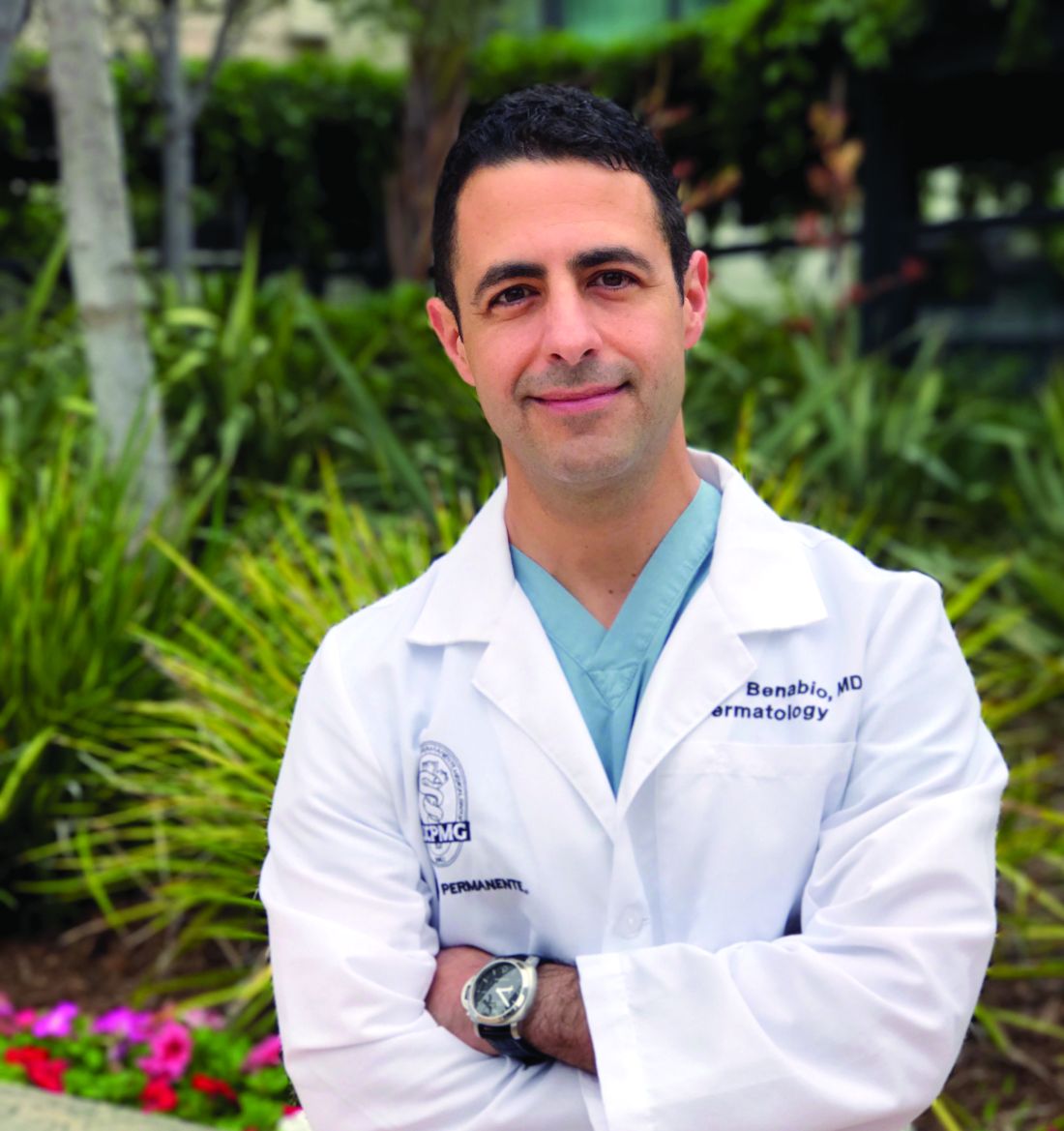
Dr. Benabio is director of Healthcare Transformation and chief of dermatology at Kaiser Permanente San Diego. The opinions expressed in this column are his own and do not represent those of Kaiser Permanente. Dr. Benabio is @Dermdoc on Twitter. Write to him at [email protected].
Tuesdays and Fridays are tough. Not so much because of clinic, but rather because of the 32 minutes before clinic that I’m on the Peloton bike. They are the mornings I dedicate to training VO2max.
Training VO2max, or maximal oxygen consumption, is simple. Spin for a leisurely, easy-breathing, 4 minutes, then for 4 minutes push yourself until you see the light of heaven and wish for death to come. Then relax for 4 minutes again. Repeat this cycle four to six times. Done justly, you will dread Tuesdays and Fridays too. The punishing cycle of a 4-minute push, then 4-minute recovery is, however, an excellent way to improve cardiovascular fitness. And no, I’m not training for the Boston Marathon, so why am I working so hard? Because I’m training for marathon clinic days for the next 20 years.
Now more than ever, I feel we have to be physically fit to deal with a physicians’ day’s work. It’s exhausting. The root cause is too much work, yes, but I believe being physically fit could help.
I was talking to an 86-year-old patient about this very topic recently. He was short, with a well-manicured goatee and shiny head. He stuck his arm out to shake my hand. “Glad we’re back to handshakes again, doc.” His grip was that of a 30-year-old. “Buff” you’d likely describe him: He is noticeably muscular, not a skinny old man. He’s an old Navy Master Chief who started a business in wholesale flowers, which distributes all over the United States. And he’s still working full time. Impressed, I asked his secret for such vigor. PT, he replied.
PT, or physical training, is a foundational element of the Navy. Every sailor starts his or her day with morning PT before carrying out their duties. Some 30 years later, this guy is still getting after it. He does push-ups, sit-ups, and pull-ups nearly every morning. Morning PT is what he attributes to his success not only in health, but also business. As he sees it, he has the business savvy and experience of an old guy and the energy and stamina of a college kid. A good combination for a successful life.
I’ve always been pretty fit. Lately, I’ve been trying to take it to the next level, to not just be “physically active,” but rather “high-performance fit.” There are plenty of sources for instruction; how to stay young and healthy isn’t a new idea after all. I mean, Herodotus wrote of finding the Fountain of Youth in the 5th century BCE. A couple thousand years later, it’s still on trend. One of my favorite sages giving health span advice is Peter Attia, MD. I’ve been a fan since I met him at TEDMED in 2013 and I marvel at the astounding body of work he has created since. A Johns Hopkins–trained surgeon, he has spent his career reviewing the scientific literature about longevity and sharing it as actionable content. His book, “Outlive: The Science and Art of Longevity” (New York: Penguin Random House, 2023) is a nice summary of his work. I recommend it.
Right now I’m switching between type 2 muscle fiber work (lots of jumping like my 2-year-old) and cardiovascular training including the aforementioned VO2max work. I cannot say that my patient inbox is any cleaner, or that I’m faster in the office, but I’m not flagging by the end of the day anymore. Master Chief challenged me to match his 10 pull-ups before he returns for his follow up visit. I’ll gladly give up Peloton sprints to work on that.
Dr. Benabio is director of Healthcare Transformation and chief of dermatology at Kaiser Permanente San Diego. The opinions expressed in this column are his own and do not represent those of Kaiser Permanente. Dr. Benabio is @Dermdoc on Twitter. Write to him at [email protected].
Tuesdays and Fridays are tough. Not so much because of clinic, but rather because of the 32 minutes before clinic that I’m on the Peloton bike. They are the mornings I dedicate to training VO2max.
Training VO2max, or maximal oxygen consumption, is simple. Spin for a leisurely, easy-breathing, 4 minutes, then for 4 minutes push yourself until you see the light of heaven and wish for death to come. Then relax for 4 minutes again. Repeat this cycle four to six times. Done justly, you will dread Tuesdays and Fridays too. The punishing cycle of a 4-minute push, then 4-minute recovery is, however, an excellent way to improve cardiovascular fitness. And no, I’m not training for the Boston Marathon, so why am I working so hard? Because I’m training for marathon clinic days for the next 20 years.
Now more than ever, I feel we have to be physically fit to deal with a physicians’ day’s work. It’s exhausting. The root cause is too much work, yes, but I believe being physically fit could help.
I was talking to an 86-year-old patient about this very topic recently. He was short, with a well-manicured goatee and shiny head. He stuck his arm out to shake my hand. “Glad we’re back to handshakes again, doc.” His grip was that of a 30-year-old. “Buff” you’d likely describe him: He is noticeably muscular, not a skinny old man. He’s an old Navy Master Chief who started a business in wholesale flowers, which distributes all over the United States. And he’s still working full time. Impressed, I asked his secret for such vigor. PT, he replied.
PT, or physical training, is a foundational element of the Navy. Every sailor starts his or her day with morning PT before carrying out their duties. Some 30 years later, this guy is still getting after it. He does push-ups, sit-ups, and pull-ups nearly every morning. Morning PT is what he attributes to his success not only in health, but also business. As he sees it, he has the business savvy and experience of an old guy and the energy and stamina of a college kid. A good combination for a successful life.
I’ve always been pretty fit. Lately, I’ve been trying to take it to the next level, to not just be “physically active,” but rather “high-performance fit.” There are plenty of sources for instruction; how to stay young and healthy isn’t a new idea after all. I mean, Herodotus wrote of finding the Fountain of Youth in the 5th century BCE. A couple thousand years later, it’s still on trend. One of my favorite sages giving health span advice is Peter Attia, MD. I’ve been a fan since I met him at TEDMED in 2013 and I marvel at the astounding body of work he has created since. A Johns Hopkins–trained surgeon, he has spent his career reviewing the scientific literature about longevity and sharing it as actionable content. His book, “Outlive: The Science and Art of Longevity” (New York: Penguin Random House, 2023) is a nice summary of his work. I recommend it.
Right now I’m switching between type 2 muscle fiber work (lots of jumping like my 2-year-old) and cardiovascular training including the aforementioned VO2max work. I cannot say that my patient inbox is any cleaner, or that I’m faster in the office, but I’m not flagging by the end of the day anymore. Master Chief challenged me to match his 10 pull-ups before he returns for his follow up visit. I’ll gladly give up Peloton sprints to work on that.
Dr. Benabio is director of Healthcare Transformation and chief of dermatology at Kaiser Permanente San Diego. The opinions expressed in this column are his own and do not represent those of Kaiser Permanente. Dr. Benabio is @Dermdoc on Twitter. Write to him at [email protected].
Review supports continued mask-wearing in health care visits
A new study urges people to continue wearing protective masks in medical settings, even though the U.S. public health emergency declaration around COVID-19 has expired.
Masks continue to lower the risk of catching the virus during medical visits, according to the study, published in Annals of Internal Medicine. And there was not much difference between wearing surgical masks and N95 respirators in health care settings.
The researchers reviewed 3 randomized trials and 21 observational studies to compare the effectiveness of those and cloth masks in reducing COVID-19 transmission.
Tara N. Palmore, MD, of George Washington University, Washington, and David K. Henderson, MD, of the National Institutes of Health, Bethesda, Md., wrote in an opinion article accompanying the study.
“In our enthusiasm to return to the appearance and feeling of normalcy, and as institutions decide which mitigation strategies to discontinue, we strongly advocate not discarding this important lesson learned for the sake of our patients’ safety,” Dr. Palmore and Dr. Henderson wrote.
Surgical masks limit the spread of aerosols and droplets from people who have the flu, coronaviruses or other respiratory viruses, CNN reported. And while masks are not 100% effective, they substantially lower the amount of virus put into the air via coughing and talking.
The study said one reason people should wear masks to medical settings is because “health care personnel are notorious for coming to work while ill.” Transmission from patient to staff and staff to patient is still possible, but rare, when both are masked.
The review authors reported no conflicts of interest. Dr. Palmore has received grants from the NIH, Rigel, Gilead, and AbbVie, and Dr. Henderson is a past president of the Society for Healthcare Epidemiology of America.
A version of this article first appeared on WebMD.com.
A new study urges people to continue wearing protective masks in medical settings, even though the U.S. public health emergency declaration around COVID-19 has expired.
Masks continue to lower the risk of catching the virus during medical visits, according to the study, published in Annals of Internal Medicine. And there was not much difference between wearing surgical masks and N95 respirators in health care settings.
The researchers reviewed 3 randomized trials and 21 observational studies to compare the effectiveness of those and cloth masks in reducing COVID-19 transmission.
Tara N. Palmore, MD, of George Washington University, Washington, and David K. Henderson, MD, of the National Institutes of Health, Bethesda, Md., wrote in an opinion article accompanying the study.
“In our enthusiasm to return to the appearance and feeling of normalcy, and as institutions decide which mitigation strategies to discontinue, we strongly advocate not discarding this important lesson learned for the sake of our patients’ safety,” Dr. Palmore and Dr. Henderson wrote.
Surgical masks limit the spread of aerosols and droplets from people who have the flu, coronaviruses or other respiratory viruses, CNN reported. And while masks are not 100% effective, they substantially lower the amount of virus put into the air via coughing and talking.
The study said one reason people should wear masks to medical settings is because “health care personnel are notorious for coming to work while ill.” Transmission from patient to staff and staff to patient is still possible, but rare, when both are masked.
The review authors reported no conflicts of interest. Dr. Palmore has received grants from the NIH, Rigel, Gilead, and AbbVie, and Dr. Henderson is a past president of the Society for Healthcare Epidemiology of America.
A version of this article first appeared on WebMD.com.
A new study urges people to continue wearing protective masks in medical settings, even though the U.S. public health emergency declaration around COVID-19 has expired.
Masks continue to lower the risk of catching the virus during medical visits, according to the study, published in Annals of Internal Medicine. And there was not much difference between wearing surgical masks and N95 respirators in health care settings.
The researchers reviewed 3 randomized trials and 21 observational studies to compare the effectiveness of those and cloth masks in reducing COVID-19 transmission.
Tara N. Palmore, MD, of George Washington University, Washington, and David K. Henderson, MD, of the National Institutes of Health, Bethesda, Md., wrote in an opinion article accompanying the study.
“In our enthusiasm to return to the appearance and feeling of normalcy, and as institutions decide which mitigation strategies to discontinue, we strongly advocate not discarding this important lesson learned for the sake of our patients’ safety,” Dr. Palmore and Dr. Henderson wrote.
Surgical masks limit the spread of aerosols and droplets from people who have the flu, coronaviruses or other respiratory viruses, CNN reported. And while masks are not 100% effective, they substantially lower the amount of virus put into the air via coughing and talking.
The study said one reason people should wear masks to medical settings is because “health care personnel are notorious for coming to work while ill.” Transmission from patient to staff and staff to patient is still possible, but rare, when both are masked.
The review authors reported no conflicts of interest. Dr. Palmore has received grants from the NIH, Rigel, Gilead, and AbbVie, and Dr. Henderson is a past president of the Society for Healthcare Epidemiology of America.
A version of this article first appeared on WebMD.com.
FROM ANNALS OF INTERNAL MEDICINE
COVID emergency over, but hundreds are still dying weekly
Traci Sikes’s older sister Debbie had survived several health setbacks in life – a heart attack, a cancer diagnosis, and a couple of botched surgeries for a bad back. But by early 2023, the 68-year-old from Brownwood, Tex., was in remission from lymphoma, feeling stronger, and celebrating a birthday for one of her 11 beloved grandchildren.
Then Debbie caught COVID-19. Less than 2 months later, in March, she died of severe lung damage caused by the coronavirus.
Traci was able to make the trip from her home in Washington state to Texas to be with Debbie before she died. She was grateful that she arrived while her sister was still lucid and to hear her sister’s last word – “love” – spoken to one of her grandchildren before she took her final breath.
“My sister was wonderful,” Sikes said. “And she shouldn’t be gone.”
Just 6 months after President Joe Biden declared last fall that “the pandemic is over,” Just as both the World Health Organization and U.S. government recently ended the 3-year-old coronavirus public health emergency, COVID is still killing more than 100 people every day in the U.S., according to the CDC, and amid widespread efforts to move on and drop protective measures, the country’s most vulnerable people are still at significant risk.
The prevailing attitude that we need to learn to live with the current level of risk feels like a “slap in the face,” for COVID grievers who have already paid the price,” said Sabila Khan, who cofounded a Facebook group for COVID loss support, which now has more than 14,000 members.
It also minimizes the continuing loss of life and that so many people are still dying traumatic and unnecessary deaths, she said.
“It feels like it’s been brushed aside,” she said. “Like, ‘It’s business as usual. It’s over. Take off your mask.’ My family and I are still masked, and we’re probably the only ones masked in any given room.”
The abandoning of protective measures also fails to recognize the ongoing and catastrophic risks of long COVID and the experiences of an estimated 26 million people in the U.S. living with long COVID.
“It’s been drummed into us that death is the only serious outcome [of the virus] and we still haven’t made enough space for the idea that long COVID is a very serious outcome,” said David Putrino, PhD, director of rehabilitation innovation for the Mount Sinai Health System in New York, who has helped care for thousands of patients with long COVID.
Historic drop in life expectancy
More than 1.1 million Americans have died from COVID over the past 3 years, and experts say the official numbers are likely underestimated because of errors in death certificate reporting. Although deaths have waned from earlier in the pandemic, the disease has become the fourth leading cause of death in the United States after heart disease, cancer, and “unintentional injury” such as drug overdoses.
What makes these deaths all the more tragic is that COVID is a preventable disease, said Carla Sevin, MD, a critical care doctor and director of the Pulmonary Patient Care Center at Vanderbilt University Medical Center in Nashville, Tenn. Masking, available vaccines, and social distancing have all been shown to significantly lower the risk of spreading and catching the virus. New drugs have also made it possible for infected people to survive COVID.
“It’s possible to not spread COVID,” she said. “It’s possible to protect yourself against COVID. It’s possible to treat COVID. And we’re doing all of those things imperfectly.”
By the end of 2021, Americans overall were dying 3 years sooner, on average, than they were before the pandemic, with life expectancy dropping from 79 years to 76 years, the largest decline in a century.
Globally, the COVID death toll is nearing 7 million. Across all ages, on average, each person who died passed away 10 years younger than they otherwise would have. That’s tens of millions of years wiped away.
As U.S. surgeon and health researcher Atul Gawande, MD, put it in a New York Times essay about the pandemic response: “Human development has been pushed into reverse.”
What is an acceptable threshold of death?
In the United States, more than 80% of deaths from the disease have been in people age 65 and older. Underlying medical conditions and disabilities also raise the risk of severe illness and dying from COVID.
The virus is also disproportionately killing Black, Hispanic, and Indigenous people and those with less access to health care. Racialized groups are dying from COVID at younger ages. COVID advocates and Americans who’ve lost loved ones to the disease say our willingness to accept these facts and the current mortality rate amounts to health-based discrimination.
“Would politicians be approaching this differently had it mostly affected rich white people?” Ms. Khan said.
Ms. Khan’s dad, Shafqat, was an advocate and community organizer for Pakistani immigrants. After contracting COVID, he was rushed to a hospital near his daughter’s Jersey City, N.J., home from a rehab facility where he was being treated for an aggressive form of Parkinson’s disease. For the 8 days her father was in the hospital, she and other family members couldn’t visit him, and he wasn’t even well enough to talk on the phone. He died from COVID in April 2020.
“My father was an extraordinary person who did so much good and he died alone, terrified in a hospital,” she said. “I can’t even wrap my head around that and how he deserved more. No one deserves that.”
At Vanderbilt University Medical Center, where she works as a critical care doctor, COVID deaths are now different from those in the early days of the pandemic, Dr. Sevin said. Most patients now in the intensive care unit are older and immunocompromised – and they tend to blend in more with others in the intensive care unit. That makes the impact of COVID even more hidden and easily ignored.
“It’s easy not to value somebody who’s an invisible number you don’t know,” she said. “You don’t see them writing their will and talking to their best friend. You don’t see the tears rolling down their face because they know what’s going to happen to them and they’re going to asphyxiate to death.”
One COVID patient who died recently in Dr. Sevin’s ICU ward was an older woman who had no living relatives. “She was very, very lonely, and we would always stand outside the door on rounds, and she would motion for us to come in, but we had to then all gown up,” Dr. Sevin said. “It just breaks your heart that people are still having to go through it.”
Dr. Sevin finds it frustrating that so many of the measures that public health officials fought so hard for over the last 3 years – including masking guidelines, government-funded vaccine clinics, and access to potentially life-saving antiviral medications – are now going away because of the lifting of the pandemic emergency declaration.
What makes matters worse, she said, is that public consciousness about taking precautions to protect others is starting to disappear in favor of an “all or nothing attitude” about the continued risks.
“Like either I’m going to stay home and be a hermit, or I’m going to just throw caution to the wind and go to bars and let people yell in my face,” she said. “We learned some hard lessons, and I wish we could hold onto those.”
Americans like Traci Sikes who’ve lost loved ones and health care workers on the front lines say it is particularly frustrating that so many people are framing the current response to the risks of COVID as “personal choice” over responsibility to others, as well as a sense of fatalism and lack of urgent care.
“Why does nobody seem to be angry about this?” Ms. Sikes said. “People talk about COVID like it’s just another thing to die from. But my sister didn’t have to die from it at all.”
A version of this article first appeared on WebMD.com.
Traci Sikes’s older sister Debbie had survived several health setbacks in life – a heart attack, a cancer diagnosis, and a couple of botched surgeries for a bad back. But by early 2023, the 68-year-old from Brownwood, Tex., was in remission from lymphoma, feeling stronger, and celebrating a birthday for one of her 11 beloved grandchildren.
Then Debbie caught COVID-19. Less than 2 months later, in March, she died of severe lung damage caused by the coronavirus.
Traci was able to make the trip from her home in Washington state to Texas to be with Debbie before she died. She was grateful that she arrived while her sister was still lucid and to hear her sister’s last word – “love” – spoken to one of her grandchildren before she took her final breath.
“My sister was wonderful,” Sikes said. “And she shouldn’t be gone.”
Just 6 months after President Joe Biden declared last fall that “the pandemic is over,” Just as both the World Health Organization and U.S. government recently ended the 3-year-old coronavirus public health emergency, COVID is still killing more than 100 people every day in the U.S., according to the CDC, and amid widespread efforts to move on and drop protective measures, the country’s most vulnerable people are still at significant risk.
The prevailing attitude that we need to learn to live with the current level of risk feels like a “slap in the face,” for COVID grievers who have already paid the price,” said Sabila Khan, who cofounded a Facebook group for COVID loss support, which now has more than 14,000 members.
It also minimizes the continuing loss of life and that so many people are still dying traumatic and unnecessary deaths, she said.
“It feels like it’s been brushed aside,” she said. “Like, ‘It’s business as usual. It’s over. Take off your mask.’ My family and I are still masked, and we’re probably the only ones masked in any given room.”
The abandoning of protective measures also fails to recognize the ongoing and catastrophic risks of long COVID and the experiences of an estimated 26 million people in the U.S. living with long COVID.
“It’s been drummed into us that death is the only serious outcome [of the virus] and we still haven’t made enough space for the idea that long COVID is a very serious outcome,” said David Putrino, PhD, director of rehabilitation innovation for the Mount Sinai Health System in New York, who has helped care for thousands of patients with long COVID.
Historic drop in life expectancy
More than 1.1 million Americans have died from COVID over the past 3 years, and experts say the official numbers are likely underestimated because of errors in death certificate reporting. Although deaths have waned from earlier in the pandemic, the disease has become the fourth leading cause of death in the United States after heart disease, cancer, and “unintentional injury” such as drug overdoses.
What makes these deaths all the more tragic is that COVID is a preventable disease, said Carla Sevin, MD, a critical care doctor and director of the Pulmonary Patient Care Center at Vanderbilt University Medical Center in Nashville, Tenn. Masking, available vaccines, and social distancing have all been shown to significantly lower the risk of spreading and catching the virus. New drugs have also made it possible for infected people to survive COVID.
“It’s possible to not spread COVID,” she said. “It’s possible to protect yourself against COVID. It’s possible to treat COVID. And we’re doing all of those things imperfectly.”
By the end of 2021, Americans overall were dying 3 years sooner, on average, than they were before the pandemic, with life expectancy dropping from 79 years to 76 years, the largest decline in a century.
Globally, the COVID death toll is nearing 7 million. Across all ages, on average, each person who died passed away 10 years younger than they otherwise would have. That’s tens of millions of years wiped away.
As U.S. surgeon and health researcher Atul Gawande, MD, put it in a New York Times essay about the pandemic response: “Human development has been pushed into reverse.”
What is an acceptable threshold of death?
In the United States, more than 80% of deaths from the disease have been in people age 65 and older. Underlying medical conditions and disabilities also raise the risk of severe illness and dying from COVID.
The virus is also disproportionately killing Black, Hispanic, and Indigenous people and those with less access to health care. Racialized groups are dying from COVID at younger ages. COVID advocates and Americans who’ve lost loved ones to the disease say our willingness to accept these facts and the current mortality rate amounts to health-based discrimination.
“Would politicians be approaching this differently had it mostly affected rich white people?” Ms. Khan said.
Ms. Khan’s dad, Shafqat, was an advocate and community organizer for Pakistani immigrants. After contracting COVID, he was rushed to a hospital near his daughter’s Jersey City, N.J., home from a rehab facility where he was being treated for an aggressive form of Parkinson’s disease. For the 8 days her father was in the hospital, she and other family members couldn’t visit him, and he wasn’t even well enough to talk on the phone. He died from COVID in April 2020.
“My father was an extraordinary person who did so much good and he died alone, terrified in a hospital,” she said. “I can’t even wrap my head around that and how he deserved more. No one deserves that.”
At Vanderbilt University Medical Center, where she works as a critical care doctor, COVID deaths are now different from those in the early days of the pandemic, Dr. Sevin said. Most patients now in the intensive care unit are older and immunocompromised – and they tend to blend in more with others in the intensive care unit. That makes the impact of COVID even more hidden and easily ignored.
“It’s easy not to value somebody who’s an invisible number you don’t know,” she said. “You don’t see them writing their will and talking to their best friend. You don’t see the tears rolling down their face because they know what’s going to happen to them and they’re going to asphyxiate to death.”
One COVID patient who died recently in Dr. Sevin’s ICU ward was an older woman who had no living relatives. “She was very, very lonely, and we would always stand outside the door on rounds, and she would motion for us to come in, but we had to then all gown up,” Dr. Sevin said. “It just breaks your heart that people are still having to go through it.”
Dr. Sevin finds it frustrating that so many of the measures that public health officials fought so hard for over the last 3 years – including masking guidelines, government-funded vaccine clinics, and access to potentially life-saving antiviral medications – are now going away because of the lifting of the pandemic emergency declaration.
What makes matters worse, she said, is that public consciousness about taking precautions to protect others is starting to disappear in favor of an “all or nothing attitude” about the continued risks.
“Like either I’m going to stay home and be a hermit, or I’m going to just throw caution to the wind and go to bars and let people yell in my face,” she said. “We learned some hard lessons, and I wish we could hold onto those.”
Americans like Traci Sikes who’ve lost loved ones and health care workers on the front lines say it is particularly frustrating that so many people are framing the current response to the risks of COVID as “personal choice” over responsibility to others, as well as a sense of fatalism and lack of urgent care.
“Why does nobody seem to be angry about this?” Ms. Sikes said. “People talk about COVID like it’s just another thing to die from. But my sister didn’t have to die from it at all.”
A version of this article first appeared on WebMD.com.
Traci Sikes’s older sister Debbie had survived several health setbacks in life – a heart attack, a cancer diagnosis, and a couple of botched surgeries for a bad back. But by early 2023, the 68-year-old from Brownwood, Tex., was in remission from lymphoma, feeling stronger, and celebrating a birthday for one of her 11 beloved grandchildren.
Then Debbie caught COVID-19. Less than 2 months later, in March, she died of severe lung damage caused by the coronavirus.
Traci was able to make the trip from her home in Washington state to Texas to be with Debbie before she died. She was grateful that she arrived while her sister was still lucid and to hear her sister’s last word – “love” – spoken to one of her grandchildren before she took her final breath.
“My sister was wonderful,” Sikes said. “And she shouldn’t be gone.”
Just 6 months after President Joe Biden declared last fall that “the pandemic is over,” Just as both the World Health Organization and U.S. government recently ended the 3-year-old coronavirus public health emergency, COVID is still killing more than 100 people every day in the U.S., according to the CDC, and amid widespread efforts to move on and drop protective measures, the country’s most vulnerable people are still at significant risk.
The prevailing attitude that we need to learn to live with the current level of risk feels like a “slap in the face,” for COVID grievers who have already paid the price,” said Sabila Khan, who cofounded a Facebook group for COVID loss support, which now has more than 14,000 members.
It also minimizes the continuing loss of life and that so many people are still dying traumatic and unnecessary deaths, she said.
“It feels like it’s been brushed aside,” she said. “Like, ‘It’s business as usual. It’s over. Take off your mask.’ My family and I are still masked, and we’re probably the only ones masked in any given room.”
The abandoning of protective measures also fails to recognize the ongoing and catastrophic risks of long COVID and the experiences of an estimated 26 million people in the U.S. living with long COVID.
“It’s been drummed into us that death is the only serious outcome [of the virus] and we still haven’t made enough space for the idea that long COVID is a very serious outcome,” said David Putrino, PhD, director of rehabilitation innovation for the Mount Sinai Health System in New York, who has helped care for thousands of patients with long COVID.
Historic drop in life expectancy
More than 1.1 million Americans have died from COVID over the past 3 years, and experts say the official numbers are likely underestimated because of errors in death certificate reporting. Although deaths have waned from earlier in the pandemic, the disease has become the fourth leading cause of death in the United States after heart disease, cancer, and “unintentional injury” such as drug overdoses.
What makes these deaths all the more tragic is that COVID is a preventable disease, said Carla Sevin, MD, a critical care doctor and director of the Pulmonary Patient Care Center at Vanderbilt University Medical Center in Nashville, Tenn. Masking, available vaccines, and social distancing have all been shown to significantly lower the risk of spreading and catching the virus. New drugs have also made it possible for infected people to survive COVID.
“It’s possible to not spread COVID,” she said. “It’s possible to protect yourself against COVID. It’s possible to treat COVID. And we’re doing all of those things imperfectly.”
By the end of 2021, Americans overall were dying 3 years sooner, on average, than they were before the pandemic, with life expectancy dropping from 79 years to 76 years, the largest decline in a century.
Globally, the COVID death toll is nearing 7 million. Across all ages, on average, each person who died passed away 10 years younger than they otherwise would have. That’s tens of millions of years wiped away.
As U.S. surgeon and health researcher Atul Gawande, MD, put it in a New York Times essay about the pandemic response: “Human development has been pushed into reverse.”
What is an acceptable threshold of death?
In the United States, more than 80% of deaths from the disease have been in people age 65 and older. Underlying medical conditions and disabilities also raise the risk of severe illness and dying from COVID.
The virus is also disproportionately killing Black, Hispanic, and Indigenous people and those with less access to health care. Racialized groups are dying from COVID at younger ages. COVID advocates and Americans who’ve lost loved ones to the disease say our willingness to accept these facts and the current mortality rate amounts to health-based discrimination.
“Would politicians be approaching this differently had it mostly affected rich white people?” Ms. Khan said.
Ms. Khan’s dad, Shafqat, was an advocate and community organizer for Pakistani immigrants. After contracting COVID, he was rushed to a hospital near his daughter’s Jersey City, N.J., home from a rehab facility where he was being treated for an aggressive form of Parkinson’s disease. For the 8 days her father was in the hospital, she and other family members couldn’t visit him, and he wasn’t even well enough to talk on the phone. He died from COVID in April 2020.
“My father was an extraordinary person who did so much good and he died alone, terrified in a hospital,” she said. “I can’t even wrap my head around that and how he deserved more. No one deserves that.”
At Vanderbilt University Medical Center, where she works as a critical care doctor, COVID deaths are now different from those in the early days of the pandemic, Dr. Sevin said. Most patients now in the intensive care unit are older and immunocompromised – and they tend to blend in more with others in the intensive care unit. That makes the impact of COVID even more hidden and easily ignored.
“It’s easy not to value somebody who’s an invisible number you don’t know,” she said. “You don’t see them writing their will and talking to their best friend. You don’t see the tears rolling down their face because they know what’s going to happen to them and they’re going to asphyxiate to death.”
One COVID patient who died recently in Dr. Sevin’s ICU ward was an older woman who had no living relatives. “She was very, very lonely, and we would always stand outside the door on rounds, and she would motion for us to come in, but we had to then all gown up,” Dr. Sevin said. “It just breaks your heart that people are still having to go through it.”
Dr. Sevin finds it frustrating that so many of the measures that public health officials fought so hard for over the last 3 years – including masking guidelines, government-funded vaccine clinics, and access to potentially life-saving antiviral medications – are now going away because of the lifting of the pandemic emergency declaration.
What makes matters worse, she said, is that public consciousness about taking precautions to protect others is starting to disappear in favor of an “all or nothing attitude” about the continued risks.
“Like either I’m going to stay home and be a hermit, or I’m going to just throw caution to the wind and go to bars and let people yell in my face,” she said. “We learned some hard lessons, and I wish we could hold onto those.”
Americans like Traci Sikes who’ve lost loved ones and health care workers on the front lines say it is particularly frustrating that so many people are framing the current response to the risks of COVID as “personal choice” over responsibility to others, as well as a sense of fatalism and lack of urgent care.
“Why does nobody seem to be angry about this?” Ms. Sikes said. “People talk about COVID like it’s just another thing to die from. But my sister didn’t have to die from it at all.”
A version of this article first appeared on WebMD.com.
Independent risk factors-based referral tool may help identify PsA in psoriasis
Key clinical point: A referral tool based on five independent risk factors for concomitant psoriatic arthritis (PsA) among patients with psoriasis may help dermatologists to identify patients with psoriasis who could benefit from a rheumatologist referral.
Major finding: The predictive variables for concomitant PsA among patients with psoriasis that were included in the referral tool were treatment history with conventional systemics (P = .04) and biologics/small molecule inhibitors (P = .01), patient-reported history of joint pain without trauma (P = .02), swollen joints (P < .001), and sausage-like swollen digits (P = .01). The referral tool had an area under curve of 0.82.
Study details: This study analyzed the data of 303 patients with psoriasis from the prospective observational DAPPER study who had visited the dermatology outpatient clinic.
Disclosures: This study was funded by a PhD grant from Radboud University Medical Center/Sint Maartenskliniek, Netherlands, and local structural research funding of the Sint Maartenskliniek. Several authors reported financial and non-financial ties with various sources.
Source: van Hal TW et al. Development of a new referral tool to identify psoriasis patients with concomitant psoriatic arthritis: Results of the prospective DAPPER cohort. Acta Derm Venereol. 2023 (Apr 27). Doi: 10.2340/actadv.v103.5269
Key clinical point: A referral tool based on five independent risk factors for concomitant psoriatic arthritis (PsA) among patients with psoriasis may help dermatologists to identify patients with psoriasis who could benefit from a rheumatologist referral.
Major finding: The predictive variables for concomitant PsA among patients with psoriasis that were included in the referral tool were treatment history with conventional systemics (P = .04) and biologics/small molecule inhibitors (P = .01), patient-reported history of joint pain without trauma (P = .02), swollen joints (P < .001), and sausage-like swollen digits (P = .01). The referral tool had an area under curve of 0.82.
Study details: This study analyzed the data of 303 patients with psoriasis from the prospective observational DAPPER study who had visited the dermatology outpatient clinic.
Disclosures: This study was funded by a PhD grant from Radboud University Medical Center/Sint Maartenskliniek, Netherlands, and local structural research funding of the Sint Maartenskliniek. Several authors reported financial and non-financial ties with various sources.
Source: van Hal TW et al. Development of a new referral tool to identify psoriasis patients with concomitant psoriatic arthritis: Results of the prospective DAPPER cohort. Acta Derm Venereol. 2023 (Apr 27). Doi: 10.2340/actadv.v103.5269
Key clinical point: A referral tool based on five independent risk factors for concomitant psoriatic arthritis (PsA) among patients with psoriasis may help dermatologists to identify patients with psoriasis who could benefit from a rheumatologist referral.
Major finding: The predictive variables for concomitant PsA among patients with psoriasis that were included in the referral tool were treatment history with conventional systemics (P = .04) and biologics/small molecule inhibitors (P = .01), patient-reported history of joint pain without trauma (P = .02), swollen joints (P < .001), and sausage-like swollen digits (P = .01). The referral tool had an area under curve of 0.82.
Study details: This study analyzed the data of 303 patients with psoriasis from the prospective observational DAPPER study who had visited the dermatology outpatient clinic.
Disclosures: This study was funded by a PhD grant from Radboud University Medical Center/Sint Maartenskliniek, Netherlands, and local structural research funding of the Sint Maartenskliniek. Several authors reported financial and non-financial ties with various sources.
Source: van Hal TW et al. Development of a new referral tool to identify psoriasis patients with concomitant psoriatic arthritis: Results of the prospective DAPPER cohort. Acta Derm Venereol. 2023 (Apr 27). Doi: 10.2340/actadv.v103.5269
Low extent and incidence of radiographic spinal damage in PsA vs spondyloarthritis
Key clinical point: The occurrence of radiographic spinal damage was overall low among patients with psoriatic arthritis (PsA) and spondyloarthritis; however, severe spinal damage and the extent of syndesmophytes led spinal damage were more observed in spondyloarthritis vs PsA.
Major finding: Proportion of patients with PsA vs spondyloarthritis experiencing spinal damage was comparable (10.6% vs 7.9%; P = .320). However, patients with spondyloarthritis and spinal damage vs PsA had higher modified Stoke Ankylosing Spondylitis Spine Scores, indicating severe spinal damage (P < .05). Syndesmophytes were significantly higher in the total spine of patients with spondyloarthritis vs PsA (P < .05).
Study details: This study evaluated patients with PsA (n = 312) and spondyloarthritis (n = 213) who had undergone radiographic imaging assessment in the Belgian Epidemiological Psoriatic Arthritis Study (BEPAS) and observational Ghent and Belgian Inflammatory Arthritis and Spondylitis (Be-GIANT) study, respectively.
Disclosures: The BEPAS and Be-GIANT studies were funded by Merck Sharp Dohme Belgium and AbbVie, respectively. Several authors reported ties with various companies, including AbbVie or Merck Sharp Dohme.
Source: de Hooge M et al. Extent of axial damage in psoriatic arthritis and spondyloarthritis: Comparative data from the BEPAS and (Be-)GIANT multicentre cohorts. RMD Open. 2023;9(2):e002994 (May 3). Doi: 10.1136/rmdopen-2023-002994
Key clinical point: The occurrence of radiographic spinal damage was overall low among patients with psoriatic arthritis (PsA) and spondyloarthritis; however, severe spinal damage and the extent of syndesmophytes led spinal damage were more observed in spondyloarthritis vs PsA.
Major finding: Proportion of patients with PsA vs spondyloarthritis experiencing spinal damage was comparable (10.6% vs 7.9%; P = .320). However, patients with spondyloarthritis and spinal damage vs PsA had higher modified Stoke Ankylosing Spondylitis Spine Scores, indicating severe spinal damage (P < .05). Syndesmophytes were significantly higher in the total spine of patients with spondyloarthritis vs PsA (P < .05).
Study details: This study evaluated patients with PsA (n = 312) and spondyloarthritis (n = 213) who had undergone radiographic imaging assessment in the Belgian Epidemiological Psoriatic Arthritis Study (BEPAS) and observational Ghent and Belgian Inflammatory Arthritis and Spondylitis (Be-GIANT) study, respectively.
Disclosures: The BEPAS and Be-GIANT studies were funded by Merck Sharp Dohme Belgium and AbbVie, respectively. Several authors reported ties with various companies, including AbbVie or Merck Sharp Dohme.
Source: de Hooge M et al. Extent of axial damage in psoriatic arthritis and spondyloarthritis: Comparative data from the BEPAS and (Be-)GIANT multicentre cohorts. RMD Open. 2023;9(2):e002994 (May 3). Doi: 10.1136/rmdopen-2023-002994
Key clinical point: The occurrence of radiographic spinal damage was overall low among patients with psoriatic arthritis (PsA) and spondyloarthritis; however, severe spinal damage and the extent of syndesmophytes led spinal damage were more observed in spondyloarthritis vs PsA.
Major finding: Proportion of patients with PsA vs spondyloarthritis experiencing spinal damage was comparable (10.6% vs 7.9%; P = .320). However, patients with spondyloarthritis and spinal damage vs PsA had higher modified Stoke Ankylosing Spondylitis Spine Scores, indicating severe spinal damage (P < .05). Syndesmophytes were significantly higher in the total spine of patients with spondyloarthritis vs PsA (P < .05).
Study details: This study evaluated patients with PsA (n = 312) and spondyloarthritis (n = 213) who had undergone radiographic imaging assessment in the Belgian Epidemiological Psoriatic Arthritis Study (BEPAS) and observational Ghent and Belgian Inflammatory Arthritis and Spondylitis (Be-GIANT) study, respectively.
Disclosures: The BEPAS and Be-GIANT studies were funded by Merck Sharp Dohme Belgium and AbbVie, respectively. Several authors reported ties with various companies, including AbbVie or Merck Sharp Dohme.
Source: de Hooge M et al. Extent of axial damage in psoriatic arthritis and spondyloarthritis: Comparative data from the BEPAS and (Be-)GIANT multicentre cohorts. RMD Open. 2023;9(2):e002994 (May 3). Doi: 10.1136/rmdopen-2023-002994
Interleukin-17A inhibitor secukinumab safe and effective in oligoarticular PsA
Key clinical point: Secukinumab reduced disease activity at week 12, which sustained or improved by week 52, and demonstrated a consistent safety profile in patients with oligoarticular psoriatic arthritis (PsA).
Major finding: At week 12, 50% improvement in Disease Activity Index for Psoriatic Arthritis (DAPSA50) was achieved by a higher proportion of patients treated with 300 mg or 150 mg secukinumab vs placebo-treated patients (65.2% and 44.4% vs 30.0%, respectively). DAPSA50 responses further improved with 300 mg and 150 mg secukinumab at week 52 (74.2% and 71.8%; respectively). The safety profile of secukinumab was consistent with that reported in the original trials.
Study details: This post hoc analysis of the phase 3/3b FUTURE 2-5 and MAXIMISE trials included 84 patients with oligoarticular PsA who were randomly assigned to receive 150 or 300 mg secukinumab or placebo until week 12 and 150 or 300 mg `secukinumab from week 12 to 52.
Disclosures: This study was funded by Novartis Pharmaceuticals Corporation. Some authors declared being employees and holding stocks or shares or having other ties with Novartis or others.
Source: Ogdie A et al. Inhibition of interleukin-17 in patients with oligoarticular psoriatic arthritis. Rheumatol Ther. 2023 (May 6). Doi: 10.1007/s40744-023-00548-y
Key clinical point: Secukinumab reduced disease activity at week 12, which sustained or improved by week 52, and demonstrated a consistent safety profile in patients with oligoarticular psoriatic arthritis (PsA).
Major finding: At week 12, 50% improvement in Disease Activity Index for Psoriatic Arthritis (DAPSA50) was achieved by a higher proportion of patients treated with 300 mg or 150 mg secukinumab vs placebo-treated patients (65.2% and 44.4% vs 30.0%, respectively). DAPSA50 responses further improved with 300 mg and 150 mg secukinumab at week 52 (74.2% and 71.8%; respectively). The safety profile of secukinumab was consistent with that reported in the original trials.
Study details: This post hoc analysis of the phase 3/3b FUTURE 2-5 and MAXIMISE trials included 84 patients with oligoarticular PsA who were randomly assigned to receive 150 or 300 mg secukinumab or placebo until week 12 and 150 or 300 mg `secukinumab from week 12 to 52.
Disclosures: This study was funded by Novartis Pharmaceuticals Corporation. Some authors declared being employees and holding stocks or shares or having other ties with Novartis or others.
Source: Ogdie A et al. Inhibition of interleukin-17 in patients with oligoarticular psoriatic arthritis. Rheumatol Ther. 2023 (May 6). Doi: 10.1007/s40744-023-00548-y
Key clinical point: Secukinumab reduced disease activity at week 12, which sustained or improved by week 52, and demonstrated a consistent safety profile in patients with oligoarticular psoriatic arthritis (PsA).
Major finding: At week 12, 50% improvement in Disease Activity Index for Psoriatic Arthritis (DAPSA50) was achieved by a higher proportion of patients treated with 300 mg or 150 mg secukinumab vs placebo-treated patients (65.2% and 44.4% vs 30.0%, respectively). DAPSA50 responses further improved with 300 mg and 150 mg secukinumab at week 52 (74.2% and 71.8%; respectively). The safety profile of secukinumab was consistent with that reported in the original trials.
Study details: This post hoc analysis of the phase 3/3b FUTURE 2-5 and MAXIMISE trials included 84 patients with oligoarticular PsA who were randomly assigned to receive 150 or 300 mg secukinumab or placebo until week 12 and 150 or 300 mg `secukinumab from week 12 to 52.
Disclosures: This study was funded by Novartis Pharmaceuticals Corporation. Some authors declared being employees and holding stocks or shares or having other ties with Novartis or others.
Source: Ogdie A et al. Inhibition of interleukin-17 in patients with oligoarticular psoriatic arthritis. Rheumatol Ther. 2023 (May 6). Doi: 10.1007/s40744-023-00548-y
Pretreatment systemic inflammatory markers may guide therapeutic approach in PsA
Key clinical point: Patients with higher platelet lymphocyte ratio (PLR) or C-reactive protein (CRP) levels were more likely to be diagnosed with psoriatic arthritis (PsA) than psoriasis vulgaris (PsV), with patients having higher pretreatment systemic inflammatory marker scores showing lower treatment persistence with conventional therapies.
Major finding: PLR (odds ratio [OR] 7.027; P = .040) or CRP levels (OR 3.179; P = .022) at the time of initial presentation were associated with a higher probability of PsA vs PsV diagnosis, with patients having higher pretreatment platelet or neutrophil counts, PLR, and systemic immune/inflammation index scores exhibiting lower treatment continuation rates for conventional systemic agents (all P < .05).
Study details: Findings are from a retrospective analysis including patients with PsA (n = 47) and PsV (n = 117) and control individuals with no history of allergy or skin diseases (n = 50).
Disclosures: This study did not receive any external funding. The authors declared no conflicts of interest.
Source: Sugimoto E, Matsuda H, et al. Impact of pretreatment systemic inflammatory markers on treatment persistence with biologics and conventional systemic therapy: A retrospective study of patients with psoriasis vulgaris and psoriatic arthritis. J Clin Med. 2023;12(8):3046 (Apr 21). Doi: 10.3390/jcm12083046
Key clinical point: Patients with higher platelet lymphocyte ratio (PLR) or C-reactive protein (CRP) levels were more likely to be diagnosed with psoriatic arthritis (PsA) than psoriasis vulgaris (PsV), with patients having higher pretreatment systemic inflammatory marker scores showing lower treatment persistence with conventional therapies.
Major finding: PLR (odds ratio [OR] 7.027; P = .040) or CRP levels (OR 3.179; P = .022) at the time of initial presentation were associated with a higher probability of PsA vs PsV diagnosis, with patients having higher pretreatment platelet or neutrophil counts, PLR, and systemic immune/inflammation index scores exhibiting lower treatment continuation rates for conventional systemic agents (all P < .05).
Study details: Findings are from a retrospective analysis including patients with PsA (n = 47) and PsV (n = 117) and control individuals with no history of allergy or skin diseases (n = 50).
Disclosures: This study did not receive any external funding. The authors declared no conflicts of interest.
Source: Sugimoto E, Matsuda H, et al. Impact of pretreatment systemic inflammatory markers on treatment persistence with biologics and conventional systemic therapy: A retrospective study of patients with psoriasis vulgaris and psoriatic arthritis. J Clin Med. 2023;12(8):3046 (Apr 21). Doi: 10.3390/jcm12083046
Key clinical point: Patients with higher platelet lymphocyte ratio (PLR) or C-reactive protein (CRP) levels were more likely to be diagnosed with psoriatic arthritis (PsA) than psoriasis vulgaris (PsV), with patients having higher pretreatment systemic inflammatory marker scores showing lower treatment persistence with conventional therapies.
Major finding: PLR (odds ratio [OR] 7.027; P = .040) or CRP levels (OR 3.179; P = .022) at the time of initial presentation were associated with a higher probability of PsA vs PsV diagnosis, with patients having higher pretreatment platelet or neutrophil counts, PLR, and systemic immune/inflammation index scores exhibiting lower treatment continuation rates for conventional systemic agents (all P < .05).
Study details: Findings are from a retrospective analysis including patients with PsA (n = 47) and PsV (n = 117) and control individuals with no history of allergy or skin diseases (n = 50).
Disclosures: This study did not receive any external funding. The authors declared no conflicts of interest.
Source: Sugimoto E, Matsuda H, et al. Impact of pretreatment systemic inflammatory markers on treatment persistence with biologics and conventional systemic therapy: A retrospective study of patients with psoriasis vulgaris and psoriatic arthritis. J Clin Med. 2023;12(8):3046 (Apr 21). Doi: 10.3390/jcm12083046