User login
Study takes air out of pre–bypass intragastric balloon
CHICAGO – Treatment with an intragastric balloon before bariatric surgery produces significant weight loss in the morbidly obese, but at the cost of more surgical complications, according to the prospective randomized BIGPOM trial.
Preoperative weight loss is recommended, and in some cases mandated by third-party payer organizations, to improve comorbidities and postoperative outcomes in the morbidly obese. It’s also been suggested to be a predictive factor of postoperative weight loss, but overall the data are limited and methodological quality of prospective studies in this area poor, Dr. Benoit Coffin said at the annual Digestive Disease Week.
The prospective BIGPOM (Balloon Intra Gastrique Préopératoire Pour Obésité Morbide) study randomly assigned 60 patients to standard medical care and 55 to an air- or water-filled intragastric balloon (IGB) for 6 months before laparoscopic bypass surgery. Their average body mass index was 54.7 kg/m2 and 53.9 kg/m2, respectively. The average balloon insertion time was 17 minutes and average age in both groups was 40 years.
Weight loss in months 0-6 was significantly higher in the IGB group, compared with standard care (–10.3 kg vs. –3.0 kg; P less than .0001), but did not differ from months 6-12 (–30.4 kg vs. –35.1 kg) or overall from months 0-12 (–40.7 kg vs. –38.1 kg), said Dr. Coffin, of Hôpital Louis Mourier, Colombes, France.
There was no significant difference in weight loss between those treated with water- or air-filled balloons (P = .0.96).
"Preoperative weight loss is not a predictive factor of postoperative weight loss," he said.
Treatment with an IGB, compared with standard care, did not modify operative time (188 minutes vs. 175 minutes), ICU stays greater than 24 hours (71.4% vs. 76%), mean hospital stay (6.8 vs. 6.3 days), or need for laparotomy (2 vs. 1).
Surgical complications, however, were significantly higher with IGB (5 vs. 0; P = .02), and included digestive hemorrhage, intraperitoneal abscess, fistula, peritonitis, occlusion, and reintervention, Dr. Coffin said.
It is not possible to conclude if the increase in complications noted in the group of patients treated by intragastric balloon is the consequence of the balloon itself or the weight loss it induced, he said.
There were no deaths or medical complications in the IGB group, although two patients experienced complications during IGB removal and one patient required surgical removal of the balloon.
Dr. Coffin reported financial relationships with Shire Pharmaceuticals, Cephalon, Almirall, Gerson Lehrman Group, Mayoly-Spindler, and Mundipharma.
CHICAGO – Treatment with an intragastric balloon before bariatric surgery produces significant weight loss in the morbidly obese, but at the cost of more surgical complications, according to the prospective randomized BIGPOM trial.
Preoperative weight loss is recommended, and in some cases mandated by third-party payer organizations, to improve comorbidities and postoperative outcomes in the morbidly obese. It’s also been suggested to be a predictive factor of postoperative weight loss, but overall the data are limited and methodological quality of prospective studies in this area poor, Dr. Benoit Coffin said at the annual Digestive Disease Week.
The prospective BIGPOM (Balloon Intra Gastrique Préopératoire Pour Obésité Morbide) study randomly assigned 60 patients to standard medical care and 55 to an air- or water-filled intragastric balloon (IGB) for 6 months before laparoscopic bypass surgery. Their average body mass index was 54.7 kg/m2 and 53.9 kg/m2, respectively. The average balloon insertion time was 17 minutes and average age in both groups was 40 years.
Weight loss in months 0-6 was significantly higher in the IGB group, compared with standard care (–10.3 kg vs. –3.0 kg; P less than .0001), but did not differ from months 6-12 (–30.4 kg vs. –35.1 kg) or overall from months 0-12 (–40.7 kg vs. –38.1 kg), said Dr. Coffin, of Hôpital Louis Mourier, Colombes, France.
There was no significant difference in weight loss between those treated with water- or air-filled balloons (P = .0.96).
"Preoperative weight loss is not a predictive factor of postoperative weight loss," he said.
Treatment with an IGB, compared with standard care, did not modify operative time (188 minutes vs. 175 minutes), ICU stays greater than 24 hours (71.4% vs. 76%), mean hospital stay (6.8 vs. 6.3 days), or need for laparotomy (2 vs. 1).
Surgical complications, however, were significantly higher with IGB (5 vs. 0; P = .02), and included digestive hemorrhage, intraperitoneal abscess, fistula, peritonitis, occlusion, and reintervention, Dr. Coffin said.
It is not possible to conclude if the increase in complications noted in the group of patients treated by intragastric balloon is the consequence of the balloon itself or the weight loss it induced, he said.
There were no deaths or medical complications in the IGB group, although two patients experienced complications during IGB removal and one patient required surgical removal of the balloon.
Dr. Coffin reported financial relationships with Shire Pharmaceuticals, Cephalon, Almirall, Gerson Lehrman Group, Mayoly-Spindler, and Mundipharma.
CHICAGO – Treatment with an intragastric balloon before bariatric surgery produces significant weight loss in the morbidly obese, but at the cost of more surgical complications, according to the prospective randomized BIGPOM trial.
Preoperative weight loss is recommended, and in some cases mandated by third-party payer organizations, to improve comorbidities and postoperative outcomes in the morbidly obese. It’s also been suggested to be a predictive factor of postoperative weight loss, but overall the data are limited and methodological quality of prospective studies in this area poor, Dr. Benoit Coffin said at the annual Digestive Disease Week.
The prospective BIGPOM (Balloon Intra Gastrique Préopératoire Pour Obésité Morbide) study randomly assigned 60 patients to standard medical care and 55 to an air- or water-filled intragastric balloon (IGB) for 6 months before laparoscopic bypass surgery. Their average body mass index was 54.7 kg/m2 and 53.9 kg/m2, respectively. The average balloon insertion time was 17 minutes and average age in both groups was 40 years.
Weight loss in months 0-6 was significantly higher in the IGB group, compared with standard care (–10.3 kg vs. –3.0 kg; P less than .0001), but did not differ from months 6-12 (–30.4 kg vs. –35.1 kg) or overall from months 0-12 (–40.7 kg vs. –38.1 kg), said Dr. Coffin, of Hôpital Louis Mourier, Colombes, France.
There was no significant difference in weight loss between those treated with water- or air-filled balloons (P = .0.96).
"Preoperative weight loss is not a predictive factor of postoperative weight loss," he said.
Treatment with an IGB, compared with standard care, did not modify operative time (188 minutes vs. 175 minutes), ICU stays greater than 24 hours (71.4% vs. 76%), mean hospital stay (6.8 vs. 6.3 days), or need for laparotomy (2 vs. 1).
Surgical complications, however, were significantly higher with IGB (5 vs. 0; P = .02), and included digestive hemorrhage, intraperitoneal abscess, fistula, peritonitis, occlusion, and reintervention, Dr. Coffin said.
It is not possible to conclude if the increase in complications noted in the group of patients treated by intragastric balloon is the consequence of the balloon itself or the weight loss it induced, he said.
There were no deaths or medical complications in the IGB group, although two patients experienced complications during IGB removal and one patient required surgical removal of the balloon.
Dr. Coffin reported financial relationships with Shire Pharmaceuticals, Cephalon, Almirall, Gerson Lehrman Group, Mayoly-Spindler, and Mundipharma.
AT DDW 2014
Key clinical point: A temporary intragastric balloon helps reduce weight in the morbidly obese awaiting bypass surgery, but induces morbidity after surgery.
Major finding: IGB patients lost more weight in months 0-6 than did controls (–10.3 kg vs. –3.0 kg; P less than .0001), but had more surgical complications (5 vs. 0; P = .02).
Data source: A prospective study in 115 morbidly obese patients.
Disclosures: Dr. Coffin reported financial relationships with Shire Pharmaceuticals, Cephalon, Almirall, Gerson Lehrman Group, Mayoly-Spindler, and Mundipharma.
Comorbidities found to be drivers of thyroidectomy readmission risk
BOSTON – Preoperative comorbidities and postoperative complications are the most common reasons that patients are readmitted to a hospital within 30 days of thyroid or parathyroid surgery, but outpatient surgery was associated with a lower likelihood of readmission, investigators have found.
A review of data on more than 7,000 patients who underwent cervical endocrine resections showed that 4% were readmitted within a month of surgery, reported Dr. Matthew G. Mullen, a surgery resident at the University of Virginia Health System in Charlottesville.

"Identifying best practice patterns to avoid major postoperative complications will help reduce hospital readmission rates and improve the quality of patient care," Dr. Mullen said at the annual meeting of the American Association of Endocrine Surgeons.
Previous single-institution studies have shown readmission rates for patients undergoing thyroidectomy of 0.3%-3.9%. A 2010 study of readmission rates among elderly patients undergoing thyroidectomy for thyroid cancer found that 8% required readmission within a month of surgery, Dr. Mullen noted.
To see whether, as they suspected, patients with more medical comorbidities and postoperative complications are more likely to be back in the hospital within 30 days of surgery, the investigators reviewed the American College of Surgeons National Surgical Quality Improvement Program (ACS NSQIP) participant use data file, which includes records on 442,149 elective surgery cases from 315 U.S. hospitals. Data on a total of 7,069 total elective cases, including 3,711 thyroidectomies and 3,358 parathyroidectomies were reviewed.
They found an overall readmission rate of 4.0%, with a rate of 4.1% for patients undergoing thyroidectomy, and 3.8% for those undergoing parathyroidectomy.
Demographic factors significantly associated with a greater likelihood of readmission included diabetes (present in 18.6% of readmitted patients, vs. 12.5% of not readmitted patients; P = .003), severe chronic obstructive pulmonary disease (4.6% vs. 2.0%; P = .002), hemodialysis (11.8% vs. 2.2%; P = .001), and weight loss of more than 10% (1.8% vs. 0.5%; P = .005). Younger and heavier patients were more likely to be readmitted within 30 days than were slightly older and lighter-weight patients.
Complications predict readmission
Postoperative complications associated with readmission included wound complications (5% vs. 0.3%; P less than .001 for all following comparisons, unless noted), respiratory complications 5.4 vs. 0.2%), renal complications (2.1% vs. 0.3%), neurologic complications (0.7% vs. 0.1%; P = .008), and cardiovascular complications (4.6% vs. 0.2%).
In multivariate analysis, factors that were significantly associated with readmission were reoperation within 30 days (P less than .001), American Society of Anesthesiologists physical status class (P = .024), patient functional status (independent vs. partially or fully dependent, P = .007), renal insufficiency (P = .004), and hemodialysis (P = .005).
In contrast, patients who were discharged within 24 hours of surgery were significantly less likely to be readmitted (odds ratio, 0.63; P = .006).
The researchers also found that 63% of patients had a longer than 24-hour stay after surgery – a finding that Dr. Mullen said was surprising – and that patients undergoing surgery for malignant disease were significantly more likely to be readmitted than were patients with benign disease (11% vs. 2.6%, P less than .001). There was no difference in readmission rates of patients treated by general surgeons, compared with those treated by surgeons trained in otolaryngologic procedures.
Dr. Mullen noted that the study was limited by the lack of data on the reasons for each readmission and by a lack of information on many complications that are specific to endocrine surgery.
In the discussion, Dr. Samuel K. Snyder of Texas A & M University in Temple, commented on the lack of study specifics about the reasons for readmission making it hard to draw conclusions about how best to prevent readmissions.
Dr. Mullen responded that because some of the patients had treatable comorbidities such as renal insufficiency, medical augmentation could be a reasonable approach to reducing postoperative complications and risk of readmission.
The authors did not disclose the study funding source. Dr. Mullen and Dr. Snyder reported having no financial disclosures.
BOSTON – Preoperative comorbidities and postoperative complications are the most common reasons that patients are readmitted to a hospital within 30 days of thyroid or parathyroid surgery, but outpatient surgery was associated with a lower likelihood of readmission, investigators have found.
A review of data on more than 7,000 patients who underwent cervical endocrine resections showed that 4% were readmitted within a month of surgery, reported Dr. Matthew G. Mullen, a surgery resident at the University of Virginia Health System in Charlottesville.
"Identifying best practice patterns to avoid major postoperative complications will help reduce hospital readmission rates and improve the quality of patient care," Dr. Mullen said at the annual meeting of the American Association of Endocrine Surgeons.
Previous single-institution studies have shown readmission rates for patients undergoing thyroidectomy of 0.3%-3.9%. A 2010 study of readmission rates among elderly patients undergoing thyroidectomy for thyroid cancer found that 8% required readmission within a month of surgery, Dr. Mullen noted.
To see whether, as they suspected, patients with more medical comorbidities and postoperative complications are more likely to be back in the hospital within 30 days of surgery, the investigators reviewed the American College of Surgeons National Surgical Quality Improvement Program (ACS NSQIP) participant use data file, which includes records on 442,149 elective surgery cases from 315 U.S. hospitals. Data on a total of 7,069 total elective cases, including 3,711 thyroidectomies and 3,358 parathyroidectomies were reviewed.
They found an overall readmission rate of 4.0%, with a rate of 4.1% for patients undergoing thyroidectomy, and 3.8% for those undergoing parathyroidectomy.
Demographic factors significantly associated with a greater likelihood of readmission included diabetes (present in 18.6% of readmitted patients, vs. 12.5% of not readmitted patients; P = .003), severe chronic obstructive pulmonary disease (4.6% vs. 2.0%; P = .002), hemodialysis (11.8% vs. 2.2%; P = .001), and weight loss of more than 10% (1.8% vs. 0.5%; P = .005). Younger and heavier patients were more likely to be readmitted within 30 days than were slightly older and lighter-weight patients.
Complications predict readmission
Postoperative complications associated with readmission included wound complications (5% vs. 0.3%; P less than .001 for all following comparisons, unless noted), respiratory complications 5.4 vs. 0.2%), renal complications (2.1% vs. 0.3%), neurologic complications (0.7% vs. 0.1%; P = .008), and cardiovascular complications (4.6% vs. 0.2%).
In multivariate analysis, factors that were significantly associated with readmission were reoperation within 30 days (P less than .001), American Society of Anesthesiologists physical status class (P = .024), patient functional status (independent vs. partially or fully dependent, P = .007), renal insufficiency (P = .004), and hemodialysis (P = .005).
In contrast, patients who were discharged within 24 hours of surgery were significantly less likely to be readmitted (odds ratio, 0.63; P = .006).
The researchers also found that 63% of patients had a longer than 24-hour stay after surgery – a finding that Dr. Mullen said was surprising – and that patients undergoing surgery for malignant disease were significantly more likely to be readmitted than were patients with benign disease (11% vs. 2.6%, P less than .001). There was no difference in readmission rates of patients treated by general surgeons, compared with those treated by surgeons trained in otolaryngologic procedures.
Dr. Mullen noted that the study was limited by the lack of data on the reasons for each readmission and by a lack of information on many complications that are specific to endocrine surgery.
In the discussion, Dr. Samuel K. Snyder of Texas A & M University in Temple, commented on the lack of study specifics about the reasons for readmission making it hard to draw conclusions about how best to prevent readmissions.
Dr. Mullen responded that because some of the patients had treatable comorbidities such as renal insufficiency, medical augmentation could be a reasonable approach to reducing postoperative complications and risk of readmission.
The authors did not disclose the study funding source. Dr. Mullen and Dr. Snyder reported having no financial disclosures.
BOSTON – Preoperative comorbidities and postoperative complications are the most common reasons that patients are readmitted to a hospital within 30 days of thyroid or parathyroid surgery, but outpatient surgery was associated with a lower likelihood of readmission, investigators have found.
A review of data on more than 7,000 patients who underwent cervical endocrine resections showed that 4% were readmitted within a month of surgery, reported Dr. Matthew G. Mullen, a surgery resident at the University of Virginia Health System in Charlottesville.
"Identifying best practice patterns to avoid major postoperative complications will help reduce hospital readmission rates and improve the quality of patient care," Dr. Mullen said at the annual meeting of the American Association of Endocrine Surgeons.
Previous single-institution studies have shown readmission rates for patients undergoing thyroidectomy of 0.3%-3.9%. A 2010 study of readmission rates among elderly patients undergoing thyroidectomy for thyroid cancer found that 8% required readmission within a month of surgery, Dr. Mullen noted.
To see whether, as they suspected, patients with more medical comorbidities and postoperative complications are more likely to be back in the hospital within 30 days of surgery, the investigators reviewed the American College of Surgeons National Surgical Quality Improvement Program (ACS NSQIP) participant use data file, which includes records on 442,149 elective surgery cases from 315 U.S. hospitals. Data on a total of 7,069 total elective cases, including 3,711 thyroidectomies and 3,358 parathyroidectomies were reviewed.
They found an overall readmission rate of 4.0%, with a rate of 4.1% for patients undergoing thyroidectomy, and 3.8% for those undergoing parathyroidectomy.
Demographic factors significantly associated with a greater likelihood of readmission included diabetes (present in 18.6% of readmitted patients, vs. 12.5% of not readmitted patients; P = .003), severe chronic obstructive pulmonary disease (4.6% vs. 2.0%; P = .002), hemodialysis (11.8% vs. 2.2%; P = .001), and weight loss of more than 10% (1.8% vs. 0.5%; P = .005). Younger and heavier patients were more likely to be readmitted within 30 days than were slightly older and lighter-weight patients.
Complications predict readmission
Postoperative complications associated with readmission included wound complications (5% vs. 0.3%; P less than .001 for all following comparisons, unless noted), respiratory complications 5.4 vs. 0.2%), renal complications (2.1% vs. 0.3%), neurologic complications (0.7% vs. 0.1%; P = .008), and cardiovascular complications (4.6% vs. 0.2%).
In multivariate analysis, factors that were significantly associated with readmission were reoperation within 30 days (P less than .001), American Society of Anesthesiologists physical status class (P = .024), patient functional status (independent vs. partially or fully dependent, P = .007), renal insufficiency (P = .004), and hemodialysis (P = .005).
In contrast, patients who were discharged within 24 hours of surgery were significantly less likely to be readmitted (odds ratio, 0.63; P = .006).
The researchers also found that 63% of patients had a longer than 24-hour stay after surgery – a finding that Dr. Mullen said was surprising – and that patients undergoing surgery for malignant disease were significantly more likely to be readmitted than were patients with benign disease (11% vs. 2.6%, P less than .001). There was no difference in readmission rates of patients treated by general surgeons, compared with those treated by surgeons trained in otolaryngologic procedures.
Dr. Mullen noted that the study was limited by the lack of data on the reasons for each readmission and by a lack of information on many complications that are specific to endocrine surgery.
In the discussion, Dr. Samuel K. Snyder of Texas A & M University in Temple, commented on the lack of study specifics about the reasons for readmission making it hard to draw conclusions about how best to prevent readmissions.
Dr. Mullen responded that because some of the patients had treatable comorbidities such as renal insufficiency, medical augmentation could be a reasonable approach to reducing postoperative complications and risk of readmission.
The authors did not disclose the study funding source. Dr. Mullen and Dr. Snyder reported having no financial disclosures.
AT AAES 2014
Major finding: Comorbidities associated with hospital readmission were diabetes (18.6% of readmitted patients, vs. 12.5% of not readmitted patients), severe COPD (4.6% vs. 2.0%), hemodialysis (11.8% vs. 2.2%), and weight loss of more than 10% (1.8% vs. 0.5%).
Data source: Retrospective review of data on 7,069 patients undergoing elective thyroidectomy or parathyroidectomy.
Disclosures: The authors did not disclose the study funding source. Dr. Mullen and Dr. Snyder reported having no financial disclosures.

A fatal ‘never event’
DB was a 22-year-old man who was brought to the hospital after he was found down in the street by police. Witnesses confirmed that DB was a pedestrian involved in a hit-and-run accident with a motor vehicle.
Upon initial assessment at the hospital, DB was awake and alert. Imaging confirmed several rib fractures, a broken right humerus, and two burst fractures of the thoracic spine. In addition, DB had evidence of a pulmonary contusion and a pneumothorax. DB went to the operating room for his spinal injuries and was subsequently admitted by Dr. Hospitalist 1 to the trauma intensive care unit. DB remained intubated and sedated. Dr. Hospitalist 1 documented that DB was at high risk for venous thromboembolism (VTE) and DB received bilateral intermittent pneumatic compression (IPC) of his legs and subcutaneous unfractionated heparin (UFH), 5,000 units every 8 hours, for VTE prophylaxis.
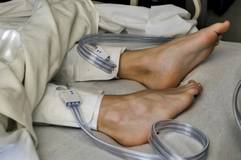
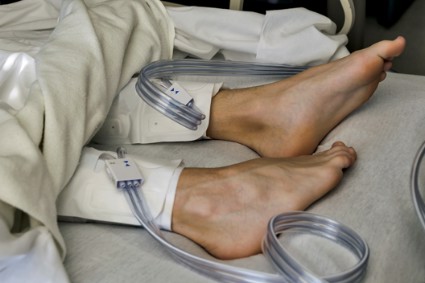
Over the next week, DB underwent open reduction and internal fixation of his right humerus fracture, along with an additional neurosurgical procedure to further stabilize his spine. DB made progress with respect to his pneumothorax and his chest tubes were eventually discontinued. DB was extubated on hospital day 5. On hospital day 7, DB was transferred out of the trauma ICU. For unclear reasons, DB’s prophylactic UFH was discontinued at the time of transfer. DB continued to wear bilateral IPC devices on his legs while he was in bed.
DB began physical therapy, but he had significant pain control issues. On hospital day 11, Dr. Hospitalist 2 restarted UFH, 5,000 units every 8 hours, for VTE prophylaxis. Two days later, DB was noted to have asymmetric edema of his right lower extremity and Dr. Hospitalist 3 obtained a vascular ultrasound. DB was diagnosed with an acute right femoral deep vein thrombosis. Dr. Hospitalist 3 ordered intravenous UFH 80 units/kg bolus followed by an intravenous infusion at 18 units/kg per hour.
The following morning (hospital day 14), the activated partial thromboplastin time was noted to be 82 seconds (1.5-2.5 thromboplastin time control). At approximately 10 a.m. that same day, DB collapsed while he was up to the commode. A code blue was called, but DB did not respond to resuscitation and was pronounced dead at 10:45 a.m. Autopsy confirmed the cause of death as a large saddle pulmonary embolism.
Complaint
DB’s mother was a flight attendant and very familiar with the concept of VTE and VTE prevention. According to her research on the internet, pulmonary embolism (PE) was a "never event" for hospitals and she immediately sought DB’s medical records to ascertain whether appropriate VTE prophylaxis had occurred. Once she discovered that DB had his prophylactic UFH discontinued for 4 days (12 doses of heparin missed), she contacted an attorney and a complaint was filed.
The complaint alleged that the physicians caring for DB failed to apply appropriate VTE prophylaxis commensurate with his high risk, and their collective failure in this regard was the proximate cause for his acute deep vein thrombosis and fatal PE.
Scientific principles
Trauma patients are considered to be at high risk for the development of VTE and some form of prophylaxis is universally recommended. Low-dose UFH given subcutaneously has been shown in multiple studies to safely and effectively decrease the incidence of VTE in high-risk groups. For those patients deemed to be at prohibitive risk for bleeding, nonpharmacologic methods of prevention are recommended. IPC prevents venous thrombosis by enhancing blood flow in the deep veins of the legs, thereby preventing venous stasis. IPC also reduces plasminogen activator inhibitor-1 (PAI-1), thereby increasing endogenous fibrinolytic activity.
Despite appropriate prophylaxis, acute VTE can still occur. Full-dose anticoagulant therapy is indicated for patients with symptomatic VTE, and anticoagulation is usually achieved initially with intravenous UFH or weight-adjusted doses of subcutaneous low-molecular-weight heparin. A 2010 meta-analysis of 13 prospective cohort studies and 56 randomized clinical trials demonstrated that the rate of recurrent fatal VTE following the appropriate initiation of full-dose anticoagulant therapy was just 0.4% (Ann. Intern. Med.2010;152:578-89).
Complaint rebuttal and discussion
The defense argued that the approach to VTE prophylaxis in a patient such as DB was a matter of clinical judgment and that, regardless of the strategy applied, acute events can and do occur. The defense highlighted the fact that DB was persistently anemic following his ICU transfer and that the physicians were concerned about possible hemorrhage. The defense also pointed out that DB continued to receive mechanical prophylaxis, which was appropriate.
In addition, the defense explained that DB had his acute DVT diagnosed immediately and he received appropriate full-dose anticoagulation prior to his death; DB therefore had less than a 0.4% chance of dying from VTE, according to the literature. Defense experts opined that, since DB went on to succumb to fatal PE despite adequate therapy, he was somehow different than those who typically respond to treatment and/or VTE prevention. In other words, the defense experts opined that DB would have developed and ultimately died from VTE regardless of what the physicians did or didn’t do in this case.
Conclusion
At the time of DB’s transition of care from the ICU to the regular nursing floor, there was no chart documentation to support the notion that his physicians were concerned about hemorrhage. It is more likely than not that DB had his subcutaneous UFH discontinued for several days by mistake.
Whether DB would still have suffered an acute DVT (along with a fatal PE) had the UFH prophylaxis not been interrupted is unknown. Sadly, DB defied the odds when he did not respond to treatment following the diagnosis of his acute DVT. At the end of the day, the plaintiffs were unable to find an expert to rebut the opinions of the defense in this case and, as a result, the case was dismissed without prejudice.
Dr. Michota is director of academic affairs in the hospital medicine department at the Cleveland Clinic and medical editor of Hospitalist News. He has been involved in peer review both within and outside the legal system.
DB was a 22-year-old man who was brought to the hospital after he was found down in the street by police. Witnesses confirmed that DB was a pedestrian involved in a hit-and-run accident with a motor vehicle.
Upon initial assessment at the hospital, DB was awake and alert. Imaging confirmed several rib fractures, a broken right humerus, and two burst fractures of the thoracic spine. In addition, DB had evidence of a pulmonary contusion and a pneumothorax. DB went to the operating room for his spinal injuries and was subsequently admitted by Dr. Hospitalist 1 to the trauma intensive care unit. DB remained intubated and sedated. Dr. Hospitalist 1 documented that DB was at high risk for venous thromboembolism (VTE) and DB received bilateral intermittent pneumatic compression (IPC) of his legs and subcutaneous unfractionated heparin (UFH), 5,000 units every 8 hours, for VTE prophylaxis.
Over the next week, DB underwent open reduction and internal fixation of his right humerus fracture, along with an additional neurosurgical procedure to further stabilize his spine. DB made progress with respect to his pneumothorax and his chest tubes were eventually discontinued. DB was extubated on hospital day 5. On hospital day 7, DB was transferred out of the trauma ICU. For unclear reasons, DB’s prophylactic UFH was discontinued at the time of transfer. DB continued to wear bilateral IPC devices on his legs while he was in bed.
DB began physical therapy, but he had significant pain control issues. On hospital day 11, Dr. Hospitalist 2 restarted UFH, 5,000 units every 8 hours, for VTE prophylaxis. Two days later, DB was noted to have asymmetric edema of his right lower extremity and Dr. Hospitalist 3 obtained a vascular ultrasound. DB was diagnosed with an acute right femoral deep vein thrombosis. Dr. Hospitalist 3 ordered intravenous UFH 80 units/kg bolus followed by an intravenous infusion at 18 units/kg per hour.
The following morning (hospital day 14), the activated partial thromboplastin time was noted to be 82 seconds (1.5-2.5 thromboplastin time control). At approximately 10 a.m. that same day, DB collapsed while he was up to the commode. A code blue was called, but DB did not respond to resuscitation and was pronounced dead at 10:45 a.m. Autopsy confirmed the cause of death as a large saddle pulmonary embolism.
Complaint
DB’s mother was a flight attendant and very familiar with the concept of VTE and VTE prevention. According to her research on the internet, pulmonary embolism (PE) was a "never event" for hospitals and she immediately sought DB’s medical records to ascertain whether appropriate VTE prophylaxis had occurred. Once she discovered that DB had his prophylactic UFH discontinued for 4 days (12 doses of heparin missed), she contacted an attorney and a complaint was filed.
The complaint alleged that the physicians caring for DB failed to apply appropriate VTE prophylaxis commensurate with his high risk, and their collective failure in this regard was the proximate cause for his acute deep vein thrombosis and fatal PE.
Scientific principles
Trauma patients are considered to be at high risk for the development of VTE and some form of prophylaxis is universally recommended. Low-dose UFH given subcutaneously has been shown in multiple studies to safely and effectively decrease the incidence of VTE in high-risk groups. For those patients deemed to be at prohibitive risk for bleeding, nonpharmacologic methods of prevention are recommended. IPC prevents venous thrombosis by enhancing blood flow in the deep veins of the legs, thereby preventing venous stasis. IPC also reduces plasminogen activator inhibitor-1 (PAI-1), thereby increasing endogenous fibrinolytic activity.
Despite appropriate prophylaxis, acute VTE can still occur. Full-dose anticoagulant therapy is indicated for patients with symptomatic VTE, and anticoagulation is usually achieved initially with intravenous UFH or weight-adjusted doses of subcutaneous low-molecular-weight heparin. A 2010 meta-analysis of 13 prospective cohort studies and 56 randomized clinical trials demonstrated that the rate of recurrent fatal VTE following the appropriate initiation of full-dose anticoagulant therapy was just 0.4% (Ann. Intern. Med.2010;152:578-89).
Complaint rebuttal and discussion
The defense argued that the approach to VTE prophylaxis in a patient such as DB was a matter of clinical judgment and that, regardless of the strategy applied, acute events can and do occur. The defense highlighted the fact that DB was persistently anemic following his ICU transfer and that the physicians were concerned about possible hemorrhage. The defense also pointed out that DB continued to receive mechanical prophylaxis, which was appropriate.
In addition, the defense explained that DB had his acute DVT diagnosed immediately and he received appropriate full-dose anticoagulation prior to his death; DB therefore had less than a 0.4% chance of dying from VTE, according to the literature. Defense experts opined that, since DB went on to succumb to fatal PE despite adequate therapy, he was somehow different than those who typically respond to treatment and/or VTE prevention. In other words, the defense experts opined that DB would have developed and ultimately died from VTE regardless of what the physicians did or didn’t do in this case.
Conclusion
At the time of DB’s transition of care from the ICU to the regular nursing floor, there was no chart documentation to support the notion that his physicians were concerned about hemorrhage. It is more likely than not that DB had his subcutaneous UFH discontinued for several days by mistake.
Whether DB would still have suffered an acute DVT (along with a fatal PE) had the UFH prophylaxis not been interrupted is unknown. Sadly, DB defied the odds when he did not respond to treatment following the diagnosis of his acute DVT. At the end of the day, the plaintiffs were unable to find an expert to rebut the opinions of the defense in this case and, as a result, the case was dismissed without prejudice.
Dr. Michota is director of academic affairs in the hospital medicine department at the Cleveland Clinic and medical editor of Hospitalist News. He has been involved in peer review both within and outside the legal system.
DB was a 22-year-old man who was brought to the hospital after he was found down in the street by police. Witnesses confirmed that DB was a pedestrian involved in a hit-and-run accident with a motor vehicle.
Upon initial assessment at the hospital, DB was awake and alert. Imaging confirmed several rib fractures, a broken right humerus, and two burst fractures of the thoracic spine. In addition, DB had evidence of a pulmonary contusion and a pneumothorax. DB went to the operating room for his spinal injuries and was subsequently admitted by Dr. Hospitalist 1 to the trauma intensive care unit. DB remained intubated and sedated. Dr. Hospitalist 1 documented that DB was at high risk for venous thromboembolism (VTE) and DB received bilateral intermittent pneumatic compression (IPC) of his legs and subcutaneous unfractionated heparin (UFH), 5,000 units every 8 hours, for VTE prophylaxis.
Over the next week, DB underwent open reduction and internal fixation of his right humerus fracture, along with an additional neurosurgical procedure to further stabilize his spine. DB made progress with respect to his pneumothorax and his chest tubes were eventually discontinued. DB was extubated on hospital day 5. On hospital day 7, DB was transferred out of the trauma ICU. For unclear reasons, DB’s prophylactic UFH was discontinued at the time of transfer. DB continued to wear bilateral IPC devices on his legs while he was in bed.
DB began physical therapy, but he had significant pain control issues. On hospital day 11, Dr. Hospitalist 2 restarted UFH, 5,000 units every 8 hours, for VTE prophylaxis. Two days later, DB was noted to have asymmetric edema of his right lower extremity and Dr. Hospitalist 3 obtained a vascular ultrasound. DB was diagnosed with an acute right femoral deep vein thrombosis. Dr. Hospitalist 3 ordered intravenous UFH 80 units/kg bolus followed by an intravenous infusion at 18 units/kg per hour.
The following morning (hospital day 14), the activated partial thromboplastin time was noted to be 82 seconds (1.5-2.5 thromboplastin time control). At approximately 10 a.m. that same day, DB collapsed while he was up to the commode. A code blue was called, but DB did not respond to resuscitation and was pronounced dead at 10:45 a.m. Autopsy confirmed the cause of death as a large saddle pulmonary embolism.
Complaint
DB’s mother was a flight attendant and very familiar with the concept of VTE and VTE prevention. According to her research on the internet, pulmonary embolism (PE) was a "never event" for hospitals and she immediately sought DB’s medical records to ascertain whether appropriate VTE prophylaxis had occurred. Once she discovered that DB had his prophylactic UFH discontinued for 4 days (12 doses of heparin missed), she contacted an attorney and a complaint was filed.
The complaint alleged that the physicians caring for DB failed to apply appropriate VTE prophylaxis commensurate with his high risk, and their collective failure in this regard was the proximate cause for his acute deep vein thrombosis and fatal PE.
Scientific principles
Trauma patients are considered to be at high risk for the development of VTE and some form of prophylaxis is universally recommended. Low-dose UFH given subcutaneously has been shown in multiple studies to safely and effectively decrease the incidence of VTE in high-risk groups. For those patients deemed to be at prohibitive risk for bleeding, nonpharmacologic methods of prevention are recommended. IPC prevents venous thrombosis by enhancing blood flow in the deep veins of the legs, thereby preventing venous stasis. IPC also reduces plasminogen activator inhibitor-1 (PAI-1), thereby increasing endogenous fibrinolytic activity.
Despite appropriate prophylaxis, acute VTE can still occur. Full-dose anticoagulant therapy is indicated for patients with symptomatic VTE, and anticoagulation is usually achieved initially with intravenous UFH or weight-adjusted doses of subcutaneous low-molecular-weight heparin. A 2010 meta-analysis of 13 prospective cohort studies and 56 randomized clinical trials demonstrated that the rate of recurrent fatal VTE following the appropriate initiation of full-dose anticoagulant therapy was just 0.4% (Ann. Intern. Med.2010;152:578-89).
Complaint rebuttal and discussion
The defense argued that the approach to VTE prophylaxis in a patient such as DB was a matter of clinical judgment and that, regardless of the strategy applied, acute events can and do occur. The defense highlighted the fact that DB was persistently anemic following his ICU transfer and that the physicians were concerned about possible hemorrhage. The defense also pointed out that DB continued to receive mechanical prophylaxis, which was appropriate.
In addition, the defense explained that DB had his acute DVT diagnosed immediately and he received appropriate full-dose anticoagulation prior to his death; DB therefore had less than a 0.4% chance of dying from VTE, according to the literature. Defense experts opined that, since DB went on to succumb to fatal PE despite adequate therapy, he was somehow different than those who typically respond to treatment and/or VTE prevention. In other words, the defense experts opined that DB would have developed and ultimately died from VTE regardless of what the physicians did or didn’t do in this case.
Conclusion
At the time of DB’s transition of care from the ICU to the regular nursing floor, there was no chart documentation to support the notion that his physicians were concerned about hemorrhage. It is more likely than not that DB had his subcutaneous UFH discontinued for several days by mistake.
Whether DB would still have suffered an acute DVT (along with a fatal PE) had the UFH prophylaxis not been interrupted is unknown. Sadly, DB defied the odds when he did not respond to treatment following the diagnosis of his acute DVT. At the end of the day, the plaintiffs were unable to find an expert to rebut the opinions of the defense in this case and, as a result, the case was dismissed without prejudice.
Dr. Michota is director of academic affairs in the hospital medicine department at the Cleveland Clinic and medical editor of Hospitalist News. He has been involved in peer review both within and outside the legal system.
Lobectomy suffices for surgery of small papillary thyroid cancers
BOSTON – Extensive surgery beyond lobectomy offers no survival advantage for small papillary thyroid cancers, according to a large database analysis.
Total thyroidectomy was not associated with an overall survival benefit over lobectomy for papillary thyroid cancers sized 1-2 cm (hazard ratio, 1.05; P = .61) or 2.1-4.0 cm (HR, 0.89; P = .21), even after adjusting for multiple patient and pathologic factors.
"Despite guidelines, our results call into question whether tumor size 1-4 cm should be an absolute determinant for extent of surgery," Dr. Mohamed Abdelgadir Adam said at the annual meeting of the American Surgical Association.
Current American Thyroid Association guidelines recommend lobectomy for tumors less than 1 cm in size and total thyroidectomy for those exceeding 1 cm.

"Using total thyroidectomy based on tumor size alone may unnecessarily subject patients to increased risks of complications without a survival benefit," he said. "In addition to tumor size up to 4 cm, other factors are important for determining extent of surgery such as nodal and distant metastases and patient preference."
The extent of surgery for papillary thyroid cancer, however, remains controversial. Recent analyses (Arch. Otolaryngol. Head Neck Surg. 2010;136:1055-61) have shown no survival difference between lobectomy and total thyroidectomy, while an earlier landmark study found improved overall survival with total thyroidectomy for tumors 1 cm or more (Ann. Surg. 2007;246;375-81). The latter study, however, has been criticized because it did not take into account patient comorbidities, multifocality, extrathyroidal extension, or completeness of resection, said Dr. Adam of Duke University School of Medicine, Durham, N.C.
The current analysis adjusted for age, gender, race, annual income, insurance status, hospital volume, patient comorbidities, tumor multifocality, extrathyroidal extension, lymph node involvement, metastases, surgical margins, and radioactive iodine ablation.
Discussant Dr. Blake Cady, professor emeritus of surgery at Harvard Medical School and Massachusetts General Hospital in Boston, said the current report is an important contribution to the controversy. It also supports his own bias against overtreatment of these mostly young patients with total thyroidectomy, which necessitates long-term medication and is accompanied by almost routine use of radioactive iodine, despite no evidence it improves outcomes in low-risk patients.
"In no other human cancer with a 99% 20-year survival is a policy of routine total primary organ removal practiced and routine systemic therapy used," he said. "Therefore, this report may help to scale back toward a more measured balance between treatment and morbidity."
Study coauthor Dr. Julie Ann Sosa, chief of endocrine surgery at Duke, challenged the audience to promote the growing body of evidence supporting equivalence in overall survival, such as a recent study described as coming the closest to a head-to-head comparison and having the longest follow-up at 18 years. It showed equivalence between lobectomy, without radioactive iodine, and total thyroidectomy for overall, progression-free, and disease-specific survival and risk of recurrence in tumors 40 mm or less (World J. Surg. 2014;38:68-79.
"In light of these data, I think it is probably high time for guidelines to potentially reconsider this issue," she said, noting that the American Thyroid Association will issue new guidelines later this spring or summer.
Dr. Sosa also advocated for "a more sophisticated approach" to preoperative evaluation and risk stratification for papillary thyroid cancer that distinguishes between low-, medium-, and high-risk tumors. The Duke study did not exclude most high-risk tumors, but rather adjusted for high-risk characteristics such as extrathyroidal extension, lymph node involvement, and distant metastases.
"When you adjust for these high-risk characteristics, the afforded overall survival benefit disappears," she said. "So what I think we would argue is that there is equivalence in outcome for the majority of patients for low- and medium-risk tumors. But for those patients who have high-risk tumors, as defined by some of these high-risk characteristics, then I think all of us would agree that total thyroidectomy, with or without radioactive iodine, would be indicated."
The study involved 61,775 patients in the National Cancer Database who underwent total thyroidectomy (n = 54,926) or lobectomy with or without isthmusectomy (n = 6,849) for papillary thyroid cancer from 1998 to 2006. Compared with the lobectomy group, the thyroidectomy group had more tumor multifocality (44% vs. 29%), positive surgical margins (27% vs. 7%), distant metastases (1% vs. 0.4%), and radioactive iodine (65% vs. 33%; P value less than .01 for all).
In multivariable analysis, nodal and distant metastases were associated with compromised survival, Dr. Adam said.
The complete manuscript of this study and its presentation at the American Surgical Association’s 134th Annual Meeting, April 2014 in Boston, is anticipated to be published in the Annals of Surgery, pending editorial review.
The authors reported no conflicting interests
This excellent study by Adam et al. contributes to a growing body of literature supporting thyroid lobectomy for low risk, small, differentiated thyroid tumors. I should say this represents a shift back toward lobectomy. Total thyroidectomy became the procedure of choice for nearly all differentiated thyroid tumors over the last 2-3 decades in part because of the landmark study by Bilimoria et al. (Surgery 2007;142:906-14).
Now the tide is shifting back the other direction.
I do not mean to imply that passing trends drive how we treat thyroid cancer. Mortality rates from differentiated thyroid cancer remain extremely low. This makes measuring any differences in mortality challenging. The outcome can differ depending on the cohort and the other variables included in the modeling. Recurrence is the real driver of morbidity in thyroid cancer, with anywhere from 10%-30% of patients experiencing a recurrence. Unfortunately, large national cancer registries do not capture recurrence very well.
This study controlled for many tumor features that will also impact disease specific survival apart from just the treatment received. The follow-up time is also impressive. So, if we are to undertake a more nuanced and stratified approach to determining the extent of surgery, there are a few things to consider. The first is patient selection.
In this study and in a growing body of retrospective, single institution studies looking at lobectomy for low-risk cancers, one must remember that these patients are selected based on other tumor features (multifocality, extrathyroidal extension, etc.) and not just size alone. Remember that 30%-40% of patients with papillary thyroid cancer will have multifocal disease.
The second is that successfully treating thyroid cancer patients with lobectomy requires buy-in from all parties involved - surgeons, endocrinologists, and, most importantly, the patient. Everyone must be comfortable with omitting radioactive iodine, detectable thyroglobulin levels, and following the remaining lobe with ultrasound. Some patients will not be comfortable with this and may choose to undergo total thyroidectomy. Even if we surgeons agree to shift back toward less aggressive surgery, we cannot do so in isolation.
Dr. David F. Schneider is an associate professor and the director of endocrine surgery research in the department of surgery, University of Wisconsin, Madison. He has no conflicts to disclose.
This excellent study by Adam et al. contributes to a growing body of literature supporting thyroid lobectomy for low risk, small, differentiated thyroid tumors. I should say this represents a shift back toward lobectomy. Total thyroidectomy became the procedure of choice for nearly all differentiated thyroid tumors over the last 2-3 decades in part because of the landmark study by Bilimoria et al. (Surgery 2007;142:906-14).
Now the tide is shifting back the other direction.
I do not mean to imply that passing trends drive how we treat thyroid cancer. Mortality rates from differentiated thyroid cancer remain extremely low. This makes measuring any differences in mortality challenging. The outcome can differ depending on the cohort and the other variables included in the modeling. Recurrence is the real driver of morbidity in thyroid cancer, with anywhere from 10%-30% of patients experiencing a recurrence. Unfortunately, large national cancer registries do not capture recurrence very well.
This study controlled for many tumor features that will also impact disease specific survival apart from just the treatment received. The follow-up time is also impressive. So, if we are to undertake a more nuanced and stratified approach to determining the extent of surgery, there are a few things to consider. The first is patient selection.
In this study and in a growing body of retrospective, single institution studies looking at lobectomy for low-risk cancers, one must remember that these patients are selected based on other tumor features (multifocality, extrathyroidal extension, etc.) and not just size alone. Remember that 30%-40% of patients with papillary thyroid cancer will have multifocal disease.
The second is that successfully treating thyroid cancer patients with lobectomy requires buy-in from all parties involved - surgeons, endocrinologists, and, most importantly, the patient. Everyone must be comfortable with omitting radioactive iodine, detectable thyroglobulin levels, and following the remaining lobe with ultrasound. Some patients will not be comfortable with this and may choose to undergo total thyroidectomy. Even if we surgeons agree to shift back toward less aggressive surgery, we cannot do so in isolation.
Dr. David F. Schneider is an associate professor and the director of endocrine surgery research in the department of surgery, University of Wisconsin, Madison. He has no conflicts to disclose.
This excellent study by Adam et al. contributes to a growing body of literature supporting thyroid lobectomy for low risk, small, differentiated thyroid tumors. I should say this represents a shift back toward lobectomy. Total thyroidectomy became the procedure of choice for nearly all differentiated thyroid tumors over the last 2-3 decades in part because of the landmark study by Bilimoria et al. (Surgery 2007;142:906-14).
Now the tide is shifting back the other direction.
I do not mean to imply that passing trends drive how we treat thyroid cancer. Mortality rates from differentiated thyroid cancer remain extremely low. This makes measuring any differences in mortality challenging. The outcome can differ depending on the cohort and the other variables included in the modeling. Recurrence is the real driver of morbidity in thyroid cancer, with anywhere from 10%-30% of patients experiencing a recurrence. Unfortunately, large national cancer registries do not capture recurrence very well.
This study controlled for many tumor features that will also impact disease specific survival apart from just the treatment received. The follow-up time is also impressive. So, if we are to undertake a more nuanced and stratified approach to determining the extent of surgery, there are a few things to consider. The first is patient selection.
In this study and in a growing body of retrospective, single institution studies looking at lobectomy for low-risk cancers, one must remember that these patients are selected based on other tumor features (multifocality, extrathyroidal extension, etc.) and not just size alone. Remember that 30%-40% of patients with papillary thyroid cancer will have multifocal disease.
The second is that successfully treating thyroid cancer patients with lobectomy requires buy-in from all parties involved - surgeons, endocrinologists, and, most importantly, the patient. Everyone must be comfortable with omitting radioactive iodine, detectable thyroglobulin levels, and following the remaining lobe with ultrasound. Some patients will not be comfortable with this and may choose to undergo total thyroidectomy. Even if we surgeons agree to shift back toward less aggressive surgery, we cannot do so in isolation.
Dr. David F. Schneider is an associate professor and the director of endocrine surgery research in the department of surgery, University of Wisconsin, Madison. He has no conflicts to disclose.
BOSTON – Extensive surgery beyond lobectomy offers no survival advantage for small papillary thyroid cancers, according to a large database analysis.
Total thyroidectomy was not associated with an overall survival benefit over lobectomy for papillary thyroid cancers sized 1-2 cm (hazard ratio, 1.05; P = .61) or 2.1-4.0 cm (HR, 0.89; P = .21), even after adjusting for multiple patient and pathologic factors.
"Despite guidelines, our results call into question whether tumor size 1-4 cm should be an absolute determinant for extent of surgery," Dr. Mohamed Abdelgadir Adam said at the annual meeting of the American Surgical Association.
Current American Thyroid Association guidelines recommend lobectomy for tumors less than 1 cm in size and total thyroidectomy for those exceeding 1 cm.
"Using total thyroidectomy based on tumor size alone may unnecessarily subject patients to increased risks of complications without a survival benefit," he said. "In addition to tumor size up to 4 cm, other factors are important for determining extent of surgery such as nodal and distant metastases and patient preference."
The extent of surgery for papillary thyroid cancer, however, remains controversial. Recent analyses (Arch. Otolaryngol. Head Neck Surg. 2010;136:1055-61) have shown no survival difference between lobectomy and total thyroidectomy, while an earlier landmark study found improved overall survival with total thyroidectomy for tumors 1 cm or more (Ann. Surg. 2007;246;375-81). The latter study, however, has been criticized because it did not take into account patient comorbidities, multifocality, extrathyroidal extension, or completeness of resection, said Dr. Adam of Duke University School of Medicine, Durham, N.C.
The current analysis adjusted for age, gender, race, annual income, insurance status, hospital volume, patient comorbidities, tumor multifocality, extrathyroidal extension, lymph node involvement, metastases, surgical margins, and radioactive iodine ablation.
Discussant Dr. Blake Cady, professor emeritus of surgery at Harvard Medical School and Massachusetts General Hospital in Boston, said the current report is an important contribution to the controversy. It also supports his own bias against overtreatment of these mostly young patients with total thyroidectomy, which necessitates long-term medication and is accompanied by almost routine use of radioactive iodine, despite no evidence it improves outcomes in low-risk patients.
"In no other human cancer with a 99% 20-year survival is a policy of routine total primary organ removal practiced and routine systemic therapy used," he said. "Therefore, this report may help to scale back toward a more measured balance between treatment and morbidity."
Study coauthor Dr. Julie Ann Sosa, chief of endocrine surgery at Duke, challenged the audience to promote the growing body of evidence supporting equivalence in overall survival, such as a recent study described as coming the closest to a head-to-head comparison and having the longest follow-up at 18 years. It showed equivalence between lobectomy, without radioactive iodine, and total thyroidectomy for overall, progression-free, and disease-specific survival and risk of recurrence in tumors 40 mm or less (World J. Surg. 2014;38:68-79.
"In light of these data, I think it is probably high time for guidelines to potentially reconsider this issue," she said, noting that the American Thyroid Association will issue new guidelines later this spring or summer.
Dr. Sosa also advocated for "a more sophisticated approach" to preoperative evaluation and risk stratification for papillary thyroid cancer that distinguishes between low-, medium-, and high-risk tumors. The Duke study did not exclude most high-risk tumors, but rather adjusted for high-risk characteristics such as extrathyroidal extension, lymph node involvement, and distant metastases.
"When you adjust for these high-risk characteristics, the afforded overall survival benefit disappears," she said. "So what I think we would argue is that there is equivalence in outcome for the majority of patients for low- and medium-risk tumors. But for those patients who have high-risk tumors, as defined by some of these high-risk characteristics, then I think all of us would agree that total thyroidectomy, with or without radioactive iodine, would be indicated."
The study involved 61,775 patients in the National Cancer Database who underwent total thyroidectomy (n = 54,926) or lobectomy with or without isthmusectomy (n = 6,849) for papillary thyroid cancer from 1998 to 2006. Compared with the lobectomy group, the thyroidectomy group had more tumor multifocality (44% vs. 29%), positive surgical margins (27% vs. 7%), distant metastases (1% vs. 0.4%), and radioactive iodine (65% vs. 33%; P value less than .01 for all).
In multivariable analysis, nodal and distant metastases were associated with compromised survival, Dr. Adam said.
The complete manuscript of this study and its presentation at the American Surgical Association’s 134th Annual Meeting, April 2014 in Boston, is anticipated to be published in the Annals of Surgery, pending editorial review.
The authors reported no conflicting interests
BOSTON – Extensive surgery beyond lobectomy offers no survival advantage for small papillary thyroid cancers, according to a large database analysis.
Total thyroidectomy was not associated with an overall survival benefit over lobectomy for papillary thyroid cancers sized 1-2 cm (hazard ratio, 1.05; P = .61) or 2.1-4.0 cm (HR, 0.89; P = .21), even after adjusting for multiple patient and pathologic factors.
"Despite guidelines, our results call into question whether tumor size 1-4 cm should be an absolute determinant for extent of surgery," Dr. Mohamed Abdelgadir Adam said at the annual meeting of the American Surgical Association.
Current American Thyroid Association guidelines recommend lobectomy for tumors less than 1 cm in size and total thyroidectomy for those exceeding 1 cm.
"Using total thyroidectomy based on tumor size alone may unnecessarily subject patients to increased risks of complications without a survival benefit," he said. "In addition to tumor size up to 4 cm, other factors are important for determining extent of surgery such as nodal and distant metastases and patient preference."
The extent of surgery for papillary thyroid cancer, however, remains controversial. Recent analyses (Arch. Otolaryngol. Head Neck Surg. 2010;136:1055-61) have shown no survival difference between lobectomy and total thyroidectomy, while an earlier landmark study found improved overall survival with total thyroidectomy for tumors 1 cm or more (Ann. Surg. 2007;246;375-81). The latter study, however, has been criticized because it did not take into account patient comorbidities, multifocality, extrathyroidal extension, or completeness of resection, said Dr. Adam of Duke University School of Medicine, Durham, N.C.
The current analysis adjusted for age, gender, race, annual income, insurance status, hospital volume, patient comorbidities, tumor multifocality, extrathyroidal extension, lymph node involvement, metastases, surgical margins, and radioactive iodine ablation.
Discussant Dr. Blake Cady, professor emeritus of surgery at Harvard Medical School and Massachusetts General Hospital in Boston, said the current report is an important contribution to the controversy. It also supports his own bias against overtreatment of these mostly young patients with total thyroidectomy, which necessitates long-term medication and is accompanied by almost routine use of radioactive iodine, despite no evidence it improves outcomes in low-risk patients.
"In no other human cancer with a 99% 20-year survival is a policy of routine total primary organ removal practiced and routine systemic therapy used," he said. "Therefore, this report may help to scale back toward a more measured balance between treatment and morbidity."
Study coauthor Dr. Julie Ann Sosa, chief of endocrine surgery at Duke, challenged the audience to promote the growing body of evidence supporting equivalence in overall survival, such as a recent study described as coming the closest to a head-to-head comparison and having the longest follow-up at 18 years. It showed equivalence between lobectomy, without radioactive iodine, and total thyroidectomy for overall, progression-free, and disease-specific survival and risk of recurrence in tumors 40 mm or less (World J. Surg. 2014;38:68-79.
"In light of these data, I think it is probably high time for guidelines to potentially reconsider this issue," she said, noting that the American Thyroid Association will issue new guidelines later this spring or summer.
Dr. Sosa also advocated for "a more sophisticated approach" to preoperative evaluation and risk stratification for papillary thyroid cancer that distinguishes between low-, medium-, and high-risk tumors. The Duke study did not exclude most high-risk tumors, but rather adjusted for high-risk characteristics such as extrathyroidal extension, lymph node involvement, and distant metastases.
"When you adjust for these high-risk characteristics, the afforded overall survival benefit disappears," she said. "So what I think we would argue is that there is equivalence in outcome for the majority of patients for low- and medium-risk tumors. But for those patients who have high-risk tumors, as defined by some of these high-risk characteristics, then I think all of us would agree that total thyroidectomy, with or without radioactive iodine, would be indicated."
The study involved 61,775 patients in the National Cancer Database who underwent total thyroidectomy (n = 54,926) or lobectomy with or without isthmusectomy (n = 6,849) for papillary thyroid cancer from 1998 to 2006. Compared with the lobectomy group, the thyroidectomy group had more tumor multifocality (44% vs. 29%), positive surgical margins (27% vs. 7%), distant metastases (1% vs. 0.4%), and radioactive iodine (65% vs. 33%; P value less than .01 for all).
In multivariable analysis, nodal and distant metastases were associated with compromised survival, Dr. Adam said.
The complete manuscript of this study and its presentation at the American Surgical Association’s 134th Annual Meeting, April 2014 in Boston, is anticipated to be published in the Annals of Surgery, pending editorial review.
The authors reported no conflicting interests
AT THE ASA ANNUAL MEETING
Major finding: After adjustment, total thyroidectomy did not improve overall survival over lobectomy for tumors 1-2 cm (HR, 1.05; P = .61) or 2.1-4.0 cm (HR, 0.89; P = .21).
Data source: A retrospective database analysis of 61,775 papillary thyroid cancers.
Disclosures: The authors reported no conflicting interests.

Shorter antibiotic course treats periotoneal infections
BALTIMORE – A study of patients with intraabdominal infection indicates that a shorter course of antibiotics is as effective as the standard, longer course, leading researchers to recommend a new standard of care.
The rates of recurrent infections and other outcomes were similar in patients with intraabdominal infections treated with antibiotics for 4 days following source control and among those who received a longer course of treatment based on when their clinical symptoms resolved, in a study reported at the annual meeting of the Surgical Infection Society.
The results support the use of the shorter treatment strategy in this setting, said Dr. Robert Sawyer, who presented the results of the study, SIS Multicenter Study of Duration of Antibiotics for Intraabdominal Infection.

While antibiotics are used as an adjunct to treat intraabdominal infections, the appropriate duration of treatment is not clear, and reducing the time exposed to antibiotics "could be worthwhile," said Dr. Sawyer, professor of surgery and public health sciences and chief of acute care surgery at the University of Virginia, Charlottesville.
The randomized, multicenter, unblinded study compared a shorter vs. a longer course of antibiotic therapy in 518 patients with intraabdominal infections: 4 days in 258 patients or treatment that continued for 2 days after resolution of the patient’s fever, leukocytosis, and ileus, with a maximum of 10 days of treatment in total, in 260 patients. The patients had similar APACHE II scores; their mean age was in the early 50s; and the colon or rectum was the most common source of infection, followed by the appendix and the small bowel. Antibiotics were administered intravenously or orally. Patients with inadequate source control and a high risk of death within 72 hours were excluded.
Within 30 days, the primary outcome – a composite of surgical site infection, recurrent intraabdominal infection, and death – was similar between the two groups, at about 21.7% in the 4-day treatment group vs. 22.7% in the group treated for 2 days after symptoms resolved.
There were no significant differences in the individual endpoints between the two groups. There were also no differences in the composite endpoints in different subgroups, and when those with percutaneous drainage or patients whose source of infection was the appendix were excluded. Among sicker patients with APACHE scores of 10 or higher, there was a numerical benefit favoring those treated for 4 days (22.1% vs. 29.8% among those treated for the longer duration), but the difference was not statistically significant, although it was reassuring, Dr. Sawyer said.
There were no differences between the two groups in the rates of secondary infections or subsequent infection with resistant pathogens or Clostridium difficile, which were secondary endpoints.
Based on these results, "after source control is obtained, we recommend 4 days of antimicrobial therapy for all patients with intraabdominal infections as the new standard of care," Dr. Sawyer concluded.
Although they had positive comments about the study, several members of the audience commented that a larger study would be a better base for a recommendation to change the standard of care.
This study was one of several studies presented at the meeting that addressed the issue of reducing the time on antibiotic therapy in patients with surgical infections.
The study was sponsored by the National Institutes of Health. Dr. Sawyer had no disclosures.
BALTIMORE – A study of patients with intraabdominal infection indicates that a shorter course of antibiotics is as effective as the standard, longer course, leading researchers to recommend a new standard of care.
The rates of recurrent infections and other outcomes were similar in patients with intraabdominal infections treated with antibiotics for 4 days following source control and among those who received a longer course of treatment based on when their clinical symptoms resolved, in a study reported at the annual meeting of the Surgical Infection Society.
The results support the use of the shorter treatment strategy in this setting, said Dr. Robert Sawyer, who presented the results of the study, SIS Multicenter Study of Duration of Antibiotics for Intraabdominal Infection.
While antibiotics are used as an adjunct to treat intraabdominal infections, the appropriate duration of treatment is not clear, and reducing the time exposed to antibiotics "could be worthwhile," said Dr. Sawyer, professor of surgery and public health sciences and chief of acute care surgery at the University of Virginia, Charlottesville.
The randomized, multicenter, unblinded study compared a shorter vs. a longer course of antibiotic therapy in 518 patients with intraabdominal infections: 4 days in 258 patients or treatment that continued for 2 days after resolution of the patient’s fever, leukocytosis, and ileus, with a maximum of 10 days of treatment in total, in 260 patients. The patients had similar APACHE II scores; their mean age was in the early 50s; and the colon or rectum was the most common source of infection, followed by the appendix and the small bowel. Antibiotics were administered intravenously or orally. Patients with inadequate source control and a high risk of death within 72 hours were excluded.
Within 30 days, the primary outcome – a composite of surgical site infection, recurrent intraabdominal infection, and death – was similar between the two groups, at about 21.7% in the 4-day treatment group vs. 22.7% in the group treated for 2 days after symptoms resolved.
There were no significant differences in the individual endpoints between the two groups. There were also no differences in the composite endpoints in different subgroups, and when those with percutaneous drainage or patients whose source of infection was the appendix were excluded. Among sicker patients with APACHE scores of 10 or higher, there was a numerical benefit favoring those treated for 4 days (22.1% vs. 29.8% among those treated for the longer duration), but the difference was not statistically significant, although it was reassuring, Dr. Sawyer said.
There were no differences between the two groups in the rates of secondary infections or subsequent infection with resistant pathogens or Clostridium difficile, which were secondary endpoints.
Based on these results, "after source control is obtained, we recommend 4 days of antimicrobial therapy for all patients with intraabdominal infections as the new standard of care," Dr. Sawyer concluded.
Although they had positive comments about the study, several members of the audience commented that a larger study would be a better base for a recommendation to change the standard of care.
This study was one of several studies presented at the meeting that addressed the issue of reducing the time on antibiotic therapy in patients with surgical infections.
The study was sponsored by the National Institutes of Health. Dr. Sawyer had no disclosures.
BALTIMORE – A study of patients with intraabdominal infection indicates that a shorter course of antibiotics is as effective as the standard, longer course, leading researchers to recommend a new standard of care.
The rates of recurrent infections and other outcomes were similar in patients with intraabdominal infections treated with antibiotics for 4 days following source control and among those who received a longer course of treatment based on when their clinical symptoms resolved, in a study reported at the annual meeting of the Surgical Infection Society.
The results support the use of the shorter treatment strategy in this setting, said Dr. Robert Sawyer, who presented the results of the study, SIS Multicenter Study of Duration of Antibiotics for Intraabdominal Infection.
While antibiotics are used as an adjunct to treat intraabdominal infections, the appropriate duration of treatment is not clear, and reducing the time exposed to antibiotics "could be worthwhile," said Dr. Sawyer, professor of surgery and public health sciences and chief of acute care surgery at the University of Virginia, Charlottesville.
The randomized, multicenter, unblinded study compared a shorter vs. a longer course of antibiotic therapy in 518 patients with intraabdominal infections: 4 days in 258 patients or treatment that continued for 2 days after resolution of the patient’s fever, leukocytosis, and ileus, with a maximum of 10 days of treatment in total, in 260 patients. The patients had similar APACHE II scores; their mean age was in the early 50s; and the colon or rectum was the most common source of infection, followed by the appendix and the small bowel. Antibiotics were administered intravenously or orally. Patients with inadequate source control and a high risk of death within 72 hours were excluded.
Within 30 days, the primary outcome – a composite of surgical site infection, recurrent intraabdominal infection, and death – was similar between the two groups, at about 21.7% in the 4-day treatment group vs. 22.7% in the group treated for 2 days after symptoms resolved.
There were no significant differences in the individual endpoints between the two groups. There were also no differences in the composite endpoints in different subgroups, and when those with percutaneous drainage or patients whose source of infection was the appendix were excluded. Among sicker patients with APACHE scores of 10 or higher, there was a numerical benefit favoring those treated for 4 days (22.1% vs. 29.8% among those treated for the longer duration), but the difference was not statistically significant, although it was reassuring, Dr. Sawyer said.
There were no differences between the two groups in the rates of secondary infections or subsequent infection with resistant pathogens or Clostridium difficile, which were secondary endpoints.
Based on these results, "after source control is obtained, we recommend 4 days of antimicrobial therapy for all patients with intraabdominal infections as the new standard of care," Dr. Sawyer concluded.
Although they had positive comments about the study, several members of the audience commented that a larger study would be a better base for a recommendation to change the standard of care.
This study was one of several studies presented at the meeting that addressed the issue of reducing the time on antibiotic therapy in patients with surgical infections.
The study was sponsored by the National Institutes of Health. Dr. Sawyer had no disclosures.
AT THE SIS ANNUAL MEETING
Major finding: In patients with intraabdominal infections, the rates of a composite of adverse outcomes were similar – about 22% – after a 4-day course of antibiotic therapy and after continuing antibiotics for 2 days after clinical symptoms resolved.
Data source: A multicenter, randomized controlled, unblinded study of 518 adults with intraabdominal infections compared the effects of two different approaches to antibiotic therapy after source control on the composite endpoint of surgical site infection, recurrent intraabdominal infection, and death within 30 days.
Disclosures: Dr. Robert Sawyer had no disclosures. The study was sponsored by the National Institutes of Health.
Defibrillation testing at ICD placement did not reduce failed shocks or arrhythmic deaths
SAN FRANCISCO – Defibrillation testing at the time of implantable cardioverter defibrillator implantation is safe, but it does not improve clinical shock efficacy or prevent death, results from a large, randomized trial showed.
"Implanting an ICD without routine testing should be the preferred approach now. In some countries, like Canada, this has been the approach for 80% of people," Dr. Jeffrey S. Healey said during a press briefing at the annual scientific sessions of the Heart Rhythm Society. The results have the potential to "change guidelines, especially in the United States where the majority of ICDs are implanted with testing."

For the study, known as the SIMPLE (Shockless Implant Evaluation) trial, 2,500 patients at 85 sites in 18 countries undergoing their initial ICD implant were randomized to defibrillation testing (DT) or to no DT at the time of implant. The DT protocol required one or more successful terminations of ventricular fibrillation at 17 J or two terminations at 21J, with system revision if criteria were not met. The primary outcome was a composite of failed appropriate clinical shocks or arrhythmic death. "We thought this was an important clinical outcome because that’s really what the testing is meant to do; it’s meant to improve the likelihood that the device will successfully terminate an episode of ventricular tachycardia and ventricular fibrillation," said Dr. Healey, the study’s lead author who is director of arrhythmia services at Hamilton (Canada) Health Sciences. "We also looked at all-cause mortality because that’s clearly important."
The researchers additionally evaluated two safety clusters of periprocedural risk within 30 days of surgery. The first safety cluster looked at any complication which conceivably could be related to DT itself. The second safety cluster looked at episodes that are more clearly established to be related to DT, such as the need for cardiopulmonary resuscitation, unplanned intubation, stroke, heart failure, and death.
The mean age of patients was 63 years and 81% were men. During a follow-up of 3.1 years, 1.7% of patients were lost to follow-up. Failed appropriate clinical shocks or arrhythmic death occurred at an annual rate of 7.2% in the study arm of patients who did not have device testing, compared with a rate of 8.3% in the arm that had device testing (hazard ratio 0.86; P value of less than .001 for noninferiority). Total mortality was similar in both groups (HR 1.04: P = 0.65).
Device testing "did not seem to improve outcomes at all," commented Dr. Healey. "We set this up as a noninferiority trial to show that implantation of an ICD without testing was noninferior to implantation with testing. We very much succeeded in showing that was the case. The P value was less than .001 for noninferiority."
In terms of safety, the researchers observed a nonsignificant trend in favor of a slight increase in complications in the first safety cluster. "The second safety cluster of events more closely linked to shock testing was significantly increased with a borderline P value of .047, or a 50% increase, going from a 3% complication rate to 4.5% complication rate with testing," he said.
The likelihood of successful shock was numerically higher in patients who did not having the testing, "but this was not statistically significant; the P value was .08," Dr. Healey said. "We conclude that ICD implantation without testing does not give up any of the benefit of the ICD, that it is noninferior to implantation with testing using that primary outcome of failed shock or arrhythmic death. Overall, the complication rates from either strategy are low. There was a small but measurable increase with the testing procedure but overall we’ve come a long way with ICD therapy in the last 20 years. The therapy works; it’s highly effective, and clinicians can place it with very low risk."
SIMPLE was funded by a grant from Boston Scientific. Dr. Healey said that he had no relevant financial conflicts to disclose.
SAN FRANCISCO – Defibrillation testing at the time of implantable cardioverter defibrillator implantation is safe, but it does not improve clinical shock efficacy or prevent death, results from a large, randomized trial showed.
"Implanting an ICD without routine testing should be the preferred approach now. In some countries, like Canada, this has been the approach for 80% of people," Dr. Jeffrey S. Healey said during a press briefing at the annual scientific sessions of the Heart Rhythm Society. The results have the potential to "change guidelines, especially in the United States where the majority of ICDs are implanted with testing."
For the study, known as the SIMPLE (Shockless Implant Evaluation) trial, 2,500 patients at 85 sites in 18 countries undergoing their initial ICD implant were randomized to defibrillation testing (DT) or to no DT at the time of implant. The DT protocol required one or more successful terminations of ventricular fibrillation at 17 J or two terminations at 21J, with system revision if criteria were not met. The primary outcome was a composite of failed appropriate clinical shocks or arrhythmic death. "We thought this was an important clinical outcome because that’s really what the testing is meant to do; it’s meant to improve the likelihood that the device will successfully terminate an episode of ventricular tachycardia and ventricular fibrillation," said Dr. Healey, the study’s lead author who is director of arrhythmia services at Hamilton (Canada) Health Sciences. "We also looked at all-cause mortality because that’s clearly important."
The researchers additionally evaluated two safety clusters of periprocedural risk within 30 days of surgery. The first safety cluster looked at any complication which conceivably could be related to DT itself. The second safety cluster looked at episodes that are more clearly established to be related to DT, such as the need for cardiopulmonary resuscitation, unplanned intubation, stroke, heart failure, and death.
The mean age of patients was 63 years and 81% were men. During a follow-up of 3.1 years, 1.7% of patients were lost to follow-up. Failed appropriate clinical shocks or arrhythmic death occurred at an annual rate of 7.2% in the study arm of patients who did not have device testing, compared with a rate of 8.3% in the arm that had device testing (hazard ratio 0.86; P value of less than .001 for noninferiority). Total mortality was similar in both groups (HR 1.04: P = 0.65).
Device testing "did not seem to improve outcomes at all," commented Dr. Healey. "We set this up as a noninferiority trial to show that implantation of an ICD without testing was noninferior to implantation with testing. We very much succeeded in showing that was the case. The P value was less than .001 for noninferiority."
In terms of safety, the researchers observed a nonsignificant trend in favor of a slight increase in complications in the first safety cluster. "The second safety cluster of events more closely linked to shock testing was significantly increased with a borderline P value of .047, or a 50% increase, going from a 3% complication rate to 4.5% complication rate with testing," he said.
The likelihood of successful shock was numerically higher in patients who did not having the testing, "but this was not statistically significant; the P value was .08," Dr. Healey said. "We conclude that ICD implantation without testing does not give up any of the benefit of the ICD, that it is noninferior to implantation with testing using that primary outcome of failed shock or arrhythmic death. Overall, the complication rates from either strategy are low. There was a small but measurable increase with the testing procedure but overall we’ve come a long way with ICD therapy in the last 20 years. The therapy works; it’s highly effective, and clinicians can place it with very low risk."
SIMPLE was funded by a grant from Boston Scientific. Dr. Healey said that he had no relevant financial conflicts to disclose.
SAN FRANCISCO – Defibrillation testing at the time of implantable cardioverter defibrillator implantation is safe, but it does not improve clinical shock efficacy or prevent death, results from a large, randomized trial showed.
"Implanting an ICD without routine testing should be the preferred approach now. In some countries, like Canada, this has been the approach for 80% of people," Dr. Jeffrey S. Healey said during a press briefing at the annual scientific sessions of the Heart Rhythm Society. The results have the potential to "change guidelines, especially in the United States where the majority of ICDs are implanted with testing."
For the study, known as the SIMPLE (Shockless Implant Evaluation) trial, 2,500 patients at 85 sites in 18 countries undergoing their initial ICD implant were randomized to defibrillation testing (DT) or to no DT at the time of implant. The DT protocol required one or more successful terminations of ventricular fibrillation at 17 J or two terminations at 21J, with system revision if criteria were not met. The primary outcome was a composite of failed appropriate clinical shocks or arrhythmic death. "We thought this was an important clinical outcome because that’s really what the testing is meant to do; it’s meant to improve the likelihood that the device will successfully terminate an episode of ventricular tachycardia and ventricular fibrillation," said Dr. Healey, the study’s lead author who is director of arrhythmia services at Hamilton (Canada) Health Sciences. "We also looked at all-cause mortality because that’s clearly important."
The researchers additionally evaluated two safety clusters of periprocedural risk within 30 days of surgery. The first safety cluster looked at any complication which conceivably could be related to DT itself. The second safety cluster looked at episodes that are more clearly established to be related to DT, such as the need for cardiopulmonary resuscitation, unplanned intubation, stroke, heart failure, and death.
The mean age of patients was 63 years and 81% were men. During a follow-up of 3.1 years, 1.7% of patients were lost to follow-up. Failed appropriate clinical shocks or arrhythmic death occurred at an annual rate of 7.2% in the study arm of patients who did not have device testing, compared with a rate of 8.3% in the arm that had device testing (hazard ratio 0.86; P value of less than .001 for noninferiority). Total mortality was similar in both groups (HR 1.04: P = 0.65).
Device testing "did not seem to improve outcomes at all," commented Dr. Healey. "We set this up as a noninferiority trial to show that implantation of an ICD without testing was noninferior to implantation with testing. We very much succeeded in showing that was the case. The P value was less than .001 for noninferiority."
In terms of safety, the researchers observed a nonsignificant trend in favor of a slight increase in complications in the first safety cluster. "The second safety cluster of events more closely linked to shock testing was significantly increased with a borderline P value of .047, or a 50% increase, going from a 3% complication rate to 4.5% complication rate with testing," he said.
The likelihood of successful shock was numerically higher in patients who did not having the testing, "but this was not statistically significant; the P value was .08," Dr. Healey said. "We conclude that ICD implantation without testing does not give up any of the benefit of the ICD, that it is noninferior to implantation with testing using that primary outcome of failed shock or arrhythmic death. Overall, the complication rates from either strategy are low. There was a small but measurable increase with the testing procedure but overall we’ve come a long way with ICD therapy in the last 20 years. The therapy works; it’s highly effective, and clinicians can place it with very low risk."
SIMPLE was funded by a grant from Boston Scientific. Dr. Healey said that he had no relevant financial conflicts to disclose.
AT HEART RHYTHM 2014
Key clinical point: Routine defibrillator testing may be unnecessary at placement of an implanted cardioverter defibrillator.
Major finding: Failed appropriate clinical shocks or arrhythmic death occurred at an annual rate of 7.2% in those who did not have device testing and a rate of 8.3% in those with device testing (HR, 0.86; P value of less than .001 for noninferiority).
Data source: SIMPLE, a first-of-its-kind study of 2,500 patients undergoing their initial ICD implant.
Disclosures: SIMPLE was funded by a grant from Boston Scientific. Dr. Healey said that he had no relevant financial conflicts to disclose.

Remote monitoring of devices boosted survival
SAN FRANCISCO – Patients with implantable pacemakers and defibrillators who engage in remote monitoring at more than 75% adherence rates have a 2.4-fold higher rate of survival than those who do not engage in remote monitoring, based on data from 262,574 patients.
"All patients should be enrolled in remote monitoring and [be] encouraged to engage with remote monitoring at a high level, because the mortality reductions associated with remote monitoring are of a very significant and sizeable proportion," Dr. Suneet Mittal said during a press briefing at the annual scientific sessions of the Heart Rhythm Society.
Most patients who undergo device implantation in the United States "are not enrolled in a remote monitoring program, or, if enrolled in a monitoring program, do not reliably engage in remote monitoring," said Dr. Mittal, director of electrophysiology for Valley Health System of New York and New Jersey, Ridgewood, New Jersey. "This is concerning, because one prior study looking at individuals who underwent remote monitoring of their defibrillators suggest a nearly 50% reduction in mortality in the group of patients who were using remote monitoring [Circulation 2010;122[23]:2359-67]."

In a first-of-its-kind study, Dr. Mittal and his associates set out to determine whether this association also applied to pacemaker patients, whether there was a relationship between the amount of remote monitoring of patient use and their ultimate outcome, and whether there were any variables that could be used to identify patients who were or were not using remote monitoring. The population included 262,574 patients with a mean age of 71 years who received implantable pacemakers, cardiac resynchronization therapy pacemakers (CRT-Ps), cardiac resynchronization therapy cardioverter-defibrillators (ICDs), and cardiac resynchronization therapy defibrillators (CRT-Ds). The majority were implanted with a St. Jude Medical pacemaker (112,692), CRT-P (7,704), ICD (82,621), or CRT-D (59,547). Nearly two-thirds of the patients (65%) were men.
Patients who adhered to remote monitoring more than 75% of the time had a 2.4-fold higher rate of survival, compared with patients who were never remotely monitored. "Even more importantly, those who were being remotely monitored more than 75% of the time had a 1.5-fold higher survival than patients who were being remotely monitored but were only engaged in remote monitoring less than 75% of the time," Dr. Mittal added. The magnitude of benefit was the same regardless of the type of device that was implanted, "suggesting that this is a device-independent effect."
Dr. Mittal reported that 54% of patients never enrolled in remote monitoring.
The researchers analyzed U.S. Census data including demographics, poverty level, and education level in an effort to identify potential explanatory variables, but "we could not identify any variable that identified whether patients were using remote monitoring or not," Dr. Mittal said. "Somewhat surprisingly, patients living in the highest population density zones in the U.S. were the least likely to be enrolled and using remote monitoring as opposed to those individuals living in the Midwest and the Pacific Northwest."
Dr. Mittal disclosed that he is a consultant to multiple device makers including St. Jude Medical.
On Twitter @dougbrunk
SAN FRANCISCO – Patients with implantable pacemakers and defibrillators who engage in remote monitoring at more than 75% adherence rates have a 2.4-fold higher rate of survival than those who do not engage in remote monitoring, based on data from 262,574 patients.
"All patients should be enrolled in remote monitoring and [be] encouraged to engage with remote monitoring at a high level, because the mortality reductions associated with remote monitoring are of a very significant and sizeable proportion," Dr. Suneet Mittal said during a press briefing at the annual scientific sessions of the Heart Rhythm Society.
Most patients who undergo device implantation in the United States "are not enrolled in a remote monitoring program, or, if enrolled in a monitoring program, do not reliably engage in remote monitoring," said Dr. Mittal, director of electrophysiology for Valley Health System of New York and New Jersey, Ridgewood, New Jersey. "This is concerning, because one prior study looking at individuals who underwent remote monitoring of their defibrillators suggest a nearly 50% reduction in mortality in the group of patients who were using remote monitoring [Circulation 2010;122[23]:2359-67]."
In a first-of-its-kind study, Dr. Mittal and his associates set out to determine whether this association also applied to pacemaker patients, whether there was a relationship between the amount of remote monitoring of patient use and their ultimate outcome, and whether there were any variables that could be used to identify patients who were or were not using remote monitoring. The population included 262,574 patients with a mean age of 71 years who received implantable pacemakers, cardiac resynchronization therapy pacemakers (CRT-Ps), cardiac resynchronization therapy cardioverter-defibrillators (ICDs), and cardiac resynchronization therapy defibrillators (CRT-Ds). The majority were implanted with a St. Jude Medical pacemaker (112,692), CRT-P (7,704), ICD (82,621), or CRT-D (59,547). Nearly two-thirds of the patients (65%) were men.
Patients who adhered to remote monitoring more than 75% of the time had a 2.4-fold higher rate of survival, compared with patients who were never remotely monitored. "Even more importantly, those who were being remotely monitored more than 75% of the time had a 1.5-fold higher survival than patients who were being remotely monitored but were only engaged in remote monitoring less than 75% of the time," Dr. Mittal added. The magnitude of benefit was the same regardless of the type of device that was implanted, "suggesting that this is a device-independent effect."
Dr. Mittal reported that 54% of patients never enrolled in remote monitoring.
The researchers analyzed U.S. Census data including demographics, poverty level, and education level in an effort to identify potential explanatory variables, but "we could not identify any variable that identified whether patients were using remote monitoring or not," Dr. Mittal said. "Somewhat surprisingly, patients living in the highest population density zones in the U.S. were the least likely to be enrolled and using remote monitoring as opposed to those individuals living in the Midwest and the Pacific Northwest."
Dr. Mittal disclosed that he is a consultant to multiple device makers including St. Jude Medical.
On Twitter @dougbrunk
SAN FRANCISCO – Patients with implantable pacemakers and defibrillators who engage in remote monitoring at more than 75% adherence rates have a 2.4-fold higher rate of survival than those who do not engage in remote monitoring, based on data from 262,574 patients.
"All patients should be enrolled in remote monitoring and [be] encouraged to engage with remote monitoring at a high level, because the mortality reductions associated with remote monitoring are of a very significant and sizeable proportion," Dr. Suneet Mittal said during a press briefing at the annual scientific sessions of the Heart Rhythm Society.
Most patients who undergo device implantation in the United States "are not enrolled in a remote monitoring program, or, if enrolled in a monitoring program, do not reliably engage in remote monitoring," said Dr. Mittal, director of electrophysiology for Valley Health System of New York and New Jersey, Ridgewood, New Jersey. "This is concerning, because one prior study looking at individuals who underwent remote monitoring of their defibrillators suggest a nearly 50% reduction in mortality in the group of patients who were using remote monitoring [Circulation 2010;122[23]:2359-67]."
In a first-of-its-kind study, Dr. Mittal and his associates set out to determine whether this association also applied to pacemaker patients, whether there was a relationship between the amount of remote monitoring of patient use and their ultimate outcome, and whether there were any variables that could be used to identify patients who were or were not using remote monitoring. The population included 262,574 patients with a mean age of 71 years who received implantable pacemakers, cardiac resynchronization therapy pacemakers (CRT-Ps), cardiac resynchronization therapy cardioverter-defibrillators (ICDs), and cardiac resynchronization therapy defibrillators (CRT-Ds). The majority were implanted with a St. Jude Medical pacemaker (112,692), CRT-P (7,704), ICD (82,621), or CRT-D (59,547). Nearly two-thirds of the patients (65%) were men.
Patients who adhered to remote monitoring more than 75% of the time had a 2.4-fold higher rate of survival, compared with patients who were never remotely monitored. "Even more importantly, those who were being remotely monitored more than 75% of the time had a 1.5-fold higher survival than patients who were being remotely monitored but were only engaged in remote monitoring less than 75% of the time," Dr. Mittal added. The magnitude of benefit was the same regardless of the type of device that was implanted, "suggesting that this is a device-independent effect."
Dr. Mittal reported that 54% of patients never enrolled in remote monitoring.
The researchers analyzed U.S. Census data including demographics, poverty level, and education level in an effort to identify potential explanatory variables, but "we could not identify any variable that identified whether patients were using remote monitoring or not," Dr. Mittal said. "Somewhat surprisingly, patients living in the highest population density zones in the U.S. were the least likely to be enrolled and using remote monitoring as opposed to those individuals living in the Midwest and the Pacific Northwest."
Dr. Mittal disclosed that he is a consultant to multiple device makers including St. Jude Medical.
On Twitter @dougbrunk
AT HEART RHYTHM 2014
Key clinical point: Survival was higher when patients with pacemakers and defibrillators participated in remote monitoring programs.
Major finding: Adhering to remote monitoring more than 75% of the time was associated with a 2.4-fold higher rate of survival than that of patients who are never remotely monitored.
Data source: Evaluations of 262,574 patients implanted with a St. Jude Medical standard pacemaker, cardiac resynchronization therapy pacemaker, cardiac resynchronization therapy cardioverter-defibrillator, or cardiac resynchronization therapy defibrillator.
Disclosures: Dr. Mittal disclosed that he is a consultant to multiple device makers including St. Jude Medical.

Obese teens heading for bariatric surgery already show kidney damage
LAS VEGAS – Seventeen percent of severely obese adolescents slated for bariatric surgery in the Teen-Longitudinal Assessment of Bariatric Surgery study already had micro- or macroalbuminuria.
At a meeting sponsored by the National Kidney Foundation, Dr. Nianzhou Xiao said that future reports from the ongoing Teen-LABS study will provide the answer to a critical question: Is this worrisome loss of kidney function so early in life reversible via surgical weight loss?
Dr. Xiao presented a cross-sectional baseline report on 242 severely obese adolescents with a median body mass index of 50.5 kg/m2. Fourteen percent had microalbuminuria and another 3.1% had macroalbuminuria. Although the group’s mean estimated glomerular filtration rate was 107.6 mL/min per 1.73 m2, 3% of the teens had an eGFR below 60 mL/min 1.73 m2, which is the definition of stage 3 chronic kidney disease.
In addition, 45% of the teens were hypertensive before surgery, 74% were dyslipidemic, and 13.6% had diabetes. The group’s median serum ferritin was 37 mcg/L, noted Dr. Xiao of Cincinnati Children’s Hospital Medical Center.
Multivariate analysis identified two independent risk factors for an elevated albumin to creatinine ratio: female gender, with an associated 2.34-fold increased risk, and elevated serum ferritin. For every 10 mcg/L of ferritin, the likelihood of an elevated albumin-to-creatinine ratio rose by 7%.
An estimated 4%-6% of U.S. children and adolescents are severely obese, defined as a body mass index of 35 kg/m2 or more or a body weight above the 120th percentile. The ongoing Teen-LABS study is the most comprehensive examination of kidney status in severely obese adolescents undergoing bariatric surgery.
Teen-LABS is funded by the National Institute of Diabetes and Digestive and Kidney Diseases. Dr. Xiao reported having no financial conflicts.
LAS VEGAS – Seventeen percent of severely obese adolescents slated for bariatric surgery in the Teen-Longitudinal Assessment of Bariatric Surgery study already had micro- or macroalbuminuria.
At a meeting sponsored by the National Kidney Foundation, Dr. Nianzhou Xiao said that future reports from the ongoing Teen-LABS study will provide the answer to a critical question: Is this worrisome loss of kidney function so early in life reversible via surgical weight loss?
Dr. Xiao presented a cross-sectional baseline report on 242 severely obese adolescents with a median body mass index of 50.5 kg/m2. Fourteen percent had microalbuminuria and another 3.1% had macroalbuminuria. Although the group’s mean estimated glomerular filtration rate was 107.6 mL/min per 1.73 m2, 3% of the teens had an eGFR below 60 mL/min 1.73 m2, which is the definition of stage 3 chronic kidney disease.
In addition, 45% of the teens were hypertensive before surgery, 74% were dyslipidemic, and 13.6% had diabetes. The group’s median serum ferritin was 37 mcg/L, noted Dr. Xiao of Cincinnati Children’s Hospital Medical Center.
Multivariate analysis identified two independent risk factors for an elevated albumin to creatinine ratio: female gender, with an associated 2.34-fold increased risk, and elevated serum ferritin. For every 10 mcg/L of ferritin, the likelihood of an elevated albumin-to-creatinine ratio rose by 7%.
An estimated 4%-6% of U.S. children and adolescents are severely obese, defined as a body mass index of 35 kg/m2 or more or a body weight above the 120th percentile. The ongoing Teen-LABS study is the most comprehensive examination of kidney status in severely obese adolescents undergoing bariatric surgery.
Teen-LABS is funded by the National Institute of Diabetes and Digestive and Kidney Diseases. Dr. Xiao reported having no financial conflicts.
LAS VEGAS – Seventeen percent of severely obese adolescents slated for bariatric surgery in the Teen-Longitudinal Assessment of Bariatric Surgery study already had micro- or macroalbuminuria.
At a meeting sponsored by the National Kidney Foundation, Dr. Nianzhou Xiao said that future reports from the ongoing Teen-LABS study will provide the answer to a critical question: Is this worrisome loss of kidney function so early in life reversible via surgical weight loss?
Dr. Xiao presented a cross-sectional baseline report on 242 severely obese adolescents with a median body mass index of 50.5 kg/m2. Fourteen percent had microalbuminuria and another 3.1% had macroalbuminuria. Although the group’s mean estimated glomerular filtration rate was 107.6 mL/min per 1.73 m2, 3% of the teens had an eGFR below 60 mL/min 1.73 m2, which is the definition of stage 3 chronic kidney disease.
In addition, 45% of the teens were hypertensive before surgery, 74% were dyslipidemic, and 13.6% had diabetes. The group’s median serum ferritin was 37 mcg/L, noted Dr. Xiao of Cincinnati Children’s Hospital Medical Center.
Multivariate analysis identified two independent risk factors for an elevated albumin to creatinine ratio: female gender, with an associated 2.34-fold increased risk, and elevated serum ferritin. For every 10 mcg/L of ferritin, the likelihood of an elevated albumin-to-creatinine ratio rose by 7%.
An estimated 4%-6% of U.S. children and adolescents are severely obese, defined as a body mass index of 35 kg/m2 or more or a body weight above the 120th percentile. The ongoing Teen-LABS study is the most comprehensive examination of kidney status in severely obese adolescents undergoing bariatric surgery.
Teen-LABS is funded by the National Institute of Diabetes and Digestive and Kidney Diseases. Dr. Xiao reported having no financial conflicts.
AT SCM 14
Key clinical point: Follow-up will determine if baseline abnormalities in obese teens’ kidney function and other areas are reversible through weight-loss surgery.
Major finding: 14% of a large group of severely obese adolescents scheduled for bariatric surgery already had microalbuminuria and another 3.1% had macroalbuminuria. Three percent had stage 3 chronic kidney disease.
Data source: A cross-sectional analysis involving 242 severely obese adolescents in the ongoing Teen-Longitudinal Assessment of Bariatric Surgery (Teen-LABS) study.
Disclosures: The ongoing study is funded by the National Institute of Diabetes and Digestive and Kidney Diseases.
Hypoalbuminemia linked to increased surgical risks in obese patients
BALTIMORE – Hypoalbuminemia was identified as a significant risk factor for increased mortality and morbidity in obese patients undergoing elective general surgery, in a large study of patients from the ACS National Surgical Quality Improvement Program (NSQIP) database, Dr. Zachary C. Dietch reported at the annual meeting of the Surgical Infection Society.
The results suggest that surgeons may need to be more careful in evaluating protein deficiency in obese patients before surgery, said Dr. Dietch, a surgical resident at the University of Virginia, Charlottesville.
Protein-calorie deficiency is a well-known risk factor for complications, including infections and other surgical complications, but the risks of protein deficiency in different weight classes have not been well described. And while serum albumin is commonly used as an index for nutritional status and is known to correlate with adverse surgical outcomes, its use "as an index for nutrition status remains controversial," he noted.
But based on the results, "We feel that these risks likely reflect protein deficiency, and we feel that serum albumin appropriately reflects protein status in this population," he commented.
To evaluate the association of preoperative serum albumin and surgical complications by weight class, Dr. Dietch and his associates evaluated 240,000 general elective surgery patients, from the 2011 NSQIP database who had an elective procedure. After excluding certain groups of patients including those with systemic infections, cirrhosis, as well as those who were pregnant and those who had no preoperative albumin results available, they were left with about 86,000 patients.
Of these patients, 2,088 (about 2.4%) had a low serum albumin (below 3.0 g/dL); these patients tended to be older and tended to be in lower weight categories. Of those with hypoalbuminemia, 6.2% had a body mass index of 40 kg/m2 and greater and almost 22% had a BMI between 30-39 (a BMI of 30 and greater falls in the obese category), and they had higher rates of comorbidities.
After controlling for factors that included comorbidities, surgical wound classification, operation type and complexity, the interaction of hypoalbuminemia and BMI conferred a statistically significant increase in the risk of mortality among those with a BMI of 40 and above, with an odds ratio of 18.98; and among those with a BMI between 30 and 39, with an odds ratio of 3.14 – when compared with patients in lower weight categories, who had low serum albumin, Dr. Dietch said.
Among those with a BMI of 40 and greater who had hypoalbuminemia, the risk of all complications was significantly increased (OR, 3.13) and the risk of all infectious complications was significantly increased (2.59). The risk of all complications was not significantly increased among those with a BMI of 30-39.
"The impact of protein deficiency on outcomes among patients may not be appreciated by surgeons," he concluded. This was a hypothesis-generating study and future studies "should prospectively investigate preoperative nutritional interventions in at-risk patients regardless of BMI," he added, noting that the next step would be a pilot study.
The limitations of the study included the possibility that the NSQIP data did not capture confounding disease states, and no causal relationship between protein status and surgical complications could be established because of the observational nature of the study, he noted.
In response to an audience member’s comment that a low albumin can be a reflection of a proinflammatory state, Dr. Dietch said that he and his coinvestigators recognized this and attempted to eliminate patients with proinflammatory states, such as those with systemic infections and those with systemic inflammatory response syndrome.
The study was funded by a National Institutes of Health training grant. Dr. Dietch had no disclosures
BALTIMORE – Hypoalbuminemia was identified as a significant risk factor for increased mortality and morbidity in obese patients undergoing elective general surgery, in a large study of patients from the ACS National Surgical Quality Improvement Program (NSQIP) database, Dr. Zachary C. Dietch reported at the annual meeting of the Surgical Infection Society.
The results suggest that surgeons may need to be more careful in evaluating protein deficiency in obese patients before surgery, said Dr. Dietch, a surgical resident at the University of Virginia, Charlottesville.
Protein-calorie deficiency is a well-known risk factor for complications, including infections and other surgical complications, but the risks of protein deficiency in different weight classes have not been well described. And while serum albumin is commonly used as an index for nutritional status and is known to correlate with adverse surgical outcomes, its use "as an index for nutrition status remains controversial," he noted.
But based on the results, "We feel that these risks likely reflect protein deficiency, and we feel that serum albumin appropriately reflects protein status in this population," he commented.
To evaluate the association of preoperative serum albumin and surgical complications by weight class, Dr. Dietch and his associates evaluated 240,000 general elective surgery patients, from the 2011 NSQIP database who had an elective procedure. After excluding certain groups of patients including those with systemic infections, cirrhosis, as well as those who were pregnant and those who had no preoperative albumin results available, they were left with about 86,000 patients.
Of these patients, 2,088 (about 2.4%) had a low serum albumin (below 3.0 g/dL); these patients tended to be older and tended to be in lower weight categories. Of those with hypoalbuminemia, 6.2% had a body mass index of 40 kg/m2 and greater and almost 22% had a BMI between 30-39 (a BMI of 30 and greater falls in the obese category), and they had higher rates of comorbidities.
After controlling for factors that included comorbidities, surgical wound classification, operation type and complexity, the interaction of hypoalbuminemia and BMI conferred a statistically significant increase in the risk of mortality among those with a BMI of 40 and above, with an odds ratio of 18.98; and among those with a BMI between 30 and 39, with an odds ratio of 3.14 – when compared with patients in lower weight categories, who had low serum albumin, Dr. Dietch said.
Among those with a BMI of 40 and greater who had hypoalbuminemia, the risk of all complications was significantly increased (OR, 3.13) and the risk of all infectious complications was significantly increased (2.59). The risk of all complications was not significantly increased among those with a BMI of 30-39.
"The impact of protein deficiency on outcomes among patients may not be appreciated by surgeons," he concluded. This was a hypothesis-generating study and future studies "should prospectively investigate preoperative nutritional interventions in at-risk patients regardless of BMI," he added, noting that the next step would be a pilot study.
The limitations of the study included the possibility that the NSQIP data did not capture confounding disease states, and no causal relationship between protein status and surgical complications could be established because of the observational nature of the study, he noted.
In response to an audience member’s comment that a low albumin can be a reflection of a proinflammatory state, Dr. Dietch said that he and his coinvestigators recognized this and attempted to eliminate patients with proinflammatory states, such as those with systemic infections and those with systemic inflammatory response syndrome.
The study was funded by a National Institutes of Health training grant. Dr. Dietch had no disclosures
BALTIMORE – Hypoalbuminemia was identified as a significant risk factor for increased mortality and morbidity in obese patients undergoing elective general surgery, in a large study of patients from the ACS National Surgical Quality Improvement Program (NSQIP) database, Dr. Zachary C. Dietch reported at the annual meeting of the Surgical Infection Society.
The results suggest that surgeons may need to be more careful in evaluating protein deficiency in obese patients before surgery, said Dr. Dietch, a surgical resident at the University of Virginia, Charlottesville.
Protein-calorie deficiency is a well-known risk factor for complications, including infections and other surgical complications, but the risks of protein deficiency in different weight classes have not been well described. And while serum albumin is commonly used as an index for nutritional status and is known to correlate with adverse surgical outcomes, its use "as an index for nutrition status remains controversial," he noted.
But based on the results, "We feel that these risks likely reflect protein deficiency, and we feel that serum albumin appropriately reflects protein status in this population," he commented.
To evaluate the association of preoperative serum albumin and surgical complications by weight class, Dr. Dietch and his associates evaluated 240,000 general elective surgery patients, from the 2011 NSQIP database who had an elective procedure. After excluding certain groups of patients including those with systemic infections, cirrhosis, as well as those who were pregnant and those who had no preoperative albumin results available, they were left with about 86,000 patients.
Of these patients, 2,088 (about 2.4%) had a low serum albumin (below 3.0 g/dL); these patients tended to be older and tended to be in lower weight categories. Of those with hypoalbuminemia, 6.2% had a body mass index of 40 kg/m2 and greater and almost 22% had a BMI between 30-39 (a BMI of 30 and greater falls in the obese category), and they had higher rates of comorbidities.
After controlling for factors that included comorbidities, surgical wound classification, operation type and complexity, the interaction of hypoalbuminemia and BMI conferred a statistically significant increase in the risk of mortality among those with a BMI of 40 and above, with an odds ratio of 18.98; and among those with a BMI between 30 and 39, with an odds ratio of 3.14 – when compared with patients in lower weight categories, who had low serum albumin, Dr. Dietch said.
Among those with a BMI of 40 and greater who had hypoalbuminemia, the risk of all complications was significantly increased (OR, 3.13) and the risk of all infectious complications was significantly increased (2.59). The risk of all complications was not significantly increased among those with a BMI of 30-39.
"The impact of protein deficiency on outcomes among patients may not be appreciated by surgeons," he concluded. This was a hypothesis-generating study and future studies "should prospectively investigate preoperative nutritional interventions in at-risk patients regardless of BMI," he added, noting that the next step would be a pilot study.
The limitations of the study included the possibility that the NSQIP data did not capture confounding disease states, and no causal relationship between protein status and surgical complications could be established because of the observational nature of the study, he noted.
In response to an audience member’s comment that a low albumin can be a reflection of a proinflammatory state, Dr. Dietch said that he and his coinvestigators recognized this and attempted to eliminate patients with proinflammatory states, such as those with systemic infections and those with systemic inflammatory response syndrome.
The study was funded by a National Institutes of Health training grant. Dr. Dietch had no disclosures
AT THE SIS ANNUAL MEETING
Key clinical point: Carefully evaluate protein deficiency in obese patients before surgery.
Major finding: In hypoalbuminemic patients with a BMI of 40 and greater, the risks of complications or death after general elective surgery were increased (OR 3.13 and OR 18.98, respectively) vs. lower-weight patients
Data source: A study of approximately 86,000 general surgery patients enrolled in the American College of Surgeons NSQIP in 2011.
Disclosures: The study was funded by a National Institutes of Health training grant. Dr. Dietch had no disclosures.
VIDEO: New directions in bariatric surgery quality measures
CHICAGO – Bariatric surgery has made great strides in safety and efficacy – so many, in fact, that the field is ready to focus on a new range of quality goals, explained Dr. John Morton.
In an interview at the annual Digestive Disease Week, Dr. Morton, chief of bariatric surgery at Stanford (Calif.) University, discussed how new quality targets, such as 30-day readmissions, could improve bariatric surgery outcomes and boost patient satisfaction.
On Twitter @sherryboschert
The video associated with this article is no longer available on this site. Please view all of our videos on the MDedge YouTube channel
CHICAGO – Bariatric surgery has made great strides in safety and efficacy – so many, in fact, that the field is ready to focus on a new range of quality goals, explained Dr. John Morton.
In an interview at the annual Digestive Disease Week, Dr. Morton, chief of bariatric surgery at Stanford (Calif.) University, discussed how new quality targets, such as 30-day readmissions, could improve bariatric surgery outcomes and boost patient satisfaction.
On Twitter @sherryboschert
The video associated with this article is no longer available on this site. Please view all of our videos on the MDedge YouTube channel
CHICAGO – Bariatric surgery has made great strides in safety and efficacy – so many, in fact, that the field is ready to focus on a new range of quality goals, explained Dr. John Morton.
In an interview at the annual Digestive Disease Week, Dr. Morton, chief of bariatric surgery at Stanford (Calif.) University, discussed how new quality targets, such as 30-day readmissions, could improve bariatric surgery outcomes and boost patient satisfaction.
On Twitter @sherryboschert
The video associated with this article is no longer available on this site. Please view all of our videos on the MDedge YouTube channel
At DDW 2014