User login
Bariatric surgery improved liver histopathology in NAFLD
CHICAGO – Grade 2 or 3 hepatic fibrosis in the setting of nonalcoholic fatty liver disease resolved or improved in 56% of affected patients following their bariatric surgery for severe obesity, according to a large blinded, paired-biopsy study.
Bariatric surgery in patients with nonalcoholic fatty liver disease (NAFLD) also achieved a high rate of resolution of steatosis and steatohepatitis, but it was the improvement in advanced fibrosis, including stage 3 or bridging fibrosis, that was particularly impressive. Traditionally, liver fibrosis was thought to be an irreversible finding, Dr. Andrew A. Taitano observed at the annual Digestive Disease Week.

"Our data provide strong evidence that bariatric surgery improves liver histology in NAFLD," he said. "We conclude that bariatric surgery should be considered one of the treatments for NAFLD in patients with severe obesity."
Dr. Taitano presented a retrospective, single-center study of 160 patients with NAFLD at the time they underwent bariatric surgery for weight loss, all of whom had follow-up liver biopsies when they underwent abdominal operations for any reason an average of 31 months later. Their mean body-mass index was 52 kg/m2 at bariatric surgery, with a 62% excess body weight loss at the time of their subsequent abdominal surgery.
At bariatric surgery, 65% of patients had hepatic fibrosis. At follow-up, two blinded pathologists reported that only 36% of patients had liver fibrosis. Fibrosis was resolved or improved by at least one grade in 56% of patients, worse in 16%, and unchanged in the rest, reported Dr. Taitano, a bariatric surgery fellow at the University of South Florida, Tampa.
Of 56 patients without baseline liver fibrosis, only 12 had developed fibrosis at follow-up.
Steatosis was present in 77% of patients at bariatric surgery and in 21% at follow-up. Steatosis was resolved in 86% of patients at follow-up, the same in 8%, and worse in 6%, he said.
Steatohepatitis was found on liver biopsies at bariatric surgery in 26% of patients but was present in only 3% at follow-up. This form of histopathology was resolved or improved at follow-up in 93% of affected patients; fibrosis was worse in none.
NAFLD is the most common liver disorder in Western countries. The rate has doubled in the last 20 years. Risk factors include type 2 diabetes, central obesity, and dyslipidemia – all features of the metabolic syndrome. NAFLD is a progressive disease. Previous studies indicate that up to half of patients with NAFLD develop fibrosis within 13 years, and it’s estimated that one in five patients with NAFLD with steatohepatitis will develop cirrhosis within 20 years.

Discussant Dr. Guilherme M. Campos, a surgeon at the University of Wisconsin, Madison, commented, "It’s important to underscore that the magnitude of histologic improvements observed here is far greater than seen with maximum nonoperative therapy."
Asked if the study data pointed to any particular type of bypass surgery or any patient characteristics that correlate with change in NAFLD histopathology, Dr. Taitano replied that gastric bypass was the predominant operation. Although the limited patient numbers didn’t permit meaningful comparisons, he said, "as an overall recommendation, I would advise a weight-loss procedure that has a metabolic effect, such as gastric bypass, because I think both the amount of weight loss and the operation’s metabolic effect are improving this disease."
He reported having no financial conflicts regarding this study, which was conducted using institutional funds.
CHICAGO – Grade 2 or 3 hepatic fibrosis in the setting of nonalcoholic fatty liver disease resolved or improved in 56% of affected patients following their bariatric surgery for severe obesity, according to a large blinded, paired-biopsy study.
Bariatric surgery in patients with nonalcoholic fatty liver disease (NAFLD) also achieved a high rate of resolution of steatosis and steatohepatitis, but it was the improvement in advanced fibrosis, including stage 3 or bridging fibrosis, that was particularly impressive. Traditionally, liver fibrosis was thought to be an irreversible finding, Dr. Andrew A. Taitano observed at the annual Digestive Disease Week.
"Our data provide strong evidence that bariatric surgery improves liver histology in NAFLD," he said. "We conclude that bariatric surgery should be considered one of the treatments for NAFLD in patients with severe obesity."
Dr. Taitano presented a retrospective, single-center study of 160 patients with NAFLD at the time they underwent bariatric surgery for weight loss, all of whom had follow-up liver biopsies when they underwent abdominal operations for any reason an average of 31 months later. Their mean body-mass index was 52 kg/m2 at bariatric surgery, with a 62% excess body weight loss at the time of their subsequent abdominal surgery.
At bariatric surgery, 65% of patients had hepatic fibrosis. At follow-up, two blinded pathologists reported that only 36% of patients had liver fibrosis. Fibrosis was resolved or improved by at least one grade in 56% of patients, worse in 16%, and unchanged in the rest, reported Dr. Taitano, a bariatric surgery fellow at the University of South Florida, Tampa.
Of 56 patients without baseline liver fibrosis, only 12 had developed fibrosis at follow-up.
Steatosis was present in 77% of patients at bariatric surgery and in 21% at follow-up. Steatosis was resolved in 86% of patients at follow-up, the same in 8%, and worse in 6%, he said.
Steatohepatitis was found on liver biopsies at bariatric surgery in 26% of patients but was present in only 3% at follow-up. This form of histopathology was resolved or improved at follow-up in 93% of affected patients; fibrosis was worse in none.
NAFLD is the most common liver disorder in Western countries. The rate has doubled in the last 20 years. Risk factors include type 2 diabetes, central obesity, and dyslipidemia – all features of the metabolic syndrome. NAFLD is a progressive disease. Previous studies indicate that up to half of patients with NAFLD develop fibrosis within 13 years, and it’s estimated that one in five patients with NAFLD with steatohepatitis will develop cirrhosis within 20 years.
Discussant Dr. Guilherme M. Campos, a surgeon at the University of Wisconsin, Madison, commented, "It’s important to underscore that the magnitude of histologic improvements observed here is far greater than seen with maximum nonoperative therapy."
Asked if the study data pointed to any particular type of bypass surgery or any patient characteristics that correlate with change in NAFLD histopathology, Dr. Taitano replied that gastric bypass was the predominant operation. Although the limited patient numbers didn’t permit meaningful comparisons, he said, "as an overall recommendation, I would advise a weight-loss procedure that has a metabolic effect, such as gastric bypass, because I think both the amount of weight loss and the operation’s metabolic effect are improving this disease."
He reported having no financial conflicts regarding this study, which was conducted using institutional funds.
CHICAGO – Grade 2 or 3 hepatic fibrosis in the setting of nonalcoholic fatty liver disease resolved or improved in 56% of affected patients following their bariatric surgery for severe obesity, according to a large blinded, paired-biopsy study.
Bariatric surgery in patients with nonalcoholic fatty liver disease (NAFLD) also achieved a high rate of resolution of steatosis and steatohepatitis, but it was the improvement in advanced fibrosis, including stage 3 or bridging fibrosis, that was particularly impressive. Traditionally, liver fibrosis was thought to be an irreversible finding, Dr. Andrew A. Taitano observed at the annual Digestive Disease Week.
"Our data provide strong evidence that bariatric surgery improves liver histology in NAFLD," he said. "We conclude that bariatric surgery should be considered one of the treatments for NAFLD in patients with severe obesity."
Dr. Taitano presented a retrospective, single-center study of 160 patients with NAFLD at the time they underwent bariatric surgery for weight loss, all of whom had follow-up liver biopsies when they underwent abdominal operations for any reason an average of 31 months later. Their mean body-mass index was 52 kg/m2 at bariatric surgery, with a 62% excess body weight loss at the time of their subsequent abdominal surgery.
At bariatric surgery, 65% of patients had hepatic fibrosis. At follow-up, two blinded pathologists reported that only 36% of patients had liver fibrosis. Fibrosis was resolved or improved by at least one grade in 56% of patients, worse in 16%, and unchanged in the rest, reported Dr. Taitano, a bariatric surgery fellow at the University of South Florida, Tampa.
Of 56 patients without baseline liver fibrosis, only 12 had developed fibrosis at follow-up.
Steatosis was present in 77% of patients at bariatric surgery and in 21% at follow-up. Steatosis was resolved in 86% of patients at follow-up, the same in 8%, and worse in 6%, he said.
Steatohepatitis was found on liver biopsies at bariatric surgery in 26% of patients but was present in only 3% at follow-up. This form of histopathology was resolved or improved at follow-up in 93% of affected patients; fibrosis was worse in none.
NAFLD is the most common liver disorder in Western countries. The rate has doubled in the last 20 years. Risk factors include type 2 diabetes, central obesity, and dyslipidemia – all features of the metabolic syndrome. NAFLD is a progressive disease. Previous studies indicate that up to half of patients with NAFLD develop fibrosis within 13 years, and it’s estimated that one in five patients with NAFLD with steatohepatitis will develop cirrhosis within 20 years.
Discussant Dr. Guilherme M. Campos, a surgeon at the University of Wisconsin, Madison, commented, "It’s important to underscore that the magnitude of histologic improvements observed here is far greater than seen with maximum nonoperative therapy."
Asked if the study data pointed to any particular type of bypass surgery or any patient characteristics that correlate with change in NAFLD histopathology, Dr. Taitano replied that gastric bypass was the predominant operation. Although the limited patient numbers didn’t permit meaningful comparisons, he said, "as an overall recommendation, I would advise a weight-loss procedure that has a metabolic effect, such as gastric bypass, because I think both the amount of weight loss and the operation’s metabolic effect are improving this disease."
He reported having no financial conflicts regarding this study, which was conducted using institutional funds.
AT DDW 2014
Key clinical point: Bariatric surgery should be considered one of the treatments for NAFLD in patients with severe obesity.
Major finding: Advanced liver fibrosis in patients with nonalcoholic fatty liver disease at the time of bariatric surgery for severe obesity was resolved or improved by at least one grade in nearly 60% of cases at follow-up biopsy.
Data source: A retrospective, blinded, paired-biopsy study involving 160 patients with NAFLD at the time they underwent bariatric surgery and who had follow-up liver biopsies when they later underwent abdominal surgery.
Disclosures: The presenter reported having no financial conflicts regarding this study, which was conducted using institutional funds.

RFA ablation and resection avoids esophagectomy in dysplastic Barrett’s and intramucosal adenocarcinoma
TORONTO – Radiofrequency ablation with or without endoscopic mucosal resection resulted in complete remission of high-grade dysplasia in 79% of patients and Barrett’s esophagus in 49%, and none of the patients required esophagectomy, according to Dr. Michal J. Lada.
"Endoscopic treatment of early neoplasia is a safe and effective modality," said Dr. Lada. "The use of esophagectomy for high-grade dysplasia has been eliminated since 2008 in our center and has been significantly decreased for intramucosal disease as primary therapy."
Early neoplasia is increasingly being identified because of better surveillance of known Barrett’s esophagus. Once Barrett’s is identified, it carries a 0.4% risk of progression to adenocarcinoma. For the year 2014, it is estimated that 18,100 people will be diagnosed with esophageal cancer, and 15,450 will die of the disease.
While esophagectomy was once advocated as the optimal treatment for high-grade dysplasia or intramucosal adenocarcinoma, it is associated with significant morbidity and impaired long-term alimentary outcomes. Radiofrequency ablation coupled with endoscopic mucosal resection (EMR) has emerged as the standard of care in the management of these patients, said Dr. Lada of the University of Rochester (N.Y.) Medical Center.
The 57 patients in this retrospective study (45 with high-grade dysplasia and 12 with intramucosal adenocarcinoma) underwent a total of 181 ablation procedures (mean of 3.2 per patient) between 2007 and 2012. EMR prior to ablation was applied liberally for any mucosal irregularities or nodules, being used in 61% of patients overall, and as a first procedure in 49%, for a total of 58 EMR procedures. With surveillance endoscopies every 2 months throughout treatment included, patients underwent a total of 753 procedures, averaging 13.2 procedures per patient.
"When we proposed this therapy to patients for high-grade dysplasia or intramucosal disease, we offered the option of esophagectomy, with the full disclosure that endoscopic treatment is a lifelong commitment rather than a single event," said Dr. Lada. "Esophagectomy can really be viewed as kind of a radical prophylaxis."
The mean age of treated patients was 66.2 years and 88% were male. Most patients had gastroesophageal reflux disease (89%) and were taking proton pump inhibitors (89%) on a long-term basis, Dr. Lada reported at the annual meeting of the American Association for Thoracic Surgery.
Complete remission of dysplasia was achieved in 79% of patients (45 of 57), with a median time of remission of 11.5 months. Complete remission of Barrett’s esophagus was achieved in 49% (28 of 57 patients), within a median of 18.4 months. All patients without complete remission continued endoscopic treatment.
The recurrence of dysplasia was observed in 21% of patients, with a time to recurrence of 29.1 months, and a return of Barrett’s esophagus was seen in only 7%, during a median of 14.8 months. Seven percent of patients progressed from high-grade dysplasia to intramucosal adenocarcinoma over a median of 12.6 months, but all of them were treated endoscopically. No patients required esophagectomy or developed metastatic disease.
There were six deaths during follow-up, none from esophageal cancer. There were also no major complications of treatment and only two minor complications.
"The use of endoscopic therapies appears justified as the new standard of care in the majority of patients with Barrett’s and early esophageal neoplasia," said Dr. Lada.
"Endoscopic therapy, using combinations of endoscopic resection and ablation, has revolutionized the treatment of patients with high-grade dysplasia and superficial adenocarcinomas. This strategy represents a major paradigm shift in the management of this disease, and I applaud the authors for being early adopters of this approach," commented Dr. Steven R. Demeester, a professor in the department of cardiothoracic surgery at the University of Southern California, Los Angeles, and an invited discussant on the paper.
"It’s an interesting paradox that while we now have endoscopic, organ-preserving techniques to treat these patients, at the same time there seems to be an increasing nihilism among our gastroenterology colleagues about the benefits of surveillance for Barrett’s esophagus," Dr. Demeester said.
Dr. Lada countered that, as an established referral center for reflux disease, the center’s referral numbers continue to increase.
Dr. Lada reported no financial disclosures. Dr. Demeester is a consultant for C2 Therapeutics, Bard/Davol, and Novadaq.
TORONTO – Radiofrequency ablation with or without endoscopic mucosal resection resulted in complete remission of high-grade dysplasia in 79% of patients and Barrett’s esophagus in 49%, and none of the patients required esophagectomy, according to Dr. Michal J. Lada.
"Endoscopic treatment of early neoplasia is a safe and effective modality," said Dr. Lada. "The use of esophagectomy for high-grade dysplasia has been eliminated since 2008 in our center and has been significantly decreased for intramucosal disease as primary therapy."
Early neoplasia is increasingly being identified because of better surveillance of known Barrett’s esophagus. Once Barrett’s is identified, it carries a 0.4% risk of progression to adenocarcinoma. For the year 2014, it is estimated that 18,100 people will be diagnosed with esophageal cancer, and 15,450 will die of the disease.
While esophagectomy was once advocated as the optimal treatment for high-grade dysplasia or intramucosal adenocarcinoma, it is associated with significant morbidity and impaired long-term alimentary outcomes. Radiofrequency ablation coupled with endoscopic mucosal resection (EMR) has emerged as the standard of care in the management of these patients, said Dr. Lada of the University of Rochester (N.Y.) Medical Center.
The 57 patients in this retrospective study (45 with high-grade dysplasia and 12 with intramucosal adenocarcinoma) underwent a total of 181 ablation procedures (mean of 3.2 per patient) between 2007 and 2012. EMR prior to ablation was applied liberally for any mucosal irregularities or nodules, being used in 61% of patients overall, and as a first procedure in 49%, for a total of 58 EMR procedures. With surveillance endoscopies every 2 months throughout treatment included, patients underwent a total of 753 procedures, averaging 13.2 procedures per patient.
"When we proposed this therapy to patients for high-grade dysplasia or intramucosal disease, we offered the option of esophagectomy, with the full disclosure that endoscopic treatment is a lifelong commitment rather than a single event," said Dr. Lada. "Esophagectomy can really be viewed as kind of a radical prophylaxis."
The mean age of treated patients was 66.2 years and 88% were male. Most patients had gastroesophageal reflux disease (89%) and were taking proton pump inhibitors (89%) on a long-term basis, Dr. Lada reported at the annual meeting of the American Association for Thoracic Surgery.
Complete remission of dysplasia was achieved in 79% of patients (45 of 57), with a median time of remission of 11.5 months. Complete remission of Barrett’s esophagus was achieved in 49% (28 of 57 patients), within a median of 18.4 months. All patients without complete remission continued endoscopic treatment.
The recurrence of dysplasia was observed in 21% of patients, with a time to recurrence of 29.1 months, and a return of Barrett’s esophagus was seen in only 7%, during a median of 14.8 months. Seven percent of patients progressed from high-grade dysplasia to intramucosal adenocarcinoma over a median of 12.6 months, but all of them were treated endoscopically. No patients required esophagectomy or developed metastatic disease.
There were six deaths during follow-up, none from esophageal cancer. There were also no major complications of treatment and only two minor complications.
"The use of endoscopic therapies appears justified as the new standard of care in the majority of patients with Barrett’s and early esophageal neoplasia," said Dr. Lada.
"Endoscopic therapy, using combinations of endoscopic resection and ablation, has revolutionized the treatment of patients with high-grade dysplasia and superficial adenocarcinomas. This strategy represents a major paradigm shift in the management of this disease, and I applaud the authors for being early adopters of this approach," commented Dr. Steven R. Demeester, a professor in the department of cardiothoracic surgery at the University of Southern California, Los Angeles, and an invited discussant on the paper.
"It’s an interesting paradox that while we now have endoscopic, organ-preserving techniques to treat these patients, at the same time there seems to be an increasing nihilism among our gastroenterology colleagues about the benefits of surveillance for Barrett’s esophagus," Dr. Demeester said.
Dr. Lada countered that, as an established referral center for reflux disease, the center’s referral numbers continue to increase.
Dr. Lada reported no financial disclosures. Dr. Demeester is a consultant for C2 Therapeutics, Bard/Davol, and Novadaq.
TORONTO – Radiofrequency ablation with or without endoscopic mucosal resection resulted in complete remission of high-grade dysplasia in 79% of patients and Barrett’s esophagus in 49%, and none of the patients required esophagectomy, according to Dr. Michal J. Lada.
"Endoscopic treatment of early neoplasia is a safe and effective modality," said Dr. Lada. "The use of esophagectomy for high-grade dysplasia has been eliminated since 2008 in our center and has been significantly decreased for intramucosal disease as primary therapy."
Early neoplasia is increasingly being identified because of better surveillance of known Barrett’s esophagus. Once Barrett’s is identified, it carries a 0.4% risk of progression to adenocarcinoma. For the year 2014, it is estimated that 18,100 people will be diagnosed with esophageal cancer, and 15,450 will die of the disease.
While esophagectomy was once advocated as the optimal treatment for high-grade dysplasia or intramucosal adenocarcinoma, it is associated with significant morbidity and impaired long-term alimentary outcomes. Radiofrequency ablation coupled with endoscopic mucosal resection (EMR) has emerged as the standard of care in the management of these patients, said Dr. Lada of the University of Rochester (N.Y.) Medical Center.
The 57 patients in this retrospective study (45 with high-grade dysplasia and 12 with intramucosal adenocarcinoma) underwent a total of 181 ablation procedures (mean of 3.2 per patient) between 2007 and 2012. EMR prior to ablation was applied liberally for any mucosal irregularities or nodules, being used in 61% of patients overall, and as a first procedure in 49%, for a total of 58 EMR procedures. With surveillance endoscopies every 2 months throughout treatment included, patients underwent a total of 753 procedures, averaging 13.2 procedures per patient.
"When we proposed this therapy to patients for high-grade dysplasia or intramucosal disease, we offered the option of esophagectomy, with the full disclosure that endoscopic treatment is a lifelong commitment rather than a single event," said Dr. Lada. "Esophagectomy can really be viewed as kind of a radical prophylaxis."
The mean age of treated patients was 66.2 years and 88% were male. Most patients had gastroesophageal reflux disease (89%) and were taking proton pump inhibitors (89%) on a long-term basis, Dr. Lada reported at the annual meeting of the American Association for Thoracic Surgery.
Complete remission of dysplasia was achieved in 79% of patients (45 of 57), with a median time of remission of 11.5 months. Complete remission of Barrett’s esophagus was achieved in 49% (28 of 57 patients), within a median of 18.4 months. All patients without complete remission continued endoscopic treatment.
The recurrence of dysplasia was observed in 21% of patients, with a time to recurrence of 29.1 months, and a return of Barrett’s esophagus was seen in only 7%, during a median of 14.8 months. Seven percent of patients progressed from high-grade dysplasia to intramucosal adenocarcinoma over a median of 12.6 months, but all of them were treated endoscopically. No patients required esophagectomy or developed metastatic disease.
There were six deaths during follow-up, none from esophageal cancer. There were also no major complications of treatment and only two minor complications.
"The use of endoscopic therapies appears justified as the new standard of care in the majority of patients with Barrett’s and early esophageal neoplasia," said Dr. Lada.
"Endoscopic therapy, using combinations of endoscopic resection and ablation, has revolutionized the treatment of patients with high-grade dysplasia and superficial adenocarcinomas. This strategy represents a major paradigm shift in the management of this disease, and I applaud the authors for being early adopters of this approach," commented Dr. Steven R. Demeester, a professor in the department of cardiothoracic surgery at the University of Southern California, Los Angeles, and an invited discussant on the paper.
"It’s an interesting paradox that while we now have endoscopic, organ-preserving techniques to treat these patients, at the same time there seems to be an increasing nihilism among our gastroenterology colleagues about the benefits of surveillance for Barrett’s esophagus," Dr. Demeester said.
Dr. Lada countered that, as an established referral center for reflux disease, the center’s referral numbers continue to increase.
Dr. Lada reported no financial disclosures. Dr. Demeester is a consultant for C2 Therapeutics, Bard/Davol, and Novadaq.
AT THE AATS ANNUAL MEETING
Major finding: Radiofrequency ablation with or without endoscopic mucosal resection eradicated early neoplasia in 79% of patients and Barrett’s esophagus in 49%.
Data source: A review of 57 patients with high-grade dysplasia or intramucosal adenocarcinoma treated from January 2007 through December 2012.
Disclosures: Dr. Lada reported no financial disclosures.
Lap surgery not to blame for post-appy infection in children
BOSTON – Operative approach, as previously suggested, was not a significant predictor of postappendectomy organ space infection in children, according to a large, national database analysis.
Instead, organ space infection appears to be associated with largely nonmodifiable factors of disease severity, preoperative sepsis, and long operative duration, Dr. Fergal J. Fleming said at the annual meeting of the American Surgical Association.
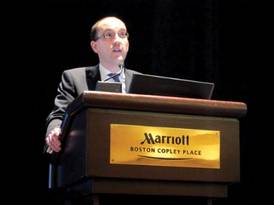
"It would appear that the die is cast with respect to the risk of organ space infection at the time of presentation," he said. "This would suggest that our focus, in terms of quality improvement, should be on identifying patients at highest risk for complications."
The study findings are important because laparoscopic appendectomy has become widely accepted in children and adults, but has also been associated with increased odds of intra-abdominal abscess formation in adults (Ann. Surg. 2010;252:895-900), said Dr. Fleming, a colorectal surgeon at the University of Rochester (N.Y.) Medical Center.
To determine the effect of surgical approach on organ space infection (OSI) in children, Dr. Fleming and his associates analyzed 5,097 children, aged 2-18 years, undergoing open or laparoscopic appendectomy for acute appendicitis in the 2012 ACS National Surgical Quality Improvement Program (ACS NSQIP) pediatric database. The approach was laparoscopic in 4,514 patients (88.5%) and open in 583 patients.
OSI occurred in only 155 children (3%), but accounted for more than half of reoperations and nearly two-thirds of readmissions at 30 days, Dr. Fleming reported.
The unadjusted OSI rate was 0.9% (31/3,613) for uncomplicated appendicitis and 8.4% (124/1,484) for complicated appendicitis, which was a significant difference (P less than .001).
OSI rates did not differ significantly between laparoscopic and open surgery for uncomplicated appendicitis (0.8% vs. 1.7%; P = .160) and complicated appendicitis (8.7% vs. 7.3%; P = .415), defined by abscess, perforation, or sepsis.
In multivariable logistic regression analysis, complicated appendicitis was again the major factor associated with OSI (adjusted odds ratio, 4.85), he said. Other significant drivers were wound class III/IV (OR, 4.17), preoperative sepsis (OR, 2.19), and operative time of 60 minutes or more (OR, 2.15).
The model, which controlled for age, sex, pulmonary comorbidity, obesity, and emergency operations, had excellent predictive ability, with a c-statistic of 0.837, Dr. Fleming said.
He acknowledged that baseline differences between the two groups suggested that sicker children may have been selected as candidates for open surgery. Compared with the laparoscopic group, the open surgery group had significantly higher rates of preoperative sepsis/septic shock (24.7% vs. 14.7%), complicated appendicitis (58.8% vs. 25.3%), and emergency surgery (74.4% vs. 62%; all P values less than .001).
"Now that your group has identified these perioperative risk factors for children undergoing emergency appendectomy, do you have any guidelines for pediatric surgeons on how to follow their patients postop to identify organ space infections earlier?" asked discussant Dr. Paul Colombani, Children’s Surgeon-in Charge, Johns Hopkins Hospital, Baltimore.
Dr. Fleming suggested a bundle for high-risk patients that could include predischarge education for parents and patients, an early clinic visit before postoperative day 9, and a structured telephone call on day 2 or 3 post discharge to run through risk factors such as low-grade fever, malaise, and diarrhea. He noted that high-risk patients represented less than 15% of the cohort, but 80% of OSI events.
Dr. Fleming reported having no financial disclosures.
The complete manuscript of this study and its presentation at the American Surgical Association’s 134th Annual Meeting, April 2014, in Boston, is anticipated to be published in Annals of Surgery, pending editorial review.
BOSTON – Operative approach, as previously suggested, was not a significant predictor of postappendectomy organ space infection in children, according to a large, national database analysis.
Instead, organ space infection appears to be associated with largely nonmodifiable factors of disease severity, preoperative sepsis, and long operative duration, Dr. Fergal J. Fleming said at the annual meeting of the American Surgical Association.
"It would appear that the die is cast with respect to the risk of organ space infection at the time of presentation," he said. "This would suggest that our focus, in terms of quality improvement, should be on identifying patients at highest risk for complications."
The study findings are important because laparoscopic appendectomy has become widely accepted in children and adults, but has also been associated with increased odds of intra-abdominal abscess formation in adults (Ann. Surg. 2010;252:895-900), said Dr. Fleming, a colorectal surgeon at the University of Rochester (N.Y.) Medical Center.
To determine the effect of surgical approach on organ space infection (OSI) in children, Dr. Fleming and his associates analyzed 5,097 children, aged 2-18 years, undergoing open or laparoscopic appendectomy for acute appendicitis in the 2012 ACS National Surgical Quality Improvement Program (ACS NSQIP) pediatric database. The approach was laparoscopic in 4,514 patients (88.5%) and open in 583 patients.
OSI occurred in only 155 children (3%), but accounted for more than half of reoperations and nearly two-thirds of readmissions at 30 days, Dr. Fleming reported.
The unadjusted OSI rate was 0.9% (31/3,613) for uncomplicated appendicitis and 8.4% (124/1,484) for complicated appendicitis, which was a significant difference (P less than .001).
OSI rates did not differ significantly between laparoscopic and open surgery for uncomplicated appendicitis (0.8% vs. 1.7%; P = .160) and complicated appendicitis (8.7% vs. 7.3%; P = .415), defined by abscess, perforation, or sepsis.
In multivariable logistic regression analysis, complicated appendicitis was again the major factor associated with OSI (adjusted odds ratio, 4.85), he said. Other significant drivers were wound class III/IV (OR, 4.17), preoperative sepsis (OR, 2.19), and operative time of 60 minutes or more (OR, 2.15).
The model, which controlled for age, sex, pulmonary comorbidity, obesity, and emergency operations, had excellent predictive ability, with a c-statistic of 0.837, Dr. Fleming said.
He acknowledged that baseline differences between the two groups suggested that sicker children may have been selected as candidates for open surgery. Compared with the laparoscopic group, the open surgery group had significantly higher rates of preoperative sepsis/septic shock (24.7% vs. 14.7%), complicated appendicitis (58.8% vs. 25.3%), and emergency surgery (74.4% vs. 62%; all P values less than .001).
"Now that your group has identified these perioperative risk factors for children undergoing emergency appendectomy, do you have any guidelines for pediatric surgeons on how to follow their patients postop to identify organ space infections earlier?" asked discussant Dr. Paul Colombani, Children’s Surgeon-in Charge, Johns Hopkins Hospital, Baltimore.
Dr. Fleming suggested a bundle for high-risk patients that could include predischarge education for parents and patients, an early clinic visit before postoperative day 9, and a structured telephone call on day 2 or 3 post discharge to run through risk factors such as low-grade fever, malaise, and diarrhea. He noted that high-risk patients represented less than 15% of the cohort, but 80% of OSI events.
Dr. Fleming reported having no financial disclosures.
The complete manuscript of this study and its presentation at the American Surgical Association’s 134th Annual Meeting, April 2014, in Boston, is anticipated to be published in Annals of Surgery, pending editorial review.
BOSTON – Operative approach, as previously suggested, was not a significant predictor of postappendectomy organ space infection in children, according to a large, national database analysis.
Instead, organ space infection appears to be associated with largely nonmodifiable factors of disease severity, preoperative sepsis, and long operative duration, Dr. Fergal J. Fleming said at the annual meeting of the American Surgical Association.
"It would appear that the die is cast with respect to the risk of organ space infection at the time of presentation," he said. "This would suggest that our focus, in terms of quality improvement, should be on identifying patients at highest risk for complications."
The study findings are important because laparoscopic appendectomy has become widely accepted in children and adults, but has also been associated with increased odds of intra-abdominal abscess formation in adults (Ann. Surg. 2010;252:895-900), said Dr. Fleming, a colorectal surgeon at the University of Rochester (N.Y.) Medical Center.
To determine the effect of surgical approach on organ space infection (OSI) in children, Dr. Fleming and his associates analyzed 5,097 children, aged 2-18 years, undergoing open or laparoscopic appendectomy for acute appendicitis in the 2012 ACS National Surgical Quality Improvement Program (ACS NSQIP) pediatric database. The approach was laparoscopic in 4,514 patients (88.5%) and open in 583 patients.
OSI occurred in only 155 children (3%), but accounted for more than half of reoperations and nearly two-thirds of readmissions at 30 days, Dr. Fleming reported.
The unadjusted OSI rate was 0.9% (31/3,613) for uncomplicated appendicitis and 8.4% (124/1,484) for complicated appendicitis, which was a significant difference (P less than .001).
OSI rates did not differ significantly between laparoscopic and open surgery for uncomplicated appendicitis (0.8% vs. 1.7%; P = .160) and complicated appendicitis (8.7% vs. 7.3%; P = .415), defined by abscess, perforation, or sepsis.
In multivariable logistic regression analysis, complicated appendicitis was again the major factor associated with OSI (adjusted odds ratio, 4.85), he said. Other significant drivers were wound class III/IV (OR, 4.17), preoperative sepsis (OR, 2.19), and operative time of 60 minutes or more (OR, 2.15).
The model, which controlled for age, sex, pulmonary comorbidity, obesity, and emergency operations, had excellent predictive ability, with a c-statistic of 0.837, Dr. Fleming said.
He acknowledged that baseline differences between the two groups suggested that sicker children may have been selected as candidates for open surgery. Compared with the laparoscopic group, the open surgery group had significantly higher rates of preoperative sepsis/septic shock (24.7% vs. 14.7%), complicated appendicitis (58.8% vs. 25.3%), and emergency surgery (74.4% vs. 62%; all P values less than .001).
"Now that your group has identified these perioperative risk factors for children undergoing emergency appendectomy, do you have any guidelines for pediatric surgeons on how to follow their patients postop to identify organ space infections earlier?" asked discussant Dr. Paul Colombani, Children’s Surgeon-in Charge, Johns Hopkins Hospital, Baltimore.
Dr. Fleming suggested a bundle for high-risk patients that could include predischarge education for parents and patients, an early clinic visit before postoperative day 9, and a structured telephone call on day 2 or 3 post discharge to run through risk factors such as low-grade fever, malaise, and diarrhea. He noted that high-risk patients represented less than 15% of the cohort, but 80% of OSI events.
Dr. Fleming reported having no financial disclosures.
The complete manuscript of this study and its presentation at the American Surgical Association’s 134th Annual Meeting, April 2014, in Boston, is anticipated to be published in Annals of Surgery, pending editorial review.
AT THE ASA ANNUAL MEETING
Major finding: OSI rates did not differ significantly between laparoscopic and open surgery for uncomplicated appendicitis (0.8% vs. 1.7%, respectively) and complicated appendicitis (8.7% vs. 7.3%), defined by abscess, perforation, or sepsis.
Data source: A retrospective analysis of 5,097 children undergoing appendectomy in the NSQIP database.
Disclosures: Dr. Fleming reported having no financial disclosures.

Shortage of general surgeons ups probability of ruptured appendix
Patients with appendicitis who live in areas having a critical shortage of general surgeons are at increased risk for appendiceal rupture, finds a cross-sectional, observational study published in the Annals of Surgery.
Investigators used discharge data to identify 29,403 patients with acute appendicitis seen in acute care and ambulatory surgery facilities in North Carolina between 2007 and 2009. Diagnostic codes indicated that 24.6% overall had experienced rupture.
In multivariate analyses, the probability of rupture was a significant 4.8 percentage points higher for patients in surgical service areas having a critical shortage of general surgeons (fewer than 3 per 100,000 people) than for patients in areas not having any shortage (at least 5 per 100,000 people), the investigators report (Ann Surg. 2014;259:910-15). Patients living in areas having lesser shortages did not have significantly elevated risk.
In contrast, the primary care physician supply in a given surgical service area did not predict rupture on its own, although it did show an interaction with area, with greater supply increasing the probability of rupture in some areas having a general surgeon shortage and decreasing it in others.
"Although rupture risk also depends on several other determinants of access, the density of the local general surgery workforce may be the most important determinant of access for timely appendicitis care. The independent effect of living in a critical surgery shortage area was greater than that of race, insurance status, rural status, and admission source," the investigators note.
"Enhancing supply in critical shortage areas could reduce appendiceal rupture and improve surgical access more generally," they maintain.
At the same time, the findings regarding primary care physician supply also have implications for policies aimed at improving general surgeon supply, according to the investigators.
"These results underscore the need for an effectively targeted HPSA (health professional shortage area) surgical incentive payments policy," which currently provides a 10% bonus payment to general surgeons operating in primary care health professional shortage areas, they note. "The current rule for designation of a surgical HPSA assumes that they coincide with current primary care HPSAs and designates them accordingly. This assumption is not supported by our analysis."
The investigators disclosed no relevant conflicts of interest.
Patients with appendicitis who live in areas having a critical shortage of general surgeons are at increased risk for appendiceal rupture, finds a cross-sectional, observational study published in the Annals of Surgery.
Investigators used discharge data to identify 29,403 patients with acute appendicitis seen in acute care and ambulatory surgery facilities in North Carolina between 2007 and 2009. Diagnostic codes indicated that 24.6% overall had experienced rupture.
In multivariate analyses, the probability of rupture was a significant 4.8 percentage points higher for patients in surgical service areas having a critical shortage of general surgeons (fewer than 3 per 100,000 people) than for patients in areas not having any shortage (at least 5 per 100,000 people), the investigators report (Ann Surg. 2014;259:910-15). Patients living in areas having lesser shortages did not have significantly elevated risk.
In contrast, the primary care physician supply in a given surgical service area did not predict rupture on its own, although it did show an interaction with area, with greater supply increasing the probability of rupture in some areas having a general surgeon shortage and decreasing it in others.
"Although rupture risk also depends on several other determinants of access, the density of the local general surgery workforce may be the most important determinant of access for timely appendicitis care. The independent effect of living in a critical surgery shortage area was greater than that of race, insurance status, rural status, and admission source," the investigators note.
"Enhancing supply in critical shortage areas could reduce appendiceal rupture and improve surgical access more generally," they maintain.
At the same time, the findings regarding primary care physician supply also have implications for policies aimed at improving general surgeon supply, according to the investigators.
"These results underscore the need for an effectively targeted HPSA (health professional shortage area) surgical incentive payments policy," which currently provides a 10% bonus payment to general surgeons operating in primary care health professional shortage areas, they note. "The current rule for designation of a surgical HPSA assumes that they coincide with current primary care HPSAs and designates them accordingly. This assumption is not supported by our analysis."
The investigators disclosed no relevant conflicts of interest.
Patients with appendicitis who live in areas having a critical shortage of general surgeons are at increased risk for appendiceal rupture, finds a cross-sectional, observational study published in the Annals of Surgery.
Investigators used discharge data to identify 29,403 patients with acute appendicitis seen in acute care and ambulatory surgery facilities in North Carolina between 2007 and 2009. Diagnostic codes indicated that 24.6% overall had experienced rupture.
In multivariate analyses, the probability of rupture was a significant 4.8 percentage points higher for patients in surgical service areas having a critical shortage of general surgeons (fewer than 3 per 100,000 people) than for patients in areas not having any shortage (at least 5 per 100,000 people), the investigators report (Ann Surg. 2014;259:910-15). Patients living in areas having lesser shortages did not have significantly elevated risk.
In contrast, the primary care physician supply in a given surgical service area did not predict rupture on its own, although it did show an interaction with area, with greater supply increasing the probability of rupture in some areas having a general surgeon shortage and decreasing it in others.
"Although rupture risk also depends on several other determinants of access, the density of the local general surgery workforce may be the most important determinant of access for timely appendicitis care. The independent effect of living in a critical surgery shortage area was greater than that of race, insurance status, rural status, and admission source," the investigators note.
"Enhancing supply in critical shortage areas could reduce appendiceal rupture and improve surgical access more generally," they maintain.
At the same time, the findings regarding primary care physician supply also have implications for policies aimed at improving general surgeon supply, according to the investigators.
"These results underscore the need for an effectively targeted HPSA (health professional shortage area) surgical incentive payments policy," which currently provides a 10% bonus payment to general surgeons operating in primary care health professional shortage areas, they note. "The current rule for designation of a surgical HPSA assumes that they coincide with current primary care HPSAs and designates them accordingly. This assumption is not supported by our analysis."
The investigators disclosed no relevant conflicts of interest.
FROM ANNALS OF SURGERY
Major finding: The probability of rupture was 4.8 percentage points higher for patients in surgical service areas having fewer than 3 general surgeons per 100,000 people versus those in areas having at least 5 general surgeons per 100,000 people.
Data source: A cross-sectional observational study of 29,403 patients with acute appendicitis.
Disclosures: The investigators disclosed no relevant conflicts of interest.
FDA panel not convinced by opiate combination safety
SILVER SPRING, MD. – An immediate-release combination of morphine and oxycodone in an oral capsule formulation should not be approved, a Food and Drug Administration advisory panel has recommended.
At a meeting on April 22, the FDA’s Anesthetic and Analgesic Drug Products Advisory Committee voted 14-0 that the morphine-oxycodone combination should not be approved for the management of moderate to severe pain, because there is no evidence that the combined product is safer than morphine and oxycodone when used individually at comparable doses. The manufacturer, QRxPharma, had proposed that different dose combinations of the two opioids be approved for the management of moderate to severe acute pain in outpatient and inpatient settings. If approved, this would be the first combination product that contains two opioids, and it would be marketed as Moxduo.

Since the company first filed for approval in 2011, the FDA has rejected approval twice for reasons that included the failure of the company to provided adequate evidence that there is a patient population that could benefit from treatment with Moxduo. Additionally, although the combination was shown to be as effective in alleviating postoperative pain as equally potent doses of morphine and oxycodone given separately, more evidence for a benefit over existing therapeutic options is needed for products combining drugs that are available separately, based on regulations for combination drug products.
In response to the FDA’s earlier decision, QRxPharma had conducted a post hoc analysis of a respiratory safety study in an attempt to show the combination had a safety advantage in terms of respiratory depression over equivalent doses of the separate components. In another vote, the panel unanimously agreed that the company had not provided evidence that Moxduo was safer than the individual components.
The study evaluated oxygen desaturation rates among adults after a bunionectomy who were divided into three treatment groups. Study participants received either Moxduo (12 mg of morphine/8 mg of oxycodone) every 6 hours (127 patients); 24 mg of morphine every 6 hours (124 patients); or 6 mg of oxycodone every 6 hours (24 patients).
The highest proportion of patients who dropped below 95% oxygen saturation was in the Moxduo group. The proportion of those who had more serious levels of oxygen desaturation (at or below 80%, at or below 75%, at or below 70%) was lower among those on Moxduo, compared with those on either morphine or oxycodone, however.
Dr. Pamela Horn, an FDA medical officer, said that the FDA review concluded that the analyses favoring Moxduo could be a chance finding. She noted that the clinical relevance of these findings was not clear, since the depth of desaturation was not correlated with clinically notable events or clinical interventions. In addition, Moxduo was not associated with a benefit regarding common opioid-related adverse events, including nausea and vomiting. The FDA also noted that the study was small and that it was unclear how many patients receiving Moxduo were started on oxygen therapy, which could have skewed the results.
Panelist Dr. Gregory W. Terman, professor in the department of anesthesiology and pain medicine at the University of Washington, Seattle, said the study did not evaluate what he considered clinically relevant patients, noting that opiates are not typically administered on a schedule postoperatively, as was the case in the study. Respiratory depression associated with opiate treatment is a huge problem, and it would be useful to have an opiate that could reliably reduce the risk of respiratory depression, he said, noting that it is important to continue to look for solutions to this problem.
The panel agreed that more appropriately designed studies would be helpful in determining whether the combination provided any clinically relevant advantages. One panelist stressed the importance of making all oral opiate products crush-resistant to deter injection and snorting.
The FDA usually follows the recommendations of its advisory panels. Panel members have been cleared of potential conflicts. Occasionally, a panelist is given a waiver but not at this meeting. A decision on approval is expected by May 25.
SILVER SPRING, MD. – An immediate-release combination of morphine and oxycodone in an oral capsule formulation should not be approved, a Food and Drug Administration advisory panel has recommended.
At a meeting on April 22, the FDA’s Anesthetic and Analgesic Drug Products Advisory Committee voted 14-0 that the morphine-oxycodone combination should not be approved for the management of moderate to severe pain, because there is no evidence that the combined product is safer than morphine and oxycodone when used individually at comparable doses. The manufacturer, QRxPharma, had proposed that different dose combinations of the two opioids be approved for the management of moderate to severe acute pain in outpatient and inpatient settings. If approved, this would be the first combination product that contains two opioids, and it would be marketed as Moxduo.
Since the company first filed for approval in 2011, the FDA has rejected approval twice for reasons that included the failure of the company to provided adequate evidence that there is a patient population that could benefit from treatment with Moxduo. Additionally, although the combination was shown to be as effective in alleviating postoperative pain as equally potent doses of morphine and oxycodone given separately, more evidence for a benefit over existing therapeutic options is needed for products combining drugs that are available separately, based on regulations for combination drug products.
In response to the FDA’s earlier decision, QRxPharma had conducted a post hoc analysis of a respiratory safety study in an attempt to show the combination had a safety advantage in terms of respiratory depression over equivalent doses of the separate components. In another vote, the panel unanimously agreed that the company had not provided evidence that Moxduo was safer than the individual components.
The study evaluated oxygen desaturation rates among adults after a bunionectomy who were divided into three treatment groups. Study participants received either Moxduo (12 mg of morphine/8 mg of oxycodone) every 6 hours (127 patients); 24 mg of morphine every 6 hours (124 patients); or 6 mg of oxycodone every 6 hours (24 patients).
The highest proportion of patients who dropped below 95% oxygen saturation was in the Moxduo group. The proportion of those who had more serious levels of oxygen desaturation (at or below 80%, at or below 75%, at or below 70%) was lower among those on Moxduo, compared with those on either morphine or oxycodone, however.
Dr. Pamela Horn, an FDA medical officer, said that the FDA review concluded that the analyses favoring Moxduo could be a chance finding. She noted that the clinical relevance of these findings was not clear, since the depth of desaturation was not correlated with clinically notable events or clinical interventions. In addition, Moxduo was not associated with a benefit regarding common opioid-related adverse events, including nausea and vomiting. The FDA also noted that the study was small and that it was unclear how many patients receiving Moxduo were started on oxygen therapy, which could have skewed the results.
Panelist Dr. Gregory W. Terman, professor in the department of anesthesiology and pain medicine at the University of Washington, Seattle, said the study did not evaluate what he considered clinically relevant patients, noting that opiates are not typically administered on a schedule postoperatively, as was the case in the study. Respiratory depression associated with opiate treatment is a huge problem, and it would be useful to have an opiate that could reliably reduce the risk of respiratory depression, he said, noting that it is important to continue to look for solutions to this problem.
The panel agreed that more appropriately designed studies would be helpful in determining whether the combination provided any clinically relevant advantages. One panelist stressed the importance of making all oral opiate products crush-resistant to deter injection and snorting.
The FDA usually follows the recommendations of its advisory panels. Panel members have been cleared of potential conflicts. Occasionally, a panelist is given a waiver but not at this meeting. A decision on approval is expected by May 25.
SILVER SPRING, MD. – An immediate-release combination of morphine and oxycodone in an oral capsule formulation should not be approved, a Food and Drug Administration advisory panel has recommended.
At a meeting on April 22, the FDA’s Anesthetic and Analgesic Drug Products Advisory Committee voted 14-0 that the morphine-oxycodone combination should not be approved for the management of moderate to severe pain, because there is no evidence that the combined product is safer than morphine and oxycodone when used individually at comparable doses. The manufacturer, QRxPharma, had proposed that different dose combinations of the two opioids be approved for the management of moderate to severe acute pain in outpatient and inpatient settings. If approved, this would be the first combination product that contains two opioids, and it would be marketed as Moxduo.
Since the company first filed for approval in 2011, the FDA has rejected approval twice for reasons that included the failure of the company to provided adequate evidence that there is a patient population that could benefit from treatment with Moxduo. Additionally, although the combination was shown to be as effective in alleviating postoperative pain as equally potent doses of morphine and oxycodone given separately, more evidence for a benefit over existing therapeutic options is needed for products combining drugs that are available separately, based on regulations for combination drug products.
In response to the FDA’s earlier decision, QRxPharma had conducted a post hoc analysis of a respiratory safety study in an attempt to show the combination had a safety advantage in terms of respiratory depression over equivalent doses of the separate components. In another vote, the panel unanimously agreed that the company had not provided evidence that Moxduo was safer than the individual components.
The study evaluated oxygen desaturation rates among adults after a bunionectomy who were divided into three treatment groups. Study participants received either Moxduo (12 mg of morphine/8 mg of oxycodone) every 6 hours (127 patients); 24 mg of morphine every 6 hours (124 patients); or 6 mg of oxycodone every 6 hours (24 patients).
The highest proportion of patients who dropped below 95% oxygen saturation was in the Moxduo group. The proportion of those who had more serious levels of oxygen desaturation (at or below 80%, at or below 75%, at or below 70%) was lower among those on Moxduo, compared with those on either morphine or oxycodone, however.
Dr. Pamela Horn, an FDA medical officer, said that the FDA review concluded that the analyses favoring Moxduo could be a chance finding. She noted that the clinical relevance of these findings was not clear, since the depth of desaturation was not correlated with clinically notable events or clinical interventions. In addition, Moxduo was not associated with a benefit regarding common opioid-related adverse events, including nausea and vomiting. The FDA also noted that the study was small and that it was unclear how many patients receiving Moxduo were started on oxygen therapy, which could have skewed the results.
Panelist Dr. Gregory W. Terman, professor in the department of anesthesiology and pain medicine at the University of Washington, Seattle, said the study did not evaluate what he considered clinically relevant patients, noting that opiates are not typically administered on a schedule postoperatively, as was the case in the study. Respiratory depression associated with opiate treatment is a huge problem, and it would be useful to have an opiate that could reliably reduce the risk of respiratory depression, he said, noting that it is important to continue to look for solutions to this problem.
The panel agreed that more appropriately designed studies would be helpful in determining whether the combination provided any clinically relevant advantages. One panelist stressed the importance of making all oral opiate products crush-resistant to deter injection and snorting.
The FDA usually follows the recommendations of its advisory panels. Panel members have been cleared of potential conflicts. Occasionally, a panelist is given a waiver but not at this meeting. A decision on approval is expected by May 25.
AT AN FDA ADVISORY COMMITTEE MEETING

Study backs bariatric surgery center accreditation
BOSTON – The Centers for Medicare & Medicaid Services may have dropped its accreditation requirement for bariatric surgery centers, but that hasn’t stopped the flow of data calling into question that decision.
A new analysis of 72,615 patients at 145 U.S. hospitals found that, compared with unaccredited centers, accredited centers have significantly decreased mortality (0.07% vs. 0.13%; P = .019) and improved failure to rescue rates (0.55% vs. 0.97%; P = .046).

They also have fewer complications (11.3% vs. 12.3%; P = .001) and lower average total costs ($42,212 vs. $51,189; P less than .0001).
"We found improved outcomes for these bariatric surgery patients," study author Dr. John M. Morton of Stanford (Calif.) University Medical Center said at the annual meeting of the American Surgical Association.
The September 2013 determination by CMS that "continuing the requirement for certification for bariatric surgery facilities would not improve health outcomes for Medicare beneficiaries" has been opposed by several medical societies, which cited results from 7 of 10 studies supporting accreditation.
Among the most outspoken supporters are the American Society for Metabolic and Bariatric Surgery (ASMBS) and the American College of Surgeons (ACS), which jointly manage a certification program.
During a discussion of the results, Dr. John Kellum Jr. of the Virginia Commonwealth University, Richmond, remarked, "I do wonder though if we aren’t raising a straw dog, which is somewhat self-serving. If you look at the P values, they’re very tiny."
He also pointed to regional variances in performance identified by the analysis and said, "In my opinion, the real advantage of accreditation is the record keeping that goes with it."
Dr. Morton responded, "I think your last point is exactly right. The ability to maintain the data and collect them allows you to have quality improvement. You can’t manage what you don’t measure. . . . Mortality has become pretty rare in bariatric surgery, but I think it’s what I’d call a sentinel event."
The current analysis comprised 62% of bariatric surgery discharges from 62% of hospitals in 2010-2011 in the Nationwide Inpatient Sample database, the largest all-payer, nonfederal database in the U.S.
The 66 unaccredited hospitals and 79 accredited hospitals had similar mean volumes (279 patients vs. 265 patients). Significantly more unaccredited hospitals were teaching hospitals (66.2% vs. 58%), while significantly more accredited hospitals were high-volume centers (81% vs. 53%), defined as at least 125 gastric bypass cases yearly.
Most patients (83%) underwent surgery at accredited hospitals, with both accredited and unaccredited hospitals favoring laparoscopic Roux-en-Y gastric bypass surgery (60.3%; 69.5%) followed by lap band surgery (25.7%; 15.6%), and laparoscopic sleeve gastrectomy (14% vs. 14.8%).
In multivariable regression analysis, procedure type did not exert an influence on outcomes. Unaccredited status, however, was a positive predictor of in-hospital complication (odds ratio, 1.09; P = .005) and in-hospital mortality (OR, 2.26; P = .007), Dr. Morton reported. The analysis controlled for teaching status; hospital high-volume status; patient age, sex, race, insurance, and Charlson Comorbidity Index score.
Discussant Dr. Bruce M. Wolfe of Oregon Health and Science University, Portland, asked whether the analysis could speak to the suggestion that accreditation has limited access to care and whether it will be possible to acquire the data necessary to satisfy the doubts of CMS and others regarding the value of bariatric surgery accreditation.
Dr. Morton said that with more than 729 bariatric surgery centers in the United States, there is "ample opportunity to access care," and that no study to date has shown that any of the accreditation programs has decreased the number of surgeries being performed. If anything, two studies have shown an increase.
He observed that it would be difficult to get definitive randomized trial evidence on the value of accreditation because all hospitals will have to deal with the accreditation process independent of CMS. The "hope, belief, and desire" is for a single accreditation process where there is less administrative burden for hospitals and a single reporting scheme, as may exist currently with the Metabolic and Bariatric Surgery Accreditation and Quality Improvement Program (MBSAQIP).
"I believe CMS will rightly take a look at what’s happened since they have suspended the certification process," Dr. Morton said. "They have created a natural experiment that bears further scrutiny to see what happens to these Medicare patients after the withdrawal of the certification for them."
Dr. Morton reported having no financial disclosures.
The complete manuscript of this study and its presentation at the American Surgical Association’s 134th annual meeting, April 2014, in Boston is anticipated to be published in the Annals of Surgery, pending editorial review.
BOSTON – The Centers for Medicare & Medicaid Services may have dropped its accreditation requirement for bariatric surgery centers, but that hasn’t stopped the flow of data calling into question that decision.
A new analysis of 72,615 patients at 145 U.S. hospitals found that, compared with unaccredited centers, accredited centers have significantly decreased mortality (0.07% vs. 0.13%; P = .019) and improved failure to rescue rates (0.55% vs. 0.97%; P = .046).
They also have fewer complications (11.3% vs. 12.3%; P = .001) and lower average total costs ($42,212 vs. $51,189; P less than .0001).
"We found improved outcomes for these bariatric surgery patients," study author Dr. John M. Morton of Stanford (Calif.) University Medical Center said at the annual meeting of the American Surgical Association.
The September 2013 determination by CMS that "continuing the requirement for certification for bariatric surgery facilities would not improve health outcomes for Medicare beneficiaries" has been opposed by several medical societies, which cited results from 7 of 10 studies supporting accreditation.
Among the most outspoken supporters are the American Society for Metabolic and Bariatric Surgery (ASMBS) and the American College of Surgeons (ACS), which jointly manage a certification program.
During a discussion of the results, Dr. John Kellum Jr. of the Virginia Commonwealth University, Richmond, remarked, "I do wonder though if we aren’t raising a straw dog, which is somewhat self-serving. If you look at the P values, they’re very tiny."
He also pointed to regional variances in performance identified by the analysis and said, "In my opinion, the real advantage of accreditation is the record keeping that goes with it."
Dr. Morton responded, "I think your last point is exactly right. The ability to maintain the data and collect them allows you to have quality improvement. You can’t manage what you don’t measure. . . . Mortality has become pretty rare in bariatric surgery, but I think it’s what I’d call a sentinel event."
The current analysis comprised 62% of bariatric surgery discharges from 62% of hospitals in 2010-2011 in the Nationwide Inpatient Sample database, the largest all-payer, nonfederal database in the U.S.
The 66 unaccredited hospitals and 79 accredited hospitals had similar mean volumes (279 patients vs. 265 patients). Significantly more unaccredited hospitals were teaching hospitals (66.2% vs. 58%), while significantly more accredited hospitals were high-volume centers (81% vs. 53%), defined as at least 125 gastric bypass cases yearly.
Most patients (83%) underwent surgery at accredited hospitals, with both accredited and unaccredited hospitals favoring laparoscopic Roux-en-Y gastric bypass surgery (60.3%; 69.5%) followed by lap band surgery (25.7%; 15.6%), and laparoscopic sleeve gastrectomy (14% vs. 14.8%).
In multivariable regression analysis, procedure type did not exert an influence on outcomes. Unaccredited status, however, was a positive predictor of in-hospital complication (odds ratio, 1.09; P = .005) and in-hospital mortality (OR, 2.26; P = .007), Dr. Morton reported. The analysis controlled for teaching status; hospital high-volume status; patient age, sex, race, insurance, and Charlson Comorbidity Index score.
Discussant Dr. Bruce M. Wolfe of Oregon Health and Science University, Portland, asked whether the analysis could speak to the suggestion that accreditation has limited access to care and whether it will be possible to acquire the data necessary to satisfy the doubts of CMS and others regarding the value of bariatric surgery accreditation.
Dr. Morton said that with more than 729 bariatric surgery centers in the United States, there is "ample opportunity to access care," and that no study to date has shown that any of the accreditation programs has decreased the number of surgeries being performed. If anything, two studies have shown an increase.
He observed that it would be difficult to get definitive randomized trial evidence on the value of accreditation because all hospitals will have to deal with the accreditation process independent of CMS. The "hope, belief, and desire" is for a single accreditation process where there is less administrative burden for hospitals and a single reporting scheme, as may exist currently with the Metabolic and Bariatric Surgery Accreditation and Quality Improvement Program (MBSAQIP).
"I believe CMS will rightly take a look at what’s happened since they have suspended the certification process," Dr. Morton said. "They have created a natural experiment that bears further scrutiny to see what happens to these Medicare patients after the withdrawal of the certification for them."
Dr. Morton reported having no financial disclosures.
The complete manuscript of this study and its presentation at the American Surgical Association’s 134th annual meeting, April 2014, in Boston is anticipated to be published in the Annals of Surgery, pending editorial review.
BOSTON – The Centers for Medicare & Medicaid Services may have dropped its accreditation requirement for bariatric surgery centers, but that hasn’t stopped the flow of data calling into question that decision.
A new analysis of 72,615 patients at 145 U.S. hospitals found that, compared with unaccredited centers, accredited centers have significantly decreased mortality (0.07% vs. 0.13%; P = .019) and improved failure to rescue rates (0.55% vs. 0.97%; P = .046).
They also have fewer complications (11.3% vs. 12.3%; P = .001) and lower average total costs ($42,212 vs. $51,189; P less than .0001).
"We found improved outcomes for these bariatric surgery patients," study author Dr. John M. Morton of Stanford (Calif.) University Medical Center said at the annual meeting of the American Surgical Association.
The September 2013 determination by CMS that "continuing the requirement for certification for bariatric surgery facilities would not improve health outcomes for Medicare beneficiaries" has been opposed by several medical societies, which cited results from 7 of 10 studies supporting accreditation.
Among the most outspoken supporters are the American Society for Metabolic and Bariatric Surgery (ASMBS) and the American College of Surgeons (ACS), which jointly manage a certification program.
During a discussion of the results, Dr. John Kellum Jr. of the Virginia Commonwealth University, Richmond, remarked, "I do wonder though if we aren’t raising a straw dog, which is somewhat self-serving. If you look at the P values, they’re very tiny."
He also pointed to regional variances in performance identified by the analysis and said, "In my opinion, the real advantage of accreditation is the record keeping that goes with it."
Dr. Morton responded, "I think your last point is exactly right. The ability to maintain the data and collect them allows you to have quality improvement. You can’t manage what you don’t measure. . . . Mortality has become pretty rare in bariatric surgery, but I think it’s what I’d call a sentinel event."
The current analysis comprised 62% of bariatric surgery discharges from 62% of hospitals in 2010-2011 in the Nationwide Inpatient Sample database, the largest all-payer, nonfederal database in the U.S.
The 66 unaccredited hospitals and 79 accredited hospitals had similar mean volumes (279 patients vs. 265 patients). Significantly more unaccredited hospitals were teaching hospitals (66.2% vs. 58%), while significantly more accredited hospitals were high-volume centers (81% vs. 53%), defined as at least 125 gastric bypass cases yearly.
Most patients (83%) underwent surgery at accredited hospitals, with both accredited and unaccredited hospitals favoring laparoscopic Roux-en-Y gastric bypass surgery (60.3%; 69.5%) followed by lap band surgery (25.7%; 15.6%), and laparoscopic sleeve gastrectomy (14% vs. 14.8%).
In multivariable regression analysis, procedure type did not exert an influence on outcomes. Unaccredited status, however, was a positive predictor of in-hospital complication (odds ratio, 1.09; P = .005) and in-hospital mortality (OR, 2.26; P = .007), Dr. Morton reported. The analysis controlled for teaching status; hospital high-volume status; patient age, sex, race, insurance, and Charlson Comorbidity Index score.
Discussant Dr. Bruce M. Wolfe of Oregon Health and Science University, Portland, asked whether the analysis could speak to the suggestion that accreditation has limited access to care and whether it will be possible to acquire the data necessary to satisfy the doubts of CMS and others regarding the value of bariatric surgery accreditation.
Dr. Morton said that with more than 729 bariatric surgery centers in the United States, there is "ample opportunity to access care," and that no study to date has shown that any of the accreditation programs has decreased the number of surgeries being performed. If anything, two studies have shown an increase.
He observed that it would be difficult to get definitive randomized trial evidence on the value of accreditation because all hospitals will have to deal with the accreditation process independent of CMS. The "hope, belief, and desire" is for a single accreditation process where there is less administrative burden for hospitals and a single reporting scheme, as may exist currently with the Metabolic and Bariatric Surgery Accreditation and Quality Improvement Program (MBSAQIP).
"I believe CMS will rightly take a look at what’s happened since they have suspended the certification process," Dr. Morton said. "They have created a natural experiment that bears further scrutiny to see what happens to these Medicare patients after the withdrawal of the certification for them."
Dr. Morton reported having no financial disclosures.
The complete manuscript of this study and its presentation at the American Surgical Association’s 134th annual meeting, April 2014, in Boston is anticipated to be published in the Annals of Surgery, pending editorial review.
AT THE ASA ANNUAL MEETING
Major finding: Compared with unaccredited centers, accredited centers have significantly decreased mortality (0.07% vs. 0.13%; P = .019) and improved failure to rescue rates (0.55% vs. 0.97%; P = .046).
Data source: An analysis of 72,615 patients at 145 U.S. hospitals in the Nationwide Inpatient Sample database.
Disclosures: Dr. Morton reported having no financial disclosures.

Bivalirudin called safe and effective in HIT
WASHINGTON – Bivalirudin is an attractive off-label option for the treatment of heparin-induced thrombocytopenia, Dr. Lee Joseph said at the annual meeting of the American College of Cardiology.
She presented what is believed to be the largest-ever case series of patients treated for heparin-induced thrombocytopenia (HIT) using bivalirudin (Angiomax): 641 patients treated over a 9-year period at the Cleveland Clinic, where bivalirudin has been the treatment of choice for HIT since 2002.

Roughly half of the bivalirudin-treated patients with confirmed or suspected HIT were medical patients, the other half surgical. One-quarter of the patients were in the intensive care unit. Chronic renal failure was present in 27% of patients, and 8% had chronic liver disease. Their average duration of heparin exposure was 7 days. At the time when HIT was diagnosed, 55% of the patients had a venous thromboembolism, and 10% had an arterial thromboembolic event.
The treatment outcomes were impressive, particularly when compared with studies involving the other anticoagulants used in treating HIT, Dr. Joseph said. There were no HIT-related amputations in bivalirudin-treated patients. The rate of new thrombosis was 4.6%. All-cause 30-day mortality was 14.5%, with a 0.2% incidence of death due to HIT-related thrombosis. The major bleeding rate was 7.6%, with a 2.4% rate of nonmajor bleeding. Fatal bleeding occurred in 1.5% of patients treated with the direct thrombin inhibitor.
Patients received bivalirudin for a median of 9 days. A therapeutic activated partial thromboplastin time was attained within a median of 12 hours.
A search for predictors of treatment outcome turned up three risk factors for major bleeding events and/or 30-day mortality on bivalirudin: dialysis dependence, being in the intensive care unit, and having a platelet count nadir below 60,000/uL, according to Dr. Joseph, who is now with the department of cardiovascular medicine at the University of Iowa in Iowa City.
The sole available agent approved in the United States for treatment of HIT is argatroban. Its use is problematic because of its very long half-life and resulting difficulty in transitioning to long-term anticoagulation with warfarin. Bivalirudin and fondaparinux (Arixtra), an indirect factor Xa inhibitor, are used off-label in treating HIT. Physicians at the Cleveland Clinic have used bivalirudin almost exclusively for more than a decade because of its short half-life of about 25 minutes, its low immunogenicity, the fact that only 20% of the medication is eliminated renally, the potential for rapid dose titration with no need for an initial bolus, and bivalirudin’s minimal interference with INR measurement. Plus cardiologists were already comfortable using bivalirudin in the cardiac catheterization lab, she explained.
In published studies of argatroban, fondaparinux, and lepirudin – an agent no longer available in the United States – HIT-related amputation rates of 5%-14% were reported, along with 30-day all-cause mortality rates of 7%-18% and major bleeding rates of 6%-15%.
Dr. Joseph said a prospective study comparing bivalirudin with other agents for HIT is in the planning stages.
An audience member noted that bivalirudin is an expensive drug and wondered about the possibility of using dabigatran, a less costly oral direct thrombin inhibitor, in treating HIT. Dr. Joseph replied that nearly all patients with HIT are hospitalized, and many are seriously ill, so an intravenously administered agent with a short half-life or rapid reversibility is the preferred strategy.
She reported having no financial conflicts with regard to this study, which was free of commercial support.
WASHINGTON – Bivalirudin is an attractive off-label option for the treatment of heparin-induced thrombocytopenia, Dr. Lee Joseph said at the annual meeting of the American College of Cardiology.
She presented what is believed to be the largest-ever case series of patients treated for heparin-induced thrombocytopenia (HIT) using bivalirudin (Angiomax): 641 patients treated over a 9-year period at the Cleveland Clinic, where bivalirudin has been the treatment of choice for HIT since 2002.
Roughly half of the bivalirudin-treated patients with confirmed or suspected HIT were medical patients, the other half surgical. One-quarter of the patients were in the intensive care unit. Chronic renal failure was present in 27% of patients, and 8% had chronic liver disease. Their average duration of heparin exposure was 7 days. At the time when HIT was diagnosed, 55% of the patients had a venous thromboembolism, and 10% had an arterial thromboembolic event.
The treatment outcomes were impressive, particularly when compared with studies involving the other anticoagulants used in treating HIT, Dr. Joseph said. There were no HIT-related amputations in bivalirudin-treated patients. The rate of new thrombosis was 4.6%. All-cause 30-day mortality was 14.5%, with a 0.2% incidence of death due to HIT-related thrombosis. The major bleeding rate was 7.6%, with a 2.4% rate of nonmajor bleeding. Fatal bleeding occurred in 1.5% of patients treated with the direct thrombin inhibitor.
Patients received bivalirudin for a median of 9 days. A therapeutic activated partial thromboplastin time was attained within a median of 12 hours.
A search for predictors of treatment outcome turned up three risk factors for major bleeding events and/or 30-day mortality on bivalirudin: dialysis dependence, being in the intensive care unit, and having a platelet count nadir below 60,000/uL, according to Dr. Joseph, who is now with the department of cardiovascular medicine at the University of Iowa in Iowa City.
The sole available agent approved in the United States for treatment of HIT is argatroban. Its use is problematic because of its very long half-life and resulting difficulty in transitioning to long-term anticoagulation with warfarin. Bivalirudin and fondaparinux (Arixtra), an indirect factor Xa inhibitor, are used off-label in treating HIT. Physicians at the Cleveland Clinic have used bivalirudin almost exclusively for more than a decade because of its short half-life of about 25 minutes, its low immunogenicity, the fact that only 20% of the medication is eliminated renally, the potential for rapid dose titration with no need for an initial bolus, and bivalirudin’s minimal interference with INR measurement. Plus cardiologists were already comfortable using bivalirudin in the cardiac catheterization lab, she explained.
In published studies of argatroban, fondaparinux, and lepirudin – an agent no longer available in the United States – HIT-related amputation rates of 5%-14% were reported, along with 30-day all-cause mortality rates of 7%-18% and major bleeding rates of 6%-15%.
Dr. Joseph said a prospective study comparing bivalirudin with other agents for HIT is in the planning stages.
An audience member noted that bivalirudin is an expensive drug and wondered about the possibility of using dabigatran, a less costly oral direct thrombin inhibitor, in treating HIT. Dr. Joseph replied that nearly all patients with HIT are hospitalized, and many are seriously ill, so an intravenously administered agent with a short half-life or rapid reversibility is the preferred strategy.
She reported having no financial conflicts with regard to this study, which was free of commercial support.
WASHINGTON – Bivalirudin is an attractive off-label option for the treatment of heparin-induced thrombocytopenia, Dr. Lee Joseph said at the annual meeting of the American College of Cardiology.
She presented what is believed to be the largest-ever case series of patients treated for heparin-induced thrombocytopenia (HIT) using bivalirudin (Angiomax): 641 patients treated over a 9-year period at the Cleveland Clinic, where bivalirudin has been the treatment of choice for HIT since 2002.
Roughly half of the bivalirudin-treated patients with confirmed or suspected HIT were medical patients, the other half surgical. One-quarter of the patients were in the intensive care unit. Chronic renal failure was present in 27% of patients, and 8% had chronic liver disease. Their average duration of heparin exposure was 7 days. At the time when HIT was diagnosed, 55% of the patients had a venous thromboembolism, and 10% had an arterial thromboembolic event.
The treatment outcomes were impressive, particularly when compared with studies involving the other anticoagulants used in treating HIT, Dr. Joseph said. There were no HIT-related amputations in bivalirudin-treated patients. The rate of new thrombosis was 4.6%. All-cause 30-day mortality was 14.5%, with a 0.2% incidence of death due to HIT-related thrombosis. The major bleeding rate was 7.6%, with a 2.4% rate of nonmajor bleeding. Fatal bleeding occurred in 1.5% of patients treated with the direct thrombin inhibitor.
Patients received bivalirudin for a median of 9 days. A therapeutic activated partial thromboplastin time was attained within a median of 12 hours.
A search for predictors of treatment outcome turned up three risk factors for major bleeding events and/or 30-day mortality on bivalirudin: dialysis dependence, being in the intensive care unit, and having a platelet count nadir below 60,000/uL, according to Dr. Joseph, who is now with the department of cardiovascular medicine at the University of Iowa in Iowa City.
The sole available agent approved in the United States for treatment of HIT is argatroban. Its use is problematic because of its very long half-life and resulting difficulty in transitioning to long-term anticoagulation with warfarin. Bivalirudin and fondaparinux (Arixtra), an indirect factor Xa inhibitor, are used off-label in treating HIT. Physicians at the Cleveland Clinic have used bivalirudin almost exclusively for more than a decade because of its short half-life of about 25 minutes, its low immunogenicity, the fact that only 20% of the medication is eliminated renally, the potential for rapid dose titration with no need for an initial bolus, and bivalirudin’s minimal interference with INR measurement. Plus cardiologists were already comfortable using bivalirudin in the cardiac catheterization lab, she explained.
In published studies of argatroban, fondaparinux, and lepirudin – an agent no longer available in the United States – HIT-related amputation rates of 5%-14% were reported, along with 30-day all-cause mortality rates of 7%-18% and major bleeding rates of 6%-15%.
Dr. Joseph said a prospective study comparing bivalirudin with other agents for HIT is in the planning stages.
An audience member noted that bivalirudin is an expensive drug and wondered about the possibility of using dabigatran, a less costly oral direct thrombin inhibitor, in treating HIT. Dr. Joseph replied that nearly all patients with HIT are hospitalized, and many are seriously ill, so an intravenously administered agent with a short half-life or rapid reversibility is the preferred strategy.
She reported having no financial conflicts with regard to this study, which was free of commercial support.
AT ACC 14
Major finding: In a large series of patients who received bivalirudin for heparin-induced thrombocytopenia, there were no amputations, a 4.6% rate of new thrombosis, a 0.2% incidence of death due to thrombosis, and a 7.6% major bleeding rate.
Data source: This was a retrospective case series of 641 patients with heparin-induced thrombocytopenia treated with bivalirudin at the Cleveland Clinic over a 9-year period.
Disclosures: The presenter reported having no financial conflicts regarding this study, which was conducted without commercial support.

Short CAM-S delirium scale predicted clinical outcomes
A new delirium scoring system has shown excellent correlation with clinical outcomes in hospitalized elderly patients, including length of stay, functional decline, and death, investigators report.
In both short and long form, the Confusion Assessment Methods-S (CAM-S) is designed to complement the existing CAM, Dr. Sharon Inouye and her colleagues reported in the April 14 issue of Annals of Internal Medicine (2014;160:526-33).
"The short form (5-minute completion and scoring time), which is based on the CAM diagnostic algorithm alone, is quicker and simpler to rate; however, the long form (10-minute completion and scoring time) provides a broader range of severity scores in delirium and no-delirium groups," wrote Dr. Inouye of the Institute for Aging Research, Boston, and her coauthors.
"Unlike the Delirium Rating Scale, a clinician rater is not required for the CAM-S. Instead, well-trained research assistants can reliably conduct the assessments," the researchers wrote.
Both the short-form and long-form CAM-S instruments were validated in a group of 919 patients aged 70 years or older, who were scheduled for major surgery. The cohort was drawn from two extant study groups: the ongoing SAGES (Successful Aging After Elective Surgery) study,and Project Recovery, which ran from 1995 to 1998. Delirium was first rated by the existing CAM, and then according to the two versions of CAM-S.
The short-form CAM-S rates patients on four features of the CAM: symptom fluctuation, inattention, disorganized thinking, and altered level of consciousness. The most severe score is a 7. The longer form is based on 10 features, which also include disorientation, memory impairment, perceptual disturbances, psychomotor agitation, and sleep-wake cycle disturbance. The most severe score is a 19.
The measures had excellent correlation with each other, and with several clinical outcomes, the investigators said.
Length of hospital stay increased with increasing delirium severity across both forms, with an adjusted mean stay of 6.5 days for no delirium to almost 13 days with high severity in the short form. In the long form, length of stay increased from about 6 days to 12 days.
Hospital costs also tracked severity, ranging from an adjusted mean of $5,100 for no delirium to $13,200 for severe delirium in the short form. A similar pattern emerged in the long form, ranging from $4,200 to $11,400.
Functional decline was also highly correlated with score. On the short form, it occurred in 36%-68% of patients, depending on severity. In the long form, the range was 25%-61%. Cognitive decline showed a similar pattern.
In the short form, the cumulative adjusted rates of death within 90 days ranged from 7% to 27%, depending on severity. In the long form, the range was 7%-22%.
In the composite outcome of death or nursing home placement, results on the short form ranged from 15% to 51%, depending on severity. In the long form, the range was 13%-48%
While the Project Recovery data are more than 16 years old, the researchers said that this time lapse is not an issue because their primary interest is in comparison of outcomes among severity groups, which minimizes the importance of the internal values.
Also, "there may be inherent dependencies between CAM-S score and adverse outcomes," investigators wrote. "For example, patients with longer lengths of stay may have had higher CAM-S scores because of more opportunities for measurement."
The CAM-S score requires validation in groups younger than the age 70-plus patients addressed in the current study, researchers noted.
The National Institute on Aging funded the study. None of the authors reported having any financial declarations.
On Twitter @alz_gal
A new delirium scoring system has shown excellent correlation with clinical outcomes in hospitalized elderly patients, including length of stay, functional decline, and death, investigators report.
In both short and long form, the Confusion Assessment Methods-S (CAM-S) is designed to complement the existing CAM, Dr. Sharon Inouye and her colleagues reported in the April 14 issue of Annals of Internal Medicine (2014;160:526-33).
"The short form (5-minute completion and scoring time), which is based on the CAM diagnostic algorithm alone, is quicker and simpler to rate; however, the long form (10-minute completion and scoring time) provides a broader range of severity scores in delirium and no-delirium groups," wrote Dr. Inouye of the Institute for Aging Research, Boston, and her coauthors.
"Unlike the Delirium Rating Scale, a clinician rater is not required for the CAM-S. Instead, well-trained research assistants can reliably conduct the assessments," the researchers wrote.
Both the short-form and long-form CAM-S instruments were validated in a group of 919 patients aged 70 years or older, who were scheduled for major surgery. The cohort was drawn from two extant study groups: the ongoing SAGES (Successful Aging After Elective Surgery) study,and Project Recovery, which ran from 1995 to 1998. Delirium was first rated by the existing CAM, and then according to the two versions of CAM-S.
The short-form CAM-S rates patients on four features of the CAM: symptom fluctuation, inattention, disorganized thinking, and altered level of consciousness. The most severe score is a 7. The longer form is based on 10 features, which also include disorientation, memory impairment, perceptual disturbances, psychomotor agitation, and sleep-wake cycle disturbance. The most severe score is a 19.
The measures had excellent correlation with each other, and with several clinical outcomes, the investigators said.
Length of hospital stay increased with increasing delirium severity across both forms, with an adjusted mean stay of 6.5 days for no delirium to almost 13 days with high severity in the short form. In the long form, length of stay increased from about 6 days to 12 days.
Hospital costs also tracked severity, ranging from an adjusted mean of $5,100 for no delirium to $13,200 for severe delirium in the short form. A similar pattern emerged in the long form, ranging from $4,200 to $11,400.
Functional decline was also highly correlated with score. On the short form, it occurred in 36%-68% of patients, depending on severity. In the long form, the range was 25%-61%. Cognitive decline showed a similar pattern.
In the short form, the cumulative adjusted rates of death within 90 days ranged from 7% to 27%, depending on severity. In the long form, the range was 7%-22%.
In the composite outcome of death or nursing home placement, results on the short form ranged from 15% to 51%, depending on severity. In the long form, the range was 13%-48%
While the Project Recovery data are more than 16 years old, the researchers said that this time lapse is not an issue because their primary interest is in comparison of outcomes among severity groups, which minimizes the importance of the internal values.
Also, "there may be inherent dependencies between CAM-S score and adverse outcomes," investigators wrote. "For example, patients with longer lengths of stay may have had higher CAM-S scores because of more opportunities for measurement."
The CAM-S score requires validation in groups younger than the age 70-plus patients addressed in the current study, researchers noted.
The National Institute on Aging funded the study. None of the authors reported having any financial declarations.
On Twitter @alz_gal
A new delirium scoring system has shown excellent correlation with clinical outcomes in hospitalized elderly patients, including length of stay, functional decline, and death, investigators report.
In both short and long form, the Confusion Assessment Methods-S (CAM-S) is designed to complement the existing CAM, Dr. Sharon Inouye and her colleagues reported in the April 14 issue of Annals of Internal Medicine (2014;160:526-33).
"The short form (5-minute completion and scoring time), which is based on the CAM diagnostic algorithm alone, is quicker and simpler to rate; however, the long form (10-minute completion and scoring time) provides a broader range of severity scores in delirium and no-delirium groups," wrote Dr. Inouye of the Institute for Aging Research, Boston, and her coauthors.
"Unlike the Delirium Rating Scale, a clinician rater is not required for the CAM-S. Instead, well-trained research assistants can reliably conduct the assessments," the researchers wrote.
Both the short-form and long-form CAM-S instruments were validated in a group of 919 patients aged 70 years or older, who were scheduled for major surgery. The cohort was drawn from two extant study groups: the ongoing SAGES (Successful Aging After Elective Surgery) study,and Project Recovery, which ran from 1995 to 1998. Delirium was first rated by the existing CAM, and then according to the two versions of CAM-S.
The short-form CAM-S rates patients on four features of the CAM: symptom fluctuation, inattention, disorganized thinking, and altered level of consciousness. The most severe score is a 7. The longer form is based on 10 features, which also include disorientation, memory impairment, perceptual disturbances, psychomotor agitation, and sleep-wake cycle disturbance. The most severe score is a 19.
The measures had excellent correlation with each other, and with several clinical outcomes, the investigators said.
Length of hospital stay increased with increasing delirium severity across both forms, with an adjusted mean stay of 6.5 days for no delirium to almost 13 days with high severity in the short form. In the long form, length of stay increased from about 6 days to 12 days.
Hospital costs also tracked severity, ranging from an adjusted mean of $5,100 for no delirium to $13,200 for severe delirium in the short form. A similar pattern emerged in the long form, ranging from $4,200 to $11,400.
Functional decline was also highly correlated with score. On the short form, it occurred in 36%-68% of patients, depending on severity. In the long form, the range was 25%-61%. Cognitive decline showed a similar pattern.
In the short form, the cumulative adjusted rates of death within 90 days ranged from 7% to 27%, depending on severity. In the long form, the range was 7%-22%.
In the composite outcome of death or nursing home placement, results on the short form ranged from 15% to 51%, depending on severity. In the long form, the range was 13%-48%
While the Project Recovery data are more than 16 years old, the researchers said that this time lapse is not an issue because their primary interest is in comparison of outcomes among severity groups, which minimizes the importance of the internal values.
Also, "there may be inherent dependencies between CAM-S score and adverse outcomes," investigators wrote. "For example, patients with longer lengths of stay may have had higher CAM-S scores because of more opportunities for measurement."
The CAM-S score requires validation in groups younger than the age 70-plus patients addressed in the current study, researchers noted.
The National Institute on Aging funded the study. None of the authors reported having any financial declarations.
On Twitter @alz_gal
FROM ANNALS OF INTERNAL MEDICINE
Major finding: Two versions of the CAM-S delirium scale were predictive of major clinical outcomes in the elderly, including death within 30 days of surgery (7%-27%, depending on severity scores).
Data source: CAM-S was validated in a group of 919 patients.
Disclosures: The National Institute on Aging funded the study. Neither Dr. Inouye nor any of the coauthors had any financial disclosures.
High-volume surgeons have best adrenalectomy outcomes
PHOENIX – There is more evidence that it’s best to go with the pros: Adrenalectomies performed by higher-volume surgeons are associated with fewer complications, lower costs, and shorter lengths of stay than are those done by surgeons who dabble in the procedure.
The findings, presented at the annual Society of Surgical Oncology Cancer Symposium, come from a cross-sectional study of outcomes on all patients who underwent unilateral, partial, or bilateral adrenalectomies in the United States over a 7-year span.

"The frequency of adrenalectomy has steadily increased in the United States within the last few years, and with improvement of diagnostic and imaging modalities it’s likely that the rate of adrenal surgery will continue to rise," said Dr. Adam Hauch, a research resident in the department of surgery at Tulane University, New Orleans.
The prospects for the growth in the procedure prompted Dr. Hauch and colleagues to look at clinical and economic outcomes following adrenalectomy, and to see how surgeon volume, diagnosis, and type of surgery might affect outcomes.
They drew on discharge data from the Healthcare Cost and Utilization Project – National Inpatient Sample (HCUP-NIS), an administrative database sponsored by the U.S. Agency for Healthcare Research and Quality.
The information included International Classification of Diseases, Ninth Revision (ICD-9) codes identifying all adult patients who underwent adrenalectomies in U.S. hospitals from 2003 through 2009. Patients were divided into benign and malignant lesion groups.
The investigators found 7,829 procedures. Mean patient age was 50 years, most of the patients (74.4%) were white, and the majority were female (58.2%) and were privately insured (58.9%). Nearly all of the patients (98.3%) had one or no comorbidities at the time of admission. Only 42 patients (0.5%) died during their hospital stays.
More than three-fourths of the procedures (79.2%) were for benign disease; the remaining 20.8% of surgeries were for malignancies.
Low-volume surgeons, defined as those who performed one or fewer adrenalectomies on average per year, performed 41.7% of all procedures, compared with 34.7% for intermediate-volume surgeons (two to five per year) and 23.6% for high-volume surgeons (more than five per year).
The vast majority (97.1%) of procedures were unilateral/partial, and approximately 95% of surgeons in each experience category performed such procedures. Procedures for malignant disease accounted for 10.6% of cases for low-volume surgeons, 6.3% for intermediate-volume docs, and 4.3% of the most prolific surgeons.
It’s complicated
Risks for any complication were significantly higher among low-volume surgeons (18.8% of their cases), compared with 14.6% for those in the middle, and 11.6% for the high-volume operators (P less than .0001). High-volume performers had significantly lower risk for cardiovascular complications (P = .0008), pulmonary complications (P = .0481), bleeding (P = .0106), and technical difficulties during surgery (P = .0024).
In an analysis adjusted for patient demographic factors, payer, primary diagnosis, obesity, comorbidities, inpatient death, admission type, hospital teaching status and volume, surgeon, and type of procedure, low-volume surgeons were nearly twice as likely as were high-volume surgeons to have complications (adjusted odds ratio [aOR] 1.822, P less than .0001), and intermediate-volume surgeons had a nearly 1.5-fold higher risk (aOR 1.479, P = .0044).
Other risk factors for complications were bilateral vs. unilateral procedures (aOR 2.165, P = .0018), and malignant vs. benign disease (aOR 1.685, P less than .0001).
Not surprisingly, complications more than doubled mean total case charges, which ranged from $33,659 for uncomplicated unilateral cases to $73,021 for complicated cases (P = .0013), and from $47,284 for bilateral cases with no complications, to $141,461 for two-sided procedures with complications (P = .0221). Charges were higher for malignant cases than for benign cases without complications (P less than .0001), but complications brought the charges for both benign and malignant cases closer together .
Charges for noncomplicated procedures performed by high-volume surgeons were a comparative bargain at $27,324, compared with $33,499 for low- and intermediate-volume surgeons combined (P = .001). However, there were no significant differences by surgeon volume when complications arose.
Similarly, lengths of stay were prolonged when complications ensued for both unilateral cases (mean 3.7 days vs. 9.3 for complicated cases, P = .0042) and for bilateral cases (9.3 vs. 19.8, P = .025).
Higher volume surgeons managed to get patients out faster, averaging 2.7 days for cases without complications, compared with 4.2 for low/intermediate-volume surgeons (P less than .0001). When complications arose, patients of higher-volume surgeons still had shorter lengths of stay (8.5 vs. 10.4 days), but this difference was not statistically significant.
Dr. Lawrence Kim, professor of surgery at the University of North Carolina, Chapel Hill, said after the presentation that the study showed the limitations of using administrative data.
He said that approximately "98% of the patients [in the study presented] had no comorbidities, which just does not mesh with the realities I have ever faced with adrenal patients."
The study was internally funded. Dr. Hauch reported having no financial disclosures.
While there are nuances to the surgical technique to remove the adrenal gland, what makes adrenal surgery unique is not necessarily the procedural aspect of it, but rather the clinical work-up and preoperative preparation of the patient. Adrenal tumors are often hormonally active. Depending on the type of hormonal activity, the needs of the patient before, during, and after surgery vary greatly. Is volume in this study really more of a marker for the patients who underwent appropriate work-up and treatment before surgery, and not a marker of the technical demands of the operation? And this study does not take into consideration the surgeon skill in advanced laparoscopy, as while some of these surgeons may be performing one or two adrenal cases a year, they also perform laparoscopic colon, kidney, pancreas, spleen, liver, or stomach surgery. These are cases with just as much, if not more, technical demands in the operating room.
And what about how the gland is removed? There are at least nine different surgical approaches to the adrenal gland. Is it open or is it minimally invasive? Are you approaching it from the front, the back, or laterally? Are you using the robot? And does it really matter if you are only doing two cases a year? While super-high-volume centers (they do way more than just five cases a year) are publishing their outcomes with using the robot and approaching the adrenal gland from the back, they also allude to the learning curve of the various procedures, as well as the progression in surgical approach acquisition. But what has yet to be determined is when should that additional approach be attempted? At what clinical volume does having eight different ways to take out the adrenal gland matter? Shouldn’t the first step be having one way to take out the adrenal gland that results in good outcomes? And how often do you need to perform each approach to ensure that you as the surgeon are at your best? And what about the fact that the anatomy for a right is completely different from the left? The combinations quickly become endless.
While we can continue to publish research showing high volume is better, we have to acknowledge that not all Americans have access to a high-volume surgeon. The barriers to accessing this care are complex, and are due to both system and patient factors. It is not just as simple as ensuring that everyone has health insurance.
Sarah Oltmann, M.D., is clinical instructor of endocrine surgery at the University of Wisconsin, Madison.
While there are nuances to the surgical technique to remove the adrenal gland, what makes adrenal surgery unique is not necessarily the procedural aspect of it, but rather the clinical work-up and preoperative preparation of the patient. Adrenal tumors are often hormonally active. Depending on the type of hormonal activity, the needs of the patient before, during, and after surgery vary greatly. Is volume in this study really more of a marker for the patients who underwent appropriate work-up and treatment before surgery, and not a marker of the technical demands of the operation? And this study does not take into consideration the surgeon skill in advanced laparoscopy, as while some of these surgeons may be performing one or two adrenal cases a year, they also perform laparoscopic colon, kidney, pancreas, spleen, liver, or stomach surgery. These are cases with just as much, if not more, technical demands in the operating room.
And what about how the gland is removed? There are at least nine different surgical approaches to the adrenal gland. Is it open or is it minimally invasive? Are you approaching it from the front, the back, or laterally? Are you using the robot? And does it really matter if you are only doing two cases a year? While super-high-volume centers (they do way more than just five cases a year) are publishing their outcomes with using the robot and approaching the adrenal gland from the back, they also allude to the learning curve of the various procedures, as well as the progression in surgical approach acquisition. But what has yet to be determined is when should that additional approach be attempted? At what clinical volume does having eight different ways to take out the adrenal gland matter? Shouldn’t the first step be having one way to take out the adrenal gland that results in good outcomes? And how often do you need to perform each approach to ensure that you as the surgeon are at your best? And what about the fact that the anatomy for a right is completely different from the left? The combinations quickly become endless.
While we can continue to publish research showing high volume is better, we have to acknowledge that not all Americans have access to a high-volume surgeon. The barriers to accessing this care are complex, and are due to both system and patient factors. It is not just as simple as ensuring that everyone has health insurance.
Sarah Oltmann, M.D., is clinical instructor of endocrine surgery at the University of Wisconsin, Madison.
While there are nuances to the surgical technique to remove the adrenal gland, what makes adrenal surgery unique is not necessarily the procedural aspect of it, but rather the clinical work-up and preoperative preparation of the patient. Adrenal tumors are often hormonally active. Depending on the type of hormonal activity, the needs of the patient before, during, and after surgery vary greatly. Is volume in this study really more of a marker for the patients who underwent appropriate work-up and treatment before surgery, and not a marker of the technical demands of the operation? And this study does not take into consideration the surgeon skill in advanced laparoscopy, as while some of these surgeons may be performing one or two adrenal cases a year, they also perform laparoscopic colon, kidney, pancreas, spleen, liver, or stomach surgery. These are cases with just as much, if not more, technical demands in the operating room.
And what about how the gland is removed? There are at least nine different surgical approaches to the adrenal gland. Is it open or is it minimally invasive? Are you approaching it from the front, the back, or laterally? Are you using the robot? And does it really matter if you are only doing two cases a year? While super-high-volume centers (they do way more than just five cases a year) are publishing their outcomes with using the robot and approaching the adrenal gland from the back, they also allude to the learning curve of the various procedures, as well as the progression in surgical approach acquisition. But what has yet to be determined is when should that additional approach be attempted? At what clinical volume does having eight different ways to take out the adrenal gland matter? Shouldn’t the first step be having one way to take out the adrenal gland that results in good outcomes? And how often do you need to perform each approach to ensure that you as the surgeon are at your best? And what about the fact that the anatomy for a right is completely different from the left? The combinations quickly become endless.
While we can continue to publish research showing high volume is better, we have to acknowledge that not all Americans have access to a high-volume surgeon. The barriers to accessing this care are complex, and are due to both system and patient factors. It is not just as simple as ensuring that everyone has health insurance.
Sarah Oltmann, M.D., is clinical instructor of endocrine surgery at the University of Wisconsin, Madison.
PHOENIX – There is more evidence that it’s best to go with the pros: Adrenalectomies performed by higher-volume surgeons are associated with fewer complications, lower costs, and shorter lengths of stay than are those done by surgeons who dabble in the procedure.
The findings, presented at the annual Society of Surgical Oncology Cancer Symposium, come from a cross-sectional study of outcomes on all patients who underwent unilateral, partial, or bilateral adrenalectomies in the United States over a 7-year span.
"The frequency of adrenalectomy has steadily increased in the United States within the last few years, and with improvement of diagnostic and imaging modalities it’s likely that the rate of adrenal surgery will continue to rise," said Dr. Adam Hauch, a research resident in the department of surgery at Tulane University, New Orleans.
The prospects for the growth in the procedure prompted Dr. Hauch and colleagues to look at clinical and economic outcomes following adrenalectomy, and to see how surgeon volume, diagnosis, and type of surgery might affect outcomes.
They drew on discharge data from the Healthcare Cost and Utilization Project – National Inpatient Sample (HCUP-NIS), an administrative database sponsored by the U.S. Agency for Healthcare Research and Quality.
The information included International Classification of Diseases, Ninth Revision (ICD-9) codes identifying all adult patients who underwent adrenalectomies in U.S. hospitals from 2003 through 2009. Patients were divided into benign and malignant lesion groups.
The investigators found 7,829 procedures. Mean patient age was 50 years, most of the patients (74.4%) were white, and the majority were female (58.2%) and were privately insured (58.9%). Nearly all of the patients (98.3%) had one or no comorbidities at the time of admission. Only 42 patients (0.5%) died during their hospital stays.
More than three-fourths of the procedures (79.2%) were for benign disease; the remaining 20.8% of surgeries were for malignancies.
Low-volume surgeons, defined as those who performed one or fewer adrenalectomies on average per year, performed 41.7% of all procedures, compared with 34.7% for intermediate-volume surgeons (two to five per year) and 23.6% for high-volume surgeons (more than five per year).
The vast majority (97.1%) of procedures were unilateral/partial, and approximately 95% of surgeons in each experience category performed such procedures. Procedures for malignant disease accounted for 10.6% of cases for low-volume surgeons, 6.3% for intermediate-volume docs, and 4.3% of the most prolific surgeons.
It’s complicated
Risks for any complication were significantly higher among low-volume surgeons (18.8% of their cases), compared with 14.6% for those in the middle, and 11.6% for the high-volume operators (P less than .0001). High-volume performers had significantly lower risk for cardiovascular complications (P = .0008), pulmonary complications (P = .0481), bleeding (P = .0106), and technical difficulties during surgery (P = .0024).
In an analysis adjusted for patient demographic factors, payer, primary diagnosis, obesity, comorbidities, inpatient death, admission type, hospital teaching status and volume, surgeon, and type of procedure, low-volume surgeons were nearly twice as likely as were high-volume surgeons to have complications (adjusted odds ratio [aOR] 1.822, P less than .0001), and intermediate-volume surgeons had a nearly 1.5-fold higher risk (aOR 1.479, P = .0044).
Other risk factors for complications were bilateral vs. unilateral procedures (aOR 2.165, P = .0018), and malignant vs. benign disease (aOR 1.685, P less than .0001).
Not surprisingly, complications more than doubled mean total case charges, which ranged from $33,659 for uncomplicated unilateral cases to $73,021 for complicated cases (P = .0013), and from $47,284 for bilateral cases with no complications, to $141,461 for two-sided procedures with complications (P = .0221). Charges were higher for malignant cases than for benign cases without complications (P less than .0001), but complications brought the charges for both benign and malignant cases closer together .
Charges for noncomplicated procedures performed by high-volume surgeons were a comparative bargain at $27,324, compared with $33,499 for low- and intermediate-volume surgeons combined (P = .001). However, there were no significant differences by surgeon volume when complications arose.
Similarly, lengths of stay were prolonged when complications ensued for both unilateral cases (mean 3.7 days vs. 9.3 for complicated cases, P = .0042) and for bilateral cases (9.3 vs. 19.8, P = .025).
Higher volume surgeons managed to get patients out faster, averaging 2.7 days for cases without complications, compared with 4.2 for low/intermediate-volume surgeons (P less than .0001). When complications arose, patients of higher-volume surgeons still had shorter lengths of stay (8.5 vs. 10.4 days), but this difference was not statistically significant.
Dr. Lawrence Kim, professor of surgery at the University of North Carolina, Chapel Hill, said after the presentation that the study showed the limitations of using administrative data.
He said that approximately "98% of the patients [in the study presented] had no comorbidities, which just does not mesh with the realities I have ever faced with adrenal patients."
The study was internally funded. Dr. Hauch reported having no financial disclosures.
PHOENIX – There is more evidence that it’s best to go with the pros: Adrenalectomies performed by higher-volume surgeons are associated with fewer complications, lower costs, and shorter lengths of stay than are those done by surgeons who dabble in the procedure.
The findings, presented at the annual Society of Surgical Oncology Cancer Symposium, come from a cross-sectional study of outcomes on all patients who underwent unilateral, partial, or bilateral adrenalectomies in the United States over a 7-year span.
"The frequency of adrenalectomy has steadily increased in the United States within the last few years, and with improvement of diagnostic and imaging modalities it’s likely that the rate of adrenal surgery will continue to rise," said Dr. Adam Hauch, a research resident in the department of surgery at Tulane University, New Orleans.
The prospects for the growth in the procedure prompted Dr. Hauch and colleagues to look at clinical and economic outcomes following adrenalectomy, and to see how surgeon volume, diagnosis, and type of surgery might affect outcomes.
They drew on discharge data from the Healthcare Cost and Utilization Project – National Inpatient Sample (HCUP-NIS), an administrative database sponsored by the U.S. Agency for Healthcare Research and Quality.
The information included International Classification of Diseases, Ninth Revision (ICD-9) codes identifying all adult patients who underwent adrenalectomies in U.S. hospitals from 2003 through 2009. Patients were divided into benign and malignant lesion groups.
The investigators found 7,829 procedures. Mean patient age was 50 years, most of the patients (74.4%) were white, and the majority were female (58.2%) and were privately insured (58.9%). Nearly all of the patients (98.3%) had one or no comorbidities at the time of admission. Only 42 patients (0.5%) died during their hospital stays.
More than three-fourths of the procedures (79.2%) were for benign disease; the remaining 20.8% of surgeries were for malignancies.
Low-volume surgeons, defined as those who performed one or fewer adrenalectomies on average per year, performed 41.7% of all procedures, compared with 34.7% for intermediate-volume surgeons (two to five per year) and 23.6% for high-volume surgeons (more than five per year).
The vast majority (97.1%) of procedures were unilateral/partial, and approximately 95% of surgeons in each experience category performed such procedures. Procedures for malignant disease accounted for 10.6% of cases for low-volume surgeons, 6.3% for intermediate-volume docs, and 4.3% of the most prolific surgeons.
It’s complicated
Risks for any complication were significantly higher among low-volume surgeons (18.8% of their cases), compared with 14.6% for those in the middle, and 11.6% for the high-volume operators (P less than .0001). High-volume performers had significantly lower risk for cardiovascular complications (P = .0008), pulmonary complications (P = .0481), bleeding (P = .0106), and technical difficulties during surgery (P = .0024).
In an analysis adjusted for patient demographic factors, payer, primary diagnosis, obesity, comorbidities, inpatient death, admission type, hospital teaching status and volume, surgeon, and type of procedure, low-volume surgeons were nearly twice as likely as were high-volume surgeons to have complications (adjusted odds ratio [aOR] 1.822, P less than .0001), and intermediate-volume surgeons had a nearly 1.5-fold higher risk (aOR 1.479, P = .0044).
Other risk factors for complications were bilateral vs. unilateral procedures (aOR 2.165, P = .0018), and malignant vs. benign disease (aOR 1.685, P less than .0001).
Not surprisingly, complications more than doubled mean total case charges, which ranged from $33,659 for uncomplicated unilateral cases to $73,021 for complicated cases (P = .0013), and from $47,284 for bilateral cases with no complications, to $141,461 for two-sided procedures with complications (P = .0221). Charges were higher for malignant cases than for benign cases without complications (P less than .0001), but complications brought the charges for both benign and malignant cases closer together .
Charges for noncomplicated procedures performed by high-volume surgeons were a comparative bargain at $27,324, compared with $33,499 for low- and intermediate-volume surgeons combined (P = .001). However, there were no significant differences by surgeon volume when complications arose.
Similarly, lengths of stay were prolonged when complications ensued for both unilateral cases (mean 3.7 days vs. 9.3 for complicated cases, P = .0042) and for bilateral cases (9.3 vs. 19.8, P = .025).
Higher volume surgeons managed to get patients out faster, averaging 2.7 days for cases without complications, compared with 4.2 for low/intermediate-volume surgeons (P less than .0001). When complications arose, patients of higher-volume surgeons still had shorter lengths of stay (8.5 vs. 10.4 days), but this difference was not statistically significant.
Dr. Lawrence Kim, professor of surgery at the University of North Carolina, Chapel Hill, said after the presentation that the study showed the limitations of using administrative data.
He said that approximately "98% of the patients [in the study presented] had no comorbidities, which just does not mesh with the realities I have ever faced with adrenal patients."
The study was internally funded. Dr. Hauch reported having no financial disclosures.
AT SSO 2014
Major finding: Patients of low-volume surgeons were nearly twice as likely as were those of high-volume surgeons to have complications following adrenalectomy (adjusted odds ratio 1.822, P less than .0001).
Data source: Cross-sectional analysis of data on 7,829 patients.
Disclosures: The study was internally funded. Dr. Hauch reported having no financial disclosures.

Younger men with goiter at higher risk for thyroid cancers
PHOENIX – More than one-fourth of men under age 50 undergoing surgery for benign goiter were found to have thyroid cancers, based on a chart review performed at the University of Pennsylvania.
The overall incidence of thyroid cancers in the patient series was 12%. Among men under age 45, the rate was "surprisingly" 28%, said Douglas R. Farquhar, a medical student at the University of Pennsylvania School of Medicine in Philadelphia.
Although thyroid goiters have traditionally been thought to be associated with a low risk for malignancy, recent studies have suggested otherwise. "In the literature we have seen published rates of up to 35%, which is much higher than we all had anticipated," Mr. Farquhar said at the annual Society of Surgical Oncology Cancer Symposium.
To get a better handle on the preoperative and patient characteristics associated with incident thyroid cancer and characterize the types of thyroid cancer discovered incidentally, Mr. Farquhar and his colleagues reviewed charts on all patients who underwent either total thyroidectomy or thyroid lobectomy for goiter at the center from 2004 through 2012.
Many cases of goiter can be medically managed, but surgery may be indicated in cases of pressure symptoms, cosmesis, or suspicion of malignancy, the investigators noted.
They excluded from their study patients with preoperative fine-needle aspiration pathology findings of Bethesda level III-VI (follicular lesion of undetermined significance, follicular neoplasm, suspicious or positive for malignancy).
Among 418 patients undergoing goiter surgery, 367 had goiter only, and 51 (12%) had an incident thyroid cancer. In all, 38 (75%) had papillary carcinomas, 10 (20%) had follicular carcinomas, 3 (6%) had Hürthle cell carcinomas, and 2 (4%) had thyroid lymphomas (two patients had multiple thyroid cancers, explaining the percentage greater than 100). An additional 67 patients (16%) were found to have micropapillary lesions.
Looking at the population as a whole, the investigators found that patients with thyroid cancer tended to be younger, with a mean age of 49.5 vs. 54.6 years (P = .012). There was a trend toward more cancers among men than women, but it was not significant.
There were no significant differences in any preoperative factors between patients with cancers and those with goiter only, including number of nodules, site of dominant nodule (right, left, or isthmus), thyroid function, thyroid weight, or fine-needle aspiration results (percentage deemed benign or nondiagnostic).
In a multivariate analysis, male sex was associated with a more than twofold risk for thyroid cancer (odds ratio, 2.39; 95% confidence interval, 1.152-4.978). There were also trends toward a lower risk of cancer with each additional decade of life, and a higher risk among patients who had undergone thyroid lobectomy, but these were nonsignificant associations.
"Knowledge of these associations may prove to be useful for both patient counseling and surgical decision making," Mr. Farquhar said.
The study was internally funded. The senior author was Dr. Douglas L. Fraker, chief of the division of endocrine and oncologic surgery at the University of Pennsylvania.
Mr. Farquhar and his coauthors reported having no relevant financial disclosures.
PHOENIX – More than one-fourth of men under age 50 undergoing surgery for benign goiter were found to have thyroid cancers, based on a chart review performed at the University of Pennsylvania.
The overall incidence of thyroid cancers in the patient series was 12%. Among men under age 45, the rate was "surprisingly" 28%, said Douglas R. Farquhar, a medical student at the University of Pennsylvania School of Medicine in Philadelphia.
Although thyroid goiters have traditionally been thought to be associated with a low risk for malignancy, recent studies have suggested otherwise. "In the literature we have seen published rates of up to 35%, which is much higher than we all had anticipated," Mr. Farquhar said at the annual Society of Surgical Oncology Cancer Symposium.
To get a better handle on the preoperative and patient characteristics associated with incident thyroid cancer and characterize the types of thyroid cancer discovered incidentally, Mr. Farquhar and his colleagues reviewed charts on all patients who underwent either total thyroidectomy or thyroid lobectomy for goiter at the center from 2004 through 2012.
Many cases of goiter can be medically managed, but surgery may be indicated in cases of pressure symptoms, cosmesis, or suspicion of malignancy, the investigators noted.
They excluded from their study patients with preoperative fine-needle aspiration pathology findings of Bethesda level III-VI (follicular lesion of undetermined significance, follicular neoplasm, suspicious or positive for malignancy).
Among 418 patients undergoing goiter surgery, 367 had goiter only, and 51 (12%) had an incident thyroid cancer. In all, 38 (75%) had papillary carcinomas, 10 (20%) had follicular carcinomas, 3 (6%) had Hürthle cell carcinomas, and 2 (4%) had thyroid lymphomas (two patients had multiple thyroid cancers, explaining the percentage greater than 100). An additional 67 patients (16%) were found to have micropapillary lesions.
Looking at the population as a whole, the investigators found that patients with thyroid cancer tended to be younger, with a mean age of 49.5 vs. 54.6 years (P = .012). There was a trend toward more cancers among men than women, but it was not significant.
There were no significant differences in any preoperative factors between patients with cancers and those with goiter only, including number of nodules, site of dominant nodule (right, left, or isthmus), thyroid function, thyroid weight, or fine-needle aspiration results (percentage deemed benign or nondiagnostic).
In a multivariate analysis, male sex was associated with a more than twofold risk for thyroid cancer (odds ratio, 2.39; 95% confidence interval, 1.152-4.978). There were also trends toward a lower risk of cancer with each additional decade of life, and a higher risk among patients who had undergone thyroid lobectomy, but these were nonsignificant associations.
"Knowledge of these associations may prove to be useful for both patient counseling and surgical decision making," Mr. Farquhar said.
The study was internally funded. The senior author was Dr. Douglas L. Fraker, chief of the division of endocrine and oncologic surgery at the University of Pennsylvania.
Mr. Farquhar and his coauthors reported having no relevant financial disclosures.
PHOENIX – More than one-fourth of men under age 50 undergoing surgery for benign goiter were found to have thyroid cancers, based on a chart review performed at the University of Pennsylvania.
The overall incidence of thyroid cancers in the patient series was 12%. Among men under age 45, the rate was "surprisingly" 28%, said Douglas R. Farquhar, a medical student at the University of Pennsylvania School of Medicine in Philadelphia.
Although thyroid goiters have traditionally been thought to be associated with a low risk for malignancy, recent studies have suggested otherwise. "In the literature we have seen published rates of up to 35%, which is much higher than we all had anticipated," Mr. Farquhar said at the annual Society of Surgical Oncology Cancer Symposium.
To get a better handle on the preoperative and patient characteristics associated with incident thyroid cancer and characterize the types of thyroid cancer discovered incidentally, Mr. Farquhar and his colleagues reviewed charts on all patients who underwent either total thyroidectomy or thyroid lobectomy for goiter at the center from 2004 through 2012.
Many cases of goiter can be medically managed, but surgery may be indicated in cases of pressure symptoms, cosmesis, or suspicion of malignancy, the investigators noted.
They excluded from their study patients with preoperative fine-needle aspiration pathology findings of Bethesda level III-VI (follicular lesion of undetermined significance, follicular neoplasm, suspicious or positive for malignancy).
Among 418 patients undergoing goiter surgery, 367 had goiter only, and 51 (12%) had an incident thyroid cancer. In all, 38 (75%) had papillary carcinomas, 10 (20%) had follicular carcinomas, 3 (6%) had Hürthle cell carcinomas, and 2 (4%) had thyroid lymphomas (two patients had multiple thyroid cancers, explaining the percentage greater than 100). An additional 67 patients (16%) were found to have micropapillary lesions.
Looking at the population as a whole, the investigators found that patients with thyroid cancer tended to be younger, with a mean age of 49.5 vs. 54.6 years (P = .012). There was a trend toward more cancers among men than women, but it was not significant.
There were no significant differences in any preoperative factors between patients with cancers and those with goiter only, including number of nodules, site of dominant nodule (right, left, or isthmus), thyroid function, thyroid weight, or fine-needle aspiration results (percentage deemed benign or nondiagnostic).
In a multivariate analysis, male sex was associated with a more than twofold risk for thyroid cancer (odds ratio, 2.39; 95% confidence interval, 1.152-4.978). There were also trends toward a lower risk of cancer with each additional decade of life, and a higher risk among patients who had undergone thyroid lobectomy, but these were nonsignificant associations.
"Knowledge of these associations may prove to be useful for both patient counseling and surgical decision making," Mr. Farquhar said.
The study was internally funded. The senior author was Dr. Douglas L. Fraker, chief of the division of endocrine and oncologic surgery at the University of Pennsylvania.
Mr. Farquhar and his coauthors reported having no relevant financial disclosures.
AT SSO 2014
Key clinical point: Men under age 50 undergoing surgery for benign goiter are at elevated risk for thyroid cancer.
Major finding: Among men under 45 undergoing goiter surgery, the rate of incidentally discovered thyroid cancers was 28%.
Data source: A case series of 418 consecutive patients undergoing surgery for goiter.
Disclosures: The study was internally funded. Mr. Farquhar and his coauthors reported having no relevant financial disclosures.