User login
An Empirically Generated Conceptual Framework: Coordination for Rural Veterans With Cancer
Purpose: Often, rural veterans with cancer must transition across multiple settings to be diagnosed and receive treatment. To meet its strategic goal of delivering coordinated, patient-centered care for these veterans, the VHA must monitor and evaluate care with appropriate measures. A literature review revealed confusion about the distinct differences between coordination, patient-centered care, outcomes, and the care environment. As a result, coordination cannot be measured precisely. The purpose of this study was to synthesize a coherent, comprehensive theoretical framework and to identify measures appropriate to the framework to be used in performance improvement and research to improve coordination.
Methods: We comprehensively reviewed the theoretical and empirical literature to identify key concepts and measures relevant to the care of rural veterans with cancer who transition across care settings. The Agency for Health Care Quality framework that identified clinician activities and continuity as coordination components framed our review, as did the Institute of Medicine’s definition of patient-centered care. We focused our review on the following 3 key measurement gaps identified by policy and federal stakeholders: (1) attending to perspectives from nonphysician clinicians; (2) evaluating coordination for transitions across outpatient and other nonhospital settings; and (3) using data from electronic records. The empiric literature, including qualitative and quantitative studies, provided patient outcomes that are affected by patient-centered care. Peer-reviewed literature describing challenges for rural veterans and for patients with cancer who were treated in multiple settings provided key considerations for the framework’s concepts. Verification methods included iterative consideration of the framework among study team members. We also consulted clinical and methodologic experts from the VHA Office of Rural Health, the VACO Office of Nursing Services Oncology Field Advisory Committee, VHA survey experts, and experts in VA performance measurement. Finally, we relied on federal stewards in our identification of valid and reliable subjective and objective measures.
Results: Our review revealed considerable conceptual overlap for the constructs of coordination, patient-centered care, and patient outcomes. We determined that measurement error is inevitable unless these constructs are distinguished from one another. For example, without precise conceptualization and measurement, there is an increased possibility of erroneous estimates of variance explained in patient outcomes by care coordination. Our resultant framework distinguishes between and defines key concepts. As asserted in the AHRQ conceptualization, we found that the literature-supported coordination construct is composed of 3 types of care continuity (informational, relational, and management) and 4 types of clinician activities (designating accountability, communicating, facilitating transitions, and linking to resources). However, our findings are different in identifying patient-centered care to be a distinctive construct that comprises care individualization, proficiency, and responsiveness. Moreover, our framework incorporates patient outcomes important for rural veterans with cancer: health care utilization and health-related quality of life. The framework also conceptualizes the environment of care as health care system characteristics. Relationships delineated in the framework concluded that continuity and clinician activities directly affect patient-centered care and indirectly affect patient outcomes after a transition in care settings. Our findings also include subjective (questionnaires) and objective (CPRS) candidate measures to operationalize the concepts.
Conclusions: This study represents progress toward unifying divergent conceptualizations of coordination. One next step is to identify and psychometrically assess how measures of the framework’s concepts work when used together. This framework can guide the operation of key coordination concepts in both research and improvement activities. A variety of data sources are suggested. Also, by conceptualizing clinician–not just physician–activities, the framework includes professionals such as nurses who play critical roles in care coordination. Last, the framework identifies relationships between coordination, patient-centered care, outcomes, and the care environment that can be empirically tested.
Purpose: Often, rural veterans with cancer must transition across multiple settings to be diagnosed and receive treatment. To meet its strategic goal of delivering coordinated, patient-centered care for these veterans, the VHA must monitor and evaluate care with appropriate measures. A literature review revealed confusion about the distinct differences between coordination, patient-centered care, outcomes, and the care environment. As a result, coordination cannot be measured precisely. The purpose of this study was to synthesize a coherent, comprehensive theoretical framework and to identify measures appropriate to the framework to be used in performance improvement and research to improve coordination.
Methods: We comprehensively reviewed the theoretical and empirical literature to identify key concepts and measures relevant to the care of rural veterans with cancer who transition across care settings. The Agency for Health Care Quality framework that identified clinician activities and continuity as coordination components framed our review, as did the Institute of Medicine’s definition of patient-centered care. We focused our review on the following 3 key measurement gaps identified by policy and federal stakeholders: (1) attending to perspectives from nonphysician clinicians; (2) evaluating coordination for transitions across outpatient and other nonhospital settings; and (3) using data from electronic records. The empiric literature, including qualitative and quantitative studies, provided patient outcomes that are affected by patient-centered care. Peer-reviewed literature describing challenges for rural veterans and for patients with cancer who were treated in multiple settings provided key considerations for the framework’s concepts. Verification methods included iterative consideration of the framework among study team members. We also consulted clinical and methodologic experts from the VHA Office of Rural Health, the VACO Office of Nursing Services Oncology Field Advisory Committee, VHA survey experts, and experts in VA performance measurement. Finally, we relied on federal stewards in our identification of valid and reliable subjective and objective measures.
Results: Our review revealed considerable conceptual overlap for the constructs of coordination, patient-centered care, and patient outcomes. We determined that measurement error is inevitable unless these constructs are distinguished from one another. For example, without precise conceptualization and measurement, there is an increased possibility of erroneous estimates of variance explained in patient outcomes by care coordination. Our resultant framework distinguishes between and defines key concepts. As asserted in the AHRQ conceptualization, we found that the literature-supported coordination construct is composed of 3 types of care continuity (informational, relational, and management) and 4 types of clinician activities (designating accountability, communicating, facilitating transitions, and linking to resources). However, our findings are different in identifying patient-centered care to be a distinctive construct that comprises care individualization, proficiency, and responsiveness. Moreover, our framework incorporates patient outcomes important for rural veterans with cancer: health care utilization and health-related quality of life. The framework also conceptualizes the environment of care as health care system characteristics. Relationships delineated in the framework concluded that continuity and clinician activities directly affect patient-centered care and indirectly affect patient outcomes after a transition in care settings. Our findings also include subjective (questionnaires) and objective (CPRS) candidate measures to operationalize the concepts.
Conclusions: This study represents progress toward unifying divergent conceptualizations of coordination. One next step is to identify and psychometrically assess how measures of the framework’s concepts work when used together. This framework can guide the operation of key coordination concepts in both research and improvement activities. A variety of data sources are suggested. Also, by conceptualizing clinician–not just physician–activities, the framework includes professionals such as nurses who play critical roles in care coordination. Last, the framework identifies relationships between coordination, patient-centered care, outcomes, and the care environment that can be empirically tested.
Purpose: Often, rural veterans with cancer must transition across multiple settings to be diagnosed and receive treatment. To meet its strategic goal of delivering coordinated, patient-centered care for these veterans, the VHA must monitor and evaluate care with appropriate measures. A literature review revealed confusion about the distinct differences between coordination, patient-centered care, outcomes, and the care environment. As a result, coordination cannot be measured precisely. The purpose of this study was to synthesize a coherent, comprehensive theoretical framework and to identify measures appropriate to the framework to be used in performance improvement and research to improve coordination.
Methods: We comprehensively reviewed the theoretical and empirical literature to identify key concepts and measures relevant to the care of rural veterans with cancer who transition across care settings. The Agency for Health Care Quality framework that identified clinician activities and continuity as coordination components framed our review, as did the Institute of Medicine’s definition of patient-centered care. We focused our review on the following 3 key measurement gaps identified by policy and federal stakeholders: (1) attending to perspectives from nonphysician clinicians; (2) evaluating coordination for transitions across outpatient and other nonhospital settings; and (3) using data from electronic records. The empiric literature, including qualitative and quantitative studies, provided patient outcomes that are affected by patient-centered care. Peer-reviewed literature describing challenges for rural veterans and for patients with cancer who were treated in multiple settings provided key considerations for the framework’s concepts. Verification methods included iterative consideration of the framework among study team members. We also consulted clinical and methodologic experts from the VHA Office of Rural Health, the VACO Office of Nursing Services Oncology Field Advisory Committee, VHA survey experts, and experts in VA performance measurement. Finally, we relied on federal stewards in our identification of valid and reliable subjective and objective measures.
Results: Our review revealed considerable conceptual overlap for the constructs of coordination, patient-centered care, and patient outcomes. We determined that measurement error is inevitable unless these constructs are distinguished from one another. For example, without precise conceptualization and measurement, there is an increased possibility of erroneous estimates of variance explained in patient outcomes by care coordination. Our resultant framework distinguishes between and defines key concepts. As asserted in the AHRQ conceptualization, we found that the literature-supported coordination construct is composed of 3 types of care continuity (informational, relational, and management) and 4 types of clinician activities (designating accountability, communicating, facilitating transitions, and linking to resources). However, our findings are different in identifying patient-centered care to be a distinctive construct that comprises care individualization, proficiency, and responsiveness. Moreover, our framework incorporates patient outcomes important for rural veterans with cancer: health care utilization and health-related quality of life. The framework also conceptualizes the environment of care as health care system characteristics. Relationships delineated in the framework concluded that continuity and clinician activities directly affect patient-centered care and indirectly affect patient outcomes after a transition in care settings. Our findings also include subjective (questionnaires) and objective (CPRS) candidate measures to operationalize the concepts.
Conclusions: This study represents progress toward unifying divergent conceptualizations of coordination. One next step is to identify and psychometrically assess how measures of the framework’s concepts work when used together. This framework can guide the operation of key coordination concepts in both research and improvement activities. A variety of data sources are suggested. Also, by conceptualizing clinician–not just physician–activities, the framework includes professionals such as nurses who play critical roles in care coordination. Last, the framework identifies relationships between coordination, patient-centered care, outcomes, and the care environment that can be empirically tested.
Incorporation of Palliative Care With Chemotherapy and Radiation in Patients Treated for Head and Neck Cancer
Purpose: Recent studies have suggested that incorporation of palliative care concomitantly with therapy for metastatic cancer may be beneficial. The American Society of Clinical Oncology has published a provisional clinical opinion recommending incorporation of palliative care alongside chemotherapy in patients with metastatic cancer or a high symptom burden from cancer. In this project, we evaluate the feasibility of incorporation of palliative care in patients with head and neck (H&N) cancer treated with concurrent chemotherapy and radiation.
Methods: The primary goal of this quality improvement project is to assess the feasibility of participation in a palliative care program for patients with H&N cancer undergoing treatment. Patients are recommended for palliative care consultation if they have squamous cell carcinoma of the head and neck and are treated with concurrent chemotherapy and radiation (definitive or adjuvant therapy). Patients are offered palliative care consultation in their first week of treatment. They are approached in person to discuss goals and potential benefits of concomitant palliative care and chemotherapy/radiation. All patients are provided with informational material to review. If interested in palliative care, the participant is asked to fill out 5 non-mandatory questionnaires. These include the FACT-H&N, FACIT-Sp-12, PHQ-9, EAT-10, and HADS. Patients are seen by the palliative care service at 6, 12, 26, and 52 weeks after starting chemotherapy/radiation, and patients are asked to fill out the questionnaires at those time points as well. In addition, data on several potential quality elements (weight, use of enteral nutrition, laboratory values, site of disease, p16ink4a status, etc) are collected for comparison with a retrospective cohort.
Results: Retrospective data from the charts of 51 patients have been abstracted and analyzed for comparison with the prospective quality improvement cohort. The median age was 63 (range 48 to 87). Forty-four patients were either stage IVa or IVb. The location of primary tumors included the oropharynx (59%), oral cavity (11.8%), hypopharynx (9.8%), larynx (9.8%), and the nasopharnyx (7.8%). Forty-four of the 51 patients had a percutaneous endoscopic gastrostomy tube (for potential enteral nutrition) placed either prophylactically (before or within the first week of treatment, 19 patients) or reactively (after the first week of treatment, 25 patients). In the prospective cohort, 14 patients have thus far been offered palliative care consultation. Six patients agreed to palliative care consultation and 8 declined. The median age was 62, and all patients were male. Data collection and analysis are ongoing.
Conclusions: The results of this project may be able to guide incorporation of routine palliative care with the treatment of patients with (H&N) cancer. Barriers to enrolling in palliative care concomitantly with chemotherapy and radiation should be considered to aid incorporation of early palliative care for patients with H&N cancer.
Purpose: Recent studies have suggested that incorporation of palliative care concomitantly with therapy for metastatic cancer may be beneficial. The American Society of Clinical Oncology has published a provisional clinical opinion recommending incorporation of palliative care alongside chemotherapy in patients with metastatic cancer or a high symptom burden from cancer. In this project, we evaluate the feasibility of incorporation of palliative care in patients with head and neck (H&N) cancer treated with concurrent chemotherapy and radiation.
Methods: The primary goal of this quality improvement project is to assess the feasibility of participation in a palliative care program for patients with H&N cancer undergoing treatment. Patients are recommended for palliative care consultation if they have squamous cell carcinoma of the head and neck and are treated with concurrent chemotherapy and radiation (definitive or adjuvant therapy). Patients are offered palliative care consultation in their first week of treatment. They are approached in person to discuss goals and potential benefits of concomitant palliative care and chemotherapy/radiation. All patients are provided with informational material to review. If interested in palliative care, the participant is asked to fill out 5 non-mandatory questionnaires. These include the FACT-H&N, FACIT-Sp-12, PHQ-9, EAT-10, and HADS. Patients are seen by the palliative care service at 6, 12, 26, and 52 weeks after starting chemotherapy/radiation, and patients are asked to fill out the questionnaires at those time points as well. In addition, data on several potential quality elements (weight, use of enteral nutrition, laboratory values, site of disease, p16ink4a status, etc) are collected for comparison with a retrospective cohort.
Results: Retrospective data from the charts of 51 patients have been abstracted and analyzed for comparison with the prospective quality improvement cohort. The median age was 63 (range 48 to 87). Forty-four patients were either stage IVa or IVb. The location of primary tumors included the oropharynx (59%), oral cavity (11.8%), hypopharynx (9.8%), larynx (9.8%), and the nasopharnyx (7.8%). Forty-four of the 51 patients had a percutaneous endoscopic gastrostomy tube (for potential enteral nutrition) placed either prophylactically (before or within the first week of treatment, 19 patients) or reactively (after the first week of treatment, 25 patients). In the prospective cohort, 14 patients have thus far been offered palliative care consultation. Six patients agreed to palliative care consultation and 8 declined. The median age was 62, and all patients were male. Data collection and analysis are ongoing.
Conclusions: The results of this project may be able to guide incorporation of routine palliative care with the treatment of patients with (H&N) cancer. Barriers to enrolling in palliative care concomitantly with chemotherapy and radiation should be considered to aid incorporation of early palliative care for patients with H&N cancer.
Purpose: Recent studies have suggested that incorporation of palliative care concomitantly with therapy for metastatic cancer may be beneficial. The American Society of Clinical Oncology has published a provisional clinical opinion recommending incorporation of palliative care alongside chemotherapy in patients with metastatic cancer or a high symptom burden from cancer. In this project, we evaluate the feasibility of incorporation of palliative care in patients with head and neck (H&N) cancer treated with concurrent chemotherapy and radiation.
Methods: The primary goal of this quality improvement project is to assess the feasibility of participation in a palliative care program for patients with H&N cancer undergoing treatment. Patients are recommended for palliative care consultation if they have squamous cell carcinoma of the head and neck and are treated with concurrent chemotherapy and radiation (definitive or adjuvant therapy). Patients are offered palliative care consultation in their first week of treatment. They are approached in person to discuss goals and potential benefits of concomitant palliative care and chemotherapy/radiation. All patients are provided with informational material to review. If interested in palliative care, the participant is asked to fill out 5 non-mandatory questionnaires. These include the FACT-H&N, FACIT-Sp-12, PHQ-9, EAT-10, and HADS. Patients are seen by the palliative care service at 6, 12, 26, and 52 weeks after starting chemotherapy/radiation, and patients are asked to fill out the questionnaires at those time points as well. In addition, data on several potential quality elements (weight, use of enteral nutrition, laboratory values, site of disease, p16ink4a status, etc) are collected for comparison with a retrospective cohort.
Results: Retrospective data from the charts of 51 patients have been abstracted and analyzed for comparison with the prospective quality improvement cohort. The median age was 63 (range 48 to 87). Forty-four patients were either stage IVa or IVb. The location of primary tumors included the oropharynx (59%), oral cavity (11.8%), hypopharynx (9.8%), larynx (9.8%), and the nasopharnyx (7.8%). Forty-four of the 51 patients had a percutaneous endoscopic gastrostomy tube (for potential enteral nutrition) placed either prophylactically (before or within the first week of treatment, 19 patients) or reactively (after the first week of treatment, 25 patients). In the prospective cohort, 14 patients have thus far been offered palliative care consultation. Six patients agreed to palliative care consultation and 8 declined. The median age was 62, and all patients were male. Data collection and analysis are ongoing.
Conclusions: The results of this project may be able to guide incorporation of routine palliative care with the treatment of patients with (H&N) cancer. Barriers to enrolling in palliative care concomitantly with chemotherapy and radiation should be considered to aid incorporation of early palliative care for patients with H&N cancer.
Catheter or bag?
It is such a common situation that you would think it would be a cut-and-dried decision. But in some ways it reflects at the core of medical professionalism. A 2-month-old infant presents to the emergency department with a 101.6° F fever. The history provides no hint at a specific diagnosis and the physical exam is unremarkable with a well-appearing baby. I’ve been using the Rochester criteria in this situation for nigh on 20 years. I need a CBC and urinalysis. Then I can decide on whether to do a lumbar puncture. The mother, however, resists the idea of doing a catheter for a urine sample. Now what?
The merits of bagged vs. catheter urine specimens have been debated for decades. In the United States, the experts have been in agreement for many years that catheter specimens are recommended.
My cause for skepticism has been that experts elsewhere have made contrary recommendations.
For many illnesses, I find the online resources of the Royal Children’s Hospital in Melbourne to be very helpful because they are so specific yet thorough, including those for urinary tract infections (UTIs).
Those guidelines were last updated in 2011. These are only two pages of bulleted items, so I strongly recommend reading them. You may find them eye opening. Those guidelines believe suprapubic aspiration remains the preferred method, at least in sick children. They also state that there is no indication for culture of urine from a bag specimen.
In Britain, the National Institute for Health and Care Excellence (NICE) guidelines have taken another approach. For them, "Noninvasive methods such as pads or bags should be used before trying to gain a sample by invasive methods," such as catheter or suprapubic aspiration. Those were 2007 NICE guidelines, referenced and reaffirmed in a 2013 guideline at the Royal Cornwall Hospitals Trust.
The British also have a protocol in which the baby is left undiapered and a parent waits to catch the urine in a sterile cup with the next void.
Furthermore, at least in the recent past, decisions in Britain about treating UTIs often were made based on dipstick alone if the child was well appearing. This made sterile collection less stringent. The costs of culture were thought excessive, compared with the improvement in accuracy of the diagnosis. This was analogous to the ongoing debate over whether to always test for strep throats before treating vs. treating empirically. The United States has moved strongly in the other direction. The 2011 American Academy of Pediatrics guidelines now require both a positive culture and a positive urinalysis to diagnose a UTI (Pediatrics 2011;128:595-610).
Why this difference? Because the diagnosis of a UTI in a young child in the United States under the now-discredited 1999 guidelines led to unnecessary admissions, intravenous therapy, renal ultrasounds, repeated voiding cystourethrograms, and long-term antibiotic prophylaxis. Invasive overtreatment certainly can be used to justify overly invasive diagnostic tests. The wiser course would be to stop the overtreatment.
All this knowledge and perspective didn’t help me in the ED with this mother. I suggested that to a control-freak toddler wearing a urine bag can be perceived as at least as invasive as the quick catheterization. I was not persuasive. Fortunately, the ED was empty at 3 a.m. So, if mom wanted to spend those extra 3 hours waiting for the child to pee into a bag, I could accommodate her autonomy.
My colleagues have differing opinions on what to do in this situation. One is a strong advocate for evidence-based medicine (EBM). Because the guidelines state that catheterization is the recommended method, he would argue that that is the only option that should be presented to the parent. That emphasis on EBM becomes his definition of professionalism. Other colleagues are less dogmatic. They will point out that at 10 p.m. with all the ED rooms full and the waiting room overflowing, accommodating this situation would be more problematic.
I think my experiences working in so many different parts of the country have shaped me to value flexibility and accommodation. I’ve seen many situations where differing locations are dogmatic in differing directions in how the local doctors believe care should be delivered. I’ve also anxiously received minor medical treatment while overseas when I didn’t speak the local language, so the phrase "delivering care" is a particularly meaningful concept.
I think I could have used my knowledge and status to bully this mother into permitting her infant to be catheterized. Perhaps that is the scientifically ideal approach. I worry, though, that it would not be the most compassionate approach. The risk to the infant in both scenarios is very small. So to me, it wasn’t a choice of catheter vs. bag. It was a choice of expressing compassion rather than expertise.
Dr. Powell is a pediatric hospitalist and clinical ethics consultant living in St. Louis. Dr. Powell said he had no relevant financial disclosures.
It is such a common situation that you would think it would be a cut-and-dried decision. But in some ways it reflects at the core of medical professionalism. A 2-month-old infant presents to the emergency department with a 101.6° F fever. The history provides no hint at a specific diagnosis and the physical exam is unremarkable with a well-appearing baby. I’ve been using the Rochester criteria in this situation for nigh on 20 years. I need a CBC and urinalysis. Then I can decide on whether to do a lumbar puncture. The mother, however, resists the idea of doing a catheter for a urine sample. Now what?
The merits of bagged vs. catheter urine specimens have been debated for decades. In the United States, the experts have been in agreement for many years that catheter specimens are recommended.
My cause for skepticism has been that experts elsewhere have made contrary recommendations.
For many illnesses, I find the online resources of the Royal Children’s Hospital in Melbourne to be very helpful because they are so specific yet thorough, including those for urinary tract infections (UTIs).
Those guidelines were last updated in 2011. These are only two pages of bulleted items, so I strongly recommend reading them. You may find them eye opening. Those guidelines believe suprapubic aspiration remains the preferred method, at least in sick children. They also state that there is no indication for culture of urine from a bag specimen.
In Britain, the National Institute for Health and Care Excellence (NICE) guidelines have taken another approach. For them, "Noninvasive methods such as pads or bags should be used before trying to gain a sample by invasive methods," such as catheter or suprapubic aspiration. Those were 2007 NICE guidelines, referenced and reaffirmed in a 2013 guideline at the Royal Cornwall Hospitals Trust.
The British also have a protocol in which the baby is left undiapered and a parent waits to catch the urine in a sterile cup with the next void.
Furthermore, at least in the recent past, decisions in Britain about treating UTIs often were made based on dipstick alone if the child was well appearing. This made sterile collection less stringent. The costs of culture were thought excessive, compared with the improvement in accuracy of the diagnosis. This was analogous to the ongoing debate over whether to always test for strep throats before treating vs. treating empirically. The United States has moved strongly in the other direction. The 2011 American Academy of Pediatrics guidelines now require both a positive culture and a positive urinalysis to diagnose a UTI (Pediatrics 2011;128:595-610).
Why this difference? Because the diagnosis of a UTI in a young child in the United States under the now-discredited 1999 guidelines led to unnecessary admissions, intravenous therapy, renal ultrasounds, repeated voiding cystourethrograms, and long-term antibiotic prophylaxis. Invasive overtreatment certainly can be used to justify overly invasive diagnostic tests. The wiser course would be to stop the overtreatment.
All this knowledge and perspective didn’t help me in the ED with this mother. I suggested that to a control-freak toddler wearing a urine bag can be perceived as at least as invasive as the quick catheterization. I was not persuasive. Fortunately, the ED was empty at 3 a.m. So, if mom wanted to spend those extra 3 hours waiting for the child to pee into a bag, I could accommodate her autonomy.
My colleagues have differing opinions on what to do in this situation. One is a strong advocate for evidence-based medicine (EBM). Because the guidelines state that catheterization is the recommended method, he would argue that that is the only option that should be presented to the parent. That emphasis on EBM becomes his definition of professionalism. Other colleagues are less dogmatic. They will point out that at 10 p.m. with all the ED rooms full and the waiting room overflowing, accommodating this situation would be more problematic.
I think my experiences working in so many different parts of the country have shaped me to value flexibility and accommodation. I’ve seen many situations where differing locations are dogmatic in differing directions in how the local doctors believe care should be delivered. I’ve also anxiously received minor medical treatment while overseas when I didn’t speak the local language, so the phrase "delivering care" is a particularly meaningful concept.
I think I could have used my knowledge and status to bully this mother into permitting her infant to be catheterized. Perhaps that is the scientifically ideal approach. I worry, though, that it would not be the most compassionate approach. The risk to the infant in both scenarios is very small. So to me, it wasn’t a choice of catheter vs. bag. It was a choice of expressing compassion rather than expertise.
Dr. Powell is a pediatric hospitalist and clinical ethics consultant living in St. Louis. Dr. Powell said he had no relevant financial disclosures.
It is such a common situation that you would think it would be a cut-and-dried decision. But in some ways it reflects at the core of medical professionalism. A 2-month-old infant presents to the emergency department with a 101.6° F fever. The history provides no hint at a specific diagnosis and the physical exam is unremarkable with a well-appearing baby. I’ve been using the Rochester criteria in this situation for nigh on 20 years. I need a CBC and urinalysis. Then I can decide on whether to do a lumbar puncture. The mother, however, resists the idea of doing a catheter for a urine sample. Now what?
The merits of bagged vs. catheter urine specimens have been debated for decades. In the United States, the experts have been in agreement for many years that catheter specimens are recommended.
My cause for skepticism has been that experts elsewhere have made contrary recommendations.
For many illnesses, I find the online resources of the Royal Children’s Hospital in Melbourne to be very helpful because they are so specific yet thorough, including those for urinary tract infections (UTIs).
Those guidelines were last updated in 2011. These are only two pages of bulleted items, so I strongly recommend reading them. You may find them eye opening. Those guidelines believe suprapubic aspiration remains the preferred method, at least in sick children. They also state that there is no indication for culture of urine from a bag specimen.
In Britain, the National Institute for Health and Care Excellence (NICE) guidelines have taken another approach. For them, "Noninvasive methods such as pads or bags should be used before trying to gain a sample by invasive methods," such as catheter or suprapubic aspiration. Those were 2007 NICE guidelines, referenced and reaffirmed in a 2013 guideline at the Royal Cornwall Hospitals Trust.
The British also have a protocol in which the baby is left undiapered and a parent waits to catch the urine in a sterile cup with the next void.
Furthermore, at least in the recent past, decisions in Britain about treating UTIs often were made based on dipstick alone if the child was well appearing. This made sterile collection less stringent. The costs of culture were thought excessive, compared with the improvement in accuracy of the diagnosis. This was analogous to the ongoing debate over whether to always test for strep throats before treating vs. treating empirically. The United States has moved strongly in the other direction. The 2011 American Academy of Pediatrics guidelines now require both a positive culture and a positive urinalysis to diagnose a UTI (Pediatrics 2011;128:595-610).
Why this difference? Because the diagnosis of a UTI in a young child in the United States under the now-discredited 1999 guidelines led to unnecessary admissions, intravenous therapy, renal ultrasounds, repeated voiding cystourethrograms, and long-term antibiotic prophylaxis. Invasive overtreatment certainly can be used to justify overly invasive diagnostic tests. The wiser course would be to stop the overtreatment.
All this knowledge and perspective didn’t help me in the ED with this mother. I suggested that to a control-freak toddler wearing a urine bag can be perceived as at least as invasive as the quick catheterization. I was not persuasive. Fortunately, the ED was empty at 3 a.m. So, if mom wanted to spend those extra 3 hours waiting for the child to pee into a bag, I could accommodate her autonomy.
My colleagues have differing opinions on what to do in this situation. One is a strong advocate for evidence-based medicine (EBM). Because the guidelines state that catheterization is the recommended method, he would argue that that is the only option that should be presented to the parent. That emphasis on EBM becomes his definition of professionalism. Other colleagues are less dogmatic. They will point out that at 10 p.m. with all the ED rooms full and the waiting room overflowing, accommodating this situation would be more problematic.
I think my experiences working in so many different parts of the country have shaped me to value flexibility and accommodation. I’ve seen many situations where differing locations are dogmatic in differing directions in how the local doctors believe care should be delivered. I’ve also anxiously received minor medical treatment while overseas when I didn’t speak the local language, so the phrase "delivering care" is a particularly meaningful concept.
I think I could have used my knowledge and status to bully this mother into permitting her infant to be catheterized. Perhaps that is the scientifically ideal approach. I worry, though, that it would not be the most compassionate approach. The risk to the infant in both scenarios is very small. So to me, it wasn’t a choice of catheter vs. bag. It was a choice of expressing compassion rather than expertise.
Dr. Powell is a pediatric hospitalist and clinical ethics consultant living in St. Louis. Dr. Powell said he had no relevant financial disclosures.

Fast Facts: Multiple Primary Malignancies
For more information about this topic, read "Multiple Primary Malignancies."
▶As cancer survivorship increases, there is greater concern about the development of secondary malignancies
▶Analysis of the SEER registry estimates secondary cancer risk in cancer survivors at about 16% (1 in 6)2
▶MPMs are defined as being separate primary cancers with the possibility of being a metastasis or recurrence excluded4
▶MPM prevalence has ranged from 0.734% to 11.7% in various populations5
▶MPMs are further defined as being synchronous (occurring within 6 months of each other) or metachronous (occurring more than 6 months apart)
▶Risk factors for MPMs include baseline host factors, genetic predisposition, exposures, and past cancer treatments7
▶In 2006, a NCI workshop developed recommendations for future research approaches in understanding MPMs. These included improving a national research infrastructure for cancer survivorship studies, creating a coordinated system for biospecimen collection, promoting the biomarker development, developing new epidemiologic methods, and creating new clinical practice guidelines7
▶By improving understanding of MPMs on a clinical and molecular level, researchers aim to identify populations at risk and improve outcomes7
▶Past radiation and chemotherapy have been associated with the development of secondary solid and hematologic malignancies20,21
▶Even newer targeted or immune-directed therapies have shown risk for the development of secondary malignancies
For more information about this topic, read "Multiple Primary Malignancies."
▶As cancer survivorship increases, there is greater concern about the development of secondary malignancies
▶Analysis of the SEER registry estimates secondary cancer risk in cancer survivors at about 16% (1 in 6)2
▶MPMs are defined as being separate primary cancers with the possibility of being a metastasis or recurrence excluded4
▶MPM prevalence has ranged from 0.734% to 11.7% in various populations5
▶MPMs are further defined as being synchronous (occurring within 6 months of each other) or metachronous (occurring more than 6 months apart)
▶Risk factors for MPMs include baseline host factors, genetic predisposition, exposures, and past cancer treatments7
▶In 2006, a NCI workshop developed recommendations for future research approaches in understanding MPMs. These included improving a national research infrastructure for cancer survivorship studies, creating a coordinated system for biospecimen collection, promoting the biomarker development, developing new epidemiologic methods, and creating new clinical practice guidelines7
▶By improving understanding of MPMs on a clinical and molecular level, researchers aim to identify populations at risk and improve outcomes7
▶Past radiation and chemotherapy have been associated with the development of secondary solid and hematologic malignancies20,21
▶Even newer targeted or immune-directed therapies have shown risk for the development of secondary malignancies
For more information about this topic, read "Multiple Primary Malignancies."
▶As cancer survivorship increases, there is greater concern about the development of secondary malignancies
▶Analysis of the SEER registry estimates secondary cancer risk in cancer survivors at about 16% (1 in 6)2
▶MPMs are defined as being separate primary cancers with the possibility of being a metastasis or recurrence excluded4
▶MPM prevalence has ranged from 0.734% to 11.7% in various populations5
▶MPMs are further defined as being synchronous (occurring within 6 months of each other) or metachronous (occurring more than 6 months apart)
▶Risk factors for MPMs include baseline host factors, genetic predisposition, exposures, and past cancer treatments7
▶In 2006, a NCI workshop developed recommendations for future research approaches in understanding MPMs. These included improving a national research infrastructure for cancer survivorship studies, creating a coordinated system for biospecimen collection, promoting the biomarker development, developing new epidemiologic methods, and creating new clinical practice guidelines7
▶By improving understanding of MPMs on a clinical and molecular level, researchers aim to identify populations at risk and improve outcomes7
▶Past radiation and chemotherapy have been associated with the development of secondary solid and hematologic malignancies20,21
▶Even newer targeted or immune-directed therapies have shown risk for the development of secondary malignancies
Hospice Care Guidance

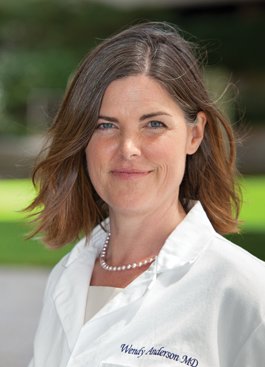
Wendy G. Anderson, M.D.: Better communication makes for better pain management
Dr. Wendy G. Anderson of the University of California, San Francisco, hospital medicine and palliative care program, spends most of her time trying to improve the quality of care for seriously ill patients, whether by providing better symptom management to patients or by training other physicians to communicate better.
Dr. Anderson leads a project at UCSF to integrate palliative care into intensive care units by training ICU bedside nurses in how to provide better symptom management and emotional support to patients and families. The project, known as IMPACT-ICU (Integrating Multidisciplinary Palliative Care into the ICU), is now being rolled out across the University of California’s five medical centers.

Recently, Dr. Anderson partnered with Dr. Solomon Liao, a hospitalist and director of palliative care services at the University of California, Irvine, Medical Center, and the Society of Hospital Medicine, to develop a toolkit to help hospitalists improve the efficacy and safety of pain management. The toolkit, which is currently under development, will look specifically at techniques and systems changes that can improve care on medical services. The toolkit should be available for hospitalists sometime next year.
In an interview, Dr. Anderson discussed the challenges to effective pain management and the importance of partnering with patients.
Question: What are some of the barriers to effective pain management?
Dr. Anderson: Like anything else in the hospital, we find that it’s a mix of systems factors as well as provider education. What we’ve learned is that within those systems, everything we do impacts pain management, from how the different disciplines work together to the electronic medical record. It is the nurses on the front lines who are usually going to know how well the patient’s pain is being managed. So it’s really important to make sure that there are regular times for the nurses to talk with the hospitalists to let them know when patients are having trouble with pain.
What we’ve found is that sometimes a hospitalist will round in the morning and at that time the patient is doing okay with [his] pain, or [the patient has] other concerns so [he doesn’t] mention pain then. One strategy we’ve tried is adding pain as a topic in the multidisciplinary rounds each day. Another simple strategy is encouraging hospitalists to check the pain levels for their patients in the electronic medical record. Those levels are all charted in the electronic medical record, but they don’t always appear in the same place as the vitals. So part of what we’re looking at going forward are ways that we can change the electronic medical record so that it’s obvious to the hospitalist when the patient’s pain is not well controlled.
Question: Do you have any tips for hospitalists to improve how they manage pain right now?
Dr. Anderson: If a patient is having pain, make sure that you partner with the patient in creating a regimen. You should never change pain medicines without telling the patient first and developing a plan together about what’s going to happen. It’s important if someone is having pain to respond very quickly to that. If you get called by the nurse that someone is having pain, that’s an emergency, and you should go and develop a plan with the patient.
It’s really helpful to make sure that you also respond to the emotional piece of the patient having pain. It’s very frustrating to be in pain, especially in the hospital where you can’t regulate your own medicine. It often feels very out of control for patients. And they also often feel like they are being judged for having pain. Aside from what you’re going to do about deciding on specific pain medicines, the process of validating how a patient is feeling and saying that you want to work on it with them, is a huge piece of patient satisfaction.
Question: What are the biggest safety concerns when treating pain?
Dr. Anderson: Opioid medications require a lot of training to dose safely. People need training to know how to appropriately titrate them. If you don’t have enough training, you either give people too much and that can be risky, or you give them too little and their pain is not completely controlled. There’s also a lot of concern nationally about overuse of opioid medications. One of the pieces of this project has been to figure out the best way to make the Prescription Drug Monitoring Program reports available to hospitalists. Here in California, it can be challenging to get registered for those programs. We’ve found that it is probably best to designate a few point people, so for us at UCSF, it’s our pharmacists who are registered. When a hospitalist has questions about whether a patient has had medications filled by multiple providers or has had multiple prescriptions, we resolve those issues by consulting with the pharmacist who can access the Prescription Drug Monitoring Program reports.
Question: When should a palliative care consult happen?
Dr. Anderson: There are two specialty consult services that are important to think about: the pain-management consult services for acute and chronic pain, and the palliative care consult service, for patients with serious illnesses. There are also outpatient services available for both of those. One of the big pieces of this project has been raising awareness for hospitalists about what resources are available if a patient’s pain isn’t well controlled or if the patient isn’t satisfied with their pain management.
We’ve really been encouraging hospitalists to consult the pain management or palliative care consult service when they have patients in whom they have tried something and it hasn’t worked, or if a patient is having readmissions for pain. Oftentimes, patients are discharged home and have to come back in because they didn’t have an adequate pain-management plan as an outpatient. Those would be patients for whom it’s really important to develop a plan with the primary care provider and to consider referring to outpatient palliative care or pain management.
Question: How do you get patients more engaged, and what are the benefits in doing that?
Dr. Anderson: I’ve met very few patients that don’t want to be engaged when it comes to their pain management. So we, as physicians, need to partner with them and ask them which medications have worked and which haven’t. We need to be open to them having some input into their pain regimen.
In some cases, we may not have a medical explanation for why one medication works better for a patient. If it’s a reasonable medical plan and there are two options for patients to choose between, it helps them to have control over their medications and to feel like they’re involved in their treatment. Just ask about what has worked for them before for their pain. Do they have other ideas for things that they might want to try? They really are the experts. When a patient says that only a certain medication works for them, we tend to disbelieve them. But there’s been a lot of interesting research that has come out recently that shows that people actually do have different genetic opioid receptors. So it may actually be true that some of the medicines don’t work for them. Listening to them, and involving them in the plan, within medical reason, is really important.
On Twitter @maryellenny
Dr. Wendy G. Anderson of the University of California, San Francisco, hospital medicine and palliative care program, spends most of her time trying to improve the quality of care for seriously ill patients, whether by providing better symptom management to patients or by training other physicians to communicate better.
Dr. Anderson leads a project at UCSF to integrate palliative care into intensive care units by training ICU bedside nurses in how to provide better symptom management and emotional support to patients and families. The project, known as IMPACT-ICU (Integrating Multidisciplinary Palliative Care into the ICU), is now being rolled out across the University of California’s five medical centers.
Recently, Dr. Anderson partnered with Dr. Solomon Liao, a hospitalist and director of palliative care services at the University of California, Irvine, Medical Center, and the Society of Hospital Medicine, to develop a toolkit to help hospitalists improve the efficacy and safety of pain management. The toolkit, which is currently under development, will look specifically at techniques and systems changes that can improve care on medical services. The toolkit should be available for hospitalists sometime next year.
In an interview, Dr. Anderson discussed the challenges to effective pain management and the importance of partnering with patients.
Question: What are some of the barriers to effective pain management?
Dr. Anderson: Like anything else in the hospital, we find that it’s a mix of systems factors as well as provider education. What we’ve learned is that within those systems, everything we do impacts pain management, from how the different disciplines work together to the electronic medical record. It is the nurses on the front lines who are usually going to know how well the patient’s pain is being managed. So it’s really important to make sure that there are regular times for the nurses to talk with the hospitalists to let them know when patients are having trouble with pain.
What we’ve found is that sometimes a hospitalist will round in the morning and at that time the patient is doing okay with [his] pain, or [the patient has] other concerns so [he doesn’t] mention pain then. One strategy we’ve tried is adding pain as a topic in the multidisciplinary rounds each day. Another simple strategy is encouraging hospitalists to check the pain levels for their patients in the electronic medical record. Those levels are all charted in the electronic medical record, but they don’t always appear in the same place as the vitals. So part of what we’re looking at going forward are ways that we can change the electronic medical record so that it’s obvious to the hospitalist when the patient’s pain is not well controlled.
Question: Do you have any tips for hospitalists to improve how they manage pain right now?
Dr. Anderson: If a patient is having pain, make sure that you partner with the patient in creating a regimen. You should never change pain medicines without telling the patient first and developing a plan together about what’s going to happen. It’s important if someone is having pain to respond very quickly to that. If you get called by the nurse that someone is having pain, that’s an emergency, and you should go and develop a plan with the patient.
It’s really helpful to make sure that you also respond to the emotional piece of the patient having pain. It’s very frustrating to be in pain, especially in the hospital where you can’t regulate your own medicine. It often feels very out of control for patients. And they also often feel like they are being judged for having pain. Aside from what you’re going to do about deciding on specific pain medicines, the process of validating how a patient is feeling and saying that you want to work on it with them, is a huge piece of patient satisfaction.
Question: What are the biggest safety concerns when treating pain?
Dr. Anderson: Opioid medications require a lot of training to dose safely. People need training to know how to appropriately titrate them. If you don’t have enough training, you either give people too much and that can be risky, or you give them too little and their pain is not completely controlled. There’s also a lot of concern nationally about overuse of opioid medications. One of the pieces of this project has been to figure out the best way to make the Prescription Drug Monitoring Program reports available to hospitalists. Here in California, it can be challenging to get registered for those programs. We’ve found that it is probably best to designate a few point people, so for us at UCSF, it’s our pharmacists who are registered. When a hospitalist has questions about whether a patient has had medications filled by multiple providers or has had multiple prescriptions, we resolve those issues by consulting with the pharmacist who can access the Prescription Drug Monitoring Program reports.
Question: When should a palliative care consult happen?
Dr. Anderson: There are two specialty consult services that are important to think about: the pain-management consult services for acute and chronic pain, and the palliative care consult service, for patients with serious illnesses. There are also outpatient services available for both of those. One of the big pieces of this project has been raising awareness for hospitalists about what resources are available if a patient’s pain isn’t well controlled or if the patient isn’t satisfied with their pain management.
We’ve really been encouraging hospitalists to consult the pain management or palliative care consult service when they have patients in whom they have tried something and it hasn’t worked, or if a patient is having readmissions for pain. Oftentimes, patients are discharged home and have to come back in because they didn’t have an adequate pain-management plan as an outpatient. Those would be patients for whom it’s really important to develop a plan with the primary care provider and to consider referring to outpatient palliative care or pain management.
Question: How do you get patients more engaged, and what are the benefits in doing that?
Dr. Anderson: I’ve met very few patients that don’t want to be engaged when it comes to their pain management. So we, as physicians, need to partner with them and ask them which medications have worked and which haven’t. We need to be open to them having some input into their pain regimen.
In some cases, we may not have a medical explanation for why one medication works better for a patient. If it’s a reasonable medical plan and there are two options for patients to choose between, it helps them to have control over their medications and to feel like they’re involved in their treatment. Just ask about what has worked for them before for their pain. Do they have other ideas for things that they might want to try? They really are the experts. When a patient says that only a certain medication works for them, we tend to disbelieve them. But there’s been a lot of interesting research that has come out recently that shows that people actually do have different genetic opioid receptors. So it may actually be true that some of the medicines don’t work for them. Listening to them, and involving them in the plan, within medical reason, is really important.
On Twitter @maryellenny
Dr. Wendy G. Anderson of the University of California, San Francisco, hospital medicine and palliative care program, spends most of her time trying to improve the quality of care for seriously ill patients, whether by providing better symptom management to patients or by training other physicians to communicate better.
Dr. Anderson leads a project at UCSF to integrate palliative care into intensive care units by training ICU bedside nurses in how to provide better symptom management and emotional support to patients and families. The project, known as IMPACT-ICU (Integrating Multidisciplinary Palliative Care into the ICU), is now being rolled out across the University of California’s five medical centers.
Recently, Dr. Anderson partnered with Dr. Solomon Liao, a hospitalist and director of palliative care services at the University of California, Irvine, Medical Center, and the Society of Hospital Medicine, to develop a toolkit to help hospitalists improve the efficacy and safety of pain management. The toolkit, which is currently under development, will look specifically at techniques and systems changes that can improve care on medical services. The toolkit should be available for hospitalists sometime next year.
In an interview, Dr. Anderson discussed the challenges to effective pain management and the importance of partnering with patients.
Question: What are some of the barriers to effective pain management?
Dr. Anderson: Like anything else in the hospital, we find that it’s a mix of systems factors as well as provider education. What we’ve learned is that within those systems, everything we do impacts pain management, from how the different disciplines work together to the electronic medical record. It is the nurses on the front lines who are usually going to know how well the patient’s pain is being managed. So it’s really important to make sure that there are regular times for the nurses to talk with the hospitalists to let them know when patients are having trouble with pain.
What we’ve found is that sometimes a hospitalist will round in the morning and at that time the patient is doing okay with [his] pain, or [the patient has] other concerns so [he doesn’t] mention pain then. One strategy we’ve tried is adding pain as a topic in the multidisciplinary rounds each day. Another simple strategy is encouraging hospitalists to check the pain levels for their patients in the electronic medical record. Those levels are all charted in the electronic medical record, but they don’t always appear in the same place as the vitals. So part of what we’re looking at going forward are ways that we can change the electronic medical record so that it’s obvious to the hospitalist when the patient’s pain is not well controlled.
Question: Do you have any tips for hospitalists to improve how they manage pain right now?
Dr. Anderson: If a patient is having pain, make sure that you partner with the patient in creating a regimen. You should never change pain medicines without telling the patient first and developing a plan together about what’s going to happen. It’s important if someone is having pain to respond very quickly to that. If you get called by the nurse that someone is having pain, that’s an emergency, and you should go and develop a plan with the patient.
It’s really helpful to make sure that you also respond to the emotional piece of the patient having pain. It’s very frustrating to be in pain, especially in the hospital where you can’t regulate your own medicine. It often feels very out of control for patients. And they also often feel like they are being judged for having pain. Aside from what you’re going to do about deciding on specific pain medicines, the process of validating how a patient is feeling and saying that you want to work on it with them, is a huge piece of patient satisfaction.
Question: What are the biggest safety concerns when treating pain?
Dr. Anderson: Opioid medications require a lot of training to dose safely. People need training to know how to appropriately titrate them. If you don’t have enough training, you either give people too much and that can be risky, or you give them too little and their pain is not completely controlled. There’s also a lot of concern nationally about overuse of opioid medications. One of the pieces of this project has been to figure out the best way to make the Prescription Drug Monitoring Program reports available to hospitalists. Here in California, it can be challenging to get registered for those programs. We’ve found that it is probably best to designate a few point people, so for us at UCSF, it’s our pharmacists who are registered. When a hospitalist has questions about whether a patient has had medications filled by multiple providers or has had multiple prescriptions, we resolve those issues by consulting with the pharmacist who can access the Prescription Drug Monitoring Program reports.
Question: When should a palliative care consult happen?
Dr. Anderson: There are two specialty consult services that are important to think about: the pain-management consult services for acute and chronic pain, and the palliative care consult service, for patients with serious illnesses. There are also outpatient services available for both of those. One of the big pieces of this project has been raising awareness for hospitalists about what resources are available if a patient’s pain isn’t well controlled or if the patient isn’t satisfied with their pain management.
We’ve really been encouraging hospitalists to consult the pain management or palliative care consult service when they have patients in whom they have tried something and it hasn’t worked, or if a patient is having readmissions for pain. Oftentimes, patients are discharged home and have to come back in because they didn’t have an adequate pain-management plan as an outpatient. Those would be patients for whom it’s really important to develop a plan with the primary care provider and to consider referring to outpatient palliative care or pain management.
Question: How do you get patients more engaged, and what are the benefits in doing that?
Dr. Anderson: I’ve met very few patients that don’t want to be engaged when it comes to their pain management. So we, as physicians, need to partner with them and ask them which medications have worked and which haven’t. We need to be open to them having some input into their pain regimen.
In some cases, we may not have a medical explanation for why one medication works better for a patient. If it’s a reasonable medical plan and there are two options for patients to choose between, it helps them to have control over their medications and to feel like they’re involved in their treatment. Just ask about what has worked for them before for their pain. Do they have other ideas for things that they might want to try? They really are the experts. When a patient says that only a certain medication works for them, we tend to disbelieve them. But there’s been a lot of interesting research that has come out recently that shows that people actually do have different genetic opioid receptors. So it may actually be true that some of the medicines don’t work for them. Listening to them, and involving them in the plan, within medical reason, is really important.
On Twitter @maryellenny
Reflections on being a patient
Recently, I had an unexpected hospitalization for what ultimately proved to be ovarian torsion. I spent 4 nights in the hospital, 2 preoperatively and 2 postoperatively. While I was pleased with the care I received, I also learned a few things that will influence my future hospital-based practice. Herewith, in no particular order, are my observations:

• Emergency department wait times matter. Much has been written about inappropriate utilization of the ED and throughput. I realize that not everyone in the waiting room has a truly emergent problem, but the 75 minutes between my arrival and the time I was triaged were the longest 75 minutes of my life. I was in so much pain that I couldn’t even advocate for myself.
• When faced with equivocal diagnostic testing, return to the history and physical as Sir William Osler instructed.("Listen to your patient, he is telling you the diagnosis.") I am so fortunate to live in the 21st century and to have immediate access to diagnostic imaging, labs, and a good surgeon. It is not lost on me, however, that had CT and ultrasound not been available (and nondiagnostic), my exam and white blood cell count would have taken me to the operating room without delay, shortening both my hospital stay and my recovery time. Still, I recognize that the retrospectoscope has 100% accuracy, far exceeding that of we human physicians.
• Opioids are not the enemy. After receiving multiple doses of intravenous opioids in the ED, I asked for ketorolac. During the 2 days between onset of pain and surgery, I relied upon the ketorolac for most of my pain relief. This is in part because I felt it worked better than the opioids (but did not eliminate the need for opioids) but also in an effort to be a "good patient." When I thought I might be going home, I stopped asking for the ketorolac. In short order, the pain worsened, my vital signs worsened, and I was off to the OR for removal of what proved to be a hemorrhagic, necrotic ovary.
• Small things matter, communication. Our system has spent considerable energy improving communication between staff and patients, utilizing communication boards. The professionals caring for me performed wonderfully in this respect – without fail, I knew their names and their extensions. I never knew, though, when my doctor would be rounding.
Because of on-call responsibilities and emergencies, the times ranged between 6 a.m. and 2 p.m. I completely understand why this happens, as it has occurred in my own practice. I will remember to keep my patients informed about my own schedule as much as I can going forward.
• Small things matter, miscellaneous. Medical tape leaves adhesive residue that takes days to remove – nail polish remover is more effective than alcohol for adhesive removal. ...An improperly secured Foley catheter can wreak havoc. ... There is literally nothing on TV worth watching for days at a time, despite having 46 channels. ... Clear liquids have more sugar than should be allowed, even for those of us who are not diabetic.
Being sick is very tedious.
As a medical student (more years ago than I care to count), I participated in various activities intended to raise awareness and sensitivity to the patient experience. After my recent refresher course, I hope to be a better doctor to my patients.
Dr. Fredholm and her colleague Dr. Stephen Bekanich are codirectors of Seton Palliative Care, part of the University of Texas Southwest Residency Programs in Austin. They alternate contributions to the monthly Palliatively Speaking blog (http://tinyurl.com/Palliatively).
Recently, I had an unexpected hospitalization for what ultimately proved to be ovarian torsion. I spent 4 nights in the hospital, 2 preoperatively and 2 postoperatively. While I was pleased with the care I received, I also learned a few things that will influence my future hospital-based practice. Herewith, in no particular order, are my observations:
• Emergency department wait times matter. Much has been written about inappropriate utilization of the ED and throughput. I realize that not everyone in the waiting room has a truly emergent problem, but the 75 minutes between my arrival and the time I was triaged were the longest 75 minutes of my life. I was in so much pain that I couldn’t even advocate for myself.
• When faced with equivocal diagnostic testing, return to the history and physical as Sir William Osler instructed.("Listen to your patient, he is telling you the diagnosis.") I am so fortunate to live in the 21st century and to have immediate access to diagnostic imaging, labs, and a good surgeon. It is not lost on me, however, that had CT and ultrasound not been available (and nondiagnostic), my exam and white blood cell count would have taken me to the operating room without delay, shortening both my hospital stay and my recovery time. Still, I recognize that the retrospectoscope has 100% accuracy, far exceeding that of we human physicians.
• Opioids are not the enemy. After receiving multiple doses of intravenous opioids in the ED, I asked for ketorolac. During the 2 days between onset of pain and surgery, I relied upon the ketorolac for most of my pain relief. This is in part because I felt it worked better than the opioids (but did not eliminate the need for opioids) but also in an effort to be a "good patient." When I thought I might be going home, I stopped asking for the ketorolac. In short order, the pain worsened, my vital signs worsened, and I was off to the OR for removal of what proved to be a hemorrhagic, necrotic ovary.
• Small things matter, communication. Our system has spent considerable energy improving communication between staff and patients, utilizing communication boards. The professionals caring for me performed wonderfully in this respect – without fail, I knew their names and their extensions. I never knew, though, when my doctor would be rounding.
Because of on-call responsibilities and emergencies, the times ranged between 6 a.m. and 2 p.m. I completely understand why this happens, as it has occurred in my own practice. I will remember to keep my patients informed about my own schedule as much as I can going forward.
• Small things matter, miscellaneous. Medical tape leaves adhesive residue that takes days to remove – nail polish remover is more effective than alcohol for adhesive removal. ...An improperly secured Foley catheter can wreak havoc. ... There is literally nothing on TV worth watching for days at a time, despite having 46 channels. ... Clear liquids have more sugar than should be allowed, even for those of us who are not diabetic.
Being sick is very tedious.
As a medical student (more years ago than I care to count), I participated in various activities intended to raise awareness and sensitivity to the patient experience. After my recent refresher course, I hope to be a better doctor to my patients.
Dr. Fredholm and her colleague Dr. Stephen Bekanich are codirectors of Seton Palliative Care, part of the University of Texas Southwest Residency Programs in Austin. They alternate contributions to the monthly Palliatively Speaking blog (http://tinyurl.com/Palliatively).
Recently, I had an unexpected hospitalization for what ultimately proved to be ovarian torsion. I spent 4 nights in the hospital, 2 preoperatively and 2 postoperatively. While I was pleased with the care I received, I also learned a few things that will influence my future hospital-based practice. Herewith, in no particular order, are my observations:
• Emergency department wait times matter. Much has been written about inappropriate utilization of the ED and throughput. I realize that not everyone in the waiting room has a truly emergent problem, but the 75 minutes between my arrival and the time I was triaged were the longest 75 minutes of my life. I was in so much pain that I couldn’t even advocate for myself.
• When faced with equivocal diagnostic testing, return to the history and physical as Sir William Osler instructed.("Listen to your patient, he is telling you the diagnosis.") I am so fortunate to live in the 21st century and to have immediate access to diagnostic imaging, labs, and a good surgeon. It is not lost on me, however, that had CT and ultrasound not been available (and nondiagnostic), my exam and white blood cell count would have taken me to the operating room without delay, shortening both my hospital stay and my recovery time. Still, I recognize that the retrospectoscope has 100% accuracy, far exceeding that of we human physicians.
• Opioids are not the enemy. After receiving multiple doses of intravenous opioids in the ED, I asked for ketorolac. During the 2 days between onset of pain and surgery, I relied upon the ketorolac for most of my pain relief. This is in part because I felt it worked better than the opioids (but did not eliminate the need for opioids) but also in an effort to be a "good patient." When I thought I might be going home, I stopped asking for the ketorolac. In short order, the pain worsened, my vital signs worsened, and I was off to the OR for removal of what proved to be a hemorrhagic, necrotic ovary.
• Small things matter, communication. Our system has spent considerable energy improving communication between staff and patients, utilizing communication boards. The professionals caring for me performed wonderfully in this respect – without fail, I knew their names and their extensions. I never knew, though, when my doctor would be rounding.
Because of on-call responsibilities and emergencies, the times ranged between 6 a.m. and 2 p.m. I completely understand why this happens, as it has occurred in my own practice. I will remember to keep my patients informed about my own schedule as much as I can going forward.
• Small things matter, miscellaneous. Medical tape leaves adhesive residue that takes days to remove – nail polish remover is more effective than alcohol for adhesive removal. ...An improperly secured Foley catheter can wreak havoc. ... There is literally nothing on TV worth watching for days at a time, despite having 46 channels. ... Clear liquids have more sugar than should be allowed, even for those of us who are not diabetic.
Being sick is very tedious.
As a medical student (more years ago than I care to count), I participated in various activities intended to raise awareness and sensitivity to the patient experience. After my recent refresher course, I hope to be a better doctor to my patients.
Dr. Fredholm and her colleague Dr. Stephen Bekanich are codirectors of Seton Palliative Care, part of the University of Texas Southwest Residency Programs in Austin. They alternate contributions to the monthly Palliatively Speaking blog (http://tinyurl.com/Palliatively).

Attention to risk factors could reduce CAP-related emergency revisits
LAKE BUENA VISTA, FLA. – Fever or lack of an antibiotic prescription are two factors that increase the risk of a return visit to the emergency department and subsequent hospital admission in children with community-acquired pneumonia, according to a review of ED medical records.
Of 1,857 children aged 3 months to 18 years with a diagnosis of pneumonia who were discharged to home after the index ED visit between November 2009 and April 2013, 131 (7.1%) returned to the ED within 7 days, 90 of those (4.8%) were discharged to home, and 41 (2.2%) were admitted, Dr. Emily Fain of Cincinnati Children’s Hospital reported in a poster at the Pediatric Hospital Medicine 2014 meeting.
Factors shown on multivariable analyses to be significantly associated with a return visit were tachycardia at discharge (odds ratio, 1.48), fever at discharge (OR, 1.89 for a temperature of 99.5-101.2° F, and 2.35 for a temperature greater than 101.3° F, compared with a temperature less than 99.5° F), and lack of an antibiotic prescription (OR, 0.44 among those who received a prescription).
Factors associated with admission at the time of the ED revisit were tachypnea in the ED (OR, 2.01), fever at discharge (OR, 3.48 for a temperature of 99.5-101.2° F, and 4.51 for a temperature greater than 101.3° F, compared with a temperature less than 99.5° F), history of community-acquired pneumonia (CAP) (OR, 3.98), lack of an antibiotic prescription (OR, 0.32 for those who received a prescription), time of visit (OR, 0.43 for those who arrived between 4 p.m. and 12 a.m., compared with arrival between 8 a.m. and 4 p.m.), and race (OR, 0.44 for African Americans vs. whites).
Revisits to the ED are an indicator of quality of care and disease progression, and CAP is among the most common reasons for ED visits, the investigators noted at the meeting sponsored by the Society of Hospital Medicine, the American Academy of Pediatrics, the AAP Section on Hospital Medicine, and the Academic Pediatric Association.
"Attention to these risk factors, particularly potentially modifiable factors such as vital signs, could influence decision making when treating patients for CAP. Further investigation is warranted to better understand the association between lack of antibiotic prescription and revisit to the ED with and without subsequent hospitalization," they concluded.
This study was supported by the National Center for Research Resources and the National Center for Advancing Translational Sciences, National Institutes of Health. Dr. Fain and her colleagues reported having no disclosures.
LAKE BUENA VISTA, FLA. – Fever or lack of an antibiotic prescription are two factors that increase the risk of a return visit to the emergency department and subsequent hospital admission in children with community-acquired pneumonia, according to a review of ED medical records.
Of 1,857 children aged 3 months to 18 years with a diagnosis of pneumonia who were discharged to home after the index ED visit between November 2009 and April 2013, 131 (7.1%) returned to the ED within 7 days, 90 of those (4.8%) were discharged to home, and 41 (2.2%) were admitted, Dr. Emily Fain of Cincinnati Children’s Hospital reported in a poster at the Pediatric Hospital Medicine 2014 meeting.
Factors shown on multivariable analyses to be significantly associated with a return visit were tachycardia at discharge (odds ratio, 1.48), fever at discharge (OR, 1.89 for a temperature of 99.5-101.2° F, and 2.35 for a temperature greater than 101.3° F, compared with a temperature less than 99.5° F), and lack of an antibiotic prescription (OR, 0.44 among those who received a prescription).
Factors associated with admission at the time of the ED revisit were tachypnea in the ED (OR, 2.01), fever at discharge (OR, 3.48 for a temperature of 99.5-101.2° F, and 4.51 for a temperature greater than 101.3° F, compared with a temperature less than 99.5° F), history of community-acquired pneumonia (CAP) (OR, 3.98), lack of an antibiotic prescription (OR, 0.32 for those who received a prescription), time of visit (OR, 0.43 for those who arrived between 4 p.m. and 12 a.m., compared with arrival between 8 a.m. and 4 p.m.), and race (OR, 0.44 for African Americans vs. whites).
Revisits to the ED are an indicator of quality of care and disease progression, and CAP is among the most common reasons for ED visits, the investigators noted at the meeting sponsored by the Society of Hospital Medicine, the American Academy of Pediatrics, the AAP Section on Hospital Medicine, and the Academic Pediatric Association.
"Attention to these risk factors, particularly potentially modifiable factors such as vital signs, could influence decision making when treating patients for CAP. Further investigation is warranted to better understand the association between lack of antibiotic prescription and revisit to the ED with and without subsequent hospitalization," they concluded.
This study was supported by the National Center for Research Resources and the National Center for Advancing Translational Sciences, National Institutes of Health. Dr. Fain and her colleagues reported having no disclosures.
LAKE BUENA VISTA, FLA. – Fever or lack of an antibiotic prescription are two factors that increase the risk of a return visit to the emergency department and subsequent hospital admission in children with community-acquired pneumonia, according to a review of ED medical records.
Of 1,857 children aged 3 months to 18 years with a diagnosis of pneumonia who were discharged to home after the index ED visit between November 2009 and April 2013, 131 (7.1%) returned to the ED within 7 days, 90 of those (4.8%) were discharged to home, and 41 (2.2%) were admitted, Dr. Emily Fain of Cincinnati Children’s Hospital reported in a poster at the Pediatric Hospital Medicine 2014 meeting.
Factors shown on multivariable analyses to be significantly associated with a return visit were tachycardia at discharge (odds ratio, 1.48), fever at discharge (OR, 1.89 for a temperature of 99.5-101.2° F, and 2.35 for a temperature greater than 101.3° F, compared with a temperature less than 99.5° F), and lack of an antibiotic prescription (OR, 0.44 among those who received a prescription).
Factors associated with admission at the time of the ED revisit were tachypnea in the ED (OR, 2.01), fever at discharge (OR, 3.48 for a temperature of 99.5-101.2° F, and 4.51 for a temperature greater than 101.3° F, compared with a temperature less than 99.5° F), history of community-acquired pneumonia (CAP) (OR, 3.98), lack of an antibiotic prescription (OR, 0.32 for those who received a prescription), time of visit (OR, 0.43 for those who arrived between 4 p.m. and 12 a.m., compared with arrival between 8 a.m. and 4 p.m.), and race (OR, 0.44 for African Americans vs. whites).
Revisits to the ED are an indicator of quality of care and disease progression, and CAP is among the most common reasons for ED visits, the investigators noted at the meeting sponsored by the Society of Hospital Medicine, the American Academy of Pediatrics, the AAP Section on Hospital Medicine, and the Academic Pediatric Association.
"Attention to these risk factors, particularly potentially modifiable factors such as vital signs, could influence decision making when treating patients for CAP. Further investigation is warranted to better understand the association between lack of antibiotic prescription and revisit to the ED with and without subsequent hospitalization," they concluded.
This study was supported by the National Center for Research Resources and the National Center for Advancing Translational Sciences, National Institutes of Health. Dr. Fain and her colleagues reported having no disclosures.
AT PEDIATRIC HOSPITAL MEDICINE 2014
Key clinical point: In children with community-acquired pneumonia, fever or lack of an antibiotic prescription are two factors that increase the risk of a return visit to the ED.
Major finding: A total of 7.1% of children seen in the ED for CAP had a return visit within 7 days.
Data source: A retrospective cohort study involving 1,857 children.
Disclosures: This study was supported by the National Center for Research Resources and the National Center for Advancing Translational Sciences, National Institutes of Health. Dr. Fain and her colleagues reported having no disclosures.
Prediction Tool for Readmissions Due to End-of-Life Care
Clinical question: What are the risk factors associated with potentially avoidable readmissions (PARs) for end-of-life care issues?
Background: The 6% of Medicare beneficiaries who die each year account for 30% of yearly Medicare expenditures on medical treatments, with repeated hospitalizations a frequent occurrence at the end of life. There are many opportunities to improve the care of patients at the end of life.
Study design: Nested case-control.
Setting: Academic, tertiary-care medical center.
Synopsis: There were 10,275 eligible admissions to Brigham and Women’s Hospital in Boston from July 1, 2009 to June 30, 2010, with a length of stay less than one day. There were 2,301 readmissions within 30 days of the index hospitalization, of which 826 were considered potentially avoidable. From a random sample of 594 of these patients, 80 patients had PAR related to end-of-life care issues. There were 7,974 patients who were not admitted within 30 days of index admission (controls). The primary study outcome was any 30-day PAR due to end-of-life care issues. A readmission was considered a PAR if it related to previously known conditions from the index hospitalization or was due to a complication of treatment.
The four factors that were significantly associated with 30-day PAR for end-of-life care issues were: neoplasm (OR 5.6, 95% CI: 2.85-11.0), opiate medication at discharge (OR 2.29, 95% CI: 1.29-4.07), Elixhauser comorbidity index, per five-unit increase (OR 1.16, 95% CI: 1.10-1.22), and number of admissions in previous 12 months (OR 1.10, 95% CI: 1.02-1.20). The model that included all four variables had excellent discrimination power, with a C-statistic of 0.85.
Bottom line: The factors from this prediction model can be used, formally or informally, to identify those patients at higher risk for readmission for end-of-life care issues and prioritize resources to help minimize this risk.
Citation: Donzé J, Lipsitz S, Schnipper JL. Risk factors for potentially avoidable readmissions due to end-of-life care issues. J Hosp Med. 2014;9(5):310-314.
Clinical question: What are the risk factors associated with potentially avoidable readmissions (PARs) for end-of-life care issues?
Background: The 6% of Medicare beneficiaries who die each year account for 30% of yearly Medicare expenditures on medical treatments, with repeated hospitalizations a frequent occurrence at the end of life. There are many opportunities to improve the care of patients at the end of life.
Study design: Nested case-control.
Setting: Academic, tertiary-care medical center.
Synopsis: There were 10,275 eligible admissions to Brigham and Women’s Hospital in Boston from July 1, 2009 to June 30, 2010, with a length of stay less than one day. There were 2,301 readmissions within 30 days of the index hospitalization, of which 826 were considered potentially avoidable. From a random sample of 594 of these patients, 80 patients had PAR related to end-of-life care issues. There were 7,974 patients who were not admitted within 30 days of index admission (controls). The primary study outcome was any 30-day PAR due to end-of-life care issues. A readmission was considered a PAR if it related to previously known conditions from the index hospitalization or was due to a complication of treatment.
The four factors that were significantly associated with 30-day PAR for end-of-life care issues were: neoplasm (OR 5.6, 95% CI: 2.85-11.0), opiate medication at discharge (OR 2.29, 95% CI: 1.29-4.07), Elixhauser comorbidity index, per five-unit increase (OR 1.16, 95% CI: 1.10-1.22), and number of admissions in previous 12 months (OR 1.10, 95% CI: 1.02-1.20). The model that included all four variables had excellent discrimination power, with a C-statistic of 0.85.
Bottom line: The factors from this prediction model can be used, formally or informally, to identify those patients at higher risk for readmission for end-of-life care issues and prioritize resources to help minimize this risk.
Citation: Donzé J, Lipsitz S, Schnipper JL. Risk factors for potentially avoidable readmissions due to end-of-life care issues. J Hosp Med. 2014;9(5):310-314.
Clinical question: What are the risk factors associated with potentially avoidable readmissions (PARs) for end-of-life care issues?
Background: The 6% of Medicare beneficiaries who die each year account for 30% of yearly Medicare expenditures on medical treatments, with repeated hospitalizations a frequent occurrence at the end of life. There are many opportunities to improve the care of patients at the end of life.
Study design: Nested case-control.
Setting: Academic, tertiary-care medical center.
Synopsis: There were 10,275 eligible admissions to Brigham and Women’s Hospital in Boston from July 1, 2009 to June 30, 2010, with a length of stay less than one day. There were 2,301 readmissions within 30 days of the index hospitalization, of which 826 were considered potentially avoidable. From a random sample of 594 of these patients, 80 patients had PAR related to end-of-life care issues. There were 7,974 patients who were not admitted within 30 days of index admission (controls). The primary study outcome was any 30-day PAR due to end-of-life care issues. A readmission was considered a PAR if it related to previously known conditions from the index hospitalization or was due to a complication of treatment.
The four factors that were significantly associated with 30-day PAR for end-of-life care issues were: neoplasm (OR 5.6, 95% CI: 2.85-11.0), opiate medication at discharge (OR 2.29, 95% CI: 1.29-4.07), Elixhauser comorbidity index, per five-unit increase (OR 1.16, 95% CI: 1.10-1.22), and number of admissions in previous 12 months (OR 1.10, 95% CI: 1.02-1.20). The model that included all four variables had excellent discrimination power, with a C-statistic of 0.85.
Bottom line: The factors from this prediction model can be used, formally or informally, to identify those patients at higher risk for readmission for end-of-life care issues and prioritize resources to help minimize this risk.
Citation: Donzé J, Lipsitz S, Schnipper JL. Risk factors for potentially avoidable readmissions due to end-of-life care issues. J Hosp Med. 2014;9(5):310-314.
Insurers play growing role in palliative care expansion
Health plans are starting to expand their coverage of palliative care, offering higher payments to physicians who meet certain standards or paying for home care for a wider range of seriously ill patients.
The offerings vary greatly by region and by plan, but the common theme is that these types of programs are on the rise.

Cambia Health Solutions, which operates six health plans in Oregon, Washington, Idaho, and Utah, recently garnered attention with the launch of a wide-ranging palliative care program.
Starting this year, Cambia plans will pay for services previously not covered, such as home health aides and advance care planning counseling. They are also partnering with the University of Washington to offer palliative care training to physicians, nurses, and social workers. Palliative care physicians will be able to earn certification through a 1-year program. There’s also a shorter training option in the works to teach primary care physicians how to start palliative care conversations and make referrals.
The program also aims to address the social needs of seriously ill patients by forming case management units with specially trained nurses and social workers who can assist members with issues such as home food delivery, according to Dr. Csaba Mera, chief medical officer at Cambia.
The new program’s goal is to build a "best in class" model that could be used nationally, Dr. Mera said. At the core of the program, he noted, is the goal of honoring the wishes of seriously ill patients.
"That has not been happening in health care," he said. "It’s amazing how often somebody decides they don’t want certain kinds of treatment, and they still get it."
While Cambia’s program is wide reaching, the health plan is not the only payer active in palliative care. The insurance giant Aetna has a decade of experience with specialized case management services designed to help patients and caregivers coping with advanced illness.
Through Aetna’s Compassionate Care Program, nurses and social workers work with physicians’ offices and patients and their families to provide education, assistance with pain medications, and other psychosocial support. They also work to ensure that advance directives are in place and followed. In most cases, the case managers are located in call centers. But increasingly, the health plan has embedded them in the offices of participating medical groups.

The case managers are "almost a lifeline" to patients and their families, explained Dr. Randall Krakauer, Aetna’s vice president and national medical director for medical strategy.
It’s also been a no-brainer for Aetna financially. The specialized case managers, who are used in both commercial and Medicare Advantage plans, have significantly reduced costly hospital stays and the use of the emergency department. There’s typically a $12,000 decrease in costs for each person enrolled in the case management program, according to Aetna.
Among Aetna Medicare Advantage members, there has been an 82% drop in days spent in the hospital for acute care, an 86% drop in days spent in the intensive care unit, and a 78% drop in use of the emergency department.
"If there is an opportunity for favorable impact at the intersection of quality and cost, particularly in Medicare, this is in fact the mother lode," Dr. Krakauer said.
Some regional payers have also begun to partner with physicians and other providers in the community to offer more than just traditional hospice coverage. For instance, Excellus BlueCross BlueShield, which operates in upstate New York, worked with the University of Rochester Medical Center to develop courses for physicians that focus on advance care planning, how to use the Medical Orders for Life-Sustaining Treatment (MOLST) protocol, and myths about CPR and life-sustaining treatment. Physicians who complete the online training and a testing module about it can qualify for bonus payments.
Highmark, which operates in Pennsylvania, Delaware, and West Virginia, set up a palliative care indicator to measure the performance of its contracted hospitals. The insurer measures the percentage of patients who have a palliative care consult, and the percentage of adult intensive care unit patients who have a documented resuscitation status, designated health care proxy, and documented interdisciplinary family meeting.
What’s driving the expansion into palliative care? Part of the reason is demographics, noted J. Donald Schumacher, Psy.D., president and CEO of the National Hospice and Palliative Care Organization. Baby boomers are aging and will demand health care on their own terms, including having help with both their medical and psychosocial needs when dealing with serious illness.

"I think it’s great the health plans are doing it," he said. "People are asking for good pain and symptom management now more than ever before."
The growth of accountable care organizations (ACOs) is also driving the expansion of palliative care programs. Because ACOs assume risk for the total cost of their members’ health care, expanding palliative care services in the community offers the potential to lower costly hospital admissions and readmissions, Dr. Schumacher said. Even though ACOs are developing very differently depending on the local community, they all seem interested in hospice and palliative care programs, he said.
Dr. Diane E. Meier, director of the Center to Advance Palliative Care, recently created a toolkit for payers outlining the rationale for establishing a palliative program and elements with a proven track record of improving quality and decreasing costs. For instance, a meaningful 24/7 clinical response is an essential element, she said, because it keeps patients from calling 911 frequently and ending up in the emergency department.
"Payers are recognizing that the reason their members don’t get access to palliative care in the community is because no one will pay for it – and they can fix that," said Dr. Meier, who is also a professor of geriatrics and palliative medicine at Mount Sinai Hospital in New York.
But expanding access to palliative care is likely to take more than just financial incentives, said Dr. Krakauer. The difficulty in making changes to health care delivery is one obstacle, he said. Another issue is that palliative care still runs contrary to the medical culture.
"A physician might feel that this represents personal failure as a professional, and he may feel that this is not what his patients would expect of him," Dr. Krakauer said. "We know this isn’t true, but I think that this type of feeling is persistent."
On Twitter @maryellenny
Health plans are starting to expand their coverage of palliative care, offering higher payments to physicians who meet certain standards or paying for home care for a wider range of seriously ill patients.
The offerings vary greatly by region and by plan, but the common theme is that these types of programs are on the rise.
Cambia Health Solutions, which operates six health plans in Oregon, Washington, Idaho, and Utah, recently garnered attention with the launch of a wide-ranging palliative care program.
Starting this year, Cambia plans will pay for services previously not covered, such as home health aides and advance care planning counseling. They are also partnering with the University of Washington to offer palliative care training to physicians, nurses, and social workers. Palliative care physicians will be able to earn certification through a 1-year program. There’s also a shorter training option in the works to teach primary care physicians how to start palliative care conversations and make referrals.
The program also aims to address the social needs of seriously ill patients by forming case management units with specially trained nurses and social workers who can assist members with issues such as home food delivery, according to Dr. Csaba Mera, chief medical officer at Cambia.
The new program’s goal is to build a "best in class" model that could be used nationally, Dr. Mera said. At the core of the program, he noted, is the goal of honoring the wishes of seriously ill patients.
"That has not been happening in health care," he said. "It’s amazing how often somebody decides they don’t want certain kinds of treatment, and they still get it."
While Cambia’s program is wide reaching, the health plan is not the only payer active in palliative care. The insurance giant Aetna has a decade of experience with specialized case management services designed to help patients and caregivers coping with advanced illness.
Through Aetna’s Compassionate Care Program, nurses and social workers work with physicians’ offices and patients and their families to provide education, assistance with pain medications, and other psychosocial support. They also work to ensure that advance directives are in place and followed. In most cases, the case managers are located in call centers. But increasingly, the health plan has embedded them in the offices of participating medical groups.
The case managers are "almost a lifeline" to patients and their families, explained Dr. Randall Krakauer, Aetna’s vice president and national medical director for medical strategy.
It’s also been a no-brainer for Aetna financially. The specialized case managers, who are used in both commercial and Medicare Advantage plans, have significantly reduced costly hospital stays and the use of the emergency department. There’s typically a $12,000 decrease in costs for each person enrolled in the case management program, according to Aetna.
Among Aetna Medicare Advantage members, there has been an 82% drop in days spent in the hospital for acute care, an 86% drop in days spent in the intensive care unit, and a 78% drop in use of the emergency department.
"If there is an opportunity for favorable impact at the intersection of quality and cost, particularly in Medicare, this is in fact the mother lode," Dr. Krakauer said.
Some regional payers have also begun to partner with physicians and other providers in the community to offer more than just traditional hospice coverage. For instance, Excellus BlueCross BlueShield, which operates in upstate New York, worked with the University of Rochester Medical Center to develop courses for physicians that focus on advance care planning, how to use the Medical Orders for Life-Sustaining Treatment (MOLST) protocol, and myths about CPR and life-sustaining treatment. Physicians who complete the online training and a testing module about it can qualify for bonus payments.
Highmark, which operates in Pennsylvania, Delaware, and West Virginia, set up a palliative care indicator to measure the performance of its contracted hospitals. The insurer measures the percentage of patients who have a palliative care consult, and the percentage of adult intensive care unit patients who have a documented resuscitation status, designated health care proxy, and documented interdisciplinary family meeting.
What’s driving the expansion into palliative care? Part of the reason is demographics, noted J. Donald Schumacher, Psy.D., president and CEO of the National Hospice and Palliative Care Organization. Baby boomers are aging and will demand health care on their own terms, including having help with both their medical and psychosocial needs when dealing with serious illness.
"I think it’s great the health plans are doing it," he said. "People are asking for good pain and symptom management now more than ever before."
The growth of accountable care organizations (ACOs) is also driving the expansion of palliative care programs. Because ACOs assume risk for the total cost of their members’ health care, expanding palliative care services in the community offers the potential to lower costly hospital admissions and readmissions, Dr. Schumacher said. Even though ACOs are developing very differently depending on the local community, they all seem interested in hospice and palliative care programs, he said.
Dr. Diane E. Meier, director of the Center to Advance Palliative Care, recently created a toolkit for payers outlining the rationale for establishing a palliative program and elements with a proven track record of improving quality and decreasing costs. For instance, a meaningful 24/7 clinical response is an essential element, she said, because it keeps patients from calling 911 frequently and ending up in the emergency department.
"Payers are recognizing that the reason their members don’t get access to palliative care in the community is because no one will pay for it – and they can fix that," said Dr. Meier, who is also a professor of geriatrics and palliative medicine at Mount Sinai Hospital in New York.
But expanding access to palliative care is likely to take more than just financial incentives, said Dr. Krakauer. The difficulty in making changes to health care delivery is one obstacle, he said. Another issue is that palliative care still runs contrary to the medical culture.
"A physician might feel that this represents personal failure as a professional, and he may feel that this is not what his patients would expect of him," Dr. Krakauer said. "We know this isn’t true, but I think that this type of feeling is persistent."
On Twitter @maryellenny
Health plans are starting to expand their coverage of palliative care, offering higher payments to physicians who meet certain standards or paying for home care for a wider range of seriously ill patients.
The offerings vary greatly by region and by plan, but the common theme is that these types of programs are on the rise.
Cambia Health Solutions, which operates six health plans in Oregon, Washington, Idaho, and Utah, recently garnered attention with the launch of a wide-ranging palliative care program.
Starting this year, Cambia plans will pay for services previously not covered, such as home health aides and advance care planning counseling. They are also partnering with the University of Washington to offer palliative care training to physicians, nurses, and social workers. Palliative care physicians will be able to earn certification through a 1-year program. There’s also a shorter training option in the works to teach primary care physicians how to start palliative care conversations and make referrals.
The program also aims to address the social needs of seriously ill patients by forming case management units with specially trained nurses and social workers who can assist members with issues such as home food delivery, according to Dr. Csaba Mera, chief medical officer at Cambia.
The new program’s goal is to build a "best in class" model that could be used nationally, Dr. Mera said. At the core of the program, he noted, is the goal of honoring the wishes of seriously ill patients.
"That has not been happening in health care," he said. "It’s amazing how often somebody decides they don’t want certain kinds of treatment, and they still get it."
While Cambia’s program is wide reaching, the health plan is not the only payer active in palliative care. The insurance giant Aetna has a decade of experience with specialized case management services designed to help patients and caregivers coping with advanced illness.
Through Aetna’s Compassionate Care Program, nurses and social workers work with physicians’ offices and patients and their families to provide education, assistance with pain medications, and other psychosocial support. They also work to ensure that advance directives are in place and followed. In most cases, the case managers are located in call centers. But increasingly, the health plan has embedded them in the offices of participating medical groups.
The case managers are "almost a lifeline" to patients and their families, explained Dr. Randall Krakauer, Aetna’s vice president and national medical director for medical strategy.
It’s also been a no-brainer for Aetna financially. The specialized case managers, who are used in both commercial and Medicare Advantage plans, have significantly reduced costly hospital stays and the use of the emergency department. There’s typically a $12,000 decrease in costs for each person enrolled in the case management program, according to Aetna.
Among Aetna Medicare Advantage members, there has been an 82% drop in days spent in the hospital for acute care, an 86% drop in days spent in the intensive care unit, and a 78% drop in use of the emergency department.
"If there is an opportunity for favorable impact at the intersection of quality and cost, particularly in Medicare, this is in fact the mother lode," Dr. Krakauer said.
Some regional payers have also begun to partner with physicians and other providers in the community to offer more than just traditional hospice coverage. For instance, Excellus BlueCross BlueShield, which operates in upstate New York, worked with the University of Rochester Medical Center to develop courses for physicians that focus on advance care planning, how to use the Medical Orders for Life-Sustaining Treatment (MOLST) protocol, and myths about CPR and life-sustaining treatment. Physicians who complete the online training and a testing module about it can qualify for bonus payments.
Highmark, which operates in Pennsylvania, Delaware, and West Virginia, set up a palliative care indicator to measure the performance of its contracted hospitals. The insurer measures the percentage of patients who have a palliative care consult, and the percentage of adult intensive care unit patients who have a documented resuscitation status, designated health care proxy, and documented interdisciplinary family meeting.
What’s driving the expansion into palliative care? Part of the reason is demographics, noted J. Donald Schumacher, Psy.D., president and CEO of the National Hospice and Palliative Care Organization. Baby boomers are aging and will demand health care on their own terms, including having help with both their medical and psychosocial needs when dealing with serious illness.
"I think it’s great the health plans are doing it," he said. "People are asking for good pain and symptom management now more than ever before."
The growth of accountable care organizations (ACOs) is also driving the expansion of palliative care programs. Because ACOs assume risk for the total cost of their members’ health care, expanding palliative care services in the community offers the potential to lower costly hospital admissions and readmissions, Dr. Schumacher said. Even though ACOs are developing very differently depending on the local community, they all seem interested in hospice and palliative care programs, he said.
Dr. Diane E. Meier, director of the Center to Advance Palliative Care, recently created a toolkit for payers outlining the rationale for establishing a palliative program and elements with a proven track record of improving quality and decreasing costs. For instance, a meaningful 24/7 clinical response is an essential element, she said, because it keeps patients from calling 911 frequently and ending up in the emergency department.
"Payers are recognizing that the reason their members don’t get access to palliative care in the community is because no one will pay for it – and they can fix that," said Dr. Meier, who is also a professor of geriatrics and palliative medicine at Mount Sinai Hospital in New York.
But expanding access to palliative care is likely to take more than just financial incentives, said Dr. Krakauer. The difficulty in making changes to health care delivery is one obstacle, he said. Another issue is that palliative care still runs contrary to the medical culture.
"A physician might feel that this represents personal failure as a professional, and he may feel that this is not what his patients would expect of him," Dr. Krakauer said. "We know this isn’t true, but I think that this type of feeling is persistent."
On Twitter @maryellenny