User login
Capmatinib active against NSCLC with MET exon 14 mutations
MUNICH – The experimental agent capmatinib was associated with a high response rate when used in the first line for patients with advanced non–small cell lung cancers bearing MET exon 14–skipping mutations, said investigators in the Geometry MONO-1 trial.
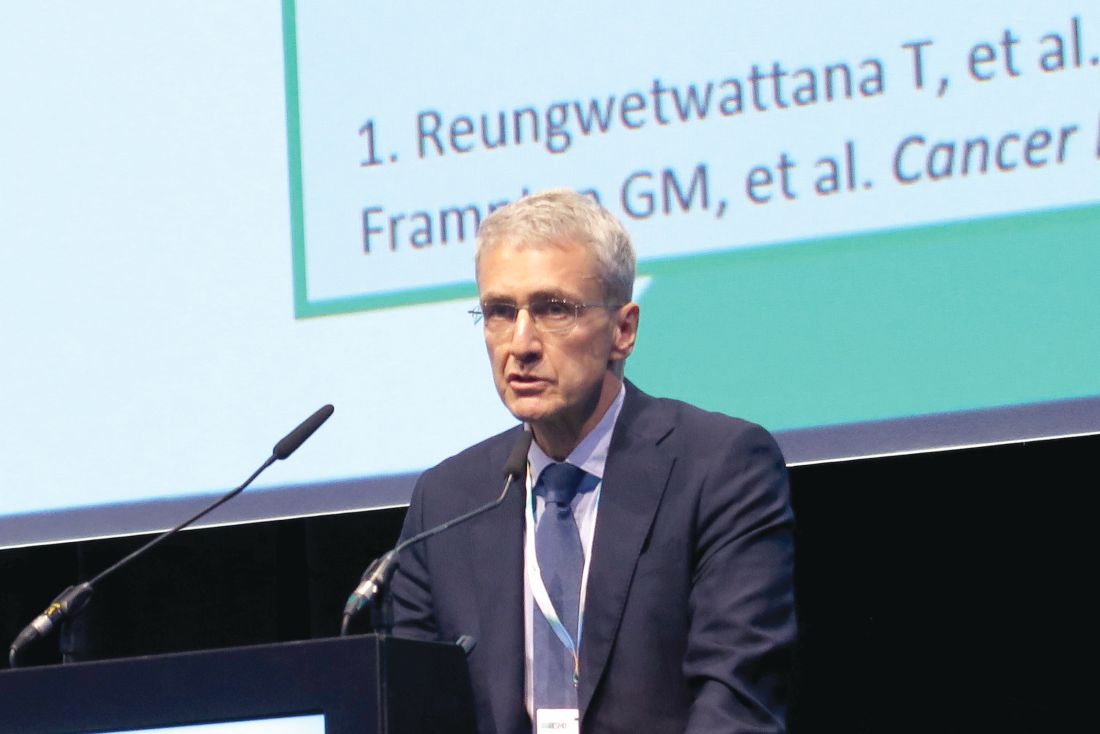
Among a cohort of 25 patients with treatment-naive, MET exon 14–mutated non–small cell lung cancer (NSCLC), the primary endpoint of overall response rate (ORR) as determined by blinded, independent reviewers was 72%.
In contrast, the ORR among 69 patients who had received one or more prior lines of therapy was 39.1%, reported Juergen Wolf, MD, of University Hospital Cologne (Germany).
“The differential benefit observed between patients treated in the first line and relapsed [settings] highlights the need of early diagnosis of this aberration, and prompt targeted treatment of this challenging patient population,” he said at the European Society for Medical Oncology Congress.
MET exon14–skipping mutations occur in approximately 3%-4% of NSCLC cases. The mutation is thought to be an oncogenic driver and has been shown to be a poor prognostic factor for patients with advanced NSCLC. Patients with this mutation have poor responses to conventional therapy and immune checkpoint inhibitors, even when their tumors have high levels of programmed death–ligand 1 (PD-L1) and high mutational burden, Dr. Wolf said.
Capmatinib (INC280) is an oral, reversible inhibitor of the MET receptor tyrosine kinase and is highly selective for MET, with particular affinity for MET exon 14 mutations. It is also capable of crossing the blood-brain barrier and has shown activity in the brain in preliminary studies.
The Geometry MONO-1 trial is a phase 2 study of capmatinib in patients with stage IIIB/IV NSCLC with tumors that demonstrate MET amplification and/or carry the MET exon 14 mutation. Three study cohorts of patients with MET amplification were closed for futility. Dr. Wolf reported results from two cohorts of patients with MET exon 14–skipping mutations regardless of gene copy number: one with treatment-naive patients and the other with patients being treated in the second or third line.
As noted, the ORR in 25 patients in the treatment-naive cohort after a median follow-up of 5.6 months was 72%, including 18 partial responses and no complete responses. In addition, six patients (24%) had stable disease, for a disease control rate of 96%.
In the pretreated cohort, however, there were no complete responses among 69 patients, and 27 patients (39.1%) had partial responses. In this cohort, an additional 26 patients (37.7%) had stable disease, for an ORR of 39.1% and disease-control rate of 78.3%.
Dr. Wolf also highlighted preliminary evidence of capmatinib activity in the brain. He noted that one patient, an 80-year-old woman with multiple untreated brain metastases as well as lesions in dermal lymph nodes, liver, and pleura, had complete resolution of brain metastases at the first postbaseline CT scan, 42 days after starting capmatinib. The duration of response was 11.3 months, at which point the patient discontinued the drug because of extracranial progressive disease.
Among all patients in all study cohorts (302) the most common grade 3 or 4 adverse events were peripheral edema, dyspnea, fatigue, nausea, vomiting, and decreased appetite. Adverse drug-related events (grade 3 or 4) included peripheral edema, nausea, vomiting, fatigue, and decreased appetite. In all, 10.3% of patients discontinued for adverse events suspected to be related to capmatinib.

Invited discussant James Chih-Hsin Yang, MD, PhD, from the National Taiwan University Hospital in Taipei, said that the study shows that the MET exon 14–skipping mutation is an oncogenic driver and that capmatinib is an effective tyrosine kinase inhibitor (TKI) for patients with NSCLC harboring this mutation.
Questions that still need to be answered, he said, include whether patients with the mutation are heterogeneous and may have differing response to TKIs, how long the duration of response is, how long it will take for resistance to capmatinib to occur, how it compares with other MET inhibitors, and if there are additional biomarkers that could help select patients for treatment with the novel agent.
The study was funded by Novartis. Dr. Wolf reported advisory board participation, institutional research support, and lecture fees from Novartis and others. Dr. Yang reported honoraria from advisory board participation and/or speaking from Novartis and others. His institution participated in the Geometry MONO-1 study, but he was not personally involved.
MUNICH – The experimental agent capmatinib was associated with a high response rate when used in the first line for patients with advanced non–small cell lung cancers bearing MET exon 14–skipping mutations, said investigators in the Geometry MONO-1 trial.
Among a cohort of 25 patients with treatment-naive, MET exon 14–mutated non–small cell lung cancer (NSCLC), the primary endpoint of overall response rate (ORR) as determined by blinded, independent reviewers was 72%.
In contrast, the ORR among 69 patients who had received one or more prior lines of therapy was 39.1%, reported Juergen Wolf, MD, of University Hospital Cologne (Germany).
“The differential benefit observed between patients treated in the first line and relapsed [settings] highlights the need of early diagnosis of this aberration, and prompt targeted treatment of this challenging patient population,” he said at the European Society for Medical Oncology Congress.
MET exon14–skipping mutations occur in approximately 3%-4% of NSCLC cases. The mutation is thought to be an oncogenic driver and has been shown to be a poor prognostic factor for patients with advanced NSCLC. Patients with this mutation have poor responses to conventional therapy and immune checkpoint inhibitors, even when their tumors have high levels of programmed death–ligand 1 (PD-L1) and high mutational burden, Dr. Wolf said.
Capmatinib (INC280) is an oral, reversible inhibitor of the MET receptor tyrosine kinase and is highly selective for MET, with particular affinity for MET exon 14 mutations. It is also capable of crossing the blood-brain barrier and has shown activity in the brain in preliminary studies.
The Geometry MONO-1 trial is a phase 2 study of capmatinib in patients with stage IIIB/IV NSCLC with tumors that demonstrate MET amplification and/or carry the MET exon 14 mutation. Three study cohorts of patients with MET amplification were closed for futility. Dr. Wolf reported results from two cohorts of patients with MET exon 14–skipping mutations regardless of gene copy number: one with treatment-naive patients and the other with patients being treated in the second or third line.
As noted, the ORR in 25 patients in the treatment-naive cohort after a median follow-up of 5.6 months was 72%, including 18 partial responses and no complete responses. In addition, six patients (24%) had stable disease, for a disease control rate of 96%.
In the pretreated cohort, however, there were no complete responses among 69 patients, and 27 patients (39.1%) had partial responses. In this cohort, an additional 26 patients (37.7%) had stable disease, for an ORR of 39.1% and disease-control rate of 78.3%.
Dr. Wolf also highlighted preliminary evidence of capmatinib activity in the brain. He noted that one patient, an 80-year-old woman with multiple untreated brain metastases as well as lesions in dermal lymph nodes, liver, and pleura, had complete resolution of brain metastases at the first postbaseline CT scan, 42 days after starting capmatinib. The duration of response was 11.3 months, at which point the patient discontinued the drug because of extracranial progressive disease.
Among all patients in all study cohorts (302) the most common grade 3 or 4 adverse events were peripheral edema, dyspnea, fatigue, nausea, vomiting, and decreased appetite. Adverse drug-related events (grade 3 or 4) included peripheral edema, nausea, vomiting, fatigue, and decreased appetite. In all, 10.3% of patients discontinued for adverse events suspected to be related to capmatinib.
Invited discussant James Chih-Hsin Yang, MD, PhD, from the National Taiwan University Hospital in Taipei, said that the study shows that the MET exon 14–skipping mutation is an oncogenic driver and that capmatinib is an effective tyrosine kinase inhibitor (TKI) for patients with NSCLC harboring this mutation.
Questions that still need to be answered, he said, include whether patients with the mutation are heterogeneous and may have differing response to TKIs, how long the duration of response is, how long it will take for resistance to capmatinib to occur, how it compares with other MET inhibitors, and if there are additional biomarkers that could help select patients for treatment with the novel agent.
The study was funded by Novartis. Dr. Wolf reported advisory board participation, institutional research support, and lecture fees from Novartis and others. Dr. Yang reported honoraria from advisory board participation and/or speaking from Novartis and others. His institution participated in the Geometry MONO-1 study, but he was not personally involved.
MUNICH – The experimental agent capmatinib was associated with a high response rate when used in the first line for patients with advanced non–small cell lung cancers bearing MET exon 14–skipping mutations, said investigators in the Geometry MONO-1 trial.
Among a cohort of 25 patients with treatment-naive, MET exon 14–mutated non–small cell lung cancer (NSCLC), the primary endpoint of overall response rate (ORR) as determined by blinded, independent reviewers was 72%.
In contrast, the ORR among 69 patients who had received one or more prior lines of therapy was 39.1%, reported Juergen Wolf, MD, of University Hospital Cologne (Germany).
“The differential benefit observed between patients treated in the first line and relapsed [settings] highlights the need of early diagnosis of this aberration, and prompt targeted treatment of this challenging patient population,” he said at the European Society for Medical Oncology Congress.
MET exon14–skipping mutations occur in approximately 3%-4% of NSCLC cases. The mutation is thought to be an oncogenic driver and has been shown to be a poor prognostic factor for patients with advanced NSCLC. Patients with this mutation have poor responses to conventional therapy and immune checkpoint inhibitors, even when their tumors have high levels of programmed death–ligand 1 (PD-L1) and high mutational burden, Dr. Wolf said.
Capmatinib (INC280) is an oral, reversible inhibitor of the MET receptor tyrosine kinase and is highly selective for MET, with particular affinity for MET exon 14 mutations. It is also capable of crossing the blood-brain barrier and has shown activity in the brain in preliminary studies.
The Geometry MONO-1 trial is a phase 2 study of capmatinib in patients with stage IIIB/IV NSCLC with tumors that demonstrate MET amplification and/or carry the MET exon 14 mutation. Three study cohorts of patients with MET amplification were closed for futility. Dr. Wolf reported results from two cohorts of patients with MET exon 14–skipping mutations regardless of gene copy number: one with treatment-naive patients and the other with patients being treated in the second or third line.
As noted, the ORR in 25 patients in the treatment-naive cohort after a median follow-up of 5.6 months was 72%, including 18 partial responses and no complete responses. In addition, six patients (24%) had stable disease, for a disease control rate of 96%.
In the pretreated cohort, however, there were no complete responses among 69 patients, and 27 patients (39.1%) had partial responses. In this cohort, an additional 26 patients (37.7%) had stable disease, for an ORR of 39.1% and disease-control rate of 78.3%.
Dr. Wolf also highlighted preliminary evidence of capmatinib activity in the brain. He noted that one patient, an 80-year-old woman with multiple untreated brain metastases as well as lesions in dermal lymph nodes, liver, and pleura, had complete resolution of brain metastases at the first postbaseline CT scan, 42 days after starting capmatinib. The duration of response was 11.3 months, at which point the patient discontinued the drug because of extracranial progressive disease.
Among all patients in all study cohorts (302) the most common grade 3 or 4 adverse events were peripheral edema, dyspnea, fatigue, nausea, vomiting, and decreased appetite. Adverse drug-related events (grade 3 or 4) included peripheral edema, nausea, vomiting, fatigue, and decreased appetite. In all, 10.3% of patients discontinued for adverse events suspected to be related to capmatinib.
Invited discussant James Chih-Hsin Yang, MD, PhD, from the National Taiwan University Hospital in Taipei, said that the study shows that the MET exon 14–skipping mutation is an oncogenic driver and that capmatinib is an effective tyrosine kinase inhibitor (TKI) for patients with NSCLC harboring this mutation.
Questions that still need to be answered, he said, include whether patients with the mutation are heterogeneous and may have differing response to TKIs, how long the duration of response is, how long it will take for resistance to capmatinib to occur, how it compares with other MET inhibitors, and if there are additional biomarkers that could help select patients for treatment with the novel agent.
The study was funded by Novartis. Dr. Wolf reported advisory board participation, institutional research support, and lecture fees from Novartis and others. Dr. Yang reported honoraria from advisory board participation and/or speaking from Novartis and others. His institution participated in the Geometry MONO-1 study, but he was not personally involved.
REPORTING FROM ESMO 2018
Key clinical point: Patients with non–small cell lung cancer bearing a MET exon 14–skipping mutation had high overall response rates to the MET inhibitor capmatinib.
Major finding: The overall response rate in treatment-naive patients was 72%.
Study details: A phase 2 trial with previously treated and untreated patients with advanced non–small cell lung cancers bearing MET exon 14–skipping mutations.
Disclosures: The study was funded by Novartis. Dr. Wolf reported advisory board participation and lecture fees from Novartis and others and institutional research support from Novartis and others. Dr. Yang reported honoraria from advisory board participation and/or speaking from Novartis and others. His institution participated in the Geometry MONO-1 study, but he was not personally involved.
FDA authorizes emergency use of rapid fingerstick test for Ebola
The Food and Drug Administration has issued an emergency use authorization (EUA) for the DPP Ebola Antigen System, a rapid, single-use test for the detection of Ebola virus.

The DPP Ebola Antigen System can provide rapid results in locations where health care providers lack access to authorized Ebola virus nucleic acid tests, which are highly sensitive but require an adequately equipped laboratory setting. The new system is authorized to use blood specimens from capillary whole blood, ethylenediaminetetraacetic acid (EDTA) venous whole blood, and EDTA plasma. It is to be used in individuals with signs and symptoms of Ebola virus disease, in addition to other risk factors, such as living in an area with high Ebola virus prevalence or having had contact with people showing signs or symptoms of the disease.
The system is the second Ebola rapid antigen fingerstick test made available through the EUA, but it is the first to use a portable, battery-operated reader, allowing for easier use in remote areas where patients are likely to be treated.
The FDA noted that a negative result from the DPP Ebola Antigen system does not necessarily indicate a negative diagnosis and should not be taken authoritatively, especially in individuals displaying signs and systems of Ebola virus disease.
“This EUA is part of the agency’s ongoing efforts to help mitigate potential, future threats by making medical products that have the potential to prevent, diagnosis, or treat available as quickly as possible. We’re committed to helping the people of the DRC [Democratic Republic of the Congo] effectively confront and end the current Ebola outbreak. By authorizing the first fingerstick test with a portable reader, we hope to better arm health care providers in the field to more quickly detect the virus in patients and improve patient outcomes,” FDA Commissioner Scott Gottlieb, MD, said in the press release.
Find the full press release on the FDA website.
The Food and Drug Administration has issued an emergency use authorization (EUA) for the DPP Ebola Antigen System, a rapid, single-use test for the detection of Ebola virus.
The DPP Ebola Antigen System can provide rapid results in locations where health care providers lack access to authorized Ebola virus nucleic acid tests, which are highly sensitive but require an adequately equipped laboratory setting. The new system is authorized to use blood specimens from capillary whole blood, ethylenediaminetetraacetic acid (EDTA) venous whole blood, and EDTA plasma. It is to be used in individuals with signs and symptoms of Ebola virus disease, in addition to other risk factors, such as living in an area with high Ebola virus prevalence or having had contact with people showing signs or symptoms of the disease.
The system is the second Ebola rapid antigen fingerstick test made available through the EUA, but it is the first to use a portable, battery-operated reader, allowing for easier use in remote areas where patients are likely to be treated.
The FDA noted that a negative result from the DPP Ebola Antigen system does not necessarily indicate a negative diagnosis and should not be taken authoritatively, especially in individuals displaying signs and systems of Ebola virus disease.
“This EUA is part of the agency’s ongoing efforts to help mitigate potential, future threats by making medical products that have the potential to prevent, diagnosis, or treat available as quickly as possible. We’re committed to helping the people of the DRC [Democratic Republic of the Congo] effectively confront and end the current Ebola outbreak. By authorizing the first fingerstick test with a portable reader, we hope to better arm health care providers in the field to more quickly detect the virus in patients and improve patient outcomes,” FDA Commissioner Scott Gottlieb, MD, said in the press release.
Find the full press release on the FDA website.
The Food and Drug Administration has issued an emergency use authorization (EUA) for the DPP Ebola Antigen System, a rapid, single-use test for the detection of Ebola virus.
The DPP Ebola Antigen System can provide rapid results in locations where health care providers lack access to authorized Ebola virus nucleic acid tests, which are highly sensitive but require an adequately equipped laboratory setting. The new system is authorized to use blood specimens from capillary whole blood, ethylenediaminetetraacetic acid (EDTA) venous whole blood, and EDTA plasma. It is to be used in individuals with signs and symptoms of Ebola virus disease, in addition to other risk factors, such as living in an area with high Ebola virus prevalence or having had contact with people showing signs or symptoms of the disease.
The system is the second Ebola rapid antigen fingerstick test made available through the EUA, but it is the first to use a portable, battery-operated reader, allowing for easier use in remote areas where patients are likely to be treated.
The FDA noted that a negative result from the DPP Ebola Antigen system does not necessarily indicate a negative diagnosis and should not be taken authoritatively, especially in individuals displaying signs and systems of Ebola virus disease.
“This EUA is part of the agency’s ongoing efforts to help mitigate potential, future threats by making medical products that have the potential to prevent, diagnosis, or treat available as quickly as possible. We’re committed to helping the people of the DRC [Democratic Republic of the Congo] effectively confront and end the current Ebola outbreak. By authorizing the first fingerstick test with a portable reader, we hope to better arm health care providers in the field to more quickly detect the virus in patients and improve patient outcomes,” FDA Commissioner Scott Gottlieb, MD, said in the press release.
Find the full press release on the FDA website.
Think research is just for MD-PhDs? Think again
ATLANTA – You don’t have to hold an advanced research degree or secure National Institutes of Health funding in order to contribute to neurology research in a meaningful way.
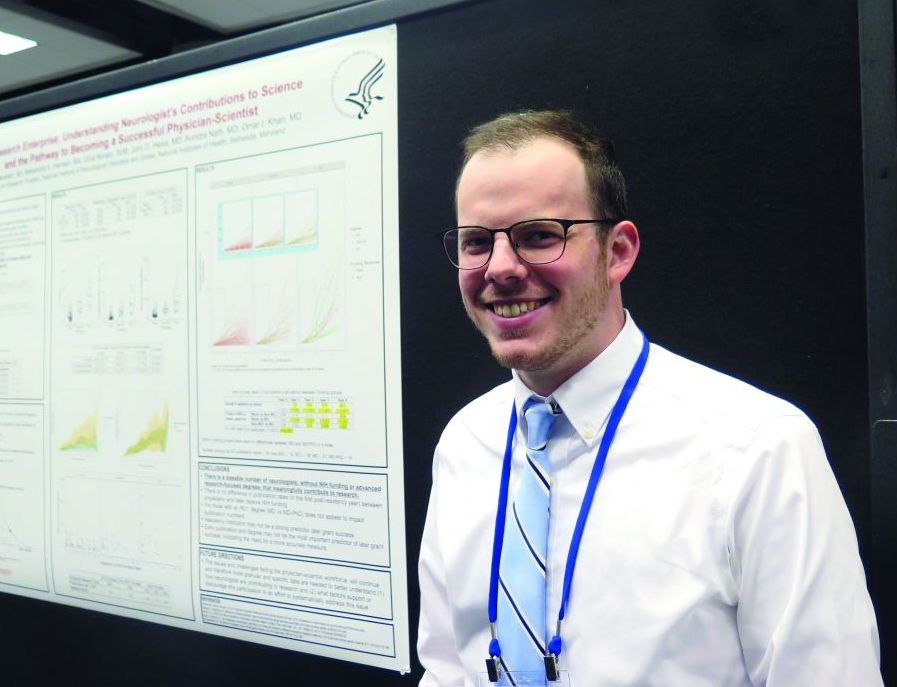
That’s a key finding from an analysis of 244 neurology residency program graduates.
“Science as a whole is trying to get better,” lead study author Wyatt P. Bensken said in an interview at the annual meeting of the American Neurological Association. “If your goal is to be a clinician, that doesn’t mean you can’t contribute to research. If your goal is to see patients for 80% of your time, that doesn’t mean that other 20% – which is research – disqualifies you from being a physician-scientist.”
In an effort to better understand the current status of the physician-scientist workforce in the neurology field, Mr. Bensken and his colleagues identified neurology residency graduates from the top National Institute of Neurological Disorders and Stroke–funded institutions for 2003, 2004, and 2005 via program websites. Data points collected for each individual included complete NIH and other government funding history, number of post-residency publications by year, and the Hirsch-index, or h-index, which measures an individual’s research publication impact. The researchers conducted data analysis via visualization and ANOVA testing.
Mr. Bensken, a research collaborator with the NINDS who is also a PhD student at Case Western Reserve University in Cleveland, reported that 186 of the 244 neurology residency program graduates had demonstrated interest in research based on their publication activity findings. Specifically, 26 had obtained an R01 grant, 31 were non–R01-funded, and 129 were nonfunded. Of the 26 individuals who had obtained an R01, 15 (58%) were MD-PhDs, from a total of 50 MD‐PhDs in the cohort. In addition, 43 individuals had a K‐series award, with 18 going on to receive R01 funding.
Of those with non‐R01 funding or no funding, a number of individuals performed as well as R01‐funded individuals with respect to post‐residency publication rate and impact factor. However, the publication rate and impact factor were highest in the R01-funded group (6.4 and 28.6, respectively), followed by those in the non‐R01 group (3.0 and 15.9), and those in the nonfunded group (1.2 and 8.0). Further, the publications‐per‐research hour for the three groups revealed varied productivity levels. Specifically, those in the R01-funded group with 80% protected research time produced 3.2 publications per 1,000 research hours, while those in the non–R01-funded group with 40% protected research time produced 3.0 publications per 1,000 research hours. Meanwhile, those without R01 funding overall (those with non-RO1 funding and those without funding) performed at a higher per-hour rate, when estimating 10% or 15% protected time (4.9 and 3.3 publications per 1,000 research hours, respectively).
“I think this reinforces the notion that there are far more neurologists out there who aren’t trained as MD-PhDs, who aren’t receiving R01s, but who are making meaningful contributions,” Mr. Bensken said. “Our ultimate goal is to maximize the potential of everybody in this environment to contribute. If everyone was able to contribute what they could, I think research would be far more successful and far more impactful than it is now.”
The study was funded by the NINDS. Mr. Bensken reported having no financial disclosures.
SOURCE: Bensken WP et al. Ann Neurol. 2018;84[S22]:S72-3, Abstract S176.
ATLANTA – You don’t have to hold an advanced research degree or secure National Institutes of Health funding in order to contribute to neurology research in a meaningful way.
That’s a key finding from an analysis of 244 neurology residency program graduates.
“Science as a whole is trying to get better,” lead study author Wyatt P. Bensken said in an interview at the annual meeting of the American Neurological Association. “If your goal is to be a clinician, that doesn’t mean you can’t contribute to research. If your goal is to see patients for 80% of your time, that doesn’t mean that other 20% – which is research – disqualifies you from being a physician-scientist.”
In an effort to better understand the current status of the physician-scientist workforce in the neurology field, Mr. Bensken and his colleagues identified neurology residency graduates from the top National Institute of Neurological Disorders and Stroke–funded institutions for 2003, 2004, and 2005 via program websites. Data points collected for each individual included complete NIH and other government funding history, number of post-residency publications by year, and the Hirsch-index, or h-index, which measures an individual’s research publication impact. The researchers conducted data analysis via visualization and ANOVA testing.
Mr. Bensken, a research collaborator with the NINDS who is also a PhD student at Case Western Reserve University in Cleveland, reported that 186 of the 244 neurology residency program graduates had demonstrated interest in research based on their publication activity findings. Specifically, 26 had obtained an R01 grant, 31 were non–R01-funded, and 129 were nonfunded. Of the 26 individuals who had obtained an R01, 15 (58%) were MD-PhDs, from a total of 50 MD‐PhDs in the cohort. In addition, 43 individuals had a K‐series award, with 18 going on to receive R01 funding.
Of those with non‐R01 funding or no funding, a number of individuals performed as well as R01‐funded individuals with respect to post‐residency publication rate and impact factor. However, the publication rate and impact factor were highest in the R01-funded group (6.4 and 28.6, respectively), followed by those in the non‐R01 group (3.0 and 15.9), and those in the nonfunded group (1.2 and 8.0). Further, the publications‐per‐research hour for the three groups revealed varied productivity levels. Specifically, those in the R01-funded group with 80% protected research time produced 3.2 publications per 1,000 research hours, while those in the non–R01-funded group with 40% protected research time produced 3.0 publications per 1,000 research hours. Meanwhile, those without R01 funding overall (those with non-RO1 funding and those without funding) performed at a higher per-hour rate, when estimating 10% or 15% protected time (4.9 and 3.3 publications per 1,000 research hours, respectively).
“I think this reinforces the notion that there are far more neurologists out there who aren’t trained as MD-PhDs, who aren’t receiving R01s, but who are making meaningful contributions,” Mr. Bensken said. “Our ultimate goal is to maximize the potential of everybody in this environment to contribute. If everyone was able to contribute what they could, I think research would be far more successful and far more impactful than it is now.”
The study was funded by the NINDS. Mr. Bensken reported having no financial disclosures.
SOURCE: Bensken WP et al. Ann Neurol. 2018;84[S22]:S72-3, Abstract S176.
ATLANTA – You don’t have to hold an advanced research degree or secure National Institutes of Health funding in order to contribute to neurology research in a meaningful way.
That’s a key finding from an analysis of 244 neurology residency program graduates.
“Science as a whole is trying to get better,” lead study author Wyatt P. Bensken said in an interview at the annual meeting of the American Neurological Association. “If your goal is to be a clinician, that doesn’t mean you can’t contribute to research. If your goal is to see patients for 80% of your time, that doesn’t mean that other 20% – which is research – disqualifies you from being a physician-scientist.”
In an effort to better understand the current status of the physician-scientist workforce in the neurology field, Mr. Bensken and his colleagues identified neurology residency graduates from the top National Institute of Neurological Disorders and Stroke–funded institutions for 2003, 2004, and 2005 via program websites. Data points collected for each individual included complete NIH and other government funding history, number of post-residency publications by year, and the Hirsch-index, or h-index, which measures an individual’s research publication impact. The researchers conducted data analysis via visualization and ANOVA testing.
Mr. Bensken, a research collaborator with the NINDS who is also a PhD student at Case Western Reserve University in Cleveland, reported that 186 of the 244 neurology residency program graduates had demonstrated interest in research based on their publication activity findings. Specifically, 26 had obtained an R01 grant, 31 were non–R01-funded, and 129 were nonfunded. Of the 26 individuals who had obtained an R01, 15 (58%) were MD-PhDs, from a total of 50 MD‐PhDs in the cohort. In addition, 43 individuals had a K‐series award, with 18 going on to receive R01 funding.
Of those with non‐R01 funding or no funding, a number of individuals performed as well as R01‐funded individuals with respect to post‐residency publication rate and impact factor. However, the publication rate and impact factor were highest in the R01-funded group (6.4 and 28.6, respectively), followed by those in the non‐R01 group (3.0 and 15.9), and those in the nonfunded group (1.2 and 8.0). Further, the publications‐per‐research hour for the three groups revealed varied productivity levels. Specifically, those in the R01-funded group with 80% protected research time produced 3.2 publications per 1,000 research hours, while those in the non–R01-funded group with 40% protected research time produced 3.0 publications per 1,000 research hours. Meanwhile, those without R01 funding overall (those with non-RO1 funding and those without funding) performed at a higher per-hour rate, when estimating 10% or 15% protected time (4.9 and 3.3 publications per 1,000 research hours, respectively).
“I think this reinforces the notion that there are far more neurologists out there who aren’t trained as MD-PhDs, who aren’t receiving R01s, but who are making meaningful contributions,” Mr. Bensken said. “Our ultimate goal is to maximize the potential of everybody in this environment to contribute. If everyone was able to contribute what they could, I think research would be far more successful and far more impactful than it is now.”
The study was funded by the NINDS. Mr. Bensken reported having no financial disclosures.
SOURCE: Bensken WP et al. Ann Neurol. 2018;84[S22]:S72-3, Abstract S176.
REPORTING FROM ANA 2018
Key clinical point:
Major finding: Those in the R01-funded group with 80% protected research time produced 3.2 publications per 1,000 research hours, while those in the non–R01-funded group with 40% protected research time produced 3.0 publications per 1,000 research hours.
Study details: An analysis of 244 neurology residency program graduates.
Disclosures: The study was funded by the NINDS. Mr. Bensken reported having no financial disclosures.
Source: Bensken WP et al. Ann Neurol. 2018;84[S 22]:S72-3, Abstract S176.
Closed-loop basal insulin delivery improves suboptimal T1DM control
BERLIN – Adults, adolescents, and children with type 1 diabetes mellitus (T1DM) achieved better glycemic control and spent less time in a hypoglycemic state with an investigational closed-loop basal insulin delivery system than with a sensor-augmented insulin pump.
The primary trial endpoint of the proportion of time spent in a target glucose range of 3.9-10 mmol/L at 12 weeks was achieved by 65% of closed-loop users versus 54% of sensor-augmented insulin-pump users (P less than .0001).
In addition, fewer patients had periods of blood glucose less than 3.9 mmol/L at 12 weeks, potentially reducing their risk for hypoglycemic episodes (2.6% vs. 3.9%, P = .0130). The percentages of patients with blood glucose concentrations higher than the target range were also significantly reduced with the closed-loop system.
Glycated hemoglobin (HbA1c) improved in both groups, from a baseline of 8% to 7.4% at 12 weeks in the closed-loop users and from 7.8% to 7.7% in the sensor-augmented insulin-pump users (mean difference –0.036%, P less than .0001). Mean glucose levels also significantly improved, with a mean between-group difference of –0.45 mmol/L (P less than .0001).
“Most of the improvements are overnight,” with a striking difference between the control and closed-loop groups of time in range, said senior study investigator Roman Hovorka, PhD, during a press briefing at the annual meeting of the European Association for the Study of Diabetes.
“Usually what people need to do is titrate insulin based on blood sugar tests, but in our system those tests are done by a monitoring system and the insulin is titrated by a computer algorithm,” study investigator Martin Tauschmann, MD, explained in an interview after the press briefing.
The prototype system consists of a modified insulin pump (Medtronic 640G) and a continuous glucose sensor (Enlite 3) that are linked by the proprietary “Cambridge control” algorithm via an Android phone. The latter calculates the optimum insulin dose, which is then relayed to the insulin pump every 10 minutes to determine how many insulin units are needed.
“The algorithm is based on mathematical modeling that is trying to predict what the glucose levels will be in the future and trying to work out the optimum insulin dose to bring the predicted glucose levels down,” noted Dr. Tauschmann, who is a pediatrician at Cambridge University (England).
It’s not a fully closed-loop system, he added, it’s a hybrid, so users still need to calculate their carbohydrate intake around mealtimes and input that into the algorithm and use bolus insulin.
“A problem with using currently available insulin formulations is that you are always behind, because we are delivering insulin in the subcutaneous tissue and it just takes some time for the insulin to be absorbed, and, in the meantime, the blood sugar levels go up,” Dr. Tauschmann observed. Studies with fully closed–loop systems, so far, have shown glucose peaking after meals. Perhaps when faster-acting insulins are tested in this setting it could work, he suggested, but perhaps simplifying how the users announce their meals is a future development for the hybrid systems.
Closed-loop insulin delivery is not a new concept. There is already one system available in the United States produced by Medtronic (670G), which was approved by the Food and Drug Administration in September 2016. However, there are no systems available in Europe and there are limited trial data on their use in an outpatient setting.
The aim of the current study, which was an open-label, multicenter, multinational, parallel-group, randomized, controlled trial, was to compare closed-loop basal insulin delivery and sensor augmented insulin pump therapy in helping a mixed adult and pediatric population of patients T1DM achieve good glucose control.
In all, 86 adults, adolescents, and children (age 6 years or older) were randomized: 46 to the closed-loop system and 40 to the control arm of sensor-augmented insulin pump therapy. The mean age of participants was 22 years in the closed-loop group and 21 years in the sensor group, with a respective 24% and 30% aged 6-12 years, 24% and 20% aged 13-21 years, 39% and 35% aged 22-40 years, and 13% and 15% aged 41 years or older. The mean duration of diabetes was 13 and 10 years, in each group, respectively.
The study data “provide more evidence that closed-loop insulin delivery, compared with standard pump and sensor, really improves HbA1c, time spent in range, and mean glucose, and it also reduces hypoglycemia,” Dr. Tauschmann said.
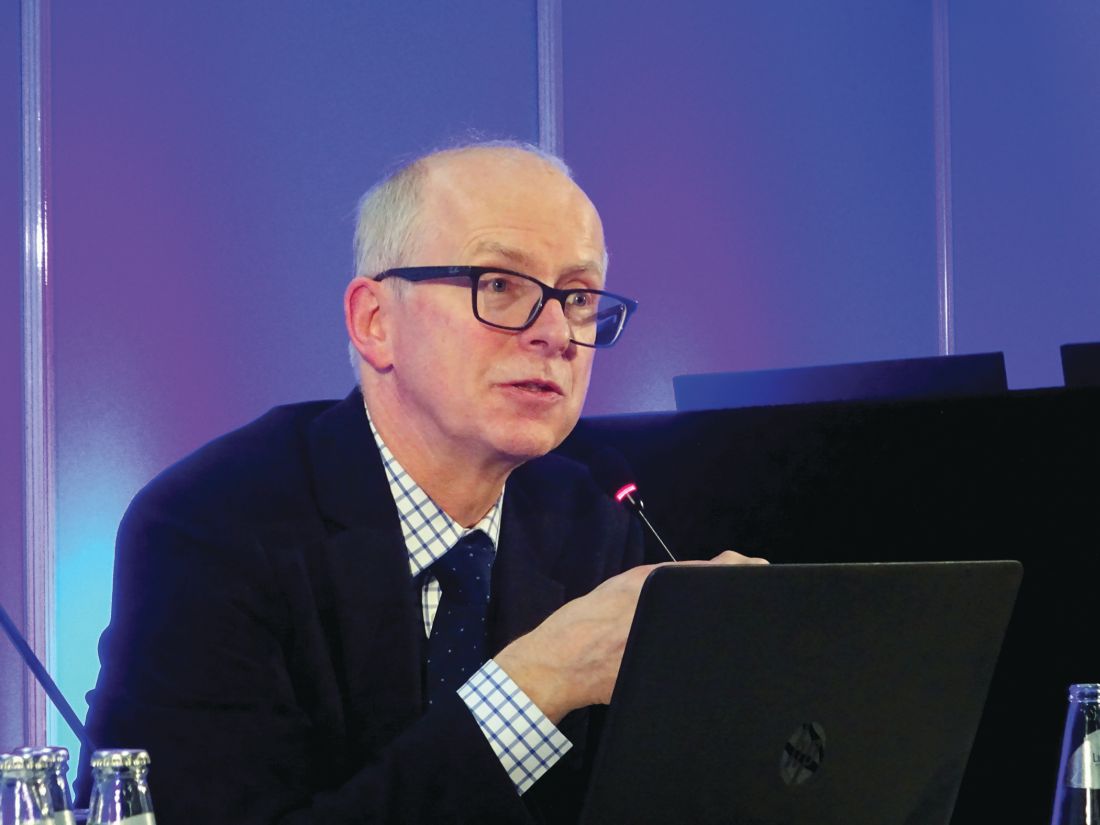
“We didn’t have any real safety issues,” noted Dr. Hovorka, who is professor and director of research in the department of pediatrics at the University of Cambridge. There was one episode of diabetic ketoacidosis caused by infusion set failure in the closed-loop group; 16 other adverse events were noted (13 in the closed-loop group, three in the control group) that were not related to treatment.
“We have a number of studies in the pipeline,” Dr. Hovorka said. “Two exciting studies are in development. In one we are recruiting 70 subjects with newly diagnosed type 1 diabetes mellitus who will be treated with a closed-loop system. There is also a study in children aged between 1 and 7 years that is projected to start next year.”
Work is also underway to create a platform that will work with all insulin pumps and create a commercial product.
The study was funded by the Juvenile Diabetes Research Foundation with additional support from the National Institute for Health Research (England) and the Wellcome Trust. Dr. Tauschmann reported receiving speaker honoraria from Medtronic and Novo Nordisk. Dr. Hovorka reported receiving speaker honoraria from Eli Lilly and Novo Nordisk, serving on an advisory panel for Eli Lilly, receiving license fees from B. Braun Medical and Medtronic, and having patents and patent applications.
SOURCES: Tauschmann M et al. EASD 2018, Oral Presentation 19.
BERLIN – Adults, adolescents, and children with type 1 diabetes mellitus (T1DM) achieved better glycemic control and spent less time in a hypoglycemic state with an investigational closed-loop basal insulin delivery system than with a sensor-augmented insulin pump.
The primary trial endpoint of the proportion of time spent in a target glucose range of 3.9-10 mmol/L at 12 weeks was achieved by 65% of closed-loop users versus 54% of sensor-augmented insulin-pump users (P less than .0001).
In addition, fewer patients had periods of blood glucose less than 3.9 mmol/L at 12 weeks, potentially reducing their risk for hypoglycemic episodes (2.6% vs. 3.9%, P = .0130). The percentages of patients with blood glucose concentrations higher than the target range were also significantly reduced with the closed-loop system.
Glycated hemoglobin (HbA1c) improved in both groups, from a baseline of 8% to 7.4% at 12 weeks in the closed-loop users and from 7.8% to 7.7% in the sensor-augmented insulin-pump users (mean difference –0.036%, P less than .0001). Mean glucose levels also significantly improved, with a mean between-group difference of –0.45 mmol/L (P less than .0001).
“Most of the improvements are overnight,” with a striking difference between the control and closed-loop groups of time in range, said senior study investigator Roman Hovorka, PhD, during a press briefing at the annual meeting of the European Association for the Study of Diabetes.
“Usually what people need to do is titrate insulin based on blood sugar tests, but in our system those tests are done by a monitoring system and the insulin is titrated by a computer algorithm,” study investigator Martin Tauschmann, MD, explained in an interview after the press briefing.
The prototype system consists of a modified insulin pump (Medtronic 640G) and a continuous glucose sensor (Enlite 3) that are linked by the proprietary “Cambridge control” algorithm via an Android phone. The latter calculates the optimum insulin dose, which is then relayed to the insulin pump every 10 minutes to determine how many insulin units are needed.
“The algorithm is based on mathematical modeling that is trying to predict what the glucose levels will be in the future and trying to work out the optimum insulin dose to bring the predicted glucose levels down,” noted Dr. Tauschmann, who is a pediatrician at Cambridge University (England).
It’s not a fully closed-loop system, he added, it’s a hybrid, so users still need to calculate their carbohydrate intake around mealtimes and input that into the algorithm and use bolus insulin.
“A problem with using currently available insulin formulations is that you are always behind, because we are delivering insulin in the subcutaneous tissue and it just takes some time for the insulin to be absorbed, and, in the meantime, the blood sugar levels go up,” Dr. Tauschmann observed. Studies with fully closed–loop systems, so far, have shown glucose peaking after meals. Perhaps when faster-acting insulins are tested in this setting it could work, he suggested, but perhaps simplifying how the users announce their meals is a future development for the hybrid systems.
Closed-loop insulin delivery is not a new concept. There is already one system available in the United States produced by Medtronic (670G), which was approved by the Food and Drug Administration in September 2016. However, there are no systems available in Europe and there are limited trial data on their use in an outpatient setting.
The aim of the current study, which was an open-label, multicenter, multinational, parallel-group, randomized, controlled trial, was to compare closed-loop basal insulin delivery and sensor augmented insulin pump therapy in helping a mixed adult and pediatric population of patients T1DM achieve good glucose control.
In all, 86 adults, adolescents, and children (age 6 years or older) were randomized: 46 to the closed-loop system and 40 to the control arm of sensor-augmented insulin pump therapy. The mean age of participants was 22 years in the closed-loop group and 21 years in the sensor group, with a respective 24% and 30% aged 6-12 years, 24% and 20% aged 13-21 years, 39% and 35% aged 22-40 years, and 13% and 15% aged 41 years or older. The mean duration of diabetes was 13 and 10 years, in each group, respectively.
The study data “provide more evidence that closed-loop insulin delivery, compared with standard pump and sensor, really improves HbA1c, time spent in range, and mean glucose, and it also reduces hypoglycemia,” Dr. Tauschmann said.
“We didn’t have any real safety issues,” noted Dr. Hovorka, who is professor and director of research in the department of pediatrics at the University of Cambridge. There was one episode of diabetic ketoacidosis caused by infusion set failure in the closed-loop group; 16 other adverse events were noted (13 in the closed-loop group, three in the control group) that were not related to treatment.
“We have a number of studies in the pipeline,” Dr. Hovorka said. “Two exciting studies are in development. In one we are recruiting 70 subjects with newly diagnosed type 1 diabetes mellitus who will be treated with a closed-loop system. There is also a study in children aged between 1 and 7 years that is projected to start next year.”
Work is also underway to create a platform that will work with all insulin pumps and create a commercial product.
The study was funded by the Juvenile Diabetes Research Foundation with additional support from the National Institute for Health Research (England) and the Wellcome Trust. Dr. Tauschmann reported receiving speaker honoraria from Medtronic and Novo Nordisk. Dr. Hovorka reported receiving speaker honoraria from Eli Lilly and Novo Nordisk, serving on an advisory panel for Eli Lilly, receiving license fees from B. Braun Medical and Medtronic, and having patents and patent applications.
SOURCES: Tauschmann M et al. EASD 2018, Oral Presentation 19.
BERLIN – Adults, adolescents, and children with type 1 diabetes mellitus (T1DM) achieved better glycemic control and spent less time in a hypoglycemic state with an investigational closed-loop basal insulin delivery system than with a sensor-augmented insulin pump.
The primary trial endpoint of the proportion of time spent in a target glucose range of 3.9-10 mmol/L at 12 weeks was achieved by 65% of closed-loop users versus 54% of sensor-augmented insulin-pump users (P less than .0001).
In addition, fewer patients had periods of blood glucose less than 3.9 mmol/L at 12 weeks, potentially reducing their risk for hypoglycemic episodes (2.6% vs. 3.9%, P = .0130). The percentages of patients with blood glucose concentrations higher than the target range were also significantly reduced with the closed-loop system.
Glycated hemoglobin (HbA1c) improved in both groups, from a baseline of 8% to 7.4% at 12 weeks in the closed-loop users and from 7.8% to 7.7% in the sensor-augmented insulin-pump users (mean difference –0.036%, P less than .0001). Mean glucose levels also significantly improved, with a mean between-group difference of –0.45 mmol/L (P less than .0001).
“Most of the improvements are overnight,” with a striking difference between the control and closed-loop groups of time in range, said senior study investigator Roman Hovorka, PhD, during a press briefing at the annual meeting of the European Association for the Study of Diabetes.
“Usually what people need to do is titrate insulin based on blood sugar tests, but in our system those tests are done by a monitoring system and the insulin is titrated by a computer algorithm,” study investigator Martin Tauschmann, MD, explained in an interview after the press briefing.
The prototype system consists of a modified insulin pump (Medtronic 640G) and a continuous glucose sensor (Enlite 3) that are linked by the proprietary “Cambridge control” algorithm via an Android phone. The latter calculates the optimum insulin dose, which is then relayed to the insulin pump every 10 minutes to determine how many insulin units are needed.
“The algorithm is based on mathematical modeling that is trying to predict what the glucose levels will be in the future and trying to work out the optimum insulin dose to bring the predicted glucose levels down,” noted Dr. Tauschmann, who is a pediatrician at Cambridge University (England).
It’s not a fully closed-loop system, he added, it’s a hybrid, so users still need to calculate their carbohydrate intake around mealtimes and input that into the algorithm and use bolus insulin.
“A problem with using currently available insulin formulations is that you are always behind, because we are delivering insulin in the subcutaneous tissue and it just takes some time for the insulin to be absorbed, and, in the meantime, the blood sugar levels go up,” Dr. Tauschmann observed. Studies with fully closed–loop systems, so far, have shown glucose peaking after meals. Perhaps when faster-acting insulins are tested in this setting it could work, he suggested, but perhaps simplifying how the users announce their meals is a future development for the hybrid systems.
Closed-loop insulin delivery is not a new concept. There is already one system available in the United States produced by Medtronic (670G), which was approved by the Food and Drug Administration in September 2016. However, there are no systems available in Europe and there are limited trial data on their use in an outpatient setting.
The aim of the current study, which was an open-label, multicenter, multinational, parallel-group, randomized, controlled trial, was to compare closed-loop basal insulin delivery and sensor augmented insulin pump therapy in helping a mixed adult and pediatric population of patients T1DM achieve good glucose control.
In all, 86 adults, adolescents, and children (age 6 years or older) were randomized: 46 to the closed-loop system and 40 to the control arm of sensor-augmented insulin pump therapy. The mean age of participants was 22 years in the closed-loop group and 21 years in the sensor group, with a respective 24% and 30% aged 6-12 years, 24% and 20% aged 13-21 years, 39% and 35% aged 22-40 years, and 13% and 15% aged 41 years or older. The mean duration of diabetes was 13 and 10 years, in each group, respectively.
The study data “provide more evidence that closed-loop insulin delivery, compared with standard pump and sensor, really improves HbA1c, time spent in range, and mean glucose, and it also reduces hypoglycemia,” Dr. Tauschmann said.
“We didn’t have any real safety issues,” noted Dr. Hovorka, who is professor and director of research in the department of pediatrics at the University of Cambridge. There was one episode of diabetic ketoacidosis caused by infusion set failure in the closed-loop group; 16 other adverse events were noted (13 in the closed-loop group, three in the control group) that were not related to treatment.
“We have a number of studies in the pipeline,” Dr. Hovorka said. “Two exciting studies are in development. In one we are recruiting 70 subjects with newly diagnosed type 1 diabetes mellitus who will be treated with a closed-loop system. There is also a study in children aged between 1 and 7 years that is projected to start next year.”
Work is also underway to create a platform that will work with all insulin pumps and create a commercial product.
The study was funded by the Juvenile Diabetes Research Foundation with additional support from the National Institute for Health Research (England) and the Wellcome Trust. Dr. Tauschmann reported receiving speaker honoraria from Medtronic and Novo Nordisk. Dr. Hovorka reported receiving speaker honoraria from Eli Lilly and Novo Nordisk, serving on an advisory panel for Eli Lilly, receiving license fees from B. Braun Medical and Medtronic, and having patents and patent applications.
SOURCES: Tauschmann M et al. EASD 2018, Oral Presentation 19.
REPORTING FROM EASD 2018
Key clinical point: Improved glycemic control and reduced risk of hypoglycemia was seen across a wide age range.
Major finding: Blood glucose was within the target range of 3.9-10.0 mmol/L at 12 weeks (P less than .0001) in 65% of closed-loop versus 54% of sensor-augmented insulin-pump users.
Study details: An open-label, multicenter, parallel-group, randomized, controlled trial comparing closed-loop basal insulin delivery and sensor-augmented insulin pump therapy in 86 children (age 6 years or older) and adults with suboptimally controlled T1DM.
Disclosures: The study was funded by the Juvenile Diabetes Research Foundation with additional support from the National Institute for Health Research (England) and the Wellcome Trust. Dr. Tauschmann reported receiving speaker honoraria from Medtronic and Novo Nordisk. Dr. Hovorka reported receiving speaker honoraria from Eli Lilly and Novo Nordisk, serving on an advisory panel for Eli Lilly, receiving license fees from B. Braun Medical and Medtronic, and having patents and patent applications.
Sources: Tauschmann M et al. EASD 2018, Oral Presentation 19.
Liberal oxygen therapy associated with increased mortality
Background: An increasing body of literature suggests that hyperoxia may be harmful, yet liberal use of supplemental oxygen remains widespread.
Study design: Systematic review and meta-analysis.
Setting: Acutely ill hospitalized adults.
Synopsis: The authors performed a meta-analysis of 25 randomized controlled trials of oxygen therapy in acutely ill adults, encompassing 16,037 patients comparing liberal oxygen strategy (median fraction of inspired oxygen,, 0.52; interquartile range, 0.39-0.85) to conservative oxygen strategy (median FiO2, 0.21; IQR, 0.21-025). Results showed the liberal oxygen strategy was associated with higher in-hospital (risk ratio, 1.21; 95% confidence interval, 1.03-1.43) and 30-day (RR, 1.14, 95% CI, 1.01-1.28) mortality, without a difference in length of stay or disability.
Much like transfusion thresholds, more may not always be better when it comes to supplemental oxygen. Hospitalists should consider the harmful effects of hyperoxia when caring for patients on supplemental oxygen. Unfortunately, median blood oxygen saturation during therapy was not available for each group in this trial, so more research is needed to clearly define the upper limit of oxygen saturation at which harm outweighs benefit.
Bottom line: When compared to conservative oxygen administration, liberal oxygen therapy increases mortality in acutely ill adults.
Citation: Chu DK et al. Mortality and morbidity in acutely ill adults treated with liberal versus conservative oxygen therapy (IOTA): a systematic review and meta-analysis. Lancet. 2018;391:1693-705.
Dr. Metter is an assistant professor in the division of hospital medicine, University of Colorado, Denver.
Background: An increasing body of literature suggests that hyperoxia may be harmful, yet liberal use of supplemental oxygen remains widespread.
Study design: Systematic review and meta-analysis.
Setting: Acutely ill hospitalized adults.
Synopsis: The authors performed a meta-analysis of 25 randomized controlled trials of oxygen therapy in acutely ill adults, encompassing 16,037 patients comparing liberal oxygen strategy (median fraction of inspired oxygen,, 0.52; interquartile range, 0.39-0.85) to conservative oxygen strategy (median FiO2, 0.21; IQR, 0.21-025). Results showed the liberal oxygen strategy was associated with higher in-hospital (risk ratio, 1.21; 95% confidence interval, 1.03-1.43) and 30-day (RR, 1.14, 95% CI, 1.01-1.28) mortality, without a difference in length of stay or disability.
Much like transfusion thresholds, more may not always be better when it comes to supplemental oxygen. Hospitalists should consider the harmful effects of hyperoxia when caring for patients on supplemental oxygen. Unfortunately, median blood oxygen saturation during therapy was not available for each group in this trial, so more research is needed to clearly define the upper limit of oxygen saturation at which harm outweighs benefit.
Bottom line: When compared to conservative oxygen administration, liberal oxygen therapy increases mortality in acutely ill adults.
Citation: Chu DK et al. Mortality and morbidity in acutely ill adults treated with liberal versus conservative oxygen therapy (IOTA): a systematic review and meta-analysis. Lancet. 2018;391:1693-705.
Dr. Metter is an assistant professor in the division of hospital medicine, University of Colorado, Denver.
Background: An increasing body of literature suggests that hyperoxia may be harmful, yet liberal use of supplemental oxygen remains widespread.
Study design: Systematic review and meta-analysis.
Setting: Acutely ill hospitalized adults.
Synopsis: The authors performed a meta-analysis of 25 randomized controlled trials of oxygen therapy in acutely ill adults, encompassing 16,037 patients comparing liberal oxygen strategy (median fraction of inspired oxygen,, 0.52; interquartile range, 0.39-0.85) to conservative oxygen strategy (median FiO2, 0.21; IQR, 0.21-025). Results showed the liberal oxygen strategy was associated with higher in-hospital (risk ratio, 1.21; 95% confidence interval, 1.03-1.43) and 30-day (RR, 1.14, 95% CI, 1.01-1.28) mortality, without a difference in length of stay or disability.
Much like transfusion thresholds, more may not always be better when it comes to supplemental oxygen. Hospitalists should consider the harmful effects of hyperoxia when caring for patients on supplemental oxygen. Unfortunately, median blood oxygen saturation during therapy was not available for each group in this trial, so more research is needed to clearly define the upper limit of oxygen saturation at which harm outweighs benefit.
Bottom line: When compared to conservative oxygen administration, liberal oxygen therapy increases mortality in acutely ill adults.
Citation: Chu DK et al. Mortality and morbidity in acutely ill adults treated with liberal versus conservative oxygen therapy (IOTA): a systematic review and meta-analysis. Lancet. 2018;391:1693-705.
Dr. Metter is an assistant professor in the division of hospital medicine, University of Colorado, Denver.
ACR forges ahead with physician-focused APM for RA
CHICAGO – with hopes to send the fully developed model to the Physician-Focused Payment Model Technical Advisory Committee once financial data gathering and analysis is complete, followed by pilot testing once it is accepted by the Centers for Medicare & Medicaid Services, speakers said at the annual meeting of the ACR.
The “RA Care Team” APM is meant to be versatile and work across various practice settings, from rural Alaska and the Southwest to urban Chicago and Boston, and would consist of a rheumatologist or a nurse practitioner or physician assistant working with a rheumatologist in some areas, while in others a patient would be managed by a primary care physician who has a formal arrangement with a rheumatologist to provide early treatment of RA. Participation in the model would use a standard treatment approach pathway that follows ACR treatment guidelines and saves money by reducing the variability in initiation of expensive medications and would be versatile enough to allow for unique patients by requiring only 75% adherence to the pathway across a practice’s patients, said Kwas Huston, MD, cochair of the ACR’s APM work group and a rheumatologist with Kansas City (Mo.) Physician Partners.
The model covers four phases of care, including diagnosis and treatment planning for patients with potential RA, support for primary care practices in evaluating joint symptoms, the initial treatment of patients with RA, and the continued care of RA. For instance, a rheumatologist could receive payment for an e-consult with a primary care provider to determine if a patient has symptoms requiring an evaluation for RA. A rheumatologist could also receive a one-time payment for treatment and planning services when a diagnosis of RA cannot be established in a patient suspected of having RA, whereas the rheumatologist or a primary care provider with rheumatology support would receive monthly payments for 6 months for the initial treatment of an RA patient and then thereafter would receive monthly payments for continued care of RA. The payments would not be dependent on the number of visits or face-to-face time, would be stratified based on patient characteristics, and would include some lab testing and imaging.
Currently, the RA APM work group is analyzing financial data gathered from two large rheumatology practices for specific CPT codes matched to specific patients based on their clinical characteristics “to get a sense of how much revenue is coming in right now for practices taking care of patients with, let’s say, moderate disease activity and two comorbidities or low disease activity and no comorbidities,” Dr. Huston said. The work group is also surveying practices to estimate additional costs required to participate in the APM and thereby develop a financial model to adequately pay for APM services. They additionally plan to develop a tool kit that is designed to help individual practices determine the economic impact that the APM would have.
Notably, the cost of medications is not included in the APM. “That would be too much of a risk for small practices to take on,” Dr. Huston said.
“This model is a work in progress. We still have a lot of additional work to validate the data,” he added.
Providers who wish to participate in an advanced APM in 2019 need to have at least 25% of their Medicare Part B payments or have at least 20% of Medicare patients in their practice come through the APM in order to avoid having to submit data to comply with the performance criteria requirements of the Merit-Based Incentive Payment System, said Angus Worthing, MD, chair of the ACR’s Government Affairs Committee and a practicing rheumatologist in the Washington area.
“The ACR has advocated to reduce these thresholds over the years, but unfortunately that has not happened yet,” Dr. Worthing said.
CHICAGO – with hopes to send the fully developed model to the Physician-Focused Payment Model Technical Advisory Committee once financial data gathering and analysis is complete, followed by pilot testing once it is accepted by the Centers for Medicare & Medicaid Services, speakers said at the annual meeting of the ACR.
The “RA Care Team” APM is meant to be versatile and work across various practice settings, from rural Alaska and the Southwest to urban Chicago and Boston, and would consist of a rheumatologist or a nurse practitioner or physician assistant working with a rheumatologist in some areas, while in others a patient would be managed by a primary care physician who has a formal arrangement with a rheumatologist to provide early treatment of RA. Participation in the model would use a standard treatment approach pathway that follows ACR treatment guidelines and saves money by reducing the variability in initiation of expensive medications and would be versatile enough to allow for unique patients by requiring only 75% adherence to the pathway across a practice’s patients, said Kwas Huston, MD, cochair of the ACR’s APM work group and a rheumatologist with Kansas City (Mo.) Physician Partners.
The model covers four phases of care, including diagnosis and treatment planning for patients with potential RA, support for primary care practices in evaluating joint symptoms, the initial treatment of patients with RA, and the continued care of RA. For instance, a rheumatologist could receive payment for an e-consult with a primary care provider to determine if a patient has symptoms requiring an evaluation for RA. A rheumatologist could also receive a one-time payment for treatment and planning services when a diagnosis of RA cannot be established in a patient suspected of having RA, whereas the rheumatologist or a primary care provider with rheumatology support would receive monthly payments for 6 months for the initial treatment of an RA patient and then thereafter would receive monthly payments for continued care of RA. The payments would not be dependent on the number of visits or face-to-face time, would be stratified based on patient characteristics, and would include some lab testing and imaging.
Currently, the RA APM work group is analyzing financial data gathered from two large rheumatology practices for specific CPT codes matched to specific patients based on their clinical characteristics “to get a sense of how much revenue is coming in right now for practices taking care of patients with, let’s say, moderate disease activity and two comorbidities or low disease activity and no comorbidities,” Dr. Huston said. The work group is also surveying practices to estimate additional costs required to participate in the APM and thereby develop a financial model to adequately pay for APM services. They additionally plan to develop a tool kit that is designed to help individual practices determine the economic impact that the APM would have.
Notably, the cost of medications is not included in the APM. “That would be too much of a risk for small practices to take on,” Dr. Huston said.
“This model is a work in progress. We still have a lot of additional work to validate the data,” he added.
Providers who wish to participate in an advanced APM in 2019 need to have at least 25% of their Medicare Part B payments or have at least 20% of Medicare patients in their practice come through the APM in order to avoid having to submit data to comply with the performance criteria requirements of the Merit-Based Incentive Payment System, said Angus Worthing, MD, chair of the ACR’s Government Affairs Committee and a practicing rheumatologist in the Washington area.
“The ACR has advocated to reduce these thresholds over the years, but unfortunately that has not happened yet,” Dr. Worthing said.
CHICAGO – with hopes to send the fully developed model to the Physician-Focused Payment Model Technical Advisory Committee once financial data gathering and analysis is complete, followed by pilot testing once it is accepted by the Centers for Medicare & Medicaid Services, speakers said at the annual meeting of the ACR.
The “RA Care Team” APM is meant to be versatile and work across various practice settings, from rural Alaska and the Southwest to urban Chicago and Boston, and would consist of a rheumatologist or a nurse practitioner or physician assistant working with a rheumatologist in some areas, while in others a patient would be managed by a primary care physician who has a formal arrangement with a rheumatologist to provide early treatment of RA. Participation in the model would use a standard treatment approach pathway that follows ACR treatment guidelines and saves money by reducing the variability in initiation of expensive medications and would be versatile enough to allow for unique patients by requiring only 75% adherence to the pathway across a practice’s patients, said Kwas Huston, MD, cochair of the ACR’s APM work group and a rheumatologist with Kansas City (Mo.) Physician Partners.
The model covers four phases of care, including diagnosis and treatment planning for patients with potential RA, support for primary care practices in evaluating joint symptoms, the initial treatment of patients with RA, and the continued care of RA. For instance, a rheumatologist could receive payment for an e-consult with a primary care provider to determine if a patient has symptoms requiring an evaluation for RA. A rheumatologist could also receive a one-time payment for treatment and planning services when a diagnosis of RA cannot be established in a patient suspected of having RA, whereas the rheumatologist or a primary care provider with rheumatology support would receive monthly payments for 6 months for the initial treatment of an RA patient and then thereafter would receive monthly payments for continued care of RA. The payments would not be dependent on the number of visits or face-to-face time, would be stratified based on patient characteristics, and would include some lab testing and imaging.
Currently, the RA APM work group is analyzing financial data gathered from two large rheumatology practices for specific CPT codes matched to specific patients based on their clinical characteristics “to get a sense of how much revenue is coming in right now for practices taking care of patients with, let’s say, moderate disease activity and two comorbidities or low disease activity and no comorbidities,” Dr. Huston said. The work group is also surveying practices to estimate additional costs required to participate in the APM and thereby develop a financial model to adequately pay for APM services. They additionally plan to develop a tool kit that is designed to help individual practices determine the economic impact that the APM would have.
Notably, the cost of medications is not included in the APM. “That would be too much of a risk for small practices to take on,” Dr. Huston said.
“This model is a work in progress. We still have a lot of additional work to validate the data,” he added.
Providers who wish to participate in an advanced APM in 2019 need to have at least 25% of their Medicare Part B payments or have at least 20% of Medicare patients in their practice come through the APM in order to avoid having to submit data to comply with the performance criteria requirements of the Merit-Based Incentive Payment System, said Angus Worthing, MD, chair of the ACR’s Government Affairs Committee and a practicing rheumatologist in the Washington area.
“The ACR has advocated to reduce these thresholds over the years, but unfortunately that has not happened yet,” Dr. Worthing said.
REPORTING FROM THE ACR ANNUAL MEETING
'Real food' called key to healthful eating; Peer mentors seek to prevent suicides
Nutritious eating need not involve counting calories, carbohydrates, or points, according to food and nutrition editor Paul Kita.

After talking with experts and studying various diets, Mr. Kita said he found an approach that works for him.
The key is eating “real food,” such as chicken, tomatoes, eggs, and avocados; avoiding processed foods; and not demonizing anything. Approaching food this way for 10 years has allowed Mr. Kita to keep his weight at 155 pounds – give or take 5, – he wrote in Men’s Health.
“I eat cookies. I eat carbs. I even drink coffee supposedly loaded with mycotoxins,” Mr. Kita wrote. “I [eat] fruits and vegetables with every meal and cut back on booze and desserts. I have two clementines or a banana or a split broiled tomato for breakfast. I eat a big salad of mixed greens or a side of coleslaw or a ripe, juicy pear for lunch.”
He said dinner might include sautéed spinach or a carrot salad and roasted sweet potatoes. “And then I either choose to have a beer with or after dinner or a simple dessert. If I’m not craving something sweet, I’ll have a cup of tea.”
He said he tries for about 30 grams of protein at each meal.
“Here’s my main takeaway ... if the plan you have for what you feed yourself causes you more stress and adds more work to your already-busy life, you’re not eating well. The best diet ... doesn’t have celebrity endorsements. The best diet is one that is based on the inclusion of healthful foods – not the exclusion of food groups.”
Students seek to prevent suicides
The beauty of mountains can be breathtaking for someone passing through. For residents, living in the shadow of the giants, however, can be isolating, especially for small mountain communities. Grand Junction, Colo., is located in a valley ringed by tall mountains, desert mesas, and red-rock cliffs. For local residents, and especially teenagers, it can feel like the end of the world.
“I know we can’t really fix this because it’s nature,” 17-year-old Victoria Mendoza said in an NPR interview. “I feel like the people in our valley feel like there’s only life inside of Grand Junction.”
Ms. Mendoza has fought depression, as have other members of her family and others in the community. Seven student suicides occurred in the 2016-2017 school year. “It felt like there was this cloud around our whole valley,” Ms. Mendoza said. “It got to a point where we were just waiting for the next one.”
Rural settings can foster the loneliness that, for some, is only cured by self-inflicted death. Of the top 10 U.S. states with the highest rates of suicide, 8 are located in the rural mountain West. The view of mental illness as a sign of personal weakness remains prevalent, and having ready access to guns is not helpful.
In Grand Junction, students have seized the reins of a suicide prevention in which they act as peer mentors to younger students that either seek help or appear to be floundering. The approach, called the Sources of Strength suicide program, exemplifies a broader shift in public health thinking that is taking place. In Grand Junction, the strategy is to zero in on the mental health and well-being of everyone. That encourages a sense of community, even in a setting of physical isolation.
Cannabidiol and substance-free living
With cannabis use becoming more part of the norm and with its legalization, the idea of altering the way we see the world is, for some, moving from a no-go option to a practice that can help ease the strains of life. For those who struggle with PTSD or other anxieties, cannabis can be a way to alleviate paranoia, anxiety, and mood swings without the use of prescription drugs.
Of course, there will be many who will overenthusiastically embrace the chance to legally alter themselves, such as what occurs with alcohol. Sobriety means different things to different people. Some alcoholics happily live with an occasional drink. They consider themselves on a path of sobriety. Others must go cold turkey forever. This is a different sobriety. Each can be effective and can bring happiness.
“Does using cannabidiol count as a strike against recovery or a substance-free lifestyle? This can lead into particularly tricky terrain as many people turn to cannabis products as a solution for all manner of ailments – from mental health to addiction. As we reckon with cannabis legalization as a country, perhaps what we really should be asking ourselves is how we’re going to redefine the traditional meaning of sobriety,” Amanda Scriver wrote in the Walrus.
“As cannabidiol gains popularity, we must give people the capacity to examine, evaluate, and possibly amend their own health, wellness, or recovery journey in a way that feels right for them. Yes, we need better medical understanding of cannabis and its related products, and yes, we also need training in the harm-reduction model. But we also need compassion and the courage to rethink old definitions,” Ms. Scriver wrote.
Masculinity tied to mental health
As a celebrity, Lenard Larry McKelvey, aka Charlamagne Tha God, makes his living being brash and bold. On his radio show, The Breakfast Club, he asks questions some do not want asked. But, like many, he is also anxious about the world. As a father, he worries about his daughters. As a black man, he worries about police brutality.
But unlike many, he has a forum and an audience. And he is using his forum to speak out about his fears and anxieties in the hope that it helps others deal with their demons. A recent example is his book, “Shook One: Anxiety Playing Tricks On Me” (Touchstone, 2018).
He is a strong advocate of therapy. “I go to therapy just to push those negative thoughts out of my mind. None of us can escape thinking negatively. Negative thoughts are going to pop up in your head. You’re going to have self-doubt sometimes; you’re going to be insecure sometimes. You’re going to worry about your kids; you’re going to worry about your wife, but it’s about pushing that %@C# out and not holding onto it. When you hold onto it, that’s when it grows,” he explained in an interview with the Boston Globe.
He espoused the freedom that comes from self-acceptance. “My whole life, people have said to me, ‘You can’t be soft.’ I don’t care about that anymore. I don’t care about how people perceive me when it comes to masculinity. You know what’s masculine? Masculine is taking care of your mind, your body, and your soul. We spend so much time on our body. We want that six-pack. But what about your mental health? What about your mental well-being? I go to the gym three, four times a week. Why can’t I put that same effort and same energy into getting mentally strong?”
Can extremists’ mindsets change?
The recent massacre at the Pittsburgh synagogue was yet another vile example of hatred and bigotry. But, in the United States and elsewhere, the shooter was one of many. Why?
According to an NPR piece, there are several possible explanations. Those brimming with racist hated might have little opportunity to get off that track. “We haven’t wanted to acknowledge that we have a problem with violent right-wing extremism in this kind of domestic terrorism,” said sociologist Pete Simi, PhD, of Chapman University in Orange, Calif. Dr. Simi has studied violent white nationalists and other hate groups for decades.
“White supremacy is really a problem throughout the United States,” Dr. Simi said. “It doesn’t know any geographic boundaries. It’s not isolated to either urban or rural or suburban – it cuts across all.”
There is little knowledge of how to deal with home-grown hatred. Banning immigrants perceived as being a threat is one attempt to deal with foreign-born terrorism, but that doesn’t work for citizens. For them, rehabilitation is possible, according to Dr. Simi, but it comes with a big price tag of revamped social, education, housing, and employment programs. Governments are loathe to take on those costs, in part because it is an admission that society is broken.
“A big, big problem that we face as a society is abdicating our responsibility in terms of providing this kind of social support and social safety net for individuals that suffer from mental health, as well as drug problems,” Dr. Simi said in the interview.
Small-scale local efforts, such as the Chicago-based Life After Hate, are working for change. How to scale up such efforts is a vexing problem.
Nutritious eating need not involve counting calories, carbohydrates, or points, according to food and nutrition editor Paul Kita.
After talking with experts and studying various diets, Mr. Kita said he found an approach that works for him.
The key is eating “real food,” such as chicken, tomatoes, eggs, and avocados; avoiding processed foods; and not demonizing anything. Approaching food this way for 10 years has allowed Mr. Kita to keep his weight at 155 pounds – give or take 5, – he wrote in Men’s Health.
“I eat cookies. I eat carbs. I even drink coffee supposedly loaded with mycotoxins,” Mr. Kita wrote. “I [eat] fruits and vegetables with every meal and cut back on booze and desserts. I have two clementines or a banana or a split broiled tomato for breakfast. I eat a big salad of mixed greens or a side of coleslaw or a ripe, juicy pear for lunch.”
He said dinner might include sautéed spinach or a carrot salad and roasted sweet potatoes. “And then I either choose to have a beer with or after dinner or a simple dessert. If I’m not craving something sweet, I’ll have a cup of tea.”
He said he tries for about 30 grams of protein at each meal.
“Here’s my main takeaway ... if the plan you have for what you feed yourself causes you more stress and adds more work to your already-busy life, you’re not eating well. The best diet ... doesn’t have celebrity endorsements. The best diet is one that is based on the inclusion of healthful foods – not the exclusion of food groups.”
Students seek to prevent suicides
The beauty of mountains can be breathtaking for someone passing through. For residents, living in the shadow of the giants, however, can be isolating, especially for small mountain communities. Grand Junction, Colo., is located in a valley ringed by tall mountains, desert mesas, and red-rock cliffs. For local residents, and especially teenagers, it can feel like the end of the world.
“I know we can’t really fix this because it’s nature,” 17-year-old Victoria Mendoza said in an NPR interview. “I feel like the people in our valley feel like there’s only life inside of Grand Junction.”
Ms. Mendoza has fought depression, as have other members of her family and others in the community. Seven student suicides occurred in the 2016-2017 school year. “It felt like there was this cloud around our whole valley,” Ms. Mendoza said. “It got to a point where we were just waiting for the next one.”
Rural settings can foster the loneliness that, for some, is only cured by self-inflicted death. Of the top 10 U.S. states with the highest rates of suicide, 8 are located in the rural mountain West. The view of mental illness as a sign of personal weakness remains prevalent, and having ready access to guns is not helpful.
In Grand Junction, students have seized the reins of a suicide prevention in which they act as peer mentors to younger students that either seek help or appear to be floundering. The approach, called the Sources of Strength suicide program, exemplifies a broader shift in public health thinking that is taking place. In Grand Junction, the strategy is to zero in on the mental health and well-being of everyone. That encourages a sense of community, even in a setting of physical isolation.
Cannabidiol and substance-free living
With cannabis use becoming more part of the norm and with its legalization, the idea of altering the way we see the world is, for some, moving from a no-go option to a practice that can help ease the strains of life. For those who struggle with PTSD or other anxieties, cannabis can be a way to alleviate paranoia, anxiety, and mood swings without the use of prescription drugs.
Of course, there will be many who will overenthusiastically embrace the chance to legally alter themselves, such as what occurs with alcohol. Sobriety means different things to different people. Some alcoholics happily live with an occasional drink. They consider themselves on a path of sobriety. Others must go cold turkey forever. This is a different sobriety. Each can be effective and can bring happiness.
“Does using cannabidiol count as a strike against recovery or a substance-free lifestyle? This can lead into particularly tricky terrain as many people turn to cannabis products as a solution for all manner of ailments – from mental health to addiction. As we reckon with cannabis legalization as a country, perhaps what we really should be asking ourselves is how we’re going to redefine the traditional meaning of sobriety,” Amanda Scriver wrote in the Walrus.
“As cannabidiol gains popularity, we must give people the capacity to examine, evaluate, and possibly amend their own health, wellness, or recovery journey in a way that feels right for them. Yes, we need better medical understanding of cannabis and its related products, and yes, we also need training in the harm-reduction model. But we also need compassion and the courage to rethink old definitions,” Ms. Scriver wrote.
Masculinity tied to mental health
As a celebrity, Lenard Larry McKelvey, aka Charlamagne Tha God, makes his living being brash and bold. On his radio show, The Breakfast Club, he asks questions some do not want asked. But, like many, he is also anxious about the world. As a father, he worries about his daughters. As a black man, he worries about police brutality.
But unlike many, he has a forum and an audience. And he is using his forum to speak out about his fears and anxieties in the hope that it helps others deal with their demons. A recent example is his book, “Shook One: Anxiety Playing Tricks On Me” (Touchstone, 2018).
He is a strong advocate of therapy. “I go to therapy just to push those negative thoughts out of my mind. None of us can escape thinking negatively. Negative thoughts are going to pop up in your head. You’re going to have self-doubt sometimes; you’re going to be insecure sometimes. You’re going to worry about your kids; you’re going to worry about your wife, but it’s about pushing that %@C# out and not holding onto it. When you hold onto it, that’s when it grows,” he explained in an interview with the Boston Globe.
He espoused the freedom that comes from self-acceptance. “My whole life, people have said to me, ‘You can’t be soft.’ I don’t care about that anymore. I don’t care about how people perceive me when it comes to masculinity. You know what’s masculine? Masculine is taking care of your mind, your body, and your soul. We spend so much time on our body. We want that six-pack. But what about your mental health? What about your mental well-being? I go to the gym three, four times a week. Why can’t I put that same effort and same energy into getting mentally strong?”
Can extremists’ mindsets change?
The recent massacre at the Pittsburgh synagogue was yet another vile example of hatred and bigotry. But, in the United States and elsewhere, the shooter was one of many. Why?
According to an NPR piece, there are several possible explanations. Those brimming with racist hated might have little opportunity to get off that track. “We haven’t wanted to acknowledge that we have a problem with violent right-wing extremism in this kind of domestic terrorism,” said sociologist Pete Simi, PhD, of Chapman University in Orange, Calif. Dr. Simi has studied violent white nationalists and other hate groups for decades.
“White supremacy is really a problem throughout the United States,” Dr. Simi said. “It doesn’t know any geographic boundaries. It’s not isolated to either urban or rural or suburban – it cuts across all.”
There is little knowledge of how to deal with home-grown hatred. Banning immigrants perceived as being a threat is one attempt to deal with foreign-born terrorism, but that doesn’t work for citizens. For them, rehabilitation is possible, according to Dr. Simi, but it comes with a big price tag of revamped social, education, housing, and employment programs. Governments are loathe to take on those costs, in part because it is an admission that society is broken.
“A big, big problem that we face as a society is abdicating our responsibility in terms of providing this kind of social support and social safety net for individuals that suffer from mental health, as well as drug problems,” Dr. Simi said in the interview.
Small-scale local efforts, such as the Chicago-based Life After Hate, are working for change. How to scale up such efforts is a vexing problem.
Nutritious eating need not involve counting calories, carbohydrates, or points, according to food and nutrition editor Paul Kita.
After talking with experts and studying various diets, Mr. Kita said he found an approach that works for him.
The key is eating “real food,” such as chicken, tomatoes, eggs, and avocados; avoiding processed foods; and not demonizing anything. Approaching food this way for 10 years has allowed Mr. Kita to keep his weight at 155 pounds – give or take 5, – he wrote in Men’s Health.
“I eat cookies. I eat carbs. I even drink coffee supposedly loaded with mycotoxins,” Mr. Kita wrote. “I [eat] fruits and vegetables with every meal and cut back on booze and desserts. I have two clementines or a banana or a split broiled tomato for breakfast. I eat a big salad of mixed greens or a side of coleslaw or a ripe, juicy pear for lunch.”
He said dinner might include sautéed spinach or a carrot salad and roasted sweet potatoes. “And then I either choose to have a beer with or after dinner or a simple dessert. If I’m not craving something sweet, I’ll have a cup of tea.”
He said he tries for about 30 grams of protein at each meal.
“Here’s my main takeaway ... if the plan you have for what you feed yourself causes you more stress and adds more work to your already-busy life, you’re not eating well. The best diet ... doesn’t have celebrity endorsements. The best diet is one that is based on the inclusion of healthful foods – not the exclusion of food groups.”
Students seek to prevent suicides
The beauty of mountains can be breathtaking for someone passing through. For residents, living in the shadow of the giants, however, can be isolating, especially for small mountain communities. Grand Junction, Colo., is located in a valley ringed by tall mountains, desert mesas, and red-rock cliffs. For local residents, and especially teenagers, it can feel like the end of the world.
“I know we can’t really fix this because it’s nature,” 17-year-old Victoria Mendoza said in an NPR interview. “I feel like the people in our valley feel like there’s only life inside of Grand Junction.”
Ms. Mendoza has fought depression, as have other members of her family and others in the community. Seven student suicides occurred in the 2016-2017 school year. “It felt like there was this cloud around our whole valley,” Ms. Mendoza said. “It got to a point where we were just waiting for the next one.”
Rural settings can foster the loneliness that, for some, is only cured by self-inflicted death. Of the top 10 U.S. states with the highest rates of suicide, 8 are located in the rural mountain West. The view of mental illness as a sign of personal weakness remains prevalent, and having ready access to guns is not helpful.
In Grand Junction, students have seized the reins of a suicide prevention in which they act as peer mentors to younger students that either seek help or appear to be floundering. The approach, called the Sources of Strength suicide program, exemplifies a broader shift in public health thinking that is taking place. In Grand Junction, the strategy is to zero in on the mental health and well-being of everyone. That encourages a sense of community, even in a setting of physical isolation.
Cannabidiol and substance-free living
With cannabis use becoming more part of the norm and with its legalization, the idea of altering the way we see the world is, for some, moving from a no-go option to a practice that can help ease the strains of life. For those who struggle with PTSD or other anxieties, cannabis can be a way to alleviate paranoia, anxiety, and mood swings without the use of prescription drugs.
Of course, there will be many who will overenthusiastically embrace the chance to legally alter themselves, such as what occurs with alcohol. Sobriety means different things to different people. Some alcoholics happily live with an occasional drink. They consider themselves on a path of sobriety. Others must go cold turkey forever. This is a different sobriety. Each can be effective and can bring happiness.
“Does using cannabidiol count as a strike against recovery or a substance-free lifestyle? This can lead into particularly tricky terrain as many people turn to cannabis products as a solution for all manner of ailments – from mental health to addiction. As we reckon with cannabis legalization as a country, perhaps what we really should be asking ourselves is how we’re going to redefine the traditional meaning of sobriety,” Amanda Scriver wrote in the Walrus.
“As cannabidiol gains popularity, we must give people the capacity to examine, evaluate, and possibly amend their own health, wellness, or recovery journey in a way that feels right for them. Yes, we need better medical understanding of cannabis and its related products, and yes, we also need training in the harm-reduction model. But we also need compassion and the courage to rethink old definitions,” Ms. Scriver wrote.
Masculinity tied to mental health
As a celebrity, Lenard Larry McKelvey, aka Charlamagne Tha God, makes his living being brash and bold. On his radio show, The Breakfast Club, he asks questions some do not want asked. But, like many, he is also anxious about the world. As a father, he worries about his daughters. As a black man, he worries about police brutality.
But unlike many, he has a forum and an audience. And he is using his forum to speak out about his fears and anxieties in the hope that it helps others deal with their demons. A recent example is his book, “Shook One: Anxiety Playing Tricks On Me” (Touchstone, 2018).
He is a strong advocate of therapy. “I go to therapy just to push those negative thoughts out of my mind. None of us can escape thinking negatively. Negative thoughts are going to pop up in your head. You’re going to have self-doubt sometimes; you’re going to be insecure sometimes. You’re going to worry about your kids; you’re going to worry about your wife, but it’s about pushing that %@C# out and not holding onto it. When you hold onto it, that’s when it grows,” he explained in an interview with the Boston Globe.
He espoused the freedom that comes from self-acceptance. “My whole life, people have said to me, ‘You can’t be soft.’ I don’t care about that anymore. I don’t care about how people perceive me when it comes to masculinity. You know what’s masculine? Masculine is taking care of your mind, your body, and your soul. We spend so much time on our body. We want that six-pack. But what about your mental health? What about your mental well-being? I go to the gym three, four times a week. Why can’t I put that same effort and same energy into getting mentally strong?”
Can extremists’ mindsets change?
The recent massacre at the Pittsburgh synagogue was yet another vile example of hatred and bigotry. But, in the United States and elsewhere, the shooter was one of many. Why?
According to an NPR piece, there are several possible explanations. Those brimming with racist hated might have little opportunity to get off that track. “We haven’t wanted to acknowledge that we have a problem with violent right-wing extremism in this kind of domestic terrorism,” said sociologist Pete Simi, PhD, of Chapman University in Orange, Calif. Dr. Simi has studied violent white nationalists and other hate groups for decades.
“White supremacy is really a problem throughout the United States,” Dr. Simi said. “It doesn’t know any geographic boundaries. It’s not isolated to either urban or rural or suburban – it cuts across all.”
There is little knowledge of how to deal with home-grown hatred. Banning immigrants perceived as being a threat is one attempt to deal with foreign-born terrorism, but that doesn’t work for citizens. For them, rehabilitation is possible, according to Dr. Simi, but it comes with a big price tag of revamped social, education, housing, and employment programs. Governments are loathe to take on those costs, in part because it is an admission that society is broken.
“A big, big problem that we face as a society is abdicating our responsibility in terms of providing this kind of social support and social safety net for individuals that suffer from mental health, as well as drug problems,” Dr. Simi said in the interview.
Small-scale local efforts, such as the Chicago-based Life After Hate, are working for change. How to scale up such efforts is a vexing problem.
Denosumab effective against osteoporosis in TDT patients
Denosumab can be effective against osteoporosis caused by transfusion-dependent thalassemia (TDT), according to new research.
The study authors found that patients who received twice-yearly injections of denosumab experienced a significant increase in bone density and reduction in bone pain. Their findings were published in Blood Advances.
“Not only is denosumab associated with improved bone health and reduced pain, but its ease of administration may very well make this drug superior to bisphosphonates for the treatment of osteoporosis in patients with TDT and osteoporosis,” senior study author Evangelos Terpos, MD, of the National and Kapodistrian University of Athens, said in a statement.
For this phase 2b study, Dr. Terpos and his colleagues evaluated 63 patients with TDT and osteoporosis, randomized to receive 60 mg of denosumab (n = 32) or placebo (n = 31) on days 0 and 180 of a 12-month period. Patients in both arms also received daily supplements of calcium and vitamin D.
Baseline characteristics were largely similar between the treatment arms. However, the mean value of bone-specific alkaline phosphatase (bALP) was significantly lower in the placebo arm than the denosumab arm – 68.48 IU/L versus 85.45 IU/L (P = .013). And the mean value of the tartrate-resistant acid phosphatase isoform–5b (TRACP-5b) marker was significantly higher in the denosumab arm than in the placebo arm – 0.42 IU/L versus 0.16 IU/L (P = .026).
The researchers measured bone mineral density in the L1-L4 lumbar spine, wrist, and femoral neck. At 12 months, the mean increase in L1-L4 bone mineral density was 5.92% in the denosumab arm and 2.92% in the placebo arm (P = .043). The mean decrease in wrist bone mineral density was –0.26% and –3.92%, respectively (P = .035).
Femoral neck bone mineral density was increased in the denosumab arm (4.08%), compared with the placebo arm (1.96%), but the difference between the two groups was not statistically significant.
Patients in the denosumab arm had a significant reduction in bone pain at 12 months, according to the McGill-Melzack scoring system and the Huskisson visual analog scale (P less than .001 for both). There was no significant change in pain for patients in the placebo arm on either scale.
At 12 months, patients in the denosumab arm had experienced a significant reduction from baseline in several markers of bone remodeling, including soluble receptor activator of nuclear factor–kappa B ligand (sRANKL), osteoprotegerin (OPG), sRANKL/OPG ratio, C-terminal telopeptide of type I collagen (CTx), TRACP-5b, and bALP.
There were no significant changes in dickkopf-1, sclerostin, or osteocalcin in the denosumab arm.
In the placebo arm, patients had a significant increase from baseline in several markers of bone remodeling, including sRANKL, OPG, dickkopf-1, sclerostin, CTx, TRACP-5b, and bALP. There was no significant change from baseline in the sRANKL/OPG ratio or osteocalcin.
In all, there were 17 adverse events in 14 patients. There were three serious adverse events in the denosumab arm – pleural effusion (grade 3), atrial fibrillation (grade 3), and supraventricular tachycardia (grade 4). All three of these adverse events were considered unrelated to denosumab.
The study was funded by Amgen, which markets denosumab. The authors reported that they had no competing financial interests.
SOURCE: Terpos E et al. Blood Adv. 2018;2:2837-47.
Denosumab can be effective against osteoporosis caused by transfusion-dependent thalassemia (TDT), according to new research.
The study authors found that patients who received twice-yearly injections of denosumab experienced a significant increase in bone density and reduction in bone pain. Their findings were published in Blood Advances.
“Not only is denosumab associated with improved bone health and reduced pain, but its ease of administration may very well make this drug superior to bisphosphonates for the treatment of osteoporosis in patients with TDT and osteoporosis,” senior study author Evangelos Terpos, MD, of the National and Kapodistrian University of Athens, said in a statement.
For this phase 2b study, Dr. Terpos and his colleagues evaluated 63 patients with TDT and osteoporosis, randomized to receive 60 mg of denosumab (n = 32) or placebo (n = 31) on days 0 and 180 of a 12-month period. Patients in both arms also received daily supplements of calcium and vitamin D.
Baseline characteristics were largely similar between the treatment arms. However, the mean value of bone-specific alkaline phosphatase (bALP) was significantly lower in the placebo arm than the denosumab arm – 68.48 IU/L versus 85.45 IU/L (P = .013). And the mean value of the tartrate-resistant acid phosphatase isoform–5b (TRACP-5b) marker was significantly higher in the denosumab arm than in the placebo arm – 0.42 IU/L versus 0.16 IU/L (P = .026).
The researchers measured bone mineral density in the L1-L4 lumbar spine, wrist, and femoral neck. At 12 months, the mean increase in L1-L4 bone mineral density was 5.92% in the denosumab arm and 2.92% in the placebo arm (P = .043). The mean decrease in wrist bone mineral density was –0.26% and –3.92%, respectively (P = .035).
Femoral neck bone mineral density was increased in the denosumab arm (4.08%), compared with the placebo arm (1.96%), but the difference between the two groups was not statistically significant.
Patients in the denosumab arm had a significant reduction in bone pain at 12 months, according to the McGill-Melzack scoring system and the Huskisson visual analog scale (P less than .001 for both). There was no significant change in pain for patients in the placebo arm on either scale.
At 12 months, patients in the denosumab arm had experienced a significant reduction from baseline in several markers of bone remodeling, including soluble receptor activator of nuclear factor–kappa B ligand (sRANKL), osteoprotegerin (OPG), sRANKL/OPG ratio, C-terminal telopeptide of type I collagen (CTx), TRACP-5b, and bALP.
There were no significant changes in dickkopf-1, sclerostin, or osteocalcin in the denosumab arm.
In the placebo arm, patients had a significant increase from baseline in several markers of bone remodeling, including sRANKL, OPG, dickkopf-1, sclerostin, CTx, TRACP-5b, and bALP. There was no significant change from baseline in the sRANKL/OPG ratio or osteocalcin.
In all, there were 17 adverse events in 14 patients. There were three serious adverse events in the denosumab arm – pleural effusion (grade 3), atrial fibrillation (grade 3), and supraventricular tachycardia (grade 4). All three of these adverse events were considered unrelated to denosumab.
The study was funded by Amgen, which markets denosumab. The authors reported that they had no competing financial interests.
SOURCE: Terpos E et al. Blood Adv. 2018;2:2837-47.
Denosumab can be effective against osteoporosis caused by transfusion-dependent thalassemia (TDT), according to new research.
The study authors found that patients who received twice-yearly injections of denosumab experienced a significant increase in bone density and reduction in bone pain. Their findings were published in Blood Advances.
“Not only is denosumab associated with improved bone health and reduced pain, but its ease of administration may very well make this drug superior to bisphosphonates for the treatment of osteoporosis in patients with TDT and osteoporosis,” senior study author Evangelos Terpos, MD, of the National and Kapodistrian University of Athens, said in a statement.
For this phase 2b study, Dr. Terpos and his colleagues evaluated 63 patients with TDT and osteoporosis, randomized to receive 60 mg of denosumab (n = 32) or placebo (n = 31) on days 0 and 180 of a 12-month period. Patients in both arms also received daily supplements of calcium and vitamin D.
Baseline characteristics were largely similar between the treatment arms. However, the mean value of bone-specific alkaline phosphatase (bALP) was significantly lower in the placebo arm than the denosumab arm – 68.48 IU/L versus 85.45 IU/L (P = .013). And the mean value of the tartrate-resistant acid phosphatase isoform–5b (TRACP-5b) marker was significantly higher in the denosumab arm than in the placebo arm – 0.42 IU/L versus 0.16 IU/L (P = .026).
The researchers measured bone mineral density in the L1-L4 lumbar spine, wrist, and femoral neck. At 12 months, the mean increase in L1-L4 bone mineral density was 5.92% in the denosumab arm and 2.92% in the placebo arm (P = .043). The mean decrease in wrist bone mineral density was –0.26% and –3.92%, respectively (P = .035).
Femoral neck bone mineral density was increased in the denosumab arm (4.08%), compared with the placebo arm (1.96%), but the difference between the two groups was not statistically significant.
Patients in the denosumab arm had a significant reduction in bone pain at 12 months, according to the McGill-Melzack scoring system and the Huskisson visual analog scale (P less than .001 for both). There was no significant change in pain for patients in the placebo arm on either scale.
At 12 months, patients in the denosumab arm had experienced a significant reduction from baseline in several markers of bone remodeling, including soluble receptor activator of nuclear factor–kappa B ligand (sRANKL), osteoprotegerin (OPG), sRANKL/OPG ratio, C-terminal telopeptide of type I collagen (CTx), TRACP-5b, and bALP.
There were no significant changes in dickkopf-1, sclerostin, or osteocalcin in the denosumab arm.
In the placebo arm, patients had a significant increase from baseline in several markers of bone remodeling, including sRANKL, OPG, dickkopf-1, sclerostin, CTx, TRACP-5b, and bALP. There was no significant change from baseline in the sRANKL/OPG ratio or osteocalcin.
In all, there were 17 adverse events in 14 patients. There were three serious adverse events in the denosumab arm – pleural effusion (grade 3), atrial fibrillation (grade 3), and supraventricular tachycardia (grade 4). All three of these adverse events were considered unrelated to denosumab.
The study was funded by Amgen, which markets denosumab. The authors reported that they had no competing financial interests.
SOURCE: Terpos E et al. Blood Adv. 2018;2:2837-47.
FROM BLOOD ADVANCES
Key clinical point:
Major finding: The mean increase in L1-L4 bone mineral density was 5.92% in patients treated with denosumab, compared with 2.92% in patients who received placebo (P = .043).
Study details: A phase 2b study that included 63 patients.
Disclosures: The research was funded by Amgen. The authors reported having no competing financial interests.
Source: Terpos E et al. Blood Adv. 2018;2:2837-47.

Pediatric migraine linked to multiple comorbidities
Pediatric headache and migraine are associated with a variety of conditions including respiratory, gastrointestinal, neurologic, and mood disorders, according to findings published in the Journal of Pediatrics.

In a study of 9,329 pediatric patients from the Philadelphia Neurodevelopmental Cohort, at the University of Pennsylvania, children with any headache type were more likely to have cardiovascular (odds ratio, 1.4; 95% confidence interval, 1.1-1.7) and gastrointestinal (OR, 1.2; 95% CI, 1.1-1.4) problems than did those without headache. In addition, they were more likely to have attention deficit hyperactivity disorder (OR, 1.2; 95% CI, 1.1-1.4), wrote Tarannum M. Lateef, MD, MPH, of the Center for Neuroscience and Behavioral Medicine at Children’s National Medical Center in Washington, and her coauthors.
Study participants were aged 8-21 years and were enrolled in the cohort from November 2009 to November 2011. Physical conditions were identified using EMRs and interviews and were later grouped together by general category.
Patients were asked about lifetime headache and migraine symptoms including sensitivity to light and noise, gastrointestinal symptoms, unilateral pain, throbbing and pulsation, and interference at school or work. Migraine was defined as headache accompanied by any three of these symptoms. Mental disorders were identified using an abbreviated version of the Kiddie-Schedule for Affective Disorders and Schizophrenia, reported Dr. Lateef and her associates.
Lifetime prevalence of any headache was 45.5%, and 22.6% for migraine. Migraine was more common in female patients (25.5%) than in male patients (19.4%).
Compared with nonmigraine headache patients, those with migraine more frequently had neurologic/central nervous system disorders (OR, 1.7; 95% CI, 1.4-2.0), developmental disorders (OR, 1.3; 95% CI, 1.1-1.6), respiratory problems (OR, 1.3; 95% CI, 1.1-1.6), anxiety (OR, 1.6; 95% CI, 1.3-2), mood disorders (OR, 2; 95% CI, 1.6-2.3), and behavioral disorders (OR, 1.3; 95% CI, 1.1-1.6).
The results suggest that “headache, particularly migraine, is associated with respiratory and other neurologic and developmental disorders, as well as with anxiety and mood disorders,” the authors wrote.
“Comorbidity may be an important index of heterogeneity … that can guide clinical management, genetic investigation, and future research on shared pathophysiology” with other disorders, they concluded.
No disclosures were reported.
SOURCE: Lateef T et al. J Pediatr. 2018 Oct 29. doi: 10.1016/j.jpeds.2018.09.033.
Pediatric headache and migraine are associated with a variety of conditions including respiratory, gastrointestinal, neurologic, and mood disorders, according to findings published in the Journal of Pediatrics.
In a study of 9,329 pediatric patients from the Philadelphia Neurodevelopmental Cohort, at the University of Pennsylvania, children with any headache type were more likely to have cardiovascular (odds ratio, 1.4; 95% confidence interval, 1.1-1.7) and gastrointestinal (OR, 1.2; 95% CI, 1.1-1.4) problems than did those without headache. In addition, they were more likely to have attention deficit hyperactivity disorder (OR, 1.2; 95% CI, 1.1-1.4), wrote Tarannum M. Lateef, MD, MPH, of the Center for Neuroscience and Behavioral Medicine at Children’s National Medical Center in Washington, and her coauthors.
Study participants were aged 8-21 years and were enrolled in the cohort from November 2009 to November 2011. Physical conditions were identified using EMRs and interviews and were later grouped together by general category.
Patients were asked about lifetime headache and migraine symptoms including sensitivity to light and noise, gastrointestinal symptoms, unilateral pain, throbbing and pulsation, and interference at school or work. Migraine was defined as headache accompanied by any three of these symptoms. Mental disorders were identified using an abbreviated version of the Kiddie-Schedule for Affective Disorders and Schizophrenia, reported Dr. Lateef and her associates.
Lifetime prevalence of any headache was 45.5%, and 22.6% for migraine. Migraine was more common in female patients (25.5%) than in male patients (19.4%).
Compared with nonmigraine headache patients, those with migraine more frequently had neurologic/central nervous system disorders (OR, 1.7; 95% CI, 1.4-2.0), developmental disorders (OR, 1.3; 95% CI, 1.1-1.6), respiratory problems (OR, 1.3; 95% CI, 1.1-1.6), anxiety (OR, 1.6; 95% CI, 1.3-2), mood disorders (OR, 2; 95% CI, 1.6-2.3), and behavioral disorders (OR, 1.3; 95% CI, 1.1-1.6).
The results suggest that “headache, particularly migraine, is associated with respiratory and other neurologic and developmental disorders, as well as with anxiety and mood disorders,” the authors wrote.
“Comorbidity may be an important index of heterogeneity … that can guide clinical management, genetic investigation, and future research on shared pathophysiology” with other disorders, they concluded.
No disclosures were reported.
SOURCE: Lateef T et al. J Pediatr. 2018 Oct 29. doi: 10.1016/j.jpeds.2018.09.033.
Pediatric headache and migraine are associated with a variety of conditions including respiratory, gastrointestinal, neurologic, and mood disorders, according to findings published in the Journal of Pediatrics.
In a study of 9,329 pediatric patients from the Philadelphia Neurodevelopmental Cohort, at the University of Pennsylvania, children with any headache type were more likely to have cardiovascular (odds ratio, 1.4; 95% confidence interval, 1.1-1.7) and gastrointestinal (OR, 1.2; 95% CI, 1.1-1.4) problems than did those without headache. In addition, they were more likely to have attention deficit hyperactivity disorder (OR, 1.2; 95% CI, 1.1-1.4), wrote Tarannum M. Lateef, MD, MPH, of the Center for Neuroscience and Behavioral Medicine at Children’s National Medical Center in Washington, and her coauthors.
Study participants were aged 8-21 years and were enrolled in the cohort from November 2009 to November 2011. Physical conditions were identified using EMRs and interviews and were later grouped together by general category.
Patients were asked about lifetime headache and migraine symptoms including sensitivity to light and noise, gastrointestinal symptoms, unilateral pain, throbbing and pulsation, and interference at school or work. Migraine was defined as headache accompanied by any three of these symptoms. Mental disorders were identified using an abbreviated version of the Kiddie-Schedule for Affective Disorders and Schizophrenia, reported Dr. Lateef and her associates.
Lifetime prevalence of any headache was 45.5%, and 22.6% for migraine. Migraine was more common in female patients (25.5%) than in male patients (19.4%).
Compared with nonmigraine headache patients, those with migraine more frequently had neurologic/central nervous system disorders (OR, 1.7; 95% CI, 1.4-2.0), developmental disorders (OR, 1.3; 95% CI, 1.1-1.6), respiratory problems (OR, 1.3; 95% CI, 1.1-1.6), anxiety (OR, 1.6; 95% CI, 1.3-2), mood disorders (OR, 2; 95% CI, 1.6-2.3), and behavioral disorders (OR, 1.3; 95% CI, 1.1-1.6).
The results suggest that “headache, particularly migraine, is associated with respiratory and other neurologic and developmental disorders, as well as with anxiety and mood disorders,” the authors wrote.
“Comorbidity may be an important index of heterogeneity … that can guide clinical management, genetic investigation, and future research on shared pathophysiology” with other disorders, they concluded.
No disclosures were reported.
SOURCE: Lateef T et al. J Pediatr. 2018 Oct 29. doi: 10.1016/j.jpeds.2018.09.033.
FROM THE JOURNAL OF PEDIATRICS
Key clinical point: Pediatric headache and migraine are associated with respiratory, neurologic, developmental, anxiety, and mood disorders.
Major finding: Patients with migraine more frequently had neurologic/central nervous system disorders (odds ratio, 1.7; 95% confidence interval, 1.4-2), developmental disorders (OR, 1.3; 95% CI, 1.1-1.6), respiratory problems (OR, 1.3; 95% CI, 1.1-1.6), anxiety (OR, 1.6; 95% CI, 1.3-2), mood disorders (OR, 2; 95% CI, 1.6-2.3), and behavioral disorders (OR, 1.3; 95% CI, 1.1-1.6).
Study details: A study of 9,329 patients aged 8-21 years from the Philadelphia Neurodevelopmental Cohort.
Disclosures: No disclosures were reported.
Source: Lateef T et al. J Pediatr. 2018 Oct 29. doi: 10.1016/j.jpeds.2018.09.033.