User login
MDedge conference coverage features onsite reporting of the latest study results and expert perspectives from leading researchers.
Celiac disease: Update on diagnosis and monitoring
Celiac disease is a small bowel disorder. Specific antibodies along with a duodenal biopsy allow a secure diagnosis of celiac disease. Case detection rates have improved but many patients remain undiagnosed.
The only treatment available at present is a gluten-free diet (GFD). Most patients respond clinically to a GFD but histologic recovery is not always complete and may result in clinical consequences.
The anti-tissue transglutaminase IgA test (tTg-IgA) is the best initial serology test. A total IgA level appropriate for age is required to interpret a negative result. In patients with IgA deficiency, the deamidated gliadin peptide (DGP) antibodies, and/or tTg-IgA, may be helpful for diagnosis along with a duodenal biopsy.
First-degree female relatives with homozygous DQ2 positivity are at highest risk.

Both serology and duodenal biopsy have pitfalls in the diagnosis of celiac disease. In children, the diagnosis is secure with a tTg-IgA rate of at least 10 times the upper limit of normal (≥10×ULN) with positive endomysial antibodies (EMA).
There is less data on the correlation of tTg-IgA ≥10×ULN positive with villous atrophy in adults. All others require biopsy for diagnosis.
Considerations to forgo biopsy in adults include: tTg-IgA of ≥10×ULN positive, serology positive test in patients following GFD, or otherwise unable to undergo endoscopy with duodenal biopsy, or shared decision-making. Celiac disease recovery is assessed by clinical response to a GFD and antibody conversion to negative, which does not always correlate with histology.
Clinical consequences of persistent villous atrophy include increased risks for lymphoproliferative malignancy, hip fracture, and refractory celiac disease.
Dr. Semrad is director of the small bowel disease and nutrition program at the University of Chicago Medicine where she is a professor of medicine. She disclosed no conflicts of interest.
References
Rubio-Tapia et al. Am J Gastroenterol. 2023;118:59-76.
Husby S et al. J Pediatr Gastroenterol Nutr. 2020;70:141-57.
Celiac disease is a small bowel disorder. Specific antibodies along with a duodenal biopsy allow a secure diagnosis of celiac disease. Case detection rates have improved but many patients remain undiagnosed.
The only treatment available at present is a gluten-free diet (GFD). Most patients respond clinically to a GFD but histologic recovery is not always complete and may result in clinical consequences.
The anti-tissue transglutaminase IgA test (tTg-IgA) is the best initial serology test. A total IgA level appropriate for age is required to interpret a negative result. In patients with IgA deficiency, the deamidated gliadin peptide (DGP) antibodies, and/or tTg-IgA, may be helpful for diagnosis along with a duodenal biopsy.
First-degree female relatives with homozygous DQ2 positivity are at highest risk.
Both serology and duodenal biopsy have pitfalls in the diagnosis of celiac disease. In children, the diagnosis is secure with a tTg-IgA rate of at least 10 times the upper limit of normal (≥10×ULN) with positive endomysial antibodies (EMA).
There is less data on the correlation of tTg-IgA ≥10×ULN positive with villous atrophy in adults. All others require biopsy for diagnosis.
Considerations to forgo biopsy in adults include: tTg-IgA of ≥10×ULN positive, serology positive test in patients following GFD, or otherwise unable to undergo endoscopy with duodenal biopsy, or shared decision-making. Celiac disease recovery is assessed by clinical response to a GFD and antibody conversion to negative, which does not always correlate with histology.
Clinical consequences of persistent villous atrophy include increased risks for lymphoproliferative malignancy, hip fracture, and refractory celiac disease.
Dr. Semrad is director of the small bowel disease and nutrition program at the University of Chicago Medicine where she is a professor of medicine. She disclosed no conflicts of interest.
References
Rubio-Tapia et al. Am J Gastroenterol. 2023;118:59-76.
Husby S et al. J Pediatr Gastroenterol Nutr. 2020;70:141-57.
Celiac disease is a small bowel disorder. Specific antibodies along with a duodenal biopsy allow a secure diagnosis of celiac disease. Case detection rates have improved but many patients remain undiagnosed.
The only treatment available at present is a gluten-free diet (GFD). Most patients respond clinically to a GFD but histologic recovery is not always complete and may result in clinical consequences.
The anti-tissue transglutaminase IgA test (tTg-IgA) is the best initial serology test. A total IgA level appropriate for age is required to interpret a negative result. In patients with IgA deficiency, the deamidated gliadin peptide (DGP) antibodies, and/or tTg-IgA, may be helpful for diagnosis along with a duodenal biopsy.
First-degree female relatives with homozygous DQ2 positivity are at highest risk.
Both serology and duodenal biopsy have pitfalls in the diagnosis of celiac disease. In children, the diagnosis is secure with a tTg-IgA rate of at least 10 times the upper limit of normal (≥10×ULN) with positive endomysial antibodies (EMA).
There is less data on the correlation of tTg-IgA ≥10×ULN positive with villous atrophy in adults. All others require biopsy for diagnosis.
Considerations to forgo biopsy in adults include: tTg-IgA of ≥10×ULN positive, serology positive test in patients following GFD, or otherwise unable to undergo endoscopy with duodenal biopsy, or shared decision-making. Celiac disease recovery is assessed by clinical response to a GFD and antibody conversion to negative, which does not always correlate with histology.
Clinical consequences of persistent villous atrophy include increased risks for lymphoproliferative malignancy, hip fracture, and refractory celiac disease.
Dr. Semrad is director of the small bowel disease and nutrition program at the University of Chicago Medicine where she is a professor of medicine. She disclosed no conflicts of interest.
References
Rubio-Tapia et al. Am J Gastroenterol. 2023;118:59-76.
Husby S et al. J Pediatr Gastroenterol Nutr. 2020;70:141-57.
Advances in pancreaticobiliary disease interventions: More options and better outcomes
Highlights of advances in pancreaticobiliary disease interventions were reviewed at this year’s Digestive Disease Week (DDW) as part of the American Gastroenterological Association (AGA) postgraduate course.

Over the last several decades, the endoscopic treatment of pancreaticobiliary disease has advanced exponentially. Evidence-based advances are changing the landscape of pancreaticobiliary disease management.
While endoscopic retrograde cholangiopancreatography (ERCP) with transpapillary stent placement is first-line for the treatment of biliary obstruction, endoscopic ultrasound (EUS)-guided biliary drainage has emerged as an effective alternative in cases of failed ERCP. These procedures can be performed via a transhepatic approach (hepaticogastrostomy) from the proximal stomach, an extrahepatic approach (choledochoduodenostomy) from the duodenum, or via the gallbladder. Numerous studies have proved the safety and efficacy of these interventions in malignant biliary obstruction. A recent systematic meta-analysis pooled all of these approaches and concluded that EUS-guided biliary drainage is also reasonable to offer in benign disease when ERCP has failed or is not technically possible.
EUS-guided gallbladder drainage is similarly emerging as an alternative approach for management of acute cholecystitis. This is a reasonable option in patients with acute cholecystitis who are poor surgical candidates, have no evidence of gallbladder perforation, and will tolerate sedation. Moreover, this approach may be preferred over ERCP with cystic duct stent placement in the setting of a large stone burden, gastric outlet obstruction, or when an indwelling metal biliary stent occludes the cystic duct. Multidisciplinary discussion with surgical and interventional radiology services is essential, especially given this technique may preclude future cholecystectomy.
Indeterminate biliary strictures historically pose a major diagnostic challenge, and current approaches in the evaluation of such strictures lack diagnostic sensitivity. ERCP with concurrent brushing of the bile duct for cytology remains the most commonly used method of acquiring tissue. However, the sensitivity of diagnosis on brush cytology remains frustratingly low. Recent compelling evidence for increasing the number of brush passes to 30 in an indeterminate stricture improves diagnostic sensitivity and is a simple, safe, and low-cost intervention. This approach may ultimately decrease the number of patients requiring surgical intervention, which is particularly important when up to one-fifth of suspected biliary malignancies are found to be benign after surgical resection.
Not only have studies addressed increasing the diagnostic yield of stricture evaluation, but the treatment of biliary strictures has also evolved. Various stents are available, and different practice patterns have emerged for management of this entity. In an updated meta-analysis of randomized controlled trials evaluating multiple plastic stents versus a single covered metal stent for benign biliary strictures, no difference was found in stricture resolution, stricture recurrence, stent migration or adverse events. However, those patients treated with covered metal stents required fewer sessions of ERCP for stricture resolution. Moreover, no difference in stricture resolution was seen in subgroup analysis between anastomotic strictures, chronic pancreatitis, or bile duct injury. Despite higher cost of the stent itself, covered metal stents may ultimately lead to an overall decrease in health care expenditure.
The above examples are only a small subset of the progress that has been made in endoscopic management of pancreaticobiliary disease. The armamentarium of tools and techniques will continue to evolve to help us provide better minimally invasive care for our patients.
Dr. Schulman is associate professor in the division of gastroenterology and hepatology and the department of surgery at the University of Michigan. She is the incoming chief of endoscopy and the director of bariatric endoscopy. She disclosed consultancy work with Apollo Endosurgery, Boston Scientific, Olympus and MicroTech. She also disclosed research and grant support from GI Dynamics and Fractyl.
Highlights of advances in pancreaticobiliary disease interventions were reviewed at this year’s Digestive Disease Week (DDW) as part of the American Gastroenterological Association (AGA) postgraduate course.
Over the last several decades, the endoscopic treatment of pancreaticobiliary disease has advanced exponentially. Evidence-based advances are changing the landscape of pancreaticobiliary disease management.
While endoscopic retrograde cholangiopancreatography (ERCP) with transpapillary stent placement is first-line for the treatment of biliary obstruction, endoscopic ultrasound (EUS)-guided biliary drainage has emerged as an effective alternative in cases of failed ERCP. These procedures can be performed via a transhepatic approach (hepaticogastrostomy) from the proximal stomach, an extrahepatic approach (choledochoduodenostomy) from the duodenum, or via the gallbladder. Numerous studies have proved the safety and efficacy of these interventions in malignant biliary obstruction. A recent systematic meta-analysis pooled all of these approaches and concluded that EUS-guided biliary drainage is also reasonable to offer in benign disease when ERCP has failed or is not technically possible.
EUS-guided gallbladder drainage is similarly emerging as an alternative approach for management of acute cholecystitis. This is a reasonable option in patients with acute cholecystitis who are poor surgical candidates, have no evidence of gallbladder perforation, and will tolerate sedation. Moreover, this approach may be preferred over ERCP with cystic duct stent placement in the setting of a large stone burden, gastric outlet obstruction, or when an indwelling metal biliary stent occludes the cystic duct. Multidisciplinary discussion with surgical and interventional radiology services is essential, especially given this technique may preclude future cholecystectomy.
Indeterminate biliary strictures historically pose a major diagnostic challenge, and current approaches in the evaluation of such strictures lack diagnostic sensitivity. ERCP with concurrent brushing of the bile duct for cytology remains the most commonly used method of acquiring tissue. However, the sensitivity of diagnosis on brush cytology remains frustratingly low. Recent compelling evidence for increasing the number of brush passes to 30 in an indeterminate stricture improves diagnostic sensitivity and is a simple, safe, and low-cost intervention. This approach may ultimately decrease the number of patients requiring surgical intervention, which is particularly important when up to one-fifth of suspected biliary malignancies are found to be benign after surgical resection.
Not only have studies addressed increasing the diagnostic yield of stricture evaluation, but the treatment of biliary strictures has also evolved. Various stents are available, and different practice patterns have emerged for management of this entity. In an updated meta-analysis of randomized controlled trials evaluating multiple plastic stents versus a single covered metal stent for benign biliary strictures, no difference was found in stricture resolution, stricture recurrence, stent migration or adverse events. However, those patients treated with covered metal stents required fewer sessions of ERCP for stricture resolution. Moreover, no difference in stricture resolution was seen in subgroup analysis between anastomotic strictures, chronic pancreatitis, or bile duct injury. Despite higher cost of the stent itself, covered metal stents may ultimately lead to an overall decrease in health care expenditure.
The above examples are only a small subset of the progress that has been made in endoscopic management of pancreaticobiliary disease. The armamentarium of tools and techniques will continue to evolve to help us provide better minimally invasive care for our patients.
Dr. Schulman is associate professor in the division of gastroenterology and hepatology and the department of surgery at the University of Michigan. She is the incoming chief of endoscopy and the director of bariatric endoscopy. She disclosed consultancy work with Apollo Endosurgery, Boston Scientific, Olympus and MicroTech. She also disclosed research and grant support from GI Dynamics and Fractyl.
Highlights of advances in pancreaticobiliary disease interventions were reviewed at this year’s Digestive Disease Week (DDW) as part of the American Gastroenterological Association (AGA) postgraduate course.
Over the last several decades, the endoscopic treatment of pancreaticobiliary disease has advanced exponentially. Evidence-based advances are changing the landscape of pancreaticobiliary disease management.
While endoscopic retrograde cholangiopancreatography (ERCP) with transpapillary stent placement is first-line for the treatment of biliary obstruction, endoscopic ultrasound (EUS)-guided biliary drainage has emerged as an effective alternative in cases of failed ERCP. These procedures can be performed via a transhepatic approach (hepaticogastrostomy) from the proximal stomach, an extrahepatic approach (choledochoduodenostomy) from the duodenum, or via the gallbladder. Numerous studies have proved the safety and efficacy of these interventions in malignant biliary obstruction. A recent systematic meta-analysis pooled all of these approaches and concluded that EUS-guided biliary drainage is also reasonable to offer in benign disease when ERCP has failed or is not technically possible.
EUS-guided gallbladder drainage is similarly emerging as an alternative approach for management of acute cholecystitis. This is a reasonable option in patients with acute cholecystitis who are poor surgical candidates, have no evidence of gallbladder perforation, and will tolerate sedation. Moreover, this approach may be preferred over ERCP with cystic duct stent placement in the setting of a large stone burden, gastric outlet obstruction, or when an indwelling metal biliary stent occludes the cystic duct. Multidisciplinary discussion with surgical and interventional radiology services is essential, especially given this technique may preclude future cholecystectomy.
Indeterminate biliary strictures historically pose a major diagnostic challenge, and current approaches in the evaluation of such strictures lack diagnostic sensitivity. ERCP with concurrent brushing of the bile duct for cytology remains the most commonly used method of acquiring tissue. However, the sensitivity of diagnosis on brush cytology remains frustratingly low. Recent compelling evidence for increasing the number of brush passes to 30 in an indeterminate stricture improves diagnostic sensitivity and is a simple, safe, and low-cost intervention. This approach may ultimately decrease the number of patients requiring surgical intervention, which is particularly important when up to one-fifth of suspected biliary malignancies are found to be benign after surgical resection.
Not only have studies addressed increasing the diagnostic yield of stricture evaluation, but the treatment of biliary strictures has also evolved. Various stents are available, and different practice patterns have emerged for management of this entity. In an updated meta-analysis of randomized controlled trials evaluating multiple plastic stents versus a single covered metal stent for benign biliary strictures, no difference was found in stricture resolution, stricture recurrence, stent migration or adverse events. However, those patients treated with covered metal stents required fewer sessions of ERCP for stricture resolution. Moreover, no difference in stricture resolution was seen in subgroup analysis between anastomotic strictures, chronic pancreatitis, or bile duct injury. Despite higher cost of the stent itself, covered metal stents may ultimately lead to an overall decrease in health care expenditure.
The above examples are only a small subset of the progress that has been made in endoscopic management of pancreaticobiliary disease. The armamentarium of tools and techniques will continue to evolve to help us provide better minimally invasive care for our patients.
Dr. Schulman is associate professor in the division of gastroenterology and hepatology and the department of surgery at the University of Michigan. She is the incoming chief of endoscopy and the director of bariatric endoscopy. She disclosed consultancy work with Apollo Endosurgery, Boston Scientific, Olympus and MicroTech. She also disclosed research and grant support from GI Dynamics and Fractyl.
Eosinophilic esophagitis: A year in review
At the AGA postgraduate course in May, we highlighted recent noteworthy randomized controlled trials (RCT) using eosinophil-targeting biologic therapy, esophageal-optimized corticosteroid preparations, and dietary elimination in EoE.
Dupilumab, a monoclonal antibody that blocks interleukin-4 and IL-13 signaling, was tested in a phase 3 trial for adults and adolescents with EoE.1 In this double-blind, randomized, placebo-controlled trial, the efficacy of subcutaneous dupilumab 300 mg weekly or every other week was compared against placebo. Stringent histologic remission (≤ 6 eosinophils/high power field) occurred in approximately 60% who received dupilumab (either dose) versus 5% in placebo. However, significant symptom improvement was seen only with 300 g weekly dupilumab.

On the topical corticosteroid front, the results of two RCTs using fluticasone orally disintegrating tablet (APT-1011) and budesonide oral suspension (BOS) were published. In the APT-1011 phase 2b trial, patients were randomized to receive 1.5 mg or 3 mg daily or b.i.d. versus placebo for 12 weeks.2 High histologic response rates and improvement in dysphagia frequency were seen with all ≥ 3-mg daily-dose APT-1011, compared with placebo. However, adverse events (that is, candidiasis) were highest among those on 3 mg b.i.d. Thus, 3 mg daily APT-1011 was thought to offer the most favorable risk-benefit profile. In the BOS phase 3 trial, patients were randomized 2:1 to received BOS 2 mg b.i.d. or placebo for 12 weeks.3 BOS was superior to placebo in histologic, symptomatic, and endoscopic outcomes.
Diet remains the only therapy targeting the cause of EoE and offers a potential drug-free remission. In the randomized, open label trial of 1- versus 6-food elimination diet, adult patients were allocated 1:1 to 1FED (animal milk) or 6FED (animal milk, wheat, egg, soy, fish/shellfish, and peanuts/tree nuts) for 6 weeks.4 No significant difference in partial or stringent remission was found between the two groups. Step-up therapy resulted in an additional 43% histologic response in those who underwent 6FED after failing 1FED and 82% histologic response in those who received swallowed fluticasone 880 mcg b.i.d after failing 6FED. Hence, eliminating animal milk alone in a step-up treatment approach is reasonable.
We have witnessed major progress to expand EoE treatment options in the last year. Long-term efficacy and side-effect data, as well as studies comparing between therapies are needed to improve shared decision-making and strategies to implement tailored care in EoE.
Dr. Chen is with the division of gastroenterology and hepatology, department of internal medicine at the University of Michigan, Ann Arbor. She disclosed consultancy work with Phathom Pharmaceuticals.
References
1. Dellon ES et al. N Engl J Med. 2022;387(25):2317-30.
2. Dellon ES et al. Clin Gastroenterol Hepatol. 2022;20(11):2485-94e15.
3. Hirano I et al. Budesonide. Clin Gastroenterol Hepatol. 2022;20(3):525-34e10.
4. Kliewer KL et al. Lancet Gastroenterol Hepatol. 2023;8(5):408-21.
At the AGA postgraduate course in May, we highlighted recent noteworthy randomized controlled trials (RCT) using eosinophil-targeting biologic therapy, esophageal-optimized corticosteroid preparations, and dietary elimination in EoE.
Dupilumab, a monoclonal antibody that blocks interleukin-4 and IL-13 signaling, was tested in a phase 3 trial for adults and adolescents with EoE.1 In this double-blind, randomized, placebo-controlled trial, the efficacy of subcutaneous dupilumab 300 mg weekly or every other week was compared against placebo. Stringent histologic remission (≤ 6 eosinophils/high power field) occurred in approximately 60% who received dupilumab (either dose) versus 5% in placebo. However, significant symptom improvement was seen only with 300 g weekly dupilumab.
On the topical corticosteroid front, the results of two RCTs using fluticasone orally disintegrating tablet (APT-1011) and budesonide oral suspension (BOS) were published. In the APT-1011 phase 2b trial, patients were randomized to receive 1.5 mg or 3 mg daily or b.i.d. versus placebo for 12 weeks.2 High histologic response rates and improvement in dysphagia frequency were seen with all ≥ 3-mg daily-dose APT-1011, compared with placebo. However, adverse events (that is, candidiasis) were highest among those on 3 mg b.i.d. Thus, 3 mg daily APT-1011 was thought to offer the most favorable risk-benefit profile. In the BOS phase 3 trial, patients were randomized 2:1 to received BOS 2 mg b.i.d. or placebo for 12 weeks.3 BOS was superior to placebo in histologic, symptomatic, and endoscopic outcomes.
Diet remains the only therapy targeting the cause of EoE and offers a potential drug-free remission. In the randomized, open label trial of 1- versus 6-food elimination diet, adult patients were allocated 1:1 to 1FED (animal milk) or 6FED (animal milk, wheat, egg, soy, fish/shellfish, and peanuts/tree nuts) for 6 weeks.4 No significant difference in partial or stringent remission was found between the two groups. Step-up therapy resulted in an additional 43% histologic response in those who underwent 6FED after failing 1FED and 82% histologic response in those who received swallowed fluticasone 880 mcg b.i.d after failing 6FED. Hence, eliminating animal milk alone in a step-up treatment approach is reasonable.
We have witnessed major progress to expand EoE treatment options in the last year. Long-term efficacy and side-effect data, as well as studies comparing between therapies are needed to improve shared decision-making and strategies to implement tailored care in EoE.
Dr. Chen is with the division of gastroenterology and hepatology, department of internal medicine at the University of Michigan, Ann Arbor. She disclosed consultancy work with Phathom Pharmaceuticals.
References
1. Dellon ES et al. N Engl J Med. 2022;387(25):2317-30.
2. Dellon ES et al. Clin Gastroenterol Hepatol. 2022;20(11):2485-94e15.
3. Hirano I et al. Budesonide. Clin Gastroenterol Hepatol. 2022;20(3):525-34e10.
4. Kliewer KL et al. Lancet Gastroenterol Hepatol. 2023;8(5):408-21.
At the AGA postgraduate course in May, we highlighted recent noteworthy randomized controlled trials (RCT) using eosinophil-targeting biologic therapy, esophageal-optimized corticosteroid preparations, and dietary elimination in EoE.
Dupilumab, a monoclonal antibody that blocks interleukin-4 and IL-13 signaling, was tested in a phase 3 trial for adults and adolescents with EoE.1 In this double-blind, randomized, placebo-controlled trial, the efficacy of subcutaneous dupilumab 300 mg weekly or every other week was compared against placebo. Stringent histologic remission (≤ 6 eosinophils/high power field) occurred in approximately 60% who received dupilumab (either dose) versus 5% in placebo. However, significant symptom improvement was seen only with 300 g weekly dupilumab.
On the topical corticosteroid front, the results of two RCTs using fluticasone orally disintegrating tablet (APT-1011) and budesonide oral suspension (BOS) were published. In the APT-1011 phase 2b trial, patients were randomized to receive 1.5 mg or 3 mg daily or b.i.d. versus placebo for 12 weeks.2 High histologic response rates and improvement in dysphagia frequency were seen with all ≥ 3-mg daily-dose APT-1011, compared with placebo. However, adverse events (that is, candidiasis) were highest among those on 3 mg b.i.d. Thus, 3 mg daily APT-1011 was thought to offer the most favorable risk-benefit profile. In the BOS phase 3 trial, patients were randomized 2:1 to received BOS 2 mg b.i.d. or placebo for 12 weeks.3 BOS was superior to placebo in histologic, symptomatic, and endoscopic outcomes.
Diet remains the only therapy targeting the cause of EoE and offers a potential drug-free remission. In the randomized, open label trial of 1- versus 6-food elimination diet, adult patients were allocated 1:1 to 1FED (animal milk) or 6FED (animal milk, wheat, egg, soy, fish/shellfish, and peanuts/tree nuts) for 6 weeks.4 No significant difference in partial or stringent remission was found between the two groups. Step-up therapy resulted in an additional 43% histologic response in those who underwent 6FED after failing 1FED and 82% histologic response in those who received swallowed fluticasone 880 mcg b.i.d after failing 6FED. Hence, eliminating animal milk alone in a step-up treatment approach is reasonable.
We have witnessed major progress to expand EoE treatment options in the last year. Long-term efficacy and side-effect data, as well as studies comparing between therapies are needed to improve shared decision-making and strategies to implement tailored care in EoE.
Dr. Chen is with the division of gastroenterology and hepatology, department of internal medicine at the University of Michigan, Ann Arbor. She disclosed consultancy work with Phathom Pharmaceuticals.
References
1. Dellon ES et al. N Engl J Med. 2022;387(25):2317-30.
2. Dellon ES et al. Clin Gastroenterol Hepatol. 2022;20(11):2485-94e15.
3. Hirano I et al. Budesonide. Clin Gastroenterol Hepatol. 2022;20(3):525-34e10.
4. Kliewer KL et al. Lancet Gastroenterol Hepatol. 2023;8(5):408-21.
Global burden of brain disorders surpasses cardiovascular disease and cancer
– at huge cost to health care systems and society, an analysis of data from the most recent Global Burden of Disease (GBD) study shows.
“The burden of brain conditions will increase as populations continue to grow and age,” said study presenter Shayla Smith, MPH, an epidemiologist at the Institute for Health Metrics and Evaluation, the University of Washington, Seattle, in a press release.
“By 2050, more than 50 million people will be aged 65-79,” she explained, adding that the COVID-19 pandemic “has also influenced the prevalence of mental disorders globally, as people were forced to isolate and social networks broke down.”
Other factors related to brain disorders, she noted, include education level, obesity, and smoking.
“There’s still research to be done on what is the most effective way to maintain brain health, but some literature suggests a healthy brain can be achieved through a healthy lifestyle of managing conditions such as high blood pressure and diabetes, limiting alcohol consumption and smoking, prioritizing sleep, eating healthy, and staying physically and mentally active,” said Ms. Smith.
The findings were presented at the annual meeting of the Congress of the European Academy of Neurology.
An ‘ambitious exercise’
Coinvestigator Xaviera Steele, also from the IHME, told press conference attendees that the institute was established at the University of Washington in 2007 with the aim of “standardizing the measurement of health outcomes around the world and for all health conditions.”
A central part of that is the GBD study, “which is a very ambitious exercise in descriptive epidemiology in an effort to systematically quantify health loss” due to disease, injury, and risk factors over time, stratified by country, region, age, and sex. In addition, researchers are mapping and projecting trends over the next century and are estimating disease expenditure by country, by type of expense, and by condition “to derive a health care access and quality score for each health system in the world,” Ms. Steele said.
They are also estimating exposure to risk factors, how those risk factors contribute to health burden, and associated health outcomes by race and ethnicity to reflect the “disparities that we know are very prevalent in countries such as the United States.” From that work, Ms. Steele said that brain health and related conditions “do emerge as one of the more pressing challenges of the 21st century.”
Increase in dementia, mental health conditions
The data, which were gathered from 200,000 sources by the IHME, indicate that the number of individuals aged 65 years or older will increase by 350% by 2100. Ms. Steele underlined that “policy action will be needed to help families, who will struggle to provide high-quality care for their loved ones with dementia at a reasonable cost.”
The IHME calculates that in Europe health care spending on Alzheimer’s disease will increase by 226% between 2015 and 2040.
Turning to other conditions, Ms. Steele showed that since 1990, the number of individuals living with anxiety in the European region has increased by 14%, while the number living with depressive disorders has gone up by 13%.
Worldwide, the figures are even starker. Depression is estimated to affect 300 million people across the globe, which represents a 71% increase since 1990. The number of strokes increased by 95% over the same period.
Nevertheless, the “impact of brain conditions such as stroke has decreased since the 1990s due to improved treatments available,” Ms. Smith noted in the press release.
To estimate the toll caused by brain conditions, including neurologic disorders, mental disorders, cerebrovascular disease, brain cancer, brain injuries, and select infectious conditions, the researchers calculated disability-adjusted life years (DALYs).
This, Ms. Smith explained in her presentation, “captures the morbidity and mortality associated with brain conditions” and is adjusted for patient location, age, and sex.
The investigators found that, globally, brain conditions accounted for more than 15% of all health loss in 2021, at 406 DALYs – more than the 206 million DALYs that were associated with cancer, and the 402 million that were linked to cardiovascular disease.
This health loss is associated with a $1.22 trillion loss in income for people living with health disorders worldwide and accounts for $1.14 trillion in direct health care costs.
The burden of mental disorders, neurologic conditions, and stroke is expected to increase dramatically between now and 2050, said Ms. Smith, who noted that health loss linked to brain conditions is higher in younger patients. This will create “new challenges for health systems, employers, patients, and families,” she said in the press release.
“Our goal is to see an improved prevention and treatment landscape for other brain conditions and reverse the growing health loss that we are currently forecasting.”
Worrying increase in stroke
Jurgita Valaikiene, MD, PhD, center of neurology, clinic of neurology and neurosurgery, Vilnius (Lithuania) University Faculty of Medicine, who chaired the session, was taken aback by the findings, particularly by the worldwide increase in stroke cases.
“I work in stroke,” she said, and “we spend a lot of time on the diagnosis of stroke” and its prevention. “We try to be faster, to catch asymptomatic stenosis in the neck or head, and to apply the best medical treatment to avoid a stroke. But despite that, the numbers are increasing. I understand the population is getting older ... but still it’s a huge number.”
Dr. Valaikiene pointed out that stroke is not necessarily a condition of aging, insofar as increasing age “is not related directly to stenosis in the neck. “For example, we can have healthier vessels in older age and unhealthy vessels, with high-grade stenosis, in someone aged 30 or 40 years.”
“There are a lot of risk factors, such as smoking, physical activity, and so on. It depends on the individual,” she added.
The study was funded by the Institute for Health Metrics and Evaluation at the University of Washington. The authors have disclosed no relevant financial relationships.
A version of this article first appeared on Medscape.com.
– at huge cost to health care systems and society, an analysis of data from the most recent Global Burden of Disease (GBD) study shows.
“The burden of brain conditions will increase as populations continue to grow and age,” said study presenter Shayla Smith, MPH, an epidemiologist at the Institute for Health Metrics and Evaluation, the University of Washington, Seattle, in a press release.
“By 2050, more than 50 million people will be aged 65-79,” she explained, adding that the COVID-19 pandemic “has also influenced the prevalence of mental disorders globally, as people were forced to isolate and social networks broke down.”
Other factors related to brain disorders, she noted, include education level, obesity, and smoking.
“There’s still research to be done on what is the most effective way to maintain brain health, but some literature suggests a healthy brain can be achieved through a healthy lifestyle of managing conditions such as high blood pressure and diabetes, limiting alcohol consumption and smoking, prioritizing sleep, eating healthy, and staying physically and mentally active,” said Ms. Smith.
The findings were presented at the annual meeting of the Congress of the European Academy of Neurology.
An ‘ambitious exercise’
Coinvestigator Xaviera Steele, also from the IHME, told press conference attendees that the institute was established at the University of Washington in 2007 with the aim of “standardizing the measurement of health outcomes around the world and for all health conditions.”
A central part of that is the GBD study, “which is a very ambitious exercise in descriptive epidemiology in an effort to systematically quantify health loss” due to disease, injury, and risk factors over time, stratified by country, region, age, and sex. In addition, researchers are mapping and projecting trends over the next century and are estimating disease expenditure by country, by type of expense, and by condition “to derive a health care access and quality score for each health system in the world,” Ms. Steele said.
They are also estimating exposure to risk factors, how those risk factors contribute to health burden, and associated health outcomes by race and ethnicity to reflect the “disparities that we know are very prevalent in countries such as the United States.” From that work, Ms. Steele said that brain health and related conditions “do emerge as one of the more pressing challenges of the 21st century.”
Increase in dementia, mental health conditions
The data, which were gathered from 200,000 sources by the IHME, indicate that the number of individuals aged 65 years or older will increase by 350% by 2100. Ms. Steele underlined that “policy action will be needed to help families, who will struggle to provide high-quality care for their loved ones with dementia at a reasonable cost.”
The IHME calculates that in Europe health care spending on Alzheimer’s disease will increase by 226% between 2015 and 2040.
Turning to other conditions, Ms. Steele showed that since 1990, the number of individuals living with anxiety in the European region has increased by 14%, while the number living with depressive disorders has gone up by 13%.
Worldwide, the figures are even starker. Depression is estimated to affect 300 million people across the globe, which represents a 71% increase since 1990. The number of strokes increased by 95% over the same period.
Nevertheless, the “impact of brain conditions such as stroke has decreased since the 1990s due to improved treatments available,” Ms. Smith noted in the press release.
To estimate the toll caused by brain conditions, including neurologic disorders, mental disorders, cerebrovascular disease, brain cancer, brain injuries, and select infectious conditions, the researchers calculated disability-adjusted life years (DALYs).
This, Ms. Smith explained in her presentation, “captures the morbidity and mortality associated with brain conditions” and is adjusted for patient location, age, and sex.
The investigators found that, globally, brain conditions accounted for more than 15% of all health loss in 2021, at 406 DALYs – more than the 206 million DALYs that were associated with cancer, and the 402 million that were linked to cardiovascular disease.
This health loss is associated with a $1.22 trillion loss in income for people living with health disorders worldwide and accounts for $1.14 trillion in direct health care costs.
The burden of mental disorders, neurologic conditions, and stroke is expected to increase dramatically between now and 2050, said Ms. Smith, who noted that health loss linked to brain conditions is higher in younger patients. This will create “new challenges for health systems, employers, patients, and families,” she said in the press release.
“Our goal is to see an improved prevention and treatment landscape for other brain conditions and reverse the growing health loss that we are currently forecasting.”
Worrying increase in stroke
Jurgita Valaikiene, MD, PhD, center of neurology, clinic of neurology and neurosurgery, Vilnius (Lithuania) University Faculty of Medicine, who chaired the session, was taken aback by the findings, particularly by the worldwide increase in stroke cases.
“I work in stroke,” she said, and “we spend a lot of time on the diagnosis of stroke” and its prevention. “We try to be faster, to catch asymptomatic stenosis in the neck or head, and to apply the best medical treatment to avoid a stroke. But despite that, the numbers are increasing. I understand the population is getting older ... but still it’s a huge number.”
Dr. Valaikiene pointed out that stroke is not necessarily a condition of aging, insofar as increasing age “is not related directly to stenosis in the neck. “For example, we can have healthier vessels in older age and unhealthy vessels, with high-grade stenosis, in someone aged 30 or 40 years.”
“There are a lot of risk factors, such as smoking, physical activity, and so on. It depends on the individual,” she added.
The study was funded by the Institute for Health Metrics and Evaluation at the University of Washington. The authors have disclosed no relevant financial relationships.
A version of this article first appeared on Medscape.com.
– at huge cost to health care systems and society, an analysis of data from the most recent Global Burden of Disease (GBD) study shows.
“The burden of brain conditions will increase as populations continue to grow and age,” said study presenter Shayla Smith, MPH, an epidemiologist at the Institute for Health Metrics and Evaluation, the University of Washington, Seattle, in a press release.
“By 2050, more than 50 million people will be aged 65-79,” she explained, adding that the COVID-19 pandemic “has also influenced the prevalence of mental disorders globally, as people were forced to isolate and social networks broke down.”
Other factors related to brain disorders, she noted, include education level, obesity, and smoking.
“There’s still research to be done on what is the most effective way to maintain brain health, but some literature suggests a healthy brain can be achieved through a healthy lifestyle of managing conditions such as high blood pressure and diabetes, limiting alcohol consumption and smoking, prioritizing sleep, eating healthy, and staying physically and mentally active,” said Ms. Smith.
The findings were presented at the annual meeting of the Congress of the European Academy of Neurology.
An ‘ambitious exercise’
Coinvestigator Xaviera Steele, also from the IHME, told press conference attendees that the institute was established at the University of Washington in 2007 with the aim of “standardizing the measurement of health outcomes around the world and for all health conditions.”
A central part of that is the GBD study, “which is a very ambitious exercise in descriptive epidemiology in an effort to systematically quantify health loss” due to disease, injury, and risk factors over time, stratified by country, region, age, and sex. In addition, researchers are mapping and projecting trends over the next century and are estimating disease expenditure by country, by type of expense, and by condition “to derive a health care access and quality score for each health system in the world,” Ms. Steele said.
They are also estimating exposure to risk factors, how those risk factors contribute to health burden, and associated health outcomes by race and ethnicity to reflect the “disparities that we know are very prevalent in countries such as the United States.” From that work, Ms. Steele said that brain health and related conditions “do emerge as one of the more pressing challenges of the 21st century.”
Increase in dementia, mental health conditions
The data, which were gathered from 200,000 sources by the IHME, indicate that the number of individuals aged 65 years or older will increase by 350% by 2100. Ms. Steele underlined that “policy action will be needed to help families, who will struggle to provide high-quality care for their loved ones with dementia at a reasonable cost.”
The IHME calculates that in Europe health care spending on Alzheimer’s disease will increase by 226% between 2015 and 2040.
Turning to other conditions, Ms. Steele showed that since 1990, the number of individuals living with anxiety in the European region has increased by 14%, while the number living with depressive disorders has gone up by 13%.
Worldwide, the figures are even starker. Depression is estimated to affect 300 million people across the globe, which represents a 71% increase since 1990. The number of strokes increased by 95% over the same period.
Nevertheless, the “impact of brain conditions such as stroke has decreased since the 1990s due to improved treatments available,” Ms. Smith noted in the press release.
To estimate the toll caused by brain conditions, including neurologic disorders, mental disorders, cerebrovascular disease, brain cancer, brain injuries, and select infectious conditions, the researchers calculated disability-adjusted life years (DALYs).
This, Ms. Smith explained in her presentation, “captures the morbidity and mortality associated with brain conditions” and is adjusted for patient location, age, and sex.
The investigators found that, globally, brain conditions accounted for more than 15% of all health loss in 2021, at 406 DALYs – more than the 206 million DALYs that were associated with cancer, and the 402 million that were linked to cardiovascular disease.
This health loss is associated with a $1.22 trillion loss in income for people living with health disorders worldwide and accounts for $1.14 trillion in direct health care costs.
The burden of mental disorders, neurologic conditions, and stroke is expected to increase dramatically between now and 2050, said Ms. Smith, who noted that health loss linked to brain conditions is higher in younger patients. This will create “new challenges for health systems, employers, patients, and families,” she said in the press release.
“Our goal is to see an improved prevention and treatment landscape for other brain conditions and reverse the growing health loss that we are currently forecasting.”
Worrying increase in stroke
Jurgita Valaikiene, MD, PhD, center of neurology, clinic of neurology and neurosurgery, Vilnius (Lithuania) University Faculty of Medicine, who chaired the session, was taken aback by the findings, particularly by the worldwide increase in stroke cases.
“I work in stroke,” she said, and “we spend a lot of time on the diagnosis of stroke” and its prevention. “We try to be faster, to catch asymptomatic stenosis in the neck or head, and to apply the best medical treatment to avoid a stroke. But despite that, the numbers are increasing. I understand the population is getting older ... but still it’s a huge number.”
Dr. Valaikiene pointed out that stroke is not necessarily a condition of aging, insofar as increasing age “is not related directly to stenosis in the neck. “For example, we can have healthier vessels in older age and unhealthy vessels, with high-grade stenosis, in someone aged 30 or 40 years.”
“There are a lot of risk factors, such as smoking, physical activity, and so on. It depends on the individual,” she added.
The study was funded by the Institute for Health Metrics and Evaluation at the University of Washington. The authors have disclosed no relevant financial relationships.
A version of this article first appeared on Medscape.com.
Does private equity ensure survival of GI practices?
CHICAGO – In this age of corporate megamergers, private practice gastroenterologists are increasingly weighing the pros and cons of selling their practices to private equity firms.
It’s becoming more difficult for solo or small group practices to go it alone. While there may be advantages in selling a medical practice to a private equity firm, physicians could be trading a degree of freedom for financial certainty and relief from administrative burdens, according to Klaus Mergener, MD, PhD, MBA, AGAF, a clinical gastroenterologist, affiliate professor of medicine at the University of Washington, Seattle, and chief medical officer of Pentax Medical’s Lifecare Division.

“Over the last decades, and ongoing, there have been massive downward pressures on reimbursements and costs are rising. Practices have tried to compensate, and they’ve added ancillary revenue streams, and they’ve tried to cut costs internally. It’s fair to say that depending on the local market, many practices find that one of the last viable options is essentially to spread overhead costs – meaning you have to get larger and you have to merge into larger entities,” he said on May 6 during a presentation at the annual Digestive Diseases Week® meeting.
The first independent gastroenterology practice was purchased by a private equity firm in 2016. Today, more than 1,000 gastroenterologists have been acquired by private equity firms, which amounts to a total value in excess of $1 billion.
The pace at which private equity firms are buying private medical practices is accelerating. On April 26, Kaiser Permanente – with 39 hospitals and 24,000 physicians – announced that it had acquired Geisinger Health System, a regional health care provider in Pennsylvania with 10 hospitals, forming a new entity called Risant Health.
Dr. Mergener likened the situation to the story of David and Goliath. David famously defeated the much larger and more powerful Goliath, but the metaphor is imperfect, because small private practices are running out of rocks to sling at the big guys.
In some small, rural markets with no significant competition, it may be possible for small practices to survive through mergers, “but in most U.S. markets, it’s fair to say that ... practices have found it hard to merge without external help. There are egos involved, there are many hurdles, and this is where private equity has essentially moved in as catalyst,” Dr. Mergener said.
Employees of large entities
Other physicians, however, say that while acquisition may seem inevitable, private equity is an option for survival.
“I don’t think this means the demise of private practice,“ said Lawrence R. Kosinski, MD, MBA, AGAF , chief medical officer at SonarMD, a Chicago-based company that specializes in facilitating managing the care of patients with chronic conditions.

“I think that private equity is just another way of aggregating GI doctors into an employment situation,” he said. “It’s just a different tool, and we can argue all day as to whether it’s the right tool, but it’s a tool no different than employment by a hospital. You can work for a hospital or you can work for a private equity funded group, but in the end, you’re an employee of a large entity.”
Michael Weinstein, MD, AGAF, president and CEO of Capital Digestive Care, a practice in Washington, and managing partner of the Metropolitan Gastroenterology Group Division, a medical group practice in Silver Spring, Md., advised taking a long and hard look before taking the leap into the hands of private equity.

“You have to have a strategy, but you have to know what you have and what you need. Ask yourself whether private equity is what you really need. They’re not in the business of making you a better practice,” he said. “Once you do it, you’re no longer in control of your future. Somebody else is in control of your future.”
Private equity firms sell a bill of goods
“They say, ‘We’re going to improve your services, we’re going to bring you tech, we’re going to negotiate better contracts and do all these things for you.’ Ninety percent of it is a lie, because that’s not what they’re going to do. They’re just going to try to increase the bottom line, bolt down a few more practices, increase the gross revenue, and thereby increase the net profit from where it was before, not necessarily because they’re making better lives for the individual providers. They’re just adding more cows to the field, but every cow is the same as far as they’re concerned. They really don’t care about the production of milk,” Dr. Weinstein said.
A few years ago, his practice considered whether private equity would be a good option. His practice, he said, needed to be bigger and more effective and efficient. Instead, his practice formed a partnership with PE GI Solutions (formerly Physicians Endoscopy), a developer and manager of endoscopic ambulatory surgery centers.
In Dallas, private equity firms have increased reimbursements for Texas Digestive Disease Consultants.
“Our practice went through mergers, acquisitions, and now, with private equity coming onto the scene, it’s completely different,” said Kimberly M. Persley, MD, AGAF, a partner with Texas Digestive Disease Consultants and a member of the GI & Hepatology News board of editors.

“We were a five-person independent group negotiating contracts, getting cut every other year by some payer because they negotiated a better price with someone else. And having to go through that process every year when all we really want to do is take care of patients. Private equity adds to our group practice by having someone dedicated to negotiating these contracts, and getting reimbursed far more than we ever did prior to our involvement with private equity,” she said.
How it works
In the typical model, a private equity partner purchases the practice and creates a management services organization (MSO), which provides nonclinical services to the practice, theoretically freeing the physicians from the administrative burdens of day-to-day practice.
The practice then becomes the care center managed by the MSO, and the physicians in the practice at the time of the acquisition get stock in the MSO. “They sell a portion of their annual income, so going forward they’re making less money initially, until some of that is being recovered by higher efficiencies. They get an upfront check at a multiple of the income they just sold, and that provides the initial incentive. Then the entity is grown by adding other practices through the same mechanism,” Dr. Mergener said.
After about 5 years, the private equity partner typically sells the MSO to another, probably even larger buyer, and the cycle starts again.
In addition to the upfront incentive that makes practice mergers and consolidation work, the arrangement gives the GI practice access to top-notch administrators, as well as access to capital for investments such as information technology infrastructure, digital health, and data analytics.
He cautioned that it’s crucial for practices to enter the marriage with eyes wide open and be very careful in choosing the private equity partner.
“The goal is to find a partner that has values and a vision that matches the practice’s. In theory, they should be pulling on the same side of the rope, because if it’s a high-quality practice and efficiencies are being improved, more practices should be more likely to join,” which will benefit physicians, patients, and the private equity partner alike, Dr. Mergener said.
Although the private equity construct has been successful in the short term for many practices, it’s less clear what will happen long-term. There is a risk that after 5 years there won’t be a buyer for the MSO at the expected price, which may result in complex financial transactions that could leave the MSO in debt. In such a scenario, physician employees would not be personally liable, but might suffer the consequences of a failing or unsuccessful operation, Dr. Mergener said.
Dr. Mergener’s talk was presented as part of a an ASGE Presidential Plenary held during DDW 2023. He disclosed consulting, honoraria, advisory board activity or stock options from various corporations, but reported having no relationships with private equity.
DDW is sponsored by the American Association for the Study of Liver Diseases (AASLD), the American Gastroenterological Association (AGA), the American Society for Gastrointestinal Endoscopy (ASGE) and The Society for Surgery of the Alimentary Tract (SSAT).
CHICAGO – In this age of corporate megamergers, private practice gastroenterologists are increasingly weighing the pros and cons of selling their practices to private equity firms.
It’s becoming more difficult for solo or small group practices to go it alone. While there may be advantages in selling a medical practice to a private equity firm, physicians could be trading a degree of freedom for financial certainty and relief from administrative burdens, according to Klaus Mergener, MD, PhD, MBA, AGAF, a clinical gastroenterologist, affiliate professor of medicine at the University of Washington, Seattle, and chief medical officer of Pentax Medical’s Lifecare Division.
“Over the last decades, and ongoing, there have been massive downward pressures on reimbursements and costs are rising. Practices have tried to compensate, and they’ve added ancillary revenue streams, and they’ve tried to cut costs internally. It’s fair to say that depending on the local market, many practices find that one of the last viable options is essentially to spread overhead costs – meaning you have to get larger and you have to merge into larger entities,” he said on May 6 during a presentation at the annual Digestive Diseases Week® meeting.
The first independent gastroenterology practice was purchased by a private equity firm in 2016. Today, more than 1,000 gastroenterologists have been acquired by private equity firms, which amounts to a total value in excess of $1 billion.
The pace at which private equity firms are buying private medical practices is accelerating. On April 26, Kaiser Permanente – with 39 hospitals and 24,000 physicians – announced that it had acquired Geisinger Health System, a regional health care provider in Pennsylvania with 10 hospitals, forming a new entity called Risant Health.
Dr. Mergener likened the situation to the story of David and Goliath. David famously defeated the much larger and more powerful Goliath, but the metaphor is imperfect, because small private practices are running out of rocks to sling at the big guys.
In some small, rural markets with no significant competition, it may be possible for small practices to survive through mergers, “but in most U.S. markets, it’s fair to say that ... practices have found it hard to merge without external help. There are egos involved, there are many hurdles, and this is where private equity has essentially moved in as catalyst,” Dr. Mergener said.
Employees of large entities
Other physicians, however, say that while acquisition may seem inevitable, private equity is an option for survival.
“I don’t think this means the demise of private practice,“ said Lawrence R. Kosinski, MD, MBA, AGAF , chief medical officer at SonarMD, a Chicago-based company that specializes in facilitating managing the care of patients with chronic conditions.
“I think that private equity is just another way of aggregating GI doctors into an employment situation,” he said. “It’s just a different tool, and we can argue all day as to whether it’s the right tool, but it’s a tool no different than employment by a hospital. You can work for a hospital or you can work for a private equity funded group, but in the end, you’re an employee of a large entity.”
Michael Weinstein, MD, AGAF, president and CEO of Capital Digestive Care, a practice in Washington, and managing partner of the Metropolitan Gastroenterology Group Division, a medical group practice in Silver Spring, Md., advised taking a long and hard look before taking the leap into the hands of private equity.
“You have to have a strategy, but you have to know what you have and what you need. Ask yourself whether private equity is what you really need. They’re not in the business of making you a better practice,” he said. “Once you do it, you’re no longer in control of your future. Somebody else is in control of your future.”
Private equity firms sell a bill of goods
“They say, ‘We’re going to improve your services, we’re going to bring you tech, we’re going to negotiate better contracts and do all these things for you.’ Ninety percent of it is a lie, because that’s not what they’re going to do. They’re just going to try to increase the bottom line, bolt down a few more practices, increase the gross revenue, and thereby increase the net profit from where it was before, not necessarily because they’re making better lives for the individual providers. They’re just adding more cows to the field, but every cow is the same as far as they’re concerned. They really don’t care about the production of milk,” Dr. Weinstein said.
A few years ago, his practice considered whether private equity would be a good option. His practice, he said, needed to be bigger and more effective and efficient. Instead, his practice formed a partnership with PE GI Solutions (formerly Physicians Endoscopy), a developer and manager of endoscopic ambulatory surgery centers.
In Dallas, private equity firms have increased reimbursements for Texas Digestive Disease Consultants.
“Our practice went through mergers, acquisitions, and now, with private equity coming onto the scene, it’s completely different,” said Kimberly M. Persley, MD, AGAF, a partner with Texas Digestive Disease Consultants and a member of the GI & Hepatology News board of editors.
“We were a five-person independent group negotiating contracts, getting cut every other year by some payer because they negotiated a better price with someone else. And having to go through that process every year when all we really want to do is take care of patients. Private equity adds to our group practice by having someone dedicated to negotiating these contracts, and getting reimbursed far more than we ever did prior to our involvement with private equity,” she said.
How it works
In the typical model, a private equity partner purchases the practice and creates a management services organization (MSO), which provides nonclinical services to the practice, theoretically freeing the physicians from the administrative burdens of day-to-day practice.
The practice then becomes the care center managed by the MSO, and the physicians in the practice at the time of the acquisition get stock in the MSO. “They sell a portion of their annual income, so going forward they’re making less money initially, until some of that is being recovered by higher efficiencies. They get an upfront check at a multiple of the income they just sold, and that provides the initial incentive. Then the entity is grown by adding other practices through the same mechanism,” Dr. Mergener said.
After about 5 years, the private equity partner typically sells the MSO to another, probably even larger buyer, and the cycle starts again.
In addition to the upfront incentive that makes practice mergers and consolidation work, the arrangement gives the GI practice access to top-notch administrators, as well as access to capital for investments such as information technology infrastructure, digital health, and data analytics.
He cautioned that it’s crucial for practices to enter the marriage with eyes wide open and be very careful in choosing the private equity partner.
“The goal is to find a partner that has values and a vision that matches the practice’s. In theory, they should be pulling on the same side of the rope, because if it’s a high-quality practice and efficiencies are being improved, more practices should be more likely to join,” which will benefit physicians, patients, and the private equity partner alike, Dr. Mergener said.
Although the private equity construct has been successful in the short term for many practices, it’s less clear what will happen long-term. There is a risk that after 5 years there won’t be a buyer for the MSO at the expected price, which may result in complex financial transactions that could leave the MSO in debt. In such a scenario, physician employees would not be personally liable, but might suffer the consequences of a failing or unsuccessful operation, Dr. Mergener said.
Dr. Mergener’s talk was presented as part of a an ASGE Presidential Plenary held during DDW 2023. He disclosed consulting, honoraria, advisory board activity or stock options from various corporations, but reported having no relationships with private equity.
DDW is sponsored by the American Association for the Study of Liver Diseases (AASLD), the American Gastroenterological Association (AGA), the American Society for Gastrointestinal Endoscopy (ASGE) and The Society for Surgery of the Alimentary Tract (SSAT).
CHICAGO – In this age of corporate megamergers, private practice gastroenterologists are increasingly weighing the pros and cons of selling their practices to private equity firms.
It’s becoming more difficult for solo or small group practices to go it alone. While there may be advantages in selling a medical practice to a private equity firm, physicians could be trading a degree of freedom for financial certainty and relief from administrative burdens, according to Klaus Mergener, MD, PhD, MBA, AGAF, a clinical gastroenterologist, affiliate professor of medicine at the University of Washington, Seattle, and chief medical officer of Pentax Medical’s Lifecare Division.
“Over the last decades, and ongoing, there have been massive downward pressures on reimbursements and costs are rising. Practices have tried to compensate, and they’ve added ancillary revenue streams, and they’ve tried to cut costs internally. It’s fair to say that depending on the local market, many practices find that one of the last viable options is essentially to spread overhead costs – meaning you have to get larger and you have to merge into larger entities,” he said on May 6 during a presentation at the annual Digestive Diseases Week® meeting.
The first independent gastroenterology practice was purchased by a private equity firm in 2016. Today, more than 1,000 gastroenterologists have been acquired by private equity firms, which amounts to a total value in excess of $1 billion.
The pace at which private equity firms are buying private medical practices is accelerating. On April 26, Kaiser Permanente – with 39 hospitals and 24,000 physicians – announced that it had acquired Geisinger Health System, a regional health care provider in Pennsylvania with 10 hospitals, forming a new entity called Risant Health.
Dr. Mergener likened the situation to the story of David and Goliath. David famously defeated the much larger and more powerful Goliath, but the metaphor is imperfect, because small private practices are running out of rocks to sling at the big guys.
In some small, rural markets with no significant competition, it may be possible for small practices to survive through mergers, “but in most U.S. markets, it’s fair to say that ... practices have found it hard to merge without external help. There are egos involved, there are many hurdles, and this is where private equity has essentially moved in as catalyst,” Dr. Mergener said.
Employees of large entities
Other physicians, however, say that while acquisition may seem inevitable, private equity is an option for survival.
“I don’t think this means the demise of private practice,“ said Lawrence R. Kosinski, MD, MBA, AGAF , chief medical officer at SonarMD, a Chicago-based company that specializes in facilitating managing the care of patients with chronic conditions.
“I think that private equity is just another way of aggregating GI doctors into an employment situation,” he said. “It’s just a different tool, and we can argue all day as to whether it’s the right tool, but it’s a tool no different than employment by a hospital. You can work for a hospital or you can work for a private equity funded group, but in the end, you’re an employee of a large entity.”
Michael Weinstein, MD, AGAF, president and CEO of Capital Digestive Care, a practice in Washington, and managing partner of the Metropolitan Gastroenterology Group Division, a medical group practice in Silver Spring, Md., advised taking a long and hard look before taking the leap into the hands of private equity.
“You have to have a strategy, but you have to know what you have and what you need. Ask yourself whether private equity is what you really need. They’re not in the business of making you a better practice,” he said. “Once you do it, you’re no longer in control of your future. Somebody else is in control of your future.”
Private equity firms sell a bill of goods
“They say, ‘We’re going to improve your services, we’re going to bring you tech, we’re going to negotiate better contracts and do all these things for you.’ Ninety percent of it is a lie, because that’s not what they’re going to do. They’re just going to try to increase the bottom line, bolt down a few more practices, increase the gross revenue, and thereby increase the net profit from where it was before, not necessarily because they’re making better lives for the individual providers. They’re just adding more cows to the field, but every cow is the same as far as they’re concerned. They really don’t care about the production of milk,” Dr. Weinstein said.
A few years ago, his practice considered whether private equity would be a good option. His practice, he said, needed to be bigger and more effective and efficient. Instead, his practice formed a partnership with PE GI Solutions (formerly Physicians Endoscopy), a developer and manager of endoscopic ambulatory surgery centers.
In Dallas, private equity firms have increased reimbursements for Texas Digestive Disease Consultants.
“Our practice went through mergers, acquisitions, and now, with private equity coming onto the scene, it’s completely different,” said Kimberly M. Persley, MD, AGAF, a partner with Texas Digestive Disease Consultants and a member of the GI & Hepatology News board of editors.
“We were a five-person independent group negotiating contracts, getting cut every other year by some payer because they negotiated a better price with someone else. And having to go through that process every year when all we really want to do is take care of patients. Private equity adds to our group practice by having someone dedicated to negotiating these contracts, and getting reimbursed far more than we ever did prior to our involvement with private equity,” she said.
How it works
In the typical model, a private equity partner purchases the practice and creates a management services organization (MSO), which provides nonclinical services to the practice, theoretically freeing the physicians from the administrative burdens of day-to-day practice.
The practice then becomes the care center managed by the MSO, and the physicians in the practice at the time of the acquisition get stock in the MSO. “They sell a portion of their annual income, so going forward they’re making less money initially, until some of that is being recovered by higher efficiencies. They get an upfront check at a multiple of the income they just sold, and that provides the initial incentive. Then the entity is grown by adding other practices through the same mechanism,” Dr. Mergener said.
After about 5 years, the private equity partner typically sells the MSO to another, probably even larger buyer, and the cycle starts again.
In addition to the upfront incentive that makes practice mergers and consolidation work, the arrangement gives the GI practice access to top-notch administrators, as well as access to capital for investments such as information technology infrastructure, digital health, and data analytics.
He cautioned that it’s crucial for practices to enter the marriage with eyes wide open and be very careful in choosing the private equity partner.
“The goal is to find a partner that has values and a vision that matches the practice’s. In theory, they should be pulling on the same side of the rope, because if it’s a high-quality practice and efficiencies are being improved, more practices should be more likely to join,” which will benefit physicians, patients, and the private equity partner alike, Dr. Mergener said.
Although the private equity construct has been successful in the short term for many practices, it’s less clear what will happen long-term. There is a risk that after 5 years there won’t be a buyer for the MSO at the expected price, which may result in complex financial transactions that could leave the MSO in debt. In such a scenario, physician employees would not be personally liable, but might suffer the consequences of a failing or unsuccessful operation, Dr. Mergener said.
Dr. Mergener’s talk was presented as part of a an ASGE Presidential Plenary held during DDW 2023. He disclosed consulting, honoraria, advisory board activity or stock options from various corporations, but reported having no relationships with private equity.
DDW is sponsored by the American Association for the Study of Liver Diseases (AASLD), the American Gastroenterological Association (AGA), the American Society for Gastrointestinal Endoscopy (ASGE) and The Society for Surgery of the Alimentary Tract (SSAT).
AT DDW 2023
Aging and type 1 diabetes: ‘Complete picture’ 40 years on
SAN DIEGO –
New funding for 2022-2027 for the DCCT long-term observational follow-up study, the Epidemiology of Diabetes Interventions and Complications (EDIC) will go toward investigating aspects of type 1 diabetes that are associated with aging and are also common in type 2 diabetes, including cardiovascular disease, fatty liver disease, and sleep apnea.
The original randomized DCCT clinical trial results, published in 1993 in the New England Journal of Medicine, proved that early intensive glycemic control was the key to preventing or slowing the progression of long-term eye, kidney, and nerve complications of type 1 diabetes. Subsequently, EDIC has yielded many more major findings including that early tight glycemic control also reduces cardiovascular risk and prolongs survival in type 1 diabetes.
And although the phenomenon of metabolic memory initially seen in EDIC means that early glycemic control is important, subsequent EDIC data also have suggested that it is never too late to initiate intensive glycemic control, speakers emphasized during a special symposium commemorating 40 years since the start of DCCT, held during the annual scientific sessions of the American Diabetes Association. As with the 30-year DCCT/EDIC commemorative symposium held in 2013, local study participants were in the audience and were acknowledged with long applause.
Together, DCCT and EDIC – both funded by the National Institutes of Health at 27 sites in the United States and Canada – have changed the standard of care for people with type 1 diabetes and continue to inform clinical practice. Prior to the DCCT, between 1930 and 1970, about a third of people with type 1 diabetes developed vision loss and one in five experienced kidney failure and/or myocardial infarction. Stroke and amputation were also common, DCCT/EDIC chair David M. Nathan, MD, said while introducing the symposium.
“All of the advances in care of type 1 diabetes have developed because this study demonstrated that it was important – continuous glucose monitoring (CGM), new insulins, better [insulin] pumps. ... I think the most profound finding is that mortality in our intensively treated cohort is the same as in the general population. That says it all,” Dr. Nathan said in an interview.
And now, “what we still have yet to contribute is what happens to type 1 diabetes as people get older,” added Dr. Nathan, a professor of medicine at Harvard Medical School and director of the Diabetes Center at Massachusetts General Hospital, both in Boston.
‘Something that heretofore none of us could have imagined’
The 1,441 DCCT participants had a mean age of 27 years at baseline in 1983, when they were randomized to intensive insulin therapy or usual care. The 1,375 participants (96%) who continued into EDIC in 1994 were an average of 35 years old at that point, when the usual care group was taught intensive glycemic management and all participants returned to their personal health care teams. The 1,075 participants in EDIC today are an average age of 63 years.
Only 11 participants had died at the start of EDIC, and just 250 (17%) have died as of 2023, said study coordinator cochair Gayle Lorenzi, RN, who is a certified diabetes care and education specialist at the University of California, San Diego.
“DCCT/EDIC because of its longevity represents a unique opportunity to explore aging in long duration of type 1 diabetes, something that heretofore none of us could have imagined, especially for those of you in the audience who started your careers in the 70s and 80s,” Ms. Lorenzi commented.
About 36% of the cohort now has overweight and 40% have obesity, mirroring the general population. And they now have a mean hemoglobin A1c of 7.3%.
According to Barbara H. Braffett, PhD, co–principal investigator at the DCCT/EDIC data coordinating center: “The EDIC study is now shifting its focus during the next 5 years to understand the clinical course of type 1 diabetes in the setting of advancing duration and age, as well as increasing adiposity, which has progressively affected individuals with type 1 diabetes and has potential long-term adverse consequences.”
Dr. Braffett outlined the new study approaches added in 2022-2027. Cardiopulmonary exercise testing, two-dimensional Doppler echocardiography, and carotid-femoral pulse wave velocity will be used to quantify functional and structural changes central to heart failure.
Dr. Nathan commented that, although enough cardiovascular events were available in EDIC by 2006 to demonstrate a significant 58% reduction in the intensive therapy group, “now we can start looking at the aging heart. We have a bunch of great cardiologists working with us who will be guiding us on measuring everything.”
Fatty liver disease in the setting of increasing adiposity will also be investigated using transient elastography (FibroScan) and the Fibrosis-4 index, a quantification of liver enzymes and platelet count.
Dr. Nathan noted that the study participants have had “this kind of funny metabolic milieu in their liver for decades. They don’t make insulin in their pancreas, and therefore, the insulin they get is peripheral and then it goes to their liver. Well, what does that do to them?”
Participants will also complete three symptom questionnaires assessing obstructive sleep apnea, aimed at guiding future sleep studies in those found to be at high risk, Dr. Braffett said.
DCCT/EDIC over 40 years: ‘Incredibly complete picture’
As of 2023, the DCCT/EDIC participants have been studied for longer than 60% of their lifespans and for over 80% of their diabetes duration, Dr. Braffett noted.
During the EDIC 2017-2022 cycle, Dr. Braffett and other speakers summarized, prior EDIC efforts had focused on aspects of cognitive function, physical function, and cheiroarthropathy.
Other DCCT/EDIC studies examined the relationship of A1c and diabetes duration in cardiovascular disease risk, the association of microvascular complications with the risk of cardiovascular disease beyond traditional risk factors, and the risk of severe hypoglycemia over the first 30 years of DCCT/EDIC follow-up.
Moreover, the longitudinal eye and kidney assessments over the 40 years have informed screening guidelines for retinopathy and urinary albumin.
Dr. Nathan said: “Today, the number with horrible complications is very few, but we haven’t erased complications entirely. ... We have this incredibly complete picture of type 1 diabetes that allows us to explore everything. We welcome people to come to us with ideas. That’s the value of this research.”
Dr. Nathan, Ms. Lorenzi, and Dr. Braffett reported no relevant financial relationships.
A version of this article first appeared on Medscape.com.
SAN DIEGO –
New funding for 2022-2027 for the DCCT long-term observational follow-up study, the Epidemiology of Diabetes Interventions and Complications (EDIC) will go toward investigating aspects of type 1 diabetes that are associated with aging and are also common in type 2 diabetes, including cardiovascular disease, fatty liver disease, and sleep apnea.
The original randomized DCCT clinical trial results, published in 1993 in the New England Journal of Medicine, proved that early intensive glycemic control was the key to preventing or slowing the progression of long-term eye, kidney, and nerve complications of type 1 diabetes. Subsequently, EDIC has yielded many more major findings including that early tight glycemic control also reduces cardiovascular risk and prolongs survival in type 1 diabetes.
And although the phenomenon of metabolic memory initially seen in EDIC means that early glycemic control is important, subsequent EDIC data also have suggested that it is never too late to initiate intensive glycemic control, speakers emphasized during a special symposium commemorating 40 years since the start of DCCT, held during the annual scientific sessions of the American Diabetes Association. As with the 30-year DCCT/EDIC commemorative symposium held in 2013, local study participants were in the audience and were acknowledged with long applause.
Together, DCCT and EDIC – both funded by the National Institutes of Health at 27 sites in the United States and Canada – have changed the standard of care for people with type 1 diabetes and continue to inform clinical practice. Prior to the DCCT, between 1930 and 1970, about a third of people with type 1 diabetes developed vision loss and one in five experienced kidney failure and/or myocardial infarction. Stroke and amputation were also common, DCCT/EDIC chair David M. Nathan, MD, said while introducing the symposium.
“All of the advances in care of type 1 diabetes have developed because this study demonstrated that it was important – continuous glucose monitoring (CGM), new insulins, better [insulin] pumps. ... I think the most profound finding is that mortality in our intensively treated cohort is the same as in the general population. That says it all,” Dr. Nathan said in an interview.
And now, “what we still have yet to contribute is what happens to type 1 diabetes as people get older,” added Dr. Nathan, a professor of medicine at Harvard Medical School and director of the Diabetes Center at Massachusetts General Hospital, both in Boston.
‘Something that heretofore none of us could have imagined’
The 1,441 DCCT participants had a mean age of 27 years at baseline in 1983, when they were randomized to intensive insulin therapy or usual care. The 1,375 participants (96%) who continued into EDIC in 1994 were an average of 35 years old at that point, when the usual care group was taught intensive glycemic management and all participants returned to their personal health care teams. The 1,075 participants in EDIC today are an average age of 63 years.
Only 11 participants had died at the start of EDIC, and just 250 (17%) have died as of 2023, said study coordinator cochair Gayle Lorenzi, RN, who is a certified diabetes care and education specialist at the University of California, San Diego.
“DCCT/EDIC because of its longevity represents a unique opportunity to explore aging in long duration of type 1 diabetes, something that heretofore none of us could have imagined, especially for those of you in the audience who started your careers in the 70s and 80s,” Ms. Lorenzi commented.
About 36% of the cohort now has overweight and 40% have obesity, mirroring the general population. And they now have a mean hemoglobin A1c of 7.3%.
According to Barbara H. Braffett, PhD, co–principal investigator at the DCCT/EDIC data coordinating center: “The EDIC study is now shifting its focus during the next 5 years to understand the clinical course of type 1 diabetes in the setting of advancing duration and age, as well as increasing adiposity, which has progressively affected individuals with type 1 diabetes and has potential long-term adverse consequences.”
Dr. Braffett outlined the new study approaches added in 2022-2027. Cardiopulmonary exercise testing, two-dimensional Doppler echocardiography, and carotid-femoral pulse wave velocity will be used to quantify functional and structural changes central to heart failure.
Dr. Nathan commented that, although enough cardiovascular events were available in EDIC by 2006 to demonstrate a significant 58% reduction in the intensive therapy group, “now we can start looking at the aging heart. We have a bunch of great cardiologists working with us who will be guiding us on measuring everything.”
Fatty liver disease in the setting of increasing adiposity will also be investigated using transient elastography (FibroScan) and the Fibrosis-4 index, a quantification of liver enzymes and platelet count.
Dr. Nathan noted that the study participants have had “this kind of funny metabolic milieu in their liver for decades. They don’t make insulin in their pancreas, and therefore, the insulin they get is peripheral and then it goes to their liver. Well, what does that do to them?”
Participants will also complete three symptom questionnaires assessing obstructive sleep apnea, aimed at guiding future sleep studies in those found to be at high risk, Dr. Braffett said.
DCCT/EDIC over 40 years: ‘Incredibly complete picture’
As of 2023, the DCCT/EDIC participants have been studied for longer than 60% of their lifespans and for over 80% of their diabetes duration, Dr. Braffett noted.
During the EDIC 2017-2022 cycle, Dr. Braffett and other speakers summarized, prior EDIC efforts had focused on aspects of cognitive function, physical function, and cheiroarthropathy.
Other DCCT/EDIC studies examined the relationship of A1c and diabetes duration in cardiovascular disease risk, the association of microvascular complications with the risk of cardiovascular disease beyond traditional risk factors, and the risk of severe hypoglycemia over the first 30 years of DCCT/EDIC follow-up.
Moreover, the longitudinal eye and kidney assessments over the 40 years have informed screening guidelines for retinopathy and urinary albumin.
Dr. Nathan said: “Today, the number with horrible complications is very few, but we haven’t erased complications entirely. ... We have this incredibly complete picture of type 1 diabetes that allows us to explore everything. We welcome people to come to us with ideas. That’s the value of this research.”
Dr. Nathan, Ms. Lorenzi, and Dr. Braffett reported no relevant financial relationships.
A version of this article first appeared on Medscape.com.
SAN DIEGO –
New funding for 2022-2027 for the DCCT long-term observational follow-up study, the Epidemiology of Diabetes Interventions and Complications (EDIC) will go toward investigating aspects of type 1 diabetes that are associated with aging and are also common in type 2 diabetes, including cardiovascular disease, fatty liver disease, and sleep apnea.
The original randomized DCCT clinical trial results, published in 1993 in the New England Journal of Medicine, proved that early intensive glycemic control was the key to preventing or slowing the progression of long-term eye, kidney, and nerve complications of type 1 diabetes. Subsequently, EDIC has yielded many more major findings including that early tight glycemic control also reduces cardiovascular risk and prolongs survival in type 1 diabetes.
And although the phenomenon of metabolic memory initially seen in EDIC means that early glycemic control is important, subsequent EDIC data also have suggested that it is never too late to initiate intensive glycemic control, speakers emphasized during a special symposium commemorating 40 years since the start of DCCT, held during the annual scientific sessions of the American Diabetes Association. As with the 30-year DCCT/EDIC commemorative symposium held in 2013, local study participants were in the audience and were acknowledged with long applause.
Together, DCCT and EDIC – both funded by the National Institutes of Health at 27 sites in the United States and Canada – have changed the standard of care for people with type 1 diabetes and continue to inform clinical practice. Prior to the DCCT, between 1930 and 1970, about a third of people with type 1 diabetes developed vision loss and one in five experienced kidney failure and/or myocardial infarction. Stroke and amputation were also common, DCCT/EDIC chair David M. Nathan, MD, said while introducing the symposium.
“All of the advances in care of type 1 diabetes have developed because this study demonstrated that it was important – continuous glucose monitoring (CGM), new insulins, better [insulin] pumps. ... I think the most profound finding is that mortality in our intensively treated cohort is the same as in the general population. That says it all,” Dr. Nathan said in an interview.
And now, “what we still have yet to contribute is what happens to type 1 diabetes as people get older,” added Dr. Nathan, a professor of medicine at Harvard Medical School and director of the Diabetes Center at Massachusetts General Hospital, both in Boston.
‘Something that heretofore none of us could have imagined’
The 1,441 DCCT participants had a mean age of 27 years at baseline in 1983, when they were randomized to intensive insulin therapy or usual care. The 1,375 participants (96%) who continued into EDIC in 1994 were an average of 35 years old at that point, when the usual care group was taught intensive glycemic management and all participants returned to their personal health care teams. The 1,075 participants in EDIC today are an average age of 63 years.
Only 11 participants had died at the start of EDIC, and just 250 (17%) have died as of 2023, said study coordinator cochair Gayle Lorenzi, RN, who is a certified diabetes care and education specialist at the University of California, San Diego.
“DCCT/EDIC because of its longevity represents a unique opportunity to explore aging in long duration of type 1 diabetes, something that heretofore none of us could have imagined, especially for those of you in the audience who started your careers in the 70s and 80s,” Ms. Lorenzi commented.
About 36% of the cohort now has overweight and 40% have obesity, mirroring the general population. And they now have a mean hemoglobin A1c of 7.3%.
According to Barbara H. Braffett, PhD, co–principal investigator at the DCCT/EDIC data coordinating center: “The EDIC study is now shifting its focus during the next 5 years to understand the clinical course of type 1 diabetes in the setting of advancing duration and age, as well as increasing adiposity, which has progressively affected individuals with type 1 diabetes and has potential long-term adverse consequences.”
Dr. Braffett outlined the new study approaches added in 2022-2027. Cardiopulmonary exercise testing, two-dimensional Doppler echocardiography, and carotid-femoral pulse wave velocity will be used to quantify functional and structural changes central to heart failure.
Dr. Nathan commented that, although enough cardiovascular events were available in EDIC by 2006 to demonstrate a significant 58% reduction in the intensive therapy group, “now we can start looking at the aging heart. We have a bunch of great cardiologists working with us who will be guiding us on measuring everything.”
Fatty liver disease in the setting of increasing adiposity will also be investigated using transient elastography (FibroScan) and the Fibrosis-4 index, a quantification of liver enzymes and platelet count.
Dr. Nathan noted that the study participants have had “this kind of funny metabolic milieu in their liver for decades. They don’t make insulin in their pancreas, and therefore, the insulin they get is peripheral and then it goes to their liver. Well, what does that do to them?”
Participants will also complete three symptom questionnaires assessing obstructive sleep apnea, aimed at guiding future sleep studies in those found to be at high risk, Dr. Braffett said.
DCCT/EDIC over 40 years: ‘Incredibly complete picture’
As of 2023, the DCCT/EDIC participants have been studied for longer than 60% of their lifespans and for over 80% of their diabetes duration, Dr. Braffett noted.
During the EDIC 2017-2022 cycle, Dr. Braffett and other speakers summarized, prior EDIC efforts had focused on aspects of cognitive function, physical function, and cheiroarthropathy.
Other DCCT/EDIC studies examined the relationship of A1c and diabetes duration in cardiovascular disease risk, the association of microvascular complications with the risk of cardiovascular disease beyond traditional risk factors, and the risk of severe hypoglycemia over the first 30 years of DCCT/EDIC follow-up.
Moreover, the longitudinal eye and kidney assessments over the 40 years have informed screening guidelines for retinopathy and urinary albumin.
Dr. Nathan said: “Today, the number with horrible complications is very few, but we haven’t erased complications entirely. ... We have this incredibly complete picture of type 1 diabetes that allows us to explore everything. We welcome people to come to us with ideas. That’s the value of this research.”
Dr. Nathan, Ms. Lorenzi, and Dr. Braffett reported no relevant financial relationships.
A version of this article first appeared on Medscape.com.
AT ADA 2023
Finding mild cognitive impairment quickly in primary care
Primary care is the ideal setting to screen for mild cognitive impairment. Screening can be performed in under 10 minutes using brief cognitive assessment tools. When it comes to treatment, deprescribing is a priority, as many drug interactions contribute to cognitive disorders. Drugs also influence the value of nondrug therapies.
At the XXIX National Congress of General and Family Medicine of the Spanish Society for General and Family Physicians, Granada, Spain, Alberto Freire, MD, a family doctor and head of the society’s neurology group, presented a way to detect cognitive impairment in a few minutes during a primary care office visit. He also presented a stepwise algorithm for diagnosing and treating the condition, which is highly prevalent and underdiagnosed.
The specialist dismissed the idea that “memory problems are associated with age,” though it is true that in normal aging, “cognitive frailty develops, and some processes will move a little slower. But there won’t be significant functional impairment.” Mild cognitive impairment falls between normal aging and dementia.
“Primary care is essential for screening for mild cognitive impairment due to its high level of accessibility, proximity, and continuity, but most of all due to its longitudinal perspective, which differentiates it from other specialties,” said Dr. Freire. He pointed out that screening is not the same as diagnosis because screening merely indicates probability or well-founded suspicion that can then be confirmed in secondary care.
He also highlighted the need for assessment of cognitive function using brief cognitive tests, as well as the need for functional assessment of activities of daily living. Many cognitive function tests are available, some of which are patient oriented and some caregiver oriented.
“The patient initially comes to see us due to memory loss that he or she, or that some reliable reporter, has detected,” said Dr. Freire. He indicated that 18.5% of consultations for cognitive impairment are prompted by subjective perceptions of memory complaints, which represent the most common subtype of the condition: mild amnestic cognitive impairment.
Quick cognitive tests
Dr. Freire was in favor of picture-based tests, which he strongly recommended. “These are the most-studied tests in Spain for detecting neurocognitive impairment, and they eliminate the reading factor. They’re quick, they’re easy to use and interpret, and are well-accepted by patients. Also, they assess executive function (verbal fluency) and memory.” Dr. Freire stressed the importance of referencing categories when showing the pictures, as well as the fact that the test is available for free online.
He also questioned whether the Mini-Mental State Examination is dead because “there’s an abbreviated version that the author rejects, and the author’s permission is required to use it. It’s very appropriate for Alzheimer’s disease, but not for cognitive impairment.”
Another notable test is the episodic test (a test that avoids interfering with working memory). It has been validated for amnestic mild cognitive impairment and Alzheimer’s disease, but a reliable caregiver is required to verify patient responses.
For caregiver-oriented tests, Dr. Freire pointed to AD8, which, when paired with any brief cognitive test, significantly increases detection of cognitive impairment.
He also recommended a useful website for everyday consultations created by several scientific societies, including the Spanish Society of General and Family Physicians. The site includes the AD8 and Informant Questionnaire on Cognitive Decline in the Elderly (IQCODE) questionnaires that can be completed online. “It produces a score that indicates the likelihood that the patient has cognitive impairment, and it can be filled out by family members or caregivers to get the result during the consultation,” he said.
Functional assessment
“Functional assessment of the patient’s level of independence for their life in society is what conceptually differentiates mild cognitive impairment from dementia,” explained Dr. Freire. “There are several types of activities of daily living. The instrumental activities (cooking, laundry, talking on the phone, using transportation, managing finances, taking medications, etc.) are the activities that truly distinguish between mild cognitive impairment and dementia. They allow the person to adjust to their environment and retain their independence within the community.”
There are multiple tools for assessing activities of daily living, but Dr. Freire singled out the Mongil test (from Spain), which covers basic, instrumental, and advanced activities. The higher the score, the worse the patient’s condition, so the goal is to lower the score. On the other hand, grouping certain items together helps determine whether there is a risk of falling, sarcopenia, depression, or suicide, among other outcomes. “So, it’s not only useful for diagnosis and treatment but also detects geriatric problems and syndromes. That is, it’s useful for prevention and allows planning of preventive and therapeutic medical interventions,” he explained.
Reversible dementia
Dr. Freire presented a diagnostic and therapeutic algorithm for cognitive impairment to be used when brief cognitive tests are positive. “The first thing is to perform a clinical assessment because although many cases of cognitive impairment go undiagnosed, 10% of the cases of symptomatic dementia are potentially reversible. We shouldn’t overlook these.” These cases of dementia may be brought on by medication use, alcoholism, chronic meningoencephalitis, toxins, normal pressure hydrocephalus, certain brain tumors, hypothyroidism, and nutritional deficits, among other causes. Functional assessment follows, using the scales mentioned above.
Interactions and deprescribing
“As to polypharmacy, there is underuse of good, evidence-backed medications with no major contraindications. But care must also be taken with inappropriate or off-label medications, overtreatment, drug interactions, and adherence,” said Dr. Freire.
“We need to start deprescribing because the chemical basis of cognitive impairment traces back to reduced cholinergic activity, increased dopaminergic activity in the brain, or both. There are many commonly prescribed drugs with anticholinergic interactions that can cause cognitive disorders. These could be psychotropics, hypnotics, analgesics (nonsteroidal anti-inflammatory drugs), first-generation antihistamines, antihypertensives, antiarrhythmics, histamine2 blockers, and even antibiotics like penicillin and quinolones, among many others,” he emphasized.
The next step is to perform comprehensive laboratory testing to rule out vitamin and mineral deficiencies, diabetes, thyroid disorders, kidney failure, liver diseases, urinary infections, and infections of the central nervous system. After that, neuroimaging should be performed. MRI is the preferred method because it allows quantification of atrophy and volumetric measurements.
Strict cardiovascular control
“At this point, treatment can be started, and the patient can be referred to secondary care,” said Dr. Freire, as he proceeded through a therapeutic algorithm following diagnosis of the patient. Regular exercise increases coordination synapses, prevents disease onset, improves executive function, and delays the onset of dementia. “The problem lies in not knowing how much time should be spent daily and weekly on exercise to achieve these goals.
“It is known that a Mediterranean diet and omega-3 fatty acids improve cognitive impairment. However, care should be taken with omega-3s as they are no longer helpful in dementia that has already been established.” The importance of strictly controlling cardiovascular risk factors must also be kept in mind, as backed by validated studies; it has been shown that blood pressure levels below 128 mm Hg make mild cognitive impairment and dementia worse, atrial fibrillation increases the risk of dementia by a factor of 1.4-2.4, diabetes is a risk factor for developing amnestic mild cognitive impairment, tobacco use also leads to cognitive impairment – even in individuals exposed to second-hand smoke – and statins do not change the risk in cases of dyslipidemia.
Nondrug treatment
Dr. Freire also highlighted the importance of multiple nondrug therapies in this field, such as cognitive training and rehabilitation, reminiscence, music therapy, cognitive-behavioral psychotherapy, and sensory interventions, among others. He also recommended patient groups for these individuals.
He added: “In mild cognitive impairment, there is currently no drug that is an improvement over nondrug therapies.”
The drugs aim to improve memory loss, prevent or delay the onset of mild cognitive impairment, and treat initial symptoms of dementia if applicable. The most commonly prescribed drugs are citicoline alone in vascular disease and memory loss, EGb 761 (which is the only approved dose-dependent drug), and others such as phosphatidylserine, nimodipine, and memantine combined with galantamine or piracetam, Dr. Freire concluded.
Dr. Freire had declared receiving funding as a student in training and outreach activities for popular science sponsored by Ferrer, and on the topic of pain by Esteve, Grünenthal Pharma, and Menarini. He has also reported being a consultant for GSK, Lilly, and Pfizer.
A version of this article first appeared on Medscape.com.
Primary care is the ideal setting to screen for mild cognitive impairment. Screening can be performed in under 10 minutes using brief cognitive assessment tools. When it comes to treatment, deprescribing is a priority, as many drug interactions contribute to cognitive disorders. Drugs also influence the value of nondrug therapies.
At the XXIX National Congress of General and Family Medicine of the Spanish Society for General and Family Physicians, Granada, Spain, Alberto Freire, MD, a family doctor and head of the society’s neurology group, presented a way to detect cognitive impairment in a few minutes during a primary care office visit. He also presented a stepwise algorithm for diagnosing and treating the condition, which is highly prevalent and underdiagnosed.
The specialist dismissed the idea that “memory problems are associated with age,” though it is true that in normal aging, “cognitive frailty develops, and some processes will move a little slower. But there won’t be significant functional impairment.” Mild cognitive impairment falls between normal aging and dementia.
“Primary care is essential for screening for mild cognitive impairment due to its high level of accessibility, proximity, and continuity, but most of all due to its longitudinal perspective, which differentiates it from other specialties,” said Dr. Freire. He pointed out that screening is not the same as diagnosis because screening merely indicates probability or well-founded suspicion that can then be confirmed in secondary care.
He also highlighted the need for assessment of cognitive function using brief cognitive tests, as well as the need for functional assessment of activities of daily living. Many cognitive function tests are available, some of which are patient oriented and some caregiver oriented.
“The patient initially comes to see us due to memory loss that he or she, or that some reliable reporter, has detected,” said Dr. Freire. He indicated that 18.5% of consultations for cognitive impairment are prompted by subjective perceptions of memory complaints, which represent the most common subtype of the condition: mild amnestic cognitive impairment.
Quick cognitive tests
Dr. Freire was in favor of picture-based tests, which he strongly recommended. “These are the most-studied tests in Spain for detecting neurocognitive impairment, and they eliminate the reading factor. They’re quick, they’re easy to use and interpret, and are well-accepted by patients. Also, they assess executive function (verbal fluency) and memory.” Dr. Freire stressed the importance of referencing categories when showing the pictures, as well as the fact that the test is available for free online.
He also questioned whether the Mini-Mental State Examination is dead because “there’s an abbreviated version that the author rejects, and the author’s permission is required to use it. It’s very appropriate for Alzheimer’s disease, but not for cognitive impairment.”
Another notable test is the episodic test (a test that avoids interfering with working memory). It has been validated for amnestic mild cognitive impairment and Alzheimer’s disease, but a reliable caregiver is required to verify patient responses.
For caregiver-oriented tests, Dr. Freire pointed to AD8, which, when paired with any brief cognitive test, significantly increases detection of cognitive impairment.
He also recommended a useful website for everyday consultations created by several scientific societies, including the Spanish Society of General and Family Physicians. The site includes the AD8 and Informant Questionnaire on Cognitive Decline in the Elderly (IQCODE) questionnaires that can be completed online. “It produces a score that indicates the likelihood that the patient has cognitive impairment, and it can be filled out by family members or caregivers to get the result during the consultation,” he said.
Functional assessment
“Functional assessment of the patient’s level of independence for their life in society is what conceptually differentiates mild cognitive impairment from dementia,” explained Dr. Freire. “There are several types of activities of daily living. The instrumental activities (cooking, laundry, talking on the phone, using transportation, managing finances, taking medications, etc.) are the activities that truly distinguish between mild cognitive impairment and dementia. They allow the person to adjust to their environment and retain their independence within the community.”
There are multiple tools for assessing activities of daily living, but Dr. Freire singled out the Mongil test (from Spain), which covers basic, instrumental, and advanced activities. The higher the score, the worse the patient’s condition, so the goal is to lower the score. On the other hand, grouping certain items together helps determine whether there is a risk of falling, sarcopenia, depression, or suicide, among other outcomes. “So, it’s not only useful for diagnosis and treatment but also detects geriatric problems and syndromes. That is, it’s useful for prevention and allows planning of preventive and therapeutic medical interventions,” he explained.
Reversible dementia
Dr. Freire presented a diagnostic and therapeutic algorithm for cognitive impairment to be used when brief cognitive tests are positive. “The first thing is to perform a clinical assessment because although many cases of cognitive impairment go undiagnosed, 10% of the cases of symptomatic dementia are potentially reversible. We shouldn’t overlook these.” These cases of dementia may be brought on by medication use, alcoholism, chronic meningoencephalitis, toxins, normal pressure hydrocephalus, certain brain tumors, hypothyroidism, and nutritional deficits, among other causes. Functional assessment follows, using the scales mentioned above.
Interactions and deprescribing
“As to polypharmacy, there is underuse of good, evidence-backed medications with no major contraindications. But care must also be taken with inappropriate or off-label medications, overtreatment, drug interactions, and adherence,” said Dr. Freire.
“We need to start deprescribing because the chemical basis of cognitive impairment traces back to reduced cholinergic activity, increased dopaminergic activity in the brain, or both. There are many commonly prescribed drugs with anticholinergic interactions that can cause cognitive disorders. These could be psychotropics, hypnotics, analgesics (nonsteroidal anti-inflammatory drugs), first-generation antihistamines, antihypertensives, antiarrhythmics, histamine2 blockers, and even antibiotics like penicillin and quinolones, among many others,” he emphasized.
The next step is to perform comprehensive laboratory testing to rule out vitamin and mineral deficiencies, diabetes, thyroid disorders, kidney failure, liver diseases, urinary infections, and infections of the central nervous system. After that, neuroimaging should be performed. MRI is the preferred method because it allows quantification of atrophy and volumetric measurements.
Strict cardiovascular control
“At this point, treatment can be started, and the patient can be referred to secondary care,” said Dr. Freire, as he proceeded through a therapeutic algorithm following diagnosis of the patient. Regular exercise increases coordination synapses, prevents disease onset, improves executive function, and delays the onset of dementia. “The problem lies in not knowing how much time should be spent daily and weekly on exercise to achieve these goals.
“It is known that a Mediterranean diet and omega-3 fatty acids improve cognitive impairment. However, care should be taken with omega-3s as they are no longer helpful in dementia that has already been established.” The importance of strictly controlling cardiovascular risk factors must also be kept in mind, as backed by validated studies; it has been shown that blood pressure levels below 128 mm Hg make mild cognitive impairment and dementia worse, atrial fibrillation increases the risk of dementia by a factor of 1.4-2.4, diabetes is a risk factor for developing amnestic mild cognitive impairment, tobacco use also leads to cognitive impairment – even in individuals exposed to second-hand smoke – and statins do not change the risk in cases of dyslipidemia.
Nondrug treatment
Dr. Freire also highlighted the importance of multiple nondrug therapies in this field, such as cognitive training and rehabilitation, reminiscence, music therapy, cognitive-behavioral psychotherapy, and sensory interventions, among others. He also recommended patient groups for these individuals.
He added: “In mild cognitive impairment, there is currently no drug that is an improvement over nondrug therapies.”
The drugs aim to improve memory loss, prevent or delay the onset of mild cognitive impairment, and treat initial symptoms of dementia if applicable. The most commonly prescribed drugs are citicoline alone in vascular disease and memory loss, EGb 761 (which is the only approved dose-dependent drug), and others such as phosphatidylserine, nimodipine, and memantine combined with galantamine or piracetam, Dr. Freire concluded.
Dr. Freire had declared receiving funding as a student in training and outreach activities for popular science sponsored by Ferrer, and on the topic of pain by Esteve, Grünenthal Pharma, and Menarini. He has also reported being a consultant for GSK, Lilly, and Pfizer.
A version of this article first appeared on Medscape.com.
Primary care is the ideal setting to screen for mild cognitive impairment. Screening can be performed in under 10 minutes using brief cognitive assessment tools. When it comes to treatment, deprescribing is a priority, as many drug interactions contribute to cognitive disorders. Drugs also influence the value of nondrug therapies.
At the XXIX National Congress of General and Family Medicine of the Spanish Society for General and Family Physicians, Granada, Spain, Alberto Freire, MD, a family doctor and head of the society’s neurology group, presented a way to detect cognitive impairment in a few minutes during a primary care office visit. He also presented a stepwise algorithm for diagnosing and treating the condition, which is highly prevalent and underdiagnosed.
The specialist dismissed the idea that “memory problems are associated with age,” though it is true that in normal aging, “cognitive frailty develops, and some processes will move a little slower. But there won’t be significant functional impairment.” Mild cognitive impairment falls between normal aging and dementia.
“Primary care is essential for screening for mild cognitive impairment due to its high level of accessibility, proximity, and continuity, but most of all due to its longitudinal perspective, which differentiates it from other specialties,” said Dr. Freire. He pointed out that screening is not the same as diagnosis because screening merely indicates probability or well-founded suspicion that can then be confirmed in secondary care.
He also highlighted the need for assessment of cognitive function using brief cognitive tests, as well as the need for functional assessment of activities of daily living. Many cognitive function tests are available, some of which are patient oriented and some caregiver oriented.
“The patient initially comes to see us due to memory loss that he or she, or that some reliable reporter, has detected,” said Dr. Freire. He indicated that 18.5% of consultations for cognitive impairment are prompted by subjective perceptions of memory complaints, which represent the most common subtype of the condition: mild amnestic cognitive impairment.
Quick cognitive tests
Dr. Freire was in favor of picture-based tests, which he strongly recommended. “These are the most-studied tests in Spain for detecting neurocognitive impairment, and they eliminate the reading factor. They’re quick, they’re easy to use and interpret, and are well-accepted by patients. Also, they assess executive function (verbal fluency) and memory.” Dr. Freire stressed the importance of referencing categories when showing the pictures, as well as the fact that the test is available for free online.
He also questioned whether the Mini-Mental State Examination is dead because “there’s an abbreviated version that the author rejects, and the author’s permission is required to use it. It’s very appropriate for Alzheimer’s disease, but not for cognitive impairment.”
Another notable test is the episodic test (a test that avoids interfering with working memory). It has been validated for amnestic mild cognitive impairment and Alzheimer’s disease, but a reliable caregiver is required to verify patient responses.
For caregiver-oriented tests, Dr. Freire pointed to AD8, which, when paired with any brief cognitive test, significantly increases detection of cognitive impairment.
He also recommended a useful website for everyday consultations created by several scientific societies, including the Spanish Society of General and Family Physicians. The site includes the AD8 and Informant Questionnaire on Cognitive Decline in the Elderly (IQCODE) questionnaires that can be completed online. “It produces a score that indicates the likelihood that the patient has cognitive impairment, and it can be filled out by family members or caregivers to get the result during the consultation,” he said.
Functional assessment
“Functional assessment of the patient’s level of independence for their life in society is what conceptually differentiates mild cognitive impairment from dementia,” explained Dr. Freire. “There are several types of activities of daily living. The instrumental activities (cooking, laundry, talking on the phone, using transportation, managing finances, taking medications, etc.) are the activities that truly distinguish between mild cognitive impairment and dementia. They allow the person to adjust to their environment and retain their independence within the community.”
There are multiple tools for assessing activities of daily living, but Dr. Freire singled out the Mongil test (from Spain), which covers basic, instrumental, and advanced activities. The higher the score, the worse the patient’s condition, so the goal is to lower the score. On the other hand, grouping certain items together helps determine whether there is a risk of falling, sarcopenia, depression, or suicide, among other outcomes. “So, it’s not only useful for diagnosis and treatment but also detects geriatric problems and syndromes. That is, it’s useful for prevention and allows planning of preventive and therapeutic medical interventions,” he explained.
Reversible dementia
Dr. Freire presented a diagnostic and therapeutic algorithm for cognitive impairment to be used when brief cognitive tests are positive. “The first thing is to perform a clinical assessment because although many cases of cognitive impairment go undiagnosed, 10% of the cases of symptomatic dementia are potentially reversible. We shouldn’t overlook these.” These cases of dementia may be brought on by medication use, alcoholism, chronic meningoencephalitis, toxins, normal pressure hydrocephalus, certain brain tumors, hypothyroidism, and nutritional deficits, among other causes. Functional assessment follows, using the scales mentioned above.
Interactions and deprescribing
“As to polypharmacy, there is underuse of good, evidence-backed medications with no major contraindications. But care must also be taken with inappropriate or off-label medications, overtreatment, drug interactions, and adherence,” said Dr. Freire.
“We need to start deprescribing because the chemical basis of cognitive impairment traces back to reduced cholinergic activity, increased dopaminergic activity in the brain, or both. There are many commonly prescribed drugs with anticholinergic interactions that can cause cognitive disorders. These could be psychotropics, hypnotics, analgesics (nonsteroidal anti-inflammatory drugs), first-generation antihistamines, antihypertensives, antiarrhythmics, histamine2 blockers, and even antibiotics like penicillin and quinolones, among many others,” he emphasized.
The next step is to perform comprehensive laboratory testing to rule out vitamin and mineral deficiencies, diabetes, thyroid disorders, kidney failure, liver diseases, urinary infections, and infections of the central nervous system. After that, neuroimaging should be performed. MRI is the preferred method because it allows quantification of atrophy and volumetric measurements.
Strict cardiovascular control
“At this point, treatment can be started, and the patient can be referred to secondary care,” said Dr. Freire, as he proceeded through a therapeutic algorithm following diagnosis of the patient. Regular exercise increases coordination synapses, prevents disease onset, improves executive function, and delays the onset of dementia. “The problem lies in not knowing how much time should be spent daily and weekly on exercise to achieve these goals.
“It is known that a Mediterranean diet and omega-3 fatty acids improve cognitive impairment. However, care should be taken with omega-3s as they are no longer helpful in dementia that has already been established.” The importance of strictly controlling cardiovascular risk factors must also be kept in mind, as backed by validated studies; it has been shown that blood pressure levels below 128 mm Hg make mild cognitive impairment and dementia worse, atrial fibrillation increases the risk of dementia by a factor of 1.4-2.4, diabetes is a risk factor for developing amnestic mild cognitive impairment, tobacco use also leads to cognitive impairment – even in individuals exposed to second-hand smoke – and statins do not change the risk in cases of dyslipidemia.
Nondrug treatment
Dr. Freire also highlighted the importance of multiple nondrug therapies in this field, such as cognitive training and rehabilitation, reminiscence, music therapy, cognitive-behavioral psychotherapy, and sensory interventions, among others. He also recommended patient groups for these individuals.
He added: “In mild cognitive impairment, there is currently no drug that is an improvement over nondrug therapies.”
The drugs aim to improve memory loss, prevent or delay the onset of mild cognitive impairment, and treat initial symptoms of dementia if applicable. The most commonly prescribed drugs are citicoline alone in vascular disease and memory loss, EGb 761 (which is the only approved dose-dependent drug), and others such as phosphatidylserine, nimodipine, and memantine combined with galantamine or piracetam, Dr. Freire concluded.
Dr. Freire had declared receiving funding as a student in training and outreach activities for popular science sponsored by Ferrer, and on the topic of pain by Esteve, Grünenthal Pharma, and Menarini. He has also reported being a consultant for GSK, Lilly, and Pfizer.
A version of this article first appeared on Medscape.com.
Oral IL-23 receptor antagonist for psoriasis promising: Phase 2b study
SINGAPORE – across all doses, compared with placebo, according to results of the FRONTIER 1 trial.
In the 16-week phase 2b study, 255 adults with moderate to severe plaque psoriasis were randomly assigned into six treatment groups: placebo (n = 43), JNJ-2113 25 mg daily (n = 43), 25 mg twice daily (n = 41), 50 mg daily (n = 43), 100 mg daily (n = 43), or 100 mg twice daily (n = 42).
Of those who took the placebo, only 9.3% achieved the study’s primary endpoint of a 75% or greater improvement in the Psoriasis Area and Severity Index (PASI-75) by week 16. This was compared with 78.6% in the group that took the highest dose.
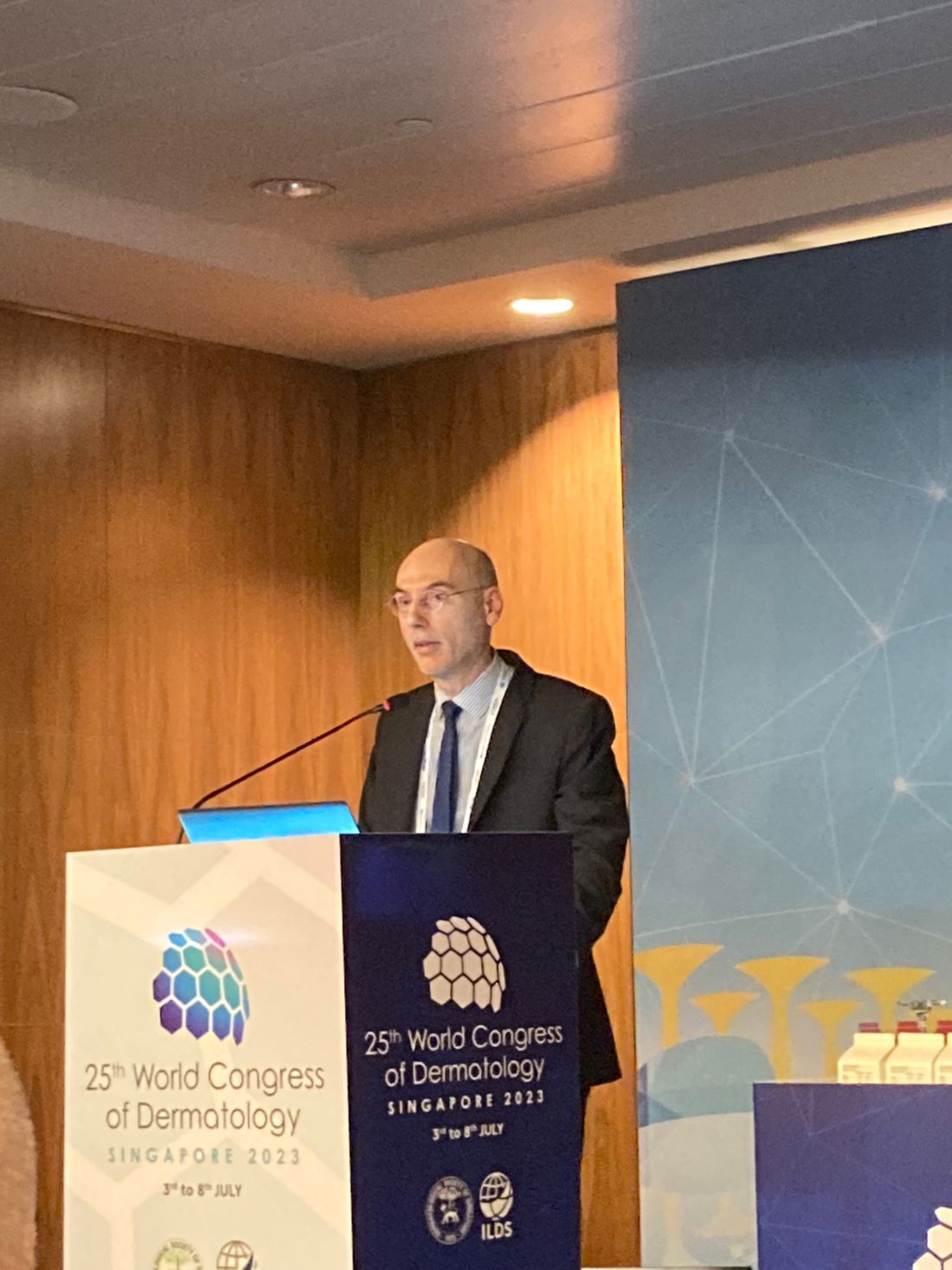
“Additionally, the onset of action was fairly fast: at week 4, more than 20% of patients had achieved PASI 75,” said Robert Bissonnette, MD, CEO of Innovaderm Research in Montreal, who presented the findings during a late-breaker session at the World Congress of Dermatology.
Patients in the remaining groups demonstrated a response that corresponded to dosing level: with 37.2%, 51.2%, 58.1%, and 65.1% achieving PASI-75 in the 25 mg daily, 25 mg twice-daily, 50 mg daily, and 100 mg daily groups, respectively.
“These results are very interesting because in terms of psoriasis treatment, if this is confirmed in phase 3, it would give us an oral alternative that would be selective for IL-23,” said Dr. Bissonnette, referring to the signaling pathway that plays a critical role in the pathogenesis of several immune-mediated inflammatory diseases, including plaque psoriasis.
Although rarely life-threatening, the skin disorder is often intractable to treatment. In recent years, therapies that block IL-23 signaling and downstream inflammatory cytokine production have proven useful. “We have on the market a number of biological agents targeting IL-23 that we use on a regular basis,” said Dr. Bissonnette. “However, there are currently no orally delivered therapies.”
If successful, JNJ-2113 – a first-in-class oral IL-23 antagonist peptide developed by Janssen – could change the treatment paradigm for patients with moderate to severe plaque psoriasis. “When I was first introduced to the concept, I thought it wouldn’t work as it’s a peptide, that it would be digested by the stomach,” he told the audience. “But because of its GI stability and its potency, when you administer it orally, you can detect pharmacological activity.”
A well-tolerated alternative
Participants in the FRONTIER 1 trial were on average about 44 years old and weighed 88.9 kg (195 lb). Most had been living with psoriasis for about 18 years, with a total PASI score of 19.05. In addition, 43.1% had been treated with phototherapy in the past, 22% with biologics, and 78.4% with systemics.
PASI 90 and 100 were among some of the secondary outcomes measured. Similar to the primary outcome of PASI 75, all treatment groups demonstrated a statistically significant dose-response in PASI 90, compared with placebo. For those on the highest dose of JNJ-2113, 59.5% and 40.5% achieved PASI 90 and PASI 100, respectively, by week 16. The corresponding figures for those receiving placebo were 2.3% and 0%.
The safety profile for JNJ-2113 across all doses was similar to that of placebo, with no evidence of a dose-dependent increase in the occurrence of adverse events (AEs). The most frequently reported AEs were COVID-19 and nasopharyngitis. There were three serious AEs (COVID-19, infected cyst, suicide attempt) among those on the active drug, but the investigators assessed that they were not related to the study intervention. No deaths, major adverse cardiac events, or malignancies were reported during the study.
Approached for an independent comment, Marius-Anton Ionescu, MD, PhD, from the University Hospital Saint Louis, Paris, who specializes in psoriasis, told this news organization that the new development with JNJ-2113 “is really promising.”
Treatment for plaque psoriasis has improved to the point where some biologics, such as risankizumab (Skyrizi), only require patients to have “four shots a year,” he says. “This is the future of psoriasis treatment; it might go down to two shots a year” – a regimen that will be easier than taking an oral medication once or twice a day.
“But it’s good to have an oral option because you will always have some patients who say: ‘Shots are not for me, I’m afraid,’ ” he says.
However, Dr. Ionescu noted that if JNJ-2113 were to pass phase 3 trials, it might face stiff competition from the selective tyrosine kinase 2 (TYK2) inhibitor deucravacitinib (Sotyktu), which the U.S. Food and Drug Administration approved for use in adults with moderate to severe plaque psoriasis last September. “It has very good results and is the first oral therapy that is comparable with biologics for plaque psoriasis,” he says.
But Dr. Bissonnette remains hopeful for the future. “I think JNJ-2113 goes way beyond psoriasis because this type of strategy using oral peptide–blocking receptors could be used in other immune-mediated diseases, including atopic dermatitis and other diseases outside of dermatology.” In addition to running a phase 3 study for moderate to severe plaque psoriasis, Janssen is planning to initiate a phase 2b clinical trial of JNJ-2113 in adults with ulcerative colitis.
The study was funded by Janssen. Dr. Bissonnette reports consulting and investigating for Janssen, and being on advisory panels and receiving research funding from multiple other pharmaceutical companies. Dr. Ionescu is an investigator for Psoriasis National Register France Psobioteq (no honoraria), and an investigator and speaker for Uriage cosmetics (honoraria).
A version of this article first appeared on Medscape.com.
SINGAPORE – across all doses, compared with placebo, according to results of the FRONTIER 1 trial.
In the 16-week phase 2b study, 255 adults with moderate to severe plaque psoriasis were randomly assigned into six treatment groups: placebo (n = 43), JNJ-2113 25 mg daily (n = 43), 25 mg twice daily (n = 41), 50 mg daily (n = 43), 100 mg daily (n = 43), or 100 mg twice daily (n = 42).
Of those who took the placebo, only 9.3% achieved the study’s primary endpoint of a 75% or greater improvement in the Psoriasis Area and Severity Index (PASI-75) by week 16. This was compared with 78.6% in the group that took the highest dose.
“Additionally, the onset of action was fairly fast: at week 4, more than 20% of patients had achieved PASI 75,” said Robert Bissonnette, MD, CEO of Innovaderm Research in Montreal, who presented the findings during a late-breaker session at the World Congress of Dermatology.
Patients in the remaining groups demonstrated a response that corresponded to dosing level: with 37.2%, 51.2%, 58.1%, and 65.1% achieving PASI-75 in the 25 mg daily, 25 mg twice-daily, 50 mg daily, and 100 mg daily groups, respectively.
“These results are very interesting because in terms of psoriasis treatment, if this is confirmed in phase 3, it would give us an oral alternative that would be selective for IL-23,” said Dr. Bissonnette, referring to the signaling pathway that plays a critical role in the pathogenesis of several immune-mediated inflammatory diseases, including plaque psoriasis.
Although rarely life-threatening, the skin disorder is often intractable to treatment. In recent years, therapies that block IL-23 signaling and downstream inflammatory cytokine production have proven useful. “We have on the market a number of biological agents targeting IL-23 that we use on a regular basis,” said Dr. Bissonnette. “However, there are currently no orally delivered therapies.”
If successful, JNJ-2113 – a first-in-class oral IL-23 antagonist peptide developed by Janssen – could change the treatment paradigm for patients with moderate to severe plaque psoriasis. “When I was first introduced to the concept, I thought it wouldn’t work as it’s a peptide, that it would be digested by the stomach,” he told the audience. “But because of its GI stability and its potency, when you administer it orally, you can detect pharmacological activity.”
A well-tolerated alternative
Participants in the FRONTIER 1 trial were on average about 44 years old and weighed 88.9 kg (195 lb). Most had been living with psoriasis for about 18 years, with a total PASI score of 19.05. In addition, 43.1% had been treated with phototherapy in the past, 22% with biologics, and 78.4% with systemics.
PASI 90 and 100 were among some of the secondary outcomes measured. Similar to the primary outcome of PASI 75, all treatment groups demonstrated a statistically significant dose-response in PASI 90, compared with placebo. For those on the highest dose of JNJ-2113, 59.5% and 40.5% achieved PASI 90 and PASI 100, respectively, by week 16. The corresponding figures for those receiving placebo were 2.3% and 0%.
The safety profile for JNJ-2113 across all doses was similar to that of placebo, with no evidence of a dose-dependent increase in the occurrence of adverse events (AEs). The most frequently reported AEs were COVID-19 and nasopharyngitis. There were three serious AEs (COVID-19, infected cyst, suicide attempt) among those on the active drug, but the investigators assessed that they were not related to the study intervention. No deaths, major adverse cardiac events, or malignancies were reported during the study.
Approached for an independent comment, Marius-Anton Ionescu, MD, PhD, from the University Hospital Saint Louis, Paris, who specializes in psoriasis, told this news organization that the new development with JNJ-2113 “is really promising.”
Treatment for plaque psoriasis has improved to the point where some biologics, such as risankizumab (Skyrizi), only require patients to have “four shots a year,” he says. “This is the future of psoriasis treatment; it might go down to two shots a year” – a regimen that will be easier than taking an oral medication once or twice a day.
“But it’s good to have an oral option because you will always have some patients who say: ‘Shots are not for me, I’m afraid,’ ” he says.
However, Dr. Ionescu noted that if JNJ-2113 were to pass phase 3 trials, it might face stiff competition from the selective tyrosine kinase 2 (TYK2) inhibitor deucravacitinib (Sotyktu), which the U.S. Food and Drug Administration approved for use in adults with moderate to severe plaque psoriasis last September. “It has very good results and is the first oral therapy that is comparable with biologics for plaque psoriasis,” he says.
But Dr. Bissonnette remains hopeful for the future. “I think JNJ-2113 goes way beyond psoriasis because this type of strategy using oral peptide–blocking receptors could be used in other immune-mediated diseases, including atopic dermatitis and other diseases outside of dermatology.” In addition to running a phase 3 study for moderate to severe plaque psoriasis, Janssen is planning to initiate a phase 2b clinical trial of JNJ-2113 in adults with ulcerative colitis.
The study was funded by Janssen. Dr. Bissonnette reports consulting and investigating for Janssen, and being on advisory panels and receiving research funding from multiple other pharmaceutical companies. Dr. Ionescu is an investigator for Psoriasis National Register France Psobioteq (no honoraria), and an investigator and speaker for Uriage cosmetics (honoraria).
A version of this article first appeared on Medscape.com.
SINGAPORE – across all doses, compared with placebo, according to results of the FRONTIER 1 trial.
In the 16-week phase 2b study, 255 adults with moderate to severe plaque psoriasis were randomly assigned into six treatment groups: placebo (n = 43), JNJ-2113 25 mg daily (n = 43), 25 mg twice daily (n = 41), 50 mg daily (n = 43), 100 mg daily (n = 43), or 100 mg twice daily (n = 42).
Of those who took the placebo, only 9.3% achieved the study’s primary endpoint of a 75% or greater improvement in the Psoriasis Area and Severity Index (PASI-75) by week 16. This was compared with 78.6% in the group that took the highest dose.
“Additionally, the onset of action was fairly fast: at week 4, more than 20% of patients had achieved PASI 75,” said Robert Bissonnette, MD, CEO of Innovaderm Research in Montreal, who presented the findings during a late-breaker session at the World Congress of Dermatology.
Patients in the remaining groups demonstrated a response that corresponded to dosing level: with 37.2%, 51.2%, 58.1%, and 65.1% achieving PASI-75 in the 25 mg daily, 25 mg twice-daily, 50 mg daily, and 100 mg daily groups, respectively.
“These results are very interesting because in terms of psoriasis treatment, if this is confirmed in phase 3, it would give us an oral alternative that would be selective for IL-23,” said Dr. Bissonnette, referring to the signaling pathway that plays a critical role in the pathogenesis of several immune-mediated inflammatory diseases, including plaque psoriasis.
Although rarely life-threatening, the skin disorder is often intractable to treatment. In recent years, therapies that block IL-23 signaling and downstream inflammatory cytokine production have proven useful. “We have on the market a number of biological agents targeting IL-23 that we use on a regular basis,” said Dr. Bissonnette. “However, there are currently no orally delivered therapies.”
If successful, JNJ-2113 – a first-in-class oral IL-23 antagonist peptide developed by Janssen – could change the treatment paradigm for patients with moderate to severe plaque psoriasis. “When I was first introduced to the concept, I thought it wouldn’t work as it’s a peptide, that it would be digested by the stomach,” he told the audience. “But because of its GI stability and its potency, when you administer it orally, you can detect pharmacological activity.”
A well-tolerated alternative
Participants in the FRONTIER 1 trial were on average about 44 years old and weighed 88.9 kg (195 lb). Most had been living with psoriasis for about 18 years, with a total PASI score of 19.05. In addition, 43.1% had been treated with phototherapy in the past, 22% with biologics, and 78.4% with systemics.
PASI 90 and 100 were among some of the secondary outcomes measured. Similar to the primary outcome of PASI 75, all treatment groups demonstrated a statistically significant dose-response in PASI 90, compared with placebo. For those on the highest dose of JNJ-2113, 59.5% and 40.5% achieved PASI 90 and PASI 100, respectively, by week 16. The corresponding figures for those receiving placebo were 2.3% and 0%.
The safety profile for JNJ-2113 across all doses was similar to that of placebo, with no evidence of a dose-dependent increase in the occurrence of adverse events (AEs). The most frequently reported AEs were COVID-19 and nasopharyngitis. There were three serious AEs (COVID-19, infected cyst, suicide attempt) among those on the active drug, but the investigators assessed that they were not related to the study intervention. No deaths, major adverse cardiac events, or malignancies were reported during the study.
Approached for an independent comment, Marius-Anton Ionescu, MD, PhD, from the University Hospital Saint Louis, Paris, who specializes in psoriasis, told this news organization that the new development with JNJ-2113 “is really promising.”
Treatment for plaque psoriasis has improved to the point where some biologics, such as risankizumab (Skyrizi), only require patients to have “four shots a year,” he says. “This is the future of psoriasis treatment; it might go down to two shots a year” – a regimen that will be easier than taking an oral medication once or twice a day.
“But it’s good to have an oral option because you will always have some patients who say: ‘Shots are not for me, I’m afraid,’ ” he says.
However, Dr. Ionescu noted that if JNJ-2113 were to pass phase 3 trials, it might face stiff competition from the selective tyrosine kinase 2 (TYK2) inhibitor deucravacitinib (Sotyktu), which the U.S. Food and Drug Administration approved for use in adults with moderate to severe plaque psoriasis last September. “It has very good results and is the first oral therapy that is comparable with biologics for plaque psoriasis,” he says.
But Dr. Bissonnette remains hopeful for the future. “I think JNJ-2113 goes way beyond psoriasis because this type of strategy using oral peptide–blocking receptors could be used in other immune-mediated diseases, including atopic dermatitis and other diseases outside of dermatology.” In addition to running a phase 3 study for moderate to severe plaque psoriasis, Janssen is planning to initiate a phase 2b clinical trial of JNJ-2113 in adults with ulcerative colitis.
The study was funded by Janssen. Dr. Bissonnette reports consulting and investigating for Janssen, and being on advisory panels and receiving research funding from multiple other pharmaceutical companies. Dr. Ionescu is an investigator for Psoriasis National Register France Psobioteq (no honoraria), and an investigator and speaker for Uriage cosmetics (honoraria).
A version of this article first appeared on Medscape.com.
AT WCD 2023
JAK inhibitors efficacious for atopic dermatitis in Asian patients, study finds
SINGAPORE – conducted in Singapore has found.
“Abrocitinib and upadacitinib surprisingly appeared to have better treatment efficacy compared to baricitinib,” said study lead Yik Weng Yew, MD, PhD, MPH, deputy head of research at Singapore’s National Skin Centre (NSC), who presented the results at the 25th World Congress of Dermatology. “But overall, as a group, I think they show a very good treatment response, as well as a good effect on itch response.”

JAK inhibitors are used to treat a variety of inflammatory diseases including alopecia areata, rheumatoid arthritis, and inflammatory bowel disease. Although treatment for severe eczema was previously limited to topical steroids and oral immunosuppressants, there are now two oral JAK inhibitors – abrocitinib and upadacitinib – approved in 2022 by the Food and Drug Administration for treating AD, which affects up to 2.4% of the global population. (A topical formulation of ruxolitinib, a JAK inhibitor, was approved for AD in 2021.)
The Singapore study is one of the few that have examined the safety and efficacy of JAK inhibitors for treatment of AD in a non-White population.
Chinese population
For the 12-week trial, conducted in 2022, Dr. Yew and associates recruited 35 patients from the NSC. More than half of participants (64%) were men and most (96%) were of Chinese ethnicity. Four of every five patients had previously received systemic agents: 17% had been treated with one systemic agent, 18.9% with two, 15.1% with three, 22.6% with four, and 3.8% with five. The most commonly used agents were cyclosporine (62.3%), methotrexate (47.2%), azathioprine (39.6%), and dupilumab (35.8%).
“The switch in therapy could have been a result of inadequate efficacy or cost reasons because in Singapore patients pay out of pocket for AD treatments,” said Dr. Yew.
Additionally, he offered a caveat on the profile of participants: “Perhaps they were more difficult atopic eczema patients, and therefore, the efficacy [of JAK inhibitors] might be a bit different.”
Clearer skin, less itch
Patients received one of the three study drugs: baricitinib (66%), abrocitinib (21%), and upadacitinib (13%). The distribution was “affected by reimbursement patterns and availability of the drug,” explained Dr. Yew.
They were assessed at weeks 4 and 12. By study end, the proportion of patients who self-reported an improvement in their condition was 100% for upadacitinib, 90% for abrocitinib, and 69% for baricitinib.
Scores on the Investigator Global Assessment (IGA) also improved with treatment. Patients in the baricitinib group saw their mean score fall from 4.0 to 3.0 by week 4, then to 2.0 by week 12. With upadacitinib and abrocitinib, “you can see that there is a nice decrease in IGA responses,” said Dr. Yew, referring to the larger improvement in scores experienced by patients on those two treatments. For patients on upadacitinib, IGA decreased from 3.5 to 2 at 4 weeks, then to 0.5 at 12 weeks, while those taking abrocitinib had their scores drop from 4.0 to 2.0 at 4 weeks, then to 1.0 at 12 weeks.
When it came to itch reduction, the abrocitinib group experienced the biggest reduction, with a median reduction of 5.5 points in itch score. Median reduction in itch score was 4 points for the other two groups. “Oral JAK inhibitors appear to have a good effect on itch response,” said Dr. Yew.
However, the researchers observed no significant reduction in percentage of body surface area affected, the last outcome assessed.
The most commonly reported adverse events were increased creatine kinase levels (11.3% of patients), increased LDL cholesterol levels (9.4%), and herpes zoster (9.4%). Those in the abrocitinib reported a higher number of these adverse events, compared with the other two treatment groups. (There were no herpes zoster cases among those taking baricitinib.)
For herpes zoster, Dr. Yew said “the common recommendation” is to give the inactivated shingles vaccine. “But the problem is that, number one, these patients would have probably failed multiple agents so they probably can’t wait for you to vaccinate before you initiate treatment.”
In addition, people in Singapore have to pay out-of-pocket for the two vaccine doses, “which is probably a month’s worth of medication,” he noted. “So we have a lot of resistance from patients.”
Additionally, Dr. Yew noted that contrary to what has previously been reported in the literature, there were few complaints of acne as a side effect in the Singaporean study population.
Toward greater representation
Dr. Yew pointed out that the study was limited by a few factors: neither the Eczema Area and Severity Index or Scoring of Atopic Dermatitis index data was used, and the study population was small and not representative of the real world.
Still, the new findings contribute to the overall safety and efficacy profile of JAK inhibitors in AD, which has so far been scarce in non-White populations.
“In Western studies, unfortunately, the representation of the population of skin of color or different ethnicities is underrepresented,” said Yousef Binamer, MD, chair of the dermatology department at King Faisal Specialist Hospital, Riyadh, Saudi Arabia, when approached for an independent comment on the results.
“This is now why researchers are looking into specific groups to study them,” which he pointed out, is crucial because “the immunophenotyping of AD is different for each background.”
The incidence and severity of AD tend to be higher in Asian and Middle Eastern populations, for instance, he noted. “It’s very common in Asia, and not so common in very white skin. I did my training in Canada so I see the difference,” said Dr. Binamer. “Asian people tend to be more itchy and have a tendency to scar on pigmentation.” Whereas White people “usually do not have this issue.”
“So I think real-world evidence of JAK inhibitors in the other populations is important,” he said. Studies such as the one conducted in Singapore, as well as the recently reported QUARTZ3 study, which examined the use of the JAK inhibitor ivarmacitinib in 256 Chinese patients with AD, are helping to pave the way.
The study was independently supported. Dr. Yew and Dr. Binamer have reported no relevant financial relationships.
A version of this article first appeared on Medscape.com.
SINGAPORE – conducted in Singapore has found.
“Abrocitinib and upadacitinib surprisingly appeared to have better treatment efficacy compared to baricitinib,” said study lead Yik Weng Yew, MD, PhD, MPH, deputy head of research at Singapore’s National Skin Centre (NSC), who presented the results at the 25th World Congress of Dermatology. “But overall, as a group, I think they show a very good treatment response, as well as a good effect on itch response.”
JAK inhibitors are used to treat a variety of inflammatory diseases including alopecia areata, rheumatoid arthritis, and inflammatory bowel disease. Although treatment for severe eczema was previously limited to topical steroids and oral immunosuppressants, there are now two oral JAK inhibitors – abrocitinib and upadacitinib – approved in 2022 by the Food and Drug Administration for treating AD, which affects up to 2.4% of the global population. (A topical formulation of ruxolitinib, a JAK inhibitor, was approved for AD in 2021.)
The Singapore study is one of the few that have examined the safety and efficacy of JAK inhibitors for treatment of AD in a non-White population.
Chinese population
For the 12-week trial, conducted in 2022, Dr. Yew and associates recruited 35 patients from the NSC. More than half of participants (64%) were men and most (96%) were of Chinese ethnicity. Four of every five patients had previously received systemic agents: 17% had been treated with one systemic agent, 18.9% with two, 15.1% with three, 22.6% with four, and 3.8% with five. The most commonly used agents were cyclosporine (62.3%), methotrexate (47.2%), azathioprine (39.6%), and dupilumab (35.8%).
“The switch in therapy could have been a result of inadequate efficacy or cost reasons because in Singapore patients pay out of pocket for AD treatments,” said Dr. Yew.
Additionally, he offered a caveat on the profile of participants: “Perhaps they were more difficult atopic eczema patients, and therefore, the efficacy [of JAK inhibitors] might be a bit different.”
Clearer skin, less itch
Patients received one of the three study drugs: baricitinib (66%), abrocitinib (21%), and upadacitinib (13%). The distribution was “affected by reimbursement patterns and availability of the drug,” explained Dr. Yew.
They were assessed at weeks 4 and 12. By study end, the proportion of patients who self-reported an improvement in their condition was 100% for upadacitinib, 90% for abrocitinib, and 69% for baricitinib.
Scores on the Investigator Global Assessment (IGA) also improved with treatment. Patients in the baricitinib group saw their mean score fall from 4.0 to 3.0 by week 4, then to 2.0 by week 12. With upadacitinib and abrocitinib, “you can see that there is a nice decrease in IGA responses,” said Dr. Yew, referring to the larger improvement in scores experienced by patients on those two treatments. For patients on upadacitinib, IGA decreased from 3.5 to 2 at 4 weeks, then to 0.5 at 12 weeks, while those taking abrocitinib had their scores drop from 4.0 to 2.0 at 4 weeks, then to 1.0 at 12 weeks.
When it came to itch reduction, the abrocitinib group experienced the biggest reduction, with a median reduction of 5.5 points in itch score. Median reduction in itch score was 4 points for the other two groups. “Oral JAK inhibitors appear to have a good effect on itch response,” said Dr. Yew.
However, the researchers observed no significant reduction in percentage of body surface area affected, the last outcome assessed.
The most commonly reported adverse events were increased creatine kinase levels (11.3% of patients), increased LDL cholesterol levels (9.4%), and herpes zoster (9.4%). Those in the abrocitinib reported a higher number of these adverse events, compared with the other two treatment groups. (There were no herpes zoster cases among those taking baricitinib.)
For herpes zoster, Dr. Yew said “the common recommendation” is to give the inactivated shingles vaccine. “But the problem is that, number one, these patients would have probably failed multiple agents so they probably can’t wait for you to vaccinate before you initiate treatment.”
In addition, people in Singapore have to pay out-of-pocket for the two vaccine doses, “which is probably a month’s worth of medication,” he noted. “So we have a lot of resistance from patients.”
Additionally, Dr. Yew noted that contrary to what has previously been reported in the literature, there were few complaints of acne as a side effect in the Singaporean study population.
Toward greater representation
Dr. Yew pointed out that the study was limited by a few factors: neither the Eczema Area and Severity Index or Scoring of Atopic Dermatitis index data was used, and the study population was small and not representative of the real world.
Still, the new findings contribute to the overall safety and efficacy profile of JAK inhibitors in AD, which has so far been scarce in non-White populations.
“In Western studies, unfortunately, the representation of the population of skin of color or different ethnicities is underrepresented,” said Yousef Binamer, MD, chair of the dermatology department at King Faisal Specialist Hospital, Riyadh, Saudi Arabia, when approached for an independent comment on the results.
“This is now why researchers are looking into specific groups to study them,” which he pointed out, is crucial because “the immunophenotyping of AD is different for each background.”
The incidence and severity of AD tend to be higher in Asian and Middle Eastern populations, for instance, he noted. “It’s very common in Asia, and not so common in very white skin. I did my training in Canada so I see the difference,” said Dr. Binamer. “Asian people tend to be more itchy and have a tendency to scar on pigmentation.” Whereas White people “usually do not have this issue.”
“So I think real-world evidence of JAK inhibitors in the other populations is important,” he said. Studies such as the one conducted in Singapore, as well as the recently reported QUARTZ3 study, which examined the use of the JAK inhibitor ivarmacitinib in 256 Chinese patients with AD, are helping to pave the way.
The study was independently supported. Dr. Yew and Dr. Binamer have reported no relevant financial relationships.
A version of this article first appeared on Medscape.com.
SINGAPORE – conducted in Singapore has found.
“Abrocitinib and upadacitinib surprisingly appeared to have better treatment efficacy compared to baricitinib,” said study lead Yik Weng Yew, MD, PhD, MPH, deputy head of research at Singapore’s National Skin Centre (NSC), who presented the results at the 25th World Congress of Dermatology. “But overall, as a group, I think they show a very good treatment response, as well as a good effect on itch response.”
JAK inhibitors are used to treat a variety of inflammatory diseases including alopecia areata, rheumatoid arthritis, and inflammatory bowel disease. Although treatment for severe eczema was previously limited to topical steroids and oral immunosuppressants, there are now two oral JAK inhibitors – abrocitinib and upadacitinib – approved in 2022 by the Food and Drug Administration for treating AD, which affects up to 2.4% of the global population. (A topical formulation of ruxolitinib, a JAK inhibitor, was approved for AD in 2021.)
The Singapore study is one of the few that have examined the safety and efficacy of JAK inhibitors for treatment of AD in a non-White population.
Chinese population
For the 12-week trial, conducted in 2022, Dr. Yew and associates recruited 35 patients from the NSC. More than half of participants (64%) were men and most (96%) were of Chinese ethnicity. Four of every five patients had previously received systemic agents: 17% had been treated with one systemic agent, 18.9% with two, 15.1% with three, 22.6% with four, and 3.8% with five. The most commonly used agents were cyclosporine (62.3%), methotrexate (47.2%), azathioprine (39.6%), and dupilumab (35.8%).
“The switch in therapy could have been a result of inadequate efficacy or cost reasons because in Singapore patients pay out of pocket for AD treatments,” said Dr. Yew.
Additionally, he offered a caveat on the profile of participants: “Perhaps they were more difficult atopic eczema patients, and therefore, the efficacy [of JAK inhibitors] might be a bit different.”
Clearer skin, less itch
Patients received one of the three study drugs: baricitinib (66%), abrocitinib (21%), and upadacitinib (13%). The distribution was “affected by reimbursement patterns and availability of the drug,” explained Dr. Yew.
They were assessed at weeks 4 and 12. By study end, the proportion of patients who self-reported an improvement in their condition was 100% for upadacitinib, 90% for abrocitinib, and 69% for baricitinib.
Scores on the Investigator Global Assessment (IGA) also improved with treatment. Patients in the baricitinib group saw their mean score fall from 4.0 to 3.0 by week 4, then to 2.0 by week 12. With upadacitinib and abrocitinib, “you can see that there is a nice decrease in IGA responses,” said Dr. Yew, referring to the larger improvement in scores experienced by patients on those two treatments. For patients on upadacitinib, IGA decreased from 3.5 to 2 at 4 weeks, then to 0.5 at 12 weeks, while those taking abrocitinib had their scores drop from 4.0 to 2.0 at 4 weeks, then to 1.0 at 12 weeks.
When it came to itch reduction, the abrocitinib group experienced the biggest reduction, with a median reduction of 5.5 points in itch score. Median reduction in itch score was 4 points for the other two groups. “Oral JAK inhibitors appear to have a good effect on itch response,” said Dr. Yew.
However, the researchers observed no significant reduction in percentage of body surface area affected, the last outcome assessed.
The most commonly reported adverse events were increased creatine kinase levels (11.3% of patients), increased LDL cholesterol levels (9.4%), and herpes zoster (9.4%). Those in the abrocitinib reported a higher number of these adverse events, compared with the other two treatment groups. (There were no herpes zoster cases among those taking baricitinib.)
For herpes zoster, Dr. Yew said “the common recommendation” is to give the inactivated shingles vaccine. “But the problem is that, number one, these patients would have probably failed multiple agents so they probably can’t wait for you to vaccinate before you initiate treatment.”
In addition, people in Singapore have to pay out-of-pocket for the two vaccine doses, “which is probably a month’s worth of medication,” he noted. “So we have a lot of resistance from patients.”
Additionally, Dr. Yew noted that contrary to what has previously been reported in the literature, there were few complaints of acne as a side effect in the Singaporean study population.
Toward greater representation
Dr. Yew pointed out that the study was limited by a few factors: neither the Eczema Area and Severity Index or Scoring of Atopic Dermatitis index data was used, and the study population was small and not representative of the real world.
Still, the new findings contribute to the overall safety and efficacy profile of JAK inhibitors in AD, which has so far been scarce in non-White populations.
“In Western studies, unfortunately, the representation of the population of skin of color or different ethnicities is underrepresented,” said Yousef Binamer, MD, chair of the dermatology department at King Faisal Specialist Hospital, Riyadh, Saudi Arabia, when approached for an independent comment on the results.
“This is now why researchers are looking into specific groups to study them,” which he pointed out, is crucial because “the immunophenotyping of AD is different for each background.”
The incidence and severity of AD tend to be higher in Asian and Middle Eastern populations, for instance, he noted. “It’s very common in Asia, and not so common in very white skin. I did my training in Canada so I see the difference,” said Dr. Binamer. “Asian people tend to be more itchy and have a tendency to scar on pigmentation.” Whereas White people “usually do not have this issue.”
“So I think real-world evidence of JAK inhibitors in the other populations is important,” he said. Studies such as the one conducted in Singapore, as well as the recently reported QUARTZ3 study, which examined the use of the JAK inhibitor ivarmacitinib in 256 Chinese patients with AD, are helping to pave the way.
The study was independently supported. Dr. Yew and Dr. Binamer have reported no relevant financial relationships.
A version of this article first appeared on Medscape.com.
AT WCD 2023
Study finds subcutaneous spesolimab reduces flares in patients with GPP
SINGAPORE – presented in a late-breaker session at the World Congress of Dermatology,
In the phase 2b study, patients who received the high-dose regimen (a 600-mg subcutaneous loading dose, then 300-mg SC every 4 weeks) of spesolimab experienced 84% fewer GPP fares over 48 weeks, compared with those on placebo, reported Bruce Strober, MD, PhD, Central Connecticut Dermatology, Cromwell, and clinical professor of dermatology, Yale University, New Haven, Conn. “Additionally, no flares occurred after week 4, and this, in turn, translated into improved patient outcomes.”
GPP is a rare, chronic, systemic neutrophilic skin disease. The resulting flares, characterized by painful pustules all over the body, can lead to sepsis, shock, and other life-threatening complications. “People who have it are considerably burdened by it, so targeted therapy of this disease is incredibly important because it leads to lessened morbidity and, importantly, mortality for these patients,” Dr. Strober said.
“It’s important not only to treat the flares but also to prevent them,” he noted.
The intravenous formulation of spesolimab (Spevigo) was approved for the treatment of GPP flares in adults by the Food and Drug Administration in September 2022. It is now authorized in nearly 40 countries, including Japan, China, and the European Union.
The phase 2 Effisayil 2 study presented at the meeting evaluated the subcutaneous formulation of spesolimab. Data on subcutaneous spesolimab has been submitted to the FDA, and has received breakthrough therapy designation, according to the manufacturer, Boehringer Ingelheim.
Flare prevention
In the study, 123 patients with GPP were randomly assigned 1:1:1:1 to one of four groups: high-dose spesolimab, medium-dose (600-mg SC loading dose, then 300-mg SC every 12 weeks), low-dose (300-mg SC loading dose, then 150-mg SC every 12 weeks), or placebo. In the event of a flare during the randomized treatment period, a patient was administered a single, 900-mg intravenous dose of spesolimab.
Nearly two-thirds of the participants were female and nearly two-thirds were Asian, with a mean age of about 39-43 years.
The mean numbers of GPP flares experienced annually by those in the low-, medium-, and high-dose spesolimab groups were 2.7, 1.9, and 2.4, respectively (2.4% in the placebo group). Fewer than a third had concurrent plaque psoriasis at baseline. Most (48.4%-63.3%) did not have an IL-36RN mutation.
Additionally, the Generalized Pustular Psoriasis Physician Global Assessment total score was 1 in 74.2%-93.5% of participants, and 0 in the remainder.
The primary study endpoint was the time to GPP flare by week 48. The risk of developing a flare among those on high-dose spesolimab was 84% lower, compared with that of those on placebo (hazard ratio, 0.16; 95% confidence interval, 0.05-0.54; P = .0005). No patients on the high dose had a flare after the 4th week of the study.
Similarly, for the secondary endpoint (occurrence of at least one GPP flare by week 48). Dr. Strober and his colleagues reported that high-dose spesolimab was superior to placebo with a risk difference of -39% (95% CI, –0.62 to –0.16; P = .0013). By contrast, the risk differences for the medium- and low-dose spesolimab arms were –0.23 (95% CI, –0.46 to 0.01) and -0.31 (95% CI, –0.54 to –0.08), respectively.
The safety profile of subcutaneous spesolimab across all three doses was similar to that of placebo, and there was no dose-dependent trend. Reported adverse events (AEs) were mild. There were five (5.4%) AEs leading to discontinuation of the drug in the medium- and high-dose groups, but none in the low-dose group. Overall, there were nine (9.7%) serious AEs reported in the spesolimab groups, and three (10%) in the high-dose group; no deaths occurred on any dose.
Participants most often reported injection-site erythema, reported in 13 (14%) of the patients on spesolimab versus 1 (3.3%) of those on placebo.
“Overall, the study demonstrates that subcutaneous spesolimab is effective at controlling GPP flares, especially at a high dose relative to placebo, and supports subcutaneous spesolimab for the therapy for GPP flare prevention,” Dr. Strober said at the meeting.
Targeting the IL-36 pathway
In a comment, Todd Schlesinger, MD, Clinical Research Center of the Carolinas, Charleston, S.C., who moderated the session, said: “It’s very exciting to be able to have a subcutaneous version of the medication.”
“I think the IL-36 is a great pathway,” he said, referring to the signaling pathway within the immune system that is central to the pathogenesis of GPP and several other autoinflammatory diseases.
However, Dr. Schlesinger said that he would have liked to have seen data on how many patients ended up treated with intravenous spesolimab.
He added that he would like future studies of subcutaneous spesolimab to examine the effect in different populations that vary by parameters such as weight, race, and disease severity. “Just seeing how somebody who’s flaring five times a year and you give them this medication and they’re now flaring once a year – that’s interesting data that we might like to know in the future.”
Other than for preventing GPP flares, spesolimab is being studied for treating other IL-36–mediated skin diseases, such as palmoplantar pustulosis.
The study was funded by Boehringer Ingelheim; both Dr. Strober and Dr. Schlesinger do research and consulting for BI, and receive funding from multiple other pharmaceutical companies.
A version of this article first appeared on Medscape.com.
SINGAPORE – presented in a late-breaker session at the World Congress of Dermatology,
In the phase 2b study, patients who received the high-dose regimen (a 600-mg subcutaneous loading dose, then 300-mg SC every 4 weeks) of spesolimab experienced 84% fewer GPP fares over 48 weeks, compared with those on placebo, reported Bruce Strober, MD, PhD, Central Connecticut Dermatology, Cromwell, and clinical professor of dermatology, Yale University, New Haven, Conn. “Additionally, no flares occurred after week 4, and this, in turn, translated into improved patient outcomes.”
GPP is a rare, chronic, systemic neutrophilic skin disease. The resulting flares, characterized by painful pustules all over the body, can lead to sepsis, shock, and other life-threatening complications. “People who have it are considerably burdened by it, so targeted therapy of this disease is incredibly important because it leads to lessened morbidity and, importantly, mortality for these patients,” Dr. Strober said.
“It’s important not only to treat the flares but also to prevent them,” he noted.
The intravenous formulation of spesolimab (Spevigo) was approved for the treatment of GPP flares in adults by the Food and Drug Administration in September 2022. It is now authorized in nearly 40 countries, including Japan, China, and the European Union.
The phase 2 Effisayil 2 study presented at the meeting evaluated the subcutaneous formulation of spesolimab. Data on subcutaneous spesolimab has been submitted to the FDA, and has received breakthrough therapy designation, according to the manufacturer, Boehringer Ingelheim.
Flare prevention
In the study, 123 patients with GPP were randomly assigned 1:1:1:1 to one of four groups: high-dose spesolimab, medium-dose (600-mg SC loading dose, then 300-mg SC every 12 weeks), low-dose (300-mg SC loading dose, then 150-mg SC every 12 weeks), or placebo. In the event of a flare during the randomized treatment period, a patient was administered a single, 900-mg intravenous dose of spesolimab.
Nearly two-thirds of the participants were female and nearly two-thirds were Asian, with a mean age of about 39-43 years.
The mean numbers of GPP flares experienced annually by those in the low-, medium-, and high-dose spesolimab groups were 2.7, 1.9, and 2.4, respectively (2.4% in the placebo group). Fewer than a third had concurrent plaque psoriasis at baseline. Most (48.4%-63.3%) did not have an IL-36RN mutation.
Additionally, the Generalized Pustular Psoriasis Physician Global Assessment total score was 1 in 74.2%-93.5% of participants, and 0 in the remainder.
The primary study endpoint was the time to GPP flare by week 48. The risk of developing a flare among those on high-dose spesolimab was 84% lower, compared with that of those on placebo (hazard ratio, 0.16; 95% confidence interval, 0.05-0.54; P = .0005). No patients on the high dose had a flare after the 4th week of the study.
Similarly, for the secondary endpoint (occurrence of at least one GPP flare by week 48). Dr. Strober and his colleagues reported that high-dose spesolimab was superior to placebo with a risk difference of -39% (95% CI, –0.62 to –0.16; P = .0013). By contrast, the risk differences for the medium- and low-dose spesolimab arms were –0.23 (95% CI, –0.46 to 0.01) and -0.31 (95% CI, –0.54 to –0.08), respectively.
The safety profile of subcutaneous spesolimab across all three doses was similar to that of placebo, and there was no dose-dependent trend. Reported adverse events (AEs) were mild. There were five (5.4%) AEs leading to discontinuation of the drug in the medium- and high-dose groups, but none in the low-dose group. Overall, there were nine (9.7%) serious AEs reported in the spesolimab groups, and three (10%) in the high-dose group; no deaths occurred on any dose.
Participants most often reported injection-site erythema, reported in 13 (14%) of the patients on spesolimab versus 1 (3.3%) of those on placebo.
“Overall, the study demonstrates that subcutaneous spesolimab is effective at controlling GPP flares, especially at a high dose relative to placebo, and supports subcutaneous spesolimab for the therapy for GPP flare prevention,” Dr. Strober said at the meeting.
Targeting the IL-36 pathway
In a comment, Todd Schlesinger, MD, Clinical Research Center of the Carolinas, Charleston, S.C., who moderated the session, said: “It’s very exciting to be able to have a subcutaneous version of the medication.”
“I think the IL-36 is a great pathway,” he said, referring to the signaling pathway within the immune system that is central to the pathogenesis of GPP and several other autoinflammatory diseases.
However, Dr. Schlesinger said that he would have liked to have seen data on how many patients ended up treated with intravenous spesolimab.
He added that he would like future studies of subcutaneous spesolimab to examine the effect in different populations that vary by parameters such as weight, race, and disease severity. “Just seeing how somebody who’s flaring five times a year and you give them this medication and they’re now flaring once a year – that’s interesting data that we might like to know in the future.”
Other than for preventing GPP flares, spesolimab is being studied for treating other IL-36–mediated skin diseases, such as palmoplantar pustulosis.
The study was funded by Boehringer Ingelheim; both Dr. Strober and Dr. Schlesinger do research and consulting for BI, and receive funding from multiple other pharmaceutical companies.
A version of this article first appeared on Medscape.com.
SINGAPORE – presented in a late-breaker session at the World Congress of Dermatology,
In the phase 2b study, patients who received the high-dose regimen (a 600-mg subcutaneous loading dose, then 300-mg SC every 4 weeks) of spesolimab experienced 84% fewer GPP fares over 48 weeks, compared with those on placebo, reported Bruce Strober, MD, PhD, Central Connecticut Dermatology, Cromwell, and clinical professor of dermatology, Yale University, New Haven, Conn. “Additionally, no flares occurred after week 4, and this, in turn, translated into improved patient outcomes.”
GPP is a rare, chronic, systemic neutrophilic skin disease. The resulting flares, characterized by painful pustules all over the body, can lead to sepsis, shock, and other life-threatening complications. “People who have it are considerably burdened by it, so targeted therapy of this disease is incredibly important because it leads to lessened morbidity and, importantly, mortality for these patients,” Dr. Strober said.
“It’s important not only to treat the flares but also to prevent them,” he noted.
The intravenous formulation of spesolimab (Spevigo) was approved for the treatment of GPP flares in adults by the Food and Drug Administration in September 2022. It is now authorized in nearly 40 countries, including Japan, China, and the European Union.
The phase 2 Effisayil 2 study presented at the meeting evaluated the subcutaneous formulation of spesolimab. Data on subcutaneous spesolimab has been submitted to the FDA, and has received breakthrough therapy designation, according to the manufacturer, Boehringer Ingelheim.
Flare prevention
In the study, 123 patients with GPP were randomly assigned 1:1:1:1 to one of four groups: high-dose spesolimab, medium-dose (600-mg SC loading dose, then 300-mg SC every 12 weeks), low-dose (300-mg SC loading dose, then 150-mg SC every 12 weeks), or placebo. In the event of a flare during the randomized treatment period, a patient was administered a single, 900-mg intravenous dose of spesolimab.
Nearly two-thirds of the participants were female and nearly two-thirds were Asian, with a mean age of about 39-43 years.
The mean numbers of GPP flares experienced annually by those in the low-, medium-, and high-dose spesolimab groups were 2.7, 1.9, and 2.4, respectively (2.4% in the placebo group). Fewer than a third had concurrent plaque psoriasis at baseline. Most (48.4%-63.3%) did not have an IL-36RN mutation.
Additionally, the Generalized Pustular Psoriasis Physician Global Assessment total score was 1 in 74.2%-93.5% of participants, and 0 in the remainder.
The primary study endpoint was the time to GPP flare by week 48. The risk of developing a flare among those on high-dose spesolimab was 84% lower, compared with that of those on placebo (hazard ratio, 0.16; 95% confidence interval, 0.05-0.54; P = .0005). No patients on the high dose had a flare after the 4th week of the study.
Similarly, for the secondary endpoint (occurrence of at least one GPP flare by week 48). Dr. Strober and his colleagues reported that high-dose spesolimab was superior to placebo with a risk difference of -39% (95% CI, –0.62 to –0.16; P = .0013). By contrast, the risk differences for the medium- and low-dose spesolimab arms were –0.23 (95% CI, –0.46 to 0.01) and -0.31 (95% CI, –0.54 to –0.08), respectively.
The safety profile of subcutaneous spesolimab across all three doses was similar to that of placebo, and there was no dose-dependent trend. Reported adverse events (AEs) were mild. There were five (5.4%) AEs leading to discontinuation of the drug in the medium- and high-dose groups, but none in the low-dose group. Overall, there were nine (9.7%) serious AEs reported in the spesolimab groups, and three (10%) in the high-dose group; no deaths occurred on any dose.
Participants most often reported injection-site erythema, reported in 13 (14%) of the patients on spesolimab versus 1 (3.3%) of those on placebo.
“Overall, the study demonstrates that subcutaneous spesolimab is effective at controlling GPP flares, especially at a high dose relative to placebo, and supports subcutaneous spesolimab for the therapy for GPP flare prevention,” Dr. Strober said at the meeting.
Targeting the IL-36 pathway
In a comment, Todd Schlesinger, MD, Clinical Research Center of the Carolinas, Charleston, S.C., who moderated the session, said: “It’s very exciting to be able to have a subcutaneous version of the medication.”
“I think the IL-36 is a great pathway,” he said, referring to the signaling pathway within the immune system that is central to the pathogenesis of GPP and several other autoinflammatory diseases.
However, Dr. Schlesinger said that he would have liked to have seen data on how many patients ended up treated with intravenous spesolimab.
He added that he would like future studies of subcutaneous spesolimab to examine the effect in different populations that vary by parameters such as weight, race, and disease severity. “Just seeing how somebody who’s flaring five times a year and you give them this medication and they’re now flaring once a year – that’s interesting data that we might like to know in the future.”
Other than for preventing GPP flares, spesolimab is being studied for treating other IL-36–mediated skin diseases, such as palmoplantar pustulosis.
The study was funded by Boehringer Ingelheim; both Dr. Strober and Dr. Schlesinger do research and consulting for BI, and receive funding from multiple other pharmaceutical companies.
A version of this article first appeared on Medscape.com.
AT WCD 2023