User login
MDedge conference coverage features onsite reporting of the latest study results and expert perspectives from leading researchers.
Multiple changes in NMOSD treatment for nonmedical reasons tied to poorer outcomes
DENVER – , new research shows.
“For the first time, we were able to quantify clinical outcomes associated with treatment transitions in people with NMOSD. Our data highlight that aspects outside of therapeutic efficacy may be remarkably meaningful in the effective suppression of disease advancement,” said senior investigator Darin T. Okuda, MD, professor of neurology and director of the neuroinnovation program at University of Texas Southwestern Medical Center in Dallas.
The findings were presented at the annual meeting of the Consortium of Multiple Sclerosis Centers.
Treatment delayed?
NMOSD, an inflammatory syndrome of the central nervous system, can cause irreversible disability. As treatments have improved over time, transitioning from one medication to newer options has become increasingly common.
To better understand the effects of multiple treatment transitions, the researchers conducted a retrospective analysis of electronic medical records of 164 patients with aquaporin-4 IgG–positive NMOSD. Of these individuals, 89 met the study’s inclusion criteria.
Of the participants, 89% were female, and the median disease duration was 10.1 years. Forty-two patients had switched therapies at least once; 26 switched at least twice; 12 switched at least three times; six switched four times; and three switched therapies five times or more for a total of 174 treatment transitions.
Patients were stratified into two groups – those who transitioned for medical reasons (53.4%), and those who switched because of nonmedical/tolerability reasons (46.6%).
Top reasons for transitioning in the medical category included clinical relapse and/or new MRI activity (29.9%), physician-directed transition (11.5%), and increased physical or clinical disability (4.0%). Leading reasons for nonmedical transitions were side effects (16.7%), adherence/persistence (8.1%), and cost/access (5.75%).
A recurrent event survival analysis showed that, after just one transition for nonmedical or tolerability reasons, outcomes significantly improved, with the risk of hospitalization decreasing 40.3% (P = .005), the risk of relapse decreasing by 53.1% (P = .002), and the risk of advancement on MRI decreasing by 65.9% (P = .005).
Conversely, each additional drug discontinuation in the nonmedical group was associated with worse outcomes. These included a 25.2% increased risk of hospitalization (P = .0003), a 24.4% increase in relapse risk (P = .06), and a 41.9% increased risk of MRI advancement (P = .03).
In terms of transitions for medical reasons, there was a significantly increased risk of MRI advancement with the first switch (32.2%; P = .005). However, no significant increases in risk were associated with each additional transition (P = .33).
The median time spent on the first treatment was 306 days in the transition for medical reasons group and 378 days for the nonmedical/tolerability group.
The median duration of time spent between treatments during the initial transition was just 7 days among those transitioning for medical reasons versus 91 days for nonmedical reasons, with the median duration of additional transitions also substantially longer in the nonmedical reasons group, at 22 and 80 days, respectively.
“The median time spent on a first-line therapy regardless of [whether] that first transition was due to a medical or nonmedical tolerability reason was similar; however, the duration of that initial transition was 13 times longer if the transition had to do with a nonmedical or tolerability reason,” first author Alexander D. Smith, a clinical data specialist at UT Southwestern Medical Center, told conference delegates. “Similarly, each additional transition was almost four times longer if it had to do with a nonmedical or tolerability reason,” he said.
Dr. Okuda noted the longer window between treatment transitions may be a key factor in the different outcomes between the groups. “A central theory involves the increased amount of time between treatments,” he said.
“The reasons for the delay in starting a new treatment may be related to a variety of factors, including laboratory testing required to start a new treatment, third-party administrator coverage, time for the resolution of adverse reactions, and/or personal factors from the individual undergoing treatment, etc.”
Another factor, Mr. Smith said in his talk, is that, “when people are left miserable by a prior treatment exposure, they may simply be hesitant to get on the next therapy.”
The finding that only MRI advancement was associated with transitions for medical reasons suggests that worsening disease activity is not necessarily behind increased transitions, with nonmedical reasons often the cause, and more likely to be associated with the worse outcomes.
With the time between treatments a possible culprit, Dr. Okuda said the clinical implications are that “treatment transitions, regardless of the reason, should occur as quickly as possible to reduce the risk for disease progression associated with NMOSD.”
Mr. Smith echoed the suggestion, adding that “it’s important that even if disease activity is not present, complacency should be avoided.”
“Clinicians and third-party administrators should work to ensure that people with NMOSD have accelerated switches onto their next therapy, even if that disease activity is not present. In a sense, rapid treatment transitions may have equitable benefits to the treatments themselves,” Mr. Smith added.
Important research
Commenting on the study, Shailee Shah, MD, an assistant professor in the Neuroimmunology division at Vanderbilt University Medical Center, in Nashville, Tenn., noted the findings are consistent with generally higher concerns around switching treatments for nonmedical reasons.
“In general, if a high-efficacy medication is started, it appears that patients are less likely to require a transition to a different medication. It is a little harder to predict who may have issues with tolerability or nonmedical reasons to transition medications, and many providers would likely agree that these transitions do raise some concerns about the risk of relapse or hospitalization in the interim,” she said.
Dr. Shah added that in her experience patients who require multiple transitions are either started on lower-efficacy medications at treatment initiation or have highly refractory disease.
The study’s findings underscore that “identifying additional risk factors and underlying reasons for these findings will be imperative in the future,” Dr. Shah said.
The study was supported by Revert Health, a corporation founded by Dr. Okuda. Dr. Okuda reports receiving personal compensation for consulting and advisory services from Alexion, Biogen, Celgene/Bristol Myers Squibb, EMD Serono, Genentech, Genzyme, Janssen Pharmaceuticals, Novartis, Osmotica Pharmaceuticals, RVL Pharmaceuticals, TG Therapeutics, Viela Bio, and research support from Biogen, EMD Serono/Merck, and Novartis. Dr. Shah reports that she has served on advisory boards for Horizon, Alexion, and Genentech.
A version of this article first appeared on Medscape.com.
DENVER – , new research shows.
“For the first time, we were able to quantify clinical outcomes associated with treatment transitions in people with NMOSD. Our data highlight that aspects outside of therapeutic efficacy may be remarkably meaningful in the effective suppression of disease advancement,” said senior investigator Darin T. Okuda, MD, professor of neurology and director of the neuroinnovation program at University of Texas Southwestern Medical Center in Dallas.
The findings were presented at the annual meeting of the Consortium of Multiple Sclerosis Centers.
Treatment delayed?
NMOSD, an inflammatory syndrome of the central nervous system, can cause irreversible disability. As treatments have improved over time, transitioning from one medication to newer options has become increasingly common.
To better understand the effects of multiple treatment transitions, the researchers conducted a retrospective analysis of electronic medical records of 164 patients with aquaporin-4 IgG–positive NMOSD. Of these individuals, 89 met the study’s inclusion criteria.
Of the participants, 89% were female, and the median disease duration was 10.1 years. Forty-two patients had switched therapies at least once; 26 switched at least twice; 12 switched at least three times; six switched four times; and three switched therapies five times or more for a total of 174 treatment transitions.
Patients were stratified into two groups – those who transitioned for medical reasons (53.4%), and those who switched because of nonmedical/tolerability reasons (46.6%).
Top reasons for transitioning in the medical category included clinical relapse and/or new MRI activity (29.9%), physician-directed transition (11.5%), and increased physical or clinical disability (4.0%). Leading reasons for nonmedical transitions were side effects (16.7%), adherence/persistence (8.1%), and cost/access (5.75%).
A recurrent event survival analysis showed that, after just one transition for nonmedical or tolerability reasons, outcomes significantly improved, with the risk of hospitalization decreasing 40.3% (P = .005), the risk of relapse decreasing by 53.1% (P = .002), and the risk of advancement on MRI decreasing by 65.9% (P = .005).
Conversely, each additional drug discontinuation in the nonmedical group was associated with worse outcomes. These included a 25.2% increased risk of hospitalization (P = .0003), a 24.4% increase in relapse risk (P = .06), and a 41.9% increased risk of MRI advancement (P = .03).
In terms of transitions for medical reasons, there was a significantly increased risk of MRI advancement with the first switch (32.2%; P = .005). However, no significant increases in risk were associated with each additional transition (P = .33).
The median time spent on the first treatment was 306 days in the transition for medical reasons group and 378 days for the nonmedical/tolerability group.
The median duration of time spent between treatments during the initial transition was just 7 days among those transitioning for medical reasons versus 91 days for nonmedical reasons, with the median duration of additional transitions also substantially longer in the nonmedical reasons group, at 22 and 80 days, respectively.
“The median time spent on a first-line therapy regardless of [whether] that first transition was due to a medical or nonmedical tolerability reason was similar; however, the duration of that initial transition was 13 times longer if the transition had to do with a nonmedical or tolerability reason,” first author Alexander D. Smith, a clinical data specialist at UT Southwestern Medical Center, told conference delegates. “Similarly, each additional transition was almost four times longer if it had to do with a nonmedical or tolerability reason,” he said.
Dr. Okuda noted the longer window between treatment transitions may be a key factor in the different outcomes between the groups. “A central theory involves the increased amount of time between treatments,” he said.
“The reasons for the delay in starting a new treatment may be related to a variety of factors, including laboratory testing required to start a new treatment, third-party administrator coverage, time for the resolution of adverse reactions, and/or personal factors from the individual undergoing treatment, etc.”
Another factor, Mr. Smith said in his talk, is that, “when people are left miserable by a prior treatment exposure, they may simply be hesitant to get on the next therapy.”
The finding that only MRI advancement was associated with transitions for medical reasons suggests that worsening disease activity is not necessarily behind increased transitions, with nonmedical reasons often the cause, and more likely to be associated with the worse outcomes.
With the time between treatments a possible culprit, Dr. Okuda said the clinical implications are that “treatment transitions, regardless of the reason, should occur as quickly as possible to reduce the risk for disease progression associated with NMOSD.”
Mr. Smith echoed the suggestion, adding that “it’s important that even if disease activity is not present, complacency should be avoided.”
“Clinicians and third-party administrators should work to ensure that people with NMOSD have accelerated switches onto their next therapy, even if that disease activity is not present. In a sense, rapid treatment transitions may have equitable benefits to the treatments themselves,” Mr. Smith added.
Important research
Commenting on the study, Shailee Shah, MD, an assistant professor in the Neuroimmunology division at Vanderbilt University Medical Center, in Nashville, Tenn., noted the findings are consistent with generally higher concerns around switching treatments for nonmedical reasons.
“In general, if a high-efficacy medication is started, it appears that patients are less likely to require a transition to a different medication. It is a little harder to predict who may have issues with tolerability or nonmedical reasons to transition medications, and many providers would likely agree that these transitions do raise some concerns about the risk of relapse or hospitalization in the interim,” she said.
Dr. Shah added that in her experience patients who require multiple transitions are either started on lower-efficacy medications at treatment initiation or have highly refractory disease.
The study’s findings underscore that “identifying additional risk factors and underlying reasons for these findings will be imperative in the future,” Dr. Shah said.
The study was supported by Revert Health, a corporation founded by Dr. Okuda. Dr. Okuda reports receiving personal compensation for consulting and advisory services from Alexion, Biogen, Celgene/Bristol Myers Squibb, EMD Serono, Genentech, Genzyme, Janssen Pharmaceuticals, Novartis, Osmotica Pharmaceuticals, RVL Pharmaceuticals, TG Therapeutics, Viela Bio, and research support from Biogen, EMD Serono/Merck, and Novartis. Dr. Shah reports that she has served on advisory boards for Horizon, Alexion, and Genentech.
A version of this article first appeared on Medscape.com.
DENVER – , new research shows.
“For the first time, we were able to quantify clinical outcomes associated with treatment transitions in people with NMOSD. Our data highlight that aspects outside of therapeutic efficacy may be remarkably meaningful in the effective suppression of disease advancement,” said senior investigator Darin T. Okuda, MD, professor of neurology and director of the neuroinnovation program at University of Texas Southwestern Medical Center in Dallas.
The findings were presented at the annual meeting of the Consortium of Multiple Sclerosis Centers.
Treatment delayed?
NMOSD, an inflammatory syndrome of the central nervous system, can cause irreversible disability. As treatments have improved over time, transitioning from one medication to newer options has become increasingly common.
To better understand the effects of multiple treatment transitions, the researchers conducted a retrospective analysis of electronic medical records of 164 patients with aquaporin-4 IgG–positive NMOSD. Of these individuals, 89 met the study’s inclusion criteria.
Of the participants, 89% were female, and the median disease duration was 10.1 years. Forty-two patients had switched therapies at least once; 26 switched at least twice; 12 switched at least three times; six switched four times; and three switched therapies five times or more for a total of 174 treatment transitions.
Patients were stratified into two groups – those who transitioned for medical reasons (53.4%), and those who switched because of nonmedical/tolerability reasons (46.6%).
Top reasons for transitioning in the medical category included clinical relapse and/or new MRI activity (29.9%), physician-directed transition (11.5%), and increased physical or clinical disability (4.0%). Leading reasons for nonmedical transitions were side effects (16.7%), adherence/persistence (8.1%), and cost/access (5.75%).
A recurrent event survival analysis showed that, after just one transition for nonmedical or tolerability reasons, outcomes significantly improved, with the risk of hospitalization decreasing 40.3% (P = .005), the risk of relapse decreasing by 53.1% (P = .002), and the risk of advancement on MRI decreasing by 65.9% (P = .005).
Conversely, each additional drug discontinuation in the nonmedical group was associated with worse outcomes. These included a 25.2% increased risk of hospitalization (P = .0003), a 24.4% increase in relapse risk (P = .06), and a 41.9% increased risk of MRI advancement (P = .03).
In terms of transitions for medical reasons, there was a significantly increased risk of MRI advancement with the first switch (32.2%; P = .005). However, no significant increases in risk were associated with each additional transition (P = .33).
The median time spent on the first treatment was 306 days in the transition for medical reasons group and 378 days for the nonmedical/tolerability group.
The median duration of time spent between treatments during the initial transition was just 7 days among those transitioning for medical reasons versus 91 days for nonmedical reasons, with the median duration of additional transitions also substantially longer in the nonmedical reasons group, at 22 and 80 days, respectively.
“The median time spent on a first-line therapy regardless of [whether] that first transition was due to a medical or nonmedical tolerability reason was similar; however, the duration of that initial transition was 13 times longer if the transition had to do with a nonmedical or tolerability reason,” first author Alexander D. Smith, a clinical data specialist at UT Southwestern Medical Center, told conference delegates. “Similarly, each additional transition was almost four times longer if it had to do with a nonmedical or tolerability reason,” he said.
Dr. Okuda noted the longer window between treatment transitions may be a key factor in the different outcomes between the groups. “A central theory involves the increased amount of time between treatments,” he said.
“The reasons for the delay in starting a new treatment may be related to a variety of factors, including laboratory testing required to start a new treatment, third-party administrator coverage, time for the resolution of adverse reactions, and/or personal factors from the individual undergoing treatment, etc.”
Another factor, Mr. Smith said in his talk, is that, “when people are left miserable by a prior treatment exposure, they may simply be hesitant to get on the next therapy.”
The finding that only MRI advancement was associated with transitions for medical reasons suggests that worsening disease activity is not necessarily behind increased transitions, with nonmedical reasons often the cause, and more likely to be associated with the worse outcomes.
With the time between treatments a possible culprit, Dr. Okuda said the clinical implications are that “treatment transitions, regardless of the reason, should occur as quickly as possible to reduce the risk for disease progression associated with NMOSD.”
Mr. Smith echoed the suggestion, adding that “it’s important that even if disease activity is not present, complacency should be avoided.”
“Clinicians and third-party administrators should work to ensure that people with NMOSD have accelerated switches onto their next therapy, even if that disease activity is not present. In a sense, rapid treatment transitions may have equitable benefits to the treatments themselves,” Mr. Smith added.
Important research
Commenting on the study, Shailee Shah, MD, an assistant professor in the Neuroimmunology division at Vanderbilt University Medical Center, in Nashville, Tenn., noted the findings are consistent with generally higher concerns around switching treatments for nonmedical reasons.
“In general, if a high-efficacy medication is started, it appears that patients are less likely to require a transition to a different medication. It is a little harder to predict who may have issues with tolerability or nonmedical reasons to transition medications, and many providers would likely agree that these transitions do raise some concerns about the risk of relapse or hospitalization in the interim,” she said.
Dr. Shah added that in her experience patients who require multiple transitions are either started on lower-efficacy medications at treatment initiation or have highly refractory disease.
The study’s findings underscore that “identifying additional risk factors and underlying reasons for these findings will be imperative in the future,” Dr. Shah said.
The study was supported by Revert Health, a corporation founded by Dr. Okuda. Dr. Okuda reports receiving personal compensation for consulting and advisory services from Alexion, Biogen, Celgene/Bristol Myers Squibb, EMD Serono, Genentech, Genzyme, Janssen Pharmaceuticals, Novartis, Osmotica Pharmaceuticals, RVL Pharmaceuticals, TG Therapeutics, Viela Bio, and research support from Biogen, EMD Serono/Merck, and Novartis. Dr. Shah reports that she has served on advisory boards for Horizon, Alexion, and Genentech.
A version of this article first appeared on Medscape.com.
At CMSC 2023
Metronomic chemotherapy performs well in second-line head and neck cancer
The study was conducted in India in a population that had not previously been treated with immunotherapy, but the results are likely applicable even when patients have been exposed to these agents, according to Rushabh Kothari, MD, DM, who presented the study (Abstract LBA6004), at the annual meeting of the American Society of Clinical Oncology (ASCO).
Although immunotherapy is considered the first-line therapy for the disease, it is often unavailable in low- and middle-income countries: In India, about 3% of head and neck cancer patients receive it, Dr. Kothari said during his presentation.
The study offered improved outcomes and greater tolerability in this population, according to Dr. Kothari. “Metronome chemotherapy led to an improvement [in both OS and PFS] of around 2 months compared to physician’s choice of treatment in this difficult-to-treat population, and metronomic chemotherapy had multiple advantages [over other chemotherapies]. It is an oral treatment, there is an ease of administration, and it is very cost effective. It also lowers adverse events as we saw in the data,” said Dr. Kothari, a medical oncologist at Narayana Multispeciality Hospital in India, in an interview.
The improvement is meaningful given the dire circumstances these patients find themselves in, according to Dr. Kothari: “When you see a second-line relapsed metastatic head and neck cancer, their overall survival is dismal: It is less than 7 months with most of the available agents,” he said in the interview.
Metronomic chemotherapy is continuous, low-dose chemotherapy that includes an anti-angiogenic effect, according to Dr. Kothari. In the current study, the researchers employed a triple metronomic chemotherapy (TMC) that included methotrexate (9 mg/m2 weekly), erlotinib (150 mg daily), and celecoxib (200 mg twice daily), which was compared to any of eight single-agent physician choice agents, all of which were consistent with National Comprehensive Care Network (NCCN) guidelines (NCCN-PC group).
Study methods and results
The study included 55 patients in the TMC arm and 59 in the NCCN-PC arm. Currently, 13 patients in the TMC arm and 6 in the NCCN-PC are still being treated.
More than 94.5% of the TMC arm and 91.5% of the NCCN-PC arm had previously received platinum-based therapy, and 49.1% and 47.5%, respectively, had received taxane.
The median OS was 181 days in the TMC group, versus 123 days in the NCCN-PC group (hazard ratio, 0.5076; 95% confidence interval, 0.325-0.792). The median PFS was 120 days and 70 days, respectively (HR, 0.4941; 95% CI, 0.312-0.738).
Adverse events were less frequent in TMC, including anemia (grade 3-5, 3.7% versus 14.8%; P = .038), neutropenia (0% versus 13.0%; P =.006), thrombocytopenia (0% versus 9.3%; P = .028), serum glutamic-oxaloacetic transaminase/serum glutamic-pyruvic transaminase (SGOT/SGPT) rise (0% versus 9.3%; P = .028), creatinine rise (0% versus 9.3%; P = .028), and diarrhea (1.9% versus 13.0%; P = .006).
“When you give lower doses continuously, the compliance is very good. When tolerance is good and compliance is good, that is the ideal regimen, which patients want,” said Dr. Kothari in the interview.
Dr. Kothari pointed out that the study included primarily patients with oral cavity cancers, including 89.1% of the TMC group and 83.1% of the NCCN-PC group. Oropharyngeal cancers are more common in high-income countries, but his own clinical experience suggests that the combination also performs well in that group, he said.
During a discussion part of the session, Ezra Cohen, MD, said that when pembrolizumab was moved from second-line to first-line therapy, it left an unmet need in second-line recurrent or metastatic disease.
He welcomed the new results.
“[The study shows] a much better toxicity profile with the triple metronomic therapy. In other words, we can deliver these reagents at the doses prescribed, with a toxicity profile I would say that is not only manageable, but that is in fact favorable. In addition to that, in a limited size phase III study, we see an improvement in the primary endpoint here of overall survival. So in a patient population that may not necessarily have access to anti-PD1 antibodies, we can offer a lower cost triple regimen that does appear to improve survival over standard regimens,” said Dr. Cohen, who is chief medical officer of Tempus.
Dr. Kothari has received honoraria from Alkem Laboratories, AstraZeneca, Bard Peripheral Vascular, Bristol Myers Squibb Foundation, Celon Pharma, Cipla, Emcure, Fresenius Kabi, Glenmark, Merck, Novartis, Pfizer, Roche, and Zydus Pharmaceuticals. He has consulted for or advised MSD. He has received research funding through his institution from Axis Clinicals, Lambda Therapeutic Research, Reliance Life Sciences, and Zydus Pharmaceuticals.
Dr. Cohen is an employee of Tempus and has held leadership positions at Akamis Bio, Kinnate Biopharma, Kura Oncology, and Pangaea Biotech. He has stock or other ownership interests in Kinnate Biopharma and Primmune Therapeutics. He has consulted for or advised Adagene, Astellas Pharma, Cidara, Eisai, Genmab, Gilboa Therapeutics, ITeos Therapeutics, Lilly, Merck, MSD, Nectin Tx, Novartis, Nykode Therapeutics, Pangea, PCI Biotech, Replimune, Roche, SOTERIA Precision Medicine, and Viracta Therapeutics.
The study was conducted in India in a population that had not previously been treated with immunotherapy, but the results are likely applicable even when patients have been exposed to these agents, according to Rushabh Kothari, MD, DM, who presented the study (Abstract LBA6004), at the annual meeting of the American Society of Clinical Oncology (ASCO).
Although immunotherapy is considered the first-line therapy for the disease, it is often unavailable in low- and middle-income countries: In India, about 3% of head and neck cancer patients receive it, Dr. Kothari said during his presentation.
The study offered improved outcomes and greater tolerability in this population, according to Dr. Kothari. “Metronome chemotherapy led to an improvement [in both OS and PFS] of around 2 months compared to physician’s choice of treatment in this difficult-to-treat population, and metronomic chemotherapy had multiple advantages [over other chemotherapies]. It is an oral treatment, there is an ease of administration, and it is very cost effective. It also lowers adverse events as we saw in the data,” said Dr. Kothari, a medical oncologist at Narayana Multispeciality Hospital in India, in an interview.
The improvement is meaningful given the dire circumstances these patients find themselves in, according to Dr. Kothari: “When you see a second-line relapsed metastatic head and neck cancer, their overall survival is dismal: It is less than 7 months with most of the available agents,” he said in the interview.
Metronomic chemotherapy is continuous, low-dose chemotherapy that includes an anti-angiogenic effect, according to Dr. Kothari. In the current study, the researchers employed a triple metronomic chemotherapy (TMC) that included methotrexate (9 mg/m2 weekly), erlotinib (150 mg daily), and celecoxib (200 mg twice daily), which was compared to any of eight single-agent physician choice agents, all of which were consistent with National Comprehensive Care Network (NCCN) guidelines (NCCN-PC group).
Study methods and results
The study included 55 patients in the TMC arm and 59 in the NCCN-PC arm. Currently, 13 patients in the TMC arm and 6 in the NCCN-PC are still being treated.
More than 94.5% of the TMC arm and 91.5% of the NCCN-PC arm had previously received platinum-based therapy, and 49.1% and 47.5%, respectively, had received taxane.
The median OS was 181 days in the TMC group, versus 123 days in the NCCN-PC group (hazard ratio, 0.5076; 95% confidence interval, 0.325-0.792). The median PFS was 120 days and 70 days, respectively (HR, 0.4941; 95% CI, 0.312-0.738).
Adverse events were less frequent in TMC, including anemia (grade 3-5, 3.7% versus 14.8%; P = .038), neutropenia (0% versus 13.0%; P =.006), thrombocytopenia (0% versus 9.3%; P = .028), serum glutamic-oxaloacetic transaminase/serum glutamic-pyruvic transaminase (SGOT/SGPT) rise (0% versus 9.3%; P = .028), creatinine rise (0% versus 9.3%; P = .028), and diarrhea (1.9% versus 13.0%; P = .006).
“When you give lower doses continuously, the compliance is very good. When tolerance is good and compliance is good, that is the ideal regimen, which patients want,” said Dr. Kothari in the interview.
Dr. Kothari pointed out that the study included primarily patients with oral cavity cancers, including 89.1% of the TMC group and 83.1% of the NCCN-PC group. Oropharyngeal cancers are more common in high-income countries, but his own clinical experience suggests that the combination also performs well in that group, he said.
During a discussion part of the session, Ezra Cohen, MD, said that when pembrolizumab was moved from second-line to first-line therapy, it left an unmet need in second-line recurrent or metastatic disease.
He welcomed the new results.
“[The study shows] a much better toxicity profile with the triple metronomic therapy. In other words, we can deliver these reagents at the doses prescribed, with a toxicity profile I would say that is not only manageable, but that is in fact favorable. In addition to that, in a limited size phase III study, we see an improvement in the primary endpoint here of overall survival. So in a patient population that may not necessarily have access to anti-PD1 antibodies, we can offer a lower cost triple regimen that does appear to improve survival over standard regimens,” said Dr. Cohen, who is chief medical officer of Tempus.
Dr. Kothari has received honoraria from Alkem Laboratories, AstraZeneca, Bard Peripheral Vascular, Bristol Myers Squibb Foundation, Celon Pharma, Cipla, Emcure, Fresenius Kabi, Glenmark, Merck, Novartis, Pfizer, Roche, and Zydus Pharmaceuticals. He has consulted for or advised MSD. He has received research funding through his institution from Axis Clinicals, Lambda Therapeutic Research, Reliance Life Sciences, and Zydus Pharmaceuticals.
Dr. Cohen is an employee of Tempus and has held leadership positions at Akamis Bio, Kinnate Biopharma, Kura Oncology, and Pangaea Biotech. He has stock or other ownership interests in Kinnate Biopharma and Primmune Therapeutics. He has consulted for or advised Adagene, Astellas Pharma, Cidara, Eisai, Genmab, Gilboa Therapeutics, ITeos Therapeutics, Lilly, Merck, MSD, Nectin Tx, Novartis, Nykode Therapeutics, Pangea, PCI Biotech, Replimune, Roche, SOTERIA Precision Medicine, and Viracta Therapeutics.
The study was conducted in India in a population that had not previously been treated with immunotherapy, but the results are likely applicable even when patients have been exposed to these agents, according to Rushabh Kothari, MD, DM, who presented the study (Abstract LBA6004), at the annual meeting of the American Society of Clinical Oncology (ASCO).
Although immunotherapy is considered the first-line therapy for the disease, it is often unavailable in low- and middle-income countries: In India, about 3% of head and neck cancer patients receive it, Dr. Kothari said during his presentation.
The study offered improved outcomes and greater tolerability in this population, according to Dr. Kothari. “Metronome chemotherapy led to an improvement [in both OS and PFS] of around 2 months compared to physician’s choice of treatment in this difficult-to-treat population, and metronomic chemotherapy had multiple advantages [over other chemotherapies]. It is an oral treatment, there is an ease of administration, and it is very cost effective. It also lowers adverse events as we saw in the data,” said Dr. Kothari, a medical oncologist at Narayana Multispeciality Hospital in India, in an interview.
The improvement is meaningful given the dire circumstances these patients find themselves in, according to Dr. Kothari: “When you see a second-line relapsed metastatic head and neck cancer, their overall survival is dismal: It is less than 7 months with most of the available agents,” he said in the interview.
Metronomic chemotherapy is continuous, low-dose chemotherapy that includes an anti-angiogenic effect, according to Dr. Kothari. In the current study, the researchers employed a triple metronomic chemotherapy (TMC) that included methotrexate (9 mg/m2 weekly), erlotinib (150 mg daily), and celecoxib (200 mg twice daily), which was compared to any of eight single-agent physician choice agents, all of which were consistent with National Comprehensive Care Network (NCCN) guidelines (NCCN-PC group).
Study methods and results
The study included 55 patients in the TMC arm and 59 in the NCCN-PC arm. Currently, 13 patients in the TMC arm and 6 in the NCCN-PC are still being treated.
More than 94.5% of the TMC arm and 91.5% of the NCCN-PC arm had previously received platinum-based therapy, and 49.1% and 47.5%, respectively, had received taxane.
The median OS was 181 days in the TMC group, versus 123 days in the NCCN-PC group (hazard ratio, 0.5076; 95% confidence interval, 0.325-0.792). The median PFS was 120 days and 70 days, respectively (HR, 0.4941; 95% CI, 0.312-0.738).
Adverse events were less frequent in TMC, including anemia (grade 3-5, 3.7% versus 14.8%; P = .038), neutropenia (0% versus 13.0%; P =.006), thrombocytopenia (0% versus 9.3%; P = .028), serum glutamic-oxaloacetic transaminase/serum glutamic-pyruvic transaminase (SGOT/SGPT) rise (0% versus 9.3%; P = .028), creatinine rise (0% versus 9.3%; P = .028), and diarrhea (1.9% versus 13.0%; P = .006).
“When you give lower doses continuously, the compliance is very good. When tolerance is good and compliance is good, that is the ideal regimen, which patients want,” said Dr. Kothari in the interview.
Dr. Kothari pointed out that the study included primarily patients with oral cavity cancers, including 89.1% of the TMC group and 83.1% of the NCCN-PC group. Oropharyngeal cancers are more common in high-income countries, but his own clinical experience suggests that the combination also performs well in that group, he said.
During a discussion part of the session, Ezra Cohen, MD, said that when pembrolizumab was moved from second-line to first-line therapy, it left an unmet need in second-line recurrent or metastatic disease.
He welcomed the new results.
“[The study shows] a much better toxicity profile with the triple metronomic therapy. In other words, we can deliver these reagents at the doses prescribed, with a toxicity profile I would say that is not only manageable, but that is in fact favorable. In addition to that, in a limited size phase III study, we see an improvement in the primary endpoint here of overall survival. So in a patient population that may not necessarily have access to anti-PD1 antibodies, we can offer a lower cost triple regimen that does appear to improve survival over standard regimens,” said Dr. Cohen, who is chief medical officer of Tempus.
Dr. Kothari has received honoraria from Alkem Laboratories, AstraZeneca, Bard Peripheral Vascular, Bristol Myers Squibb Foundation, Celon Pharma, Cipla, Emcure, Fresenius Kabi, Glenmark, Merck, Novartis, Pfizer, Roche, and Zydus Pharmaceuticals. He has consulted for or advised MSD. He has received research funding through his institution from Axis Clinicals, Lambda Therapeutic Research, Reliance Life Sciences, and Zydus Pharmaceuticals.
Dr. Cohen is an employee of Tempus and has held leadership positions at Akamis Bio, Kinnate Biopharma, Kura Oncology, and Pangaea Biotech. He has stock or other ownership interests in Kinnate Biopharma and Primmune Therapeutics. He has consulted for or advised Adagene, Astellas Pharma, Cidara, Eisai, Genmab, Gilboa Therapeutics, ITeos Therapeutics, Lilly, Merck, MSD, Nectin Tx, Novartis, Nykode Therapeutics, Pangea, PCI Biotech, Replimune, Roche, SOTERIA Precision Medicine, and Viracta Therapeutics.
AT ASCO 2023
Early axial spondyloarthritis diagnosis in referred patients remains stable in most
MILAN – Most people with recent-onset chronic back pain who are referred to a rheumatologist and then diagnosed with definite axial spondyloarthritis (axSpA) maintain that diagnosis over the next 2 years, but for those with residual diagnostic uncertainty for axSpA, particular characteristics may help to identify those who will or will not go on to receive a definite diagnosis, according to presentations given at the annual European Congress of Rheumatology.
Although a rheumatologist’s early axSpA diagnosis is reliable, new research also presented at the meeting reveals that the axSpA clinical phenotype presentation has great heterogeneity around the world, adding to the challenge.
These findings also dovetail with the consensus of an expert panel from the Assessment of SpondyloArthritis international Society (ASAS) that determined early axSpA should be defined by a duration of axial symptoms of less than 2 years, a move that should make research studies of early disease more consistent.
Diagnosis at first sight
To help in overcoming the long diagnostic delay typically encountered by patients with axSpA, researchers involved in the longitudinal Spondyloarthritis Caught Early (SPACE) cohort have sought to measure the prevalence of axSpA and the reliability of an early diagnosis in patients with chronic back pain (CBP). SPACE researcher Mary Lucy Marques, MD, a rheumatologist at Coimbra (Portugal) Hospital and University Center, and PhD student at Leiden (the Netherlands) University Medical Center, presented the main results of the study, which included patients younger than 45 years with CBP of unknown origin lasting 3 months to 2 years.
Patients referred to rheumatologists were judged at each visit for the presence or absence of axSpA, and the baseline judgment was reviewed after 2 years to assess its reliability. Baseline diagnostic judgments remained rather stable, and definite axSpA was present in one-third of the patients referred to the rheumatologist (175 out of 555 patients; 32%). After 2 years, the number of patients with definite axSpA diagnosis changed to 165, due to 5% of the definite diagnoses being refuted and 8% gaining a definite axSpA diagnosis. Among the features related to axSpA, the presence (or absence) of imaging-detected sacroiliitis at baseline was the best discriminator for a definite diagnosis at 2 years.
In commenting on these findings, Alexandre Sepriano, MD, PhD, assistant professor of rheumatology, NOVA Medical School, Lisbon, Portugal, who was not involved in the study, said: “These data show that the key is likely the referral of the ‘right patients’ to tertiary care centers. The [ASAS] has developed referral criteria that can be used for this purpose. According to these, patients with chronic low back pain starting before 45 years of age should be referred to a rheumatologist if at least one additional SpA feature is present.

“It should be acknowledged that axSpA is not a disease of males only. In fact, there is a 1:1 ratio between males and females in the full spectrum of the disease. Also, although imaging findings are important, not all patients will have these. Similarly, not all patients with imaging abnormalities will have the disease, and their sole presence without other SpA features does not suffice for diagnosis.”
Repeated assessment: Is it worth it?
Despite the positive findings described above, residual diagnostic uncertainty remained for 15% of patients, representing an obstacle to initiating an appropriate treatment. Therefore, it is important to understand whether and how the repeated assessment of axSpA features is of value for a definite diagnosis.
This last question was addressed in a second abstract also presented by Dr. Marques that focused on the yield of repeated assessment in CBP patients with suspected axSpA from the SPACE cohort. The main outcome of the study was the clinical diagnosis of definite axSpA at 2 years. Compared with baseline, at the 2-year evaluation 32 patients changed their diagnosis and were classified as definite axSpA: Sixteen were previously described as uncertain axSpA at baseline, 11 as uncertain no axSpA, and 5 as definite no axSpA.
On average, three axSpA features were present at baseline with one or two adjunctive features found throughout the study that led to the final diagnosis of definite axSpA. These adjunctive features were most commonly response to NSAIDs and sacroiliitis on MRI. Dr. Marques and colleagues concluded that the yield of repeated assessment in this setting was modest for a new diagnosis of definite axSpA. “Usefulness of repeating MRI in terms of diagnostic yield is low but can be considered in HLA-B27+ patients, especially if male,” Dr. Marques said, commenting on the analysis of SpA features in patients who changed their diagnosis to definite axSpA at 2 years.
“The early diagnosis of axial spondyloarthritis remains a challenge,” Dr. Sepriano said in commenting on the second SPACE study. “Probably one of the main reasons is the yet suboptimal awareness of the [full spectrum] of the disease in a primary care setting, in which most patients will first show up to get medical care. It is now well-known that patients do not always have changes in pelvic radiographs and that waiting for these to make a diagnosis of [radiographic] axSpA results in further delay and in missing many patients who will never develop these changes.
“Still, recognizing the clinical picture of early axSpA and differentiating it from other more common causes of chronic back pain (e.g., degenerative spinal disease) can sometimes be difficult. Continuous efforts in raising awareness and in education will likely result in further reducing the diagnostic delay gap and, as such, improve the prognosis of this often-debilitating rheumatic inflammatory disease.”
One epidemiologic size does not fit all
According to data from the International Map of Axial Spondyloarthritis (IMAS), axSpA clinical phenotype presentation shows great heterogeneity around the world. Marco Garrido-Cumbrera, PhD, of the University of Seville in Spain, presented the results of an analysis of an IMAS online survey (2017-2022).
The study, supported by Novartis, aimed at exploring differences in axSpA clinical phenotype presentation in a large sample of unselected patients: a total of 5,557 individuals from 27 countries across five regions. The results showed statistically significant differences among countries in almost all the analyzed characteristics, from age at onset of symptoms (the highest in Latin America) to HLA-B27 positivity frequency (lowest in Latin America and highest in Asia).
Differences also emerged in the presence of a positive family history of the disease (most common in Europe) and of physical and mental comorbidities (common in Africa). The authors also reported treatment data showing that most of the patients had used NSAIDs, and almost half of the patients had ever taken biologic disease-modifying antirheumatic drugs. Data also showed a mean delay in diagnosis of 7 years, with the longest values observed in South Africa and the lowest in Asia.
A consensus definition of early AxSpA
Early axSpA for the first time has been defined based on ASAS expert consensus, and the definition was presented at the meeting by Victoria Navarro-Compán, MD, PhD, of La Paz University Hospital, Madrid. An international working group came to a definition based on the symptom duration and taking solely axial symptoms into account. At the end of a five-step process, the group successfully developed the first consensus definition of early axSpA: “patients with diagnosis of axSpA with axial symptoms duration of ≤ 2 years.” Also to be noted are axial symptoms as assessed by a rheumatologist, which should include spinal/buttock pain or morning stiffness.
As reported by the authors, this ASAS definition is based on expert consensus, with the limitation of a lack of scientific evidence to support it, especially with regard to the specific duration of symptoms from the time of disease onset. Nonetheless, ASAS recommends the use of this definition in studies referring to early axSpA.
Dr. Marques reports no relevant financial relationships. Dr. Navarro-Compán reports serving on the speakers bureau for AbbVie, Eli Lilly, Janssen, Merck Sharp & Dohme, Novartis, Pfizer, and UCB; consulting for AbbVie, Eli Lilly, Galapagos, MoonLake, Merck Sharp & Dohme, Novartis, Pfizer, and UCB; and receiving grant/research support from AbbVie and Novartis. Dr. Garrido-Cumbrera reports receiving grant or research support from Novartis.
A version of this article originally appeared on Medscape.com.
MILAN – Most people with recent-onset chronic back pain who are referred to a rheumatologist and then diagnosed with definite axial spondyloarthritis (axSpA) maintain that diagnosis over the next 2 years, but for those with residual diagnostic uncertainty for axSpA, particular characteristics may help to identify those who will or will not go on to receive a definite diagnosis, according to presentations given at the annual European Congress of Rheumatology.
Although a rheumatologist’s early axSpA diagnosis is reliable, new research also presented at the meeting reveals that the axSpA clinical phenotype presentation has great heterogeneity around the world, adding to the challenge.
These findings also dovetail with the consensus of an expert panel from the Assessment of SpondyloArthritis international Society (ASAS) that determined early axSpA should be defined by a duration of axial symptoms of less than 2 years, a move that should make research studies of early disease more consistent.
Diagnosis at first sight
To help in overcoming the long diagnostic delay typically encountered by patients with axSpA, researchers involved in the longitudinal Spondyloarthritis Caught Early (SPACE) cohort have sought to measure the prevalence of axSpA and the reliability of an early diagnosis in patients with chronic back pain (CBP). SPACE researcher Mary Lucy Marques, MD, a rheumatologist at Coimbra (Portugal) Hospital and University Center, and PhD student at Leiden (the Netherlands) University Medical Center, presented the main results of the study, which included patients younger than 45 years with CBP of unknown origin lasting 3 months to 2 years.
Patients referred to rheumatologists were judged at each visit for the presence or absence of axSpA, and the baseline judgment was reviewed after 2 years to assess its reliability. Baseline diagnostic judgments remained rather stable, and definite axSpA was present in one-third of the patients referred to the rheumatologist (175 out of 555 patients; 32%). After 2 years, the number of patients with definite axSpA diagnosis changed to 165, due to 5% of the definite diagnoses being refuted and 8% gaining a definite axSpA diagnosis. Among the features related to axSpA, the presence (or absence) of imaging-detected sacroiliitis at baseline was the best discriminator for a definite diagnosis at 2 years.
In commenting on these findings, Alexandre Sepriano, MD, PhD, assistant professor of rheumatology, NOVA Medical School, Lisbon, Portugal, who was not involved in the study, said: “These data show that the key is likely the referral of the ‘right patients’ to tertiary care centers. The [ASAS] has developed referral criteria that can be used for this purpose. According to these, patients with chronic low back pain starting before 45 years of age should be referred to a rheumatologist if at least one additional SpA feature is present.
“It should be acknowledged that axSpA is not a disease of males only. In fact, there is a 1:1 ratio between males and females in the full spectrum of the disease. Also, although imaging findings are important, not all patients will have these. Similarly, not all patients with imaging abnormalities will have the disease, and their sole presence without other SpA features does not suffice for diagnosis.”
Repeated assessment: Is it worth it?
Despite the positive findings described above, residual diagnostic uncertainty remained for 15% of patients, representing an obstacle to initiating an appropriate treatment. Therefore, it is important to understand whether and how the repeated assessment of axSpA features is of value for a definite diagnosis.
This last question was addressed in a second abstract also presented by Dr. Marques that focused on the yield of repeated assessment in CBP patients with suspected axSpA from the SPACE cohort. The main outcome of the study was the clinical diagnosis of definite axSpA at 2 years. Compared with baseline, at the 2-year evaluation 32 patients changed their diagnosis and were classified as definite axSpA: Sixteen were previously described as uncertain axSpA at baseline, 11 as uncertain no axSpA, and 5 as definite no axSpA.
On average, three axSpA features were present at baseline with one or two adjunctive features found throughout the study that led to the final diagnosis of definite axSpA. These adjunctive features were most commonly response to NSAIDs and sacroiliitis on MRI. Dr. Marques and colleagues concluded that the yield of repeated assessment in this setting was modest for a new diagnosis of definite axSpA. “Usefulness of repeating MRI in terms of diagnostic yield is low but can be considered in HLA-B27+ patients, especially if male,” Dr. Marques said, commenting on the analysis of SpA features in patients who changed their diagnosis to definite axSpA at 2 years.
“The early diagnosis of axial spondyloarthritis remains a challenge,” Dr. Sepriano said in commenting on the second SPACE study. “Probably one of the main reasons is the yet suboptimal awareness of the [full spectrum] of the disease in a primary care setting, in which most patients will first show up to get medical care. It is now well-known that patients do not always have changes in pelvic radiographs and that waiting for these to make a diagnosis of [radiographic] axSpA results in further delay and in missing many patients who will never develop these changes.
“Still, recognizing the clinical picture of early axSpA and differentiating it from other more common causes of chronic back pain (e.g., degenerative spinal disease) can sometimes be difficult. Continuous efforts in raising awareness and in education will likely result in further reducing the diagnostic delay gap and, as such, improve the prognosis of this often-debilitating rheumatic inflammatory disease.”
One epidemiologic size does not fit all
According to data from the International Map of Axial Spondyloarthritis (IMAS), axSpA clinical phenotype presentation shows great heterogeneity around the world. Marco Garrido-Cumbrera, PhD, of the University of Seville in Spain, presented the results of an analysis of an IMAS online survey (2017-2022).
The study, supported by Novartis, aimed at exploring differences in axSpA clinical phenotype presentation in a large sample of unselected patients: a total of 5,557 individuals from 27 countries across five regions. The results showed statistically significant differences among countries in almost all the analyzed characteristics, from age at onset of symptoms (the highest in Latin America) to HLA-B27 positivity frequency (lowest in Latin America and highest in Asia).
Differences also emerged in the presence of a positive family history of the disease (most common in Europe) and of physical and mental comorbidities (common in Africa). The authors also reported treatment data showing that most of the patients had used NSAIDs, and almost half of the patients had ever taken biologic disease-modifying antirheumatic drugs. Data also showed a mean delay in diagnosis of 7 years, with the longest values observed in South Africa and the lowest in Asia.
A consensus definition of early AxSpA
Early axSpA for the first time has been defined based on ASAS expert consensus, and the definition was presented at the meeting by Victoria Navarro-Compán, MD, PhD, of La Paz University Hospital, Madrid. An international working group came to a definition based on the symptom duration and taking solely axial symptoms into account. At the end of a five-step process, the group successfully developed the first consensus definition of early axSpA: “patients with diagnosis of axSpA with axial symptoms duration of ≤ 2 years.” Also to be noted are axial symptoms as assessed by a rheumatologist, which should include spinal/buttock pain or morning stiffness.
As reported by the authors, this ASAS definition is based on expert consensus, with the limitation of a lack of scientific evidence to support it, especially with regard to the specific duration of symptoms from the time of disease onset. Nonetheless, ASAS recommends the use of this definition in studies referring to early axSpA.
Dr. Marques reports no relevant financial relationships. Dr. Navarro-Compán reports serving on the speakers bureau for AbbVie, Eli Lilly, Janssen, Merck Sharp & Dohme, Novartis, Pfizer, and UCB; consulting for AbbVie, Eli Lilly, Galapagos, MoonLake, Merck Sharp & Dohme, Novartis, Pfizer, and UCB; and receiving grant/research support from AbbVie and Novartis. Dr. Garrido-Cumbrera reports receiving grant or research support from Novartis.
A version of this article originally appeared on Medscape.com.
MILAN – Most people with recent-onset chronic back pain who are referred to a rheumatologist and then diagnosed with definite axial spondyloarthritis (axSpA) maintain that diagnosis over the next 2 years, but for those with residual diagnostic uncertainty for axSpA, particular characteristics may help to identify those who will or will not go on to receive a definite diagnosis, according to presentations given at the annual European Congress of Rheumatology.
Although a rheumatologist’s early axSpA diagnosis is reliable, new research also presented at the meeting reveals that the axSpA clinical phenotype presentation has great heterogeneity around the world, adding to the challenge.
These findings also dovetail with the consensus of an expert panel from the Assessment of SpondyloArthritis international Society (ASAS) that determined early axSpA should be defined by a duration of axial symptoms of less than 2 years, a move that should make research studies of early disease more consistent.
Diagnosis at first sight
To help in overcoming the long diagnostic delay typically encountered by patients with axSpA, researchers involved in the longitudinal Spondyloarthritis Caught Early (SPACE) cohort have sought to measure the prevalence of axSpA and the reliability of an early diagnosis in patients with chronic back pain (CBP). SPACE researcher Mary Lucy Marques, MD, a rheumatologist at Coimbra (Portugal) Hospital and University Center, and PhD student at Leiden (the Netherlands) University Medical Center, presented the main results of the study, which included patients younger than 45 years with CBP of unknown origin lasting 3 months to 2 years.
Patients referred to rheumatologists were judged at each visit for the presence or absence of axSpA, and the baseline judgment was reviewed after 2 years to assess its reliability. Baseline diagnostic judgments remained rather stable, and definite axSpA was present in one-third of the patients referred to the rheumatologist (175 out of 555 patients; 32%). After 2 years, the number of patients with definite axSpA diagnosis changed to 165, due to 5% of the definite diagnoses being refuted and 8% gaining a definite axSpA diagnosis. Among the features related to axSpA, the presence (or absence) of imaging-detected sacroiliitis at baseline was the best discriminator for a definite diagnosis at 2 years.
In commenting on these findings, Alexandre Sepriano, MD, PhD, assistant professor of rheumatology, NOVA Medical School, Lisbon, Portugal, who was not involved in the study, said: “These data show that the key is likely the referral of the ‘right patients’ to tertiary care centers. The [ASAS] has developed referral criteria that can be used for this purpose. According to these, patients with chronic low back pain starting before 45 years of age should be referred to a rheumatologist if at least one additional SpA feature is present.
“It should be acknowledged that axSpA is not a disease of males only. In fact, there is a 1:1 ratio between males and females in the full spectrum of the disease. Also, although imaging findings are important, not all patients will have these. Similarly, not all patients with imaging abnormalities will have the disease, and their sole presence without other SpA features does not suffice for diagnosis.”
Repeated assessment: Is it worth it?
Despite the positive findings described above, residual diagnostic uncertainty remained for 15% of patients, representing an obstacle to initiating an appropriate treatment. Therefore, it is important to understand whether and how the repeated assessment of axSpA features is of value for a definite diagnosis.
This last question was addressed in a second abstract also presented by Dr. Marques that focused on the yield of repeated assessment in CBP patients with suspected axSpA from the SPACE cohort. The main outcome of the study was the clinical diagnosis of definite axSpA at 2 years. Compared with baseline, at the 2-year evaluation 32 patients changed their diagnosis and were classified as definite axSpA: Sixteen were previously described as uncertain axSpA at baseline, 11 as uncertain no axSpA, and 5 as definite no axSpA.
On average, three axSpA features were present at baseline with one or two adjunctive features found throughout the study that led to the final diagnosis of definite axSpA. These adjunctive features were most commonly response to NSAIDs and sacroiliitis on MRI. Dr. Marques and colleagues concluded that the yield of repeated assessment in this setting was modest for a new diagnosis of definite axSpA. “Usefulness of repeating MRI in terms of diagnostic yield is low but can be considered in HLA-B27+ patients, especially if male,” Dr. Marques said, commenting on the analysis of SpA features in patients who changed their diagnosis to definite axSpA at 2 years.
“The early diagnosis of axial spondyloarthritis remains a challenge,” Dr. Sepriano said in commenting on the second SPACE study. “Probably one of the main reasons is the yet suboptimal awareness of the [full spectrum] of the disease in a primary care setting, in which most patients will first show up to get medical care. It is now well-known that patients do not always have changes in pelvic radiographs and that waiting for these to make a diagnosis of [radiographic] axSpA results in further delay and in missing many patients who will never develop these changes.
“Still, recognizing the clinical picture of early axSpA and differentiating it from other more common causes of chronic back pain (e.g., degenerative spinal disease) can sometimes be difficult. Continuous efforts in raising awareness and in education will likely result in further reducing the diagnostic delay gap and, as such, improve the prognosis of this often-debilitating rheumatic inflammatory disease.”
One epidemiologic size does not fit all
According to data from the International Map of Axial Spondyloarthritis (IMAS), axSpA clinical phenotype presentation shows great heterogeneity around the world. Marco Garrido-Cumbrera, PhD, of the University of Seville in Spain, presented the results of an analysis of an IMAS online survey (2017-2022).
The study, supported by Novartis, aimed at exploring differences in axSpA clinical phenotype presentation in a large sample of unselected patients: a total of 5,557 individuals from 27 countries across five regions. The results showed statistically significant differences among countries in almost all the analyzed characteristics, from age at onset of symptoms (the highest in Latin America) to HLA-B27 positivity frequency (lowest in Latin America and highest in Asia).
Differences also emerged in the presence of a positive family history of the disease (most common in Europe) and of physical and mental comorbidities (common in Africa). The authors also reported treatment data showing that most of the patients had used NSAIDs, and almost half of the patients had ever taken biologic disease-modifying antirheumatic drugs. Data also showed a mean delay in diagnosis of 7 years, with the longest values observed in South Africa and the lowest in Asia.
A consensus definition of early AxSpA
Early axSpA for the first time has been defined based on ASAS expert consensus, and the definition was presented at the meeting by Victoria Navarro-Compán, MD, PhD, of La Paz University Hospital, Madrid. An international working group came to a definition based on the symptom duration and taking solely axial symptoms into account. At the end of a five-step process, the group successfully developed the first consensus definition of early axSpA: “patients with diagnosis of axSpA with axial symptoms duration of ≤ 2 years.” Also to be noted are axial symptoms as assessed by a rheumatologist, which should include spinal/buttock pain or morning stiffness.
As reported by the authors, this ASAS definition is based on expert consensus, with the limitation of a lack of scientific evidence to support it, especially with regard to the specific duration of symptoms from the time of disease onset. Nonetheless, ASAS recommends the use of this definition in studies referring to early axSpA.
Dr. Marques reports no relevant financial relationships. Dr. Navarro-Compán reports serving on the speakers bureau for AbbVie, Eli Lilly, Janssen, Merck Sharp & Dohme, Novartis, Pfizer, and UCB; consulting for AbbVie, Eli Lilly, Galapagos, MoonLake, Merck Sharp & Dohme, Novartis, Pfizer, and UCB; and receiving grant/research support from AbbVie and Novartis. Dr. Garrido-Cumbrera reports receiving grant or research support from Novartis.
A version of this article originally appeared on Medscape.com.
AT EULAR 2023
Investigational uricase-based gout drug meets primary endpoints in phase 3 trials
MILAN – Serum uric acid of less than 6 mg/dL was achieved and maintained for a substantial period of time with a once-monthly infusion of SEL-212 in patients with refractory gout, according to results of the two phase 3 DISSOLVE I and II trials.
Both trials met their primary endpoints. In DISSOLVE I – the U.S. study – 56% of patients on SEL-212 at 0.15 mg/kg (high dose) achieved a response, defined as achievement and maintenance of a reduction in serum urate to less than 6 mg/dL for at least 80% of the time during month 6 of treatment. In DISSOLVE II – the global study – 46% of patients on SEL-212 on the 0.15-mg/kg dose achieved response.
In participants aged 50 years or older, there was a statistically significant higher response rate at the high dose of SEL-212 in both DISSOLVE I and II of 65% and 47%, respectively, compared with placebo.
Herbert S.B. Baraf, MD, clinical professor of medicine at George Washington University, Washington, and principal investigator of the DISSOLVE program, presented results of the two phase 3 trials during a late-breaking session at the annual European Congress of Rheumatology.

“The top-line data from the two SEL-212 phase 3 studies are encouraging. They show that induction of immunotolerance with an infusion of a rapamycin-containing nanoparticle (SEL-110), followed immediately by an infusion of pegadricase, a potent but immunogenic uricase, allows for a strong and sustained uric acid–lowering effect without the development of anti-drug antibodies,” Dr. Baraf said in an interview.
SEL-212 is a monthly two-part infusion therapy – a combination of Selecta Biosciences’s ImmTOR immune tolerance platform, and a therapeutic uricase enzyme (pegadricase), designed to treat refractory gout. SEL-110 (ImmTOR) is an immune-tolerizing, nanoencapsulated rapamycin administered 30 minutes before pegadricase and inhibits anti-pegadricase antibodies. SEL-37 is a pegylated uricase (pegadricase) that converts uric acid to excretable allantoin.
SEL-212 was originally developed by Selecta. Swedish Orphan Biovitrum (Sobi) licensed SEL-212 from Selecta in June 2020 and is responsible for development, regulatory, and commercial activities in all markets outside of China. Selecta is responsible for ImmTOR manufacturing. The phase 3 program for SEL-212 was run by Selecta and funded by Sobi.
It is understood that a biologic license application will be submitted to the Food and Drug Administration, most likely next year, and if approved, “the SEL-212 two-component infusion treatment would provide a monthly alternative to twice-monthly pegloticase, for patients with refractory gout,” Dr. Baraf added.
Details of the trials
The two DISSOLVE studies replicate double-blind, placebo-controlled trials in patients with chronic refractory gout. DISSOLVE I was carried out in 112 patients across 29 sites in the United States, and DISSOLVE II tested the two-part treatment in 153 patients across 37 sites in the United States, Russia, Ukraine, Georgia, and Serbia.
Both studies randomized patients 1:1:1 to a high dose (SEL-110 of 0.15 mg/kg plus SEL-037 of 0.2 mg/kg), low dose (SEL-110 of 0.1 mg/kg plus SEL-037 of 0.2 mg/kg), or placebo (saline) infused every 28 days for 6 months. Prophylaxis against infusion reactions and gout flares were given to all participants.
Adult patients had a 10- to 14-year history of symptomatic gout, with three or more flares over the 18 months prior to screening, or one or more tophus, or a diagnosis of gouty arthritis. They were also required to have chronic refractory gout with a failure to normalize serum uric acid with any xanthine oxidase inhibitor (for example, allopurinol) and to have not been previously exposed to uricase-based therapy. Serum uric acid had to be at least 7 mg/dL. Participants were balanced for age, body mass index, and sex across treatment groups. Gout severity was greater in DISSOLVE II, Dr. Baraf reported.
Both studies treated patients for 6 months, but DISSOLVE 1 continued with a 6-month, blinded safety extension. The primary endpoint in both studies was serum urate control during month 6, and secondary endpoints included tender and swollen joint counts, tophus burden, patient-reported outcomes of activity limitation, quality of life, and gout flare incidence.
In DISSOLVE I, patients on SEL-212 had a statistically significant higher response rate during month 6 of 56% with the high dose (P < .0001) and 48% with the low dose (P < .0001), compared with 4% of patients randomized to receive placebo. In DISSOLVE II, participants on SEL-212 had a statistically significant higher response rate during month 6 of 46% with the high dose (P = .0002) and 40% with the low dose (P = .0008), compared with 11% of patients randomized to receive placebo.
“We also saw significant reductions in serum uric acid for all treatment groups, compared with placebo,” Dr. Baraf reported. Mean percentage change was –62.3% and –58.3% in the high- and low-dose groups, respectively, in DISSOLVE I, and –58.1% and –52.2% in DISSOLVE II, respectively.
SEL-212 had a favorable safety profile with adverse events as expected across both doses, including mild to moderate stomatitis (3.4% in the low-dose group and 9.2% in the high-dose group versus 0% in the placebo group), and a greater number of infusion reactions at 24 hours and 1 hour after drug administration in both treatment groups versus placebo. Six patients had treatment-related serious adverse events, including two cases of anaphylaxis and one gout flare in both the high- and low-dose treatment groups. The 6-month extension period in the DISSOLVE I trial showed that the majority (75%) of patients who completed 6 months of SEL-212 treatment as a responder continued to be successfully treated through 12 months with no infusion reactions or safety signals.
“I expect more data will be forthcoming on the important clinical secondary endpoints targeted by SEL-212 therapy,” Dr. Baraf noted.
Need control arm taking allopurinol?
Roy Fleischmann, MD, clinical professor of medicine at the University of Texas Southwestern Medical Center and codirector of the Metroplex Clinical Research Center, both in Dallas, commented on the study methods after the presentation. “The major problem with this study is that they say the patients had had insufficient response to allopurinol, and my guess is most had received 100-200 mg of allopurinol but were not titrated up to the maximum tolerated dose,” he said, adding: “they should have had a control arm of patients on allopurinol and titrated to the maximum tolerated dose. So, I don’t know what this is really telling us with respect to allopurinol, which is a relatively cheap drug.”
Dr. Baraf reported consulting with Horizon, Sobi, and Selecta; serving on Horizon’s speakers bureau, and receiving grant/research support from Horizon and Sobi. Dr. Fleischmann reported no financial relationship of relevance to this study.
MILAN – Serum uric acid of less than 6 mg/dL was achieved and maintained for a substantial period of time with a once-monthly infusion of SEL-212 in patients with refractory gout, according to results of the two phase 3 DISSOLVE I and II trials.
Both trials met their primary endpoints. In DISSOLVE I – the U.S. study – 56% of patients on SEL-212 at 0.15 mg/kg (high dose) achieved a response, defined as achievement and maintenance of a reduction in serum urate to less than 6 mg/dL for at least 80% of the time during month 6 of treatment. In DISSOLVE II – the global study – 46% of patients on SEL-212 on the 0.15-mg/kg dose achieved response.
In participants aged 50 years or older, there was a statistically significant higher response rate at the high dose of SEL-212 in both DISSOLVE I and II of 65% and 47%, respectively, compared with placebo.
Herbert S.B. Baraf, MD, clinical professor of medicine at George Washington University, Washington, and principal investigator of the DISSOLVE program, presented results of the two phase 3 trials during a late-breaking session at the annual European Congress of Rheumatology.
“The top-line data from the two SEL-212 phase 3 studies are encouraging. They show that induction of immunotolerance with an infusion of a rapamycin-containing nanoparticle (SEL-110), followed immediately by an infusion of pegadricase, a potent but immunogenic uricase, allows for a strong and sustained uric acid–lowering effect without the development of anti-drug antibodies,” Dr. Baraf said in an interview.
SEL-212 is a monthly two-part infusion therapy – a combination of Selecta Biosciences’s ImmTOR immune tolerance platform, and a therapeutic uricase enzyme (pegadricase), designed to treat refractory gout. SEL-110 (ImmTOR) is an immune-tolerizing, nanoencapsulated rapamycin administered 30 minutes before pegadricase and inhibits anti-pegadricase antibodies. SEL-37 is a pegylated uricase (pegadricase) that converts uric acid to excretable allantoin.
SEL-212 was originally developed by Selecta. Swedish Orphan Biovitrum (Sobi) licensed SEL-212 from Selecta in June 2020 and is responsible for development, regulatory, and commercial activities in all markets outside of China. Selecta is responsible for ImmTOR manufacturing. The phase 3 program for SEL-212 was run by Selecta and funded by Sobi.
It is understood that a biologic license application will be submitted to the Food and Drug Administration, most likely next year, and if approved, “the SEL-212 two-component infusion treatment would provide a monthly alternative to twice-monthly pegloticase, for patients with refractory gout,” Dr. Baraf added.
Details of the trials
The two DISSOLVE studies replicate double-blind, placebo-controlled trials in patients with chronic refractory gout. DISSOLVE I was carried out in 112 patients across 29 sites in the United States, and DISSOLVE II tested the two-part treatment in 153 patients across 37 sites in the United States, Russia, Ukraine, Georgia, and Serbia.
Both studies randomized patients 1:1:1 to a high dose (SEL-110 of 0.15 mg/kg plus SEL-037 of 0.2 mg/kg), low dose (SEL-110 of 0.1 mg/kg plus SEL-037 of 0.2 mg/kg), or placebo (saline) infused every 28 days for 6 months. Prophylaxis against infusion reactions and gout flares were given to all participants.
Adult patients had a 10- to 14-year history of symptomatic gout, with three or more flares over the 18 months prior to screening, or one or more tophus, or a diagnosis of gouty arthritis. They were also required to have chronic refractory gout with a failure to normalize serum uric acid with any xanthine oxidase inhibitor (for example, allopurinol) and to have not been previously exposed to uricase-based therapy. Serum uric acid had to be at least 7 mg/dL. Participants were balanced for age, body mass index, and sex across treatment groups. Gout severity was greater in DISSOLVE II, Dr. Baraf reported.
Both studies treated patients for 6 months, but DISSOLVE 1 continued with a 6-month, blinded safety extension. The primary endpoint in both studies was serum urate control during month 6, and secondary endpoints included tender and swollen joint counts, tophus burden, patient-reported outcomes of activity limitation, quality of life, and gout flare incidence.
In DISSOLVE I, patients on SEL-212 had a statistically significant higher response rate during month 6 of 56% with the high dose (P < .0001) and 48% with the low dose (P < .0001), compared with 4% of patients randomized to receive placebo. In DISSOLVE II, participants on SEL-212 had a statistically significant higher response rate during month 6 of 46% with the high dose (P = .0002) and 40% with the low dose (P = .0008), compared with 11% of patients randomized to receive placebo.
“We also saw significant reductions in serum uric acid for all treatment groups, compared with placebo,” Dr. Baraf reported. Mean percentage change was –62.3% and –58.3% in the high- and low-dose groups, respectively, in DISSOLVE I, and –58.1% and –52.2% in DISSOLVE II, respectively.
SEL-212 had a favorable safety profile with adverse events as expected across both doses, including mild to moderate stomatitis (3.4% in the low-dose group and 9.2% in the high-dose group versus 0% in the placebo group), and a greater number of infusion reactions at 24 hours and 1 hour after drug administration in both treatment groups versus placebo. Six patients had treatment-related serious adverse events, including two cases of anaphylaxis and one gout flare in both the high- and low-dose treatment groups. The 6-month extension period in the DISSOLVE I trial showed that the majority (75%) of patients who completed 6 months of SEL-212 treatment as a responder continued to be successfully treated through 12 months with no infusion reactions or safety signals.
“I expect more data will be forthcoming on the important clinical secondary endpoints targeted by SEL-212 therapy,” Dr. Baraf noted.
Need control arm taking allopurinol?
Roy Fleischmann, MD, clinical professor of medicine at the University of Texas Southwestern Medical Center and codirector of the Metroplex Clinical Research Center, both in Dallas, commented on the study methods after the presentation. “The major problem with this study is that they say the patients had had insufficient response to allopurinol, and my guess is most had received 100-200 mg of allopurinol but were not titrated up to the maximum tolerated dose,” he said, adding: “they should have had a control arm of patients on allopurinol and titrated to the maximum tolerated dose. So, I don’t know what this is really telling us with respect to allopurinol, which is a relatively cheap drug.”
Dr. Baraf reported consulting with Horizon, Sobi, and Selecta; serving on Horizon’s speakers bureau, and receiving grant/research support from Horizon and Sobi. Dr. Fleischmann reported no financial relationship of relevance to this study.
MILAN – Serum uric acid of less than 6 mg/dL was achieved and maintained for a substantial period of time with a once-monthly infusion of SEL-212 in patients with refractory gout, according to results of the two phase 3 DISSOLVE I and II trials.
Both trials met their primary endpoints. In DISSOLVE I – the U.S. study – 56% of patients on SEL-212 at 0.15 mg/kg (high dose) achieved a response, defined as achievement and maintenance of a reduction in serum urate to less than 6 mg/dL for at least 80% of the time during month 6 of treatment. In DISSOLVE II – the global study – 46% of patients on SEL-212 on the 0.15-mg/kg dose achieved response.
In participants aged 50 years or older, there was a statistically significant higher response rate at the high dose of SEL-212 in both DISSOLVE I and II of 65% and 47%, respectively, compared with placebo.
Herbert S.B. Baraf, MD, clinical professor of medicine at George Washington University, Washington, and principal investigator of the DISSOLVE program, presented results of the two phase 3 trials during a late-breaking session at the annual European Congress of Rheumatology.
“The top-line data from the two SEL-212 phase 3 studies are encouraging. They show that induction of immunotolerance with an infusion of a rapamycin-containing nanoparticle (SEL-110), followed immediately by an infusion of pegadricase, a potent but immunogenic uricase, allows for a strong and sustained uric acid–lowering effect without the development of anti-drug antibodies,” Dr. Baraf said in an interview.
SEL-212 is a monthly two-part infusion therapy – a combination of Selecta Biosciences’s ImmTOR immune tolerance platform, and a therapeutic uricase enzyme (pegadricase), designed to treat refractory gout. SEL-110 (ImmTOR) is an immune-tolerizing, nanoencapsulated rapamycin administered 30 minutes before pegadricase and inhibits anti-pegadricase antibodies. SEL-37 is a pegylated uricase (pegadricase) that converts uric acid to excretable allantoin.
SEL-212 was originally developed by Selecta. Swedish Orphan Biovitrum (Sobi) licensed SEL-212 from Selecta in June 2020 and is responsible for development, regulatory, and commercial activities in all markets outside of China. Selecta is responsible for ImmTOR manufacturing. The phase 3 program for SEL-212 was run by Selecta and funded by Sobi.
It is understood that a biologic license application will be submitted to the Food and Drug Administration, most likely next year, and if approved, “the SEL-212 two-component infusion treatment would provide a monthly alternative to twice-monthly pegloticase, for patients with refractory gout,” Dr. Baraf added.
Details of the trials
The two DISSOLVE studies replicate double-blind, placebo-controlled trials in patients with chronic refractory gout. DISSOLVE I was carried out in 112 patients across 29 sites in the United States, and DISSOLVE II tested the two-part treatment in 153 patients across 37 sites in the United States, Russia, Ukraine, Georgia, and Serbia.
Both studies randomized patients 1:1:1 to a high dose (SEL-110 of 0.15 mg/kg plus SEL-037 of 0.2 mg/kg), low dose (SEL-110 of 0.1 mg/kg plus SEL-037 of 0.2 mg/kg), or placebo (saline) infused every 28 days for 6 months. Prophylaxis against infusion reactions and gout flares were given to all participants.
Adult patients had a 10- to 14-year history of symptomatic gout, with three or more flares over the 18 months prior to screening, or one or more tophus, or a diagnosis of gouty arthritis. They were also required to have chronic refractory gout with a failure to normalize serum uric acid with any xanthine oxidase inhibitor (for example, allopurinol) and to have not been previously exposed to uricase-based therapy. Serum uric acid had to be at least 7 mg/dL. Participants were balanced for age, body mass index, and sex across treatment groups. Gout severity was greater in DISSOLVE II, Dr. Baraf reported.
Both studies treated patients for 6 months, but DISSOLVE 1 continued with a 6-month, blinded safety extension. The primary endpoint in both studies was serum urate control during month 6, and secondary endpoints included tender and swollen joint counts, tophus burden, patient-reported outcomes of activity limitation, quality of life, and gout flare incidence.
In DISSOLVE I, patients on SEL-212 had a statistically significant higher response rate during month 6 of 56% with the high dose (P < .0001) and 48% with the low dose (P < .0001), compared with 4% of patients randomized to receive placebo. In DISSOLVE II, participants on SEL-212 had a statistically significant higher response rate during month 6 of 46% with the high dose (P = .0002) and 40% with the low dose (P = .0008), compared with 11% of patients randomized to receive placebo.
“We also saw significant reductions in serum uric acid for all treatment groups, compared with placebo,” Dr. Baraf reported. Mean percentage change was –62.3% and –58.3% in the high- and low-dose groups, respectively, in DISSOLVE I, and –58.1% and –52.2% in DISSOLVE II, respectively.
SEL-212 had a favorable safety profile with adverse events as expected across both doses, including mild to moderate stomatitis (3.4% in the low-dose group and 9.2% in the high-dose group versus 0% in the placebo group), and a greater number of infusion reactions at 24 hours and 1 hour after drug administration in both treatment groups versus placebo. Six patients had treatment-related serious adverse events, including two cases of anaphylaxis and one gout flare in both the high- and low-dose treatment groups. The 6-month extension period in the DISSOLVE I trial showed that the majority (75%) of patients who completed 6 months of SEL-212 treatment as a responder continued to be successfully treated through 12 months with no infusion reactions or safety signals.
“I expect more data will be forthcoming on the important clinical secondary endpoints targeted by SEL-212 therapy,” Dr. Baraf noted.
Need control arm taking allopurinol?
Roy Fleischmann, MD, clinical professor of medicine at the University of Texas Southwestern Medical Center and codirector of the Metroplex Clinical Research Center, both in Dallas, commented on the study methods after the presentation. “The major problem with this study is that they say the patients had had insufficient response to allopurinol, and my guess is most had received 100-200 mg of allopurinol but were not titrated up to the maximum tolerated dose,” he said, adding: “they should have had a control arm of patients on allopurinol and titrated to the maximum tolerated dose. So, I don’t know what this is really telling us with respect to allopurinol, which is a relatively cheap drug.”
Dr. Baraf reported consulting with Horizon, Sobi, and Selecta; serving on Horizon’s speakers bureau, and receiving grant/research support from Horizon and Sobi. Dr. Fleischmann reported no financial relationship of relevance to this study.
AT EULAR 2023
Racial, ethnic disparities persist in access to MS care
Aurora, Colo. – , according to research on patient-reported health inequities presented at the annual meeting of the Consortium of Multiple Sclerosis Centers.
”Equal access to and quality of care are critical for managing a progressive disease such as multiple sclerosis,” said Chris Hardy, of Publicis Health Media, and her associates. “Despite increased awareness of health outcome disparities in the U.S., certain patients still experience inequities in care.”
The researchers sent emails to members of MyMSTeam, an online support network of more than 197,000 members, to request completion of a 34-question online survey. Questions addressed respondents’ ability to access care, resources in their neighborhood, and their interactions with their health care providers. Questions also addressed the burden of MS on individuals’ quality of life, which was considerable across all demographics. The 1,935 patients with MS who responded were overwhelmingly White, though the demographics varied by question.
A ‘widespread and significant problem’
“This study is important in pointing out the unfortunate, obvious [fact] that lack of access and lack of availability to treatment is still a widespread and significant problem in this country,” commented Mark Gudesblatt, MD, a neurologist at South Shore Neurologic Associates who was not involved in the study. “Improving effective treatment of disease requires a more granular understanding of disease impact on a quantitative, multidimensional, objective patient-centric approach,” he added. “Racial and ethnic barriers to effective treatment cannot be allowed nor tolerated. We need to be more acutely aware that outreach, digital health, and remote assessments are tools that we need to incorporate to improve access and do better.”
The pervasive impact of MS
Overall, 85% of respondents reported that MS made it harder to do everyday chores, and 84% said their MS made it harder to exercise and interfered with their everyday life. Similarly high proportions of respondents reported that their MS causes them a lot of stress (80%), makes them feel anxious or depressed (77%), disrupts their work/employment (75%), and interferes with their social life (75%). In addition, more than half said their diagnosis negatively affects their family (59%) and makes them feel judged (53%).
Deanne Power, RN, MSCN, the lead nurse care partner at Octave Bioscience, who spoke as a representative of the study authors, said it’s critical that clinicians be aware of the health inequities that exist among their patient population.
“Some patients have lower income or language issues where English is not their primary language, and they don’t have access and are even afraid to call doctor or reach out [for help],” Ms. Power said. “If providers aren’t actively aware of these situations and talk to their patients, they can’t just say, ‘Oh, well, I just want you to go fill this prescription,’ when they don’t have money to put food on their table. Providers have got to know their patients as [more than] just an MS patient. This is a human being in front of you, and you better know what their life is like, because it’s impacting their MS.”
Access to care varied by race
Among the 1,906 respondents who answered questions about access to care, 9% were Black, 5% were Hispanic, and the rest were White. In these questions, differences between demographics arose when it came to individuals’ ability to conveniently see an MS specialist and their subsequent use of emergency services. For example, only 64% of Hispanic respondents reported convenient access to a health care provider specializing in MS, compared with 76% of White and 78% of Black respondents.
A significantly higher proportion of Hispanics also reported that they could not take time off from work when they were sick (25%) or to attend a doctor appointment (20%), compared with White (15% and 9%, respectively) and Black (18% and 12%) respondents. Meanwhile, a significantly higher proportion of Hispanics (35%) reported visiting the emergency department in the past year for MS-related issues, compared with White (19%) or Black (25%) respondents.
White respondents consistently had greater convenient access to dental offices, healthy foods, outpatient care, gyms, and parks and trails, compared with Black and Hispanic patients’ access. For example, 85% of White patients had convenient access to dental offices and 72% had access to outpatient care, compared with Black (74% and 65%) and Hispanic (78% and 52%) patients. Two-thirds of Hispanic respondents (67%) reported access to healthy foods and to gyms, parks, or trails, compared with more than three-quarters of both White and Black patients.
Other barriers to MS care
Both racial/ethnic and gender disparities emerged in how patients felt treated by their health care providers. Men were significantly more likely (70%) than women (65%) to say their health care provider listens to and understands them. A statistically significant higher proportion of men (71%) also said their clinician explained their MS test results to them, compared with women (62%), and only 28% of women, versus 37% of men, said their provider developed a long-term plan for them.
Anne Foelsch, the vice president of strategic partnerships at MyHealthTeam, who works with the authors, noted the large discrepancy that was seen particularly for Hispanic patients in terms of how they felt treated by their health care provider.
“Doctors might perceive that the relationship is the same with all of their patients when their patients have a very different perception of what that relationship is and whether they’re not being heard,” Ms. Foelsch said. “It’s important that clinicians take a little bit of time and learn a little bit more about a patient’s perspective and what it’s like when they have a chronic condition like MS and how it impacts their life, looking for those nuances that are different based on your ethnicity.”
Just over half of Hispanic patients (54%) said their provider explained their MS test results, compared with nearly two-thirds of White patients (65%) and 61% of Black patients. Hispanic patients were also less likely (55%) to say they felt their provider listens to and understands them than White (67%) or Black (65%) patients. Two-thirds of White respondents (67%) said their doctor recommended regular check-ups, compared with just over half of Black and Hispanic respondents (55%).
Other statistically significant disparities by race/ethnicity, where a higher proportion of White patients responded affirmatively than Black or Hispanic patients, included feeling treated with respect by their health care provider, feeling their provider is nonjudgmental, and saying their provider spends enough time with them, addresses their MS symptoms, and encourages shared decision-making.
“This study nicely documents and points out that despite our best intentions, we need to do much better as a community to help those with chronic and potentially disabling diseases like MS,” Dr. Gudesblatt said. “The racial, ethnic, and gender disparities only result in greater disability and societal costs by those who can least afford it. All therapies fail due to nonadherence, limited access, lack of insurance coverage, limited insurance coverage, high copays, long waits, cultural biases, and more.”
The researchers acknowledged that their survey respondents may not be representative of all patients with MS because the survey relied on those who chose to respond to the online survey.
The study authors were all employees of Publicis Health Media or MyHealthTeam. Dr. Gudesblatt reported no disclosures.
Aurora, Colo. – , according to research on patient-reported health inequities presented at the annual meeting of the Consortium of Multiple Sclerosis Centers.
”Equal access to and quality of care are critical for managing a progressive disease such as multiple sclerosis,” said Chris Hardy, of Publicis Health Media, and her associates. “Despite increased awareness of health outcome disparities in the U.S., certain patients still experience inequities in care.”
The researchers sent emails to members of MyMSTeam, an online support network of more than 197,000 members, to request completion of a 34-question online survey. Questions addressed respondents’ ability to access care, resources in their neighborhood, and their interactions with their health care providers. Questions also addressed the burden of MS on individuals’ quality of life, which was considerable across all demographics. The 1,935 patients with MS who responded were overwhelmingly White, though the demographics varied by question.
A ‘widespread and significant problem’
“This study is important in pointing out the unfortunate, obvious [fact] that lack of access and lack of availability to treatment is still a widespread and significant problem in this country,” commented Mark Gudesblatt, MD, a neurologist at South Shore Neurologic Associates who was not involved in the study. “Improving effective treatment of disease requires a more granular understanding of disease impact on a quantitative, multidimensional, objective patient-centric approach,” he added. “Racial and ethnic barriers to effective treatment cannot be allowed nor tolerated. We need to be more acutely aware that outreach, digital health, and remote assessments are tools that we need to incorporate to improve access and do better.”
The pervasive impact of MS
Overall, 85% of respondents reported that MS made it harder to do everyday chores, and 84% said their MS made it harder to exercise and interfered with their everyday life. Similarly high proportions of respondents reported that their MS causes them a lot of stress (80%), makes them feel anxious or depressed (77%), disrupts their work/employment (75%), and interferes with their social life (75%). In addition, more than half said their diagnosis negatively affects their family (59%) and makes them feel judged (53%).
Deanne Power, RN, MSCN, the lead nurse care partner at Octave Bioscience, who spoke as a representative of the study authors, said it’s critical that clinicians be aware of the health inequities that exist among their patient population.
“Some patients have lower income or language issues where English is not their primary language, and they don’t have access and are even afraid to call doctor or reach out [for help],” Ms. Power said. “If providers aren’t actively aware of these situations and talk to their patients, they can’t just say, ‘Oh, well, I just want you to go fill this prescription,’ when they don’t have money to put food on their table. Providers have got to know their patients as [more than] just an MS patient. This is a human being in front of you, and you better know what their life is like, because it’s impacting their MS.”
Access to care varied by race
Among the 1,906 respondents who answered questions about access to care, 9% were Black, 5% were Hispanic, and the rest were White. In these questions, differences between demographics arose when it came to individuals’ ability to conveniently see an MS specialist and their subsequent use of emergency services. For example, only 64% of Hispanic respondents reported convenient access to a health care provider specializing in MS, compared with 76% of White and 78% of Black respondents.
A significantly higher proportion of Hispanics also reported that they could not take time off from work when they were sick (25%) or to attend a doctor appointment (20%), compared with White (15% and 9%, respectively) and Black (18% and 12%) respondents. Meanwhile, a significantly higher proportion of Hispanics (35%) reported visiting the emergency department in the past year for MS-related issues, compared with White (19%) or Black (25%) respondents.
White respondents consistently had greater convenient access to dental offices, healthy foods, outpatient care, gyms, and parks and trails, compared with Black and Hispanic patients’ access. For example, 85% of White patients had convenient access to dental offices and 72% had access to outpatient care, compared with Black (74% and 65%) and Hispanic (78% and 52%) patients. Two-thirds of Hispanic respondents (67%) reported access to healthy foods and to gyms, parks, or trails, compared with more than three-quarters of both White and Black patients.
Other barriers to MS care
Both racial/ethnic and gender disparities emerged in how patients felt treated by their health care providers. Men were significantly more likely (70%) than women (65%) to say their health care provider listens to and understands them. A statistically significant higher proportion of men (71%) also said their clinician explained their MS test results to them, compared with women (62%), and only 28% of women, versus 37% of men, said their provider developed a long-term plan for them.
Anne Foelsch, the vice president of strategic partnerships at MyHealthTeam, who works with the authors, noted the large discrepancy that was seen particularly for Hispanic patients in terms of how they felt treated by their health care provider.
“Doctors might perceive that the relationship is the same with all of their patients when their patients have a very different perception of what that relationship is and whether they’re not being heard,” Ms. Foelsch said. “It’s important that clinicians take a little bit of time and learn a little bit more about a patient’s perspective and what it’s like when they have a chronic condition like MS and how it impacts their life, looking for those nuances that are different based on your ethnicity.”
Just over half of Hispanic patients (54%) said their provider explained their MS test results, compared with nearly two-thirds of White patients (65%) and 61% of Black patients. Hispanic patients were also less likely (55%) to say they felt their provider listens to and understands them than White (67%) or Black (65%) patients. Two-thirds of White respondents (67%) said their doctor recommended regular check-ups, compared with just over half of Black and Hispanic respondents (55%).
Other statistically significant disparities by race/ethnicity, where a higher proportion of White patients responded affirmatively than Black or Hispanic patients, included feeling treated with respect by their health care provider, feeling their provider is nonjudgmental, and saying their provider spends enough time with them, addresses their MS symptoms, and encourages shared decision-making.
“This study nicely documents and points out that despite our best intentions, we need to do much better as a community to help those with chronic and potentially disabling diseases like MS,” Dr. Gudesblatt said. “The racial, ethnic, and gender disparities only result in greater disability and societal costs by those who can least afford it. All therapies fail due to nonadherence, limited access, lack of insurance coverage, limited insurance coverage, high copays, long waits, cultural biases, and more.”
The researchers acknowledged that their survey respondents may not be representative of all patients with MS because the survey relied on those who chose to respond to the online survey.
The study authors were all employees of Publicis Health Media or MyHealthTeam. Dr. Gudesblatt reported no disclosures.
Aurora, Colo. – , according to research on patient-reported health inequities presented at the annual meeting of the Consortium of Multiple Sclerosis Centers.
”Equal access to and quality of care are critical for managing a progressive disease such as multiple sclerosis,” said Chris Hardy, of Publicis Health Media, and her associates. “Despite increased awareness of health outcome disparities in the U.S., certain patients still experience inequities in care.”
The researchers sent emails to members of MyMSTeam, an online support network of more than 197,000 members, to request completion of a 34-question online survey. Questions addressed respondents’ ability to access care, resources in their neighborhood, and their interactions with their health care providers. Questions also addressed the burden of MS on individuals’ quality of life, which was considerable across all demographics. The 1,935 patients with MS who responded were overwhelmingly White, though the demographics varied by question.
A ‘widespread and significant problem’
“This study is important in pointing out the unfortunate, obvious [fact] that lack of access and lack of availability to treatment is still a widespread and significant problem in this country,” commented Mark Gudesblatt, MD, a neurologist at South Shore Neurologic Associates who was not involved in the study. “Improving effective treatment of disease requires a more granular understanding of disease impact on a quantitative, multidimensional, objective patient-centric approach,” he added. “Racial and ethnic barriers to effective treatment cannot be allowed nor tolerated. We need to be more acutely aware that outreach, digital health, and remote assessments are tools that we need to incorporate to improve access and do better.”
The pervasive impact of MS
Overall, 85% of respondents reported that MS made it harder to do everyday chores, and 84% said their MS made it harder to exercise and interfered with their everyday life. Similarly high proportions of respondents reported that their MS causes them a lot of stress (80%), makes them feel anxious or depressed (77%), disrupts their work/employment (75%), and interferes with their social life (75%). In addition, more than half said their diagnosis negatively affects their family (59%) and makes them feel judged (53%).
Deanne Power, RN, MSCN, the lead nurse care partner at Octave Bioscience, who spoke as a representative of the study authors, said it’s critical that clinicians be aware of the health inequities that exist among their patient population.
“Some patients have lower income or language issues where English is not their primary language, and they don’t have access and are even afraid to call doctor or reach out [for help],” Ms. Power said. “If providers aren’t actively aware of these situations and talk to their patients, they can’t just say, ‘Oh, well, I just want you to go fill this prescription,’ when they don’t have money to put food on their table. Providers have got to know their patients as [more than] just an MS patient. This is a human being in front of you, and you better know what their life is like, because it’s impacting their MS.”
Access to care varied by race
Among the 1,906 respondents who answered questions about access to care, 9% were Black, 5% were Hispanic, and the rest were White. In these questions, differences between demographics arose when it came to individuals’ ability to conveniently see an MS specialist and their subsequent use of emergency services. For example, only 64% of Hispanic respondents reported convenient access to a health care provider specializing in MS, compared with 76% of White and 78% of Black respondents.
A significantly higher proportion of Hispanics also reported that they could not take time off from work when they were sick (25%) or to attend a doctor appointment (20%), compared with White (15% and 9%, respectively) and Black (18% and 12%) respondents. Meanwhile, a significantly higher proportion of Hispanics (35%) reported visiting the emergency department in the past year for MS-related issues, compared with White (19%) or Black (25%) respondents.
White respondents consistently had greater convenient access to dental offices, healthy foods, outpatient care, gyms, and parks and trails, compared with Black and Hispanic patients’ access. For example, 85% of White patients had convenient access to dental offices and 72% had access to outpatient care, compared with Black (74% and 65%) and Hispanic (78% and 52%) patients. Two-thirds of Hispanic respondents (67%) reported access to healthy foods and to gyms, parks, or trails, compared with more than three-quarters of both White and Black patients.
Other barriers to MS care
Both racial/ethnic and gender disparities emerged in how patients felt treated by their health care providers. Men were significantly more likely (70%) than women (65%) to say their health care provider listens to and understands them. A statistically significant higher proportion of men (71%) also said their clinician explained their MS test results to them, compared with women (62%), and only 28% of women, versus 37% of men, said their provider developed a long-term plan for them.
Anne Foelsch, the vice president of strategic partnerships at MyHealthTeam, who works with the authors, noted the large discrepancy that was seen particularly for Hispanic patients in terms of how they felt treated by their health care provider.
“Doctors might perceive that the relationship is the same with all of their patients when their patients have a very different perception of what that relationship is and whether they’re not being heard,” Ms. Foelsch said. “It’s important that clinicians take a little bit of time and learn a little bit more about a patient’s perspective and what it’s like when they have a chronic condition like MS and how it impacts their life, looking for those nuances that are different based on your ethnicity.”
Just over half of Hispanic patients (54%) said their provider explained their MS test results, compared with nearly two-thirds of White patients (65%) and 61% of Black patients. Hispanic patients were also less likely (55%) to say they felt their provider listens to and understands them than White (67%) or Black (65%) patients. Two-thirds of White respondents (67%) said their doctor recommended regular check-ups, compared with just over half of Black and Hispanic respondents (55%).
Other statistically significant disparities by race/ethnicity, where a higher proportion of White patients responded affirmatively than Black or Hispanic patients, included feeling treated with respect by their health care provider, feeling their provider is nonjudgmental, and saying their provider spends enough time with them, addresses their MS symptoms, and encourages shared decision-making.
“This study nicely documents and points out that despite our best intentions, we need to do much better as a community to help those with chronic and potentially disabling diseases like MS,” Dr. Gudesblatt said. “The racial, ethnic, and gender disparities only result in greater disability and societal costs by those who can least afford it. All therapies fail due to nonadherence, limited access, lack of insurance coverage, limited insurance coverage, high copays, long waits, cultural biases, and more.”
The researchers acknowledged that their survey respondents may not be representative of all patients with MS because the survey relied on those who chose to respond to the online survey.
The study authors were all employees of Publicis Health Media or MyHealthTeam. Dr. Gudesblatt reported no disclosures.
At CMSC 2023
Music therapy helps motivate patients with schizophrenia
SAN FRANCISCO –
Although the study had conflicting results regarding the effects of music therapy on positive symptoms of schizophrenia, such as hallucinations, delusions, and disordered thoughts, it consistently shows that music therapy improves negative symptoms, poster presenter Amy Agrawal, MD, VA Boston Healthcare System and instructor of psychiatry at Harvard Medical School, Boston, said in an interview.
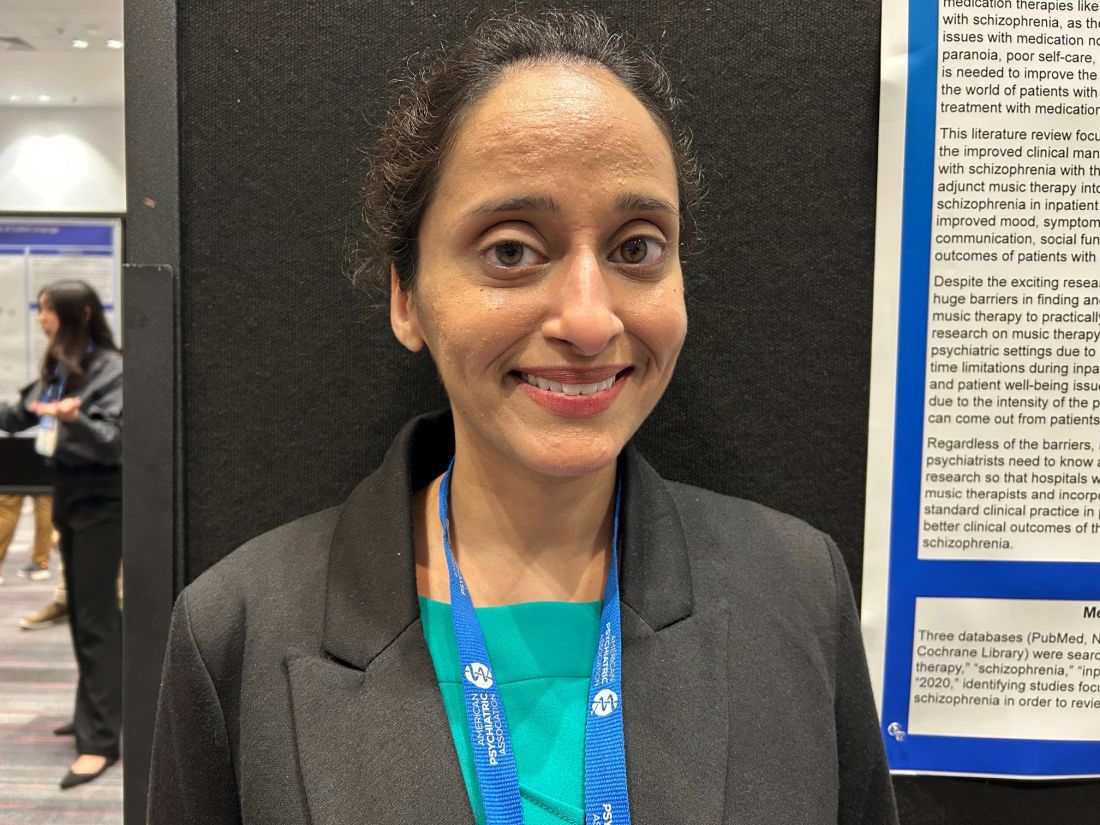
Current antipsychotic drugs aren’t very effective in addressing negative symptoms of schizophrenia, and many patients are noncompliant with these drug regimens because of side effects.
“We need to target the negative symptoms of schizophrenia better,” said Dr. Agrawal. “The antipsychotic medications we have are not enough, so why don’t we start incorporating music therapy groups into the inpatient psychiatry setting as a standard of care?”
The findings were presented at the annual meeting of the American Psychiatric Association.
Dr. Agrawal has long been interested in music. As a child, she was a member of a state choir, but she hadn’t sung for years. After receiving several medals for her clarinet playing during her youth, she stopped playing while in medical school.
Instant boost
During the pandemic, though, she turned back to music and started singing regularly. “I noticed an instant boost in my mood and wondered why I stopped making music for so long, as it made me feel so much happier and calmer.”
She also noticed how music affected her sister, who has paranoid schizophrenia. She described an incident in which her sibling became so loud and paranoid at a restaurant that Dr. Agrawal thought they would be asked to leave.
Then her sister started singing a song she’d sung during a beauty contest years before. “With the music, she calmed right down; she was smiling; she was happy,” said Dr. Agrawal.
That incident made Dr. Agrawal feel, “I had my sister back.” She decided to bring music therapy to her inpatient psychiatry unit and soon noted the benefits for individual patients.
For this new study, Dr. Agrawal and her mentor carried out a literature search. “I was surprised at how many articles popped up, because the field of psychiatry can be very heavily medication based, but people are now getting very interested in this topic,” said Dr. Agrawal.
The review included seven articles, most of which were published within the past 3 years. Some articles specified that the therapy was conducted on an inpatient psychiatric unit, but others didn’t indicate the setting. Studies also didn’t specify whether the therapy was delivered by a trained music therapist.
There was an overall lack of clear measures, graphs, or statistics quantifying the benefits of music therapy on schizophrenia, noted Dr. Agrawal. “But from general statements in the articles, music therapy helped treat sleep disturbances and improved negative symptoms.”
Gets patients socializing
The music, she said, led patients to start socializing, talking about their emotions, and opening up to their clinicians about their mental health symptoms. “Some patients just did not engage at all, and then when the music came on, they would actively participate with the clinician.”
Dancing to music also tended to motivate patients to participate in their treatment, she added. Different forms of movement, such as rhythmic movements and creative exercises, can be added during music therapy.
In addition to improving negative schizophrenia symptoms, music therapy helps with sleep disturbances, depression, and regulating emotional behavior, the research shows. “When patients were agitated or upset, certain music would help them regulate their own affect,” said Dr. Agrawal.
However, it’s not clear from these studies what type of music – classical, rock, country, etc. – was most effective for people.
One article discussed the positive impact of music on patients with schizophrenia while at work. “They seem to have improved work performance,” Dr. Agrawal said.
The length of exposure to music therapy did not seem to make a difference in terms of whether the therapy had a positive effect, she added.
Key research wave
A “key next wave” of research should be to determine whether music therapy decreases the hospital readmission rate, said Dr. Agrawal.
There are several barriers to implementing music therapy programs in hospitals, including cost, the availability of trained therapists, and time constraints, she said.
“Regardless of the barriers, hospital administrators and psychiatrists need to know about this research so they will invest more efforts in recruiting music therapists and incorporating music group therapy into standard clinical practice for psychiatric patients so there are better clinical outcomes.”
Commenting on the research, Michelle B. Riba, MD, professor, department of psychiatry, University of Michigan, Ann Arbor, said the study adds to the literature “and helps us think about adjunctive treatments in a very difficult population.”
She added, “It’s good to see physicians get interested in this topic.”
Difficult topic to study
Although she found the review “very limited,” she recognizes the difficulty of studying music therapy on in-patient psychiatry units.
“Patients are there for short stays, most are getting other treatments, and it’s hard to segment people into negative vs. positive. Also, the ages and genders are different, and their previous treatments are different.”
While it’s sometimes difficult to conduct major research on a topic, “that doesn’t mean we can’t help people,” said Dr. Riba.
She noted that music therapy is beneficial not only for patients with schizophrenia but also is “soothing and relaxing” for those with other conditions. She runs a psychiatric oncology program at her institution’s cancer center, which offers music therapy along with art therapy.
Kevin M. Malone, MD, of University College Dublin, also has firsthand experience with music therapy. “We had a terrific music therapist as part of our clinical psychosis team,” he said in an interview.

The music therapist is no longer there, but, he said, “as far as I’m concerned, every clinical psychosis team should have a music therapist as an essential team member.”
Dr. Agrawal, Dr. Riba, and Dr. Malone had no reported disclosures.
A version of this article was first published on Medscape.com.
SAN FRANCISCO –
Although the study had conflicting results regarding the effects of music therapy on positive symptoms of schizophrenia, such as hallucinations, delusions, and disordered thoughts, it consistently shows that music therapy improves negative symptoms, poster presenter Amy Agrawal, MD, VA Boston Healthcare System and instructor of psychiatry at Harvard Medical School, Boston, said in an interview.
Current antipsychotic drugs aren’t very effective in addressing negative symptoms of schizophrenia, and many patients are noncompliant with these drug regimens because of side effects.
“We need to target the negative symptoms of schizophrenia better,” said Dr. Agrawal. “The antipsychotic medications we have are not enough, so why don’t we start incorporating music therapy groups into the inpatient psychiatry setting as a standard of care?”
The findings were presented at the annual meeting of the American Psychiatric Association.
Dr. Agrawal has long been interested in music. As a child, she was a member of a state choir, but she hadn’t sung for years. After receiving several medals for her clarinet playing during her youth, she stopped playing while in medical school.
Instant boost
During the pandemic, though, she turned back to music and started singing regularly. “I noticed an instant boost in my mood and wondered why I stopped making music for so long, as it made me feel so much happier and calmer.”
She also noticed how music affected her sister, who has paranoid schizophrenia. She described an incident in which her sibling became so loud and paranoid at a restaurant that Dr. Agrawal thought they would be asked to leave.
Then her sister started singing a song she’d sung during a beauty contest years before. “With the music, she calmed right down; she was smiling; she was happy,” said Dr. Agrawal.
That incident made Dr. Agrawal feel, “I had my sister back.” She decided to bring music therapy to her inpatient psychiatry unit and soon noted the benefits for individual patients.
For this new study, Dr. Agrawal and her mentor carried out a literature search. “I was surprised at how many articles popped up, because the field of psychiatry can be very heavily medication based, but people are now getting very interested in this topic,” said Dr. Agrawal.
The review included seven articles, most of which were published within the past 3 years. Some articles specified that the therapy was conducted on an inpatient psychiatric unit, but others didn’t indicate the setting. Studies also didn’t specify whether the therapy was delivered by a trained music therapist.
There was an overall lack of clear measures, graphs, or statistics quantifying the benefits of music therapy on schizophrenia, noted Dr. Agrawal. “But from general statements in the articles, music therapy helped treat sleep disturbances and improved negative symptoms.”
Gets patients socializing
The music, she said, led patients to start socializing, talking about their emotions, and opening up to their clinicians about their mental health symptoms. “Some patients just did not engage at all, and then when the music came on, they would actively participate with the clinician.”
Dancing to music also tended to motivate patients to participate in their treatment, she added. Different forms of movement, such as rhythmic movements and creative exercises, can be added during music therapy.
In addition to improving negative schizophrenia symptoms, music therapy helps with sleep disturbances, depression, and regulating emotional behavior, the research shows. “When patients were agitated or upset, certain music would help them regulate their own affect,” said Dr. Agrawal.
However, it’s not clear from these studies what type of music – classical, rock, country, etc. – was most effective for people.
One article discussed the positive impact of music on patients with schizophrenia while at work. “They seem to have improved work performance,” Dr. Agrawal said.
The length of exposure to music therapy did not seem to make a difference in terms of whether the therapy had a positive effect, she added.
Key research wave
A “key next wave” of research should be to determine whether music therapy decreases the hospital readmission rate, said Dr. Agrawal.
There are several barriers to implementing music therapy programs in hospitals, including cost, the availability of trained therapists, and time constraints, she said.
“Regardless of the barriers, hospital administrators and psychiatrists need to know about this research so they will invest more efforts in recruiting music therapists and incorporating music group therapy into standard clinical practice for psychiatric patients so there are better clinical outcomes.”
Commenting on the research, Michelle B. Riba, MD, professor, department of psychiatry, University of Michigan, Ann Arbor, said the study adds to the literature “and helps us think about adjunctive treatments in a very difficult population.”
She added, “It’s good to see physicians get interested in this topic.”
Difficult topic to study
Although she found the review “very limited,” she recognizes the difficulty of studying music therapy on in-patient psychiatry units.
“Patients are there for short stays, most are getting other treatments, and it’s hard to segment people into negative vs. positive. Also, the ages and genders are different, and their previous treatments are different.”
While it’s sometimes difficult to conduct major research on a topic, “that doesn’t mean we can’t help people,” said Dr. Riba.
She noted that music therapy is beneficial not only for patients with schizophrenia but also is “soothing and relaxing” for those with other conditions. She runs a psychiatric oncology program at her institution’s cancer center, which offers music therapy along with art therapy.
Kevin M. Malone, MD, of University College Dublin, also has firsthand experience with music therapy. “We had a terrific music therapist as part of our clinical psychosis team,” he said in an interview.
The music therapist is no longer there, but, he said, “as far as I’m concerned, every clinical psychosis team should have a music therapist as an essential team member.”
Dr. Agrawal, Dr. Riba, and Dr. Malone had no reported disclosures.
A version of this article was first published on Medscape.com.
SAN FRANCISCO –
Although the study had conflicting results regarding the effects of music therapy on positive symptoms of schizophrenia, such as hallucinations, delusions, and disordered thoughts, it consistently shows that music therapy improves negative symptoms, poster presenter Amy Agrawal, MD, VA Boston Healthcare System and instructor of psychiatry at Harvard Medical School, Boston, said in an interview.
Current antipsychotic drugs aren’t very effective in addressing negative symptoms of schizophrenia, and many patients are noncompliant with these drug regimens because of side effects.
“We need to target the negative symptoms of schizophrenia better,” said Dr. Agrawal. “The antipsychotic medications we have are not enough, so why don’t we start incorporating music therapy groups into the inpatient psychiatry setting as a standard of care?”
The findings were presented at the annual meeting of the American Psychiatric Association.
Dr. Agrawal has long been interested in music. As a child, she was a member of a state choir, but she hadn’t sung for years. After receiving several medals for her clarinet playing during her youth, she stopped playing while in medical school.
Instant boost
During the pandemic, though, she turned back to music and started singing regularly. “I noticed an instant boost in my mood and wondered why I stopped making music for so long, as it made me feel so much happier and calmer.”
She also noticed how music affected her sister, who has paranoid schizophrenia. She described an incident in which her sibling became so loud and paranoid at a restaurant that Dr. Agrawal thought they would be asked to leave.
Then her sister started singing a song she’d sung during a beauty contest years before. “With the music, she calmed right down; she was smiling; she was happy,” said Dr. Agrawal.
That incident made Dr. Agrawal feel, “I had my sister back.” She decided to bring music therapy to her inpatient psychiatry unit and soon noted the benefits for individual patients.
For this new study, Dr. Agrawal and her mentor carried out a literature search. “I was surprised at how many articles popped up, because the field of psychiatry can be very heavily medication based, but people are now getting very interested in this topic,” said Dr. Agrawal.
The review included seven articles, most of which were published within the past 3 years. Some articles specified that the therapy was conducted on an inpatient psychiatric unit, but others didn’t indicate the setting. Studies also didn’t specify whether the therapy was delivered by a trained music therapist.
There was an overall lack of clear measures, graphs, or statistics quantifying the benefits of music therapy on schizophrenia, noted Dr. Agrawal. “But from general statements in the articles, music therapy helped treat sleep disturbances and improved negative symptoms.”
Gets patients socializing
The music, she said, led patients to start socializing, talking about their emotions, and opening up to their clinicians about their mental health symptoms. “Some patients just did not engage at all, and then when the music came on, they would actively participate with the clinician.”
Dancing to music also tended to motivate patients to participate in their treatment, she added. Different forms of movement, such as rhythmic movements and creative exercises, can be added during music therapy.
In addition to improving negative schizophrenia symptoms, music therapy helps with sleep disturbances, depression, and regulating emotional behavior, the research shows. “When patients were agitated or upset, certain music would help them regulate their own affect,” said Dr. Agrawal.
However, it’s not clear from these studies what type of music – classical, rock, country, etc. – was most effective for people.
One article discussed the positive impact of music on patients with schizophrenia while at work. “They seem to have improved work performance,” Dr. Agrawal said.
The length of exposure to music therapy did not seem to make a difference in terms of whether the therapy had a positive effect, she added.
Key research wave
A “key next wave” of research should be to determine whether music therapy decreases the hospital readmission rate, said Dr. Agrawal.
There are several barriers to implementing music therapy programs in hospitals, including cost, the availability of trained therapists, and time constraints, she said.
“Regardless of the barriers, hospital administrators and psychiatrists need to know about this research so they will invest more efforts in recruiting music therapists and incorporating music group therapy into standard clinical practice for psychiatric patients so there are better clinical outcomes.”
Commenting on the research, Michelle B. Riba, MD, professor, department of psychiatry, University of Michigan, Ann Arbor, said the study adds to the literature “and helps us think about adjunctive treatments in a very difficult population.”
She added, “It’s good to see physicians get interested in this topic.”
Difficult topic to study
Although she found the review “very limited,” she recognizes the difficulty of studying music therapy on in-patient psychiatry units.
“Patients are there for short stays, most are getting other treatments, and it’s hard to segment people into negative vs. positive. Also, the ages and genders are different, and their previous treatments are different.”
While it’s sometimes difficult to conduct major research on a topic, “that doesn’t mean we can’t help people,” said Dr. Riba.
She noted that music therapy is beneficial not only for patients with schizophrenia but also is “soothing and relaxing” for those with other conditions. She runs a psychiatric oncology program at her institution’s cancer center, which offers music therapy along with art therapy.
Kevin M. Malone, MD, of University College Dublin, also has firsthand experience with music therapy. “We had a terrific music therapist as part of our clinical psychosis team,” he said in an interview.
The music therapist is no longer there, but, he said, “as far as I’m concerned, every clinical psychosis team should have a music therapist as an essential team member.”
Dr. Agrawal, Dr. Riba, and Dr. Malone had no reported disclosures.
A version of this article was first published on Medscape.com.
AT APA 2023
Long-term freedom from NMOSD relapse with satralizumab
DENVER – , new research shows.
“In long-term observations, we are seeing a nice, sustained suppression of relapses early, as well as late, in treatment,” said study investigator Anthony Traboulsee, MD, University of British Columbia, Vancouver, in presenting the findings at the annual meeting of the Consortium of Multiple Sclerosis Centers.
“It remains very tolerable with no participants discontinuing because of side effects,” he said. “And importantly, [there are] no signs of a delayed risk of infections for both monotherapy and combination therapy.”
Satralizumab, a monoclonal recycling antibody, targets the interleukin (IL)–6 receptor, which is elevated in the serum and cerebrospinal fluid of patients in NMOSD.
The drug was approved by the Food and Drug Administration in 2020 for the treatment of AQP4 antibody–positive NMOSD after favorable results from two key trials: SAkuraSky and SAkuraStar.
The FDA approval marked satralizumab as the third therapy for NMOSD, following eculizumab (Soliris) and inebilizumab (Uplizna).
Satralizumab is administered in subcutaneous injections every 4 weeks after a run-in period of injections at weeks 0, 2, and 4.
Longest trial to date
To evaluate the drug’s long-term efficacy in the treatment of AQP4 IgG–positive NMOSD, patients from the two previous phase 3 trials were entered into the single arm, open-label SAkuraMoon study and continued treatment with the satralizumab 120 mg injections once monthly, with or without immunosuppressive therapy.
The study included 106 patients (mean age 44 years, 89.6% women), all of whom had received one or more doses of satralizumab by the data cutoff of January 2022.
With a median duration of satralizumab exposure of 5 years, the overall adjusted annualized rate of investigator protocol-defined relapse (ARR) was 0.09.
Longitudinal assessment further showed no significant increase in the relapse rate over the course of the study, with an ARR rate of 0.16 at year 1; 0.10 at year 2; 0.05 at year 3; and 0.07 at year 4.
At week 240 (4.6 years), 72% of satralizumab-treated patients were relapse-free, with 91% free from severe relapse.
In addition, 85% of patients had no sustained disability, as measured by Expanded Disability Status Scale (EDSS) worsening, over the study period.
Asked if there are potential subgroups of patients who may be more susceptible to the worsening of disability, Dr. Traboulsee responded “not that we can tell as of yet.”
“I would like to explore this further as this is a relatively new observation, and, as far as I know, this is the longest follow-up for an NMO treatment trial cohort,” he said.
Favorable safety profile
The safety profile was also favorable, consistent with results in the earlier trials. The longer exposure to satralizumab was not associated with a higher risk of severe (grade 3 or higher) laboratory changes versus the double-blind studies. “Rates of adverse events and serious adverse events with overall satralizumab treatment were comparable with the double-blind periods,” said Dr. Traboulsee.
“With satralizumab combined with immunosuppressant therapy, we’re not seeing an increased rate of infections, because it’s not an immune suppressant – it doesn’t suppress lymphocytes or lower immunoglobulin,” he added.
While the use of combination therapy has been an important clinical concern, Dr. Traboulsee noted that “this does not appear to be the case with satralizumab when combined with daily prednisone or daily azathioprine.”
“There is no increased risk of infections, compared with placebo, and it interestingly appears lower than patients on prednisone or azathioprine alone,” he said.
While the median follow-up was 5 years, some in the clinical trial population have been on treatment for up to 7.9 years.
“Based on the current safety and efficacy data, they could stay on this therapy indefinitely, in my opinion,” Dr. Traboulsee said.
In addition to its long-term safety and efficacy, satralizumab “is easy for patients to take and does not require access to an infusion center. It’s easy for physicians to monitor safety, especially since no additional vaccinations or precautions are required beyond what is done in routine care.”
“What I conclude from that clinically is that this is a highly effective and safe therapy by itself or in combination with another agent,” Dr. Traboulsee said.
He noted that the lack of a bump in infections is “really encouraging and very important with a chronic disease that affects elderly patients. So far, so good,” he added.
‘A good first-line therapy’
Commenting on the study, Shailee Shah, MD, an assistant professor in the neuroimmunology division at Vanderbilt University Medical Center, Nashville, Tenn., agreed that the findings bode well for satralizumab’s long-term benefits.
“These are promising results and suggest that satralizumab is very effective in the long term, and even when patients relapse, those relapses are less severe than they would likely be if the patient were off therapy,” she said.
She noted that, while the ability to self-administer injections with satralizumab is convenient, preferences vary.
“This is patient dependent,” Dr. Shah said. “For some patients an injectable medication is ideal but for others an infusion medication [such as eculizumab] is preferred.”
Overall, however, Dr. Shah described satralizumab as “a good first-line therapy for patients with NMOSD in addition to eculizumab/ravulizumab and inebilizumab.”
“It is reasonable to consider this medication in isolation or with concomitant immunosuppressive therapy,” she said.
Dr. Traboulsee’s disclosures include relationships with Novartis, Roche, Sanofi (Genzyme), Ingo Kleiter, Alexion, Almirall, Bayer, Biogen, Celgene, Genentech, Hexal, Horizon, Merck, and Sanofi. Dr. Shah reports that she has served on advisory boards for Horizon, Alexion, and Genentech.
DENVER – , new research shows.
“In long-term observations, we are seeing a nice, sustained suppression of relapses early, as well as late, in treatment,” said study investigator Anthony Traboulsee, MD, University of British Columbia, Vancouver, in presenting the findings at the annual meeting of the Consortium of Multiple Sclerosis Centers.
“It remains very tolerable with no participants discontinuing because of side effects,” he said. “And importantly, [there are] no signs of a delayed risk of infections for both monotherapy and combination therapy.”
Satralizumab, a monoclonal recycling antibody, targets the interleukin (IL)–6 receptor, which is elevated in the serum and cerebrospinal fluid of patients in NMOSD.
The drug was approved by the Food and Drug Administration in 2020 for the treatment of AQP4 antibody–positive NMOSD after favorable results from two key trials: SAkuraSky and SAkuraStar.
The FDA approval marked satralizumab as the third therapy for NMOSD, following eculizumab (Soliris) and inebilizumab (Uplizna).
Satralizumab is administered in subcutaneous injections every 4 weeks after a run-in period of injections at weeks 0, 2, and 4.
Longest trial to date
To evaluate the drug’s long-term efficacy in the treatment of AQP4 IgG–positive NMOSD, patients from the two previous phase 3 trials were entered into the single arm, open-label SAkuraMoon study and continued treatment with the satralizumab 120 mg injections once monthly, with or without immunosuppressive therapy.
The study included 106 patients (mean age 44 years, 89.6% women), all of whom had received one or more doses of satralizumab by the data cutoff of January 2022.
With a median duration of satralizumab exposure of 5 years, the overall adjusted annualized rate of investigator protocol-defined relapse (ARR) was 0.09.
Longitudinal assessment further showed no significant increase in the relapse rate over the course of the study, with an ARR rate of 0.16 at year 1; 0.10 at year 2; 0.05 at year 3; and 0.07 at year 4.
At week 240 (4.6 years), 72% of satralizumab-treated patients were relapse-free, with 91% free from severe relapse.
In addition, 85% of patients had no sustained disability, as measured by Expanded Disability Status Scale (EDSS) worsening, over the study period.
Asked if there are potential subgroups of patients who may be more susceptible to the worsening of disability, Dr. Traboulsee responded “not that we can tell as of yet.”
“I would like to explore this further as this is a relatively new observation, and, as far as I know, this is the longest follow-up for an NMO treatment trial cohort,” he said.
Favorable safety profile
The safety profile was also favorable, consistent with results in the earlier trials. The longer exposure to satralizumab was not associated with a higher risk of severe (grade 3 or higher) laboratory changes versus the double-blind studies. “Rates of adverse events and serious adverse events with overall satralizumab treatment were comparable with the double-blind periods,” said Dr. Traboulsee.
“With satralizumab combined with immunosuppressant therapy, we’re not seeing an increased rate of infections, because it’s not an immune suppressant – it doesn’t suppress lymphocytes or lower immunoglobulin,” he added.
While the use of combination therapy has been an important clinical concern, Dr. Traboulsee noted that “this does not appear to be the case with satralizumab when combined with daily prednisone or daily azathioprine.”
“There is no increased risk of infections, compared with placebo, and it interestingly appears lower than patients on prednisone or azathioprine alone,” he said.
While the median follow-up was 5 years, some in the clinical trial population have been on treatment for up to 7.9 years.
“Based on the current safety and efficacy data, they could stay on this therapy indefinitely, in my opinion,” Dr. Traboulsee said.
In addition to its long-term safety and efficacy, satralizumab “is easy for patients to take and does not require access to an infusion center. It’s easy for physicians to monitor safety, especially since no additional vaccinations or precautions are required beyond what is done in routine care.”
“What I conclude from that clinically is that this is a highly effective and safe therapy by itself or in combination with another agent,” Dr. Traboulsee said.
He noted that the lack of a bump in infections is “really encouraging and very important with a chronic disease that affects elderly patients. So far, so good,” he added.
‘A good first-line therapy’
Commenting on the study, Shailee Shah, MD, an assistant professor in the neuroimmunology division at Vanderbilt University Medical Center, Nashville, Tenn., agreed that the findings bode well for satralizumab’s long-term benefits.
“These are promising results and suggest that satralizumab is very effective in the long term, and even when patients relapse, those relapses are less severe than they would likely be if the patient were off therapy,” she said.
She noted that, while the ability to self-administer injections with satralizumab is convenient, preferences vary.
“This is patient dependent,” Dr. Shah said. “For some patients an injectable medication is ideal but for others an infusion medication [such as eculizumab] is preferred.”
Overall, however, Dr. Shah described satralizumab as “a good first-line therapy for patients with NMOSD in addition to eculizumab/ravulizumab and inebilizumab.”
“It is reasonable to consider this medication in isolation or with concomitant immunosuppressive therapy,” she said.
Dr. Traboulsee’s disclosures include relationships with Novartis, Roche, Sanofi (Genzyme), Ingo Kleiter, Alexion, Almirall, Bayer, Biogen, Celgene, Genentech, Hexal, Horizon, Merck, and Sanofi. Dr. Shah reports that she has served on advisory boards for Horizon, Alexion, and Genentech.
DENVER – , new research shows.
“In long-term observations, we are seeing a nice, sustained suppression of relapses early, as well as late, in treatment,” said study investigator Anthony Traboulsee, MD, University of British Columbia, Vancouver, in presenting the findings at the annual meeting of the Consortium of Multiple Sclerosis Centers.
“It remains very tolerable with no participants discontinuing because of side effects,” he said. “And importantly, [there are] no signs of a delayed risk of infections for both monotherapy and combination therapy.”
Satralizumab, a monoclonal recycling antibody, targets the interleukin (IL)–6 receptor, which is elevated in the serum and cerebrospinal fluid of patients in NMOSD.
The drug was approved by the Food and Drug Administration in 2020 for the treatment of AQP4 antibody–positive NMOSD after favorable results from two key trials: SAkuraSky and SAkuraStar.
The FDA approval marked satralizumab as the third therapy for NMOSD, following eculizumab (Soliris) and inebilizumab (Uplizna).
Satralizumab is administered in subcutaneous injections every 4 weeks after a run-in period of injections at weeks 0, 2, and 4.
Longest trial to date
To evaluate the drug’s long-term efficacy in the treatment of AQP4 IgG–positive NMOSD, patients from the two previous phase 3 trials were entered into the single arm, open-label SAkuraMoon study and continued treatment with the satralizumab 120 mg injections once monthly, with or without immunosuppressive therapy.
The study included 106 patients (mean age 44 years, 89.6% women), all of whom had received one or more doses of satralizumab by the data cutoff of January 2022.
With a median duration of satralizumab exposure of 5 years, the overall adjusted annualized rate of investigator protocol-defined relapse (ARR) was 0.09.
Longitudinal assessment further showed no significant increase in the relapse rate over the course of the study, with an ARR rate of 0.16 at year 1; 0.10 at year 2; 0.05 at year 3; and 0.07 at year 4.
At week 240 (4.6 years), 72% of satralizumab-treated patients were relapse-free, with 91% free from severe relapse.
In addition, 85% of patients had no sustained disability, as measured by Expanded Disability Status Scale (EDSS) worsening, over the study period.
Asked if there are potential subgroups of patients who may be more susceptible to the worsening of disability, Dr. Traboulsee responded “not that we can tell as of yet.”
“I would like to explore this further as this is a relatively new observation, and, as far as I know, this is the longest follow-up for an NMO treatment trial cohort,” he said.
Favorable safety profile
The safety profile was also favorable, consistent with results in the earlier trials. The longer exposure to satralizumab was not associated with a higher risk of severe (grade 3 or higher) laboratory changes versus the double-blind studies. “Rates of adverse events and serious adverse events with overall satralizumab treatment were comparable with the double-blind periods,” said Dr. Traboulsee.
“With satralizumab combined with immunosuppressant therapy, we’re not seeing an increased rate of infections, because it’s not an immune suppressant – it doesn’t suppress lymphocytes or lower immunoglobulin,” he added.
While the use of combination therapy has been an important clinical concern, Dr. Traboulsee noted that “this does not appear to be the case with satralizumab when combined with daily prednisone or daily azathioprine.”
“There is no increased risk of infections, compared with placebo, and it interestingly appears lower than patients on prednisone or azathioprine alone,” he said.
While the median follow-up was 5 years, some in the clinical trial population have been on treatment for up to 7.9 years.
“Based on the current safety and efficacy data, they could stay on this therapy indefinitely, in my opinion,” Dr. Traboulsee said.
In addition to its long-term safety and efficacy, satralizumab “is easy for patients to take and does not require access to an infusion center. It’s easy for physicians to monitor safety, especially since no additional vaccinations or precautions are required beyond what is done in routine care.”
“What I conclude from that clinically is that this is a highly effective and safe therapy by itself or in combination with another agent,” Dr. Traboulsee said.
He noted that the lack of a bump in infections is “really encouraging and very important with a chronic disease that affects elderly patients. So far, so good,” he added.
‘A good first-line therapy’
Commenting on the study, Shailee Shah, MD, an assistant professor in the neuroimmunology division at Vanderbilt University Medical Center, Nashville, Tenn., agreed that the findings bode well for satralizumab’s long-term benefits.
“These are promising results and suggest that satralizumab is very effective in the long term, and even when patients relapse, those relapses are less severe than they would likely be if the patient were off therapy,” she said.
She noted that, while the ability to self-administer injections with satralizumab is convenient, preferences vary.
“This is patient dependent,” Dr. Shah said. “For some patients an injectable medication is ideal but for others an infusion medication [such as eculizumab] is preferred.”
Overall, however, Dr. Shah described satralizumab as “a good first-line therapy for patients with NMOSD in addition to eculizumab/ravulizumab and inebilizumab.”
“It is reasonable to consider this medication in isolation or with concomitant immunosuppressive therapy,” she said.
Dr. Traboulsee’s disclosures include relationships with Novartis, Roche, Sanofi (Genzyme), Ingo Kleiter, Alexion, Almirall, Bayer, Biogen, Celgene, Genentech, Hexal, Horizon, Merck, and Sanofi. Dr. Shah reports that she has served on advisory boards for Horizon, Alexion, and Genentech.
AT CMSC 2023
Community workers may address psychiatrist shortage
SAN FRANCISCO – promises to bring timely, evidence-based health services to those with little to no access to effective care.
The current shortage of mental health clinicians is driven by increased demand from a population more willing to seek psychiatric help and clinicians leaving the workforce. Both factors were exacerbated by the COVID-19 pandemic.
“It would be costly to address the problem through additional specialist training, and doing so would take decades to see any changes,” project director Milton L. Wainberg, MD, professor of clinical psychiatry at Columbia University, New York, and New York State Psychiatric Institute, said in an interview.
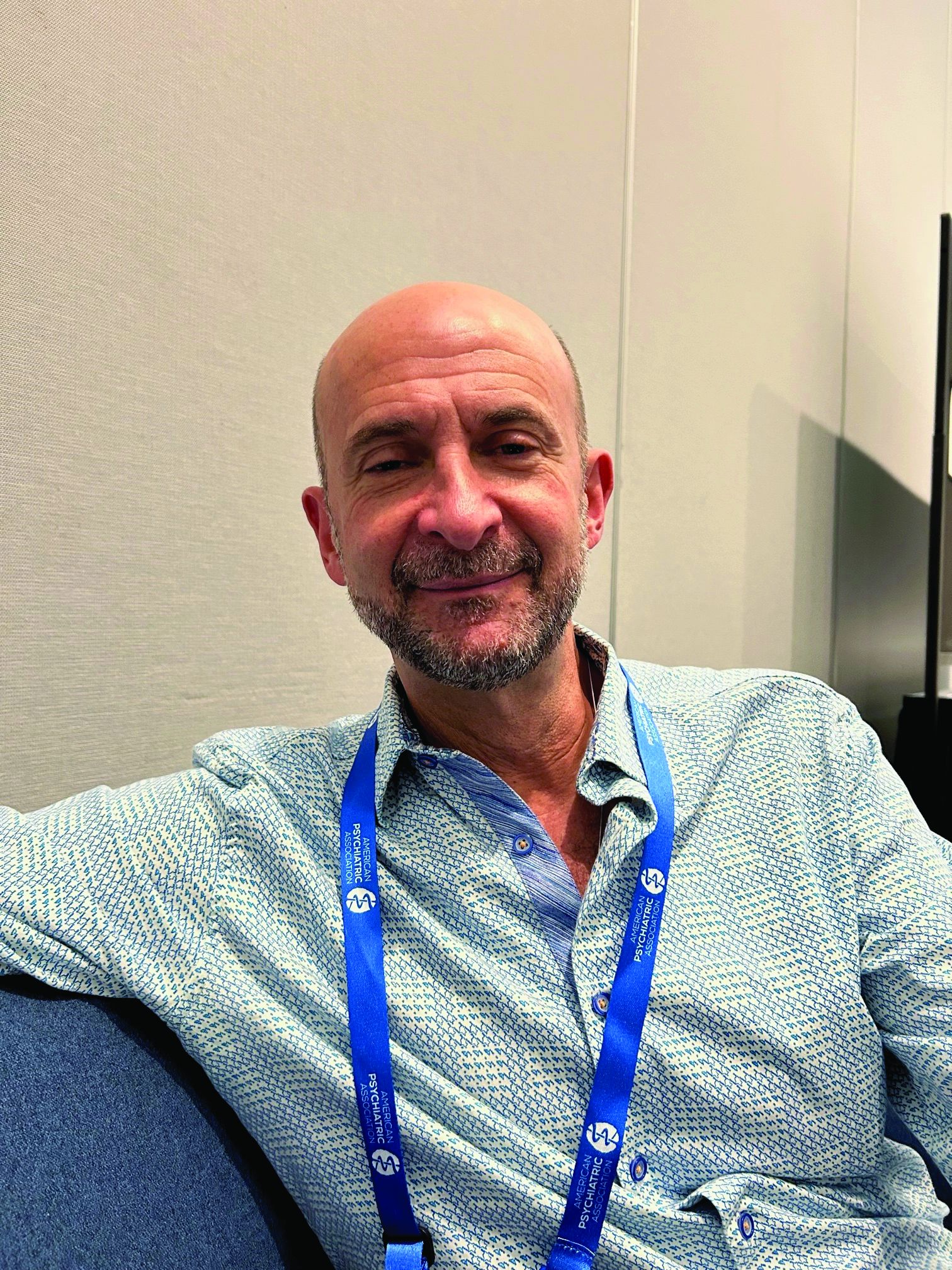
A better solution is to train members of the community to be the entry point to the mental health care system, a strategy that has been proven effective.
Details of the project were discussed at the annual meeting of the American Psychiatric Association.
Half of the United States population will be diagnosed with a mental or substance use disorder in their lifetime, but only about half of those will receive proper treatment. That percentage is even greater among lower-income groups and minorities, said Dr. Wainberg.
Despite the availability of multiple evidence-based therapies, there has been no reduction in the global prevalence of psychiatric illness since 1990 – the first time this burden was determined, he said.
Unfeasible model
“The historic paradigm of ongoing long-term care is costly and not a feasible public mental health model. There is no evidence that it works, and there is increasing demand for brief interventions,” said Dr. Wainberg.
The new initiative – called ENGAGE – has its origins in parts of Africa, where nurses had to be trained during the AIDS crisis as there weren’t enough doctors to roll out antiretroviral therapy.
In the United States, the program trains and certifies community workers who are passionate about their community. “Members of the community want to learn how to help their neighbors,” said Dr. Wainberg. “When we give them the opportunity to learn skills that can actually change community members’ symptoms, they are excited.”
The training involves a didactic component and an experiential component, in which trainees work with at least three cases under supervision to demonstrate competency. Technical assistance and other supports, such as refresher training, are offered for a year after training.
Workers ask three initial questions to quickly determine if a person has a mental health disorder. Asking 10 additional questions tells the worker if the person has a common mental health disorder like depression, anxiety, or posttraumatic stress disorder (PTSD), a substance use disorder involving alcohol or drugs, suicide risk, or a severe disorder requiring referral to a mental health specialist.
Those who do not require a referral are offered an intervention personalized to their need.
The training costs $5,000 per person. “We calculated for New York State it would cost only $18 million to train everybody we need,” said Dr. Wainberg.
Cost effective
He stressed the program, which is funded by the New York Office of Mental Health, is cost effective. Just like patients don’t need to see a plastic surgeon to have a small mole removed, they don’t always need to see a psychiatrist for run-of-the-mill mild depression, he said.
To date, 20 workers have been trained and have started to meet with clients in clinics in four New York City neighborhoods/boroughs (Harlem, Brooklyn, the Bronx, and Washington Heights). Additional clinics in West Harlem and Staten Island are expected to begin training soon.
Dr. Wainberg has been inundated with interest in the initiative. “Over the last 3 months I have been having 15 meetings a day” with parties interested in getting more information or wanting to know how to start such a program.
He plans to examine the program’s effectiveness in a number of areas, including patient symptoms, timeliness of services, access, sustainability, and cost. And he aims to expand the project beyond New York.
Mental health specialists shouldn’t worry about becoming irrelevant with the addition of community workers, as the demand is so great, said Dr. Wainberg. “There will always be a need for the kind of care mental health specialists are trained for. This initiative aims to expand capacity for those with less severe symptoms, who might not need an intensive level of intervention.”
Unique program
In a comment, Jonathan E. Alpert, MD, PhD, chair of the department of psychiatry and behavioral sciences, Montefiore Medical Center and Albert Einstein College of Medicine, New York, said the project is “unique” and an “excellent” idea.

“This is one of the first pilots that I know of in this country to train lay-members of the community to screen for mental illness and substance use disorders and even to provide evidence-based treatment for people who may have more mild symptoms and might not yet need to see a professional but otherwise would not have access to care.”
Dr. Alpert noted the current challenges of accessing care for a mental health or substance abuse disorder. “Many clinics have wait lists of 3-6 months.”
Another issue is the “stigma and lack of trust” among minority communities when it comes to formal mental health treatments. “Having lay-members who know the community, who look like the community, who understand the community, and who are available for screening and treatment is exceptionally important.”
Although this pilot program will have to be assessed for effectiveness, “the concept behind it is very important,” said Dr. Alpert. “If you’re relying on MDs and PhDs to provide mental health services, there just aren’t enough of us to go around.”
Dr. Wainberg and Dr. Alpert report no relevant financial relationships.
A version of this article first appeared on Medscape.com.
SAN FRANCISCO – promises to bring timely, evidence-based health services to those with little to no access to effective care.
The current shortage of mental health clinicians is driven by increased demand from a population more willing to seek psychiatric help and clinicians leaving the workforce. Both factors were exacerbated by the COVID-19 pandemic.
“It would be costly to address the problem through additional specialist training, and doing so would take decades to see any changes,” project director Milton L. Wainberg, MD, professor of clinical psychiatry at Columbia University, New York, and New York State Psychiatric Institute, said in an interview.
A better solution is to train members of the community to be the entry point to the mental health care system, a strategy that has been proven effective.
Details of the project were discussed at the annual meeting of the American Psychiatric Association.
Half of the United States population will be diagnosed with a mental or substance use disorder in their lifetime, but only about half of those will receive proper treatment. That percentage is even greater among lower-income groups and minorities, said Dr. Wainberg.
Despite the availability of multiple evidence-based therapies, there has been no reduction in the global prevalence of psychiatric illness since 1990 – the first time this burden was determined, he said.
Unfeasible model
“The historic paradigm of ongoing long-term care is costly and not a feasible public mental health model. There is no evidence that it works, and there is increasing demand for brief interventions,” said Dr. Wainberg.
The new initiative – called ENGAGE – has its origins in parts of Africa, where nurses had to be trained during the AIDS crisis as there weren’t enough doctors to roll out antiretroviral therapy.
In the United States, the program trains and certifies community workers who are passionate about their community. “Members of the community want to learn how to help their neighbors,” said Dr. Wainberg. “When we give them the opportunity to learn skills that can actually change community members’ symptoms, they are excited.”
The training involves a didactic component and an experiential component, in which trainees work with at least three cases under supervision to demonstrate competency. Technical assistance and other supports, such as refresher training, are offered for a year after training.
Workers ask three initial questions to quickly determine if a person has a mental health disorder. Asking 10 additional questions tells the worker if the person has a common mental health disorder like depression, anxiety, or posttraumatic stress disorder (PTSD), a substance use disorder involving alcohol or drugs, suicide risk, or a severe disorder requiring referral to a mental health specialist.
Those who do not require a referral are offered an intervention personalized to their need.
The training costs $5,000 per person. “We calculated for New York State it would cost only $18 million to train everybody we need,” said Dr. Wainberg.
Cost effective
He stressed the program, which is funded by the New York Office of Mental Health, is cost effective. Just like patients don’t need to see a plastic surgeon to have a small mole removed, they don’t always need to see a psychiatrist for run-of-the-mill mild depression, he said.
To date, 20 workers have been trained and have started to meet with clients in clinics in four New York City neighborhoods/boroughs (Harlem, Brooklyn, the Bronx, and Washington Heights). Additional clinics in West Harlem and Staten Island are expected to begin training soon.
Dr. Wainberg has been inundated with interest in the initiative. “Over the last 3 months I have been having 15 meetings a day” with parties interested in getting more information or wanting to know how to start such a program.
He plans to examine the program’s effectiveness in a number of areas, including patient symptoms, timeliness of services, access, sustainability, and cost. And he aims to expand the project beyond New York.
Mental health specialists shouldn’t worry about becoming irrelevant with the addition of community workers, as the demand is so great, said Dr. Wainberg. “There will always be a need for the kind of care mental health specialists are trained for. This initiative aims to expand capacity for those with less severe symptoms, who might not need an intensive level of intervention.”
Unique program
In a comment, Jonathan E. Alpert, MD, PhD, chair of the department of psychiatry and behavioral sciences, Montefiore Medical Center and Albert Einstein College of Medicine, New York, said the project is “unique” and an “excellent” idea.
“This is one of the first pilots that I know of in this country to train lay-members of the community to screen for mental illness and substance use disorders and even to provide evidence-based treatment for people who may have more mild symptoms and might not yet need to see a professional but otherwise would not have access to care.”
Dr. Alpert noted the current challenges of accessing care for a mental health or substance abuse disorder. “Many clinics have wait lists of 3-6 months.”
Another issue is the “stigma and lack of trust” among minority communities when it comes to formal mental health treatments. “Having lay-members who know the community, who look like the community, who understand the community, and who are available for screening and treatment is exceptionally important.”
Although this pilot program will have to be assessed for effectiveness, “the concept behind it is very important,” said Dr. Alpert. “If you’re relying on MDs and PhDs to provide mental health services, there just aren’t enough of us to go around.”
Dr. Wainberg and Dr. Alpert report no relevant financial relationships.
A version of this article first appeared on Medscape.com.
SAN FRANCISCO – promises to bring timely, evidence-based health services to those with little to no access to effective care.
The current shortage of mental health clinicians is driven by increased demand from a population more willing to seek psychiatric help and clinicians leaving the workforce. Both factors were exacerbated by the COVID-19 pandemic.
“It would be costly to address the problem through additional specialist training, and doing so would take decades to see any changes,” project director Milton L. Wainberg, MD, professor of clinical psychiatry at Columbia University, New York, and New York State Psychiatric Institute, said in an interview.
A better solution is to train members of the community to be the entry point to the mental health care system, a strategy that has been proven effective.
Details of the project were discussed at the annual meeting of the American Psychiatric Association.
Half of the United States population will be diagnosed with a mental or substance use disorder in their lifetime, but only about half of those will receive proper treatment. That percentage is even greater among lower-income groups and minorities, said Dr. Wainberg.
Despite the availability of multiple evidence-based therapies, there has been no reduction in the global prevalence of psychiatric illness since 1990 – the first time this burden was determined, he said.
Unfeasible model
“The historic paradigm of ongoing long-term care is costly and not a feasible public mental health model. There is no evidence that it works, and there is increasing demand for brief interventions,” said Dr. Wainberg.
The new initiative – called ENGAGE – has its origins in parts of Africa, where nurses had to be trained during the AIDS crisis as there weren’t enough doctors to roll out antiretroviral therapy.
In the United States, the program trains and certifies community workers who are passionate about their community. “Members of the community want to learn how to help their neighbors,” said Dr. Wainberg. “When we give them the opportunity to learn skills that can actually change community members’ symptoms, they are excited.”
The training involves a didactic component and an experiential component, in which trainees work with at least three cases under supervision to demonstrate competency. Technical assistance and other supports, such as refresher training, are offered for a year after training.
Workers ask three initial questions to quickly determine if a person has a mental health disorder. Asking 10 additional questions tells the worker if the person has a common mental health disorder like depression, anxiety, or posttraumatic stress disorder (PTSD), a substance use disorder involving alcohol or drugs, suicide risk, or a severe disorder requiring referral to a mental health specialist.
Those who do not require a referral are offered an intervention personalized to their need.
The training costs $5,000 per person. “We calculated for New York State it would cost only $18 million to train everybody we need,” said Dr. Wainberg.
Cost effective
He stressed the program, which is funded by the New York Office of Mental Health, is cost effective. Just like patients don’t need to see a plastic surgeon to have a small mole removed, they don’t always need to see a psychiatrist for run-of-the-mill mild depression, he said.
To date, 20 workers have been trained and have started to meet with clients in clinics in four New York City neighborhoods/boroughs (Harlem, Brooklyn, the Bronx, and Washington Heights). Additional clinics in West Harlem and Staten Island are expected to begin training soon.
Dr. Wainberg has been inundated with interest in the initiative. “Over the last 3 months I have been having 15 meetings a day” with parties interested in getting more information or wanting to know how to start such a program.
He plans to examine the program’s effectiveness in a number of areas, including patient symptoms, timeliness of services, access, sustainability, and cost. And he aims to expand the project beyond New York.
Mental health specialists shouldn’t worry about becoming irrelevant with the addition of community workers, as the demand is so great, said Dr. Wainberg. “There will always be a need for the kind of care mental health specialists are trained for. This initiative aims to expand capacity for those with less severe symptoms, who might not need an intensive level of intervention.”
Unique program
In a comment, Jonathan E. Alpert, MD, PhD, chair of the department of psychiatry and behavioral sciences, Montefiore Medical Center and Albert Einstein College of Medicine, New York, said the project is “unique” and an “excellent” idea.
“This is one of the first pilots that I know of in this country to train lay-members of the community to screen for mental illness and substance use disorders and even to provide evidence-based treatment for people who may have more mild symptoms and might not yet need to see a professional but otherwise would not have access to care.”
Dr. Alpert noted the current challenges of accessing care for a mental health or substance abuse disorder. “Many clinics have wait lists of 3-6 months.”
Another issue is the “stigma and lack of trust” among minority communities when it comes to formal mental health treatments. “Having lay-members who know the community, who look like the community, who understand the community, and who are available for screening and treatment is exceptionally important.”
Although this pilot program will have to be assessed for effectiveness, “the concept behind it is very important,” said Dr. Alpert. “If you’re relying on MDs and PhDs to provide mental health services, there just aren’t enough of us to go around.”
Dr. Wainberg and Dr. Alpert report no relevant financial relationships.
A version of this article first appeared on Medscape.com.
FROM APA 2023
U.S. psychiatrist shortage causing months-long wait times
SAN FRANCISCO –
“Long wait times for mental health care were a huge problem even before the pandemic but especially during the pandemic,” study investigator Erin McDaid, BS, Virginia Tech Carilion School of Medicine, Roanoke, said in an interview.

“It’s not like you have a cold or a virus and maybe you wait a little bit and it goes away. Mental health problems can completely impact your life; you can’t do anything, you can’t go to work, you can’t build relationships, you can’t take care of your kids. It’s a really big issue,” Ms. McDaid said.
The study was presented at the annual meeting of the American Psychiatric Association.
Few psychiatrists taking new patients
To find out just how big an issue wait times are, the researchers examined general psychiatry outpatient availability during the COVID-19 pandemic in five states – New York, California, North Dakota, Virginia, and Wyoming.
Altogether, 948 psychiatrists were sampled. Simulated adult patients made 864 calls seeking an initial psychiatric evaluation for general mental health care. The calls were made late in the pandemic, between May and July 2022.
Only 18.5% of psychiatrists were available to see new patients. The median wait time was 67 days for in-person appointments and 43 days for telepsychiatry appointments (P < .001).
More than half of psychiatrists who were contacted said they were not taking new patients, which was the most common reason given for unavailability.
“This is happening at the worst time, when we are seeing mental health issues spike,” Ms. McDaid said.
Telepsychiatry helpful but no panacea
The fact that wait times were a bit shorter for telepsychiatry is encouraging, Ms. McDaid said.
Telepsychiatry is a potential solution to provider shortages and geographic barriers, but it does not resolve the concerning shortage of psychiatric outpatient care, she noted.
“Psychiatrists adapted very well to telepsychiatry during COVID,” Saul Levin, MD, MPA, chief executive officer and medical director of the APA, noted during a preconference briefing with reporters.

“Before COVID, we always thought that the psychiatrist had to be with the patient in the room,” said Dr. Levin. But now we see that either “sitting inside the room with your psychiatrist or mental health specialist or [being there virtually] has the same effect. The patient is concentrating and working out their problems with you. I think that’s one of the positives – if anything coming out of COVID is positive.”
In an interview, Robert Trestman, MD, chair of the APA Council on Healthcare Systems and Financing, said telepsychiatry “will help, but there is not one simple solution that will fix the problem” regarding access to mental health care.
One promising approach is the collaborative care model, which enlists primary care physicians to provide mental health care in consultation with psychiatry and case management, Dr. Trestman said.
“There’s no question that there aren’t enough providers. There aren’t enough primary care doctors, and there certainly aren’t enough psychiatrists,” Dr. Trestman noted.
Encouragingly, however, the past few years have seen a steady increase in medical students choosing psychiatry.
“Psychiatry is now being thought of as a branch of neuroscience. We are understanding so much more about the field and about the brain. So that’s intriguing and intellectually challenging to many,” Dr. Trestman said.
He also noted that the pandemic has helped to “break down stigma. More people acknowledge and talk about mental health, and when an area is destigmatized, it’s so much easier for people to consider.”
Jack Resneck, Jr., MD, president of the American Medical Association, acknowledged that there is a “severe workforce shortage in health care right now.”
“I’m a physician and the president of the AMA, and it took me way too long to be able to find a primary care physician for myself,” he said.
“I also am a physician who refers patients to rheumatology and endocrinology, psychiatry, and other areas of medicine, and it is, in many geographic areas both rural and urban, a huge struggle right now,” said Dr. Resneck.
The study had no specific funding. Ms. McDaid, Dr. Levin, and Dr. Trestman have disclosed no relevant financial relationships.
A version of this article first appeared on Medscape.com.
SAN FRANCISCO –
“Long wait times for mental health care were a huge problem even before the pandemic but especially during the pandemic,” study investigator Erin McDaid, BS, Virginia Tech Carilion School of Medicine, Roanoke, said in an interview.
“It’s not like you have a cold or a virus and maybe you wait a little bit and it goes away. Mental health problems can completely impact your life; you can’t do anything, you can’t go to work, you can’t build relationships, you can’t take care of your kids. It’s a really big issue,” Ms. McDaid said.
The study was presented at the annual meeting of the American Psychiatric Association.
Few psychiatrists taking new patients
To find out just how big an issue wait times are, the researchers examined general psychiatry outpatient availability during the COVID-19 pandemic in five states – New York, California, North Dakota, Virginia, and Wyoming.
Altogether, 948 psychiatrists were sampled. Simulated adult patients made 864 calls seeking an initial psychiatric evaluation for general mental health care. The calls were made late in the pandemic, between May and July 2022.
Only 18.5% of psychiatrists were available to see new patients. The median wait time was 67 days for in-person appointments and 43 days for telepsychiatry appointments (P < .001).
More than half of psychiatrists who were contacted said they were not taking new patients, which was the most common reason given for unavailability.
“This is happening at the worst time, when we are seeing mental health issues spike,” Ms. McDaid said.
Telepsychiatry helpful but no panacea
The fact that wait times were a bit shorter for telepsychiatry is encouraging, Ms. McDaid said.
Telepsychiatry is a potential solution to provider shortages and geographic barriers, but it does not resolve the concerning shortage of psychiatric outpatient care, she noted.
“Psychiatrists adapted very well to telepsychiatry during COVID,” Saul Levin, MD, MPA, chief executive officer and medical director of the APA, noted during a preconference briefing with reporters.
“Before COVID, we always thought that the psychiatrist had to be with the patient in the room,” said Dr. Levin. But now we see that either “sitting inside the room with your psychiatrist or mental health specialist or [being there virtually] has the same effect. The patient is concentrating and working out their problems with you. I think that’s one of the positives – if anything coming out of COVID is positive.”
In an interview, Robert Trestman, MD, chair of the APA Council on Healthcare Systems and Financing, said telepsychiatry “will help, but there is not one simple solution that will fix the problem” regarding access to mental health care.
One promising approach is the collaborative care model, which enlists primary care physicians to provide mental health care in consultation with psychiatry and case management, Dr. Trestman said.
“There’s no question that there aren’t enough providers. There aren’t enough primary care doctors, and there certainly aren’t enough psychiatrists,” Dr. Trestman noted.
Encouragingly, however, the past few years have seen a steady increase in medical students choosing psychiatry.
“Psychiatry is now being thought of as a branch of neuroscience. We are understanding so much more about the field and about the brain. So that’s intriguing and intellectually challenging to many,” Dr. Trestman said.
He also noted that the pandemic has helped to “break down stigma. More people acknowledge and talk about mental health, and when an area is destigmatized, it’s so much easier for people to consider.”
Jack Resneck, Jr., MD, president of the American Medical Association, acknowledged that there is a “severe workforce shortage in health care right now.”
“I’m a physician and the president of the AMA, and it took me way too long to be able to find a primary care physician for myself,” he said.
“I also am a physician who refers patients to rheumatology and endocrinology, psychiatry, and other areas of medicine, and it is, in many geographic areas both rural and urban, a huge struggle right now,” said Dr. Resneck.
The study had no specific funding. Ms. McDaid, Dr. Levin, and Dr. Trestman have disclosed no relevant financial relationships.
A version of this article first appeared on Medscape.com.
SAN FRANCISCO –
“Long wait times for mental health care were a huge problem even before the pandemic but especially during the pandemic,” study investigator Erin McDaid, BS, Virginia Tech Carilion School of Medicine, Roanoke, said in an interview.
“It’s not like you have a cold or a virus and maybe you wait a little bit and it goes away. Mental health problems can completely impact your life; you can’t do anything, you can’t go to work, you can’t build relationships, you can’t take care of your kids. It’s a really big issue,” Ms. McDaid said.
The study was presented at the annual meeting of the American Psychiatric Association.
Few psychiatrists taking new patients
To find out just how big an issue wait times are, the researchers examined general psychiatry outpatient availability during the COVID-19 pandemic in five states – New York, California, North Dakota, Virginia, and Wyoming.
Altogether, 948 psychiatrists were sampled. Simulated adult patients made 864 calls seeking an initial psychiatric evaluation for general mental health care. The calls were made late in the pandemic, between May and July 2022.
Only 18.5% of psychiatrists were available to see new patients. The median wait time was 67 days for in-person appointments and 43 days for telepsychiatry appointments (P < .001).
More than half of psychiatrists who were contacted said they were not taking new patients, which was the most common reason given for unavailability.
“This is happening at the worst time, when we are seeing mental health issues spike,” Ms. McDaid said.
Telepsychiatry helpful but no panacea
The fact that wait times were a bit shorter for telepsychiatry is encouraging, Ms. McDaid said.
Telepsychiatry is a potential solution to provider shortages and geographic barriers, but it does not resolve the concerning shortage of psychiatric outpatient care, she noted.
“Psychiatrists adapted very well to telepsychiatry during COVID,” Saul Levin, MD, MPA, chief executive officer and medical director of the APA, noted during a preconference briefing with reporters.
“Before COVID, we always thought that the psychiatrist had to be with the patient in the room,” said Dr. Levin. But now we see that either “sitting inside the room with your psychiatrist or mental health specialist or [being there virtually] has the same effect. The patient is concentrating and working out their problems with you. I think that’s one of the positives – if anything coming out of COVID is positive.”
In an interview, Robert Trestman, MD, chair of the APA Council on Healthcare Systems and Financing, said telepsychiatry “will help, but there is not one simple solution that will fix the problem” regarding access to mental health care.
One promising approach is the collaborative care model, which enlists primary care physicians to provide mental health care in consultation with psychiatry and case management, Dr. Trestman said.
“There’s no question that there aren’t enough providers. There aren’t enough primary care doctors, and there certainly aren’t enough psychiatrists,” Dr. Trestman noted.
Encouragingly, however, the past few years have seen a steady increase in medical students choosing psychiatry.
“Psychiatry is now being thought of as a branch of neuroscience. We are understanding so much more about the field and about the brain. So that’s intriguing and intellectually challenging to many,” Dr. Trestman said.
He also noted that the pandemic has helped to “break down stigma. More people acknowledge and talk about mental health, and when an area is destigmatized, it’s so much easier for people to consider.”
Jack Resneck, Jr., MD, president of the American Medical Association, acknowledged that there is a “severe workforce shortage in health care right now.”
“I’m a physician and the president of the AMA, and it took me way too long to be able to find a primary care physician for myself,” he said.
“I also am a physician who refers patients to rheumatology and endocrinology, psychiatry, and other areas of medicine, and it is, in many geographic areas both rural and urban, a huge struggle right now,” said Dr. Resneck.
The study had no specific funding. Ms. McDaid, Dr. Levin, and Dr. Trestman have disclosed no relevant financial relationships.
A version of this article first appeared on Medscape.com.
AT APA 2023
Abrocitinib remains effective at 96 weeks, in older as well as younger adults
WASHINGTON – A substantial proportion of , Andrew F. Alexis, MD, MPH, reported in a late-breaker abstract session at the annual Revolutionizing Atopic Dermatitis conference.
The analysis stratified patients by age – 18-50 and over 50 years – and found that the sustained improvement with the JAK-1 selective inhibitor as monotherapy was seen regardless of age. “In practice, patients who are older tend to have had AD for a longer period of time and tend to be more difficult to treat so it’s reassuring to see that even in the over-50 age group, they show substantial responses, even with more stringent endpoints,” said Dr. Alexis, professor of clinical dermatology at Weill Cornell Medical College, New York.

At week 96, for instance, the proportion of patients who achieved at least a 75% improvement from baseline on the Eczema Area and Severity Index (EASI-75) was 73% with the 100-mg dose and 85% with the 200-mg dose in the younger age group, and 86% and 89%, respectively, in the older age group.
An EASI-90 response – one of the more stringent outcomes – was achieved by 45% and 58% in the 18-50 group and 58% and 73% in the over 50 group (for 100-mg and 200-mg doses, respectively), Dr. Alexis reported.
The interim analysis also showed dose-dependent efficacy overall up to 96 weeks in the younger age group but only up to 48 weeks in the older age group. Response to some outcome measures in patients over age 50 years was “less clearly dose dependent after week 48” than earlier, Dr. Alexis said.
The ongoing JADE EXTEND trial enrolled patients who had participated in the phase 3 JADE clinical trials. This analysis covered 1,309 patients who were enrolled by a September 2021 cutoff. The patient population leaned young: Eighty percent (1,046) were aged 18-50, and 20% (263) were over 50.
Patients who were randomly assigned to abrocitinib 200 mg or 100 mg in the parent trials continued to receive the same dose in JADE EXTEND with blinding maintained. Those who received placebo in the qualifying trial were randomly assigned to abrocitinib 200 mg or 100 mg. And patients from JADE DARE continued with their dosing of 200 mg. Grouping by age for the analysis was made based on the age recorded at the screening visit of the qualifying trial.
IGA, PP-NRS, and DLQI results
At week 96, the proportion of patients 18-50 years of age who achieved the Investigator’s Global Assessment (IGA) score of 0 or 1 (clear or almost clear) with at least a 2-grade improvement from baseline was 44% in the 100-mg group and 55% in the 200-mg group. Among patients over 50, these proportions were 51% and 58%, respectively.
The proportion of patients who achieved at least a 4-point improvement from baseline in the Peak Pruritus Numerical Rating Scale (PP-NRS) score was 54% and 66% (on 100 mg and 200 mg, respectively) among those aged 18-50, and 79% and 80%, respectively, among those over 50.
Looking at more stringent outcomes, 26% and 38% in the 18-50 group on 100 mg and 200 mg, respectively, achieved a PP-NRS of 0/1, as did 54% and 44% in the over-50 group.
Lastly, a score of less than 2 on the Dermatology Life Quality Index (DLQI 0/1) was achieved by 32% and 41% of patients aged 18-50 and by 51% and 48% of patients over 50, for the 100-mg and 200-mg doses, respectively.
The decline in dose-dependent efficacy in the older age group after 48 weeks may be due to the smaller sample of older patients and/or the fact that a higher proportion of older patients had moderate baseline disease per their IGA score, versus severe disease, compared with the younger patients, Dr. Alexis said. “We see a skewing toward a bit more severe [disease] in the younger age group compared to the older,” he noted.
Abrocitinib (Cibinqo) is approved for the treatment of moderate to severe AD in adolescents aged 12 and up and adults whose disease is not adequately controlled with other systemic treatments or those for whom the use of these drugs is not advised. It is available in a 50-mg dose for dose adjustments in special populations, but this dose was not studied in the clinical trials, Dr. Alexis noted. The interim analysis did not include safety data.
In a separate presentation in which he reviewed long-term data on AD medications, Raj Chovatiya, MD, PhD, assistant professor of dermatology at Northwestern University, Chicago, said that most patients who meet defined endpoints at week 12 of treatment with abrocitinib maintain that response over time. “By and large, there’s a steep initial rise that flattens over the long run, which is what you want to see. People getting that response are generally staying there over the course of treatment,” he said, referring to the JADE EXTEND data up to week 48.

It’s important to also appreciate, however, that the proportion of patients meeting efficacy outcomes in the trials of abrocitinib has grown well beyond 12 weeks, Dr. Chovatiya said.
Pointing to data presented at a 2021 RAD meeting depicting the proportion of 12-week nonresponders achieving a response at weeks 24 and 48 on IGA 0/1, EASI-75, and PP-NRS, Dr. Chovatiya said the level of response grew at both time points. “You’re capturing a chunk of people well beyond the primary endpoint if you keep them on therapy continuously, suggesting that ... we may need to reframe how we’re thinking about oral JAK inhibitors,” he said. “Not only are they rapidly acting, but they are medications that can provide good control and changes in the long run.”
Dr. Alexis and Dr. Chovatiya disclosed ties with Pfizer, which funded the study.
WASHINGTON – A substantial proportion of , Andrew F. Alexis, MD, MPH, reported in a late-breaker abstract session at the annual Revolutionizing Atopic Dermatitis conference.
The analysis stratified patients by age – 18-50 and over 50 years – and found that the sustained improvement with the JAK-1 selective inhibitor as monotherapy was seen regardless of age. “In practice, patients who are older tend to have had AD for a longer period of time and tend to be more difficult to treat so it’s reassuring to see that even in the over-50 age group, they show substantial responses, even with more stringent endpoints,” said Dr. Alexis, professor of clinical dermatology at Weill Cornell Medical College, New York.
At week 96, for instance, the proportion of patients who achieved at least a 75% improvement from baseline on the Eczema Area and Severity Index (EASI-75) was 73% with the 100-mg dose and 85% with the 200-mg dose in the younger age group, and 86% and 89%, respectively, in the older age group.
An EASI-90 response – one of the more stringent outcomes – was achieved by 45% and 58% in the 18-50 group and 58% and 73% in the over 50 group (for 100-mg and 200-mg doses, respectively), Dr. Alexis reported.
The interim analysis also showed dose-dependent efficacy overall up to 96 weeks in the younger age group but only up to 48 weeks in the older age group. Response to some outcome measures in patients over age 50 years was “less clearly dose dependent after week 48” than earlier, Dr. Alexis said.
The ongoing JADE EXTEND trial enrolled patients who had participated in the phase 3 JADE clinical trials. This analysis covered 1,309 patients who were enrolled by a September 2021 cutoff. The patient population leaned young: Eighty percent (1,046) were aged 18-50, and 20% (263) were over 50.
Patients who were randomly assigned to abrocitinib 200 mg or 100 mg in the parent trials continued to receive the same dose in JADE EXTEND with blinding maintained. Those who received placebo in the qualifying trial were randomly assigned to abrocitinib 200 mg or 100 mg. And patients from JADE DARE continued with their dosing of 200 mg. Grouping by age for the analysis was made based on the age recorded at the screening visit of the qualifying trial.
IGA, PP-NRS, and DLQI results
At week 96, the proportion of patients 18-50 years of age who achieved the Investigator’s Global Assessment (IGA) score of 0 or 1 (clear or almost clear) with at least a 2-grade improvement from baseline was 44% in the 100-mg group and 55% in the 200-mg group. Among patients over 50, these proportions were 51% and 58%, respectively.
The proportion of patients who achieved at least a 4-point improvement from baseline in the Peak Pruritus Numerical Rating Scale (PP-NRS) score was 54% and 66% (on 100 mg and 200 mg, respectively) among those aged 18-50, and 79% and 80%, respectively, among those over 50.
Looking at more stringent outcomes, 26% and 38% in the 18-50 group on 100 mg and 200 mg, respectively, achieved a PP-NRS of 0/1, as did 54% and 44% in the over-50 group.
Lastly, a score of less than 2 on the Dermatology Life Quality Index (DLQI 0/1) was achieved by 32% and 41% of patients aged 18-50 and by 51% and 48% of patients over 50, for the 100-mg and 200-mg doses, respectively.
The decline in dose-dependent efficacy in the older age group after 48 weeks may be due to the smaller sample of older patients and/or the fact that a higher proportion of older patients had moderate baseline disease per their IGA score, versus severe disease, compared with the younger patients, Dr. Alexis said. “We see a skewing toward a bit more severe [disease] in the younger age group compared to the older,” he noted.
Abrocitinib (Cibinqo) is approved for the treatment of moderate to severe AD in adolescents aged 12 and up and adults whose disease is not adequately controlled with other systemic treatments or those for whom the use of these drugs is not advised. It is available in a 50-mg dose for dose adjustments in special populations, but this dose was not studied in the clinical trials, Dr. Alexis noted. The interim analysis did not include safety data.
In a separate presentation in which he reviewed long-term data on AD medications, Raj Chovatiya, MD, PhD, assistant professor of dermatology at Northwestern University, Chicago, said that most patients who meet defined endpoints at week 12 of treatment with abrocitinib maintain that response over time. “By and large, there’s a steep initial rise that flattens over the long run, which is what you want to see. People getting that response are generally staying there over the course of treatment,” he said, referring to the JADE EXTEND data up to week 48.
It’s important to also appreciate, however, that the proportion of patients meeting efficacy outcomes in the trials of abrocitinib has grown well beyond 12 weeks, Dr. Chovatiya said.
Pointing to data presented at a 2021 RAD meeting depicting the proportion of 12-week nonresponders achieving a response at weeks 24 and 48 on IGA 0/1, EASI-75, and PP-NRS, Dr. Chovatiya said the level of response grew at both time points. “You’re capturing a chunk of people well beyond the primary endpoint if you keep them on therapy continuously, suggesting that ... we may need to reframe how we’re thinking about oral JAK inhibitors,” he said. “Not only are they rapidly acting, but they are medications that can provide good control and changes in the long run.”
Dr. Alexis and Dr. Chovatiya disclosed ties with Pfizer, which funded the study.
WASHINGTON – A substantial proportion of , Andrew F. Alexis, MD, MPH, reported in a late-breaker abstract session at the annual Revolutionizing Atopic Dermatitis conference.
The analysis stratified patients by age – 18-50 and over 50 years – and found that the sustained improvement with the JAK-1 selective inhibitor as monotherapy was seen regardless of age. “In practice, patients who are older tend to have had AD for a longer period of time and tend to be more difficult to treat so it’s reassuring to see that even in the over-50 age group, they show substantial responses, even with more stringent endpoints,” said Dr. Alexis, professor of clinical dermatology at Weill Cornell Medical College, New York.
At week 96, for instance, the proportion of patients who achieved at least a 75% improvement from baseline on the Eczema Area and Severity Index (EASI-75) was 73% with the 100-mg dose and 85% with the 200-mg dose in the younger age group, and 86% and 89%, respectively, in the older age group.
An EASI-90 response – one of the more stringent outcomes – was achieved by 45% and 58% in the 18-50 group and 58% and 73% in the over 50 group (for 100-mg and 200-mg doses, respectively), Dr. Alexis reported.
The interim analysis also showed dose-dependent efficacy overall up to 96 weeks in the younger age group but only up to 48 weeks in the older age group. Response to some outcome measures in patients over age 50 years was “less clearly dose dependent after week 48” than earlier, Dr. Alexis said.
The ongoing JADE EXTEND trial enrolled patients who had participated in the phase 3 JADE clinical trials. This analysis covered 1,309 patients who were enrolled by a September 2021 cutoff. The patient population leaned young: Eighty percent (1,046) were aged 18-50, and 20% (263) were over 50.
Patients who were randomly assigned to abrocitinib 200 mg or 100 mg in the parent trials continued to receive the same dose in JADE EXTEND with blinding maintained. Those who received placebo in the qualifying trial were randomly assigned to abrocitinib 200 mg or 100 mg. And patients from JADE DARE continued with their dosing of 200 mg. Grouping by age for the analysis was made based on the age recorded at the screening visit of the qualifying trial.
IGA, PP-NRS, and DLQI results
At week 96, the proportion of patients 18-50 years of age who achieved the Investigator’s Global Assessment (IGA) score of 0 or 1 (clear or almost clear) with at least a 2-grade improvement from baseline was 44% in the 100-mg group and 55% in the 200-mg group. Among patients over 50, these proportions were 51% and 58%, respectively.
The proportion of patients who achieved at least a 4-point improvement from baseline in the Peak Pruritus Numerical Rating Scale (PP-NRS) score was 54% and 66% (on 100 mg and 200 mg, respectively) among those aged 18-50, and 79% and 80%, respectively, among those over 50.
Looking at more stringent outcomes, 26% and 38% in the 18-50 group on 100 mg and 200 mg, respectively, achieved a PP-NRS of 0/1, as did 54% and 44% in the over-50 group.
Lastly, a score of less than 2 on the Dermatology Life Quality Index (DLQI 0/1) was achieved by 32% and 41% of patients aged 18-50 and by 51% and 48% of patients over 50, for the 100-mg and 200-mg doses, respectively.
The decline in dose-dependent efficacy in the older age group after 48 weeks may be due to the smaller sample of older patients and/or the fact that a higher proportion of older patients had moderate baseline disease per their IGA score, versus severe disease, compared with the younger patients, Dr. Alexis said. “We see a skewing toward a bit more severe [disease] in the younger age group compared to the older,” he noted.
Abrocitinib (Cibinqo) is approved for the treatment of moderate to severe AD in adolescents aged 12 and up and adults whose disease is not adequately controlled with other systemic treatments or those for whom the use of these drugs is not advised. It is available in a 50-mg dose for dose adjustments in special populations, but this dose was not studied in the clinical trials, Dr. Alexis noted. The interim analysis did not include safety data.
In a separate presentation in which he reviewed long-term data on AD medications, Raj Chovatiya, MD, PhD, assistant professor of dermatology at Northwestern University, Chicago, said that most patients who meet defined endpoints at week 12 of treatment with abrocitinib maintain that response over time. “By and large, there’s a steep initial rise that flattens over the long run, which is what you want to see. People getting that response are generally staying there over the course of treatment,” he said, referring to the JADE EXTEND data up to week 48.
It’s important to also appreciate, however, that the proportion of patients meeting efficacy outcomes in the trials of abrocitinib has grown well beyond 12 weeks, Dr. Chovatiya said.
Pointing to data presented at a 2021 RAD meeting depicting the proportion of 12-week nonresponders achieving a response at weeks 24 and 48 on IGA 0/1, EASI-75, and PP-NRS, Dr. Chovatiya said the level of response grew at both time points. “You’re capturing a chunk of people well beyond the primary endpoint if you keep them on therapy continuously, suggesting that ... we may need to reframe how we’re thinking about oral JAK inhibitors,” he said. “Not only are they rapidly acting, but they are medications that can provide good control and changes in the long run.”
Dr. Alexis and Dr. Chovatiya disclosed ties with Pfizer, which funded the study.
AT RAD 2023