User login
Want to add a new partner to your practice? Here’s what to consider
When the match is right, the benefits can be significant: more hands to share the load of running a medical practice, and increased revenue and expanded patient population. A partner can bring in new, complementary strengths and skills. Adding a partner is also a way to prepare for the future by setting your practice up for a smooth transition if you or another partner is looking toward retirement.
But a mismatched partnership can cost you time and money, not to mention endless amount of conflict, dysfunction, and liability. Mutual trust and a long-term commitment on both sides are critical.
“Just like with marriage, it can be very difficult, traumatic, and expensive to break up with a partner,” said Clifton Straughn, MD, partner at Direct Access MD, a concierge-service model family practice in Anderson, S.C. “So, do your due diligence and take your time.” Picking the right partner is essential.
The basics
Before you begin the process of partnership with a physician, be sure you know what you need, the skill sets you’re looking for to complement your practice, and the personality characteristics and values that are important to you so the person you choose can check all the boxes and not just add a name to the letterhead.
“A lot of times, doctors go into this with just a general idea that they need more doctors or that they would like to be bigger or have more clout,” said Tim Boden, a certified medical practice executive with over 40 years of experience. “But you have to understand that to a certain degree, if you’re bringing somebody in who has basically an identical clinical profile to yours, you’re going to be sacrificing a bit of your lunch for a while until that person builds a name for himself or herself. A new partner’s skill set should match the need that you’re trying to fill.”
Figure out and discuss with your current partners how much it will cost to bring in a partner between their compensation and additional practice expenses. How much revenue will you expect the partner to generate? Will your practice break even the first year or the second? And how will you cover any shortfall?
It’s also essential to understand how the day-to-day operation of your practice will change after you add another partner.
- Will the new partner’s percentage of ownership be the same as that of the other partners?
- Will their ownership include a percentage of the facility, equipment, supplies, and accounts receivable?
- How will you split call and work hours?
- How will decision-making work?
- How would buyout work if a partner were to leave the practice, and is there a minimum obligation, such as a 5-year commitment?
As a team, you may also want to discuss “soft skills,” or the way you’d hope a partner would represent your practice to patients and the community.
“These can be harder to quantify,” said Dr. Straughn. “Evaluating them can take artful questions and simple observation over time.”
It’s a slow process
Many practices offer paths to partnership rather than bringing in a partner straight away. With this process, an incoming physician works toward that goal. If you’re going this route, discuss this during the hiring process, so that both sides are clear about the process. Rule No. 1 is to make sure that new hires understand that partnership is possible, although it’s not a given. The typical partnership track is 2-3 years, but you can set the timeline that works best for your practice.
Mr. Boden recommends at least a year for this period so as to allow you the opportunity to evaluate the new member, how they work, and how they fit with your team. The partnership track method is typically for young or fairly new physicians.
“I would avoid ever promising an ownership position to a recruit,” said Mr. Boden. “I would only show them how it can happen and what it would look like if they qualify.”
Consider professional help
If you want to be sure you weigh all the pros and cons of your new partner, a medical practice consultant may be the way to go. A consultant can identify many situations that you might overlook.
Some services offer a medical practice assessment to help you see where you need the most help and what skills might be best to bring to the table. They might also be able to take over some of the administrative work of a new hire if you like, so you and the other partners can focus solely on interacting with and observing the clinical abilities of a potential partner.
A health care attorney can help you build a sound agreement regarding decision-making and how the fees/costs will be divided and can put legal protections in place for everyone involved.
You’ll need a buy-sell agreement (also called a partnership or shareholder agreement) that spells out the terms and conditions, including buying into and selling out of the practice. A fair agreement respects all parties, while a poor one that offers the new partner a minority share or lessor profit may favor the practice’s current partners but could breed resentment, undermining the practice’s culture and morale.
Takeaway
Ideally, you’ll select someone with excellent credentials and experience with similar goals for the practice who blends well with your staff. It’s best to find someone who fits well culturally with your office and who practices medicine with a similar patient philosophy.
To that end, Mr. Boden encourages out-of-the-box questions for interviews, such as what a potential partner wants to make sure they have room for in their life, or what their ideal work and family life looks like. The more you can assess components such as emotional intelligence, =the fuller picture you’ll get.
“You’re going to be spending major hours every week with this person, and your destiny is going to be tied up with theirs to some degree,” said Mr. Boden. You can teach somebody the job, but if you don’t genuinely like and respect them and want to work with them daily, it may not be the right fit.
A version of this article first appeared on Medscape.com.
When the match is right, the benefits can be significant: more hands to share the load of running a medical practice, and increased revenue and expanded patient population. A partner can bring in new, complementary strengths and skills. Adding a partner is also a way to prepare for the future by setting your practice up for a smooth transition if you or another partner is looking toward retirement.
But a mismatched partnership can cost you time and money, not to mention endless amount of conflict, dysfunction, and liability. Mutual trust and a long-term commitment on both sides are critical.
“Just like with marriage, it can be very difficult, traumatic, and expensive to break up with a partner,” said Clifton Straughn, MD, partner at Direct Access MD, a concierge-service model family practice in Anderson, S.C. “So, do your due diligence and take your time.” Picking the right partner is essential.
The basics
Before you begin the process of partnership with a physician, be sure you know what you need, the skill sets you’re looking for to complement your practice, and the personality characteristics and values that are important to you so the person you choose can check all the boxes and not just add a name to the letterhead.
“A lot of times, doctors go into this with just a general idea that they need more doctors or that they would like to be bigger or have more clout,” said Tim Boden, a certified medical practice executive with over 40 years of experience. “But you have to understand that to a certain degree, if you’re bringing somebody in who has basically an identical clinical profile to yours, you’re going to be sacrificing a bit of your lunch for a while until that person builds a name for himself or herself. A new partner’s skill set should match the need that you’re trying to fill.”
Figure out and discuss with your current partners how much it will cost to bring in a partner between their compensation and additional practice expenses. How much revenue will you expect the partner to generate? Will your practice break even the first year or the second? And how will you cover any shortfall?
It’s also essential to understand how the day-to-day operation of your practice will change after you add another partner.
- Will the new partner’s percentage of ownership be the same as that of the other partners?
- Will their ownership include a percentage of the facility, equipment, supplies, and accounts receivable?
- How will you split call and work hours?
- How will decision-making work?
- How would buyout work if a partner were to leave the practice, and is there a minimum obligation, such as a 5-year commitment?
As a team, you may also want to discuss “soft skills,” or the way you’d hope a partner would represent your practice to patients and the community.
“These can be harder to quantify,” said Dr. Straughn. “Evaluating them can take artful questions and simple observation over time.”
It’s a slow process
Many practices offer paths to partnership rather than bringing in a partner straight away. With this process, an incoming physician works toward that goal. If you’re going this route, discuss this during the hiring process, so that both sides are clear about the process. Rule No. 1 is to make sure that new hires understand that partnership is possible, although it’s not a given. The typical partnership track is 2-3 years, but you can set the timeline that works best for your practice.
Mr. Boden recommends at least a year for this period so as to allow you the opportunity to evaluate the new member, how they work, and how they fit with your team. The partnership track method is typically for young or fairly new physicians.
“I would avoid ever promising an ownership position to a recruit,” said Mr. Boden. “I would only show them how it can happen and what it would look like if they qualify.”
Consider professional help
If you want to be sure you weigh all the pros and cons of your new partner, a medical practice consultant may be the way to go. A consultant can identify many situations that you might overlook.
Some services offer a medical practice assessment to help you see where you need the most help and what skills might be best to bring to the table. They might also be able to take over some of the administrative work of a new hire if you like, so you and the other partners can focus solely on interacting with and observing the clinical abilities of a potential partner.
A health care attorney can help you build a sound agreement regarding decision-making and how the fees/costs will be divided and can put legal protections in place for everyone involved.
You’ll need a buy-sell agreement (also called a partnership or shareholder agreement) that spells out the terms and conditions, including buying into and selling out of the practice. A fair agreement respects all parties, while a poor one that offers the new partner a minority share or lessor profit may favor the practice’s current partners but could breed resentment, undermining the practice’s culture and morale.
Takeaway
Ideally, you’ll select someone with excellent credentials and experience with similar goals for the practice who blends well with your staff. It’s best to find someone who fits well culturally with your office and who practices medicine with a similar patient philosophy.
To that end, Mr. Boden encourages out-of-the-box questions for interviews, such as what a potential partner wants to make sure they have room for in their life, or what their ideal work and family life looks like. The more you can assess components such as emotional intelligence, =the fuller picture you’ll get.
“You’re going to be spending major hours every week with this person, and your destiny is going to be tied up with theirs to some degree,” said Mr. Boden. You can teach somebody the job, but if you don’t genuinely like and respect them and want to work with them daily, it may not be the right fit.
A version of this article first appeared on Medscape.com.
When the match is right, the benefits can be significant: more hands to share the load of running a medical practice, and increased revenue and expanded patient population. A partner can bring in new, complementary strengths and skills. Adding a partner is also a way to prepare for the future by setting your practice up for a smooth transition if you or another partner is looking toward retirement.
But a mismatched partnership can cost you time and money, not to mention endless amount of conflict, dysfunction, and liability. Mutual trust and a long-term commitment on both sides are critical.
“Just like with marriage, it can be very difficult, traumatic, and expensive to break up with a partner,” said Clifton Straughn, MD, partner at Direct Access MD, a concierge-service model family practice in Anderson, S.C. “So, do your due diligence and take your time.” Picking the right partner is essential.
The basics
Before you begin the process of partnership with a physician, be sure you know what you need, the skill sets you’re looking for to complement your practice, and the personality characteristics and values that are important to you so the person you choose can check all the boxes and not just add a name to the letterhead.
“A lot of times, doctors go into this with just a general idea that they need more doctors or that they would like to be bigger or have more clout,” said Tim Boden, a certified medical practice executive with over 40 years of experience. “But you have to understand that to a certain degree, if you’re bringing somebody in who has basically an identical clinical profile to yours, you’re going to be sacrificing a bit of your lunch for a while until that person builds a name for himself or herself. A new partner’s skill set should match the need that you’re trying to fill.”
Figure out and discuss with your current partners how much it will cost to bring in a partner between their compensation and additional practice expenses. How much revenue will you expect the partner to generate? Will your practice break even the first year or the second? And how will you cover any shortfall?
It’s also essential to understand how the day-to-day operation of your practice will change after you add another partner.
- Will the new partner’s percentage of ownership be the same as that of the other partners?
- Will their ownership include a percentage of the facility, equipment, supplies, and accounts receivable?
- How will you split call and work hours?
- How will decision-making work?
- How would buyout work if a partner were to leave the practice, and is there a minimum obligation, such as a 5-year commitment?
As a team, you may also want to discuss “soft skills,” or the way you’d hope a partner would represent your practice to patients and the community.
“These can be harder to quantify,” said Dr. Straughn. “Evaluating them can take artful questions and simple observation over time.”
It’s a slow process
Many practices offer paths to partnership rather than bringing in a partner straight away. With this process, an incoming physician works toward that goal. If you’re going this route, discuss this during the hiring process, so that both sides are clear about the process. Rule No. 1 is to make sure that new hires understand that partnership is possible, although it’s not a given. The typical partnership track is 2-3 years, but you can set the timeline that works best for your practice.
Mr. Boden recommends at least a year for this period so as to allow you the opportunity to evaluate the new member, how they work, and how they fit with your team. The partnership track method is typically for young or fairly new physicians.
“I would avoid ever promising an ownership position to a recruit,” said Mr. Boden. “I would only show them how it can happen and what it would look like if they qualify.”
Consider professional help
If you want to be sure you weigh all the pros and cons of your new partner, a medical practice consultant may be the way to go. A consultant can identify many situations that you might overlook.
Some services offer a medical practice assessment to help you see where you need the most help and what skills might be best to bring to the table. They might also be able to take over some of the administrative work of a new hire if you like, so you and the other partners can focus solely on interacting with and observing the clinical abilities of a potential partner.
A health care attorney can help you build a sound agreement regarding decision-making and how the fees/costs will be divided and can put legal protections in place for everyone involved.
You’ll need a buy-sell agreement (also called a partnership or shareholder agreement) that spells out the terms and conditions, including buying into and selling out of the practice. A fair agreement respects all parties, while a poor one that offers the new partner a minority share or lessor profit may favor the practice’s current partners but could breed resentment, undermining the practice’s culture and morale.
Takeaway
Ideally, you’ll select someone with excellent credentials and experience with similar goals for the practice who blends well with your staff. It’s best to find someone who fits well culturally with your office and who practices medicine with a similar patient philosophy.
To that end, Mr. Boden encourages out-of-the-box questions for interviews, such as what a potential partner wants to make sure they have room for in their life, or what their ideal work and family life looks like. The more you can assess components such as emotional intelligence, =the fuller picture you’ll get.
“You’re going to be spending major hours every week with this person, and your destiny is going to be tied up with theirs to some degree,” said Mr. Boden. You can teach somebody the job, but if you don’t genuinely like and respect them and want to work with them daily, it may not be the right fit.
A version of this article first appeared on Medscape.com.
New global initiative aims to reform cancer trials and care
After 15 years of researching what works well in oncology – and where the field has gone awry – Christopher Booth, MD, had a career moment.
“As I approached mid-career, I realized publishing and describing problems wasn’t fulfilling. It wasn’t doing enough,” recalled Dr. Booth, an oncologist and professor at Queen’s University, Kingston, Ont. “I wanted to change mindsets and change systems so that things actually improved for the better for patients.”
His colleague, Bishal Gyawali, MD, PhD, described a similar epiphany. As a trainee, he noticed that the real-world effects of some so-called blockbuster cancer drugs too often failed to measure up to the hype.
“I realized we were lacking common sense in oncology,” said Dr. Gyawali, a medical oncologist and assistant professor at Queen’s University.
In 2019, Dr. Gyawali launched a Medscape column addressing what he considers to be that lack of common sense, and in 2022, he and Dr. Booth published a similarly titled opinion piece in Nature Medicine. The core idea: The cancer community needs to prioritize cancer treatments that benefit patients, treatments that meaningfully improve survival and quality of life.
Aaron Goodman, MD, a hematologist and associate professor at UC San Diego Health, was on the same page. He’d been interested in the evidence-based medicine movement since his time as a hematology fellow when that movement was “a bit of a counterculture,” he explained.
Dr. Goodman and Dr. Booth connected through their common interests and collaborated on a 2021 paper exploring the discomfort clinicians might feel when a patient’s needs fall on the “edge of oncology”: that is, when the guideline-recommended standard of care offers marginal benefit, at best, and could, at worst, cause patient harm.
“We said, ‘Now is the time to make change,’ ” he recalled. It was time to stop talking and do something.
Common sense and a common purpose
Dr. Booth, Dr. Gyawali, and Dr. Goodman joined forces and, with the backing of a philanthropist who had experience as a patient with cancer, convened an organizing committee of more than 30 like-minded oncologists and patient advocates from across the globe.
The group convened for a 3-day “meeting of the minds” in Kingston in April and laid out their intentions in a position paper published online in The Lancet Oncology.
In their paper, the committee outline the vision for Common Sense Oncology. The mission: prioritize patient-centered and equitable care by focusing on treatments that improve survival and quality of life, communication that promotes informed decision-making, and systems that ensure access to all patients.
However, increasingly, the cancer community faces a “troubling paradox,” the team wrote in The Lancet. In some instance, treatments that bring minimal benefit are overused while those that can make a meaningful difference in patients’ lives are not accessible to most worldwide.
One reason for this shift: Commercial interests, rather than patient interests, appear to be driving cancer research and care. The team explained, for instance, that over the past few decades, clinical trials have largely pivoted from publicly funded efforts to industry funded ones “designed to achieve regulatory approval or commercial advantage, [often] at the expense of investigating new approaches to surgery, radiotherapy, palliative care, and prevention.”
But “patients deserve better,” the group wrote.
The team outlined three pillars for the initiative: evidence generation, evidence interpretation, and evidence communication.
The evidence generation pillar will aim to improve trial design and reporting to prioritize outcomes that matter to patients.
“One concern is that over the last 10 years or so, most of our new treatments have had very, very small benefits, and we think the bar has dropped too low,” Dr. Booth said, explaining that many trials have moved away from focusing on improving survival and quality of life and toward detecting small differences between treatments on other endpoints – namely progression-free survival. “Those small benefits need to be balanced against the very real risks to our patients.”
The evidence interpretation pillar will aim to foster critical thinking so that clinicians can better identify poorly designed or reported trials and help patients make more informed decisions.
Lastly, the evidence communication pillar will focus on fostering better communication about treatment options among patients, the public, and policymakers. Without clear and thoughtful communication, patients may have unrealistic expectations about the effectiveness of treatments that offer only marginal clinical benefits.
The team also emphasized a need to focus on improving global equity and access to affordable treatments so all patients can benefit from care that extends survival or quality of life.
It’s an ambitious undertaking, especially for a group of full-time clinicians, researchers, and patient advocates “volunteering their time for societal good,” said Dr. Gyawali, but the project teams intend to hit the ground running.
The team has established short-term targets, such as identifying deficiencies in data interpretation within education programs within 6 months and developing educational materials that begin to correct those deficiencies within 12 months, Dr. Booth explained. In the longer term, the team will also aim to design clinical trials that focus on patient outcomes, such as overall survival and quality of life.
Breast cancer survivor and patient advocate Michelle Tregear, PhD, who was recruited to help with Common Sense Oncology, also hopes the initiative will lead to better regulatory control that requires trial sponsors to “focus on what matters to patients, not on surrogate endpoints.”
When it comes to clinical trials, “more, more, more is not always better,” said Dr. Tregear, director of Education and Training Programs for patient advocates at the National Breast Cancer Coalition, Washington, D.C. “Industry interests are not always aligned with patient interests,” and “the system, by and large, is not addressing questions that really matter to patients and their families.”
Although “it’s a tall order to change the direction that we’re going in,” Dr. Tregear is up to the challenge of helping raise awareness, which will hopefully spur patients to demand change.
When Dr. Goodman announced the Common Sense Oncology initiative on Twitter, the news brought excitement, with many oncologists asking to join.
With its sweeping, ambitious goals, the Common Sense Oncology initiative has a long road ahead. Figuring out how to implement some of its aims in practice will take time, Dr. Booth acknowledges, and the initial launch marks the first steps, which will continue to evolve over time.
“We’re not proposing we have all the answers or that we know what every patient would want – we’re saying we’ve not done a good job of communicating to patients the relative benefits and risks of different treatments,” Dr. Booth explained. “We want to celebrate and promote what helps and speak out about what’s not in the best interest of patients.”
Dr. Goodman reported consulting fees from Seattle Genetics and speaking honoraria from Curio. Dr. Booth, Dr. Gyawali, and Dr. Tregear reported having no financial conflicts of interest.
A version of this article appeared on Medscape.com.
After 15 years of researching what works well in oncology – and where the field has gone awry – Christopher Booth, MD, had a career moment.
“As I approached mid-career, I realized publishing and describing problems wasn’t fulfilling. It wasn’t doing enough,” recalled Dr. Booth, an oncologist and professor at Queen’s University, Kingston, Ont. “I wanted to change mindsets and change systems so that things actually improved for the better for patients.”
His colleague, Bishal Gyawali, MD, PhD, described a similar epiphany. As a trainee, he noticed that the real-world effects of some so-called blockbuster cancer drugs too often failed to measure up to the hype.
“I realized we were lacking common sense in oncology,” said Dr. Gyawali, a medical oncologist and assistant professor at Queen’s University.
In 2019, Dr. Gyawali launched a Medscape column addressing what he considers to be that lack of common sense, and in 2022, he and Dr. Booth published a similarly titled opinion piece in Nature Medicine. The core idea: The cancer community needs to prioritize cancer treatments that benefit patients, treatments that meaningfully improve survival and quality of life.
Aaron Goodman, MD, a hematologist and associate professor at UC San Diego Health, was on the same page. He’d been interested in the evidence-based medicine movement since his time as a hematology fellow when that movement was “a bit of a counterculture,” he explained.
Dr. Goodman and Dr. Booth connected through their common interests and collaborated on a 2021 paper exploring the discomfort clinicians might feel when a patient’s needs fall on the “edge of oncology”: that is, when the guideline-recommended standard of care offers marginal benefit, at best, and could, at worst, cause patient harm.
“We said, ‘Now is the time to make change,’ ” he recalled. It was time to stop talking and do something.
Common sense and a common purpose
Dr. Booth, Dr. Gyawali, and Dr. Goodman joined forces and, with the backing of a philanthropist who had experience as a patient with cancer, convened an organizing committee of more than 30 like-minded oncologists and patient advocates from across the globe.
The group convened for a 3-day “meeting of the minds” in Kingston in April and laid out their intentions in a position paper published online in The Lancet Oncology.
In their paper, the committee outline the vision for Common Sense Oncology. The mission: prioritize patient-centered and equitable care by focusing on treatments that improve survival and quality of life, communication that promotes informed decision-making, and systems that ensure access to all patients.
However, increasingly, the cancer community faces a “troubling paradox,” the team wrote in The Lancet. In some instance, treatments that bring minimal benefit are overused while those that can make a meaningful difference in patients’ lives are not accessible to most worldwide.
One reason for this shift: Commercial interests, rather than patient interests, appear to be driving cancer research and care. The team explained, for instance, that over the past few decades, clinical trials have largely pivoted from publicly funded efforts to industry funded ones “designed to achieve regulatory approval or commercial advantage, [often] at the expense of investigating new approaches to surgery, radiotherapy, palliative care, and prevention.”
But “patients deserve better,” the group wrote.
The team outlined three pillars for the initiative: evidence generation, evidence interpretation, and evidence communication.
The evidence generation pillar will aim to improve trial design and reporting to prioritize outcomes that matter to patients.
“One concern is that over the last 10 years or so, most of our new treatments have had very, very small benefits, and we think the bar has dropped too low,” Dr. Booth said, explaining that many trials have moved away from focusing on improving survival and quality of life and toward detecting small differences between treatments on other endpoints – namely progression-free survival. “Those small benefits need to be balanced against the very real risks to our patients.”
The evidence interpretation pillar will aim to foster critical thinking so that clinicians can better identify poorly designed or reported trials and help patients make more informed decisions.
Lastly, the evidence communication pillar will focus on fostering better communication about treatment options among patients, the public, and policymakers. Without clear and thoughtful communication, patients may have unrealistic expectations about the effectiveness of treatments that offer only marginal clinical benefits.
The team also emphasized a need to focus on improving global equity and access to affordable treatments so all patients can benefit from care that extends survival or quality of life.
It’s an ambitious undertaking, especially for a group of full-time clinicians, researchers, and patient advocates “volunteering their time for societal good,” said Dr. Gyawali, but the project teams intend to hit the ground running.
The team has established short-term targets, such as identifying deficiencies in data interpretation within education programs within 6 months and developing educational materials that begin to correct those deficiencies within 12 months, Dr. Booth explained. In the longer term, the team will also aim to design clinical trials that focus on patient outcomes, such as overall survival and quality of life.
Breast cancer survivor and patient advocate Michelle Tregear, PhD, who was recruited to help with Common Sense Oncology, also hopes the initiative will lead to better regulatory control that requires trial sponsors to “focus on what matters to patients, not on surrogate endpoints.”
When it comes to clinical trials, “more, more, more is not always better,” said Dr. Tregear, director of Education and Training Programs for patient advocates at the National Breast Cancer Coalition, Washington, D.C. “Industry interests are not always aligned with patient interests,” and “the system, by and large, is not addressing questions that really matter to patients and their families.”
Although “it’s a tall order to change the direction that we’re going in,” Dr. Tregear is up to the challenge of helping raise awareness, which will hopefully spur patients to demand change.
When Dr. Goodman announced the Common Sense Oncology initiative on Twitter, the news brought excitement, with many oncologists asking to join.
With its sweeping, ambitious goals, the Common Sense Oncology initiative has a long road ahead. Figuring out how to implement some of its aims in practice will take time, Dr. Booth acknowledges, and the initial launch marks the first steps, which will continue to evolve over time.
“We’re not proposing we have all the answers or that we know what every patient would want – we’re saying we’ve not done a good job of communicating to patients the relative benefits and risks of different treatments,” Dr. Booth explained. “We want to celebrate and promote what helps and speak out about what’s not in the best interest of patients.”
Dr. Goodman reported consulting fees from Seattle Genetics and speaking honoraria from Curio. Dr. Booth, Dr. Gyawali, and Dr. Tregear reported having no financial conflicts of interest.
A version of this article appeared on Medscape.com.
After 15 years of researching what works well in oncology – and where the field has gone awry – Christopher Booth, MD, had a career moment.
“As I approached mid-career, I realized publishing and describing problems wasn’t fulfilling. It wasn’t doing enough,” recalled Dr. Booth, an oncologist and professor at Queen’s University, Kingston, Ont. “I wanted to change mindsets and change systems so that things actually improved for the better for patients.”
His colleague, Bishal Gyawali, MD, PhD, described a similar epiphany. As a trainee, he noticed that the real-world effects of some so-called blockbuster cancer drugs too often failed to measure up to the hype.
“I realized we were lacking common sense in oncology,” said Dr. Gyawali, a medical oncologist and assistant professor at Queen’s University.
In 2019, Dr. Gyawali launched a Medscape column addressing what he considers to be that lack of common sense, and in 2022, he and Dr. Booth published a similarly titled opinion piece in Nature Medicine. The core idea: The cancer community needs to prioritize cancer treatments that benefit patients, treatments that meaningfully improve survival and quality of life.
Aaron Goodman, MD, a hematologist and associate professor at UC San Diego Health, was on the same page. He’d been interested in the evidence-based medicine movement since his time as a hematology fellow when that movement was “a bit of a counterculture,” he explained.
Dr. Goodman and Dr. Booth connected through their common interests and collaborated on a 2021 paper exploring the discomfort clinicians might feel when a patient’s needs fall on the “edge of oncology”: that is, when the guideline-recommended standard of care offers marginal benefit, at best, and could, at worst, cause patient harm.
“We said, ‘Now is the time to make change,’ ” he recalled. It was time to stop talking and do something.
Common sense and a common purpose
Dr. Booth, Dr. Gyawali, and Dr. Goodman joined forces and, with the backing of a philanthropist who had experience as a patient with cancer, convened an organizing committee of more than 30 like-minded oncologists and patient advocates from across the globe.
The group convened for a 3-day “meeting of the minds” in Kingston in April and laid out their intentions in a position paper published online in The Lancet Oncology.
In their paper, the committee outline the vision for Common Sense Oncology. The mission: prioritize patient-centered and equitable care by focusing on treatments that improve survival and quality of life, communication that promotes informed decision-making, and systems that ensure access to all patients.
However, increasingly, the cancer community faces a “troubling paradox,” the team wrote in The Lancet. In some instance, treatments that bring minimal benefit are overused while those that can make a meaningful difference in patients’ lives are not accessible to most worldwide.
One reason for this shift: Commercial interests, rather than patient interests, appear to be driving cancer research and care. The team explained, for instance, that over the past few decades, clinical trials have largely pivoted from publicly funded efforts to industry funded ones “designed to achieve regulatory approval or commercial advantage, [often] at the expense of investigating new approaches to surgery, radiotherapy, palliative care, and prevention.”
But “patients deserve better,” the group wrote.
The team outlined three pillars for the initiative: evidence generation, evidence interpretation, and evidence communication.
The evidence generation pillar will aim to improve trial design and reporting to prioritize outcomes that matter to patients.
“One concern is that over the last 10 years or so, most of our new treatments have had very, very small benefits, and we think the bar has dropped too low,” Dr. Booth said, explaining that many trials have moved away from focusing on improving survival and quality of life and toward detecting small differences between treatments on other endpoints – namely progression-free survival. “Those small benefits need to be balanced against the very real risks to our patients.”
The evidence interpretation pillar will aim to foster critical thinking so that clinicians can better identify poorly designed or reported trials and help patients make more informed decisions.
Lastly, the evidence communication pillar will focus on fostering better communication about treatment options among patients, the public, and policymakers. Without clear and thoughtful communication, patients may have unrealistic expectations about the effectiveness of treatments that offer only marginal clinical benefits.
The team also emphasized a need to focus on improving global equity and access to affordable treatments so all patients can benefit from care that extends survival or quality of life.
It’s an ambitious undertaking, especially for a group of full-time clinicians, researchers, and patient advocates “volunteering their time for societal good,” said Dr. Gyawali, but the project teams intend to hit the ground running.
The team has established short-term targets, such as identifying deficiencies in data interpretation within education programs within 6 months and developing educational materials that begin to correct those deficiencies within 12 months, Dr. Booth explained. In the longer term, the team will also aim to design clinical trials that focus on patient outcomes, such as overall survival and quality of life.
Breast cancer survivor and patient advocate Michelle Tregear, PhD, who was recruited to help with Common Sense Oncology, also hopes the initiative will lead to better regulatory control that requires trial sponsors to “focus on what matters to patients, not on surrogate endpoints.”
When it comes to clinical trials, “more, more, more is not always better,” said Dr. Tregear, director of Education and Training Programs for patient advocates at the National Breast Cancer Coalition, Washington, D.C. “Industry interests are not always aligned with patient interests,” and “the system, by and large, is not addressing questions that really matter to patients and their families.”
Although “it’s a tall order to change the direction that we’re going in,” Dr. Tregear is up to the challenge of helping raise awareness, which will hopefully spur patients to demand change.
When Dr. Goodman announced the Common Sense Oncology initiative on Twitter, the news brought excitement, with many oncologists asking to join.
With its sweeping, ambitious goals, the Common Sense Oncology initiative has a long road ahead. Figuring out how to implement some of its aims in practice will take time, Dr. Booth acknowledges, and the initial launch marks the first steps, which will continue to evolve over time.
“We’re not proposing we have all the answers or that we know what every patient would want – we’re saying we’ve not done a good job of communicating to patients the relative benefits and risks of different treatments,” Dr. Booth explained. “We want to celebrate and promote what helps and speak out about what’s not in the best interest of patients.”
Dr. Goodman reported consulting fees from Seattle Genetics and speaking honoraria from Curio. Dr. Booth, Dr. Gyawali, and Dr. Tregear reported having no financial conflicts of interest.
A version of this article appeared on Medscape.com.
For love or money: How do doctors choose their specialty?
Medical student loans top hundreds of thousands of dollars, so it’s understandable that physicians may want to select a specialty that pays well.
Moreover, most advised young doctors to follow their hearts rather than their wallets.
“There is no question that many young kids immediately think about money when deciding to pursue medicine, but the thought of a big paycheck will never sustain someone long enough to get them here,” says Sergio Alvarez, MD, a board-certified plastic surgeon based in Miami, Fla., and the CEO and medical director of Mia Aesthetics, which has several national locations.
“Getting into medicine is a long game, and there are many hurdles along the way that only the dedicated overcome,” says Dr. Alvarez.
Unfortunately, he says it may be late in that long game before some realize that the pay rate for certain specialties isn’t commensurate with the immense workload and responsibility they require.
“The short of it is that to become a happy doctor, medicine really needs to be a calling: a passion! There are far easier things to do to make money.”
Here is what physicians said about choosing between love or money.
The lowest-paying subspecialty in a low-paying specialty
Sophia Yen, MD, MPH, cofounder and CEO of Pandia Health, a women-founded, doctor-led birth control delivery service in Sunnyvale, Calif., and clinical associate professor at Stanford (Calif.) University, says you should pursue a specialty because you love the work.
“I chose the lowest-paying subspecialty (adolescent medicine) of a low-paying specialty (pediatrics), but I’d do it all again because I love the patient population – I love what I do.”
Dr. Yen says she chose adolescent medicine because she loves doing “outpatient gynecology” without going through the surgical training of a full ob.gyn. “I love the target population of young adults because you can talk to the patient versus in pediatrics, where you often talk to the parent. With young adults you can catch things – for example, teach a young person about consent, alcohol, marijuana’s effects on the growing brain, prevent unplanned pregnancies and sexually transmitted infections, instill healthy eating, and more.
“Do I wish that I got paid as much as a surgeon?” Dr. Yen says yes. “I hope that someday society will realize the time spent preventing future disease is worth it and pay us accordingly.”
Unfortunately, she says, since the health care system makes more money if you get pregnant, need a cardiac bypass, or need gastric surgery, those who deliver babies or do surgery get paid more than someone who prevents the need for those services.
Money doesn’t buy happiness
Stella Bard, MD, a rheumatologist in McKinney, Tex., says she eats, lives, and breathes rheumatology. “I never regret the decision of choosing this specialty for a single second,” says Dr. Bard. “I feel like it’s a rewarding experience with every single patient encounter.” Dr. Bard notes that money is no guarantee of happiness and that she feels blessed to wake up every morning doing what she loves.
Career or calling?
For Dr. Alvarez, inspiration came when watching his father help change people’s lives. “I saw how impactful a doctor is during a person’s most desperate moments, and that was enough to make medicine my life’s passion at the age of 10.”
He says once you’re in medical school, choosing a specialty is far easier than you think. “Each specialty requires a certain personality or specific characteristics, and some will call to you while others simply won’t.”
“For me, plastics was about finesse, art, and life-changing surgeries that affected people from kids to adults and involved every aspect of the human body. Changing someone’s outward appearance has a profoundly positive impact on their confidence and self-esteem, making plastic surgery a genuinely transformative experience.”
Patricia Celan, MD, a postgraduate psychiatry resident in Canada, also chose psychiatry for the love of the field. “I enjoy helping vulnerable people and exploring what makes a person tick, the source of their difficulties, and how to help people counteract and overcome the difficult cards they’ve been dealt in life.”
She says it’s incredibly rewarding to watch someone turn their life around from severe mental illness, especially those who have been victimized and traumatized, and learn to trust people again.
“I could have made more money in a higher-paying specialty, yes, but I’m not sure I would have felt as fulfilled as psychiatry can make me feel.”
Dr. Celan says everyone has their calling, and some lucky people find their deepest passion in higher-paying specialties. “My calling is psychiatry, and I am at peace with this no matter the money.”
For the love of surgery
“In my experience, most people don’t choose their specialty based on money,” says Nicole Aaronson, MD, MBA, an otolaryngologist and board-certified in the subspecialty of pediatric otolaryngology, an attending surgeon at Nemours Children’s Health of Delaware and clinical associate professor of otolaryngology and pediatrics at Sidney Kimmel Medical College, Philadelphia.
“The first decision point in medical school is usually figuring out if you are a surgery person or a medicine person. I knew very early that I wanted to be a surgeon and wanted to spend time in the OR fixing problems with my hands.”
Part of what attracted Dr. Aaronson to otolaryngology was the variety of conditions managed within the specialty, from head and neck cancer to voice problems to sleep disorders to sinus disease. “I chose my subspecialty because I enjoy working with children and making an impact that will help them live their best possible lives.”
She says a relatively simple surgery like placing ear tubes may help a child’s hearing and allow them to be more successful in school, opening up a new world of opportunities for the child’s future.
“While I don’t think most people choose their specialty based on prospective compensation, I do think all physicians want to be compensated fairly for their time, effort, and level of training,” says Dr. Aaronson.
Choosing a specialty for the money can lead to burnout and dissatisfaction
“For me, the decision to pursue gastroenterology went beyond financial considerations,” says Saurabh Sethi, MD, MPH, a gastroenterologist specializing in hepatology and interventional endoscopy. “While financial stability is undoubtedly important, no doctor enters this field solely for the love of money. The primary driving force for most medical professionals, myself included, is the passion to help people and make a positive difference in their lives.”
Dr. Sethi says the gratification that comes from providing quality care and witnessing patients’ improved well-being is priceless. Moreover, he believes that selecting a specialty based solely on financial gain is likely to lead to burnout and greater dissatisfaction over time.
“By following my love for gut health and prioritizing patient care, I have found a sense of fulfillment and purpose in my career. It has been a rewarding journey, and I’m grateful for the opportunity to contribute to the well-being of my patients through my expertise in gastroenterology.”
Key takeaways: Love or money?
Multiple factors influence doctors’ specialty choices, including genuine love for the work and the future of the specialty. Others include job prospects, hands-on experience they receive, mentors, childhood dreams, parental expectations, complexity of cases, the lifestyle of each specialty, including office hours worked, on-call requirements, and autonomy.
Physicians also mentioned other factors they considered when choosing their specialty:
- Personal interest.
- Intellectual stimulation.
- Work-life balance.
- Patient populations.
- Future opportunities.
- Desire to make a difference.
- Passion.
- Financial stability.
- Being personally fulfilled.
Overwhelmingly, doctors say to pick a specialty you can envision yourself loving 40 years from now and you won’t go wrong.
A version of this article first appeared on Medscape.com.
Medical student loans top hundreds of thousands of dollars, so it’s understandable that physicians may want to select a specialty that pays well.
Moreover, most advised young doctors to follow their hearts rather than their wallets.
“There is no question that many young kids immediately think about money when deciding to pursue medicine, but the thought of a big paycheck will never sustain someone long enough to get them here,” says Sergio Alvarez, MD, a board-certified plastic surgeon based in Miami, Fla., and the CEO and medical director of Mia Aesthetics, which has several national locations.
“Getting into medicine is a long game, and there are many hurdles along the way that only the dedicated overcome,” says Dr. Alvarez.
Unfortunately, he says it may be late in that long game before some realize that the pay rate for certain specialties isn’t commensurate with the immense workload and responsibility they require.
“The short of it is that to become a happy doctor, medicine really needs to be a calling: a passion! There are far easier things to do to make money.”
Here is what physicians said about choosing between love or money.
The lowest-paying subspecialty in a low-paying specialty
Sophia Yen, MD, MPH, cofounder and CEO of Pandia Health, a women-founded, doctor-led birth control delivery service in Sunnyvale, Calif., and clinical associate professor at Stanford (Calif.) University, says you should pursue a specialty because you love the work.
“I chose the lowest-paying subspecialty (adolescent medicine) of a low-paying specialty (pediatrics), but I’d do it all again because I love the patient population – I love what I do.”
Dr. Yen says she chose adolescent medicine because she loves doing “outpatient gynecology” without going through the surgical training of a full ob.gyn. “I love the target population of young adults because you can talk to the patient versus in pediatrics, where you often talk to the parent. With young adults you can catch things – for example, teach a young person about consent, alcohol, marijuana’s effects on the growing brain, prevent unplanned pregnancies and sexually transmitted infections, instill healthy eating, and more.
“Do I wish that I got paid as much as a surgeon?” Dr. Yen says yes. “I hope that someday society will realize the time spent preventing future disease is worth it and pay us accordingly.”
Unfortunately, she says, since the health care system makes more money if you get pregnant, need a cardiac bypass, or need gastric surgery, those who deliver babies or do surgery get paid more than someone who prevents the need for those services.
Money doesn’t buy happiness
Stella Bard, MD, a rheumatologist in McKinney, Tex., says she eats, lives, and breathes rheumatology. “I never regret the decision of choosing this specialty for a single second,” says Dr. Bard. “I feel like it’s a rewarding experience with every single patient encounter.” Dr. Bard notes that money is no guarantee of happiness and that she feels blessed to wake up every morning doing what she loves.
Career or calling?
For Dr. Alvarez, inspiration came when watching his father help change people’s lives. “I saw how impactful a doctor is during a person’s most desperate moments, and that was enough to make medicine my life’s passion at the age of 10.”
He says once you’re in medical school, choosing a specialty is far easier than you think. “Each specialty requires a certain personality or specific characteristics, and some will call to you while others simply won’t.”
“For me, plastics was about finesse, art, and life-changing surgeries that affected people from kids to adults and involved every aspect of the human body. Changing someone’s outward appearance has a profoundly positive impact on their confidence and self-esteem, making plastic surgery a genuinely transformative experience.”
Patricia Celan, MD, a postgraduate psychiatry resident in Canada, also chose psychiatry for the love of the field. “I enjoy helping vulnerable people and exploring what makes a person tick, the source of their difficulties, and how to help people counteract and overcome the difficult cards they’ve been dealt in life.”
She says it’s incredibly rewarding to watch someone turn their life around from severe mental illness, especially those who have been victimized and traumatized, and learn to trust people again.
“I could have made more money in a higher-paying specialty, yes, but I’m not sure I would have felt as fulfilled as psychiatry can make me feel.”
Dr. Celan says everyone has their calling, and some lucky people find their deepest passion in higher-paying specialties. “My calling is psychiatry, and I am at peace with this no matter the money.”
For the love of surgery
“In my experience, most people don’t choose their specialty based on money,” says Nicole Aaronson, MD, MBA, an otolaryngologist and board-certified in the subspecialty of pediatric otolaryngology, an attending surgeon at Nemours Children’s Health of Delaware and clinical associate professor of otolaryngology and pediatrics at Sidney Kimmel Medical College, Philadelphia.
“The first decision point in medical school is usually figuring out if you are a surgery person or a medicine person. I knew very early that I wanted to be a surgeon and wanted to spend time in the OR fixing problems with my hands.”
Part of what attracted Dr. Aaronson to otolaryngology was the variety of conditions managed within the specialty, from head and neck cancer to voice problems to sleep disorders to sinus disease. “I chose my subspecialty because I enjoy working with children and making an impact that will help them live their best possible lives.”
She says a relatively simple surgery like placing ear tubes may help a child’s hearing and allow them to be more successful in school, opening up a new world of opportunities for the child’s future.
“While I don’t think most people choose their specialty based on prospective compensation, I do think all physicians want to be compensated fairly for their time, effort, and level of training,” says Dr. Aaronson.
Choosing a specialty for the money can lead to burnout and dissatisfaction
“For me, the decision to pursue gastroenterology went beyond financial considerations,” says Saurabh Sethi, MD, MPH, a gastroenterologist specializing in hepatology and interventional endoscopy. “While financial stability is undoubtedly important, no doctor enters this field solely for the love of money. The primary driving force for most medical professionals, myself included, is the passion to help people and make a positive difference in their lives.”
Dr. Sethi says the gratification that comes from providing quality care and witnessing patients’ improved well-being is priceless. Moreover, he believes that selecting a specialty based solely on financial gain is likely to lead to burnout and greater dissatisfaction over time.
“By following my love for gut health and prioritizing patient care, I have found a sense of fulfillment and purpose in my career. It has been a rewarding journey, and I’m grateful for the opportunity to contribute to the well-being of my patients through my expertise in gastroenterology.”
Key takeaways: Love or money?
Multiple factors influence doctors’ specialty choices, including genuine love for the work and the future of the specialty. Others include job prospects, hands-on experience they receive, mentors, childhood dreams, parental expectations, complexity of cases, the lifestyle of each specialty, including office hours worked, on-call requirements, and autonomy.
Physicians also mentioned other factors they considered when choosing their specialty:
- Personal interest.
- Intellectual stimulation.
- Work-life balance.
- Patient populations.
- Future opportunities.
- Desire to make a difference.
- Passion.
- Financial stability.
- Being personally fulfilled.
Overwhelmingly, doctors say to pick a specialty you can envision yourself loving 40 years from now and you won’t go wrong.
A version of this article first appeared on Medscape.com.
Medical student loans top hundreds of thousands of dollars, so it’s understandable that physicians may want to select a specialty that pays well.
Moreover, most advised young doctors to follow their hearts rather than their wallets.
“There is no question that many young kids immediately think about money when deciding to pursue medicine, but the thought of a big paycheck will never sustain someone long enough to get them here,” says Sergio Alvarez, MD, a board-certified plastic surgeon based in Miami, Fla., and the CEO and medical director of Mia Aesthetics, which has several national locations.
“Getting into medicine is a long game, and there are many hurdles along the way that only the dedicated overcome,” says Dr. Alvarez.
Unfortunately, he says it may be late in that long game before some realize that the pay rate for certain specialties isn’t commensurate with the immense workload and responsibility they require.
“The short of it is that to become a happy doctor, medicine really needs to be a calling: a passion! There are far easier things to do to make money.”
Here is what physicians said about choosing between love or money.
The lowest-paying subspecialty in a low-paying specialty
Sophia Yen, MD, MPH, cofounder and CEO of Pandia Health, a women-founded, doctor-led birth control delivery service in Sunnyvale, Calif., and clinical associate professor at Stanford (Calif.) University, says you should pursue a specialty because you love the work.
“I chose the lowest-paying subspecialty (adolescent medicine) of a low-paying specialty (pediatrics), but I’d do it all again because I love the patient population – I love what I do.”
Dr. Yen says she chose adolescent medicine because she loves doing “outpatient gynecology” without going through the surgical training of a full ob.gyn. “I love the target population of young adults because you can talk to the patient versus in pediatrics, where you often talk to the parent. With young adults you can catch things – for example, teach a young person about consent, alcohol, marijuana’s effects on the growing brain, prevent unplanned pregnancies and sexually transmitted infections, instill healthy eating, and more.
“Do I wish that I got paid as much as a surgeon?” Dr. Yen says yes. “I hope that someday society will realize the time spent preventing future disease is worth it and pay us accordingly.”
Unfortunately, she says, since the health care system makes more money if you get pregnant, need a cardiac bypass, or need gastric surgery, those who deliver babies or do surgery get paid more than someone who prevents the need for those services.
Money doesn’t buy happiness
Stella Bard, MD, a rheumatologist in McKinney, Tex., says she eats, lives, and breathes rheumatology. “I never regret the decision of choosing this specialty for a single second,” says Dr. Bard. “I feel like it’s a rewarding experience with every single patient encounter.” Dr. Bard notes that money is no guarantee of happiness and that she feels blessed to wake up every morning doing what she loves.
Career or calling?
For Dr. Alvarez, inspiration came when watching his father help change people’s lives. “I saw how impactful a doctor is during a person’s most desperate moments, and that was enough to make medicine my life’s passion at the age of 10.”
He says once you’re in medical school, choosing a specialty is far easier than you think. “Each specialty requires a certain personality or specific characteristics, and some will call to you while others simply won’t.”
“For me, plastics was about finesse, art, and life-changing surgeries that affected people from kids to adults and involved every aspect of the human body. Changing someone’s outward appearance has a profoundly positive impact on their confidence and self-esteem, making plastic surgery a genuinely transformative experience.”
Patricia Celan, MD, a postgraduate psychiatry resident in Canada, also chose psychiatry for the love of the field. “I enjoy helping vulnerable people and exploring what makes a person tick, the source of their difficulties, and how to help people counteract and overcome the difficult cards they’ve been dealt in life.”
She says it’s incredibly rewarding to watch someone turn their life around from severe mental illness, especially those who have been victimized and traumatized, and learn to trust people again.
“I could have made more money in a higher-paying specialty, yes, but I’m not sure I would have felt as fulfilled as psychiatry can make me feel.”
Dr. Celan says everyone has their calling, and some lucky people find their deepest passion in higher-paying specialties. “My calling is psychiatry, and I am at peace with this no matter the money.”
For the love of surgery
“In my experience, most people don’t choose their specialty based on money,” says Nicole Aaronson, MD, MBA, an otolaryngologist and board-certified in the subspecialty of pediatric otolaryngology, an attending surgeon at Nemours Children’s Health of Delaware and clinical associate professor of otolaryngology and pediatrics at Sidney Kimmel Medical College, Philadelphia.
“The first decision point in medical school is usually figuring out if you are a surgery person or a medicine person. I knew very early that I wanted to be a surgeon and wanted to spend time in the OR fixing problems with my hands.”
Part of what attracted Dr. Aaronson to otolaryngology was the variety of conditions managed within the specialty, from head and neck cancer to voice problems to sleep disorders to sinus disease. “I chose my subspecialty because I enjoy working with children and making an impact that will help them live their best possible lives.”
She says a relatively simple surgery like placing ear tubes may help a child’s hearing and allow them to be more successful in school, opening up a new world of opportunities for the child’s future.
“While I don’t think most people choose their specialty based on prospective compensation, I do think all physicians want to be compensated fairly for their time, effort, and level of training,” says Dr. Aaronson.
Choosing a specialty for the money can lead to burnout and dissatisfaction
“For me, the decision to pursue gastroenterology went beyond financial considerations,” says Saurabh Sethi, MD, MPH, a gastroenterologist specializing in hepatology and interventional endoscopy. “While financial stability is undoubtedly important, no doctor enters this field solely for the love of money. The primary driving force for most medical professionals, myself included, is the passion to help people and make a positive difference in their lives.”
Dr. Sethi says the gratification that comes from providing quality care and witnessing patients’ improved well-being is priceless. Moreover, he believes that selecting a specialty based solely on financial gain is likely to lead to burnout and greater dissatisfaction over time.
“By following my love for gut health and prioritizing patient care, I have found a sense of fulfillment and purpose in my career. It has been a rewarding journey, and I’m grateful for the opportunity to contribute to the well-being of my patients through my expertise in gastroenterology.”
Key takeaways: Love or money?
Multiple factors influence doctors’ specialty choices, including genuine love for the work and the future of the specialty. Others include job prospects, hands-on experience they receive, mentors, childhood dreams, parental expectations, complexity of cases, the lifestyle of each specialty, including office hours worked, on-call requirements, and autonomy.
Physicians also mentioned other factors they considered when choosing their specialty:
- Personal interest.
- Intellectual stimulation.
- Work-life balance.
- Patient populations.
- Future opportunities.
- Desire to make a difference.
- Passion.
- Financial stability.
- Being personally fulfilled.
Overwhelmingly, doctors say to pick a specialty you can envision yourself loving 40 years from now and you won’t go wrong.
A version of this article first appeared on Medscape.com.
All in stride: Few age limitations for joint replacement
Kathy Blackwell is not going to allow a couple of aching joints stop her from living her best life.
The 73-year-old resident of Simi Valley, Calif., a bedroom community about 30 miles northwest of downtown Los Angeles, organizes regular activities for her group of seniors. The 20- to 30-member-strong band of seasoned citizens, mostly women, keep active. Over the coming weeks, they plan to catch the Beach Boys at the historic Hollywood Bowl and take a cruise to Alaska.
The busy schedule is why Ms. Blackwell intends to delay her second hip replacement surgery, opting instead for a cortisone shot in hopes of easing the pain enough to enjoy the upcoming excursions.
Not that she is shy about joint replacement. If her orthopedic surgeon offered a frequent customer punch card like the ones you get at the local coffee shop, hers would be nearly full. Ms. Blackwell’s knees and a hip have been replaced, and her other hip will be, too, once her calendar clears up.
“If you go on enough with chronic pain where there’s no relief, you get cranky,” Ms. Blackwell said.
More than 1 million new knees, hips
Joint replacements are getting more common, with about 790,000 total knee replacements and more than 450,000 hip replacements performed annually in the United States, according to the American College of Rheumatology.
Experts agree age is not a factor when considering candidates for joint replacement. Rafael Sierra, MD, of the Mayo Clinic, Rochester, Minn., said he’s done hip replacements on patients as young as 12 and as old as 102. Orthopedic surgeon John Wang, MD, of the Hospital for Special Surgery, New York, has performed a total knee arthroscopy on a patient in their mid-90s. At 73, Ms. Blackwell is on the older side of the average age of 66 for a hip replacement.
“A lot of research and studies have shown that no matter what the age ranges, people end up doing great,” Dr. Wang said.
More importantly than age, older patients should be prepared for postsurgery therapy and treatment. For younger patients, the biggest drawback is outliving the estimated 25-year life span of a joint replacement. Complications are rare and occur in about 2% of procedures. These include infection, dislocation of the joint, and blood clots; other health issues you also have are not a factor.
Considering Ms. Blackwell’s hard time with her first knee replacement, it’s no small wonder that she ever set foot in a surgeon’s office again.
After putting it off for 7 years, Ms. Blackwell finally agreed to her doctor’s advice to replace her left knee in 2017 to relieve what she described as a “grinding,” chronic, bone-on-bone pain.
“It got to the point where there were no alternatives,” she said.
But her first orthopedic surgeon did a “lousy job,” leaving her with a gaping, festering wound that resulted in sepsis and required wound vacuum therapy to close the lesion. She eventually found another surgeon who removed and cleaned up her artificial knee before replacing the prosthesis. Luckily, the sepsis didn’t spread, and eight surgeries later, she was in the clear.
Ms. Blackwell’s second knee replacement in 2018 was a textbook surgery, as was a hip replacement in late 2019 .
“Your whole attitude changes,” she said.
What generalists should know
Orthopedic surgeons recommend that primary care doctors ask two things when weighing joint replacements: Have they exhausted nonsurgical treatments, and is the pain intolerable? They also advise avoiding narcotics to treat the symptoms.
The top issue to consider for a primary care doctor when weighing whether their patient may be a candidate for joint replacement is if the pain and the imaging are bad enough to warrant surgery.
“You don’t want to do it too soon,” Dr. Sierra said.
Dr. Sierra likes to tell the story of the golfer whose knee stiffens after playing 18 holes. To those patients, he recommends dialing back the activity; in this case, using a cart or playing only nine holes.
Dr. Wang agrees, asking if the pain is “lifestyle altering” and if the patient was unresponsive to nonsurgical treatments such as over-the-counter medications, anti-inflammatory medication and shots, home exercises or physical therapy, wearing a brace or sleeve, or simply changing their activity.
And no addictive pain pills to treat arthritis that can lead to other serious issues.
“This is not going to heal itself,” Dr. Wang said. “It’s not going to improve on its own. So, we don’t want to throw narcotics at it just to cover it up.”
Karen Smith, MD, has been a family doctor in rural North Carolina for more than 30 years. When she sees patients complaining about their joints, she first looks at function and pain. From there, she explores why they’re having discomfort. For example, is the problem an ergonomic issue at work or the result of carrying a lot of body weight?
“We look at those areas to determine what can be modified,” she said. “All of that’s done even before we get to having the orthopedic involvement.”
Dr. Smith said she also considers things beyond basic medicine: What is the patient’s mental status and tolerance for pain? Do they have a support system at home for post-operative care? And can they afford to miss work?
“We look at all of those factors together because that is going to determine the outcome that we’re hoping to achieve,” Dr. Smith said.
Great expectations
A recent study shows that older patients respond better to knee replacements than younger patients, particularly with pain relief and quality of life. The reason for this is believed to boil down to expectations. Whereas a younger person may want to return to the racquetball court and perform like they used to, older patients may just wish to walk down the hall without discomfort.
“It’s possible that these under 55-age-old patients may just take a little longer to heal to be satisfied,” Dr. Wang said. “We really can’t speak to why this is happening, but it’s possible that the younger patients are more active, and they expect more out of their knee.”
Jeevan Sall, MD, is a primary care sports medicine doctor with Providence Mission Heritage Medical Group in Laguna Niguel, Calif. He first discusses conservative management for patients struggling with arthritis in their joints. These measures include rehabilitation exercises, braces, shoe inserts, medication, and weight loss efforts. If these steps don’t improve a patient’s pain or lifestyle, surgery is on the table. Managing expectations is a significant factor.
“Is the patient mentally ready for surgery?” Dr. Sall said. “This includes what they hope to achieve with surgery as well as the risk and benefits of the procedure.”
Ms. Blackwell’s hip and knee pain came simply from a life well lived, with no marathon running or life-changing accident to speak of. She worked as a housewife raising her two children and owned an elevator company with her late husband, Robert Blackwell.
Yes, the elevator construction business has jokes.
“We have our ups and downs,” Ms. Blackwell said.
And with her new joints, so does she.
A version of this article first appeared on WebMD.com.
Kathy Blackwell is not going to allow a couple of aching joints stop her from living her best life.
The 73-year-old resident of Simi Valley, Calif., a bedroom community about 30 miles northwest of downtown Los Angeles, organizes regular activities for her group of seniors. The 20- to 30-member-strong band of seasoned citizens, mostly women, keep active. Over the coming weeks, they plan to catch the Beach Boys at the historic Hollywood Bowl and take a cruise to Alaska.
The busy schedule is why Ms. Blackwell intends to delay her second hip replacement surgery, opting instead for a cortisone shot in hopes of easing the pain enough to enjoy the upcoming excursions.
Not that she is shy about joint replacement. If her orthopedic surgeon offered a frequent customer punch card like the ones you get at the local coffee shop, hers would be nearly full. Ms. Blackwell’s knees and a hip have been replaced, and her other hip will be, too, once her calendar clears up.
“If you go on enough with chronic pain where there’s no relief, you get cranky,” Ms. Blackwell said.
More than 1 million new knees, hips
Joint replacements are getting more common, with about 790,000 total knee replacements and more than 450,000 hip replacements performed annually in the United States, according to the American College of Rheumatology.
Experts agree age is not a factor when considering candidates for joint replacement. Rafael Sierra, MD, of the Mayo Clinic, Rochester, Minn., said he’s done hip replacements on patients as young as 12 and as old as 102. Orthopedic surgeon John Wang, MD, of the Hospital for Special Surgery, New York, has performed a total knee arthroscopy on a patient in their mid-90s. At 73, Ms. Blackwell is on the older side of the average age of 66 for a hip replacement.
“A lot of research and studies have shown that no matter what the age ranges, people end up doing great,” Dr. Wang said.
More importantly than age, older patients should be prepared for postsurgery therapy and treatment. For younger patients, the biggest drawback is outliving the estimated 25-year life span of a joint replacement. Complications are rare and occur in about 2% of procedures. These include infection, dislocation of the joint, and blood clots; other health issues you also have are not a factor.
Considering Ms. Blackwell’s hard time with her first knee replacement, it’s no small wonder that she ever set foot in a surgeon’s office again.
After putting it off for 7 years, Ms. Blackwell finally agreed to her doctor’s advice to replace her left knee in 2017 to relieve what she described as a “grinding,” chronic, bone-on-bone pain.
“It got to the point where there were no alternatives,” she said.
But her first orthopedic surgeon did a “lousy job,” leaving her with a gaping, festering wound that resulted in sepsis and required wound vacuum therapy to close the lesion. She eventually found another surgeon who removed and cleaned up her artificial knee before replacing the prosthesis. Luckily, the sepsis didn’t spread, and eight surgeries later, she was in the clear.
Ms. Blackwell’s second knee replacement in 2018 was a textbook surgery, as was a hip replacement in late 2019 .
“Your whole attitude changes,” she said.
What generalists should know
Orthopedic surgeons recommend that primary care doctors ask two things when weighing joint replacements: Have they exhausted nonsurgical treatments, and is the pain intolerable? They also advise avoiding narcotics to treat the symptoms.
The top issue to consider for a primary care doctor when weighing whether their patient may be a candidate for joint replacement is if the pain and the imaging are bad enough to warrant surgery.
“You don’t want to do it too soon,” Dr. Sierra said.
Dr. Sierra likes to tell the story of the golfer whose knee stiffens after playing 18 holes. To those patients, he recommends dialing back the activity; in this case, using a cart or playing only nine holes.
Dr. Wang agrees, asking if the pain is “lifestyle altering” and if the patient was unresponsive to nonsurgical treatments such as over-the-counter medications, anti-inflammatory medication and shots, home exercises or physical therapy, wearing a brace or sleeve, or simply changing their activity.
And no addictive pain pills to treat arthritis that can lead to other serious issues.
“This is not going to heal itself,” Dr. Wang said. “It’s not going to improve on its own. So, we don’t want to throw narcotics at it just to cover it up.”
Karen Smith, MD, has been a family doctor in rural North Carolina for more than 30 years. When she sees patients complaining about their joints, she first looks at function and pain. From there, she explores why they’re having discomfort. For example, is the problem an ergonomic issue at work or the result of carrying a lot of body weight?
“We look at those areas to determine what can be modified,” she said. “All of that’s done even before we get to having the orthopedic involvement.”
Dr. Smith said she also considers things beyond basic medicine: What is the patient’s mental status and tolerance for pain? Do they have a support system at home for post-operative care? And can they afford to miss work?
“We look at all of those factors together because that is going to determine the outcome that we’re hoping to achieve,” Dr. Smith said.
Great expectations
A recent study shows that older patients respond better to knee replacements than younger patients, particularly with pain relief and quality of life. The reason for this is believed to boil down to expectations. Whereas a younger person may want to return to the racquetball court and perform like they used to, older patients may just wish to walk down the hall without discomfort.
“It’s possible that these under 55-age-old patients may just take a little longer to heal to be satisfied,” Dr. Wang said. “We really can’t speak to why this is happening, but it’s possible that the younger patients are more active, and they expect more out of their knee.”
Jeevan Sall, MD, is a primary care sports medicine doctor with Providence Mission Heritage Medical Group in Laguna Niguel, Calif. He first discusses conservative management for patients struggling with arthritis in their joints. These measures include rehabilitation exercises, braces, shoe inserts, medication, and weight loss efforts. If these steps don’t improve a patient’s pain or lifestyle, surgery is on the table. Managing expectations is a significant factor.
“Is the patient mentally ready for surgery?” Dr. Sall said. “This includes what they hope to achieve with surgery as well as the risk and benefits of the procedure.”
Ms. Blackwell’s hip and knee pain came simply from a life well lived, with no marathon running or life-changing accident to speak of. She worked as a housewife raising her two children and owned an elevator company with her late husband, Robert Blackwell.
Yes, the elevator construction business has jokes.
“We have our ups and downs,” Ms. Blackwell said.
And with her new joints, so does she.
A version of this article first appeared on WebMD.com.
Kathy Blackwell is not going to allow a couple of aching joints stop her from living her best life.
The 73-year-old resident of Simi Valley, Calif., a bedroom community about 30 miles northwest of downtown Los Angeles, organizes regular activities for her group of seniors. The 20- to 30-member-strong band of seasoned citizens, mostly women, keep active. Over the coming weeks, they plan to catch the Beach Boys at the historic Hollywood Bowl and take a cruise to Alaska.
The busy schedule is why Ms. Blackwell intends to delay her second hip replacement surgery, opting instead for a cortisone shot in hopes of easing the pain enough to enjoy the upcoming excursions.
Not that she is shy about joint replacement. If her orthopedic surgeon offered a frequent customer punch card like the ones you get at the local coffee shop, hers would be nearly full. Ms. Blackwell’s knees and a hip have been replaced, and her other hip will be, too, once her calendar clears up.
“If you go on enough with chronic pain where there’s no relief, you get cranky,” Ms. Blackwell said.
More than 1 million new knees, hips
Joint replacements are getting more common, with about 790,000 total knee replacements and more than 450,000 hip replacements performed annually in the United States, according to the American College of Rheumatology.
Experts agree age is not a factor when considering candidates for joint replacement. Rafael Sierra, MD, of the Mayo Clinic, Rochester, Minn., said he’s done hip replacements on patients as young as 12 and as old as 102. Orthopedic surgeon John Wang, MD, of the Hospital for Special Surgery, New York, has performed a total knee arthroscopy on a patient in their mid-90s. At 73, Ms. Blackwell is on the older side of the average age of 66 for a hip replacement.
“A lot of research and studies have shown that no matter what the age ranges, people end up doing great,” Dr. Wang said.
More importantly than age, older patients should be prepared for postsurgery therapy and treatment. For younger patients, the biggest drawback is outliving the estimated 25-year life span of a joint replacement. Complications are rare and occur in about 2% of procedures. These include infection, dislocation of the joint, and blood clots; other health issues you also have are not a factor.
Considering Ms. Blackwell’s hard time with her first knee replacement, it’s no small wonder that she ever set foot in a surgeon’s office again.
After putting it off for 7 years, Ms. Blackwell finally agreed to her doctor’s advice to replace her left knee in 2017 to relieve what she described as a “grinding,” chronic, bone-on-bone pain.
“It got to the point where there were no alternatives,” she said.
But her first orthopedic surgeon did a “lousy job,” leaving her with a gaping, festering wound that resulted in sepsis and required wound vacuum therapy to close the lesion. She eventually found another surgeon who removed and cleaned up her artificial knee before replacing the prosthesis. Luckily, the sepsis didn’t spread, and eight surgeries later, she was in the clear.
Ms. Blackwell’s second knee replacement in 2018 was a textbook surgery, as was a hip replacement in late 2019 .
“Your whole attitude changes,” she said.
What generalists should know
Orthopedic surgeons recommend that primary care doctors ask two things when weighing joint replacements: Have they exhausted nonsurgical treatments, and is the pain intolerable? They also advise avoiding narcotics to treat the symptoms.
The top issue to consider for a primary care doctor when weighing whether their patient may be a candidate for joint replacement is if the pain and the imaging are bad enough to warrant surgery.
“You don’t want to do it too soon,” Dr. Sierra said.
Dr. Sierra likes to tell the story of the golfer whose knee stiffens after playing 18 holes. To those patients, he recommends dialing back the activity; in this case, using a cart or playing only nine holes.
Dr. Wang agrees, asking if the pain is “lifestyle altering” and if the patient was unresponsive to nonsurgical treatments such as over-the-counter medications, anti-inflammatory medication and shots, home exercises or physical therapy, wearing a brace or sleeve, or simply changing their activity.
And no addictive pain pills to treat arthritis that can lead to other serious issues.
“This is not going to heal itself,” Dr. Wang said. “It’s not going to improve on its own. So, we don’t want to throw narcotics at it just to cover it up.”
Karen Smith, MD, has been a family doctor in rural North Carolina for more than 30 years. When she sees patients complaining about their joints, she first looks at function and pain. From there, she explores why they’re having discomfort. For example, is the problem an ergonomic issue at work or the result of carrying a lot of body weight?
“We look at those areas to determine what can be modified,” she said. “All of that’s done even before we get to having the orthopedic involvement.”
Dr. Smith said she also considers things beyond basic medicine: What is the patient’s mental status and tolerance for pain? Do they have a support system at home for post-operative care? And can they afford to miss work?
“We look at all of those factors together because that is going to determine the outcome that we’re hoping to achieve,” Dr. Smith said.
Great expectations
A recent study shows that older patients respond better to knee replacements than younger patients, particularly with pain relief and quality of life. The reason for this is believed to boil down to expectations. Whereas a younger person may want to return to the racquetball court and perform like they used to, older patients may just wish to walk down the hall without discomfort.
“It’s possible that these under 55-age-old patients may just take a little longer to heal to be satisfied,” Dr. Wang said. “We really can’t speak to why this is happening, but it’s possible that the younger patients are more active, and they expect more out of their knee.”
Jeevan Sall, MD, is a primary care sports medicine doctor with Providence Mission Heritage Medical Group in Laguna Niguel, Calif. He first discusses conservative management for patients struggling with arthritis in their joints. These measures include rehabilitation exercises, braces, shoe inserts, medication, and weight loss efforts. If these steps don’t improve a patient’s pain or lifestyle, surgery is on the table. Managing expectations is a significant factor.
“Is the patient mentally ready for surgery?” Dr. Sall said. “This includes what they hope to achieve with surgery as well as the risk and benefits of the procedure.”
Ms. Blackwell’s hip and knee pain came simply from a life well lived, with no marathon running or life-changing accident to speak of. She worked as a housewife raising her two children and owned an elevator company with her late husband, Robert Blackwell.
Yes, the elevator construction business has jokes.
“We have our ups and downs,” Ms. Blackwell said.
And with her new joints, so does she.
A version of this article first appeared on WebMD.com.
Long COVID and vaccines: Separating facts from falsehoods
The COVID-19 vaccines have been a game changer for millions of people worldwide in preventing death or disability from the virus. Research suggests that they offer significant protection against long COVID.
False and unfounded claims made by some antivaccine groups that the vaccines themselves may cause long COVID persist and serve as barriers to vaccination.
To help separate the facts from falsehoods, here’s a checklist for doctors on what scientific studies have determined about vaccination and long COVID.
What the research shows
Doctors who work in long COVID clinics have for years suspected that vaccination may help protect against the development of long COVID, noted Lawrence Purpura, MD, MPH, an infectious disease specialist at New York–Presbyterian/Columbia University Irving Medical Center, who treats patients with long COVID in his clinic.
Over the past year, several large, well-conducted studies have borne out that theory, including the following studies:
- In the RECOVER study, published in May in the journal Nature Communications, researchers examined the electronic health records of more than 5 million people who had been diagnosed with COVID and found that vaccination reduced the risk that they would develop long COVID. Although the researchers didn’t compare the effects of having boosters to being fully vaccinated without them, experts have suggested that having a full round of recommended shots may offer the most protection. “My thoughts are that more shots are better, and other work has shown compelling evidence that the protective effect of vaccination on COVID-19 wanes over time,” said study coauthor Daniel Brannock, MS, a research scientist at RTI International in Research Triangle Park, N.C. “It stands to reason that the same is true for long COVID.”
- A review published in February in BMJ Medicine concluded that 10 studies showed a significant reduction in the incidence of long COVID among vaccinated patients. Even one dose of a vaccine was protective.
- A meta-analysis of six studies published last December in Antimicrobial Stewardship and Healthcare Epidemiology found that one or more doses of a COVID-19 vaccine were 29% effective in preventing symptoms of long COVID.
- In a June meta-analysis published in JAMA Internal Medicine, researchers analyzed more than 40 studies that included 860,000 patients and found that two doses of a COVID-19 vaccine reduced the risk of long COVID by almost half.
The message? COVID vaccination is very effective in reducing the risk of long COVID.
“It’s important to emphasize that many of the risk factors [for long COVID] cannot be changed, or at least cannot be changed easily, but vaccination is a decision that can be taken by everyone,” said Vassilios Vassiliou, MBBS, PhD, clinical professor of cardiac medicine at Norwich Medical School in England, who coauthored the article in JAMA Internal Medicine.
Why vaccines may be protective
The COVID-19 vaccines work well to prevent serious illness from the virus, noted Aaron Friedberg, MD, clinical coleader of the Post COVID Recovery Program at the Ohio State University Wexner Medical Center. That may be a clue to why the vaccines help prevent long COVID symptoms.
“When you get COVID and you’ve been vaccinated, the virus may still attach in your nose and respiratory tract, but it’s less likely to spread throughout your body,” he explained. “It’s like a forest fire – if the ground is wet or it starts to rain, it’s less likely to create a great blaze. As a result, your body is less likely to experience inflammation and damage that makes it more likely that you’ll develop long COVID.”
Dr. Friedberg stressed that even for patients who have had COVID, it’s important to get vaccinated – a message he consistently delivers to his own patients.
“There is some protection that comes from having COVID before, but for some people, that’s not enough,” he said. “It’s true that after infection, your body creates antibodies that help protect you against the virus. But I explain to patients that these may be like old Velcro: They barely grab on enough to stay on for the moment, but they don’t last long term. You’re much more likely to get a reliable immune response from the vaccine.”
In addition, a second or third bout of COVID could be the one that gives patients long COVID, Dr. Friedberg adds.
“I have a number of patients in my clinic who were fine after their first bout of COVID but experienced debilitating long COVID symptoms after they developed COVID again,” he said. “Why leave it to chance?”
Vaccines and ‘long vax’
The COVID vaccines are considered very safe but have been linked to very rare side effects, such as blood clots and heart inflammation. There have also been anecdotal reports of symptoms that resemble long COVID – a syndrome that has come to be known as “long Vax” – an extremely rare condition that may or may not be tied to vaccination.
“I have seen people in my clinic who developed symptoms suggestive of long COVID that linger for months – brain fog, fatigue, heart palpitations – soon after they got the COVID-19 vaccine,” said Dr. Purpura. But no published studies have suggested a link, he cautions.
A study called LISTEN is being organized at Yale in an effort to better understand postvaccine adverse events and a potential link to long COVID.
Talking to patients
Discussions of vaccination with patients, including those with COVID or long COVID, are often fraught and challenging, said Dr. Purpura.
“There’s a lot of fear that they will have a worsening of their symptoms,” he explained. The conversation he has with his patients mirrors the conversation all physicians should have with their patients about COVID-19 vaccination, even if they don’t have long COVID. He stresses the importance of highlighting the following components:
- Show compassion and empathy. “A lot of people have strongly held opinions – it’s worth it to try to find out why they feel the way that they do,” said Dr. Friedberg.
- Walk them through side effects. “Many people are afraid of the side effects of the vaccine, especially if they already have long COVID,” explained Dr. Purpura. Such patients can be asked how they felt after their last vaccination, such a shingles or flu shot. Then explain that the COVID-19 vaccine is not much different and that they may experience temporary side effects such as fatigue, headache, or a mild fever for 24-48 hours.
- Explain the benefits. Eighty-five percent of people say their health care provider is a trusted source of information on COVID-19 vaccines, according to the Kaiser Family Foundation. That trust is conducive to talks about the vaccine’s benefits, including its ability to protect against long COVID.
Other ways to reduce risk of long COVID
Vaccines can lower the chances of a patient’s developing long COVID. So can the antiviral medication nirmatrelvir (Paxlovid). A March 2023 study published in JAMA Internal Medicine included more than 280,000 people with COVID. The researchers found that vaccination reduced the risk for developing the condition by about 25%.
“I mention that study to all of my long COVID patients who become reinfected with the virus,” said Dr. Purpura. “It not only appears protective against long COVID, but since it lowers levels of virus circulating in their body, it seems to help prevent a flare-up of symptoms.”
Another treatment that may help is the diabetes drug metformin, he added.
A June 2023 study published in The Lancet Infectious Diseases found that when metformin was given within 3 days of symptom onset, the incidence of long COVID was reduced by about 41%.
“We’re still trying to wrap our brains around this one, but the thought is it may help to lower inflammation, which plays a role in long COVID,” Dr. Purpura explained. More studies need to be conducted, though, before recommending its use.
A version of this article first appeared on Medscape.com.
The COVID-19 vaccines have been a game changer for millions of people worldwide in preventing death or disability from the virus. Research suggests that they offer significant protection against long COVID.
False and unfounded claims made by some antivaccine groups that the vaccines themselves may cause long COVID persist and serve as barriers to vaccination.
To help separate the facts from falsehoods, here’s a checklist for doctors on what scientific studies have determined about vaccination and long COVID.
What the research shows
Doctors who work in long COVID clinics have for years suspected that vaccination may help protect against the development of long COVID, noted Lawrence Purpura, MD, MPH, an infectious disease specialist at New York–Presbyterian/Columbia University Irving Medical Center, who treats patients with long COVID in his clinic.
Over the past year, several large, well-conducted studies have borne out that theory, including the following studies:
- In the RECOVER study, published in May in the journal Nature Communications, researchers examined the electronic health records of more than 5 million people who had been diagnosed with COVID and found that vaccination reduced the risk that they would develop long COVID. Although the researchers didn’t compare the effects of having boosters to being fully vaccinated without them, experts have suggested that having a full round of recommended shots may offer the most protection. “My thoughts are that more shots are better, and other work has shown compelling evidence that the protective effect of vaccination on COVID-19 wanes over time,” said study coauthor Daniel Brannock, MS, a research scientist at RTI International in Research Triangle Park, N.C. “It stands to reason that the same is true for long COVID.”
- A review published in February in BMJ Medicine concluded that 10 studies showed a significant reduction in the incidence of long COVID among vaccinated patients. Even one dose of a vaccine was protective.
- A meta-analysis of six studies published last December in Antimicrobial Stewardship and Healthcare Epidemiology found that one or more doses of a COVID-19 vaccine were 29% effective in preventing symptoms of long COVID.
- In a June meta-analysis published in JAMA Internal Medicine, researchers analyzed more than 40 studies that included 860,000 patients and found that two doses of a COVID-19 vaccine reduced the risk of long COVID by almost half.
The message? COVID vaccination is very effective in reducing the risk of long COVID.
“It’s important to emphasize that many of the risk factors [for long COVID] cannot be changed, or at least cannot be changed easily, but vaccination is a decision that can be taken by everyone,” said Vassilios Vassiliou, MBBS, PhD, clinical professor of cardiac medicine at Norwich Medical School in England, who coauthored the article in JAMA Internal Medicine.
Why vaccines may be protective
The COVID-19 vaccines work well to prevent serious illness from the virus, noted Aaron Friedberg, MD, clinical coleader of the Post COVID Recovery Program at the Ohio State University Wexner Medical Center. That may be a clue to why the vaccines help prevent long COVID symptoms.
“When you get COVID and you’ve been vaccinated, the virus may still attach in your nose and respiratory tract, but it’s less likely to spread throughout your body,” he explained. “It’s like a forest fire – if the ground is wet or it starts to rain, it’s less likely to create a great blaze. As a result, your body is less likely to experience inflammation and damage that makes it more likely that you’ll develop long COVID.”
Dr. Friedberg stressed that even for patients who have had COVID, it’s important to get vaccinated – a message he consistently delivers to his own patients.
“There is some protection that comes from having COVID before, but for some people, that’s not enough,” he said. “It’s true that after infection, your body creates antibodies that help protect you against the virus. But I explain to patients that these may be like old Velcro: They barely grab on enough to stay on for the moment, but they don’t last long term. You’re much more likely to get a reliable immune response from the vaccine.”
In addition, a second or third bout of COVID could be the one that gives patients long COVID, Dr. Friedberg adds.
“I have a number of patients in my clinic who were fine after their first bout of COVID but experienced debilitating long COVID symptoms after they developed COVID again,” he said. “Why leave it to chance?”
Vaccines and ‘long vax’
The COVID vaccines are considered very safe but have been linked to very rare side effects, such as blood clots and heart inflammation. There have also been anecdotal reports of symptoms that resemble long COVID – a syndrome that has come to be known as “long Vax” – an extremely rare condition that may or may not be tied to vaccination.
“I have seen people in my clinic who developed symptoms suggestive of long COVID that linger for months – brain fog, fatigue, heart palpitations – soon after they got the COVID-19 vaccine,” said Dr. Purpura. But no published studies have suggested a link, he cautions.
A study called LISTEN is being organized at Yale in an effort to better understand postvaccine adverse events and a potential link to long COVID.
Talking to patients
Discussions of vaccination with patients, including those with COVID or long COVID, are often fraught and challenging, said Dr. Purpura.
“There’s a lot of fear that they will have a worsening of their symptoms,” he explained. The conversation he has with his patients mirrors the conversation all physicians should have with their patients about COVID-19 vaccination, even if they don’t have long COVID. He stresses the importance of highlighting the following components:
- Show compassion and empathy. “A lot of people have strongly held opinions – it’s worth it to try to find out why they feel the way that they do,” said Dr. Friedberg.
- Walk them through side effects. “Many people are afraid of the side effects of the vaccine, especially if they already have long COVID,” explained Dr. Purpura. Such patients can be asked how they felt after their last vaccination, such a shingles or flu shot. Then explain that the COVID-19 vaccine is not much different and that they may experience temporary side effects such as fatigue, headache, or a mild fever for 24-48 hours.
- Explain the benefits. Eighty-five percent of people say their health care provider is a trusted source of information on COVID-19 vaccines, according to the Kaiser Family Foundation. That trust is conducive to talks about the vaccine’s benefits, including its ability to protect against long COVID.
Other ways to reduce risk of long COVID
Vaccines can lower the chances of a patient’s developing long COVID. So can the antiviral medication nirmatrelvir (Paxlovid). A March 2023 study published in JAMA Internal Medicine included more than 280,000 people with COVID. The researchers found that vaccination reduced the risk for developing the condition by about 25%.
“I mention that study to all of my long COVID patients who become reinfected with the virus,” said Dr. Purpura. “It not only appears protective against long COVID, but since it lowers levels of virus circulating in their body, it seems to help prevent a flare-up of symptoms.”
Another treatment that may help is the diabetes drug metformin, he added.
A June 2023 study published in The Lancet Infectious Diseases found that when metformin was given within 3 days of symptom onset, the incidence of long COVID was reduced by about 41%.
“We’re still trying to wrap our brains around this one, but the thought is it may help to lower inflammation, which plays a role in long COVID,” Dr. Purpura explained. More studies need to be conducted, though, before recommending its use.
A version of this article first appeared on Medscape.com.
The COVID-19 vaccines have been a game changer for millions of people worldwide in preventing death or disability from the virus. Research suggests that they offer significant protection against long COVID.
False and unfounded claims made by some antivaccine groups that the vaccines themselves may cause long COVID persist and serve as barriers to vaccination.
To help separate the facts from falsehoods, here’s a checklist for doctors on what scientific studies have determined about vaccination and long COVID.
What the research shows
Doctors who work in long COVID clinics have for years suspected that vaccination may help protect against the development of long COVID, noted Lawrence Purpura, MD, MPH, an infectious disease specialist at New York–Presbyterian/Columbia University Irving Medical Center, who treats patients with long COVID in his clinic.
Over the past year, several large, well-conducted studies have borne out that theory, including the following studies:
- In the RECOVER study, published in May in the journal Nature Communications, researchers examined the electronic health records of more than 5 million people who had been diagnosed with COVID and found that vaccination reduced the risk that they would develop long COVID. Although the researchers didn’t compare the effects of having boosters to being fully vaccinated without them, experts have suggested that having a full round of recommended shots may offer the most protection. “My thoughts are that more shots are better, and other work has shown compelling evidence that the protective effect of vaccination on COVID-19 wanes over time,” said study coauthor Daniel Brannock, MS, a research scientist at RTI International in Research Triangle Park, N.C. “It stands to reason that the same is true for long COVID.”
- A review published in February in BMJ Medicine concluded that 10 studies showed a significant reduction in the incidence of long COVID among vaccinated patients. Even one dose of a vaccine was protective.
- A meta-analysis of six studies published last December in Antimicrobial Stewardship and Healthcare Epidemiology found that one or more doses of a COVID-19 vaccine were 29% effective in preventing symptoms of long COVID.
- In a June meta-analysis published in JAMA Internal Medicine, researchers analyzed more than 40 studies that included 860,000 patients and found that two doses of a COVID-19 vaccine reduced the risk of long COVID by almost half.
The message? COVID vaccination is very effective in reducing the risk of long COVID.
“It’s important to emphasize that many of the risk factors [for long COVID] cannot be changed, or at least cannot be changed easily, but vaccination is a decision that can be taken by everyone,” said Vassilios Vassiliou, MBBS, PhD, clinical professor of cardiac medicine at Norwich Medical School in England, who coauthored the article in JAMA Internal Medicine.
Why vaccines may be protective
The COVID-19 vaccines work well to prevent serious illness from the virus, noted Aaron Friedberg, MD, clinical coleader of the Post COVID Recovery Program at the Ohio State University Wexner Medical Center. That may be a clue to why the vaccines help prevent long COVID symptoms.
“When you get COVID and you’ve been vaccinated, the virus may still attach in your nose and respiratory tract, but it’s less likely to spread throughout your body,” he explained. “It’s like a forest fire – if the ground is wet or it starts to rain, it’s less likely to create a great blaze. As a result, your body is less likely to experience inflammation and damage that makes it more likely that you’ll develop long COVID.”
Dr. Friedberg stressed that even for patients who have had COVID, it’s important to get vaccinated – a message he consistently delivers to his own patients.
“There is some protection that comes from having COVID before, but for some people, that’s not enough,” he said. “It’s true that after infection, your body creates antibodies that help protect you against the virus. But I explain to patients that these may be like old Velcro: They barely grab on enough to stay on for the moment, but they don’t last long term. You’re much more likely to get a reliable immune response from the vaccine.”
In addition, a second or third bout of COVID could be the one that gives patients long COVID, Dr. Friedberg adds.
“I have a number of patients in my clinic who were fine after their first bout of COVID but experienced debilitating long COVID symptoms after they developed COVID again,” he said. “Why leave it to chance?”
Vaccines and ‘long vax’
The COVID vaccines are considered very safe but have been linked to very rare side effects, such as blood clots and heart inflammation. There have also been anecdotal reports of symptoms that resemble long COVID – a syndrome that has come to be known as “long Vax” – an extremely rare condition that may or may not be tied to vaccination.
“I have seen people in my clinic who developed symptoms suggestive of long COVID that linger for months – brain fog, fatigue, heart palpitations – soon after they got the COVID-19 vaccine,” said Dr. Purpura. But no published studies have suggested a link, he cautions.
A study called LISTEN is being organized at Yale in an effort to better understand postvaccine adverse events and a potential link to long COVID.
Talking to patients
Discussions of vaccination with patients, including those with COVID or long COVID, are often fraught and challenging, said Dr. Purpura.
“There’s a lot of fear that they will have a worsening of their symptoms,” he explained. The conversation he has with his patients mirrors the conversation all physicians should have with their patients about COVID-19 vaccination, even if they don’t have long COVID. He stresses the importance of highlighting the following components:
- Show compassion and empathy. “A lot of people have strongly held opinions – it’s worth it to try to find out why they feel the way that they do,” said Dr. Friedberg.
- Walk them through side effects. “Many people are afraid of the side effects of the vaccine, especially if they already have long COVID,” explained Dr. Purpura. Such patients can be asked how they felt after their last vaccination, such a shingles or flu shot. Then explain that the COVID-19 vaccine is not much different and that they may experience temporary side effects such as fatigue, headache, or a mild fever for 24-48 hours.
- Explain the benefits. Eighty-five percent of people say their health care provider is a trusted source of information on COVID-19 vaccines, according to the Kaiser Family Foundation. That trust is conducive to talks about the vaccine’s benefits, including its ability to protect against long COVID.
Other ways to reduce risk of long COVID
Vaccines can lower the chances of a patient’s developing long COVID. So can the antiviral medication nirmatrelvir (Paxlovid). A March 2023 study published in JAMA Internal Medicine included more than 280,000 people with COVID. The researchers found that vaccination reduced the risk for developing the condition by about 25%.
“I mention that study to all of my long COVID patients who become reinfected with the virus,” said Dr. Purpura. “It not only appears protective against long COVID, but since it lowers levels of virus circulating in their body, it seems to help prevent a flare-up of symptoms.”
Another treatment that may help is the diabetes drug metformin, he added.
A June 2023 study published in The Lancet Infectious Diseases found that when metformin was given within 3 days of symptom onset, the incidence of long COVID was reduced by about 41%.
“We’re still trying to wrap our brains around this one, but the thought is it may help to lower inflammation, which plays a role in long COVID,” Dr. Purpura explained. More studies need to be conducted, though, before recommending its use.
A version of this article first appeared on Medscape.com.
Few patients with BMI of 30-35 get bariatric surgery
Although multiple international medical societies over recent years have recommended lowering the threshold for bariatric surgery to a body mass index (BMI) of 30-35 (class 1 obesity) in certain patients, very few patients in this weight category have had such surgery, according to a new study.
On the basis of data from a large U.S. national registry, during 2015 through 2021,
Most surgeries (96.5%) were in patients with a BMI greater than 35. This reflects advice from a 1991 consensus statement by the National Institutes of Health stating that bariatric surgery can be offered to patients with BMI greater than or equal to 40, or greater than or equal to 35 with comorbidities.
However, medical societies have recommended lower cutoffs in position statements in 2016, 2018, and 2022.
Paul Wisniowski, MD, a surgical resident at Keck School of Medicine of University of Southern California, Los Angeles, presented the study findings in an e-poster at the annual meeting of the American Society for Metabolic & Bariatric Surgery.
“Professional guidelines and increasing data support bariatric surgery for patients beginning at BMI 30, which is a tipping point for disease progression. Now it needs to happen in the real world,” outgoing ASMBS president Teresa LaMasters, MD, who was not involved with this research, said in an ASMBS press release.
“We encourage greater consideration of this important treatment option earlier in the disease process,” stressed Dr. LaMasters, a bariatric surgeon and Medical Director, Unity Point Clinic Weight Loss Specialists, West Des Moines, IA.
‘Not unexpected,’ ‘need to expand eligibility’
“We expected that there had been little widespread adoption of the new BMI criteria/cutoffs,” senior study author Matthew J. Martin, MD, said in an interview.
“We know that bariatric surgery is already underutilized, as only about 1%-2% of eligible patients who would benefit end up getting surgery,” added Dr. Martin, Chief, Emergency General Surgery, and Director, Acute Care Surgery Research, USC Medical Center and Keck School of Medicine.
He suggests that the main reason that more patients with lower BMIs are not being offered surgery is related to insurance coverage and reimbursement.
“Even though the professional society guidelines have changed, based on the scientific evidence, most insurers are still using the very outdated (1990s) NIH consensus criteria of BMI greater than 35 with comorbidities, or BMI greater than 40.”
Another potential reason is “the lack of awareness of the changing guidelines and recommendation among primary care physicians who refer patients for a bariatric surgery evaluation.”
“I think it is too early in the experience with the new, more effective antiobesity medications to say which group will benefit the most or will prefer them over surgery,” he said.
“There is still only a small minority of patients who end up getting the [newer antiobesity] medications or surgery.”
“The takeaway,” Dr. Martin summarized, “is that bariatric surgery remains the only intervention with a high success rate for patients with class 1 or higher obesity in terms of weight loss, comorbidity improvement or resolution, and sustained health benefits.”
“We need to expand the availability of bariatric surgery for all eligible patients, particularly the class 1 obesity population who are currently the most underserved,” he said.
“This will take continued lobbying and working with the insurance companies to update their guidelines/criteria, education of patients, and education of primary care physicians so that patients can be appropriately referred for a surgical evaluation.”
Surgery vs. pharmacotherapy
Invited to comment on this study, Neil Skolnik, MD, who was not involved with this research, noted that data from patients with a lower BMI “has continued to accumulate, showing much greater safety than earlier studies and giving further support of efficacy.”
However, “[new] recommendations take time to take hold,” noted Dr. Skolnik, a family physician and professor in the department of family medicine, Thomas Jefferson University, Philadelphia.
“And from March of 2020 through 2021, surgery referrals were likely influenced by the COVID pandemic,” he added in an email.
Dr. Skolnik authored a commentary sharing his reservations about ASMBS recommendations issued in 2022 for lower BMI thresholds for this surgery.
“Medications are a safe, effective option for patients with a BMI from 30 to 35,” he said, “and [they] achieve approximately a 15%-20% average weight loss, which is enough to markedly improved both metabolic parameters and biomechanical issues such as knee pain, hip pain, and back pain.”
However, “bariatric surgery remains an excellent option for patients who do not respond sufficiently to pharmacotherapy,” he acknowledged.
National registry study, 2015-2021
Dr. Wisniowski and colleagues analyzed data from around 900 U.S. centers that are currently part of the Metabolic Bariatric Surgery Accreditation Quality Improvement Program.
They found that from 2015 to 2021, 38,669 patients (3.5%) with type 1 obesity and 1,1067,094 patients (96.5%) with a higher BMI had metabolic and bariatric surgery.
Compared with patients with BMI greater than 35, those with class 1 obesity had shorter operating times and hospital stays, but they lost less weight on short-term evaluation, after multivariable adjustment.
There were no significant differences between the two patient groups in rates of postoperative complications (< 5%) or mortality (< 0.1%).
Sleeve gastrectomy was the most common procedure and increased from 70% to 76% of all procedures during the study period.
Single-center study
In a second e-poster presented at the meeting, Tina T. Thomas, MD, New Jersey Bariatric Center, analyzed data from 23 patients with BMI less than 35 or less than 30 with comorbidities who had sleeve gastrectomy or Roux-en-Y gastric bypass at their center during 2017 to 2021 and who had 6 months of follow-up data.
At study entry, the patients had a mean BMI of 33.5. At 6 months after the surgery, they had a mean BMI of 25.6, and on average, they had lost 55% of their excess weight.
Nearly 60% of the patients had lost at least 50% of their excess weight, and 9 of 16 patients (56%) with comorbidities had improved or resolved comorbidities. None of the patients died or had surgery-related complications.
“Our study shows significant weight loss and health benefits, as well as the safety and efficacy of the gastric bypass and gastric sleeve procedures, for this patient population,” Ajay Goyal, MD, senior author, and bariatric surgeon at New Jersey Bariatric Center, said in an ASMBS press release.
“Often by the time a patient qualifies for bariatric surgery, their weight-related medical conditions such as [type 2] diabetes and hypertension are severe. By expanding access to bariatric surgery to patients with a lower BMI with obesity-related illnesses, patients can halt the progression, and in some cases resolve, significant and uncontrolled weight-related chronic diseases through weight loss.”
Societies call for lower BMI thresholds
Providers, hospitals, and insurers currently use BMI thresholds greater than or equal to 40, or greater than or equal to 35 with an obesity-related comorbidity, to define patients eligible for metabolic and bariatric surgery, based on criteria established in a 1991 consensus statement by NIH.
As more data accumulated, in 2016, a position statement from 45 societies recommended that bariatric surgery should be “considered for patients with [type 2 diabetes] and BMI 30.0-34.9 kg/m2 if hyperglycemia is inadequately controlled” despite optimal medical treatment.
Similarly, in 2018, the ASMBS issued a position statement saying that “for patients with BMI 30-35 kg/m2 and obesity-related comorbidities who do not achieve substantial, durable weight loss and comorbidity improvement with reasonable nonsurgical methods, bariatric surgery should be offered” to suitable individuals.
Then in October 2022, the ASMBS and International Federation for the Surgery of Obesity and Metabolic Disorders issued a joint statement that recommended lowering the thresholds for bariatric surgery to a BMI greater than or equal to 35 or greater than or equal to 30 with weight-related comorbidities.
A version of this article appeared on Medscape.com.
Although multiple international medical societies over recent years have recommended lowering the threshold for bariatric surgery to a body mass index (BMI) of 30-35 (class 1 obesity) in certain patients, very few patients in this weight category have had such surgery, according to a new study.
On the basis of data from a large U.S. national registry, during 2015 through 2021,
Most surgeries (96.5%) were in patients with a BMI greater than 35. This reflects advice from a 1991 consensus statement by the National Institutes of Health stating that bariatric surgery can be offered to patients with BMI greater than or equal to 40, or greater than or equal to 35 with comorbidities.
However, medical societies have recommended lower cutoffs in position statements in 2016, 2018, and 2022.
Paul Wisniowski, MD, a surgical resident at Keck School of Medicine of University of Southern California, Los Angeles, presented the study findings in an e-poster at the annual meeting of the American Society for Metabolic & Bariatric Surgery.
“Professional guidelines and increasing data support bariatric surgery for patients beginning at BMI 30, which is a tipping point for disease progression. Now it needs to happen in the real world,” outgoing ASMBS president Teresa LaMasters, MD, who was not involved with this research, said in an ASMBS press release.
“We encourage greater consideration of this important treatment option earlier in the disease process,” stressed Dr. LaMasters, a bariatric surgeon and Medical Director, Unity Point Clinic Weight Loss Specialists, West Des Moines, IA.
‘Not unexpected,’ ‘need to expand eligibility’
“We expected that there had been little widespread adoption of the new BMI criteria/cutoffs,” senior study author Matthew J. Martin, MD, said in an interview.
“We know that bariatric surgery is already underutilized, as only about 1%-2% of eligible patients who would benefit end up getting surgery,” added Dr. Martin, Chief, Emergency General Surgery, and Director, Acute Care Surgery Research, USC Medical Center and Keck School of Medicine.
He suggests that the main reason that more patients with lower BMIs are not being offered surgery is related to insurance coverage and reimbursement.
“Even though the professional society guidelines have changed, based on the scientific evidence, most insurers are still using the very outdated (1990s) NIH consensus criteria of BMI greater than 35 with comorbidities, or BMI greater than 40.”
Another potential reason is “the lack of awareness of the changing guidelines and recommendation among primary care physicians who refer patients for a bariatric surgery evaluation.”
“I think it is too early in the experience with the new, more effective antiobesity medications to say which group will benefit the most or will prefer them over surgery,” he said.
“There is still only a small minority of patients who end up getting the [newer antiobesity] medications or surgery.”
“The takeaway,” Dr. Martin summarized, “is that bariatric surgery remains the only intervention with a high success rate for patients with class 1 or higher obesity in terms of weight loss, comorbidity improvement or resolution, and sustained health benefits.”
“We need to expand the availability of bariatric surgery for all eligible patients, particularly the class 1 obesity population who are currently the most underserved,” he said.
“This will take continued lobbying and working with the insurance companies to update their guidelines/criteria, education of patients, and education of primary care physicians so that patients can be appropriately referred for a surgical evaluation.”
Surgery vs. pharmacotherapy
Invited to comment on this study, Neil Skolnik, MD, who was not involved with this research, noted that data from patients with a lower BMI “has continued to accumulate, showing much greater safety than earlier studies and giving further support of efficacy.”
However, “[new] recommendations take time to take hold,” noted Dr. Skolnik, a family physician and professor in the department of family medicine, Thomas Jefferson University, Philadelphia.
“And from March of 2020 through 2021, surgery referrals were likely influenced by the COVID pandemic,” he added in an email.
Dr. Skolnik authored a commentary sharing his reservations about ASMBS recommendations issued in 2022 for lower BMI thresholds for this surgery.
“Medications are a safe, effective option for patients with a BMI from 30 to 35,” he said, “and [they] achieve approximately a 15%-20% average weight loss, which is enough to markedly improved both metabolic parameters and biomechanical issues such as knee pain, hip pain, and back pain.”
However, “bariatric surgery remains an excellent option for patients who do not respond sufficiently to pharmacotherapy,” he acknowledged.
National registry study, 2015-2021
Dr. Wisniowski and colleagues analyzed data from around 900 U.S. centers that are currently part of the Metabolic Bariatric Surgery Accreditation Quality Improvement Program.
They found that from 2015 to 2021, 38,669 patients (3.5%) with type 1 obesity and 1,1067,094 patients (96.5%) with a higher BMI had metabolic and bariatric surgery.
Compared with patients with BMI greater than 35, those with class 1 obesity had shorter operating times and hospital stays, but they lost less weight on short-term evaluation, after multivariable adjustment.
There were no significant differences between the two patient groups in rates of postoperative complications (< 5%) or mortality (< 0.1%).
Sleeve gastrectomy was the most common procedure and increased from 70% to 76% of all procedures during the study period.
Single-center study
In a second e-poster presented at the meeting, Tina T. Thomas, MD, New Jersey Bariatric Center, analyzed data from 23 patients with BMI less than 35 or less than 30 with comorbidities who had sleeve gastrectomy or Roux-en-Y gastric bypass at their center during 2017 to 2021 and who had 6 months of follow-up data.
At study entry, the patients had a mean BMI of 33.5. At 6 months after the surgery, they had a mean BMI of 25.6, and on average, they had lost 55% of their excess weight.
Nearly 60% of the patients had lost at least 50% of their excess weight, and 9 of 16 patients (56%) with comorbidities had improved or resolved comorbidities. None of the patients died or had surgery-related complications.
“Our study shows significant weight loss and health benefits, as well as the safety and efficacy of the gastric bypass and gastric sleeve procedures, for this patient population,” Ajay Goyal, MD, senior author, and bariatric surgeon at New Jersey Bariatric Center, said in an ASMBS press release.
“Often by the time a patient qualifies for bariatric surgery, their weight-related medical conditions such as [type 2] diabetes and hypertension are severe. By expanding access to bariatric surgery to patients with a lower BMI with obesity-related illnesses, patients can halt the progression, and in some cases resolve, significant and uncontrolled weight-related chronic diseases through weight loss.”
Societies call for lower BMI thresholds
Providers, hospitals, and insurers currently use BMI thresholds greater than or equal to 40, or greater than or equal to 35 with an obesity-related comorbidity, to define patients eligible for metabolic and bariatric surgery, based on criteria established in a 1991 consensus statement by NIH.
As more data accumulated, in 2016, a position statement from 45 societies recommended that bariatric surgery should be “considered for patients with [type 2 diabetes] and BMI 30.0-34.9 kg/m2 if hyperglycemia is inadequately controlled” despite optimal medical treatment.
Similarly, in 2018, the ASMBS issued a position statement saying that “for patients with BMI 30-35 kg/m2 and obesity-related comorbidities who do not achieve substantial, durable weight loss and comorbidity improvement with reasonable nonsurgical methods, bariatric surgery should be offered” to suitable individuals.
Then in October 2022, the ASMBS and International Federation for the Surgery of Obesity and Metabolic Disorders issued a joint statement that recommended lowering the thresholds for bariatric surgery to a BMI greater than or equal to 35 or greater than or equal to 30 with weight-related comorbidities.
A version of this article appeared on Medscape.com.
Although multiple international medical societies over recent years have recommended lowering the threshold for bariatric surgery to a body mass index (BMI) of 30-35 (class 1 obesity) in certain patients, very few patients in this weight category have had such surgery, according to a new study.
On the basis of data from a large U.S. national registry, during 2015 through 2021,
Most surgeries (96.5%) were in patients with a BMI greater than 35. This reflects advice from a 1991 consensus statement by the National Institutes of Health stating that bariatric surgery can be offered to patients with BMI greater than or equal to 40, or greater than or equal to 35 with comorbidities.
However, medical societies have recommended lower cutoffs in position statements in 2016, 2018, and 2022.
Paul Wisniowski, MD, a surgical resident at Keck School of Medicine of University of Southern California, Los Angeles, presented the study findings in an e-poster at the annual meeting of the American Society for Metabolic & Bariatric Surgery.
“Professional guidelines and increasing data support bariatric surgery for patients beginning at BMI 30, which is a tipping point for disease progression. Now it needs to happen in the real world,” outgoing ASMBS president Teresa LaMasters, MD, who was not involved with this research, said in an ASMBS press release.
“We encourage greater consideration of this important treatment option earlier in the disease process,” stressed Dr. LaMasters, a bariatric surgeon and Medical Director, Unity Point Clinic Weight Loss Specialists, West Des Moines, IA.
‘Not unexpected,’ ‘need to expand eligibility’
“We expected that there had been little widespread adoption of the new BMI criteria/cutoffs,” senior study author Matthew J. Martin, MD, said in an interview.
“We know that bariatric surgery is already underutilized, as only about 1%-2% of eligible patients who would benefit end up getting surgery,” added Dr. Martin, Chief, Emergency General Surgery, and Director, Acute Care Surgery Research, USC Medical Center and Keck School of Medicine.
He suggests that the main reason that more patients with lower BMIs are not being offered surgery is related to insurance coverage and reimbursement.
“Even though the professional society guidelines have changed, based on the scientific evidence, most insurers are still using the very outdated (1990s) NIH consensus criteria of BMI greater than 35 with comorbidities, or BMI greater than 40.”
Another potential reason is “the lack of awareness of the changing guidelines and recommendation among primary care physicians who refer patients for a bariatric surgery evaluation.”
“I think it is too early in the experience with the new, more effective antiobesity medications to say which group will benefit the most or will prefer them over surgery,” he said.
“There is still only a small minority of patients who end up getting the [newer antiobesity] medications or surgery.”
“The takeaway,” Dr. Martin summarized, “is that bariatric surgery remains the only intervention with a high success rate for patients with class 1 or higher obesity in terms of weight loss, comorbidity improvement or resolution, and sustained health benefits.”
“We need to expand the availability of bariatric surgery for all eligible patients, particularly the class 1 obesity population who are currently the most underserved,” he said.
“This will take continued lobbying and working with the insurance companies to update their guidelines/criteria, education of patients, and education of primary care physicians so that patients can be appropriately referred for a surgical evaluation.”
Surgery vs. pharmacotherapy
Invited to comment on this study, Neil Skolnik, MD, who was not involved with this research, noted that data from patients with a lower BMI “has continued to accumulate, showing much greater safety than earlier studies and giving further support of efficacy.”
However, “[new] recommendations take time to take hold,” noted Dr. Skolnik, a family physician and professor in the department of family medicine, Thomas Jefferson University, Philadelphia.
“And from March of 2020 through 2021, surgery referrals were likely influenced by the COVID pandemic,” he added in an email.
Dr. Skolnik authored a commentary sharing his reservations about ASMBS recommendations issued in 2022 for lower BMI thresholds for this surgery.
“Medications are a safe, effective option for patients with a BMI from 30 to 35,” he said, “and [they] achieve approximately a 15%-20% average weight loss, which is enough to markedly improved both metabolic parameters and biomechanical issues such as knee pain, hip pain, and back pain.”
However, “bariatric surgery remains an excellent option for patients who do not respond sufficiently to pharmacotherapy,” he acknowledged.
National registry study, 2015-2021
Dr. Wisniowski and colleagues analyzed data from around 900 U.S. centers that are currently part of the Metabolic Bariatric Surgery Accreditation Quality Improvement Program.
They found that from 2015 to 2021, 38,669 patients (3.5%) with type 1 obesity and 1,1067,094 patients (96.5%) with a higher BMI had metabolic and bariatric surgery.
Compared with patients with BMI greater than 35, those with class 1 obesity had shorter operating times and hospital stays, but they lost less weight on short-term evaluation, after multivariable adjustment.
There were no significant differences between the two patient groups in rates of postoperative complications (< 5%) or mortality (< 0.1%).
Sleeve gastrectomy was the most common procedure and increased from 70% to 76% of all procedures during the study period.
Single-center study
In a second e-poster presented at the meeting, Tina T. Thomas, MD, New Jersey Bariatric Center, analyzed data from 23 patients with BMI less than 35 or less than 30 with comorbidities who had sleeve gastrectomy or Roux-en-Y gastric bypass at their center during 2017 to 2021 and who had 6 months of follow-up data.
At study entry, the patients had a mean BMI of 33.5. At 6 months after the surgery, they had a mean BMI of 25.6, and on average, they had lost 55% of their excess weight.
Nearly 60% of the patients had lost at least 50% of their excess weight, and 9 of 16 patients (56%) with comorbidities had improved or resolved comorbidities. None of the patients died or had surgery-related complications.
“Our study shows significant weight loss and health benefits, as well as the safety and efficacy of the gastric bypass and gastric sleeve procedures, for this patient population,” Ajay Goyal, MD, senior author, and bariatric surgeon at New Jersey Bariatric Center, said in an ASMBS press release.
“Often by the time a patient qualifies for bariatric surgery, their weight-related medical conditions such as [type 2] diabetes and hypertension are severe. By expanding access to bariatric surgery to patients with a lower BMI with obesity-related illnesses, patients can halt the progression, and in some cases resolve, significant and uncontrolled weight-related chronic diseases through weight loss.”
Societies call for lower BMI thresholds
Providers, hospitals, and insurers currently use BMI thresholds greater than or equal to 40, or greater than or equal to 35 with an obesity-related comorbidity, to define patients eligible for metabolic and bariatric surgery, based on criteria established in a 1991 consensus statement by NIH.
As more data accumulated, in 2016, a position statement from 45 societies recommended that bariatric surgery should be “considered for patients with [type 2 diabetes] and BMI 30.0-34.9 kg/m2 if hyperglycemia is inadequately controlled” despite optimal medical treatment.
Similarly, in 2018, the ASMBS issued a position statement saying that “for patients with BMI 30-35 kg/m2 and obesity-related comorbidities who do not achieve substantial, durable weight loss and comorbidity improvement with reasonable nonsurgical methods, bariatric surgery should be offered” to suitable individuals.
Then in October 2022, the ASMBS and International Federation for the Surgery of Obesity and Metabolic Disorders issued a joint statement that recommended lowering the thresholds for bariatric surgery to a BMI greater than or equal to 35 or greater than or equal to 30 with weight-related comorbidities.
A version of this article appeared on Medscape.com.
Camp Discovery: A place for children to be comfortable in their own skin
The talent show, the grand finale of the 1-week camp, was nearly 7 years ago, but Emily Haygood of Houston, now 17 and about to start her senior year, remembers it in detail. She sang “Death of a Bachelor,” an R&B pop song and Billboard No. 1 hit at the time about a former bachelor who had happily married. These days, she said, if she watched the video of her 10-year-old singing self, “I would probably throw up.” But she still treasures the audience response, “having all those people I’d gotten close to cheer for me.”
Emily was at , but share one feature: they are the kind of dermatologic issues that can make doing everyday kid or teen activities like swimming difficult and can elicit mean comments from classmates and other would-be friends.

Emily was first diagnosed with atopic dermatitis at age 4, her mother, Amber Haygood, says. By age 9, it had become severe. Emily remembers being teased some in elementary school. “I did feel bad a lot of the time, when asked insensitive questions.” Her mother still bristles that adults often could be cruel, too.
But at Camp Discovery, those issues were nonexistent. “Camp was so cool,” Emily said. Besides the usual camp activities, it had things that “normal” camp didn’t, like other kids who didn’t stare at your skin condition or make fun of it.
30th anniversary season begins
This year is the 30th anniversary of Camp Discovery. Sessions began July 23 and continue through Aug. 18, with locations in Crosslake, Minn.; Hebron, Conn.; and Millville, Pa., in addition to Burton, Tex. About 300 campers will attend this year, according to the AAD, and 6,151 campers have attended from 1993 to 2022.
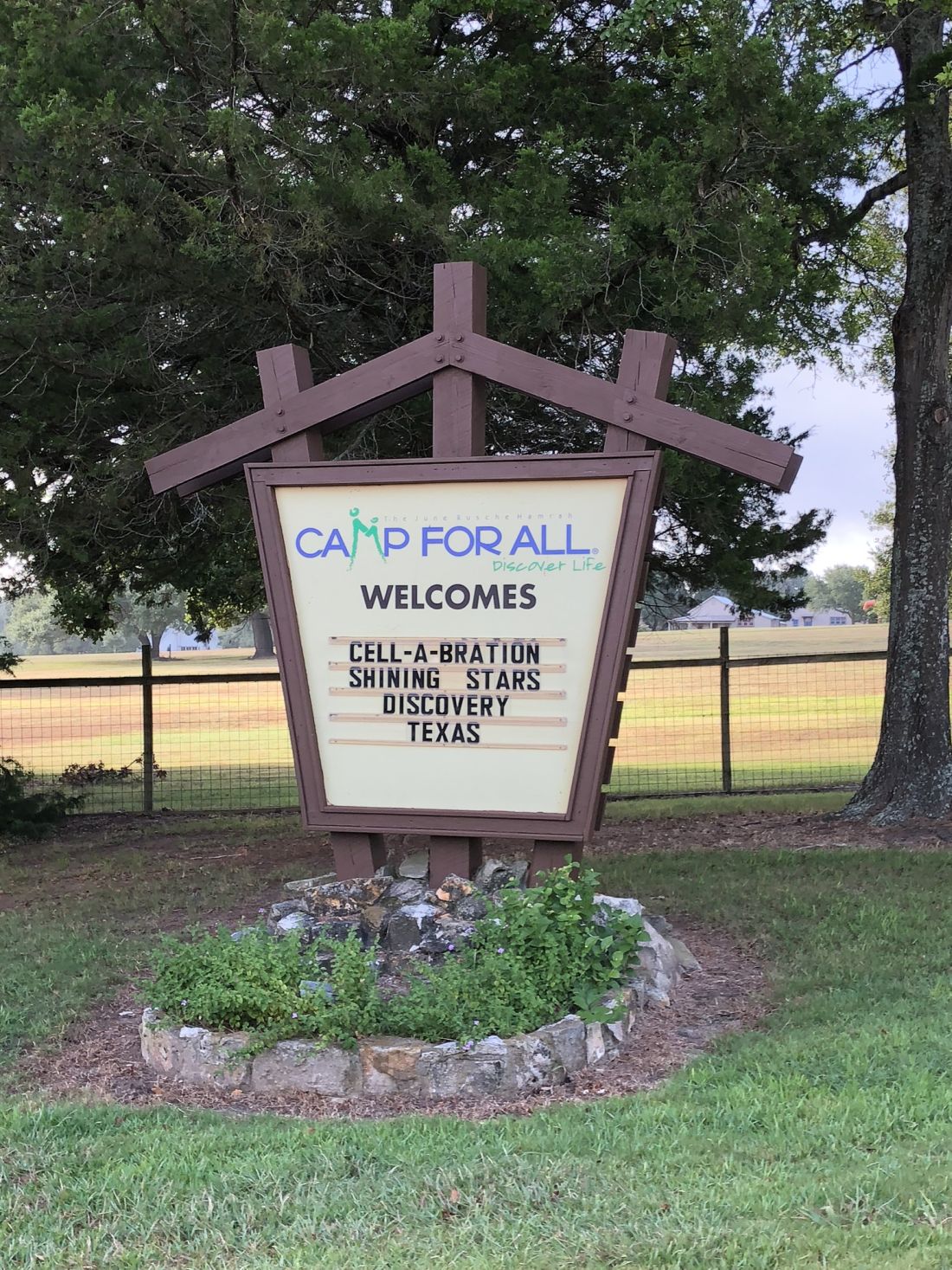
The 1-week camp accepts youth with conditions ranging from eczema and psoriasis to vitiligo, alopecia, epidermolysis bullosa, and ichthyosis, according to the academy. A dermatologist first refers a child, downloading and completing the referral form and sending it to the academy.
The 1-week session, including travel, is free for the campers, thanks to donors. As a nonprofit and membership-based organization, the AAD does not release the detailed financial information about the operating budget for the camp. Dermatologists, nurses, and counselors volunteer their time.
In his presidential address at the AAD’s annual meeting in March, outgoing president Mark D. Kaufmann, MD, of the department of dermatology at the Icahn School of Medicine at Mount Sinai in New York, referred to camp volunteering as an antidote to professional burnout. Remembering why as a dermatologist one entered the profession can be one solution, he said, and described his own recent 3-day volunteer stint at the camp.
“Those 3 magical days, being with kids as they discovered they weren’t alone in the world, sharing their experiences and ideas, reminded me why I became a physician in the first place,” he told the audience of meeting attendees. He vowed to expand the program, with a goal of having every dermatology resident attend Camp Discovery.
Mental health effects of skin conditions
Much research has focused on the mental health fallout from living with chronic skin conditions, and even young children can be adversely affected. In one review of the literature, researchers concluded that pediatric skin disease, including acne, atopic dermatitis, and psoriasis, can affect quality of life, carry stigma, and lead to bullying and eventually even suicidal behavior. Another study, published earlier this year, found that atopic dermatitis affected children’s quality of life, impacting sleep and leading to feelings of being ashamed.

“It’s not necessarily about what their skin condition is and more about the psychosocial impact,’’ said Samantha Hill, MD, a pediatric and general dermatologist in Lynchburg, Va., who is the medical director of Camp Discovery in Minnesota this year.
Camp activities, reactions
The overriding theme of camp is allowing all the youth to be “just one of the kids at camp,” Dr. Hill said in an interview. “They come to do all kinds of things they don’t do in normal life because people don’t give them the credit to [be able to] do it.”

Every year, she said, “I tell my staff we are in the business of making things happen, so if there is a kid bandaged head to toe [because of a skin condition] and they want to go tubing and get in the lake, we figure out how to make it happen. We have done that multiple times.”
Newcomers are initially nervous, Dr. Hill acknowledged, but in time let their guard down. Returnees are a different story. “When kids who have been at camp before arrive, you can see them start breathing again, looking for their friends. You can see them relax right before your eyes.”
“The single most empowering thing is the realization you are not alone,” said Meena Julapalli, MD, a Houston dermatologist who is a medical team member and long-time volunteer at Camp Discovery. That, she said, and “You get to be a kid, and you don’t have to have people staring at you.”

Dr. Julapalli remembers one of her patients with keratitis-ichthyosis-deafness (KID) syndrome. “She needed more than what I could offer,” she said. “She needed camp.” At camp, the organizers found a counselor who knew sign language to accompany her. At first, she was quiet and didn’t smile much. By the end of the week, as she was about to observe her birthday, things changed. After breakfast, she was led to the stage, where fellow campers began singing – and signing the song they had just learned.
Camp staff gets it
Allyson Garin, who was diagnosed with vitiligo at age 6 months, is a camp program director at Camp Discovery in Crosslake, Minn. She first went to camp in 1990 at age 11, returning until she “aged out” at 16, then worked as a counselor. She gets it when campers tell her they hear rude comments about their skin conditions.
“I remember being in swimming pools, in lines at fairgrounds or amusement parks,” she said in an interview, “and hearing people say, ‘Don’t touch her,’ ’’ fearing contagion, perhaps. “People would make jokes about cows, since they are spotted,” she said, or people would simply step back.
All those years ago, her mother found out about the camp and decided to figure out how to get her there. She got there, and she met a fellow camper with vitiligo, and they became pen pals. “We still talk,” she said.
Meeting someone with the same skin condition, she said, isn’t just about commiserating. “There is a lot of information sharing,” on topics such as best treatments, strategies, and other conversations.
Other lessons
While campers can feel comfortable around others who also have skin conditions, and understand, the lesson extends beyond that, Ms. Garin said. “It gave me a perspective,” she said of her camp experience. “I always felt, ‘Woe is me.’ ” But when she met others with, as she said, conditions “way worse than vitiligo, it really grounds you.”
Dr. Hill agreed. Campers get the benefit of others accepting and including them, but also practicing that same attitude toward fellow campers, she said. “It insures that we are providing this environment of inclusion, but that they are practicing it as well. They need to practice it like everyone else.”
Getting parents on board
The idea of camp, especially for those at the younger end of the 8- to 16-years age range accepted for Camp Discovery, can take some getting used to for some parents. Ms. Haygood, Emily’s mother, relates to that. Her daughter’s dermatologist at the time, who is now retired, had first suggested the camp. Her first reaction? “I am not sending my chronically ill child to camp with strangers.” She also acknowledged that she, like other parents of children with a chronic illness, can be a helicopter parent.

Then, she noticed that Emily seemed interested, so she got more information, finding out that it was staffed by doctors. It all sounded good, she said, and the social interaction, she knew, would be beneficial. “Then my husband was a no,” she said, concerned about their daughter being with strangers. “Eventually he came around,” Ms. Haygood said. All along, Emily said, “it seemed fun. I was probably trying to talk them into it.” She admits she was very nervous at first, but calmed down when she realized her own dermatologist was going to be there.
Vanessa Hadley of Spring, Tex., was on board the moment she heard about Camp Discovery. “I just thought it was amazing,” she said. Her daughter Isabelle, 13, has been to the camp. “She has alopecia areata and severe eczema,” Ms. Hadley said. Now, Isabelle is returning to camp and coaching her sister Penelope, 8, who has eczema and mild alopecia and is a first-timer this summer.
One tip the 8-year-old has learned so far: Turn to your counselor for support if you’re nervous. That worked, Isabelle said, the first year when she was wary of the zipline – then surprised herself and conquered it.
Dr. Hill and Dr. Julapalli have no disclosures.
The talent show, the grand finale of the 1-week camp, was nearly 7 years ago, but Emily Haygood of Houston, now 17 and about to start her senior year, remembers it in detail. She sang “Death of a Bachelor,” an R&B pop song and Billboard No. 1 hit at the time about a former bachelor who had happily married. These days, she said, if she watched the video of her 10-year-old singing self, “I would probably throw up.” But she still treasures the audience response, “having all those people I’d gotten close to cheer for me.”
Emily was at , but share one feature: they are the kind of dermatologic issues that can make doing everyday kid or teen activities like swimming difficult and can elicit mean comments from classmates and other would-be friends.
Emily was first diagnosed with atopic dermatitis at age 4, her mother, Amber Haygood, says. By age 9, it had become severe. Emily remembers being teased some in elementary school. “I did feel bad a lot of the time, when asked insensitive questions.” Her mother still bristles that adults often could be cruel, too.
But at Camp Discovery, those issues were nonexistent. “Camp was so cool,” Emily said. Besides the usual camp activities, it had things that “normal” camp didn’t, like other kids who didn’t stare at your skin condition or make fun of it.
30th anniversary season begins
This year is the 30th anniversary of Camp Discovery. Sessions began July 23 and continue through Aug. 18, with locations in Crosslake, Minn.; Hebron, Conn.; and Millville, Pa., in addition to Burton, Tex. About 300 campers will attend this year, according to the AAD, and 6,151 campers have attended from 1993 to 2022.
The 1-week camp accepts youth with conditions ranging from eczema and psoriasis to vitiligo, alopecia, epidermolysis bullosa, and ichthyosis, according to the academy. A dermatologist first refers a child, downloading and completing the referral form and sending it to the academy.
The 1-week session, including travel, is free for the campers, thanks to donors. As a nonprofit and membership-based organization, the AAD does not release the detailed financial information about the operating budget for the camp. Dermatologists, nurses, and counselors volunteer their time.
In his presidential address at the AAD’s annual meeting in March, outgoing president Mark D. Kaufmann, MD, of the department of dermatology at the Icahn School of Medicine at Mount Sinai in New York, referred to camp volunteering as an antidote to professional burnout. Remembering why as a dermatologist one entered the profession can be one solution, he said, and described his own recent 3-day volunteer stint at the camp.
“Those 3 magical days, being with kids as they discovered they weren’t alone in the world, sharing their experiences and ideas, reminded me why I became a physician in the first place,” he told the audience of meeting attendees. He vowed to expand the program, with a goal of having every dermatology resident attend Camp Discovery.
Mental health effects of skin conditions
Much research has focused on the mental health fallout from living with chronic skin conditions, and even young children can be adversely affected. In one review of the literature, researchers concluded that pediatric skin disease, including acne, atopic dermatitis, and psoriasis, can affect quality of life, carry stigma, and lead to bullying and eventually even suicidal behavior. Another study, published earlier this year, found that atopic dermatitis affected children’s quality of life, impacting sleep and leading to feelings of being ashamed.
“It’s not necessarily about what their skin condition is and more about the psychosocial impact,’’ said Samantha Hill, MD, a pediatric and general dermatologist in Lynchburg, Va., who is the medical director of Camp Discovery in Minnesota this year.
Camp activities, reactions
The overriding theme of camp is allowing all the youth to be “just one of the kids at camp,” Dr. Hill said in an interview. “They come to do all kinds of things they don’t do in normal life because people don’t give them the credit to [be able to] do it.”
Every year, she said, “I tell my staff we are in the business of making things happen, so if there is a kid bandaged head to toe [because of a skin condition] and they want to go tubing and get in the lake, we figure out how to make it happen. We have done that multiple times.”
Newcomers are initially nervous, Dr. Hill acknowledged, but in time let their guard down. Returnees are a different story. “When kids who have been at camp before arrive, you can see them start breathing again, looking for their friends. You can see them relax right before your eyes.”
“The single most empowering thing is the realization you are not alone,” said Meena Julapalli, MD, a Houston dermatologist who is a medical team member and long-time volunteer at Camp Discovery. That, she said, and “You get to be a kid, and you don’t have to have people staring at you.”
Dr. Julapalli remembers one of her patients with keratitis-ichthyosis-deafness (KID) syndrome. “She needed more than what I could offer,” she said. “She needed camp.” At camp, the organizers found a counselor who knew sign language to accompany her. At first, she was quiet and didn’t smile much. By the end of the week, as she was about to observe her birthday, things changed. After breakfast, she was led to the stage, where fellow campers began singing – and signing the song they had just learned.
Camp staff gets it
Allyson Garin, who was diagnosed with vitiligo at age 6 months, is a camp program director at Camp Discovery in Crosslake, Minn. She first went to camp in 1990 at age 11, returning until she “aged out” at 16, then worked as a counselor. She gets it when campers tell her they hear rude comments about their skin conditions.
“I remember being in swimming pools, in lines at fairgrounds or amusement parks,” she said in an interview, “and hearing people say, ‘Don’t touch her,’ ’’ fearing contagion, perhaps. “People would make jokes about cows, since they are spotted,” she said, or people would simply step back.
All those years ago, her mother found out about the camp and decided to figure out how to get her there. She got there, and she met a fellow camper with vitiligo, and they became pen pals. “We still talk,” she said.
Meeting someone with the same skin condition, she said, isn’t just about commiserating. “There is a lot of information sharing,” on topics such as best treatments, strategies, and other conversations.
Other lessons
While campers can feel comfortable around others who also have skin conditions, and understand, the lesson extends beyond that, Ms. Garin said. “It gave me a perspective,” she said of her camp experience. “I always felt, ‘Woe is me.’ ” But when she met others with, as she said, conditions “way worse than vitiligo, it really grounds you.”
Dr. Hill agreed. Campers get the benefit of others accepting and including them, but also practicing that same attitude toward fellow campers, she said. “It insures that we are providing this environment of inclusion, but that they are practicing it as well. They need to practice it like everyone else.”
Getting parents on board
The idea of camp, especially for those at the younger end of the 8- to 16-years age range accepted for Camp Discovery, can take some getting used to for some parents. Ms. Haygood, Emily’s mother, relates to that. Her daughter’s dermatologist at the time, who is now retired, had first suggested the camp. Her first reaction? “I am not sending my chronically ill child to camp with strangers.” She also acknowledged that she, like other parents of children with a chronic illness, can be a helicopter parent.
Then, she noticed that Emily seemed interested, so she got more information, finding out that it was staffed by doctors. It all sounded good, she said, and the social interaction, she knew, would be beneficial. “Then my husband was a no,” she said, concerned about their daughter being with strangers. “Eventually he came around,” Ms. Haygood said. All along, Emily said, “it seemed fun. I was probably trying to talk them into it.” She admits she was very nervous at first, but calmed down when she realized her own dermatologist was going to be there.
Vanessa Hadley of Spring, Tex., was on board the moment she heard about Camp Discovery. “I just thought it was amazing,” she said. Her daughter Isabelle, 13, has been to the camp. “She has alopecia areata and severe eczema,” Ms. Hadley said. Now, Isabelle is returning to camp and coaching her sister Penelope, 8, who has eczema and mild alopecia and is a first-timer this summer.
One tip the 8-year-old has learned so far: Turn to your counselor for support if you’re nervous. That worked, Isabelle said, the first year when she was wary of the zipline – then surprised herself and conquered it.
Dr. Hill and Dr. Julapalli have no disclosures.
The talent show, the grand finale of the 1-week camp, was nearly 7 years ago, but Emily Haygood of Houston, now 17 and about to start her senior year, remembers it in detail. She sang “Death of a Bachelor,” an R&B pop song and Billboard No. 1 hit at the time about a former bachelor who had happily married. These days, she said, if she watched the video of her 10-year-old singing self, “I would probably throw up.” But she still treasures the audience response, “having all those people I’d gotten close to cheer for me.”
Emily was at , but share one feature: they are the kind of dermatologic issues that can make doing everyday kid or teen activities like swimming difficult and can elicit mean comments from classmates and other would-be friends.
Emily was first diagnosed with atopic dermatitis at age 4, her mother, Amber Haygood, says. By age 9, it had become severe. Emily remembers being teased some in elementary school. “I did feel bad a lot of the time, when asked insensitive questions.” Her mother still bristles that adults often could be cruel, too.
But at Camp Discovery, those issues were nonexistent. “Camp was so cool,” Emily said. Besides the usual camp activities, it had things that “normal” camp didn’t, like other kids who didn’t stare at your skin condition or make fun of it.
30th anniversary season begins
This year is the 30th anniversary of Camp Discovery. Sessions began July 23 and continue through Aug. 18, with locations in Crosslake, Minn.; Hebron, Conn.; and Millville, Pa., in addition to Burton, Tex. About 300 campers will attend this year, according to the AAD, and 6,151 campers have attended from 1993 to 2022.
The 1-week camp accepts youth with conditions ranging from eczema and psoriasis to vitiligo, alopecia, epidermolysis bullosa, and ichthyosis, according to the academy. A dermatologist first refers a child, downloading and completing the referral form and sending it to the academy.
The 1-week session, including travel, is free for the campers, thanks to donors. As a nonprofit and membership-based organization, the AAD does not release the detailed financial information about the operating budget for the camp. Dermatologists, nurses, and counselors volunteer their time.
In his presidential address at the AAD’s annual meeting in March, outgoing president Mark D. Kaufmann, MD, of the department of dermatology at the Icahn School of Medicine at Mount Sinai in New York, referred to camp volunteering as an antidote to professional burnout. Remembering why as a dermatologist one entered the profession can be one solution, he said, and described his own recent 3-day volunteer stint at the camp.
“Those 3 magical days, being with kids as they discovered they weren’t alone in the world, sharing their experiences and ideas, reminded me why I became a physician in the first place,” he told the audience of meeting attendees. He vowed to expand the program, with a goal of having every dermatology resident attend Camp Discovery.
Mental health effects of skin conditions
Much research has focused on the mental health fallout from living with chronic skin conditions, and even young children can be adversely affected. In one review of the literature, researchers concluded that pediatric skin disease, including acne, atopic dermatitis, and psoriasis, can affect quality of life, carry stigma, and lead to bullying and eventually even suicidal behavior. Another study, published earlier this year, found that atopic dermatitis affected children’s quality of life, impacting sleep and leading to feelings of being ashamed.
“It’s not necessarily about what their skin condition is and more about the psychosocial impact,’’ said Samantha Hill, MD, a pediatric and general dermatologist in Lynchburg, Va., who is the medical director of Camp Discovery in Minnesota this year.
Camp activities, reactions
The overriding theme of camp is allowing all the youth to be “just one of the kids at camp,” Dr. Hill said in an interview. “They come to do all kinds of things they don’t do in normal life because people don’t give them the credit to [be able to] do it.”
Every year, she said, “I tell my staff we are in the business of making things happen, so if there is a kid bandaged head to toe [because of a skin condition] and they want to go tubing and get in the lake, we figure out how to make it happen. We have done that multiple times.”
Newcomers are initially nervous, Dr. Hill acknowledged, but in time let their guard down. Returnees are a different story. “When kids who have been at camp before arrive, you can see them start breathing again, looking for their friends. You can see them relax right before your eyes.”
“The single most empowering thing is the realization you are not alone,” said Meena Julapalli, MD, a Houston dermatologist who is a medical team member and long-time volunteer at Camp Discovery. That, she said, and “You get to be a kid, and you don’t have to have people staring at you.”
Dr. Julapalli remembers one of her patients with keratitis-ichthyosis-deafness (KID) syndrome. “She needed more than what I could offer,” she said. “She needed camp.” At camp, the organizers found a counselor who knew sign language to accompany her. At first, she was quiet and didn’t smile much. By the end of the week, as she was about to observe her birthday, things changed. After breakfast, she was led to the stage, where fellow campers began singing – and signing the song they had just learned.
Camp staff gets it
Allyson Garin, who was diagnosed with vitiligo at age 6 months, is a camp program director at Camp Discovery in Crosslake, Minn. She first went to camp in 1990 at age 11, returning until she “aged out” at 16, then worked as a counselor. She gets it when campers tell her they hear rude comments about their skin conditions.
“I remember being in swimming pools, in lines at fairgrounds or amusement parks,” she said in an interview, “and hearing people say, ‘Don’t touch her,’ ’’ fearing contagion, perhaps. “People would make jokes about cows, since they are spotted,” she said, or people would simply step back.
All those years ago, her mother found out about the camp and decided to figure out how to get her there. She got there, and she met a fellow camper with vitiligo, and they became pen pals. “We still talk,” she said.
Meeting someone with the same skin condition, she said, isn’t just about commiserating. “There is a lot of information sharing,” on topics such as best treatments, strategies, and other conversations.
Other lessons
While campers can feel comfortable around others who also have skin conditions, and understand, the lesson extends beyond that, Ms. Garin said. “It gave me a perspective,” she said of her camp experience. “I always felt, ‘Woe is me.’ ” But when she met others with, as she said, conditions “way worse than vitiligo, it really grounds you.”
Dr. Hill agreed. Campers get the benefit of others accepting and including them, but also practicing that same attitude toward fellow campers, she said. “It insures that we are providing this environment of inclusion, but that they are practicing it as well. They need to practice it like everyone else.”
Getting parents on board
The idea of camp, especially for those at the younger end of the 8- to 16-years age range accepted for Camp Discovery, can take some getting used to for some parents. Ms. Haygood, Emily’s mother, relates to that. Her daughter’s dermatologist at the time, who is now retired, had first suggested the camp. Her first reaction? “I am not sending my chronically ill child to camp with strangers.” She also acknowledged that she, like other parents of children with a chronic illness, can be a helicopter parent.
Then, she noticed that Emily seemed interested, so she got more information, finding out that it was staffed by doctors. It all sounded good, she said, and the social interaction, she knew, would be beneficial. “Then my husband was a no,” she said, concerned about their daughter being with strangers. “Eventually he came around,” Ms. Haygood said. All along, Emily said, “it seemed fun. I was probably trying to talk them into it.” She admits she was very nervous at first, but calmed down when she realized her own dermatologist was going to be there.
Vanessa Hadley of Spring, Tex., was on board the moment she heard about Camp Discovery. “I just thought it was amazing,” she said. Her daughter Isabelle, 13, has been to the camp. “She has alopecia areata and severe eczema,” Ms. Hadley said. Now, Isabelle is returning to camp and coaching her sister Penelope, 8, who has eczema and mild alopecia and is a first-timer this summer.
One tip the 8-year-old has learned so far: Turn to your counselor for support if you’re nervous. That worked, Isabelle said, the first year when she was wary of the zipline – then surprised herself and conquered it.
Dr. Hill and Dr. Julapalli have no disclosures.
Can berberine live up to the claim that it’s ‘nature’s Ozempic’?
Berberine, a plant-derived compound historically used in traditional Chinese medicine, is experiencing increased popularity thanks to social media, especially TikTok, where the hashtag #berberine has more than 75 million views at the time of this writing.
Off-the-shelf berberine comes as a yellow-orange powder usually encased in a capsule or mixed into tablet form. It’s extracted from the roots, stems, and leaves of various plants, including goldenseal and barberry.
Its use is additionally promoted for insulin resistance, polycystic ovary syndrome, and even cancer, but medical experts are warning potential users that it lacks robust evidence to support its use.
“There’s not that much data on it,” says Reshmi Srinath, MD, director of the Mount Sinai weight and metabolism management program, New York. “It’s sort of shocking now that it’s popped up into the media, to be frank.”
In response to berberine’s online popularity, the National Center for Complementary and Integrative Health issued a warning, stating that “there isn’t enough rigorous scientific evidence to determine whether it is effective.”
Overstated claims, lack of scientific research?
Other endocrinologists and weight management experts agree. “The claims are pretty overstated when it comes to the impact on weight loss, based on the evidence in the literature that’s currently available,” says Jaime Almandoz, MD, medical director of the UT Southwestern Medical Center, Dallas, weight wellness program.
A review of 12 randomized controlled trials evaluating berberine’s effects on obesity concluded that the treatment moderately decreased body weight. The trials included were conducted over only a few months and had small numbers of participants, and weight loss was not the primary outcome measure.
“There are few randomized controlled trials,” says Ivania Rizo, MD, an endocrinologist at Boston University. “It appears that they all have some low quality of methods which essentially can lead to an increased risk of bias.”
Another review, of 35 studies – most of them on animals and human cells and similarly underpowered – concluded that berberine showed promise for reducing blood glucose. A separate study found that berberine treatment actually increased the body weight and appetite of rats.
How exactly berberine elicits these effects is not entirely clear. Several studies point to its activation of AMP-activated protein kinase, which improves glucose tolerance in rats, as the mechanism for weight loss. Metformin, a drug used to improve glycemic control in people with type 2 diabetes, works in a similar way. Other researchers have hypothesized a link between berberine and the gut microbiome to explain its effect on type 2 diabetes and weight loss, though the clinical data to substantiate this link are shaky.
“I caution my patients about dietary supplements for weight management because we do not have high-quality data demonstrating efficacy,” Katherine Saunders, MD, DABOM, an obesity expert and cofounder of Intellihealth, a platform for obesity management, said in an email.
Experimenting with berberine
Despite the lack of substantial evidence supporting berberine’s use for weight management and obesity, interest in the supplement seems to be increasing. One reason could be that lifestyle interventions aren’t sufficient for most people with obesity to lose a significant amount of weight, with many requiring medical intervention, according to Dr. Saunders.
But access to treatment providers is limited. “As a result, it is not uncommon for individuals with obesity to experiment with dietary supplements like berberine,” she observed.
Dr. Srinath, the Mount Sinai doctor, says many patients have asked for her thoughts on berberine as a weight loss supplement. “I say, you know, it’s something you’re welcome to try, but we don’t have enough data at this time to recommend it.”
The hype surrounding the supplement isn’t all that surprising. About 42% of adults in the United States have obesity, according to 2019-2023 National Health and Nutrition Examination Survey data, pointing to a serious need for accessible drugs to address the condition. Berberine is available over the counter and is far cheaper than most of the newer U.S. Food and Drug Administration–approved drugs for weight loss.
Wegovy, semaglutide approved to treat obesity, can cost as much as $1,300 per package; and Ozempic, semaglutide approved to treat type 2 diabetes, can cost more than $1,000 per month. “That’s a very steep price to pay,” says Dr. Srinath.
Many insurance companies won’t cover the drugs, curbing access to Americans who need them, says Dr. Almandoz. Federally sponsored programs such as Medicare and Medicaid also don’t cover the drugs, which are approved for obesity and weight management. “That’s been a huge hole in our health care system,” says Dr. Srinath. “That’s sort of what’s been driving interest in supplements and things like that.”
Among adults trying to lose weight, only about 3% said they took prescription medication for weight loss, according to a report from the U.S. Government Accountability Office. This report includes 2013-2016 data, predating Wegovy’s approval for chronic weight management.
“These classes are notorious for being quite pricey and not well covered by insurance,” says Dr. Almandoz. “It’s easy to see why someone would promote something that someone may have more access to.”
Comparing Ozempic or Wegovy with berberine can be misleading. Those drugs work by mimicking the effect of the hormone GLP-1 to help reduce appetite.
A clinical trial assessing the efficacy of semaglutide found that adults with obesity who took the drug for 68 weeks lost approximately 15% of their body weight in combination with lifestyle changes. The FDA approval was based on this trial and three others that showed similarly substantial reductions in weight.
The trials also document the many side effects of taking the drugs, primarily gastrointestinal in nature. The short- and long-term effects of berberine, on the other hand, are less clear. Some of the clinical trials reported diarrhea and stomach upset as the most common adverse effects.
Its perception as a naturally derived option for weight loss, though, might encourage people to overlook the potential interactions that berberine could have with other drugs, according to Dr. Almandoz.
He says clinicians considering natural products or nutraceuticals for patients should check for potential side effects and find reliable database sources to determine any potential medication interactions for patients. But the unregulated nature of berberine makes this challenging, Dr. Almandoz adds.
The dosage, formulations, and quality of berberine vary in each study and each product because supplements don’t need to pass through the checks and balances of the FDA to land on shelves.
The lack of regulation could incentivize some companies to add stimulants to enhance any weight loss effect that the supplement may have. Those additives might interact with other health conditions or cause side effects like anxiety, says Dr. Almandoz.
Berberine should also not be taken during pregnancy or while breastfeeding, and it is unsafe for young children; in newborns and children, the supplement can cause higher levels of bilirubin in the blood, worsening any jaundice at birth and posing a greater risk for kernicterus.
Dr. Rizo urges patients, before they ask for berberine, to first ask for safe and effective interventions they can access. “I don’t want to have people not use effective interventions that are currently available to them, and instead use something that needs to be better studied and needs to be better regulated,” she says.
While the “nature’s Ozempic” catchphrase could be drawing in potential users with its dubious comparison, berberine’s escalating popularity might also be a symptom of people seeking a quick fix, the experts worry.
“That’s my fear,” says Dr. Srinath. “ ‘Let me get this medicine, let me lose the weight fast,’ but at the end of the day, weight management is a long-term journey. It takes time, it takes effort, it is not easy, and there is no quick fix.”
This is another concern for doctors; for people who’ve struggled with losing weight for years, not seeing results from berberine could feel like another failure.
“It will give them another opportunity to feel like they are being unsuccessful or that they are failing at weight loss again,” says Dr. Almandoz. “It feeds into the hopelessness that many people with obesity have around their weight management.”
A version of this article first appeared on Medscape.com.
Berberine, a plant-derived compound historically used in traditional Chinese medicine, is experiencing increased popularity thanks to social media, especially TikTok, where the hashtag #berberine has more than 75 million views at the time of this writing.
Off-the-shelf berberine comes as a yellow-orange powder usually encased in a capsule or mixed into tablet form. It’s extracted from the roots, stems, and leaves of various plants, including goldenseal and barberry.
Its use is additionally promoted for insulin resistance, polycystic ovary syndrome, and even cancer, but medical experts are warning potential users that it lacks robust evidence to support its use.
“There’s not that much data on it,” says Reshmi Srinath, MD, director of the Mount Sinai weight and metabolism management program, New York. “It’s sort of shocking now that it’s popped up into the media, to be frank.”
In response to berberine’s online popularity, the National Center for Complementary and Integrative Health issued a warning, stating that “there isn’t enough rigorous scientific evidence to determine whether it is effective.”
Overstated claims, lack of scientific research?
Other endocrinologists and weight management experts agree. “The claims are pretty overstated when it comes to the impact on weight loss, based on the evidence in the literature that’s currently available,” says Jaime Almandoz, MD, medical director of the UT Southwestern Medical Center, Dallas, weight wellness program.
A review of 12 randomized controlled trials evaluating berberine’s effects on obesity concluded that the treatment moderately decreased body weight. The trials included were conducted over only a few months and had small numbers of participants, and weight loss was not the primary outcome measure.
“There are few randomized controlled trials,” says Ivania Rizo, MD, an endocrinologist at Boston University. “It appears that they all have some low quality of methods which essentially can lead to an increased risk of bias.”
Another review, of 35 studies – most of them on animals and human cells and similarly underpowered – concluded that berberine showed promise for reducing blood glucose. A separate study found that berberine treatment actually increased the body weight and appetite of rats.
How exactly berberine elicits these effects is not entirely clear. Several studies point to its activation of AMP-activated protein kinase, which improves glucose tolerance in rats, as the mechanism for weight loss. Metformin, a drug used to improve glycemic control in people with type 2 diabetes, works in a similar way. Other researchers have hypothesized a link between berberine and the gut microbiome to explain its effect on type 2 diabetes and weight loss, though the clinical data to substantiate this link are shaky.
“I caution my patients about dietary supplements for weight management because we do not have high-quality data demonstrating efficacy,” Katherine Saunders, MD, DABOM, an obesity expert and cofounder of Intellihealth, a platform for obesity management, said in an email.
Experimenting with berberine
Despite the lack of substantial evidence supporting berberine’s use for weight management and obesity, interest in the supplement seems to be increasing. One reason could be that lifestyle interventions aren’t sufficient for most people with obesity to lose a significant amount of weight, with many requiring medical intervention, according to Dr. Saunders.
But access to treatment providers is limited. “As a result, it is not uncommon for individuals with obesity to experiment with dietary supplements like berberine,” she observed.
Dr. Srinath, the Mount Sinai doctor, says many patients have asked for her thoughts on berberine as a weight loss supplement. “I say, you know, it’s something you’re welcome to try, but we don’t have enough data at this time to recommend it.”
The hype surrounding the supplement isn’t all that surprising. About 42% of adults in the United States have obesity, according to 2019-2023 National Health and Nutrition Examination Survey data, pointing to a serious need for accessible drugs to address the condition. Berberine is available over the counter and is far cheaper than most of the newer U.S. Food and Drug Administration–approved drugs for weight loss.
Wegovy, semaglutide approved to treat obesity, can cost as much as $1,300 per package; and Ozempic, semaglutide approved to treat type 2 diabetes, can cost more than $1,000 per month. “That’s a very steep price to pay,” says Dr. Srinath.
Many insurance companies won’t cover the drugs, curbing access to Americans who need them, says Dr. Almandoz. Federally sponsored programs such as Medicare and Medicaid also don’t cover the drugs, which are approved for obesity and weight management. “That’s been a huge hole in our health care system,” says Dr. Srinath. “That’s sort of what’s been driving interest in supplements and things like that.”
Among adults trying to lose weight, only about 3% said they took prescription medication for weight loss, according to a report from the U.S. Government Accountability Office. This report includes 2013-2016 data, predating Wegovy’s approval for chronic weight management.
“These classes are notorious for being quite pricey and not well covered by insurance,” says Dr. Almandoz. “It’s easy to see why someone would promote something that someone may have more access to.”
Comparing Ozempic or Wegovy with berberine can be misleading. Those drugs work by mimicking the effect of the hormone GLP-1 to help reduce appetite.
A clinical trial assessing the efficacy of semaglutide found that adults with obesity who took the drug for 68 weeks lost approximately 15% of their body weight in combination with lifestyle changes. The FDA approval was based on this trial and three others that showed similarly substantial reductions in weight.
The trials also document the many side effects of taking the drugs, primarily gastrointestinal in nature. The short- and long-term effects of berberine, on the other hand, are less clear. Some of the clinical trials reported diarrhea and stomach upset as the most common adverse effects.
Its perception as a naturally derived option for weight loss, though, might encourage people to overlook the potential interactions that berberine could have with other drugs, according to Dr. Almandoz.
He says clinicians considering natural products or nutraceuticals for patients should check for potential side effects and find reliable database sources to determine any potential medication interactions for patients. But the unregulated nature of berberine makes this challenging, Dr. Almandoz adds.
The dosage, formulations, and quality of berberine vary in each study and each product because supplements don’t need to pass through the checks and balances of the FDA to land on shelves.
The lack of regulation could incentivize some companies to add stimulants to enhance any weight loss effect that the supplement may have. Those additives might interact with other health conditions or cause side effects like anxiety, says Dr. Almandoz.
Berberine should also not be taken during pregnancy or while breastfeeding, and it is unsafe for young children; in newborns and children, the supplement can cause higher levels of bilirubin in the blood, worsening any jaundice at birth and posing a greater risk for kernicterus.
Dr. Rizo urges patients, before they ask for berberine, to first ask for safe and effective interventions they can access. “I don’t want to have people not use effective interventions that are currently available to them, and instead use something that needs to be better studied and needs to be better regulated,” she says.
While the “nature’s Ozempic” catchphrase could be drawing in potential users with its dubious comparison, berberine’s escalating popularity might also be a symptom of people seeking a quick fix, the experts worry.
“That’s my fear,” says Dr. Srinath. “ ‘Let me get this medicine, let me lose the weight fast,’ but at the end of the day, weight management is a long-term journey. It takes time, it takes effort, it is not easy, and there is no quick fix.”
This is another concern for doctors; for people who’ve struggled with losing weight for years, not seeing results from berberine could feel like another failure.
“It will give them another opportunity to feel like they are being unsuccessful or that they are failing at weight loss again,” says Dr. Almandoz. “It feeds into the hopelessness that many people with obesity have around their weight management.”
A version of this article first appeared on Medscape.com.
Berberine, a plant-derived compound historically used in traditional Chinese medicine, is experiencing increased popularity thanks to social media, especially TikTok, where the hashtag #berberine has more than 75 million views at the time of this writing.
Off-the-shelf berberine comes as a yellow-orange powder usually encased in a capsule or mixed into tablet form. It’s extracted from the roots, stems, and leaves of various plants, including goldenseal and barberry.
Its use is additionally promoted for insulin resistance, polycystic ovary syndrome, and even cancer, but medical experts are warning potential users that it lacks robust evidence to support its use.
“There’s not that much data on it,” says Reshmi Srinath, MD, director of the Mount Sinai weight and metabolism management program, New York. “It’s sort of shocking now that it’s popped up into the media, to be frank.”
In response to berberine’s online popularity, the National Center for Complementary and Integrative Health issued a warning, stating that “there isn’t enough rigorous scientific evidence to determine whether it is effective.”
Overstated claims, lack of scientific research?
Other endocrinologists and weight management experts agree. “The claims are pretty overstated when it comes to the impact on weight loss, based on the evidence in the literature that’s currently available,” says Jaime Almandoz, MD, medical director of the UT Southwestern Medical Center, Dallas, weight wellness program.
A review of 12 randomized controlled trials evaluating berberine’s effects on obesity concluded that the treatment moderately decreased body weight. The trials included were conducted over only a few months and had small numbers of participants, and weight loss was not the primary outcome measure.
“There are few randomized controlled trials,” says Ivania Rizo, MD, an endocrinologist at Boston University. “It appears that they all have some low quality of methods which essentially can lead to an increased risk of bias.”
Another review, of 35 studies – most of them on animals and human cells and similarly underpowered – concluded that berberine showed promise for reducing blood glucose. A separate study found that berberine treatment actually increased the body weight and appetite of rats.
How exactly berberine elicits these effects is not entirely clear. Several studies point to its activation of AMP-activated protein kinase, which improves glucose tolerance in rats, as the mechanism for weight loss. Metformin, a drug used to improve glycemic control in people with type 2 diabetes, works in a similar way. Other researchers have hypothesized a link between berberine and the gut microbiome to explain its effect on type 2 diabetes and weight loss, though the clinical data to substantiate this link are shaky.
“I caution my patients about dietary supplements for weight management because we do not have high-quality data demonstrating efficacy,” Katherine Saunders, MD, DABOM, an obesity expert and cofounder of Intellihealth, a platform for obesity management, said in an email.
Experimenting with berberine
Despite the lack of substantial evidence supporting berberine’s use for weight management and obesity, interest in the supplement seems to be increasing. One reason could be that lifestyle interventions aren’t sufficient for most people with obesity to lose a significant amount of weight, with many requiring medical intervention, according to Dr. Saunders.
But access to treatment providers is limited. “As a result, it is not uncommon for individuals with obesity to experiment with dietary supplements like berberine,” she observed.
Dr. Srinath, the Mount Sinai doctor, says many patients have asked for her thoughts on berberine as a weight loss supplement. “I say, you know, it’s something you’re welcome to try, but we don’t have enough data at this time to recommend it.”
The hype surrounding the supplement isn’t all that surprising. About 42% of adults in the United States have obesity, according to 2019-2023 National Health and Nutrition Examination Survey data, pointing to a serious need for accessible drugs to address the condition. Berberine is available over the counter and is far cheaper than most of the newer U.S. Food and Drug Administration–approved drugs for weight loss.
Wegovy, semaglutide approved to treat obesity, can cost as much as $1,300 per package; and Ozempic, semaglutide approved to treat type 2 diabetes, can cost more than $1,000 per month. “That’s a very steep price to pay,” says Dr. Srinath.
Many insurance companies won’t cover the drugs, curbing access to Americans who need them, says Dr. Almandoz. Federally sponsored programs such as Medicare and Medicaid also don’t cover the drugs, which are approved for obesity and weight management. “That’s been a huge hole in our health care system,” says Dr. Srinath. “That’s sort of what’s been driving interest in supplements and things like that.”
Among adults trying to lose weight, only about 3% said they took prescription medication for weight loss, according to a report from the U.S. Government Accountability Office. This report includes 2013-2016 data, predating Wegovy’s approval for chronic weight management.
“These classes are notorious for being quite pricey and not well covered by insurance,” says Dr. Almandoz. “It’s easy to see why someone would promote something that someone may have more access to.”
Comparing Ozempic or Wegovy with berberine can be misleading. Those drugs work by mimicking the effect of the hormone GLP-1 to help reduce appetite.
A clinical trial assessing the efficacy of semaglutide found that adults with obesity who took the drug for 68 weeks lost approximately 15% of their body weight in combination with lifestyle changes. The FDA approval was based on this trial and three others that showed similarly substantial reductions in weight.
The trials also document the many side effects of taking the drugs, primarily gastrointestinal in nature. The short- and long-term effects of berberine, on the other hand, are less clear. Some of the clinical trials reported diarrhea and stomach upset as the most common adverse effects.
Its perception as a naturally derived option for weight loss, though, might encourage people to overlook the potential interactions that berberine could have with other drugs, according to Dr. Almandoz.
He says clinicians considering natural products or nutraceuticals for patients should check for potential side effects and find reliable database sources to determine any potential medication interactions for patients. But the unregulated nature of berberine makes this challenging, Dr. Almandoz adds.
The dosage, formulations, and quality of berberine vary in each study and each product because supplements don’t need to pass through the checks and balances of the FDA to land on shelves.
The lack of regulation could incentivize some companies to add stimulants to enhance any weight loss effect that the supplement may have. Those additives might interact with other health conditions or cause side effects like anxiety, says Dr. Almandoz.
Berberine should also not be taken during pregnancy or while breastfeeding, and it is unsafe for young children; in newborns and children, the supplement can cause higher levels of bilirubin in the blood, worsening any jaundice at birth and posing a greater risk for kernicterus.
Dr. Rizo urges patients, before they ask for berberine, to first ask for safe and effective interventions they can access. “I don’t want to have people not use effective interventions that are currently available to them, and instead use something that needs to be better studied and needs to be better regulated,” she says.
While the “nature’s Ozempic” catchphrase could be drawing in potential users with its dubious comparison, berberine’s escalating popularity might also be a symptom of people seeking a quick fix, the experts worry.
“That’s my fear,” says Dr. Srinath. “ ‘Let me get this medicine, let me lose the weight fast,’ but at the end of the day, weight management is a long-term journey. It takes time, it takes effort, it is not easy, and there is no quick fix.”
This is another concern for doctors; for people who’ve struggled with losing weight for years, not seeing results from berberine could feel like another failure.
“It will give them another opportunity to feel like they are being unsuccessful or that they are failing at weight loss again,” says Dr. Almandoz. “It feeds into the hopelessness that many people with obesity have around their weight management.”
A version of this article first appeared on Medscape.com.
Weighing childhood obesity interventions
A teenager who weighed 300 lb and was homeschooled because he was too big to fit in a classroom chair is among the patients Manal Habib, MD, has seen in her pediatric endocrinology practice.
The boy, a social butterfly who hated isolation and blamed himself for his “poor choices,” turned out to have an MC4R mutation that interfered with proper metabolism and satiation signals.
“People often blame obese and overweight people for not having enough willpower, but it’s often a physiological problem,” said Dr. Habib, who works at the University of California, Los Angeles.
She is among the clinicians offering more aggressive forms of weight management, prescribing medications, including metformin, semaglutide, and liraglutide – often off-label – to help children and teens with obesity who do not respond to lifestyle changes.
The results of intensive interventions can be life-changing: The teen Dr. Habib treated is back at school, playing sports, and no longer needs drugs to reduce cholesterol and blood pressure. He now takes a low maintenance dose of a weight-loss medication.
But the long-term effects of these new agents on children and teens are poorly understood, and both medication and surgery are associated with significant complications. Pediatricians treating kids pre- or post-intervention should be alert to a range of physical, psychological, and behavioral risks and complications.
Keeping bones healthy
Pediatricians should be aware of the risk to bone health in patients who undergo surgery, according to Misra Madhusmita, MD, chief of pediatric endocrinology at Massachusetts General Hospital in Boston. In a recent study, Dr. Madhusmita and her colleagues found that sleeve gastrectomy reduced vertebral bone strength in adolescents and young adults.
“This is a time of life when bone mass is typically accruing rapidly,” Dr. Madhusmita told this news organization. “A deleterious effect on bone accrual at this time of life raises concerns about suboptimal acquisition of peak bone mass, which is typically attained in early adult life and is a key factor determining bone health and fracture risk in later life.”
Reduced skeletal loading and muscle mass can weaken bones, as can malabsorption of nutrients. Fat loss can trigger lower levels of bioavailable androgens and their subsequent conversion to estrogen, negatively affecting bone density. And sleeve gastrectomy in particular lowers ghrelin, another hormone influencing skeletal health.
Clinicians should advise patients who have had surgery to follow a healthy diet and consume sufficient levels of calcium and vitamin D, said Dr. Madhusmita. Weight-bearing exercises, weight training, and resistance training are also imperative to build bone mass and muscle. Any preexisting conditions or lifestyle factors that weaken the bones should be taken into consideration.
Managing expectations
The long-term effects of weight loss medications on children are less documented than with surgery, according to Caren Mangarelli, MD, a former primary care physician who is now medical director of both the adolescent bariatric program and the children’s wellness and weight management clinic at Lurie Children’s Hospital in Chicago, Ill.
But one significant known risk is the potential for rebound weight gain and the complications like high blood pressure and high blood sugar that go with it if the patient stops medication. Dr. Mangarelli said that many clinicians lack the training required to safely facilitate weight loss medications for kids.
“We have to remember that obesity is a chronic disease, especially for those with more severe forms,” she said. “They’re not likely to outgrow it. It’s not like, ‘Oh, we’ll just put a patient on medication, they’ll lose weight, and we’ll take them off of it,’ because you could create a bad cycle of losing weight, followed by metabolism slowing down, hunger cues going up, and weight going back up.”
Making the risks of stopping medication clear and supporting compliance are essential, especially when it comes to injectables like semaglutide, which can be more burdensome than taking pills, requiring weekly subcutaneous injections. Pediatricians should ensure that families understand that medication is a long-term solution, Dr. Habib said.
Many families and patients “want a quick result. They’re focused on a specific size or weight, and they want to take the medication for a short period without changing anything else,” Dr. Habib said.
But children with genetic abnormalities or severe obesity could be on medication for their entire lives. Patients who make significant healthy lifestyle changes have a greater chance of weaning off drug therapy.
But “it’s hard with children because they’re dependent on their family,” Dr. Habib said. “One of the first things that I talk about with families is that it’s very important for everyone to be involved in making healthy changes, especially the parents, because the kids are going to follow their lifestyle and choices, not necessarily what they tell them to do.”
The behavioral and mental
One of Dr. Habib’s most striking cases was a 6-year-old patient with autism spectrum disorder experiencing early-onset puberty. Her condition made it difficult for her parents to enforce behavioral and lifestyle changes, making medication the best option to normalize the young girl’s body.
“The goal in this case is not necessarily to help her lose weight, but to prevent her from having severe health risks at such a young age,” said Habib.
Though medication may be the best solution when other options have failed, the ease of using medication may mean clinicians fail to address the complex emotional and psychosocial factors that can both cause and result from obesity.
“A lot of families think that if just this one thing were better, everything else would fall into place,” Habib said. “But there often are multiple layers to treating the patient.”
According to Cambria Garrell, MD, a pediatrician at the UCLA Fit for Healthy Weight Program in Los Angeles, pediatricians should be aware of the psychosocial and mental health factors such as undiagnosed mental illness or family dysfunction.
Dr. Garrell sometimes cares for children with undiagnosed mental health disorders. Children with conditions like attention-deficit/hyperactivity disorder and autism spectrum disorders may struggle with eating because of impulse control and sensory processing issues. Family functioning, issues at school, and lack of sleep are also major contributors to obesity to screen for.
“We really like to think about the environmental and psychosocial factors contributing to obesity instead of just pathologizing the weight,” Dr. Garrell said.
Risk for alcohol abuse
Bariatric and metabolic surgeries are associated with an increased risk for alcohol use disorder (AUD). Pediatricians treating children pre- or post-op should ensure that patients receive behavioral and mental health services to minimize the risk for alcohol abuse.
The risk for AUD is likely the result of changes to the way the body metabolizes alcohol, resulting in heightened sensitivity to it, although research is not conclusive, according to Dr. Mangarelli.
The risk for AUD is likely multifactorial, Dr. Mangarelli said.
“We don’t totally understand all of it, but if you’re experiencing a high more easily, that may lead to misuse,” Dr. Mangarelli said. “It’s also important to remember that this population of patients has experienced stigma for a very long time, and they often have associated mental health and body image issues.”
“Those problems don’t disappear on their own,” she added. “You want to make sure that patients are hooked into behavioral and mental health services before surgery so that they have somebody who’s following them after surgery.”
A version of this article first appeared on Medscape.com.
A teenager who weighed 300 lb and was homeschooled because he was too big to fit in a classroom chair is among the patients Manal Habib, MD, has seen in her pediatric endocrinology practice.
The boy, a social butterfly who hated isolation and blamed himself for his “poor choices,” turned out to have an MC4R mutation that interfered with proper metabolism and satiation signals.
“People often blame obese and overweight people for not having enough willpower, but it’s often a physiological problem,” said Dr. Habib, who works at the University of California, Los Angeles.
She is among the clinicians offering more aggressive forms of weight management, prescribing medications, including metformin, semaglutide, and liraglutide – often off-label – to help children and teens with obesity who do not respond to lifestyle changes.
The results of intensive interventions can be life-changing: The teen Dr. Habib treated is back at school, playing sports, and no longer needs drugs to reduce cholesterol and blood pressure. He now takes a low maintenance dose of a weight-loss medication.
But the long-term effects of these new agents on children and teens are poorly understood, and both medication and surgery are associated with significant complications. Pediatricians treating kids pre- or post-intervention should be alert to a range of physical, psychological, and behavioral risks and complications.
Keeping bones healthy
Pediatricians should be aware of the risk to bone health in patients who undergo surgery, according to Misra Madhusmita, MD, chief of pediatric endocrinology at Massachusetts General Hospital in Boston. In a recent study, Dr. Madhusmita and her colleagues found that sleeve gastrectomy reduced vertebral bone strength in adolescents and young adults.
“This is a time of life when bone mass is typically accruing rapidly,” Dr. Madhusmita told this news organization. “A deleterious effect on bone accrual at this time of life raises concerns about suboptimal acquisition of peak bone mass, which is typically attained in early adult life and is a key factor determining bone health and fracture risk in later life.”
Reduced skeletal loading and muscle mass can weaken bones, as can malabsorption of nutrients. Fat loss can trigger lower levels of bioavailable androgens and their subsequent conversion to estrogen, negatively affecting bone density. And sleeve gastrectomy in particular lowers ghrelin, another hormone influencing skeletal health.
Clinicians should advise patients who have had surgery to follow a healthy diet and consume sufficient levels of calcium and vitamin D, said Dr. Madhusmita. Weight-bearing exercises, weight training, and resistance training are also imperative to build bone mass and muscle. Any preexisting conditions or lifestyle factors that weaken the bones should be taken into consideration.
Managing expectations
The long-term effects of weight loss medications on children are less documented than with surgery, according to Caren Mangarelli, MD, a former primary care physician who is now medical director of both the adolescent bariatric program and the children’s wellness and weight management clinic at Lurie Children’s Hospital in Chicago, Ill.
But one significant known risk is the potential for rebound weight gain and the complications like high blood pressure and high blood sugar that go with it if the patient stops medication. Dr. Mangarelli said that many clinicians lack the training required to safely facilitate weight loss medications for kids.
“We have to remember that obesity is a chronic disease, especially for those with more severe forms,” she said. “They’re not likely to outgrow it. It’s not like, ‘Oh, we’ll just put a patient on medication, they’ll lose weight, and we’ll take them off of it,’ because you could create a bad cycle of losing weight, followed by metabolism slowing down, hunger cues going up, and weight going back up.”
Making the risks of stopping medication clear and supporting compliance are essential, especially when it comes to injectables like semaglutide, which can be more burdensome than taking pills, requiring weekly subcutaneous injections. Pediatricians should ensure that families understand that medication is a long-term solution, Dr. Habib said.
Many families and patients “want a quick result. They’re focused on a specific size or weight, and they want to take the medication for a short period without changing anything else,” Dr. Habib said.
But children with genetic abnormalities or severe obesity could be on medication for their entire lives. Patients who make significant healthy lifestyle changes have a greater chance of weaning off drug therapy.
But “it’s hard with children because they’re dependent on their family,” Dr. Habib said. “One of the first things that I talk about with families is that it’s very important for everyone to be involved in making healthy changes, especially the parents, because the kids are going to follow their lifestyle and choices, not necessarily what they tell them to do.”
The behavioral and mental
One of Dr. Habib’s most striking cases was a 6-year-old patient with autism spectrum disorder experiencing early-onset puberty. Her condition made it difficult for her parents to enforce behavioral and lifestyle changes, making medication the best option to normalize the young girl’s body.
“The goal in this case is not necessarily to help her lose weight, but to prevent her from having severe health risks at such a young age,” said Habib.
Though medication may be the best solution when other options have failed, the ease of using medication may mean clinicians fail to address the complex emotional and psychosocial factors that can both cause and result from obesity.
“A lot of families think that if just this one thing were better, everything else would fall into place,” Habib said. “But there often are multiple layers to treating the patient.”
According to Cambria Garrell, MD, a pediatrician at the UCLA Fit for Healthy Weight Program in Los Angeles, pediatricians should be aware of the psychosocial and mental health factors such as undiagnosed mental illness or family dysfunction.
Dr. Garrell sometimes cares for children with undiagnosed mental health disorders. Children with conditions like attention-deficit/hyperactivity disorder and autism spectrum disorders may struggle with eating because of impulse control and sensory processing issues. Family functioning, issues at school, and lack of sleep are also major contributors to obesity to screen for.
“We really like to think about the environmental and psychosocial factors contributing to obesity instead of just pathologizing the weight,” Dr. Garrell said.
Risk for alcohol abuse
Bariatric and metabolic surgeries are associated with an increased risk for alcohol use disorder (AUD). Pediatricians treating children pre- or post-op should ensure that patients receive behavioral and mental health services to minimize the risk for alcohol abuse.
The risk for AUD is likely the result of changes to the way the body metabolizes alcohol, resulting in heightened sensitivity to it, although research is not conclusive, according to Dr. Mangarelli.
The risk for AUD is likely multifactorial, Dr. Mangarelli said.
“We don’t totally understand all of it, but if you’re experiencing a high more easily, that may lead to misuse,” Dr. Mangarelli said. “It’s also important to remember that this population of patients has experienced stigma for a very long time, and they often have associated mental health and body image issues.”
“Those problems don’t disappear on their own,” she added. “You want to make sure that patients are hooked into behavioral and mental health services before surgery so that they have somebody who’s following them after surgery.”
A version of this article first appeared on Medscape.com.
A teenager who weighed 300 lb and was homeschooled because he was too big to fit in a classroom chair is among the patients Manal Habib, MD, has seen in her pediatric endocrinology practice.
The boy, a social butterfly who hated isolation and blamed himself for his “poor choices,” turned out to have an MC4R mutation that interfered with proper metabolism and satiation signals.
“People often blame obese and overweight people for not having enough willpower, but it’s often a physiological problem,” said Dr. Habib, who works at the University of California, Los Angeles.
She is among the clinicians offering more aggressive forms of weight management, prescribing medications, including metformin, semaglutide, and liraglutide – often off-label – to help children and teens with obesity who do not respond to lifestyle changes.
The results of intensive interventions can be life-changing: The teen Dr. Habib treated is back at school, playing sports, and no longer needs drugs to reduce cholesterol and blood pressure. He now takes a low maintenance dose of a weight-loss medication.
But the long-term effects of these new agents on children and teens are poorly understood, and both medication and surgery are associated with significant complications. Pediatricians treating kids pre- or post-intervention should be alert to a range of physical, psychological, and behavioral risks and complications.
Keeping bones healthy
Pediatricians should be aware of the risk to bone health in patients who undergo surgery, according to Misra Madhusmita, MD, chief of pediatric endocrinology at Massachusetts General Hospital in Boston. In a recent study, Dr. Madhusmita and her colleagues found that sleeve gastrectomy reduced vertebral bone strength in adolescents and young adults.
“This is a time of life when bone mass is typically accruing rapidly,” Dr. Madhusmita told this news organization. “A deleterious effect on bone accrual at this time of life raises concerns about suboptimal acquisition of peak bone mass, which is typically attained in early adult life and is a key factor determining bone health and fracture risk in later life.”
Reduced skeletal loading and muscle mass can weaken bones, as can malabsorption of nutrients. Fat loss can trigger lower levels of bioavailable androgens and their subsequent conversion to estrogen, negatively affecting bone density. And sleeve gastrectomy in particular lowers ghrelin, another hormone influencing skeletal health.
Clinicians should advise patients who have had surgery to follow a healthy diet and consume sufficient levels of calcium and vitamin D, said Dr. Madhusmita. Weight-bearing exercises, weight training, and resistance training are also imperative to build bone mass and muscle. Any preexisting conditions or lifestyle factors that weaken the bones should be taken into consideration.
Managing expectations
The long-term effects of weight loss medications on children are less documented than with surgery, according to Caren Mangarelli, MD, a former primary care physician who is now medical director of both the adolescent bariatric program and the children’s wellness and weight management clinic at Lurie Children’s Hospital in Chicago, Ill.
But one significant known risk is the potential for rebound weight gain and the complications like high blood pressure and high blood sugar that go with it if the patient stops medication. Dr. Mangarelli said that many clinicians lack the training required to safely facilitate weight loss medications for kids.
“We have to remember that obesity is a chronic disease, especially for those with more severe forms,” she said. “They’re not likely to outgrow it. It’s not like, ‘Oh, we’ll just put a patient on medication, they’ll lose weight, and we’ll take them off of it,’ because you could create a bad cycle of losing weight, followed by metabolism slowing down, hunger cues going up, and weight going back up.”
Making the risks of stopping medication clear and supporting compliance are essential, especially when it comes to injectables like semaglutide, which can be more burdensome than taking pills, requiring weekly subcutaneous injections. Pediatricians should ensure that families understand that medication is a long-term solution, Dr. Habib said.
Many families and patients “want a quick result. They’re focused on a specific size or weight, and they want to take the medication for a short period without changing anything else,” Dr. Habib said.
But children with genetic abnormalities or severe obesity could be on medication for their entire lives. Patients who make significant healthy lifestyle changes have a greater chance of weaning off drug therapy.
But “it’s hard with children because they’re dependent on their family,” Dr. Habib said. “One of the first things that I talk about with families is that it’s very important for everyone to be involved in making healthy changes, especially the parents, because the kids are going to follow their lifestyle and choices, not necessarily what they tell them to do.”
The behavioral and mental
One of Dr. Habib’s most striking cases was a 6-year-old patient with autism spectrum disorder experiencing early-onset puberty. Her condition made it difficult for her parents to enforce behavioral and lifestyle changes, making medication the best option to normalize the young girl’s body.
“The goal in this case is not necessarily to help her lose weight, but to prevent her from having severe health risks at such a young age,” said Habib.
Though medication may be the best solution when other options have failed, the ease of using medication may mean clinicians fail to address the complex emotional and psychosocial factors that can both cause and result from obesity.
“A lot of families think that if just this one thing were better, everything else would fall into place,” Habib said. “But there often are multiple layers to treating the patient.”
According to Cambria Garrell, MD, a pediatrician at the UCLA Fit for Healthy Weight Program in Los Angeles, pediatricians should be aware of the psychosocial and mental health factors such as undiagnosed mental illness or family dysfunction.
Dr. Garrell sometimes cares for children with undiagnosed mental health disorders. Children with conditions like attention-deficit/hyperactivity disorder and autism spectrum disorders may struggle with eating because of impulse control and sensory processing issues. Family functioning, issues at school, and lack of sleep are also major contributors to obesity to screen for.
“We really like to think about the environmental and psychosocial factors contributing to obesity instead of just pathologizing the weight,” Dr. Garrell said.
Risk for alcohol abuse
Bariatric and metabolic surgeries are associated with an increased risk for alcohol use disorder (AUD). Pediatricians treating children pre- or post-op should ensure that patients receive behavioral and mental health services to minimize the risk for alcohol abuse.
The risk for AUD is likely the result of changes to the way the body metabolizes alcohol, resulting in heightened sensitivity to it, although research is not conclusive, according to Dr. Mangarelli.
The risk for AUD is likely multifactorial, Dr. Mangarelli said.
“We don’t totally understand all of it, but if you’re experiencing a high more easily, that may lead to misuse,” Dr. Mangarelli said. “It’s also important to remember that this population of patients has experienced stigma for a very long time, and they often have associated mental health and body image issues.”
“Those problems don’t disappear on their own,” she added. “You want to make sure that patients are hooked into behavioral and mental health services before surgery so that they have somebody who’s following them after surgery.”
A version of this article first appeared on Medscape.com.
Mental health questions cut from MD licensing applications in 21 states
Since May, physicians in 21 states are no longer being asked broad mental health or substance abuse questions when they apply for a medical license. That’s a major shift that could ease doctors’ concerns about seeking treatment, according to the Dr. Lorna Breen Heroes› Foundation, a physician burnout prevention group that tracks such changes.
The foundation was named in honor of Lorna Breen, MD, an emergency medicine physician in New York City who died by suicide in April 2020 as the pandemic unfolded. The rate of suicide among physicians is twice that of the general population.
“The issue is not whether a physician may have had a serious or a mild mental illness ... but whether they have any disabilities that may affect their current work,” said Peter Yellowlees, MD, distinguished professor of psychiatry at the University of California, Davis. “Asking about any past mental illness episodes, which may have occurred years previously ... is simply discriminatory and is an example of the stigma associated with mental disorders.”
The Breen Foundation has been working with state medical boards and hospitals to remove stigmatizing mental health and substance abuse questions from licensing and credentialing applications.
Dr. Breen had told her sister and brother-in-law shortly before her suicide that she was afraid she could lose her license and the career she loved if the medical board found out that she had received inpatient mental health treatment, said J. Corey Feist, JD, MBA, her brother-in-law and cofounder and president of the foundation.
She wasn’t aware that New York was a state that didn’t ask physicians questions about their mental health, said Mr. Feist.
“That’s why we want to make it very clear to physicians which states continue to ask these questions and which ones don’t,” Mr. Feist said.
Many physicians share Dr. Breen’s concern about professional consequences.
Four in 10 physicians said that they did not seek help for burnout or depression because they worried that their employer or state medical board would find out, according to the Medscape ‘I Cry but No One Cares’: Physician Burnout & Depression Report 2023.
One Oregon emergency department physician said that informing her state medical board about an episode of mania resulted in public disclosures, a 4-month long investigation, lost income, and poorer work evaluations. Looking back on her decision to be transparent with the board, Susan Haney, MD, said that she was naive. “The board is not your friend.”
Fearing for her career, now-retired ob.gyn. Robyn Alley-Hay, MD, never disclosed on licensing applications that in the 1990s, she had been hospitalized and treated for depression. She stopped practicing medicine in 2014 and now works as a life coach.
“I hated those questions because I felt I could never tell the whole truth,” Dr. Alley-Hay said. “But I could always truthfully answer ‘no’ to questions about impairment. That was a line that I wouldn’t cross – if you’re impaired, you shouldn’t be practicing.”
Does the focus on current impairment protect the public?
New York, Texas, California, Montana, Illinois, and North Carolina are among the 21 states that either ask no health-related questions or ask only a single question to address physical and mental health, said Mr. Feist.
Most of these changes align with the 2018 Federation of State Medical Boards recommendations, said Joe Knickrehm, FSMB vice president of communications. “Application questions must focus only on current impairment and not on illness, diagnosis, or previous treatment in order to be compliant with the Americans With Disabilities Act,” states the FSMB.
Mental health questions were often added to licensing and credentialing applications out of a “misplaced desire to protect patients and families from clinicians who might not be fit to give care. Yet there is no evidence they serve that function,” said Mr. Feist.
Marian Hollingsworth, a patient safety advocate in California, says medical boards have a responsibility to ensure that doctors pose no risk or a negligible risk to the public. She questioned whether the medical boards can adequately protect the public if they only ask about medical conditions rather than mental illness or substance abuse.
“There’s a fine line between privacy and right to know for public protection. I would want to see the approving medical board have assurance from a treating professional that this physician is stable and is doing well with continued treatment,” said Ms. Hollingsworth.
Legislation requires that mental health questions be removed
In March, Virginia became the first state to enact a law that requires all health care profession regulatory boards, including medical boards, to remove or replace mental health questions on licensing, certification, and registration applications.
The law requires that boards use the following wording if they replace mental health questions: “Do you have any reason to believe you would pose a risk to the safety or well-being of patients?” “Are you able to perform the essential functions of your job with or without reasonable accommodations?”
The Illinois General Assembly passed a more limited bill in May that requires medical boards to remove or replace mental health questions on its licensing applications. Gov. J. B. Pritzker (D) is expected to sign the bill.
The Virginia Healthcare and Hospital Association, which represents more than 100 hospitals and health systems in the state, partnered with the Medical Society of Virginia and the Virginia Nurses Association to advocate for the new legislation.
“The reason that the Virginia coalition pushed for the law was because the state’s medical boards weren’t acting quickly enough. Although state laws vary about what medical boards can do, legislation isn’t necessary in most states to change licensing questions,” said Mr. Feist.
Virginia hospitals began working last year with the foundation to change their mental health questions on credentialing applications. About 20% of Virginia’s hospitals have completed the process, including four large health systems: Inova, UVA Health, Centerra, and Children’s Hospitals of King’s Daughters, said Mr. Feist.
The foundation also challenged Lisa MacLean, MD, a psychiatrist and chief clinical wellness officer at the Henry Ford Medical Group in Detroit, to review their credentialing application for any stigmatizing mental health questions.
Dr. MacLean told the American Medical Association that she had found one question that needed to be changed but that it took time to get through the hospital›s approval process. Ultimately, the wording was changed from “a diagnosis or treatment of a physical, mental, chemical dependency or emotional condition” to “a diagnosis or treatment of any condition which could impair your ability to practice medicine.”
National medical organizations back changes
The Joint Commission, which accredits hospitals, has emphasized since 2020 that it doesn’t require hospitals to ask about an applicant’s mental health history.
“We strongly encourage organizations to not ask about past history of mental health conditions or treatment,” the Commission said in a statement. “It is critical that we ensure health care workers can feel free to access mental health resources.”
The Joint Commission said it supports the FSMB recommendations and the AMA’s recommendation that questions about clinicians’ mental health be limited to “conditions that currently impair the clinicians’ ability to perform their job.”
More than 40 professional medical organizations, including the American Academy of Family Physicians and the American Psychiatric Association, signed a joint statement in 2020 calling for changes in disclosure rules about mental health.
“The backing of major organizations is helpful because it’s changing the conversation that occurs within and outside the house of medicine,” said Mr. Feist.
Should doctors answer mental health questions?
Many states continue to ask questions about hospitalization and mental health diagnoses or treatment on their licensing and credentialing applications.
Yellowlees advises doctors to “be honest and not lie or deny past mental health problems, as medical boards tend to take a very serious view of physicians who do not tell the truth.”
However, the questions asked by medical boards can vary by state. “If it’s possible, physicians can give accurate but minimal information while trying to focus mainly on their current work capacity,” said Dr. Yellowlees.
He also suggested that physicians who are uncertain about how to respond to mental health questions consider obtaining advice from lawyers accustomed to working with the relevant medical boards.
Physicians who want to get involved in removing licensing and credentialing barriers to mental health care can find resources here and here.
A version of this article first appeared on Medscape.com.
Since May, physicians in 21 states are no longer being asked broad mental health or substance abuse questions when they apply for a medical license. That’s a major shift that could ease doctors’ concerns about seeking treatment, according to the Dr. Lorna Breen Heroes› Foundation, a physician burnout prevention group that tracks such changes.
The foundation was named in honor of Lorna Breen, MD, an emergency medicine physician in New York City who died by suicide in April 2020 as the pandemic unfolded. The rate of suicide among physicians is twice that of the general population.
“The issue is not whether a physician may have had a serious or a mild mental illness ... but whether they have any disabilities that may affect their current work,” said Peter Yellowlees, MD, distinguished professor of psychiatry at the University of California, Davis. “Asking about any past mental illness episodes, which may have occurred years previously ... is simply discriminatory and is an example of the stigma associated with mental disorders.”
The Breen Foundation has been working with state medical boards and hospitals to remove stigmatizing mental health and substance abuse questions from licensing and credentialing applications.
Dr. Breen had told her sister and brother-in-law shortly before her suicide that she was afraid she could lose her license and the career she loved if the medical board found out that she had received inpatient mental health treatment, said J. Corey Feist, JD, MBA, her brother-in-law and cofounder and president of the foundation.
She wasn’t aware that New York was a state that didn’t ask physicians questions about their mental health, said Mr. Feist.
“That’s why we want to make it very clear to physicians which states continue to ask these questions and which ones don’t,” Mr. Feist said.
Many physicians share Dr. Breen’s concern about professional consequences.
Four in 10 physicians said that they did not seek help for burnout or depression because they worried that their employer or state medical board would find out, according to the Medscape ‘I Cry but No One Cares’: Physician Burnout & Depression Report 2023.
One Oregon emergency department physician said that informing her state medical board about an episode of mania resulted in public disclosures, a 4-month long investigation, lost income, and poorer work evaluations. Looking back on her decision to be transparent with the board, Susan Haney, MD, said that she was naive. “The board is not your friend.”
Fearing for her career, now-retired ob.gyn. Robyn Alley-Hay, MD, never disclosed on licensing applications that in the 1990s, she had been hospitalized and treated for depression. She stopped practicing medicine in 2014 and now works as a life coach.
“I hated those questions because I felt I could never tell the whole truth,” Dr. Alley-Hay said. “But I could always truthfully answer ‘no’ to questions about impairment. That was a line that I wouldn’t cross – if you’re impaired, you shouldn’t be practicing.”
Does the focus on current impairment protect the public?
New York, Texas, California, Montana, Illinois, and North Carolina are among the 21 states that either ask no health-related questions or ask only a single question to address physical and mental health, said Mr. Feist.
Most of these changes align with the 2018 Federation of State Medical Boards recommendations, said Joe Knickrehm, FSMB vice president of communications. “Application questions must focus only on current impairment and not on illness, diagnosis, or previous treatment in order to be compliant with the Americans With Disabilities Act,” states the FSMB.
Mental health questions were often added to licensing and credentialing applications out of a “misplaced desire to protect patients and families from clinicians who might not be fit to give care. Yet there is no evidence they serve that function,” said Mr. Feist.
Marian Hollingsworth, a patient safety advocate in California, says medical boards have a responsibility to ensure that doctors pose no risk or a negligible risk to the public. She questioned whether the medical boards can adequately protect the public if they only ask about medical conditions rather than mental illness or substance abuse.
“There’s a fine line between privacy and right to know for public protection. I would want to see the approving medical board have assurance from a treating professional that this physician is stable and is doing well with continued treatment,” said Ms. Hollingsworth.
Legislation requires that mental health questions be removed
In March, Virginia became the first state to enact a law that requires all health care profession regulatory boards, including medical boards, to remove or replace mental health questions on licensing, certification, and registration applications.
The law requires that boards use the following wording if they replace mental health questions: “Do you have any reason to believe you would pose a risk to the safety or well-being of patients?” “Are you able to perform the essential functions of your job with or without reasonable accommodations?”
The Illinois General Assembly passed a more limited bill in May that requires medical boards to remove or replace mental health questions on its licensing applications. Gov. J. B. Pritzker (D) is expected to sign the bill.
The Virginia Healthcare and Hospital Association, which represents more than 100 hospitals and health systems in the state, partnered with the Medical Society of Virginia and the Virginia Nurses Association to advocate for the new legislation.
“The reason that the Virginia coalition pushed for the law was because the state’s medical boards weren’t acting quickly enough. Although state laws vary about what medical boards can do, legislation isn’t necessary in most states to change licensing questions,” said Mr. Feist.
Virginia hospitals began working last year with the foundation to change their mental health questions on credentialing applications. About 20% of Virginia’s hospitals have completed the process, including four large health systems: Inova, UVA Health, Centerra, and Children’s Hospitals of King’s Daughters, said Mr. Feist.
The foundation also challenged Lisa MacLean, MD, a psychiatrist and chief clinical wellness officer at the Henry Ford Medical Group in Detroit, to review their credentialing application for any stigmatizing mental health questions.
Dr. MacLean told the American Medical Association that she had found one question that needed to be changed but that it took time to get through the hospital›s approval process. Ultimately, the wording was changed from “a diagnosis or treatment of a physical, mental, chemical dependency or emotional condition” to “a diagnosis or treatment of any condition which could impair your ability to practice medicine.”
National medical organizations back changes
The Joint Commission, which accredits hospitals, has emphasized since 2020 that it doesn’t require hospitals to ask about an applicant’s mental health history.
“We strongly encourage organizations to not ask about past history of mental health conditions or treatment,” the Commission said in a statement. “It is critical that we ensure health care workers can feel free to access mental health resources.”
The Joint Commission said it supports the FSMB recommendations and the AMA’s recommendation that questions about clinicians’ mental health be limited to “conditions that currently impair the clinicians’ ability to perform their job.”
More than 40 professional medical organizations, including the American Academy of Family Physicians and the American Psychiatric Association, signed a joint statement in 2020 calling for changes in disclosure rules about mental health.
“The backing of major organizations is helpful because it’s changing the conversation that occurs within and outside the house of medicine,” said Mr. Feist.
Should doctors answer mental health questions?
Many states continue to ask questions about hospitalization and mental health diagnoses or treatment on their licensing and credentialing applications.
Yellowlees advises doctors to “be honest and not lie or deny past mental health problems, as medical boards tend to take a very serious view of physicians who do not tell the truth.”
However, the questions asked by medical boards can vary by state. “If it’s possible, physicians can give accurate but minimal information while trying to focus mainly on their current work capacity,” said Dr. Yellowlees.
He also suggested that physicians who are uncertain about how to respond to mental health questions consider obtaining advice from lawyers accustomed to working with the relevant medical boards.
Physicians who want to get involved in removing licensing and credentialing barriers to mental health care can find resources here and here.
A version of this article first appeared on Medscape.com.
Since May, physicians in 21 states are no longer being asked broad mental health or substance abuse questions when they apply for a medical license. That’s a major shift that could ease doctors’ concerns about seeking treatment, according to the Dr. Lorna Breen Heroes› Foundation, a physician burnout prevention group that tracks such changes.
The foundation was named in honor of Lorna Breen, MD, an emergency medicine physician in New York City who died by suicide in April 2020 as the pandemic unfolded. The rate of suicide among physicians is twice that of the general population.
“The issue is not whether a physician may have had a serious or a mild mental illness ... but whether they have any disabilities that may affect their current work,” said Peter Yellowlees, MD, distinguished professor of psychiatry at the University of California, Davis. “Asking about any past mental illness episodes, which may have occurred years previously ... is simply discriminatory and is an example of the stigma associated with mental disorders.”
The Breen Foundation has been working with state medical boards and hospitals to remove stigmatizing mental health and substance abuse questions from licensing and credentialing applications.
Dr. Breen had told her sister and brother-in-law shortly before her suicide that she was afraid she could lose her license and the career she loved if the medical board found out that she had received inpatient mental health treatment, said J. Corey Feist, JD, MBA, her brother-in-law and cofounder and president of the foundation.
She wasn’t aware that New York was a state that didn’t ask physicians questions about their mental health, said Mr. Feist.
“That’s why we want to make it very clear to physicians which states continue to ask these questions and which ones don’t,” Mr. Feist said.
Many physicians share Dr. Breen’s concern about professional consequences.
Four in 10 physicians said that they did not seek help for burnout or depression because they worried that their employer or state medical board would find out, according to the Medscape ‘I Cry but No One Cares’: Physician Burnout & Depression Report 2023.
One Oregon emergency department physician said that informing her state medical board about an episode of mania resulted in public disclosures, a 4-month long investigation, lost income, and poorer work evaluations. Looking back on her decision to be transparent with the board, Susan Haney, MD, said that she was naive. “The board is not your friend.”
Fearing for her career, now-retired ob.gyn. Robyn Alley-Hay, MD, never disclosed on licensing applications that in the 1990s, she had been hospitalized and treated for depression. She stopped practicing medicine in 2014 and now works as a life coach.
“I hated those questions because I felt I could never tell the whole truth,” Dr. Alley-Hay said. “But I could always truthfully answer ‘no’ to questions about impairment. That was a line that I wouldn’t cross – if you’re impaired, you shouldn’t be practicing.”
Does the focus on current impairment protect the public?
New York, Texas, California, Montana, Illinois, and North Carolina are among the 21 states that either ask no health-related questions or ask only a single question to address physical and mental health, said Mr. Feist.
Most of these changes align with the 2018 Federation of State Medical Boards recommendations, said Joe Knickrehm, FSMB vice president of communications. “Application questions must focus only on current impairment and not on illness, diagnosis, or previous treatment in order to be compliant with the Americans With Disabilities Act,” states the FSMB.
Mental health questions were often added to licensing and credentialing applications out of a “misplaced desire to protect patients and families from clinicians who might not be fit to give care. Yet there is no evidence they serve that function,” said Mr. Feist.
Marian Hollingsworth, a patient safety advocate in California, says medical boards have a responsibility to ensure that doctors pose no risk or a negligible risk to the public. She questioned whether the medical boards can adequately protect the public if they only ask about medical conditions rather than mental illness or substance abuse.
“There’s a fine line between privacy and right to know for public protection. I would want to see the approving medical board have assurance from a treating professional that this physician is stable and is doing well with continued treatment,” said Ms. Hollingsworth.
Legislation requires that mental health questions be removed
In March, Virginia became the first state to enact a law that requires all health care profession regulatory boards, including medical boards, to remove or replace mental health questions on licensing, certification, and registration applications.
The law requires that boards use the following wording if they replace mental health questions: “Do you have any reason to believe you would pose a risk to the safety or well-being of patients?” “Are you able to perform the essential functions of your job with or without reasonable accommodations?”
The Illinois General Assembly passed a more limited bill in May that requires medical boards to remove or replace mental health questions on its licensing applications. Gov. J. B. Pritzker (D) is expected to sign the bill.
The Virginia Healthcare and Hospital Association, which represents more than 100 hospitals and health systems in the state, partnered with the Medical Society of Virginia and the Virginia Nurses Association to advocate for the new legislation.
“The reason that the Virginia coalition pushed for the law was because the state’s medical boards weren’t acting quickly enough. Although state laws vary about what medical boards can do, legislation isn’t necessary in most states to change licensing questions,” said Mr. Feist.
Virginia hospitals began working last year with the foundation to change their mental health questions on credentialing applications. About 20% of Virginia’s hospitals have completed the process, including four large health systems: Inova, UVA Health, Centerra, and Children’s Hospitals of King’s Daughters, said Mr. Feist.
The foundation also challenged Lisa MacLean, MD, a psychiatrist and chief clinical wellness officer at the Henry Ford Medical Group in Detroit, to review their credentialing application for any stigmatizing mental health questions.
Dr. MacLean told the American Medical Association that she had found one question that needed to be changed but that it took time to get through the hospital›s approval process. Ultimately, the wording was changed from “a diagnosis or treatment of a physical, mental, chemical dependency or emotional condition” to “a diagnosis or treatment of any condition which could impair your ability to practice medicine.”
National medical organizations back changes
The Joint Commission, which accredits hospitals, has emphasized since 2020 that it doesn’t require hospitals to ask about an applicant’s mental health history.
“We strongly encourage organizations to not ask about past history of mental health conditions or treatment,” the Commission said in a statement. “It is critical that we ensure health care workers can feel free to access mental health resources.”
The Joint Commission said it supports the FSMB recommendations and the AMA’s recommendation that questions about clinicians’ mental health be limited to “conditions that currently impair the clinicians’ ability to perform their job.”
More than 40 professional medical organizations, including the American Academy of Family Physicians and the American Psychiatric Association, signed a joint statement in 2020 calling for changes in disclosure rules about mental health.
“The backing of major organizations is helpful because it’s changing the conversation that occurs within and outside the house of medicine,” said Mr. Feist.
Should doctors answer mental health questions?
Many states continue to ask questions about hospitalization and mental health diagnoses or treatment on their licensing and credentialing applications.
Yellowlees advises doctors to “be honest and not lie or deny past mental health problems, as medical boards tend to take a very serious view of physicians who do not tell the truth.”
However, the questions asked by medical boards can vary by state. “If it’s possible, physicians can give accurate but minimal information while trying to focus mainly on their current work capacity,” said Dr. Yellowlees.
He also suggested that physicians who are uncertain about how to respond to mental health questions consider obtaining advice from lawyers accustomed to working with the relevant medical boards.
Physicians who want to get involved in removing licensing and credentialing barriers to mental health care can find resources here and here.
A version of this article first appeared on Medscape.com.