User login
Gains in Melanoma Survival Attributed to Patient Awareness
WAIKOLOA, HAWAII – The improvement in melanoma survival over the past 4 decades can be attributed to effective public education campaigns, increased patient awareness, and improved physician skills and diagnostic tools, according to Dr. Ashfaq A. Marghoob.
It has been nothing short of phenomenal, he said, especially considering it can’t be credited to major therapeutic advances because up until a couple years ago there weren’t any.

Survival at 5 years for all-stage melanomas of the skin climbed from less than 60% in 1970 to 91% in 2011, he said at the Hawaii Dermatology Seminar sponsored by the Skin Disease Education Foundation (SDEF). But while this is a triumph deserving of celebration, the statistics are somewhat deceiving, said Dr. Marghoob, a dermatologist at Memorial Sloan-Kettering Cancer Center in New York.
He is among a growing number of experts who believe that many thin melanomas detected through screening efforts are slow-growing, indolent skin cancers that sometimes regress and in any event will never become thick or dangerous – never result in death – within the range of current life expectancy. He noted that there is ample precedence, namely, indolent forms of prostate cancer, lymphoma, and breast cancer.
Dr. Marghoob was part of an international team that demonstrated the existence of a slow-growing subtype of melanoma. In a series of 103 melanomas excised after a median follow-up of 20 months, most of the lesions were still in situ or in an early invasive stage. Only three lesions were 1-mm thick or more. There was no correlation between tumor thickness and follow-up time (Br. J. Dermatol. 2010;162:267-73). Growing support exists among epidemiologists for the concept that there are three distinct, unrelated melanoma subtypes (Br. J. Dermatol. 2007;157:338-43). One subtype consists of thin, slow-growing melanomas – the kind that have been steadily increasing in incidence for decades. These are associated with intermittent sun exposure and often arise on the trunk among numerous background nevi. These melanomas are amenable to detection via screening or periodic surveillance. But they only rarely metastasize.
A second type of slow-growing melanoma often occurs on the head and neck of individuals with continuous sun exposure. The incidence of this subtype of melanoma is slowly increasing.
The third and most concerning melanoma subtype consists of thick, fast-growing lesions occurring in individuals with many nevi, but that are not associated with sun exposure. The incidence of these fast-growing, high-lethality melanomas has remained steady over time because they often escape detection as a result of their accelerated growth rate. Improved early detection is a high priority, and it will require creative new approaches, he said.
But in terms of celebrating rising 5-year melanoma survival rates, a contributory landmark event, in Dr. Marghoob’s view, was the increased awareness about melanoma after introduction of the ABCD mnemonic, devised chiefly for primary care physicians and the general public. This was later enhanced by the "ugly duckling" campaign, which taught physicians and patients that melanomas are generally recognizable as outlier lesions.
Multiple studies have shown that skin cancer specialists using visual examination alone – incorporating the ABCDs and ugly duckling concept – can typically diagnose melanoma with a sensitivity of 70% and specificity of 75%. The number needed to treat (NNT) or benign-to-malignant biopsy ratio is 1:12-15.
With the aid of total body photography for assistance in patient follow-up, the NNT improves to 10.
Dermoscopy has been another important advance. It enables physicians to pick up melanomas not detectable by any other method. Skin cancer specialists who supplement visual examination with dermoscopy typically have 90% sensitivity and 86% specificity for the diagnosis of melanoma. The NNT improves to 4-7, Dr. Marghoob continued.
Recent studies indicate these numbers get even better with the use of confocal microscopy during skin examination.
Using a review of his own practice to illustrate the strong trend for improved diagnosis, Dr. Marghoob noted that in 1998 his NNT was 12.5. He adopted dermoscopy in 1999, and in 2000, when he was using dermoscopy routinely, his NNT improved to 7. During both 2006 and 2007 it was 3, he said.
"We have gotten better at diagnosing melanoma and we will continue to improve," he concluded.
He reported having no relevant financial disclosures. SDEF and this news organization are owned by Elsevier.
WAIKOLOA, HAWAII – The improvement in melanoma survival over the past 4 decades can be attributed to effective public education campaigns, increased patient awareness, and improved physician skills and diagnostic tools, according to Dr. Ashfaq A. Marghoob.
It has been nothing short of phenomenal, he said, especially considering it can’t be credited to major therapeutic advances because up until a couple years ago there weren’t any.
Survival at 5 years for all-stage melanomas of the skin climbed from less than 60% in 1970 to 91% in 2011, he said at the Hawaii Dermatology Seminar sponsored by the Skin Disease Education Foundation (SDEF). But while this is a triumph deserving of celebration, the statistics are somewhat deceiving, said Dr. Marghoob, a dermatologist at Memorial Sloan-Kettering Cancer Center in New York.
He is among a growing number of experts who believe that many thin melanomas detected through screening efforts are slow-growing, indolent skin cancers that sometimes regress and in any event will never become thick or dangerous – never result in death – within the range of current life expectancy. He noted that there is ample precedence, namely, indolent forms of prostate cancer, lymphoma, and breast cancer.
Dr. Marghoob was part of an international team that demonstrated the existence of a slow-growing subtype of melanoma. In a series of 103 melanomas excised after a median follow-up of 20 months, most of the lesions were still in situ or in an early invasive stage. Only three lesions were 1-mm thick or more. There was no correlation between tumor thickness and follow-up time (Br. J. Dermatol. 2010;162:267-73). Growing support exists among epidemiologists for the concept that there are three distinct, unrelated melanoma subtypes (Br. J. Dermatol. 2007;157:338-43). One subtype consists of thin, slow-growing melanomas – the kind that have been steadily increasing in incidence for decades. These are associated with intermittent sun exposure and often arise on the trunk among numerous background nevi. These melanomas are amenable to detection via screening or periodic surveillance. But they only rarely metastasize.
A second type of slow-growing melanoma often occurs on the head and neck of individuals with continuous sun exposure. The incidence of this subtype of melanoma is slowly increasing.
The third and most concerning melanoma subtype consists of thick, fast-growing lesions occurring in individuals with many nevi, but that are not associated with sun exposure. The incidence of these fast-growing, high-lethality melanomas has remained steady over time because they often escape detection as a result of their accelerated growth rate. Improved early detection is a high priority, and it will require creative new approaches, he said.
But in terms of celebrating rising 5-year melanoma survival rates, a contributory landmark event, in Dr. Marghoob’s view, was the increased awareness about melanoma after introduction of the ABCD mnemonic, devised chiefly for primary care physicians and the general public. This was later enhanced by the "ugly duckling" campaign, which taught physicians and patients that melanomas are generally recognizable as outlier lesions.
Multiple studies have shown that skin cancer specialists using visual examination alone – incorporating the ABCDs and ugly duckling concept – can typically diagnose melanoma with a sensitivity of 70% and specificity of 75%. The number needed to treat (NNT) or benign-to-malignant biopsy ratio is 1:12-15.
With the aid of total body photography for assistance in patient follow-up, the NNT improves to 10.
Dermoscopy has been another important advance. It enables physicians to pick up melanomas not detectable by any other method. Skin cancer specialists who supplement visual examination with dermoscopy typically have 90% sensitivity and 86% specificity for the diagnosis of melanoma. The NNT improves to 4-7, Dr. Marghoob continued.
Recent studies indicate these numbers get even better with the use of confocal microscopy during skin examination.
Using a review of his own practice to illustrate the strong trend for improved diagnosis, Dr. Marghoob noted that in 1998 his NNT was 12.5. He adopted dermoscopy in 1999, and in 2000, when he was using dermoscopy routinely, his NNT improved to 7. During both 2006 and 2007 it was 3, he said.
"We have gotten better at diagnosing melanoma and we will continue to improve," he concluded.
He reported having no relevant financial disclosures. SDEF and this news organization are owned by Elsevier.
WAIKOLOA, HAWAII – The improvement in melanoma survival over the past 4 decades can be attributed to effective public education campaigns, increased patient awareness, and improved physician skills and diagnostic tools, according to Dr. Ashfaq A. Marghoob.
It has been nothing short of phenomenal, he said, especially considering it can’t be credited to major therapeutic advances because up until a couple years ago there weren’t any.
Survival at 5 years for all-stage melanomas of the skin climbed from less than 60% in 1970 to 91% in 2011, he said at the Hawaii Dermatology Seminar sponsored by the Skin Disease Education Foundation (SDEF). But while this is a triumph deserving of celebration, the statistics are somewhat deceiving, said Dr. Marghoob, a dermatologist at Memorial Sloan-Kettering Cancer Center in New York.
He is among a growing number of experts who believe that many thin melanomas detected through screening efforts are slow-growing, indolent skin cancers that sometimes regress and in any event will never become thick or dangerous – never result in death – within the range of current life expectancy. He noted that there is ample precedence, namely, indolent forms of prostate cancer, lymphoma, and breast cancer.
Dr. Marghoob was part of an international team that demonstrated the existence of a slow-growing subtype of melanoma. In a series of 103 melanomas excised after a median follow-up of 20 months, most of the lesions were still in situ or in an early invasive stage. Only three lesions were 1-mm thick or more. There was no correlation between tumor thickness and follow-up time (Br. J. Dermatol. 2010;162:267-73). Growing support exists among epidemiologists for the concept that there are three distinct, unrelated melanoma subtypes (Br. J. Dermatol. 2007;157:338-43). One subtype consists of thin, slow-growing melanomas – the kind that have been steadily increasing in incidence for decades. These are associated with intermittent sun exposure and often arise on the trunk among numerous background nevi. These melanomas are amenable to detection via screening or periodic surveillance. But they only rarely metastasize.
A second type of slow-growing melanoma often occurs on the head and neck of individuals with continuous sun exposure. The incidence of this subtype of melanoma is slowly increasing.
The third and most concerning melanoma subtype consists of thick, fast-growing lesions occurring in individuals with many nevi, but that are not associated with sun exposure. The incidence of these fast-growing, high-lethality melanomas has remained steady over time because they often escape detection as a result of their accelerated growth rate. Improved early detection is a high priority, and it will require creative new approaches, he said.
But in terms of celebrating rising 5-year melanoma survival rates, a contributory landmark event, in Dr. Marghoob’s view, was the increased awareness about melanoma after introduction of the ABCD mnemonic, devised chiefly for primary care physicians and the general public. This was later enhanced by the "ugly duckling" campaign, which taught physicians and patients that melanomas are generally recognizable as outlier lesions.
Multiple studies have shown that skin cancer specialists using visual examination alone – incorporating the ABCDs and ugly duckling concept – can typically diagnose melanoma with a sensitivity of 70% and specificity of 75%. The number needed to treat (NNT) or benign-to-malignant biopsy ratio is 1:12-15.
With the aid of total body photography for assistance in patient follow-up, the NNT improves to 10.
Dermoscopy has been another important advance. It enables physicians to pick up melanomas not detectable by any other method. Skin cancer specialists who supplement visual examination with dermoscopy typically have 90% sensitivity and 86% specificity for the diagnosis of melanoma. The NNT improves to 4-7, Dr. Marghoob continued.
Recent studies indicate these numbers get even better with the use of confocal microscopy during skin examination.
Using a review of his own practice to illustrate the strong trend for improved diagnosis, Dr. Marghoob noted that in 1998 his NNT was 12.5. He adopted dermoscopy in 1999, and in 2000, when he was using dermoscopy routinely, his NNT improved to 7. During both 2006 and 2007 it was 3, he said.
"We have gotten better at diagnosing melanoma and we will continue to improve," he concluded.
He reported having no relevant financial disclosures. SDEF and this news organization are owned by Elsevier.
EXPERT ANALYSIS FROM THE SDEF HAWAII DERMATOLOGY SEMINAR
Total Body Exam Reduces Melanoma Mortality
WAIKOLOA, HAWAII – An organized program of population-based total body skin examination screening for skin cancer has been shown to significantly reduce melanoma mortality.
"This is quite astounding. It is very impressive to see that a total body skin exam can reduce mortality. It forces us all to think about whether we should do this in a very, very large population, as we now do in Germany," said Dr. Andreas Blum, professor of dermatology at the University of Tübingen (Germany).

He presented highlights of the SCREEN (Skin Cancer Research to Provide Evidence for Effectiveness of Screening in Northern Germany) project, in which all residents of the state of Schleswig-Holstein were eligible for a standardized total body skin exam during a 1-year study period. This was to date the world’s largest systematic population-based skin cancer screening program, he said.
Nineteen percent of the Schleswig-Holstein adult population – more than 360,000 citizens – participated. A total of 3,103 skin cancers were found, including 585 melanomas, for a rate of 1.6 melanomas per 1,000 persons screened. Basal cell carcinomas were detected at a rate of 5.4 malignancies per 1,000, and squamous cell carcinomas at 1.1 per 1,000 people screened. Five lesion excisions had to be performed to detect one malignancy.
Using the incidence of melanoma in Schleswig-Holstein during the 2 years prior to the SCREEN project as a baseline, the incidence of melanoma during the SCREEN project increased by 16% in men and by 38% in women.
The key study finding was a significant decrease in melanoma mortality documented 5 years after SCREEN ended. The observed melanoma mortality rate in men was 0.79 per 100,000 population, compared with an expected 2.0 per 100,000. Among women, the observed mortality was 0.66 per 100,000, compared with an expected 1.3 per 100,000. Thus, the observed mortality because of earlier detection of melanoma in the screened area was less than 50% of expected, Dr. Blum said at the Hawaii Dermatology Seminar sponsored by the Skin Disease Education Foundation (SDEF).
The screening project had a two-tiered structure. Most participants were first screened by a primary care physician or other nondermatologist. In the event of suspicious findings and/or skin cancer risk factors, the participant was referred to a dermatologist who performed the biopsies. All participating physicians first had to attend an 8-hour training course. Of note, 116 of the 118 dermatologists in Schleswig-Holstein participated in SCREEN, as did nearly two-thirds of eligible nondermatologists (J. Am. Acad. Dermatol. 2012;66:201-11).
Following up on the unprecedented success of the SCREEN project, German dermatologists next proposed a randomized controlled trial in order to provide the highest-level evidence that mass skin cancer screening reduces melanoma mortality. However, government health officials found SCREEN persuasive and nixed the idea of a large and costly randomized trial. Instead, Germany has launched a national skin cancer screening program, according to Dr. Blum. All 45 million Germans aged 35 years and older are now eligible to be screened for skin cancer once every 2 years; whether the health care system can cope with the demand remains to be seen.
Another recent project evaluating the benefits of total body skin examination for skin cancer screening also reported favorable results, he noted.
Investigators in a multicenter study screened more than 14,000 patients with a total body skin exam. Participants were consecutive adults presenting with a localized dermatologic problem, such as a skin infection, that wouldn’t ordinarily result in a total body skin exam. The total body skin exams detected 40 patients (0.3%) with melanoma. Five benign lesions were excised for each melanoma detected. Another 2.1% of patients had at least one nonmelanoma skin cancer detected by total body skin exam. On average, 400 patients had to be examined by total body skin exam in order to find 1 melanoma (J. Am. Acad. Dermatol. 2012;66:212-9).
"I see around 150 new patients per week, so that means every third week I see a new melanoma," Dr. Blum said.
Total body skin examination has long been a controversial issue. The U.S. Preventive Services Task Force found insufficient evidence to recommend screening adults for skin cancer (Ann. Intern. Med. 2009;150:188-93). That stance will now need to be revisited in light of these two large projects, said Dr. Blum.
He predicted that the cost involved in routine total body skin examinations is likely to be a critical source of controversy. Using the National Cancer Institute’s estimate that 12.5% of melanomas are fatal, and assuming the cost of a total body skin exam to be $50, he estimated that routine total body skin exams in the SCREEN project cost $240,000 per melanoma death avoided.
In his own specialized skin cancer clinic, where he sees a more select patient population, Dr. Blum estimated that routine total body skin examination costs about $65,000 per melanoma death avoided. And when he plugged in the numbers provided by his colleague Dr. Ashfaq A. Marghoob, pertaining to the skin cancer clinic at Memorial Sloan-Kettering Cancer Center in New York, Dr. Blum once again came up with a figure of roughly $65,000 per melanoma death avoided.
"The range is quite high. I think the cost debate will continue," Dr. Blum predicted.
He reported having no financial conflicts.
SDEF and this news organization are owned by Elsevier.
WAIKOLOA, HAWAII – An organized program of population-based total body skin examination screening for skin cancer has been shown to significantly reduce melanoma mortality.
"This is quite astounding. It is very impressive to see that a total body skin exam can reduce mortality. It forces us all to think about whether we should do this in a very, very large population, as we now do in Germany," said Dr. Andreas Blum, professor of dermatology at the University of Tübingen (Germany).
He presented highlights of the SCREEN (Skin Cancer Research to Provide Evidence for Effectiveness of Screening in Northern Germany) project, in which all residents of the state of Schleswig-Holstein were eligible for a standardized total body skin exam during a 1-year study period. This was to date the world’s largest systematic population-based skin cancer screening program, he said.
Nineteen percent of the Schleswig-Holstein adult population – more than 360,000 citizens – participated. A total of 3,103 skin cancers were found, including 585 melanomas, for a rate of 1.6 melanomas per 1,000 persons screened. Basal cell carcinomas were detected at a rate of 5.4 malignancies per 1,000, and squamous cell carcinomas at 1.1 per 1,000 people screened. Five lesion excisions had to be performed to detect one malignancy.
Using the incidence of melanoma in Schleswig-Holstein during the 2 years prior to the SCREEN project as a baseline, the incidence of melanoma during the SCREEN project increased by 16% in men and by 38% in women.
The key study finding was a significant decrease in melanoma mortality documented 5 years after SCREEN ended. The observed melanoma mortality rate in men was 0.79 per 100,000 population, compared with an expected 2.0 per 100,000. Among women, the observed mortality was 0.66 per 100,000, compared with an expected 1.3 per 100,000. Thus, the observed mortality because of earlier detection of melanoma in the screened area was less than 50% of expected, Dr. Blum said at the Hawaii Dermatology Seminar sponsored by the Skin Disease Education Foundation (SDEF).
The screening project had a two-tiered structure. Most participants were first screened by a primary care physician or other nondermatologist. In the event of suspicious findings and/or skin cancer risk factors, the participant was referred to a dermatologist who performed the biopsies. All participating physicians first had to attend an 8-hour training course. Of note, 116 of the 118 dermatologists in Schleswig-Holstein participated in SCREEN, as did nearly two-thirds of eligible nondermatologists (J. Am. Acad. Dermatol. 2012;66:201-11).
Following up on the unprecedented success of the SCREEN project, German dermatologists next proposed a randomized controlled trial in order to provide the highest-level evidence that mass skin cancer screening reduces melanoma mortality. However, government health officials found SCREEN persuasive and nixed the idea of a large and costly randomized trial. Instead, Germany has launched a national skin cancer screening program, according to Dr. Blum. All 45 million Germans aged 35 years and older are now eligible to be screened for skin cancer once every 2 years; whether the health care system can cope with the demand remains to be seen.
Another recent project evaluating the benefits of total body skin examination for skin cancer screening also reported favorable results, he noted.
Investigators in a multicenter study screened more than 14,000 patients with a total body skin exam. Participants were consecutive adults presenting with a localized dermatologic problem, such as a skin infection, that wouldn’t ordinarily result in a total body skin exam. The total body skin exams detected 40 patients (0.3%) with melanoma. Five benign lesions were excised for each melanoma detected. Another 2.1% of patients had at least one nonmelanoma skin cancer detected by total body skin exam. On average, 400 patients had to be examined by total body skin exam in order to find 1 melanoma (J. Am. Acad. Dermatol. 2012;66:212-9).
"I see around 150 new patients per week, so that means every third week I see a new melanoma," Dr. Blum said.
Total body skin examination has long been a controversial issue. The U.S. Preventive Services Task Force found insufficient evidence to recommend screening adults for skin cancer (Ann. Intern. Med. 2009;150:188-93). That stance will now need to be revisited in light of these two large projects, said Dr. Blum.
He predicted that the cost involved in routine total body skin examinations is likely to be a critical source of controversy. Using the National Cancer Institute’s estimate that 12.5% of melanomas are fatal, and assuming the cost of a total body skin exam to be $50, he estimated that routine total body skin exams in the SCREEN project cost $240,000 per melanoma death avoided.
In his own specialized skin cancer clinic, where he sees a more select patient population, Dr. Blum estimated that routine total body skin examination costs about $65,000 per melanoma death avoided. And when he plugged in the numbers provided by his colleague Dr. Ashfaq A. Marghoob, pertaining to the skin cancer clinic at Memorial Sloan-Kettering Cancer Center in New York, Dr. Blum once again came up with a figure of roughly $65,000 per melanoma death avoided.
"The range is quite high. I think the cost debate will continue," Dr. Blum predicted.
He reported having no financial conflicts.
SDEF and this news organization are owned by Elsevier.
WAIKOLOA, HAWAII – An organized program of population-based total body skin examination screening for skin cancer has been shown to significantly reduce melanoma mortality.
"This is quite astounding. It is very impressive to see that a total body skin exam can reduce mortality. It forces us all to think about whether we should do this in a very, very large population, as we now do in Germany," said Dr. Andreas Blum, professor of dermatology at the University of Tübingen (Germany).
He presented highlights of the SCREEN (Skin Cancer Research to Provide Evidence for Effectiveness of Screening in Northern Germany) project, in which all residents of the state of Schleswig-Holstein were eligible for a standardized total body skin exam during a 1-year study period. This was to date the world’s largest systematic population-based skin cancer screening program, he said.
Nineteen percent of the Schleswig-Holstein adult population – more than 360,000 citizens – participated. A total of 3,103 skin cancers were found, including 585 melanomas, for a rate of 1.6 melanomas per 1,000 persons screened. Basal cell carcinomas were detected at a rate of 5.4 malignancies per 1,000, and squamous cell carcinomas at 1.1 per 1,000 people screened. Five lesion excisions had to be performed to detect one malignancy.
Using the incidence of melanoma in Schleswig-Holstein during the 2 years prior to the SCREEN project as a baseline, the incidence of melanoma during the SCREEN project increased by 16% in men and by 38% in women.
The key study finding was a significant decrease in melanoma mortality documented 5 years after SCREEN ended. The observed melanoma mortality rate in men was 0.79 per 100,000 population, compared with an expected 2.0 per 100,000. Among women, the observed mortality was 0.66 per 100,000, compared with an expected 1.3 per 100,000. Thus, the observed mortality because of earlier detection of melanoma in the screened area was less than 50% of expected, Dr. Blum said at the Hawaii Dermatology Seminar sponsored by the Skin Disease Education Foundation (SDEF).
The screening project had a two-tiered structure. Most participants were first screened by a primary care physician or other nondermatologist. In the event of suspicious findings and/or skin cancer risk factors, the participant was referred to a dermatologist who performed the biopsies. All participating physicians first had to attend an 8-hour training course. Of note, 116 of the 118 dermatologists in Schleswig-Holstein participated in SCREEN, as did nearly two-thirds of eligible nondermatologists (J. Am. Acad. Dermatol. 2012;66:201-11).
Following up on the unprecedented success of the SCREEN project, German dermatologists next proposed a randomized controlled trial in order to provide the highest-level evidence that mass skin cancer screening reduces melanoma mortality. However, government health officials found SCREEN persuasive and nixed the idea of a large and costly randomized trial. Instead, Germany has launched a national skin cancer screening program, according to Dr. Blum. All 45 million Germans aged 35 years and older are now eligible to be screened for skin cancer once every 2 years; whether the health care system can cope with the demand remains to be seen.
Another recent project evaluating the benefits of total body skin examination for skin cancer screening also reported favorable results, he noted.
Investigators in a multicenter study screened more than 14,000 patients with a total body skin exam. Participants were consecutive adults presenting with a localized dermatologic problem, such as a skin infection, that wouldn’t ordinarily result in a total body skin exam. The total body skin exams detected 40 patients (0.3%) with melanoma. Five benign lesions were excised for each melanoma detected. Another 2.1% of patients had at least one nonmelanoma skin cancer detected by total body skin exam. On average, 400 patients had to be examined by total body skin exam in order to find 1 melanoma (J. Am. Acad. Dermatol. 2012;66:212-9).
"I see around 150 new patients per week, so that means every third week I see a new melanoma," Dr. Blum said.
Total body skin examination has long been a controversial issue. The U.S. Preventive Services Task Force found insufficient evidence to recommend screening adults for skin cancer (Ann. Intern. Med. 2009;150:188-93). That stance will now need to be revisited in light of these two large projects, said Dr. Blum.
He predicted that the cost involved in routine total body skin examinations is likely to be a critical source of controversy. Using the National Cancer Institute’s estimate that 12.5% of melanomas are fatal, and assuming the cost of a total body skin exam to be $50, he estimated that routine total body skin exams in the SCREEN project cost $240,000 per melanoma death avoided.
In his own specialized skin cancer clinic, where he sees a more select patient population, Dr. Blum estimated that routine total body skin examination costs about $65,000 per melanoma death avoided. And when he plugged in the numbers provided by his colleague Dr. Ashfaq A. Marghoob, pertaining to the skin cancer clinic at Memorial Sloan-Kettering Cancer Center in New York, Dr. Blum once again came up with a figure of roughly $65,000 per melanoma death avoided.
"The range is quite high. I think the cost debate will continue," Dr. Blum predicted.
He reported having no financial conflicts.
SDEF and this news organization are owned by Elsevier.
EXPERT ANALYSIS FROM THE HAWAII DERMATOLOGY SEMINAR
RUC Predicted to Slash AK Reimbursement
WAIKOLOA, HAWAII – Look for a major cut in reimbursement for the treatment of actinic keratoses when the matter comes up for review by the American Medical Association Relative Value Scale Update Committee in January, according to Dr. Brett M. Coldiron.
"It’s going to be bad, bad. The best-case scenario our team has worked out is a 25% cut," Dr. Coldiron said at the Hawaii Dermatology Seminar, sponsored by Skin Disease Education Foundation (SDEF).

It’s entirely possible that the committee will instead recommend closer to a 50% slash in its report to the Center for Medicare and Medicaid Services, added Dr. Coldiron, who has represented dermatology on the Relative Value Scale Update Committee (RUC) or served in an advisory capacity for the past 19 years.
"That first AK relative value rating was based on numbing [the AK], curetting it twice, electrodesiccation, and [the rating estimated] 47 minutes of nursing time. It’s an extraordinary rating ... [times have changed], and now it’s finally up for review," explained Dr. Coldiron, president of the American College of Mohs Surgery and a 2013 member of the board of directors for the American Academy of Dermatology.
Dermatologists perform 86% of all AK treatments in the United States. And the number of procedures in which they bill Medicare for treating 15 or more AKs jumped by 185% from 1995 to 2006, to nearly 734,000 procedures per year.
Meanwhile, the number of Mohs surgery procedures billed to Medicare has increased by a whopping 400%, skin biopsies by dermatologists have increased by 82%, destructions by 68%, and excisions by 22%.
"Those are extraordinary increases, and you have to realize that they’re underestimates because they don’t include billing under Medicare private plans, which take up about 20% of Medicare dollars," he said.
All the Mohs surgery–related codes will come up for RUC review in April 2013. Dr. Coldiron anticipates reimbursement to be cut by about 20%.
He provided the audience with a colorful behind-the-scenes account of the RUC review process.
"The RUC is the Super Bowl of AMA committees, where everybody sits around a table and tries to strip money away from another specialty," he explained. "The RUC is 26 sharks in a tank with nothing to eat but each other. And we’re a small specialty with a ‘Bite Me’ sign on us. We’re less than 1% of all physicians. We have a seat on RUC because we were there from the beginning. But we have many specialty-specific codes which they can target, and we have rapidly increasing utilization."
What’s it like to stand up for dermatology at a RUC review before adversaries representing 25 other medical specialties? "I present the codes and they shoot questions; they just pound on you, sometimes for days. It’s very uncomfortable. They try to figure out what a code is really worth. It’s not much fun at all," said Dr. Coldiron, a dermatologist at the University of Cincinnati.
This intense battle is fueled by jealousy on the part of other specialties, he said. "Dermatology has done better than anybody else in RUC during the past 20 years. Our share of the Medicare pie has gone from about 2% to 3% of the whole Medicare pool, and they’re all aware of this."
He suspects many of his fellow dermatologists will respond to the coming cut in payment for AK therapy by saying, "Well, I used to bill for 10 AKs when I did 15, now I’m going to bill for all 15 of them." That’s a bad idea, in his view. If utilization suddenly shoots up, reimbursement will simply get cut again. And sharp increases in utilization will attract unwanted attention from the Recovery Audit Contractors (RACs). On a contingency basis, Medicare pays RACS 9%-13% of the money recovered through RAC audits for inappropriate billing.
The anticipated cuts in reimbursement for codes covering AK therapy, Mohs surgery, and medical pathology represent a particularly serious threat to academic dermatology, since most departments derive a substantial portion of their funding from those clinical services. Moreover, academic dermatologists have already been hit harder than others by the loss of consultation codes in the Medicare fee schedule, which translates to an estimated $7,000 per year in lost income for most.
The RUC cuts in reimbursement for AK treatment and Mohs surgery will hurt. But they are by no means the biggest threat facing dermatology, in Dr. Coldiron’s view. That distinction belongs to the Independent Payment Advisory Panel (IPAP) empowered by the Patient Protection and Affordable Care Act. The panel’s job will be to identify overused, overpaid, or useless services and cut Medicare payment rates for providers of those services. Their decisions cannot be reversed except by a two-thirds majority of Congress.
"This is serious for us and all small specialties because anything could happen. Why cover Mohs surgery at all? After all, it’s not covered in Great Britain or France, and they’ve got pretty good health care. Why cover acne – isn’t that cosmetic? Why pay pathologists for seborrheic keratoses? There are all kinds of possibilities here that we need to be prepared for," he cautioned.
He predicted that dermatology and other small specialties will get hit first and hardest by health care cost containment efforts. The RUC doesn’t like dermatology. Nor do Medicare officials and some key members of Congress. Neither does the Medicare Payment Advisory Commission (MedPAC), an independent federal body created to help Congress address complicated health policy issues.
"MedPAC likes primary care. They’re getting a bad attitude after 19 years of no increase for primary care. They want all procedure-oriented specialists to be paid the same as the cognitives," Dr. Coldiron said.
He added that fundamental misconceptions regarding dermatology abound. "They think that what dermatologists do is not important, that it’s cosmetic. And that our increase in Relative Value Units is due to waste, abuse, and minor procedure codes that pay too much. If dermatology disappeared there would be few tears shed," according to Dr. Coldiron.
These critics focus on the fact that dermatology, having reinvented itself as a skin surgical specialty, has become the most procedurally oriented of all specialties. Indeed, in the Medicare database, 73% of dermatologists’ income comes from procedures; ophthalmology is a distant second at 56%.
Dermatology’s critics are unwilling to recognize that the main reason for the big jump in dermatologic procedures during the last 2 decades is the ongoing skin cancer epidemic, Dr. Coldiron continued. He was a coinvestigator in a major study that documented a 75% jump in the age-adjusted rate of skin cancer procedures in the Medicare fee-for-service population between 1992 and 2006 (Arch. Dermatol. 2010;146:283-7).
By 2008, the estimated annual incidence of nonmelanoma skin cancer in the United States stood at nearly 3.7 million cases, far higher than previously recognized (Semin. Cutan. Med. Surg. 2011;30:3-5). Today the incidence is close to 4 million cases per year, he added.
"That’s the result of a lot of baby boomers lying out in the sun. The problem is that the government doesn’t want to pay for it. They would rather pretend it doesn’t exist," Dr. Coldiron concluded.
He reported having no financial conflicts. SDEF and this news organization are owned by Elsevier.
WAIKOLOA, HAWAII – Look for a major cut in reimbursement for the treatment of actinic keratoses when the matter comes up for review by the American Medical Association Relative Value Scale Update Committee in January, according to Dr. Brett M. Coldiron.
"It’s going to be bad, bad. The best-case scenario our team has worked out is a 25% cut," Dr. Coldiron said at the Hawaii Dermatology Seminar, sponsored by Skin Disease Education Foundation (SDEF).
It’s entirely possible that the committee will instead recommend closer to a 50% slash in its report to the Center for Medicare and Medicaid Services, added Dr. Coldiron, who has represented dermatology on the Relative Value Scale Update Committee (RUC) or served in an advisory capacity for the past 19 years.
"That first AK relative value rating was based on numbing [the AK], curetting it twice, electrodesiccation, and [the rating estimated] 47 minutes of nursing time. It’s an extraordinary rating ... [times have changed], and now it’s finally up for review," explained Dr. Coldiron, president of the American College of Mohs Surgery and a 2013 member of the board of directors for the American Academy of Dermatology.
Dermatologists perform 86% of all AK treatments in the United States. And the number of procedures in which they bill Medicare for treating 15 or more AKs jumped by 185% from 1995 to 2006, to nearly 734,000 procedures per year.
Meanwhile, the number of Mohs surgery procedures billed to Medicare has increased by a whopping 400%, skin biopsies by dermatologists have increased by 82%, destructions by 68%, and excisions by 22%.
"Those are extraordinary increases, and you have to realize that they’re underestimates because they don’t include billing under Medicare private plans, which take up about 20% of Medicare dollars," he said.
All the Mohs surgery–related codes will come up for RUC review in April 2013. Dr. Coldiron anticipates reimbursement to be cut by about 20%.
He provided the audience with a colorful behind-the-scenes account of the RUC review process.
"The RUC is the Super Bowl of AMA committees, where everybody sits around a table and tries to strip money away from another specialty," he explained. "The RUC is 26 sharks in a tank with nothing to eat but each other. And we’re a small specialty with a ‘Bite Me’ sign on us. We’re less than 1% of all physicians. We have a seat on RUC because we were there from the beginning. But we have many specialty-specific codes which they can target, and we have rapidly increasing utilization."
What’s it like to stand up for dermatology at a RUC review before adversaries representing 25 other medical specialties? "I present the codes and they shoot questions; they just pound on you, sometimes for days. It’s very uncomfortable. They try to figure out what a code is really worth. It’s not much fun at all," said Dr. Coldiron, a dermatologist at the University of Cincinnati.
This intense battle is fueled by jealousy on the part of other specialties, he said. "Dermatology has done better than anybody else in RUC during the past 20 years. Our share of the Medicare pie has gone from about 2% to 3% of the whole Medicare pool, and they’re all aware of this."
He suspects many of his fellow dermatologists will respond to the coming cut in payment for AK therapy by saying, "Well, I used to bill for 10 AKs when I did 15, now I’m going to bill for all 15 of them." That’s a bad idea, in his view. If utilization suddenly shoots up, reimbursement will simply get cut again. And sharp increases in utilization will attract unwanted attention from the Recovery Audit Contractors (RACs). On a contingency basis, Medicare pays RACS 9%-13% of the money recovered through RAC audits for inappropriate billing.
The anticipated cuts in reimbursement for codes covering AK therapy, Mohs surgery, and medical pathology represent a particularly serious threat to academic dermatology, since most departments derive a substantial portion of their funding from those clinical services. Moreover, academic dermatologists have already been hit harder than others by the loss of consultation codes in the Medicare fee schedule, which translates to an estimated $7,000 per year in lost income for most.
The RUC cuts in reimbursement for AK treatment and Mohs surgery will hurt. But they are by no means the biggest threat facing dermatology, in Dr. Coldiron’s view. That distinction belongs to the Independent Payment Advisory Panel (IPAP) empowered by the Patient Protection and Affordable Care Act. The panel’s job will be to identify overused, overpaid, or useless services and cut Medicare payment rates for providers of those services. Their decisions cannot be reversed except by a two-thirds majority of Congress.
"This is serious for us and all small specialties because anything could happen. Why cover Mohs surgery at all? After all, it’s not covered in Great Britain or France, and they’ve got pretty good health care. Why cover acne – isn’t that cosmetic? Why pay pathologists for seborrheic keratoses? There are all kinds of possibilities here that we need to be prepared for," he cautioned.
He predicted that dermatology and other small specialties will get hit first and hardest by health care cost containment efforts. The RUC doesn’t like dermatology. Nor do Medicare officials and some key members of Congress. Neither does the Medicare Payment Advisory Commission (MedPAC), an independent federal body created to help Congress address complicated health policy issues.
"MedPAC likes primary care. They’re getting a bad attitude after 19 years of no increase for primary care. They want all procedure-oriented specialists to be paid the same as the cognitives," Dr. Coldiron said.
He added that fundamental misconceptions regarding dermatology abound. "They think that what dermatologists do is not important, that it’s cosmetic. And that our increase in Relative Value Units is due to waste, abuse, and minor procedure codes that pay too much. If dermatology disappeared there would be few tears shed," according to Dr. Coldiron.
These critics focus on the fact that dermatology, having reinvented itself as a skin surgical specialty, has become the most procedurally oriented of all specialties. Indeed, in the Medicare database, 73% of dermatologists’ income comes from procedures; ophthalmology is a distant second at 56%.
Dermatology’s critics are unwilling to recognize that the main reason for the big jump in dermatologic procedures during the last 2 decades is the ongoing skin cancer epidemic, Dr. Coldiron continued. He was a coinvestigator in a major study that documented a 75% jump in the age-adjusted rate of skin cancer procedures in the Medicare fee-for-service population between 1992 and 2006 (Arch. Dermatol. 2010;146:283-7).
By 2008, the estimated annual incidence of nonmelanoma skin cancer in the United States stood at nearly 3.7 million cases, far higher than previously recognized (Semin. Cutan. Med. Surg. 2011;30:3-5). Today the incidence is close to 4 million cases per year, he added.
"That’s the result of a lot of baby boomers lying out in the sun. The problem is that the government doesn’t want to pay for it. They would rather pretend it doesn’t exist," Dr. Coldiron concluded.
He reported having no financial conflicts. SDEF and this news organization are owned by Elsevier.
WAIKOLOA, HAWAII – Look for a major cut in reimbursement for the treatment of actinic keratoses when the matter comes up for review by the American Medical Association Relative Value Scale Update Committee in January, according to Dr. Brett M. Coldiron.
"It’s going to be bad, bad. The best-case scenario our team has worked out is a 25% cut," Dr. Coldiron said at the Hawaii Dermatology Seminar, sponsored by Skin Disease Education Foundation (SDEF).
It’s entirely possible that the committee will instead recommend closer to a 50% slash in its report to the Center for Medicare and Medicaid Services, added Dr. Coldiron, who has represented dermatology on the Relative Value Scale Update Committee (RUC) or served in an advisory capacity for the past 19 years.
"That first AK relative value rating was based on numbing [the AK], curetting it twice, electrodesiccation, and [the rating estimated] 47 minutes of nursing time. It’s an extraordinary rating ... [times have changed], and now it’s finally up for review," explained Dr. Coldiron, president of the American College of Mohs Surgery and a 2013 member of the board of directors for the American Academy of Dermatology.
Dermatologists perform 86% of all AK treatments in the United States. And the number of procedures in which they bill Medicare for treating 15 or more AKs jumped by 185% from 1995 to 2006, to nearly 734,000 procedures per year.
Meanwhile, the number of Mohs surgery procedures billed to Medicare has increased by a whopping 400%, skin biopsies by dermatologists have increased by 82%, destructions by 68%, and excisions by 22%.
"Those are extraordinary increases, and you have to realize that they’re underestimates because they don’t include billing under Medicare private plans, which take up about 20% of Medicare dollars," he said.
All the Mohs surgery–related codes will come up for RUC review in April 2013. Dr. Coldiron anticipates reimbursement to be cut by about 20%.
He provided the audience with a colorful behind-the-scenes account of the RUC review process.
"The RUC is the Super Bowl of AMA committees, where everybody sits around a table and tries to strip money away from another specialty," he explained. "The RUC is 26 sharks in a tank with nothing to eat but each other. And we’re a small specialty with a ‘Bite Me’ sign on us. We’re less than 1% of all physicians. We have a seat on RUC because we were there from the beginning. But we have many specialty-specific codes which they can target, and we have rapidly increasing utilization."
What’s it like to stand up for dermatology at a RUC review before adversaries representing 25 other medical specialties? "I present the codes and they shoot questions; they just pound on you, sometimes for days. It’s very uncomfortable. They try to figure out what a code is really worth. It’s not much fun at all," said Dr. Coldiron, a dermatologist at the University of Cincinnati.
This intense battle is fueled by jealousy on the part of other specialties, he said. "Dermatology has done better than anybody else in RUC during the past 20 years. Our share of the Medicare pie has gone from about 2% to 3% of the whole Medicare pool, and they’re all aware of this."
He suspects many of his fellow dermatologists will respond to the coming cut in payment for AK therapy by saying, "Well, I used to bill for 10 AKs when I did 15, now I’m going to bill for all 15 of them." That’s a bad idea, in his view. If utilization suddenly shoots up, reimbursement will simply get cut again. And sharp increases in utilization will attract unwanted attention from the Recovery Audit Contractors (RACs). On a contingency basis, Medicare pays RACS 9%-13% of the money recovered through RAC audits for inappropriate billing.
The anticipated cuts in reimbursement for codes covering AK therapy, Mohs surgery, and medical pathology represent a particularly serious threat to academic dermatology, since most departments derive a substantial portion of their funding from those clinical services. Moreover, academic dermatologists have already been hit harder than others by the loss of consultation codes in the Medicare fee schedule, which translates to an estimated $7,000 per year in lost income for most.
The RUC cuts in reimbursement for AK treatment and Mohs surgery will hurt. But they are by no means the biggest threat facing dermatology, in Dr. Coldiron’s view. That distinction belongs to the Independent Payment Advisory Panel (IPAP) empowered by the Patient Protection and Affordable Care Act. The panel’s job will be to identify overused, overpaid, or useless services and cut Medicare payment rates for providers of those services. Their decisions cannot be reversed except by a two-thirds majority of Congress.
"This is serious for us and all small specialties because anything could happen. Why cover Mohs surgery at all? After all, it’s not covered in Great Britain or France, and they’ve got pretty good health care. Why cover acne – isn’t that cosmetic? Why pay pathologists for seborrheic keratoses? There are all kinds of possibilities here that we need to be prepared for," he cautioned.
He predicted that dermatology and other small specialties will get hit first and hardest by health care cost containment efforts. The RUC doesn’t like dermatology. Nor do Medicare officials and some key members of Congress. Neither does the Medicare Payment Advisory Commission (MedPAC), an independent federal body created to help Congress address complicated health policy issues.
"MedPAC likes primary care. They’re getting a bad attitude after 19 years of no increase for primary care. They want all procedure-oriented specialists to be paid the same as the cognitives," Dr. Coldiron said.
He added that fundamental misconceptions regarding dermatology abound. "They think that what dermatologists do is not important, that it’s cosmetic. And that our increase in Relative Value Units is due to waste, abuse, and minor procedure codes that pay too much. If dermatology disappeared there would be few tears shed," according to Dr. Coldiron.
These critics focus on the fact that dermatology, having reinvented itself as a skin surgical specialty, has become the most procedurally oriented of all specialties. Indeed, in the Medicare database, 73% of dermatologists’ income comes from procedures; ophthalmology is a distant second at 56%.
Dermatology’s critics are unwilling to recognize that the main reason for the big jump in dermatologic procedures during the last 2 decades is the ongoing skin cancer epidemic, Dr. Coldiron continued. He was a coinvestigator in a major study that documented a 75% jump in the age-adjusted rate of skin cancer procedures in the Medicare fee-for-service population between 1992 and 2006 (Arch. Dermatol. 2010;146:283-7).
By 2008, the estimated annual incidence of nonmelanoma skin cancer in the United States stood at nearly 3.7 million cases, far higher than previously recognized (Semin. Cutan. Med. Surg. 2011;30:3-5). Today the incidence is close to 4 million cases per year, he added.
"That’s the result of a lot of baby boomers lying out in the sun. The problem is that the government doesn’t want to pay for it. They would rather pretend it doesn’t exist," Dr. Coldiron concluded.
He reported having no financial conflicts. SDEF and this news organization are owned by Elsevier.
EXPERT ANALYSIS FROM THE SDEF HAWAII DERMATOLOGY SEMINAR
Economic Forecast: Rough Road Ahead for Dermatologists
WAIKOLOA, HAWAII – Dr. Brett M. Coldiron is a sort of latter-day Paul Revere, travelling far and wide to spread the alarm to his fellow dermatologists – not of Redcoats a’coming, but of the need to prepare for looming economic hard times.
"I wasn’t invited to speak at your meeting, so I invited myself," he declared by way of introduction at the Hawaii Dermatology Seminar sponsored by Skin Disease Education Foundation (SDEF), as he launched into an analysis of dermatology’s near-term financial future.

"I’m here to present your 5-year economic plan – what you can expect. I think you can plan your next 5 years based on these predictions. It’s not pretty; and it’s not kind," cautioned Dr. Coldiron, whose expertise regarding health care policy and reform has been forged through long-term involvement representing dermatology on the American Medical Association’s Relative Value Scale Update, Health Care Finance, and Government Health Care Policy committees.
His core message to his colleagues boiled down to this: "Don’t build palaces. It’s time to hunker down."
Dermatology is a heavily procedurally oriented, small specialty – less then 1% of all physicians – which has experienced dramatic growth in procedure volume over the past couple decades. As such, it is a high-priority target for congressional cost-cutting efforts. In the first 4 months of next year, Dr. Coldiron said he expects reimbursement for codes pertaining to actinic keratosis treatment to be cut by 25%-50%, along with a roughly 20% reduction in payment for Mohs surgery. And that’s just the beginning.
Dermatology and other small specialties will bear the brunt of any cost-savings attempts by Congress. Dermatology has powerful enemies in Congress, the Centers for Medicare and Medicaid Services, and the American Medical Association, who view dermatologists as overpaid, wasteful abusers of the system, explained Dr. Coldiron, who is president of the American College of Mohs Surgery and a 2013 member of the American Academy of Dermatology’s board of directors.
Among his predictions for the next 5 years:
• Hospitals and pharmacies, if squeezed too hard, will simply close. Insurers will move into other lines of business coverage. Pharmaceutical companies will reduce their research and development budgets. Thus, reducing physician income will be one of the few politically acceptable health care cost-cutting avenues available.
• There will be more bundling of minor procedures into evaluation and management fees.
• The government will attempt to force all physicians to accept Medicaid. "They’ll probably try to tie it to your acceptance of Medicare. Or maybe they’ll say, ‘We paid for 4 years of postgraduate education; now you owe us 4 years of taking Medicaid,’ " he said.
• The use of physician assistants and nurse practitioners will grow in dermatology. This will result in increased utilization and more intense billing audits along with reimbursement cuts aimed at cancelling out the economic impact of greater utilization.
• Cosmetic procedures and reconstructive surgery will remain safe havens. "They may try to pass a cosmetic procedure tax, but I think the fact that you have another source of income is very important," noted Dr. Coldiron, a dermatologist at the University of Cincinnati.
He recommended that dermatologists temper their income projections for the coming half-decade: "Don’t promise big salaries to new associates, only a percentage of income collected."
Also, read the fine print before jumping on board one of the accountable care organizations that are springing up. "This is government-driven managed care with capitation. What they’re going to do is extract from the specialists and give back to primary care. It’s kind of a loser’s game," he said.
Beyond the next 5 years, however, the outlook for dermatology is bright, Dr. Coldiron stressed.
"Be strong. We are not greedy specialists; we are a frontline specialty fighting an epidemic of skin cancer. We are needed by our patients and by the health care system. The pendulum will eventually swing back our way," he concluded.
Dr. Coldiron reported having no relevant financial conflicts. SDEF and this news organization are owned by Elsevier.
WAIKOLOA, HAWAII – Dr. Brett M. Coldiron is a sort of latter-day Paul Revere, travelling far and wide to spread the alarm to his fellow dermatologists – not of Redcoats a’coming, but of the need to prepare for looming economic hard times.
"I wasn’t invited to speak at your meeting, so I invited myself," he declared by way of introduction at the Hawaii Dermatology Seminar sponsored by Skin Disease Education Foundation (SDEF), as he launched into an analysis of dermatology’s near-term financial future.
"I’m here to present your 5-year economic plan – what you can expect. I think you can plan your next 5 years based on these predictions. It’s not pretty; and it’s not kind," cautioned Dr. Coldiron, whose expertise regarding health care policy and reform has been forged through long-term involvement representing dermatology on the American Medical Association’s Relative Value Scale Update, Health Care Finance, and Government Health Care Policy committees.
His core message to his colleagues boiled down to this: "Don’t build palaces. It’s time to hunker down."
Dermatology is a heavily procedurally oriented, small specialty – less then 1% of all physicians – which has experienced dramatic growth in procedure volume over the past couple decades. As such, it is a high-priority target for congressional cost-cutting efforts. In the first 4 months of next year, Dr. Coldiron said he expects reimbursement for codes pertaining to actinic keratosis treatment to be cut by 25%-50%, along with a roughly 20% reduction in payment for Mohs surgery. And that’s just the beginning.
Dermatology and other small specialties will bear the brunt of any cost-savings attempts by Congress. Dermatology has powerful enemies in Congress, the Centers for Medicare and Medicaid Services, and the American Medical Association, who view dermatologists as overpaid, wasteful abusers of the system, explained Dr. Coldiron, who is president of the American College of Mohs Surgery and a 2013 member of the American Academy of Dermatology’s board of directors.
Among his predictions for the next 5 years:
• Hospitals and pharmacies, if squeezed too hard, will simply close. Insurers will move into other lines of business coverage. Pharmaceutical companies will reduce their research and development budgets. Thus, reducing physician income will be one of the few politically acceptable health care cost-cutting avenues available.
• There will be more bundling of minor procedures into evaluation and management fees.
• The government will attempt to force all physicians to accept Medicaid. "They’ll probably try to tie it to your acceptance of Medicare. Or maybe they’ll say, ‘We paid for 4 years of postgraduate education; now you owe us 4 years of taking Medicaid,’ " he said.
• The use of physician assistants and nurse practitioners will grow in dermatology. This will result in increased utilization and more intense billing audits along with reimbursement cuts aimed at cancelling out the economic impact of greater utilization.
• Cosmetic procedures and reconstructive surgery will remain safe havens. "They may try to pass a cosmetic procedure tax, but I think the fact that you have another source of income is very important," noted Dr. Coldiron, a dermatologist at the University of Cincinnati.
He recommended that dermatologists temper their income projections for the coming half-decade: "Don’t promise big salaries to new associates, only a percentage of income collected."
Also, read the fine print before jumping on board one of the accountable care organizations that are springing up. "This is government-driven managed care with capitation. What they’re going to do is extract from the specialists and give back to primary care. It’s kind of a loser’s game," he said.
Beyond the next 5 years, however, the outlook for dermatology is bright, Dr. Coldiron stressed.
"Be strong. We are not greedy specialists; we are a frontline specialty fighting an epidemic of skin cancer. We are needed by our patients and by the health care system. The pendulum will eventually swing back our way," he concluded.
Dr. Coldiron reported having no relevant financial conflicts. SDEF and this news organization are owned by Elsevier.
WAIKOLOA, HAWAII – Dr. Brett M. Coldiron is a sort of latter-day Paul Revere, travelling far and wide to spread the alarm to his fellow dermatologists – not of Redcoats a’coming, but of the need to prepare for looming economic hard times.
"I wasn’t invited to speak at your meeting, so I invited myself," he declared by way of introduction at the Hawaii Dermatology Seminar sponsored by Skin Disease Education Foundation (SDEF), as he launched into an analysis of dermatology’s near-term financial future.
"I’m here to present your 5-year economic plan – what you can expect. I think you can plan your next 5 years based on these predictions. It’s not pretty; and it’s not kind," cautioned Dr. Coldiron, whose expertise regarding health care policy and reform has been forged through long-term involvement representing dermatology on the American Medical Association’s Relative Value Scale Update, Health Care Finance, and Government Health Care Policy committees.
His core message to his colleagues boiled down to this: "Don’t build palaces. It’s time to hunker down."
Dermatology is a heavily procedurally oriented, small specialty – less then 1% of all physicians – which has experienced dramatic growth in procedure volume over the past couple decades. As such, it is a high-priority target for congressional cost-cutting efforts. In the first 4 months of next year, Dr. Coldiron said he expects reimbursement for codes pertaining to actinic keratosis treatment to be cut by 25%-50%, along with a roughly 20% reduction in payment for Mohs surgery. And that’s just the beginning.
Dermatology and other small specialties will bear the brunt of any cost-savings attempts by Congress. Dermatology has powerful enemies in Congress, the Centers for Medicare and Medicaid Services, and the American Medical Association, who view dermatologists as overpaid, wasteful abusers of the system, explained Dr. Coldiron, who is president of the American College of Mohs Surgery and a 2013 member of the American Academy of Dermatology’s board of directors.
Among his predictions for the next 5 years:
• Hospitals and pharmacies, if squeezed too hard, will simply close. Insurers will move into other lines of business coverage. Pharmaceutical companies will reduce their research and development budgets. Thus, reducing physician income will be one of the few politically acceptable health care cost-cutting avenues available.
• There will be more bundling of minor procedures into evaluation and management fees.
• The government will attempt to force all physicians to accept Medicaid. "They’ll probably try to tie it to your acceptance of Medicare. Or maybe they’ll say, ‘We paid for 4 years of postgraduate education; now you owe us 4 years of taking Medicaid,’ " he said.
• The use of physician assistants and nurse practitioners will grow in dermatology. This will result in increased utilization and more intense billing audits along with reimbursement cuts aimed at cancelling out the economic impact of greater utilization.
• Cosmetic procedures and reconstructive surgery will remain safe havens. "They may try to pass a cosmetic procedure tax, but I think the fact that you have another source of income is very important," noted Dr. Coldiron, a dermatologist at the University of Cincinnati.
He recommended that dermatologists temper their income projections for the coming half-decade: "Don’t promise big salaries to new associates, only a percentage of income collected."
Also, read the fine print before jumping on board one of the accountable care organizations that are springing up. "This is government-driven managed care with capitation. What they’re going to do is extract from the specialists and give back to primary care. It’s kind of a loser’s game," he said.
Beyond the next 5 years, however, the outlook for dermatology is bright, Dr. Coldiron stressed.
"Be strong. We are not greedy specialists; we are a frontline specialty fighting an epidemic of skin cancer. We are needed by our patients and by the health care system. The pendulum will eventually swing back our way," he concluded.
Dr. Coldiron reported having no relevant financial conflicts. SDEF and this news organization are owned by Elsevier.
EXPERT ANALYSIS FROM THE HAWAII DERMATOLOGY SEMINAR SPONSORED BY SKIN DISEASE EDUCATION FOUNDATION
Cyclops Lambs Played Important Role in Vismodegib's Approval
MIAMI BEACH – A new therapy to combat advanced basal cell carcinoma is generating excitement in the few months since its Food and Drug Administration approval.
"Vismodegib provides substantial clinical benefit for patients with advanced basal cell carcinoma [BCC]," Dr. Scott M. Dinehart said at the South Beach Symposium. "For dermatology, this is a very important pathway." Through its novel ability to block a signaling pathway implicated in the development BCC, it can help treat "the kinds of terrible skin cancers where maybe you can operate on them or maybe not," said Dr. Dinehart, a dermatologist in private practice in Little Rock, Ark.
The FDA approved the oral, once-daily medication in January 2012 to treat adults with metastatic BCC or locally advanced, recurrent BCC after surgery. It is also indicated for patients with locally advanced BCC who are not candidates for surgery or radiation treatment.
Most side effects are mild to moderate, Dr. Dinehart said. "Muscle spasms are the one I am most worried about," he added, saying that such events might cause patients to discontinue use of the agent. Patients might also experience hair loss and taste changes because the hedgehog pathway is active in differentiation and proliferation of hair follicles and taste buds. "The side effects are the kind we can work around," Dr. Dinehart said.
Weight loss, fatigue, nausea, diarrhea, decreased appetite, constipation, arthralgias, and vomiting were other adverse events reported by 10% or more of participants in preclinical trials, according to the medication guide. Because of its teratogenicity, vismodegib carries a black box warning about embryo-fetal death and severe birth defects.
The hedgehog pathway inhibitor, vismodegib (Erivedge, Genentech), not only offers promise for patients with advanced BCC, but its approval also culminates a fascinating story of scientific discovery.
Five and half decades ago, in 1957, a herd of sheep in Idaho gave birth to one-eyed lambs. U.S. Department of Agriculture investigators determined that the "cyclops" lambs were born after dry weather drove the sheep to higher ground, where they ate corn lilies that contained a teratogenic toxin. They dubbed the toxin "cyclopamine."
The toxin blocks the segmentation of the brain and the two halves of the brain don’t separate during embryonic development, Dr. Brian Berman said in a separate presentation at the meeting. "Humans are also susceptible," added Dr. Berman, a professor of dermatology and cutaneous surgery at the University of Miami.
The toxin discovery probably would have remained a footnote in history, Dr. Dinehart said, except for scientists who looked at oncologic properties of this teratogenic compound. For example, Philip A. Beachy, Ph.D., while at Johns Hopkins in the early 1990s, cloned a hedgehog pathway gene in fruit flies that regulates embryonic cell differentiation. He observed that fruit fly embryos born with a faulty copy of the gene had a spiky or pointy appearance.
Dr. Berman said the most important of the hedgehog pathways in humans is called sonic hedgehog, which was named "after the Nintendo character with the spiky hair."
Dr. Dinehart said he is a consultant for Genentech. Dr. Berman is a consultant and a member of the speakers bureau for Genentech.
MIAMI BEACH – A new therapy to combat advanced basal cell carcinoma is generating excitement in the few months since its Food and Drug Administration approval.
"Vismodegib provides substantial clinical benefit for patients with advanced basal cell carcinoma [BCC]," Dr. Scott M. Dinehart said at the South Beach Symposium. "For dermatology, this is a very important pathway." Through its novel ability to block a signaling pathway implicated in the development BCC, it can help treat "the kinds of terrible skin cancers where maybe you can operate on them or maybe not," said Dr. Dinehart, a dermatologist in private practice in Little Rock, Ark.
The FDA approved the oral, once-daily medication in January 2012 to treat adults with metastatic BCC or locally advanced, recurrent BCC after surgery. It is also indicated for patients with locally advanced BCC who are not candidates for surgery or radiation treatment.
Most side effects are mild to moderate, Dr. Dinehart said. "Muscle spasms are the one I am most worried about," he added, saying that such events might cause patients to discontinue use of the agent. Patients might also experience hair loss and taste changes because the hedgehog pathway is active in differentiation and proliferation of hair follicles and taste buds. "The side effects are the kind we can work around," Dr. Dinehart said.
Weight loss, fatigue, nausea, diarrhea, decreased appetite, constipation, arthralgias, and vomiting were other adverse events reported by 10% or more of participants in preclinical trials, according to the medication guide. Because of its teratogenicity, vismodegib carries a black box warning about embryo-fetal death and severe birth defects.
The hedgehog pathway inhibitor, vismodegib (Erivedge, Genentech), not only offers promise for patients with advanced BCC, but its approval also culminates a fascinating story of scientific discovery.
Five and half decades ago, in 1957, a herd of sheep in Idaho gave birth to one-eyed lambs. U.S. Department of Agriculture investigators determined that the "cyclops" lambs were born after dry weather drove the sheep to higher ground, where they ate corn lilies that contained a teratogenic toxin. They dubbed the toxin "cyclopamine."
The toxin blocks the segmentation of the brain and the two halves of the brain don’t separate during embryonic development, Dr. Brian Berman said in a separate presentation at the meeting. "Humans are also susceptible," added Dr. Berman, a professor of dermatology and cutaneous surgery at the University of Miami.
The toxin discovery probably would have remained a footnote in history, Dr. Dinehart said, except for scientists who looked at oncologic properties of this teratogenic compound. For example, Philip A. Beachy, Ph.D., while at Johns Hopkins in the early 1990s, cloned a hedgehog pathway gene in fruit flies that regulates embryonic cell differentiation. He observed that fruit fly embryos born with a faulty copy of the gene had a spiky or pointy appearance.
Dr. Berman said the most important of the hedgehog pathways in humans is called sonic hedgehog, which was named "after the Nintendo character with the spiky hair."
Dr. Dinehart said he is a consultant for Genentech. Dr. Berman is a consultant and a member of the speakers bureau for Genentech.
MIAMI BEACH – A new therapy to combat advanced basal cell carcinoma is generating excitement in the few months since its Food and Drug Administration approval.
"Vismodegib provides substantial clinical benefit for patients with advanced basal cell carcinoma [BCC]," Dr. Scott M. Dinehart said at the South Beach Symposium. "For dermatology, this is a very important pathway." Through its novel ability to block a signaling pathway implicated in the development BCC, it can help treat "the kinds of terrible skin cancers where maybe you can operate on them or maybe not," said Dr. Dinehart, a dermatologist in private practice in Little Rock, Ark.
The FDA approved the oral, once-daily medication in January 2012 to treat adults with metastatic BCC or locally advanced, recurrent BCC after surgery. It is also indicated for patients with locally advanced BCC who are not candidates for surgery or radiation treatment.
Most side effects are mild to moderate, Dr. Dinehart said. "Muscle spasms are the one I am most worried about," he added, saying that such events might cause patients to discontinue use of the agent. Patients might also experience hair loss and taste changes because the hedgehog pathway is active in differentiation and proliferation of hair follicles and taste buds. "The side effects are the kind we can work around," Dr. Dinehart said.
Weight loss, fatigue, nausea, diarrhea, decreased appetite, constipation, arthralgias, and vomiting were other adverse events reported by 10% or more of participants in preclinical trials, according to the medication guide. Because of its teratogenicity, vismodegib carries a black box warning about embryo-fetal death and severe birth defects.
The hedgehog pathway inhibitor, vismodegib (Erivedge, Genentech), not only offers promise for patients with advanced BCC, but its approval also culminates a fascinating story of scientific discovery.
Five and half decades ago, in 1957, a herd of sheep in Idaho gave birth to one-eyed lambs. U.S. Department of Agriculture investigators determined that the "cyclops" lambs were born after dry weather drove the sheep to higher ground, where they ate corn lilies that contained a teratogenic toxin. They dubbed the toxin "cyclopamine."
The toxin blocks the segmentation of the brain and the two halves of the brain don’t separate during embryonic development, Dr. Brian Berman said in a separate presentation at the meeting. "Humans are also susceptible," added Dr. Berman, a professor of dermatology and cutaneous surgery at the University of Miami.
The toxin discovery probably would have remained a footnote in history, Dr. Dinehart said, except for scientists who looked at oncologic properties of this teratogenic compound. For example, Philip A. Beachy, Ph.D., while at Johns Hopkins in the early 1990s, cloned a hedgehog pathway gene in fruit flies that regulates embryonic cell differentiation. He observed that fruit fly embryos born with a faulty copy of the gene had a spiky or pointy appearance.
Dr. Berman said the most important of the hedgehog pathways in humans is called sonic hedgehog, which was named "after the Nintendo character with the spiky hair."
Dr. Dinehart said he is a consultant for Genentech. Dr. Berman is a consultant and a member of the speakers bureau for Genentech.
EXPERT ANALYSIS FROM THE SOUTH BEACH SYMPOSIUM
Cancer Diagnosis Appears to Raise Suicide, Cardiovascular Risks
People who receive a cancer diagnosis are at markedly increased risk for suicide and for fatal cardiovascular events in the following weeks, according to a large Swedish cohort study reported in the April 5 issue of the New England Journal of Medicine.
"This spike in risk was particularly prominent among patients in whom cancers with a poor prognosis were diagnosed, and was not explained by preexisting psychiatric or cardiovascular conditions," said Dr. Fang Fang of the department of medical epidemiology and biostatistics, Karolinska Institutet, Stockholm, and her associates.
The dramatic increase in mortality risk from suicide or cardiovascular causes also cannot be attributed to cancer treatment or cancer progression, since it peaks during the first week after diagnosis and declined over time rather than increasing as treatment intensified or disease worsened, they noted.
Previous studies have demonstrated that cancer patients are at increased risk for suicide and CV events, but most have attributed it to "the burden of living with a progressing cancer." Very few have explored the period immediately following a cancer diagnosis, Dr. Fang and her colleagues said.
They examined this time period using data from a Swedish national registry of cancers and causes of death, both of which must be reported by law in Sweden. The study period, 1991 through 2006, covered more than 6 million Swedes aged 30 and older at baseline.
A total of 534,154 people received a first cancer diagnosis during this interval, including 95,786 with prostate cancer, 74,977 with breast cancer (among women), 62,719 with colorectal cancer, 47,169 with skin cancer, 36,648 with lymphatic or hematopoietic cancer, 34,743 with lung cancer, and 13,447 with CNS cancer. Another 26,335 patients were pooled in a single category of "highly fatal cancers of the esophagus, liver, and pancreas," and the remaining 142,330 patients had other types of cancer.
During follow-up, there were 786 completed suicides among patients with any type of cancer, for a rate of 0.36 per 1,000 person-years. This was double the rate among Swedish adults who did not have cancer: 13,284 completed suicides for a rate of 0.18 per 1,000 person-years (N. Engl. J. Med. 2012;366:1310-8).
The rate of completed suicides peaked during the first week after cancer diagnosis, at 2.50 per 1,000 person-years.
"We found a relative risk of 4.8 during the first 12 weeks after diagnosis (110 patients; incidence rate, 0.95 per 1,000 person-years), with the highest relative risk observed for highly fatal cancers of the esophagus, liver, or pancreas, followed by lung cancer," they added.
The magnitude of elevated risk dropped rapidly after that, but remained higher than average beyond the first year for all cancers.
"Focusing on the first 52 weeks after a diagnosis of any cancer, we found a relative risk of 3.1 for suicide (260 patients; incidence rate, 0.60 per 1,000 person-years). The expected number of suicides, adjusted for all demographic factors, during these 52 weeks was 87, leaving 173 cases associated with cancer diagnoses," the researchers said.
The relative risks of suicide were stronger among patients who had no concomitant psychiatric disorders than among those with psychiatric disorders.
Turning to fatal cardiovascular events, there were 48,991 CV deaths among people who received a diagnosis of any cancer, for an incidence of 23.10 per 1,000 person-years. This rate is approximately three times higher than that for people who did not have cancer (543,144 deaths; incidence rate, 7.53 per 1,000 person-years.
As with suicide, the highest relative risk of CV death (5.6) peaked during the first week after diagnosis (1,318 patients; incidence rate, 116.8 per 1,000 person-years). The risk elevation was highest for central nervous system cancers, followed by highly fatal cancers of the esophagus, liver, or pancreas, and then by lung cancer.
Also as with suicide, the magnitude of the increased risk of CV death dropped rapidly after the first several weeks. It did not persist beyond the first year after diagnosis.
"Focusing on the first 4 weeks after a diagnosis of any cancer but CNS tumors, we found a relative risk of 3.3 for cardiovascular death (2,641 patients; incidence rate, 65.81 per 1,000 person-years). The adjusted expected number of CV deaths was 766 during these 4 weeks, leaving 1,875 deaths associated with a cancer diagnosis," the investigators said.
Of note was the finding that the increased hazards were seen in both men and women.
To adjust for unmeasured confounders, the researchers performed an additional case-crossover analysis among all cancer patients in the cohort who died from suicide or CV causes. The results "further allayed the concern" that there may be some alternative explanation for the observed associations, such as an unknown factor that causes cancer, suicide, and CV death.
Dr. Fang and her associates emphasized that their study "focused on hard outcomes alone, and thus probably did not capture the full extent of the psychological burden among patients with newly diagnosed cancer. Other potentially relevant outcomes, such as attempted suicide and severe but nonfatal CV events, remain to be explored," they noted.
In addition, this study involved only adults aged 30 years and older. Further studies are warranted to examine the immediate after-effects of a cancer diagnosis in children, adolescents, and young adults.
Most importantly, now that these elevated risks have been identified, future research must address prevention strategies, they said.
This study was supported by the Swedish Council for Working Life and Social Research, the Swedish Research Council, Hjärnfonden, and Svenska Sällskapet för Medicinsk Forskning. No financial conflicts of interest were reported.
People who receive a cancer diagnosis are at markedly increased risk for suicide and for fatal cardiovascular events in the following weeks, according to a large Swedish cohort study reported in the April 5 issue of the New England Journal of Medicine.
"This spike in risk was particularly prominent among patients in whom cancers with a poor prognosis were diagnosed, and was not explained by preexisting psychiatric or cardiovascular conditions," said Dr. Fang Fang of the department of medical epidemiology and biostatistics, Karolinska Institutet, Stockholm, and her associates.
The dramatic increase in mortality risk from suicide or cardiovascular causes also cannot be attributed to cancer treatment or cancer progression, since it peaks during the first week after diagnosis and declined over time rather than increasing as treatment intensified or disease worsened, they noted.
Previous studies have demonstrated that cancer patients are at increased risk for suicide and CV events, but most have attributed it to "the burden of living with a progressing cancer." Very few have explored the period immediately following a cancer diagnosis, Dr. Fang and her colleagues said.
They examined this time period using data from a Swedish national registry of cancers and causes of death, both of which must be reported by law in Sweden. The study period, 1991 through 2006, covered more than 6 million Swedes aged 30 and older at baseline.
A total of 534,154 people received a first cancer diagnosis during this interval, including 95,786 with prostate cancer, 74,977 with breast cancer (among women), 62,719 with colorectal cancer, 47,169 with skin cancer, 36,648 with lymphatic or hematopoietic cancer, 34,743 with lung cancer, and 13,447 with CNS cancer. Another 26,335 patients were pooled in a single category of "highly fatal cancers of the esophagus, liver, and pancreas," and the remaining 142,330 patients had other types of cancer.
During follow-up, there were 786 completed suicides among patients with any type of cancer, for a rate of 0.36 per 1,000 person-years. This was double the rate among Swedish adults who did not have cancer: 13,284 completed suicides for a rate of 0.18 per 1,000 person-years (N. Engl. J. Med. 2012;366:1310-8).
The rate of completed suicides peaked during the first week after cancer diagnosis, at 2.50 per 1,000 person-years.
"We found a relative risk of 4.8 during the first 12 weeks after diagnosis (110 patients; incidence rate, 0.95 per 1,000 person-years), with the highest relative risk observed for highly fatal cancers of the esophagus, liver, or pancreas, followed by lung cancer," they added.
The magnitude of elevated risk dropped rapidly after that, but remained higher than average beyond the first year for all cancers.
"Focusing on the first 52 weeks after a diagnosis of any cancer, we found a relative risk of 3.1 for suicide (260 patients; incidence rate, 0.60 per 1,000 person-years). The expected number of suicides, adjusted for all demographic factors, during these 52 weeks was 87, leaving 173 cases associated with cancer diagnoses," the researchers said.
The relative risks of suicide were stronger among patients who had no concomitant psychiatric disorders than among those with psychiatric disorders.
Turning to fatal cardiovascular events, there were 48,991 CV deaths among people who received a diagnosis of any cancer, for an incidence of 23.10 per 1,000 person-years. This rate is approximately three times higher than that for people who did not have cancer (543,144 deaths; incidence rate, 7.53 per 1,000 person-years.
As with suicide, the highest relative risk of CV death (5.6) peaked during the first week after diagnosis (1,318 patients; incidence rate, 116.8 per 1,000 person-years). The risk elevation was highest for central nervous system cancers, followed by highly fatal cancers of the esophagus, liver, or pancreas, and then by lung cancer.
Also as with suicide, the magnitude of the increased risk of CV death dropped rapidly after the first several weeks. It did not persist beyond the first year after diagnosis.
"Focusing on the first 4 weeks after a diagnosis of any cancer but CNS tumors, we found a relative risk of 3.3 for cardiovascular death (2,641 patients; incidence rate, 65.81 per 1,000 person-years). The adjusted expected number of CV deaths was 766 during these 4 weeks, leaving 1,875 deaths associated with a cancer diagnosis," the investigators said.
Of note was the finding that the increased hazards were seen in both men and women.
To adjust for unmeasured confounders, the researchers performed an additional case-crossover analysis among all cancer patients in the cohort who died from suicide or CV causes. The results "further allayed the concern" that there may be some alternative explanation for the observed associations, such as an unknown factor that causes cancer, suicide, and CV death.
Dr. Fang and her associates emphasized that their study "focused on hard outcomes alone, and thus probably did not capture the full extent of the psychological burden among patients with newly diagnosed cancer. Other potentially relevant outcomes, such as attempted suicide and severe but nonfatal CV events, remain to be explored," they noted.
In addition, this study involved only adults aged 30 years and older. Further studies are warranted to examine the immediate after-effects of a cancer diagnosis in children, adolescents, and young adults.
Most importantly, now that these elevated risks have been identified, future research must address prevention strategies, they said.
This study was supported by the Swedish Council for Working Life and Social Research, the Swedish Research Council, Hjärnfonden, and Svenska Sällskapet för Medicinsk Forskning. No financial conflicts of interest were reported.
People who receive a cancer diagnosis are at markedly increased risk for suicide and for fatal cardiovascular events in the following weeks, according to a large Swedish cohort study reported in the April 5 issue of the New England Journal of Medicine.
"This spike in risk was particularly prominent among patients in whom cancers with a poor prognosis were diagnosed, and was not explained by preexisting psychiatric or cardiovascular conditions," said Dr. Fang Fang of the department of medical epidemiology and biostatistics, Karolinska Institutet, Stockholm, and her associates.
The dramatic increase in mortality risk from suicide or cardiovascular causes also cannot be attributed to cancer treatment or cancer progression, since it peaks during the first week after diagnosis and declined over time rather than increasing as treatment intensified or disease worsened, they noted.
Previous studies have demonstrated that cancer patients are at increased risk for suicide and CV events, but most have attributed it to "the burden of living with a progressing cancer." Very few have explored the period immediately following a cancer diagnosis, Dr. Fang and her colleagues said.
They examined this time period using data from a Swedish national registry of cancers and causes of death, both of which must be reported by law in Sweden. The study period, 1991 through 2006, covered more than 6 million Swedes aged 30 and older at baseline.
A total of 534,154 people received a first cancer diagnosis during this interval, including 95,786 with prostate cancer, 74,977 with breast cancer (among women), 62,719 with colorectal cancer, 47,169 with skin cancer, 36,648 with lymphatic or hematopoietic cancer, 34,743 with lung cancer, and 13,447 with CNS cancer. Another 26,335 patients were pooled in a single category of "highly fatal cancers of the esophagus, liver, and pancreas," and the remaining 142,330 patients had other types of cancer.
During follow-up, there were 786 completed suicides among patients with any type of cancer, for a rate of 0.36 per 1,000 person-years. This was double the rate among Swedish adults who did not have cancer: 13,284 completed suicides for a rate of 0.18 per 1,000 person-years (N. Engl. J. Med. 2012;366:1310-8).
The rate of completed suicides peaked during the first week after cancer diagnosis, at 2.50 per 1,000 person-years.
"We found a relative risk of 4.8 during the first 12 weeks after diagnosis (110 patients; incidence rate, 0.95 per 1,000 person-years), with the highest relative risk observed for highly fatal cancers of the esophagus, liver, or pancreas, followed by lung cancer," they added.
The magnitude of elevated risk dropped rapidly after that, but remained higher than average beyond the first year for all cancers.
"Focusing on the first 52 weeks after a diagnosis of any cancer, we found a relative risk of 3.1 for suicide (260 patients; incidence rate, 0.60 per 1,000 person-years). The expected number of suicides, adjusted for all demographic factors, during these 52 weeks was 87, leaving 173 cases associated with cancer diagnoses," the researchers said.
The relative risks of suicide were stronger among patients who had no concomitant psychiatric disorders than among those with psychiatric disorders.
Turning to fatal cardiovascular events, there were 48,991 CV deaths among people who received a diagnosis of any cancer, for an incidence of 23.10 per 1,000 person-years. This rate is approximately three times higher than that for people who did not have cancer (543,144 deaths; incidence rate, 7.53 per 1,000 person-years.
As with suicide, the highest relative risk of CV death (5.6) peaked during the first week after diagnosis (1,318 patients; incidence rate, 116.8 per 1,000 person-years). The risk elevation was highest for central nervous system cancers, followed by highly fatal cancers of the esophagus, liver, or pancreas, and then by lung cancer.
Also as with suicide, the magnitude of the increased risk of CV death dropped rapidly after the first several weeks. It did not persist beyond the first year after diagnosis.
"Focusing on the first 4 weeks after a diagnosis of any cancer but CNS tumors, we found a relative risk of 3.3 for cardiovascular death (2,641 patients; incidence rate, 65.81 per 1,000 person-years). The adjusted expected number of CV deaths was 766 during these 4 weeks, leaving 1,875 deaths associated with a cancer diagnosis," the investigators said.
Of note was the finding that the increased hazards were seen in both men and women.
To adjust for unmeasured confounders, the researchers performed an additional case-crossover analysis among all cancer patients in the cohort who died from suicide or CV causes. The results "further allayed the concern" that there may be some alternative explanation for the observed associations, such as an unknown factor that causes cancer, suicide, and CV death.
Dr. Fang and her associates emphasized that their study "focused on hard outcomes alone, and thus probably did not capture the full extent of the psychological burden among patients with newly diagnosed cancer. Other potentially relevant outcomes, such as attempted suicide and severe but nonfatal CV events, remain to be explored," they noted.
In addition, this study involved only adults aged 30 years and older. Further studies are warranted to examine the immediate after-effects of a cancer diagnosis in children, adolescents, and young adults.
Most importantly, now that these elevated risks have been identified, future research must address prevention strategies, they said.
This study was supported by the Swedish Council for Working Life and Social Research, the Swedish Research Council, Hjärnfonden, and Svenska Sällskapet för Medicinsk Forskning. No financial conflicts of interest were reported.
FROM THE NEW ENGLAND JOURNAL OF MEDICINE
Major Finding: The rate of completed suicide was twice as high among adults with newly diagnosed cancer of any kind (0.36 per 1,000 person-years) than among adults without cancer (0.18 per 1,000 person-years), and the rate of fatal CV events was three times higher (23.20 per 1,000 person-years vs. 7.53 per 1,000 person-years).
Data Source: This was a nationwide historical cohort study of 6,073,240 Swedish adults followed from 1991 through 2006 for cancer diagnoses and for death by suicide or CV events.
Disclosures: This study was supported by the Swedish Council for Working Life and Social Research, the Swedish Research Council, Hjärnfonden, and Svenska Sällskapet för Medicinsk Forskning. No financial conflicts of interest were reported.
AAD Unveils SPOT Program: The Skinny Podcast
In this month's program, Dr. Daniel E. Furst delivers tips for differentiating arthritis types in psoriasis patients with joint pain.
Dr. Thomas E. Rohrer shares the unveiling of the AAD's new prevention program: SPOT Skin Cancer.

Then, Dr. Lawrence F. Eichenfield discusses the first-ever acne treatment guidelines for children.
Cosmetic counter host Dr. Lily Talakoub explains how to talk to patients about the potentially toxic chemicals in their makeup bag.
And finally, Dr. Alan Rockoff explains why his young grandson doesn't want to be a "lotion" doctor.
In this month's program, Dr. Daniel E. Furst delivers tips for differentiating arthritis types in psoriasis patients with joint pain.
Dr. Thomas E. Rohrer shares the unveiling of the AAD's new prevention program: SPOT Skin Cancer.
Then, Dr. Lawrence F. Eichenfield discusses the first-ever acne treatment guidelines for children.
Cosmetic counter host Dr. Lily Talakoub explains how to talk to patients about the potentially toxic chemicals in their makeup bag.
And finally, Dr. Alan Rockoff explains why his young grandson doesn't want to be a "lotion" doctor.
In this month's program, Dr. Daniel E. Furst delivers tips for differentiating arthritis types in psoriasis patients with joint pain.
Dr. Thomas E. Rohrer shares the unveiling of the AAD's new prevention program: SPOT Skin Cancer.
Then, Dr. Lawrence F. Eichenfield discusses the first-ever acne treatment guidelines for children.
Cosmetic counter host Dr. Lily Talakoub explains how to talk to patients about the potentially toxic chemicals in their makeup bag.
And finally, Dr. Alan Rockoff explains why his young grandson doesn't want to be a "lotion" doctor.
Limb Perfusion for In-Transit Melanoma Reduces Distant Recurrences
ORLANDO – The type of regional chemotherapy given to patients with in-transit or intralymphatic melanoma of the extremities appears to make a difference in out-of-field recurrences and time to distant recurrence, reported investigators at a symposium of the Society of Surgical Oncology.
A study of 214 patients who underwent either first-time hyperthermic isolated limb perfusion (HILP) or isolated limb infusion (ILI) for in-transit melanomas showed that HILP was associated with significantly more in-field complete responses (P = .01), and a longer median time to out-of-field recurrences, compared with ILI, said Dr. Ketan Sharma of Duke University Medical Center in Durham, NC.

"We found that perfusion complete response and infusion complete response exhibit similar degrees of in-field disease control," Dr. Sharma said.
However, "recurrent disease after a regional therapy complete response is complex, and requires a multidisciplinary approach to treatment," he added.
The National Cancer Institute defines an in-transit metastasis as a "type of metastasis in which skin cancer spreads through a lymph vessel and begins to grow more than 2 centimeters away from the primary tumor but before it reaches the nearest lymph node."
The investigators used data from a prospective database of patients with in-transit melanomas to take a retrospective look at complete responders to either of the two isolated limb therapies. They compared patterns of recurrence and effects on outcomes between the two modalities. In all, 81 patients had first-time HILP and 133 had first-time ILI.
Among 36 patients with a complete response to HILP, 24 had recurrences. Of these patients, 11 experienced in-field-only recurrences, 12 had out-of-field-only recurrences, and 1 patient had a mixed recurrence pattern.
In comparison, 28 of 37 patients with complete responses to ILI had recurrences (9 had in-field-only, 16 had out-of-field, and 3 had mixed recurrence patterns).
There were no significant differences between the perfusion or infusion therapies in time to in-field recurrence, but time to out-of-field recurrence to regional nodes was significantly longer with HILP (42 months vs. 14 months; P = .02). When the authors looked at distant out-of-field recurrences, however, the difference between the treatment types was not significant.
Overall survival after all procedures (including partial responses, stable disease, and nonresponses) was also similar among the treatment types. The overall survival rate after a complete response was higher with HILP (77% vs. 54%); the investigators described this as clinically significant, although it was not statistically significant (P = .1).
At last follow-up (median, 4.0 years for HILP and 2.5 years for ILI), 12 patients who had a complete response to HILP were alive without recurrence for a median duration of 6.5 years, and 24 had recurrences at a median of 3.3 years after perfusion therapy and received additional therapy. Among the latter group, 2 had no evidence of disease, 9 were alive with disease, and 13 died, at a median of 3.1 years.
Among the complete responders to ILI, 9 had no recurrence at a median of 2.6 years; 28 had recurrences at a median of 2.3 years, and received additional treatment. At last follow-up, 8 of the 28 had no evidence of disease (median, 3.9 years), 7 were alive with disease (median, 1.2 years), and 13 had died (median, 2.1 years).
The investigators concluded that the higher proportion of recurrences among patients with an initial complete response to ILI may be due to more frequent lymph node recurrences (nine vs. one in patients who had a complete response to HILP).
The study was supported by Roche/Schering-Plough. Dr. Sharma had no disclosures.
ORLANDO – The type of regional chemotherapy given to patients with in-transit or intralymphatic melanoma of the extremities appears to make a difference in out-of-field recurrences and time to distant recurrence, reported investigators at a symposium of the Society of Surgical Oncology.
A study of 214 patients who underwent either first-time hyperthermic isolated limb perfusion (HILP) or isolated limb infusion (ILI) for in-transit melanomas showed that HILP was associated with significantly more in-field complete responses (P = .01), and a longer median time to out-of-field recurrences, compared with ILI, said Dr. Ketan Sharma of Duke University Medical Center in Durham, NC.
"We found that perfusion complete response and infusion complete response exhibit similar degrees of in-field disease control," Dr. Sharma said.
However, "recurrent disease after a regional therapy complete response is complex, and requires a multidisciplinary approach to treatment," he added.
The National Cancer Institute defines an in-transit metastasis as a "type of metastasis in which skin cancer spreads through a lymph vessel and begins to grow more than 2 centimeters away from the primary tumor but before it reaches the nearest lymph node."
The investigators used data from a prospective database of patients with in-transit melanomas to take a retrospective look at complete responders to either of the two isolated limb therapies. They compared patterns of recurrence and effects on outcomes between the two modalities. In all, 81 patients had first-time HILP and 133 had first-time ILI.
Among 36 patients with a complete response to HILP, 24 had recurrences. Of these patients, 11 experienced in-field-only recurrences, 12 had out-of-field-only recurrences, and 1 patient had a mixed recurrence pattern.
In comparison, 28 of 37 patients with complete responses to ILI had recurrences (9 had in-field-only, 16 had out-of-field, and 3 had mixed recurrence patterns).
There were no significant differences between the perfusion or infusion therapies in time to in-field recurrence, but time to out-of-field recurrence to regional nodes was significantly longer with HILP (42 months vs. 14 months; P = .02). When the authors looked at distant out-of-field recurrences, however, the difference between the treatment types was not significant.
Overall survival after all procedures (including partial responses, stable disease, and nonresponses) was also similar among the treatment types. The overall survival rate after a complete response was higher with HILP (77% vs. 54%); the investigators described this as clinically significant, although it was not statistically significant (P = .1).
At last follow-up (median, 4.0 years for HILP and 2.5 years for ILI), 12 patients who had a complete response to HILP were alive without recurrence for a median duration of 6.5 years, and 24 had recurrences at a median of 3.3 years after perfusion therapy and received additional therapy. Among the latter group, 2 had no evidence of disease, 9 were alive with disease, and 13 died, at a median of 3.1 years.
Among the complete responders to ILI, 9 had no recurrence at a median of 2.6 years; 28 had recurrences at a median of 2.3 years, and received additional treatment. At last follow-up, 8 of the 28 had no evidence of disease (median, 3.9 years), 7 were alive with disease (median, 1.2 years), and 13 had died (median, 2.1 years).
The investigators concluded that the higher proportion of recurrences among patients with an initial complete response to ILI may be due to more frequent lymph node recurrences (nine vs. one in patients who had a complete response to HILP).
The study was supported by Roche/Schering-Plough. Dr. Sharma had no disclosures.
ORLANDO – The type of regional chemotherapy given to patients with in-transit or intralymphatic melanoma of the extremities appears to make a difference in out-of-field recurrences and time to distant recurrence, reported investigators at a symposium of the Society of Surgical Oncology.
A study of 214 patients who underwent either first-time hyperthermic isolated limb perfusion (HILP) or isolated limb infusion (ILI) for in-transit melanomas showed that HILP was associated with significantly more in-field complete responses (P = .01), and a longer median time to out-of-field recurrences, compared with ILI, said Dr. Ketan Sharma of Duke University Medical Center in Durham, NC.
"We found that perfusion complete response and infusion complete response exhibit similar degrees of in-field disease control," Dr. Sharma said.
However, "recurrent disease after a regional therapy complete response is complex, and requires a multidisciplinary approach to treatment," he added.
The National Cancer Institute defines an in-transit metastasis as a "type of metastasis in which skin cancer spreads through a lymph vessel and begins to grow more than 2 centimeters away from the primary tumor but before it reaches the nearest lymph node."
The investigators used data from a prospective database of patients with in-transit melanomas to take a retrospective look at complete responders to either of the two isolated limb therapies. They compared patterns of recurrence and effects on outcomes between the two modalities. In all, 81 patients had first-time HILP and 133 had first-time ILI.
Among 36 patients with a complete response to HILP, 24 had recurrences. Of these patients, 11 experienced in-field-only recurrences, 12 had out-of-field-only recurrences, and 1 patient had a mixed recurrence pattern.
In comparison, 28 of 37 patients with complete responses to ILI had recurrences (9 had in-field-only, 16 had out-of-field, and 3 had mixed recurrence patterns).
There were no significant differences between the perfusion or infusion therapies in time to in-field recurrence, but time to out-of-field recurrence to regional nodes was significantly longer with HILP (42 months vs. 14 months; P = .02). When the authors looked at distant out-of-field recurrences, however, the difference between the treatment types was not significant.
Overall survival after all procedures (including partial responses, stable disease, and nonresponses) was also similar among the treatment types. The overall survival rate after a complete response was higher with HILP (77% vs. 54%); the investigators described this as clinically significant, although it was not statistically significant (P = .1).
At last follow-up (median, 4.0 years for HILP and 2.5 years for ILI), 12 patients who had a complete response to HILP were alive without recurrence for a median duration of 6.5 years, and 24 had recurrences at a median of 3.3 years after perfusion therapy and received additional therapy. Among the latter group, 2 had no evidence of disease, 9 were alive with disease, and 13 died, at a median of 3.1 years.
Among the complete responders to ILI, 9 had no recurrence at a median of 2.6 years; 28 had recurrences at a median of 2.3 years, and received additional treatment. At last follow-up, 8 of the 28 had no evidence of disease (median, 3.9 years), 7 were alive with disease (median, 1.2 years), and 13 had died (median, 2.1 years).
The investigators concluded that the higher proportion of recurrences among patients with an initial complete response to ILI may be due to more frequent lymph node recurrences (nine vs. one in patients who had a complete response to HILP).
The study was supported by Roche/Schering-Plough. Dr. Sharma had no disclosures.
FROM A SYMPOSIUM SPONSORED BY THE SOCIETY OF SURGICAL ONCOLOGY
Major Finding: Hyperthermic isolated limb perfusion was significantly better than isolated limb infusion at preventing out-of-field, in-transit melanoma recurrences (P = .02)
Data Source: Investigators conducted a retrospective review of prospective data on 214 patients with in-transit melanomas.
Disclosures: The study was supported by Roche/Schering-Plough. Dr. Sharma had no disclosures.
Melanoma on Scalp Signals Worse Prognosis Than Other Sites
ORLANDO – Malignant melanomas of the scalp behave differently from melanomas arising at other body sites, and are associated with poor disease-free and overall survival compared with other head and neck melanomas, investigators reported here.
A retrospective study of more than 11,000 patients with malignant melanomas showed that 5-year melanoma-specific survival was 65% for patients with lesions on the scalp, compared with 78% for patients with tumors on the trunk or elsewhere on the head, face, neck, or ear (P = .0003), said Dr. Junko Ozao-Choy, a fellow at the John Wayne Cancer Institute in Santa Monica, Calif.

Five-year overall survival for patients with melanomas of the scalp was 58%, compared with 72% for those with head, face, neck, or ear lesions, 74% for those with trunk lesions, and 77% for those with tumors on an extremity (P less than .0001), Dr. Ozao-Choy reported at a symposium sponsored by the Society of Surgical Oncology.
Melanomas of the scalp may account for the poor prognosis of head and neck melanoma relative to tumors originating at other body sites, Dr. Ozao-Choy and her colleagues suggested.
"Scalp melanomas may warrant further studies to ascertain whether biology or anatomy contributes to their worse clinical course," she said, adding that the results indicate "scalp melanomas may need closer clinical follow-up."
Compared with melanomas originating at other body sites, scalp melanomas tend to occur in older patients, predominantly men, according to the investigators. The lesions tend to have higher Breslow thickness, advanced nodal stage and overall stage, and more ulceration.
Dr. Ozao-Choy and her colleagues based their findings on a database review of 11,396 patients presenting for treatment within 4 months of diagnosis from 1971 through 2010. In univariate analysis controlling for sex, they found that 80% of the 799 patients with melanoma originating on the scalp were men (P = .0001).
The mean age at presentation was 54 years for those with scalp lesions and 55 for those with head, neck, or ear tumors. Taken together, the mean age at diagnosis for patients with scalp and head melanomas was higher than for patients with lesions on the trunk (age 47 years) or extremities (age 51 years, P less than .0001).
Scalp tumors had greater Breslow thickness, at a mean of 2.5 mm compared with 1.7 mm for other head and neck melanomas, 1.8 mm for trunk tumors, and 1.9 mm for lesions on an extremity (P less than .0001).
Looking at 5-year overall survival by stage, the authors found that patients with stage I/II scalp lesions had worse survival than those with stage I/II lesions at other sites (P less than .0001). Similarly, stage III scalp primary tumors were associated with worse survival than other stage III tumors (P = .009).
Multivariate analysis controlling for age, male sex, Breslow thickness, lymph node status, and ulceration revealed that patients with scalp tumors had worse 5-year disease-free survival, at 47%, compared with 61% for other head and neck tumors, 66% for trunk tumors, and 69% for extremity melanomas (hazard ratio, 1.8; P less than .0001).
In the question and answer session, an audience member commented that the worse prognosis for head and neck melanomas may be related to the greater frequency of aggressive NRAS and BRAF mutations in tumors originating at those sites.
The study was internally funded. The authors had no disclosures.
ORLANDO – Malignant melanomas of the scalp behave differently from melanomas arising at other body sites, and are associated with poor disease-free and overall survival compared with other head and neck melanomas, investigators reported here.
A retrospective study of more than 11,000 patients with malignant melanomas showed that 5-year melanoma-specific survival was 65% for patients with lesions on the scalp, compared with 78% for patients with tumors on the trunk or elsewhere on the head, face, neck, or ear (P = .0003), said Dr. Junko Ozao-Choy, a fellow at the John Wayne Cancer Institute in Santa Monica, Calif.
Five-year overall survival for patients with melanomas of the scalp was 58%, compared with 72% for those with head, face, neck, or ear lesions, 74% for those with trunk lesions, and 77% for those with tumors on an extremity (P less than .0001), Dr. Ozao-Choy reported at a symposium sponsored by the Society of Surgical Oncology.
Melanomas of the scalp may account for the poor prognosis of head and neck melanoma relative to tumors originating at other body sites, Dr. Ozao-Choy and her colleagues suggested.
"Scalp melanomas may warrant further studies to ascertain whether biology or anatomy contributes to their worse clinical course," she said, adding that the results indicate "scalp melanomas may need closer clinical follow-up."
Compared with melanomas originating at other body sites, scalp melanomas tend to occur in older patients, predominantly men, according to the investigators. The lesions tend to have higher Breslow thickness, advanced nodal stage and overall stage, and more ulceration.
Dr. Ozao-Choy and her colleagues based their findings on a database review of 11,396 patients presenting for treatment within 4 months of diagnosis from 1971 through 2010. In univariate analysis controlling for sex, they found that 80% of the 799 patients with melanoma originating on the scalp were men (P = .0001).
The mean age at presentation was 54 years for those with scalp lesions and 55 for those with head, neck, or ear tumors. Taken together, the mean age at diagnosis for patients with scalp and head melanomas was higher than for patients with lesions on the trunk (age 47 years) or extremities (age 51 years, P less than .0001).
Scalp tumors had greater Breslow thickness, at a mean of 2.5 mm compared with 1.7 mm for other head and neck melanomas, 1.8 mm for trunk tumors, and 1.9 mm for lesions on an extremity (P less than .0001).
Looking at 5-year overall survival by stage, the authors found that patients with stage I/II scalp lesions had worse survival than those with stage I/II lesions at other sites (P less than .0001). Similarly, stage III scalp primary tumors were associated with worse survival than other stage III tumors (P = .009).
Multivariate analysis controlling for age, male sex, Breslow thickness, lymph node status, and ulceration revealed that patients with scalp tumors had worse 5-year disease-free survival, at 47%, compared with 61% for other head and neck tumors, 66% for trunk tumors, and 69% for extremity melanomas (hazard ratio, 1.8; P less than .0001).
In the question and answer session, an audience member commented that the worse prognosis for head and neck melanomas may be related to the greater frequency of aggressive NRAS and BRAF mutations in tumors originating at those sites.
The study was internally funded. The authors had no disclosures.
ORLANDO – Malignant melanomas of the scalp behave differently from melanomas arising at other body sites, and are associated with poor disease-free and overall survival compared with other head and neck melanomas, investigators reported here.
A retrospective study of more than 11,000 patients with malignant melanomas showed that 5-year melanoma-specific survival was 65% for patients with lesions on the scalp, compared with 78% for patients with tumors on the trunk or elsewhere on the head, face, neck, or ear (P = .0003), said Dr. Junko Ozao-Choy, a fellow at the John Wayne Cancer Institute in Santa Monica, Calif.
Five-year overall survival for patients with melanomas of the scalp was 58%, compared with 72% for those with head, face, neck, or ear lesions, 74% for those with trunk lesions, and 77% for those with tumors on an extremity (P less than .0001), Dr. Ozao-Choy reported at a symposium sponsored by the Society of Surgical Oncology.
Melanomas of the scalp may account for the poor prognosis of head and neck melanoma relative to tumors originating at other body sites, Dr. Ozao-Choy and her colleagues suggested.
"Scalp melanomas may warrant further studies to ascertain whether biology or anatomy contributes to their worse clinical course," she said, adding that the results indicate "scalp melanomas may need closer clinical follow-up."
Compared with melanomas originating at other body sites, scalp melanomas tend to occur in older patients, predominantly men, according to the investigators. The lesions tend to have higher Breslow thickness, advanced nodal stage and overall stage, and more ulceration.
Dr. Ozao-Choy and her colleagues based their findings on a database review of 11,396 patients presenting for treatment within 4 months of diagnosis from 1971 through 2010. In univariate analysis controlling for sex, they found that 80% of the 799 patients with melanoma originating on the scalp were men (P = .0001).
The mean age at presentation was 54 years for those with scalp lesions and 55 for those with head, neck, or ear tumors. Taken together, the mean age at diagnosis for patients with scalp and head melanomas was higher than for patients with lesions on the trunk (age 47 years) or extremities (age 51 years, P less than .0001).
Scalp tumors had greater Breslow thickness, at a mean of 2.5 mm compared with 1.7 mm for other head and neck melanomas, 1.8 mm for trunk tumors, and 1.9 mm for lesions on an extremity (P less than .0001).
Looking at 5-year overall survival by stage, the authors found that patients with stage I/II scalp lesions had worse survival than those with stage I/II lesions at other sites (P less than .0001). Similarly, stage III scalp primary tumors were associated with worse survival than other stage III tumors (P = .009).
Multivariate analysis controlling for age, male sex, Breslow thickness, lymph node status, and ulceration revealed that patients with scalp tumors had worse 5-year disease-free survival, at 47%, compared with 61% for other head and neck tumors, 66% for trunk tumors, and 69% for extremity melanomas (hazard ratio, 1.8; P less than .0001).
In the question and answer session, an audience member commented that the worse prognosis for head and neck melanomas may be related to the greater frequency of aggressive NRAS and BRAF mutations in tumors originating at those sites.
The study was internally funded. The authors had no disclosures.
FROM A SYMPOSIUM SPONSORED BY THE SOCIETY OF SURGICAL ONCOLOGY
Major Finding: Compared with melanomas originating at other body sites, scalp melanomas are associated with worse 5-year melanoma-specific survival (P = .0003), and overall survival (P less than .0001)
Data Source: Investigators conducted a data review on 11,396 patients with malignant melanoma.
Disclosures: The study was internally funded. The authors had no disclosures.
Extramammary Paget's Needs More Than Mohs
WAIKOLOA, HAWAII – Extramammary Paget’s disease poses a particular challenge because of its multifocal/multicentric nature.
"What you see with extramammary Paget’s is not necessarily what you get," Dr. Theodore Rosen cautioned at the Hawaii Dermatology Seminar sponsored by Skin Disease Education Foundation (SDEF).
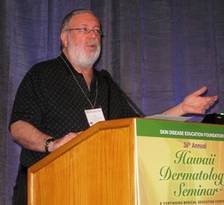
This is an uncommon neoplasia that’s typically described as an erythematous, erosive, itchy patch or plaque having a strawberries-and-cream appearance. Yet there may be other areas of subclinical involvement at a distance from the obvious lesion.
"That’s why Mohs surgery for this condition may be difficult without something being done in advance," said Dr. Rosen, professor of dermatology at Baylor College of Medicine, Houston.
He suggested applying topical 5% imiquimod or 5-fluorouracil to identify all of the active foci by lighting up the affected areas to allow more precise surgery or ablative therapy.
Dr. Rosen does not, however, recommend using imiquimod as primary therapy. He noted that a review of 27 published cases of 5% imiquimod for the treatment of extramammary Paget’s disease reported a 22% failure rate (Arch. Dermatol. 2011;147:704-8).
Mohs surgery shows promise for treatment of extramammary Paget’s disease, with lower recurrence rates than reported for wide surgical excision. However, experience to date with Mohs surgery for extensive disease is limited. For this reason, most authorities still consider wide surgical excision the gold standard therapy for extramammary Paget’s disease, despite published recurrence rates of 42%-54% even with clear surgical margins. Use of preoperative topical 5-fluorouracil or 5% imiquimod should substantially reduce those high recurrence rates, the dermatologist said.
Extramammary Paget’s disease is typically slow-growing for a decade or more before invading the dermis, at which point it quickly becomes widely metastatic.
"Once extramammary Paget’s disease has broken through the dermal/epidermal junction, it becomes a very nasty, bad-acting disease," Dr. Rosen said.
It’s well recognized that extramammary Paget’s is associated with an increased risk of underlying internal malignancy of the lower gastrointestinal or genitourinary tract. This increased risk is typically described as being in the 10%-20% range. But that figure may be too low. A recent report from investigators at Houston’s M.D. Anderson Cancer Center involving 20 consecutive patients with extramammary Paget’s on the penis or scrotum indicated that 8 of them – fully 40% – had an associated underlying internal adenocarcinoma (J. Urol. 2011;186:97-102).
The risk of underlying internal malignancy is known to be considerably greater in white patients than in Asians. It’s very uncommon for black patients with extramammary Paget’s to have an associated internal malignancy.
Because the full workup for an associated occult internal adenocarcinoma is elaborate and costly, a means of determining which patients are at greater or lesser risk would be welcome in order to guide the extent of testing. Cytokeratin staining may be the solution. Spanish dermatologists have reported that cutaneous extramammary Paget’s disease is characteristically positive for cytokeratin 7, negative for cytokeratin 20, and positive for cystic disease fluid protein 15.
In contrast, endodermal extramammary Paget’s, which is more strongly associated with internal malignancy, is positive for cytokeratin 7 and 20 and negative for cystic disease fluid protein 15, according to the investigators (Clin. Exp. Dermatol. 2008;33:595-8). A cautionary note: Dr. Rosen said that to his knowledge these findings haven’t yet been confirmed by other groups.
He reported having no financial conflicts.
SDEF and this news organization are owned by Elsevier.
WAIKOLOA, HAWAII – Extramammary Paget’s disease poses a particular challenge because of its multifocal/multicentric nature.
"What you see with extramammary Paget’s is not necessarily what you get," Dr. Theodore Rosen cautioned at the Hawaii Dermatology Seminar sponsored by Skin Disease Education Foundation (SDEF).
This is an uncommon neoplasia that’s typically described as an erythematous, erosive, itchy patch or plaque having a strawberries-and-cream appearance. Yet there may be other areas of subclinical involvement at a distance from the obvious lesion.
"That’s why Mohs surgery for this condition may be difficult without something being done in advance," said Dr. Rosen, professor of dermatology at Baylor College of Medicine, Houston.
He suggested applying topical 5% imiquimod or 5-fluorouracil to identify all of the active foci by lighting up the affected areas to allow more precise surgery or ablative therapy.
Dr. Rosen does not, however, recommend using imiquimod as primary therapy. He noted that a review of 27 published cases of 5% imiquimod for the treatment of extramammary Paget’s disease reported a 22% failure rate (Arch. Dermatol. 2011;147:704-8).
Mohs surgery shows promise for treatment of extramammary Paget’s disease, with lower recurrence rates than reported for wide surgical excision. However, experience to date with Mohs surgery for extensive disease is limited. For this reason, most authorities still consider wide surgical excision the gold standard therapy for extramammary Paget’s disease, despite published recurrence rates of 42%-54% even with clear surgical margins. Use of preoperative topical 5-fluorouracil or 5% imiquimod should substantially reduce those high recurrence rates, the dermatologist said.
Extramammary Paget’s disease is typically slow-growing for a decade or more before invading the dermis, at which point it quickly becomes widely metastatic.
"Once extramammary Paget’s disease has broken through the dermal/epidermal junction, it becomes a very nasty, bad-acting disease," Dr. Rosen said.
It’s well recognized that extramammary Paget’s is associated with an increased risk of underlying internal malignancy of the lower gastrointestinal or genitourinary tract. This increased risk is typically described as being in the 10%-20% range. But that figure may be too low. A recent report from investigators at Houston’s M.D. Anderson Cancer Center involving 20 consecutive patients with extramammary Paget’s on the penis or scrotum indicated that 8 of them – fully 40% – had an associated underlying internal adenocarcinoma (J. Urol. 2011;186:97-102).
The risk of underlying internal malignancy is known to be considerably greater in white patients than in Asians. It’s very uncommon for black patients with extramammary Paget’s to have an associated internal malignancy.
Because the full workup for an associated occult internal adenocarcinoma is elaborate and costly, a means of determining which patients are at greater or lesser risk would be welcome in order to guide the extent of testing. Cytokeratin staining may be the solution. Spanish dermatologists have reported that cutaneous extramammary Paget’s disease is characteristically positive for cytokeratin 7, negative for cytokeratin 20, and positive for cystic disease fluid protein 15.
In contrast, endodermal extramammary Paget’s, which is more strongly associated with internal malignancy, is positive for cytokeratin 7 and 20 and negative for cystic disease fluid protein 15, according to the investigators (Clin. Exp. Dermatol. 2008;33:595-8). A cautionary note: Dr. Rosen said that to his knowledge these findings haven’t yet been confirmed by other groups.
He reported having no financial conflicts.
SDEF and this news organization are owned by Elsevier.
WAIKOLOA, HAWAII – Extramammary Paget’s disease poses a particular challenge because of its multifocal/multicentric nature.
"What you see with extramammary Paget’s is not necessarily what you get," Dr. Theodore Rosen cautioned at the Hawaii Dermatology Seminar sponsored by Skin Disease Education Foundation (SDEF).
This is an uncommon neoplasia that’s typically described as an erythematous, erosive, itchy patch or plaque having a strawberries-and-cream appearance. Yet there may be other areas of subclinical involvement at a distance from the obvious lesion.
"That’s why Mohs surgery for this condition may be difficult without something being done in advance," said Dr. Rosen, professor of dermatology at Baylor College of Medicine, Houston.
He suggested applying topical 5% imiquimod or 5-fluorouracil to identify all of the active foci by lighting up the affected areas to allow more precise surgery or ablative therapy.
Dr. Rosen does not, however, recommend using imiquimod as primary therapy. He noted that a review of 27 published cases of 5% imiquimod for the treatment of extramammary Paget’s disease reported a 22% failure rate (Arch. Dermatol. 2011;147:704-8).
Mohs surgery shows promise for treatment of extramammary Paget’s disease, with lower recurrence rates than reported for wide surgical excision. However, experience to date with Mohs surgery for extensive disease is limited. For this reason, most authorities still consider wide surgical excision the gold standard therapy for extramammary Paget’s disease, despite published recurrence rates of 42%-54% even with clear surgical margins. Use of preoperative topical 5-fluorouracil or 5% imiquimod should substantially reduce those high recurrence rates, the dermatologist said.
Extramammary Paget’s disease is typically slow-growing for a decade or more before invading the dermis, at which point it quickly becomes widely metastatic.
"Once extramammary Paget’s disease has broken through the dermal/epidermal junction, it becomes a very nasty, bad-acting disease," Dr. Rosen said.
It’s well recognized that extramammary Paget’s is associated with an increased risk of underlying internal malignancy of the lower gastrointestinal or genitourinary tract. This increased risk is typically described as being in the 10%-20% range. But that figure may be too low. A recent report from investigators at Houston’s M.D. Anderson Cancer Center involving 20 consecutive patients with extramammary Paget’s on the penis or scrotum indicated that 8 of them – fully 40% – had an associated underlying internal adenocarcinoma (J. Urol. 2011;186:97-102).
The risk of underlying internal malignancy is known to be considerably greater in white patients than in Asians. It’s very uncommon for black patients with extramammary Paget’s to have an associated internal malignancy.
Because the full workup for an associated occult internal adenocarcinoma is elaborate and costly, a means of determining which patients are at greater or lesser risk would be welcome in order to guide the extent of testing. Cytokeratin staining may be the solution. Spanish dermatologists have reported that cutaneous extramammary Paget’s disease is characteristically positive for cytokeratin 7, negative for cytokeratin 20, and positive for cystic disease fluid protein 15.
In contrast, endodermal extramammary Paget’s, which is more strongly associated with internal malignancy, is positive for cytokeratin 7 and 20 and negative for cystic disease fluid protein 15, according to the investigators (Clin. Exp. Dermatol. 2008;33:595-8). A cautionary note: Dr. Rosen said that to his knowledge these findings haven’t yet been confirmed by other groups.
He reported having no financial conflicts.
SDEF and this news organization are owned by Elsevier.
EXPERT ANALYSIS FROM THE SDEF HAWAII DERMATOLOGY SEMINAR