User login
Cell-based strategy curbs constipation
Treatment at the nanomolecular level may become an alternative for various types of constipation, in particular for the opioid-induced constipation that is common after surgery, based on data from a proof of concept study involving mice and a small-molecule activator.
“Activation of the cystic fibrosis transmembrane conductance regulator (CFTR) chloride channel is the primary pathway that drives fluid secretion in the intestine, which maintains lubrication of luminal contents,” wrote Dr. Onur Cil of the University of California, San Francisco, and colleagues. The researchers examined whether direct activation of the CFTR would prompt fluid secretion and reverse stool dehydration when applied to constipated mice. The findings were published online in the May issue of the journal Cellular and Molecular Gastroenterology and Hepatology (2016. doi: 10.1016/j.jcmgh.2015.12.010).
The researchers identified a promising activator, the phenylquinoxalinone CFTRact-J027. Mice received up to 10 mg/kg CFTRact-J027 either orally or intraperitoneally (IP), with doses including 0.1 mg/kg, 0.3 mg/kg, 1 mg/kg, 3 mg/kg, and 10 mg/kg.
Overall, IP doses of CFTRact-J027 at 10 mg/kg normalized stool in the constipated mice, and dose-response studies showed a 50% effective dose of 2 mg/kg in these mice.
When given orally, CFTRact-J027 “normalized stool output and water content in a loperamide-induced mouse model of constipation with a 50% effective dose of approximately 0.5 mg/kg,” that was significantly lower than the IP administration, the researchers noted. An oral dose of 10 mg/kg CFTRact-J027 1 hour before inducing constipation also was effective in normalizing stool output and water content in loperamide-treated mice, with no effect in control nonconstipated mice.
The activator was not effective against constipation in cystic fibrosis mice that were missing a functional CFTR, they added.
The researchers used an in vivo closed loop model to specifically test the effects of CFTRact-J027 on intestinal fluid secretion and absorption and found that CFTRact-J027 caused “a 140% increase in loop weight/length ratio, indicating fluid secretion into the intestinal lumen in wild-type mice.” However, there was no effect in cystic fibrosis mice, further supporting the CFTR-selective mechanism of action, the researchers said.
As for potential toxic effects of the treatment, CFTRact-J027 showed no impact on the major serum chemistry and blood parameters of the mice after 7 days, and had no apparent impact on body weight. No accumulation of fluid (the most significant potential adverse effect) was noted in the airway or lungs of the treated mice.
Additional toxicity data are needed to continue preclinical development, the researchers said. However, “our data provide evidence for the prosecretory action of a CFTR activator in mouse intestine and proof of concept for its use in the treatment of various types of constipation, which could include opioid-induced constipation, chronic idiopathic constipation, and irritable bowel syndrome with constipation predominance,” they wrote. In addition, a CFTR activator similar to that used in this study may have clinical applications for other conditions including asthma, dry eye, cholestatic liver disease, chronic obstructive pulmonary disease and bronchitis, and cigarette smoke–induced lung dysfunction, they added.
Dr. Cil and two coauthors are inventors on a provisional patent filing, with rights owned by the University of California, San Francisco. The study was funded in part by several grants from organizations including the National Institutes of Health and the Cystic Fibrosis Foundation.
Treatment at the nanomolecular level may become an alternative for various types of constipation, in particular for the opioid-induced constipation that is common after surgery, based on data from a proof of concept study involving mice and a small-molecule activator.
“Activation of the cystic fibrosis transmembrane conductance regulator (CFTR) chloride channel is the primary pathway that drives fluid secretion in the intestine, which maintains lubrication of luminal contents,” wrote Dr. Onur Cil of the University of California, San Francisco, and colleagues. The researchers examined whether direct activation of the CFTR would prompt fluid secretion and reverse stool dehydration when applied to constipated mice. The findings were published online in the May issue of the journal Cellular and Molecular Gastroenterology and Hepatology (2016. doi: 10.1016/j.jcmgh.2015.12.010).
The researchers identified a promising activator, the phenylquinoxalinone CFTRact-J027. Mice received up to 10 mg/kg CFTRact-J027 either orally or intraperitoneally (IP), with doses including 0.1 mg/kg, 0.3 mg/kg, 1 mg/kg, 3 mg/kg, and 10 mg/kg.
Overall, IP doses of CFTRact-J027 at 10 mg/kg normalized stool in the constipated mice, and dose-response studies showed a 50% effective dose of 2 mg/kg in these mice.
When given orally, CFTRact-J027 “normalized stool output and water content in a loperamide-induced mouse model of constipation with a 50% effective dose of approximately 0.5 mg/kg,” that was significantly lower than the IP administration, the researchers noted. An oral dose of 10 mg/kg CFTRact-J027 1 hour before inducing constipation also was effective in normalizing stool output and water content in loperamide-treated mice, with no effect in control nonconstipated mice.
The activator was not effective against constipation in cystic fibrosis mice that were missing a functional CFTR, they added.
The researchers used an in vivo closed loop model to specifically test the effects of CFTRact-J027 on intestinal fluid secretion and absorption and found that CFTRact-J027 caused “a 140% increase in loop weight/length ratio, indicating fluid secretion into the intestinal lumen in wild-type mice.” However, there was no effect in cystic fibrosis mice, further supporting the CFTR-selective mechanism of action, the researchers said.
As for potential toxic effects of the treatment, CFTRact-J027 showed no impact on the major serum chemistry and blood parameters of the mice after 7 days, and had no apparent impact on body weight. No accumulation of fluid (the most significant potential adverse effect) was noted in the airway or lungs of the treated mice.
Additional toxicity data are needed to continue preclinical development, the researchers said. However, “our data provide evidence for the prosecretory action of a CFTR activator in mouse intestine and proof of concept for its use in the treatment of various types of constipation, which could include opioid-induced constipation, chronic idiopathic constipation, and irritable bowel syndrome with constipation predominance,” they wrote. In addition, a CFTR activator similar to that used in this study may have clinical applications for other conditions including asthma, dry eye, cholestatic liver disease, chronic obstructive pulmonary disease and bronchitis, and cigarette smoke–induced lung dysfunction, they added.
Dr. Cil and two coauthors are inventors on a provisional patent filing, with rights owned by the University of California, San Francisco. The study was funded in part by several grants from organizations including the National Institutes of Health and the Cystic Fibrosis Foundation.
Treatment at the nanomolecular level may become an alternative for various types of constipation, in particular for the opioid-induced constipation that is common after surgery, based on data from a proof of concept study involving mice and a small-molecule activator.
“Activation of the cystic fibrosis transmembrane conductance regulator (CFTR) chloride channel is the primary pathway that drives fluid secretion in the intestine, which maintains lubrication of luminal contents,” wrote Dr. Onur Cil of the University of California, San Francisco, and colleagues. The researchers examined whether direct activation of the CFTR would prompt fluid secretion and reverse stool dehydration when applied to constipated mice. The findings were published online in the May issue of the journal Cellular and Molecular Gastroenterology and Hepatology (2016. doi: 10.1016/j.jcmgh.2015.12.010).
The researchers identified a promising activator, the phenylquinoxalinone CFTRact-J027. Mice received up to 10 mg/kg CFTRact-J027 either orally or intraperitoneally (IP), with doses including 0.1 mg/kg, 0.3 mg/kg, 1 mg/kg, 3 mg/kg, and 10 mg/kg.
Overall, IP doses of CFTRact-J027 at 10 mg/kg normalized stool in the constipated mice, and dose-response studies showed a 50% effective dose of 2 mg/kg in these mice.
When given orally, CFTRact-J027 “normalized stool output and water content in a loperamide-induced mouse model of constipation with a 50% effective dose of approximately 0.5 mg/kg,” that was significantly lower than the IP administration, the researchers noted. An oral dose of 10 mg/kg CFTRact-J027 1 hour before inducing constipation also was effective in normalizing stool output and water content in loperamide-treated mice, with no effect in control nonconstipated mice.
The activator was not effective against constipation in cystic fibrosis mice that were missing a functional CFTR, they added.
The researchers used an in vivo closed loop model to specifically test the effects of CFTRact-J027 on intestinal fluid secretion and absorption and found that CFTRact-J027 caused “a 140% increase in loop weight/length ratio, indicating fluid secretion into the intestinal lumen in wild-type mice.” However, there was no effect in cystic fibrosis mice, further supporting the CFTR-selective mechanism of action, the researchers said.
As for potential toxic effects of the treatment, CFTRact-J027 showed no impact on the major serum chemistry and blood parameters of the mice after 7 days, and had no apparent impact on body weight. No accumulation of fluid (the most significant potential adverse effect) was noted in the airway or lungs of the treated mice.
Additional toxicity data are needed to continue preclinical development, the researchers said. However, “our data provide evidence for the prosecretory action of a CFTR activator in mouse intestine and proof of concept for its use in the treatment of various types of constipation, which could include opioid-induced constipation, chronic idiopathic constipation, and irritable bowel syndrome with constipation predominance,” they wrote. In addition, a CFTR activator similar to that used in this study may have clinical applications for other conditions including asthma, dry eye, cholestatic liver disease, chronic obstructive pulmonary disease and bronchitis, and cigarette smoke–induced lung dysfunction, they added.
Dr. Cil and two coauthors are inventors on a provisional patent filing, with rights owned by the University of California, San Francisco. The study was funded in part by several grants from organizations including the National Institutes of Health and the Cystic Fibrosis Foundation.
FROM CELLULAR AND MOLECULAR GASTROENTEROLOGY AND HEPATOLOGY
Key clinical point: Treatment at the nanomolecular level may become an alternative for various types of constipation.
Major finding: Oral doses of CFTRact-J027 normalized stool output and water content in a loperamide-induced mouse model of constipation with a 50% effective dose of approximately 0.5 mg/kg.
Data source: A proof-of-concept study in which a cell-based screen was performed for 120,000 druglike, synthetic small molecules that were then tested in constipation-induced mice and control mice.
Disclosures: Dr. Cil and two coauthors are inventors on a provisional patent filing, with rights owned by the University of California, San Francisco. The study was funded in part by several grants from organizations including the National Institutes of Health and the Cystic Fibrosis Foundation.
Norovirus costs $60 billion worldwide, making inroads in U.S.
The global economic impact of norovirus is roughly $60 billion in societal costs and $4 billion in direct health care costs per year, according to an simulation model analysis.
Most of the costs (84%-99%, varying by region) resulted from lost productivity. The total societal cost was highest in children younger than 5 years, nearly $40 billion, compared with $20 billion for all other age groups combined, but the cost per illness was highest among adults aged 55 years and older.
Disease incidence was similar across all countries in the simulation model that included 233 countries stratified by World Health Organization region and globally but high-income countries accounted for 62% of the global health system costs, wrote Sarah M. Bartsch of Johns Hopkins University, Baltimore, and colleagues (PLoS ONE 2016. doi: 10.1371/journal.pone.0151219).

In the United States, norovirus was the most common pathogen identified in cases of acute gastroenteritis (AGE, 6%), followed by rotavirus and sapovirus (2% for both) and astrovirus (1%), according to data from a population-based study, including 1,099 stool specimens collected between August 2012 and September 2013. These findings were published in a separate study (PLoS ONE 2016. doi: 10.1371/journal.pone.0148395).
Overall, U.S. children younger than 5 years of age had the highest prevalence of norovirus; outpatient incidence and community incidences were 25.6 and 152.2 per 1,000 person-years, respectively. The next highest norovirus prevalence occurred in adults older than 65 years; outpatient and community incidence were 7.8 and 7.8 per 1,000 person-years, respectively. The study provides “the first U.S. laboratory-based age-specific norovirus AGE incidence rates in both community and outpatient settings,” wrote Scott P. Grytdal of the Centers for Disease Control and Prevention in Atlanta, and colleagues.
The global economic impact of norovirus is roughly $60 billion in societal costs and $4 billion in direct health care costs per year, according to an simulation model analysis.
Most of the costs (84%-99%, varying by region) resulted from lost productivity. The total societal cost was highest in children younger than 5 years, nearly $40 billion, compared with $20 billion for all other age groups combined, but the cost per illness was highest among adults aged 55 years and older.
Disease incidence was similar across all countries in the simulation model that included 233 countries stratified by World Health Organization region and globally but high-income countries accounted for 62% of the global health system costs, wrote Sarah M. Bartsch of Johns Hopkins University, Baltimore, and colleagues (PLoS ONE 2016. doi: 10.1371/journal.pone.0151219).
In the United States, norovirus was the most common pathogen identified in cases of acute gastroenteritis (AGE, 6%), followed by rotavirus and sapovirus (2% for both) and astrovirus (1%), according to data from a population-based study, including 1,099 stool specimens collected between August 2012 and September 2013. These findings were published in a separate study (PLoS ONE 2016. doi: 10.1371/journal.pone.0148395).
Overall, U.S. children younger than 5 years of age had the highest prevalence of norovirus; outpatient incidence and community incidences were 25.6 and 152.2 per 1,000 person-years, respectively. The next highest norovirus prevalence occurred in adults older than 65 years; outpatient and community incidence were 7.8 and 7.8 per 1,000 person-years, respectively. The study provides “the first U.S. laboratory-based age-specific norovirus AGE incidence rates in both community and outpatient settings,” wrote Scott P. Grytdal of the Centers for Disease Control and Prevention in Atlanta, and colleagues.
The global economic impact of norovirus is roughly $60 billion in societal costs and $4 billion in direct health care costs per year, according to an simulation model analysis.
Most of the costs (84%-99%, varying by region) resulted from lost productivity. The total societal cost was highest in children younger than 5 years, nearly $40 billion, compared with $20 billion for all other age groups combined, but the cost per illness was highest among adults aged 55 years and older.
Disease incidence was similar across all countries in the simulation model that included 233 countries stratified by World Health Organization region and globally but high-income countries accounted for 62% of the global health system costs, wrote Sarah M. Bartsch of Johns Hopkins University, Baltimore, and colleagues (PLoS ONE 2016. doi: 10.1371/journal.pone.0151219).
In the United States, norovirus was the most common pathogen identified in cases of acute gastroenteritis (AGE, 6%), followed by rotavirus and sapovirus (2% for both) and astrovirus (1%), according to data from a population-based study, including 1,099 stool specimens collected between August 2012 and September 2013. These findings were published in a separate study (PLoS ONE 2016. doi: 10.1371/journal.pone.0148395).
Overall, U.S. children younger than 5 years of age had the highest prevalence of norovirus; outpatient incidence and community incidences were 25.6 and 152.2 per 1,000 person-years, respectively. The next highest norovirus prevalence occurred in adults older than 65 years; outpatient and community incidence were 7.8 and 7.8 per 1,000 person-years, respectively. The study provides “the first U.S. laboratory-based age-specific norovirus AGE incidence rates in both community and outpatient settings,” wrote Scott P. Grytdal of the Centers for Disease Control and Prevention in Atlanta, and colleagues.
FROM PLOS ONE

Hepatitis B test identifies active carriers
A one-time test combining hepatitis B virus (HBV) surface antigen and HBV DNA measurement accurately distinguished inactive carriers from active cases of chronic HBV, based on data from 1,529 patients published online in the journal Hepatology.
Correct identification of active chronic HBV patients vs. inactive cases “is a crucial step in identifying patients in need of less stringent follow-up, as well as patients who may benefit from additional follow-up and earlier initiation of antiviral therapy,” wrote Dr. Jessica Liu of the Genomics Research Center, Academia Sinica, in Taipei, Taiwan, and her colleagues (Hepatology. 2016. doi: 10.1002/hep.28552).

The investigators reviewed data from patients in the REVEAL-HBV cohort, which included individuals aged 30-65 years with chronic HBV who were recruited between 1991 and 1992. All patients were free of liver cirrhosis and were seronegative for anti–hepatitis C virus and hepatitis B surface antigen (HBsAg) at baseline, and were characterized as inactive carriers or active cases based on their serologic profiles at 18 months’ follow-up. Blood was collected at study entry and every 6-12 months.
At 18 months’ follow-up, the combined test distinguished inactive carriers from active cases with a sensitivity of 71% and a specificity of 85%. The positive and negative predictive values were 83% and 74%, respectively, and the diagnostic accuracy was 78%. In addition, the one-time combination measurement predicted cirrhosis, hepatocelluar carcinoma, and HBsAg seroclearance with areas under the receiver operating characteristic curves of 0.72, 0.79, and 0.78, respectively. The combination test also yielded information about the predictability of inactive carrier status, showing that inactive carriers had a significantly lower risk of cirrhosis and hepatocelluar carcinoma; adjusted hazard ratios were 0.43 and 0.13, respectively.
“To our knowledge, this is the first study to externally validate the usage of a one-time measurement of serum HBsAg less than 1,000 IU/mL and HBV DNA less than 2,000 IU/mL,” the researchers wrote.
The study was limited by a relatively short follow-up period, but the results suggest that “this single-point strategy may provide new and complementary information useful for simplifying or tailoring management of patients with chronic hepatitis B infection,” they said.
The study was supported by the Taiwan Department of Health, Bristol-Myers Squibb, Roche Diagnostics, and Academia Sinica. One of the coauthors is employed by Roche Diagnostics.
A one-time test combining hepatitis B virus (HBV) surface antigen and HBV DNA measurement accurately distinguished inactive carriers from active cases of chronic HBV, based on data from 1,529 patients published online in the journal Hepatology.
Correct identification of active chronic HBV patients vs. inactive cases “is a crucial step in identifying patients in need of less stringent follow-up, as well as patients who may benefit from additional follow-up and earlier initiation of antiviral therapy,” wrote Dr. Jessica Liu of the Genomics Research Center, Academia Sinica, in Taipei, Taiwan, and her colleagues (Hepatology. 2016. doi: 10.1002/hep.28552).
The investigators reviewed data from patients in the REVEAL-HBV cohort, which included individuals aged 30-65 years with chronic HBV who were recruited between 1991 and 1992. All patients were free of liver cirrhosis and were seronegative for anti–hepatitis C virus and hepatitis B surface antigen (HBsAg) at baseline, and were characterized as inactive carriers or active cases based on their serologic profiles at 18 months’ follow-up. Blood was collected at study entry and every 6-12 months.
At 18 months’ follow-up, the combined test distinguished inactive carriers from active cases with a sensitivity of 71% and a specificity of 85%. The positive and negative predictive values were 83% and 74%, respectively, and the diagnostic accuracy was 78%. In addition, the one-time combination measurement predicted cirrhosis, hepatocelluar carcinoma, and HBsAg seroclearance with areas under the receiver operating characteristic curves of 0.72, 0.79, and 0.78, respectively. The combination test also yielded information about the predictability of inactive carrier status, showing that inactive carriers had a significantly lower risk of cirrhosis and hepatocelluar carcinoma; adjusted hazard ratios were 0.43 and 0.13, respectively.
“To our knowledge, this is the first study to externally validate the usage of a one-time measurement of serum HBsAg less than 1,000 IU/mL and HBV DNA less than 2,000 IU/mL,” the researchers wrote.
The study was limited by a relatively short follow-up period, but the results suggest that “this single-point strategy may provide new and complementary information useful for simplifying or tailoring management of patients with chronic hepatitis B infection,” they said.
The study was supported by the Taiwan Department of Health, Bristol-Myers Squibb, Roche Diagnostics, and Academia Sinica. One of the coauthors is employed by Roche Diagnostics.
A one-time test combining hepatitis B virus (HBV) surface antigen and HBV DNA measurement accurately distinguished inactive carriers from active cases of chronic HBV, based on data from 1,529 patients published online in the journal Hepatology.
Correct identification of active chronic HBV patients vs. inactive cases “is a crucial step in identifying patients in need of less stringent follow-up, as well as patients who may benefit from additional follow-up and earlier initiation of antiviral therapy,” wrote Dr. Jessica Liu of the Genomics Research Center, Academia Sinica, in Taipei, Taiwan, and her colleagues (Hepatology. 2016. doi: 10.1002/hep.28552).
The investigators reviewed data from patients in the REVEAL-HBV cohort, which included individuals aged 30-65 years with chronic HBV who were recruited between 1991 and 1992. All patients were free of liver cirrhosis and were seronegative for anti–hepatitis C virus and hepatitis B surface antigen (HBsAg) at baseline, and were characterized as inactive carriers or active cases based on their serologic profiles at 18 months’ follow-up. Blood was collected at study entry and every 6-12 months.
At 18 months’ follow-up, the combined test distinguished inactive carriers from active cases with a sensitivity of 71% and a specificity of 85%. The positive and negative predictive values were 83% and 74%, respectively, and the diagnostic accuracy was 78%. In addition, the one-time combination measurement predicted cirrhosis, hepatocelluar carcinoma, and HBsAg seroclearance with areas under the receiver operating characteristic curves of 0.72, 0.79, and 0.78, respectively. The combination test also yielded information about the predictability of inactive carrier status, showing that inactive carriers had a significantly lower risk of cirrhosis and hepatocelluar carcinoma; adjusted hazard ratios were 0.43 and 0.13, respectively.
“To our knowledge, this is the first study to externally validate the usage of a one-time measurement of serum HBsAg less than 1,000 IU/mL and HBV DNA less than 2,000 IU/mL,” the researchers wrote.
The study was limited by a relatively short follow-up period, but the results suggest that “this single-point strategy may provide new and complementary information useful for simplifying or tailoring management of patients with chronic hepatitis B infection,” they said.
The study was supported by the Taiwan Department of Health, Bristol-Myers Squibb, Roche Diagnostics, and Academia Sinica. One of the coauthors is employed by Roche Diagnostics.
FROM HEPATOLOGY
Key clinical point: The data confirm the predictability of a one-time test for chronic hepatitis B progression that combines hepatitis B surface antigen and hepatitis B DNA measurement.
Major finding: The one-time combined test distinguished inactive carriers from active cases with a sensitivity of 71% and specificity of 85%.
Data source: A study of 1,529 adults aged 30-65 years with chronic hepatitis B.
Disclosures: The study was supported by the Taiwan Department of Health, Bristol-Myers Squibb, Roche Diagnostics, and Academia Sinica. One of the coauthors is employed by Roche Diagnostics.

Laser treatment effective for nongenital warts
Laser treatment is effective against nongenital cutaneous warts, based on data from a review of 35 studies comprising 2,149 adult patients.
“No monotherapy has achieved completed remission [of nongenital cutaneous warts] in every case,” wrote Jannett Nguyen, a medical student at the University of California, Irvine, and colleagues (JAMA Dermatol. 2016 April 27. doi: 10.1001/jamadermatol.2016.0826).
The researchers reviewed data on warts treated with one of four types of lasers: Carbon dioxide (CO2), erbium:yttrium-aluminum-garnet (Er:YAG), pulsed dye laser (PDL), or neodymium-doped yttrium aluminum garnet (Nd:YAG).
The response rates for the different lasers were 50%-100% for CO2, 72%-100% for Er:YAG, 31%-100% for PDL, and 46%-100% for Nd:YAG. The studies included data on laser treatment of several types of nongenital warts including simple and recalcitrant common warts, periungual and subungual warts, and palmoplantar warts.
In general, side effects from laser treatment of warts were highest with CO2 lasers, and included scarring, hypopigmentation, postoperative pain, and prolonged wound healing. PDL was associated with the lowest risk of side effects, and was as effective as conventional therapies, including cryotherapy and cantharidin.
In Er:YAG treatments, the laser was used for direct ablation of the epidermis on the wart, repeating through layers until normal skin is revealed. Overall, patients treated with Er:YAG demonstrated a higher response and lower recurrence when treated in combination with podofilox. Nd:YAG treatment was similar to PDL, but with a longer wavelength that allows for deeper penetration.
Treatment is limited by a lack of evidence to guide selection of the most appropriate lasers for different warts and by a lack of recommendations for specific laser settings, the researchers noted. Additional studies are needed to establish treatment protocols by comparing lasers to each other and to nonlaser treatments.
However, laser treatment of warts can be “an additional therapeutic option and the studies reviewed here can provide a starting point in determining settings,” they said.
The researchers had no financial disclosures.
Laser treatment is effective against nongenital cutaneous warts, based on data from a review of 35 studies comprising 2,149 adult patients.
“No monotherapy has achieved completed remission [of nongenital cutaneous warts] in every case,” wrote Jannett Nguyen, a medical student at the University of California, Irvine, and colleagues (JAMA Dermatol. 2016 April 27. doi: 10.1001/jamadermatol.2016.0826).
The researchers reviewed data on warts treated with one of four types of lasers: Carbon dioxide (CO2), erbium:yttrium-aluminum-garnet (Er:YAG), pulsed dye laser (PDL), or neodymium-doped yttrium aluminum garnet (Nd:YAG).
The response rates for the different lasers were 50%-100% for CO2, 72%-100% for Er:YAG, 31%-100% for PDL, and 46%-100% for Nd:YAG. The studies included data on laser treatment of several types of nongenital warts including simple and recalcitrant common warts, periungual and subungual warts, and palmoplantar warts.
In general, side effects from laser treatment of warts were highest with CO2 lasers, and included scarring, hypopigmentation, postoperative pain, and prolonged wound healing. PDL was associated with the lowest risk of side effects, and was as effective as conventional therapies, including cryotherapy and cantharidin.
In Er:YAG treatments, the laser was used for direct ablation of the epidermis on the wart, repeating through layers until normal skin is revealed. Overall, patients treated with Er:YAG demonstrated a higher response and lower recurrence when treated in combination with podofilox. Nd:YAG treatment was similar to PDL, but with a longer wavelength that allows for deeper penetration.
Treatment is limited by a lack of evidence to guide selection of the most appropriate lasers for different warts and by a lack of recommendations for specific laser settings, the researchers noted. Additional studies are needed to establish treatment protocols by comparing lasers to each other and to nonlaser treatments.
However, laser treatment of warts can be “an additional therapeutic option and the studies reviewed here can provide a starting point in determining settings,” they said.
The researchers had no financial disclosures.
Laser treatment is effective against nongenital cutaneous warts, based on data from a review of 35 studies comprising 2,149 adult patients.
“No monotherapy has achieved completed remission [of nongenital cutaneous warts] in every case,” wrote Jannett Nguyen, a medical student at the University of California, Irvine, and colleagues (JAMA Dermatol. 2016 April 27. doi: 10.1001/jamadermatol.2016.0826).
The researchers reviewed data on warts treated with one of four types of lasers: Carbon dioxide (CO2), erbium:yttrium-aluminum-garnet (Er:YAG), pulsed dye laser (PDL), or neodymium-doped yttrium aluminum garnet (Nd:YAG).
The response rates for the different lasers were 50%-100% for CO2, 72%-100% for Er:YAG, 31%-100% for PDL, and 46%-100% for Nd:YAG. The studies included data on laser treatment of several types of nongenital warts including simple and recalcitrant common warts, periungual and subungual warts, and palmoplantar warts.
In general, side effects from laser treatment of warts were highest with CO2 lasers, and included scarring, hypopigmentation, postoperative pain, and prolonged wound healing. PDL was associated with the lowest risk of side effects, and was as effective as conventional therapies, including cryotherapy and cantharidin.
In Er:YAG treatments, the laser was used for direct ablation of the epidermis on the wart, repeating through layers until normal skin is revealed. Overall, patients treated with Er:YAG demonstrated a higher response and lower recurrence when treated in combination with podofilox. Nd:YAG treatment was similar to PDL, but with a longer wavelength that allows for deeper penetration.
Treatment is limited by a lack of evidence to guide selection of the most appropriate lasers for different warts and by a lack of recommendations for specific laser settings, the researchers noted. Additional studies are needed to establish treatment protocols by comparing lasers to each other and to nonlaser treatments.
However, laser treatment of warts can be “an additional therapeutic option and the studies reviewed here can provide a starting point in determining settings,” they said.
The researchers had no financial disclosures.
FROM JAMA DERMATOLOGY
Key clinical point: Lasers are an effective treatment for both simple and stubborn nongenital warts.
Major finding: The response rates ranged from 46% to 100% for lasers including CO2, Er:YAG, PDL, and Nd:YAG.
Data source: A review of 35 studies comprising 2,149 patients.
Disclosures: The researchers had no financial disclosures.
Adding tomosynthesis may benefit women with dense breasts
Women with dense breasts may benefit from additional screening at the time of digital mammography, but the messages notifying these women of potential risks and benefits of more screening are often poorly written and understood, according to a pair of studies published online in JAMA on April 26.
Adding tomosynthesis to screening digital mammography significantly increased cancer detection rates in women with dense and nondense breasts, based on data from a retrospective study of 452,320 examinations.

Dense breast tissue may be an independent risk factor for breast cancer, but the impact of additional treatment modalities on women with dense breasts has not been well studied, wrote Dr. Elizabeth A. Rafferty of L&M Radiology in West Acton, Mass., and associates. Dr. Rafferty conducted the study with colleagues while affiliated with Massachusetts General Hospital in Boston (JAMA 2016 Apr 26. doi: 10.1001/jama.2016.1708).
The researchers reviewed data from an earlier multicenter study involving 13 U.S. institutions, with data reported for 12 months that included 278,906 digital mammographies and 173,414 digital mammographies plus tomosynthesis. A total of 2,157 cancers were diagnosed. Cancer detection rates increased in both groups with the addition of tomosynthesis: Invasive cancer detection increased from 3.0 to 4.0 per 1,000 screens in nondense breasts and from 2.9 to 4.2 per 1,000 screens in dense breasts.
In addition, recall rates decreased from 90 to 79 per 1,000 screens in nondense breasts and from 127 to 109 per 1,000 screens in dense breasts.
Although the study was limited by its retrospective design, the results suggest that the “combined gains were largest for women with heterogeneously dense breasts, potentially addressing limitations in cancer detection seen with digital mammography alone in this group, but were not significant in women with extremely dense breasts,” the researchers noted.
The researchers had no financial conflicts to disclose, and the study was supported by a research grant from Hologic.
Meanwhile, a separate study published in JAMA found that most messages sent to notify women of breast density are poorly understood.
Nancy R. Kressin, Ph.D., of Veterans Affairs Boston Healthcare System and Boston University and colleagues examined the dense breast notifications sent to women following screening mammography in 23 of the 24 states that required such notifications as of January 2016. They assessed the messages for content, readability, and understandability (JAMA 2016 Apr 26. doi: 10.1001/jama.2016.1712).
Although all the notifications reviewed mentioned masking bias (how dense breasts can mask cancer on mammography), the researchers found considerable variation in other content: 74% of notifications mentioned increased cancer risk and 65% mentioned the option of additional screening. Of the 15 states that require supplemental screening to be mentioned, six state notifications explained that the women might benefit from such screening and four state notifications mentioned specific screening modalities.
Only three states’ notifications were written at grade 8 reading level or below, although approximately 20% of the U.S. population reads at grade 5 level or below, the researchers noted. All states’ notifications scored between 11% and 33% on a measure of readability.
“Many [dense breast notifications] appropriately encourage discussions and shared decision making between patients and physicians,” the researchers noted. However, “efforts should focus on enhancing the understandability of [dense breast notifications] so that all women are clearly and accurately informed about their density status, its effect on their breast cancer risk, and the harms and benefits of supplemental screening,” they wrote.
Dr. Kressin reported receiving a Research Career Scientist award from the Department of Veterans Affairs, and coauthor Dr. Tracy Battaglia is the chair elect of the American Cancer Society of New England.
Women with dense breasts may benefit from additional screening at the time of digital mammography, but the messages notifying these women of potential risks and benefits of more screening are often poorly written and understood, according to a pair of studies published online in JAMA on April 26.
Adding tomosynthesis to screening digital mammography significantly increased cancer detection rates in women with dense and nondense breasts, based on data from a retrospective study of 452,320 examinations.
Dense breast tissue may be an independent risk factor for breast cancer, but the impact of additional treatment modalities on women with dense breasts has not been well studied, wrote Dr. Elizabeth A. Rafferty of L&M Radiology in West Acton, Mass., and associates. Dr. Rafferty conducted the study with colleagues while affiliated with Massachusetts General Hospital in Boston (JAMA 2016 Apr 26. doi: 10.1001/jama.2016.1708).
The researchers reviewed data from an earlier multicenter study involving 13 U.S. institutions, with data reported for 12 months that included 278,906 digital mammographies and 173,414 digital mammographies plus tomosynthesis. A total of 2,157 cancers were diagnosed. Cancer detection rates increased in both groups with the addition of tomosynthesis: Invasive cancer detection increased from 3.0 to 4.0 per 1,000 screens in nondense breasts and from 2.9 to 4.2 per 1,000 screens in dense breasts.
In addition, recall rates decreased from 90 to 79 per 1,000 screens in nondense breasts and from 127 to 109 per 1,000 screens in dense breasts.
Although the study was limited by its retrospective design, the results suggest that the “combined gains were largest for women with heterogeneously dense breasts, potentially addressing limitations in cancer detection seen with digital mammography alone in this group, but were not significant in women with extremely dense breasts,” the researchers noted.
The researchers had no financial conflicts to disclose, and the study was supported by a research grant from Hologic.
Meanwhile, a separate study published in JAMA found that most messages sent to notify women of breast density are poorly understood.
Nancy R. Kressin, Ph.D., of Veterans Affairs Boston Healthcare System and Boston University and colleagues examined the dense breast notifications sent to women following screening mammography in 23 of the 24 states that required such notifications as of January 2016. They assessed the messages for content, readability, and understandability (JAMA 2016 Apr 26. doi: 10.1001/jama.2016.1712).
Although all the notifications reviewed mentioned masking bias (how dense breasts can mask cancer on mammography), the researchers found considerable variation in other content: 74% of notifications mentioned increased cancer risk and 65% mentioned the option of additional screening. Of the 15 states that require supplemental screening to be mentioned, six state notifications explained that the women might benefit from such screening and four state notifications mentioned specific screening modalities.
Only three states’ notifications were written at grade 8 reading level or below, although approximately 20% of the U.S. population reads at grade 5 level or below, the researchers noted. All states’ notifications scored between 11% and 33% on a measure of readability.
“Many [dense breast notifications] appropriately encourage discussions and shared decision making between patients and physicians,” the researchers noted. However, “efforts should focus on enhancing the understandability of [dense breast notifications] so that all women are clearly and accurately informed about their density status, its effect on their breast cancer risk, and the harms and benefits of supplemental screening,” they wrote.
Dr. Kressin reported receiving a Research Career Scientist award from the Department of Veterans Affairs, and coauthor Dr. Tracy Battaglia is the chair elect of the American Cancer Society of New England.
Women with dense breasts may benefit from additional screening at the time of digital mammography, but the messages notifying these women of potential risks and benefits of more screening are often poorly written and understood, according to a pair of studies published online in JAMA on April 26.
Adding tomosynthesis to screening digital mammography significantly increased cancer detection rates in women with dense and nondense breasts, based on data from a retrospective study of 452,320 examinations.
Dense breast tissue may be an independent risk factor for breast cancer, but the impact of additional treatment modalities on women with dense breasts has not been well studied, wrote Dr. Elizabeth A. Rafferty of L&M Radiology in West Acton, Mass., and associates. Dr. Rafferty conducted the study with colleagues while affiliated with Massachusetts General Hospital in Boston (JAMA 2016 Apr 26. doi: 10.1001/jama.2016.1708).
The researchers reviewed data from an earlier multicenter study involving 13 U.S. institutions, with data reported for 12 months that included 278,906 digital mammographies and 173,414 digital mammographies plus tomosynthesis. A total of 2,157 cancers were diagnosed. Cancer detection rates increased in both groups with the addition of tomosynthesis: Invasive cancer detection increased from 3.0 to 4.0 per 1,000 screens in nondense breasts and from 2.9 to 4.2 per 1,000 screens in dense breasts.
In addition, recall rates decreased from 90 to 79 per 1,000 screens in nondense breasts and from 127 to 109 per 1,000 screens in dense breasts.
Although the study was limited by its retrospective design, the results suggest that the “combined gains were largest for women with heterogeneously dense breasts, potentially addressing limitations in cancer detection seen with digital mammography alone in this group, but were not significant in women with extremely dense breasts,” the researchers noted.
The researchers had no financial conflicts to disclose, and the study was supported by a research grant from Hologic.
Meanwhile, a separate study published in JAMA found that most messages sent to notify women of breast density are poorly understood.
Nancy R. Kressin, Ph.D., of Veterans Affairs Boston Healthcare System and Boston University and colleagues examined the dense breast notifications sent to women following screening mammography in 23 of the 24 states that required such notifications as of January 2016. They assessed the messages for content, readability, and understandability (JAMA 2016 Apr 26. doi: 10.1001/jama.2016.1712).
Although all the notifications reviewed mentioned masking bias (how dense breasts can mask cancer on mammography), the researchers found considerable variation in other content: 74% of notifications mentioned increased cancer risk and 65% mentioned the option of additional screening. Of the 15 states that require supplemental screening to be mentioned, six state notifications explained that the women might benefit from such screening and four state notifications mentioned specific screening modalities.
Only three states’ notifications were written at grade 8 reading level or below, although approximately 20% of the U.S. population reads at grade 5 level or below, the researchers noted. All states’ notifications scored between 11% and 33% on a measure of readability.
“Many [dense breast notifications] appropriately encourage discussions and shared decision making between patients and physicians,” the researchers noted. However, “efforts should focus on enhancing the understandability of [dense breast notifications] so that all women are clearly and accurately informed about their density status, its effect on their breast cancer risk, and the harms and benefits of supplemental screening,” they wrote.
Dr. Kressin reported receiving a Research Career Scientist award from the Department of Veterans Affairs, and coauthor Dr. Tracy Battaglia is the chair elect of the American Cancer Society of New England.
FROM JAMA
Key clinical point: Women with dense breasts may benefit from additional screening, but state-mandated density notification messages are often hard for them to understand.
Major finding: Invasive cancer detection increased from 3.0 to 4.0 per 1,000 screens in nondense breasts, and from 2.9 to 4.2 per 1,000 screens in dense breasts, with the addition of tomosynthesis to digital screening mammography. In another study, 65% of dense breast notifications mentioned the option of additional screening.
Data source: A retrospective study of 452,320 breast cancer screening examinations, and a review of dense breast notifications sent to women in 23 states as of January 2016.
Disclosures: Dr. Rafferty had no financial conflicts to disclose, and the study was supported by a research grant from Hologic. Dr. Kressin disclosed support from a Research Career Scientist award from the Department of Veterans Affairs, and coauthor Dr. Tracy Battaglia is the chair elect of the American Cancer Society of New England.

Breastfeeding reduces infants’ respiratory symptoms early on
Breastfeeding during the first 27 weeks of life had a risk-specific effect on reducing respiratory symptoms in healthy term infants, based on data from a prospective cohort study of 436 children in Switzerland.
“Breastfeeding is generally accepted to be protective against respiratory symptoms in early life,” but most published studies on this topic are cross-sectional and more likely biased, wrote Dr. Olga Gorlanova of the University of Basel (Switzerland) and her colleagues.

The researchers studied infants enrolled in the Bern-Basel Infant Lung Development cohort via weekly telephone interviews during the first year of life. In addition, weekly measurements of environmental particulate matter were collected from local monitoring stations. Risk factors included maternal history of atopy, vaginal vs. cesarean delivery, parents’ level of education, smoking during and after pregnancy, number of older siblings, child care attendance, and housing conditions.
Overall, infants breastfed during the first 27 weeks of life had significantly reduced respiratory symptoms, compared with nonbreastfed infants (risk ratio, .70)
The study “suggests that breastfeeding attenuates the effects of risk factors such as sex, age, gestational age, cesarean delivery, and prenatal maternal tobacco smoking in healthy term infants,” Dr. Gorlanova and her associates wrote. No significant interaction was noted between breastfeeding and child care attendance, number of older siblings, maternal atopy, or environmental particulate matter.
Read the full study here (J Pediatr. 2016. doi: 10.1016/j.jpeds.2016.03.041).
Breastfeeding during the first 27 weeks of life had a risk-specific effect on reducing respiratory symptoms in healthy term infants, based on data from a prospective cohort study of 436 children in Switzerland.
“Breastfeeding is generally accepted to be protective against respiratory symptoms in early life,” but most published studies on this topic are cross-sectional and more likely biased, wrote Dr. Olga Gorlanova of the University of Basel (Switzerland) and her colleagues.
The researchers studied infants enrolled in the Bern-Basel Infant Lung Development cohort via weekly telephone interviews during the first year of life. In addition, weekly measurements of environmental particulate matter were collected from local monitoring stations. Risk factors included maternal history of atopy, vaginal vs. cesarean delivery, parents’ level of education, smoking during and after pregnancy, number of older siblings, child care attendance, and housing conditions.
Overall, infants breastfed during the first 27 weeks of life had significantly reduced respiratory symptoms, compared with nonbreastfed infants (risk ratio, .70)
The study “suggests that breastfeeding attenuates the effects of risk factors such as sex, age, gestational age, cesarean delivery, and prenatal maternal tobacco smoking in healthy term infants,” Dr. Gorlanova and her associates wrote. No significant interaction was noted between breastfeeding and child care attendance, number of older siblings, maternal atopy, or environmental particulate matter.
Read the full study here (J Pediatr. 2016. doi: 10.1016/j.jpeds.2016.03.041).
Breastfeeding during the first 27 weeks of life had a risk-specific effect on reducing respiratory symptoms in healthy term infants, based on data from a prospective cohort study of 436 children in Switzerland.
“Breastfeeding is generally accepted to be protective against respiratory symptoms in early life,” but most published studies on this topic are cross-sectional and more likely biased, wrote Dr. Olga Gorlanova of the University of Basel (Switzerland) and her colleagues.
The researchers studied infants enrolled in the Bern-Basel Infant Lung Development cohort via weekly telephone interviews during the first year of life. In addition, weekly measurements of environmental particulate matter were collected from local monitoring stations. Risk factors included maternal history of atopy, vaginal vs. cesarean delivery, parents’ level of education, smoking during and after pregnancy, number of older siblings, child care attendance, and housing conditions.
Overall, infants breastfed during the first 27 weeks of life had significantly reduced respiratory symptoms, compared with nonbreastfed infants (risk ratio, .70)
The study “suggests that breastfeeding attenuates the effects of risk factors such as sex, age, gestational age, cesarean delivery, and prenatal maternal tobacco smoking in healthy term infants,” Dr. Gorlanova and her associates wrote. No significant interaction was noted between breastfeeding and child care attendance, number of older siblings, maternal atopy, or environmental particulate matter.
Read the full study here (J Pediatr. 2016. doi: 10.1016/j.jpeds.2016.03.041).
FROM THE JOURNAL OF PEDIATRICS

Tofacitinib succeeds as ulcerative colitis induction therapy
A 10-mg dose of tofacitinib twice daily significantly improved remission, mucosal healing, and clinical response in adults with active ulcerative colitis (UC), based on data from a pair of identical phase III studies including nearly 900 patients. The findings were presented at the European Crohn’s and Colitis Organisation conference in Amsterdam.
“In up to one-third of patients with UC, treatment is not completely successful or complications arise,” study coauthor Dr. Geert D’Haens of the University of Amsterdam said in an interview. The goal of the studies was to evaluate the safety and efficacy of a 10-mg dose of oral tofacitinib twice daily in inducing remission in UC patients, he added. The OCTAVE (Oral Clinical Trials for Tofacitinib in Ulcerative Colitis) Induction 1 study included 476 patients taking tofacitinib and 122 patients taking placebo; the OCTAVE Induction 2 study included 429 patients on tofacitinib and 112 patients on placebo.

Overall, significantly more patients receiving tofacitinib 10 mg twice daily achieved remission, mucosal healing, and clinical response in both studies, compared with the placebo, at 8 weeks. In the OCTAVE Induction 1 and Induction 2 studies, remission at 8 weeks for tofacitinib compared with placebo was 19% vs. 8% and 17% vs. 4%, respectively. Mucosal healing rates in the Induction 1 and 2 studies for tofacitinib compared with placebo were 31% vs. 16% and 28% vs. 12%, respectively, and clinical response rates were 60% vs. 33% and 55% vs. 29%, respectively. Efficacy was similar for patients previously treated with tumor necrosis factor inhibitors and those who were not.
The incidence of adverse events and serious adverse events was not significantly different between treatment and placebo groups in either study. However, tofacitinib treatment was associated with increases in serum lipid (total cholesterol, low-density and high-density lipoprotein), and creatine kinase levels.
“The clinical trial data confirm our blinded observations,” Dr. D’Haens said. “Even when all other drugs have failed, tofacitinib can be effective. Since Janus kinase inhibitors reduce the production of many proinflammatory cytokines, the clinical findings are in line with what we expected. Fortunately, adverse events were limited and allowed prolonged treatment with this agent,” he noted.
Research on tofacitinib and UC is ongoing, said Dr. D’Haens. The two studies reported here, OCTAVE Induction 1 and 2, are part of the global OCTAVE program, he said. Other related studies include a third phase III study, OCTAVE Sustain, and a long-term extension trial called OCTAVE Open. “OCTAVE Sustain is a phase III placebo-controlled study evaluating oral tofacitinib 10 mg and 5 mg b.i.d. as maintenance therapy in adult patients with moderately to severely active UC. Top-line results for this study are anticipated at the end of this year,” he said. “OCTAVE Open is an ongoing open-label extension study designed to assess the safety and tolerability of tofacitinib 10 mg and 5 mg b.i.d. in patients who have completed or who have had treatment failure in OCTAVE Sustain or who were nonresponders upon completing OCTAVE Induction 1 or 2,” he added.
The study was supported in part by Pfizer. Dr. D’Haens disclosed financial relationships with multiple companies, including Pfizer.
A 10-mg dose of tofacitinib twice daily significantly improved remission, mucosal healing, and clinical response in adults with active ulcerative colitis (UC), based on data from a pair of identical phase III studies including nearly 900 patients. The findings were presented at the European Crohn’s and Colitis Organisation conference in Amsterdam.
“In up to one-third of patients with UC, treatment is not completely successful or complications arise,” study coauthor Dr. Geert D’Haens of the University of Amsterdam said in an interview. The goal of the studies was to evaluate the safety and efficacy of a 10-mg dose of oral tofacitinib twice daily in inducing remission in UC patients, he added. The OCTAVE (Oral Clinical Trials for Tofacitinib in Ulcerative Colitis) Induction 1 study included 476 patients taking tofacitinib and 122 patients taking placebo; the OCTAVE Induction 2 study included 429 patients on tofacitinib and 112 patients on placebo.
Overall, significantly more patients receiving tofacitinib 10 mg twice daily achieved remission, mucosal healing, and clinical response in both studies, compared with the placebo, at 8 weeks. In the OCTAVE Induction 1 and Induction 2 studies, remission at 8 weeks for tofacitinib compared with placebo was 19% vs. 8% and 17% vs. 4%, respectively. Mucosal healing rates in the Induction 1 and 2 studies for tofacitinib compared with placebo were 31% vs. 16% and 28% vs. 12%, respectively, and clinical response rates were 60% vs. 33% and 55% vs. 29%, respectively. Efficacy was similar for patients previously treated with tumor necrosis factor inhibitors and those who were not.
The incidence of adverse events and serious adverse events was not significantly different between treatment and placebo groups in either study. However, tofacitinib treatment was associated with increases in serum lipid (total cholesterol, low-density and high-density lipoprotein), and creatine kinase levels.
“The clinical trial data confirm our blinded observations,” Dr. D’Haens said. “Even when all other drugs have failed, tofacitinib can be effective. Since Janus kinase inhibitors reduce the production of many proinflammatory cytokines, the clinical findings are in line with what we expected. Fortunately, adverse events were limited and allowed prolonged treatment with this agent,” he noted.
Research on tofacitinib and UC is ongoing, said Dr. D’Haens. The two studies reported here, OCTAVE Induction 1 and 2, are part of the global OCTAVE program, he said. Other related studies include a third phase III study, OCTAVE Sustain, and a long-term extension trial called OCTAVE Open. “OCTAVE Sustain is a phase III placebo-controlled study evaluating oral tofacitinib 10 mg and 5 mg b.i.d. as maintenance therapy in adult patients with moderately to severely active UC. Top-line results for this study are anticipated at the end of this year,” he said. “OCTAVE Open is an ongoing open-label extension study designed to assess the safety and tolerability of tofacitinib 10 mg and 5 mg b.i.d. in patients who have completed or who have had treatment failure in OCTAVE Sustain or who were nonresponders upon completing OCTAVE Induction 1 or 2,” he added.
The study was supported in part by Pfizer. Dr. D’Haens disclosed financial relationships with multiple companies, including Pfizer.
A 10-mg dose of tofacitinib twice daily significantly improved remission, mucosal healing, and clinical response in adults with active ulcerative colitis (UC), based on data from a pair of identical phase III studies including nearly 900 patients. The findings were presented at the European Crohn’s and Colitis Organisation conference in Amsterdam.
“In up to one-third of patients with UC, treatment is not completely successful or complications arise,” study coauthor Dr. Geert D’Haens of the University of Amsterdam said in an interview. The goal of the studies was to evaluate the safety and efficacy of a 10-mg dose of oral tofacitinib twice daily in inducing remission in UC patients, he added. The OCTAVE (Oral Clinical Trials for Tofacitinib in Ulcerative Colitis) Induction 1 study included 476 patients taking tofacitinib and 122 patients taking placebo; the OCTAVE Induction 2 study included 429 patients on tofacitinib and 112 patients on placebo.
Overall, significantly more patients receiving tofacitinib 10 mg twice daily achieved remission, mucosal healing, and clinical response in both studies, compared with the placebo, at 8 weeks. In the OCTAVE Induction 1 and Induction 2 studies, remission at 8 weeks for tofacitinib compared with placebo was 19% vs. 8% and 17% vs. 4%, respectively. Mucosal healing rates in the Induction 1 and 2 studies for tofacitinib compared with placebo were 31% vs. 16% and 28% vs. 12%, respectively, and clinical response rates were 60% vs. 33% and 55% vs. 29%, respectively. Efficacy was similar for patients previously treated with tumor necrosis factor inhibitors and those who were not.
The incidence of adverse events and serious adverse events was not significantly different between treatment and placebo groups in either study. However, tofacitinib treatment was associated with increases in serum lipid (total cholesterol, low-density and high-density lipoprotein), and creatine kinase levels.
“The clinical trial data confirm our blinded observations,” Dr. D’Haens said. “Even when all other drugs have failed, tofacitinib can be effective. Since Janus kinase inhibitors reduce the production of many proinflammatory cytokines, the clinical findings are in line with what we expected. Fortunately, adverse events were limited and allowed prolonged treatment with this agent,” he noted.
Research on tofacitinib and UC is ongoing, said Dr. D’Haens. The two studies reported here, OCTAVE Induction 1 and 2, are part of the global OCTAVE program, he said. Other related studies include a third phase III study, OCTAVE Sustain, and a long-term extension trial called OCTAVE Open. “OCTAVE Sustain is a phase III placebo-controlled study evaluating oral tofacitinib 10 mg and 5 mg b.i.d. as maintenance therapy in adult patients with moderately to severely active UC. Top-line results for this study are anticipated at the end of this year,” he said. “OCTAVE Open is an ongoing open-label extension study designed to assess the safety and tolerability of tofacitinib 10 mg and 5 mg b.i.d. in patients who have completed or who have had treatment failure in OCTAVE Sustain or who were nonresponders upon completing OCTAVE Induction 1 or 2,” he added.
The study was supported in part by Pfizer. Dr. D’Haens disclosed financial relationships with multiple companies, including Pfizer.
EXPERT ANALYSIS FROM ECCO
Key clinical point: Oral tofacitinib reduced the symptoms of moderate to severe ulcerative colitis and induced remission and healing of the diseased colonic mucosa in patients previously treated with tumor necrosis factor inhibitors and those who were not.
Major finding: In the OCTAVE Induction 1 and Induction 2 studies, remission at 8 weeks for tofacitinib patients compared with placebo patients was 19% vs. 8% and 17% vs. 4%, respectively.
Data source: A pair of identical phase III studies including nearly 900 patients.
Disclosures: The study was supported in part by Pfizer. Dr. Geert D’Haens disclosed financial relationships with multiple companies, including Pfizer.

Ustekinumab improves outlook for complex Crohn’s disease
Ustekinumab induced a clinical response and remission in adults with moderate to severe Crohn’s disease who had failed or failed to tolerate other anti–tumor necrosis factor therapies in a phase III induction study of 741 patients (UNITI-1).
The findings were presented at the European Crohn’s and Colitis Organization (ECCO) conference in Amsterdam.
“There is great need for improved therapy for Crohn’s disease, since many patients are failing conventional therapies and also TNF [tumor necrosis factor] antagonists,” lead author Dr. Paul Rutgeerts said in an interview. “Blockade of IL-12/23 is a new mode of action in IBD [inflammatory bowel disease], although this therapy has already been proven effective in the treatment of psoriasis and psoriatic arthropathy,” he said. Data from prior large-scale studies show that ustekinumab is effective in patients with refractory Crohn’s disease, noted Dr. Rutgeerts of University Hospital Gasthuisberg, in Leuven, the Netherlands.
Ustekinumab is approved for treating moderate to severe plaque psoriasis and psoriatic arthritis, and was tested in a phase IIb study for Crohn’s disease in which intravenous ustekinumab induction was followed by surveillance colonoscopy maintenance. This study reviewed the safety and efficacy of intravenous ustekinumab in the same patient population.
The patients were randomized to a 130-mg dose of ustekinumab, weight-based dosing of ustekinumab at 6 mg/kg, or an intravenous placebo. The patients had an average disease duration of 10 years, a baseline median Crohn’s Disease Activity Index (CDAI) score of 317, and a baseline C-reactive protein level of 9.9 mg/L.
After 6 weeks, 34% of patients treated with 6 mg/kg or 130 mg of ustekinumab showed a clinical response, vs. 22% of placebo patients. Clinical response was defined as a reduction from baseline of the CDAI score of at least 100 points. At 8 weeks, patients entered an ongoing maintenance study or were followed up to 20 weeks. Clinical remission (defined as a CDAI score of less than 150 points) at 8 weeks was significantly higher in the 6-mg/kg group (21%) and 130-mg group (16%), compared with the placebo group (7%).
In addition, patients in both ustekinumab groups showed significant improvements in C-reactive protein (CRP), fecal lactoferrin, and calprotectin, and in scores on the Inflammatory Bowel Disease Questionnaire, compared with placebo patients.
The incidence of adverse events, serious adverse events, and infections was not significantly different among the treatment and placebo groups, and no deaths, malignancies, or major adverse events were reported among ustekinumab patients through the 20-week follow-up period.
“The clinical and biologic efficacy of the drug is robust both in patients who have failed conventional drugs and patients who have already failed one, two, or three anti-TNF biologicals,” Dr. Rutgeerts noted. “The approval of Stelara for Crohn’s disease would represent a new treatment option for the more than 5 million people worldwide, including nearly 700,000 Americans, who are living with an inflammatory bowel disease,” he said.
Data from the ongoing IM-UNITI study will demonstrate the long-term efficacy of ustekinumab for Crohn’s patients, but another key step for research would be a head-to-head comparison between ustekinumab and an anti-TNF antibody, Dr. Rutgeerts added.
Dr. Rutgeerts disclosed receiving personal fees from multiple companies including Johnson & Johnson, Amgen, AstraZeneca, Medimmune, Merck, and UCB. The study was supported in part by Janssen.
Ustekinumab induced a clinical response and remission in adults with moderate to severe Crohn’s disease who had failed or failed to tolerate other anti–tumor necrosis factor therapies in a phase III induction study of 741 patients (UNITI-1).
The findings were presented at the European Crohn’s and Colitis Organization (ECCO) conference in Amsterdam.
“There is great need for improved therapy for Crohn’s disease, since many patients are failing conventional therapies and also TNF [tumor necrosis factor] antagonists,” lead author Dr. Paul Rutgeerts said in an interview. “Blockade of IL-12/23 is a new mode of action in IBD [inflammatory bowel disease], although this therapy has already been proven effective in the treatment of psoriasis and psoriatic arthropathy,” he said. Data from prior large-scale studies show that ustekinumab is effective in patients with refractory Crohn’s disease, noted Dr. Rutgeerts of University Hospital Gasthuisberg, in Leuven, the Netherlands.
Ustekinumab is approved for treating moderate to severe plaque psoriasis and psoriatic arthritis, and was tested in a phase IIb study for Crohn’s disease in which intravenous ustekinumab induction was followed by surveillance colonoscopy maintenance. This study reviewed the safety and efficacy of intravenous ustekinumab in the same patient population.
The patients were randomized to a 130-mg dose of ustekinumab, weight-based dosing of ustekinumab at 6 mg/kg, or an intravenous placebo. The patients had an average disease duration of 10 years, a baseline median Crohn’s Disease Activity Index (CDAI) score of 317, and a baseline C-reactive protein level of 9.9 mg/L.
After 6 weeks, 34% of patients treated with 6 mg/kg or 130 mg of ustekinumab showed a clinical response, vs. 22% of placebo patients. Clinical response was defined as a reduction from baseline of the CDAI score of at least 100 points. At 8 weeks, patients entered an ongoing maintenance study or were followed up to 20 weeks. Clinical remission (defined as a CDAI score of less than 150 points) at 8 weeks was significantly higher in the 6-mg/kg group (21%) and 130-mg group (16%), compared with the placebo group (7%).
In addition, patients in both ustekinumab groups showed significant improvements in C-reactive protein (CRP), fecal lactoferrin, and calprotectin, and in scores on the Inflammatory Bowel Disease Questionnaire, compared with placebo patients.
The incidence of adverse events, serious adverse events, and infections was not significantly different among the treatment and placebo groups, and no deaths, malignancies, or major adverse events were reported among ustekinumab patients through the 20-week follow-up period.
“The clinical and biologic efficacy of the drug is robust both in patients who have failed conventional drugs and patients who have already failed one, two, or three anti-TNF biologicals,” Dr. Rutgeerts noted. “The approval of Stelara for Crohn’s disease would represent a new treatment option for the more than 5 million people worldwide, including nearly 700,000 Americans, who are living with an inflammatory bowel disease,” he said.
Data from the ongoing IM-UNITI study will demonstrate the long-term efficacy of ustekinumab for Crohn’s patients, but another key step for research would be a head-to-head comparison between ustekinumab and an anti-TNF antibody, Dr. Rutgeerts added.
Dr. Rutgeerts disclosed receiving personal fees from multiple companies including Johnson & Johnson, Amgen, AstraZeneca, Medimmune, Merck, and UCB. The study was supported in part by Janssen.
Ustekinumab induced a clinical response and remission in adults with moderate to severe Crohn’s disease who had failed or failed to tolerate other anti–tumor necrosis factor therapies in a phase III induction study of 741 patients (UNITI-1).
The findings were presented at the European Crohn’s and Colitis Organization (ECCO) conference in Amsterdam.
“There is great need for improved therapy for Crohn’s disease, since many patients are failing conventional therapies and also TNF [tumor necrosis factor] antagonists,” lead author Dr. Paul Rutgeerts said in an interview. “Blockade of IL-12/23 is a new mode of action in IBD [inflammatory bowel disease], although this therapy has already been proven effective in the treatment of psoriasis and psoriatic arthropathy,” he said. Data from prior large-scale studies show that ustekinumab is effective in patients with refractory Crohn’s disease, noted Dr. Rutgeerts of University Hospital Gasthuisberg, in Leuven, the Netherlands.
Ustekinumab is approved for treating moderate to severe plaque psoriasis and psoriatic arthritis, and was tested in a phase IIb study for Crohn’s disease in which intravenous ustekinumab induction was followed by surveillance colonoscopy maintenance. This study reviewed the safety and efficacy of intravenous ustekinumab in the same patient population.
The patients were randomized to a 130-mg dose of ustekinumab, weight-based dosing of ustekinumab at 6 mg/kg, or an intravenous placebo. The patients had an average disease duration of 10 years, a baseline median Crohn’s Disease Activity Index (CDAI) score of 317, and a baseline C-reactive protein level of 9.9 mg/L.
After 6 weeks, 34% of patients treated with 6 mg/kg or 130 mg of ustekinumab showed a clinical response, vs. 22% of placebo patients. Clinical response was defined as a reduction from baseline of the CDAI score of at least 100 points. At 8 weeks, patients entered an ongoing maintenance study or were followed up to 20 weeks. Clinical remission (defined as a CDAI score of less than 150 points) at 8 weeks was significantly higher in the 6-mg/kg group (21%) and 130-mg group (16%), compared with the placebo group (7%).
In addition, patients in both ustekinumab groups showed significant improvements in C-reactive protein (CRP), fecal lactoferrin, and calprotectin, and in scores on the Inflammatory Bowel Disease Questionnaire, compared with placebo patients.
The incidence of adverse events, serious adverse events, and infections was not significantly different among the treatment and placebo groups, and no deaths, malignancies, or major adverse events were reported among ustekinumab patients through the 20-week follow-up period.
“The clinical and biologic efficacy of the drug is robust both in patients who have failed conventional drugs and patients who have already failed one, two, or three anti-TNF biologicals,” Dr. Rutgeerts noted. “The approval of Stelara for Crohn’s disease would represent a new treatment option for the more than 5 million people worldwide, including nearly 700,000 Americans, who are living with an inflammatory bowel disease,” he said.
Data from the ongoing IM-UNITI study will demonstrate the long-term efficacy of ustekinumab for Crohn’s patients, but another key step for research would be a head-to-head comparison between ustekinumab and an anti-TNF antibody, Dr. Rutgeerts added.
Dr. Rutgeerts disclosed receiving personal fees from multiple companies including Johnson & Johnson, Amgen, AstraZeneca, Medimmune, Merck, and UCB. The study was supported in part by Janssen.
EXPERT ANALYSIS FROM ECCO
Key clinical point: Ustekinumab is effective both as first-line biologic treatment in patients who have failed conventional therapy and in those who have failed previous anti-TNF therapies.
Major finding: After 6 weeks, 34% of patients treated with approximately 6 mg/kg or 130 mg of ustekinumab showed a clinical response vs. 22% of placebo patients.
Data source: A randomized, phase III induction study of 741 adults with moderate to severe Crohn’s disease.
Disclosures: Dr. Rutgeerts disclosed receiving personal fees from multiple companies including Johnson & Johnson (Janssen), Amgen, AstraZeneca, Medimmune, Merck, and UCB. The study was supported in part by Janssen.
Fatty liver risk rises in years after transplant
Steatosis may be present in at least half of liver transplant recipients, and the prevalence increases significantly over time, according to data from a retrospective study of 548 adult patients.
Although steatosis is common after transplantation, the prevalence, risk factors, and impact on patient survival has not been well studied, wrote Dr. Irena Hejlova of the Institute for Clinical and Experimental Medicine in Prague, Czech Republic, and her colleagues.
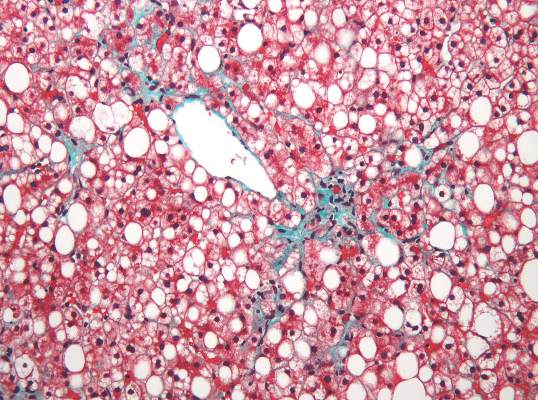
“Our study was the first to document that the prevalence of steatosis in LT [liver transplant] recipients may be far higher than previously reported,” they said.
The researchers reviewed liver biopsies and patient survival data and found steatosis in 309 (56%) of the patients, including 93 (17%) with significant steatosis (defined as greater than 33%). Pretransplant factors associated with significant steatosis included cirrhosis caused by alcohol consumption as well as a high body mass index. Post-transplant risk factors associated with increased risk of significant steatosis included increased body mass index, increased serum triglycerides, alcohol consumption, and type 2 diabetes. However, “Although patients transplanted for alcoholic cirrhosis are at an increased risk, the vast majority of post-transplant steatosis is nonalcohol-related,” the researchers noted.
The overall prevalence of steatosis increased from 30% at 1 year after transplant to 48% at 10 years after transplant. Post-transplant steatosis was not associated with worse patient survival in the short term, but the long-term survival of patients with significant steatosis tended to be worse.
Read the full study here (Liver Transpl. 2016 Apr 5. doi: 10.1002/lt.24393).
Steatosis may be present in at least half of liver transplant recipients, and the prevalence increases significantly over time, according to data from a retrospective study of 548 adult patients.
Although steatosis is common after transplantation, the prevalence, risk factors, and impact on patient survival has not been well studied, wrote Dr. Irena Hejlova of the Institute for Clinical and Experimental Medicine in Prague, Czech Republic, and her colleagues.
“Our study was the first to document that the prevalence of steatosis in LT [liver transplant] recipients may be far higher than previously reported,” they said.
The researchers reviewed liver biopsies and patient survival data and found steatosis in 309 (56%) of the patients, including 93 (17%) with significant steatosis (defined as greater than 33%). Pretransplant factors associated with significant steatosis included cirrhosis caused by alcohol consumption as well as a high body mass index. Post-transplant risk factors associated with increased risk of significant steatosis included increased body mass index, increased serum triglycerides, alcohol consumption, and type 2 diabetes. However, “Although patients transplanted for alcoholic cirrhosis are at an increased risk, the vast majority of post-transplant steatosis is nonalcohol-related,” the researchers noted.
The overall prevalence of steatosis increased from 30% at 1 year after transplant to 48% at 10 years after transplant. Post-transplant steatosis was not associated with worse patient survival in the short term, but the long-term survival of patients with significant steatosis tended to be worse.
Read the full study here (Liver Transpl. 2016 Apr 5. doi: 10.1002/lt.24393).
Steatosis may be present in at least half of liver transplant recipients, and the prevalence increases significantly over time, according to data from a retrospective study of 548 adult patients.
Although steatosis is common after transplantation, the prevalence, risk factors, and impact on patient survival has not been well studied, wrote Dr. Irena Hejlova of the Institute for Clinical and Experimental Medicine in Prague, Czech Republic, and her colleagues.
“Our study was the first to document that the prevalence of steatosis in LT [liver transplant] recipients may be far higher than previously reported,” they said.
The researchers reviewed liver biopsies and patient survival data and found steatosis in 309 (56%) of the patients, including 93 (17%) with significant steatosis (defined as greater than 33%). Pretransplant factors associated with significant steatosis included cirrhosis caused by alcohol consumption as well as a high body mass index. Post-transplant risk factors associated with increased risk of significant steatosis included increased body mass index, increased serum triglycerides, alcohol consumption, and type 2 diabetes. However, “Although patients transplanted for alcoholic cirrhosis are at an increased risk, the vast majority of post-transplant steatosis is nonalcohol-related,” the researchers noted.
The overall prevalence of steatosis increased from 30% at 1 year after transplant to 48% at 10 years after transplant. Post-transplant steatosis was not associated with worse patient survival in the short term, but the long-term survival of patients with significant steatosis tended to be worse.
Read the full study here (Liver Transpl. 2016 Apr 5. doi: 10.1002/lt.24393).
FROM LIVER TRANSPLANTATION
Experts offer insight into changing payment models for new technologies
BOSTON – Many developers of innovative medical technologies don’t realize that insurers are going to want to see evidence that a new technology improves health outcomes before they will consider paying for it, according to Dr. Louis Jacques, senior vice president and chief clinical officer for ADVI, a health care advisory services firm in Washington.
The Centers for Medicare & Medicaid Services generally seeks “adequate evidence to conclude that the item or service improves clinically meaningful health outcomes for the Medicare population” when determining Medicare coverage, Dr. Jacques said in a presentation at the 2016 AGA Tech Summit, which is sponsored by the AGA Center for GI Innovation and Technology.

Medicare is less likely to pay if there is something controversial about the available evidence, he said in an interview. “The controversy is usually about inadequate evidence or lack of applicability to the affected Medicare beneficiary population,” Dr. Jacques said, noting that the typical Medicare patient, a 74-year-old woman with comorbid conditions taking multiple medications, often is not the type of person included in clinical trials that would generate such evidence.
Medicare is looking for “adequate evidence that a treatment strategy using the new therapeutic technology, compared to alternatives, leads to improved clinically meaningful health outcomes in Medicare beneficiaries,” he said.
Similarly, new diagnostic technologies should provide the physician with additional information that can alter treatment recommendations, resulting in therapeutic changes that improve outcomes.
Dr. Jacques noted that over the next several years, the health care system will move away from fee for service and begin more and more to pay for value, with physicians becoming more accountable for outcomes and cost.
He advised those developing a new device or treatment to think about how they would justify a particular treatment approach to their colleagues. They need to ask themselves: “What is the value proposition that supports what they are recommending? Are they choosing it because it has better outcomes, is less likely to have an adverse event, is more efficiently provided, or is it something that is less expensive?” he said.

Two major health reform laws will change how insurers pay for new medical devices, though the impact of these changes remains to be seen. According to Harry Glorikian, a health care consultant based in Lexington, Mass., the Affordable Care Act and the Medicaid and CHIP Reauthorization Act (MACRA) put many items into play, most notably fundamental changes in Medicare/Medicaid and the shift from fee-for-service to value-based payment.
“It’s a crazy time because of the need for virtually all hospital-based organizations to operate under both fee-for-service and non–fee-for-service payment arrangements right now,” he said in an interview.
Along with those two reform laws, the Health & Human Services department has set a schedule for transitioning to paying for the value – rather than the volume – of care. The initial goal – 30% of Medicare payments based on value by the end of 2016 – was reached in early March.
“HHS also set a goal of tying 85% of all traditional Medicare payments to quality or value by 2016 and 90% by 2018 through programs such as the Hospital Value-Based Purchasing and the Hospital Readmissions Reduction programs. This will be huge, and its impact will be tremendous,” he added.
One tool physicians can leverage to show value in this new payment landscape is the AGA Digestive Health Recognition Program, a quality improvement program and clinical data registry that allows clinicians to demonstrate quality of care for several disease states (colorectal cancer, hepatitis C virus, and irritable bowel disease) (www.gastro.org/DHRP).
Over the next 5-10 years, watch for changes in value-based payment models and a long-term move to a single-payer system, said Mr. Glorikian. In addition, expect changes in the workforce in terms of who delivers care and how.
Finally, physicians will need to use big data to manage patients, prescribe therapy, and integrate all aspects of medical practice, he said.
Dr. Jacques disclosed that he has financial relationships with Exact Sciences and Medtronic.
BOSTON – Many developers of innovative medical technologies don’t realize that insurers are going to want to see evidence that a new technology improves health outcomes before they will consider paying for it, according to Dr. Louis Jacques, senior vice president and chief clinical officer for ADVI, a health care advisory services firm in Washington.
The Centers for Medicare & Medicaid Services generally seeks “adequate evidence to conclude that the item or service improves clinically meaningful health outcomes for the Medicare population” when determining Medicare coverage, Dr. Jacques said in a presentation at the 2016 AGA Tech Summit, which is sponsored by the AGA Center for GI Innovation and Technology.
Medicare is less likely to pay if there is something controversial about the available evidence, he said in an interview. “The controversy is usually about inadequate evidence or lack of applicability to the affected Medicare beneficiary population,” Dr. Jacques said, noting that the typical Medicare patient, a 74-year-old woman with comorbid conditions taking multiple medications, often is not the type of person included in clinical trials that would generate such evidence.
Medicare is looking for “adequate evidence that a treatment strategy using the new therapeutic technology, compared to alternatives, leads to improved clinically meaningful health outcomes in Medicare beneficiaries,” he said.
Similarly, new diagnostic technologies should provide the physician with additional information that can alter treatment recommendations, resulting in therapeutic changes that improve outcomes.
Dr. Jacques noted that over the next several years, the health care system will move away from fee for service and begin more and more to pay for value, with physicians becoming more accountable for outcomes and cost.
He advised those developing a new device or treatment to think about how they would justify a particular treatment approach to their colleagues. They need to ask themselves: “What is the value proposition that supports what they are recommending? Are they choosing it because it has better outcomes, is less likely to have an adverse event, is more efficiently provided, or is it something that is less expensive?” he said.
Two major health reform laws will change how insurers pay for new medical devices, though the impact of these changes remains to be seen. According to Harry Glorikian, a health care consultant based in Lexington, Mass., the Affordable Care Act and the Medicaid and CHIP Reauthorization Act (MACRA) put many items into play, most notably fundamental changes in Medicare/Medicaid and the shift from fee-for-service to value-based payment.
“It’s a crazy time because of the need for virtually all hospital-based organizations to operate under both fee-for-service and non–fee-for-service payment arrangements right now,” he said in an interview.
Along with those two reform laws, the Health & Human Services department has set a schedule for transitioning to paying for the value – rather than the volume – of care. The initial goal – 30% of Medicare payments based on value by the end of 2016 – was reached in early March.
“HHS also set a goal of tying 85% of all traditional Medicare payments to quality or value by 2016 and 90% by 2018 through programs such as the Hospital Value-Based Purchasing and the Hospital Readmissions Reduction programs. This will be huge, and its impact will be tremendous,” he added.
One tool physicians can leverage to show value in this new payment landscape is the AGA Digestive Health Recognition Program, a quality improvement program and clinical data registry that allows clinicians to demonstrate quality of care for several disease states (colorectal cancer, hepatitis C virus, and irritable bowel disease) (www.gastro.org/DHRP).
Over the next 5-10 years, watch for changes in value-based payment models and a long-term move to a single-payer system, said Mr. Glorikian. In addition, expect changes in the workforce in terms of who delivers care and how.
Finally, physicians will need to use big data to manage patients, prescribe therapy, and integrate all aspects of medical practice, he said.
Dr. Jacques disclosed that he has financial relationships with Exact Sciences and Medtronic.
BOSTON – Many developers of innovative medical technologies don’t realize that insurers are going to want to see evidence that a new technology improves health outcomes before they will consider paying for it, according to Dr. Louis Jacques, senior vice president and chief clinical officer for ADVI, a health care advisory services firm in Washington.
The Centers for Medicare & Medicaid Services generally seeks “adequate evidence to conclude that the item or service improves clinically meaningful health outcomes for the Medicare population” when determining Medicare coverage, Dr. Jacques said in a presentation at the 2016 AGA Tech Summit, which is sponsored by the AGA Center for GI Innovation and Technology.
Medicare is less likely to pay if there is something controversial about the available evidence, he said in an interview. “The controversy is usually about inadequate evidence or lack of applicability to the affected Medicare beneficiary population,” Dr. Jacques said, noting that the typical Medicare patient, a 74-year-old woman with comorbid conditions taking multiple medications, often is not the type of person included in clinical trials that would generate such evidence.
Medicare is looking for “adequate evidence that a treatment strategy using the new therapeutic technology, compared to alternatives, leads to improved clinically meaningful health outcomes in Medicare beneficiaries,” he said.
Similarly, new diagnostic technologies should provide the physician with additional information that can alter treatment recommendations, resulting in therapeutic changes that improve outcomes.
Dr. Jacques noted that over the next several years, the health care system will move away from fee for service and begin more and more to pay for value, with physicians becoming more accountable for outcomes and cost.
He advised those developing a new device or treatment to think about how they would justify a particular treatment approach to their colleagues. They need to ask themselves: “What is the value proposition that supports what they are recommending? Are they choosing it because it has better outcomes, is less likely to have an adverse event, is more efficiently provided, or is it something that is less expensive?” he said.
Two major health reform laws will change how insurers pay for new medical devices, though the impact of these changes remains to be seen. According to Harry Glorikian, a health care consultant based in Lexington, Mass., the Affordable Care Act and the Medicaid and CHIP Reauthorization Act (MACRA) put many items into play, most notably fundamental changes in Medicare/Medicaid and the shift from fee-for-service to value-based payment.
“It’s a crazy time because of the need for virtually all hospital-based organizations to operate under both fee-for-service and non–fee-for-service payment arrangements right now,” he said in an interview.
Along with those two reform laws, the Health & Human Services department has set a schedule for transitioning to paying for the value – rather than the volume – of care. The initial goal – 30% of Medicare payments based on value by the end of 2016 – was reached in early March.
“HHS also set a goal of tying 85% of all traditional Medicare payments to quality or value by 2016 and 90% by 2018 through programs such as the Hospital Value-Based Purchasing and the Hospital Readmissions Reduction programs. This will be huge, and its impact will be tremendous,” he added.
One tool physicians can leverage to show value in this new payment landscape is the AGA Digestive Health Recognition Program, a quality improvement program and clinical data registry that allows clinicians to demonstrate quality of care for several disease states (colorectal cancer, hepatitis C virus, and irritable bowel disease) (www.gastro.org/DHRP).
Over the next 5-10 years, watch for changes in value-based payment models and a long-term move to a single-payer system, said Mr. Glorikian. In addition, expect changes in the workforce in terms of who delivers care and how.
Finally, physicians will need to use big data to manage patients, prescribe therapy, and integrate all aspects of medical practice, he said.
Dr. Jacques disclosed that he has financial relationships with Exact Sciences and Medtronic.
EXPERT ANALYSIS FROM THE 2016 AGA TECH SUMMIT