User login
High rates of HCV treatment completion seen in people who inject drugs
SAN FRANCISCO – , preliminary results from an ongoing study showed.

“Both from a public health and a human rights perspective, hepatitis C elimination in people who inject drugs is critical,” study coauthor Elana Rosenthal, MD, said during a press briefing at the annual meeting of the American Association for the Study of Liver Diseases. “People who inject drugs are the main progenitors of ongoing transmission of hepatitis C. However, they are often denied access to hepatitis C treatment due to concerns about their ability to take medication consistently and achieve cure. This is especially true amongst patients with challenging demographic factors, frequent drug use, and those not on treatment for opioid use disorder. However, there are limited data on hepatitis C adherence in people who inject drugs outside of vigorous clinical trial settings.”
In an effort to understand whether a marginalized population with ongoing injection drug use could adhere to HCV treatment, and how this adherence would impact cure, Dr. Rosenthal and her associates enrolled 100 subjects in ANCHOR, a single-center study evaluating HCV treatment in patients who have chronic HCV, opioid use disorder, and ongoing injection drug use. “We did not preferentially enroll patients who we thought we would be most likely to cure, and we did not exclude patients who seemed unlikely to adhere to treatment,” said Dr. Rosenthal, codirector of the DC Partnership for HIV/AIDS Progress hepatitis clinical research program at the University of Maryland, Baltimore. “All patients were treated with sofosbuvir/velpatasvir, with a plan to complete 12 weeks of treatment.” Medication was dispensed monthly in bottles containing 28 pills, and patients were seen for monthly visits, mirroring standard clinical care for HCV. The researchers monitored patients for medication adherence through pill counts and evaluated them for hepatitis C cure 12 weeks after treatment.
The median age of the 100 patients was 57 years, 76% were black, 33% had cirrhosis, 51% were unstably housed, 92% had a history of incarceration, and 92% had no income source or relied exclusively on government benefits. “The patients represent an incredibly marginalized population,” she said. At baseline, 58% reported daily or more frequent injection drug use, 33% reported medication-assisted treatment, 29% shared injection drug use equipment within the past 3 months, and 40% met criteria for hazardous drinking based on the Alcohol Use Disorders Identification Test (AUDIT-C).
Of the 100 patients, 59 received 12 weeks of treatment. Of these 59 patients, 28 finished 1-7 days after the anticipated end date, 9 finished between 8 and 14 days late, and 9 patients finished more than 14 days late.
Of the 58 patients who attended an office visit at week 24 of their treatment, 52 (90%) achieved a sustained virologic response. This cure rate was associated with having an HCV viral load less than 200 IU/mL at week 4, and with taking 12 weeks of treatment. Nonsustained virologic response was driven by virologic failure, loss to follow-up, and death.
When the researchers compared subjects who achieved sustained virologic response with those who did not, baseline demographics including frequent drug use, unstable housing status, and not being on medication to treat opioid use disorder were not associated with decreased cure rates. “While we found high rates of treatment completion in this population, because of external factors such as incarceration, hospitalization, and having medications stolen, 13 patients had interruptions in treatment,” Dr. Rosenthal said. “Further, while 21 patients had near-perfect medication adherence, 46 patients took longer than 12 weeks to complete the full treatment course due to intermittent missed doses. However, as long as patients completed the prescribed amount, imperfect adherence was not associated with decreased cure rates.”
Based on ANCHOR’s preliminary results, Dr. Rosenthal concluded that concerns about HCV treatment adherence such as baseline housing status, drug use frequency, and being on medication for opioid use disorder “are not likely to influence treatment outcome of HCV and should not be used to justify exclusion from treatment in this population. The ANCHOR investigation adds to the growing body of literature supporting expansion of HCV treatment to all patients, including people who inject drugs. Treatment of people who inject drugs is a critical factor in HCV elimination and, most importantly, reducing morbidity and mortality in this population.”
Dr. Rosenthal disclosed that she has received grant/research support from Gilead Sciences and from Merck.
Source: Rosenthal E et al. Hepatol. 2018;68[S1], Abstract 18.
SAN FRANCISCO – , preliminary results from an ongoing study showed.
“Both from a public health and a human rights perspective, hepatitis C elimination in people who inject drugs is critical,” study coauthor Elana Rosenthal, MD, said during a press briefing at the annual meeting of the American Association for the Study of Liver Diseases. “People who inject drugs are the main progenitors of ongoing transmission of hepatitis C. However, they are often denied access to hepatitis C treatment due to concerns about their ability to take medication consistently and achieve cure. This is especially true amongst patients with challenging demographic factors, frequent drug use, and those not on treatment for opioid use disorder. However, there are limited data on hepatitis C adherence in people who inject drugs outside of vigorous clinical trial settings.”
In an effort to understand whether a marginalized population with ongoing injection drug use could adhere to HCV treatment, and how this adherence would impact cure, Dr. Rosenthal and her associates enrolled 100 subjects in ANCHOR, a single-center study evaluating HCV treatment in patients who have chronic HCV, opioid use disorder, and ongoing injection drug use. “We did not preferentially enroll patients who we thought we would be most likely to cure, and we did not exclude patients who seemed unlikely to adhere to treatment,” said Dr. Rosenthal, codirector of the DC Partnership for HIV/AIDS Progress hepatitis clinical research program at the University of Maryland, Baltimore. “All patients were treated with sofosbuvir/velpatasvir, with a plan to complete 12 weeks of treatment.” Medication was dispensed monthly in bottles containing 28 pills, and patients were seen for monthly visits, mirroring standard clinical care for HCV. The researchers monitored patients for medication adherence through pill counts and evaluated them for hepatitis C cure 12 weeks after treatment.
The median age of the 100 patients was 57 years, 76% were black, 33% had cirrhosis, 51% were unstably housed, 92% had a history of incarceration, and 92% had no income source or relied exclusively on government benefits. “The patients represent an incredibly marginalized population,” she said. At baseline, 58% reported daily or more frequent injection drug use, 33% reported medication-assisted treatment, 29% shared injection drug use equipment within the past 3 months, and 40% met criteria for hazardous drinking based on the Alcohol Use Disorders Identification Test (AUDIT-C).
Of the 100 patients, 59 received 12 weeks of treatment. Of these 59 patients, 28 finished 1-7 days after the anticipated end date, 9 finished between 8 and 14 days late, and 9 patients finished more than 14 days late.
Of the 58 patients who attended an office visit at week 24 of their treatment, 52 (90%) achieved a sustained virologic response. This cure rate was associated with having an HCV viral load less than 200 IU/mL at week 4, and with taking 12 weeks of treatment. Nonsustained virologic response was driven by virologic failure, loss to follow-up, and death.
When the researchers compared subjects who achieved sustained virologic response with those who did not, baseline demographics including frequent drug use, unstable housing status, and not being on medication to treat opioid use disorder were not associated with decreased cure rates. “While we found high rates of treatment completion in this population, because of external factors such as incarceration, hospitalization, and having medications stolen, 13 patients had interruptions in treatment,” Dr. Rosenthal said. “Further, while 21 patients had near-perfect medication adherence, 46 patients took longer than 12 weeks to complete the full treatment course due to intermittent missed doses. However, as long as patients completed the prescribed amount, imperfect adherence was not associated with decreased cure rates.”
Based on ANCHOR’s preliminary results, Dr. Rosenthal concluded that concerns about HCV treatment adherence such as baseline housing status, drug use frequency, and being on medication for opioid use disorder “are not likely to influence treatment outcome of HCV and should not be used to justify exclusion from treatment in this population. The ANCHOR investigation adds to the growing body of literature supporting expansion of HCV treatment to all patients, including people who inject drugs. Treatment of people who inject drugs is a critical factor in HCV elimination and, most importantly, reducing morbidity and mortality in this population.”
Dr. Rosenthal disclosed that she has received grant/research support from Gilead Sciences and from Merck.
Source: Rosenthal E et al. Hepatol. 2018;68[S1], Abstract 18.
SAN FRANCISCO – , preliminary results from an ongoing study showed.
“Both from a public health and a human rights perspective, hepatitis C elimination in people who inject drugs is critical,” study coauthor Elana Rosenthal, MD, said during a press briefing at the annual meeting of the American Association for the Study of Liver Diseases. “People who inject drugs are the main progenitors of ongoing transmission of hepatitis C. However, they are often denied access to hepatitis C treatment due to concerns about their ability to take medication consistently and achieve cure. This is especially true amongst patients with challenging demographic factors, frequent drug use, and those not on treatment for opioid use disorder. However, there are limited data on hepatitis C adherence in people who inject drugs outside of vigorous clinical trial settings.”
In an effort to understand whether a marginalized population with ongoing injection drug use could adhere to HCV treatment, and how this adherence would impact cure, Dr. Rosenthal and her associates enrolled 100 subjects in ANCHOR, a single-center study evaluating HCV treatment in patients who have chronic HCV, opioid use disorder, and ongoing injection drug use. “We did not preferentially enroll patients who we thought we would be most likely to cure, and we did not exclude patients who seemed unlikely to adhere to treatment,” said Dr. Rosenthal, codirector of the DC Partnership for HIV/AIDS Progress hepatitis clinical research program at the University of Maryland, Baltimore. “All patients were treated with sofosbuvir/velpatasvir, with a plan to complete 12 weeks of treatment.” Medication was dispensed monthly in bottles containing 28 pills, and patients were seen for monthly visits, mirroring standard clinical care for HCV. The researchers monitored patients for medication adherence through pill counts and evaluated them for hepatitis C cure 12 weeks after treatment.
The median age of the 100 patients was 57 years, 76% were black, 33% had cirrhosis, 51% were unstably housed, 92% had a history of incarceration, and 92% had no income source or relied exclusively on government benefits. “The patients represent an incredibly marginalized population,” she said. At baseline, 58% reported daily or more frequent injection drug use, 33% reported medication-assisted treatment, 29% shared injection drug use equipment within the past 3 months, and 40% met criteria for hazardous drinking based on the Alcohol Use Disorders Identification Test (AUDIT-C).
Of the 100 patients, 59 received 12 weeks of treatment. Of these 59 patients, 28 finished 1-7 days after the anticipated end date, 9 finished between 8 and 14 days late, and 9 patients finished more than 14 days late.
Of the 58 patients who attended an office visit at week 24 of their treatment, 52 (90%) achieved a sustained virologic response. This cure rate was associated with having an HCV viral load less than 200 IU/mL at week 4, and with taking 12 weeks of treatment. Nonsustained virologic response was driven by virologic failure, loss to follow-up, and death.
When the researchers compared subjects who achieved sustained virologic response with those who did not, baseline demographics including frequent drug use, unstable housing status, and not being on medication to treat opioid use disorder were not associated with decreased cure rates. “While we found high rates of treatment completion in this population, because of external factors such as incarceration, hospitalization, and having medications stolen, 13 patients had interruptions in treatment,” Dr. Rosenthal said. “Further, while 21 patients had near-perfect medication adherence, 46 patients took longer than 12 weeks to complete the full treatment course due to intermittent missed doses. However, as long as patients completed the prescribed amount, imperfect adherence was not associated with decreased cure rates.”
Based on ANCHOR’s preliminary results, Dr. Rosenthal concluded that concerns about HCV treatment adherence such as baseline housing status, drug use frequency, and being on medication for opioid use disorder “are not likely to influence treatment outcome of HCV and should not be used to justify exclusion from treatment in this population. The ANCHOR investigation adds to the growing body of literature supporting expansion of HCV treatment to all patients, including people who inject drugs. Treatment of people who inject drugs is a critical factor in HCV elimination and, most importantly, reducing morbidity and mortality in this population.”
Dr. Rosenthal disclosed that she has received grant/research support from Gilead Sciences and from Merck.
Source: Rosenthal E et al. Hepatol. 2018;68[S1], Abstract 18.
AT THE LIVER MEETING 2018
Key clinical point: People who inject drugs have high rates of HCV treatment adherence, treatment completion, and sustained virologic response.
Major finding: Of 58 patients who attended an office visit at week 24 of their treatment, 52 (90%) achieved a sustained virologic response.
Study details: Preliminary results from an ongoing, single-center study of 100 people with a median age of 57 years.
Disclosures: Dr. Rosenthal disclosed that she has received grant/research support from Gilead Sciences and from Merck.
Source: Rosenthal E et al. Hepatol. 2018;68[S1], Abstract 18.
Despite declines in prenatal use of alcohol and cigarettes, cannabis use is on the rise
Despite general decreases in cigarette and alcohol use among pregnant women during 2002-2016, cannabis use in pregnancy persisted and has actually increased slightly over the past 14 years, reported Arpana Agrawal, PhD, and her associates, of the Washington University, St. Louis.

Dr. Agrawal and her associates analyzed data from the National Survey of Drug Use and Health from 2002-2016 to quantify changes in alcohol, cigarette, and cannabis use among pregnant women aged 18-44 years. Survey-adjusted prevalence estimates of alcohol, cigarette, and cannabis use in 2002 were 10%, 18%, and 3%, respectively, versus corresponding rates in 2016 of 8%, 10%, and 5%, according to their research letter in JAMA Pediatrics.
A sampling of 12,058 women aged 18-25 years (n = 8,170) or 26-44 years (n = 3,888) was taken from a population of more than 436,056 women included in the National Survey database. Fully 3,554 of the women included in the final study group were in their first trimester of pregnancy.
The findings in Dr. Agrawal’s study were similar to another study conducted by Brown et al., although the exact prevalence for cannabis use differed slightly.
In addition to observing a reduction in the use of alcohol and cigarettes, the authors also noted a significant decline in the combined use of alcohol and cigarettes together. For alcohol use specifically, the greatest decrease was seen among women aged 18-25 years. For cigarette smoking in pregnancy, the most significant decreases were seen in white women, those aged 18-25 years, and those who had achieved completion of high school or more advanced studies.
Overall, the effects were modest when sample sizes were stratified by trimester: decreases in cigarette smoking were observed in the first trimester, and more significantly, later in pregnancy. For alcohol, nominal reductions were observed in the second and third trimesters. Cannabis use, on the other hand, increased in the first trimester, but showed no significant increases during the second and third trimesters.
“Greater public awareness regarding the consequences of prenatal cannabis exposure in offspring health is necessary,” Dr. Agrawal and her colleagues wrote.
The authors had no relevant disclosures to report. Funding was provided by grants from the National Institute on Drug Abuse, the National Institute of Child Health and Human Development, and the National Institute on Alcohol Abuse and Alcoholism.
SOURCE: Agrawal A et al. JAMA Pediatr. 2018 Nov 5. doi: 10.1001/jamapediatrics.2018.3096.
Despite general decreases in cigarette and alcohol use among pregnant women during 2002-2016, cannabis use in pregnancy persisted and has actually increased slightly over the past 14 years, reported Arpana Agrawal, PhD, and her associates, of the Washington University, St. Louis.
Dr. Agrawal and her associates analyzed data from the National Survey of Drug Use and Health from 2002-2016 to quantify changes in alcohol, cigarette, and cannabis use among pregnant women aged 18-44 years. Survey-adjusted prevalence estimates of alcohol, cigarette, and cannabis use in 2002 were 10%, 18%, and 3%, respectively, versus corresponding rates in 2016 of 8%, 10%, and 5%, according to their research letter in JAMA Pediatrics.
A sampling of 12,058 women aged 18-25 years (n = 8,170) or 26-44 years (n = 3,888) was taken from a population of more than 436,056 women included in the National Survey database. Fully 3,554 of the women included in the final study group were in their first trimester of pregnancy.
The findings in Dr. Agrawal’s study were similar to another study conducted by Brown et al., although the exact prevalence for cannabis use differed slightly.
In addition to observing a reduction in the use of alcohol and cigarettes, the authors also noted a significant decline in the combined use of alcohol and cigarettes together. For alcohol use specifically, the greatest decrease was seen among women aged 18-25 years. For cigarette smoking in pregnancy, the most significant decreases were seen in white women, those aged 18-25 years, and those who had achieved completion of high school or more advanced studies.
Overall, the effects were modest when sample sizes were stratified by trimester: decreases in cigarette smoking were observed in the first trimester, and more significantly, later in pregnancy. For alcohol, nominal reductions were observed in the second and third trimesters. Cannabis use, on the other hand, increased in the first trimester, but showed no significant increases during the second and third trimesters.
“Greater public awareness regarding the consequences of prenatal cannabis exposure in offspring health is necessary,” Dr. Agrawal and her colleagues wrote.
The authors had no relevant disclosures to report. Funding was provided by grants from the National Institute on Drug Abuse, the National Institute of Child Health and Human Development, and the National Institute on Alcohol Abuse and Alcoholism.
SOURCE: Agrawal A et al. JAMA Pediatr. 2018 Nov 5. doi: 10.1001/jamapediatrics.2018.3096.
Despite general decreases in cigarette and alcohol use among pregnant women during 2002-2016, cannabis use in pregnancy persisted and has actually increased slightly over the past 14 years, reported Arpana Agrawal, PhD, and her associates, of the Washington University, St. Louis.
Dr. Agrawal and her associates analyzed data from the National Survey of Drug Use and Health from 2002-2016 to quantify changes in alcohol, cigarette, and cannabis use among pregnant women aged 18-44 years. Survey-adjusted prevalence estimates of alcohol, cigarette, and cannabis use in 2002 were 10%, 18%, and 3%, respectively, versus corresponding rates in 2016 of 8%, 10%, and 5%, according to their research letter in JAMA Pediatrics.
A sampling of 12,058 women aged 18-25 years (n = 8,170) or 26-44 years (n = 3,888) was taken from a population of more than 436,056 women included in the National Survey database. Fully 3,554 of the women included in the final study group were in their first trimester of pregnancy.
The findings in Dr. Agrawal’s study were similar to another study conducted by Brown et al., although the exact prevalence for cannabis use differed slightly.
In addition to observing a reduction in the use of alcohol and cigarettes, the authors also noted a significant decline in the combined use of alcohol and cigarettes together. For alcohol use specifically, the greatest decrease was seen among women aged 18-25 years. For cigarette smoking in pregnancy, the most significant decreases were seen in white women, those aged 18-25 years, and those who had achieved completion of high school or more advanced studies.
Overall, the effects were modest when sample sizes were stratified by trimester: decreases in cigarette smoking were observed in the first trimester, and more significantly, later in pregnancy. For alcohol, nominal reductions were observed in the second and third trimesters. Cannabis use, on the other hand, increased in the first trimester, but showed no significant increases during the second and third trimesters.
“Greater public awareness regarding the consequences of prenatal cannabis exposure in offspring health is necessary,” Dr. Agrawal and her colleagues wrote.
The authors had no relevant disclosures to report. Funding was provided by grants from the National Institute on Drug Abuse, the National Institute of Child Health and Human Development, and the National Institute on Alcohol Abuse and Alcoholism.
SOURCE: Agrawal A et al. JAMA Pediatr. 2018 Nov 5. doi: 10.1001/jamapediatrics.2018.3096.
FROM JAMA PEDIATRICS
Key clinical point:
Major finding: Greatest increase in use of cannabis over the 14 years of the study was seen during the first trimester; the increase in use of cannabis in the second and third trimesters was not significant.
Study details: A study of 12,058 pregnant women from 2002-2016.
Disclosures: The authors had no relevant financial disclosures. Funding was provided by grants from the National Institute on Drug Abuse, the National Institute of Child Health and Human Development, and the National Institute on Alcohol Abuse and Alcoholism.
Source: Agrawal A et al. JAMA Pediatr. 2018 Nov 5. doi: 10.1001/jamapediatrics.2018.3096.
Single-port robotic sacrocolpopexy has same learning curve as multiport
LAS VEGAS – according to Israeli investigators.
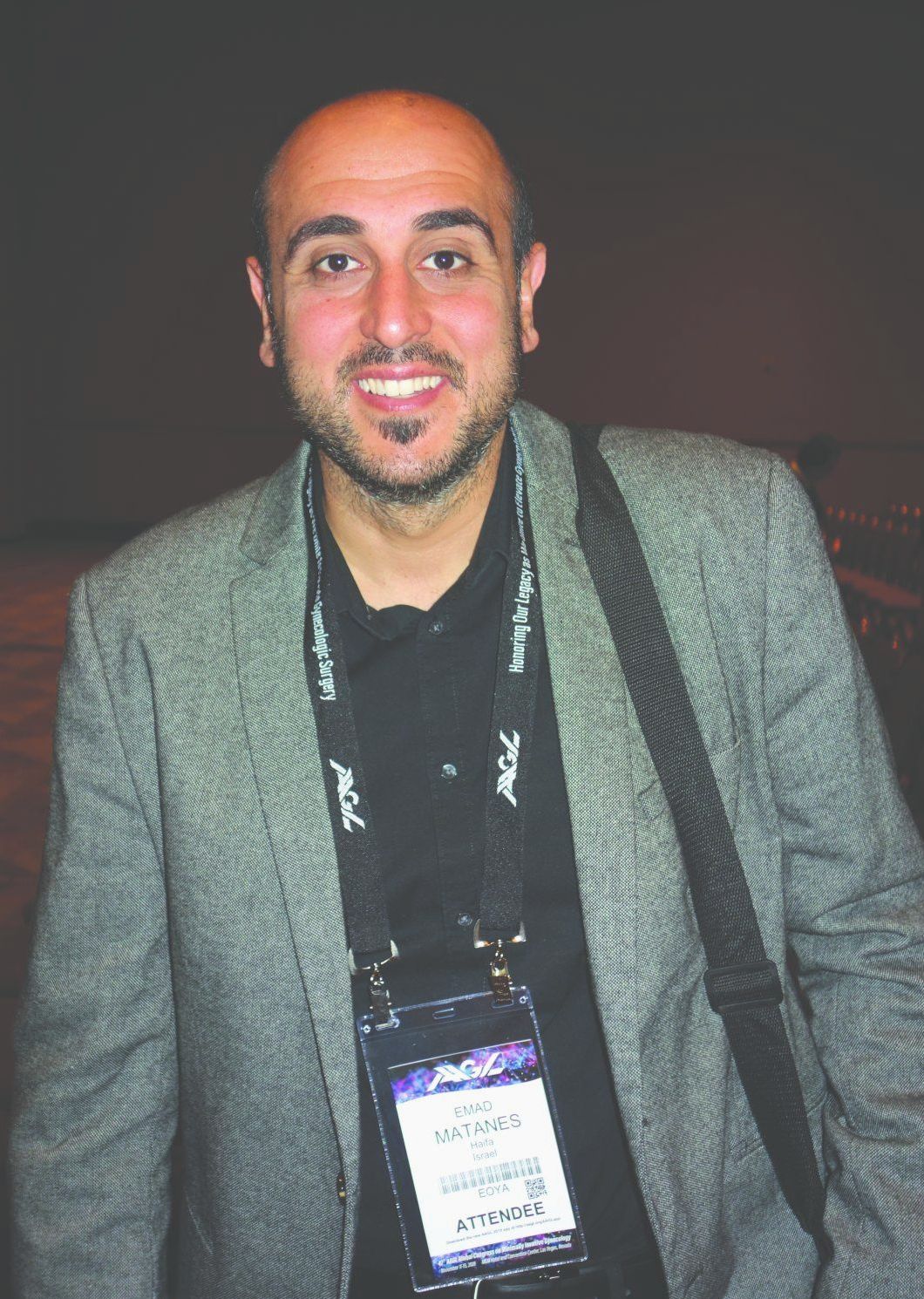
Multiport sacrocolpopexy is common, but the single-port approach hasn’t really caught on yet. That’s likely to change, however, with ongoing development of the da Vinci robotic platform, said lead investigator Emad Matanes, MD, of the Rambam Medical Center, Haifa, Israel.
The medical center recently has been switching over to the single-port approach, and Dr. Matanes and his colleagues wanted to share their experience with surgeons considering doing the same.
They compared their first 52 multiport cases during Dec. 2011-Dec. 2012 to their first 52 single-port cases during Aug. 2015-Aug. 2017.
It took about 15 cases with either approach for operative times to stabilize, dropping from an average of 222 minutes to 161 minutes after the first 15 single-port cases, and from 224 to 198 minutes after the first 15 multiport cases (J Minim Invasive Gynecol. 2018 Nov-Dec;25[7]:S47-S8).
With both, “we reached our steady state after the first 15. Both approaches are feasible, and for both, surgery times improve after 15 cases,” Dr. Matanes said at the American Association of Gynecologic Laparoscopists Global Congress.
Overall, the single-port approach proved about 20 minutes quicker, due to shorter docking and anesthesia times.
There wasn’t a single prolapse recurrence in either group, even after the first few cases. There was slightly less postoperative pain with single-port surgery (visual analogue scale sore 1.5 vs. 2 points), and slightly less estimated blood loss (38 mL vs. 54 mL), but neither difference was statistically significant.
There were no statistically significant differences between women in the two groups. Their average age was 58 years, mean body mass index was 28 kg/m2, and most women had a preoperative Pelvic Organ Prolapse Quantification score of 3.
There was no outside funding, and Dr. Matanes didn’t disclose any relevant financial disclosures.
LAS VEGAS – according to Israeli investigators.
Multiport sacrocolpopexy is common, but the single-port approach hasn’t really caught on yet. That’s likely to change, however, with ongoing development of the da Vinci robotic platform, said lead investigator Emad Matanes, MD, of the Rambam Medical Center, Haifa, Israel.
The medical center recently has been switching over to the single-port approach, and Dr. Matanes and his colleagues wanted to share their experience with surgeons considering doing the same.
They compared their first 52 multiport cases during Dec. 2011-Dec. 2012 to their first 52 single-port cases during Aug. 2015-Aug. 2017.
It took about 15 cases with either approach for operative times to stabilize, dropping from an average of 222 minutes to 161 minutes after the first 15 single-port cases, and from 224 to 198 minutes after the first 15 multiport cases (J Minim Invasive Gynecol. 2018 Nov-Dec;25[7]:S47-S8).
With both, “we reached our steady state after the first 15. Both approaches are feasible, and for both, surgery times improve after 15 cases,” Dr. Matanes said at the American Association of Gynecologic Laparoscopists Global Congress.
Overall, the single-port approach proved about 20 minutes quicker, due to shorter docking and anesthesia times.
There wasn’t a single prolapse recurrence in either group, even after the first few cases. There was slightly less postoperative pain with single-port surgery (visual analogue scale sore 1.5 vs. 2 points), and slightly less estimated blood loss (38 mL vs. 54 mL), but neither difference was statistically significant.
There were no statistically significant differences between women in the two groups. Their average age was 58 years, mean body mass index was 28 kg/m2, and most women had a preoperative Pelvic Organ Prolapse Quantification score of 3.
There was no outside funding, and Dr. Matanes didn’t disclose any relevant financial disclosures.
LAS VEGAS – according to Israeli investigators.
Multiport sacrocolpopexy is common, but the single-port approach hasn’t really caught on yet. That’s likely to change, however, with ongoing development of the da Vinci robotic platform, said lead investigator Emad Matanes, MD, of the Rambam Medical Center, Haifa, Israel.
The medical center recently has been switching over to the single-port approach, and Dr. Matanes and his colleagues wanted to share their experience with surgeons considering doing the same.
They compared their first 52 multiport cases during Dec. 2011-Dec. 2012 to their first 52 single-port cases during Aug. 2015-Aug. 2017.
It took about 15 cases with either approach for operative times to stabilize, dropping from an average of 222 minutes to 161 minutes after the first 15 single-port cases, and from 224 to 198 minutes after the first 15 multiport cases (J Minim Invasive Gynecol. 2018 Nov-Dec;25[7]:S47-S8).
With both, “we reached our steady state after the first 15. Both approaches are feasible, and for both, surgery times improve after 15 cases,” Dr. Matanes said at the American Association of Gynecologic Laparoscopists Global Congress.
Overall, the single-port approach proved about 20 minutes quicker, due to shorter docking and anesthesia times.
There wasn’t a single prolapse recurrence in either group, even after the first few cases. There was slightly less postoperative pain with single-port surgery (visual analogue scale sore 1.5 vs. 2 points), and slightly less estimated blood loss (38 mL vs. 54 mL), but neither difference was statistically significant.
There were no statistically significant differences between women in the two groups. Their average age was 58 years, mean body mass index was 28 kg/m2, and most women had a preoperative Pelvic Organ Prolapse Quantification score of 3.
There was no outside funding, and Dr. Matanes didn’t disclose any relevant financial disclosures.
REPORTING FROM THE AAGL GLOBAL CONGRESS
Anti-MOG antibodies associated with non-MS, monophasic demyelinating disease in young children
BERLIN – In children with an incident acquired demyelinating episode, the presence of antibodies against myelin oligodendrocyte glycoprotein (MOG) weighs against an eventual diagnosis of multiple sclerosis, especially if the child is younger than 11 years.

“Anti-MOG antibodies are present in about 30% of children with acquired demyelinating syndromes,” Giulia Fadda, MD, said at the annual congress of the European Committee for Treatment and Research in Multiple Sclerosis. “About 80% experience a monophasic disease course.”
The antibodies are found in almost all children who have a relapsing non-MS demyelinating disease, said Dr. Fadda, who is a postdoctoral research fellow at the University of Pennsylvania, Philadelphia. But when the antibodies are present in children with an MS diagnosis, they identify a very specific subset with atypical clinical and imaging features.
The large prospective Canadian Pediatric Demyelinating Disease Study provided the sample for the study she presented at ECTRIMS. Children are recruited into the study soon after a first demyelinating event, and they are followed clinically, serologically, and with regular brain MRI.
The cohort in Dr. Fadda’s study comprised 275 children who were a mean of about 11 years old at symptom onset. The mean clinical follow-up was 6.7 years; the mean serologic follow-up, 4 years, and the mean imaging follow-up, 3.5 years. The study examined 1,368 serum samples and 1,459 MRI scans.
Overall, 32% of the children were positive for anti-MOG antibodies. Positivity was not associated with sex, but children with antibodies were significantly younger than those without (7 vs. 12 years). In fact, 77% of anti-MOG–positive children were younger than 11 years; just 15% of older children were positive for the antibodies.
Anti-MOG positivity was also associated with certain clinical phenotypes. Among positive children, 40% presented with optic neuritis, 37% with acute disseminated encephalomyelitis, and 14% with transverse myelitis; the rest had other phenotypes. Optic neuritis was significantly less common among antibody-negative patients (22%), as was encephalomyelitis (17%). Transverse myelitis was significantly more common (31%).
The analysis of MRI scans was stratified according to age younger than 11 years and 11 years and older. “The first thing we noticed among the younger MOG-positive children is that they had a high number of lesions, which were more commonly ill-defined, diffuse, and bilateral,” Dr. Fadda said. “Almost all the brain areas were affected, with a slight preponderance of thalamic and juxtacortical lesions. Among the MOG-negative children, lesions were more often perpendicular to the major axis of the corpus callosum.”
Among the older MOG antibody–positive children, the diffuse pattern was rarer, and the lesions were frequently cerebellar. “But by far, the features that best differentiated positivity from negativity were black holes and enhancing lesions, which we saw in a high proportion of children without the antibodies” at 73% and 49%, respectively.
Over a mean imaging follow-up period of 4 years, lesions were more likely to resolve completely in antibody-positive children than in those without antibodies (50% vs. 21%). Serologically, children who were MOG-antibody negative at baseline were likely to stay that way, with 99% remaining seronegative. Positive children, on the other hand, were significantly more likely to change serologic status, with 56% turning negative and 8% serologically fluctuating over the follow-up period; only 36% remained persistently seropositive. Persistent positive status was significantly associated with younger age (7 vs. 9 years) and an optic neuritis presentation (62% vs. 27%).
Most children (81%) who were antibody positive at baseline experienced no relapses. Among the 16 children who did experience a clinical relapse, the mean time to a second event was about 1 year. Nine of these children stayed persistently positive, while five seroconverted and two had fluctuating status.
Of the 60 antibody-positive children who had a monophasic course, 23 were persistently positive, 34 seroconverted, and 3 had fluctuating serology.
Eventually, 54 children received an MS diagnosis. Of these, 83% were antibody negative at baseline. Ten children received a diagnosis of a relapsing non-MS demyelinating disorder; of these, 91% were antibody positive at baseline.
Dr. Fadda disclosed relationships with Atara Biotherapeutic and Sanofi-Genzyme.
SOURCE: Waters P et al. Mult Scler. 2018;24(S2):29-30, Abstract 65.
BERLIN – In children with an incident acquired demyelinating episode, the presence of antibodies against myelin oligodendrocyte glycoprotein (MOG) weighs against an eventual diagnosis of multiple sclerosis, especially if the child is younger than 11 years.
“Anti-MOG antibodies are present in about 30% of children with acquired demyelinating syndromes,” Giulia Fadda, MD, said at the annual congress of the European Committee for Treatment and Research in Multiple Sclerosis. “About 80% experience a monophasic disease course.”
The antibodies are found in almost all children who have a relapsing non-MS demyelinating disease, said Dr. Fadda, who is a postdoctoral research fellow at the University of Pennsylvania, Philadelphia. But when the antibodies are present in children with an MS diagnosis, they identify a very specific subset with atypical clinical and imaging features.
The large prospective Canadian Pediatric Demyelinating Disease Study provided the sample for the study she presented at ECTRIMS. Children are recruited into the study soon after a first demyelinating event, and they are followed clinically, serologically, and with regular brain MRI.
The cohort in Dr. Fadda’s study comprised 275 children who were a mean of about 11 years old at symptom onset. The mean clinical follow-up was 6.7 years; the mean serologic follow-up, 4 years, and the mean imaging follow-up, 3.5 years. The study examined 1,368 serum samples and 1,459 MRI scans.
Overall, 32% of the children were positive for anti-MOG antibodies. Positivity was not associated with sex, but children with antibodies were significantly younger than those without (7 vs. 12 years). In fact, 77% of anti-MOG–positive children were younger than 11 years; just 15% of older children were positive for the antibodies.
Anti-MOG positivity was also associated with certain clinical phenotypes. Among positive children, 40% presented with optic neuritis, 37% with acute disseminated encephalomyelitis, and 14% with transverse myelitis; the rest had other phenotypes. Optic neuritis was significantly less common among antibody-negative patients (22%), as was encephalomyelitis (17%). Transverse myelitis was significantly more common (31%).
The analysis of MRI scans was stratified according to age younger than 11 years and 11 years and older. “The first thing we noticed among the younger MOG-positive children is that they had a high number of lesions, which were more commonly ill-defined, diffuse, and bilateral,” Dr. Fadda said. “Almost all the brain areas were affected, with a slight preponderance of thalamic and juxtacortical lesions. Among the MOG-negative children, lesions were more often perpendicular to the major axis of the corpus callosum.”
Among the older MOG antibody–positive children, the diffuse pattern was rarer, and the lesions were frequently cerebellar. “But by far, the features that best differentiated positivity from negativity were black holes and enhancing lesions, which we saw in a high proportion of children without the antibodies” at 73% and 49%, respectively.
Over a mean imaging follow-up period of 4 years, lesions were more likely to resolve completely in antibody-positive children than in those without antibodies (50% vs. 21%). Serologically, children who were MOG-antibody negative at baseline were likely to stay that way, with 99% remaining seronegative. Positive children, on the other hand, were significantly more likely to change serologic status, with 56% turning negative and 8% serologically fluctuating over the follow-up period; only 36% remained persistently seropositive. Persistent positive status was significantly associated with younger age (7 vs. 9 years) and an optic neuritis presentation (62% vs. 27%).
Most children (81%) who were antibody positive at baseline experienced no relapses. Among the 16 children who did experience a clinical relapse, the mean time to a second event was about 1 year. Nine of these children stayed persistently positive, while five seroconverted and two had fluctuating status.
Of the 60 antibody-positive children who had a monophasic course, 23 were persistently positive, 34 seroconverted, and 3 had fluctuating serology.
Eventually, 54 children received an MS diagnosis. Of these, 83% were antibody negative at baseline. Ten children received a diagnosis of a relapsing non-MS demyelinating disorder; of these, 91% were antibody positive at baseline.
Dr. Fadda disclosed relationships with Atara Biotherapeutic and Sanofi-Genzyme.
SOURCE: Waters P et al. Mult Scler. 2018;24(S2):29-30, Abstract 65.
BERLIN – In children with an incident acquired demyelinating episode, the presence of antibodies against myelin oligodendrocyte glycoprotein (MOG) weighs against an eventual diagnosis of multiple sclerosis, especially if the child is younger than 11 years.
“Anti-MOG antibodies are present in about 30% of children with acquired demyelinating syndromes,” Giulia Fadda, MD, said at the annual congress of the European Committee for Treatment and Research in Multiple Sclerosis. “About 80% experience a monophasic disease course.”
The antibodies are found in almost all children who have a relapsing non-MS demyelinating disease, said Dr. Fadda, who is a postdoctoral research fellow at the University of Pennsylvania, Philadelphia. But when the antibodies are present in children with an MS diagnosis, they identify a very specific subset with atypical clinical and imaging features.
The large prospective Canadian Pediatric Demyelinating Disease Study provided the sample for the study she presented at ECTRIMS. Children are recruited into the study soon after a first demyelinating event, and they are followed clinically, serologically, and with regular brain MRI.
The cohort in Dr. Fadda’s study comprised 275 children who were a mean of about 11 years old at symptom onset. The mean clinical follow-up was 6.7 years; the mean serologic follow-up, 4 years, and the mean imaging follow-up, 3.5 years. The study examined 1,368 serum samples and 1,459 MRI scans.
Overall, 32% of the children were positive for anti-MOG antibodies. Positivity was not associated with sex, but children with antibodies were significantly younger than those without (7 vs. 12 years). In fact, 77% of anti-MOG–positive children were younger than 11 years; just 15% of older children were positive for the antibodies.
Anti-MOG positivity was also associated with certain clinical phenotypes. Among positive children, 40% presented with optic neuritis, 37% with acute disseminated encephalomyelitis, and 14% with transverse myelitis; the rest had other phenotypes. Optic neuritis was significantly less common among antibody-negative patients (22%), as was encephalomyelitis (17%). Transverse myelitis was significantly more common (31%).
The analysis of MRI scans was stratified according to age younger than 11 years and 11 years and older. “The first thing we noticed among the younger MOG-positive children is that they had a high number of lesions, which were more commonly ill-defined, diffuse, and bilateral,” Dr. Fadda said. “Almost all the brain areas were affected, with a slight preponderance of thalamic and juxtacortical lesions. Among the MOG-negative children, lesions were more often perpendicular to the major axis of the corpus callosum.”
Among the older MOG antibody–positive children, the diffuse pattern was rarer, and the lesions were frequently cerebellar. “But by far, the features that best differentiated positivity from negativity were black holes and enhancing lesions, which we saw in a high proportion of children without the antibodies” at 73% and 49%, respectively.
Over a mean imaging follow-up period of 4 years, lesions were more likely to resolve completely in antibody-positive children than in those without antibodies (50% vs. 21%). Serologically, children who were MOG-antibody negative at baseline were likely to stay that way, with 99% remaining seronegative. Positive children, on the other hand, were significantly more likely to change serologic status, with 56% turning negative and 8% serologically fluctuating over the follow-up period; only 36% remained persistently seropositive. Persistent positive status was significantly associated with younger age (7 vs. 9 years) and an optic neuritis presentation (62% vs. 27%).
Most children (81%) who were antibody positive at baseline experienced no relapses. Among the 16 children who did experience a clinical relapse, the mean time to a second event was about 1 year. Nine of these children stayed persistently positive, while five seroconverted and two had fluctuating status.
Of the 60 antibody-positive children who had a monophasic course, 23 were persistently positive, 34 seroconverted, and 3 had fluctuating serology.
Eventually, 54 children received an MS diagnosis. Of these, 83% were antibody negative at baseline. Ten children received a diagnosis of a relapsing non-MS demyelinating disorder; of these, 91% were antibody positive at baseline.
Dr. Fadda disclosed relationships with Atara Biotherapeutic and Sanofi-Genzyme.
SOURCE: Waters P et al. Mult Scler. 2018;24(S2):29-30, Abstract 65.
REPORTING FROM ECTRIMS 2018
Key clinical point:
Major finding: Most children (81%) who were antibody positive at baseline experienced no relapses.
Study details: A cohort of 275 children from the prospective Canadian Pediatric Demyelinating Disease Study.
Disclosures: Dr. Fadda disclosed relationships with Atara Biotherapeutics and Sanofi-Genzyme.
Source: Waters P et al. Mult Scler. 2018;24(S2):29-30, Abstract 65.
FDA approves Primatene Mist return
After a long absence, Primatene Mist, an over-the-counter asthma inhaler removed from the market in 2011, is being reintroduced in a metered-dose inhaler with a new, environmentally friendly propellant.
But the inhaler’s comeback may prove as controversial as its removal. Respiratory medicine associations have taken issue with the Food and Drug Administration’s decision, warning patients that asthma is not a “do-it-yourself” disease that can be managed with over-the-counter medications.
The American College of Allergy, Asthma, and Immunology, American College of Chest Physicians, American Lung Association, American Thoracic Society, and the American Association of Asthma Educators have each individually protested the decision, and together sent a joint resolution to FDA decrying it. At the core of their protest are the facts that epinephrine is a symptomatic, not therapeutic, asthma treatment and that racemic epinephrine is not a not a recommended asthma treatment under the National Institutes of Health’s “Guidelines for the Diagnosis and Management of Asthma.”
CHEST has published the following statement: “The American College of Chest Physicians (CHEST) is disappointed with the FDA’s decision to approve over-the counter epinephrine (Primatene® Mist HFA) for the treatment of asthma. CHEST is a nonprofit organization dedicated to advancing best patient outcomes. Our membership of more than 19,000 members from around the world provides patient care in pulmonary, critical care, and sleep medicine.
Asthma is a serious and chronic condition with associated high health-care burden. Care for ALL patients with asthma should be under the guidance of a health-care provider. The majority of asthma patients requires treatment with a controller medication, which is only available by prescription. Frequent rescue inhaler use has been associated with increased morbidity and mortality. Over the counter availability of a reliever medication like Primatene Mist can endanger a patient’s wellbeing by providing temporary relief in symptoms, resulting in delay in seeking medical care.”
The inhaler was pulled from sales as part of an international pact to reduce ozone-depleting substances. The 1989 Montreal Protocol of Substances that Deplete the Ozone Layer and the Clean Air Act of 1990 targeted chlorofluorocarbons among those substances, and epinephrine inhalers that contained CFCs were phased out.
The new Primatene Mist HFA (Amphastar Pharmaceuticals) contains hydrofluoroalkane (HFA) propellants, which are permitted under current international and U.S. law. This puts Primatene in the same category with other inhalers, including albuterol and levalbuterol, which also use HFAs as propellants. Each dose delivers 125 mcg of epinephrine.
The inhaler itself has also been redesigned, according to Theresa Michele, MD, director of the FDA’s Division of Nonprescription Drug Products in the Center for Drug Evaluation and Research. The active ingredient is still epinephrine, albeit a smaller dose than found in the original 200-mcg mist. However, the inhaler needs to be activated before first use and cleaned every day after use to prevent a medication buildup. Like other metered-dose inhalers, it requires a priming spray before the inhalation dose, Dr. Michele noted in her online column.
“The inhaler also needs to be shaken and then sprayed once into the air before each use. It may seem strange to shake and spray the inhaler into the air each time before using it. But these two steps are critical to ensure that the medicine is properly mixed before each dose,” Dr. Michele wrote.
A public statement by FDA Commissioner Scott Gottlieb, MD, and Janet Woodcock, MD, director of the Center for Drug Evaluation and Research, asserted that the inhaler fills a clinical gap for patients with mild to moderate intermittent asthma.
“The scientific information we reviewed to approve the new version of OTC Primatene Mist shows there is a narrow population of those diagnosed with asthma that may benefit from having access to this type of OTC asthma inhaler. But the product has certain cautions. Making sure that patients can understand and apply the instructions for use was a critical consideration for the FDA. The new product is only appropriate for those with a diagnosis of mild, intermittent asthma. Patients with more severe asthma should not rely on it. Instead, they should be working with their health care provider to ensure an appropriate treatment plan for their condition.”
Before this approval, Amphastar had unsuccessfully brought the reformulated Primatene before FDA several times. The move to finally reinstate it comes after a long, and sometimes contentious, debate among patients and FDA’s Nonprescription Drugs and Pulmonary-Allergy Drugs advisory committee. A quick Internet or Facebook search brings up dozens of stories from patients who say they effectively managed their mild to moderate asthma for years with Primatene. Typically, the stories describe changing to prescription asthma medications that, for some, run into the hundreds of dollars per month. Supporters often negatively compare decades of using the inexpensive Primatene with no ill effects to their recent experiences using prescription corticosteroid inhalers.
It was 4 years ago when Amphastar first appeared before the advisory committee with the reformulated inhaler and positive safety and efficacy data. Although agreeing with the efficacy data, the advisory committee voted against approval, because some felt that asthma should always be managed by a physician; an OTC bronchodilator encouraged self-medicating and discouraged patients from seeking medical care, they said.
“On the one hand, it has been stated that a quick-relief medication available OTC is needed for use in low-income, elderly, and uninsured individuals who might otherwise not have access to treatment or be able to see a health care practitioner,” FDA documents noted. “In contrast, there is also a concern that because asthma is a potentially life-threatening condition that should be diagnosed and treated by a health care professional, availability of an OTC bronchodilator product may discourage consumers from seeking appropriate care, resulting in worse asthma outcomes.”
Two years later, the company received another blow to Primatene program. FDA’s Complete Response Letter required Amphastar to make additional changes to the packaging and run a consumer product safety study, intended to show that people could learn to use the metered-dose inhaler correctly.
In Amphastar’s 2018 first-quarter report, however, company CEO Jack Zhang, PhD, finally shared some good news. “We are pleased to announce that we have resubmitted our NDA for Primatene Mist after receiving good results from our recent human factors study. While we don’t have a Prescription Free User Drug Act [PDUFA] date yet, we plan to begin producing inventory in preparation for a launch.”
That day arrived on Nov. 8, when the PDUFA was granted. In their public letter, Dr. Gottlieb and Dr. Woodcock acknowledged the long and difficult approval path and offered reassurance that Primatene is safe and effective.
“For the right patient, our analysis of the data, including new information that was developed since this product was previously on the market, shows that there are no serious safety concerns when Primatene Mist is used as directed. The product is appropriate for mild symptoms of intermittent asthma, however, even patients with mild asthma can have severe exacerbations – so it’s still important to consult a health care provider about appropriate care and have their condition reassessed. And, of course, all patients who experience severe exacerbations should go to the emergency room right away.”
Primatene Mist HFA is intended for the temporary relief of mild symptoms of intermittent asthma (wheezing, tightness of chest, shortness of breath) in patients aged 12 years and older. It should not be considered a replacement for prescription asthma medications. It should be available in stores early next year.
After a long absence, Primatene Mist, an over-the-counter asthma inhaler removed from the market in 2011, is being reintroduced in a metered-dose inhaler with a new, environmentally friendly propellant.
But the inhaler’s comeback may prove as controversial as its removal. Respiratory medicine associations have taken issue with the Food and Drug Administration’s decision, warning patients that asthma is not a “do-it-yourself” disease that can be managed with over-the-counter medications.
The American College of Allergy, Asthma, and Immunology, American College of Chest Physicians, American Lung Association, American Thoracic Society, and the American Association of Asthma Educators have each individually protested the decision, and together sent a joint resolution to FDA decrying it. At the core of their protest are the facts that epinephrine is a symptomatic, not therapeutic, asthma treatment and that racemic epinephrine is not a not a recommended asthma treatment under the National Institutes of Health’s “Guidelines for the Diagnosis and Management of Asthma.”
CHEST has published the following statement: “The American College of Chest Physicians (CHEST) is disappointed with the FDA’s decision to approve over-the counter epinephrine (Primatene® Mist HFA) for the treatment of asthma. CHEST is a nonprofit organization dedicated to advancing best patient outcomes. Our membership of more than 19,000 members from around the world provides patient care in pulmonary, critical care, and sleep medicine.
Asthma is a serious and chronic condition with associated high health-care burden. Care for ALL patients with asthma should be under the guidance of a health-care provider. The majority of asthma patients requires treatment with a controller medication, which is only available by prescription. Frequent rescue inhaler use has been associated with increased morbidity and mortality. Over the counter availability of a reliever medication like Primatene Mist can endanger a patient’s wellbeing by providing temporary relief in symptoms, resulting in delay in seeking medical care.”
The inhaler was pulled from sales as part of an international pact to reduce ozone-depleting substances. The 1989 Montreal Protocol of Substances that Deplete the Ozone Layer and the Clean Air Act of 1990 targeted chlorofluorocarbons among those substances, and epinephrine inhalers that contained CFCs were phased out.
The new Primatene Mist HFA (Amphastar Pharmaceuticals) contains hydrofluoroalkane (HFA) propellants, which are permitted under current international and U.S. law. This puts Primatene in the same category with other inhalers, including albuterol and levalbuterol, which also use HFAs as propellants. Each dose delivers 125 mcg of epinephrine.
The inhaler itself has also been redesigned, according to Theresa Michele, MD, director of the FDA’s Division of Nonprescription Drug Products in the Center for Drug Evaluation and Research. The active ingredient is still epinephrine, albeit a smaller dose than found in the original 200-mcg mist. However, the inhaler needs to be activated before first use and cleaned every day after use to prevent a medication buildup. Like other metered-dose inhalers, it requires a priming spray before the inhalation dose, Dr. Michele noted in her online column.
“The inhaler also needs to be shaken and then sprayed once into the air before each use. It may seem strange to shake and spray the inhaler into the air each time before using it. But these two steps are critical to ensure that the medicine is properly mixed before each dose,” Dr. Michele wrote.
A public statement by FDA Commissioner Scott Gottlieb, MD, and Janet Woodcock, MD, director of the Center for Drug Evaluation and Research, asserted that the inhaler fills a clinical gap for patients with mild to moderate intermittent asthma.
“The scientific information we reviewed to approve the new version of OTC Primatene Mist shows there is a narrow population of those diagnosed with asthma that may benefit from having access to this type of OTC asthma inhaler. But the product has certain cautions. Making sure that patients can understand and apply the instructions for use was a critical consideration for the FDA. The new product is only appropriate for those with a diagnosis of mild, intermittent asthma. Patients with more severe asthma should not rely on it. Instead, they should be working with their health care provider to ensure an appropriate treatment plan for their condition.”
Before this approval, Amphastar had unsuccessfully brought the reformulated Primatene before FDA several times. The move to finally reinstate it comes after a long, and sometimes contentious, debate among patients and FDA’s Nonprescription Drugs and Pulmonary-Allergy Drugs advisory committee. A quick Internet or Facebook search brings up dozens of stories from patients who say they effectively managed their mild to moderate asthma for years with Primatene. Typically, the stories describe changing to prescription asthma medications that, for some, run into the hundreds of dollars per month. Supporters often negatively compare decades of using the inexpensive Primatene with no ill effects to their recent experiences using prescription corticosteroid inhalers.
It was 4 years ago when Amphastar first appeared before the advisory committee with the reformulated inhaler and positive safety and efficacy data. Although agreeing with the efficacy data, the advisory committee voted against approval, because some felt that asthma should always be managed by a physician; an OTC bronchodilator encouraged self-medicating and discouraged patients from seeking medical care, they said.
“On the one hand, it has been stated that a quick-relief medication available OTC is needed for use in low-income, elderly, and uninsured individuals who might otherwise not have access to treatment or be able to see a health care practitioner,” FDA documents noted. “In contrast, there is also a concern that because asthma is a potentially life-threatening condition that should be diagnosed and treated by a health care professional, availability of an OTC bronchodilator product may discourage consumers from seeking appropriate care, resulting in worse asthma outcomes.”
Two years later, the company received another blow to Primatene program. FDA’s Complete Response Letter required Amphastar to make additional changes to the packaging and run a consumer product safety study, intended to show that people could learn to use the metered-dose inhaler correctly.
In Amphastar’s 2018 first-quarter report, however, company CEO Jack Zhang, PhD, finally shared some good news. “We are pleased to announce that we have resubmitted our NDA for Primatene Mist after receiving good results from our recent human factors study. While we don’t have a Prescription Free User Drug Act [PDUFA] date yet, we plan to begin producing inventory in preparation for a launch.”
That day arrived on Nov. 8, when the PDUFA was granted. In their public letter, Dr. Gottlieb and Dr. Woodcock acknowledged the long and difficult approval path and offered reassurance that Primatene is safe and effective.
“For the right patient, our analysis of the data, including new information that was developed since this product was previously on the market, shows that there are no serious safety concerns when Primatene Mist is used as directed. The product is appropriate for mild symptoms of intermittent asthma, however, even patients with mild asthma can have severe exacerbations – so it’s still important to consult a health care provider about appropriate care and have their condition reassessed. And, of course, all patients who experience severe exacerbations should go to the emergency room right away.”
Primatene Mist HFA is intended for the temporary relief of mild symptoms of intermittent asthma (wheezing, tightness of chest, shortness of breath) in patients aged 12 years and older. It should not be considered a replacement for prescription asthma medications. It should be available in stores early next year.
After a long absence, Primatene Mist, an over-the-counter asthma inhaler removed from the market in 2011, is being reintroduced in a metered-dose inhaler with a new, environmentally friendly propellant.
But the inhaler’s comeback may prove as controversial as its removal. Respiratory medicine associations have taken issue with the Food and Drug Administration’s decision, warning patients that asthma is not a “do-it-yourself” disease that can be managed with over-the-counter medications.
The American College of Allergy, Asthma, and Immunology, American College of Chest Physicians, American Lung Association, American Thoracic Society, and the American Association of Asthma Educators have each individually protested the decision, and together sent a joint resolution to FDA decrying it. At the core of their protest are the facts that epinephrine is a symptomatic, not therapeutic, asthma treatment and that racemic epinephrine is not a not a recommended asthma treatment under the National Institutes of Health’s “Guidelines for the Diagnosis and Management of Asthma.”
CHEST has published the following statement: “The American College of Chest Physicians (CHEST) is disappointed with the FDA’s decision to approve over-the counter epinephrine (Primatene® Mist HFA) for the treatment of asthma. CHEST is a nonprofit organization dedicated to advancing best patient outcomes. Our membership of more than 19,000 members from around the world provides patient care in pulmonary, critical care, and sleep medicine.
Asthma is a serious and chronic condition with associated high health-care burden. Care for ALL patients with asthma should be under the guidance of a health-care provider. The majority of asthma patients requires treatment with a controller medication, which is only available by prescription. Frequent rescue inhaler use has been associated with increased morbidity and mortality. Over the counter availability of a reliever medication like Primatene Mist can endanger a patient’s wellbeing by providing temporary relief in symptoms, resulting in delay in seeking medical care.”
The inhaler was pulled from sales as part of an international pact to reduce ozone-depleting substances. The 1989 Montreal Protocol of Substances that Deplete the Ozone Layer and the Clean Air Act of 1990 targeted chlorofluorocarbons among those substances, and epinephrine inhalers that contained CFCs were phased out.
The new Primatene Mist HFA (Amphastar Pharmaceuticals) contains hydrofluoroalkane (HFA) propellants, which are permitted under current international and U.S. law. This puts Primatene in the same category with other inhalers, including albuterol and levalbuterol, which also use HFAs as propellants. Each dose delivers 125 mcg of epinephrine.
The inhaler itself has also been redesigned, according to Theresa Michele, MD, director of the FDA’s Division of Nonprescription Drug Products in the Center for Drug Evaluation and Research. The active ingredient is still epinephrine, albeit a smaller dose than found in the original 200-mcg mist. However, the inhaler needs to be activated before first use and cleaned every day after use to prevent a medication buildup. Like other metered-dose inhalers, it requires a priming spray before the inhalation dose, Dr. Michele noted in her online column.
“The inhaler also needs to be shaken and then sprayed once into the air before each use. It may seem strange to shake and spray the inhaler into the air each time before using it. But these two steps are critical to ensure that the medicine is properly mixed before each dose,” Dr. Michele wrote.
A public statement by FDA Commissioner Scott Gottlieb, MD, and Janet Woodcock, MD, director of the Center for Drug Evaluation and Research, asserted that the inhaler fills a clinical gap for patients with mild to moderate intermittent asthma.
“The scientific information we reviewed to approve the new version of OTC Primatene Mist shows there is a narrow population of those diagnosed with asthma that may benefit from having access to this type of OTC asthma inhaler. But the product has certain cautions. Making sure that patients can understand and apply the instructions for use was a critical consideration for the FDA. The new product is only appropriate for those with a diagnosis of mild, intermittent asthma. Patients with more severe asthma should not rely on it. Instead, they should be working with their health care provider to ensure an appropriate treatment plan for their condition.”
Before this approval, Amphastar had unsuccessfully brought the reformulated Primatene before FDA several times. The move to finally reinstate it comes after a long, and sometimes contentious, debate among patients and FDA’s Nonprescription Drugs and Pulmonary-Allergy Drugs advisory committee. A quick Internet or Facebook search brings up dozens of stories from patients who say they effectively managed their mild to moderate asthma for years with Primatene. Typically, the stories describe changing to prescription asthma medications that, for some, run into the hundreds of dollars per month. Supporters often negatively compare decades of using the inexpensive Primatene with no ill effects to their recent experiences using prescription corticosteroid inhalers.
It was 4 years ago when Amphastar first appeared before the advisory committee with the reformulated inhaler and positive safety and efficacy data. Although agreeing with the efficacy data, the advisory committee voted against approval, because some felt that asthma should always be managed by a physician; an OTC bronchodilator encouraged self-medicating and discouraged patients from seeking medical care, they said.
“On the one hand, it has been stated that a quick-relief medication available OTC is needed for use in low-income, elderly, and uninsured individuals who might otherwise not have access to treatment or be able to see a health care practitioner,” FDA documents noted. “In contrast, there is also a concern that because asthma is a potentially life-threatening condition that should be diagnosed and treated by a health care professional, availability of an OTC bronchodilator product may discourage consumers from seeking appropriate care, resulting in worse asthma outcomes.”
Two years later, the company received another blow to Primatene program. FDA’s Complete Response Letter required Amphastar to make additional changes to the packaging and run a consumer product safety study, intended to show that people could learn to use the metered-dose inhaler correctly.
In Amphastar’s 2018 first-quarter report, however, company CEO Jack Zhang, PhD, finally shared some good news. “We are pleased to announce that we have resubmitted our NDA for Primatene Mist after receiving good results from our recent human factors study. While we don’t have a Prescription Free User Drug Act [PDUFA] date yet, we plan to begin producing inventory in preparation for a launch.”
That day arrived on Nov. 8, when the PDUFA was granted. In their public letter, Dr. Gottlieb and Dr. Woodcock acknowledged the long and difficult approval path and offered reassurance that Primatene is safe and effective.
“For the right patient, our analysis of the data, including new information that was developed since this product was previously on the market, shows that there are no serious safety concerns when Primatene Mist is used as directed. The product is appropriate for mild symptoms of intermittent asthma, however, even patients with mild asthma can have severe exacerbations – so it’s still important to consult a health care provider about appropriate care and have their condition reassessed. And, of course, all patients who experience severe exacerbations should go to the emergency room right away.”
Primatene Mist HFA is intended for the temporary relief of mild symptoms of intermittent asthma (wheezing, tightness of chest, shortness of breath) in patients aged 12 years and older. It should not be considered a replacement for prescription asthma medications. It should be available in stores early next year.
Antibiotic-obesity link ‘clinically insignificant’ at age 10 years
NASHVILLE, tenn. – Antibiotic use in the first 2 years of life was associated with a small amount of weight gain by 10 years of age, but the amount is “likely clinically insignificant,” according to new data presented at Obesity Week.

At 10 years of age, children without chronic health conditions who received any antibiotics had an odds ratio of 1.02 for being overweight or obese; for children with complex chronic conditions, the OR was 1.07 (95% confidence intervals, 0.97-1.07 and 0.96-1.19, respectively). The findings were based on data from almost 60,000 children studied in a large, multi-institutional national cohort.
“This is good news,” said first author Sheryl Rifas-Shiman, MPH, discussing the findings during a poster session. She noted that the 10-year data from the longitudinal study are consistent with findings at the 5-year mark that had previously been reported.
The study comes against the background of a recent meta-analysis finding that children given any antibiotics before age 24 months had a higher body mass index z-score (BMI-z) in childhood than children who didn’t take antibiotics. Disruptions that antibiotics can cause in the gut microbiome have been hypothesized to promote overweight and obesity in children.
The present study was conducted using electronic medical record data from 2009-2016 drawn from institutions participating in PCORnet, a national research collaboration and clearinghouse.
The analysis dichotomized the cohort into those who, by 24 months of age, had received any antibiotics and those who received none. Ms. Rifas-Shiman and her colleagues also looked at a categorical count of the number of antibiotic prescriptions, from 0 to 4 or more.
Finally, they broke the type of antibiotics into narrow- or broad-spectrum, she said in an interview during the poster session. In order for exposure to be considered narrow-spectrum only, the analysis was limited to participants who had no broad-spectrum antibiotic exposure during the same time frame.
The study’s multivariable analysis also took into account complex chronic conditions the children may have had.
Fifty-seven percent of children received antibiotics before the age of 24 months. Patients were overall just under half (48%) female, and about half (49%) were white. Black children made up 37% of the cohort, and Hispanic children constituted 12%.
By 10 years of age, 36% of participants were overweight or obese, with BMIs at or above the 85th percentile, according to 2000 Centers for Disease Control growth charts.
There was a suggestion of a dose-response relationship for both narrow- and broad-spectrum antibiotics because only at the higher antibiotic exposures did increased BMI-z reach statistical significance. However, broad-spectrum antibiotics were not more likely than narrow-spectrum antibiotics to be associated with increased BMI-z.
Other multivariable adjustment took into account site clustering and adjusted for sex, race, ethnicity, preterm birth, asthma or infectious disease diagnoses, and corticosteroid exposure, as well as health care visits in the first 2 years of life.
Limitations of the study included the fact that it was observational, raising the potential for undetected confounders. Also, since the study looked at prescription, rather than dispensing data, there could be some exposure misclassification by which children who were classified as having taken antibiotics did not actually take them or did not take the full amount prescribed.
“Antibiotics should always be used judiciously; however, the long-term risk of childhood obesity from antibiotics in infancy appears to be small and clinically insignificant,” wrote Ms. Rifas-Shiman, of the department of population medicine, Harvard Medical School and Harvard Pilgrim Health Care Institute, both in Boston.
The study was funded by an award from the Patient-Centered Outcomes Research Institute.
SOURCE: Rifas-Shiman et al. Obesity Week 2018, Poster TP-3155.
NASHVILLE, tenn. – Antibiotic use in the first 2 years of life was associated with a small amount of weight gain by 10 years of age, but the amount is “likely clinically insignificant,” according to new data presented at Obesity Week.
At 10 years of age, children without chronic health conditions who received any antibiotics had an odds ratio of 1.02 for being overweight or obese; for children with complex chronic conditions, the OR was 1.07 (95% confidence intervals, 0.97-1.07 and 0.96-1.19, respectively). The findings were based on data from almost 60,000 children studied in a large, multi-institutional national cohort.
“This is good news,” said first author Sheryl Rifas-Shiman, MPH, discussing the findings during a poster session. She noted that the 10-year data from the longitudinal study are consistent with findings at the 5-year mark that had previously been reported.
The study comes against the background of a recent meta-analysis finding that children given any antibiotics before age 24 months had a higher body mass index z-score (BMI-z) in childhood than children who didn’t take antibiotics. Disruptions that antibiotics can cause in the gut microbiome have been hypothesized to promote overweight and obesity in children.
The present study was conducted using electronic medical record data from 2009-2016 drawn from institutions participating in PCORnet, a national research collaboration and clearinghouse.
The analysis dichotomized the cohort into those who, by 24 months of age, had received any antibiotics and those who received none. Ms. Rifas-Shiman and her colleagues also looked at a categorical count of the number of antibiotic prescriptions, from 0 to 4 or more.
Finally, they broke the type of antibiotics into narrow- or broad-spectrum, she said in an interview during the poster session. In order for exposure to be considered narrow-spectrum only, the analysis was limited to participants who had no broad-spectrum antibiotic exposure during the same time frame.
The study’s multivariable analysis also took into account complex chronic conditions the children may have had.
Fifty-seven percent of children received antibiotics before the age of 24 months. Patients were overall just under half (48%) female, and about half (49%) were white. Black children made up 37% of the cohort, and Hispanic children constituted 12%.
By 10 years of age, 36% of participants were overweight or obese, with BMIs at or above the 85th percentile, according to 2000 Centers for Disease Control growth charts.
There was a suggestion of a dose-response relationship for both narrow- and broad-spectrum antibiotics because only at the higher antibiotic exposures did increased BMI-z reach statistical significance. However, broad-spectrum antibiotics were not more likely than narrow-spectrum antibiotics to be associated with increased BMI-z.
Other multivariable adjustment took into account site clustering and adjusted for sex, race, ethnicity, preterm birth, asthma or infectious disease diagnoses, and corticosteroid exposure, as well as health care visits in the first 2 years of life.
Limitations of the study included the fact that it was observational, raising the potential for undetected confounders. Also, since the study looked at prescription, rather than dispensing data, there could be some exposure misclassification by which children who were classified as having taken antibiotics did not actually take them or did not take the full amount prescribed.
“Antibiotics should always be used judiciously; however, the long-term risk of childhood obesity from antibiotics in infancy appears to be small and clinically insignificant,” wrote Ms. Rifas-Shiman, of the department of population medicine, Harvard Medical School and Harvard Pilgrim Health Care Institute, both in Boston.
The study was funded by an award from the Patient-Centered Outcomes Research Institute.
SOURCE: Rifas-Shiman et al. Obesity Week 2018, Poster TP-3155.
NASHVILLE, tenn. – Antibiotic use in the first 2 years of life was associated with a small amount of weight gain by 10 years of age, but the amount is “likely clinically insignificant,” according to new data presented at Obesity Week.
At 10 years of age, children without chronic health conditions who received any antibiotics had an odds ratio of 1.02 for being overweight or obese; for children with complex chronic conditions, the OR was 1.07 (95% confidence intervals, 0.97-1.07 and 0.96-1.19, respectively). The findings were based on data from almost 60,000 children studied in a large, multi-institutional national cohort.
“This is good news,” said first author Sheryl Rifas-Shiman, MPH, discussing the findings during a poster session. She noted that the 10-year data from the longitudinal study are consistent with findings at the 5-year mark that had previously been reported.
The study comes against the background of a recent meta-analysis finding that children given any antibiotics before age 24 months had a higher body mass index z-score (BMI-z) in childhood than children who didn’t take antibiotics. Disruptions that antibiotics can cause in the gut microbiome have been hypothesized to promote overweight and obesity in children.
The present study was conducted using electronic medical record data from 2009-2016 drawn from institutions participating in PCORnet, a national research collaboration and clearinghouse.
The analysis dichotomized the cohort into those who, by 24 months of age, had received any antibiotics and those who received none. Ms. Rifas-Shiman and her colleagues also looked at a categorical count of the number of antibiotic prescriptions, from 0 to 4 or more.
Finally, they broke the type of antibiotics into narrow- or broad-spectrum, she said in an interview during the poster session. In order for exposure to be considered narrow-spectrum only, the analysis was limited to participants who had no broad-spectrum antibiotic exposure during the same time frame.
The study’s multivariable analysis also took into account complex chronic conditions the children may have had.
Fifty-seven percent of children received antibiotics before the age of 24 months. Patients were overall just under half (48%) female, and about half (49%) were white. Black children made up 37% of the cohort, and Hispanic children constituted 12%.
By 10 years of age, 36% of participants were overweight or obese, with BMIs at or above the 85th percentile, according to 2000 Centers for Disease Control growth charts.
There was a suggestion of a dose-response relationship for both narrow- and broad-spectrum antibiotics because only at the higher antibiotic exposures did increased BMI-z reach statistical significance. However, broad-spectrum antibiotics were not more likely than narrow-spectrum antibiotics to be associated with increased BMI-z.
Other multivariable adjustment took into account site clustering and adjusted for sex, race, ethnicity, preterm birth, asthma or infectious disease diagnoses, and corticosteroid exposure, as well as health care visits in the first 2 years of life.
Limitations of the study included the fact that it was observational, raising the potential for undetected confounders. Also, since the study looked at prescription, rather than dispensing data, there could be some exposure misclassification by which children who were classified as having taken antibiotics did not actually take them or did not take the full amount prescribed.
“Antibiotics should always be used judiciously; however, the long-term risk of childhood obesity from antibiotics in infancy appears to be small and clinically insignificant,” wrote Ms. Rifas-Shiman, of the department of population medicine, Harvard Medical School and Harvard Pilgrim Health Care Institute, both in Boston.
The study was funded by an award from the Patient-Centered Outcomes Research Institute.
SOURCE: Rifas-Shiman et al. Obesity Week 2018, Poster TP-3155.
REPORTING FROM OBESITY WEEK 2018
Key clinical point: Antibiotic use before the age of 2 years was not associated with clinically significant weight gain at age 10 years.
Major finding: By age 10 years, children given antibiotics without chronic health conditions had an odds ratio of 1.02 for being overweight or obese, and those with chronic health conditions had an OR of 1.07, with 95% confidence intervals for both groups crossing unity.
Study details: Prospective, multisite, national cohort study of 56,727 children.
Disclosures: The study was funded by the Patient-Centered Outcomes Research Institute. Ms. Rifas-Shiman reported that she had no conflicts of interest.
Source: Rifas-Shiman S et al. Obesity Week 2018, poster TP-3155,
Demyelinating diseases, especially MS, disrupt normal brain development in children
BERLIN – Demyelinating diseases appear to disrupt white matter development in children, slowing the trajectory of brain growth to almost unmeasurable levels, based on results from a single-center comparison study of 213 individuals.

While children with multiple sclerosis (MS) showed the most severe slowing, even a single demyelinating event slowed white matter growth, Robert A. Brown, PhD, said at the annual congress of the European Committees for Treatment and Research in Multiple Sclerosis.
Dr. Brown of the Montreal Neurological Institute at McGill University, Montreal, employed a signal mass correction of consecutive brain MRIs enhanced with magnetization transfer. Magnetization transfer ratio (MTR) quantifies myelin more effectively than does other imaging enhancement modalities, Dr. Brown said.
“It labels the macromolecules of myelin and correlates almost perfectly with Luxol fast blue stain on histology,” he said. And by measuring myelin instead of whole-brain volume, MTR sidesteps the confounders of inflammation and edema. “When tissue swells, the water dilutes the myelin. MRI is really sensitive to density, so dilution with water lowers that signal.”
But MTR isn’t failsafe either, he said, especially in teens. “A cautionary note: In healthy adolescents, white matter MTR can actually decrease, not increase, not because they are losing myelin but because the axons in brain tissue are growing so fast that they outstrip the production of new myelin. So, we can get another dilution effect here, except that instead of water, axons are diluting the myelin. We have to take that into account when using MTR.”
A volume-corrected MTR calculates both mass and volume to give what Dr. Brown termed signal mass. “We have demonstrated previously that signal mass is about twice as powerful as volume change alone for measuring the differences [in brain volume] between adults with MS and healthy controls.”
The study he presented at ECTRIMS used this technique to examine the trajectory of white matter change in a cohort of children from the Canadian Pediatric Demyelinating Disease Study who were all scanned at the same site in the same center. He compared brain volume at baseline and 1 year in 102 children with a monophasic demyelinating disease, 87 with MS, and 24 healthy, age-matched controls.
The children with MS were a median of about 17 years old at baseline, while those with a monophasic event and healthy controls were a median of about 12 years old. Median follow-up was 1 year in the healthy controls, 2 years in the MS cohort, and 4 years in the monophasic group. The investigators adjusted their comparisons for sex, since both bioavailable testosterone and androgen-receptor activity correlate with decreased MTR in young men. This doesn’t mean, though, that testosterone decreases myelination. Rather, it’s postulated that testosterone increases axonal caliber, which would decrease the number of neurons in each imaging voxel and, thus, the MTR signal (J Neurosci. 2008 Sep 17;28[38]:9519-24).
In the volume-only assessment, white matter in healthy controls increased at a rate of about 0.5% per year. White matter growth was about 0.2% per year in children with monophasic demyelination, which was significantly lower than in healthy controls.
“The MS children had no white matter growth that we could measure,” with an annual change of about 0.01%, Dr. Brown said. “It looks like a failure of normal development and was significantly lower than what we saw in the children with a demyelination event.”
MTR showed the expected age-associated decreases, which were highest among those with MS: –0.8% per year in healthy controls, –0.6% per year in those with a monophasic event, and –0.9% per year in those with MS.
The signal mass change showed the whole picture, Dr. Brown said. Signal mass declined 0.3% per year in healthy controls, 0.5% per year in the monophasic group, and 0.9% per year in the MS group – a significantly worse trajectory than either the control subjects or those with a monophasic event.
“Signal mass puts it all together and gives us the total picture of tissue loss, with quite severe loss in children with MS. It seems as though both monophasic insult and pediatric-onset MS disrupt brain development.”
Dr. Brown has been a consultant for NeuroRx Research and Biogen.
SOURCE: Brown RA et al. Mult Scler. 2018;24(S2):27-8, Abstract 63.
BERLIN – Demyelinating diseases appear to disrupt white matter development in children, slowing the trajectory of brain growth to almost unmeasurable levels, based on results from a single-center comparison study of 213 individuals.
While children with multiple sclerosis (MS) showed the most severe slowing, even a single demyelinating event slowed white matter growth, Robert A. Brown, PhD, said at the annual congress of the European Committees for Treatment and Research in Multiple Sclerosis.
Dr. Brown of the Montreal Neurological Institute at McGill University, Montreal, employed a signal mass correction of consecutive brain MRIs enhanced with magnetization transfer. Magnetization transfer ratio (MTR) quantifies myelin more effectively than does other imaging enhancement modalities, Dr. Brown said.
“It labels the macromolecules of myelin and correlates almost perfectly with Luxol fast blue stain on histology,” he said. And by measuring myelin instead of whole-brain volume, MTR sidesteps the confounders of inflammation and edema. “When tissue swells, the water dilutes the myelin. MRI is really sensitive to density, so dilution with water lowers that signal.”
But MTR isn’t failsafe either, he said, especially in teens. “A cautionary note: In healthy adolescents, white matter MTR can actually decrease, not increase, not because they are losing myelin but because the axons in brain tissue are growing so fast that they outstrip the production of new myelin. So, we can get another dilution effect here, except that instead of water, axons are diluting the myelin. We have to take that into account when using MTR.”
A volume-corrected MTR calculates both mass and volume to give what Dr. Brown termed signal mass. “We have demonstrated previously that signal mass is about twice as powerful as volume change alone for measuring the differences [in brain volume] between adults with MS and healthy controls.”
The study he presented at ECTRIMS used this technique to examine the trajectory of white matter change in a cohort of children from the Canadian Pediatric Demyelinating Disease Study who were all scanned at the same site in the same center. He compared brain volume at baseline and 1 year in 102 children with a monophasic demyelinating disease, 87 with MS, and 24 healthy, age-matched controls.
The children with MS were a median of about 17 years old at baseline, while those with a monophasic event and healthy controls were a median of about 12 years old. Median follow-up was 1 year in the healthy controls, 2 years in the MS cohort, and 4 years in the monophasic group. The investigators adjusted their comparisons for sex, since both bioavailable testosterone and androgen-receptor activity correlate with decreased MTR in young men. This doesn’t mean, though, that testosterone decreases myelination. Rather, it’s postulated that testosterone increases axonal caliber, which would decrease the number of neurons in each imaging voxel and, thus, the MTR signal (J Neurosci. 2008 Sep 17;28[38]:9519-24).
In the volume-only assessment, white matter in healthy controls increased at a rate of about 0.5% per year. White matter growth was about 0.2% per year in children with monophasic demyelination, which was significantly lower than in healthy controls.
“The MS children had no white matter growth that we could measure,” with an annual change of about 0.01%, Dr. Brown said. “It looks like a failure of normal development and was significantly lower than what we saw in the children with a demyelination event.”
MTR showed the expected age-associated decreases, which were highest among those with MS: –0.8% per year in healthy controls, –0.6% per year in those with a monophasic event, and –0.9% per year in those with MS.
The signal mass change showed the whole picture, Dr. Brown said. Signal mass declined 0.3% per year in healthy controls, 0.5% per year in the monophasic group, and 0.9% per year in the MS group – a significantly worse trajectory than either the control subjects or those with a monophasic event.
“Signal mass puts it all together and gives us the total picture of tissue loss, with quite severe loss in children with MS. It seems as though both monophasic insult and pediatric-onset MS disrupt brain development.”
Dr. Brown has been a consultant for NeuroRx Research and Biogen.
SOURCE: Brown RA et al. Mult Scler. 2018;24(S2):27-8, Abstract 63.
BERLIN – Demyelinating diseases appear to disrupt white matter development in children, slowing the trajectory of brain growth to almost unmeasurable levels, based on results from a single-center comparison study of 213 individuals.
While children with multiple sclerosis (MS) showed the most severe slowing, even a single demyelinating event slowed white matter growth, Robert A. Brown, PhD, said at the annual congress of the European Committees for Treatment and Research in Multiple Sclerosis.
Dr. Brown of the Montreal Neurological Institute at McGill University, Montreal, employed a signal mass correction of consecutive brain MRIs enhanced with magnetization transfer. Magnetization transfer ratio (MTR) quantifies myelin more effectively than does other imaging enhancement modalities, Dr. Brown said.
“It labels the macromolecules of myelin and correlates almost perfectly with Luxol fast blue stain on histology,” he said. And by measuring myelin instead of whole-brain volume, MTR sidesteps the confounders of inflammation and edema. “When tissue swells, the water dilutes the myelin. MRI is really sensitive to density, so dilution with water lowers that signal.”
But MTR isn’t failsafe either, he said, especially in teens. “A cautionary note: In healthy adolescents, white matter MTR can actually decrease, not increase, not because they are losing myelin but because the axons in brain tissue are growing so fast that they outstrip the production of new myelin. So, we can get another dilution effect here, except that instead of water, axons are diluting the myelin. We have to take that into account when using MTR.”
A volume-corrected MTR calculates both mass and volume to give what Dr. Brown termed signal mass. “We have demonstrated previously that signal mass is about twice as powerful as volume change alone for measuring the differences [in brain volume] between adults with MS and healthy controls.”
The study he presented at ECTRIMS used this technique to examine the trajectory of white matter change in a cohort of children from the Canadian Pediatric Demyelinating Disease Study who were all scanned at the same site in the same center. He compared brain volume at baseline and 1 year in 102 children with a monophasic demyelinating disease, 87 with MS, and 24 healthy, age-matched controls.
The children with MS were a median of about 17 years old at baseline, while those with a monophasic event and healthy controls were a median of about 12 years old. Median follow-up was 1 year in the healthy controls, 2 years in the MS cohort, and 4 years in the monophasic group. The investigators adjusted their comparisons for sex, since both bioavailable testosterone and androgen-receptor activity correlate with decreased MTR in young men. This doesn’t mean, though, that testosterone decreases myelination. Rather, it’s postulated that testosterone increases axonal caliber, which would decrease the number of neurons in each imaging voxel and, thus, the MTR signal (J Neurosci. 2008 Sep 17;28[38]:9519-24).
In the volume-only assessment, white matter in healthy controls increased at a rate of about 0.5% per year. White matter growth was about 0.2% per year in children with monophasic demyelination, which was significantly lower than in healthy controls.
“The MS children had no white matter growth that we could measure,” with an annual change of about 0.01%, Dr. Brown said. “It looks like a failure of normal development and was significantly lower than what we saw in the children with a demyelination event.”
MTR showed the expected age-associated decreases, which were highest among those with MS: –0.8% per year in healthy controls, –0.6% per year in those with a monophasic event, and –0.9% per year in those with MS.
The signal mass change showed the whole picture, Dr. Brown said. Signal mass declined 0.3% per year in healthy controls, 0.5% per year in the monophasic group, and 0.9% per year in the MS group – a significantly worse trajectory than either the control subjects or those with a monophasic event.
“Signal mass puts it all together and gives us the total picture of tissue loss, with quite severe loss in children with MS. It seems as though both monophasic insult and pediatric-onset MS disrupt brain development.”
Dr. Brown has been a consultant for NeuroRx Research and Biogen.
SOURCE: Brown RA et al. Mult Scler. 2018;24(S2):27-8, Abstract 63.
REPORTING FROM ECTRIMS 2018
Key clinical point: Demyelinating disorders disrupt brain growth in children.
Major finding: Children with MS had virtually no white matter growth, and those with ADM lagged significantly behind controls.
Study details: The prospective imaging study comprised 24 controls, 102 with an ADM, and 87 with MS.
Disclosures: Dr. Brown has been a consultant for NeuroRx Research and Biogen Idec.
Source: Brown RA et al. Mult Scler. 2018;24(S2):27-8, Abstract 63
Integrative dermatology
In October of this year, the , and practitioners of Ayurvedic, Naturopathic, and traditional Chinese medicine (TCM), in one place. This was the first time in the United States that practitioners from these different areas of medicine were brought together to discuss and learn different approaches to skin care and treatment of dermatologic diseases.

Of all the medical specialties, it is presumed that dermatology is the most inherently holistic. By examining the hair, skin, and nails, we are able to diagnose internal organ diseases such as liver failure (jaundice, veins on stomach), thyroid disease (madarosis), sarcoidosis, and infectious diseases (cutaneous manifestations of HIV), diabetes (acanthosis nigricans, tripe palm), polycystic ovary syndrome (acne, hirsutism), and porphyria, just to name a few. We are also able to treat cutaneous conditions, such as psoriasis, with biologic medications, treatment that in turn, also benefits internal manifestations such as joint, cardiovascular, and metabolic disease. In TCM and Ayurveda, the skin, hair, body type, and tongue can also be analyzed to diagnose and treat disease.
Salves and skin care routines that would be considered natural or holistic have been “prescribed” by Western dermatologists with an MD license for many years. Most medicines initially come from nature, and it is only in the past century, with the boom in the pharmaceutical industry and development of synthetic prescription medications, that people have forgotten this. Some of this boom has been needed to treat enormous populations, as natural resources can be scarce, and in some cases, only an extract of the plant may be needed for treatment, where other elements may be ineffective or even harmful.
Domeboro solution, Epsom salt soaks, and wet to dry soaks are used to draw out and treat infections. Bleach baths are often used to decrease bacterial load and calm inflammation when treating eczema. In Mohs surgery, Fredrick Mohs initially used a zinc chloride paste on nonmelanoma skin cancers in between stages, before frozen section processing and cosmetic reconstruction made Mohs what it is today. In the days of Hippocrates, food was medicine. If you were “red in the face” your blood was deemed too acidic and alkaline-forming foods or “cold foods” were given. This has now again come full circle with rosacea and evidence supporting a link between disease flares or improvement related to foods and the gut microbiome.

On a photography trip to Wyoming, I learned how Native Americans in the United States wiped the white powder from the bark of aspen trees on their skin and used it as sunscreen. In Mongolia, I learned how fat from a sheep’s bottom was used in beauty skin care routines. It is from native and nomadic people that we can often learn how effective natural methods can be used, especially in cases where the treatment regimens may not be written down. With Ayurveda and TCM, we are lucky that textbooks thousands of years old and professors and schools are available to educate us about these ancient practices.
The rediscovery of ancient treatments through the study of ethnobotany, Ayurveda, and TCM has been fascinating, as most of these approaches focus not just on the skin, but on treating the patient as a whole, inside and out (often depending on the discipline treating mind, body, and spirit), with the effects ultimately benefiting the skin. With the many advances in Western medicine over the past 2,000 years, starting with Hippocrates, it will be interesting to see how we, in the field of dermatology, can still learn from and potentially integrate medicine that originated 3,000-5,000 plus years ago in Ayurveda and 2,000-plus years ago in TCM that is still practiced today. In the future, we hope to have more columns about these specialties and how they are used in skin and beauty.
Dr. Wesley and Dr. Talakoub are cocontributors to this column. Dr. Wesley practices dermatology in Beverly Hills, Calif. Dr. Talakoub is in private practice in McLean, Va. This month’s column is by Dr. Wesley. Write to them at [email protected]. They had no relevant disclosures.
In October of this year, the , and practitioners of Ayurvedic, Naturopathic, and traditional Chinese medicine (TCM), in one place. This was the first time in the United States that practitioners from these different areas of medicine were brought together to discuss and learn different approaches to skin care and treatment of dermatologic diseases.
Of all the medical specialties, it is presumed that dermatology is the most inherently holistic. By examining the hair, skin, and nails, we are able to diagnose internal organ diseases such as liver failure (jaundice, veins on stomach), thyroid disease (madarosis), sarcoidosis, and infectious diseases (cutaneous manifestations of HIV), diabetes (acanthosis nigricans, tripe palm), polycystic ovary syndrome (acne, hirsutism), and porphyria, just to name a few. We are also able to treat cutaneous conditions, such as psoriasis, with biologic medications, treatment that in turn, also benefits internal manifestations such as joint, cardiovascular, and metabolic disease. In TCM and Ayurveda, the skin, hair, body type, and tongue can also be analyzed to diagnose and treat disease.
Salves and skin care routines that would be considered natural or holistic have been “prescribed” by Western dermatologists with an MD license for many years. Most medicines initially come from nature, and it is only in the past century, with the boom in the pharmaceutical industry and development of synthetic prescription medications, that people have forgotten this. Some of this boom has been needed to treat enormous populations, as natural resources can be scarce, and in some cases, only an extract of the plant may be needed for treatment, where other elements may be ineffective or even harmful.
Domeboro solution, Epsom salt soaks, and wet to dry soaks are used to draw out and treat infections. Bleach baths are often used to decrease bacterial load and calm inflammation when treating eczema. In Mohs surgery, Fredrick Mohs initially used a zinc chloride paste on nonmelanoma skin cancers in between stages, before frozen section processing and cosmetic reconstruction made Mohs what it is today. In the days of Hippocrates, food was medicine. If you were “red in the face” your blood was deemed too acidic and alkaline-forming foods or “cold foods” were given. This has now again come full circle with rosacea and evidence supporting a link between disease flares or improvement related to foods and the gut microbiome.
On a photography trip to Wyoming, I learned how Native Americans in the United States wiped the white powder from the bark of aspen trees on their skin and used it as sunscreen. In Mongolia, I learned how fat from a sheep’s bottom was used in beauty skin care routines. It is from native and nomadic people that we can often learn how effective natural methods can be used, especially in cases where the treatment regimens may not be written down. With Ayurveda and TCM, we are lucky that textbooks thousands of years old and professors and schools are available to educate us about these ancient practices.
The rediscovery of ancient treatments through the study of ethnobotany, Ayurveda, and TCM has been fascinating, as most of these approaches focus not just on the skin, but on treating the patient as a whole, inside and out (often depending on the discipline treating mind, body, and spirit), with the effects ultimately benefiting the skin. With the many advances in Western medicine over the past 2,000 years, starting with Hippocrates, it will be interesting to see how we, in the field of dermatology, can still learn from and potentially integrate medicine that originated 3,000-5,000 plus years ago in Ayurveda and 2,000-plus years ago in TCM that is still practiced today. In the future, we hope to have more columns about these specialties and how they are used in skin and beauty.
Dr. Wesley and Dr. Talakoub are cocontributors to this column. Dr. Wesley practices dermatology in Beverly Hills, Calif. Dr. Talakoub is in private practice in McLean, Va. This month’s column is by Dr. Wesley. Write to them at [email protected]. They had no relevant disclosures.
In October of this year, the , and practitioners of Ayurvedic, Naturopathic, and traditional Chinese medicine (TCM), in one place. This was the first time in the United States that practitioners from these different areas of medicine were brought together to discuss and learn different approaches to skin care and treatment of dermatologic diseases.
Of all the medical specialties, it is presumed that dermatology is the most inherently holistic. By examining the hair, skin, and nails, we are able to diagnose internal organ diseases such as liver failure (jaundice, veins on stomach), thyroid disease (madarosis), sarcoidosis, and infectious diseases (cutaneous manifestations of HIV), diabetes (acanthosis nigricans, tripe palm), polycystic ovary syndrome (acne, hirsutism), and porphyria, just to name a few. We are also able to treat cutaneous conditions, such as psoriasis, with biologic medications, treatment that in turn, also benefits internal manifestations such as joint, cardiovascular, and metabolic disease. In TCM and Ayurveda, the skin, hair, body type, and tongue can also be analyzed to diagnose and treat disease.
Salves and skin care routines that would be considered natural or holistic have been “prescribed” by Western dermatologists with an MD license for many years. Most medicines initially come from nature, and it is only in the past century, with the boom in the pharmaceutical industry and development of synthetic prescription medications, that people have forgotten this. Some of this boom has been needed to treat enormous populations, as natural resources can be scarce, and in some cases, only an extract of the plant may be needed for treatment, where other elements may be ineffective or even harmful.
Domeboro solution, Epsom salt soaks, and wet to dry soaks are used to draw out and treat infections. Bleach baths are often used to decrease bacterial load and calm inflammation when treating eczema. In Mohs surgery, Fredrick Mohs initially used a zinc chloride paste on nonmelanoma skin cancers in between stages, before frozen section processing and cosmetic reconstruction made Mohs what it is today. In the days of Hippocrates, food was medicine. If you were “red in the face” your blood was deemed too acidic and alkaline-forming foods or “cold foods” were given. This has now again come full circle with rosacea and evidence supporting a link between disease flares or improvement related to foods and the gut microbiome.
On a photography trip to Wyoming, I learned how Native Americans in the United States wiped the white powder from the bark of aspen trees on their skin and used it as sunscreen. In Mongolia, I learned how fat from a sheep’s bottom was used in beauty skin care routines. It is from native and nomadic people that we can often learn how effective natural methods can be used, especially in cases where the treatment regimens may not be written down. With Ayurveda and TCM, we are lucky that textbooks thousands of years old and professors and schools are available to educate us about these ancient practices.
The rediscovery of ancient treatments through the study of ethnobotany, Ayurveda, and TCM has been fascinating, as most of these approaches focus not just on the skin, but on treating the patient as a whole, inside and out (often depending on the discipline treating mind, body, and spirit), with the effects ultimately benefiting the skin. With the many advances in Western medicine over the past 2,000 years, starting with Hippocrates, it will be interesting to see how we, in the field of dermatology, can still learn from and potentially integrate medicine that originated 3,000-5,000 plus years ago in Ayurveda and 2,000-plus years ago in TCM that is still practiced today. In the future, we hope to have more columns about these specialties and how they are used in skin and beauty.
Dr. Wesley and Dr. Talakoub are cocontributors to this column. Dr. Wesley practices dermatology in Beverly Hills, Calif. Dr. Talakoub is in private practice in McLean, Va. This month’s column is by Dr. Wesley. Write to them at [email protected]. They had no relevant disclosures.
Relapsed MCL: Options for treatment
CHICAGO – according to Kristie A. Blum, MD.

Venetoclax and lenalidomide can also be considered in the relapsed mantle cell lymphoma (MCL) setting, Dr. Blum, a professor in the department of hematology and medical oncology at Emory University in Atlanta, said at the American Society of Hematology Meeting on Hematologic Malignancies.
“I tend to favor BTK inhibitors as my first line of therapy,” she said, later qualifying that this applies when clinical trial enrollment is unavailable.
Ibrutinib
The BTK inhibitor ibrutinib is well established as a treatment for MCL and for use in the relapsed setting, she said, noting that pooled data from the phase 2 CYC-1104 trial, the phase 2 MCL 2001 (SPARK) trial, and the phase 3 MCL3001 (RAY) trial showed an overall response (OR) rate of 66% in 370 patients and a complete response (CR) rate of 20%.
The median duration of response (DOR) was 18.6 months, median progression-free survival (PFS) was 12.8 months, and median overall survival (OS) was 25 months (Br J Haematol. 2017 Nov;179[3]:430-8).
Adding rituximab to ibrutinib (R-ibrutinib) improved outcomes, at least in one single center phase 2 trial of 50 relapsed patients with a median of three prior therapies, she said. The OR rate in that study was 88%, and the CR rate was 58% (Br J Haematol. 2018 May;182[3]:404-11).
“What was really impressive to me was that the median duration of response was about 46 months. PFS was 43 months, and patients were on [treatment] as long as 56 cycles,” she said.
Acalabrutinib
The newer BTK inhibitor acalabrutinib also shows benefit in the relapsed MCL setting, Dr. Blum said.
In a recent multicenter, open-label, phase 2 study of 124 patients with a median age of 68 years and a median of two prior therapies, acalabrutinib at a dose of 100 mg twice daily was associated with an OR rate of 81% and a CR rate of 40% (Lancet. 2018 Feb 17;391:659-67).
“Seems a little better than what you’d expect with single agent ibrutinib,” she said, noting that median DOR and PFS have not been reached in that study.
The main toxicities have been “headache and some diarrhea,” but follow-up is currently only about 15 months, she added.
Venetoclax
Another option in this setting is the B-cell lymphoma 2 (BCL-2) inhibitor venetoclax, which was shown in a recent phase 1 study of patients with various lymphoma subtypes to have activity in relapsed MCL, Dr. Blum said.
The OR rate in 28 relapsed MCL patients in that study was 75%, and the median PFS was 14 months (J Clin Oncol. 2017 Mar;35:826-33).
Additionally, an “intriguing combination study of venetoclax and ibrutinib” was recently published in the New England Journal of Medicine, she noted.
That study included only 23 patients with relapsed MCL, but they were a “pretty high-risk” group with a median age of 68 years, about half having a TP53 abnormality, and 30% having a prior transplant.
The OR and CR rates at 16 weeks by positron emission tomography were 71% and 62%, respectively (N Engl J Med. 2018 Mar 29;378:1211-23).
“Actually, about 40% achieved [minimal residual disease] negativity, but this was only checked in about half the patients,” she said. “So this is an intriguing combination and hopefully something we’ll see more of in the upcoming years.”
Lenalidomide
In the randomized phase 2 SPRINT study, patients received either single-agent lenolidamine or the investigator’s choice of single-agent rituximab, gemcitabine, fludarabine, chlorambucil, or cytarabine.
The expected OR rate in 170 patients treated with lenalidomide was 40% versus 11% in 84 patients treated with investigator’s choice of treatment, and the respective CR rates were 5% and 0% (Lancet Oncol. 2016 Mar 1;17(3):319-31).
Median DOR was 16 months versus 10.4 months, PFS was 8.7 versus 5.2 months, and median OS was 27.9 versus 21.1 months in the groups, respectively.
Other options
Combination regimens, such as R-CHOP and R-bendamustine, are also options for the treatment of relapsed MCL patients who haven’t received combination therapy in the past, Dr. Blum said. Transplant is another option in some patients.
“I will consider transplants for younger patients if they come to me and they actually hadn’t had one in [their] first CR,” she said.
Dr. Blum is a consultant for Acerta, AstraZeneca, and Molecular Templates and has received research funding from Acerta, AstraZeneca, Celgene, Cephalon, Immunomedics, Janssen, Merck, Millennium, Molecular Templates, Novartis, Pharmacyclics, and Seattle Genetics.
CHICAGO – according to Kristie A. Blum, MD.
Venetoclax and lenalidomide can also be considered in the relapsed mantle cell lymphoma (MCL) setting, Dr. Blum, a professor in the department of hematology and medical oncology at Emory University in Atlanta, said at the American Society of Hematology Meeting on Hematologic Malignancies.
“I tend to favor BTK inhibitors as my first line of therapy,” she said, later qualifying that this applies when clinical trial enrollment is unavailable.
Ibrutinib
The BTK inhibitor ibrutinib is well established as a treatment for MCL and for use in the relapsed setting, she said, noting that pooled data from the phase 2 CYC-1104 trial, the phase 2 MCL 2001 (SPARK) trial, and the phase 3 MCL3001 (RAY) trial showed an overall response (OR) rate of 66% in 370 patients and a complete response (CR) rate of 20%.
The median duration of response (DOR) was 18.6 months, median progression-free survival (PFS) was 12.8 months, and median overall survival (OS) was 25 months (Br J Haematol. 2017 Nov;179[3]:430-8).
Adding rituximab to ibrutinib (R-ibrutinib) improved outcomes, at least in one single center phase 2 trial of 50 relapsed patients with a median of three prior therapies, she said. The OR rate in that study was 88%, and the CR rate was 58% (Br J Haematol. 2018 May;182[3]:404-11).
“What was really impressive to me was that the median duration of response was about 46 months. PFS was 43 months, and patients were on [treatment] as long as 56 cycles,” she said.
Acalabrutinib
The newer BTK inhibitor acalabrutinib also shows benefit in the relapsed MCL setting, Dr. Blum said.
In a recent multicenter, open-label, phase 2 study of 124 patients with a median age of 68 years and a median of two prior therapies, acalabrutinib at a dose of 100 mg twice daily was associated with an OR rate of 81% and a CR rate of 40% (Lancet. 2018 Feb 17;391:659-67).
“Seems a little better than what you’d expect with single agent ibrutinib,” she said, noting that median DOR and PFS have not been reached in that study.
The main toxicities have been “headache and some diarrhea,” but follow-up is currently only about 15 months, she added.
Venetoclax
Another option in this setting is the B-cell lymphoma 2 (BCL-2) inhibitor venetoclax, which was shown in a recent phase 1 study of patients with various lymphoma subtypes to have activity in relapsed MCL, Dr. Blum said.
The OR rate in 28 relapsed MCL patients in that study was 75%, and the median PFS was 14 months (J Clin Oncol. 2017 Mar;35:826-33).
Additionally, an “intriguing combination study of venetoclax and ibrutinib” was recently published in the New England Journal of Medicine, she noted.
That study included only 23 patients with relapsed MCL, but they were a “pretty high-risk” group with a median age of 68 years, about half having a TP53 abnormality, and 30% having a prior transplant.
The OR and CR rates at 16 weeks by positron emission tomography were 71% and 62%, respectively (N Engl J Med. 2018 Mar 29;378:1211-23).
“Actually, about 40% achieved [minimal residual disease] negativity, but this was only checked in about half the patients,” she said. “So this is an intriguing combination and hopefully something we’ll see more of in the upcoming years.”
Lenalidomide
In the randomized phase 2 SPRINT study, patients received either single-agent lenolidamine or the investigator’s choice of single-agent rituximab, gemcitabine, fludarabine, chlorambucil, or cytarabine.
The expected OR rate in 170 patients treated with lenalidomide was 40% versus 11% in 84 patients treated with investigator’s choice of treatment, and the respective CR rates were 5% and 0% (Lancet Oncol. 2016 Mar 1;17(3):319-31).
Median DOR was 16 months versus 10.4 months, PFS was 8.7 versus 5.2 months, and median OS was 27.9 versus 21.1 months in the groups, respectively.
Other options
Combination regimens, such as R-CHOP and R-bendamustine, are also options for the treatment of relapsed MCL patients who haven’t received combination therapy in the past, Dr. Blum said. Transplant is another option in some patients.
“I will consider transplants for younger patients if they come to me and they actually hadn’t had one in [their] first CR,” she said.
Dr. Blum is a consultant for Acerta, AstraZeneca, and Molecular Templates and has received research funding from Acerta, AstraZeneca, Celgene, Cephalon, Immunomedics, Janssen, Merck, Millennium, Molecular Templates, Novartis, Pharmacyclics, and Seattle Genetics.
CHICAGO – according to Kristie A. Blum, MD.
Venetoclax and lenalidomide can also be considered in the relapsed mantle cell lymphoma (MCL) setting, Dr. Blum, a professor in the department of hematology and medical oncology at Emory University in Atlanta, said at the American Society of Hematology Meeting on Hematologic Malignancies.
“I tend to favor BTK inhibitors as my first line of therapy,” she said, later qualifying that this applies when clinical trial enrollment is unavailable.
Ibrutinib
The BTK inhibitor ibrutinib is well established as a treatment for MCL and for use in the relapsed setting, she said, noting that pooled data from the phase 2 CYC-1104 trial, the phase 2 MCL 2001 (SPARK) trial, and the phase 3 MCL3001 (RAY) trial showed an overall response (OR) rate of 66% in 370 patients and a complete response (CR) rate of 20%.
The median duration of response (DOR) was 18.6 months, median progression-free survival (PFS) was 12.8 months, and median overall survival (OS) was 25 months (Br J Haematol. 2017 Nov;179[3]:430-8).
Adding rituximab to ibrutinib (R-ibrutinib) improved outcomes, at least in one single center phase 2 trial of 50 relapsed patients with a median of three prior therapies, she said. The OR rate in that study was 88%, and the CR rate was 58% (Br J Haematol. 2018 May;182[3]:404-11).
“What was really impressive to me was that the median duration of response was about 46 months. PFS was 43 months, and patients were on [treatment] as long as 56 cycles,” she said.
Acalabrutinib
The newer BTK inhibitor acalabrutinib also shows benefit in the relapsed MCL setting, Dr. Blum said.
In a recent multicenter, open-label, phase 2 study of 124 patients with a median age of 68 years and a median of two prior therapies, acalabrutinib at a dose of 100 mg twice daily was associated with an OR rate of 81% and a CR rate of 40% (Lancet. 2018 Feb 17;391:659-67).
“Seems a little better than what you’d expect with single agent ibrutinib,” she said, noting that median DOR and PFS have not been reached in that study.
The main toxicities have been “headache and some diarrhea,” but follow-up is currently only about 15 months, she added.
Venetoclax
Another option in this setting is the B-cell lymphoma 2 (BCL-2) inhibitor venetoclax, which was shown in a recent phase 1 study of patients with various lymphoma subtypes to have activity in relapsed MCL, Dr. Blum said.
The OR rate in 28 relapsed MCL patients in that study was 75%, and the median PFS was 14 months (J Clin Oncol. 2017 Mar;35:826-33).
Additionally, an “intriguing combination study of venetoclax and ibrutinib” was recently published in the New England Journal of Medicine, she noted.
That study included only 23 patients with relapsed MCL, but they were a “pretty high-risk” group with a median age of 68 years, about half having a TP53 abnormality, and 30% having a prior transplant.
The OR and CR rates at 16 weeks by positron emission tomography were 71% and 62%, respectively (N Engl J Med. 2018 Mar 29;378:1211-23).
“Actually, about 40% achieved [minimal residual disease] negativity, but this was only checked in about half the patients,” she said. “So this is an intriguing combination and hopefully something we’ll see more of in the upcoming years.”
Lenalidomide
In the randomized phase 2 SPRINT study, patients received either single-agent lenolidamine or the investigator’s choice of single-agent rituximab, gemcitabine, fludarabine, chlorambucil, or cytarabine.
The expected OR rate in 170 patients treated with lenalidomide was 40% versus 11% in 84 patients treated with investigator’s choice of treatment, and the respective CR rates were 5% and 0% (Lancet Oncol. 2016 Mar 1;17(3):319-31).
Median DOR was 16 months versus 10.4 months, PFS was 8.7 versus 5.2 months, and median OS was 27.9 versus 21.1 months in the groups, respectively.
Other options
Combination regimens, such as R-CHOP and R-bendamustine, are also options for the treatment of relapsed MCL patients who haven’t received combination therapy in the past, Dr. Blum said. Transplant is another option in some patients.
“I will consider transplants for younger patients if they come to me and they actually hadn’t had one in [their] first CR,” she said.
Dr. Blum is a consultant for Acerta, AstraZeneca, and Molecular Templates and has received research funding from Acerta, AstraZeneca, Celgene, Cephalon, Immunomedics, Janssen, Merck, Millennium, Molecular Templates, Novartis, Pharmacyclics, and Seattle Genetics.
EXPERT ANALYSIS FROM MHM 2018
Resuming DOAC therapy in AF patients after gastrointestinal bleed
Clinical question: For patients who develop a gastrointestinal bleed (GIB) while using direct oral anticoagulant (DOAC) therapy for atrial fibrillation (AF), does the risk of venous thromboembolism (VTE) or recurrent GIB increase after DOAC resumption?
Background: DOACs are increasingly used for stroke prophylaxis in nonvalvular AF and can increase the risk of GIB by 30% compared to warfarin. Although warfarin can be safely resumed within 14 days of GIB cessation, outcomes related to resuming DOAC therapy after hospitalization for GIB are lacking.
Study design: Retrospective analysis of claims data.
Setting: Patients with AF on DOAC therapy admitted for acute GIB in Michigan.

Synopsis: 1,338 adults, median age 79 years, on a DOAC for AF were hospitalized for GIB. After the index hospitalization, patients were followed for resumption of DOAC (defined by new prescription fill), recurrent bleeding, and VTE. 62% of patients resumed DOAC therapy.
Resuming a DOAC within 30 days did not lead to a statistically significant difference in VTE or recurrence of GIB at 90 days or 6 months. However, at 90 days recurrent GIB risk increased with concomitant use of antiplatelet agents (hazard ratio, 3.12; 95% confidence interval, 1.55-5.81; P = .002). Rivaroxaban had higher rates of rebleeding events, compared with the other DOACs (P = .04). History of VTE increased the risk for postdischarge VTE. Key limitations included lack of cerebrovascular accident rates, exclusion of patients who switched from DOAC to warfarin, and uncertainty surrounding the timing of actual DOAC resumption.
Bottom line: DOAC resumption within 30 days of GIB did not increase VTE or recurrent GIB, but concurrent antiplatelet agent use increased recurrent GIB rates.
Citation: Sengupta N et al. Rebleeding vs. thromboembolism after hospitalization for gastrointestinal bleeding in patients on direct oral anticoagulants. Clin Gastroenterol Hepatol. 2018. doi: 10.1016/j.cgh.2018.05.005.
Dr. Naderi is assistant professor in the division of hospital medicine, University of Colorado, Denver.
Clinical question: For patients who develop a gastrointestinal bleed (GIB) while using direct oral anticoagulant (DOAC) therapy for atrial fibrillation (AF), does the risk of venous thromboembolism (VTE) or recurrent GIB increase after DOAC resumption?
Background: DOACs are increasingly used for stroke prophylaxis in nonvalvular AF and can increase the risk of GIB by 30% compared to warfarin. Although warfarin can be safely resumed within 14 days of GIB cessation, outcomes related to resuming DOAC therapy after hospitalization for GIB are lacking.
Study design: Retrospective analysis of claims data.
Setting: Patients with AF on DOAC therapy admitted for acute GIB in Michigan.
Synopsis: 1,338 adults, median age 79 years, on a DOAC for AF were hospitalized for GIB. After the index hospitalization, patients were followed for resumption of DOAC (defined by new prescription fill), recurrent bleeding, and VTE. 62% of patients resumed DOAC therapy.
Resuming a DOAC within 30 days did not lead to a statistically significant difference in VTE or recurrence of GIB at 90 days or 6 months. However, at 90 days recurrent GIB risk increased with concomitant use of antiplatelet agents (hazard ratio, 3.12; 95% confidence interval, 1.55-5.81; P = .002). Rivaroxaban had higher rates of rebleeding events, compared with the other DOACs (P = .04). History of VTE increased the risk for postdischarge VTE. Key limitations included lack of cerebrovascular accident rates, exclusion of patients who switched from DOAC to warfarin, and uncertainty surrounding the timing of actual DOAC resumption.
Bottom line: DOAC resumption within 30 days of GIB did not increase VTE or recurrent GIB, but concurrent antiplatelet agent use increased recurrent GIB rates.
Citation: Sengupta N et al. Rebleeding vs. thromboembolism after hospitalization for gastrointestinal bleeding in patients on direct oral anticoagulants. Clin Gastroenterol Hepatol. 2018. doi: 10.1016/j.cgh.2018.05.005.
Dr. Naderi is assistant professor in the division of hospital medicine, University of Colorado, Denver.
Clinical question: For patients who develop a gastrointestinal bleed (GIB) while using direct oral anticoagulant (DOAC) therapy for atrial fibrillation (AF), does the risk of venous thromboembolism (VTE) or recurrent GIB increase after DOAC resumption?
Background: DOACs are increasingly used for stroke prophylaxis in nonvalvular AF and can increase the risk of GIB by 30% compared to warfarin. Although warfarin can be safely resumed within 14 days of GIB cessation, outcomes related to resuming DOAC therapy after hospitalization for GIB are lacking.
Study design: Retrospective analysis of claims data.
Setting: Patients with AF on DOAC therapy admitted for acute GIB in Michigan.
Synopsis: 1,338 adults, median age 79 years, on a DOAC for AF were hospitalized for GIB. After the index hospitalization, patients were followed for resumption of DOAC (defined by new prescription fill), recurrent bleeding, and VTE. 62% of patients resumed DOAC therapy.
Resuming a DOAC within 30 days did not lead to a statistically significant difference in VTE or recurrence of GIB at 90 days or 6 months. However, at 90 days recurrent GIB risk increased with concomitant use of antiplatelet agents (hazard ratio, 3.12; 95% confidence interval, 1.55-5.81; P = .002). Rivaroxaban had higher rates of rebleeding events, compared with the other DOACs (P = .04). History of VTE increased the risk for postdischarge VTE. Key limitations included lack of cerebrovascular accident rates, exclusion of patients who switched from DOAC to warfarin, and uncertainty surrounding the timing of actual DOAC resumption.
Bottom line: DOAC resumption within 30 days of GIB did not increase VTE or recurrent GIB, but concurrent antiplatelet agent use increased recurrent GIB rates.
Citation: Sengupta N et al. Rebleeding vs. thromboembolism after hospitalization for gastrointestinal bleeding in patients on direct oral anticoagulants. Clin Gastroenterol Hepatol. 2018. doi: 10.1016/j.cgh.2018.05.005.
Dr. Naderi is assistant professor in the division of hospital medicine, University of Colorado, Denver.