User login
Bringing you the latest news, research and reviews, exclusive interviews, podcasts, quizzes, and more.
div[contains(@class, 'header__large-screen')]
div[contains(@class, 'read-next-article')]
div[contains(@class, 'main-prefix')]
div[contains(@class, 'nav-primary')]
nav[contains(@class, 'nav-primary')]
section[contains(@class, 'footer-nav-section-wrapper')]
footer[@id='footer']
section[contains(@class, 'nav-hidden')]
div[contains(@class, 'ce-card-content')]
nav[contains(@class, 'nav-ce-stack')]
div[contains(@class, 'view-medstat-quiz-listing-panes')]
div[contains(@class, 'pane-article-sidebar-latest-news')]
div[contains(@class, 'medstat-accordion-set article-series')]
‘Not in our lane’: Physicians rebel at idea they should discuss gun safety with patients
The latest NPR/PBS NewsHour/Marist poll shows that that the margin of public opinion in the United States is the widest that it has been during the past 10 years in favor of taking steps to control gun violence; 59% of U.S. adults said it’s more important to control gun violence than to protect gun rights, and 35% said the opposite.
Have physicians’ opinions about gun issues in our country shifted meaningfully during that period? That’s a complex question that can be informed with the basic snapshot provided by doctors› comments to New York University (and Medscape blogger) bioethicist Arthur L. Caplan’s four video blogs on whether physicians should discuss gun safety with their patients. Dr. Caplan’s video blogs appeared on the Medscape website in 2014, 2016, 2018, and 2022.
Hundreds of physicians have posted comments to Dr. Caplan’s arguments that doctors should bring up gun safety when talking to their patients. The great majority of comments opposed his position in 2014, and that remained the case through 2022, regardless of incidents of gun-related violence. Supportive comments have been a small minority that has grown only slightly over his four video blogs.
Physicians’ lack of qualifications
The most prevalent counterarguments expressed against Dr. Caplan’s position are that physicians lack the proper knowledge to discuss gun safety with patients; and the responsibility falls on family members, certified firearms instructors, teachers, and others – but not doctors – to educate people about firearm safety.
“Then there’s a third group that says, ‘I don’t want to do this because I am too busy trying to figure out what is wrong with the patient,’ ” Dr. Caplan says.
Here are a few on-point comments that were posted to his video blogs:
- “Unless physicians become certified firearms instructors like myself, they are not qualified to talk to patients on the subject and should advise patients to find a program and take a course.” – Dr. Ken Long, March 31, 2014
- “Gun safety should be taught in school, just like health and sex education.” – Patricia L., Feb. 11, 2016
- “None of my medical or surgical training or experience qualifies me as a policy expert on gun laws or regulations.” – Dr. Kelly Hyde, Dec. 23, 2018
- “I have the Constitution hanging in my office with an NRA plaque next to it. Most MDs can’t mow their own yard.” – Dr. Brian Anseeuw, June 21, 2022
Do mental health issues trump gun talks?
Another counterargument to discussing gun safety with patients involves mental health issues that many physicians may not be trained to address. Mental health entered comments to Dr. Caplan’s video blogs in 2016 and has shaped much of the discussion since.
- “First of all, two-thirds of gun deaths are suicides. It is foolish to talk about counseling patients about gun safety, etc, and ignore the mental health issues.” – Dr. Jeffrey Jennings, Jan. 25, 2016
- “Suicide victims and those committing mass shootings are mentally ill. ... Blame society, drugs, mental illness, easy access to illegal firearms, and poor recognition of SOS (signs of suicide).” – Dr. Alan DeCarlo, Dec. 24, 2018
- “Yes, we have gun violence, but what is the underlying problem? Bullying? Mental issues? Not enough parental supervision? These and others are the issues I feel need to be discussed.” – T. Deese, June 24, 2022
- “The causes of increased gun violence are mental health, problems with bullying, social media, and normalization of deviant behavior.” – Julie Johng, 2022
Added responsibility is too much
Another theme that has grown over time is that talks of gun safety just heap issues onto physicians’ treatment plates that are already too full.
- “Oh, for God’s sake, is there anything else I can do while I›m at it? Primary care has gotten to be more headache than it’s worth. Thanks for another reason to think about retiring.” – Dr. Kathleen Collins, March 31, 2014
- “THE JOB OF POLICE, COURTS, AND LAW-EDUCATED PROSECUTORS SHOULD NOT BE HANDLED BY PHYSICIANS.” – Dr. Sudarshan Singla, Jan. 25, 2016
- “This is a debate that only those at the academic/ivory tower–level of medicine even have time to lament. The frontline medical providers barely have enough time to adequately address the pertinent.” – Tobin Purslow, Jan. 15, 2016
Other ways to communicate
For his part, Dr. Caplan believes there is a variety of ways physicians can effectively discuss gun safety with patients to help minimize the potential of injury or death.
Acknowledging that other aspects of treatment are often more pressing, he suggested that the gun safety education could be done through educational videos that are shown in waiting rooms, through pamphlets available at the front desk, or throuigh a newsletter sent to patients.
“Everything doesn’t have to happen in conversation. The doctor’s office should become more of an educational site.
“I am 100% more passionate about this than when I first started down this road.”
A version of this article first appeared on Medscape.com.
The latest NPR/PBS NewsHour/Marist poll shows that that the margin of public opinion in the United States is the widest that it has been during the past 10 years in favor of taking steps to control gun violence; 59% of U.S. adults said it’s more important to control gun violence than to protect gun rights, and 35% said the opposite.
Have physicians’ opinions about gun issues in our country shifted meaningfully during that period? That’s a complex question that can be informed with the basic snapshot provided by doctors› comments to New York University (and Medscape blogger) bioethicist Arthur L. Caplan’s four video blogs on whether physicians should discuss gun safety with their patients. Dr. Caplan’s video blogs appeared on the Medscape website in 2014, 2016, 2018, and 2022.
Hundreds of physicians have posted comments to Dr. Caplan’s arguments that doctors should bring up gun safety when talking to their patients. The great majority of comments opposed his position in 2014, and that remained the case through 2022, regardless of incidents of gun-related violence. Supportive comments have been a small minority that has grown only slightly over his four video blogs.
Physicians’ lack of qualifications
The most prevalent counterarguments expressed against Dr. Caplan’s position are that physicians lack the proper knowledge to discuss gun safety with patients; and the responsibility falls on family members, certified firearms instructors, teachers, and others – but not doctors – to educate people about firearm safety.
“Then there’s a third group that says, ‘I don’t want to do this because I am too busy trying to figure out what is wrong with the patient,’ ” Dr. Caplan says.
Here are a few on-point comments that were posted to his video blogs:
- “Unless physicians become certified firearms instructors like myself, they are not qualified to talk to patients on the subject and should advise patients to find a program and take a course.” – Dr. Ken Long, March 31, 2014
- “Gun safety should be taught in school, just like health and sex education.” – Patricia L., Feb. 11, 2016
- “None of my medical or surgical training or experience qualifies me as a policy expert on gun laws or regulations.” – Dr. Kelly Hyde, Dec. 23, 2018
- “I have the Constitution hanging in my office with an NRA plaque next to it. Most MDs can’t mow their own yard.” – Dr. Brian Anseeuw, June 21, 2022
Do mental health issues trump gun talks?
Another counterargument to discussing gun safety with patients involves mental health issues that many physicians may not be trained to address. Mental health entered comments to Dr. Caplan’s video blogs in 2016 and has shaped much of the discussion since.
- “First of all, two-thirds of gun deaths are suicides. It is foolish to talk about counseling patients about gun safety, etc, and ignore the mental health issues.” – Dr. Jeffrey Jennings, Jan. 25, 2016
- “Suicide victims and those committing mass shootings are mentally ill. ... Blame society, drugs, mental illness, easy access to illegal firearms, and poor recognition of SOS (signs of suicide).” – Dr. Alan DeCarlo, Dec. 24, 2018
- “Yes, we have gun violence, but what is the underlying problem? Bullying? Mental issues? Not enough parental supervision? These and others are the issues I feel need to be discussed.” – T. Deese, June 24, 2022
- “The causes of increased gun violence are mental health, problems with bullying, social media, and normalization of deviant behavior.” – Julie Johng, 2022
Added responsibility is too much
Another theme that has grown over time is that talks of gun safety just heap issues onto physicians’ treatment plates that are already too full.
- “Oh, for God’s sake, is there anything else I can do while I›m at it? Primary care has gotten to be more headache than it’s worth. Thanks for another reason to think about retiring.” – Dr. Kathleen Collins, March 31, 2014
- “THE JOB OF POLICE, COURTS, AND LAW-EDUCATED PROSECUTORS SHOULD NOT BE HANDLED BY PHYSICIANS.” – Dr. Sudarshan Singla, Jan. 25, 2016
- “This is a debate that only those at the academic/ivory tower–level of medicine even have time to lament. The frontline medical providers barely have enough time to adequately address the pertinent.” – Tobin Purslow, Jan. 15, 2016
Other ways to communicate
For his part, Dr. Caplan believes there is a variety of ways physicians can effectively discuss gun safety with patients to help minimize the potential of injury or death.
Acknowledging that other aspects of treatment are often more pressing, he suggested that the gun safety education could be done through educational videos that are shown in waiting rooms, through pamphlets available at the front desk, or throuigh a newsletter sent to patients.
“Everything doesn’t have to happen in conversation. The doctor’s office should become more of an educational site.
“I am 100% more passionate about this than when I first started down this road.”
A version of this article first appeared on Medscape.com.
The latest NPR/PBS NewsHour/Marist poll shows that that the margin of public opinion in the United States is the widest that it has been during the past 10 years in favor of taking steps to control gun violence; 59% of U.S. adults said it’s more important to control gun violence than to protect gun rights, and 35% said the opposite.
Have physicians’ opinions about gun issues in our country shifted meaningfully during that period? That’s a complex question that can be informed with the basic snapshot provided by doctors› comments to New York University (and Medscape blogger) bioethicist Arthur L. Caplan’s four video blogs on whether physicians should discuss gun safety with their patients. Dr. Caplan’s video blogs appeared on the Medscape website in 2014, 2016, 2018, and 2022.
Hundreds of physicians have posted comments to Dr. Caplan’s arguments that doctors should bring up gun safety when talking to their patients. The great majority of comments opposed his position in 2014, and that remained the case through 2022, regardless of incidents of gun-related violence. Supportive comments have been a small minority that has grown only slightly over his four video blogs.
Physicians’ lack of qualifications
The most prevalent counterarguments expressed against Dr. Caplan’s position are that physicians lack the proper knowledge to discuss gun safety with patients; and the responsibility falls on family members, certified firearms instructors, teachers, and others – but not doctors – to educate people about firearm safety.
“Then there’s a third group that says, ‘I don’t want to do this because I am too busy trying to figure out what is wrong with the patient,’ ” Dr. Caplan says.
Here are a few on-point comments that were posted to his video blogs:
- “Unless physicians become certified firearms instructors like myself, they are not qualified to talk to patients on the subject and should advise patients to find a program and take a course.” – Dr. Ken Long, March 31, 2014
- “Gun safety should be taught in school, just like health and sex education.” – Patricia L., Feb. 11, 2016
- “None of my medical or surgical training or experience qualifies me as a policy expert on gun laws or regulations.” – Dr. Kelly Hyde, Dec. 23, 2018
- “I have the Constitution hanging in my office with an NRA plaque next to it. Most MDs can’t mow their own yard.” – Dr. Brian Anseeuw, June 21, 2022
Do mental health issues trump gun talks?
Another counterargument to discussing gun safety with patients involves mental health issues that many physicians may not be trained to address. Mental health entered comments to Dr. Caplan’s video blogs in 2016 and has shaped much of the discussion since.
- “First of all, two-thirds of gun deaths are suicides. It is foolish to talk about counseling patients about gun safety, etc, and ignore the mental health issues.” – Dr. Jeffrey Jennings, Jan. 25, 2016
- “Suicide victims and those committing mass shootings are mentally ill. ... Blame society, drugs, mental illness, easy access to illegal firearms, and poor recognition of SOS (signs of suicide).” – Dr. Alan DeCarlo, Dec. 24, 2018
- “Yes, we have gun violence, but what is the underlying problem? Bullying? Mental issues? Not enough parental supervision? These and others are the issues I feel need to be discussed.” – T. Deese, June 24, 2022
- “The causes of increased gun violence are mental health, problems with bullying, social media, and normalization of deviant behavior.” – Julie Johng, 2022
Added responsibility is too much
Another theme that has grown over time is that talks of gun safety just heap issues onto physicians’ treatment plates that are already too full.
- “Oh, for God’s sake, is there anything else I can do while I›m at it? Primary care has gotten to be more headache than it’s worth. Thanks for another reason to think about retiring.” – Dr. Kathleen Collins, March 31, 2014
- “THE JOB OF POLICE, COURTS, AND LAW-EDUCATED PROSECUTORS SHOULD NOT BE HANDLED BY PHYSICIANS.” – Dr. Sudarshan Singla, Jan. 25, 2016
- “This is a debate that only those at the academic/ivory tower–level of medicine even have time to lament. The frontline medical providers barely have enough time to adequately address the pertinent.” – Tobin Purslow, Jan. 15, 2016
Other ways to communicate
For his part, Dr. Caplan believes there is a variety of ways physicians can effectively discuss gun safety with patients to help minimize the potential of injury or death.
Acknowledging that other aspects of treatment are often more pressing, he suggested that the gun safety education could be done through educational videos that are shown in waiting rooms, through pamphlets available at the front desk, or throuigh a newsletter sent to patients.
“Everything doesn’t have to happen in conversation. The doctor’s office should become more of an educational site.
“I am 100% more passionate about this than when I first started down this road.”
A version of this article first appeared on Medscape.com.
You and the skeptical patient: Who’s the doctor here?
“I spoke to him on many occasions about the dangers of COVID, but he just didn’t believe me,” said Dr. Hood, an internist in Lexington, Ky. “He just didn’t give me enough time to help him. He waited to let me know he was ill with COVID and took days to pick up the medicine. Unfortunately, he then passed away.”
The rise of the skeptical patient
It can be extremely frustrating for doctors when patients question or disbelieve their physician’s medical advice and explanations. And many physicians resent the amount of time they spend trying to explain or make their case, especially during a busy day. But patients’ skepticism about the validity of some treatments seems to be increasing.
“Patients are now more likely to have their own medical explanation for their complaint than they used to, and that can be bad for their health,” Dr. Hood said.
Dr. Hood sees medical cynicism as part of Americans’ growing distrust of experts, leveraged by easy access to the internet. “When people Google, they tend to look for support of their opinions, rather than arrive at a fully educated decision.”
Only about half of patients believe their physicians “provide fair and accurate treatment information all or most of the time,” according to a 2019 survey by the Pew Research Center.
Patients’ distrust has become more obvious during the COVID-19 pandemic, said John Schumann, MD, an internist with Oak Street Health, a practice with more than 500 physicians and other providers in 20 states, treating almost exclusively Medicare patients.
“The skeptics became more entrenched during the pandemic,” said Dr. Schumann, who is based in Tulsa, Okla. “They may think the COVID vaccines were approved too quickly, or believe the pandemic itself is a hoax.”
“There’s a lot of antiscience rhetoric now,” Dr. Schumann added. “I’d say about half of my patients are comfortable with science-based decisions and the other half are not.”
What are patients mistrustful about?
Patients’ suspicions of certain therapies began long before the pandemic. In dermatology, for example, some patients refuse to take topical steroids, said Steven R. Feldman, MD, a dermatologist in Winston-Salem, N.C.
“Their distrust is usually based on anecdotal stories they read about,” he noted. “Patients in other specialties are dead set against vaccinations.”
In addition to refusing treatments and inoculations, some patients ask for questionable regimens mentioned in the news. “Some patients have demanded hydroxychloroquine or Noromectin, drugs that are unproven in the treatment of COVID,” Dr. Schumann said. “We refuse to prescribe them.”
Dr. Hood said patients’ reluctance to follow medical advice can often be based on cost. “I have a patient who was more willing to save $20 than to save his life. But when the progression of his test results fit my predictions, he became more willing to take treatments. I had to wait for the opportune moment to convince him.”
Many naysayer patients keep their views to themselves, and physicians may be unaware that the patients are stonewalling. A 2006 study estimated that about 10%-16% of primary care patients actively resist medical authority.
Dr. Schumann cited patients who don’t want to hear an upsetting diagnosis. “Some patients might refuse to take a biopsy to see if they have cancer because they don’t want to know,” he said. “In many cases, they simply won’t get the biopsy and won’t tell the doctor that they didn’t.”
Sometimes skeptics’ arguments have merit
Some patients’ concerns can be valid, such as when they refuse to go on statins, said Zain Hakeem, DO, a physician in Austin, Tex.
“In some cases, I feel that statins are not necessary,” he said. “The science on statins for primary prevention is not strong, although they should be used for exceedingly high-risk patients.”
Certain patients, especially those with chronic conditions, do a great deal of research, using legitimate sources on the Web, and their research is well supported.
However, these patients can be overconfident in their conclusions. Several studies have shown that with just a little experience, people can replace beginners’ caution with a false sense of competence.
For example, “Patients may not weigh the risks correctly,” Dr. Hakeem said. “They can be more concerned about the risk of having their colon perforated during a colonoscopy, while the risk of cancer if they don’t have a colonoscopy is much higher.”
Some highly successful people may be more likely to trust their own medical instincts. When Steve Jobs, the founder of Apple, was diagnosed with pancreatic cancer in 2003, he put off surgery for 9 months while he tried to cure his disease with a vegan diet, acupuncture, herbs, bowel cleansings, and other remedies he read about. He died in 2011. Some experts believe that delay hastened his death.
Of course, not all physicians’ diagnoses or treatments are correct. One study indicated doctors’ diagnostic error rate could be as high as 15%. And just as patients can be overconfident in their conclusions, so can doctors. Another study found that physicians’ stated confidence in their diagnosis was only slightly affected by the inaccuracy of that diagnosis or the difficulty of the case.
Best ways to deal with cynical patients
Patients’ skepticism can frustrate doctors, reduce the efficiency of care delivery, and interfere with recovery. What can doctors do to deal with these problems?
1. Build the patient’s trust in you. “Getting patients to adhere to your advice involves making sure they feel they have a caring doctor whom they trust,” Dr. Feldman said.
“I want to show patients that I am entirely focused on them,” he added. “For example, I may rush to the door of the exam room from my last appointment, but I open the door very slowly and deliberately, because I want the patient to see that I won’t hurry with them.”
2. Spend time with the patient. Familiarity builds trust. Dr. Schumann said doctors at Oak Street Health see their patients an average of six to eight times a year, an unusually high number. “The more patients see their physicians, the more likely they are to trust them.”
3. Keep up to date. “I make sure I’m up to date with the literature, and I try to present a truthful message,” Dr. Hood said. “For instance, my research showed that inflammation played a strong role in developing complications from COVID, so I wrote a detailed treatment protocol aimed at the inflammation and the immune response, which has been very effective.”
4. Confront patients tactfully. Patients who do research on the Web don’t want to be scolded, Dr. Feldman said. In fact, he praises them, even if he doesn’t agree with their findings. “I might say: ‘What a relief to finally find patients who’ve taken the time to educate themselves before coming here.’ ”
Dr. Feldman is careful not to dispute patients’ conclusions. “Debating the issues is not an effective approach to get patients to trust you. The last thing you want to tell a patient is: ‘Listen to me! I’m an expert.’ People just dig in.”
However, it does help to give patients feedback. “I’m a big fan of patients arguing with me,” Dr. Hakeem said. “It means you can straighten out misunderstandings and improve decision-making.”
5. Explain your reasoning. “You need to communicate clearly and show them your thinking,” Dr. Hood said. “For instance, I’ll explain why a patient has a strong risk for heart attack.”
6. Acknowledge uncertainties. “The doctor may present the science as far more certain than it is,” Dr. Hakeem said. “If you don’t acknowledge the uncertainties, you could break the patient’s trust in you.”
7. Don’t use a lot of numbers. “Data is not a good tool to convince patients,” Dr. Feldman said. “The human brain isn’t designed to work that way.”
If you want to use numbers to show clinical risk, Dr. Hakeem advisd using natural frequencies, such as 10 out of 10,000, which is less confusing to the patient than the equivalent percentage of 0.1%.
It can be helpful to refer to familiar concepts. One way to understand a risk is to compare it with risks in daily life, such as the dangers of driving or falling in the shower, Dr. Hakeem added.
Dr. Feldman often refers to another person’s experience when presenting his medical advice. “I might say to the patient: ‘You remind me of another patient I had. They were sitting in the same chair you’re sitting in. They did really well on this drug, and I think it’s probably the best choice for you, too.’ ”
8. Adopt shared decision-making. This approach involves empowering the patient to become an equal partner in medical decisions. The patient is given information through portals and is encouraged to do research. Critics, however, say that most patients don’t want this degree of empowerment and would rather depend on the doctor’s advice.
Conclusion
It’s often impossible to get through to a skeptical patient, which can be disheartening for doctors. “Physicians want to do what is best for the patient, so when the patient doesn’t listen, they may take it personally,” Dr. Hood said. “But you always have to remember, the patient is the one with disease, and it’s up to the patient to open the door.”
Still, some skeptical patients ultimately change their minds. Dr. Schumann said patients who initially declined the COVID vaccine eventually decided to get it. “It often took them more than a year. but it’s never too late.”
A version of this article first appeared on Medscape.com.
“I spoke to him on many occasions about the dangers of COVID, but he just didn’t believe me,” said Dr. Hood, an internist in Lexington, Ky. “He just didn’t give me enough time to help him. He waited to let me know he was ill with COVID and took days to pick up the medicine. Unfortunately, he then passed away.”
The rise of the skeptical patient
It can be extremely frustrating for doctors when patients question or disbelieve their physician’s medical advice and explanations. And many physicians resent the amount of time they spend trying to explain or make their case, especially during a busy day. But patients’ skepticism about the validity of some treatments seems to be increasing.
“Patients are now more likely to have their own medical explanation for their complaint than they used to, and that can be bad for their health,” Dr. Hood said.
Dr. Hood sees medical cynicism as part of Americans’ growing distrust of experts, leveraged by easy access to the internet. “When people Google, they tend to look for support of their opinions, rather than arrive at a fully educated decision.”
Only about half of patients believe their physicians “provide fair and accurate treatment information all or most of the time,” according to a 2019 survey by the Pew Research Center.
Patients’ distrust has become more obvious during the COVID-19 pandemic, said John Schumann, MD, an internist with Oak Street Health, a practice with more than 500 physicians and other providers in 20 states, treating almost exclusively Medicare patients.
“The skeptics became more entrenched during the pandemic,” said Dr. Schumann, who is based in Tulsa, Okla. “They may think the COVID vaccines were approved too quickly, or believe the pandemic itself is a hoax.”
“There’s a lot of antiscience rhetoric now,” Dr. Schumann added. “I’d say about half of my patients are comfortable with science-based decisions and the other half are not.”
What are patients mistrustful about?
Patients’ suspicions of certain therapies began long before the pandemic. In dermatology, for example, some patients refuse to take topical steroids, said Steven R. Feldman, MD, a dermatologist in Winston-Salem, N.C.
“Their distrust is usually based on anecdotal stories they read about,” he noted. “Patients in other specialties are dead set against vaccinations.”
In addition to refusing treatments and inoculations, some patients ask for questionable regimens mentioned in the news. “Some patients have demanded hydroxychloroquine or Noromectin, drugs that are unproven in the treatment of COVID,” Dr. Schumann said. “We refuse to prescribe them.”
Dr. Hood said patients’ reluctance to follow medical advice can often be based on cost. “I have a patient who was more willing to save $20 than to save his life. But when the progression of his test results fit my predictions, he became more willing to take treatments. I had to wait for the opportune moment to convince him.”
Many naysayer patients keep their views to themselves, and physicians may be unaware that the patients are stonewalling. A 2006 study estimated that about 10%-16% of primary care patients actively resist medical authority.
Dr. Schumann cited patients who don’t want to hear an upsetting diagnosis. “Some patients might refuse to take a biopsy to see if they have cancer because they don’t want to know,” he said. “In many cases, they simply won’t get the biopsy and won’t tell the doctor that they didn’t.”
Sometimes skeptics’ arguments have merit
Some patients’ concerns can be valid, such as when they refuse to go on statins, said Zain Hakeem, DO, a physician in Austin, Tex.
“In some cases, I feel that statins are not necessary,” he said. “The science on statins for primary prevention is not strong, although they should be used for exceedingly high-risk patients.”
Certain patients, especially those with chronic conditions, do a great deal of research, using legitimate sources on the Web, and their research is well supported.
However, these patients can be overconfident in their conclusions. Several studies have shown that with just a little experience, people can replace beginners’ caution with a false sense of competence.
For example, “Patients may not weigh the risks correctly,” Dr. Hakeem said. “They can be more concerned about the risk of having their colon perforated during a colonoscopy, while the risk of cancer if they don’t have a colonoscopy is much higher.”
Some highly successful people may be more likely to trust their own medical instincts. When Steve Jobs, the founder of Apple, was diagnosed with pancreatic cancer in 2003, he put off surgery for 9 months while he tried to cure his disease with a vegan diet, acupuncture, herbs, bowel cleansings, and other remedies he read about. He died in 2011. Some experts believe that delay hastened his death.
Of course, not all physicians’ diagnoses or treatments are correct. One study indicated doctors’ diagnostic error rate could be as high as 15%. And just as patients can be overconfident in their conclusions, so can doctors. Another study found that physicians’ stated confidence in their diagnosis was only slightly affected by the inaccuracy of that diagnosis or the difficulty of the case.
Best ways to deal with cynical patients
Patients’ skepticism can frustrate doctors, reduce the efficiency of care delivery, and interfere with recovery. What can doctors do to deal with these problems?
1. Build the patient’s trust in you. “Getting patients to adhere to your advice involves making sure they feel they have a caring doctor whom they trust,” Dr. Feldman said.
“I want to show patients that I am entirely focused on them,” he added. “For example, I may rush to the door of the exam room from my last appointment, but I open the door very slowly and deliberately, because I want the patient to see that I won’t hurry with them.”
2. Spend time with the patient. Familiarity builds trust. Dr. Schumann said doctors at Oak Street Health see their patients an average of six to eight times a year, an unusually high number. “The more patients see their physicians, the more likely they are to trust them.”
3. Keep up to date. “I make sure I’m up to date with the literature, and I try to present a truthful message,” Dr. Hood said. “For instance, my research showed that inflammation played a strong role in developing complications from COVID, so I wrote a detailed treatment protocol aimed at the inflammation and the immune response, which has been very effective.”
4. Confront patients tactfully. Patients who do research on the Web don’t want to be scolded, Dr. Feldman said. In fact, he praises them, even if he doesn’t agree with their findings. “I might say: ‘What a relief to finally find patients who’ve taken the time to educate themselves before coming here.’ ”
Dr. Feldman is careful not to dispute patients’ conclusions. “Debating the issues is not an effective approach to get patients to trust you. The last thing you want to tell a patient is: ‘Listen to me! I’m an expert.’ People just dig in.”
However, it does help to give patients feedback. “I’m a big fan of patients arguing with me,” Dr. Hakeem said. “It means you can straighten out misunderstandings and improve decision-making.”
5. Explain your reasoning. “You need to communicate clearly and show them your thinking,” Dr. Hood said. “For instance, I’ll explain why a patient has a strong risk for heart attack.”
6. Acknowledge uncertainties. “The doctor may present the science as far more certain than it is,” Dr. Hakeem said. “If you don’t acknowledge the uncertainties, you could break the patient’s trust in you.”
7. Don’t use a lot of numbers. “Data is not a good tool to convince patients,” Dr. Feldman said. “The human brain isn’t designed to work that way.”
If you want to use numbers to show clinical risk, Dr. Hakeem advisd using natural frequencies, such as 10 out of 10,000, which is less confusing to the patient than the equivalent percentage of 0.1%.
It can be helpful to refer to familiar concepts. One way to understand a risk is to compare it with risks in daily life, such as the dangers of driving or falling in the shower, Dr. Hakeem added.
Dr. Feldman often refers to another person’s experience when presenting his medical advice. “I might say to the patient: ‘You remind me of another patient I had. They were sitting in the same chair you’re sitting in. They did really well on this drug, and I think it’s probably the best choice for you, too.’ ”
8. Adopt shared decision-making. This approach involves empowering the patient to become an equal partner in medical decisions. The patient is given information through portals and is encouraged to do research. Critics, however, say that most patients don’t want this degree of empowerment and would rather depend on the doctor’s advice.
Conclusion
It’s often impossible to get through to a skeptical patient, which can be disheartening for doctors. “Physicians want to do what is best for the patient, so when the patient doesn’t listen, they may take it personally,” Dr. Hood said. “But you always have to remember, the patient is the one with disease, and it’s up to the patient to open the door.”
Still, some skeptical patients ultimately change their minds. Dr. Schumann said patients who initially declined the COVID vaccine eventually decided to get it. “It often took them more than a year. but it’s never too late.”
A version of this article first appeared on Medscape.com.
“I spoke to him on many occasions about the dangers of COVID, but he just didn’t believe me,” said Dr. Hood, an internist in Lexington, Ky. “He just didn’t give me enough time to help him. He waited to let me know he was ill with COVID and took days to pick up the medicine. Unfortunately, he then passed away.”
The rise of the skeptical patient
It can be extremely frustrating for doctors when patients question or disbelieve their physician’s medical advice and explanations. And many physicians resent the amount of time they spend trying to explain or make their case, especially during a busy day. But patients’ skepticism about the validity of some treatments seems to be increasing.
“Patients are now more likely to have their own medical explanation for their complaint than they used to, and that can be bad for their health,” Dr. Hood said.
Dr. Hood sees medical cynicism as part of Americans’ growing distrust of experts, leveraged by easy access to the internet. “When people Google, they tend to look for support of their opinions, rather than arrive at a fully educated decision.”
Only about half of patients believe their physicians “provide fair and accurate treatment information all or most of the time,” according to a 2019 survey by the Pew Research Center.
Patients’ distrust has become more obvious during the COVID-19 pandemic, said John Schumann, MD, an internist with Oak Street Health, a practice with more than 500 physicians and other providers in 20 states, treating almost exclusively Medicare patients.
“The skeptics became more entrenched during the pandemic,” said Dr. Schumann, who is based in Tulsa, Okla. “They may think the COVID vaccines were approved too quickly, or believe the pandemic itself is a hoax.”
“There’s a lot of antiscience rhetoric now,” Dr. Schumann added. “I’d say about half of my patients are comfortable with science-based decisions and the other half are not.”
What are patients mistrustful about?
Patients’ suspicions of certain therapies began long before the pandemic. In dermatology, for example, some patients refuse to take topical steroids, said Steven R. Feldman, MD, a dermatologist in Winston-Salem, N.C.
“Their distrust is usually based on anecdotal stories they read about,” he noted. “Patients in other specialties are dead set against vaccinations.”
In addition to refusing treatments and inoculations, some patients ask for questionable regimens mentioned in the news. “Some patients have demanded hydroxychloroquine or Noromectin, drugs that are unproven in the treatment of COVID,” Dr. Schumann said. “We refuse to prescribe them.”
Dr. Hood said patients’ reluctance to follow medical advice can often be based on cost. “I have a patient who was more willing to save $20 than to save his life. But when the progression of his test results fit my predictions, he became more willing to take treatments. I had to wait for the opportune moment to convince him.”
Many naysayer patients keep their views to themselves, and physicians may be unaware that the patients are stonewalling. A 2006 study estimated that about 10%-16% of primary care patients actively resist medical authority.
Dr. Schumann cited patients who don’t want to hear an upsetting diagnosis. “Some patients might refuse to take a biopsy to see if they have cancer because they don’t want to know,” he said. “In many cases, they simply won’t get the biopsy and won’t tell the doctor that they didn’t.”
Sometimes skeptics’ arguments have merit
Some patients’ concerns can be valid, such as when they refuse to go on statins, said Zain Hakeem, DO, a physician in Austin, Tex.
“In some cases, I feel that statins are not necessary,” he said. “The science on statins for primary prevention is not strong, although they should be used for exceedingly high-risk patients.”
Certain patients, especially those with chronic conditions, do a great deal of research, using legitimate sources on the Web, and their research is well supported.
However, these patients can be overconfident in their conclusions. Several studies have shown that with just a little experience, people can replace beginners’ caution with a false sense of competence.
For example, “Patients may not weigh the risks correctly,” Dr. Hakeem said. “They can be more concerned about the risk of having their colon perforated during a colonoscopy, while the risk of cancer if they don’t have a colonoscopy is much higher.”
Some highly successful people may be more likely to trust their own medical instincts. When Steve Jobs, the founder of Apple, was diagnosed with pancreatic cancer in 2003, he put off surgery for 9 months while he tried to cure his disease with a vegan diet, acupuncture, herbs, bowel cleansings, and other remedies he read about. He died in 2011. Some experts believe that delay hastened his death.
Of course, not all physicians’ diagnoses or treatments are correct. One study indicated doctors’ diagnostic error rate could be as high as 15%. And just as patients can be overconfident in their conclusions, so can doctors. Another study found that physicians’ stated confidence in their diagnosis was only slightly affected by the inaccuracy of that diagnosis or the difficulty of the case.
Best ways to deal with cynical patients
Patients’ skepticism can frustrate doctors, reduce the efficiency of care delivery, and interfere with recovery. What can doctors do to deal with these problems?
1. Build the patient’s trust in you. “Getting patients to adhere to your advice involves making sure they feel they have a caring doctor whom they trust,” Dr. Feldman said.
“I want to show patients that I am entirely focused on them,” he added. “For example, I may rush to the door of the exam room from my last appointment, but I open the door very slowly and deliberately, because I want the patient to see that I won’t hurry with them.”
2. Spend time with the patient. Familiarity builds trust. Dr. Schumann said doctors at Oak Street Health see their patients an average of six to eight times a year, an unusually high number. “The more patients see their physicians, the more likely they are to trust them.”
3. Keep up to date. “I make sure I’m up to date with the literature, and I try to present a truthful message,” Dr. Hood said. “For instance, my research showed that inflammation played a strong role in developing complications from COVID, so I wrote a detailed treatment protocol aimed at the inflammation and the immune response, which has been very effective.”
4. Confront patients tactfully. Patients who do research on the Web don’t want to be scolded, Dr. Feldman said. In fact, he praises them, even if he doesn’t agree with their findings. “I might say: ‘What a relief to finally find patients who’ve taken the time to educate themselves before coming here.’ ”
Dr. Feldman is careful not to dispute patients’ conclusions. “Debating the issues is not an effective approach to get patients to trust you. The last thing you want to tell a patient is: ‘Listen to me! I’m an expert.’ People just dig in.”
However, it does help to give patients feedback. “I’m a big fan of patients arguing with me,” Dr. Hakeem said. “It means you can straighten out misunderstandings and improve decision-making.”
5. Explain your reasoning. “You need to communicate clearly and show them your thinking,” Dr. Hood said. “For instance, I’ll explain why a patient has a strong risk for heart attack.”
6. Acknowledge uncertainties. “The doctor may present the science as far more certain than it is,” Dr. Hakeem said. “If you don’t acknowledge the uncertainties, you could break the patient’s trust in you.”
7. Don’t use a lot of numbers. “Data is not a good tool to convince patients,” Dr. Feldman said. “The human brain isn’t designed to work that way.”
If you want to use numbers to show clinical risk, Dr. Hakeem advisd using natural frequencies, such as 10 out of 10,000, which is less confusing to the patient than the equivalent percentage of 0.1%.
It can be helpful to refer to familiar concepts. One way to understand a risk is to compare it with risks in daily life, such as the dangers of driving or falling in the shower, Dr. Hakeem added.
Dr. Feldman often refers to another person’s experience when presenting his medical advice. “I might say to the patient: ‘You remind me of another patient I had. They were sitting in the same chair you’re sitting in. They did really well on this drug, and I think it’s probably the best choice for you, too.’ ”
8. Adopt shared decision-making. This approach involves empowering the patient to become an equal partner in medical decisions. The patient is given information through portals and is encouraged to do research. Critics, however, say that most patients don’t want this degree of empowerment and would rather depend on the doctor’s advice.
Conclusion
It’s often impossible to get through to a skeptical patient, which can be disheartening for doctors. “Physicians want to do what is best for the patient, so when the patient doesn’t listen, they may take it personally,” Dr. Hood said. “But you always have to remember, the patient is the one with disease, and it’s up to the patient to open the door.”
Still, some skeptical patients ultimately change their minds. Dr. Schumann said patients who initially declined the COVID vaccine eventually decided to get it. “It often took them more than a year. but it’s never too late.”
A version of this article first appeared on Medscape.com.
Hard-rock mining and other mining work raise RA risk
Workers in the hard rock and other mining industries were significantly more likely to develop rheumatoid arthritis than were controls in the general population, based on data from nearly 2,000 individuals.
Although respirable silica exposure has been consistently linked to rheumatoid arthritis (RA) in a variety of occupations including foundry work, construction, and stone crushing and drilling, the association between RA risk and hard rock mining has not been investigated, lead author Paul D. Blanc, MD, of the University of California, San Francisco, and colleagues wrote in a study published in JAMA Network Open.
“Many clinical rheumatologists and most generalists are unaware that what a person does for a living can be a risk factor for rheumatoid arthritis,” Dr. Blanc said in an interview. “This study makes an important contribution to showing that work exposures can more than double the risk of RA,” he said.
“We were surprised by the widespread nature of the work-related risk within and beyond the mining sector,” Dr. Blanc noted. Given the range of potential occupational exposures, his take-home message to rheumatologists is to ask each and every patient about their work history.
The researchers conducted random telephone surveys of 1,988 men aged 50 years and older living in the Four Corners region of the United States (Colorado, New Mexico, and Utah) in counties selected for high levels of pneumoconiosis mortality. The surveys were conducted between Jan. 12, 2021, and May 4, 2021. The mean age of the study population was 68.6 years, and 82.6% were non-Hispanic White. Approximately half reported being former or current smokers.
RA was defined as having a clinician diagnosis, and was further defined by treatment with corticosteroids or disease-modifying antirheumatic drugs (DMARDs).
A total of 262 respondents (13.1%) reported work in surface mining or ore processing, with no underground exposure; 118 respondents (5.9%) reported work in underground hard rock mining; and 62 (3.1%) reported work in underground mining of other type, primarily coal mining.
Overall, after adjusting for age, smoking, and nonmining silica exposure, any mining work was associated with a three- to fourfold increased risk of RA for individuals with a RA diagnosis who were treated with corticosteroids and those treated with DMARDs (odds ratios, 4.12 and 3.30, respectively).
The risk was approximately nine times and six times higher for individuals with a history of underground soft rock mining (mainly coal, no hard rock mining), with odds ratios of 9.74 and 6.42, for those with RA treated with corticosteroids and DMARDs, respectively.
The odds of RA were higher with coal and other underground fossil hydrocarbon mining, compared with underground hard rock mining, the researchers wrote in their discussion. Reasons for this difference could include the longer employment duration for underground coal mining, but also the possibility that “in coal mining, silica inhalation may not be the sole cause, but rather that carbonaceous materials may also be involved etiologically in RA risk in that occupation,” they wrote. No association was found between increased risk of RA and current or former smoking, they noted, in contrast to the researchers’ previous studies of Appalachian coal miners.
The study findings were limited by several factors including the potential for recall bias and misclassified exposure and diagnoses, the researchers noted. Other limitations include the focus on individuals aged 50 years and older in a limited geographic region of the United States and the relatively short time of employment in mining, they said.
However, the results support previous studies showing an increased RA risk with respirable silica exposure, and suggest that clinicians consider mining among other work exposures that could increase the risk for developing RA, the researchers concluded.
Looking ahead, Dr. Blanc said that additional research is needed to tease out disease progression and severity in the face of past occupational exposures.
The study was supported by the Alpha Foundation and the Russell/Engleman Rheumatology Research Center through grants to the researchers. The researchers had no other financial conflicts to disclose.
Workers in the hard rock and other mining industries were significantly more likely to develop rheumatoid arthritis than were controls in the general population, based on data from nearly 2,000 individuals.
Although respirable silica exposure has been consistently linked to rheumatoid arthritis (RA) in a variety of occupations including foundry work, construction, and stone crushing and drilling, the association between RA risk and hard rock mining has not been investigated, lead author Paul D. Blanc, MD, of the University of California, San Francisco, and colleagues wrote in a study published in JAMA Network Open.
“Many clinical rheumatologists and most generalists are unaware that what a person does for a living can be a risk factor for rheumatoid arthritis,” Dr. Blanc said in an interview. “This study makes an important contribution to showing that work exposures can more than double the risk of RA,” he said.
“We were surprised by the widespread nature of the work-related risk within and beyond the mining sector,” Dr. Blanc noted. Given the range of potential occupational exposures, his take-home message to rheumatologists is to ask each and every patient about their work history.
The researchers conducted random telephone surveys of 1,988 men aged 50 years and older living in the Four Corners region of the United States (Colorado, New Mexico, and Utah) in counties selected for high levels of pneumoconiosis mortality. The surveys were conducted between Jan. 12, 2021, and May 4, 2021. The mean age of the study population was 68.6 years, and 82.6% were non-Hispanic White. Approximately half reported being former or current smokers.
RA was defined as having a clinician diagnosis, and was further defined by treatment with corticosteroids or disease-modifying antirheumatic drugs (DMARDs).
A total of 262 respondents (13.1%) reported work in surface mining or ore processing, with no underground exposure; 118 respondents (5.9%) reported work in underground hard rock mining; and 62 (3.1%) reported work in underground mining of other type, primarily coal mining.
Overall, after adjusting for age, smoking, and nonmining silica exposure, any mining work was associated with a three- to fourfold increased risk of RA for individuals with a RA diagnosis who were treated with corticosteroids and those treated with DMARDs (odds ratios, 4.12 and 3.30, respectively).
The risk was approximately nine times and six times higher for individuals with a history of underground soft rock mining (mainly coal, no hard rock mining), with odds ratios of 9.74 and 6.42, for those with RA treated with corticosteroids and DMARDs, respectively.
The odds of RA were higher with coal and other underground fossil hydrocarbon mining, compared with underground hard rock mining, the researchers wrote in their discussion. Reasons for this difference could include the longer employment duration for underground coal mining, but also the possibility that “in coal mining, silica inhalation may not be the sole cause, but rather that carbonaceous materials may also be involved etiologically in RA risk in that occupation,” they wrote. No association was found between increased risk of RA and current or former smoking, they noted, in contrast to the researchers’ previous studies of Appalachian coal miners.
The study findings were limited by several factors including the potential for recall bias and misclassified exposure and diagnoses, the researchers noted. Other limitations include the focus on individuals aged 50 years and older in a limited geographic region of the United States and the relatively short time of employment in mining, they said.
However, the results support previous studies showing an increased RA risk with respirable silica exposure, and suggest that clinicians consider mining among other work exposures that could increase the risk for developing RA, the researchers concluded.
Looking ahead, Dr. Blanc said that additional research is needed to tease out disease progression and severity in the face of past occupational exposures.
The study was supported by the Alpha Foundation and the Russell/Engleman Rheumatology Research Center through grants to the researchers. The researchers had no other financial conflicts to disclose.
Workers in the hard rock and other mining industries were significantly more likely to develop rheumatoid arthritis than were controls in the general population, based on data from nearly 2,000 individuals.
Although respirable silica exposure has been consistently linked to rheumatoid arthritis (RA) in a variety of occupations including foundry work, construction, and stone crushing and drilling, the association between RA risk and hard rock mining has not been investigated, lead author Paul D. Blanc, MD, of the University of California, San Francisco, and colleagues wrote in a study published in JAMA Network Open.
“Many clinical rheumatologists and most generalists are unaware that what a person does for a living can be a risk factor for rheumatoid arthritis,” Dr. Blanc said in an interview. “This study makes an important contribution to showing that work exposures can more than double the risk of RA,” he said.
“We were surprised by the widespread nature of the work-related risk within and beyond the mining sector,” Dr. Blanc noted. Given the range of potential occupational exposures, his take-home message to rheumatologists is to ask each and every patient about their work history.
The researchers conducted random telephone surveys of 1,988 men aged 50 years and older living in the Four Corners region of the United States (Colorado, New Mexico, and Utah) in counties selected for high levels of pneumoconiosis mortality. The surveys were conducted between Jan. 12, 2021, and May 4, 2021. The mean age of the study population was 68.6 years, and 82.6% were non-Hispanic White. Approximately half reported being former or current smokers.
RA was defined as having a clinician diagnosis, and was further defined by treatment with corticosteroids or disease-modifying antirheumatic drugs (DMARDs).
A total of 262 respondents (13.1%) reported work in surface mining or ore processing, with no underground exposure; 118 respondents (5.9%) reported work in underground hard rock mining; and 62 (3.1%) reported work in underground mining of other type, primarily coal mining.
Overall, after adjusting for age, smoking, and nonmining silica exposure, any mining work was associated with a three- to fourfold increased risk of RA for individuals with a RA diagnosis who were treated with corticosteroids and those treated with DMARDs (odds ratios, 4.12 and 3.30, respectively).
The risk was approximately nine times and six times higher for individuals with a history of underground soft rock mining (mainly coal, no hard rock mining), with odds ratios of 9.74 and 6.42, for those with RA treated with corticosteroids and DMARDs, respectively.
The odds of RA were higher with coal and other underground fossil hydrocarbon mining, compared with underground hard rock mining, the researchers wrote in their discussion. Reasons for this difference could include the longer employment duration for underground coal mining, but also the possibility that “in coal mining, silica inhalation may not be the sole cause, but rather that carbonaceous materials may also be involved etiologically in RA risk in that occupation,” they wrote. No association was found between increased risk of RA and current or former smoking, they noted, in contrast to the researchers’ previous studies of Appalachian coal miners.
The study findings were limited by several factors including the potential for recall bias and misclassified exposure and diagnoses, the researchers noted. Other limitations include the focus on individuals aged 50 years and older in a limited geographic region of the United States and the relatively short time of employment in mining, they said.
However, the results support previous studies showing an increased RA risk with respirable silica exposure, and suggest that clinicians consider mining among other work exposures that could increase the risk for developing RA, the researchers concluded.
Looking ahead, Dr. Blanc said that additional research is needed to tease out disease progression and severity in the face of past occupational exposures.
The study was supported by the Alpha Foundation and the Russell/Engleman Rheumatology Research Center through grants to the researchers. The researchers had no other financial conflicts to disclose.
FROM JAMA NETWORK OPEN
New deep dive into Paxlovid interactions with CVD meds
Nirmatrelvir/ritonavir (Paxlovid) has been a game changer for high-risk patients with early COVID-19 symptoms but has significant interactions with commonly used cardiovascular medications, a new paper cautions.
COVID-19 patients with cardiovascular disease (CVD) or risk factors such as diabetes, hypertension, and chronic kidney disease are at high risk of severe disease and account for the lion’s share of those receiving Paxlovid. Data from the initial EPIC-HR trial and recent real-world data also suggest they’re among the most likely to benefit from the oral antiviral, regardless of their COVID-19 vaccination status.
“But at the same time, it unfortunately interacts with many very commonly prescribed cardiovascular medications and with many of them in a very clinically meaningful way, which may lead to serious adverse consequences,” senior author Sarju Ganatra, MD, said in an interview. “So, while it’s being prescribed with a good intention to help these people, we may actually end up doing more harm than good.
“We don’t want to deter people from getting their necessary COVID-19 treatment, which is excellent for the most part these days as an outpatient,” he added. “So, we felt the need to make a comprehensive list of cardiac medications and level of interactions with Paxlovid and also to help the clinicians and prescribers at the point of care to make the clinical decision of what modifications they may need to do.”
The paper, published online in the Journal of the American College of Cardiology, details drug-drug interactions with some 80 CV medications including statins, antihypertensive agents, heart failure therapies, and antiplatelet/anticoagulants.
It also includes a color-coded figure denoting whether a drug is safe to coadminister with Paxlovid, may potentially interact and require a dose adjustment or temporary discontinuation, or is contraindicated.
Among the commonly used blood thinners, for example, the paper notes that Paxlovid significantly increases drug levels of the direct oral anticoagulants (DOACs) apixaban, rivaroxaban, edoxaban, and dabigatran and, thus, increases the risk of bleeding.
“It can still be administered, if it’s necessary, but the dose of the DOAC either needs to be reduced or held depending on what they are getting it for, whether they’re getting it for pulmonary embolism or atrial fibrillation, and we adjust for all those things in the table in the paper,” said Dr. Ganatra, from Lahey Hospital and Medical Center, Burlington, Mass.
When the DOAC can’t be interrupted or dose adjusted, however, Paxlovid should not be given, the experts said. The antiviral is safe to use with enoxaparin, a low-molecular-weight heparin, but can increase or decrease levels of warfarin and should be used with close international normalized ratio monitoring.
For patients on antiplatelet agents, clinicians are advised to avoid prescribing nirmatrelvir/ritonavir to those on ticagrelor or clopidogrel unless the agents can be replaced by prasugrel.
Ritonavir – an inhibitor of cytochrome P 450 enzymes, particularly CYP3A4 – poses an increased risk of bleeding when given with ticagrelor, a CYP3A4 substrate, and decreases the active metabolite of clopidogrel, cutting its platelet inhibition by 20%. Although there’s a twofold decrease in the maximum concentration of prasugrel in patients on ritonavir, this does not affect its antiplatelet activity, the paper explains.
Among the lipid-lowering agents, experts suggested temporarily withholding atorvastatin, rosuvastatin, simvastatin, and lovastatin because of an increased risk for myopathy and liver toxicity but say that other statins, fibrates, ezetimibe, and the proprotein convertase subtilisin/kexin type 9 inhibitors evolocumab and alirocumab are safe to coadminister with Paxlovid.
While statins typically leave the body within hours, most of the antiarrhythmic drugs, except for sotalol, are not safe to give with Paxlovid, Dr. Ganatra said. It’s technically not feasible to hold these drugs because most have long half-lives, reaching about 100 days, for example, for amiodarone.
“It’s going to hang around in your system for a long time, so you don’t want to be falsely reassured that you’re holding the drug and it’s going to be fine to go back slowly,” he said. “You need to look for alternative therapies in those scenarios for COVID-19 treatment, which could be other antivirals, or a monoclonal antibody individualized to the patient’s risk.”
Although there’s limited clinical information regarding interaction-related adverse events with Paxlovid, the team used pharmacokinetics and pharmacodynamics data to provide the guidance. Serious adverse events are also well documented for ritonavir, which has been prescribed for years to treat HIV, Dr. Ganatra noted.
The Infectious Disease Society of America also published guidance on the management of potential drug interactions with Paxlovid in May and, earlier in October, the Food and Drug Administration updated its Paxlovid patient eligibility screening checklist.
Still, most prescribers are actually primary care physicians and even pharmacists, who may not be completely attuned, said Dr. Ganatra, who noted that some centers have started programs to help connect primary care physicians with their cardiology colleagues to check on CV drugs in their COVID-19 patients.
“We need to be thinking more broadly and at a system level where the hospital or health care system leverages the electronic health record systems,” he said. “Most of them are sophisticated enough to incorporate simple drug-drug interaction information, so if you try to prescribe someone Paxlovid and it’s a heart transplant patient who is on immunosuppressive therapy or a patient on a blood thinner, then it should give you a warning ... or at least give them a link to our paper or other valuable resources.
“If someone is on a blood thinner and the blood thinner level goes up by ninefold, we can only imagine what we would be dealing with,” Dr. Ganatra said. “So, these interactions should be taken very seriously and I think it’s worth the time and investment.”
The authors reported no relevant financial relationships.
A version of this article first appeared on Medscape.com.
Nirmatrelvir/ritonavir (Paxlovid) has been a game changer for high-risk patients with early COVID-19 symptoms but has significant interactions with commonly used cardiovascular medications, a new paper cautions.
COVID-19 patients with cardiovascular disease (CVD) or risk factors such as diabetes, hypertension, and chronic kidney disease are at high risk of severe disease and account for the lion’s share of those receiving Paxlovid. Data from the initial EPIC-HR trial and recent real-world data also suggest they’re among the most likely to benefit from the oral antiviral, regardless of their COVID-19 vaccination status.
“But at the same time, it unfortunately interacts with many very commonly prescribed cardiovascular medications and with many of them in a very clinically meaningful way, which may lead to serious adverse consequences,” senior author Sarju Ganatra, MD, said in an interview. “So, while it’s being prescribed with a good intention to help these people, we may actually end up doing more harm than good.
“We don’t want to deter people from getting their necessary COVID-19 treatment, which is excellent for the most part these days as an outpatient,” he added. “So, we felt the need to make a comprehensive list of cardiac medications and level of interactions with Paxlovid and also to help the clinicians and prescribers at the point of care to make the clinical decision of what modifications they may need to do.”
The paper, published online in the Journal of the American College of Cardiology, details drug-drug interactions with some 80 CV medications including statins, antihypertensive agents, heart failure therapies, and antiplatelet/anticoagulants.
It also includes a color-coded figure denoting whether a drug is safe to coadminister with Paxlovid, may potentially interact and require a dose adjustment or temporary discontinuation, or is contraindicated.
Among the commonly used blood thinners, for example, the paper notes that Paxlovid significantly increases drug levels of the direct oral anticoagulants (DOACs) apixaban, rivaroxaban, edoxaban, and dabigatran and, thus, increases the risk of bleeding.
“It can still be administered, if it’s necessary, but the dose of the DOAC either needs to be reduced or held depending on what they are getting it for, whether they’re getting it for pulmonary embolism or atrial fibrillation, and we adjust for all those things in the table in the paper,” said Dr. Ganatra, from Lahey Hospital and Medical Center, Burlington, Mass.
When the DOAC can’t be interrupted or dose adjusted, however, Paxlovid should not be given, the experts said. The antiviral is safe to use with enoxaparin, a low-molecular-weight heparin, but can increase or decrease levels of warfarin and should be used with close international normalized ratio monitoring.
For patients on antiplatelet agents, clinicians are advised to avoid prescribing nirmatrelvir/ritonavir to those on ticagrelor or clopidogrel unless the agents can be replaced by prasugrel.
Ritonavir – an inhibitor of cytochrome P 450 enzymes, particularly CYP3A4 – poses an increased risk of bleeding when given with ticagrelor, a CYP3A4 substrate, and decreases the active metabolite of clopidogrel, cutting its platelet inhibition by 20%. Although there’s a twofold decrease in the maximum concentration of prasugrel in patients on ritonavir, this does not affect its antiplatelet activity, the paper explains.
Among the lipid-lowering agents, experts suggested temporarily withholding atorvastatin, rosuvastatin, simvastatin, and lovastatin because of an increased risk for myopathy and liver toxicity but say that other statins, fibrates, ezetimibe, and the proprotein convertase subtilisin/kexin type 9 inhibitors evolocumab and alirocumab are safe to coadminister with Paxlovid.
While statins typically leave the body within hours, most of the antiarrhythmic drugs, except for sotalol, are not safe to give with Paxlovid, Dr. Ganatra said. It’s technically not feasible to hold these drugs because most have long half-lives, reaching about 100 days, for example, for amiodarone.
“It’s going to hang around in your system for a long time, so you don’t want to be falsely reassured that you’re holding the drug and it’s going to be fine to go back slowly,” he said. “You need to look for alternative therapies in those scenarios for COVID-19 treatment, which could be other antivirals, or a monoclonal antibody individualized to the patient’s risk.”
Although there’s limited clinical information regarding interaction-related adverse events with Paxlovid, the team used pharmacokinetics and pharmacodynamics data to provide the guidance. Serious adverse events are also well documented for ritonavir, which has been prescribed for years to treat HIV, Dr. Ganatra noted.
The Infectious Disease Society of America also published guidance on the management of potential drug interactions with Paxlovid in May and, earlier in October, the Food and Drug Administration updated its Paxlovid patient eligibility screening checklist.
Still, most prescribers are actually primary care physicians and even pharmacists, who may not be completely attuned, said Dr. Ganatra, who noted that some centers have started programs to help connect primary care physicians with their cardiology colleagues to check on CV drugs in their COVID-19 patients.
“We need to be thinking more broadly and at a system level where the hospital or health care system leverages the electronic health record systems,” he said. “Most of them are sophisticated enough to incorporate simple drug-drug interaction information, so if you try to prescribe someone Paxlovid and it’s a heart transplant patient who is on immunosuppressive therapy or a patient on a blood thinner, then it should give you a warning ... or at least give them a link to our paper or other valuable resources.
“If someone is on a blood thinner and the blood thinner level goes up by ninefold, we can only imagine what we would be dealing with,” Dr. Ganatra said. “So, these interactions should be taken very seriously and I think it’s worth the time and investment.”
The authors reported no relevant financial relationships.
A version of this article first appeared on Medscape.com.
Nirmatrelvir/ritonavir (Paxlovid) has been a game changer for high-risk patients with early COVID-19 symptoms but has significant interactions with commonly used cardiovascular medications, a new paper cautions.
COVID-19 patients with cardiovascular disease (CVD) or risk factors such as diabetes, hypertension, and chronic kidney disease are at high risk of severe disease and account for the lion’s share of those receiving Paxlovid. Data from the initial EPIC-HR trial and recent real-world data also suggest they’re among the most likely to benefit from the oral antiviral, regardless of their COVID-19 vaccination status.
“But at the same time, it unfortunately interacts with many very commonly prescribed cardiovascular medications and with many of them in a very clinically meaningful way, which may lead to serious adverse consequences,” senior author Sarju Ganatra, MD, said in an interview. “So, while it’s being prescribed with a good intention to help these people, we may actually end up doing more harm than good.
“We don’t want to deter people from getting their necessary COVID-19 treatment, which is excellent for the most part these days as an outpatient,” he added. “So, we felt the need to make a comprehensive list of cardiac medications and level of interactions with Paxlovid and also to help the clinicians and prescribers at the point of care to make the clinical decision of what modifications they may need to do.”
The paper, published online in the Journal of the American College of Cardiology, details drug-drug interactions with some 80 CV medications including statins, antihypertensive agents, heart failure therapies, and antiplatelet/anticoagulants.
It also includes a color-coded figure denoting whether a drug is safe to coadminister with Paxlovid, may potentially interact and require a dose adjustment or temporary discontinuation, or is contraindicated.
Among the commonly used blood thinners, for example, the paper notes that Paxlovid significantly increases drug levels of the direct oral anticoagulants (DOACs) apixaban, rivaroxaban, edoxaban, and dabigatran and, thus, increases the risk of bleeding.
“It can still be administered, if it’s necessary, but the dose of the DOAC either needs to be reduced or held depending on what they are getting it for, whether they’re getting it for pulmonary embolism or atrial fibrillation, and we adjust for all those things in the table in the paper,” said Dr. Ganatra, from Lahey Hospital and Medical Center, Burlington, Mass.
When the DOAC can’t be interrupted or dose adjusted, however, Paxlovid should not be given, the experts said. The antiviral is safe to use with enoxaparin, a low-molecular-weight heparin, but can increase or decrease levels of warfarin and should be used with close international normalized ratio monitoring.
For patients on antiplatelet agents, clinicians are advised to avoid prescribing nirmatrelvir/ritonavir to those on ticagrelor or clopidogrel unless the agents can be replaced by prasugrel.
Ritonavir – an inhibitor of cytochrome P 450 enzymes, particularly CYP3A4 – poses an increased risk of bleeding when given with ticagrelor, a CYP3A4 substrate, and decreases the active metabolite of clopidogrel, cutting its platelet inhibition by 20%. Although there’s a twofold decrease in the maximum concentration of prasugrel in patients on ritonavir, this does not affect its antiplatelet activity, the paper explains.
Among the lipid-lowering agents, experts suggested temporarily withholding atorvastatin, rosuvastatin, simvastatin, and lovastatin because of an increased risk for myopathy and liver toxicity but say that other statins, fibrates, ezetimibe, and the proprotein convertase subtilisin/kexin type 9 inhibitors evolocumab and alirocumab are safe to coadminister with Paxlovid.
While statins typically leave the body within hours, most of the antiarrhythmic drugs, except for sotalol, are not safe to give with Paxlovid, Dr. Ganatra said. It’s technically not feasible to hold these drugs because most have long half-lives, reaching about 100 days, for example, for amiodarone.
“It’s going to hang around in your system for a long time, so you don’t want to be falsely reassured that you’re holding the drug and it’s going to be fine to go back slowly,” he said. “You need to look for alternative therapies in those scenarios for COVID-19 treatment, which could be other antivirals, or a monoclonal antibody individualized to the patient’s risk.”
Although there’s limited clinical information regarding interaction-related adverse events with Paxlovid, the team used pharmacokinetics and pharmacodynamics data to provide the guidance. Serious adverse events are also well documented for ritonavir, which has been prescribed for years to treat HIV, Dr. Ganatra noted.
The Infectious Disease Society of America also published guidance on the management of potential drug interactions with Paxlovid in May and, earlier in October, the Food and Drug Administration updated its Paxlovid patient eligibility screening checklist.
Still, most prescribers are actually primary care physicians and even pharmacists, who may not be completely attuned, said Dr. Ganatra, who noted that some centers have started programs to help connect primary care physicians with their cardiology colleagues to check on CV drugs in their COVID-19 patients.
“We need to be thinking more broadly and at a system level where the hospital or health care system leverages the electronic health record systems,” he said. “Most of them are sophisticated enough to incorporate simple drug-drug interaction information, so if you try to prescribe someone Paxlovid and it’s a heart transplant patient who is on immunosuppressive therapy or a patient on a blood thinner, then it should give you a warning ... or at least give them a link to our paper or other valuable resources.
“If someone is on a blood thinner and the blood thinner level goes up by ninefold, we can only imagine what we would be dealing with,” Dr. Ganatra said. “So, these interactions should be taken very seriously and I think it’s worth the time and investment.”
The authors reported no relevant financial relationships.
A version of this article first appeared on Medscape.com.
FROM THE JOURNAL OF THE AMERICAN COLLEGE OF CARDIOLOGY
Starting a blog
. Health information is one of the most popular topics people search for online. Starting a physician blog can provide your practice with promotional and marketing benefits that you may have a difficult time finding elsewhere. A blog can be an effective way to drive traffic to your website, establish yourself as an authority or expert in a particular area, and stay on the radar with your patients. However, there are a few things you should think about before you start.
Start by determining what you want to accomplish. Do you want to reach quantitative milestones, like a certain number of followers, or are you looking to increase your website traffic from potential patients? One goal will probably be to augment the health knowledge of your patients. Decide early on what your benchmarks will be and how you will track them.

Next, determine who your potential readers are. Initially, most will probably be local (your existing patient base and their family and friends), but your audience may expand geographically as your blog gains in popularity.
By now, you probably realize that blogging will require a significant commitment, over and above the time needed to write the content. Decide whether you have the time and energy to take this on yourself, or whether help will be needed. Ideally, you should have one person in charge of all your social media efforts, so that everything is consistent and has the same voice. That person can be in-house, or you can outsource to any of the many companies that administer blogs and other media functions. (As always, I have no financial interest in any company or service mentioned in this column.)
The advantage of hiring an outside administrator is that a professionally designed blog will be far more attractive and polished than anything you could build yourself. Furthermore, an experienced designer will employ “search engine optimization” (SEO), meaning that content will be created using key words and phrases that will make it readily visible to search engine users.
You can leave design and SEO to the pros, but don’t delegate the content itself; as captain of the ship you are responsible for all the facts and opinions on your blog. You may not be up to writing everything yourself, but anything you don’t write personally needs to be scrutinized by you personally to make sure that it is factually accurate and reflects your personal view. And remember that, once it’s online, it’s online forever; consider the ramifications of anything you post on any site – yours or others – before hitting the “send” button. “The most damaging item about you,” one consultant told me, “could well be something you post yourself.” Just ask any of several prominent politicians who have famously sabotaged their own careers online.
That said, don’t be shy about creating content. Patients appreciate factual information, but they value your opinions too. Give people content that will be of interest or benefit to them. This can include health-related tips, reminders, suggestions, whatever. If they are interested in it, they will keep reading and may even share it with others. You should also write about subjects – medical and otherwise – that interest you personally. If you have expertise in a particular field, be sure to write about that.
Your practice is a local business, so localize your blog to attract people from your area. Be sure to include local city keywords in your writing. You may also want to post about local events in which your practice is involved.
Try to avoid political diatribes. While most physicians have strong political opinions, and some are not shy about expressing them, there are many venues that are more appropriate for those discussions than medical blogs. Also avoid outright sales pitches. It’s fine to describe procedures that you offer, but aggressive solicitation will only turn readers off.
Keep any medical advice in general terms; don’t use any specific examples that might make a patient identifiable and generate a HIPAA violation.
If you are having trouble growing your readership, use your practice’s Facebook page to push blog updates into patients’ feeds. Additionally, track Twitter hashtags that are relevant to your practice, and use them to find existing online communities with an interest in your blog’s topics.
Dr. Eastern practices dermatology and dermatologic surgery in Belleville, N.J. He is the author of numerous articles and textbook chapters, and is a longtime monthly columnist for Dermatology News. Write to him at [email protected].
*This article was updated 10/17/2022.
. Health information is one of the most popular topics people search for online. Starting a physician blog can provide your practice with promotional and marketing benefits that you may have a difficult time finding elsewhere. A blog can be an effective way to drive traffic to your website, establish yourself as an authority or expert in a particular area, and stay on the radar with your patients. However, there are a few things you should think about before you start.
Start by determining what you want to accomplish. Do you want to reach quantitative milestones, like a certain number of followers, or are you looking to increase your website traffic from potential patients? One goal will probably be to augment the health knowledge of your patients. Decide early on what your benchmarks will be and how you will track them.
Next, determine who your potential readers are. Initially, most will probably be local (your existing patient base and their family and friends), but your audience may expand geographically as your blog gains in popularity.
By now, you probably realize that blogging will require a significant commitment, over and above the time needed to write the content. Decide whether you have the time and energy to take this on yourself, or whether help will be needed. Ideally, you should have one person in charge of all your social media efforts, so that everything is consistent and has the same voice. That person can be in-house, or you can outsource to any of the many companies that administer blogs and other media functions. (As always, I have no financial interest in any company or service mentioned in this column.)
The advantage of hiring an outside administrator is that a professionally designed blog will be far more attractive and polished than anything you could build yourself. Furthermore, an experienced designer will employ “search engine optimization” (SEO), meaning that content will be created using key words and phrases that will make it readily visible to search engine users.
You can leave design and SEO to the pros, but don’t delegate the content itself; as captain of the ship you are responsible for all the facts and opinions on your blog. You may not be up to writing everything yourself, but anything you don’t write personally needs to be scrutinized by you personally to make sure that it is factually accurate and reflects your personal view. And remember that, once it’s online, it’s online forever; consider the ramifications of anything you post on any site – yours or others – before hitting the “send” button. “The most damaging item about you,” one consultant told me, “could well be something you post yourself.” Just ask any of several prominent politicians who have famously sabotaged their own careers online.
That said, don’t be shy about creating content. Patients appreciate factual information, but they value your opinions too. Give people content that will be of interest or benefit to them. This can include health-related tips, reminders, suggestions, whatever. If they are interested in it, they will keep reading and may even share it with others. You should also write about subjects – medical and otherwise – that interest you personally. If you have expertise in a particular field, be sure to write about that.
Your practice is a local business, so localize your blog to attract people from your area. Be sure to include local city keywords in your writing. You may also want to post about local events in which your practice is involved.
Try to avoid political diatribes. While most physicians have strong political opinions, and some are not shy about expressing them, there are many venues that are more appropriate for those discussions than medical blogs. Also avoid outright sales pitches. It’s fine to describe procedures that you offer, but aggressive solicitation will only turn readers off.
Keep any medical advice in general terms; don’t use any specific examples that might make a patient identifiable and generate a HIPAA violation.
If you are having trouble growing your readership, use your practice’s Facebook page to push blog updates into patients’ feeds. Additionally, track Twitter hashtags that are relevant to your practice, and use them to find existing online communities with an interest in your blog’s topics.
Dr. Eastern practices dermatology and dermatologic surgery in Belleville, N.J. He is the author of numerous articles and textbook chapters, and is a longtime monthly columnist for Dermatology News. Write to him at [email protected].
*This article was updated 10/17/2022.
. Health information is one of the most popular topics people search for online. Starting a physician blog can provide your practice with promotional and marketing benefits that you may have a difficult time finding elsewhere. A blog can be an effective way to drive traffic to your website, establish yourself as an authority or expert in a particular area, and stay on the radar with your patients. However, there are a few things you should think about before you start.
Start by determining what you want to accomplish. Do you want to reach quantitative milestones, like a certain number of followers, or are you looking to increase your website traffic from potential patients? One goal will probably be to augment the health knowledge of your patients. Decide early on what your benchmarks will be and how you will track them.
Next, determine who your potential readers are. Initially, most will probably be local (your existing patient base and their family and friends), but your audience may expand geographically as your blog gains in popularity.
By now, you probably realize that blogging will require a significant commitment, over and above the time needed to write the content. Decide whether you have the time and energy to take this on yourself, or whether help will be needed. Ideally, you should have one person in charge of all your social media efforts, so that everything is consistent and has the same voice. That person can be in-house, or you can outsource to any of the many companies that administer blogs and other media functions. (As always, I have no financial interest in any company or service mentioned in this column.)
The advantage of hiring an outside administrator is that a professionally designed blog will be far more attractive and polished than anything you could build yourself. Furthermore, an experienced designer will employ “search engine optimization” (SEO), meaning that content will be created using key words and phrases that will make it readily visible to search engine users.
You can leave design and SEO to the pros, but don’t delegate the content itself; as captain of the ship you are responsible for all the facts and opinions on your blog. You may not be up to writing everything yourself, but anything you don’t write personally needs to be scrutinized by you personally to make sure that it is factually accurate and reflects your personal view. And remember that, once it’s online, it’s online forever; consider the ramifications of anything you post on any site – yours or others – before hitting the “send” button. “The most damaging item about you,” one consultant told me, “could well be something you post yourself.” Just ask any of several prominent politicians who have famously sabotaged their own careers online.
That said, don’t be shy about creating content. Patients appreciate factual information, but they value your opinions too. Give people content that will be of interest or benefit to them. This can include health-related tips, reminders, suggestions, whatever. If they are interested in it, they will keep reading and may even share it with others. You should also write about subjects – medical and otherwise – that interest you personally. If you have expertise in a particular field, be sure to write about that.
Your practice is a local business, so localize your blog to attract people from your area. Be sure to include local city keywords in your writing. You may also want to post about local events in which your practice is involved.
Try to avoid political diatribes. While most physicians have strong political opinions, and some are not shy about expressing them, there are many venues that are more appropriate for those discussions than medical blogs. Also avoid outright sales pitches. It’s fine to describe procedures that you offer, but aggressive solicitation will only turn readers off.
Keep any medical advice in general terms; don’t use any specific examples that might make a patient identifiable and generate a HIPAA violation.
If you are having trouble growing your readership, use your practice’s Facebook page to push blog updates into patients’ feeds. Additionally, track Twitter hashtags that are relevant to your practice, and use them to find existing online communities with an interest in your blog’s topics.
Dr. Eastern practices dermatology and dermatologic surgery in Belleville, N.J. He is the author of numerous articles and textbook chapters, and is a longtime monthly columnist for Dermatology News. Write to him at [email protected].
*This article was updated 10/17/2022.
Myasthenia gravis: Finding strength in treatment options
The term myasthenia gravis (MG), from the Latin “grave muscle weakness,” denotes the rare autoimmune disorder characterized by dysfunction at the neuromuscular junction.1 The clinical presentation of the disease is variable but most often includes ocular symptoms, such as ptosis and diplopia, bulbar weakness, and muscle fatigue upon exertion.2,3 Severe symptoms can lead to myasthenic crisis, in which generalized weakness can affect respiratory muscles, leading to possible intubation or death.2,3
Onset of disease ranges from childhood to late adulthood, and largely depends on the subgroup of disease and the age of the patient.4 Although complications from MG can arise, treatment methods have considerably reduced the risk of MG-associated mortality, with the current rate estimated to be 0.06 to 0.89 deaths for every 1 million person-years (that is, approximately 5% of cases).3,5
Pathophysiology
MG is caused by binding of autoimmune antibodies to postsynaptic receptors and by molecules that prevent signal transduction at the muscle endplate.2,4,6,7 The main culprit behind the pathology (in approximately 85% of cases) is an autoimmune antibody for the acetylcholine receptor (AChR); however, other offending antibodies – against muscle-specific serine kinases (MuSK), low-density lipoprotein receptor-related protein 4 (LRP4), and the proteoglycan agrin – are known, although at a lower frequency (in approximately 15% of cases).4,8 These antibodies prevent signal transmission by blocking, destroying, or disrupting the clustering of AChR at the muscle endplate, a necessary step in formation of the neuromuscular junction.4,8,9
The activity of these antibodies is key to understanding the importance of subgrouping the types of MG on the basis of antigen-specific autoimmune interactions. Specifically, the four categories of disease following a diagnosis of MG2,7 are:
- AChR antibody-positive.
- MuSK antibody-positive.
- LRP4 antibody-positive.
- Seronegative MG.
Classifying MG into subgroups gives insight into the functional expectations and potential treatment options for a given patient, although expectations can vary.2
Regrettably, the well-understood pathophysiology, diagnosis, and prognosis of MG have limited investigation and development of new therapies. Additionally, mainstay treatments, such as thymectomy and prednisone, work to alleviate symptoms for most patients, and have also contributed to periods of slowed research and development. However, treatment of refractory MG has, in recent years, become the subject of research on new therapeutic options, aimed at treating heterogeneous disease populations.10
In this review, we discuss the diagnosis of, and treatment options for, MG, and provide an update on promising options in the therapeutic pipeline.
Diagnosis
Distinguishing MG from other neuromuscular junction disorders is a pertinent step before treatment. Although the biomarkers discussed in this section are sensitive for making a diagnosis of MG, additional research is needed to classify seronegative patients who do not have circulating autoantibodies that are pathognomonic for MG.11

Upon clinical examination of observable myasthenic weakness, next steps would require assays for anti-AChR and anti-MuSK.1 If either of those tests are inconclusive, assays for anti-LRP4 are available (although the LRP4 antibody is also a marker in other neurological disorders).12
In the MG diagnostic algorithm, next steps include an electromyography repetitive stimulation test, which, if inconclusive, is followed by single-fiber electromyography.1 If any of these tests return positive, computed tomography or magnetic resonance imaging is necessary for thymus screening.
What follows this diagnostic schema is pharmacotherapeutic or surgical intervention to reduce, or even eliminate, symptoms of MG.1
Consensus on treatment standards
A quantitative assessment of best options for treating MG was conducted by leading experts,13 who reached consensus that primary outcomes in treating MG are reached when a patient presents without symptoms or limitations on daily activities; or has only slight weakness or fatigue in some muscles.13
Pyridostigmine, an acetylcholinesterase inhibitor, is recommended as part of the initial treatment plan for MG patients. Pyridostigmine prevents normal breakdown of acetylcholine, thus increasing acetylcholine levels and allowing signal transmission at the neuromuscular junction.14 Not all patients reach the aforementioned treatment goals when taking pyridostigmine, however; some require corticosteroids or immunosuppressive agents, or both, in addition.
Steroids, such as prednisone and prednisolone, occupy the second line in MG patients because of their ability to produce a rapid response, availability, and economy.1,15 Initial dosages of these medications are gradually adjusted to a maintenance dosage and schedule, as tolerated, to maintain control of symptoms.15
In MG patients who are in respiratory crisis, it is recommended that high-dosage prednisone be given in conjunction with plasmapheresis or intravenous immunoglobulin (IVIg).15 When the response to steroids is inadequate, adverse effects cannot be tolerated, or the patient experiences symptomatic relapse, nonsteroidal immunosuppressive agents are started.
Immunosuppressives are used to weaken the immune response or block production of self-antibodies. Several agents have been identified for use in MG, including azathioprine and mycophenolate mofetil; their use is limited, however, by a lack of supporting evidence from randomized clinical trials or the potential for serious adverse effects.13
Referral and specialized treatments. Patients who are refractory to all the aforementioned treatments should be referred to a physician who is expert in the management of MG. At this point, treatment guidelines recommend chronic IVIg infusion or plasmapheresis, which removes complement, cytokines, and antibodies from the blood.14 Additionally, monoclonal antibody therapies, such as eculizumab, have been shown to have efficacy in severe, refractory AChR antibody–positive generalized MG.16
Thymectomy has been a mainstay and, sometimes, first-line treatment of MG for nearly 80 years.15 The thymus has largely been implicated in the immunopathology of AChR-positive MG. Models suggest that increased expression of inflammatory factors causes an imbalance among immune cells, resulting in lymphofollicular hyperplasia or thymoma.17
Despite the growing body of evidence implicating the thymus in the progression of MG, some patients and physicians are reluctant to proceed with surgical intervention. This could be due to a disparity in surgical treatment options offered by surgeons, and facilities, with varying experience or ability to conduct newer techniques. Minimally invasive approaches, such as video-assisted thoracoscopic surgery and robotic thymectomy, have been found to be superior to traditional open surgical techniques.18,19 Minimally invasive techniques result in significantly fewer postoperative complications, less blood loss, and shorter length of hospital stay.19
In addition to the reduced risk offered by newer operative techniques, thymectomy has also been shown to have a beneficial effect by allowing the dosage of prednisone to be reduced in MG patients. In a randomized clinical trial conducted by Wolfe and coworkers,20 thymectomy produced improvement in two endpoints after 3 years in patients with nonthymomatous MG: the Quantitative MG Score and a lower average prednisone dosage. Although thymectomy is not a necessary precursor to remission in MG patients, it is still pertinent in reducing the adverse effects of long-term steroid use – providing objective evidence to support thymectomy as a treatment option.
Emerging therapies
Although conventional treatments for MG are well-established, 10% to 20% of MG patients remain refractory to therapeutic intervention.21 These patients are more susceptible to myasthenic crisis, which can result in hospitalization, intubation, and death.21 As mentioned, rescue therapies, including plasmapheresis and IVIg, are imperative to achieve remission of refractory MG, but such remission is unsustainable. Risks associated with these therapies, including contraindications and patient comorbidity, and their limited availability have prevented plasmapheresis and IVIg from being reliable interventions.12
These shortcomings, along with promising results from randomized clinical trials of newer modes of pharmacotherapeutic intervention, have increased interest in new therapies for MG. For example, complement pathway and neonatal Fc receptor (FcRn) inhibitors have recently shown promise in removing pathogenic autoimmune antibodies.18
Efgartigimod. FcRn is of interest in treating generalized MG because of its capacity to recycle and extend the half-life of IgG.22 Efgartigimod is a high-affinity FcRn inhibitor that simultaneously reduces IgG recycling and increases its degradation.22 This therapy is unique: it is highly selective for IgG, whereas other FcRn therapies are nonspecific, causing an undesirable decrease in other immunoglobulin and albumin levels.22 In December 2021, the Food and Drug Administration approved efgartigimod for the treatment of AChR-positive generalized MG.23
Zilucoplan is a subcutaneously administered complement inhibitor that has completed phase 3 clinical trials.18,24 The drug works by inhibiting cleavage of proteins C5a and C5b in the terminal complement complex, a necessary step in forming cytotoxic pores on targeted cells.18,24 Zilucoplan also prevents tissue damage and destruction of signal transmission at the postsynaptic membrane.25 Clinical trials have already established improvement in the Quantitative MG Score and the Myasthenia Gravis Activities of Daily Living Score in patients with generalized MG.18,24
Zilucoplan is similar to eculizumab, but targets a different binding site, allowing for treatment of heterogeneous MG populations who have a mutation in the eculizumab target antigen.26 Additionally, due to specific drug-body interactions, parameters for treatment using zilucoplan are broader than for therapies such as eculizumab. In a Zilucoplan press-release, the complement inhibitor showed statistically significant improvement in the treatment group of generalized, AChR-positive MG patients compared to the placebo group. Tolerability and safety was also a favorable finding in this study. However, a similar rate of treatment-emergent adverse events were recorded between the treatment group (76.7%) and placebo group (70.5%) which could indicate that the clinical application of this treatment is still forthcoming.27 If zilucoplan is approved by the FDA, it will be used earlier in disease progression and for a larger subset of patients.26
Nipocalimab is another immunoglobulin G1, FcRn antibody that reduces IgG levels in blood.27,28 A phase 2 clinical study in patients with AChR-positive or MuSK antibody–associated MG showed that 52% of patients who received nipocalimab had a significant reduction in the Myasthenia Gravis Activities of Daily Living Score 4 weeks after infusion.28 Phase 3 studies for adults with generalized MG are underway and are expected to conclude in April 2026.29
Looking forward
Despite emerging therapies aimed at treating IgG in both refractory and nonrefractory MG, there is still a need for research into biomarkers that further differentiate disease. Developing research into new biomarkers, such as circulating microRNAs, gives insight into the promise of personalized medicine, which can shape the landscape of MG and other disorders.30 As of August 2022, only two clinical trials are slated for investigation into new biomarkers for MG.
Although the treatment of MG might have once been considered stagnant, newer expert consensus and novel research are generating optimism for innovative therapies in coming years.
Mr. van der Eb is a second-year candidate in the master’s of science in applied life sciences program, Keck Graduate Institute, Claremont, Calif.; he has an associate’s degree in natural sciences from Pasadena City College, Calif., and a bachelor’s degree in biological sciences from the University of California, Irvine. Ms. Toruno is a graduate from the master’s of science in applied life sciences program, Keck Graduate Institute; she has a bachelor’s degree in psychology, with a minor in biological sciences, from the University of California, Irvine. Dr. Laird is director of clinical education and professor of practice for the master’s of science in physician assistant studies program, Keck Graduate Institute; he practices clinically in general and thoracic surgery.
References
1. Gilhus NE et al. Myasthenia gravis. Nat Rev Dis Primers. 2019 May 2;5(1):30. doi: 10.1038/s41572-019-0079-y.
2. Gilhus NE, Verschuuren JJ. Myasthenia gravis: Subgroup classification and therapeutic strategies. Lancet Neurol. 2015 Oct;14(10):1023-36. doi: 10.1016/S1474-4422(15)00145-3.
3. Dresser L et al. Myasthenia gravis: Epidemiology, pathophysiology and clinical manifestations. J Clin Med. 2021 May;10(11):2235. doi: 10.3390/jcm10112235.
4. Iyer SR et al. The neuromuscular junction: Roles in aging and neuromuscular disease. Int J Mol Sci. 2021 Jul;22(15):8058. doi: 10.3390/ijms22158058.
5. Hehir MK, Silvestri NJ. Generalized myasthenia gravis: Classification, clinical presentation, natural history, and epidemiology. Neurol Clin. 2018 May;36(2):253-60. doi: 10.1016/j.ncl.2018.01.002.
6. Prüss H. Autoantibodies in neurological disease. Nat Rev Immunol. 2021 Dec;21(12):798-813. doi: 10.1038/s41577-021-00543-w.
7. Drachman DB et al. Myasthenic antibodies cross-link acetylcholine receptors to accelerate degradation. N Engl J Med. 1978 May 18;298(20):1116-22. doi: 10.1056/NEJM197805182982004.
8. Meriggioli MN. Myasthenia gravis with anti-acetylcholine receptor antibodies. Front Neurol Neurosci. 2009;26:94-108. doi: 10.1159/000212371.
9. Zhang HL, Peng HB. Mechanism of acetylcholine receptor cluster formation induced by DC electric field. PLoS One. 2011;6(10):e26805. doi: 10.1371/journal.pone.0026805.
10. Fichtner ML et al. Autoimmune pathology in myasthenia gravis disease subtypes is governed by divergent mechanisms of immunopathology. Front Immunol. 2020 May 27;11:776. doi: 10.3389/fimmu.2020.00776.
11. Tzartos JS et al. LRP4 antibodies in serum and CSF from amyotrophic lateral sclerosis patients. Ann Clin Transl Neurol. 2014 Feb;1(2):80-87. doi: 10.1002/acn3.26.
12. Narayanaswami P et al. International consensus guidance for management of myasthenia gravis: 2020 update. Neurology. 2021;96(3):114-22. doi: 10.1212/WNL.0000000000011124.
13. Cortés-Vicente E et al. Myasthenia gravis treatment updates. Curr Treat Options Neurol. 2020 Jul 15;22(8):24. doi: 10.1007/s11940-020-00632-6.
14. Tannemaat MR, Verschuuren JJGM. Emerging therapies for autoimmune myasthenia gravis: Towards treatment without corticosteroids. Neuromuscul Disord. 2020 Feb;30(2):111-9. doi: 10.1016/j.nmd.2019.12.003.
15. Silvestri NJ, Wolfe GI. Treatment-refractory myasthenia gravis. J Clin Neuromuscul Dis. 2014 Jun;15(4):167-78. doi: 10.1097/CND.0000000000000034.
16. Sanders DB et al. International consensus guidance for management of myasthenia gravis: Executive summary. Neurology. 2016 Jul 26;87(4):419-25. doi: 10.1212/WNL.0000000000002790.
17. Evoli A, Meacci E. An update on thymectomy in myasthenia gravis. Expert Rev Neurother. 2019 Sep;19(9):823-33. doi: 10.1080/14737175.2019.1600404.
18. Habib AA et al. Update on immune-mediated therapies for myasthenia gravis. Muscle Nerve. 2020 Nov;62(5):579-92. doi: 10.1002/mus.26919.
19. O’Sullivan KE et al. A systematic review of robotic versus open and video assisted thoracoscopic surgery (VATS) approaches for thymectomy. Ann Cardiothorac Surg. 2019 Mar;8(2):174-93. doi: 10.21037/acs.2019.02.04.
20. Wolfe GI et al; MGTX Study Group. Randomized trial of thymectomy in myasthenia gravis. N Engl J Med. 2016;375(6):511-22. doi: 10.1056/NEJMoa1602489.
21. Schneider-Gold C et al. Understanding the burden of refractory myasthenia gravis. Ther Adv Neurol Disord. 2019 Mar 1;12:1756286419832242. doi: 10.1177/1756286419832242.
22. Howard JF Jr et al; . Safety, efficacy, and tolerability of efgartigimod in patients with generalised myasthenia gravis (ADAPT): A multicentre, randomised, placebo-controlled, phase 3 trial. Lancet Neurol. 2021 Jul;20(7):526-36. doi: 10.1016/S1474-4422(21)00159-9.
23. U.S. Food and Drug Administration. FDA approves new treatment for myasthenia gravis. News release. Dec 17, 2021. Accessed Feb 21, 2022. http://www.fda.gov/news-events/press-announcements/fda-approves-new-treatment-myasthenia-gravis.
24. Ra Pharmaceuticals. A phase 3, multicenter, randomized, double blind, placebo-controlled study to confirm the safety, tolerability, and efficacy of zilucoplan in subjects with generalized myasthenia gravis. ClinicalTrials.gov Identifier: NCT04115293. Updated Jan 28, 2022. Accessed Feb 21, 2022. https://clinicaltrials.gov/ct2/show/NCT04115293.
25. Howard JF Jr et al. Zilucoplan: An investigational complement C5 inhibitor for the treatment of acetylcholine receptor autoantibody–positive generalized myasthenia gravis. Expert Opin Investig Drugs. 2021 May;30(5):483-93. doi: 10.1080/13543784.2021.1897567.
26. Albazli K et al. Complement inhibitor therapy for myasthenia gravis. Front Immunol. 2020 Jun 3;11:917. doi: 10.3389/fimmu.2020.00917.
27. UCB announces positive Phase 3 results for rozanolixizumab in generalized myasthenia gravis. UCB press release. December 10. 2021. Accessed August 15, 2022. https://www.ucb.com/stories-media/Press-Releases/article/UCB-announces-positive-Phase-3-results-for-rozanolixizumab-in-generalized-myasthenia-gravis.
28. Keller CW et al. Fc-receptor targeted therapies for the treatment of myasthenia gravis. Int J Mol Sci. 2021 May;22(11):5755. doi: 10.3390/ijms22115755.
29. Janssen Research & Development LLC. Phase 3, multicenter, randomized, double-blind, placebo-controlled study to evaluate the efficacy, safety, pharmacokinetics, and pharmacodynamics of nipocalimab administered to adults with generalized myasthenia gravis. ClinicalTrials.gov Identifier: NCT04951622. Updated Feb 17, 2022. Accessed Feb 21, 2022. https://clinicaltrials.gov/ct2/show/NCT04951622.
30. Sabre L et al. Circulating miRNAs as potential biomarkers in myasthenia gravis: Tools for personalized medicine. Front Immunol. 2020 Mar 4;11:213. doi: 10.3389/fimmu.2020.00213.
The term myasthenia gravis (MG), from the Latin “grave muscle weakness,” denotes the rare autoimmune disorder characterized by dysfunction at the neuromuscular junction.1 The clinical presentation of the disease is variable but most often includes ocular symptoms, such as ptosis and diplopia, bulbar weakness, and muscle fatigue upon exertion.2,3 Severe symptoms can lead to myasthenic crisis, in which generalized weakness can affect respiratory muscles, leading to possible intubation or death.2,3
Onset of disease ranges from childhood to late adulthood, and largely depends on the subgroup of disease and the age of the patient.4 Although complications from MG can arise, treatment methods have considerably reduced the risk of MG-associated mortality, with the current rate estimated to be 0.06 to 0.89 deaths for every 1 million person-years (that is, approximately 5% of cases).3,5
Pathophysiology
MG is caused by binding of autoimmune antibodies to postsynaptic receptors and by molecules that prevent signal transduction at the muscle endplate.2,4,6,7 The main culprit behind the pathology (in approximately 85% of cases) is an autoimmune antibody for the acetylcholine receptor (AChR); however, other offending antibodies – against muscle-specific serine kinases (MuSK), low-density lipoprotein receptor-related protein 4 (LRP4), and the proteoglycan agrin – are known, although at a lower frequency (in approximately 15% of cases).4,8 These antibodies prevent signal transmission by blocking, destroying, or disrupting the clustering of AChR at the muscle endplate, a necessary step in formation of the neuromuscular junction.4,8,9
The activity of these antibodies is key to understanding the importance of subgrouping the types of MG on the basis of antigen-specific autoimmune interactions. Specifically, the four categories of disease following a diagnosis of MG2,7 are:
- AChR antibody-positive.
- MuSK antibody-positive.
- LRP4 antibody-positive.
- Seronegative MG.
Classifying MG into subgroups gives insight into the functional expectations and potential treatment options for a given patient, although expectations can vary.2
Regrettably, the well-understood pathophysiology, diagnosis, and prognosis of MG have limited investigation and development of new therapies. Additionally, mainstay treatments, such as thymectomy and prednisone, work to alleviate symptoms for most patients, and have also contributed to periods of slowed research and development. However, treatment of refractory MG has, in recent years, become the subject of research on new therapeutic options, aimed at treating heterogeneous disease populations.10
In this review, we discuss the diagnosis of, and treatment options for, MG, and provide an update on promising options in the therapeutic pipeline.
Diagnosis
Distinguishing MG from other neuromuscular junction disorders is a pertinent step before treatment. Although the biomarkers discussed in this section are sensitive for making a diagnosis of MG, additional research is needed to classify seronegative patients who do not have circulating autoantibodies that are pathognomonic for MG.11
Upon clinical examination of observable myasthenic weakness, next steps would require assays for anti-AChR and anti-MuSK.1 If either of those tests are inconclusive, assays for anti-LRP4 are available (although the LRP4 antibody is also a marker in other neurological disorders).12
In the MG diagnostic algorithm, next steps include an electromyography repetitive stimulation test, which, if inconclusive, is followed by single-fiber electromyography.1 If any of these tests return positive, computed tomography or magnetic resonance imaging is necessary for thymus screening.
What follows this diagnostic schema is pharmacotherapeutic or surgical intervention to reduce, or even eliminate, symptoms of MG.1
Consensus on treatment standards
A quantitative assessment of best options for treating MG was conducted by leading experts,13 who reached consensus that primary outcomes in treating MG are reached when a patient presents without symptoms or limitations on daily activities; or has only slight weakness or fatigue in some muscles.13
Pyridostigmine, an acetylcholinesterase inhibitor, is recommended as part of the initial treatment plan for MG patients. Pyridostigmine prevents normal breakdown of acetylcholine, thus increasing acetylcholine levels and allowing signal transmission at the neuromuscular junction.14 Not all patients reach the aforementioned treatment goals when taking pyridostigmine, however; some require corticosteroids or immunosuppressive agents, or both, in addition.
Steroids, such as prednisone and prednisolone, occupy the second line in MG patients because of their ability to produce a rapid response, availability, and economy.1,15 Initial dosages of these medications are gradually adjusted to a maintenance dosage and schedule, as tolerated, to maintain control of symptoms.15
In MG patients who are in respiratory crisis, it is recommended that high-dosage prednisone be given in conjunction with plasmapheresis or intravenous immunoglobulin (IVIg).15 When the response to steroids is inadequate, adverse effects cannot be tolerated, or the patient experiences symptomatic relapse, nonsteroidal immunosuppressive agents are started.
Immunosuppressives are used to weaken the immune response or block production of self-antibodies. Several agents have been identified for use in MG, including azathioprine and mycophenolate mofetil; their use is limited, however, by a lack of supporting evidence from randomized clinical trials or the potential for serious adverse effects.13
Referral and specialized treatments. Patients who are refractory to all the aforementioned treatments should be referred to a physician who is expert in the management of MG. At this point, treatment guidelines recommend chronic IVIg infusion or plasmapheresis, which removes complement, cytokines, and antibodies from the blood.14 Additionally, monoclonal antibody therapies, such as eculizumab, have been shown to have efficacy in severe, refractory AChR antibody–positive generalized MG.16
Thymectomy has been a mainstay and, sometimes, first-line treatment of MG for nearly 80 years.15 The thymus has largely been implicated in the immunopathology of AChR-positive MG. Models suggest that increased expression of inflammatory factors causes an imbalance among immune cells, resulting in lymphofollicular hyperplasia or thymoma.17
Despite the growing body of evidence implicating the thymus in the progression of MG, some patients and physicians are reluctant to proceed with surgical intervention. This could be due to a disparity in surgical treatment options offered by surgeons, and facilities, with varying experience or ability to conduct newer techniques. Minimally invasive approaches, such as video-assisted thoracoscopic surgery and robotic thymectomy, have been found to be superior to traditional open surgical techniques.18,19 Minimally invasive techniques result in significantly fewer postoperative complications, less blood loss, and shorter length of hospital stay.19
In addition to the reduced risk offered by newer operative techniques, thymectomy has also been shown to have a beneficial effect by allowing the dosage of prednisone to be reduced in MG patients. In a randomized clinical trial conducted by Wolfe and coworkers,20 thymectomy produced improvement in two endpoints after 3 years in patients with nonthymomatous MG: the Quantitative MG Score and a lower average prednisone dosage. Although thymectomy is not a necessary precursor to remission in MG patients, it is still pertinent in reducing the adverse effects of long-term steroid use – providing objective evidence to support thymectomy as a treatment option.
Emerging therapies
Although conventional treatments for MG are well-established, 10% to 20% of MG patients remain refractory to therapeutic intervention.21 These patients are more susceptible to myasthenic crisis, which can result in hospitalization, intubation, and death.21 As mentioned, rescue therapies, including plasmapheresis and IVIg, are imperative to achieve remission of refractory MG, but such remission is unsustainable. Risks associated with these therapies, including contraindications and patient comorbidity, and their limited availability have prevented plasmapheresis and IVIg from being reliable interventions.12
These shortcomings, along with promising results from randomized clinical trials of newer modes of pharmacotherapeutic intervention, have increased interest in new therapies for MG. For example, complement pathway and neonatal Fc receptor (FcRn) inhibitors have recently shown promise in removing pathogenic autoimmune antibodies.18
Efgartigimod. FcRn is of interest in treating generalized MG because of its capacity to recycle and extend the half-life of IgG.22 Efgartigimod is a high-affinity FcRn inhibitor that simultaneously reduces IgG recycling and increases its degradation.22 This therapy is unique: it is highly selective for IgG, whereas other FcRn therapies are nonspecific, causing an undesirable decrease in other immunoglobulin and albumin levels.22 In December 2021, the Food and Drug Administration approved efgartigimod for the treatment of AChR-positive generalized MG.23
Zilucoplan is a subcutaneously administered complement inhibitor that has completed phase 3 clinical trials.18,24 The drug works by inhibiting cleavage of proteins C5a and C5b in the terminal complement complex, a necessary step in forming cytotoxic pores on targeted cells.18,24 Zilucoplan also prevents tissue damage and destruction of signal transmission at the postsynaptic membrane.25 Clinical trials have already established improvement in the Quantitative MG Score and the Myasthenia Gravis Activities of Daily Living Score in patients with generalized MG.18,24
Zilucoplan is similar to eculizumab, but targets a different binding site, allowing for treatment of heterogeneous MG populations who have a mutation in the eculizumab target antigen.26 Additionally, due to specific drug-body interactions, parameters for treatment using zilucoplan are broader than for therapies such as eculizumab. In a Zilucoplan press-release, the complement inhibitor showed statistically significant improvement in the treatment group of generalized, AChR-positive MG patients compared to the placebo group. Tolerability and safety was also a favorable finding in this study. However, a similar rate of treatment-emergent adverse events were recorded between the treatment group (76.7%) and placebo group (70.5%) which could indicate that the clinical application of this treatment is still forthcoming.27 If zilucoplan is approved by the FDA, it will be used earlier in disease progression and for a larger subset of patients.26
Nipocalimab is another immunoglobulin G1, FcRn antibody that reduces IgG levels in blood.27,28 A phase 2 clinical study in patients with AChR-positive or MuSK antibody–associated MG showed that 52% of patients who received nipocalimab had a significant reduction in the Myasthenia Gravis Activities of Daily Living Score 4 weeks after infusion.28 Phase 3 studies for adults with generalized MG are underway and are expected to conclude in April 2026.29
Looking forward
Despite emerging therapies aimed at treating IgG in both refractory and nonrefractory MG, there is still a need for research into biomarkers that further differentiate disease. Developing research into new biomarkers, such as circulating microRNAs, gives insight into the promise of personalized medicine, which can shape the landscape of MG and other disorders.30 As of August 2022, only two clinical trials are slated for investigation into new biomarkers for MG.
Although the treatment of MG might have once been considered stagnant, newer expert consensus and novel research are generating optimism for innovative therapies in coming years.
Mr. van der Eb is a second-year candidate in the master’s of science in applied life sciences program, Keck Graduate Institute, Claremont, Calif.; he has an associate’s degree in natural sciences from Pasadena City College, Calif., and a bachelor’s degree in biological sciences from the University of California, Irvine. Ms. Toruno is a graduate from the master’s of science in applied life sciences program, Keck Graduate Institute; she has a bachelor’s degree in psychology, with a minor in biological sciences, from the University of California, Irvine. Dr. Laird is director of clinical education and professor of practice for the master’s of science in physician assistant studies program, Keck Graduate Institute; he practices clinically in general and thoracic surgery.
References
1. Gilhus NE et al. Myasthenia gravis. Nat Rev Dis Primers. 2019 May 2;5(1):30. doi: 10.1038/s41572-019-0079-y.
2. Gilhus NE, Verschuuren JJ. Myasthenia gravis: Subgroup classification and therapeutic strategies. Lancet Neurol. 2015 Oct;14(10):1023-36. doi: 10.1016/S1474-4422(15)00145-3.
3. Dresser L et al. Myasthenia gravis: Epidemiology, pathophysiology and clinical manifestations. J Clin Med. 2021 May;10(11):2235. doi: 10.3390/jcm10112235.
4. Iyer SR et al. The neuromuscular junction: Roles in aging and neuromuscular disease. Int J Mol Sci. 2021 Jul;22(15):8058. doi: 10.3390/ijms22158058.
5. Hehir MK, Silvestri NJ. Generalized myasthenia gravis: Classification, clinical presentation, natural history, and epidemiology. Neurol Clin. 2018 May;36(2):253-60. doi: 10.1016/j.ncl.2018.01.002.
6. Prüss H. Autoantibodies in neurological disease. Nat Rev Immunol. 2021 Dec;21(12):798-813. doi: 10.1038/s41577-021-00543-w.
7. Drachman DB et al. Myasthenic antibodies cross-link acetylcholine receptors to accelerate degradation. N Engl J Med. 1978 May 18;298(20):1116-22. doi: 10.1056/NEJM197805182982004.
8. Meriggioli MN. Myasthenia gravis with anti-acetylcholine receptor antibodies. Front Neurol Neurosci. 2009;26:94-108. doi: 10.1159/000212371.
9. Zhang HL, Peng HB. Mechanism of acetylcholine receptor cluster formation induced by DC electric field. PLoS One. 2011;6(10):e26805. doi: 10.1371/journal.pone.0026805.
10. Fichtner ML et al. Autoimmune pathology in myasthenia gravis disease subtypes is governed by divergent mechanisms of immunopathology. Front Immunol. 2020 May 27;11:776. doi: 10.3389/fimmu.2020.00776.
11. Tzartos JS et al. LRP4 antibodies in serum and CSF from amyotrophic lateral sclerosis patients. Ann Clin Transl Neurol. 2014 Feb;1(2):80-87. doi: 10.1002/acn3.26.
12. Narayanaswami P et al. International consensus guidance for management of myasthenia gravis: 2020 update. Neurology. 2021;96(3):114-22. doi: 10.1212/WNL.0000000000011124.
13. Cortés-Vicente E et al. Myasthenia gravis treatment updates. Curr Treat Options Neurol. 2020 Jul 15;22(8):24. doi: 10.1007/s11940-020-00632-6.
14. Tannemaat MR, Verschuuren JJGM. Emerging therapies for autoimmune myasthenia gravis: Towards treatment without corticosteroids. Neuromuscul Disord. 2020 Feb;30(2):111-9. doi: 10.1016/j.nmd.2019.12.003.
15. Silvestri NJ, Wolfe GI. Treatment-refractory myasthenia gravis. J Clin Neuromuscul Dis. 2014 Jun;15(4):167-78. doi: 10.1097/CND.0000000000000034.
16. Sanders DB et al. International consensus guidance for management of myasthenia gravis: Executive summary. Neurology. 2016 Jul 26;87(4):419-25. doi: 10.1212/WNL.0000000000002790.
17. Evoli A, Meacci E. An update on thymectomy in myasthenia gravis. Expert Rev Neurother. 2019 Sep;19(9):823-33. doi: 10.1080/14737175.2019.1600404.
18. Habib AA et al. Update on immune-mediated therapies for myasthenia gravis. Muscle Nerve. 2020 Nov;62(5):579-92. doi: 10.1002/mus.26919.
19. O’Sullivan KE et al. A systematic review of robotic versus open and video assisted thoracoscopic surgery (VATS) approaches for thymectomy. Ann Cardiothorac Surg. 2019 Mar;8(2):174-93. doi: 10.21037/acs.2019.02.04.
20. Wolfe GI et al; MGTX Study Group. Randomized trial of thymectomy in myasthenia gravis. N Engl J Med. 2016;375(6):511-22. doi: 10.1056/NEJMoa1602489.
21. Schneider-Gold C et al. Understanding the burden of refractory myasthenia gravis. Ther Adv Neurol Disord. 2019 Mar 1;12:1756286419832242. doi: 10.1177/1756286419832242.
22. Howard JF Jr et al; . Safety, efficacy, and tolerability of efgartigimod in patients with generalised myasthenia gravis (ADAPT): A multicentre, randomised, placebo-controlled, phase 3 trial. Lancet Neurol. 2021 Jul;20(7):526-36. doi: 10.1016/S1474-4422(21)00159-9.
23. U.S. Food and Drug Administration. FDA approves new treatment for myasthenia gravis. News release. Dec 17, 2021. Accessed Feb 21, 2022. http://www.fda.gov/news-events/press-announcements/fda-approves-new-treatment-myasthenia-gravis.
24. Ra Pharmaceuticals. A phase 3, multicenter, randomized, double blind, placebo-controlled study to confirm the safety, tolerability, and efficacy of zilucoplan in subjects with generalized myasthenia gravis. ClinicalTrials.gov Identifier: NCT04115293. Updated Jan 28, 2022. Accessed Feb 21, 2022. https://clinicaltrials.gov/ct2/show/NCT04115293.
25. Howard JF Jr et al. Zilucoplan: An investigational complement C5 inhibitor for the treatment of acetylcholine receptor autoantibody–positive generalized myasthenia gravis. Expert Opin Investig Drugs. 2021 May;30(5):483-93. doi: 10.1080/13543784.2021.1897567.
26. Albazli K et al. Complement inhibitor therapy for myasthenia gravis. Front Immunol. 2020 Jun 3;11:917. doi: 10.3389/fimmu.2020.00917.
27. UCB announces positive Phase 3 results for rozanolixizumab in generalized myasthenia gravis. UCB press release. December 10. 2021. Accessed August 15, 2022. https://www.ucb.com/stories-media/Press-Releases/article/UCB-announces-positive-Phase-3-results-for-rozanolixizumab-in-generalized-myasthenia-gravis.
28. Keller CW et al. Fc-receptor targeted therapies for the treatment of myasthenia gravis. Int J Mol Sci. 2021 May;22(11):5755. doi: 10.3390/ijms22115755.
29. Janssen Research & Development LLC. Phase 3, multicenter, randomized, double-blind, placebo-controlled study to evaluate the efficacy, safety, pharmacokinetics, and pharmacodynamics of nipocalimab administered to adults with generalized myasthenia gravis. ClinicalTrials.gov Identifier: NCT04951622. Updated Feb 17, 2022. Accessed Feb 21, 2022. https://clinicaltrials.gov/ct2/show/NCT04951622.
30. Sabre L et al. Circulating miRNAs as potential biomarkers in myasthenia gravis: Tools for personalized medicine. Front Immunol. 2020 Mar 4;11:213. doi: 10.3389/fimmu.2020.00213.
The term myasthenia gravis (MG), from the Latin “grave muscle weakness,” denotes the rare autoimmune disorder characterized by dysfunction at the neuromuscular junction.1 The clinical presentation of the disease is variable but most often includes ocular symptoms, such as ptosis and diplopia, bulbar weakness, and muscle fatigue upon exertion.2,3 Severe symptoms can lead to myasthenic crisis, in which generalized weakness can affect respiratory muscles, leading to possible intubation or death.2,3
Onset of disease ranges from childhood to late adulthood, and largely depends on the subgroup of disease and the age of the patient.4 Although complications from MG can arise, treatment methods have considerably reduced the risk of MG-associated mortality, with the current rate estimated to be 0.06 to 0.89 deaths for every 1 million person-years (that is, approximately 5% of cases).3,5
Pathophysiology
MG is caused by binding of autoimmune antibodies to postsynaptic receptors and by molecules that prevent signal transduction at the muscle endplate.2,4,6,7 The main culprit behind the pathology (in approximately 85% of cases) is an autoimmune antibody for the acetylcholine receptor (AChR); however, other offending antibodies – against muscle-specific serine kinases (MuSK), low-density lipoprotein receptor-related protein 4 (LRP4), and the proteoglycan agrin – are known, although at a lower frequency (in approximately 15% of cases).4,8 These antibodies prevent signal transmission by blocking, destroying, or disrupting the clustering of AChR at the muscle endplate, a necessary step in formation of the neuromuscular junction.4,8,9
The activity of these antibodies is key to understanding the importance of subgrouping the types of MG on the basis of antigen-specific autoimmune interactions. Specifically, the four categories of disease following a diagnosis of MG2,7 are:
- AChR antibody-positive.
- MuSK antibody-positive.
- LRP4 antibody-positive.
- Seronegative MG.
Classifying MG into subgroups gives insight into the functional expectations and potential treatment options for a given patient, although expectations can vary.2
Regrettably, the well-understood pathophysiology, diagnosis, and prognosis of MG have limited investigation and development of new therapies. Additionally, mainstay treatments, such as thymectomy and prednisone, work to alleviate symptoms for most patients, and have also contributed to periods of slowed research and development. However, treatment of refractory MG has, in recent years, become the subject of research on new therapeutic options, aimed at treating heterogeneous disease populations.10
In this review, we discuss the diagnosis of, and treatment options for, MG, and provide an update on promising options in the therapeutic pipeline.
Diagnosis
Distinguishing MG from other neuromuscular junction disorders is a pertinent step before treatment. Although the biomarkers discussed in this section are sensitive for making a diagnosis of MG, additional research is needed to classify seronegative patients who do not have circulating autoantibodies that are pathognomonic for MG.11
Upon clinical examination of observable myasthenic weakness, next steps would require assays for anti-AChR and anti-MuSK.1 If either of those tests are inconclusive, assays for anti-LRP4 are available (although the LRP4 antibody is also a marker in other neurological disorders).12
In the MG diagnostic algorithm, next steps include an electromyography repetitive stimulation test, which, if inconclusive, is followed by single-fiber electromyography.1 If any of these tests return positive, computed tomography or magnetic resonance imaging is necessary for thymus screening.
What follows this diagnostic schema is pharmacotherapeutic or surgical intervention to reduce, or even eliminate, symptoms of MG.1
Consensus on treatment standards
A quantitative assessment of best options for treating MG was conducted by leading experts,13 who reached consensus that primary outcomes in treating MG are reached when a patient presents without symptoms or limitations on daily activities; or has only slight weakness or fatigue in some muscles.13
Pyridostigmine, an acetylcholinesterase inhibitor, is recommended as part of the initial treatment plan for MG patients. Pyridostigmine prevents normal breakdown of acetylcholine, thus increasing acetylcholine levels and allowing signal transmission at the neuromuscular junction.14 Not all patients reach the aforementioned treatment goals when taking pyridostigmine, however; some require corticosteroids or immunosuppressive agents, or both, in addition.
Steroids, such as prednisone and prednisolone, occupy the second line in MG patients because of their ability to produce a rapid response, availability, and economy.1,15 Initial dosages of these medications are gradually adjusted to a maintenance dosage and schedule, as tolerated, to maintain control of symptoms.15
In MG patients who are in respiratory crisis, it is recommended that high-dosage prednisone be given in conjunction with plasmapheresis or intravenous immunoglobulin (IVIg).15 When the response to steroids is inadequate, adverse effects cannot be tolerated, or the patient experiences symptomatic relapse, nonsteroidal immunosuppressive agents are started.
Immunosuppressives are used to weaken the immune response or block production of self-antibodies. Several agents have been identified for use in MG, including azathioprine and mycophenolate mofetil; their use is limited, however, by a lack of supporting evidence from randomized clinical trials or the potential for serious adverse effects.13
Referral and specialized treatments. Patients who are refractory to all the aforementioned treatments should be referred to a physician who is expert in the management of MG. At this point, treatment guidelines recommend chronic IVIg infusion or plasmapheresis, which removes complement, cytokines, and antibodies from the blood.14 Additionally, monoclonal antibody therapies, such as eculizumab, have been shown to have efficacy in severe, refractory AChR antibody–positive generalized MG.16
Thymectomy has been a mainstay and, sometimes, first-line treatment of MG for nearly 80 years.15 The thymus has largely been implicated in the immunopathology of AChR-positive MG. Models suggest that increased expression of inflammatory factors causes an imbalance among immune cells, resulting in lymphofollicular hyperplasia or thymoma.17
Despite the growing body of evidence implicating the thymus in the progression of MG, some patients and physicians are reluctant to proceed with surgical intervention. This could be due to a disparity in surgical treatment options offered by surgeons, and facilities, with varying experience or ability to conduct newer techniques. Minimally invasive approaches, such as video-assisted thoracoscopic surgery and robotic thymectomy, have been found to be superior to traditional open surgical techniques.18,19 Minimally invasive techniques result in significantly fewer postoperative complications, less blood loss, and shorter length of hospital stay.19
In addition to the reduced risk offered by newer operative techniques, thymectomy has also been shown to have a beneficial effect by allowing the dosage of prednisone to be reduced in MG patients. In a randomized clinical trial conducted by Wolfe and coworkers,20 thymectomy produced improvement in two endpoints after 3 years in patients with nonthymomatous MG: the Quantitative MG Score and a lower average prednisone dosage. Although thymectomy is not a necessary precursor to remission in MG patients, it is still pertinent in reducing the adverse effects of long-term steroid use – providing objective evidence to support thymectomy as a treatment option.
Emerging therapies
Although conventional treatments for MG are well-established, 10% to 20% of MG patients remain refractory to therapeutic intervention.21 These patients are more susceptible to myasthenic crisis, which can result in hospitalization, intubation, and death.21 As mentioned, rescue therapies, including plasmapheresis and IVIg, are imperative to achieve remission of refractory MG, but such remission is unsustainable. Risks associated with these therapies, including contraindications and patient comorbidity, and their limited availability have prevented plasmapheresis and IVIg from being reliable interventions.12
These shortcomings, along with promising results from randomized clinical trials of newer modes of pharmacotherapeutic intervention, have increased interest in new therapies for MG. For example, complement pathway and neonatal Fc receptor (FcRn) inhibitors have recently shown promise in removing pathogenic autoimmune antibodies.18
Efgartigimod. FcRn is of interest in treating generalized MG because of its capacity to recycle and extend the half-life of IgG.22 Efgartigimod is a high-affinity FcRn inhibitor that simultaneously reduces IgG recycling and increases its degradation.22 This therapy is unique: it is highly selective for IgG, whereas other FcRn therapies are nonspecific, causing an undesirable decrease in other immunoglobulin and albumin levels.22 In December 2021, the Food and Drug Administration approved efgartigimod for the treatment of AChR-positive generalized MG.23
Zilucoplan is a subcutaneously administered complement inhibitor that has completed phase 3 clinical trials.18,24 The drug works by inhibiting cleavage of proteins C5a and C5b in the terminal complement complex, a necessary step in forming cytotoxic pores on targeted cells.18,24 Zilucoplan also prevents tissue damage and destruction of signal transmission at the postsynaptic membrane.25 Clinical trials have already established improvement in the Quantitative MG Score and the Myasthenia Gravis Activities of Daily Living Score in patients with generalized MG.18,24
Zilucoplan is similar to eculizumab, but targets a different binding site, allowing for treatment of heterogeneous MG populations who have a mutation in the eculizumab target antigen.26 Additionally, due to specific drug-body interactions, parameters for treatment using zilucoplan are broader than for therapies such as eculizumab. In a Zilucoplan press-release, the complement inhibitor showed statistically significant improvement in the treatment group of generalized, AChR-positive MG patients compared to the placebo group. Tolerability and safety was also a favorable finding in this study. However, a similar rate of treatment-emergent adverse events were recorded between the treatment group (76.7%) and placebo group (70.5%) which could indicate that the clinical application of this treatment is still forthcoming.27 If zilucoplan is approved by the FDA, it will be used earlier in disease progression and for a larger subset of patients.26
Nipocalimab is another immunoglobulin G1, FcRn antibody that reduces IgG levels in blood.27,28 A phase 2 clinical study in patients with AChR-positive or MuSK antibody–associated MG showed that 52% of patients who received nipocalimab had a significant reduction in the Myasthenia Gravis Activities of Daily Living Score 4 weeks after infusion.28 Phase 3 studies for adults with generalized MG are underway and are expected to conclude in April 2026.29
Looking forward
Despite emerging therapies aimed at treating IgG in both refractory and nonrefractory MG, there is still a need for research into biomarkers that further differentiate disease. Developing research into new biomarkers, such as circulating microRNAs, gives insight into the promise of personalized medicine, which can shape the landscape of MG and other disorders.30 As of August 2022, only two clinical trials are slated for investigation into new biomarkers for MG.
Although the treatment of MG might have once been considered stagnant, newer expert consensus and novel research are generating optimism for innovative therapies in coming years.
Mr. van der Eb is a second-year candidate in the master’s of science in applied life sciences program, Keck Graduate Institute, Claremont, Calif.; he has an associate’s degree in natural sciences from Pasadena City College, Calif., and a bachelor’s degree in biological sciences from the University of California, Irvine. Ms. Toruno is a graduate from the master’s of science in applied life sciences program, Keck Graduate Institute; she has a bachelor’s degree in psychology, with a minor in biological sciences, from the University of California, Irvine. Dr. Laird is director of clinical education and professor of practice for the master’s of science in physician assistant studies program, Keck Graduate Institute; he practices clinically in general and thoracic surgery.
References
1. Gilhus NE et al. Myasthenia gravis. Nat Rev Dis Primers. 2019 May 2;5(1):30. doi: 10.1038/s41572-019-0079-y.
2. Gilhus NE, Verschuuren JJ. Myasthenia gravis: Subgroup classification and therapeutic strategies. Lancet Neurol. 2015 Oct;14(10):1023-36. doi: 10.1016/S1474-4422(15)00145-3.
3. Dresser L et al. Myasthenia gravis: Epidemiology, pathophysiology and clinical manifestations. J Clin Med. 2021 May;10(11):2235. doi: 10.3390/jcm10112235.
4. Iyer SR et al. The neuromuscular junction: Roles in aging and neuromuscular disease. Int J Mol Sci. 2021 Jul;22(15):8058. doi: 10.3390/ijms22158058.
5. Hehir MK, Silvestri NJ. Generalized myasthenia gravis: Classification, clinical presentation, natural history, and epidemiology. Neurol Clin. 2018 May;36(2):253-60. doi: 10.1016/j.ncl.2018.01.002.
6. Prüss H. Autoantibodies in neurological disease. Nat Rev Immunol. 2021 Dec;21(12):798-813. doi: 10.1038/s41577-021-00543-w.
7. Drachman DB et al. Myasthenic antibodies cross-link acetylcholine receptors to accelerate degradation. N Engl J Med. 1978 May 18;298(20):1116-22. doi: 10.1056/NEJM197805182982004.
8. Meriggioli MN. Myasthenia gravis with anti-acetylcholine receptor antibodies. Front Neurol Neurosci. 2009;26:94-108. doi: 10.1159/000212371.
9. Zhang HL, Peng HB. Mechanism of acetylcholine receptor cluster formation induced by DC electric field. PLoS One. 2011;6(10):e26805. doi: 10.1371/journal.pone.0026805.
10. Fichtner ML et al. Autoimmune pathology in myasthenia gravis disease subtypes is governed by divergent mechanisms of immunopathology. Front Immunol. 2020 May 27;11:776. doi: 10.3389/fimmu.2020.00776.
11. Tzartos JS et al. LRP4 antibodies in serum and CSF from amyotrophic lateral sclerosis patients. Ann Clin Transl Neurol. 2014 Feb;1(2):80-87. doi: 10.1002/acn3.26.
12. Narayanaswami P et al. International consensus guidance for management of myasthenia gravis: 2020 update. Neurology. 2021;96(3):114-22. doi: 10.1212/WNL.0000000000011124.
13. Cortés-Vicente E et al. Myasthenia gravis treatment updates. Curr Treat Options Neurol. 2020 Jul 15;22(8):24. doi: 10.1007/s11940-020-00632-6.
14. Tannemaat MR, Verschuuren JJGM. Emerging therapies for autoimmune myasthenia gravis: Towards treatment without corticosteroids. Neuromuscul Disord. 2020 Feb;30(2):111-9. doi: 10.1016/j.nmd.2019.12.003.
15. Silvestri NJ, Wolfe GI. Treatment-refractory myasthenia gravis. J Clin Neuromuscul Dis. 2014 Jun;15(4):167-78. doi: 10.1097/CND.0000000000000034.
16. Sanders DB et al. International consensus guidance for management of myasthenia gravis: Executive summary. Neurology. 2016 Jul 26;87(4):419-25. doi: 10.1212/WNL.0000000000002790.
17. Evoli A, Meacci E. An update on thymectomy in myasthenia gravis. Expert Rev Neurother. 2019 Sep;19(9):823-33. doi: 10.1080/14737175.2019.1600404.
18. Habib AA et al. Update on immune-mediated therapies for myasthenia gravis. Muscle Nerve. 2020 Nov;62(5):579-92. doi: 10.1002/mus.26919.
19. O’Sullivan KE et al. A systematic review of robotic versus open and video assisted thoracoscopic surgery (VATS) approaches for thymectomy. Ann Cardiothorac Surg. 2019 Mar;8(2):174-93. doi: 10.21037/acs.2019.02.04.
20. Wolfe GI et al; MGTX Study Group. Randomized trial of thymectomy in myasthenia gravis. N Engl J Med. 2016;375(6):511-22. doi: 10.1056/NEJMoa1602489.
21. Schneider-Gold C et al. Understanding the burden of refractory myasthenia gravis. Ther Adv Neurol Disord. 2019 Mar 1;12:1756286419832242. doi: 10.1177/1756286419832242.
22. Howard JF Jr et al; . Safety, efficacy, and tolerability of efgartigimod in patients with generalised myasthenia gravis (ADAPT): A multicentre, randomised, placebo-controlled, phase 3 trial. Lancet Neurol. 2021 Jul;20(7):526-36. doi: 10.1016/S1474-4422(21)00159-9.
23. U.S. Food and Drug Administration. FDA approves new treatment for myasthenia gravis. News release. Dec 17, 2021. Accessed Feb 21, 2022. http://www.fda.gov/news-events/press-announcements/fda-approves-new-treatment-myasthenia-gravis.
24. Ra Pharmaceuticals. A phase 3, multicenter, randomized, double blind, placebo-controlled study to confirm the safety, tolerability, and efficacy of zilucoplan in subjects with generalized myasthenia gravis. ClinicalTrials.gov Identifier: NCT04115293. Updated Jan 28, 2022. Accessed Feb 21, 2022. https://clinicaltrials.gov/ct2/show/NCT04115293.
25. Howard JF Jr et al. Zilucoplan: An investigational complement C5 inhibitor for the treatment of acetylcholine receptor autoantibody–positive generalized myasthenia gravis. Expert Opin Investig Drugs. 2021 May;30(5):483-93. doi: 10.1080/13543784.2021.1897567.
26. Albazli K et al. Complement inhibitor therapy for myasthenia gravis. Front Immunol. 2020 Jun 3;11:917. doi: 10.3389/fimmu.2020.00917.
27. UCB announces positive Phase 3 results for rozanolixizumab in generalized myasthenia gravis. UCB press release. December 10. 2021. Accessed August 15, 2022. https://www.ucb.com/stories-media/Press-Releases/article/UCB-announces-positive-Phase-3-results-for-rozanolixizumab-in-generalized-myasthenia-gravis.
28. Keller CW et al. Fc-receptor targeted therapies for the treatment of myasthenia gravis. Int J Mol Sci. 2021 May;22(11):5755. doi: 10.3390/ijms22115755.
29. Janssen Research & Development LLC. Phase 3, multicenter, randomized, double-blind, placebo-controlled study to evaluate the efficacy, safety, pharmacokinetics, and pharmacodynamics of nipocalimab administered to adults with generalized myasthenia gravis. ClinicalTrials.gov Identifier: NCT04951622. Updated Feb 17, 2022. Accessed Feb 21, 2022. https://clinicaltrials.gov/ct2/show/NCT04951622.
30. Sabre L et al. Circulating miRNAs as potential biomarkers in myasthenia gravis: Tools for personalized medicine. Front Immunol. 2020 Mar 4;11:213. doi: 10.3389/fimmu.2020.00213.
Novel head-up CPR position raises odds of survival of out-of-hospital heart attacks
Individuals who experience out-of-hospital cardiac arrest (OHCA) with nonshockable presentations have a better chance of survival when first responders use a novel CPR approach that includes gradual head-up positioning combined with basic but effective circulation-enhancing adjuncts, as shown from data from more than 2,000 patients.
In a study presented at the annual meeting of the American College of Emergency Physicians, Paul Pepe, MD, medical director for Dallas County Emergency Medical Services, reviewed data from five EMS systems that had adopted the new approach. Data were collected prospectively over the past 2 years from a national registry of patients who had received what Dr. Pepe called a “neuroprotective CPR bundle” (NP-CPR).
The study compared 380 NP-CPR case patients to 1,852 control patients who had received conventional CPR. Control data came from high-performance EMS systems that had participated in well-monitored, published OHCA trials funded by the National Institutes of Health. The primary outcome that was used for comparison was successful survival to hospital discharge with neurologically intact status (SURV-NI).
Traditional CPR supine chest compression techniques, if performed early and properly, can be lifesaving, but they are suboptimal, Dr. Pepe said. “Current techniques create pressure waves that run up the arterial side, but they also create back-pressure on the venous side, increasing intracranial pressure (ICP), thus compromising optimal cerebral blood flow,” he told this news organization.
For that reason, a modified physiologic approach to CPR was designed. It involves an airway adjunct called an impedance threshold device (ITD) and active compression-decompression (ACD) with a device “resembling a toilet plunger,” Dr. Pepe said.
The devices draw more blood out of the brain and into the thorax in a complementary fashion. The combination of these two adjuncts had dramatically improved SURV-NI by 50% in a clinical trial, Dr. Pepe said.
The new technology uses automated gradual head-up/torso-up positioning (AHUP) after first “priming the pump” with ITD-ACD–enhanced circulation. It was found to markedly augment that effect even further. In the laboratory setting, this synergistic NP-CPR bundle has been shown to help normalize cerebral perfusion pressure, further promoting neuro-intact survival. Normalization of end-tidal CO2 is routinely observed, according to Dr. Pepe.
In contrast to patients who present with ventricular fibrillation (shockable cases), patients with nonshockable presentations always have had grim prognoses, Dr. Pepe said. Until now, lifesaving advances had not been found, despite the fact that nonshockable presentations (asystole or electrical activity with no pulse) constitute approximately 80% of OHCA cases, or about 250,000 to 300,00 cases a year in the United States, he said.
In the study, approximately 60% of both the NP-CPR patients and control patients had asystole (flatline) presentations. The NP-CPR group had a significant threefold improvement in SURV-NI, compared with patients treated with conventional CPR in the high-functioning systems (odds ratio, 3.09). In a propensity-scored analysis matching all variables known to affect outcome, the OR increased to nearly fourfold higher (OR, 3.87; 95% confidence interval, 1.27-11.78), Dr. Pepe said.
The researchers also found that the time from receipt of a 911 call to initiation of AHUP was associated with progressively higher chances of survival. The median time for application was 11 minutes; when the elapsed time was less than 11 minutes, the SURV-NI was nearly 11-fold higher for NP-CPR patients than for control patients (OR, 10.59), with survival chances of 6% versus 0.5%. ORs were even higher when the time to treatment was less than 16 minutes (OR, 13.58), with survival rates of 5% versus 0.4%.
The findings not only demonstrate proof of concept in these most futile cases but also that implementation is feasible for the majority of patients, considering that the median time to the start of any CPR by a first responder was 8 minutes for both NP-CPR patients and control patients, “let alone 11 minutes for the AHUP initiation,” Dr. Pepe said. “This finally gives some hope for these nonshockable cases,” he emphasized.
“All of these devices have now been cleared by the Food and Drug Administration and should be adopted by all first-in responders,” said Dr. Pepe. “But they should be implemented as a bundle and in the proper sequence and as soon as feasible.”
Training and implementation efforts continue to expand, and more lives can be saved as more firefighters and first-in response teams acquire equipment and training, which can cut the time to response, he said.
The registry will continue to monitor outcomes with NP-CPR – the term was suggested by a patient who survived through this new approach – and Dr. Pepe and colleagues expect the statistics to improve further with wider adoption and faster implementation with the fastest responders.
A recent study by Dr. Pepe’s team, published in Resuscitation, showed the effectiveness of the neuroprotective bundle in improving survival for OHCA patients overall. The current study confirmed its impact on neuro-intact survival for the subgroup of patients with nonshockable cases.
One other take-home message is that head-up CPR cannot yet be performed by lay bystanders. “Also, do not implement this unless you are going to do it right,” Dr. Pepe emphasized in an interview.
Advanced CPR Solutions provided some materials and research funding for an independent data collector. No other relevant financial relationships have been disclosed.
A version of this article first appeared on Medscape.com.
Individuals who experience out-of-hospital cardiac arrest (OHCA) with nonshockable presentations have a better chance of survival when first responders use a novel CPR approach that includes gradual head-up positioning combined with basic but effective circulation-enhancing adjuncts, as shown from data from more than 2,000 patients.
In a study presented at the annual meeting of the American College of Emergency Physicians, Paul Pepe, MD, medical director for Dallas County Emergency Medical Services, reviewed data from five EMS systems that had adopted the new approach. Data were collected prospectively over the past 2 years from a national registry of patients who had received what Dr. Pepe called a “neuroprotective CPR bundle” (NP-CPR).
The study compared 380 NP-CPR case patients to 1,852 control patients who had received conventional CPR. Control data came from high-performance EMS systems that had participated in well-monitored, published OHCA trials funded by the National Institutes of Health. The primary outcome that was used for comparison was successful survival to hospital discharge with neurologically intact status (SURV-NI).
Traditional CPR supine chest compression techniques, if performed early and properly, can be lifesaving, but they are suboptimal, Dr. Pepe said. “Current techniques create pressure waves that run up the arterial side, but they also create back-pressure on the venous side, increasing intracranial pressure (ICP), thus compromising optimal cerebral blood flow,” he told this news organization.
For that reason, a modified physiologic approach to CPR was designed. It involves an airway adjunct called an impedance threshold device (ITD) and active compression-decompression (ACD) with a device “resembling a toilet plunger,” Dr. Pepe said.
The devices draw more blood out of the brain and into the thorax in a complementary fashion. The combination of these two adjuncts had dramatically improved SURV-NI by 50% in a clinical trial, Dr. Pepe said.
The new technology uses automated gradual head-up/torso-up positioning (AHUP) after first “priming the pump” with ITD-ACD–enhanced circulation. It was found to markedly augment that effect even further. In the laboratory setting, this synergistic NP-CPR bundle has been shown to help normalize cerebral perfusion pressure, further promoting neuro-intact survival. Normalization of end-tidal CO2 is routinely observed, according to Dr. Pepe.
In contrast to patients who present with ventricular fibrillation (shockable cases), patients with nonshockable presentations always have had grim prognoses, Dr. Pepe said. Until now, lifesaving advances had not been found, despite the fact that nonshockable presentations (asystole or electrical activity with no pulse) constitute approximately 80% of OHCA cases, or about 250,000 to 300,00 cases a year in the United States, he said.
In the study, approximately 60% of both the NP-CPR patients and control patients had asystole (flatline) presentations. The NP-CPR group had a significant threefold improvement in SURV-NI, compared with patients treated with conventional CPR in the high-functioning systems (odds ratio, 3.09). In a propensity-scored analysis matching all variables known to affect outcome, the OR increased to nearly fourfold higher (OR, 3.87; 95% confidence interval, 1.27-11.78), Dr. Pepe said.
The researchers also found that the time from receipt of a 911 call to initiation of AHUP was associated with progressively higher chances of survival. The median time for application was 11 minutes; when the elapsed time was less than 11 minutes, the SURV-NI was nearly 11-fold higher for NP-CPR patients than for control patients (OR, 10.59), with survival chances of 6% versus 0.5%. ORs were even higher when the time to treatment was less than 16 minutes (OR, 13.58), with survival rates of 5% versus 0.4%.
The findings not only demonstrate proof of concept in these most futile cases but also that implementation is feasible for the majority of patients, considering that the median time to the start of any CPR by a first responder was 8 minutes for both NP-CPR patients and control patients, “let alone 11 minutes for the AHUP initiation,” Dr. Pepe said. “This finally gives some hope for these nonshockable cases,” he emphasized.
“All of these devices have now been cleared by the Food and Drug Administration and should be adopted by all first-in responders,” said Dr. Pepe. “But they should be implemented as a bundle and in the proper sequence and as soon as feasible.”
Training and implementation efforts continue to expand, and more lives can be saved as more firefighters and first-in response teams acquire equipment and training, which can cut the time to response, he said.
The registry will continue to monitor outcomes with NP-CPR – the term was suggested by a patient who survived through this new approach – and Dr. Pepe and colleagues expect the statistics to improve further with wider adoption and faster implementation with the fastest responders.
A recent study by Dr. Pepe’s team, published in Resuscitation, showed the effectiveness of the neuroprotective bundle in improving survival for OHCA patients overall. The current study confirmed its impact on neuro-intact survival for the subgroup of patients with nonshockable cases.
One other take-home message is that head-up CPR cannot yet be performed by lay bystanders. “Also, do not implement this unless you are going to do it right,” Dr. Pepe emphasized in an interview.
Advanced CPR Solutions provided some materials and research funding for an independent data collector. No other relevant financial relationships have been disclosed.
A version of this article first appeared on Medscape.com.
Individuals who experience out-of-hospital cardiac arrest (OHCA) with nonshockable presentations have a better chance of survival when first responders use a novel CPR approach that includes gradual head-up positioning combined with basic but effective circulation-enhancing adjuncts, as shown from data from more than 2,000 patients.
In a study presented at the annual meeting of the American College of Emergency Physicians, Paul Pepe, MD, medical director for Dallas County Emergency Medical Services, reviewed data from five EMS systems that had adopted the new approach. Data were collected prospectively over the past 2 years from a national registry of patients who had received what Dr. Pepe called a “neuroprotective CPR bundle” (NP-CPR).
The study compared 380 NP-CPR case patients to 1,852 control patients who had received conventional CPR. Control data came from high-performance EMS systems that had participated in well-monitored, published OHCA trials funded by the National Institutes of Health. The primary outcome that was used for comparison was successful survival to hospital discharge with neurologically intact status (SURV-NI).
Traditional CPR supine chest compression techniques, if performed early and properly, can be lifesaving, but they are suboptimal, Dr. Pepe said. “Current techniques create pressure waves that run up the arterial side, but they also create back-pressure on the venous side, increasing intracranial pressure (ICP), thus compromising optimal cerebral blood flow,” he told this news organization.
For that reason, a modified physiologic approach to CPR was designed. It involves an airway adjunct called an impedance threshold device (ITD) and active compression-decompression (ACD) with a device “resembling a toilet plunger,” Dr. Pepe said.
The devices draw more blood out of the brain and into the thorax in a complementary fashion. The combination of these two adjuncts had dramatically improved SURV-NI by 50% in a clinical trial, Dr. Pepe said.
The new technology uses automated gradual head-up/torso-up positioning (AHUP) after first “priming the pump” with ITD-ACD–enhanced circulation. It was found to markedly augment that effect even further. In the laboratory setting, this synergistic NP-CPR bundle has been shown to help normalize cerebral perfusion pressure, further promoting neuro-intact survival. Normalization of end-tidal CO2 is routinely observed, according to Dr. Pepe.
In contrast to patients who present with ventricular fibrillation (shockable cases), patients with nonshockable presentations always have had grim prognoses, Dr. Pepe said. Until now, lifesaving advances had not been found, despite the fact that nonshockable presentations (asystole or electrical activity with no pulse) constitute approximately 80% of OHCA cases, or about 250,000 to 300,00 cases a year in the United States, he said.
In the study, approximately 60% of both the NP-CPR patients and control patients had asystole (flatline) presentations. The NP-CPR group had a significant threefold improvement in SURV-NI, compared with patients treated with conventional CPR in the high-functioning systems (odds ratio, 3.09). In a propensity-scored analysis matching all variables known to affect outcome, the OR increased to nearly fourfold higher (OR, 3.87; 95% confidence interval, 1.27-11.78), Dr. Pepe said.
The researchers also found that the time from receipt of a 911 call to initiation of AHUP was associated with progressively higher chances of survival. The median time for application was 11 minutes; when the elapsed time was less than 11 minutes, the SURV-NI was nearly 11-fold higher for NP-CPR patients than for control patients (OR, 10.59), with survival chances of 6% versus 0.5%. ORs were even higher when the time to treatment was less than 16 minutes (OR, 13.58), with survival rates of 5% versus 0.4%.
The findings not only demonstrate proof of concept in these most futile cases but also that implementation is feasible for the majority of patients, considering that the median time to the start of any CPR by a first responder was 8 minutes for both NP-CPR patients and control patients, “let alone 11 minutes for the AHUP initiation,” Dr. Pepe said. “This finally gives some hope for these nonshockable cases,” he emphasized.
“All of these devices have now been cleared by the Food and Drug Administration and should be adopted by all first-in responders,” said Dr. Pepe. “But they should be implemented as a bundle and in the proper sequence and as soon as feasible.”
Training and implementation efforts continue to expand, and more lives can be saved as more firefighters and first-in response teams acquire equipment and training, which can cut the time to response, he said.
The registry will continue to monitor outcomes with NP-CPR – the term was suggested by a patient who survived through this new approach – and Dr. Pepe and colleagues expect the statistics to improve further with wider adoption and faster implementation with the fastest responders.
A recent study by Dr. Pepe’s team, published in Resuscitation, showed the effectiveness of the neuroprotective bundle in improving survival for OHCA patients overall. The current study confirmed its impact on neuro-intact survival for the subgroup of patients with nonshockable cases.
One other take-home message is that head-up CPR cannot yet be performed by lay bystanders. “Also, do not implement this unless you are going to do it right,” Dr. Pepe emphasized in an interview.
Advanced CPR Solutions provided some materials and research funding for an independent data collector. No other relevant financial relationships have been disclosed.
A version of this article first appeared on Medscape.com.
FROM ACEP 2022
First they get long COVID, then they lose their health care
It’s a devastating series of setbacks for long COVID patients. First, they get the debilitating symptoms of their condition. Then they are forced to give up their jobs, or severely curtail their work hours, as their symptoms linger. And next, for many, they lose their employer-sponsored health insurance.
While not all long COVID patients are debilitated, the CDC’s ongoing survey on long COVID found a quarter of adults with long COVID report it significantly affects their day-to-day living activities.
Estimates have shown that long COVID has disrupted the lives of anywhere from 16 million to 34 million Americans between the ages of 18 and 65.
While hard data is still limited, a Kaiser Family Foundation analysis found that more than half of adults with long COVID who worked before getting the virus are now either out of work or working fewer hours.
According to data from the Census Bureau’s Household Pulse Survey, out of the estimated 16 million working-age adults who currently have long COVID, 2 million to 4 million of them are out of work because of their symptoms. The cost of those lost wages ranges from $170 billion a year to as much as $230 billion, the Census Bureau says. And given that approximately 155 million Americans have employer-sponsored health insurance, the welfare of working-age adults may be under serious threat.
“Millions of people are now impacted by long COVID, and oftentimes along with that comes the inability to work,” says Megan Cole Brahim, PhD, an assistant professor in the department of health law, policy, and management at Boston University and codirector of the school’s Medicaid policy lab. “And because a lot of people get their health insurance coverage through employer-sponsored coverage, no longer being able to work means you may not have access to the health insurance that you once had.”
The CDC defines long COVID as a wide array of health conditions, including malaise, fatigue, shortness of breath, mental health issues, problems with the part of the nervous system that controls body functions, and more.
Gwen Bishop was working remotely for the human resources department at the University of Washington Medical Centers, Seattle, when she got COVID-19. When the infection passed, Ms. Bishop, 39, thought she’d start feeling well enough to get back to work – but that didn’t happen.
“When I would log in to work and just try to read emails,” she says, “it was like they were written in Greek. It made no sense and was incredibly stressful.”
This falls in line with what researchers have found out about the nervous system issues reported by people with long COVID. People who have survived acute COVID infections have reported lasting sensory and motor function problems, brain fog, and memory problems.
Ms. Bishop, who was diagnosed with ADHD when she was in grade school, says another complication she got from her long COVID was a new intolerance to stimulants like coffee and her ADHD medication, Vyvanse, which were normal parts of her everyday life.
“Every time I would take my ADHD medicine or have a cup of coffee, I would have a panic attack until it wore off,” says Ms. Bishop. “Vyvanse is a very long-acting stimulant, so that would be an entire day of an endless panic attack.”
In order for her to get a medical leave approved, Ms. Bishop needed to get documents by a certain date from her doctor’s office that confirmed her long COVID diagnosis. She was able to get a couple of extensions, but Bishop says that with the burden that has been placed on our medical systems, getting in to see a doctor through her employer insurance was taking much longer than expected. By the time she got an appointment, she says, she had already been fired for missing too much work. Emails she provided showing exchanges between her and her employer verify her story. And without her health insurance, her appointment through that provider would no longer have been covered.
In July 2021, the U.S. Department of Health & Human Services issued guidance recognizing long COVID as a disability “if the person’s condition or any of its symptoms is a ‘physical or mental’ impairment that ‘substantially limits’ one or more major life activities.”
But getting access to disability benefits hasn’t been easy for people with long COVID. On top of having to be out of work for 12 months before being able to qualify for Social Security Disability Insurance, some of those who have applied say they have had to put up a fight to actually gain access to disability insurance. The Social Security Administration has yet to reveal just how many applications that cited long COVID have been denied so far.
David Barnett, a former bartender in the Seattle area in his early 40s, got COVID-19 in March 2020. Before his infection, he spent much of his time working on his feet, bodybuilding, and hiking with his partner. But for the last nearly 3 years, even just going for a walk has been a major challenge. He says he has spent much of his post-COVID life either chair-bound or bed-bound because of his symptoms.
He is currently on his partner’s health insurance plan but is still responsible for copays and out-of-network appointments and treatments. After being unable to bartend any more, he started a GoFundMe account and dug into his personal savings. He says he applied for food stamps and is getting ready to sell his truck. Mr. Barnett applied for disability in March of this year but says he was denied benefits by the Social Security Administration and has hired a lawyer to appeal.
He runs a 24-hour online support group on Zoom for people with long COVID and says that no one in his close circle has successfully gotten access to disability payments.
Alba Azola, MD, codirector of Johns Hopkins University’s Post-Acute COVID-19 Team, says at least half of her patients need some level of accommodations to get back to work; most can, if given the proper accommodations, such as switching to a job that can be done sitting down, or with limited time standing. But there are still patients who have been more severely disabled by their long COVID symptoms.
“Work is such a part of people’s identity. The people who are very impaired, all they want to do is to get back to work and their normal lives,” she says.
Many of Dr. Azola’s long COVID patients aren’t able to return to their original jobs. She says they often have to find new positions more tailored to their new realities. One patient, a nurse and mother of five who previously worked in a facility where she got COVID-19, was out of work for 9 months after her infection. She ultimately lost her job, and Dr. Azola says the patient’s employer was hesitant to provide her with any accommodations. The patient was finally able to find a different job as a nurse coordinator where she doesn’t have to be standing for more than 10 minutes at a time.
Ge Bai, PhD, a professor of health policy and management at Johns Hopkins Bloomberg School of Public Health, says the novelty of long COVID and the continued uncertainty around it raise questions for health insurance providers.
“There’s no well-defined pathway to treat or cure this condition,” Dr. Bai says. “Right now, employers have discretion to determine when a condition is being covered or not being covered. So people with long COVID do have a risk that their treatments won’t be covered.”
A version of this article first appeared on WebMD.com.
It’s a devastating series of setbacks for long COVID patients. First, they get the debilitating symptoms of their condition. Then they are forced to give up their jobs, or severely curtail their work hours, as their symptoms linger. And next, for many, they lose their employer-sponsored health insurance.
While not all long COVID patients are debilitated, the CDC’s ongoing survey on long COVID found a quarter of adults with long COVID report it significantly affects their day-to-day living activities.
Estimates have shown that long COVID has disrupted the lives of anywhere from 16 million to 34 million Americans between the ages of 18 and 65.
While hard data is still limited, a Kaiser Family Foundation analysis found that more than half of adults with long COVID who worked before getting the virus are now either out of work or working fewer hours.
According to data from the Census Bureau’s Household Pulse Survey, out of the estimated 16 million working-age adults who currently have long COVID, 2 million to 4 million of them are out of work because of their symptoms. The cost of those lost wages ranges from $170 billion a year to as much as $230 billion, the Census Bureau says. And given that approximately 155 million Americans have employer-sponsored health insurance, the welfare of working-age adults may be under serious threat.
“Millions of people are now impacted by long COVID, and oftentimes along with that comes the inability to work,” says Megan Cole Brahim, PhD, an assistant professor in the department of health law, policy, and management at Boston University and codirector of the school’s Medicaid policy lab. “And because a lot of people get their health insurance coverage through employer-sponsored coverage, no longer being able to work means you may not have access to the health insurance that you once had.”
The CDC defines long COVID as a wide array of health conditions, including malaise, fatigue, shortness of breath, mental health issues, problems with the part of the nervous system that controls body functions, and more.
Gwen Bishop was working remotely for the human resources department at the University of Washington Medical Centers, Seattle, when she got COVID-19. When the infection passed, Ms. Bishop, 39, thought she’d start feeling well enough to get back to work – but that didn’t happen.
“When I would log in to work and just try to read emails,” she says, “it was like they were written in Greek. It made no sense and was incredibly stressful.”
This falls in line with what researchers have found out about the nervous system issues reported by people with long COVID. People who have survived acute COVID infections have reported lasting sensory and motor function problems, brain fog, and memory problems.
Ms. Bishop, who was diagnosed with ADHD when she was in grade school, says another complication she got from her long COVID was a new intolerance to stimulants like coffee and her ADHD medication, Vyvanse, which were normal parts of her everyday life.
“Every time I would take my ADHD medicine or have a cup of coffee, I would have a panic attack until it wore off,” says Ms. Bishop. “Vyvanse is a very long-acting stimulant, so that would be an entire day of an endless panic attack.”
In order for her to get a medical leave approved, Ms. Bishop needed to get documents by a certain date from her doctor’s office that confirmed her long COVID diagnosis. She was able to get a couple of extensions, but Bishop says that with the burden that has been placed on our medical systems, getting in to see a doctor through her employer insurance was taking much longer than expected. By the time she got an appointment, she says, she had already been fired for missing too much work. Emails she provided showing exchanges between her and her employer verify her story. And without her health insurance, her appointment through that provider would no longer have been covered.
In July 2021, the U.S. Department of Health & Human Services issued guidance recognizing long COVID as a disability “if the person’s condition or any of its symptoms is a ‘physical or mental’ impairment that ‘substantially limits’ one or more major life activities.”
But getting access to disability benefits hasn’t been easy for people with long COVID. On top of having to be out of work for 12 months before being able to qualify for Social Security Disability Insurance, some of those who have applied say they have had to put up a fight to actually gain access to disability insurance. The Social Security Administration has yet to reveal just how many applications that cited long COVID have been denied so far.
David Barnett, a former bartender in the Seattle area in his early 40s, got COVID-19 in March 2020. Before his infection, he spent much of his time working on his feet, bodybuilding, and hiking with his partner. But for the last nearly 3 years, even just going for a walk has been a major challenge. He says he has spent much of his post-COVID life either chair-bound or bed-bound because of his symptoms.
He is currently on his partner’s health insurance plan but is still responsible for copays and out-of-network appointments and treatments. After being unable to bartend any more, he started a GoFundMe account and dug into his personal savings. He says he applied for food stamps and is getting ready to sell his truck. Mr. Barnett applied for disability in March of this year but says he was denied benefits by the Social Security Administration and has hired a lawyer to appeal.
He runs a 24-hour online support group on Zoom for people with long COVID and says that no one in his close circle has successfully gotten access to disability payments.
Alba Azola, MD, codirector of Johns Hopkins University’s Post-Acute COVID-19 Team, says at least half of her patients need some level of accommodations to get back to work; most can, if given the proper accommodations, such as switching to a job that can be done sitting down, or with limited time standing. But there are still patients who have been more severely disabled by their long COVID symptoms.
“Work is such a part of people’s identity. The people who are very impaired, all they want to do is to get back to work and their normal lives,” she says.
Many of Dr. Azola’s long COVID patients aren’t able to return to their original jobs. She says they often have to find new positions more tailored to their new realities. One patient, a nurse and mother of five who previously worked in a facility where she got COVID-19, was out of work for 9 months after her infection. She ultimately lost her job, and Dr. Azola says the patient’s employer was hesitant to provide her with any accommodations. The patient was finally able to find a different job as a nurse coordinator where she doesn’t have to be standing for more than 10 minutes at a time.
Ge Bai, PhD, a professor of health policy and management at Johns Hopkins Bloomberg School of Public Health, says the novelty of long COVID and the continued uncertainty around it raise questions for health insurance providers.
“There’s no well-defined pathway to treat or cure this condition,” Dr. Bai says. “Right now, employers have discretion to determine when a condition is being covered or not being covered. So people with long COVID do have a risk that their treatments won’t be covered.”
A version of this article first appeared on WebMD.com.
It’s a devastating series of setbacks for long COVID patients. First, they get the debilitating symptoms of their condition. Then they are forced to give up their jobs, or severely curtail their work hours, as their symptoms linger. And next, for many, they lose their employer-sponsored health insurance.
While not all long COVID patients are debilitated, the CDC’s ongoing survey on long COVID found a quarter of adults with long COVID report it significantly affects their day-to-day living activities.
Estimates have shown that long COVID has disrupted the lives of anywhere from 16 million to 34 million Americans between the ages of 18 and 65.
While hard data is still limited, a Kaiser Family Foundation analysis found that more than half of adults with long COVID who worked before getting the virus are now either out of work or working fewer hours.
According to data from the Census Bureau’s Household Pulse Survey, out of the estimated 16 million working-age adults who currently have long COVID, 2 million to 4 million of them are out of work because of their symptoms. The cost of those lost wages ranges from $170 billion a year to as much as $230 billion, the Census Bureau says. And given that approximately 155 million Americans have employer-sponsored health insurance, the welfare of working-age adults may be under serious threat.
“Millions of people are now impacted by long COVID, and oftentimes along with that comes the inability to work,” says Megan Cole Brahim, PhD, an assistant professor in the department of health law, policy, and management at Boston University and codirector of the school’s Medicaid policy lab. “And because a lot of people get their health insurance coverage through employer-sponsored coverage, no longer being able to work means you may not have access to the health insurance that you once had.”
The CDC defines long COVID as a wide array of health conditions, including malaise, fatigue, shortness of breath, mental health issues, problems with the part of the nervous system that controls body functions, and more.
Gwen Bishop was working remotely for the human resources department at the University of Washington Medical Centers, Seattle, when she got COVID-19. When the infection passed, Ms. Bishop, 39, thought she’d start feeling well enough to get back to work – but that didn’t happen.
“When I would log in to work and just try to read emails,” she says, “it was like they were written in Greek. It made no sense and was incredibly stressful.”
This falls in line with what researchers have found out about the nervous system issues reported by people with long COVID. People who have survived acute COVID infections have reported lasting sensory and motor function problems, brain fog, and memory problems.
Ms. Bishop, who was diagnosed with ADHD when she was in grade school, says another complication she got from her long COVID was a new intolerance to stimulants like coffee and her ADHD medication, Vyvanse, which were normal parts of her everyday life.
“Every time I would take my ADHD medicine or have a cup of coffee, I would have a panic attack until it wore off,” says Ms. Bishop. “Vyvanse is a very long-acting stimulant, so that would be an entire day of an endless panic attack.”
In order for her to get a medical leave approved, Ms. Bishop needed to get documents by a certain date from her doctor’s office that confirmed her long COVID diagnosis. She was able to get a couple of extensions, but Bishop says that with the burden that has been placed on our medical systems, getting in to see a doctor through her employer insurance was taking much longer than expected. By the time she got an appointment, she says, she had already been fired for missing too much work. Emails she provided showing exchanges between her and her employer verify her story. And without her health insurance, her appointment through that provider would no longer have been covered.
In July 2021, the U.S. Department of Health & Human Services issued guidance recognizing long COVID as a disability “if the person’s condition or any of its symptoms is a ‘physical or mental’ impairment that ‘substantially limits’ one or more major life activities.”
But getting access to disability benefits hasn’t been easy for people with long COVID. On top of having to be out of work for 12 months before being able to qualify for Social Security Disability Insurance, some of those who have applied say they have had to put up a fight to actually gain access to disability insurance. The Social Security Administration has yet to reveal just how many applications that cited long COVID have been denied so far.
David Barnett, a former bartender in the Seattle area in his early 40s, got COVID-19 in March 2020. Before his infection, he spent much of his time working on his feet, bodybuilding, and hiking with his partner. But for the last nearly 3 years, even just going for a walk has been a major challenge. He says he has spent much of his post-COVID life either chair-bound or bed-bound because of his symptoms.
He is currently on his partner’s health insurance plan but is still responsible for copays and out-of-network appointments and treatments. After being unable to bartend any more, he started a GoFundMe account and dug into his personal savings. He says he applied for food stamps and is getting ready to sell his truck. Mr. Barnett applied for disability in March of this year but says he was denied benefits by the Social Security Administration and has hired a lawyer to appeal.
He runs a 24-hour online support group on Zoom for people with long COVID and says that no one in his close circle has successfully gotten access to disability payments.
Alba Azola, MD, codirector of Johns Hopkins University’s Post-Acute COVID-19 Team, says at least half of her patients need some level of accommodations to get back to work; most can, if given the proper accommodations, such as switching to a job that can be done sitting down, or with limited time standing. But there are still patients who have been more severely disabled by their long COVID symptoms.
“Work is such a part of people’s identity. The people who are very impaired, all they want to do is to get back to work and their normal lives,” she says.
Many of Dr. Azola’s long COVID patients aren’t able to return to their original jobs. She says they often have to find new positions more tailored to their new realities. One patient, a nurse and mother of five who previously worked in a facility where she got COVID-19, was out of work for 9 months after her infection. She ultimately lost her job, and Dr. Azola says the patient’s employer was hesitant to provide her with any accommodations. The patient was finally able to find a different job as a nurse coordinator where she doesn’t have to be standing for more than 10 minutes at a time.
Ge Bai, PhD, a professor of health policy and management at Johns Hopkins Bloomberg School of Public Health, says the novelty of long COVID and the continued uncertainty around it raise questions for health insurance providers.
“There’s no well-defined pathway to treat or cure this condition,” Dr. Bai says. “Right now, employers have discretion to determine when a condition is being covered or not being covered. So people with long COVID do have a risk that their treatments won’t be covered.”
A version of this article first appeared on WebMD.com.
A White female presented with pustules and erythematous macules on the left palm
Psoriasis is an immune-mediated chronic inflammatory disease characterized by well-demarcated, scaly, erythematous plaques. Those who present with the condition often have a family history, which supports recent research uncovering various genes implicated in its pathogenesis. The disease is also associated with other systemic complications, most notably cardiovascular disease.
This condition is found in a small percentage of patients with psoriasis and presentation varies from hyperkeratotic plaques to pustular lesions. The pustular form is known as palmoplantar pustulosis and is within the spectrum of palmoplantar psoriasis.
Psoriasis is typically a clinical diagnosis and its severity can be measured using the Psoriasis Area and Severity Index. If biopsy is performed, the histology demonstrates parakeratosis, orthokeratosis, loss of the stratum granulosum, and dilated vasculature with an inflammatory cell infiltrate. The keratinocytes present with abnormal differentiation and hyperplasia, and the presence of foci of neutrophils known as “Munro’s microabscesses” in the stratum corneum serve as the hallmark of histological diagnosis. However, it is important to note that appearance can vary based on the stage of the lesion and the subtype of psoriasis present.
Palmoplantar psoriasis can be especially limiting and difficult to treat because of its distribution. Topical steroids, topical vitamin D analogues, and narrow band ultraviolet light therapy can be effective for less severe cases. Methotrexate, biologic treatments, and apremilast can be used for more extensive disease.
This patient is HLA-B27 positive and has uveitis. The presence of the HLA-B27 allele has been associated with inflammatory bowel disease, uveitis, psoriatic arthritis, and reactive arthritis. It has also been reported to be associated with pustular psoriasis. She responded well to topical steroids and vitamin D analogues.
This case and photo were submitted by Mr. Shapiro at Nova Southeastern University College of Osteopathic Medicine, Davie, Fla., and Dr. Bilu Martin.
Dr. Bilu Martin is a board-certified dermatologist in private practice at Premier Dermatology, MD, in Aventura, Fla. More diagnostic cases are available at mdedge.com/dermatology. To submit a case for possible publication, send an email to [email protected].
References
1. Psoriasis: Overview and Diagnosis, in “Evidence-Based Psoriasis. Updates in Clinical Dermatology.” (Cham, Switzerland: Springer International, 2018).
2. Merola JF et al. Dermatol Ther. 2018 May;31(3):e12589.
3. Chung J et al. J Am Acad Dermatol. 2014 Oct;71(4):623-32.
Psoriasis is an immune-mediated chronic inflammatory disease characterized by well-demarcated, scaly, erythematous plaques. Those who present with the condition often have a family history, which supports recent research uncovering various genes implicated in its pathogenesis. The disease is also associated with other systemic complications, most notably cardiovascular disease.
This condition is found in a small percentage of patients with psoriasis and presentation varies from hyperkeratotic plaques to pustular lesions. The pustular form is known as palmoplantar pustulosis and is within the spectrum of palmoplantar psoriasis.
Psoriasis is typically a clinical diagnosis and its severity can be measured using the Psoriasis Area and Severity Index. If biopsy is performed, the histology demonstrates parakeratosis, orthokeratosis, loss of the stratum granulosum, and dilated vasculature with an inflammatory cell infiltrate. The keratinocytes present with abnormal differentiation and hyperplasia, and the presence of foci of neutrophils known as “Munro’s microabscesses” in the stratum corneum serve as the hallmark of histological diagnosis. However, it is important to note that appearance can vary based on the stage of the lesion and the subtype of psoriasis present.
Palmoplantar psoriasis can be especially limiting and difficult to treat because of its distribution. Topical steroids, topical vitamin D analogues, and narrow band ultraviolet light therapy can be effective for less severe cases. Methotrexate, biologic treatments, and apremilast can be used for more extensive disease.
This patient is HLA-B27 positive and has uveitis. The presence of the HLA-B27 allele has been associated with inflammatory bowel disease, uveitis, psoriatic arthritis, and reactive arthritis. It has also been reported to be associated with pustular psoriasis. She responded well to topical steroids and vitamin D analogues.
This case and photo were submitted by Mr. Shapiro at Nova Southeastern University College of Osteopathic Medicine, Davie, Fla., and Dr. Bilu Martin.
Dr. Bilu Martin is a board-certified dermatologist in private practice at Premier Dermatology, MD, in Aventura, Fla. More diagnostic cases are available at mdedge.com/dermatology. To submit a case for possible publication, send an email to [email protected].
References
1. Psoriasis: Overview and Diagnosis, in “Evidence-Based Psoriasis. Updates in Clinical Dermatology.” (Cham, Switzerland: Springer International, 2018).
2. Merola JF et al. Dermatol Ther. 2018 May;31(3):e12589.
3. Chung J et al. J Am Acad Dermatol. 2014 Oct;71(4):623-32.
Psoriasis is an immune-mediated chronic inflammatory disease characterized by well-demarcated, scaly, erythematous plaques. Those who present with the condition often have a family history, which supports recent research uncovering various genes implicated in its pathogenesis. The disease is also associated with other systemic complications, most notably cardiovascular disease.
This condition is found in a small percentage of patients with psoriasis and presentation varies from hyperkeratotic plaques to pustular lesions. The pustular form is known as palmoplantar pustulosis and is within the spectrum of palmoplantar psoriasis.
Psoriasis is typically a clinical diagnosis and its severity can be measured using the Psoriasis Area and Severity Index. If biopsy is performed, the histology demonstrates parakeratosis, orthokeratosis, loss of the stratum granulosum, and dilated vasculature with an inflammatory cell infiltrate. The keratinocytes present with abnormal differentiation and hyperplasia, and the presence of foci of neutrophils known as “Munro’s microabscesses” in the stratum corneum serve as the hallmark of histological diagnosis. However, it is important to note that appearance can vary based on the stage of the lesion and the subtype of psoriasis present.
Palmoplantar psoriasis can be especially limiting and difficult to treat because of its distribution. Topical steroids, topical vitamin D analogues, and narrow band ultraviolet light therapy can be effective for less severe cases. Methotrexate, biologic treatments, and apremilast can be used for more extensive disease.
This patient is HLA-B27 positive and has uveitis. The presence of the HLA-B27 allele has been associated with inflammatory bowel disease, uveitis, psoriatic arthritis, and reactive arthritis. It has also been reported to be associated with pustular psoriasis. She responded well to topical steroids and vitamin D analogues.
This case and photo were submitted by Mr. Shapiro at Nova Southeastern University College of Osteopathic Medicine, Davie, Fla., and Dr. Bilu Martin.
Dr. Bilu Martin is a board-certified dermatologist in private practice at Premier Dermatology, MD, in Aventura, Fla. More diagnostic cases are available at mdedge.com/dermatology. To submit a case for possible publication, send an email to [email protected].
References
1. Psoriasis: Overview and Diagnosis, in “Evidence-Based Psoriasis. Updates in Clinical Dermatology.” (Cham, Switzerland: Springer International, 2018).
2. Merola JF et al. Dermatol Ther. 2018 May;31(3):e12589.
3. Chung J et al. J Am Acad Dermatol. 2014 Oct;71(4):623-32.
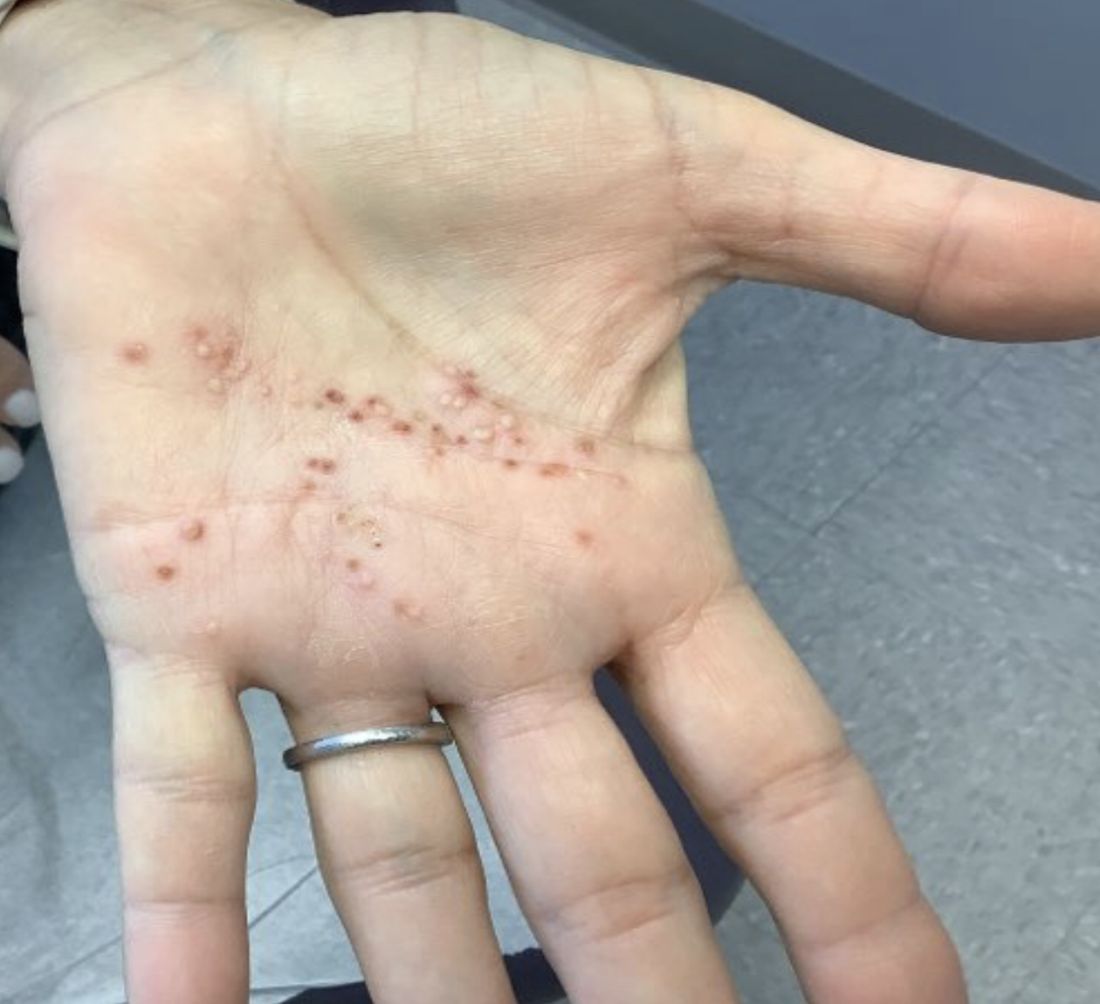
Loan forgiveness and med school debt: What about me?
This transcript has been edited for clarity.
Hi. I’m Art Caplan. I run the division of medical ethics at New York University Grossman School of Medicine.
Many of you know that President Biden created a loan forgiveness program, forgiving up to $10,000 against federal student loans, including graduate and undergraduate education. The Department of Education is supposed to provide up to $20,000 in debt cancellation to Pell Grant recipients who have loans that are held by the Department of Education. Borrowers can get this relief if their income is less than $125,000 for an individual or $250,000 for married couples.
Many people have looked at this and said, “Hey, wait a minute. I paid off my loans. I didn’t get any reimbursement. That isn’t fair.”
who often still have huge amounts of debt, and either because of the income limits or because they don’t qualify because this debt was accrued long in the past, they’re saying, “What about me? Don’t you want to give any relief to me?”
This is a topic near and dear to my heart because I happen to be at a medical school, NYU, that has decided for the two medical schools it runs – our main campus, NYU in Manhattan and NYU Langone out on Long Island – that we’re going to go tuition free. We’ve done it for a couple of years.
We did it because I think all the administrators and faculty understood the tremendous burden that debt poses on people who both carry forward their undergraduate debt and then have medical school debt. This really leads to very difficult situations – which we have great empathy for – about what specialty you’re going to go into, whether you have to moonlight, and how you’re going to manage a huge burden of debt.
Many people don’t have sympathy out in the public. They say doctors make a large amount of money and they live a nice lifestyle, so we’re not going to relieve their debt. The reality is that, whoever you are, short of Bill Gates or Elon Musk, having hundreds of thousands of dollars of debt is no easy task to live with and to work off.
Still, when we created free tuition at NYU for our medical school, there were many people who paid high tuition fees in the past. Some of them said to us, “What about me?” We decided not to try to do anything retrospectively. The plan was to build up enough money so that we could handle no-cost tuition going forward. We didn’t really have it in our pocketbook to help people who’d already paid their debts or were saddled with NYU debt. Is it fair? No, it’s probably not fair, but it’s an improvement.
That’s what I want people to think about who are saying, “What about my medical school debt? What about my undergraduate plus medical school debt?” I think we should be grateful when efforts are being made to reduce very burdensome student loans that people have. It’s good to give that benefit and move it forward.
Does that mean no one should get anything unless everyone with any kind of debt from school is covered? I don’t think so. I don’t think that’s fair either.
It is possible that we could continue to agitate politically and say, let’s go after some of the health care debt. Let’s go after some of the things that are still driving people to have to work more than they would or to choose specialties that they really don’t want to be in because they have to make up that debt.
It doesn’t mean the last word has been said about the politics of debt relief or, for that matter, the price of going to medical school in the first place and trying to see whether that can be driven down.
I don’t think it’s right to say, “If I can’t benefit, given the huge burden that I’m carrying, then I’m not going to try to give relief to others.” I think we’re relieving debt to the extent that we can do it. The nation can afford it. Going forward is a good thing. It’s wrong to create those gigantic debts in the first place.
What are we going to do about the past? We may decide that we need some sort of forgiveness or reparations for loans that were built up for others going backwards. I wouldn’t hold hostage the future and our children to what was probably a very poor, unethical practice about saddling doctors and others in the past with huge debt.
I’m Art Caplan at the division of medical ethics at New York University Grossman School of Medicine. Thank you for watching.
A version of this article first appeared on Medscape.com.
This transcript has been edited for clarity.
Hi. I’m Art Caplan. I run the division of medical ethics at New York University Grossman School of Medicine.
Many of you know that President Biden created a loan forgiveness program, forgiving up to $10,000 against federal student loans, including graduate and undergraduate education. The Department of Education is supposed to provide up to $20,000 in debt cancellation to Pell Grant recipients who have loans that are held by the Department of Education. Borrowers can get this relief if their income is less than $125,000 for an individual or $250,000 for married couples.
Many people have looked at this and said, “Hey, wait a minute. I paid off my loans. I didn’t get any reimbursement. That isn’t fair.”
who often still have huge amounts of debt, and either because of the income limits or because they don’t qualify because this debt was accrued long in the past, they’re saying, “What about me? Don’t you want to give any relief to me?”
This is a topic near and dear to my heart because I happen to be at a medical school, NYU, that has decided for the two medical schools it runs – our main campus, NYU in Manhattan and NYU Langone out on Long Island – that we’re going to go tuition free. We’ve done it for a couple of years.
We did it because I think all the administrators and faculty understood the tremendous burden that debt poses on people who both carry forward their undergraduate debt and then have medical school debt. This really leads to very difficult situations – which we have great empathy for – about what specialty you’re going to go into, whether you have to moonlight, and how you’re going to manage a huge burden of debt.
Many people don’t have sympathy out in the public. They say doctors make a large amount of money and they live a nice lifestyle, so we’re not going to relieve their debt. The reality is that, whoever you are, short of Bill Gates or Elon Musk, having hundreds of thousands of dollars of debt is no easy task to live with and to work off.
Still, when we created free tuition at NYU for our medical school, there were many people who paid high tuition fees in the past. Some of them said to us, “What about me?” We decided not to try to do anything retrospectively. The plan was to build up enough money so that we could handle no-cost tuition going forward. We didn’t really have it in our pocketbook to help people who’d already paid their debts or were saddled with NYU debt. Is it fair? No, it’s probably not fair, but it’s an improvement.
That’s what I want people to think about who are saying, “What about my medical school debt? What about my undergraduate plus medical school debt?” I think we should be grateful when efforts are being made to reduce very burdensome student loans that people have. It’s good to give that benefit and move it forward.
Does that mean no one should get anything unless everyone with any kind of debt from school is covered? I don’t think so. I don’t think that’s fair either.
It is possible that we could continue to agitate politically and say, let’s go after some of the health care debt. Let’s go after some of the things that are still driving people to have to work more than they would or to choose specialties that they really don’t want to be in because they have to make up that debt.
It doesn’t mean the last word has been said about the politics of debt relief or, for that matter, the price of going to medical school in the first place and trying to see whether that can be driven down.
I don’t think it’s right to say, “If I can’t benefit, given the huge burden that I’m carrying, then I’m not going to try to give relief to others.” I think we’re relieving debt to the extent that we can do it. The nation can afford it. Going forward is a good thing. It’s wrong to create those gigantic debts in the first place.
What are we going to do about the past? We may decide that we need some sort of forgiveness or reparations for loans that were built up for others going backwards. I wouldn’t hold hostage the future and our children to what was probably a very poor, unethical practice about saddling doctors and others in the past with huge debt.
I’m Art Caplan at the division of medical ethics at New York University Grossman School of Medicine. Thank you for watching.
A version of this article first appeared on Medscape.com.
This transcript has been edited for clarity.
Hi. I’m Art Caplan. I run the division of medical ethics at New York University Grossman School of Medicine.
Many of you know that President Biden created a loan forgiveness program, forgiving up to $10,000 against federal student loans, including graduate and undergraduate education. The Department of Education is supposed to provide up to $20,000 in debt cancellation to Pell Grant recipients who have loans that are held by the Department of Education. Borrowers can get this relief if their income is less than $125,000 for an individual or $250,000 for married couples.
Many people have looked at this and said, “Hey, wait a minute. I paid off my loans. I didn’t get any reimbursement. That isn’t fair.”
who often still have huge amounts of debt, and either because of the income limits or because they don’t qualify because this debt was accrued long in the past, they’re saying, “What about me? Don’t you want to give any relief to me?”
This is a topic near and dear to my heart because I happen to be at a medical school, NYU, that has decided for the two medical schools it runs – our main campus, NYU in Manhattan and NYU Langone out on Long Island – that we’re going to go tuition free. We’ve done it for a couple of years.
We did it because I think all the administrators and faculty understood the tremendous burden that debt poses on people who both carry forward their undergraduate debt and then have medical school debt. This really leads to very difficult situations – which we have great empathy for – about what specialty you’re going to go into, whether you have to moonlight, and how you’re going to manage a huge burden of debt.
Many people don’t have sympathy out in the public. They say doctors make a large amount of money and they live a nice lifestyle, so we’re not going to relieve their debt. The reality is that, whoever you are, short of Bill Gates or Elon Musk, having hundreds of thousands of dollars of debt is no easy task to live with and to work off.
Still, when we created free tuition at NYU for our medical school, there were many people who paid high tuition fees in the past. Some of them said to us, “What about me?” We decided not to try to do anything retrospectively. The plan was to build up enough money so that we could handle no-cost tuition going forward. We didn’t really have it in our pocketbook to help people who’d already paid their debts or were saddled with NYU debt. Is it fair? No, it’s probably not fair, but it’s an improvement.
That’s what I want people to think about who are saying, “What about my medical school debt? What about my undergraduate plus medical school debt?” I think we should be grateful when efforts are being made to reduce very burdensome student loans that people have. It’s good to give that benefit and move it forward.
Does that mean no one should get anything unless everyone with any kind of debt from school is covered? I don’t think so. I don’t think that’s fair either.
It is possible that we could continue to agitate politically and say, let’s go after some of the health care debt. Let’s go after some of the things that are still driving people to have to work more than they would or to choose specialties that they really don’t want to be in because they have to make up that debt.
It doesn’t mean the last word has been said about the politics of debt relief or, for that matter, the price of going to medical school in the first place and trying to see whether that can be driven down.
I don’t think it’s right to say, “If I can’t benefit, given the huge burden that I’m carrying, then I’m not going to try to give relief to others.” I think we’re relieving debt to the extent that we can do it. The nation can afford it. Going forward is a good thing. It’s wrong to create those gigantic debts in the first place.
What are we going to do about the past? We may decide that we need some sort of forgiveness or reparations for loans that were built up for others going backwards. I wouldn’t hold hostage the future and our children to what was probably a very poor, unethical practice about saddling doctors and others in the past with huge debt.
I’m Art Caplan at the division of medical ethics at New York University Grossman School of Medicine. Thank you for watching.
A version of this article first appeared on Medscape.com.