User login
The ICU: From bed to bedside
I recently came to the realization that one doesn’t usually end up in an ICU unless the odds of making it out are not in one’s favor.
Now, I want to make it clear from the very first that my wife and I survived life-threatening medical experiences as a result of the superb care provided to both of us. Nevertheless, the experience made me aware of how ICU and hospital care has changed in the last 50 years. I have spent most of my life in ICUs from the "invention" of the Coronary Care Unit in the mid-1960s to its current iteration of an intensely monitored hospital room where emergency surgery could be performed if need be. Much of that change is a result of the variety of medical specialists who are players in the ICU drama. The other major changes have been the time restraints of house staff rotation to meet certification criteria and rotation of the senior staff in order to provide continuing on-site coverage of the ICU. As the acuteness of hospital admissions has increased, the ICU and its management have assumed a larger role in the care and the finances of major hospitals.
Some years ago, we hosted a distinguished European physician who spent 2 months with us as a visiting professor. It was at a time when we felt a need to begin to develop subspecialties in angiography, electrophysiology, and echocardiography in order to provide a research and training atmosphere for our fellowship program. Later, he wrote an editorial in his local medical journal criticizing cardiac care in the United States because of the lack of continuity. He was of the tradition that mandated that he would see the patient in the clinic, perform a cardiac catheterization himself, and follow his patient through surgery and manage their postoperative care, as was standard practice in the mid-20th century. He believed that the concept of delegating diagnostic and care responsibilities to specialty trained colleagues that he observed here was a major disaster. He should see the system now. Nevertheless, his plea for continuity in care resonates in my mind.
That need for continuity came back to me as I experienced the dizzying rotation of house staff and senior staff that takes place in the ICU today. Any semblance of continuity of care was lacking at a time when there was a need to provide information to anxious patients and their families. In the environment of medical uncertainty, when you would like to find a familiar physician to ask "How are we doing," the attending physician or medical resident in charge was either on another rotation or being covered by a colleague. No training or adherence to "sign-off" rounds can replace the need for that professional continuity. As competent and well meaning the covering doctor was, answers to questions seemed shallow. It was difficult even to express gratitude to "a" physician who had tipped the scales in my favor. One had to direct it to an amorphous team of doctors, nurses, and technicians who had participated in care. That is a reality that describes the methodology of ICU and its success. It is a reality that to a similar degree characterizes the current management of inpatient care.
It seemed that in the setting of a life-threatening experience, the link between the treating physicians and the patients or family has almost disappeared in the ICU. The challenge to us as we play our role in the ICU, and the CCU, is to establish and maintain a personal relationship with the patients and their family.
Dr. Goldstein, medical editor of Cardiology News, is professor of medicine at Wayne State University and division head emeritus of cardiovascular medicine at Henry Ford Hospital, both in Detroit. He is on data safety monitoring committees for the National Institutes of Health and several pharmaceutical companies.
I recently came to the realization that one doesn’t usually end up in an ICU unless the odds of making it out are not in one’s favor.
Now, I want to make it clear from the very first that my wife and I survived life-threatening medical experiences as a result of the superb care provided to both of us. Nevertheless, the experience made me aware of how ICU and hospital care has changed in the last 50 years. I have spent most of my life in ICUs from the "invention" of the Coronary Care Unit in the mid-1960s to its current iteration of an intensely monitored hospital room where emergency surgery could be performed if need be. Much of that change is a result of the variety of medical specialists who are players in the ICU drama. The other major changes have been the time restraints of house staff rotation to meet certification criteria and rotation of the senior staff in order to provide continuing on-site coverage of the ICU. As the acuteness of hospital admissions has increased, the ICU and its management have assumed a larger role in the care and the finances of major hospitals.
Some years ago, we hosted a distinguished European physician who spent 2 months with us as a visiting professor. It was at a time when we felt a need to begin to develop subspecialties in angiography, electrophysiology, and echocardiography in order to provide a research and training atmosphere for our fellowship program. Later, he wrote an editorial in his local medical journal criticizing cardiac care in the United States because of the lack of continuity. He was of the tradition that mandated that he would see the patient in the clinic, perform a cardiac catheterization himself, and follow his patient through surgery and manage their postoperative care, as was standard practice in the mid-20th century. He believed that the concept of delegating diagnostic and care responsibilities to specialty trained colleagues that he observed here was a major disaster. He should see the system now. Nevertheless, his plea for continuity in care resonates in my mind.
That need for continuity came back to me as I experienced the dizzying rotation of house staff and senior staff that takes place in the ICU today. Any semblance of continuity of care was lacking at a time when there was a need to provide information to anxious patients and their families. In the environment of medical uncertainty, when you would like to find a familiar physician to ask "How are we doing," the attending physician or medical resident in charge was either on another rotation or being covered by a colleague. No training or adherence to "sign-off" rounds can replace the need for that professional continuity. As competent and well meaning the covering doctor was, answers to questions seemed shallow. It was difficult even to express gratitude to "a" physician who had tipped the scales in my favor. One had to direct it to an amorphous team of doctors, nurses, and technicians who had participated in care. That is a reality that describes the methodology of ICU and its success. It is a reality that to a similar degree characterizes the current management of inpatient care.
It seemed that in the setting of a life-threatening experience, the link between the treating physicians and the patients or family has almost disappeared in the ICU. The challenge to us as we play our role in the ICU, and the CCU, is to establish and maintain a personal relationship with the patients and their family.
Dr. Goldstein, medical editor of Cardiology News, is professor of medicine at Wayne State University and division head emeritus of cardiovascular medicine at Henry Ford Hospital, both in Detroit. He is on data safety monitoring committees for the National Institutes of Health and several pharmaceutical companies.
I recently came to the realization that one doesn’t usually end up in an ICU unless the odds of making it out are not in one’s favor.
Now, I want to make it clear from the very first that my wife and I survived life-threatening medical experiences as a result of the superb care provided to both of us. Nevertheless, the experience made me aware of how ICU and hospital care has changed in the last 50 years. I have spent most of my life in ICUs from the "invention" of the Coronary Care Unit in the mid-1960s to its current iteration of an intensely monitored hospital room where emergency surgery could be performed if need be. Much of that change is a result of the variety of medical specialists who are players in the ICU drama. The other major changes have been the time restraints of house staff rotation to meet certification criteria and rotation of the senior staff in order to provide continuing on-site coverage of the ICU. As the acuteness of hospital admissions has increased, the ICU and its management have assumed a larger role in the care and the finances of major hospitals.
Some years ago, we hosted a distinguished European physician who spent 2 months with us as a visiting professor. It was at a time when we felt a need to begin to develop subspecialties in angiography, electrophysiology, and echocardiography in order to provide a research and training atmosphere for our fellowship program. Later, he wrote an editorial in his local medical journal criticizing cardiac care in the United States because of the lack of continuity. He was of the tradition that mandated that he would see the patient in the clinic, perform a cardiac catheterization himself, and follow his patient through surgery and manage their postoperative care, as was standard practice in the mid-20th century. He believed that the concept of delegating diagnostic and care responsibilities to specialty trained colleagues that he observed here was a major disaster. He should see the system now. Nevertheless, his plea for continuity in care resonates in my mind.
That need for continuity came back to me as I experienced the dizzying rotation of house staff and senior staff that takes place in the ICU today. Any semblance of continuity of care was lacking at a time when there was a need to provide information to anxious patients and their families. In the environment of medical uncertainty, when you would like to find a familiar physician to ask "How are we doing," the attending physician or medical resident in charge was either on another rotation or being covered by a colleague. No training or adherence to "sign-off" rounds can replace the need for that professional continuity. As competent and well meaning the covering doctor was, answers to questions seemed shallow. It was difficult even to express gratitude to "a" physician who had tipped the scales in my favor. One had to direct it to an amorphous team of doctors, nurses, and technicians who had participated in care. That is a reality that describes the methodology of ICU and its success. It is a reality that to a similar degree characterizes the current management of inpatient care.
It seemed that in the setting of a life-threatening experience, the link between the treating physicians and the patients or family has almost disappeared in the ICU. The challenge to us as we play our role in the ICU, and the CCU, is to establish and maintain a personal relationship with the patients and their family.
Dr. Goldstein, medical editor of Cardiology News, is professor of medicine at Wayne State University and division head emeritus of cardiovascular medicine at Henry Ford Hospital, both in Detroit. He is on data safety monitoring committees for the National Institutes of Health and several pharmaceutical companies.
A day in the life of a rheumatologist
7:00 a.m. When they called me for this consult on this young female with known lupus presenting with pleuritic chest pain, they didn’t tell me that (a) she has a history of pleural effusions, and (b) her creatinine is 4.9 mg/dL.
8:00 a.m. Waiting for my patient to be roomed. We’re implementing a new electronic health record, so I have to wait for the medical assistant (MA) to finish her tasks: input the patient’s medications, take his vital signs, and ask for his chief complaint.
8:20 a.m. Patient is still not ready for me. Who thought it would be a good idea for the MA to take the patient’s medications? It’d be so much more efficient if I did it myself.
9:00 a.m. Finally finished with the first patient. It was a follow-up visit that was scheduled as 15 minutes. I am now 45 minutes behind schedule. Thankfully, the MA managed to use the 45 minutes to room the 8:15 patient.
12:30 p.m. Whew, I just finished my morning. I start again in 30 minutes. I am never going to finish these 12 charts in 30 minutes. Also, I am hungry. If I don’t eat now, I am going to have my MA for lunch.
12:45 p.m. Speaking to Dr. Winchester from Blue Cross to get approval for a contrast MRI of the right foot. (This call may be recorded. What did your x-rays show? Have you failed conservative treatment? Will it change management? Here’s your approval number.)
1:00 p.m. The new patient is here. She is the proud owner of a very long med list. It’ll probably take the MA 30 minutes to get through all that. Let me call dermatology in the meantime; I need a full-thickness skin biopsy on Mrs. Rodrigues. (One week later, biopsy shows polyarteritis nodosa.)
3:15 p.m. I just finished a visit with Silvi. Her rheumatoid arthritis is quiescent, but she is in tears. Not only did her mother die unexpectedly from a ruptured aneurysm 2 months ago, she has just received a new diagnosis of breast cancer, and her husband lost his job. I can’t make this stuff up. That was an emotionally draining visit. I need a drink. Oh wait, there are no drinks to be had at a doctor’s office. Maybe the drug rep brought some ice cream.
3:20 p.m. Some ice cream regret going on here.
4:40 p.m. Just got done with a new-patient consultation for a "positive" antinuclear antibody test of 1:40 and a positive systems review. I’m exhausted.
6:15 p.m. Returning phone calls. Mrs. Greggerson is regaling me with details of her ablutions.
6:35 p.m. Filling out prior authorization forms for a biologic. Among the questions: A1c, T score, growth velocity, Mini-Mental State Exam, free and total testosterone, hepatitis C viral load and genotype. I would like to officially nominate this form for Most Number of Irrelevant Questions Ever.
7:00 p.m. Finally, last prior-authorization form for the day. Wait ... it’s for methotrexate? Since when have I needed to get prior authorization for methotrexate? I didn’t think it was even possible for me to get any angrier after the Mini-Mental State question.
8:00 p.m. Finally home. I’m too beat to go to the gym. My good decision–making reserves are exhausted. I would rather have a glass of red. The resveratrol will do me more good than a workout.
Dr. Chan practices rheumatology in Pawtucket, R.I.
7:00 a.m. When they called me for this consult on this young female with known lupus presenting with pleuritic chest pain, they didn’t tell me that (a) she has a history of pleural effusions, and (b) her creatinine is 4.9 mg/dL.
8:00 a.m. Waiting for my patient to be roomed. We’re implementing a new electronic health record, so I have to wait for the medical assistant (MA) to finish her tasks: input the patient’s medications, take his vital signs, and ask for his chief complaint.
8:20 a.m. Patient is still not ready for me. Who thought it would be a good idea for the MA to take the patient’s medications? It’d be so much more efficient if I did it myself.
9:00 a.m. Finally finished with the first patient. It was a follow-up visit that was scheduled as 15 minutes. I am now 45 minutes behind schedule. Thankfully, the MA managed to use the 45 minutes to room the 8:15 patient.
12:30 p.m. Whew, I just finished my morning. I start again in 30 minutes. I am never going to finish these 12 charts in 30 minutes. Also, I am hungry. If I don’t eat now, I am going to have my MA for lunch.
12:45 p.m. Speaking to Dr. Winchester from Blue Cross to get approval for a contrast MRI of the right foot. (This call may be recorded. What did your x-rays show? Have you failed conservative treatment? Will it change management? Here’s your approval number.)
1:00 p.m. The new patient is here. She is the proud owner of a very long med list. It’ll probably take the MA 30 minutes to get through all that. Let me call dermatology in the meantime; I need a full-thickness skin biopsy on Mrs. Rodrigues. (One week later, biopsy shows polyarteritis nodosa.)
3:15 p.m. I just finished a visit with Silvi. Her rheumatoid arthritis is quiescent, but she is in tears. Not only did her mother die unexpectedly from a ruptured aneurysm 2 months ago, she has just received a new diagnosis of breast cancer, and her husband lost his job. I can’t make this stuff up. That was an emotionally draining visit. I need a drink. Oh wait, there are no drinks to be had at a doctor’s office. Maybe the drug rep brought some ice cream.
3:20 p.m. Some ice cream regret going on here.
4:40 p.m. Just got done with a new-patient consultation for a "positive" antinuclear antibody test of 1:40 and a positive systems review. I’m exhausted.
6:15 p.m. Returning phone calls. Mrs. Greggerson is regaling me with details of her ablutions.
6:35 p.m. Filling out prior authorization forms for a biologic. Among the questions: A1c, T score, growth velocity, Mini-Mental State Exam, free and total testosterone, hepatitis C viral load and genotype. I would like to officially nominate this form for Most Number of Irrelevant Questions Ever.
7:00 p.m. Finally, last prior-authorization form for the day. Wait ... it’s for methotrexate? Since when have I needed to get prior authorization for methotrexate? I didn’t think it was even possible for me to get any angrier after the Mini-Mental State question.
8:00 p.m. Finally home. I’m too beat to go to the gym. My good decision–making reserves are exhausted. I would rather have a glass of red. The resveratrol will do me more good than a workout.
Dr. Chan practices rheumatology in Pawtucket, R.I.
7:00 a.m. When they called me for this consult on this young female with known lupus presenting with pleuritic chest pain, they didn’t tell me that (a) she has a history of pleural effusions, and (b) her creatinine is 4.9 mg/dL.
8:00 a.m. Waiting for my patient to be roomed. We’re implementing a new electronic health record, so I have to wait for the medical assistant (MA) to finish her tasks: input the patient’s medications, take his vital signs, and ask for his chief complaint.
8:20 a.m. Patient is still not ready for me. Who thought it would be a good idea for the MA to take the patient’s medications? It’d be so much more efficient if I did it myself.
9:00 a.m. Finally finished with the first patient. It was a follow-up visit that was scheduled as 15 minutes. I am now 45 minutes behind schedule. Thankfully, the MA managed to use the 45 minutes to room the 8:15 patient.
12:30 p.m. Whew, I just finished my morning. I start again in 30 minutes. I am never going to finish these 12 charts in 30 minutes. Also, I am hungry. If I don’t eat now, I am going to have my MA for lunch.
12:45 p.m. Speaking to Dr. Winchester from Blue Cross to get approval for a contrast MRI of the right foot. (This call may be recorded. What did your x-rays show? Have you failed conservative treatment? Will it change management? Here’s your approval number.)
1:00 p.m. The new patient is here. She is the proud owner of a very long med list. It’ll probably take the MA 30 minutes to get through all that. Let me call dermatology in the meantime; I need a full-thickness skin biopsy on Mrs. Rodrigues. (One week later, biopsy shows polyarteritis nodosa.)
3:15 p.m. I just finished a visit with Silvi. Her rheumatoid arthritis is quiescent, but she is in tears. Not only did her mother die unexpectedly from a ruptured aneurysm 2 months ago, she has just received a new diagnosis of breast cancer, and her husband lost his job. I can’t make this stuff up. That was an emotionally draining visit. I need a drink. Oh wait, there are no drinks to be had at a doctor’s office. Maybe the drug rep brought some ice cream.
3:20 p.m. Some ice cream regret going on here.
4:40 p.m. Just got done with a new-patient consultation for a "positive" antinuclear antibody test of 1:40 and a positive systems review. I’m exhausted.
6:15 p.m. Returning phone calls. Mrs. Greggerson is regaling me with details of her ablutions.
6:35 p.m. Filling out prior authorization forms for a biologic. Among the questions: A1c, T score, growth velocity, Mini-Mental State Exam, free and total testosterone, hepatitis C viral load and genotype. I would like to officially nominate this form for Most Number of Irrelevant Questions Ever.
7:00 p.m. Finally, last prior-authorization form for the day. Wait ... it’s for methotrexate? Since when have I needed to get prior authorization for methotrexate? I didn’t think it was even possible for me to get any angrier after the Mini-Mental State question.
8:00 p.m. Finally home. I’m too beat to go to the gym. My good decision–making reserves are exhausted. I would rather have a glass of red. The resveratrol will do me more good than a workout.
Dr. Chan practices rheumatology in Pawtucket, R.I.
Medicare payment data: a no-win situation for doctors
Recently, Medicare released its 2012 payment data, showing that they paid $77 billion to doctors that year.
So, like many doctors, I got curious and ran my own numbers. If I’m doing the math correctly (which is always questionable), my share of it was $59,622. This is considerably less than the overall average of $87,500 that the 880,000 Medicare-accepting doctors received, and certainly nowhere near the $21 million that the nation’s No. 1 Medicare money recipient, Dr. Salomon Melgan (ophthalmology) of Florida raked in from Uncle Sam.
Now, unlike the popular press, I’m not going to knock Dr. Melgan. From what I’ve read, he uses a lot of Lucentis in his practice for macular degeneration. At roughly $2,000 (doctor’s cost) per dose, I’m sure his overhead is pretty high. I’ll leave those questions to the lawyers.
But it leaves me staring at my number and wondering if I’m doing something wrong. Granted, Medicare isn’t the only insurance I take, but still ... For comparison, that $59,662 doesn’t even cover the salaries of my two awesome, hard-working, staff members.
The trouble is that, like many other doctors, I work a pretty full schedule. Roughly 60-70 hours a week. Unlike the physicians of yore, I don’t take Wednesday afternoon off to go golfing (actually, I’ve never golfed on a real course in my life). I don’t double-book my appointment schedule. I don’t do frivolous procedures just for the billing (though I’m sure what I consider frivolous more successful doctors call necessary). I don’t charge level-5 visits for simple stuff. And I run a relatively low overhead. So why are most doctors today, including me, barely breaking even for trying to run an honest, ethical, practice?
Of course, venting this kind of thing in public is a no-win situation for doctors. We’re seen as either greedy or whiny. People in most other professions aren’t paying $30,000-$300,000 in malpractice insurance or coming out of school $200,000 in debt. Doctors who are actually charging for visits so they can pay their bills and support their families are terrible people because caring should be free.
Medicine is, in many respects, an intangible science. People may be horrified by what they’re charged for a 15-minute visit, but don’t see the 8-15 years (or more) of training behind them. And when they’re feeling better, we’re often forgotten or vilified for daring to charge them a copay.
The bottom line is that the money paid out by Medicare isn’t a fair assessment of our efforts. It’s a raw number, that doesn’t take into account the cost of drugs we have to purchase ($1,050 for a single bottle of Botox), the equipment we need to buy ($16,000 for a basic electromyogram/nerve conduction velocity machine), rent ($2,700 per month for me), malpractice insurance, staff salaries, billing services, office supplies, licensing fees. ... The list goes on, including a measure that you can’t put a price on: lives saved and improved.
Taken in this context, the $77 billion dollars is simply a tool that politicians and media pundits will twist to support whatever argument they want it to. Because, after all, most doctors are too busy helping others to defend themselves.
Dr. Block has a solo neurology practice in Scottsdale, Ariz.
Recently, Medicare released its 2012 payment data, showing that they paid $77 billion to doctors that year.
So, like many doctors, I got curious and ran my own numbers. If I’m doing the math correctly (which is always questionable), my share of it was $59,622. This is considerably less than the overall average of $87,500 that the 880,000 Medicare-accepting doctors received, and certainly nowhere near the $21 million that the nation’s No. 1 Medicare money recipient, Dr. Salomon Melgan (ophthalmology) of Florida raked in from Uncle Sam.
Now, unlike the popular press, I’m not going to knock Dr. Melgan. From what I’ve read, he uses a lot of Lucentis in his practice for macular degeneration. At roughly $2,000 (doctor’s cost) per dose, I’m sure his overhead is pretty high. I’ll leave those questions to the lawyers.
But it leaves me staring at my number and wondering if I’m doing something wrong. Granted, Medicare isn’t the only insurance I take, but still ... For comparison, that $59,662 doesn’t even cover the salaries of my two awesome, hard-working, staff members.
The trouble is that, like many other doctors, I work a pretty full schedule. Roughly 60-70 hours a week. Unlike the physicians of yore, I don’t take Wednesday afternoon off to go golfing (actually, I’ve never golfed on a real course in my life). I don’t double-book my appointment schedule. I don’t do frivolous procedures just for the billing (though I’m sure what I consider frivolous more successful doctors call necessary). I don’t charge level-5 visits for simple stuff. And I run a relatively low overhead. So why are most doctors today, including me, barely breaking even for trying to run an honest, ethical, practice?
Of course, venting this kind of thing in public is a no-win situation for doctors. We’re seen as either greedy or whiny. People in most other professions aren’t paying $30,000-$300,000 in malpractice insurance or coming out of school $200,000 in debt. Doctors who are actually charging for visits so they can pay their bills and support their families are terrible people because caring should be free.
Medicine is, in many respects, an intangible science. People may be horrified by what they’re charged for a 15-minute visit, but don’t see the 8-15 years (or more) of training behind them. And when they’re feeling better, we’re often forgotten or vilified for daring to charge them a copay.
The bottom line is that the money paid out by Medicare isn’t a fair assessment of our efforts. It’s a raw number, that doesn’t take into account the cost of drugs we have to purchase ($1,050 for a single bottle of Botox), the equipment we need to buy ($16,000 for a basic electromyogram/nerve conduction velocity machine), rent ($2,700 per month for me), malpractice insurance, staff salaries, billing services, office supplies, licensing fees. ... The list goes on, including a measure that you can’t put a price on: lives saved and improved.
Taken in this context, the $77 billion dollars is simply a tool that politicians and media pundits will twist to support whatever argument they want it to. Because, after all, most doctors are too busy helping others to defend themselves.
Dr. Block has a solo neurology practice in Scottsdale, Ariz.
Recently, Medicare released its 2012 payment data, showing that they paid $77 billion to doctors that year.
So, like many doctors, I got curious and ran my own numbers. If I’m doing the math correctly (which is always questionable), my share of it was $59,622. This is considerably less than the overall average of $87,500 that the 880,000 Medicare-accepting doctors received, and certainly nowhere near the $21 million that the nation’s No. 1 Medicare money recipient, Dr. Salomon Melgan (ophthalmology) of Florida raked in from Uncle Sam.
Now, unlike the popular press, I’m not going to knock Dr. Melgan. From what I’ve read, he uses a lot of Lucentis in his practice for macular degeneration. At roughly $2,000 (doctor’s cost) per dose, I’m sure his overhead is pretty high. I’ll leave those questions to the lawyers.
But it leaves me staring at my number and wondering if I’m doing something wrong. Granted, Medicare isn’t the only insurance I take, but still ... For comparison, that $59,662 doesn’t even cover the salaries of my two awesome, hard-working, staff members.
The trouble is that, like many other doctors, I work a pretty full schedule. Roughly 60-70 hours a week. Unlike the physicians of yore, I don’t take Wednesday afternoon off to go golfing (actually, I’ve never golfed on a real course in my life). I don’t double-book my appointment schedule. I don’t do frivolous procedures just for the billing (though I’m sure what I consider frivolous more successful doctors call necessary). I don’t charge level-5 visits for simple stuff. And I run a relatively low overhead. So why are most doctors today, including me, barely breaking even for trying to run an honest, ethical, practice?
Of course, venting this kind of thing in public is a no-win situation for doctors. We’re seen as either greedy or whiny. People in most other professions aren’t paying $30,000-$300,000 in malpractice insurance or coming out of school $200,000 in debt. Doctors who are actually charging for visits so they can pay their bills and support their families are terrible people because caring should be free.
Medicine is, in many respects, an intangible science. People may be horrified by what they’re charged for a 15-minute visit, but don’t see the 8-15 years (or more) of training behind them. And when they’re feeling better, we’re often forgotten or vilified for daring to charge them a copay.
The bottom line is that the money paid out by Medicare isn’t a fair assessment of our efforts. It’s a raw number, that doesn’t take into account the cost of drugs we have to purchase ($1,050 for a single bottle of Botox), the equipment we need to buy ($16,000 for a basic electromyogram/nerve conduction velocity machine), rent ($2,700 per month for me), malpractice insurance, staff salaries, billing services, office supplies, licensing fees. ... The list goes on, including a measure that you can’t put a price on: lives saved and improved.
Taken in this context, the $77 billion dollars is simply a tool that politicians and media pundits will twist to support whatever argument they want it to. Because, after all, most doctors are too busy helping others to defend themselves.
Dr. Block has a solo neurology practice in Scottsdale, Ariz.
Making sure patients never walk alone
We are all painfully aware that falls are not uncommon in hospitalized patients, but I was shocked and appalled to learn that there are approximately 11,000 falls that are ultimately fatal in U.S. hospitals each year, according to the Joint Commission Center for Transforming Healthcare.
Fortunately, there appear to be some very viable solutions at hand.
Hospitals that use the center’s new measuring systems and solution have been able to slash the number of patients who fall by 35%, as well cutting the percentage of patients injured when they fall by 62%. Extrapolating these results to an average 200-bed hospital, an estimated $1 million could be saved each year through fall prevention efforts.
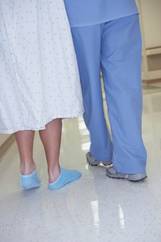
Hospitals participating in this study ranged from small community-based hospitals with fewer than 200 beds to large medical centers with more than 1,700 beds. All used a data-driven, Lean Six Sigma–inspired "Robust Process Improvement" methodology to determine the causes of falls and create solutions to prevent them. One solution was simply providing hourly rounding which included proactive toileting. When you think about it, this makes perfect sense. Patients with an immediate need may not be able to hold it until it is "their turn" for the nurse to assist them. In their haste to avoid soiling their clothes, a mechanical fall is very understandable, especially if they are impaired due to weakness or medication.
Other solutions included teaching patients how to actively participate in their own safety, engaging patients and family members in their fall safety program, using a validated fall risk assessment tool, and increasing awareness and participation among staff so that patients did not walk alone.
Most of us have received that dreaded call from the nurse about a patient who was injured from a fall. I once had a patient who slipped and fell, breaking a hip while in the hospital for a relatively minor issue. If she had been more stable on her feet, she probably could have caught herself prior to hitting the hard floor. Had a close relative not witnessed the incident, it would have been very difficult (and embarrassing) to explain to the family why their loved one experienced such a traumatic event while in a seemingly protected environment. Her son was very understanding, though the event was very disconcerting all the same.
Based on their staffing, resources, and creativity, different hospitals may develop different innovative solutions to prevent falls. There is room for a wide variety of options. Yes, early ambulation is crucial to help prevent unnecessary complications, such as pneumonia and blood clots, but we should be mindful of the individual patient’s circumstances. A simple order requesting the nurse to ambulate a patient in the room or down the hall two or three times a day may be adequate for some, while in other cases a formal physical therapy consultation may clearly be in order. If there are any concerns over the patient’s ability to ambulate safely and I am not sure if a physical therapy consult is really needed, I sometimes call the nurse into the room and the two of us walk with the patient. That way, I can get an immediate sense of the likelihood of falls, the need for dedicated strengthening exercises, and, on occasion, the impact that medications are having on gait. And for those difficult, unmotivated patients, family members can frequently provide invaluable encouragement, as well as the emotional, and sometimes physical safety net many patients desire.
With safety interventions and highly engaged care teams in place, even steady patients never walk truly alone.
Dr. Hester is a hospitalist with Baltimore-Washington Medical Center who has a passion for empowering patients to partner in their health care. She is the creator of the Patient Whiz, a patient-engagement app for iOS. Reach her at [email protected]
We are all painfully aware that falls are not uncommon in hospitalized patients, but I was shocked and appalled to learn that there are approximately 11,000 falls that are ultimately fatal in U.S. hospitals each year, according to the Joint Commission Center for Transforming Healthcare.
Fortunately, there appear to be some very viable solutions at hand.
Hospitals that use the center’s new measuring systems and solution have been able to slash the number of patients who fall by 35%, as well cutting the percentage of patients injured when they fall by 62%. Extrapolating these results to an average 200-bed hospital, an estimated $1 million could be saved each year through fall prevention efforts.
Hospitals participating in this study ranged from small community-based hospitals with fewer than 200 beds to large medical centers with more than 1,700 beds. All used a data-driven, Lean Six Sigma–inspired "Robust Process Improvement" methodology to determine the causes of falls and create solutions to prevent them. One solution was simply providing hourly rounding which included proactive toileting. When you think about it, this makes perfect sense. Patients with an immediate need may not be able to hold it until it is "their turn" for the nurse to assist them. In their haste to avoid soiling their clothes, a mechanical fall is very understandable, especially if they are impaired due to weakness or medication.
Other solutions included teaching patients how to actively participate in their own safety, engaging patients and family members in their fall safety program, using a validated fall risk assessment tool, and increasing awareness and participation among staff so that patients did not walk alone.
Most of us have received that dreaded call from the nurse about a patient who was injured from a fall. I once had a patient who slipped and fell, breaking a hip while in the hospital for a relatively minor issue. If she had been more stable on her feet, she probably could have caught herself prior to hitting the hard floor. Had a close relative not witnessed the incident, it would have been very difficult (and embarrassing) to explain to the family why their loved one experienced such a traumatic event while in a seemingly protected environment. Her son was very understanding, though the event was very disconcerting all the same.
Based on their staffing, resources, and creativity, different hospitals may develop different innovative solutions to prevent falls. There is room for a wide variety of options. Yes, early ambulation is crucial to help prevent unnecessary complications, such as pneumonia and blood clots, but we should be mindful of the individual patient’s circumstances. A simple order requesting the nurse to ambulate a patient in the room or down the hall two or three times a day may be adequate for some, while in other cases a formal physical therapy consultation may clearly be in order. If there are any concerns over the patient’s ability to ambulate safely and I am not sure if a physical therapy consult is really needed, I sometimes call the nurse into the room and the two of us walk with the patient. That way, I can get an immediate sense of the likelihood of falls, the need for dedicated strengthening exercises, and, on occasion, the impact that medications are having on gait. And for those difficult, unmotivated patients, family members can frequently provide invaluable encouragement, as well as the emotional, and sometimes physical safety net many patients desire.
With safety interventions and highly engaged care teams in place, even steady patients never walk truly alone.
Dr. Hester is a hospitalist with Baltimore-Washington Medical Center who has a passion for empowering patients to partner in their health care. She is the creator of the Patient Whiz, a patient-engagement app for iOS. Reach her at [email protected]
We are all painfully aware that falls are not uncommon in hospitalized patients, but I was shocked and appalled to learn that there are approximately 11,000 falls that are ultimately fatal in U.S. hospitals each year, according to the Joint Commission Center for Transforming Healthcare.
Fortunately, there appear to be some very viable solutions at hand.
Hospitals that use the center’s new measuring systems and solution have been able to slash the number of patients who fall by 35%, as well cutting the percentage of patients injured when they fall by 62%. Extrapolating these results to an average 200-bed hospital, an estimated $1 million could be saved each year through fall prevention efforts.
Hospitals participating in this study ranged from small community-based hospitals with fewer than 200 beds to large medical centers with more than 1,700 beds. All used a data-driven, Lean Six Sigma–inspired "Robust Process Improvement" methodology to determine the causes of falls and create solutions to prevent them. One solution was simply providing hourly rounding which included proactive toileting. When you think about it, this makes perfect sense. Patients with an immediate need may not be able to hold it until it is "their turn" for the nurse to assist them. In their haste to avoid soiling their clothes, a mechanical fall is very understandable, especially if they are impaired due to weakness or medication.
Other solutions included teaching patients how to actively participate in their own safety, engaging patients and family members in their fall safety program, using a validated fall risk assessment tool, and increasing awareness and participation among staff so that patients did not walk alone.
Most of us have received that dreaded call from the nurse about a patient who was injured from a fall. I once had a patient who slipped and fell, breaking a hip while in the hospital for a relatively minor issue. If she had been more stable on her feet, she probably could have caught herself prior to hitting the hard floor. Had a close relative not witnessed the incident, it would have been very difficult (and embarrassing) to explain to the family why their loved one experienced such a traumatic event while in a seemingly protected environment. Her son was very understanding, though the event was very disconcerting all the same.
Based on their staffing, resources, and creativity, different hospitals may develop different innovative solutions to prevent falls. There is room for a wide variety of options. Yes, early ambulation is crucial to help prevent unnecessary complications, such as pneumonia and blood clots, but we should be mindful of the individual patient’s circumstances. A simple order requesting the nurse to ambulate a patient in the room or down the hall two or three times a day may be adequate for some, while in other cases a formal physical therapy consultation may clearly be in order. If there are any concerns over the patient’s ability to ambulate safely and I am not sure if a physical therapy consult is really needed, I sometimes call the nurse into the room and the two of us walk with the patient. That way, I can get an immediate sense of the likelihood of falls, the need for dedicated strengthening exercises, and, on occasion, the impact that medications are having on gait. And for those difficult, unmotivated patients, family members can frequently provide invaluable encouragement, as well as the emotional, and sometimes physical safety net many patients desire.
With safety interventions and highly engaged care teams in place, even steady patients never walk truly alone.
Dr. Hester is a hospitalist with Baltimore-Washington Medical Center who has a passion for empowering patients to partner in their health care. She is the creator of the Patient Whiz, a patient-engagement app for iOS. Reach her at [email protected]

New Developments in Comorbidities of Atopic Dermatitis
Primary care is first-contact care
As Dr. Hickner noted in his editorial (“Have family physicians abandoned acute care?” J Fam Pract. 2013;62:333), there is an increasing misconception that acute and chronic care—2 sides of the same coin—can be separated. Waning primary care capability for acute care has largely been a matter of a broken market, an overwhelmed and underfunded workforce, and decreasing skills among our newest residency graduates.1,2
Clinicians learn the phrase “acute on chronic” for a reason. Primary care needs to be there for breathlessness in asthma, foot wounds in diabetes, and suicidality in depression, as much as it needs to be ready with sutures, splints, and imaging. It is first-contact care.
The decentralization of health care is only beginning.3 Blood tests on a smartphone, elastomeric intravenous medication delivery, handheld ultrasound, and home monitoring—these are here, or nearly so. Primary care has the ability to address patients’ urgent needs as never before.
Acute care is another name for someone being sick or hurt. General practitioner and essayist Iona Heath put it best when she said: “It is time medicine got back to its core task of attempting to relieve suffering.”4 In a perfect world, acute care would be preventable. In our world, let’s be there to help.
Stephen A. Martin, MD
Barre, Mass
1. Dickson GM, Chesser AK, Keene Woods N, et al. Self-reported ability to perform procedures: a comparison of allopathic and international medical school graduates. J Am Board Fam Med. 2013;26:28-34.
2. Kocher KE, Asplin BR. What is our plan for acute unscheduled care? Ann Intern Med. 2013;158:907-909.
3. Christensen CM, Grossman JH, Hwang JD. The Innovator’s Prescription: A Disruptive Solution for Health Care. New York, NY: McGraw-Hill; 2009.
4. Heath I. Iona Heath: Not keen on posh boys. BMJ. 2014;348:g1286.
As Dr. Hickner noted in his editorial (“Have family physicians abandoned acute care?” J Fam Pract. 2013;62:333), there is an increasing misconception that acute and chronic care—2 sides of the same coin—can be separated. Waning primary care capability for acute care has largely been a matter of a broken market, an overwhelmed and underfunded workforce, and decreasing skills among our newest residency graduates.1,2
Clinicians learn the phrase “acute on chronic” for a reason. Primary care needs to be there for breathlessness in asthma, foot wounds in diabetes, and suicidality in depression, as much as it needs to be ready with sutures, splints, and imaging. It is first-contact care.
The decentralization of health care is only beginning.3 Blood tests on a smartphone, elastomeric intravenous medication delivery, handheld ultrasound, and home monitoring—these are here, or nearly so. Primary care has the ability to address patients’ urgent needs as never before.
Acute care is another name for someone being sick or hurt. General practitioner and essayist Iona Heath put it best when she said: “It is time medicine got back to its core task of attempting to relieve suffering.”4 In a perfect world, acute care would be preventable. In our world, let’s be there to help.
Stephen A. Martin, MD
Barre, Mass
As Dr. Hickner noted in his editorial (“Have family physicians abandoned acute care?” J Fam Pract. 2013;62:333), there is an increasing misconception that acute and chronic care—2 sides of the same coin—can be separated. Waning primary care capability for acute care has largely been a matter of a broken market, an overwhelmed and underfunded workforce, and decreasing skills among our newest residency graduates.1,2
Clinicians learn the phrase “acute on chronic” for a reason. Primary care needs to be there for breathlessness in asthma, foot wounds in diabetes, and suicidality in depression, as much as it needs to be ready with sutures, splints, and imaging. It is first-contact care.
The decentralization of health care is only beginning.3 Blood tests on a smartphone, elastomeric intravenous medication delivery, handheld ultrasound, and home monitoring—these are here, or nearly so. Primary care has the ability to address patients’ urgent needs as never before.
Acute care is another name for someone being sick or hurt. General practitioner and essayist Iona Heath put it best when she said: “It is time medicine got back to its core task of attempting to relieve suffering.”4 In a perfect world, acute care would be preventable. In our world, let’s be there to help.
Stephen A. Martin, MD
Barre, Mass
1. Dickson GM, Chesser AK, Keene Woods N, et al. Self-reported ability to perform procedures: a comparison of allopathic and international medical school graduates. J Am Board Fam Med. 2013;26:28-34.
2. Kocher KE, Asplin BR. What is our plan for acute unscheduled care? Ann Intern Med. 2013;158:907-909.
3. Christensen CM, Grossman JH, Hwang JD. The Innovator’s Prescription: A Disruptive Solution for Health Care. New York, NY: McGraw-Hill; 2009.
4. Heath I. Iona Heath: Not keen on posh boys. BMJ. 2014;348:g1286.
1. Dickson GM, Chesser AK, Keene Woods N, et al. Self-reported ability to perform procedures: a comparison of allopathic and international medical school graduates. J Am Board Fam Med. 2013;26:28-34.
2. Kocher KE, Asplin BR. What is our plan for acute unscheduled care? Ann Intern Med. 2013;158:907-909.
3. Christensen CM, Grossman JH, Hwang JD. The Innovator’s Prescription: A Disruptive Solution for Health Care. New York, NY: McGraw-Hill; 2009.
4. Heath I. Iona Heath: Not keen on posh boys. BMJ. 2014;348:g1286.
Erratum
An equation for calculating phenytoin levels in patients with low albumin levels in “Pitfalls & pearls for 8 common lab tests” (J Fam Pract. 2014;63:198-205) was incorrect. The equation, known as the Sheiner-Tozer equation, should have read: phenytoin concentration adjusted = concentration reported/([adjustment × serum albumin] + 0.1), where adjustment = 0.2 for creatinine clearance ≥20, or adjustment = 0.1 for creatinine clearance <20. This equation has been corrected in the online edition of the article.
An equation for calculating phenytoin levels in patients with low albumin levels in “Pitfalls & pearls for 8 common lab tests” (J Fam Pract. 2014;63:198-205) was incorrect. The equation, known as the Sheiner-Tozer equation, should have read: phenytoin concentration adjusted = concentration reported/([adjustment × serum albumin] + 0.1), where adjustment = 0.2 for creatinine clearance ≥20, or adjustment = 0.1 for creatinine clearance <20. This equation has been corrected in the online edition of the article.
An equation for calculating phenytoin levels in patients with low albumin levels in “Pitfalls & pearls for 8 common lab tests” (J Fam Pract. 2014;63:198-205) was incorrect. The equation, known as the Sheiner-Tozer equation, should have read: phenytoin concentration adjusted = concentration reported/([adjustment × serum albumin] + 0.1), where adjustment = 0.2 for creatinine clearance ≥20, or adjustment = 0.1 for creatinine clearance <20. This equation has been corrected in the online edition of the article.
40 years of helping family physicians refine their care
The Journal of Family Practice and I have grown up together. JFP turns 40 this year, and I complete my 40th year as a physician next year. JFP was the brainchild of family physician John Geyman, MD, who established the journal in response to the need for original family medicine research.
Reviewing the articles published in the first issue, I find many of the topics are just as important today as they were 40 years ago: “The family as our patient,” “The future of family practice in our medical schools,” and “An integrated system for the recording and retrieval of medical data in a primary care setting."
Preserved in JFP’s archives are the seminal works of many academic family medicine pioneers, including Maurice Woods, Jack Froom, Hiram Curry, Gayle Stephens, and Eugene Farley, and many studies of the Ambulatory Sentinel Practice Network, the forerunner of the American Academy of Family Physicians’ National Research Network. One of the most important landmark studies for family medicine, the Virginia Study, was published in JFP in 1976.1,2 It summarized more than half a million medical problems seen by family physicians caring for 88,000 patients in Virginia over 2 years.1,2 It remains the largest US database of family medicine encounters reported by family physicians.
JFP continues to publish original research, along with summaries of the scientific literature and evidence-based answers to common clinical questions. The National Library of Medicine has cataloged the journal’s rich history that, as of March 2014, includes more than 8300 articles.
One of the biggest leaps in JFP’s evolution has been the increased diversity of offerings on the journal’s Web site, jfponline.com. The Web site includes a multimedia library of audiocasts and how-to videos, online-exclusive articles, quizzes, sponsored continuing medical education (and non-CME) content, career opportunity listings, and of course, an archive of the journal’s articles.
JFP remains a top, evidence-based family medicine journal that benefits from the expertise and insights of its editorial board, extensive cadre of peer reviewers, and authors from across the country—and around the world. We remain committed to meeting the needs of you, the busy family physician. And this month, in recognition of our 40th anniversary, we present the winners of our writing contest. (See “The patient who changed the way I practice family medicine.”)
We hope you enjoy this anniversary issue of JFP and we look forward to serving you in the years to come.
1. Marsland DW, Wood M, Mayo F. Content of family practice. Part I. Rank order of diagnoses by frequency. Part II. Diagnoses by disease category and age/sex distribution. J Fam Pract. 1976;3:37-68.
2. Marsland DW, Wood M, Mayo F. A data bank for patient care, curriculum, and research in family practice: 526,196 patient problems. J Fam Pract. 1976;3:25-28.
The Journal of Family Practice and I have grown up together. JFP turns 40 this year, and I complete my 40th year as a physician next year. JFP was the brainchild of family physician John Geyman, MD, who established the journal in response to the need for original family medicine research.
Reviewing the articles published in the first issue, I find many of the topics are just as important today as they were 40 years ago: “The family as our patient,” “The future of family practice in our medical schools,” and “An integrated system for the recording and retrieval of medical data in a primary care setting."
Preserved in JFP’s archives are the seminal works of many academic family medicine pioneers, including Maurice Woods, Jack Froom, Hiram Curry, Gayle Stephens, and Eugene Farley, and many studies of the Ambulatory Sentinel Practice Network, the forerunner of the American Academy of Family Physicians’ National Research Network. One of the most important landmark studies for family medicine, the Virginia Study, was published in JFP in 1976.1,2 It summarized more than half a million medical problems seen by family physicians caring for 88,000 patients in Virginia over 2 years.1,2 It remains the largest US database of family medicine encounters reported by family physicians.
JFP continues to publish original research, along with summaries of the scientific literature and evidence-based answers to common clinical questions. The National Library of Medicine has cataloged the journal’s rich history that, as of March 2014, includes more than 8300 articles.
One of the biggest leaps in JFP’s evolution has been the increased diversity of offerings on the journal’s Web site, jfponline.com. The Web site includes a multimedia library of audiocasts and how-to videos, online-exclusive articles, quizzes, sponsored continuing medical education (and non-CME) content, career opportunity listings, and of course, an archive of the journal’s articles.
JFP remains a top, evidence-based family medicine journal that benefits from the expertise and insights of its editorial board, extensive cadre of peer reviewers, and authors from across the country—and around the world. We remain committed to meeting the needs of you, the busy family physician. And this month, in recognition of our 40th anniversary, we present the winners of our writing contest. (See “The patient who changed the way I practice family medicine.”)
We hope you enjoy this anniversary issue of JFP and we look forward to serving you in the years to come.
The Journal of Family Practice and I have grown up together. JFP turns 40 this year, and I complete my 40th year as a physician next year. JFP was the brainchild of family physician John Geyman, MD, who established the journal in response to the need for original family medicine research.
Reviewing the articles published in the first issue, I find many of the topics are just as important today as they were 40 years ago: “The family as our patient,” “The future of family practice in our medical schools,” and “An integrated system for the recording and retrieval of medical data in a primary care setting."
Preserved in JFP’s archives are the seminal works of many academic family medicine pioneers, including Maurice Woods, Jack Froom, Hiram Curry, Gayle Stephens, and Eugene Farley, and many studies of the Ambulatory Sentinel Practice Network, the forerunner of the American Academy of Family Physicians’ National Research Network. One of the most important landmark studies for family medicine, the Virginia Study, was published in JFP in 1976.1,2 It summarized more than half a million medical problems seen by family physicians caring for 88,000 patients in Virginia over 2 years.1,2 It remains the largest US database of family medicine encounters reported by family physicians.
JFP continues to publish original research, along with summaries of the scientific literature and evidence-based answers to common clinical questions. The National Library of Medicine has cataloged the journal’s rich history that, as of March 2014, includes more than 8300 articles.
One of the biggest leaps in JFP’s evolution has been the increased diversity of offerings on the journal’s Web site, jfponline.com. The Web site includes a multimedia library of audiocasts and how-to videos, online-exclusive articles, quizzes, sponsored continuing medical education (and non-CME) content, career opportunity listings, and of course, an archive of the journal’s articles.
JFP remains a top, evidence-based family medicine journal that benefits from the expertise and insights of its editorial board, extensive cadre of peer reviewers, and authors from across the country—and around the world. We remain committed to meeting the needs of you, the busy family physician. And this month, in recognition of our 40th anniversary, we present the winners of our writing contest. (See “The patient who changed the way I practice family medicine.”)
We hope you enjoy this anniversary issue of JFP and we look forward to serving you in the years to come.
1. Marsland DW, Wood M, Mayo F. Content of family practice. Part I. Rank order of diagnoses by frequency. Part II. Diagnoses by disease category and age/sex distribution. J Fam Pract. 1976;3:37-68.
2. Marsland DW, Wood M, Mayo F. A data bank for patient care, curriculum, and research in family practice: 526,196 patient problems. J Fam Pract. 1976;3:25-28.
1. Marsland DW, Wood M, Mayo F. Content of family practice. Part I. Rank order of diagnoses by frequency. Part II. Diagnoses by disease category and age/sex distribution. J Fam Pract. 1976;3:37-68.
2. Marsland DW, Wood M, Mayo F. A data bank for patient care, curriculum, and research in family practice: 526,196 patient problems. J Fam Pract. 1976;3:25-28.
The Applications of Biologics in Orthopedic Surgery
As orthopedic surgeons, we have done a great job continually trying to improve the outcomes of our patients. During the first decade of the 21st century, many of these advances centered on strengthening the biomechanics of constructs used to repair patients’ pathologies. Trauma surgeons incorporated minimally invasive osteosynthesis with locked plates; shoulder surgeons began using double-row and transosseous-equivalent rotator cuff repairs. As a result of these shifts in treatment methods, healing rates and outcomes have improved. Unfortunately, to take rotator cuff repair as an example, healing rates have still not achieved 100%. To reach this goal in the future, biologic manipulation of the healing milieu will play a critical role.
This issue of The American Journal of Orthopedics features an article on the “Analysis of Intermediate Outcomes of Glenoid Bone Grafting in Revision Shoulder Arthroplasty” by Dr. Schubkegel and colleagues. While not as cutting edge or in vogue as growth factors or stem cells, bone graft is one of the original biologics used by orthopedic surgeons. The authors review the midterm results of glenoid bone grafting secondary to failed total shoulder arthroplasty and find that bone grafting resulted in good functional outcomes. Studies such as this one highlight the important role that biologics play, particularly in challenging or revision cases.
Platelet-rich plasma (PRP) is another biologic that is presently available for use. Reviewing its use as it pertains to orthopedics highlights both the potential benefits
as well as the difficulties associated with incorporating biologics into everyday practice. In 2006, Mishra and colleagues1 published one of the first studies that looked at the potential benefits of using PRP to treat lateral epicondylitis. While, from a purist’s standpoint, it wasn’t the best-designed study, it did provide cause for optimism with regard to a novel treatment option for an age-old problem. Since that time, hundreds of studies have been done on PRP looking at its potential treatment uses in everything from tennis elbow to rotator cuff repairs.
Study designs have improved, and with that, so have our indications for using PRP. Interestingly though, the more we study PRP (and other exogenous growth factors), it almost seems as if more questions are raised than answered. For instance, preparing PRP from a given patient will result in different concentrations of the PRP depending on what time of the day the patient’s blood is drawn. What is the ideal time to prepare the PRP? Additionally, PRP prepared using different companies’ systems results in different concentrations of growth factors. So, not only is a given patient’s PRP different at different times of day, but these differences get magnified by using different preparation systems.
One of the main issues with tendon healing is that the tissue heals via reactive scar formation instead of truly regenerating new tendon. In this scenario, it is possible that adding PRP or other growth factors to the repair construct may only increase scar formation. Along these lines, newer work is focusing on cellular solutions to healing problems. Stem cells, which are undifferentiated, unspecialized cells, have shown potential to improve healing when added to injury/repair sites. Thus far, unfortunately, there is very little clinical data pertaining to their use in orthopedic surgery. Compounding this problem are the US Food and Drug Administration’s regulations on manipulating stem cells.
In the future, it is likely that growth factors, cytokines, PRP, and cellular approaches will be used to enhance healing. For now, a significant amount of preclinical work is being done to figure out the most advantageous ways to use such adjuvants. This is an extremely exciting field with ample opportunities to
answer well-designed research questions. Future issues of this journal will likely highlight such studies. ◾
Reference
1. Mishra A, Pavelko T. Treatment of chronic elbow tendinosis with buffered
platelet-rich plasma. Am J Sports Med. 2006;34(11):1774-1778.
As orthopedic surgeons, we have done a great job continually trying to improve the outcomes of our patients. During the first decade of the 21st century, many of these advances centered on strengthening the biomechanics of constructs used to repair patients’ pathologies. Trauma surgeons incorporated minimally invasive osteosynthesis with locked plates; shoulder surgeons began using double-row and transosseous-equivalent rotator cuff repairs. As a result of these shifts in treatment methods, healing rates and outcomes have improved. Unfortunately, to take rotator cuff repair as an example, healing rates have still not achieved 100%. To reach this goal in the future, biologic manipulation of the healing milieu will play a critical role.
This issue of The American Journal of Orthopedics features an article on the “Analysis of Intermediate Outcomes of Glenoid Bone Grafting in Revision Shoulder Arthroplasty” by Dr. Schubkegel and colleagues. While not as cutting edge or in vogue as growth factors or stem cells, bone graft is one of the original biologics used by orthopedic surgeons. The authors review the midterm results of glenoid bone grafting secondary to failed total shoulder arthroplasty and find that bone grafting resulted in good functional outcomes. Studies such as this one highlight the important role that biologics play, particularly in challenging or revision cases.
Platelet-rich plasma (PRP) is another biologic that is presently available for use. Reviewing its use as it pertains to orthopedics highlights both the potential benefits
as well as the difficulties associated with incorporating biologics into everyday practice. In 2006, Mishra and colleagues1 published one of the first studies that looked at the potential benefits of using PRP to treat lateral epicondylitis. While, from a purist’s standpoint, it wasn’t the best-designed study, it did provide cause for optimism with regard to a novel treatment option for an age-old problem. Since that time, hundreds of studies have been done on PRP looking at its potential treatment uses in everything from tennis elbow to rotator cuff repairs.
Study designs have improved, and with that, so have our indications for using PRP. Interestingly though, the more we study PRP (and other exogenous growth factors), it almost seems as if more questions are raised than answered. For instance, preparing PRP from a given patient will result in different concentrations of the PRP depending on what time of the day the patient’s blood is drawn. What is the ideal time to prepare the PRP? Additionally, PRP prepared using different companies’ systems results in different concentrations of growth factors. So, not only is a given patient’s PRP different at different times of day, but these differences get magnified by using different preparation systems.
One of the main issues with tendon healing is that the tissue heals via reactive scar formation instead of truly regenerating new tendon. In this scenario, it is possible that adding PRP or other growth factors to the repair construct may only increase scar formation. Along these lines, newer work is focusing on cellular solutions to healing problems. Stem cells, which are undifferentiated, unspecialized cells, have shown potential to improve healing when added to injury/repair sites. Thus far, unfortunately, there is very little clinical data pertaining to their use in orthopedic surgery. Compounding this problem are the US Food and Drug Administration’s regulations on manipulating stem cells.
In the future, it is likely that growth factors, cytokines, PRP, and cellular approaches will be used to enhance healing. For now, a significant amount of preclinical work is being done to figure out the most advantageous ways to use such adjuvants. This is an extremely exciting field with ample opportunities to
answer well-designed research questions. Future issues of this journal will likely highlight such studies. ◾
Reference
1. Mishra A, Pavelko T. Treatment of chronic elbow tendinosis with buffered
platelet-rich plasma. Am J Sports Med. 2006;34(11):1774-1778.
As orthopedic surgeons, we have done a great job continually trying to improve the outcomes of our patients. During the first decade of the 21st century, many of these advances centered on strengthening the biomechanics of constructs used to repair patients’ pathologies. Trauma surgeons incorporated minimally invasive osteosynthesis with locked plates; shoulder surgeons began using double-row and transosseous-equivalent rotator cuff repairs. As a result of these shifts in treatment methods, healing rates and outcomes have improved. Unfortunately, to take rotator cuff repair as an example, healing rates have still not achieved 100%. To reach this goal in the future, biologic manipulation of the healing milieu will play a critical role.
This issue of The American Journal of Orthopedics features an article on the “Analysis of Intermediate Outcomes of Glenoid Bone Grafting in Revision Shoulder Arthroplasty” by Dr. Schubkegel and colleagues. While not as cutting edge or in vogue as growth factors or stem cells, bone graft is one of the original biologics used by orthopedic surgeons. The authors review the midterm results of glenoid bone grafting secondary to failed total shoulder arthroplasty and find that bone grafting resulted in good functional outcomes. Studies such as this one highlight the important role that biologics play, particularly in challenging or revision cases.
Platelet-rich plasma (PRP) is another biologic that is presently available for use. Reviewing its use as it pertains to orthopedics highlights both the potential benefits
as well as the difficulties associated with incorporating biologics into everyday practice. In 2006, Mishra and colleagues1 published one of the first studies that looked at the potential benefits of using PRP to treat lateral epicondylitis. While, from a purist’s standpoint, it wasn’t the best-designed study, it did provide cause for optimism with regard to a novel treatment option for an age-old problem. Since that time, hundreds of studies have been done on PRP looking at its potential treatment uses in everything from tennis elbow to rotator cuff repairs.
Study designs have improved, and with that, so have our indications for using PRP. Interestingly though, the more we study PRP (and other exogenous growth factors), it almost seems as if more questions are raised than answered. For instance, preparing PRP from a given patient will result in different concentrations of the PRP depending on what time of the day the patient’s blood is drawn. What is the ideal time to prepare the PRP? Additionally, PRP prepared using different companies’ systems results in different concentrations of growth factors. So, not only is a given patient’s PRP different at different times of day, but these differences get magnified by using different preparation systems.
One of the main issues with tendon healing is that the tissue heals via reactive scar formation instead of truly regenerating new tendon. In this scenario, it is possible that adding PRP or other growth factors to the repair construct may only increase scar formation. Along these lines, newer work is focusing on cellular solutions to healing problems. Stem cells, which are undifferentiated, unspecialized cells, have shown potential to improve healing when added to injury/repair sites. Thus far, unfortunately, there is very little clinical data pertaining to their use in orthopedic surgery. Compounding this problem are the US Food and Drug Administration’s regulations on manipulating stem cells.
In the future, it is likely that growth factors, cytokines, PRP, and cellular approaches will be used to enhance healing. For now, a significant amount of preclinical work is being done to figure out the most advantageous ways to use such adjuvants. This is an extremely exciting field with ample opportunities to
answer well-designed research questions. Future issues of this journal will likely highlight such studies. ◾
Reference
1. Mishra A, Pavelko T. Treatment of chronic elbow tendinosis with buffered
platelet-rich plasma. Am J Sports Med. 2006;34(11):1774-1778.
The patient who changed the way I practice family medicine

To commemorate The Journal of Family Practice’s 40th anniversary, JFP invited readers to tell us about the patient who changed the way you practice family medicine. We received numerous entries describing a variety of patients, from those who prompted the physician to confront his or her own biases and insecurities to patients whose circumstances reminded doctors why they became physicians in the first place.
With so many excellent entries, determining which ones to publish was a difficult task. “All of the entries were great stories, teaching a number of lessons,” said JFP Editor-in-Chief John Hickner, MD, MSc, who served as one of the judges.
There was the doctor who learned about patience, compassion, and perseverance while caring for a 480 gm full-term infant whose mother smoked and abused cocaine and alcohol during her pregnancy. Another family physician (FP) described the day he learned the importance of always asking patients about the reason for their visit; on this particular day, he mistakenly performed a Pap smear on a patient who came in to the office for a hepatitis shot.
Another physician described witnessing a husband’s poignant goodbye to his dying wife in the hospital and making the decision to change her residency from dermatology to oncology. There was even a doctor who foiled the kidnapping of one of his patients, a 5-yearold girl who told him in the emergency department (ED) that the man she’d just been in a one-car accident with was “not her Daddy.”
Who was he?
She didn’t know, as he’d just taken her from her house.
Two doctors wrote about the importance of listening to—rather than overriding—that “inner voice” that tells you the proper course of action. One physician wrote about the months of unnecessary worry and invasive testing she’d set into motion because she wasn’t confident enough to stand by her own assessment that a patient’s chest pain actually was caused by anxiety.
Another physician described caring for a 5-year-old girl with an earache and malaise. “No specific findings and a normal blood count should have been reassuring,” he noted, “but a little voice … said ‘something’s not right here.’ ” He overrode that “voice” and sent the young patient home. The next morning she was rushed back to the ED in full blown Waterhouse-Friderichsen syndrome. The child survived, but “ended up losing half of her extremities.”
So many poignant stories…
In the end, the judges selected the 3 entries they felt best captured the essence of the contest. First-place winner Jon Temte, MD, PhD, wrote about what he learned from caring for a patient plagued by pain, addiction, and mental illness.
“Dr. Temte has proven that a true clinician can serve the most desperate members of our society with dignity, grace, and respect,” said JFP Editorial Board member Jeffrey R. Unger, MD, who also judged the contest. “If only one could provide an encounter code for ‘compassion’ …”
Second-place winner Luis Perez, DO, described how he learned to set aside his prejudices by really listening to a “frequent flier” patient who insisted that he “do something” for her. Dr. Perez’s decision to check his patient one more time led to a discovery that saved the patient’s life.
And third-place winner Pamela Levine, MD, wrote about an encounter with a drug-seeking patient who later wrote to thank her for saying ‘No,’ and prompting the woman to get the help she needed.
We’re confident that each of these stories will touch you as they did us. We also believe that these stories will remind you of the gratifying and beautifully imperfect art that is family medicine.
[First-Place Winner]
A housefly, an earwig, a click beetle, and a toad
Jon Temte, MD, PhD
University of Wisconsin School of Medicine and Public Health, Madison
Alice was not attractive in any sense of the word. In fact, she was the antithesis of attractive. She had a broken carapace, arched by osteoporosis, pegged and spindled teeth (the familiar product of the years’ accumulation of addiction), and matted and greasy, grey-blackened hair, with ample holes. To Alice, I was never Dr. Temte, or Dr. Anybody, or anyone resembling anything official, just “Jon-Jon.” I was equally dismissive and somewhat rude in a playful way. “Alice,” I’d say, “Halloween was 2 weeks ago. You’re scaring the little kids.” She’d look up at me, and with a twinkle in her eye, say “Boo!”
I had inherited her from a colleague, who had fired her from the practice many months before. But Alice had managed to take advantage of our lax system of keeping the outcasts cast away, and returned in the manner of a fed stray cat. By the time of her reinstatement, she had graduated to methadone, was racked with chronic pain, and smoldered hepatitis C. She was one of my new pain patients, part of diaspora that move to a new practitioner (with plenty of open slots) who is temporarily free from a jaded, jaundiced view of medicine.
Over the ensuing years, Alice taught me how to talk doctors out of narcotics, how to game pharmacists, and how to play the system. (I almost convinced her to counsel our residents on her techniques, but agoraphobia created too high a wall.) In turn, I catered to her health care needs, and there were many. I treated her pain and I treated her in a manner to which she was not accustomed to being treated by doctors.
Addiction is nearly as heritable as pervasive mental illness. For a time, I cared for Alice’s daughter, Erika—a similar phenotype of chronic pain, addiction, “bipolar disorder,” bad teeth. I cared for her son-in-law as well. After too many episodes, too many violations, I let Erika go … another in a string of outcasts. She circled awhile, found a new provider, died of an overdose. I suspected something more ominous perpetrated by her husband. No proof. He moved on and away.
In my dealing with Alice and Erika and the myriad of their ilk that populates my practice, a song—from the soundtrack to The Hunchback of Notre Dame—often imposes itself. Written by composer Alan Menken and lyricist Stephen Schwartz, “God Help the Outcasts” reminds us of a shared journey:
Winds of misfortune
Have blown them about
You made the outcasts
Don’t cast them out
The poor and unlucky
The weak and the odd
I thought we all were
The children of God.
Alice continued to see me. I did what I could to help her cope. Missed appointments were more a consequence of her fears and quirks than maliciousness or irresponsibility. When she did come in, she shuffled down the hall, humped over a cane, and later, a walker, appearing as a hag making an unwelcome appearance among mortals.
Alice ultimately died of sepsis emerging from delayed presentation of cholecystitis. It was not a pleasant death, spelled out on the wards of our teaching hospital, of tubes and lines and bright lights; an affront to her guarded soul. She had not wanted to come in. By the time she called, it was already too late.
One of my last visits with Alice was in August, a few months before her death. My note recorded “critters under… skin.” On prior occasions, she had been concerned with lice, scabies—the usual players; sometimes real and sometimes imagined. She did have dermatitis and tended to be a scratcher and a picker. This time was different.
Sealed in one of her medication pouches—the kind the pharmacy prepared for her—were things she said she had extracted from the skin of her left forearm. The cellophane bag held a housefly, an earwig, a click beetle, and a toad (the diminutive amphibian smashed pancake flat). Being a naturalist and biologist long before a physician, I was intrigued. I readily identified all 4 species and explained, in no uncertain terms, that these confederates do not burrow or otherwise get under the skin. Alice was adamant. “What can you do to take care of this?”
Recognizing defeat, I ordered clotrimazole and betamethasone dipropionate cream. I explained to her how to use the cream. “Two to 3 times a day for a week should take care of all the vermin,” I added.
My action was repaid with a broken smile and the deep, twinkling dark eyes. “I knew you’d do the right thing,” she beamed.
I am haunted by her eyes.
[Second-Place Winner]
"I just know there's something wrong with me!"
Luis Perez, DO
Firelands Physician Group
Sandusky, OH
It had been a long day at the resident clinic, where we provided free care to uninsured and underinsured patients in exchange for valuable opportunities to learn clinical medicine with “real” patients under close preceptor supervision. It was 5 PM Friday, and I was looking forward to finishing the day and enjoying the weekend. I glanced at my schedule and groaned. My last patient of the day was 27-year-old “Natalie,” a frequent visitor to our clinic.
It was Natalie’s third visit to our clinic that week, all for the same issue: cough and shortness of breath with “wheezing.” I tried to stifle my judgment before entering the exam room. I looked at her chart; in her 2 previous visits she had been diagnosed with a viral upper respiratory infection and then bronchitis, and had been prescribed albuterol and antibiotics.
Natalie appeared comfortable and her physical exam was completely unremarkable, including a complete absence of wheezing on auscultation. With a bit of exasperation, I advised her to continue the previously prescribed treatments and to just give it some more time. Not satisfied, Natalie begged me to “do something” for her because she was still short of breath. “I just know there’s something wrong with me!”
I took a deep breath to calm myself down and then offered to check her pulse oximetry again. It was 98%. I don’t remember why, but I decided to have her wear the pulse oximeter and walk around our clinic. Natalie took a few steps and her oxygenation plummeted to 87%. My heart almost skipped a beat. How could this be? The only plausible explanation I could come up with was a pulmonary embolism. But why would a healthy 27-year-old develop an embolism?
I explained my thoughts to Natalie and recommended that she be taken to the local emergency department (ED) immediately. She agreed. An hour after she left our clinic, the ED physician called to tell me that Natalie had been admitted to the medical floor. She had large bilateral pulmonary emboli. A
few days later, after Natalie was discharged from the hospital, she came to our clinic for a follow-up visit. She broke into tears and thanked me for being “the only doctor who took me seriously when I said I knew there was something wrong with me.” Her use of oral hormonal contraceptives was found to be the cause of her pulmonary emboli.
Natalie taught me a lesson I will never forget: Always put my prejudice and fatigue aside and treat each patient encounter with a fresh perspective, as difficult as that can sometimes be.
[Third-Place Winner]
Words that transform
Pamela Levine, MD
Loveland, CO
It was early in my career and I had just enough experience to feel competent. It was a usual day at the clinic: On my schedule were women getting physicals, children with sore throats, babies getting their immunizations. These are the sorts of patients we care for in family medicine; we enjoy it, we receive thank-you notes and holiday cards, and we establish relationships.
And on this day, I encountered another sort of patient, one that some refer to as a “drug seeker.” These patients may or may not have pain, but they have a history of obtaining narcotic prescriptions from multiple doctors, losing prescriptions, asking to have their dose escalated, and/or selling their medication. Because the Drug Enforcement Agency (DEA) can come after a doctor who overprescribes pain medication, many of us view encounters with drug-seeking patients as adversarial. We are on guard so as not to be tricked and possibly lose our DEA license.
That was the type of patient with whom my day ended. I had stayed late to finish recording my notes. I was on call and someone had paged me with a question that required a chart. So I ventured into the dark medical records room (this was long before we had electronic medical records) and I committed myself to the unsavory task of locating the chart.
There was a loud knock at the side door. If it occurred to me that I was alone and it was dark outside, the thought flew out of my mind; I decided the knocking was probably a staffer who’d gotten locked out. That happened all the time. I would let them in, and they would help me find the missing chart.
Well, I was wrong. When I opened the door, I found a woman who was hoping our clinic was still open. She was from out of town and had never been seen at our clinic. She had chronic headaches and took a large amount of oxycodone and acetaminophen daily. And, of course, she was out of medication.
I could have just closed the door, explaining that our clinic had a policy against after-hours narcotic prescriptions. Her story was suspicious and she wasn’t even an established patient. I could have gone back to finding the errant chart, as I still had tons of paperwork and more calls coming in.
But it wasn’t so easy: There was desperation in this woman’s eyes and in her demeanor. I remember standing at that door having a conversation, one I was sure she’d had plenty of times before. With the high dose of pain medication she had been taking, had she considered that she might have a drug addiction? Had she considered that there could be other ways to manage the headaches, but that she would have to get off the narcotics first? Would she go to the emergency department and ask to be admitted to a rehabilitation facility?
She left unconvinced, and I returned to my on-call chores. I chastised myself for what I perceived as a waste of my time.
Six months later, I received a note from this woman. She explained that although at the time she had been angry with me for not giving her what she wanted, she also realized for the first time that she had a prescription drug addiction. Maybe no one else had been quite as blunt as I had been, or maybe it was just the right time for her to hear those words. After our encounter, this brave woman had gotten help from a rehabilitation facility, and now she was thanking me for that difficult conversation—“the confrontation,” as she called it.
I learned a huge lesson that day: Don’t give up on people. You never know when your words might touch someone in ways not foreseen or imagined.
The authors reported no potential conflict of interest relevant to this article.
To commemorate The Journal of Family Practice’s 40th anniversary, JFP invited readers to tell us about the patient who changed the way you practice family medicine. We received numerous entries describing a variety of patients, from those who prompted the physician to confront his or her own biases and insecurities to patients whose circumstances reminded doctors why they became physicians in the first place.
With so many excellent entries, determining which ones to publish was a difficult task. “All of the entries were great stories, teaching a number of lessons,” said JFP Editor-in-Chief John Hickner, MD, MSc, who served as one of the judges.
There was the doctor who learned about patience, compassion, and perseverance while caring for a 480 gm full-term infant whose mother smoked and abused cocaine and alcohol during her pregnancy. Another family physician (FP) described the day he learned the importance of always asking patients about the reason for their visit; on this particular day, he mistakenly performed a Pap smear on a patient who came in to the office for a hepatitis shot.
Another physician described witnessing a husband’s poignant goodbye to his dying wife in the hospital and making the decision to change her residency from dermatology to oncology. There was even a doctor who foiled the kidnapping of one of his patients, a 5-yearold girl who told him in the emergency department (ED) that the man she’d just been in a one-car accident with was “not her Daddy.”
Who was he?
She didn’t know, as he’d just taken her from her house.
Two doctors wrote about the importance of listening to—rather than overriding—that “inner voice” that tells you the proper course of action. One physician wrote about the months of unnecessary worry and invasive testing she’d set into motion because she wasn’t confident enough to stand by her own assessment that a patient’s chest pain actually was caused by anxiety.
Another physician described caring for a 5-year-old girl with an earache and malaise. “No specific findings and a normal blood count should have been reassuring,” he noted, “but a little voice … said ‘something’s not right here.’ ” He overrode that “voice” and sent the young patient home. The next morning she was rushed back to the ED in full blown Waterhouse-Friderichsen syndrome. The child survived, but “ended up losing half of her extremities.”
So many poignant stories…
In the end, the judges selected the 3 entries they felt best captured the essence of the contest. First-place winner Jon Temte, MD, PhD, wrote about what he learned from caring for a patient plagued by pain, addiction, and mental illness.
“Dr. Temte has proven that a true clinician can serve the most desperate members of our society with dignity, grace, and respect,” said JFP Editorial Board member Jeffrey R. Unger, MD, who also judged the contest. “If only one could provide an encounter code for ‘compassion’ …”
Second-place winner Luis Perez, DO, described how he learned to set aside his prejudices by really listening to a “frequent flier” patient who insisted that he “do something” for her. Dr. Perez’s decision to check his patient one more time led to a discovery that saved the patient’s life.
And third-place winner Pamela Levine, MD, wrote about an encounter with a drug-seeking patient who later wrote to thank her for saying ‘No,’ and prompting the woman to get the help she needed.
We’re confident that each of these stories will touch you as they did us. We also believe that these stories will remind you of the gratifying and beautifully imperfect art that is family medicine.
[First-Place Winner]
A housefly, an earwig, a click beetle, and a toad
Jon Temte, MD, PhD
University of Wisconsin School of Medicine and Public Health, Madison
Alice was not attractive in any sense of the word. In fact, she was the antithesis of attractive. She had a broken carapace, arched by osteoporosis, pegged and spindled teeth (the familiar product of the years’ accumulation of addiction), and matted and greasy, grey-blackened hair, with ample holes. To Alice, I was never Dr. Temte, or Dr. Anybody, or anyone resembling anything official, just “Jon-Jon.” I was equally dismissive and somewhat rude in a playful way. “Alice,” I’d say, “Halloween was 2 weeks ago. You’re scaring the little kids.” She’d look up at me, and with a twinkle in her eye, say “Boo!”
I had inherited her from a colleague, who had fired her from the practice many months before. But Alice had managed to take advantage of our lax system of keeping the outcasts cast away, and returned in the manner of a fed stray cat. By the time of her reinstatement, she had graduated to methadone, was racked with chronic pain, and smoldered hepatitis C. She was one of my new pain patients, part of diaspora that move to a new practitioner (with plenty of open slots) who is temporarily free from a jaded, jaundiced view of medicine.
Over the ensuing years, Alice taught me how to talk doctors out of narcotics, how to game pharmacists, and how to play the system. (I almost convinced her to counsel our residents on her techniques, but agoraphobia created too high a wall.) In turn, I catered to her health care needs, and there were many. I treated her pain and I treated her in a manner to which she was not accustomed to being treated by doctors.
Addiction is nearly as heritable as pervasive mental illness. For a time, I cared for Alice’s daughter, Erika—a similar phenotype of chronic pain, addiction, “bipolar disorder,” bad teeth. I cared for her son-in-law as well. After too many episodes, too many violations, I let Erika go … another in a string of outcasts. She circled awhile, found a new provider, died of an overdose. I suspected something more ominous perpetrated by her husband. No proof. He moved on and away.
In my dealing with Alice and Erika and the myriad of their ilk that populates my practice, a song—from the soundtrack to The Hunchback of Notre Dame—often imposes itself. Written by composer Alan Menken and lyricist Stephen Schwartz, “God Help the Outcasts” reminds us of a shared journey:
Winds of misfortune
Have blown them about
You made the outcasts
Don’t cast them out
The poor and unlucky
The weak and the odd
I thought we all were
The children of God.
Alice continued to see me. I did what I could to help her cope. Missed appointments were more a consequence of her fears and quirks than maliciousness or irresponsibility. When she did come in, she shuffled down the hall, humped over a cane, and later, a walker, appearing as a hag making an unwelcome appearance among mortals.
Alice ultimately died of sepsis emerging from delayed presentation of cholecystitis. It was not a pleasant death, spelled out on the wards of our teaching hospital, of tubes and lines and bright lights; an affront to her guarded soul. She had not wanted to come in. By the time she called, it was already too late.
One of my last visits with Alice was in August, a few months before her death. My note recorded “critters under… skin.” On prior occasions, she had been concerned with lice, scabies—the usual players; sometimes real and sometimes imagined. She did have dermatitis and tended to be a scratcher and a picker. This time was different.
Sealed in one of her medication pouches—the kind the pharmacy prepared for her—were things she said she had extracted from the skin of her left forearm. The cellophane bag held a housefly, an earwig, a click beetle, and a toad (the diminutive amphibian smashed pancake flat). Being a naturalist and biologist long before a physician, I was intrigued. I readily identified all 4 species and explained, in no uncertain terms, that these confederates do not burrow or otherwise get under the skin. Alice was adamant. “What can you do to take care of this?”
Recognizing defeat, I ordered clotrimazole and betamethasone dipropionate cream. I explained to her how to use the cream. “Two to 3 times a day for a week should take care of all the vermin,” I added.
My action was repaid with a broken smile and the deep, twinkling dark eyes. “I knew you’d do the right thing,” she beamed.
I am haunted by her eyes.
[Second-Place Winner]
"I just know there's something wrong with me!"
Luis Perez, DO
Firelands Physician Group
Sandusky, OH
It had been a long day at the resident clinic, where we provided free care to uninsured and underinsured patients in exchange for valuable opportunities to learn clinical medicine with “real” patients under close preceptor supervision. It was 5 PM Friday, and I was looking forward to finishing the day and enjoying the weekend. I glanced at my schedule and groaned. My last patient of the day was 27-year-old “Natalie,” a frequent visitor to our clinic.
It was Natalie’s third visit to our clinic that week, all for the same issue: cough and shortness of breath with “wheezing.” I tried to stifle my judgment before entering the exam room. I looked at her chart; in her 2 previous visits she had been diagnosed with a viral upper respiratory infection and then bronchitis, and had been prescribed albuterol and antibiotics.
Natalie appeared comfortable and her physical exam was completely unremarkable, including a complete absence of wheezing on auscultation. With a bit of exasperation, I advised her to continue the previously prescribed treatments and to just give it some more time. Not satisfied, Natalie begged me to “do something” for her because she was still short of breath. “I just know there’s something wrong with me!”
I took a deep breath to calm myself down and then offered to check her pulse oximetry again. It was 98%. I don’t remember why, but I decided to have her wear the pulse oximeter and walk around our clinic. Natalie took a few steps and her oxygenation plummeted to 87%. My heart almost skipped a beat. How could this be? The only plausible explanation I could come up with was a pulmonary embolism. But why would a healthy 27-year-old develop an embolism?
I explained my thoughts to Natalie and recommended that she be taken to the local emergency department (ED) immediately. She agreed. An hour after she left our clinic, the ED physician called to tell me that Natalie had been admitted to the medical floor. She had large bilateral pulmonary emboli. A
few days later, after Natalie was discharged from the hospital, she came to our clinic for a follow-up visit. She broke into tears and thanked me for being “the only doctor who took me seriously when I said I knew there was something wrong with me.” Her use of oral hormonal contraceptives was found to be the cause of her pulmonary emboli.
Natalie taught me a lesson I will never forget: Always put my prejudice and fatigue aside and treat each patient encounter with a fresh perspective, as difficult as that can sometimes be.
[Third-Place Winner]
Words that transform
Pamela Levine, MD
Loveland, CO
It was early in my career and I had just enough experience to feel competent. It was a usual day at the clinic: On my schedule were women getting physicals, children with sore throats, babies getting their immunizations. These are the sorts of patients we care for in family medicine; we enjoy it, we receive thank-you notes and holiday cards, and we establish relationships.
And on this day, I encountered another sort of patient, one that some refer to as a “drug seeker.” These patients may or may not have pain, but they have a history of obtaining narcotic prescriptions from multiple doctors, losing prescriptions, asking to have their dose escalated, and/or selling their medication. Because the Drug Enforcement Agency (DEA) can come after a doctor who overprescribes pain medication, many of us view encounters with drug-seeking patients as adversarial. We are on guard so as not to be tricked and possibly lose our DEA license.
That was the type of patient with whom my day ended. I had stayed late to finish recording my notes. I was on call and someone had paged me with a question that required a chart. So I ventured into the dark medical records room (this was long before we had electronic medical records) and I committed myself to the unsavory task of locating the chart.
There was a loud knock at the side door. If it occurred to me that I was alone and it was dark outside, the thought flew out of my mind; I decided the knocking was probably a staffer who’d gotten locked out. That happened all the time. I would let them in, and they would help me find the missing chart.
Well, I was wrong. When I opened the door, I found a woman who was hoping our clinic was still open. She was from out of town and had never been seen at our clinic. She had chronic headaches and took a large amount of oxycodone and acetaminophen daily. And, of course, she was out of medication.
I could have just closed the door, explaining that our clinic had a policy against after-hours narcotic prescriptions. Her story was suspicious and she wasn’t even an established patient. I could have gone back to finding the errant chart, as I still had tons of paperwork and more calls coming in.
But it wasn’t so easy: There was desperation in this woman’s eyes and in her demeanor. I remember standing at that door having a conversation, one I was sure she’d had plenty of times before. With the high dose of pain medication she had been taking, had she considered that she might have a drug addiction? Had she considered that there could be other ways to manage the headaches, but that she would have to get off the narcotics first? Would she go to the emergency department and ask to be admitted to a rehabilitation facility?
She left unconvinced, and I returned to my on-call chores. I chastised myself for what I perceived as a waste of my time.
Six months later, I received a note from this woman. She explained that although at the time she had been angry with me for not giving her what she wanted, she also realized for the first time that she had a prescription drug addiction. Maybe no one else had been quite as blunt as I had been, or maybe it was just the right time for her to hear those words. After our encounter, this brave woman had gotten help from a rehabilitation facility, and now she was thanking me for that difficult conversation—“the confrontation,” as she called it.
I learned a huge lesson that day: Don’t give up on people. You never know when your words might touch someone in ways not foreseen or imagined.
The authors reported no potential conflict of interest relevant to this article.
To commemorate The Journal of Family Practice’s 40th anniversary, JFP invited readers to tell us about the patient who changed the way you practice family medicine. We received numerous entries describing a variety of patients, from those who prompted the physician to confront his or her own biases and insecurities to patients whose circumstances reminded doctors why they became physicians in the first place.
With so many excellent entries, determining which ones to publish was a difficult task. “All of the entries were great stories, teaching a number of lessons,” said JFP Editor-in-Chief John Hickner, MD, MSc, who served as one of the judges.
There was the doctor who learned about patience, compassion, and perseverance while caring for a 480 gm full-term infant whose mother smoked and abused cocaine and alcohol during her pregnancy. Another family physician (FP) described the day he learned the importance of always asking patients about the reason for their visit; on this particular day, he mistakenly performed a Pap smear on a patient who came in to the office for a hepatitis shot.
Another physician described witnessing a husband’s poignant goodbye to his dying wife in the hospital and making the decision to change her residency from dermatology to oncology. There was even a doctor who foiled the kidnapping of one of his patients, a 5-yearold girl who told him in the emergency department (ED) that the man she’d just been in a one-car accident with was “not her Daddy.”
Who was he?
She didn’t know, as he’d just taken her from her house.
Two doctors wrote about the importance of listening to—rather than overriding—that “inner voice” that tells you the proper course of action. One physician wrote about the months of unnecessary worry and invasive testing she’d set into motion because she wasn’t confident enough to stand by her own assessment that a patient’s chest pain actually was caused by anxiety.
Another physician described caring for a 5-year-old girl with an earache and malaise. “No specific findings and a normal blood count should have been reassuring,” he noted, “but a little voice … said ‘something’s not right here.’ ” He overrode that “voice” and sent the young patient home. The next morning she was rushed back to the ED in full blown Waterhouse-Friderichsen syndrome. The child survived, but “ended up losing half of her extremities.”
So many poignant stories…
In the end, the judges selected the 3 entries they felt best captured the essence of the contest. First-place winner Jon Temte, MD, PhD, wrote about what he learned from caring for a patient plagued by pain, addiction, and mental illness.
“Dr. Temte has proven that a true clinician can serve the most desperate members of our society with dignity, grace, and respect,” said JFP Editorial Board member Jeffrey R. Unger, MD, who also judged the contest. “If only one could provide an encounter code for ‘compassion’ …”
Second-place winner Luis Perez, DO, described how he learned to set aside his prejudices by really listening to a “frequent flier” patient who insisted that he “do something” for her. Dr. Perez’s decision to check his patient one more time led to a discovery that saved the patient’s life.
And third-place winner Pamela Levine, MD, wrote about an encounter with a drug-seeking patient who later wrote to thank her for saying ‘No,’ and prompting the woman to get the help she needed.
We’re confident that each of these stories will touch you as they did us. We also believe that these stories will remind you of the gratifying and beautifully imperfect art that is family medicine.
[First-Place Winner]
A housefly, an earwig, a click beetle, and a toad
Jon Temte, MD, PhD
University of Wisconsin School of Medicine and Public Health, Madison
Alice was not attractive in any sense of the word. In fact, she was the antithesis of attractive. She had a broken carapace, arched by osteoporosis, pegged and spindled teeth (the familiar product of the years’ accumulation of addiction), and matted and greasy, grey-blackened hair, with ample holes. To Alice, I was never Dr. Temte, or Dr. Anybody, or anyone resembling anything official, just “Jon-Jon.” I was equally dismissive and somewhat rude in a playful way. “Alice,” I’d say, “Halloween was 2 weeks ago. You’re scaring the little kids.” She’d look up at me, and with a twinkle in her eye, say “Boo!”
I had inherited her from a colleague, who had fired her from the practice many months before. But Alice had managed to take advantage of our lax system of keeping the outcasts cast away, and returned in the manner of a fed stray cat. By the time of her reinstatement, she had graduated to methadone, was racked with chronic pain, and smoldered hepatitis C. She was one of my new pain patients, part of diaspora that move to a new practitioner (with plenty of open slots) who is temporarily free from a jaded, jaundiced view of medicine.
Over the ensuing years, Alice taught me how to talk doctors out of narcotics, how to game pharmacists, and how to play the system. (I almost convinced her to counsel our residents on her techniques, but agoraphobia created too high a wall.) In turn, I catered to her health care needs, and there were many. I treated her pain and I treated her in a manner to which she was not accustomed to being treated by doctors.
Addiction is nearly as heritable as pervasive mental illness. For a time, I cared for Alice’s daughter, Erika—a similar phenotype of chronic pain, addiction, “bipolar disorder,” bad teeth. I cared for her son-in-law as well. After too many episodes, too many violations, I let Erika go … another in a string of outcasts. She circled awhile, found a new provider, died of an overdose. I suspected something more ominous perpetrated by her husband. No proof. He moved on and away.
In my dealing with Alice and Erika and the myriad of their ilk that populates my practice, a song—from the soundtrack to The Hunchback of Notre Dame—often imposes itself. Written by composer Alan Menken and lyricist Stephen Schwartz, “God Help the Outcasts” reminds us of a shared journey:
Winds of misfortune
Have blown them about
You made the outcasts
Don’t cast them out
The poor and unlucky
The weak and the odd
I thought we all were
The children of God.
Alice continued to see me. I did what I could to help her cope. Missed appointments were more a consequence of her fears and quirks than maliciousness or irresponsibility. When she did come in, she shuffled down the hall, humped over a cane, and later, a walker, appearing as a hag making an unwelcome appearance among mortals.
Alice ultimately died of sepsis emerging from delayed presentation of cholecystitis. It was not a pleasant death, spelled out on the wards of our teaching hospital, of tubes and lines and bright lights; an affront to her guarded soul. She had not wanted to come in. By the time she called, it was already too late.
One of my last visits with Alice was in August, a few months before her death. My note recorded “critters under… skin.” On prior occasions, she had been concerned with lice, scabies—the usual players; sometimes real and sometimes imagined. She did have dermatitis and tended to be a scratcher and a picker. This time was different.
Sealed in one of her medication pouches—the kind the pharmacy prepared for her—were things she said she had extracted from the skin of her left forearm. The cellophane bag held a housefly, an earwig, a click beetle, and a toad (the diminutive amphibian smashed pancake flat). Being a naturalist and biologist long before a physician, I was intrigued. I readily identified all 4 species and explained, in no uncertain terms, that these confederates do not burrow or otherwise get under the skin. Alice was adamant. “What can you do to take care of this?”
Recognizing defeat, I ordered clotrimazole and betamethasone dipropionate cream. I explained to her how to use the cream. “Two to 3 times a day for a week should take care of all the vermin,” I added.
My action was repaid with a broken smile and the deep, twinkling dark eyes. “I knew you’d do the right thing,” she beamed.
I am haunted by her eyes.
[Second-Place Winner]
"I just know there's something wrong with me!"
Luis Perez, DO
Firelands Physician Group
Sandusky, OH
It had been a long day at the resident clinic, where we provided free care to uninsured and underinsured patients in exchange for valuable opportunities to learn clinical medicine with “real” patients under close preceptor supervision. It was 5 PM Friday, and I was looking forward to finishing the day and enjoying the weekend. I glanced at my schedule and groaned. My last patient of the day was 27-year-old “Natalie,” a frequent visitor to our clinic.
It was Natalie’s third visit to our clinic that week, all for the same issue: cough and shortness of breath with “wheezing.” I tried to stifle my judgment before entering the exam room. I looked at her chart; in her 2 previous visits she had been diagnosed with a viral upper respiratory infection and then bronchitis, and had been prescribed albuterol and antibiotics.
Natalie appeared comfortable and her physical exam was completely unremarkable, including a complete absence of wheezing on auscultation. With a bit of exasperation, I advised her to continue the previously prescribed treatments and to just give it some more time. Not satisfied, Natalie begged me to “do something” for her because she was still short of breath. “I just know there’s something wrong with me!”
I took a deep breath to calm myself down and then offered to check her pulse oximetry again. It was 98%. I don’t remember why, but I decided to have her wear the pulse oximeter and walk around our clinic. Natalie took a few steps and her oxygenation plummeted to 87%. My heart almost skipped a beat. How could this be? The only plausible explanation I could come up with was a pulmonary embolism. But why would a healthy 27-year-old develop an embolism?
I explained my thoughts to Natalie and recommended that she be taken to the local emergency department (ED) immediately. She agreed. An hour after she left our clinic, the ED physician called to tell me that Natalie had been admitted to the medical floor. She had large bilateral pulmonary emboli. A
few days later, after Natalie was discharged from the hospital, she came to our clinic for a follow-up visit. She broke into tears and thanked me for being “the only doctor who took me seriously when I said I knew there was something wrong with me.” Her use of oral hormonal contraceptives was found to be the cause of her pulmonary emboli.
Natalie taught me a lesson I will never forget: Always put my prejudice and fatigue aside and treat each patient encounter with a fresh perspective, as difficult as that can sometimes be.
[Third-Place Winner]
Words that transform
Pamela Levine, MD
Loveland, CO
It was early in my career and I had just enough experience to feel competent. It was a usual day at the clinic: On my schedule were women getting physicals, children with sore throats, babies getting their immunizations. These are the sorts of patients we care for in family medicine; we enjoy it, we receive thank-you notes and holiday cards, and we establish relationships.
And on this day, I encountered another sort of patient, one that some refer to as a “drug seeker.” These patients may or may not have pain, but they have a history of obtaining narcotic prescriptions from multiple doctors, losing prescriptions, asking to have their dose escalated, and/or selling their medication. Because the Drug Enforcement Agency (DEA) can come after a doctor who overprescribes pain medication, many of us view encounters with drug-seeking patients as adversarial. We are on guard so as not to be tricked and possibly lose our DEA license.
That was the type of patient with whom my day ended. I had stayed late to finish recording my notes. I was on call and someone had paged me with a question that required a chart. So I ventured into the dark medical records room (this was long before we had electronic medical records) and I committed myself to the unsavory task of locating the chart.
There was a loud knock at the side door. If it occurred to me that I was alone and it was dark outside, the thought flew out of my mind; I decided the knocking was probably a staffer who’d gotten locked out. That happened all the time. I would let them in, and they would help me find the missing chart.
Well, I was wrong. When I opened the door, I found a woman who was hoping our clinic was still open. She was from out of town and had never been seen at our clinic. She had chronic headaches and took a large amount of oxycodone and acetaminophen daily. And, of course, she was out of medication.
I could have just closed the door, explaining that our clinic had a policy against after-hours narcotic prescriptions. Her story was suspicious and she wasn’t even an established patient. I could have gone back to finding the errant chart, as I still had tons of paperwork and more calls coming in.
But it wasn’t so easy: There was desperation in this woman’s eyes and in her demeanor. I remember standing at that door having a conversation, one I was sure she’d had plenty of times before. With the high dose of pain medication she had been taking, had she considered that she might have a drug addiction? Had she considered that there could be other ways to manage the headaches, but that she would have to get off the narcotics first? Would she go to the emergency department and ask to be admitted to a rehabilitation facility?
She left unconvinced, and I returned to my on-call chores. I chastised myself for what I perceived as a waste of my time.
Six months later, I received a note from this woman. She explained that although at the time she had been angry with me for not giving her what she wanted, she also realized for the first time that she had a prescription drug addiction. Maybe no one else had been quite as blunt as I had been, or maybe it was just the right time for her to hear those words. After our encounter, this brave woman had gotten help from a rehabilitation facility, and now she was thanking me for that difficult conversation—“the confrontation,” as she called it.
I learned a huge lesson that day: Don’t give up on people. You never know when your words might touch someone in ways not foreseen or imagined.
The authors reported no potential conflict of interest relevant to this article.