User login
Rethink clonidine for patients undergoing noncardiac surgery
Close to 1 in 3 Americans has hypertension, and the American Heart Association estimates that number will increase by more than 7% by 2030. The prevalence of obesity, a sedentary lifestyle, cigarette smoking, and a variety of other risk factors create a perfect storm for cardiovascular topsy-turviness.
Hypertension is so common among hospitalized patients, most of us have already chosen our "drugs of choice" to treat it. Unlike the case in primary care, in which physicians may have the luxury of starting with a first-line drug, and perhaps adding a second-line agent a few months later, in the hospital setting, we are often faced with hypertensive emergencies and urgencies that require immediate treatment. The expert opinions outlined in the new JNC-8 guidelines may not be appropriate for our acutely ill patient with a blood pressure of 240/135.
While decreasing the blood pressure is a top priority, there are frequently complicating factors, such as uncontrolled pain, intravenous fluids, or glucocorticoid use that make maintaining a consistently safe blood pressure challenging, to say the least. One reading may be an acceptable 140/85, while a few hours later it may spike to 200/120, and this roller coaster ride may continue for days on end. That\'s when we often reach for a PRN medication to help keep the patient out of danger as we manage a host of other conditions.
Many remember when sublingual nifedipine was the drug of choice for rapid reduction of severe blood pressure elevations, until the rapid drop proved to be devastating to the cerebral perfusion for some very unfortunate patients. Over the years, clonidine has become a highly favored drug if an oral agent is deemed appropriate. Its onset is rapid, and it drops the blood pressure to a moderate degree in most patients. However, a recent article in the New England Journal of Medicine, Clonidine in Patients Undergoing Noncardiac Surgery, may make many rethink their use of clonidine in this subpopulation of patients.
Researchers found clonidine 0.2 mg daily started just before surgery and continued until 72 hours postop was associated with an increase in nonfatal cardiac arrest (0.3% vs. 0.1%) and clinically significant hypotension (47.6% vs. 37.1%). Myocardial infarction occurred in 5.9% in the placebo group, compared to 6.6% in the clonidine group (N. Engl. J. Med. 2014;370:1504-13).
This article is highly significant to me, a frequent prescriber of PRN clonidine. Though the article did not address PRN use of clonidine perioperatively, in my opinion, the results are concerning enough to warrant thoughtful consideration. While it will not likely affect my prescribing practice for most patients, I plan to expand my armamentarium of drugs for those who I think may require surgery in the near future.
Dr. Hester is a hospitalist with Baltimore-Washington Medical Center who has a passion for empowering patients to partner in their health care. She is the creator of the Patient Whiz, a patient-engagement app for iOS. Reach her at [email protected].
Close to 1 in 3 Americans has hypertension, and the American Heart Association estimates that number will increase by more than 7% by 2030. The prevalence of obesity, a sedentary lifestyle, cigarette smoking, and a variety of other risk factors create a perfect storm for cardiovascular topsy-turviness.
Hypertension is so common among hospitalized patients, most of us have already chosen our "drugs of choice" to treat it. Unlike the case in primary care, in which physicians may have the luxury of starting with a first-line drug, and perhaps adding a second-line agent a few months later, in the hospital setting, we are often faced with hypertensive emergencies and urgencies that require immediate treatment. The expert opinions outlined in the new JNC-8 guidelines may not be appropriate for our acutely ill patient with a blood pressure of 240/135.
While decreasing the blood pressure is a top priority, there are frequently complicating factors, such as uncontrolled pain, intravenous fluids, or glucocorticoid use that make maintaining a consistently safe blood pressure challenging, to say the least. One reading may be an acceptable 140/85, while a few hours later it may spike to 200/120, and this roller coaster ride may continue for days on end. That\'s when we often reach for a PRN medication to help keep the patient out of danger as we manage a host of other conditions.
Many remember when sublingual nifedipine was the drug of choice for rapid reduction of severe blood pressure elevations, until the rapid drop proved to be devastating to the cerebral perfusion for some very unfortunate patients. Over the years, clonidine has become a highly favored drug if an oral agent is deemed appropriate. Its onset is rapid, and it drops the blood pressure to a moderate degree in most patients. However, a recent article in the New England Journal of Medicine, Clonidine in Patients Undergoing Noncardiac Surgery, may make many rethink their use of clonidine in this subpopulation of patients.
Researchers found clonidine 0.2 mg daily started just before surgery and continued until 72 hours postop was associated with an increase in nonfatal cardiac arrest (0.3% vs. 0.1%) and clinically significant hypotension (47.6% vs. 37.1%). Myocardial infarction occurred in 5.9% in the placebo group, compared to 6.6% in the clonidine group (N. Engl. J. Med. 2014;370:1504-13).
This article is highly significant to me, a frequent prescriber of PRN clonidine. Though the article did not address PRN use of clonidine perioperatively, in my opinion, the results are concerning enough to warrant thoughtful consideration. While it will not likely affect my prescribing practice for most patients, I plan to expand my armamentarium of drugs for those who I think may require surgery in the near future.
Dr. Hester is a hospitalist with Baltimore-Washington Medical Center who has a passion for empowering patients to partner in their health care. She is the creator of the Patient Whiz, a patient-engagement app for iOS. Reach her at [email protected].
Close to 1 in 3 Americans has hypertension, and the American Heart Association estimates that number will increase by more than 7% by 2030. The prevalence of obesity, a sedentary lifestyle, cigarette smoking, and a variety of other risk factors create a perfect storm for cardiovascular topsy-turviness.
Hypertension is so common among hospitalized patients, most of us have already chosen our "drugs of choice" to treat it. Unlike the case in primary care, in which physicians may have the luxury of starting with a first-line drug, and perhaps adding a second-line agent a few months later, in the hospital setting, we are often faced with hypertensive emergencies and urgencies that require immediate treatment. The expert opinions outlined in the new JNC-8 guidelines may not be appropriate for our acutely ill patient with a blood pressure of 240/135.
While decreasing the blood pressure is a top priority, there are frequently complicating factors, such as uncontrolled pain, intravenous fluids, or glucocorticoid use that make maintaining a consistently safe blood pressure challenging, to say the least. One reading may be an acceptable 140/85, while a few hours later it may spike to 200/120, and this roller coaster ride may continue for days on end. That\'s when we often reach for a PRN medication to help keep the patient out of danger as we manage a host of other conditions.
Many remember when sublingual nifedipine was the drug of choice for rapid reduction of severe blood pressure elevations, until the rapid drop proved to be devastating to the cerebral perfusion for some very unfortunate patients. Over the years, clonidine has become a highly favored drug if an oral agent is deemed appropriate. Its onset is rapid, and it drops the blood pressure to a moderate degree in most patients. However, a recent article in the New England Journal of Medicine, Clonidine in Patients Undergoing Noncardiac Surgery, may make many rethink their use of clonidine in this subpopulation of patients.
Researchers found clonidine 0.2 mg daily started just before surgery and continued until 72 hours postop was associated with an increase in nonfatal cardiac arrest (0.3% vs. 0.1%) and clinically significant hypotension (47.6% vs. 37.1%). Myocardial infarction occurred in 5.9% in the placebo group, compared to 6.6% in the clonidine group (N. Engl. J. Med. 2014;370:1504-13).
This article is highly significant to me, a frequent prescriber of PRN clonidine. Though the article did not address PRN use of clonidine perioperatively, in my opinion, the results are concerning enough to warrant thoughtful consideration. While it will not likely affect my prescribing practice for most patients, I plan to expand my armamentarium of drugs for those who I think may require surgery in the near future.
Dr. Hester is a hospitalist with Baltimore-Washington Medical Center who has a passion for empowering patients to partner in their health care. She is the creator of the Patient Whiz, a patient-engagement app for iOS. Reach her at [email protected].

Evidence-Based Apps: Mental health apps promising but data limited
It seems the glass is half-full and half-empty when it comes to mental health apps. What data there are suggest that apps to treat or prevent anxiety, depression, stress, or substance abuse can work, but the paucity of good research makes it difficult to know which ones to recommend.
A recent randomized trial in 78 highly trait-anxious (but not diagnosed) adults found that a single session of using an experimental game app for attention-bias modification training (ABMT) significantly reduced acute stress responses and improved mood, compared with those of a control group (Clin. Psychol. Sci. 2014 March 6 [doi:10.1177/2167702614522228]). The work is preliminary but should not be taken for granted. A separate review of the literature on more than 3,000 mental health apps available to consumers found evidence for efficacy for only five apps in eight trials of less-than-desirable-quality that at least included a control group or pretest and posttest assessments (J. Med. Internet Res. 2013;15:e247).
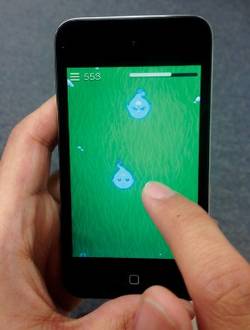
The gamified ABMT app, which uses features such as animated characters, sound effects, and awarding of points to make it more of a game, recruited adult university students who scored high on anxiety assessments and randomized them to either a shorter training session on the app or a placebo app (25 minutes of game play with 20 minutes of rest breaks) or a longer training session on the app or a control (45 minutes of game play with brief breaks given as needed).
Validated assessments immediately before and after showed generally positive results, but with some surprises, reported Tracy A. Dennis, Ph.D., who is professor of psychology at Hunter College in New York City, and Laura J. O’Toole of the City University of New York.
ABMT seeks to reduce anxiety by reducing a person’s exaggerated attention to threats (also known as "threat bias"). For example, the app may show two faces – one menacing and the other neutral or pleasant – and use mechanisms such as game maneuvers or points to reinforce attention away from the threatening face (or "threat prompt"). Only the long ABMT session produced significantly less biased attention to threats in the app. Subjects in the long ABMT group also showed less difficulty disengaging from threat (compared with those in either the long control group or the short ABMT), which was associated with less negative mood and less nervous speech.
Unexpectedly, participants in the short ABMT session had greater difficulty disengaging from threat after the session, compared with controls, Dr. Dennis and Ms. O’Toole found. The short ABMT session, however, significantly reduced participants’ subjective reports of anxiety, compared with those by control groups or the long ABMT group.
Several previous studies of modifying ABMT for use on mobile devices or via the Internet reported mixed results and didn’t assess participants’ willingness to keep using the app, the investigators noted. They hope that turning it into a video game–like app may make it easy, inexpensive, and appealing for youths and young adults to use without stigma. Future studies should look at more sophisticated versions of the app used by clinically diagnosed populations in out-of-laboratory settings for different amounts of time, the investigators suggested.
In an earlier review of the literature on mental health apps, Tara Donker, Ph.D., and her associates reviewed 4,997 abstracts and excluded studies that targeted a medical disorder, that didn’t include outcomes data, or that had to be downloaded first to a computer before transfer to a mobile device. The remaining eight studies included 227 participants, reported Dr. Donker of the University of New South Wales, Sydney, Australia, and her associates.
Four trials focused on three apps assessing depression (Mobilyze!, mobiletype, and Get Happy Program), three trials focused on the Mobile Stress Management app that measured stress as a primary outcome, and one trial focused on the DBT Coach app for substance use. None of these appears to be commercially available in the United States.
The within-group effects sizes for the apps ranged from 0.29 to 2.28, and the between-group effects sizes ranged from 0.01 to 0.48 using validated mental health scales in intent-to-treat analyses. These are promising results suggesting that mobile health apps can help reduce depressive symptoms and "caseness," stress, anxiety, and substance use, but the overall mediocre quality of the studies means the findings need to be replicated, the investigators said.
Users gave the apps moderate to high ratings for helpfulness, usability, and satisfaction. Adherence rates (in the studies that reported them) were high, and higher than seen previously with Internet-based interventions. Technical problems such as battery failure, connectivity problems, or the app freezing were the main reason app use was interrupted.
Dr. Dennis and Dr. Donker reported having no financial disclosures. Dr. Dennis’s study was funded by the U.S. National Institute of Mental Health.
On Twitter @sherryboschert
It seems the glass is half-full and half-empty when it comes to mental health apps. What data there are suggest that apps to treat or prevent anxiety, depression, stress, or substance abuse can work, but the paucity of good research makes it difficult to know which ones to recommend.
A recent randomized trial in 78 highly trait-anxious (but not diagnosed) adults found that a single session of using an experimental game app for attention-bias modification training (ABMT) significantly reduced acute stress responses and improved mood, compared with those of a control group (Clin. Psychol. Sci. 2014 March 6 [doi:10.1177/2167702614522228]). The work is preliminary but should not be taken for granted. A separate review of the literature on more than 3,000 mental health apps available to consumers found evidence for efficacy for only five apps in eight trials of less-than-desirable-quality that at least included a control group or pretest and posttest assessments (J. Med. Internet Res. 2013;15:e247).
The gamified ABMT app, which uses features such as animated characters, sound effects, and awarding of points to make it more of a game, recruited adult university students who scored high on anxiety assessments and randomized them to either a shorter training session on the app or a placebo app (25 minutes of game play with 20 minutes of rest breaks) or a longer training session on the app or a control (45 minutes of game play with brief breaks given as needed).
Validated assessments immediately before and after showed generally positive results, but with some surprises, reported Tracy A. Dennis, Ph.D., who is professor of psychology at Hunter College in New York City, and Laura J. O’Toole of the City University of New York.
ABMT seeks to reduce anxiety by reducing a person’s exaggerated attention to threats (also known as "threat bias"). For example, the app may show two faces – one menacing and the other neutral or pleasant – and use mechanisms such as game maneuvers or points to reinforce attention away from the threatening face (or "threat prompt"). Only the long ABMT session produced significantly less biased attention to threats in the app. Subjects in the long ABMT group also showed less difficulty disengaging from threat (compared with those in either the long control group or the short ABMT), which was associated with less negative mood and less nervous speech.
Unexpectedly, participants in the short ABMT session had greater difficulty disengaging from threat after the session, compared with controls, Dr. Dennis and Ms. O’Toole found. The short ABMT session, however, significantly reduced participants’ subjective reports of anxiety, compared with those by control groups or the long ABMT group.
Several previous studies of modifying ABMT for use on mobile devices or via the Internet reported mixed results and didn’t assess participants’ willingness to keep using the app, the investigators noted. They hope that turning it into a video game–like app may make it easy, inexpensive, and appealing for youths and young adults to use without stigma. Future studies should look at more sophisticated versions of the app used by clinically diagnosed populations in out-of-laboratory settings for different amounts of time, the investigators suggested.
In an earlier review of the literature on mental health apps, Tara Donker, Ph.D., and her associates reviewed 4,997 abstracts and excluded studies that targeted a medical disorder, that didn’t include outcomes data, or that had to be downloaded first to a computer before transfer to a mobile device. The remaining eight studies included 227 participants, reported Dr. Donker of the University of New South Wales, Sydney, Australia, and her associates.
Four trials focused on three apps assessing depression (Mobilyze!, mobiletype, and Get Happy Program), three trials focused on the Mobile Stress Management app that measured stress as a primary outcome, and one trial focused on the DBT Coach app for substance use. None of these appears to be commercially available in the United States.
The within-group effects sizes for the apps ranged from 0.29 to 2.28, and the between-group effects sizes ranged from 0.01 to 0.48 using validated mental health scales in intent-to-treat analyses. These are promising results suggesting that mobile health apps can help reduce depressive symptoms and "caseness," stress, anxiety, and substance use, but the overall mediocre quality of the studies means the findings need to be replicated, the investigators said.
Users gave the apps moderate to high ratings for helpfulness, usability, and satisfaction. Adherence rates (in the studies that reported them) were high, and higher than seen previously with Internet-based interventions. Technical problems such as battery failure, connectivity problems, or the app freezing were the main reason app use was interrupted.
Dr. Dennis and Dr. Donker reported having no financial disclosures. Dr. Dennis’s study was funded by the U.S. National Institute of Mental Health.
On Twitter @sherryboschert
It seems the glass is half-full and half-empty when it comes to mental health apps. What data there are suggest that apps to treat or prevent anxiety, depression, stress, or substance abuse can work, but the paucity of good research makes it difficult to know which ones to recommend.
A recent randomized trial in 78 highly trait-anxious (but not diagnosed) adults found that a single session of using an experimental game app for attention-bias modification training (ABMT) significantly reduced acute stress responses and improved mood, compared with those of a control group (Clin. Psychol. Sci. 2014 March 6 [doi:10.1177/2167702614522228]). The work is preliminary but should not be taken for granted. A separate review of the literature on more than 3,000 mental health apps available to consumers found evidence for efficacy for only five apps in eight trials of less-than-desirable-quality that at least included a control group or pretest and posttest assessments (J. Med. Internet Res. 2013;15:e247).
The gamified ABMT app, which uses features such as animated characters, sound effects, and awarding of points to make it more of a game, recruited adult university students who scored high on anxiety assessments and randomized them to either a shorter training session on the app or a placebo app (25 minutes of game play with 20 minutes of rest breaks) or a longer training session on the app or a control (45 minutes of game play with brief breaks given as needed).
Validated assessments immediately before and after showed generally positive results, but with some surprises, reported Tracy A. Dennis, Ph.D., who is professor of psychology at Hunter College in New York City, and Laura J. O’Toole of the City University of New York.
ABMT seeks to reduce anxiety by reducing a person’s exaggerated attention to threats (also known as "threat bias"). For example, the app may show two faces – one menacing and the other neutral or pleasant – and use mechanisms such as game maneuvers or points to reinforce attention away from the threatening face (or "threat prompt"). Only the long ABMT session produced significantly less biased attention to threats in the app. Subjects in the long ABMT group also showed less difficulty disengaging from threat (compared with those in either the long control group or the short ABMT), which was associated with less negative mood and less nervous speech.
Unexpectedly, participants in the short ABMT session had greater difficulty disengaging from threat after the session, compared with controls, Dr. Dennis and Ms. O’Toole found. The short ABMT session, however, significantly reduced participants’ subjective reports of anxiety, compared with those by control groups or the long ABMT group.
Several previous studies of modifying ABMT for use on mobile devices or via the Internet reported mixed results and didn’t assess participants’ willingness to keep using the app, the investigators noted. They hope that turning it into a video game–like app may make it easy, inexpensive, and appealing for youths and young adults to use without stigma. Future studies should look at more sophisticated versions of the app used by clinically diagnosed populations in out-of-laboratory settings for different amounts of time, the investigators suggested.
In an earlier review of the literature on mental health apps, Tara Donker, Ph.D., and her associates reviewed 4,997 abstracts and excluded studies that targeted a medical disorder, that didn’t include outcomes data, or that had to be downloaded first to a computer before transfer to a mobile device. The remaining eight studies included 227 participants, reported Dr. Donker of the University of New South Wales, Sydney, Australia, and her associates.
Four trials focused on three apps assessing depression (Mobilyze!, mobiletype, and Get Happy Program), three trials focused on the Mobile Stress Management app that measured stress as a primary outcome, and one trial focused on the DBT Coach app for substance use. None of these appears to be commercially available in the United States.
The within-group effects sizes for the apps ranged from 0.29 to 2.28, and the between-group effects sizes ranged from 0.01 to 0.48 using validated mental health scales in intent-to-treat analyses. These are promising results suggesting that mobile health apps can help reduce depressive symptoms and "caseness," stress, anxiety, and substance use, but the overall mediocre quality of the studies means the findings need to be replicated, the investigators said.
Users gave the apps moderate to high ratings for helpfulness, usability, and satisfaction. Adherence rates (in the studies that reported them) were high, and higher than seen previously with Internet-based interventions. Technical problems such as battery failure, connectivity problems, or the app freezing were the main reason app use was interrupted.
Dr. Dennis and Dr. Donker reported having no financial disclosures. Dr. Dennis’s study was funded by the U.S. National Institute of Mental Health.
On Twitter @sherryboschert
'Neuroscientification' and the mystical are compatible
In the February 2014 issue (Psychiatry’s future shock, Current Psychiatry, February 2014, p. 19-20, 32 [http://bit.ly/1bvrp3t]) Dr. Nasrallah tells us that psychiatrists who are not speaking the new language of the “neuroscientification” of psychiatry will soon be rendered obsolete. He says that we are at the “tipping point” in psychiatry, giving up the “primitive notions that have guided the profession for the past century,” and moving toward explaining our successes and failures in terms of microglial activation, inflammatory markers, apoptosis, S100B, and NOTCH 3. Those who talk about ego strengths, defense mechanisms, resilience, the unconscious mind, and the human spirit are “clinical dinosaurs.”
Sadly, Dr. Nasrallah speaks for many psychiatric academicians today, who believe the best way to understand the complexity of the human condition is to explain it in terms of neurotransmitters, genomics, and MRIs. But the truth is, no matter how much we know about the brain, the mind will always have a mind of its own. The language of science cannot adequately explain the mystery that is an essential part of the human experience.
The brain is hardwired for mystical experiences. We are biologically programmed to experience transcendent states that allow us to see the familiar from a new perspective, and to experience the awesome. It matters less how we explain the mechanics of the mysterious than it does to know it is important. To all my academic colleagues who herald in the “neuroscientification” of psychiatry, and the obsolescence of clinicians who still explore the unconscious mind, I say let’s not take ourselves too seriously. Awe is the mechanism by which we tame the ego.
Carl Hammerschlag, MD
Arizona Health Services Center
University of Arizona
Phoenix, Arizona
In the February 2014 issue (Psychiatry’s future shock, Current Psychiatry, February 2014, p. 19-20, 32 [http://bit.ly/1bvrp3t]) Dr. Nasrallah tells us that psychiatrists who are not speaking the new language of the “neuroscientification” of psychiatry will soon be rendered obsolete. He says that we are at the “tipping point” in psychiatry, giving up the “primitive notions that have guided the profession for the past century,” and moving toward explaining our successes and failures in terms of microglial activation, inflammatory markers, apoptosis, S100B, and NOTCH 3. Those who talk about ego strengths, defense mechanisms, resilience, the unconscious mind, and the human spirit are “clinical dinosaurs.”
Sadly, Dr. Nasrallah speaks for many psychiatric academicians today, who believe the best way to understand the complexity of the human condition is to explain it in terms of neurotransmitters, genomics, and MRIs. But the truth is, no matter how much we know about the brain, the mind will always have a mind of its own. The language of science cannot adequately explain the mystery that is an essential part of the human experience.
The brain is hardwired for mystical experiences. We are biologically programmed to experience transcendent states that allow us to see the familiar from a new perspective, and to experience the awesome. It matters less how we explain the mechanics of the mysterious than it does to know it is important. To all my academic colleagues who herald in the “neuroscientification” of psychiatry, and the obsolescence of clinicians who still explore the unconscious mind, I say let’s not take ourselves too seriously. Awe is the mechanism by which we tame the ego.
Carl Hammerschlag, MD
Arizona Health Services Center
University of Arizona
Phoenix, Arizona
In the February 2014 issue (Psychiatry’s future shock, Current Psychiatry, February 2014, p. 19-20, 32 [http://bit.ly/1bvrp3t]) Dr. Nasrallah tells us that psychiatrists who are not speaking the new language of the “neuroscientification” of psychiatry will soon be rendered obsolete. He says that we are at the “tipping point” in psychiatry, giving up the “primitive notions that have guided the profession for the past century,” and moving toward explaining our successes and failures in terms of microglial activation, inflammatory markers, apoptosis, S100B, and NOTCH 3. Those who talk about ego strengths, defense mechanisms, resilience, the unconscious mind, and the human spirit are “clinical dinosaurs.”
Sadly, Dr. Nasrallah speaks for many psychiatric academicians today, who believe the best way to understand the complexity of the human condition is to explain it in terms of neurotransmitters, genomics, and MRIs. But the truth is, no matter how much we know about the brain, the mind will always have a mind of its own. The language of science cannot adequately explain the mystery that is an essential part of the human experience.
The brain is hardwired for mystical experiences. We are biologically programmed to experience transcendent states that allow us to see the familiar from a new perspective, and to experience the awesome. It matters less how we explain the mechanics of the mysterious than it does to know it is important. To all my academic colleagues who herald in the “neuroscientification” of psychiatry, and the obsolescence of clinicians who still explore the unconscious mind, I say let’s not take ourselves too seriously. Awe is the mechanism by which we tame the ego.
Carl Hammerschlag, MD
Arizona Health Services Center
University of Arizona
Phoenix, Arizona
Consider a 'medical food' for tardive dyskinesia
In the interesting March 2014 Savvy Psychopharmacology article (Strategies for managing drug-induced tardive dyskinesia, Current Psychiatry, March 2014, p. 44-46; [http://bit. ly/1gNALYi]), the authors did not mention a medical food made from the branched-chain amino acids L-Leucine, L-Valine, and L-Isoleucine, which was reviewed by the FDA for the dietary management of tardive dyskinesia (TD) in males.1,2 Although this product, “Tarvil,” is no longer being manufactured, compounding pharmacies can make it using the same ratio of ingredients that was tested in the clinical trial.1 It may be worth considering before using tetrabenazine, a medication approved in the United States under the Orphan Drug Act, and launched at $34.25 for a 12.5 mg tablet and $68.50 for a 25 mg tablet.3
Leslie Citrome, MD, MPH
Clinical Professor of Psychiatry & Behavioral Sciences
New York Medical College
Valhalla, NY
Dr. Ellingrod responds
On behalf of Dr. Kaspar and myself, we thank Dr. Citrome for his interest and clarification. Because of the brevity of Savvy Psychopharmacology in the pages of Current Psychiatry, we decided to include only information on therapies that are readily available for TD. We also agree with Dr. Citrome that other treatment modalities, which often cost less, should be tried before tetrabenazine is utilized. Most important, judicious use of antipsychotics should be considered before any additional medications are added to the patient’s regimen.
Vicki L. Ellingrod, PharmD, FCCP
John Gideon Searle Professor of Clinical and Translational Pharmacy
University of Michigan College of Pharmacy and School of Medicine
Ann Arbor, Michigan
1. Richardson MA, Bevans ML, Read LL, et al. Efficacy of the branched-chain amino acids in the treatment of tardive dyskinesia in men. Am J Psychiatry. 2003;160(6):1117-1124.
2. Rosack J. Tardive dyskinesia improves with amino acid cocktail. Psychiatric News. http://www.psychnews.psychiatryonline.org/newsarticle.aspx?articleid=106524. Published August 1, 2003. Accessed March 31, 2014.
3. Specialty TrendsRx Availability Alert Xenazine® (tetrabenazine). CVS Caremark. December 2008. https://www.caremark.com/portal/asset/ SpecialtyTrendsRxAlert_Xenazine2.pdf. Published December 2008. Accessed March 15, 2014.
In the interesting March 2014 Savvy Psychopharmacology article (Strategies for managing drug-induced tardive dyskinesia, Current Psychiatry, March 2014, p. 44-46; [http://bit. ly/1gNALYi]), the authors did not mention a medical food made from the branched-chain amino acids L-Leucine, L-Valine, and L-Isoleucine, which was reviewed by the FDA for the dietary management of tardive dyskinesia (TD) in males.1,2 Although this product, “Tarvil,” is no longer being manufactured, compounding pharmacies can make it using the same ratio of ingredients that was tested in the clinical trial.1 It may be worth considering before using tetrabenazine, a medication approved in the United States under the Orphan Drug Act, and launched at $34.25 for a 12.5 mg tablet and $68.50 for a 25 mg tablet.3
Leslie Citrome, MD, MPH
Clinical Professor of Psychiatry & Behavioral Sciences
New York Medical College
Valhalla, NY
Dr. Ellingrod responds
On behalf of Dr. Kaspar and myself, we thank Dr. Citrome for his interest and clarification. Because of the brevity of Savvy Psychopharmacology in the pages of Current Psychiatry, we decided to include only information on therapies that are readily available for TD. We also agree with Dr. Citrome that other treatment modalities, which often cost less, should be tried before tetrabenazine is utilized. Most important, judicious use of antipsychotics should be considered before any additional medications are added to the patient’s regimen.
Vicki L. Ellingrod, PharmD, FCCP
John Gideon Searle Professor of Clinical and Translational Pharmacy
University of Michigan College of Pharmacy and School of Medicine
Ann Arbor, Michigan
In the interesting March 2014 Savvy Psychopharmacology article (Strategies for managing drug-induced tardive dyskinesia, Current Psychiatry, March 2014, p. 44-46; [http://bit. ly/1gNALYi]), the authors did not mention a medical food made from the branched-chain amino acids L-Leucine, L-Valine, and L-Isoleucine, which was reviewed by the FDA for the dietary management of tardive dyskinesia (TD) in males.1,2 Although this product, “Tarvil,” is no longer being manufactured, compounding pharmacies can make it using the same ratio of ingredients that was tested in the clinical trial.1 It may be worth considering before using tetrabenazine, a medication approved in the United States under the Orphan Drug Act, and launched at $34.25 for a 12.5 mg tablet and $68.50 for a 25 mg tablet.3
Leslie Citrome, MD, MPH
Clinical Professor of Psychiatry & Behavioral Sciences
New York Medical College
Valhalla, NY
Dr. Ellingrod responds
On behalf of Dr. Kaspar and myself, we thank Dr. Citrome for his interest and clarification. Because of the brevity of Savvy Psychopharmacology in the pages of Current Psychiatry, we decided to include only information on therapies that are readily available for TD. We also agree with Dr. Citrome that other treatment modalities, which often cost less, should be tried before tetrabenazine is utilized. Most important, judicious use of antipsychotics should be considered before any additional medications are added to the patient’s regimen.
Vicki L. Ellingrod, PharmD, FCCP
John Gideon Searle Professor of Clinical and Translational Pharmacy
University of Michigan College of Pharmacy and School of Medicine
Ann Arbor, Michigan
1. Richardson MA, Bevans ML, Read LL, et al. Efficacy of the branched-chain amino acids in the treatment of tardive dyskinesia in men. Am J Psychiatry. 2003;160(6):1117-1124.
2. Rosack J. Tardive dyskinesia improves with amino acid cocktail. Psychiatric News. http://www.psychnews.psychiatryonline.org/newsarticle.aspx?articleid=106524. Published August 1, 2003. Accessed March 31, 2014.
3. Specialty TrendsRx Availability Alert Xenazine® (tetrabenazine). CVS Caremark. December 2008. https://www.caremark.com/portal/asset/ SpecialtyTrendsRxAlert_Xenazine2.pdf. Published December 2008. Accessed March 15, 2014.
1. Richardson MA, Bevans ML, Read LL, et al. Efficacy of the branched-chain amino acids in the treatment of tardive dyskinesia in men. Am J Psychiatry. 2003;160(6):1117-1124.
2. Rosack J. Tardive dyskinesia improves with amino acid cocktail. Psychiatric News. http://www.psychnews.psychiatryonline.org/newsarticle.aspx?articleid=106524. Published August 1, 2003. Accessed March 31, 2014.
3. Specialty TrendsRx Availability Alert Xenazine® (tetrabenazine). CVS Caremark. December 2008. https://www.caremark.com/portal/asset/ SpecialtyTrendsRxAlert_Xenazine2.pdf. Published December 2008. Accessed March 15, 2014.
FDA, hospitals caution against laparoscopic power morcellation during hysterectomy and myomectomy
The use of power morcellation to remove the uterus or uterine tumors during hysterectomy and myomectomy may be riskier than many have thought. That’s the conclusion reached by the US Food and Drug Administration (FDA) in a safety communication issued April 17, 2014. In its communication, the FDA “discouraged” use of power morcellation during hysterectomy and myomectomy. Shortly afterward, Brigham and Women’s and Massachusetts General hospitals in Boston banned power morcellation in all hysterectomy and myomectomy procedures. The hospitals may resume power morcellation at some future date using a containment system, pending guidance from the Institutional Review Board.
Robert L. Barbieri, MD, who is chair of obstetrics and gynecology at Brigham and Women’s Hospital, recently wrote about this concern for OBG Management in his capacity as editor in chief of the journal.
“When used to treat tumors presumed to be fibroids, open power morcellation [without a containment system] is associated with an increased risk of dispersing benign myoma tissue and occult malignant leiomyosarcoma tissue throughout the abdominal cavity,” he wrote.1 “Dispersion of benign myoma tissue may result in the growth of fibroids on the peritoneal surface, omentum, and bowel, causing abdominal and pelvic pain and necessitating reoperation. Dispersion of leiomyosarcoma tissue throughout the abdominal cavity may result in a Stage I cancer being upstaged to a Stage IV malignancy, requiring additional surgery and chemotherapy. In cases in which open power morcellation causes the upstaging of a leiomyosarcoma, the death rate is increased.”1
The two Boston hospitals are not the only institutions reconsidering the use of power morcellation. Temple University Hospital in Philadelphia banned use of the procedure without a containment system in late February 2014.
And in December 2013, the Society of Gynecologic Oncology issued a position statement on the issue, which said, “power morcellation or other techniques that cut up the uterus in the abdomen have the potential to disseminate an otherwise contained malignancy throughout the abdominal cavity. For this reason, the Society of Gynecologic Oncology (SGO) asserts that it is generally contraindicated in the presence of documented or highly suspected malignancy, and may be inadvisable in premalignant conditions or risk-reducing surgery.”2
For its part, at the time of this writing, the AAGL, previously known as the American Association of Gynecologic Laparoscopists, “is reviewing the scientific evidence and best practices reported by our members,” stated an article in its Association News. “We recognize that, in rare cases, the use of power morcellators can lead to the dissemination of an occult malignancy of endometrial or myometrial origin, and also to dissemination of benign morcellated tissues. We encourage our members to fully research and understand the risks of power morcellation and to learn more about when alternative methods of tissue extraction may be appropriate.”3
FDA STOPS SHORT OF A BAN
In laying out its concerns, the FDA stopped short of an outright ban on power morcellation. Instead, it stated that, “based on currently available information, the FDA discourages the use of laparoscopic power morcellation during hysterectomy or myomectomy for uterine fibroids.”4
It also noted that approximately 1 in 350 women “undergoing hysterectomy or myomectomy for the treatment of fibroids is found to have an unsuspected uterine sarcoma.”4
Among its recommendations for health-care providers:
- avoid laparoscopic uterine power morcellation in women with suspected or known uterine cancer
- carefully consider all available treatment options for women with symptomatic uterine fibroids
- thoroughly discuss the benefits and risks of all treatments with patients.4
The FDA also noted that “some clinicians and medical institutions now advocate using a specimen ‘bag’ during morcellation in an attempt to contain the uterine tissue and minimize the risk of spread in the abdomen and pelvis.”4
ACOG HAS YET TO WEIGH IN
At the time of this writing, the most recent committee opinion on choosing a hysterectomy route from the American College of Obstetricians and Gynecologists (ACOG) to touch on the issue states that, “the decision to perform a hysterectomy via [minimally invasive surgery] (with or without morcellation) is based on a patient evaluation, including the patient’s history and general health, tests, and procedures, such as pre-surgery biopsies. The evaluation and diagnostic process also provides an opportunity to identify any cautions or contraindications, such as finding a gynecological cancer.”5
FILLING THE TECHNOLOGY GAP
Now that power morcellation appears to be receding as an option for minimally invasive gynecologic surgeons, what is the best approach?
In its position statement, the SGO recommends that, “Patients being considered for minimally invasive surgery performed by laparoscopic or robotic techniques who might require intracorporeal morcellation should be appropriately evaluated for the possibility of coexisting uterine or cervical malignancy. Other options to intracorporeal morcellation include removing the uterus through a mini-laparotomy or morcellating the uterus inside a laparoscopic bag.”2
K. Anthony Shibley, MD, a Minneapolis-area ObGyn, has developed a novel strategy to prevent tissue dissemination during open power morcellation, which is demonstrated in a video at obgmanagement.com. Similarly, Ceana Nezhat, MD, and Erica Dun, MD, demonstrate enclosed vaginal morcellation of a large uterus. Click here to access these and other features in the Morcellation Topic Collection.
WE WANT TO HEAR FROM YOU!
Drop us a line and let us know what you think about this or other current articles, which topics you'd like to see covered in future issues, and what challenges you face in daily practice. Tell us what you think by emailing us at: [email protected] Please include your name, and the city and state in which you practice.
- Barbieri RL. Options for reducing the use of open power morcellation of uterine tumors. OBG Manag. 2014;26(3):10,11,20.
- Society of Gynecologic Oncology. Position Statement: Morcellation. https://www.sgo.org/newsroom/position-statements-2/morcellation/. Published December 2013. Accessed April 8, 2014.
- AAGL Member Update: Disseminated Leiomyosarcoma with Power Morcellation. http://www.aagl.org/aaglnews/aagl-member-update-disseminated-leiomyosarcoma-with-power-morcellation/. Accessed April 11, 2014.
- US Food and Drug Administration. Laparoscopic uterine power morcellation in hysterectomy and myomectomy: FDA safety communication. April 17, 2014.
- American College of Obstetricians and Gynecologists. Committee Opinion No. 444: Choosing the route of hysterectomy for benign disease. Obstet Gynecol. 2009;114(5):1156–1158.
The use of power morcellation to remove the uterus or uterine tumors during hysterectomy and myomectomy may be riskier than many have thought. That’s the conclusion reached by the US Food and Drug Administration (FDA) in a safety communication issued April 17, 2014. In its communication, the FDA “discouraged” use of power morcellation during hysterectomy and myomectomy. Shortly afterward, Brigham and Women’s and Massachusetts General hospitals in Boston banned power morcellation in all hysterectomy and myomectomy procedures. The hospitals may resume power morcellation at some future date using a containment system, pending guidance from the Institutional Review Board.
Robert L. Barbieri, MD, who is chair of obstetrics and gynecology at Brigham and Women’s Hospital, recently wrote about this concern for OBG Management in his capacity as editor in chief of the journal.
“When used to treat tumors presumed to be fibroids, open power morcellation [without a containment system] is associated with an increased risk of dispersing benign myoma tissue and occult malignant leiomyosarcoma tissue throughout the abdominal cavity,” he wrote.1 “Dispersion of benign myoma tissue may result in the growth of fibroids on the peritoneal surface, omentum, and bowel, causing abdominal and pelvic pain and necessitating reoperation. Dispersion of leiomyosarcoma tissue throughout the abdominal cavity may result in a Stage I cancer being upstaged to a Stage IV malignancy, requiring additional surgery and chemotherapy. In cases in which open power morcellation causes the upstaging of a leiomyosarcoma, the death rate is increased.”1
The two Boston hospitals are not the only institutions reconsidering the use of power morcellation. Temple University Hospital in Philadelphia banned use of the procedure without a containment system in late February 2014.
And in December 2013, the Society of Gynecologic Oncology issued a position statement on the issue, which said, “power morcellation or other techniques that cut up the uterus in the abdomen have the potential to disseminate an otherwise contained malignancy throughout the abdominal cavity. For this reason, the Society of Gynecologic Oncology (SGO) asserts that it is generally contraindicated in the presence of documented or highly suspected malignancy, and may be inadvisable in premalignant conditions or risk-reducing surgery.”2
For its part, at the time of this writing, the AAGL, previously known as the American Association of Gynecologic Laparoscopists, “is reviewing the scientific evidence and best practices reported by our members,” stated an article in its Association News. “We recognize that, in rare cases, the use of power morcellators can lead to the dissemination of an occult malignancy of endometrial or myometrial origin, and also to dissemination of benign morcellated tissues. We encourage our members to fully research and understand the risks of power morcellation and to learn more about when alternative methods of tissue extraction may be appropriate.”3
FDA STOPS SHORT OF A BAN
In laying out its concerns, the FDA stopped short of an outright ban on power morcellation. Instead, it stated that, “based on currently available information, the FDA discourages the use of laparoscopic power morcellation during hysterectomy or myomectomy for uterine fibroids.”4
It also noted that approximately 1 in 350 women “undergoing hysterectomy or myomectomy for the treatment of fibroids is found to have an unsuspected uterine sarcoma.”4
Among its recommendations for health-care providers:
- avoid laparoscopic uterine power morcellation in women with suspected or known uterine cancer
- carefully consider all available treatment options for women with symptomatic uterine fibroids
- thoroughly discuss the benefits and risks of all treatments with patients.4
The FDA also noted that “some clinicians and medical institutions now advocate using a specimen ‘bag’ during morcellation in an attempt to contain the uterine tissue and minimize the risk of spread in the abdomen and pelvis.”4
ACOG HAS YET TO WEIGH IN
At the time of this writing, the most recent committee opinion on choosing a hysterectomy route from the American College of Obstetricians and Gynecologists (ACOG) to touch on the issue states that, “the decision to perform a hysterectomy via [minimally invasive surgery] (with or without morcellation) is based on a patient evaluation, including the patient’s history and general health, tests, and procedures, such as pre-surgery biopsies. The evaluation and diagnostic process also provides an opportunity to identify any cautions or contraindications, such as finding a gynecological cancer.”5
FILLING THE TECHNOLOGY GAP
Now that power morcellation appears to be receding as an option for minimally invasive gynecologic surgeons, what is the best approach?
In its position statement, the SGO recommends that, “Patients being considered for minimally invasive surgery performed by laparoscopic or robotic techniques who might require intracorporeal morcellation should be appropriately evaluated for the possibility of coexisting uterine or cervical malignancy. Other options to intracorporeal morcellation include removing the uterus through a mini-laparotomy or morcellating the uterus inside a laparoscopic bag.”2
K. Anthony Shibley, MD, a Minneapolis-area ObGyn, has developed a novel strategy to prevent tissue dissemination during open power morcellation, which is demonstrated in a video at obgmanagement.com. Similarly, Ceana Nezhat, MD, and Erica Dun, MD, demonstrate enclosed vaginal morcellation of a large uterus. Click here to access these and other features in the Morcellation Topic Collection.
WE WANT TO HEAR FROM YOU!
Drop us a line and let us know what you think about this or other current articles, which topics you'd like to see covered in future issues, and what challenges you face in daily practice. Tell us what you think by emailing us at: [email protected] Please include your name, and the city and state in which you practice.
The use of power morcellation to remove the uterus or uterine tumors during hysterectomy and myomectomy may be riskier than many have thought. That’s the conclusion reached by the US Food and Drug Administration (FDA) in a safety communication issued April 17, 2014. In its communication, the FDA “discouraged” use of power morcellation during hysterectomy and myomectomy. Shortly afterward, Brigham and Women’s and Massachusetts General hospitals in Boston banned power morcellation in all hysterectomy and myomectomy procedures. The hospitals may resume power morcellation at some future date using a containment system, pending guidance from the Institutional Review Board.
Robert L. Barbieri, MD, who is chair of obstetrics and gynecology at Brigham and Women’s Hospital, recently wrote about this concern for OBG Management in his capacity as editor in chief of the journal.
“When used to treat tumors presumed to be fibroids, open power morcellation [without a containment system] is associated with an increased risk of dispersing benign myoma tissue and occult malignant leiomyosarcoma tissue throughout the abdominal cavity,” he wrote.1 “Dispersion of benign myoma tissue may result in the growth of fibroids on the peritoneal surface, omentum, and bowel, causing abdominal and pelvic pain and necessitating reoperation. Dispersion of leiomyosarcoma tissue throughout the abdominal cavity may result in a Stage I cancer being upstaged to a Stage IV malignancy, requiring additional surgery and chemotherapy. In cases in which open power morcellation causes the upstaging of a leiomyosarcoma, the death rate is increased.”1
The two Boston hospitals are not the only institutions reconsidering the use of power morcellation. Temple University Hospital in Philadelphia banned use of the procedure without a containment system in late February 2014.
And in December 2013, the Society of Gynecologic Oncology issued a position statement on the issue, which said, “power morcellation or other techniques that cut up the uterus in the abdomen have the potential to disseminate an otherwise contained malignancy throughout the abdominal cavity. For this reason, the Society of Gynecologic Oncology (SGO) asserts that it is generally contraindicated in the presence of documented or highly suspected malignancy, and may be inadvisable in premalignant conditions or risk-reducing surgery.”2
For its part, at the time of this writing, the AAGL, previously known as the American Association of Gynecologic Laparoscopists, “is reviewing the scientific evidence and best practices reported by our members,” stated an article in its Association News. “We recognize that, in rare cases, the use of power morcellators can lead to the dissemination of an occult malignancy of endometrial or myometrial origin, and also to dissemination of benign morcellated tissues. We encourage our members to fully research and understand the risks of power morcellation and to learn more about when alternative methods of tissue extraction may be appropriate.”3
FDA STOPS SHORT OF A BAN
In laying out its concerns, the FDA stopped short of an outright ban on power morcellation. Instead, it stated that, “based on currently available information, the FDA discourages the use of laparoscopic power morcellation during hysterectomy or myomectomy for uterine fibroids.”4
It also noted that approximately 1 in 350 women “undergoing hysterectomy or myomectomy for the treatment of fibroids is found to have an unsuspected uterine sarcoma.”4
Among its recommendations for health-care providers:
- avoid laparoscopic uterine power morcellation in women with suspected or known uterine cancer
- carefully consider all available treatment options for women with symptomatic uterine fibroids
- thoroughly discuss the benefits and risks of all treatments with patients.4
The FDA also noted that “some clinicians and medical institutions now advocate using a specimen ‘bag’ during morcellation in an attempt to contain the uterine tissue and minimize the risk of spread in the abdomen and pelvis.”4
ACOG HAS YET TO WEIGH IN
At the time of this writing, the most recent committee opinion on choosing a hysterectomy route from the American College of Obstetricians and Gynecologists (ACOG) to touch on the issue states that, “the decision to perform a hysterectomy via [minimally invasive surgery] (with or without morcellation) is based on a patient evaluation, including the patient’s history and general health, tests, and procedures, such as pre-surgery biopsies. The evaluation and diagnostic process also provides an opportunity to identify any cautions or contraindications, such as finding a gynecological cancer.”5
FILLING THE TECHNOLOGY GAP
Now that power morcellation appears to be receding as an option for minimally invasive gynecologic surgeons, what is the best approach?
In its position statement, the SGO recommends that, “Patients being considered for minimally invasive surgery performed by laparoscopic or robotic techniques who might require intracorporeal morcellation should be appropriately evaluated for the possibility of coexisting uterine or cervical malignancy. Other options to intracorporeal morcellation include removing the uterus through a mini-laparotomy or morcellating the uterus inside a laparoscopic bag.”2
K. Anthony Shibley, MD, a Minneapolis-area ObGyn, has developed a novel strategy to prevent tissue dissemination during open power morcellation, which is demonstrated in a video at obgmanagement.com. Similarly, Ceana Nezhat, MD, and Erica Dun, MD, demonstrate enclosed vaginal morcellation of a large uterus. Click here to access these and other features in the Morcellation Topic Collection.
WE WANT TO HEAR FROM YOU!
Drop us a line and let us know what you think about this or other current articles, which topics you'd like to see covered in future issues, and what challenges you face in daily practice. Tell us what you think by emailing us at: [email protected] Please include your name, and the city and state in which you practice.
- Barbieri RL. Options for reducing the use of open power morcellation of uterine tumors. OBG Manag. 2014;26(3):10,11,20.
- Society of Gynecologic Oncology. Position Statement: Morcellation. https://www.sgo.org/newsroom/position-statements-2/morcellation/. Published December 2013. Accessed April 8, 2014.
- AAGL Member Update: Disseminated Leiomyosarcoma with Power Morcellation. http://www.aagl.org/aaglnews/aagl-member-update-disseminated-leiomyosarcoma-with-power-morcellation/. Accessed April 11, 2014.
- US Food and Drug Administration. Laparoscopic uterine power morcellation in hysterectomy and myomectomy: FDA safety communication. April 17, 2014.
- American College of Obstetricians and Gynecologists. Committee Opinion No. 444: Choosing the route of hysterectomy for benign disease. Obstet Gynecol. 2009;114(5):1156–1158.
- Barbieri RL. Options for reducing the use of open power morcellation of uterine tumors. OBG Manag. 2014;26(3):10,11,20.
- Society of Gynecologic Oncology. Position Statement: Morcellation. https://www.sgo.org/newsroom/position-statements-2/morcellation/. Published December 2013. Accessed April 8, 2014.
- AAGL Member Update: Disseminated Leiomyosarcoma with Power Morcellation. http://www.aagl.org/aaglnews/aagl-member-update-disseminated-leiomyosarcoma-with-power-morcellation/. Accessed April 11, 2014.
- US Food and Drug Administration. Laparoscopic uterine power morcellation in hysterectomy and myomectomy: FDA safety communication. April 17, 2014.
- American College of Obstetricians and Gynecologists. Committee Opinion No. 444: Choosing the route of hysterectomy for benign disease. Obstet Gynecol. 2009;114(5):1156–1158.
To access articles, videos, and audiocasts in the Morcellation Topic Collection, click here.
The guilt train
In 2002 I wrote a book that the publishers chose to title, "The Maternity Leave Breastfeeding Plan: How to Enjoy Nursing for 3 Months and Go Back to Work Guilt-Free" (Chicago: Touchstone, 2002 ). I have always believed that breast milk is the natural first food for children, and that in most situations, nursing is the best option for mothers. However, after 25 years of trying to help mothers to breastfeed, I had grown increasingly troubled that for too many young mothers, the first years of parenting were shadowed by a cloud of guilt because they had "failed" at breastfeeding.
I felt that someone needed to write a book that presented a realistic view of breastfeeding. For a variety of good and bad reasons, not every woman who gives birth can successfully breastfeed. In my book, I offered as many suggestions as I could think of for making breastfeeding work. I emphasized that prenatal preparation and planning were particularly important for creating workplace, day care, and home environments that are conducive to breastfeeding. I stressed the importance of adopting realistic schedules that would allow enough recovery time from the stresses of parenting and breastfeeding. I suggested a toolbox full of ways in which fathers could improve the chances of breastfeeding success.
Woven through the book was the attitude that breastfeeding isn’t always as easy as some advocates suggest. Despite everyone’s best efforts and planning, stuff happens. I basically said that I think breastfeeding is a good idea, and here are some suggestions that can help you achieve your goal of nursing. But, if it doesn’t work, that’s okay. You are a great mother for having tried, and your child will still love you and grow up healthy.
In the last dozen years, there has been little change in the number of women initiating and successfully breastfeeding their infants.
Data supporting the benefits of breast milk continue to trickle in at a steady rate. However, based on my own anecdotal observations, I still harbor some lingering doubts about how significant these benefits have been for my patients here in North America. A recent study by some investigators at Ohio State University supports my skepticism (Cynthia G. Colen and David Ramey. "Is breast truly best? Estimating the effects of breastfeeding on long term child health and well-being in the United States using sibling comparisons" (Soc. Sci. Med. 2014;109:55-65).
These researchers looked at the National Longitudinal Survey of Youth that contains 25 years of panel data for children aged 4-14 years. If one merely compares breastfed versus nonbreastfed children, those who were breastfed score better on 10 of the 11 outcomes included in the survey. However, when the Ohio State investigators restricted their analyses to siblings, they found that with the exception of one outcome, the differences between breastfed and nonbreastfed children were no longer statistically significant. This observation makes one wonder how many other studies that purport to support the health benefits of breastfeeding have failed to adequately control for socioeconomic and demographic influences.
So where does this leave those of us tasked with helping young women breastfeed? The fact that I first learned about this study in the New York Times suggests that we will be challenged to respond. Obviously, we should still encourage mothers to breastfeed because it appears that the attitudes and environment that prompted a mother to choose to breastfeed at least once may be as important as whether her child actually receives breast milk.
For me, this study won’t change much because I have always avoided giving parents a laundry list of the advantages of breastfeeding.
However, I will keep this study’s findings tucked away to be pulled out when a mother has lost her struggle to breastfeed. Properly used, these results could be a free pass for her to climb off the Breastfeeding Guilt Trip Express.
Dr. Wilkoff practiced primary care pediatrics in Brunswick, Maine, for nearly 40 years. He has authored several books on behavioral pediatrics including "How to Say No to Your Toddler." E-mail him at pdnews@ frontlinemedcom.com.
In 2002 I wrote a book that the publishers chose to title, "The Maternity Leave Breastfeeding Plan: How to Enjoy Nursing for 3 Months and Go Back to Work Guilt-Free" (Chicago: Touchstone, 2002 ). I have always believed that breast milk is the natural first food for children, and that in most situations, nursing is the best option for mothers. However, after 25 years of trying to help mothers to breastfeed, I had grown increasingly troubled that for too many young mothers, the first years of parenting were shadowed by a cloud of guilt because they had "failed" at breastfeeding.
I felt that someone needed to write a book that presented a realistic view of breastfeeding. For a variety of good and bad reasons, not every woman who gives birth can successfully breastfeed. In my book, I offered as many suggestions as I could think of for making breastfeeding work. I emphasized that prenatal preparation and planning were particularly important for creating workplace, day care, and home environments that are conducive to breastfeeding. I stressed the importance of adopting realistic schedules that would allow enough recovery time from the stresses of parenting and breastfeeding. I suggested a toolbox full of ways in which fathers could improve the chances of breastfeeding success.
Woven through the book was the attitude that breastfeeding isn’t always as easy as some advocates suggest. Despite everyone’s best efforts and planning, stuff happens. I basically said that I think breastfeeding is a good idea, and here are some suggestions that can help you achieve your goal of nursing. But, if it doesn’t work, that’s okay. You are a great mother for having tried, and your child will still love you and grow up healthy.
In the last dozen years, there has been little change in the number of women initiating and successfully breastfeeding their infants.
Data supporting the benefits of breast milk continue to trickle in at a steady rate. However, based on my own anecdotal observations, I still harbor some lingering doubts about how significant these benefits have been for my patients here in North America. A recent study by some investigators at Ohio State University supports my skepticism (Cynthia G. Colen and David Ramey. "Is breast truly best? Estimating the effects of breastfeeding on long term child health and well-being in the United States using sibling comparisons" (Soc. Sci. Med. 2014;109:55-65).
These researchers looked at the National Longitudinal Survey of Youth that contains 25 years of panel data for children aged 4-14 years. If one merely compares breastfed versus nonbreastfed children, those who were breastfed score better on 10 of the 11 outcomes included in the survey. However, when the Ohio State investigators restricted their analyses to siblings, they found that with the exception of one outcome, the differences between breastfed and nonbreastfed children were no longer statistically significant. This observation makes one wonder how many other studies that purport to support the health benefits of breastfeeding have failed to adequately control for socioeconomic and demographic influences.
So where does this leave those of us tasked with helping young women breastfeed? The fact that I first learned about this study in the New York Times suggests that we will be challenged to respond. Obviously, we should still encourage mothers to breastfeed because it appears that the attitudes and environment that prompted a mother to choose to breastfeed at least once may be as important as whether her child actually receives breast milk.
For me, this study won’t change much because I have always avoided giving parents a laundry list of the advantages of breastfeeding.
However, I will keep this study’s findings tucked away to be pulled out when a mother has lost her struggle to breastfeed. Properly used, these results could be a free pass for her to climb off the Breastfeeding Guilt Trip Express.
Dr. Wilkoff practiced primary care pediatrics in Brunswick, Maine, for nearly 40 years. He has authored several books on behavioral pediatrics including "How to Say No to Your Toddler." E-mail him at pdnews@ frontlinemedcom.com.
In 2002 I wrote a book that the publishers chose to title, "The Maternity Leave Breastfeeding Plan: How to Enjoy Nursing for 3 Months and Go Back to Work Guilt-Free" (Chicago: Touchstone, 2002 ). I have always believed that breast milk is the natural first food for children, and that in most situations, nursing is the best option for mothers. However, after 25 years of trying to help mothers to breastfeed, I had grown increasingly troubled that for too many young mothers, the first years of parenting were shadowed by a cloud of guilt because they had "failed" at breastfeeding.
I felt that someone needed to write a book that presented a realistic view of breastfeeding. For a variety of good and bad reasons, not every woman who gives birth can successfully breastfeed. In my book, I offered as many suggestions as I could think of for making breastfeeding work. I emphasized that prenatal preparation and planning were particularly important for creating workplace, day care, and home environments that are conducive to breastfeeding. I stressed the importance of adopting realistic schedules that would allow enough recovery time from the stresses of parenting and breastfeeding. I suggested a toolbox full of ways in which fathers could improve the chances of breastfeeding success.
Woven through the book was the attitude that breastfeeding isn’t always as easy as some advocates suggest. Despite everyone’s best efforts and planning, stuff happens. I basically said that I think breastfeeding is a good idea, and here are some suggestions that can help you achieve your goal of nursing. But, if it doesn’t work, that’s okay. You are a great mother for having tried, and your child will still love you and grow up healthy.
In the last dozen years, there has been little change in the number of women initiating and successfully breastfeeding their infants.
Data supporting the benefits of breast milk continue to trickle in at a steady rate. However, based on my own anecdotal observations, I still harbor some lingering doubts about how significant these benefits have been for my patients here in North America. A recent study by some investigators at Ohio State University supports my skepticism (Cynthia G. Colen and David Ramey. "Is breast truly best? Estimating the effects of breastfeeding on long term child health and well-being in the United States using sibling comparisons" (Soc. Sci. Med. 2014;109:55-65).
These researchers looked at the National Longitudinal Survey of Youth that contains 25 years of panel data for children aged 4-14 years. If one merely compares breastfed versus nonbreastfed children, those who were breastfed score better on 10 of the 11 outcomes included in the survey. However, when the Ohio State investigators restricted their analyses to siblings, they found that with the exception of one outcome, the differences between breastfed and nonbreastfed children were no longer statistically significant. This observation makes one wonder how many other studies that purport to support the health benefits of breastfeeding have failed to adequately control for socioeconomic and demographic influences.
So where does this leave those of us tasked with helping young women breastfeed? The fact that I first learned about this study in the New York Times suggests that we will be challenged to respond. Obviously, we should still encourage mothers to breastfeed because it appears that the attitudes and environment that prompted a mother to choose to breastfeed at least once may be as important as whether her child actually receives breast milk.
For me, this study won’t change much because I have always avoided giving parents a laundry list of the advantages of breastfeeding.
However, I will keep this study’s findings tucked away to be pulled out when a mother has lost her struggle to breastfeed. Properly used, these results could be a free pass for her to climb off the Breastfeeding Guilt Trip Express.
Dr. Wilkoff practiced primary care pediatrics in Brunswick, Maine, for nearly 40 years. He has authored several books on behavioral pediatrics including "How to Say No to Your Toddler." E-mail him at pdnews@ frontlinemedcom.com.

New packaging
Marketing consultants have known it for years. Packaging sells the product. Putting it in the right color box can make the difference between a top seller and a flop. The truth is that most of us select wine by the appearance of the label and books by the design on the jacket.
In medicine, we package signs and symptoms in diagnoses and syndromes, and sometimes add an extra label that says "disease" in bold letters. But, what qualifies a particular constellation of physical findings and patients’ complaints as a "disease"?
This is not a trivial question. For the unfortunate victims, having a "disease" may allow them to tell their friends, "See, I’m not just a whiner. I actually have something. I have a disease." Diseases sometimes have their own specialists. Some have support groups, fund-raising foundations, and spokespersons.
In June 2013, the American Medical Association took the bold step of labeling obesity a "multimetabolic and hormonal disease state." This was the next logical step in an evolution that began with parents being told that their children would outgrow their baby fat if they adjusted their diets. Now we know that the seeds of obesity may be planted well before birth, and have certainly taken firm root before age 3 years to persist as a chronic condition with a myriad of life-altering ramifications. Sounds like a "disease" to me.
In an article in a New York Times Sunday Review, two psychologists from the University of Richmond discuss the dilemmas associated with this repackaging of obesity as a "disease" ("Should Obesity Be a Disease?" Crystal L. Hoyt and Jeni L. Burnette. Feb. 21, 2014). With a colleague from the University of Minnesota, these researchers performed three studies with 700 subjects who were divided into two groups. One group was given an article from a family magazine that included the standard advice on setting weight management goals. The other was provided an article clearly stating that obesity is a disease.
Surveys of the two groups revealed that for the obese individuals, reading the obesity is a disease article improved their "body satisfaction." Not a surprise. Nor is the observation that the same message made attempts at change seem futile. Another of their studies showed that this attitude of futility was correlated with less-healthy, higher-calorie food choices.
So it appears that in labeling obesity as a disease, the AMA has handed us a double-edged sword. We can use the new packaging to help our obese patients feel better about themselves. But, we must be prepared to address a sense of futility that may accompany their acceptance of a disease for which we currently don’t have a cure. Faced with this dilemma, we may need to adopt the style of successful chronic disease specialists. Sharing our frustration, we must remind our obese patients that while we don’t have a cure, we can help them manage their disease in a way that minimizes its ill effects.
While the disease label can cut both ways for our current patients, we should seize the opportunity to use it as a potent weapon in prevention for our patients yet to be born or even conceived. And, now we understand that prevention means taking aggressive steps prenatally and in the first 2 years of life before it’s too late. Armed with the new label, it is time to mount a serious campaign with the slogan, "Baby Fat is a Preventable Disease!"
Dr. Wilkoff practiced primary care pediatrics in Brunswick, Maine, for nearly 40 years. He has authored several books on behavioral pediatrics including "How to Say No to Your Toddler." E-mail him at [email protected].
Marketing consultants have known it for years. Packaging sells the product. Putting it in the right color box can make the difference between a top seller and a flop. The truth is that most of us select wine by the appearance of the label and books by the design on the jacket.
In medicine, we package signs and symptoms in diagnoses and syndromes, and sometimes add an extra label that says "disease" in bold letters. But, what qualifies a particular constellation of physical findings and patients’ complaints as a "disease"?
This is not a trivial question. For the unfortunate victims, having a "disease" may allow them to tell their friends, "See, I’m not just a whiner. I actually have something. I have a disease." Diseases sometimes have their own specialists. Some have support groups, fund-raising foundations, and spokespersons.
In June 2013, the American Medical Association took the bold step of labeling obesity a "multimetabolic and hormonal disease state." This was the next logical step in an evolution that began with parents being told that their children would outgrow their baby fat if they adjusted their diets. Now we know that the seeds of obesity may be planted well before birth, and have certainly taken firm root before age 3 years to persist as a chronic condition with a myriad of life-altering ramifications. Sounds like a "disease" to me.
In an article in a New York Times Sunday Review, two psychologists from the University of Richmond discuss the dilemmas associated with this repackaging of obesity as a "disease" ("Should Obesity Be a Disease?" Crystal L. Hoyt and Jeni L. Burnette. Feb. 21, 2014). With a colleague from the University of Minnesota, these researchers performed three studies with 700 subjects who were divided into two groups. One group was given an article from a family magazine that included the standard advice on setting weight management goals. The other was provided an article clearly stating that obesity is a disease.
Surveys of the two groups revealed that for the obese individuals, reading the obesity is a disease article improved their "body satisfaction." Not a surprise. Nor is the observation that the same message made attempts at change seem futile. Another of their studies showed that this attitude of futility was correlated with less-healthy, higher-calorie food choices.
So it appears that in labeling obesity as a disease, the AMA has handed us a double-edged sword. We can use the new packaging to help our obese patients feel better about themselves. But, we must be prepared to address a sense of futility that may accompany their acceptance of a disease for which we currently don’t have a cure. Faced with this dilemma, we may need to adopt the style of successful chronic disease specialists. Sharing our frustration, we must remind our obese patients that while we don’t have a cure, we can help them manage their disease in a way that minimizes its ill effects.
While the disease label can cut both ways for our current patients, we should seize the opportunity to use it as a potent weapon in prevention for our patients yet to be born or even conceived. And, now we understand that prevention means taking aggressive steps prenatally and in the first 2 years of life before it’s too late. Armed with the new label, it is time to mount a serious campaign with the slogan, "Baby Fat is a Preventable Disease!"
Dr. Wilkoff practiced primary care pediatrics in Brunswick, Maine, for nearly 40 years. He has authored several books on behavioral pediatrics including "How to Say No to Your Toddler." E-mail him at [email protected].
Marketing consultants have known it for years. Packaging sells the product. Putting it in the right color box can make the difference between a top seller and a flop. The truth is that most of us select wine by the appearance of the label and books by the design on the jacket.
In medicine, we package signs and symptoms in diagnoses and syndromes, and sometimes add an extra label that says "disease" in bold letters. But, what qualifies a particular constellation of physical findings and patients’ complaints as a "disease"?
This is not a trivial question. For the unfortunate victims, having a "disease" may allow them to tell their friends, "See, I’m not just a whiner. I actually have something. I have a disease." Diseases sometimes have their own specialists. Some have support groups, fund-raising foundations, and spokespersons.
In June 2013, the American Medical Association took the bold step of labeling obesity a "multimetabolic and hormonal disease state." This was the next logical step in an evolution that began with parents being told that their children would outgrow their baby fat if they adjusted their diets. Now we know that the seeds of obesity may be planted well before birth, and have certainly taken firm root before age 3 years to persist as a chronic condition with a myriad of life-altering ramifications. Sounds like a "disease" to me.
In an article in a New York Times Sunday Review, two psychologists from the University of Richmond discuss the dilemmas associated with this repackaging of obesity as a "disease" ("Should Obesity Be a Disease?" Crystal L. Hoyt and Jeni L. Burnette. Feb. 21, 2014). With a colleague from the University of Minnesota, these researchers performed three studies with 700 subjects who were divided into two groups. One group was given an article from a family magazine that included the standard advice on setting weight management goals. The other was provided an article clearly stating that obesity is a disease.
Surveys of the two groups revealed that for the obese individuals, reading the obesity is a disease article improved their "body satisfaction." Not a surprise. Nor is the observation that the same message made attempts at change seem futile. Another of their studies showed that this attitude of futility was correlated with less-healthy, higher-calorie food choices.
So it appears that in labeling obesity as a disease, the AMA has handed us a double-edged sword. We can use the new packaging to help our obese patients feel better about themselves. But, we must be prepared to address a sense of futility that may accompany their acceptance of a disease for which we currently don’t have a cure. Faced with this dilemma, we may need to adopt the style of successful chronic disease specialists. Sharing our frustration, we must remind our obese patients that while we don’t have a cure, we can help them manage their disease in a way that minimizes its ill effects.
While the disease label can cut both ways for our current patients, we should seize the opportunity to use it as a potent weapon in prevention for our patients yet to be born or even conceived. And, now we understand that prevention means taking aggressive steps prenatally and in the first 2 years of life before it’s too late. Armed with the new label, it is time to mount a serious campaign with the slogan, "Baby Fat is a Preventable Disease!"
Dr. Wilkoff practiced primary care pediatrics in Brunswick, Maine, for nearly 40 years. He has authored several books on behavioral pediatrics including "How to Say No to Your Toddler." E-mail him at [email protected].

Spontaneous abortion and antidepressants
The last decade has brought much attention to the risks of fetal exposure to antidepressant medications, with numerous studies describing the risks of adverse outcomes that range from congenital malformations, persistent pulmonary hypertension of the newborn (PPHN), and neonatal adaptation syndrome, to preterm birth and spontaneous abortion. It has been challenging for clinicians to make clinical sense out of these studies, which vary in their methodologic rigor, and to determine how to fit these data into the treatment algorithm for managing depression during pregnancy.
To date, rigorous studies evaluating whether treatment with antidepressants during pregnancy increases the risk of spontaneous abortion have been relatively sparse. The available data, largely from small cohort studies, have suggested that selective serotonin reuptake inhibitor (SSRI) exposure during pregnancy is associated with an increased risk of spontaneous abortion relative to unexposed pregnancies – but the increases have been relatively modest and rates typically have not exceeded estimated rates in the general population. Cohort studies are often underpowered with a small sample of women, hindering the ability to show a statistical difference for an uncommon outcome like spontaneous abortion. And even if there is a statistical difference, a critical issue to consider is whether that difference is clinically meaningfu

Studies using large administrative databases both in the United States and internationally have provided the capacity to look at exposure to psychiatric and other medications during pregnancy in large numbers of women. But many have not adequately addressed the problem of "confounding by indication," because they compare women taking the antidepressant to untreated women who do not have the underlying disorder for which the medication is used. This is critical because depression may be independently associated with some of the adverse obstetrical and neonatal outcomes that have been ascribed to exposure to antidepressants (Arch. Gen. Psychiatr. 2010;67:1012-24).
But a population-based study published last year using data from the Danish birth, hospital, and psychiatric registries from February 1997 to December 2008 addressed the confounding issue in more than 1 million pregnancies and represents an incremental contribution to the literature on this topic (PLoS One 2013;8:e72095 [doi: 10.1371/journal.pone.0072095]).
Of about 1,005,000 pregnancies, the rate of spontaneous abortion (before 22 weeks’ gestation) was 11%. The risk of spontaneous abortion among pregnancies in women with depression treated with an antidepressant in early pregnancy (22,061 pregnancies) was compared with the risk among pregnancies in women with depression who did not report use of antidepressants (1,843 pregnancies) and in women with no diagnosis of depression and no antidepressant use (981,415). The antidepressants included SSRIs, serotonin-norepinephrine reuptake inhibitors, and tricyclics, and the risk ratios were adjusted for maternal age, education, and other factors.
The risk of spontaneous abortion associated with the use of antidepressants was slightly higher compared with no antidepressant use, with a relative risk of 1.14. However, when the analysis was restricted to women diagnosed with depressive disorder, as documented in the psychiatric registry (which includes information on all admissions to psychiatric hospitals and outpatient treatments in Denmark), the risk associated with antidepressant use dropped to 1.0.
Essentially, after adjustment for the depression diagnosis, the risk moves toward the null, and spontaneous abortion rates are comparable between unexposed and exposed pregnancies. This has never been shown in such a large study, and is a critical finding because this represents an effort in a very large dataset to parse out the relative effects of exposure to the disease versus exposure to the medicine.
When considered in the context of previously available data, where do these results leave the clinician and their patients? Women with depression often ask about the risks of preterm birth and spontaneous abortion associated with antidepressants. This concern is particularly relevant for women with depression undergoing assisted reproductive technology procedures for infertility.
Patients and clinicians can be somewhat reassured by the findings of this study, which indicate that even if there is a risk of increased spontaneous abortion, it is a very small one, and it appears to be even smaller when factoring in the depression diagnosis.
There is no perfect decision with respect to the challenging question of whether to use an antidepressant in women with significant psychological distress, including major affective disorder. Women with the same illness history presented with the same information may make different decisions about psychiatric medication use during pregnancy, and some women may choose not to use an antidepressant.
Finally, this study highlights the importance of factoring in the effect of the underlying illness for which the patient is being treated in clinical studies that examine the fetal effects of exposure to psychiatric medications, as well as for other classes of medications for other nonpsychiatric illnesses. In large datasets, it is challenging to adjust for variables that are relevant to the outcome of interest, and this could explain some of the disparate findings of studies regarding spontaneous abortion and other obstetrical and neonatal outcomes.
When we see large studies with large numbers of patients, while exciting, we need to be more critical in interpreting the results, paying attention to the comparison groups and whether the study adjusts for the variables that can be very relevant to the outcome of interest.
Dr. Cohen is the director of the Center for Women’s Mental Health at Massachusetts General Hospital in Boston, which provides information about reproductive mental health at www.womensmentalhealth.org. He has been a consultant to manufacturers of antidepressant medications, and the Danish study was funded with one of the author’s post doc grants from the Danish Council for Independent Research Companies. To comment, e-mail him at [email protected].
The last decade has brought much attention to the risks of fetal exposure to antidepressant medications, with numerous studies describing the risks of adverse outcomes that range from congenital malformations, persistent pulmonary hypertension of the newborn (PPHN), and neonatal adaptation syndrome, to preterm birth and spontaneous abortion. It has been challenging for clinicians to make clinical sense out of these studies, which vary in their methodologic rigor, and to determine how to fit these data into the treatment algorithm for managing depression during pregnancy.
To date, rigorous studies evaluating whether treatment with antidepressants during pregnancy increases the risk of spontaneous abortion have been relatively sparse. The available data, largely from small cohort studies, have suggested that selective serotonin reuptake inhibitor (SSRI) exposure during pregnancy is associated with an increased risk of spontaneous abortion relative to unexposed pregnancies – but the increases have been relatively modest and rates typically have not exceeded estimated rates in the general population. Cohort studies are often underpowered with a small sample of women, hindering the ability to show a statistical difference for an uncommon outcome like spontaneous abortion. And even if there is a statistical difference, a critical issue to consider is whether that difference is clinically meaningfu
Studies using large administrative databases both in the United States and internationally have provided the capacity to look at exposure to psychiatric and other medications during pregnancy in large numbers of women. But many have not adequately addressed the problem of "confounding by indication," because they compare women taking the antidepressant to untreated women who do not have the underlying disorder for which the medication is used. This is critical because depression may be independently associated with some of the adverse obstetrical and neonatal outcomes that have been ascribed to exposure to antidepressants (Arch. Gen. Psychiatr. 2010;67:1012-24).
But a population-based study published last year using data from the Danish birth, hospital, and psychiatric registries from February 1997 to December 2008 addressed the confounding issue in more than 1 million pregnancies and represents an incremental contribution to the literature on this topic (PLoS One 2013;8:e72095 [doi: 10.1371/journal.pone.0072095]).
Of about 1,005,000 pregnancies, the rate of spontaneous abortion (before 22 weeks’ gestation) was 11%. The risk of spontaneous abortion among pregnancies in women with depression treated with an antidepressant in early pregnancy (22,061 pregnancies) was compared with the risk among pregnancies in women with depression who did not report use of antidepressants (1,843 pregnancies) and in women with no diagnosis of depression and no antidepressant use (981,415). The antidepressants included SSRIs, serotonin-norepinephrine reuptake inhibitors, and tricyclics, and the risk ratios were adjusted for maternal age, education, and other factors.
The risk of spontaneous abortion associated with the use of antidepressants was slightly higher compared with no antidepressant use, with a relative risk of 1.14. However, when the analysis was restricted to women diagnosed with depressive disorder, as documented in the psychiatric registry (which includes information on all admissions to psychiatric hospitals and outpatient treatments in Denmark), the risk associated with antidepressant use dropped to 1.0.
Essentially, after adjustment for the depression diagnosis, the risk moves toward the null, and spontaneous abortion rates are comparable between unexposed and exposed pregnancies. This has never been shown in such a large study, and is a critical finding because this represents an effort in a very large dataset to parse out the relative effects of exposure to the disease versus exposure to the medicine.
When considered in the context of previously available data, where do these results leave the clinician and their patients? Women with depression often ask about the risks of preterm birth and spontaneous abortion associated with antidepressants. This concern is particularly relevant for women with depression undergoing assisted reproductive technology procedures for infertility.
Patients and clinicians can be somewhat reassured by the findings of this study, which indicate that even if there is a risk of increased spontaneous abortion, it is a very small one, and it appears to be even smaller when factoring in the depression diagnosis.
There is no perfect decision with respect to the challenging question of whether to use an antidepressant in women with significant psychological distress, including major affective disorder. Women with the same illness history presented with the same information may make different decisions about psychiatric medication use during pregnancy, and some women may choose not to use an antidepressant.
Finally, this study highlights the importance of factoring in the effect of the underlying illness for which the patient is being treated in clinical studies that examine the fetal effects of exposure to psychiatric medications, as well as for other classes of medications for other nonpsychiatric illnesses. In large datasets, it is challenging to adjust for variables that are relevant to the outcome of interest, and this could explain some of the disparate findings of studies regarding spontaneous abortion and other obstetrical and neonatal outcomes.
When we see large studies with large numbers of patients, while exciting, we need to be more critical in interpreting the results, paying attention to the comparison groups and whether the study adjusts for the variables that can be very relevant to the outcome of interest.
Dr. Cohen is the director of the Center for Women’s Mental Health at Massachusetts General Hospital in Boston, which provides information about reproductive mental health at www.womensmentalhealth.org. He has been a consultant to manufacturers of antidepressant medications, and the Danish study was funded with one of the author’s post doc grants from the Danish Council for Independent Research Companies. To comment, e-mail him at [email protected].
The last decade has brought much attention to the risks of fetal exposure to antidepressant medications, with numerous studies describing the risks of adverse outcomes that range from congenital malformations, persistent pulmonary hypertension of the newborn (PPHN), and neonatal adaptation syndrome, to preterm birth and spontaneous abortion. It has been challenging for clinicians to make clinical sense out of these studies, which vary in their methodologic rigor, and to determine how to fit these data into the treatment algorithm for managing depression during pregnancy.
To date, rigorous studies evaluating whether treatment with antidepressants during pregnancy increases the risk of spontaneous abortion have been relatively sparse. The available data, largely from small cohort studies, have suggested that selective serotonin reuptake inhibitor (SSRI) exposure during pregnancy is associated with an increased risk of spontaneous abortion relative to unexposed pregnancies – but the increases have been relatively modest and rates typically have not exceeded estimated rates in the general population. Cohort studies are often underpowered with a small sample of women, hindering the ability to show a statistical difference for an uncommon outcome like spontaneous abortion. And even if there is a statistical difference, a critical issue to consider is whether that difference is clinically meaningfu
Studies using large administrative databases both in the United States and internationally have provided the capacity to look at exposure to psychiatric and other medications during pregnancy in large numbers of women. But many have not adequately addressed the problem of "confounding by indication," because they compare women taking the antidepressant to untreated women who do not have the underlying disorder for which the medication is used. This is critical because depression may be independently associated with some of the adverse obstetrical and neonatal outcomes that have been ascribed to exposure to antidepressants (Arch. Gen. Psychiatr. 2010;67:1012-24).
But a population-based study published last year using data from the Danish birth, hospital, and psychiatric registries from February 1997 to December 2008 addressed the confounding issue in more than 1 million pregnancies and represents an incremental contribution to the literature on this topic (PLoS One 2013;8:e72095 [doi: 10.1371/journal.pone.0072095]).
Of about 1,005,000 pregnancies, the rate of spontaneous abortion (before 22 weeks’ gestation) was 11%. The risk of spontaneous abortion among pregnancies in women with depression treated with an antidepressant in early pregnancy (22,061 pregnancies) was compared with the risk among pregnancies in women with depression who did not report use of antidepressants (1,843 pregnancies) and in women with no diagnosis of depression and no antidepressant use (981,415). The antidepressants included SSRIs, serotonin-norepinephrine reuptake inhibitors, and tricyclics, and the risk ratios were adjusted for maternal age, education, and other factors.
The risk of spontaneous abortion associated with the use of antidepressants was slightly higher compared with no antidepressant use, with a relative risk of 1.14. However, when the analysis was restricted to women diagnosed with depressive disorder, as documented in the psychiatric registry (which includes information on all admissions to psychiatric hospitals and outpatient treatments in Denmark), the risk associated with antidepressant use dropped to 1.0.
Essentially, after adjustment for the depression diagnosis, the risk moves toward the null, and spontaneous abortion rates are comparable between unexposed and exposed pregnancies. This has never been shown in such a large study, and is a critical finding because this represents an effort in a very large dataset to parse out the relative effects of exposure to the disease versus exposure to the medicine.
When considered in the context of previously available data, where do these results leave the clinician and their patients? Women with depression often ask about the risks of preterm birth and spontaneous abortion associated with antidepressants. This concern is particularly relevant for women with depression undergoing assisted reproductive technology procedures for infertility.
Patients and clinicians can be somewhat reassured by the findings of this study, which indicate that even if there is a risk of increased spontaneous abortion, it is a very small one, and it appears to be even smaller when factoring in the depression diagnosis.
There is no perfect decision with respect to the challenging question of whether to use an antidepressant in women with significant psychological distress, including major affective disorder. Women with the same illness history presented with the same information may make different decisions about psychiatric medication use during pregnancy, and some women may choose not to use an antidepressant.
Finally, this study highlights the importance of factoring in the effect of the underlying illness for which the patient is being treated in clinical studies that examine the fetal effects of exposure to psychiatric medications, as well as for other classes of medications for other nonpsychiatric illnesses. In large datasets, it is challenging to adjust for variables that are relevant to the outcome of interest, and this could explain some of the disparate findings of studies regarding spontaneous abortion and other obstetrical and neonatal outcomes.
When we see large studies with large numbers of patients, while exciting, we need to be more critical in interpreting the results, paying attention to the comparison groups and whether the study adjusts for the variables that can be very relevant to the outcome of interest.
Dr. Cohen is the director of the Center for Women’s Mental Health at Massachusetts General Hospital in Boston, which provides information about reproductive mental health at www.womensmentalhealth.org. He has been a consultant to manufacturers of antidepressant medications, and the Danish study was funded with one of the author’s post doc grants from the Danish Council for Independent Research Companies. To comment, e-mail him at [email protected].
Evidence-Based Apps: Skin-patch device influencing ambulatory cardiac monitoring
An easy-to-use skin-patch device detected 96 arrhythmia events during 2 weeks of use, compared with 61 events detected using 24-hour Holter monitoring, in a study of 146 patients referred for evaluation of cardiac arrhythmias.
Patients referred to the cardiac investigations laboratory at Scripps Green Hospital, La Jolla, Calif., between April and July 2012 were fitted simultaneously with a 24-hour Holter monitor and a Zio Patch, which is a lightweight, single-use electrocardiographic (ECG) device that was attached over the left pectoral region of the patient’s chest by an adhesive patch. Patients wore the patch for a median of 11 days, but it can be worn for as long as 14 days.
Among 102 physicians surveyed in the study, 90% said they thought that the data from the patch provided a definitive diagnosis, compared with 64% who thought the Holter data allowed a definitive diagnosis, Dr. Paddy M. Barrett and his associates reported (Am. J. Med. 2014;127:95.e11-95.e17).
Patients showed a clear preference for the water-resistant patch, saying that it affected just 10% of their activities of daily living, compared with 76% of activities affected by the Holter monitor. The patch was comfortable to wear, according to 94%, and 52% said the Holter monitor was comfortable. Asked to choose between the two, 81% of patients said that they preferred the patch.
Researchers applied the patch, but, outside of the study, it sometimes is mailed directly to a patient for self-application. Patients can press a button on it to indicate when they feel symptoms. At the end of the monitoring period, the patch is mailed to an iRhythm facility for data analysis, from which a digital report is sent to the ordering physician. The Zio Patch is approved by the Food and Drug Administration.
During the first 24 hours when both devices were worn in the study, the Holter monitor detected 11 arrhythmic events not detected by the patch, but these and more were found during the extended use of the patch. A review of those 11 events led to an adjustment in the device’s algorithm and extra training for the staff who review the data and produce the reports for clinicians, according to Dr. Barrett, who led the study while he was a fellow at Scripps Translational Science Institute, La Jolla, and now is a cardiology fellow at St. Vincent’s University College Hospital, Dublin.
Six arrhythmias were included in the definition of arrhythmic events: supraventricular tachycardia; atrial fibrillation/flutter; a pause greater than 3 seconds; atrioventricular block; ventricular tachycardia; or polymorphic ventricular tachycardia/ventricular fibrillation.
In an interview, Dr. Barrett expressed particular interest in the device’s ability to detect asymptomatic atrial fibrillation that commonly is missed by 24-hour Holter monitoring. "The detection of more [events] allows risk stratification and implementation of treatment strategies," he said. The investigators have no plans to conduct a long-term study to see if the incremental diagnoses obtained by the patch ultimately improve health outcomes.
Dr. Gregory Engel, a cardiologist and electrophysiologist at Silicon Valley Cardiology who is not associated with the study or with the device maker, said the medical literature suggests that finding and treating "silent" atrial fibrillation will reduce mortality and morbidity. He uses the Zio Patch system in his 10-person private group practice at three offices in northern California and believes the patch will replace most, but not all, Holter monitor use.
"We own our Holter, so if I just need 24 hours of monitoring" in a patient whose arrhythmia already is known, "I might as well use the product I’ve already paid for," he said in an interview. "From a pure information and diagnostic perspective," however, the Zio Patch is "far superior to the Holter."
The Zio also would not be his first choice for cases in which he wants monitoring that provides instant feedback. Mobile cardiac telemetry or other instant-feedback systems may be appropriate for some patients.
In a separate retrospective study of data from 1,171 Zio Patch monitoring reports on patients who’d had a stroke or transient ischemic attack (TIA), the device detected atrial fibrillation in nearly 5% and supraventricular tachycardia in 51% of records, Dr. Christie E. Tung and her associates reported in a poster presentation at the International Stroke Conference in San Diego.
Patients wore the patch for a mean of 11 days. In the 4.2% of reports showing paroxysmal atrial fibrillation, the first episode did not occur until after 48 hours of monitoring in 14% of wearers, suggesting that these would have been missed by conventional 24-hour or 48-hour Holter monitoring, said Dr. Tung of Stanford (Calif.) University. That’s important because detection of atrial fibrillation in patients with stroke or TIA changes the recommended antithrombotic regimen from antiplatelet medications to oral anticoagulants, the investigators explained.
The list price of the Zio device and service is $595, according to a spokeswoman for iRhythm Technologies, which markets the Zio. Dr. Barrett and Dr. Engel said the cost is roughly comparable to that of 24-hour Holter monitoring and less expensive than other forms of extended ECG monitoring. Most insurers will cover the Zio Patch, Dr. Engel said. Aetna, one of the largest U.S. insurance companies, began covering the Zio Patch for long-term ECG monitoring in January 2014.
iRhythm Technologies helped fund the studies. Dr. Barrett, Dr. Tung, and their associates reported having no financial disclosures.
On Twitter @sherryboschert
An easy-to-use skin-patch device detected 96 arrhythmia events during 2 weeks of use, compared with 61 events detected using 24-hour Holter monitoring, in a study of 146 patients referred for evaluation of cardiac arrhythmias.
Patients referred to the cardiac investigations laboratory at Scripps Green Hospital, La Jolla, Calif., between April and July 2012 were fitted simultaneously with a 24-hour Holter monitor and a Zio Patch, which is a lightweight, single-use electrocardiographic (ECG) device that was attached over the left pectoral region of the patient’s chest by an adhesive patch. Patients wore the patch for a median of 11 days, but it can be worn for as long as 14 days.
Among 102 physicians surveyed in the study, 90% said they thought that the data from the patch provided a definitive diagnosis, compared with 64% who thought the Holter data allowed a definitive diagnosis, Dr. Paddy M. Barrett and his associates reported (Am. J. Med. 2014;127:95.e11-95.e17).
Patients showed a clear preference for the water-resistant patch, saying that it affected just 10% of their activities of daily living, compared with 76% of activities affected by the Holter monitor. The patch was comfortable to wear, according to 94%, and 52% said the Holter monitor was comfortable. Asked to choose between the two, 81% of patients said that they preferred the patch.
Researchers applied the patch, but, outside of the study, it sometimes is mailed directly to a patient for self-application. Patients can press a button on it to indicate when they feel symptoms. At the end of the monitoring period, the patch is mailed to an iRhythm facility for data analysis, from which a digital report is sent to the ordering physician. The Zio Patch is approved by the Food and Drug Administration.
During the first 24 hours when both devices were worn in the study, the Holter monitor detected 11 arrhythmic events not detected by the patch, but these and more were found during the extended use of the patch. A review of those 11 events led to an adjustment in the device’s algorithm and extra training for the staff who review the data and produce the reports for clinicians, according to Dr. Barrett, who led the study while he was a fellow at Scripps Translational Science Institute, La Jolla, and now is a cardiology fellow at St. Vincent’s University College Hospital, Dublin.
Six arrhythmias were included in the definition of arrhythmic events: supraventricular tachycardia; atrial fibrillation/flutter; a pause greater than 3 seconds; atrioventricular block; ventricular tachycardia; or polymorphic ventricular tachycardia/ventricular fibrillation.
In an interview, Dr. Barrett expressed particular interest in the device’s ability to detect asymptomatic atrial fibrillation that commonly is missed by 24-hour Holter monitoring. "The detection of more [events] allows risk stratification and implementation of treatment strategies," he said. The investigators have no plans to conduct a long-term study to see if the incremental diagnoses obtained by the patch ultimately improve health outcomes.
Dr. Gregory Engel, a cardiologist and electrophysiologist at Silicon Valley Cardiology who is not associated with the study or with the device maker, said the medical literature suggests that finding and treating "silent" atrial fibrillation will reduce mortality and morbidity. He uses the Zio Patch system in his 10-person private group practice at three offices in northern California and believes the patch will replace most, but not all, Holter monitor use.
"We own our Holter, so if I just need 24 hours of monitoring" in a patient whose arrhythmia already is known, "I might as well use the product I’ve already paid for," he said in an interview. "From a pure information and diagnostic perspective," however, the Zio Patch is "far superior to the Holter."
The Zio also would not be his first choice for cases in which he wants monitoring that provides instant feedback. Mobile cardiac telemetry or other instant-feedback systems may be appropriate for some patients.
In a separate retrospective study of data from 1,171 Zio Patch monitoring reports on patients who’d had a stroke or transient ischemic attack (TIA), the device detected atrial fibrillation in nearly 5% and supraventricular tachycardia in 51% of records, Dr. Christie E. Tung and her associates reported in a poster presentation at the International Stroke Conference in San Diego.
Patients wore the patch for a mean of 11 days. In the 4.2% of reports showing paroxysmal atrial fibrillation, the first episode did not occur until after 48 hours of monitoring in 14% of wearers, suggesting that these would have been missed by conventional 24-hour or 48-hour Holter monitoring, said Dr. Tung of Stanford (Calif.) University. That’s important because detection of atrial fibrillation in patients with stroke or TIA changes the recommended antithrombotic regimen from antiplatelet medications to oral anticoagulants, the investigators explained.
The list price of the Zio device and service is $595, according to a spokeswoman for iRhythm Technologies, which markets the Zio. Dr. Barrett and Dr. Engel said the cost is roughly comparable to that of 24-hour Holter monitoring and less expensive than other forms of extended ECG monitoring. Most insurers will cover the Zio Patch, Dr. Engel said. Aetna, one of the largest U.S. insurance companies, began covering the Zio Patch for long-term ECG monitoring in January 2014.
iRhythm Technologies helped fund the studies. Dr. Barrett, Dr. Tung, and their associates reported having no financial disclosures.
On Twitter @sherryboschert
An easy-to-use skin-patch device detected 96 arrhythmia events during 2 weeks of use, compared with 61 events detected using 24-hour Holter monitoring, in a study of 146 patients referred for evaluation of cardiac arrhythmias.
Patients referred to the cardiac investigations laboratory at Scripps Green Hospital, La Jolla, Calif., between April and July 2012 were fitted simultaneously with a 24-hour Holter monitor and a Zio Patch, which is a lightweight, single-use electrocardiographic (ECG) device that was attached over the left pectoral region of the patient’s chest by an adhesive patch. Patients wore the patch for a median of 11 days, but it can be worn for as long as 14 days.
Among 102 physicians surveyed in the study, 90% said they thought that the data from the patch provided a definitive diagnosis, compared with 64% who thought the Holter data allowed a definitive diagnosis, Dr. Paddy M. Barrett and his associates reported (Am. J. Med. 2014;127:95.e11-95.e17).
Patients showed a clear preference for the water-resistant patch, saying that it affected just 10% of their activities of daily living, compared with 76% of activities affected by the Holter monitor. The patch was comfortable to wear, according to 94%, and 52% said the Holter monitor was comfortable. Asked to choose between the two, 81% of patients said that they preferred the patch.
Researchers applied the patch, but, outside of the study, it sometimes is mailed directly to a patient for self-application. Patients can press a button on it to indicate when they feel symptoms. At the end of the monitoring period, the patch is mailed to an iRhythm facility for data analysis, from which a digital report is sent to the ordering physician. The Zio Patch is approved by the Food and Drug Administration.
During the first 24 hours when both devices were worn in the study, the Holter monitor detected 11 arrhythmic events not detected by the patch, but these and more were found during the extended use of the patch. A review of those 11 events led to an adjustment in the device’s algorithm and extra training for the staff who review the data and produce the reports for clinicians, according to Dr. Barrett, who led the study while he was a fellow at Scripps Translational Science Institute, La Jolla, and now is a cardiology fellow at St. Vincent’s University College Hospital, Dublin.
Six arrhythmias were included in the definition of arrhythmic events: supraventricular tachycardia; atrial fibrillation/flutter; a pause greater than 3 seconds; atrioventricular block; ventricular tachycardia; or polymorphic ventricular tachycardia/ventricular fibrillation.
In an interview, Dr. Barrett expressed particular interest in the device’s ability to detect asymptomatic atrial fibrillation that commonly is missed by 24-hour Holter monitoring. "The detection of more [events] allows risk stratification and implementation of treatment strategies," he said. The investigators have no plans to conduct a long-term study to see if the incremental diagnoses obtained by the patch ultimately improve health outcomes.
Dr. Gregory Engel, a cardiologist and electrophysiologist at Silicon Valley Cardiology who is not associated with the study or with the device maker, said the medical literature suggests that finding and treating "silent" atrial fibrillation will reduce mortality and morbidity. He uses the Zio Patch system in his 10-person private group practice at three offices in northern California and believes the patch will replace most, but not all, Holter monitor use.
"We own our Holter, so if I just need 24 hours of monitoring" in a patient whose arrhythmia already is known, "I might as well use the product I’ve already paid for," he said in an interview. "From a pure information and diagnostic perspective," however, the Zio Patch is "far superior to the Holter."
The Zio also would not be his first choice for cases in which he wants monitoring that provides instant feedback. Mobile cardiac telemetry or other instant-feedback systems may be appropriate for some patients.
In a separate retrospective study of data from 1,171 Zio Patch monitoring reports on patients who’d had a stroke or transient ischemic attack (TIA), the device detected atrial fibrillation in nearly 5% and supraventricular tachycardia in 51% of records, Dr. Christie E. Tung and her associates reported in a poster presentation at the International Stroke Conference in San Diego.
Patients wore the patch for a mean of 11 days. In the 4.2% of reports showing paroxysmal atrial fibrillation, the first episode did not occur until after 48 hours of monitoring in 14% of wearers, suggesting that these would have been missed by conventional 24-hour or 48-hour Holter monitoring, said Dr. Tung of Stanford (Calif.) University. That’s important because detection of atrial fibrillation in patients with stroke or TIA changes the recommended antithrombotic regimen from antiplatelet medications to oral anticoagulants, the investigators explained.
The list price of the Zio device and service is $595, according to a spokeswoman for iRhythm Technologies, which markets the Zio. Dr. Barrett and Dr. Engel said the cost is roughly comparable to that of 24-hour Holter monitoring and less expensive than other forms of extended ECG monitoring. Most insurers will cover the Zio Patch, Dr. Engel said. Aetna, one of the largest U.S. insurance companies, began covering the Zio Patch for long-term ECG monitoring in January 2014.
iRhythm Technologies helped fund the studies. Dr. Barrett, Dr. Tung, and their associates reported having no financial disclosures.
On Twitter @sherryboschert
Discrepancies in dyschromia
Dyschromias are one of the most common skin concerns among women and persons of color. In the April issue of Journal of Drugs in Dermatology, Dr. S.J. Kang and associates conducted an excellent study to determine whether racial or ethnic groups are treated differently for dyschromia.
The investigators searched the National Ambulatory Medical Care Survey (NAMCS) database for visits including the diagnosis of dyschromia (ICD-9 codes 709.00 or 709.09) during an 18-year period (1993-2010). They found 24.7 million visits for dyschromia and 5,531,000 patients with a sole diagnosis of dyschromia. Of those with a sole diagnosis of dyschromia, 76% were seen by a dermatologist, and more than half were female. Seventy-five percent were white, 11% African American, 7% Asian/Pacific Islander, and 9% Hispanic, although Asians demonstrated the highest number of visits per 100,000 persons.
In this review, hydroquinone monotherapy was the most commonly prescribed medication by dermatologists. Combination therapy with hydroquinone plus a retinoid and corticosteroid was utilized for women 10 times more than for men. African American patients were less likely to be prescribed combination therapy or receive procedures (such as cryotherapy, chemical peels or lasers). Additionally, sunscreens were recommended less often to black and Asian patients, compared with white patients.
While the underlying reason for dyschromia plays a role in the type of treatment given, overall combination therapies are often more effective than therapy with hydroquinone alone. This study demonstrates that combination therapy may be under-utilized in patients of color.
In my practice, I find that unless the patient’s skin is completely hydroquinone-naive, combination therapy with hydroquinone, retinoid, and corticosteroid is often a first-line treatment that may achieve faster results. Sun protection is a vital component in the treatment of dyschromia, and it is recommended for every patient, regardless of race or ethnicity. Nonhydroquinone topical agents containing ingredients such as kojic acid, arbutin, licorice, niacinamide, resveratrol, and superficial chemical peels are also used in all ethnic groups. In my Asian, Hispanic, and African American or darker-skinned patients, I do use caution with deeper peels and lasers and often perform a test spot first if this type of therapy is considered.
Dr. Wesley practices dermatology in Beverly Hills, Calif.
Dyschromias are one of the most common skin concerns among women and persons of color. In the April issue of Journal of Drugs in Dermatology, Dr. S.J. Kang and associates conducted an excellent study to determine whether racial or ethnic groups are treated differently for dyschromia.
The investigators searched the National Ambulatory Medical Care Survey (NAMCS) database for visits including the diagnosis of dyschromia (ICD-9 codes 709.00 or 709.09) during an 18-year period (1993-2010). They found 24.7 million visits for dyschromia and 5,531,000 patients with a sole diagnosis of dyschromia. Of those with a sole diagnosis of dyschromia, 76% were seen by a dermatologist, and more than half were female. Seventy-five percent were white, 11% African American, 7% Asian/Pacific Islander, and 9% Hispanic, although Asians demonstrated the highest number of visits per 100,000 persons.
In this review, hydroquinone monotherapy was the most commonly prescribed medication by dermatologists. Combination therapy with hydroquinone plus a retinoid and corticosteroid was utilized for women 10 times more than for men. African American patients were less likely to be prescribed combination therapy or receive procedures (such as cryotherapy, chemical peels or lasers). Additionally, sunscreens were recommended less often to black and Asian patients, compared with white patients.
While the underlying reason for dyschromia plays a role in the type of treatment given, overall combination therapies are often more effective than therapy with hydroquinone alone. This study demonstrates that combination therapy may be under-utilized in patients of color.
In my practice, I find that unless the patient’s skin is completely hydroquinone-naive, combination therapy with hydroquinone, retinoid, and corticosteroid is often a first-line treatment that may achieve faster results. Sun protection is a vital component in the treatment of dyschromia, and it is recommended for every patient, regardless of race or ethnicity. Nonhydroquinone topical agents containing ingredients such as kojic acid, arbutin, licorice, niacinamide, resveratrol, and superficial chemical peels are also used in all ethnic groups. In my Asian, Hispanic, and African American or darker-skinned patients, I do use caution with deeper peels and lasers and often perform a test spot first if this type of therapy is considered.
Dr. Wesley practices dermatology in Beverly Hills, Calif.
Dyschromias are one of the most common skin concerns among women and persons of color. In the April issue of Journal of Drugs in Dermatology, Dr. S.J. Kang and associates conducted an excellent study to determine whether racial or ethnic groups are treated differently for dyschromia.
The investigators searched the National Ambulatory Medical Care Survey (NAMCS) database for visits including the diagnosis of dyschromia (ICD-9 codes 709.00 or 709.09) during an 18-year period (1993-2010). They found 24.7 million visits for dyschromia and 5,531,000 patients with a sole diagnosis of dyschromia. Of those with a sole diagnosis of dyschromia, 76% were seen by a dermatologist, and more than half were female. Seventy-five percent were white, 11% African American, 7% Asian/Pacific Islander, and 9% Hispanic, although Asians demonstrated the highest number of visits per 100,000 persons.
In this review, hydroquinone monotherapy was the most commonly prescribed medication by dermatologists. Combination therapy with hydroquinone plus a retinoid and corticosteroid was utilized for women 10 times more than for men. African American patients were less likely to be prescribed combination therapy or receive procedures (such as cryotherapy, chemical peels or lasers). Additionally, sunscreens were recommended less often to black and Asian patients, compared with white patients.
While the underlying reason for dyschromia plays a role in the type of treatment given, overall combination therapies are often more effective than therapy with hydroquinone alone. This study demonstrates that combination therapy may be under-utilized in patients of color.
In my practice, I find that unless the patient’s skin is completely hydroquinone-naive, combination therapy with hydroquinone, retinoid, and corticosteroid is often a first-line treatment that may achieve faster results. Sun protection is a vital component in the treatment of dyschromia, and it is recommended for every patient, regardless of race or ethnicity. Nonhydroquinone topical agents containing ingredients such as kojic acid, arbutin, licorice, niacinamide, resveratrol, and superficial chemical peels are also used in all ethnic groups. In my Asian, Hispanic, and African American or darker-skinned patients, I do use caution with deeper peels and lasers and often perform a test spot first if this type of therapy is considered.
Dr. Wesley practices dermatology in Beverly Hills, Calif.